


Abstract
Digital agricultural technologies can support the living conservation and sustainable development of agricultural heritage sites, but farmers’ adoption behavior in these contexts remains underexplored. This study examines the endogenous drivers and external contextual conditions shaping such adoption. Integrating the Theory of Planned Behavior (TPB), Perceived Value Theory, and Context Effects Theory, this study develops an “external context–endogenous driving factors–adoption intention–adoption behavior” framework. Based on 399 household surveys from the Qitai Dryland Farming System in Xinjiang, the data were analyzed using PLS-SEM and multi-group analysis. The results show that subjective norms, perceived behavioral control, behavioral attitude, and perceived value positively affect adoption intention, with behavioral attitude having the strongest effect. Adoption intention promotes adoption behavior and fully mediates the perceived value–behavior relationship. Technical training, economic incentives, and policy regulations strengthen key internal driving paths, whereas publicity and education enhance attitude-based intention formation but may weaken perceived behavioral control when disseminated information diverges from farming realities. Adoption pathways differ across livelihood types, supporting differentiated promotion strategies. This study is among the first to apply PLS-SEM and multi-group analysis to farmers’ adoption of digital technologies in agricultural heritage sites, providing empirical evidence for integrating digital agriculture, heritage conservation, and sustainable development.
1. Introduction
Agricultural heritage systems are “socio-economic-natural” composite ecosystems that have been jointly shaped by humans and nature through long-term harmonious co-evolution [1]. They play a crucial role in sustaining agricultural development, preserving landscape diversity, facilitating the intergenerational transmission of agricultural culture, and enhancing farmers’ livelihoods [2]. In recent years, digital agricultural technologies—characterized by precision and efficiency—have increasingly been recognized as vital drivers of promoting agricultural modernization and the “living conservation” of agricultural heritage [3]. Digitization not only optimizes production efficiency but also demonstrates significant potential for supporting dynamic monitoring, cultural dissemination, and the direct marketing of specialty products, thereby helping to realize the vision of “conservation through development and development through conservation” [4]. However, in practice, the promotion and application of digital agricultural technologies in heritage sites still face numerous constraints.
First, the urban–rural digital divide in infrastructure and digital capabilities remains a major constraint on the adoption and diffusion of digital agricultural technologies. As of December 2024, rural internet penetration in China stood at 67.4%, indicating that rural digital access has continued to improve but still remains uneven across regions and user groups, thereby affecting farmers’ access to digital information services [5]. Digital agriculture depends on stable connectivity, data platforms, smart equipment, extension services, and farmers’ capacity to access and use digital information, yet these enabling conditions remain unevenly distributed across rural areas. Prior studies have shown that inadequate infrastructure, limited technical knowledge, high adoption costs, reliability concerns, and weak institutional support can reduce farmers’ willingness and ability to adopt digital tools [6,7]. Adoption decisions are also shaped by socioeconomic, institutional, psychological, and behavioral factors, as documented in studies on digital agriculture in China [7]. Moreover, high participation costs and weak collaboration among governments, service providers, and agricultural operators may hinder the broader diffusion of digital agriculture [8].
Second, digital agricultural technologies are often insufficiently aligned with farmers’ day-to-day production needs. According to official monitoring by the Ministry of Agriculture and Rural Affairs, the national agricultural production informatization rate reached 27.6% in 2022, indicating that there remains substantial room for expanding the use of digital tools in core agricultural operations [9]. Farmers’ adoption is still held back by limited digital literacy, high costs, inadequate infrastructure, and poor compatibility with existing farming practices [6]. Furthermore, existing applications are predominantly confined to macro-level monitoring and other “passive defense” measures, failing to effectively empower core production processes deeply rooted in traditional knowledge [3].
Farmers are the core inheritors and protectors of agricultural cultural heritage. They play a crucial role in maintaining biodiversity, promoting sustainable development, and enhancing rural economic benefits [10]. Effectively improving farmers’ adoption of digital agricultural technologies will help shift the protection of agricultural cultural heritage from “passive defense” to “active adaptation”, thereby achieving the goal of “dynamic inheritance”.
Previous studies have shown that farmers in heritage areas face constraints from low operating efficiency and fragile ecological conditions [11], making their technology adoption highly context-specific. First, there is a constraint of cultural alignment. As the main inheritors of heritage, farmers are more concerned about whether digital agricultural technologies can help preserve traditional farming culture. If the technological logic conflicts with traditional production methods, farmers may experience psychological resistance. Second, there is the challenge of ecological adaptability. The resource utilization and ecological maintenance mechanisms that have developed over time in heritage areas require digital tools with strong contextual adaptability, rather than large-scale technological substitutes. Third, farmers face dual policy goals. They need to balance the goal of improving their livelihoods with the constraints of the heritage protection system. Currently, most studies on the digitalization of heritage areas focus on the theoretical level [12]. Empirical studies on farmers’ micro-level decisions still have several limitations. First, existing studies are mostly based on general agricultural contexts, and do not fully examine how the aforementioned cultural and ecological constraints influence farmers’ decisions. Second, the selected indicators are mostly limited to a single dimension [13], and relying on traditional aggregation methods can easily lead to data loss [14]. Finally, existing studies often use discrete choice models, which cannot effectively reveal the complex mediating paths and moderating effects arising from the joint effects of internal and external factors [15].
Based on this, this paper uses a structural equation model to systematically examine how endogenous driving factors and external contextual factors influence farmers’ adoption of digital agricultural technologies in agricultural heritage sites. Specifically, this study aims to address the following research questions:
RQ1: What are the key endogenous driving factors affecting farmers’ adoption of digital agricultural technologies in agricultural heritage sites?
RQ2: How do external contextual factors moderate the effects of endogenous driving factors on farmers’ adoption intention?
RQ3: What mediating role does adoption intention play in the relationship between endogenous driving factors and farmers’ adoption behavior?
The remainder of this paper is organized as follows. Section 2 presents the theoretical analysis and research hypotheses. Section 3 describes the study area, data sources, variable measurement, and research methods. Section 4 reports the empirical results. Section 5 discusses the main findings and their theoretical and practical implications. Section 6 summarizes the main conclusions, proposes policy implications, and outlines the limitations and future research directions.
2. Theoretical Analysis and Research Hypotheses
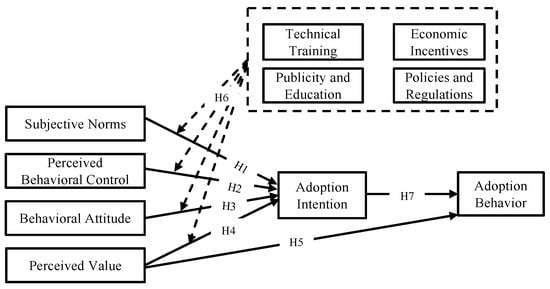
This study integrates the Theory of Planned Behavior (TPB), Perceived Value Theory, and Context Effects Theory to construct a theoretical model of “external context–endogenous driving factors–adoption intention–adoption behavior” (Figure 1). The model explains how farmers in agricultural heritage sites form intentions to adopt digital agricultural technologies and how these intentions are transformed into actual adoption behavior. Although the Technology Acceptance Model (TAM), the Unified Theory of Acceptance and Use of Technology (UTAUT), and Diffusion of Innovations theory have been widely applied in studies of agricultural technology adoption, they tend to focus on specific aspects of technology acceptance or diffusion. In contrast, this study emphasizes the joint effects of farmers’ psychological cognition, perceived value, and external contextual conditions. Specifically, TPB is used to explain how subjective norms, perceived behavioral control, and behavioral attitude shape adoption intention; Perceived Value Theory captures farmers’ evaluations of expected benefits, potential costs, and livelihood-related returns; and Context Effects Theory explains how technical training, publicity and education, economic incentives, and policies and regulations may moderate the effects of endogenous driving factors on adoption intention. This integrated framework is particularly suitable for agricultural heritage sites, where technology adoption is not only an economic and production-related decision but also a livelihood and sustainability-oriented choice involving heritage conservation.
Figure 1.
Theoretical analysis framework.
2.1. Endogenous Driving Mechanism: Psychological Decision-Making and Value Perception
The Theory of Planned Behavior (TPB) is a classic framework for explaining the link between behavioral intention and actual behavior. According to TPB, behavioral intention is primarily shaped by subjective norms, perceived behavioral control, and behavioral attitude [16]. Recent studies have continued to use TPB, either independently or in combination with TAM, to explain farmers’ adoption of digital agricultural technologies and other smart farming innovations. Evidence from studies in Italy [17], Germany [18], and Greece [19] indicates that the core TPB constructs, namely behavioral attitude, subjective norms, and perceived behavioral control, remain important predictors of farmers’ adoption intention, while factors such as perceived sustainability benefits, technical training, information availability, and cost-related constraints further shape adoption decisions in digital and smart agriculture contexts. This evidence provides recent empirical support for using TPB as the theoretical basis for examining farmers’ adoption intention in the context of agricultural digitalization.
Subjective norms refer to the social pressure that farmers perceive from important individuals or organizations when making adoption decisions. In rural communities, such pressure may come from agricultural authorities, village cadres, cooperatives, neighbors, and relatives. Perceived behavioral control reflects farmers’ perceived ability, resources, and opportunities to adopt digital agricultural technologies [20]. When farmers believe that they have sufficient knowledge, skills, time, resources, and risk-bearing capacity, their adoption intention is likely to increase. Behavioral attitude refers to farmers’ positive or negative evaluations of adopting digital agricultural technologies. In agricultural heritage sites, this attitude is closely related to whether farmers perceive these technologies as compatible with production improvement, livelihood development, and heritage conservation.
Based on the above discussion, the following hypotheses are proposed:
H1.
Subjective norms positively influence farmers’ intention to adopt digital agricultural technologies.
H2.
Perceived behavioral control positively influences farmers’ intention to adopt digital agricultural technologies.
H3.
Behavioral attitude positively influences farmers’ intention to adopt digital agricultural technologies.
Perceived Value Theory suggests that individuals make decisions by comparing perceived benefits with perceived costs, thereby forming an overall evaluation of the value of a given behavior [21]. In agricultural technology adoption, perceived value is reflected in expected benefits such as increased crop yields, higher farming income, reduced labor costs, improved livelihood conditions, and compatibility with local production needs [22,23]. In agricultural heritage sites, such value evaluations may contribute to more positive attitudes toward digital agricultural technologies, thereby strengthening farmers’ adoption intention. They may also directly promote adoption behavior by increasing farmers’ expected returns from technology use.
Based on the above discussion, the following hypotheses are proposed:
H4.
Perceived value positively influences farmers’ intention to adopt digital agricultural technologies.
H5.
Perceived value positively influences farmers’ adoption behavior of digital agricultural technologies.
2.2. External Context Effects: Constraints on Conditions and Regulation of Behaviors
Context Effects Theory emphasizes that individual decisions are shaped by external contextual conditions. In the adoption of digital agricultural technologies, contextual factors may influence farmers’ cognition, value evaluations, and behavioral motivation, thereby affecting the strength of the relationship between endogenous driving factors and adoption intention [24]. Previous agricultural studies have also shown that external support, institutional arrangements, and organizational connections can facilitate farmers’ adoption of innovative technologies [15]. In this study, technical training, publicity and education, economic incentives, and policies and regulations are regarded as key external contextual factors that may moderate the effects of endogenous driving factors on farmers’ adoption intention. As this study is exploratory, the moderating effects of external contextual factors are examined across different endogenous driving paths rather than being assumed to operate uniformly across all paths.
Based on the above discussion, the following hypotheses are proposed:
H6.
External contextual factors moderate the effects of endogenous driving factors on farmers’ intention to adopt digital agricultural technologies.
H6a.
Technical training moderates specific relationships between endogenous driving factors and farmers’ intention to adopt digital agricultural technologies.
H6b.
Publicity and education moderate specific relationships between endogenous driving factors and farmers’ intention to adopt digital agricultural technologies.
H6c.
Economic incentives moderate specific relationships between endogenous driving factors and farmers’ intention to adopt digital agricultural technologies.
H6d.
Policies and regulations moderate specific relationships between endogenous driving factors and farmers’ intention to adopt digital agricultural technologies.
2.3. Adoption Intention and Adoption Behavior
According to TPB, behavioral intention is the most direct antecedent of actual behavior. In the context of digital agricultural technology adoption, farmers with stronger adoption intention are more likely to translate their willingness into actual adoption behavior. However, in agricultural heritage sites, this transformation may still be constrained by livelihood capital, technology accessibility, and production conditions. Despite these constraints, adoption intention remains an important predictor of actual adoption behavior.
Based on the above discussion, the following hypothesis is proposed:
H7.
Farmers’ intention to adopt digital agricultural technologies positively influences their adoption behavior.
3. Materials and Methods
3.1. Study Area
Qitai County is located in the northeastern part of the Xinjiang Uygur Autonomous Region, on the northern slope of the Tianshan Mountains and along the southern edge of the Junggar Basin. The Qitai Dryland Farming System within this county was designated as one of China’s Important Agricultural Heritage Systems in 2015 and was nominated as a candidate for the Globally Important Agricultural Heritage Systems in 2019. Covering a total area of 3350 km2, the system represents a typical dryland farming region and has developed a unique rain-fed agricultural production model.
Currently, representative applications of digital agricultural technologies are mostly found in high-input, high-output intensive agricultural models in the eastern plain regions of China. The adoption logic in these areas primarily focuses on precise inputs and economies of scale. In contrast, this study selects the Qitai Dryland Farming System as the research area to examine the application pathways of digital agricultural technologies. This area is characterized by fragile ecological conditions and limited resource endowments, making it a representative yet distinctive case for studying digital agriculture in dryland farming systems.
3.2. Data Sources and Sampling Design
The data used in this study were collected through field surveys conducted from September to December 2024. The household was used as the basic survey unit, and face-to-face interviews and structured questionnaire surveys were conducted with farmers in the Qitai Dryland Farming System.
A multi-stage sampling strategy was adopted. The study area was first stratified according to geographical conditions, cropping structure, and production mode. Representative townships were then purposefully selected from different strata. Within these townships, villages were selected to cover different agricultural production conditions, and households were randomly selected within the sampled villages.
Specifically, Banjiegou Town and Jibuku Town are located in the southern hilly area of Qitai County and represent the core distribution area of the Qitai Dryland Farming System. This area is dominated by rain-fed winter wheat production and is subject to relatively strong natural constraints. Dongwan Town and Qihu Township are located in the central and northern plain oasis area, where the terrain is relatively flat, irrigation conditions are better, and mechanized agricultural production is more developed. Laoqitai Town and Biliuhe Town are characterized by mixed grain, cash crops, and forage production, with relatively diversified cropping structures. The selection of these six townships allowed the sample to cover different natural constraints, resource endowments, cropping structures, and production conditions.
Within each selected township, 3–6 administrative villages were selected to cover different agricultural production conditions. In each village, 10–20 households were randomly selected for face-to-face interviews. In total, 410 households were contacted during the field survey. After excluding 11 invalid questionnaires due to substantial missing data or logical inconsistencies, 399 valid questionnaires were retained, yielding an effective response rate of 97.3%.
The distribution of valid questionnaires across the six townships is shown in Table 1.
Table 1.
Sample distribution by township.
3.3. Sample Characteristics
Considering that some emerging technologies are constrained in practice by insufficient maturity, incomplete data support systems, and high deployment costs, this study focuses on several relatively mature and locally available digital agricultural technologies, including agricultural drones, Internet of Things (IoT)-based soil moisture monitoring, soil testing and formula fertilization, and agricultural e-commerce platforms. These technologies represent a portfolio of digital tools promoted or used in the study area, covering field management, resource monitoring, input optimization, and product marketing. Therefore, this study examines farmers’ general adoption intention and adoption behavior toward this portfolio of technologies, rather than the adoption mechanisms of any single technology.
As shown in Table 2, the respondents were primarily over 50 years old, and their education levels were generally at or below junior high school. This aligns with the typical age and educational characteristics of the farming population in agricultural heritage sites. Regarding household labor and employment, most households had two to three agricultural laborers. Low-agricultural-dependence households and part-time farming households together accounted for 80.45% of the sample, indicating a clear trend toward livelihood diversification among the surveyed households.
Table 2.
Descriptive statistics of the sample.
Regarding current technology adoption, there were clear differences in the adoption rates of the four digital agricultural technologies among the surveyed farmers. The adoption rate of agricultural drones was the highest, at 63.41%, followed by IoT-based soil moisture monitoring, at 42.61%, and soil testing and formula fertilization, at 40.10%. Agricultural e-commerce platforms had the lowest adoption rate, at 21.30%. When aggregating these four technologies descriptively, the average number of technologies adopted per farmer was 1.72, indicating significant room for improvement in overall adoption. Furthermore, most farmers adopted only a single technology, and the level of multi-technology application remained limited. This indicates that the promotion of digital agricultural technologies in this area still faces various constraints (Table 2).
3.4. Measurement of Variables
Drawing on existing literature [15] and the specific context of agricultural heritage sites, this study adapted measurement items to construct a measurement system that includes endogenous driving factors, external contextual factors, adoption intention, and adoption behavior. The endogenous driving factors consist of four dimensions: subjective norms, perceived behavioral control, behavioral attitude, and perceived value. Each dimension was measured by three observed items, resulting in 12 items in total. Adoption intention and adoption behavior were also measured by three items each. The items for adoption behavior cover usage frequency, continuous usage intention, and recommendation behavior. All latent variables were measured using a five-point Likert scale (1 = completely disagree, 5 = completely agree).
External contextual factors include four dimensions: technical training, publicity and education, economic incentives, and policy regulations. Considering that the respondents in this study are primarily farmers, overly long questionnaires may increase their cognitive burden and negatively affect data quality. Therefore, drawing on Bergkvist and Rossiter [25], this study adopts a single-item measurement approach for these factors. Previous studies have shown that for specific, unidimensional, and easily understandable constructs, single-item measures provide sufficient face validity and predictive validity. Furthermore, in the subsequent moderation effect tests, these factors are transformed into categorical variables. This step helps reduce the potential impact of single-indicator measurement errors on parameter estimation. To ensure the scientific validity and contextual suitability of the scale items, a pretest involving 60 farmers from the study area was conducted before the formal field survey. The pretest was used to assess whether the questionnaire items were clear, understandable, and appropriate for the local farming context. In addition, the questionnaire was reviewed by experts in agricultural economics and researchers involved in agricultural cultural heritage conservation. A small number of minor suggestions from the expert review and feedback from the pretest were incorporated to improve the questionnaire before the formal survey was conducted. The specific variables and their measurement items are presented in Table 3.
Table 3.
Main variable names and measurement items.
3.5. Data Analysis Methods
Partial Least Squares Structural Equation Modeling (PLS-SEM) was selected for this study because it has relatively flexible requirements for data normality and is capable of handling higher-order models. Given that this study is exploratory in nature, the survey data cannot be assumed to be fully normally distributed, and the proposed model is relatively complex, PLS-SEM was considered appropriate for the subsequent analysis [26].
Following recent recommendations in the PLS-SEM literature, an a priori power analysis was conducted using G*Power 3.1 to determine the minimum required sample size [27]. The calculation was based on the maximum number of predictors directed toward an endogenous construct in the proposed model. Using a medium effect size (f2 = 0.15), an alpha level of 0.05, a target statistical power of 0.80, and four exogenous constructs as the maximum number of predictors for a single endogenous construct, the analysis indicated that the minimum required sample size was 85. To account for potential non-response and invalid questionnaires, the required sample size was increased by 15%, resulting in a target minimum sample size of 98 respondents. The formal survey ultimately yielded 399 valid responses, which exceeded the adjusted target minimum sample size.
Descriptive statistics, data coding, and preliminary data screening were conducted using SPSS 29.0. The preliminary screening included checking for missing values, abnormal responses, and the distribution characteristics of the observed variables. PLS-SEM analysis was then performed using SmartPLS 4.0 to evaluate both the measurement model and the structural model. The significance of the estimated path coefficients was assessed using a bootstrapping procedure with 5000 subsamples.
4. Results
4.1. Measurement Model Testing
Data were analyzed using SmartPLS 4.0 with 5000 bootstrap subsamples. The results showed that the factor loadings of all items were greater than 0.8 (Table 4), indicating that each measurement indicator effectively reflected its corresponding latent variable. In addition, the variance inflation factor (VIF) values for all items were below the critical threshold of 3.3, indicating that there were no serious multicollinearity issues. Regarding reliability and validity (Table 4), the Cronbach’s alpha values for the latent variables ranged from 0.800 to 0.848, and the composite reliability (CR) values all exceeded 0.7, demonstrating good internal consistency. Furthermore, the average variance extracted (AVE) values were all greater than 0.5, indicating that the measurement model had good convergent validity.
Table 4.
Measurement model test.
According to the Fornell–Larcker criterion, discriminant validity is established when the square root of the average variance extracted (AVE) for each latent variable exceeds its correlations with all other latent variables (Table 5). To further assess discriminant validity, this study employed the heterotrait–monotrait ratio of correlations (HTMT) proposed by Henseler et al. [28]. Based on a bootstrapping procedure with 5000 subsamples, 95% bias-corrected and accelerated confidence intervals were computed for the HTMT values. An HTMT value below 0.85 indicates adequate discriminant validity, and the corresponding confidence interval should not include 1. As shown in Table 6, all HTMT values ranged from 0.261 to 0.601, which were below the recommended threshold of 0.85. In addition, none of the 95% confidence intervals included 1, further supporting the discriminant validity of the constructs.
Table 5.
Fornell–Larcker test.
Table 6.
HTMT test.
4.2. Common Method Bias Test
To assess the potential impact of common method bias (CMB) caused by using a single data source, this study employed Harman’s single-factor test. The unrotated exploratory factor analysis extracted seven factors with eigenvalues greater than 1. The variance explained by the first factor was 29.315%, which is significantly lower than the recommended threshold of 40%. Therefore, common method bias is not a significant issue in this study.
4.3. Structural Model Testing
Before evaluating the explanatory power of the structural model, this study first performed a collinearity diagnosis. The VIF values for all paths leading to the endogenous variables ranged from 1.693 to 2.186, which are well below the standard threshold. This indicates that there are no multicollinearity issues in the model.
In terms of explanatory power, the coefficient of determination (R2) was used to measure the variance explained in the endogenous latent variables. The R2 values for adoption intention and adoption behavior were 0.446 and 0.334, respectively, with adjusted R2 values of 0.439 and 0.327. Additionally, the SRMR value was 0.051, which is below the recommended threshold of 0.08, indicating an acceptable residual fit. Therefore, the model provides an adequate basis for subsequent structural path analysis. In addition, this study conducted PLSpredict analysis to assess the model’s predictive relevance. The results showed that all Q2predict values for the indicators of adoption intention and adoption behavior were greater than zero, ranging from 0.059 to 0.282, indicating that the model has predictive relevance.
4.4. Analysis of Endogenous Driving Factors
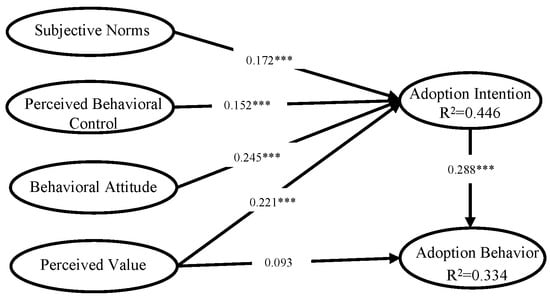
Figure 2 displays the structural model results, presenting the standardized path coefficients for the hypothesized direct relationships. The figure provides a visual summary of the main paths and complements the statistical details reported in Table 7.
Figure 2.
Structural model results with standardized path coefficients. Note: *** indicate significance at the 1% level.
Table 7.
Direct, indirect, and total effects of influencing factors on adoption intention and adoption behavior.
As shown in Figure 2 and Table 7, subjective norms, perceived behavioral control, behavioral attitude, and perceived value all have significant positive effects on farmers’ intention to adopt digital agricultural technologies. Thus, hypotheses H1, H2, H3, and H4 are supported. Among these factors, behavioral attitude (β = 0.245, p < 0.001) has the strongest effect, followed by perceived value (β = 0.221, p < 0.001), subjective norms (β = 0.172, p < 0.001), and perceived behavioral control (β = 0.152, p < 0.001). In this study, behavioral attitude reflects farmers’ evaluations of whether digital agricultural technologies can protect agricultural cultural heritage, improve production efficiency, and align with their personal values. Its relatively strong effect highlights the importance of value compatibility and practical relevance in farmers’ adoption decisions.
For the path from adoption intention to adoption behavior, adoption intention has a significant positive effect on adoption behavior (β = 0.288, p < 0.001), supporting H7 and confirming its role as an important antecedent of actual adoption. By contrast, the direct effect of perceived value on adoption behavior is not significant (β = 0.093, p > 0.05), so H5 is not supported. However, the total effect of perceived value on adoption behavior is significant (β = 0.157, p < 0.05). Together with the significant path from perceived value to adoption intention, this result shows that perceived value affects adoption behavior indirectly through adoption intention. In other words, farmers’ recognition of the value of digital agricultural technologies may not directly lead to adoption unless it is first translated into a clear behavioral intention.
The measurement results in Table 4 further clarify the meaning of these constructs. Within the behavioral attitude dimension, the item “digital agricultural technologies help protect agricultural cultural heritage” (BA1) has the highest loading (0.878), highlighting the role of heritage protection value in shaping adoption intention. Within the perceived value dimension, the item “increasing farming income” (PV2) has the highest loading (0.898), suggesting that economic benefits remain central to farmers’ evaluations of digital agricultural technologies. In the subjective norms dimension, the loading of “influence from family, relatives, and neighbors” (SN1) is slightly higher than that of “influence from government and extension personnel” (SN2), reflecting the continued importance of community social networks in technology diffusion. In the perceived behavioral control dimension, the item “having resources, time, and opportunities” (PB2) has the highest loading (0.883), indicating that practical resource availability remains an important condition for adoption.
Overall, farmers’ adoption of digital agricultural technologies in agricultural heritage sites is shaped by both heritage-related value judgments and expected economic benefits. Behavioral attitude and perceived value are particularly important in forming adoption intention, whereas perceived behavioral control shows a relatively weaker effect. At the same time, the non-significant direct path from perceived value to adoption behavior points to a value–behavior gap: recognizing the benefits of digital technologies does not necessarily lead to actual adoption without sufficient intention, resources, skills, and implementation support.
4.5. Multi-Group Analysis
Based on the existing research [15], this study further examined the moderating effects of four external contextual factors: technical training, publicity and education, economic incentives, and policy regulations. Specifically, the sample mean of each variable was used as the threshold; respondents scoring above the mean were classified into the high group, whereas those scoring below the mean were classified into the low group (Table 8). The results of the MICOM analysis indicated that all latent variables achieved partial or complete measurement invariance, thus allowing for multi-group analysis. The results are presented in Table 9.
Table 8.
Grouping criteria and sample sizes.
Table 9.
Test results for the moderating effects of external contextual factors.
(1) Technical training. The path coefficient differences between the high and low technical training groups reached a significant level. Specifically, technical training showed a significant positive moderating effect on the two paths: “perceived value → adoption intention” (coefficient difference = 0.213, p = 0.035) and “perceived behavioral control → adoption intention” (coefficient difference = 0.200, p = 0.038). This indicates that a higher level of technical training helps enhance farmers’ perceived value of digital agricultural technologies and strengthens their confidence in their operational capabilities and resource conditions, thereby promoting their adoption intention.
(2) Publicity and education. The moderating effect of publicity and education is mainly observed in the “behavioral attitude → adoption intention” path, and the result is highly significant (coefficient difference = 0.324, p = 0.001). This indicates that under high levels of publicity and education, farmers’ positive attitudes toward digital agricultural technologies are more likely to translate into adoption intention. Additionally, publicity and education have a marginally significant negative moderating effect on the “perceived behavioral control → adoption intention” path (coefficient difference = −0.171, p = 0.065). This suggests that with more comprehensive information, farmers may develop a deeper understanding of the complexity, costs, and risks of technology implementation, thereby weakening the direct positive effect of perceived behavioral control.
(3) Economic incentives. Economic incentives have a significant positive moderating effect on the “perceived value → adoption intention” path (coefficient difference = 0.199, p = 0.048). This indicates that when the government or relevant organizations provide incentives such as subsidies and low-interest loans, farmers’ perceived value of digital agricultural technologies is more likely to translate into adoption intention. This suggests that economic incentives can help alleviate cost constraints and risk concerns.
(4) Policies and regulations. The moderating effect of policies and regulations on the “subjective norms → adoption intention” path is significant (coefficient difference = 0.187, p = 0.046). This result indicates that when policy guidance and institutional constraints are strong, the influence of social norms on farmers’ adoption intention is more prominent. Policies and regulations enhance the effectiveness of external entities, such as the government, extension personnel, and community networks, by strengthening institutional signals and behavioral guidance.
In conclusion, external contextual factors exert moderating effects on the endogenous driving paths in a differentiated manner. Therefore, H6 is generally supported. However, H6a–H6d receive only partial support because each external contextual factor significantly moderates specific structural paths rather than all endogenous driving paths. Technical training significantly strengthens the effects of perceived value and perceived behavioral control on adoption intention; publicity and education mainly strengthen the effect of behavioral attitude on adoption intention; economic incentives reinforce the conversion of perceived value into adoption intention; and policies and regulations strengthen the effect of subjective norms on adoption intention. These results suggest that external contextual factors operate through path-specific mechanisms rather than a single uniform mechanism.
4.6. Heterogeneity Analysis
Based on the farmer classification criteria [29], the sampled farmers were divided into three categories according to the proportion of agricultural income in their total household income: low-agricultural-dependence households (less than 10%), part-time farming households (10% to 90%), and full-time farming households (greater than 90%).
The results in Table 10 reveal heterogeneous patterns in the adoption paths of digital agricultural technologies among different types of farmers. In the “perceived value → adoption intention” path, the effects for both low-agricultural-dependence households and part-time farming households reached significant levels, while the effect for full-time farming households was not significant (p > 0.05). This suggests that, in the current sample, the perceived value of digital agricultural technologies is not significantly associated with adoption intention among full-time farming households. This may be related to the relatively higher barriers faced by full-time farming households in terms of age structure, digital skills, and learning costs. In addition, their higher dependence on agricultural income may make them more cautious about technology failure, learning costs, and uncertain returns, which may weaken the conversion of perceived value into adoption intention. In contrast, low-agricultural-dependence households and part-time farming households may have more diversified income sources and stronger capacity to disperse risk, making them more responsive to the potential value of new technologies.
Table 10.
Results of path tests for digital agricultural technology adoption among different types of farmers.
Further analysis shows that the direct effect of perceived value on adoption behavior is not significant across all three types of farmers. This suggests that, across the three livelihood groups, perceived value alone may not be sufficient to directly promote actual adoption behavior. Adoption intention appears to play an important mediating role for low-agricultural-dependence households and, to a weaker extent, part-time farming households, while this mediating effect is not significant for full-time farming households.
On the “perceived behavioral control → adoption intention” path, the effect is significant only for low-agricultural-dependence households. This suggests that, among low-agricultural-dependence households, perceived resources, information access, and confidence in using digital technologies may be more closely associated with adoption intention. In contrast, the non-significant effects among full-time and part-time farming households may reflect additional constraints, such as age-related digital barriers, limited digital skills, or time and energy constraints caused by off-farm employment.
On the “adoption intention → adoption behavior” path, the effects for both low-agricultural-dependence households and full-time farming households are significant, while the effect for part-time farming households is not. This suggests that once full-time farming households form an adoption intention, they may be more likely to translate it into actual behavior. One possible explanation is that their higher dependence on agricultural production may strengthen the link between intention and actual adoption behavior. In contrast, although part-time farming households may develop adoption intentions, time, labor, and management constraints related to off-farm employment may limit the translation of intention into actual behavior.
Overall, the findings reveal differentiated patterns in the adoption mechanisms of digital agricultural technologies across farmer groups. Therefore, policy design could better account for differences in farmers’ livelihood structures. For full-time farming households, policy support could focus on lowering the threshold for technology application and improving risk-mitigation mechanisms. For part-time farming households, policy measures could pay greater attention to time constraints and labor shortages, thereby helping improve the conversion of adoption intention into actual behavior.
5. Discussion
The results show that subjective norms, perceived behavioral control, behavioral attitude, and perceived value all positively influence farmers’ adoption intention. This finding is broadly consistent with TPB-based studies showing that farmers’ technology adoption intention is shaped by attitude, social influence, and perceived behavioral control [30,31]. It also aligns with recent research on smart farming and digital agriculture, which identifies perceived usefulness, self-efficacy, technology complexity, risk perception, and support conditions as important determinants of farmers’ adoption decisions [32,33].
Behavioral attitude has the strongest effect on adoption intention. This finding is consistent with studies on low-carbon and green agricultural technologies, which also emphasize the important role of behavioral attitude [34]. In this study, behavioral attitude is not only related to production efficiency but also to whether digital agricultural technologies can help protect agricultural cultural heritage and align with farmers’ personal values. This suggests that farmers in agricultural heritage sites may evaluate digital technologies from both economic and cultural perspectives. Therefore, the TPB framework should be interpreted within the specific context of agricultural heritage conservation. This is also consistent with research on agricultural heritage systems, which shows that these systems can adapt to modernization through technological adaptation and institutional support [35].
Another important finding is that perceived value does not directly affect adoption behavior, but influences it indirectly through adoption intention. Recognizing the benefits of digital agricultural technologies is therefore not sufficient to ensure actual adoption. Even when farmers perceive these technologies as useful for increasing yields, improving income, or reducing labor input, adoption may still be constrained by digital skills, resource availability, risk tolerance, and technical support. This finding is consistent with studies that view technology adoption as a process from intention formation to actual behavior [31]. It also echoes evidence that costs, complexity, weak support, and limited digital skills hinder digital technology adoption [36].
The moderation results indicate that external support conditions play an important role in shaping adoption intention. Technical training strengthens the effects of perceived value and perceived behavioral control, suggesting that training improves farmers’ understanding of digital technologies and their confidence in using them. Publicity and education enhance the effect of behavioral attitude, indicating that information dissemination can reinforce farmers’ positive evaluations of digital technologies. However, the marginally significant negative moderating effect on the perceived behavioral control path should be interpreted with caution. One possible explanation is that publicity may also increase farmers’ awareness of adoption costs, operational difficulties, and uncertainty. These findings are consistent with studies emphasizing digital skills, information quality, and extension services in technology adoption [37].
Economic incentives strengthen the relationship between perceived value and adoption intention. Subsidies, financial support, and cost-sharing measures can therefore reduce farmers’ concerns about adoption costs. Evidence from Brazil also shows that access to credit promotes digital technology adoption, while high perceived costs are an important barrier [34]. Policies and regulations strengthen the effect of subjective norms on adoption intention. Policy guidance can therefore reinforce the influence of governments, extension workers, cooperatives, and local communities. In agricultural heritage sites, policy support may also help link digital technology adoption with heritage conservation goals.
The heterogeneity analysis shows that adoption paths differ across livelihood types. Low-agricultural-dependence households and part-time farming households are more responsive to perceived value, whereas this path is not significant for full-time farming households. This may be because full-time farming households depend more heavily on agricultural income and are more cautious about technology failure, learning costs, and uncertain returns. Part-time farming households may form adoption intention, but time and labor constraints may limit actual adoption. This pattern is consistent with studies showing that off-farm employment, digital literacy, household resources, and livelihood conditions influence agricultural technology adoption [33]. These results also suggest that differentiated support is needed for different household types. Full-time farming households may require stronger risk reduction mechanisms and technical guarantees, while part-time farming households may benefit more from simple, time-saving, and easy-to-use digital services.
Overall, this study extends the TPB framework by applying it to the setting of agricultural heritage sites. Farmers’ adoption decisions are influenced not only by behavioral attitude, subjective norms, and perceived behavioral control, but also by perceived value, external contextual factors, and livelihood differences. Behavioral attitude reflects both economic considerations and farmers’ recognition of heritage protection and traditional agricultural values, while perceived value influences actual adoption behavior primarily through adoption intention. These findings broaden the theoretical implications of TPB by showing that technology adoption in agricultural heritage sites is shaped by economic benefits, cultural value recognition, external support, and livelihood differences. In practice, the promotion of digital agricultural technologies should avoid a one-size-fits-all approach and provide practical training, reliable information, appropriate subsidies, and tailored support for different types of farmers.
6. Conclusions
Based on survey data from 399 households in the Qitai Dryland Farming System in Xinjiang, this study used structural equation modeling and multi-group analysis to examine the driving mechanisms, external contextual moderating effects, and household heterogeneity in farmers’ adoption of digital agricultural technologies in agricultural heritage sites. The following conclusions are drawn.
6.1. Main Conclusions
First, endogenous driving factors significantly influence farmers’ adoption intention. Subjective norms, perceived behavioral control, behavioral attitude, and perceived value all have significant positive effects on farmers’ intention to adopt digital agricultural technologies, and adoption intention in turn promotes actual adoption behavior. Among these factors, behavioral attitude has the strongest effect on adoption intention. In addition, perceived value does not directly affect adoption behavior, but influences it indirectly through the mediating role of adoption intention.
Second, external contextual factors exert differentiated moderating effects. Technical training, economic incentives, and policies and regulations positively moderate the effects of their corresponding endogenous factors on adoption intention, indicating that skills support, cost reduction, and institutional guidance can strengthen farmers’ adoption motivation. The publicity and education mainly promote adoption intention by strengthening behavioral attitude, but its marginally significant negative moderating effect on the perceived behavioral control path suggests that information dissemination should be more closely aligned with farmers’ actual production conditions.
Third, significant heterogeneity exists among farmers’ livelihood types. Different household types follow distinct adoption paths: behavioral attitude is a common driver of adoption intention for all farmers. Low-agricultural-dependence households and part-time farming households are more influenced by economic returns and social norms, while the adoption intention of full-time farming households is based more on intrinsic attitudes and value recognition. Finally, the translation of adoption intention into actual behavior for part-time farming households is significantly constrained by practical conditions.
6.2. Policy Implications
First, differentiated promotion strategies should be implemented to improve the technical adaptability of digital agricultural technologies. Categorized guidance should be provided according to farmers’ different livelihood structures: for full-time farming households, promotion should focus on the heritage protection value of digital technologies, while user-friendly and lightweight tools, together with targeted guidance, should be provided to strengthen their cultural identity and perceived behavioral control. For part-time farming households and low-agricultural-dependence households, social service organizations should be encouraged to provide integrated management services and solutions, with emphasis on the economic advantages of cost reduction, efficiency improvement, and labor saving. In addition, contextualized publicity based on typical local cases should be carried out to improve the match between information supply and farmers’ actual production contexts, thereby promoting the effective translation of adoption intention into actual adoption behavior.
Second, economic incentive mechanisms and institutional support systems should be improved to lower the threshold for adoption. Specifically, financial subsidies or low-interest loan mechanisms linked to technology application outcomes should be established, especially for technologies with high initial investment or uncertain short-term returns. These measures can help share farmers’ initial investment and trial-and-error costs and alleviate their financial constraints and risk concerns during the initial stage of technology adoption. Furthermore, regulations and standards tailored to the characteristics of agricultural heritage sites should be improved. Incorporating the application of digital agricultural technologies into the overall framework of heritage protection and building social consensus through institutional guidance can strengthen the institutional incentives for farmers to continue adopting these technologies. At the same time, technical training should focus on hands-on operation and local technology adaptation, while publicity and education should provide practical responses to farmers’ concerns about cost, complexity, and risk.
6.3. Limitations and Future Research
This study has several limitations. First, the data used in this study are cross-sectional, reflecting farmers’ adoption intentions and behaviors in agricultural heritage sites only at a specific point in time. Future studies could use panel data or follow-up surveys to examine changes in adoption intention and behavior over time. Second, the sample is limited to one agricultural heritage site in Xinjiang, so care should be taken when generalizing the findings. More cases from other agricultural heritage sites are needed to test the applicability of the framework. Third, this study does not distinguish between the adoption mechanisms of different types of digital agricultural technologies. Future research could explore the differentiated adoption mechanisms of various technologies in more depth. Fourth, some external contextual factors were measured by single items, and future research could use more detailed scales. In addition, dividing respondents into high and low groups based on mean values may have led to a loss of some information contained in the original continuous contextual variables. Future studies could further examine the moderating effects using latent interaction models or other grouping strategies. Finally, because this study relies on self-reported survey data, recall bias, social desirability bias, and common method bias may exist. Future studies could combine survey data with field observations, interviews, or actual technology-use records. These efforts will help more comprehensively reveal the underlying social mechanisms of farmers’ technology adoption behavior in agricultural heritage sites.
Author Contributions
Conceptualization, Z.L.; methodology, X.B.; software, Z.L.; Writing—original draft, Z.L.; Writing—review and editing, X.B. and Z.L.; Funding acquisition, X.B. All authors have read and agreed to the published version of the manuscript.
Funding
This research was funded by Project of the Science and Technology Department of Xinjiang Uygur Autonomous Region, grant number 2024D03009.
Institutional Review Board Statement
Ethical review and approval were waived for this study as it does not involve any personally identifiable information.
Informed Consent Statement
Informed consent was obtained from all subjects involved in the study.
Data Availability Statement
The original contributions presented in this study are included in the article. Further inquiries can be directed to the corresponding author.
Conflicts of Interest
The authors declare no conflicts of interest.
References
- Agnoletti, M.; Santoro, A. Agricultural heritage systems and agrobiodiversity. Biodivers. Conserv. 2022, 31, 2231–2241. [Google Scholar] [CrossRef] [Scilit]
- Li, S.J.; Zeng, C. Emotional differences among farmers in agricultural heritage sites and their adaptation under tourism intervention: A case study of four villages in the Zijie Terraces region. J. Nat. Resour. 2025, 40, 2633–2651. [Google Scholar] [CrossRef] [Scilit]
- Hu, Z.; Min, Q. Discussion on the conceptual framework of digital conservation of agricultural heritage systems. J. Geo-Inf. Sci. 2021, 23, 1632–1645. [Google Scholar] [CrossRef]
- Abbasi, R.; Martinez, P.; Ahmad, R. The digitization of agricultural industry: A systematic literature review on agriculture 4.0. Smart Agric. Technol. 2022, 2, 100042. [Google Scholar] [CrossRef] [Scilit]
- China Internet Network Information Center (CNNIC). The 55th Statistical Report on China’s Internet Development. 2025. Available online: http://www.cnnic.cn/n4/2025/0117/c88-11229.html (accessed on 11 July 2026). (In Chinese)
- Dibbern, T.; Romani, L.A.S.; Massruhá, S.M.F.S. Main drivers and barriers to the adoption of digital agriculture technologies. Smart Agric. Technol. 2024, 8, 100459. [Google Scholar] [CrossRef] [Scilit]
- Cui, L.; Wang, W. Factors affecting the adoption of digital technology by farmers in China: A systematic literature review. Sustainability 2023, 15, 14824. [Google Scholar] [CrossRef] [Scilit]
- Sun, Y.; Miao, Y.; Xie, Z.; Wu, R. Drivers and barriers to digital transformation in agriculture: An evolutionary game analysis based on the experience of China. Agric. Syst. 2024, 221, 104136. [Google Scholar] [CrossRef] [Scilit]
- Department of Market and Informatization, Ministry of Agriculture and Rural Affairs of the People’s Republic of China. Positive Progress in Smart Agriculture Construction. 2024. Available online: https://scs.moa.gov.cn/xxhtj/202401/t20240116_6445748.htm (accessed on 12 July 2026). (In Chinese)
- Wang, Z.; Zhang, Y.; Zhang, W. Theoretical proof, realistic dilemma and realization mechanism of farmers’ rights and interests protection in utilization of important agricultural heritage systems. Biodivers. Sci. 2023, 31, 23064. [Google Scholar] [CrossRef] [Scilit]
- Zhang, Y.; Min, Q.; Jiao, W.; Liu, M. Values and conservation of Honghe Hani Rice Terraces System as a GIAHS site. J. Resour. Ecol. 2016, 7, 197–204. [Google Scholar] [CrossRef] [Scilit]
- Del Soldato, E.; Massari, S. Creativity and digital strategies to support food cultural heritage in Mediterranean rural areas. EuroMed J. Bus. 2024, 19, 113–137. [Google Scholar] [CrossRef] [Scilit]
- Drewry, J.L.; Shutske, J.M.; Trechter, D.; Luck, B.D.; Pitman, L. Assessment of digital technology adoption and access barriers among crop, dairy and livestock producers in Wisconsin. Comput. Electron. Agric. 2019, 165, 104960. [Google Scholar] [CrossRef] [Scilit]
- Liu, D.; Huang, Y. Farmers’ technology preference and influencing factors for pesticide reduction: Evidence from Hubei Province, China. Environ. Sci. Pollut. Res. 2023, 30, 6424–6434. [Google Scholar]
- Ma, R.Y.; Xiao, H.F.; Gao, B.; Qiao, G.H. Farmers’ adoption behavior of resource-saving technologies: From the dual perspectives of endogenous drivers and external contexts. J. Arid Land Resour. Environ. 2023, 37, 28–36. [Google Scholar] [CrossRef]
- Ajzen, I. The theory of planned behavior. Organ. Behav. Hum. Decis. Process. 1991, 50, 179–211. [Google Scholar] [CrossRef] [Scilit]
- Fragomeli, R.; Punzo, G.; Annunziata, A. Agriculture 4.0 technologies among Italian farmers: A C-TAM-TPB approach with sustainability and economic factors. J. Clean. Prod. 2026, 559, 148316. [Google Scholar] [CrossRef] [Scilit]
- Feisthauer, P.; Hartmann, M.; Börner, J. Behavioral factors driving farmers’ intentions to adopt spot spraying for sustainable weed control. J. Environ. Manag. 2024, 353, 120218. [Google Scholar] [CrossRef] [Scilit]
- Diakoulakis, G.N.; Tzouramani, I.; Gemtou, M.; Anastasiou, E. Exploring socio-psychological factors to the adoption of decision support systems and meteorological stations in agriculture: The case of peach orchards in Greece. Smart Agric. Technol. 2025, 12, 101441. [Google Scholar] [CrossRef] [Scilit]
- Hagger, M.S.; Cheung, M.W.L. Perceived behavioral control moderating effects in the theory of planned behavior: A meta-analysis. Health Psychol. 2022, 41, 155–167. [Google Scholar] [CrossRef] [Scilit] [PubMed]
- Moore, G.C.; Benbasat, I. Development of an instrument to measure the perceptions of adopting an information technology innovation. Inf. Syst. Res. 1991, 2, 192–222. [Google Scholar] [CrossRef] [Scilit]
- Papadopoulos, G.; Arduini, S. Economic and environmental benefits of digital agricultural technologies in crop production: A review. Smart Agric. Technol. 2024, 8, 100441. [Google Scholar] [CrossRef] [Scilit]
- Wang, Q.T.; Guo, X.Y.; Liu, E.Y. Adoption behavior of conservation tillage technology by farmers in the black soil region of Northeast China based on perceived value. J. China Agric. Univ. 2021, 26, 172–181. Available online: http://dianda.cqvip.com/Qikan/Article/Detail?id=7105751262 (accessed on 1 July 2026). [CrossRef] [Scilit]
- Venkatesh, V.; Thong, J.Y.L.; Xu, X. Consumer acceptance and use of information technology: Extending the unified theory of acceptance and use of technology. MIS Q. 2012, 36, 157–178. [Google Scholar] [CrossRef] [Scilit]
- Bergkvist, L.; Rossiter, J.R. The predictive validity of multiple-item versus single-item measures of the same constructs. J. Mark. Res. 2007, 44, 175–184. [Google Scholar] [CrossRef] [Scilit]
- Jiang, X.; Deng, N.; Fan, X.; Zheng, S. Does augmented reality tour guidance influence traveler well-being? Evidence from PLS-SEM and fsQCA. J. Destin. Mark. Manag. 2026, 41, 101110. [Google Scholar] [CrossRef] [Scilit]
- Kono, S.; Sato, M. The potentials of partial least squares structural equation modeling (PLS-SEM) in leisure research. J. Leis. Res. 2023, 54, 309–329. [Google Scholar]
- Henseler, J.; Ringle, C.M.; Sarstedt, M. A new criterion for assessing discriminant validity in variance-based structural equation modeling. J. Acad. Mark. Sci. 2015, 43, 115–135. [Google Scholar]
- Liu, J.; Qian, C.; Li, X. Livelihood and food security in the context of sustainable agriculture: Evidence from tea agricultural heritage systems in China. Foods 2024, 13, 2238. [Google Scholar] [CrossRef] [Scilit] [PubMed]
- Yang, X.; Zhou, X.; Deng, X. Modeling farmers’ adoption of low-carbon agricultural technology in Jianghan Plain, China: An examination of the theory of planned behavior. Technol. Forecast. Soc. Change 2022, 180, 121726. [Google Scholar] [CrossRef] [Scilit]
- Li, J.; Liu, G.; Chen, Y.; Li, R. Study on the influence mechanism of adoption of smart agriculture technology behavior. Sci. Rep. 2023, 13, 8554. [Google Scholar] [CrossRef] [Scilit] [PubMed]
- Giua, C.; Materia, V.C.; Camanzi, L. Smart farming technologies adoption: Which factors play a role in the digital transition? Technol. Soc. 2022, 68, 101869. [Google Scholar] [CrossRef] [Scilit]
- Lei, J.; Shen, Y.; Lin, J. Influencing factors of farmers’ adoption of digital agricultural technologies in China: A meta-analysis. J. Rural Stud. 2026, 126, 104272. [Google Scholar] [CrossRef] [Scilit]
- Li, B.; Ding, J.; Lian, Y. Influence paths on farmers’ willingness to adopt green agricultural production based on a multigroup structural equation model. Front. Sustain. Food Syst. 2026, 10, 1783436. [Google Scholar] [CrossRef] [Scilit]
- Jiao, W.; Fuller, A.M.; Xu, S.; Min, Q.; Wu, M. Socio-ecological adaptation of agricultural heritage systems in modern China: Three cases in Qingtian County, Zhejiang Province. Sustainability 2016, 8, 1260. [Google Scholar] [CrossRef] [Scilit]
- Damasceno, R.; Carrer, M.J.; Pagliuca, L.G.; Vinholis, M.D.M.B.; Souza Filho, H.M.D. What drives the adoption of digital technology? An empirical assessment of multiple technology adoption by soybean farmers in São Paulo, Brazil. Precis. Agric. 2026, 27, 7. [Google Scholar]
- Gao, T.; Lu, Q.; Zhang, Y.; Feng, H. The influence of digital agricultural technology extension service cognition on farmers’ pro-environmental behaviour: The moderating role of policy support. Int. J. Agric. Sustain. 2025, 23, 2569186. [Google Scholar] [CrossRef] [Scilit]

Disclaimer/Publisher’s Note: The statements, opinions and data contained in all publications are solely those of the individual author(s) and contributor(s) and not of MDPI and/or the editor(s). MDPI and/or the editor(s) disclaim responsibility for any injury to people or property resulting from any ideas, methods, instructions or products referred to in the content. |
© 2026 by the authors. Licensee MDPI, Basel, Switzerland. This article is an open access article distributed under the terms and conditions of the Creative Commons Attribution (CC BY) license.