


Abstract
Green public procurement (GPP) is a key policy instrument for promoting sustainable production and consumption, yet its implementation performance as a multidimensional public-sector decision process remains insufficiently assessed. Existing studies often focus on selected dimensions or limited cases, lacking both a framework that captures GPP’s multiple core components and large-scale evidence from procurement texts. Without such an assessment, GPP may remain at the level of policy rhetoric. To address this gap, this study develops a six-dimensional evaluation framework covering environmental friendliness, green labels, circular economy, green innovation, green supply chains, and life cycle costing (LCC), and applies automated text-mining methods to 80,494 central-level and 407,955 local-level public tender documents in China from 2015 to 2022. The results show that GPP has entered procurement practice at scale: 55.1% of documents contain at least one green requirement. However, implementation is highly uneven. Among documents containing at least one GPP requirement, environmental friendliness (95.7%) and green labels (58.9%) form the core of current practice, green innovation occupies an intermediate position (35.1%), while green supply chains (16.4%) and LCC (16.3%) remain much less developed. A clear central–local gap is also observed, with implementation rates of 75.2% and 51.1%, respectively. Further analysis shows that green requirements appear in multiple combinations and vary across time, award methods, and contract types. More importantly, although green supply chains and LCC are not yet fully specified in national institutions, they have already entered some tender documents. These findings confirm the importance of assessing the implementation outcomes of GPP’s multiple core components and provide new evidence on implementation gaps and practice-led policy boundary expansion under multilevel governance. The text-mining framework offers a transferable tool for evaluating sustainable public procurement in other emerging economies.
1. Introduction
Globally, green public procurement (GPP) has been widely recognized as an important policy instrument for promoting sustainable production and consumption [1,2,3]. By embedding environmental objectives into public procurement processes, governments can not only reduce the environmental impacts of their own purchasing activities, but also shape firms’ technological choices, product supply, and supply chain organization through their large-scale demand, thereby driving broader green transformation [4,5,6]. GPP has therefore become an important policy instrument through which countries pursue environmental governance and sustainable development goals.
However, discussions of GPP remain insufficient if they are confined to policy objectives and institutional design. As with other areas of public policy, the key issue is not merely whether GPP has been written into formal rules, but whether and how it is implemented in practice. Policy commitments do not automatically translate into implementation outcomes [7]. Once formal rules enter the implementation stage, their realization often varies according to operational feasibility, implementation capacity, incentive structures, and market conditions [8]. An analytically important question is therefore whether and how GPP is actually implemented, in particular with respect to those theoretically important dimensions that are not yet fully specified in national institutions.
Answering this question first requires overcoming a fundamental measurement challenge. This challenge has two aspects. First, the actual implementation of GPP is difficult to observe directly on a national scale. Determining whether each procurement project ultimately fulfilled green requirements would require project-level evidence on contract performance, supplier delivery, acceptance records, and environmental outcomes, which is difficult to obtain consistently for a large number of projects. Therefore, this study uses identifiable GPP-related requirements in tender documents as an approximate proxy for actual implementation. This choice is consistent with the attention-based view of organizations, which suggests that organizational action depends on which issues receive decision-makers’ attention [9]. In public procurement, a green dimension is more likely to appear in tender documents when it has been recognized and incorporated into procurement design, such as procurement requirements, technical specifications, evaluation criteria, or contract clauses. Thus, the appearance of a green requirement provides an observable basis for approximating whether and how different GPP dimensions have entered procurement practice. Second, GPP is not a single requirement but a composite policy concept that encompasses multiple environmental goals and governance instruments. Because different GPP dimensions vary in their degree of institutionalization, implementation costs, and market readiness, GPP is unlikely to advance evenly in practice. Without an evaluation framework capable of capturing the core components of GPP, it is difficult to identify how GPP actually manifests itself in procurement practice, let alone examine the mechanisms that underlie implementation differences and their implications.
Although the existing literature has recognized GPP as an important topic in environmental governance and sustainable public procurement, its actual implementation remains insufficiently understood. Three gaps are particularly relevant to this study. First, existing evaluation frameworks are generally fragmented and often focus on selected visible dimensions, making it difficult to capture GPP as a multidimensional policy bundle. Second, existing empirical studies largely rely on case studies, small-sample surveys, or observations from limited local contexts, and therefore lack large-scale text-based evidence on the overall level, dimensional structure, and differentiated distribution of GPP implementation [10]. Third, existing research pays insufficient attention to frontier yet theoretically important dimensions, particularly green supply chain management and LCC [11,12]. Compared with more mature dimensions such as environmental friendliness and green labels, these dimensions remain less fully specified in formal institutions, which raises an important question: when certain GPP dimensions have not yet been adequately institutionalized, have exploratory practices already emerged at the procurement level? Addressing this question can help clarify not only the actual boundaries of GPP implementation, but also how environmental policy may evolve incrementally through implementation.
China provides an empirically informative setting in which to examine these issues. Since the Government Procurement Law incorporated “environmental protection” into policy objectives in 2002, China has gradually developed a relatively comprehensive GPP regime built around energy-efficient products, environmental labeling, and circular use, reflecting a strong pattern of top-down institutional provision. At the same time, government procurement activities in China are distributed across both central and local levels, involving a large number of procuring entities and marked regional variation [13]. This setting makes it possible not only to observe how GPP moves from formal institutions into procurement practice, but also to compare implementation across central and local governments. Such a comparison helps identify whether a unified institutional framework generates implementation gaps under multilevel governance and how such gaps are reflected in differential implementation across dimensions and procurement settings. Particularly noteworthy is whether procuring entities at various levels have already begun to explore areas such as green supply chain management and LCC that have not yet been covered in an integrated way by China’s national-level institutional framework. Answering this question would not only help assess the actual boundaries of GPP implementation in China, but also provide micro-level evidence on how procurement practice can inform institutional refinement, while offering comparative insights for improving GPP systems in other countries. The relevance of these questions has been further heightened by recent legal developments in China, notably the adoption of the Ecological and Environmental Code and ongoing efforts to strengthen circular-economy legislation, both of which increase the need to understand how green procurement requirements are operationalized in practice.
Building on these considerations, this study focuses on the process through which GPP moves from policy commitment to practical implementation and addresses three interrelated questions:
- (1)
- How can a relatively complete implementation evaluation framework be constructed on the basis of the core concepts and policy content of GPP in order to overcome the fragmented dimensional focus of existing research?
- (2)
- Using such a framework, what structural characteristics does GPP implementation exhibit in procurement practice in China? Does it advance in an integrated manner, or does it display marked selectivity and imbalance across different dimensions? How is this structural pattern distributed between the central and local levels, and how does it manifest itself in differentiated implementation patterns across procurement settings?
- (3)
- In dimensions not yet covered in an integrated way by national formal institutions, have procuring entities already undertaken exploratory practices that indicate practice-led policy boundary expansion, and how are such practices distributed across GPP dimensions, government levels, and procurement settings?
To answer these questions, this study develops a comprehensive evaluation framework covering six dimensions: environmental friendliness, circular economy, green innovation, green supply chains, green labels, and LCC. Drawing on this framework, we apply text-mining methods to analyze 80,494 central-level public tender documents and 407,955 local-level public tender documents published on the China Government Procurement Network between 2015 and 2022. This design allows us to identify, at the national scale, the level and patterns of GPP implementation in China as well as their distribution across central and local governments.
This study makes three main contributions. First, at the evaluation level, it advances research on GPP implementation from the identification of individual indicators to integrated assessment. Second, at the empirical level, drawing on large-scale procurement texts from China, it shows that GPP implementation does not proceed evenly, but instead varies substantially across dimensions; it further demonstrates how these differences are distributed between the central and local levels and across procurement settings. Third, at the theoretical level, the study introduces practice-led policy boundary expansion as an analytical concept grounded in policy implementation, gradual institutional evolution, experimental governance, and policy diffusion. Rather than proposing a fully independent theory of policy change, this concept helps explain how institutionally under-specified GPP dimensions may begin to enter procurement practice before they are fully standardized in formal rules. These findings contribute more broadly to understanding the incremental evolution of environmental policy through implementation and offer lessons from China for improving GPP systems elsewhere. By developing a comprehensive multidimensional framework grounded in the core components of GPP, this study advances existing research from the identification of individual green requirements to the assessment of implementation structures and practice-led policy boundary expansion, thereby offering new insights into institutional evolution through implementation.
The remainder of the study is organized as follows. Section 2 reviews the literature. Section 3 presents the research design, indicator construction, and data sources. Section 4 reports the empirical results and discusses the findings. Section 5 concludes the study. Section 6 discusses policy implications and future research.
2. Literature Review
2.1. The Multidimensional Nature of GPP Implementation Assessment and the Limitations of Existing Frameworks
The meaning of GPP has evolved alongside the sustainable development agenda. While traditional public procurement primarily emphasized fiscal efficiency and the lowest-price criterion, GPP requires environmental considerations to be integrated into procurement decisions. Accordingly, the concept of “value for money” has expanded beyond initial purchasing costs to include environmental performance, resource efficiency, and long-term economic benefits [2,4,5,6]. Consequently, GPP is no longer limited to prioritizing the purchase of a limited set of green products; it has gradually evolved into a composite policy instrument encompassing the setting of procurement standards, supplier selection, contract performance requirements, and cost evaluation approaches. The European Commission captures this shift in its definition of GPP as “a process whereby public authorities seek to procure goods, services and works with a reduced environmental impact throughout their life cycle compared to goods, services and works with the same primary function that would otherwise be procured” [14].
The theoretical literature consistently recognizes the inherently multidimensional character of GPP. Beyond readily visible direct requirements like environmental friendliness and green labels, scholars emphasize the circular economy, green innovation, green supply chain management, and LCC as essential to deepening GPP’s governance effects. Environmental friendliness and green labels capture direct stipulations regarding the environmental attributes of procured items [15,16]. The circular economy moves toward more systemic environmental goals, including resource reduction, reuse, and recycling [17,18]. Green innovation examines how public procurement can stimulate green technologies, production processes, and organizational forms through demand-side pull [19,20,21]. Green supply chain management extends environmental requirements beyond the procured item to encompass the entire supply chain process [22,23]. LCC further reorients the evaluative logic of procurement decision-making by replacing one-off price comparisons with a broader assessment of long-term economic and environmental benefits [11,24]. Together, these dimensions show that GPP is best understood not as a single policy requirement, but as a policy bundle with multiple objectives and multiple implementation dimensions.
Compared with this multidimensional theoretical understanding, however, existing frameworks for evaluating GPP implementation remain underdeveloped. Most studies concentrate on the more visible dimensions of environmental friendliness and green labels, largely because these requirements are easier to identify in procurement texts and more readily translated into quantifiable indicators [25]. This approach has clear limitations. On the one hand, it tends to reduce GPP to a set of directly observable environmental clauses, making it difficult to capture more process-oriented and indirect dimensions such as the circular economy and green innovation. On the other hand, it typically treats the procurement process as a bilateral relationship between procuring entities and suppliers, while overlooking the broader stages involved in green supply chain management, including upstream raw materials, production and logistics, and end-of-life recovery and treatment. This omission makes it difficult to assess the effects of GPP on the overall environmental performance of the supply chain. Similarly, although LCC is widely regarded as an important tool in GPP theory and international practice [11], it has received only limited attention in existing implementation assessment research. This gap is especially pronounced in contexts where lowest-price award rules remain prevalent and where no clear analytical framework yet exists for identifying whether procurement practice has genuinely moved beyond a singular reliance on initial price.
The central problem in the existing literature, then, is not that it has failed to recognize the multidimensional nature of GPP, but that it has not yet developed an implementation assessment framework capable of integrating these dimensions into a coherent analytical structure. As a result, although it may be possible to identify whether certain individual green requirements have been adopted, a more critical question remains difficult to answer: Is GPP being advanced in practice as a relatively integrated policy bundle, or is it largely confined to a small number of more operational and more highly institutionalized dimensions? This issue is particularly salient for frontier dimensions such as green supply chain management and LCC, which may either be marginalized in practice due to their technical complexity and higher implementation costs, or they may emerge early through the exploratory efforts of particular actors. Without incorporating these dimensions into a unified framework, it is difficult to capture both the actual boundaries of GPP implementation and the structural differences within it.
These considerations point to the need for a more complete multidimensional framework for assessing GPP implementation, one grounded in the core concepts and policy content of GPP and capable of integrating environmental friendliness, the circular economy, green innovation, green supply chain management, green labels, and LCC within a single analytical scheme. Only on this basis is it possible to identify the overall level of GPP implementation, its dimensional structure, and differences across dimensions, while also providing a reliable analytical starting point for subsequent discussion of its hierarchical distribution and institutional evolution.
2.2. Implementation Gaps and Hierarchical Differences in GPP Implementation
In public policy research, the divergence between policy objectives and actual implementation outcomes is a well-established phenomenon. Studies by Knill et al. (2024) [26] and Xiao et al. (2025) [27] show that policies pass through multiple stages of translation from formulation to implementation, during which varying degrees of “implementation gaps” can emerge from organizational structures, resource constraints, strategic interactions, and cognitive differences. Even when policy design specifies clear objectives and regulatory requirements, their realization in practice may still diverge significantly [28].
This issue is likely to be especially pronounced in public procurement, a field characterized by the involvement of multiple actors. GPP depends not only on the setting of formal rules, but also on how those rules are interpreted, prioritized, and operationalized by implementing actors throughout the procurement process [6]. The attention-based view of organizations helps explain this process [9]. Procuring entities usually face multiple objectives at the same time, including cost control, legal compliance, procurement efficiency, project quality, and environmental considerations. Because their attention and administrative capacity are limited, different GPP dimensions are unlikely to receive equal attention in procurement practice. A green dimension that is recognized and considered important by procuring entities is more likely to be translated into tender documents, while a dimension that receives limited attention is less likely to appear in procurement requirements. This helps explain why GPP may advance unevenly across dimensions even under a unified policy framework. In addition, existing studies also show that GPP implementation is often shaped by budget constraints, market supply, technical standards, and implementers’ preferences, leading to uneven patterns of advancement across procuring entities [28,29,30]. Relying solely on formal policy texts therefore often fails to capture how GPP is actually operationalized in procurement practice.
In a multilevel governance system, implementation gaps may further appear as systematic differences across levels of government. Previous research suggests that when a unified policy is transmitted from the central government to lower levels, differences in objective functions, incentive structures, and resource endowments may lead to selective adoption and differentiated implementation [31]. Local governments, for example, must balance economic development pressures against environmental governance objectives and may therefore assign different priorities to different policy instruments, affecting the extent to which GPP-related requirements are adopted [32]. At the same time, the discretion available to street-level implementers in specific operational contexts may cause the same policy to take different forms in the design of tender documents, the weighting of evaluation criteria, and other implementation details [33,34]. Differences in fiscal capacity, technical conditions, and market environments may further amplify uneven implementation, producing differentiated outcomes across levels and regions under a formally unified policy framework [35,36,37].
Although this literature provides an important theoretical basis for understanding implementation gaps, it has rarely been directly applied to the assessment of GPP implementation. Most existing studies focus on individual regions or specific cases, making it difficult to compare implementation differences across actors at different levels on a broader scale. Even when regional variation is considered, analysis tends to remain at the level of aggregate indicators and lacks a more fine-grained account of central–local implementation behavior drawn from procurement texts. We therefore know surprisingly little about the actual differences that emerge in procurement practice among governments at different levels under a unified GPP framework, about whether such differences are widespread or context-specific, and, more importantly, whether they are connected to the structural imbalance observed across different dimensions of GPP.
These considerations suggest that hierarchical differences should be incorporated explicitly into the analytical framework for assessing GPP implementation. Comparing the concrete procurement practices of central and local governments makes it possible not only to identify more accurately the spatial distribution of GPP implementation, but also to better understand how different actors adapt during the policy process and how such adaptation shapes implementation outcomes. This perspective provides a crucial foundation for the subsequent analysis of the structure of GPP implementation and its variation.
2.3. Practice in Institutionally Under-Specified Areas and Its Policy Implications
Although implementation gaps are widespread, policy processes do not simply follow a one-way trajectory from stated goals to observed deviations. Tummers and Bekkers (2014) [38] show that, during implementation, policy actors are not merely passive recipients of institutional requirements; they may also reinterpret and reshape policy content through concrete practice, thereby influencing the actual boundaries and developmental trajectory of policy. This dynamic is particularly salient in complex policy domains such as environmental governance, where policies often involve substantial uncertainty and technical dependence, making it difficult for institutional design to specify all implementation details exhaustively at the outset [39,40]. In this sense, implementation should not be understood only as the execution of already fixed rules, but also as a process through which policy content may be clarified, adjusted, and gradually extended in practice.
This understanding is consistent with several established strands of policy process theory. First, policy implementation and street-level bureaucracy studies suggest that frontline and implementing actors interpret, adapt, and operationalize formal rules in concrete settings, meaning that policy content may be reshaped during implementation rather than simply transmitted from the top down [33]. Second, theories of gradual institutional change show that institutions may evolve through incremental adjustment, layering, and practical adaptation, especially when formal rules remain incomplete, ambiguous, or difficult to operationalize [41,42]. Third, research on experimental governance, policy learning, and policy diffusion highlights how local or project-level practices can generate information, test feasibility, and provide experience for later institutional refinement [43,44,45]. Taken together, these studies suggest that the implementation stage is not only a site where policy gaps appear, but also a site where policy boundaries may be gradually clarified, tested, and extended through practice.
This theoretical perspective is particularly relevant to GPP because GPP is not a single and fully standardized requirement, but a multidimensional policy field in which different components vary greatly in their degree of institutionalization. As discussed above, GPP consists of multiple dimensions. Some, such as environmental friendliness and green labels, have already developed into relatively mature institutional arrangements in many countries’ policy systems. Others, such as green supply chain management and LCC, remain comparatively under-specified in many contexts because of their technical complexity, uncertain implementation costs, and the absence of unified standards [46,47]. This variation creates an important space for observing whether implementation practice simply follows existing rules, or whether it begins to introduce requirements that have not yet been fully specified in formal institutions. This raises an important question that has not yet been sufficiently answered: when formal institutions do not yet impose clearly defined requirements on these dimensions, might procurement practice nonetheless begin to incorporate them among some actors, thereby contributing to an expansion of existing policy boundaries?
Building on this question, this study uses the concept of practice-led policy boundary expansion to describe the process through which implementation practices in institutionally under-specified GPP dimensions begin to move beyond existing formal rules and provide practical references for subsequent policy adjustment. This concept is not intended to propose a fully independent theory of policy change. Rather, it serves as an analytical concept that connects the empirical observation of emerging GPP practices with broader theories of policy implementation, gradual institutional evolution, and experimental governance.
Existing GPP research has paid limited attention to this issue. Most studies understand implementation primarily in terms of compliance with existing policy requirements and therefore focus on whether predetermined standards have been met, while paying much less attention to whether practice has moved beyond formally specified requirements. At the same time, because of the lack of both a multidimensional evaluation framework and large-scale empirical evidence, existing studies have found it difficult to identify exploratory practices dispersed across individual procurement projects, especially in areas such as green supply chain management and LCC that are not yet fully covered by unified institutional rules. Consequently, one important aspect of the GPP implementation process remains underexplored: whether the actual operation of policy is confined to the boundaries set by formal institutions, or whether those boundaries are gradually extended through implementation itself. This question is important because it connects GPP implementation with broader theories of policy evolution: under-specified rules may create room for implementing actors to test new requirements, and these practices may later become evidence for more formal institutional refinement.
From a policy process perspective, this issue is of considerable importance. Prior research suggests that in areas where institutions remain under-specified or uncertainty persists, practical experimentation by local or frontline actors often provides an important source of information for policy learning and institutional adjustment. Through tentative application in concrete settings, such practices may reveal both the feasibility and the limitations of particular policy instruments, while also generating experiential foundations for broader institutional refinement [48,49]. If early practices concerning dimensions such as green supply chain management or LCC can be identified in GPP implementation, this would imply that policy does not advance solely in a top-down manner; its actual boundaries may also be gradually extended in the course of implementation.
For this reason, institutionally under-specified dimensions of GPP provide an important window for observing policy evolution. This study examines whether relevant practices have already emerged in large-scale procurement texts and how they are distributed across GPP dimensions, government levels, and procurement settings. Such an analysis allows us to ask more directly whether GPP implementation is strictly confined to the existing institutional framework, or whether it displays a certain degree of outward extension in practice, thereby providing new empirical evidence to illuminate the relationship between policy implementation and institutional evolution.
2.4. The Evolution of Methods for Assessing GPP Implementation and the Shift Toward Data-Driven Approaches
Research on how to identify GPP implementation has undergone a gradual methodological evolution, moving from subjective perception-based measures to objective text analysis and, more recently, to large-scale data-driven assessment. This development reflects sustained efforts to address problems of data availability and measurement bias, while also revealing the limitations of different methods in capturing the actual implementation of GPP.
Early studies relied primarily on surveys and interviews to examine the extent of GPP adoption and its determinants from the subjective perspectives of individuals or organizations. These studies often drew on social responsibility or sustainable procurement scales to analyze how institutional environments, organizational culture, and managerial perceptions shape GPP-related behavior [50,51,52]. Yet such approaches have clear limitations in identifying actual implementation. For one, respondents’ answers are susceptible to social desirability bias, which may lead them to overstate the extent of their green behavior. For another, subjective perceptions often diverge from concrete procurement behavior, making it difficult to capture how policy is implemented at the micro level [53].
To reduce these subjectivity-related biases, researchers have increasingly turned to more objective data sources, particularly procurement documents, and developed assessment approaches based on manual content analysis. By reading and coding tender documents line by line, these studies have measured more directly the extent to which environmental standards are incorporated into procurement practice in particular countries or sectors [54,55,56]. Compared with survey-based methods, this approach substantially improves data objectivity and brings analysis closer to procurement practice itself. Nevertheless, it remains highly labor-intensive. Sample sizes are typically limited to dozens or hundreds of projects and often concentrated in a single sector or specific region, making cross-regional or cross-level comparison difficult and limiting the ability to capture the overall structure of GPP implementation.
More recently, advances in text-mining techniques have made large-scale, data-driven analysis of procurement texts an emerging direction in the literature. By automatically processing unstructured tender documents, this approach substantially expands the scale of analysis while retaining the objectivity of documentary data, thereby allowing research to move from isolated cases to broader assessments [57]. It enables scholars to identify implementation differences across regions, time periods, and procuring entities, and thus provides a new technical pathway for examining the overall level and temporal evolution of GPP. In the Chinese context, some recent studies have begun to apply similar methods to government procurement documents or public–private partnership project texts, offering preliminary evidence on certain features of GPP implementation [10,25].
Despite these advances, large-scale data-based research still suffers from clear limitations in terms of theoretical integration and analytical depth. First, most studies continue to rely on a relatively narrow set of evaluation dimensions and fail to incorporate key but more complex frontier dimensions—such as green supply chain management and LCC—into a unified analytical framework, which prevents a comprehensive capture of GPP’s multidimensional nature. Second, much of this research remains at the level of implementation rates or simple frequency descriptions, with limited attention to the structural relationships among dimensions and to hierarchical differences between the central and local levels within a unified perspective. Third, for areas where formal institutions remain under-specified, existing studies lack targeted identification strategies and are therefore unable to determine whether exploratory practices have already emerged in implementation. In other words, although methodological tools have improved substantially, we still lack an integrated analytical approach that can, within a single framework, identify the multidimensional structure of GPP implementation, its hierarchical variation, and its potential extension beyond formally specified institutional boundaries.
These limitations point to the need for an integrated approach that combines a multidimensional GPP assessment framework with large-scale text mining. Such an approach can move beyond isolated indicators and limited cases, while also allowing GPP implementation to be examined across dimensions, government levels, procurement settings, and institutionally under-specified areas.
3. Methodology
3.1. Research Strategy
To address the three sequential research questions posed in this study, we adopt an integrated research design that proceeds through five steps (see Figure 1).
Figure 1.
Research strategy.
First, drawing on the preceding literature review of the core dimensions of GPP, we construct a multilayered evaluation framework covering six dimensions: environmental friendliness, circular economy, green innovation, green supply chains, green labels, and LCC. Second, we develop a keyword dictionary and coding rules based on this framework, and calibrate them using policy documents, technical standards, relevant literature, and expert consultation. The expert consultation involved five experts with academic or practical backgrounds in public finance, government procurement, and law. Their comments were used to refine keyword expressions and improve the consistency between the conceptual framework and the textual identification rules. Third, we collect public tender documents published on the China Government Procurement Network between 2015 and 2022, thereby building a large-scale text database for analysis. Fourth, we apply text-mining methods to identify and code the full sample in batches, generating classification results for each document across the six GPP dimensions. Fifth, based on the coding results, we compare the overall level of GPP implementation, its dimensional structure, implementation patterns, and central–local differences, while also identifying the distribution of practices in dimensions that remain institutionally under-specified.
3.2. A Multidimensional Assessment Framework
Building on the review of the core components of GPP in the previous section, and with reference to major international and domestic sustainable procurement frameworks, this study develops a six-dimensional integrated assessment framework. The framework is designed to address the fragmented dimensional selection found in existing research so that GPP is not reduced to a small set of visible green clauses but can instead be identified as a policy bundle encompassing multiple objectives. Its construction follows four main principles. First, theoretical completeness: the framework seeks to cover, as fully as possible, the core dimensions repeatedly emphasized in the literature, with particular attention to frontier areas such as green supply chain management and LCC. Second, continuity and comparability: it retains and extends commonly used dimensions in existing studies—such as environmental friendliness, green labels, the circular economy, and green innovation—so that the findings can be meaningfully connected to prior research. Third, textual operability: each dimension must be observable through specific requirements, standards, conditions, or evaluative expressions contained in tender documents. Fourth, hierarchical structuring: abstract concepts are translated into identifiable textual indicators through a tree structure of “main categories (first-level indicators)–subcategories (second-level indicators)–sub-subcategories (third-level indicators)–keywords.”
The selection of these six dimensions was not made independently of existing GPP frameworks. Rather, it was developed by starting from the conceptual content of GPP and by integrating insights from the academic literature, China’s green procurement policy system, and major international sustainable procurement frameworks. Frameworks developed by the EU, OECD, ISO, and other international organizations provide important references for understanding sustainable procurement, but they differ in their purposes and emphases. The EU GPP framework places greater emphasis on developing procurement criteria for specific product and service groups; OECD work on green and sustainable public procurement highlights the strategic role of public procurement in advancing environmental objectives, innovation, and sustainable development; and ISO 20400 [58] provides general guidance on integrating sustainability into organizational procurement processes. These frameworks are therefore valuable references, but they do not, taken together, constitute a complete assessment framework by starting from the conceptual content of GPP and systematically defining the core dimensions that GPP implementation should contain. For this reason, this study first returns to the conceptual meaning of GPP and identifies the major components implied by green procurement as a policy instrument. It then synthesizes and reorganizes the recurring elements emphasized in international frameworks and domestic policy practice, including direct environmental performance, circular and resource-efficient use, green innovation, supply-chain management, certification and labeling tools, and life cycle considerations. On this basis, these elements are translated into six textually identifiable dimensions for large-scale tender-document analysis.
Accordingly, GPP is divided into six main categories: environmental friendliness, circular economy, green innovation, green supply chains, green labels, and LCC. Each main category is further divided into several clearly defined subcategories, each of which is decomposed into more specific sub-subcategories and operationalized through corresponding keywords. When at least one keyword associated with a sub-subcategory is identified in a tender document, that sub-subcategory is coded as “present.” A subcategory is coded as “present” if at least one of its sub-subcategories is identified, and a main category is coded as “present” if at least one of its subcategories is identified.
- (1)
- Environmental friendliness. Environmental friendliness is the most basic and earliest institutionalized dimension of GPP. It captures whether procurement activities explicitly incorporate core environmental objectives such as pollution reduction, resource conservation, lower energy consumption, and ecological protection. The keywords cover areas such as energy saving, water saving, emissions reduction, pollution control, and ecological protection, drawing on the relevant language used in China’s Government Procurement Law and its implementing regulations.
- (2)
- Circular economy. This dimension identifies whether procurement reflects resource-circulation principles such as reduction, reuse, and recycling. Rather than adopting a narrow understanding limited to waste recovery, the study extends this dimension to include green design, the use of renewable or recyclable materials, product life extension, resource circulation, and waste-to-resource management. The keywords are derived primarily from major Chinese policy documents, including the Circular Economy Promotion Law of the People’s Republic of China and the 14th Five-Year Plan for Circular Economy Development.
- (3)
- Green innovation. This dimension captures whether procurement uses demand-side requirements to promote the innovative application of environmentally related technologies, products, or solutions. Its identification draws on the World Intellectual Property Organization (WIPO) classification of green patents and includes keywords related to technological innovation in areas such as clean energy, pollution control, resource circulation, and green buildings.
- (4)
- Green supply chains. This dimension identifies whether procurement requirements extend beyond the procured object itself to the broader supply chain process. Drawing on the theory and mechanisms of green supply chain management, it is defined as environmental management requirements in tender documents concerning suppliers’ upstream sourcing, production processes, logistics and transportation, packaging methods, recovery and disposal, or environmental information disclosure.
- (5)
- Green labels. This dimension reflects whether procurement relies on third-party environmental certification as a tool for identifying and screening green products or services. The analysis focuses on references to and requirements for China Environmental Labeling, energy-saving product certification, and other third-party certification labels with clearly defined environmental attributes.
- (6)
- LCC. To assess whether procurement decisions take long-term environmental cost-effectiveness into account, this dimension captures whether tender documents include the application of LCC or related requirements. The keywords relating to “life cycle” are primarily based on the Chinese national standard Environmental Management–Life Cycle Assessment–Principles and Frameworks (GB/T 24040-2008 [59]), supplemented by relevant international terms drawn from Directive 2014/24/EU [60] on public procurement.
This framework (Table A1) is designed not only to measure whether GPP requirements appear in procurement documents, but also to reveal which dimensions and subcategories become operational earlier than others. This is important for identifying areas where procurement practice may precede formal institutional specification and thus provide evidence of practice-led policy boundary expansion.
3.3. Data Collection and Processing
To ensure nationwide coverage while maintaining temporal comparability, this study defines the sample window as 2015–2022. This period was selected because the Regulations on the Implementation of the Government Procurement Law of the People’s Republic of China, which came into effect in 2015, further clarified the requirements for disclosing tender documents, thereby providing an institutional basis for large-scale empirical research using procurement texts.
The study uses the China Government Procurement Network (www.ccgp.gov.cn) as its sole data source. As the official unified platform for publishing procurement information from both central and local governments, the website provides a relatively consistent basis for identifying GPP requirements in procurement practice across levels of government. Using automated web-scraping techniques, we first collected all public tender notices published between 2015 and 2022, obtaining a total of 3,404,835 notices.
Public tender projects were selected as the unit of analysis for three main reasons. First, public tendering is the principal mode of government procurement in China and is highly representative in terms of both project volume and procurement scale. Second, public tender documents usually contain relatively complete information on technical specifications, qualification requirements, evaluation criteria, and contract clauses, making them the key textual source for identifying substantive GPP requirements. Third, compared with other procurement methods, public tender documents are generally more accessible and more standardized in format, making them better suited to large-scale text analysis.
Using the information contained in the tender notices, we further collected the tender document attachments associated with each project, most of which were in PDF format. Because some projects had no uploaded attachments, contained encrypted files, had invalid links, or involved formats that could not be parsed, the final dataset consists of 488,449 valid tender documents available for analysis, including 80,494 central-level projects and 407,955 local-level projects. Valid documents therefore account for 14.35% of all public tender notices. Although this acquisition rate is relatively low, the final dataset still contains nearly 490,000 valid tender documents, providing a large empirical basis for national-scale text-based analysis. More importantly, from the perspective of missing-data research, a low acquisition rate does not necessarily imply biased inference; the key issue is whether the missingness mechanism is systematically related to the variable of interest [61]. In this study, missing documents mainly resulted from technical or platform-management factors, such as missing file uploads, access restrictions, encrypted files, invalid links, or attachments unsuitable for text analysis. These factors are unrelated to whether the documents contain GPP-related requirements. Therefore, the missing data are unlikely to generate selection bias around GPP content or substantially affect the main findings of this study. The final dataset thus provides a stable basis for identifying the overall implementation pattern, dimensional differences, and central–local distribution of GPP.
3.4. Text Processing and Automated Identification
Given a corpus of nearly 500,000 tender documents, manual document-by-document coding is not feasible. We therefore adopt a computer-assisted text-processing and automated identification approach. First, PDF files are converted into plain text using tools such as pdfplumber. Character encoding, whitespace, and abnormal formatting are then standardized to improve the reliability of Chinese text recognition.
After preprocessing the texts, we wrote scripts in Python 3.12 based on the multilayered keyword dictionary developed in Section 3.2 to batch-scan the full corpus. The identification procedure is not based on simple keyword counts; instead, content is classified according to the hierarchical structure of the dictionary. For example, for the circular economy dimension, the program searches simultaneously for keyword groups under multiple sub-subcategories, such as reuse, recycled materials, and waste-to-resource utilization. When at least one corresponding keyword is identified in a tender document, the relevant sub-subcategory is coded as present. A subcategory is then coded as present if at least one of its sub-subcategories is identified, and a first-level GPP category is coded as present if at least one of its subcategories is identified. Repeated occurrences of the same keyword do not increase the category score, because the purpose of the coding is to identify the presence or absence of GPP requirements rather than to measure word frequency. A single tender document may therefore be assigned to multiple GPP categories when it contains keyword groups belonging to different dimensions. The program thus first identifies keyword matches and then aggregates the results successively to the sub-subcategory, subcategory, and main-category levels, generating binary (1/0) coding results at all three indicator levels.
4. Results and Discussion
4.1. Overall Implementation of GPP
A review of 488,449 public tender documents shows that 269,099 documents contain at least one identifiable GPP requirement, yielding an overall implementation rate of 55.1% (Table 1). This result indicates that GPP is no longer confined to policy advocacy, but has entered a substantial share of concrete procurement practice. In other words, GPP in China has achieved considerable practical coverage, with green requirements explicitly embedded in a large number of tender documents. In this sense, policy efforts to promote GPP in China have produced substantive progress at scale.
Table 1.
Overall implementation in documents.
At the same time, this finding also shows that GPP has not yet become a general requirement across all procurement projects. A total of 44.9% of tender documents contain no identifiable GPP content, suggesting that the incorporation of GPP into China’s government procurement system remains incomplete and has not reached full coverage. China’s current GPP landscape is therefore neither one in which implementation has yet to begin nor one in which GPP has become universal. Rather, it is better understood as an intermediate state: GPP has entered procurement practice on a broad scale, but it has not yet deepened evenly. Further analysis suggests that this unevenness is not accidental, but reflects a structural pattern of implementation across levels of government, policy dimensions, and specific subcategories.
First, at the level of government hierarchy, there is a pronounced implementation gap between the central and local levels. As shown in Table 1, the proportion of tender documents containing identifiable GPP requirements is 75.2% at the central level, compared with 51.1% at the local level—a difference of 24.1 percentage points. Put differently, central government procurement documents are substantially more likely than local documents to incorporate green requirements. This finding suggests that, under a unified policy framework, GPP has not advanced evenly across levels of government, but instead exhibits a marked hierarchical divide between the central and local levels.
This hierarchical difference is not merely a statistical pattern; it carries clear institutional implications. Central government agencies are both policy makers and institutional exemplars. Their procurement activities tend to be more standardized and often benefit from stronger resource conditions, greater policy sensitivity, and tighter implementation constraints, making it easier to embed green requirements in procurement documents in a structured manner [62]. Local governments, by contrast, face a more complex objective function: they must respond to higher-level policy directives while also coping with fiscal constraints, development pressures, professional capacity limitations, and local implementation conditions [34,63]. Under these multiple constraints, GPP has entered local procurement practice, but its coverage remains significantly lower than at the central level. This suggests that incomplete implementation, selective adoption, and uneven advancement across localities are more likely to occur at the local level. At a minimum, the results reported here indicate that the implementation gap generated as GPP moves from formal institutions to concrete procurement requirements is real rather than merely theoretical.
From a spatial perspective, GPP implementation rates also vary markedly across provinces (Figure 2). Overall, the distribution is far from uniform and displays clear regional differentiation: some provinces show relatively high implementation rates, whereas others remain much lower, indicating that the advancement of GPP at the local level is likewise not synchronized. More specifically, provinces with higher implementation rates are concentrated mainly in parts of central-western China and the eastern coastal region, whereas lower implementation rates are more common in several northwestern and central provinces. This pattern suggests that, in addition to the hierarchical difference between the central and local levels, there is substantial spatial heterogeneity within the local level itself. The actual implementation of GPP is therefore characterized not only by an overall pattern in which the central level outperforms the local level, but also by pronounced variation among localities in the extent of advancement. This further confirms that GPP in China is being implemented through a structural process marked by both hierarchical and regional disparities.
Figure 2.
GPP implementation rates across regions in China.
Second, the distribution across the main categories reveals a strikingly tiered structure in GPP implementation in China (Table 2). Among all procurement documents in which GPP requirements are identified, the environmental friendliness dimension has a coverage rate of 95.7%, making it the foundational component of current GPP practice. Green labels rank second, with an implementation rate of 58.9%, while green innovation occupies an intermediate position at 35.1%. By contrast, the circular economy (20.5%), green supply chains (16.4%), and LCC (16.3%)—dimensions associated with more advanced and more complex governance requirements—remain much less prevalent. This pattern indicates that GPP in China is not being implemented evenly as an integrated six-dimensional policy bundle. Instead, it displays a clear structural gradient, with implementation declining from more basic dimensions to more complex ones.
Table 2.
Main category implementation.
This tiered distribution has a clear internal logic. The environmental friendliness dimension records the highest implementation rate because it is more institutionally mature, its policy objectives are clearer, its social recognition is broader, and its textual expressions are more standardized. Requirements related to energy saving, water saving, emissions reduction, and pollution control have long been common elements in China’s environmental governance and government procurement policies. Procuring entities therefore face relatively low barriers in understanding and applying such clauses, making it easier to translate them into explicit requirements in tender documents. The high implementation rate of green labels is closely related to their signaling function in practice. Certification labels and government procurement catalogs provide procurers with relatively convenient tools for identifying and screening products or services with environmental attributes without substantially increasing the burden of implementation; for this reason, they are more readily adopted in procurement practice [64].
By contrast, the much slower uptake of the circular economy, green supply chains, and LCC reflects a structural bottleneck in the deepening of GPP. The circular economy requires procurement to move beyond end-of-pipe governance and into more systemic areas such as product design, material selection, resource reuse, and waste valorization. This means that procuring entities must not only formulate relevant requirements, but also possess the capacity to identify, evaluate, and monitor them [17]. Green supply chain management extends environmental requirements beyond the procured object itself to the supply chain as a whole, involving raw material sourcing, production organization, logistics and transportation, packaging, and environmental information disclosure. This implies a longer regulatory chain, higher implementation costs, and greater dependence on the maturity of supplier systems [65]. LCC, meanwhile, goes directly to the logic of procurement decision-making. It requires procurers to move beyond an exclusive focus on initial price and to take into account long-term costs such as maintenance, operation, disposal, and even environmental externalities, which sits in clear tension with the long-standing practice of prioritizing the lowest bid [11]. In other words, these dimensions are not less important because their implementation rates are low. On the contrary, it is precisely because they are more systemic, more complex, and more challenging to conventional procurement logic that they are less readily adopted in practice.
At the same time, one finding deserves particular attention. In the two frontier areas of green supply chains and LCC, roughly 16% of GPP documents still include relevant requirements, even though no clear, unified, and mandatory operational rules have yet been established at the national level. This result suggests that institutional under-specification does not necessarily imply a practical vacuum. If the frequent appearance of environmental friendliness and green labels mainly reflects a pathway of institutional maturity followed by widespread implementation, the appearance of green supply chains and LCC points to another pathway: even before formal institutions are fully in place, some procuring entities have already begun to incorporate these requirements into concrete projects. Based on the evidence presented here, this phenomenon should not be understood simply as weak or incomplete implementation. Rather, it suggests that the actual boundaries of GPP may not be fixed once and for all by existing central-level institutions, but may instead be extended tentatively in practice by some actors.
This feature—practice emerging before institutional rules are fully settled—is one of the most noteworthy findings of this study. It suggests that the development of GPP in China is not limited to passive compliance with existing institutional requirements, but may also involve a degree of practice-led advancement and policy boundary extension. The fact that some local governments or procuring entities have begun to incorporate green supply chain and LCC requirements may be related to growing concern over supply chain risks, long-term operating costs, or broader environmental performance. Although the text data used here do not allow us to reconstruct the full decision-making chain behind such initiatives, the results themselves establish an important point: these frontier dimensions are no longer confined to policy or theoretical discussion, but have already entered concrete procurement texts to a meaningful extent, thereby providing a practical basis for future institutional refinement.
Viewed together with the central–local implementation gap reported above, this finding suggests that uneven implementation and practice-led boundary expansion are not necessarily contradictory. They reflect different aspects of GPP implementation under multilevel governance. In relatively institutionalized dimensions, local governments may lag behind the central level because implementation depends more on administrative capacity, compliance pressure, and standardized tools. In institutionally under-specified dimensions, however, the absence of fully settled rules may leave more room for local adaptation and project-level exploration. Thus, some GPP dimensions reveal the difficulty of translating established rules into local practice, while others show how procurement practice may move ahead of formal institutional specification.
Third, when the analysis moves to the subcategory level (Table 3), this structural pattern becomes even clearer. The most frequently implemented subcategories are “general requirements,” “consumption,” “government procurement catalogs,” “energy-saving product labels,” and “environmental management systems.” Among them, “general requirements” and “consumption” appear in more than 210,000 procurement documents and constitute the main basis for environmental friendliness being the most widely implemented main category. Likewise, “government procurement catalogs,” “China energy-saving product labels,” and “environmental management systems” jointly explain the relatively high implementation rate of the green labels dimension. These high-frequency subcategories share an important common feature: they either consist of relatively general and highly standardized environment-oriented requirements, or can be identified and implemented through existing catalogs and certification systems. As a result, they are more readily adopted in procurement practice. This suggests that the elements of GPP that diffuse most easily at present are primarily those green requirements that involve lower complexity, lower additional identification costs, more mature textual expressions, and simpler verification.
Table 3.
Main category and subcategory implementation.
By contrast, less frequent subcategories reveal more clearly the limited institutional penetration of certain green issues. Although the environmental friendliness dimension has a very high overall implementation rate, its internal development is far from even. Subcategories such as environmental pollution, water, and energy production show a certain degree of coverage, whereas energy, transportation, forests, food, material consumption, sustainable raw materials, soil, and hazardous substances appear much less frequently, with some approaching near absence. This pattern deserves particular attention because energy and transportation are highly carbon-intensive sectors and major targets of policy concern [66,67], yet their penetration into procurement documents remains limited. Current GPP practice is therefore still concentrated more on general and broadly applicable environmental clauses, while coverage of more specialized, more specific, but equally important environmental issues remains insufficient, especially those involving greater technical complexity or narrower application boundaries.
A similar logic of stratified advancement can be observed in the internal composition of green labels, green innovation, and the circular economy. The relatively high implementation rate of green labels is driven mainly by subcategories such as government procurement catalogs, energy-saving product labels, and environmental management systems, indicating that current GPP practice in China still relies heavily on existing certification systems and policy catalogs to achieve environmental objectives. This is an implementation pathway characterized by low identification costs and low execution barriers. By comparison, green building labels, green food labels, green building materials evaluation labels, China organic product labels, and China low-carbon product labels are rarely implemented, indicating very limited institutional penetration into procurement practice. Within the green innovation dimension, subcategories related to energy saving, waste management, and alternative energy production appear more frequently, possibly because these areas are widely applicable to high-frequency procurement settings such as construction, equipment, and day-to-day operations, and are therefore more easily incorporated into tender documents. Within the circular economy dimension, waste material recycling, green design, and comprehensive resource utilization are implemented more often, whereas subcategories such as circular development appear much less frequently. Circular economy principles in procurement are therefore still reflected mainly through localized elements that are easier to express and operationalize, rather than through a full shift toward a systemic logic of resource-flow restructuring.
Finally, the distribution of subcategories within the frontier dimensions further shows that, although GPP in China has begun to touch upon green supply chain management and LCC, it remains at a relatively “shallow” stage overall. Within the green supply chain dimension, green logistics is by far the dominant source of implementation: 40,074 documents include this subcategory, making it the primary driver of the dimension’s overall implementation rate of 16.4%. By contrast, green production and green packaging appear only to a limited extent, while green supplier management and green information management are extremely rare or entirely absent. Current procurement practice has therefore begun to introduce green requirements in relatively manageable areas such as logistics and packaging, but has not yet established a genuine green supply chain governance logic centered on supplier screening, whole-process information disclosure, and structured environmental management. A similar pattern appears in the LCC dimension. Maintenance and repair costs, together with operating costs, account for a relatively large share and are the main reason why this dimension reaches an implementation rate of 16.3%. Disposal costs, environmental externality costs, and life cycle assessment, however, appear only rarely. What is currently captured as “life cycle costing” in practice therefore remains focused largely on use-phase and maintenance costs, rather than reflecting a full LCC framework in the stricter sense—one that incorporates life cycle assessment and the internalization of environmental externalities.
4.2. Implementation Patterns of GPP
The previous section documented pronounced differences in GPP implementation in China in terms of overall implementation level, government hierarchy, and policy dimensions. This section turns to how these differences take shape within procurement practice. Specifically, it examines how different green requirements co-occur within the same tender document, how they change over time, and how they are distributed across award methods, project sizes, and contract types. The following analysis therefore examines GPP implementation patterns in China from five perspectives.
4.2.1. Number of Categories and Co-Occurrence Patterns in GPP Implementation
In procurement documents containing GPP requirements, green provisions do not typically appear as isolated single dimensions; rather, they display a clear composite character. As shown in Table 4, 44.91% of the 488,449 tender documents contain no identifiable GPP sub-subcategory, while most of the remaining documents include multiple green sub-subcategories. On average, each procurement document containing GPP requirements involves 3.93 different sub-subcategories.
Table 4.
Number of sub-subcategories in GPP documents.
This result suggests that procuring entities tend to incorporate multiple green requirements with different but mutually reinforcing functions into the same tender document, thereby forming a composite structure of green provisions. Figure 3 further shows that such co-occurrence is not random, but follows relatively clear patterns of association. Environmental friendliness and green labels show the strongest co-occurrence relationship (correlation coefficient = 0.98), while environmental friendliness and green innovation also exhibit a relatively high degree of co-occurrence (correlation coefficient = 0.84). This indicates that the most stable core configuration in current GPP practice in China consists of environmental friendliness as the overarching goal orientation, green labels as the main instrument for identification and implementation, and, in some projects, an additional layer of green innovation requirements. In interpreting these correlations, it should be noted that each main category in this study is identified through its own subcategories and keyword groups. Therefore, the high correlation between environmental friendliness and green labels should be understood as the frequent co-occurrence of two different types of GPP requirements in the same tender documents, rather than as mechanical overlap in coding.
Figure 3.
Co-occurrences of main categories. Note: EF = environmental friendliness; CE = circular economy; GI = green innovation; GSC = green supply chains; GL = green labels; LCC = life cycle costing.
This co-occurrence structure also reveals a basic feature of GPP implementation in China: environmental objectives are not translated into procurement practice through general principles alone, but through the combined use of catalogs, labels, and technical requirements. The close pairing of environmental friendliness and green labels suggests that the most mature implementation pathway in current practice still follows a chain of “environmental objectives–certification and identification–procurement execution.” Through government procurement catalogs, energy-saving product certification, environmental management systems, and similar mechanisms, green labels provide a verifiable and operational vehicle for otherwise abstract environmental objectives. The relatively strong co-occurrence between environmental friendliness and green innovation further suggests that some procurement documents no longer confine environmental requirements to conventional energy-saving and emissions-reduction concerns, but instead connect environmental objectives with technological upgrading through innovation-oriented provisions. By contrast, the circular economy, green supply chains, and LCC show much weaker co-occurrence with other dimensions, indicating that these frontier dimensions remain concentrated in more limited and specific procurement settings.
Taken together, the co-occurrence patterns suggest that the implementation of different GPP dimensions in China does not unfold evenly, but follows a relatively clear order of priority.
4.2.2. GPP and Time Trend
From a temporal perspective, the overall implementation rate of GPP in China increased steadily between 2015 and 2022, but the trajectories of individual dimensions were far from uniform (Figure 4; Table 5). This pattern indicates that GPP has not expanded as a coherent whole at a single pace; instead, different dimensions have advanced along distinct pathways.
Figure 4.
Main categories in % per year.
Table 5.
Main category in % by growth rate in central and local government.
First, the environmental friendliness dimension remained consistently above 93% throughout the observation period, indicating a high degree of continuity and stability. This suggests that environmental friendliness is no longer an exploratory requirement, but has become a foundational green dimension in China’s government procurement system, with a level of institutionalization and practical diffusion far exceeding that of other dimensions. By contrast, green labels recorded the most pronounced growth, rising from 43% to 72%. This increase suggests that the recent expansion of GPP in China has relied less on the addition of new abstract principles than on the diffusion of operational instruments such as green labels, certification systems, and procurement catalogs. The continued development of the green labeling system has therefore strengthened procurers’ capacity to identify and implement green requirements in practice, making green labels one of the fastest-growing and most mature institutional supports for GPP in China.
Second, green innovation also shows a clear upward trend, increasing from 33% to 43%. This growth, however, is not driven primarily by the central level; it is more strongly reflected in local-level increases. As shown in Table 5, from 2015 to 2022, the growth rate for green innovation reaches 61% among local governments, whereas the corresponding rate at the central level is negative. This is an important finding. Although the central level outperforms the local level in overall implementation and in most well-established dimensions, green innovation follows a different hierarchical pattern. Growth momentum in this dimension is clearly stronger at the local level, indicating that in domains requiring contextual adaptation, technological experimentation, and administrative discretion, local governments are not merely passive followers but may act as active drivers of practical change. The evolution of GPP in China therefore does not uniformly follow a “central lead–local follow” trajectory. In more flexible and open-ended dimensions such as green innovation, local actors may play a stronger role in diffusion and experimentation. This pattern is consistent with the logic of policy experimentation: when a GPP dimension is less fully standardized and requires contextual adaptation, local procuring entities may have more room to test and incorporate green innovation requirements in specific procurement projects. These local experiments may accumulate practical experience and provide a possible basis for subsequent policy learning, rule refinement, and upward absorption into more formal institutional arrangements.
Third, the circular economy, LCC, and green supply chains display three distinct trajectories. The circular economy dimension tends to level off after 2019 and even shows negative growth at the central level. Although the circular economy has long occupied an important place in policy discourse, its translation from principled statements into concrete procurement requirements has been unstable; institutional principles have not automatically become stable procurement practice. The limited progress of the circular economy therefore appears to stem less from a lack of policy principles than from the absence of procurement tools that are operational, identifiable, and assessable [68]. LCC follows a different pattern: after a modest increase in the early years, it remains persistently low, with negative growth rates at both the central and local levels. Despite its strong theoretical appeal, this dimension continues to face major practical constraints, including the enduring dominance of lowest-price award logic and insufficient methodological tools, data support, and implementation standards. As a result, it has been unable to sustain continued expansion.
Green supply chains, by contrast, exhibit a pronounced surge, with growth rates reaching 229.4% at the central level and 217.9% at the local level. This result does not imply that China has already established a mature green supply chain governance system. Rather, it more likely reflects the rapid incorporation of certain more manageable supply chain components into procurement practice. In light of the subcategory analysis in Section 4.1, this increase appears to be driven mainly by subcategories such as green logistics. The rise of green supply chains therefore does not signal the maturation of the supply chain management system as a whole; it more closely resembles a gradual expansion driven by specific problems and localized procurement settings. This pathway is important because it suggests that the expansion of frontier dimensions does not depend on fully developed institutions emerging all at once, but can proceed incrementally through early incorporation in selected subcomponents.
4.2.3. GPP and the Award Method
Award method is one of the key institutional conditions shaping patterns of GPP implementation. As shown in Table 6, among GPP projects for which the award method could be identified, approximately 97% used the Most Economically Advantageous Tender (MEAT) approach. This indicates that the dominant mode of GPP implementation in China relies heavily on the institutional space provided by MEAT. Compared with the Lowest Price Tender (LPT) approach, MEAT allows procuring entities to introduce multiple criteria beyond price, including technical specifications, performance, certification, and environmental performance. It is therefore better suited to accommodating the multidimensional, composite, and non-price requirements associated with GPP.
Table 6.
Main category in % by awarding method.
This pattern is clearly reflected in the distribution of different dimensions. In MEAT projects, implementation rates are generally high for environmental friendliness, green labels, and green innovation. At the central level in particular, environmental friendliness and green labels reach 96.2% and 67.3%, respectively, indicating that GPP enters procurement practice primarily through MEAT as an institutional vehicle.
Under LPT, by contrast, implementation rates for most green dimensions are markedly lower, especially for green supply chains and green labels. This pattern is consistent with the institutional logic of the lowest-price rule, which tends to narrow the space available for non-price requirements. Within an LPT framework, procuring entities face greater difficulty in introducing green requirements that are complex, multidimensional, and require additional judgment, making this award method less conducive overall to a multidimensional pattern of GPP implementation.
One finding, however, deserves particular attention. In LPT projects, the implementation rate of LCC is significantly higher than in MEAT projects: 41.3% overall under LPT, compared with only 16.4% under MEAT. At the local level, the LCC implementation rate in LPT projects even reaches 43.9%. This counterintuitive result suggests that LPT does not necessarily exclude long-term cost considerations. On the contrary, in some projects, procuring entities may be using more easily specified and calculated long-term cost elements—such as maintenance and operating costs—precisely under rigid price constraints to correct, at least to some extent, for the quality risks or downstream expenditure risks associated with an exclusive focus on low price. In this sense, what appears here as LCC is more likely to reflect a partial and limited form of long-term cost rationality than the full application of a strict LCC methodology.
4.2.4. GPP and Tender Price
In terms of project scale, the relationship between GPP implementation and procurement value is complex rather than unidirectional (Table 7). Overall, projects containing green requirements have a higher average tender value than those without such requirements (RMB 23.1 million vs. RMB 20.7 million). This suggests that, at the aggregate level, larger projects are more likely to incorporate green requirements. The finding is consistent with previous studies showing that GPP is more likely to appear in projects with stronger resource conditions.
Table 7.
Main category by average tender price × million CNY.
When the analysis distinguishes between the central and local levels, however, this relationship no longer appears uniform. At the central level, projects containing green requirements have a higher average value than those without them (RMB 42.9 million vs. RMB 37.0 million), indicating that larger central-level projects are more likely to embed green requirements. At the local level, by contrast, the pattern is reversed: projects containing green requirements have a markedly lower average value than those without such requirements (RMB 4.8 million vs. RMB 12.5 million). In local practice, GPP therefore appears more often in procurement projects of relatively smaller value, rather than being concentrated in high-value, large-scale projects.
This contrast indicates that the relationship between project scale and GPP is not linear, but varies across levels of government. At the central level, higher-value projects are likely to involve more complex technical schemes, more complete evaluation structures, and more standardized tender documents, making them better able to accommodate multidimensional green requirements. Project scale and GPP implementation therefore show a relatively consistent positive association. At the local level, the situation is more complex. High-value projects often imply greater budgetary pressure, higher procurement risk, and stricter cost-control requirements. Under such conditions, procuring entities may prioritize the smooth completion of the project and take a more cautious approach toward green requirements that could increase visible costs, raise the complexity of evaluation, or introduce implementation uncertainty. As a result, local-level GPP may appear first in smaller projects that involve lower risk and are easier to manage, rather than being evenly embedded across all high-value projects.
Across specific dimensions, the relationship between project scale and GPP is also uneven. The circular economy and green labels appear more often in high-value projects at both the aggregate and central levels, whereas green supply chains and LCC are more common in relatively low-value projects, especially at the local level. This suggests that different dimensions depend on different conditions for entry into procurement practice. Dimensions such as green labels, which are more highly institutionalized and involve relatively low identification and implementation costs, are more easily incorporated into the formal evaluation structures of large projects. By contrast, dimensions such as green supply chains and LCC, where institutional requirements remain less stable and implementation is more complex, do not necessarily enter high-value projects first; instead, they may appear earlier in smaller projects where the costs of experimentation are lower and the room for adjustment is greater. Project value therefore affects not only whether GPP is implemented, but also which types of green requirements are more likely to be adopted first.
These results should be interpreted as correlational distributions between project value and GPP implementation rather than causal effects. Green requirements may raise the visible costs of some projects, while larger and better-resourced projects may also be better positioned to absorb such requirements. Project value may therefore be both an outcome of GPP implementation and a prior condition facilitating it. The point here is not to establish causality, but to show that the relationship between project scale and GPP varies substantially across levels of government and across dimensions, and that this heterogeneity is itself an important part of the implementation pattern of GPP in China.
4.2.5. GPP and the Type of Contract
Across contract types, GPP implementation displays a clear pattern of contextual adaptation (Table 8). The environmental friendliness dimension maintains a high implementation rate across goods, services, and works contracts, suggesting that it has become a foundational green requirement shared across procurement types. Beyond this dimension, however, implementation rates vary substantially by contract type. Different procurement settings therefore do not accommodate all GPP requirements equally, but instead filter and support different dimensions in distinct ways.
Table 8.
Main category in % by type of contract.
In goods contracts, green labels and green innovation show relatively high implementation rates. Overall, the implementation rate of green labels in goods contracts is 68.1%, while that of green innovation is 40.1%, both clearly higher than in service projects. This suggests that goods procurement is more likely to serve as a major entry point for certain green requirements. A plausible reason is that goods procurement can more readily rely on product catalogs, certification labels, energy-saving standards, and technical parameters for identification, comparison, and acceptance, making it better suited to the incorporation of environmental friendliness, green labels, and some green innovation requirements.
Service contracts occupy an intermediate position overall. With the exception of environmental friendliness, implementation rates for the other dimensions are generally lower than those observed in goods and works projects. This indicates that the environmental attributes of services are often more difficult to describe in standardized terms, and green requirements are therefore harder to incorporate consistently into tender documents. As a result, GPP in service procurement tends to take the form of general environmental orientation requirements, rather than catalog-based, certification-based, or more complex and systemic green governance arrangements. Services therefore do not currently appear to be the main setting in which GPP is being deepened.
Works contracts, by contrast, display the clearest deepening pattern. Although the implementation rate of green labels in works contracts is lower than in goods projects, the three more complex dimensions—circular economy, green supply chains, and LCC—are all significantly more prevalent in works than in goods or services. Overall, the implementation rates of these three dimensions in works projects reach 38.9%, 26.3%, and 23.3%, respectively; in central-level works projects, they rise further to 56.3%, 25.6%, and 35.2%. This pattern is highly consistent with the characteristics of works projects, which typically involve longer life cycles, greater resource consumption, more extended supply chains, and a larger share of maintenance and operating costs. In this sense, works procurement may be one of the most important settings in which GPP in China is moving from general green requirements toward more systemic green governance instruments. This project-based logic also helps explain why the local-level implementation rate of green supply chain requirements in works contracts is slightly higher than the central-level rate (26.4% vs. 25.6%). Although the difference is small, it suggests that less institutionalized GPP dimensions may first enter practice where concrete project needs make them more operationally relevant. Such localized experimentation may also provide a possible basis for later policy learning, rule refinement, and upward absorption into formal institutions.
5. Conclusions
Drawing on a six-dimensional assessment framework covering environmental friendliness, circular economy, green innovation, green supply chains, green labels, and LCC, this study uses text-mining methods to analyze more than 480,000 central- and local-level government procurement tender documents from 2015 to 2022. It examines the level of GPP implementation in China, its implementation patterns, and their institutional implications. The central conclusion is that GPP in China has moved from policy advocacy into large-scale practice, but this process has not unfolded in a synchronized manner. Instead, it is characterized by hierarchical differences, dimensional differentiation, contextual variation, and partial expansion of policy boundaries.
First, the study develops and applies a six-dimensional integrated evaluation framework that captures the multiple components of GPP, thereby addressing the fragmented dimensional focus of existing research. The findings show that only by incorporating environmental friendliness, green labels, circular economy, green innovation, green supply chains, and LCC into a unified framework can the actual form of GPP in procurement practice be identified with reasonable completeness. Existing studies based on a small number of visible indicators or single dimensions may reveal the implementation of some green requirements, but they are less able to capture the overall structure of GPP as a composite policy system, or to identify stratification, combinations, and boundary extension across dimensions. The framework developed here therefore represents not only a methodological contribution, but also a necessary foundation for understanding the internal structure of GPP implementation, its contextual variation, and its institutional reach.
Second, the findings indicate that GPP in China has achieved a meaningful degree of practical implementation, but that this process is clearly structured rather than evenly expansive. Overall, 55.1% of procurement documents contain at least one GPP dimension, suggesting that green principles have entered a substantial share of government procurement practice. Yet implementation is uneven, taking the form of a pronounced tiered distribution: environmental friendliness and green labels constitute the core of current practice, green innovation occupies an intermediate position, and the circular economy, green supply chains, and LCC remain comparatively weak. This pattern suggests that, in practice, GPP in China advances more readily through dimensions that are easier to identify, standardize, and implement, whereas dimensions that are more systemic and more demanding remain only partially developed. Understanding GPP implementation therefore requires more than asking whether green requirements have entered procurement documents; it also requires attention to the stable and substantial stratification across dimensions.
Third, this structured implementation is also reflected in clear hierarchical differences. The implementation rate at the central level is markedly higher than that at the local level, indicating a substantial implementation gap as unified institutions are transmitted downward, and showing that GPP does not advance evenly across levels of governance. Further analysis reveals that this differentiation is not random or disorderly, but instead takes the form of relatively stable implementation patterns. GPP typically enters procurement documents not as isolated single requirements, but as combinations of multiple dimensions, with environmental friendliness and green labels forming the most common pairing. Over time, environmental friendliness remains consistently high, while green labels and green innovation continue to grow, with green innovation increasing more rapidly at the local level. By contrast, the circular economy and LCC advance more slowly, whereas green supply chains expand mainly through more operational subcategories such as green logistics. These patterns are further filtered through specific procurement settings. MEAT serves as the principal institutional vehicle for GPP, while LCC is more prominent in lowest-price tenders; goods contracts more readily accommodate standardized and certification-based green requirements, whereas works contracts are better able to carry more complex dimensions such as the circular economy, green supply chains, and LCC. Taken together, these findings suggest that GPP in China does not unfold in a single, uniform manner. Rather, it enters procurement practice through combinations of green requirements under conditions of central–local differentiation, while displaying clear variation across temporal trajectories and procurement settings.
Fourth, the study identifies early practical developments in areas that are not yet fully covered by formal institutions. Although green supply chains and LCC have not yet been governed by mature, clear, and mandatory national-level rules, they are not absent from procurement practice. Both already appear in a non-negligible share of tender documents. Particularly noteworthy is that, although these two dimensions both belong to institutionally under-specified areas, they enter practice in different ways: green supply chains expand more rapidly and are concentrated mainly in specific, concrete, and operational subfields such as green logistics, whereas LCC remains limited overall but appears more strongly under particular institutional conditions, such as lowest-price award settings. This suggests that practical experimentation does not occur randomly, but is often linked to concrete governance problems, specific policy opportunities, and particular implementation conditions.
Fifth, more broadly, the findings suggest that GPP should not be understood as a simple collection of discrete green clauses. It is better conceptualized as a composite policy system consisting of multiple objectives, dimensions, and implementation pathways. Correspondingly, policy implementation should not be seen merely as the passive execution of pre-existing institutional rules. It is more appropriately understood as a differentiated process unfolding across dimensions, levels, and procurement settings, which may also involve the gradual extension of policy boundaries through practice. In more institutionalized dimensions, the main challenge lies in achieving consistent implementation across government levels, whereas less institutionally specified frontier dimensions may leave room for exploratory practice before formal rules are fully standardized. These two dynamics are not contradictory. Rather, they coexist within the same policy system: while some dimensions remain weakly implemented despite formal institutional support, other dimensions begin to enter practice before formal rules are fully specified. In this sense, GPP development is shaped not only by top-down institutional design, but also by the interaction between implementation constraints, operational demands, and practical learning.
Overall, the study reveals a reality more complex than a simple question of whether policy has been implemented. On the one hand, substantial gaps remain across levels of government and across dimensions under a unified institutional framework. On the other hand, areas not yet fully specified by formal institutions are not static, but already show signs of early practical development. The evolution of GPP in China thus involves both clear implementation gaps and partial extensions of policy boundaries.
6. Policy Implications and Future Research
6.1. Policy Implications
The empirical findings on the structure of GPP implementation, hierarchical differences, implementation patterns, and practice-led policy boundary expansion suggest that policy improvement should focus on making GPP easier to implement in actual procurement practice. More specifically, this requires progress in three areas: developing operational tools for procurement agencies, strengthening implementation mechanisms, and providing clearer institutional guidance for complex GPP dimensions. These priorities are particularly timely in the context of China’s recent and ongoing legal developments. The Ecological and Environmental Code provides a stronger statutory context for life-cycle-oriented environmental governance, including circular economy, cleaner production, waste recycling, and green consumption. These areas are closely related to the future development of LCC, green supply chain requirements, and circular procurement in public-sector purchasing. At the same time, the continued strengthening and potential revision of the Circular Economy Promotion Law highlight the need to translate circular-economy principles into more operational rules and implementation tools. The evidence presented in this study suggests that legal codification alone is unlikely to ensure effective implementation unless it is accompanied by standard procurement clauses, evaluation templates, mechanisms for identifying qualified green suppliers, and capacity-building support for procuring entities. Viewed from this perspective, practice-led policy boundary expansion not only demonstrates that some procuring entities have begun to explore requirements beyond existing institutional provisions, but also reveals where more concrete policy tools and institutional support are most needed.
First, procurement agencies need more concrete tools to translate GPP objectives into tender documents, especially for dimensions such as green supply chains and LCC that have already appeared in practice but have not yet been incorporated into a coherent institutional framework. The findings show that these frontier dimensions have already been included in some procurement documents in various forms, indicating their operational feasibility. It is therefore necessary to translate currently scattered practices into replicable and scalable institutional arrangements by developing standardized contract clauses, clarifying acceptable indicator formulations, and providing simplified assessment templates. Such measures would improve both the consistency and the operability of the institutional framework. More specifically, green logistics is the most visible entry point for green supply chain requirements, while maintenance, repair, and operating costs are the most operationally identifiable components of LCC. These elements could therefore serve as initial anchors for standard clause development, tender language, and evaluation templates. Rather than attempting to institutionalize the full scope of green supply chain management or LCC at once, policy makers could first codify those components that procuring entities have already demonstrated an ability to use. This would allow scattered project-level practices to be transformed into scalable institutional instruments.
Second, institutional improvement is especially needed for complex dimensions such as the circular economy, where policy principles are already clear, but operational procurement rules remain insufficient. The empirical results show that, although these dimensions occupy a clear place at the policy level, they are difficult to translate into concrete clauses in procurement practice, reflecting constraints such as unclear standards, insufficient methods, and operational complexity. Greater emphasis should therefore be placed on tool provision, including standardized formulations of technical parameters, cost–benefit assessment tools, and model texts or case libraries that can be directly referenced in practice. Reducing the operational costs of identifying, formulating, and evaluating green requirements would significantly increase the uptake of these more complex dimensions in actual procurement. Central authorities could further incorporate these tools into sector-specific guidelines or recommended procurement standards, so that local procuring entities have clearer institutional references when applying circular-economy requirements. Together, these measures would help transform broad circular-economy principles into procurement requirements that procuring entities can directly use.
Third, within a multilevel governance structure, the implementation gap between the central and local levels indicates that policy outcomes are shaped not only by institutional design, but also by implementation capacity and incentive structures. Policy adjustment therefore needs to operate on both incentives and capacity. On the incentive side, key indicators of GPP implementation could be incorporated into performance evaluation systems for local governments and linked more explicitly to fiscal support or eligibility for demonstration projects, thereby strengthening external incentives for implementation. On the capacity side, local procuring entities should be provided with more operational support, including standard clause templates, evaluation tools, and technical guidance. Targeted training could also help strengthen their ability to apply more complex dimensions such as green supply chains and LCC, thereby reducing uneven implementation arising from differences in capacity. In addition, procurement platforms could be improved to record which GPP dimensions are included in each tender document, making it easier for supervisory authorities to monitor implementation patterns over time. A simple document-level review or checklist mechanism could also be introduced before tender documents are released, helping procuring entities check whether relevant green requirements have been considered without substantially increasing administrative burden.
Finally, the findings show that GPP does not unfold in the same way across all projects; rather, it is clearly shaped by award method, contract type, and project scale. The embedding of green requirements therefore needs to be matched to specific procurement settings. For works contracts, where circular economy, green supply chains, and LCC requirements appear more frequently, policy tools should focus on life cycle performance, resource use, construction materials, logistics, and maintenance obligations. For goods contracts, where green labels and certification-based requirements are more operational, policy tools should further improve catalogs, certification systems, and product-level environmental standards. For lowest-price tenders, where LCC appears relatively more frequently, policy design should clarify how maintenance, repair, and operating costs may be incorporated without undermining procedural fairness or price comparability. This differentiated approach would help avoid one-size-fits-all policy language and allow GPP requirements to be applied in ways that better match actual procurement conditions.
6.2. Limitations and Future Research
This study has several limitations. First, although large-scale tender documents allow us to identify the presence, distribution, and combinations of GPP requirements, they do not directly measure final contract performance or environmental outcomes. In other words, the text-based indicators used in this study provide an approximate measure of GPP implementation through identifiable requirements in tender documents, but they cannot fully show whether each project eventually fulfilled those requirements in practice. The current text-mining approach also does not distinguish the binding strength of green requirements, such as whether they are mandatory, recommended, encouraged, or scoring-related provisions. Future research could link tender documents with contract implementation records, acceptance materials, supplier performance data, or field-based case evidence, and could further combine modal verb analysis, clause-position analysis, and manual annotation to examine how textual requirements are translated into actual environmental performance. In addition, tender documents do not directly reveal the subjective motivations or internal decision-making processes of procuring entities. Future research could combine tender-text analysis with interviews, case studies, or process tracing to examine why and how procuring entities incorporate frontier GPP requirements. Second, the analysis is limited to Chinese public tender documents from 2015 to 2022. Future studies could extend the time period to examine whether green supply chains, LCC, and circular-economy requirements become more standardized after subsequent legal developments, such as the Ecological and Environmental Code and the further strengthening or possible revision of the Circular Economy Promotion Law. Comparative research could also apply the framework to other countries or multilevel governance systems to examine how practice-led policy boundary expansion appears across different institutional contexts.
Author Contributions
Conceptualization, F.C. and Y.Y.; methodology, F.C., Y.Y. and S.G.; software, F.C., Y.Y. and S.G.; validation, F.C., Y.Y. and S.G.; formal analysis, F.C. and Y.Y.; investigation, F.C. and Y.Y.; resources, F.C. and Y.Y.; data curation, F.C., Y.Y. and S.G.; writing—original draft preparation, F.C. and Y.Y.; writing—review and editing, F.C. and Y.Y.; visualization, F.C. and Y.Y.; supervision, F.C.; project administration, F.C.; funding acquisition, F.C. All authors have read and agreed to the published version of the manuscript.
Funding
This research was funded by National Social Science Foundation of China, grant number 15ZDB174 and the APC was funded by Fuguo Cao.
Institutional Review Board Statement
Not applicable.
Informed Consent Statement
Not applicable.
Data Availability Statement
The data presented in this study are available on request from the corresponding author due to privacy.
Conflicts of Interest
The authors declare no conflicts of interest.
Appendix A
Table A1.
GPP indicator system.
References
- Ortega Carrasco, P.; Iannone, F.; Ferrón Vílchez, V.; Testa, F. Green Public Procurement as an Effective Way for Sustainable Development: A Systematic Literature Review and Bibliometric Analysis. Sustain. Dev. 2025, 33, 2364–2391. [Google Scholar] [CrossRef] [Scilit]
- Rejeb, A.; Rejeb, K.; Kayikci, Y.; Appolloni, A.; Treiblmaier, H. Mapping the Knowledge Domain of Green Procurement: A Review and Bibliometric Analysis. Environ. Dev. Sustain. 2023, 26, 30027–30061. [Google Scholar] [CrossRef] [Scilit]
- Rosell, J. Getting the Green Light on Green Public Procurement: Macro and Meso Determinants. J. Clean. Prod. 2021, 279, 123710. [Google Scholar] [CrossRef] [Scilit]
- Lindholm, A.; Korhonen, T.; Laine, T.; Suomala, P. Engaging the Economic Facts and Valuations Underlying Value for Money in Public Procurement. Public Money Manag. 2019, 39, 216–223. [Google Scholar] [CrossRef] [Scilit]
- Morallos, D.; Amekudzi, A. The State of the Practice of Value for Money Analysis in Comparing Public Private Partnerships to Traditional Procurements. Public Works Manag. Policy 2008, 13, 114–125. [Google Scholar] [CrossRef] [Scilit]
- Sönnichsen, S.D.; Clement, J. Review of Green and Sustainable Public Procurement: Towards Circular Public Procurement. J. Clean. Prod. 2020, 245, 118901. [Google Scholar] [CrossRef] [Scilit]
- Hudson, B.; Hunter, D.; Peckham, S. Policy Failure and the Policy-Implementation Gap: Can Policy Support Programs Help? Policy Des. Pract. 2019, 2, 1–14. [Google Scholar] [CrossRef] [Scilit]
- Pressman, J.L.; Wildavsky, A. Implementation: How Great Expectations in Washington Are Dashed in Oakland; or, Why It’s Amazing That Federal Programs Work at All, This Being a Saga of the Economic Development Administration as Told by Two Sympathetic Observers Who Seek to Build Morals on a Foundation; University of California Press: Berkeley, CA, USA, 1984; Volume 708. [Google Scholar]
- Ocasio, W. Towards an Attention-based View of the Firm. Strateg. Manag. J. 1997, 18, 187–206. [Google Scholar] [CrossRef] [Scilit]
- Cao, F.; Li, R.; Cao, X. Implementation of Sustainable Public Procurement in China: An Assessment Using Quantitative Text Analysis in Large-Scale Tender Documents. Front. Environ. Sci. 2022, 10, 947962. [Google Scholar] [CrossRef] [Scilit]
- De Giacomo, M.R.; Testa, F.; Iraldo, F.; Formentini, M. Does Green Public Procurement Lead to Life Cycle Costing (LCC) Adoption? J. Purch. Supply Manag. 2019, 25, 100500. [Google Scholar]
- Amann, M.; Roehrich, J.K.; Eßig, M.; Harland, C. Driving Sustainable Supply Chain Management in the Public Sector: The Importance of Public Procurement in the European Union. Supply Chain Manag. Int. J. 2014, 19, 351–366. [Google Scholar]
- Wei, T.; Yuan, W.; Jiameng, W.U. Local Favoritism in China’s Public Procurement: Information Frictions or Incentive Distortion? J. Urban Econ. 2025, 145, 103716. [Google Scholar]
- European Commission. Communication from the Commission to the European Parliament, the Council, the European Economic and Social Committee and the Committee of the Regions Public Procurement for a Better Environment {SEC(2008) 2124} {SEC(2008) 2125} {SEC(2008) 2126}. Available online: https://eur-lex.europa.eu/legal-content/EN/TXT/?uri=CELEX%3A52008DC0400 (accessed on 16 May 2025).
- Diófási, O.; Valkó, L. Green (Public) Procurement in Practice-Methods and Tools for the Successful Implementation. Reg. Bus. Stud. 2011, 3, 11–23. [Google Scholar]
- Geng, Y.; Doberstein, B. Greening Government Procurement in Developing Countries: Building Capacity in China. J. Environ. Manag. 2008, 88, 932–938. [Google Scholar] [CrossRef] [Scilit]
- Alhola, K.; Ryding, S.O.; Salmenperä, H.; Busch, N.J. Exploiting the Potential of Public Procurement: Opportunities for Circular Economy. J. Ind. Ecol. 2019, 23, 96–109. [Google Scholar] [CrossRef] [Scilit]
- Witjes, S.; Lozano, R. Towards a More Circular Economy: Proposing a Framework Linking Sustainable Public Procurement and Sustainable Business Models. Resour. Conserv. Recycl. 2016, 112, 37–44. [Google Scholar] [CrossRef] [Scilit]
- Ahmed, S.; Naz, F.; Abbas, Z.; Batool, K.H. Impact of Green Innovation on Sustainable Development with Mediating Effect of Knowledge Management. J. Bus. Manag. Stud.-JBMS 2022, 1, 1–16. [Google Scholar]
- Fernando, Y.; Jabbour, C.J.C.; Wah, W.-X. Pursuing Green Growth in Technology Firms through the Connections between Environmental Innovation and Sustainable Business Performance: Does Service Capability Matter? Resour. Conserv. Recycl. 2019, 141, 8–20. [Google Scholar] [CrossRef] [Scilit]
- Sarkar, B.; Ullah, M.; Sarkar, M. Environmental and Economic Sustainability through Innovative Green Products by Remanufacturing. J. Clean. Prod. 2022, 332, 129813. [Google Scholar] [CrossRef] [Scilit]
- Green, K.W., Jr.; Zelbst, P.J.; Meacham, J.; Bhadauria, V.S. Green Supply Chain Management Practices: Impact on Performance. Supply Chain Manag. Int. J. 2012, 17, 290–305. [Google Scholar] [CrossRef] [Scilit]
- Trujillo-Gallego, M.; Sarache, W. A Conceptual Framework of Green Supply Chain Management: Influential Factors, Green Practices, and Performance. In Trends in Industrial Engineering Applications to Manufacturing Process; García-Alcaraz, J.L., Realyvásquez-Vargas, A., Z-Flores, E., Eds.; Springer International Publishing: Cham, Switzerland, 2021; pp. 3–33. ISBN 978-3-030-71578-6. [Google Scholar]
- Orfanidou, V.S.; Rachaniotis, N.P.; Tsoulfas, G.T.; Chondrokoukis, G.P. Life Cycle Costing Implementation in Green Public Procurement: A Case Study from the Greek Public Sector. Sustainability 2023, 15, 2817. [Google Scholar] [CrossRef] [Scilit]
- Cao, F.; Li, R.; Guo, S. Rhetoric and Reality of Public-Private Partnerships in China: A Sustainable Public Procurement Perspective. Socio-Econ. Plan. Sci. 2024, 92, 101852. [Google Scholar] [CrossRef] [Scilit]
- Knill, C.; Steinebach, Y.; Zink, D. How Policy Growth Affects Policy Implementation: Bureaucratic Overload and Policy Triage. J. Eur. Public Policy 2024, 31, 324–351. [Google Scholar] [CrossRef] [Scilit]
- Xiao, M.; Zhan, X.; Cudennec, A. Coping With Competing Institutional Logics in Policy Implementation. Governance 2025, 38, e70036. [Google Scholar] [CrossRef] [Scilit]
- Badell, D.; Rosell, J. Are EU Institutions Still Green Actors? An Empirical Study of Green Public Procurement. J. Common Mark. Stud. 2021, 59, 1555–1572. [Google Scholar] [CrossRef] [Scilit]
- Drake, S.; Lundberg, J.; Lundberg, S. Market Response to Environmental Policy via Public Procurement: An Empirical Analysis of Bids and Prices. J. Environ. Manag. 2024, 365, 121547. [Google Scholar] [CrossRef] [Scilit]
- Yu, C.; Morotomi, T.; Yu, H. What Influences Adoption of Green Award Criteria in a Public Contract? An Empirical Analysis of 2018 European Public Procurement Contract Award Notices. Sustainability 2020, 12, 1261. [Google Scholar] [CrossRef] [Scilit]
- Li, L.C. Understanding Institutional Change: Fiscal Management in Local China. J. Contemp. Asia 2005, 35, 87–108. [Google Scholar] [CrossRef] [Scilit]
- Ran, R. Perverse Incentive Structure and Policy Implementation Gap in China’s Local Environmental Politics. J. Environ. Policy Plan. 2013, 15, 17–39. [Google Scholar] [CrossRef] [Scilit]
- Lipsky, M. Street-Level Bureaucracy: Dilemmas of the Individual in Public Services; Russell Sage Foundation: Manhattan, NY, USA, 1980. [Google Scholar]
- Zhan, X.; Lo, C.W.-H.; Tang, S.-Y. Contextual Changes and Environmental Policy Implementation: A Longitudinal Study of Street-Level Bureaucrats in Guangzhou, China. J. Public Adm. Res. Theory 2014, 24, 1005–1035. [Google Scholar]
- Ding, I.; Van Der Kamp, D. How Policy Shapes Politics: Uneven Environmental Policy Implementation in China. J. Contemp. China 2025, 34, 743–758. [Google Scholar] [CrossRef] [Scilit]
- Jiménez-Rubio, D.; García-Gómez, P. Decentralization of Health Care Systems and Health Outcomes: Evidence from a Natural Experiment. Soc. Sci. Med. 2017, 188, 69–81. [Google Scholar] [CrossRef] [Scilit] [PubMed]
- Zarb, S.; Taylor, K. Uneven Local Implementation of Federal Policy after Disaster: Policy Conflict and Goal Ambiguity. Rev. Policy Res. 2023, 40, 63–87. [Google Scholar] [CrossRef] [Scilit]
- Tummers, L.; Bekkers, V. Policy Implementation, Street-Level Bureaucracy, and the Importance of Discretion. Public Manag. Rev. 2014, 16, 527–547. [Google Scholar] [CrossRef] [Scilit]
- Fowler, L. How to Implement Policy: Coping with Ambiguity and Uncertainty. Public Adm. 2021, 99, 581–597. [Google Scholar] [CrossRef] [Scilit]
- Knights, A.M.; Culhane, F.; Hussain, S.S.; Papadopoulou, K.-N.; Piet, G.J.; Raakær, J.; Rogers, S.I.; Robinson, L.A. A Step-Wise Process of Decision-Making under Uncertainty When Implementing Environmental Policy. Environ. Sci. Policy 2014, 39, 56–64. [Google Scholar]
- Mahoney, J.; Thelen, K. Explaining Institutional Change: Ambiguity, Agency, and Power; Cambridge University Press: Cambridge, UK, 2009. [Google Scholar]
- Streeck, W.; Thelen, K. Beyond Continuity: Institutional Change in Advanced Political Economies; Oxford University Press: Oxford, UK, 2005. [Google Scholar]
- Sabel, C.F.; Zeitlin, J. Learning from Difference: The New Architecture of Experimentalist Governance in the EU. Eur. Law J. 2008, 14, 271–327. [Google Scholar] [CrossRef] [Scilit]
- Rogers, E.M.; Singhal, A.; Quinlan, M.M. Diffusion of Innovations. In An Integrated Approach to Communication Theory and Research; Routledge: Abingdon, UK, 2014; pp. 432–448. [Google Scholar]
- Shipan, C.R.; Volden, C. The Mechanisms of Policy Diffusion. Am. J. Political Sci. 2008, 52, 840–857. [Google Scholar] [CrossRef] [Scilit]
- Ilg, P.; Scope, C.; Muench, S.; Guenther, E. Uncertainty in Life Cycle Costing for Long-Range Infrastructure. Part I: Leveling the Playing Field to Address Uncertainties. Int. J. Life Cycle Assess. 2017, 22, 277–292. [Google Scholar] [CrossRef] [Scilit]
- Malviya, R.K.; Kant, R.; Gupta, A.D. Evaluation and Selection of Sustainable Strategy for Green Supply Chain Management Implementation. Bus. Strategy Environ. 2018, 27, 475–502. [Google Scholar] [CrossRef] [Scilit]
- Kingdon, J.W. Agendas, Alternatives, and Public Policies; Little, Brown: Boston, MA, USA, 1984. [Google Scholar]
- Walker, J.L. The Diffusion of Innovations among the American States. Am. Political Sci. Rev. 1969, 63, 880–899. [Google Scholar] [CrossRef] [Scilit]
- Carter, C.R.; Jennings, M.M. The role of purchasing in corporate social responsibility: A structural equation analysis. J. Bus. Logist. 2004, 25, 145–186. [Google Scholar] [CrossRef] [Scilit]
- McMurray, A.J.; Islam, M.M.; Siwar, C.; Fien, J. Sustainable Procurement in Malaysian Organizations: Practices, Barriers and Opportunities. J. Purch. Supply Manag. 2014, 20, 195–207. [Google Scholar] [CrossRef] [Scilit]
- Walker, H.; Brammer, S. The Relationship between Sustainable Procurement and E-Procurement in the Public Sector. Int. J. Prod. Econ. 2012, 140, 256–268. [Google Scholar] [CrossRef] [Scilit]
- Walker, H.; Miemczyk, J.; Johnsen, T.; Spencer, R. Sustainable Procurement: Past, Present and Future. J. Purch. Supply Manag. 2012, 18, 201–206. [Google Scholar] [CrossRef] [Scilit]
- Fuentes-Bargues, J.L.; González-Cruz, M.C.; González-Gaya, C. Environmental Criteria in the Spanish Public Works Procurement Process. Int. J. Environ. Res. Public Health 2017, 14, 204. [Google Scholar] [CrossRef] [Scilit] [PubMed]
- Nissinen, A.; Parikka-Alhola, K.; Rita, H. Environmental Criteria in the Public Purchases above the EU Threshold Values by Three Nordic Countries: 2003 and 2005. Ecol. Econ. 2009, 68, 1838–1849. [Google Scholar] [CrossRef] [Scilit]
- Palmujoki, A.; Parikka-Alhola, K.; Ekroos, A. Green Public Procurement: Analysis on the Use of Environmental Criteria in Contracts. Rev. Eur. Community Int. Environ. Law 2010, 19, 250–262. [Google Scholar] [CrossRef] [Scilit]
- Grandia, J.J.; Kruyen, P.P. Assessing the Implementation of Sustainable Public Procurement Using Quantitative Text-Analysis Tools: A Large-Scale Analysis of Belgian Public Procurement Notices. J. Purch. Supply Manag. 2020, 26, 100627. [Google Scholar]
- ISO 20400:2017; Sustainable Procurement—Guidance. International Organization for Standardization: Geneva, Switzerland, 2017.
- GB/T 24040-2008; Environmental Management—Life Cycle Assessment—Principles and Frameworks. Standards Press of China: Beijing, China, 2008.
- European Parliament; Council of the European Union. Directive 2014/24/EU of the European Parliament and of the Council of 26 February 2014 on Public Procurement and Repealing Directive 2004/18/EC. Off. J. Eur. Union 2014, L 94, 65–242. [Google Scholar]
- Rubin, D.B. Inference and Missing Data. Biometrika 1976, 63, 581–592. [Google Scholar] [CrossRef] [Scilit]
- Fan, Y. The Centre Decides and the Local Pays: Mandates and Politics in Local Government Financial Management in China. Local Gov. Stud. 2014, 41, 516–533. [Google Scholar] [CrossRef] [Scilit]
- Ye, Z.; Gao, H.; Wu, W. Local Government Capacity and Response Strategies to Central Policy Piloting Goals: A Case Study of China’s New-Type Urbanization Plan. Humanit. Soc. Sci. Commun. 2024, 11, 1648. [Google Scholar]
- Salzman, J. Informing the Green Consumer: The Debate Over the Use and Abuse of Environmental Labels. J. Ind. Ecol. 1997, 1, 11–21. [Google Scholar] [CrossRef] [Scilit]
- Rahman, T.; Ali, S.M.; Moktadir, M.A.; Kusi-Sarpong, S. Evaluating Barriers to Implementing Green Supply Chain Management: An Example from an Emerging Economy. Prod. Plan. Control 2020, 31, 673–698. [Google Scholar] [CrossRef] [Scilit]
- Georgatzi, V.V.; Stamboulis, Y.; Vetsikas, A. Examining the Determinants of CO2 Emissions Caused by the Transport Sector: Empirical Evidence from 12 European Countries. Econ. Anal. Policy 2020, 65, 11–20. [Google Scholar] [CrossRef] [Scilit]
- Papadis, E.; Tsatsaronis, G. Challenges in the Decarbonization of the Energy Sector. Energy 2020, 205, 118025. [Google Scholar] [CrossRef] [Scilit]
- Kristensen, H.S.; Mosgaard, M.A.; Remmen, A. Circular Public Procurement Practices in Danish Municipalities. J. Clean. Prod. 2021, 281, 124962. [Google Scholar] [CrossRef] [Scilit]
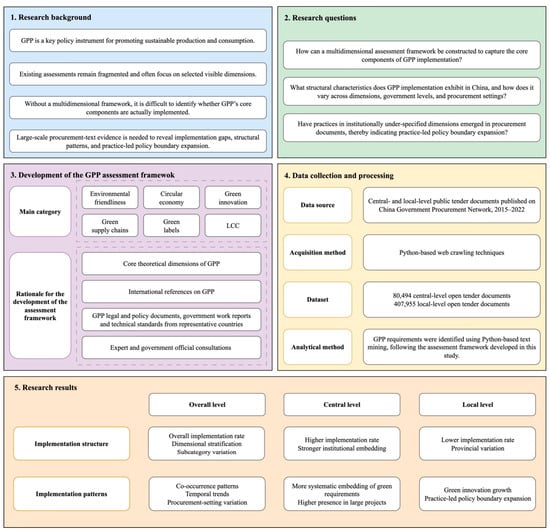
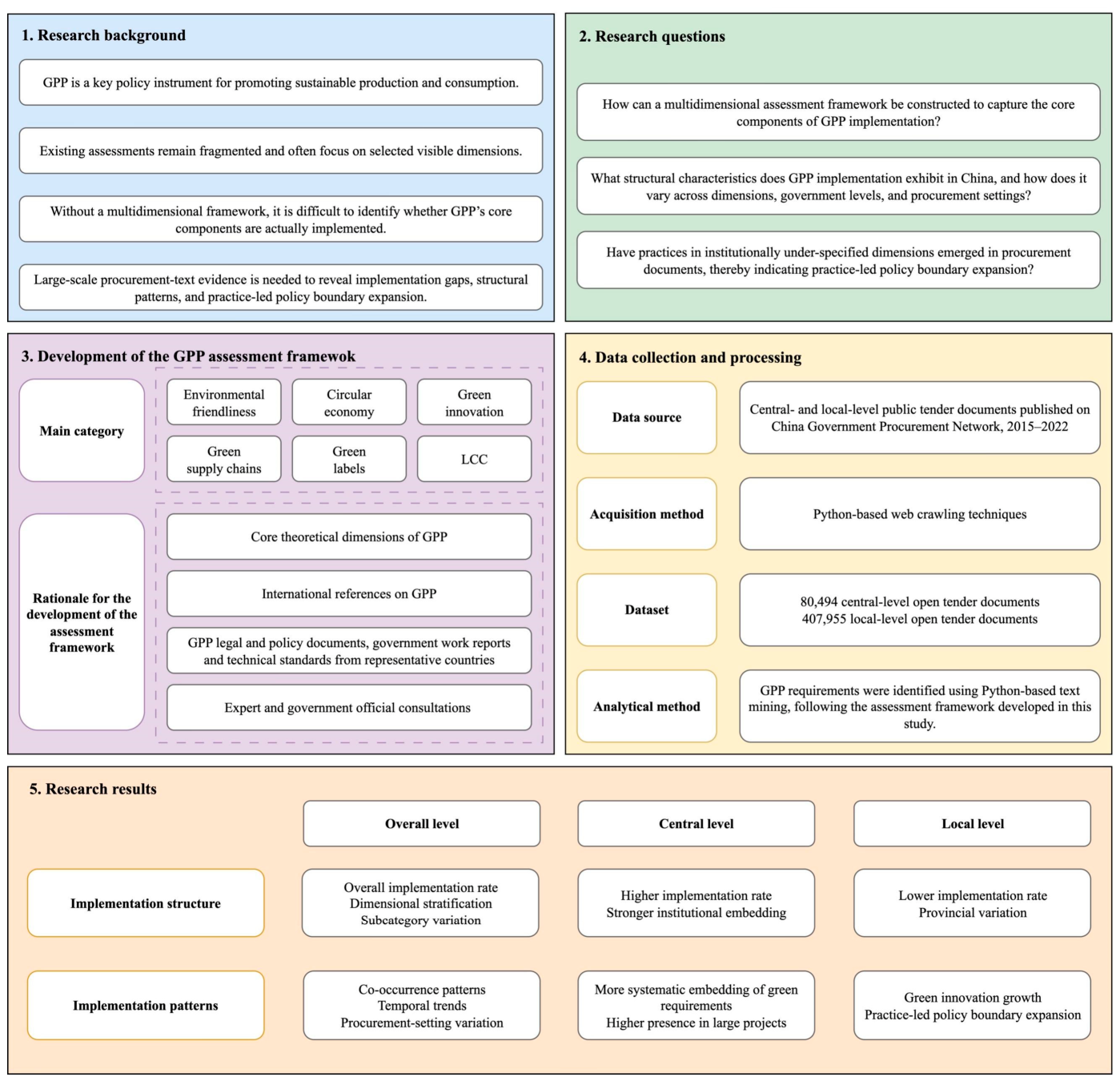
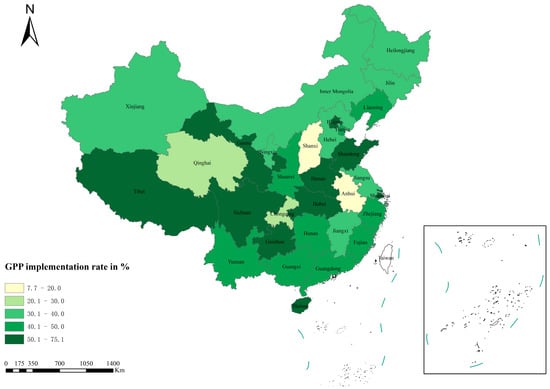
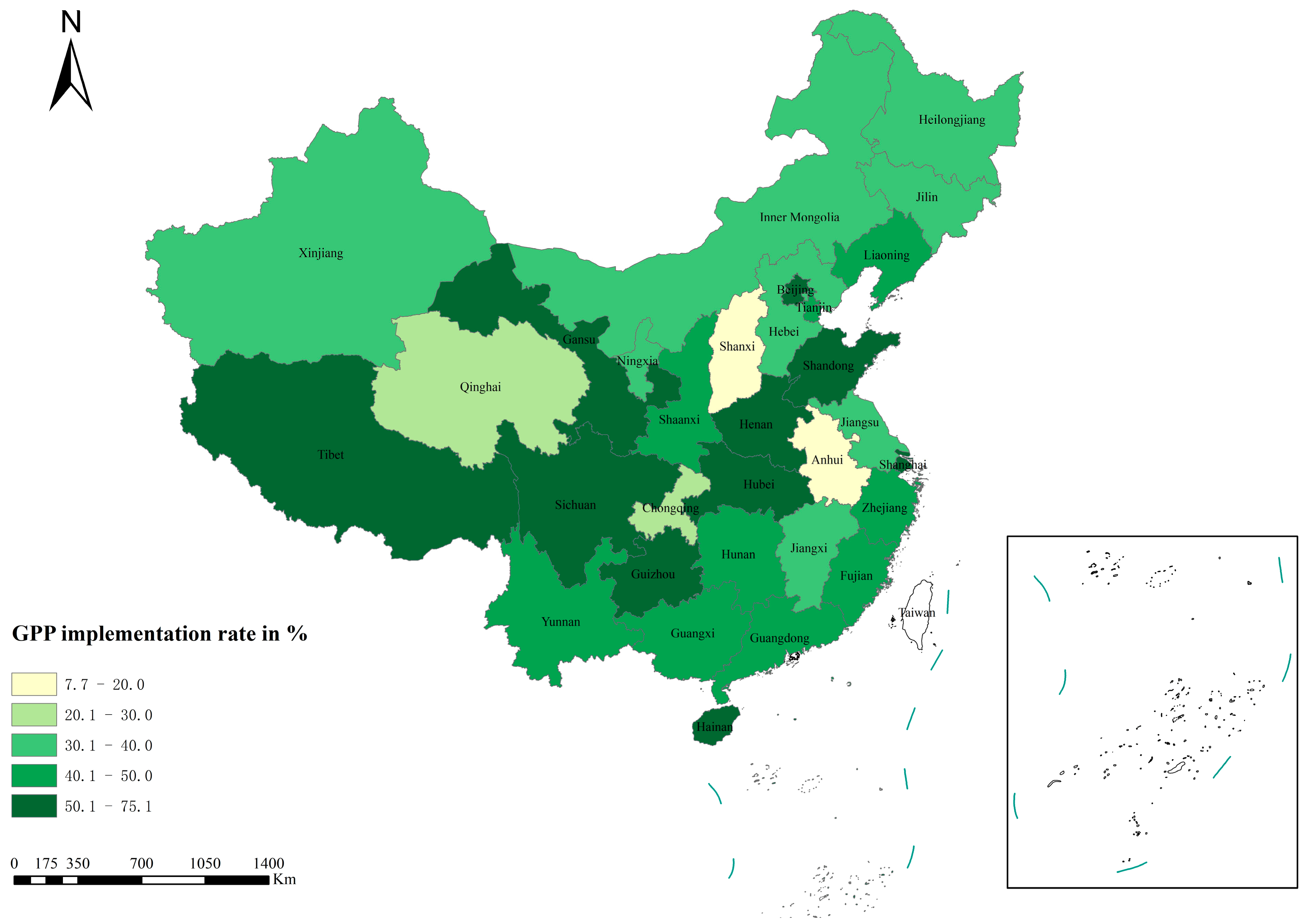
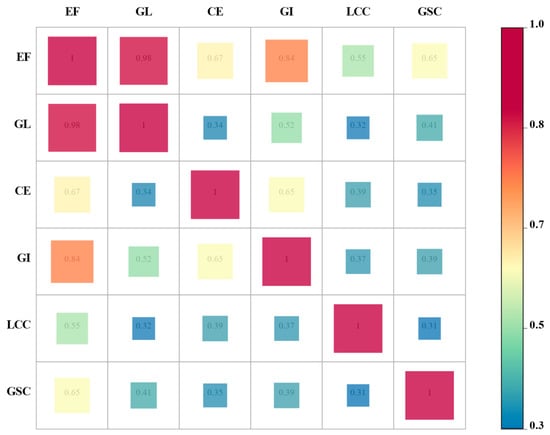
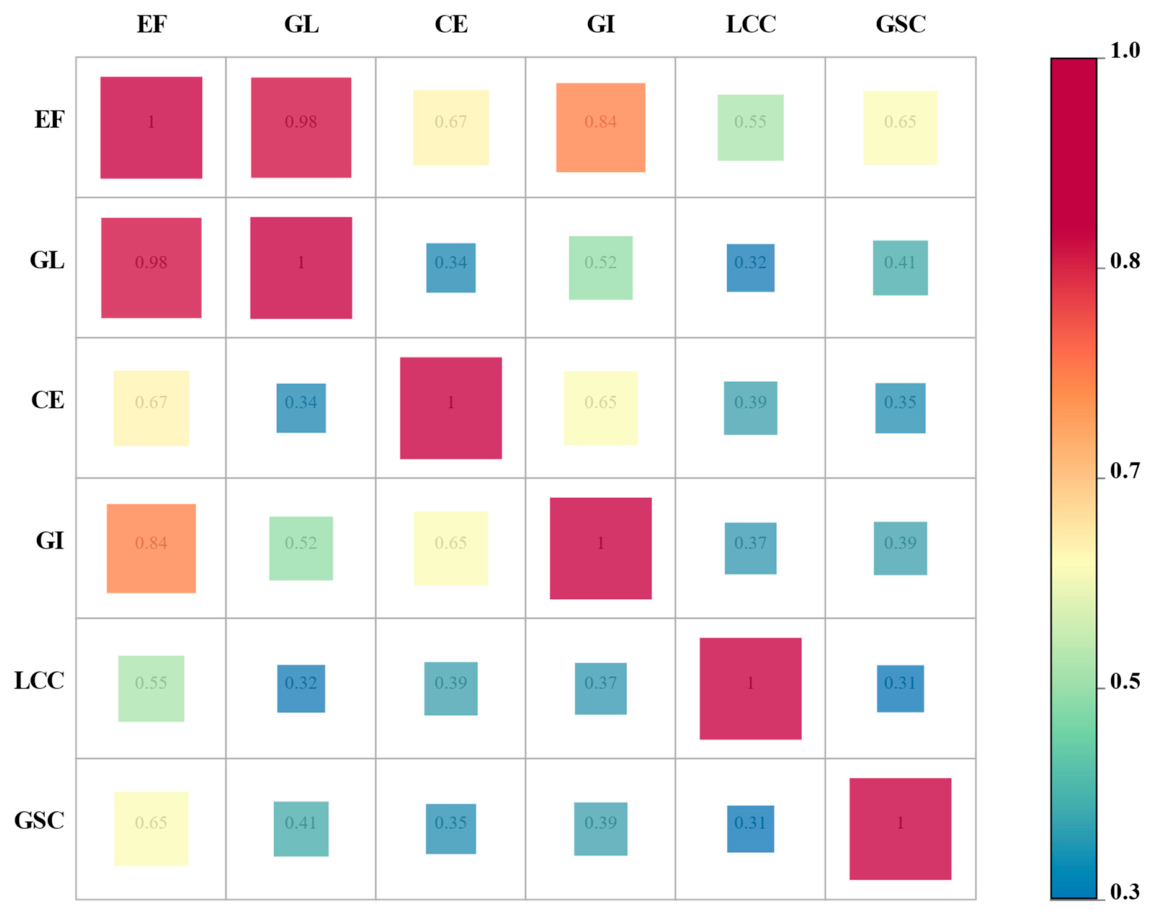
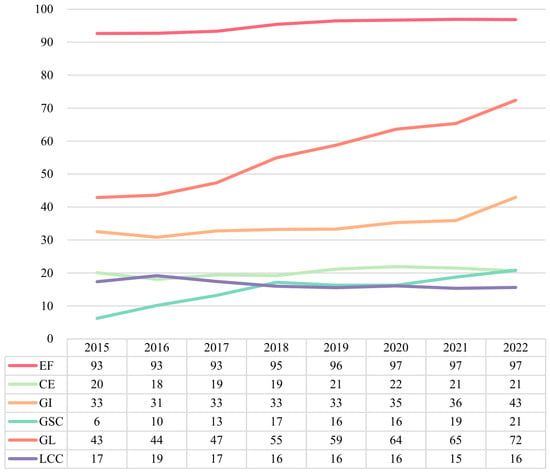
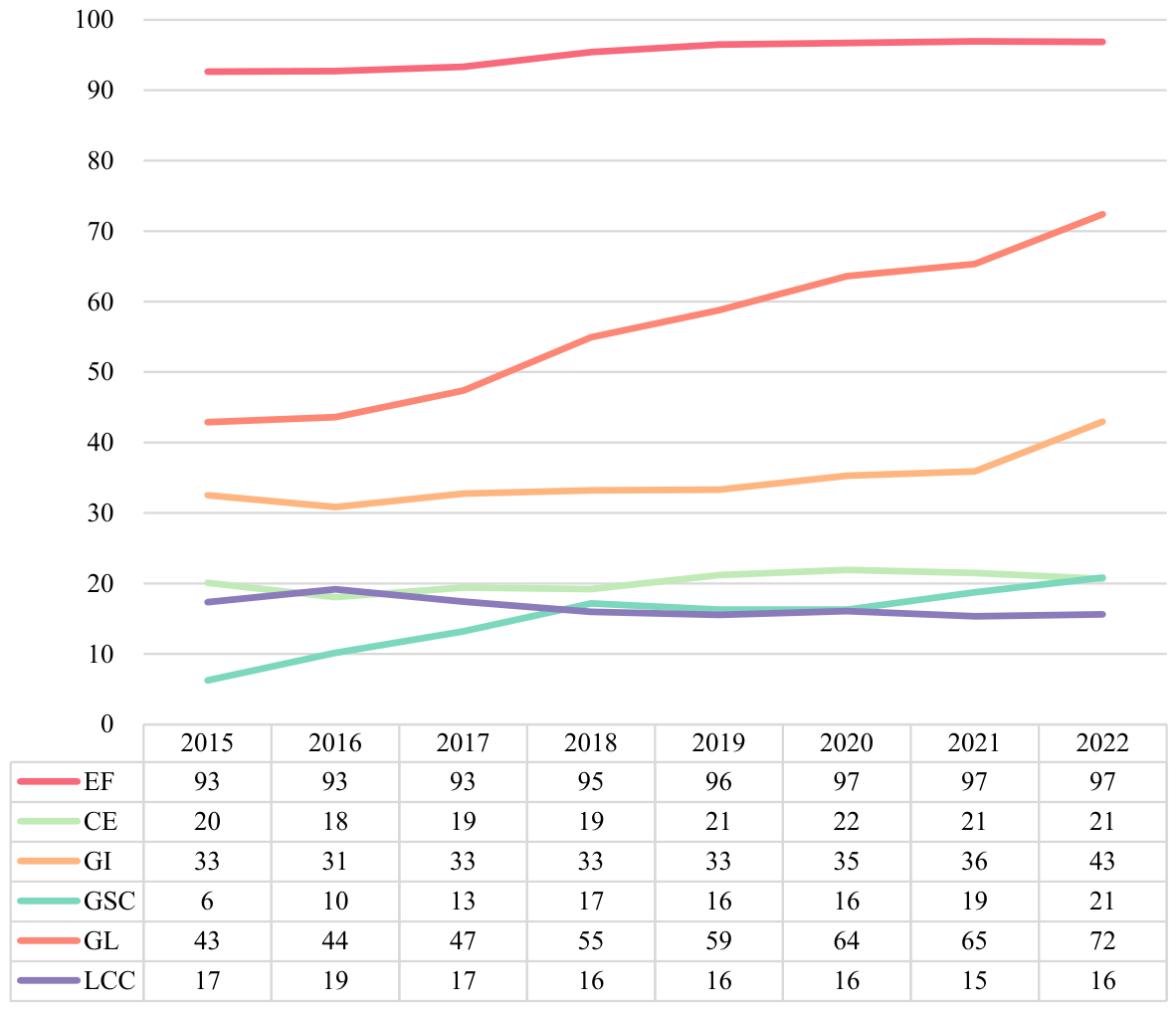

Disclaimer/Publisher’s Note: The statements, opinions and data contained in all publications are solely those of the individual author(s) and contributor(s) and not of MDPI and/or the editor(s). MDPI and/or the editor(s) disclaim responsibility for any injury to people or property resulting from any ideas, methods, instructions or products referred to in the content. |
© 2026 by the authors. Licensee MDPI, Basel, Switzerland. This article is an open access article distributed under the terms and conditions of the Creative Commons Attribution (CC BY) license.