1. Introduction
Global warming is a persistent global environmental trend. The Intergovernmental Panel on Climate Change issued its Sixth Assessment Report. It points out that the global average surface temperature has risen by 1.1 degrees Celsius since the pre-industrial age [
1]. This warming trend will continue over the next few decades. Extreme heat, sustained drought, regional floods, and typhoons now occur far more often. These events also grow stronger and last longer than before [
2]. The climate system becomes increasingly unstable and unpredictable. It delivers comprehensive, systematic shocks to agricultural systems worldwide [
3]. Agricultural production relies heavily on climate conditions. Abnormal weather disturbs core production factors. These factors include soil fertility, water availability, and pest activity cycles. Such disturbances directly trigger swings in crop yields. Climate change thus acts as a critical external threat. It puts global food security, sustainable farming, and rural income stability at risk [
4].
Agricultural Production Resilience (APR) refers to the comprehensive capacity of agricultural systems. It helps systems withstand climate shocks, stabilize output, restore productivity, and achieve long-term adaptive growth [
5]. Scholars have not reached a full consensus on APR’s definition, functional logic, and measurement standards. Existing literature generally splits APR into three core dimensions: resistance, recovery capacity, and adaptability. Yet studies differ greatly in defining each dimension and assigning weighting values [
6]. Some papers focus on short-term anti-interference capacity and equate APR with system stability. Others center on post-disaster recovery and highlight the speed and scale of output rebound. A third set of studies takes a long-term view. They stress the system’s ability to adjust actively and adapt to external environments. Diverse theoretical understandings lead to inconsistent proxy indicators for APR. Researchers select different metrics according to their research priorities. The yield fluctuation coefficient mainly reflects resistance. It measures output stability under climate disturbances. The post-disaster recovery rate stands for recovery capacity. It captures how fast production bounces back after disasters. The adaptation index matches long-term adaptability. It evaluates producers’ overall climate adjustments via structure, technology, and management. APR varies sharply across regions due to gaps in infrastructure, technology, and governance. Developed regions own stronger resistance and adaptive capacity. Developing regions such as sub-Saharan Africa, South Asia, and Latin America have fragile agricultural foundations. They suffer severe output losses more easily when extreme weather hits. It is an urgent practical task for global agricultural climate governance. Researchers must clarify how climate change affects each APR dimension and relevant regional gaps [
7].
Climate change and APR have drawn wide academic attention. However, current research still has obvious defects. It lacks consistent conclusions applicable to large-scale global regions [
8]. Most studies cover a single region or a single climate-factor. They fail to comprehensively compare the impacts of multiple extreme climate events. The literature differs widely in indicator selection, model setting, and sample periods. This makes it hard to unify scattered research findings [
9]. Cross-country heterogeneity analyses mostly remain superficial comparisons. They rarely offer quantitative explanations for underlying influencing mechanisms. In addition, traditional analytical tools cannot integrate and rank the effects of multiple climate factors at the same time. Thus, the overall patterns of global climate impacts on APR remain unclear [
10].
APR is a multi-dimensional composite concept. Different proxy indicators correspond to different functional dimensions of APR. This study avoids simplifying multi-dimensional indicators into a single evaluation index [
11]. It adopts meta-analysis to systematically combine quantitative results of all APR dimensions from existing papers. The analysis retains dimensional differences while evaluating the overall climate impacts on APR systems [
12]. This paper aims to answer four core research questions. First, how do various climate factors differ in impact intensity across APR dimensions? Second, what causes regional heterogeneity in climate change’s effects on APR? Third, can agricultural structure and production modes moderate climate shock effects? Fourth, how to design differentiated climate adaptation policies based on empirical results? This paper adopts cross-country network meta-analysis. It synthesizes global empirical literature and quantifies the impacts of different climate factors. It tests heterogeneity and moderating mechanisms from three perspectives: latitude, agricultural production modes, and agricultural structure. The findings provide empirical references to improve agricultural climate resilience and safeguard food security.
This study brings three marginal contributions compared with previous research. First, it breaks the limits of single climate-factor and single-region research. Multiple climate factors generate overlapping shocks. Traditional methods cannot conduct cross-factor comparisons or sort impact intensity. This paper applies cross-country network meta-analysis for integrated research. It accurately distinguishes shock differences among climate factors and enriches the methodological system of this field. Second, the sample covers multiple regions and economies at different development levels. It improves the representativeness and reliability of research conclusions. It offers quantitative evidence for cross-border agricultural resilience construction. Third, it deeply explores the moderating roles of agricultural structure and production modes. It explains contextual reasons behind conflicting conclusions in former studies. It clarifies shock features and mechanisms under different scenarios. The results provide theoretical and decision-making support. Countries can formulate localized agricultural climate policies and optimize agricultural resource allocation accordingly.
3. Research Design
Compared with traditional review methods, network meta-analysis adopts standardized quantitative integration procedures. It delivers higher clarity, comprehensiveness, and systematicness in the literature screening, quality assessment, and result synthesis. It effectively avoids the defects of traditional reviews. Such defects include strong subjectivity, fragmented conclusions, and unquantifiable effect magnitudes. Conventional meta-analysis only synthesizes a single effect. Meta-regression mainly interprets heterogeneity. Different from both methods, network meta-analysis builds multi-factor evidence networks. It supports comparisons and intensity ranking of multiple climate factors, matching the objectives of this research. Multiple climate factors often overlap and coexist in reality. Network meta-analysis does not require intervention factors to be mutually exclusive. This study extracts the net effect of every single factor. It also conducts consistency tests to validate model assumptions. This study applies this method to unified coding and quantitative analysis of cross-country empirical papers. It systematically explores the shock effects and heterogeneous characteristics of climate change on APR. The approach improves the reliability and generalizability of research conclusions.
3.1. Literature Screening and Data Extraction
3.1.1. Literature Inclusion and Exclusion Criteria
This study follows the standards of a Cochrane systematic review and network meta-analysis. It builds reproducible inclusion and exclusion criteria based on the PICOS framework. Literature search closes on December thirty-first, 2025. Only Chinese and English papers are collected. The complete search formulas are listed below. Chinese search formula: Topic = (APR OR yield fluctuation coefficient OR post-disaster recovery rate OR adaptability index) AND (extreme heat OR extreme drought OR extreme flood OR precipitation fluctuation OR temperature anomaly) AND cross-country empirical research. English search formula: TS = (APR OR yield fluctuation coefficient OR post-disaster recovery rate OR adaptability index) AND (extreme heat OR extreme drought OR extreme flood OR precipitation fluctuation OR temperature anomaly) AND cross-country empirical study.
Papers must meet three inclusion rules at the same time. First, samples cover multiple countries to study cross-country climate impacts on APR. Single-country regional research is excluded. Second, the papers adopt quantitative models such as panel, DID, IV, and PSM. Complete statistics, including regression coefficients, standard errors, and confidence intervals, can be extracted. Third, publication years range from 2005 to 2025 [
30].
Valid materials contain SSCI and CSSCI journal articles, high-quality dissertations, and standard empirical conference papers. Several types of literature are eliminated directly. They include theoretical reviews, qualitative case studies, and purely descriptive analyses. Papers with missing core data, vague variable definitions, flawed research design, or duplicate publication are also removed. Search channels consist of database retrieval and citation tracking. Selected databases are CNKI, Wanfang, VIP, Web of Science, Scopus, and PubMed. NoteExpress version 3.2 was used to remove duplicate records in batches [
31].
Google Scholar and Baidu Scholar are used for forward and backward citation tracking. Gray literature, such as working papers and unpublished conference drafts, is supplemented to reduce the number of missing papers. Standard definitions of climate disaster and APR keywords are unified during searching. This ensures consistent judgment standards for two independent screeners [
32].
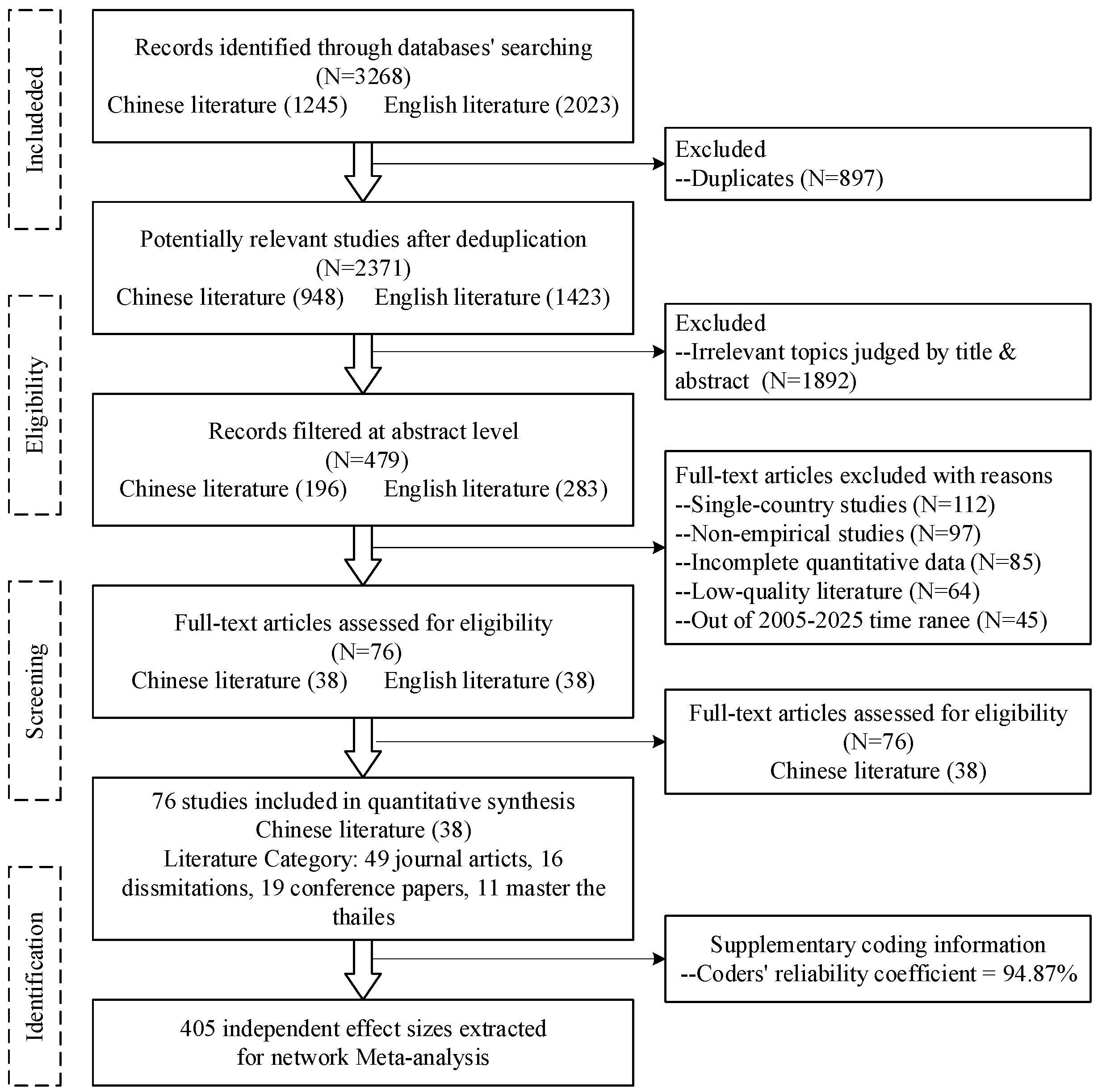
Screening includes two stages: preliminary screening by titles and abstracts, and full-text secondary screening. Two researchers finish screening independently. Disagreements are resolved by checking the original texts or by a third reviewer. The initial search yields 3268 records. 897 duplicate articles are deleted. 1892 articles are eliminated through title and abstract screening. After full-text reading and re-screening, 76 valid empirical papers are retained. There are 38 Chinese papers and 38 English papers. Among them are 49 journal articles, 16 dissertations, and 11 conference papers. The whole screening process is shown in
Figure 2.
Four categories of information are extracted from the literature. They are basic document information, measurement indicators of climate and APR variables, regression statistical effects, and stratified sample characteristics. All extracted data are coded uniformly in Excel. The coding consistency coefficient reaches 95.12 percent, which exceeds 90 percent. The extraction process enjoys high reliability. Statistical analysis is conducted with Stata 17.0 afterward.
Agricultural production mode subgroups are divided by the regional share of rain-fed farmland. The high rain-fed group accounts for no less than 80 percent. The medium rain-fed group ranges from 40 percent to 80 percent. The low rain-fed and high irrigation group takes up less than 40 percent of rain-fed land, with irrigation proportion above 60 percent. The grouping standard depends on supporting farmland water conservancy facilities. It has no connection with local temperature and humidity conditions.
The included papers adopt different indicators to measure APR. These indicators reflect output fluctuation, post-disaster recovery, and adaptive capacity. Obvious measurement heterogeneity exists among studies. This study firstly classifies all indicators into three core dimensions theoretically. The three dimensions are resistance, recovery capacity, and adaptability. All indicators are valid proxy variables for APR, with merely different research focuses. This study avoids direct comparison of original indicators. All data are uniformly converted into standardized effect sizes. This step eliminates differences in dimension and value range for horizontal comparison [
33].
3.1.2. Quality and Bias Risk Assessment of Included Studies
This study combines the Newcastle–Ottawa Scale for basic quality scoring. It also uses a six-dimensional structured bias evaluation framework. The framework fits samples with diverse econometric models and publication types. It identifies potential bias across six dimensions. First, confounding bias. Researchers check key control variables and fixed effect settings. Second, endogeneity bias. It distinguishes different correction methods for endogeneity. Studies using only static regression without corrections are marked high risk. Third, measurement validity. It verifies definitions of climate and APR indicators. It also checks theoretical support for proxy variables. Fourth, model standardization. It examines identification strategies, robust standard errors, and multiple testing arrangements. Fifth, sample representativeness. It mainly screens for sample selection bias in dissertations and conference papers. Sixth, selective reporting. It compares preset hypotheses with empirical results. It checks whether gray literature hides insignificant findings [
34].
Each paper receives separate scores for the six dimensions. All papers are sorted into three bias risk levels: low, medium, and high. Evaluation results show 58 out of 76 papers carry low bias risk. 18 papers have a mild-to-medium bias risk. No paper falls into the high-risk category. Dissertations and unpublished conference papers mainly have flaws in sample representativeness and complete result disclosure. Medium-bias papers are not directly excluded in this research. Subgroups based on literature type are set in the meta-analysis. The study quantifies the effect of gaps between journal articles and gray literature. This step weakens interference from mild bias. NOS scores are consistent with the six-dimensional bias evaluation results. Together with subsequent publication bias tests and multi-dimensional robustness checks, they build a multi-layer quality control system. The system reduces systematic errors caused by synthesizing highly heterogeneous papers [
35]. Detailed results are presented in
Table 1.
3.2. Network Meta-Analysis Method
This study adopts network meta-analysis to compare the effects of multiple climate shocks. Three statistical assumptions must hold for this method: homogeneity, similarity, and transitivity. Normal climate serves as the unified reference baseline [
36]. Exposure factors include extreme floods, extreme heat, drought, precipitation fluctuation, and temperature anomaly. Original literature only reports the net effect of a single climate disturbance against the normal climate. No direct head-to-head comparisons exist between different extreme climate types. Cross-type effect comparisons rely on indirect evidence chains built on the shared baseline [
37]. This study unifies variables and analytical frameworks. It balances baselines through stratification by geographical features. Global consistency tests and closed-loop inconsistency tests verify transitivity. Standardized inclusion criteria control spatial confounding to satisfy the similarity assumption. Q tests and stratified subgroup analyses reduce between-group heterogeneity. The SUCRA only acts as an auxiliary visualization tool for effect ranking. The magnitude of climate shocks shall be judged comprehensively. Judgment grounds include pooling the standardized mean difference (SMD), confidence intervals, consistency, and robustness tests. Single ranking results cannot support one-sided inference alone [
38].
All proxy indicators of APR are constructed around three core dimensions: resistance, recovery capacity, and adaptability. Homogeneity of variance tests show no significant variance differences across groups (
p > 0.05). This meets the basic requirements for effect conversion. Constraints from raw data prevent cross-study measurement invariance verification. Indicator pooling carries inherent statistical limitations. This study uses SMD to eliminate dimensional differences. It separates measurement heterogeneity via stratification by resilience dimension. Multiple APR indicators are integrated under available data constraints [
39].
All included literature uses econometric models with endogeneity corrections. Models cover panel regression, DID, IV, and PSM. This paper follows conversion standards for causal meta-analysis in social sciences. Net causal statistics from all models are uniformly converted into SMD. This approach differs from rough conversion based on simple correlation coefficients [
40]. Only statistics adjusted by endogeneity and fixed effects are extracted for conversion. All constraints of the original models are fully retained. Subgroups based on econometric models are added to identify model heterogeneity [
41]. Literature quality evaluation, sensitivity analysis, and publication bias tests jointly cross-verify the robustness of the results. Standardized dimensionless processing only unifies comparable scales of effects. The original causal identification logic of empirical studies is fully preserved. The conversion process is supported by standardized methodological norms [
42].
3.2.1. Effect Size Selection and Calculation
Standardized mean difference is chosen as the unified effect indicator. It eliminates between-group heterogeneity caused by variable dimensions, econometric models, and APR measurement methods. SMD, when converted from observational panel data, has inherent limitations. It differs from SMD used in randomized controlled trials. No strict random assignment exists in observational research. Differences in model settings may lead to minor conversion bias. Three measures are adopted to reduce such bias. First, only net causal statistics corrected for endogeneity are used for conversion. Simple correlation coefficients are excluded. Second, subgroups are divided by model types to distinguish estimation gaps. Third, multiple tests are used for cross verification. SMD results are interpreted cautiously to avoid absolute conclusions [
43].
This study codes a total of 405 independent effect sizes. All original coefficients reflecting adverse climate shocks are uniformly assigned negative values. A consistent set of conversion standards is applied throughout the analysis. The baseline correlation coefficient for variance calculation is preset to 0.5. To avoid subjective bias in parameter selection, three gradient values (0.3, 0.5, and 0.7) are adopted for preliminary sensitivity tests.
The fluctuation range of effects stays below 7 percent. This proves the baseline parameter selection is robust and does not alter core conclusions. Statistics generated by various causal identification models differ in format. Yet they fit the unified conversion paradigm of network meta-analysis in social sciences. First, all models control for confounding factors and endogeneity issues. Regression coefficients and test statistics can objectively reflect the correlation strength between variables. They satisfy the prerequisites for conversion. Second, the dimensionless feature of SMD offsets gaps from models, dimensions, and measurement standards. It serves as a common tool to integrate multi-source empirical evidence in economics, agriculture, and environmental studies [
44]. Standardized conversion is carried out based on the above theoretical grounds. The specific calculation formula is shown as follows.
(1) Effect size back-calculated from
t-values
where
n is the sample size,
k is the number of explanatory variables, and
t is the statistic for the climate change variable.
Effect size back-calculated from 95% confidence intervals
where
and
are the lower and upper limits of the confidence interval, respectively, and 1.96 is the critical value corresponding to the 95% confidence level.
Calculation of effect size variance
where
p is the correlation coefficient of the variable, set at the mean reported in the literature or the conventional industry value of 0.5. All effect size transformations and calculations were performed using Stata 17.0 to ensure the accuracy of the results.
3.2.2. Consistency Test
Consistency testing is a core prerequisite for network meta-analysis, used to verify the similarity between direct and indirect comparison results. This study adopts a combined approach of global consistency test + loop-specific inconsistency test. The global consistency test is performed using the Q statistic in Stata; a
p-value > 0.05 indicates good global consistency and no systematic bias. The loop-specific inconsistency test calculates the inconsistency factor for each closed loop. If the 95% CI of IF includes 0, good within-loop consistency is confirmed. If the consistency test is satisfied, a consistency model is used for subsequent analysis; if inconsistency exists, subgroup analysis is conducted to identify sources of heterogeneity before effect size pooling [
45].
3.2.3. Effect Size Pooling and Ranking
Models are selected based on the results of consistency tests, and effect size pooling for multiple climatic factors is performed using Stata 17.0. Overall effect size pooling integrates all study results to examine the global impact of climate change on APR. Head-to-head comparison pooling completes direct and indirect comparisons among the five climatic factors (extreme high temperature, extreme drought, extreme flooding, precipitation variability, and temperature anomaly). For quantitative ranking of impact intensity, the surface under the cumulative ranking curve (SUCRA) is applied, with higher SUCRA values indicating stronger shock effects [
46].
3.2.4. Heterogeneity and Moderating Effect Analysis
This study adopts stratified network meta-analysis for subgroup tests. It systematically identifies stratified gaps and sources of heterogeneity in climate shock effects. Meta-regression and inter-group interaction tests are used to judge inter-group effect differences objectively. It abandons the rough method that only relies on overlapping confidence intervals to identify subgroup heterogeneity. Latitude location and agricultural production mode are selected as core moderating variables. Latitude reflects inherent differences in regional climate endowments. Unified control over research periods, sample sizes, and econometric identification standards is completed in earlier literature screening. Irrelevant confounding disturbances are effectively ruled out.
Heterogeneity tracing is carried out at two levels: basic stratification and in-depth moderation analysis. Basic subgroup analysis divides samples by two criteria. The first criterion is latitude: low-latitude regions and mid- and high-latitude regions. The second criterion is agricultural production mode: rain-fed crop farming, irrigated farming, and animal husbandry. Moderation analysis further adds two variables: agricultural industrial structure and the proportion of rain-fed and irrigated farmland. It explores the internal root causes of effect heterogeneity. The overall Q statistic is decomposed to separate within-group and between-group heterogeneity. The significance of the between-group Q test is not taken as the sole judgment standard for stratified differences. A comprehensive evaluation combines meta-regression coefficients and the significance of interaction terms. It quantifies how much each moderator explains climate shock effects. Strict statistical evidence is provided for tracing heterogeneity and concluding subgroup effect gaps [
47].
3.3. Robustness and Publication Bias Tests
This study further conducts robustness and publication bias tests. It draws on prior results of literature quality and bias risk assessment. Multiple measures are adopted to control analytical bias.
3.3.1. Robustness Test
The leave-one-out method is used to verify the reliability of conclusions. Each study is omitted sequentially, the network evidence structure is reconstructed, and consistency tests, effect size pooling, SUCRA ranking, and subgroup analysis are repeated. Robustness is judged by comparing the stability of core results (magnitude of effect sizes, significance, ranking relationships) before and after omission [
48].
3.3.2. Sensitivity Analysis Classified by Literature Type
All conference papers and dissertations are excluded. Only peer-reviewed journal articles are retained to repeat the network meta-analysis. Effect sizes and shock intensity rankings of the full sample and journal subsample are compared. This step tests whether non-journal papers interfere with core conclusions.
3.3.3. Publication Bias Test
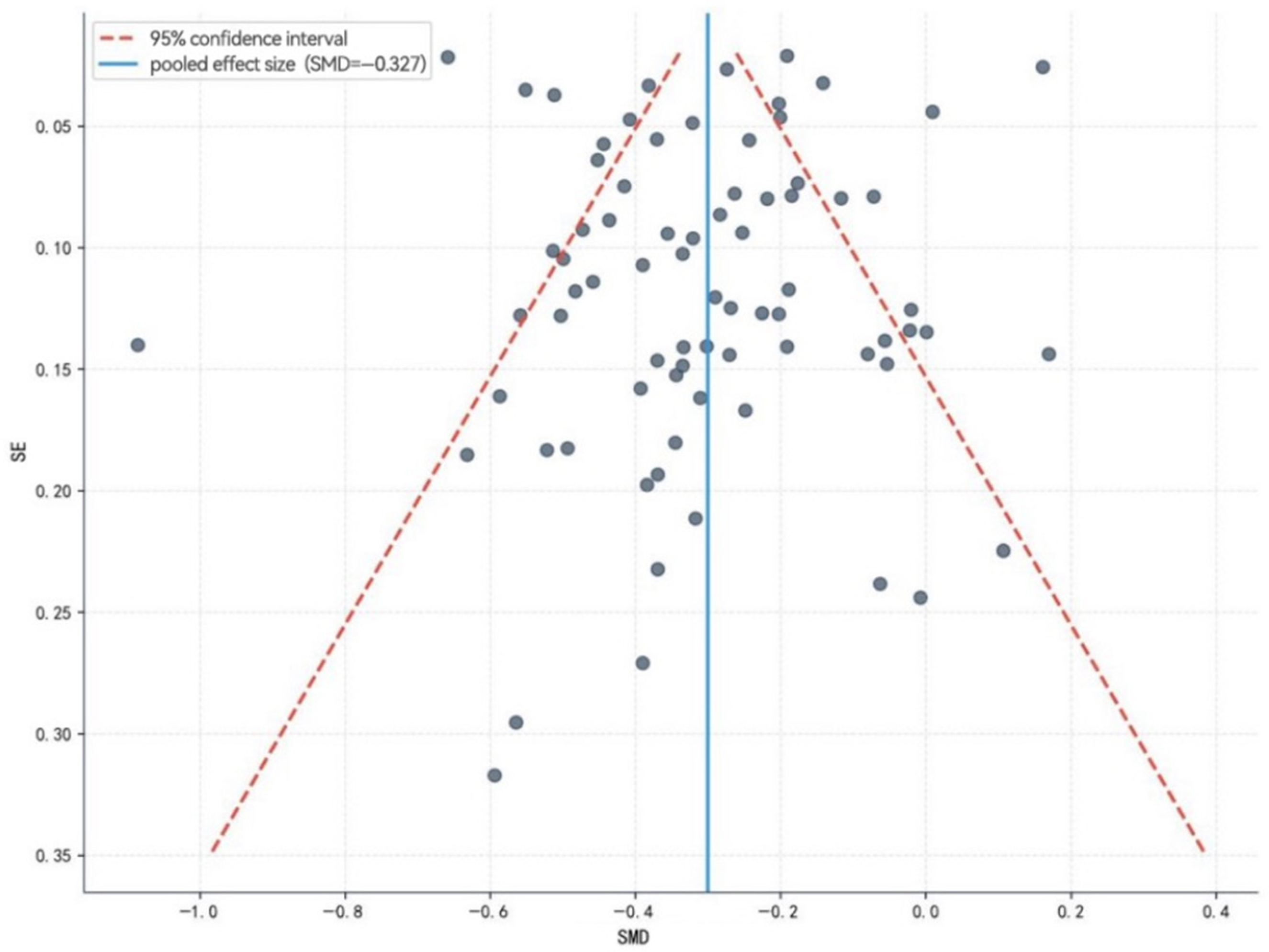
Multiple climate shock effect sizes can be extracted from a single included paper. This leads to non-independent observations within the same study. The study first adopts robust variance estimation. It corrects the standard error bias caused by dependent observations before publication bias testing. A funnel plot is drawn with the standardized mean difference on the horizontal axis. Standard error is placed on the vertical axis. Funnel plot asymmetry test offers a preliminary judgment on publication bias. Single test results may carry random errors. The trim-and-fill method and adjusted funnel plots are adopted for multiple robust tests. The overall publication bias level is evaluated objectively based on all results. The
p-value of the funnel plot asymmetry test in this study equals 0.217. This single indicator cannot support solid conclusions alone. Trim-and-fill analysis shows no obvious shift in pooled effect sizes after adding hypothetical studies. The adjusted funnel plot presents a symmetric and balanced sample distribution. All test results mutually confirm each other. The overall risk of publication bias in this study is judged to be low [
49].
4. Results Analysis
This study identifies extreme high temperature, extreme drought, extreme flooding, precipitation variability, and temperature anomaly as climatic intervention nodes. It establishes a cross-national network evidence map for the impact of climate change on the APR. Furthermore, a comprehensive set of analyses is performed to examine and verify the moderating effects of agricultural structure and production modes. It systematically identifies the effect characteristics, intensity differences, and regional heterogeneity of climate shocks.
4.1. Basic Characteristics of Included Studies
This study finally includes 76 empirical studies covering 36 countries and regions worldwide, involving major agricultural producing areas in Asia, Africa, Europe, America, and Oceania. Among them, 41 studies focus on low-latitude countries and tropical/subtropical regions, and 35 on mid- to high-latitude countries and temperate regions. The sample includes developed countries such as the United States, Germany, France, and Japan, as well as developing countries including India, Brazil, South Africa, Thailand, and parts of sub-Saharan Africa. The regional distribution is generally consistent with the pattern of agricultural climate risk, and can well reflect divergent responses of agricultural systems to climate change across development levels and climate zones.
In terms of publication year, 62 studies (81.6%) were published between 2015 and 2025, while 14 studies (18.4%) were published from 2005 to 2014. The number of relevant studies shows an overall upward trend. This reflects that cross-country research on climate change and APR has become a research hotspot in global agricultural economics and climate economics in recent years. The research is highly timely and reflects the latest academic progress and practical changes. Regarding literature source and type, there are 38 English studies and 38 Chinese studies. These include 42 SSCI/SCI journal papers, 7 CSSCI journal papers, 16 high-quality master’s and doctoral dissertations, and 11 papers from major domestic and international conferences. Overall, the included literature is of generally high quality, with standardized econometric methods and reliable data.
All included studies use quantitative empirical methods. Panel regression, DID, and fixed-effects models are the most commonly applied approaches. Some studies also adopt propensity score matching, instrumental variable methods, and other techniques. The effect indicators can be uniformly converted into standardized effect sizes, which satisfy the data requirements for network meta-analysis.
Sample sizes of individual studies range from 39 to 1560, mostly concentrated between 200 and 1000. Samples cover multiple scales, including household, county, and national levels, with both micro-level farmer analyses and cross-country macro panel analyses. Evaluation standards vary across studies of different scales. This study distinguishes scale features in data processing and statistical analysis. Direct cross-scale comparisons are not conducted. Overall, no obvious regional bias or temporal clustering bias is observed in the included literature (see
Table 2).
4.2. Structural Characteristics of the Network Evidence for Climate Change Factors
Five types of climate shocks and a unified normal climate control group form a complete network evidence structure. It contains 11 direct comparison paths and 4 closed indirect comparison loops. All nodes in the network are well-connected. No isolated nodes or broken comparison links exist. The network structure is intact and stable. The included studies cover regions of various latitudes and diverse agricultural modes. Samples feature sufficient spatial heterogeneity and scenario diversity. They meet basic requirements for closed and robust network meta-analysis. Details of literature for each climate intervention node are shown in
Table 3.
4.3. Results of Consistency Test for the Network Evidence Network
Consistency is a core prerequisite for ensuring the reliability of network meta-analysis results, reflecting the degree of agreement between direct and indirect comparison estimates. This study combined the global consistency test and loop-specific inconsistency test to verify the consistency of the network evidence for climate change factors using Stata. The p-value was used as the key criterion, supplemented by the inconsistency factor. If the 95% CI of IF included 0, good within-loop consistency was confirmed.
The results showed that the overall test yielded
p = 0.127 > 0.05, indicating good global consistency of the network, no statistically significant differences between direct and indirect effect estimates, and no systematic bias. Individual tests of the four closed loops for indirect comparison showed that the 95% CI of IF for each loop included 0, confirming good within-loop consistency without loop discontinuity or effect size bias (see
Table 4). In summary, the evidence network has good consistency. A consistent network meta-model is adopted for pooled effect sizes, ranking, and heterogeneity analysis. This ensures reliable empirical results.
4.4. Overall Impact of Climate Change on APR
This study adopted SMD as the core effect size indicator. Combined with the results of heterogeneity tests, a consistency model was employed in Stata to conduct an overall meta-analysis of the impact effects of five climate factors on APR, as well as head-to-head comparisons among these factors. The results showed that extreme high temperature, extreme drought, extreme flooding, precipitation variability, and temperature anomaly all had significant negative impacts on APR. All 95% confidence intervals excluded 0, with
p < 0.001. This confirms that climate change significantly reduces APR. The head-to-head comparison results with temperature anomaly as the reference are presented in
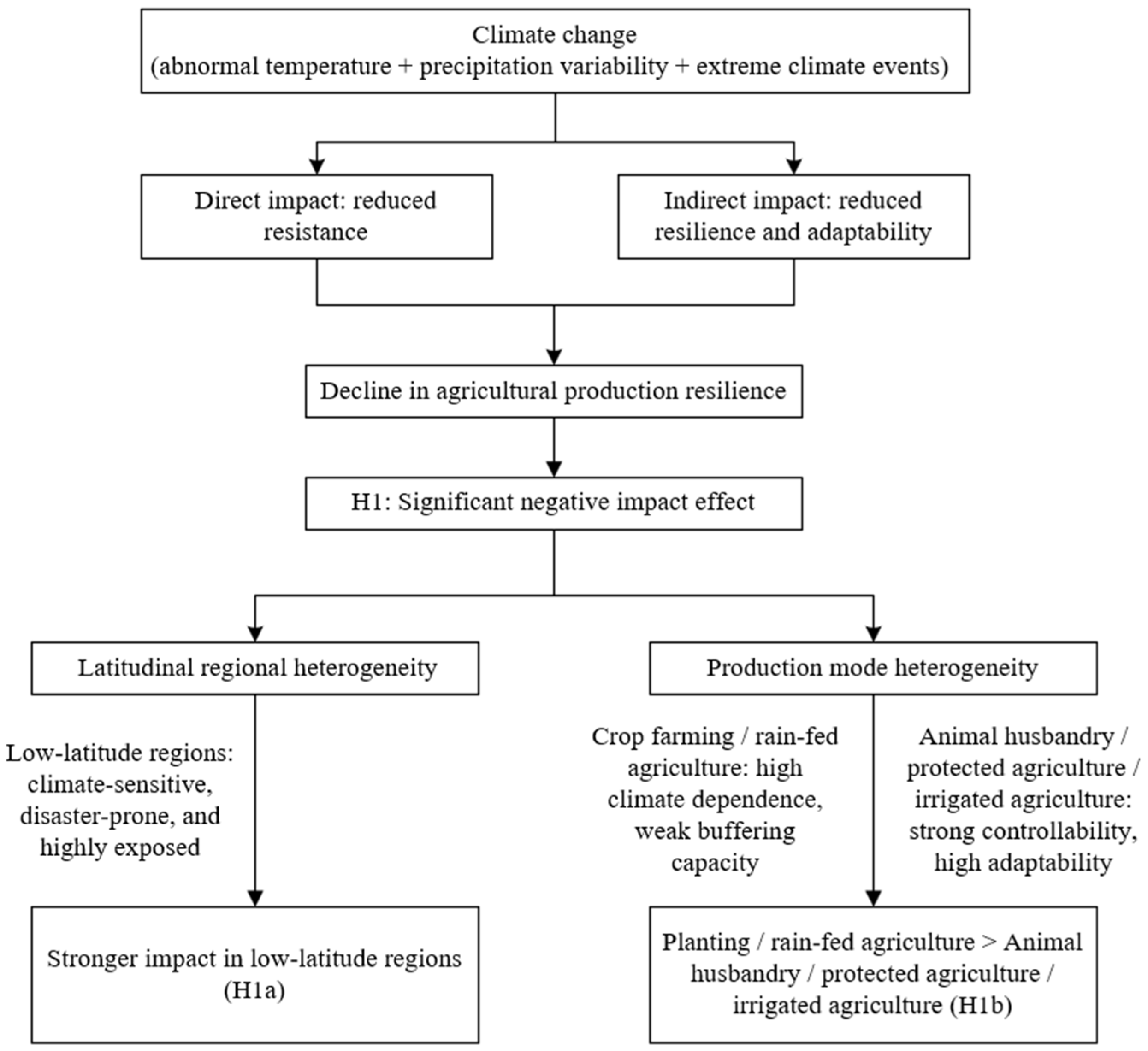
Table 5. The degree of climatic abnormality was positively correlated with the intensity of the negative impact. Extreme flooding (SMD = −0.352) and extreme high temperature (SMD = −0.327) showed more pronounced effects. Temperature anomaly had the weakest impact (SMD = −0.105). These results thus verify Hypothesis H1.
4.5. SUCRA Ranking of Impact Intensity of Climate Factors on APR
The surface under the SUCRA is a core indicator for the quantitative ranking of multifactor effect intensity in network meta-analysis, ranging from 0 to 100%. A higher value indicates a stronger negative impact of the factor on APR. Based on the pooled effect sizes from the consistency model, this study calculated the SUCRA values of the five climate factors and conducted a quantitative ranking, with detailed results presented in
Table 6.
The results showed the intensity of negative impacts of the five climate factors on APR. Ranked from strongest to weakest, the order was: extreme flooding (SUCRA = 92.6), extreme high temperature (SUCRA = 78.3), extreme drought (SUCRA = 69.4), precipitation variability (SUCRA = 41.7), and temperature anomaly (SUCRA = 18.0). This ranking was highly consistent with the pooled effect size results.
Among them, extreme flooding was the primary climate factor affecting APR globally. Its strong impact stemmed from the direct damage and long-term effects on agricultural production facilities, crop growth, and soil fertility. Extreme high temperature and extreme drought were important influencing factors, which undermined the stability of agricultural production by inducing crop heat damage and restricting water supply, respectively. The impact intensities of precipitation variability and temperature anomaly were significantly weaker, especially for temperature anomaly. The effects of slight temperature fluctuations could be offset by the self-regulation of the agricultural production system and simple adaptation measures.
4.6. Heterogeneity Validation of Climate Change Impact Effects
This study conducted a stratified network meta-analysis, using latitude region and agricultural production mode as stratification dimensions, to explore the heterogeneous characteristics of climate change impacts.
4.6.1. Latitudinal Heterogeneity
For the low-latitude country group (n = 39), the pooled effect size was SMD = −0.452, with 95% CI = [−0.531, −0.373]; for the mid- to high-latitude country group (n = 37), the pooled effect size was SMD = −0.198, with 95% CI = [−0.264, −0.132]. This indicates that the impact intensity of climate change on low-latitude countries is significantly higher than that on mid- to high-latitude regions. The core impact factor in the low-latitude group was extreme flooding, whereas in the mid- to high-latitude group it was extreme high temperature, showing significant latitudinal heterogeneity, thus verifying Hypothesis H1a.
These results align with regional characteristics. Low-latitude regions experience frequent extreme flooding and have relatively weak agricultural stress resistance. In contrast, mid- to high-latitude regions face rising extreme high temperatures but possess a relatively well-established agricultural resilience system.
4.6.2. Heterogeneity Based on Agricultural Production Mode
For the rain-fed agriculture/crop farming group (n = 41), the pooled effect size was SMD = −0.436, with 95% CI = [−0.509, −0.363]; for the irrigated agriculture/livestock group (n = 35), the pooled effect size was SMD = −0.209, with 95% CI = [−0.275, −0.143]. This indicates that rain-fed agriculture/crop farming is significantly more vulnerable to climate shocks than irrigated agriculture/livestock. The core impact factor for the former was extreme flooding, and for the latter it was extreme drought, revealing significant heterogeneity across production modes, thus verifying Hypothesis H1b.
The underlying reason is that rain-fed agriculture/crop farming relies heavily on natural hydrothermal conditions and lacks artificial buffering measures, making it susceptible to direct extreme climate impacts. In contrast, irrigated agriculture allows artificial water regulation, livestock farming has lower climate sensitivity, and protected agriculture enables precise control of hydrothermal conditions, all of which effectively mitigate climate shock effects (see
Table 7).
4.7. Validation of the Moderating Effects of Agricultural Structure and Production Mode
On the basis of basic heterogeneity analysis, this study further carried out a network meta-analysis. We used agricultural structure and the ratio of rain-fed to irrigated farming in crop production as stratification dimensions. This analysis aimed to verify the moderating role of agricultural structure and production mode on climate shock effects, as well as to test Hypotheses H2, H2a, and H2b. The results are presented in
Table 8.
4.7.1. Overall Moderating Effect of Agricultural Structure
This study divided the sample into three subgroups: crop-dominated (crop farming ≥ 60%), balanced agricultural structure (crop and livestock farming 30–60%), and livestock/protected agriculture-dominated (livestock + protected agriculture ≥ 60%).
The results showed the following pooled effect sizes across different groups. For the crop-dominated group, the pooled effect size was SMD = −0.468, with a 95% CI of [−0.545, −0.391]. For the balanced structure group, it was SMD = −0.302, with a 95% CI of [−0.365, −0.239]. For the livestock/protected agriculture-dominated group, it was SMD = −0.185, with a 95% CI of [−0.247, −0.123]. The results indicate that agricultural structure has a significant moderating effect on climate shock intensity. The share of crop farming is positively correlated with climate shock intensity. In contrast, the share of livestock or protected agriculture is negatively correlated with such intensity. These findings therefore verify Hypothesis H2.
It also confirms that APR in crop-dominated countries is significantly more vulnerable to climate shocks than in livestock/protected agriculture-dominated countries, supporting Hypothesis H2a. The underlying reason lies in the differences in climate adaptability among agricultural systems. Livestock farming has significantly higher climate adaptability than crop farming. Protected agriculture can isolate the impacts of climatic factors through artificial regulation. In contrast, crop-dominated agricultural systems depend most heavily on natural climatic conditions. This results in the strongest transmission efficiency and largest magnitude of climate shocks.
4.7.2. Moderating Effect of Production Modes Within Crop Farming
This study classified crop farming samples into three subgroups according to the share of rain-fed agriculture: high rain-fed share (≥80%), medium rain-fed share (40–80%), and low rain-fed/high-irrigated share (<40%, irrigated share ≥ 60%). The results showed the following pooled effect sizes. For the high rain-fed group, the pooled effect size was SMD = −0.512, with a 95% CI of [−0.593, −0.431]. For the medium rain-fed group, it was SMD = −0.405, with a 95% CI of [−0.478, −0.332]. For the low rain-fed/high-irrigated group, it was SMD = −0.226, with a 95% CI of [−0.289, −0.163]. The results demonstrate that the share of rain-fed agriculture is significantly positively correlated with the intensity of negative climate shocks, and improved irrigation conditions can significantly mitigate climate shock effects, verifying both Hypothesis H2 and H2b. These findings confirm that irrigation infrastructure acts as a core buffer for crop farming against climate change. It effectively offsets the negative impacts of drought, precipitation variability, extreme heat, and other climatic factors. It also significantly improves the climate resilience of crop production.
Subgroup results across all dimensions reveal obvious gaps in climate shock effects. Some refined subgroups have limited sample sizes. The low rain-fed/high irrigation subgroup only includes 12 studies. Intra-group heterogeneity inevitably exists. Restricted by sample conditions, SUCRA rankings and conclusions of small subgroups are only for reference. No universal inferences are drawn from them. Multiple rounds of sensitivity analysis are carried out simultaneously. They reduce statistical bias caused by small samples.
4.8. Robustness Check
4.8.1. Robustness Test via Leave-One-Out Analysis
To verify the reliability of the results, the commonly used leave-one-out method in network meta-analysis was employed to assess robustness. We tested three core findings: the SUCRA ranking of global climate factor impact intensity, basic heterogeneity across latitude regions and production modes, and the moderating effects of agricultural structure and production mode.
In this study, every single article among the 76 included studies was omitted one by one. The network evidence map was reconstructed, followed by a consistency test, pooled effect size calculation, SUCRA ranking, and effect size estimation for each subgroup, with a total of 76 repeated analyses. The results are presented in
Table 9. The tests showed that after omitting any single study, the SUCRA ranking of global climate factors remained essentially unchanged, and the basic heterogeneity characteristics of latitude and production mode were consistent. The above results indicate that the verification results of Hypotheses H1, H1a, H1b, H2, H2a, and H2b in this study were not affected by any single study, suggesting that the research conclusions are highly robust and reliable.
4.8.2. Sensitivity Analysis by Literature Type
Quality gaps may exist across journal, dissertation, and conference papers due to different review systems. A targeted sensitivity test is therefore conducted. All dissertations and conference papers are excluded. Only 49 peer-reviewed journal articles are retained to recalculate pooled effect sizes.
The overall SMD of the full sample equals −0.315 (p < 0.001). The overall SMD of the journal subsample equals −0.311 (p < 0.001). The impact ranking of five climate shocks stays identical in both samples: Extreme Flood > Extreme Heat > Extreme Drought > Precipitation Fluctuation > Temperature Anomaly. Heterogeneity patterns by latitude and agricultural mode remain stable.
Subgroup effect sizes and significance levels show no obvious fluctuations. Non-peer-reviewed literature does not bias core conclusions. The research results present satisfactory robustness (As shown in
Table 10).
4.9. Results of Publication Bias Test
To assess publication bias among the included studies, this study used funnel plots combined with quantitative tests for asymmetry. The results are presented in
Figure 3. Study points were mainly distributed in the upper part of the funnel, with an overall approximately symmetric pattern. Only a small number of points were scattered on the outer side, with no obvious asymmetric deviation. The quantitative test for asymmetry showed a slope of 0.082 and
p = 0.217 > 0.05. In addition, the concentration ratio of effect sizes reached 89.5%, while the proportion of marginal study points was only 10.5%, indicating no significant publication bias in the included literature. The absence of significant publication bias in this study can be attributed mainly to two factors. Firstly, the search strategy was comprehensive, covering major Chinese and English databases as well as gray literature, thus minimizing the omission of studies with null or negative results. Secondly, the impact of climate change on APR is a research hotspot in academia; findings from different studies are academically valuable, and studies with negative results can be reasonably published. In summary, the risk of publication bias in the included studies is low, and the research results are less affected by such bias. This further supports the scientific validity and reliability of the network meta-analysis conclusions and the verification results of the six research hypotheses.
5. Conclusions and Implications
Combining network meta-analysis, literature quality evaluation and bias assessment, this study systematically identifies the magnitude of climate shocks on APR, heterogeneity across regions and production modes, and moderating effects of agricultural structure and irrigation. All conclusions pass robustness and publication bias tests with high reliability. Main findings are summarized as follows.
5.1. Research Conclusions
First, all climate disturbances significantly reduce cross-country APR. Shock intensity rises with the severity of extreme weather. Extreme floods, heatwaves, droughts, precipitation volatility, and temperature anomalies exert stable negative impacts. All 95% confidence intervals of effect sizes exclude zero (p < 0.001). Most existing evidence focuses on single regions or single climate variables. Few meta-analyses adopt network indirect comparison to rank multiple hazards uniformly. This study finds extreme floods create the largest adverse impact (SMD = −0.352), followed by heatwaves and droughts, while temperature anomalies have the mildest effects. Crop physiological mechanisms explain sustained yield losses under flooding. These hierarchical quantitative results fill research gaps and offer unified benchmarks for global agricultural climate risk classification.
Second, climate impacts show significant latitudinal heterogeneity. Agricultural systems in low-latitude regions suffer far greater losses than mid- and high-latitude areas. Pooled SMD equals −0.452 for low latitudes and −0.198 for mid/high latitudes. Low-latitude systems face dominant flood risks. Sharp hydrothermal variation and inadequate disaster infrastructure create dual vulnerability. Mid- and high-latitude regions are mainly threatened by heat and drought, mitigated by mature agricultural technologies and disaster-prevention systems. Previous regional vulnerability theories rely on single-continent samples. This cross-continental dataset covering 36 countries across five continents enriches empirical evidence and supports regionally differentiated climate adaptation policies.
Third, production mode drives prominent heterogeneity. Rain-fed crop farming is far more climate-sensitive than irrigated agriculture and livestock breeding. Pooled SMD reaches −0.436 for rain-fed crops versus −0.209 for irrigated/livestock systems, with statistically significant inter-group gaps. Rain-fed farming lacks artificial water regulation, leading to volatile yields during floods and droughts. Irrigation and controlled livestock facilities buffer external climate disturbances. Prior findings mostly stem from micro-household surveys. This large-sample cross-country study quantifies long-run resilience gains from water infrastructure, identifies dominant hazards for each production type, and provides evidence for targeted disaster-prevention policies.
Fourth, industrial structure and irrigation facilities exert significant moderating effects. Higher natural climate dependence corresponds to larger resilience losses. Impact intensity declines stepwise with industrial diversification: specialized crop zones (SMD = −0.468), balanced crop-livestock zones (SMD = −0.302), livestock/facility-dominated zones (SMD = −0.185). Single-sector systems concentrate disaster risks, while diversified farming disperses losses. Existing literature only qualitatively discusses risk hedging from diversification. This study quantifies effect gaps under different industrial mixes to support national agricultural layout adjustments and corroborates prior research showing that irrigation reduces crop vulnerability.
Fifth, core empirical patterns are highly robust, and the framework offers methodological references. Two sensitivity tests—leave-one-out analysis and journal-only subsample preserve identical climate hazard rankings, latitudinal/production-mode heterogeneity, and industrial moderation gradients. Subgroup effect fluctuations stay below 10%. Funnel plots and trim-and-fill tests detect no severe publication bias. Unlike comparable studies that judge subgroup gaps merely via confidence intervals, this paper integrates meta-regression and interaction tests to verify layered effects, thereby improving statistical rigor. The full testing workflow provides a standardized methodological template for integrated cross-country agricultural resilience meta-analysis.
5.2. Policy Implications
We quantify the links between regional endowments, agricultural production modes, and climate shocks. Based on climate governance and sustainable agricultural development goals, we propose differentiated and targeted policy paths at multiple levels.
First, establish a transnational collaborative governance system for agricultural climate risks to address systematic cross-border climate shocks. Climate disasters feature spatial spillover and cascading effects [
50]. Risk prevention by a single country cannot eliminate overall hazards. We shall build transnational cooperation frameworks under UN initiatives on climate and food security. Unified platforms shall be developed for agricultural climate monitoring, data sharing, and extreme disaster early warnings. Cross-border joint responses to floods, heatwaves and droughts can thus be realized. Cross-border grain reserves, trade adjustment and production capacity mutual support mechanisms shall be improved. The resilience of global food supply chains will be strengthened accordingly [
51]. Targeted support channels shall be set up from developed economies to low-latitude developing regions. Technology transfer, farm infrastructure aid, and green finance support can narrow regional gaps in climate adaptation capacity.
Second, implement latitude-specific, tailored climate adaptation governance to match dominant local climate risks. For vulnerable low-latitude zones, priority shall be given to farmland drainage and post-flood recovery systems. Waterlogging-resistant crop varieties shall be bred and popularized [
52]. An integrated disaster reduction system shall cover flood early warning, drainage emergency response, post-disaster replanting and agricultural insurance. Mid- and high-latitude regions shall focus on heatwave and drought prevention. Local technological strengths can support wide adoption of water-saving farming and smart irrigation to raise the regional APR. North-South agricultural technology exchange channels shall be established. Mature technologies, including water-saving equipment and stress-resistant breeding, shall be transferred to low-latitude areas to jointly boost global APR.
Third, optimize agricultural structures based on local endowments. Build a diversified, low-vulnerability and highly flexible modern agricultural production system. On the premise of national food security and stable supply of key agricultural products, gradually adjust structures overly reliant on single crop farming. Adopt diverse models including crop-livestock integration, crop-animal recycling and agroforestry in light of local conditions. Strengthen ecological flexibility and risk diversification capacity of agricultural systems. Moderately expand the scale of protected agriculture, smart agriculture and factory farming. These production models feature controllable environments, recycled resources and full-process management. They reduce reliance on natural climate conditions. Optimize internal planting structures. Increase the share of crop varieties resistant to drought, waterlogging and high temperature. Rationally arrange cropping systems and planting zones. Cut the sensitivity of staple crops to climate fluctuations. Disperse climate risks through rational industrial layout and lift overall APR [
53].
Fourthly, strengthen weak links in agricultural infrastructure and construct a hardware buffer barrier for climate risks centered on irrigation systems. For regions with a high share of rain-fed agriculture and prominent climate vulnerability, the construction of farmland water conservancy facilities should be taken as a key measure to improve agricultural resilience. Large-scale investment should be made in high-efficiency water-saving irrigation, rainwater harvesting, irrigation district renovation, and waterlogging control projects. This will improve the spatiotemporal allocation capacity of water resources. It will also fundamentally mitigate production shocks caused by precipitation variability, seasonal droughts, and flood-waterlogging. Simultaneously, the construction of high-standard farmland, farmland shelterbelt networks, field roads, and storage and logistics facilities should be promoted. This will improve the whole-chain hardware support for agricultural production. It will also strengthen the anti-destruction ability, stable supply capacity, and rapid post-disaster recovery ability of agricultural systems under climate shocks [
54].
Fifthly, strengthen the R&D, integration, and application of agricultural climate adaptation technologies, and establish a long-term resilience-enhancement mechanism through technological innovation. R&D investment should be increased in key fields. These include crop stress-resistant breeding, dryland water-saving technologies, waterlogging prevention and control, green pest management, climate-smart agriculture, and intelligent monitoring and precision management. Efforts should be made to achieve breakthroughs in core technologies and products adapted to extreme climates. A technology deployment mechanism should be established to connect research institutions, extension systems, and business entities. This will help promote the application of stress-resistant varieties, water-saving technologies, disaster-prevention equipment, and smart management models at the grassroots production level. Technical training should be strengthened for smallholder farmers, family farms, and new-type business entities. This will improve producers’ ability to identify, respond to, and manage climate risks. A long-term mechanism for agricultural climate adaptation, centered on technological empowerment, will be formed. In turn, this will promote sustained, stable, and high-quality improvement of APR [
55].
5.3. Research Limitations and Future Prospects
This paper uses cross-national network meta-analysis to systematically quantify the impact effects and heterogeneity of climate change on APR. However, constrained by the research scope and methodology, several limitations exist, which can provide directions for future research.
First, limitations exist in dependent variable measurement, heterogeneity, and statistical assumptions. The 76 papers included in this study adopt diverse indicators and statistical standards to measure APR. Remarkable heterogeneity exists across measurement systems. This study unifies heterogeneous measurement outcomes into a single standardized mean difference. This practice requires two strict assumptions. All studies observe an identical latent construct. Measurement variances of all groups are equal. Original literatures lack unified measurement scales. This study fails to conduct rigorous tests of cross-study measurement invariance and construct consistency. These strict statistical assumptions lack sufficient empirical support. This may slightly interfere with the interpretation of pooled effect sizes. Future research shall first unify APR measurement tools and evaluation criteria. Researchers shall complete measurement invariance tests before pooling effect sizes for analysis.
Second, the scope of collected literature has limitations. This paper mainly retrieves core Chinese and English databases and partial grey literature. It may still miss non-English papers, unpublished internal reports, and regional niche research outcomes. Subsequent research can expand the range of retrieval languages and literature sources. This will further expand sample coverage and improve the representativeness of research conclusions.
Third, the analysis of heterogeneous influencing factors is incomplete. This paper mainly examines the moderating effects of latitude, agricultural structure, and irrigation modes. It insufficiently discusses heterogeneous impacts, including economic development, agricultural policies, technological input, and institutional environment. Future studies can expand dimensions of meta-regression. They may systematically identify factors driving shock effects.
Fourth, this research lacks analysis from a dynamic evolution perspective. This paper conducts static integrated analysis on the average impacts of climate change. It fails to reveal time-varying trends and phased characteristics of climate shocks. Subsequent research can adopt time-stratified subgroup analysis and time-series meta-regression. These methods help explore dynamic evolution rules of climate shock effects.
Fifth, quantitative research on transmission mechanisms remains inadequate. This paper only observes statistical correlations between various characteristics and shock intensity. It cannot verify causal moderating relationships. Besides, it lacks an in-depth analysis of the mediating paths and internal mechanisms of climate change affecting APR. Future research can combine mediation meta-analysis and structural equation models. This approach further clarifies impact chains and deepens theoretical mechanism explanations. Researchers can also construct standardized special indicators for agricultural production elasticity. Unified measurement standards can be formed to enrich the evaluation system of this field.