


Abstract
This study investigates the interactive mechanism among diversified production strategy, ESG performance, and long-term competitiveness using a sample of Chinese listed manufacturing firms over the period 2018–2024. Based on the Long-Term Strategic System Integration Model (LSSIM), agency theory, and the resource-based view, we construct a Diversification-Driven Sustainability (DDS) dual-loop model to examine the moderating roles of ESG and firm capabilities. The empirical results show that ESG positively moderates the relationship between diversified production and long-term competitiveness, with the governance dimension playing the dominant role. ESG also alleviates operational volatility and investment inefficiency induced by diversification. Furthermore, firm capabilities positively strengthen the impact of diversified production on ESG performance. Robustness tests including 1% winsorization, dynamic system GMM, and alternative core indicator measurements confirm the reliability of the conclusions. This study enriches the theoretical framework linking diversification and sustainable development, and provides targeted guidance for manufacturing firms, investors, and policymakers to promote high-quality transformation and upgrading.
1. Introduction
Empirical evidence suggests that diversified operation strategies can multiply profit drivers and expand market coverage for firms, in contrast to concentrating on the production of a single product [1,2]. A diversified product portfolio also enables enterprises to mitigate single-product volatility and disperse market risks effectively [3,4]. Thus, implementing diversified production strategies appears to be an optimal and even inevitable strategic choice for enterprises navigating an increasingly competitive economic landscape.
However, the diversification strategy presents a typical double-edged sword effect, especially in the context of China’s manufacturing transformation and upgrading. Facing pressures of high-quality development, mandatory ESG disclosure policies, and industrial restructuring, manufacturing firms encounter intensified constraints in diversified expansion. Diversification tends to escalate production and operational costs because revenue growth often lags behind capital input [5], thereby squeezing corporate profit margins [6]. Failure to cushion operational shocks will dampen market investors’ confidence over the long term and lead to diversification discounts [7]. Such conflicts are particularly prominent in Chinese manufacturing, yet the existing literature lacks targeted interpretation and solutions.
Therefore, a core realistic question emerges: How can manufacturing firms balance the benefits and risks of diversification to achieve long-term competitiveness? A conservative strategy can shield enterprises from operational shocks induced by production diversification, but it will also preclude opportunities to expand product portfolios, hindering long-term competitiveness [4,8]. Contrariwise, enterprises pursuing aggressive strategies without formulating long-term plans to cushion operational shocks, or failing to execute their long-term plans efficiently, will also struggle to achieve sustainable success. Against this background, the integration of diversification and sustainable development has become an inevitable choice.
Drawing on the contradictions of diversification and the realistic needs of manufacturing transformation, this study explores the coupling mechanism between diversification and long-term sustainability. Compared with the traditional Resource-Based View (RBV) that overemphasizes static resource endowments and heterogeneity [9] and Agency Theory that focuses on managerial opportunism and agency conflicts [10], the Long-Term Strategic System Integration Model (LSSIM) provides a more systematic and dynamic perspective to explain how firms integrate short-term risk control and long-term value creation [11]. Based on the Long-Term Strategic System Integration Model, we propose that the key to the success of a diversified production strategy lies in enterprises’ commitment to long-term planning. We integrate sustainability-oriented circularity into the fundamental cycle of diversified production, thereby establishing a Diversification-Driven Sustainability (DDS) model with a dual-cycle structure. Using data from Chinese listed manufacturing firms covering 2018 to 2024, this study examines how ESG performance and firm capabilities regulate the effectiveness of diversification strategies.
Despite extensive discussions on diversification, the literature faces three core gaps. First, existing studies examine the linear impacts of diversification but fail to construct a bidirectional cycle of diversification-ESG-competitiveness [7,12]. Second, scholars mostly test the linear effect of diversification or ESG separately, neglecting ESG three-dimensional heterogeneity (E/S/G) and lacking comparisons of differential effects [13,14]. Third, the boundary conditions of firm capabilities are rarely incorporated, leading to an incomplete understanding of when diversification works best [15,16]. These gaps leave a lack of systematic theoretical support for manufacturing firms’ strategic decisions.
Our study makes three clearly differentiated contributions aligned with theoretical, methodological, and practical dimensions.
(1) Theoretical contribution. We integrate LSSIM and the DDS model for the first time to construct a dual-cycle mechanism of diversification-driven sustainability, revealing the circular pathway of “Diversification → ESG improvement → Long-term competitiveness,” which fills the theoretical gap in the sustainable development of diversification strategy.
(2) Methodological contribution. We disaggregate ESG into environmental, social, and governance dimensions, incorporate multi-dimensional firm capabilities, conduct Wald coefficient tests, and adopt multiple robustness checks (GMM, heterogeneity tests) to enhance the robustness and credibility of conclusions.
(3) Practical contribution. We provide differentiated decision-making recommendations for manufacturing firms, investors, and policymakers, supporting China’s manufacturing transformation and upgrading, high-quality development, and the implementation of mandatory ESG disclosure policies.
2. Literature Review and Hypotheses
This study addresses the operational uncertainty arising from diversified production strategies, seeks to break through the bottlenecks hindering enterprises’ implementation of sustainable development, and establishes a development logic wherein the long-term layout of the manufacturing industry is superior to short-term risk avoidance.
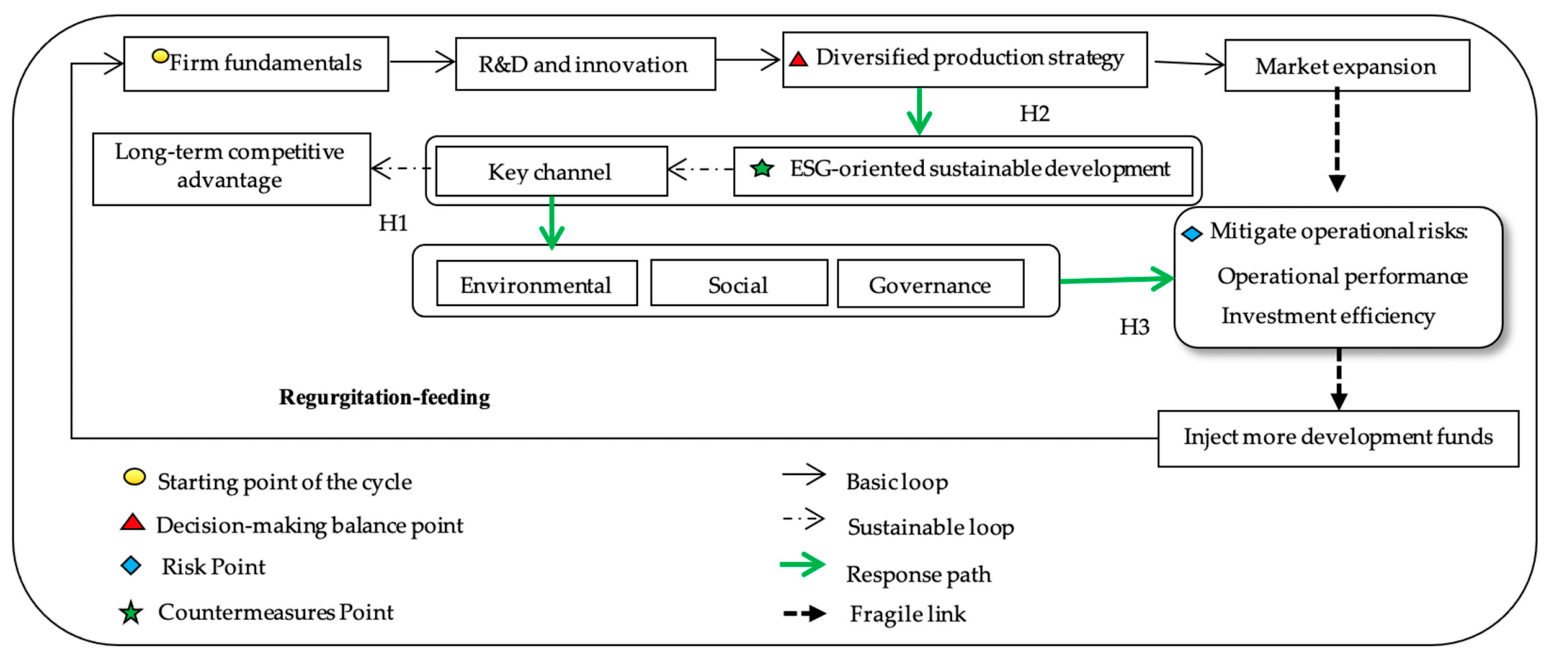
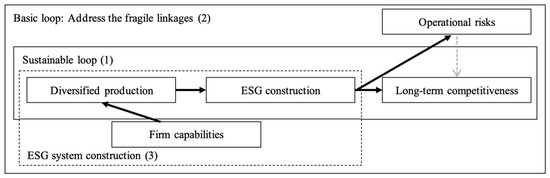
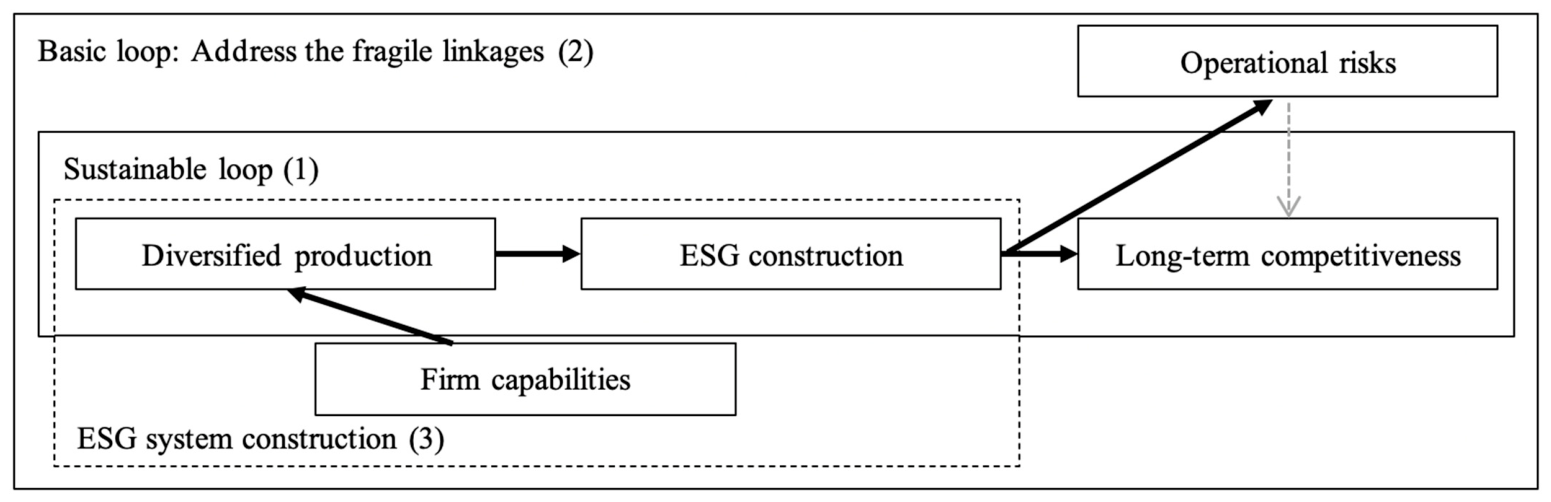
Our research is based on the LSSIM theory [9]. This theoretical model indicates that the key to enhancing an enterprise’s long-term competitiveness lies in formulating long-term strategies in order to cope with the complexity and uncertainty of sustainable development and to balance short-term performance with long-term value creation. The LSSIM system has established a circular mechanism for long-term strategic management oriented toward sustainable development, balancing economic, social, and environmental value creation. Building on this theory, we argue that the key to successful implementation of a diversification strategy lies in formulating long-term strategic planning and integrating a sustainable circular management system to facilitate organizational transformation. As Figure 1 shows, we develop the DDS dual-loop model, which embeds a sustainable development cycle into diversified production implementation. The model predicts that ESG performance mitigates operational shocks from diversification, stabilizes resource allocation, and strengthens long-term competitiveness.
Figure 1.
Theoretical framework.
Diversification has long been regarded as a key strategic choice for enterprises to expand profit sources, optimize resource allocation, and reduce the risk of over-reliance on a single product or market [2,4]. By broadening business scope and product portfolios, manufacturing firms can enhance anti-risk capability, alleviate the impact of industry cycles, and achieve stable operation in a volatile market environment. However, extensive empirical studies have confirmed that diversification entails both economic benefits and substantial operational challenges. While bringing potential benefits, it also leads to rising management costs, aggravated agency conflicts, distorted resource allocation, and increased operational complexity [7]. In the context of China’s manufacturing transformation and upgrading, firms face dual pressures from high-quality development constraints and market competition. Blind diversification without effective governance support often results in low operational efficiency, unstable performance, and even a significant diversification discount, which seriously damages long-term competitiveness [2,17,18,19]. Therefore, how to alleviate the internal frictions and inefficiencies in diversification has become a key issue to be solved urgently.
Based on the LSSIM, the realization of sustainable corporate competitiveness depends on long-term strategic planning, systematic governance design, and the integration of economic, environmental, and social goals [9]. The traditional model that only pursues short-term expansion and profit growth is difficult to maintain long-term value. Meanwhile, agency theory points out that diversification intensifies information asymmetry and management opportunism; managers may prioritize private interests over corporate value, further reducing operational efficiency [20,21]. As a comprehensive indicator of sustainable development, ESG performance can effectively suppress opportunistic behavior, improve internal control quality, enhance information transparency, and strengthen stakeholder trust [22,23,24,25]. By improving transparency, risk management, and governance quality, ESG performance helps form stable and favorable long-term growth expectations that are central to firm value [26]. For diversified manufacturing firms, ESG practices further standardize decision-making, optimize resource allocation, mitigate external risks, and convert diversification potential into sustainable long-term competitiveness [12,27].
Furthermore, the existing literature reveals obvious heterogeneity among the three dimensions of ESG. Governance (G) focuses on internal supervision, information disclosure and decision-making mechanism, which can directly reduce agency costs and improve organizational efficiency, with a rapid and stable impact [22,24,27]. Environmental (E) and social (S) performance require continuous capital investment, and their value creation effects are characterized by a long cycle and time lag [24,25]. In manufacturing industries, especially those with high operational complexity, governance plays a more critical role in restraining internal friction and improving diversification efficiency. On this basis, we propose Hypothesis 1:
H1:
ESG performance positively moderates the relationship between diversified production strategy and long-term competitiveness, and the governance dimension exhibits the strongest moderating effect.
Diversification expands business boundaries and management scope, but it also disperses core resources, increases internal coordination costs, and aggravates organizational rigidity [2,17,18,19]. When enterprises carry out diversified expansion, management difficulty rises sharply, capital flow becomes more complex, investment decisions are prone to deviation, and resource allocation tends to be inefficient [5,17,18,19]. This will directly lead to increased operational volatility, unstable earnings, and excessive or inefficient investment, which seriously damage operational stability and sustainable development capacity. For manufacturing firms, investment cycles are long, structural costs are high, and the impact of inefficient investment is more profound, making it more necessary to control operational uncertainty caused by diversification.
According to LSSIM theory, a sustainability-oriented system can effectively mitigate organizational friction and operational instability caused by blind expansion [9]. ESG practices provide a systematic solution to this problem. High-level ESG performance means stricter risk control, more standardized investment decisions, more transparent information disclosure, and more efficient capital allocation [22,23,24]. Recent studies show that ESG suppresses managerial short-sightedness and improves capital allocation efficiency in diversified firms [28]. ESG also reduces operational risk and cushions against volatility in complex business structures [29]. By enhancing transparency and risk management, ESG alleviates the diversification discount and stabilizes corporate performance [7]. ESG can reduce the negative impacts of diversification by restraining irrational investment, improving resource allocation efficiency, stabilizing cash flow expectations, and enhancing operational resilience. Specifically, ESG reduces earnings volatility and alleviates investment inefficiency caused by diversified production, helping firms maintain stable operation in the process of expansion [30]. Therefore, we propose Hypothesis 2:
H2:
ESG performance negatively moderates the positive impacts of diversified production on operational volatility and investment inefficiency, thereby reducing risks caused by diversification.
The successful implementation of diversified production strategy cannot be separated from the support of strong organizational resources and capabilities [16,31,32]. Diversification requires a large amount of capital input, advanced technical support, perfect management experience, and broad market channels [33,34,35,36,37]. Firms with weak capabilities often fall into resource shortage, management disorder, and strategic imbalance in diversification, making it difficult to carry out effective ESG construction, and even lead to strategic conflicts between diversification and sustainable development. In contrast, firms with strong capabilities can allocate resources more rationally, provide stable support for ESG investment and promotion, and ensure that ESG construction is promoted smoothly while implementing diversification.
Based on the Resource-Based View (RBV), firm-specific capabilities are valuable, scarce, and difficult-to-imitate resources that determine strategic effectiveness [32,38]. Scale foundation, R&D capacity, technological innovation level, and market expansion ability constitute key capabilities for manufacturing firms to implement diversification and ESG strategies [36,37]. Enterprises with stronger capabilities can better integrate resources, reduce the cost of ESG practices, improve the quality of sustainable development, and make the relationship between diversification and ESG more positive and stable. Firm capabilities thus act as critical boundary conditions: they determine whether diversification can effectively drive ESG improvement or trigger resource misallocation and value loss. On this basis, we propose Hypothesis 3:
H3:
Firm capabilities positively moderate the effect of diversified production strategy on ESG performance.
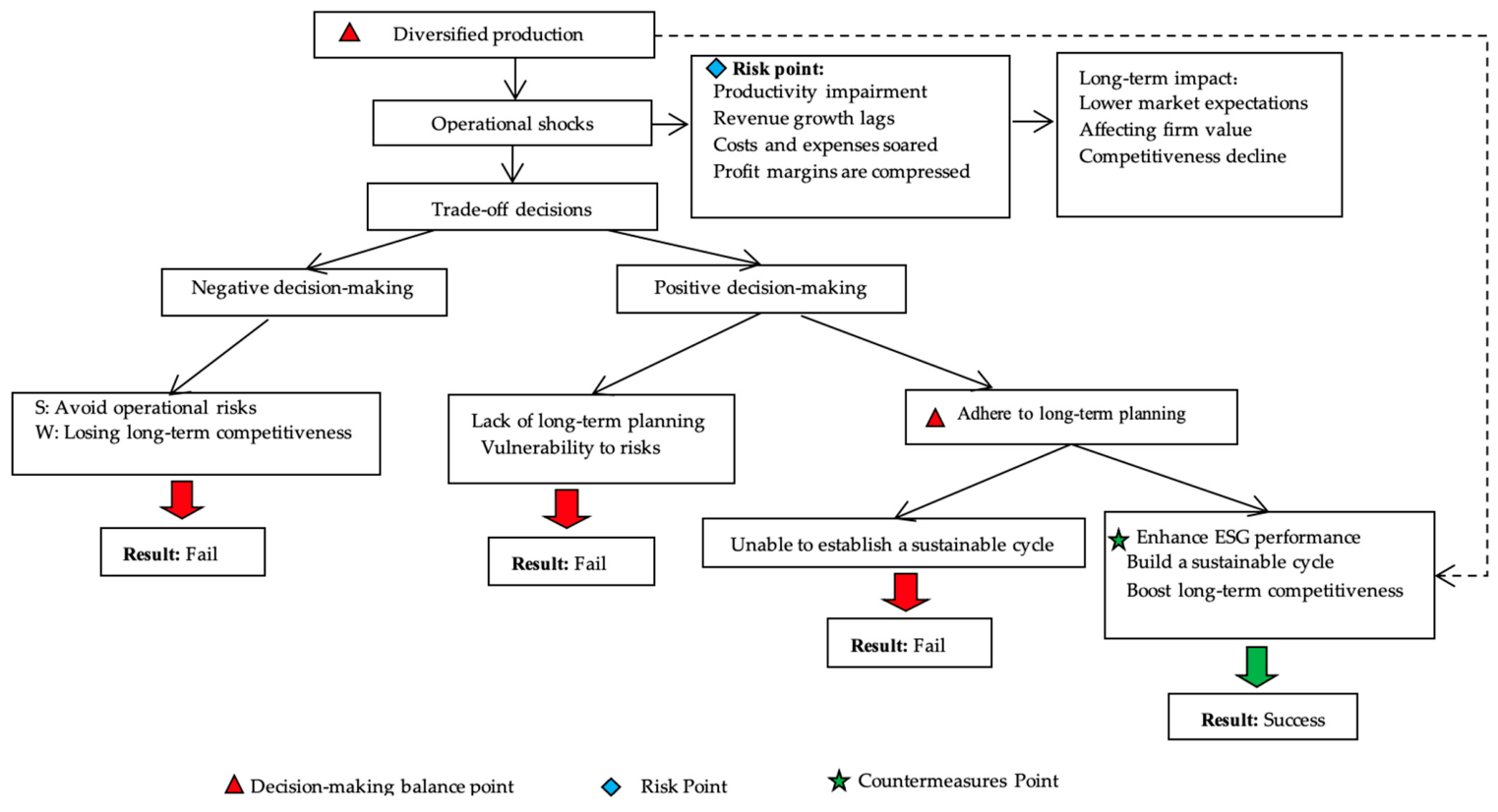
Based on the above analysis, we design a decision-making model for diversified production strategies, as illustrated in Figure 2. At the first decision equilibrium point, regarding whether to implement diversification, an active production strategy exposes the firm to operational uncertainty (as stated in H2), whereas a passive strategy reduces diversification opportunities and thus erodes long-term competitiveness. At the second decision equilibrium point, firms seek to mitigate the risks inherent in diversified production strategies; failure to do so will impede implementation. Consistent with H1, we argue that the core of implementing diversified production strategies lies in avoiding short-term risks and conducting long-term planning. Successful long-term planning depends fundamentally on establishing an ESG system and realizing a sustainable cycle of production strategies. As proposed in H3, moderating factors for constructing an ESG cycle based on diversified production strategies constitute the key to effective ESG development.
Figure 2.
Trade-off analysis of firms’ diversified production strategies.
3. Data and Methodology
3.1. Data
Our sample comprises Chinese listed manufacturing firms during the 2018–2024 period. Financial data, corporate governance data, and ESG ratings are obtained from the CSMAR and Wind ESG databases, with data collected as of December 31 of each year to ensure consistent statistical caliber. Macroeconomic data are collected from the National Bureau of Statistics, and other information is manually collected from the official websites of the Shanghai Stock Exchange (https://english.sse.com.cn/), Shenzhen Stock Exchange (https://www.szse.cn/English/), and China Enterprise Capital Information Network (https://www.askci.com) based on annual reports, ESG reports, and public announcements.
We exclude ST*, ST, and delisted firms, and delete observations with missing values for core variables. To eliminate outlier effects, all continuous variables are winsorized at the 1% and 99%. Specifically, values below the 1st percentile are replaced with the value at the 1st percentile, and values above the 99th percentile are replaced with the value at the 99th percentile. After data screening and standardization, the final sample consists of the observation of 1834 companies over 6 years. The classification of traditional and emerging industries follows two authoritative standards: the United Nations Standard Industrial Classification (UNSD: 2006) and China’s Industrial Classification for National Economic Activities GB/T 4754-2017 [39], issued by the General Administration of Quality Supervision, Inspection and Quarantine of China and the Standardization Administration of China.
3.2. Methodology
3.2.1. Linking LSSIM Theory to Empirical Measurement
Table 1 shows that the LSSIM model provides three core causal assumptions: investigating long-term orientation dominates short-term performance, economic–environmental–social governance are systemically integrated, and organizational capabilities determine the efficiency of strategic implementation.
This study transforms LSSIM into the DDS dual-loop model and establishes strict one-to-one mapping between theoretical mechanisms, DDS loops, and measured variables. First is long-term causality. Strategy and sustainability at time t affect competitiveness and performance at time t; we use lagged ESG to reduce reverse causality. Second is channel exclusivity. ESG and firm capabilities influence competitiveness primarily by moderating diversification efficiency. Third is dimension hierarchy. Governance (G) reduces agency and coordination costs and acts as the primary channel. The table below maps LSSIM mechanisms to the DDS model loops, empirical variables, expected signs, and identification channels.
Table 1.
LSSIM Mechanism–DDS Loop–Variable Mapping.
Our models test causal relationships using firm fixed effects, year fixed effects, lagged independent variables, and cluster-robust standard errors. The two-way feedback in the DDS model represents dynamic consistency rather than empirically tested simultaneous feedback [40].
3.2.2. Research Route
Figure 3 outlines the research design this study adopts to test the hypotheses. First, a feedback model of diversification and long-term competitiveness is constructed, with ESG performance used as the moderating variable, and the empirical results are used to verify the validity of H1. Second, a regression model of the diversification-risk-return system is established, wherein ESG performance also acts as the moderating variable, and the analysis outcomes are employed to test H2. Finally, a regression model of diversification and sustainability performance is developed, with firm capabilities used as the moderating variable, and the empirical findings are utilized to validate H3. Following prior research [41,42], we establish the basic equation and fixed-effects panel model with interaction terms and firm-level clustering.
Figure 3.
Research methodology.
First, the study constructs the model for the impact of diversified production and ESG performance on long-term competitiveness:
where is long-term competitiveness of company I in year T, is the degree of diversified production of company I in year T, and represents ESG performance. is a constant term, is a residual term, and and are influence coefficients of diversified production and ESG performance on long-term competitiveness, respectively. is the firm fixed effect, and is the year fixed effect.
Then, the study introduces moderating variables and establishes a formula to test the interaction between diversified production strategies and ESG performance:
where is the influence coefficient of the combined effect of diversified production and ESG performance on long-term competitiveness. The other coefficients remain the same. If is significantly positive, then H1 is verified. That is, the diversified production strategy is anchored in the establishment of a sustainable development system, which fosters a positive feedback loop that underpins the firm’s long-term competitiveness.
Corporate ESG performance is then disaggregated into its three constituent dimensions—environmental, social, and governance indicators—and the corresponding decomposition formula is specified as follows:
Second, we establish an empirical model to investigate the influences of diversified production and ESG performance on the volatility of operational performance as well as investment efficiency.
where is the operational performance of company i in year T. is a constant term, and is a residual term. and are influence coefficients of diversified production and ESG performance on operational performance, respectively. is the firm fixed effect, and is the year fixed effect.
Next, the study introduces ESG performance as a moderating variable:
where is the influence coefficient of the combined effect of diversified production and ESG performance on operational risks.
where is the investment efficiency of company i in year T. is a constant term, and are influence coefficients of diversified production and ESG performance on operational performance, respectively. Next, introduce ESG performance as moderating variable:
where is the influence coefficient of the combined effect of diversified production and ESG performance on investment efficiency.
If and are positive, but and are significantly negative, then H2 is verified. That is, the establishment of a sustainable system can mitigate operational risks associated with diversified production strategies and address vulnerabilities in the underlying operational cycle, thereby enabling the formation of a fundamental positive cycle centered on such strategies.
The study then divides ESG performance into ,,:
To verify whether the governance dimension provides a significantly stronger moderating effect, we conducted a Wald test on the equality of the coefficients of the three interaction terms. The null hypothesis (Ha) is the coefficients of these three interaction terms are equal. The alternative hypothesis (Hb): At least one of the coefficients has a significant difference.
We substitute Formula (10) into the indicators of , and to conduct the test. If a significant chi-square statistic (p < 0.10) indicates rejection of the null hypothesis (Ha), meaning the moderating effect of the governance dimension is statistically stronger than that in other dimensions (Hb).
Next, to verify H3, we construct a regulatory model grounded in diversified production and integrate three moderating factors to establish the ESG system model:
where is the influence coefficient of the combined effect of diversified production and firm capabilities on ESG performance. If the correlation coefficient of variable is significantly positive, the moderating effect of enterprise capability is positive; if the correlation coefficient of variable is significantly negative, the moderating effect of enterprise capability is negative. In either case, H3 is supported. H3 is not supported if the correlation is not statistically significant.
Enterprise capabilities exhibit heterogeneous states at various lifecycle stages [43], and the multidimensional nature of corporate dynamic capabilities [44,45]. Integrating these findings with the proposed DDS strategy model, we contend that the core capabilities of diversified production enterprises consist of three key aspects: the firm fundamentals (proxied by firm size and financing capacity), technological capabilities (measured by innovation ability and digitalization level), and market expansion capabilities (indicated by export performance and market diversification). Specific calculation approaches are presented in Table 2.
Table 2.
Summary of variable calculation methodology.
We conducted a compliance test on the relationships between sustainable circular logics based on the DDS model, and further confirmed that the empirical results were consistent with the bidirectional logic of the DDS model. For the regression analysis, the study adopts robust standard errors at the firm level (clustered at the firm level) to address the serial correlation and heteroscedasticity issues in the panel data. In addition, characteristics such as industry and property nature are controlled for, and the continuous variables are subjected to 1% tail trimming (winsorized) to eliminate interference from outliers [47,48].
To ensure the reliability of baseline regression results and alleviate potential endogeneity and measurement bias, this study adopts core variable substitution, dynamic panel system GMM, and heterogeneity-based subsample robustness tests in the following section.
3.3. Variables
This section provides a detailed exposition of the study’s measurement approaches for key variables, with the measurement methods of the other variables tabulated in Table 1.
Many indicators can be used to represent product diversification. The application of an entropy measurement method at different levels of product or industry aggregation is appropriate for this analysis. Most weighted measures are variants of the general equation
where is extent of diversification, Pi is the share of the i th business relative to the firm as a whole, is an assigned weight, and n is the number of businesses constituting the firm’s portfolio.
The Herfindahl index measure of firm diversity is a special case of the above general formulation, where the assigned weight equals . That is,
The entropy (inverse) measure weighs each by the logarithm of . That is,
where is the entropy index, is the proportion of the revenue of industry i in the total sales revenue of the product (e.g., sales, value added), and n is the number of industries involved in the business scope of the enterprise. A higher value of indicates a lower degree of market concentration and a higher degree of product diversification; a lower value of indicates a higher degree of market concentration and a lower degree of product diversification. Following Garrido-Prada et al. (2019) [49], we use the entropy index to measure production diversification.
In accordance with the measurement protocols of Muhmad et al. (2021) [56], we utilize ESG scores as a valid proxy for ESG performance. A disaggregated analysis of ESG performance indicators is required due to the inherent heterogeneity in the marginal effects of its economic, environmental, and governance sub-dimensions [25].
Long-term competitiveness is measured by total factor productivity (TFP) estimated from the Cobb–Douglas production function. TFP is adopted because it comprehensively captures sustainable efficiency, technological progress, and resource allocation quality, which represent the core connotation of long-term competitiveness [46]. As a holistic and widely accepted indicator, TFP provides a consistent measure of overall firm competitiveness. Following Deng et al. (2023) [46], we calculate total factor productivity (TFP) using the modified form of the Cobb–Douglas function in microeconomics:
where value-added is produced by a combination of three inputs: labor (number of employees), capital (fixed-asset investment), and firm dummies . is a constant term (in logarithmic form). Based on this formula, we calculate productivity () for each firm as follows:
where the final result of calculating TFP is
which represents firm efficiency in transforming inputs into value-added.
Building on the theoretical analyses in Section 2 and the theoretical framework illustrated in Figure 2, the operational risks inherent in the diversified production strategy stem primarily from inefficiencies induced by investment dispersion. Furthermore, the lagged nature of investment returns means that enterprises fail to realize such returns in a timely manner, which dampens investor expectations and consequently erodes corporate market value [18,19]. Therefore, we use two indicators to measure operational risks: SD_ROA and Abnormal_Investment.
Earnings volatility is measured as the sample standard deviation of ROA over a three-year rolling window (t − 2, t − 1, t) [47]. The formula is as follows:
A larger value indicates higher operational volatility and greater operational risk.
Following Richardson (2006) [48], we estimate investment inefficiency using the expected investment model. The residual from the model represents abnormal investment, and its absolute value measures the degree of investment inefficiency:
where is the firm’s new capital expenditure in year t; All control variables are lagged by one year to alleviate endogeneity; and represent firm and year fixed effects; is the regression residual, which captures unexplained investment.
The abnormal investment is measured as the absolute value of the residual from Formula (19):
A larger value indicates lower investment efficiency and more severe resource misallocation.
Following previous studies, we use total assets turnover, firm age, size, leverage, ownership concentration, GDP growth, and GDP per capita as control variables.
4. Results
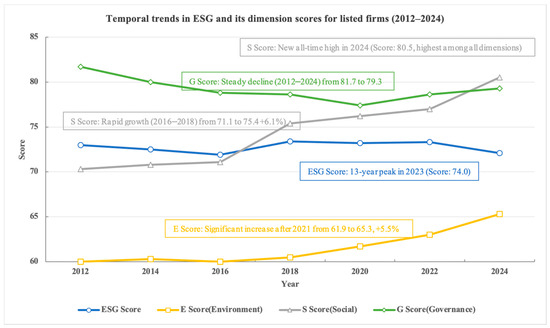
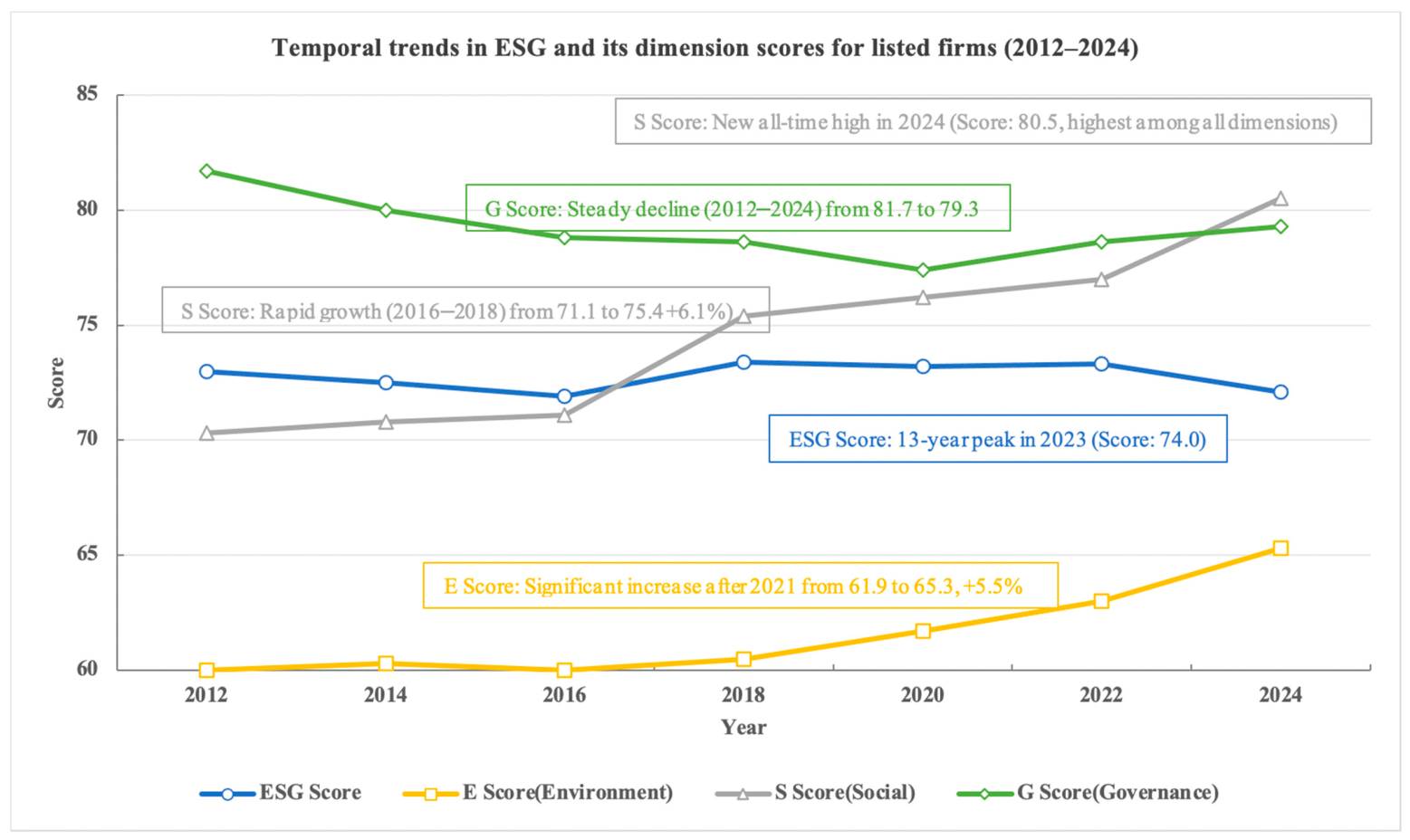
Figure 4 illustrates the temporal trends in the average ESG score and its three subdimensions (environmental, social, and governance) for Chinese listed manufacturing firms from 2012 to 2024. Overall, the average ESG score fluctuates with idiosyncratic impacts, peaking in 2023. The governance (G) score reaches the highest level but exhibits a gradual downward trend, reaching its maximum in 2012 and declining thereafter. The social (S) score rises rapidly in the mid-period with the greatest growth rate. The environmental (E) score is the lowest overall but demonstrates a sustained and steady upward trend.
Figure 4.
ESG score trend chart.
We next perform regression analyses on how ESG system construction affects the adoption of diversified production strategies to testing the study’s three hypotheses. We then conduct heterogeneity analyses to explore the moderating role of ESG across industries.
4.1. Long-Term Competitiveness, ESG, and Diversified Production
Table 3 presents the baseline regression results for the relationship among diversified production (PD), ESG performance, and firms’ long-term competitiveness (TFP). Column (1) shows that ESG performance is significantly and positively associated with long-term competitiveness at the 5% level, while the coefficient of diversified production (PD) is insignificant. This result indicates that diversification alone does not automatically improve long-term competitiveness, highlighting the critical role of sustainability practices in value creation.
Table 3.
Regression results of ESG, diversified production, and long-term competitiveness.
Column (2) in Table 3 introduces the interaction term PD × ESG. The coefficient is 0.525 and significant at the 5% level, supporting Hypothesis 1. Economically, when ESG performance increases by one unit, the marginal effect of diversified production on long-term competitiveness rises by 0.525 units, suggesting that ESG significantly strengthens the efficiency of diversification strategy.
Columns (3) to (5) further decompose ESG into environmental (E), social (S), and governance (G) dimensions. The interaction term PD × G is 0.340 and significant at the 1% level, whereas PD × E and PD × S are insignificant. This indicates that only the governance dimension plays a stable and positive moderating role.
Economically, a one-unit improvement in governance performance enhances the contribution of diversification to long-term competitiveness by 0.340 units, reflecting that governance optimization reduces agency costs, improves resource allocation, and enables diversified expansion to better support sustainable competitiveness. Environmental and social dimensions exert no significant moderating effect, possibly because related investments require longer payback periods and have weaker direct impacts on productive efficiency in manufacturing firms.
The Wald χ2 test formally confirms that the moderating effect of the governance dimension is significantly stronger than those of environmental and social dimensions (χ2 = 7.55, p < 0.05). This result supports the key mechanism of this study: governance is the core channel through which ESG enhances diversification efficiency.
Regarding control variables, firm size, leverage, and ownership concentration show expected signs. Leverage negatively affects long-term competitiveness, indicating that excessive debt restricts sustainable investment. Asset turnover significantly promotes competitiveness, reflecting the importance of operational efficiency. Overall, the regression results are economically meaningful and consistent with theoretical expectations.
4.2. Operational Risk
We next examine potential constraints within the baseline mechanism. As shown in Table 4, product diversification (PD) significantly increases operational volatility measured by SD_ROA (β = 0.122, p < 0.05), confirming that diversification raises operational uncertainty. The interaction term PD × ESG is significantly negative (β = −0.267, p < 0.1), demonstrating that ESG performance effectively alleviates diversification-driven risks. Among sub-dimensions, only the governance (G) indicator presents a significant negative moderating effect (β = −0.218, p< 0.01), while environmental and social dimensions show no significance.
Table 4.
Regression results of ESG, diversified production, and SD_ROA.
In Table 5, PD significantly reduces investment inefficiency (β = 0.145, p < 0.01). Although the moderating effect of overall ESG is not significant, the governance dimension still exerts a significantly negative moderating effect (β = −0.431, p < 0.1), strengthening the efficiency improvement brought by diversification. These results verify that ESG, particularly its governance pillar, mitigates operational risks arising from diversification, providing full support for Hypothesis 2.
Table 5.
Regression results of ESG, diversified production, and market value.
Overall, the data analysis and regression results show that enhancing ESG performance is a key means by which enterprises can boost long-term competitiveness and alleviate short-term operational impacts, with governance factors playing a crucial role. Corporate governance affects investors’ perceptions of long-term growth prospects. Since the market has persistently undervalued these growth expectations, effective governance is essential to deliver sustainable value creation [7]. As Figure 4 shows, however, the governance score peaked in 2023 and then declined, while the environmental and social scores rose rapidly but remained at a relatively low overall level. This divergent trend among ESG sub-dimensions placed constraints on the holistic development and comprehensive construction of corporate ESG systems.
4.3. Moderating Effect
This section examines how firm capabilities moderate the relationship between product diversification (PD) and ESG performance, including firm fundamentals, technological capabilities, and market expansion capabilities.
4.3.1. Moderating Role of Firm Fundamentals
Table 6 reports the moderating effects of firm size and leverage. The interaction terms PD × Firm size and PD × Leverage are both significantly positive at the 1% level. Economically, larger firms with greater resource endowments and stronger risk tolerance are more capable of investing in ESG systems during diversification. Meanwhile, higher leverage reflects stronger external financing capacity and credit endorsement, enabling firms to sustain long-term ESG investment under diversified expansion.
Table 6.
Regression results of firm fundamentals, diversity production, and ESG.
4.3.2. Moderating Role of Technological Capabilities
Table 7 presents the moderating effects of R&D innovation and AI digitalization. The interaction term PD × R&D is significantly positive at the 10% level, confirming that innovation capability strengthens the positive impact of diversification on ESG performance.
Table 7.
Regression results of technology capabilities, diversity production, and ESG.
Technological innovation improves production efficiency, reduces energy consumption and operational risks, thereby enhancing the ESG performance of diversified firms. By contrast, the moderating effect of AI digitalization is positive but insignificant, suggesting that digital capacity has not yet become a binding driver for ESG improvement in manufacturing sectors.
4.3.3. Moderating Role of Market Expansion Capabilities
Table 8 shows that market expansion capability (MD) and export propensity both exert positive and significant moderating effects. The interaction term PD × MD is positive at the 1% level, meaning stronger market expansion supports diversified firms in meeting stakeholder expectations and improving ESG practices. Similarly, export propensity positively moderates the focal relationship at the 10% level, as international market competition pushes diversified exporters to adopt higher ESG standards.
Table 8.
Regression results of market expansion capabilities, diversity production, and ESG.
Collectively, firm capabilities play positive and significant moderating roles in the linkage between diversification and ESG construction. Stronger firm fundamentals, technological innovation capacity, and market expansion ability provide resources, efficiency, and external incentives that enable diversified manufacturing firms to undertake higher-quality ESG practices. These findings strongly support Hypothesis 3 and reveal key boundary conditions for ESG development under diversification strategies.
4.4. Heterogeneity Analyses
Heterogeneity tests in Table 9 and Table 10 demonstrate significant differences in the moderating role of ESG across industry sensitivity, ownership, and life cycle. As shown in Table 9, the interaction term PD × ESG is significantly positive for firms in sensitive industries, whereas it is insignificant in non-sensitive industries. Sensitive industries face stricter regulation and higher external risks, so ESG plays a more critical role in reducing uncertainty and enhancing competitiveness during diversification.
Table 9.
Results of heterogeneity regression analysis of ESG moderating effect.
Table 10.
Heterogeneity Test Results: Ownership Nature & Firm Life Cycle.
In Table 10, the positive moderating effect is statistically significant only for non-SOEs, not for SOEs. Non-SOEs operate under stronger market pressure and financing constraints, making ESG more effective in improving governance and risk control. By contrast, SOEs rely on policy support and thus benefit less from ESG.
Regarding life cycle, the moderating effect is significant for growth-stage firms but weaker for mature firms. Growth-stage firms face greater resource constraints and operational volatility, where ESG effectively stabilizes development. Mature firms with stable operations and resources show limited marginal gains from ESG. Overall, ESG strengthens the value of diversification primarily for sensitive-industry, non-SOE, and growth-stage firms.
4.5. Robustness Test
This study employed robustness testing methods such as core variable substitution, dynamic panel system GMM, and sub-sample analysis based on heterogeneity. Among them, the empirical results of the heterogeneous sub-samples have already been verified in the heterogeneity test. These supplementary tests further confirm the robustness of our empirical results.
4.5.1. Dynamic Panel System (GMM)
To address potential endogeneity concerns arising from bidirectional causality, omitted variables, and serial correlation, we employ the two-step system GMM dynamic panel model, with results reported in Table 11. The lagged dependent variable (L.TFP) is significantly positive across most models, confirming the dynamic persistence of firm long-term competitiveness. The diagnostic tests validate the model specification: the AR(1) test rejects the null hypothesis (p < 0.01), indicating first-order serial correlation consistent with GMM assumptions; the AR(2) test accepts the null hypothesis (p > 0.1), confirming no second-order serial correlation; the Hansen test p-values exceed 0.1, verifying the validity of instrumental variables.
Table 11.
Dynamic Panel System GMM Regression Results: Endogeneity Treatment.
After controlling for endogeneity, the core findings remain unchanged: ESG performance positively moderates the relationship between product diversification and long-term competitiveness, with the governance dimension exerting the strongest and most significant effect. These results confirm that our baseline conclusions are not driven by endogeneity bias.
4.5.2. Core Variable Substitution
To eliminate bias from variable measurement, we re-estimate the model by replacing key indicators, as shown in Table 12. Specifically, product diversification is replaced with the Herfindahl-Hirschman Index (HHI) of product segments, long-term competitiveness is replaced with return on equity (ROE), and ESG performance is replaced with standardized third-party ESG ratings.
Table 12.
Robustness Test: Core Variable Substitution.
The results show that the sign, magnitude, and statistical significance of core coefficients remain highly consistent with the baseline regression. ESG performance continues to exert a significantly positive effect on long-term competitiveness, and the interaction term between diversification and ESG remains significantly positive at the 10% level. For the ESG dimension heterogeneity test, the governance (G) dimension shows the strongest and most significant moderating effect at the 1% level, while the environmental (E) dimension is insignificant and the social (S) dimension is only weakly significant at the 10% level, fully consistent with the baseline findings. These results confirm that our core conclusions are robust to alternative variable measurements.
5. Discussion
First, as illustrated in Figure 4, the governance (G) dimension score has declined continuously since 2018, but our empirical results confirm it remains the strongest moderator. This paradox reflects institutional transition lags that slow governance improvement, as regulatory and normative adjustments often trail corporate practice in emerging markets [57]. Many firms also conduct symbolic governance rather than substantive practices, prioritizing compliance rhetoric over meaningful ESG integration [58,59]. Meanwhile, diversified firms face severe agency conflicts, so the marginal effect of real governance is especially powerful [10,22,23], leading to its dominant moderating role. Corporate governance directly shapes investors’ long-term growth expectations, and given that the market frequently undervalues such long-term prospects, sound governance becomes indispensable for sustainable value creation [7]. These findings strongly support Hypothesis 1 and the core logic of the LSSIM.
Meanwhile, we identify clear divergent evolutionary patterns across the three ESG sub-dimensions. The social (S) dimension has grown rapidly since 2018 and even surpassed the governance dimension in 2023, while the environmental (E) dimension has accelerated notably since 2021. This observation aligns well with our robustness tests, which confirm that the social dimension becomes statistically significant after variable substitution. Such divergent evolutionary trends across ESG sub-dimensions impose considerable constraints on the holistic development and integrated construction of ESG systems among diversified enterprises [60]. This structural imbalance reflects the phased characteristics of China’s manufacturing ESG construction after 2018.
Third, an unexpected but important empirical result is the insignificant moderating effect of digitalization (AI), which enriches our understanding of firm-level boundary conditions. Consistent with our firm capability mechanism tests, digital transformation typically involves a long-term investment lag, and its real effects on strategy and governance may not be fully captured within the observed period [61,62]. Many firms have not yet deeply integrated digital tools into core ESG governance systems, leading to weak synergies between digitalization and sustainable practices [63]. A considerable number of firms only conduct symbolic or superficial AI adoption rather than substantive digital transformation [64]. In addition, the binary dummy variable for digitalization may reduce estimation power, and continuous intensity indicators will be adopted in future research to improve measurement accuracy. This result supplements the interpretation of Hypothesis 3 regarding firm capabilities.
Fourth, our empirical evidence also confirms that ESG significantly reduces operational volatility and investment inefficiency caused by diversification, which strongly supports Hypothesis 2. By improving risk control, information transparency, and capital allocation efficiency, ESG helps stabilize cash flow expectations and alleviate the diversification discount. Together with the positive moderating role of firm capabilities verified in our mechanism tests, these results fully validate the DDS dual-loop model proposed in this study.
Overall, these findings reveal the dynamic evolution of key ESG channels that underpin the long-term competitiveness of diversified firms, in tandem with China’s manufacturing transformation and upgrading. Under the background of high-quality development and mandatory ESG disclosure, the comprehensive and coordinated improvement of environmental, social, and governance dimensions has increasingly become a pivotal strategic factor for diversified manufacturing enterprises to sustain long-term growth and competitiveness [60].
6. Conclusions
This study examines the interactive mechanism among diversification strategy, ESG performance, firm capabilities, and long-term competitiveness under the framework of the LSSIM. Empirical evidence reveals that ESG performance positively moderates the linkage between diversified production and long-term competitiveness, with the governance dimension exerting the strongest effect. ESG also effectively mitigates operational volatility and investment inefficiency caused by diversification. Meanwhile, firm capabilities strengthen the positive impact of diversification on ESG performance. Accordingly, this study formally develops and verifies the DDS dual-loop model, which clarifies the synergistic cycle connecting diversification, ESG governance, firm capabilities, and sustainable competitiveness.
In terms of the theoretical contributions, first, this study extends diversification literature by verifying ESG as a critical contingent governance factor, thereby reconciling inconsistent evidence on the value consequences of diversification, and explaining the governance paradox identified in the Discussion. Second, it advances ESG research by highlighting the heterogeneous moderating roles of environmental, social, and governance dimensions, and clarifies ESG’s risk-reduction and efficiency-enhancing functions in diversified organizational settings. Third, integrating LSSIM and the resource-based view, this study establishes a unified dual-loop framework that bridges corporate strategy and sustainable development theory, offering a replicated logic for sustainable competitiveness research.
As for the practical implications, corresponding to our empirical findings and Discussion, manufacturing firms should prioritize substantive governance improvement over symbolic practices, advance diversification that matches internal resource endowments, and establish long-term ESG investment mechanisms. Non-SOEs, growth-stage enterprises, and sensitive-industry firms benefit more from the complementary effects of diversification and ESG and should allocate more resources to ESG practices. For investors, firms with strong governance and coordinated ESG-diversification strategies represent reliable long-term value indicators. For policymakers, improving ESG disclosure systems, providing targeted subsidies, and guiding substantive ESG construction will help manufacturing firms achieve long-term value creation and high-quality development.
This study focuses on Chinese manufacturing listed firms and adopts conventional measures of ESG and firm capabilities, which may restrict generalizability. Future research could expand to cross-industry and cross-country samples, employ more granular and multi-dimensional measurements, explore dynamic interactions between diversification and ESG, and investigate targeted governance solutions to the diversification discount under sustainable development objectives.
Author Contributions
Conceptualization, X.L. and H.L.; methodology, X.L. and H.L.; software, X.L.; validation, X.L.; formal analysis, X.L.; investigation, X.L.; resources, X.L.; data curation, X.L.; writing—original draft preparation, X.L.; writing—review and editing, H.L.; visualization, X.L.; supervision, H.L.; project administration, X.L.; funding acquisition, H.L. All authors have read and agreed to the published version of the manuscript.
Funding
This research was funded by Education Department of Anhui Province (grant number 2024AH052512), the Digital Finance and Industry Development Research Team Fund from Anhui International Studies University (grant number Awkytd202401).
Institutional Review Board Statement
Not applicable.
Informed Consent Statement
Not applicable.
Data Availability Statement
The data supporting this study are available from the corresponding author upon request.
Acknowledgments
The authors acknowledge the handling Editor, anonymous reviewers and the English Editors.
Conflicts of Interest
The authors declare no conflicts of interest.
Correction Statement
This article has been republished with a minor correction to the readability of Table 1, Table 2 and Table 3. This change does not affect the scientific content of the article.
References
- Chiang, C.C. Product diversification in competitive R&D-intensive firms: An empirical study of the computer software industry. J. Appl. Bus. Res. 2010, 26, 99–108. [Google Scholar] [CrossRef] [Scilit]
- Chen, J.; Nguyen, H.T.D. Corporate diversification, financial flexibility and firm performance during the COVID-19 pandemic. Q. Rev. Econ. Financ. 2025, 104, 102053. [Google Scholar] [CrossRef] [Scilit]
- Sun, W.B.; Govind, R. Product market diversification and market emphasis: Impacts on firm idiosyncratic risk in market turbulence. Eur. J. Mark. 2017, 51, 1308–1331. [Google Scholar]
- Kuppuswamy, V.; Villalonga, B. Does diversification create value in the presence of external financing constraints? Evidence from the 2007–2009 financial crisis. Manag. Sci. 2016, 62, 905–923. [Google Scholar] [CrossRef] [Scilit]
- Norman, D.A. The puzzle of manufacturing sector investment: Is the lag behind its drivers more apparent than real? Bus. Econ. 2008, 43, 23–33. [Google Scholar]
- Berger, P.G.; Eli, O. Diversification’s effect on firm value. J. Financ. Econ. 1995, 37, 39–65. [Google Scholar]
- De la Fuente, G.; Ortiz, M.; Velasco, P. Business diversification and ESG engagement: Riding tandem to risk reduction and value creation? J. Bus. Res. 2025, 200, 115676. [Google Scholar] [CrossRef] [Scilit]
- Helfat, C.E.; Eisenhardt, K.M. Intertemporal economies of scope, organizational capabilities, and strategic change. Strateg. Manag. J. 2004, 25, 1217–1231. [Google Scholar]
- Dhrubo, A.M.; Lemago, S.T.; Brohi, A.A.; Erdem, O.H. Re-conceptualizing resources: An ontological re-evaluation of the resource-based view. Philos. Manag. 2024, 23, 287–313. [Google Scholar]
- Aktas, N.; Andreou, P.C.; Karasamani, I.; Philip, D. CEO duality, agency costs, and internal capital allocation efficiency. Br. J. Manag. 2019, 30, 473–493. [Google Scholar]
- Ekvall, G.; Olsson, P. Sustainable development and long-term strategic management: Embedding a long-term strategic management system into medium and long-term planning. World Future Rev. A J. Strateg. Foresight 2011, 3, 49–69. [Google Scholar]
- Barros, V.; Matos, P.V.; Sarmento, J.M.; Vieira, P.R. ESG performance and firms’ business and geographical diversification: An empirical approach. J. Bus. Res. 2024, 172, 114392. [Google Scholar]
- Duan, Y.; Yang, F.; Xiong, L. Environmental, social, and governance (ESG) performance and firm value: Evidence from Chinese manufacturing firms. Sustainability 2023, 15, 12858. [Google Scholar] [CrossRef] [Scilit]
- Dossa, J.V.; Gopang, A.A.; Kapola, T.O.; Ukwuoma, C.C.; Thomas, D.; Dossa, J.M. When more isn’t better: The curvilinear effects of ESG on firm performance. Bus. Ethics Environ. Responsib. 2026. [Google Scholar] [CrossRef] [Scilit]
- Vu, T.H. Growth as a boundary condition: A threshold model of corporate diversification strategy. Cogent Bus. Manag. 2025, 12, 2593077. [Google Scholar] [CrossRef] [Scilit]
- Wu, D.; Chen, X.; Li, J. Artificial intelligence and firm technological diversification: Unveiling the distinctions between related and unrelated domains. Manag. Organ. Rev. 2026, 22, 14–49. [Google Scholar]
- Maksimovic, V.; Phillips, G. Do conglomerate firms allocate resources inefficiently across industries? Theory and evidence. J. Financ. 2002, 57, 721–767. [Google Scholar] [CrossRef] [Scilit]
- Rawley, E. Diversification, coordination costs, and organizational rigidity: Evidence from microdata. Strateg. Manag. J. 2010, 31, 873–891. [Google Scholar]
- Klein, P.G.; Saidenberg, M.R. Organizational structure and the diversification discount: Evidence from commercial banking. J. Ind. Econ. 2010, 58, 127–155. [Google Scholar] [CrossRef] [Scilit]
- Aggarwal, R.K.; Samwick, A.A. Why do managers diversify their firms? Agency reconsidered. J. Financ. 2003, 58, 71–118. [Google Scholar] [CrossRef] [Scilit]
- Lim, E.N.-K.; Das, S.S.; Das, A. Diversification strategy, capital structure, and the Asian financial crisis (1997–1998): Evidence from Singapore firms. Strateg. Manag. J. 2009, 30, 577–594. [Google Scholar] [CrossRef] [Scilit]
- Liang, Y.; Lee, M.J.; Jung, J.S. Dynamic capabilities and an ESG strategy for sustainable management performance. Front. Psychol. 2022, 13, 887776. [Google Scholar] [CrossRef] [Scilit] [PubMed]
- Fang, L.; Guo, X. From responsibility to value: ESG and long-term corporate value. PLoS ONE 2025, 20, e0322018. [Google Scholar] [CrossRef] [Scilit] [PubMed]
- Aydoğmuş, M.; Gülay, G.; Ergun, K. Impact of ESG performance on firm value and profitability. Borsa Istanb. Rev. 2022, 22, S119–S127. [Google Scholar] [CrossRef] [Scilit]
- Alsayegh, M.F.; Abdul Rahman, R.; Homayoun, S. Corporate economic, environmental, and social sustainability performance transformation through ESG disclosure. Sustainability 2020, 12, 3910. [Google Scholar] [CrossRef] [Scilit]
- Tengulov, A.; Zechner, J.; Zwiebel, J. Valuation and long-term growth expectations. J. Financ. Quant. Anal. 2025, 60, 2121–2158. [Google Scholar] [CrossRef] [Scilit]
- Sahu, S.K. Firm performance and diversification: An empirical investigation of chemical sector in India. Int. J. Sustain. Econ. 2017, 9, 56–71. [Google Scholar] [CrossRef] [Scilit]
- Gao, D.; Li, S.; Zhou, Y. Investment efficiency, ESG performance and corporate performance: Evidence from Chinese listed enterprises. Chin. Manag. Stud. 2025, 19, 567–599. [Google Scholar]
- Hwang, J. ESG performance and corporate risk in supply chain relationships: The moderating role of supply chain efficiency. Sustainability 2026, 18, 4977. [Google Scholar] [CrossRef] [Scilit]
- Shakil, M.H. Environmental, social and governance performance and financial risk: Moderating role of ESG controversies and board gender diversity. Resour. Policy 2021, 72, 102144. [Google Scholar] [CrossRef] [Scilit]
- Ansoff, H.I. Strategies for diversification. Harv. Bus. Rev. 1957, 35, 113–124. [Google Scholar]
- Adner, R.; Zemsky, P. Diversification and performance: Linking relatedness, market structure, and the decision to diversify. Strategy Sci. 2016, 1, 32–55. [Google Scholar] [CrossRef] [Scilit]
- Gemba, K.; Kodama, F. Diversification dynamics of the Japanese industry. Res. Policy 2001, 30, 1165–1184. [Google Scholar] [CrossRef] [Scilit]
- Schoute, M. The relationship between product diversity, usage of advanced manufacturing technologies and activity-based costing adoption. Br. Account. Rev. 2011, 43, 120–134. [Google Scholar] [CrossRef] [Scilit]
- Randle, D.K.; Pisano, G.P. Diversification as an adaptive learning process: An empirical study of general-purpose and market-specific technological know-how in new market entry. Ind. Corp. Change 2024, 33, 238–252. [Google Scholar]
- Morgan, N.A.; Katsikeas, C.S.; Vorhies, D.W. Export marketing strategy implementation, export marketing capabilities, and export venture performance. J. Acad. Mark. Sci. 2012, 40, 271–289. [Google Scholar]
- Tian, X.L. Participation in export and Chinese firms’ capacity utilization. J. Int. Trade Econ. Dev. 2016, 25, 757–784. [Google Scholar] [CrossRef] [Scilit]
- Gary, S.M. Implementation strategy and performance outcomes in related diversification. Strateg. Manag. J. 2005, 26, 643–664. [Google Scholar] [CrossRef] [Scilit]
- GB/T 4754-2017; Industrial Classification for National Economic Activities. Standardization Administration of the People’s Republic of China: Beijing, China, 2017.
- Al-Matari, E.M.; Alnor, N.H.A.; Turki, H.; Mohammad, M.H.; Ali, Z.T.A.; Mohammed, O.A.A. Women in top management and earnings management: Exploring the impact of corporate environmental sustainability. J. Gov. Regul. 2026, 15, 131–141. [Google Scholar] [CrossRef] [Scilit]
- Zhou, G.; Liu, L.; Luo, S. Sustainable development, ESG performance and company market value: Mediating effect of financial performance. Bus. Strategy Environ. 2022, 31, 3371–3387. [Google Scholar] [CrossRef] [Scilit]
- Chang, H.Y.; Lee, A.Y.P. The relationship between business diversification and productivity: Considering the impact of process innovation at different corporate life cycles. Technol. Anal. Strateg. Manag. 2016, 28, 827–840. [Google Scholar] [CrossRef] [Scilit]
- Helfat, C.E.; Peteraf, M.A. The dynamic resource-based view: Capability lifecycles. Strateg. Manag. J. 2003, 24, 997–1010. [Google Scholar] [CrossRef] [Scilit]
- Adner, R.; Helfat, C.E. Corporate effects and dynamic managerial capabilities. Strateg. Manag. J. 2003, 24, 1011–1025. [Google Scholar] [CrossRef] [Scilit]
- Fainshmidt, S.; Pezeshkan, A.; Lance Frazier, M.; Nair, A.; Markowski, E. Dynamic capabilities and organizational performance: A meta-analytic evaluation and extension. J. Manag. Stud. 2016, 53, 1348–1380. [Google Scholar]
- Deng, X.; Li, W.; Ren, X. More sustainable, more productive: Evidence from ESG ratings and total factor productivity among listed Chinese firms. Financ. Res. Lett. 2023, 51, 103439. [Google Scholar]
- Faccio, M.; Marchica, M.-T.; Mura, R. Large shareholder diversification and corporate risk-taking. Rev. Financ. Stud. 2011, 24, 3601–3641. [Google Scholar] [CrossRef] [Scilit]
- Richardson, S. Over-investment of free cash flow. Rev. Account. Stud. 2006, 11, 159–189. [Google Scholar] [CrossRef] [Scilit]
- Garrido-Prada, P.; Delgado-Rodriguez, M.J.; Romero-Jordán, D. Effect of product and geographic diversification on company performance: Evidence during an economic crisis. Eur. Manag. J. 2019, 37, 269–286. [Google Scholar] [CrossRef] [Scilit]
- Canh, N.T.; Liem, N.T.; Thu, P.A.; Khuong, N.V. The impact of innovation on the firm performance and corporate social responsibility of Vietnamese manufacturing firms. Sustainability 2019, 11, 3666. [Google Scholar] [CrossRef] [Scilit]
- Yang, J.; Ying, L.; Gao, M. The influence of intelligent manufacturing on financial performance and innovation performance: The case of China. Enterp. Inf. Syst. 2020, 14, 812–832. [Google Scholar] [CrossRef] [Scilit]
- Altaf, N.; Shah, F.A. Internationalization and firm performance of Indian firms: Does product diversity matter? Pac. Sci. Rev. B Humanit. Soc. Sci. 2015, 1, 76–84. [Google Scholar] [CrossRef] [Scilit]
- Delbufalo, E.; Poggesi, S.; Borra, S. Diversification, family involvement and firm performance: Empirical evidence from Italian manufacturing firms. J. Manag. Dev. 2016, 35, 663–680. [Google Scholar]
- Lang, L.H.P.; Stulz, R.M. Tobin’s q, corporate diversification, and firm performance. J. Political Econ. 1994, 102, 1248–1280. [Google Scholar]
- Pieloch-Babiarz, A.; Misztal, A.; Kowalska, M. An impact of macroeconomic stabilization on the sustainable development of manufacturing enterprises: The case of Central and Eastern European Countries. Environ. Dev. Sustain. 2021, 23, 8669–8698. [Google Scholar]
- Muhmad, S.N.; Ariff, A.M.; Majid, N.A.; Kamarudin, K.A. Product market competition, corporate governance and ESG. Asian Acad. Manag. J. Account. Financ. 2021, 17, 63–91. [Google Scholar] [CrossRef] [Scilit]
- Yan, M. Operationalising stakeholder governance: Some lessons from China’s new company law. J. Corp. Law Stud. 2025, 25, 211–245. [Google Scholar] [CrossRef] [Scilit]
- Bellari, M.; Lakrarsi, A.; Saadi, A.I.M.; Adnoune, M. Exploring the paradox of ESG ratings in emerging markets: Insights from the Moroccan context. J. Risk Financ. Manag. 2026, 19, 346. [Google Scholar] [CrossRef] [Scilit]
- Bravo-Urquiza, F.; Reguera-Alvarado, N. The role of multiple board directorships in sustainability strategies: Symbol or substance? Rev. Manag. Sci. 2025, 19, 871–898. [Google Scholar]
- Carolina, Y.; Kenisah, M.L.; Anthonius; Jerry. Mapping ESG structures across business sectors in emerging markets: A quantitative exploration of pillars and subcategories. Int. J. Sustain. Dev. Plan. 2025, 20, 4517–4528. [Google Scholar] [CrossRef] [Scilit]
- Xie, H.; Wu, F. Artificial intelligence technology and corporate ESG performance: Empirical evidence from Chinese-listed firms. Sustainability 2025, 17, 420. [Google Scholar] [CrossRef] [Scilit]
- Li, J.; Ding, N.; Park, S.B.; Zhang, Z. How Does Digital Transformation Impact ESG Performance in Uncertain Environments? Sustainability 2025, 17, 4597. [Google Scholar] [CrossRef] [Scilit]
- Wang, Z.; Tang, P. Substantive digital innovation or symbolic digital innovation: Which type of digital innovation is more conducive to corporate ESG performance? Int. Rev. Econ. Financ. 2024, 93, 1212–1228. [Google Scholar] [CrossRef] [Scilit]
- Elhajjar, S.; Itani, O.S. AI washing: A conceptual exploration. AMS Rev. 2025, 15, 519–538. [Google Scholar] [CrossRef] [Scilit]

Disclaimer/Publisher’s Note: The statements, opinions and data contained in all publications are solely those of the individual author(s) and contributor(s) and not of MDPI and/or the editor(s). MDPI and/or the editor(s) disclaim responsibility for any injury to people or property resulting from any ideas, methods, instructions or products referred to in the content. |
© 2026 by the authors. Licensee MDPI, Basel, Switzerland. This article is an open access article distributed under the terms and conditions of the Creative Commons Attribution (CC BY) license.