


Abstract
Virtual heritage tourism has become an important way for Generation Z to connect with intangible cultural heritage (ICH). However, current tourism research has predominantly emphasized technology acceptance, with little discussion of how digital experience can be transformed into a deep cultural identity and drive the internal mechanisms of cultural sustainability. This study explores how the emotional–cognitive path of digital tourism experience promotes cultural sustainability, with a special focus on the digital experience space of Traditional Chinese Medicine (TCM). Twenty-eight Generation Z travelers were interviewed at the TCM Culture Exhibition Hall, and their narratives were analyzed using a three-stage grounded theory approach in NVivo 15. An emotional–cognitive path model was constructed, including five stages: emotional arousal, emotional immersion, emotional connection, emotional sedimentation, and emotional assessment. Research has found that digital tourism experiences gradually internalize from sensory contact to cultural identity through emotional–cognitive pathways, thereby promoting cultural sustainability and inheritance intentions. This study reveals the mechanism of the emotional evolution in digital heritage tourism, providing a theoretical basis and practical guidance for the sustainable inheritance of ICH.
1. Introduction
In recent years, circularity and sustainability have become core strategic directions for the tourism industry. Circular tourism emphasizes minimizing resource input, extending the lifecycle of cultural assets, and designing out waste through dematerialized services and repeated use of digital resources [1]. Digital heritage tourism, by replacing physical exhibits with virtual replicas and enabling continuous reuse of digital content across different contexts, offers a natural alignment with circular economy goals. For instance, the Digital Dunhuang project shares standardized digital archives of grotto art, which are continuously reused for online exhibitions, immersive experiences and cultural creation [2]. The Palace Museum also combines digital display with zero-waste scenic area construction to realize circular development of cultural heritage [3]. However, most circular economy studies in tourism focus on operational areas such as waste reduction or energy efficiency, while the emotional and cognitive mechanisms that could simultaneously advance circularity and address the generational disconnect of intangible cultural heritage (ICH) remain largely unexplored.
This generational disconnect, driven by modernization, has left ICH facing the risk of losing relevance among the younger generation [4], and heritage tourism has gradually become a key means of bridging this gap. Sustainable Development Goal (SDG) 11.4 clearly states the need to “strengthen efforts to protect and defend the world’s cultural and natural heritage”, which emphasizes the importance of achieving intergenerational inheritance and cultural sustainability of cultural heritage [5]. SDG 4.7 emphasizes “ensuring that all learners acquire the knowledge and skills needed to promote sustainable development”, which specifically includes “appreciating cultural diversity” and “cultivating respect for cultural identity” [6]. The construction of cultural identity and the realization of cultural sustainability have become the core concerns of the global sustainable development agenda [7,8]. In this context, how to make the younger generation establish a deep emotional connection with traditional culture and transform short-term cultural contact into lasting cultural identity has become a key issue that urgently needs to be addressed [9,10,11]. Especially for Generation Z, who grew up in the internet era, there is a strong emotional tendency in cultural consumption [12,13]. For example, Satmari et al. found that postmemory and emotion significantly shape how younger generations develop a sense of belonging to collective pasts [14]; similarly, Economou et al. demonstrated that emotional engagement triggered by digital storytelling enhances young visitors’ cultural identity and empathy [15]. The construction of their cultural identity is highly dependent on the sense of belonging, achievement, and emotional resonance in the process of experience [16,17].
As a unique knowledge system of Chinese civilization, TCM embodies thousands of years of philosophical wisdom and clinical experience [18]. TCM was included in the UNESCO Representative List of ICH of Humanity in 2010. It has a holistic view of “harmony between man and nature”, a diagnosis and treatment concept of “syndrome differentiation” and a rich practice tradition including acupuncture and moxibustion, massage and herbal medicine [19]. However, the theoretical framework of TCM is obscure and profound: core concepts such as yin and yang, five elements, meridians, qi and blood are often difficult to resonate deeply with young people under traditional modes of dissemination. In addition, its diagnosis and treatment practice relies on long-term mentoring inheritance and experience accumulation, which has formed significant conflicts with the fast-paced and fragmented information acquisition habits of Generation Z. More importantly, the philosophical ideas and life philosophies contained in TCM need to go beyond the superficial transmission of knowledge and touch on the understanding and recognition of individual emotional levels [20]. How to effectively “translate” the TCM culture to Generation Z, bridging the knowledge gap and establishing an emotional connection with Generation Z, has become an important issue in achieving cultural resilience and sustainable development.
In recent years, the application of technologies such as virtual reality (VR), augmented reality (AR), and digital twins has greatly improved the immersion and interactivity of heritage tourism, enabling cultural content to be repeatedly used, updated, and shared across different interpretive contexts—thereby providing new visibility for the dissemination of ICH while reducing dependence on one-off exhibition materials [21,22,23]. However, most existing research on digital heritage tourism focuses on the Technology Acceptance Model (TAM) or surface sensory satisfaction, often ignoring the deep psychological transformation mechanism behind the experience [24]. It is still unclear how short-term digital interactive experiences can be transformed into a deep personal cultural identity, thereby promoting long-term cultural protection and communication intentions. From the perspective of cultural sustainability, a lack of deep emotional connection and value internalization makes it difficult for pure technological novelty to support the long-term vitality of intangible cultural assets. Although existing research has recognized that digital protection cannot be limited to the superficial transmission of cultural styles [25], most discussions still view emotion as a secondary effect of communication [26], lacking a systematic theoretical framework for the emotional transformation mechanism.
In fact, the driving role of emotion in fostering identity and cultural transmission has been widely recognized in the field of cultural heritage [27]. Dragan et al., focusing on rural landscapes, found that emotional attachment to heritage sites can sustain collective identity across generations [28,29]. Huss, from the perspective of memory activism, proposed that walking tours generate emotional renegotiation of urban belonging [30]. Pfoser and Stach, examining memory-making in tourism, showed that emotional engagement with difficult pasts shapes collective identity [31]. Satmari et al., taking postmemory as their analytical lens, revealed that emotion influences how younger generations relate to collective pasts [14]. Economou et al., focusing on digital storytelling in museums, demonstrated that emotional engagement enhances young visitors’ cultural identity and empathy [15]. These findings highlight that emotion is not merely a byproduct of heritage experience but a central mechanism for identity formation. An individual’s emotional state during cultural experiences is not haphazard but follows a specific trajectory—from initial sensory engagement to deep-seated value identification. The digitization of ICH integrates diverse symbolic resources to construct a multidimensional emotional engagement system [32,33]; through multimodal stimulation, it can simultaneously activate multiple sensory regions, thereby deepening information processing and fostering emotional resonance. However, current digital practices regarding ICH often face the dilemma of fragmented emotional design [19,25], hindering the transformation of emotional experiences into enduring cultural identity and sustainable development. Therefore, constructing a systematic model of emotional–cognitive pathways to elucidate how emotions gradually evolve within digital tourism experiences and ultimately form cultural identity holds significant theoretical importance for understanding and promoting sustainable cultural transmission among Generation Z.
Taking Generation Z’s experiences within digital Chinese medicine cultural spaces as its starting point, this study employs grounded theory to conduct an in-depth analysis of the dynamic psychological processes users undergo, from their initial engagement with digital heritage to the formation of a willingness to preserve it, with a particular focus on revealing the mechanisms through which cultural identity functions as a key mediating variable in this pathway. By elucidating how Generation Z internalizes cultural values through emotional experiences, this study aims to address the core question of how digital heritage tourism promotes cultural sustainability. The main contributions of this study are threefold: (1) it systematically elucidates the path of emotional evolution in digital heritage tourism; (2) it reveals the mediation role of cultural identity between short-term emotional experiences and long-term cultural sustainability; and (3) it provides a theoretical basis and practical guidance for the sustainable management of heritage tourism and strategies for intergenerational transmission.
2. Materials and Methods
2.1. Research Method
Grounded theory is a qualitative research method proposed by Columbia University scholars B. G. Glaser and A. L. Strauss in 1967. As a bottom-up qualitative research strategy for establishing substantive theory, grounded theory is particularly well-suited for exploring complex socio-psychological processes that lack mature theoretical explanations. Within the context of cultural sustainability research, the manner in which Generation Z constructs cultural identity through digital tourism experiences is a dynamic and deep psychological evolutionary process, which is difficult to fully capture using quantitative indicators. Therefore, this study adopts a grounded theory approach. Original data were collected by three researchers through semi-structured in-depth interviews. To objectively extract original data information and avoid preset theoretical bias, the transcripts were systematically analyzed using NVivo 15 software. Following a three-stage process comprising open coding, axial coding, and selective coding, data analysis proceeded iteratively with constant comparison. Through this process, the core categories and logical associations underlying the emotional experiences of Generation Z travelers were gradually extracted. This process continued until theoretical saturation was reached, ultimately determining the emotional path of Generation Z users’ digital ICH experiences.
2.2. Interview Outline
The interview guide was designed after reviewing the relevant literature and discussing drafts with the managers of the digital ICH pavilion of TCM. It contains three parts. The first part states the purpose, timing, and general scope of the interview. The second part records background information on each respondent, including gender, occupation, educational background, and initial understanding of TCM culture. The third part presents core questions that probe the motivations for visiting the digital TCM pavilion, memorable sensory impressions, the influence of bodily states and environmental conditions, and the emotional, memory, and cultural connections that arose during the trip.
Before the formal interviews, a pilot survey was conducted with five randomly selected participants to ensure that the questions were non-leading, clear, and valid. In these pilot sessions, the researchers first invited respondents to recall their emotional experiences within the digital TCM ICH pavilion, asking questions such as, “During your visit to the digital TCM pavilion, which moments resonated with you emotionally regarding TCM culture?” This was followed by probing questions on bodily reactions, environmental conditions, emotional responses, and memory recall. After the five pilot interviews were completed, the wording of the questions was refined based on participant feedback.
2.3. Interview Sample Selection
To reduce sampling deviation and enhance the rationality of the sampling process, the interview was conducted simultaneously across multiple TCM digital experience pavilions. From July 2025 to September 2025, this study selected three TCM cultural experience sites as research cases and recruited target visitors using a purposive sampling strategy. The three cases were the Shanghai Museum of Traditional Chinese Medicine, the Hangzhou Digital Experience Hall of Traditional Chinese Medicine, and the Huxiang Museum of Traditional Chinese Medicine Culture. The Shanghai Museum of Traditional Chinese Medicine provides a systematic and authoritative display of the historical development and knowledge system of TCM. The Hangzhou Digital Experience Hall of Traditional Chinese Medicine highlights immersive and technology-driven forms of TCM cultural communication. The Huxiang Museum of Traditional Chinese Medicine Culture reflects regional TCM traditions and local cultural memory. These sites were chosen for three reasons. First, the three cases represent different forms of contemporary TCM heritage communication, including historical exhibition, digital interaction, and regional cultural interpretation. Second, they cover different regional and cultural contexts in China, which helps enrich the diversity of the research setting. Last, they are all representative TCM cultural experience sites with interactive or interpretive features, making them suitable for conducting interviews with Generation Z visitors and examining how young audiences experience and internalize digital TCM cultural heritage. There are two criteria for participant recruitment: being 17–31 years old (young people in Generation Z) and self-identifying as a keen digital ICH user of TCM. Through a detailed analysis of the interview text, this study identifies the travelers’ emotional–cognitive path and explores how emotions gradually evolve in the tourism experience and eventually form cultural identity.
In basic theory, theoretical saturation places more emphasis on sample adequacy than on sample size; interviews can be stopped when the collected data begin to show repetition across large amounts of information. A total of 28 Generation Z youths were interviewed in this study, and each interview lasted 30 to 60 min. After 19 interviews, no new concepts emerged. After discussion, the researchers concluded that theoretical saturation is likely to have been achieved. To confirm this, the three researchers conducted three to four interviews each to confirm that there was no new conceptual nature in the additional records and that the confirmation theory had reached saturation.
The 28 participants include students, teachers, corporate workers, government employees, and freelancers, with a balanced distribution of gender, age, and educational background (See Table 1).
Table 1.
Basic information of interviewees.
2.4. Data Collection
Before the interview, participants were given a detailed description of the study’s purpose, process, and data use, and an oral consent recording was obtained in accordance with the institutional ethics guidelines. To enhance data reliability, our interviews were conducted immediately after participants visited the Digital Chinese Medicine Hall, which minimized recall bias. Each interview lasted 30–60 min, and the tone was objective, neutral, and friendly. With the interviewees’ consent, the entire process was recorded throughout the interview. Data were collated within 24 hours after each interview. The interview did not strictly follow the fixed outline. Under the premise of addressing core issues, the in-depth dialog was conducted based on respondents’ answers to explore the experiences, emotional changes, and TCM cultural identity of Z-generation digital tourists in the real tourism scene. All identifiers were removed during transcription to ensure anonymity. The research team held regular group meetings to review interview skills, reduce interviewer bias, and cross-check the accuracy of written records before coding. The transcribed text was imported into NVivo 15 for coding analysis.
3. Results
3.1. Opening Coding
Initially, open coding was applied to the data. A large amount of raw data was finely segmented and refined for subsequent classification and encoding processing. The structured raw text was examined and processed sentence by sentence to extract content pertinent to the theme for conceptualization and classification. The preliminary notions identified were subsequently categorized using NVivo 15. A total of 2136 reference nodes were gathered. Following three rounds of independent coding, several comparisons, and the consolidation of analogous notions, 45 original concepts were ultimately recognized. By analyzing analogous features and logical connections among the concepts, the preliminary concepts were categorized into 15 basic categories.
Owing to spatial constraints, only a segment of the open coding outcomes is displayed here. Table 2 presents instances of certain outcomes from the open coding process.
Table 2.
Examples of open coding from selected interview data.
3.2. Axial Coding
Based on the results of open coding, researchers consistently compared and restructured categories with analogous meanings or logical associations, culminating in the formation of overarching primary categories after several iterations. Simultaneously, utilizing the “condition–interaction–outcome” study framework, the paradigm model was employed to investigate the logical links among several categories. For instance, it was found that the “internalization of cultural values” often serves as a prerequisite for the “transformation of behavioral intentions” among users. This phase ultimately condensed into five primary categories: emotional arousal, emotional immersion, emotional connection, emotional sedimentation, and emotional assessment. Table 3 illustrates the logical link between the primary categories and the beginning categories.
Table 3.
Axial Coding.
3.3. Selective Coding
Selective coding was conducted to refine the relationships among the major categories identified through axial coding and to determine the core category that could integrate the emerging findings. Based on repeated comparison and further abstraction of the coded data, the core category was identified as “Emotional Pathways for the Sustainable Transmission of ICH Among Generation Z.” This category links the five major categories. It explains how Generation Z participants’ emotional experiences develop into cultural identification and support for the sustainable transmission of ICH. The resulting structure is presented in Table 4.
Table 4.
Main category relation structure.
3.4. Saturation Test
Theoretical saturation was assessed to examine whether the category system and emerging theoretical framework were sufficiently developed. After all coding stages were completed, the research team reviewed the 187 initial statements collected from the 28 participants. The results showed that these statements could be incorporated into the existing coding framework, and no new concepts or categories emerged during this process. This indicates that the major categories were adequately covered and that the theoretical structure was relatively stable. Based on the preceding coding and theoretical analysis, this study developed a model that explains how Generation Z users perceive, interpret, and transform emotional experiences during digital ICH tourism.
4. Findings and Discussion
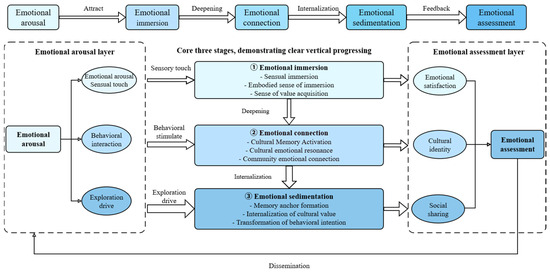
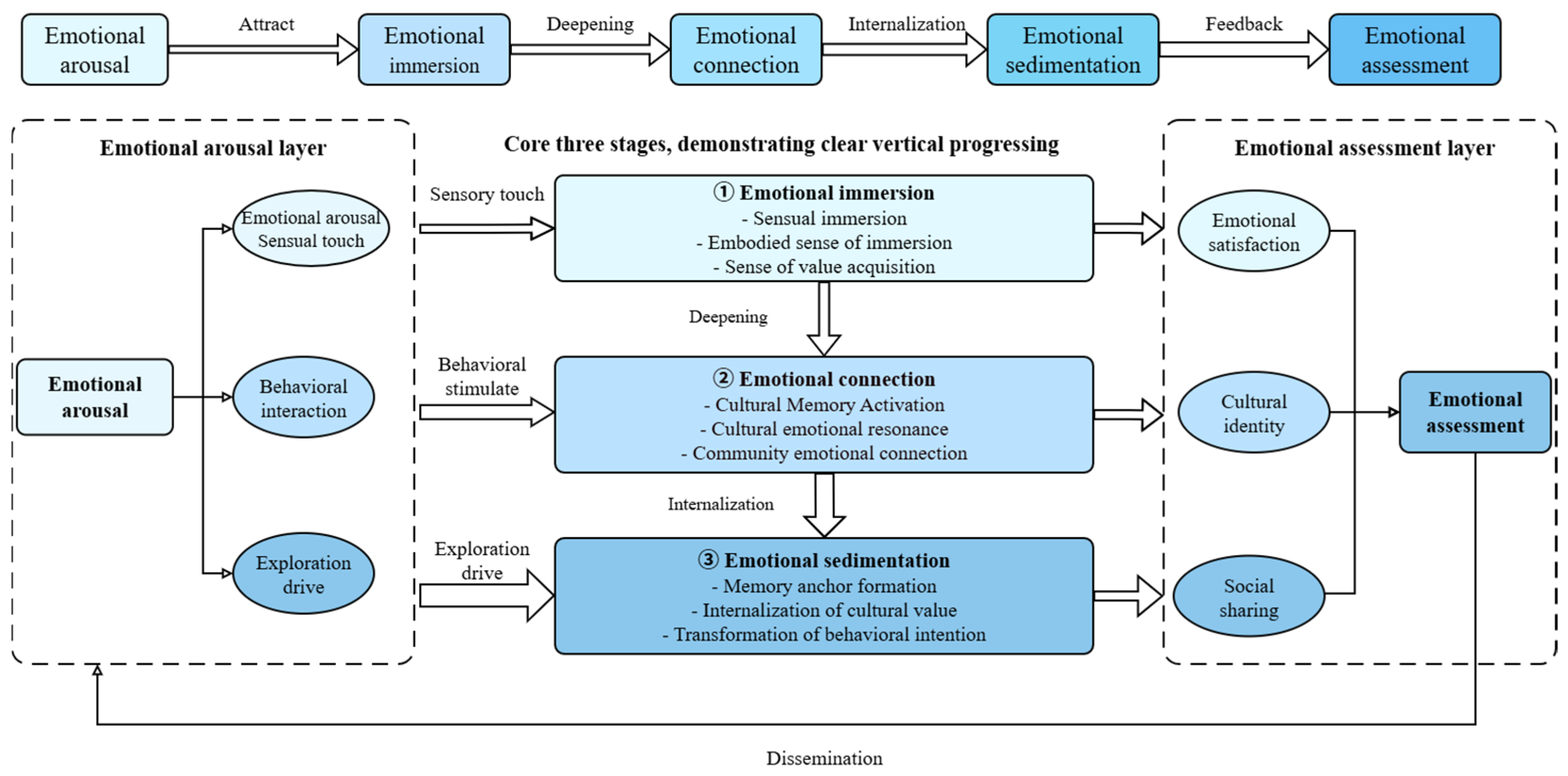
This study conducted in-depth semi-structured interviews with 28 members of Generation Z at the TCM exhibition hall, and used grounded theory to conduct three-level coding on the interview data to construct an emotional–cognitive model for digital tourism. The results showed that the emotional–cognitive pathways of Generation Z towards TCM culture include: emotional arousal, emotional immersion, emotional connection, emotional sedimentation, and emotional assessment. The model explains how emotional awareness emerges through sensory interaction and gradually extends toward cultural identity and willingness to support heritage transmission, as illustrated in Figure 1. The following sections discuss each stage in detail.
Figure 1.
Emotional–cognitive path model.
4.1. Emotional Arousal
Emotional arousal is the initial stage of the emotional–cognitive path. For Generation Z, who are accustomed to rich digital stimuli, an ICH experience first needs to earn their attention. Interview data indicate that this stage was shaped mainly by three elements: sensory stimulation, behavioral engagement, and exploratory curiosity. This result aligns with digital heritage studies showing that young visitors’ initial engagement is often sparked by multisensory stimulation and interactive novelty [33].
Sensory stimulation is the most immediate factor shaping participants’ emotional responses. Generation Z participants perceived the exhibition space through multiple senses, and these sensory encounters formed the basis of their initial emotional responses [34]. Many respondents noted that digital technologies, including color design, visual effects, sound, and interactive devices, transformed previously abstract or unfamiliar aspects of TCM into concrete and engaging experiences.
“They display the herbs in old-style TCM medicine cabinets, which creates a strong historical atmosphere. When I gently touch the cabinet door, it emits a sound. It makes me feel immersed in TCM culture.”(Quoted from A3.)
Behavioral engagement intensifies this emotional arousal. Visitors engage with the display using motions and vocal directions, deriving enjoyment while simultaneously arousing their emotions [35]. Research shows that installations with interactive attributes, which attract visitors’ physical participation, are more likely to evoke emotional resonance and a sense of immersion [36].
“You adjust the grinding intensity using the controller. If the pressure is too low, it shows ‘insufficient grinding’; if the force is too strong, it shows ‘material damage.’ This design makes the VR experience feel very realistic.”(Quoted from A5.)
The exploration-driven mechanism also shaped Generation Z participants’ expectations and willingness to continue the experience. As a generation that has grown up with the internet, Generation Z is generally receptive to novel digital technologies and interactive forms of cultural communication [37]. For example, complex ICH knowledge was presented through game levels and story missions, making TCM culture easier to understand and more attractive to young visitors [38]. This design matched participants’ preference for fast and interactive learning and sustained their curiosity through edutainment. Similar findings have been reported in studies on youth-oriented digital heritage experiences. Nofal (2020) found that location-based games provide Generation Z with a new way to experience cultural heritage and can enhance engagement through the integration of heritage content and gaming experiences [39]. This is also in line with the findings of Pietroni (2025), who concluded that physical participation can strengthen visitors’ emotional involvement with heritage content [40]. From a sustainability perspective, such exploration-driven experiences may help reduce stereotypes about traditional culture, foster longer-term interest in ICH among younger audiences, and support the continued transmission of TCM heritage in contemporary society.
The emotions generated at this stage are fleeting but functionally important. By associating TCM with surprise, joy, and curiosity, visitors begin to form a positive emotional orientation toward a heritage that was previously distant or unfamiliar. Without this initial affective coloring, deeper identity work cannot begin. Thus, emotional arousal in this study serves not only as a momentary reaction to technology, but also as the starting point through which Generation Z begins to renegotiate its relationship with traditional culture.
4.2. Emotional Immersion
Emotional immersion marks the shift in tourists from passive recipients to active participants. This shift depends first on sensual immersion, because visitors usually begin by having an immediate experience of digital heritage through what they see, hear, touch, smell, and interact with [41]. This is consistent with Huss’s (2025) study results, which found that immersion in heritage experiences is produced through the integration of sensory perception, spatial atmosphere, and bodily involvement, rather than visual display alone [30]. For example, in a digital TCM heritage setting, the visual display of herbal cabinets, the sound of cabinet doors opening, and touch-based interaction with virtual tools can help visitors feel as if they are entering a traditional medical space. The interview data further indicate that, through this deeper sensory integration, participants’ emotional experiences moved beyond short-term stimulation and developed into a more stable, deeper emotional connection, laying the foundation for cultural identity and sustainability.
“The interface is intended to resemble flipping through an ancient book, with yellowed paper textures in the background. It immediately conjures up images of traditional Chinese medicinal culture.”(Quoted from A12.)
Moreover, a deeper emotional connection encouraged Generation Z participants to move from perception to action. Technologies such as AR and VR enabled visitors to simulate real-world settings and deepen their understanding of cultural heritage. At the same time, motion-sensing interaction moved beyond the limits of conventional static images [42]. Through physical movements, visitors could interact more directly with ICH and rely less on devices such as joysticks. Additionally, in language-based interactions, visitors could assume a character role and communicate directly with digital figures, which created a strong sense of novelty. These interactive technologies connect cultural heritage with contemporary digital tools, supporting the continued transmission of culture.
“You can sample this virtual acupuncture experience with a special glove. The glove feels exactly like the resistance of a genuine needle, and the AR glasses show you how the meridians flow. When you hit the correct acupuncture point, you may even feel a vibration.”(Quoted from A15.)
Perceiving meaningful outcomes generates competence, pride, and gratitude. During the practical experience phase, innovative technologies and sustainable development principles can be incorporated into diverse projects, such as conferring honorary titles following successful operations, enabling tourists to engage in learning and innovation while consistently receiving knowledge and emotional feedback. This result is similar to findings that interactive heritage experiences can enhance visitors’ sense of competence and emotional attachment [43], but the present study further shows that such feedback can help young users understand difficult ICH knowledge through practice rather than passive explanation.
Emotional immersion moves beyond transient arousal to create embodied relevance: the visitor feels that TCM is personally meaningful because it has been experienced through their own body and actions. This aligns with embodied cognition theory [44], which highlights that perception, emotion, and cognition are not based solely on abstract reasoning but are grounded in bodily experience, sensory perception, and interaction with the surrounding environment. This embodied relevance is a necessary precursor to identity: people do not identify with abstract concepts; they identify with what they have experienced. Thus, immersion provides the affective grounding upon which cultural identity can later be built.
4.3. Emotional Connection
Emotional immersion, however intense, remains a private experience unless it is linked to cultural symbols and social others. Emotional connection links private feelings to shared belonging through three pathways: cultural memory activation, cultural emotional resonance, and community emotional connection.
Cultural memory activation occurs when digital symbols trigger collective memories that are emotionally charged—typically nostalgia, pride, or reverence. For Generation Z, who did not personally experience historical periods, digital simulations can evoke a vicarious nostalgia or a feeling of historical belonging. Through digital means, traditional patterns, historical narratives, color schemes, and other cultural symbols containing profound wisdom and emotional significance can be presented on online consultation platforms or system interfaces, which can effectively stimulate cultural memory and evoke collective emotions [45]. Rather than relying on direct historical experience, this kind of mediated belonging is closer to nostalgia-based heritage tourism, in which emotion, authenticity, and remembered place jointly shape visitors’ attachment to cultural contents [46].
Cultural emotional resonance refers to the ability of a digital scene to evoke an emotion that is collectively recognized and shared—such as the serenity of a traditional clinic, the urgency of a diagnosis, or the awe of natural harmony. This resonance creates a feeling of shared emotional wavelength with other visitors or with imagined ancestors.
“Using stories and recreated situations in actual and virtual TCM clinics allows you to feel completely immersed—as if you were in ancient times, seeing people pick herbs or seeing a doctor. It feels much warmer and more real.”(Quoted from A24.)
Community emotional connection arises when visitors share their experiences with others and receive emotional feedback, creating a sense of collective effervescence. Digital platforms enable this through comments, likes, group challenges, and shared check-ins, generating emotions of belonging, validation, and shared joy. Moreover, immersive scenario recreation effectively stimulates collective resonance throughout Generation Z [47]. Visitors can participate in simulated treatment settings via real-time technology, gaining a profound understanding of the knowledge inherent in ICH skills. By incorporating contemporary technologies, we can dismantle Generation Z’s misconceptions about TCM as antiquated and remote, deepen their understanding of its cultural relevance, and foster emotional connection within this demographic. This networked form of emotional connection extends findings from digital ethnographic research on Chinese heritage tourism, which shows that user-generated content can become an important site where visitors interpret, negotiate, and circulate heritage meanings [48].
“Digital technologies make TCM seem less mysterious to me. The movies demonstrate, step by step, how to take your pulse, which is really simple. It greatly expanded my understanding of TCM.”(Quoted from A25.)
“We might organize a TCM culture experience display for students, including hands-on activities, discussions, and fun games. That would allow more people to discover how incredible TCM is.”(Quoted from A26.)
Emotional connection shifts the locus of feeling from the individual to the collective. When visitors experience cultural memory, emotional resonance, and community belonging, they begin to see TCM as “our culture” rather than “their culture.” This collective sentiment is the direct cognitive-affective material of cultural identity, because identity is inherently social: it requires a sense of shared belonging and pride in one’s cultural group.
4.4. Emotional Sedimentation
The sedimentation of emotion denotes its gradual internalization from the sensory realm to the logical and finally to the deliberate. Digital technology was actively used in prominent experience centers during this process [49]. Formats like 3D animated demonstrations make abstract cultural knowledge concrete, reducing barriers to audience engagement and enhancing understanding for inheritors [50]. Data visualization further elaborates on this concept. For example, Longquan celadon enhances visitor experiences with activities such as celadon treasure hunts and celadon stamping stations [51]. These experiences convey knowledge through digital formats and humorous language, effectively engaging visitors and creating enduring memory anchors among Generation Z, thereby promoting the sustainability of cultural transmission.
“For example, we could create some instructional short animations explaining why we have too much moisture and how to address it. We could also create TCM-themed murder mystery games that are relevant to everyday life, allowing people to learn while playing.”(Quoted from A11.)
The internalization of cultural values arises from profound cultural comprehension and authentic emotional involvement. Studies indicate that established museums utilize applications, games, and social media to connect online and offline activities, facilitating flexible, self-directed learning for Generation Z [52,53]. These methodologies utilize narratives of intangible cultural assets to link physical artifacts, intangible components, and their originating communities, imbuing them with genuine historical and cultural significance [54]. They facilitate the conversion of ICH protection into a foundation for cultural identity and continuity, transforming this legacy of inheritance into a means of fostering appreciation for cultural diversity and human creativity [5]. While most heritage tourism research explains how visitors respond to authenticity, nostalgia, or site interpretation [55], the present findings focus on a slower process in which repeated digital interaction allows cultural meanings to settle into personal values. They assist tourists in understanding ICH, achieve the objectives of cultural education, and motivate Gen Z to incorporate its fundamental principles into their personal beliefs. Consequently, individuals’ endorsement of ICH is derived not from media promotion or fleeting curiosity, but from genuine and profound acknowledgment of its cultural significance.
“It completely replicates the bamboo slip edition of the Huangdi Neijing—even the bamboo grain looks natural. It’s quite educational, and the minor details let me feel the historical significance of TCM.”(Quoted from A13.)
Behavioral intention transformation is disseminated through interactive media such as games and brief movies. The Rijksmuseum has incorporated entertainment and educational value through interactive activities, like a digital treasure hunt and the Rembrandt Reality app [56]. Engaging interactions enhance users’ interest in learning by incorporating social elements into ICH communication, prompting audiences to transition from passive cultural recipients to active disseminators. The gratification derived from co-creation incentives further enhances instructional value [57]. It adheres to a user-participation concept, with co-creation methods initiated by grassroots participants. These techniques encompass competitions and voting, which provide seamless engagement between visitors and designers. These activities provide users with a profound sense of involvement and accomplishment, motivating them to engage more extensively in co-creation.
“Finally, after extensive use, emotional identity, such as the desire to experience again and the willingness to pay attention to new product dynamics, is developed, as young people generally skim through short videos these days. And I believe that short videos have a broad reach; they are an excellent platform for disseminating TCM knowledge.”(Quoted from A16.)
Sedimentation marks the transition from situational emotion to enduring attitude and value. When visitors internalize TCM principles into daily habits and derive quiet satisfaction from value–behavior alignment, they have effectively made the heritage part of their self-concept. This is the core psychological process of identity formation: not just knowing about or liking a culture, but living it as a personal truth. Sedimentation thus produces the raw material that, when reflectively evaluated, becomes explicit cultural identity.
4.5. Emotional Assessment
The final stage involves reflective evaluation of the entire experience, producing three interconnected outcomes: emotional satisfaction, cultural identity, and social sharing. Importantly, emotional assessment generates a feedback loop that re-enters stage 1, making the path spiral rather than linear.
Emotional satisfaction is a retrospective feeling of fulfillment, pleasure, and meaningfulness. Generation Z experiences the swift dissemination of intangible cultural assets through internet platforms, including social media and applications. Through theoretical abstraction and various methods, they render cultural connotations unattainable through language, enabling youth to value ancestral wisdom deeply. This not only enhances cultural understanding among Generation Z but also significantly influences their distinct cultural memory and value development, strengthening their sense of national pride and belonging.
“I used to think TCM was mystical and disconnected from everyday life. But after seeing several instructive short movies, I realized that TCM knowledge can be conveyed in a very practical way.”(Quoted from A21.)
“Now, when I see post-2000s TCM bloggers filming their daily lives as TCM practitioners in vlogs, I immediately believe TCM is awesome. It defies the usual mysterious classification and becomes popular culture.”(Quoted from A22.)
Social sharing is closely related to emotional assessment. Visitors are more likely to have a willingness to share emotional experiences or services with high scores. Generation Z strengthens emotional bonds with family and friends through word of mouth, social media contributions, and the creation of relevant content. A study indicated that Generation Z college students derive greater self-satisfaction and a sense of belonging from online social interactions and are inclined to express their personal views on social media [58,59]. Moreover, their proactive dissemination attracts prospective users within their social networks, initiating a new cycle of emotional and cognitive involvement. This emotion perception path concept, grounded in digital social interaction, enhances audience reach. It facilitates the seamless integration of ICH into contemporary life through interaction and sharing, thereby promoting its sustained transmission throughout generations. Such sharing is not merely a response to satisfaction; it is an enactment of cultural identity.
“For interactivity, we may create a TCM-themed social media network. Users can discuss their health-preserving strategies, like each other’s postings, and collaborate to complete TCM challenges.”(Quoted from A24.)
“The style pictures of medicinal herbs in the H5 are amazing. They combine old patterns with modern styles, and displaying them on Moments makes you appear quite cool.”(Quoted from A25.)
Cultural identity is an important component of the emotional assessment stage. Cultural identity emerges when visitors internalize heritage as part of their self-concept. The emotional shift involves moving from pride in experience to pride in identity. This was consistent with Strickland et al.’s (2026) study results that identity-related memories, genealogy, and emotional layers could shape visitors’ interpretation of heritage sites as personally meaningful rather than merely educational [60]. The research results of Zhang also support this view; their study found that empathy can enhance tourists’ understanding of historical events [61]. Cultural identity transforms heritage from an external object into an emotional anchor for self-definition, which is the strongest driver of cultural sustainability. In this sense, cultural identity is not a separate output but the integrative product of the preceding four stages: arousal provided affective orientation, immersion provided embodied relevance, connection provided social belonging, and sedimentation provided value internalization. Evaluation then crystallizes these into an explicit identity claim.
In sum, across the five stages, cultural identity is not an afterthought but is progressively constructed: arousal supplies affective orientation, immersion supplies embodied relevance, connection supplies social belonging, sedimentation supplies value internalization, and evaluation crystallizes these into explicit identity. The next section explains how this identity, once formed, drives cultural sustainability.
4.6. The Spiral Logic: From Emotion to Cultural Identity to Sustainability
The five stages form a conditional spiral, but the ultimate theoretical contribution is to specify how emotion transforms into cultural identity, and how cultural identity, in turn, drives cultural sustainability.
Emotional arousal, immersion, connection, and sedimentation gradually build the affective and cognitive resources for identity formation. However, these emotions—surprise, wonder, pride, and satisfaction—remain temporary affective states unless they are crystallized into cultural identity. Cultural identity is the critical mediating variable: it represents a qualitative shift from “I feel good about this experience” to “this heritage defines who I am.” This interpretation is also compatible with memory studies in China, where local memory practices are shown to transform museums and heritage spaces into arenas for community interpretation, negotiation, and identity formation [62]. Only when this shift occurs does the individual become intrinsically motivated to sustain the heritage.
The model’s feedback loop operates through this mediating mechanism. At the emotional assessment stage, cultural identity emerges and directly triggers identity-congruent behaviors—sharing, teaching, co-creating, and advocating. These behaviors are not merely expressions of satisfaction; they are enactments of identity. This finding also aligns with Ruan et al. (2024), who show that affection-based heritage interpretation is more effective than knowledge-based interpretation in enhancing tourists’ cultural identity and willingness to inherit culture [63]. Because people protect and promote what defines them, cultural identity becomes the proximal driver of cultural sustainability.
Thus, the full causal chain is emotional–cognitive path → cultural identity → cultural sustainability. Digital heritage tourism succeeds not by generating fleeting pleasure, but by engineering a spiral that elevates emotion into identity, and identity into action. This aligns with SDG 11.4 (heritage protection) and SDG 4.7 (cultural identity and appreciation), as identity-motivated transmission is the psychological engine of intergenerational continuity.
5. Conclusions
This study conducted in-depth interviews with 28 Generation Z members at the TCM Culture Exhibition Hall using grounded theory methods to explore how the emotional–cognitive path of digital tourism experience promotes cultural sustainability. It established an emotional–cognitive path model comprising five stages: emotional arousal, emotional immersion, emotional connection, emotional sedimentation, and emotional assessment. The research identified cultural identification as the primary mediating variable linking short-term digital tourist experiences to long-term cultural sustainability. The steady progression through five stages allows emotional experience to transition from sensory contact to value internalization, culminating in enduring cultural identity and a commitment to legacy transmission.
5.1. Theoretical Implications
First, this study systematically elucidates the path of emotional evolution in digital heritage tourism. Existing studies on immersive tourism and digital heritage have shown that technologies such as VR and AR can enhance presence, attitude change, visitor experience, and satisfaction [64,65]. However, these studies often explain digital heritage experience mainly through technological affordance, presence, or experiential quality. By contrast, the present study reveals how digital ICH experiences gradually transform sensory stimulation into cultural understanding and identity formation through a sequential emotional–cognitive pathway. More specifically, this pathway clarifies how different emotional states perform different functions at different stages: emotional arousal attracts attention, emotional immersion creates embodied relevance, emotional connection generates collective belonging, emotional sedimentation supports value internalization, and emotional assessment crystallizes identity and future action. Therefore, its theoretical contribution lies in explaining how such experience becomes culturally meaningful over time.
Second, it identifies cultural identity as the central mediating variable that links short-term emotional experiences to long-term cultural sustainability. The model demonstrates that emotions alone—surprise, wonder, pride, and satisfaction—do not guarantee sustainable transmission. Only when these emotions are internalized into the visitor’s self-concept can they generate identity-congruent behaviors such as sharing, learning, co-creation, and preservation. This finding is consistent with studies that emphasize how emotional experience and place attachment contribute to supportive heritage behavior [66,67]. However, the present study further extends these discussions by showing that cultural identity does not simply appear as a final attitudinal outcome, but functions as the mediating mechanism through which emotional experience is transformed into transmission-oriented action.
Third, this study contributes to cultural sustainability theory by proposing a spiral rather than a linear model of heritage transmission. Previous studies have discussed sustainability in terms of heritage protection, interpretation quality, visitor participation, or willingness to support conservation [68,69]. The present study adds a psychological explanation of how cultural sustainability is generated at the individual level and then amplified socially. Once cultural identity is formed, visitors’ sharing, teaching, co-creation, and advocacy do not merely express satisfaction; they reinforce their own identity and may activate similar emotional–cognitive pathways among others. Thus, cultural sustainability is understood as an identity-mediated and socially amplified process. Different from the second contribution, which explains the mediating role of cultural identity, this contribution emphasizes the feedback mechanism through which identity-based actions generate new cycles of cultural transmission.
Overall, the theoretical value of this study lies in connecting three areas that are often discussed separately: digital heritage experience, emotion-based identity formation, and cultural sustainability. The emotional–cognitive path model explains how digital heritage tourism moves from sensory attraction to embodied participation, from emotional resonance to value internalization, and from cultural identity to sustainable transmission. It therefore shifts digital heritage research from the question of “how to attract users” toward the deeper theoretical question of how digital heritage experiences generate cultural identity and support intergenerational continuity.
5.2. Practical Implications
The emotional–cognitive path model offers actionable guidelines for designing digital heritage experiences that foster cultural identity and sustainability among Generation Z.
- (1)
- Multisensory arousal design. The findings of this study reveal that emotional arousal among Generation Z is triggered primarily by novel sensory stimuli and exploratory curiosity rather than static displays. On the one hand, designers should utilize sensory combinations, such as ink animations synchronized with guqin sounds and tactile feedback on virtual medicine cabinets, to generate surprise and curiosity. On the other hand, as static, text-heavy interfaces lead to rapid disengagement, employing game-like narratives and level-based exploration is essential to sustain initial attention and prevent early dropout.
- (2)
- Embodied interaction for deep immersion. This study demonstrates that emotional immersion is significantly enhanced when users physically enact heritage practices rather than passively observing them. Therefore, it is necessary to enhance the willingness of Generation Z to participate in heritage practices through embodied interaction, such as by strengthening real-time feedback, creating personal relevance and deepening the sense of presence.
- (3)
- Cultural symbolism and community building. The research reveals that an emotional connection is forged when digital interfaces activate collective memory through familiar esthetics. Designers should incorporate “national tide” elements, such as blue-and-white porcelain textures and calligraphic motifs, to evoke cultural resonance. Furthermore, designers should design functions such as in-app communities, family health circles, or group challenges to strengthen communal belonging, thereby shifting the user’s perception from “my experience” to “our heritage.”
- (4)
- Daily embedding to support emotional sedimentation. Evidence from the survey suggests that cultural values are internalized only when they transition from leisure activities into daily routines. Therefore, managers should incorporate cultural connotations into personalized, practical tools so that the Z generation can repeatedly use them in their daily lives to strengthen their cultural identity, as cultural heritage is transformed into continuous practice rather than a one-time experience.
- (5)
- Amplifying the feedback loop of evaluation and sharing. The results underscore that the assessment stage acts as a catalyst for sustainable transmission through social diffusion. Designers should engineer “proud moments” that users are eager to broadcast, such as shareable health reports, stylish virtual prescription cards, or achievement badges, through integrating seamless sharing functions to social media platforms, allowing likes and comments to reinforce cultural identity, thus triggering new cycles of arousal in others and turning individual visitors into active transmitters who scale sustainability organically.
- (6)
- Enabling a circular economy through emotional engagement. Digital heritage platforms can support the circular economy by replacing physical exhibits and disposable souvenirs with virtual alternatives. User co-creation—such as sharing remixed content or updating digital assets—extends the lifecycle of cultural resources without additional material input. Our model shows that such co-creation emerges naturally from emotional assessment and social sharing, offering a direct pathway to reduce waste in heritage tourism.
6. Limitations
This study also has certain limitations. Firstly, although we selected three regions for our survey in order to minimize geographical bias in individual samples, the majority of respondents in this study are from the eastern and central regions of the country; therefore, future research could expand the geographical scope of the survey. Secondly, as the sample focuses solely on cases of ICH related to TCM, it may not fully capture the complete diversity of ICH. Future research could include a wider range of heritage types to test the transferability of the proposed framework. Thirdly, this study focused mainly on participants’ immediate experiences, while the long-term sustainability of digital heritage infrastructure, including data preservation, technological obsolescence, and cultural governance, remains underexplored. Future studies could adopt longitudinal designs to verify whether short-term positive emotional responses can develop into lasting cultural identity, repeated participation, and sustained support for heritage transmission.
Author Contributions
Conceptualization, M.L. and X.O.; methodology, X.O.; software, M.L.; validation, M.L. and X.O.; formal analysis, M.L. and X.O.; investigation, M.L. and X.O.; resources, M.L. and X.O.; data curation, M.L. and X.O.; writing—original draft preparation, M.L.; writing—review and editing, M.L. and X.O.; visualization, M.L. and X.O.; supervision, X.O.; All authors have read and agreed to the published version of the manuscript.
Funding
This research was funded by the 2026 University of Shanghai for Science and Technology Faculty Development Research Project CFTD2026YB18.
Institutional Review Board Statement
The study was conducted in accordance with the Declaration of Helsinki and approved by the Ethics Committee of Shidong Hospital affiliated to the University of Shanghai for Science and Technology (Approval Code: IRB-AF63-V1.0; Approval Date: 2 July 2025).
Informed Consent Statement
Informed consent was obtained from all subjects involved in the study.
Data Availability Statement
The data presented in this study are available on request from the corresponding author.
Acknowledgments
Thank all the respondents who participated in this research.
Conflicts of Interest
The authors declare no conflicts of interest.
Abbreviations
The following abbreviations are used in this manuscript:
| ICH | Intangible Cultural Heritage |
| TCM | Traditional Chinese Medicine |
References
- Buglione, F.; Della Morte, P.; Angrisano, M.; Gravagnuolo, A.; Fusco Girard, L. Circular Models for the Sustainable Regeneration of Italian Rural Villages: A Critical Analysis of Good Practices Toward the Definition of a Circular Rural Village. Sustainability 2026, 18, 1405. [Google Scholar] [CrossRef] [Scilit]
- Bao, H.; Bowen, J.P. From Material Conservation to Digital Presence: Reconstructing Visitors’ Heritage Experience and Meaning-Making Through Digital Dunhuang. Heritage 2025, 8, 534. [Google Scholar] [CrossRef] [Scilit]
- Liu, H.; Chen, M. Iconological reconstruction and complementarity in Chinese and Korean museums in the digital age: A comparative study of the National Museum of Korea and the Palace Museum. Sustainability 2025, 17, 6042. [Google Scholar] [CrossRef] [Scilit]
- Yi, C.Z.; Huang, J.N.; Song, L.P. Enhancing intangible cultural heritage dissemination through digital experience: An Affective Events Theory approach. npj Herit. Sci. 2025, 13, 438. [Google Scholar] [CrossRef] [Scilit]
- Lenzerini, F. Intangible Cultural Heritage: The Living Culture of Peoples. Eur. J. Int. Law 2011, 22, 101–120. [Google Scholar] [CrossRef] [Scilit]
- Bermúdez-González, G.; Sánchez-Teba, E.M.; Benítez-Márquez, M.D.; Vegas-Melero, J.J. Generation Z members’ intentions to work in tourism in their World Heritage Site hometowns. Humanit. Soc. Sci. Commun. 2023, 10, 1–14. [Google Scholar] [CrossRef] [Scilit]
- Speidel, C. The impact of cultural settings on sustainability narratives: An explorative study with the Indian diaspora. Mitig. Adapt. Strateg. Glob. Chang. 2024, 29, 60. [Google Scholar] [CrossRef] [Scilit]
- Yang, J.; Luo, J.M.; Lai, I.K.W. Construction of Leisure Consumer Loyalty from Cultural Identity-A Case of Cantonese Opera. Sustainability 2021, 13, 1980. [Google Scholar] [CrossRef] [Scilit]
- Cobb, C.L.; Schwartz, S.J.; Martinez, C.R. A Theory of Cultural Continuity: Heritage Culture Retention as an Important Psychological Motivation. Psychol. Rev. 2026, 133, 94–112. [Google Scholar] [CrossRef] [Scilit] [PubMed]
- Lin, Z.W.; Zhou, X.F. Fading nostalgia, enduring identity: A dual motivational pathway for cultural heritage preservation and revitalization. J. Hosp. Tour. Manag. 2026, 67, 101445. [Google Scholar] [CrossRef] [Scilit]
- Prayag, G.; Alrawadieh, Z.; Alrawadieh, Z. Motivation, emotion and world heritage status in discerning the heritage tourists: A segmentation perspective. Tour. Manag. Perspect. 2021, 40, 100906. [Google Scholar] [CrossRef] [Scilit]
- Sardanelli, D.; Ferrara, C.; Cerquetti, M. Clustering studies on cultural consumption in the digital society. A systematic literature review on Gen Y and Gen Z. Leis. Stud. 2025, 1–17. [Google Scholar] [CrossRef] [Scilit]
- Choo, H.J.; Lee, H.; Xie, J.L. Consumers’ cultural identity under glocalization: Vietnamese consumers’ global and national identities and their cross-cultural consumption. Asia Pac. J. Mark. Logist. 2023, 35, 1052–1074. [Google Scholar] [CrossRef] [Scilit]
- Satmari, A.; Cretan, R.; Birau, D. Postmemory and Emotion of the 1989 Romanian Revolution Among Y and Z Generations. Popul. Space Place 2026, 32, e70174. [Google Scholar] [CrossRef] [Scilit]
- Economou, M.; Young, H.; Sosnowska, E. Digital storytelling for emotional engagement in museums: Design and evaluation of the Hunterian Antonine Wall EMOTIVE experiences. Int. J. Herit. Stud. 2026, 32, 324–355. [Google Scholar] [CrossRef] [Scilit]
- Elkatmis, M. Examination of social media usage habits of generation Z. Front. Psychol. 2024, 15, 1370823. [Google Scholar] [CrossRef] [Scilit] [PubMed]
- Wut, T.M.; Lee, D.; Lee, S.W. Does Attitude or Intention Affect Behavior in Sustainable Tourism? A Review and Research Agenda. Sustainability 2023, 15, 14076. [Google Scholar] [CrossRef] [Scilit]
- Hu, J.Q.; Liu, B.Y. The basic theory, diagnostic, and therapeutic system of traditional Chinese medicine and the challenges they bring to statistics. Stat. Med. 2012, 31, 602–605. [Google Scholar] [CrossRef] [Scilit] [PubMed]
- UNESCO. What is Intangible Cultural Heritage? Available online: https://ich.unesco.org/en/what-is-intangible-heritage-00003 (accessed on 20 February 2026).
- Huang, C.H. Exploring the Methodological Characteristics of Traditional Chinese Medicine Through Analogical Strangification in Constructive Realism: A Perspective on Confucian Physician Zhu Dan-xi’s Depression Theory. Univ.-Mon. Rev. Philos. Cult. 2024, 51, 19–41. [Google Scholar]
- Lu, Y.G.; Mi, G.F.; Lu, H.L.; Wang, Y. Immersive Technologies in Built Heritage Spaces: Understanding Tourists’ Continuance Intention Toward Sustainable AR and VR Applications at the Terracotta Warriors Museum. Buildings 2025, 15, 3481. [Google Scholar] [CrossRef] [Scilit]
- Srdanovic, P.; Skala, T.; Maricevic, M. InHeritage-A Gamified Mobile Application with AR and VR for Cultural Heritage Preservation in the Metaverse. Appl. Sci. 2025, 15, 257. [Google Scholar] [CrossRef] [Scilit]
- Li, K.; Cipolletta, G.; Andreola, C.; Eusebi, A.L.; Kulaga, B.; Cardinali, S.; Fatone, F. Circular economy and sustainability in the tourism industry: Critical analysis of integrated solutions and good practices in European and Chinese case studies. Environ. Dev. Sustain. 2024, 26, 16461–16482. [Google Scholar] [CrossRef] [Scilit]
- Khoshroo, M.; Soltani, M. Digital transformation of tourism: Towards a model of technology acceptance by tourists in the Industry 5.0. Eur. J. Innov. Manag. 2025, 28, 2101–2124. [Google Scholar] [CrossRef] [Scilit]
- Zhu, Y.H.; Li, J.; Han, X.; Wang, R.; Wang, C.S.; Pu, C.Y. Embracing the Future: Perceived Value, Technology Optimism and VR Tourism Behavioral Outcomes Among Generation Z. Int. J. Hum.-Comput. Interact. 2025, 41, 2337–2351. [Google Scholar] [CrossRef] [Scilit]
- Zhou, Q.; Sotiriadis, M.; Shen, S.W. Using TikTok in tourism destination choice: A young Chinese tourists’ perspective. Tour. Manag. Perspect. 2023, 46, 101101. [Google Scholar] [CrossRef] [Scilit]
- Chen, J.Y. Factors Affecting Cultural Transmission in Museum Tourism: An Empirical Study with Mediation Analysis. SAGE Open 2024, 14, 21582440241273868. [Google Scholar] [CrossRef] [Scilit]
- Dragan, A.; Cretan, R.; Jucu, I.; Oancea, O. Rural Landscapes as Cultural Heritage and Identity along a Romanian River. Heritage 2024, 7, 4354–4373. [Google Scholar] [CrossRef] [Scilit]
- Dragan, A.; Cretan, R.; Terian, M. Landscapes of Watermills: A Rural Cultural Heritage Perspective in an East-Central European Context. Heritage 2024, 7, 4790–4813. [Google Scholar] [CrossRef] [Scilit]
- Huss, M. Walking tours as transcultural memory activism: Referencing memories of trauma and migration to redefine urban belonging. Mem. Stud. 2025, 18, 3–21. [Google Scholar] [CrossRef] [Scilit]
- Pfoser, A.; Stach, S. Beyond difficult pasts: Towards a fuller understanding of memory-making in tourism. Mem. Stud. 2025, 18, 1265–1278. [Google Scholar] [CrossRef] [Scilit]
- Zhang, Y.D.; Liu, L.X. Generation Mechanism of Collective Emotional Resonance: A Study on Group Emotions and Cultural Identity in Digital Exhibitions of Intangible Cultural Heritage Costumes. Int. J. Hum.-Comput. Interact. 2026, 42, 1141–1155. [Google Scholar] [CrossRef] [Scilit]
- Lin, C.M.; Xia, G.B.; Nickpour, F.; Chen, Y.S. A review of emotional design in extended reality for the preservation of culture heritage. npj Herit. Sci. 2025, 13, 86. [Google Scholar] [CrossRef] [Scilit]
- Zhang, S.Y.; Chen, Y.L. A Study on Embodied Experience of Surfing Tourism Based on Grounded Theory-Take China’s Hainan Province as an Example. Behav. Sci. 2022, 12, 407. [Google Scholar] [CrossRef] [Scilit] [PubMed]
- Bekele, M.K.; Pierdicca, R.; Frontoni, E.; Malinverni, E.S.; Gain, J. A Survey of Augmented, Virtual, and Mixed Reality for Cultural Heritage. ACM J. Comput. Cult. Herit. 2018, 11, 1–36. [Google Scholar] [CrossRef] [Scilit]
- Chang, S.B.; Suh, J. The Impact of VR Exhibition Experiences on Presence, Interaction, Immersion, and Satisfaction: Focusing on the Experience Economy Theory (4Es). Systems 2025, 13, 55. [Google Scholar] [CrossRef] [Scilit]
- Mavrin, I.; Tursie, C.; Matichescu, M.L. Exploring Sustainable Tourism Through Virtual Travel: Generation Z’s Perspectives. Sustainability 2024, 16, 10858. [Google Scholar] [CrossRef] [Scilit]
- Wang, Y.C.; Guo, R. How does the metaverse tourism experience form tourists’ happiness: A mixed-methods study. J. Vacat. Mark. 2025, 13567667241307958. [Google Scholar] [CrossRef] [Scilit]
- Nofal, E.; Panagiotidou, G.; Reffat, R.; Hameeuw, H.; Boschloos, V.; Vande Moere, A. Situated Tangible Gamification of Heritage for Supporting Collaborative Learning of Young Museum Visitors. ACM J. Comput. Cult. Herit. 2020, 13, 1–24. [Google Scholar] [CrossRef] [Scilit]
- Pietroni, E. Multisensory Museums, Hybrid Realities, Narration, and Technological Innovation: A Discussion Around New Perspectives in Experience Design and Sense of Authenticity. Heritage 2025, 8, 130. [Google Scholar] [CrossRef] [Scilit]
- Vosinakis, S.; Koutsabasis, P.; Anastassakis, G.; Papasalouros, A.; Damianidis, K. Designing and evaluating an immersive VR experience of a historic sailing ship in museum contexts. Comput. Graph. 2025, 133, 104439. [Google Scholar] [CrossRef] [Scilit]
- Duranti, D.; Spallazzo, D.; Petrelli, D. Smart Objects and Replicas: A Survey of Tangible and Embodied Interactions in Museums and Cultural Heritage Sites. ACM J. Comput. Cult. Herit. 2024, 17, 1–32. [Google Scholar] [CrossRef] [Scilit]
- Chen, W.; Li, T.; Zhang, Y. Embodied cognition model for museum gamification cultural heritage communication a grounded theory study. npj Herit. Sci. 2025, 13, 239. [Google Scholar] [CrossRef] [Scilit]
- Shapiro, L.A. Flesh matters: The body in cognition. Mind Lang. 2019, 34, 3–20. [Google Scholar] [CrossRef] [Scilit]
- Zhu, Q.X.; Rahman, R. Authenticity in souvenir design integrating cultural features of Dunhuang’s mural heritage: A qualitative inquiry. Humanit. Soc. Sci. Commun. 2025, 12, 403. [Google Scholar] [CrossRef] [Scilit]
- Earl, A.; Hall, C. Nostalgia and tourism. J. Herit. Tour. 2023, 18, 307–317. [Google Scholar] [CrossRef] [Scilit]
- Yang, C.L.; Tengku, S.M.T.W.; Fadhilah, R. Advancing cultural heritage: A decadal review of digital transformation in Chinese museums. npj Herit. Sci. 2025, 13, 189. [Google Scholar] [CrossRef] [Scilit]
- Gillette, M.; Boyd, E. Mining for tourists in China: A digital ethnography of user-generated content from coal mining heritage parks. J. Herit. Tour. 2024, 19, 1–19. [Google Scholar] [CrossRef] [Scilit]
- Shi, M.; Zhang, M.; Chen, J.; Zhu, Y. Perceived Platform Quality and User Satisfaction in China Zisha-ware Digital Museum: Mediating Roles of Confirmation and Perceived Usefulness. SAGE Open 2025, 15, 21582440251376490. [Google Scholar] [CrossRef] [Scilit]
- Lu, L.; Li, M.T. Development of a virtual interactive system for Dahua Lou loom based on knowledge ontology-driven technology. Herit. Sci. 2023, 11, 178. [Google Scholar] [CrossRef] [Scilit]
- Zhang, Y.; Han, M.Q.; Chen, W.W. The strategy of digital scenic area planning from the perspective of intangible cultural heritage protection. EURASIP J. Image Video Process. 2018, 2018, 130. [Google Scholar] [CrossRef] [Scilit]
- Cheng, L. Educational affordances of music video games and gaming mobile apps. Technol. Pedagog. Educ. 2024, 33, 331–345. [Google Scholar] [CrossRef] [Scilit]
- Liu, J.; Chen, C.F.; Zou, H.; Zheng, J.; Gao, D.M. Preserving China’s Intangible Cultural Heritage through AR/VR storytelling, social media, and AI narratives. npj Herit. Sci. 2025, 13, 685. [Google Scholar] [CrossRef] [Scilit]
- Li, M.; Xu, S.T.; Tang, J.; Chen, W.F. Design and research of digital twin platform for handicraft intangible cultural heritage-Yangxin Cloth Paste. Herit. Sci. 2024, 12, 43. [Google Scholar] [CrossRef] [Scilit]
- Thouki, A. How authenticity is negotiated and experienced by clergy and tourists at religious World Heritage sites: Taking a closer look into the ’preserve as found’ strategy. J. Herit. Tour. 2024, 19, 623–647. [Google Scholar] [CrossRef] [Scilit]
- Ozdemir, G.; Zonah, S. Revolutionising Heritage Interpretation with Smart Technologies: A Blueprint for Sustainable Tourism. Sustainability 2025, 17, 4330. [Google Scholar] [CrossRef] [Scilit]
- Zhang, Z.S.; Jiang, S.Y.; Zhang, R.; Dong, R.K. Interactive visual communication for cultural learning and preservation: A mixed-methods study of user engagement with China’s intangible heritage. Acta Psychol. 2026, 263, 106238. [Google Scholar] [CrossRef] [Scilit] [PubMed]
- Peacock, S.; Cowan, J.; Irvine, L.; Williams, J. An Exploration Into the Importance of a Sense of Belonging for Online Learners. Int. Rev. Res. Open Distrib. Learn. 2020, 21, 18–35. [Google Scholar] [CrossRef] [Scilit]
- Qian, L.; Hu, W.; Jiang, M. The Impact of Online Social Behavior on College Student’s Life Satisfaction: Chain-Mediating Effects of Perceived Social Support and Core Self-Evaluation. Psychol. Res. Behav. Manag. 2023, 16, 4677–4683. [Google Scholar] [CrossRef] [Scilit] [PubMed]
- Strickland, P.; Willard, P.; Frew, E.; Lade, C. The influence of national identity and genealogy on the visitor experience at Culloden Battlefield, Scotland. J. Herit. Tour. 2026, 21, 83–96. [Google Scholar] [CrossRef] [Scilit]
- Zhang, L.; Li, X.; Li, X. Historical empathy: A key driver of visitor cultural attitudes at heritage destinations. J. Hosp. Tour. Manag. 2026, 66, 101392. [Google Scholar] [CrossRef] [Scilit]
- Zhu, Y. Private Museum as Public Space: Local Remembering and Memory Politics in Yan’an, China. Mem. Stud. 2024, 17, 581–598. [Google Scholar] [CrossRef] [Scilit]
- Ruan, W.Q.; Wang, M.Y.; Zhang, S.N.; Li, Y.Q.; Su, X.W. Knowledge-based or affection-based? The influence mechanism of heritage tourism interpretation content on tourists’ willingness to inherit culture. Tour. Manag. 2024, 102, 104876. [Google Scholar] [CrossRef] [Scilit]
- Choi, K.; Nam, Y. Do Presence and Authenticity in VR Experience Enhance Visitor Satisfaction and Museum Re-Visitation Intentions? Int. J. Tour. Res. 2024, 26, e2737. [Google Scholar] [CrossRef] [Scilit]
- Dieck, M.C.T.; Jung, T.; Lee, H.; Chung, N. Social presence and experience economy: The effects of augmented and virtual reality in museums. Int. J. Mob. Commun. 2024, 23, 85–109. [Google Scholar] [CrossRef] [Scilit]
- Fan, X.L.; Yao, L.S.; Shi, B.X.; Wang, J.Q.; Wu, G.H.; Shen, W.F. The effect of mixed emotions on the behavioral intentions of tourists at overseas Chinese cultural heritage sites: With place attachment and memorable tourism experience as mediators. J. Tour. Cult. Chang. 2025, 23, 106–125. [Google Scholar] [CrossRef] [Scilit]
- Li, H.L.; Bibi, S.; Kanwel, S.; Khan, A.; Hussain, B. Understanding of cultural heritage tourists’ emotional experiences: How place attachment and satisfaction determine behavioral intentions. Acta Psychol. 2025, 259, 105429. [Google Scholar] [CrossRef] [Scilit] [PubMed]
- Strålman, S.O.; Milentijevic, N. Heritage Conservation and Sustainable Tourism Through Community Participation: Insights from Mt. Rtanj, Serbia. Land 2025, 15, 8. [Google Scholar] [CrossRef] [Scilit]
- Cheng, L.; Ju, Y.Y.; Wang, T.T.; Wall, G.; Li, J.; Wang, M.Y. Authentic experiences and visitor stickiness: When landscapes are restored at a world natural heritage site. Tour. Manag. 2025, 108, 105124. [Google Scholar] [CrossRef] [Scilit]

Disclaimer/Publisher’s Note: The statements, opinions and data contained in all publications are solely those of the individual author(s) and contributor(s) and not of MDPI and/or the editor(s). MDPI and/or the editor(s) disclaim responsibility for any injury to people or property resulting from any ideas, methods, instructions or products referred to in the content. |
© 2026 by the authors. Licensee MDPI, Basel, Switzerland. This article is an open access article distributed under the terms and conditions of the Creative Commons Attribution (CC BY) license.