


Abstract
Soyabean (Glycine max L.) is a strategic crop worldwide; however, in tropical regions such as Mexico, production intensification does not necessarily lead to more efficient or profitable systems. This study aimed to characterize Soyabean producers based on socioeconomic, technical, and productive variables and to analyze the relationship between intensification, efficiency, and profitability. A total of 75 producers were surveyed during 2024 using a structured questionnaire, and the data were analyzed through multivariate techniques, including hierarchical cluster analysis and principal component analysis. Three producer typologies were identified: low production intensification (PBIP), intermediate intensification (PIIP), and intensive input management (PMII). The results showed that PBIP producers achieved the highest yield (2.70 t ha−1) and profitability (MXN 16,102.16 ha−1), outperforming PIIP (2.28 t ha−1; MXN 6365.31 ha−1) and PMII (1.48 t ha−1; MXN 3535.23 ha−1), despite using fewer inputs. These findings suggest that higher levels of input use were not consistently associated with greater productivity or economic returns within the studied production systems. Promoting sustainable intensification strategies and targeted extension programs is essential to improve productivity, profitability, and resilience in rainfed Soyabean systems.
1. Introduction
Soyabean (Glycine max L.) is a legume of great economic and nutritional importance at both global and national levels. Its high protein and oil content makes it a key crop for human and animal consumption, as well as for the agro-industrial and oilseed sectors, due to its wide use in direct consumption and in the production of oil and feed [1,2].
At the global level, cumulative Soyabean production reached approximately 180 million tons by February 2026 [3]. In Mexico, production totaled 265,332.91 tons in 2024, with the state of Campeche as the leading producer, accounting for 54.89% of the national total. Furthermore, over the last decade, production in this state has increased by 140.33%, reflecting a significant expansion of Soyabean cultivation in the region [4].
However, the increase in cultivated area has not necessarily translated into more efficient or sustainable production systems [5]. Agricultural intensification, based on the increasing use of external inputs, has been widely promoted as a strategy to enhance productivity; however, several studies have shown that this approach may generate negative environmental impacts and does not always guarantee higher yields, particularly under rainfed conditions [6].
In tropical regions such as Campeche, Mexico, Soyabean production is predominantly conducted under rainfed conditions, where variability in precipitation, soil characteristics, and the incidence of biotic and abiotic factors lead to high yield variability. Previous studies have shown that factors such as sowing date, genotype–environment interactions, and climatic conditions significantly influence crop productivity, often resulting in substantial yield reductions under suboptimal conditions [7].
Additionally, in the current context of climate change, characterized by an increased frequency of extreme events, tropical agricultural systems face additional challenges related to water availability, soil degradation, and yield stability. Recent studies have highlighted the need to transition toward more sustainable and resilient production systems that integrate ecological, economic, and social dimensions in their evaluation [8].
Despite its importance, there is limited knowledge regarding the socioeconomic and technical characteristics of Soyabean producers in Campeche, as well as their perceptions of the constraints and advantages associated with the crop. This gap limits the development of targeted strategies to improve productivity and sustainability in the region. This information is essential for guiding public policies, agricultural extension programs, and integrated management strategies.
In this context, the objective of this study was to characterize Soyabean producers in Campeche, Mexico, considering socioeconomic, technical, and productive aspects. The findings of this study aim to provide a basis for strengthening the Soyabean value chain and promoting more sustainable agricultural practices in tropical production systems.
2. Materials and Methods
2.1. Study Area
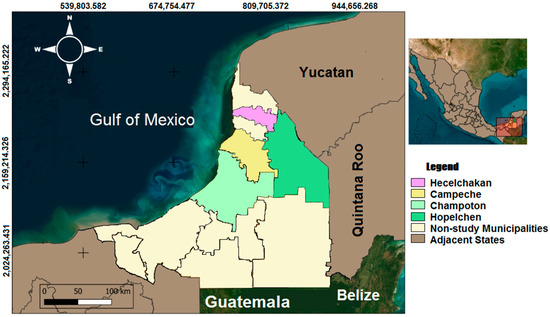
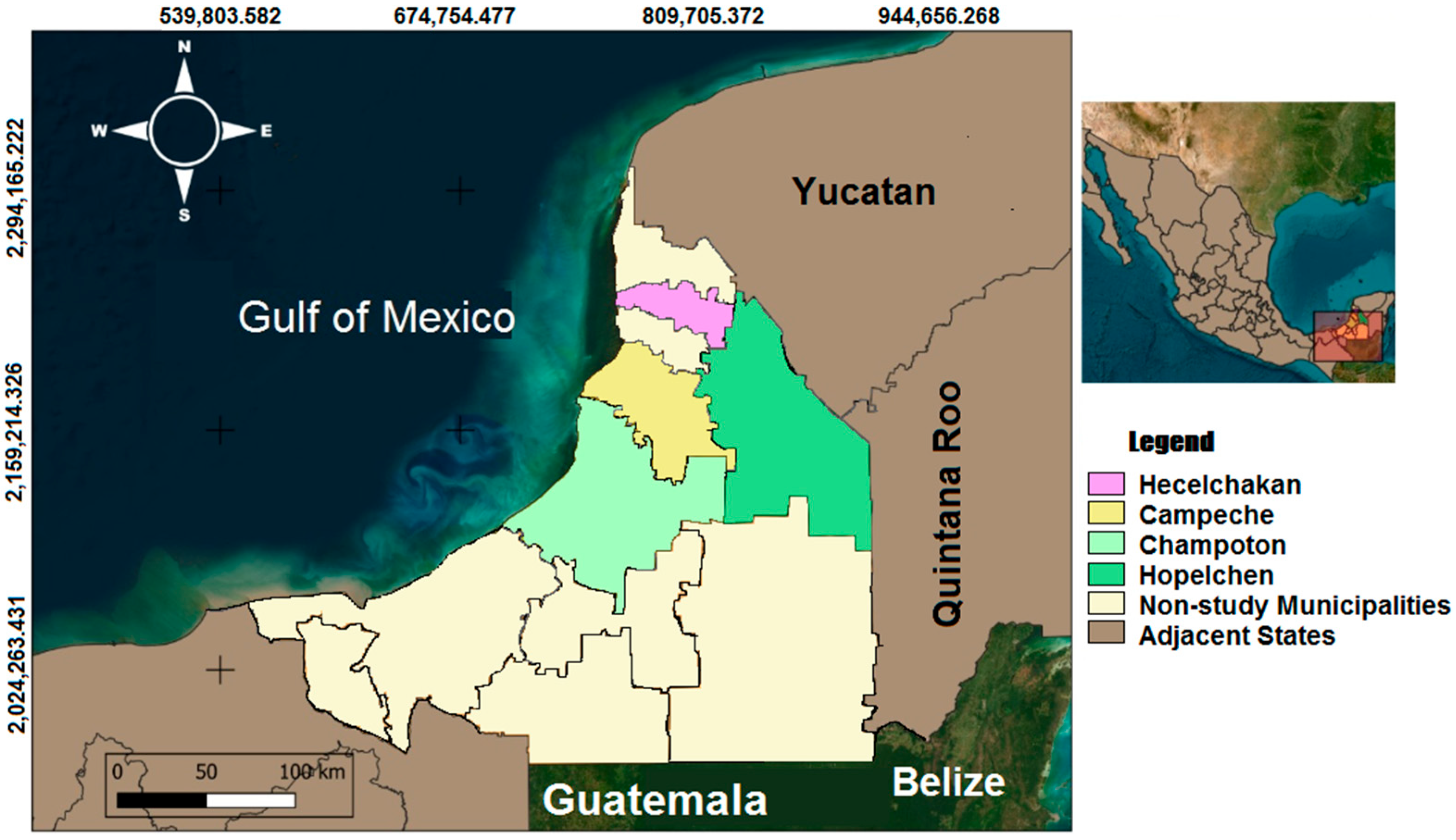
Data collection was conducted during 2024 in the municipalities of Hopelchén, Champotón, Hecelchakán, and Campeche, located in the state of Campeche, Mexico (Figure 1). This region is characterized by tropical conditions, where Soyabean production is predominantly carried out under rainfed systems. The study area is characterized predominantly by a warm sub-humid climate with summer rainfall. Mean annual temperatures generally range from 26 to 28 °C, while annual precipitation varies from approximately 700 to 2000 mm, with most agricultural areas receiving between 1000 and 1500 mm per year. These environmental conditions favor rainfed agricultural systems, including soybean production [9].
Figure 1.
Location of the study area showing the municipalities of Hopelchén, Champotón, Hecelchakán, and Campeche in the state of Campeche, Mexico. The red rectangle highlights the study area.
The region is predominantly characterized by limestone-derived soils and karstic formations. The main soil groups in the study area are leptosols, vertisols, and luvisols, which differ in depth, fertility, and drainage characteristics. Leptosols are generally shallow and stony, whereas vertisols and luvisols are commonly used for agricultural production due to their relatively greater depth and productive potential. These edaphic characteristics influence crop management practices and agricultural productivity in the region [10,11].
A semi-structured questionnaire was applied to Soyabean producers to gather information on their socioeconomic, technological, and productive characteristics.
2.2. Producer Selection and Sample Size
The study area comprised the main Soyabean-producing municipalities of Campeche, Mexico, where production systems are predominantly rainfed and characterized by high heterogeneity in socioeconomic, agronomic, and management conditions. The target population consisted of 1770 production units identified from the 2022 Agricultural Census [12], of which 1419 were located in the municipality of Hopelchén and the remaining units in the municipality of Campeche.
Producers were selected using a field-based, non-probabilistic approach, considering accessibility, willingness to participate, and representation of the main production contexts in the region.
A total of 75 complete and valid semi-structured interviews were obtained and included in the analysis. This sample size is appropriate for exploratory multivariate techniques, such as hierarchical cluster analysis and principal component analysis, which aim to identify patterns and producer typologies in heterogeneous systems rather than to perform statistical inference at the population level. Accordingly, sample adequacy was defined by the ability to capture the variability of Soyabean production systems in the region and to support robust classification of producers based on observed heterogeneity.
2.3. Survey Design and Data Collection
The survey consisted of a semi-structured questionnaire comprising 64 questions, organized into three sections: (1) production system characterization, (2) production costs, and (3) yield. These semi-structured interviews were conducted face-to-face with producers at different times between 7:00 and 12:00 a.m., depending on their availability and location during visits to their homes. In some cases, group meetings were also held with producer associations. The questionnaire was designed to obtain both quantitative and qualitative information (Supplementary Material).
2.4. Data Analysis
The data obtained from the questionnaires were recorded and processed using IBM SPSS Statistics: Version 30® software. Survey variables were classified as continuous quantitative, nominal qualitative, and binomial variables. Continuous variables were standardized prior to analysis. A hierarchical cluster analysis was performed using the unweighted pair group method with arithmetic mean (UPGMA) and Euclidean distance to identify homogeneous groups of producers. Subsequently, a Principal Component Analysis (PCA) was conducted to determine the variables contributing most to total data variability, considering components with eigenvalues greater than 1. Finally, descriptive statistical analysis was performed for the selected variables. Multivariate statistical analyses were carried out using PAST software version 4.
3. Results
3.1. Socioeconomic and Production System Characterization
A total of 75 Soyabean producers were surveyed in the municipalities of Hopelchén (n = 26), Champotón (n = 11), Hecelchakán (n = 4), and Campeche (n = 34) during July and August 2024. All respondents were male (n = 73) and female (n = 2), with ages ranging from 26 to 77 years (mean = 49.12 ± 9.3 years). Based on the analyzed dataset, 29.7% (n = 22) of the producers were classified as young adults (26–39 years), 50.0% (n = 37) as adults (40–59 years), and 20.3% (n = 15) as older adults (60–77 years).
Regarding education level, primary school was the most common, representing 45.9% (n = 34) of the cases. This was followed by secondary education (18.9%, n = 14). Additionally, 13.5% (n = 10) reported having no formal education, while 10.8% (n = 8) had completed high school and an equal proportion (10.8%, n = 8) held a university degree. Overall, these results indicate that most producers have basic levels of education.
3.2. Producer Typology
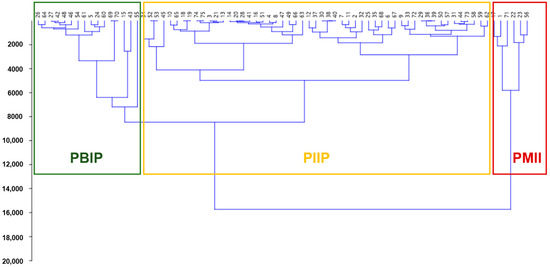
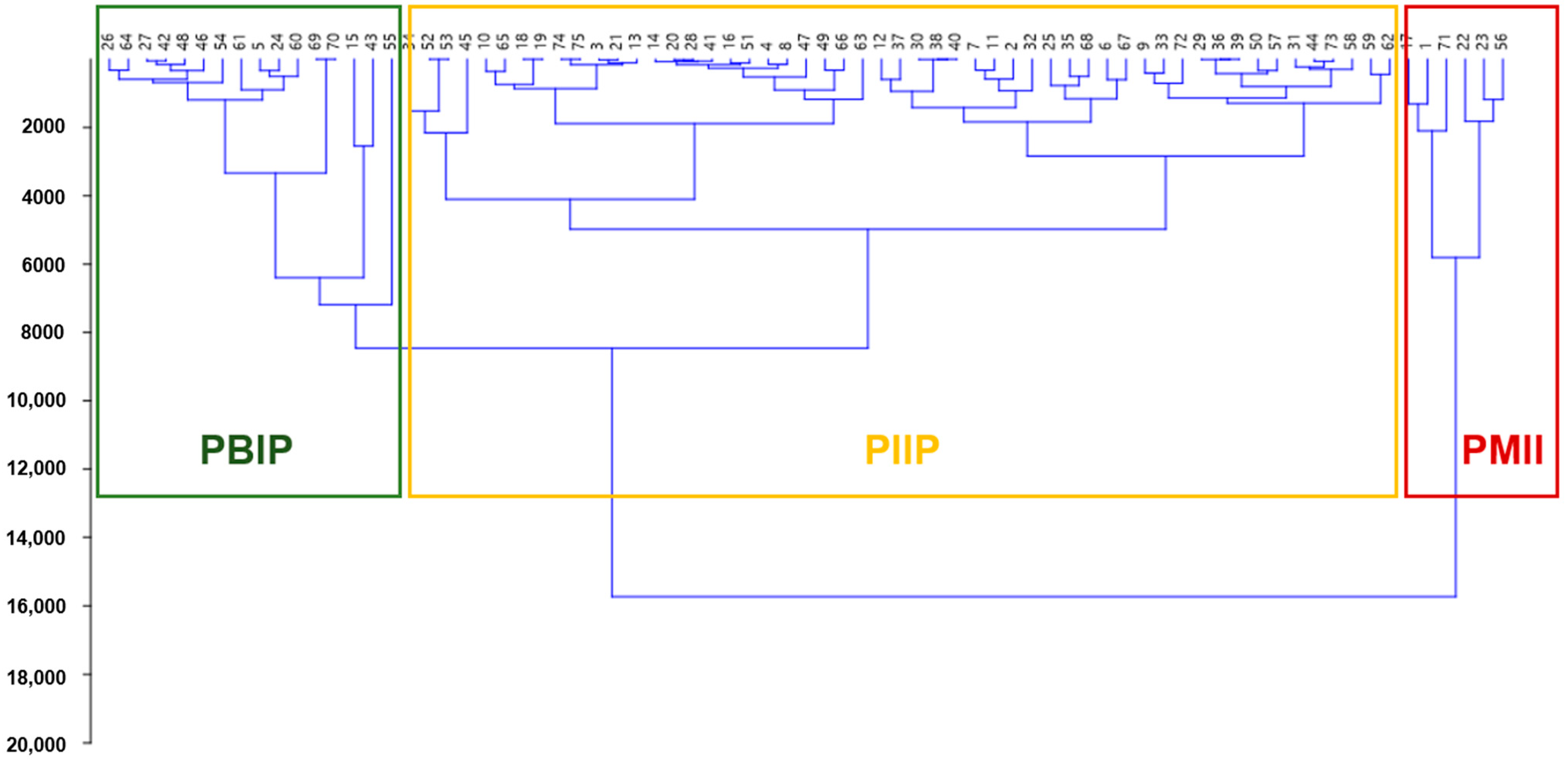
The quantitative variables evaluated in the questionnaire, corresponding to 11 socioeconomic and productive characteristics, allowed the differentiation of producers into three groups through hierarchical cluster analysis (Figure 2). Based on the similarity of their characteristics, three typologies were identified: low production intensification producers (PBIP), intermediate production intensification producers (PIIP), and farmers with intensive input management (PMII). According to the dendrogram structure, the PIIP group included the largest proportion of producers (n = 53), while PBIP (n = 16) and PMII (n = 6) comprised smaller groups.
Figure 2.
Dendrogram of the identified Soyabean producer groups in Campeche, Mexico (2024), based on hierarchical cluster analysis.
3.3. Characteristics of Producer Groups
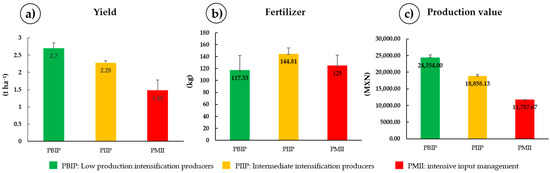
The three producer groups differed in demographic characteristics, input use, and productive performance (Table 1; Figure 3). PBIP producers were characterized by greater farming experience, lower fertilizer application rates, and fewer fertilizer applications per cycle, while achieving the highest yield and production value. In contrast, PIIP producers showed the highest fertilizer use and number of fertilizer applications, although their productive performance was intermediate among groups. PMII producers were younger, managed smaller cultivated areas, and recorded the lowest yield and production value. Detailed quantitative comparisons among producer groups are presented in Table 1.
Table 1.
Comparison of three groups of Soyabean producers.
Figure 3.
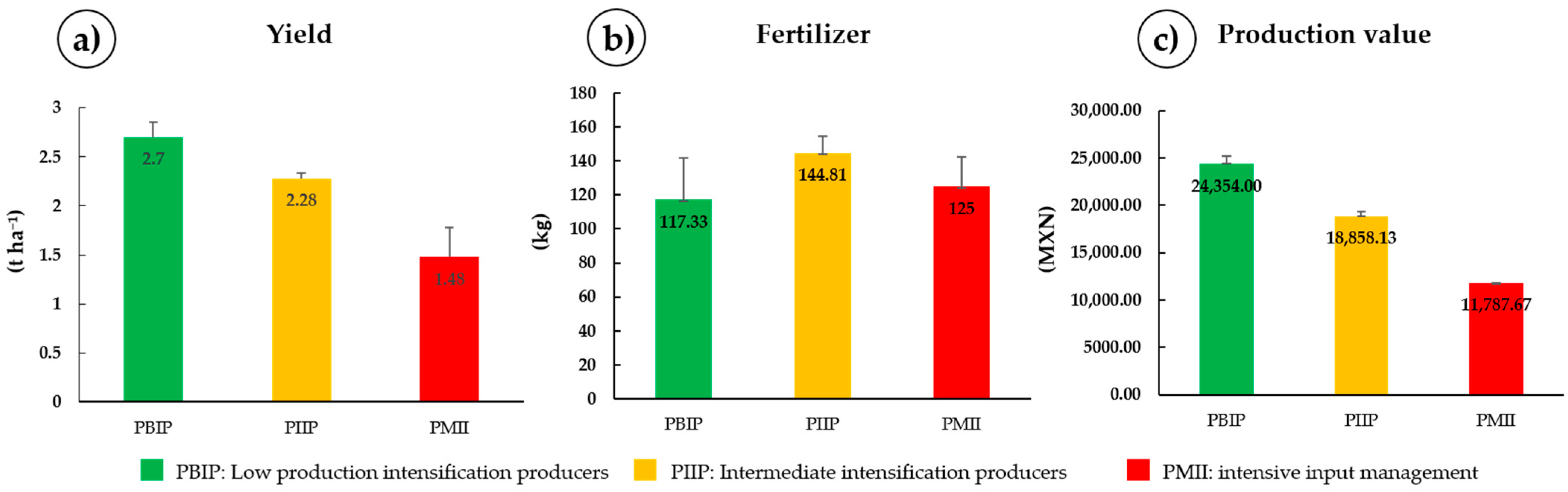
Comparative performance of the three Soyabean producer groups identified in Campeche, Mexico. (a) Yield (t ha−1), (b) fertilizer use (kg ha−1), and (c) production value (MXN ha−1) for low production intensification producers (PBIP), intermediate intensification producers (PIIP), and intensive input management producers (PMII). Bars represent mean values ± standard error.
3.4. Crop Characterization and Management
All producers across the three groups operated under rainfed conditions. Regarding sowing dates, the distribution was as follows: early sowing accounted for 25.0% in PBIP, 15.1% in PIIP, and 16.7% in PMII; intermediate sowing represented 56.3% in PBIP, 64.2% in PIIP, and 50.0% in PMII; while late sowing corresponded to 18.8% in PBIP, 20.8% in PIIP, and 33.3% in PMII (Figure 4).
Figure 4.
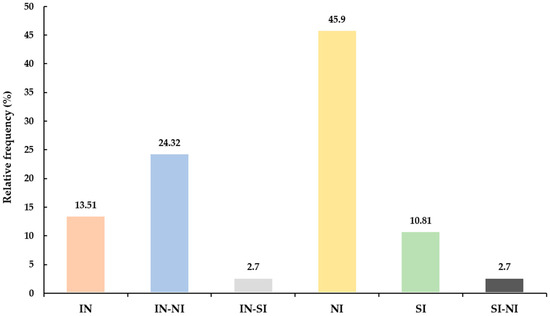
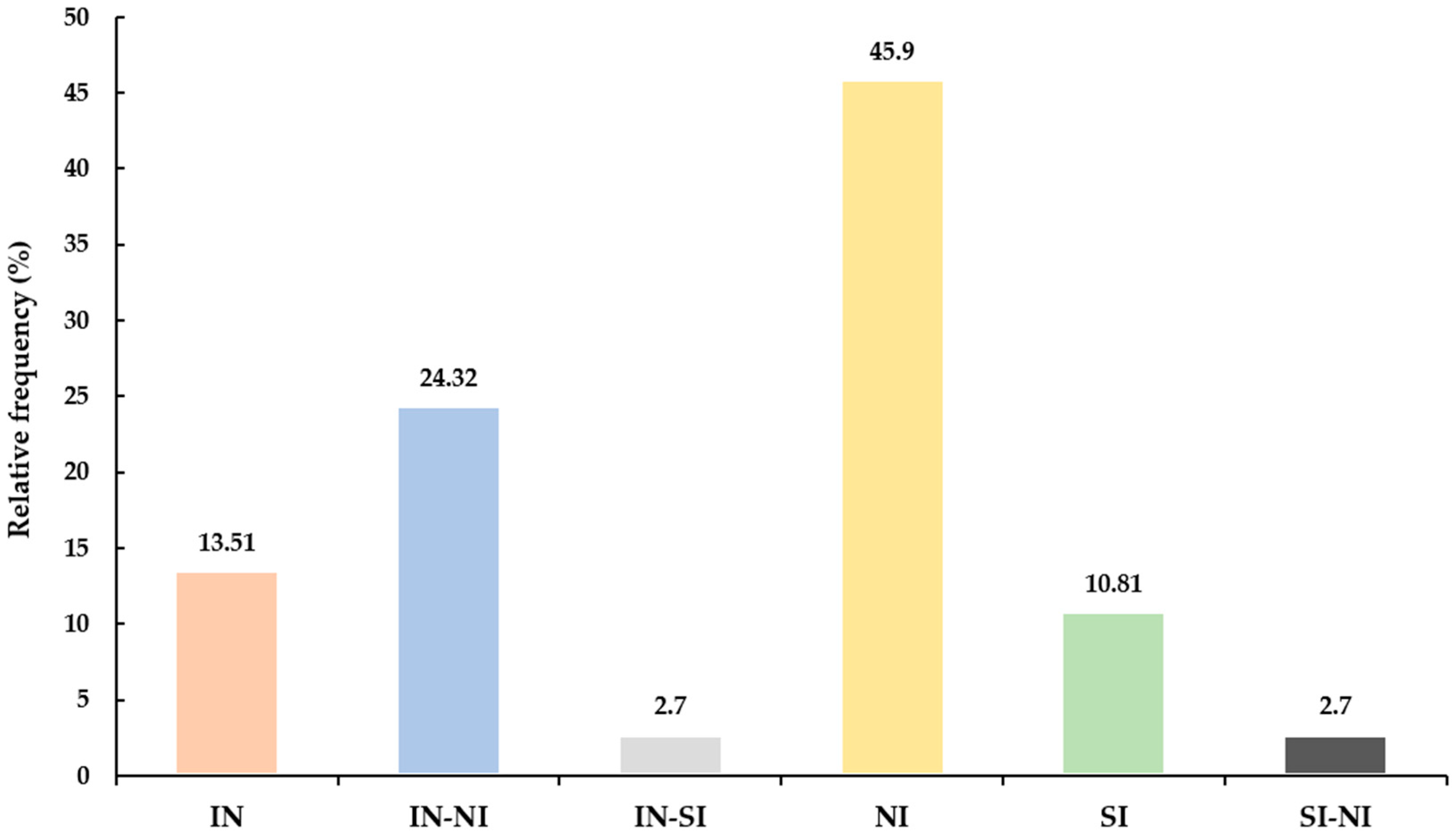
Soil types present in Soyabean producers’ plots in Campeche. IN: Floodable. NI: Non-floodable. SI: Semi-floodable. IN–NI: Floodable–Non-floodable. IN–SI: Floodable–Semi-floodable. SI–NI: Semi-floodable–Non-floodable.
Soil types showed that, in several cases, plots presented more than one dominant soil condition, reflecting heterogeneous environments within the same production unit (Figure 2). Non-floodable soils were the most frequent, representing 45.9% (n = 34), followed by floodable–non-floodable conditions (24.3%, n = 18). Floodable soils accounted for 13.5% (n = 10), while semi-floodable soils represented 10.8% (n = 8). Finally, combinations of floodable–semi-floodable and semi-floodable–non-floodable soils were less common, each representing 2.7% (n = 2).
Regarding fertilization, 95% of Soyabean producers applied diammonium phosphate (DAP), with an average of 138 ± 44.57 kg ha−1 and a range from 75 to 250 kg ha−1. A smaller group used a combination of DAP and urea (6 producers, 12%), with an average of 167 ± 26.72 kg ha−1 (range: 150–200 kg ha−1), while only two producers (4%) applied urea alone, with an average of 200 ± 70.71 kg ha−1 (150–250 kg ha−1).
3.5. Weed, Pest Incidence, and Control
Among the surveyed producers, the most prevalent weed in their fields was Amaranthus sp. (pigweed, locally known as “quelite”), reported by 53 producers (88.3%). Other common weeds included Diplotaxis tenuifolia (wild rocket, “flor amarilla”), Viguiera dentata (Cav.) Spreng. (commonly known as “tajonal” or “tahonal”) (15 producers, 25%), and Sorghum halepense (Johnson grass) (13 producers, 21.7%). Additionally, Cyperus rotundus L. (purple nutsedge, “coquillo”) was reported by 11 producers (18.3%), while grasses/pastures and climbing vines were each mentioned by 10 producers (16.7%).
Less frequently, Commelina sp. (dayflower, “tripa de pollo”) was identified by 4 producers (6.7%), and “téz” by 2 producers (3.3%). Other weeds, such as Solanum juvenale, Mucuna pruriens (velvet bean, “pica pica”), Cenchrus echinatus (southern sandbur, “zacate cadillo”), Cnidoscolus sp. (“mala mujer”), Acacia farnesiana (L.) Willd. (sweet acacia, “huizache”), Acacia cornigera (L.) Willd. (“espino”), Malva sylvestris L. (common mallow), and “berbecino”, were reported at low frequencies (<5%).
All three groups reported the use of glyphosate applied prior to crop emergence herbicide aimed at controlling broadleaf weeds and grasses. In PBIP, all producers applied quizalofop-p-ethyl (e.g., Pivot®, Freeland®), mainly to control Sorghum halepense (Johnson grass) and other grasses, while glyphosate (e.g., Hunk® + urea) was used as a pre-emergence herbicide for the management of broadleaf weeds and grasses.
In PIIP, the use of post-emergence herbicides was more diverse. Approximately 63% of producers applied quizalofop-p-ethyl (Pivot®, Freeland®, Levens®), followed by glyphosate (25.9%), which was used to control Amaranthus sp. (pigweed, “quelite”), Diplotaxis tenuifolia (wild rocket, “flor amarilla”), Viguiera dentata (tajonal), and Cyperus rotundus (purple nutsedge, “coquillo”). Additionally, fluazifop-p-butyl (22.2%; Select Ultra®, Fusiflex®) was used for grass control. To a lesser extent, bentazon (3.7%) was applied to manage broadleaf species such as Diplotaxis tenuifolia and Viguiera dentata. Overall, only 44% of producers in this group reported applying any post-emergence herbicide.
In PMII, only one producer reported using herbicides, applying quizalofop-p-ethyl (Pivot®) to control Sorghum halepense and other grasses, while glyphosate was consistently used as a pre-emergence herbicide for broadleaf weed management.
Among the insect pests identified by producers, caterpillars were the most frequently reported, particularly species of Spodoptera (Spodoptera cosmioides, S. eridania, S. albula, S. exigua, and S. frugiperda (J.E. Smith)), along with Anticarsia gemmatalis (velvetbean caterpillar), Trichoplusia ni (cabbage looper), Chrysodeixis includens (Soyabean looper), Estigmene acrea (saltmarsh caterpillar), and Agrotis ipsilon (black cutworm). These pests were reported by 28.6–50% of producers in PBIP, 44–72% in PIIP, and 66.7–71.4% in PMII.
Stink bugs, including Nezara viridula (green stink bug), Piezodorus guildinii (red-banded stink bug), and Euschistus servus (brown stink bug), were reported by 71.4–75% of producers in PBIP, 56–78% in PIIP, and 16.7–28.6% in PMII. Whiteflies, mainly Bemisia tabaci and Bemisia argentifolii, affected 26–50% of producers, particularly in PIIP and PMII.
Leaf beetles such as Diabrotica balteata, Diabrotica variegata, and Cerotoma ruficornis were reported by 14–66.7% of producers, with higher incidence in PMII. Other pests, including Aphis glycines (Soyabean aphid) and mealybugs (Pseudococcidae), were recorded at lower frequencies (2–16.7%). Thrips, including Caliothrips phaseoli Hood and species of Sericothrips, were observed only in PIIP (6%), while the black weevil Rhyssomatus subtilis was reported by 2% of producers in the same group.
The most commonly used insecticides included cypermethrin (58.6%), emamectin benzoate (24.1%), lambda-cyhalothrin (6.9%), and chlorantraniliprole (3.4%), mainly targeting caterpillars (Table 2).
Table 2.
Main insecticides used for pest control in soya cultivation.
Disease incidence in Soyabean crops was reported by a relatively low percentage of producers and was exclusively associated with fungal pathogens. The most common diseases included leaf blight, rust, and leaf spot, while fusariosis was less frequently reported. For disease management, producers mainly used fungicides based on azoxystrobin (e.g., Maxtrobin, Prion Extra, Headline, Consist Max), applied in approximately 27.6% of cases. Other fungicides included triazoles such as tebuconazole and propiconazole, as well as mixtures and contact fungicides such as mancozeb.
3.6. Production Costs and Economic Variables
Production costs were generally higher in the PIIP group, particularly for fertilization with DAP (2038.34 ± 111.43 MXN ha−1), compared to PBIP and PMII (1293.33 ± 77.71 and 1293.33 ± 144.01 MXN ha−1, respectively). Similarly, seed costs were higher in PIIP (1137.36 ± 35.80 MXN ha−1), while PBIP and PMII showed lower and comparable values (Table 3).
Table 3.
Production costs, productive and economic variables (means ± standard error).
Regarding herbicide management, pre-emergence costs were higher in PBIP and PMII, whereas post-emergence herbicide costs followed a similar pattern. In contrast, insecticide and fungicide costs were higher in PIIP, indicating a greater reliance on chemical inputs.
Operational costs, including machinery services, labor, and input application, were similar between PBIP and PMII, while PIIP showed slightly lower values in some categories. However, total planting costs were considerably higher in PIIP (12,491.82 MXN ha−1) compared to PBIP and PMII (8251.84 MXN ha−1). In productive terms, yield was highest in PBIP (2.70 ± 0.15 t ha−1), followed by PIIP (2.28 ± 0.06 t ha−1) and PMII (1.48 ± 0.30 t ha−1). Accordingly, production value was also higher in PBIP (24,354.00 ± 863.06 MXN ha−1), intermediate in PIIP, and lowest in PMII. Profit per hectare followed the same trend, with PBIP showing the highest profitability (16,102.16 MXN ha−1), followed by PIIP and PMII. Sale price showed less variation among groups, with slightly higher values in PBIP.
4. Discussion
The results obtained suggest that higher levels of productive intensification were not consistently associated with increases in yield or profitability within the analyzed producer groups. However, productivity differences among groups may also be influenced by other agronomic, environmental, and socioeconomic factors evaluated in this study. The differentiation of three producer typologies (PBIP, PIIP, and PMII), based on agronomic, economic, and management variables, reveals the marked heterogeneity of the Soyabean production system in Campeche and confirms that the relationship between intensification and productivity is non-linear and context dependent.
4.1. Socioeconomic Context of Soyabean Producers
The socioeconomic profile of Soyabean producers in Campeche reflects a production system predominantly composed of middle-aged farmers with low to medium levels of formal education. This structure is consistent with smallholder agricultural systems in developing regions, where limited human capital and restricted access to technical services constrain the adoption of agricultural innovations and modernization processes.
A large proportion of producers were concentrated within intermediate age groups, suggesting a gradual aging of the farming population, a trend widely reported in rural areas where younger generations tend to migrate toward non-agricultural activities [13]. This demographic transition may reduce generational replacement in agriculture and limit the long-term sustainability and adaptive capacity of production systems. Similar patterns have been associated with lower rates of technological adoption and reduced innovation capacity in farming systems [14].
Likewise, the relatively low educational attainment observed among producers may represent a structural limitation for the adoption of improved agricultural practices, including nutrient management, integrated pest management, and precision agriculture tools [15]. Previous studies have shown that education and human capital positively influence farmers’ capacity to adopt innovations by improving decision-making processes and access to technical information.
More broadly, agricultural innovation depends not only on the availability of technologies but also on socioeconomic factors such as education level, farming experience, access to extension services, and institutional support. In Mexico, technological capability and human capital have been identified as important determinants of innovation adoption and productive performance in smallholder agricultural systems [16]. These findings suggest that strengthening technical assistance and farmer training programs may contribute to improving management efficiency and productivity in Soyabean production systems.
4.2. Producer Typology and Productivity Response
Soyabean production systems in Campeche exhibit marked heterogeneity, as evidenced by the grouping of producers into three typologies (PBIP, PIIP, and PMII). Previous studies have demonstrated that farmer typologies are useful analytical tools for grouping producers with contrasting management practices, resource allocation strategies, and productive outcomes, thereby improving the understanding of within-system diversity and supporting the design of differentiated recommendations [17,18].
Notably, the PBIP group achieved the highest yields and production value despite lower fertilizer application rates. This suggests that productivity is not determined solely by input intensification, but also by input-use efficiency and the adaptation of management practices to local conditions. Similar findings have been reported in agricultural systems where technical efficiency and efficient resource management had a greater influence on productivity than increased input use alone [19].
In contrast, the PIIP group exhibited higher fertilizer application rates without proportional gains in yield, suggesting lower nutrient-use efficiency. In intensified cropping systems, excessive fertilizer inputs have been shown not to improve yield performance when nutrient recovery efficiency is low, and in some cases may even reduce technical efficiency due to suboptimal nutrient synchronization or imbalanced crop demand [20]. Likewise, the lower productivity observed in the PMII group suggests that intensification alone is insufficient to enhance productive performance in the absence of adequate agronomic management. Evidence indicates that factors such as farming experience, access to technical information, education level, and managerial capacity play a key role in determining production efficiency and system sustainability [21].
4.3. Crop Management and Environmental Constraints
A clear divergence between input intensity and crop performance was observed in the studied Soyabean systems. The PBIP group, despite operating under lower levels of production intensification, achieved the highest mean yield (2.70 ± 0.15 t ha−1) and the greatest production value per hectare. This result indicates that higher input use is not a reliable predictor of productivity, particularly under rainfed conditions where management decisions and local environmental constraints strongly influence crop response. Recent studies on integrated nutrient management in Soyabean have shown that yield improvements can be achieved through optimized combinations of nutrient sources rather than through increased fertilizer application alone, reinforcing the importance of efficiency-oriented management strategies [22].
The PIIP group, despite recording the highest fertilizer inputs and production costs, did not exhibit proportional yield gains. This pattern is consistent with reduced nutrient-use efficiency, particularly for nitrogen. In Soyabean systems, excessive nitrogen availability can suppress biological nitrogen fixation, thereby limiting the contribution of symbiotic processes and reducing the overall efficiency of nutrient use [10]. This mechanism may partly explain the lower profitability observed in this group compared to PBIP.
More broadly, yield variability among producer groups reflects the strong influence of site-specific factors on fertilizer response, including soil characteristics, nutrient dynamics, and management practices. Consequently, yield was not directly proportional to input intensification but rather associated with contextual conditions such as production environment heterogeneity and farmer management capacity [23].
Regarding phytosanitary management, all producer groups reported persistent pest pressure, particularly defoliating Lepidoptera and Hemiptera complexes. These insect groups are widely recognized as key yield-limiting factors in Soyabean systems, especially in production systems where chemical control remains the dominant management strategy. Previous studies have reported significant yield losses associated with these pest complexes under conventional insecticide-based management programs [24,25].
4.4. Weed and Pest Incidence and Phytosanitary Management
Phytosanitary management in the studied Soyabean systems was characterized by a strong dependence on chemical control, particularly insecticides and herbicides, with limited integration of monitoring or preventive strategies. Across producer groups, pest management was dominated by pyrethroids and organophosphates, including cypermethrin and chlorpyrifos, which are widely used for the control of defoliating insects. However, the intensive and repeated use of these compounds has been associated with reduced pest susceptibility and the development of resistance in several agroecosystems [26,27]. In addition, the absence of systematic monitoring and the limited use of economic thresholds can reduce the effectiveness of chemical control strategies and increase production costs [28].
Weed management showed a similar pattern of reliance on herbicide-based control. The high frequency of Amaranthus spp. and Sorghum halepense reflects their well-documented adaptability and competitive ability in Soyabean production systems [29]. Management practices were primarily based on glyphosate applications, complemented by post-emergence herbicides targeting ALS- and ACCase-inhibiting pathways. Nevertheless, the continuous and repetitive use of these herbicide modes of action increases selection pressure and has been widely associated with the evolution of resistant weed populations [30].
Overall, these results indicate that phytosanitary management across producer typologies remains largely reactive and chemically dependent, with limited diversification of control strategies. This dependence not only increases vulnerability to resistance development but may also reduce the long-term sustainability and stability of Soyabean production systems under rainfed conditions.
4.5. Production Costs and Economic Efficiency
From an economic standpoint, the higher production costs observed in the PIIP group, mainly associated with fertilization and seed inputs, did not result in increased profitability. In contrast, the PBIP group achieved the highest net profit per hectare, indicating that economic performance is more closely linked to production efficiency than to the intensity of input use. These findings are consistent with sustainable agricultural approaches that prioritize resource optimization over input intensification as a pathway to improved farm performance [5].
Overall, the findings highlight the need to reconsider conventional intensification strategies in rainfed Soyabean systems, prioritizing input-use efficiency and local adaptation. Intensification should focus on optimization through practices such as integrated nutrient management, pest monitoring, and decision-making based on economic thresholds. This approach aligns with the principles of sustainable intensification, which promotes productivity gains through efficient resource use while minimizing environmental impacts and improving farm profitability [31].
Furthermore, the high dependence on agrochemicals observed underscores the need to transition toward more integrated management systems, where rational input use is complemented by agroecological practices to reduce resistance risks and environmental impacts [32,33]. Several studies have demonstrated that integrated pest, weed, and nutrient management strategies can significantly enhance input-use efficiency and system sustainability, particularly under rainfed conditions and smallholder production systems [34,35].
Taken together, these findings, along with evidence reported in the literature, underscore the importance of strengthening agricultural extension services and developing differentiated recommendations based on producer typologies. The heterogeneity observed in management practices, input-use efficiency, and economic outcomes suggests that uniform technological packages are unlikely to be effective across all production contexts. In this sense, participatory approaches and improved access to technical information may facilitate the adoption of more efficient, site-specific management strategies, thereby enhancing the resilience and sustainability of Soyabean production systems under climate variability.
5. Conclusions
This study characterized Soyabean production systems in Campeche, Mexico, based on a sample of 75 producers, identifying three distinct typologies (PBIP, PIIP, and PMII) that differed in agronomic management, input use, productive performance, and economic outcomes. The results highlight a high degree of heterogeneity within the analyzed production systems and reveal non-linear relationships between input intensification and productivity.
Within the studied sample, higher levels of intensification based on increased fertilizer and agrochemical use did not necessarily translate into higher yields or greater profitability under rainfed conditions. In contrast, producers classified as PBIP achieved the highest yields and economic returns, suggesting that input-use efficiency and adaptation of management practices to local conditions may be more important determinants of performance than the intensity of input use.
It is important to emphasize that the findings of this study are based on a non-probabilistic sample of producers; therefore, they are not statistically representative of the entire population of Soyabean producers in the region. Instead, the results should be interpreted as an exploratory approximation aimed at understanding the diversity and structure of production systems in the study area. The main contributions of this work include the identification of producer typologies through multivariate statistical analysis and the provision of empirical evidence on the relevance of input-use efficiency in rainfed Soyabean systems. In addition, the study offers useful insights to support the design of differentiated extension strategies and context-specific management recommendations.
Finally, the main limitation of this study is the sample size and its non-probabilistic design, which limits statistical generalization. Future research should consider probabilistic sampling designs and broader geographic coverage to validate and expand these findings.
Supplementary Materials
The following supporting information can be downloaded at: https://www.mdpi.com/article/10.3390/su18136614/s1, the questionnaire applied to producers.
Author Contributions
Conceptualization, M.H.-P. and L.E.S.-P.; methodology, M.H.-P. and J.M.S.-R.; software, J.F.-P.; validation, M.H.-P., S.F.G.-G. and L.E.S.-P.; formal analysis, M.H.-P. and J.F.-P.; investigation, M.H.-P. and S.F.G.-G.; resources, J.M.S.-R.; data curation, M.H.-P.; writing—original draft preparation, M.H.-P. and L.E.S.-P.; writing—review and editing, L.E.S.-P., J.M.S.-R. and S.F.G.-G.; visualization, J.F.-P.; supervision, L.E.S.-P.; project administration, M.H.-P.; funding acquisition, S.F.G.-G. All authors have read and agreed to the published version of the manuscript.
Funding
This research was funded by fiscal projects of the Instituto Nacional de Investigaciones Forestales, Agrícolas y Pecuarias (INIFAP), titled “Tasa de cambio de la productividad promedio obtenida por las y los productores agrícolas encuestados en el uso de soluciones tecnológicas respecto a las y los productores que utilizan soluciones tecnológicas testigo en año t-1”, project No. SIGI 2332574509.
Institutional Review Board Statement
Ethical review and approval were waived for this study by Institution Committee as per the Reglamento de la Ley General de Salud en Materia de Investigación para la Salud (Mexico), Article 17. this type of study is classified as “research without risk” (“investigación sin riesgo”), since it employed common research techniques such as interviews and questionnaires in which participants were not identified and no aspects of their physical or psychological integrity were affected.
Informed Consent Statement
Before conducting the survey, participants were informed about the objectives of the study, the voluntary nature of their participation, and the confidential and anonymous handling of the information provided, which would be used exclusively for research and publication purposes. They were also informed that they could withdraw from the interview at any time without any consequence. After receiving this information, participants verbally agreed to participate in the study prior to the initiation of the survey.
Data Availability Statement
The data presented in this study are available on request from the corresponding author. The data are not publicly available due to privacy and ethical restrictions.
Acknowledgments
The authors sincerely thank the Soyabean producers who participated in the survey for their valuable time and collaboration, which made this study possible. Verbal consent was obtained from all producers for their inclusion in the acknowledgements. The authors used artificial intelligence (AI)-assisted tools for language refinement and translation of the manuscript. All scientific content, data analysis, and interpretations were developed and verified by the authors.
Conflicts of Interest
The authors declare no conflicts of interest.
Abbreviations
The following abbreviations are used in this manuscript:
| PBIP | Low production intensification producers |
| PIIP | Intermediate production intensification producers |
| PMII | Intensive input management producers |
| INIFAP | National Institute of Forestry, Agriculture and Livestock Research |
| INEGI | National Institute of Statistics and Geography |
| SPSS | Statistical Package for the Social Sciences |
| PAST | Paleontological Statistics Software |
| UPGMA | Unweighted Pair Group Method with Arithmetic Mean |
| PCA | Principal Component Analysis |
| MXN | Mexican peso |
| Ha | hectare |
| t ha−1 | tons per hectare |
| DAP | Diammonium phosphate |
| ALS | Acetolactate synthase |
| ACCase | Acetyl-CoA carboxylase |
References
- Ortiz, S.Y.C.; Vázquez, J.T.; Bello, E.A.; Estrada, U.L.; Erdosay, J.S. La Soya: Tesoro Versátil, Proteico y Saludable Importante En La Dieta Mexicana. Cienc. Lat. Rev. Multidiscip. 2024, 8, 12231–12242. [Google Scholar] [CrossRef] [Scilit]
- Pagano, M.C.; Miransari, M. The Importance of Soybean Production Worldwide. In Abiotic and Biotic Stresses in Soybean Production; Elsevier: Amsterdam, The Netherlands, 2016; pp. 1–26. [Google Scholar]
- Soybeans and Oil Crops—Market Outlook|Economic Research Service. Available online: https://www.ers.usda.gov/topics/crops/soybeans-and-oil-crops/market-outlook (accessed on 19 February 2026).
- Anuario Estadístico de La Producción Agrícola. Available online: https://nube.agricultura.gob.mx/cierre_agricola/ (accessed on 19 February 2026).
- Cassman, K.G.; Grassini, P. A Global Perspective on Sustainable Intensification Research. Nat. Sustain. 2020, 3, 262–268. [Google Scholar] [CrossRef] [Scilit]
- Denning, G. Sustainable Intensification of Agriculture: The Foundation for Universal Food Security. npj Sustain. Agric. 2025, 3, 7. [Google Scholar] [CrossRef] [Scilit]
- Hernández-Pérez, M.; Soto-Rocha, J.M.; Avila-Perches, M.A.; Gámez-Vázquez, F.P.; Gámez-Vázquez, A.J. Rendimiento de Variedades de Soya Evaluadas En Diferente Fecha de Siembra En Campeche, México. Rev. Fitotec. Mex. 2020, 43, 549–556. [Google Scholar] [CrossRef] [Scilit]
- González-Esquivel, C.E.; Briones-Guzmán, C.; Tovar-López, E.; López-Ridaura, S.; Arnés, E.; Camacho-Villa, T.C. Sustainability Evaluation of Contrasting Milpa Systems in the Yucatán Peninsula, Mexico. Environ. Dev. Sustain. 2025, 27, 9233–9255. [Google Scholar]
- Aspectos Geográficos de Campeche. Compendio 2023; Instituto Nacional de Estadística y Geografía: Aguascalientes, Mexico, 2024; Available online: https://www.inegi.org.mx/contenidos/productos/prod_serv/contenidos/espanol/bvinegi/productos/nueva_estruc/889463915973.pdf (accessed on 17 June 2026).
- Mardero, S.; Schmook, B.; López-Martínez, J.O.; Cicero, L.; Radel, C.; Christman, Z. The Uneven Influence of Climate Trends and Agricultural Policies on Maize Production in the Yucatan Peninsula, Mexico. Land 2018, 7, 80. [Google Scholar] [CrossRef] [Scilit]
- Palma-López, D.; Zavala-Cruz, J.; Bautista-Zúñiga, F.; Morales-Garduza, M.; López-Castañeda, A.; Shirma-Torres, E.; Sánchez-Hernández, R.; Peña-Peña, A.; Tinal-Ortiz, S. Clasificación y Cartografía de Suelos Del Estado de Campeche, México. Agroproductividad 2017, 10, 71–78. [Google Scholar]
- Instituto Nacional de Estadística y Geografía. Censo Agropecuario (CA) 2022. Available online: https://www.inegi.org.mx/programas/ca/2022/ (accessed on 15 June 2026).
- Borda, Á.J.; Sárvári, B.; Balogh, J.M. Generation Change in Agriculture: A Systematic Review of the Literature. Economies 2023, 11, 129. [Google Scholar] [CrossRef] [Scilit]
- Sánchez-Toledano, B.I.; Kallas, Z.; Palmeros Rojas, O.; Gil, J.M. Determinant Factors of the Adoption of Improved Maize Seeds in Southern Mexico: A Survival Analysis Approach. Sustainability 2018, 10, 3543. [Google Scholar] [CrossRef] [Scilit]
- Vergara, E.O.; Aguirre, R.L.G.; Vargas, G.A. Determinantes de La Adopción de Innovaciones Entre Productores Citrícolas de Veracruz, Con Extensionismo Educacional. Soc. Rural. Prod. Y Medio Ambiente 2020, 20, 28. [Google Scholar]
- Vargas-Canales, J.M. Technological Capabilities for the Adoption of New Technologies in the Agri-Food Sector of Mexico. Agriculture 2023, 13, 1177. [Google Scholar] [CrossRef] [Scilit]
- Maldonado-Méndez, M.d.L.; Romo-Lozano, J.L.; Baca del Moral, J.; Monterroso-Rivas, A.I. Multidimensional Typology of Mexican Farmers in the Context of Climate Change. Agriculture 2022, 12, 1079. [Google Scholar] [CrossRef] [Scilit]
- LaFevor, M.C. Characterizing Agricultural Diversity with Policy-Relevant Farm Typologies in Mexico. Agriculture 2022, 12, 1315. [Google Scholar] [CrossRef] [Scilit]
- Afi, M.; Parsons, J. Integrated vs. Specialized Farming Systems for Sustainable Food Production: Comparative Analysis of Systems’ Technical Efficiency in Nebraska. Sustainability 2023, 15, 5413. [Google Scholar] [CrossRef] [Scilit]
- Yang, X.; Shang, G. Smallholders’ Agricultural Production Efficiency of Conservation Tillage in Jianghan Plain, China—Based on a Three-Stage DEA Model. Int. J. Environ. Res. Public Health 2020, 17, 7470. [Google Scholar] [CrossRef] [Scilit] [PubMed]
- Wang, Y.; Shi, X. Analysis on Efficiency and Influencing Factors of New Soybean Producing Farms. Agronomy 2020, 10, 568. [Google Scholar] [CrossRef] [Scilit]
- Amanullah; Khan, J.A.; Yasir, M. Improving Soybean Yield and Oil Productivity: An Integrated Nutrient Management Approach for Sustainable Soybean Production. BMC Plant Biol. 2025, 25, 293. [Google Scholar] [CrossRef] [Scilit] [PubMed]
- Xu, Y.; Gao, Q.; Xue, L.; Zhang, J.; Wang, C. Optimized Nitrogen Fertilizer Management Enhances Soybean (Glycine max (L.) Merril.) Yield and Nitrogen Use Efficiency by Promoting Symbiotic Nitrogen Fixation Capacity. Front. Plant Sci. 2025, 16, 1604251. [Google Scholar] [CrossRef] [Scilit] [PubMed]
- BUENO, A.d.F.; Panizzi, A.; Hunt, T.E.; Dourado, P.; Pitta, R.; Gonçalves, J. Challenges for Adoption of Integrated Pest Management (IPM): The Soybean Example: BUENO et Al. Neotrop. Entomol. 2021, 50, 5–20. [Google Scholar] [PubMed]
- Silva, L.B.; Almeida, L.C.; e Silva, M.C.; de Brito, R.R.; Miranda, R.d.S.; Rodrigues, R.H.; dos Santos, C.M.; Ribeiro, G.d.S.; Morais, J.V.; da Silva, A.F. Change in the Physiological Aspects of Soybean Caused by Infestation by Bemisia Tabaci MEAM1. Agronomy 2024, 14, 481. [Google Scholar] [CrossRef] [Scilit]
- Sparks, M.E.; Bansal, R.; Benoit, J.B.; Blackburn, M.B.; Chao, H.; Chen, M.; Cheng, S.; Childers, C.; Dinh, H.; Doddapaneni, H.V. Brown Marmorated Stink Bug, Halyomorpha Halys (Stål), Genome: Putative Underpinnings of Polyphagy, Insecticide Resistance Potential and Biology of a Top Worldwide Pest. BMC Genom. 2020, 21, 227. [Google Scholar] [CrossRef] [Scilit]
- Tamta, A.K.; Srivastava, R. Insecticide Resistance: Challenges and Solutions for Sustainable Pest Management. In Advancements in Entomology: Bridging Forensic Science and Sustainable Agriculture; Springer: Berlin/Heidelberg, Germany, 2026; pp. 299–344. [Google Scholar]
- Hayashida, R.; Godoy, C.V.; Hoback, W.W.; de Freitas Bueno, A. Are Economic Thresholds for IPM Decisions the Same for Low LAI Soybean Cultivars in B Razil? Pest Manag. Sci. 2021, 77, 1256–1261. [Google Scholar] [PubMed]
- Kanatas, P.; Travlos, I.; Papastylianou, P.; Gazoulis, I.; Kakabouki, I.; Tsekoura, A. Yield, Quality and Weed Control in Soybean Crop as Affected by Several Cultural and Weed Management Practices. Not. Bot. Horti Agrobot. Cluj-Napoca 2020, 48, 329–341. [Google Scholar] [CrossRef] [Scilit]
- Alcántara-de la Cruz, R.; Guidi, Y.M.; Ramirez-Castillo, M.; Adegas, F.S.; Carbonari, C.A.; Velini, E.D.; De Prado, R.; Duke, S.O. Thirty Years of Glyphosate-resistant Crops and Weeds: Current Situation and Future Prospects. Pest Manag. Sci. 2026, 82, 5987–6009. [Google Scholar] [PubMed]
- Van Dijk, M.; Morley, T.; Rau, M.L.; Saghai, Y. A Meta-Analysis of Projected Global Food Demand and Population at Risk of Hunger for the Period 2010–2050. Nat. Food 2021, 2, 494–501. [Google Scholar] [CrossRef] [Scilit] [PubMed]
- Monjardino, M.; Llewellyn, R. From Resistance to Resilience: A Bioeconomic Evaluation of Integrated Weed Management of Glyphosate-Resistant Ryegrass in Dryland Cropping Systems. Crop Prot. 2026, 206, 107648. [Google Scholar] [CrossRef] [Scilit]
- Peterson, R.K. Insect Pest Management and Environmental Risk. Annu. Rev. Entomol. 2025, 70, 103–121. [Google Scholar] [CrossRef] [Scilit] [PubMed]
- Kushwah, N.; Billore, V.; Sharma, O.P.; Singh, D.; Chauhan, A.P.S. Integrated Nutrient Management for Optimal Plant Health and Crop Yield. Plant Sci. Arch. 2024, 8, 10–12. [Google Scholar]
- Pretty, J.; Benton, T.G.; Bharucha, Z.P.; Dicks, L.V.; Flora, C.B.; Godfray, H.C.J.; Goulson, D.; Hartley, S.; Lampkin, N.; Morris, C. Global Assessment of Agricultural System Redesign for Sustainable Intensification. Nat. Sustain. 2018, 1, 441–446. [Google Scholar] [CrossRef] [Scilit]

Disclaimer/Publisher’s Note: The statements, opinions and data contained in all publications are solely those of the individual author(s) and contributor(s) and not of MDPI and/or the editor(s). MDPI and/or the editor(s) disclaim responsibility for any injury to people or property resulting from any ideas, methods, instructions or products referred to in the content. |
© 2026 by the authors. Licensee MDPI, Basel, Switzerland. This article is an open access article distributed under the terms and conditions of the Creative Commons Attribution (CC BY) license.