


Abstract
Sustainable innovation constitutes the cornerstone of firms’ long-term competitive edge, yet the underlying mechanisms via which patient capital facilitates corporate sustainable innovation remain understudied. Based on a sample of Chinese A-share listed firms spanning 2013 to 2024, this study operationalizes patient capital through two proxies: relational debt and stable institutional ownership. We systematically investigate the impact of patient capital on sustainable innovation, alongside the mediating pathway of internal control quality and the moderating role of climate policy uncertainty. The empirical outcomes indicate that both forms of patient capital exert a significant positive effect on sustainable innovation, with internal control quality serving as a partial mediator in this relationship. Additionally, climate policy uncertainty reinforces the promotional influence of patient capital on sustainable innovation. We further stratify heterogeneity analyses into two dimensions: firm-inherent heterogeneity and external environmental heterogeneity. From the perspective of endogenous firm attributes, the innovation-stimulating effect of patient capital differs markedly across enterprises with distinct ownership types, life-cycle stages, and total asset sizes. Externally, the observed positive impact varies considerably conditional on industrial factor intensity and the regional marketization degree of the firm’s location. These findings expand the existing literature concerning long-term capital and sustainable innovation, and yield actionable implications for corporate management, institutional investors, and policymakers.
1. Introduction
Sustainable innovation has become the core strategic pillar that enables firms to achieve long-term, high-quality development and build sustainable competitive advantages, and it also serves as a vital driving force for China’s industrial upgrading and technological self-reliance in the new development stage [1]. Against the backdrop of a new round of global technological and industrial transformation, alongside China’s ongoing transition from a factor-dependent to an innovation-oriented development model [2], the continuity and stability of corporate innovation activities have evolved into core determinants of firms’ capacity to break technological bottlenecks, climb the global value chain, and adapt to dynamic market changes [3]. In this context, intensifying industrial competition and frequent global policy adjustments have posed substantial challenges to firms’ long-term innovation layouts. Traditional innovation models centered on short-term output and one-off technological breakthroughs can no longer sustain enduring corporate competitiveness, making sustainable innovation—defined by long-term continuous R&D investment and stable technological iteration—an inevitable strategic choice for modern enterprise development [4,5,6]. As a fundamental determinant of firms’ long-term competitive advantages and developmental resilience, corporate sustainable innovation refers to sustained and stable R&D input, technological iteration, and innovation output at the firm level. However, it is inherently characterized by lumpy, irreversible investment, long return cycles, and high outcome uncertainty [7], which heavily relies on long-term capital support and consistent strategic orientation, thereby highlighting the critical value of patient capital. Globally, most enterprises face a prevalent dilemma of insufficient innovation continuity, with the core bottleneck stemming from the lack of long-term stable capital supply and matched governance support tailored to the long-cycle nature of innovation, which substantially constrains sustainable innovation development worldwide. In this regard, patient capital, as a long-term and stable capital resource, is precisely the key to resolving the above innovation continuity dilemma and unlocking firms’ sustainable innovation potential.
Unlike industrialized economies in Europe, the United States, and Japan, which prioritize carbon mitigation and market-based ESG regulation, China, as a major developing economy, emphasizes developmental rights and integrates poverty alleviation, industrial upgrading, shared prosperity, and low-carbon transition into its domestic Sustainable Development Goals (SDGs) framework [8]. Supported by a bank-centered financial system and targeted medium- and long-term industrial policies, China has fostered unique patient capital mechanisms to curb corporate innovation short-termism, forming a stage-specific SDG development model that integrates inclusive growth and green transition [9]. Cross-national institutional and ethical differences further shape the operating logic of patient capital and sustainable innovation. At the macro level, Western market-oriented ESG regimes prioritize voluntary disclosure and short-term financial performance, which may induce corporate opportunistic behaviors and hinder long-cycle sustainable innovation. In contrast, China’s development-oriented policy ethics balance economic growth, social welfare, and ecological governance, effectively correcting market failures, guiding long-term green capital allocation, and facilitating patient capital accumulation [10]. At the micro level, standardized corporate ethical practices, including responsible values, social accountability, and compliant ESG behaviors, can strengthen formal internal control systems, mitigate short-term profit-seeking tendencies, reduce R&D and green transformation risks, and accommodate the long-cycle and high-risk attributes of sustainable innovation. Conversely, unethical behaviors such as market speculation and ESG greenwashing weaken the governance effectiveness of patient capital and internal control, ultimately impeding SDG-aligned corporate innovation [11].
Globally, corporate sustainable innovation lays a solid foundation for UN SDG-driven green transitions, particularly advancing SDG 9 (resilient industrial infrastructure), SDG 12 (responsible production), and SDG 13 (climate action) [12]. Global corporate evaluation systems have gradually shifted from single-dimensional short-term financial performance to comprehensive long-term technological, environmental, and social value, requiring firms to balance economic growth, social equity, and intergenerational ecological sustainability. Firm-level sustainable innovation represents ESG-oriented long-term operational strategies that reconcile immediate profitability, corporate value appreciation, and social accountability. Its inherent features of long implementation cycles, high capital intensity, and outcome uncertainty generate inherent demands for sufficient patient capital and rigorous internal control systems, which constitute the core theoretical basis of this research [13]. Divergent cross-national SDG implementation models further reshape global long-term capital ecosystems and define the generalizability of this study’s findings. Developed economies predominantly adopt market-led ESG rules and green venture capital, yet their market-dominated financial systems tend to prioritize short-term earnings over long-term innovative R&D [14]. In comparison, China embeds industrial upgrading, shared prosperity, and decarbonization into its SDG governance system, relying on bank-dominated finance and targeted industrial policies to cultivate patient capital and alleviate corporate short-termism. Such institutional heterogeneity enables the patient capital–internal control–sustainable innovation mechanism to provide universal policy implications: it offers long-term green credit guidance for bank-centered economies including Japan and continental Europe, while delivering complementary governance evidence for market-centric systems such as the United States [15].
Against this global and institutional backdrop, patient capital, as a typical long-term-oriented capital form, has become a core focus of academic and practical research to address the bottlenecks of corporate sustainable innovation. Defined as capital that prioritizes intertemporal value creation over immediate arbitrage gains and actively participates in corporate internal governance and strategic decision-making [16,17], patient capital differs substantially from short-term capital that chases quarterly earnings volatility and short-term stock price appreciation [18]. Short-term capital typically exhibits high turnover and strong exit incentives in the face of corporate performance fluctuations, whereas patient capital features long holding horizons, stable capital supply, and a focus on firms’ long-term intrinsic value growth [19]. These inherent characteristics make patient capital naturally compatible with the long-cycle, high-uncertainty, and investment-continuous attributes of sustainable innovation, which cannot be satisfied by traditional short-term capital, thus establishing it as an indispensable pillar for maintaining corporate innovation vitality and market competitiveness.
Scholars have long categorized the driving factors of corporate sustainable innovation into short-term and long-term dimensions [20]. Short-term drivers, including transient policy shocks, speculative short-term institutional holdings, annual performance assessment pressure, and managerial myopia, typically reduce long-cycle R&D investment and impede sustained green innovation [21]. By contrast, long-term drivers such as stable patient capital, sound internal governance systems, and consistent low-carbon industrial policies provide continuous resource guarantees for high-risk, long-horizon innovative activities [22]. The intrinsic nexus between patient capital and corporate sustainable innovation has attracted growing scholarly attention, with existing studies confirming the positive effects of patient capital on corporate ESG performance, new quality productivity, and high-quality development [23,24,25]. Nevertheless, the current literature still presents notable research gaps. Most existing studies separate short-term and long-term innovation factors and fail to construct an integrated framework to compare their heterogeneous mechanisms. Meanwhile, prior relevant research mainly focuses on short-term innovation indicators such as annual R&D input and patent volume, while neglecting the long-term continuity and stability of sustainable innovation, which places stricter requirements on sustained innovation input and output than general corporate economic outcomes. Furthermore, few studies have systematically clarified the internal governance mechanism through which patient capital affects sustainable innovation, nor have they explored the moderating role of external climate policy uncertainty. To address these deficiencies, this study takes two heterogeneous forms of patient capital as core long-term driving factors and further explores their internal governance transmission channel and external policy boundary conditions [26].
Relevant international literature rarely investigates the triple interplay of patient capital, internal control and climate policy uncertainty. UK research [17] and U.S. studies [19] merely analyze patient capital’s outcomes and exclude climate policy uncertainty from their designs, focusing solely on two-variable relationships without exploring climate volatility as a moderator. Few overseas scholars combine the three factors into a unified mediating-moderating framework. Comprehensive mechanism analyses integrating internal control mediation and climate policy uncertainty moderation are largely limited to Chinese listed firms, with little cross-country comparative evidence available [18]. Building on the above research background and gaps, this study addresses three core research questions: whether patient capital drives corporate sustainable innovation, whether internal control quality mediates such a relationship, and how climate policy uncertainty moderates the aforementioned influencing mechanism. Based on a 2013–2024 panel dataset of Chinese A-share listed firms, this study adopts relational debt and stable institutional ownership as two proxies to measure patient capital. We first employ a two-way fixed effects model to identify the causal impact of patient capital on corporate sustainable innovation. On this basis, the Baron and Kenny [27] three-step mediation framework is applied to examine the mediating role of internal control quality, and hierarchical regression models are used to test the moderating effect of climate policy uncertainty. The empirical results demonstrate that patient capital significantly promotes corporate sustainable innovation, with internal control quality serving as a partial mediator. Additionally, climate policy uncertainty positively strengthens the promotional effect of patient capital on sustainable innovation.
This study makes three substantive contributions to the existing literature. First, it shifts the research focus from discrete short-term innovation outputs to continuous sustainable innovation, extending the research boundary of patient capital from generalized corporate performance to the long-term stability and continuity of innovation activities. Second, this study differentiates and compares two heterogeneous forms of patient capital—relational debt and stable institutional ownership—clarifying the distinct financing and governance effects of debt-side and equity-side patient capital on sustainable innovation. Third, it incorporates internal control quality and climate policy uncertainty into a unified analytical framework, systematically revealing the internal governance transmission mechanism and external policy boundary conditions of the patient capital–sustainable innovation relationship.
2. Theoretical Framework and Research Hypothesis
2.1. Patient Capital and Sustainable Innovation
From the perspective of dynamic capability theory, corporate sustainable innovation relies on firms’ capacity to continuously integrate, reconfigure, and deploy internal and external resources to adapt to rapidly evolving market and technological environments [28]. As a long-term capital instrument oriented toward intertemporal value creation rather than short-term speculative arbitrage, patient capital (PC) can effectively assist firms in developing and optimizing such dynamic capabilities, thereby facilitating sustainable innovation. To scale up PC supply, governments have implemented a set of targeted policy instruments, including long-duration government guidance funds, green long-term credit systems, tax incentive policies for long-horizon institutional investors, and revised long-cycle performance appraisal mechanisms for state-owned capital. These policy initiatives collectively expand the availability of two core forms of PC: relational debt and stable equity capital [1,22].
Notably, PC is often confused with long-term capital, venture capital, and entrepreneurial capital in existing literature, despite essential conceptual differences notwithstanding their overlapping long investment horizons. Broad long-term capital serves as an umbrella term covering all capital funds with long maturity cycles, whereas PC represents a unique subset of long-term capital that specifically targets mitigating corporate short-termism and facilitating sustained value creation [19]. In contrast, venture capital and entrepreneurial capital primarily finance start-up enterprises and prioritize rapid exit via initial public offerings (IPOs), failing to provide persistent and stable long-term support for corporate sustainable innovation. Different from one-off technological breakthroughs, sustainable innovation is a systematic, long-term organizational practice that requires persistent resource input and sufficient tolerance for extended return cycles [29]. In this study, PC is categorized into two dimensions: stable long-term institutional shareholdings and relational long-term credit. Distinct from other types of capital, PC providers are willing to tolerate the high uncertainty of prolonged research and development (R&D) activities to sustain firms’ sustainable innovation endeavors. Clarifying these conceptual distinctions strengthens the theoretical basis of the core explanatory variable in this study.
More importantly, the two dimensions of PC drive sustainable innovation through differentiated influencing mechanisms. Relational debt, mainly manifested as long-term bank loans and other relationship-based liabilities, delivers stable external financing support and continuous creditor supervision for enterprises [30]. This form of PC mitigates information asymmetry between banks and borrowing firms, enabling firms to maintain consistent long-cycle R&D investment. Conversely, stable institutional ownership functions primarily through equity governance. Long-term institutional investors can effectively restrain managerial short-termism, support firms’ strategic decision-making, and enhance organizational tolerance for uncertain innovation outcomes [31]. In summary, debt-based PC focuses on ensuring financing continuity and implementing creditor supervision, while equity-based PC emphasizes stabilizing corporate governance and conducting long-term strategic oversight.
Behavioral agency theory posits that when managers’ compensation, promotion prospects, and career security are tightly linked to short-term quarterly or annual performance, they tend to prioritize immediate operational outcomes. This behavioral inclination leads managers to evade risky long-term R&D projects and even arbitrarily cut innovation investment [32]. In comparison, PC with long-term holding horizons possesses stronger incentives and capabilities to supervise corporate operational management [19]. Such supervision effectively alleviates principal–agent conflicts, restrains managerial short-termism, and motivates managers to formulate long-term innovation strategies that contribute to firms’ intrinsic value appreciation [18]. Accordingly, PC optimizes corporate governance systems and mitigates principal–agent problems [19], thereby curbing managerial myopia and underpinning long-term innovation decision-making.
Continuous sustainable innovation is inherently a repetitive trial-and-error process, in which high-quality innovation projects require multiple rounds of testing and iteration before generating economic returns. PC can accommodate the high technological uncertainty and iterative risks of long-term R&D activities, preventing high-value innovation projects from premature termination caused by short-term performance fluctuations [33]. Furthermore, sustainable innovation relies on stable and long-term capital supply to cover high fixed R&D costs and smooth volatile innovation investment cycles [7]. Unlike short-term capital that fluctuates with market dynamics and may disrupt ongoing R&D progress, PC provides sustained and stable capital inflows for enterprises [18]. This mechanism alleviates financing constraints arising from maturity mismatch and information asymmetry, ensuring the continuity of corporate innovation investment. Such a fault-tolerant and stabilizing mechanism maintains the sustainability of innovation activities, which constitutes the core prerequisite for corporate sustainable innovation. Based on the above theoretical analysis and logical framework, this study proposes the following research hypotheses.
H1:
Patient capital exerts a significant positive influence on corporate sustainable innovation.
2.2. Patient Capital, Internal Control, and Sustainable Innovation
Rooted in agency theory, the foundational paradigm of corporate governance research, this study identifies internal control as a critical mediating channel that bridges patient capital and corporate sustainable innovation. Internal control is a comprehensive institutional governance system that integrates risk management, resource allocation optimization, information disclosure regulation, and operational decision supervision [34,35]. For listed firms, external independent audits serve as an indispensable supplementary supervision mechanism that coordinates with internal control systems. External auditors evaluate the substantive implementation of corporate internal control arrangements rather than merely formal compliance, identify potential loopholes in resource supervision and R&D management, and urge firms to rectify internal control deficiencies. Together, internal control and external audits form a dual internal–external governance framework to constrain corporate agency risks. Accordingly, high-quality internal control can effectively curb the opportunistic behaviors of corporate insiders, improve the utilization efficiency of R&D resources, and further mitigate agency conflicts that impede long-term sustainable innovation [35].
As long-term equity holders with stable shareholdings, patient capital investors have stronger incentives and governance capabilities to participate in corporate operational governance, supervise the formulation and implementation of internal control systems [36], and constrain opportunistic behaviors of both senior managers and controlling shareholders [37]. Unlike short-term institutional investors that overly focus on transient stock price fluctuations [18], patient capital prioritizes firms’ long-term operational stability and sustainable value growth. Therefore, patient capital actively promotes the systematic improvement of corporate internal control mechanisms, covering risk management frameworks, budgetary control systems, and investment decision-making procedures. This governance optimization reduces corporate agency costs and establishes a solid institutional foundation for firms’ long-term value creation [38,39]. This governance effect is particularly prominent among listed firms in emerging markets, where internal control practices are often limited to superficial formal compliance rather than substantive operational implementation. The active governance engagement of patient capital can effectively drive the substantive operation and continuous improvement of internal control systems in such firms.
In turn, high-quality internal control acts as a core driver of corporate sustainable innovation, resolving the key bottlenecks of continuous innovation summarized in the foregoing theoretical analysis through multiple complementary pathways. On the one hand, a sound internal control system optimizes corporate resource allocation strategies [40], restrains inefficient capital investment and excessive financialization behaviors [41], and standardizes the full-cycle budget management and approval procedures of R&D activities [42]. This ensures that corporate financial resources are stably allocated to long-term innovation projects instead of short-term speculative businesses, avoiding arbitrary cuts in R&D investment triggered by short-term performance pressures and maintaining the continuity of innovation activities. On the other hand, mature internal control systems significantly improve corporate information transparency and alleviate information asymmetry between firms and external capital stakeholders [43]. By enhancing the quality of information disclosure and reducing market adverse selection risks, high-quality internal control helps firms acquire long-term external financing at lower costs, thereby alleviating the financing constraints that restrict sustained R&D investment.
In addition, robust internal control builds a stable, predictable institutional environment for sustained innovation. By aligning firms’ strategic orientation with long-term sustainable innovation goals, PC further suppresses managerial myopia and insider opportunism via improved internal control systems [44], eliminating arbitrary interruptions to innovation investment caused by short-term performance pressure or management turnover. This stable institutional guarantee sustains the long-term continuity of innovation activities, which defines the core connotation of sustainable innovation in this study. On this basis, this study proposes the second research hypothesis:
H2:
Internal control mediates the positive relationship between patient capital and corporate sustainable innovation.
2.3. Patient Capital, Climate Policy Uncertainty, and Sustainable Innovation
The promotional effect of patient capital (PC) on corporate sustainable innovation is context-dependent and closely contingent on the external policy environment. General policy uncertainty has been widely documented to constrain corporate green production and long-term sustainable innovation investment [45]. In the context of China’s dual-carbon goals, climate policy uncertainty constitutes a unique situational factor that profoundly shapes corporate innovation decision-making [46]. Distinct from broad macro policy uncertainty, climate policy uncertainty exerts a heterogeneous positive moderating effect on the baseline relationship between PC and sustainable innovation.
When climate policy uncertainty intensifies, short-term speculative capital tends to substantially withdraw from the market in response to policy-induced earnings uncertainty [47]. Meanwhile, commercial banks typically tighten credit provision for long-cycle and high-risk innovation projects [48,49], which exacerbates corporate financing constraints and increases the risk of capital chain disruption for sustainable innovation activities. In this scenario, the inherent long-term and stable attributes of PC can effectively hedge policy-fluctuation-induced financing frictions [50], delivering continuous financial support for persistent R&D investment and thereby amplifying PC’s facilitating effect on sustainable innovation.
Furthermore, elevated climate policy uncertainty aggravates managerial myopia and principal–agent conflicts, which further strengthens the governance and supervisory value of PC. Policy volatility increases innovation failure risks and intensifies short-term performance pressure, motivating managers to cut long-term R&D expenditure to stabilize immediate corporate performance and alleviate operational pressure [51]. As long-term, stable shareholders, PC holders possess stronger incentives and capabilities to monitor managerial behaviors [37], constrain myopic R&D manipulation, and ensure the consistent implementation of long-term innovation strategies. Accordingly, the positive innovation-driven effect of PC becomes more pronounced under high climate policy uncertainty.
Under intense climate policy uncertainty, firms face greater ambiguity regarding regulatory orientations, compliance costs, and future technological standards. Such uncertainty elevates the marginal value of PC, as short-term investors tend to exit and myopic managers are inclined to delay or terminate long-term R&D projects. In this context, relational debt-based PC stabilizes long-term corporate financing, while stable institutional ownership reinforces strategic persistence and rigorous governance supervision. Therefore, climate policy uncertainty does not merely generate external operational pressure; it magnifies the marginal contribution of PC to sustaining corporate sustainable innovation. Based on the above theoretical reasoning, this study proposes the third research hypothesis:
H3:
Climate policy uncertainty positively moderates the association between patient capital and sustainable innovation. Specifically, the positive impact is amplified when climate policy uncertainty is high.
To clearly illustrate the transmission paths underlying our three core hypotheses, we construct a dedicated research framework, with all detailed logical relationships visualized in Figure 1.
Figure 1.
Research Framework. Note: Internal control quality plays a partial mediating role in the effect of patient capital on sustainable innovation, while climate policy uncertainty positively moderates the relationship between patient capital and sustainable innovation.
3. Model Specification, Variables, and Data Description
3.1. Data Sources
This study adopts firm-year panel data of Chinese A-share listed companies covering 2013–2024. All raw data are collected from corporate annual reports, CSMAR and CNRDS databases. We match multi-dimensional sub-databases by firms’ unique stock codes and fiscal years to form a unified panel dataset.
We implement strict preprocessing rules: (1) exclude financial and real estate firms; (2) delete ST/*ST firms and samples with missing core variable values; (3) winsorize all continuous variables at the 1% upper and lower tails to reduce outlier interference. We further classify all indicators into dependent, core explanatory, mediating, moderating and control groups for targeted model testing.
Core variables are constructed based on standardized database indicators: the sustainable innovation index (SII) is synthesized from multi-period R&D and patent metrics; stable institutional ownership (Invest) and relational debt (Rdebt) are computed from equity and long-term liability records; internal control quality (IC) adopts the official CSMAR internal control index; climate policy uncertainty (CPU) is quantified via textual analysis of policy documents. The final cleaned sample includes 16,029 valid firm-year observations.
3.2. Model Specification
3.2.1. Baseline Regression Model
Prior literature has confirmed that long-term capital can promote corporate innovative activities, yet most studies only focus on either equity or debt long-term funds separately. Few scholars integrate stable institutional shareholdings and relational bank debt into a unified analytical framework to compare their heterogeneous primary impacts on sustainable innovation targeted at green and long-cycle technological progress. To fill this research gap, this paper first constructs Hypothesis 1 to test the baseline causal relationship between two types of patient capital and firms’ sustainable innovation performance.
From the perspective of patient capital theory, patient capital inherently tolerates high risks and long payback cycles of R&D projects. It alleviates two core barriers restricting sustainable innovation: external financing constraints and internal managerial short-termism. By easing capital shortages and curbing executives’ preference for short-run profit, stable institutional ownership (Invest) and relational debt (Rdebt) jointly lift firms’ overall sustainable innovation level, forming the core causal logic of the baseline model.
Based on the above theoretical logic and Hypothesis 1, we adopt a two-way fixed effects (TWFE) model as the baseline empirical specification to quantitatively test the causal relationship between patient capital and sustainable innovation:
Among them, where and denote the firm and year, respectively, covering all sample firms and years, respectively. is the Sustainable Innovation Index, which represents the explained variable. (stable equity) and (relational debt) are core explanatory variables. represents the firm-level control variables. and denote year and firm fixed effects, respectively, and represents the random error term. In all estimations, standard errors are clustered at the firm level to account for firm-level heteroskedasticity and serial correlation.
3.2.2. Mediating Effect Model
Existing literature merely verifies the direct correlation between patient capital and innovation, ignoring the internal governance transmission channel connecting long-term capital and R&D decisions, which leaves the internal causal mechanism unclear. To unpack the intermediate path, this paper proposes Hypothesis 2 and takes internal control quality as the mediating variable to reveal how patient capital indirectly shapes sustainable innovation through corporate internal governance.
Based on agency theory, patient capital introduces continuous external supervision over firm operations. External institutional shareholders and long-term creditor banks push enterprises to optimize internal control systems. Sound internal control standardizes full-cycle R&D decision-making procedures, reduces agency conflicts between shareholders and managers, and optimizes the allocation of limited innovation resources. Such governance improvements serve as a vital intermediate channel transmitting the innovation-boosting effect of patient capital.
We adopt the classic three-step Baron–Kenny mediation framework [27] and build separate mediating regression groups for Invest and Rdebt:
Among them, i and t denote the firm and year, respectively, covering all sample firms and years, respectively. stands for internal control quality, the mediating variable of this study. (stable equity) and (relational debt) are core explanatory variables. represents the firm-level control variables. and denote year and firm fixed effects, respectively, and represents the random error term. In all estimations, standard errors are clustered at the firm level to account for firm-level heteroskedasticity and serial correlation.
3.2.3. Moderating Effect Model
Current research rarely discusses heterogeneous changes in the patient capital–sustainable innovation link under volatile climate regulatory environments, failing to clarify the external institutional boundary conditions of this causal relationship. This paper puts forward Hypothesis 3 and introduces climate policy uncertainty (CPU) as the moderating variable to explore when patient capital exerts stronger innovation incentives.
Therefore, this study proposes Hypothesis 3 to examine the moderating boundary condition of the baseline relationship. The moderating effect predicts that climate policy uncertainty positively strengthens the promotional impact of patient capital on firms’ sustainable innovation performance. Drawing on policy uncertainty theory, high climate policy volatility discourages short-term capital from risky green R&D investment. As a long-term funding source with stable governance advantages, patient capital can hedge policy risks and restrain managerial myopia, so its driving effect on sustainable innovation will be more pronounced.
Based on the above theoretical logic and Hypothesis 3, we construct interaction terms between patient capital and climate policy uncertainty to establish moderating regression models:
Among them, i and t denote the firm and year, respectively, covering all sample firms and years, respectively. refers to climate policy uncertainty, the moderating variable of this study. (stable equity) and (relational debt) are core explanatory variables. represents the firm-level control variables. and denote year and firm fixed effects, respectively, and represents the random error term. In all estimations, standard errors are clustered at the firm level to account for firm-level heteroskedasticity and serial correlation.
3.3. Variable Description
3.3.1. Dependent Variable
To measure firms’ sustainable innovation capacity, this paper follows the approach of Triguero and Corcoles [52] and selects Sustainable Innovation Input (SII) and Sustainable Innovation Output (SIO) as the dependent variables. The measurement of SII incorporates the continuity and growth of innovation investment, enabling it to better capture the long-term sustainability of innovation activities rather than short-term fluctuations. In contrast to traditional innovation indicators that focus only on a single period, SII effectively reflects the stability and persistence of corporate innovation strategies.
This study quantifies firms’ sustainable innovation capacity using intertemporal data on innovation input (IIN) and innovation output (OIN). Given the clear unidirectional causality from sustainable innovation input to output, we use SII as the core dependent variable in baseline regressions, while employing SIO as an alternative dependent variable in robustness checks to ensure the reliability and robustness of our findings.
3.3.2. Independent Variable
In extant research on patient capital, two primary dimensions of measurement are identified: relational debt and stable equity. Following the approach of Huang [23], relational debt (denoted as Rdebt) is defined as the ratio of long-term liabilities (comprising long-term bank loans, bonds payable, and long-term payables) to total liabilities, which reflects the relational financing structure of listed companies. The higher the ratio, the deeper the embedding of patient capital in the firm’s total debt, which measures the extent of patient capital’s participation in the firm’s funding sources. In this study, the calculation of equity stability (denoted as Invest), this paper draws on the methodology proposed by Chen et al. [53] and Zhang et al. [54], which is defined as the ratio of institutional investors’ shareholding ratio to the standard deviation of the firm’s institutional investors’ shareholding ratio over the past three years. The higher the index, the lower the volatility of institutional shareholdings and the higher the stability of investors, reflecting more stable equity-side participation of patient capital.
3.3.3. Mediating Variable
This study operationalizes firm-level internal control quality using the DIB Internal Control Index for Chinese listed firms, with data sourced from the DIB Internal Control and Risk Management Database. As China’s first authoritative professional database dedicated to internal control, it serves as the primary data source for internal control-related research on Chinese listed companies. The index is constructed based on the five core components of the COSO internal control framework (control environment, risk assessment, control activities, information and communication, and internal monitoring) forming a tailored indicator system aligned with the internal control practices of Chinese listed firms. Scaled from 0 to 1000, higher index values correspond to stronger internal control quality and greater effectiveness of the firm’s internal control system.
3.3.4. Moderating Variable
Climate policy uncertainty represents a distinct type of external risk separate from physical climate risks such as extreme weather and climatic disasters. It refers to the persistent fluctuations in the timing, enforcement intensity, adjustment direction and supporting rules of low-carbon emission reduction and green transition governance policies issued by governments worldwide [55,56,57]. Firms fail to form stable expectations over policy trajectories, resulting in ambiguous outlooks for operation and investment. Such uncertainty arises from increasingly stringent global carbon neutrality targets, frequent policy revisions driven by domestic and international demands for green transition, and divergent implementation standards across regions [58].
To quantify this moderating variable, this study follows the classic newspaper-based textual quantification framework proposed by Baker et al. [59], and draws on the regional index construction method of Gavriilidis [60]. We establish the original text corpus based on six authoritative Chinese media outlets: People’s Daily, Guangming Daily, Economic Daily, Global Times, Science and Technology Daily, and China News Service, and finally construct a provincial-level Climate Policy Uncertainty (CPU) index for empirical testing. Unlike traditional indicators that merely rely on keyword matching and fixed dictionary rules, this provincial CPU index integrates deep learning semantic recognition and manual double verification. It addresses the drawbacks of conventional textual measurement, including vague semantic judgment and insufficient capture of contextual information, thus delivering higher objectivity and accuracy. This index has been widely adopted in empirical studies on domestic green economy and corporate low-carbon transformation. Taking provincial administrative regions as measurement units, it fully captures the heterogeneity in the implementation of climate policies across Chinese provinces, which aligns well with the geographic distribution and 2013–2024 sample period of our A-share listed firm dataset.
3.3.5. Control Variable
Drawing on established relevant literature [61,62], we construct the full set of variables and provide clear definitions for all dependent, core explanatory and firm-level control variables in Table 1.
Table 1.
Variable Definition.
4. Empirical Analysis
4.1. Descriptive Statistics
This study first performs comprehensive descriptive statistical analysis on all key research variables, with the detailed results presented in Table 2. Sustainable innovation (SII), the explained variable of this study, has a mean value of 19.348 and a standard deviation of 1.487. These statistical values indicate that the SII data is densely distributed with stable overall fluctuations, and the inter-firm differences in sustainable innovation levels are within a reasonable and controllable range. For the core explanatory variables, stable equity yields a mean of 25.184 and a standard deviation of 43.530, while relational debt has a mean of 0.133 and a standard deviation of 0.147. The relatively dispersed distribution of the two patient capital indicators demonstrates sufficient sample variability, which guarantees the validity and reliability of the subsequent mediating effect tests. Additionally, all control variables exhibit reasonable statistical fluctuations and differentiated distribution characteristics, further verifying the rationality and effectiveness of the variable selection and empirical model setting in this study.
Table 2.
Descriptive statistics.
4.2. Baseline Regression
To alleviate omitted variable bias stemming from time-invariant firm-specific characteristics, this study incorporates firm fixed effects into all empirical model specifications. Meanwhile, year fixed effects are introduced to capture universal time-varying trends in macroeconomic conditions, policy adjustments, and industrial innovation dynamics across sample firms. Table 3 presents the baseline regression results regarding the association between patient capital and corporate sustainable innovation.
Table 3.
Benchmark regression analysis.
Columns (1) and (2) report the estimation results without and with the inclusion of control variables, respectively, while Columns (3) and (4) present the corresponding regression outcomes of relational debt on sustainable innovation. The specific coefficient results further quantify the baseline promoting effect of patient capital. For stable institutional shareholdings (Invest), the coefficient remains stable at 0.010 in both Column (1) and Column (2), significant at the 1% level, confirming the positive contribution of stable equity to the corporate sustainable innovation index (SII). For relational debt, the estimated coefficients are 0.082 and 0.021 in Columns (3) and (4), respectively, and both are statistically significant at the 1% level. These consistent and robust results demonstrate that both stable equity and relational debt exert significant positive effects on corporate sustainable innovation, thereby fully validating the core research hypothesis proposed in this study.
Coefficient comparison reveals two complementary innovation-promoting channels of patient capital under China’s bank-dominated financial system. Relational debt facilitates sustainable innovation via stable bank–firm credit ties and continuous creditor supervision, while stable equity functions through internal governance optimization and long-term strategic oversight, restraining managerial short-termism to support R&D sustainability. Empirically, relational debt yields a stronger and more robust promoting effect on sustainable innovation than stable equity, attributable to unique institutional settings of China’s financial market. First, long-term bank partnerships enable real-time information acquisition and capital supervision, effectively mitigating information asymmetry, whereas institutional investors rely on ex post evaluation with limited on-site monitoring. Second, bank loans allow intertemporal risk sharing and higher tolerance for uncertain long-cycle innovation projects, while institutional investors are constrained by rigid short-term performance assessments and liquidity pressures. Third, relational credit serves as the dominant, accessible financing source for corporate innovation with stable capital supply, while stable equity only exerts indirect innovation-promoting effects via governance improvement, lacking powerful direct capital support. Collectively, these institutional and supervisory disparities fundamentally lead to the significant coefficient difference between the two types of patient capital.
4.3. Robustness Tests
4.3.1. Replacement of Dependent Variable
To test result robustness, we replace the dependent variable with sustainable innovation output (SIO). As shown in Table 4, the coefficients of Invest stand at 0.010 in both Column (1) and Column (2), statistically significant at the 1% level. This finding preliminarily validates that stable institutional shareholdings exert a meaningful positive impact on firms’ sustainable innovation index (SII). For relational debt, the coefficients equal 0.082 in Column (3) and 0.021 in Column (4), also significant at the 1% threshold, which confirms the facilitating effect of relational debt on sustainable innovation.
Table 4.
Replace dependent variable and exclude epidemic years.
4.3.2. Eliminate Outlier Years
In addition, to alleviate potential biases from the COVID-19 pandemic (including corporate operation disruptions, heightened policy uncertainty, and abnormal market volatility), we perform an additional robustness test by excluding observations from the peak pandemic period (2020–2022) and re-estimating the baseline model. Columns (3) and (4) of Table 4 report the regression results without the outlier year. The coefficient of Invest equals 0.009 and is significant at the 5% level, while the coefficient of Rdebt reaches 0.023 and is significant at the 1% level. The positive and statistically significant coefficients verify that both types of patient capital positively drive sustainable innovation, consistent with our baseline conclusion. This evidence verifies that the COVID-19 pandemic does not undermine the robustness of our core conclusions.
4.3.3. Placebo Test
To validate the robustness of the baseline findings, this study conducts placebo tests for stable equity and relational debt based on 500 random sampling iterations, and the corresponding distribution results are visualized in Figure 2. The left panel displays the coefficient distribution of randomly assigned stable equity, while the right panel presents the placebo estimation distribution of relational debt. As graphically illustrated, the estimated placebo coefficients are tightly clustered around zero with most p-values greater than 0.1, conforming to a standard normal distribution. In sharp contrast, the true regression coefficients obtained from the baseline model are located in the far tail of the placebo distribution and exhibit obvious statistical divergence. This graphical evidence indicates that the significant innovation-promoting effects of patient capital are not generated by random sampling noise or unobserved systematic biases, further verifying the reliability of the core empirical results.
Figure 2.
Placebo test.
Overall, all three robustness checks yield highly consistent results. When we replace the dependent variable with sustainable innovation output, exclude the COVID-19 pandemic subsample, and conduct a placebo test with 500 random permutations, the positive and statistically significant effects of both relational debt and stable institutional ownership on sustainable innovation remain unchanged. The sign and significance level of core coefficients show no substantive reversal across all specifications, which jointly rules out concerns about measurement bias, special-period interference and spurious correlation. These converging findings confirm that our baseline conclusion is robust and reliable.
4.3.4. Endogeneity Test
To mitigate potential endogeneity concerns arising from reverse causality and unobserved omitted variable bias, this study adopts a two-stage least squares (2SLS) instrumental variable (IV) approach to re-examine the baseline causal relationship. Following standard empirical frameworks and existing studies [23], this study constructs two categories of valid instrumental variables for stable equity and relational debt. Specifically, the peer-based instruments are defined as the average stable equity and average relational debt of other firms within the same region–industry cluster, excluding the focal firm. In addition, one-period lagged terms of the core independent variables (L1.Invest and L1.Rdebt) are adopted as supplementary instrumental variables, which is consistent with conventional empirical practices.
The validity of these instruments relies on satisfying both relevance and exclusion restrictions. For the peer-average instruments, firms operating within identical regions and industries face homogeneous financial intermediaries, local credit conditions, industrial regulatory policies, and institutional investor preferences. This generates a strong correlation between peer firms’ average patient capital holdings and the focal firm’s own patient capital structure, fulfilling the relevance requirement [23]. Meanwhile, we exclude the focal firm from peer-group averages, which ensures the peer instrument cannot directly shape the focal firm’s sustainable innovation performance except via its impact on the firm’s patient capital endowment, satisfying the exclusion constraint [63]. As for lagged instruments L1.Invest and L1.Rdebt, they correlate strongly with contemporaneous patient capital because equity and debt capital structures exhibit high time-series persistence. Critically, lagged capital indicators are insulated from current-period innovation shocks, further reinforcing the exclusion restriction [64]. Collectively, these logical rationales establish the theoretical validity of our instrumental variable set.
Table 5 and Table 6 present the complete 2SLS instrumental variable estimation results. The first-stage diagnostics confirm valid instrument quality: all IV coefficients are positive and significant at the 1% level, and all first-stage F-statistics are substantially higher than the Stock–Yogo critical value for weak instrument testing, effectively eliminating weak instrument bias. Quantitatively, the second-stage results remain highly consistent with baseline patterns. Stable equity maintains statistical significance at the 1% and 10% levels across different IV specifications, while relational debt stays significant at the 1% level in all regressions with stable positive coefficient magnitudes. The preservation of statistical significance and economic direction after endogenous correction strongly confirms the causal, positive effect of patient capital on corporate sustainable innovation.
Table 5.
Endogeneity test 1.
Table 6.
Endogeneity test 2.
Overall, the 2SLS results strongly validate the causal effect of patient capital on sustainable innovation. All IVs satisfy the relevance criterion with robust first-stage statistics and pass the exclusion restriction based on theoretical exogeneity. After alleviating endogeneity biases originating from reverse causality and unobserved omitted variables, the promotional effect of patient capital remains statistically stable and economically meaningful, further verifying the reliability and causality of the core conclusions in this study.
5. Mechanism Tests: The Mediating Role of Internal Control
Table 7 presents the mediating mechanism test results. Columns (1)–(3) examine the partial mediating role of the internal control index (IC) between patient capital (PC) and the sustainable innovation index (SII). In Column (1), the coefficient of PC is 0.010, significant at the 1% level, demonstrating that patient capital significantly improves sustainable innovation. Column (2) shows the coefficient of PC is 0.019, significant at the 5% level, which promotes higher-quality internal control. In Column (3), PC (0.010) and IC (0.013) are both significantly positive at the 1% level, confirming IC acts as a partial mediator.
Table 7.
Mechanism test.
Columns (4)–(6) analyze the transmission channel of relational debt (Rdebt). The coefficient of Rdebt in Column (4) is 0.021, significant at the 1% level. Column (5) reports that the coefficient of Rdebt equals 0.037, significant at the 1% level, and relational debt positively contributes to internal control. In Column (6), Rdebt (0.020) and IC (0.013) remain statistically significant at the 1% level, which implies IC partially mediates the relationship between relational debt and sustainable innovation. All regressions incorporate a full set of firm-level control variables. Taken together, the three-stage mediation framework fully validates Hypothesis 2.
This finding indicates relational debt exerts a larger positive influence on internal control quality than stable institutional equity, a difference stemming from China’s bank-centered financial framework. Long-term credit ties between banks and enterprises lay the foundation for relational debt. Commercial banks maintain continuous, strict oversight of firms’ daily operations and investment decisions. To lower long-term credit risks and guarantee loan recovery, businesses are pushed to fully implement sound internal control systems. In contrast, stable institutional investors play a weaker governance role in China’s capital market. Institutional holdings are often scattered, which reduces investors’ willingness to actively supervise firm operations. Domestic institutional participants focus primarily on stock returns over the long run and rarely engage with detailed internal control arrangements, limiting their ability to improve corporate internal control standards. Such institutional differences explain our empirical outcome: internal control works as a more effective intermediate channel through which relational debt boosts sustainable innovation than stable equity. This forms a coherent logical path that connects our theoretical deductions to the regression results.
6. Moderating Effect Test: The Moderating Role of Climate Policy Uncertainty
The regression results are shown in Table 7. First, columns (1) and (3) show the direct effect of relational debt and stability equity on sustainable innovation, proving the positive impact of patient capital on sustainable innovation. The coefficients are positive and highly significant, providing a robust foundation for the next step analysis.
Table 8 presents the moderating effect test results with the sustainable innovation index (SII) as the dependent variable and all regressions contain full firm-level control variables. Column (1) shows that the coefficient of relational debt (Rdebt) is 0.021, significant at the 1% level, revealing that relational debt significantly boosts sustainable innovation; Column (2) further introduces climate policy uncertainty (CPU) and the interaction term Rdebt × CPU, where the interaction coefficient equals 0.008 and is significant at the 5% level while CPU itself (0.005) shows no statistical significance, which proves climate policy uncertainty positively strengthens the promoting effect of relational debt on sustainable innovation. Column (3) documents that patient capital (Invest) has a coefficient of 0.010, significant at the 1% level, indicating patient capital facilitates sustainable innovation; Column (4) adds CPU and the interaction term Invest × CPU, and the interaction coefficient of 0.007 is significant at the 1% level with an insignificant CPU coefficient of 0.006, demonstrating that climate policy uncertainty also positively reinforces the positive relationship between patient capital and sustainable innovation. This confirms that climate policy uncertainty (CPU) will also amplify the driving effect of stabilizing institutional holdings on sustainable innovation. These findings are consistent with our theoretical framework.
Table 8.
Moderating effect.
This complementary moderating pattern is fundamentally shaped by China’s unique bank-dominated financial system and centralized dual-carbon governance institutional context. First, relational debt is rooted in long-term stable bank–firm cooperative relationships. Under rising climate policy uncertainty, Chinese financial regulators explicitly encourage banks to expand green credit support for low-carbon and innovative transformation projects. Different from short-term market capital, relational bank loans feature intertemporal risk-sharing advantages and persistent creditor supervision capabilities, enabling them to hedge policy-induced innovation risks and effectively stabilize corporate green R&D investment. Second, stable institutional equity in China is predominantly held by domestic funds, insurance institutions, and state-backed institutional investors. National dual-carbon strategic goals provide strong top-down regulatory guidance for institutional green capital allocation. Although domestic institutional investors are constrained by short-term performance assessment mechanisms, unified national green investment mandates significantly reduce their risk aversion toward long-cycle, high-uncertainty green innovation projects amid fluctuating climate policies. Such unique institutional arrangements are absent in Western market environments without unified national carbon neutrality strategic deployment, thereby forming the distinctive CPU positive moderating effect observed in this study.
7. Heterogeneity Analysis
7.1. Heterogeneity of Property Rights
The results of columns (1) to (4) in Table 8 show that both relational debt and stable equity exert positive effects on corporate sustainable innovation in both state-owned enterprise (SOE) and non-state-owned enterprise (NSOE) subsamples, with a more pronounced impact observed among SOEs.
This heterogeneity is deeply rooted in China’s financial system and the strategic positioning of SOEs. With implicit government guarantees and policy-oriented mandates, SOEs in China enjoy preferential access to low-cost, long-maturity relational credit from state-owned commercial banks. In particular, central SOEs undertaking breakthroughs in core technologies such as high-end equipment and new energy can secure stable long-term credit support for their R&D activities. In contrast, NSOEs generally face credit rationing and collateral constraints in China’s credit market. Most private firms, especially small and medium-sized ones, struggle to obtain long-term bank loans, which significantly weakens the coverage and support intensity of relational debt. On the equity side, concentrated state ownership and limited share liquidity in SOEs reduce the governance power of institutional investors. For NSOEs, although stable institutional holdings can alleviate financing constraints, their innovation-driving effect remains weaker than the direct capital support from relational debt due to the short-term performance assessment pressure faced by domestic institutional investors.
Specific quantitative evidence further supports this heterogeneous pattern. The regression results of Table 9 show that the coefficient of relational debt stands at 0.029 for the SOE subsample at the 1% significance level, while the corresponding coefficient for NSOEs is 0.014, also significant at the 1% significance level. The obvious difference in coefficient magnitudes verifies that relational debt exerts a stronger promotional effect on corporate sustainable innovation among SOEs. Likewise, stable equity yields a coefficient of 0.012 for SOEs at the 5% significance level, in contrast to a slightly lower coefficient of 0.009 for NSOEs at the 5% significance level. The consistent numerical discrepancy across the two types of patient capital further corroborates that the innovation-enhancing effect of patient capital is more salient for state-owned firms.
Table 9.
Heterogeneity analysis of property rights.
7.2. Heterogeneity of Firm Size
This subsection explores firm-size heterogeneity in the innovation-promoting effects of patient capital. The full sample is divided into large and small enterprise subsamples, and all regressions include complete firm-level controls as well as firm and year fixed effects. Columns (1)–(4) of Table 10 report the subsample estimation results. Both relational debt and stable equity yield significantly positive coefficients across the two groups, consistent with the baseline findings and confirming the general innovation-enhancing function of patient capital for firms of different sizes.
Table 10.
Heterogeneity of Firm Size.
Regression outputs show obvious group differences. The coefficient of stable equity stands at 0.008 and passes the 10% significance threshold for large enterprises, while the figure climbs to 0.014 and meets the 5% significance standard for small firms. This means stable equity delivers a much more noticeable innovation boost for smaller businesses. As for relational debt, its impact barely shifts between different firm sizes. The coefficients reach 0.019 for large firms and 0.018 for small firms, both significant at the 1% level, proving this debt tool delivers consistent innovation incentives no matter how big a company is.
These gaps come from the different financing conditions facing large and small domestic listed firms. Small companies generally hold few tangible assets that can serve as collateral, and information gaps between these firms and external funders are prominent. These issues make it hard for them to secure long-term bank loans. When institutional investors hold stable shares, they bring sustained funding and long-term strategic guidance. This eases small firms’ cash crunches and helps them keep steady spending on research, creating a large marginal gain in innovation performance.
By comparison, large firms possess adequate collateral, high credit credibility, and stable bank cooperation relationships, enabling them to obtain sufficient relational credit to sustain innovation. Thus, the incremental contribution of equity governance is relatively limited. Differently, relational debt relies on long-term bank–firm trust relationships to mitigate information asymmetry and credit frictions. It compensates for the financing disadvantages of small firms and further stabilizes the financing structure of large firms, thereby maintaining robust innovation-promoting effects across all firm sizes.
8. Further Analysis
8.1. Heterogeneity of Life Circle
Firms at different life cycle stages exhibit divergent resource demands, innovation risks and financing constraints. Accordingly, this study divides the full sample into growth-stage, mature-stage, and decline-stage enterprises following Du et al. [22], and conducts grouped regressions to identify life-cycle heterogeneity. Table 11 presents the corresponding estimation results.
Table 11.
Life circle.
Quantitative regression results confirm obvious life-cycle heterogeneity between relational debt and stable equity, with distinct coefficient magnitudes and significance across developmental stages. In terms of relational debt, the coefficients reach 0.022 for mature-stage firms and 0.020 for decline-stage firms, both significant at the 1% significance level, while the coefficient for growth-stage firms is small and statistically insignificant. This indicates that relational debt can effectively drive sustainable innovation only for mature and declining enterprises with stable business foundations and credit qualifications. By contrast, stable equity presents a completely different heterogeneous pattern. Its coefficients are 0.015 for growth-stage firms at the 5% significance level and 0.011 for decline-stage firms at the 5% significance level, whereas the coefficient for mature-stage enterprises does not achieve statistical significance. Such asymmetric numerical and significance differences fully verify that the two types of patient capital exert differentiated innovation-promoting effects to match the distinct financing demands and innovation characteristics of firms at different corporate life cycles.
This life-cycle heterogeneity aligns closely with the phased operation logic and industrial layout of China’s listed firms. Growth-stage enterprises concentrate in strategic emerging sectors relying on long-cycle, high-risk disruptive innovation with volatile operating cash flows. Restricted by strict banking risk regulations, these asset-light tech firms cannot access large long-term bank loans, making risk-tolerant stable institutional equity the only viable long-term patient capital to support exploratory sustainable innovation, while relational debt exerts negligible effects.
Mature firms mainly operate in traditional pillar industries with steady cash flows and established bank credit partnerships. Their low-risk incremental technical upgrades match the low-cost, continuous supply of relational debt, which significantly boosts innovation. Sufficient internal funds and diversified financing channels render the marginal governance value of stable equity insignificant for mature enterprises.
Declining firms are mostly steel, coal, building materials and other high-carbon overcapacity sectors forced into green transformation under dual-carbon and de-capacity policies. Their policy-driven renovation innovation requires both long-term bank credit for technical retrofits and institutional governance to curb short-term speculation; thus relational debt and stable equity jointly facilitate sustainable innovation and industrial restructuring.
Collectively, the heterogeneous outcomes confirm a capital-firm matching rule tailored to China’s industrial reality. This conclusion delivers targeted guidance for firms to dynamically adjust financing structures and innovation resource allocation according to their life-cycle traits.
8.2. Heterogeneity of Industrial Factor Intensity
The efficacy of two types of patient capital (relational debt Rdebt and stable institutional equity Invest) in boosting sustainable innovation is contingent on industrial factor intensity. Sectors differ systematically in their reliance on labor, capital and technology inputs, which shapes distinct operational constraints and innovation financing demands. Following the 2012 CSRC industrial standard, we categorize all sample firms into labor-, capital-, and technology-intensive groups.
Table 12 reports grouped regression results. Columns (1)–(3) show the estimates of relational debt: the coefficient of Rdebt is statistically insignificant at conventional levels (0.006) in labor-intensive industries, significantly positive at the 5% level (0.027) in capital-intensive industries, and significantly positive at the 1% level (0.040) in technology-intensive industries. Columns (4)–(6) present the results of stable institutional equity Invest: its coefficient is significantly positive at the 5% level (0.010) in labor-intensive industries, insignificant (−0.005) in capital-intensive industries, and significantly positive at the 1% level (0.020) in technology-intensive industries.
Table 12.
Heterogeneity of Industrial Factor Intensity.
These cross-group disparities align closely with the practical innovation characteristics and real operational logic of Chinese domestic industries under institutional constraints. The gaps observed across the three industry groups match the actual innovation modes and operational rules of China’s different industrial segments under existing institutional arrangements.
Take technology-intensive industries including semiconductors, biopharmaceuticals and new energy as an example. Both stable institutional equity and relational debt help firms boost sustainable innovation, yet they play distinct roles at different innovation phases. Stable equity can bear high technical risks during early exploratory research and development. After enterprises form mature and viable technical paths, relational debt provides continuous financial support for large-scale innovative production. As for capital-intensive sectors covering chemical manufacturing and power equipment, only relational debt delivers obvious effects on stimulating innovation. These firms own plenty of physical assets that can be used as collateral to obtain long-term bank loans, while stable equity cannot offer effective financial or governance support for their equipment renovation and technical optimization. Labor-intensive industries such as textile and garment manufacturing only carry out minor low-cost upgrades to lift operational efficiency. They barely need massive long-term bank financing. In this context, relational debt has no obvious driving effect on sustainable innovation, though stable equity still brings a slight positive influence.
8.3. Heterogeneity of Regulated Industries
Industries can be split into regulated and competitive types based on external operational rules. Regulated sectors face tight government supervision, tough entry barriers and fixed operational limits, while competitive sectors rely purely on market competition to allocate resources. These two distinct external environments change how companies use relational debt and stable institutional equity to carry out sustainable innovation.
Referring to the classification standards from Ke et al. [65] and Yuan [66], we divide all sample firms into competitive and regulated groups and run separate regressions, with outcomes laid out in Table 13. In competitive industries, the coefficient of relational debt hits 0.018 and is positive at the 1% significance level, which proves its steady role in driving sustainable innovation. Stable institutional equity has a coefficient of 0.012 and also shows a significant positive correlation at the 1% level complete regression model in Column (3). The data indicates that stable institutional equity works alongside relational debt in competitive markets: it eases firms’ short-term performance burdens and pushes them to invest in long-cycle, high-risk sustainable innovation projects.
Table 13.
Heterogeneity of Regulated Industries.
For regulated industries, relational debt still delivers a positive coefficient of 0.025 that holds significance at the 5% level. However, stable institutional equity only registers a coefficient of 0.005 without any statistical significance in Column (4) regression result.
This cross-group divergence originates from the policy-dominated operational logic of China’s regulated sectors. Industries including power, telecommunications and transportation are largely state-controlled, and their innovation scale and technological roadmap are predetermined by national industrial and regulatory policies. Take the power sector’s green energy transition as an example: innovation inputs are primarily mandated by official policies, leaving scarce space for institutional shareholders to exert governance influence. Conversely, innovation in competitive manufacturing and service sectors is market-driven. In fiercely competitive segments such as consumer electronics and home appliances, firms rely on sustained R&D spending to capture market advantages, making the governance and financing value of patient capital far more tangible. Overall, the evidence verifies that relational debt exerts stronger incentives for sustainable innovation in market-oriented competitive environments, where enterprises depend heavily on patient capital to sustain innovative activities.
8.4. Heterogeneity of Region-Based Marketization Levels
Regional marketization degree constitutes a core institutional factor reshaping corporate resource allocation and the efficacy of two types of patient capital. The incentive channels of relational debt (Rdebt) and stable institutional equity (Invest) for sustainable innovation diverge sharply across regions with disparate marketization levels. In high-marketization regions, mature formal systems covering information transparency and standardized contract enforcement weaken the reliance of firms on informal relational financing. By contrast, low-marketization regions depend heavily on social networks and trust to ease capital market frictions. Following Fan et al. [67], we split the full sample into high- and low-marketization subsamples based on the median of China’s provincial marketization index. Regions with index values above the median are categorized as high-marketization areas, and the rest are defined as low-marketization areas.
Table 14 presents grouped regression results. For low-marketization regions (Columns 1 and 3), relational debt carries a coefficient of 0.026 and is significantly positive at the 1% level, whereas stable institutional equity yields a coefficient of 0.008 with significance at the 10% level. For high-marketization regions (Columns 2 and 4), the coefficient of relational debt equals 0.005 and lacks statistical significance, while stable institutional equity obtains a coefficient of 0.012, significantly positive at the 5% level.
Table 14.
Heterogeneity of Region-Based Marketization Levels.
Such cross-group gaps stem from China’s unbalanced regional institutional development. In less marketized inland areas, formal financial intermediaries are insufficiently developed; relational debt built on long-term bank–firm trust bypasses rigid credit barriers and unlocks sustained funding for firms’ long-cycle green innovation. In coastal regions with advanced market systems, standardized legal supervision and mature institutional investor ecosystems amplify the long-term governance value of stable equity shareholders, who constrain corporate short-termism and push forward high-risk sustainable R&D. Meanwhile, sound formal financing channels replace informal relational lending, so relational debt loses its marginal innovation-promoting value.
9. Conclusions and Implications
Sustainable innovation acts as the core strategic pillar for enterprises to sustain long-term competitive advantages and advance high-quality development, while also powering industrial upgrading and technological self-reliance across both emerging and developed economies. As a category of long-term oriented capital, patient capital is inherently well-matched to the characteristics of innovation activities featuring lengthy cycles, high risks and continuous investment requirements—a theoretical logic applicable to Chinese listed firms as well as global enterprises undergoing sustainable transformation. Based on a panel dataset of Chinese A-share listed companies covering 2013–2024, this paper systematically investigates how two forms of patient capital, namely stable institutional ownership and relational debt, shape corporate sustainable innovation. We further examine the mediating mechanism of internal control quality and the moderating boundary effect of climate policy uncertainty.
The baseline regression results confirm that patient capital significantly facilitates corporate sustainable innovation. Both stable institutional equity and relational debt effectively boost firms’ sustainable innovation input and output, highlighting the indispensable role of long-term patient capital in maintaining persistent R&D investment. Mechanism tests verify that internal control quality serves as a partial mediator between patient capital and sustainable innovation. On the one hand, patient capital directly mitigates corporate financing constraints. On the other hand, it motivates firms to upgrade their internal control systems. Sound internal governance further standardizes full-cycle R&D decision-making, cuts agency costs, and optimizes the allocation of innovation resources, ultimately lifting firms’ capacity for sustainable innovation. Moderation analysis additionally reveals that climate policy uncertainty positively strengthens the innovation-promoting effect of patient capital. When climate policy volatility intensifies, patient capital’s stable funding supply and long-term governance advantages become more valuable. Such traits help firms hedge policy-related risks, curb managerial short-termism, and sustain continuous investment in high-risk sustainable innovation projects.
Our heterogeneity tests document divergent effects of patient capital across distinct firm and institutional contexts. First, the facilitating effect of patient capital is more pronounced in state-owned enterprises (SOEs). SOEs predominantly engage in long-cycle, capital-intensive basic research and core technology breakthroughs, which rely heavily on steady long-term capital provision. Second, firm-size heterogeneity exists: stable institutional equity delivers stronger innovation incentives for small and medium-sized enterprises trapped in financing constraints, whereas relational debt exerts comparable positive effects on both large and small firms by alleviating information asymmetry and credit frictions. Beyond internal firm attributes including property rights and scale, we further identify heterogeneous impacts contingent on corporate life cycles and industrial factor intensity, as well as external institutional environments consisting of industry regulatory regimes and regional marketization levels. In terms of life-cycle differences, stable equity drives sustainable innovation more effectively for growth-stage and decline-stage firms, while relational debt plays a more prominent role for mature and declining enterprises, reflecting heterogeneous financing demands and risk tolerance across developmental phases. When distinguishing between competitive and regulated industries, stable equity generates robust innovation incentives in fully competitive markets yet loses its governance effectiveness in heavily regulated sectors where corporate innovation agendas are dictated by administrative policies. From a regional institutional perspective, relational debt built on informal trust mechanisms delivers stronger innovation support in low-marketization regions with underdeveloped formal financial systems; by contrast, mature market rules in highly marketized regions unlock the governance value of stable institutional shareholders. In respect of industrial factor intensity, patient capital yields the strongest innovation benefits for technology-intensive sectors, moderate effects for capital-intensive industries, and limited marginal impacts on labor-intensive sectors with low R&D intensity. Collectively, these heterogeneous findings delineate clear contextual boundaries for the two types of patient capital.
This study makes three distinct theoretical contributions to global literature spanning corporate finance, innovation management and sustainable development. First, we confirm the positive causal link between patient capital and sustainable innovation. By incorporating both equity-based and debt-based patient capital into a unified analytical framework, this research extends existing studies on the economic consequences of long-term capital and establishes an integrated, replicable theoretical paradigm for scholars in both emerging and advanced economies exploring long-cycle corporate innovation. Second, we identify and validate internal control as a critical governance transmission channel. Our evidence clarifies that patient capital stimulates sustainable innovation not merely through direct capital injection, but also by upgrading firms’ internal governance infrastructure, thereby enriching research on the micro-mechanisms connecting long-term capital and corporate innovation and offering novel analytical angles for global academics. Third, we verify the positive moderating role of climate policy uncertainty, demonstrating patient capital’s dual function of easing financing frictions and restraining managerial myopia amid volatile policy environments. This provides valuable empirical reference for research evaluating how policy uncertainty shapes long-term capital allocation and corporate green innovation. Moreover, our comprehensive heterogeneity analysis covering ownership, firm size, life cycle, industrial regulation, factor intensity and regional marketization expands the research boundary of patient capital’s conditional effects and constructs a systematic framework to interpret the contextual constraints of long-term capital-driven innovation.
This research also yields targeted, universally applicable practical implications for three key stakeholders: individual enterprises, institutional investors and financial intermediaries, as well as regulators and policy-makers, with insights adaptable to both China’s capital market and global economies.
For enterprises worldwide, firms should tailor their financing structures to match their sustainable innovation demands. Technology-intensive and growth-stage SMEs facing severe financing constraints are advised to introduce long-term stable institutional investors to secure enduring R&D funding. Mature and capital-intensive firms, by contrast, should prioritize establishing stable long-term credit partnerships with banks to unlock continuous relational debt support. Meanwhile, all firms need to perfect their internal control frameworks to ensure patient capital is channeled into long-run innovative projects rather than short-term speculative activities, a universal governance principle for sustainable development across jurisdictions.
For institutional investors and financial institutions, long-term institutional shareholders should extend their investment horizons and actively participate in corporate governance of innovative firms to realize sustained returns while advancing green transformation. Banks and creditors ought to deepen relationship-based lending mechanisms and scale up long-term innovation credit. Long-term bank–firm trust relationships help mitigate credit risks and sustain corporate innovative activities, achieving mutual benefits for financial intermediaries and the real economy—a logic equally applicable to both emerging and developed financial markets.
For global regulators and policy-makers, authorities can refine institutional arrangements to incentivize patient capital inflows into innovative firms, including optimized long-term performance appraisal rules for institutional investors, targeted tax incentives, green credit programs and standardized sustainable innovation disclosure requirements. Policy support should be differentiated according to firm ownership, scale, life cycle and industrial characteristics to precisely match diverse innovation financing needs. Such policy design experiences not only inform China’s high-quality development agenda but also offer actionable references for other economies striving to advance industrial upgrading and technological self-reliance via well-functioning long-term capital markets.
Several limitations of this study remain open to future exploration. First, this paper measures patient capital exclusively through stable institutional ownership and relational debt, ignoring alternative long-term capital vehicles such as government green guidance funds and family shareholdings. Additionally, static annual indicators fail to capture year-to-year dynamic shifts in patient capital holdings. Follow-up research can construct a multi-dimensional composite patient capital index and adopt rolling window measurements to reflect its time-varying features. Second, we only examine internal control as the single mediating channel; other potential transmission paths including managerial incentive schemes and green resource allocation remain underexplored. Subsequent work can adopt parallel multiple mediation models to compare the relative strength of diverse governance mechanisms. Third, we employ an aggregate climate policy uncertainty index without differentiating heterogeneous policy tools such as carbon trading mechanisms, green subsidies and environmental regulatory constraints. Future scholars can construct segmented CPU sub-indices to disentangle differentiated moderating effects across policy types. Fourth, our sample is limited to Chinese A-share listed firms, lacking cross-country comparative analysis. Cross-border discrepancies in financial systems and carbon governance architectures may alter the effectiveness of patient capital, leaving room for multi-country sample expansion to enhance the external validity of relevant theories. In summary, future research can deepen this field by enriching patient capital measurement approaches, testing multiple mediating channels, conducting granular analysis of segmented climate policies, and launching cross-national comparative investigations.
Author Contributions
Conceptualization, Y.Z.; methodology, Y.Z.; software, Y.Z.; validation, Y.Z.; formal analysis, Y.Z.; investigation, Y.Z.; resources, Y.Z. and H.H.; data curation, Y.Z.; writing—original draft preparation, Y.Z.; writing—review and editing, W.W.; visualization, Y.Z.; supervision, H.H. and X.W. and W.W.; project administration, H.H.; funding acquisition, H.H. All authors have read and agreed to the published version of the manuscript.
Funding
This research was funded by [National Natural Science Foundation of China] grant number [72072144, 71672144, 71372173]
Institutional Review Board Statement
Not applicable.
Informed Consent Statement
Not applicable.
Data Availability Statement
The raw data supporting the conclusions of this article will be made available by the authors on request.
Conflicts of Interest
The authors declare no conflict of interest.
References
- Chen, H.; Hu, S.; Cai, Y. Driving effect of fintech on firm green innovation in China’s strategic emerging industries: The mediating role of digital transformation. Int. Rev. Econ. Financ. 2024, 96, 103613. [Google Scholar] [CrossRef] [Scilit]
- Xin-Gang, Z.; Wei, W. Driving force for China’s photovoltaic industry output growth: Factor-driven or technological innovation-driven? J. Clean. Prod. 2020, 274, 122848. [Google Scholar] [CrossRef] [Scilit]
- Pietrobelli, C.; Rabellotti, R. Global Value Chains Meet Innovation Systems: Are There Learning Opportunities for Developing Countries? World Dev. 2011, 39, 1261–1269. [Google Scholar] [CrossRef] [Scilit]
- Evans, S.; Vladimirova, D.; Holgado, M.; Van Fossen, K.; Yang, M.; Silva, E.A.; Barlow, C.Y. Business Model Innovation for Sustainability: Towards a Unified Perspective for Creation of Sustainable Business Models. Bus. Strategy Environ. 2017, 26, 597–608. [Google Scholar] [CrossRef] [Scilit]
- Manso, G. Motivating Innovation. J. Financ. 2011, 66, 1823–1860. [Google Scholar] [CrossRef] [Scilit]
- Polman, P.; Winston, A.S. Net Positive: How Courageous Companies Thrive by Giving More Than They Take; Harvard Business Review Press: Brighton, MA, USA, 2022. [Google Scholar]
- Kerr, W.R.; Nanda, R. Financing Innovation. Annu. Rev. Financ. Econ. 2015, 7, 445–462. [Google Scholar] [CrossRef] [Scilit]
- Mooneeapen, O.; Abhayawansa, S.; Mamode Khan, N. The influence of the country governance environment on corporate environmental, social and governance (ESG) performance. Sustain. Account. Manag. Policy J. 2022, 13, 953–985. [Google Scholar] [CrossRef] [Scilit]
- Macfarlane, L. State Investment Banks and Patient Finance: An International Comparison: Policy Report. 2018. Available online: https://www.ucl.ac.uk/bartlett/public-purpose/wp2018-01 (accessed on 21 February 2026).
- Gabor, D. The Wall Street Consensus. Dev. Change 2021, 52, 429–459. [Google Scholar] [CrossRef] [Scilit]
- Ma, Y.; Feng, G.F.; Yin, Z.J.; Chang, C.P. ESG disclosures, green innovation, and greenwashing: All for sustainable development? Sustain. Dev. 2025, 33, 1797–1815. [Google Scholar] [CrossRef] [Scilit]
- Imaz, O.; Eizagirre, A. Responsible Innovation for Sustainable Development Goals in Business: An Agenda for Cooperative Firms. Sustainability 2020, 12, 6948. [Google Scholar] [CrossRef] [Scilit]
- Xu, W.; Zhang, X.; Chen, J.; Xu, S.; Niu, Y. Unlocking Innovation Through ESG: How Development Stages Shape the Impact. Int. J. Financ. Econ. 2026. [Google Scholar] [CrossRef] [Scilit]
- Park, S.K. Investors as regulators: Green bonds and the governance challenges of the sustainable finance revolution. Stanf. J. Int. Law 2018, 54, 1–47. Available online: https://papers.ssrn.com/sol3/papers.cfm?abstract_id=3142887 (accessed on 5 April 2026).
- Lütz, S. Convergence Within National Diversity: The Regulatory State in Finance. J. Public Policy 2004, 24, 169–197. [Google Scholar] [CrossRef] [Scilit]
- Cremers, M.; Pareek, A. Patient capital outperformance: The investment skill of high active share managers who trade infrequently. J. Financ. Econ. 2016, 122, 288–306. [Google Scholar] [CrossRef] [Scilit]
- Knafo, S.; Dutta, S.J. Patient capital in the age of financialized managerialism. Socio-Econ. Rev. 2016, 14, 771–788. [Google Scholar] [CrossRef] [Scilit]
- Keum, D.D. Innovation, short-termism, and the cost of strong corporate governance. Strateg. Manag. J. 2021, 42, 3–29. [Google Scholar] [CrossRef] [Scilit]
- Deeg, R.; Hardie, I. What is patient capital and who supplies it? Socio-Econ. Rev. 2016, 14, 627–645. [Google Scholar] [CrossRef] [Scilit]
- Tiwari, S.; Shahzad, U.; Alofaysan, H.; Walsh, S.T.; Kumari, P. How do renewable energy, energy innovation and climate change shape the energy transition in USA? Unraveling the role of green finance development. Energy Econ. 2024, 140, 107947. [Google Scholar] [CrossRef] [Scilit]
- An, K.; Lin, Z.; Yang, Y. Does Managerial Myopia Affect Corporate Carbon Information Disclosure? Evidence from China. Sustainability 2025, 17, 9042. [Google Scholar] [CrossRef] [Scilit]
- Ding, G.; Sun, T.; Li, J. The role of CEO power intensity and patient capital investment strategies in enhancing corporate green innovation performance. Financ. Res. Lett. 2025, 85, 108014. [Google Scholar] [CrossRef] [Scilit]
- Huang, Y.; Zhang, Q. Patient capital and corporate ESG Performance: Empirical evidence from the Chinese stock market. Int. Rev. Econ. Financ. 2025, 103, 104453. [Google Scholar] [CrossRef] [Scilit]
- Wang, X.; Cheng, Y.; Li, B. Patient Capital and Firms’ New Quality Productivity: A Dynamic Capabilities Perspective. Financ. Res. Lett. 2025, 86, 108787. [Google Scholar] [CrossRef] [Scilit]
- Du, H.; Dai, H.; Bu, W. Patient capital and the high-quality development of manufacturing firms: The mediating role of industrial and supply chain resilience. Financ. Res. Lett. 2026, 87, 108963. [Google Scholar] [CrossRef] [Scilit]
- Yao, L.; Xie, R.; Liu, M. Effects of industry integration on pharmaceutical firm innovation: Institutional investors’ perspective. Empir. Econ. 2026, 70, 94. [Google Scholar] [CrossRef] [Scilit]
- Baron, R.M.; Kenny, D.A. The moderator-mediator variable distinction in social psychological research: Conceptual, strategic, and statistical considerations. J. Personal. Soc. Psychol. 1986, 51, 1173–1182. [Google Scholar] [CrossRef] [Scilit] [PubMed]
- Larabi, C. Linking Innovation Capability, Strategic Orientation, and Strategic Renewal to Sustainable Performance: A Dynamic Capabilities Perspective in Saudi Small and Medium Enterprises. Bus. Strategy Environ. 2026, 35, 1255–1271. [Google Scholar] [CrossRef] [Scilit]
- Drucker, P.F. Innovation and Entrepreneurship: Practice and Principles; HarperCollins Publishers: New York, NY, USA, 1993. [Google Scholar]
- Phillips, M.A. Syndicated Lending Relationships, Information Asymmetry, and Market Making in the Secondary Loan Market. J. Account. Res. 2025, 63, 1761–1807. [Google Scholar] [CrossRef] [Scilit]
- Kim, H.D.; Park, K.; Roy Song, K. Do long-term institutional investors foster corporate innovation? Account. Financ. 2019, 59, 1163–1195. [Google Scholar] [CrossRef] [Scilit]
- Ladika, T.; Sautner, Z. Managerial Short-Termism and Investment: Evidence from Accelerated Option Vesting. Rev. Financ. 2020, 24, 305–344. [Google Scholar] [CrossRef] [Scilit]
- Tian, X.; Wang, T.Y. Tolerance for Failure and Corporate Innovation. Rev. Financ. Stud. 2014, 27, 211–255. [Google Scholar] [CrossRef] [Scilit]
- Li, P.; Shu, W.; Tang, Q.; Zheng, Y. Internal control and corporate innovation: Evidence from China*. Asia-Pac. J. Account. Econ. 2019, 26, 622–642. [Google Scholar] [CrossRef] [Scilit]
- Wu, L.; Tian, W.; Zhu, Y.; Lyulyov, O.; Pimonenko, T. The Effect of Governance Structure on Green Technology Innovation: Based on the Internal Control Perspective. Bus. Strategy Environ. 2026, 35, 681–698. [Google Scholar] [CrossRef] [Scilit]
- Li, Z.; Wang, B.; Wu, T.; Zhou, D. The influence of qualified foreign institutional investors on internal control quality: Evidence from China. Int. Rev. Financ. Anal. 2021, 78, 101916. [Google Scholar] [CrossRef] [Scilit]
- Blundell, R.; Bond, S. Initial conditions and moment restrictions in dynamic panel data models. J. Econom. 1998, 87, 115–143. [Google Scholar] [CrossRef] [Scilit]
- Chen, H.; Yang, D.; Zhang, J.H.; Zhou, H. Internal controls, risk management, and cash holdings. J. Corp. Financ. 2020, 64, 101695. [Google Scholar] [CrossRef] [Scilit]
- Maggor, E.; Marantz, E.A. Growing up but staying home: Patient equity investors and firm scale-up. Res. Policy 2026, 55, 105405. [Google Scholar] [CrossRef] [Scilit]
- D’Mello, R.; Gao, X.; Jia, Y. Internal control and internal capital allocation: Evidence from internal capital markets of multi-segment firms. Rev. Account. Stud. 2016, 22, 251–287. [Google Scholar] [CrossRef] [Scilit]
- Chen, S.; Li, Z.; Han, B.; Ma, H. Managerial ability, internal control and investment efficiency. J. Behav. Exp. Financ. 2021, 31, 100523. [Google Scholar] [CrossRef] [Scilit]
- Cheng, X.; Du, A.M.; Yan, C.; Goodell, J.W. Internal business process governance and external regulation: How does AI technology empower financial performance? Int. Rev. Financ. Anal. 2025, 99, 103927. [Google Scholar] [CrossRef] [Scilit]
- Cheng, Q.; Goh, B.W.; Kim, J.B. Internal Control and Operational Efficiency. Contemp. Account. Res. 2018, 35, 1102–1139. [Google Scholar] [CrossRef] [Scilit]
- Jacoby, G.; Li, Y.; Li, T.; Zheng, S.X. Internal control weakness, investment and firm valuation. Financ. Res. Lett. 2018, 25, 165–171. [Google Scholar] [CrossRef] [Scilit]
- Ding, W.C.; Keoy, K.H. Green growth at risk: The role of geopolitical risk and economic policy uncertainty on green production practices. Humanit. Soc. Sci. Commun. 2026. [Google Scholar] [CrossRef] [Scilit]
- Li, S.; Fan, H.; Wang, Z.; Zhao, Q. Exploring the relationship between climate policy uncertainty perception and green technology innovation in Chinese enterprises. Econ. Anal. Policy 2025, 86, 880–892. [Google Scholar] [CrossRef] [Scilit]
- Zhang, Z.; Wu, F.; Ji, Q.; Zhang, D. Climate policy uncertainty and bank risk management: Evidence from China. Int. Rev. Financ. Anal. 2026, 109, 104801. [Google Scholar] [CrossRef] [Scilit]
- Ren, X.; Shi, Y.; Jin, C. Climate policy uncertainty and corporate investment: Evidence from the Chinese energy industry. Carbon Neutrality 2022, 1, 14. [Google Scholar] [CrossRef] [Scilit]
- Liu, Y.; Wang, J.; Wen, F.; Wu, C. Climate policy uncertainty and bank systemic risk: A creative destruction perspective. J. Financ. Stab. 2024, 73, 101289. [Google Scholar] [CrossRef] [Scilit]
- Bena, J.; Li, K. Corporate Innovations and Mergers and Acquisitions. J. Financ. 2014, 69, 1923–1960. [Google Scholar] [CrossRef] [Scilit]
- Yu, Y.; Xie, B.; Dou, Z.; Fu, Q. Managerial myopia and corporate innovation strategy. Financ. Res. Lett. 2024, 67, 105733. [Google Scholar] [CrossRef] [Scilit]
- Triguero, Á.; Córcoles, D. Understanding innovation: An analysis of persistence for Spanish manufacturing firms. Res. Policy 2013, 42, 340–352. [Google Scholar] [CrossRef] [Scilit]
- Chen, T.; Dong, H.; Lin, C. Institutional shareholders and corporate social responsibility. J. Financ. Econ. 2020, 135, 483–504. [Google Scholar] [CrossRef] [Scilit]
- Zhang, H.; Li, M.; Yang, Y. Does common institutional ownership constrain related party transactions? Evidence from China. Int. Rev. Econ. Financ. 2024, 93, 1015–1042. [Google Scholar] [CrossRef] [Scilit]
- Ammari, A.; Chebbi, K. Fortress or Mirage? How Firms with Stronger Environmental Practices Shield Their Cash Holdings From the Storm of Climate Policy Uncertainty? Bus. Strategy Environ. 2025, 34, 9120–9138. [Google Scholar] [CrossRef] [Scilit]
- Fu, Y.; Liao, H. Dynamic Spillover Effects of Climate Policy Uncertainty on Energy and Carbon Markets. Int. J. Financ. Econ. 2025, 1–20. [Google Scholar] [CrossRef] [Scilit]
- Niu, R.; Teirlinck, P.; Xie, G.; Yang, Y. Constraining or Enabling Green Management and Technological Innovation: How Do Firms Respond to Climate Policy Uncertainty? Bus. Strategy Environ. 2025, 34, 5435–5458. [Google Scholar] [CrossRef] [Scilit]
- Zhang, Y.; Gao, Q.; Shen, Y.; Wang, M.; Zhou, D. Do policies make a difference? Revealing the impact of diverse low-carbon policies on China’s journey to carbon neutrality. Energy Econ. 2025, 144, 108358. [Google Scholar] [CrossRef] [Scilit]
- Baker, S.R.; Bloom, N.; Davis, S.J. Measuring economic policy uncertainty. Q. J. Econ. 2016, 131, 1593–1636. [Google Scholar] [CrossRef] [Scilit]
- Gavriilidis, K. Measuring Climate Policy Uncertainty. Soc. Sci. Res. Netw. 2021, 1–9. [Google Scholar] [CrossRef] [Scilit]
- Fang, F.; Chen, D. Can executive equity incentives enhance corporate debt-paying ability?—An analysis based on the moderating mechanism of patient capital. Int. Rev. Econ. Financ. 2025, 102, 104347. [Google Scholar] [CrossRef] [Scilit]
- Liu, Y.; He, Z. Synergistic industrial agglomeration, new quality productive forces and high-quality development of the manufacturing industry. Int. Rev. Econ. Financ. 2024, 94, 103373. [Google Scholar] [CrossRef] [Scilit]
- Gormley, T.A.; Matsa, D.A. Common errors: How to (and not to) control for unobserved heterogeneity. Rev. Financ. Stud. 2014, 27, 617–661. [Google Scholar] [CrossRef] [Scilit]
- Reed, W.R. On the Practice of Lagging Variables to Avoid Simultaneity. Oxf. Bull. Econ. Stat. 2015, 77, 897–905. [Google Scholar] [CrossRef] [Scilit]
- Ke, B.; Liu, N.; Tang, S. The Effect of Anti-Corruption Campaign on Shareholder Value in a Weak Institutional Environment: Evidence from China. SSRN Electron. J. 2017, 1–66. [Google Scholar] [CrossRef] [Scilit]
- Yuan, C.; Xiao, T.S.; Geng, C.X.; Sheng, Y. Digital Transformation and Enterprise Division of Labor: Specialization or Vertical Integration. China Ind. Econ. 2021, 9, 137–155. (In Chinese) [Google Scholar] [CrossRef]
- Fan, Y.; Anwar, S.; Long, R. Navigating Economic Policy Uncertainty: The Role of ESG Performance in Mitigating the Risk of Nonfinancial Firms in China. Econ. Politics 2025, 37, 958–977. [Google Scholar] [CrossRef] [Scilit]
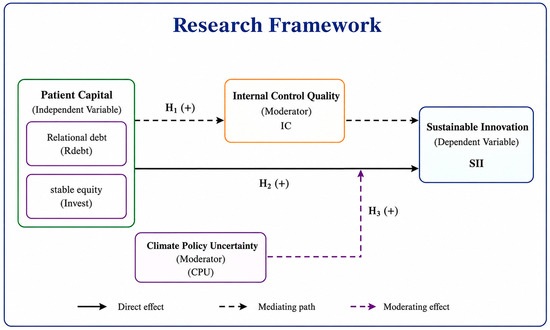
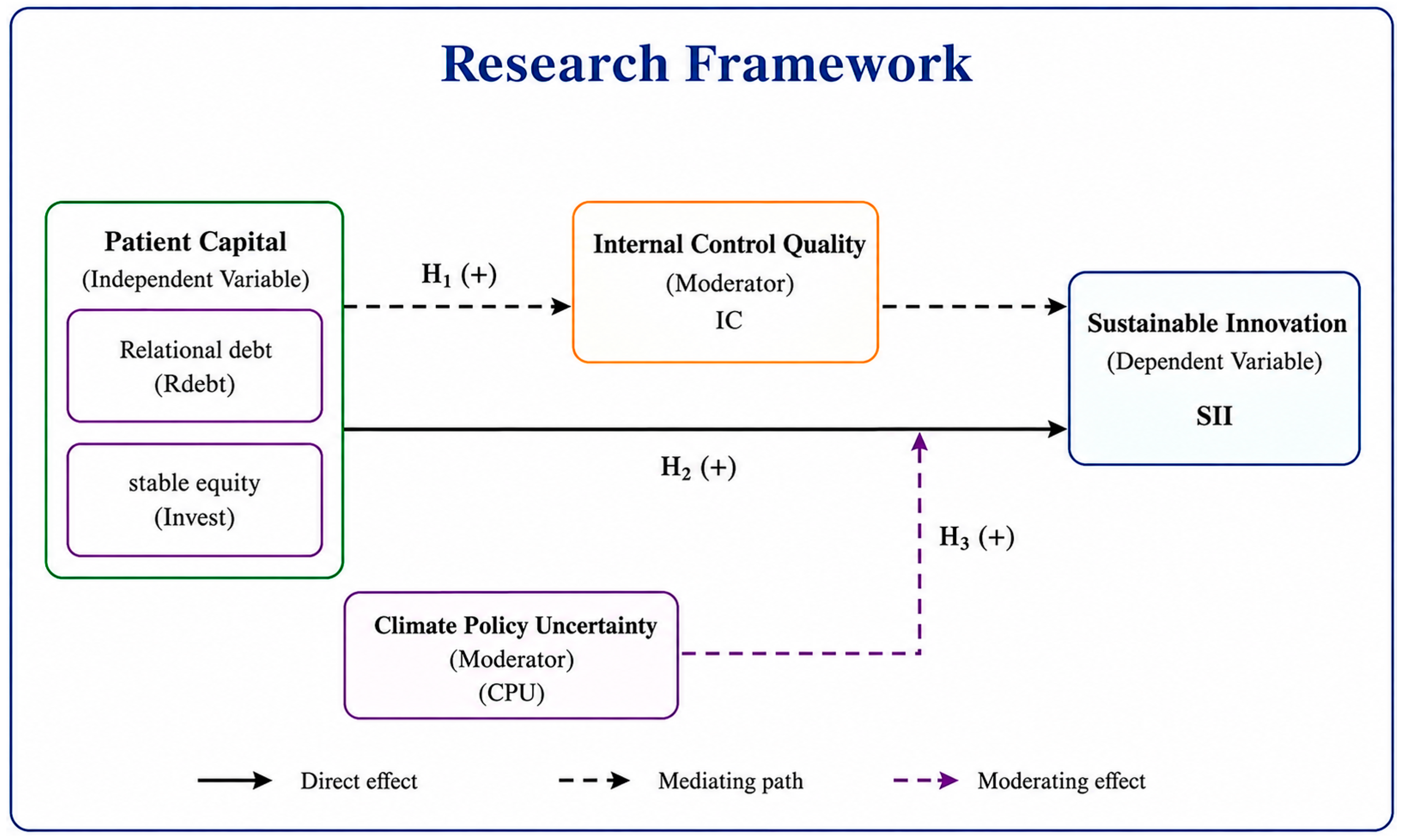
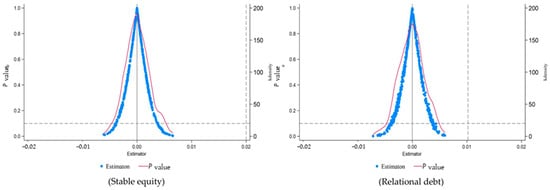
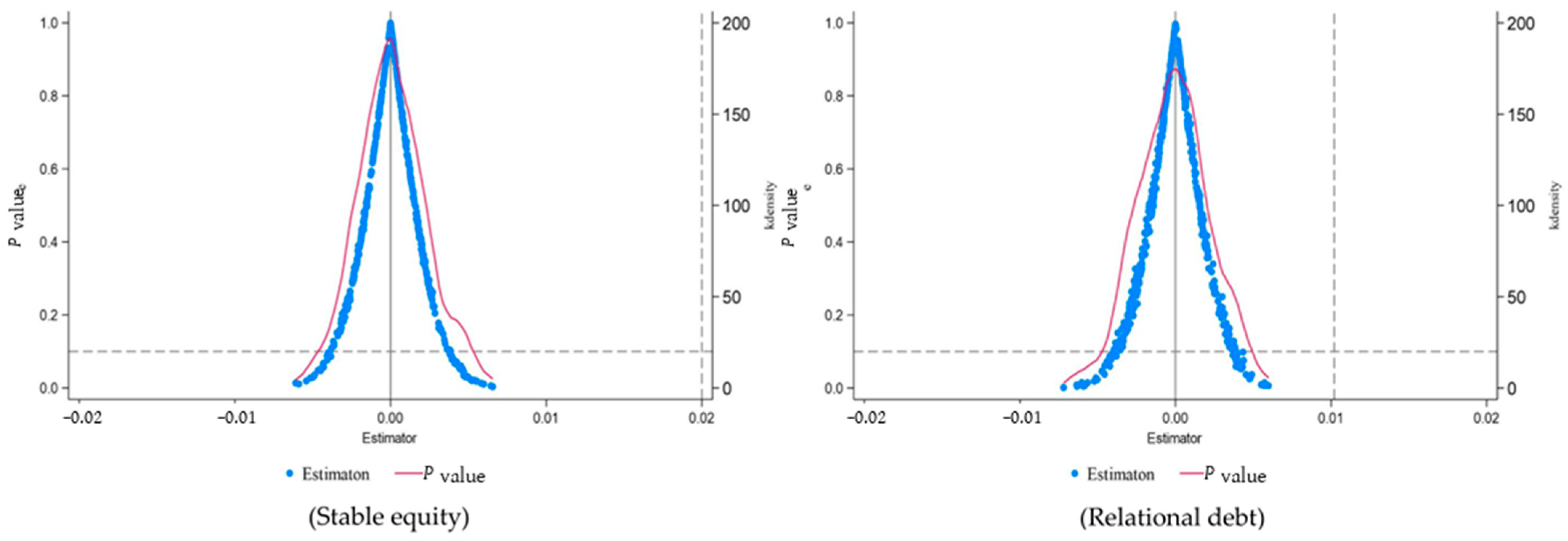

Disclaimer/Publisher’s Note: The statements, opinions and data contained in all publications are solely those of the individual author(s) and contributor(s) and not of MDPI and/or the editor(s). MDPI and/or the editor(s) disclaim responsibility for any injury to people or property resulting from any ideas, methods, instructions or products referred to in the content. |
© 2026 by the authors. Licensee MDPI, Basel, Switzerland. This article is an open access article distributed under the terms and conditions of the Creative Commons Attribution (CC BY) license.