


Abstract
The study examines the evolution, knowledge structure, and trends in snowmelt runoff prediction models. It identifies research hotspots, future directions, and offers a theoretical basis for accurate simulation and prediction. Utilizing CiteSpace software, 556 core Chinese and English publications from 2010 to 2025 were visually analyzed. Research on snowmelt runoff simulation shows: (1) Chinese publications are prominent in core journals like “Journal of Glaciology and Geocryology,” while English publications appear in high-impact journals like “Water Resources Research.” (2) Institutions like the University of Chinese Academy of Sciences, the Northwest Institute of Eco-Environment and Resources, and the University of California have formed a cross-regional research network. (3) International collaboration involves 42 countries, with a focus on China, the United States, and India. However, domestic institutional cooperation needs improvement. (4) Research trends in snowmelt runoff simulation have progressed from empirical statistics to remote sensing and model-driven physical mechanisms, and now to the integration of artificial intelligence with physical models. (5) The Chinese literature focuses on cold regions, while the English literature emphasizes intelligent modeling. This shift indicates a move towards “physical–intelligent” hybrid modeling. Future research should address challenges like model applicability in data-scarce areas, improving interpretability of complex models, quantifying uncertainties, and developing physically constrained deep learning models. Collaboration among institutions is crucial for enhancing water resource management and disaster warning systems in cold regions.
1. Introduction
Snowmelt runoff is a fundamental process in the hydrological cycle of cold, mountainous regions, serving an essential role in agricultural irrigation, daily life, and ecological water use. However, climate warming accelerates the melting of ice and snow, transforming the runoff generated by this process into both a vital “water source” for organisms and a potential “source” of disasters [1,2]. For example, when a winter characterized by abundant snowfall is followed by a rapid and sustained increase in spring temperatures, it can result in the concentrated melting of snow in the plains at the foot of mountains and in medium-to-low-elevation areas. This phenomenon can lead to spring flooding, delay optimal sowing periods, and ultimately cause significant economic losses [3]. In high-altitude plateau regions such as the Qinghai–Tibet Plateau, however, large-scale snowmelt runoff and related disasters mostly occur in summer due to lower temperatures and prolonged snow cover, where summer warming can trigger severe floods, glacial lake outbursts, and debris flows [4]. Therefore, accurately simulating and predicting snowmelt runoff, as well as assessing flood risks, is crucial for mitigating flood hazards, enhancing disaster preparedness, and safeguarding property.
Traditionally, the prediction of snowmelt runoff has depended on models that utilize a single physical mechanism, such as the Soil and Water Assessment Tool model (SWAT) [5], Variable Infiltration Capacity model (VIC) [6], and snowmelt runoff model (SRM) [7]. While these models offer clear structural frameworks, each possesses inherent limitations. The SWAT model is characterized by its complex structure and high parameter demands. The VIC model exhibits poor adaptability in regions with limited data availability. Additionally, the SRM model neglects groundwater recharge, relying primarily on meteorological data that are often interpolated from nearby meteorological and hydrological stations, which hampers its ability to accurately represent the meteorological distribution within the basin. Consequently, these limitations result in diminished simulation efficiency, particularly under complex land surfaces or extreme hydrological conditions. Thus, there is an urgent need to develop a more efficient and interpretable simulation method to enhance the accuracy of snowmelt predictions for early flood warnings. In recent years, the rapid advancement of machine learning technology has introduced innovative approaches to runoff simulation. Machine learning models, particularly Long Short-Term Memory (LSTM) neural networks, have demonstrated exceptional performance in data-driven predictions due to their robust nonlinear fitting and temporal learning capabilities [8,9]. Moreover, the integration of physical models with machine learning is increasingly recognized as a cutting-edge approach, with preliminary research confirming its effectiveness [10,11]. Most existing research primarily concentrates on case verification within specific river basins and lacks a robust theoretical foundation in areas such as uncertainty quantification and applicability testing across diverse climate zones. These limitations suggest a shift in current research from “how to achieve coupling” to “how to enhance the reliability and universality of the coupling model.” To address this evolving demand, it is essential to systematically outline the development trajectory of this field, clarify the core research contributors, and objectively identify the underlying challenges presently encountered. Unlike previous qualitative reviews that focus on individual models (e.g., SRM, SWAT, VIC), remote sensing applications, or case studies in specific basins, the present study provides a systematic, data-driven analysis of the entire field. Existing reviews rarely employ bibliometric or visualization methods, and very few compare Chinese and English literature. Recent studies have further highlighted the growing trend toward physics–intelligent coupled modeling, including hybrid deep learning approaches for snowmelt runoff forecasting in data-scarce regions [12] and comprehensive reviews of machine learning applications in snow hydrology [13]. To fill this gap, we apply CiteSpace-based bibliometric analysis and knowledge graph visualization to 556 core publications (326 Chinese, 230 English) from 2010 to 2025. This approach objectively reveals the knowledge structure, evolutionary trends, and the paradigm shift from “physics-driven” to “physics–intelligent” coupled modeling, while enabling a comparative analysis between Chinese and international research. Accordingly, this study employs bibliometric and knowledge graph methodologies to conduct a visual analysis of both domestic and international literature from 2010 to 2025. This approach aims to transcend the subjective interpretations typical of traditional reviews and to objectively elucidate the knowledge structure, evolutionary context, and research frontiers of the field through data analysis [14]. The ultimate goal is to provide a foundation for constructing a more reliable, universal, and predictive model for snowmelt runoff forecasting.
2. Materials and Methods
2.1. Research Design and Methodology
The research presented in this study is organized into three components: (1) an analysis of global trends and hotspots in snowmelt runoff simulation utilizing CiteSpace; (2) a comparison of Chinese and international research across various dimensions, including research forces, hotspots, and evolutionary trends; and (3) an exploration of cross-regional integration, culminating in the proposal of future research directions.
This study employed the CiteSpace (6.3.R1) scientific literature visualization analysis tool developed by Professor Chen Meichao’s team [15,16]. By integrating bibliometrics with knowledge graphs, we conducted parallel processing and comparative analysis on the selected sets of Chinese and English literature. The specific analysis process is outlined as follows:
- (1)
- Data conversion and analysis were conducted using the built-in converter of CiteSpace to process RefWorks format files exported from the China National Knowledge Infrastructure (CNKI). To ensure consistency in the analysis, identical export parameter settings were applied to both datasets from the Web of Science (WoS). The Time Slicing was set to one year, and for Node Types, the selections included keyword, author, and institution, respectively. The Cosine algorithm was utilized for link strength selection, while the threshold criterion was established to extract the top 10 data points with the highest citation frequency for each time zone.
- (2)
- Analysis of research content. First, the distribution and cooperation models of core research forces, including authors, institutions, and countries, were examined. Second, keyword co-occurrence networks and clustering techniques were employed to conduct a comparative analysis of research characteristics both domestically and internationally across different periods. Third, the structure and evolutionary path of the research topic using TimelineView were dynamically illustrated. Fourth, Burst Detection was applied to investigate emerging research trends. Through multiple dimensions, such as research subjects, development trajectories, and research hotspots, the similarities and differences between domestic and foreign research, along with their driving forces, were systematically elucidated.
2.2. Data Sources
The Chinese literature data were obtained from the China National Knowledge Infrastructure (CNKI) database. Focusing on the themes of “snowmelt runoff” and “Model”, the literature was retrieved from databases including Peking University Core, Chinese Science Citation Database (CSCD), and World Journal Impact Indicator (WJCJ), covering the period from January 2010 to December 2025. Ultimately, 326 valid documents were selected to establish the Chinese literature database.
The English literature data were obtained from the Web of Science Core Collection database, utilizing the Science Citation Index Expanded (SCI-EXPANDED) for citation analysis. Using the search string, document-type restrictions, and screening criteria described below, a total of 230 English publications from January 2010 to December 2025 were identified.
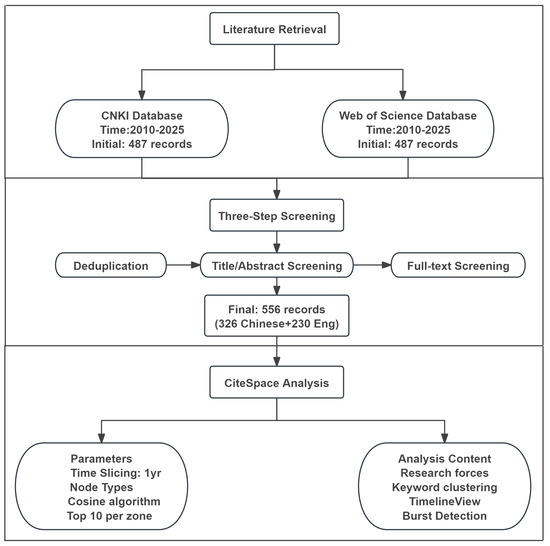
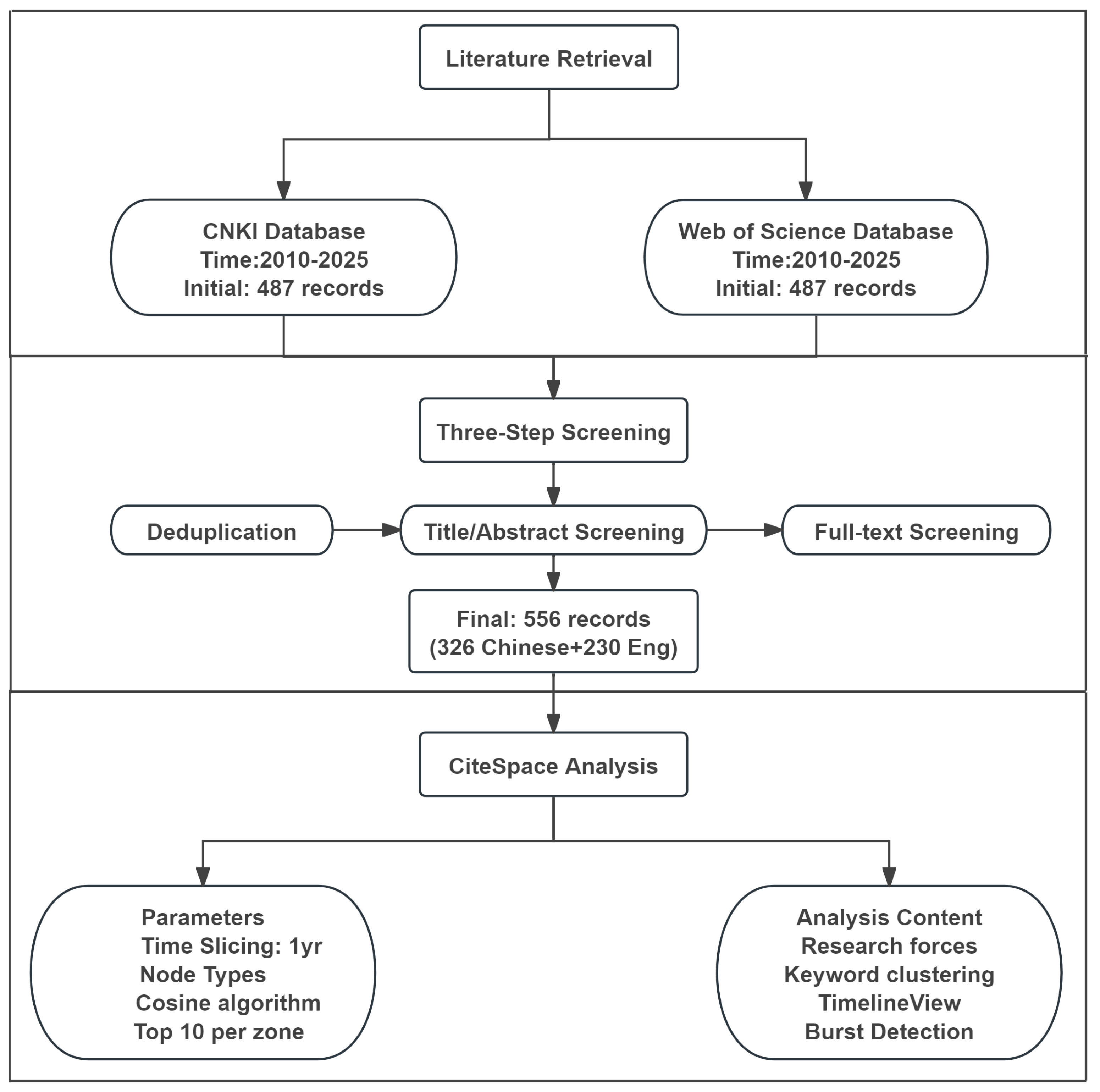
The complete workflow of literature retrieval and screening is illustrated in Figure 1.
Figure 1.
The complete workflow of literature retrieval and screening.
To ensure a transparent and reproducible search strategy, the detailed search strings and screening criteria are provided below:
- (1)
- Search strings: For the CNKI database, the search was conducted using Chinese subject terms (e.g., the Chinese equivalents of “snowmelt runoff”, “snow ablation”, “model”, “simulation”, and “prediction”) with Boolean logic. For the Web of Science Core Collection, the search string was TS = ((“snowmelt runoff” OR “snow melt runoff” OR “snowmelt”)) AND TS = ((“model*” OR “simulation” OR “prediction” OR “LSTM” OR “machine learning”)).
- (2)
- Document-type restrictions: The search was limited to original research articles and review articles, excluding conference abstracts, proceedings papers, newspapers, yearbooks, and other document types, to ensure the quality and peer-reviewed status of the included literature.
- (3)
- Time span: The search period covered from January 2010 to December 2025.
- (4)
- Screening process: The initial search yielded 487 Chinese records and 408 English records. The screening process involved three steps. First, duplicate publications were removed using reference management software (25 Chinese and 13 English duplicates removed). Second, the titles and abstracts were independently reviewed to exclude irrelevant studies (104 Chinese and 97 English records excluded). Third, the full texts of the remaining articles were examined to confirm their relevance to snowmelt runoff simulation and prediction (32 Chinese and 68 English records excluded). After this rigorous screening, 326 valid Chinese documents and 230 valid English documents were finally selected for analysis.
3. Result
3.1. Distribution of Research Forces
3.1.1. Annual Publication Volume of Literature and Distribution of Research Journals
In the field of scientific research, the number of published papers can reflect the changes in the amount of scientific knowledge and the research progress of scholars in this field [17].
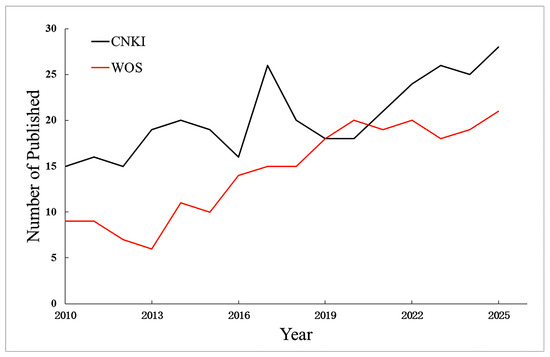
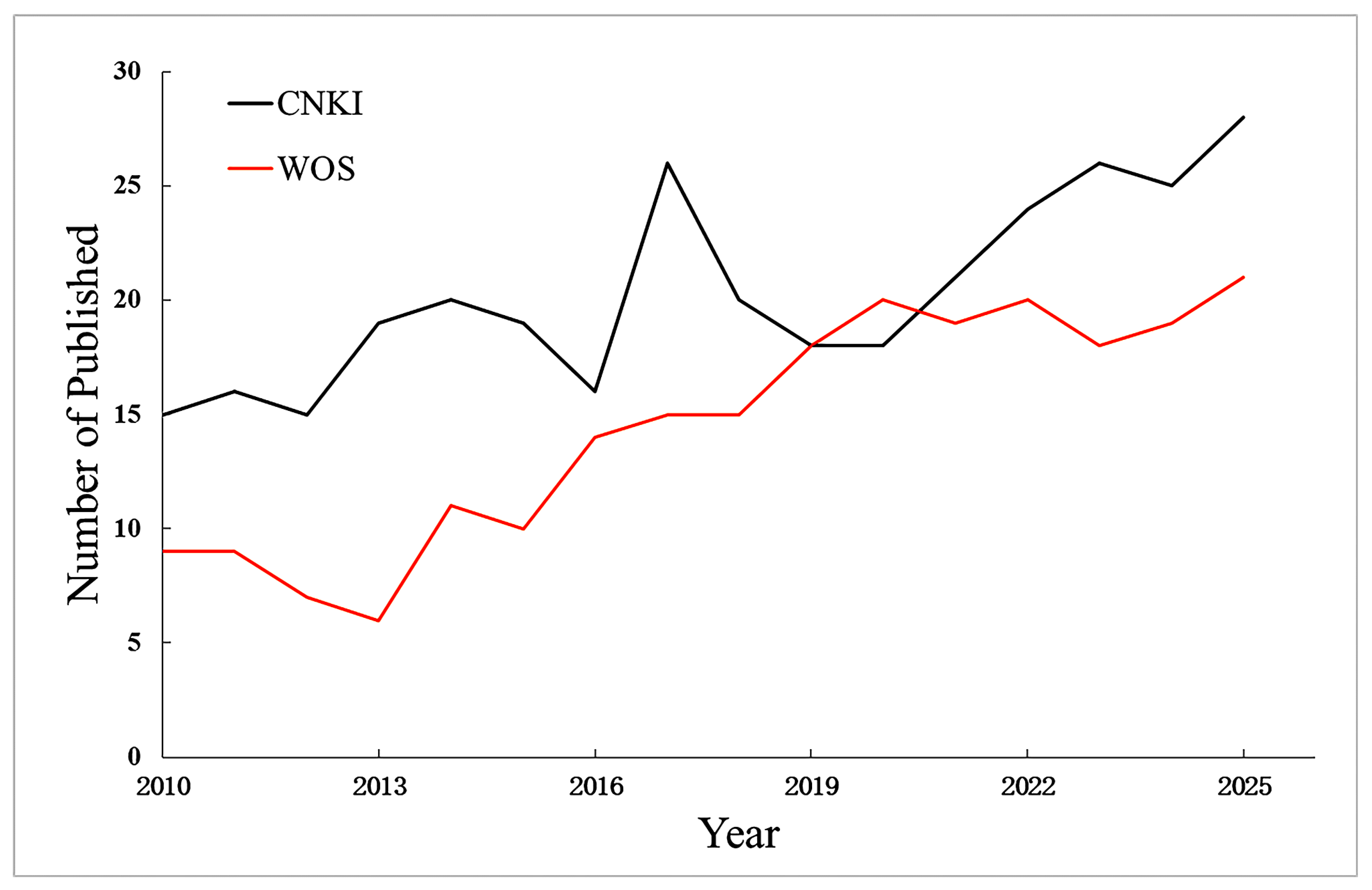
Through a bibliometric analysis of highly cited literature in the Web of Science Core Collection, we constructed a trend chart depicting the annual number of published papers (Figure 2). International research on snowmelt runoff models exhibits a trend characterized by a “steady increase with fluctuations and significant growth in recent years.” From 2010 to 2017, the research scale in this field remained relatively limited, with moderate growth in the number of published papers, indicating a phase of steady accumulation. However, since 2018, the urgent international agenda to address climate change, coupled with technological innovations in hydrological simulation, has accelerated research on snowmelt runoff models. Notably, between 2021 and 2024, the average annual number of published articles surpassed 18. This surge occurs against the backdrop of global warming, which has resulted in earlier snowmelt runoff and increased occurrences of floods and droughts. The pressing need for accurate simulation and prediction is closely linked to these phenomena. During this period, the widespread application of artificial intelligence technologies, particularly deep learning methods such as LSTM, in hydrology, along with the emergence of coupled modeling that integrates physical models with machine learning, has further propelled the rapid expansion of research in this area.
Figure 2.
Annual publications on snowmelt runoff prediction models. Red line: Chinese publications; black line: English publications.
Research on domestic snowmelt runoff models has revealed a developmental trajectory characterized by “stable accumulation in the early stage, rapid rise in the middle stage, and recent high-level fluctuations with a new growth trend” over the past fifteen years. From 2010 to 2016, the number of published papers in this field exhibited a phase of stable accumulation, indicating that prior to the “13th Five-Year Plan,” the snowmelt runoff model, as a specialized branch of hydrology, experienced a continuous yet slow accumulation of knowledge and technology in China. From 2017 to 2021, the initiation of major projects, such as the second “Comprehensive Scientific Expedition to the Qinghai–Xizang Plateau,” along with a focus on the systematic governance of “mountains, rivers, forests, farmlands, lakes, grasslands, and deserts,” significantly heightened research enthusiasm. This surge resulted in the number of papers reaching its first peak of 26 in 2017. However, the number of publications in 2022–2023 experienced a slight decline. Preliminary data for 2024–2025 indicates a clear upward trend once again. An increasing number of scholars are directing greater attention toward snowmelt runoff prediction research, and investigations in this field are becoming increasingly comprehensive.
In the domain of snowmelt runoff prediction models, the leading domestic journals by publication volume are, in order, the “Journal of Glaciology and Geocryology,” “Journal of Hydraulic Engineering,” “People’s Yangtze River,” “Hydrology,” and “Arid Land Geography” (Table 1). The cumulative publication volume in this field constitutes 42.92%, underscoring its prominence among domestic academic journals. This trend not only highlights the exceptional quality maintained by core and prestigious journals but also affirms the significant and growing interest in snowmelt runoff prediction models within the academic community, establishing it as a highly anticipated area of cutting-edge research. Furthermore, most English-language journals associated with snowmelt runoff prediction models are of high quality (Table 2), including “Water Resources Research,” “Journal of Hydrology,” and “Hydrology and Earth System Sciences,” which collectively account for 53.36%.
Table 1.
Top 5 journals by number of Chinese-language publications on snowmelt runoff prediction models.
Table 2.
Top 5 journals by number of English-language publications on snowmelt runoff prediction models.
3.1.2. Analysis of Domestic and International Author Cooperation Networks
The domestic and international author collaboration network provides a clear perspective on the cooperation models and the degree of interconnectedness among authors from various countries or regions in academic research. The collaboration models depicted in Figure 3 reveal multiple independent teams, within which structural subgroups emerge. In this context, nodes represent the researchers engaged in collaboration, while the density of the connecting lines reflects the extent of cooperation. Different colors are employed for nodes and connecting lines to differentiate various research clusters. Currently, collaboration among authors and teams involved in predicting the snowmelt runoff model appears fragmented, with a relatively low network density of 0.0074 domestically and 0.0075 internationally. This situation hampers the establishment of a large-scale cooperative network. Therefore, it is essential for all scientific researchers to enhance their collaboration to collectively advance the development of the field.
Figure 3.
Author collaboration network map: (a) domestic; (b) international. Nodes represent authors; node size indicates publication volume; different colors represent different research clusters; connecting lines represent collaboration relationships; line thickness indicates collaboration intensity.
Among domestic research teams, the collaboration of Wang Jian, He Xiaohua, and Li Hongyi has resulted in the highest number of publications and the most significant contributions to the field of snowmelt runoff research. Although their research directions differ, their collective achievements advance the development of predictive models. Wang Jian’s team focuses on the mechanisms of hydrological processes in cold regions and the development of distributed models, emphasizing the precise representation of key processes within the cryosphere [18,19]. He Xiaohua’s team concentrates on employing remote sensing and data assimilation technologies to overcome challenges related to key data acquisition and scale conversion in hydrological simulations for cold regions [20]. Li Hongyi’s team embodies the forefront of integrating artificial intelligence with Earth system science, dedicating itself to employing data-driven methods for innovation and trend prediction [21].
The Bao Anming team and the Adnan Muhammad team are leading international research groups in this field. The Bao Anming team established a crucial data foundation for estimating snow water equivalent at the basin scale through the development of a multi-source remote sensing inversion algorithm [22]. Meanwhile, the Adnan Muhammad team conducted a systematic evaluation of the performance and limitations of a purely data-driven LSTM model in the data-scarce upper Indus River Basin, highlighting the discrepancy between its historical fit and the reliability of future extrapolations [23].
3.1.3. Analysis of Domestic and International Institutional Cooperation Networks
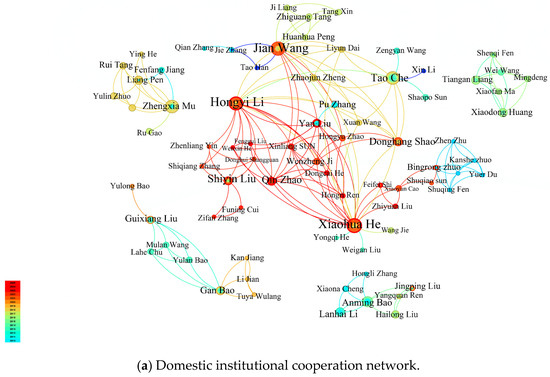
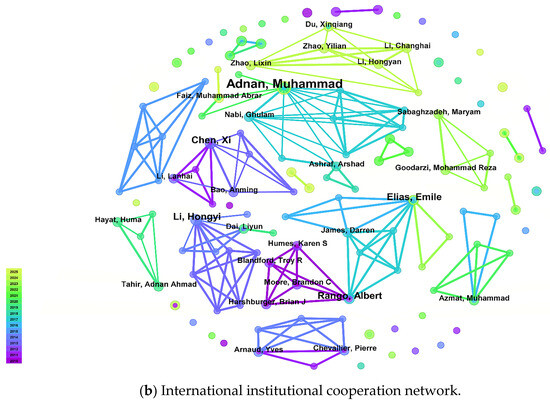
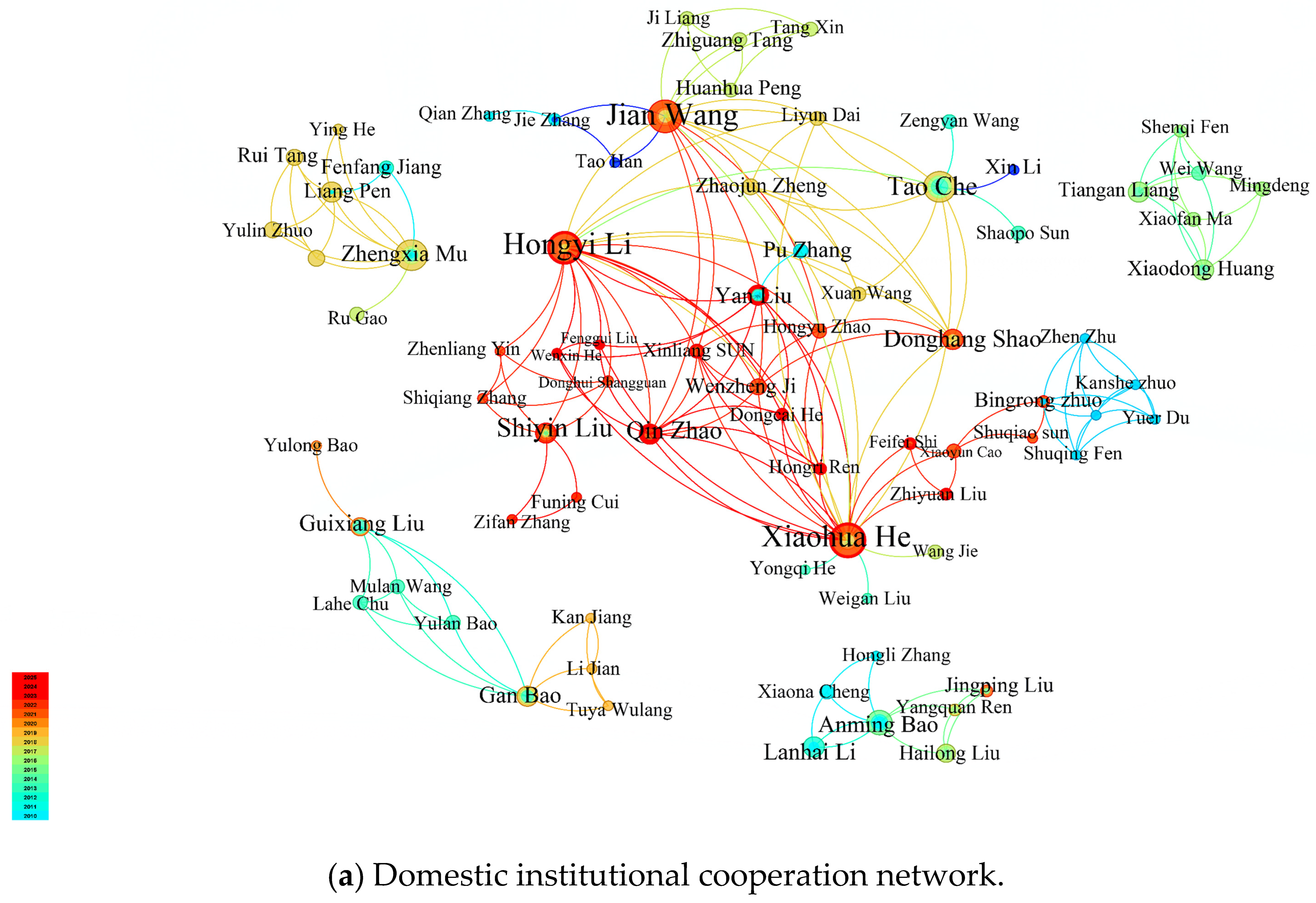
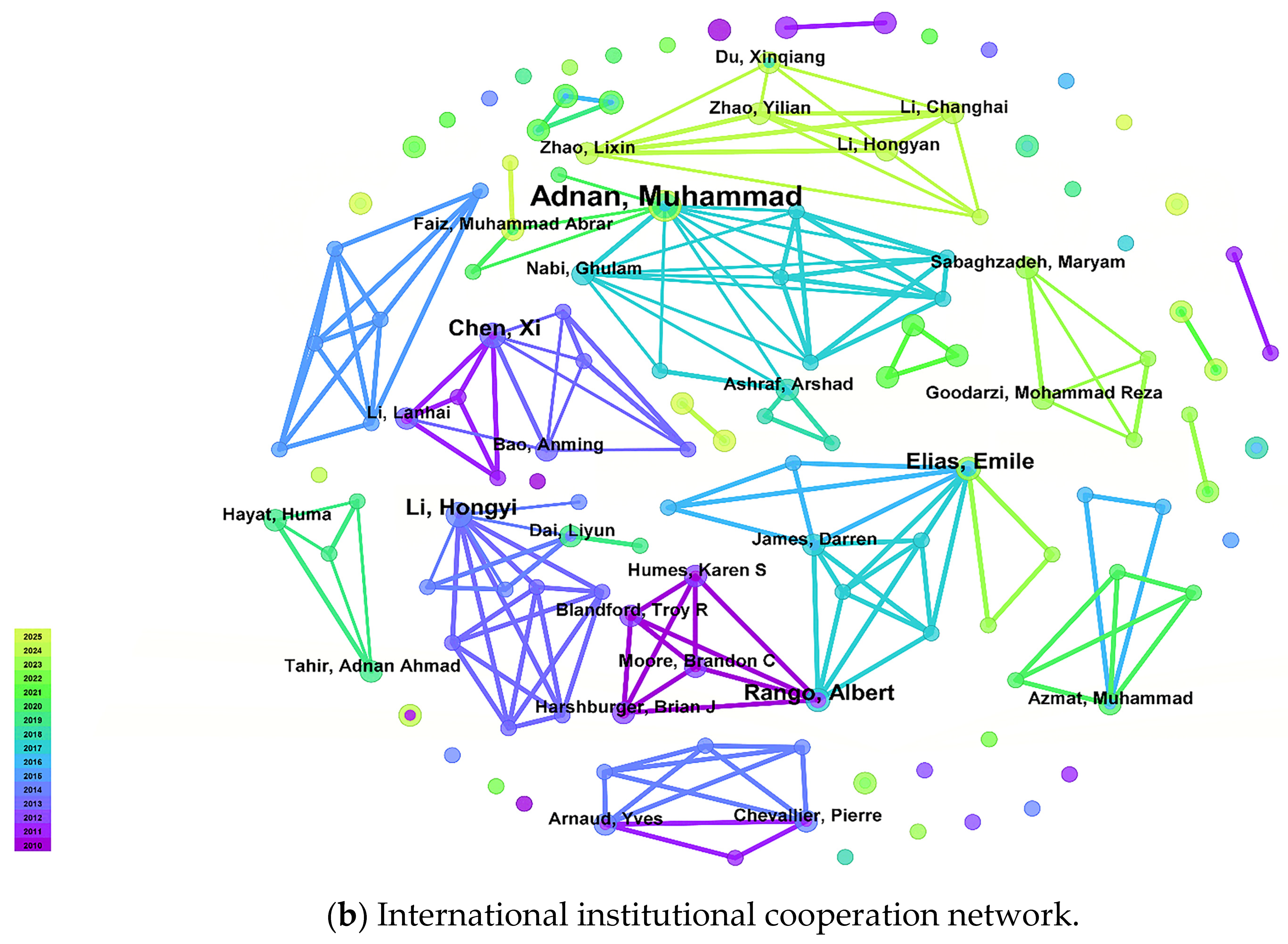
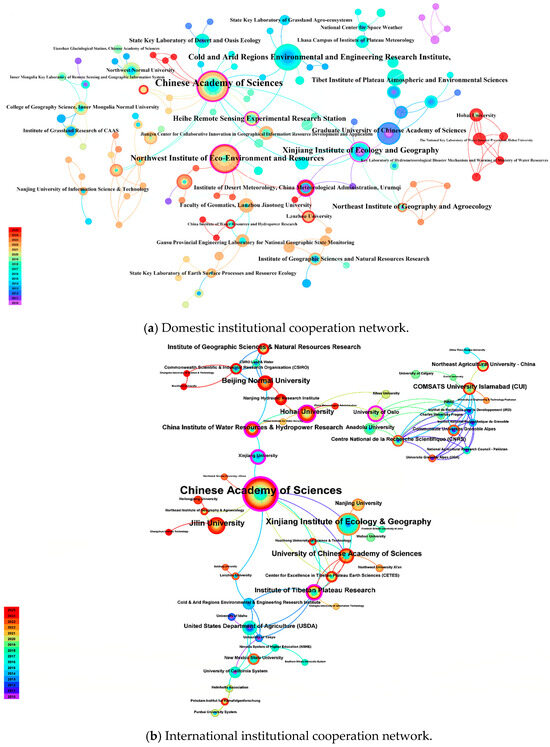
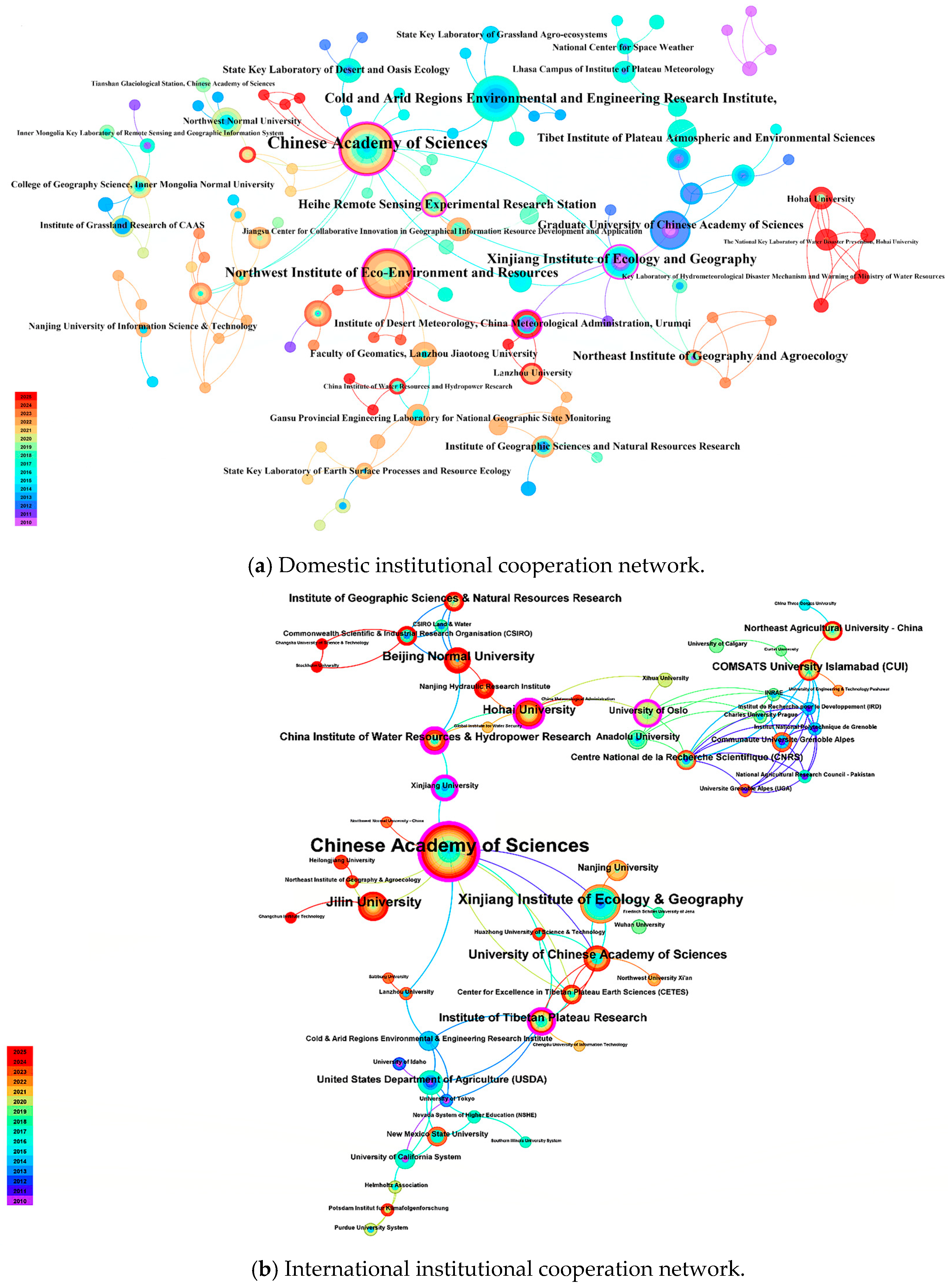
Inter-agency cooperation effectively illustrates communication and research trends across various contexts. In the graph, nodes represent institutions, with a greater number of connections indicating closer collaboration among them. The growth rings of the nodes signify the temporal sequence of cooperation; larger growth rings correspond to earlier instances of collaboration, while smaller rings indicate more recent partnerships. As shown in Figure 4, the cooperation networks of both domestic and international institutions exhibit a decentralized structure. Although the network density of international institutions (0.0143) is relatively low, it surpasses that of domestic institutions (0.0077), suggesting that the mechanisms for cross-institutional collaboration require further enhancement.
Figure 4.
Institutional collaboration network map: (a) domestic; (b) international. Nodes represent institutions; node size indicates publication volume; different colors represent different research clusters; the purple rings denote high-centrality institutions; connecting lines represent collaborative relationships.
Major universities and research institutes, particularly in China and the United States, are the primary institutions producing English-language documents. Among international organizations, the Chinese Academy of Sciences is notable for its high level of activity and collaboration. This trend reflects China’s proactive approach to international cooperation and underscores its increasing influence on the global stage.
Cooperation among domestic institutions is relatively informal, yet it can be categorized into two distinct types based on their nature and contributions. The first category includes institutions that frequently engage in collaborative efforts, such as the University of Chinese Academy of Sciences, the Cold and Arid Regions Environmental and Engineering Research Institute of the Chinese Academy of Sciences, and the Northwest Institute of Eco-Environment and Resources of the Chinese Academy of Sciences. The second category comprises institutions characterized by a high degree of collaboration, including the Graduate University of the Chinese Academy of Sciences and the Xinjiang Institute of Ecology and Geography, Chinese Academy of Sciences.
3.1.4. Analysis of International Cooperation Networks
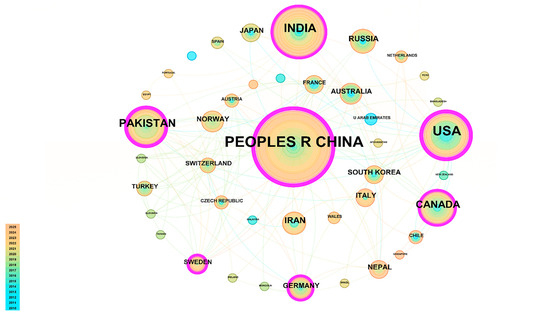
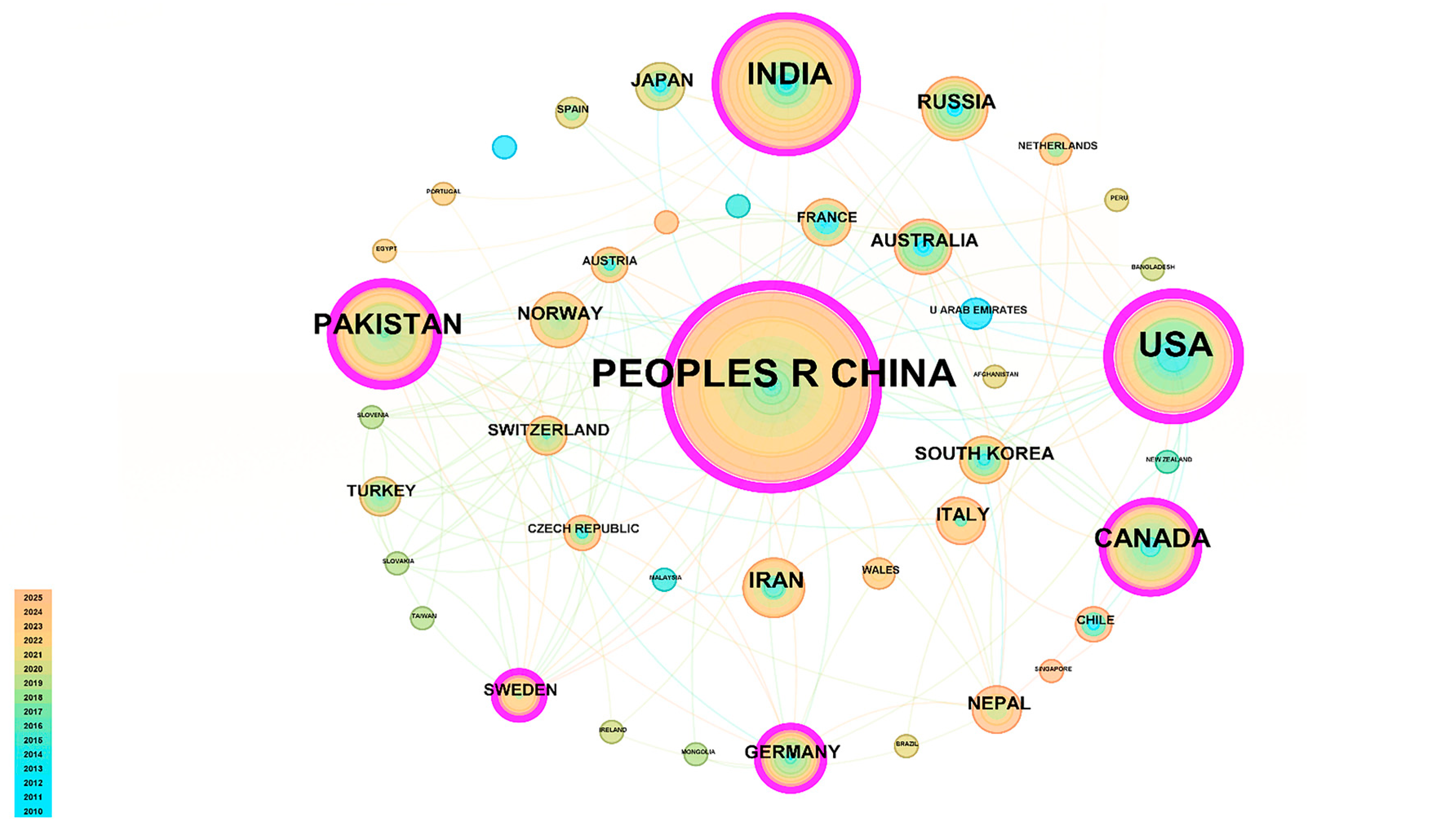
The international cooperation network represents a complex interactive system established among various countries, driven by differing interests, development objectives, and geopolitical considerations. Figure 5 illustrates the cooperation map among these nations. The size of each node corresponds to the volume of documents produced by the respective country or region. A greater number of connections indicates closer cooperation among countries or regions. The annual rings of the nodes, arranged from the outer layer to the inner layer, reflect the chronological order of document issuance by the country or institution. The purple circles denote key contributing countries. This national cooperation encompasses 42 countries, with China, the United States, and India serving as the core participants. This pattern arises primarily from several factors: First, these three nations possess the largest snow water resource areas and snowmelt-dependent river basins globally, including the Qinghai–Tibet Plateau in China, the Rocky Mountains in the United States, and the Himalayan region in India. They also confront shared challenges related to water resource security and disaster prevention, which generates a significant endogenous demand for research. Secondly, as global leaders in scientific research, China and the United States possess significant advantages in technologies such as remote sensing, hydrological modeling, and supercomputing. India is emerging as a major player in space technology and water resource research. The scientific research capabilities and resource investments of these three countries ensure a robust output of high-level achievements, which are represented as substantial nodes. Notably, although the number of published papers from Pakistan (centrality 0.09) and Germany (centrality 0.08) is lower than that of China, the United States, and India, their intermediary centrality is relatively high. This suggests that they have played a crucial bridging role in connecting research groups across different nations.
Figure 5.
National collaboration network map in snowmelt runoff prediction models. Size represents the publication volume of each country; line thickness represents collaboration intensity; purple circles (rings) denote high-centrality countries that play important bridging roles in the network. A total of 42 countries are included, with China, the United States, and India as the core participants.
3.2. Analysis of Research Hotspots
3.2.1. Keywords: Collinear and Cluster Analysis
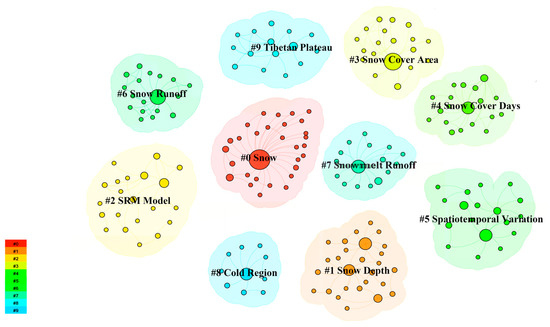
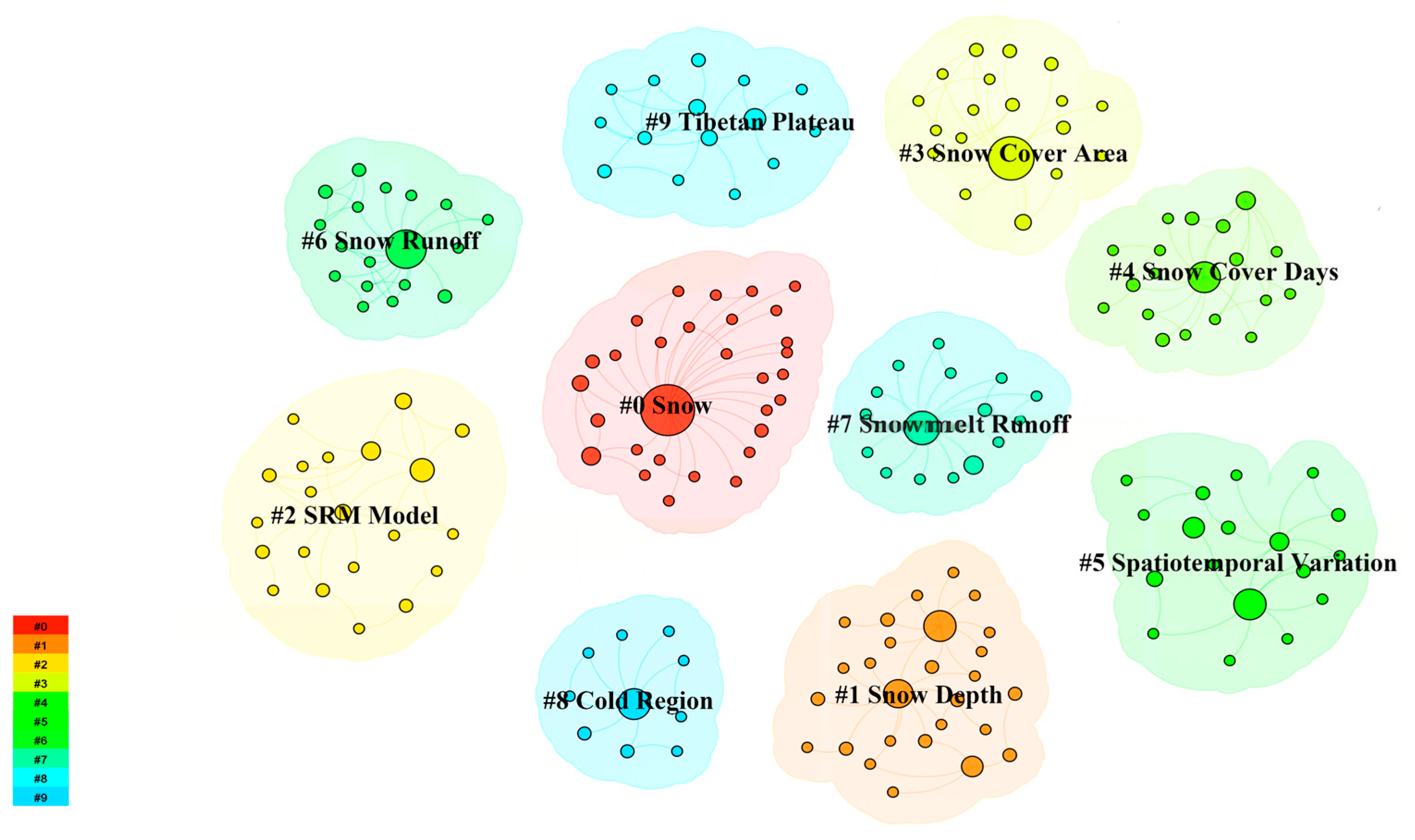
Keywords serve as a concise representation of the core content of the literature, effectively summarizing its main ideas and essence. In the keyword class map, the module value (Q value) and the average contour value (S value) are critical indicators for assessing the clustering effect. The clustering results for the Chinese literature reveal a module value of Q = 0.876 (greater than 0.3) and an average contour value of S = 0.9558 (exceeding 0.7). In contrast, the clustering of the English literature yields a module value of Q = 0.4436 (surpassing the reference standard of 0.3) and a contour value of S = 0.7507 (also above 0.7). Both indicators exceed their respective thresholds, suggesting a high degree of consistency in clustering, a strong concentration of research topics, and an overall favorable clustering effect.
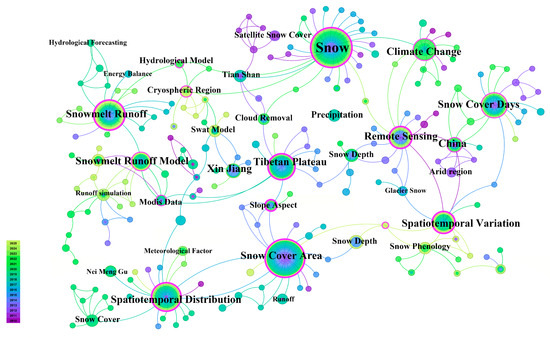
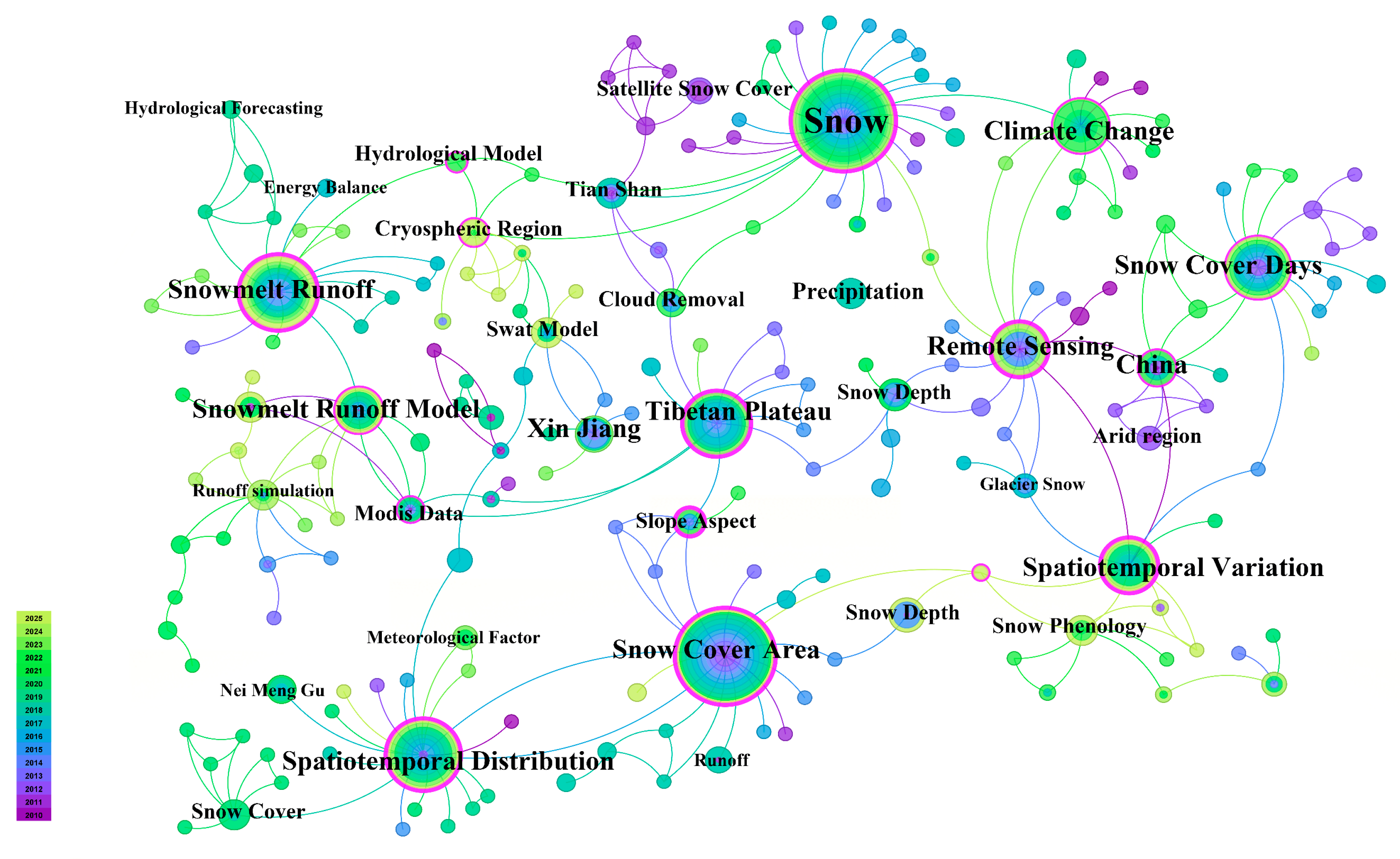
The Chinese keyword collinear and clustering network graph (Figure 6 and Figure 7) reveals a network comprising 294 nodes and 351 connections, with a network density of 0.0081. The central clusters, including “cold regions,” “snow cover area,” and “snowmelt runoff,” exhibit high centrality and co-occurrence intensity, indicating the establishment of a cohesive research framework focusing on snow cover observation, process simulation, and runoff prediction. The research demonstrates a dual expansion pattern, spatially transitioning from the “Qinghai–Xizang Plateau” to other cold regions and methodologically progressing from early statistical analyses of “spatiotemporal variations” to a multi-technology approach integrating high-resolution simulations like the “SRM model,” precise diagnoses using “artificial intelligence,” and “spatiotemporal distribution.” This evolution has advanced snowmelt runoff prediction from empirical statistics to physical mechanism models and integration with artificial intelligence technology, thereby improving simulation accuracy and process interpretability.
Figure 6.
Keyword co-occurrence network mapping. Lines between nodes indicate co-occurrence relationships; line thickness reflects the intensity of co-occurrence. Different colors represent different keyword clusters identified by CiteSpace.
Figure 7.
Keyword clustering mapping.
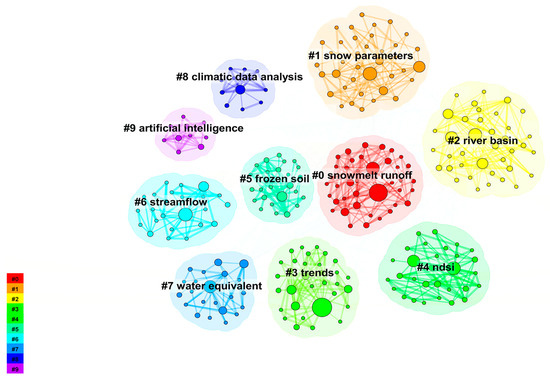
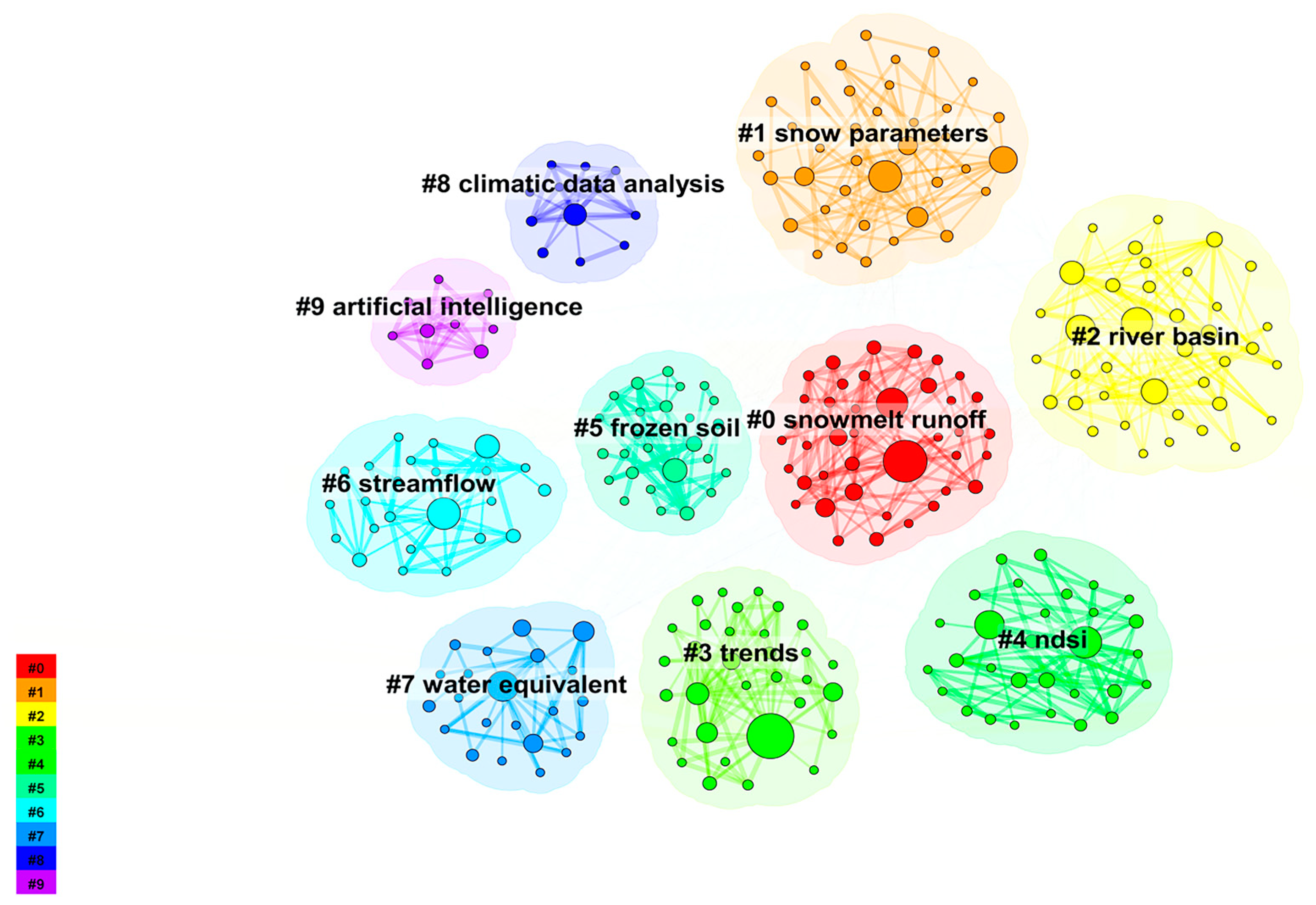
The English keyword clustering network graph (Figure 8) reveals that #1 snow parameters exhibit the largest clustering scale, underscoring the prominent role of “snow cover phenological parameters” in research published in English journals. This indicator significantly influences the accuracy of snowmelt runoff prediction models and is intricately linked to various other topics. Additionally, the graph highlights that river basin, trends, NDSI, and artificial intelligence are also focal points in the study of snowmelt runoff prediction.
Figure 8.
Snowmelt runoff model in English keywords clustering map. Note: Nodes represent research keywords, with their sizes directly proportional to the frequency of occurrence. The lines connecting the nodes indicate the co-occurrence relationships between keywords, with the thickness of the lines reflecting the intensity of these co-occurrences. Different colors are employed to distinguish various keyword clusters. The numbers #0 to #9 correspond to 10 cluster modules, with colors differentiating distinct research topics.
3.2.2. Analysis of High-Frequency Keyword Network Co-Occurrence
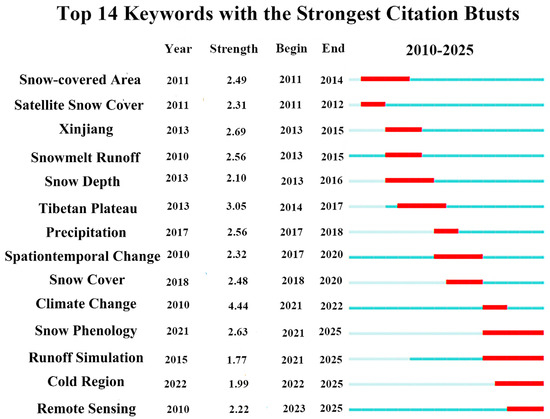
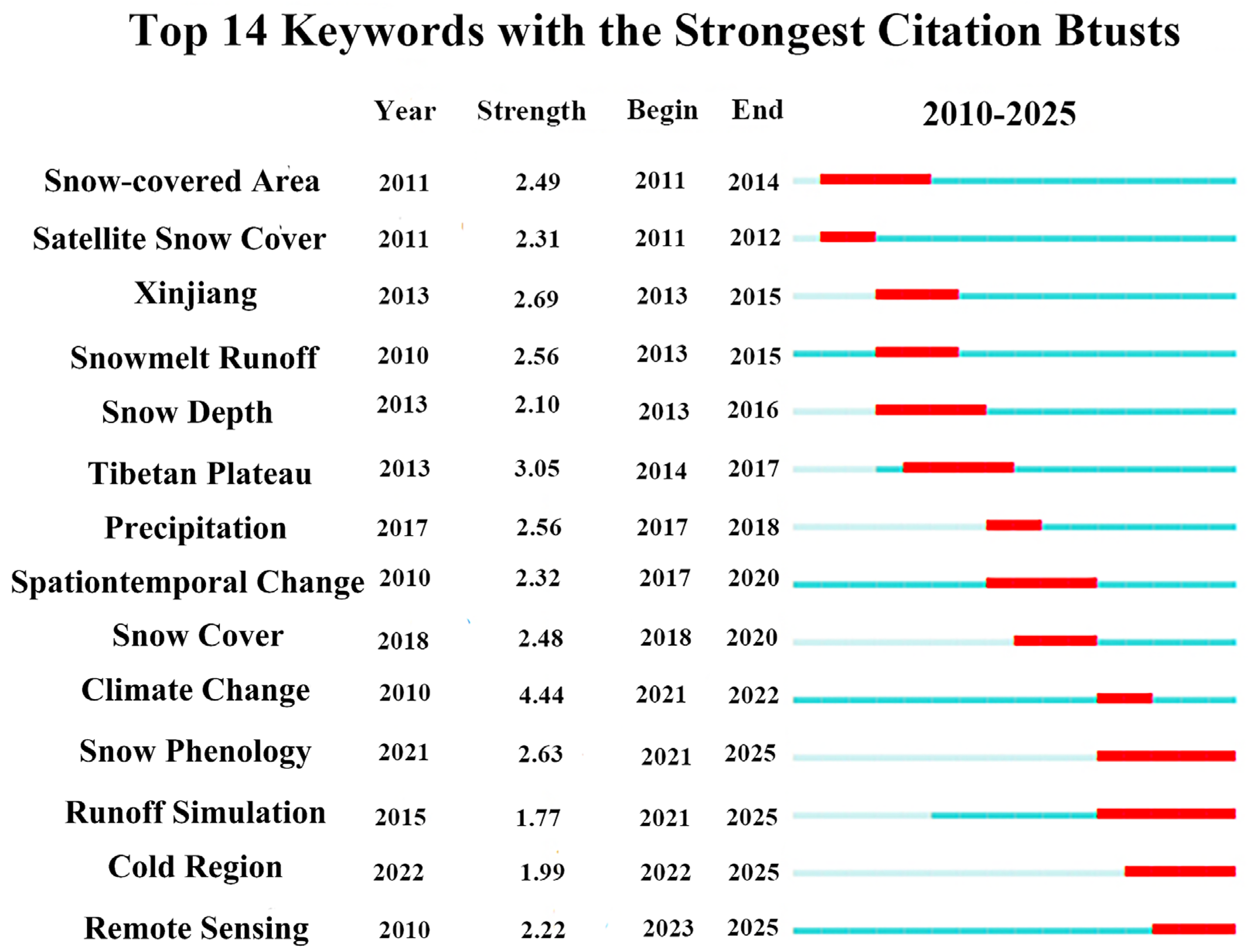
Using CiteSpace’s keyword analysis for network co-occurrence of high-frequency and significant keywords (word frequency ≥ 10), as shown in Table 3 and Figure 9, domestic research on snowmelt runoff prediction follows a technological evolution trajectory. Initially (2011–2014), remote sensing observation and data acquisition played a pivotal role. The prevalence of keywords such as “snow cover area” and “satellite snow cover” signifies the initial utilization of remote sensing technology to accurately identify and monitor snow and ice spatial distribution, establishing a fundamental dataset for core hydrological process investigation. Subsequently (2014–2018), the focus shifted towards analyzing key parameters and regional hydrological processes in the mid-term. The prominence of keywords like “Xinjiang” and “Qinghai–Xizang Plateau,” alongside crucial hydro-meteorological parameters such as “snow depth” and “precipitation,” indicates a transition towards studying snow cover characteristics, spatiotemporal variations, and their associations with climatic factors in typical cold/mountainous regions. This shift deepened the regional comprehension of the mechanisms driving snowmelt. In the upcoming years spanning from 2018 to 2025, a shift towards enhanced mechanism integration and comprehensive simulation prediction is anticipated. Currently, “climate change” serves as the prominent backdrop with significant intensity. Key terms like “snow cover phenology,” “runoff simulation,” “cold regions,” and “remote sensing” collectively highlight the prevailing research direction: integrating remote sensing data, phenological dynamics, and hydrological models within the context of climate change to attain dynamic and accurate runoff simulation and prediction on a cold region river basin scale.
Table 3.
Snowmelt runoff study showing important high-frequency keyword information statistics.
Figure 9.
Top 14 keywords in Chinese snowmelt runoff. Note: Keywords represent the terms for which mutations have been identified. The “year” denotes the initial appearance of each keyword. “Strength” indicates the significance of the keyword, with higher values reflecting greater influence during that period. The “begin” and “end” parameters mark the respective start and conclusion of the keyword’s prominence. Collectively, the timeline illustrates the temporal evolution of keywords from their emergence through the onset and cessation of mutations. A more recently highlighted keyword suggests a contemporary research hotspot.
The CiteSpace software was used to conduct network collinear analysis of high-frequency keywords, yielding statistics on high-frequency keyword information in English research on snowmelt runoff models (Table 4). Table 4 reveals that the keyword “climate change” exhibits the strongest correlation with snowmelt runoff models, boasting a centrality of 0.22, underscoring the significant role of climate change in advancing research on snowmelt runoff prediction models. Notably, “climate change” emerges as the most frequently used keyword, appearing 70 times, followed by “snowmelt runoff” at 61 occurrences, and “precipitation” ranking third with 35 instances. In the examination of the keyword co-occurrence network graph, most keywords demonstrate centrality values exceeding 0.1. The prevalence of global warming and the early onset of spring snowmelt runoff have heightened the incidence of disasters such as snowmelt floods, underscoring the imperative for models to accurately forecast disaster events.
Table 4.
Snowmelt runoff model for English research showing high-frequency keyword information.
3.2.3. Keywords: Timeline Analysis
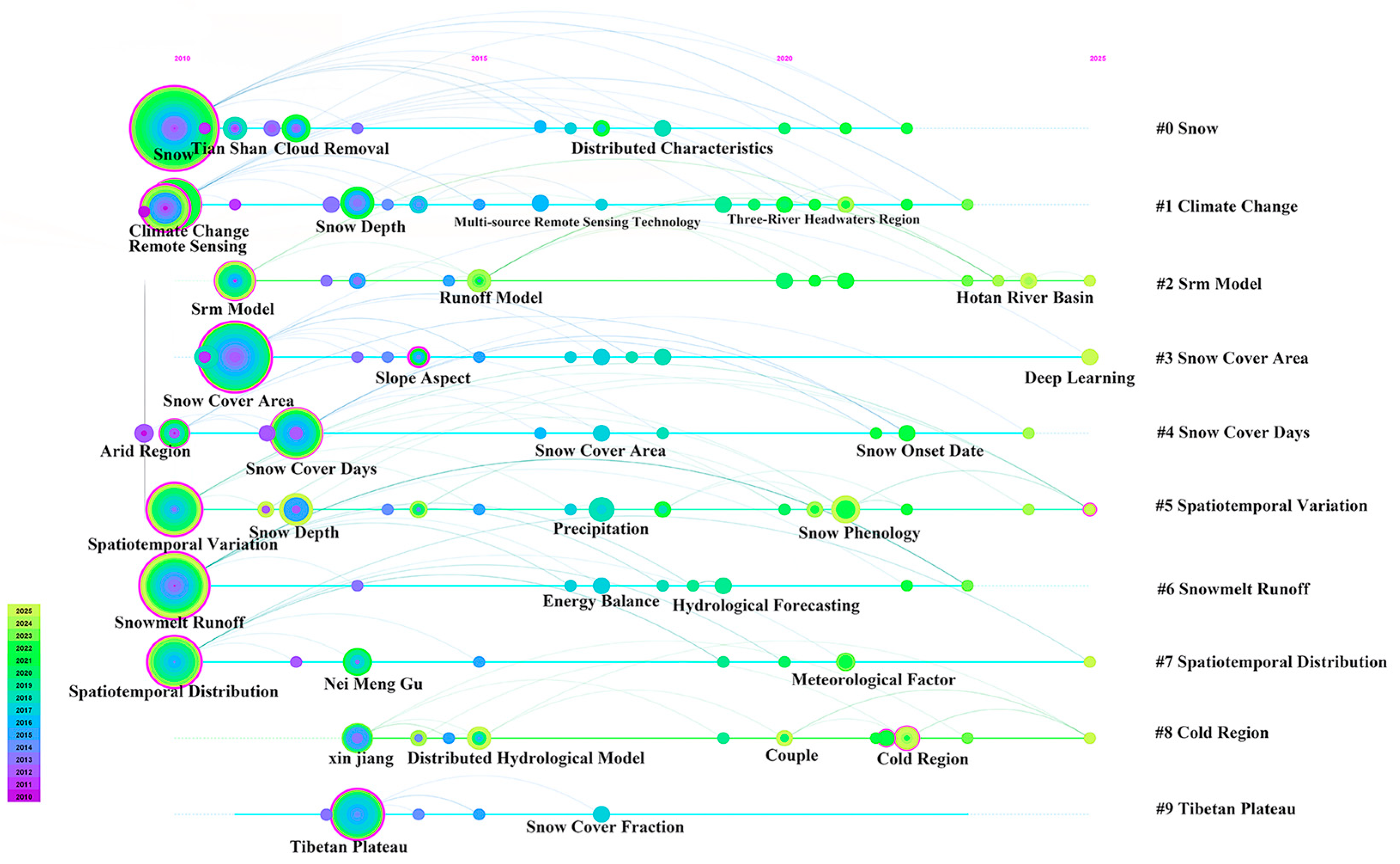
The analysis of the keyword clustering time series graph (Figure 10) reveals a three-stage evolution in the research on the simulation and prediction of snowmelt runoff in China. The first stage (2010–2015) marks the basic construction period, characterized by initial exploration. During this phase, due to constraints in early observational data and computational capabilities, researchers primarily employed empirical statistical methods like the temperature index method (day-by-day model). The focus was on accumulating fundamental parameters and utilizing simple models to establish a linear relationship between temperature and snowmelt volume. The second stage (2015–2020) signifies the method innovation period, witnessing a rapid advancement in research. Key drivers during this period included the maturation and widespread adoption of remote sensing technology, along with the development of distributed hydrological models, enabling a transition from point-based to area-based research. Satellite inversion techniques facilitated the acquisition of extensive snow cover area, snow water equivalent, and other crucial parameters, while a shift towards a deeper understanding of physical mechanisms and integration of spatial information became prevalent. The third stage (2020–2025) represents the integration and deepening period, characterized by a progression towards systematic, precise, and intelligent research approaches. The recent advancement in this field is attributed to the rapid development of artificial intelligence technology and the pressing national need to address extreme hydrological events associated with climate change. This shift is primarily reflected in evolving research trends: the application of artificial intelligence, particularly deep learning, is transforming hydrological simulation from a reliance on physical equations to a hybrid “data–physics” model, which seeks to balance prediction accuracy with process interpretability [24]. In practice, research is progressing toward the deep integration of mechanisms and data, multi-scale coupling, the incorporation of new technologies, and the quantification of uncertainties. Investigations have begun to focus on the application of machine learning and deep learning for predicting snowmelt runoff. This includes establishing the meteorology–runoff mapping relationship directly through Long Short-Term Memory networks (LSTM) and conducting hybrid modeling alongside physical models. The research trajectory has evolved from being “experience-driven and site-dependent” to “physics-driven and remote sensing expansion,” and is now advancing toward “multi-source data and artificial intelligence integration-driven and multi-process fine coupling.” The ultimate objective is to achieve more accurate and reliable simulations and predictions of snowmelt runoff in complex environments, thereby supporting the sustainable utilization and risk management of water resources in cold and mountainous regions.
Figure 10.
Keyword clustering time series diagram. Each horizontal line represents a keyword cluster (e.g., #0 snow cover area, #1 snow cover days, #6 snowmelt runoff, #8 cold region). The x-axis represents time (2010–2025). Nodes on each line represent keywords within that cluster; node size indicates keyword frequency. The color gradient from cool to warm (blue → red) represents the temporal evolution from earlier to later years.
Notably, the three-stage evolution of research content observed in the keyword timeline analysis aligns well with the trends in annual publication volume reported in Section 3.1.1. Specifically, the “basic construction period” (2010–2015) corresponds to the phase of steady accumulation in publication output, when the research community was still establishing fundamental snowmelt models and observation systems. The “method innovation period” (2015–2020) coincides with the beginning of rapid growth in publication volume, driven by the maturation of remote sensing and distributed hydrological models. Finally, the “integration and deepening period” (2020–2025) matches the recent surge in publications, which has been further accelerated by advances in artificial intelligence and hybrid physics–intelligent modeling. This consistency suggests that the increase in research output has been accompanied by a meaningful evolution in research focus from basic empirical methods to intelligent coupled approaches.
4. Discussion
Beyond its hydrological significance, snowmelt runoff simulation is closely linked to multiple Sustainable Development Goals (SDGs). Reliable snowmelt forecasting supports SDG 6 (Clean Water and Sanitation) by improving seasonal water allocation and reservoir management in snow-dominated basins. It also contributes to SDG 13 (Climate Action) by providing early warnings for snowmelt-induced floods and droughts under a warming climate. Furthermore, sustainable management of snowmelt-dependent ecosystems aligns with SDG 15 (Life on Land), particularly in preserving grassland health and wetland functions in cold regions. Thus, advancing snowmelt runoff modeling is not merely a technical endeavor but a critical component of regional sustainability strategies.
4.1. Analysis of Research Strength and Cooperative Network
The current landscape of snowmelt runoff simulation research reveals a consistent upward trajectory in the volume of published literature in both Chinese and English, particularly since 2018, indicating the formation of a progressively expanding academic community in this domain. Regarding journal distribution, Chinese research outputs are predominantly featured in esteemed publications such as the “Journal of Glaciology and Geocryology” and the “Journal of Hydraulic Engineering,” underscoring the pivotal role of these journals in the field of snowmelt runoff simulation. The international research landscape exhibits a parallel trend. An analysis of the Web of Science database demonstrates a marked increase in the annual publication rate of English literature, signifying that global research on snowmelt runoff is entering a phase of accelerated knowledge dissemination. Notably, the rise in English publications is accompanied by a cross-disciplinary diffusion in journal distribution, encompassing high-impact journals such as “Water Resources Research,” “Journal of Hydrology,” and “Hydrology and Earth System Sciences.” This trend reflects the multidimensional analytical approach to the “physics–intelligence” coupling modeling mechanism within the international academic community.
In the realm of snowmelt runoff simulation research, Chinese paper publications are predominantly from key university and research institute laboratories. Notably, the University of Chinese Academy of Sciences and the Northwest Institute of Eco-Environment and Resources, Chinese Academy of Sciences, are prominent in this research domain. Various institutions exhibit distinct research perspectives and focal points: The Xinjiang Institute of Ecology and Geography, Chinese Academy of Sciences, emphasizes remote sensing inversion and data assimilation technology for snowmelt runoff in arid regions [25]. The University of Chinese Academy of Sciences delves into unraveling the spatiotemporal evolution patterns of snowmelt runoff amidst climate change and its correlation with precipitation [26]. Institutions like Inner Mongolia Agricultural University prioritize the role of snowmelt runoff in the ecological hydrological processes of grasslands [27]. Looking ahead, there is potential to establish an academic community fostering a three-dimensional linkage mechanism of “cross-institutional–cross-disciplinary–cross-regional”. This initiative aims to advance scientific discoveries and technological innovations through structured interdisciplinary teamwork while also facilitating the cultivation of young scholars and the establishment of a cutting-edge academic community via collaborative laboratory setups and data-sharing platforms.
4.2. Evolution of Research Hotspots and Cutting-Edge Trends
Through visual analysis of keywords, one can attain a comprehensive understanding of pressing issues and emerging research trends within the field. The analysis of keyword evolution distinctly illustrates the dynamic shifts in research hotspots related to snowmelt runoff simulation. From 2010 to 2015, Chinese keywords predominantly emphasized fundamental research topics such as “snow cover area” and “SRM model,” highlighting the simulation and verification of the snow melting process at the site scale. Between 2015 and 2020, new themes emerged, including “Qinghai–Xizang Plateau,” “precipitation,” and “runoff simulation.” During this period, the research focus transitioned to snow cover characteristics, spatiotemporal variations, and their relationships with climatic factors in typical cold and mountainous regions, thereby enhancing the regional understanding of the mechanisms driving snow melting. Following 2020, there was a notable increase in keywords such as “artificial intelligence,” “machine learning,” and “LSTM,” signifying a shift in research from “physics-driven” approaches to the integration of “physics–intelligence.” Overall, the trajectory of Chinese-language research has evolved from macroscopic snow cover monitoring to the simulation of snow melting processes, culminating in artificial intelligence-driven intelligent coupling modeling.
The pertinent research in English has evolved along the trajectory of “mechanism deepening–data-driven–intelligent integration.” From 2010 to 2015, the emphasis was on modeling physical mechanisms, including “snow parameters” and “streamflow,” which led to the establishment of a theoretical framework for distributed hydrological models. During the functional expansion phase from 2015 to 2020, the focus shifted to comprehensive basin-scale simulations, addressing topics such as “river basin” and “climate change.” Following 2020, the field entered the stage of intelligent integration, emphasizing key concepts such as “artificial intelligence,” “deep learning,” and “hybrid models.” This period has fostered cross-scale analyses that integrate “physical mechanisms–data-driven approaches–explainable AI.” An analysis of emerging English terminology indicates that “machine learning” experienced a notable surge in intensity from 2021 to 2025. This rapid growth is directly attributable to the global surge in artificial intelligence technology and the practical need to address extreme hydrological events, thereby accelerating research on intelligent predictions of snowmelt runoff. Overall, the research landscape in English has progressively shifted from the application of individual physical models to the investigation of coupled models that integrate physical mechanisms with deep learning, placing increased emphasis on the interpretability, generalization capabilities, and quantification of uncertainty within these models.
4.3. Model Dilemma and the Necessity of Coupled Modeling
The ongoing increase in the volume of published articles does not obscure the fundamental scientific challenges confronting this field. Numerous studies and observations have cast significant doubt on the assumption of “stationarity of the snowmelt–runoff relationship,” which traditional hydrological methods and models rely upon, particularly in the context of climate change and heightened human activities. Hydrological phenomena demonstrate non-stationarity over time and exhibit strong spatial heterogeneity, indicating that no single hydrological model structure or formula combination can universally address all issues.
In this context, the development of a new generation of hydrological models is urgently needed. Current mainstream modeling paradigms each possess inherent limitations: the predictive accuracy of conceptual (physical mechanism) models is constrained by the completeness of data and the depth of understanding of physical mechanisms, hindering the potential for qualitative advancements. Conversely, machine learning models are affected by the “black box” nature of their mechanisms, resulting in prediction outcomes that are challenging to interpret and offering limited support for enhancing the understanding of mechanisms in hydrology. This contradiction represents a significant “bottleneck” in hydrological modeling. To overcome this challenge, the “hybrid model” seeks to leverage complementary strengths and address limitations at the methodological level by integrating diverse model architectures and modeling paradigms.
4.4. The Core Challenges Currently Faced and the Coupling Paths
Despite advancements in simulation research on snowmelt runoff, significant challenges persist, including limited and outdated data, difficulties in parameter calibration, restricted forecast accuracy, and slow decision-making responses. Nonetheless, the maturation of artificial intelligence and big data presents a critical opportunity to address these issues. In light of these challenges, the academic community has investigated four coupling strategies: integrating machine learning components into physical models, incorporating physical constraints within machine learning frameworks, generating synthetic data from physical models for training machine learning algorithms, and employing machine learning as a post-processing tool for bias correction. However, the applicability, interpretability, and error traceability of existing coupled research require systematic resolution. A thorough analysis reveals three notable gaps in the current research:
- (1)
- There is a notable deficiency of cross-sectional comparative studies that incorporate control variables. Much of the existing literature focuses on case verification of “the application of a specific model in a particular river basin,” which lacks a systematic framework for comparative evaluation. In data-scarce regions, the selection of models tends to be arbitrary, leading to a significant amount of “case verification” work that fails to contribute to the accumulation of transferable knowledge.
- (2)
- A notable deficiency exists in the quantitative standards for “interpretability.” While the academic community has reached a consensus on the necessity of enhancing the interpretability of black box models, current studies seldom offer specific standards or quantitative metrics for “interpretability.” Converting “explainability” from an ambiguous slogan into an operational and comparable technical indicator represents a significant breakthrough for future research.
- (3)
- An error decomposition framework for quantifying uncertainties is currently lacking. The coupled model encompasses at least two sources of uncertainty—physical model errors and machine learning errors—along with the interaction effects between them. Additionally, complex phenomena, such as “error interaction amplification” and “error compensation cancellation,” are present. Existing research typically reports only the final accuracy without decomposing the sources of errors, which hinders the effective attribution of improvements in accuracy.
4.5. Prospects for Future Research
Future research should focus on four key aspects to address the identified gaps. Firstly, a comparative evaluation framework of “coupling conditions” should be established to delineate the boundaries of different coupling methods in data-deficient regions. Secondly, a hierarchical testing system for explainability needs to be developed, categorizing the “explainability” process into three levels: input attribution, process consistency, and extreme event diagnosis. Thirdly, methods for error decomposition should be devised to quantify uncertainties by segregating the total error into physical model errors, machine learning errors, and coupled interaction terms. Lastly, investigating the moderate embedding mechanism of physical constraints and selecting the most straightforward viable solution ranging from weak to strong constraints based on data conditions is crucial.
The evolution of snowmelt runoff simulation research results from the interplay between “cognitive deepening, technological innovation, and demand traction.” In China, studies have developed a localized pathway characterized by “policy, practice, and theory,” whereas English-language research has established an international framework of “theory, mechanism, and integration.” The complementary integration of these two approaches has fostered the advancement of the discipline. Currently, the forefront of the field is moving toward “precise physical mechanisms, interpretable intelligent models, and business-oriented application scenarios.” Through methodological innovation, content expansion, and deeper application, the field is gradually transitioning from “simulated snow melting” to “predicted snow melting.” The simulation of snowmelt runoff serves as a crucial support for water resource management and disaster early warning in cold regions, thereby gaining increasing research significance. The evolution of research hotspots not only reflects a growing understanding of the snowmelt hydrological process within the scientific community but also addresses the practical needs arising from climate change.
Future research must prioritize interdisciplinary collaboration by integrating hydrology, remote sensing science, and artificial intelligence to accurately simulate the snowmelt process and its adaptive strategies in response to climate change. This integration should include numerical models combined with spatial information technologies, such as remote sensing and GIS, to effectively assess the multidimensional impacts of human activities and climate change on snowmelt runoff. A dynamic prediction system should be established based on the “physical–intelligence” coupling theory, which will facilitate the development of intelligent monitoring and early warning technologies, as well as adaptive management strategies, thereby enhancing the resilience of water resources in cold regions. Additionally, leveraging real-time data and artificial intelligence will enable the construction of a dynamic prediction system capable of rapidly responding to extreme hydrological events and monitoring the evolving trends of snowmelt floods. Strengthening international cooperation is essential; resources should be integrated to jointly conduct scientific research projects that advance global snowmelt hydrological studies. This can be achieved by deepening international collaboration mechanisms through initiatives such as establishing a cross-border data-sharing platform, ultimately leading to a synergistic enhancement of water resource security and ecological protection.
4.6. Research Limitations
This study has several limitations. First, the literature samples are restricted to the core databases of the CNKI and WoS, potentially leading to the exclusion of certain conference papers and technical reports. Second, the keyword co-occurrence analysis conducted by CiteSpace has a limited capacity to identify low-frequency yet emerging themes. Third, discrepancies in search formats between Chinese and English literature may result in deviations in comparability. Future research could incorporate supplementary verification through content analysis methods or expert interviews. Additionally, although our search period extends to December 2025 and includes recent publications, bibliometric analysis inherently emphasizes high-frequency and highly cited literature, which tends to accumulate over time. Consequently, some very recent but as-yet-less-cited studies may be underrepresented in the current analysis. Future updates should incorporate ongoing emerging research to capture the latest developments in this rapidly evolving field.
5. Conclusions
This study utilized CiteSpace bibliometric and knowledge graph methods to systematically analyze 556 core Chinese and English publications from the Web of Science and CNKI databases, covering the period from 2010 to 2025. The following conclusions were reached:
- (1)
- The quantity of Chinese and English publications on snowmelt runoff simulation research has been progressively rising, leading to the establishment of a cross-regional research network centered around institutions such as the University of Chinese Academy of Sciences, Northwest Institute of Eco-Environment and Resources, Chinese Academy of Sciences. In terms of global collaboration, China, the United States, and India serve as pivotal nodes, with significant engagement from institutions like the University of California. This collaborative effort spans across 42 countries.
- (2)
- Within the Chinese keywords, “snow cover” and “snow cover area” occupy a prominent position, indicating a focus on the fundamental aspects of snow melting in scientific research. Core journals include the “Journal of Glaciology and Geocryology.” In contrast, the English keywords reveal a widespread emphasis on “climate change,” with notable publications appearing in high-level interdisciplinary journals such as “Water Resources Research” and “Journal of Hydrology.”
- (3)
- The research trajectory of snowmelt runoff simulation has evolved from an empirical statistics phase reliant on site data (2010–2015) to a period characterized by an enhanced understanding of physical mechanisms, driven by remote sensing and distributed models (2015–2020). This evolution has further progressed into an exploration phase focused on the intelligent coupling of artificial intelligence with physical models (2020–2025). Consequently, the research perspective has shifted from macroscopic process simulation to a “physical–intelligent” coupled modeling approach.
Author Contributions
Conceptualization, Z.Z. and S.L.; methodology, Z.Z. and W.Z.; software, S.L. and Y.W.; validation, G.G.; formal analysis, X.Z.; investigation, S.Z.; resources, Y.Z. (Yupeng Zhang); data curation, Y.Z. (Yiyang Zhao); writing—original draft preparation, Z.Z.; writing—review and editing, all authors; visualization, Z.Z.; supervision, W.Z.; project administration, Z.Z.; funding acquisition, Z.Z. and W.Z. All authors have read and agreed to the published version of the manuscript.
Funding
This research was funded by the special research project of the China Institute of Water Resources and Hydropower Research (grant number MKKH2025JK006).
Institutional Review Board Statement
Not applicable.
Informed Consent Statement
Not applicable.
Data Availability Statement
The datasets used and analyzed during the current study are available from the corresponding author on reasonable request.
Acknowledgments
Thanks to Weijie Zhang for your help in subsequent revisions and funding sources.
Conflicts of Interest
Author Guangzhi Guo was employed by the company Henan Water Resources Planning, Design and Research Co., Ltd. The remaining authors declare that the research was conducted in the absence of any commercial or financial relationships that could be construed as a potential conflict of interest.
References
- Barnett, T.P.; Adam, J.C. Potential impacts of a warming climate on water availability in snow-dominated regions. Nature 2005, 438, 303–309. [Google Scholar] [CrossRef] [Scilit] [PubMed]
- Adam, C.J.; Hamlet, F.A.; Lettenmaier, D. Implications of global climate change for snowmelt hydrology in the twenty-first century. Hydrol. Process. 2009, 23, 962–972. [Google Scholar]
- Zhang, P.; Wang, J. Application Research of SRM Model in Spring Flood Early Warning in Manas River Basin. Remote Sens. Technol. Appl. 2009, 24, 456–461. [Google Scholar]
- Bai, Y.; Li, D. Flood complexity and rising exposure risk in High Mountain Asia under climate change. Sci. Bull. 2025, 7, 1601–1604. [Google Scholar] [CrossRef] [Scilit]
- Xing, Z.X.; Jin, C.Q. Snowmelt runoff simulation based on SWAT model and Copula correction. J. Northeast Agric. Univ. 2020, 51, 79–87. [Google Scholar]
- Wang, W.; Fang, X.Q.; Du, X.T. Distributed hydrological simulation and application in Liujiang River Basin based on VIC model. Res. Soil Water Conserv. 2020, 27, 328–335. [Google Scholar]
- Chen, X.C.; Zhang, L.P. Flood forecasting model for small and medium rivers in mountainous areas of Xinjiang and its application. Arid Zone Res. 2017, 34, 1426–1435. [Google Scholar]
- Liu, P.; Zheng, Y.L. Review of deep learning research progress in hydrology and water resources. People’s Yangtze River 2021, 52, 76–83. [Google Scholar]
- Xiang, Z.; Yan, J.; Demir, I. A rainfall-runoff model with LSTM-based sequence-to-sequence learning. Water Resour. Res. 2020, 56, e2019WR025326. [Google Scholar]
- Chen, S.; Huang, J.; Huang, C., Jr. Improving daily streamflow simulations for data-scarce watersheds using the coupled SWAT-LSTM approach. J. Hydrol. 2023, 622, 129734. [Google Scholar]
- Zhao, W.L.; Lu, H.S. Daily-scale simulation of rainfall and snowmelt runoff at Kuwei Station on the Irtysh River. Arid Zone Res. 2024, 41, 1685–1698. [Google Scholar]
- Han, S.; Coulibaly, P. Snowmelt runoff forecasting in data-scarce regions using hybrid deep learning models. J. Hydrol. 2023, 620, 129456. [Google Scholar]
- Li, Y.; Wang, J. A review of machine learning applications in snow hydrology: Progress and perspectives. Hydrol. Earth Syst. Sci. 2024, 28, 567–589. [Google Scholar]
- Chen, C. Science mapping: A systematic review of the literature. J. Data Inf. Sci. 2017, 2, 1–40. [Google Scholar] [CrossRef] [Scilit]
- Zhang, Z.Z.; Zhang, X.Y. Analysis of research status and trends in river health based on CiteSpace. People’s Yangtze River 2025, 46, 64–72. [Google Scholar]
- Chen, Y.; Chen, M.C.; Wang, Z.Y. The methodological function of CiteSpace knowledge graph. Stud. Sci. Sci. 2015, 33, 242–253. [Google Scholar]
- Zhang, Z.Y.; Zhang, Z.L. Research on national wetland parks based on bibliometrics. Acta Ecol. Sin. 2023, 43, 9555–9563. [Google Scholar]
- Li, H.Y.; Wang, J. Simulation study of the SRM snowmelt runoff model in the upper reaches of the Heihe River Basin. J. Glaciol. Geocryol. 2008, 30, 769–775. [Google Scholar]
- He, X.H.; Sun, X.L. Inversion of fractional snow cover from MODIS based on spectral-environmental random forest regression model. J. Glaciol. Geocryol. 2022, 44, 147–158. [Google Scholar]
- Fang, K.; Shen, C. A physics-guided deep learning model for streamflow prediction in ungauged basins. Water Resour. Res. 2022, 58, e2021WR031502. [Google Scholar]
- Shen, C. A transdisciplinary review of deep learning research and its relevance for water resources scientists. Water Resour. Res. 2018, 54, 8558–8593. [Google Scholar] [CrossRef] [Scilit]
- Che, T. A review of snow water equivalent retrieval methods using spaceborne passive microwave radiometry. Int. J. Digit. Earth 2022, 15, 1678–1705. [Google Scholar]
- Adnan, A.T. Runoff prediction in the Upper Indus Basin with gauge and reanalysis forcing using Long Short-Term Memory (LSTM) neural networks. J. Hydroinform. 2020, 22, 1579–1601. [Google Scholar]
- Clark, M.P. The evolution of process-based hydrologic models: Historical challenges and the collective quest for physical realism. Hydrol. Earth Syst. Sci. 2017, 21, 3427–3440. [Google Scholar] [CrossRef] [Scilit] [PubMed]
- Bao, A.M.; Chen, X.N. Theory and methods of snowmelt runoff research and its application in arid regions. Arid Land Geogr. 2010, 33, 684–691. [Google Scholar]
- Li, B.F.; Chen, Y.N. Impact of climate change on runoff during the snowmelt period in mountainous areas of arid Northwest China. Acta Geogr. Sin. 2012, 67, 1461–1470. [Google Scholar]
- Wang, Y.; Gao, R. Spatial-Temporal Evolution and Driving Factors of Hydrological Cycle Elements in Inner Mongolia Grassland Inland River Basins. Res. Soil Water Conserv. 2024, 31, 279–287. [Google Scholar]

Disclaimer/Publisher’s Note: The statements, opinions and data contained in all publications are solely those of the individual author(s) and contributor(s) and not of MDPI and/or the editor(s). MDPI and/or the editor(s) disclaim responsibility for any injury to people or property resulting from any ideas, methods, instructions or products referred to in the content. |
© 2026 by the authors. Licensee MDPI, Basel, Switzerland. This article is an open access article distributed under the terms and conditions of the Creative Commons Attribution (CC BY) license.