


Abstract
KOH pretreatment is an effective approach to improve the biodegradability and methane yield of crop straw during anaerobic digestion (AD). Linking microbial ecology to system functionality is essential for optimizing anaerobic digestion (AD). This study investigated how KOH pretreatment alters the microbial communities and process performance of corn stover AD by comparing pretreated and untreated systems, using 16S rRNA sequencing to correlate taxonomic and functional shifts with operational parameters. The results showed that pretreated CS exhibited enhanced hydrolysis, with cellulose and hemicellulose removal rates of 61.0% and 53.9%, which were 57.2% and 102.3% higher than UN, respectively, and achieved 24.3% higher cumulative methane production compared with untreated CS. System stability was improved, with lower volatile fatty acid accumulation and faster pH recovery. Microbial community analyses showed increased diversity and accelerated succession, with functional hydrolytic and syntrophic taxa (Proteiniphilum, Ruminofilibacter) and mixotrophic methanogens (Methanosarcina) enriched, leading to stronger interspecies interactions. These results highlight the dual role of KOH pretreatment in reshaping both material conversion pathways and microbial ecology, providing mechanistic insights and practical guidance for enhancing lignocellulosic AD performance.
1. Introduction
Anaerobic digestion (AD) is an attractive approach for the biogas energy valorization of crop straw and contributes to carbon emission reduction from agricultural waste [1]. On a global scale, the energetic conversion of biomass residues offers substantial economic feasibility; biochemical pathways (e.g., anaerobic fermentation) require a relatively low capital investment of approximately 3 million USD and present a short payback period of 4 years, making it far more economically advantageous than alternative thermal options like incineration. This expanding sector is projected to drive the global biomass electricity market size to 75.71 billion USD by 2029 [2], while effectively mitigating natural gas reliance by substituting up to 10% of global consumption according to high-level outlooks [3]. However, due to the complex lignocellulosic structure of straw where cellulose, hemicellulose and lignin are tightly bound together, straw digestion efficiency is generally low with slow substrate conversion [4,5]. Additionally, external factors such as relative humidity [6] and temperature [7] can significantly influence the degradation of lignocellulosic polymers by altering their physical structure and microbial accessibility. This limits the wide application of straw as feedstock for large-scale AD technology. Therefore, breaking the structural recalcitrance of straw is essential for achieving significant improvement in carbon emission reduction by large-scale utilization of straw AD technology [8]. Many pretreatment technologies have been reported to improve the biodegradability of lignocellulosic substrates, including physical, chemical, biological and combined pretreatments [9,10]. Among these pretreatment technologies, alkaline pretreatment has been reported to be an effective approach for delignification, ester bond cleavage and fiber swelling, which could further improve the accessibility of lignocellulosic substrates for hydrolytic enzymes and increase the surface area available for hydrolysis [11]. Meanwhile, potassium hydroxide (KOH) has received increasing attention due to its strong delignification ability and the advantage of providing potassium ion (K+), an essential nutrient for microbial growth and metabolism, as well as improving the buffering capacity of slurry [5,12]. Our previous work has demonstrated that alkaline pretreatment of lignocellulosic substrates could improve the cumulative methane yields from AD as well as the start-up period of AD [11]. However, most of the previous reports focused on the endpoint methane yields or the short-term BMP tests, while few studies investigated the dynamic evolution of physicochemical parameters during AD, the substrate conversion process and the successional changes in microbial community during the entire digestion process.
From the engineering and ecological points of view, using KOH pretreatment may also bring some potential limitations to AD [13]. Soluble lignin-derived phenolic compounds may inhibit the methanogenic activity of the microbial community at high concentrations [14,15]. There is a complicated relationship between the beneficial effects (improved hydrolysis, enhanced buffering) and potential negative effects (ion toxicity, phenolic inhibition), and it may exist in different digestion stages. Furthermore, although the previous reports revealed the changes in microbial community structure in AD systems after pretreatment of substrates [16,17], the specific ways by which KOH pretreatment affects the microbial successional changes and interspecies interactions remain insufficiently understood.
Therefore, it is essential to explore the effects of KOH pretreatment on not only the initial characteristics of substrates but also the sequential material transformation pathways and microbial community dynamics in the entire AD process. Such insights can clarify the mechanistic basis of performance enhancement, identify operational boundaries for stable long-term digestion, and inform pretreatment–operation strategies that maximize biogas production while minimizing the risks of process inhibition [18].
In this study, we examined how KOH pretreatment affects substrate conversion, microbial succession, and methane production during corn stover anaerobic digestion, providing mechanistic insights and preliminary guidance for optimizing KOH pretreatment in lignocellulosic biogas production.
2. Materials and Methods
2.1. Inoculum and Feedstock
AD residues derived from the wet anaerobic digestion of wheat straw were used as the inoculum. Corn stover (CS) served as the feedstock. Both inoculum and feedstock were sourced following the methodology described in our previous study [19]. AD residues were collected from the wheat straw wet AD at Ying Sheng Bioenergy Technology Co. of Sanhe City in Hebei Province. Inocula were named IWWS. The inoculum was subjected to pre-incubation (starvation) at room temperature to deplete endogenous organic matter. Daily monitoring and degassing were performed. The pre-incubation was considered complete when no further biogas production was observed (i.e., the inoculum was well acclimated). To maintain freshness and microbial activity, all inocula were stored at 4 °C after pre-incubation and then reactivated at 37 °C for 3 days prior to use. The inocula were placed at room temperature for some time to remove the supernatant water from the wet AD residues and then stored in a 4 °C refrigerator until use. CS was used as raw material in this experiment, which was collected from fields in the suburbs of the Shunyi District of Beijing, dried by natural air, and then crushed to less than 0.85 mm with a grinder (model WN-30B1, Beijing Kunjie Yucheng Equipment Company, Beijing, China) and stored in a plastic bag until use. The characteristics of inoculum and CS are listed in Table S1.
2.2. Experimental Methods
2.2.1. Pretreatment Process
To enhance the biodegradability of CS, potassium hydroxide (KOH) was used for alkali pretreatment. CS, KOH, and deionized water were mixed in a Ziplock bag at a mass ratio of 1:0.04:6 and incubated at 35 ± 2 °C for three days [20,21]. After incubation, the resulting material was used directly without any washing or pH adjustment and was designated as KOH-pretreated CS.
2.2.2. Batch Anaerobic Digestion
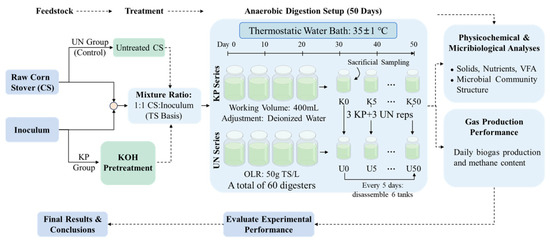
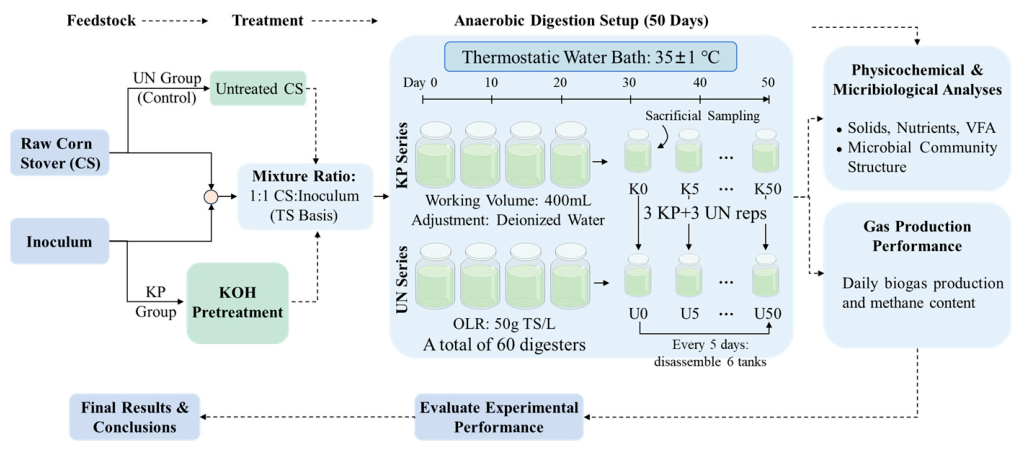
The organic loading rate (OLR) was set at 50 g total solids (TS)/L. CS and inoculum were thoroughly mixed at a 1:1 ratio on a TS basis. Anaerobic digesters with a total volume of 500 mL and a working volume of 400 mL were prepared, with deionized water used to adjust to the working volume. Untreated CS served as the control group (UN), while the KOH-pretreated group was referred to as KP. A total of 60 digesters were established for both KP and UN. Every five days, six digesters were sacrificed to obtain digestate samples at different time points (denoted as K0, K5, K10…K50 and U0, U5, U10…U50) for physicochemical and microbiological analyses. Daily biogas production and methane content were monitored to evaluate gas production performance. All digesters were maintained in a thermostatic water bath at 35 ± 1 °C for 50 days. Each experimental condition was conducted in triplicate (Figure 1).
Figure 1.
Experimental procedure for anaerobic digestion.
2.3. Analytical Methods
Daily biogas production was recorded using the water displacement method. The content of biogas was determined using a gas chromatograph (Shimadzu GC-2010, Shimadzu Corporation, Kyoto, Japan) equipped with a TDX-01 column and a thermal conductivity detector (TCD). Daily methane production and cumulative methane production were calculated based on methane content and daily biogas production at standard pressure and temperature. The total solid (TS), volatile solid (VS), ammonium nitrogen (AN), alkalinity (ALK), total organic carbon (TOC) and soluble chemical oxygen demand (SCOD) of the digestate were analyzed according to standard method [22,23,24]. The TC and TN were analyzed with a Vario EL/cube elemental analyzer (Elementar Analysensysteme GmbH, Langenselbold, Germany). The pH was directly measured with a pH meter (3-Star, Thermo Fisher Scientific, Waltham, MA, USA). Volatile fatty acids (VFAs) were analyzed by gas chromatograph (GC-2014, Shimadzu Corporation, Kyoto, Japan) equipped with a flame ionization detector. The instrument was equipped with a 30 m × 0.25 mm × 0.25 μm capillary column (Agilent, DB-WAX) using a Kjeldahl analyzer (KT-260, Foss, Suzhou, China). Lignocellulose composition was determined using a cellulose analyzer (ANKOM Technology, Macedon, NY, USA). The surface morphology of CS during anaerobic digestion was observed by scanning electron microscopy (SEM; Hitachi S-4700, Hitachi High-Technologies Corporation, Tokyo, Japan). The specific surface area and porosity of the digestate were measured by Brunauer–Emmett–Teller (BET) nitrogen adsorption isotherms using an Autosorb iQ analyzer (Anton Paar Quantachrome, Boynton Beach, FL, USA).
2.4. Microbial Community Analyses
Anaerobic digestate samples from the KP and UN were collected at five-day intervals. The microbial communities at different digestion stages were characterized by high-throughput 16S rRNA gene sequencing.
Microbial DNA was extracted using the E.Z.N.A.® Soil/Stool DNA Kit (Omega Bio-tek, Norcross, GA, USA). The primers 338F (5′-ACTCCTACGGGAGGCAGCAG-3′) and 806R (5′-GGACTACHVGGGTWTCTAAT-3′) were used for amplification of bacterial 16S rRNA gene, and 524F10extF (TGYCAGCCGCCGCGGTAA-3′) and Arch958modR (YCCGGCGTTGAVTCCAATT-3′) were used to amplify the archaea 16S rRNA gene. High-throughput sequencing of 16S rRNA was performed on the Illumina MiSeq platform (Illumina, San Diego, CA, USA) to reveal microbial community dynamics.
2.5. Data Analysis and Visualization
Figures were prepared using OriginPro 2021 (OriginLab Corporation, Northampton, MA, USA) and Microsoft Excel 2019. Statistical analyses of microbial community data were conducted in R (v3.6.2) with Rstudio (v2023.06.1, Posit Software, PBC, Boston, MA, USA). Network analysis was performed using the Gephi platform (v0.9.2, Gephi Consortium, France) to evaluate correlations among microbial taxa, following established methods [25]. To evaluate the significance of differences in characteristics between the two groups, a one-way analysis of variance (ANOVA) was conducted using SPSS 26 (IBM Corp., Armonk, NY, USA), followed by the least significant difference (LSD) test. The statistical difference is considered significant at the 0.05 level (p < 0.05).
3. Results and Discussion
3.1. System Stability
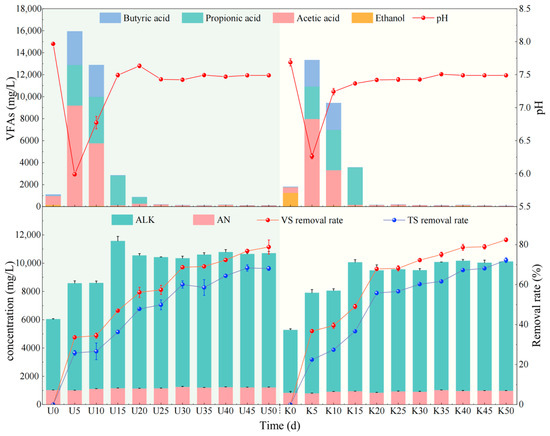
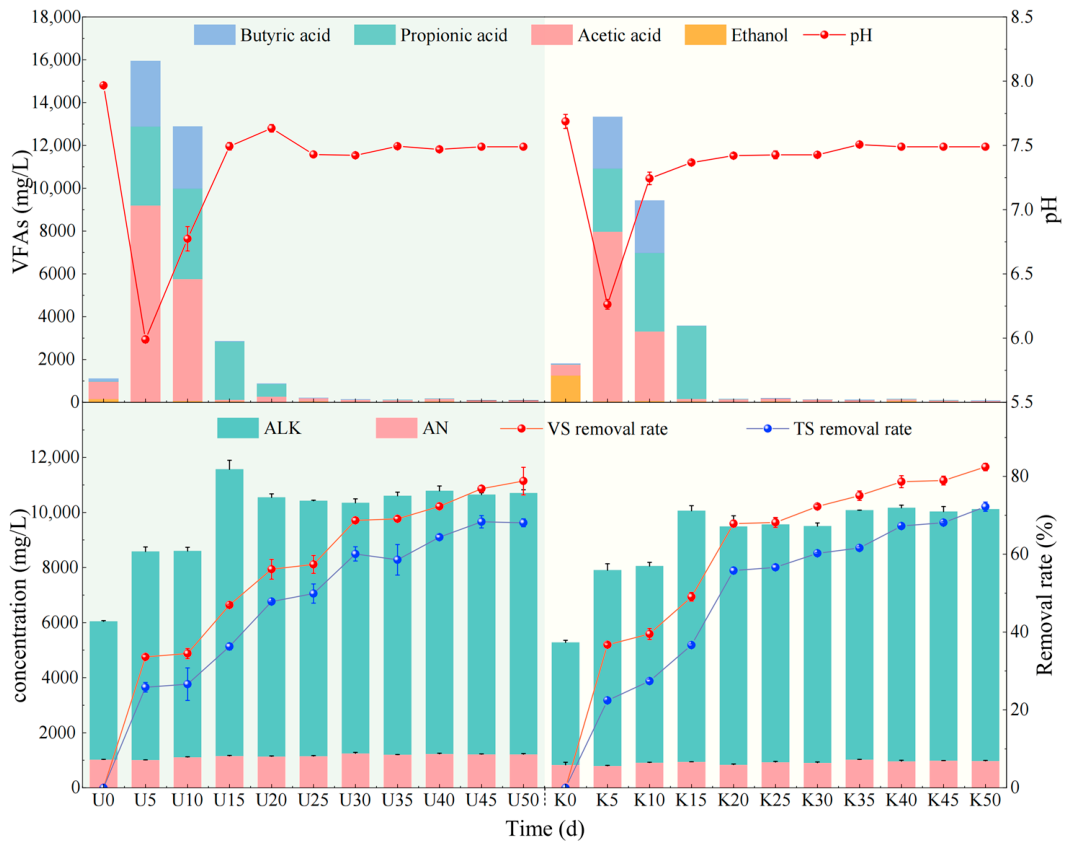
Volatile fatty acids (VFAs), pH, alkalinity (ALK), and ammonium nitrogen (AN) play a critical role in determining methane production during AD and are widely used as indicators of process stability [26]. In this study, VFA concentrations in both KOH-pretreated (KP) and untreated (UN) groups peaked on day 5 (KP: 13,474.0 mg/L; UN: 16,013.7 mg/L) due to rapid microbial hydrolytic acidification. Subsequently, VFA concentrations decreased drastically and stabilized during the digestion period (Figure 2). The VFA peak was lower in KP (15.9% lower than UN), indicating that KOH pretreatment improved substrate accessibility and facilitated faster VFA conversion. Similar findings were reported by Luo et al. [27], who observed reduced VFA accumulation in rice straw AD following KOH-based pretreatment, thereby mitigating acidification stress. It should be noted that K+ is an essential micronutrient for methanogenic archaea, acting as a cofactor for key enzymes in acetoclastic and hydrogenotrophic methanogenesis and helping to maintain cellular osmotic balance [12,28]. Beyond the physical effects of KOH pretreatment on substrate accessibility, the release of adequate potassium ions (K+) promotes methanogen activity, thereby accelerating the conversion of VFAs to methane.
Figure 2.
Temporal variations in VFAs, pH, alkalinity (ALK), ammonia nitrogen (AN), and removal rates of VS and TS during anaerobic digestion of corn stover with (KP) and without (UN) KOH pretreatment.
Additionally, the components of VFAs also changed. Acetic acid was the dominant intermediate during hydrolytic acidification, followed by sequential utilization of acetic, butyric, and finally propionic acid during methanogenesis. The delayed consumption of propionic acid is consistent with its higher Gibbs free energy requirement compared to other VFAs. This stepwise VFA utilization pattern aligns with previous observations in wheat straw AD [29]. Notably, although the VFA concentrations in all groups decreased substantially after day 10, the VFA level in the KP group on day 15 remained 25.5% higher than that in the UN group (KP: 3587.16 mg/L; UN: 2857.20 mg/L). This is likely attributable to the inhibition of methanogenic VFA utilization by lignin-derived phenolic compounds released during KOH pretreatment, resulting in incomplete degradation. Research has shown that the pH optimum for the growth of methanogens is 6.5–7.8 [30]. In this study, pH variation closely followed VFA dynamics. Both KP and UN reached minimum pH values on day 5, after which pH gradually increased as VFAs were consumed, eventually stabilizing at 7.4–7.5, a range favorable for methanogen growth.
AN is mainly converted from nitrogen-containing substances in the substrate. The high concentration of AN inhibits the growth of methanogens, and appropriate AN (<1500 mg/L) can be used as a nitrogen source to improve microbial activity [5]. In UN, AN ranged from 1012.5 to 1247.5 mg/L, which were consistently higher than the AN concentration in KP (1012.5–1247.5 mg/L). AN in both UN and KP remained within a more suitable range, thus providing sufficient nitrogen without toxicity. ALK concentrations showed a positive correlation with AN, consistent with previous studies [31]. Compared to UN, KP had a lower ALK concentration. The ALK of KP and UN exhibited an upward trend during days 0–15, subsequently fluctuating within ranges of 4441.7–9200.0 mg/L and 5016.7–10,408.3 mg/L, respectively. This indicates system instability during the initial phase, with microorganisms gradually adapting to the environment and stability increasing as the reaction progressed. This indicates that the KOH pretreatment makes the anaerobic system have more buffering capacity, which facilitates AD for methane production.
3.2. Biodegradability
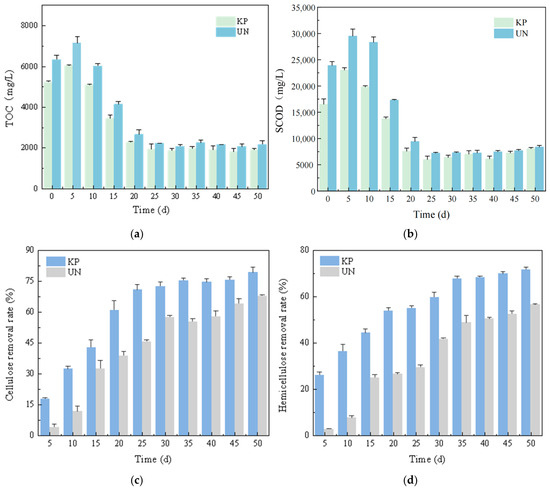
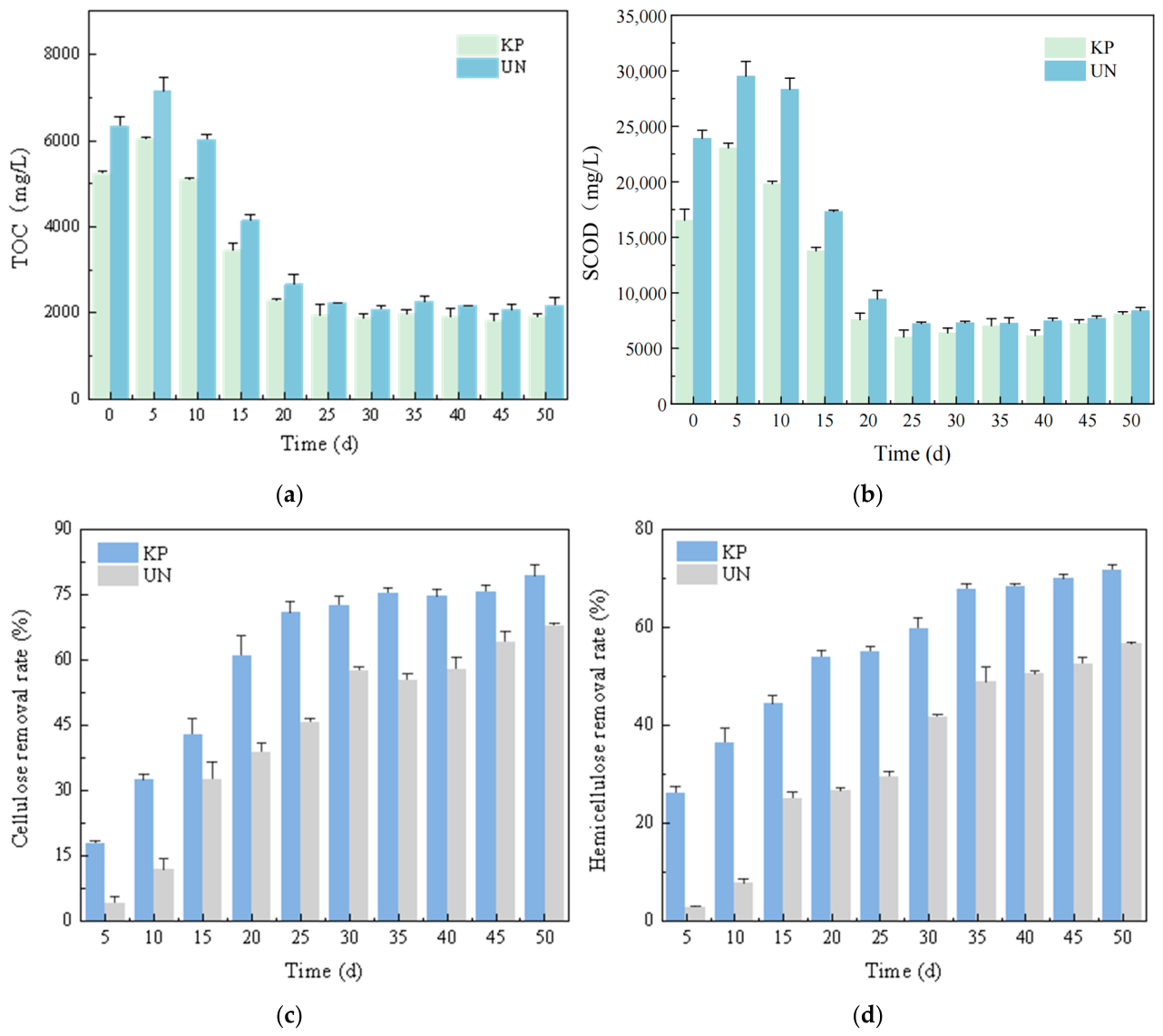
The variation trend of TOC and SCOD concentrations can indirectly represent the degree of organic carbon transformation in the AD process. In this study, both TOC and SCOD concentrations presented the trend of first increasing and then decreasing to the point of stabilization (Figure 3a,b). This result indicated that the hydrolysis and utilization of substrate were in a certain range of equilibrium [32]. At the peak on the fifth day, the TOC concentration (6040 mg/L) and SCOD concentration (23,033 mg/L) in KP were reduced by 15.6% (p = 0.003) and 22.0% (p = 0.001), respectively, compared with UN. It can be inferred that KOH pretreatment broke down more available and biodegradable organics, which were easily utilized by the microorganisms and converted into methane. The large fluctuation of organic carbon concentration appeared in the early digestion period. This might be due to the fact that the rate of hydrolysis of corn stalks was higher than that of microbe utilization, and then the organic carbon accumulated in a transient state and inhibited methane production. A similar accumulation process of organic carbon was reported in alkaline-pretreated wheat straw AD [21]. Therefore, the balance between hydrolysis and methanogenesis should be focused on.
Figure 3.
Temporal variations in TOC, SCOD, cellulose, and hemicellulose removal during anaerobic digestion of corn stover with (KP) and without (UN) KOH pretreatment. (a) Temporal variation in total organic carbon demand; (b) temporal variation in soluble chemical oxygen; (c) cellulose degradation efficiency; (d) hemicellulose degradation efficiency.
The conversion rate of CS was notably increased by KOH pretreatment, with the most pronounced effects occurring within the first 20 days of the AD, coinciding with the peak of microbial degradation (Figure 3c,d). Specifically, cellulose and hemicellulose removal in KP reached 61.0% and 53.9%, which were 57.2% (p = 0.001) and 102.3% (p < 0.001) higher than UN, respectively. Likewise, the volatile solids (VSs) and total solids (TSs) removal rates in KP reached 67.8% and 55.8%, representing 20.1% (p = 0.002) and 16.7% (p < 0.001) improvements over UN (Figure 1). This study revealed that KOH modification can degrade the recalcitrant lignin structure, facilitating the hydrolysis of cellulose and hemicellulose by anaerobic microorganisms, thus augmenting the methane production potential of the anaerobic digestion of CS. Comparable enhancements in cellulose degradation have been reported for KOH-pretreated corn straw [33] and ultrasonic KOH-treated wheat straw [34], confirming the effectiveness of alkaline pretreatment in improving lignocellulosic digestibility.
3.3. Biomethane Production Performance
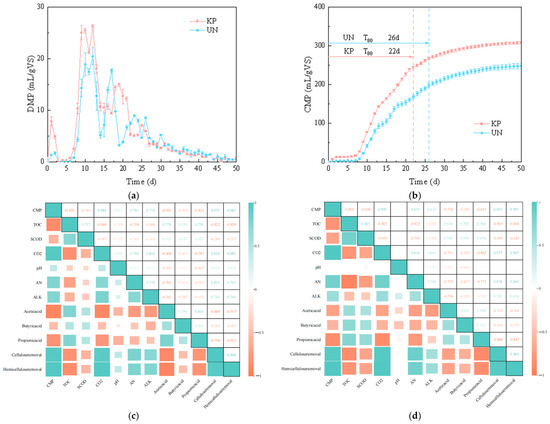
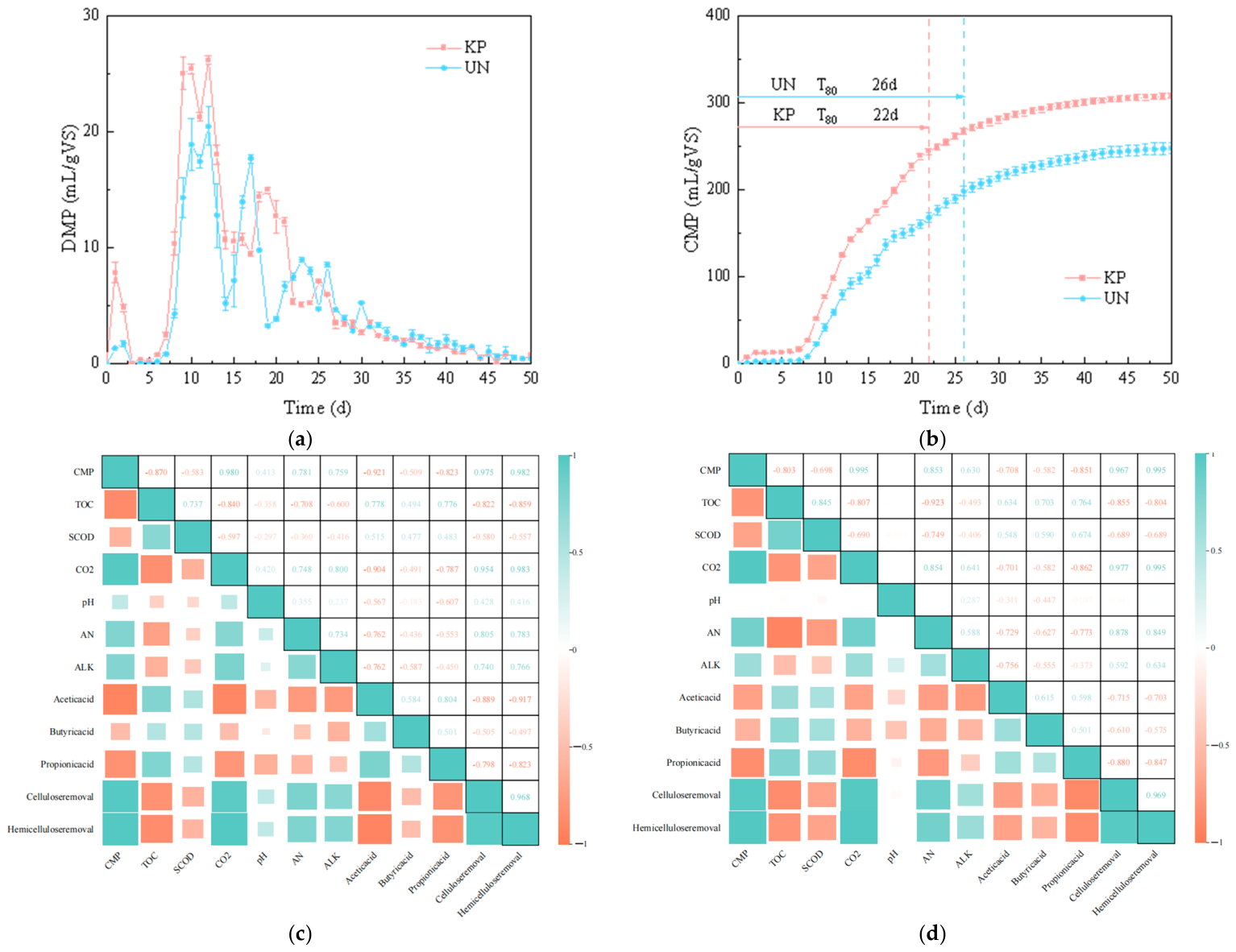
Daily methane production (DMP) of KP and UN exhibited 3–4 peaks during the digestion process, with similar times of peak occurrence (Figure 4a). Notably, on days 10 and 11 both groups reached the second and third methane peaks, with KP achieving 25.8 mL/g VS and 26.2 mL/g VS, compared to 18.9 mL/g VS and 20.5 mL/g VS in UN. The peak values of KP were significantly higher, by 36.5% and 27.8%, respectively. Cumulative methane production (CMP) in both groups increased slowly during days 0–8 and then rose sharply after the acidification phase (Figure 4b). At the end of AD, the maximum CMP of KP was 308.6 mL/g VS, which was 24.3% higher than that of UN (248.2 mL/g VS). These results suggest that KOH modification can improve the hydrolysis efficiency of CS and promote AD for methane production. KOH pretreatment improved hydrolysis efficiency by disrupting the recalcitrant lignin structure of corn stalks, releasing biodegradable organics that facilitated microbial conversion to methane. Similar improvements in methane yield after alkaline pretreatment have been reported for corn straw [33] and wheat straw [21].
Figure 4.
Daily and cumulative methane production and correlations of cumulative methane production with physicochemical parameters during anaerobic digestion of corn stover with (KP) and without (UN) KOH pretreatment. (a) Daily methane production; (b) cumulative methane production; (c) correlations of cumulative methane production with physicochemical parameters in KP; (d) correlations of cumulative methane production with physicochemical parameters in UN.
Anaerobic digestion efficiency can be further evaluated using the T80 parameter, defined as the time required to achieve 80% of the final methane production [35]. A smaller T80 reflects faster conversion efficiency. In this study, T80 values for KP and UN were 22 ± 1 and 26 ± 1 days, respectively [35]. The T80 value of KP is 4 days earlier than UN, which means that KP starts faster and has high AD efficiency. Comparable findings have been reported for ammonia- and NaOH-pretreated lignocellulosic substrates, where CMP was increased by 25–30% and start-up time was shortened by 3–5 days [36].
Correlation analysis revealed that methane production was closely linked with substrate biodegradation (Figure 4c,d). In both KP and UN, CMP showed strong positive correlations with cellulose and hemicellulose removal rates (KP: r = 0.982, 0.975; UN: r = 0.995, 0.967), indicating that these parameters directly reflect methane yield. Interestingly, acetic acid (r = −0.921) and TOC (r = −0.870) were negatively correlated with CMP in KP, whereas the negatively correlated parameters in UN were propionic acid (r = −0.851) and TOC (r = −0.803). This suggests that the concentrations of organic carbon and organic acids have an inhibitory effect on CMP, and the KOH modification effectively alleviated the inhibitory effect of acetic acid and improved the buffering capacity of the system, likely due to its buffering effect and improved hydrolysis–methanogenesis balance [34].
3.4. Microstructure
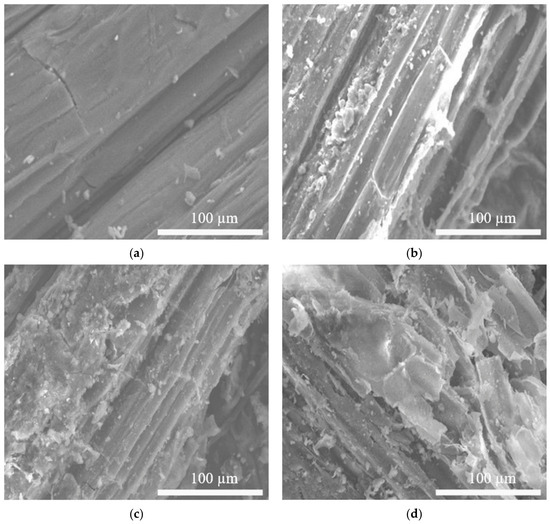
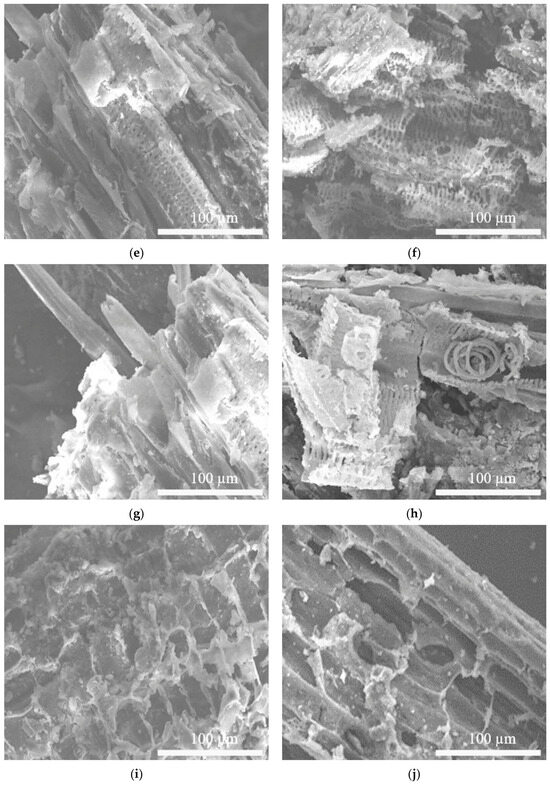
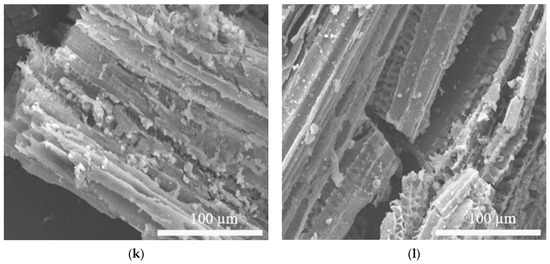
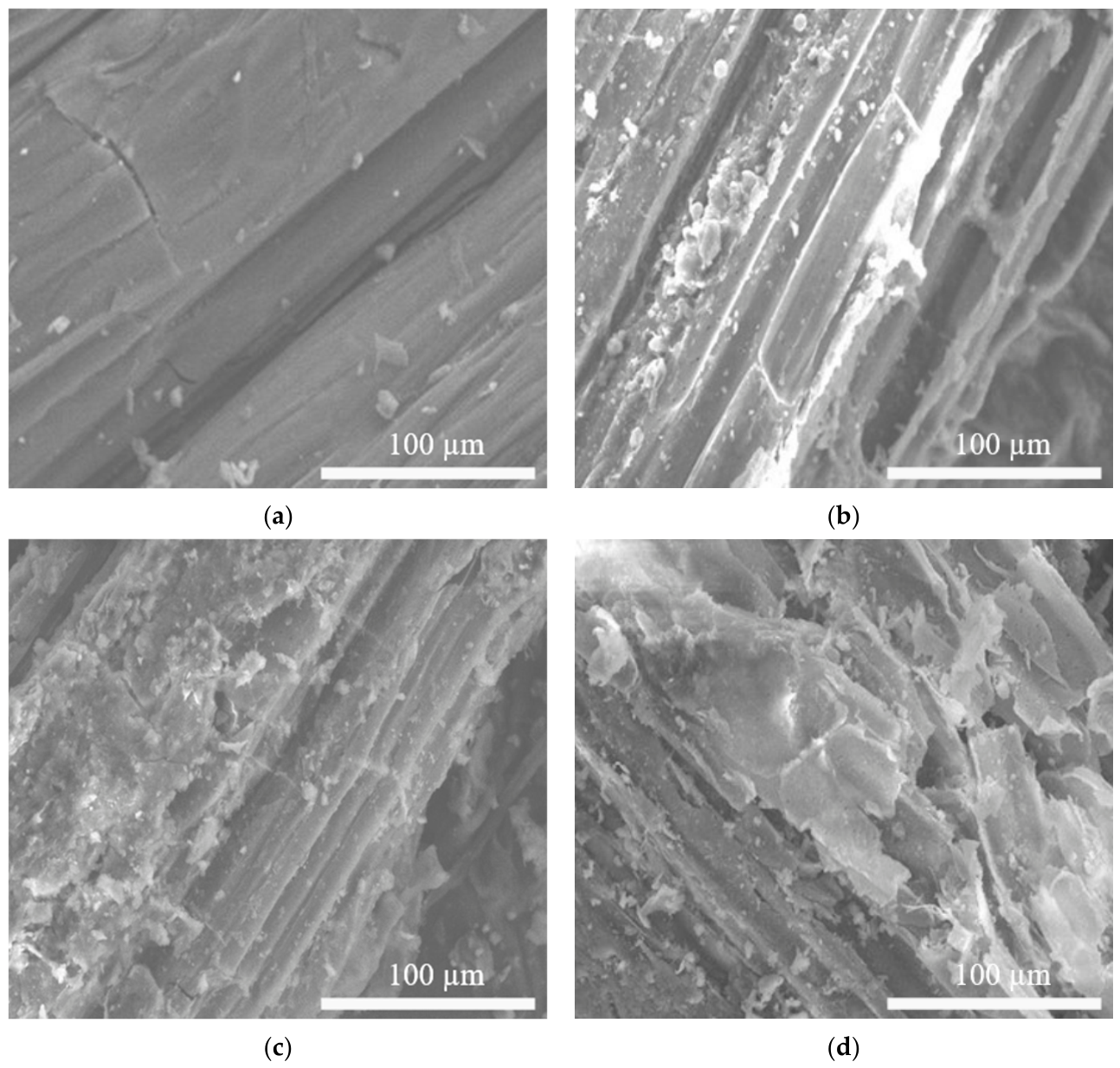
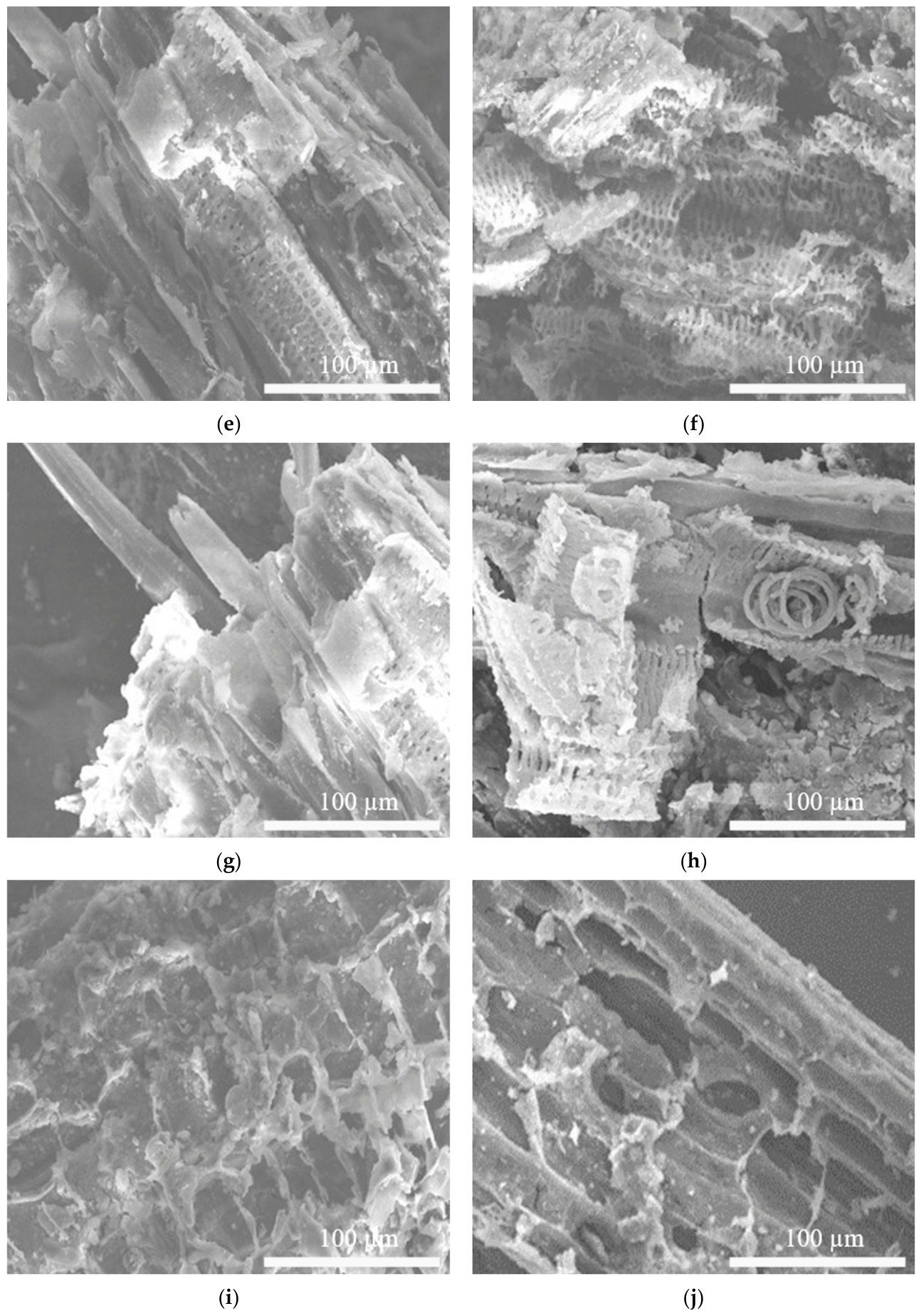
The SEM images of CS before and after KOH pretreatment and during AD are shown in Figure 5. The surface of CS from UN was smooth, intact and aligned, and the surface of fiber bundles formed a tight waxy protective layer. In contrast, the CS of KP showed many cracks and grooves, and the fiber bundle skeleton was exposed. This result is similar to the findings of Jaffar et al. [21].
Figure 5.
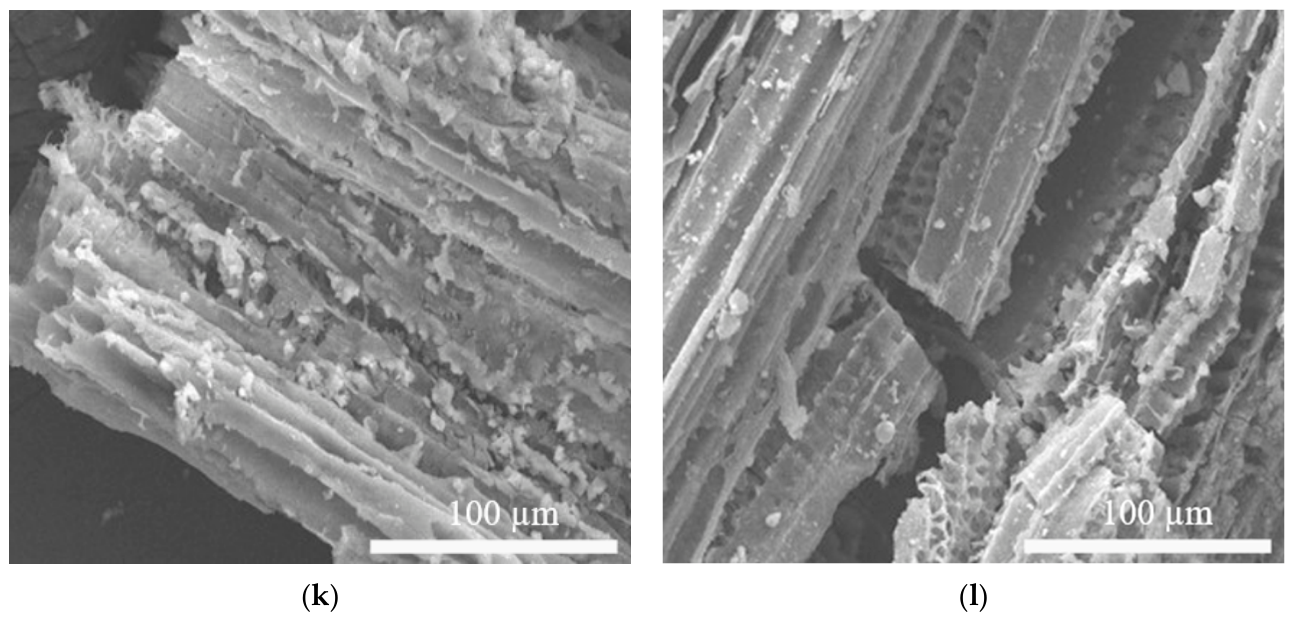
SEM images showing morphological changes in CS surfaces in UN and KP groups at different stages of AD. (a) U0; (b) K0; (c) U5; (d) K5; (e) U10; (f) K10; (g) U20; (h) K20; (i) U30; (j) K30; (k) U50; (l) K50.
Progressive structural damage was observed as AD proceeded. By day 5, the surface of UN showed minor cracks and slight delamination, whereas KP already exhibited pronounced fragmentation and ruptured fiber skeletons (Figure 5a,b). On day 10, surface alterations were more prominent. The outer layers of CS were extensively peeled off, the cellulose framework was fully exposed, and numerous micropores appeared within the cell wall (Figure 5c,d). Such enhanced porosity facilitates microbial adhesion and enzymatic hydrolysis of cellulose, which may explain why day 10 coincided with a peak in methane production. Notably, KP displayed a broader exposure of fiber skeletons and a greater density of micropores compared to UN, indicating that KOH pretreatment accelerated substrate degradation. After 30 days of AD, the surfaces of both groups showed deep furrows, and most pores disappeared. At the end of digestion, residual undegraded fiber bundles and irregular debris remained on the outer layers of CS. According to Miao et al. [37], irregular debris aggregated on the surface of corn stover contains potential organisms in which specific microbial communities are the main factors leading to the degradation and utilization of corn stover. In addition, DMP was significantly reduced during the later stages of AD, which could be attributed to the reduction in surface porosity and specific surface area, resulting in lower microbial accessibility to corn stover [38].
The determination of the BET surface area, total pore volume, and average pore size of digestate samples during anaerobic digestion was conducted to appraise the structural progression of corn stover (CS) and to expose alterations in the microbial accessible surface area (Table 1). The untreated feedstock (U0) exhibited a specific surface area of 1.4094 m2/g, while KOH pretreatment significantly enhanced the surface area to 2.0135 m2/g (K0), confirming that alkaline modification introduced substantial structural disruption to CS.
Table 1.
Specific surface area, total pore volume, and average pore size of digestate samples during anaerobic digestion.
During AD, the specific surface area, pore volume, and pore size increased progressively in both groups and reached maximum values on day 15 (U15 and K15). Notably, the K15 sample exhibited increases of 27.0%, 9.5%, and 14.0% in specific surface area, total pore volume, and pore size, respectively, compared with U15. These enhancements can be attributed to the cleavage of ester linkages between lignin and cellulose and hemicellulose induced by KOH pretreatment, which facilitated the loosening of the lignocellulosic matrix and the development of new pores. Consequently, the increased porosity and enlarged surface area provided more binding sites for microbial colonization and enzyme adsorption, thereby accelerating cellulose and hemicellulose hydrolysis. This observation is consistent with the rapid increase in polysaccharide removal during the early stages of AD (Figure 3).
After day 20, the BET parameters gradually declined in both treatments, which may be associated with the progressive consumption of readily degradable fractions and the accumulation of microbial metabolites clogging the pores. Similar trends have been reported in previous studies of alkali-pretreated lignocellulosic biomass, where increases in surface area and pore size promoted enzymatic accessibility but diminished in later digestion stages due to residual lignin and microbial byproducts [21,33,34].
3.5. Microbial Community Structure
3.5.1. Alpha Diversity Analysis
The bacterial alpha diversity indices of KP and UN during AD are presented in Table 2. Overall, the OTUs, Shannon index, Chao1, and ACE initially increased, peaked at the mid-digestion stage, and then declined. Both groups reached their maximum OTUs on day 20 (KP: 551; UN: 537), coinciding with the period of maximum lignocellulose degradation. This suggests that increased bacterial richness and diversity are positively associated with biomass deconstruction and utilization. The Shannon index in the KP peaked on day 20 (4.98), significantly exceeding that of the UN during the same period (p < 0.001). On day 35, the Shannon index in the UN group peaked at 4.88, whilst that in the KP group was 4.97 with a persistent significant difference between the KP and UN (p = 0.014), indicating that KOH pretreatment accelerated microbial community diversification. Similarly, the Chao1 index of KP (614.9) was 4.1% higher than UN (590.9), confirming that bacterial richness was enhanced by alkaline pretreatment. These findings align with previous studies reporting that alkali pretreatment facilitates the enrichment of diverse bacterial consortia capable of efficiently hydrolyzing lignocellulose [39,40].
Table 2.
Bacterial alpha diversity indices of different digestate samples during anaerobic digestion of corn stover with (KP) and without (UN) KOH pretreatment.
The archaeal community exhibited a similar overall trend but with substantially lower richness and diversity compared to bacteria (Table 3), which is consistent with earlier reports. The lowest archaeal diversity indices were observed in both groups on day 5 (K5 and U5), likely due to the inhibitory effect of rapid VFA accumulation during the acidification phase [41]. As hydrolysis proceeded and monosaccharides became available, archaeal communities gradually recovered. The highest OTUs were observed on day 10 (K10: 80; U10: 69), representing a 15.9% improvement in KP over UN (p = 0.013). Shannon indices also peaked on day 10 (K10: 3.17; U10: 2.80), with KP 13.2% higher than UN (p = 0.011). Moreover, the Chao1 and ACE indices of KP peaked on day 25, which was five days earlier than UN, further supporting that KOH pretreatment accelerated archaeal community diversification.
Table 3.
Archaeal alpha diversity indices of different digestate samples during anaerobic digestion of corn stover with (KP) and without (UN) KOH pretreatment.
Taken together, these results demonstrate that KOH pretreatment enhanced both bacterial and archaeal richness and diversity, promoted earlier community stabilization, and facilitated functional succession during AD. This outcome is consistent with prior observations that alkali pretreatment not only improves substrate degradability but also shapes microbial consortia toward more efficient syntrophic interactions [17].
3.5.2. PCoA Analysis
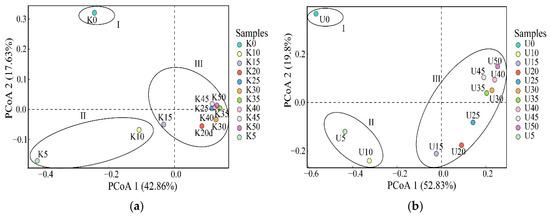
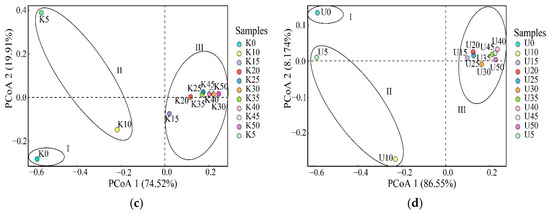
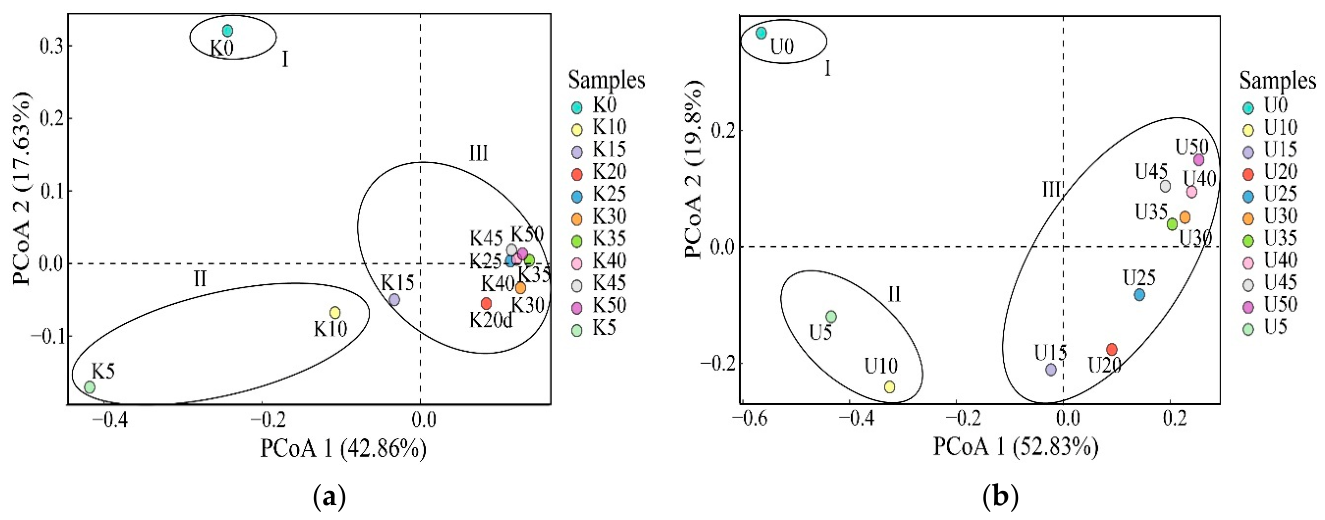
Principal coordinate analysis (PCoA) was employed to evaluate the temporal dynamics of microbial community structures during AD (Figure 6). Both bacterial and archaeal communities exhibited clear phase-dependent succession, which could be divided into three stages: phase I (initial phase), phase II (adaptive phase), and phase III (stabilization phase). The bacterial communities explained 42.9% (PCoA1) and 17.6% (PCoA2) of the observed variance, while archaeal communities accounted for 74.5% (PCoA1) and 19.9% (PCoA2), respectively. Similarly, the UN samples showed 52.8% and 19.8% variance explained by bacterial PCoA1 and PCoA2 and 86.6% and 8.2% variance explained by archaeal PCoA1 and PCoA2.
Figure 6.
Principal coordinate analysis (PCoA) of bacterial and archaeal communities in KOH-pretreated (KP) and untreated (UN) groups during anaerobic digestion. (a) Bacteria (KP); (b) bacteria (UN); (c) archaea (KP); (d) archaea (UN).
In phase I, the microbial communities of KP and UN (K0 and U0) clustered separately and were distant from the later-stage samples, reflecting the strong influence of initial substrate characteristics. As digestion progressed into phase II, community differences decreased, indicating adaptive microbial responses to changing substrate availability. During phase III, the bacterial communities of KP formed a more compact cluster than those of UN, suggesting a faster and more stable succession process. This implies that KOH pretreatment accelerated the restructuring of microbial communities and enhanced interspecies interactions, which likely contributed to the improved methane production performance. These observations are consistent with previous findings that alkali pretreatment accelerates microbial community turnover and fosters closer syntrophic relationships between hydrolytic bacteria and methanogens [17,39]. Similar three-stage microbial succession patterns during AD have also been reported in studies of alkaline-pretreated wheat straw and rice straw, further supporting the notion that pretreatment not only improves substrate degradability but also reshapes community assembly trajectories [39].
3.5.3. Microbial Community Structure Succession
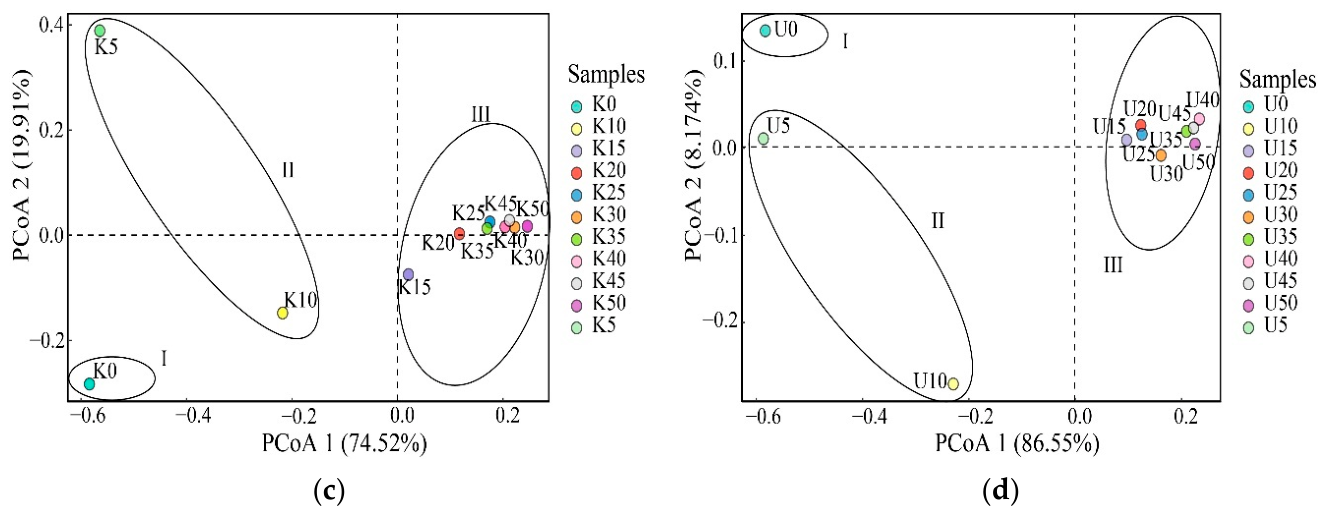
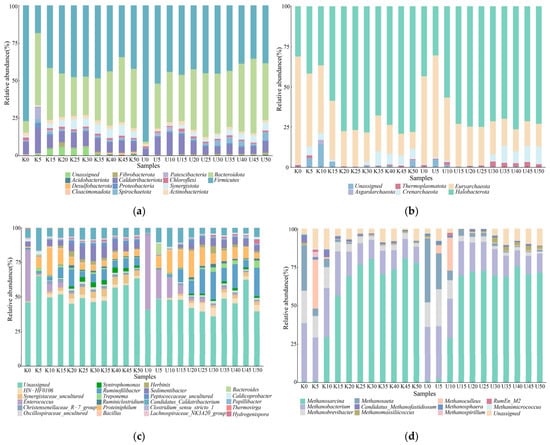
At the phylum level, the bacterial communities of KP and UN were mainly distributed across eight phyla: Firmicutes, Bacteroidota, Caldatribacteriota, Synergistota, Actinobacteriota, Spirochaetota, Chloroflexi, and Patescibacteria. Among these, Firmicutes and Bacteroidota dominated all samples, with relative abundances ranging from 18.4 to 76.9% and 1.39 to 49.7%, respectively (Figure 7a). Both taxa are heterotrophic hydrolytic–acidogenic bacteria that play critical roles in the acidification phase of lignocellulose degradation [42]. Similar dominance of Firmicutes and Bacteroidota has also been observed in the co-digestion of corn stover and swine manure [43]. During phases I and II, Firmicutes gradually declined while Bacteroidota increased, coinciding with enhanced volatile fatty acid (VFA) accumulation and the lowest pH values in phase II. The relative abundance of dominant bacteria (Firmicutes and Bacteroidota) fluctuated within a certain range at phase III, indicating a better stability in the phase III system.
Figure 7.
Taxonomic composition and relative abundance of bacterial and archaeal communities at phylum and genus levels during anaerobic digestion. (a) Bacteria community abundance at phylum level; (b) archaeal community abundance at phylum level; (c) bacteria community abundance at genus level; (d) archaeal community abundance at genus level.
Although bacterial communities cluster predominantly under the same phylum taxonomic level, the relative abundance of bacteria from different genera varies widely [1]. At the genus level, significant succession patterns were observed (Figure 7c), In phase I, Enterococcus dominated (K0: 36.8%; U0: 53.3%), consistent with previous reports that identified Enterococcus as abundant in the early AD stages when acidification is most active [44]. Enterococcus belongs to the phylum Firmicutes and is a parthenogenetic anaerobic bacterium that is mainly enriched in the acidification phase. As digestion progressed, Enterococcus declined, and other genera, such as Proteiniphilum, Candidatus_Caldatribacterium, Ruminofilibacter, and Sedimentibacter, became more prevalent in phases II and III. Proteiniphilum belongs to protein-hydrolyzing bacteria that mainly utilize the degradation of nitrogenous substances to produce organic acids, H2 and CO2 [45]. The abundance of Proteiniphilum in KP increased from 0.3% (K0) to a maximum of 19.7% (K10) and then slowly decreased to 4.1% (K50). Similarly, the relative abundance of Proteiniphilum in UN increased from 0.03% (U0) to 18.5% (U20), and after maintaining a high abundance over a range, it decreased to 3.7% on day 50. The higher relative abundance of Proteiniphilum in both groups (10–20 days) was at the peak of methanogenesis, when the microorganisms were more capable of degrading CS. The relative abundance of Proteiniphilum had a greater advantage in UN, and its relative abundance was 50.2% higher than that of KP. It could be attributed to the fact that KOH modification reduced the crude protein in CS, leading to the lack of substrate and inhibition of growth and reproduction of Proteiniphilum in KP [29].
For archaea, the predominant phyla were Halobacterota and Euryarchaeota (Figure 7b), consistent with previous studies [46]. Between phase I and phase III, the relative abundance of Halobacterota in KP increased from 31.2% to 78.0%, while UN went up from 43.5% to 76.4%. In contrast, the relative abundance of Euryarchaeota was 66.7% (K0) and 54.7% (U0) in the initial phase, while the relative abundance decreased to 10.4% and 14.1% in K50 and U50, respectively. The dominance of Euryarchaeota was replaced by Halobacterota as the AD proceeded. Halobacterota is able to utilize hard-to-degrade organic polymers (e.g., chitin and cellulose) and plays a crucial role in the conversion of lignocellulose for methane production [47]. Moreover, the relative abundance of Halobacterota in KP was higher than that of UN, while KP had a higher substance removal rate (Figure 3c,d), which indicated a more adequate microbial degradation and transformation of substrates in KP.
At the genus level, methanogenic communities exhibited distinct succession patterns (Figure 7d). In phase I, Methanobacterium (K0: 37.9%; U0: 35.1%), Methanobrevibacter (K0: 21.1%; U0: 16.0%), and Methanosaeta (K0: 29.6%; U0: 41.5%) dominated. Methanobacterium and Methanobrevibacter are hydrogenotrophic methanogens that utilize mainly H2 and CO2, while Methanosaeta is an obligate acetoclastic methanogen that consumes acetate [48]. From phase I to phase II, the relative abundance of Methanosaeta in KP and UN decreased to 5.0% and 23.0%, respectively, whereas the relative abundance of Methanobacterium decreased slightly but remained dominant. Notably, the relative abundance of Methanoculleus in both KP and UN groups reached a maximum on days 5 and 10, respectively (K5: 31.8%; U10:21.5%). Methanoculleus was found to be a highly ammonia-tolerant hydrogenotrophic methanogen capable of utilizing H2 and CO2 for methane production [49]. Methanoculleus dominated the domestication stage, and KOH modification facilitated the enrichment of Methanoculleus. However, Methanosarcina gradually became the dominant archaea in AD phase III (stabilization phase). Methanosarcina has been reported to be a mixotrophic methanogen with high tolerance to ammonia and archaea nitrogen, and it is one of the most widely utilized substrate methanogens [50]. With longer digestion time, the accumulated organic acids and organic carbon in the system were gradually degraded and utilized, and the main dominant methanogens shifted from Methanoculleus to Methanosarcina, which is consistent with previous studies [51]. Therefore, the methane production pathway in AD was converted from acetotrophic methanogens to hydrogenotrophic methanogens, and as the reaction proceeded, the hydrogenotrophic methanogens gradually turned to mixotrophic methanogens, and the KOH modification accelerated the microbial community turnover rate, which was favorable to the AD for methane production.
3.5.4. Co-Occurrence Network Analysis
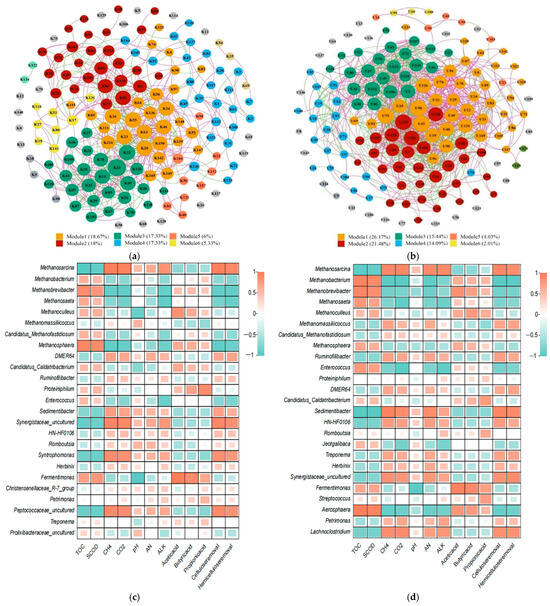
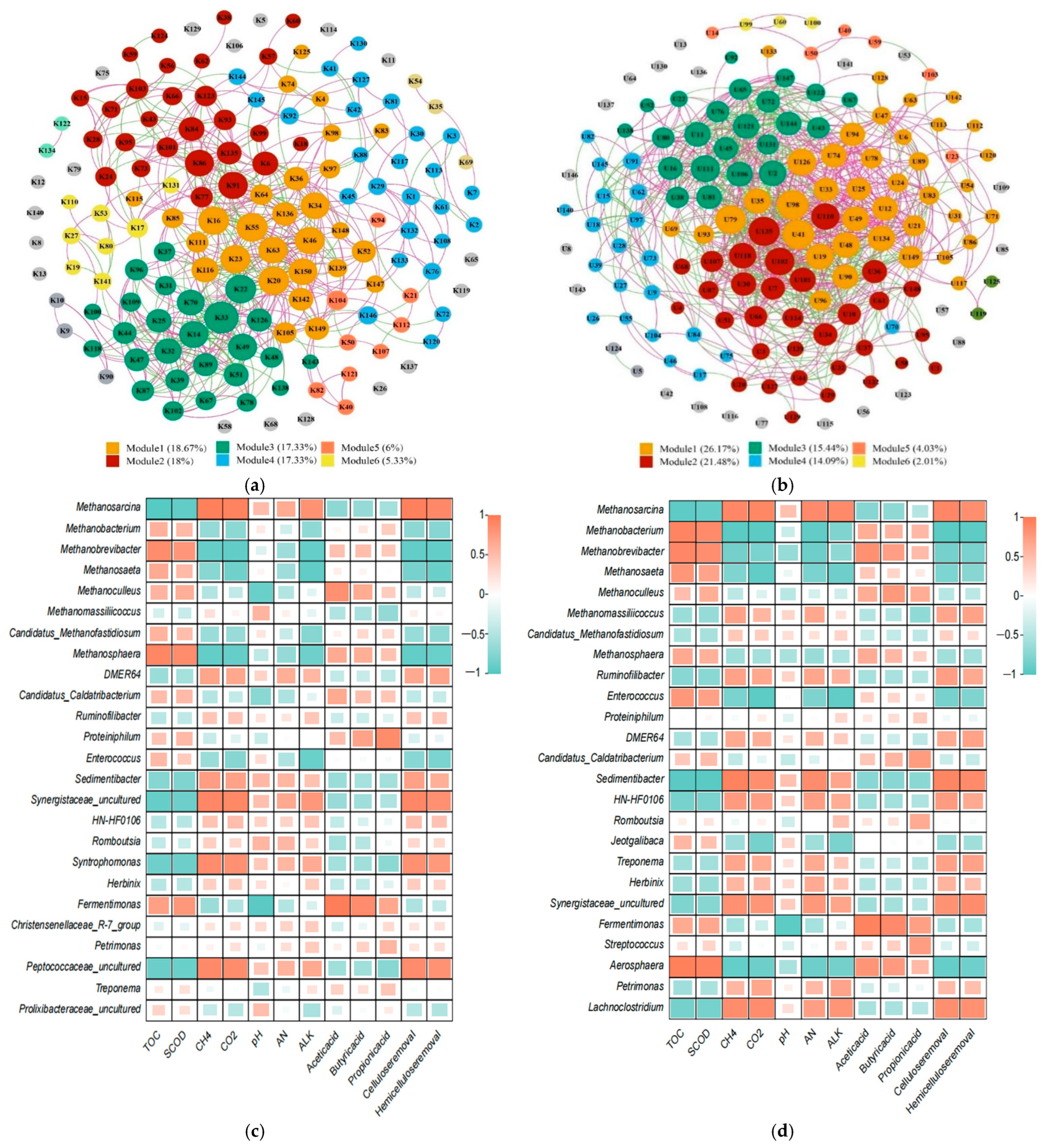
Co-occurrence network analysis was conducted to explore interspecies interactions within bacterial and archaeal communities of KP and UN during the stabilization phase (phase III) (Figure 8). Modularity was used to measure the strength of microbial co-occurrence networks to divide modules [52]. The symbiotic network diagram showed six modules with high relevance (named M1, M2, M3, M4, M5, and M6, respectively), and Tables S2 and S3 list the taxonomic information of the species with the highest relevance in each module.
Figure 8.
Co-occurrence networks and correlations of microbial communities with anaerobic digestion (AD) performance parameters under KOH-pretreated (KP) and untreated (UN) conditions. (a) Co-occurrence network of microbial communities in KP group; (b) co-occurrence network of microbial communities in UN group; (c) correlation between microbial taxa and AD parameters in KP group; (d) UN correlation between microbial taxa and AD parameters in UN group.
The microbial community in the stabilization phase plays a crucial role in AD and facilitates the promotion of methane production [53]. In KP, M1 and M2 consisted of 28 and 27 nodes, respectively, with an average degree of 18.7% and 18.0% (Figure 8a). The network module structure for UN is shown in Figure 8b. M1 and M2 contained 39 and 33 nodes, respectively, with an average degree of 26.2% and 21.5%. The dominant microorganisms in each module in KP and UN were different, and their various metabolic functions assisted each other to form specific methanogenic pathways. In both groups, M1 and M2 had a higher number of nodes and average degree, indicating that these modules involve a more significant number of microorganisms in the anaerobic digestion process, featuring compact network structures and strong microbial interactions, as reported by a previous study [54]. In M1 of the KP sample, the microorganism with the highest abundance was Papillibacter belonging to the phylum Firmicutes. Papillibacter was at the center of the M1 module and was more tightly connected to the other species, suggesting the significant correlation of Papillibacter. Moreover, the most abundant methanogens in M1 belong to the genus Methanosaeta within the phylum Halobacterota. Methanosaeta was an obligate acetoclastic methanogen that consumes acetate [48]. As indicated in Section 3.5.3 of this study, Methanosaeta predominates during the first stage of AD. Interestingly, the primary methane-producing phyla within the M4 of KP were Halobacterota and Euryarchaeota. At the genus level, Methanosarcina, Methanobacterium and Methanobrevibacter were predominant. Methanosarcina was the main stabilized period methanogen and played a key role in the AD of CS for methane production [47]. By contrast, the M1 module in the UN group contained no methanogens, with Firmicutes being the predominant dominant bacteria. In previous studies, most bacterial species belonging to the Firmicutes phylum were known for their role in organic matter degradation and fermentation [55,56,57].
Nodes in the graph represent OTUs, and each node is labeled by genus level and response condition, respectively. The size of the nodes is related to the level of relatedness of the species, and different edges represent correlations between OTUs (red lines indicate positive correlations, green lines indicate negative correlations) [58].
3.5.5. Correlation of Microbial Communities and Changing Environmental Status
To further elucidate the functional linkages between microbial communities, environmental factors, and AD performance, correlation analysis was performed at the genus level (Figure 8c,d). Methanosarcina, as the dominant methanogens in KP, showed strong positive correlations with CH4 (0.89), CO2 (0.90), ammonia (0.88), alkalinity (0.88), cellulose (0.90), and hemicellulose (0.85), while showing negative correlation with TOC (−0.94) and SCOD (−0.90). This indicates that the enrichment of Methanosarcina was closely associated with the efficient degradation of organic carbon and soluble organics, consistent with the observed reduction in TOC and SCOD in the late stages of AD.
The correlation between Methanosarcina and environmental variables in UN was similar to KP. Significantly, the correlation between Methanosarcina and ammonia was lower in UN compared to KP, suggesting that KOH modification is beneficial in improving the tolerance of microorganisms to ammonia concentrations. The dominant archaea (e.g., Methanobacterium, Methanobrevibacter, Methanosaeta, and Methanoculleus) that predominate in phases I and II of AD showed positive correlations with SCOD and TOC concentrations. TOC and SCOD continued to accumulate in phases I and II, stimulating more methanogens to degrade and utilize them. And with the gradual decrease in TOC and SCOD concentrations in phase III, the dominant methanogens (Methanobacterium, Methanobrevibacter, Methanosaeta, and Methanoculleus) were gradually replaced by the dominant methanogens, which is consistent with previous studies [58]. There was a highly significant positive correlation between Fermentimonas and acetic acid in both KP and UN (0.97 and 0.93), suggesting that Fermentimonas are associated with the metabolism and production of acetic acid. In UN, the cellulose removal rate and hemicellulose removal rate had the strongest positive correlation with Sedimentibacter (0.91 and 0.87). While in KP, besides Sedimentibacter, Synergistaceae_uncultured (0.89 and 0.84), Syntrophomonas (0.84 and 0.77) and Peptococcaceae_uncultured (0.87 and 0.82) had the same significant positive correlation, with cellulose removal rate and hemicellulose removal rate also being significantly positively correlated, indicating that KOH modification facilitates microbial colonization and promotes methane production from AD of CS by influencing process parameters within the system.
In summary, these results demonstrate that KOH pretreatment plays a dual role in corn stover anaerobic digestion. First, it reshapes material transformation pathways by enhancing lignocellulose hydrolysis, improving process stability, and promoting methane production. Second, it restructures the microbial ecosystem by increasing microbial diversity, accelerating community succession, enriching hydrolytic and syntrophic microorganisms as well as methanogens, and strengthening interspecies interactions.
4. Conclusions
This study demonstrated that KOH pretreatment of corn stover effectively disrupted the lignocellulosic structure and promoted cellulose and hemicellulose degradation, resulting in an increase in cumulative methane yield and faster stabilization of anaerobic digestion. Microbial analyses revealed that pretreatment enhanced bacterial and archaeal diversity, accelerated community succession, and strengthened interspecies interactions, with functional microbes such as Proteiniphilum and Methanosarcina enriched during key digestion phases. These findings provide mechanistic insights into how KOH pretreatment reshapes material transformation and microbial ecology, offering guidance for optimizing pretreatment–operation strategies in lignocellulosic biogas production. Future research should further investigate the succession patterns of microbial communities during AD using methods such as metagenomics and proteomics and elucidate how the complexity of key microbial networks regulates methanogenic performance. These advances will provide comprehensive microbial ecological insights into the anaerobic digestion process of CS.
Supplementary Materials
The following supporting information can be downloaded at: https://www.mdpi.com/article/10.3390/su18126166/s1, Table S1: Characteristics of inoculum and corn stover; Table S2: Taxonomic information of modules in the co-occurrence networks (KP); Table S3: Taxonomic information of modules in the co-occurrence networks (UN).
Author Contributions
W.C.: conceptualization, methodology, investigation, data curation, formal analysis, and writing—original draft; J.W.: investigation, visualization, and writing—review and editing; R.J.: formal analysis, software, and data curation; S.W.: methodology, validation, and resources; H.Y.: investigation and visualization; X.L.: resources, supervision, and writing—review and editing; X.Z.: conceptualization, funding acquisition, project administration, supervision, and writing—review and editing. All authors have read and agreed to the published version of the manuscript.
Funding
This research was funded by the National Natural Science Foundation of China, grant number 22478022, and the China Scholarship Council, grant number 202206885006.
Institutional Review Board Statement
Not applicable.
Informed Consent Statement
Not applicable.
Data Availability Statement
The original contributions presented in this study are included in this article/Supplementary Material. Further inquiries can be directed to the corresponding author(s).
Conflicts of Interest
Author Weiwei Chen was employed by the company CHEARI (Beijing) Certification & Testing Co., Ltd. The remaining authors declare that the research was conducted in the absence of any commercial or financial relationships that could be construed as a potential conflict of interest.
Abbreviations
The following abbreviations are used in this manuscript:
| AD | Anaerobic digestion |
| CS | Corn stover |
| KOH | Potassium hydroxide |
| 16S rRNA | 16S ribosomal RNA |
| UN | Untreated |
| SEM | Scanning electron microscopy |
| BET | Brunauer–Emmett–Teller |
| VFA | Volatile fatty acids |
| TSs | Total solids |
| VSs | Volatile solids |
| DM | Dry matter |
| TAN | Total ammonia nitrogen |
| PH | Potential of hydrogen |
| GC | Gas chromatography |
| TCD | Thermal conductivity detector |
| FID | Flame ionization detector |
| CH4 | Methane |
| CO2 | Carbon dioxide |
| HAc | Acetic acid |
| HPr | Propionic acid |
| iBA | Isobutyric acid |
| BA | Butyric acid |
| iVa | Isovaleric acid |
| HVa | Valeric acid |
| OTU | Operational taxonomic unit |
| PCoA | Principal coordinates analysis |
References
- Jin, X.; Ai, W.; Dong, W. Lignocellulose degradation, biogas production and characteristics of the microbial community in solid-state anaerobic digestion of wheat straw waste. Life Sci. Space Res. 2022, 32, 1–7. [Google Scholar] [CrossRef] [Scilit] [PubMed]
- Konyannik, B.Y.; Lavie, J.D. Valorization techniques for biomass waste in energy generation: A systematic review. Bioresour. Technol. 2025, 435, 132973. [Google Scholar] [CrossRef] [Scilit]
- International Energy Agency (IEA). Outlook for Biogas and Biomethane: Prospects for Organic Growth. Available online: https://www.iea.org/reports/outlook-for-biogas-and-biomethane (accessed on 28 May 2026).
- Amin, F.R.; Khalid, H.; Li, W.; Chen, C.; Liu, G. Enhanced methane production and energy potential from rice straw by employing microaerobic pretreatment via anaerobic digestion. J. Clean. Prod. 2021, 296, 126434. [Google Scholar] [CrossRef] [Scilit]
- Meraj, S.; Liaquat, R.; Raza Naqvi, S.; Sheikh, Z.; Zainab, A.; Khoja, A.H.; Juchelkova, D.; Atabani, A. Enhanced methane production from anaerobic co-digestion of wheat straw rice straw and sugarcane bagasse: A kinetic analysis. Appl. Sci. 2021, 11, 6069. [Google Scholar] [CrossRef] [Scilit]
- Marcuello, C.; Foulon, L.; Chabbert, B.; Aguié-Béghin, V.; Molinari, M. Atomic force microscopy reveals how relative humidity impacts the Young’s modulus of lignocellulosic polymers and their adhesion with cellulose nanocrystals at the nanoscale. Int. J. Biol. Macromol. 2020, 147, 1064–1075. [Google Scholar] [CrossRef] [Scilit]
- Towey, R.; Webster, K.; Darr, M. Influence of Storage Moisture and Temperature On Lignocellulosic Degradation. AgriEngineering 2019, 1, 332–342. [Google Scholar] [CrossRef] [Scilit]
- Raina, N.; Chuetor, S.; Elalami, D.; Tayibi, S.; Barakat, A. Biomass Valorization for Bioenergy Production: Current Techniques, Challenges, and Pathways to Solutions for Sustainable Bioeconomy. BioEnergy Res. 2024, 17, 1999–2028. [Google Scholar] [CrossRef] [Scilit]
- Karwasra, N.; Verma, K. Recent advances in pre-treatment strategies for anaerobic digestion of lignocellulosic biomass: A review. Asian J. Adv. Agric. Res. 2025, 25, 38–58. [Google Scholar] [CrossRef] [Scilit]
- Mao, J.; Zu, M.; Wu, R.; Xiao, C.; Kang, J.; Fan, Y. Study on the mechanism of lignin and lignin-carbohydrate complex hydrolysis under alkaline conditions by density functional theory. Biomass Bioenergy 2024, 185, 107233. [Google Scholar] [CrossRef] [Scilit]
- Wang, W.; Yu, B.Z.; Guo, G.L. Alkaline pretreatment for saccharification enhancement and lignin production from rice straw. Biomass Convers. Biorefinery 2025, 15, 19867–19878. [Google Scholar] [CrossRef] [Scilit]
- Bai, X.; Rebosura, M.J.; Jensen, P.D. Enhanced anaerobic digestion of lignocellulosic paunch waste using potassium hydroxide pre-treatment. Bioresour. Technol. 2025, 425, 132323. [Google Scholar] [CrossRef] [Scilit]
- Pant, M.; Pant, T. Techno-economic assessment of bio-based pyruvate production from rice straw: A commercial viability analysis. Biomass Bioenergy 2025, 199, 107913. [Google Scholar] [CrossRef] [Scilit]
- Chen, L.; Qin, Y.; Chen, B.; Wu, C.; Zheng, S.; Chen, R.; Yang, S.; Yang, L.; Liu, Z. Enhancing degradation and biogas production during anaerobic digestion of food waste using alkali pretreatment. Environ. Res. 2020, 188, 109743. [Google Scholar] [CrossRef] [Scilit] [PubMed]
- Simioni, T.; Agustini, C.B.; Dettmer, A.; Gutterres, M. Performance enhancement strategies of anaerobic digestion technology: A critical assessment. In Anaerobic Biodigesters for Human Waste Treatment; Meghvansi, M.K., Goel, A.K., Eds.; Springer Nature: Singapore, 2022; pp. 167–189. [Google Scholar] [CrossRef] [Scilit]
- Mirmohamadsadeghi, S.; Karimi, K.; Azarbaijani, R.; Parsa Yeganeh, L.; Angelidaki, I.; Nizami, A.S.; Bhat, R.; Dashora, K.; Vijay, V.K.; Aghbashlo, M.; et al. Pretreatment of lignocelluloses for enhanced biogas production: A review on influencing mechanisms and the importance of microbial diversity. Renew. Sustain. Energy Rev. 2021, 135, 110173. [Google Scholar] [CrossRef] [Scilit]
- Pasalari, H.; Gharibi, H.; Darvishali, S.; Farzadkia, M. The effects of different pretreatment technologies on microbial community in anaerobic digestion process: A systematic review. J. Environ. Health Sci. Eng. 2024, 22, 439–453. [Google Scholar] [CrossRef] [Scilit] [PubMed]
- Wang, H.; Liu, S.; Wang, H.; Chao, J.; Li, T.; Ellis, N.; Smith, K.J. Thermochemical conversion of biomass to fuels and chemicals: A review of catalysts, catalyst stability, and reaction mechanisms. Catal. Rev. 2025, 67, 57–129. [Google Scholar] [CrossRef] [Scilit]
- Chen, W.; Bian, S.; Zhou, X.; Jia, R.; Li, X.; Yuan, H.; Zuo, X. Effect of the inoculum from different substrates on anaerobic digestion performance of corn stover and the microbial mechanisms analysis. Fuel 2024, 366, 131302. [Google Scholar] [CrossRef] [Scilit]
- Zhu, C.; Qu, R.; Li, X.; Zuo, X.; Yuan, H. Investigates of substrate mingling ratio and organic loading rate of KOH pretreated corn stover and pig manure in batch and semi-continuous system: Anaerobic digestion performance and microbial characteristics. Chin. J. Chem. Eng. 2023, 62, 114–123. [Google Scholar] [CrossRef] [Scilit]
- Jaffar, M.; Pang, Y.; Yuan, H.; Zou, D.; Liu, Y.; Zhu, B.; Korai, R.M.; Li, X. Wheat straw pretreatment with KOH for enhancing biomethane production and fertilizer value in anaerobic digestion. Chin. J. Chem. Eng. 2016, 24, 404–409. [Google Scholar] [CrossRef] [Scilit]
- Kim, Y.J.; Kim, E.S. Total organic carbon (TOC) quantification: Effect of presence of inorganic carbon (IC) and volatile organic compounds (VOCs). Sci. Total Environ. 2025, 993, 180024. [Google Scholar] [CrossRef] [Scilit]
- Ma, Y.; Gu, J.; Liu, Y. Evaluation of anaerobic digestion of food waste and waste activated sludge: Soluble COD versus its chemical composition. Sci. Total Environ. 2018, 643, 21–27. [Google Scholar] [CrossRef] [Scilit]
- Björnsson, L.; Murto, M.; Jantsch, T.G.; Mattiasson, B. Evaluation of new methods for the monitoring of alkalinity, dissolved hydrogen and the microbial community in anaerobic digestion. Water Res. 2001, 35, 2833–2840. [Google Scholar] [CrossRef] [Scilit]
- Parente, E.; Cocolin, L.; De Filippis, F.; Zotta, T.; Ferrocino, I.; O’Sullivan, O.; Neviani, E.; De Angelis, M.; Cotter, P.D.; Ercolini, D. FoodMicrobionet: A database for the visualisation and exploration of food bacterial communities based on network analysis. Int. J. Food Microbiol. 2016, 219, 28–37. [Google Scholar] [CrossRef] [Scilit]
- Li, C.F.; Sun, C.; Cao, W.X. Study on the rapid start-up characteristics of anaerobic digestion of food waste. China Biogas 2024, 42, 36–43. [Google Scholar] [CrossRef]
- Luo, J.; Li, J.; Zhang, L.; Li, N.; Wachemo, A.C.; Liu, C.M.; Yuan, H.R.; Li, X.J. Effects of different potassium and nitrogen pretreatment strategies on anaerobic digestion performance of rice straw. RSC Adv. 2020, 10, 25547–25556. [Google Scholar] [CrossRef] [Scilit]
- Wang, Y.; Li, J.; Liu, M.; Gu, L.; Xu, L.; Li, J.; Ao, L. Enhancement of anaerobic digestion of high salinity food waste by magnetite and potassium ions: Digestor performance, microbial and metabolomic analyses. Bioresour. Technol. 2023, 388, 129769. [Google Scholar] [CrossRef] [Scilit]
- Liu, X.; Wang, Q.; Tang, Y.; Pavlostathis, S.G. Hydrothermal pretreatment of sewage sludge for enhanced anaerobic digestion: Resource transformation and energy balance. Chem. Eng. J. 2021, 410, 127430. [Google Scholar] [CrossRef] [Scilit]
- Wei, Y.; Lan, Y.; Li, X.; Gao, M.; Yuan, S.; Yuan, H. Effect of wheat straw pretreated with liquid fraction of digestate from different substrates on anaerobic digestion performance and microbial community characteristics. Sci. Total Environ. 2022, 818, 151764. [Google Scholar] [CrossRef] [Scilit] [PubMed]
- Ren, Y.; Wang, C.; He, Z.; Qin, Y.; Li, Y.Y. Biogas production performance and system stability monitoring in thermophilic anaerobic co-digestion of lipids and food waste. Bioresour. Technol. 2022, 358, 127432. [Google Scholar] [CrossRef] [Scilit] [PubMed]
- Luo, X.; Liu, Y.; Muhmood, A.; Zhang, Q.; Wang, J.; Ruan, R.; Wang, Y.; Cui, X. Effect of time and temperature of pretreatment and anaerobic co-digestion of rice straw and swine wastewater by domesticated paddy soil microbes. J. Environ. Manag. 2022, 323, 116218. [Google Scholar] [CrossRef] [Scilit]
- Liu, R.; Zhang, X.; Sun, W.X.; Zou, H.; Zheng, Y.; Zhang, G.S.; Wang, Z.Y.; Fu, S.F. Solid-state KOH pretreatment of corn straw for anaerobic digestion: Methane yield enhancement, potassium flow analysis, and preliminary economic assessment. Energy Fuels 2019, 33, 11034–11040. [Google Scholar] [CrossRef] [Scilit]
- Korai, R.M.; Li, X. Effect of ultrasonic assisted KOH pretreatment on physiochemical characteristic and anaerobic digestion performance of wheat straw. J. Environ. Sci. 2020, 95, 34–42. [Google Scholar] [CrossRef] [Scilit]
- Liu, L.; Tian, Y.; Zhao, J.; Xia, Z.; Wang, N.; Wang, D. Machine learning for predicting methane production and optimizing parameter in anaerobic digestion process. Fuel 2025, 396, 135206. [Google Scholar] [CrossRef] [Scilit]
- Wei, Y.; Li, X.; Yu, L.; Zou, D.; Yuan, H. Mesophilic anaerobic co-digestion of cattle manure and corn stover with biological and chemical pretreatment. Bioresour. Technol. 2015, 198, 431–436. [Google Scholar] [CrossRef] [Scilit]
- Miao, L.; Wang, C.; Hou, J.; Wang, P.; Ao, Y.; Li, Y.; Yao, Y.; Lv, B.; Yang, Y.; You, G.; et al. Response of wastewater biofilm to CuO nanoparticle exposure in terms of extracellular polymeric substances and microbial community structure. Sci. Total Environ. 2017, 579, 588–597. [Google Scholar] [CrossRef] [Scilit] [PubMed]
- Sun, M.; Xiao, K.; Zhu, Y.; Ou, B.; Yu, W.; Liang, S.; Hou, H.; Yuan, S.; Gan, F.; Mi, R.; et al. Deciphering the role of microplastic size on anaerobic sludge digestion: Changes of dissolved organic matter, leaching compounds and microbial community. Environ. Res. 2022, 214, 114032. [Google Scholar] [CrossRef] [Scilit] [PubMed]
- Mansour, M.; Ince, O.; Uzun, O.; Ozbayram, E.G.; Miraloglu, H.I.; Ince, B. Enhanced anaerobic mono-digestion and co-digestion of crop residues by NaOH alkali pre-treatment: Digestion performance and microbial community dynamics. Waste Biomass Valorization 2024, 15, 3003–3015. [Google Scholar] [CrossRef] [Scilit]
- Yan, W.; Yin, Z.; Kong, L.; Zhang, Q.; Liu, C. Alkali pretreatment as a game-changer in enhancing methane production from cattle manure and reshaping microbial landscape: A comparative analysis of NaOH, KOH, and Ca(OH)2. Biochem. Eng. J. 2026, 225, 109931. [Google Scholar] [CrossRef] [Scilit]
- Li, Y.; Cheng, H.; Guo, G.; Zhang, T.; Qin, Y.; Li, Y.Y. High solid mono-digestion and co-digestion performance of food waste and sewage sludge by a thermophilic anaerobic membrane bioreactor. Bioresour. Technol. 2020, 310, 123433. [Google Scholar] [CrossRef] [Scilit] [PubMed]
- Weber, C.F. Reduced vertical stratification of soil bacterial community structure and composition is associated with Bromus tectorum invasion of sagebrush steppe. J. Arid Environ. 2015, 115, 90–99. [Google Scholar] [CrossRef] [Scilit]
- Wang, M.; Zhang, X.; Zhou, J.; Yuan, Y.; Dai, Y.; Li, D.; Li, Z.; Liu, X.; Yan, Z. The dynamic changes and interactional networks of prokaryotic community between co-digestion and mono-digestions of corn stalk and pig manure. Bioresour. Technol. 2017, 225, 23–33. [Google Scholar] [CrossRef] [Scilit]
- Gensollen, G.; Pourcher, A.M.; Duedal, A.L.; Picard, S.; Le Roux, S.; Peu, P. Impact of pH in the first-stage of a two-stage anaerobic digestion on metabolic pathways and methane production. Bioresour. Technol. Rep. 2022, 20, 101256. [Google Scholar] [CrossRef] [Scilit]
- Jiang, M.; Wu, Z.; Yao, J.; Wandera, S.M.; Algapani, D.E.; Dong, R.; Qiao, W. Enhancing the performance of thermophilic anaerobic digestion of food waste by introducing a hybrid anaerobic membrane bioreactor. Bioresour. Technol. 2021, 341, 125861. [Google Scholar] [CrossRef] [Scilit]
- Lu, Y.; Yuan, H.; Yan, B.; Zuo, X.; Li, X. Improved performance of corn stover anaerobic digestion by low-temperature hydrothermal pretreatment with urea enhancement. Biomass Bioenergy 2022, 164, 106553. [Google Scholar] [CrossRef] [Scilit]
- Lu, Y.; Zhang, L.; Zuo, X.; Yan, B.; Li, X.; Yuan, H. Depolymerization of corn stover by urea-hydrothermal pretreatment for efficient biomethane production and microbial community analysis of anaerobic digestion. J. Clean. Prod. 2022, 380, 134978. [Google Scholar] [CrossRef] [Scilit]
- Li, J.; Wachemo, A.C.; Yu, G.; Li, X. Enhanced anaerobic digestion performance of corn stalk pretreated with freezing-thawing and ammonia: An experimental and theoretical study. J. Clean. Prod. 2020, 247, 119112. [Google Scholar] [CrossRef] [Scilit]
- Kim, E.; Lee, J.; Han, G.; Hwang, S. Comprehensive analysis of microbial communities in full-scale mesophilic and thermophilic anaerobic digesters treating food waste-recycling wastewater. Bioresour. Technol. 2018, 259, 442–450. [Google Scholar] [CrossRef] [Scilit] [PubMed]
- Ziganshin, A.M.; Schmidt, T.; Scholwin, F.; Il’inskaya, O.N.; Harms, H.; Kleinsteuber, S. Bacteria and archaea involved in anaerobic digestion of distillers grains with solubles. Appl. Microbiol. Biotechnol. 2011, 89, 2039–2052. [Google Scholar] [CrossRef] [Scilit]
- Lin, L.; Yu, Z.; Li, Y. Sequential batch thermophilic solid-state anaerobic digestion of lignocellulosic biomass via recirculating digestate as inoculum—Part II: Microbial diversity and succession. Bioresour. Technol. 2017, 241, 1027–1035. [Google Scholar] [CrossRef] [Scilit]
- Thapa, A.; Park, J.H.; Shin, S.G.; Jo, H.M.; Kim, M.S.; Park, Y.; Han, U.; Cho, S.K. Elucidation of microbial interactions, dynamics, and keystone microbes in high pressure anaerobic digestion. Sci. Total Environ. 2023, 858, 159718. [Google Scholar] [CrossRef] [Scilit]
- Amani, T.; Nosrati, M.; Mousavi, S.M. Using enriched cultures for elevation of anaerobic syntrophic interactions between acetogens and methanogens in a high-load continuous digester. Bioresour. Technol. 2011, 102, 3716–3723. [Google Scholar] [CrossRef] [Scilit]
- Guo, B.; Zhang, L.; Sun, H.; Gao, M.; Yu, N.; Zhang, Q.; Liu, Y. Microbial co-occurrence network topological properties link with reactor parameters and reveal importance of low-abundance genera. npj Biofilms Microbiomes 2022, 8, 3. [Google Scholar] [CrossRef] [Scilit]
- Meng, X.; Wang, Q.; Zhao, X.; Cai, Y.; Ma, X.; Fu, J.; Ren, L. A review of the technologies used for preserving anaerobic digestion inoculum. Renew. Sustain. Energy Rev. 2023, 188, 113804. [Google Scholar] [CrossRef] [Scilit]
- Nguyen, T.V.; Trinh, H.P.; Park, H.D. Genome-based analysis reveals niche differentiation among Firmicutes in full-scale anaerobic digestion systems. Bioresour. Technol. 2025, 418, 131993. [Google Scholar] [CrossRef] [Scilit]
- Zhou, L.; Gao, Y.; Yu, K.; Zhou, H.; De Costa, Y.G.; Yi, S.; Zhuang, W.Q. Microbial community in in-situ waste sludge anaerobic digestion with alkalization for enhancement of nutrient recovery and energy generation. Bioresour. Technol. 2020, 295, 122277. [Google Scholar] [CrossRef] [Scilit]
- Shi, J.; Wang, Z.; Stiverson, J.A.; Yu, Z.; Li, Y. Reactor performance and microbial community dynamics during solid-state anaerobic digestion of corn stover at mesophilic and thermophilic conditions. Bioresour. Technol. 2013, 136, 574–581. [Google Scholar] [CrossRef] [Scilit]

Disclaimer/Publisher’s Note: The statements, opinions and data contained in all publications are solely those of the individual author(s) and contributor(s) and not of MDPI and/or the editor(s). MDPI and/or the editor(s) disclaim responsibility for any injury to people or property resulting from any ideas, methods, instructions or products referred to in the content. |
© 2026 by the authors. Licensee MDPI, Basel, Switzerland. This article is an open access article distributed under the terms and conditions of the Creative Commons Attribution (CC BY) license.