


Abstract
The paper presents the results of an empirical study comparing the operational and environmental effects of using industrial printing machines under a subscription-based model (PaaS) versus a traditional ownership model. The analysis covered two identical, high-performance Heidelberg Speedmaster XL106-8P machines operating in print production facilities with similar production profiles. A range of quantitative indicators were examined, including Overall Equipment Effectiveness (OEE), as well as parameters such as operating time, production cycles, and the amount of production waste over a 14-month period. The results indicate that the subscription model delivers benefits in terms of quality, stability, and reduced material losses, despite a lower production volume. Statistically significant differences in favor of the subscription model were recorded in OEE Speed, OEE 10,000, and waste indicators (Run Waste % and avg). The article demonstrates substantial, independent of scale effects, operational and environmental benefits of the subscription model in manufacturing industrial applications.
1. Introduction
Subscription models in industry are among the most significant manifestations of servitization as a global phenomenon, marking a clear shift in manufacturers toward Product-as-a-Service (PaaS) models in which the customer pays for use or outcome rather than the product itself [1]. Manufacturing firms are strategically shifting their focus toward services as sources of future revenue, emphasizing customer loyalty and high-margin offerings. Servitization thus becomes a long-term strategy aimed at achieving the position of a comprehensive solution provider while maintaining a focus on core competencies and continuously developing offerings tailored to customer needs, with whom the manufacturer seeks to build the closest possible relationship [2].
The breakthrough of digital transformation and the development of Industry 4.0 enabled digital technologies, including data-based solutions (Industrial Internet of Things—IIoT; sensorics; predictive analytics), to deliver and bill for services based on actual use or machine performance data, rather than on physical products alone [3]. This made it possible to base entire global sales strategies on subscription agreements involving equipment usage periods and services, co-creation of outcomes with the client, and billing models based on effect or operating time instead of one-time sales [4]. The further development of industrial data-based infrastructure tools, especially IIoT, strongly stimulates servitization and drives the expansion of industrial subscription models [5].
The transformation of a manufacturer to a service-oriented model is always a gradual process that triggers dynamic changes in the company’s broader environment as it progresses [6,7]. It creates a wide industrial collaboration ecosystem between industrial machinery suppliers and their users, involving a broad spectrum of actors, including cooperating service providers and maintenance operators [3,8], resulting in a holistic transformation of industrial structure through subscription models. At the same time, the supply chains of machine manufacturers are being adapted to this model [9].
This revolution is irreversible; for contemporary business environment changes, the development of B2B subscription models is indispensable [10].
High hopes are associated with such transformation in delivering synergistic effects between digital transformation and sustainable development, including decarbonization [11]. In this context, servitization and the new PaaS models that condition it act as a transmission mechanism of transformation, serving as one of the most important mediating elements between the generator of transformation (digital transformation) and its desired outcome (sustainable economy). However, this transition involves many challenges that must be addressed on a global scale.
At least temporarily, servitization does not result in emission reductions, as it leads to an expansion of production and trade; its effects tend to manifest over longer time horizons [12]. The impact on other components of sustainable development is also not deterministic. Environmental, social, and governance aspects of firm operations improve through innovations, especially technological ones, which may—but do not necessarily—be stimulated by servitization. There is no equivalence between achieving these goals and maximizing emphasis on service-based models [13]. Thus, the greatest risk lies in failing to achieve sustainable economic goals by simply adhering to servitization schemes without a holistic view of the ongoing transformation.
Implementing subscription models in the machinery industry may appear to be one of the most important mechanisms for translating the forces of servitization and digital transformation into sustainable development, but also the area in which most of the associated challenges are the hardest to overcome. The potential of subscription models in industry lies in their strong promotion of a shift from Capital Expenditure (CAPEX) to Operating Expenditure (OPEX), which is intended to lead clients to pay for actual results and machine performance, while the provider is more engaged in continuous efficiency improvement and loss reduction. This approach can reduce material and energy consumption and decrease the environmental impact of production processes, aligning with goals related to ecological efficiency and lifecycle-based economies [14].
At the same time, machinery industries have typically been strongly product-oriented, seeking the best price-to-performance ratio, whereas a well-designed subscription model must today consider designing processes not around the product but around the value delivered to the customer during its use [15]. Moreover, stakeholder actions, including industrial machinery providers in the service-offering ecosystem, require technological readiness, human competencies, and organizational culture. Simply treating servitization as an extension of product-related services is inadequate for the challenges of digital integration [16].
The most significant barriers, especially those related to technology adaptation and organizational culture, are reported in companies implementing subscription solutions [17,18]. The decision whether to use machine supplies in the PaaS model poses a major strategic challenge for manufacturers using such machines, as do subsequent decisions regarding the selection of specific subscription model solutions.
It must be emphasized that models used in industry are the most difficult and complex subscription models. As rightly noted by [19], they require a different approach to value design and offer structure compared to traditional sales models. The concept of subscription requires a precise definition and a holistic grasp of possible subscription offer components—from the product itself, through additional services, to the delivery and billing methods.
Model design is based on identifying key areas of activity that are critical to success: offer construction, pricing mechanisms, service delivery methods, client–provider relations, and integration of Industry 4.0 tools such as digital systems and operational data enabling continuous monitoring and accounting of value delivered to the user. These models introduce comprehensive “smart product-service systems” and focus on value-based billing during usage, which lays the foundation for more stable and lasting market relationships and supports manufacturing firms in adapting to the digital economy [20].
From the viewpoint of today’s industrial manager, merely shifting from offering a product to offering a service is insufficient, and implementing a subscription model is a significant challenge that does not guarantee success. At the same time, the subject literature is extremely limited. Since these models are used not only in industry but also as a widespread marketing strategy, they should be supported by a rich body of literature. Bibliometric analysis does show that the literature clearly focuses on the functioning mechanisms of the subscription model and its implications in the context of digitization and market transformation. Subscriptions are also examined as a tool for building long-term customer relationships and achieving lasting economic and ecological value. However, the existing body of work in the 21st century comprises only a few hundred texts and lacks empirical studies, especially experimental ones [21]. Furthermore, literature reviews of subscription business models in the context of critical research note that most definitions and approaches remain very general, while the specific nature of industrial models is often overlooked [17], clearly indicating a growing need for empirical research not only on model structure but also on their operational and organizational outcomes.
The result of implementing the subscription model in industry should undoubtedly be process stability, increased availability, and reduced operational costs [20], yet relatively little empirical data is available regarding these most fundamental outcomes of industrial subscription implementations.
In empirical studies, it seems particularly important to include Overall Equipment Effectiveness (OEE) indicators as universal tools measuring machine availability, performance, and quality. These are widely used indicators whose applications have expanded beyond classical production management to include lean manufacturing and process optimization [22], giving them significant exploratory potential in subscription model research.
Literature reviews concerning PaaS and servitization often indirectly emphasize the need to include KPIs such as OEE when evaluating practical outcomes of PaaS implementations, especially where service, maintenance, or operation monitoring are core components of the offer [23]. OEE is listed as one of the important categories characterizing the subscription model, alongside criteria such as “availability” or “performance guarantee”, used to define specific features of the subscription offer that must be considered when deriving technical requirements [24]. OEE may also be included in the service catalog within the PaaS model as a measure of machine work efficiency and production process support, influencing decisions about optional services [25].
The article aims to empirically compare the medium-term operational effects (including OEE indicators) and environmental impacts of implementing a subscription model in manufacturing, using the example of two production lines operating under the same technology and centered around the same high-performance production machine—one of which operates under a subscription model and the other does not.
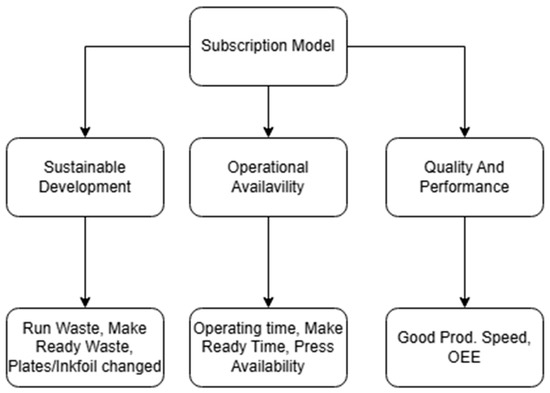
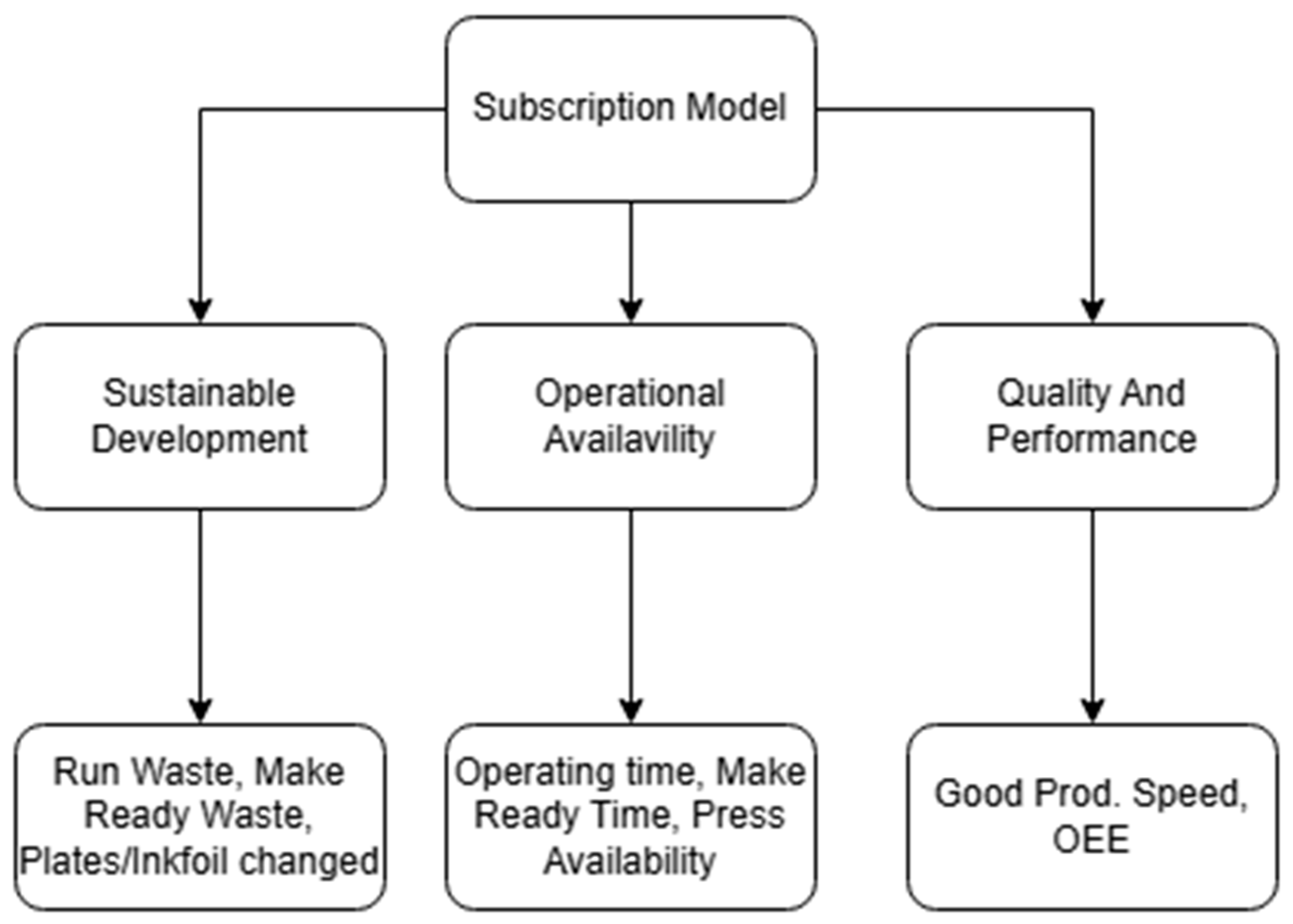
The research model in this study is presented in Figure 1.
Figure 1.
Assumptions of the research model. Source: own elaboration.
The study was guided by the following main research question “Is the industrial Product-as-a-Service subscription model associated with operational and environmental outcomes?”
The main hypothesis was formulated as follows: “The industrial Product-as-a-Service subscription model is associated with more favourable operational and environmental outcomes than the traditional ownership model, even under conditions of lower production scale”.
The following specific research questions were formulated.
- RQ.1. Is the subscription model associated with higher operational efficiency than the traditional ownership model?
- RQ.2. Is the subscription model associated with lower material losses than the traditional ownership model?
- RQ.3. Is the subscription model associated with greater process stability despite lower production intensity?
Correspondingly, the following specific hypotheses were explored.
H1.
The machine operated under the subscription model is associated with higher operational efficiency than the machine operated under the traditional ownership model.
H2.
The machine operated under the subscription model is associated with lower material losses than the machine operated under the traditional ownership model.
H3.
The machine operated under the subscription model is associated with greater process stability despite lower production intensity.
2. Materials and Methods
The implementation of industrial machinery products was examined in the printing industry, which, according to the available literature, is characterized by highly dynamic changes in business models driven by intensive digital transformation, forcing enterprises to become increasingly flexible [26]. In this industry, there is a strong transformation of machine suppliers toward the PaaS model, primarily driven by printers’ expectations for services that ensure machine reliability, process and material usage optimization, and expert and technical support, as these factors are crucial for production efficiency, print quality, and competitiveness [27].
Machines from Heidelberger Druckmaschinen AG (Heidelberg, Germany) were selected for analysis, as the company is one of the global leaders in offering subscription solutions for the manufacturing industry, alongside companies such Dürr AG (Bietigheim-Bissingen, Germany), Jungheinrich AG (Hamburg, Germany), DMG MORI CO., LTD. (Koto-ku, Tokyo, Japan), TRUMPF SE + Co. KG (Ditzingen, Germany), Voith GmbH & Co. KGaA (Heidenheim an der Brenz, Germany), and KUKA AG (Augsburg, Germany) [2]. The choice was further supported by previous studies indicating that data-driven solutions are a key aspect of their performance [28], ensuring that the benefits achieved through the subscription model build upon those derived from digital transformation.
Heidelberger’s model includes performance-based service contracts, subscription models, lifecycle-based pricing, pay-per-use billing, inter-firm cooperation with technology partners, new product development based on existing engineering competencies, product portfolio optimization via control and regulation technology, digitization of service contact through apps and portals, data transparency, development of digital service platforms, and the use of data from field-operated machines to support servicing [2].
The study was conducted over fourteen consecutive months. It was designed as a comparative empirical analysis of two operational configurations of the same class of industrial sheetfed offset press, functioning under different business models, i.e., ownership and subscription. The subject of analysis was the Heidelberg Speedmaster XL106-8P (Heidelberger Druckmaschinen AG, Heidelberg, Germany), in both cases configured for book printing and operating in print shops producing books in medium and high volumes.
Thus, the unit of analysis was a printing machine embedded in a real production environment, not an individual job. The sampling was purposive and included printing plants from the European Union operating under comparable market and regulatory conditions, serving similar customer segments, and executing production with a similar technological profile. The inclusion criterion was the use of the Heidelberg XL106-8P model in a version with a coating unit, primarily used for the production of books and high-volume publications.
The first research object was a Heidelberg XL106-8P machine installed in 2016 and operated under the traditional ownership model, in which the print shop bears full investment, service, operational, and maintenance costs. The second research object was a Heidelberg XL106-8P machine installed in 2018, used under a subscription model offered by the manufacturer, which included access to the machine along with a package of integrated service offerings, technical support, operational parameter monitoring, and digital solutions supporting production management. The characteristics of the subscription model were based on publicly available descriptions of Heidelberg’s equipment-as-a-service and service–operational contract offerings.
The methodological assumption was to ensure the highest possible comparability of production conditions. Both printing plants carried out book production, primarily softcover and hardcover books, with similar sheet formats, comparable unit print runs per order series, and similar quality requirements regarding color stability, registration, and print consistency.
The primary operational efficiency metric was OEE variables. Availability data included the actual machine uptime relative to the planned production time, accounting for both planned and unplanned downtime. Performance was measured as the ratio of actual production speed to the machine’s nominal speed, accounting for changeovers and slowdowns caused by job characteristics. Quality was defined as the share of sheets meeting quality requirements out of the total number of sheets produced during the analyzed period.
To assess the sustainability context of production, parameters concerning processes and waste materials were also included.
Empirical data (Table S1 in the Supplementary Materials) were collected from production reporting systems, machine logs, and digital tools monitoring machine operation parameters. In the case of the subscription-based machine, data generated by remote monitoring and diagnostic systems—part of the service package offered by the manufacturer—were also utilized. The data were aggregated monthly to minimize the impact of fluctuations caused by short-term changes in the job portfolio.
Thus, the set of variables covers four main analytical areas: production volume (Gross/Net Impressions, Net Output, Plates/Ink duct foil Changed), operational time and availability (Operating Time, Make Ready Time, Press Availability), performance and quality (Good Prod. Speed, OEE, OEE Speed, OEE Quality), and sustainability (Run Waste, Make Ready Waste).
The operational efficiency indicators used in the study were defined according to the following measurement formulas.
OEE represents the overall effectiveness of a work unit and is defined as the product of availability, performance, and quality [29]:
OEE Quality represents the number of good impressions compared to all printed impressions [30]:
OEE Speed represents the utilization of maximum printing speed [30]:
OEE Time represents the share of production time within operating time [30]:
OEE 10,000 is a theoretical value calculated using current performance, with the time index based on a run length of 10,000 impressions [30]:
Net Productivity represents the number of good impressions produced during operating time [30]:
Net Output represents the number of good impressions produced from the first good sheet to the last printed sheet [30]:
Run Waste % represents the share of waste produced during production time in relation to total production output [30]:
Good Prod. Speed represents the speed at which good impressions are produced without breaks and stops [30]:
All variables used were quantitative in nature. The statistical analysis was conducted using the jamovi software, version 2.6.44. This analysis included between-group difference testing. Each variable was examined for distribution normality using the standard Shapiro–Wilk test [31]. For variables with distributions deemed normal (p > 0.05 in the Shapiro–Wilk test), the independent samples T-test was applied [32]. For variables whose distribution could not be considered normal (p < 0.05), the Mann–Whitney U-test was used [33]. A statistical significance threshold of p < 0.05 was adopted for the results of between-group difference testing.
Additionally, correlations between variables used in the research model were examined using Pearson’s r-test. Due to the relatively large number of comparisons, statistical significance for interpreting these results was set at p < 0.001.
3. Results
The values of the comparative indicators obtained under the ownership model are presented in Table S2, while the values obtained for the machine operating under the subscription model are presented in Table S3 (both in the Supplementary Materials).
Machine cycles without the subscription model accumulated higher average values in overall impressions, make-ready workload, speed, output, productivity, production waste, and number of plate changes. Machine cycles with the subscription model overly performed better in run length, uptime, waste reduction during setup, and all core OEE components except time. Availability parameter was identical across both groups, as the machines were operated without any recorded downtime. The make-ready time was marginally shorter in the subscription model, though the difference was negligible.
In the case of a machine operated using a subscription model, the high-quality was maintained for the entire OEE despite the fact that under given operating conditions fewer prints were obtained, which in turn make the subscription model more profitable.
Indicators with a normal distribution include Run Length (avg), Make Ready Waste (avg), Other Time (avg), Net Output (avg), Net Productivity (avg), Run Waste %, Run Waste (avg), OEE, OEE 10,000, OEE Quality, and OEE Time. Indicators without a normal distribution are Gross Impressions, Net Impressions, Make Ready, Operating time, Press Availability (avg), Make Ready Time (avg), Good Prod. Speed (avg), Total Waste (M/R + Run), OEE Speed, Ink duct foil changed, and Plates changed.
The results of the examination of intergroup differences using Student’s T test for variables with a normal distribution are presented in Table S4, and the results for variables whose distribution does not meet the criterion of normality are given in Table S5 (both tables in the Supplementary Materials). Bar charts of the values of individual variables in both groups are presented in Figure S1 in the Supplementary Materials.
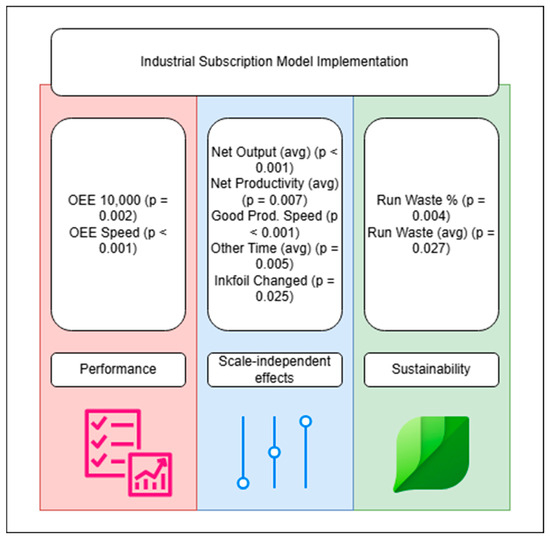
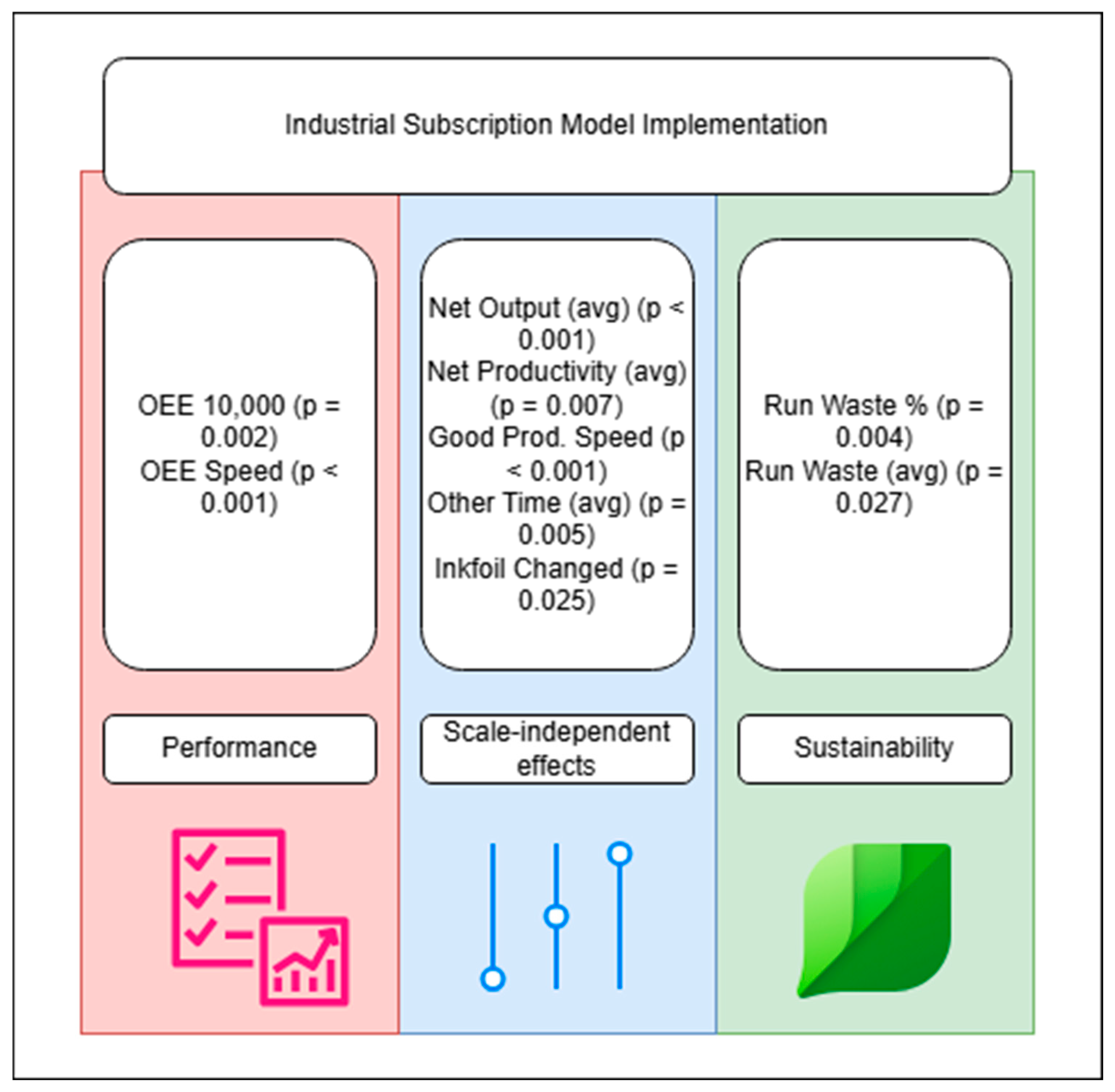
Tables S4 and S5 show that, in terms of performance and quality, statistically significant differences include the OEE 10,000 (Overall Equipment Effectiveness) indicator and OEE Speed, both of which were higher in the subscription model. This indicates that the subscription model was characterized by operational efficiency advantages while maintaining higher production speed.
In terms of sustainability indicators, statistically significant differences included a lower (and thus more favorable) rate of loss cycles illustrated by the Run Waste % parameter in the subscription model, as well as lower values in the averaged Run Waste (avg) measurement. The subscription model clearly generated less production waste.
All differences in production volume, measured by Net Output (avg) and Net Productivity (avg), were higher for the non-subscription model. This means the machine operated under the traditional ownership model functioned in conditions that required a higher production volume and faster net output, reflecting a higher intensity of operation.
The Good Production Speed parameter, which reflects quality, was in fact lower for the machine operating under the subscription model. However, it should be noted that, given the maximum hourly sheet capacity of offset machines ranging from 12,000 to 18,000 sheets per hour, both machines operated within the high-performance quality range [34], and the observed values for this parameter should be considered very good [28]. Thus, in the case of the machine operated under the subscription model, a particularly high level of quality stability was achieved despite a lower volume of printed impressions. The machine in the subscription model maintained quality despite lower production volume.
The interpretation of the empirical results is presented in Figure 2.
Figure 2.
Results of the subscription model implementation in the comparative study. Source: Own elaboration.
The results of the correlation study between variables are presented in Table S6 in the Supplementary Materials. The table shows that OEE Quality, apart from exhibiting a relationship (that is uncertain given the number of comparisons) with the length of printed runs (r = 0.482, p < 0.01), displays presumed negative correlations with Make Ready Waste (avg) (r = −0.577, p < 0.01) and Total Waste (M/R + Run) (r = −0.581, p < 0.01), but does not demonstrate a statistically significant correlation with parameters characterizing production intensity (Gross Impressions, Net Impressions, Operating Time, Plates Changed). To the extent that Total Waste (M/R + Run) reflects production intensity, the observed association is strongly negative.
Efficiency indicators (OEE, OEE Time) are strongly associated with net productivity and operational time, indicating that increasing productivity is associated with higher overall operational efficiency. This is probably related to the typical relationship that offset printing is more effective with larger scale of use and longer series [26]. This dependence may mask the benefits of implementing the subscription model, which were in fact broader.
The correlation results suggest that variables related to production intensity and the involvement of technological and time-related resources form a coherent structure of mutual relationships. Strong correlations of Gross and Net Impressions with Make Ready, Operating Time, Plates Changed, and Total Waste (M/R + Run) suggest that a larger scale of production requires more intensive machine setup, generates more waste, and results in longer operational time. Another very strong relationships between Make Ready and Plates Changed (r = 0.983), as well as with Total Waste (r = 0.903), indicate that production setup is one of the main sources of material and time costs, particularly related to the replacement of printing plates.
As the variable pairs exhibiting near-perfect correlation include Gross Impressions–Net Impressions (r = 0.999, p < 0.001), all the manual machine preparation, dependent on the operator, was largely reduced to the replacement of offset plates. Therefore, in future research, the parameters Gross Impressions–Net Impressions and Make Ready–Plates Changed should not be used simultaneously, as they do not provide additional value for a quantitative model. Similarly, a very large correlation between Run Waste % and Run Waste (avg) (r = 0.902) confirms that the average level of waste is closely tied to the share of losses in the total production run.
Operating Time and Ink duct foil Changed (r = 0.604) may indicate that longer machine operation leads to more frequent replacement of consumable components.
In contrast, the strong negative correlations of variables including Other Time (non-production-related time) with Net Productivity (r = −0.842) and Plates Changed (r = −0.675) suggest that an increase in non-productive time reduces efficiency and decreases technological activity, such as the number of changeovers.
4. Discussion
A study design based on two industrial cases allows statistical methods to be applied in a comparative sense, although it does not eliminate the risk of reference factors that could only be identified in a multivariate model based on a larger number of analyzed cases. Nevertheless, designs of this type allow for cautious analytical generalization, including theory development and the contextual explanation of complex phenomena [35,36]. In operations and production management, case studies are particularly justified for analyzing real operational environments and refining theoretically plausible mechanisms [37,38].
This study should be positioned as an exploratory comparative case study, since its aim is to identify and conceptually organize a poorly examined phenomenon in a real production environment, rather than to confirmatively test the causal effect of the subscription model [38,39,40]. This approach is consistent with case research methodology in operations management and industrial engineering, where case studies are used for theory building, field research design, the analysis of complex operational processes, and strengthening the rigor of research embedded in industrial practice [41,42,43,44].
Subscription models, besides being contracts in the legal sense and a new reference point for ownership, also constitute an organizational innovation on both sides of the sales chain.
Subscription/PaaS models may affect operational efficiency not merely by replacing ownership with a usage fee, but by reconfiguring the operational system. The service provider sets new objectives and must maintain the availability and reliability of the asset; therefore, it develops monitoring, performance measurement, service processes, personnel competencies, relationships with the user, and the ability to respond quickly to process deviations [45,46,47,48,49]. This mechanism is reinforced when the contract links remuneration or continuation of the relationship to usage outcomes, because the provider then has an incentive to carry out more frequent planned servicing, improve the quality of maintenance activities, invest in reliability, improve processes, and transfer operational knowledge to the service network, which may reduce failures, downtime, process instability, and production losses [50,51,52,53,54].
The higher values of OEE 10,000 and OEE Speed in the subscription model, despite the lower production volume, suggest that the advantage of this model concerned process stabilization, control of operating parameters, and reduction in disruptions, but did not involve maximizing the scale of production. A possible explanation is the different alignment of incentives between the provider and the user. The provider remains more strongly interested in maintaining the efficiency, quality, and predictability of the process throughout the entire use cycle, because its economic value is linked to the functioning of the system, rather than solely to the one-time sale of an asset [51]. Taking into account the specific characteristics of the analyzed enterprises, this mechanism may be reinforced by digital servitization, the use of operational data, IoT/IIoT-based monitoring, intelligent diagnostics, and predictive or condition-based maintenance, which increase process transparency, enable earlier responses to deviations, and support the maintenance of stable machine operating parameters [50,51,52,53].
OEE results should be interpreted cautiously and treated as indicators of the relationship between availability, speed, quality, and production losses, rather than solely as a simple measure of production volume [51,54].
Higher values of the OEE 10,000 and OEE Speed indicators in the subscription model suggests that implementing a PaaS-based approach leads to improved operational efficiency of machines. This aligns with the concept of shifting responsibility for technical performance from the user to the provider, which in turn was associated with the provider’s greater involvement in maintaining high equipment availability and performance [24,27,41]. The use of OEE indicators for such empirical evaluation is a novel approach, yet it is consistent with the general position in the literature that these indicators are universal tools in operational management [22] and constitute key criteria for designing PaaS offerings [2,14,22,23]. The differences in waste production suggest that the subscription model was associated with a lower level of material losses, both in terms of a smaller share of losses during the production run and a lower average amount of waste. This result is consistent with the PSS literature, which indicates that product-service models may support more efficient resource use when the logic of the provider’s revenue and responsibility is linked to the system’s performance outcome rather than to a one-time sales profit. In the data analyzed, it is important that the higher production volume in the ownership model coincides with a greater number of make-ready operations, plate changes, and a higher total level of waste. The strong relationships between Make Ready, Plates Changed, and Total Waste indicate that production preparation and changeovers were among the main sources of material losses. At the same time, the negative correlations of OEE Quality with Make Ready Waste and Total Waste suggest that more stable process quality coincides with lower waste generation. Lower waste production in the subscription model may therefore result from better stabilization of production processes, a more predictable production run, better control of settings, and more efficient diagnostics.
Conversely, the fact that production volume indicators (Net Output, Net Productivity) were higher in the classical model also is consistent with the literature. Some authors emphasize that traditional sales models encourage intensified machine usage by the client, who has made a high CAPEX and aims to maximize return on investment [14]. In the subscription model, usage intensity was better controlled and distributed over time in the analyzed case, which was associated with lower quantitative indicators while maintaining stronger quality and efficiency metrics [3].
Thus, the findings from this study indicate that the subscription model does not so much maximize immediate nominal output as it was associated with higher efficiency, stability, and alignment with selected sustainability-related indicators. They also support the observation that when assessing the profitability and viability of PaaS models, one should not rely solely on quantitative parameters but rather conduct a comprehensive assessment of the value delivered during machine usage [1,19].
Subscription models in industry offer numerous benefits from the buyer’s perspective, which often—but not always—lead to improved financial standing and higher profits [4]. However, there are few empirical studies that directly compare operational and environmental benefits. In the context of this study, the advantages involved both efficiency and production, though they should be considered within a context in which the subscription model was characterized by significantly lower industrial usage intensity. The study thus indicates that the observed benefits of the subscription model were also present under lower production scale conditions.
Given that subscriptions can be configured with various levels of support and services, which facilitates their evaluation based on the technological capabilities and needs of a company [17], it can be concluded that a well-matched subscription model yields benefits regardless of company size.
The sustainability-related results, including significantly lower Run Waste % and Run Waste (avg) values in the subscription model, are consistent with the literature’s view of PaaS models as tools associated with lower material waste and improved resource efficiency [11,14]. At the same time, as noted by [12] the environmental effects of subscription models often emerge over a longer time horizon. In this case, that was reflected in the fact that a company with lower order volumes acquired a large machine enabling a higher level of production (thus causing a temporary increase in environmental load) but achieved lower waste levels—representing compensation over time.
The literature holds that although the potential of subscription models is high, companies must consciously address barriers (e.g., digital capabilities, data integration, and organizational culture change) to successfully implement and maintain such models in industrial practice [18]. The results obtained here indicate that the ability to use a machine equipped with modern data-based technologies was associated with favorable outcomes even when compared to operating an identical production line by a company that, due to higher order volumes, would presumably be better positioned to overcome those barriers.
Considering that the data-based subscription model delivered favorable indicators even at a smaller production scale, the present findings are consistent with studies describing the crucial role of data analytics, flexible pricing mechanisms, and iterative innovation processes in maintaining competitiveness and delivering lasting market value in subscription models [36]. In the analyzed case, this was reflected in an industrial subscription where the machine provider was able to create conditions that delivered both operational and sustainability benefits due to extensive access to production data from a machine incorporating numerous IIoT technology components. The main difficulty in interpreting the benefits of subscription models stems from the limited empirical evidence on their effectiveness based on quasi-experimental and experimental designs using comparative material. Another problem is that these models rely on a layer of technological innovation that enables equipment to be delivered as a service. In particular, this includes ICT solutions that make it possible to manage the operation of equipment offered in a service-based model. The benefits derived from subscription models largely overlap with the benefits of IIoT solutions, with which they probably operate synergistically [18,20]. IIoT offers improved operational efficiency [55,56], reduced operating and maintenance costs [55,57], reduced downtime [57,58], increased machine reliability [57,58], stabilization and better control of production processes [56,58], and more efficient use of resources [59,60]. In the context of this study, two machines equipped with the same IIoT solutions were directly compared over long cycles of actual operation. Therefore, an important added value of the study is that it explores a managerial factor, namely the PaaS model, without the direct influence of IIoT as a technology. The observed associations between the model and operational and sustainability-related benefits should therefore be linked to the organizational change resulting from the subscription model itself, rather than to the technical layer, which was the same in both comparable cases.
The literature includes positions that prioritize the role of technological innovation, indicating that Industry 4.0 technologies improve operational efficiency, increase process productivity, support operations management, reduce losses, and generate other benefits [61,62,63,64,65,66,67,68,69], including benefits strongly related to environmental performance, such as resource efficiency, waste reduction, and reduced energy consumption [60,61]. Sources that recognize the role of other factors show, however, that the impact of technology on operational efficiency [62,65,68,69] and environmental performance [62,63,64,65] also depends on operational practices as well as organizational, financial, and regulatory factors. The presented results show the important role of new business models as a factor enabling the maximization of benefits from digital transformation.
It should also be emphasized that the present comparison was conducted under real industrial conditions, where complete control of all contextual variables is not possible. Although the machines were identical and the production profile was intentionally selected as comparable, factors such as operator routines, local maintenance practices, workload variability, and managerial decisions may also have influenced the observed differences. Therefore, the reported effects should be interpreted as associations identified in comparable operating environments rather than as fully isolated causal effects of the business model alone.
A further limitation concerns the external validity of the findings. The study was based on two Heidelberg Speedmaster XL106-8P presses operating in one industrial sector and over a 14-month observation period. Consequently, the results should not be generalized automatically to other machine classes, manufacturing sectors, or subscription configurations. Rather, they provide focused empirical evidence that may serve as a basis for broader multi-site studies involving larger samples, additional technologies, and longer observation horizons.
5. Conclusions
5.1. General Conclusions
The study was exploratory in nature, but it revealed several important observations that could contribute to a deeper understanding of the benefits of subscription models.
The study’s results indicate that PaaS-type subscription models were associated with both operational and environmental efficiency, even under conditions of smaller production scale. While the traditional sales model encourages intensified resource usage to achieve rapid return on investment, the subscription model was associated with relatively greater stability, quality, and long-term reduction in both operational and material waste. This suggests that the value of a subscription model does not depend solely on maximizing nominal output, but was associated with the provider’s ability to support lasting efficiency and lower process variability [1,6].
The present findings do not support the simplified assumption that industrial subscriptions are only profitable at high production volumes. On the contrary, the appropriate combination of data access, technological readiness, and a partnership-based relationship with the provider enables the realization of benefits relatively independent of scale differences.
5.2. Managerial Implications
Subscription models for the manufacturing industry are among the most complex for both the supplier and the recipient of machinery. Instead, they can create a comprehensive ecosystem that provides both parties with enhanced benefits from B2B collaboration. Suppliers benefit from customer loyalty, while recipients benefit from stability and a lower entry threshold. Maximizing collaboration, however, requires carefully designed models and the selection of solutions that deliver consistent added value.
Although the entry barrier is lower in a subscription model than when purchasing machines privately, companies choosing to acquire them in this model should strive to maximize benefits by overcoming the barriers associated with implementing technologies that are often new to them. This aspect, in the form of training, documentation, procedures, and support, should be considered when concluding a subscription agreement to ensure that its conclusion will contribute to the company’s sustainable development and digital transformation.
From a managerial perspective, the findings suggest that the decision to implement a subscription model should be supported by precise operational analysis, including the ability to measure and monitor indicators such as OEE. Industrial managers should move away from the traditional logic of comparing business models solely based on production volume and instead focus on the provider’s capacity to ensure process efficiency, reduce waste, and stabilize machine performance over time. At the same time, it is important to avoid assuming that subscription automatically and deterministically delivers benefits. Careful verification is necessary of the specific advantages a subscription service provider is capable of offering.
Managers must also recognize the need to develop competencies that allow for collaboration with the provider in areas where they deliver value—particularly operational data analytics and IIoT integration. The profitability of implementing subscription models also requires long-term thinking regarding cost structures (OPEX instead of CAPEX). It is therefore reasonable to design subscription agreements not as simple service packages, but as systemic production solutions in which the provider becomes an active participant in achieving the client’s business outcomes. For managers, this entails the need to be open to redefining relationships with technology providers and integrating technical, procurement, and strategic teams in the process of implementing PaaS models.
Supplementary Materials
The following supporting information can be downloaded at: https://www.mdpi.com/article/10.3390/su18126167/s1, Table S1: Indicators used in the comparative analysis. Table S2: Measurement results for the machine operated under the proprietary model. Table S3: Measurement results for the machine operated under the subscription model. Table S4: Intergroup differences for normally distributed variables. Table S5: Intergroup differences for variables with a non-normal distribution. Table S6: Pearson’s r correlations between the variables used in the model. Figure S1: Bar charts of descriptive statistics for the analysed indicators.
Funding
This research received no external funding.
Institutional Review Board Statement
Not applicable.
Informed Consent Statement
Not applicable.
Data Availability Statement
The data presented in this study are available on request from the corresponding author due to content of the agreement with the companies participating in the study.
Acknowledgments
During the preparation of this study, the author used GPT 4 for the purposes of language polishing. The author have reviewed and edited the output and take full responsibility for the content of this publication. The author gratefully acknowledges Norbert Augustynowicz for his methodological assistance with the statistical analysis of the data.
Conflicts of Interest
The author declares that there are no conflicts of interest that could have influenced the design, analysis, interpretation, or presentation of the research results. Heidelberg Polska Sp. z o.o., a subsidiary of Heidelberger Druckmaschinen AG, and MMR Group Sp. z o.o. were aware of the research and the preparation of the manuscript. Both entities confirmed that the study was based on anonymized and/or aggregated operational data and that no customer-identifying, confidential commercial, personal, or proprietary information is disclosed in the manuscript. Heidelberg Polska Sp. z o.o. confirmed that, to the best of its knowledge, there are no data or copyright restrictions preventing the publication of the manuscript. MMR Group Sp. z o.o. (current eployer of the Author) confirmed that it has no objection to the use of the anonymized operational data in the manuscript and that there are no data-access, confidentiality, or copyright issues on its side that would prevent publication, subject to the continued anonymization of customer identities and confidential customer information. For clarity, the manuscript was prepared as part of the author’s academic work and not as a company publication, commercial report, or commissioned study for either Heidelberg Polska Sp. z o.o., Heidelberger Druckmaschinen AG, or MMR Group Sp. z o.o.
References
- Hedvall, K.; Benedettini, O.; Blümel, J.H.; Arsenovic, J.; Kristensson, P. B2B manufacturers in pursuit of Product-as-a-Service: Motivations, barriers, and approaches. J. Bus. Res. 2025, 199, 115567. [Google Scholar] [CrossRef] [Scilit]
- Kurtz, J.; Meyer, P.; Roth, A. Decoding the context of servitization: Socio-technical pivots on the journey to service-oriented business models in manufacturing firms. Prod. Plan. Control 2023, 36, 267–284. [Google Scholar] [CrossRef] [Scilit]
- Burger, M.; Krüger, A.; Burgmann, N.; Arlinghaus, J.C. Designing a subscription business model for industrial goods: Distinctive features and industrial subscription ecosystems. SSRN 2022. [Google Scholar] [CrossRef] [Scilit]
- Engel, K.; Heinrich, A.; Krüger, A.; Burger, M. Riding the Wave of Subscription Business Models in Manufacturing; A.T. Kearney & Fraunhofer Institute for Factory Operation and Automation (IFF): Magdeburg, Germany, 2021. [Google Scholar]
- Arioli, V.; Sala, R.; Pirola, F.; Pezzotta, G. Subscription business models in the manufacturing field: Evidence from a case study. In Proceedings of the IFIP International Conference on Advances in Production Management Systems; Springer: Cham, Switzerland, 2022; pp. 359–366. [Google Scholar]
- Liu, H.; Zhao, H. Upgrading models, evolutionary mechanisms and vertical cases of service-oriented manufacturing in SVC leading enterprises: Product-development and service-innovation for industry 4.0. Humanit. Soc. Sci. Commun. 2022, 9, 387. [Google Scholar] [CrossRef] [Scilit]
- Jiang, Z.Z.; Feng, G.; Yi, Z.; Guo, X. Service-oriented manufacturing: A literature review and future research directions. Front. Eng. Manag. 2022, 9, 71–88. [Google Scholar] [CrossRef] [Scilit]
- Ebi, M.; Hille, M.; Doelle, C.; Riesener, M.; Schuh, G. Methodology for the risk and reward evaluation of industrial subscription models. In Production at the Leading Edge of Technology: Proceedings of the 9th Congress of the German Academic Association for Production Technology (WGP), Hamburg, Germany, 30 September–2 October 2019; Springer: Berlin/Heidelberg, Germany, 2019; pp. 613–622. [Google Scholar]
- Tana, G.; Chai, J. Digital transformation: Moderating supply chain concentration and competitive advantage in the service-oriented manufacturing industry. Systems 2023, 11, 486. [Google Scholar] [CrossRef] [Scilit]
- Kleinemas, M.; Seebacher, U. Full Steam Ahead Towards Industry 5.0: The Question Is Not If, But How Fast! In B2B Marketing Guidebook—Vol. 1: The Strategic Foundations of Next Generation B2B Marketing; Springer Nature: Cham, Switzerland, 2025; pp. 21–63. [Google Scholar]
- Sun, W.; Shen, L. Digital servitization business model innovation practices for corporate decarbonization in manufacturing enterprises: A qualitative meta-analysis. Sustainability 2026, 18, 742. [Google Scholar] [CrossRef] [Scilit]
- Wu, Q.; Chen, Y.; Wang, A. Decarbonizing global value chains: The dual role of manufacturing servitization in export-implied carbon emissions—Scale expansion vs. structural upgrading. Mitig. Adapt. Strateg. Glob. Change 2026, 31, 12. [Google Scholar] [CrossRef] [Scilit]
- Yang, Z.; Pan, R. Can synergistic effect of servitization and product innovation improve ESG performance of manufacturers? The moderating role of digitalization. J. Bus. Ind. Mark. 2026, 41, 539–556. [Google Scholar] [CrossRef] [Scilit]
- Riesener, M.; Keuper, A.; BoBmann, C.; Smerz, J.; Schulz-Isenbeck, T.; Schuh, G. Establishing sustainable business models through subscription in machinery and plant engineering. In Proceedings of the 2024 Portland International Conference on Management of Engineering and Technology (PICMET); IEEE: New York, NY, USA, 2024; pp. 1–9. [Google Scholar]
- Riesener, M.; Doelle, C.; Ebi, M.; Perau, S. Methodology for the implementation of subscription models in machinery and plant engineering. Procedia CIRP 2020, 90, 730–735. [Google Scholar] [CrossRef] [Scilit]
- Momenzadeh, K.; Mohammadian, A.; Vares, H. Mapping the digital servitization journey: A meta-synthetic framework of antecedents, processes, and outcomes in Industry 4.0. Ind. Manag. J. 2026, 18, 117–135. [Google Scholar]
- Burgmann, N.; Burger, M.; Krüger, A. Subscription business models as accelerators for the adoption of Industry 4.0 by SMEs. In The Future of Smart Production for SMEs: A Methodological and Practical Approach Towards Digitalization in SMEs; Springer International Publishing: Cham, Switzerland, 2022; pp. 155–171. [Google Scholar]
- Schuh, G.; Frank, J.; Holst, L.; Müller, D.; Leiting, T.; Bruhns, L. Digitalization as an enabler of subscription business models in the manufacturing industry. In Digital Business Models in Industrial Ecosystems: Lessons Learned from Industry 4.0 Across Europe; Springer International Publishing: Cham, Switzerland, 2021; pp. 49–70. [Google Scholar]
- Liu, Y.; Gützlaff, A.; Cremer, S.; Grbev, T.; Schuh, G. Design of tailored subscription business models—A guide for machinery and equipment manufacturers. In Proceedings of the Congress of the German Academic Association for Production Technology; Springer: Berlin/Heidelberg, Germany, 2020; pp. 717–727. [Google Scholar]
- Schuh, G.; Frank, J.; Jussen, P.; Rix, C.; Harland, T. Monetizing Industry 4.0: Design principles for subscription business in the manufacturing industry. In Proceedings of the 2019 IEEE International Conference on Engineering, Technology and Innovation (ICE/ITMC); IEEE: New York, NY, USA, 2019; pp. 1–9. [Google Scholar]
- Sharma, Y.; Sijariya, R. Uncovering the trends and developments in subscription business models through bibliometric analysis. J. Serv. Theory Pract. 2024, 34, 242–269. [Google Scholar] [CrossRef] [Scilit]
- Ng Corrales, L.D.C.; Lambán, M.P.; Hernandez Korner, M.E.; Royo, J. Overall equipment effectiveness: Systematic literature review and overview of different approaches. Appl. Sci. 2020, 10, 6469. [Google Scholar] [CrossRef] [Scilit]
- Salwin, M.; Lipiak, J.; Kulesza, R. Product-service system—A literature review. Res. Logist. Prod. 2019, 9, 5–14. [Google Scholar]
- Schuh, G.; Stich, V.; Dölle, C.; Ruschitzka, C.; Holper, C. Methodology for the development of value propositions within subscription models. In Proceedings of the 2022 Portland International Conference on Management of Engineering and Technology (PICMET); IEEE: New York, NY, USA, 2022; pp. 1–9. [Google Scholar]
- Salwin, M.; Kraslawski, A. Service preferences of printing houses as a basis for developing product-service system solutions. Sci. Rep. 2025, 15, 42532. [Google Scholar] [CrossRef] [Scilit] [PubMed]
- Magadán-Díaz, M.; Rivas-García, J.I. Coming face to face with innovation and digitisation: The case of book printing in Spain. J. Print Media Technol. Res. 2021, 10, 47–59. [Google Scholar]
- Salwin, M.; Kraslawski, A. Product-service system business model for plastics industry. J. Clean. Prod. 2025, 451, 141874. [Google Scholar] [CrossRef] [Scilit]
- Stall, K. Managing productivity in sheet-fed offset printing: An IIoT comparative study of a retrofitted Heidelberg legacy printing press versus the latest model. Manag. Prod. Eng. Rev. 2025, 16, 1–20. [Google Scholar] [CrossRef] [Scilit]
- ISO 22400-2:2014; Automation Systems and Integration—Key Performance Indicators (KPIs) for Manufacturing Operations Management—Part 2: Definitions and Descriptions. International Organization for Standardization (ISO): Geneva, Switzerland, 2014.
- Heidelberg Druckmaschinen AG. Sales 4.0: Definitions and Terms; Unpublished Internal Glossary of Machine KPI Definitions; Heidelberg Druckmaschinen AG: Heidelberg, Germany, 2023. [Google Scholar]
- Chicco, D.; Sichenze, A.; Jurman, G. A simple guide to the use of Student’s t-test, Mann-Whitney U test, Chi-squared test, and Kruskal-Wallis test in biostatistics. BioData Min. 2025, 18, 56. [Google Scholar] [CrossRef] [Scilit]
- MacFarland, T.W.; Yates, J.M. Mann–Whitney U test. In Introduction to Nonparametric Statistics for the Biological Sciences Using R; Springer International Publishing: Cham, Switzerland, 2016; pp. 103–132. [Google Scholar]
- Kearney, A.T.; Fraunhofer Institute for Factory Operation and Automation IFF. Riding the Wave of Subscription Business Models in Manufacturing; Kearney: Chicago, IL, USA, 2021; pp. 1–16. [Google Scholar]
- DirectIndustry. Offset Press—Industrial Machines and Equipment. Available online: https://www.directindustry.com/industrial-manufacturer/offset-press-225988.html (accessed on 8 February 2026).
- Flyvbjerg, B. Five Misunderstandings About Case-Study Research. Qual. Inq. 2006, 12, 219–245. [Google Scholar] [CrossRef] [Scilit]
- Gerring, J. What Is a Case Study and What Is It Good for? Am. Political Sci. Rev. 2004, 98, 341–354. [Google Scholar] [CrossRef] [Scilit]
- Voss, C.; Tsikriktsis, N.; Frohlich, M. Case Research in Operations Management. Int. J. Oper. Prod. Manag. 2002, 22, 195–219. [Google Scholar] [CrossRef] [Scilit]
- Ketokivi, M.; Choi, T. Renaissance of Case Research as a Scientific Method. J. Oper. Manag. 2014, 32, 232–240. [Google Scholar] [CrossRef] [Scilit]
- Stuart, I.; McCutcheon, D.; Handfield, R.; McLachlin, R.; Samson, D. Effective Case Research in Operations Management: A Process Perspective. J. Oper. Manag. 2002, 20, 419–433. [Google Scholar] [CrossRef] [Scilit]
- Barratt, M.; Choi, T.Y.; Li, M. Qualitative Case Studies in Operations Management: Trends, Research Outcomes, and Future Research Implications. J. Oper. Manag. 2011, 29, 329–342. [Google Scholar] [CrossRef] [Scilit]
- Meredith, J. Building Operations Management Theory through Case and Field Research. J. Oper. Manag. 1998, 16, 441–454. [Google Scholar] [CrossRef] [Scilit]
- Sadeghi Moghadam, M.R.; Ghasemnia Arabi, N.; Khoshsima, G. A Review of Case Study Method in Operations Management Research. Int. J. Qual. Methods 2021, 20, 16094069211010088. [Google Scholar] [CrossRef] [Scilit]
- Cauchick-Miguel, P.A.; Sousa-Zomer, T.T.; Tortorella, G.L. Methodological Concerns in Case-Based Research in Industrial Engineering: Revisiting the Challenges towards Further Recommendations. Production 2023, 33, e20220095. [Google Scholar] [CrossRef] [Scilit]
- Tukker, A. Eight Types of Product-Service System: Eight Ways to Sustainability? Experiences from SusProNet. Bus. Strategy Environ. 2004, 13, 246–260. [Google Scholar] [CrossRef] [Scilit]
- Baines, T.S.; Lightfoot, H.W.; Benedettini, O.; Kay, J.M. The Servitization of Manufacturing: A Review of Literature and Reflection on Future Challenges. J. Manuf. Technol. Manag. 2009, 20, 547–567. [Google Scholar] [CrossRef] [Scilit]
- Meier, H.; Roy, R.; Seliger, G. Industrial Product-Service Systems—IPS2. CIRP Ann. Manuf. Technol. 2010, 59, 607–627. [Google Scholar] [CrossRef] [Scilit]
- Baines, T.; Lightfoot, H.; Smart, P.; Fletcher, S. Servitization of Manufacture: Exploring the Deployment and Skills of People Critical to the Delivery of Advanced Services. J. Manuf. Technol. Manag. 2013, 24, 637–646. [Google Scholar] [CrossRef] [Scilit]
- Baines, T.; Lightfoot, H. Servitization of the Manufacturing Firm: Exploring the Operations Practices and Technologies that Deliver Advanced Services. Int. J. Oper. Prod. Manag. 2014, 34, 2–35. [Google Scholar] [CrossRef] [Scilit]
- Guajardo, J.A.; Cohen, M.A.; Kim, S.-H.; Netessine, S. Impact of Performance-Based Contracting on Product Reliability: An Empirical Analysis. Manag. Sci. 2012, 58, 961–979. [Google Scholar] [CrossRef] [Scilit]
- Selviaridis, K.; Wynstra, F. Performance-Based Contracting: A Literature Review and Future Research Directions. Int. J. Prod. Res. 2015, 53, 3505–3540. [Google Scholar] [CrossRef] [Scilit]
- Essig, M.; Glas, A.H.; Selviaridis, K.; Roehrich, J.K. Performance-Based Contracting in Business Markets. Ind. Mark. Manag. 2016, 59, 5–11. [Google Scholar] [CrossRef] [Scilit]
- Karatzas, A.; Papadopoulos, G.; Godsell, J. Servitization and the Effect of Training on Service Delivery System Performance. Prod. Oper. Manag. 2020, 29, 1101–1123. [Google Scholar] [CrossRef] [Scilit]
- Alqahtani, F.; Selviaridis, K.; Stevenson, M. The Effectiveness of Performance-Based Contracting in the Defence Sector: A Systematic Literature Review. J. Purch. Supply Manag. 2023, 29, 100877. [Google Scholar] [CrossRef] [Scilit]
- Lindström, C.W.J.; Maleki Vishkaei, B.; De Giovanni, P. Subscription-based business models in the context of tech firms: Theory and applications. Int. J. Ind. Eng. Oper. Manag. 2024, 6, 256–274. [Google Scholar] [CrossRef] [Scilit]
- Afrin, S.; Rafa, S.J.; Kabir, M.; Farah, T.; Alam, M.S.B.; Lameesa, A.; Ahmed, S.F.; Gandomi, A.H. Industrial Internet of Things: Implementations, Challenges, and Potential Solutions across Various Industries. Comput. Ind. 2025, 170, 104317. [Google Scholar] [CrossRef] [Scilit]
- Rezaee, N.; Zanjirchi, S.M.; Jalilian, N.; Hosseini Bamakan, S.M. Internet of Things Empowering Operations Management: A Systematic Review Based on Bibliometric and Content Analysis. Telemat. Inform. Rep. 2023, 11, 100096. [Google Scholar] [CrossRef] [Scilit]
- Benhanifia, A.; Ben Cheikh, Z.; Moura Oliveira, P.; Valente, A.; Lima, J. Systematic Review of Predictive Maintenance Practices in the Manufacturing Sector. Intell. Syst. Appl. 2025, 26, 200501. [Google Scholar] [CrossRef] [Scilit]
- Soori, M.; Arezoo, B.; Dastres, R. Internet of Things for Smart Factories in Industry 4.0, a Review. Internet Things Cyber-Phys. Syst. 2023, 3, 192–204. [Google Scholar] [CrossRef] [Scilit]
- Jagtap, S.; Garcia-Garcia, G.; Rahimifard, S. Optimisation of the Resource Efficiency of Food Manufacturing via the Internet of Things. Comput. Ind. 2021, 127, 103397. [Google Scholar] [CrossRef] [Scilit]
- Khan, M.I.; Yasmeen, T.; Khan, M.; Hadi, N.U.; Asif, M.; Farooq, M.; Al-Ghamdi, S.G. Integrating Industry 4.0 for Enhanced Sustainability: Pathways and Prospects. Sustain. Prod. Consum. 2025, 54, 149–189. [Google Scholar] [CrossRef] [Scilit]
- Bai, C.; Dallasega, P.; Orzes, G.; Sarkis, J. Industry 4.0 Technologies Assessment: A Sustainability Perspective. Int. J. Prod. Econ. 2020, 229, 107776. [Google Scholar] [CrossRef] [Scilit]
- Yavuz, O.; Uner, M.M.; Okumus, F.; Karatepe, O.M. Industry 4.0 Technologies, Sustainable Operations Practices and Their Impacts on Sustainable Performance. J. Clean. Prod. 2023, 387, 135951. [Google Scholar] [CrossRef] [Scilit]
- Neves, A.; Alves, A.S.F.; Ionita, V.A.; Matias, J.C.O.; Teixeira, S.; Alcácer, V.; Godina, R. Key Drivers and Barriers of Industry 4.0 for Sustainable Practices in Small and Medium-Sized Enterprises. Sustain. Futur. 2025, 10, 101464. [Google Scholar] [CrossRef] [Scilit]
- Al-Husain, R.A.; Jasim, T.A.; Mathew, V.; Al-Romeedy, B.S.; Khairy, H.A.; Mahmoud, H.A.; Liu, S.; El-Meligy, M.A.; Alsetoohy, O. Optimizing Sustainability Performance through Digital Dynamic Capabilities, Green Knowledge Management, and Green Technology Innovation. Sci. Rep. 2025, 15, 24217. [Google Scholar] [CrossRef] [Scilit]
- Omonijo, O.N.; Zhang, Y. Examining the Relationship between Technological Innovation, Environmental Social Governance and Corporate Sustainability: The Moderating Role of Green Operational Innovation. Humanit. Soc. Sci. Commun. 2025, 12, 107. [Google Scholar] [CrossRef] [Scilit]
- Dalenogare, L.S.; Benitez, G.B.; Ayala, N.F.; Frank, A.G. The Expected Contribution of Industry 4.0 Technologies for Industrial Performance. Int. J. Prod. Econ. 2018, 204, 383–394. [Google Scholar] [CrossRef] [Scilit]
- Fettermann, D.C.; Cavalcante, C.G.S.; Almeida, T.D.D.; Tortorella, G.L. How Does Industry 4.0 Contribute to Operations Management? J. Ind. Prod. Eng. 2018, 35, 255–268. [Google Scholar] [CrossRef] [Scilit]
- Tortorella, G.L.; Giglio, R.; van Dun, D.H. Industry 4.0 Adoption as a Moderator of the Impact of Lean Production Practices on Operational Performance Improvement. Int. J. Oper. Prod. Manag. 2019, 39, 860–886. [Google Scholar] [CrossRef] [Scilit]
- Cifone, F.D.; Hoberg, K.; Holweg, M.; Staudacher, A.P. How Can Digital Technologies Support Lean Practices? Int. J. Prod. Econ. 2021, 241, 108258. [Google Scholar] [CrossRef] [Scilit]
Disclaimer/Publisher’s Note: The statements, opinions and data contained in all publications are solely those of the individual author(s) and contributor(s) and not of MDPI and/or the editor(s). MDPI and/or the editor(s) disclaim responsibility for any injury to people or property resulting from any ideas, methods, instructions or products referred to in the content. |
© 2026 by the author. Licensee MDPI, Basel, Switzerland. This article is an open access article distributed under the terms and conditions of the Creative Commons Attribution (CC BY) license.