


Abstract
The fashion industry generates significant environmental impact through overproduction and the short life cycles of clothing products. Modular design, which allows multiple wearing configurations from a single product through removable and interchangeable components, represents a promising sustainable alternative but lacks standardized methodologies that integrate digital innovation with physical production. This study develops and validates an integrated methodology for creating versatile modular clothing products. Based on the three-dimensional framework of modularity (structure, function, and system), four categories of modular elements were defined and organized in a CLO3D (Version 2026.0.202; CLO Virtual Fashion Inc., Seoul, Republic of Korea) digital library. Combinatorial calculation generated 360 theoretical variants, of which 24 were selected as structurally and aesthetically feasible. A physical prototype consisting of a vest, four modules and three sleeve variants was made from 100% linen fabrics (290 and 180 gsm) with snap fastener tape and natural shell buttons. The digital–physical visual comparison confirmed high concordance for proportions and alignment of the modules, with limitations in simulating the fabric drape. The 24 validated configurations demonstrate that a single modular clothing product can function as an effective wardrobe multiplier. The study confirms that integrating the CLO3D digital library with physical prototyping from sustainable materials constitutes a viable and replicable methodology in the fashion industry.
1. Introduction
The fashion industry is widely recognized as one of the most polluting sectors globally, generating significant environmental impact through overproduction, excessive resource consumption, and the short life cycles of clothing products [1,2]. Li et al. (2024) demonstrated that fast fashion generates carbon emissions 11 times higher than the conventional fashion industry, namely, 2.50 versus 0.22 kg CO2e per wear [3]. In response, circular economy principles and sustainable design strategies have become essential frameworks for reducing the ecological footprint of clothing production and consumption [4,5].
Among these strategies, modular clothing design, which enables multiple wearing configurations from a single product through removable and interchangeable components, represents a particularly promising approach for promoting sustainability by extending product utility and reducing the need for multiple items [6,7].
Despite increasing scientific attention, modular fashion still lacks a unified definition and standardized design methodologies. Zhang et al. (2024) addressed this gap by proposing a comprehensive framework based on three dimensions: structure (detachable components), function (components with different roles), and system (interchangeability through compatible modules) [6]. Zhang et al. (2025) further identified that industrial adoption faces significant challenges, including design complexity, manufacturing constraints, and market uncertainties [8]. Chen and Lapolla (2021) explored modular systems through interlocking geometric shapes, demonstrating that hexagonal and triangular modules work best for creating gap-free products [9]. Casciani (2023) identified modularity as a fundamental design strategy for sustainability, arguing that the application of modular principles at the system level provides a holistic approach to reducing environmental impact [10]. Meanwhile, Shatarah (2023) provided quantitative evidence showing that modular design reduces textile waste by 30% and carbon emissions by 20% [7]. In parallel with advances in modular design, digital prototyping technologies have transformed the fashion industry. Glogar et al. (2025) reviewed the integration of Industry 4.0 technologies (CAD/CAM, AI, and 3D visualization) into sustainable textile design, highlighting their role in facilitating customization and reducing waste [11]. Lee and Suh (2024) highlighted how digital technologies are inspiring global design trends, accelerating innovation in the fashion industry [12]. Baria et al. (2025) reviewed the transformative effect of 3D sampling technologies (including CLO3D) on the ready-made garment industry, highlighting their contribution to material waste reduction, design efficiency and lead-time shortening [13]. CLO3D software, specifically, has been validated as an effective tool for virtual visualization and prototyping of clothing products [14,15]. Jung and Istook (2020) highlighted the importance of standardized digital fabric libraries for consistent visualization in the digital supply chain [16], and Odhiambo et al. (2024) developed a virtual training library with 49 fabrics and 48 patterns for design education [17]. Wallin (2025) demonstrated in practice-based research that CLO3D software can generate both tangible (efficient production) and intangible (memory and emotional durability) value in sustainable design by integrating a digital workflow with physical prototyping sessions [18]. Duong et al. (2024) validated the accuracy of CLO3D drape simulation by means of a systematic comparison with physical measurements, demonstrating that material parameters (weight, thickness, and density) directly influence the accuracy of digital prediction and have implications for the digital–physical transition [19].
Consumer research supports the potential of modular fashion. Koo et al. (2014) found that versatility and durability are primary consumer expectations for convertible products [20], and Lang and Wei (2019) and Zeng and Jalil (2025) confirmed that prior experience and appreciation of functionality significantly influence intentions to adopt convertible clothing [21,22]. Gong (2014) and O’Nascimento et al. (2026) demonstrated through practical prototypes that direct interaction with modular components increases consumers’ emotional attachment and awareness of the circular economy [23,24]. Schiaroli et al. (2024) identified price and knowledge gaps as key barriers to sustainable fashion consumption [25].
The choice of sustainable materials further contributes to the environmental profile of modular products. Mazzitelli et al. (2024) highlighted that material selection is a fundamental decision in sustainable fashion design, influencing both the functional properties and the environmental impact of the final product [26]. Gonzalez et al. (2023) evaluated the environmental impact of natural versus synthetic fibers, finding that linen has the lowest environmental impact of the fibers analyzed [27]. Hanc et al. (2025) confirmed that linen achieves 100% degradation through vermicomposting in two months [28], and Krifa (2025) analyzed the competitiveness and sustainability prospects of natural fibers [29]. Islam et al. (2025) demonstrated that clothing products made from post-consumer waste can also achieve high levels of sustainability within the circular economy, supporting the reuse and recycling of textile materials [30]. At the level of market and political strategy, Centobelli et al. (2022) highlighted that the global fashion market generates an economic value of approximately USD 1.5 trillion and continues to grow, generating increasing pressure for the transition to circular models [31], while Ræbild (2020) proposed a rigorous framework of sustainable collection practices based on product longevity and life cycle strategies aligned with the circular economy model [32].
However, despite these individual advances, no study has yet integrated digital library-based modular design in CLO3D with validation by physical prototyping using sustainable materials in a comprehensive and replicable methodology, including a comparative analysis of the theoretical and feasible number of modular combinations. Donmezer et al. (2023) proposed the integration of electronic libraries (e-libraries), digital human modeling, and digital twins into closed-loop design systems, which could significantly reduce the physical prototyping effort [33]. Angelova (2025) conducted a critical review of digital twin applications in the textile industry, identifying seven unexplored niches, including closed-loop recycling simulation and predictive quality control, that could amplify the sustainability outcomes of modular design [34].
The present study aims to fill these gaps by developing and validating an integrated methodology for the development of versatile modular clothing products, combining a structured CLO3D digital library with physical prototyping using 100% linen fabrics. The specific objectives are: (1) defining and structuring modular elements organized in a CLO3D digital library according to the three-dimensional framework of modularity; (2) calculating the theoretical diversification potential and identifying feasible configurations; (3) physically validating the prototype using sustainable materials; and (4) demonstrating the viability of the digital–physical transition.
The study addresses the following research questions:
Q1: To what extent can a digital library developed in CLO3D facilitate the systematic design of versatile modular clothing products, ensuring compatibility between modules?
Q2: What is the ratio between the theoretical number of modular combinations (360) and the number of feasible and aesthetically viable configurations (24), and what construction and aesthetic criteria determine this filtering?
Q3: How can the concordance between the digital simulation and the physical prototype of a modular clothing product made from sustainable materials be validated, and what are the limitations of the digital–physical transition?
The hypotheses that guide this research are as follows:
H1:
The use of a structured digital library in CLO3D allows the systematic generation of a significant number of versatile clothing variants from a limited set of modular elements, facilitating the modular design process.
H2:
The transition from digital prototyping in CLO3D to the physical realization of the modular product is feasible while preserving the functionality and aesthetics of the simulated configurations, reducing the need for multiple physical prototypes.
H3:
Modular clothing products, through their ability to generate multiple wearing configurations from a single item, contribute to reducing the number of clothing pieces needed, supporting the principles of the circular economy.
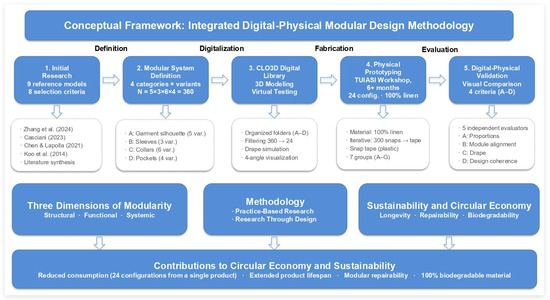
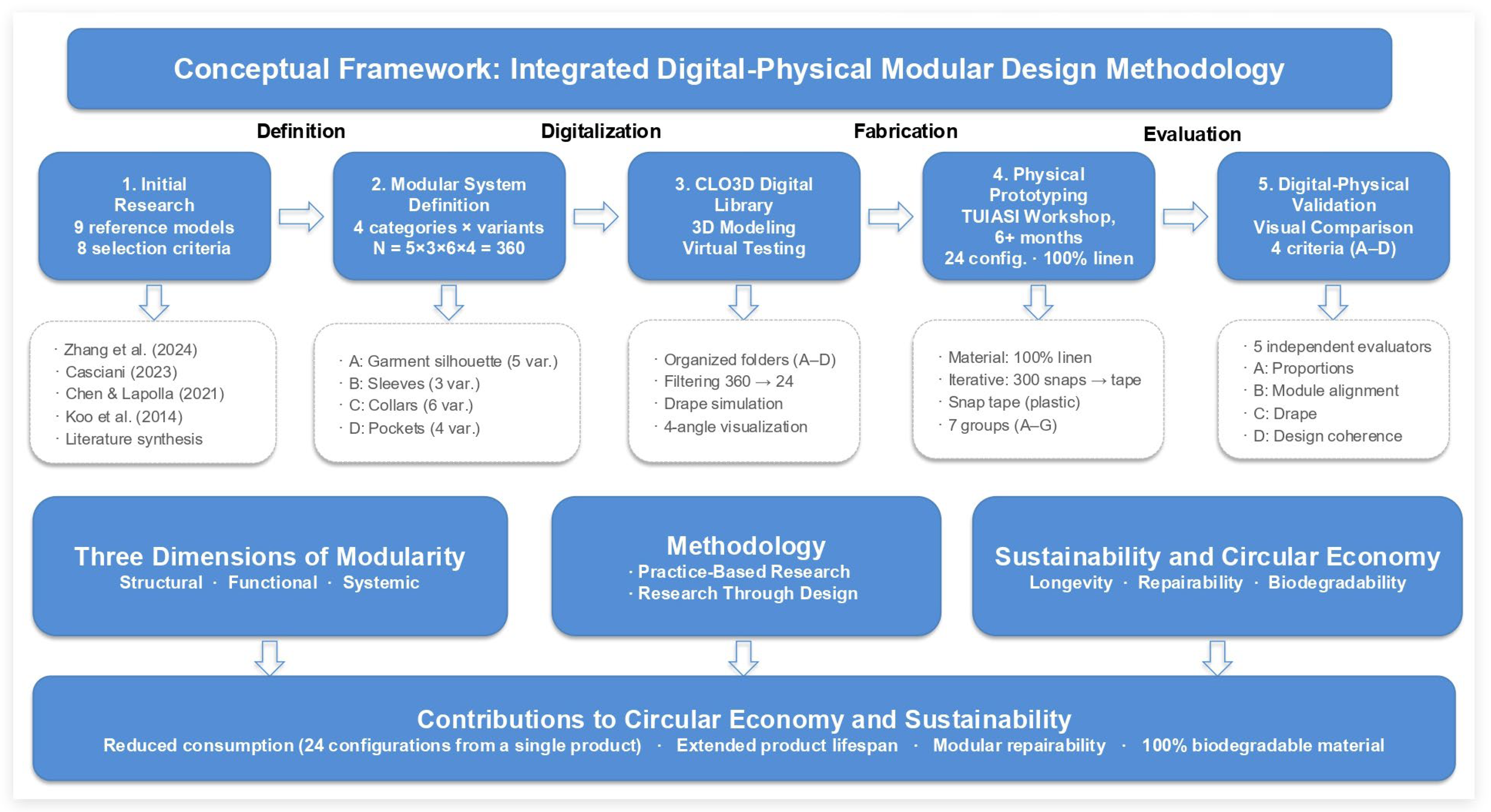
Figure 1 presents the conceptual framework of the paper.
Figure 1.
Conceptual framework of the integrated digital–physical methodology. The five-stage process (initial research → modular system definition → CLO3D digital library → physical prototyping → digital–physical validation) is grounded in three theoretical foundations: the three dimensions of modularity, practice-based research, and circular economy principles. The initial research stage builds on prior work by Zhang et al. (2024) [8], Chen and Lapolla (2021) [11], Casciani (2023) [12], and Koo et al. (2014) [21], as well as a broader literature synthesis [1,2,3,4,5,6,7,8,9,10,11,12,13,14,15,16,17,18,19,20,21,22,23,24,25,26,27,28,29,30,31,32,33,34,35,36,37,38,39,40,41].
2. Materials and Methods
This research adopts a practice-based approach, combining the exploratory study of existing models on the market, the combinatorial calculation of modular variants, digital prototyping in CLO3D (Version 2026.0.202; CLO Virtual Fashion Inc., Seoul, Republic of Korea) and the physical prototype realization. This approach is in agreement with methodologies used in the field: Chen and Lapolla (2021) used a practice-based methodology with physical experimentation [9], and Wallin (2025) demonstrated the value of practice-based research in sustainable design by a integrating digital workflow with physical prototyping sessions [18].
2.1. Initial Research and Model Selection
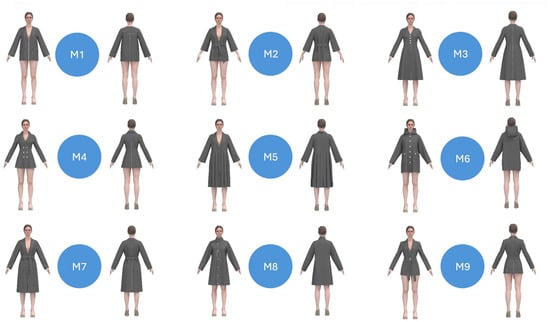
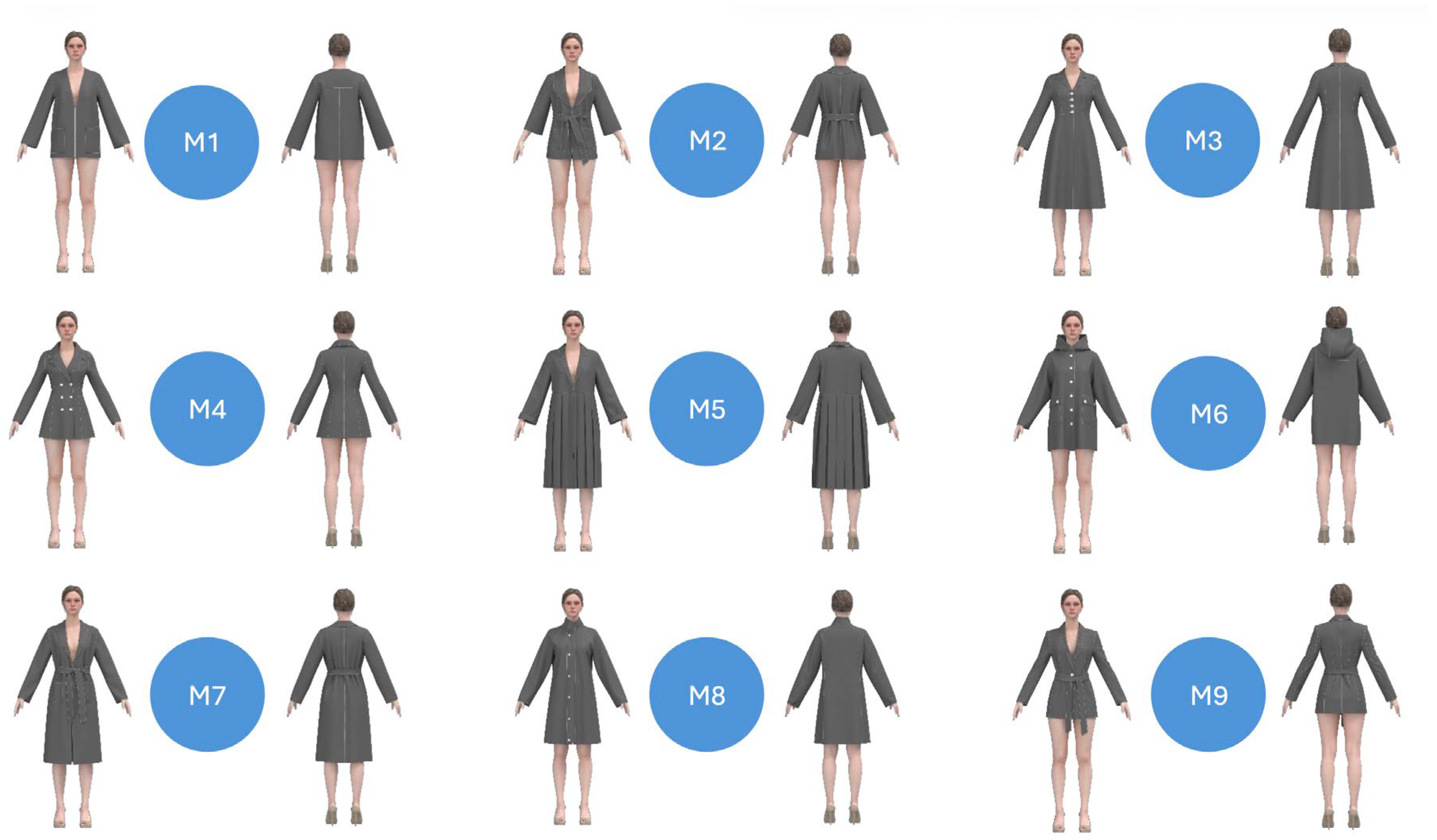
In order to create the modular product, a collection of nine reference models was developed through an exploratory market research process, using publicly available visual references from international fashion brands and local retail stores (Figure 2). These models were not generated in CLO3D and were not taken from a pre-existing scientific dataset. They were selected by the authors because they presented construction features or silhouettes relevant to modular and transformable fashion design that could be reinterpreted into modular configurations. The nine models were not intended to represent an exhaustive mapping of the entire state of the art in modular fashion. Rather, they were selected as representative examples of current market-oriented approaches to modular and transformable design. Therefore, the models served as a conceptual and analytical benchmark for identifying recurring modular design principles that could inform the development of the proposed modular clothing system.
Figure 2.
Reference clothing models selected through exploratory market research: M1, M2, M4 and M9 (women’s blazers); M3, M5 and M7 (women’s dresses); M6 and M8 (women’s jackets).
The collection includes models of different clothing products (jackets, dresses, and blazers). These models present an adaptable construction that allows them to be reinterpreted and adjusted to obtain modular and versatile variants suitable for extensive and adaptable use.
The relationship between the nine reference models and the modular elements later presented in Section 3.2 is conceptual and methodological. The reference models were analyzed in order to identify recurrent modular features, including detachable sleeves, removable lower modules, transformable silhouettes, visible connection systems, decorative–functional details and seasonal adaptability. These features informed the definition of the four modular categories used in the study: product silhouette, sleeves, collars and pockets. However, the modular elements presented in Table 1 were not directly copied from the reference models; they were developed by the authors as original design components adapted to the proposed vest-based modular system.
The models differ according to the number of components, length and construction details. Eight selection criteria were defined: (A) aesthetics and style; (B) transformation of the jacket into a vest; (C) adaptation to the season; (D) daily use; (E) presence of visible modular construction elements harmonized with the design lines; (F) making the product from multiple modular elements; (G) accent of modularity in the termination line area; (H) detachable product elements as design details. These criteria supported the selection and interpretation of the reference models and guided the development of the proposed versatile modular clothing product.
2.2. Defining the Modular System
Four categories of modular elements (A–D) with specific variants were structured, according to the three dimensions of modularity proposed by Zhang et al. (2024) [6]: structure (removable physical components: product silhouette, sleeves, collars, and pockets), function (each element fulfills a specific role: basic shape, arm coverage, neck finish, and functionality) and system (standardized interfaces: individual snaps and snap fastener tapes that allow interchangeability).
Using the number of modular elements as initial data, the theoretical number of diversification options for the given product assortment can be calculated (Equation (1)):
N = A × B × C × D = 5 × 3 × 6 × 4 = 360
The number 360 represents the theoretical total of possible combinations, without taking into account practical constraints. In reality, not all of these variants are feasible, for two main reasons: on the one hand, the correlation between the different construction characteristics of the product must be respected; on the other hand, fundamental aesthetic principles must be respected, such as the harmony of proportions and the coherence of the overall composition of the item. Therefore, a significant part of these theoretical combinations was eliminated, obtaining a set of 24 viable configurations. The selection of the 24 feasible configurations from the 360 theoretical combinations was carried out through a three-stage filtering process.
First, combinations with structural incompatibilities were eliminated, particularly those in which attachment points overlapped, modules interfered with each other, or fastening systems could not be applied simultaneously.
Second, combinations that generated aesthetic imbalance, excessive volume, disproportionate silhouettes or incoherent design lines were excluded. Third, the remaining configurations were assessed in terms of practical functionality, including ease of dressing, attachment–detachment logic and expected wearing comfort. Only the combinations that satisfied all three criteria were retained for digital development in CLO3D and physical validation.
2.3. Digital Library Development in CLO3D
A digital library is a virtual space where materials are brought together in electronic format. To create the digital library dedicated to versatile modular models in this study, the CLO3D software [15] was used, which offers the possibility of generating personalized models according to the wearer’s particularities and dimensions. The library developed in CLO3D organizes the previously defined modular elements, each with a precise role, shape and compatibilities. The structuring into accessible categories allows for the rapid generation of versatile variants, digital simulation and immediate evaluation of the functionality and stability of each combination. The library was organized hierarchically: the main folder contains subfolders corresponding to the categories (A–D), each including models of all variants in the respective category, plus additional folders for reference components (stitch patterns and thread colors), materials (290 g/m2 and 180 g/m2 linen simulations) and completed configurations (24 complete models).
Material calibration and parameter adjustment in CLO3D were performed by selecting digital fabrics according to the physical composition and mass per unit area of the prototype fabrics. This enabled the use of appropriate material presets with predefined physical properties, including stretch, bending and buckling behavior. In addition, the friction parameter was adjusted in CLO3D to control textile layer interaction and fold stability during simulation. For the 290 g/m2 linen fabric, a friction value of 30 was used, reflecting its denser and less slippery surface, which generated more stable folds and reduced layer slippage. For the 180 g/m2 linen fabric, a friction value of 20 was applied, corresponding to its lower mass per unit area and more flexible drape behavior. These adjustments improved the visual correspondence between the simulated material behavior and the physical prototype.
Each visually created modular element is also supported by a construction pattern, which allows us to easily obtain the pattern set for each versatile model. The digital structure and the physical structure are developed in parallel, so that any variation in shape, detail or proportion can be immediately translated into patterns usable in production or prototyping. This approach aligns with the digital library concepts proposed by Jung and Istook (2020) [16] and the virtual instructional library methodology of Odhiambo et al. (2024) [17].
An essential advantage of the digital library is its open structure, which allows the content to be supplemented, modified and adapted according to technological developments and user feedback. Thus, the library becomes a flexible tool that can be continuously updated and easily integrated into the design process.
2.4. Realization of the Physical Prototype
The digital and physical realization of the modular clothing prototype was carried out entirely by the research team in the Creation and Design Laboratory of the Faculty of Industrial Design and Business Management of the “Gheorghe Asachi” Technical University of Iași. The development process took place over a period of six months and included all the stages necessary for the transition from the digitally designed product to the finished product: transposing the CLO3D patterns into 1:1 scale patterns, cutting the linen fabrics in the two weights (290 gsm and 180 gsm), making each component module (vest, component modules, and sleeves), and applying the attachment–detachment systems, as well as the manual sewing of the natural shell buttons with a decorative role. The extended duration of the process reflects the complexity specific to the digital–physical transition in modular design, where each module must be made not only as an individual functional element but also as a compatible part of a wider system of interchangeable components.
The materials used were chosen to maintain the sustainable nature of the product: 100% linen fabrics in two weights—290 gsm for the front of the product and 180 gsm for the back—selected for biodegradability and low environmental impact [27,28,29]; natural shell buttons, hand-sewn onto the product, serving an aesthetic and decorative role, to add aesthetic value. Linen was selected as the only textile material in this study for both sustainability-related and methodological reasons. From a sustainability perspective, linen is a natural fiber associated with biodegradability, relatively low water requirements and suitability for long-lasting garments. From a methodological perspective, using a single fiber type allowed the study to isolate the influence of modular construction and the digital–physical transition without introducing additional variability caused by different textile materials. The two fabric weights, 290 gsm and 180 gsm, were selected to ensure both structural stability for the modular components and comfort in areas requiring lower thickness.
Both the digital and physical products were developed for size EU 36/S, corresponding to a height of 170 cm, a bust circumference of 84 cm, a waist circumference of 66 cm, and a hip circumference of 90 cm. These measurements were used to ensure dimensional consistency between the CLO3D simulation and the physical prototype.
The attachment system was one of the major challenges of the manufacturing process. The initial version required the use of approximately 300 individual snaps for the complete assembly (vest, module components and sleeve variants). This solution proved impractical for two reasons: on the one hand, sewing 300 snaps individually required excessive labor time and had a high difficulty of execution; on the other hand, assembling and disassembling the parts by the user became cumbersome and time-consuming. The solution adopted was the use of snap fastener tapes to attach the parts, which significantly reduced both the manufacturing time and the user’s effort in configuring the product. For the removable sleeves, the snaps were sewn individually by hand on the shoulder and sleeve necklines, since these attachment points require positional precision that precludes the use of tape. Both types of attachment systems ensure module compatibility, consistent with the framework of Zhang et al. (2024) [6]. Table 1 presents the structure of the modular clothing system with all categories of modular components.
Table 1.
Structure of the modular clothing system: the identified categories of modular components.
2.5. Digital–Physical Validation Methodology
A systematic visual comparison was performed between the CLO3D models and the physical product for each configuration group. The comparison explicitly assessed four criteria: (A) accuracy of dimensions and proportions—verifying that the physical dimensions correspond to the digital ones; (B) position and alignment of modular components—verifying that the snaps are positioned correctly and the modules attach symmetrically; (C) appearance and drape of the material—observing how the physical linen drapes compared to the CLO3D simulation; and (D) aesthetic and design coherence—verifying that the physical configuration faithfully reproduces the design intent from the CLO3D simulation (proportions, visual balance, and overall aesthetic expression). In this study, drape quality was assessed through structured visual observation rather than direct geometric measurement. The observable indicators considered were the formation and distribution of folds, the position and depth of fabric waves, the degree of fabric collapse or stiffness, the visual volume created by overlapping layers, the smoothness of the material fall, and the similarity between the simulated and physical behavior of the linen fabric.
The concordance evaluation was carried out by five independent evaluators from the Faculty of Industrial Design and Business Management, “Gheorghe Asachi” Technical University of Iași, using a structured grid with the scale: 3 = high concordance (true digital–physical correspondence), 2 = moderate concordance (visible but acceptable differences), 1 = low concordance (significant discrepancy). Complete photographic documentation was performed from four angles per configuration: front, back, left side, and right side. The validation methodology is supported by the results of Duong et al. (2024), who demonstrated significant correlations between virtual drape measurements in CLO3D and physical ones, especially for medium- and heavy-weight fabrics—the category in which the linen fabrics used in our study fall [19].
3. Results
3.1. Initial Research Results
The nine reference models analyzed (Figure 2) present three distinct levels of modularity: modularity at the level of individual elements (detachable pockets and collars), modularity at the level of partial combinations (two or more modular components that modify the basic silhouette), and modularity at the level of complete systems (interchangeable components that enable completely different silhouettes). The eight selection criteria (A–H) differentiated models with high potential for modular adaptation from those with purely decorative structures: the most relevant models for the present study were those that integrate multiple modular elements (criterion F) with visible construction solutions harmonized with the design lines (criterion E).
3.2. The Modular System Defined
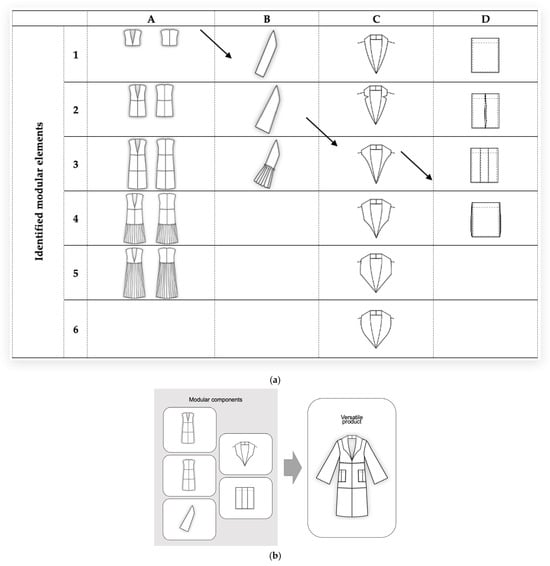
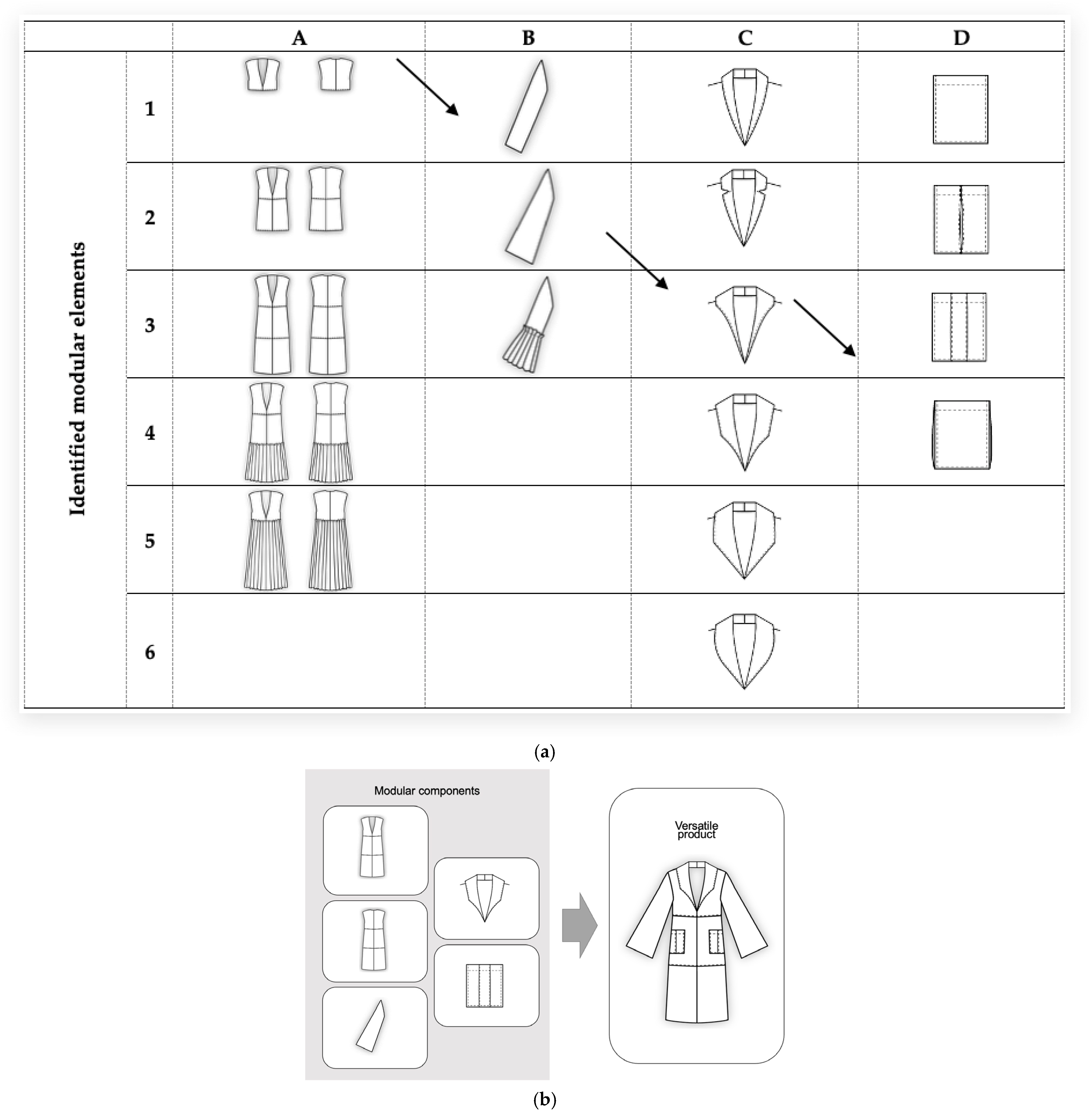
From the four defined categories of modular elements (A–D), the combinatorial calculation generated 360 theoretical variants (Formula 1: N = 5 × 3 × 6 × 4 = 360), of which 24 were validated as structurally feasible and aesthetically coherent, resulting in a yield of approximately 6.7%. The structure of the categories is presented in Figure 3a: category A represents the silhouette of the product (front and back, five variants), category B includes the sleeve variants (three variants), category C the collar variants (six variants), and category D the pocket variants (four variants).
Figure 3.
(a) Modular elements used in the development of the proposed versatile models. (b) Process of creating the new modular configurations.
The filtering from 360 to 24 configurations resulted from the application of three criteria: construction compatibility between the selected elements (the possibility of simultaneously attaching all modules without conflicts at fixing points), the visual coherence of the combination (harmony of proportions and balance of volumes), and practical functionality (ease of dressing/undressing and wearing comfort). For example, the combination A1 + B1 + C2 + D3 generates a complete clothing configuration in which each element contributes to the final shape of the product. The detailed criteria applied at each of the three filtering stages (construction compatibility, visual coherence and practical functionality) are described in Section 2.2; in the present section, only the resulting set of 24 feasible configurations is reported.
3.3. CLO3D Digital Library
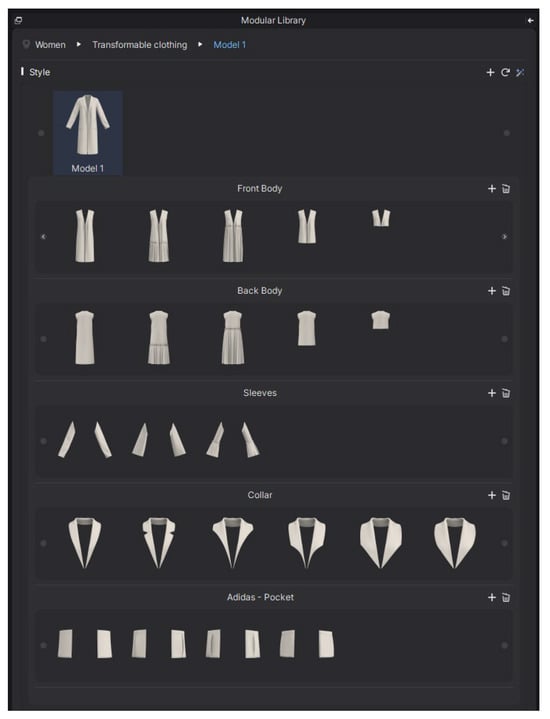
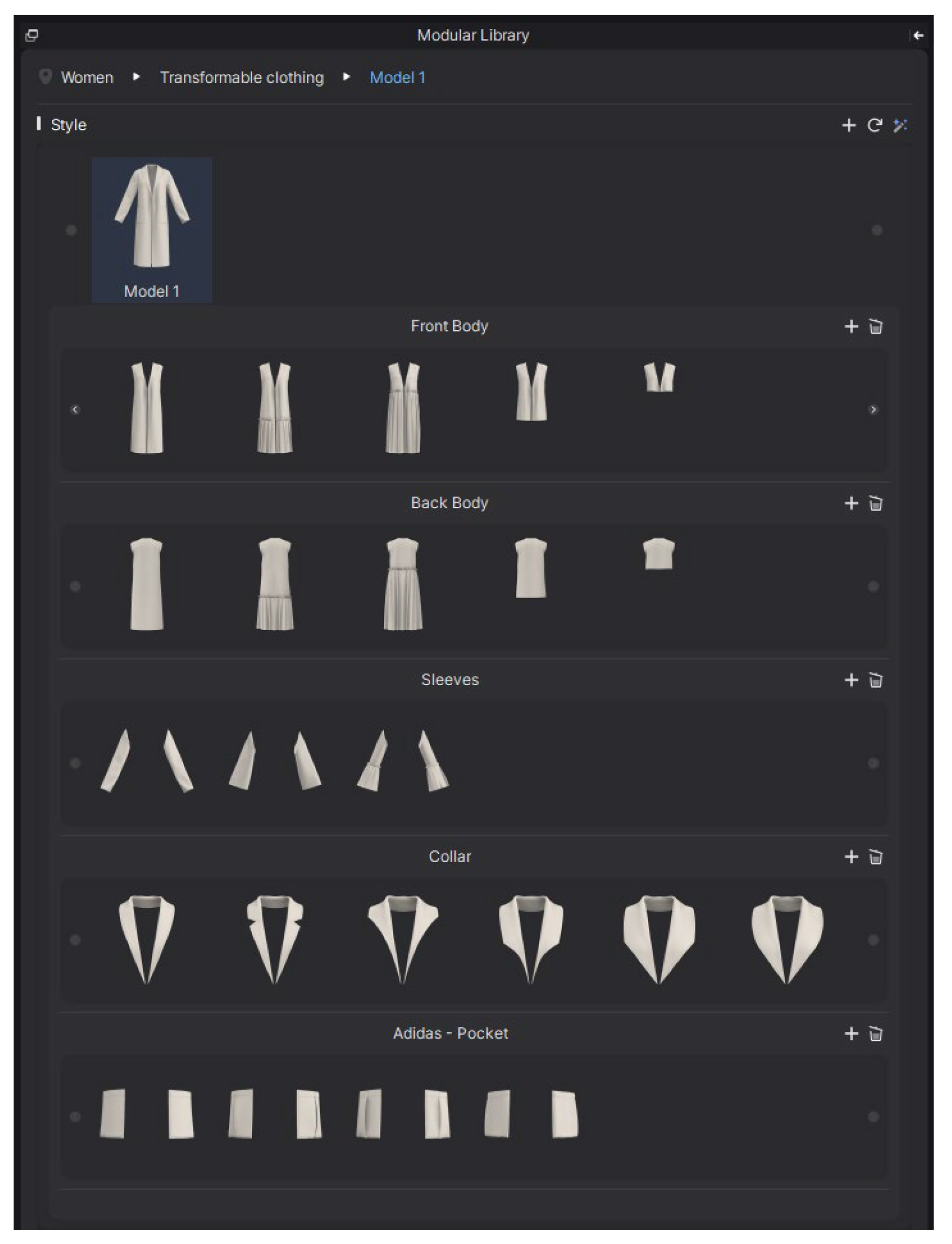
The CLO3D digital library (Figure 4) contains 18 modular elements organized into four categories (A–D), each with an associated construction pattern, and material simulations (linen 290 g/m2 and 180 g/m2) with 24 completed configurations.
Figure 4.
Hierarchical organization of the CLO3D digital library: main folder with category subfolders, modular components, material simulations (290 g/m2 and 180 g/m2 linen) and the 24 completed configurations.
The virtual testing eliminated 336 of the 360 theoretical combinations. The analysis identified three categories of problems: aesthetically, the addition of collars and pockets overloaded the product, contradicting the minimalist direction of the design; in terms of proportions, these elements unbalanced the overall composition; and structurally, the pockets could not be attached using the snap fastener system.
The library structure presents two distinct functional advantages: the parallel development of visual models and construction patterns—which allows for the immediate transposition of any design variation into production-ready patterns—and the hierarchical organization into categorical subfolders, which facilitates the rapid retrieval of specific module components for new combinations.
3.4. Physical Prototype—24 Validated Configurations
The physical prototype realized—vest, four module components and three sleeve variants—generates 24 functional wearing combinations, confirmed by full testing of all configurations (Table 2). The product was made of 100% linen fabrics (290 gsm for the front of the product and 180 gsm for the back of the product), with snap fastener tape for attaching module components, individually hand-sewn snaps on the shoulder neckline and for the removable sleeves, and natural shell buttons with an aesthetic and decorative role.
Table 2.
Configuration variants of the modular clothing product, grouped by category.
The manufacturing process highlighted three relevant findings: (1) the fabric behavior at the attachment points differs slightly from the digital simulation, especially in the added thickness from the application of the snap fastener tapes; (2) the initial solution of approximately 300 individual snaps proved impractical, being replaced by snap fastener tape, a solution that significantly reduced both manufacturing time and user effort; (3) minor adjustments to the positioning of the snaps on the neckline were necessary to ensure the optimal fit of the detachable sleeves.
By combining the basic piece—the vest—with the four removable modules and the three sleeve variants, the clothing product allows for the creation of 24 different configurations. The structure of these combinations is presented in Table 3.
Table 3.
Summary of the 24 modular clothing product configurations, grouped by category.
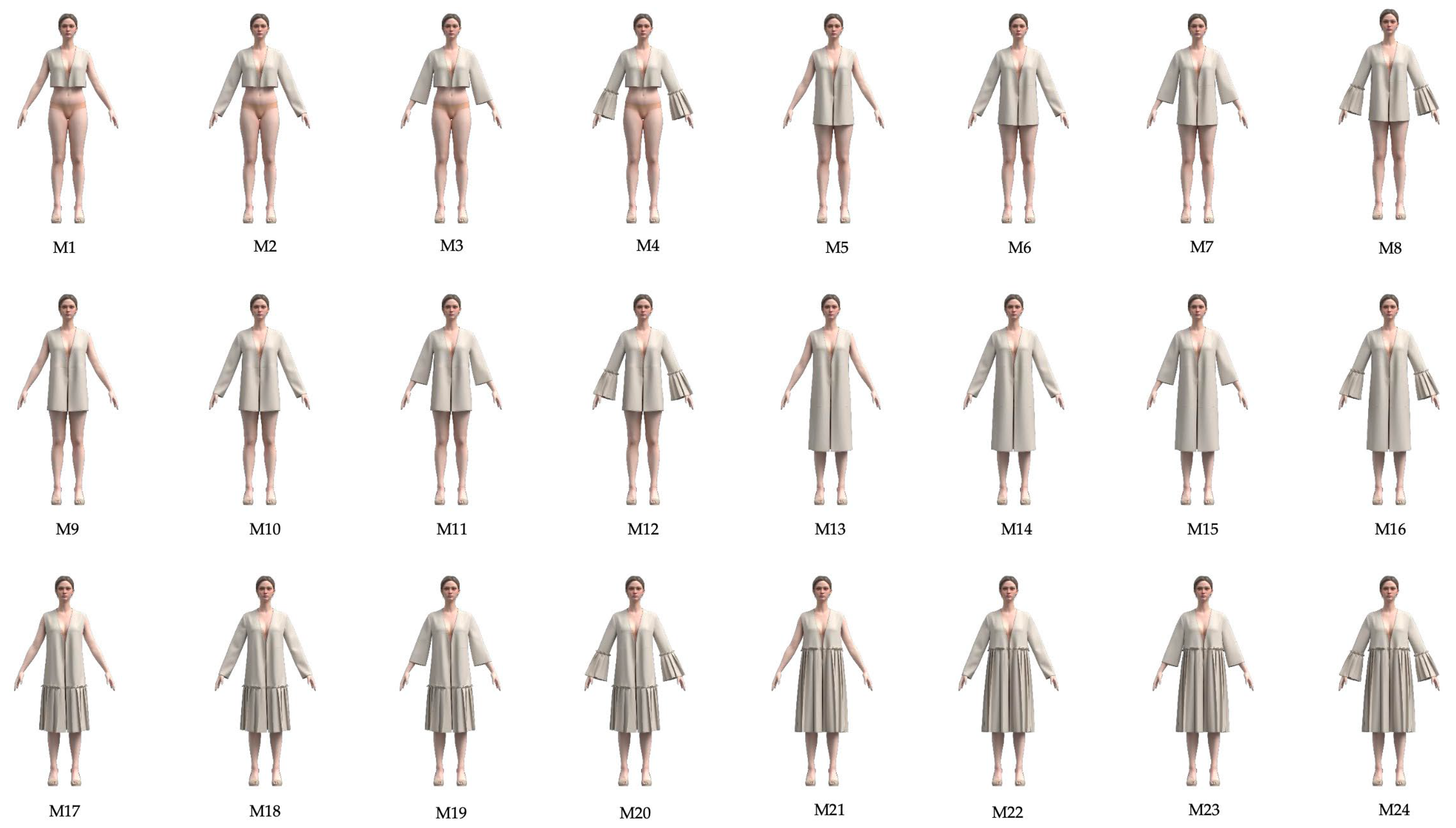
Figure 5 presents the CLO3D visualization of models M1–M24.
Figure 5.
CLO3D visualization of the 24 modular configurations presented in Table 3.
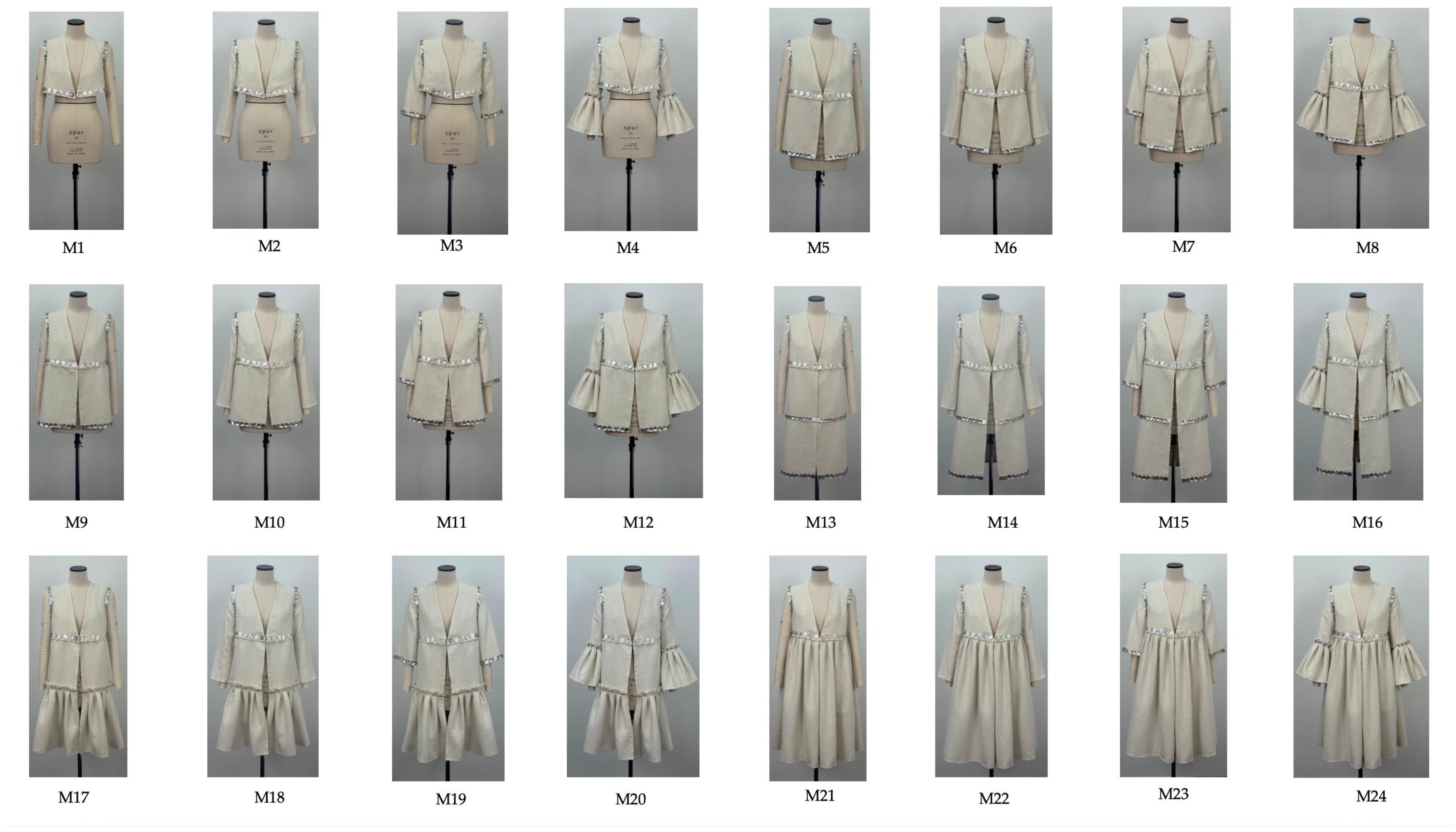
The 24 configuration variants of the physically realized modular clothing product are presented in Figure 6.
Figure 6.
Physical prototype shown in the 24 wearing configurations listed in Table 3.
3.5. Digital–Physical Validation Results
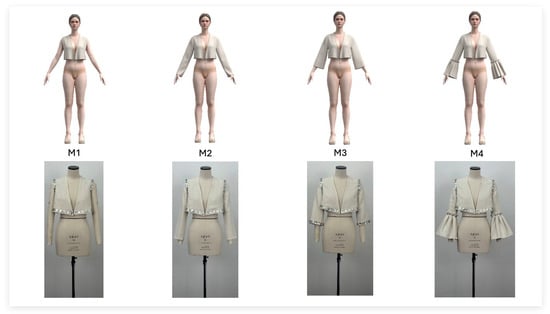
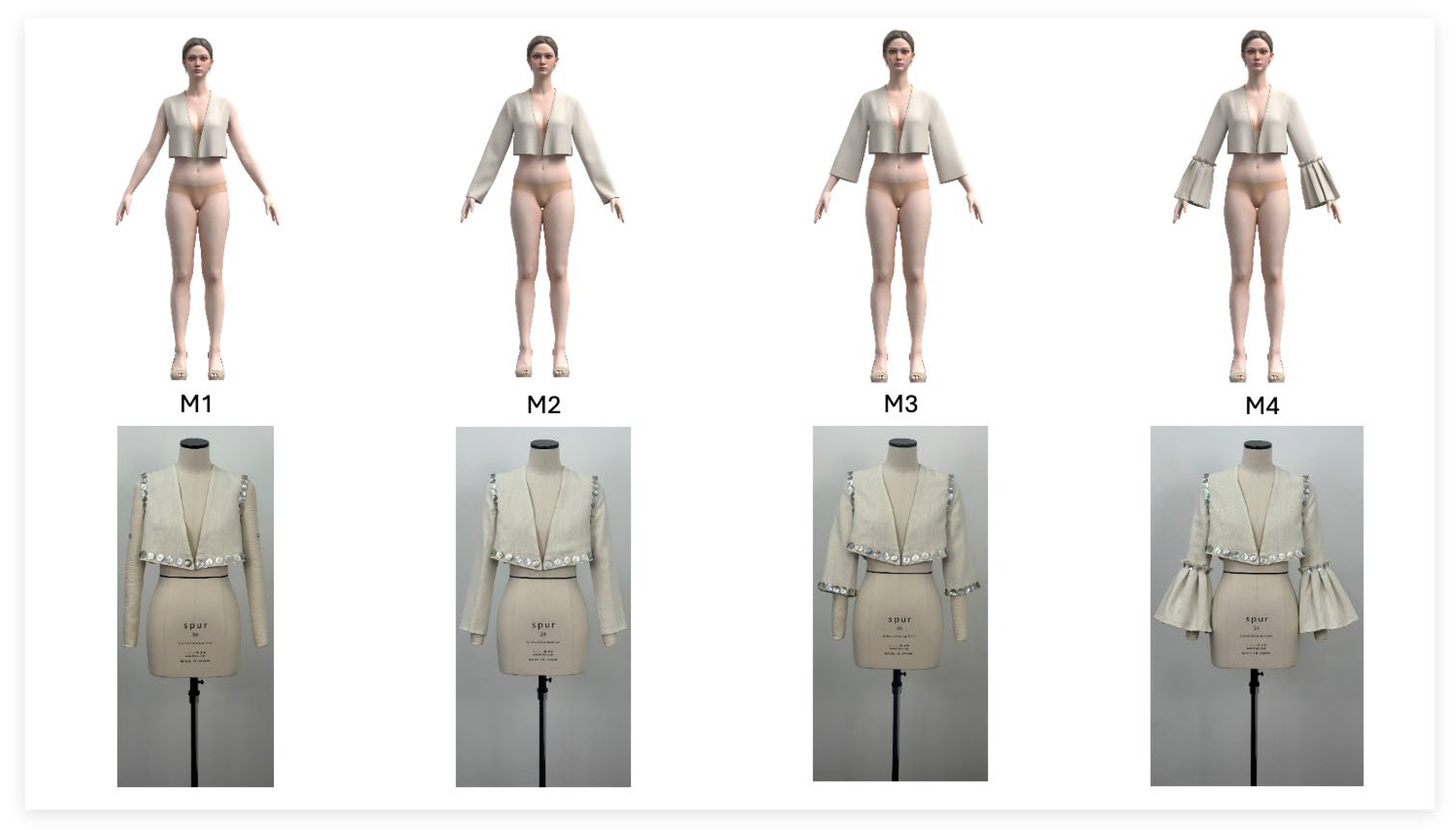
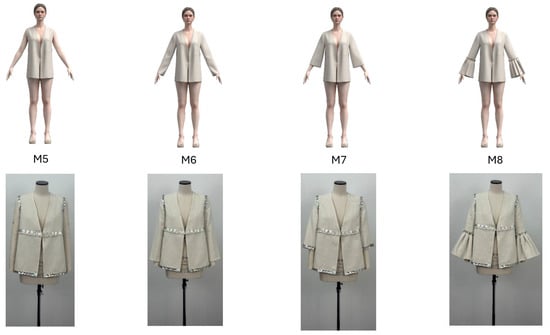
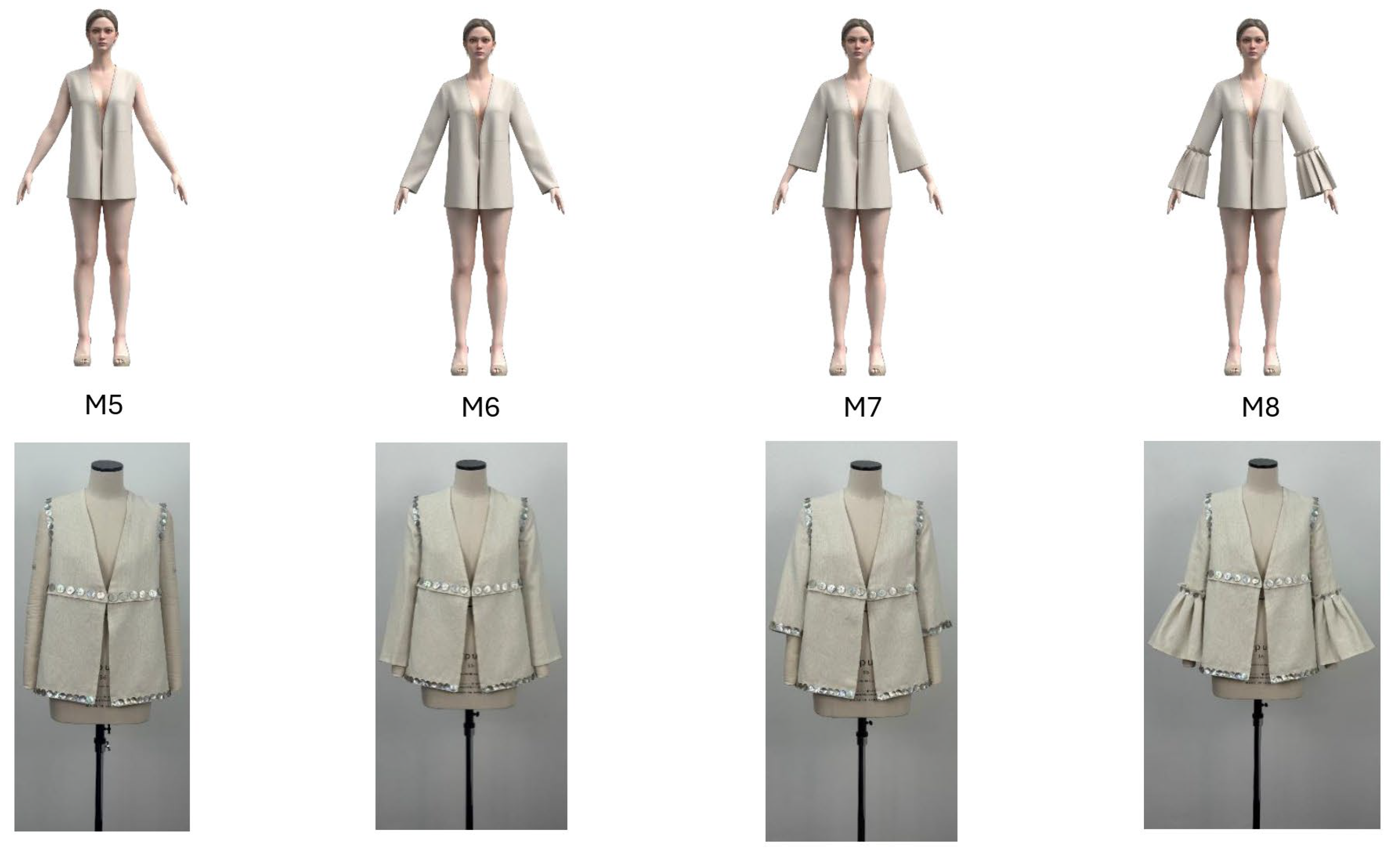
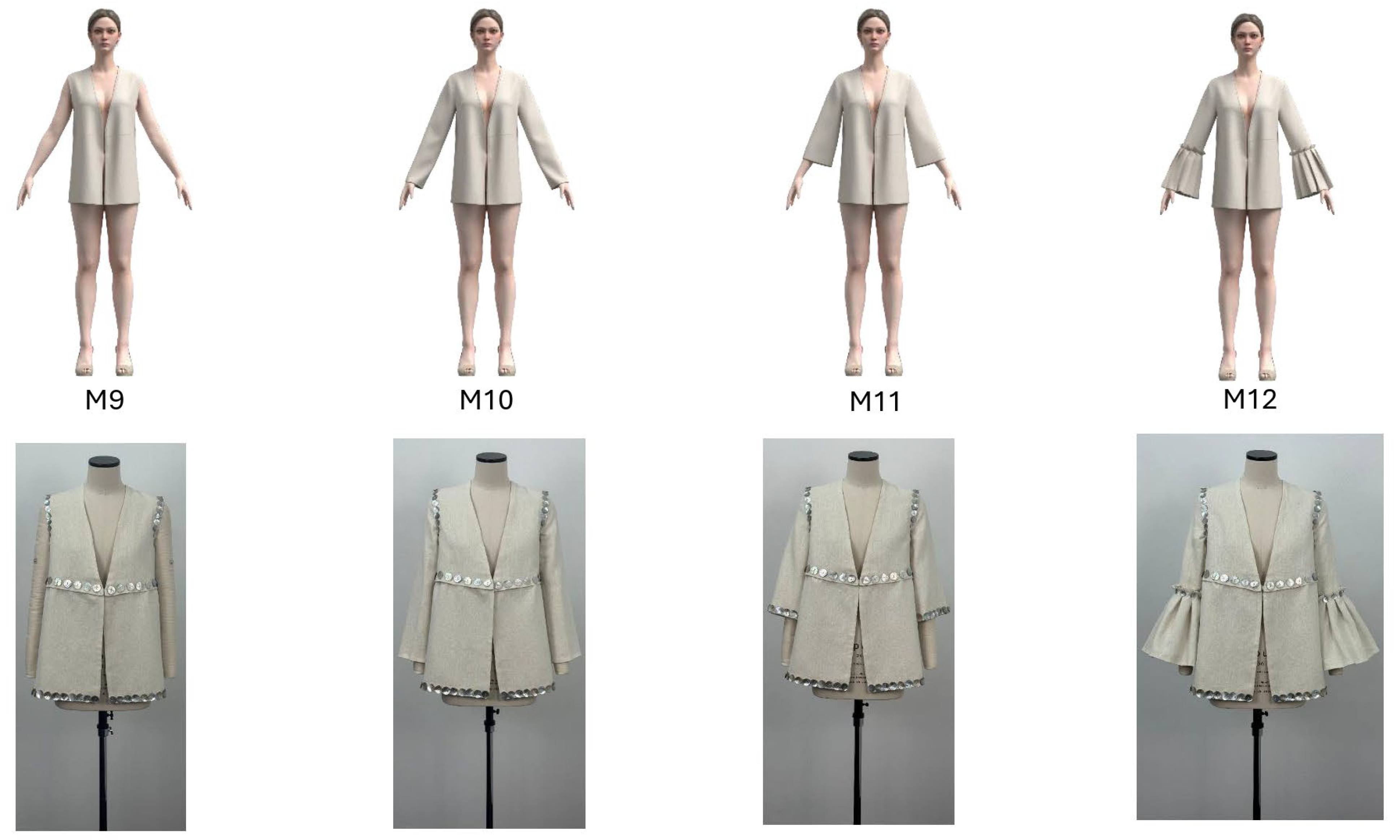
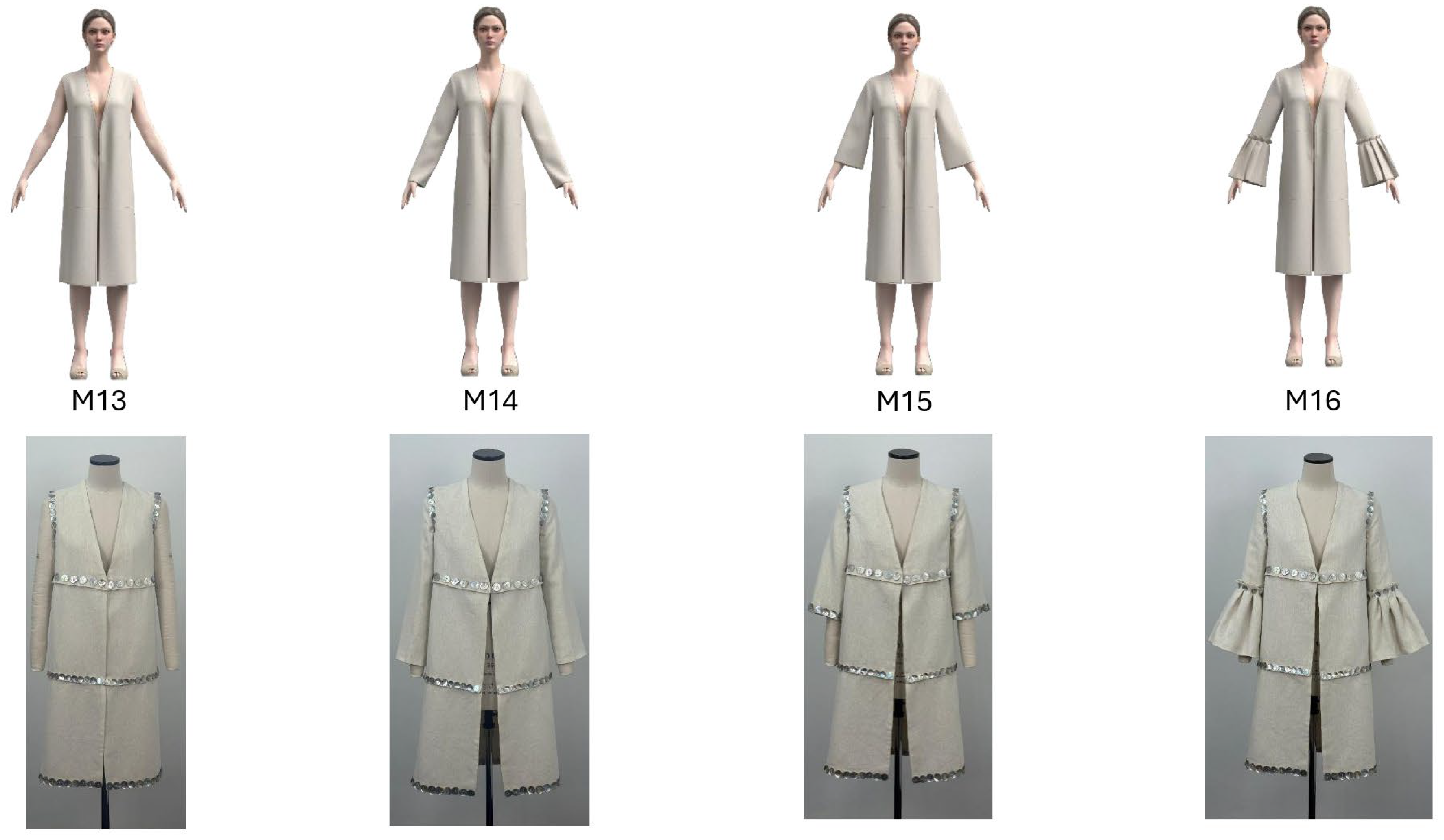
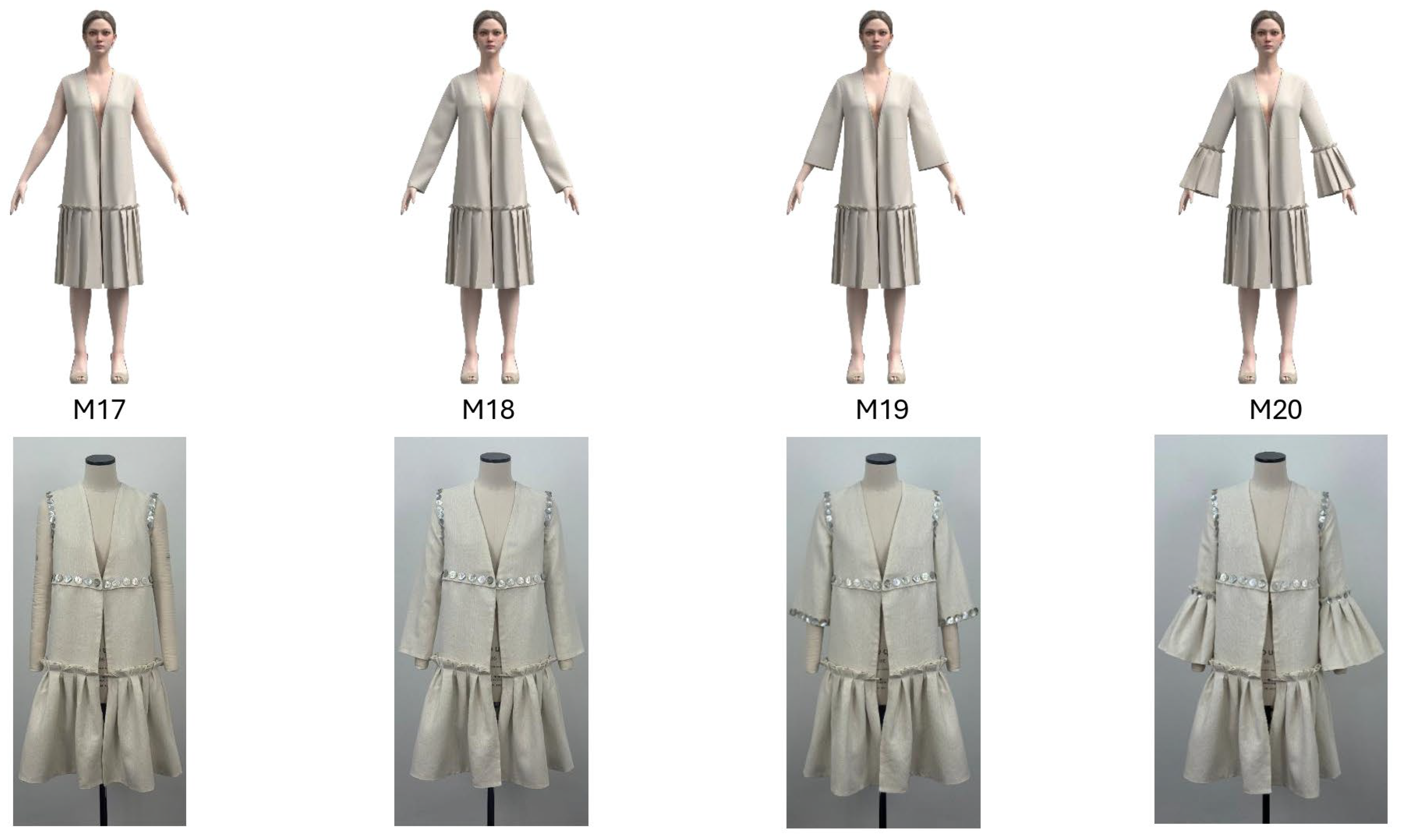
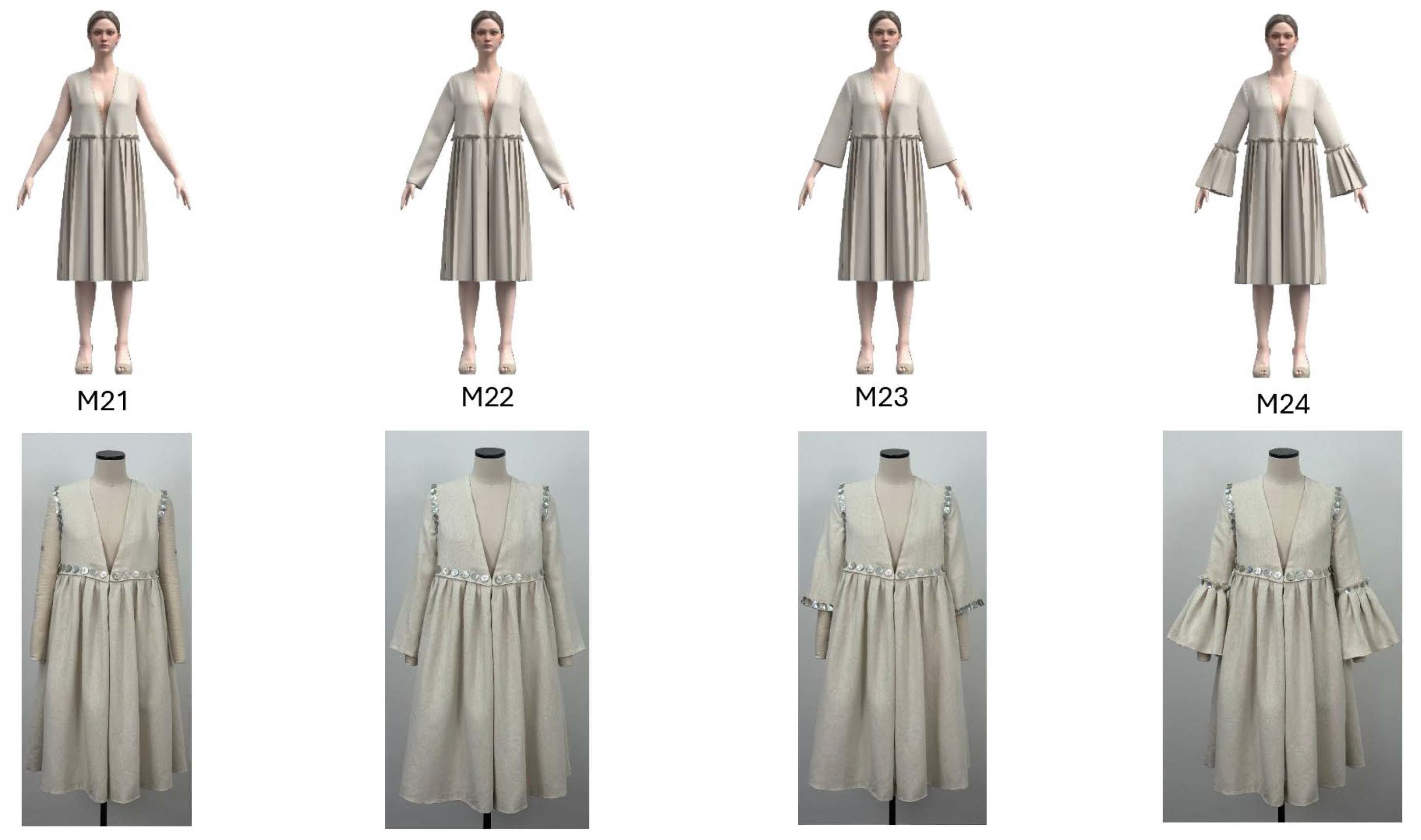
The evaluation was carried out by five independent evaluators based on the photographic documentation of the 24 configurations. Each evaluator assessed each configuration according to four criteria, resulting in 480 individual criterion-level scores. Thus, the validation was based on five expert evaluations operationalized through a structured scoring grid. The results summarized by criteria are presented in Table 4. The comparative photographic documentation is presented in Figure 7, Figure 8, Figure 9, Figure 10, Figure 11 and Figure 12.
Table 4.
Inter-rater agreement statistics and mean criterion scores (n = 24 configurations, 5 evaluators).
Figure 7.
Digital–physical visual comparison of configurations M1–M4: M1 (basic var ant); M2 (vest with sleeve 1); M3 (vest with sleeve 2); M4 (vest with sleeve 3).
Figure 8.
Digital–physical visual comparison of configurations M5–M8: M5 (vest with module 1); M6 (vest with module 1 and sleeve 1); M7 (vest with module 1 and sleeve 2); M8 (vest with module 1 and sleeve 3).
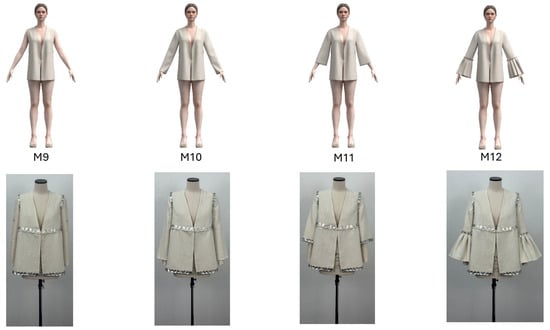
Figure 9.
Digital–physical visual comparison of configurations M9–M12: M9 (vest with module 2); M10 (vest with module 2 and sleeve 1); M11 (vest with module 2 and sleeve 2); M12 (vest with module 2 and sleeve 3).
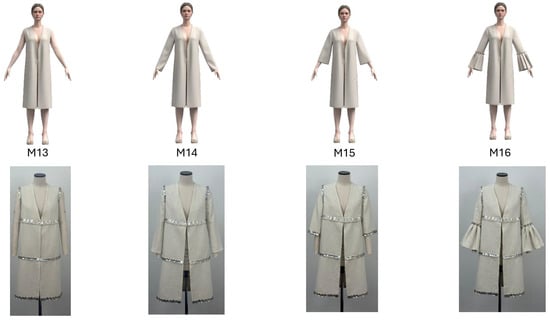
Figure 10.
Digital–physical visual comparison of configurations M13–M16: M13 (vest with modules 1 and 2); M14 (vest with modules 1 and 2 and sleeve 1); M15 (vest with modules 1 and 2 and sleeve 2); M16 (vest with modules 1 and 2 and sleeve 3).
Figure 11.
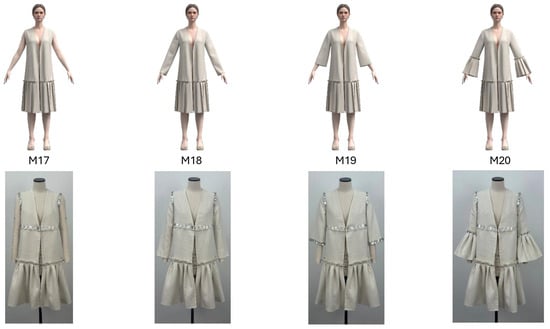
Digital–physical visual comparison of configurations M17–M20: M17 (vest with module 3); M18 (vest with module 3 and sleeve 1); M19 (vest with module 3 and sleeve 2); M20 (vest with module 3 and sleeve 3).
Figure 12.
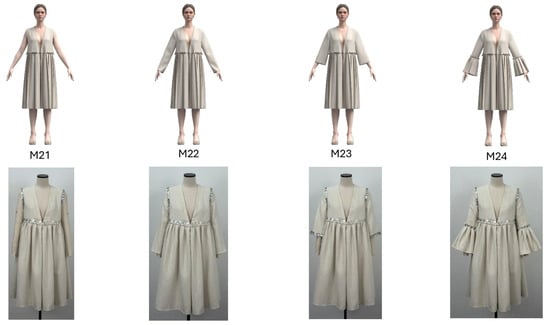
Digital–physical visual comparison of configurations M21–M24: M21 (vest with module 4); M22 (vest with module 4 and sleeve 1); M23 (vest with module 4 and sleeve 2); M24 (vest with module 4 and sleeve 3).
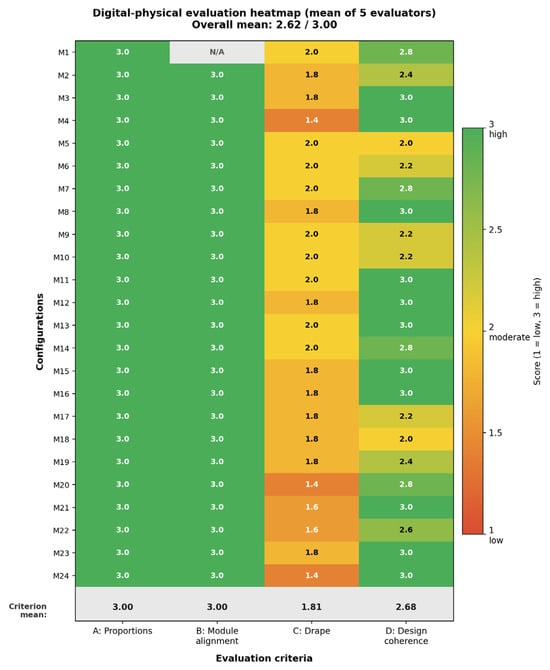
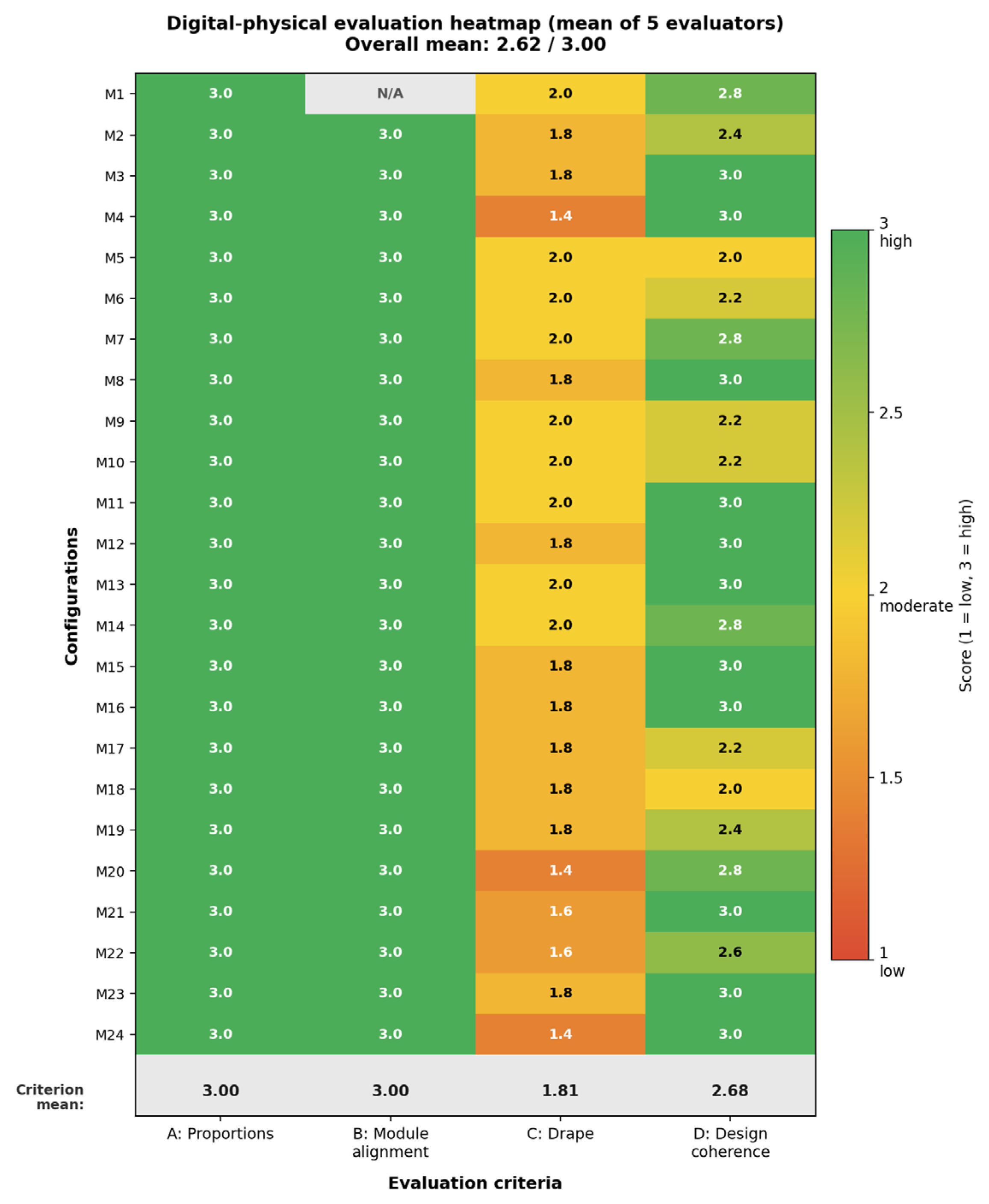
Criterion A (accuracy of dimensions and proportions) received the highest average score (3.00 out of 3), with 24 out of 24 configurations (100%) rated as having high concordance by all evaluators. Criterion B (position and alignment of module components) received an average score of 3.00, confirming the accuracy of the positioning of the snaps and individual snaps. Criterion C (appearance and drape of the material) received the lowest average score (1.81), reflecting the inherent differences between the digital simulation and the physical behavior of the linen fabric. Criterion D (aesthetic and design coherence) received an average score of 2.68.
Inter-rater agreement, calculated as the percentage of unanimous ratings (five out of five evaluators giving the same score), was 100% for criterion A, 100% for criterion B, 33.3% for criterion C and 54.2% for criterion D. The differences observed for criterion C are consistent with the findings of Duong et al. (2024) on the accuracy of draping simulation in CLO3D and its dependence on material parameters [19].
Figure 13 presents a heatmap of the average scores given by the five evaluators for all 24 configurations. The chromatic pattern highlights consistently high average scores for criteria A and B (full green), systematic limitations of the digital draping simulation for criterion C (yellow–orange areas), and moderate variability for criterion D (aesthetic coherence). Because the heatmap is based on average ratings, it does not directly measure inter-rater agreement; the latter is reported separately through the Fleiss’ Kappa coefficient in Table 4.
Figure 13.
Heatmap of digital–physical evaluation scores: averages of the 5 evaluators on the 24 configurations and 4 criteria (A, B, C, and D). Scale: 1 = low concordance (red), 2 = moderate (yellow), 3 = high (green). The gray “N/A” cell indicates the M1 configuration where criterion B does not apply (sleeveless model).
To quantify inter-rater agreement, the Fleiss’ Kappa coefficient was calculated for each criterion (Table 4). The overall value of the coefficient κ = 0.716 indicates a substantial agreement between evaluators [35], confirming the reliability of the assessment. While the heatmap (Figure 13) provides a visual summary of the average evaluator scores, it does not quantify inter-rater agreement; this is addressed quantitatively through the Fleiss’ Kappa coefficient reported in Table 4.
For each κ value, a 95% confidence interval was computed by non-parametric bootstrap resampling of configurations (10,000 replicates, percentile method); the bootstrap approach was preferred over the asymptotic variance [36], which is less reliable for the limited number of items (n = 24).
The 95% confidence interval [0.642, 0.787] is contained entirely within the “substantial agreement” range of the Landis & Koch (1977) scale [35], confirming that this classification is statistically robust.
Moreover, the 95% confidence interval for criterion C (κ = 0.037, 95% CI = [−0.093, +0.143]) includes zero, indicating that the observed inter-rater agreement on draping is not statistically distinguishable from chance agreement. This is consistent with the systematic limitations of the digital draping simulation reported in this section.
4. Discussion
This study presents an integrated methodology for the development of versatile modular clothing products that bridges digital prototyping and physical validation using sustainable materials. The discussion addresses the significance of the results in relation to the existing literature and their implications for sustainable fashion design.
4.1. Efficiency of Modular Design Based on the Digital Library
The 6.7% yield (24 out of 360 combinations—see Section 3.2) reflects the importance of construction and aesthetic constraints in modular design, confirming the observation of Zhang et al. (2025) that this area requires detailed planning and testing of compatibility between modules [8]. However, the 24 validated configurations demonstrate that a single clothing product can function as an effective “wardrobe multiplier” [20]. This result is particularly relevant in the context of the previous literature indicating increasing consumer interest in sustainable clothing and versatile products. However, the present study does not include consumer testing, Life Cycle Assessment or usage-phase modeling; therefore, consumer acceptance and quantified environmental benefits of the proposed modular product remain to be validated in future research.
Lin et al. (2025) proposed a computational approach to modular clothing design, using integer linear programming to decompose patterns into minimal reusable modules, which could further optimize the ratio between theoretical and feasible variants [37].
Çeğindir and Öz (2020) demonstrated that a single transformable dress model can generate up to 4096 theoretical combinations, highlighting the potential of modular design to diversify outfits from a single prototype [38]. These results suggest that the 360:24 ratio in the present study is not a limitation but a result of the choice to prioritize aesthetic coherence and construction feasibility.
4.2. Contribution of CLO3D and Digital Library
The CLO3D structured digital library extends the concept of digital fabric libraries [16] to comprehensive libraries of modular components. This approach aligns with Glogar et al. (2025), who identified digital technologies as essential enablers for sustainable design [11]. Parallel development of visual models and construction patterns within the library allows for the immediate translation of design variations into production-ready patterns, significantly reducing the design-to-production cycle. This finding supports the virtual training library approach of Odhiambo et al. (2024) [17] and the demonstrated effectiveness of CLO3D databases documented by Hartanto (2022) with 50 digitized patterns for the Lovadova brand [14].
The practical validation of CLO3D in the present study demonstrates that the software can significantly accelerate the design process, allowing the exploration of a much larger number of variations in the same time compared to traditional methods. Wallin (2025) emphasized in his practice-based research that CLO3D software generates not only material value (more efficient prototypes and waste reduction) but also immaterial value (design memory and emotional durability in the designer–product relationship) [18]. Donmezer et al. (2023) proposed that the integration of electronic libraries (e-libraries), digital human modeling and digital twins in closed-loop design systems could reduce the need for physical prototyping in the future [33]. Angelova (2025) identified seven unexplored niches for applying digital twins in the textile industry, including dynamic recycling simulation and predictive quality control, which could exponentially amplify the sustainable outcomes of modular design [34]. Over time, such a modular digital library can evolve into a collaborative platform, supporting innovation and reducing the need for physical prototypes.
4.3. Three Dimensions of Modularity in the Realized Prototype
The prototype successfully illustrates the three dimensions proposed by Zhang et al. (2024) [6]: the vest, the module components, and the sleeves function as removable physical components (structure); each module serves a specific role—base product, body extension, and arm coverage (function); and the snap fastener tape and individually sewn snaps provide standardized interfaces that enable interchangeability (system).
The structural dimension is manifested by the clear separation of the product into four categories of modular elements: the silhouette of the product (front and back) as a basic element, the detachable sleeves, the collars and the pockets. This hierarchy allows the elements to be combined independently without affecting the structural integrity of the basic product. From the perspective of the functional dimension, each element fulfills a distinct role within the ensemble: the silhouette provides the supporting structure and overall shape, sleeves extend coverage and vary the degree of formality, collars define the neckline and add visual diversity, and pockets contribute both functionally and aesthetically. The natural shell buttons, although not a modular category in their own right, add aesthetic value without altering the basic functionality.
The systemic dimension is achieved through modules; the snap fastener tape and individually sewn snaps on the sleeves allow any compatible module to be connected at predefined attachment points.
This contrasts with the interlocking geometric approach of Chen and Lapolla (2021) [9], where modules are connected through shape complementarity rather than attachment–detachment systems. Zhang et al. (2024) also identified the challenges of modular scalability—as the number of modules increases, so do the constraints of aesthetic and construction compatibility [8]. The present study confirms this observation by the 6.7% yield obtained (see Section 3.2), which reflects the natural filtering imposed by the requirements of visual and construction coherence. The result demonstrates that modular design is more flexible and easier to adapt to different design and production requirements but requires a rigorous methodology for selecting viable combinations.
4.4. Sustainable Materials and Their Implications
The selection of 100% linen fabrics is supported by several studies. Gonzalez et al. (2023) confirmed that linen has the lowest environmental impact of the fibers analyzed by the LCA (Life Cycle Assessment) method compared to conventional cotton, organic cotton and synthetic fibers [27]. Linen requires significantly less water in the cultivation process and does not depend on artificial irrigation in temperate areas, which reduces the water footprint of the final product. Hanc et al. (2025) demonstrated the complete degradation of linen fibers by vermicomposting in just two months [28], ensuring responsible management options at the end of the product’s life cycle. This property of rapid biodegradation is particularly relevant in the context of the fashion industry generating millions of tons of textile waste annually, much of which ends up in landfills [1,3].
The use of two different weights of fabric (290 gsm for the front of the pieces and 180 gsm for the back) was a design decision motivated both functionally and aesthetically. The higher weight provides structure and stability to the modular components, while the lower weight ensures comfort and reduces the overall volume of the overlapping layers. This differentiation also contributes to creating a subtle textural contrast that enriches the visual expression of the product.
Natural shell buttons reinforce the sustainability of the product, providing a natural, biodegradable alternative to the synthetic plastic fasteners frequently used in the fast fashion industry. Their role in the prototype is predominantly aesthetic and decorative, contributing to the perceived visual quality of the product. The plastic snap attachment system, although effective for modular functionality and ease of use, introduces a synthetic component whose long-term durability and end-of-life behavior require further investigation. Exploring alternatives such as biodegradable snaps or magnetic attachment systems could further improve the sustainability profile of the product [29]. Fonseca et al. (2023) highlighted the importance of assessing the full life cycle of clothing components, including accessories, not just the basic textile materials [1].
4.5. Implications for the Circular Economy
The central contribution of modular design to the circular economy consists in its potential to extend product utility by multiplying the number of possible wearing configurations from a single clothing item. Although the present study does not quantify environmental impact through LCA, the previous literature suggests that modular and repairable design strategies may contribute to reducing textile waste and carbon emissions [7,39]. In this context, the proposed modular product should be understood as a design-based sustainability strategy whose environmental benefits require future quantitative validation. This reduction is consistent with broader life cycle evidence: systematic reviews of clothing LCI report substantial reductions in greenhouse gas emissions, water use and energy consumption when garment lifespans are extended through reuse and recirculation strategies [40], while second-hand trade has been shown to reduce emissions by approximately 90% compared with new production [3]. Modular design allows for similar benefits to be obtained by diversifying the use of the same product, rather than purchasing new items, in line with the principles of regenerative fashion proposed by Lang et al. (2019) [5].
Beyond quantitative reduction, modularity contributes to extending the life cycle through two complementary mechanisms. On the one hand, repairability—in the event of damage to a single component, it can be replaced individually without abandoning the entire product, reducing the volume of textile waste generated. On the other hand, the increased capacity to maintain the product in use—through functional and aesthetic versatility—delays the moment when the consumer perceives the product as psychologically obsolete.
These mechanisms are essential in the context where the transition to circular models requires not only design innovation but also investments in consumer education [31,32] and the integration of ecodesign principles from the design phase [4]. Sandin et al. (2025), in their comprehensive review of textile reuse and recycling, demonstrated that these strategies can substantially reduce the environmental burden of the textile sector [41], and the present study contributes to this transition by demonstrating in practice a replicable methodology.
4.6. Limitations
Several limitations must be acknowledged: (1) the study focuses on a single type of product (a modular vest), such that generalization to other clothing categories remains to be validated; (2) the 24 physically realized combinations represent a limited subset of the 360 theoretical possibilities; (3) a study of the durability of the attachment system was not performed; (4) the digital–physical validation is based on the structured evaluation of photographic documentation by five evaluators, without precise instrumental measurements (e.g., comparative 3D scanning); (5) a comparison of production costs between modular and conventional products has not been carried out.
This study does not include a complete Life Cycle Assessment or measured water and energy consumption data comparing the modular garment with an equivalent conventional collection. Therefore, the environmental benefits are discussed as design-based sustainability potential, supported by the modularity principle, material selection and the previous literature, rather than as directly quantified environmental impacts. A comparative LCA including raw material production, manufacturing, use phase, maintenance, durability and end-of-life scenarios is required in future research.
The digital–physical validation was conducted with five expert evaluators and focused on the technical and design concordance between the CLO3D simulations and the physical prototype. Therefore, the validation should be interpreted as an exploratory expert-based assessment rather than as a consumer acceptance study. End-user testing was not included at this stage; consequently, aspects such as ease of assembly and disassembly, perceived comfort, wearing experience, the usability of the attachment systems and purchase intention remain to be validated in future research.
Direct curvature measurement was not performed in this study because the validation was conceived as an initial visual comparison, not as a calibrated geometric image analysis. Future research can address this aspect through a dedicated protocol, involving mounting each configuration on a mannequin, a fixed camera geometry, calibration with a reference scale, standardized illumination and image-analysis procedures.
5. Conclusions
This research demonstrates that an integrated digital–physical approach, using a digital library structured in CLO3D, is a viable and efficient methodology for the development of versatile modular clothing products. The organization into four categories of modular elements with associated construction patterns allows for the systematic generation of versatile variants, confirming the potential of digital technologies in sustainable design [11].
From a set of four categories of modular elements (with five, three, six and four variants respectively), a theoretical potential of 360 combinations was obtained, of which 24 were validated as structurally feasible and aesthetically coherent. These 24 configurations demonstrate that modular design can substantially multiply the utility of a single clothing product, functioning as an effective “wardrobe multiplier”.
The physical prototype, made of 100% linen (290 gsm and 180 gsm) with attachment systems using snaps and natural shell buttons with a decorative role, confirmed the successful transition from digital to physical. The selection of natural biodegradable fibers supports the sustainability objective of the product [27,28,29].
Modular clothing products may contribute to reducing overproduction and overconsumption by providing maximum versatility from a single product, aligning with circular economy principles [5,7] and sustainable design strategies [4,39]. This contribution is particularly relevant given the documented environmental costs of fast fashion [3] and the previous literature indicating consumer interest in durable and versatile clothing [20,21,22]. Integrating the present methodology with future research on digital twins and e-libraries will further amplify the sustainability potential of this approach [33,34].
Future research directions include: (1) conducting a comparative Life Cycle Assessment of the modular product and an equivalent conventional clothing collection; (2) validating consumer perceptions through usability testing and questionnaires; (3) testing the long-term durability of attachment–detachment systems; (4) applying the methodology to other types of clothing products; (5) investigating the scalability of the modular system for small-batch and industrial production, including the optimization of attachment systems, standardization of module interfaces, and the use of the CLO3D digital library for semi-automated pattern adaptation and production planning; (6) developing the digital library into a collaborative platform accessible to designers; (7) conducting a comparative analysis of production costs between the modular product and equivalent conventional products; (8) integrating other emerging technologies, such as AI for combination optimization and AR/VR for consumer experience; and (9) exploring the potential of digital twins for real-time monitoring of modular product performance [34].
Author Contributions
Conceptualization, R.B. and B.B.; methodology, R.B., D.F., E.F.-B. and A.R.; software, E.F.-B. and A.R.; validation, R.B., B.B., D.F., E.F.-B. and A.R.; formal analysis, B.B.; investigation, R.B., D.F., E.F.-B. and A.R.; resources, R.B.; data curation, B.B.; writing—original draft preparation, R.B. and B.B.; writing—review and editing, R.B., B.B., D.F., E.F.-B. and A.R.; visualization, R.B., B.B., E.F.-B. and A.R.; supervision, R.B.; project administration, R.B. and B.B.; funding acquisition, R.B. All authors have read and agreed to the published version of the manuscript.
Funding
This research was funded by the “Gheorghe Asachi” Technical University of Iași (TUIASI), Romania, under the ARUT National Research Grants program, project number GNaC2023_287/2024, entitled “Applications of Sustainability in the Development of Versatile and Transformable Garment Products” (acronym S-ECOTEX).
Institutional Review Board Statement
Not applicable.
Informed Consent Statement
Not applicable.
Data Availability Statement
The original contributions presented in the study are included in the article; further inquiries can be directed to the corresponding author.
Conflicts of Interest
The authors declare no conflicts of interest.
References
- Fonseca, A.; Ramalho, E.; Gouveia, A.; Henriques, R.; Figueiredo, F.; Nunes, J. Systematic Insights into a Textile Industry: Reviewing Life Cycle Assessment and Eco-Design. Sustainability 2023, 15, 15267. [Google Scholar] [CrossRef] [Scilit]
- Roh, E.K. A Systematic Framework for Evaluating Sustainability in the Textile and Apparel Industry. Sustainability 2026, 18, 131. [Google Scholar] [CrossRef] [Scilit]
- Li, Z.; Zhou, Y.; Zhao, M.; Guan, D.; Yang, Z. The Carbon Footprint of Fast Fashion Consumption and Mitigation Strategies—A Case Study of Jeans. Sci. Total Environ. 2024, 924, 171508. [Google Scholar] [CrossRef] [Scilit]
- Niinimäki, K.; Hassi, L. Emerging Design Strategies in Sustainable Production and Consumption of Textiles and Clothing. J. Clean. Prod. 2011, 19, 1876–1883. [Google Scholar] [CrossRef] [Scilit]
- Choudhry, N.; Islam, S.; Van Amber, R.; Rodriguez, C.Q.; Underwood, J.; Panwar, T. Regenerative Fashion Systems: Redefining Circularity in the Fashion and Textiles Industry. Circ. Econ. Sustain. 2026, 6, 129. [Google Scholar] [CrossRef] [Scilit]
- Zhang, X.; Le Normand, A.; Yan, S.; Wood, J.; Henninger, C.E. What is Modular Fashion: Towards a Common Definition. Resour. Conserv. Recycl. 2024, 204, 107495. [Google Scholar] [CrossRef] [Scilit]
- Shatarah, S.M. Circular Fashion Design: Redefining Wardrobe Sustainability through Modular and Repairable Garments. Migr. Lett. 2023, 20, 1588–1599. Available online: https://migrationletters.com/index.php/ml/article/view/9176/5969 (accessed on 3 April 2025).
- Zhang, X.; Le Normand, A.; Wood, J.; Henninger, C.E. Modular Fashion: Sustainable Potential and Challenges for the Industry. In Proceedings of the PLATE2025, Aalborg, Denmark, 2–4 July 2025. [Google Scholar] [CrossRef] [Scilit]
- Chen, C.; Lapolla, K. The Exploration of the Modular System in Textile and Apparel Design. Cloth. Text. Res. J. 2021, 39, 39–54. [Google Scholar] [CrossRef] [Scilit]
- Casciani, D. Fashion and Modular Design—Modularity as a Design Strategy for Sustainability. Agathon Int. J. Archit. Art Des. 2023, 14, 326–337. [Google Scholar] [CrossRef]
- Glogar, M.; Petrak, S.; Mahnić Naglić, M. Digital Technologies in the Sustainable Design and Development of Textiles and Clothing—A Literature Review. Sustainability 2025, 17, 1371. [Google Scholar] [CrossRef] [Scilit]
- Lee, N.; Suh, S. How Does Digital Technology Inspire Global Fashion Design Trends? Big Data Analysis on Design Elements. Appl. Sci. 2024, 14, 5693. [Google Scholar] [CrossRef] [Scilit]
- Baria, B.; Shahid, M.A.; Misra, A.; Hoque, M.B.; Rahman, M.M.; Hossain, M.D.; Das, D. Transformative effect of 3D sampling technology for the ready-made garment industry: A review. Text. Res. J. 2025. [Google Scholar] [CrossRef] [Scilit]
- Hartanto, S. CLO 3D Database for Digital Fashion Design and Production Method. In Proceedings of the International Conference on Innovation in Open and Distance Learning, Denpasar, Bali, 28–29 November 2022; Available online: https://conference.ut.ac.id/index.php/innodel-proceedings/article/view/687 (accessed on 3 April 2025).
- CLO-Fashion Design Software. Available online: https://www.clo3d.com/en/ (accessed on 2 May 2025).
- Jung, U.; Istook, C.L. Digital Fabric Libraries: Managing Digital Assets. In Proceedings of the ITAA Annual Conference, Virtual, 18–20 November 2020; Volume 77. [Google Scholar] [CrossRef] [Scilit]
- Odhiambo, S.; De Raeve, A.; Copot, C.; Radulescu, I.R.; Rudolf, A.; Penko, T.; Zeng, X.; Tao, X.; Do, T.-H.; Cardoso, A.; et al. Creation of Databases for a Virtual Training Library in Fashion Design. CDATP 2024, 5, 140–150. [Google Scholar] [CrossRef] [Scilit]
- Wallin, R. Meaning Before Making: How Digital Tools Might Enable Material and Immaterial Value for Sustainable Design. Fash. Highlight 2025, SI1, 108–113. [Google Scholar] [CrossRef] [Scilit]
- Duong, P.D.; Phuong, L.T.T.; Phan, D.-N.; Thang, V.T. Correlation between Material Properties and Actual-Simulated Drape of Textile Products. Results Eng. 2024, 22, 102077. [Google Scholar] [CrossRef] [Scilit]
- Koo, H.S.; Dunne, L.; Bye, E. Design Functions in Transformable Garments for Sustainability. Int. J. Fash. Des. Technol. Educ. 2014, 7, 10–20. [Google Scholar] [CrossRef] [Scilit]
- Lang, C.; Wei, B. Convert One Outfit to More Looks: Factors Influencing Young Female College Consumers’ Intention to Purchase Transformable Apparel. Fash. Text. 2019, 6, 26. [Google Scholar] [CrossRef] [Scilit]
- Zeng, Z.; Jalil, M.H. Consumer-Centered Sustainability: A Study on Gen Z’s Motivation to Engage in Transformable Garment Co-Design. Environ. Soc. Psychol. 2025, 10, ESP-3629. [Google Scholar] [CrossRef] [Scilit]
- Gong, M. Sustainable Fashion Design: Transformable Garments for Versatility and Longevity. Master’s Thesis, Ryerson University, Toronto, ON, Canada, 2014. [Google Scholar] [CrossRef] [Scilit]
- O’Nascimento, R.; Petreca, B.; Seaton, M.; Baurley, S. Circular Shirt Builder: An Apparel Configurator to Support Healthier Consumption Boundaries in the Textiles Circular Economy. Clean. Responsible Consum. 2026, 21, 100390. [Google Scholar] [CrossRef] [Scilit]
- Schiaroli, V.; Fraccascia, L.; Dangelico, R.M. How Can Consumers Behave Sustainably in the Fashion Industry? A Systematic Literature Review of Determinants, Drivers, and Barriers Across the Consumption Phases. J. Clean. Prod. 2024, 483, 144232. [Google Scholar] [CrossRef] [Scilit]
- Mazzitelli, M.; Papile, F.; Del Curto, B. Materials Selection and Fashion Design: Strengthening Reflections on Fibre’s Nature in Fibres and Textiles Selection. Discov. Sustain. 2024, 5, 180. [Google Scholar] [CrossRef] [Scilit]
- Gonzalez, V.; Lou, X.; Chi, T. Evaluating Environmental Impact of Natural and Synthetic Fibers: A Life Cycle Assessment Approach. Sustainability 2023, 15, 7670. [Google Scholar] [CrossRef] [Scilit]
- Hanc, A.; Hrebeckova, T.; Michal, P.; Hleibieh, M.; Peskova, T.; Koronovska, D. Biodegradability of Textiles Made from Natural Fibers During Composting and Vermicomposting. Agronomy 2025, 15, 2700. [Google Scholar] [CrossRef] [Scilit]
- Krifa, M.; Gnanasekar, V.K. Perspectives on Natural Fibers’ Competitiveness and Sustainability. Fibers 2025, 13, 14. [Google Scholar] [CrossRef] [Scilit]
- Islam, M.; Shamsuzzaman, M.; Hasan, H.M.R.U.; Atik, M.A.R. Environmental Sustainability of Fashion Product Made from Post-Consumer Waste: Impact Across the Life Cycle. Sustainability 2025, 17, 1917. [Google Scholar] [CrossRef] [Scilit]
- Centobelli, P.; Abbate, S.; Nadeem, S.P.; Garza-Reyes, J.A. Slowing the Fast Fashion Industry: An All-Round Perspective. Curr. Opin. Green Sustain. Chem. 2022, 38, 100684. [Google Scholar] [CrossRef] [Scilit]
- Ræbild, U. Sustainable Collection Practices and Life Cycle Strategies: A Fashion Design Perspective. Artifact J. Des. Pract. 2020, 7, 14.1–14.19. [Google Scholar] [CrossRef] [Scilit]
- Donmezer, S.; Demircioglu, P.; Bogrekci, I.; Bas, G.; Durakbasa, M.N. Revolutionizing the Garment Industry 5.0: Embracing Closed-Loop Design, E-Libraries, and Digital Twins. Sustainability 2023, 15, 15839. [Google Scholar] [CrossRef] [Scilit]
- Angelova, R.A. Digital Twins for a Sustainable Textile Industry: A Critical Analysis of Unexplored Applications and Future Directions. Textiles 2025, 5, 49. [Google Scholar] [CrossRef] [Scilit]
- Landis, J.R.; Koch, G.G. The Measurement of Observer Agreement for Categorical Data. Biometrics 1977, 33, 159–174. [Google Scholar] [CrossRef] [Scilit]
- Fleiss, J.L.; Nee, J.C.M.; Landis, J.R. Large sample variance of kappa in the case of different sets of raters. Psychol. Bull. 1979, 86, 974–977. [Google Scholar] [CrossRef]
- Lin, R.; Lukáč, M.; Leake, M. Refashion: Reconfigurable Garments via Modular Design. In Proceedings of the UIST ’25, Busan, Republic of Korea, 28 September–1 October 2025; pp. 1–18. [Google Scholar] [CrossRef] [Scilit]
- Çeğindir, N.Y.; Öz, C. Transformable Dress Practices. Tekst. Mühendis. 2020, 27, 186–196. [Google Scholar] [CrossRef] [Scilit]
- Laitala, K.; Boks, C.; Klepp, I.G. Making Clothing Last: A Design Approach for Reducing the Environmental Impacts. Int. J. Des. 2015, 9, 93–107. Available online: https://www.ijdesign.org/index.php/IJDesign/article/view/1613 (accessed on 5 May 2025).
- Ahmed, S.; Liscio, M.C.; Papamichael, I.; Sospiro, P.; Voukkali, I.; Zorpas, A.A. Life cycle assessment to advance the fashion industry’s sustainability: A review. Waste Manag. Res. 2025, 43, 1716–1730. [Google Scholar] [CrossRef] [Scilit]
- Sandin, G.; Peters, G.M. Environmental impact of textile reuse and recycling—A review. J. Clean. Prod. 2018, 184, 353–365. [Google Scholar] [CrossRef] [Scilit]

Disclaimer/Publisher’s Note: The statements, opinions and data contained in all publications are solely those of the individual author(s) and contributor(s) and not of MDPI and/or the editor(s). MDPI and/or the editor(s) disclaim responsibility for any injury to people or property resulting from any ideas, methods, instructions or products referred to in the content. |
© 2026 by the authors. Licensee MDPI, Basel, Switzerland. This article is an open access article distributed under the terms and conditions of the Creative Commons Attribution (CC BY) license.