


Abstract
Characterized by excessively long working hours, high personnel turnover, and frequent off-site work, the construction industry renders construction workers highly vulnerable to Work–Family Conflict (WFC). This conflict not only exacerbates role tension but also depletes their self-control resources. However, existing studies focusing on WFC among construction workers remain scarce, with insufficient exploration into the underlying psychological mechanisms governing this phenomenon. Grounded in the Conservation of Resources (COR) theory, this study develops a theoretical model that identifies Self-Control Ability (SC) as the core mediator in the relationships between WFC and construction workers’ Job Satisfaction (JS) as well as Life Satisfaction (LS). By establishing a Structural Equation Model (SEM), we analyzed questionnaire data from 407 construction workers in Hunan Province, China. The results demonstrate that WFC exerts a direct negative effect on both JS and LS, while self-control ability plays a partial mediating role in these associations. These findings extend the application of Boundary Theory and Self-Control Theory to the context of specialized labor. Practically, they offer evidence-based insights for organizations to enhance worker well-being, including the design of psychological resource replenishment programs and the optimization of shift schedules, thereby contributing to the sustainable development of the construction industry.
1. Introduction
The construction industry, as a quintessential high-intensity, high-mobility sector [1,2], sees its workforce commonly experiencing work–family conflict (WFC) a role-based tension arising from incompatible demands of work and family responsibilities [3]. Unlike Western construction workers, who typically commute daily, the vast majority of Chinese construction workers are migrant laborers from rural areas. They exhibit a “migratory bird” pattern of migration [4], working and living long-term (often for months or even the entire year) on urban construction sites far from their hometowns, while leaving their spouses, children, and parents behind in their rural hometowns. This prolonged, long-distance physical separation creates a unique “split-family” structure [5], which stretches and solidifies work–family conflicts across time and space. The intensity of this experience and the drain on psychological resources far exceed those faced by their Western counterparts. This phenomenon also carries distinct cultural characteristics rooted in organizational systems. China’s construction industry widely implements a unique labor system centered on construction site dormitories [6]. Workers are not only highly organized in their work but also confined within the construction site environment for their daily lives. This model, where living and working spaces are highly overlapping, blurs the boundaries between work and family [7]. It significantly reduces the possibility for workers to disengage from their work roles to replenish resources, continuously exacerbating their resource depletion. This provides a highly representative Eastern contextual case for conservation of resources. The unique characteristics of their profession present them with distinct structural challenges in achieving work–family balance. First, their work schedules are exceptionally irregular. Construction projects typically operate on extended daylight hours [8], from dawn to dusk, and are significantly influenced by seasonal and weather conditions. The pattern of halting work during rainy seasons and rushing to complete projects during dry seasons results in highly unpredictable work cycles. Second, the high mobility of work locations poses a core challenge. Workers must relocate across regions to follow projects, which often have extended durations, resulting in prolonged physical separation from their families. Finally, occupational safety concerns amplify psychological burdens [9]. As a high-risk industry, construction experiences significantly higher injury rates than most sectors. This persistent threat to safety further depletes workers’ mental resources. These structural characteristics collectively establish construction workers as an irreplaceable group in research on work–family conflict.
However, current research subjects predominantly encompass relatively broad groups such as project management personnel and construction company employees. Few studies precisely focus on frontline construction workers, and specialized exploration of this high-stress group remains insufficient [10]. Furthermore, existing studies generally explore the relationship between work–family conflict and turnover intention or job satisfaction in broad terms [11], rarely delving into its actual impact on both the work and life domains of construction workers. But these two satisfaction levels serve as key indicators for assessing an individual’s overall well-being [12], pointing to core issues within China’s construction industry and its workforce. They are closely tied to the challenges construction workers face, such as high job turnover and intense workloads. The psychological resource depletion caused by work–family conflict ultimately manifests in individuals’ overall negative evaluations of both their work and life quality. Job satisfaction relates to industry stability, while life satisfaction relates to workers’ overall well-being [13]. Compared to variables such as turnover intentions and task performance, job and life satisfaction more directly and comprehensively reflect the ultimate impact of stress processes on construction workers’ well-being. Furthermore, the aforementioned mediating effects primarily involve emotional exhaustion [14,15,16]. A review of existing literature reveals a near absence of empirical studies examining self-control as a mediating variable between work–family conflict and job satisfaction among construction workers, despite research demonstrating the mediating role of self-regulation resources in general employee populations [17,18]. However, whether this critical mechanism holds among frontline construction workers, who face higher risks of resource depletion and the strength of its effect remains unknown.
Therefore, this study selected self-control as the mediating effect based on the Conservation of Resources theory, treating it as a finite core psychological resource. Compared to commonly used mediators like emotional exhaustion, self-control is a precursor to subsequent emotional and behavioral issues rather than a resulting state. Its depletion represents an earlier link in the chain of stress effects. This aligns more closely with construction workers’ occupational context. Construction tasks, such as working at heights or operating heavy machinery demand sustained vigilance, impulse control, and adherence to complex safety protocols, placing greater reliance on self-control than on emotional exhaustion. When work–family conflict arises as a stressor, coping requires greater expenditure of self-control resources, suppressing concerns about family to focus on work, or suppressing work-related irritability when communicating with family members. Construction workers depleted of self-control resources are more prone to errors and conflicts at work [19], while at home, they lack the capacity for patient communication and fulfilling responsibilities [20]. These negative outcomes become new stressors, not only validating the “loss spiral” effect of resource conservation theory but also reflecting the dynamic process of conflict escalation in organizational conflict theory. Together, they lead to a spiraling decline in satisfaction. It reveals the micro-level transmission pathway from stressors to daily behavioral dysfunction and ultimately to declining satisfaction—specifically, the mechanism by which work–family conflict impacts work and family satisfaction through the depletion of self-control resources. The study discusses the theoretical and practical implications of this mechanism within specific cultural and organizational contexts. It further highlights the critical mediating role of self-control capacity in these relationships, thereby unlocking the specific psychological mechanisms through which work–family conflict impacts both types of satisfaction among construction workers. Theoretically, it extends the application of resource conservation and related theories to the construction industry—a high-pressure, high-turnover occupational group. Practically, it provides empirical evidence for construction firms to enhance employee well-being and develop human-centered management strategies by managing and intervening in employees’ psychological resources. This not only offers construction enterprises a new theoretical perspective and management approach for improving worker well-being at the micro-psychological level but also contributes to the sustainable development of the construction industry.
2. Literature Review and Research Hypotheses
2.1. Definition of Work–Family Conflict
Work–Family Conflict (WFC) is typically defined as a form of role conflict, referring to the degree to which role demands from the work domain are incompatible with role expectations in the family domain. Its essence lies in the tension and conflict arising from the difficulty of reconciling different roles [21]. According to boundary theory and role theory [22], individuals must continuously manage boundaries between work and family contexts, seeking role positioning aligned with their expectations through interactions with others [23]. When work and family role demands become difficult to fulfill simultaneously within limited time and energy, work–family conflict is likely to arise [24,25]. Resource Conservation Theory (COR) further explains the formation and consequences of stress from a resource perspective. This theory posits that individuals possess a fundamental motivation to acquire, maintain, and enhance valuable resources [26,27] to adapt to the environment, meet survival needs, reduce psychological distress, and prevent burnout. Workplace stress leads to the depletion of individuals’ critical resources [28]; When work or family resources face threats or losses, individuals often strive to protect existing resources and acquire new ones to mitigate damage in stressful situations. It is important to note that COR-based research does not solely focus on negative stress; it also considers positive stress or challenging stressors, suggesting that certain stressful situations may motivate individuals to invest additional effort, thereby promoting employee behavior. However, within the organizational and institutional context of “migrant labor” in China’s construction industry, work–family conflict manifests more prominently as a persistent resource threat rather than a challenging opportunity. Construction workers endure high job mobility and intensity, prolonged separation from families, and limited access to timely emotional support and restorative resources from spouses and family members. simultaneously bearing heavy family responsibilities and economic pressures. This prolonged spatial separation and role imbalance [29] frequently causes them to miss family activities and significant events (such as children’s academic milestones), subjectively intensifying guilt and stress over “family role absence,” thereby further diminishing their job satisfaction and life satisfaction [30]. In managing this conflict, individuals must continually draw upon their emotional regulation, impulse control, and role-switching abilities—investing limited psychological resources to maintain superficial role functioning. When such resource expenditure persists under high-intensity, prolonged conditions without replenishment or restoration from family or organizational sources, it readily leads to sustained resource depletion. This, in turn, triggers more intense subjective stress experiences, ultimately manifesting as negative evaluations of one’s work and life states [31]. Consequently, while acknowledging the potential existence of positive stress within the COR framework, this study focuses on the resource depletion mechanism triggered by work–family conflict as a threatening stressor in the context of “migrant work”.
2.2. Definition of Work and Life Satisfaction
2.2.1. Job Satisfaction
Job satisfaction (JS) reflects an individual’s level of contentment with their work [32], referring to employees’ perceptions of their work environment and their sense of fulfillment on both physiological and psychological levels. First, from the perspective of resource conservation theory, work–family conflict itself is a process that continuously depletes psychological resources. Construction workers must continually invest time, energy, and emotional regulation to manage conflicts between work and family roles, directly depleting their critical psychological resources. Individuals in a resource-depleted state have their foundation for maintaining positive work attitudes and satisfaction undermined. Furthermore, from the Two-Factor Theory perspective, this resource depletion systematically undermines the two pillars constituting job satisfaction. American psychologist Herzberg proposed in 1959 [33] that two distinct sets of factors—hygiene factors and motivators—independently influence individual job satisfaction and dissatisfaction [34]. Motivators refer to elements related to the job itself and its content; when satisfied, they provide strong motivation. Hygiene factors, conversely, pertain to elements related to the work environment and conditions. Failure to meet these factors tends to trigger employee dissatisfaction [35]. At the hygiene factor level, resource-depleted workers exhibit weaker psychological resilience. This heightens their perception of inherent issues like poor working conditions and inadequate safeguards, significantly lowering their tolerance and amplifying dissatisfaction stemming from these factors [36]. Regarding motivators, workers experiencing work–family conflict, whose cognitive and emotional resources are already depleted, lack the capacity to find meaning in repetitive tasks, engage in proactive thinking, or cultivate a sense of responsibility. This diminishes their job satisfaction [37]. Therefore, based on COR and the Two-Factor Theory, work–family conflict as a motivator deficit arising from mismatched transitions between work and family roles reduces construction workers’ job satisfaction. Consequently, this study proposes the following hypothesis.
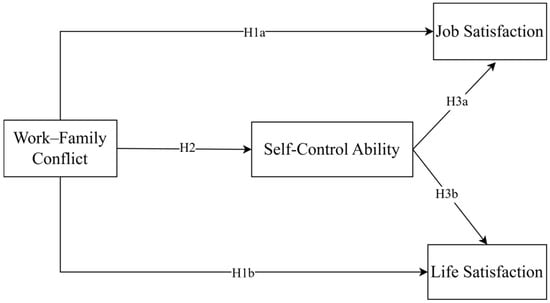
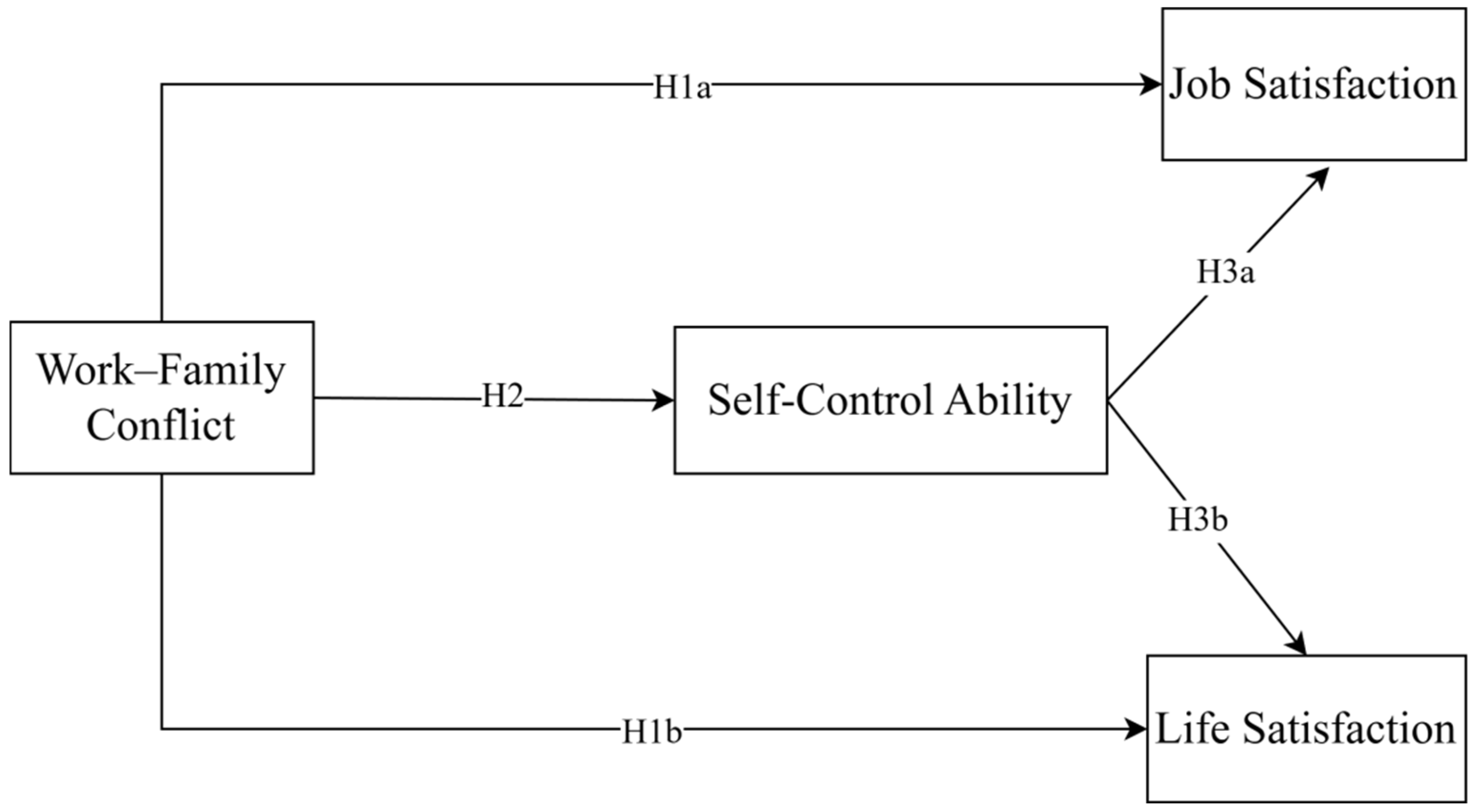
H1a:
Work–family conflict exerts a negative influence on construction workers’ job satisfaction.
2.2.2. Life Satisfaction
Life Satisfaction (LS) can be viewed as an individual’s overall evaluation and perception of their life state based on self-set standards [38]. According to the subjective well-being cognitive dimension, it represents an individual’s conscious cognitive assessment of their life against a series of self-established criteria [39]. Generally, it refers to an individual’s comprehensive evaluation and subjective perception of their overall quality of life, a subjective, emotional judgment closely tied to personal values, expectations, and comparative standards [40]. Life satisfaction can be measured using Maslow’s Hierarchy of Needs Theory [41], proposed by American psychologist Abraham Maslow in 1943, categorizing human needs into five levels: physiological, safety, social, esteem, and self-actualization. From this perspective, work–family conflict diminishes construction workers’ life satisfaction: Physiologically, managing household chores after high-intensity work leads to extreme fatigue; Safety-wise, concerns about work being affected by family responsibilities cause inner unease; Socially, the division of time and energy fosters loneliness; Esteem-wise, the difficulty of balancing work and family undermines self-respect; Self-actualization-wise, the struggle to balance career and family hinders the realization of ideals. The root cause lies in role confusion arising from conflicting work and family responsibilities [42], which impedes the fulfillment of multiple levels of needs among construction workers, ultimately negatively impacting their life satisfaction. This conflict may also indirectly affect work motivation and overall well-being through psychological burdens. Therefore, grounded in Maslow’s Hierarchy of Needs, this study proposes the following hypothesis:
H1b:
Work–family conflict exerts a negative impact on construction workers’ life satisfaction.
2.3. Definition of Self-Control Ability
Self-Control Ability (SC), as defined in this study, primarily draws upon the self-depletion theory proposed by Baumeister et al. [43]. This theory posits that self-control represents the finite psychological resources individuals rely upon to overcome or alter their dominant internal responses in order to achieve long-term goals or conform to social norms. It constitutes an internal self-regulatory capacity and a limited psychological resource, rather than a specific behavioral manifestation itself [44] (e.g., simple obedience to superiors, conformity, or opportunistic choices). Integrating the Conservation of Resources Theory (COR), we view self-control as a critical psychological resource that flows across different life domains and is subject to continuous depletion. When construction workers manage work–family conflicts, they must persistently suppress impulses to complain or quit, regulate negative emotions, and rapidly switch between work and family roles. This series of processes consumes substantial self-control resources, inducing a state of self-depletion. As resources remain occupied without timely replenishment, self-control capacity significantly declines, manifesting as increased workplace errors and diminished patience in family interactions. This concurrently lowers both job satisfaction and life satisfaction. This concept represents a novel mediating variable proposed based on self-depletion theory [45] and COR, emphasizing that an individual’s self-control capacity is finite—a limited psychological resource whose depletion leads to self-depletion. When construction workers manage work–family conflict, they must continuously engage in emotional regulation, impulse control, and role switching processes that substantially deplete this resource, triggering self-depletion states [46]. Construction workers endure prolonged exposure to overloaded construction environments. The mismatch in allocating time and energy between work and family, coupled with the inability to balance both, generates work–family conflict. The negative emotions stemming from this conflict manifest as psychological distress and discomfort. When workers strive to suppress these negative emotions, they further deplete their emotional resources [47], potentially weakening their self-control capacity. Based on the above discussion, the following hypothesis is proposed:
H2:
Work–family conflict exerts a negative effect on self-control ability.
Based on the aforementioned theory, self-control ability, as a finite psychological resource, continuously depletes an individual’s internal psychological energy, thereby reducing construction workers’ job satisfaction and life satisfaction. When construction workers face high levels of work–family conflict, they must persistently suppress thoughts of family and related concerns, force themselves to maintain focus in high-risk environments, and restrain negative emotions arising from fatigue and stress. These processes continuously and substantially consume their self-control resources. In contrast, emotional exhaustion represents more of an affective outcome state. Self-control, as a foundational executive control resource, is depleted and constitutes a more upstream and fundamental cause of issues like emotional exhaustion, attention dispersion, and behavioral disinhibition. Insufficient self-control diminishes focus in work settings and reduces willingness to engage in family interactions, significantly lowering both job satisfaction and life satisfaction. Although this mechanism has been preliminarily validated in other populations, it remains unexplored in the field of work–family conflict (WFC) among construction workers. Therefore, this study focuses on construction workers to investigate the mediating effects of self-control, including psychological and behavioral moderation processes [48,49]. This approach will better illuminate the psychological black box underlying how work–family conflict affects these two satisfactions, while also providing the most direct target for intervention measures. Specifically, it explores the specific mechanism whereby construction workers’ self-control ability is continuously depleted by work–family conflict and emotional labor at work, leading to emotional exhaustion that subsequently impacts their job satisfaction and life satisfaction [50]. Based on this theoretical framework of mediating effects, the study proposes the following hypotheses:
H3a:
Self-control ability mediates the effect of work–family conflict on job satisfaction among construction workers.
H3b:
Self-control ability mediates the effect of work–family conflict on life satisfaction among construction workers.
Based on the aforementioned theoretical background and research hypotheses, the study framework is illustrated in Figure 1:
Figure 1.
Theoretical Framework of Work–Family Conflict Among Construction Workers.
3. Research Design
3.1. Research Procedure and Sample
This study collected data through a questionnaire survey to understand the work and life conditions of construction workers in Hunan Province, China, aiming to provide recommendations for enhancing their job satisfaction and life satisfaction. These construction sites generally implement relatively closed management systems, with workers residing collectively in on-site dormitory areas and equipped with canteens and living facilities nearby. Regarding work arrangements, most respondents worked approximately 10 h days on their projects, with moderate overtime during peak periods. The work environment is characterized by high physical demands, prolonged outdoor exposure, and elevated safety risks. Regarding job duties, respondents primarily occupied frontline construction roles such as rebar workers, formwork carpenters, bricklayers, welders, and similar trades, with a smaller number serving as on-site supervisors or technical personnel. Their daily tasks centered on completing assigned construction objectives and ensuring structural integrity and process quality. Individual work quality was primarily evaluated through routine inspections by foremen and crew leaders, supplemented by periodic acceptance checks. Research variables were adapted from existing validated scales. Respondents were Changsha construction workers who experienced heavy workloads, limited family time, work–life time misalignment, and high potential for family conflict. The study employed an online survey via the Questionnaire Star platform. Between September and October 2025, 500 questionnaires were distributed to Changsha construction workers. After excluding 93 invalid responses (completed in under 60 s), 407 valid questionnaires were obtained for data analysis, yielding an effective response rate of 81.4%. Sample statistics are presented in Table 1.
Table 1.
Sample Information Statistics.
Sample Description: (1) As a core base for China’s construction industry in the central region, Hunan Province shares commonalities with other major construction provinces nationwide in terms of the scale of its construction workforce and occupational characteristics (such as the proportion of migrant workers and family structures). Therefore, the sample can serve as a representative snapshot of China’s construction workers.
This study distributed questionnaires to real-name verified workers through the safety training platform of partner construction enterprises, ensuring sample representativeness and data authenticity. Adhering to academic ethics, data decoupling was implemented to completely separate questionnaire responses from personal information, guaranteeing anonymity and confidentiality. Participants responded after providing informed consent.
Among the valid sample, male construction workers significantly outnumbered females, with over 60% being married and more prone to conflict perception. Over 80% of workers were aged 20–50, a period where family responsibilities and economic demands intersect. More than 60% held only a junior high or high school education, which may limit career advancement opportunities. Over half supported more than two dependents in their households, where family responsibilities could further deplete self-control.
3.2. Variable Measurement
To ensure reliability and validity, this study adopted established scales from prior research, adapted and revised for the construction worker context, comprising 18 items (see Supplementary Materials). The Work–Family Conflict Scale utilized the version developed by Netemeyer et al. (1996) [51], consisting of 5 items scored using a 7-point Likert scale. For example: “The demands of my work interfere with my home and family life.” The amount of time my job takes up makes it difficult to fulfill family responsibilities.” (Cronbach’s alpha = 0.868, KMO = 0.862).
The Self-Control Scale was adapted from the Self-Control Scale developed by Tangney et al. (2004) [52], scored using a 5-point Likert scale. Considering the cognitive characteristics of construction workers and the practical feasibility of the questionnaire, we did not adopt the full 36-item version. Instead, we selected three core items with the highest factor loadings and best fit to the construction site context from the pre-study, forming a shortened version. Final data analysis showed that this shortened version demonstrated good reliability and convergent validity in this study, effectively measuring the core characteristics of self-control among construction workers. (Cronbach’s alpha = 0.827, KMO = 0.717).
The Job Satisfaction Scale was revised based on the classic scale developed by Weiss et al. (1967) [53]. It employs a five-point Likert scale and incorporates five measurement items designed to align with the work characteristics of construction workers. Examples include: “I am satisfied with the wages I receive after completing my work,” and “I am satisfied with the way my foreman (or team leader) treats the workers.” (Cronbach’s alpha = 0.874, KMO = 0.876).
The Life Satisfaction Scale adopts the original version developed by Diener et al. (1985) [54]. This scale comprises five items, such as “In most ways my life is close to my ideal,” and “The conditions of my life are excellent.” It employs a 7-point Likert scale, with the sum of all item scores constituting the total life satisfaction score. Higher scores indicate greater life satisfaction. (Cronbach’s alpha = 0.851, KMO = 0.852).
Since the scale used in this study combines five-point and seven-point Likert scoring, to ensure comparability of measurement units and avoid parameter estimation bias due to scale differences, all items underwent standardization prior to analysis. Specifically, the minimum-maximum standardization method was employed to transform raw scores to the 0–1 interval [55], adhering to the fundamental principle of measurement equivalence [56]. This enabled the integration and comparison of scores from different items on a common baseline. Additionally, we measured the skewness and kurtosis of all variables: the maximum absolute skewness value across all variables was 0.367 (A3), well below 2. In terms of skewness, all variables excellently satisfy the normality requirement. All variables exhibit negative kurtosis values ranging from −0.652 to −1.386, with the maximum absolute kurtosis being 1.386 (C4), well below 7. Based on kurtosis, all variables also satisfactorily meet the normality requirement.
3.3. Reliability and Validity Analysis
Questionnaire data were processed using SPSS 27.0 for reliability and validity analysis. Firstly, conducted exploratory factor analysis on the measurement items. The KMO value was 0.965, and Bartlett’s sphericity test was significant (χ2 = 3749.763, df = 153, p < 0.001), indicating that the data were suitable for factor analysis. Principal component analysis was used to extract factors with eigenvalues greater than 1. Following maximum variance rotation, three factors were identified, cumulatively explaining 61.78% of the variance. All item factor loadings exceeded 0.55 with no significant cross-loadings, indicating good discriminant validity for the scale and establishing a foundation for subsequent confirmatory factor analysis. Confirmatory factor analysis was then used to extract factor loadings for each dimension. The composite reliability (CR) and average variance extracted (AVE) were calculated using established formulas, with results summarized in Table 2.
Table 2.
Factor Reliability and Validity Analysis Results.
Composite reliability (CR) exceeded 0.8 for all dimensions, and average variance extracted (AVE) exceeded 0.55 for all dimensions [57], further validating the model’s strong internal consistency and convergent validity.
4. Research Findings
4.1. Model Construction and Testing
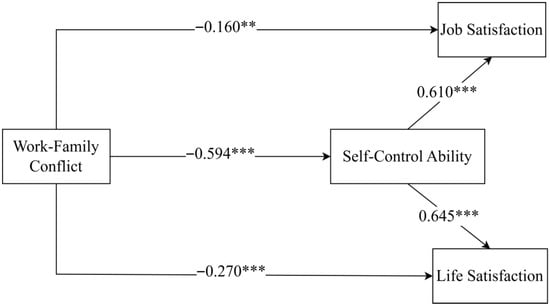
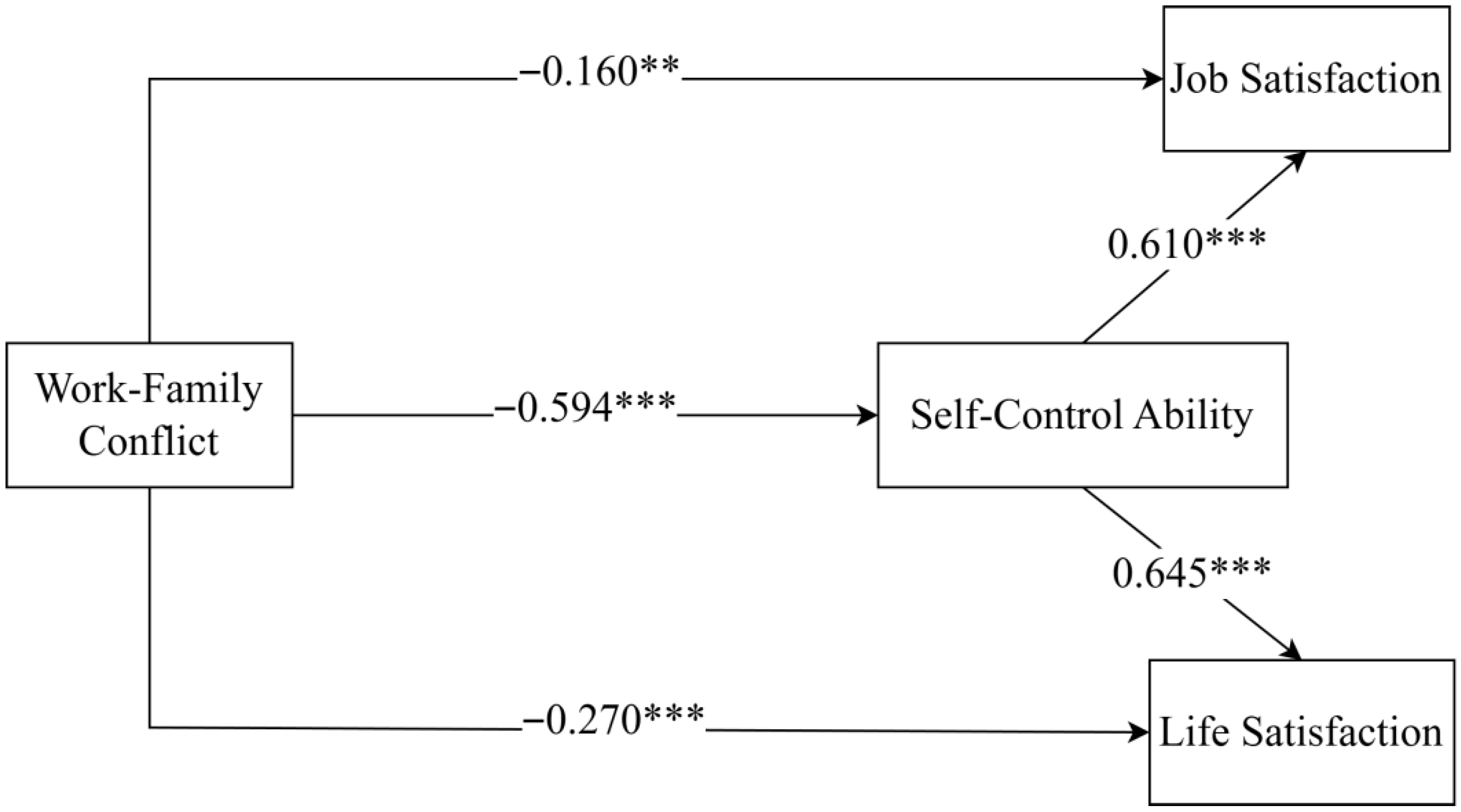
To test the theoretical framework, this study employed AMOS 27.0 to construct a structural equation model (SEM) of work–family conflict and examined the model fit. The model fit evaluation results (see Table 3) indicate that all fit indices fall within acceptable ranges. Therefore, the structural equation model is considered to have good basic fit, overall fit, and internal structural fit, meaning the model possesses a certain degree of persuasiveness. Based on this, the results of model path analysis are shown in Figure 2.
Table 3.
Model Fit Tests.
Figure 2.
The results of model path analysis. ** p < 0.01, *** p < 0.001.
The standardized path coefficients in Figure 2 indicate that work–family conflict significantly negatively affects both job satisfaction (H1a) and life satisfaction (H1b); simultaneously, self-control ability is not only negatively affected by work–family conflict (H2) but also positively influences work and life satisfaction (H3a, H3b). All hypotheses are supported.
4.2. Mediating Effect Test
This study employed the Bootstrap method to examine the mediating mechanism of self-control between work–family conflict and job satisfaction/life satisfaction. This method imposes no strict requirements on data distribution and yields more reliable inferences [58]. The analysis was conducted using the AMOS platform following this procedure: First, 5000 Bootstrap samples were drawn. Second, 95% bias-corrected confidence intervals were calculated to evaluate the two specific mediating pathways. The results are presented in Table 4 and Table 5.
Table 4.
Bootstrap Test Results for the Mediating Effect of Construction Worker Job Satisfaction.
Table 5.
Bootstrap Test Results for Mediating Effects of Construction Worker Life Satisfaction.
Bootstrap testing indicates that self-control mediates 69% of the total effect between work–family conflict and job satisfaction (β = −0.363), confirming its primary mediating role.
Similarly, work–family conflict exerts a significant overall negative impact on construction workers’ life satisfaction, with the indirect effect of self-control ability exceeding the direct effect and demonstrating greater significance.
This study employed the Bootstrap method to validate the critical mediating role of self-control in the relationship between work–family conflict and job satisfaction, revealing an underlying psychological resource depletion process consistent with Conservation of Resources Theory (COR). Findings reveal that work–family conflict, as a chronic stressor, substantially depletes construction workers’ self-control resources (path coefficient β = −0.594). For instance, suppressing impatience when fatigued or focusing on high-risk tasks during family emergencies requires self-regulation, rapidly drawing upon limited psychological resources. This resource depletion impairs functional performance across two core domains, leading to reduced satisfaction in both areas. Most critically, Bootstrap mediation analyses (WFC → SC → JS: β = −0.363; WFC → SC → LS: β = −0.383) strongly indicate that over half (69% and 59%, respectively) of work–family conflict’s negative impact is mediated through self-control depletion. Thus, self-control serves not merely as a simple mediating variable but as a “psychological buffer” for construction workers coping with work–family conflict. When conflict becomes excessively intense or prolonged, its negative effects directly affect individual satisfaction levels.
4.3. Construct Validity and Correlations
To validate the discriminant validity of the measurement model, we employed two approaches: the Fornell–Larcker criteria and the Heterotrait–Monotrait Ratio (HTMT). The Fornell–Larcker criteria require that the square root of the average variance extracted (AVE) for each construct be greater than the correlation coefficient between that construct and all other constructs [59]. Meanwhile, the HTMT value should fall below the conservative threshold of 0.85. The analysis results are presented in Table 6 and Table 7.
Table 6.
Interconstruct correlations and measurement properties.
Table 7.
Discriminant Validity Assessment: Heterogeneity-to-Homogeneity Ratio (HTMT).
Table 6 shows that the square root of the average variance extracted (AVE) for each latent variable exceeds the absolute value of the correlation coefficient between that construct and other constructs, satisfying the Fornell–Larcker criterion. This indicates that each construct possesses good discriminant validity. Furthermore, significant correlations exist between all constructs (p < 0.01), with WFC showing the strongest correlation with SC (r = −0.519), followed by JS (r = −0.505) and LS (r = −0.481).
Table 7 results indicate that all variables’ HTMT values fall below the recommended threshold of 0.85 (Henseler et al., 2015) [60]. The highest value recorded—0.844 between job satisfaction and life satisfaction—still meets the discrimination criterion, further confirming the discriminant validity among the constructs.
To verify whether the partial mediation model (baseline model) represents the optimal model, three competing models were constructed for comparison: Full mediation model M1 (WFC → SC → JS; WFC → SC → LS), direct effect model M2 (WFC → JS; WFC → LS), and single-factor model M3. Model fit index comparisons are presented in Table 8.
Table 8.
Comparison of Model Fit Indices for Competitive Models.
Model comparisons indicate that the benchmark model (partial mediation) provides the optimal fit (CMIN/DF = 1.45, RMSEA = 0.033, IFI = 0.984, CFI = 0.984, SRMR = 0.048), significantly outperforming both the full mediation model (M1) and the direct effects model (M2). This supports the partial mediating role of self-control. The single-factor model M3 exhibited poor fit. Following Podsakoff’s recommendation [61], an unrotated exploratory factor analysis was conducted on all measurement items. The results showed that the first common factor explained 31.24% of the total variance, below the 50% critical threshold. This indirectly demonstrated the high quality of the data and the model’s construct validity, confirming that common method bias did not compromise the reliability of the study’s conclusions.
5. Discussion
5.1. Key Findings
This study examined the mechanisms through which work–family conflict influences job and life satisfaction among construction workers. Results indicate that high levels of work–family conflict not only directly reduce satisfaction but also exert an indirect effect by depleting psychological resources. Role conflict consumes time and energy, increases stress, and diminishes satisfaction. Furthermore, self-control mediates this relationship: higher conflict levels lead to lower self-control, which in turn reduces satisfaction. This indicates that self-control serves as a crucial psychological mechanism linking conflict and satisfaction. However, existing literature provides limited support for self-control as a mediating variable, with many studies emphasizing other mechanisms. For instance, Dukhaykh examined the mediating role of emotional exhaustion in work–family conflict [62], while the previously mentioned study by Dodanwala et al. explored the mediating effect of emotional exhaustion on job satisfaction among construction workers. This contrasts with our findings highlighting self-control’s significant mediating role. Such methodological divergence can be interpreted through the lens of resource conservation theory. Construction workers’ jobs demand extreme physical exertion and sustained attention, continuously depleting their cognitive resources. Self-control, being a finite cognitive resource, better reflects how work–family conflict erodes self-control resources—leading to outcomes like emotional exhaustion and reduced satisfaction—compared to viewing emotional exhaustion solely as a final state.
Moreover, from a cross-industry perspective, the patterns identified in this study align with evidence from other sectors, indicating that work–family conflict typically correlates negatively with job satisfaction and well-being [63,64,65]. At the same time, the intensity of this association and the prominent role of self-control appear more pronounced among construction workers. This may stem from the industry’s distinctive characteristics, including high-intensity workloads, irregular hours, and limited resources. These findings suggest that while the underlying mechanisms may be universal across occupations, their intensity and specific manifestations are shaped by the unique features of the construction industry.
5.2. Theoretical Contributions
First, this study refines and expands the operational mechanisms of work–family conflict (WFC) from a contextual perspective. Drawing upon the organizational context of China’s construction industry, where “migrant labor” is highly prevalent, we argue that the work–family conflict faced by workers extends beyond the traditional competition for time and energy between work and family. It manifests as a persistent structural tension accumulated through prolonged physical separation and temporal-spatial misalignment. In this context, WFC erodes individuals’ self-regulatory resources, thereby simultaneously diminishing both job satisfaction and family satisfaction. Thus, this study shifts the focus of WFC from the macro-level “role conflict” framework to the micro-level of self-regulation processes, addressing gaps in existing research on micro-level psychological mechanisms. It demonstrates that within the family-centered Chinese cultural context, the causes and consequences of WFC differ from those observed in Western samples, thereby expanding the contextual boundaries and cross-cultural explanatory power of WFC theory.
Second, this study introduces self-control resources into the relationship chain between work–family conflict and dual satisfaction, enriching the application of self-control psychology in the field of organizational behavior. Findings indicate that among migrant workers in the construction industry, individuals maintain sustained work engagement in high-conflict, high-stress environments largely by prioritizing limited self-control resources to suppress withdrawal impulses. This behavior stems from fulfilling economic support and responsibility obligations to their families. From this perspective, a clear negative spillover effect of self-control resources across work and family domains emerges: excessive self-restraint in the workplace comes at the cost of emotional exhaustion and diminished patience in the family domain, ultimately undermining the very family well-being individuals sought to protect. Therefore, this study reframes self-control not merely as a “performance-enhancing resource” within a single context, but rather as a scarce psychological resource whose cross-contextual allocation may yield counterproductive outcomes. This approach supplements and deepens the theoretical understanding of self-control dynamics.
Furthermore, grounded in Conservation of Resources Theory (COR), this study treats work–family conflict under migrant labor conditions as a resource threat scenario, thereby extending COR’s applicability to grassroots workers and environments with strong structural constraints. Prolonged separation from family significantly restricts individuals’ access to emotional support and restorative resources, compelling workers to continually draw upon—and even deplete—their self-control resources. Furthermore, this study reveals the operational logic of the “resource depletion spiral” within COR: once core resources like self-control experience initial depletion, workers become more prone to errors at work and conflicts within the family, intensifying work–family conflict and triggering a new cycle of resource depletion and satisfaction decline. Empirical findings further indicate that work–family conflict negatively predicts self-control resources, while self-control resources significantly mediate the relationship between work–family conflict and both work and family satisfaction. This pattern exhibits characteristics of prioritized resource depletion and amplified loss accumulation, validating COR’s core proposition regarding the “loss spiral.” Thus, this study deepens our understanding of the resource dynamics and vulnerability of grassroots workers from the “loss spiral” perspective, providing new conceptual leverage for the contextual application of COR theory among high-pressure, low-resource groups.
5.3. Research Limitations and Future Directions
The study has limitations: in variable selection, this study primarily examined the “resource depletion pathway” within the framework of resource conservation theory, focusing on work–family conflict as a threatening stressor that depletes self-regulation resources. Variables such as positive stressors or challenging stressors were not included for differentiation and testing, thus failing to directly demonstrate the positive impact of stress as a supplementary category on employee behavior. Future research within the same theoretical framework could employ longitudinal tracking or diary methods [66,67] to reveal dynamic relationships among variables. Simultaneously measuring impeding stress (e.g., threatening work–family conflict), challenging stress, and work–family gains would allow comparison of how different stressor types differentially influence resource acquisition, resource depletion, and employee behavioral outcomes. This approach would provide a more comprehensive illustration of both the “resource depletion” and “resource acquisition” dimensions within COR theory.
6. Conclusions
This study examines the impact of work–family conflict on job satisfaction and life satisfaction among construction workers, introducing self-control as a mediating variable. It underscores the humanistic significance of prioritizing workers’ physical and mental well-being alongside construction performance in the building sector to foster sustainable development.
Within the organizational context of China’s construction industry, where “migrant labor” has become the norm, this study reveals the underlying mechanism through which work–family conflict diminishes satisfaction by depleting self-control resources. This finding holds unique contextual significance: first, workers’ work–family conflict fundamentally stems from prolonged physical and temporal separation from their families. Second, within China’s family-centric culture, workers often overdraw self-control resources to persist at work, driven by deep-seated motivations to fulfill economic and familial responsibilities. The resulting depletion of self-control resources leads to errors at work and impatience at home, ultimately diminishing satisfaction in both domains.
Self-control serves as a crucial psychological resource for mitigating work–family conflict and enhancing satisfaction. Based on these findings, construction enterprises should shift their approach toward construction workers—the primary labor force—from treating them as “resource consumers” to viewing them as “resource replenishers.” Specifically, companies should not view construction workers as individuals with unlimited resources. Instead, they should proactively assist workers in managing and replenishing their resources by offering psychological resource replenishment programs and regularly assessing workers’ self-control resource levels. To attract and retain workers with strong self-control and foster this capability among all employees, construction firms must establish a resource-enhancing management system. First, merely selecting workers who can endure hardship is insufficient. We emphasize that self-control is a finite psychological resource, not an infinitely draggable endurance. Therefore, while attracting such workers, companies must also provide relatively stable compensation guarantees, clear contractual arrangements, and predictable work rhythms. This allows workers to recognize that investing in self-control resources is worthwhile. Second, at the organizational and managerial level, avoid frequent overtime work. Implement family-friendly shift systems and establish supportive policies like family visitation leave to reduce conflicts between family responsibilities and work. Simultaneously, introduce Employee Assistance Programs (EAPs) on construction sites to provide psychological counseling and stress management services for workers facing severe work–family conflicts. Finally, at the individual and team level, conduct self-management and psychological capital training. Encourage construction workers to engage in leisure activities outside work hours; foster peer and coworker support networks, and replenish self-regulation resources to prevent isolated stress management. This approach increases the likelihood of attracting workers with higher self-regulation capacity who prioritize long-term career development and family responsibilities. Such workers tend to weigh the “resource investment-return” balance, favoring projects and companies with stable systems, greater fairness, and respect for worker autonomy.
Comprehensively, enhancing job satisfaction among construction workers requires more than just increasing wages or improving physical safety. It necessitates holistic attention and intervention at the “work–family” interface and the resulting psychological resource depletion process, recognizing the bidirectional flow of resources [68]. Specifically, workers must experience comfort from both society and family while also feeling their own value, recognizing their contributions to family and society, boosting self-confidence, and finding meaning—thereby replenishing self-control resources. After releasing emotions and stress, one can then enhance work–life satisfaction, building a “resource replenishment” ecosystem. Therefore, future research can further explore organizational interventions that effectively replenish self-control resources for architecture practitioners and test this mediating model within more complex moderation mechanisms. This will clarify more specific pathways of influence, thereby providing more comprehensive and in-depth theoretical support and practical guidance for organizational management in the architecture industry.
Supplementary Materials
The following supporting information can be downloaded at: https://www.mdpi.com/article/10.3390/su172410923/s1, Excel S1: Orginal data (in English); Excel S2: Orginal data (in Chinese); File S1: Questionnaire.
Author Contributions
Conceptualization, F.L. and C.F.; methodology, F.L.; software, F.L.; validation, F.L. and C.F.; formal analysis, F.L.; investigation, F.L.; resources, C.F.; data curation, F.L.; writing—original draft preparation, F.L.; writing—review and editing, C.F.; visualization, F.L.; supervision, C.F. All authors have read and agreed to the published version of the manuscript.
Funding
This research received no external funding.
Institutional Review Board Statement
This study is waived for ethical review as it involved minimal risk to participants, utilized anonymous questionnaires, and did not collect sensitive personal information. All procedures were performed in compliance with relevant ethical guidelines. 1. Prior to conducting the research, informed consent forms were voluntarily signed by all participants. The scope and purpose of the research fall within the parameters of the standardized informed consent. 2. This study utilizes anonymized information data. 3. This research does not cause harm to human subjects, nor does it involve sensitive personal information or commercial interests, and meets the ethical exemption requirements outlined in China’s Ethical Review Measures for Life Science and Medical Research Involving Human Subjects 2023 by the Institutional or Ethics Committee of Central South University.
Informed Consent Statement
Informed consent was obtained from all subjects involved in the study.
Data Availability Statement
The original contributions presented in this study are included in the Supplementary Materials. Further inquiries can be directed to the corresponding author.
Acknowledgments
We would like to express our sincere gratitude in advance to the editors and reviewers for their time and invaluable insights in evaluating our manuscript. We are committed to working with them to improve the quality of our work through the peer review process.
Conflicts of Interest
The authors declare no conflicts of interest.
References
- Harouache, A.; Abkar, M.M.A.; Gamil, Y.; Al-Shameri, A.S.A.; Gabir, A.A.M. Influence of Supply Chain Management on the Sustainable Construction Industry in Algeria. Front. Built Environ. 2024, 10, 1233266. [Google Scholar] [CrossRef] [Scilit]
- Wang, J.; Seo, J.; Gong, Y.; Siu, M.-F.F.; Hwang, S.; Khan, M. Sub-Activity Analysis by Using Wristband-Type Wearable Health Devices to Measure Construction Workers’ Physical Demands. J. Civ. Eng. Manag. 2025, 31, 516–531. [Google Scholar] [CrossRef] [Scilit]
- Greenhaus, J.H.; Beutell, N.J. Sources of Conflict between Work and Family Roles. Acad. Manag. Rev. 1985, 10, 76. [Google Scholar] [CrossRef] [Scilit]
- Wong, D.F.K.; Li, C.Y.; Song, H.X. Rural Migrant Workers in Urban China: Living a Marginalised Life. Int. J. Soc. Welf. 2007, 16, 32–40. [Google Scholar] [CrossRef] [Scilit]
- Chan, K.W. The Global Financial Crisis and Migrant Workers in China: ‘There Is No Future as a Labourer; Returning to the Village Has No Meaning’. Int. J. Urban Reg. Res. 2010, 34, 659–677. [Google Scholar] [CrossRef] [Scilit]
- Ngai, P.; Smith, C. Putting Transnational Labour Process in Its Place: The Dormitory Labour Regime in Post-Socialist China. Work Employ. Soc. 2007, 21, 27–45. [Google Scholar] [CrossRef] [Scilit]
- Sonnentag, S.; Fritz, C. Recovery from Job Stress: The Stressor-Detachment Model as an Integrative Framework. J. Organ. Behav. 2015, 36, S72–S103. [Google Scholar] [CrossRef] [Scilit]
- Bowen, P.; Edwards, P.; Lingard, H.; Cattell, K. Occupational Stress and Job Demand, Control and Support Factors among Construction Project Consultants. Int. J. Proj. Manag. 2014, 32, 1273–1284. [Google Scholar] [CrossRef] [Scilit]
- Zhou, Z.; Goh, Y.M.; Li, Q. Overview and Analysis of Safety Management Studies in the Construction Industry. Saf. Sci. 2015, 72, 337–350. [Google Scholar] [CrossRef] [Scilit]
- Allen, T.D.; French, K.A.; Dumani, S.; Shockley, K.M. A Cross-National Meta-Analytic Examination of Predictors and Outcomes Associated with Work–Family Conflict. J. Appl. Psychol. 2020, 105, 539–576. [Google Scholar] [CrossRef] [Scilit]
- Yildiz, B.; Yildiz, H.; Ayaz Arda, O. Relationship between Work-Family Conflict and Turnover Intention in Nurses: A Meta-Analytic Review. J. Adv. Nurs. 2021, 77, 3317–3330. [Google Scholar] [CrossRef] [Scilit] [PubMed]
- Judge, T.A.; Kammeyer-Mueller, J.D. Job Attitudes. Annu. Rev. Psychol. 2012, 63, 341–367. [Google Scholar] [CrossRef] [Scilit] [PubMed]
- Diener, E.; Lucas, R.E.; Oishi, S. Advances and Open Questions in the Science of Subjective Well-Being. Collabra Psychol. 2018, 4, 15. [Google Scholar] [CrossRef] [Scilit] [PubMed]
- Hu, Y.; Niu, Z.; Dai, L.; Maguire, R.; Zong, Z.; Hu, Y.; Wang, D. The Relationship between Sleep Pattern and Depression in Chinese Shift Workers: A Mediating Role of Emotional Exhaustion. Aust. J. Psychol. 2020, 72, 68–81. [Google Scholar] [CrossRef] [Scilit]
- Dodanwala, T.C.; Shrestha, P. Work-Family Conflict and Job Satisfaction among Construction Professionals: The Mediating Role of Emotional Exhaustion. Horizon 2021, 29, 62–75. [Google Scholar] [CrossRef] [Scilit]
- Elsaied, M. Authoritarian Leadership and Organizational Deviance: The Mediating Role of Emotional Exhaustion. J. Manag. Dev. 2024, 43, 303–320. [Google Scholar] [CrossRef] [Scilit]
- Rosen, C.C.; Dimotakis, N.; Cole, M.S.; Taylor, S.G.; Simon, L.S.; Smith, T.A.; Reina, C.S. When Challenges Hinder: An Investigation of When and How Challenge Stressors Impact Employee Outcomes. J. Appl. Psychol. 2020, 105, 1181–1206. [Google Scholar] [CrossRef] [Scilit]
- Xu, J.; Qiu, X. The Influence of Self-Regulation on Learner’s Behavioral Intention to Reuse E-Learning Systems: A Moderated Mediation Model. Front. Psychol. 2021, 12, 763889. [Google Scholar] [CrossRef] [Scilit]
- Rosen, C.C.; Koopman, J.; Gabriel, A.S.; Johnson, R.E. Who Strikes Back? A Daily Investigation of When and Why Incivility Begets Incivility. J. Appl. Psychol. 2016, 101, 1620–1634. [Google Scholar] [CrossRef] [Scilit]
- Gino, F.; Schweitzer, M.E.; Mead, N.L.; Ariely, D. Unable to Resist Temptation: How Self-Control Depletion Promotes Unethical Behavior. Organ. Behav. Hum. Decis. Process. 2011, 115, 191–203. [Google Scholar] [CrossRef] [Scilit]
- Ma, J.; Xu, L.; Zhang, X. Work-Family Conflict, Overwork and Mental Health of Female Employees in China. Front. Public Health 2025, 13, 1483746. [Google Scholar] [CrossRef] [Scilit] [PubMed]
- Anglin, A.H.; Kincaid, P.A.; Short, J.C.; Allen, D.G. Role Theory Perspectives: Past, Present, and Future Applications of Role Theories in Management Research. J. Manag. 2022, 48, 1469–1502. [Google Scholar] [CrossRef] [Scilit]
- Clark, S.C. Work/Family Border Theory: A New Theory of Work/Family Balance. Hum. Relat. 2000, 53, 747–770. [Google Scholar] [CrossRef] [Scilit]
- Li, H. What Kind of Teacher Should We Become: Identity-Role Consistency and Authenticity. Front. Educ. 2025, 10, 1650873. [Google Scholar] [CrossRef] [Scilit]
- Carter, M.J.; Aguilar, J.E.; Flores, G.R. Role Identities and Self-Efficacy: Examining the Effect of Conventional versus Idiosyncratic Role Identity Meanings. Curr. Psychol. 2023, 42, 7376–7388. [Google Scholar] [CrossRef] [Scilit]
- Hobfoll, S.E. Conservation of Resources: A New Attempt at Conceptualizing Stress. Am. Psychol. 1989, 44, 513–524. [Google Scholar] [CrossRef]
- Hobfoll, S.E.; Halbesleben, J.; Neveu, J.-P.; Westman, M. Conservation of Resources in the Organizational Context: The Reality of Resources and Their Consequences. Annu. Rev. Organ. Psychol. Organ. Behav. 2018, 5, 103–128. [Google Scholar] [CrossRef] [Scilit]
- Tetrick, L.E.; Winslow, C.J. Workplace Stress Management Interventions and Health Promotion. In Annual Review of Organizational Psychology and Organizational Behavior; Morgeson, F.P., Ed.; Annual Reviews: Palo Alto, CA, USA, 2015; Volume 2, pp. 583–603. ISBN 978-0-8243-3802-2. [Google Scholar]
- Nnubia, U.I.; Eze, F.E. Exploring Family and Academic Role Conflict among Undergraduate Students of the University of Nigeria. High. Educ. 2024, 88, 661–681. [Google Scholar] [CrossRef] [Scilit]
- Mauno, S.; Ruokolainen, M.; Kinnunen, U. Work-Family Conflict and Enrichment from the Perspective of Psychosocial Resources: Comparing Finnish Healthcare Workers by Working Schedules. Appl. Ergon. 2015, 48, 86–94. [Google Scholar] [CrossRef] [Scilit]
- Greenhaus, J.H.; Powell, G.N. When Work And Family Are Allies: A Theory Of Work-Family Enrichment. Acad. Manag. Rev. 2006, 31, 72–92. [Google Scholar] [CrossRef] [Scilit]
- Henriques, C.S.; Samagaio, A. Impact of Stress, Job Satisfaction, Work-Life Balance and Telework on Auditors’ Job Performance: A PLS-SEM and fsQCA Approach. J. Organ. Eff.-People Perform 2025, 12, 328–350. [Google Scholar] [CrossRef] [Scilit]
- Herzberg, F.M.; Mausner, B.; Snyderman, B.B. The Motivation to Work; John Wiley & Sons Inc.: Hoboken, NJ, USA, 1959. [Google Scholar]
- Nagpaul, T.; Leong, C.-H.; Toh, C.-S.; Bin Amir, A.; Chin, R.; Tan, S. Exploring Job Satisfaction and Intentions to Quit among Security Officers: The Role of Work Hygiene and Motivator Factors. Soc. Sci.-Basel 2022, 11, 497. [Google Scholar] [CrossRef] [Scilit]
- Lee, B.; Lee, C.; Choi, I.; Kim, J. Analyzing Determinants of Job Satisfaction Based on Two-Factor Theory. Sustainability 2022, 14, 12557. [Google Scholar] [CrossRef] [Scilit]
- Thant, Z.M.; Chang, Y. Determinants of Public Employee Job Satisfaction in Myanmar: Focus on Herzberg’s Two Factor Theory. Public Organ. Rev. 2021, 21, 157–175. [Google Scholar] [CrossRef] [Scilit]
- Valcour, M. Work-Based Resources as Moderators of the Relationship between Work Hours and Satisfaction with Work-Family Balance. J. Appl. Psychol. 2007, 92, 1512–1523. [Google Scholar] [CrossRef] [Scilit]
- Diener, E.; Suh, E.M.; Lucas, R.E.; Smith, H.L. Subjective Well-Being: Three Decades of Progress. Psychol. Bull. 1999, 125, 276–302. [Google Scholar] [CrossRef]
- Ma, C. The Academic Stress and Subjective Well-Being of Graduate Nursing Students: The Mediating Role of Resilience. J. Adv. Nurs. 2023, 79, 2654–2663. [Google Scholar] [CrossRef] [Scilit]
- Diener, E. Subjective Well-Being. Psychol. Bull. 1984, 95, 542–575. [Google Scholar] [CrossRef]
- Maslow, A.H. A Theory of Human Motivation. Psychol. Rev. 1943, 50, 370–396. [Google Scholar] [CrossRef] [Scilit]
- Meeuwissen, S.N.E.; Stalmeijer, R.E.; Govaerts, M. Multiple-Role Mentoring: Mentors’ Conceptualisations, Enactments and Role Conflicts. Med. Educ. 2019, 53, 605–615. [Google Scholar] [CrossRef] [Scilit]
- Baumeister, R.F.; Vohs, K.D.; Tice, D.M. The Strength Model of Self-Control. Curr. Dir. Psychol. Sci. 2007, 16, 351–355. [Google Scholar] [CrossRef] [Scilit]
- Hasselhorn, F.A.; Sattler, S.; Kroneberg, C.; Seddig, D. The Self-Control Ability Scale: Measuring a Key Construct of Situational Action Theory. Justice Q. 2025, 42, 1321–1348. [Google Scholar] [CrossRef] [Scilit]
- Baumeister, R.F.; Bratslavsky, E.; Muraven, M.; Tice, D.M. Ego Depletion: Is the Active Self a Limited Resource? J. Personal. Soc. Psychol. 1998, 74, 1252–1265. [Google Scholar] [CrossRef] [PubMed]
- Hagger, M.S.; Wood, C.; Stiff, C.; Chatzisarantis, N.L.D. Ego Depletion and the Strength Model of Self-Control: A Meta-Analysis. Psychol. Bull. 2010, 136, 495–525. [Google Scholar] [CrossRef] [Scilit] [PubMed]
- Muraven, M.; Baumeister, R.F. Self-Regulation and Depletion of Limited Resources: Does Self-Control Resemble a Muscle? Psychol. Bull. 2000, 126, 247–259. [Google Scholar] [CrossRef]
- Hofmann, W.; Schmeichel, B.J.; Baddeley, A.D. Executive Functions and Self-Regulation. Trends Cogn. Sci. 2012, 16, 174–180. [Google Scholar] [CrossRef] [Scilit]
- Hofmann, W.; Friese, M.; Strack, F. Impulse and Self-Control from a Dual-Systems Perspective. Perspect. Psychol. Sci. 2009, 4, 162–176. [Google Scholar] [CrossRef] [Scilit]
- Grandey, A.A. Emotional Regulation in the Workplace: A New Way to Conceptualize Emotional Labor. J. Occup. Health Psychol. 2000, 5, 95–110. [Google Scholar] [CrossRef]
- Boyar, S.L.; Carson, C.M.; Mosley, D.C.; Maertz, C.P.; Pearson, A.W. Assessment of the Validity of Netemeyer et al.’s (1996) WFC and FWC Scales. Int. J. Confl. Manag. 2006, 17, 34–44. [Google Scholar] [CrossRef] [Scilit]
- Tangney, J.P.; Baumeister, R.F.; Boone, A.L. High Self-Control Predicts Good Adjustment, Less Pathology, Better Grades, and Interpersonal Success. J. Pers. 2004, 72, 271–324. [Google Scholar] [CrossRef] [Scilit]
- Weiss, D.J.; Dawis, R.; England, G.; Lofquist, L. Manual for the Minnesota Satisfaction Questionnaire; Minnesota Studies in Vocational Rehabilitation; University of Minnesota, Industrial Relations Center: Minneapolis, MN, USA, 1967. [Google Scholar]
- Diener, E.; Emmons, R.A.; Larsen, R.J.; Griffin, S. The Satisfaction with Life Scale. J. Personal. Assess. 1985, 49, 71–75. [Google Scholar] [CrossRef] [Scilit] [PubMed]
- Little, T.D.; Slegers, D.W.; Card, N.A. A Non-Arbitrary Method of Identifying and Scaling Latent Variables in SEM and MACS Models. Struct. Equ. Model. Multidiscip. J. 2006, 13, 59–72. [Google Scholar] [CrossRef] [Scilit]
- Vandenberg, R.J.; Lance, C.E. A Review and Synthesis of the Measurement Invariance Literature: Suggestions, Practices, and Recommendations for Organizational Research. Organ. Res. Methods 2000, 3, 4–70. [Google Scholar] [CrossRef] [Scilit]
- Bagozzi, R.P.; Yi, Y. Specification, Evaluation, and Interpretation of Structural Equation Models. J. Acad. Mark. Sci. 2012, 40, 8–34. [Google Scholar] [CrossRef] [Scilit]
- Preacher, K.J.; Hayes, A.F. Asymptotic and Resampling Strategies for Assessing and Comparing Indirect Effects in Multiple Mediator Models. Behav. Res. Methods 2008, 40, 879–891. [Google Scholar] [CrossRef] [Scilit]
- Fornell, C.; Larcker, D.F. Evaluating Structural Equation Models with Unobservable Variables and Measurement Error. J. Mark. Res. 1981, 18, 39–50. [Google Scholar] [CrossRef] [Scilit]
- Henseler, J.; Ringle, C.M.; Sarstedt, M. A New Criterion for Assessing Discriminant Validity in Variance-Based Structural Equation Modeling. J. Acad. Mark. Sci. 2015, 43, 115–135. [Google Scholar] [CrossRef] [Scilit]
- Podsakoff, P.M.; MacKenzie, S.B.; Lee, J.-Y.; Podsakoff, N.P. Common Method Biases in Behavioral Research: A Critical Review of the Literature and Recommended Remedies. J. Appl. Psychol. 2003, 88, 879–903. [Google Scholar] [CrossRef] [Scilit]
- Dukhaykh, S. Exploring the Relationship Between Work-Family Conflict, Family-Work Conflict and Job Embeddedness: Examining the Mediating Role of Emotional Exhaustion. Psychol. Res. Behav. Manag. 2023, 16, 4859–4868. [Google Scholar] [CrossRef] [Scilit]
- Wang, Y.; Xia, Q.; Yue, H.; Yu, R.; Zhang, W.; Li, J.; Chen, D.; Xu, P. The Relationship between Work-Family Conflict and Job Satisfaction for Preschool Teachers in Rural China: A Moderated Mediation Model. Front. Public Health 2023, 11, 1236713. [Google Scholar] [CrossRef] [Scilit]
- Cortese, C.G.; Colombo, L.; Ghislieri, C. Determinants of Nurses’ Job Satisfaction: The Role of Work-Family Conflict, Job Demand, Emotional Charge and Social Support. J. Nurs. Manag. 2010, 18, 35–43. [Google Scholar] [CrossRef] [Scilit]
- Kalliath, P.; Kalliath, T.; Chan, C. Work-Family Conflict, Family Satisfaction and Employee Well-Being: A Comparative Study of Australian and Indian Social Workers. Hum. Resour. Manag. J. 2017, 27, 366–381. [Google Scholar] [CrossRef] [Scilit]
- Ohly, S.; Sonnentag, S.; Niessen, C.; Zapf, D. Diary Studies in Organizational Research An Introduction and Some Practical Recommendations. J. Pers. Psychol 2010, 9, 79–93. [Google Scholar] [CrossRef] [Scilit]
- Ployhart, R.E.; Vandenberg, R.J. Longitudinal Research: The Theory, Design, and Analysis of Change. J. Manag. 2010, 36, 94–120. [Google Scholar] [CrossRef] [Scilit]
- Wayne, J.H.; Grzywacz, J.G.; Carlson, D.S.; Kacmar, K.M. Work–Family Facilitation: A Theoretical Explanation and Model of Primary Antecedents and Consequences. Hum. Resour. Manag. Rev. 2007, 17, 63–76. [Google Scholar] [CrossRef] [Scilit]

Disclaimer/Publisher’s Note: The statements, opinions and data contained in all publications are solely those of the individual author(s) and contributor(s) and not of MDPI and/or the editor(s). MDPI and/or the editor(s) disclaim responsibility for any injury to people or property resulting from any ideas, methods, instructions or products referred to in the content. |
© 2025 by the authors. Licensee MDPI, Basel, Switzerland. This article is an open access article distributed under the terms and conditions of the Creative Commons Attribution (CC BY) license (https://creativecommons.org/licenses/by/4.0/).