Article

Spatial Heterogeneity in Drought Propagation from Meteorological to Hydrological Drought in Southern China and Its Influencing Factors


1
School of Earth Sciences and Engineering, Hohai University, Nanjing 211100, China
2
Geological Survey of Jiangsu Province, Nanjing 210018, China
*
Authors to whom correspondence should be addressed.
Sustainability 2025, 17(24), 10922; https://doi.org/10.3390/su172410922 (registering DOI)
Submission received: 30 October 2025 / Revised: 3 December 2025 / Accepted: 4 December 2025 / Published: 6 December 2025
(This article belongs to the Special Issue Sustainability in Hydrology and Water Resources Management)

Abstract

Southern China, despite its humid climate, has increasingly faced severe hydrological droughts (HDs) in recent decades, highlighting the complexity of drought propagation. Most existing studies primarily examined the relationship between drought propagation and climatic factors, whereas quantitative analyses of interactive effects of underlying surface characteristics on drought propagation remain insufficient. This study introduces an integrated framework combining GRACE satellite-derived terrestrial water storage anomalies with topography, land use, geology, and climate data to examine HD formation and its drivers. The results show a clear divergence between meteorological drought (MD) and HD patterns, revealing that underlying surface characteristics, rather than precipitation deficits alone, drive HD spatial patterns. Among drought propagation indicators, intensity has the strongest link to environmental factors, positively correlating with elevation and slope, and negatively with mean annual precipitation and temperature. Forest coverage helps mitigate drought intensification, while karst geology and land use influence propagation timing. HD intensity follows an elevational gradient, with severe droughts in high-altitude areas and mild, frequent droughts in low-lying basins. These insights provide a mechanistic basis for developing early-warning systems and spatially adaptive water management strategies, thereby supporting sustainable drought resilience and promoting long-term water resource sustainability in Southern China.

1. Introduction

Drought is a unique natural disaster, often called a “creeping disaster”, because it develops slowly and imperceptibly, making its onset difficult to detect [1,2]. Unlike sudden hazards like earthquakes or floods, droughts can last for extended periods, ranging from months to even years, leading to prolonged impacts on water supply, agriculture, ecological systems, and various economic sectors. This slow development, combined with the fact that droughts are not confined to specific regions but can occur globally, affects many people across diverse geographic areas [3,4]. Due to its vast impact, high frequency, prolonged nature, and the severe economic losses it can cause, a comprehensive understanding of drought occurrence, propagation, and influencing factors is essential. Such insights are crucial for developing effective early warning systems and drought management strategies.
Drought is characterized by a deficiency of water relative to normal hydrological conditions and can be classified into meteorological, agricultural, hydrological and socioeconomic drought according to the different variables of water deficiency [1,5]. These different types of droughts are closely interconnected through the water cycle. Among them, the meteorological drought (MD) triggered by a prolonged lack of precipitation is often the start of other droughts, and then gradually propagates to soil moisture deficits (agricultural drought) and streamflow deficits (hydrological drought, HD) as it progresses through the water cycle. The transition from MD to HD, known as drought propagation, is characterized by several features such as pooling, attenuation, lag and lengthening [2,6,7].
Many factors, such as climate, catchment characteristics and human activities influence drought propagation [7,8,9]. Since climate is the primary driver of HD, its regional patterns largely determine the spatiotemporal distribution of drought events. The response of HD to MD is closely linked to climatic conditions, with their relationship typically being stronger in humid environments or seasons [10,11,12]. Catchment characteristics primarily regulate drought propagation through storage and release processes within the catchment that control the water cycle. Factors such as topography, land use, and geology, which affect the hydrological processes within the catchment, can significantly affect how drought propagates [13,14,15,16]. In general, whether the HD is predominantly governed by climate or catchment characteristics depends largely on scale. At a global scale, HD is more closely related to climate, whereas at the regional or catchment scale, catchment characteristics play a more significant role in hydrological drought. In addition to natural factors, human activities, such as reservoir construction [17,18,19], irrigation [9,20], urbanization [21,22] and land use change [23,24], can also strongly alter the water cycle and affect the drought propagation. For example, Cheng et al. (2021) found that the reservoir operation alleviated the HD in downstream of the Huaihe River while increasing hydrological drought in upstream areas [25]. Zhang et al. (2022) pointed out that the massive water withdrawal in Weihe River increased the frequency and extremes of HD and weakened the relationship between MD and HD [9]. Although numerous studies have investigated the propagation process from MD to HD and its influencing factors, these processes and dominant factors often vary across regions. Understanding the specific mechanisms and key drivers of drought propagation in the focused region is crucial for improving local drought prediction and management strategies.
In situ observations, such as streamflow [9,25] and groundwater levels [26,27], have long been used to study HD and assess water deficits. However, these measurements are typically confined to specific locations, limiting the temporal and spatial scope of HD compared to MD research. In contrast, satellite data provide consistent coverage from regional to global scales, making them particularly valuable for large-scale HD studies [28,29,30]. The Gravity Recovery and Climate Experiment (GRACE) satellites [31], which measure changes in Earth’s gravity field, offer essential data on total terrestrial water storage (TWS) variations, encompassing snow/ice, surface water, soil moisture, and groundwater. Although GRACE data have relatively coarse temporal (monthly) and spatial resolution, they have proven highly effective for large-scale, continuous hydrological drought monitoring, particularly for long-term droughts, and have been applied successfully in many regions worldwide [32,33,34,35,36,37]. Furthermore, several indices, such as the Water Storage Deficit Index (WSDI) [33], Standardized Terrestrial water storage Index (STI) [32] and GRACE-based Drought Severity Index (GRACE-DSI) [38], have been developed to monitor drought, significantly advancing HD research at regional and global scales. Therefore, GRACE provides a valuable way to investigate the spatial heterogeneity of hydrological drought across a large scale.
Southern China is characterized by its complex topography, geology, and monsoon climate, which make it highly susceptible to severe HDs in recent decades [39,40]. The most severe drought in the region occurred in 2011, affecting five provinces, Yunnan, Guizhou, Sichuan, Chongqing, and Guangxi, and impacting a population of approximately 34.8 million people. A total of 4.2 million people faced drinking water shortages, and 3.7 million hectares of crops were damaged, resulting in direct economic losses of 14.94 billion yuan. Given the frequent occurrence of droughts in this region and their substantial socioeconomic impacts, it is crucial to explore the characteristics of hydrological droughts and the factors influencing them for better future drought management. While numerous studies have examined the spatiotemporal characteristics of HDs in Southern China [41,42,43,44], most research has primarily emphasized climatic divers, such as precipitation variability and monsoon intensity. However, the quantitative understanding of how underlying surface characteristics, such as heterogeneous topography, land use types and karst landforms, interact with meteorological anomalies to shape the spatiotemporal heterogeneity of drought propagation remain insufficient In particular, very few studies have systematically analyzed the combined and potentially nonlinear effects of karst geology and land use patterns on the propagation from MD to HD at a regional scale, despite their known importance for basin-scale water storage, infiltration pathways, and hydrological buffering capacity. This significant knowledge gap limits our ability to fully understand drought-propagation mechanisms and to develop region-specific mitigation strategies for Southern China.
In this study, GRACE observations were used to investigate the spatial distribution characteristics of HD in Southern China. Combined with meteorological data, the drought propagation from MD to HD and its potential influence factors were explored. The main objectives of this study are threefold: (1) to investigate the spatial pattern of MD and HD in Southern China; (2) to analyze the spatial difference in the propagation process from MD to HD; (3) to understand the potential factors influencing the propagation process of MD to HD. These findings are expected to improve the understanding of drought propagation mechanisms and provide valuable scientific support for developing more effective early-warning systems and targeted drought mitigation strategies in Southern China.

2. Materials and Methods

2.1. Descriptions of Study Area

The study area, defined by administrative boundaries, includes seven provinces, autonomous regions, and municipalities in Southern China (Figure 1): Yunnan, Sichuan, Guizhou, Guangxi, Chongqing, Hubei, and Hunan, with a total area of 1.77 million square kilometers, which accounts for 18.47% of China’s land area. The region spans China’s first and second terrain steps and is characterized by significant elevation variations, with terrain higher in the west and lower in the east, as well as higher in the north and lower in the south. The elevation difference reaches nearly 7500 m, contributing to the region’s complex topography, which includes plains, hills, mountains, and plateaus. The region experiences a diverse range of climates, primarily dominated by a humid to semi-humid subtropical monsoon climate. In addition, the western Sichuan region features a plateau mountain climate, while southern Yunnan experiences a tropical monsoon climate. According to the Köppen climate classification, the study area covers three major climate types. Most regions, including Hunan, Hubei, Chongqing, Guizhou, eastern Yunnan, and eastern Sichuan, have a humid subtropical climate with dry winters (Cwa). Southern Yunnan and southern Guangxi are classified as tropical savanna climate (Aw). Western Sichuan and northwestern Yunnan exhibit a temperate highland climate (Cwb/Dwb) due to higher elevations. Annual precipitation generally decreases from southeast to northwest, with most areas receiving over 800 mm of rainfall annually, while some locations receive up to 2000 mm. Despite the abundance of water resources, the spatial and temporal distribution of precipitation is highly uneven due to the influence of the subtropical and southwest monsoons. Summers are hot and wet, while winters are cold and dry, leading to seasonal imbalances that contribute to the frequent occurrence of droughts in this region.
The stratigraphy and lithology of southern China are highly complex and diverse, encompassing strata from the Paleozoic, Mesozoic, and even Cenozoic eras. A key characteristic of this region is the extensive distribution of carbonate rocks, with karst landscapes covering over 500,000 km2, making it one of the world’s largest continuous exposures of carbonate rock. Due to the region’s abundant rainfall and warm temperatures, karstification is highly developed, resulting in typical karst landforms such as dolines, towers, caves, and dry valleys, along with an extensive network of sinkholes, conduits, and subterranean rivers. Unlike non-karst regions, the widespread fractures and conduits formed by the dissolution of carbonate rocks in karst areas act as rapid pathways for groundwater flow, leading to the quick infiltration and loss of rainwater. As a result, karst systems often experience faster groundwater discharge following rainfall events and are more vulnerable to MDs, particularly under the influence of the monsoon climate.
There are two major rivers, the Yangtze River and the Pearl River, in the study area (Figure 1b). Due to the high population density and intensive demand for irrigation and economic development, human activities such as dam construction, irrigation and water withdrawal are extensive. One of the most notable features is the widespread distribution of dams and reservoirs, e.g., the Three Gorges Hydropower Station in the Yangtze River and the Longtan Hydropower Station in the Pearl River. These large infrastructure projects may play a crucial role in regulating regional water resources and may have a significant impact on drought propagation [45,46,47].

2.2. Data

The GRACE RL06 mascon product [48], provided by the Center for Space Research, was utilized for the hydrological drought analysis. In contrast to traditional global spherical harmonics techniques, the mascon product effectively minimizes signal leakage errors between ocean and land without requiring additional decorrelation filtering. Data from April 2002 to June 2017, represented at a native spatial resolution of 1 × 1 on a geodesic grid and with a monthly temporal resolution, were used for the HD analysis. Due to satellite operational issues, there are several data gaps in the GRACE record. These gaps were filled using linear interpolation based on the two nearest neighboring observations. Given that each individual gap spans less than two months, the interpolated values are expected to introduce only minimal influence on the subsequent analysis results. The China Meteorological Forcing Dataset (CMFD) [49] with a temporal resolution of three hours and a spatial resolution of 1° × 1° was selected to provide the grid precipitation and air temperature data. This Dataset was made through the fusion of remote sensing products, reanalysis datasets and in situ station data, which shows superior quality than GLDAS (Global Land Data Assimilation System).
Three types of surface underlying property data, topographic indices, land use and karst coverage proportion were selected to analyze their influence on spatial characteristics of HD and drought propagation. The GDEMV3 30M resolution digital elevation dataset released by NASA and METI (http://www.gscloud.cn; accessed on 19 November 2025) was utilized to estimate the two topographic indices, elevation and slope, for each grid. Land use data from the ESA CCI production (http://maps.elie.ucl.ac.be/CCI/viewer/download.php; accessed on 19 November 2025), with a spatial resolution of 300 m, were used to assess the proportions of four land use types (forest, shrubland, grassland, and cropland) in each grid, using average values for the study period (April 2002 to June 2017). Given the extensive distribution of karst in the study area and the significant differences in hydrological processes between karst and non-karst systems, the karst coverage proportion was also included as a key factor to reflect geological variations in the underlying surface. This proportion was extracted from the carbonate rock distribution map of China [50]. To ensure spatial consistency with the GRACE products (1 × 1 grid), all datasets were aggregated to the GRACE grid by computing the mean values of all underlying data points within each grid. In addition, two meteorological factors, mean precipitation and temperature during the study period (April 2002 to June 2017), were extracted from CMFD, which has the same spatial resolution with GRACE, to explore their influence on HD spatial distribution and propagation process. Overall, the selected explanatory variables include two meteorological factors (mean precipitation and temperature), two topographic factors (elevation and slope), four land use categories (forest, shrubland, grassland, and cropland), and one geological factor (proportion of karst coverage).

2.3. Methods

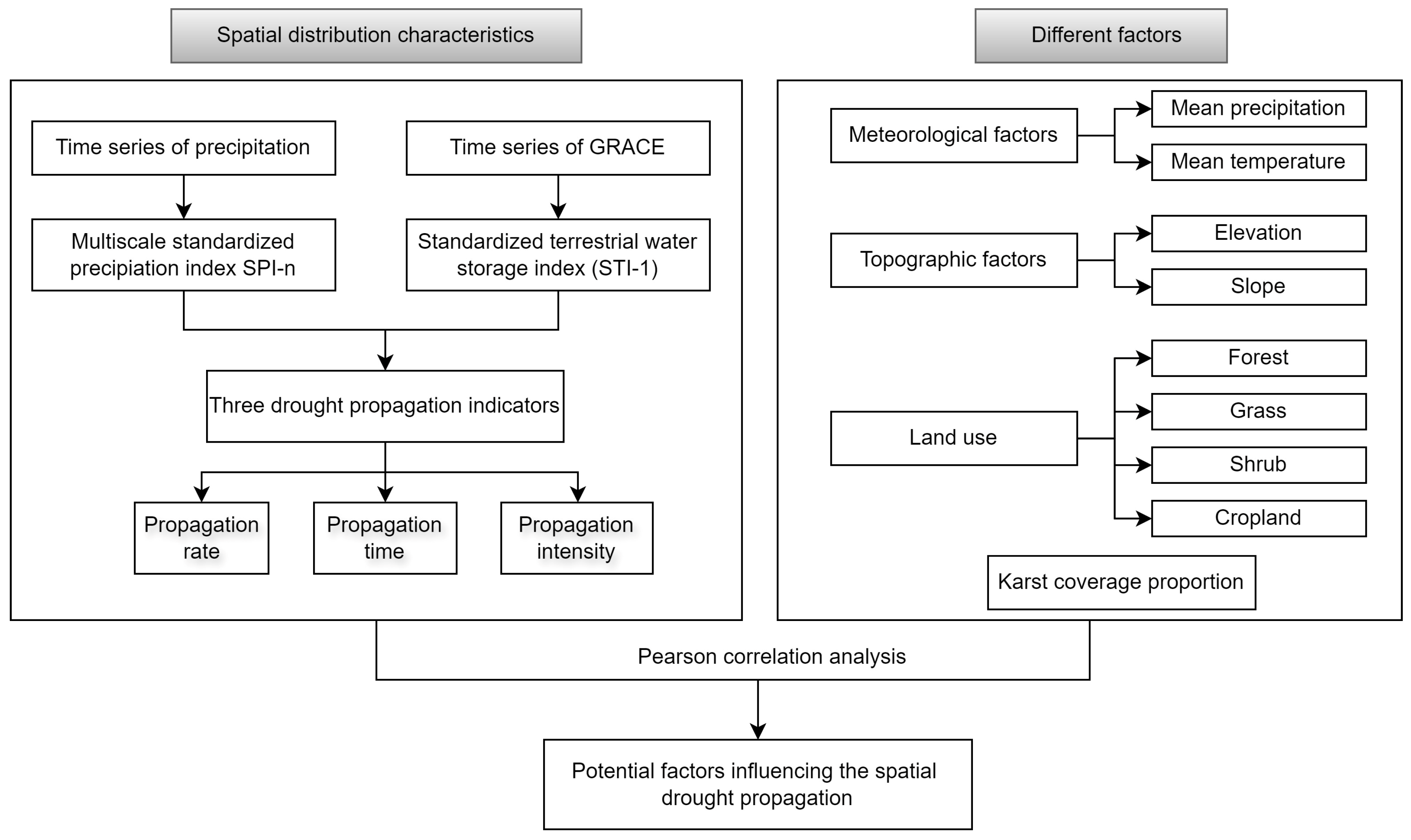
The study aimed to evaluate the spatial distribution of HDs and MDs in Southern China and explore the potential factors influencing the drought propagation from HD to MD. Figure 2 presents a flowchart outlining the research framework, while the following subsections provide a brief introduction to the methods used in this study.

2.3.1. Standardized Precipitation Index (SPI)

The worldwide multiscale standardized precipitation index SPI [51,52] was applied for meteorological drought evaluation. The calculation of SPI only considers the deficit of precipitation.
SPI m i = φ 1 ( F ( X m i ) )
where m (m = 1, 3, 6, 9, 12 months) is the time scale, i represents a month in a year, Xmi is the m-month accumulative precipitation of month i, F is the cumulative distribution function of the Gamma function which is employed to fit the time series of Xm, and φ−1 is the inverse of the standard normal cumulative distribution function. In the study region, the SPI was calculated in the accumulation periods of 1, 3, 6, 9 and 12 months from April 2002 to June 2017 for each grid. These periods were indicated as SPI-m, for example, SPI-6 represents a 6-month precipitation accumulation period.

2.3.2. Standardized Terrestrial Water Storage Index (STI)

Similarly to the statistical definition of SPI, a multi-scalar probabilistic index STI that characterizes terrestrial water storage departure from its probability distribution function was used for hydrological drought calculation. STI can also estimate water deficit at multiple time scales and are comparable across multiple locations. It should be noted that the GRACE data contain many variables, it is a little different from the traditional SRI based on the streamflow observations.
In this paper, we only calculated a 1-month STI (STI-1).
STI i = φ 1 ( F ( T i ) )
where T is the time series of 1-month terrestrial water storage, F denotes the best-fitting cumulative distribution function of T which was fitted by the normal distribution as suggested by Cui et al., (2021) [32], φ−1 represents the inverse of the standard normal cumulative distribution. The classifications of MDs and HDs are listed in Table 1.

2.3.3. Drought Propagation Analysis

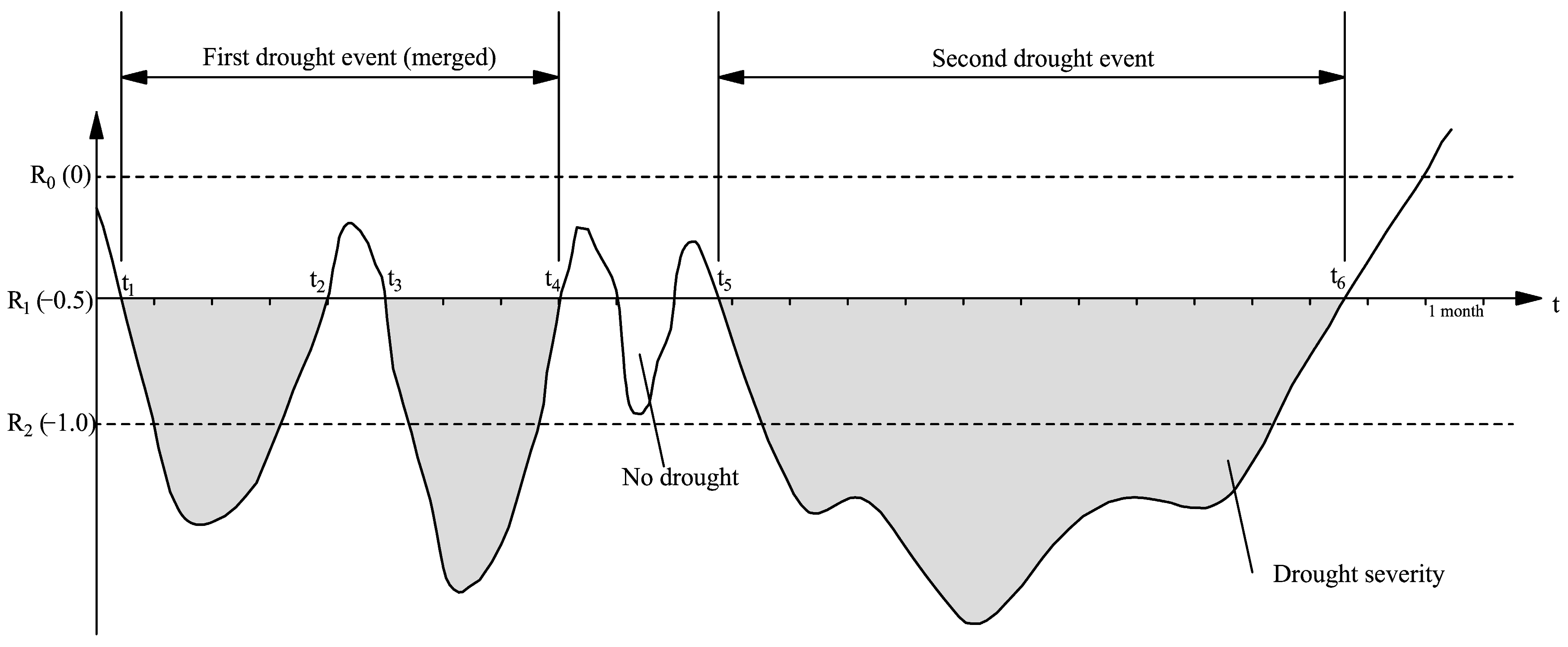
Droughts are transformed through the interconnected hydrological cycle. During the propagation process, due to the influence of natural and human factors on the hydrological cycle, multiple properties of different types of droughts may change accordingly. Various features can be defined to depict the drought characteristics [5,33,53], such as the timing of different stages of drought (e.g., onset, recovery time), frequency, duration, severity and intensity. Given GRACE observations’ low temporal resolution (monthly), we mainly focused on the frequency, severity and intensity of MD and HD. Run theory was employed to extract these three properties of MD and HD [6]. To identify drought frequency, three thresholds (R0 = 0, R1 = −0.5, and R2 = −1) were applied to define drought events. A drought event is recognized when the drought index (STI or SPI-n) is less than R1 with a duration of more than one month (second drought event in Figure 3). For two adjacent drought events separated by less than a one-month interval, if the STI or SPI-n during that month is less than R0, the two events were merged into a single drought event (first drought event in Figure 3). Short drought events lasting only one month are considered drought events only if the STI or SPI is less than R2 (see no drought in Figure 3). For each identified drought event, the drought duration is defined as the time length which the drought persists (t2 − t1 + t4 − t3 for the first drought event and t6−t5 for the second drought event in Figure 3) and the accumulated area below R1 is referred to as drought severity. Based on these methods, we can determine the numbers of MD and HD in each grid from SPI-n and STI-1, along with their total drought severity and duration over the selected period. The mean drought intensity for both MD and HD can be calculated as the ratio of total drought severity to total drought duration.
To investigate the propagation process from MD to HD, three drought propagation indicators were analyzed: propagation time, propagation rate, and propagation intensity. Propagation time refers to the duration required for the accumulated deficit in MD to translate into HD [8]. Pearson correlation analysis was applied to assess the relationship between SPI-n and STI-1. The timescale m with the highest correlation coefficient r between SPI-m and STI-1 was identified as the propagation time. The maximum value of m is set to 12.
The propagation rate indicates the sensitivity of propagation from MD to HD [54,55], which is the ratio of the number of MDs (mn) to the number of HDs (hn) during a given period.
R = m n h n
Since MD cannot always trigger HD due to the storage function of the catchment, the propagation rate is always lower than 1. Higher values of propagation rate indicate the high sensitivity of HD to MD and MD is more prone to transforming into HD.
Given that the propagation rate does not involve the drought severity, the propagation intensity I (called drought intensity propagation index in [56,57]) was used to represent the propagation degree of MD intensity to HD intensity.
I = H I D I ( D I 0 )
where HI and DI are the mean drought intensities of HD and MD, respectively. Both were calculated as the ratio of total drought severity to total drought duration. When the propagation intensity is greater than 1, HD’s drought intensity is greater than MD’s.
The three drought propagation characteristics were analyzed for each grid cell (1 × 1) over the study period (April 2002–June 2017). Subsequently, by integrating spatial data on underlying surface properties and meteorological factors, the pairwise correlation analysis was conducted to assess the relationship among these environmental variables, and then Pearson correlation analysis was used to quantify their relationships with the drought propagation metrics. The statistical significance of observed correlations was further evaluated through hypothesis testing with a 95% confidence level (p < 0.05).

3. Results

3.1. Spatial Distribution of MD and HD

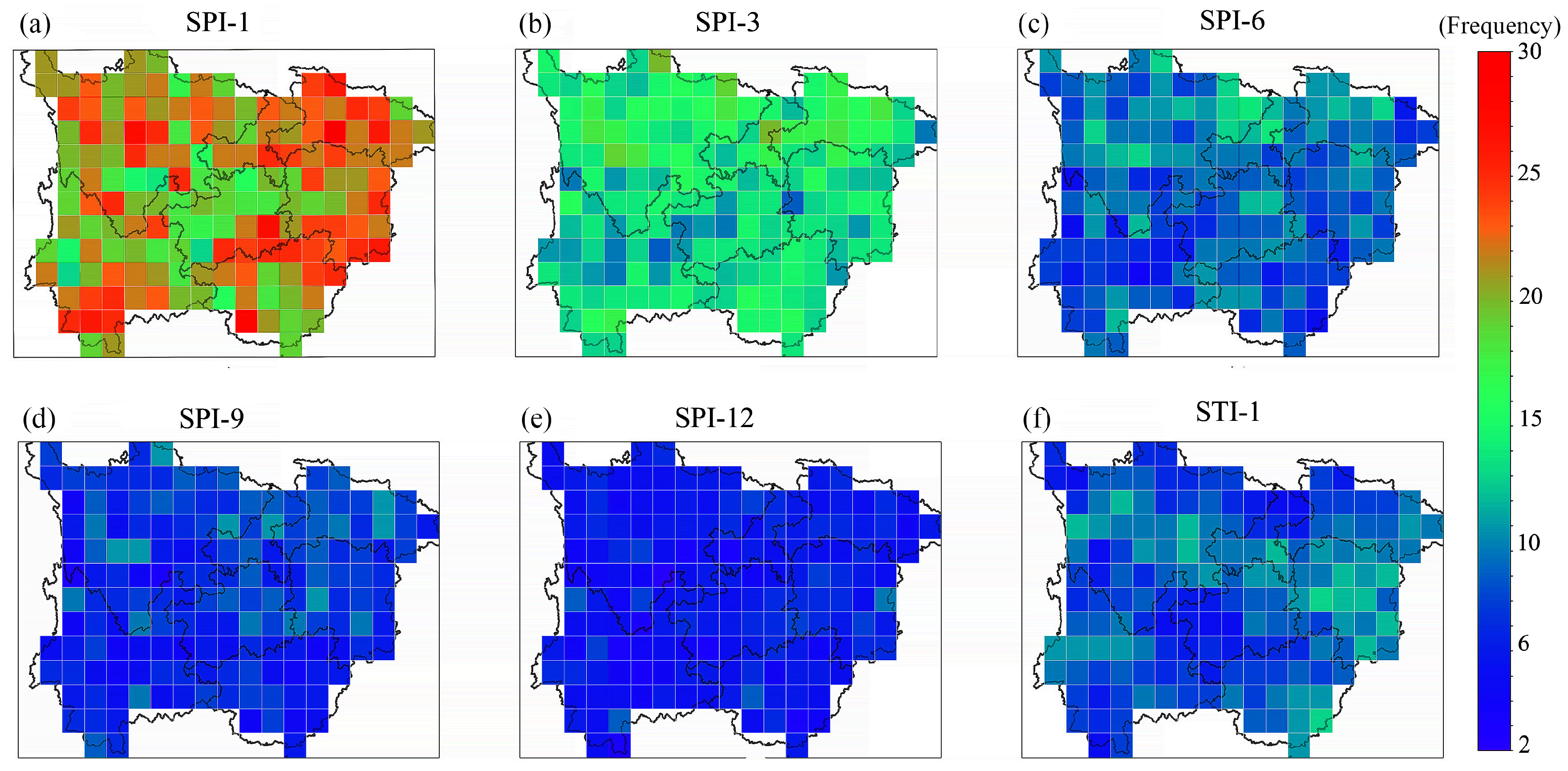
Based on run theory, a quantitative analysis of the spatial distribution characteristics of MD and HD in the study area from April 2002 to June 2017 was conducted. Figure 4 illustrates the spatial distribution of the total number of MDs at various timescales and HDs in the study area. In most grids, the number of MD events on the 1-month timescale exceeds 20, with the eastern part of the study area experiencing more drought events than the western part, while the central region experiences relatively fewer MDs. The total number of MD events decreases progressively as the timescale lengthens. On the 3, 6, 9, and 12-month timescales, the average total number of MD events in the study area is 13.32, 8.85, 6.78, and 5.40, respectively. More than 65% of the grids show 9 to 14 HD events, with 12 to 15 events typically concentrated in Hunan, central Sichuan, southern Chongqing, and southern Guangxi. In contrast, in northern Sichuan, northern Chongqing, southern Yunnan, and the border areas between Sichuan, Guizhou, and Yunnan, the number of HD events ranges from 6 to 8.
The number of HD events across the entire study area is lower than that of MD events on SPI-1 and SPI-3 timescales, similar to those on SPI-6 and SPI-9 timescales, but higher than on SPI-12 timescale. This suggests that HDs in most parts of the study area may result from cumulative MDs over a 6 to 9-month period. However, the spatial distribution of HD event numbers differs significantly from that of MD event numbers measured by SPI-6 and SPI-9.
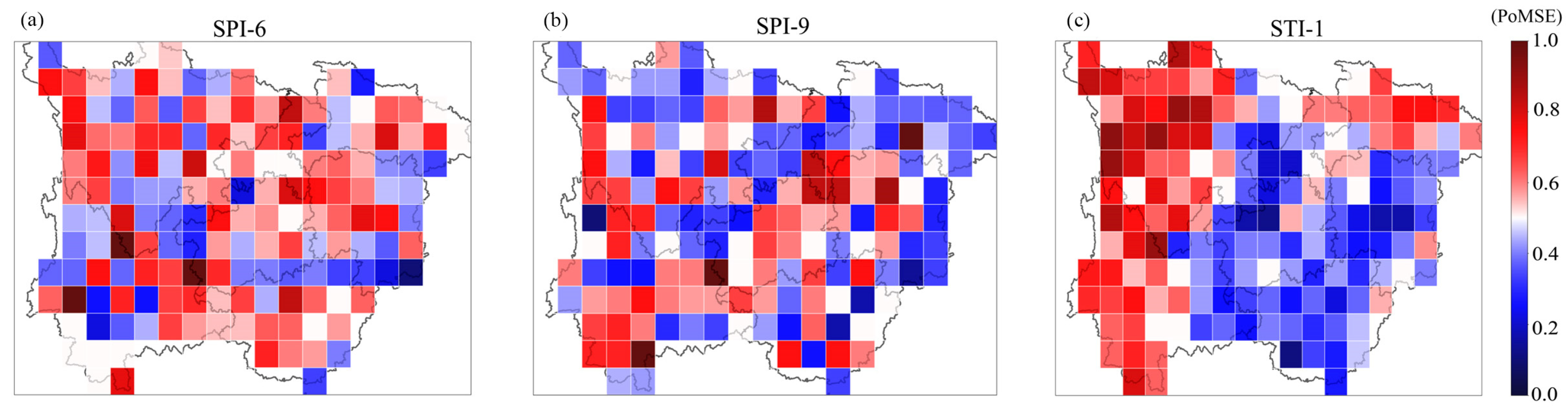
Given that the mild droughts have relatively limited impacts on the lives and economy of residents, we further analyzed the proportion of moderate, severe and extreme drought events (PoMSEs) in SPI-6, SPI-9, and STI-1, relative to their total number of drought events in each grid. PoMSE was calculated as the number of moderate, severe, and extreme drought events divided by the total number of drought events (PoMSE = NM+S+E/Ntotal, where NM+S+E is the count of drought events classified as moderate, severe, or extreme, and Ntotal is the total count of drought events in each grid cell). The spatial distribution of PoMSE in MDs does not show a clear pattern (Figure 5). For SPI-6, PoMSE exceeds 50% in the vast majority of grids. However, PoMSE decreases in SPI-9 with a lower value in Hunan and northern Sichuan compared to other regions. The spatial distribution of PoMSE in HD is more distinct across the study area. In the southeast part of the study area (Hunan, Guangxi, Guizhou, Chongqing, and eastern Yunnan), over 50% of HD events are mild, whereas in most grids in Sichuan and Yunnan, the proportion of moderate drought exceeds 60%.
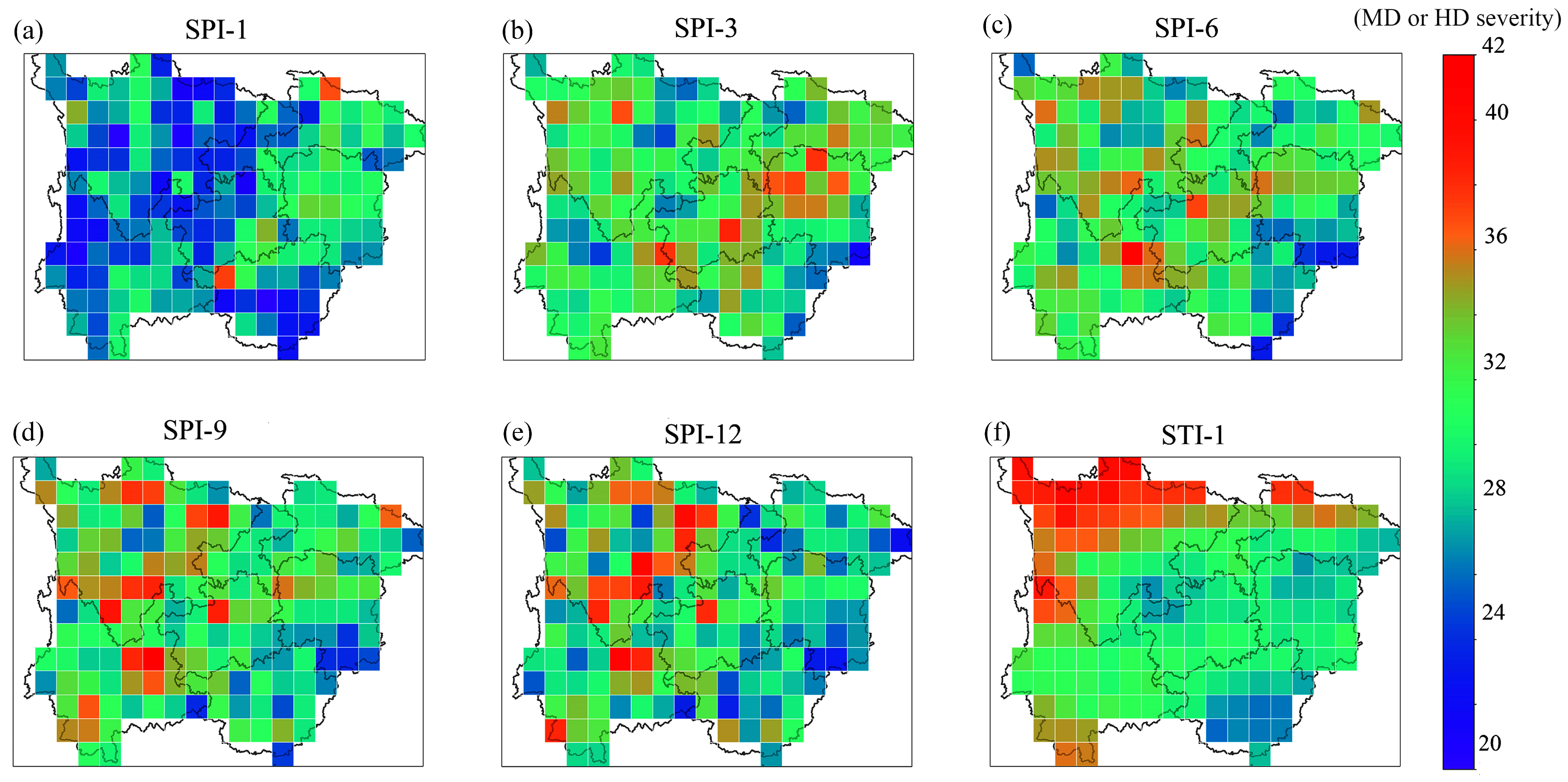
Figure 6 shows the spatial distribution of the MD and HD severity in the study area. The MD severity increases gradually with the lengthening of the timescale, but no clear spatial pattern is observed. In contrast, the spatial distribution of HD severity is more distinct and closely resembles the distribution of PoMSE. This is mainly because the HD severity largely depends on the moderate, severe and extreme droughts. Notably, HD severity is significantly higher in northern Sichuan, northern Hunan, and southern Yunnan compared to other regions. Regardless of the number of drought events, PoMSE and drought severity, the spatial distribution of HD remains significantly different from that of MD. This suggests that MD is not the only controlling factors for HD and the propagation process from MD to HD is strongly affected by the other factors in the study area.

3.2. Drought Propagation from MD to HD

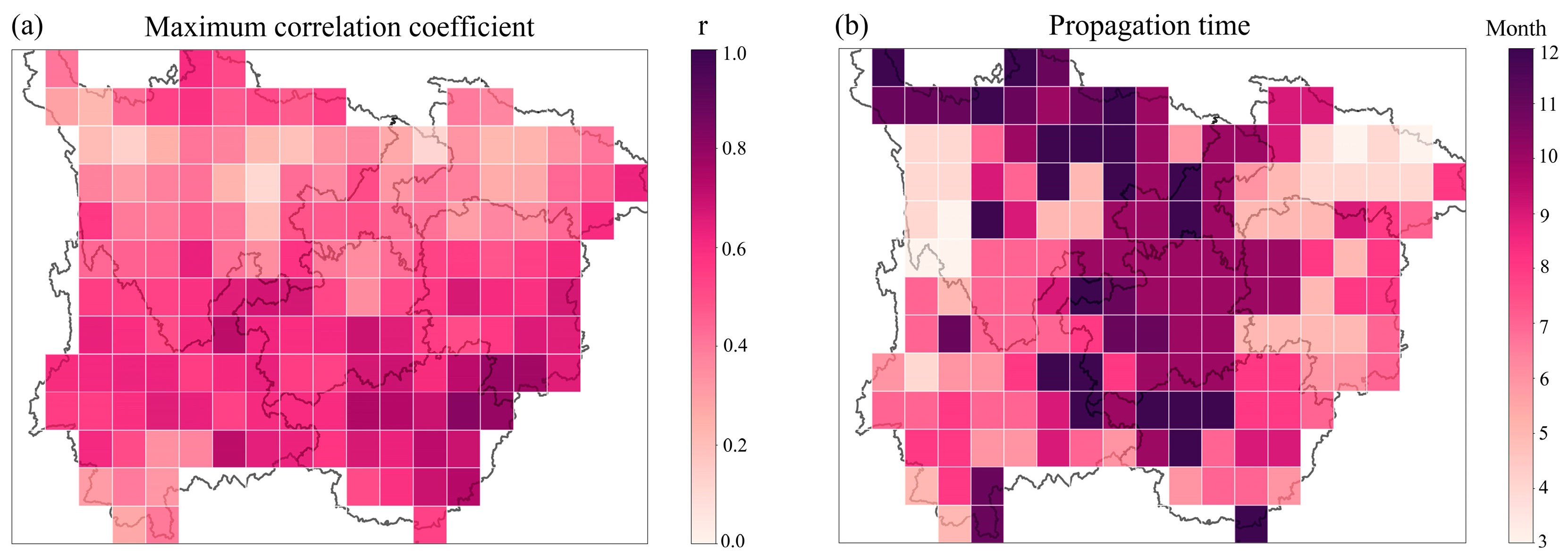
The Pearson correlation analysis was used to explore the relationship between MD and HD and the maximum correlation coefficient in each grid is shown in Figure 7a. The maximum coefficient is higher in the southern area than the northern area. For most grids, the coefficient value is larger than 0.6 which indicates a good correlation between MD and HD. The coefficient is lower than 0.4 merely in the central Sichuan and Hubei. Figure 7b shows the spatial distribution of propagation time from MD to HD. There is a clear spatial variation in drought propagation time. In northern Sichuan, Guizhou, Chongqing, and northwestern Guangxi, the time required for MD to propagate into HD is significantly longer than in other regions, with the longest propagation time ranging from 9 to 12 months. In contrast, in other different areas, the propagation time is only 3 to 5 months.
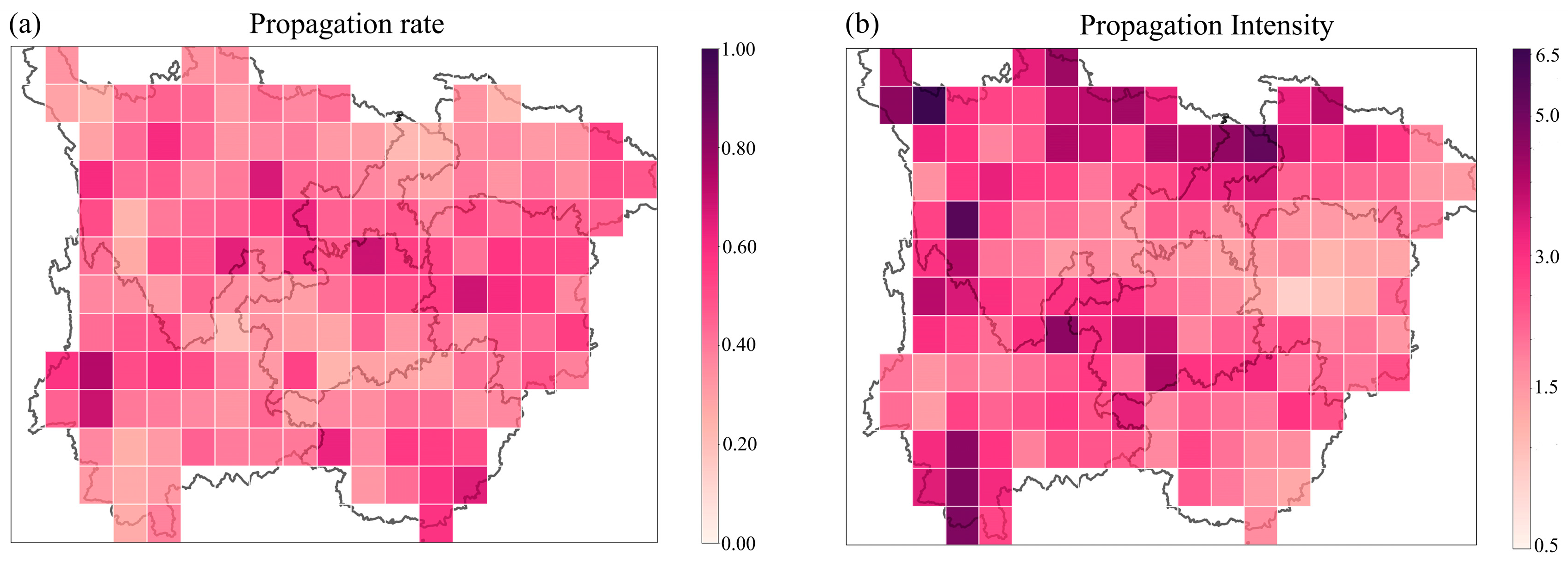
Figure 8 shows the spatial distribution of the propagation rate and propagation intensity from MD to HD. In the study area, the propagation rate mainly ranges between 0.4 and 0.9. In southern Guangxi, central and western Yunnan, central Hunan, and the border regions of Sichuan, Guizhou, and Chongqing, the propagation rate is between 0.7 and 0.9, indicating that these areas are more prone to generate HDs under insufficient precipitation. The propagation intensity from meteorological droughts to hydrological droughts is generally greater than 1.5 across the study area. In the Yunnan-Guizhou Plateau, western Sichuan, southern Yunnan, and the northern part of the study area, the propagation intensity ranges from 4.5 to 6.5, indicating that the severity of HDs in these regions is much stronger than that of MDs.
Table 2 displays the correlation coefficients among the three different propagation indicators. The analysis reveals statistically insignificant correlations between propagation time and the other two indicators (propagation rate and intensity), suggesting that propagation time is essentially unrelated to them. Notably, a strong negative correlation (r = −0.85) exists between propagation intensity and propagation rate, a pattern that can be further corroborated by their spatial distributions shown in Figure 8. Specifically, grids with higher propagation rates tend to demonstrate lower propagation intensities. This inverse relationship should be attributed to distinct drought development mechanisms. In regions with lower propagation rates are typically associated with higher amplification of drought intensity, where mild MDs are less likely to develop into severe HDs. The higher propagation intensity is mainly influenced by several severe HDs. Conversely, regions with high propagation rates tend to experience frequent HD occurrences with only slight amplification, because mild MDs rarely evolve into severe HDs and most propagated events remain weak. As a result, despite their higher propagation rates, these regions maintain comparatively lower propagation intensities.

3.3. Correlation Analysis of Various Factors and the Three Drought Propagation Indicators

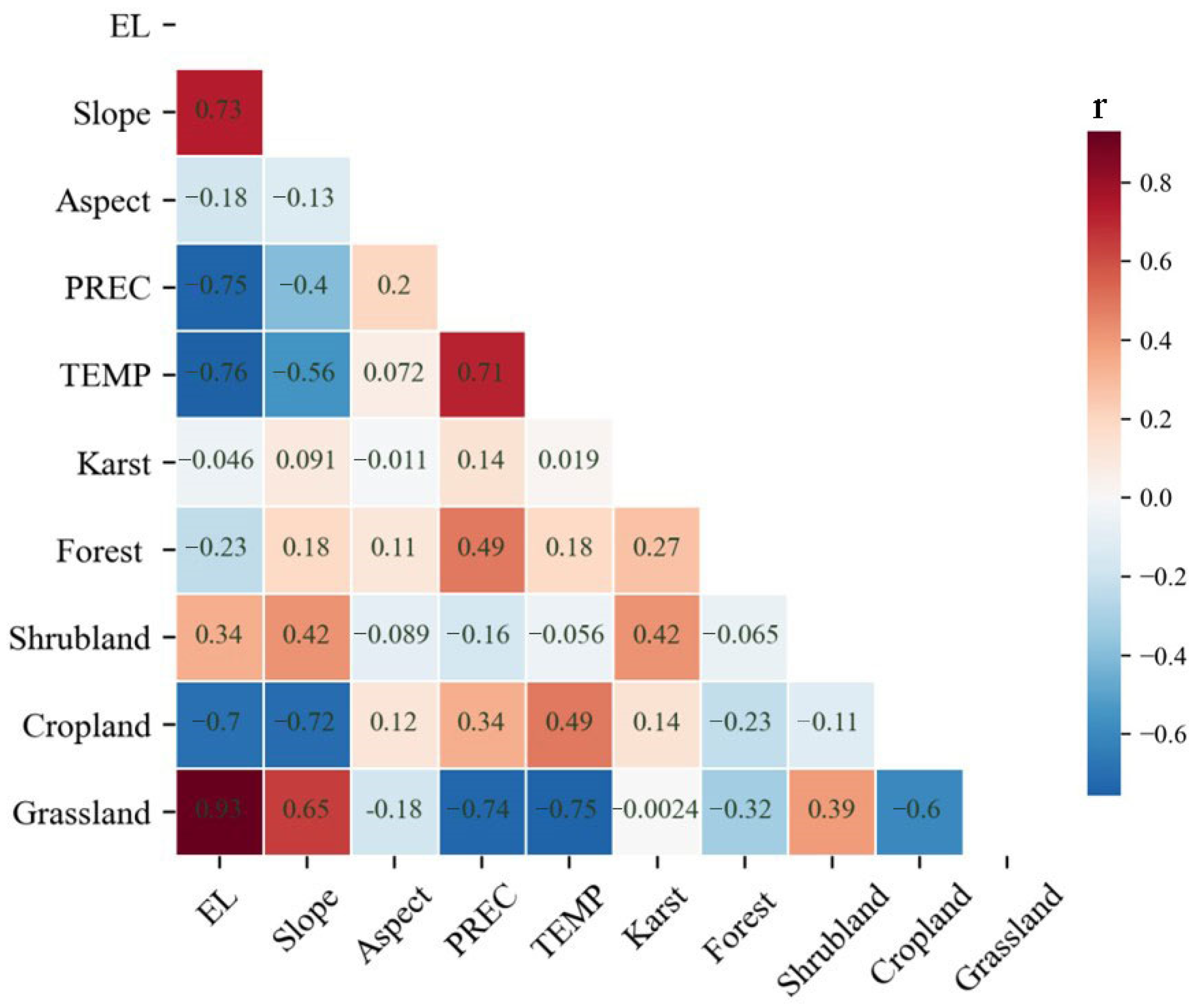
The correlation among different factors was analyzed first before investigating the possible influence of various factors on the three drought propagation indicators. As shown in Figure 9, the two meteorological factors (precipitation and temperature) exhibit a significant positive correlation. This is primarily due to the synchronization of hydrothermal conditions in the study area, where high precipitation and temperature occur in summer, and low values are observed in the dry seasons. Similarly, the two topographical indicators (elevation and slope) also show a significant positive correlation. However, there is a significant negative correlation between the meteorological factors and the topographical factors, indicating that grids with higher elevations tend to have lower precipitation. Among the land use factors, only cropland and grassland show a significant negative correlation, with a coefficient of −0.6. Although grassland shows significant correlations with both forest and shrubland, their coefficients remain below 0.4. Grassland demonstrates substantial positive correlations with topographic factors and negative correlations with meteorological factors (Figure 9), whereas cropland exhibits the opposite pattern. This indicates the grids with high elevations are highly likely covered by grass and less covered by crops. Regarding the karst coverage, it demonstrates a moderate positive correlation with shrubland, while its correlations with other factors are relatively weak or statistically insignificant.
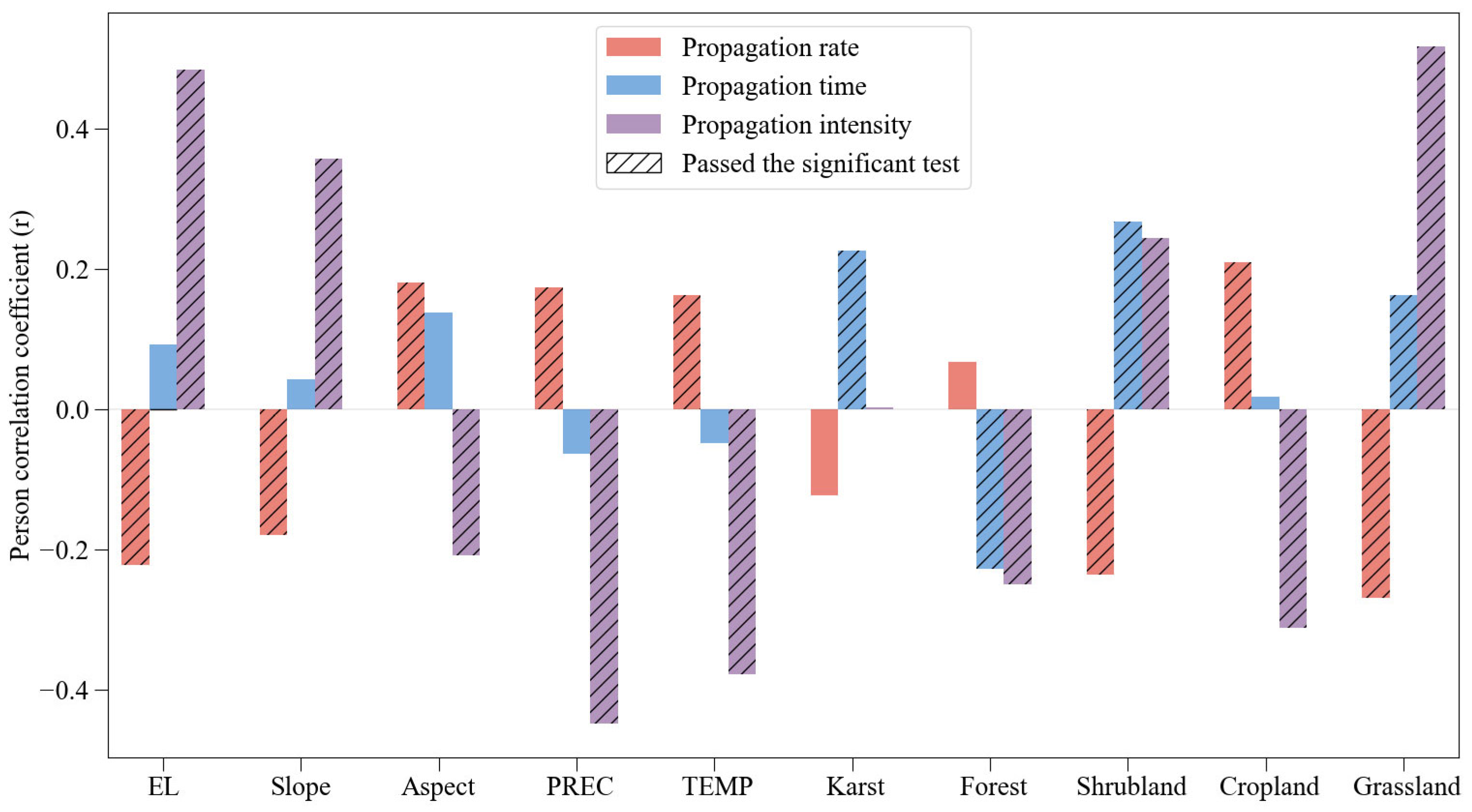
Figure 10 depicts the correlation between three propagation indicators and various potential influencing factors. The correlation between propagation time and the two meteorological or topographic factors did not reach statistical significance. Among the land use factors, although most (except cropland) were statistically significant, their absolute correlation coefficients remained below 0.3. Specifically, propagation time was positively correlated with shrubland and grassland, and negatively correlated with forest, with the most notable association being with shrubland (r = 0.26). Moreover, propagation time was positively correlated with the proportion of karst coverage, suggesting that grids with higher karst coverage tend to experience shorter propagation times.
Similarly, although some correlation analyses for propagation rate reached significance, the absolute values of the correlation coefficients were relatively low. The propagation rate was positively correlated with the meteorological factors and negatively correlated with the topographic factors, with coefficients of approximately 0.2. Regarding land use factors, propagation rate was positively correlated with cropland and negatively correlated with shrubland and grassland, whereas the correlations with karst coverage and forest were not statistically significant. Given the negative relationship between propagation rate and propagation intensity, the relationship between propagation intensity and various factors was generally the opposite of that for propagation rate, but with much stronger correlations. Notably, propagation intensity was significantly positively correlated with elevation and slope and significantly negatively correlated with average precipitation and temperature, with the largest absolute coefficient exceeding 0.40. Furthermore, propagation intensity was significantly positively correlated with grassland, probably due to the significant correlation between grassland and topographic or meteorological factors. In contrast, propagation intensity exhibited negative correlations with forest and cropland and a positive correlation with shrubland, albeit with lower coefficients. Finally, the correlation between propagation intensity and karst coverage did not reach statistical significance, indicating that karst coverage has a limited impact on propagation intensity.

4. Discussion

4.1. The Controlling Factors for Drought Propagation

The CMFDs and GRACE observations were applied to investigate the spatial distribution characteristics of MD and HD in South China. In general, our results reveal significant differences between the spatial patterns of HD and MD in the study area. In particular, the frequency and severity of MD at different time scales do not show a clear spatial pattern. In contrast, both of the frequency and intensity of HD derived from GRACE data display clear regularity. Grids with a higher proportion of severe hydrological droughts are mainly concentrated in Sichuan, Yunnan, and northern Hubei provinces, with the strongest drought intensity observed in the northwest of Sichuan Province, while the southern part of Guangxi experiences the least severe droughts. These differences in the spatial distribution patterns of MD and HD indicate that MD is not the sole factor controlling the occurrence and characteristic of HDs, and the propagation process from MD to HD is strongly influenced by other factors, such as underlying surface factors or human activities, as highlighted by previous studies [12,16,20,58]. The spatial patterns of the three drought propagation indicators also differ markedly across the study area. Propagation time shows no significant correlation with either propagation rate or propagation intensity, suggesting that the temporal delay from MD to HD is governed by distinct processes. By contrast, propagation rate exhibits a strong negative relationship with propagation intensity, indicating that regions experiencing frequent MD-to-HD transitions tend to have mild hydrological droughts, whereas areas with fewer drought transitions often exhibit much higher drought intensification.
According to the correlation analysis between three propagation indicators and several potential factors, the correlation between propagation intensity and different factors is much stronger than that of the other two. Generally, propagation intensity has a negative correlation with the meteorological factors. Given the negative correlation between the topographic factors and meteorological factors, this implies that the grids with higher elevation and slope tend to experience stronger amplification of drought from MD to HD when subjected to MDs of comparable intensity. The effect of topographic factors on the propagation intensity is probably related to the higher rate of water loss due to the greater slope and much stronger climate seasonality in high-elevation regions [16]. Meanwhile, the high-elevation area always serves as the water recharge source for the downstream low-elevation areas. This may lead to higher deficit volume in the higher-elevation areas than in the low-elevation regions, especially in the dry winter. When the MD occurs, it is more likely to develop into severe HD for high-elevation regions. Regarding land use types, the forest is negatively correlated with the propagation intensity indicating that it can effectively mitigate the transmission of MD to HD. This buffering effect is consistent with previous ecohydrological studies, which have shown that forests can improve soil structure, enhance infiltration capacity, and increase soil organic matter and litter accumulation, thereby maintaining higher soil moisture content and stabilizing subsurface flow during dry periods [59,60,61]. Numerous studies have also reported a clear positive relationship between vegetation or forest coverage and soil moisture content across different climatic and ecological regions [62,63,64], reinforcing the capacity of forest to sustain soil moisture and moderate drought-propagation intensity compared with other land-cover types.
Compared to forests, the shrubland exhibits a positive correlation with propagation intensity, which may be attributed to their lower capacity for regulating water resources. Similarly to forests, croplands also show a negative correlation with propagation intensity. However, theoretically, a high percentage of cropland in a catchment requires substantial irrigation inputs, which can increase overall water consumption and reduce water availability, potentially intensifying hydrological drought [65,66]. Therefore, the observed negative correlation between cropland and propagation intensity is more likely attributed to the cropland’s close correlation with topographic factors (elevation and slope) (Figure 10), rather than its ability to regulate water resources. Similarly, the strong positive correlation between grassland and propagation intensity may also be primarily explained by its strong association with topographic variables.
In the study area, a significant negative correlation is observed between propagation intensity and propagation rate, suggesting that propagation rate is primarily associated with mild droughts, whereas propagation intensity is predominantly influenced by a few severe HDs. The propagation rate is negatively correlated with topographic factors and positively correlated with meteorological factors, indicating that the grids with lower elevation and higher precipitation tend to have higher propagation rates for mild drought. For land use factors, a larger coverage of cropland in a grid is associated with a higher propagation rate, while the propagation rate is positively correlated with shrubland and grassland. The higher propagation rate for cropland is mainly related to the high water consumption from the irrigation, as previously discussed, which may contribute to the increased likelihood of hydrological drought occurrence.
Propagation time is primarily related to karst coverage and land use types but with a relatively low correlation coefficient, and no significant relationships are observed with topographic or meteorological factors. Our study shows a positive correlation between propagation time and karst coverage, which contrasts with previous studies that generally reported shorter propagation time in karst regions due to rapid infiltration and concentrated subsurface flow through conduit systems [15,67]. These studies emphasized that high drainage efficiency of karst aquifers accelerates hydrological responses and reduces the lag between MD and HD. However, in our study region, grids with greater karst coverage exhibit longer propagation times. This divergence from earlier finding is likely attributable to the significant influence of human interventions, particularly widespread reservoir construction and water regulation activities in karst mountainous areas. Owing to the high infiltration rates in the karst terrains, many regions frequently experience engineering water shortage especially in high-relief zones areas [68,69]. To alleviate these shortages, numerous reservoirs have been built to capture and store surface water, which increase local storage buffering and delays the drought propagation time. Similar effects of reservoir-induced delay in drought propagation have been observed in other parts of China and globally, where artificial storage increases catchment memory and lengthens the drought propagation time [19,47]. Compared to the shrubland and grassland, the correlation analysis indicates that the grids with a larger proportion of forest have a short propagation time. While forests generally enhance infiltration, improve soil water retention, and therefore often slow the onset of HD, their relatively high evapotranspiration rates may reduce effective water storage during dry periods, leading to a faster translation of MD into HD. It should be noted that the correlation analysis between propagation time and various factors may involve greater uncertainty due to the relatively coarse monthly temporal resolution of the GRACE data, which may obscure short-term hydrological response that have been captured in studies using higher-frequency streamflow observations.

4.2. The Spatial Distribution Characteristics of HD

Due to the strong influence of different factors on drought propagation, the spatial distribution of HD also shows connections with these factors. Table 3 exhibits the correlations between HD frequency, PoMSE, and drought severity with various potential factors. Given the much stronger correlation between propagation intensity and multiple factors, the spatial distribution of HD severity is more significantly correlated to various potential factors than the other two HD features with the highest correlation coefficient larger than 0.6. Meanwhile, its correlation with the topographic and meteorological factors is much higher than the land use or karst coverage. Grassland and cropland have high correlations with propagation intensity, which is also attributed to their strong relationships with topographic factors. This indicates the spatial distribution of HDs in the study area is more controlled by regional climate and topographic features, while the spatial distribution of MD and other influencing factors have a relatively localized impact. This is consistent with previous findings that topography-driven climate regimes were shown to intensify hydrological droughts in high-altitude cold-dry regions [11]. The observed positive relationship between HD severity and elevation indicates the gird with higher elevation and lower precipitation tend to suffer more severe HD. Therefore, in high-altitude regions of South China, the primary challenge lies in coping with low-frequency but high-intensity HDs, which calls for long-term drought preparedness, including reservoir expansion and the development of emergency water sources. Whereas for low-altitude humid regions, it is necessary to guard against frequent but mild droughts, with a focus on optimizing short-term water resource allocation strategies.
Compared with HD severity, PoMSE and HD frequency show weaker correlation with most influencing factors, indicating that their spatial distribution is likely controlled by a combination of MD distribution and the influencing factors. Overall, PoMSE and HD frequency exhibit opposite correlations with topographic and meteorological factors. This is primarily because most HDs are mild and tend to occur in low-elevation regions with relatively wet climates, whereas moderate-to-severe HDs are more common in high-elevation areas. Meanwhile, we found that the spatial boundary of PoMSE, which distinguishes areas with low versus high proportions of moderate-to-severe HD events (Figure 5c), closely aligns with the transition from the humid subtropical Cwa climate to the temperate highland Cwb climate. This climatic boundary marks a shift toward cooler temperatures, stronger seasonality, and reduced winter evapotranspiration in the Cwb zone. These conditions limit soil-water recharge and weaken catchment storage buffering, thereby favoring the development of moderate-to-severe HD events. This alignment between PoMSE patterns and the Cwa-Cwb climatic transition further highlights the importance of regional climate regimes in shaping the spatial variability of drought propagation. For PoMSE, karst coverage has the highest correlation coefficient among all factors, suggesting that reservoir construction may play a significant role in mitigating severe HD [19,47], as previously discussed. In contrast, HD frequency does not show a statistically significant correlation with land use or karst coverage, indicating that these factors have little influence on its spatial distribution.

4.3. Limitations

This study uses GRACE data to analyze the spatial characteristics of HD in southern China. Although GRACE data can provide large-scale variation in TWS and effectively reflect the distribution patterns of HD at the regional scale, the relatively low spatial and temporal resolution of GRACE data may introduce significant uncertainties in the analysis of HD at local scales. This could also lead to larger uncertainties in the correlation analysis between the HD propagation indicators and the potential influencing factors presented in this paper. Additionally, GRACE data represent the TWS signal, which includes snow/ice, surface water, soil moisture, and groundwater, making it unsuitable for specific drought analyses directly, e.g., soil drought or groundwater drought. The HD estimated from GRACE data may slightly differ from that based on catchment outlet discharge measurements. Furthermore, while GRACE signal contains the influence of human activities on TWS variation, the lack of detailed data on human activities and their impact intensity at each grid in the study area prevents a comprehensive analysis of their effects on the drought propagation process or the spatial distribution of HD characteristics. Future research should further investigate the detailed effects of human activities on drought propagation in southern China.

5. Conclusions

Analyzing the spatial distribution characteristics of HD and its associated influencing factors is essential for developing effective HD prevention and management strategies. In this study, we used GRACE data to examine the spatial distribution characteristics of HD in southern China from 2002 to 2017 and investigate the spatial variations in the propagation of MD to HD, along with its influencing factors. The spatial distribution of HD in the study area differs significantly from that of MD, indicating that other factors notably influence the propagation process. Among the three HD propagation indicators, propagation intensity is the most affected by external factors compared to propagation rate and propagation time. Among all influencing factors, propagation intensity correlates much more strongly with topographic and climatic factors than with other variables. Propagation time shows only a weak correlation with land use and karst distribution, while propagation rate is weakly correlated with all types of influencing factors. Overall, the spatial distribution of HD intensity in the study area is primarily controlled by regional climate and topography, with relatively minor contributions from other factors. In contrast, MD and underlying surface conditions jointly control the spatial distribution of HD frequency and PoMSE. The high-altitude regions of South China experience low-frequency but high-intensity hydrological droughts (HDs), while the low-altitude humid regions are more prone to frequent yet milder HDs. Therefore, it is essential to implement region-specific drought management strategies that are adapted to the unique drought characteristics and hydrological conditions of each area. This study’s findings are of great significance for enhancing the understanding of the HD propagation process and its spatial distribution characteristics in southern China.

Author Contributions

Conceptualization, Y.C. and L.L.; methodology, Y.C. and C.Z.; software, Y.C. and C.Z.; validation, L.L., Z.W. and C.Z.; formal analysis, Y.C. and C.Z.; investigation, L.L. and Z.W.; resources, L.L. and Z.W.; data curation, C.Z.; writing—original draft preparation, Y.C.; writing—review and editing, Y.C., L.L., Z.W. and C.Z.; visualization, Z.W. and C.Z.; supervision, Y.C.; project administration, Y.C.; funding acquisition, Y.C. All authors have read and agreed to the published version of the manuscript.

Funding

This research was funded by the National Natural Science Foundation of China, grant number 42572302.

Institutional Review Board Statement

Not applicable.

Informed Consent Statement

Not applicable.

Data Availability Statement

The GRACE data used in the paper can be downloaded at: https://www2.csr.utexas.edu/grace/RL06_mascons.html, accessed on 3 December 2025.

Conflicts of Interest

The authors declare no conflicts of interest.

Abbreviations

MDMeteorological Drought
HDHydrological Drought
TWSTerrestrial Water Storage
GRACEGravity Recovery and Climate Experiment
SPIStandardized Precipitation Index
STIStandardized Terrestrial Water Storage Index
CMFDChina Meteorological Forcing Dataset
PoMSEProportion of Moderate, Severe and Extreme Droughts to the total number of drought events

References

  1. Mishra, A.K.; Singh, V.P. A Review of Drought Concepts. J. Hydrol. 2010, 391, 202–216. [Google Scholar] [CrossRef]
  2. Van Loon, A.F. Hydrological Drought Explained. WIREs Water 2015, 2, 359–392. [Google Scholar] [CrossRef]
  3. Stahl, K.; Kohn, I.; Blauhut, V.; Urquijo, J.; De Stefano, L.; Acácio, V.; Dias, S.; Stagge, J.H.; Tallaksen, L.M.; Kampragou, E.; et al. Impacts of European Drought Events: Insights from an International Database of Text-Based Reports. Nat. Hazards Earth Syst. Sci. 2016, 16, 801–819. [Google Scholar] [CrossRef]
  4. Wanders, N.; Wada, Y.; Van Lanen, H.A.J. Global Hydrological Droughts in the 21st Century under a Changing Hydrological Regime. Earth Syst. Dyn. 2015, 6, 1–15. [Google Scholar] [CrossRef]
  5. Zhou, Z.; Wang, P.; Li, L.; Fu, Q.; Ding, Y.; Chen, P.; Xue, P.; Wang, T.; Shi, H. Recent Development on Drought Propagation: A Comprehensive Review. J. Hydrol. 2024, 645, 132196. [Google Scholar] [CrossRef]
  6. Guo, Y.; Huang, S.; Huang, Q.; Leng, G.; Fang, W.; Wang, L.; Wang, H. Propagation Thresholds of Meteorological Drought for Triggering Hydrological Drought at Various Levels. Sci. Total Environ. 2020, 712, 136502. [Google Scholar] [CrossRef]
  7. Zhang, X.; Hao, Z.; Singh, V.P.; Zhang, Y.; Feng, S.; Xu, Y.; Hao, F. Drought Propagation under Global Warming: Characteristics, Approaches, Processes, and Controlling Factors. Sci. Total Environ. 2022, 838, 156021. [Google Scholar] [CrossRef]
  8. Barker, L.J.; Hannaford, J.; Chiverton, A.; Svensson, C. From Meteorological to Hydrological Drought Using Standardised Indicators. Hydrol. Earth Syst. Sci. 2016, 20, 2483–2505. [Google Scholar] [CrossRef]
  9. Zhang, T.; Su, X.; Zhang, G.; Wu, H.; Wang, G.; Chu, J. Evaluation of the Impacts of Human Activities on Propagation from Meteorological Drought to Hydrological Drought in the Weihe River Basin, China. Sci. Total Environ. 2022, 819, 153030. [Google Scholar] [CrossRef]
  10. Cui, A.; Li, J.; Zhou, Q.; Zhu, H.; Liu, H.; Yang, C.; Wu, G.; Li, Q. Propagation Dynamics from Meteorological Drought to GRACE-Based Hydrological Drought and Its Influencing Factors. Remote Sens. 2024, 16, 976. [Google Scholar] [CrossRef]
  11. Ding, Y.; Xu, J.; Wang, X.; Cai, H.; Zhou, Z.; Sun, Y.; Shi, H. Propagation of Meteorological to Hydrological Drought for Different Climate Regions in China. J. Environ. Manag. 2021, 283, 111980. [Google Scholar] [CrossRef]
  12. Haslinger, K.; Koffler, D.; Schöner, W.; Laaha, G. Exploring the Link between Meteorological Drought and Streamflow: Effects of Climate-Catchment Interaction. Water Resour. Res. 2014, 50, 2468–2487. [Google Scholar] [CrossRef]
  13. Li, Y.; Huang, Y.; Li, Y.; Zhang, H.; Fan, J.; Deng, Q.; Wang, X. Spatiotemporal Heterogeneity in Meteorological and Hydrological Drought Patterns and Propagations Influenced by Climatic Variability, LULC Change, and Human Regulations. Sci. Rep. 2024, 14, 5965. [Google Scholar] [CrossRef] [PubMed]
  14. Meresa, H.; Zhang, Y.; Tian, J.; Abrar Faiz, M. Understanding the Role of Catchment and Climate Characteristics in the Propagation of Meteorological to Hydrological Drought. J. Hydrol. 2023, 617, 128967. [Google Scholar] [CrossRef]
  15. Stoelzle, M.; Stahl, K.; Morhard, A.; Weiler, M. Streamflow Sensitivity to Drought Scenarios in Catchments with Different Geology. Geophys. Res. Lett. 2014, 41, 6174–6183. [Google Scholar] [CrossRef]
  16. Van Loon, A.F.; Laaha, G. Hydrological Drought Severity Explained by Climate and Catchment Characteristics. J. Hydrol. 2015, 526, 3–14. [Google Scholar] [CrossRef]
  17. Senbeta, T.B.; Napiórkowski, J.J.; Karamuz, E.; Kochanek, K.; Woyessa, Y.E. Impacts of Water Regulation through a Reservoir on Drought Dynamics and Propagation in the Pilica River Watershed. J. Hydrol. Reg. Stud. 2024, 53, 101812. [Google Scholar] [CrossRef]
  18. Wu, J.; Chen, X.; Yao, H.; Gao, L.; Chen, Y.; Liu, M. Non-Linear Relationship of Hydrological Drought Responding to Meteorological Drought and Impact of a Large Reservoir. J. Hydrol. 2017, 551, 495–507. [Google Scholar] [CrossRef]
  19. Xing, Z.; Ma, M.; Zhang, X.; Leng, G.; Su, Z.; Lv, J.; Yu, Z.; Yi, P. Altered Drought Propagation under the Influence of Reservoir Regulation. J. Hydrol. 2021, 603, 127049. [Google Scholar] [CrossRef]
  20. Cheng, X.; Xu, Y.; Chen, J.; Liu, Q. The Impact of Climatic Conditions, Human Activities, and Catchment Characteristics on the Propagation From Meteorological to Agricultural and Hydrological Droughts in China. J. Geophys. Res. Atmos. 2023, 128, e2023JD039735. [Google Scholar] [CrossRef]
  21. Hao, L.; Sun, G.; Huang, X.; Tang, R.; Jin, K.; Lai, Y.; Chen, D.; Zhang, Y.; Zhou, D.; Yang, Z.-L.; et al. Urbanization Alters Atmospheric Dryness through Land Evapotranspiration. npj Clim. Atmos. Sci. 2023, 6, 149. [Google Scholar] [CrossRef]
  22. Huang, S.; Wang, S.; Gan, Y.; Wang, C.; Horton, D.E.; Li, C.; Zhang, X.; Niyogi, D.; Xia, J.; Chen, N. Widespread Global Exacerbation of Extreme Drought Induced by Urbanization. Nat. Cities 2024, 1, 597–609. [Google Scholar] [CrossRef]
  23. Wu, J.; Miao, C.; Zheng, H.; Duan, Q.; Lei, X.; Li, H. Meteorological and Hydrological Drought on the Loess Plateau, China: Evolutionary Characteristics, Impact, and Propagation. J. Geophys. Res. Atmos. 2018, 123, 11569–11584. [Google Scholar] [CrossRef]
  24. Zhou, J.; Li, Q.; Wang, L.; Lei, L.; Huang, M.; Xiang, J.; Feng, W.; Zhao, Y.; Xue, D.; Liu, C.; et al. Impact of Climate Change and Land-Use on the Propagation from Meteorological Drought to Hydrological Drought in the Eastern Qilian Mountains. Water 2019, 11, 1602. [Google Scholar] [CrossRef]
  25. Cheng, H.; Wang, W.; van Oel, P.R.; Lu, J.; Wang, G.; Wang, H. Impacts of Different Human Activities on Hydrological Drought in the Huaihe River Basin Based on Scenario Comparison. J. Hydrol. Reg. Stud. 2021, 37, 100909. [Google Scholar] [CrossRef]
  26. Guo, M.; Yue, W.; Wang, T.; Zheng, N.; Wu, L. Assessing the Use of Standardized Groundwater Index for Quantifying Groundwater Drought over the Conterminous US. J. Hydrol. 2021, 598, 126227. [Google Scholar] [CrossRef]
  27. Halder, S.; Roy, M.B.; Roy, P.K. Analysis of Groundwater Level Trend and Groundwater Drought Using Standard Groundwater Level Index: A Case Study of an Eastern River Basin of West Bengal, India. SN Appl. Sci. 2020, 2, 507. [Google Scholar] [CrossRef]
  28. Ma, Y.; Ren, J.; Kang, S.; Niu, J.; Tong, L. Spatial-Temporal Dynamics of Meteorological and Agricultural Drought in Northwest China: Propagation, Drivers and Prediction. J. Hydrol. 2025, 650, 132492. [Google Scholar] [CrossRef]
  29. Tang, J.; Cheng, H.; Liu, L. Assessing the Recent Droughts in Southwestern China Using Satellite Gravimetry. Water Resour. Res. 2014, 50, 3030–3038. [Google Scholar] [CrossRef]
  30. Wang, F.; Lai, H.; Li, Y.; Feng, K.; Zhang, Z.; Tian, Q.; Zhu, X.; Yang, H. Dynamic Variation of Meteorological Drought and Its Relationships with Agricultural Drought across China. Agric. Water Manag. 2022, 261, 107301. [Google Scholar] [CrossRef]
  31. Tapley, B.D.; Bettadpur, S.; Watkins, M.; Reigber, C. The Gravity Recovery and Climate Experiment: Mission Overview and Early Results. Geophys. Res. Lett. 2004, 31, L09607. [Google Scholar] [CrossRef]
  32. Cui, A.; Li, J.; Zhou, Q.; Zhou, Q.; Zhu, R.; Liu, H.; Wu, G.; Li, Q. Use of a Multiscalar GRACE-Based Standardized Terrestrial Water Storage Index for Assessing Global Hydrological Droughts. J. Hydrol. 2021, 603, 126871. [Google Scholar] [CrossRef]
  33. Thomas, A.C.; Reager, J.T.; Famiglietti, J.S.; Rodell, M. A GRACE-based Water Storage Deficit Approach for Hydrological Drought Characterization. Geophys. Res. Lett. 2014, 41, 1537–1545. [Google Scholar] [CrossRef]
  34. Long, D.; Shen, Y.; Sun, A.; Hong, Y.; Longuevergne, L.; Yang, Y.; Li, B.; Chen, L. Drought and Flood Monitoring for a Large Karst Plateau in Southwest China Using Extended GRACE Data. Remote Sens. Environ. 2014, 155, 145–160. [Google Scholar] [CrossRef]
  35. Feng, K.; Zhang, Y.; Cao, Y.; Shen, Y. Temporal and Spatial Dynamics of Drought in Central Asia during 2002–2017 Based on Grace Data. Preprints 2021. [Google Scholar] [CrossRef]
  36. Deng, S.; Liu, S.; Mo, X. Assessment and Attribution of China’s Droughts Using an Integrated Drought Index Derived from GRACE and GRACE-FO Data. J. Hydrol. 2021, 603, 127170. [Google Scholar] [CrossRef]
  37. Wan, X.; You, W.; Yang, X.; Fan, D. Improving Understanding of Drought Using Extended and Downscaled GRACE Data in the Pearl River Basin. J. Hydrol. Reg. Stud. 2025, 58, 102277. [Google Scholar] [CrossRef]
  38. Liu, X.; Feng, X.; Ciais, P.; Fu, B.; Hu, B.; Sun, Z. GRACE Satellite-Based Drought Index Indicating Increased Impact of Drought over Major Basins in China during 2002–2017. Agric. For. Meteorol. 2020, 291, 108057. [Google Scholar] [CrossRef]
  39. Lin, W.; Wen, C.; Wen, Z.; Gang, H. Drought in Southwest China: A Review. Atmos. Ocean. Sci. Lett. 2015, 8, 339–344. [Google Scholar] [CrossRef]
  40. Wang, L.; Chen, W.; Haung, G.; Wang, T.; Wang, Q.; Su, X.; Ren, Z.; Chotamonsak, C.; Limsakul, A.; Torsri, K. Characteristics of Super Drought in Southwest China and the Associated Compounding Effect of Multiscalar Anomalies. Sci. China Earth Sci. 2024, 67, 2084–2102. [Google Scholar] [CrossRef]
  41. Luo, D.; Yang, X.; Xie, L.; Ye, Z.; Ren, L.; Zhang, L.; Wu, F.; Jiao, D. Propagation Characteristics of Meteorological Drought to Hydrological Drought in China. J. Hydrol. 2025, 656, 133023. [Google Scholar] [CrossRef]
  42. Tang, H.; Wen, T.; Shi, P.; Qu, S.; Zhao, L.; Li, Q. Analysis of Characteristics of Hydrological and Meteorological Drought Evolution in Southwest China. Water 2021, 13, 1846. [Google Scholar] [CrossRef]
  43. Xu, K.; Qin, G.; Niu, J.; Wu, C.; Hu, B.X.; Huang, G.; Wang, P. Comparative Analysis of Meteorological and Hydrological Drought over the Pearl River Basin in Southern China. Hydrol. Res. 2018, 50, 301–318. [Google Scholar] [CrossRef]
  44. Zhou, Z.; Shi, H.; Fu, Q.; Ding, Y.; Li, T.; Wang, Y.; Liu, S. Characteristics of Propagation From Meteorological Drought to Hydrological Drought in the Pearl River Basin. J. Geophys. Res. Atmos. 2021, 126, e2020JD033959. [Google Scholar] [CrossRef]
  45. Huang, S.; Zhang, X.; Chen, N.; Li, B.; Ma, H.; Xu, L.; Li, R.; Niyogi, D. Drought Propagation Modification after the Construction of the Three Gorges Dam in the Yangtze River Basin. J. Hydrol. 2021, 603, 127138. [Google Scholar] [CrossRef]
  46. Huang, Z.; Yeh, P.J.-F.; Pan, Y.; Jiao, J.J.; Gong, H.; Li, X.; Güntner, A.; Zhu, Y.; Zhang, C.; Zheng, L. Detection of Large-Scale Groundwater Storage Variability over the Karstic Regions in Southwest China. J. Hydrol. 2019, 569, 409–422. [Google Scholar] [CrossRef]
  47. Yang, X.; Wu, F.; Yuan, S.; Ren, L.; Sheffield, J.; Fang, X.; Jiang, S.; Liu, Y. Quantifying the Impact of Human Activities on Hydrological Drought and Drought Propagation in China Using the PCR-GLOBWB v2.0 Model. Water Resour. Res. 2024, 60, e2023WR035443. [Google Scholar] [CrossRef]
  48. Save, H.; Bettadpur, S.; Tapley, B.D. High-Resolution CSR GRACE RL05 Mascons. J. Geophys. Res. Solid Earth 2016, 121, 7547–7569. [Google Scholar] [CrossRef]
  49. He, J.; Yang, K.; Tang, W.; Lu, H.; Qin, J.; Chen, Y.; Li, X. The First High-Resolution Meteorological Forcing Dataset for Land Process Studies over China. Sci. Data 2020, 7, 25. [Google Scholar] [CrossRef]
  50. Yuan, D.; Zhu, D.; Weng, J.; Zhu, X.; Han, X.; Wang, X.; Cai, G.; Zhu, Y.; Cui, G.; Deng, Z. Karst Geology of China; Geological Publiching House: Beijing, China, 1993. [Google Scholar]
  51. Hayes, M.; Svoboda, M.; Wall, N.; Widhalm, M. The Lincoln Declaration on Drought Indices: Universal Meteorological Drought Index Recommended. Bull. Am. Meteorol. Soc. 2011, 92, 485–488. [Google Scholar] [CrossRef]
  52. McKee, T.B.; Doesken, N.J.; Kleist, J. The Relationship of Drought Frequency And Duration To Time Scales. In Proceedings of the Eighth Conference on Applied Climatology, Anaheim, CA, USA, 17–22 January 1993; pp. 179–184. [Google Scholar]
  53. Ben Mhenni, N.; Shinoda, M.; Nandintsetseg, B. Assessment of Drought Frequency, Severity, and Duration and Its Impacts on Vegetation Greenness and Agriculture Production in Mediterranean Dryland: A Case Study in Tunisia. Nat. Hazards 2021, 105, 2755–2776. [Google Scholar] [CrossRef]
  54. Liu, Q.; Yang, Y.; Liang, L.; Jun, H.; Yan, D.; Wang, X.; Li, C.; Sun, T. Thresholds for Triggering the Propagation of Meteorological Drought to Hydrological Drought in Water-Limited Regions of China. Sci. Total Environ. 2023, 876, 162771. [Google Scholar] [CrossRef] [PubMed]
  55. Sattar, M.N.; Lee, J.-Y.; Shin, J.-Y.; Kim, T.-W. Probabilistic Characteristics of Drought Propagation from Meteorological to Hydrological Drought in South Korea. Water Resour. Manag. 2019, 33, 2439–2452. [Google Scholar] [CrossRef]
  56. Li, Q.; Ye, A.; Zhang, Y.; Zhou, J. The Peer-To-Peer Type Propagation From Meteorological Drought to Soil Moisture Drought Occurs in Areas With Strong Land-Atmosphere Interaction. Water Resour. Res. 2022, 58, e2022WR032846. [Google Scholar] [CrossRef]
  57. Wang, L.; Wei, W.; Wang, L.; Chen, S.; Duan, W.; Zhang, Q.; Tong, B.; Han, Z.; Li, Z.; Chen, L. Trigger Thresholds and Propagation Mechanism of Meteorological Drought to Agricultural Drought in an Inland River Basin. Agric. Water Manag. 2025, 311, 109378. [Google Scholar] [CrossRef]
  58. Zhang, Q.; Miao, C.; Guo, X.; Gou, J.; Su, T. Human Activities Impact the Propagation from Meteorological to Hydrological Drought in the Yellow River Basin, China. J. Hydrol. 2023, 623, 129752. [Google Scholar] [CrossRef]
  59. Ilstedt, U.; Malmer, A.; Verbeeten, E.; Murdiyarso, D. The Effect of Afforestation on Water Infiltration in the Tropics: A Systematic Review and Meta-Analysis. For. Ecol. Manag. 2007, 251, 45–51. [Google Scholar] [CrossRef]
  60. Sun, D.; Yang, H.; Guan, D.; Yang, M.; Wu, J.; Yuan, F.; Jin, C.; Wang, A.; Zhang, Y. The Effects of Land Use Change on Soil Infiltration Capacity in China: A Meta-Analysis. Sci. Total Environ. 2018, 626, 1394–1401. [Google Scholar] [CrossRef]
  61. Zhu, Y.; Sun, L.; Jamshidi, A.H.; Liu, X.; Zheng, Y.; Fan, Z. Effect of Forest Conversion on Soil Water Infiltration in the Dabie Mountainous Area, China. J. Hydrol. Reg. Stud. 2025, 59, 102351. [Google Scholar] [CrossRef]
  62. Namwong, C.; Suwanprasit, C.; Shahnawaz, S.; Wongpornchai, P. Assessing the Relationship between Forest Proportion, Soil Moisture Index and Net Primary Productivity in Pa Sak Ngam, Chiang Mai Province, Thailand. Int. J. Geoinform. 2023, 19, 25–38. [Google Scholar] [CrossRef]
  63. Gao, M.; Li, X.; Yang, N.; Wang, Z.; Liu, Q.; Zhao, Z. Spatio-temporal Variation of Vegetation and its Correlation with Soil Moisture in the Yellow River Basin. Hydrogeol. Eng. Geol. 2023, 50, 172–181. [Google Scholar] [CrossRef]
  64. Zhai, Y.; Zhang, C.; Zhou, Q.; Chang, X. Spatio-temporal Variation and Interrelationship of Vegetation Cover and Soil Moisture in Qinling-Daba Mountains. J. Geo-Inf. Sci. 2018, 20, 967–977. [Google Scholar] [CrossRef]
  65. Wan, W.; Zhao, J.; Li, H.-Y.; Mishra, A.; Ruby Leung, L.; Hejazi, M.; Wang, W.; Lu, H.; Deng, Z.; Demissisie, Y.; et al. Hydrological Drought in the Anthropocene: Impacts of Local Water Extraction and Reservoir Regulation in the U.S. J. Geophys. Res. Atmos. 2017, 122, 11313–11328. [Google Scholar] [CrossRef]
  66. Wang, J.; Wang, W.; Cheng, H.; Wang, H.; Zhu, Y. Propagation from Meteorological to Hydrological Drought and Its Influencing Factors in the Huaihe River Basin. Water 2021, 13, 1985. [Google Scholar] [CrossRef]
  67. Shi, P.; Tang, H.; Qu, S.; Zhao, L.; Li, Q. Drought Propagation in Karst and Non-Karst Regions in Southwest China Compared on a Daily Scale. J. Hydrol. Reg. Stud. 2024, 51, 101628. [Google Scholar] [CrossRef]
  68. Qin, L.; Bai, X.; Wang, S.; Zhou, D.; Li, Y.; Peng, T.; Tian, Y.; Luo, G. Major Problems and Solutions on Surface Water Resource Utilisation in Karst Mountainous Areas. Agric. Water Manag. 2015, 159, 55–65. [Google Scholar] [CrossRef]
  69. Xia, R.; Lu, H.; Cao, J.; Zhao, L.; Wang, Z.; Luan, S. Characteristics of groundwater resources of karst areas in the Southern China and water resources guarantee countermeasures. Geol. China 2022, 49, 1139–1153, (In Chinese with English abstract). [Google Scholar]
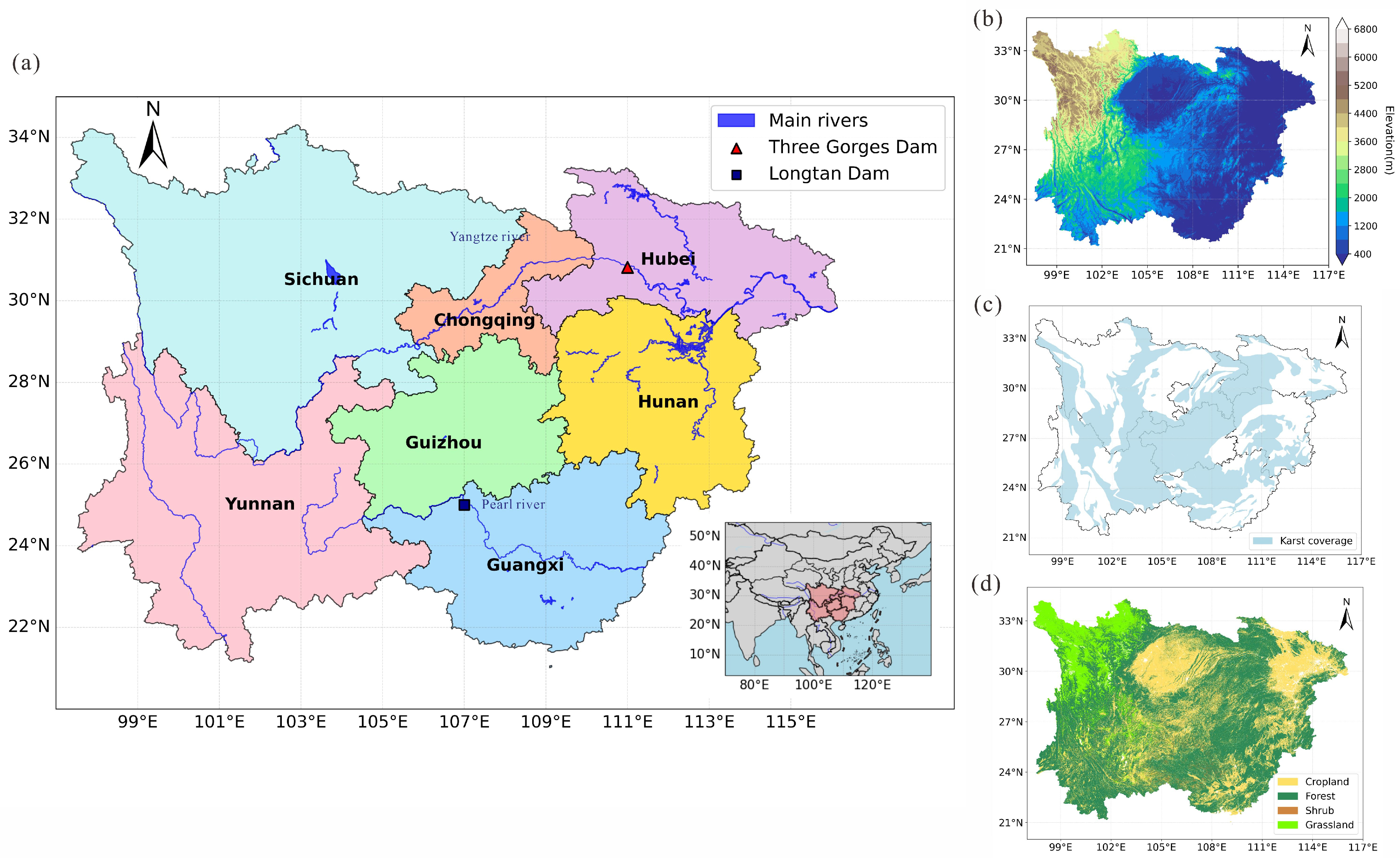
Figure 1. (a) Location of the study area; (b) elevation map of the study area; (c) karst distribution in the study area; (d) land use of the study area in 2009.
Sustainability 17 10922 g001
Figure 2. Flowchart of this study.
Sustainability 17 10922 g002
Figure 3. Schematic map of extracting drought events.
Sustainability 17 10922 g003
Figure 4. The frequency of MD events at different time scale (ae) and HD events (f) in the study area.
Sustainability 17 10922 g004
Figure 5. The proportion of moderate, severe and extreme drought events within the total number of MD events at SPI-6 and SPI-9 timescales (a,b), and within the total number of HD events (c).
Sustainability 17 10922 g005
Figure 6. The spatial distribution of MD severity at different timescales (ae) and HD severity (f) in the study area.
Sustainability 17 10922 g006
Figure 7. The spatial distribution of the maximum Pearson correlation coefficient between MD and HD (a), and the propagation time from MD to HD (b).
Sustainability 17 10922 g007
Figure 8. The spatial distribution of propagation rate (a) and propagation intensity (b).
Sustainability 17 10922 g008
Figure 9. The correlation matrix representing the relationship between various factors (EL: elevation, PREC: mean precipitation; TEMP: mean temperature).
Sustainability 17 10922 g009
Figure 10. The correlation between three different drought propagation indicators and different factors (EL: elevation, PREC: mean precipitation; TEMP: mean temperature).
Sustainability 17 10922 g010
Table 1. Drought classification using SPI and STI for MD and HD [32].
GradeSPISTI
No drought−0.5 < SPI−0.5 < STI
Mild drought−1 < SPI ≤ −0.5−1 < STI ≤ −0.5
Moderate drought−1.5 < SPI ≤ −1−1.5 < STI ≤ −1
Severe drought−2 < SPI ≤ −1.5−2 < STI ≤ −1.5
Extreme droughtSPI ≤ −2STI ≤ −2
Table 2. The correlation coefficients of different drought propagation indicators.
Propagation TimePropagation RatePropagation Intensity
Propagation time1−0.140.17
Propagation rate−0.141−0.85 *
Propagation intensity0.17−0.85 *1
Note: ‘*’ indicates the correlation had passed the significant test (p < 0.05).
Table 3. The correlation coefficients between different HD characteristics and factors.
HD CharacteristicsMean PrecipitationMean TemperatureElevationSlopeGrasslandShrublandForestCroplandKarst
HD frequency0.3 *0.25 *−0.36 *−0.28 *−0.44−0.390.140.24−0.23
PoMSE−0.305 *−0.33 *0.32 *0.25 *0.25 *−0.130.086−0.25 *−0.46 *
HD severity−0.649 *−0.56 *0.63 *0.44 *0.65 *0.05−0.31 *−0.46 *−0.34 *
Note: PoMSE represents the proportion of moderate, severe and extreme droughts in the total drought events. ‘*’ indicates the correlation analysis had passed 95% significant test.
Disclaimer/Publisher’s Note: The statements, opinions and data contained in all publications are solely those of the individual author(s) and contributor(s) and not of MDPI and/or the editor(s). MDPI and/or the editor(s) disclaim responsibility for any injury to people or property resulting from any ideas, methods, instructions or products referred to in the content.