

Article

Impact of Agricultural Product Circulation Efficiency on Contract Farming Coverage and Regional Differences: Evidence from China

School of Humanities and Social Sciences, Jiangsu University of Science and Technology, Zhenjiang 212100, China
*
Author to whom correspondence should be addressed.
Sustainability 2025, 17(23), 10792; https://doi.org/10.3390/su172310792
Submission received: 29 October 2025 / Revised: 23 November 2025 / Accepted: 28 November 2025 / Published: 2 December 2025

Abstract

Based on the “three-dimensional” perspective of modern circulation theory, this study constructs an index system for evaluating the circulation efficiency of agricultural products. The circulation efficiency index values are computed from panel data from 2015 to 2022 in China, and regression estimation is applied to estimate their impact on contract farming coverage. The findings reveal that the circulation efficiency of agricultural products has a significant driving effect on the development of contract farming, and the key mechanism lies in logistics efficiency. Moreover, its impact exhibits regional heterogeneity. Accordingly, we propose policy recommendations to improve contract farming coverage.

1. Introduction

Against the strategic background of comprehensively promoting agricultural modernization and rural revitalization in China, the issue of how to solve the effective connection problem between “small farmers” and “large markets” has become central to the high-quality development of agriculture and rural areas [1]. Contract farming is linked by contracts and guided by market demand, connecting both ends of the agricultural industry chain and different business entities, achieving organic interaction between agricultural production and the market. It also plays a positive role in effectively stabilizing production and sales relationships, reducing market risks, increasing farmers’ income, and ensuring the quality and safety of agricultural products. Therefore, contract farming is considered an important industrial model that allows small farmers to integrate into the modern agricultural development path [2,3,4,5,6,7,8,9]. However, the overall coverage rate of contract farming is still low and lacks stability in China [10], and one of the underlying reasons is that the agricultural product circulation system that supports order fulfillment still has efficiency gaps [11].
An efficient agricultural product circulation system is the “blood circulation system” for the stable development of contract farming. The classic circulation theory holds that modern circulation is a complex system that integrates “commercial flow” (trading and settlement), “information flow” (supply and demand matching), and “logistics” (warehousing and transportation) [12,13]. Existing research has fully demonstrated the crucial role of circulation infrastructure in the agricultural product circulation system, and has formed several consensuses at specific levels: First, in specialized subfields such as cold chain logistics, infrastructure is widely recognized as the core constraint factor, and its development level directly determines the degree of realization of cold chain logistics demand and the space for improving operational efficiency [14,15]. Second, case studies on perishable products such as fresh agricultural products further reveal that weak infrastructure can significantly exacerbate the loss rate and costs in the logistics process, constituting a key variable that constrains the logistics efficiency of such products [16]. Third, some analyses based on macro data also reveal that the lack of logistics capital investment and transportation infrastructure is the main obstacle to the overall efficiency improvement of agricultural product logistics in China [17,18]. Existing studies have explored the importance of circulation infrastructure, but most of them focus on macro descriptions or exploration of a single dimension (such as cold chain logistics). Moreover, few studies constructed a comprehensive index system for agricultural product circulation efficiency from a multidimensional perspective, and few studies applied this system to the development of contract farming, which is a specific industrial organization model.
Based on the literature, this study further explores the following questions: Can the improvement of agricultural product circulation efficiency significantly promote contract farming coverage? If the contract farming coverage can be improved, what mechanisms are involved? Is there a systematic difference in this impact between different regions? To answer these questions, this study first calculates the comprehensive index of agricultural product circulation efficiency and its sub-dimensional indices by using panel data from 30 provinces in China from 2015 to 2022 with the entropy method. At the same time, the contract farming coverage rate is measured based on the proportion of contract farming products’ output value to the total agricultural output value of the region. Second, this study empirically tests the net impact of agricultural product circulation efficiency on the contract farming coverage rate by using a two-way fixed effects panel model. Third, robustness tests are conducted through various methods such as replacing variables, conducting a t-test, and using an SDM. The entire sample is further divided into eastern and central western regions to explore the regional heterogeneity of the agricultural product circulation efficiency impact. The conclusions of this study have important theoretical and practical significance for precision optimization of agricultural industry policies and promoting the high-quality development of contract farming.
This study makes contributions as follows: First, a comprehensive index of circulation efficiency was constructed from multiple perspectives by using provincial panel data and econometric models, forming a systematic theoretical framework and more systematic and scientific conclusions. Second, by integrating circulation efficiency and contract farming coverage into a unified analytical framework, the logical relationship between them was explored, and a breakthrough path was found from the perspective of circulation efficiency to solve the practical difficulties of contract farming. This has expanded the theoretical research perspective and problem areas of contract farming. Third, based on the verification of the overall impact, through mechanism testing and regional heterogeneity analysis, the action path and boundary conditions were revealed in detail, providing an accurate empirical basis for formulating differentiated regional policies.

2. Literature Review

2.1. Contract Farming

As an important organizational model connecting small farmers and large markets, contract farming has always been a focus of academic research regarding its motives, influencing factors, and economic effects. Scholars generally believe that the core motivation for developing contract farming was to reduce transaction costs and avoid market risks. Contract farming rearranged market risks between enterprises and farmers through contractual forms [19]. From a functional perspective, contract farming was regarded as an important way for leading small farmers to integrate into the development path of modern agriculture [20]. It can maintain farmers as the basic organizational unit of agricultural production while leveraging the advantages of leading enterprises to process and sell agricultural and sideline products, and allow farmers to enter the market [21].
Existing research has revealed complex factors that affect the development and stability of contract farming in multiple ways. First, the characteristics of farmers: psychological factors, behavioral attitudes, degree of specialization in production, and participation experience significantly affect farmers’ participation behavior in contract farming [6,22,23,24,25]. Second, the design of contracts and organizational models, such as order form, price type, asset specificity, and price terms, significantly impact farmers’ choice of collaborative entities [26,27,28,29]. Third, external environment and policies: existing research indicates that precise policy intervention by the government can significantly enhance the stability and sustainability of contract farming [30,31,32,33].
There are different research findings on the economic effects of contract farming, especially its impact on farmers’ income and production. Most studies have confirmed its positive impact. For example, Liu and Di found that participating in contract farming could increase farmers’ machinery and labor expenses, and improved their average agricultural income per mu by using data from three provinces and regions [34]. Liang et al. further supported this viewpoint through empirical research on Chinese beef cattle breeders, finding that contract agriculture not only significantly increases farmers’ income but also improves production technology efficiency [35]. However, some studies have highlighted the complexity of its effects. Xu and Wang found that the income-increasing effect of different organizational models presented uncertainty [21]. Hou et al. used quantile regression to find that contract farming significantly increased the income of low-income farmers only, indicating heterogeneity in its effects [36]. Barik and Bedamatta found a potential lack of fairness in contract agriculture in practice, where companies control pricing power, input supply, and quality standards through intermediaries, leading small farmers into a dependency dilemma [37].

2.2. Agricultural Product Circulation Efficiency

The efficiency of agricultural product circulation is a key indicator for measuring the modernization level of the circulation system, and its measurement method and influencing factors are the basis of our study. The measurement of agricultural product circulation efficiency in academia has mainly gone through the development from a single indicator to a comprehensive indicator system. Early scholars such as Sun constructed an indicator system that includes circulation speed, efficiency, and scale [38]. As research deepened and methods became increasingly complex, Ouyang and Huang used the output distance function as an analytical framework and employed a non-parametric production frontier function model to measure the agricultural product circulation efficiency [39], and Zhou used the Malmquist index analysis method [11]. In recent years, Wang et al. have constructed a more systematic comprehensive evaluation system based on the three-dimensional perspective of modern circulation theory, using the entropy method, representing the forefront of methodology in this field [13].
The existing studies generally believe that circulation efficiency was constrained by multiple factors, such as logistics infrastructure, labor quality, informatization level, the degree of organization of circulation entities, blockchain technology characteristics, policy support, and climate factors [39,40,41]. In addition, spatial factors have also received attention and are considered important factors affecting circulation efficiency [13,42]. At the same time, institutional arrangements and business models also constitute important influencing factors [43,44].

2.3. The Relationship Between Agricultural Product Circulation Efficiency and Contract Farming

Although there are many studies focusing on contract farming and circulation efficiency separately, there are relatively few on the relationship between them. Existing studies mostly indirectly explore or focus on a certain aspect. For example, Chen and Xu found that circulation-oriented leading enterprises were the main drivers of industry chain integration for the peach industry chain. Moreover, by integrating circulation links, they could deepen the division of labor and reduce transaction costs, indirectly supporting the promotion of contract farming through efficient circulation [45]. Liu and Xie empirically proved that transportation infrastructure had a significant negative impact on the segmentation of agricultural product circulation markets, and market integration was undoubtedly a prerequisite for the development of contract farming [46]. These studies suggest the importance of the circulation environment for contract farming from different perspectives.
In summary, existing studies have achieved fruitful results in exploring micro mechanisms, laying a solid theoretical foundation for our study. However, there are still areas for expansion. First, existing studies mostly focus on exploring the development and stability of contract farming based on internal factors, such as the micro individual characteristics of farmers or enterprises and contract terms design, while studies from the macro circulation environment and system efficiency perspective are relatively insufficient. Second, although existing studies have recognized the multidimensional complexity of circulation efficiency, empirical analysis often uses a single proxy variable or focuses on technical efficiency, lacking the application of a comprehensive evaluation system in empirical research. Third, the cross study of circulation efficiency and contract farming is still in its infancy, lacking rigorous empirical analysis that directly examines the impact of comprehensive circulation efficiency as a core explanatory variable on the regional contract farming coverage and its underlying mechanisms. Moreover, there are few studies that explore the spatial heterogeneity of this impact.

3. Theoretical Analysis and Hypotheses

3.1. Theoretical Basis: Transaction Cost Theory in Agriculture

The theory of transaction cost originates from new institutional economics. This theory regards any market transaction as accompanied by a series of costs such as searching for information, negotiating and signing contracts, and supervising performance. The level of these costs directly determines the efficiency of resource allocation and the choice of organizational form.
In the field of agricultural economy, transaction cost theory provides a powerful analytical tool for understanding the evolution of agricultural industrialization organizational models. Specifically, the essential dilemma faced by contract-based agricultural organizations stems from three typical transaction costs: first, search and information costs, which refer to the pre-transaction costs of farmers and buyers searching, identifying, and evaluating each other; second, costs of negotiation and decision-making, which refer to the transaction costs incurred by both parties in negotiating and bargaining over contract terms; third, supervision and enforcement costs, which refer to the post-transaction costs of ensuring contract performance and handling breach of contract [29]. In addition, differences in the institutional environment will significantly affect the level of transaction costs and the effectiveness of various governance structures. Regions in China show obvious gradient differences in resource endowment, economic development stage, infrastructure conditions, and marketization degree, forming an institutional environment with regional characteristics, which may lead to complex regional heterogeneity in the impact of agricultural product circulation efficiency on contract agricultural coverage.
Based on this theoretical framework, this study constructs a mechanism model of the impact of agricultural product circulation efficiency on the coverage rate of contract farming. An efficient agricultural product circulation system can significantly reduce the aforementioned three types of transaction costs through specialized, large-scale, and information-based operations, thereby creating favorable conditions for the popularization of contract agriculture. The following subsection will systematically explain the role of different dimensions of agricultural product circulation efficiency in promoting the development of contract agriculture by reducing specific transaction costs, as well as spatial heterogeneity, and propose corresponding research hypotheses.

3.2. Hypotheses

The circulation efficiency of agricultural products is defined in a narrow sense in this study, referring to the whole process of agricultural products from the production field to the consumption field, covering three dimensions: value movement, use value movement, and related information movement. The specific performance is the organic unity of business flow, logistics, and information flow [12,47,48]. Studies show that improving circulation efficiency reduces the institutional cost of contract farming during the pre-transaction, transaction, and post-transaction stages, and provides the necessary institutional environment for its large-scale development. The mechanisms are mainly reflected as follows. First, the efficient circulation system effectively reduces the matching cost and the degree of information asymmetry of both sides of the transaction by promoting professional division of labor. Second, the standardized process design and standardized transaction execution reduce both the negotiation links and the negotiation costs. Third, the sound circulation service system enhances the reliability and enforcement of the contract by introducing third-party supervision and punishment mechanisms for breach of contract. Therefore, this study proposes the following:
Hypothesis 1.
The agricultural product circulation efficiency has a significant positive impact on the contract farming coverage rate.
The logistics of agricultural products is embodied in the physical flow of the use value of agricultural products, covering key dimensions such as storage and preservation, transportation speed, and cost control involved in the transfer process from the supply side to the demand side [12]. Research shows that the improvement of logistics efficiency reduces the physical loss and time risk in the process of contract performance, laying the foundation for the implementation of cross-regional and large-scale orders. The specific reasons are as follows. First, the improvement of cold chain logistics and storage facilities can effectively reduce the loss of fresh agricultural products in the circulation link and provide physical protection for cross-regional trade. Second, efficient transportation systems and route optimization can help shorten the circulation time and improve the timeliness and certainty of order delivery. Third, specialized and large-scale logistics services help to dilute the unit transportation cost, and thus enhance the overall economic benefits of contract farming. Therefore, this study proposes the following:
Hypothesis 1a.
The improvement of logistics efficiency has a significant positive impact on the contract farming coverage rate.
The agricultural product information flow refers to the transmission mechanism of product-related information in the circulation process. Its core lies in the objective feedback of various economic contents in the circulation activities [13]. Studies show that the improvement of information flow efficiency mainly affects pre-transaction information acquisition and post-transaction behavior supervision, and enhances the stability and predictability of contract farming by reducing the information costs. The specific reasons are as follows. First, a perfect production and marketing information collection and release system helps to reduce the search costs for both subjects and improve the efficiency of supply and demand matching. Second, timely and accurate market data and price signals provide the basis for both subjects to form reasonable expectations and ease the negotiation obstacles caused by information asymmetry. Third, a transparent information environment and traceability mechanism can effectively supervise the process of contract performance and restrain moral hazard and breach of contract. Therefore, this study proposes the following:
Hypothesis 1b.
The improvement of information flow efficiency has a significant positive impact on the contract farming coverage rate.
The agricultural product business flow is embodied in the process of transferring the ownership of agricultural products, that is, the movement process of its value from the production field to the consumption field [13]. Research shows that the improvement of business flow efficiency mainly reduces the negotiation cost and subsequent risk cost in the transaction process, thus ensuring the sustainable development of contract farming at the value level. The specific reasons are as follows. First, efficient electronic settlement and supply chain financial services help accelerate capital turnover and ease the financing constraints of agricultural production entities. Second, a standardized brand operation and quality certification system will help to enhance the added value of products and expand the profit space of contract farming. Third, a sound agricultural insurance and risk-sharing mechanism can stabilize the income expectation of business entities and enhance their willingness to participate in long-term contracts. Therefore, this study proposes the following:
Hypothesis 1c.
The improvement of business flow efficiency has a significant positive impact on the contract farming coverage rate.
In eastern China, the distribution infrastructure network is relatively dense, the hardware conditions such as cold chain warehousing are relatively perfect, the market system is mature, and the software environment, such as information platform and financial services, also has comparative advantages. According to the law of diminishing marginal effect, when the overall circulation efficiency reaches a high level, the marginal contribution of its further universality to reducing transaction costs tends to weaken. In addition, agriculture in this region is in the transition stage to high-tech and high added value. The driving force of contract farming may be more from the value-added links beyond the traditional circulation function, such as technological innovation, brand building, and industrial chain integration. Therefore, as a basic supporting condition, the relative importance of circulation efficiency may decline, which shows that the promotion effect on the coverage of contract farming is not significant.
In contrast, the process of agricultural modernization in central and western regions in China is relatively lagging behind, and the circulation infrastructure (especially the cold chain and storage at the origin end) still has obvious shortcomings, which directly leads to higher logistics losses, longer circulation time, and limited market radiation range, forming a key constraint on the development of contract farming [49]. According to the factor substitution theory and the growth pole theory, in areas where key factors are scarce or become the bottleneck of development, the input of such factors can produce significant marginal benefits. In this context, improving circulation efficiency can effectively break through the physical and market barriers of exporting agricultural products, and significantly reduce the core transaction costs such as search costs and performance risks to release the suppressed production potential and order demand. At the same time, regional coordinated development strategies at the national level (such as rural revitalization and China Western Development) continue to provide policy support for the improvement of circulation conditions in the region, further strengthening the institutional effect of improving circulation efficiency. Therefore, this study proposes the following:
Hypothesis 2.
There is regional heterogeneity in the impact of agricultural product circulation efficiency on the contract farming coverage rate. Compared with the eastern region, the circulation efficiency of agricultural products in the central and western regions has a more significant role in promoting the contract farming coverage rate.

4. Research Design

4.1. Construction and Calculation of Comprehensive Index System of Agricultural Product Circulation Efficiency

The entropy method is based on the uncertainty of entropy and determines its impact on the comprehensive evaluation according to the degree of dispersion of indicators. Compared with methods such as principal component analysis, entropy method does not rely on the assumption of linear distribution of variables, which allows it to better adapt to the nonlinear relationships of multidimensional indicators in this evaluation system and fully preserve the original information structure of each indicator, making it easier to explain the subsystems of circulation efficiency clearly. Compared with the commonly used data envelopment analysis method for relative efficiency evaluation, the entropy method is more robust in constructing multi-level and multi-index comprehensive indices, and has a lower sensitivity to outliers in the data. In addition, the entropy method objectively weights the observed values of various indicators based on their degree of dispersion, effectively avoiding the bias that subjective weighting methods may bring. Therefore, this research uses entropy methods proposed by Wang et al. to weight and calculate the circulation efficiency of agricultural products of 30 provinces (excluding Tibet, Hong Kong, Macao, and Taiwan) in China from 2015 to 2022 according to the weight. The process is as follows:
Firstly, standardize the original data. Original data refers to the data of all three-level indicators (see Table 1 below). Where Yij is the value of each tertiary indicator after standardization, Xij is the value of each tertiary indicator without treatment, min (Xj) and max (Xj) are the minimum and maximum values of the j-th tertiary indicator, respectively, and i and j are the year and indicator, respectively. Then adopt (1) for positive indicators and (2) for negative indicators. And Yij represents the value of each indicator after standardization:
Y i j = X i j m i n ( X j ) max X j m i n ( X j )
Y i j = max X j X i j max X j m i n ( X j )
Next, the entropy method is used to calculate the circulation efficiency of agricultural products. The specific formula is:
S i = j = 1 m w j p i j
(calculating the comprehensive index of agricultural product circulation efficiency S i )
e j = K i = 1 m p i j ln p i j
(calculating information entropy e j )
p i j = y i j i = 1 m y i j , p i j represents the weight of the j-th indicator in the i-th year, where m represents the number of years studied.
K = 1 ln m
d j = 1 e j , d j indicates the information entropy redundancy of the j-th indicator. The greater the redundancy, the greater the weight of the indicator.
w j = d j j = 1 n d j , w j represents the weight of the j-th indicator, and n represents the number of indicators.
According to the above methods, we have constructed an indicator system for the efficiency of agricultural product circulation in China (see Table 1). The secondary index values are calculated using the weighted average of the relevant tertiary index values, and the primary index values are calculated with the weighted average of the relevant secondary index values. The weights are determined using the entropy method. (1) At the level of primary indicators, the weight of information flow efficiency is the highest, which highlights the key role of information elements on circulation efficiency in the context of digital economy. (2) Among the secondary indicators, business flow scale efficiency, information flow resource development, and logistics infrastructure are the weight cores of each link, indicating that economies of scale, information transformation ability, and hardware support are still the key paths to improve efficiency at present. (3) From the perspective of tertiary indicators, the weight of indicators such as the proportion of e-commerce transactions of agricultural products (which reflects the core driving force of e-commerce on the scale efficiency of business flow), the investment in local transportation infrastructure (which highlights the hard constraint of infrastructure level on logistics efficiency), and the elasticity of information industry driving the circulation industry (which is more directed to the structural impact of information elements embedded in the circulation system) are significant.

4.2. The Economic Model

We introduce a two-way fixed effects panel model to estimate the parameters of Equations (3)–(6) by using the panel data of 30 provinces in China from 2015 to 2022. This model controls for province fixed effects and time fixed effects to address unobservable heterogeneity and time trends. Parameter estimation is performed using ordinary least squares (OLS) and the robust standard error is used to address heteroscedasticity issues. The model selection is based on the results of the F-test, LM test, and Hausman test, and the two-way fixed effects panel model is ultimately determined to be optimal. The econometric model is constructed as follows.
ln cfc it = α 0 + α 1 ln apce it + α 2 lntec it + α 3 edu it + α 4 lead it + α 5 lnorg it + δ i + θ t + ε it
ln cfc it = α 0 + α 6 ln com it + α 2 lntec it + α 3 edu it + α 4 lead it + α 5 lnorg it + δ i + θ t + ε it
ln cfc it = α 0 + α 7 ln info it + α 2 lntec it + α 3 edu it + α 4 lead it + α 5 lnorg it + δ i + θ t + ε it
ln cfc it = α 0 + α 8 ln logi it + α 2 lntec it + α 3 edu it + α 4 lead it + α 5 lnorg it + δ i + θ t + ε it
Model (3) is used to analyze and test the impact of the overall comprehensive level of agricultural product circulation efficiency on the contract farming coverage rate. Models (4)–(6) are used to analyze the net impact of business flow efficiency, information flow efficiency and logistics efficiency on the contract farming coverage rate under the control of other factors.
Where the footmark i represents the province and j represents the time. lnapceit is the comprehensive index of agricultural product circulation efficiency. lncomit, lninfoit, lnlogiit represent the agricultural product business flow, information flow, and logistics efficiency, respectively. lncfcit is the coverage rate of contract farming. lntecit represents the level of agricultural mechanization. eduit represents the human capital level. leadit represents the main cultivation scale. lnorgit represents the degree of organization. α0 is the constant term, α1 to α8 are the parameters of each corresponding variable, δi is the fixed effect of regions (provinces, autonomous regions, or municipalities directly under the central government), θt is the fixed effect of time, and ɛit is the random disturbance term.

4.3. Variable Selection and Description

4.3.1. Explained Variable

Contract farming coverage rate. This study uses the proportion of the output value of contract agriculture and the total output value of agriculture to express the coverage rate of contract farming, which is the most direct macro index to measure the development level of contract agriculture. The data on the output value of contract agriculture are mainly obtained from the relevant chapters of “Agricultural Product Sales” and “Agricultural Industrialization Operation” in the China Rural Statistical Yearbook, as well as the indicators of “Agricultural Product Sales by Sales Channels” in the Bloomberg database. The database directly calculates the total amount of agricultural products sold by agricultural producers and operators based on contracts or orders publicly signed in advance during the reporting period. The data on the total output value of agriculture come from the “Total Agricultural Output Value” table in the China Rural Statistical Yearbook.

4.3.2. Core Explanatory Variables

Comprehensive index of agricultural product circulation efficiency: Referring to the research of Wang et al., this study regards the agricultural product circulation system as a comprehensive system consisting of three subsystems, namely, the agricultural product information flow system, agricultural product business flow system, and agricultural product logistics system, to build an index system of agricultural product circulation efficiency and calculate the comprehensive index of agricultural product circulation efficiency. The relevant calculation is shown in the previous article and will not be repeated here.

4.3.3. Control Variables

To control the impact of other factors on the development of contract farming coverage, referring to existing studies and combined with the factors affecting the development of agricultural modernization, this study introduces control variables [50,51,52]. This includes the following: (1) agricultural mechanization level ( tec ); (2) human capital level ( edu ); (3) main cultivation scale ( lead ), measured by number of leading national agricultural enterprises; and (4) degree of organization ( org ) [53,54]. To ensure the robustness and reliability of the estimation results and avoid the interference of extreme values and heteroscedasticity in the regression results, all continuous variables are truncated at the 1% and 99% quantiles, and natural logarithms are taken for some variables to alleviate heteroscedasticity [13,39].

4.3.4. Data Source

Due to the availability of data, this study selected 30 provinces in China from 2015 to 2022 based on the entropy method principle, excluding Tibet, Hong Kong, Macao, and Taiwan. The type, symbol definitions, and data sources of all variables can be found under Definition in Table 2.

4.3.5. Data Description

(1)
Descriptive analysis of variables
This study first conducts a descriptive statistical analysis of the main variables involved in the research to gain a preliminary understanding of the distribution characteristics and basic situation of the data (see Table 3).
(2)
Correlation analysis of variables
The results of the correlation analysis between variables are shown in Table 4. The core explanatory variable lnapce is significantly positively correlated with the dependent variable lncfc at the 1% level (coefficient = 0.433), which preliminarily supports the research hypothesis of this article. The correlation direction between the control variable and the dependent variable is basically in line with theoretical expectations.
(3)
Multicollinearity analysis of variables
To avoid the distortion of the estimation results of our model caused by high correlation between variables, we used the variance inflation factor method to test for multicollinearity before conducting benchmark regression (see Table 5). According to Table 4, there is no multicollinearity issue with the variables selected in this study.

5. Empirical Analysis Results

5.1. Descriptive Analysis: Measurement Results of Comprehensive Index of Agricultural Product Circulation Efficiency

Figure 1 presents the development trend of agricultural product comprehensive circulation efficiency in China and its different regions. At the national average level, the comprehensive index of agricultural product circulation efficiency showed a fluctuating upward trend from 2015 to 2022. However, the national comprehensive index showed a downward trend in 2020. A possible reason is that the sudden novel coronavirus epidemic severely affected the world, which inevitably had an impact on the agricultural products logistics system [55]. The supply chain was blocked [56], which led to a decline in the growth rate of agricultural products logistics efficiency, and some provinces showed a downward trend. From a regional perspective, the efficiency level in the eastern region is significantly higher than that in the central and western regions, but its growth rate slowed down significantly since 2018. The efficiency levels in the central and western regions are relatively close, and the gap between the two is narrowing. Further interprovincial analysis shows that there is a significant regional imbalance in the efficiency of agricultural product circulation in China, with developed eastern provinces (such as Beijing and Shanghai) consistently ranking among the top, while some central and western provinces (such as Xinjiang and Jiangsu) demonstrate high growth potential.

5.2. Baseline Regression Results

To analyze the impact of agricultural product circulation efficiency on the contract farming coverage rate, the mixed effects model (OLS), random effects model (RE), and fixed effects model (FE) are used to present the impact of agricultural product circulation efficiency on contract agricultural coverage (see Table 6). According to the results of the F-test, LM Test, and Hausman test, the p values were all 0.000 (<0.05), which significantly rejects the original hypothesis; therefore, the benchmark regression model used fixed effects for regression. At the same time, the goodness of fit (R2) of the two-way fixed effects model is significantly higher than that of the individual fixed effects model, so it is considered that the two-way fixed effects model has the most explanatory power. Therefore, this study mainly analyzes the regression results by using the two-way fixed effects model.
Table 6 shows that whether OLS regression, random effects, or fixed effects are used, the regression coefficient of agricultural product circulation efficiency on the contract farming coverage rate is significantly positive. Among them, Model (4) is the regression result of two-way fixed effects; the regression coefficient of agricultural product circulation efficiency is 0.196, and it passes the significance test of 0.05. This shows that the increase in the agricultural product circulation efficiency index by one unit can cause the contract farming coverage rate probability to increase by 0.196, that is, agricultural product circulation efficiency can significantly improve the agricultural coverage of contract farming. Therefore, Hypothesis 1 (H1) is supported. The results of the analysis of the control variables are as follows: (1) The improvement of the agricultural mechanization level has a significant positive effect on the expansion of contract farming, which is consistent with the reality and existing research conclusions [57,58,59]. The improvement of the base of farmers’ professional cooperatives has a significant positive effect on the expansion of contract farming, which is also consistent with the reality and existing research conclusions [60,61,62]. (2) The regression coefficient of edu does not pass the significance test, possibly because the high default risk and “rational default” of contract farming weaken the role of education [63,64,65]. The regression coefficient of lead also fails the significance test. A possible reason is that leading enterprises prefer to establish a stable order relationship with large-scale farmers, while the order relationship with small farmers is very fragile, which reduces the overall coverage quality and stability [58].

5.3. Robustness Tests

Building on the benchmark results, several methods are used to test the robustness (see Table 7). First, removing special samples: removing the special samples in 2020, the coefficient of the core variable agricultural product circulation efficiency (lnapce) is still significantly positive (0.215), and the value is close to the original model (0.196). Second, lagging variables [66]: the lag phase model shows that the lnapce coefficient increased to 0.246 and remains significant, which further confirms the persistence of its promotion effect. Among the control variables, the coefficient direction and significance of agricultural mechanization level (lntec) and degree of organization (lnorg) are always stable, which strengthens the credibility of the benchmark conclusion. The goodness of fit (R2) of each test maintained a high level, indicating that the model setting is robust and the core conclusion is reliable, that is, the circulation efficiency of agricultural products (comprehensive score) had a significant positive impact on the agricultural coverage rate of contract farming.
Third, we introduced the Spatial Durbin Model (SDM) to test the robustness of the benchmark regression results and investigate potential spatial effects. The model selection is based on the following tests: the global Moran’s index shows significant spatial correlation of the dependent variable; the Lagrange multiplier test initially supports the spatial error model, but further likelihood ratio tests reject the null hypothesis that the SDM can be simplified as a spatial lag model (p = 0.000) or a spatial error model (p = 0.029), indicating that the SDM provides a more general and appropriate setting. Although there are hints of incomplete convergence in model estimation, the direct effect estimation of core variables still has reference value. Table 7 reports the long-term direct effects of the SDM, showing that the coefficients of the core variable lnapce and control variables lntec and lnorg are significantly positive at the 1% level, which is consistent with the direction and significance of the baseline two-way fixed effects model. This indicates that while controlling for spatial dependence, the influence of core variables on the results remains robust, and the baseline regression conclusion does not suffer from significant bias due to neglecting spatial structure.
In addition, previous studies have shown that leading agricultural enterprises drive local farmers’ income through contract farming [67,68], so the number of leading agricultural enterprises can to some extent represent the development of local contract farming. We obtained panel data about the stock of leading agricultural enterprises and two logistics efficiency indicators at the municipal level from 2015 to 2022 from the CCAD database. We first calculated the average stock of leading agricultural enterprises each year at the municipal level, and then compared the stock of leading agricultural enterprises in each city with the average level of the year. If it was higher than the average, the city was considered a high coverage region of leading agricultural enterprises in that year; otherwise, it was a low coverage region of leading agricultural enterprises. On this basis, we conducted a t-test on the logistics indicators of the two regions. The results of the model showed that at the municipal level, the logistics efficiency in regions with high leading agricultural enterprise coverage was significantly higher than that in regions with low leading agricultural enterprise coverage (see Table 8). These results were consistent with our benchmark results.

5.4. Mechanism Tests

Based on the two-way fixed effects model, this study further decomposes the comprehensive index of agricultural product circulation efficiency (lnapce) into three dimensions, namely, business flow efficiency (lncom), information flow efficiency (lninfo), and logistics efficiency (lnlogi), to identify the specific path of its impact on the contract farming coverage rate (lncfc). The regression results in Table 9 control the provincial individual effect and the year time effect, and reveal the net impact of business flow efficiency, information flow efficiency, and logistics efficiency on the contract farming coverage rate.
The following can be seen from Table 9:
(1) The coefficient of logistics efficiency (lnlogi) is 0.623, and it is significant at the 1% level, indicating that the improvement of logistics efficiency has a significant positive impact on the coverage of contract farming. Therefore, we assume that H1a receives strong support. From the perspective of transaction cost theory, the improvement of logistics efficiency essentially reduces the “performance supervision cost” and “post-default risk”. Specifically, improved cold chain logistics and warehousing facilities can effectively reduce physical losses of agricultural products during circulation, improve the timeliness and certainty of order delivery, and thereby reduce performance disputes and default risks caused by logistics delays or cargo damage. In addition, specialized and large-scale logistics services also help to dilute unit transportation costs, enhance the overall economic benefits of contract agriculture, and further consolidate its market feasibility.
(2) In contrast, the coefficients of information flow efficiency (lninfo) and business flow efficiency (lncom) did not pass the significance test, and hypotheses H1b and H1c were not statistically supported. This result does not mean that information flow and commercial flow are theoretically unimportant but rather reflects that their roles in reducing transaction costs have not been fully utilized in the current agricultural product circulation system in China. The insignificant efficiency of information flow can be explained from the perspective of ineffective reduction in information costs. Despite the continuous improvement of rural information infrastructure, the lack of an authoritative and unified public information service platform has led to low efficiency in supply/demand matching and the widespread phenomenon of “information silos”. This has prevented the theoretical advantages of information flow in reducing “pre-search costs” and “post-supervision costs” from being translated into practical effects. If the efficiency of commercial flow is not significant, it reflects the institutional lag in value realization and risk-sharing mechanisms. The construction of soft environments such as transaction settlement, brand empowerment, and supply chain finance is not yet mature, which limits the role of commercial flow in reducing negotiation costs and value realization risks. Especially in areas such as agricultural insurance and credit services, the insufficient penetration rate has constrained the income security and risk resistance ability of participants in contract farming.
In summary, the mechanism test results indicate that in the past 8 years, the promotion effect of agricultural product circulation efficiency on the coverage of contract farming mainly relies on the improvement of logistics efficiency, that is, by reducing physical circulation losses and costs, expanding the market radiation range, and effectively reducing the “performance risk” and “post-default cost” in transaction costs. Although information flow and business flow efficiency have potential, their effectiveness is still limited by the institutional environment and market maturity, and a systematic mechanism for reducing transaction costs has not yet been formed.

5.5. Heterogeneity Analysis

5.5.1. Spatial Gini Index

To accurately quantify the spatial non-equilibrium distribution of agricultural product circulation efficiency and provide empirical evidence for subsequent regional heterogeneity testing, this study uses the spatial Gini coefficient as a measurement indicator. The calculation is based on the agricultural product circulation efficiency (apce) data of each province, and the formula is as follows:
G = 1 2 n 2 y - i = 1 n j = 1 n | y i y j |
Among them, G represents the Gini coefficient, n is the number of provinces, yi and yj are the agricultural product circulation efficiency values of provinces i and j, respectively, and y is the average efficiency of all provinces. The range of this coefficient is [0, 1], with higher values indicating greater absolute differences between provinces and more unequal spatial distribution. On this basis, the structural sources of spatial differences are revealed through subgroup decomposition.
Table 10 shows the spatial Gini coefficient decomposition results of agricultural product circulation efficiency from 2015 to 2022. From the perspective of the overall Gini coefficient, the spatial inequality of agricultural product circulation efficiency presents a complex trend of “fluctuating decline, abnormal low point, rapid rebound”. From a regional perspective, there are significant differences in the degree of inequality within the three major regions. The largest and most volatile internal differences exist in the eastern region, reflecting the uneven development of circulation efficiency among provinces in the eastern region. The internal differences in the central region are relatively stable and have the lowest level, indicating that the development of the central provinces is relatively balanced. The internal differences in the western region show a significant “inverted U-shaped” change, reflecting the effectiveness of the Western Development policy and the weakening of its subsequent effects.
The Gini coefficient between regions reveals more complex spatial interactions. The difference between the eastern and central regions indicates that the “efficiency gap” between the eastern and central regions is still significant. The overall difference between the east and west reflects that the development gap between the east and west is still the main regional contradiction at present. The difference between the central and western regions shows that the synergistic effect of the rise in the central region and the Western Development strategy is emerging.

5.5.2. Regression in Different Regions

To verify the regional differences in the impact of agricultural product circulation efficiency on the coverage rate of contract farming, this study divides the whole sample into different regions for grouping regression, and the results are shown in Table 11.
In the central and western regions, the influence degree of agricultural product circulation efficiency is even greater than the full sample estimate. This shows that improving the circulation efficiency is key to promoting the development of contract farming in the central and western regions. In contrast, in the eastern region, the coefficient of agricultural product circulation efficiency is positive but not significant. This result is consistent with the theoretical expectation: the eastern region has perfect infrastructure, a mature market system, and limited circulation scale growth [69]; the overall level of circulation efficiency has jumped to a higher platform period; and its marginal benefit may decline.
At the same time, grouping regressions further reveals the regionality of the role of other factors: (1) The level of agricultural mechanization (lntec) is significantly positive in the central and western regions, indicating that “replacing people with machines” is still an important approach to improve agricultural production efficiency and order fulfillment ability in the region. However, it is not significant in the east, possibly because the popularization of mechanization is nearly saturated, and the per capita cultivated land area has greatly affected the further improvement of the agricultural machinery operation level [70]. Moreover, the degree of organization (lnorg) only plays a significant positive role in the central and western regions, confirming that cultivating new agricultural business entities and improving the degree of organization of small farmers are very important for these regions, where the market system is still improving. (2) Most of the control variables in the eastern region are not significant. A possible explanation is that its agricultural modernization has entered a more advanced stage, and the factors driving growth are more complex and diversified. Among them, the influence of industrialization factors gradually dominates, while the marginal contribution of traditional input factors decreases [71]. In conclusion, the impact of agricultural product circulation efficiency (lnapce) has obvious regional heterogeneity, and H2 is supported.

5.5.3. Discussion

The above results are highly consistent with transaction cost theory and have deepened findings in the literature in the following areas.
First, we systematically verified the macro driving effect of circulation efficiency on contract farming by constructing a “three-dimensional” comprehensive index of circulation efficiency. Compared with previous research, we clearly established a logical chain from “macro circulation environment” to “meso industry coverage” [11,39].
Second, the mechanism test results indicate that there are differences in the impact of different circulation dimensions, which deepens the understanding of the path to reducing transaction costs. Previous studies have suggested that logistics infrastructure is a rigid constraint on the modernization of agriculture [41], which is consistent with the conclusion drawn in our study that logistics efficiency is the core mechanism. Our research also elucidates the path of stabilizing order relationships by reducing performance supervision costs and physical loss risks, which further contributes to the literature. In contrast, information flow and business flow efficiency do not constitute a significant mechanism, revealing the current institutional bottleneck in the market. For example, the lack of information flow confirms the current situation highlighted by existing research that the information service system is not sound [40], while the insufficient efficiency of commercial flow provides a macro explanation for the uncertainty of increasing income for contract farming from the circulation link [21].
Finally, regional heterogeneity analysis links the regional disparities in cold chain logistics with the differences in driving forces for the development of contract farming, indicating that the implementation of agricultural industrialization policies in developing countries must be based on accurate regional diagnosis [42]. In addition, this study provides operational insights for policy makers and market entities. For policy makers, public resources should be allocated precisely. For agricultural enterprises and cooperatives, both short-term utilization and long-term capacity building should be taken into account. For small farmers, actively joining industrialized consortia with reliable logistics and contract guarantees is an effective way to avoid market risks and achieve income growth.

6. Conclusions and Implications

This study empirically demonstrates the impact, mechanism, and regional heterogeneity of the efficiency of agricultural product circulation on the coverage of contract farming. The results show the following: (1) The circulation efficiency of agricultural products has a significant driving effect on the development of contract farming. This conclusion is still supported after a series of robustness tests. (2) Logistics efficiency is currently the most critical path. This shows that at the present stage of the development of contract farming in China, reducing the physical circulation loss and cost and expanding the market radiation range are the main manifestations of the role of circulation efficiency. (3) There is regional heterogeneity in the impact of agricultural product circulation efficiency on contract farming coverage, and its promotion effect is mainly reflected in the central and western regions, while the impact on the eastern region is not significant. This confirms the law of marginal effect of infrastructure construction.
According to the above conclusions, this study offers the following policy suggestions for improving the coverage of contract farming to promote the organic connection between small farmers and modern agriculture. (1) Implement the “tackling circulation infrastructure” strategy and strengthen the core support role of logistics. This study found that logistics efficiency is the core pathway that affects the coverage of contract farming coverage. Thus, governments at all levels should prioritize the construction of modern logistics systems. Policy resources should focus on the central and western regions regarding investing in the construction of a number of backbone cold chain logistics bases, storage and preservation facilities in production areas, and county-level distribution centers. This could effectively reduce the loss rate and time cost of agricultural products in cross-regional circulation, and lay a solid physical foundation for the expansion of contract farming. (2) Implement the “precise zoning and policy implementation” strategy to guide regional differentiated development. This study found that there is regional heterogeneity in the impact of agricultural product circulation efficiency on contract farming coverage. Thus, for the central and western regions, policies should focus on filling gaps, with improving the efficiency of agricultural product circulation as the core. This includes coordinating the promotion of agricultural mechanization and socialized services, accelerating the cultivation of new agricultural management entities such as cooperatives and family farms, and improving the mechanism of interest linkage. Through the dual improvement of “hardware” and “organization”, the development potential of contract farming can be quickly stimulated. For the eastern region, policies should focus on promoting upgrading. Policies should encourage these regions to explore development paths that go beyond traditional circulation efficiency and promote the development of advanced formats such as smart agriculture, digital supply chain, customized agriculture, and new retail of agricultural products. Thus, the leap of contract farming from “quantity assurance” to the high-end value chain of “quality improvement, efficiency enhancement, and brand creation” can be promoted. (3) In the short term, the government should focus on filling the gaps in logistics infrastructure in the central and western regions, prioritize the construction of backbone cold chain and origin storage facilities to quickly reduce losses and costs, and expand the coverage radius of contract farming. At the same time, it should lay out long-term capacity building and cultivate new driving forces for information flow and business flow. A national or regional public service platform for agricultural product supply and demand information should be constructed through government leadership and integration of market forces to solve the problem of information asymmetry. The cultivation of agricultural product brands, quality traceability, and credit service systems also need to be improved, as well as cross-regional transaction settlement and agricultural financial services, to build a benign ecological environment of information transparency, transaction security, and value enhancement for contract farming.
Although this study has expanded the reliability of its conclusions through a series of robustness tests and spatial econometrics, its findings are still limited by the following inherent methodological challenges that should be interpreted with caution: (1) Although this study has used two-way fixed effects models, lagged variables, and even spatial Durbin models (SDM) to control for unobservable heterogeneity and spatial dependence, the bidirectional causal dilemma between core variables has not been completely eradicated. This is because it is extremely difficult to find a variable that is both strongly correlated and strictly satisfies exclusivity constraints at the provincial macro level. If future research can utilize exogenous policy shocks to construct quasi natural experiments, it will provide more solid support for causal identification. (2) Based on the analysis of provincial panel data, while it can effectively reveal macro patterns, it inevitably conceals the huge differences between cities and counties within the province. Although the t-test at the county level reveals a positive correlation between the stock of leading enterprises and logistics infrastructure, providing valuable micro clues for the mechanism, this correlation analysis still cannot accurately separate and quantify the specific mediating effects of organizational factors in macro models. Future research can be deepened along the following paths: firstly, using city- and county-level data for finer-scale spatial analysis; secondly, adopting a mixed research approach, through typical cases or micro investigations, we will delve into the blocking mechanisms of information flow and business flow at the level of specific business entities, providing micro evidence for macro level discoveries.

Author Contributions

Conceptualization, T.L.; methodology, Z.S.; software, Z.S.; validation, T.L.; formal analysis, T.L. and Z.S.; investigation, Z.S.; resources, T.L.; data curation, Z.S.; writing—original draft preparation, Z.S.; writing—review and editing, T.L.; visualization, Z.S.; supervision, T.L.; project administration, T.L.; funding acquisition, T.L. All authors have read and agreed to the published version of the manuscript.

Funding

This research was funded by the Ministry of Education of Humanities and Social Science Project (24YJC790116) and the General Project of Philosophy and Social Science Research in Colleges and Universities in Jiangsu Province (2023SJYB2178).

Institutional Review Board Statement

Not applicable.

Informed Consent Statement

Not applicable.

Data Availability Statement

The raw data supporting the conclusions of this article will be made available by the authors on request.

Acknowledgments

We express our gratitude to the funders that gave the article financial support. The first funder is the Ministry of Education of Humanities and Social Science Project of China. The second funder is the General Project of Philosophy and Social Science Research in Colleges and Universities in Jiangsu Province.

Conflicts of Interest

The authors declare no conflicts of interest.

References

  1. Han, C.F. Actively Promote the Organic Connection Between Small Farmers and Modern Agriculture Development. Rural Pract. Technol. 2018, 3, 22–24. [Google Scholar]
  2. Wang, H.H.; Wang, Y.; Delgado, M.S. The Transition to Modern Agriculture: Contract Farming in Developing Countries. Am. J. Agric. Econ. 2014, 5, 1257–1271. [Google Scholar] [CrossRef]
  3. Otsuka, K.; Nakano, Y.; Takahashi, K. Contract Farming in Developed and Developing Countries. Annu. Rev. Resour. Econ. 2016, 8, 353–376. [Google Scholar] [CrossRef]
  4. Maertens, M.; Velde, K.V. Contract-farming in Staple Food Chains: The Case of Rice in Benin. World Dev. 2017, 95, 73–87. [Google Scholar] [CrossRef]
  5. Ton, G.; Vellema, W.; Desiere, S.; Weituschat, S.; D’Haese, M. Contract farming for improving smallholder incomes: What can we learn from effectiveness studies? World Dev. 2018, 104, 46–64. [Google Scholar] [CrossRef]
  6. Khanal, A.; Mishra, A.; Joaquín, M.; Stefan, H. Choice of Contract Farming Strategies, Productivity, and Profits: Evidence from High-Value Crop Production. J. Agric. Resour. Econ. 2020, 45, 589–602. [Google Scholar]
  7. Chen, J.; Chen, Y. The Impact of Contract Farming on Agricultural Product Supply in Developing Economies. Prod. Oper. Manag. 2021, 30, 2395–2419. [Google Scholar] [CrossRef]
  8. Shiringo, L.; Chundu, M.; Sithole, P. Contribution of Smallholder Tobacco Contract Farming to Economic and Human Development of Rural Communities in Zimbabwe: A Case of Igava Community, Marondera District. Open J. Soc. Sci. 2022, 10, 36–57. [Google Scholar] [CrossRef]
  9. Ndip, F.; Sakurai, T. Enhancing Agricultural Intensification through Contract Farming: Evidence from Rice Production in Senegal. Agric. Food Secur. 2025, 14, 6. [Google Scholar] [CrossRef]
  10. Research Group of the Rural Department of the State Council Research Office. Forms, Functions, and Suggestions for the Development of Contract Agriculture. Issues Agric. Econ. 2001, 3, 43–46. [Google Scholar]
  11. Zhou, Q. Research on the Efficiency and Improvement Path of Agricultural Product Circulation in China. Doctoral Dissertation, Beijing Jiaotong University, Beijing, China, 2019. [Google Scholar]
  12. Xia, C. Research on Mechanism Innovation and Policy System of Agricultural Product Circulation System Construction; Economic Science Press: Beijing, China, 2018. [Google Scholar]
  13. Wang, L.Q.; Qi, C.J.; Tang, L.Y. Evaluation and Spatio-temporal Analysis of Agricultural Product Circulation Efficiency in the Context of Unified Domestic Market: From the “Three Dimensional” Perspective of Modern Circulation Theory. Issues Agric. Econ. 2023, 8, 127–143. [Google Scholar] [CrossRef]
  14. Tao, F.M.; Zhu, R.; Yuan, B.F.; Fan, X.M.; Zhang, Y.D. Configuration Analysis of Factors Ineluencing Demand for Agricultural Cold Chain Logistics: A Toe Framework Perspective. Chin. J. Agric. Resour. Reg. Plan. 2025, 8, 217–227. [Google Scholar]
  15. Li, Y.H.; Wu, L.Q. The Spatiotemporal Evolution Characteristics of Cold Chain Logistics Efficiency for Agricultural Products in China. J. Jishou Univ. (Soc. Sci.) 2025, 46, 1–11. Available online: https://link.cnki.net/urlid/43.1069.c.20241225.1701.004 (accessed on 27 October 2025).
  16. Huang, F.H.; Jiang, X.L. Research on the Influencing Factors and Improvement Modes of Logistics Efficiency of Fresh Agricultural Products. J. Beijing Technol. Bus. Univ. (Soc. Sci.) 2017, 2, 40–49. [Google Scholar] [CrossRef]
  17. Wang, X.H.; Wen, J.Y. The Logistics Efficiency of Agricultural Products in China and Its Regional Differences: SFA Analysis Based on Inter Provincial Panel Data. Contemp. Econ. Manag. 2015, 37, 26–32. [Google Scholar] [CrossRef]
  18. Zhang, X.F. Research on the Measurement and Influencing Factors of Agricultural Product Circulation Efficiency in China. Master’s Thesis, Northeast Agricultural University, Harbin, China, 2018. [Google Scholar]
  19. Liu, F.Q. Incomplete Contract and the Barrier to Performance: A Case Research on the Farm Produce for Oder. Econ. Res. J. 2003, 4, 22–30+92. [Google Scholar]
  20. Yu, L.R. The Path, Mechanism, and Conditions for Connecting Small and Medium sized Farmers with Modern Agriculture in Industrial Revitalization: A Case Study of Contract Farming. Guizhou Soc. Sci. 2021, 2, 156–162. [Google Scholar] [CrossRef]
  21. Xu, J.; Wang, X.H. Empirical Analysis of the Impact of Contract Farming and Its Organizational Model on Farmers’ income. Chin. Rural Econ. 2009, 4, 39–47. [Google Scholar] [CrossRef]
  22. Lu, K.; Ma, J.J. Empirical Study on the Behavioral Choices and Determining Factors of Farmers’ Participation in Contract Farming. J. Agrotech. Econ. 2010, 9, 10–17. [Google Scholar] [CrossRef]
  23. Hou, J.; Hou, B. Farmers’ Participation Behavior in Contract Farming and its Influencing Factors: Based on the Theory of Planned Behavior. J. Hunan Agric. Univ. (Soc. Sci.) 2018, 19, 17–24. [Google Scholar] [CrossRef]
  24. Hoang, V.; Nguyen, V. Determinants of Small Farmers’ Participation in Contract Farming in Developing Countries: A Study in Vietnam. Agribusiness 2023, 39, 836–853. [Google Scholar] [CrossRef]
  25. Nazif, B.; Hussaini, Y. Determinants of Participation in Contract Farming among Smallholder maize Farmers in North-Western Nigeria. Acta Sci. Pol. Agric. 2022, 20, 147–160. [Google Scholar]
  26. Liu, J.H.; Zhang, Y.L. Analysis of Vertical Collaboration Selection Behavior of Subjects in the Conrtract Farming Model. J. Agrotech. Econ. 2017, 11, 104–114. [Google Scholar] [CrossRef]
  27. Wang, Y.F.; Huang, Y.; Tang, S. Exploring the Efficiency and Motivation of Contract Fulfillment between Leading Enterprises and Farmers: Survey Data from 91 Agricultural Enterprises. Issues Agric. Econ. 2014, 11, 16–25. [Google Scholar] [CrossRef]
  28. Karakostas, A.; De Souza Monteiro, D.M.; Adjei, C. Double Moral Hazard in Contract Farming: An Experimental Analysis. J. Agric. Econ. 2025, 76, 640–650. [Google Scholar] [CrossRef]
  29. Sheng, X.D. The Contractual Dilemma of Contract Farming and the Evolution of Organizational Forms. Chin. Rural Econ. 2007, 12, 35–39+46. [Google Scholar] [CrossRef]
  30. Shi, L.G.; Chen, W.D. Green Technology Adoption Strategies of Contract Farming Supply Chain under Agricultural Insurance. Chin. J. Manag. Sci. 2024, 9, 1–14. [Google Scholar] [CrossRef]
  31. Peng, H.J.; Pang, T. Financing and Operational Strategies for the Contract-Farming Supply Chain under Agricultural Subsidy Policy. J. Ind. Eng. Eng. Manag. 2020, 34, 155–163. [Google Scholar] [CrossRef]
  32. Wen, T.; Liu, T.T. Innovations and Future Breakthroughs of Financial Services in Contract Farming: A Multi-Case Study of Rural Financial Reform Pilot Zones. Rural Econ. 2025, 4, 1–11. [Google Scholar] [CrossRef]
  33. Zhang, Z.; Zhong, Y.; Zhang, G.; Zhai, T.; Li, Z.; Lin, S. Individual Action or Collaborative Scientific Research Institutions? Agricultural Support from Enterprises from the Perspective of Subsidies. Sustainability 2025, 17, 6873. [Google Scholar] [CrossRef]
  34. Liu, X.; Qiu, Y. The Impact of Contract Farming on Farmers’ Agricultural Production: Analysis Based on Survey Data of 1041 Farmers in Three Provinces (Regions). Chin. Rural Econ. 2013, 4, 48–59. [Google Scholar] [CrossRef]
  35. Liang, Y.; Bi, W.; Zhang, Y. Can Contract Farming Improve Farmers’ Technical Efficiency and Income? Evidence from Beef Cattle Farmers in China. Front. Sustain. Food Syst. 2023, 7, 1179423. [Google Scholar]
  36. Hou, J.; Ying, R.Y.; Zhou, L. Does Contract Farming Effectively Improve Farmers’ income? An Empirical Research Based on Quantile Regression. J. Nanjing Agric. Univ. (Soc. Sci. Ed.) 2018, 18, 122–132+156. [Google Scholar]
  37. Barik, P.; Bedamatta, R. Is Contract Farming Fair For Smallholder Farmers? A Case Study From India. J. Contemp. Asia 2025, 1–23. [Google Scholar] [CrossRef]
  38. Sun, J. The Measurement and Evolution Trends of the Circulation Efficiency of Agricultural Products in China: An Empirical Analysis Based on the Panel Data from 1998 to 2009. China Bus. Mark. 2011, 25, 21–25. [Google Scholar] [CrossRef]
  39. Ouyang, X.X.; Huang, F.H. Measurement and Determining Factors of Agricultural Product Circulation Efficiency in China: 2000–2009. J. Agrotech. Econ. 2011, 2, 76–84. [Google Scholar] [CrossRef]
  40. Gong, M.; Qi, C.J. Constraints and Breakthrough Points of the Efficiency of Agricultural Products Circulation in China. China Bus. Mark. 2012, 26, 43–48. [Google Scholar] [CrossRef]
  41. Wang, L.; Qi, C.; Jiang, P.; Xiang, S. The Impact of Blockchain Application on the Qualification Rate and Circulation Efficiency of Agricultural Products: A Simulation Analysis with Agent-Based Modelling. Int. J. Environ. Res. Public Health 2022, 19, 7686. [Google Scholar] [CrossRef] [PubMed]
  42. Fan, X.; Zhang, Y.D.; Xue, J.H.; Cao, Y.Y. Exploring the Path to the Sustainable Development of Cold Chain Logistics for Fresh Agricultural Products in China. Environ. Impact Assess. Rev. 2024, 108, 107610. [Google Scholar] [CrossRef]
  43. Li, C.; Guo, G. The Influence of Large-Scale Agricultural Land Management on the Modernization of Agricultural Product Circulation: Based on Field Investigation and Empirical Study. Sustainability 2022, 14, 13967. [Google Scholar] [CrossRef]
  44. Ruml, A.; Ragasa, C.; Qaim, M. Contract Farming, Contract Design and Smallholder Livelihoods. Aust. J. Agric. Resour. Econ. 2022, 66, 24–43. [Google Scholar] [CrossRef]
  45. Chen, C.; Xu, L. The Integration and Cultivation of the Fruit Industry Chain under the Leadership of the Leading Enterprise of Circulation Type: Based on the Theory and Practice of Peach Industry. Issues Agric. Econ. 2020, 8, 77–90. [Google Scholar] [CrossRef]
  46. Liu, G.; Xie, G.Y. Transportation Infrastructure, Scale of Circulation Organization and Market Segmentation of Agricultural Products Circulation. J. Beijing Technol. Bus. Univ. (Soc. Sci.) 2019, 34, 28–40. [Google Scholar]
  47. Qou, R.; Tan, X.Y. On the Analysis Framework of Agricultural Product Circulation Efficiency. China Bus. Mark. 2008, 5, 12–15. [Google Scholar] [CrossRef]
  48. Zhou, Z.L. Study on the Circulation Efficiency and Influencing Factors of Chinese Sweet Melon. Doctoral Dissertation, Chinese Academy of Agricultural Sciences, Beijing, China, 2014. [Google Scholar]
  49. Chen, Y.F.; Xu, S.H.; Qian, J.F. International Experience in Building a Modern Circulation System for Agricultural Products and Its Implications for China. China Bus. Mark. 2025, 39, 22–36. [Google Scholar] [CrossRef]
  50. Lou, J.C.; Liu, Z. Empirical Analysis of the Impact of Human Capital on Agricultural Economy. Stat. Decis. 2020, 36, 67–70. [Google Scholar] [CrossRef]
  51. Zhu, X.B. Research on Human Capital, Social Capital, and Farmers’ Order Fulfillment Behavior. Master’s Thesis, Anhui Agricultural University, Hefei, China, 2022. [Google Scholar]
  52. Guo, H.D. Research on Order Arrangement and Fulfillment Mechanism between Agricultural Leading Enterprises and Farmers: An Analysis Based on the Behavior of Enterprises and Farmers. Doctoral Dissertation, Zhejiang University, Hangzhou, China, 2005. [Google Scholar]
  53. Pan, J. Research on the Development of Farmers’ Professional Cooperative Organizations in the Circulation Field. Issues Agric. Econ. 2001, 11, 51–58. [Google Scholar] [CrossRef]
  54. Zhou, D.K. Causes for the Irrational Prosperity in the Real Estate Market and the Influence of That. China Bus. Mark. 2010, 24, 31–34+80. [Google Scholar] [CrossRef]
  55. Ye, X.Q.; Chen, Y.; Zhou, Q.L.; Ying, H.D. Impacts of COVID-19 on Rural and Agricultural Development in 2020 and Its Countermeasures. Issues Agric. Econ. 2020, 3, 4–10. [Google Scholar] [CrossRef]
  56. Si, W.; Zhang, Y.M.; Fan, S.G. How to Ensure Food and Nutrition Security under the COVID-19 Epidemic: A Global Perspective. Issues Agric. Econ. 2020, 3, 11–16. [Google Scholar] [CrossRef]
  57. Xue, C.; Shi, X.Y.; Zhou, H. Influence Path of Agricultural Mechanization on Total Factor Productivity Growth in Planting Industry. J. Agrotech. Econ. 2020, 10, 87–102. [Google Scholar] [CrossRef]
  58. Xu, J.; Wang, X.D. Research on the Discrimination against Weak Farmers in Contract Farming. Soc. Sci. J. 2011, 3, 103–106. [Google Scholar]
  59. Peng, J.Q.; Wu, H.T.; Wang, W. The Influence of Agricultural Mechaniztion Level on Farmers’ Production of Staple Food. Chin. J. Agric. Resour. Reg. Plan. 2021, 42, 51–59. [Google Scholar]
  60. Chen, L.S.; Huang, S.; Li, X.B. Research on the Impact of Agricultural Mechanization on Farmers’ Income: An Empirical Analysis Based on System GMM Model and Mediation Effect Model. Rural Econ. 2021, 6, 41–49. [Google Scholar]
  61. Li, B. Risk Management of Contract Farming from the Perspective of Farmers’ Professional Cooperatives. Hubei Soc. Sci. 2011, 9, 93–96. [Google Scholar] [CrossRef]
  62. Wang, Y.J.; Qi, C.J. Game Analysis of Leading Enterprises and Farmers in Contract Agriculture in China. J. Agrotech. Econ. 2007, 5, 25–30. [Google Scholar] [CrossRef]
  63. Ma, J.J.; Xu, X.G. Market Structure and Performance Analysis of Contract Farming. Issues Agric. Econ. 2008, 3, 35–41. [Google Scholar] [CrossRef]
  64. Gao, Q. Capital Endowment, Risk Perception, and Farmers’ Performance Behavior. Master’s Thesis, Anhui Agricultural University, Hefei, China, 2024. [Google Scholar]
  65. He, Q.J. Market Distance, Rransaction Prices, and Farmers’ Performance Behavior. Master’s Thesis, Anhui Agricultural University, Hefei, China, 2023. [Google Scholar]
  66. Gan, T.Q.; Li, B.; Deng, H. The Reform of Three Rights Division of Farm Land and the Growth of County Agricultural Economy. J. Huazhong Agric. Univ. (Soc. Sci. Ed.) 2021, 5, 147–157. [Google Scholar] [CrossRef]
  67. Ma, Z.X.; Liang, B. Research on the Driving Effect of Agricultural Leading Enterprises on Farmers in Guangdong Province: Empirical Analysis Based on Cross Sectional Data from 21 Cities. Spec. Zone Econ. 2009, 6, 33–34. [Google Scholar]
  68. Lu, H.; Liu, B.; Yu, Y.Q.; Peng, L.L.; Chi, Z.X. Can the enterprise-farmer interest linkage improve the leading behavior performance of agricultural leading enterprises? Theoretical logic and empirical evidence. J. China Agric. Univ. 2025, 30, 347–362. [Google Scholar]
  69. Cui, W.H.; Hu, Y.K. The Temporal Changes and Regional Differences in the Competitiveness of China’s Agricultural Product Circulation System. Res. Financ. Econ. Issues 2016, 11, 106–112. [Google Scholar] [CrossRef]
  70. Duan, Y.L.; He, W.L.; Huang, Y.M.; Zhu, H.L. Study on Regional Differences of Agriculture Mechanization Development in China. J. Northwest A F Univ. (Nat. Sci. Ed.) 2011, 39, 210–216. [Google Scholar] [CrossRef]
  71. Wang, Y.J. Empirical Study on Regional Differences in Agricultural Modernization in China. Master’s Thesis, Liaoning University, Shenyang, China, 2021. [Google Scholar]
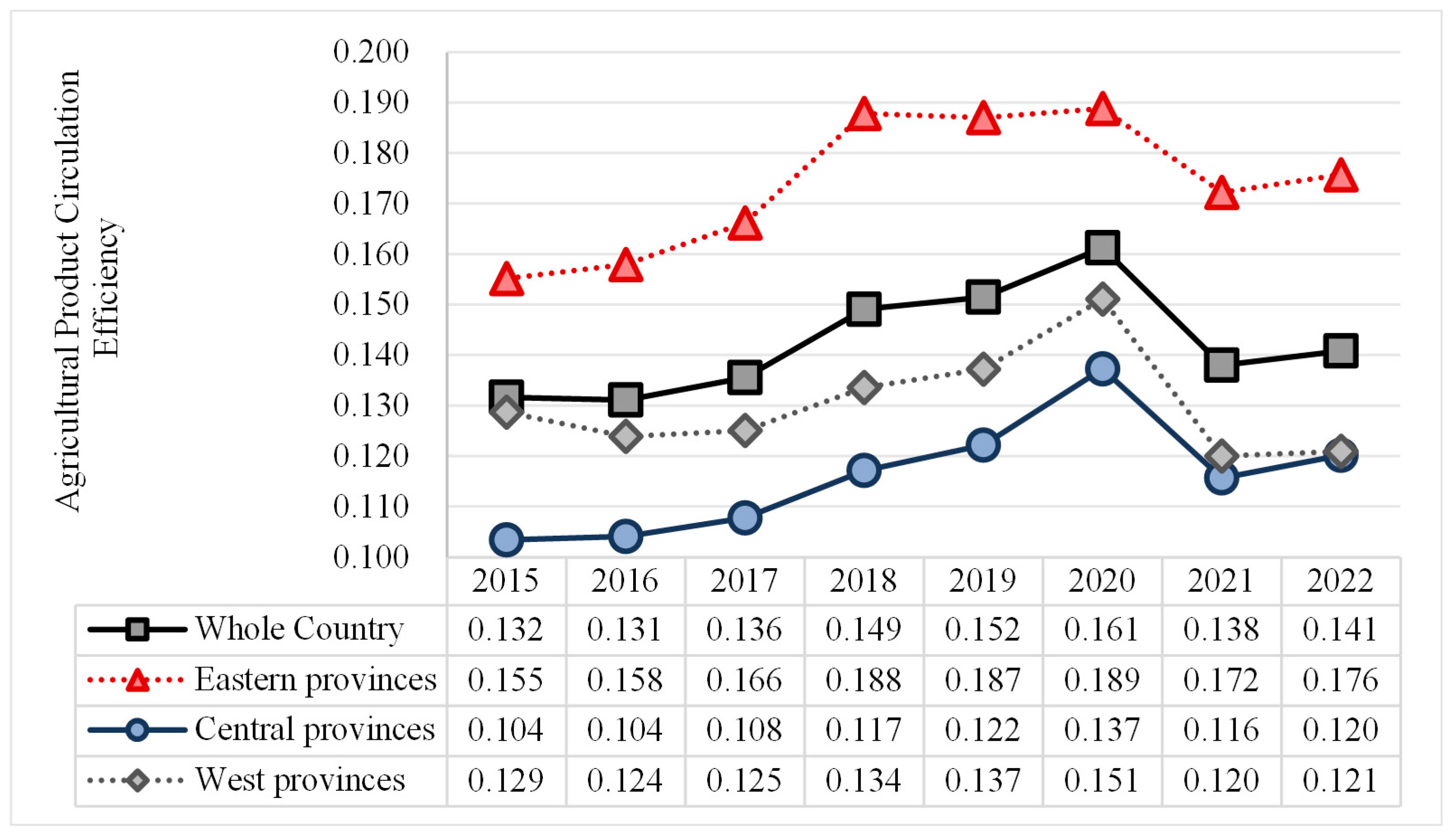
Figure 1. Development trend of comprehensive index of agricultural products circulation efficiency in China and its different regions.
Sustainability 17 10792 g001
Table 1. Index system and weight of agricultural product circulation efficiency.
Primary IndicatorSecondary IndexWeightTertiary IndicatorsWeight
Business flow efficiency of agricultural productsTrading speed index0.0428Inventory turnover rate of agricultural products circulation industry0.0023
Inventory rate of agricultural products circulation industry0.0209
Total asset turnover rate of agricultural products circulation industry0.0196
Business flow scale index0.095Concentration of agricultural products retail industry0.0186
Concentration of wholesale and retail agricultural products0.0250
Wholesale and retail coefficient of agricultural products0.0514
Business flow model reform index0.1357Proportion of e-commerce transactions of agricultural products0.0522
Development level of chain operation of agricultural products circulation industry0.0667
Development level of digital payment for agricultural products0.0168
Business flow benefit index0.067Profit margin of wholesale and retail agricultural products0.0244
Sales of agricultural products per unit business area0.0345
Purchase and sales rate of agricultural products retail industry0.0081
Information flow efficiency of agricultural productsInformation source index (information flow infrastructure)0.1515Number of computers per rural household0.0160
Development level of information flow facilities for agricultural products0.1066
Rural per capita information access level0.0289
Information channel index (information resource development)0.1809Contribution of information industry to national economy0.0719
Human resource level of agricultural product information flow0.0857
Information industry drives the flexibility of circulation industry0.0233
Information accommodation index (utilization of information resources)0.0746Development level of rural information service0.0102
Per capita telecom business volume of rural residents0.0516
Per capita transportation and communication expenditure of rural residents0.0128
Logistics efficiency of agricultural productsLogistics labor level0.0998Professional employees of agricultural products logistics (10,000 people)0.0207
Local transportation infrastructure investment (100 million CNY)0.0791
Logistics infrastructure level0.1275Fixed asset investment in agricultural products logistics (100 million CNY)0.0298
Density of grade highway network (km/km2)0.0977
Logistics development level0.0251Added value of agricultural products logistics (100 million CNY)0.0251
Table 2. Variable definition.
TypeSymbolDefinitionData Source (2015–2022)
Explained variableContract farming coverage rate (cfc)Proportion of contracted agricultural output value to total agricultural output valueChina Rural Statistical Yearbook,
Bloomberg database
Core explanatory variablesComprehensive index of agricultural product circulation efficiency (apce)Calculate through entropy methodRefer to Table 1 for entropy method calculation
Information flow efficiency index (info)
Business flow efficiency index (com)
Logistics efficiency index (logi)
Control variablesAgricultural mechanization level (tec)Total power of agricultural machineryChina Statistical Yearbook
Human capital level (edu)Average education years of rural labor forceChina Population and Employment Statistics Yearbook
Scale of cultivation (lead)Number of leading national agricultural enterprisesCCAD
Level of mechanization (org)Number of farmer professional cooperativesAnnual Report on China’s Business Management Statistics; Annual Report on China’s Rural Cooperative Economy Statistics; Annual Report on China’s Rural Policy and Reform Statistics
Table 3. Descriptive analysis of variables.
VariableAverageStandard DeviationMinimum ValueMaximum Value
lncfc2.9720.2952.0793.555
lnapce−2.0010.316−2.659−0.906
lntec7.6881.1474.5439.499
edu7.910.6375.87810.115
lead37.56715.3991289
lnorg10.6551.0067.79512.34
Table 4. The correlation analysis of variables.
Variableslncfclnapcelnteceduleadlnorg
lncfc1.000
lnapce0.433 ***1.000
(0.000)
lntec−0.296 ***−0.290 ***1.000
(0.000)(0.000)
edu0.489 ***0.434 ***−0.315 ***1.000
(0.000)(0.000)(0.000)
lead0.0720.160 **0.636 ***0.0411.000
(0.269)(0.013)(0.000)(0.527)
lnorg−0.149 **−0.268 ***0.915 ***−0.207 ***0.623 ***1.000
(0.021)(0.000)(0.000)(0.001)(0.000)
Note: *** p < 0.01, ** p < 0.05.
Table 5. The multicollinearity analysis of variables.
VariablesVIF1/VIF
lntec7.6410.131
lnorg6.5940.152
lead2.2550.443
lnapce1.530.654
edu1.4020.713
Mean VIF3.884
Table 6. Benchmark regression results.
VariablesMixed Effect Model (OLS)Random Effect Model (RE)Fixed Effect Model
(FE)
Model (1)Model (2)Model (3)Model (4)
lnapce0.210 ***0.379 ***0.281 ***0.196 **
(3.496)(4.948)(4.073)(2.17)
lntec−0.200 ***−0.234 ***0.517 ***0.398 ***
(−5.515)(−4.009)(6.421)(3.52)
edu0.122 ***0.239 ***0.236 ***0.001
(4.255)(5.610)(5.880)(0.02)
lead0.003 **−0.009 ***−0.007 *−0.002
(2.101)(−3.368)(−1.776)(−0.48)
lnorg0.169 ***0.438 ***0.802 ***0.579 ***
(4.396)(8.320)(15.268)(9.14)
_cons2.052 ***−0.696−10.568 ***−5.941 ***
(6.168)(−1.373)(−12.381)(−4.58)
N240240240240
R20.380-0.7470.847
Adj. R20.367-0.7050.839
F28.697-121.175120.029
Individual effectNONOYESYES
Time effectNOYESNOYES
Number of id30303030
Note: ***, **, * denote significance at the 10%, 5%, and 1% levels, respectively.
Table 7. Robustness test results.
VariablesBenchmark RegressionRegression with Lag Variables SDM-LR-Direct
lnapce0.196 **0.246 **0.222 ***
(2.17)(2.457)(3.44)
lntec0.398 ***0.608 ***0.358 ***
(3.52)(3.080)(5.03)
edu0.0010.0240.018
(0.02)(0.405)(0.46)
lead−0.002−0.001−0.004
(−0.48)(−0.156)(−1.72)
lnorg0.579 ***0.567 ***0.563 ***
(9.14)(6.775)(11.68)
_cons−5.941 ***−7.604 ***-
(−4.58)(−4.923)-
N240210240
R20.8470.834-
Adj. R20.8390.825-
F120.02915.582-
Note: *** and ** denote significance at the 10% and 5% levels, respectively.
Table 8. t-test of logistics efficiency and leading agricultural enterprise coverage.
Logistics Efficiency Indicator 1Logistics Efficiency Indicator 2
Total Amount of Local Postal Services
(Ten Thousand CNY)
Local Transportation Expenditure
(Ten Thousand CNY)
Regions with low leading agricultural enterprise coverage10.90511.642
Regions with high leading agricultural enterprise coverage11.46911.935
Diff Value−0.564 ***−0.294 ***
T statistic−8.922−7.343
Sample size of regions with low stock of leading agricultural enterprises12121591
Total sample size20182507
Note: Diff = the logarithmic mean of logistics indicators for regions with low leading agricultural enterprises coverage − the logarithmic mean of logistics indicators for regions with high leading agricultural enterprises coverage; *** p < 0.01.
Table 9. Mechanism testing results based on the two-way fixed effects model (FE).
Variableslncfclncfclncfc
lncom0.116 *
(0.068)
lninfo 0.079 *
(0.043)
lnlogi 0.623 ***
(0.136)
lntec0.508 ***0.479 ***0.360 ***
(0.148)(0.143)(0.130)
edu0.201 ***0.249 ***0.163 ***
(0.050)(0.059)(0.044)
lead−0.010 *−0.009−0.008
(0.005)(0.006)(0.005)
lnorg0.857 ***0.811 ***0.706 ***
(0.076)(0.073)(0.083)
_cons−11.055 ***−10.811 ***−7.188 ***
(1.476)(1.497)(1.549)
N240240240
adj. R20.7260.7270.799
Note: *** and * denote significance at the 10% and 1% levels, respectively.
Table 10. Spatial Gini Index.
YearOverall Gini CoefficientWithin the RegionBetween Regions
EastCentralWestEast–CentralEast–WestCentral–West
20150.1850.1630.0960.1940.1760.1890.167
20160.1840.1650.1040.1810.1810.1880.159
20170.1790.1630.0820.1700.1780.1830.146
20180.1790.1890.0830.1280.1980.1850.117
20190.1640.1710.0890.1140.1820.1680.110
20200.1360.1260.0750.1200.1380.1390.108
20210.1880.1840.1030.1590.1900.1980.141
20220.1870.1820.1040.1580.1880.1990.139
Table 11. Regression results in different regions.
OverallEastern RegionCentral and Western Regions
lnapce0.196 **0.0470.246 **
(2.168)(0.425)(2.737)
lntec0.398 ***0.1430.303 ***
(3.524)(1.089)(3.055)
edu0.001−0.107−0.002
(0.021)(−1.558)(−0.027)
lead−0.002−0.011−0.008
(−0.476)(−1.191)(−1.480)
lnorg0.579 ***0.0680.555 ***
(9.142)(0.582)(4.803)
_cons−5.941 ***2.745−4.943 ***
(−4.575)(1.388)(−3.642)
N24088152
R20.8470.6380.914
Adj. R20.8390.5800.907
F19.618 34.479
Note: *** p < 0.01, ** p < 0.05.
Disclaimer/Publisher’s Note: The statements, opinions and data contained in all publications are solely those of the individual author(s) and contributor(s) and not of MDPI and/or the editor(s). MDPI and/or the editor(s) disclaim responsibility for any injury to people or property resulting from any ideas, methods, instructions or products referred to in the content.


