


Abstract
Tourism ecological security is an important basis for measuring the realization of the “double carbon” goal of regional tourism. Based on the drivers, pressures, state, impact and response model of intervention (DPSIR), an evaluation index system of tourism ecological security in the old revolutionary region of the Dabie Mountains is constructed. The entropy technique for order of preference by similarity to ideal solution (TOPSIS) method, spatial variation model, standard deviation ellipse model and gray dynamic model are used to explore the spatial and temporal evolution characteristics of the tourism ecological security level in the old revolutionary region of the Dabie Mountains from 2001 to 2020, and to forecast its future spatial development pattern. The study shows that (1) the average value in tourism ecological security in that region is 0.3153. Moreover, the comprehensive index increased from 0.2296 in 2001 to 0.4302 in 2020, which shows a steady improvement. The security status has improved from insecure to critically secure; (2) the number of municipalities that are insecure or relatively insecure in the region is gradually decreasing, while the number of municipalities that are located within critically secure and relatively secure cities and towns in the region is gradually decreasing. Moreover, an increasing number of cities and towns are critically secure and safe, and the whole region is now in the critical transition period between an average to low level to an average to high level of tourism ecological security; (3) the degree of spatial variation in tourism ecological security is increasing, the features of spatial differentiation are more obvious, and the overall spatial pattern of “Hubei > Henan > Anhui” is presented. (4) The spatial distribution pattern for tourism ecological security is “southeast-northwest”, and the spatial distribution range has undergone the process of “convergence to diffusion”. (5) The spatial distribution pattern in tourism ecological security is “southeast-northwest”, and the spatial distribution range has undergone a process of “convergence to diffusion”. This shows expansion toward the southeast that reflects a certain spatial spillover effect and “convergence” toward the northwest, with no obvious spatial spillover effect.
1. Introduction
Ecological security means that the ecosystem can maintain its structure and function in a healthy state with little or no threat, and provide services for the sustainable development of human society and economy within a certain space-time range. This is to achieve the purpose of maintaining the long-term coordinated development of the natural, social and economic complex system [1]. The concept of tourism ecological security is mainly derived from the concept of ecological security. It is an important part of regional ecological security and an important way to measure the sustainable development status of tourism destinations [2,3]. Tourism ecological security is an important precondition and foundation for the sustainable development of regional tourism, and is an important basis for measuring the achievement of the “double carbon” goal of regional tourism [4]. As the center of the second largest revolutionary region during the land revolution in China, the old Dabie Mountains region has achieved its great leap forward on all aspects of its social economy using the dual strategy of “poverty eradication” and “rural revitalization”. As a “tertiary industry profit source” and a strategic pillar industry, tourism plays a vital role in the economic system in the region. A large number of studies showed that the economic function of red tourism is increasingly prominent [5,6]. In 2019 alone, the national revenue of red tourism reached 400 billion yuan [6]. However, the long-standing negative ecological problems caused by unrefined tourism development methods used there have become increasingly prominent, and tourism ecological security incidents are constantly occurring. As a consequence, sustainable development of the tourism industry in the region has been hindered. In Sept. 2019, when chairman Xi Jinping investigated Henan Province, he recommended “the development of the old revolutionary region to enable people there to live a better life”, and he gave instructions “for the ecological development of the region”. The Plan for the Revitalization and Development of the Old Revolutionary Region of the Dabie Mountains (2015) states that the region is an important ecological barrier in the middle and lower reaches of the Yangtze and Huaihe Rivers. It is also a typical ecologically fragile zone; therefore, we should not only focus on the economic benefits of tourism but also on the ecological dimensions of tourism. As one of the most important research fields in the sustainable development of regional tourism, tourism ecological security has become one of the most essential indicators for studying and assessing the impact of tourism on the environment. This study has important practical significance for the country and the people to understand the development status of the old revolutionary region, the sustainable development of tourism and the continuous improvement of people’s lives in the region.
A systematic and comprehensive review of the literature on tourism ecological security reveals that the field has moved from a single-discipline approach to a multidisciplinary approach that encompasses ecology, tourism studies, geography, economics, and management. The issues addressed in past studies have gradually moved from questions of evaluation and measurement to deeper issues such as impact mechanisms, trend predictions, spatial effects, driving mechanisms, and early warning systems. In terms of research content, the research has gradually extended from evaluation measurement to deeper issues such as impact mechanism, trend prediction, spatial effect, driving mechanism and system warning [7,8,9,10,11,12]. Past studies have been conducted at different scales, expanding from the micro-scale, focusing for example on different types of tourist places, to medium and macro-scale, such as cities, provinces and countries [2,13,14,15,16]. However, most of these studies focus on the provincial scale or a single city, and little is known about the spatiotemporal dynamics among cities and smaller spatial units within the province. Past studies have also developed different evaluation index systems, with most scholars using an evaluation index system for ecological security that selects specific indexes for economic, social and environmental characteristics. The main index systems used are the CSAED model (implicating carrying capacity, support, attractiveness, continuity, and development), the TQR model (implicating threat, quality, and regulation), the IRDS model (implicating regulation, disturbance, and security), the PSR model (implicating pressure, state, and response), an improved form of the PSR-SEE model (implicating pressure, state, response, society, economy, and the environment), and the DPSIR model of intervention (based on drivers, pressures, state, impact and response) [17,18,19]. In terms of research methods, these past studies have mainly been quantitative. Scholars have used different research methods that adopted different evaluation index systems, mainly applying the fuzzy mathematical method, linear weighting method, an improved version of the TOPSIS method, gray correlation system method, tourism ecological footprint method, etc. To address the evolution of spatial patterns and trend predictions, studies have mainly used the Markov chain, the hierarchical dynamic model, the spatial correlation analysis method and the BP neural network, etc. [20,21].
Although tourism ecological security is a new field in tourism ecology research and scholars have obtained some results, there are still gaps in the literature. For example, studies have not included long-term sequenced monitoring data in the evaluation of tourism ecological security, which prevents a systematic study of the succession process in tourism ecological security and a comparative evaluation of later development and protection. From the perspective of research, more studies focus on tourism activities based on natural landscapes, while less attention is paid to tourism activities represented by human landscapes, especially “red tourism” with the theme of remembering revolutionary martyrs. Moreover, the scholarship has mostly focused on the spatial autocorrelation of different temporal cross-sections, and lacks a focus on successive intraregional differences and trends. When focusing on predicting the level of tourism ecological security, most scholars have focused on the prediction of its grades, and they have rarely discussed its future spatial pattern. Therefore, past studies have not grasped how spatial patterns and development trends have evolved in tourism ecological security, which drastically hinders any reasonable formulation of regional tourism ecological security protection strategies. Based on the DPSIR model, this study uses the entropy-weighted TOPSIS method to measure the tourism ecological security index in the old revolutionary region of the Dabie Mountains over the past 20 years. It uses the spatial variance model and standard deviation ellipse model to explore the spatial differentiation state. Moreover, the future spatial distribution pattern is predicted based on the gray dynamic model. The study aims to provide a scientific reference for the sustainable development of tourism in the old revolutionary region of the Dabie Mountains.
2. Construction of the Evaluation Index System and Research Methods
2.1. Construction of the Evaluation Index System
2.1.1. Construction of the Rating Index System
There has been no consensus in the academic community about tourism ecological security. Combining ecological security theory with tourism characteristics and past literature [10,11], this study considers that tourism ecological security refers to the development of a healthy tourism ecosystem, which is not threatened by internal and external adverse factors and can harmoniously integrate tourism destinations. The overall state of tourism destinations include many elements such as the economy, society, the environment, resources and population, which are interconnected and interdependent. The level of tourism ecological security reflects how harmonious the relationship between humans and their environment is. It also reflects how a tourism destination coordinates its economic development with social and natural systems.
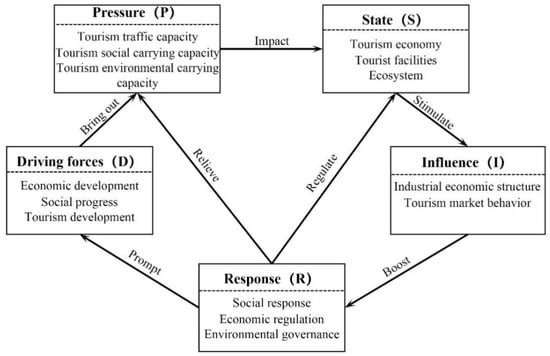
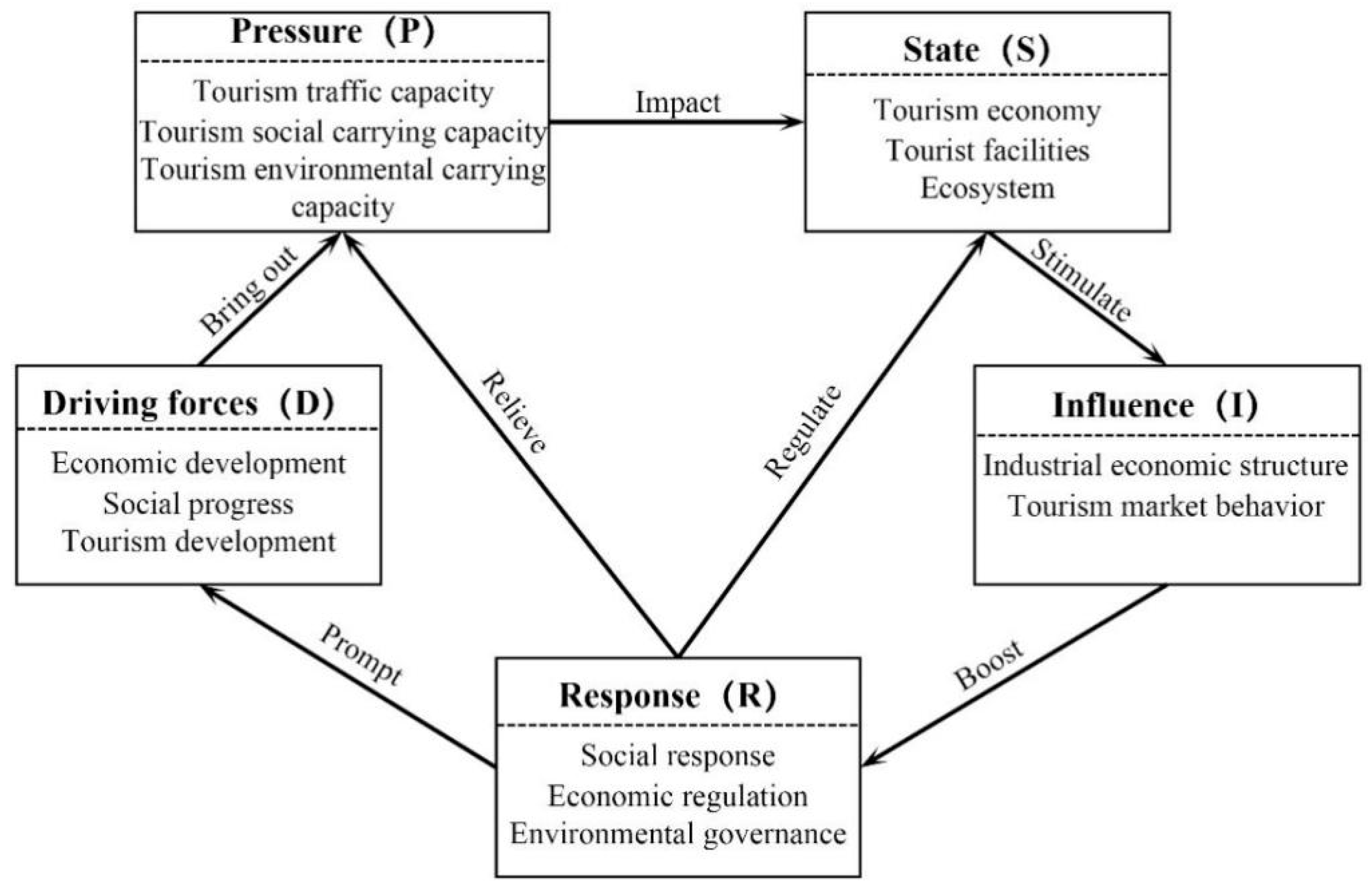
The DPSIR model is based on the PSR and DSR frameworks, which present the advantage of being both comprehensive and logical. Moreover, the DPSIR model has been widely used in the field of ecological security research [22,23,24]. In this study, the basic theory used in the DPSIR model is applied to tourism ecological security systems, and a corresponding conceptual model was constructed. The results are shown in Figure 1.
Figure 1.
DPSIR conceptual model for the evaluation of tourism ecological security.
In this model, the driving force, i.e., the “source” of the evolution of the tourism ecological security system is the deep-seated cause for environmental change in the tourism region. It reflects the basic socioeconomic conditions and the development of tourism there. The pressure is triggered by driving forces and represents the external factors causing environmental issues in the tourism region such as increased traffic, social pressure, environmental pressure, etc. The state (State) is directly affected by the dual role of the driving force and social pressure. It reflects the real situation of the tourism ecological security system characterized by three dimensions: the state of the tourism economy, the state of tourism facilities, and the state of the ecological environment. The impact (Impact) reflects how the ecological environment affects human reactions, mainly addressing how the system affects the tourism industry, the economic structure, and tourism market behaviors. The response (Response) reflects how human societies compensate for or mitigate the changes in the ecological environment and adopt positive measures in response. The response plays a positive role in promoting the driving force, shaping the whole system into a “closed loop” so that the response always circulates, at the same time as it can also relieve the pressure and regulate the state to enhance the tourism ecological security system.
The DPSIR model and the scientific principles of systematicity and hierarchy are combined with the feasibility of data acquisition to evaluate the sustainable development status of four subsystems, namely, the economy, society, the environment and tourism. The selection of specific evaluation indicators is based on the sustainable development status and interaction characteristics of these four subsystems. In the selection process, we attempt to highlight the characteristics of the tourism industry itself, analyze the meaning of each index, and build a regional tourism ecological security evaluation index system, the results of which are shown in Table 1.
Table 1.
Evaluation index system of tourism ecological security in the old revolutionary region of the Dabie Mountain.
2.1.2. Classification of Evaluation Levels
Since there is no mature standard for the classification of a unified tourism ecological security evaluation, this paper is based on an ecological security evaluation grade classification and relevant studies, combined with the specifics of the region under study. We adopt the principle of “normal distribution” of closeness, and divide the tourism ecological security evaluation into 7 grades and the closeness of tourism ecological security evaluation. The corresponding results of our tourism ecological security evaluation and security level are shown in Table 2.
Table 2.
Evaluation criteria for tourism ecological security in the old revolutionary region of the Dabie Mountains.
2.2. Research Methodology
2.2.1. Entropy Weight TOPSIS
This selection method for comparing and optimizing multiple solutions based on multiple indicators has the advantage of being intuitive, reliable and realistic [25]. The entropy weighting method determines the indicator weights by examining the dispersion of the indicators. The TOPSIS method mainly measures the distance between each indicator and the ideal solution, and calculates the fit based on the calculation of the positive ideal and the negative ideal. The specific steps are as follows [26].
Construction of the target decision layer. Assuming that there is a sample of objects and an evaluation index, a matrix X is constructed based on this sample, and the results are as follows.
In the formula, is the -th indicator of the -th region, , .
Dimensionless. Since there are differences in the units and meanings of the data collected by different indicators, it is not possible to perform conventional operations, so the original data of the evaluation indicators need to be dimensionless zed, and the formula is shown as follows.
In the formula, , maximum and minimum, respectively.
Indicator entropy value. To avoid the phenomenon of zero value of the data after standardization, the entropy value and the change of data structure, the entropy value of the first indicator is found by adding one unit to the original basis uniformly.
Coefficient of variation and weight of indicators. The coefficients of variation and indicator weights of the first indicator are as follows:
Positive and negative ideal values. The TOPSIS method measures the distance between each indicator and the ideal solution, and it is necessary to calculate the maximum and minimum values for each indicator to obtain the positive ideal value and the negative ideal value.
Fit calculation. We calculate the distance between the maximum ideal value and the minimum ideal value for each index, and calculate the fit on this basis.
2.2.2. Spatial Variance Model
The spatial variation function is an effective means to resolve the spatial variation law and structural analysis. In this study, the model is used to reveal the evolution law of the spatial pattern of tourism ecological security in the old revolutionary region of the Dabie Mountains, and its expression is as follows [27].
In the formula, and represent the tourism ecological security value on spatial unit and unit , respectively, and is the sample capacity of interval sample .
Kriging (Kriging) interpolation is a simulation of spatial modeling and interpolation of stochastic processes based on a spatial variational model [28]. Kriging interpolation achieves an optimal linear unbiased estimation over a specified finite range of regions with the functional expression Equation.
In the formula is an unknown point; represents known sample points; is the weight of the -th sample point to the unknown point; is the number of known points.
2.2.3. Standard Deviation Ellipse Model
The standard deviation ellipse model is a spatial statistical method that can accurately describe the overall characteristics of the spatial distribution of evaluation objects and the spatial and temporal evolution process [29]. This study introduces this method to present the directional spatial distribution of the characteristics of tourism ecological security in the old revolutionary region of the Dabie Mountains. The standard deviation ellipse includes four basic elements: center, long axis, short axis and turning angle, where the center point indicates the relative position of the spatial distribution of the evaluation elements; the long axis and short axis indicate the dispersion degree of the elements in the major and minor directions, respectively, and the turning angle indicates the main directional trend in development, which is calculated by the following formula [30].
mean center:
X-axis standard deviation:
Y-axis standard deviation:
2.2.4. Gray Prediction Model
The gray prediction model has the dual advantage of being a simple principle and being highly accurate in its predictions. It also can preprocess the original data to obtain better smoothing, which makes the prediction more effective [9]. Due to the limitation in the data sample capacity, this study predicts the central longitude, latitude, long axis, short axis and rotation angle of the standard deviation ellipse. It has the help of the gray GM (1, 1) model to explore the future spatial pattern evolution of tourism ecological security in the old revolutionary region of the Dabie Mountains, and the specific calculation is shown in the reference section [12].
2.2.5. GeoDetector Model
The GeoDetector model is a set of statistical methods based on the spatial differentiation law of geographical phenomena to detect spatial differentiation and reveal the driving force behind it. It is divided into factor detection, interaction detection, risk detection and ecological detection [31]. Factor detection is mainly used in this study. It is the core of the GeoDetector model to detect the spatial differentiation of response variables and reveal the relative importance of variables through q value. The expression is as follows:
where is the detection value of the detection factor, and are the stratification of variable Y or factor X, and are the number of units in layer and the whole region, and and are the variance of layer and the whole region Y value, respectively. The value range of q is [0, 1]. The larger the value, the more obvious the spatial differentiation of Y is. If the stratification is generated by the independent variable X, it means that the independent variable X has a stronger ability to explain Y, and vice versa.
3. Study Region and Data Sources
3.1. Study Region Overview
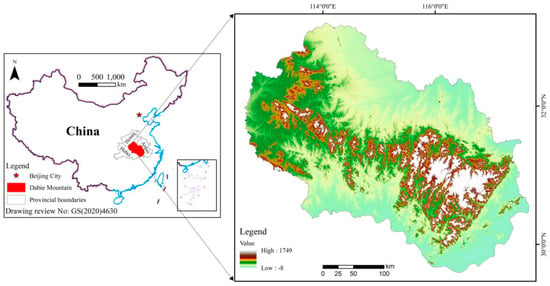
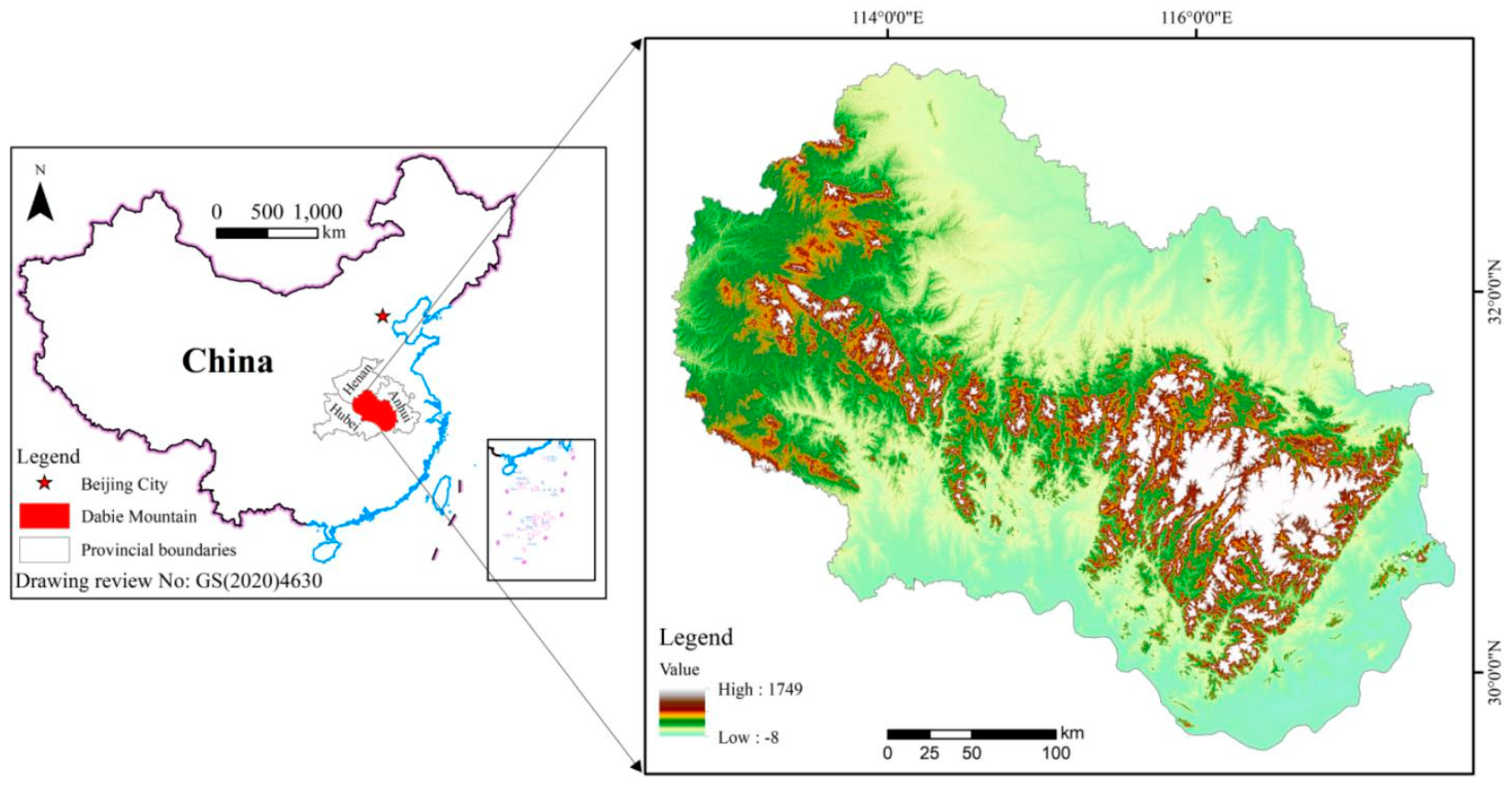
The old revolutionary region of the Dabie Mountains in this study corresponds to the area covered under the Old Revolutionary Region of the Dabie Mountains Revitalization Plan (2015). This plan mainly includes all of Huanggang City and Suizhou City in the Hubei Province, Xiaonan District, Anlu City, Yingcheng City, Dawu County, Xiaochang County, Yunmeng County in Xiaogan City, Zaoyang City in Xiangyang City, Huangpi District and Xinzhou District in Wuhan City. It also includes all of Xinyang City and Zhumadian City in the Henan Province, Tongbai County and Tanghe County in Nanyang City, as well as all of Liuan City and Anqing City in Anhui Province (Figure 2). From 2001 to 2020, the per capita GDP of this region increased by about 8 times, and the per capita GDP was about 40,000 yuan in 2020. Per capita tourism income also increased to 748 yuan in the past 20 years, a 143% increase compared with 2001. The number of tourists in the region also reached 123 million in 2020. While these measures have increased, they are still below the national average. The reason for this situation has a lot to do with the geographical location and COVID-19 in 2020.
Figure 2.
Location of the Dabie Mountains’ old revolutionary region.
3.2. Data Sources
The data on the indicators that are used in this study mainly emanate from the China City Statistical Yearbook. The yearbook covers of 10 localities in the old revolutionary region of the Dabie Mountains, the statistical bulletins on national economic and social development in 10 localities, and the environmental status bulletins for the years covered in this study. While some of the data are obtained from these sources, the missing data are obtained using the linear interpolation method. Administrative data came from the Chinese Department of Natural Resources’ standard map service system (http://bzdt.ch.mnr.gov.cn/ (accessed on 23 August 2022)). Elevation data were obtained from the Geospatial Data Cloud (http://www.gscloud.cn/ (accessed on 23 August 2022)).
4. Results and Discussion
4.1. Time-Series Evolutionary Characteristics of Tourism Ecological Security
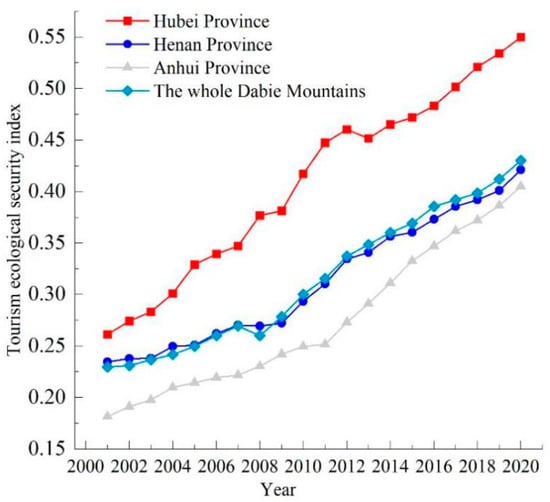
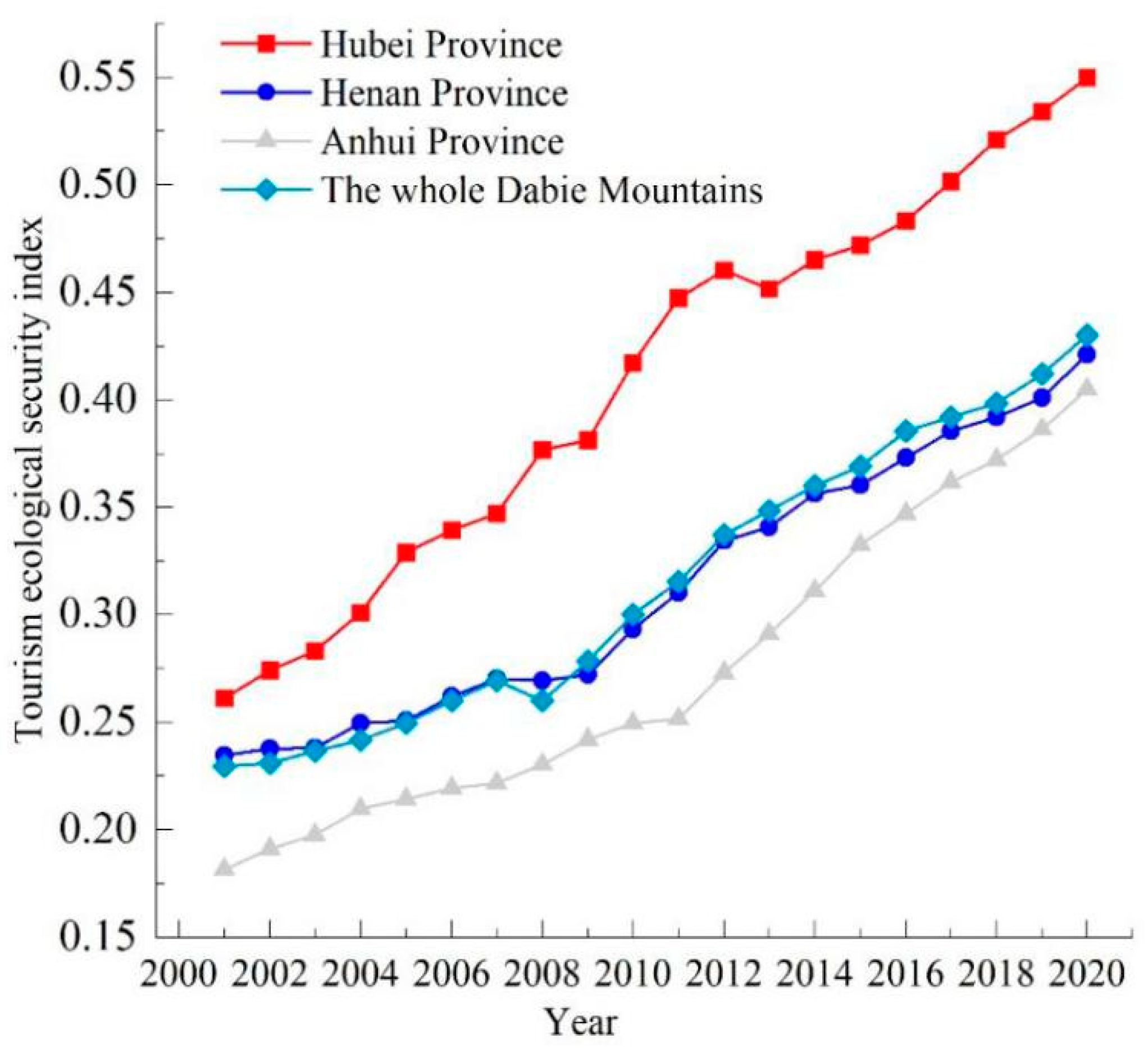
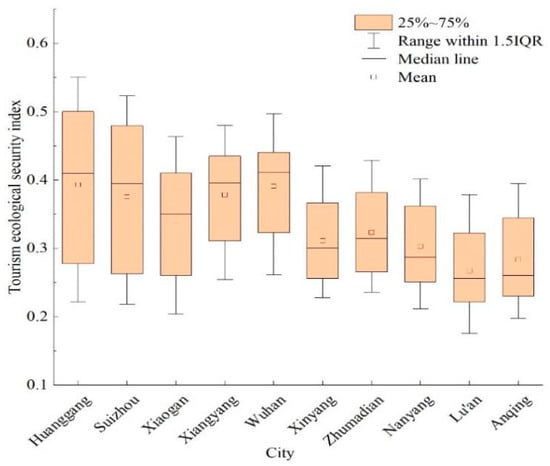
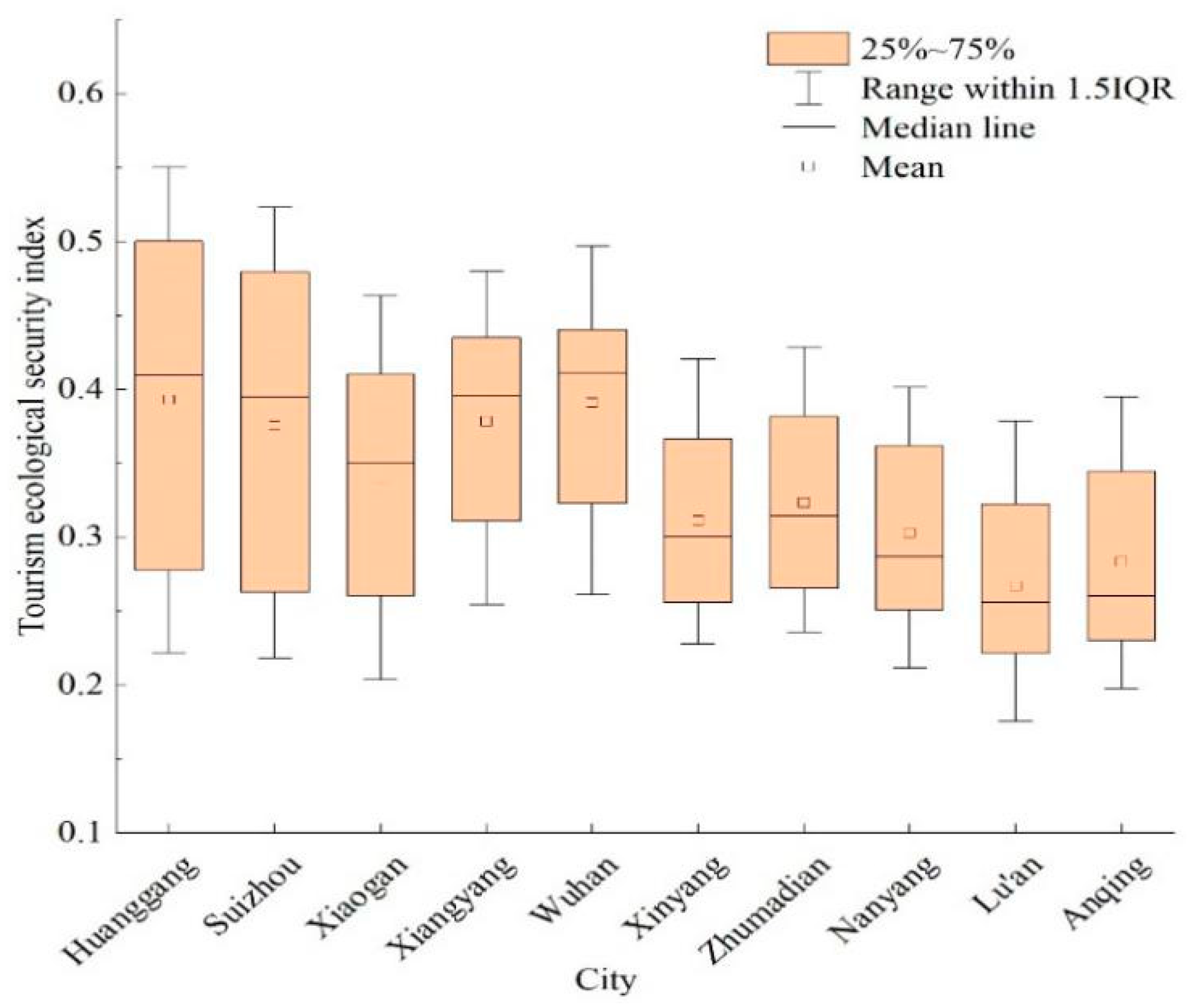
Based on the spatial geographical location factor and administrative division factor, the old revolutionary region of the Dabie Mountains is divided according to the main administrative divisions as follows: three major regions of E (Huanggang City, Suizhou City, Xiaogan City, Zaoyang City, Wuhan City), Yu (Xinyang City, Zhumadian City, Nanyang City) and Anhui (Liuan City, Anqing City). The entropy-weighted TOPSIS method is used to calculate the comprehensive index of tourism ecological security for the old revolutionary region of the Dabie Mountains as a whole, the three provinces of Hubei, Henan and Anhui, and each city from 2001 to 2020. To more intuitively reflect the time-series evolutionary characteristics of tourism ecological security among provinces, regions and cities, corresponding line graphs and box plots are drawn based on our calculation results, and the results are shown in Figure 3 and Figure 4.
Figure 3.
Change trend in the tourism ecological security level in the old revolutionary base region of the Dabie Mountains and three provinces.
Figure 4.
Box diagram showing the tourism ecological security level in cities in the old revolutionary base region of the Dabie Mountains.
First, Figure 3 shows that the overall comprehensive index of tourism ecological security in the old revolutionary region of the Dabie Mountains increased from 0.2296 to 0.4302 from 2001 to 2020, with an average annual growth rate of 4.37% and a rather steady growth trend. The main reason for this result is the support of government policies. Based on the ideological guidelines that we should aim at “vigorously building an ecological barrier in the middle and lower reaches of the Yangtze and Huai Rivers” and based on the development goal of “achieving remarkable results in ecological development and environmental protection” that is included in the “Development and Revitalization Plan for the Old Revolutionary Region of the Dabie Mountains”, each province in that region has formulated ecological restoration plans and policies on environmental protection. These are to be applied during the 14th Five-Year Plan period. They have continuously increased their investments in ecological and environmental protection, so that the ecological and environmental pressure can be eased year after year. At the same time, in order to support the development of the old revolutionary regions of the Dabie Mountains, help them consolidate and expand the results they have obtained on poverty eradication, and open a new era of socialist modernization, the State Council issued the “Opinions on Supporting the Revitalization and Development of the Revolutionary Old Regions in the New Era”. This states that the old revolutionary regions of the Dabie Mountains should be developed into high-quality tourism pilot regions and recreational areas in the Yangtze River Delta. Both ecological protection and tourism development in the old revolutionary region of the Dabie Mountains have received great attention. The security and efficiency of the ecological conditions have increased from the lower limit of the insecurity level to the lower limit in the critical security level. However, the average value of the tourism ecological security index in the old revolutionary region of the Dabie Mountains is only 0.3153. The improvement in tourism ecological security is only 0.2006 for the study period, which indicates that the overall tourism ecological security level in the region can still widely improve.
Second, when examining the three provinces in the region, the tourism ecological security index shows an obvious stratification. The evolution of the research cycle reveals that the tourism ecological security level in Hubei Province is slightly higher than in Henan Province, and the tourism ecological security level in Henan Province is slightly higher than in Anhui Province. The changes occurring annually in different provinces reveal that the tourism ecological security index in Hubei Province has generally increased steadily, except for a slight decrease in 2013. The average value of the tourism ecological security coefficient is 0.4099, and the average value is at the critical security level. The tourism ecological security index steadily increased from 0.2613 in 2001 to 0.5498 in 2020, and the average annual growth rate is 5.52%. The average value of the tourism ecological security index from 2001 to 2020 was 0.3127. The average value was at the relative insecurity level in Henan Province, and the tourism ecological security index rose from 0.2346 in 2001 to 0.4212 in 2020. Moreover, the average annual growth rate was 3.98%. The average value of the tourism ecological security index in Anhui Province was 0.2745 between 2001 and 2020, which places it at the insecurity level, and its average annual growth rate was 3.98%. The average annual growth rate during that time was 4.16%, which is slightly higher than that of Henan Province. This indicates that although the level of tourism ecological security in Anhui Province is lower, the growth trend has been rapid, and the development potential is huge. We use a comparative analysis to reveal that the tourism ecological security level in Hubei Province is higher and has increased faster, which is mainly because the region of the Dabie Mountains benefits from both an advantageous location and a sound economy. The tourism industry has gradually scaled up, intensified and amplified its low carbon approach, especially in the Huangpi District and Xinzhou District, in Wuhan and Zaoyang City in Xiangyang, which are located in the old revolutionary region of the Dabie Mountains and the Yangtze River Economic Zone. In particular, Wuhan’s Huangpi District, Xinzhou District and Xiangyang’s Zaoyang City sit at the intersection of the “Old Revolutionary Region of the Dabie Mountain” and the “Yangtze River Economic Belt” national strategies. Moreover, the quality and level of tourism development are higher there, which enhances the ecological security of tourism more significantly. However, Henan Province and Anhui Province started late and slowly in their tourism development because they are constrained by natural factors and historical conditions. Due to imperfect tourism development mechanisms and a retrograde conception of tourism development, the level of tourism ecological security in the Dabie Mountains of Henan Province and Anhui Province has lagged behind that of Hubei Province. In addition, in the four to five years after 2008, the growth rate of the tourism ecological security index in these three provinces is higher than that in other periods, which may be the late impact of the 2008 Beijing Olympic Games on tourism and ecological environment. At the same time, it also shows that the world’s international events have a great impact on tourism ecological security.
Finally, Figure 4 shows that the tourism ecological security index has improved to different degrees in all cities of the old revolutionary region of the Dabie Mountains over 20 years, but the improvement status of tourism ecological security varies significantly from city to city. Taking the median as a reference, the tourism ecological security index of each city is ranked as follows: Wuhan > Huanggang > Xiangyang > Suizhou > Xiaogan > Zhumadian > Xinyang > Nanyang > Anqing > Liuan. This ranking shows that Wuhan leads in tourism ecological security, followed by Huanggang and Xiangyang, which are not far behind. Huanggang City has improved its tourism ecological security level by 0.3291 during the study period, with an average annual growth rate as high as 7.43%, and the progress of tourism ecological security optimization far exceeds that of other cities. This success is due to Huanggang City’s policies that have led to a conceptualization of tourism development around the idea of ecological priority based on the development of appropriate ecological tourism resources, the “Huanggang Dabie Mountains Tourism Economic Belt Development Plan” and the development of an ecological tourism pilot area. While Zhumadian city shows a significant growth in its tourism industry during the evaluation period, due to its low environmental development index, its tourism ecological security index has only improved by 0.1900. It has an average annual growth rate of 4.09%, and it has lagged in its tourism ecological security optimization.
4.2. Spatial Evolution Characteristics in Tourism Eco-Security
4.2.1. Spatial Evolution Characteristics in Tourism Ecological Security Types
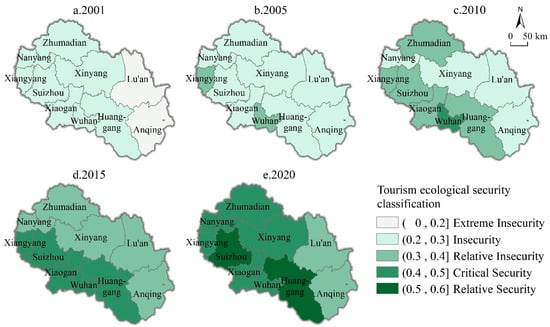
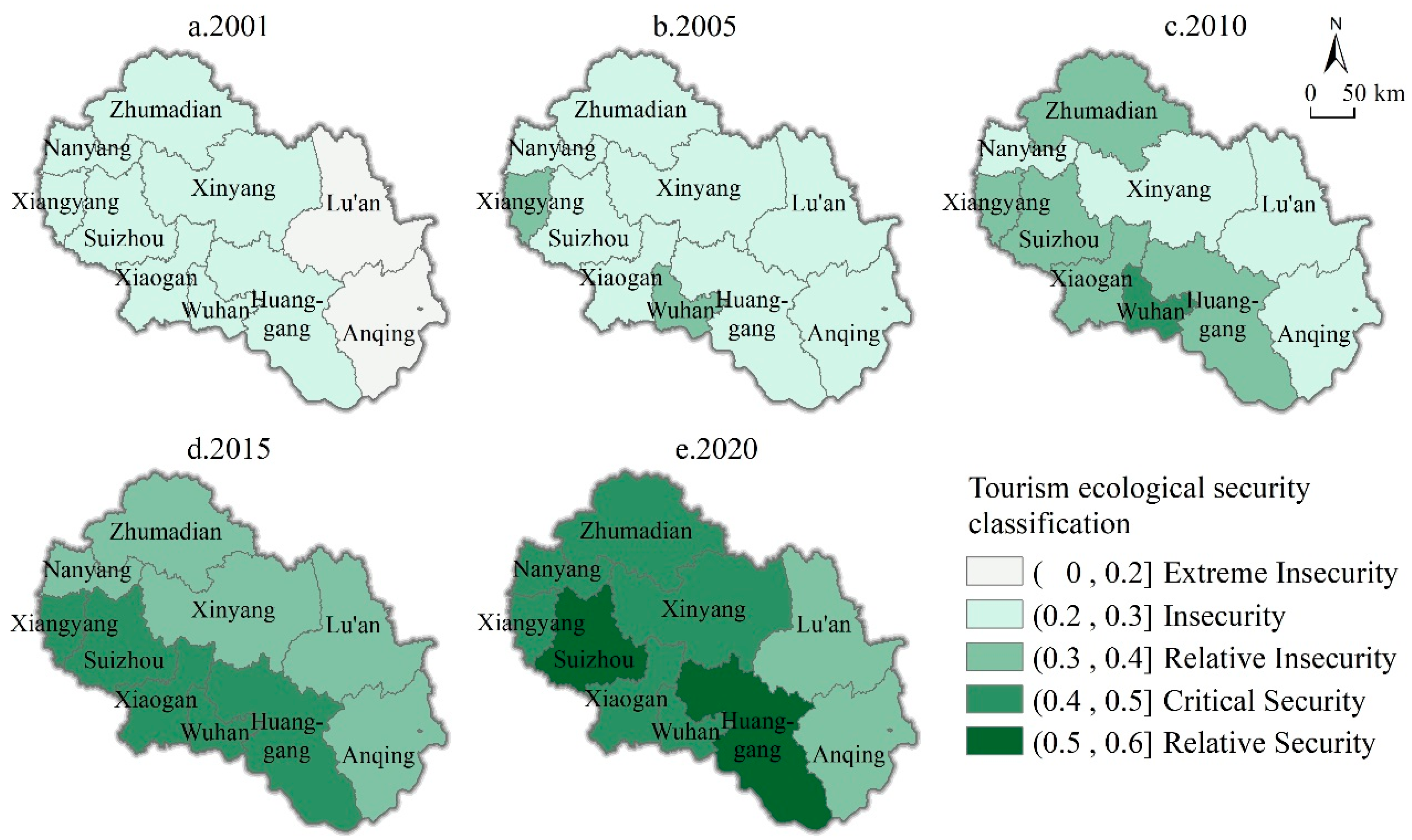
Based on the temporal evolution characteristics of tourism ecological security in the old revolutionary region of the Dabie Mountains, the years 2001, 2005, 2010, 2015 and 2020 are selected as representative time nodes. The corresponding spatial distribution maps of tourism ecological security types were drawn with the help of ArcGIS 10.7 software, based on the tourism ecological security level measurement and the classification standards of tourism ecological security (Table 2). The results are shown in Figure 5.
Figure 5.
Spatial distribution of tourism ecological security across the old revolutionary base region of the Dabie Mountains.
In 2001, provinces and cities with different tourism ecological security levels showed significant zonal effects in spatial distribution. The overall tourism ecological security level was “high in the west and low in the east”, with Hubei and Henan in the western part of the old revolutionary region of the Dabie Mountains slightly better off than Anhui in the east, which shows roughly two levels of distribution of isolation. In 2005, the tourism ecological security level of the 10 cities in the study area still showed a “two-level” distribution of isolation. Among them, cities at the insecure level were Xiangyang, Suizhou, Xiaogan, Wuhan, Huanggang in Hubei, Xinyang, Nanyang and Zhumadian in Henan, which account for 80% of the total, and Anqing and Liu’an in Anhui Province were at the extremely insecure level.
In 2005, the tourism ecological security level in the 10 cities in the study area still showed a “two-level” pattern. Xiangyang and Wuhan were at the relatively insecure level, and the remaining 8 cities were at the insecure level. From 2001 to 2005, the tourism ecological security level changed in 4 cities. In Liuan and Anqing in Anhui Province, the tourism ecological security level evolved from extremely insecure to insecure, and Xiangyang and Wuhan evolved from insecure to relatively insecure. This shows that the tourism ecological security of these four cities is developing in a positive fashion.
In 2010, the tourism ecological security level in 10 cities in the study area showed a “pyramidal” pattern. One city, Wuhan, was at the critical security level, accounting for 10% of the total. Five cities, Xiangyang, Suizhou, Xiaogan and Huanggang in Hubei Province were at the relative insecurity level, and the other cities were at the insecurity level. From 2005 to 2010, five cities evolved from insecure to critically secure: Wuhan, Suizhou, Xiaogan and Huanggang, and Zhumadian in Henan Province.
In 2015, the tourism ecological security level in 10 cities in the study area was similar to that of 2005, showing a “two-tier” pattern, with Hubei Province showing higher levels than Henan Province and Anhui Province. Moreover, the southwest experienced higher levels than the northeast, with five cities in Hubei Province being critically secure and five cities in Henan Province and Anhui Province being relatively insecure. From 2010 to 2015, the tourism ecological security level of eight cities changed, accounting for 80% of the total change. Indeed, Xiangyang, Suizhou, Xiaogan and Huanggang in Hubei Province evolved from being relatively insecure to being critically secure. Xinyang and Nanyang in Henan Province and Anqing and Liuan in Anhui Province evolved from the insecurity level to the relative insecurity level.
In 2020, 10 cities in the study area showed a “spindle” structure, with high levels of tourism ecological security in the middle and low levels at the extremities. Among the 10 cities, two are relatively secure, namely, Suizhou city and Huanggang city in Hubei Province, accounting for 20% of the total, and two cities are relatively insecure, namely, Anqing city and Liu’an city in Anhui Province. Anqing city and Liuan city in Anhui Province account for 20% of the total, and the remaining six cities are all critically secure, accounting for 60% of the total. From 2015 to 2020, the tourism ecological security level changed in five cities, among which Xinyang, Nanyang and Zhumadian in Henan Province evolved from relatively insecure to critically secure. Meanwhile, Suizhou and Huanggang in Hubei Province evolved from critical secure to relatively secure, showing greater enforcement in tourism ecological security.
These spatial changes in tourism ecological security in the old revolutionary region of the Dabie Mountains show that the number of cities and towns in the region that are insecure and relatively insecure is gradually decreasing, while the number of cities and towns at the critical security level is continuously increasing. Therefore, the whole region is currently in a key evolutionary moment in terms of its tourism ecological security, with cities moving from average and lower levels to higher levels. At the same time, it also shows that people’s tourism activities and the ecological environment capacity of tourism places are showing an upward trend. The development of the times and the improvement of the tourism ecological security index is also the improvement of the coordinated development degree between the two. Although this upward trend will decline in the future, the upward direction will not change under the premise of steady social development.
4.2.2. Spatial Variation Analysis of the Evolution of Tourism Ecological Security Patterns
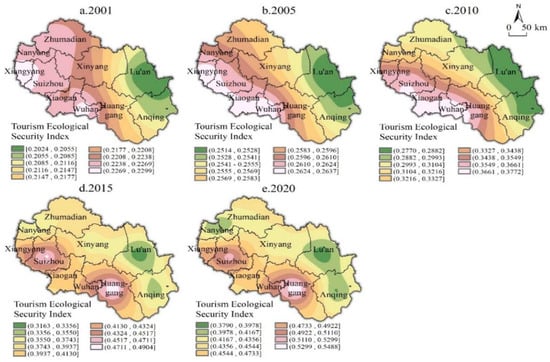
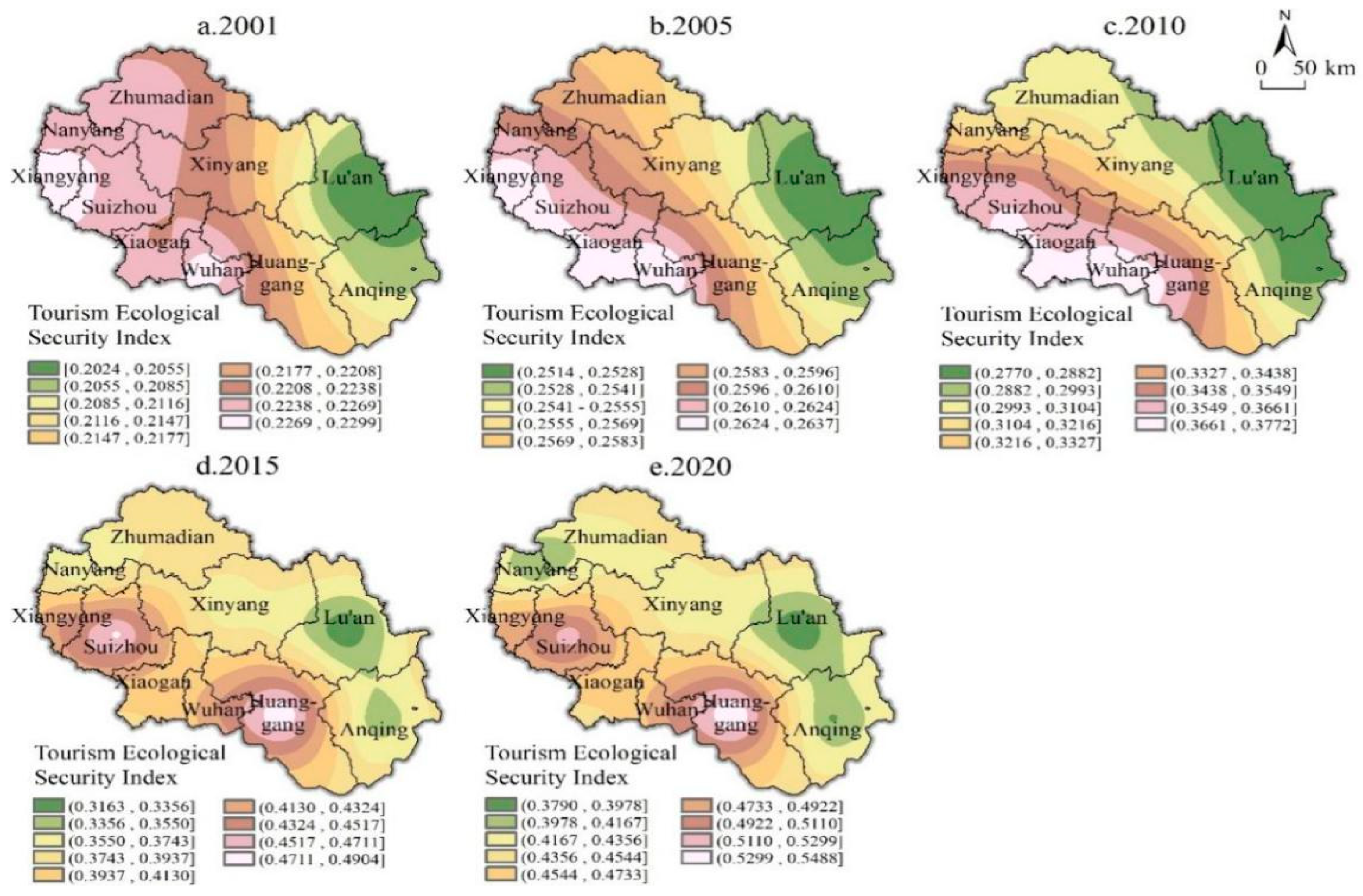
The spatial variation function is an important method for the quantitative representation of the variation characteristics of the spatial structure of tourism ecological security. At the same time, this method is also used in order to make our evaluation results of tourism ecological security in the study area more detailed and real in space to show its change pattern. Taking the tourism ecological security index of the old revolutionary region of the Dabie Mountains from 2001 to 2020 as the spatial variable given to the geometric center point of each regional unit, the model with the highest fit optimization is selected. On this basis, kriging interpolation is used to analyze the variation characteristics and distribution patterns of the tourism ecological security level in each city of the old revolutionary region of the Dabie Mountains. The interpolation results are based on ArcGIS 10.7 software. The results are shown in Figure 6.
Figure 6.
Spatial kriging interpolation simulation of tourism ecological security in the old revolutionary region of the Dabie Mountains.
From Figure 6, we see that the evolution of the tourism ecological security pattern in the old revolutionary region of the Dabie Mountains showed a certain extension and regularity. The spatial differentiation level features are more obvious, showing the general spatial evolution pattern of “Hubei > Henan > Anhui”, while the high-value region obviously shifts toward the southeast. In 2001, Hubei Province formed an obvious “hump-like” structure with Xiangyang and Wuhan as the core, while the “pillar” in Henan Province was lower, and the difference in Anhui Province was smaller, which indicated that the tourism ecological security level in Hubei Province was higher. However, in Henan Province and Anhui Province that value was lower. In 2005, the “peak” zone of Xiangyang, Suizhou, Xiaogan and Wuhan gradually formed in Hubei Province, the double “peak” structure centered on Xinyang and Zhumadian in Henan Province, and Anhui Province showed the “peak” structure centered on “Anqing and Liuan”. This pattern indicates that Wuhan and Xiangyang, as the dual core growth poles in Hubei Province, have begun to emerge, driving development in the surrounding regions and showing the characteristic “peak” clustering and “valley” clustering. In 2010, the “peak” structure in Hubei Province began to be compressed, the “valley” zone of Henan Province disappeared, and the range of the equivalent region was gradually reduced, indicating that the overall unbalanced nature was gradually weakened. In 2015, Hubei Province showed a double “peak” structure with Suizhou city and Huanggang city as the high points, while Anhui Province formed a single “trough” region with Liuan city as the center. The contours of the low- and high-value regions basically showed concentric circles and continued to spread outward. This indicates that the regional evolution in 2020 and 2015 are similar, but Nanyang in Henan Province forms the only low-value center in Henan. Meanwhile, Liu’an and Anqing in Anhui Province are gradually connected to each other, which indicates that the regional differences tend to narrow. On the whole, the spatial difference of tourism ecological security index in the old revolutionary region of the Dabie Mountains is decreasing. This is closely related to the improvement of our economic development level, strengthening the economic links between cities and people’s pursuit of a spiritual life.
4.2.3. Tourism Ecological Security Standard Deviation Ellipse Analysis and Trend Prediction
Our analysis of the evolution of the spatial variation of tourism ecological security in the old revolutionary region of the Dabie Mountains shows that the spatial variation characteristics of tourism ecological security are more obvious. Based on this result, to reveal the characteristics of the spatial pattern of tourism ecological security in this region from multiple perspectives, explore its future trend, and formulate measures for high-quality targeted ecological development in tourism, this study adopts the standard deviation ellipse model and the gray GM (1, 1) model to further explain the characteristics of its spatial distribution direction and future trend.
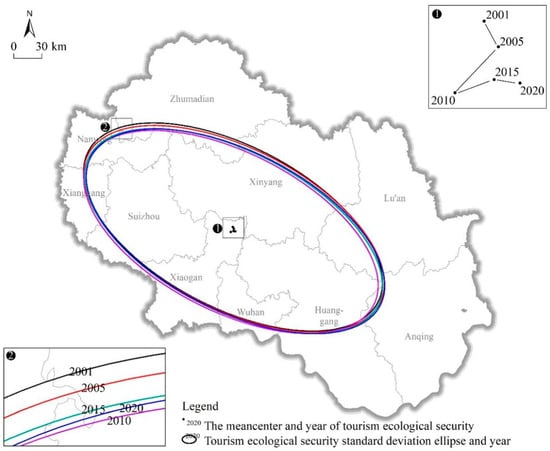
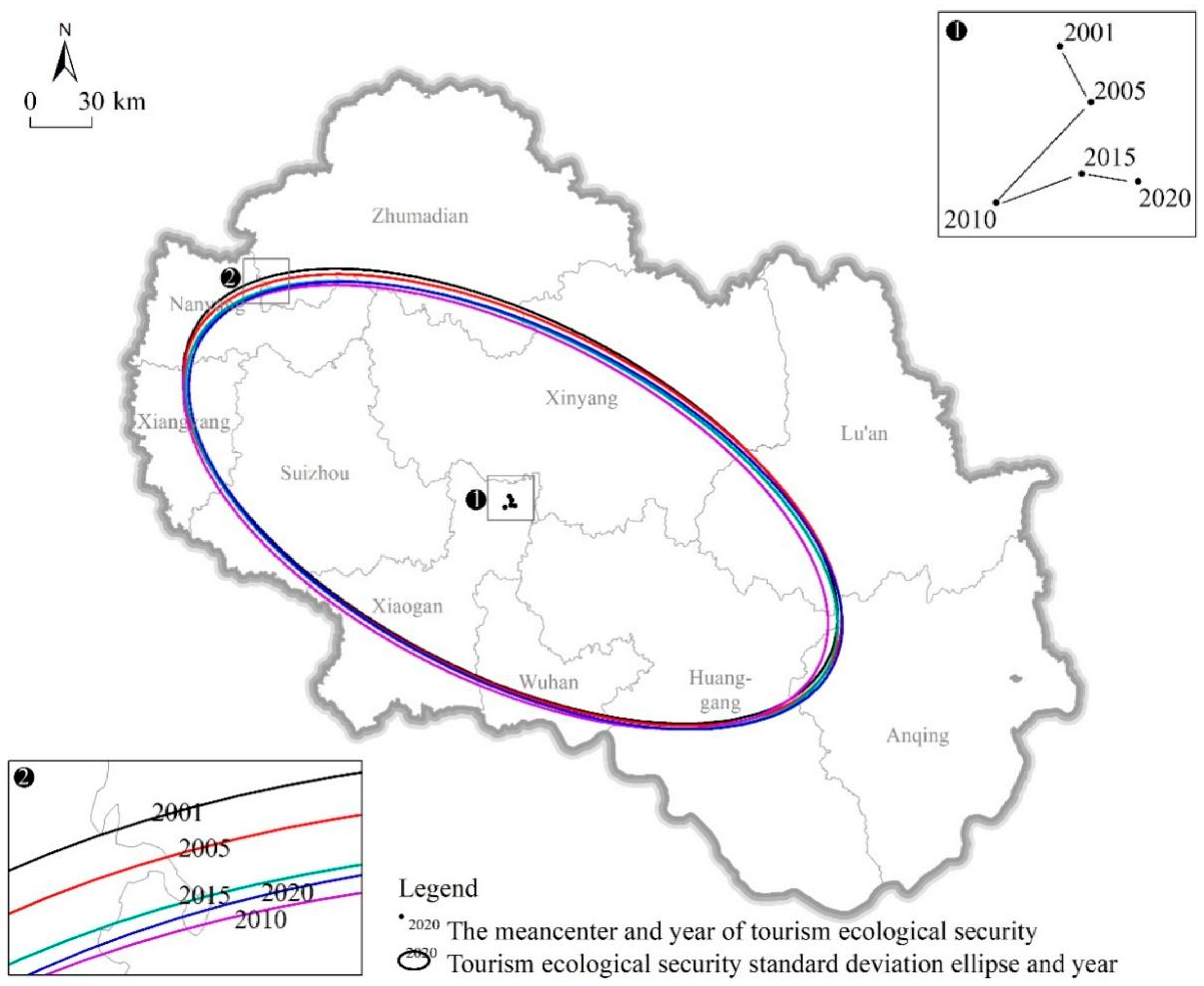
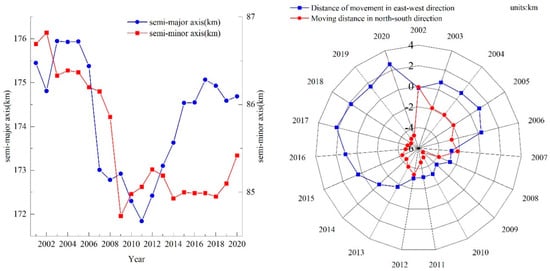
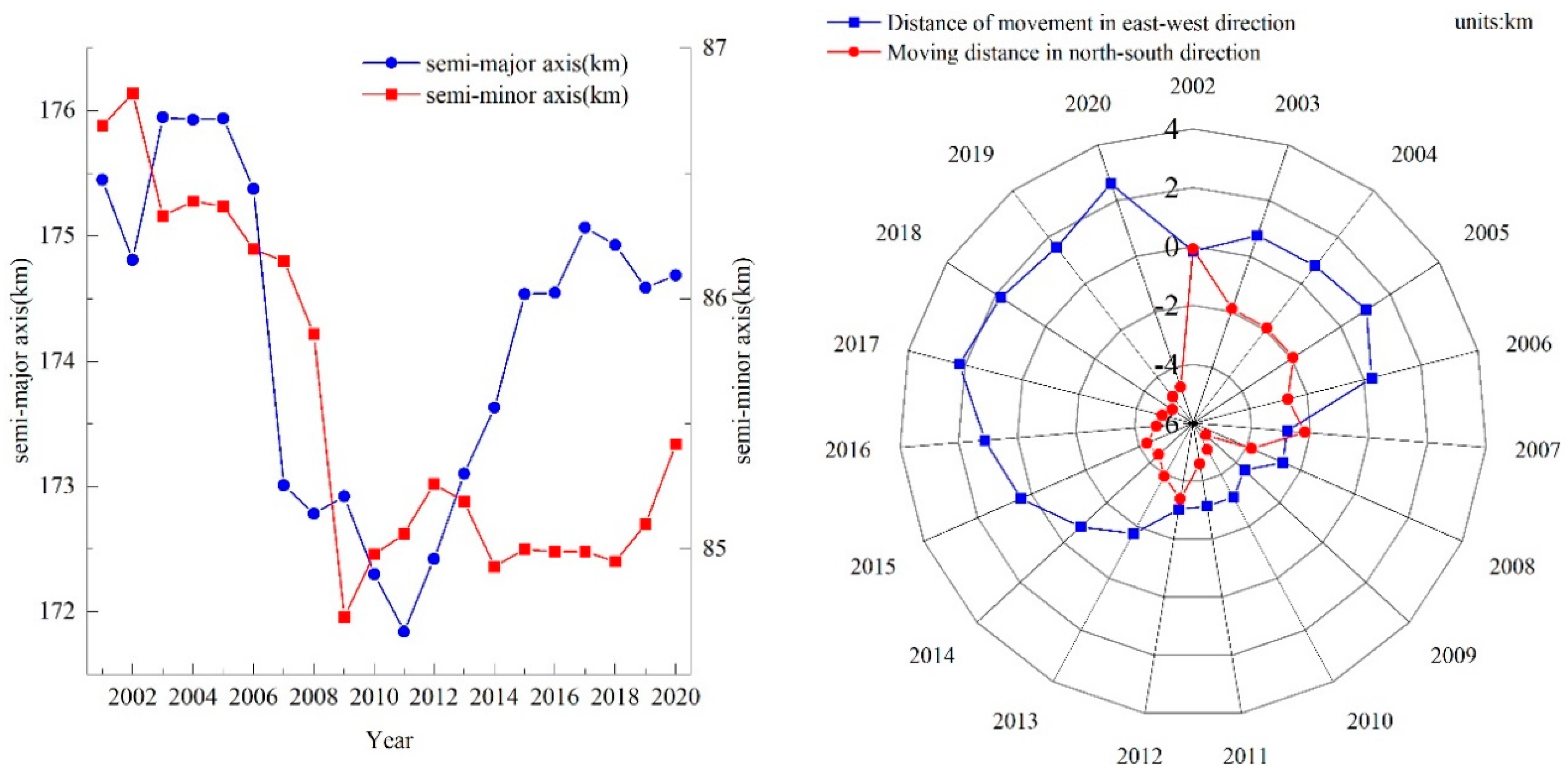
Tourism ecological security standard deviation ellipse. The ArcGIS Desktop spatial statistical analysis module is used to obtain the relevant parameters of the standard deviation ellipse of tourism ecological security in the region, on the basis of which the standard deviation ellipse center of gravity offset route, offset distance (east-west and north-south direction) and offset trend are carved, and the spatial distribution pattern of tourism ecological security in the region is further obtained, as shown in Figure 7 and Figure 8.
Figure 7.
Ellipse distribution of the standard deviation of tourism ecological security and the moving path of the gravity center in the old revolutionary region of the Dabie Mountains.
Figure 8.
The shift in the distance and standard deviation of the center of gravity of tourism ecological security in the old revolutionary region of the Dabie Mountains.
Figure 7 shows obvious characteristics in the spatial dynamic evolution of tourism ecological security in the region between 2001 and 2020. This highlights a significant overall “southeast-northwest” movement trend and an eventual shift to the southeast. The year 2010 appears as the turning point. The center of gravity of tourism ecological security can be roughly divided into two stages, namely, 2001–2010, which shows the southwest shift, and 2011–2020, which shows the northeast trend.
In terms of distance, the standard deviation ellipse moves more to the east than to the west, more to the south than to the north, and more to the north than to the west. Moreover, the total distance of the east-west movement is 1.81 times the distance of the north-south movement; the total displacement is 5.3 km, of which 4.71 km aim to the south and 2.61 km aim to the east. The distance to the east exceeds the distance to the south; the distance to the north exceeds the distance to the south; and the distance from east to west is greater than the distance from north to south. The total distance between east and west is 2.38 times the total distance from north to south; the total displacement is 25.96 km. The distance to the north is 2.38 km; the distance to the east is 24.48 km; and the results are shown in Figure 8. The main reason for the shift in the center of gravity is that at the beginning of the study, due to the low level of tourism development, the ecological pressure brought by tourism development was not relieved, and the economic benefits of tourism were later enhanced. The center of gravity of tourism ecological security shifted to Xiangyang, Nanyang and other cities in the west, which mainly focused on enhancing the economic benefits they drew from tourism. They neglected to consider the ecological and environmental benefits of tourism, which had negative effects on tourism development and the environment. The increasingly negative effect of tourism development on the environment has caused the center of gravity of tourism ecological security to gradually shift toward eastern cities, such as Liu’an and Huangshi, which have a higher ecological and environmental capacity. In recent years, the development of the “Old Revolutionary Region of the Dabie Mountains Revitalization Development Plan” has promoted the restoration and development of the tourism ecosystem on a regional scale. At the same time, the rapid growth in the tourism economy in Zhumadian, Henan and Xiangyang, Hubei has slowed the trend of the standard deviation ellipse, which has continued to move significantly toward the east.
From the shape of the standard deviation ellipse distribution in Figure 8, the long semiaxis is always larger than the short semiaxis, and the distribution pattern shows an obvious “southeast-northwest” direction. Specific analysis is as follows: the distribution range of the standard deviation ellipse was stable from 2001 to 2005, and the region of the standard deviation ellipse slightly diminished from 4.78 × 10⁴ km2 to 4.77 × 10⁴ km2 during this period, while the long semiaxis extended from 175.45 km in 2001 to 175.94 km in 2005. Furthermore, the short semiaxis was reduced from 86.69 km in 2001 to 86.37 km in 2005. This indicates that from 2001 to 2005, the tourism ecological security of the old revolutionary region of the Dabie Mountains expanded from east to west and contracted from north to south. From 2006 to 2011, the distribution range of the standard deviation ellipse had shrunk, and the standard deviation ellipse region decreased from 4.77 × 10⁴ km2 to 4.59 × 10⁴ km2. The long and short semiaxes decreased from 175.94 and 86.37 km to 171.84 km and 85.06 km in 2011, indicating that the tourism ecological security was clustered in the east-west and north-south directions, and the spatial spillover effect gradually weakened. From 2012 to 2020, the standard deviation ellipse region fluctuated from 4.62 × 10⁴ km2 to 4.69 × 10⁴ km2, and the long and short semiaxes rose from 172.42 km and 85.26 km to 174.69 km and 85.42 km in 2011, respectively. This indicated that the tourism ecological security of the old revolutionary region of the Dabie Mountains has expanded in an east-west and north-south direction, as well as in the overall spatial distribution during this period.
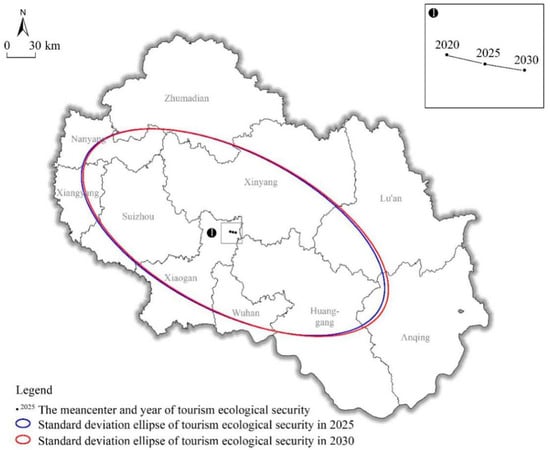
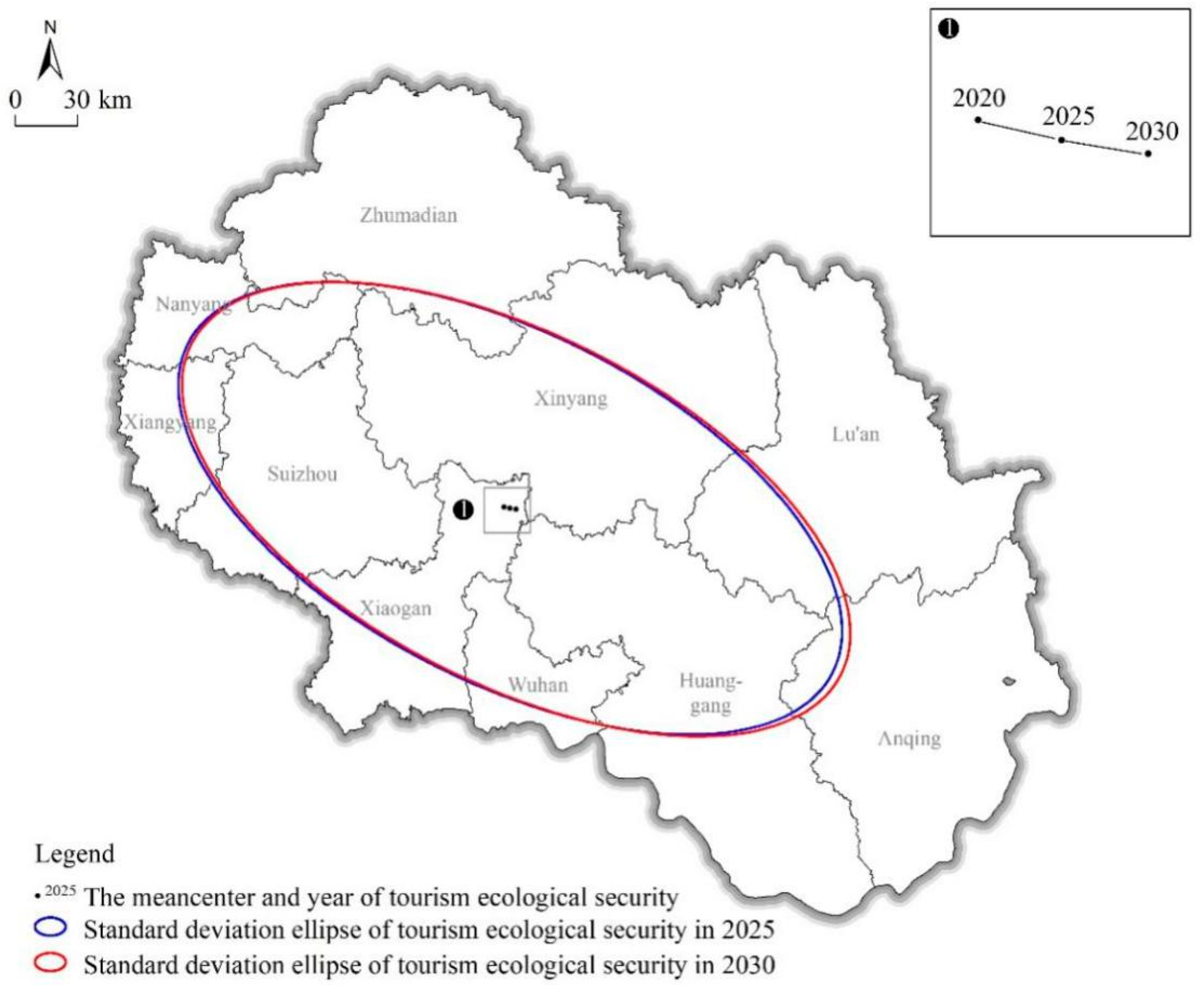
Prediction of the spatial pattern of tourism ecological security. Based on the gray GM (1, 1) model, a time series model is constructed for the tourism ecological security index in each city in the old revolutionary region of the Dabie Mountains for the period from 2001 to 2020. Based on the model, we test the prediction results through the residual test and the posterior difference test. The results show that all level ratio values in each city are located within the interval (e(−2/(n+1)), e(2/n+1)), and the series are suitable for constructing the gray prediction model; the general posterior difference ratio C values are less than 0.35, and the model accuracy is high; the average relative error of the model is less than 5%, and the model fits well, which indicates that the prediction results of the GM (1, 1) model have high credibility. On this basis, with the help of ArcGIS10.7 software, the standard deviation ellipses of the predicted tourism ecological security indexes in 2025 and 2030 are produced and visually expressed, and the spatial distribution pattern outline is shown in Figure 9.
Figure 9.
Prediction of the spatial pattern of tourism ecological security in the old revolutionary region of the Dabie Mountains.
The prediction results show that the center of gravity for tourism ecological security in the old revolutionary region of the Dabie Mountains will shift to the southeast between 2020 and 2030, with a total displacement of 5.83 km, of which 6.57 km and 1.63 km will aim to the east and south, respectively, indicating that Wuhan, Huangshi and Anqing in the southeastern part of the Dabie Mountains will become core regions affecting the spatial distribution pattern of tourism ecological security in the whole region in the future. The rotation angle will expand from 116.95° in 2020 to 117.02° in 2030, with a small counterclockwise rotation, indicating the “southeast-northwest” distribution pattern of tourism ecological security in the old revolutionary region of the Dabie Mountains will be further strengthened in the future. In terms of changes in the spatial distribution range, the standard deviation ellipse region will decrease from 4.69 × 10⁴ km2 in 2020 to 4.74 × 10⁴ km2 in 2030, the long semiaxis will rise from 174.69 km in 2020 to 177.56 km in 2030, and the short semiaxis will decrease from 85.42 km in 2020 to 84.98 km in 2030. This indicatesing that the future spatial distribution pattern of tourism ecological security in the region will show a long-term expansion toward the southeast, reflecting a certain spatial spillover effect and a “convergence” towards the northwest, with no obvious spatial spillover effect. This shows that the low level of economic development in the northwest region, mainly Henan Province, limits people’s pursuit of a spiritual life. Meanwhile, the level of tourism development in the region, such as tourism reception ability and the attraction of scenic spots, is also an important factor leading to this situation. It can be foreseen that the long-term solution to tourism ecological security issues in the region still mainly depends on Wuhan, Huangshi, Anqing and other cities. Indeed, the tourism economy of these cities grows faster and the tourism capacity is larger. Moreover, the unbalanced development in tourism ecological security is still a serious test for the sustainable development of tourism in the region.
4.3. Identify the Main Influencing Factors of Tourism Ecological Security
Tourism ecological security in the old revolutionary region of the Dabie Mountains has obvious spatio-temporal characteristics. To explore the main influencing factors of its formation, this study used the GeoDetector model to investigate the effect of 33 evaluation indicators on system security. The results showed that there are significant differences in the impact degree of each testing factor on tourism ecological security (Table 3).
Table 3.
Results of impact factor.
The number (expressed as a percentage) and degree of influence (expressed as significance level) of the main influencing factors on tourism ecological security within the five rule layers are different from the perspective of the rule layer. Based on the comprehensive quantity and Impact degree, the importance of the five rule layers affecting tourism ecological security is ranked. The highest is State (66%), followed by Impact (50%), Pressure (44%), Response (40%), and the lowest is Driving (16%). By combining the rule layer with the indicator layer, there are two main indicators affecting State. One is the green space ecology category consisting of per capita park green region, green region and green coverage rate of built-up region; the other is the tourism income category consisting of domestic tourism income, per capita tourism income and the number of visitors. This shows that greening is an important factor to promote the balance between ecological environment and economic development. The ecological functions of greening, such as purifying air and filtering noise, can not only attract tourists, but also alleviate the negative effects of tourism activities. As an important economic factor in tourism ecology, tourism income not only promotes economic development, but also increases the amount of investment in tourism destinations. The proportion of total tourism revenue in GDP and the length of stay are the main drivers of Impact. The length of time tourists stay in the tourist destination is closely related to the tourism resources and supporting facilities in the region. The increase of tourism income plays an important role in maintaining and promoting the level of tourism resources and supporting facilities. The main influencing factors for Pressure are tourism traffic pressure, population density, tourism spatial index and visitor density index related to tourism activities. These main influencing factors are more negative. Once the environmental carrying capacity of the old revolutionary region of the Dabie Mountains is exceeded, the coordination between tourism and ecology will be broken. Such environmental pressure will also push the main factors of Response, the proportion of fiscal expenditure and environmental pollution investment in GDP, to play a role and increase investment to improve the contradiction between tourism activities and the ecological environment. This link is also the most important for deciders to improve the whole system. In addition, the increasing urbanization rate is driving residents around the destination to participate in tourism activities. Although the main influencing factors within the five rule layers are different, these influencing factors are always in the dynamic change of mutual influence and cyclic operation.
To clarify, the main influencing factors of the change of tourism ecological security and its function in the whole system has important reference significance for tourism deciders to solve the contradiction between tourism activities and ecological environment [11]. In our study, it is found that the main influencing factors of tourism ecological security in the old revolutionary region of the Dabie Mountains have something in common with other studies, and also have their own regional characteristics [31,32]. Therefore, it is very necessary to study the different types and scales of tourism ecological security.
5. Conclusions
This study constructs an evaluation index system to assess tourism ecological security. This is based on the elaboration of the conceptual model of DPSIR and explores the spatial and temporal evolution characteristics and development trends in tourism ecological security in the old revolutionary region of the Dabie Mountains from 2001 to 2020. We use the entropy weight TOPSIS method, spatial variation model, standard deviation ellipse model, gray dynamic model and other research methods. We show our results below.
(1) In terms of time change, the tourism ecological security level of the old revolutionary region of the Dabie Mountains showed a steady improvement from 2001 to 2020. The security status rose from insecure to critically secure, which indicates that the tourism ecological security status generally develops in a favorable direction, and that there is great potential for improvement. Among the three provinces in the region, Hubei Province has a better overall status in its tourism ecological security and shows faster improvement rates, while Henan Province and Anhui Province show a relatively lower tourism ecological security index and lag behind Hubei Province.
(2) In terms of spatial variation, the spatial distribution pattern of tourism ecological security in the old revolutionary region of the Dabie Mountains follows a ‘’southeast-northwest’’ trajectory, and its movement path shows a general ‘’southeast-southwest-northeast’’ direction. and The spatial distribution range has experienced a “convergence-diffusion” phenomenon. According to the forecast results, the center of gravity of tourism ecological security in the region will shift toward the southeast. The “southeast-northwest” spatial distribution pattern will be further strengthened, expanding to the southeast and reflecting a certain spatial spillover effect and “convergence” toward the northwest in the next 10 years. The direction for the convergence and the spatial spillover effect is not obvious.
(3) In terms of the identification of influencing factors, the tourism ecological security of the old revolutionary region of the Dabie Mountains is most affected by State, followed by Impact, Pressure and Response, and Driving at the minimum. Although the main influencing factors within the five rule layers are different, these influencing factors are always in the dynamic change of mutual influence and cyclic operation.
(4) Although this study evaluated the ecological security of “red tourism”, with which it is less concerned, and clarified its driving mechanism, there are still some deficiencies. First, although the research area involves the district and county scale, the municipal level is still the main research unit. This makes the spatial and temporal patterns of tourism ecological security of districts and counties within the municipal units unclear. Secondly, although more comprehensive indicators are selected as far as possible, the overall emphasis is placed on tourism. Indicators representing ecology account for a small proportion, which may lead to the deviation of the research results. Finally, the GeoDetector model plays a good role in exploring the driving mechanism in space, but it has a low interpretation ability in time. In future research, both the temporal and spatial driving mechanism should be taken into account.
Author Contributions
Data curation, H.G.; formal analysis, J.Z.; writing-original draft, J.Z.; All authors have read and agreed to the published version of the manuscript.
Funding
This research was supported by National Nature Fund (No. 71803171); Henan new liberal arts reform and practice project (No. 2021-CCZYYB-061); Key Scientific Research Projects of Higher Education Institutions in Henan Province (No. 21A790019); General social practice project of “brilliant Central Plains” college students in Henan Province (No. 2021-CCZYYB-061); Xinyang Agriculture and Forestry University Scientific Research Fund Project for Young Teachers (No. 20200214).
Institutional Review Board Statement
Not applicable.
Informed Consent Statement
Not applicable.
Data Availability Statement
Not applicable.
Acknowledgments
The authors would like to gratefully acknowledge the anonymous reviewers and the members of the editorial team who helped to improve this paper through their thorough review.
Conflicts of Interest
The authors declare no conflict of interest.
References
- Zhang, J.X.; Cao, Y.M.; Ding, F.S.; Wu, J.; Chang, I.S. Regional Ecological Security Pattern Construction Based on Ecological Barriers: A Case Study of the Bohai Bay Terrestrial Ecosystem. Sustainability 2022, 14, 5384. [Google Scholar] [CrossRef] [Scilit]
- Zhou, B.; Zhong, L.S.; Chen, T.; Zhang, A.P. Spatio-temporal Pattern and Obstacle Factors of Ecological Security of Tourism Destination: A Case of Zhejiang Province. Sci. Geogr. Sin. 2015, 35, 599–607. [Google Scholar]
- Li, L. Study on the Eco-Security Evaluation and Spatial-Temporal Evolution of Tourism in Xinjiang. Ecol. Econ. 2021, 37, 126–131. [Google Scholar]
- Jin, J. Carbon peaking, carbon neutrality and high-quality transformation of tourism. J. Tour. 2021, 36, 3–5. [Google Scholar]
- Zhao, S.N.; Timothy, D.J. Governance of red tourism in China: Perspectives on power and guanxi. Tour. Manage. 2015, 46, 489–500. [Google Scholar] [CrossRef] [Scilit]
- Zuo, B. Relationship between central and local governments in developing red tourism: Addressing Zhao and Timothy. Tour. Trib. 2022, 37, 38–53. [Google Scholar]
- Weng, G.M.; Pan, Y.; Li, L.Y. Analysis of tourism ecological security level measurement and spatial and temporal evolution based on the improved DPSIR model in five provinces and regions along the Silk Road. Tour. Sci. 2018, 32, 17–32. [Google Scholar]
- Zheng, Q.X.; Kuang, Y.Q.; Huang, N.S.; Zhao, Y. Spatial and temporal measures of tourism ecological security and diagnosis of barrier factors in Guangdong Province. Soil Water Conserv. Res. 2017, 24, 252–258. [Google Scholar]
- Zhou, B.; Yu, H.; Zhong, L.S.; Chen, T. Prediction of the development trend of tourism ecological security on Putuo Mountain Island. J. Ecol. 2016, 36, 7792–7803. [Google Scholar]
- Li, S.K.; Wu, Q.; Zhou, Y. Spatial and temporal patterns and spatial effects of provincial tourism ecological security in China. Econ. Geogr. 2017, 37, 210–217. [Google Scholar]
- Ruan, W.Q.; Li, Y.Q.; Zhang, S.N.; Liu, C.H. Evaluation and drive mechanism of tourism ecological security based on the DPSIR-DEA model. Tour. Manage. 2019, 75, 609–625. [Google Scholar] [CrossRef] [Scilit]
- Xu, M.; Liu, C.L.; Li, D.; Zhong, X.L. Dynamic early warning of tourism ecological security in Zhangjiajie City based on improved TOPSIS-Grey GM (1, 1) model. J. Appl. Ecol. 2017, 28, 3731–3739. [Google Scholar]
- Xiao, J.H.; Yu, Q.D.; Liu, K.; Chen, D.J.; Chen, J.; Xiao, J.G. Assessment of ecological security and sustainable development of island tourism sites: The case of Zhoushan Islands. J. Geogr. 2011, 66, 842–852. [Google Scholar]
- Shi, H.; Zhao, P.Y.; Han, F.; Shi, T.G.; Lai, F.M. Spatial and temporal variation characteristics and driving mechanisms of ecological security in Xinjiang Tianchi Scenic Region. Adv. Geogr. Sci. 2013, 32, 475–485. [Google Scholar]
- Bao, Q.Q.; Liu, S.F. Dynamic evaluation and analysis of ecological security of karst tourism sites with barrier factors- Guilin as an example. China Karst 2017, 36, 407–414. [Google Scholar]
- Li, X.G.; Wu, L.; Wu, Q.; Zhou, Y. Research on tourism ecological security measurement and obstacle factor diagnosis in China. Ecol. Econ. 2017, 33, 90–95. [Google Scholar]
- Xu, M.; Liu, C.L. Evaluation of tourism ecological security and analysis of barrier factors in Zhangjiajie City. Yangtze River Basin Resour. Environ. 2018, 27, 605–614. [Google Scholar]
- Zheng, Y.X.; Xue, F.; Zhang, Z.G. An empirical study of 1RDS model for ecological security in forest tourism scenic regions. Resour. Sci. 2015, 37, 2350–2361. [Google Scholar]
- Huang, C.Q.; Peng, H. Evaluation index system of tourism ecological environment security of islet in river and its application. Adv. Mater. Res. 2013, 78, 379–382. [Google Scholar] [CrossRef] [Scilit]
- He, G.; Yu, B.H.; Li, S.Z.; Zhu, Y.N. Comprehensive evaluation of ecological security in mining region based on PSR-ANP-GRAY. Environ. Technol. 2018, 39, 3013–3019. [Google Scholar] [CrossRef] [Scilit]
- Zhang, J.H.; Zhang, J.; Wang, Q. Analysis of ecological security measures in tourism sites-an example of Jiuzhaigou Nature Reserve. Geogr. Res. 2008, 27, 449–458. [Google Scholar]
- Huang, L.J.; Yang, P. Spatial and temporal evolutionary characteristics of land ecological security in the Yangtze River Economic Zone and influencing factors. Yangtze River Basin Resour. Environ. 2019, 28, 1780–1790. [Google Scholar]
- Zhao, W.L.; Liu, X.H.; Bao, B.F.; Xiang, P.A. A study on the assessment of ecological security of counties in Changzhutan urban agglomeration. Econ. Geogr. 2019, 39, 200–206. [Google Scholar]
- Qin, X.N.; Cheng, Y. Research on ecological security system assessment and type classification of Chinese tourism cities-Based on node weight constraint network DEA model. Geoscience 2019, 39, 156–163. [Google Scholar]
- Li, B.; Qin, H.; Yu, J.H.; Liu, Q.Q. Evaluation of the competitiveness of China’s provincial tourism resources and its pattern evolution. Econ. Geogr. 2019, 39, 232–240. [Google Scholar]
- Li, G.B.; Tian, Y.P. Validity analysis of the competitiveness of tourism resources and tourism development level in the Pearl River Delta. Econ. Geogr. 2019, 39, 218–224. [Google Scholar]
- Che, L.; Bai, Y.P.; Zhou, L.; Wang, F.; Ji, X.P.; Qiao, F.W. Spatial characteristics and spillover analysis of green development efficiency in China. Geoscience 2018, 38, 1788–1798. [Google Scholar]
- Zhang, Z.A.; Huang, Z.F.; Cao, F.D.; Wang, K.; Chen, X.Y. Spatio-temporal leap characteristics and driving mechanisms of inbound tourism in Zhejiang counties. Geogr. Res. 2016, 35, 1177–1192. [Google Scholar]
- Zheng, D.F.; Hao, S.; Sun, C.Z.; Lu, L.T. Analysis of spatial and temporal evolution of eco-efficiency and its trend prediction in mainland China. Geogr. Res. 2018, 37, 1034–1046. [Google Scholar]
- Gai, M.; Zhu, J.M.; Sun, C.Z.; Sun, K. Analysis of spatio-temporal evolution and influencing factors of marine economic efficiency in coastal regions of China. Resour. Sci. 2018, 40, 1966–1979. [Google Scholar]
- Wang, J.F.; Xu, C.D. Geodetector: Principle and prospective. Acta Geogr. Sin. 2017, 72, 116–134. [Google Scholar]
- Mu, X.Q.; Guo, X.Y.; Ming, Q.Z.; Hu, C. Dynamic evolution characteristics and driving factors of tourism ecological security in the Yellow River Basin. Acta Geogr. Sin. 2022, 77, 714–735. [Google Scholar]

Publisher’s Note: MDPI stays neutral with regard to jurisdictional claims in published maps and institutional affiliations. |
© 2022 by the authors. Licensee MDPI, Basel, Switzerland. This article is an open access article distributed under the terms and conditions of the Creative Commons Attribution (CC BY) license (https://creativecommons.org/licenses/by/4.0/).