


Abstract
The concept of occupational risk assessment is related to the analysis and prioritization of the hazards arising in a production or service facility and the risks associated with these hazards; risk assessment considers occupational health and safety (OHS). Elimination or reduction to an acceptable level of analyzed risks, which is a systematic and proactive process, is then put into action. Although fuzzy logic-related decision models related to the assessment of these risks have been developed and applied a lot in the literature, there is an opportunity to develop novel occupational risk assessment models depending on the development of new fuzzy logic extensions. The 3,4-quasirung fuzzy set (3,4-QFS) is a new type of fuzzy set theory emerged as an extension of the Pythagorean fuzzy sets and Fermatean fuzzy sets. In this approach, the sum of the cube of the degree of membership and the fourth power of the degree of non-membership must be less than or equal to 1. Since this new approach has a wider space, it can express uncertain information in a more flexible and exhaustive way. This makes this type of fuzzy set applicable in addressing many problems in multi-criteria decision making (MCDM). In this study, an occupational risk assessment approach based on 3,4-quasirung fuzzy MCDM is presented. Within the scope of the study, the hazards pertaining to the flight and ground training, training management, administrative and facilities in a flight school were assessed and prioritized. The results of existing studies were tested, and we considered both Pythagorean and Fermatean fuzzy aggregation operators. In addition, by an innovative sensitivity analysis, the effect of major changes in the weight of each risk parameter on the final priority score and ranking of the hazards was evaluated. The outcomes of this study are beneficial for OHS decision-makers by highlighting the most prioritized hazards causing serious occupational accidents in flights schools as part of aviation industry. The approach can also be suggested and adapted for production and service science environments where their occupational health & safety are highly required.
1. Introduction
Occupational risk assessment is a process that covers the evaluation, ranking, and classification of hazards arising within a production or service system and the risks associated with these hazards from occupational health & safety (OHS) perspective [1]. This process determines whether the emerging hazards and the risks associated with these hazards are at an acceptable level and takes the necessary measures with a proactive approach [2]. While the primary purpose of the occupational risk assessment is to protect the employee from the dangers that arise in and around the workplace, the safety of business operations is also a secondary objective within the scope of the occupational risk assessment [3]. As in the manufacturing industry, in all other industries, harmony and good management of the workplace environment, resources and employees is necessary for the activities to be carried out according to OHS principles [4]. Occupational risk assessment is an essential component of a coherent safety management system and organizations seeking applicable, fast, and practical risk assessment.
Risk assessment with an OHS perspective is performed with some particular quantitative, qualitative, or hybrid methods that are a combination of these two. Many risk assessment methods are mentioned in the content of IEC 31010:2019, an important standard of ISO [5]. These methods are used for some purposes such as defining the risks, determining the source, cause, and trigger elements of the risk, allowing to choose between options and understanding the consequences of risk and probability. Multi-criteria decision-making (MCDM) is one of the methods mentioned by ISO within the scope of this standard. It is a sub-branch of Operations Research rather than a specific approach and consists of many different methods. MCDM provides an innovative perspective that allows selection, ranking, or classification among alternatives by considering multiple criteria in decision making. It is frequently used in risk analysis studies conducted with an OHS perspective. In this context, MCDM is used in integration with many well-known concepts such as fuzzy logic, data analytics, and artificial intelligence/expert systems [6]. MCDM, integrated with fuzzy logic, constitutes an important slice of the OHS risk assessment literature and contributes to the OHS risk assessment literature, especially by eliminating some of the drawbacks of traditional qualitative and quantitative risk assessment methods mentioned in IEC 31010:2019. These disadvantages have been emphasized many times in the literature [6] For example, in methods such as the risk matrix method, Fine−Kinney method, Failure Mode and Effect Analysis (FMEA), Event Tree Analysis (ETA), Fault Tree Analysis (FTA), Bow-tie analysis and Hazard and Operability Analysis (HAZOP), risk parameters do not have importance weights, and the evaluation is not done precisely due to the numerical scale defined for the parameters, logical problems and the insufficient number of parameters are some of the drawbacks [7,8,9,10,11,12,13].
Since the fuzzy logic theory was first proposed by Zadeh [14], many versions have been developed and integrated with many MCDM methods [15]. The 3,4-quasirung fuzzy set (3,4-QFS) is a new extension of fuzzy set theory [16]. It is proposed as an extension of the Pythagorean fuzzy sets [17] and Fermatean fuzzy sets [18]. Another study used fuzzy sets among major accidents in human reliability analysis [19]. Pouyakian et al. used fuzzy MCDM to assist in obtaining an optimum allocation of control measures [20]. In this version, the sum of the cube of the degree of membership and the fourth power of the degree of non-membership must be less than or equal to one. Since this new approach has a wider space, it can express uncertain information more flexibly and exhaustively in decision-making problems such as occupational risk assessment. Therefore, in this study, an occupational risk assessment approach based on 3,4-quasirung fuzzy MCDM is provided.
The aviation industry is one of the industries that have grown in recent years, while it plays a crucial role and is essential for developing countries. When the aviation sector and flight school processes are examined, minor and major differences are observed after the COVID-19 pandemic. According to the figures of the Turkey Directorate General of Civil Aviation’s 2020 annual bulletin of safety incidents, although it is seen that the number of traffic movements and the number of safety incidents decreased in 2020 compared to the data of the previous two years, it is obvious that there will be an increase again in these days when the effects of COVID-19 have decreased and the return to normal has been experienced. While the aircraft traffic movement across Turkey was 1,544,169 in 2018 and 1,556,417 in 2019, it decreased to 855,833 in 2020. In 2020, there is a 45% decrease in traffic movement compared to the previous year. While there was an increase in traffic movements in January and February of 2020 compared to 2019, there was a serious decrease due to the subsequent COVID-19 restrictions. Although the traffic movement has increased again with the reduction of restrictions since June, it is seen that it is far behind 2019. The total number of incident reports made during the year decreased from 2319 in 2018 and 2736 in 2019 to 2073 in 2020. With the effect of the decrease in the number of traffic movements, the number of incident reports decreased by 24% in 2020 [21].
Flight schools, which produce professional teams for the aviation industry, are one of the most important pillars of the sector. It is important to develop an appropriate risk assessment process by considering the activities carried out in these schools from an OHS perspective. Delikhoon et al. [22] mentioned that systems thinking accident analysis models can be utilized in different studies to increase the system’s sustainability of aviation safety. In 1998, both a flight instructor and a student died in an accident on Lake Manitoba. In August 2008, a C172 crashed in Toronto during an aviation training flight, killing one person and seriously injuring two. In the accident that took place in Istanbul in 2020, a piloting undergraduate student was rescued with injuries. In 2022, 2 pilots lost their lives as a result of the crash of a single-engine training plane near Bursa Yunuseli Airport. The examples given are only examples of the accidents that occurred before and after the pandemic in flight schools and processes, and it is observed that there are a large number of fatal and serious accidents. At first glance, it may seem like there is nothing in common between these accidents. Observations and accident analyses reveal the lack of a feasible and comprehensive risk assessment. Since both the flight and ground training and training management activities, which are among the activities carried out by the flight school, contain various risks and the existence of administrative and facility-related hazards reinforces this need. Flight instructors are responsible for understanding and taking precautions against a wide variety of risks, both for themselves and their students. A consistent and comprehensive quantitative risk assessment before flight training can systematically help you determine if the risk level is too high, and provide an opportunity to reduce or reject risk before it is too late. For these reasons, the risk assessment model proposed in this study was applied in a flight school risk prioritization process and it was emphasized that it should include common features based on expert opinions to be applicable in flight school risk assessment processes as well.
The 3,4-QFSs are superior to Pythagorean and Fermatean fuzzy sets in the MCDM domain, but it has not yet been applied to the occupational risk assessment. Therefore, this study remedies the gap and also improves the traditional risk assessment techniques’ limitations, thereby more accurately transforming expert opinions into computable quantitative data. The characteristics and objectives of this paper are (1) to offer a risk assessment method for the OHS field, (2) to use a new 5-point 3,4-QF linguistic scale in the approach, and (3) to apply the proposed approach in a flight school risk assessment process. Along with this real case application in a flight school, a comparative study is also performed to confirm its adaptability to any other sector’s OHS process and its applicability.
2. Research Background
Since this research is an occupational risk assessment study based on 3,4-QF-MCDM, initially the recent occupational risk assessment studies based on fuzzy MCDM are reviewed, then a summary of the newly proposed 3,4-QFS theory is given. Finally, the research gaps and main contributions of the study in terms of research methodology and application viewpoints are presented.
In recent years, there has been an increase and development in the application of the combination of MCDM & fuzzy set to the field of occupational risk assessment, due to the proposal of new methods in the field of MCDM and the gradual development of fuzzy logic extensions. Since fuzzy MCDM has produced remedies for the deficiencies of traditional risk assessment approaches such as “weighting of risk parameters” and “prioritizing hazards more sensitively” and has succeeded in improving it continuously. Starting with Zadeh’s initial fuzzy theory [14,23], triangular and trapezoidal fuzzy numbers [24], then intuitionistic fuzzy number [25], type-2 fuzzy number [26], hesitant fuzzy number [27], Pythagorean fuzzy number [17], Picture fuzzy sets [28], Spherical fuzzy numbers [29], Fermatean fuzzy number [18], q-rung fuzzy numbers [30], and finally 3,4-quasirung fuzzy numbers [16] are proposed and are ready to be implemented to many real-world problems.
Many traditional occupational risk assessment methods have been made more effective by jointly using with fuzzy MCDM. To cite recent studies, Marhavilas et al. [31] conducted a study integrating Decision Risk-Matrix (also known as risk matrix) and HAZOP methods with the Fuzzy Analytical Hierarchy Process (FAHP). They used the study to identify and prioritize potential hazards at a sour crude oil processing facility. Celik and Gul [32] performed a two-dimensional occupational risk assessment via BWM-MARCOS integration under interval type-2 fuzzy sets for dam safety. While two risk parameters (severity and occurrence) are weighted interval type-2 fuzzy BWM, hazards are prioritized via interval type-2 fuzzy MARCOS method. Another classical method, the Fine−Kinney method, is often integrated with fuzzy MCDM. A fundamental book on the subject, Gul et al. [33], includes many approaches applied to different cases and provided their Python codes in modeling. Similarly, there are many studies combining this method with fuzzy MCDM [34,35,36,37,38,39]. Another important traditional method is FMEA. Many disadvantages of FMEA such as the lack of weight of risk parameters, loss of information in evaluating failure modes, not taking into account the relationship between failure modes in the calculation of risk priority number, different scores of the parameters giving the same risk priority number, and not considering additional parameters other than three parameters have been eliminated by its usage with fuzzy MCDM [40,41,42,43,44,45].
On the other hand, almost all of the fuzzy set extensions mentioned above have been applied in occupational risk assessment in an integrated manner with MCDM methods [20,46,47,48,49,50,51,52]. Mohandes et al. [48] developed a five-dimensional-safety risk assessment model to improve construction safety. They used FAHP as a weighting tool for the five dimensions, and FTOPSIS to obtain a precise prioritized ranking system for the identified safety risks. Liu et al. [46] developed a new occupational risk assessment model by integrating picture fuzzy sets and the Alternative Queuing Method (AQM) to assess and rank the risk of occupational hazards for corrective actions. Gul et al. [53] proposed a Fermatean fuzzy TOPSIS-based approach for occupational risk assessment in manufacturing. Ak et al. [54] studied occupational health, safety, and environmental risk assessment in the textile production industry through a Bayesian BWM-VIKOR approach.
The 3,4-QF-MCDM can express a wider field, imprecise information in decision-making more flexible, applicable, and detailed [16]. The adequacy and suitability of the proposed model are verified by solving a numerical problem concerned with the occupational risk assessment pertaining to the flight and ground training, training management, administration, and facilities in a flight school. When the fuzzy logic-based MCDM methods in the literature are examined, it is seen that more consistent decisions can be obtained and more consistent models can be modeled in OHS with the 3,4-QF-MCDM study. It provides a higher degree of consistency to risk prioritization. The main advantage of 3,4-QFS is that it allows decision-makers to take advantage of additional areas such as flexibility, and reduction of uncertainty when applying to MCDM problems [16]. Occupational health and safety risk analysis studies require a detailed examination of the effectiveness in decision-making processes due to the uncertainties in the scope and detail. The literature has revealed that more detailed and flexible decision-making processes can be performed with 3,4-QF-MCDM [16].
3. Research Method
3.1. Preliminaries on 3,4-QFSs
Before moving on to the detailed notation adapted from [16], it is useful to define the 3,4-QFS. For the universal set , a 3,4-QFS is defined as . Here, and represent membership and non-membership degree by satisfying the condition of .
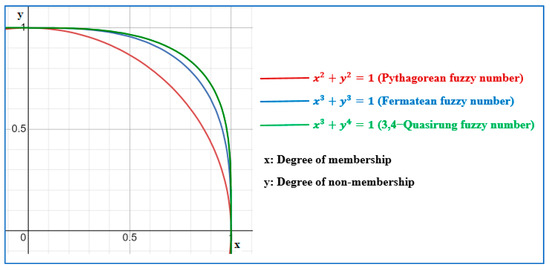
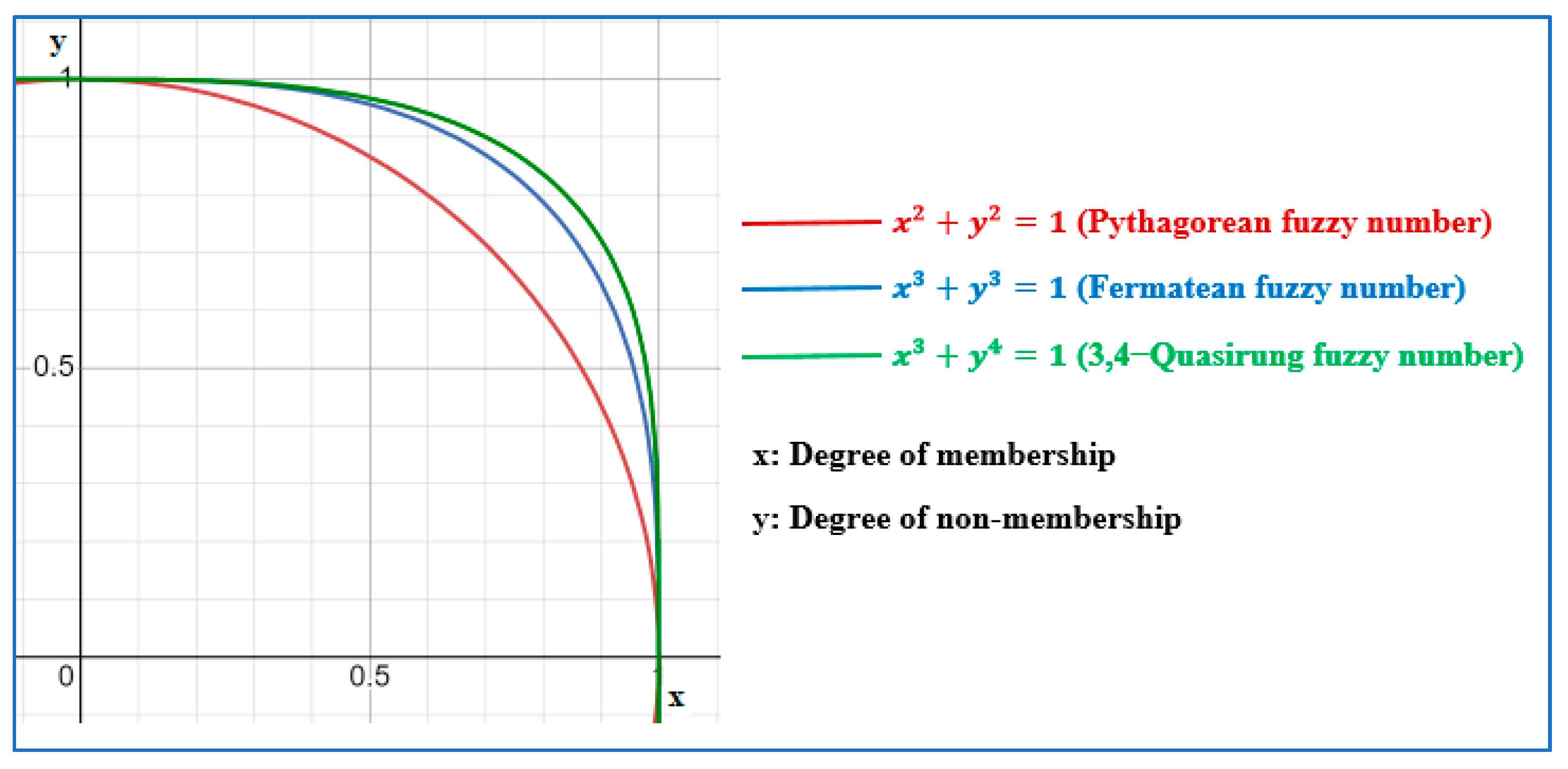
The term of is the hesitancy degree. 3,4-QFSs can describe inexact data more precisely than Pythagorean and Fermatean fuzzy sets. In addition, 3,4-QFS allows the decision maker to take advantage of more space in the use of membership and non-membership values when handling the MCDM problem. Therefore, there are some decision-making situations that can be handled with 3,4-QFSs, but cannot be expressed with Pythagorean and Fermatean fuzzy numbers and their corresponding linguistic terms. As an example, suppose a decision maker sets a satisfaction degree of 0.8 and a dissatisfaction degree of 0.8. We cannot handle this situation with Pythagorean and Fermatean fuzzy sets since and . On the other hand, this can be expressed with 3,4-QFSs (). In such decision-making problems, 3,4-QFSs are more useful to process uncertain information and better reflect this uncertainty [16]. A comparison of the spaces of all three fuzzy set versions is given in Figure 1.
Figure 1.
Comparison of the spaces of Pythagorean, Fermatean and 3,4-Quasirung fuzzy numbers.
In order to be used in the MCDM approach used for this study, the score and accuracy functions should be formulated for this type of fuzzy extension. According to the Seikh and Mandal [16], the following equations are suggested:
The score function for the 3,4-QFS is formulized as in Equation (1).
The score function for the 3,4-QFS is formulized as in Equation (2).
For more detailed theorems which the score and accuracy functions have satisfied, one can be referred the study [16]. Some basic arithmetic operations of 3,4-QFSs are given in Equations (3)–(6).
Let and be two 3,4-QF numbers.
Some aggregation operators are needed to combine the evaluations of the decision makers and to inject the crisp criterion weights (the weights of the risk parameters obtained with BWM for this problem) into the calculations in the form of 3,4-QF numbers. These are the 3,4-Quasirung fuzzy weighted averaging aggregation operator (3,4-QFWA) and the 3,4-Quasirung fuzzy weighted geometric aggregation operator (3,4-QFGA). Formulas and calculation details are given in Equations (7) and (8).
The aggregated value of a number of 3,4-QF numbers is calculated with the arithmetic operator as in Equation (7).
Here is the weight vector of . and .
The aggregated value of a number of 3,4-QF numbers is calculated with the geometric operator as in Equation (8).
To provide an easy understanding of the readers, one small example is given in the following to show how the QFWA is computed. Let be six values provided under 3,4-QF numbers which are the ratings of an alternative regarding six different decision criteria. Let the weights of these six criteria be as follows, respectively: 0.2, 0.1, 0.3, 0.15, 0.15 and 0.1. With QFWA, the membership value and non-membership value of this alternative are calculated as follows:
Then, finally the score function for this alternative is computed as follows:
The similar procedure is followed for the QFGA computations.
3.2. Development of 3,4-QF MCDM-Based Occupational Risk Assessment Model
In this study, we propose an occupational risk assessment study based on 3,4-QF MCDM. The structure of the OHS risk assessment problem dealt with in this study is suitable for 3,4-QF-MCDM. For a 3,4-QF-MCDM problem, (1) evaluation criteria, (2) alternatives, (3) criterion weights, and (4) performance values obtained by evaluating alternatives against criteria are required. For the OHS risk assessment problem discussed in the study, these four components are planned as follows: Evaluation criteria in an occupational risk assessment study are the parameters that are effective in defining the risk. In this study, we consider six risk parameters unlike the traditional risk assessment methods such as the risk matrix method, Fine−Kinney method, and FMEA as follows: (1) Probability: The frequency of occurrence of the hazard [11,48,54], (2) Severity: The degree of hazard that the risk will pose on personnel, machinery-equipment, environment and continuity of production/service [11,42,48,54], (3) Detectability: The detectability of the risk with the eye or any digital device [11,48], (4) Cost: Percentage of the total annual budget determined by the company for OHS measures [42,55], (5) Sensitivity to not using personal protective equipment: To what extent the use of personal protective equipment affects the severity of the risk [56], (6) Applicability of preventive measures: Opportunities for preventive measures and their degree of applicability [55,57]. The second component considered as an alternative is the hazards and associated risks identified in the context of OHS in the observed flight school. Criterion weights represent the relative importance weights of six risk parameters and were calculated with Best-Worst Method (BWM) [58]. The performance values obtained by evaluating the alternatives according to the criteria refer to the value obtained by scoring each hazard according to six different risk parameters. These ratings were made for different decision makers with relatively the same level of experience, using a 5-point 3,4 quasirung fuzzy linguistic scale. This scale was first proposed and used by the authors in this study. Here, the values named as criteria in a usual MCDM problem and specified as “risk parameter” in our problem consist of real numbers. These values were obtained by applying the BWM method. The details of the BWM method have not been given here. Already, the steps of the traditional BWM method can be followed by Rezaei [58]. The values expressing the performance values of the alternatives against the criteria and showing the score given as a result of the evaluation of each hazard by the expert according to each risk parameter for our study are expressed with 3,4-QF numbers. For our problem, let be a set of hazards emerged at the observed case study facility and be the set of risk parameters considered. The number of risk parameters for this study is six. Let be the weight vector of risk parameters obtained via BWM where . Let be the 3,4-QF decision matrix. Here, shows assessment of an expert on the hazard with respect to risk parameter . It should be noted that and and . In our proposed occupational risk assessment model, both 3,4-QFWA and 3,4-QFGA operators are tested to find the priority values and orders of each hazard. The steps of the suggested model are adapted from Seikh and Mandal [16]’s study as in the following:
Step 1: Determine components of the occupational risk assessment model: the risk parameters; hazard list; OHS experts who participate in the assessment (with their expertise coefficient).
Step 2: In this second step, OHS experts make their individual assessments on the hazards with respect to risk parameters, using the scale as suggested by the authors. It is a new 5-point 3,4-QF linguistic scale and given in Table 1. Individual assessments of experts are aggregated with the operators of 3,4-QFWA and/or 3,4-QFGA. Experts’ coefficients are assumed to be equal in terms of experience in the sector. Here, we introduce the aggregated decision matrix as .
Table 1.
5-point 3,4-QF linguistic scale used for assessing hazards with respect to risk parameters.
Step 3: Normalize the aggregated decision matrix into a new matrix named by the following two rules in Equation (9):
Step 4: Determine weights of risk parameters via Rezaei’s BWM [58]. For the computations, two pairwise comparison matrix is required as called Best-to-Others and Others-to-Worst. Then, optimal weights for each risk parameter is computed by solving the mathematical optimization model. Also, the consistency of matrices should be checked by the conditions in Rezaei [58].
Step 5: Compute the information of the hazard via one of the Equations (10) and (11).
Step 6: Compute the score function for each hazard with Equation (1).
Step 7: If the scores of for be all distinct, then the most serious hazard (the most priority one) is if .
Step 8: If there exists more than one hazard, are equal, we consider accuracy values of each hazard via Equation (2).
- If provides maximum value for one particular hazard, then this hazard has the highest priority and is the most serious/riskiest.
- If provides maximum value for more than one particular hazard, then the most serious/riskiest hazard is one which has the highest value.
- If the values are equal for two or more than two hazards, the decision maker is free to select one of them. Both are possible and have the same priority orders.
4. Method Implementation and Results
4.1. Case Study Description
In this section, we applied the 3,4 QF MCDM-based OHS risk assessment in a real case study concerned with the occupational risk assessment pertaining to the flight and ground training, training management, administrative, and facilities in a flight school to verify the validity and effectiveness of the proposed method. In direct proportion to the development of aviation, the demand for airplanes and pilots is increasing. The demand for flight schools, a total number of flight schools as well, has been increasing in recent years due to meet it. The flight school, where the study was carried out, started its training activities as a flight school in order to meet the pilot needs of the rapidly developing civil aviation industry. The flight school has the authorization to give Modular ATPL(A), ATPL(A) Integrated, and Multi Pilot License (MPL) Integrated into flight training.
Flight school activities contain occupational hazards and related risks in different categories in terms of occupational health and safety. Especially during the training phase, the possibility and effects of risk require a more detailed examination and a proactive approach. The processes in which occupational hazards and related risks occur in these activities are as follows: flight training process, ground services training process, managerial training processes, facility and related training processes, and training management process. Use of equipment, Perception, Task management, Communication, and Personnel actions are the five highest serious incidents according to European Aviation Safety Agency Report [59].
In this study, we consider six risk parameters unlike the traditional risk assessment methods such as risk matrix method, Fine−Kinney method, FMEA as follows: (1) Probability, (2) Severity, (3) Detectability, (4) Cost, (5) Sensitivity to not using personal protective equipment, (6) Applicability of preventive measures. Scale for six parameters can be seen in Table 2, Table 3, Table 4, Table 5, Table 6 and Table 7. Probability refers to the frequency of occurrence of the hazard. Quantitative value and qualitative value of the probability parameter, related explanations are given in Table 2.
Table 2.
Ratings of probability.
Table 3.
Ratings of severity.
Table 4.
Ratings of detectability.
Table 5.
Ratings of cost.
Table 6.
Ratings of sensitivity to not using personal protective equipment.
Table 7.
Ratings of applicability of preventive measures.
Severity refers to the degree of hazard that the risk will pose on personnel, machinery-equipment, environment and continuity of production/service. Quantitative value and qualitative value of the severity parameter, related explanations are given in Table 3.
Detectability refers to the detectability of the risk with the eye or any digital device. Quantitative value and qualitative value of the detectability parameter, related explanations are given in Table 4.
Cost refers to the percentage of the total annual budget determined by the company for OHS measures. Quantitative value and qualitative value of the cost parameter, related explanations are given in Table 5.
Sensitivity to not using personal protective equipment refers to what extent the use of personal protective equipment affects the severity of the risk. Quantitative value and qualitative value of the PPE parameter, related explanations are given in Table 6.
Applicability of preventive measures refers to opportunities for preventive measures and their degree of applicability. Quantitative value and qualitative value of the PPE parameter, related explanations are given in Table 7.
Risks and related processes within the scope of flight school activities are 1-Flight Training, 2-Ground Training, 3-Administrative Process, 4-Training Management, 5-Facilities. Five basic processes and risks in the processes are listed in Table 8.
Table 8.
Description of hazards, associated risks and related process.
In this study, an aviation management specialist, 2 assistant professor trainers, and 2 pilot trainers evaluated the risks in the process on 6 determined parameters. Instructors have more than 10 years of teaching and piloting experience. In this study, which includes risk analysis and evaluation, the fact that the experts have industry experience makes the findings valuable. The inclusion of experts with field experience and piloting training practice in the determination process of the parameters provided a more detailed and consistent evaluation of the problems, hazards, and related risk situations experienced in the flight school processes. In addition, a format has been created that will allow the use of both the content of the study and the method applied by other flight schools. In the application of the 3,4-QF MCDM-based occupational risk assessment model, the provision of literature-supported content and integration of expert opinions have allowed a comprehensive and consistent assessment of the dangers and risks inherent in flight schools. A consistent and comprehensive quantitative risk assessment before flight training can systematically help you determine if the risk level is too high, and provide an opportunity to reduce or reject risk before it is too late. Flight instructors are responsible for understanding and taking action against a wide range of risks, both for themselves and their students. The study provides the opportunity to apply and use risk assessments specific to flight schools, with information and evaluations obtained from instructors who have flight instructor experience, work at different flight schools and continue their actual training. This study creates a baseline for risk assessing processes of flight education and brings attention to the decisions makers on the highest priority risks.
4.2. Results of 3,4-QF MCDM-Based Occupational Risk Assessment Model
In order to demonstrate the applicability of the adapted approach to the field of occupational risk assessment, the step-by-step implementation results of the approach detailed in Section 3.2 is presented below. Since detailed information is given in the previous sub section about the preparation stage before the occupational risk assessment and the components needed, it is useful to start with the steps in which direct numerical calculations are made. This corresponds to the second step of the steps given in Section 3.2. In this step, the evaluations of 40 hazards according to 6 risk parameters and the scale in Table 1. The risk parameters were taken from 4 decision-making expert participants. These evaluations taken are aggregated using both the operators given in Equations (7) and (8). It should be noted here that the expert weights are taken equally as 0.25. Considering that the geometric mean, which is one of the applied operators, reduces the information loss relatively less, 3,4-QFGA was preferred in the calculation. The aggregated decision matrix as is computed as in Table 9. In the third step, the normalized aggregated decision matrix is the same as the aggregated decision matrix, since all risk parameters are evaluated as “benefit” and the scale is prepared accordingly. Fourth step is on the determination of six risk parameter weights via BWM method. It is a recently proposed MCDM method based on pairwise comparison [54]. It requires less pairwise comparisons when compared to the most known and applied pairwise comparison-based MCDM method “Analytic Hierarchy Process”.
Table 9.
The aggregated decision matrix.
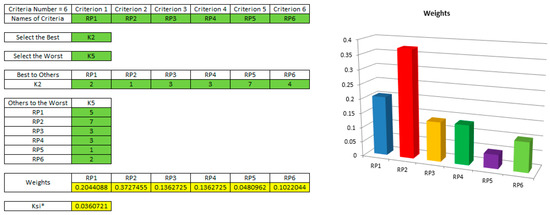
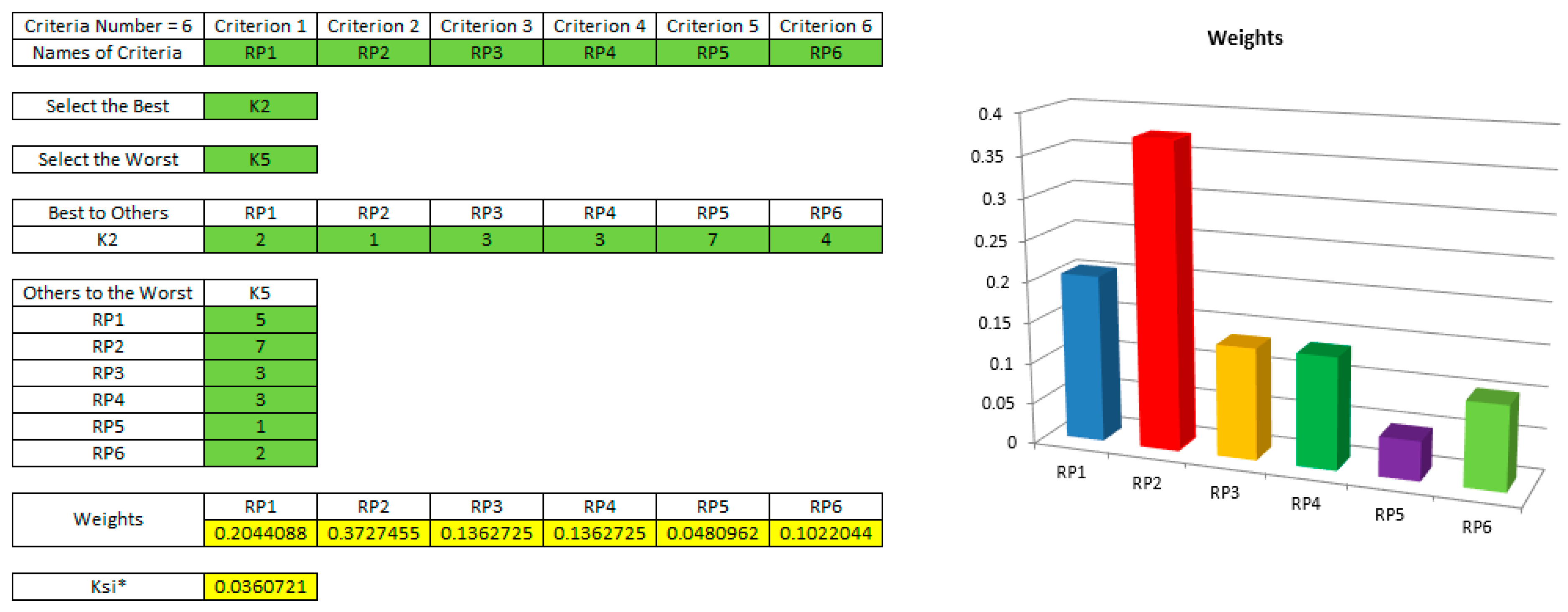
It also provides a more consistent assessment of the subjective judgments of experts. Therefore, we used BWM to determine the importance weights of RP1−probability, RP2−severity, RP3−detectability, RP4−cost, RP5−sensitivity to not using personal protective equipment and RP6−applicability of preventive measures parameters. With the Saaty’s 1-9 scale on the Best-to-Others and Others-to-Worst evaluations (the OHS experts from the facility make this assessment in a group consensus), we computed the weights of six risk parameters by using the BWM solver (developed by Rezaei) as shown in Figure 2. Moreover, the consistency has been checked and found valid and consistent. With the proposed risk assessment method, it will be possible to minimize the uncertainty of hazards and risks, analyze, evaluate and examine them consistently. For the implementation of the model, it is necessary to report in detail the experienced and possible cases and to ensure data reliability. The flight school will be able to benefit from the proposed risk assessment method during the curriculum formation, theoretical and practical training process.
Figure 2.
Weight determination of risk parameters via BWM. * note: the optimal value of Ksi.
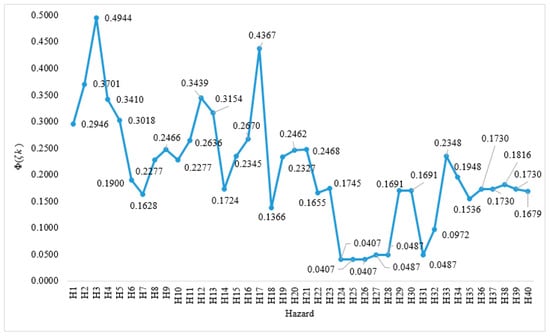
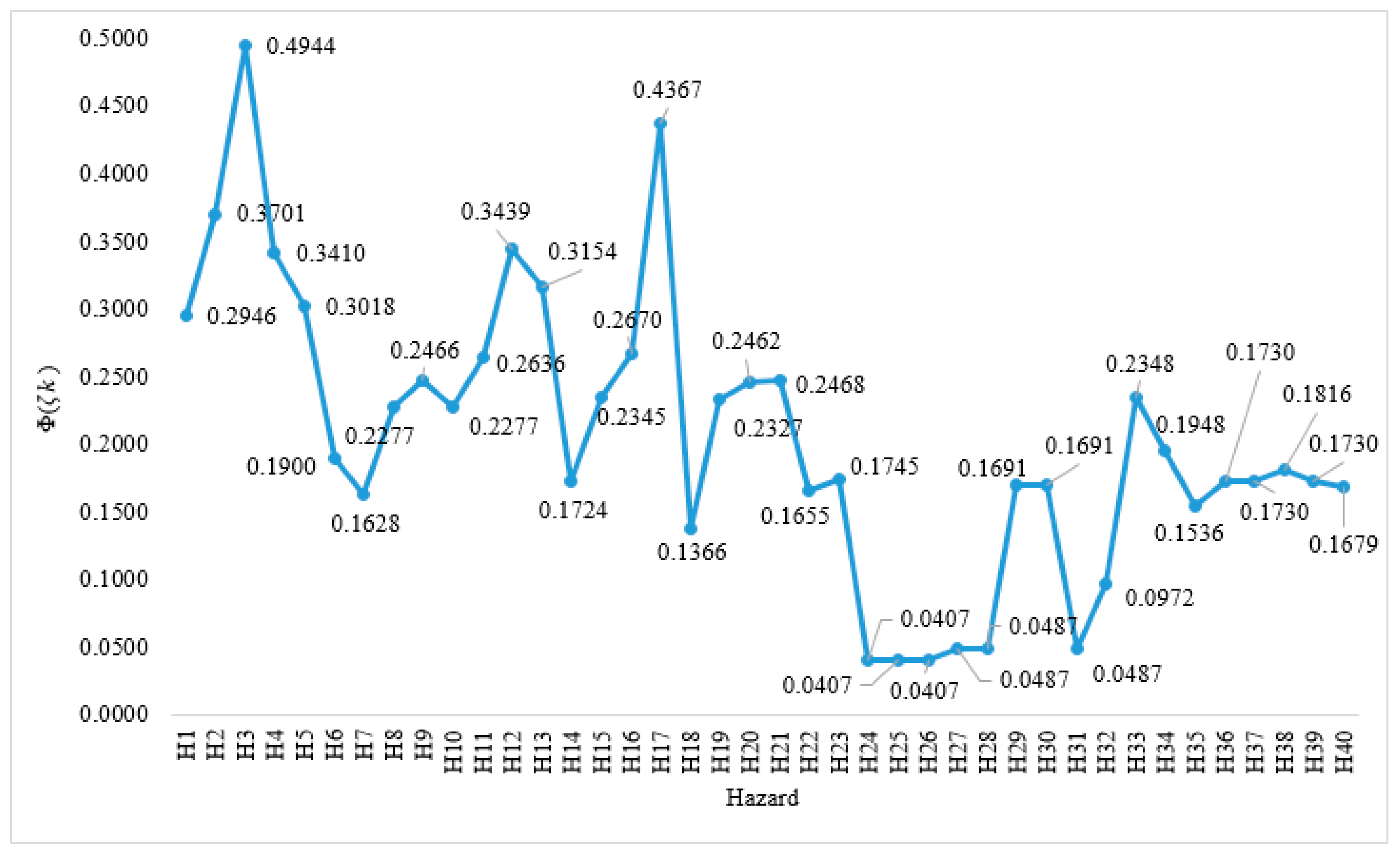
In the fifth step, we have computed the information of each hazard via the Equation (11). Then, we have computed the score function for each hazard. The results are demonstrated in Figure 3.
Figure 3.
values for each hazard.
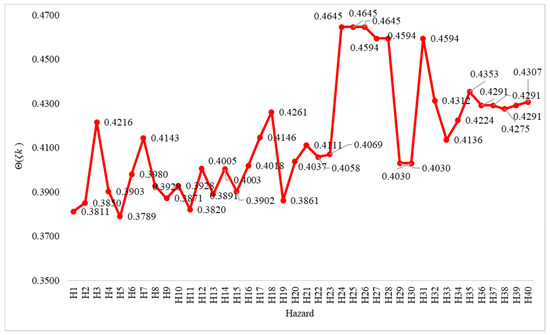
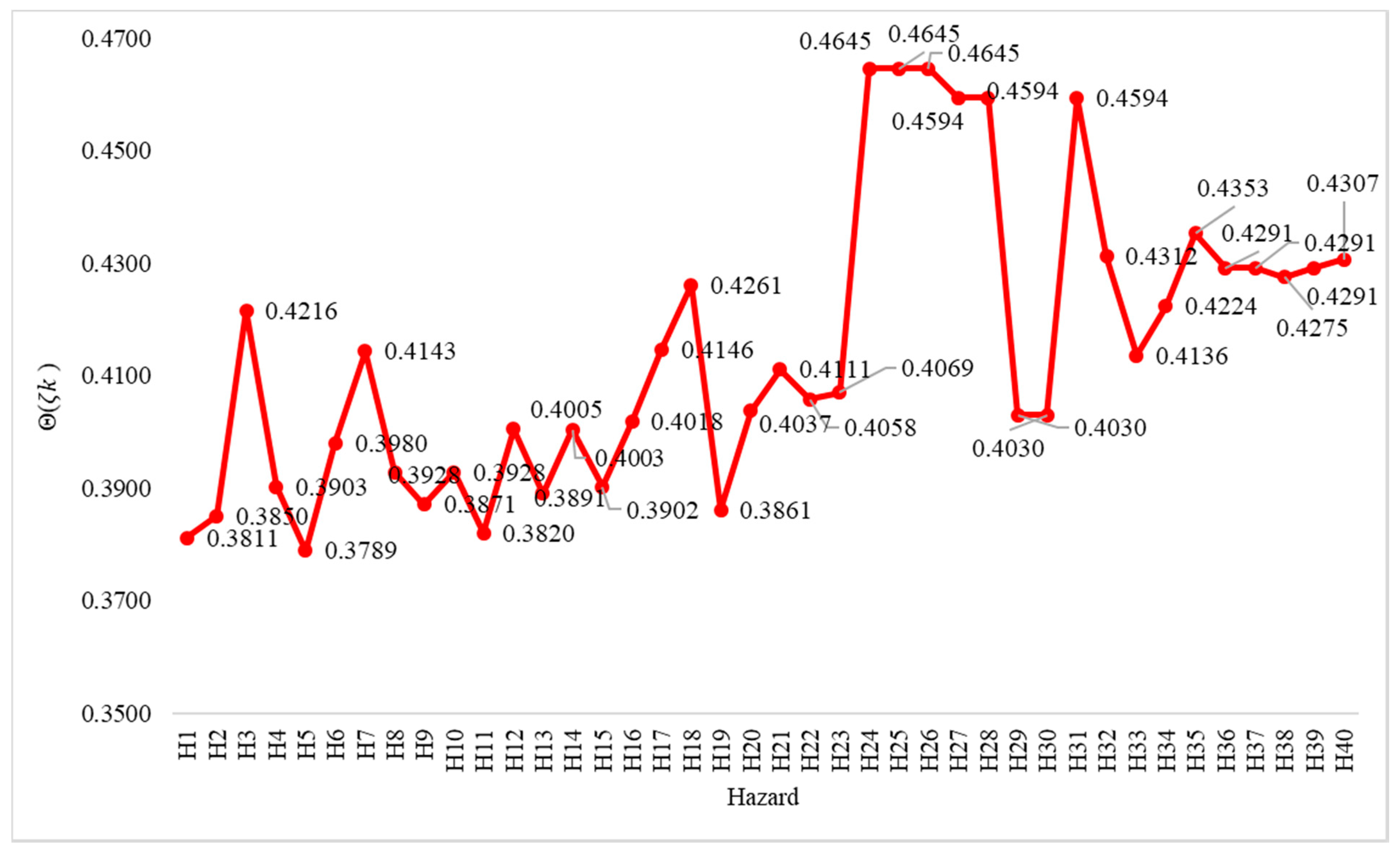
According to the calculation results, the hazards H3 (0.4944) and H17 (0.4367) have the highest values, and they are in the first and second place. These are control failure and bird strike hazards, respectively. These are followed by H2 (0.3701), H12 (0.3439), and H4 (0.3410), respectively. These are related to engine failure, forced landing and failure of landing gear. It’s important to see that all of these five top priorities relate to flight training. To identify hazards with the same value, H10 & H8 (0.227), H36 & H37 & H39 (0.1730), H29 & H30 (0.1691), H27 & H28 & H31 (0.0487) and H24 & H25 & H26 (0.0407), the values of the relevant groups were examined. Since it was seen that the values of all these five groups, which were looked for in order to rank within themselves, were the same (Figure 4), it was observed that there was no difference between their rankings. The final rankings are presented in Table 10. According to the numerical results of the priority scores of each emerged hazard in the flight school, the most important hazards and associated risks are related to flight training such as control failure, engine failure and bird strike. However, some of the flight training hazards that we will prioritize secondary are: forced landing, landing gear not deployed, hard landing, fire and smoke, mid-air collision, fuel criticality, and emergency declaration.
Figure 4.
values for each hazard.
Table 10.
Final priority ranking of each hazard.
For H3, H17 and H2 hazards, training should be planned in a structure that will include interpersonal activities such as optimizing the human-machine interface, building and maintaining effective teams, problem solving, decision making and maintaining situational awareness. In terms of flight school training, human factor-related errors will be integrated into the curriculum, and practical and theoretical knowledge will be developed. Crew Resource Management, Line Oriented Flight Training and Threat and Error Management have been developed and mandated by the International Civil Aviation Organization (ICAO). Safety management regulations are supplemented by ICAO [60] with manuals such as; ICAO Bird Strike Information System Manual, Air Traffic Services Planning Manual.
4.3. Comparative Study and Discussion
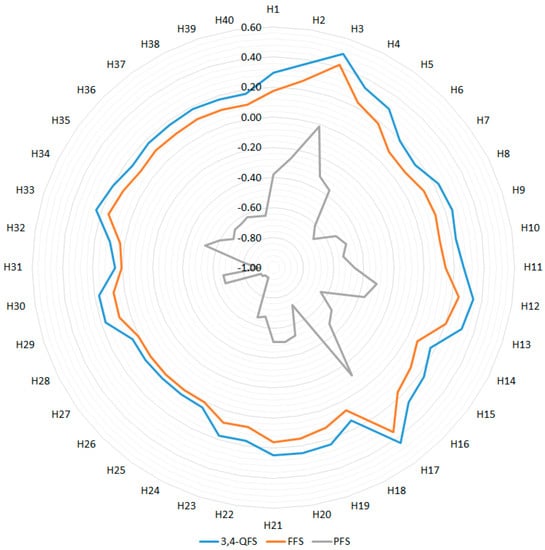
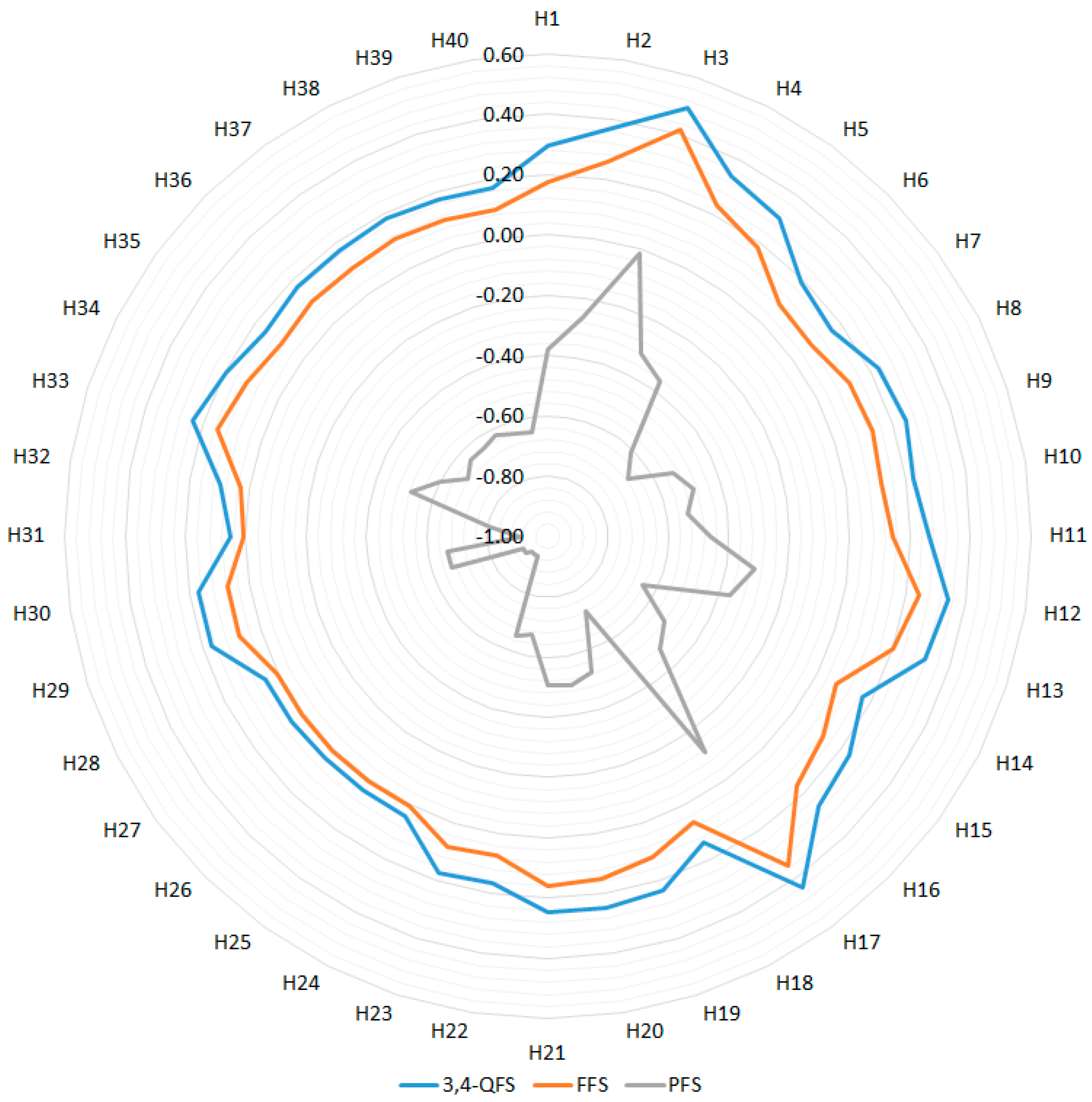
In this section, the numerical results obtained by applying the 3,4-QF MCDM-based occupational risk assessment model proposed in the article and numerical results obtained by solving the same problem with the Pythagorean and Fermatean fuzzy aggregation operators were compared. While the applied Fermatean fuzzy weighted geometric (FFWG) operator is adapted from the works of Senapati and Yager [61] and Zhou et al. [62], the Pythagorean fuzzy weighted geometric (PFWG) operator is used as in [63,64] These results are given in Figure 5. According to the results obtained with all three collection operators, the top five hazards have not changed. These are H3, H17, H2, H12 and H4 respectively.
Figure 5.
Comparison of final scores.
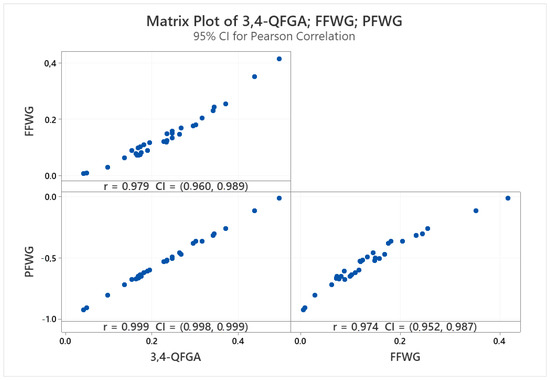
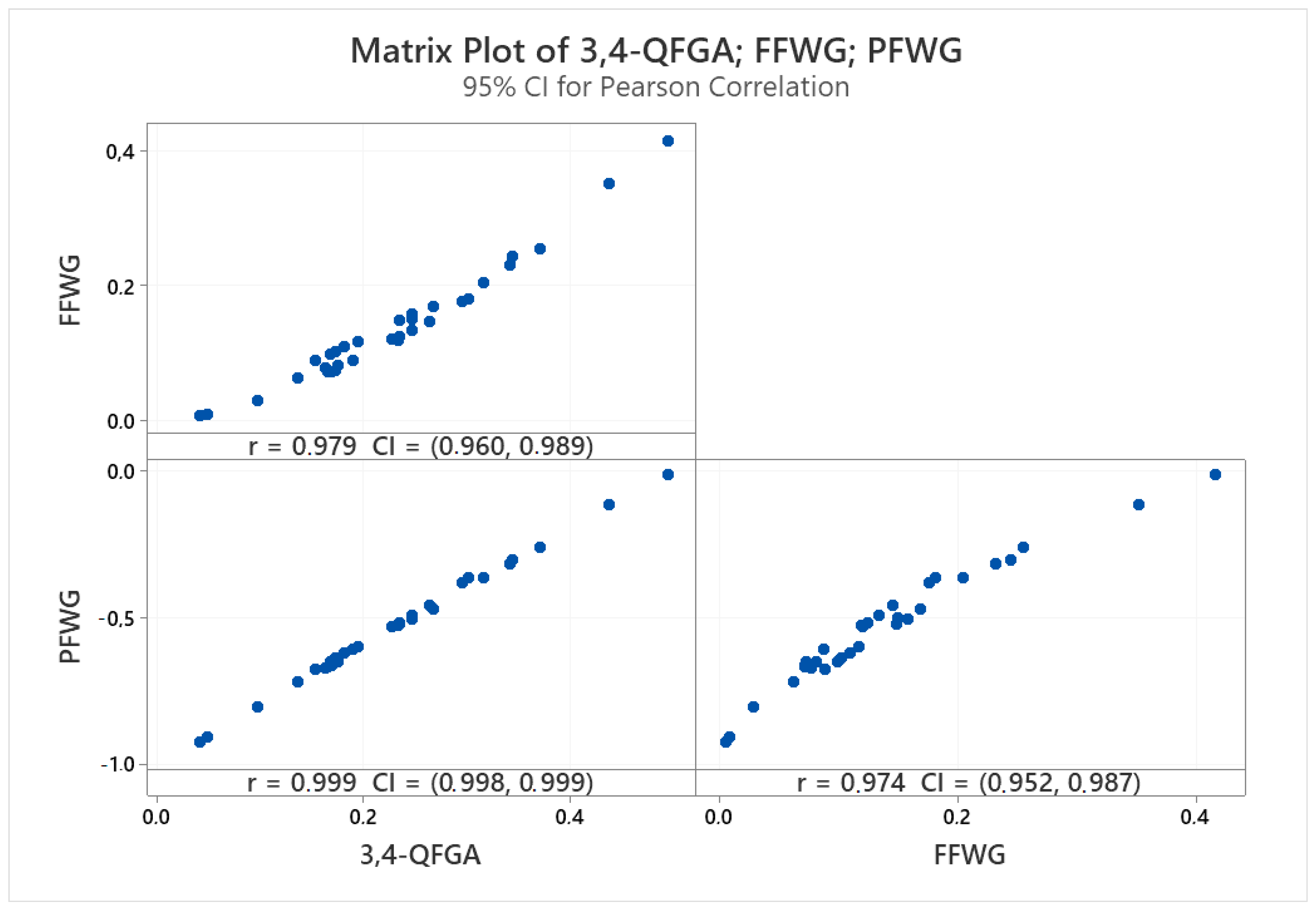
In fact, the Pearson correlation coefficient between the final scores of each hazard solved with these three operators was also found to be quite high (Figure 6). Note that the values obtained from the problem solved with PFWG are in the range of [−1, 1]. Because, score function values can be negative in Pythagorean fuzzy set [65]. Similarly, the final scores of the last eight hazards (H18, H32, H27, H28, H31, H24, H25 and H26) are the same with respect to all three aggregation operators based MCDM models, and the same measures can be arranged for the control measures to be taken for these eight least serious hazards.
Figure 6.
Pearson correlation analysis results.
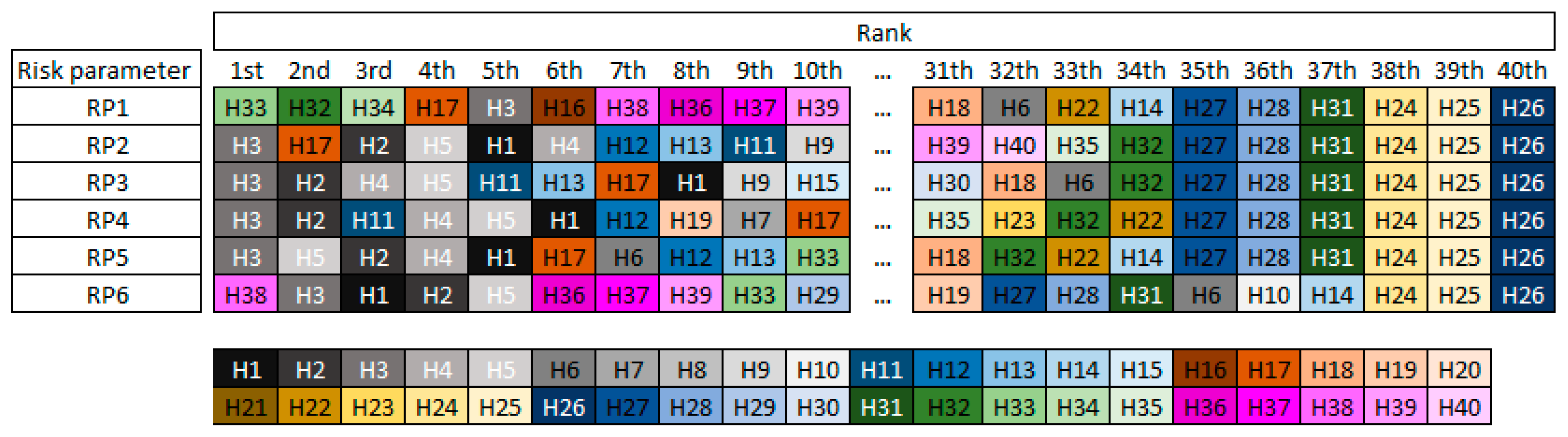
A sensitivity analysis is also needed for implementation. Sensitivity analysis is the process of determining how changes in risk parameter weights will affect the final scores of hazards. In many occupational risk assessment studies, this is an extra study. As a matter of fact, it is an analysis that strengthens the robustness of the applied approach. In this sensitivity analysis, one of the risk parameters was defined as the major parameter and the others as the minor parameters. By highlighting the weight of the major parameter and keeping the other minor parameters at the same weight, it can be observed how much the results are affected by the major parameter. Three different scenarios listed in Table 11 are discussed in this section. According to the first scenario, the major parameter is selected as one of the six risk parameters one by one respectively (with a weight value of 0.20), while the other parameters are determined as minor parameters (all the same and with a weight value of 0.16).
Table 11.
Scenario design of sensitivity analysis.
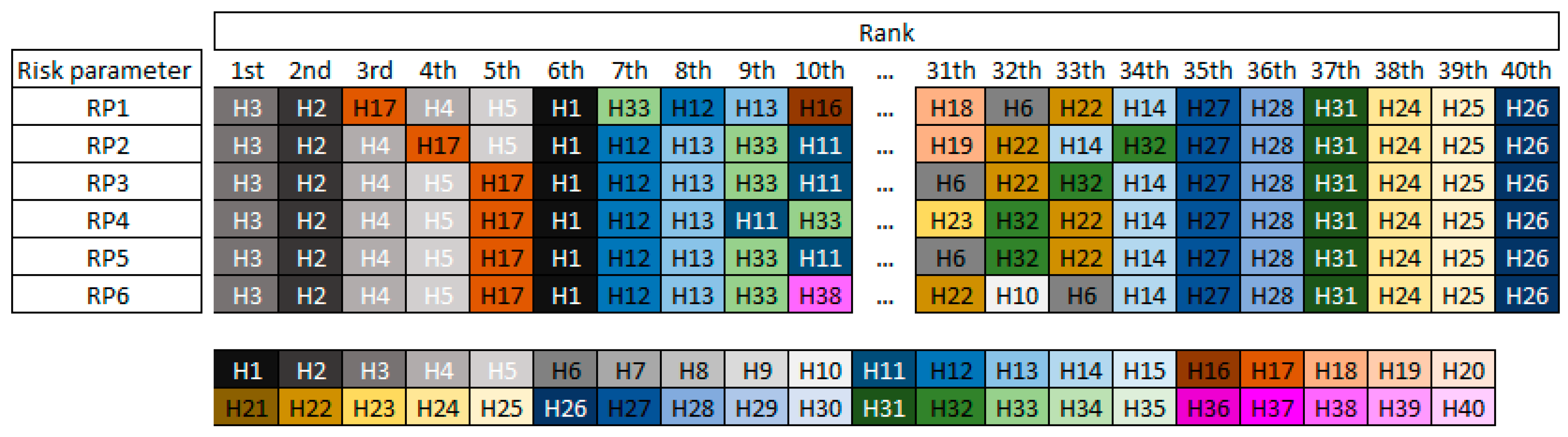
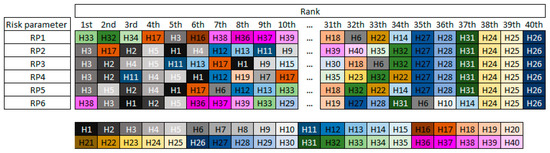
According to the results of scenario 1 as provided in Figure 7, it is seen that the H17 hazard is affected by the “RP1−Probability” risk parameter. The frequency of occurrence of the H17 risk appears to be a priority hazard when very significant. Additionally, when the weight of the “RP2−Severity” parameter is the highest, the hazard H17 falls one step back and takes less priority. Instead, H4 becomes a priority hazard. Overall speaking, H3 is the highest priority hazard, followed by H2, H4, H5 and H17. In addition, another striking result is that the hazard H1 is not affected by none of the risk parameters’ weight increase.
Figure 7.
Sensitivity analysis on the results by Scenario 1.
The results of scenario 2 are given in Figure 8. Accordingly, when compared to Scenario 1 (Figure 7), it is seen that changes in risk parameter weights have more impact on the priority rankings of hazards.
Figure 8.
Sensitivity analysis on the results by Scenario 2.
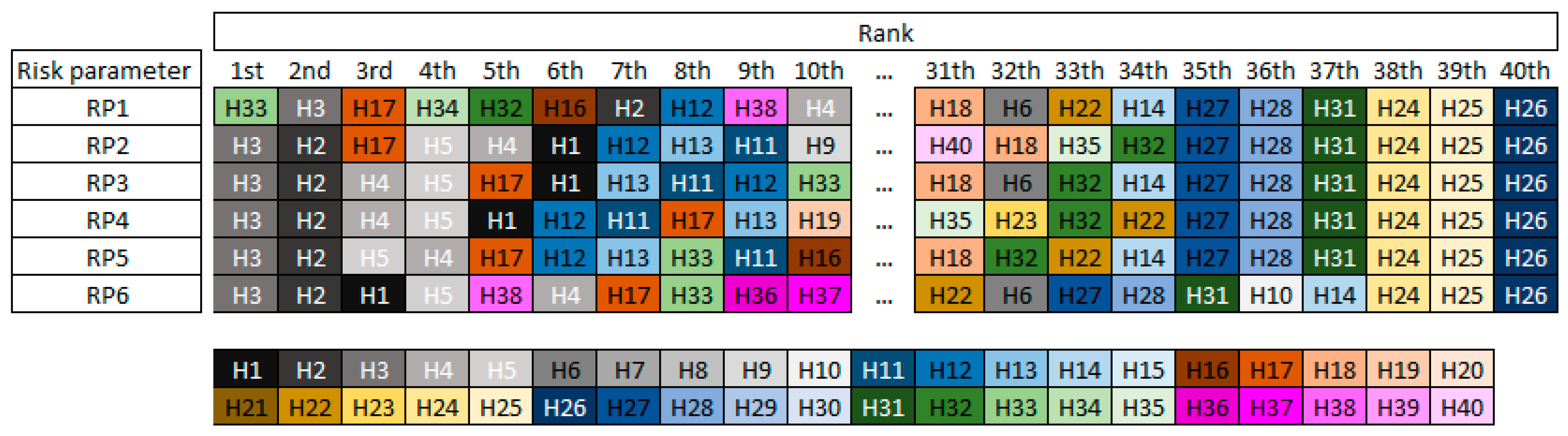
According to the sensitivity analysis result of Scenario 3 presented in Figure 9, it is seen that the ranking result is similar to the previous one.
Figure 9.
Sensitivity analysis on the results by Scenario 3.
5. Conclusions
In this study, an occupational risk assessment approach based on 3,4-QF MCDM was proposed as the first attempt in the literature. Risk parameters, which are one of the basic components of occupational risk assessment studies, are modeled via six different parameters, different from classical risk analysis methods with two or three parameters. The weights of these parameters were obtained by [58]. The evaluations of the hazards arising in the workplace environment depending on each risk parameter were made by OHS experts and aggregated by the 3,4-QFGA operator. Comparative and sensitivity analyzes were also performed to consolidate the results of the approach.
5.1. Summary of Findings
According to the results of the risk parameter weight values determined by the BWM model, the most important parameter for this occupational risk assessment is the “severity” parameter with a weight value of 0.37. This is followed by “probability” with a significance weight of 0.20. These two parameters are followed by “detectability” and “cost” with weight values of about 0.14. The two least important parameters are “applicability of preventive measures (0.10)” and “sensitivity to not using PPE (0.05)”, respectively. According to 3,4-QF MCDM risk assessment model, the most important hazards and associated risks are stemmed from the processes of flight training such as control failure, engine failure and bird strike. Moreover, secondary flight training hazards are forced landing, landing gear not deployed, hard landing, fire and smoke, mid-air collision, fuel criticality, and emergency declaration. According to the comparison analysis, there is not a significant difference between the results of the model solved with the other two types of fuzzy version-based aggregation operators (FFWG and PFWG) and the results of the current model. According to the results of the sensitivity analysis, it is seen that the H33 hazard, which is the hazard related to facilities, has the highest priority in increasing the weight of the RP1−probability risk parameter. This result appeared in both Scenario 2 and Scenario 3. A similar case shows that in the case of Scenario 3, H38 is the top priority hazard where the RP6−applicability of preventive measures parameter has a weight of 0.60 and each of the other parameters has a weight of 0.08.
5.2. Research Contributions
This study has made the following contributions from both a methodological and practical perspective.
- A new extension 3,4-QFS with a broader space than the Fermatean and Pythagorean fuzzy numbers has been adapted for the first time to an occupational risk assessment study. The proposed 3,4-QF-MCDM based approach uses more risk parameters than conventional risk assessments and calculates their weight values with Rezaei’s BWM method.
- In addition, with the developed 3,4-QF scale, each hazard can be evaluated according to the relevant risk parameter, and the subjective judgments given by all the experts participating in the evaluation are aggregated with the 3,4-QFGA operator.
- Experts with field experience and pilot training practice were included in the process of determining risk assessment parameters which allows for a more detailed and consistent evaluation of problems, hazards, and related risk situations in the flight school processes. It made model more sustainable and applicable model. An innovative sensitivity analysis was conducted to analyze how the change in the weights of the parameters used in the flight school occupational risk assessment affected the priority score and, of course, the order of each hazard. In this respect, it is considered to make an important methodological contribution.
- Risk assessment for flight schools, which constitute the education pillar of the aviation industry, is undoubtedly extremely important in terms of serious hazards it contains. In this context, the occupational risk assessment study carried out in a flight school in order to test the applicability of the model contributes to the application as it is an adaptable model.
5.3. Limitations and Future Remarks
Since the proposed fuzzy set extension is still new, it is seen that this set has not yet been integrated into the MCDM methods that are widely applied in the field of occupational risk assessment. For future studies, it is planned to develop new risk assessment approaches such as 3,4-QFS-based TOPSIS and VIKOR. In addition, an approach can be suggested in which each risk parameter can be modeled how the production or service facility will be affected by some future states. With this approach, it can be considered how the risk parameter weights change in response to possible states and this change can be modeled with a fuzzy stratified MCDM structure.
Author Contributions
Data curation, M.F.A.; Methodology, M.G.; Software, M.G.; Validation, M.G.; Writing—original draft, M.G. and M.F.A.; Writing—review & editing, M.G. and M.F.A. All authors have read and agreed to the published version of the manuscript.
Funding
This research received no external funding.
Institutional Review Board Statement
Not applicable.
Informed Consent Statement
Not applicable.
Data Availability Statement
Not applicable.
Conflicts of Interest
The authors declare no conflict of interest.
References
- European Commission; Directorate-General for Employment, Social Affairs and Inclusion. Guidance on Risk Assessment at Work; Publications Office: Luxembourg, 1996. [Google Scholar]
- Cox, L.A., Jr. Risk Analysis Foundations, Models, and Methods; Springer Science & Business Media: Berlin, Germany, 2012; Volume 45. [Google Scholar]
- European Agency for Safety and Health at Work. Directive 89/391/EEC—OSH “Framework Directive”; 1989; Available online: https://osha.europa.eu/en/legislation/directives/the-osh-framework-directive/1 (accessed on 30 July 2022).
- Pinto, A. QRAM a Qualitative Occupational Safety Risk Assessment Model for the construction industry that incorporate uncertainties by the use of fuzzy sets. Saf. Sci. 2014, 63, 57–76. [Google Scholar] [CrossRef] [Scilit]
- IEC 31010:2019; Risk Management—Risk Assessment Techniques, 2nd ed. International Organization for Standardization (ISO): Geneva, Switzerland, 2019. Available online: https://www.iso.org/standard/72140.html (accessed on 25 May 2022).
- Gul, M. A review of occupational health and safety risk assessment approaches based on multi-criteria decision-making methods and their fuzzy versions. Hum. Ecol. Risk Assess. Int. J. 2018, 24, 1723–1760. [Google Scholar] [CrossRef] [Scilit]
- Markowski, A.S.; Mannan, M.S. Fuzzy risk matrix. J. Hazard. Mater. 2008, 159, 152–157. [Google Scholar] [CrossRef] [Scilit] [PubMed]
- Markowski, A.S.; Siuta, D. Fuzzy logic approach for identifying representative accident scenarios. J. Loss Prev. Process Ind. 2018, 56, 414–423. [Google Scholar] [CrossRef] [Scilit]
- Markowski, A.S.; Mannan, M.S.; Bigoszewska, A. Fuzzy logic for process safety analysis. J. Loss Prev. Process Ind. 2009, 22, 695–702. [Google Scholar] [CrossRef] [Scilit]
- Kabir, S. An overview of fault tree analysis and its application in model based dependability analysis. Expert Syst. Appl. 2017, 77, 114–135. [Google Scholar] [CrossRef] [Scilit]
- Liu, H.C. FMEA using uncertainty theories and MCDM methods. In FMEA Using Uncertainty Theories and MCDM Methods; Springer: Singapore, 2016; pp. 13–27. [Google Scholar]
- Dunjó, J.; Fthenakis, V.; Vílchez, J.A.; Arnaldos, J. Hazard and operability (HAZOP) analysis. A literature review. J. Hazard. Mater. 2010, 173, 19–32. [Google Scholar] [CrossRef] [Scilit]
- Marhavilas, P.K.; Filippidis, M.; Koulinas, G.K.; Koulouriotis, D.E. The integration of HAZOP study with risk-matrix and the analytical-hierarchy process for identifying critical control-points and prioritizing risks in industry—A case study. J. Loss Prev. Process Ind. 2019, 62, 103981. [Google Scholar] [CrossRef] [Scilit]
- Zadeh, L.A. Fuzzy sets. Inf. Control 1965, 8, 338–353. [Google Scholar] [CrossRef] [Scilit]
- Ozdemir, Y.; Basligil, H.; Ak, M.F. Airport safety risk evaluation based on fuzzy Anp and fuzzy ahp. In Airport Safety Risk Evaluation Based on Fuzzy Anp and Fuzzy Ahp; World Scientific: Singapore, 2016. [Google Scholar]
- Seikh, M.R.; Mandal, U. Multiple attribute decision-making based on 3, 4-quasirung fuzzy sets. Granular Computing 2022, 1–14. [Google Scholar] [CrossRef] [Scilit]
- Yager, R.R. Pythagorean membership grades in multicriteria decision making. IEEE Trans. Fuzzy Syst. 2014, 22, 958–965. [Google Scholar] [CrossRef] [Scilit]
- Senapati, T.; Yager, R.R. Fermatean fuzzy sets. J. Ambient Intell. Humaniz. Comput. 2020, 11, 663–674. [Google Scholar] [CrossRef] [Scilit]
- Gholamizadeh, K.; Zarei, E.; Omidvar, M.; Yazdi, M. Fuzzy Sets Theory and Human Reliability: Review, Applications, and Contributions. In Linguistic Methods under Fuzzy Information in System Safety and Reliability Analysis; Springer: Berlin/Heidelberg, Germany, 2022; pp. 91–137. [Google Scholar]
- Pouyakian, M.; Khatabakhsh, A.; Yazdi, M.; Zarei, E. Optimizing the Allocation of Risk Control Measures Using Fuzzy MCDM Approach: Review and Application. In Linguistic Methods under Fuzzy Information in System Safety and Reliability Analysis; Yazdi, M., Ed.; Studies in Fuzziness and Soft Computing; Springer: Cham, Switzerland, 2022; Volume 414. [Google Scholar]
- Turkey Directorate General of Civil Aviation (DGCA). 2020 Annual Bulletin of Safety İncidents. 2020. Available online: https://web.shgm.gov.tr/documents/sivilhavacilik/files/mevzuat/sektorel/bulten/2020/EOYB-2020.pdf (accessed on 30 July 2022).
- Delikhoon, M.; Zarei, E.; Banda, O.V.; Faridan, M.; Habibi, E. Systems Thinking Accident Analysis Models: A Systematic Review for Sustainable Safety Management. Sustainability 2022, 14, 5869. [Google Scholar] [CrossRef] [Scilit]
- Zadeh, L.A. Fuzzy sets. In Fuzzy Sets, Fuzzy Logic, and Fuzzy Systems; World Scientific: Singapore, 1996; pp. 394–432. [Google Scholar]
- Pedrycz, W. Why triangular membership functions? Fuzzy Sets Syst. 1994, 64, 21–30. [Google Scholar] [CrossRef] [Scilit]
- Atanassov, K.T. Intuitionistic fuzzy sets. In Intuitionistic Fuzzy Sets; Physica: Heidelberg, Germany, 1999; pp. 1–137. [Google Scholar]
- Karnik, N.N.; Mendel, J.M. Operations on type-2 fuzzy sets. Fuzzy Sets Syst. 2001, 122, 327–348. [Google Scholar] [CrossRef] [Scilit]
- Torra, V. Hesitant fuzzy sets. Int. J. Intell. Syst. 2010, 25, 529–539. [Google Scholar] [CrossRef] [Scilit]
- Cuong, B.C.; Kreinovich, V. Picture fuzzy sets. J. Comput. Sci. Cybern. 2014, 30, 409–420. [Google Scholar]
- Kutlu Gündoğdu, F.; Kahraman, C. Spherical fuzzy sets and spherical fuzzy TOPSIS method. J. Intell. Fuzzy Syst. 2019, 36, 337–352. [Google Scholar] [CrossRef] [Scilit]
- Yager, R.R. Generalized orthopair fuzzy sets. IEEE Trans. Fuzzy Syst. 2016, 25, 1222–1230. [Google Scholar] [CrossRef] [Scilit]
- Marhavilas, P.K.; Filippidis, M.; Koulinas, G.K.; Koulouriotis, D.E. An expanded HAZOP-study with fuzzy-AHP (XPA-HAZOP technique): Application in a sour crude-oil processing plant. Saf. Sci. 2020, 124, 104590. [Google Scholar] [CrossRef] [Scilit]
- Celik, E.; Gul, M. Hazard identification, risk assessment and control for dam construction safety using an integrated BWM and MARCOS approach under interval type-2 fuzzy sets environment. Autom. Constr. 2021, 127, 103699. [Google Scholar] [CrossRef] [Scilit]
- Gul, M.; Mete, S.; Serin, F.; Celik, E. Fine–Kinney-Based Fuzzy Multi-Criteria Occupational Risk Assessment; Springer: Cham, Switzerland, 2021. [Google Scholar]
- Wang, W.; Ding, L.; Liu, X.; Liu, S. An interval 2-Tuple linguistic Fine-Kinney model for risk analysis based on extended ORESTE method with cumulative prospect theory. Inf. Fusion 2022, 78, 40–56. [Google Scholar] [CrossRef] [Scilit]
- Wang, W.; Jiang, W.; Han, X.; Liu, S. An extended gained and lost dominance score method based risk prioritization for Fine-Kinney model with interval type-2 fuzzy information. Hum. Ecol. Risk Assess. Int. J. 2022, 28, 154–183. [Google Scholar] [CrossRef] [Scilit]
- Çalış Boyacı, A.; Selim, A. Assessment of occupational health and safety risks in a Turkish public hospital using a two-stage hesitant fuzzy linguistic approach. Environ. Sci. Pollut. Res. 2022, 29, 36313–36325. [Google Scholar] [CrossRef] [Scilit] [PubMed]
- Can, G.F.; Toktas, P. An Advanced Stochastic Risk Assessment Approach Proposal Based on KEMIRA-M, QFD and Fine-Kinney Hybridization. Int. J. Inf. Technol. Decis. Mak. 2021, 20, 431–468. [Google Scholar] [CrossRef] [Scilit]
- Dagsuyu, C.; Oturakci, M.; Essiz, E.S. A New Fine-Kinney Method Based on Clustering Approach. Int. J. Uncertain. Fuzziness Knowl. Based Syst. 2020, 28, 497–512. [Google Scholar] [CrossRef] [Scilit]
- Tang, J.; Liu, X.; Wang, W. A hybrid risk prioritization method based on generalized TODIM and BWM for Fine-Kinney under interval type-2 fuzzy environment. Hum. Ecol. Risk Assess. Int. J. 2021, 27, 954–979. [Google Scholar] [CrossRef] [Scilit]
- Khalilzadeh, M.; Ghasemi, P.; Afrasiabi, A.; Shakeri, H. Hybrid fuzzy MCDM and FMEA integrating with linear programming approach for the health and safety executive risks: A case study. J. Model. Manag. 2021, 16, 1025–1053. [Google Scholar] [CrossRef] [Scilit]
- Shahri, M.M.; Jahromi, A.E.; Houshmand, M. Failure Mode and Effect Analysis using an integrated approach of clustering and MCDM under pythagorean fuzzy environment. J. Loss Prev. Process Ind. 2021, 72, 104591. [Google Scholar] [CrossRef] [Scilit]
- Jafarzadeh Ghoushchi, S.; Soleimani Nik, M.; Pourasad, Y. Health Safety and Environment Risk Assessment Using an Extended BWM-COPRAS Approach Based on G-Number Theory. Int. J. Fuzzy Syst. 2022, 24, 1888–1908. [Google Scholar] [CrossRef] [Scilit]
- Valipour, M.; Yousefi, S.; Jahangoshai Rezaee, M.; Saberi, M. A clustering-based approach for prioritizing health, safety and environment risks integrating fuzzy C-means and hybrid decision-making methods. Stoch. Environ. Res. Risk Assess. 2021, 36, 919–938. [Google Scholar] [CrossRef] [Scilit]
- La Fata, C.M.; Giallanza, A.; Micale, R.; La Scalia, G. Improved FMECA for effective risk management decision making by failure modes classification under uncertainty. Eng. Fail. Anal. 2022, 135, 106163. [Google Scholar] [CrossRef] [Scilit]
- Karamustafa, M.; Cebi, S. Extension of safety and critical effect analysis to neutrosophic sets for the evaluation of occupational risks. Appl. Soft Comput. 2021, 110, 107719. [Google Scholar] [CrossRef] [Scilit]
- Liu, R.; Liu, Z.; Liu, H.C.; Shi, H. An improved alternative queuing method for occupational health and safety risk assessment and its application to construction excavation. Autom. Constr. 2021, 126, 103672. [Google Scholar] [CrossRef] [Scilit]
- Liu, R.; Zhu, Y.J.; Chen, Y.; Liu, H.C. Occupational health and safety risk assessment using an integrated TODIM-PROMETHEE model under linguistic spherical fuzzy environment. Int. J. Intell. Syst. 2021, 36, 6814–6836. [Google Scholar] [CrossRef] [Scilit]
- Mohandes, S.R.; Durdyev, S.; Sadeghi, H.; Mahdiyar, A.; Hosseini, M.R.; Banihashemi, S.; Martek, I. Towards enhancement in reliability and safety of construction projects: Developing a hybrid multi-dimensional fuzzy-based approach. Eng. Constr. Archit. Manag. 2022. [Google Scholar] [CrossRef] [Scilit]
- Mohandes, S.R.; Sadeghi, H.; Fazeli, A.; Mahdiyar, A.; Hosseini, M.R.; Arashpour, M.; Zayed, T. Causal analysis of accidents on construction sites: A hybrid fuzzy Delphi and DEMATEL approach. Saf. Sci. 2022, 151, 105730. [Google Scholar] [CrossRef] [Scilit]
- La Fata, C.M.; Giallanza, A.; Micale, R.; La Scalia, G. Ranking of occupational health and safety risks by a multi-criteria perspective: Inclusion of human factors and application of VIKOR. Saf. Sci. 2021, 138, 105234. [Google Scholar] [CrossRef] [Scilit]
- Lolli, F.; Coruzzolo, A.M.; Alessandro, G.; Balugani, E.; Butturi, M.A.; Marinello, S.; Marinelli, S. The Dynamic, Individual and Integrated Risk Assessment: A Multi-criteria Approach Using Big Data. In Proceedings of the International Conference on Applied Human Factors and Ergonomics, New York, NY, USA, 25–29 July 2021; Springer: Cham, Switzerland, 2021; pp. 207–215. [Google Scholar]
- Zarei, E.; Ramavandi, B.; Darabi, A.H.; Omidvar, M. A framework for resilience assessment in process systems using a fuzzy hybrid MCDM model. J. Loss Prev. Process Ind. 2021, 69, 104375. [Google Scholar] [CrossRef] [Scilit]
- Gul, M.; Lo, H.W.; Yucesan, M. Fermatean fuzzy TOPSIS-based approach for occupational risk assessment in manufacturing. Complex Intell. Syst. 2021, 7, 2635–2653. [Google Scholar] [CrossRef] [Scilit]
- Ak, M.F.; Yucesan, M.; Gul, M. Occupational health, safety and environmental risk assessment in textile production industry through a Bayesian BWM-VIKOR approach. Stoch. Environ. Res. Risk Assess. 2022, 36, 629–642. [Google Scholar] [CrossRef] [Scilit]
- Di Bona, G.; Silvestri, A.; Forcina, A.; Petrillo, A. Total efficient risk priority number (TERPN): A new method for risk assessment. J. Risk Res. 2018, 21, 1384–1408. [Google Scholar] [CrossRef] [Scilit]
- Grassi, A.; Gamberini, R.; Mora, C.; Rimini, B. A fuzzy multi-attribute model for risk evaluation in workplaces. Saf. Sci. 2009, 47, 707–716. [Google Scholar] [CrossRef] [Scilit]
- Chen, J.K. Prioritization of corrective actions from utility viewpoint in FMEA application. Qual. Reliab. Eng. Int. 2017, 33, 883–894. [Google Scholar] [CrossRef] [Scilit]
- Rezaei, J. Best-worst multi-criteria decision-making method. Omega 2015, 53, 49–57. [Google Scholar] [CrossRef] [Scilit]
- European Aviation Safety Agency. Annual Safety Review 2020; Publications Office: Luxembourg, 2020. [Google Scholar]
- ICAO. International Civil Aviation Organization. Global Aviation Safety Plan 2020–2022. Available online: https://www.icao.int/Meetings/anconf13/Documents/Doc_10004_GASP_2020_2022_Edition.pdf (accessed on 13 October 2021).
- Senapati, T.; Yager, R.R. Fermatean fuzzy weighted averaging/geometric operators and its application in multi-criteria decision-making methods. Eng. Appl. Artif. Intell. 2019, 85, 112–121. [Google Scholar] [CrossRef] [Scilit]
- Zhou, L.P.; Wan, S.P.; Dong, J.Y. A Fermatean Fuzzy ELECTRE Method for Multi-Criteria Group Decision-Making. Informatica 2022, 33, 181–224. [Google Scholar] [CrossRef] [Scilit]
- Yager, R.R. Pythagorean fuzzy subsets. In Proceedings of the 2013 Joint IFSA World Congress and NAFIPS Annual Meeting (IFSA/NAFIPS), Edmonton, AB, Canada, 24–28 June 2013; pp. 57–61. [Google Scholar]
- Peng, X.; Selvachandran, G. Pythagorean fuzzy set: State of the art and future directions. Artif. Intell. Rev. 2019, 52, 1873–1927. [Google Scholar] [CrossRef] [Scilit]
- Peng, X.D.; Yang, Y.; Song, J.; Jiang, Y. Pythagorean fuzzy soft set and its application. Comput. Eng. 2015, 41, 224–229. [Google Scholar]

Publisher’s Note: MDPI stays neutral with regard to jurisdictional claims in published maps and institutional affiliations. |
© 2022 by the authors. Licensee MDPI, Basel, Switzerland. This article is an open access article distributed under the terms and conditions of the Creative Commons Attribution (CC BY) license (https://creativecommons.org/licenses/by/4.0/).