


Abstract
Balancing the adoption of environmentally sustainable food systems in Australian healthcare and aged care settings whilst meeting nutritional requirements has never been more critical. This scoping review aimed to identify: the major authoritative reports/guidelines related to healthy and environmentally sustainable food procurement and foodservice in aged care and healthcare services released by international and Australian governments/organizations; and the scope of healthy and environmentally sustainable food procurement and foodservice research and training initiatives in aged care and healthcare services implemented in Australia over the past decade. A systematic search yielded n = 17 authoritative reports/guidelines and n = 20 publications describing Australian research and training initiatives. Implementation of healthy and sustainable food procurement and foodservices were limited by staff knowledge and self-efficacy, and unsupportive management. Further intervention and monitoring of healthy and sustainable food procurement and foodservice practices is needed. Whilst professionals working in and managing these services require upskilling to apply evidence-based approaches, no system-wide training programs are currently available. There is an urgent need to resolve the existing gap between recommendations to adopt environmentally sustainable practices and staff training across these sectors.
1. Introduction
Balancing dual challenges of meeting nutritional requirements whilst also considering sustainable food systems in the provision of meals in healthcare and aged care has never been more critical. Historically, the priority in these settings has been to meet nutritional needs due to the complex therapeutic dietary needs and the high prevalence of undernutrition/malnutrition of which people in these sectors are particularly vulnerable. However, the release of multiple global reports over the past decade including from the United Nations (UN) [1] and EAT-Lancet commission [2] have brought attention to the importance of all settings and countries delivering sustainable food systems. Healthcare and aged care food systems are not exempt from these commitments.
A recent systematic review by Carino et al. [3] identified peer reviewed research across the food supply chain, including production/procurement, distribution, preparation, consumption, and waste management in hospital foodservices. Multiple interventions have been tested across some stages of the supply chain gaps; however, there were notable gaps, particularly in distribution, preparation, and waste management. Most strategies sought to increase consumption/decrease food waste through foodservice models; however, multi-system interventions were limited. Australia lags behind other countries in progressing environmentally sustainable foodservice initiatives in healthcare. For example, of the n = 80 papers captured by Carino et al.’s 2020 review [3], only n = 6 were studies conducted in Australia [4,5,6,7,8,9] and, of these, n = 3 were conducted by one hospital site [6,7,8].
No similar review exists in the aged care setting, but similar challenges are known to exist. The recent Royal Commission into Aged Care Quality and Safety [10] in Australia drew attention to the challenges of delivering high quality nutrition care within this sector. Inconsistency in staff knowledge and skills to support nutrition care delivery, poor meal quality (including variety, texture, and temperature), and insufficient menu budgets were issues highlighted in some, but not all, residential aged care facilities. Recent Australian multi-center research showed that only 9.8% of residents completed their main meal (lunch or dinner) across a 24-h period [11], suggesting that food waste and sustainability considerations exist across both hospital and aged care sectors.
The coordination of the food system that ensures the safe and reliable supply of food into healthcare services and aged care systems is complex. Food systems encompass all components of the food supply chain, extending from the production of food through to its consumption and disposal. Healthcare services and aged care facilities need to take into account how their food procurement and foodservice policies and practices are affected by the rapidly changing nature of modern food systems as well as how they themselves impact those food systems.
High-quality training is needed across the food and nutrition workforce to preserve the natural environment and ensure a sustainable food system for future generations [12]. There is an opportunity for nutrition professionals to provide leadership in advocating for sustainable food systems [12], but workforce training across the broader sector from food production to waste management may deliver greater intersectoral focus and collaboration to meet the sustainability agenda.
This scoping review sought to understand the alignment between high-level sustainability reports and guidance that influence food procurement and foodservice practice in Australian healthcare and aged care sectors, and the opportunities for research and training for these workforces. Specifically, the review aimed to address the following research questions:
- (a)
- What are the major authoritative reports/guidelines related to healthy and environmentally sustainable food procurement and foodservice in aged care and healthcare services released by international and Australian national, state, and local governments/organizations?
- (b)
- What healthy and environmentally sustainable food procurement and foodservice research and training initiatives in aged care and healthcare services have been implemented in Australia over the past decade?
2. Materials and Methods
Drawing on the methodological framework for conducting a scoping review set out by Arksey and O’Malley [13], a step-wise method was adopted to explore literature around healthy and environmentally sustainable food procurement and foodservice initiatives in aged care and healthcare services published in the past decade (2011–2021). A scoping review approach is appropriate for gaining insights into the breadth and nature of largely heterogenous literature [13,14]. This method is also feasible when time constraints prohibit a comprehensive systematic review approach [13,15]. Findings are reported according to the Preferred Reporting Items for Systematic reviews and Meta-Analyses extension for Scoping Reviews (PRISMA-ScR) [16]. Utilizing such a defined approach aids the reliability of scoping review findings [16].
2.1. Search Strategy
Scoping review searches were designed and conducted to identify the following publication types for the two research questions respectively:
- (a)
- authoritative organization reports/guidelines published internationally and in Australia; and
- (b)
- peer-reviewed journal articles and grey literature (e.g., newsletters, commentary pieces, healthcare service webpages, etc.) relating to research and/or training initiatives and practices in Australia.
Searches were limited to English language literature published between 1st of January 2011 and 31st of May 2021. This time period was selected as it aligns with the release of the multiple guideline documents released by organizations including the UN and World Health Organization (WHO). We sought to understand the state of research and training monitoring, auditing, and initiatives in Australia aligning with these international/national sustainability reports. Supplementary Material S1 (see Supplementary Materials) outlines specific details of the literature search strategies for each research question.
2.2. Study Selection Criteria
Inclusion eligibility was kept deliberately broad in order to capture as much literature around the topic as possible [13]. Material was eligible for inclusion in the review if it was published online or in a peer-reviewed journal in English. All publication types (grey literature, for instance, presentation slides, webpages, reports, guidelines; books and book chapters/sections; and peer-reviewed journal articles, e.g., research studies and commentary pieces) were included, except for conference abstracts and dissertations. Any study design type (quantitative and qualitative) was also permitted.
The following search terms were delineated for the purpose of this review. Food procurement relates to purchasing and foodservice relates to preparation, consumption, and waste disposal management of foods consumed by patients/clients residing in aged care or attending healthcare services. ‘Aged care’ encompassed residential aged care facilities, nursing homes, respite care, or home care. Healthcare services included any healthcare service where foodservice was provided, e.g., hospitals providing acute and/or subacute care, mental health inpatient services, and day procedures.
2.3. Data Extraction
Each search was screened manually to remove duplicate publications. Google and Google Scholar automatically remove similar websites, resulting in few duplicates identified manually. Once duplicates were removed, full texts of identified relevant literature were obtained and read to determine eligibility for inclusion in the review. Title/abstract screening was not possible as the titles and descriptive text about each publication provided in Google/Google Scholar were not detailed enough to permit such screening. In addition, the reference lists of included literature were searched; however, no additional publications were identified.
Data extraction was performed by one author. Key study characteristics were extracted from identified studies, including publication details, publication type, study design, funding body type and a summary of findings. Given the scoping nature of the present investigation, the protocol was not registered on an online review database (e.g., PROSPERO), nor was the methodological quality of evidence assessed.
3. Results
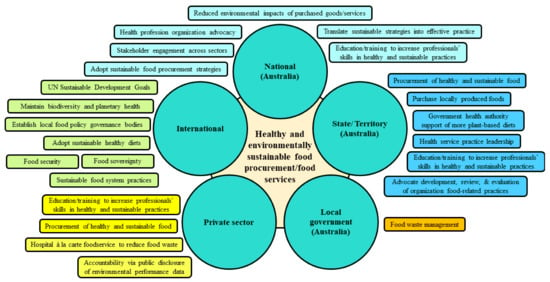
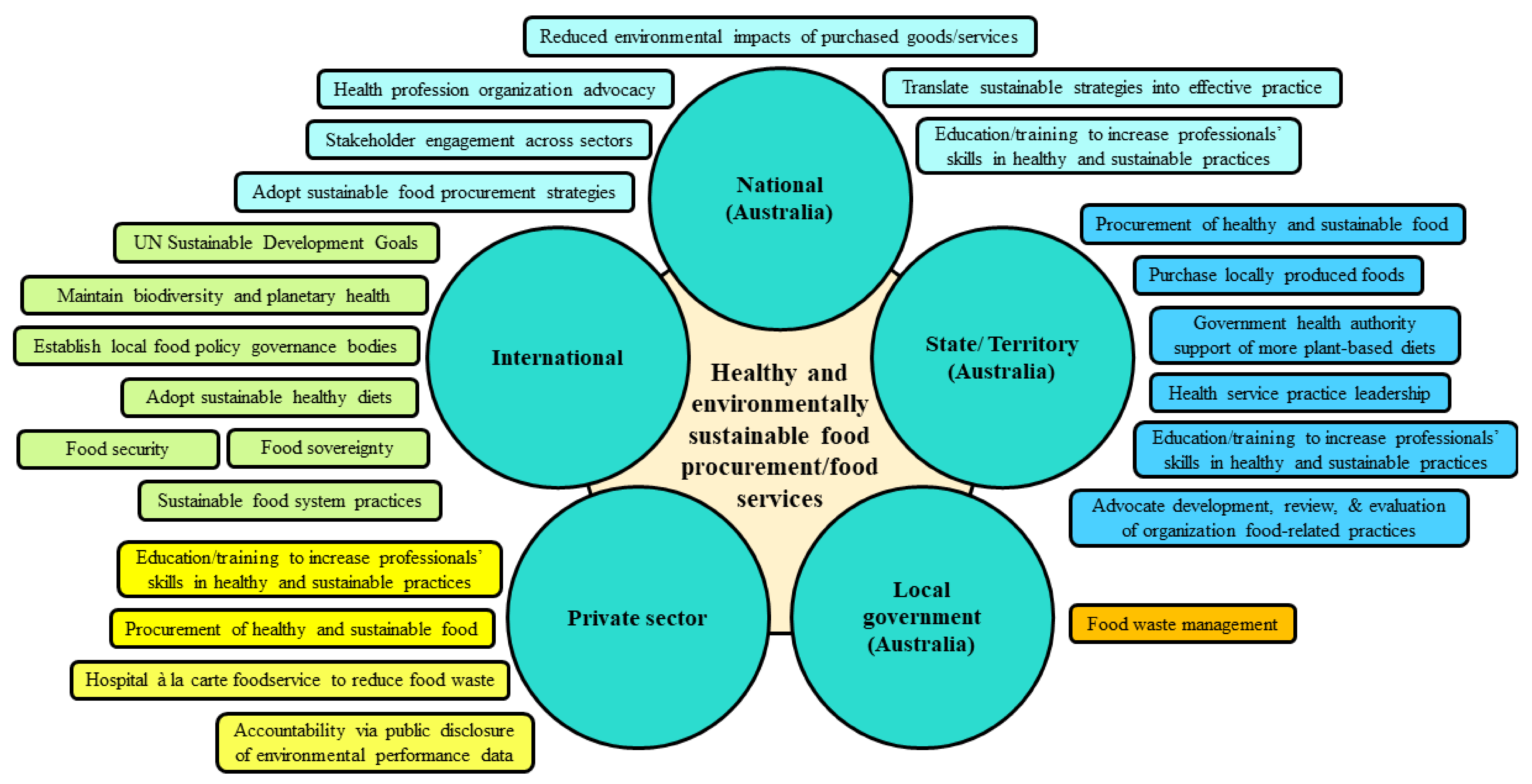
Supplementary Material S2 (see Supplementary Materials) shows the flow of literature through the identification, eligibility, and inclusion screening steps to identify the major authoritative reports and/or guidelines relating to healthy and environmentally sustainable food procurement and foodservice in aged care and healthcare services. After removing n = 3 duplicates, screening was undertaken of n = 171 full text publications, yielding n = 17 relevant publications. The scope of intended implementation of recommendations/guidelines described in these publications were as follows: n = 4 international [17,18,19,20], n = 5 national (Australia) [21,22,23,24,25], n = 4 State or Territory [26,27,28,29], n = 1 local government (local council) [30], and n = 3 private sector [31,32,33]. Figure 1 shows a graphic summary of key recommendations/guidelines from the relevant authoritative publications identified, with greater detail presented in Table A1 (Appendix A). Details including the publication’s purpose, region of focus, and setting targets were also summarized.
Figure 1.
Graphic synthesis of key guidelines and/or recommendations drawn from major authoritative reports/guidelines about healthy and environmentally sustainable food procurement and foodservice in healthcare and aged care services.
Multiple sectors (international, national, state, local, and private) have consistently identified a need to unite healthfulness and environmental sustainability in food policy and initiatives. For example, the Food and Agriculture Organization of the UN (FAO) and WHO have led the development of recommendations and guidance at the international level [17,18,19,20]. The guiding principles of the ‘Sustainable Healthy Diets’ goals define sustainable diets as dietary patterns that promote a person’s health and wellbeing in all dimensions, have low environmental burden and effect, are safe, readily accessible, affordable, and equitable, and culturally acceptable [19]. In 2021, the WHO [20] created an action framework to support the development and implementation of food procurement and related service policies for a healthy diet. The framework details methods to develop and implement a healthy public food procurement and service policy, and provides guidance in assessing compliance with and evaluating the effectiveness of such policy [20]. The framework also links with the UN’s Sustainable Development Goals described above [1,20], and incorporates sustainable action via availability of food produced locally and sustainably, and ensuring sustainable purchasing of local or seasonal food [20].
Five publications recommending the adoption of healthy and environmentally sustainable food procurement and foodservice at the national (Australia) level were identified [21,22,23,24,25]. The Australian Commonwealth Department of Agriculture, Water and the Environment released a Sustainable Procurement Guide in 2020 [22]. Governing agencies are encouraged to adopt environmentally sustainable practices, including local food procurement and foodservice waste reduction [22].
The Climate and Health Alliance submission to the 2019 Climate Health Western Australia (WA) Inquiry encouraged the uptake of a range of sustainable practices in healthcare services [26]. For example, sourcing low-emissions foods for hospitals and healthcare services; supporting and encouraging uptake of a more plant-based diet; and promoting consumption of a sustainable and healthy diet. Further, healthy eating and environmentally sustainable practices can be supported by hospitals and healthcare services through food procurement and demonstrated leadership and prioritizing the purchase of locally produced foods (incentivizing local farmers to adopt low-emissions/carbon-neutral practices by harnessing healthcare sector buying power) [26]. A subsequent report stated that the Climate Health WA Inquiry found a number of healthcare service providers had begun to build sustainability practices into their procurement processes, but identified the need to provide more education and training to staff around why sustainable procurement is important and how it can be achieved [29].
The Dietitians Association of Australia encourages dietitians in all roles across healthcare services to adopt environmentally sustainable practices in the Food Systems and Environmental Sustainability Role Statement [25]. The Statement highlights dietetics health professionals as having a crucial role to play in promoting healthy and environmentally sustainable practices, regardless of role or level of experience. For example, foodservice dietitians/managers could incorporate food/water systems principles into procedures; determine training needs to build environmental sustainability capacity amongst staff to ensure sustainable practices are adopted; focus on local food procurement policy development, implementation, monitoring; and implement food waste minimization strategies. Tertiary educators of dietetics students could integrate environmental sustainability and food systems education into the curriculum across all areas of dietetic practice [25]. Similar guidance and recommendations promoting the adoption of healthy and environmentally sustainable food procurement and foodservice practices were identified at state [26,27,28,29], local [30], and private sector [31,32,33] levels (see Table A1 for full summary).
Supplementary Material S3 (see Supplementary Materials) shows the flow of publications arising from two searches relating to the second research question. In the first part, a Google search yielded n = 3190 hits, with the first n = 100 hits screened once n = 6 duplicates were removed. No additional pertinent literature was identified (beyond overlapping literature identified in the following Google Scholar search), and consequently the remaining screening of the Google search yield was discontinued. In the second part, Google Scholar was searched for relevant literature. A total of n = 445 records remained after 11 duplicates were removed. Screening of titles/abstracts identified n = 83 potentially relevant publications. Of these, n = 20 relevant publications arose from full text screening. Among the 20 studies identified, n = 10 examined food procurement/food service research and n = 11 examined education/training (one study explored foodservice and training).
Publication details, funding body type, and summarized findings from the relevant studies exploring healthy and environmentally sustainable practices in food procurement and foodservice research in healthcare and aged care services are presented in Table 1. Research studies investigating healthy and environmentally sustainable initiatives focused on food procurement [34,35,36], foodservice [3,37,38,39,40], and both food procurement and foodservice [41,42].
Table 1.
Publication details, funding body type, and findings from literature addressing healthy and environmentally sustainable food procurement and foodservice research in healthcare and aged care services implemented in Australia between 2011 and 2021.
Several best practice healthy and environmentally sustainable food procurement practices identified in healthcare and aged care settings included procuring food locally [34,41,42] and establishing food growing gardens on site [35,36]. Foodservice initiatives to incorporate healthy and environmentally sustainable practices were also identified. These included redesigning menus to increase appropriate vegetarian and vegan options [37], meal ordering closer to mealtime consumption [3,41], and increased mealtime assistance for patients with dexterity issues [3]. Facilities also reduced food packaging and/or increased recycling [38,41], monitoring of food waste [40], and sharing audit results with staff [41]. Food waste management policies were developed [38,39,41,42], and food waste used to produce compost [3]. Finally, hospitals formed sustainability groups in hospitals supported by leadership [37], with engagement with local communities to share successes and learnings around environmental sustainability [36].
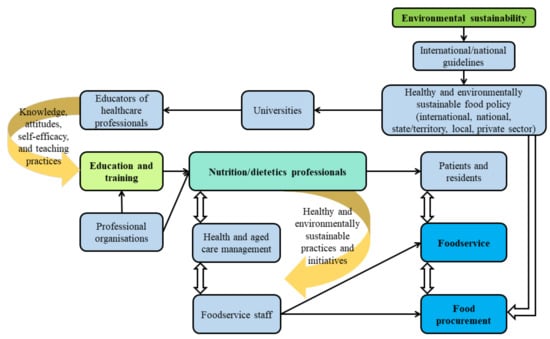
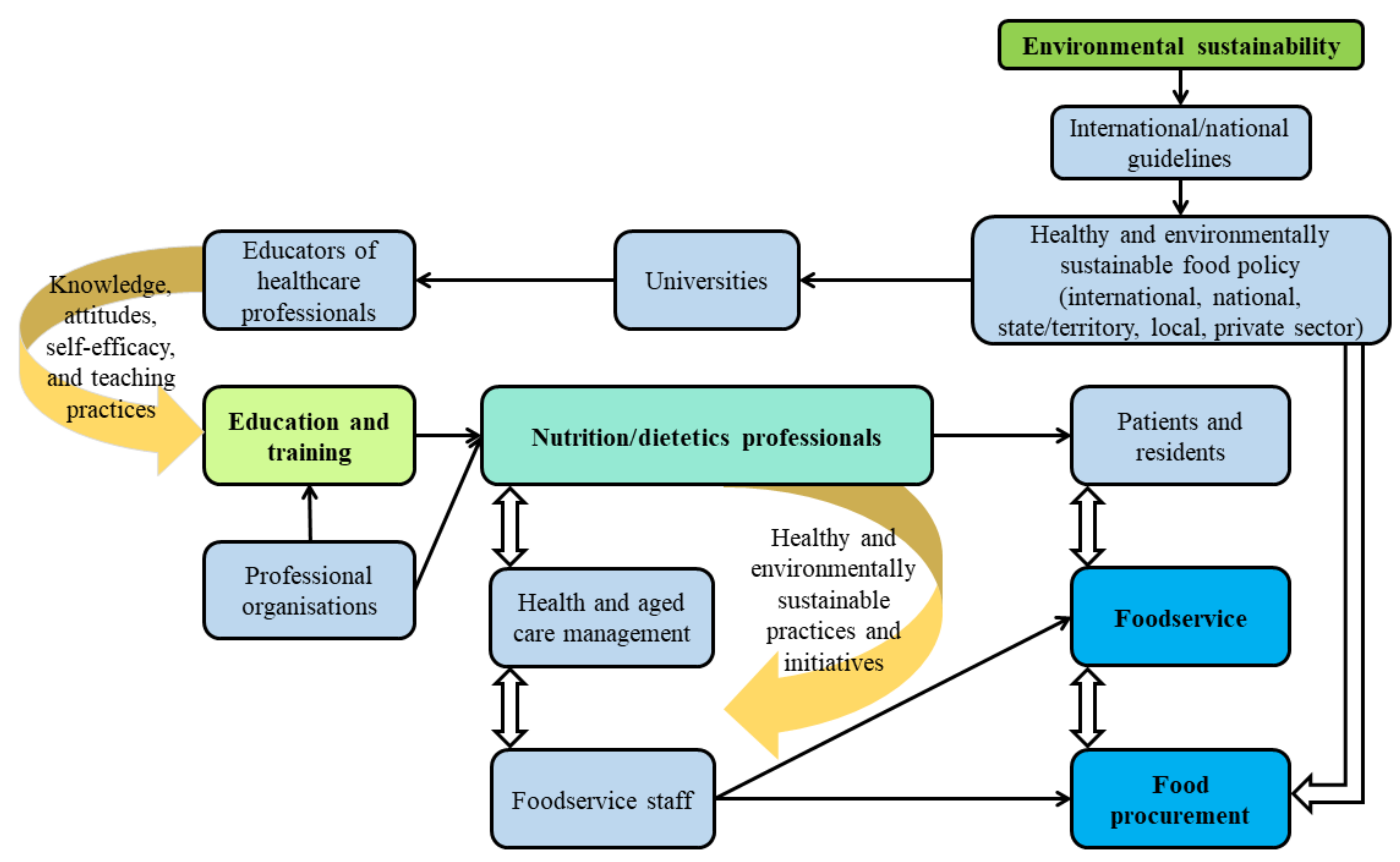
Figure 2 presents a graphic synthesis of findings from studies that explored healthy and environmentally sustainable practices in food procurement and foodservice research, education, and training for nutrition and dietetics students and other healthcare professionals (with detailed data extracted from those studies presented in Table A2 (Appendix B). Four studies analyzed existing Australian curriculum content related to healthy and environmentally sustainable practices in nutrition and dietetics undergraduate/postgraduate courses [12,43,44,45] and found there is a need for related modules, and opportunities exist to strengthen the depth to which sustainable food system modules are taught and assessed [12,43,45], despite a recognized need in a reworking of nutrition and dietetics professionals’ required competencies [44]. For example, in an analysis of the breadth and depth to which sustainable food systems were taught to Australian nutrition and dietetics students, Carino, McCartan and Barbour (2020) identified 130 relevant degrees, among which only 8% included modules about the sustainable food systems [12].
Figure 2.
Graphic synthesis of findings from literature describing research, education and training related to healthy and environmentally sustainable food procurement and foodservice practices and initiatives in aged care and healthcare services in Australia between 2011–2021.
In addition to needing greater incorporation of environmental sustainability into curricula for undergraduate and postgraduate nutrition/dietetics courses, increases in nutrition and dietetics students’ knowledge, skills, and self-efficacy to implement such practices are also required [46,47]. In 2020, Burkhart et al. [46] found that students had varying levels of familiarity with sustainability-related concepts around economic resilience, environmental integrity, social development, and cross-cutting issues. Most (82%) students thought sustainability was very important in general, with almost two-thirds (63%) recognizing sustainability was specifically important for professional practice [46].
Early and mid-career nutrition/dietetics professionals who are working in and managing food procurement and foodservice roles require upskilling and bolstered confidence to implement state-of-science practices to ensure Australia’s health services and aged care facilities adopt recommended actions. Four studies explored knowledge, skills, and competencies among nutrition and dietetics professionals already practicing in healthcare [48,49,50,51] and tertiary educators’ knowledge and views about teaching healthy and environmentally sustainable practices [49,50]. A recent study by Brand et al. (2021) [48] showed that while most (90%) educators of healthcare professionals had strong content knowledge about sustainable healthcare, fewer felt confident to explain such content (36.9%), or to inspire interest in students about sustainable healthcare practices (44.2%). Further, two thirds of educators felt they did not know how best to teach sustainable healthcare education [48]. Worsley et al. (2014) reported that practicing dietitians were keen to increase their knowledge about the impact of food production systems on nutrient composition, sustainability, food selection, and related issues [51]. Professional development could be accessed by discussion groups and workshops, professional development courses, and online webinars [51]. There were limited mentions of other healthcare professionals engaged in this content.
Examination of funding provided to support the research detailed in the n = 20 studies summarized in Table A1 (Appendix A) and Table A2 (Appendix B) showed that six studies did not provide any information about funding. Of the remaining n = 14 studies, three specifically stated that they had not received any funding. The Australian Commonwealth supported one study, the State Government of Victoria funded two studies, one study was supported by a non-Government organization, and the remaining six studies were supported by the private sector (University, n = 5; Meat and Livestock Australia, n = 1).
4. Discussion
The present scoping review identified several publications detailing the need to incorporate healthy and environmentally sustainable food procurement and foodservice practices in healthcare and aged care services, across international, national (Australia), state/territory, local and private sectors. The adoption of healthy and environmentally sustainable dietary patterns are important for addressing UN Sustainable Development goals [1]. There is recognition at the international and national level that nutrition and dietetics professionals bridge the gap between healthy diets and environmentally sustainable food procurement and foodservice.
Studies identified in this review also showed that while healthy and environmentally sustainable practices have begun to be successfully integrated into healthcare and aged care services, particularly around procurement and foodservice, there remains a disconnect between international and local policy documents and the implementation of strategies into practice in these key settings. Multiple barriers were described, for example, limited staff knowledge and confidence to advocate and implement healthy and sustainable practices [50,51]. Similarly, tertiary educators of nutrition and dietetics students lacked confidence to incorporate environmental sustainability into the curriculum [48]. Therefore unsurprisingly, several studies demonstrated that nutrition and dietetics education and training tertiary and professional development courses lacked integrated sustainability training [12]. This void needs to be addressed by curricula reforms to bring emerging and current nutrition and dietetics professionals’ practice in line with international recommendations, particularly in the Australian context.
There were notable gaps in the evidence presented in Table A2 (Appendix B), suggesting that implementation of sustainable foodservice initiatives is occurring more quickly in the healthcare rather than the aged care sector. Given the attention delivered by the Royal Commission into Aged Care Quality and Safety [10], and the current implementation of new funding commitments [52], it is evident that further research into monitoring and auditing healthy and environmentally sustainable practices is needed in this sector.
As a result of these findings, there are multiple implications for academics and practitioners alike. For academics, it is challenging for the development of recommendations to change practice both in the health and aged care sectors if the workforce is not appropriately skilled. There is critical need for curriculum change; the need for our future workforce to be trained in food and nutrition sustainability initiatives has never been more crucial. For current practitioners, engagement in the sustainability narrative is essential for impactful practice in both sectors. Professional organizations and specialized training opportunities may be able to support ongoing professional education of the pre-existing workforce to ensure that clinicians are able to deliver contemporary practice.
Although not specified as a research question, we acknowledge that First Nations Australians have used sustainable initiatives to manage the land for many thousands of years. The involvement of Indigenous Australians to the literature regarding sustainable foodservice systems in hospitals and aged care services was noticeably absent.
Two issues that were not identified within this scoping review but which may inform development of a future strategy and policy for implementing healthy and sustainable food systems in aged and health care are organic farming and local food production and procurement.
Organic farming generally considers farming practices with an emphasis on long term sustainability. Organic growers in Australia have been described as “a heterogenous cluster of organizations and individuals whose beliefs are at times congruent, at other times divergent” [53]. One of the reasons for the relatively underdeveloped organic farming sector is the reduced regulatory framework in Australia as compared with other countries [54].
Local food purchasing practices have been established in multiple institutions internationally. “Local food” typically relates to production, processing, and raw material [55]. In Australia, there is a growing awareness of the need to support local food systems with some local and state governments now advocating for reform to mandate local food production and procurement [56,57,58]. Both approaches warrant further consideration for implementation of sustainable practices across these sectors.
This review also identified that limited funding support has been provided to Australian researchers and educators to implement and evaluate environmentally sustainable initiatives in hospital and aged care foodservices. With considerable investment for Tier 1 national grants programs (including Australian Research Council, National Health and Medical Research Council, and Medical Research Future Fund), this subject has not previously been viewed as a priority for funded research. This has follow-on effects with specialist training available for future leaders in the field.
Several strengths and limitations to this review are acknowledged. Database search strategies were untaken using broad search terms to ensure that eligible studies were included. The inclusion of English language studies only is recognized as a limitation, as is the reliance on publicly accessible databases (Google and Google Scholar) rather than scientific databases. This was unavoidable to the rapid nature of this review.
5. Conclusions
There is a growing need to implement healthy and sustainable food systems in the healthcare and aged care services sectors in Australia. This scoping review identified a gap that exists between international and Australian policy recommendations on healthy and environmentally sustainable foodservices and their translation into practice in these sectors. We also identified limited funding for research and training on this topic, and access to education and training remains under-resourced. There is an urgent need to resolve these deficits if Australia is to close the gap to other countries in implementing food system sustainability in these sectors.
Supplementary Materials
The following are available online at https://www.mdpi.com/article/10.3390/su132011207/s1, Supplementary Material S1: Scoping review literature search strategies; Supplementary Material S2: Flow diagram of publication screening to identify major authoritative reports/guidelines related to healthy and environmentally sustainable food procurement and foodservice in aged care and healthcare services; and Supplementary Material S3: Flow diagram of publication screening to identify literature describing healthy and environmentally sustainable food procurement and foodservice research and training initiatives in aged care and healthcare services implemented in Australia between 2011–2021.
Author Contributions
Conceptualization, L.D.S., J.P. and M.L.; methodology, L.D.S., J.P. and M.L.; formal analysis, L.D.S.; data curation, L.D.S.; writing—original draft preparation, L.D.S., J.P. and M.L.; writing—review and editing, L.D.S., J.P. and M.L. All authors have read and agreed to the published version of the manuscript.
Funding
This research received funding from Institute for Physical Activity and Nutrition (IPAN), School of Exercise and Nutrition Sciences, Deakin University.
Institutional Review Board Statement
Not applicable.
Informed Consent Statement
Not applicable.
Data Availability Statement
Not applicable.
Conflicts of Interest
The authors declare no conflict of interest.
Appendix A
Table A1.
Summary of major authoritative reports/guidelines about healthy and environmentally sustainable food procurement and foodservice in healthcare and aged care services.
Appendix B
Table A2.
Publication details, funding body type, and findings from literature addressing healthy and environmentally sustainable food procurement and foodservice training in healthcare and aged care services implemented in Australia between 2011 and 2021.
References
- United Nations General Assembly. Transforming our World: The 2030 Agenda for Sustainable Development; A/RES/70/1; United Nations: New York, NY, USA, 2015. [Google Scholar]
- Willett, W.; Rockström, J.; Loken, B.; Springmann, M.; Lang, T.; Vermeulen, S.; Garnett, T.; Tilman, D.; DeClerck, F.; Wood, A.; et al. Food in the Anthropocene: The EAT—Lancet Commission on Healthy Diets from Sustainable Food Systems. Lancet 2019, 393, 447–492. [Google Scholar] [CrossRef] [Scilit]
- Carino, S.; Porter, J.; Pour, S.M.; Collins, J. Environmental Sustainability of Hospital Foodservices across the Food Supply Chain: A Systematic Review. J. Acad. Nutr. Diet. 2020, 120, 825–873. [Google Scholar] [CrossRef] [Scilit] [PubMed]
- Barrington, V.; Maunder, K.; Kelaart, A. Engaging the Patient: Improving Dietary Intake and Meal Experience through Bedside Terminal Meal Ordering for Oncology Patients. J. Hum. Nutr. Diet. 2018, 31, 803–809. [Google Scholar] [CrossRef] [Scilit] [PubMed]
- Farrer, O.; Olsen, C.; Mousley, K.; Teo, E. Does Presentation of Smooth Pureed Meals Improve Patients Consumption in an Acute Care Setting: A Pilot Study. Nutr. Diet. 2015, 73, 405–409. [Google Scholar] [CrossRef] [Scilit]
- McCray, S.; Maunder, K.; Krikowa, R.; MacKenzie-Shalders, K. Room Service Improves Nutritional Intake and Increases Patient Satisfaction While Decreasing Food Waste and Cost. J. Acad. Nutr. Diet. 2018, 118, 284–293. [Google Scholar] [CrossRef] [Scilit]
- McCray, S.; Maunder, K.; Norris, R.; Moir, J.; MacKenzie-Shalders, K. Bedside Menu Ordering System Increases Energy and Protein Intake while Decreasing Plate Waste and Food Costs in Hospital Patients. Clin. Nutr. ESPEN 2018, 26, 66–71. [Google Scholar] [CrossRef] [Scilit]
- McCray, S.; Maunder, K.; Barsha, L.; MacKenzie-Shalders, K. Room Service in a Public Hospital Improves Nutritional Intake and Increases Patient Satisfaction while Decreasing Food Waste and Cost. J. Hum. Nutr. Diet. 2018, 31, 734–741. [Google Scholar] [CrossRef] [Scilit]
- Kristiana, R.; Nair, J.; Anda, M.; Mathew, K. Monitoring of the Process of Composting of Kitchen Waste in an Institutional Scale Worm Farm. Water Sci. Technol. 2005, 51, 171–177. [Google Scholar] [CrossRef] [Scilit]
- Commonwealth of Australia. Royal Commission into Aged Care Quality and Safety. Final Report: Care, Dignity and Respect; Commonwealth of Australia: Canberra, ACT, Australia, 2019. [Google Scholar]
- Sossen, L.; Bonham, M.; Porter, J. An Investigation of Recommended Serve Food Portions and Attaining Energy and Protein Requirements in Older Adults Living in Residential Care. J. Hum. Nutr. Diet. 2021, 34, 374–383. [Google Scholar] [CrossRef] [Scilit]
- Carino, S.; McCartan, J.; Barbour, L. The Emerging Landscape for Sustainable Food System Education: Mapping Current Higher Education Opportunities for Australia’s Future Food and Nutrition Workforce. J. Hunger. Environ. Nutr. 2020, 15, 273–294. [Google Scholar] [CrossRef] [Scilit]
- Arksey, H.; O’Malley, L. Scoping Studies: Towards a Methodological Framework. Int. J. Soc. Res. Methodol. 2005, 8, 19–32. [Google Scholar] [CrossRef] [Scilit]
- Peters, M.D.; Godfrey, C.M.; Khalil, H.; McInerney, P.; Parker, D.; Soares, C.B. Guidance for Conducting Systematic Scoping Reviews. Int. J. Evid.-Based Health 2015, 13, 141–146. [Google Scholar] [CrossRef] [Scilit]
- Grant, M.J.; Booth, A. A typology of reviews: An Analysis of 14 Review Types and Associated Methodologies. Heal. Inf. Libr. J. 2009, 26, 91–108. [Google Scholar] [CrossRef] [Scilit]
- Tricco, A.C.; Lillie, E.; Zarin, W.; O’Brien, K.K.; Colquhoun, H.; Levac, D.; Moher, D.; Peters, M.; Horsley, T.; Weeks, L.; et al. PRISMA Extension for Scoping Reviews (PRISMA-ScR): Checklist and Explanation. Ann. Intern. Med. 2018, 169, 467–473. [Google Scholar] [CrossRef] [Scilit]
- Food and Agriculture Organization of the United Nations. Greening the Economy with Agriculture; Food and Agriculture; Organization: Rome, Italy, 2012. [Google Scholar]
- Food and Agriculture Organization of the United Nations; World Health Organization. Second International Conference on Nutrition: Report of the Joint FAO/WHO Secretariat on the Conference; Food and Agriculture Organization and World Health Organization: Rome, Italy, 2014. [Google Scholar]
- Food and Agriculture Organization of the United Nations; World Health Organization. Sustainable Healthy Diets—Guiding Principles; Food and Agriculture Organization of the United Nations, and World Health Organization: Rome, Italy, 2019. [Google Scholar]
- World Health Organization. Action Framework for Developing and Implementing Public Food Procurement and Service Policies for a Healthy Diet; World Health Organization: Geneva, Switzerland, 2021. [Google Scholar]
- Backholer, K.; Candy, S.; Farahnaky, A.; Garvey, J.; Lewis, J.; Malek, L.; Reineck, P.; Schumacher, T.; Strugnell, C.; Webster, J.; et al. The Food Environment. Rethinking Food and Nutrition Science; Australian Academy of Science: Canberra, ACT, Australia, 2017. [Google Scholar]
- Department of Agriculture, Water and the Environment, Commonwealth of Australia. Sustainable Procurement Guide; Department of Agriculture, Water and the Environment, Commonwealth of Australia: Canberra, ACT, Australia, 2020. [Google Scholar]
- Dietitians Association of Australia. National Competency Standards for Dietitians in Australia; DAA: Deakin, ACT, Australia, 2015. [Google Scholar]
- Dietitians Association of Australia. DAA constitution; DAA: Deakin, ACT, Australia, 2020. [Google Scholar]
- Dietitians Association of Australia. Food Systems and Environmental Sustainability Role Statement; Dietitians Association of Australia: Deakin, ACT, Australia, 2020. [Google Scholar]
- Climate and Health Alliance. Submission to the 2019 Climate Health WA Inquiry; Climate and Health Alliance: Melbourne, VIC, Australia, 2019. [Google Scholar]
- Cox, R.; Dunbabin, J.; Galvin, L.; Turner, K.; Seal, J.; Jones, H.; Food and Nutrition Working Group. Engagement and Action Trial for the Tasmanian Food and Nutrition Strategy; Tasmanian Government: Hobart, TAS, Australia, 2020. [Google Scholar]
- Queensland Health, State of Queensland Government. An Evidence-Based Demand Management Toolkit for Dietetic Services: Framework for Effective and Efficient Dietetic Services (FEEDS); Queensland Health: Brisbane, QLD, Australia, 2017. [Google Scholar]
- Weeramanthri, T.S.; Joyce, S.; Bowman, F.; Bangor-Jones, R.; Law, C. Climate Health WA Inquiry: Final Report; Department of Health, Government of Western Australia: Perth, WA, Australia, 2020. [Google Scholar]
- City of Ballarat. Council Meeting Agenda, 15th May 2019; City of Ballarat: Ballarat, VIC, Australia, 2019. [Google Scholar]
- Healthcote Health. 2019 Annual Report of Operations; Healthcote Health: Healthcote, VIC, Australia, 2019. [Google Scholar]
- Hospital+Healthcare. Meet Sally McCray, an Outlier in Dietetics; Hospital+Healthcare: North Ryde, NSW, Australia, 2017. [Google Scholar]
- Senior, N. Creating a Sustainable Foodservice; Hospital+Health: North Ryde, NSW, Australia, 2018. [Google Scholar]
- Caraher, M.; Carey, R.; McConell, K.; Lawrence, M. Food Policy Development in the Australian State of Victoria: A Case Study of the Food Alliance. Int. Plan. Stud. 2013, 18, 78–95. [Google Scholar] [CrossRef] [Scilit]
- Patrick, R.; Capetola, T. It’s Here! Are We Ready? Five Case Studies of Health Promotion Practices that Address Climate Change from within Victorian Health Care Settings. Health Promot. J. Aust. 2011, 22, 61–67. [Google Scholar] [CrossRef] [Scilit]
- Patrick, R.; Capetola, T.; Townsend, M.; Hanna, L. Incorporating Sustainability into Community-Based Healthcare Practice. EcoHealth 2011, 8, 277–289. [Google Scholar] [CrossRef] [Scilit]
- Charlesworth, K.; Stewart, G.; Sainsbury, P. Addressing the Carbon Footprint of Health Organisations: Eight Lessons for Imple-Mentation. Public Health Res. Pract. 2018, 28, e2841830. [Google Scholar] [CrossRef] [Scilit]
- Collins, J. Eating Green? A Cross Sectional Study of Waste, Its Cost and Waste Disposal Practices in Hospital Food Services; Eastern Health: Box Hill, VIC, Australia, 2019. [Google Scholar]
- Porter, J.; Collins, J. A Qualitative Study Exploring Hospital Food Waste from the Patient Perspective. J. Nutr. Educ. Behav. 2021, 53, 410–417. [Google Scholar] [CrossRef] [Scilit]
- Cook, N.; Collins, J.; Goodwin, D.; Porter, J. A Systematic Review of Food Waste Audit Methods in Hospital Foodservices: Development of a Consensus Pathway Food Waste Audit Tool. J. Hum. Nutr. Diet. 2021. [Google Scholar] [CrossRef] [Scilit]
- Carino, S.; Collins, J.; Malekpour, S.; Porter, J. Environmentally Sustainable Hospital Foodservices: Drawing on Staff Perspectives to Guide Change. Sustain. Prod. Consum. 2021, 25, 152–161. [Google Scholar] [CrossRef] [Scilit]
- Clune, S.J.; Lockrey, S. Developing Environmental Sustainability Strategies, the Double Diamond Method of LCA and Design Thinking: A Case Study from Aged Care. J. Clean. Prod. 2014, 85, 67–82. [Google Scholar] [CrossRef] [Scilit]
- Carlsson, L.; Mehta, K.; Pettinger, C. Critical Dietetics and Sustainable Food Systems. In Critical Dietetics and Critical Nutrition Studies; Coveney, J., Booth, S., Eds.; Food Policy: Geneva, Switzerland, 2019; pp. 97–115. [Google Scholar]
- Lawlis, T.; Torres, S.J.; Coates, A.; Slivkoff-Clark, K.; Charlton, K.E.; Sinclair, A.J.; Wood, L.G.; Devine, A. Development of Nutrition Science Competencies for Undergraduate Degrees in Australia. Asia Pac. J. Clin. Nutr. 2019, 28, 166–176. [Google Scholar] [PubMed]
- McLean, M.; Madden, L.; Maxwell, J.; Schwerdtle, P.N.; Richardson, J.; Singleton, J.; MacKenzie-Shalders, K.; Behrens, G.; Cooling, N.; Matthews, R.; et al. Planetary Health: Educating the Current and Future Health Workforce. Springer: Singapore, 2020; pp. 1–30. [Google Scholar] [CrossRef] [Scilit]
- Burkhart, S.; Verdonck, M.; Ashford, T.; Maher, J. Sustainability: Nutrition and Dietetic Students’ Perceptions. Sustainability 2020, 12, 1072. [Google Scholar] [CrossRef] [Scilit]
- McCormack, J.; Noble, C.; Ross, L.; Cruickshank, D.; Bialocerkowski, A. How Do Foodservice Dietitians and Dietetic Students Learn about Environmental Sustainability? A Scoping Review Protocol. BMJ Open 2019, 9, e032355. [Google Scholar] [CrossRef] [Scilit]
- Brand, G.; Collins, J.; Bedi, G.; Bonnamy, J.; Barbour, L.; Ilangakoon, C.; Wotherspoon, R.; Simmons, M.; Kim, M.; Schwerdtle, P.N. I Teach it because it is the Biggest Threat to Health: Integrating Sustainable Healthcare into Health Professions Education. Med. Teach. 2021, 43, 325–333. [Google Scholar] [CrossRef] [Scilit]
- Charlton, K. Food Security, Food Systems and Food Sovereignty in the 21st Century: A New Paradigm Required to Meet Sustainable Development Goals. Nutr. Diet. 2016, 73, 3–12. [Google Scholar] [CrossRef] [Scilit]
- Dunphy, J.L. Healthcare Professionals’ Perspectives on Environmental Sustainability. Nurs. Ethics 2013, 21, 414–425. [Google Scholar] [CrossRef] [Scilit]
- Worsley, A.; Droulez, V.; Ridley, S.; Wang, W.C. Dietitians’ Interests in Primary Food Production: Opportunities for Greater Involvement in the Promotion of Environmental Sustainability. J. Hunger. Environ. Nutr. 2014, 9, 64–80. [Google Scholar] [CrossRef] [Scilit]
- Commonwealth of Australia. Budget 2021-22. Securing Australia’s Recovery. Guaranteeing the Essential Services; Commonwealth of Australia: Canberra, ACT, Australia, 2021; ISBN 978-1-925832-32-7. [Google Scholar]
- Jones, R. Green Harvest: A History of Organic Farming and Gardening in Australia/Rebecca Jones; CSIRO Publishing: Collingwood, ON, Canada, 2010. [Google Scholar]
- Daugbjerg, C.; Halpin, D. Generating Policy Capacity in Emerging Green Industries: The Development of Organic Farming in Denmark and Australia. J. Environ. Policy Plan. 2010, 12, 141–157. [Google Scholar] [CrossRef] [Scilit]
- Granvik, M.; Joosse, S.; Hunt, A.; Hallberg, I. Confusion and Misunderstanding—Interpretations and Definitions of Local Food. Sustainability 2017, 9, 1981. [Google Scholar] [CrossRef] [Scilit]
- Auckland, S.R.J.; Murray, S.L.; Saunders, C.; King, A.C. Tasmanian Local Food Supply Project; School of Health Sciences, University of Tasmania: Tasmania, Australia, 2015. [Google Scholar]
- Sheridan, J.; Larsen, K.; Carey, R. Melbourne’s Foodbowl: Now and at Seven Million; Victorian Eco Innovation Lab: Melbourne, VIC, Australia, 2015. [Google Scholar]
- Department of Health Victoria. Healthy and High-Quality Food in Public Hospitals and Aged Care Facilities; Department of Health Victoria: Melbourne, VIC, Australia, 2021. [Google Scholar]
- United States Department of Agriculture. Local Food Systems—Concepts, Impacts, and Issues. Economic Research Service Report No. 97; United States Department of Agriculture: Washington, DC, USA, 2010. [Google Scholar]
- Hernández, A.; Olivan, P.; Health Care Without Harm Europe. Gamba, Strategic Procurement in European Healthcare: Selection of Best Practice and Case Studies; Health Care Without Harm Europe: Brussels, Belgium, 2019. [Google Scholar]
- Schwerdtle, P.N.; Maxwell, J.; Horton, G.; Bonnamy, J. 12 Tips for Teaching Environmental Sustainability to Health Professionals. Med. Teach. 2019, 42, 150–155. [Google Scholar] [CrossRef] [Scilit]

Publisher’s Note: MDPI stays neutral with regard to jurisdictional claims in published maps and institutional affiliations. |
© 2021 by the authors. Licensee MDPI, Basel, Switzerland. This article is an open access article distributed under the terms and conditions of the Creative Commons Attribution (CC BY) license (https://creativecommons.org/licenses/by/4.0/).