Water-Enhanced Flux Changes under Dynamic Temperatures in the Vertical Vapor-Phase Diffusive Transport of Volatile Organic Compounds in Near-Surface Soil Environments
 , ,
, , 
Abstract
1. Introduction
2. Materials and Methods
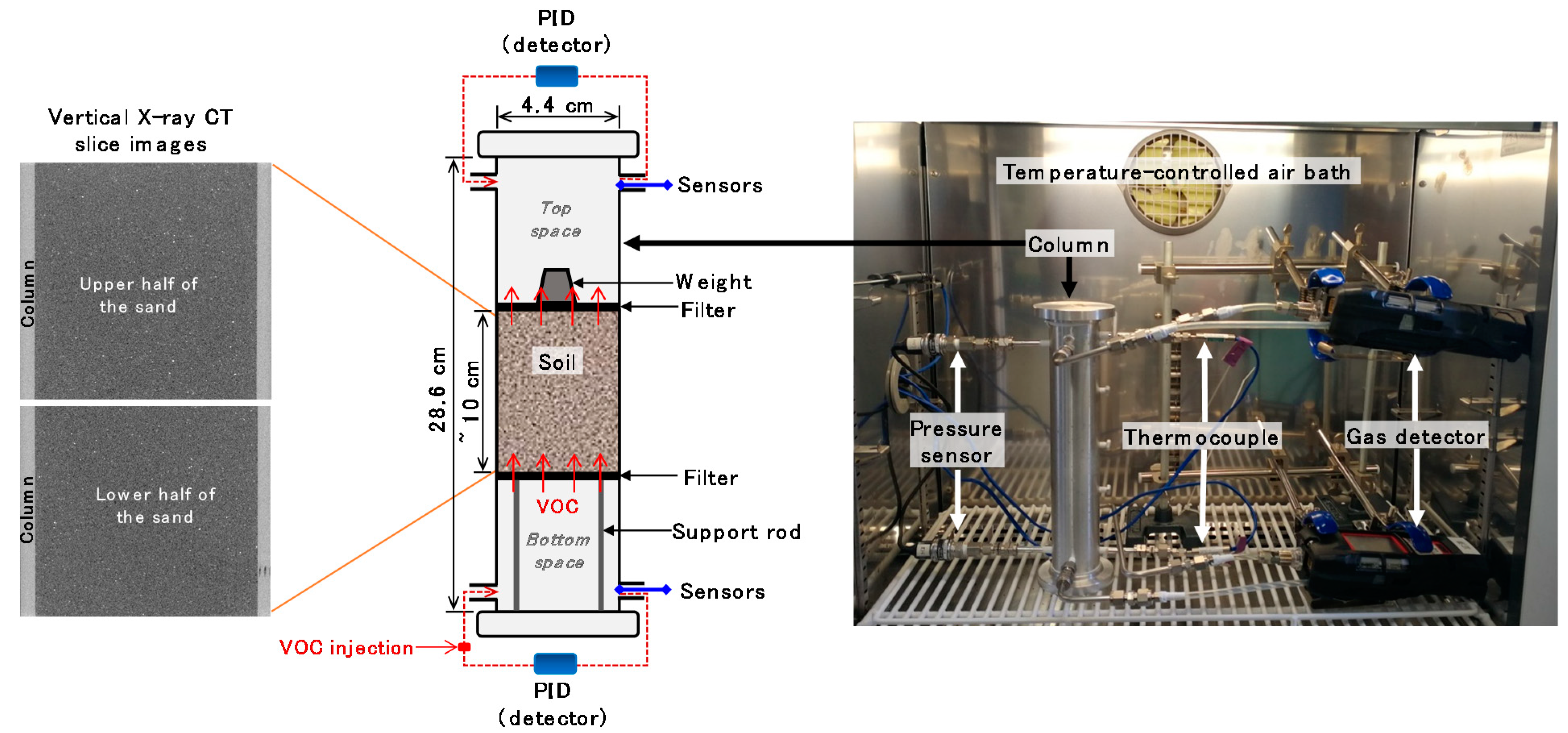
2.1. Experimental System
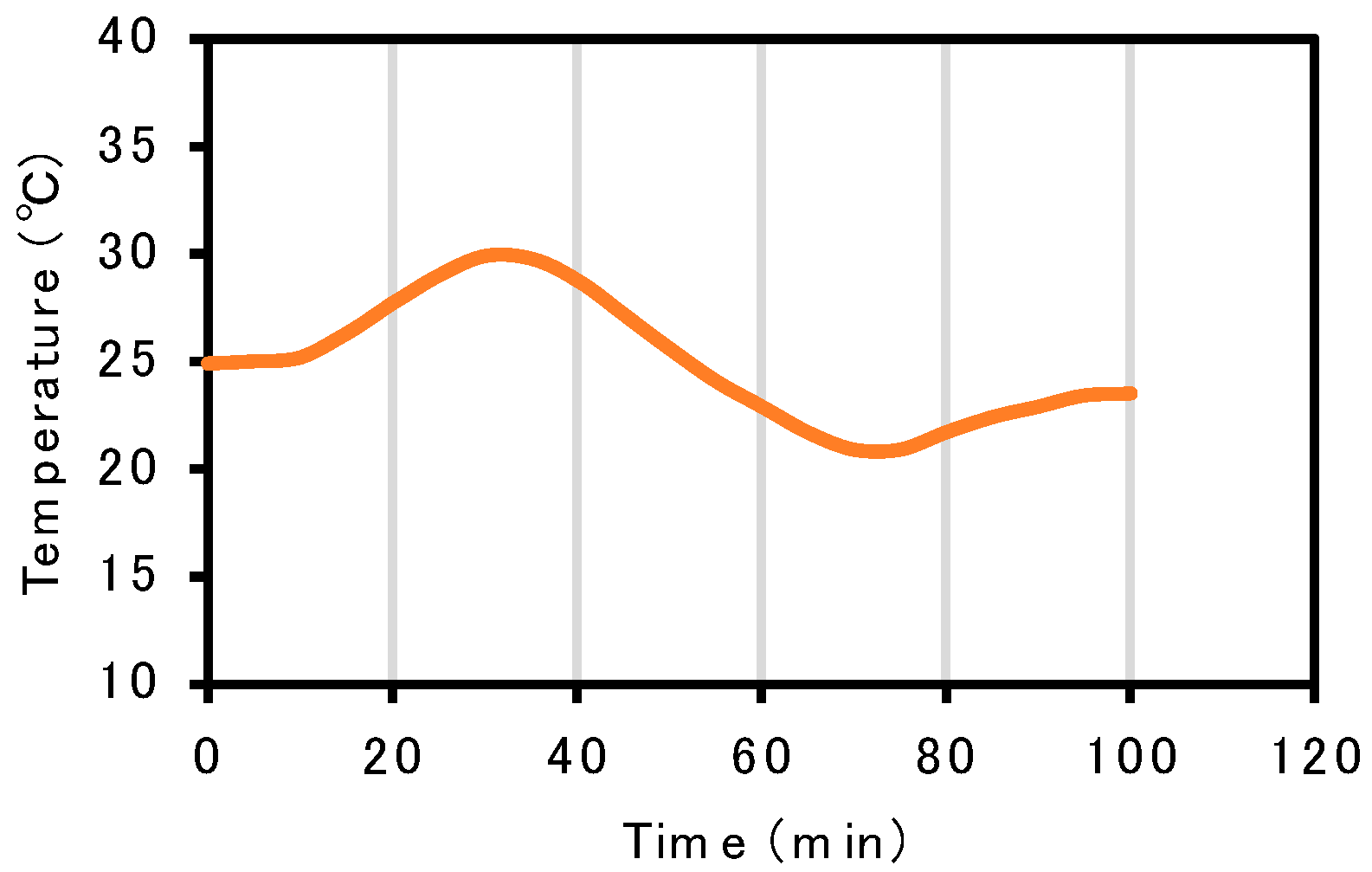
2.2. Experimental Procedures
2.3. Experimental Conditions
3. Results
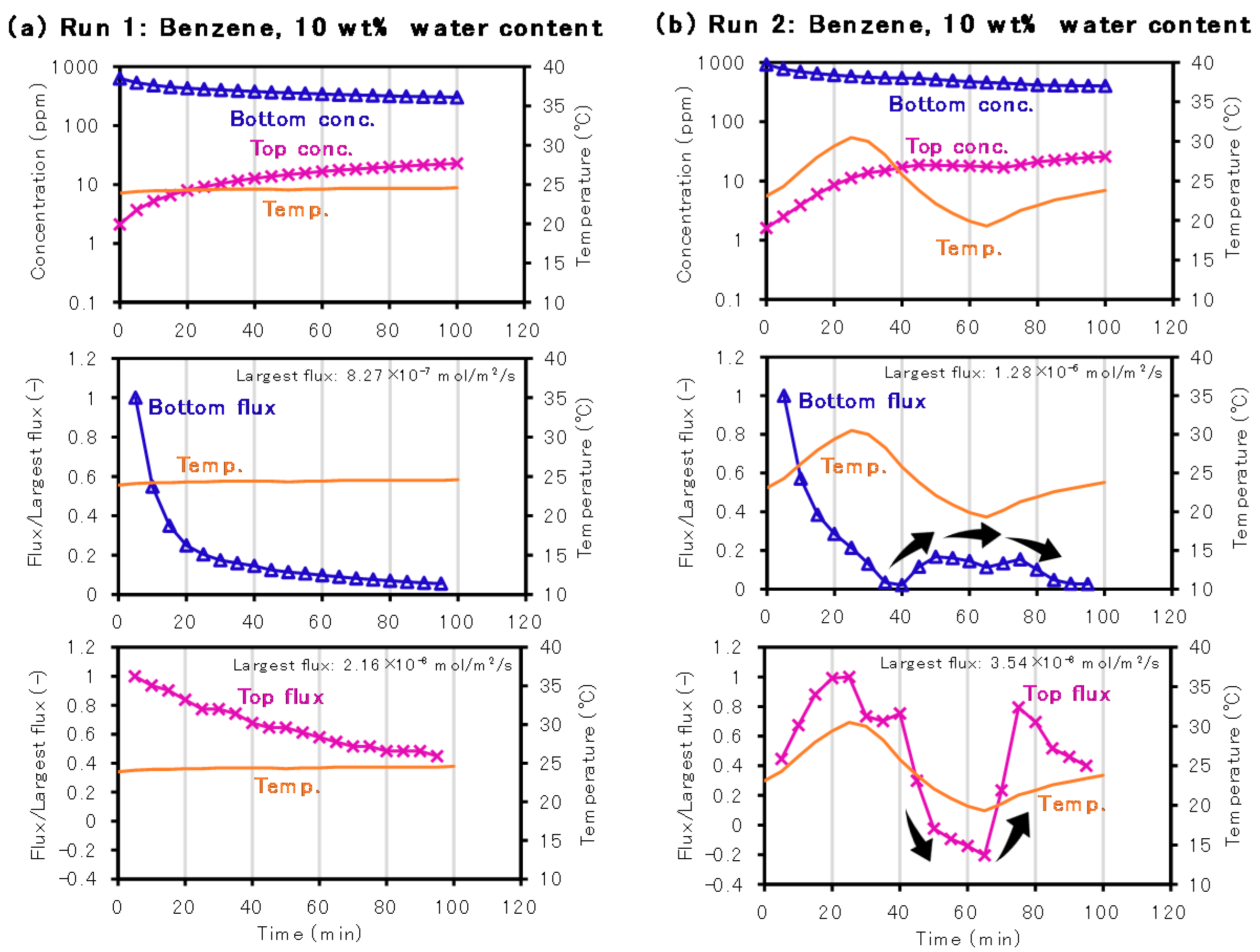
3.1. Larger Flux Changes Under Dynamic Temperatures
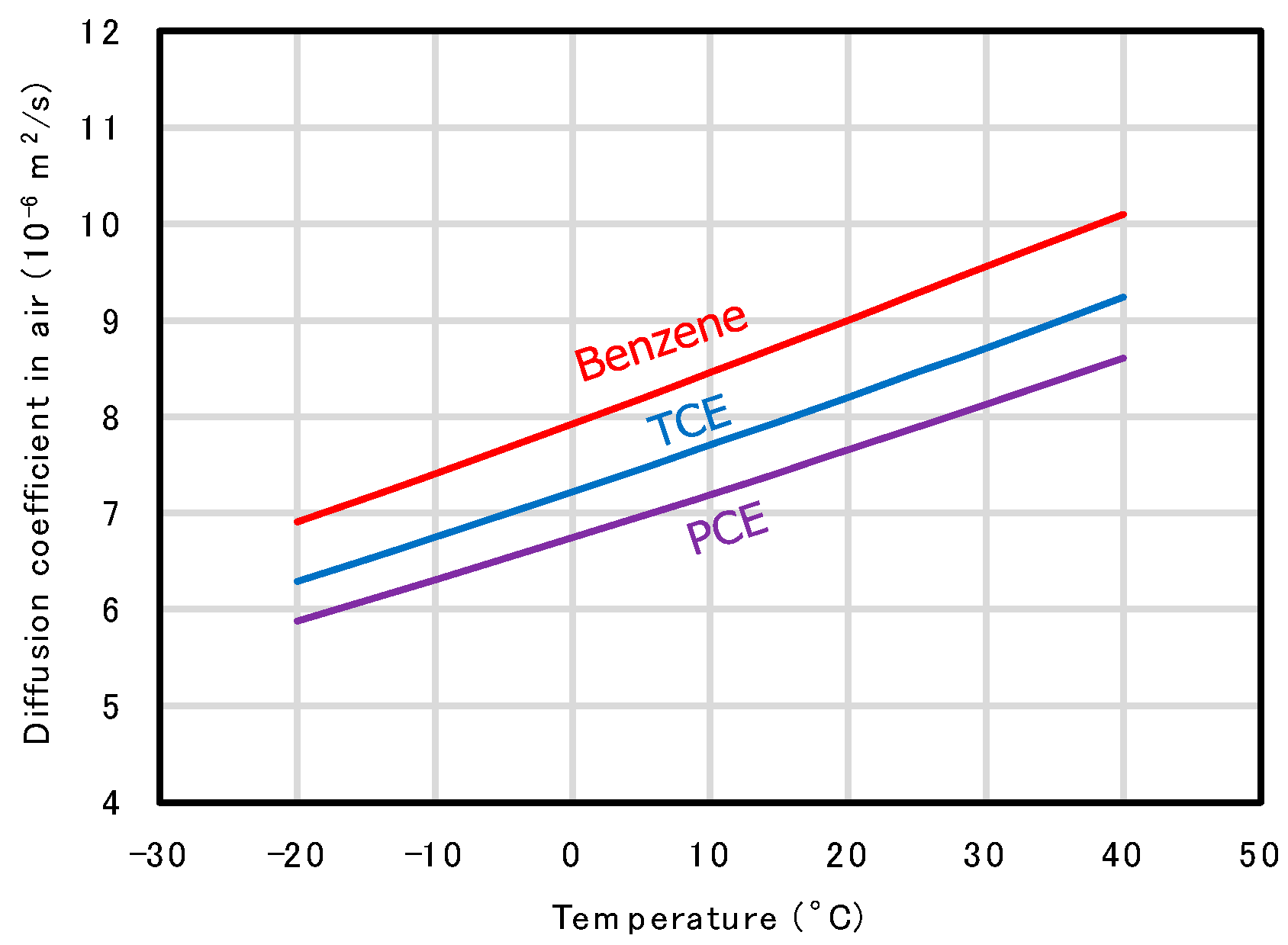
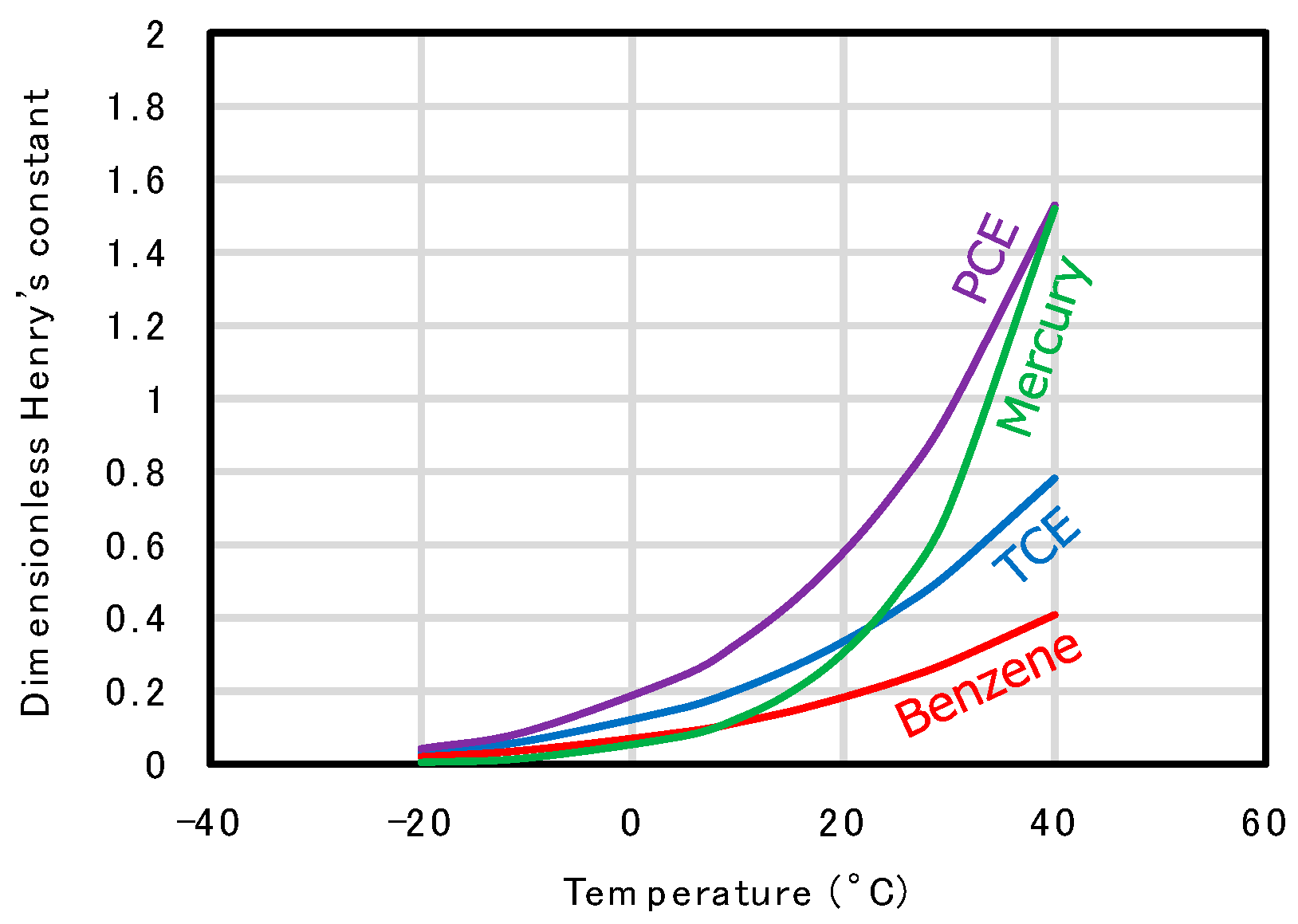
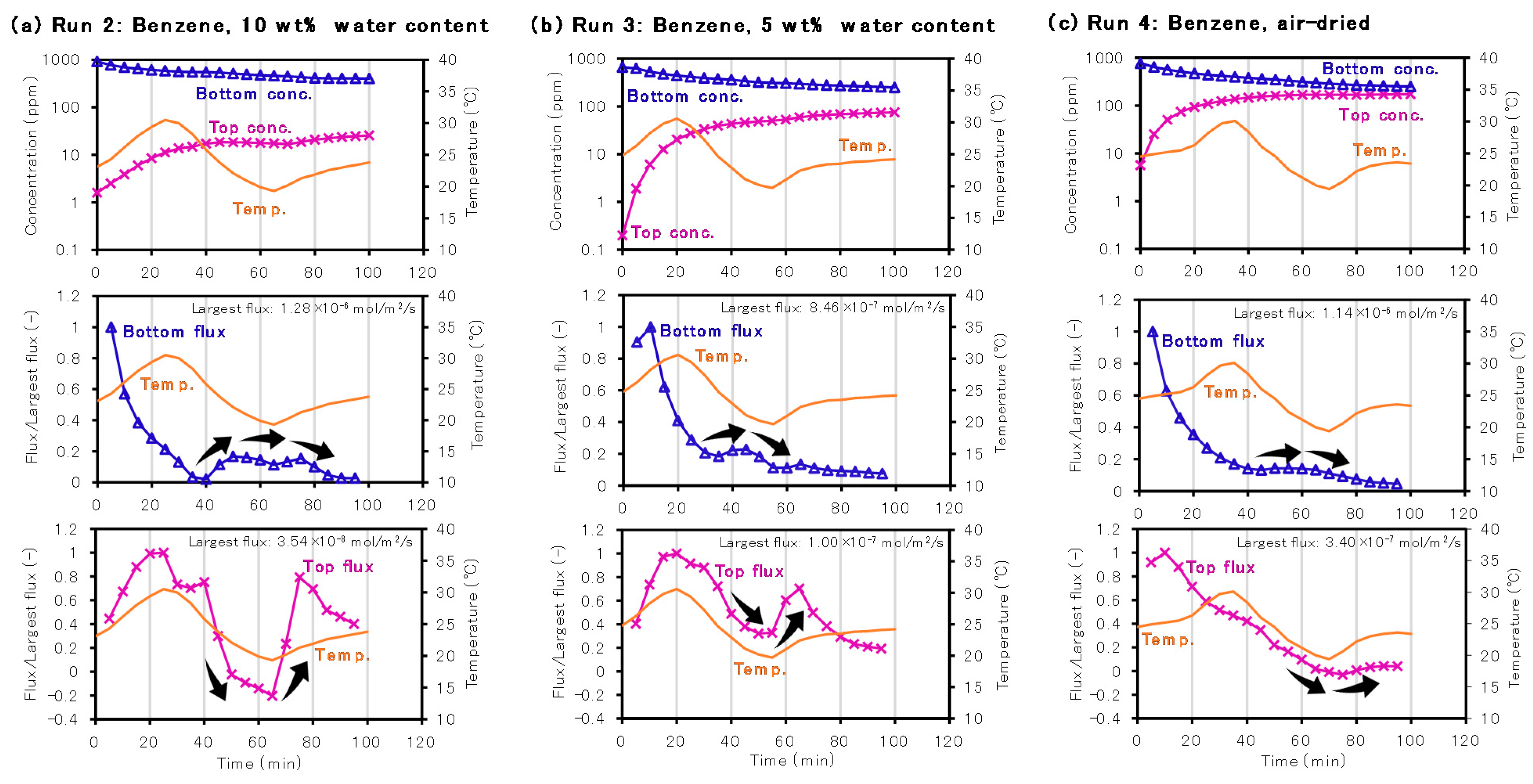
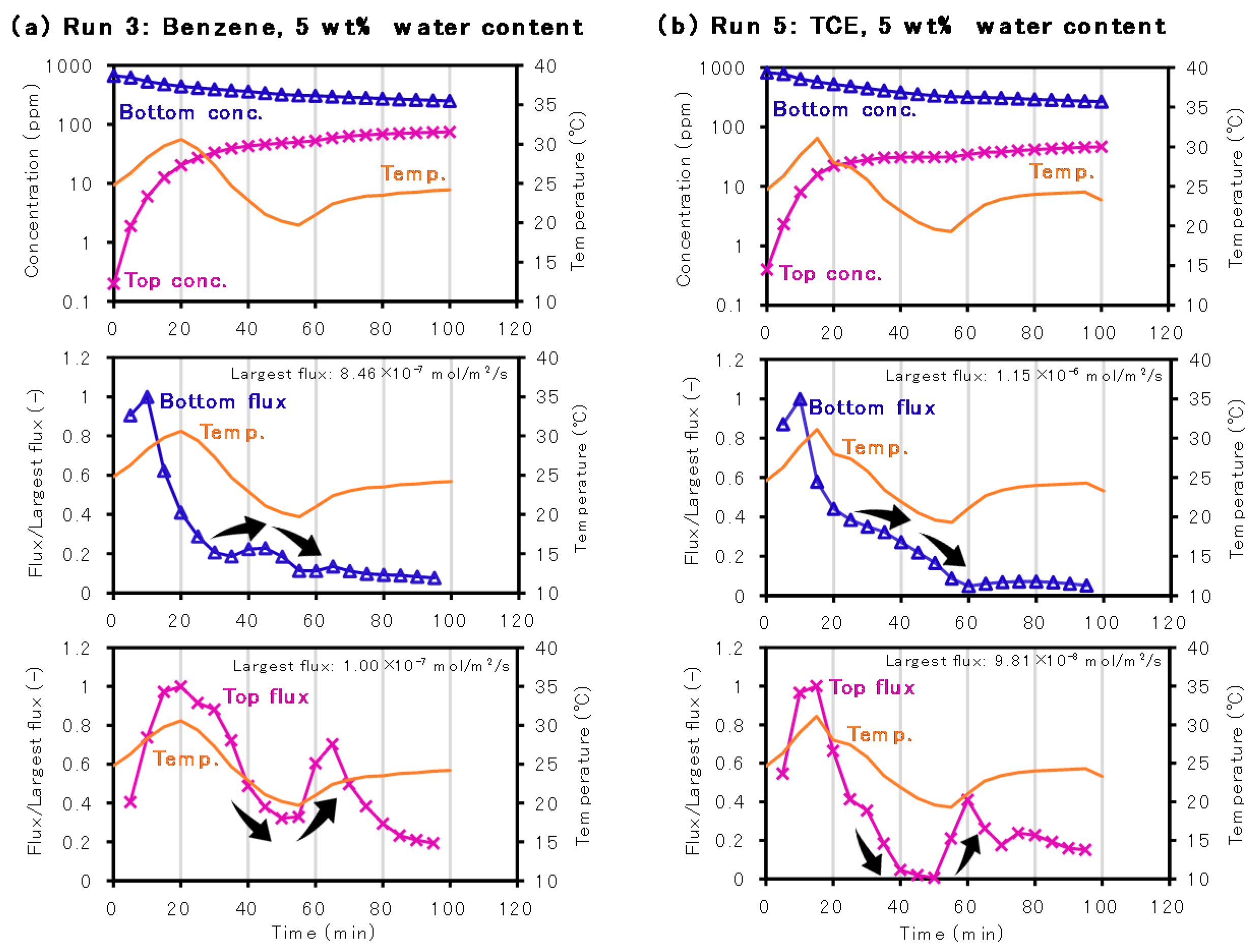
3.2. Effects of Water Content and VOC Type on the Increase in Flux Change
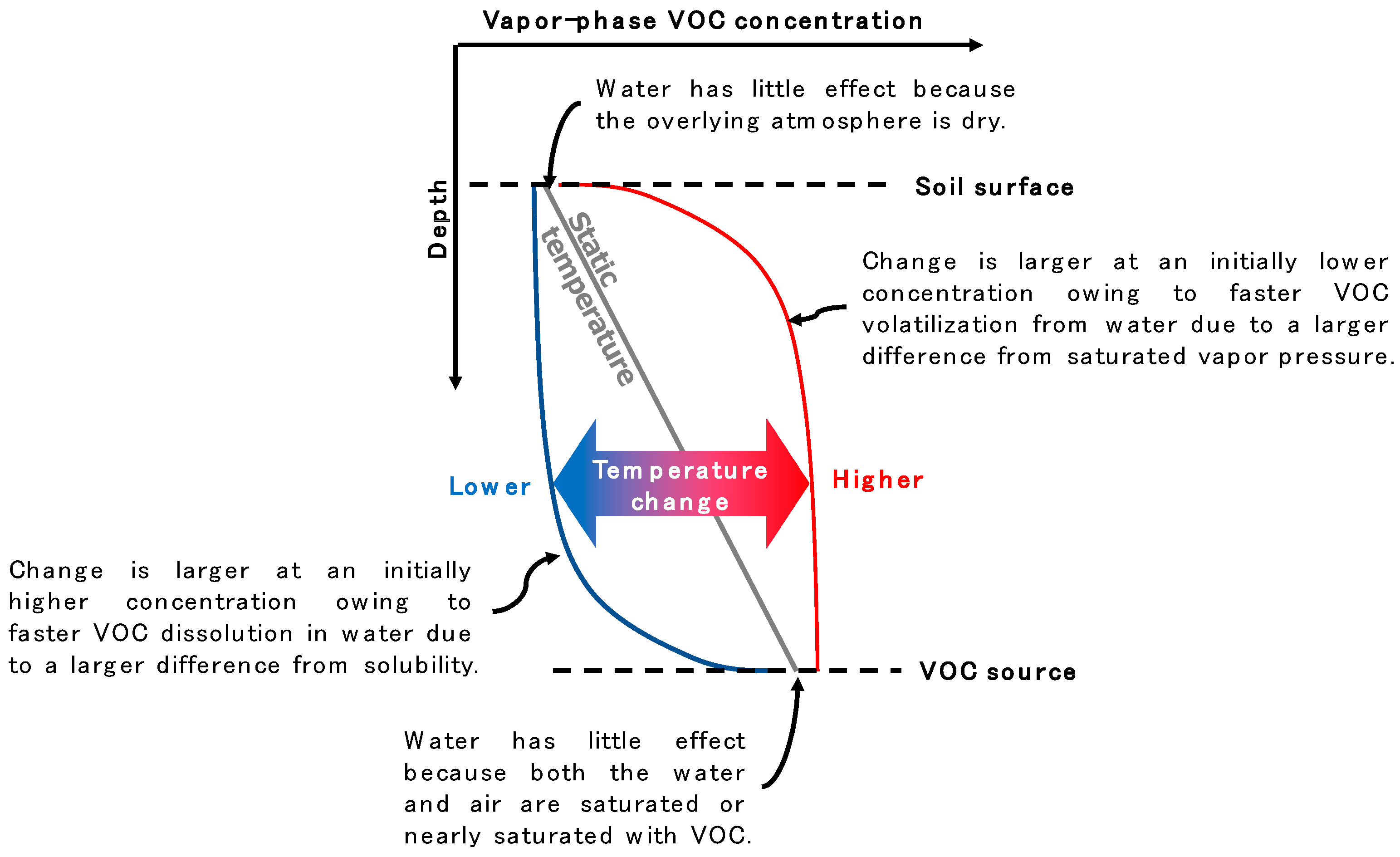
4. Discussion
5. Conclusions
Author Contributions
Funding
Institutional Review Board Statement
Informed Consent Statement
Data Availability Statement
Acknowledgments
Conflicts of Interest
References
- Roveda, L.; Polvara, E.; Invernizzi, M.; Capelli, L.; Sironi, S. Definition of an emission factor for VOC emitted from Italian and European refineries. Atmosphere 2020, 11, 564. [Google Scholar] [CrossRef] [Scilit]
- Miyama, T.; Morishita, T.; Kominami, Y.; Noguchi, H.; Yasuda, Y.; Yoshifuji, N.; Okano, M.; Yamanoi, K.; Mizoguchi, Y.; Takanashi, S.; et al. Increases in biogenic volatile organic compound concentrations observed after rains at six forest sites in non-summer periods. Atmosphere 2020, 11, 1381. [Google Scholar] [CrossRef] [Scilit]
- Stroud, C.A.; Ren, S.; Zhang, J.; Moran, M.D.; Akingunola, A.; Makar, P.A.; Munoz-Alpizar, R.; Leroyer, S.; Bélair, S.; Sills, D.; et al. Chemical analysis of surface-level ozone exceedances during the 2015 Pan American Games. Atmosphere 2020, 11, 572. [Google Scholar] [CrossRef] [Scilit]
- Churkina, G.; Kuik, F.; Bonn, B.; Lauer, A.; Grote, R.; Tomiak, K.; Butler, T.M. Effect of VOC emissions from vegetation on air quality in Berlin during a heatwave. Environ. Sci. Technol. 2017, 51, 6120–6130. [Google Scholar] [CrossRef] [Scilit]
- Rinnan, R.; Albers, C.N. Soil uptake of volatile organic compounds: Ubiquitous and underestimated? J. Geophys.Res. Biogeosci. 2020, 125, e2020JG005773. [Google Scholar] [CrossRef] [Scilit]
- Labianca, C.; De Gisi, S.; Picardi, F.; Todaro, F.; Notarnicola, M. Remediation of a petroleum hydrocarbon-contaminated site by soil vapor extraction: A full-scale case study. Appl. Sci. 2020, 10, 4261. [Google Scholar] [CrossRef] [Scilit]
- Liang, Q.; Bao, X.; Sun, Q.; Zhang, Q.; Zou, X.; Huang, C.; Shen, C.; Chu, Y. Imaging VOC distribution in cities and tracing VOC emission sources with a novel mobile proton transfer reaction mass spectrometer. Environ. Pollut. 2020, 265, 114628. [Google Scholar] [CrossRef] [Scilit]
- Johnston, J.E.; Gibson, J.M. Spatiotemporal variability of tetrachloroethylene in residential indoor air due to vapor intrusion: A longitudinal, community-based study. J. Expo. Sci. Environ. Epidemiol. 2014, 24, 564–571. [Google Scholar] [CrossRef] [Scilit] [PubMed]
- United States Environmental Protection Agency. OSWER Technical Guide for Assessing and Mitigating the Vapor Intrusion Pathway from Subsurface Vapor Sources to Indoor Air; EPA Office of Solid Waste and Emergency Response: Washington, DC, USA, 2015; pp. 2–154.
- Shrader-Frechette, K.; Biondo, A.M. Health misinformation about toxic-site harm: The case for independent-party testing to confirm safety. Int. J. Environ. Res. Public Health 2021, 18, 3882. [Google Scholar] [CrossRef] [Scilit]
- Kponee, K.Z.; Nwanaji-Enwerem, J.C.; Fu, X.; Kakulu, I.I.; Weisskopf, M.G.; Jia, C. Elevated indoor volatile organic compound exposure in the Niger Delta Region of Nigeria. Int. J. Environ. Res. Public Health 2018, 15, 1939. [Google Scholar] [CrossRef] [Scilit]
- Stefanakis, A.I. The fate of MTBE and BTEX in constructed wetlands. Appl. Sci. 2020, 10, 127. [Google Scholar] [CrossRef] [Scilit]
- Bekele, D.N.; Naidu, R.; Chadalavada, S. Influence of spatial and temporal variability of subsurface soil moisture and temperature on vapour intrusion. Atmos. Environ. 2014, 88, 14–22. [Google Scholar] [CrossRef] [Scilit]
- Barnes, D.L.; McRae, M.F. The predictable influence of soil temperature and barometric pressure changes on vapor intrusion. Atmos. Environ. 2017, 150, 15–23. [Google Scholar] [CrossRef] [Scilit]
- Song, C.; Liu, B.; Dai, Q.; Li, H.; Mao, H. Temperature dependence and source apportionment of volatile organic compounds (VOCs) at an urban site on the north China plain. Atmos. Environ. 2019, 207, 167–181. [Google Scholar] [CrossRef] [Scilit]
- Zhou, X.; Liu, Y.; Song, C.; Liu, J. Impact of temperature and microstructure on the emission characteristics of VOC in porous building materials. Procedia Eng. 2015, 121, 1067–1075. [Google Scholar] [CrossRef] [Scilit]
- Bai, Y.; Huo, L.; Zhang, Y.; Liu, J.; Shao, H.; Wu, C.; Guo, Z. A spatial fractional diffusion model for predicting the characteristics of VOCs emission in porous dry building material. Sci. Total Environ. 2020, 704, 135342. [Google Scholar] [CrossRef] [Scilit] [PubMed]
- Du, P.; Sagehashi, M.; Terada, A.; Hosomi, M. Characterization of benzene emission to the atmosphere from contaminated soil. Environ. Sci. 2010, 23, 467–475. [Google Scholar]
- Voudrias, E.A.; Li, C. Benzene vapor transport in unsaturated soil: Adequacy of the diffusion equation. J. Hazard. Mater. 1993, 34, 295–311. [Google Scholar] [CrossRef] [Scilit]
- Lin, T.F.; Little, J.C.; Nazaroff, W.W. Transport and sorption of volatile organic compounds and water vapor within dry soil grains. Environ. Sci. Technol. 1994, 28, 322–330. [Google Scholar] [CrossRef] [Scilit] [PubMed]
- Lin, T.F.; Loy, M.D.; Nazaroff, W.W. Gas-phase transport and sorption of benzene in soil. Environ. Sci. Technol. 1996, 30, 2178–2186. [Google Scholar] [CrossRef] [Scilit]
- Kim, J.Y.; Edil, T.B.; Park, J.K. Volatile organic compound (VOC) transport through compacted clay. J. Geotech. Geoenviron. 2001, 127, 126–134. [Google Scholar] [CrossRef] [Scilit]
- Osagie, E.I.; Cn, O. Investigation of mixture effects on the adsorption rates of aromatics from aqueous solution on clay and sandy soil. Chem. Sci. J. 2015, 6, 1–5. [Google Scholar]
- Cabbar, C.H.; Bostanci, A. Moisture effect on the transport of organic vapors in sand. J. Hazard. Mater. 2001, 82, 313–322. [Google Scholar] [CrossRef] [Scilit]
- Cotel, S.; Schäfer, G.; Barthes, V.; Baussand, P. Effect of density-driven advection on trichloroethylene vapor diffusion in a porous medium. Vadose Zone J. 2011, 10, 565–581. [Google Scholar] [CrossRef] [Scilit]
- Du, P.; Sagehashi, M.; Tarada, A.; Zhou, S.; Li, F.; Hosomi, M. Adequacy of a simple diffusion model to predict benzene behavior in soil. Soil Sci. Soc. Am. J. 2011, 75, 2147–2157. [Google Scholar] [CrossRef] [Scilit]
- Bekele, D.N.; Naidu, R.; Chadalavada, S. Influence of soil properties on vapor-phase sorption of trichloroethylene. J. Hazard. Mater. 2016, 306, 34–40. [Google Scholar] [CrossRef] [Scilit]
- United States Environmental Protection Agency. EPA On-Line Tools for Site Assessment Calculation. Available online: https://www3.epa.gov/ceampubl/learn2model/part-two/onsite (accessed on 12 February 2021).
- Shonnard, D.R.; Bell, R.L. Benzene emissions from a contaminated air-dry soil with fluctuations of soil temperature or RH. Environ. Sci. Technol. 1993, 27, 2909–2913. [Google Scholar] [CrossRef] [Scilit]
- Ausma, S.; Edwards, G.C.; Gillespie, T.J. Laboratory scale measurement of trace gas fluxes from land farm soils. J. Environ. Qual. 2003, 32, 8–22. [Google Scholar] [CrossRef] [PubMed]
- Parlin, A.A.; Watanabe, N.; Nakamura, K.; Yamada, M.; Wang, J.; Komai, T. Water-induced inverse correlation between temperature and flux changes in vertical vapor-phase diffusive transport of volatile organic compounds in near-surface soil environments. Appl. Sci. 2021, 11, 3489. [Google Scholar] [CrossRef] [Scilit]
- Huang, C.W. Study on Particle Breakage of Sands Subjected to Various Confining Stress and Shear Strain Levels. Ph.D. Thesis, Tokyo Metropolitan University, Tokyo, Japan, 30 September 2015. [Google Scholar]
- Nakarai, K.; Yoshida, T. Effect of carbonation on strength development of cement-treated Toyoura silica sand. Soils Found. 2015, 55, 857–865. [Google Scholar] [CrossRef] [Scilit]
- Simatupang, M.; Sukri, A.S.; Putri, T.S. Effect of confining pressures on the shear modulus of sand treated with enzymatically induced calcite precipitation. IOP Conf. Ser. Mater. Sci. Eng. 2019, 615, 012042. [Google Scholar] [CrossRef] [Scilit]
- Kimura, S.; Kaneko, H.; Ito, T.; Minagawa, H. Investigation of fault permeability in sands with different mineral compositions (evaluation of gas hydrate reservoir). Energies 2015, 8, 7202–7223. [Google Scholar] [CrossRef] [Scilit]
- Kajiyama, S.; Nakata, Y.; Miyamoto, R.; Taue, M. Study on the shear band of sand with various particle characteristics using PIV analysis. E3S Web Conf. 2019, 92, 06005. [Google Scholar] [CrossRef] [Scilit]
- Siegrist, R.L. Volatile organic compounds in contaminated soils: The nature and validity of the measurement process. J. Hazard. Mater. 1991, 29, 3–15. [Google Scholar] [CrossRef] [Scilit]
- Gao, W.; Liu, F.; Chan, H. Gas phase effective diffusion coefficient of gasoline and characteristic components in dry fine sand. In Proceedings of the 2009 3rd International Conference on Bioinformatics and Biomedical Engineering, Beijing, China, 11–13 June 2009. [Google Scholar]
- Bartelt-Hunt, S.L.; Smith, J.A. Measurement of effective air diffusion coefficients for trichloroethene in undisturbed soil cores. J. Contam. Hydrol. 2002, 56, 193–208. [Google Scholar] [CrossRef] [Scilit]
- Batterman, S.; Padmanabham, I.; Milne, P. Effective gas-phase diffusion coefficients in soils at varying water content measured using a one-flow sorbent-based technique. Environ. Sci. Technol. 1996, 30, 770778. [Google Scholar] [CrossRef] [Scilit]



| Experiment | VOC | Water Content (wt%) | Temperature |
|---|---|---|---|
| Run 1 | Benzene | 10 | Static |
| Run 2 | Benzene | 10 | Dynamic |
| Run 3 | Benzene | 5 | Dynamic |
| Run 4 | Benzene | Air-dried (~0.3) | Dynamic |
| Run 5 | TCE | 5 | Dynamic |
Publisher’s Note: MDPI stays neutral with regard to jurisdictional claims in published maps and institutional affiliations. |
© 2021 by the authors. Licensee MDPI, Basel, Switzerland. This article is an open access article distributed under the terms and conditions of the Creative Commons Attribution (CC BY) license (https://creativecommons.org/licenses/by/4.0/).
Share and Cite
Parlin, A.A.; Kondo, M.; Watanabe, N.; Nakamura, K.; Yamada, M.; Wang, J.; Komai, T. Water-Enhanced Flux Changes under Dynamic Temperatures in the Vertical Vapor-Phase Diffusive Transport of Volatile Organic Compounds in Near-Surface Soil Environments. Sustainability 2021, 13, 6570. https://doi.org/10.3390/su13126570
Parlin AA, Kondo M, Watanabe N, Nakamura K, Yamada M, Wang J, Komai T. Water-Enhanced Flux Changes under Dynamic Temperatures in the Vertical Vapor-Phase Diffusive Transport of Volatile Organic Compounds in Near-Surface Soil Environments. Sustainability. 2021; 13(12):6570. https://doi.org/10.3390/su13126570
Chicago/Turabian StyleParlin, Asma Akter, Monami Kondo, Noriaki Watanabe, Kengo Nakamura, Mizuki Yamada, Jiajie Wang, and Takeshi Komai. 2021. "Water-Enhanced Flux Changes under Dynamic Temperatures in the Vertical Vapor-Phase Diffusive Transport of Volatile Organic Compounds in Near-Surface Soil Environments" Sustainability 13, no. 12: 6570. https://doi.org/10.3390/su13126570
APA StyleParlin, A. A., Kondo, M., Watanabe, N., Nakamura, K., Yamada, M., Wang, J., & Komai, T. (2021). Water-Enhanced Flux Changes under Dynamic Temperatures in the Vertical Vapor-Phase Diffusive Transport of Volatile Organic Compounds in Near-Surface Soil Environments. Sustainability, 13(12), 6570. https://doi.org/10.3390/su13126570