


Abstract
Introduction: The rise in youth sports participation has led to an increase in pediatric sports-related injuries in the United States, contributing to growing healthcare costs and exacerbating socioeconomic disparities. Insurance payor status is a critical factor influencing access to care, treatment delays, and health outcomes. This study examines the association between insurance payor status and outcomes in pediatric sports-related injuries. Methods: A systematic review of the Medline database was conducted. Included studies reported insurance payor status and pediatric sports orthopedic patient outcomes following surgery. Outcomes included time to be seen by a provider, treatment access, complication and revision rates, postoperative Emergency Department (ED)/Urgent Care utilization, readmission rates, hospital length of stay, pain, functional scores, discharge destinations, return to activity, and follow-up. Results: A total of 35 studies comprising 535,891 pediatric patients were included. Publicly insured or uninsured patients consistently experienced significant delays in accessing care, with average wait times for clinic visits, imaging, and surgery up to six times longer compared to privately insured patients. These delays were associated with worsened injury severity, higher rates of postoperative complications, and poorer functional outcomes. Publicly insured patients were less likely to receive advanced treatments such as bracing or physical therapy, further compounding disparities. Minority groups faced delays even when controlling for insurance status. Conclusions: Public and uninsured pediatric patients face systemic barriers to timely and equitable care, resulting in worse outcomes following sports-related injuries. Future research should explore targeted solutions to ensure equitable care for this vulnerable population.
1. Introduction
Sports-related injuries within the United States (US) pediatric population have steadily increased in prevalence over recent years, aligning with the popularity of youth sports participation [1]. Trends in earlier sport specialization and shifts from seasonal to year-round play have also contributed to higher rates of injury [2,3]. Accordingly, demand for sports injury treatment also continues to rise, contributing to the healthcare cost burden on families and exacerbating disparities between them. Given the field’s limited understanding of how social factors impact this historically understudied population, developing a deeper understanding of the factors impacting recovery is crucial to ensuring equitable, high-quality care for pediatric patients aiming to return to play.
One of the factors consistently shown to impact healthcare outcomes is insurance payor status. Patients who are uninsured experience barriers to higher level care, lower operation frequency, and higher mortality rates. Moreover, differences in screening and increased severity at the time of evaluation in this population emphasize the salience of insurance status even prior to patient presentation [4,5,6,7]. Given its significant consequences pervasive throughout the trajectory of patient care, insurance status remains a pivotal factor warranting examination in the context of healthcare disparities.
This relationship between insurance status and healthcare outcomes is especially prevalent in the realm of orthopedics, with growing research examining how financial coverage mediates clinical decision-making and patient outcomes. Specifically, systematic reviews have elucidated associations between insurance status and outcomes in orthopedic trauma, spine, shoulder, hip, and knee surgeries [4,5,8,9,10]. However, we were unable to find similar reviews conducted within sports, and there was extremely limited data within pediatric sports, in particular. With regard to adult patients with sports-related injuries, there were a few studies available which demonstrated that public insurance or uninsured status is associated with limited access to orthopedic care and postoperative rehabilitation via physical therapy [11,12,13]. However, a systematic review examining the effect of insurance payor status on pediatric sports-related injury postoperative outcomes has yet to be performed.
Addressing this gap in orthopedic care is pivotal to ensure equitable treatment in the US pediatric population, especially with the increase in participation, competition, yearly duration of play, and early sport specialization. This study aims to comprehensively examine the effect of insurance payor status on outcomes in pediatric sports-related injuries. We hypothesize that public insurance status or uninsured status will be associated with worse postoperative outcomes compared to private insurance status in pediatric patients.
2. Methods
2.1. Literature Search and Screening
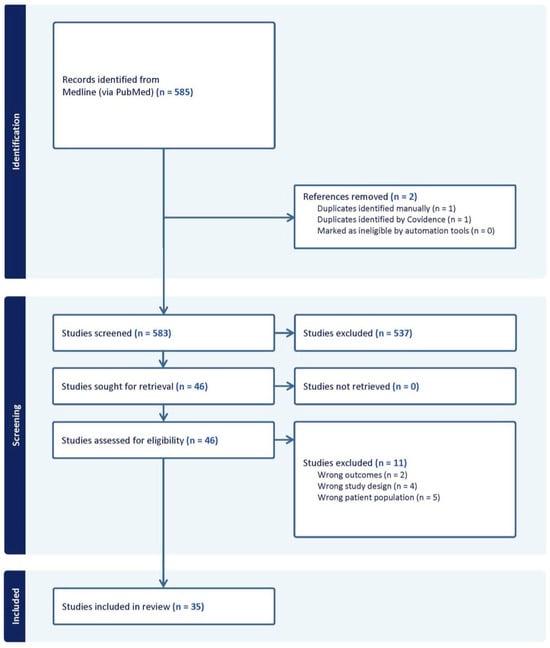
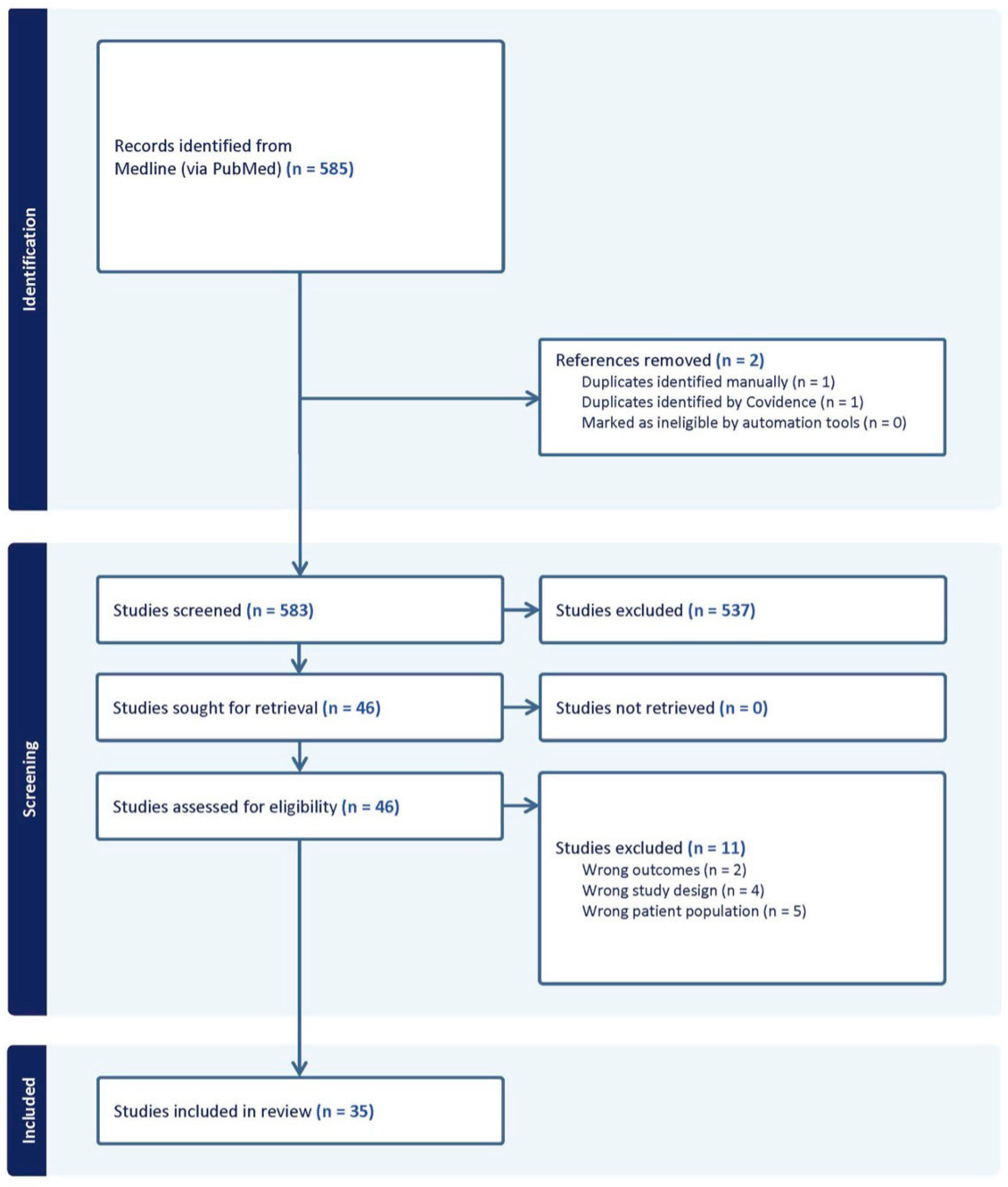
This systematic review followed PRISMA (Preferred Reporting Items for Systematic Reviews and Meta-Analyses) guidelines. The search protocol was not registered. Given the otherwise lack of comprehensive synthesis of evidence on this topic within the current literature, we conducted a rapid review, using only one database, instead of a full systematic review to meet the need for a timely overview of the research, while still adhering to the core principles of the systematic review process. A comprehensive search was conducted using Medline on 13 August 2024. A medical librarian performed a search using key terms designed to identify studies evaluating the relationship between pediatric orthopedic outcomes and insurance coverage. The search terms targeted insurance status, pediatric populations, and orthopedic injuries and treatments, as outlined in the detailed search strategies provided in Appendix A. The search yielded 585 records, which were imported into Covidence (Veritas Health Innovation, Melbourne, Australia), a systematic review management platform. Two duplicates were identified and removed. Inclusion and exclusion criteria were determined prior to data collection. Inclusion criteria involved original research studies in the United States analyzing pediatric patients (ages 0–18 years) who underwent orthopedic evaluation and/or surgery, which included insurance status relative to treatment access, patient outcomes, and/or healthcare utilization. Case reports, review articles, non-English texts, opinion pieces, letters to the editor, and studies with adult populations were excluded. After an initial screening of titles and abstracts by two independent reviewers, 46 articles were selected for full-text review. Of these, 35 studies met the inclusion criteria and were included in the final review (Figure 1). All voting disagreements at abstract and full-text levels were resolved with discussion. Manual data extraction was performed by one reviewer.
Figure 1.
PRISMA flow diagram.
2.2. Quality Appraisal and Risk of Bias
All included studies were assessed for risk of bias and quality using the Methodological Index for Nonrandomized Studies (MINORS) criteria [14]. The MINORS criteria consist of a 12-item checklist, with each item scored as 0 (not reported), 1 (inadequately reported), or 2 (adequately reported). Maximum scores are 16 for non-comparative studies and 24 for comparative studies. The risk of bias and quality assessment is included in Table 1.
Table 1.
Study and cohort characteristics.
3. Results
3.1. Study and Cohort Characteristics
Across the 35 included studies ranging from 2005 to 2023, a total of 535,891 pediatric and adolescent orthopedic patients aged 0–18 years were analyzed to investigate the impact of insurance status on outcomes and access to care. The studies spanned diverse orthopedic conditions after sports-related injuries, including anterior cruciate ligament (ACL) injuries, meniscus tears [17,18,28,34,35,36,40,45,47,49], patellar instability [15,17,35,39], shoulder instability or dislocation [27,30], supracondylar humerus fractures [21,26,33,43], tibial spine fractures [44,46], and osteochondritis dissecans of the knee [17,37,46]. Insurance types included Medicaid, Medicare, private insurance, and uninsured patients. Most studies focused on delays in diagnosis and surgery, treatment course or follow-up, postoperative complications, and return to sport. Detailed study characteristics, including study design, sample size, and patient demographics are provided in Table 1.
3.2. Access to Care
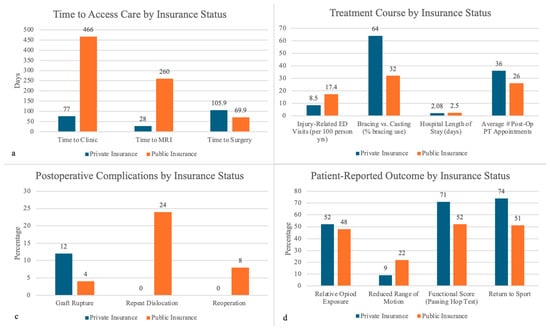
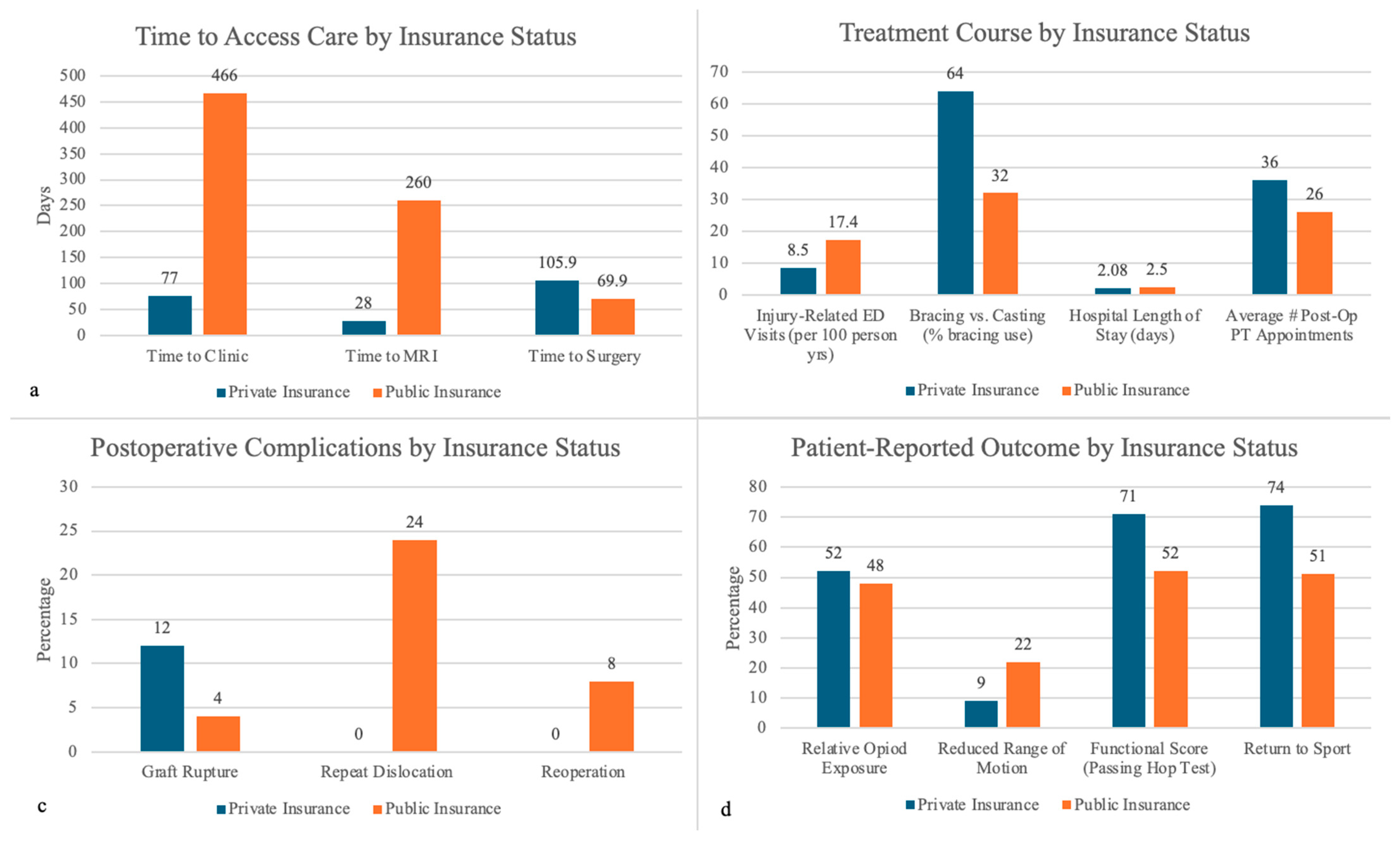
Eighteen studies evaluated time to be seen and access to care, consistently demonstrating significant disparities based on insurance status (Table 2, Figure 2a). Publicly insured or uninsured patients faced substantial delays across all stages of care compared to privately insured patients. Allahabadi and colleagues reported that publicly insured patients waited, on average, 466 days from injury to their first clinic visit, compared to 77 days for privately insured patients (p = 0.002) [15]. Similar delays were noted for MRI scans, with publicly insured patients waiting 260 days compared to 28 days for private insurance holders [35]. These findings were corroborated by Beck and colleagues who showed that Medicaid patients faced delays in ordering and completing MRIs, with wait times more than doubling those of privately insured patients (p < 0.001) [17].
Table 2.
Treatment access.
Figure 2.
Summary of key findings. (a) Publicly insured patients experienced delays compared to privately insured patients, including longer times to clinic [15], imaging [35], and surgery [18]. (b) Treatment course shows publicly insured patients had more injury-related ED visits [42], higher rates of casting compared to bracing, longer hospital stays [37], and fewer postoperative physical therapy appointments [18]. (c) Postoperative complications revealed higher rates of repeat dislocation in publicly insured patients [27], while graft rupture was more common among privately insured patients [18]. Reoperation rates were higher in publicly insured patients [27]. (d) Patient-reported outcomes show that publicly insured patients experienced lower rates of functional recovery, including reduced range of motion [36], lower hop test pass rates [23], and lower return-to-sport clearance rates [18]. Privately insured patients were more likely to receive postoperative opioids [16].
Delays extended beyond imaging to surgical intervention. Publicly insured patients waited 105.9 days on average for surgery, compared to 69.9 days for privately insured patients (p = 0.001) [18]. Similarly, Patel et al. demonstrated that Medicaid patients experienced nearly twice the delay to surgery (p < 0.0001) [36]. This was further supported by work regarding meniscal tears, supracondylar fractures, and shoulder instability [21,27,35].
Access to treatment was further hindered by systemic barriers. Medicaid patients were less likely to successfully schedule an appointment compared to those with private insurance. According to Hoch, 19.8% of patients with Medicaid compared to 1.0% of patients with Blue Cross Blue Shield (BCBS) were denied care simply based on their insurance coverage. Additionally, 13.5% of patients with Medicaid compared to 2.1% of patients with BCBS were denied appointments due to lack of a referral from a primary care physician [24]. Pierce et al. further expanded on these disparities, explaining that Medicaid reimbursement rates were often 23% the value of private insurance reimbursement [38].
Geographic variability also played a role. Interestingly, Medicaid patients in states that have not expended Medicaid [50] were twice as likely to secure appointments compared to those in expansion states, but still lagged behind privately insured patients in both regions [30]. Disparities were further exacerbated for minority groups; Bram et al. and Modest et al. found that Black and Hispanic children faced compounded delays, even when controlling for insurance type [18,33].
3.3. Treatment Course
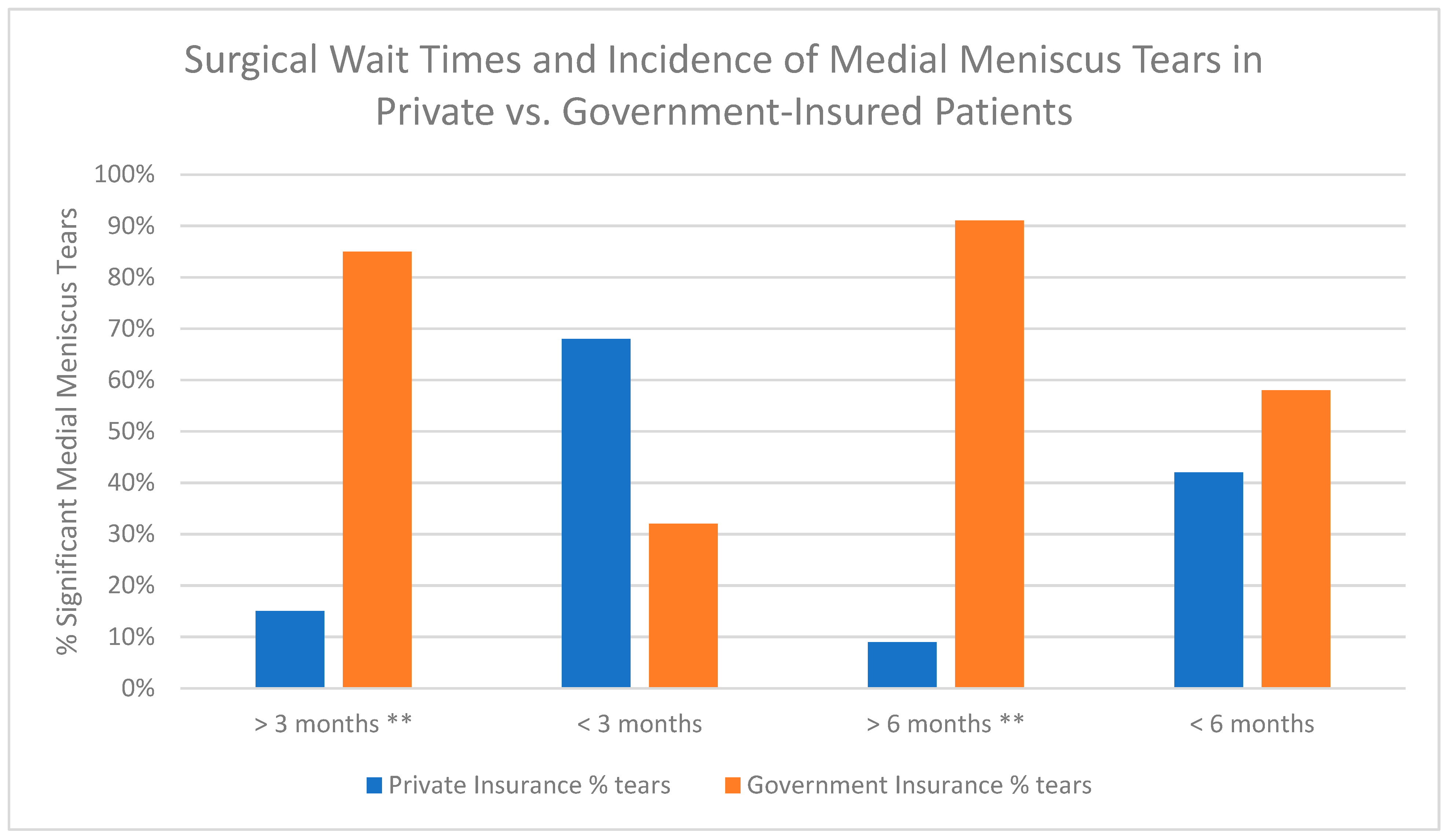
Twenty studies examined differences in treatment course based on insurance status, focusing on factors such as length of stay, discharge disposition, and follow-up (Table 3, Figure 2b). Publicly insured patients faced significant barriers to timely care, including delays in obtaining diagnostic imaging, surgery, and rehabilitation. Notably, Bram, Zoller, and Johnson demonstrated that longer surgical wait times for publicly insured patients were associated with more severe injuries, such as irreparable meniscal tears, further complicating treatment and recovery [18,28,49], Figure 3 and Figure 4. Access to rehabilitation was also disproportionately limited for publicly insured patients. Greenberg et al. showed that these patients had fewer weekly physical therapy visits and delayed post-surgical functional testing, leading to worse outcomes such as lower pass rates on hop testing (p = 0.0049) [23]. Moreover, the mean number of physical therapy visits for publicly insured patients was 26.7 compared to 36.4 for privately insured patients [18]. Sarkisova further discussed this disparity, finding that only 10.3% of rehabilitation centers accepted government-funded insurance, significantly restricting access for Medicaid patients [41].
Table 3.
Injury and treatment course.
Figure 3.
Surgical wait times and incidence of medial meniscus tears in private vs. government-insured patients. (Zoller 2017 [49])—This study shows a significant increase in medial meniscal tear incidence, decrease in preoperative scores, and worse tear severity with surgical wait time >6 months. Public insurance was a risk factor for longer surgical wait time and meniscus tear. There was a significant association between government insurance and surgical wait time >3 months (p < 0.001, OR 12.4), surgical wait time >6 months (p < 0.001, OR 7.8), and significant tears. ** p < 0.001.
Figure 4.
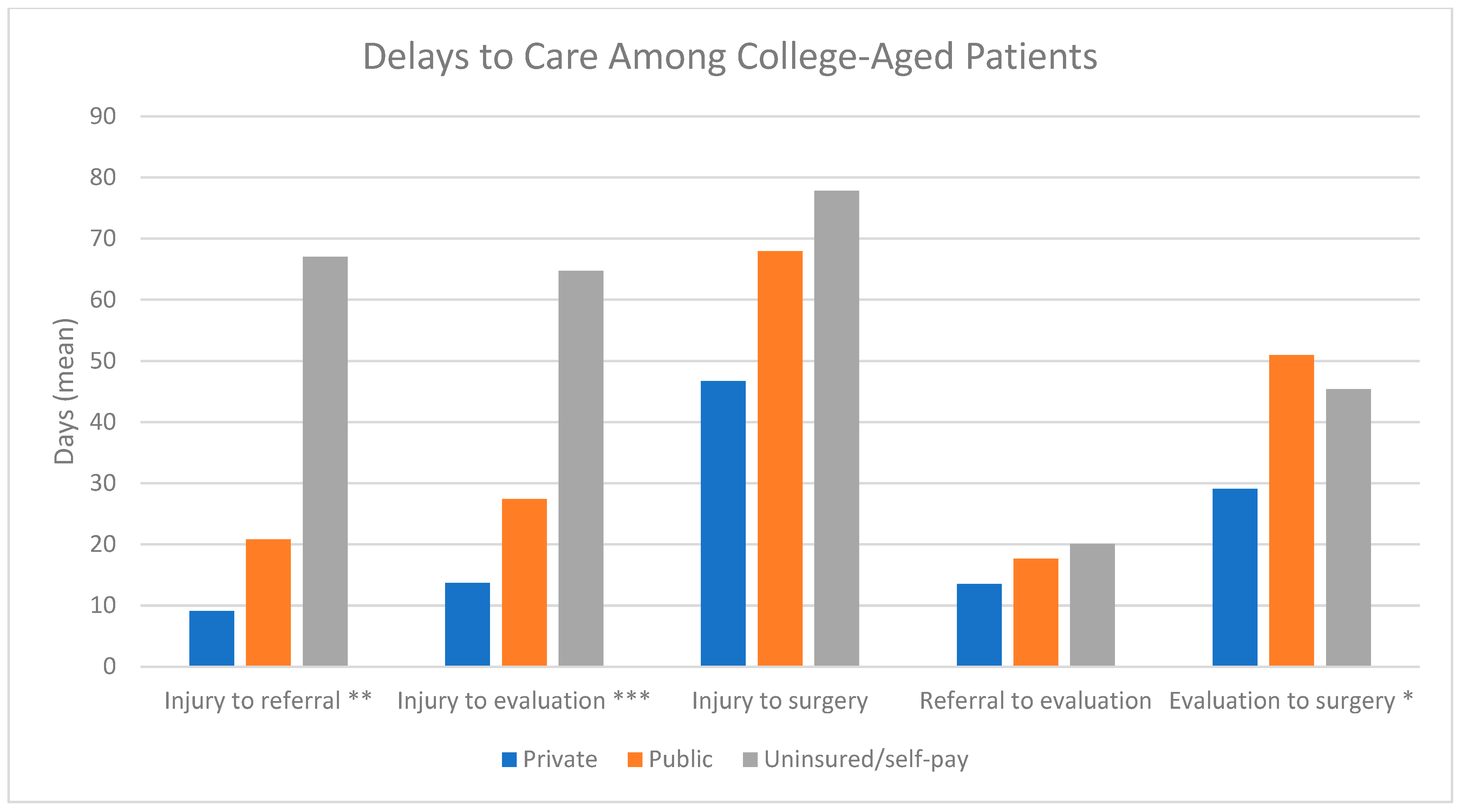
Delays to care among college-aged patients. (Johnson 2019 [28])—Publicly insured and uninsured pediatric and college-aged patients faced significant barriers in accessing orthopedic services, as demonstrated by substantially longer times between the initial injury and referral to an orthopedic evaluation and surgery; however, these socioeconomic factors did not affect the rate of surgical management. * p < 0.05, ** p < 0.001, *** p < 0.0001.
Publicly insured patients were more likely to require emergency care. Simon et al. found that public insurance patients had significantly higher rates of injury-related visits (IRVs) to the Emergency Department (ED) (17.4 visits/100 person-years) compared to privately insured patients (8.5 visits/100 person-years) [42]. Li et al. also noted that while Medicaid patients visited the ED less frequently than privately insured patients (72.6% vs. 83.3%, OR = 0.640, p < 0.001) likely to avoid the cost, uninsured patients were significantly more likely to use emergency services (90.4%, OR = 1.881, p = 0.016) and faced higher charges [31]. These patterns reflect both delayed care and insufficient outpatient follow-up among patients with less comprehensive insurance coverage.
Systemic barriers also impacted discharge and follow-up care. Smith et al. found that publicly insured patients with tibial spine fractures were more likely to undergo postoperative casting rather than bracing, which is typically less favorable, reflecting limited access to advanced bracing options [46]. Gao et al. reported that publicly insured patients had a 20% longer hospital stay on average compared to privately insured patients, with higher daily charges despite limited treatment options [22].
3.4. Postoperative Complications
Six studies evaluated postoperative complications, examining disparities in secondary injuries, infections, emergency care visits, readmissions, and revision surgeries (Table 4, Figure 2c). Across these studies, publicly insured patients consistently faced worse outcomes compared to their privately insured counterparts, largely driven by delays in care and barriers to timely follow-up.
Table 4.
Post-treatment outcomes.
Publicly insured patients were more likely to experience secondary injuries and worse healing outcomes. Hung et al. reported that publicly insured patients with shoulder instability had a significantly higher rate of repeat dislocations compared to privately insured patients (24.3% vs. 0%, p = 0.022) [27]. Similarly, Patel et al. found that patients with osteochondritis dissecans (OCD) who had public insurance were far less likely to achieve union (20.5% vs. 79.5% for private insurance) [37]. These findings underscore how delays in care and limited resources exacerbate complications in public insurance groups.
Interestingly, publicly insured patients were less likely to undergo revision surgeries, even after experiencing complications [27]. This disparity is likely due to systemic barriers such as financial constraints and limited access to follow-up care, which prevent publicly insured patients from receiving corrective procedures. While Williams found no significant differences in overall surgical complication rates between private and public insurance groups (e.g., graft ruptures, infections, or arthrofibrosis, p = 0.36), the delayed presentation of publicly insured patients often resulted in more severe injuries requiring invasive procedures such as debridement instead of repair [47]. These findings emphasize how delays in care amplify the severity of complications.
3.5. Patient-Reported Outcomes
3.5.1. Pain
Although none of the included studies focused on pain, Anandarajan et al. discussed opioid exposure. They found that patients with private insurance were not more likely to receive opioids but had a higher relative opioid exposure compared to those without private insurance, potentially reflecting disparities in pain treatment quality and access [16].
3.5.2. Functional Scores
Functional recovery was significantly poorer among publicly insured patients. Greenberg et al. found these patients were 2.7 times less likely to pass functional hop tests for distance after ACL reconstruction due to reduced access to physical therapy during key rehabilitation phases [23]. Patel et al. observed that government-assisted patients experienced higher rates of decreased knee range of motion following ACL reconstruction compared to commercially insured patients (22% vs. 9%, p = 0.034) [36].
3.5.3. Return to Sport
Publicly insured patients experienced significant delays in returning to activity. Greenberg et al. noted that these patients faced longer delays in completing functional tests and achieving readiness for sports participation [23]. Bram et al. reported lower sports clearance rates among publicly insured pediatric patients following ACL reconstruction, largely due to insufficient follow-up care and physical therapy access [18]. Rosenberg et al. linked socioeconomic disadvantages, such as lower neighborhood opportunity scores, to delayed surgical interventions, which in turn extended recovery times and impeded return to play [40].
These findings, as illustrated in Table 5 and Figure 2d, highlight systemic inequities in pain management, functional recovery, return-to-activity outcomes, and overall care accessibility for publicly insured pediatric patients, emphasizing the need for targeted interventions to reduce disparities.
Table 5.
Patient reported outcomes.
3.6. Insurance Status and Other Social Drivers of Health
Although the primary focus of this work is on the relationship between insurance status and outcomes for pediatric orthopedic sports medicine patients, this work also highlighted the intersectionality of insurance status and other social drivers of health such as race/ethnicity [44]. For example, Bram et al. demonstrated significant delays to surgery and higher rates of irreparable meniscus tears resulting from Black/Hispanic race/ethnicity in addition to insurance status [15]. However, this study also found that Black/Hispanic patients were much less likely to be privately insured, with 54.3% of Black/Hispanic patients and only 16.0% of them having private insurance [15]. Similarly, although the work of Hung et al. supported the marked delays to care experienced by publicly insured pediatric and adolescent patients relative to those with private insurance, they go on to describe how additional factors such as the ability to attend appointments, including the ability to take time off work, have reliable transportation and access to child care, etc., as well as other factors such as access to postoperative physical therapy and distance from clinic may also play a role in explaining the delays to care seen in this patient population [35]. The interplay of numerous factors most likely contributes to the outcomes described in many of the studies we explored.
4. Discussion
This systematic review highlights significant disparities in pediatric sports related care based on insurance status, encompassing access to care, treatment course, postoperative complications, and patient-reported outcomes. The findings consistently demonstrate that patients with public or no insurance face worse outcomes compared to privately insured patients, driven by systemic barriers, delays in care, and limited access to rehabilitation and follow-up services. These disparities underscore critical gaps within the healthcare system that warrant targeted interventions for sports medicine providers to offer equitable and optimal orthopedic care for the pediatric population.
Race and ethnicity play a substantial role in shaping disparities in pediatric sports medicine care, compounding the inequities associated with insurance status. Multiple studies in this review demonstrated that minority patients, particularly Black and Hispanic children, face greater barriers to accessing timely and appropriate care. Modest et al. found that Hispanic and African American children were significantly more likely to receive inpatient treatment for fractures, suggesting potential disparities in treatment settings and access to outpatient services [33]. Similarly, Hubbard et al. reported that African American patients were three times more likely to miss follow-up appointments compared to their peers, indicating systemic challenges in care continuity [26]. Disparities also extend to surgical treatments, as Mercurio et al. highlighted that Black patients undergoing ACL reconstruction were more likely to receive meniscectomy rather than repair, a less favorable intervention associated with poorer long-term outcomes [32]. These findings underscore the complex interplay between race, ethnicity, and healthcare access, emphasizing the need for targeted strategies to address both structural barriers and implicit racial biases within the healthcare system.
Across the multiple social determinants of health discussed, the most striking was the role of transportation regarding access to care contributing to the six-fold increase in time from injury to first clinic visit for publicly insured patients compared to their privately insured counterparts [15]. Transportation barriers disproportionately affect families reliant on public insurance, limiting their ability to attend clinic appointments, imaging sessions, and rehabilitation services, which ultimately compounds injury severity and limits recovery outcomes [26,27]. Sarkisova et al. underscored the critical role of transportation support, highlighting how social work interventions can mitigate these challenges by arranging transportation for follow-up care, particularly for rehabilitation services, which are often inaccessible to Medicaid patients [41]. Addressing transportation barriers through solutions such as mobile clinics, telehealth, and subsidized transport programs could bridge these gaps and improve equitable access to pediatric sports medicine care.
4.1. Comparisons Within Orthopedics
These insurance-related disparities are consistent with findings from prior research in total joint arthroplasty, upper extremity procedures, and other orthopedic domains. In total hip and knee arthroplasty, Medicaid patients were shown to have significantly higher rates of postoperative complications, extended hospital stays, and higher overall costs following procedures such as total hip and knee arthroplasty [51,52]. Similarly, Medicaid patients undergoing shoulder arthroplasty exhibited higher rates of 90-day morbidity, readmissions, and reoperations [51].
Socioeconomic and systemic factors compound these disparities. Medicaid patients often face challenges such as limited access to high-volume surgical centers, which are associated with better outcomes [9]. They also had the highest rates of comorbidities among insurance groups and were more likely to be treated in inpatient care settings due to increased medical complexity, even for procedures that could otherwise be managed in outpatient settings [53]. These systemic issues highlight the intersection of insurance status, geographic location, and socioeconomic factors in shaping healthcare access and outcomes. While these factors are important in evaluating the interplay of social drivers of health in patient outcomes within this population, it was also important to understand the impact of insurance type independently from these additional challenges. It is therefore worth noting then, that where possible, a number of the studies evaluated conducted multivariate analyses to control for potentially confounding variables [15,23,25,33,35,40,41,44,48]. Following adjustment, these studies still found that even when controlling for factors such as age, race/ethnicity, location, language [33,40,44], hospital-level variabilities [23,35], and severity of injury [48], public insurance was still independently associated with negative outcomes. However, Slover et al., for example, still noted other variables such as education level that remain as potential confounding variables and were similarly not accounted for in other studies.
Despite these challenges, Medicaid patients have been shown to achieve comparable functional improvements to privately insured patients, but they start from a lower baseline, which contributes to worse absolute outcomes [52]. This finding underscores the need for tailored interventions that address baseline health disparities to improve overall outcomes in vulnerable populations.
4.2. Clinical and Policy Implications
The disparities identified in this review have important ethical implications, particularly in the context of health equity, justice, and policy. The consistent association between insurance status and worse clinical outcomes for pediatric patients with sports-related injuries raises important concerns about the equitable distribution of healthcare resources and access to timely, high-quality treatment. These findings support the idea that insurance type functions as a structural barrier that disproportionately affects certain patient populations. Addressing these disparities requires a multifaceted approach that extends beyond individual provider-level changes to systemic reforms aimed at reducing barriers to care. Several strategies identified through this work can be implemented to address these issues:
- Streamlining Access to Diagnostic Services: Reducing administrative challenges, such as preauthorization requirements, and increasing provider networks that accept Medicaid could help mitigate delays in imaging and diagnosis [24,49].
- Expanding Medicaid Reimbursement: Increasing reimbursement rates for Medicaid patients could incentivize more providers to accept publicly insured patients, improving access to both surgical and rehabilitation services [22,38].
- Culturally Competent Care: Training healthcare providers to increase awareness of barriers to care (i.e., transportation), align their practice to support different communities (i.e., interpreters), and assist patients to overcome barriers (i.e., referral to charity care) could help reduce disparities in care access and outcomes [17,18].
- Targeted Rehabilitation Support: Developing home-based or hybrid physical therapy programs for publicly insured and uninsured patients could help improve postoperative recovery for vulnerable populations [35,37].
- Community-Based Interventions: Establishing school-based or community-based orthopedic clinics could enhance early detection and treatment for underserved populations, particularly in rural and urban Medicaid-dense areas [21,26].
While these suggested interventions may serve as a helpful starting point, future research should further investigate the mechanisms driving these disparities to develop more targeted interventions that promote equitable outcomes in pediatric sports medicine.
4.3. Strengths and Limitations
While this review provides a comprehensive analysis of disparities in pediatric orthopedic care, several limitations warrant consideration. First, this rapid review only included a single database. Most studies relied on retrospective designs, which present an inherent risk of biases such as recall bias and selection bias, thus limiting causal inferences. Additionally, variability in Medicaid policies and coverage across states complicates the generalizability of findings. Finally, with regard to generalizability, although choosing to focus exclusively on US-based studies allowed us to focus our work within the unique insurance structures and the associated social disparities that exist within the US healthcare system, we recognize that this limits the global applicability of these findings. These limitations present key opportunities for future research expanding on this initial review. However, the major strength of this review is the diversity of insurance payor groups in conjunction with a wide array of pediatric orthopedic procedures and outcomes analyzed.
5. Conclusions
This systematic review provides compelling evidence that insurance status, compounded by race and socioeconomic factors, significantly impacts access, treatment, and outcomes in pediatric sports medicine care. Publicly insured and uninsured patients consistently face longer delays, higher rates of secondary injuries, and worse functional outcomes. Targeted policy changes, including expanding Medicaid reimbursement and increasing access to diagnostic and rehabilitation services, are critical for reducing these disparities and ensuring equitable care for pediatric sports medicine patients.
Author Contributions
Conceptualization, L.V.K. and E.J.L.; methodology, L.V.K., S.H., and K.M.K.; covidence curation, S.H.; data curation, S.H., D.Y., J.K.M., K.M.K., and L.V.K.; writing—original draft preparation, K.M.K., D.Y., and J.K.M.; writing—review and editing, E.J.H., K.E.B., L.V.K., and B.C.L.; visualization, K.M.K. and D.Y.; supervision, B.C.L. All authors have read and agreed to the published version of the manuscript.
Funding
This research received no external funding.
Institutional Review Board Statement
Not applicable.
Informed Consent Statement
Not applicable.
Data Availability Statement
No new data were created or analyzed in this study. Data sharing is not applicable to this article.
Conflicts of Interest
The authors declare no conflicts of interest.
Appendix A. Database Search Terms
Database (including vendor/platform): Medline (via PubMed).
| Set # | Search Strategy | Results |
| 1 Insurance keywords | “Insurance, Health”[Mesh] OR insurance[tiab] OR insurances[tiab] OR insured[tiab] OR Medicaid[tiab] OR medi-cal[tiab] | 274,958 |
| 2 Pediatric keywords | “Adolescent”[Mesh] OR “Child”[Mesh] OR “Child, Preschool”[Mesh] OR “Hospitals, Pediatric”[Mesh] OR “Infant”[Mesh] OR “Infant, Newborn”[Mesh] OR “Neonatology”[Mesh] OR “Minors”[Mesh] OR “Pediatrics”[Mesh] OR “Pediatric Anesthesia”[Mesh] OR “Pediatric Emergency Medicine”[Mesh] OR “Perinatology”[Mesh] OR “Puberty”[Mesh] OR adolescent[tiab] OR adolescents[tiab] OR adolescence[tiab] OR baby[tiab] OR babies[tiab] OR boy[tiab] OR boys[tiab] OR boyhood[tiab] OR child[tiab] OR childhood[tiab] OR children[tiab] OR “emerging adult”[tiab] OR “emerging adults”[tiab] OR girl[tiab] OR girls[tiab] OR girlhood[tiab] OR infant[tiab] OR infants[tiab] OR infancy[tiab] OR juvenile[tiab] OR juveniles[tiab] OR kid[tiab] OR kids[tiab] OR minors[tiab] OR newborn[tiab] OR newborns[tiab] OR neonatal[tiab] OR neonate[tiab] OR neonates[tiab] OR neonatology[tiab] OR neonatologist[tiab] OR neonatologists[tiab] OR preterm[tiab] OR prematurity[tiab] OR preadolescent[tiab] OR preadolescents[tiab] OR preadolescence[tiab] OR puberty[tiab] OR pubescent[tiab] OR pubescence[tiab] OR prepubescent[tiab] OR prepubescence[tiab] OR pediatric[tiab] OR pediatrics[tiab] OR paediatric[tiab] OR paediatrics[tiab] OR PICU[tiab] OR Pediatrician[tiab] OR pediatricians[tiab] OR paediatrician[tiab] OR paediatricians[tiab] OR pediatric[tiab] OR pediatrics[tiab] OR paediatric[tiab] OR paediatrics[tiab] OR stepchild[tiab] OR stepchildren[tiab] OR schoolchild[tiab] OR schoolgirl[tiab] OR schoolgirls[tiab] OR schoolboy[tiab] OR schoolboys[tiab] OR “school age”[tiab] OR “school aged”[tiab] OR toddler[tiab] OR toddlers[tiab] OR teen[tiab] OR teens[tiab] OR teenager[tiab] OR teenagers[tiab] OR teenaged[tiab] OR teenage[tiab] OR youth[tiab] OR youths[tiab] OR youngster[tiab] OR youngsters[tiab] OR “young person”[tiab] OR “young persons”[tiab] OR “young people”[tiab] | 5,011,769 |
| 3 Sport injuries | “Orthopedics”[Mesh] OR “Tibial Meniscus Injuries”[Mesh] OR “Humeral Fractures, Distal”[Mesh] OR “Anterior Cruciate Ligament Reconstruction”[Mesh] OR ((“Sports”[Mesh] OR “Youth Sports”[Mesh] OR sport[tiab] OR sports[tiab] OR athlete[tiab] OR athletes[tiab] OR athletics[tiab] OR athletic[tiab]) AND (injur*[tiab] OR hurt[tiab] OR hurting[tiab] OR accident[tiab] OR accidents[tiab])) OR ((“anterior cruciate ligament”[MeSH] OR “Anterior Cruciate Ligament Injuries”[Mesh] OR “Anterior Cruciate Ligament”[tiab] OR ACL[tiab] OR “Meniscus”[Mesh] OR “Menisci, Tibial”[Mesh] OR meniscus[tiab] OR menisci[tiab]) AND (“surgery”[Subheading] OR “surgery”[tiab] OR surgical[tiab] OR operative[tiab] OR operation[tiab] OR postoperative[tiab] OR post-operative[tiab] OR “general surgery”[MeSH Terms] OR repair[tiab] OR repaired[tiab] OR reconstruction[tiab] OR reconstructive[tiab] OR augment[tiab] OR augmentation[tiab] OR injury[tiab] OR re-injury[tiab] OR injuries[tiab])) OR “supracondylar fracture”[tiab] OR “supracondylar fractures”[tiab] OR ((humerus[tiab] OR humeral[tiab]) AND (fracture[tiab] OR fractures[tiab] OR broken[tiab])) OR orthopedic[tiab] OR orthopaedic[tiab] OR orthopedics[tiab] OR orthopaedics[tiab] | 226,099 |
| 4 | 1 AND 2 AND 3 | 585 |
References
- Trentacosta, N. Pediatric Sports Injuries. Pediatr. Clin. N. Am. 2020, 67, 205–225. [Google Scholar] [CrossRef] [Scilit] [PubMed]
- Caine, D.; Caine, C.; Maffulli, N. Incidence and Distribution of Pediatric Sport-Related Injuries. Clin. J. Sport Med. 2006, 16, 500–513. [Google Scholar] [CrossRef] [Scilit] [PubMed]
- Popkin, C.A.; Bayomy, A.F.; Ahmad, C.S. Early Sport Specialization. JAAOS—J. Am. Acad. Orthop. Surg. 2019, 27, e995–e1000. [Google Scholar] [CrossRef] [Scilit]
- Rosen, H.; Saleh, F.; Lipsitz, S.; Rogers, S.O., Jr.; Gawande, A.A. Downwardly Mobile: The Accidental Cost of Being Uninsured. Arch. Surg. 2009, 144, 1006–1011. [Google Scholar] [CrossRef] [Scilit]
- Nathens, A.B.; Maier, R.V.; Copass, M.K.; Jurkovich, G.J. Payer Status: The Unspoken Triage Criterion. J. Trauma Acute Care Surg. 2001, 50, 776–783. [Google Scholar] [CrossRef] [Scilit]
- Unequal Treatment. Confronting Racial and Ethnic Disparities in Health Care (with CD); National Academies Press: Washington, DC, USA, 2003; ISBN 978-0-309-21582-4. [Google Scholar]
- Haider, A.H.; Chang, D.C.; Efron, D.T.; Haut, E.R.; Crandall, M.; Cornwell, E.E. III Race and Insurance Status as Risk Factors for Trauma Mortality. Arch. Surg. 2008, 143, 945–949. [Google Scholar] [CrossRef] [Scilit] [PubMed]
- DeMartini, S. Pereira Disparities Exist in the Experience of Financial Burden Among Orthopedic Trauma Patients: A Systematic Review. Curr. Rev. Musculoskelet. Med. 2024, 17, 129–135. [Google Scholar] [CrossRef] [Scilit]
- Alvarez, P.M.; McKeon, J.F.; Spitzer, A.I.; Krueger, C.A.; Pigott, M.; Li, M.; Vajapey, S.P. Socioeconomic Factors Affecting Outcomes in Total Knee and Hip Arthroplasty: A Systematic Review on Healthcare Disparities. Arthroplasty 2022, 4, 36. [Google Scholar] [CrossRef] [Scilit]
- Lakomkin, N.; Hutzler, L.; Bosco, J.A.I. The Relationship Between Medicaid Coverage and Outcomes following total knee arthroplasty: A systematic review. JBJS Rev. 2020, 8, e0085. [Google Scholar] [CrossRef] [Scilit]
- Wiznia, D.H.; Nwachuku, E.; Roth, A.; Kim, C.-Y.; Save, A.; Anandasivam, N.S.; Medvecky, M.; Pelker, R. The Influence of Medical Insurance on Patient Access to Orthopaedic Surgery Sports Medicine Appointments Under the Affordable Care Act. Orthop. J. Sports Med. 2017, 5, 2325967117714140. [Google Scholar] [CrossRef] [Scilit]
- Shi, W.; Anastasio, A.; Guisse, N.F.; Faraj, R.; Fakunle, O.; Easley, K.; Hammond, K. Impact of Insurance and Practice Type on Access to Orthopaedic Sports Medicine. 2020. Orthop. J. Sports Med. 2020, 8, 2325967120933696. [Google Scholar] [CrossRef] [Scilit] [PubMed]
- Pyrz, K.; Hargreaves, M.; Wood, A.; Girardi, A.; McGwin, G.; Kirk, J.; Patton, B.; Casp, A.; Momaya, A. Does Insurance Provide Adequate Coverage for Physical Therapy Visits for Common Orthopaedic Diagnoses? A Survey Study. South. Med. J. 2024, 117, 353. [Google Scholar] [CrossRef] [Scilit]
- Slim, K.; Nini, E.; Forestier, D.; Kwiatkowski, F.; Panis, Y.; Chipponi, J. Methodological Index for Non-randomized Studies (MINORS): Development and Validation of a New Instrument. ANZ J. Surg. 2003, 73, 712–716. [Google Scholar] [CrossRef] [Scilit] [PubMed]
- Allahabadi, S.; Halvorson, R.T.; Pandya, N.K. Pandya Association of Insurance Status with Treatment Delays for Pediatric and Adolescent Patients Undergoing Surgery for Patellar Instability. Orthop. J. Sports Med. 2022, 10, 23259671221094799. [Google Scholar] [CrossRef] [Scilit] [PubMed]
- Anandarajan, D.; Williams, B.A.; Markiewitz, N.D.; Talwar, D.; Wells, L.; Williams, B. Perioperative Opioid Exposure Patterns in Pediatric Anterior Cruciate Ligament Reconstruction: A Ten-Year Administrative Database Study. Cureus 2021, 13, e13927. [Google Scholar] [CrossRef] [Scilit]
- Beck, J.J.; West, N.; Shaw, K.G.; Jackson, N.; Bowen, R.E. Delays in Obtaining Knee MRI in Pediatric Sports Medicine: Impact of Insurance Type. J. Pediatr. Orthop. 2020, 40, e952–e957. [Google Scholar] [CrossRef] [Scilit]
- Bram, J.T.; Talathi, N.S.; Patel, N.M.; DeFrancesco, C.J.; Striano, B.M.; Ganley, T.J. How Do Race and Insurance Status Affect the Care of Pediatric Anterior Cruciate Ligament Injuries? Clin. J. Sport Med. 2020, 30, e201–e206. [Google Scholar] [CrossRef] [Scilit]
- Brodeur, P.G.; Licht, A.H.; Modest, J.M.; Testa, E.J.; Gil, J.A.; Cru, A.I., Jr. Epidemiology and Revision Rates of Pediatric ACL Reconstruction in New York State. Am. J. Sports Med. 2022, 50, 1222–1228. [Google Scholar] [CrossRef] [Scilit]
- Dodwell, E.R.; LaMont, L.E.; Green, D.W.; Pan, T.J.; Marx, R.G.; Lyman, S. 20 Years of Pediatric Anterior Cruciate Ligament Reconstruction in New York State. Am. J. Sports Med. 2014, 42, 675–680. [Google Scholar] [CrossRef] [Scilit]
- Fletcher, N.D.; Sirmon, B.J.; Mansour, A.S.; Carpenter, W.E.; Ward, L.A. Impact of Insurance Status on Ability to Return for Outpatient Management of Pediatric Supracondylar Humerus Fractures. J. Child. Orthop. 2016, 10, 421–427. [Google Scholar] [CrossRef] [Scilit]
- Gao, Y.; Johnston, R.C.; Karam, M. Pediatric Sports-Related Lower Extremity Fractures: Hospital Length of Stay and Charges: What Is the Role of the Primary Payer? Iowa Orthop. J. 2010, 30, 115–118. [Google Scholar]
- Greenberg, E.; Butler, L.; Giampetruzzi, N.; Link, M.; Prati, V.; Weaver, A.; Saper, M. Differences in the Course of Rehabilitation and Outcomes for Publicly Insured Pediatric Patients after Anterior Cruciate Ligament Reconstruction. Phys. Ther. Sport 2022, 58, 52–57. [Google Scholar] [CrossRef] [Scilit] [PubMed]
- Hoch, C.P.; Scott, D.J.; Gross, C.E. Medicaid Patients Face Limited Access to Care for Ankle Sprains in Unexpanded States. Foot Ankle Spec. 2022, 19386400221125375. [Google Scholar] [CrossRef] [Scilit]
- Hogue, G.D.; Liu, D.S.; Kaushal, S.G.; Tavabi, N.; Feldman, L.; Stracciolini, A.; Shore, B.; Hedequist, D.; Bae, D.; Meehan, W.; et al. Telehealth Potential in Pediatric Orthopaedics and Sports Medicine Care Is Comparable to In-Person Care but Disparities Remain. J. Pediatr. Orthop. 2024, 44, 379–385. [Google Scholar] [CrossRef] [Scilit]
- Hubbard, E.W.; Rathjen, K.E.; Elliott, M.; Wimberly, R.L.; Riccio, A.I. Predictors of Appointment Adherence Following Operative Treatment of Pediatric Supracondylar Humerus Fractures: Which Patients Are Not Following Up? J. Pediatr. Orthop. B 2022, 31, 25–30. [Google Scholar] [CrossRef] [Scilit] [PubMed]
- Hung, N.J.; Darevsky, D.M.; Pandya, N.K. Pediatric and Adolescent Shoulder Instability: Does Insurance Status Predict Delays in Care, Outcomes, and Complication Rate? Orthop. J. Sports Med. 2020, 8, 2325967120959330. [Google Scholar] [CrossRef] [Scilit] [PubMed]
- Johnson, T.R.; Nguyen, A.; Shah, K.; Hogue, G.D. Impact of Insurance Status on Time to Evaluation and Treatment of Meniscal Tears in Children, Adolescents, and College-Aged Patients in the United States. Orthop. J. Sports Med. 2019, 7, 2325967119875079. [Google Scholar] [CrossRef] [Scilit]
- Kiani, S.N.; Yellin, J.L.; Houlihan, N.V.; Talwar, D.; Shea, K.G.; Ganley, T.J. Trends in Pediatric Anterior Cruciate Ligament Reconstruction: The Effect of COVID-19. J. Athl. Train. 2022, 57, 972–977. [Google Scholar] [CrossRef] [Scilit]
- Kirchner, G.E.; Rivers, N.J.; Balogh, E.F.; Huntley, S.R.; MacLennan, P.A.; Ponce, B.A.; Brabston, E.W.; Momaya, A.M. Does Medicaid Expansion Improve Access to Care for the First-Time Shoulder Dislocator? J. Shoulder Elbow Surg. 2019, 28, 2079–2083. [Google Scholar] [CrossRef] [Scilit]
- Li, L.T.; Bokshan, S.L.; Lemme, N.J.; Testa, E.J.; Owens, B.D.; Cruz, A.I. Predictors of Surgery and Cost of Care Associated with Patellar Instability in the Pediatric and Young Adult Population. Arthrosc. Sports Med. Rehabil. 2021, 3, e1279–e1286. [Google Scholar] [CrossRef] [Scilit]
- Mercurio, A.M.; Coene, R.P.; Cook, D.L.; Feldman, L.; Milewski, M.D. Influence of Sex, Race/Ethnicity, and Socioeconomic Factors on Meniscal Treatment with Pediatric and Adolescent ACL Reconstruction. Am. J. Sports Med. 2022, 50, 2909–2916. [Google Scholar] [CrossRef] [Scilit] [PubMed]
- Modest, J.M.; Brodeur, P.G.; Kim, K.W.; Testa, E.J.; Gil, J.A.; Cruz, A.I. Social Disparities in Outpatient and Inpatient Management of Pediatric Supracondylar Humerus Fractures. J. Clin. Med. 2022, 11, 4573. [Google Scholar] [CrossRef] [Scilit]
- Newman, J.T.; Carry, P.M.; Terhune, E.B.; Spruiell, M.; Heare, A.; Mayo, M.; Vidal, A.F. Delay to Reconstruction of the Adolescent Anterior Cruciate Ligament. Orthop. J. Sports Med. 2014, 2, 2325967114548176. [Google Scholar] [CrossRef] [Scilit]
- Olson, M.; Pandya, N. Public Insurance Status Negatively Affects Access to Care in Pediatric Patients with Meniscal Injury. Orthop. J. Sports Med. 2021, 9, 2325967120979989. [Google Scholar] [CrossRef] [Scilit] [PubMed]
- Patel, A.R.; Sarkisova, N.; Smith, R.; Gupta, K.; VandenBerg, C.D. Socioeconomic Status Impacts Outcomes Following Pediatric Anterior Cruciate Ligament Reconstruction. Medicine 2019, 98, e15361. [Google Scholar] [CrossRef] [Scilit] [PubMed]
- Patel, N.M.; Helber, A.R.; Gandhi, J.S.; Shea, K.G.; Ganley, T.J. Patel Race Predicts Unsuccessful Healing of Osteochondritis Dissecans in the Pediatric Knee. Orthopedics 2021, 44, e378–e384. [Google Scholar] [CrossRef] [Scilit]
- Pierce, T.R.; Mehlman, C.T.; Tamai, J.; Skaggs, D.L. Access to Care for the Adolescent Anterior Cruciate Ligament Patient with Medicaid Versus Private Insurance. J. Pediatr. Orthop. 2012, 32, 245–248. [Google Scholar] [CrossRef] [Scilit]
- Poorman, M.J.; Talwar, D.; Sanjuan, J.; Baldwin, K.D.; Sutliff, N.; Franklin, C.C. Increasing Hospital Admissions for Patellar Instability: A National Database Study from 2004 to 2017. Phys. Sportsmed. 2020, 48, 215–221. [Google Scholar] [CrossRef] [Scilit]
- Rosenberg, S.I.; Ouweleen, A.J.; Hall, T.B.; Patel, N.M. Are Neighborhood Conditions Associated with Surgical Delays and Meniscus Tears in Children and Adolescents Undergoing ACL Reconstruction? Clin. Orthop. 2023, 481, 281–288. [Google Scholar] [CrossRef] [Scilit]
- Sarkisova, N.; Smith, R.; VandenBerg, C.; Pace, J.L.; Goldstein, R.Y. Access to Physical Therapy for Pediatric and Adolescent Patients Following Orthopedic Surgery. Glob. Pediatr. Health 2019, 6, 2333794X19848676. [Google Scholar] [CrossRef] [Scilit]
- Simon, T.D.; Bublitz, C.; Hambidge, S.J. Emergency department visits among pediatric patients for sports-related injury: Basic epidemiology and impact of race/ethnicity and insurance status. Pediatr. Emerg. Care 2006, 22, 309–315. [Google Scholar] [CrossRef] [Scilit] [PubMed]
- Slover, J.; Gibson, J.; Tosteson, T.; Smith, B.; Koval, K. Racial and Economic Disparity and the Treatment of Pediatric Fractures. J. Pediatr. Orthop. 2005, 25, 717–721. [Google Scholar] [CrossRef] [Scilit]
- Smith, H.E.; Cruz, A.I.; Mistovich, R.J.; Leska, T.M.; Ganley, T.J.; Aoyama, J.T.; Ellis, H.B.; Kushare, I.; Lee, R.J.; McKay, S.D.; et al. What Are the Causes and Consequences of Delayed Surgery for Pediatric Tibial Spine Fractures? A Multicenter Study. Orthop. J. Sports Med. 2022, 10, 23259671221078333. [Google Scholar] [CrossRef] [Scilit] [PubMed]
- Smith, H.E.; Lyons, M.M.; Patel, N.M. Epidemiology of Meniscal Allograft Transplantation at Children’s Hospitals in the United States. Orthop. J. Sports Med. 2021, 9, 23259671211034877. [Google Scholar] [CrossRef] [Scilit] [PubMed]
- Smith, H.E.; Mistovich, R.J.; Cruz, A.I.; Leska, T.M.; Ganley, T.J.; Aoyama, J.T.; Ellis, H.B.; Fabricant, P.D.; Green, D.W.; Jagodzinski, J.; et al. Does Insurance Status Affect Treatment of Children with Tibial Spine Fractures? Am. J. Sports Med. 2021, 49, 3842–3849. [Google Scholar] [CrossRef] [Scilit]
- Williams, A.A.; Mancini, N.S.; Solomito, M.J.; Nissen, C.W.; Milewski, M.D. Chondral Injuries and Irreparable Meniscal Tears Among Adolescents with Anterior Cruciate Ligament or Meniscal Tears Are More Common in Patients with Public Insurance. Am. J. Sports Med. 2017, 45, 2111–2115. [Google Scholar] [CrossRef] [Scilit]
- Xu, Y.; Duan, D.; He, L.; Ouyang, L. Suture Anchor Versus Allogenic Tendon Suture in Treatment of Haglund Syndrome. Med. Sci. Monit. Int. Med. J. Exp. Clin. Res. 2020, 26, e927501. [Google Scholar] [CrossRef] [Scilit]
- Zoller, S.D.; Toy, K.A.; Wang, P.; Ebramzadeh, E.; Bowen, R.E. Temporal Relation of Meniscal Tear Incidence, Severity, and Outcome Scores in Adolescents Undergoing Anterior Cruciate Ligament Reconstruction. Knee Surg. Sports Traumatol. Arthrosc. Off. J. ESSKA 2017, 25, 215–221. [Google Scholar] [CrossRef] [Scilit]
- Status of State Action on the Medicaid Expansion Decision. KFF. Available online: https://www.kff.org/status-of-state-medicaid-expansion-decisions/ (accessed on 26 December 2024).
- Dawes, A.M.; Farley, K.X.; Godfrey, W.S.; Karzon, A.L.; Gottschalk, M.B.; Wagner, E.R. Medicaid Payer Status Is Associated with Increased 90-Day Morbidity and Resource Utilization Following Primary Shoulder Arthroplasty: A Propensity Score–Matched Analysis. J. Shoulder Elbow Surg. 2023, 32, 104–110. [Google Scholar] [CrossRef] [Scilit]
- Halawi, M.J.; Cote, M.P.; Savoy, L.; Williams, V.J.; Lieberman, J.R. The Effect of Payer Type on Patient-Reported Outcomes in Total Joint Arthroplasty Is Modulated by Baseline Patient Characteristics. J. Arthroplasty 2019, 34, 1072–1075. [Google Scholar] [CrossRef] [Scilit]
- Tallapaneni, J.; Harrington, M.; Troiani, Z.; Venturino, L.; Rosenbaum, A. The Impact of Insurance Status on Patient Placement into Inpatient and Outpatient Orthopaedic Surgical Centers. J. Orthop. Surg. Res. 2024, 19, 379. [Google Scholar] [CrossRef] [Scilit] [PubMed]

Disclaimer/Publisher’s Note: The statements, opinions and data contained in all publications are solely those of the individual author(s) and contributor(s) and not of MDPI and/or the editor(s). MDPI and/or the editor(s) disclaim responsibility for any injury to people or property resulting from any ideas, methods, instructions or products referred to in the content. |
© 2025 by the authors. Licensee MDPI, Basel, Switzerland. This article is an open access article distributed under the terms and conditions of the Creative Commons Attribution (CC BY) license (https://creativecommons.org/licenses/by/4.0/).