Review

Human Trafficking Among North American Indigenous Women: A Scoping Review

by
Deanna Thompson
1,
Christine Hodgson
2,
Timian M. Godfrey
3 and
Ruth E. Taylor-Piliae
3,*
1
Great Falls College, Montana State University, Great Falls, MT 59405, USA
2
School of Nursing, University of California San Francisco, San Francisco, CA 94143, USA
3
College of Nursing, The University of Arizona, Tucson, AZ 85721, USA
*
Author to whom correspondence should be addressed.
Nurs. Rep. 2026, 16(7), 246; https://doi.org/10.3390/nursrep16070246

Submission received: 28 May 2026 / Revised: 11 July 2026 / Accepted: 13 July 2026 / Published: 15 July 2026

Abstract

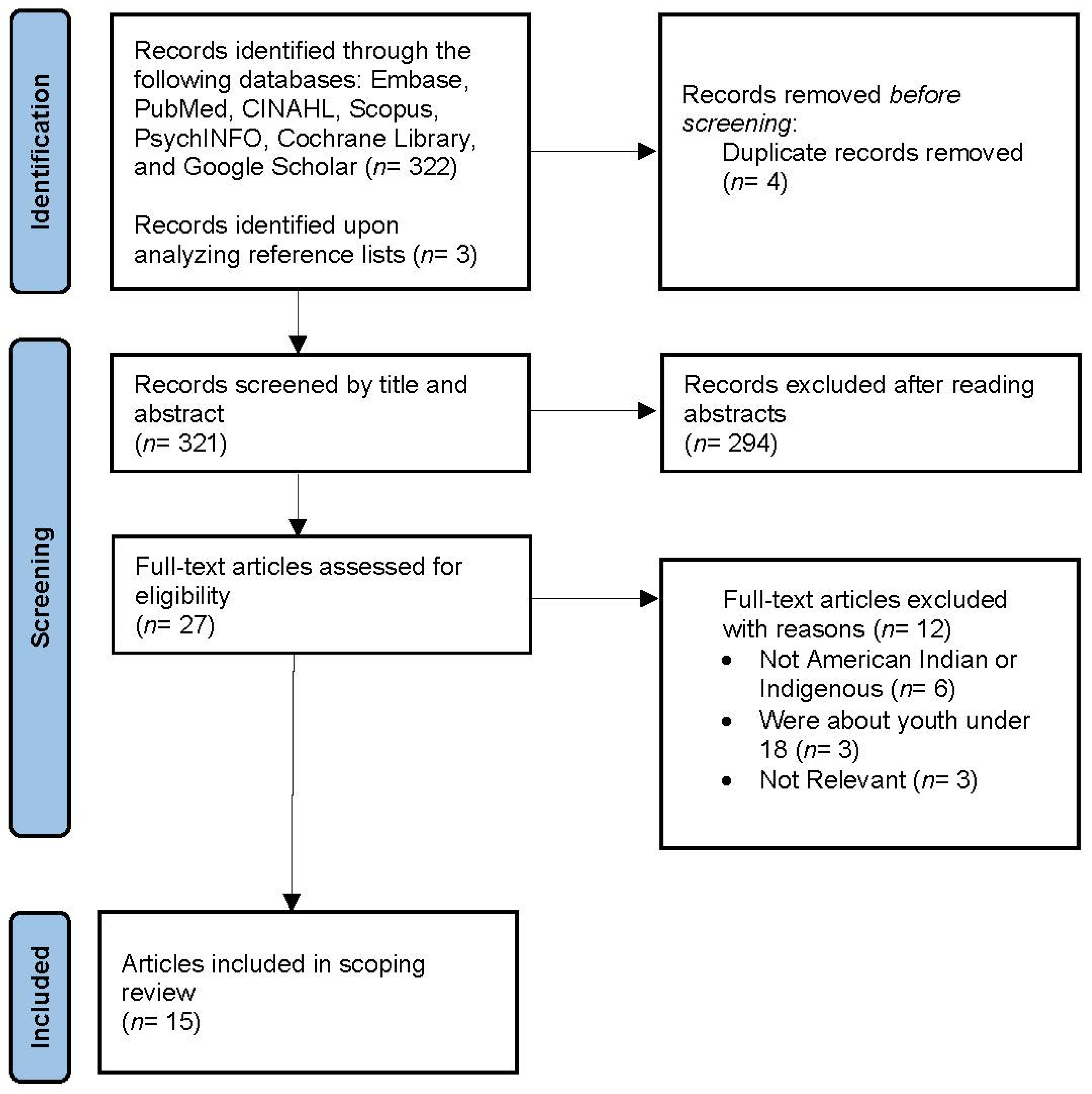
Background/Objectives: Human trafficking is the use of force, fraud, or coercion to compel a person to provide labor or sex and has become a public health crisis. This scoping review aimed to identify known risk factors for trafficking among North American Indigenous women and to synthesize the complexities of trafficking and its related health outcomes. Methods: Following the PRISMA-ScR checklist, a comprehensive literature search of seven electronic databases (CINAHL, Embase, PubMed, SCOPUS, PsycINFO, Cochrane Library, and Google Scholar) was conducted in March 2022 and updated in September 2023. English language research reports, literature reviews, dissertations and theses, commentaries, and government reports that focused on human trafficking in North American Indigenous women aged 18 years and older from the United States and Canada were identified using key terms. Results: Fifteen articles were included, revealing three themes: structurally produced vulnerabilities and other contributors to human trafficking, the long-term effects of human trafficking, and the need for collaboration of key stakeholders to mitigate human trafficking. Risk factors of human trafficking for Indigenous women include personal factors, historical trauma, and inadequate systems to identify and support victims. The needs of this population are complex. However, a multidisciplinary approach can be effective in combatting human trafficking. Conclusions: This review substantiates key risk factors and complexities unique to the trafficking experienced by North American Indigenous women, while also revealing a persistent gap in the research. These findings advance nursing knowledge by informing culturally responsive, trauma-informed care approaches while supporting targeted educational and research initiatives to improve health outcomes among these women.
Keywords: human trafficking; sex trafficking; sex exploitation; trafficking of women; Indigenous women human trafficking; sex trafficking; sex exploitation; trafficking of women; Indigenous women