


Abstract
Background: During the COVID-19 pandemic, synchronous hybrid teaching was implemented in the Nursing Degree at the University of Burgos to enable simultaneous face-to-face (F2F) and online attendance. Although this teaching model has remained of interest beyond the pandemic, evidence comparing educational outcomes according to attendance modality remains limited in nursing education. Objective: To compare educational outcomes, satisfaction levels, and student perceptions associated with F2F and online attendance within a synchronous hybrid teaching model. Methods: An observational, cross-sectional, comparative study was conducted among second-year nursing students enrolled in three theoretical courses (Pharmacology, Research Methodology and Information Systems, and Nutrition and Diet Therapy) during the 2020–2021 and 2021–2022 academic years at the University of Burgos (Spain). Data were collected through knowledge assessments, satisfaction questionnaires, and open-ended survey responses. Comparisons between attendance modalities were performed using parametric and non-parametric tests as appropriate. Mean differences and 95% confidence intervals (95% CI) were reported. p-values were adjusted for multiple comparisons using the Benjamini–Hochberg false discovery rate (FDR) procedure. Results: The association between attendance modality and educational outcomes varied across study units and assessment methods. At class level, the largest differences were observed in Nutrition and Diet Therapy, where F2F students obtained higher knowledge scores than online students (mean differences ranging from 2.41; 95% CI 0.34–4.47 to 3.71; 95% CI 2.13–5.30 points). In end-of-course assessments, mean knowledge scores were higher among predominantly F2F students in all study units and academic years, although none of these differences remained statistically significant after FDR adjustment. Satisfaction results also varied according to study unit, although attention was consistently rated more favorably in F2F classes across all end-of-year evaluations, a finding that remained significant after FDR adjustment. Qualitative findings showed that students associated F2F attendance with greater attention, understanding, and interaction, whereas flexibility, comfort, and organizational advantages were the main reasons for preferring online attendance. Conclusions: Associations between attendance modality, knowledge assessment scores, and student satisfaction varied according to study units and assessment method. In several analyses, students attending F2F classes reported more favourable learning experiences and obtained higher scores than students attending online classes. However, given the observational nature of the study, these differences should be interpreted cautiously. The findings suggest that attention, interaction, and student engagement deserve particular consideration when implementing synchronous hybrid teaching in undergraduate nursing education.
1. Introduction
The pandemic generated by the SARS-CoV-2 virus in 2020 brought about unprecedented health-related, socio-economic, and academic disruptions worldwide [1]. In Spain, the initial response in higher education involved the suspension of face-to-face (F2F) classes and a forced migration to purely virtual environments to prevent virus propagation [2]. In this context, COVID-19 acted as a significant catalyst for the large-scale implementation of synchronous hybrid teaching [3]. Although initially adopted as an emergency measure to navigate spatial restrictions and social distancing mandates, synchronous hybrid teaching has evolved into a sustainable strategic choice for higher education institutions seeking to leverage the benefits of digital transformation and pedagogical innovation [4].
Synchronous hybrid teaching is defined as a learning environment in which a teacher and a group of F2F students are joined simultaneously by students participating online through videoconferencing technology [4]. This approach facilitates parallel blending, allowing both F2F and online students to follow the learning activities of an academic course in real time [5]. Beyond its utility as a pandemic solution, this model offers a resilient framework for ensuring educational continuity during various disruptions, such as mobility restrictions, health-related absences, or localized emergencies [5]. By integrating physical and virtual participation, universities can move beyond traditional geographical barriers, offering a more flexible educational experience that accommodates the diverse learning biographies of the modern student body [6].
The primary advantage of synchronous hybrid teaching lies in its capacity to provide inclusive access to education for students facing travel restrictions or living outside the immediate university area [5]. This flexibility is particularly vital for adult students who must balance rigorous academic pursuit with professional commitments or family responsibilities [4,6]. Furthermore, it creates “inclusion-sensitive settings” for students with chronic illnesses who might otherwise be unable to attend campus-based sessions [6]. By allowing students the freedom to choose their modality of attendance, synchronous hybrid teaching promotes a more egalitarian education system capable of supporting diverse accessibility needs while fostering the digital competences required in the modern workforce [3,6].
Despite these benefits, synchronous hybrid teaching presents complex pedagogical and technological challenges. Instructors often describe their role in this environment as that of a “juggler,” forced to manage the needs of two distinct groups of learners simultaneously [7,8]. Research indicates that students participating online often experience a lower sense of social presence and engagement compared to their F2F counterparts, sometimes perceiving themselves as “outsiders” or observers rather than active participants [7,9]. Maintaining comparable learning standards requires a radical shift in pedagogical methods and the integration of interactive tools—such as real-time polls, quizzes, or collaborative digital whiteboards—to bridge the engagement gap between the two modalities [10].
In the field of nursing education, these challenges are particularly pronounced due to the eminently practical nature of the degree and the foundational requirement for clinical competence [8,11]. Nursing is fundamentally a “doing” discipline, where students must develop psychomotor skills, clinical reasoning, and reflective practices through interaction [8]. While virtual modalities can effectively support cognitive and affective learning outcomes, their role in developing hands-on skill performance and workforce readiness remains a subject of ongoing investigation [12]. In nursing programs, the transition to online or hybrid environments must be accompanied by a “pedagogy of caring” to ensure that students feel connected and supported during their professional development [8]. Consequently, determining whether synchronous hybrid teaching can provide an equivalent learning experience for both F2F and online nursing students is essential for evaluating its long-term viability [12].
Although the effectiveness of blended learning in nursing has been documented in previous studies [11], empirical research specifically comparing the outcomes of F2F and online students within a single synchronous hybrid session remains limited [3]. Much of the existing literature is exploratory or qualitative, focusing on student perceptions rather than rigorous quantitative comparisons of knowledge assessment scores [4]. There is a clear gap in the literature regarding how the choice of attendance modality influences the achievement of learning outcomes in health science curricula, where direct clinical readiness is paramount [12]. Understanding these differences is a key step in identifying institutional weaknesses and planning targeted improvement strategies to ensure educational equity for all nursing students.
The present study aimed to compare two learning scenarios—F2F versus online classes—within the synchronous hybrid teaching model implemented on the Nursing Degree at the University of Burgos (UBU). While data were collected during the COVID-19 pandemic to address spatial limitations and social distancing requirements, the study’s findings are intended to evaluate the broader sustainability and viability of this instructional model for undergraduate nursing education. The specific objectives of the work were to: (i) evaluate the association between class attendance modality (F2F versus online) and students’ knowledge assessment scores; (ii) evaluate the association between attendance modality and student satisfaction levels; (iii) ascertain student opinions regarding the advantages and disadvantages of F2F and online learning scenarios; and (iv) identify specific areas for improvement to optimize the implementation of synchronous hybrid teaching in nursing and other health science degrees.
2. Materials and Methods
2.1. Study Design and Population
This study followed an observational, cross-sectional, and comparative design. The study was primarily quantitative and included a complementary qualitative component based on the content analysis of responses to open-ended questions, which was used to provide additional context to the quantitative findings. Data were collected from students enrolled in 3 different subjects of the Nursing Degree taught using the same synchronous hybrid teaching model during two consecutive academic years. The accessible population, which was determined by geographic and temporal characteristics, was composed of students enrolled in the 2nd year in 3 degree-course study units (“Pharmacology”, “Research Methodology and Information Systems” and “Nutrition and Diet Therapy”) from the first semester, during the 2020–21 and 2021–22 academic years. The entire accessible population was invited to participate. Students who had not provided informed consent, had not attended class, or had not properly completed the surveys were excluded from the corresponding analyses. Therefore, no a priori sample size calculation was performed. Students repeating the second year were excluded from the study; therefore, the two academic-year cohorts comprised different students, with no overlap in participants between years.
Students could choose whether to attend each class F2F or online and could alternate between modalities throughout the academic year; therefore, the number and composition of students attending through each modality varied between classes. The same class was delivered simultaneously to both groups using Microsoft Teams. The teacher connected to the scheduled Teams meeting through the classroom computer, and a camera allowed online students to see the teacher. When the PowerPoint presentation was shared, online students viewed the same presentation used to support the F2F class. Teaching was primarily lecture-based, with opportunities for students in both modalities to ask questions and interact with the teacher. The teacher used a headset with a microphone to communicate with online students and relayed questions between F2F and online students when necessary. No dedicated technical support was present during the classes, although the University IT service could be contacted if technical problems arose.
The data were collected through self-administered questionnaires, as detailed in Section 2.2. Two complementary tests were administered in order to evaluate the student satisfaction levels with the two teaching scenarios (F2F versus online classes), and the students’ knowledge assessment scores in those scenarios (specific objectives num. 1 and num. 2):
- Test 1 (class). Throughout each study unit, 3 classes from the main group were selected. At the end of each of the classes, a survey was circulated so that, at that point in time, the students evaluated their level of satisfaction with the class that they had only very recently attended (“survey of class satisfaction levels”). Immediately afterwards, the teacher administered a brief test to assess students’ knowledge of the content covered during that class (“class-level knowledge test”).
- Test 2 (course). The satisfaction and knowledge assessment scores were also evaluated at the end of the academic year. A questionnaire (“survey of end-of-year satisfaction levels”) was administered on the last day of the academic year to evaluate student satisfaction levels with the two learning scenarios. The final theoretical examination for each study unit was also administered to assess students’ knowledge of the course content (“end-of-year knowledge test”).
The opinions of students on the two classroom scenarios (specific objective num. 3) were gathered at the end of the study units through questions worded to that end and included in the “survey of end-of-year satisfaction levels”.
For class-level assessments, students were classified according to the modality used to attend the specific class evaluated, whereas for end-of-year analyses, attendance modality was determined according to the predominant modality reported by each student over the course.
Figure 1 presents a STROBE-style overview of participant recruitment, data collection procedures, and the analytical samples included in the study.
Figure 1.
STROBE-style flow diagram showing participant recruitment, study structure, data collection procedures, and analytical samples. The figure summarizes the observational, cross-sectional, comparative design of the study and the progression from participant recruitment to quantitative and qualitative analyses. Detailed participant numbers for each study unit, assessment, attendance modality, and analytical sample are provided in Table 1. Abbreviation: F2F, face-to-face.
2.2. Measurement Instruments
2.2.1. Survey of Class Satisfaction Levels (Supplementary Material S1)
The survey was developed ad hoc by the teachers involved in the research project after reviewing previous studies assessing students’ perceptions and satisfaction with face-to-face and online teaching. The items were selected to cover relevant dimensions of the students’ learning experience [13,14,15]. The survey was implemented using the Moodle survey tool and consisted of 8 items. There were seven Likert-type questions on a 5 point scale (1: “not at all”, 5: “a lot”) which were formulated to measure student satisfaction levels with the class that they had very recently attended, evaluating such aspects as: the clarity of concepts worked in class, the quality of the presentation/exposition of the content of the class, the opportunity of responding to the questions that the teacher asked during the class, the opportunity of clearing up doubts that arose during the class, the level of attention lent during the class, the difficulty of the class, and general levels of satisfaction with the class. Finally, a closed question with a single (no/yes) dichotomous answer was included to ascertain the location from which they were following the class (F2F/virtual online classroom).
2.2.2. Class-Level Knowledge Test
The class knowledge assessments consisted of brief teacher-developed multiple-choice tests (4–16 questions), with four response options and one correct answer per question, covering the specific contents addressed in each class. Scores were expressed on a 0–10 scale. Both F2F and online students completed the class-level knowledge tests simultaneously, using their own computers, under the same time limits and scoring rules within each study unit. Individual access to supporting materials was not monitored in either attendance modality, although the short time allowed for completing the tests limited the opportunity to consult such materials. Incorrect answers were penalized by 25% of the value of a correct answer in Nutrition and Diet Therapy, whereas no penalty was applied in Pharmacology or Research Methodology and Information Systems. Since these tests differed in content and number of questions across classes, F2F and online students were compared only within each individual class assessment, and scores from different tests were not pooled.
2.2.3. Survey of End-of-Year Satisfaction Levels (Supplementary Material S2)
This survey (online format) was designed ad hoc and was structured into 4 sections:
- Section I. Informed consent. In this section, the students had the option of accepting to participate in the study, after which they were able to access the other sections; or, on the contrary, refuse to form part of the study, which led directly to the end of the questionnaire.
- Section II. General questions. In this section, sociodemographic variables were gathered, such as gender (single-response closed question with 4 response options: “masculine/female/I prefer not to say/others”), age (open-ended question), and work (single-response closed question with 4 response options: “no work/I work on working days/I work at weekends/I work on working days and weekends”). In addition, this section included two questions relating to the class attendance of the student on the study unit (single-response closed question with 5 response options: “I have not attended any class/I have attended less than 25% of classes/I have attended 25–50% of classes/I have attended 50–75% of classes/I have attended 75–100% of classes”) and the type of attendance (single-response closed question with 5 response options: “all in F2F classes/all in online classes/most in F2F classes/most in online classes/a similar number of each type of class”). Also included in that section were 3 questions to evaluate the opinions of students on the two learning scenarios. In that way, the students were asked whether they had noted any differences between the F2F and the online classes (single-response closed and dichotomous –“no/yes”- question), what type of class they had liked most (single-response, closed question with 3 response options: “F2F classes/online classes/I liked them equally”), and the reason with the most weight for having chosen that type of class (open-ended question).
- Section III. Evaluation of the classes from the main F2F group. This section included 4 questions. The first, with the objective of knowing whether the student had attended some of the main F2F classes (single-response closed and dichotomous –“no/yes”- question). Negative responses prevented access to the other questions within the section. The second question comprised the same seven satisfaction items used in the class satisfaction survey described above (quality and clarity of the classes, opportunity to answer questions and resolve doubts, perceived difficulty, level of attention, and overall satisfaction), rated using the same 5-point Likert scale. The two last questions were designed to ascertain the advantages and disadvantages that the students associated with the F2F classes (open-ended questions).
- Section IV. Evaluation of the online classes of the main group. The structure of this section was similar to Section III for the F2F classes, but in relation to the online classes.
2.2.4. End-of-Year Knowledge Test
This test was freely designed by each teacher and was administered in person and on paper. All students, regardless of their predominant class attendance modality (F2F or online), completed the final examination in person, under the same conditions and with direct supervision by a teacher. Access to supporting materials was not permitted during the examination. The end-of-year knowledge assessments corresponded to the standard final examinations of each study unit and contributed to the students’ final grades. The same examination format and scoring criteria were used in both academic years within each study unit. In Research Methodology and Information Systems and Nutrition and Diet Therapy, the examinations consisted of 20 multiple-choice questions with four response options and one correct answer. In Pharmacology, the examination comprised 20 multiple-choice questions with the same response format, two short clinical cases, and one long clinical case. In all three study units, incorrect answers to multiple-choice questions were penalized by 25% of the value of a correct answer. Final scores were expressed on a 0–10 scale. At the end of the test, the students had to indicate the regularity and the modality of their attendance on the subject unit (the structure of those two questions was similar to the one described in Section II of the “end-of-year satisfaction levels survey”).
2.3. Variables
The variables that formed part of this work, their main characteristics and subsequent reformulations are detailed as follows:
Comparison variable: “class attendance modality” (F2F/online) was used as the grouping variable. Initially, the university implemented a rotational attendance system in response to COVID-19 restrictions, whereby students alternated between F2F and online attendance. However, as the academic year progressed, students were given greater flexibility to choose whether to attend classes F2F or online according to their personal circumstances. For Test 1, attendance modality was recorded for each individual class assessment through a dichotomous question (F2F/online) included in the class-level assessment and the corresponding class satisfaction survey. In “Test 2”, the responses to the qualitative variable “type of attendance” were scaled down from 5 to 3 responses: “mostly F2F” (including those students who responded that they had attended all the F2F classes and those who responded that they had attended most of the F2F classes), “mostly online” (including those students who responded that they had attended all the online classes and those who responded that they had attended most of the online classes), and “similar”. Attendance modality (F2F/online) was considered the main comparison variable. The purpose of the analyses was not to identify independent predictors of educational outcomes, but rather to explore associations between attendance modality and the different academic and satisfaction outcomes evaluated in each educational context. Attendance modality was recorded and subsequently used for comparisons of academic performance, satisfaction, and student perceptions.
Outcome variables: The variable “academic results”, a quantitative continuous variable, was assessed using the scores obtained in the “class-level knowledge test” and the “end-of-year knowledge test”. The “student satisfaction levels” with the two learning scenarios were evaluated with 7 variables (quality of the classes, clarity of the classes, possibility of answering questions, possibility of clearing up doubts, difficulty of the classes, attention levels, and general satisfaction level with the classes), which were measured on a 5-point Likert-type scale.
Other variables included in the study: Sociodemographic variables (age, gender, and work), all qualitative variables except for the variable “age”, which was originally a quantitative variable, although it was categorized at two levels to facilitate the descriptive profile of the population: “<25 years” and “≥25 years”. In the same way, the responses to the qualitative variable “work” were scaled down from 4 to 2 responses: “in work” and “no work”.
The responses to the qualitative variable “classroom attendance” were scaled down from five to two categories: “low attendance”, comprising students who selected “no attendance”, “<25%”, or “25–50%” of classes; and “high attendance”, comprising students who selected “50–75%” or “75–100%” of classes. Students with “high attendance” were the only ones taken into account for the quantitative analysis (see Section 2.4) of the data collected in the survey of “end-of-year course satisfaction levels”. It was considered that having a minimum degree of attendance was essential for a meaningful evaluation of the association between attendance modality and both academic performance and student satisfaction. Therefore, only students classified as having “high attendance” were included in these analyses. Similar attendance thresholds have previously been used in nursing and higher education research when examining the relationship between class attendance and educational outcomes [16]. In addition, students were asked to report their attendance patterns throughout the academic year, and only those who indicated having attended classes using both modalities were considered eligible for these comparisons. Consequently, all students included in the end-of-year satisfaction analyses had experienced both F2F and online teaching and were therefore able to provide informed evaluations of both learning environments. However, for the qualitative analysis (see Section 2.4) of the data collected in the “end-of-year course satisfaction survey”, the responses of all the students were taken into account, regardless of their degree of attendance, because it was considered that the questions collected in that analysis were less conditioned by the extent of their attendance.
2.4. Data Analysis
2.4.1. Quantitative Analysis
The closed-ended responses included in the “survey on class satisfaction levels” and in the “survey on end-of-year course satisfaction levels”, as well as the results of the “class-level knowledge test” and the “end-of-year knowledge test”, were evaluated through quantitative analysis. Statgraphics 19 and IBM SPSS statistics 20 were used for the statistical analysis of the data collected in this study. Descriptive statistics were calculated as means and standard deviations for quantitative variables and frequencies and percentages for qualitative variables. Although individual five-point Likert-type items are ordinal by construction, means and standard deviations were used to summarize satisfaction ratings to facilitate their interpretation and comparison between attendance modalities [17].
Normality was assessed using the Shapiro–Wilk test. For comparisons between independent F2F and online groups, Student’s t-test was used when the normality assumption was met, whereas the Mann–Whitney U test was used otherwise. For the end-of-year satisfaction analysis, students who evaluated both F2F and online teaching modalities were compared using paired analyses. Normality of the within-student differences was assessed, and the paired Student’s t-test or Wilcoxon signed-rank test was used, as appropriate.
Mean differences (F2F minus online) and their 95% confidence intervals (CI) were reported. Statistical significance was set at p < 0.05. For independent comparisons, p-values, mean differences and 95% CIs were obtained from Student’s t-test when the normality assumption was met; otherwise, mean differences and 95% CIs were calculated without assuming equal variances (Welch’s approximation), whereas p-values were obtained from the Mann–Whitney U test. For paired comparisons, 95% CIs were derived from the paired t-test. Because the CIs and the rank-based tests are derived from different procedures, occasional discrepancies between them may occur; in such cases, statistical significance was determined from the p-value.
To account for multiple comparisons, a sensitivity analysis was performed. Comparisons were grouped into four families according to the study design: class-level knowledge tests (18 comparisons; Table 2), end-of-year knowledge examinations (6 comparisons; Table 3), class-level satisfaction (119 comparisons; Table 4) and end-of-year satisfaction (42 comparisons; Table 5). Within each family, p-values were adjusted using the Benjamini–Hochberg procedure to control the false discovery rate (FDR) at 5% [18]. This procedure was chosen because, in an exploratory study with numerous correlated outcomes, controlling the family-wise error rate would be overly conservative. Unadjusted p-values are reported in Tables 2–5, and FDR-adjusted p-values are provided in Supplementary Material S3 (Table S1). Findings that were statistically significant before but not after adjustment were interpreted as nominal.
All questionnaire items were mandatory; therefore, no item-level missing data were present in the completed questionnaires. In the knowledge assessments, unanswered questions received no score and were handled according to the predefined scoring procedure rather than as missing data. Students who did not complete a questionnaire or assessment did not contribute data to the corresponding analysis. No imputation of missing data was performed.
2.4.2. Qualitative Analysis (Content Analysis of Open-Ended Responses)
The open-ended questions included in the “end-of-year course satisfaction survey” were analyzed using an inductive content analysis approach [19]. One researcher initially reviewed all responses and developed preliminary categories based on their content. The proposed categories and their labels were subsequently reviewed jointly by two researchers and refined through discussion until consensus was reached. Each response was assigned to the category that best represented its main content, and all substantive responses could be accommodated within the resulting categories. When a response addressed multiple issues, the dominant category was determined by considering the overall meaning of the response and the relative emphasis placed by the student on each issue. Responses that were blank or did not contain interpretable information were excluded from the qualitative categorization. Once the final categories had been established, frequencies and percentages were calculated using Microsoft Excel 365.
2.5. Ethical Considerations
The data included in this study were collected as part of a teaching innovation research project that received a favorable report from the Bioethics Committee of the University of Burgos (IR 30/2019). Written informed consent was obtained from the students at the beginning of the academic year. Students were informed that participation in the study was voluntary and that declining to participate would have no academic consequences. All students agreed to participate and provided informed consent. Both the brief class knowledge tests and the final examinations were part of the standard academic assessment of the study units and contributed to the students’ final grades; they were not administered exclusively for research purposes. Informed consent concerned the use of the students’ data for research purposes. Data were handled confidentially and in accordance with the Spanish Organic Law 3/2018, of 5 December, on the Protection of Personal Data and Guarantee of Digital Rights [20].
Generative artificial intelligence (GenAI) tools were used to support the literature review and manuscript revision process, including the identification of recent references and the refinement of scientific writing. All content, interpretation of findings, critical appraisal of the literature, and final manuscript preparation were performed and verified by the authors.
3. Results
3.1. Description of Sample
Most respondents were women and younger than 25 years (approximately 90%), and around 20% reported combining their studies with work (data obtained from the end-of-year satisfaction survey). The number of students participating in the different assessments varied across study units and academic years. Participant flow and the number of students contributing to each assessment, according to attendance modality where applicable, are detailed in Table 1.
Table 1.
Participant Flow and Analytical Subgroups Across Academic Years and Study Units.
3.2. Association Between Class Attendance Modality and Students Results
As described in Section 2.1, the association between class attendance modality (F2F versus online) and knowledge assessment scores was evaluated both immediately after individual theoretical classes (Test 1; Table 2) and at the end of the academic year through the final theoretical examinations (Test 2; Table 3).
Table 2.
Results of the knowledge test (graded out of 10 and expressed as an average ± Standard Deviation) administered to the students of the different classes of each study unit (Pharmacology, Research Methodology and Information Systems, and Nutrition and Dietotherapy) as a function of the type of class that the students attended(F2F/Online).
Table 3.
Results of the knowledge test (graded out of 10 and expressed as the average ± Standard Deviation) administered at the end of the academic year to students following the different study units (Pharmacology, Research Methodology and Information Systems, and Nutrition and Dietotherapy) as a function of the type of class the students attended (F2F/Online).
At the class level (Table 2), the association between attendance modality and knowledge scores varied across study units and individual classes. In “Research Methodology and Information Systems”, no statistically significant differences were observed in any of the six individual classes evaluated. In “Pharmacology”, the direction of the differences varied across classes, with statistically significant differences observed in only two individual assessments and in opposite directions (only the difference favoring online attendance in the first class of 2020–2021 remained significant after FDR adjustment). In contrast, in “Nutrition and Diet Therapy”, knowledge scores were consistently higher among F2F students across the six individual class assessments, with mean differences ranging from 1.37 to 3.71 points and statistically significant differences in five of them (three after FDR adjustment).
At the end of the course (Table 3), mean knowledge scores were higher among students who reported attending mostly F2F classes in all three study units and in both academic years, although the magnitude of the differences varied and none of them remained statistically significant after FDR adjustment (Supplementary Table S1).
3.3. Association Between Class Attendance Modality and Student Satisfaction
The association between class attendance modality and student satisfaction was evaluated in the context of one class (Test 1) (Table 4) and at the end of the year (Test 2) (Table 5), as previously described for the knowledge assessment scores. Seven satisfaction-related variables were evaluated.
Table 4.
Student satisfaction levels in class as a function of type of attendance (F2F/Online) evaluated through 7 variables (clarity of concepts worked in class; quality of presentation/exposition of class contents; possibility of answering questions from the teacher during the class; possibility of clearing up doubts that may have arisen during the class; attention levels during the class; difficulty of the class; and general satisfaction levels with the class). Results are presented as average ± Standard Deviation.
Table 5.
Satisfaction levels of students at the end of the year as a function of type of class attended (F2F/Online) evaluated through 7 variables (clarity of concepts worked in class; quality of presentation/exposition of class contents; possibility of answering questions from the teacher during the class; possibility of clearing up doubts that may have arisen during the class; attention levels during the class; difficulty of the class; and general satisfaction levels with the class). Results are presented as average ± Standard Deviation.
For clarity and quality of presentation, class-level comparisons showed few nominally significant differences between attendance modalities, none of which remained significant after FDR adjustment (Table 4). At the end of the academic year (Table 5), ratings generally favored F2F classes, although the magnitude and statistical evidence of the differences varied across study units and academic years. The most consistent pattern was observed in “Nutrition and Diet Therapy”, where F2F ratings were higher for both clarity (mean differences: 0.29–0.52 points) and quality of presentation (0.19–0.59 points) in both academic years. After FDR adjustment, these differences remained significant for clarity in both academic years and for quality of presentation in 2021–2022.
The possibility of answering questions, resolving doubts, and maintaining attention generally showed differences in favor of F2F classes in the end-of-year evaluations, although the magnitude varied across study units and academic years (Table 5). Differences in attention ranged from 0.32 to 0.76 points in the end-of-year assessments and were statistically significant in all three study units in both academic years. These differences in attention, as well as those in resolving doubts, remained significant after FDR adjustment in all three study units and both academic years, whereas those in answering questions remained significant in four of the six comparisons. Class-level results were less consistent, and none of the class-level differences remained significant after FDR adjustment (Table 4), indicating that these differences were more evident when students evaluated their overall experience at the end of the course.
Perceived difficulty showed the smallest and least consistent differences between modalities, with mean F2F–online differences ranging from −0.21 to +0.14 points in the end-of-year evaluations and no statistically significant comparisons (Table 5). Overall satisfaction showed a more heterogeneous pattern: end-of-year ratings were higher for F2F classes in “Nutrition and Diet Therapy” in both academic years (mean differences of 0.31 and 0.52 points, respectively; only the 2021–2022 difference remained significant after FDR adjustment), whereas the differences were small and did not reach statistical significance in “Pharmacology” or “Research Methodology and Information Systems”. Class-level results for overall satisfaction were also generally similar between modalities (Table 4).
Overall, the influence of attendance modality on student satisfaction varied according to the study unit, the satisfaction variable evaluated, and the timing of the assessment. The clearest pattern in favor of F2F teaching was observed in “Nutrition and Diet Therapy”, particularly in the end-of-year evaluation, whereas the results for “Pharmacology” and “Research Methodology and Information Systems” were less consistent.
3.4. Sensitivity Analysis for Multiple Comparisons
Of the 185 comparisons, 44 were statistically significant before adjustment and 24 remained significant after FDR adjustment (Supplementary Material S3, Table S1). For knowledge scores, the class-level differences favouring F2F attendance in “Nutrition and Diet Therapy” remained significant in three of the six classes (adjusted p = 0.009–0.027), as did the difference favouring online attendance in the first “Pharmacology” class of 2020–2021 (adjusted p = 0.027). None of the end-of-year examination differences remained significant (adjusted p ≥ 0.114). For satisfaction, none of the ten nominally significant class-level differences remained significant, whereas most end-of-year differences were robust: attention levels and clearing up doubts remained significant in all three study units and both academic years (adjusted p ≤ 0.030), as did answering questions in four of the six comparisons, clarity in both academic years of “Nutrition and Diet Therapy”, and quality of presentation and overall satisfaction in “Nutrition and Diet Therapy” in 2021–2022.
3.5. Student Opinions on the Two Learning Scenarios (Face-to-Face (F2F) Versus Online Classes
The responses of the students to two closed questions (see Table 6) and 5 open-ended questions (see Table 7) were analyzed to address specific objective num. 3.
Table 6.
Nursing student opinions of Face-to-Face and Online classes (closed questions).
Table 7.
Nursing student opinions of Face-to-Face and Online classes (open-ended questions).
Table 6 presents the students’ responses to the following questions: “Did you note differences between the F2F classes and the online classes of the main group? and “Which type of class of the main group did you like most of all?”
During the first year of the pandemic, more than half of the students in each of the three study units reported perceiving differences between F2F and online classes, with “Research Methodology and Information Systems” showing the highest percentage. However, during the second academic year, the majority of students in “Pharmacology” and “Research Methodology and Information Systems” reported no differences between the two learning scenarios. In contrast, in “Nutrition and Diet Therapy”, the percentage of students who perceived differences between F2F and online classes increased during the second academic year (Table 6).
Student preferences for the type of teaching context (F2F versus online) depended on the study unit. In “Pharmacology” and “Research Methodology and Information Systems”, a substantial proportion of students reported liking F2F and online classes equally in both academic years. In contrast, F2F classes were preferred by the majority of students in “Nutrition and Diet Therapy”. Across the individual study units and academic years, online classes alone were the preferred option for only a minority of students (Table 6).
The responses to the open-ended questions, categorized according to the qualitative analysis described in the Methods section, are shown in Table 7.
In a consistent way for the three study units and the two academic years that were evaluated, the reason of greatest weight for the students when selecting the type of (F2F/online) class to follow the teaching was “The comfort of following it from home”. Within the category, questions on the use of facemasks and cold classroom conditions associated with constant air-conditioning were included, among other aspects linked to personal comfort, which the students mentioned in their answers: “Due to the cold classrooms, the inconvenience of the facemask”, “I chose to work from home, because I can see the screen closer than with the projector, and I can read the presentations better, and because I’m more comfortable in the chair in my room than in the chairs at the university”, etc. After “comfort”, the reasons that more than any others conditioned the choice of classroom from which to follow the teaching were associated with “greater attention and understanding of the class”. In that sense, 19% of the students pointed to questions like: “I’ve attended the F2F classes more, because I think that it’s much easier to follow the class, to avoid distractions”, “Paying attention. It’s simpler to pay attention and to follow the class in a constant way when I’m F2F in a classroom, because of the gestures of the teacher, the pointer on the whiteboard, there are fewer things that might distract you in class”, etc. Curiously, the percentage of students who mentioned “fear of infection by coronavirus” as one of the reasons conditioning the choice of the online classroom during the first year of the study (10% as an average of the 3 study units evaluated) was reduced to 0% during the second year of the pandemic.
Among the principal advantages of the F2F classes, the students consistently highlighted questions related to “greater attention and understanding in class” in the 3 study units and throughout the two academic years that were evaluated. Some of the responses were: “Attendance in the classroom means that in some way you have to pay attention, so you’re not distracted so easily”, “Possibility of understanding the subject matter and being able to follow the class with clarity…, a lot of information is lost from home”, etc. In “Pharmacology”, “Research Methodology and Information Systems” and the academic year 2021–22 for “Nutrition and Diet Therapy”, the second most frequently mentioned advantage of the F2F classes was the fact of “being able to resolve doubts, participate in the classroom and interact with both the students and the teacher”, through such affirmations as: “you can clear up doubts in a better way and understand everything more easily. As you have more contact with the teacher, you feel like attending and clearing up possible doubts”, “You can ask questions in private, if you’re ashamed to speak in the virtual online classroom”, “Better relations with classmates and teacher. Sometimes you can listen to the questions and answers better, as online, we don’t hear the other students answering”. In the case of the first year of the subject module “Nutrition and Diet Therapy” that was evaluated, 24% of the students mentioned as an advantage of the F2F classes “non-verbal communication of the teacher”. It is worth highlighting this advantage, which considerable percentages of students also mentioned in relation to the other two study units that were evaluated (18% and 16% of the students attending “Pharmacology” and “Research Methodology and Information Systems”, respectively, during the academic year 2020–21). In that respect, some of the students’ affirmations were: “You pay greater attention and the explanations of the teacher, who without giving notes manages to get you to follow the classes perfectly well”, “You are more receptive, because you listen directly to the teacher and you see the gestures, hear the tone of voice, see the pointer in class, you have to be centered on taking notes and to do that you have to listen”, “The teacher makes sure that you listen to everything that is being said, through gestures, and makes sure that you don’t disconnect for one second in class”.
During the first academic year that was evaluated, the cold, the discomfort of the facemask, as well as other questions related to personal wellbeing were highlighted as the principal disadvantages of the F2F classes, with answers like: “It’s cold in the classroom, because of the air-conditioning and I think that’s why many people prefer to switch to online streaming”, “It’s cold and you have to wear a facemask”, etc. However, it is worth highlighting that in both “Pharmacology” and “Nutrition and Diet Therapy” during the second year of the pandemic, the highest percentage of responses made it clear that they found no disadvantages with F2F classes. Curiously, various responses found in relation to the disadvantages of the F2F classes were categorized as “rapid pace of the class”, as statements on the study units were consistently obtained such as: “[the teacher] speaks very quickly and sometimes you don’t get all the information the first time”, “A little stressful, due to the speed of some explanations and on occasions exhausting when projecting and removing the slides as they help quite a lot with understanding and to follow the class”, “Very rapid pace when explaining the theory, generating stress and worry on occasions”.
With regard to the online classes, the most prominent advantage, consistently mentioned in relation to the three study units under evaluation during the first year of the pandemic, was categorized as “the cold classrooms, the use of facemasks and the comfort of being at home”, with answers like: “You are more peaceful at home, it’s very cold in the F2F classes”, “It’s more comfortable, not to have to wear the facemask and not having all the windows open”, etc. However, the most frequently repeated advantage of the online classes among the interviewees was linked to organizational questions (travel, time…), with statements like: “To be able to enjoy the class on days when going to university is impossible, because of work and family”, “You can organize your timetable better with other study units and activities”, etc. Curiously, the category “Better note-taking” had to be created for this question, in order to be able to group together a large number of responses (7% as an average of the 3 study units and the two academic years) of the type: “It’s more comfortable and it gives you time to read the slides better”, “Note-taking’s more comfortable”, “You can see the presentation and the explanation and take notes at the same time. More comfortable”.
In a unanimous way for the three study units and the two academic years of the study, the main disadvantage that the students associated with the online classes was related to the degree of attention, expressing it with phrases like: “You lose concentration more quickly”, “You pay much less attention. As you’ve nobody who can see you, you’re distracted more easily and you’re doing other things rather than the study unit in itself”, “It’s more difficult to follow the class, in other words, I’m more distracted”. Another of the disadvantages of the online classes highlighted most of all among the surveyees referred to technical problems associated with online streaming, reflected in responses like: “At times the connection fails and the presentation and the explanation of the teacher freezes”, “Computer errors happen sometimes”, “You can’t hear the voices of classmates when they ask questions”, “Sometimes [Microsoft] Teams freezes and you don’t find out about things”, etc.
4. Discussion
The modality of synchronous hybrid teaching was implemented in the Nursing Degree of the UBU in response to the spatial limitations arising from the COVID-19 pandemic. However, in view of the benefits, both for the students and for the university institutions that are associated with this type of teaching [10], what was at first initiated as an emergency measure in response to a health crisis could be evaluated as a future strategy. Hence, the differences observed between the two learning scenarios that constitute this teaching modality (F2F class versus online class) on student results and satisfaction levels were studied, as a key step to be able to identify weaknesses and, where necessary, to plan improvement strategies.
The association between attendance modality and academic performance should be interpreted considering the inclusion criteria adopted in this study. Only students with high attendance were included in the satisfaction analyses, as this threshold was considered to represent a minimum level of exposure to the teaching modality being evaluated. Students with lower attendance levels were considered to have insufficient experience of the corresponding learning environment to provide meaningful evaluations of satisfaction and learning experiences. Similar attendance thresholds have previously been used when examining associations between class attendance and academic outcomes [16], and recent evidence suggests that minimum attendance thresholds may be useful for interpreting educational outcomes in higher education settings [21].
The association between class attendance modality and knowledge assessment scores varied according to the study unit, academic year, and the type of assessment (individual class versus end-of-year evaluation). After FDR adjustment, only three class-level differences in “Nutrition and Diet Therapy” (favoring F2F attendance) and one in “Pharmacology” (favoring online attendance) remained significant, and none of the end-of-year differences did; therefore, the findings regarding knowledge assessment scores should be interpreted as exploratory.
With regard to the association between class attendance modality and student satisfaction, a clear dependence on the study unit and on the type of assessment (individual class versus end-of-year evaluation) was again observed. As discussed above, these differences could be related to the characteristics of the study unit and/or to teaching practices, including the use of ICT. However, these factors were not directly assessed in the present study and should therefore be interpreted as possible contextual explanations rather than empirically demonstrated causes of the observed differences. In ‘Nutrition and Diet Therapy’, the clearest pattern in favor of F2F teaching was observed, particularly in the end-of-year evaluation, where higher ratings were found for several aspects of student satisfaction. The individual class evaluations showed a less uniform pattern, and the few nominally significant differences favoring F2F attendance did not remain significant after FDR adjustment. In ‘Pharmacology’ and ‘Research Methodology and Information Systems’, the findings were less consistent and varied according to the specific item, academic year, and type of assessment. Attention tended to be rated more favorably in F2F classes, particularly in the end-of-year evaluations, where the differences remained significant after FDR adjustment in all study units and academic years, although class-specific results were more heterogeneous. Perceived difficulty was generally similar between modalities, with only an isolated nominally significant difference in the class-level analyses, which did not remain significant after FDR adjustment.
In accordance with our results, it was also observed in previous works that students attending F2F and online classes, in synchronous hybrid teaching, perceived differences at different points in the teaching-learning process [22,23]. When interpreting these findings, it should be noted that the present study was observational, cross-sectional, and comparative in nature. Therefore, the observed differences between attendance modalities should not be interpreted as causal effects of synchronous hybrid teaching itself but rather as associations identified within a real educational context. Similar observational studies comparing educational modalities in nursing education have also been used to explore associations between learning environments, academic outcomes, engagement, and student satisfaction rather than establish causal relationships [24]. Valencia et al. [25] found that the majority of students interviewed on the Nursing Degree (76.6%) valued the F2F classes more favorably with regard to the quality of learning, the sensation of integration in the classroom, keeping up attention, avoiding distraction, and easy interaction with the teacher. More recently, studies conducted in synchronous hybrid learning environments have reported that students participating remotely often perceive lower levels of social presence and less effective learning experiences than their F2F peers, highlighting the central role of interaction and engagement in shaping educational outcomes [3].
The lack of interaction in the areas of online teaching has been described by various authors as one of the principal problems with this sort of teaching [26,27,28], and although that shortcoming has been fundamentally attributed to asynchronous online approaches, our results and those of previous studies [22,23,25] have indicated that the synchronous scenarios were in that respect equally challenging scenarios that must be confronted. In line with our findings, a recent systematic review identified student engagement and interaction between F2F and online participants as among the most important challenges facing synchronous hybrid teaching environments [4].
Interaction is key if teaching success is to be guaranteed, because students who do not interact during a class have a greater probability (1.5 times higher) of not passing the course than students who remain cognitively active [29]. Recent evidence in nursing education has further highlighted the importance of engagement, motivation, and active participation as factors associated with positive learning experiences and academic achievement in online and hybrid learning environments. Various authors have evaluated the efficiency of tools to maintain attention levels and interaction among students attending online classes in synchronous hybrid teaching environments [29,30,31]. In this way, teachers can quickly and easily collect students’ responses and share them instantly, thereby creating dynamic learning experiences that are also inclusive, as students who are more reluctant to participate through oral interventions may feel more comfortable engaging through digital response systems [10]. This inclusive potential of synchronous hybrid environments has also been highlighted in more recent research, which suggests that such settings can support participation among students with diverse learning preferences, needs, and personal circumstances by providing more flexible opportunities for engagement [6].
Students are key to university teaching, and their opinions should, therefore, form the foundation for academic improvement plans. In that sense, student opinions of the two learning scenarios that they experienced were also evaluated in our study. The majority of the students who were interviewed perceived differences between the F2F and the online classes during the first year that was evaluated, although the perception of such differences was lower in 2 out of the 3 study units, perhaps because of greater familiarization with this type of teaching among both teachers and students. The majority of the students attending “Nutrition and Diet Therapy” showed a preference for the F2F classes, whereas the students of “Pharmacology” and “Research Methodology and Information Systems” liked both learning scenarios equally well. Across the individual study units and academic years, only a minority of students selected the online classes as their preferred option. In accordance with our results, in a study conducted with 689 students in universities from China and the USA, only 14% of interviewees chose the virtual online classroom [32]. Likewise, in a study in which students from 43 Spanish universities participated, the authors observed that only 10% of the interviewees preferred virtual online teaching as against F2F classes, although it is worth highlighting that this study was completed during lockdown and 80% of the interviewees considered that their institution had not adapted itself in a suitable way to the new post-pandemic scenario [33]. It must be taken into account that, at the start of the pandemic, changes to the teaching methodology had to be introduced over a very short time, almost without either resources or training among the teachers, which might have some effect on the perception of the quality of virtual online teaching/learning among the students. Our study, on the contrary, started in the academic year 2020–21, when the teachers had already been grappling for various months with the question and when the university computer services department had installed the necessary equipment in all the classrooms for proper functioning of the virtual online classroom, which might explain that many of the students affirmed that they liked both learning scenarios equally well in some of the study units that were evaluated. In parallel to our study, in their study of the Nursing Degree at the University of Comillas, Valencia et al. [25] also observed that within a synchronous hybrid teaching scenario, only 22% of the students showed a preference for the virtual online classroom. Those authors underlined that, despite the majority preference for the F2F class, it was not startlingly obvious in the final score. The average of the items that compared both scenarios amounted to 3.7 (on a scale of 1–5, where 5 was interpreted as a preference for the F2F classroom). In other words, although a majority of students were in favor of F2F teaching, the rejection of virtual online teaching was only moderate.
Likewise, a qualitative analysis was also performed, complementing the quantitative findings obtained in the study and providing additional insight into the quantitative results, particularly those related to student satisfaction, attention, interaction, and preferences regarding attendance modality. In this way, the qualitative findings helped to contextualize and explain several of the associations observed between attendance modality and students’ perceptions of the teaching-learning process, providing a more comprehensive understanding of their experiences within the synchronous hybrid teaching environment.
The qualitative analysis made it possible to explore the specific motivations underlying students’ choice of one teaching modality over another, as well as the perceived advantages and disadvantages associated with each learning scenario (F2F versus online classes). These findings were largely consistent with the quantitative results. Qualitative responses associated with F2F attendance frequently highlighted greater attention and concentration, improved understanding of course content, more effective interaction with teachers and classmates, and easier clarification of doubts. These themes closely mirrored the quantitative findings, in which students attending F2F classes reported more favourable perceptions regarding attention, interaction, and learning. Conversely, comfort, flexibility, and organizational convenience emerged as prominent reasons for favouring online attendance.
In that sense, it may be highlighted that the main reason for choosing the virtual online classroom was related to comfort-related questions. In general, those questions were related to aspects linked to the pandemic, such as the use of the facemask or the cold that students felt in the F2F classes, because of constant air-conditioning or open windows. These aspects are at present no longer of the same relevance as before and it could therefore be asked whether the same high rates of online students might be observed now as were seen during the academic years when the work took place. In fact, the second motive with greater weight when choosing one classroom over another was higher attention levels and understanding associated with the F2F classes.
The main advantage associated with the F2F classes coincided with the most prominent disadvantage for the online class: the attention levels within the classroom. In other words, the students were aware that distractions within the online class were more frequent, which in turn conditioned their understanding of the explanations. Another of the most frequently repeated advantages for the F2F class made reference to the (student-teacher and classmate) interactions. In line with our results, in a study conducted with 122 students from the University of Las Palmas de Gran Canaria, the interviewees perceived that classroom interactions both between peers and with the teachers were faster in F2F classes, evaluating eye contact and the importance of non-verbal communication in that teaching scenario [23]. If facial gestures suggest misunderstanding in the F2F classes, then the teacher can repeat the idea in another way. Likewise, an individual doubt that is set out in public can help other students understand the purpose of the explanation [32]. In that sense, and taking into account that such signs as facial gestures or murmurs during the classes are hidden in online environments (because the student often switches off both the camera and microphone), Solé-Beteta et al. [34] recently developed a methodology to measure the level of attention of the online student through a systematic analysis of over 30 types of digital interaction and events during synchronous sessions. It is worth highlighting that another of the most repeated disadvantages in relation to the virtual online classroom was to do with technical “glitches” that prevented proper monitoring of the class. Technological problems have been identified as one of the most important challenges to confront in this sort of learning scenario, as they increase the stress levels of both student and teacher [4,10]. It is important that the educational institutions offer training on the subject to teachers and students, in order to approach these sorts of issues, so that both are familiar with the online teaching platform. In that context, the lack of technological competences among teachers and the scarcity of pedagogical resources adapted to the online modality have been previously identified as the main difficulties of virtual online teaching [12,35,36]. It is also important for the students to receive basic instructions that guarantee adequate teaching following up (use of headsets, recommended connection modes, importance of a video and audio test before starting the class, among others). In that way, a large part of the problems can be solved. Likewise, the presence of a technical assistant in the classroom might be useful to support students where needed, for example, through an online chat [10]. More recently, synchronous hybrid learning environments have incorporated additional mechanisms to facilitate communication and provide real-time support to online students, including interactive digital activities, collaborative learning tools, and interactive video-based approaches that promote participation and engagement [3,24]. Furthermore, emerging evidence from nursing education suggests that artificial intelligence chatbot-assisted learning tools may provide an additional layer of support, facilitating immediate feedback, enhancing student engagement, and complementing teacher-student interactions in technology-enhanced learning environments [37].
In the same way, the main disadvantage of the F2F classes coincided with the most frequently mentioned advantage for the online classes: personal comfort, fundamentally associated with pandemic-specific questions (use of a facemask and cold classrooms). These questions aside, as it is understood that they were related to a specific moment in time to which we have managed to adapt, the students highlighted organizational questions as the main advantage of the virtual online environments. In agreement with our results, the 168 students interviewed in a study at the Complutense University of Madrid (Faculty of Pharmacy) affirmed that the greatest advantage of virtual online teaching was that students could adapt the learning in time and place [38]. In addition, different authors have evaluated the potential of synchronous hybrid learning as a tool to reach a higher number of students, such as those with illnesses that prevent them from attending online classes, those who because of economic issues have difficulty following their studies outside of the family home, or those for whom virtual online teaching affords more time with the family, among others [5,6,39,40].
Limitations of the Study
This study has some limitations that should be acknowledged.
An important limitation of this study is the potential for self-selection bias. Although attendance was initially regulated through an institutional rotational system, students progressively had greater flexibility in choosing whether to participate online or F2F. Consequently, unmeasured factors such as motivation, learning preferences, family circumstances, or access to resources may have influenced both attendance decisions and educational outcomes. In addition, although age, sex, and employment status were collected through the end-of-year satisfaction survey, these variables were not included as explanatory variables in the analyses because they were not part of the study objectives. Other potentially relevant characteristics, such as motivation, self-regulation skills, learning preferences, and personal circumstances, were not specifically measured. Consequently, the potential influence of these factors on both attendance decisions and educational outcomes cannot be ruled out. Future research using longitudinal or controlled designs would help clarify the influence of attendance modality while reducing the impact of these potential confounding factors. Accordingly, the findings should be interpreted as associations observed within a real educational context rather than as evidence of causal effects attributable to attendance modality.
In addition, the study was restricted to the accessible population of second-year students enrolled in three study units, thereby limiting the generalizability of the findings. Likewise, the selection of subject modules was based on the willingness of the teachers to participate in the study, which might mean that they are relatively enthusiastic teachers with regard to synchronous hybrid teaching. In addition, the fact that the subject modules were given by different teachers could be a confusing variable when comparing study units. Furthermore, F2F and online attendance did not constitute two fixed groups, as students could alternate between modalities throughout the academic year. In addition, for the end-of-year analyses (Test 2), attendance modality was based on students’ self-reported predominant mode of attendance throughout the course and may therefore have been subject to recall or reporting bias.
Also, the satisfaction questionnaires were developed specifically for this study after reviewing previous literature, but they were not subjected to formal content validation, pilot testing, or psychometric validation. Therefore, their validity and reliability have not been established, and the findings regarding student satisfaction should be interpreted with caution. Similarly, the knowledge assessments were teacher-developed and were not standardized or psychometrically validated specifically for research purposes, which should be considered when interpreting the findings regarding knowledge assessment scores. Furthermore, as no baseline knowledge assessment was conducted, the observed test and examination scores cannot be interpreted as direct measures of knowledge gain.
Because a large number of statistical tests were performed, the risk of Type I error was increased. A sensitivity analysis adjusting for multiple comparisons using the Benjamini–Hochberg procedure was therefore performed (Supplementary Table S1). The end-of-year differences in attention and clearing up doubts and, in most cases, answering questions, as well as three class-level knowledge differences in “Nutrition and Diet Therapy”, were robust to adjustment, whereas several nominally significant findings, including the end-of-year knowledge differences and all class-level satisfaction differences, were not and should be regarded as exploratory. Conversely, adjustment reduces statistical power, particularly in smaller subgroups, so non-significance after adjustment should not be interpreted as evidence of no difference. The study was designed to explore whether similar associations between attendance modality and educational outcomes were observed across different educational contexts. Consequently, comparisons by study unit, assessment method, academic year, and satisfaction dimension should be interpreted as contextual analyses rather than as independent explanatory investigations.
It should not be overlooked that the synchronous hybrid teaching analyzed in this study was urgently introduced, due to the health crisis at that time, without giving any specific training to teachers, and without the students being familiar with that new teaching modality. In this context, it is important to note that, although digital platforms and familiarity with online learning environments have evolved since data collection, the synchronous hybrid teaching scenario evaluated here remains applicable to current university settings. In particular, aspects such as attention, interaction, the possibility of asking questions and resolving doubts, and the flexibility associated with remote attendance are not exclusively dependent on the specific technological tools used. Nevertheless, some findings were directly related to the pandemic context, such as the discomfort associated with F2F classes due to the mandatory use of face masks and the need for continuous classroom ventilation. These findings are unlikely to be transferable to current teaching conditions.
Finally, the present study was limited to theoretical classes from three second-year study units at a single university. Therefore, the findings should not be generalized to practical, psychomotor, or clinical skills training or to the Nursing Degree programme as a whole.
5. Conclusions
The association between class attendance modality and both knowledge assessment scores and student satisfaction varied according to the study unit evaluated and the assessment method applied. Overall, when differences in knowledge assessment scores were observed, they tended to favor F2F attendance, although only a few class-level differences remained statistically significant after adjustment for multiple comparisons. With regard to perceived satisfaction, attention levels were consistently higher for F2F attendance in the end-of-year evaluations, a finding that remained robust after adjustment for multiple comparisons, whereas perceived difficulty was generally similar between modalities.
Across the individual study units and academic years, a substantial proportion of students perceived differences between F2F and online classes, while only a minority preferred online classes. The choice of class modality through which to follow the teacher was fundamentally motivated by comfort-related questions (use of facemasks and cold classrooms, associated with the F2F classes). As the main advantage of the F2F classes (and disadvantage, in consequence, of the online classes), the students highlighted maintaining attention levels and greater interaction. The technological problems associated with the online classes represented another of the most frequently underlined disadvantages. The greatest disadvantage of the F2F classes (and consequently the advantage of the online classes) was related to personal comfort (use of a facemask and constant air-conditioning). The students also highlighted various questions related to the organization of their time in relation to the online classes.
Minimizing the technical problems experienced in the modality of hybrid synchronous teaching imparted on the Degree of Nursing of the UBU and exploiting the potential offered by ICT are all aspects for improvement in the future. Likewise, designing teaching strategies that maximize interaction between online students and their consequent attention levels could be key to guaranteeing the success of the synchronous hybrid classroom.
Overall, the findings suggest that attendance modality may be associated with differences in students’ learning experiences and perceptions within synchronous hybrid teaching environments. However, factors such as student self-selection, teacher characteristics, study-unit content, and assessment methods may also have contributed to the observed results. Consequently, further studies using more controlled and longitudinal designs are required before drawing conclusions regarding the specific contribution of attendance modality to educational outcomes or evaluating the long-term implementation of synchronous hybrid teaching within the UBU Nursing Degree. Future research should also explore the suitability of this teaching modality for practice-oriented subjects, extend the analysis to all four years of the Nursing Degree, and incorporate the perspectives of teaching staff.
6. Implications for Nursing Education
The findings of this study have several practical implications for nursing education. First, they suggest that synchronous hybrid teaching can provide a flexible alternative for maintaining educational continuity while preserving opportunities for student participation. However, the observed differences in attention, interaction, and satisfaction across attendance modalities indicate that the implementation of this teaching model requires careful pedagogical planning.
Particular attention should be paid to strategies that promote engagement among online students, including active learning activities, opportunities for interaction with teachers and peers, and the use of digital tools that facilitate participation and feedback. Nursing educators should also receive adequate technological and pedagogical support to ensure that learning experiences remain meaningful across modalities.
Furthermore, the qualitative findings highlight the importance of considering students’ organizational needs and personal circumstances when designing learning environments. Rather than replacing face-to-face teaching, synchronous hybrid approaches may be most valuable as a complementary strategy that increases flexibility and accessibility while maintaining educational quality. Future developments in nursing education should therefore focus on identifying the conditions under which synchronous hybrid teaching can best support learning, particularly in courses requiring high levels of interaction, communication, and professional competence development.
Supplementary Materials
The following supporting information can be downloaded at: https://www.mdpi.com/article/10.3390/nursrep16110395/s1, Supplementary Material S1: Survey on class satisfaction levels; Supplementary Material S2: Survey on end-of-year course satisfaction levels; Supplementary Material S3 (Table S1): Sensitivity analysis for multiple comparisons: unadjusted and false discovery rate (FDR)-adjusted p-values for all F2F versus online comparisons reported in Table 2, Table 3, Table 4 and Table 5.
Author Contributions
Conceptualization, C.C., D.S.-G. and M.C.S.-M.; methodology, C.C., D.S.-G. and M.C.S.-M.; validation, C.C., D.S.-G. and M.C.S.-M.; formal analysis, S.A.-M., C.C. and D.S.-G.; investigation, S.A.-M., C.C. and D.S.-G.; data curation, S.A.-M., C.C.; writing—original draft preparation, S.A.-M. and C.C.; writing—review and editing, C.C., D.S.-G. and M.C.S.-M.; visualization, C.C., D.S.-G. and M.C.S.-M.; supervision, C.C. All authors have read and agreed to the published version of the manuscript.
Funding
This research was supported by the Junta de Castilla y León, Consejería de Educación, under the RIS3 Castilla y León 2021–2027 call for grants to support Recognized Research Groups of the Public Universities of Castilla y León (grant number BU012G24).
Institutional Review Board Statement
The study was conducted in accordance with the Declaration of Helsinki and approved by the Bioethics committee of the University of Burgos (IR 30/2019) approval date 11 November 2019.
Informed Consent Statement
Informed consent was obtained from all subjects involved in the study.
Data Availability Statement
Data available on request from the authors.
Public Involvement Statement
No public involvement in any aspect of this research.
Guidelines and Standards Statement
This study was reported in accordance with the STROBE (Strengthening the Reporting of Observational Studies in Epidemiology) guidelines for cross-sectional studies.
Use of Artificial Intelligence
Artificial intelligence (AI) tools were used to support specific stages of manuscript preparation, namely ChatGPT (GPT-6, OpenAI, San Francisco, CA, USA; https://chatgpt.com), Claude (Claude Opus 5.5, Anthropic, San Francisco, CA, USA; https://claude.ai) and Microsoft 365 Copilot (M365 Copilot, basado en GPT-5 Chat, https://copilot.microsoft.com). In particular, AI-assisted systems were employed to facilitate the identification of recent scientific literature, explore potentially relevant references, and support the revision and refinement of the manuscript text. During the revision process, these tools were also used to assist in checking the consistency of the reported statistics. No AI tool was used to generate data, interpret results independently, or draw conclusions. All scientific decisions, literature selection, interpretation of evidence, manuscript content, and final approval were undertaken solely by the authors.
Acknowledgments
We acknowledge the students who participated in the study.
Conflicts of Interest
The authors declare no conflicts of interest.
Abbreviations
The following abbreviations are used in this manuscript:
| UBU | University of Burgos |
| F2F | Face-to-Face |
References
- Clemente-Suárez, V.J.; Navarro-Jiménez, E.; Moreno-Luna, L.; Saavedra-Serrano, M.C.; Jimenez, M.; Simón, J.A.; Tornero-Aguilera, J.F. The Impact of the COVID-19 Pandemic on Social, Health, and Economy. Sustainability 2021, 13, 6314. [Google Scholar] [CrossRef] [Scilit]
- Murphy, M.P.A. COVID-19 and emergency eLearning: Consequences of the securitization of higher education for post-pandemic pedagogy. Contemp. Secur. Policy 2020, 41, 492–505. [Google Scholar] [CrossRef] [Scilit]
- Wagner, M.; Pishtari, G.; Ley, T. The role of learning activities and social presence in synchronous hybrid classrooms: Results from a natural experiment. Interact. Learn. Environ. 2025, 33, 2670–2688. [Google Scholar] [CrossRef] [Scilit]
- Wood, H.C.; Detyna, M.; Dommett, E.J. Assessing and Understanding Educators’ Experiences of Synchronous Hybrid Learning in Universities: A Systematic Review. Educ. Sci. 2025, 15, 987. [Google Scholar] [CrossRef] [Scilit]
- Raes, A.; Detienne, L.; Windey, I.; Depaepe, F. A systematic literature review on synchronous hybrid learning: Gaps identified. Learn. Environ. Res. 2020, 23, 269–290. [Google Scholar] [CrossRef] [Scilit]
- Breitschwerdt, L.; Hümmer, C.; Egetenmeyer, R. Online and on-site participation in synchronous hybrid settings: Reasons from the perspective of higher education students. High. Educ. 2026, 91, 1617–1638. [Google Scholar] [CrossRef] [Scilit]
- Wang, Q.; Huang, Q. Engaging Online Learners in Blended Synchronous Learning: A Systematic Literature Review. IEEE Trans. Learn. Technol. 2024, 17, 594–607. [Google Scholar] [CrossRef] [Scilit]
- Jones, R.; Jackson, D.; Rice, K.; Fisher, M.; Calleja, P.; Hopkins, M.; West, C.; Irwin, P.; McGough, S.; Luck, L.; et al. Nursing/midwifery students’ perceptions of caring pedagogy and online learning during the COVID-19 pandemic. J. Adv. Nurs. 2024, 80, 4712–4724. [Google Scholar] [CrossRef] [Scilit] [PubMed]
- Usher, M.; Hershkovitz, A. From guides to jugglers, from audience to outsiders: A metaphor analysis of synchronous hybrid learning. Learn. Environ. Res. 2024, 27, 1–16. [Google Scholar] [CrossRef] [Scilit] [PubMed]
- Raes, A.; Vanneste, P.; Pieters, M.; Windey, I.; Van Den Noortgate, W.; Depaepe, F. Learning and instruction in the hybrid virtual classroom: An investigation of students’ engagement and the effect of quizzes. Comput. Educ. 2020, 143, 103682. [Google Scholar] [CrossRef] [Scilit]
- Sáiz-Manzanares, M.C.; Escolar-Llamazares, M.C.; Arnaiz González, Á. Effectiveness of Blended Learning in Nursing Education. Int. J. Environ. Res. Public Health 2020, 17, 1589. [Google Scholar] [CrossRef] [Scilit] [PubMed]
- Ferguson, M.; Englund, H.M.; Habeck, J. Virtual learning modalities and clinical competence in baccalaureate nursing education: An integrative review. J. Prof. Nurs. 2026, 64, 34–41. [Google Scholar] [CrossRef] [Scilit] [PubMed]
- Summers, J.J.; Waigandt, A.; Whittaker, T.A. A Comparison of Student Achievement and Satisfaction in an Online Versus a Traditional Face-to-Face Statistics Class. Innov. High. Educ. 2005, 29, 233–250. [Google Scholar] [CrossRef] [Scilit]
- Eom, S.B.; Wen, H.J.; Ashill, N. The Determinants of Students’ Perceived Learning Outcomes and Satisfaction in University Online Education: An Empirical Investigation. Decis. Sci. J. Innov. Educ. 2006, 4, 215–235. [Google Scholar] [CrossRef] [Scilit]
- Williamson, G.R.; Maramba, I.; Jones, R.B.; Morris, J. Undergraduate Nurses’ and Midwives’ Participation and Satisfaction with Live Interactive Webcasts. Open Nurs. J. 2009, 3, 1–9. [Google Scholar] [CrossRef] [Scilit] [PubMed]
- Doggrell, S.A. Quantitative study of lecture attendance and the association between this attendance and academic outcomes for nursing and nonnursing students in an introductory pathophysiology course. Adv. Physiol. Educ. 2021, 45, 651–660. [Google Scholar] [CrossRef] [Scilit] [PubMed]
- Norman, G. Likert scales, levels of measurement and the “laws” of statistics. Adv. Health Sci. Educ. 2010, 15, 625–632. [Google Scholar] [CrossRef] [Scilit] [PubMed]
- Benjamini, Y.; Hochberg, Y. Controlling the False Discovery Rate: A Practical and Powerful Approach to Multiple Testing. J. R. Stat. Soc. Ser. B Stat. Methodol. 1995, 57, 289–300. [Google Scholar] [CrossRef] [Scilit]
- Elo, S.; Kyngäs, H. The qualitative content analysis process. J. Adv. Nurs. 2008, 62, 107–115. [Google Scholar] [CrossRef] [Scilit] [PubMed]
- del Estado, J. Ley Orgánica 3/2018, de 5 de Diciembre, de Protección de Datos Personales y Garantía de Los Derechos Digitales. Boletín Oficial del Estado. Available online: https://www.boe.es/eli/es/lo/2018/12/05/3 (accessed on 6 December 2018).
- Tomal, J.; Ahmed, E.; Rahman, M.; Nazemi, M. Detecting attendance threshold in student academic performance: A statistical perspective. Front. Educ. 2026, 11, 1862903. [Google Scholar] [CrossRef] [Scilit]
- Zydney, J.M.; Warner, Z.; Angelone, L. Learning through experience: Using design based research to redesign protocols for blended synchronous learning environments. Comput. Educ. 2020, 143, 103678. [Google Scholar] [CrossRef] [Scilit]
- Szeto, E. A Comparison of Online/Face-to-face Students’ and Instructor’s Experiences: Examining Blended Synchronous Learning Effects. Procedia Soc. Behav. Sci. 2014, 116, 4250–4254. [Google Scholar] [CrossRef] [Scilit]
- Xu, J.; Qin, L.; Liu, G.; Dator, W.L.T.; Fei, S. Evaluation of the performance of nursing students taught using online and offline learning models in emergency and critical care nursing during the COVID-19 pandemic. Jpn. J. Nurs. Sci. 2025, 22, e12628. [Google Scholar] [CrossRef] [Scilit] [PubMed]
- Valencia Rodríguez, C.; Rodríguez Ortega, M.; Huerta Cebrián, P.; Montano Navarro, E.; Ortega Latorre, Y. Valoración de un sistema de enseñanza bimodal por estudiantes de enfermería. Aloma Rev. Psicol. Ciènc. l’Educació I l’Esport 2022, 40, 71–79. [Google Scholar] [CrossRef] [Scilit]
- Bączek, M.; Zagańczyk-Bączek, M.; Szpringer, M.; Jaroszyński, A.; Wożakowska-Kapłon, B. Students’ perception of online learning during the COVID-19 pandemic. Medicine 2021, 100, e24821. [Google Scholar] [CrossRef] [Scilit] [PubMed]
- Goodwin, J.; Kilty, C.; Kelly, P.; O’Donovan, A.; White, S.; O’Malley, M. Undergraduate student nurses’ views of online learning. Teach. Learn. Nurs. 2022, 17, 398–402. [Google Scholar] [CrossRef] [Scilit] [PubMed]
- Sáiz-Manzanares, M.C.; Carrillo, C.; Llamazares Mdel, C.E.; Arribas, S.R.; Gómez, D.S. Nursing Students’ Perceived Satisfaction with Flipped Learning Experiences: A Mixed-Methods Study. Sustainability 2022, 14, 16074. [Google Scholar] [CrossRef] [Scilit]
- Freeman, S.; Eddy, S.L.; McDonough, M.; Smith, M.K.; Okoroafor, N.; Jordt, H.; Wenderoth, M.P. Active learning increases student performance in science, engineering, and mathematics. Proc. Natl. Acad. Sci. USA 2014, 111, 8410–8415. [Google Scholar] [CrossRef] [Scilit] [PubMed]
- Kavuran, E.; Hamdan-Mansour, A.M.; Fawaz, M. Engagement, satisfaction and motivation in online and hybrid learning environments among nursing students: A cross-sectional comparative study. Contemp. Nurse 2025, 61, 390–400. [Google Scholar] [CrossRef] [Scilit] [PubMed]
- Abusabeib, Z. Blended Learning in Bachelor’s Nursing Education: Exploring Student Experiences, Satisfaction, and Knowledge. Adv. Med. Educ. Pract. 2025, 16, 1197–1207. [Google Scholar] [CrossRef] [Scilit] [PubMed]
- Xing, X.; Saghaian, S. Learning Outcomes of a Hybrid Online Virtual Classroom and In-Person Traditional Classroom during the COVID-19 Pandemic. Sustainability 2022, 14, 5263. [Google Scholar] [CrossRef] [Scilit]
- Gil Villa, F.; Urchaga Litago, J.D.; Sánchez Fernández, A. Percepciones y expectativas en el alumnado universitario a partir de la adaptación a la enseñanza no presencial motivada por la pandemia de COVID-19. Rev. Lat. 2020, 78, 99–119. [Google Scholar] [CrossRef] [Scilit]
- Solé-Beteta, X.; Navarro, J.; Gajšek, B.; Guadagni, A.; Zaballos, A. A Data-Driven Approach to Quantify and Measure Students’ Engagement in Synchronous Virtual Learning Environments. Sensors 2022, 22, 3294. [Google Scholar] [CrossRef] [Scilit] [PubMed]
- López-Golán, M.; Formoso, M.J.; Costa-Sánchez, C. Docencia virtual universitaria en comunicación audiovisual durante la pandemia COVID-19: Retos y aprendizajes. Form. Univ. 2022, 15, 35–48. [Google Scholar] [CrossRef] [Scilit]
- AlMekkawi, M.; ElKhalil, R.; Aldawsari, A.; Qatouni, F.; Pandarakutty, S.; Nalubega, S.; Maalouf, I.; Belfakir, M.; Bashayreh, I.; Al Maqbali, M. Emerging teaching methods in undergraduate nursing education (2015–2025): A systematic mapping review. Nurse Educ. Today 2026, 166, 107218. [Google Scholar] [CrossRef] [Scilit] [PubMed]
- Chang, W.; Lin, C.C.; Lee, H.C.; Juan, Y.C.; Xu, H.; Chen, L.C.; Han, C.-Y. Effectiveness of artificial intelligence chatbot–assisted flipped learning on patient handover for nursing students: A mixed-methods study. Nurse Educ. Pract. 2026, 93, 104787. [Google Scholar] [CrossRef] [Scilit] [PubMed]
- Martín-Sabroso, C.; Alonso Gonzalez, M.; Fernández-Carballido, A.; Torres Suárez, A.I.; Fraguas Sánchez, A.I. Un año de docencia online en la educación superior: Valoración de docentes y alumnos. Rev. Iberoam. Tecnol. Educ. Educ. Tecnol. 2022, e9. [Google Scholar] [CrossRef] [Scilit]
- Sousa Santos, S.; Peset González, M.J.; Muñoz-Sepúlveda, J.A. La enseñanza híbrida mediante flipped classroom en la educación superior. Rev. Educ. 2021, 391, 123–147. [Google Scholar]
- Fabian, K.; Smith, S.; Taylor-Smith, E. Being in Two Places at the Same Time: A Future for Hybrid Learning Based on Student Preferences. TechTrends 2024, 68, 693–704. [Google Scholar] [CrossRef] [Scilit]
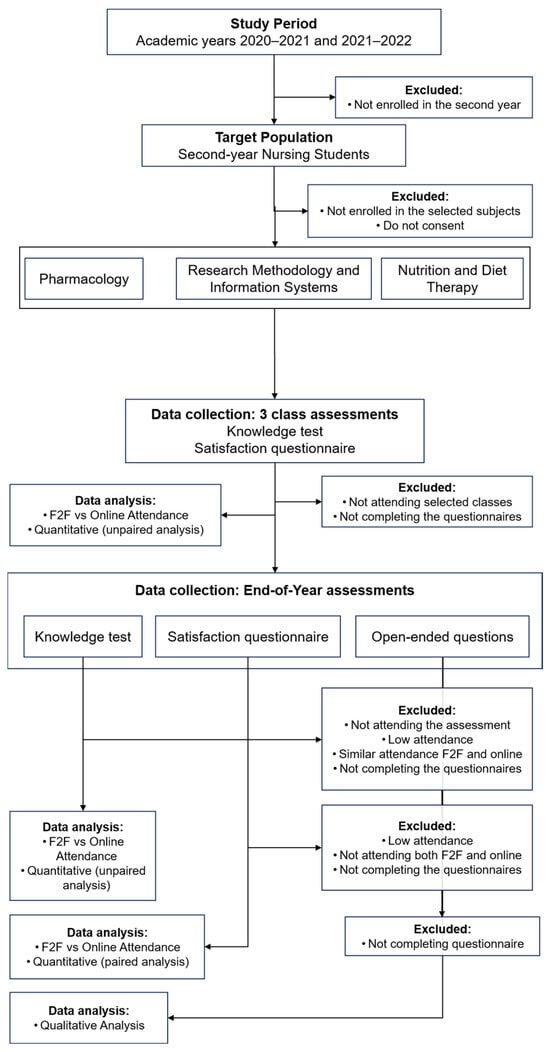

Disclaimer/Publisher’s Note: The statements, opinions and data contained in all publications are solely those of the individual author(s) and contributor(s) and not of MDPI and/or the editor(s). MDPI and/or the editor(s) disclaim responsibility for any injury to people or property resulting from any ideas, methods, instructions or products referred to in the content. |
© 2026 by the authors. Licensee MDPI, Basel, Switzerland. This article is an open access article distributed under the terms and conditions of the Creative Commons Attribution (CC BY) license.