


Abstract
Background: Sickle cell disease (SCD) and β-thalassemia are chronic thromboinflammatory disorders associated with venous, arterial, and microvascular thrombotic complications. However, evidence regarding disease-specific risk stratification and thrombosis prevention remains fragmented. This review summarizes current evidence on the mechanisms, risk identification, and prevention of thrombosis in these disorders. Methods: A narrative review of the literature was conducted using PubMed and Scopus to identify studies evaluating the thrombotic mechanisms, risk factors, biomarkers, and preventive strategies in SCD and β-thalassemia. Results: Thrombotic complications arise through interconnected mechanisms involving chronic hemolysis, nitric oxide depletion, endothelial dysfunction, phosphatidylserine exposure, microparticle generation, platelet activation, tissue factor expression, and enhanced thrombin generation. ADAMTS13–von Willebrand factor dysregulation may contribute to platelet adhesion and microvascular thrombosis, whereas NETosis and complement activation remain emerging mechanisms requiring further clinical validation. In SCD, thrombotic risk is associated with factors including pregnancy, recurrent hospitalization, central venous access devices, prior thrombosis, and pulmonary hypertension. In β-thalassemia, higher thrombotic event rates have been reported in non-transfusion-dependent disease, particularly among patients who have undergone splenectomy or have thrombocytosis, severe anemia, nucleated erythrocytosis, or pulmonary hypertension. Although several biomarkers reflect thromboinflammatory activity, none has been prospectively validated for routine risk prediction. Thromboprophylaxis is therefore generally limited to established high-risk clinical settings and is largely extrapolated from general venous thromboembolism guidelines. Observational data suggest that direct oral anticoagulants may be associated with similar rates of VTE recurrence and possibly lower rates of major bleeding than vitamin K antagonists in SCD; however, the certainty of evidence is very low. Conclusions: Current thrombosis management in SCD and β-thalassemia relies primarily on individualized risk assessment and extrapolation from general VTE recommendations. Prospective multicenter studies, randomized trials, and validated disease-specific risk prediction models are needed to optimize thrombosis prevention and anticoagulation strategies in these disorders.
1. Introduction
Hemoglobinopathies are the most common monogenic disorders worldwide and comprise a diverse group of inherited diseases resulting from abnormalities in hemoglobin structure or globin chain production [1,2,3]. These disorders are broadly classified into two major categories: thalassemia syndromes, which result from quantitative defects in globin chain synthesis leading to absent or markedly reduced production of one or more globin subunits, and structural hemoglobin variants, which arise from qualitative defects that alter the structure of a globin chain and produce an abnormal hemoglobin molecule [4]. Approximately 5.2% of the global population carries a clinically significant globin gene variant, resulting in more than 330,000 affected births annually [2,5,6]. These estimates are based on historical epidemiologic models and likely underestimate the current absolute burden given substantial population growth and improved survival in high-prevalence regions over the past two decades.
Established evidence indicates that hemoglobinopathies are chronic prothrombotic disorders driven by complex interactions among hemolysis, endothelial dysfunction, inflammation, and coagulation abnormalities. Chronic hemolysis releases cell-free hemoglobin and arginase, leading to nitric oxide depletion, oxidative stress, vasoconstriction, and endothelial activation. These processes promote the expression of adhesion molecules, including Vascular Cell Adhesion Molecule-1 (VCAM-1), Intercellular Adhesion Molecule-1 (ICAM-1), E-selectin, and P-selectin, facilitating adhesion of erythrocytes, leukocytes, and platelets to the vascular wall. In parallel, abnormal erythrocytes expose phosphatidylserine on their surface, providing a procoagulant scaffold for thrombin generation and fibrin formation, while circulating microparticles derived from erythrocytes, platelets, leukocytes, and endothelial cells further amplify coagulation activation [7,8].
The hypercoagulable state is further reinforced by increased tissue factor expression, activation of the extrinsic coagulation pathway, and thromboinflammatory mechanisms involving inflammatory cytokines and neutrophil extracellular traps (NETs). Additional disease-specific factors may further augment thrombotic risk. Collectively, these mechanisms establish hemoglobinopathies as systemic vasculopathic and hypercoagulable disorders that predispose affected individuals to both arterial and venous thromboembolic complications [9,10,11].
The thrombotic burden varies substantially across hemoglobinopathy subtypes. Among thalassemia syndromes, the highest rates of thromboembolic complications have consistently been reported in patients with non-transfusion-dependent thalassemia (NTDT), particularly those who have undergone splenectomy, whereas regularly transfused patients with transfusion-dependent thalassemia (TDT) generally experience lower event rates [12,13]. In sickle cell disease (SCD), thrombotic complications are also increasingly recognized, with venous thromboembolism (VTE) affecting approximately 11–12% of patients by the age of 40 years and representing an important source of morbidity and mortality [8,14]. Data comparing hemoglobinopathy subtypes remain limited. Beyond differences between hemoglobinopathy subtypes, substantial genetic heterogeneity exists within individual disorders, resulting in marked phenotypic variability. More than 200 pathogenic variants in the β-globin gene (HBB) have been identified in β-thalassemia, while SCD encompasses several distinct genotypes. Despite this biological diversity, current thrombosis risk assessment remains largely based on clinical characteristics, and the contribution of genotype to thrombotic risk has yet to be established [15,16].
Thrombotic complications have emerged as a major contributor to morbidity and mortality in hemoglobinopathies, reflecting the improved survival achieved through advances in supportive care and disease-modifying therapies. VTE is an important complication of SCD, and observational studies have reported an association with higher all-cause mortality; however, this association does not establish mortality directly attributable to VTE [17]. Pulmonary hypertension in SCD has a multifactorial pathogenesis involving pulmonary vascular remodeling, hypoxia, and cardiac dysfunction; chronic thromboembolic disease may contribute in a subset of patients [18]. Although several clinical risk factors have been associated with increased thrombotic risk, reliable risk stratification tools and evidence-based thromboprophylaxis strategies remain limited. Despite growing recognition of thrombosis in hemoglobinopathies, the available evidence remains fragmented across disease subtypes and is largely derived from observational studies. Consequently, most preventive strategies are extrapolated from general VTE guidelines rather than disease-specific evidence. An updated synthesis integrating recent mechanistic advances with practical risk identification and prevention is therefore timely.
A comprehensive understanding of the mechanisms, clinical factors associated with thrombosis, and approaches to thrombosis prevention in SCD and β-thalassemia is essential to improve patient outcomes. This narrative review aimed to synthesize current evidence on thrombotic mechanisms, clinical risk factors, risk assessment, and prevention in SCD and β-thalassemia.
2. Materials and Methods
A structured narrative review was conducted to synthesize evidence regarding the mechanisms, risk identification, and prevention of thrombosis in SCD and β-thalassemia. PubMed and Scopus were searched on 26 July 2026, for publications from 1 January 2000, through the search date. Seminal studies published before 2000 that were identified through backward citation searching were also considered when directly relevant to the review questions:
- What pathophysiological mechanisms promote thrombosis in SCD and β-thalassemia?
- Which disease-specific factors and biomarkers identify patients at the highest risk of thrombosis?
- What evidence supports current and emerging thrombosis-prevention strategies in SCD and β-thalassemia?
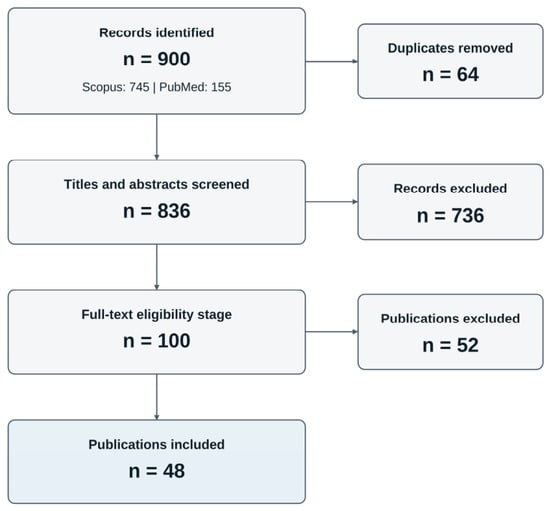
The Scopus search strategy was TITLE-ABS-KEY ((“sickle cell disease” OR “sickle cell anemia” OR “sickle cell anaemia” OR thalassemia OR thalassaemia) AND (“venous thromboembolism” OR “arterial thrombosis” OR “venous thrombosis” OR thromboembolism OR hypercoagulability OR “prothrombotic state”)). This search retrieved 745 records. The PubMed search strategy was: (“sickle cell disease”[Title] OR thalassemia[Title]) AND (thrombosis[Title] OR thromboembolism[Title] OR hypercoagulability[Title]). This search retrieved 155 records, resulting in 900 records across both databases. After removal of 64 duplicate records, 836 unique records underwent title and abstract screening. Of these, 736 were excluded, and 100 publications proceeded to the full-text eligibility stage. A further 52 publications were excluded because they involved populations or outcomes outside the review scope, were published in languages other than English, were available only as conference abstracts, or lacked substantive evidence relevant to the review questions. The formal PubMed and Scopus screening process yielded 48 publications for inclusion in the narrative synthesis. Additional references identified through citation searching or used for background, guideline, regulatory, or contextual purposes were not represented in the flow diagram. Screening and full-text eligibility assessment were performed by one author (A.Z.), with uncertain eligibility decisions and matters requiring clarification discussed with the senior author (M.A.Y.). The selection process is summarized in the accompanying flow diagram (Figure 1).
Figure 1.
Literature selection process. Records identified through the PubMed and Scopus searches were deduplicated, screened, and assessed for eligibility, yielding 48 publications for inclusion. Additional contextual, guideline, regulatory, and citation-identified sources are not represented in this flow diagram.
Eligible evidence included peer-reviewed original studies, systematic reviews, meta-analyses, relevant narrative reviews, and clinical practice guidelines. Adult human studies were prioritized. Pediatric or adolescent studies were included only when they directly addressed an important evidence gap for which adult data were unavailable. Conference abstracts, editorials, letters, commentaries, and publications without accessible full text were excluded.
Evidence was prioritized according to study design and source, with greater weight given to systematic reviews and meta-analyses, randomized trials, prospective studies, and large observational cohorts. Because this was a narrative review, no formal risk-of-bias or GRADE assessment was performed. Nevertheless, each study was categorized according to study design, evidence source, clinical versus surrogate outcome, thrombotic phenotype, and major limitations.
3. Results
What pathophysiological mechanisms promote thrombosis in SCD and β-thalassemia?
3.1. Established Thromboinflammatory Mechanisms
3.1.1. Shared Thromboinflammatory Pathways
The mechanisms underlying thrombosis in SCD and β-thalassemia can be broadly categorized into well-established pathways and emerging mechanisms that remain under active investigation. Although the initiating abnormalities differ between SCD and β-thalassemia, both disorders converge on common pathways involving chronic hemolysis driven by abnormal erythrocytes, endothelial dysfunction, platelet activation, coagulation activation, and enhanced thrombin generation. The relative contribution of these pathways varies according to the underlying disease and clinical phenotype.
3.1.2. Sickle Cell Disease (SCD)
Chronic intravascular hemolysis releases free hemoglobin and heme, leading to nitric oxide depletion, oxidative stress, endothelial activation, and enhanced platelet–leukocyte interactions. Basic science studies have demonstrated increased levels of tissue factor, soluble E-selectin, and procoagulant microparticles derived from erythrocytes, monocytes, and endothelial cells, collectively linking hemolysis to endothelial dysfunction and coagulation activation [19,20,21]. These pathways contribute to a thromboinflammatory phenotype; however, conventional VTE, arterial thrombosis, and inflammatory microvascular vaso-occlusion represent distinct clinical outcomes and should not be treated as interchangeable.
3.1.3. Non-Transfusion-Dependent β-Thalassemia (NTDT)
The initiating abnormalities differ from those in SCD but converge on shared prothrombotic pathways. Ineffective erythropoiesis and chronic hemolytic anemia generate oxidatively damaged, phosphatidylserine-exposing red cells; these cells directly enhance thrombin generation and become more abundant after splenectomy [22]. Chronic platelet activation, increased circulating erythroid and endothelial microparticles, and endothelial dysfunction further contribute to hypercoagulability. Splenectomy amplifies these abnormalities by permitting the persistence of abnormal erythrocytes and cellular fragments and by promoting thrombocytosis and platelet activation [23].
3.2. Emerging Thromboinflammatory Mechanisms
Emerging thromboinflammatory mechanisms have been investigated in SCD and β-thalassemia, although the supporting evidence differs between the disorders. These mechanisms are discussed in three subsections:
3.2.1. Neutrophil Extracellular Trap Formation (NETosis)
In SCD, neutrophil extracellular trap formation (NETosis) may participate in a bidirectional inflammatory cycle during vaso-occlusive crises (VOC). Plasma obtained from patients with SCD during VOC has been shown to induce NET formation ex vivo, with NETosis correlating with circulating proinflammatory cytokines [24]. Experimental studies further demonstrate that cell-free heme can trigger NET formation and that NETs contribute to vascular and pulmonary injury in SCD [25]. These findings suggest that hemolysis and inflammation during VOC may promote NETosis, while released NETs may further amplify endothelial injury, cellular adhesion, and microvascular occlusion; however, whether NETosis is an initiating mechanism or predominantly a consequence of VOC in humans remains uncertain [24,25,26].
In β-thalassemia/hemoglobin E (HbE), activated platelets may promote NET formation through P-selectin–PSGL-1 and HMGB1–RAGE interactions with neutrophils. These pathways activate ROS- and MEK/ERK–NOX2–MPO–PAD4-dependent signaling, promoting NET formation and neutrophil–platelet aggregation. This mechanism appears particularly relevant after splenectomy, when thrombocytosis and chronic platelet activation are prominent; however, its contribution to clinically confirmed thrombosis requires prospective validation [27].
3.2.2. ADAMTS13–Von Willebrand Factor Dysregulation
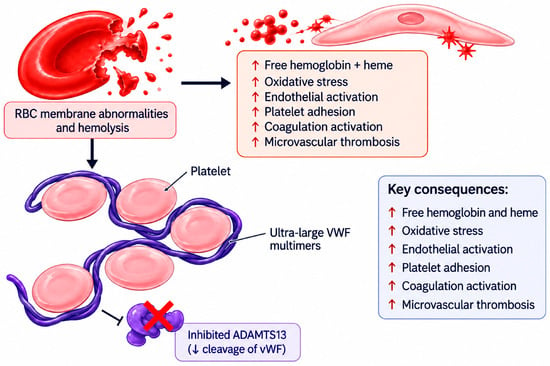
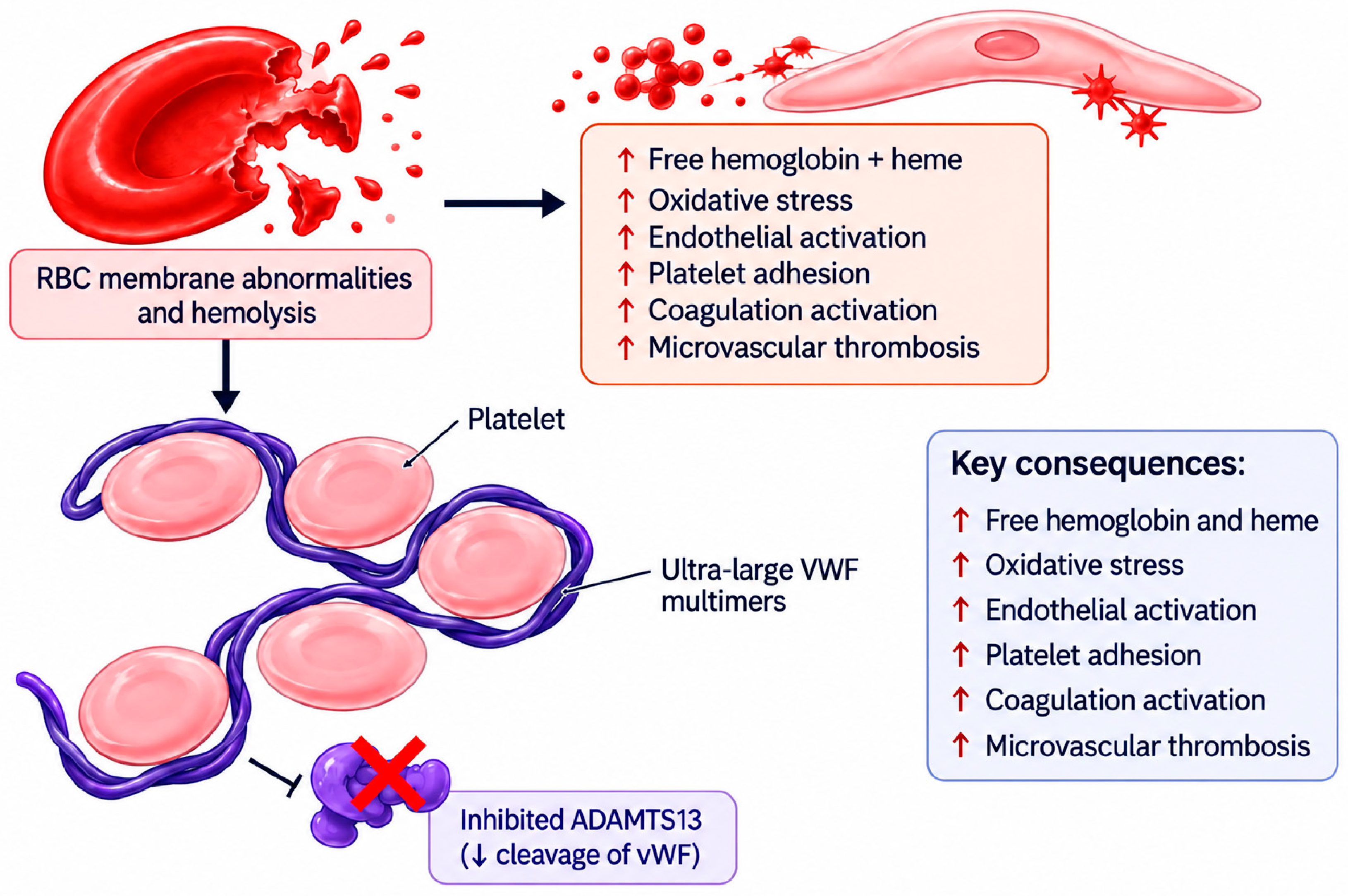
ADAMTS13–VWF dysregulation may represent a mechanistic link between hemolysis and microvascular thrombosis. Cell-free hemoglobin may impair ADAMTS13-mediated cleavage of ultra-large VWF multimers, promoting their persistence, platelet adhesion, and platelet-rich micro-thrombus formation. Clinical studies have also reported persistent ADAMTS13–VWF disequilibrium in SCD; however, its independent contribution to clinically confirmed thrombosis remains uncertain [28]. The proposed relationship between ADAMTS13–VWF dysregulation and thrombosis is summarized in Figure 2.
Figure 2.
Intravascular Hemolysis and the Development of Microvascular Thrombosis. Proposed mechanisms linking abnormal erythrocytes to thrombosis in sickle cell disease and β-thalassemia. Hemolysis releases cell-free hemoglobin and heme, promoting oxidative stress, endothelial activation, platelet adhesion, ADAMTS13–VWF dysregulation, and microvascular thrombosis. Abbreviations: ADAMTS13, a disintegrin and metalloproteinase with thrombospondin type 1 motif, member 13; RBC, red blood cell; VWF, von Willebrand factor.
3.2.3. Complement Activation
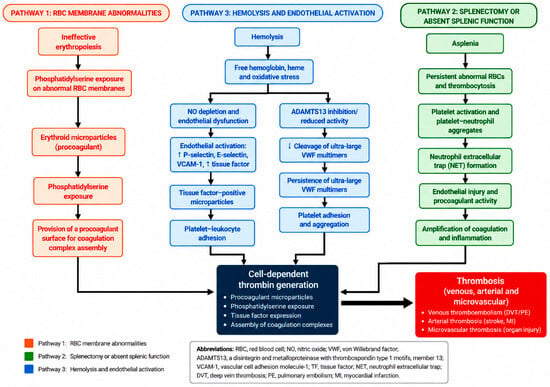
Complement activation has also emerged as a potential contributor, with elevated activation markers reported particularly during acute VOC in SCD. Sickled erythrocytes may promote complement activation through increased C5b-9 deposition and C3 binding, thereby amplifying hemolysis and vaso-occlusive activity. However, erythrocyte CD55 and CD59 expression appears preserved in SCD [29,30]. In β-thalassemia, chronic hemolysis may activate complement through free heme-mediated C5 convertase activity, with circulating C5a and C5b-9 levels correlating with hemolysis and disease severity. Reduced erythrocyte CD55 expression, despite preserved CD59, may further increase complement susceptibility, while the net effect of regular transfusion on complement activation remains uncertain [30]. The major interacting pathways contributing to thrombosis in SCD and β-thalassemia are summarized in Figure 3.
Figure 3.
Proposed mechanisms underlying thrombosis in SCD and β-thalassemia. Integrated mechanisms contributing to thrombotic complications in SCD and β-thalassemia. Ineffective erythropoiesis, hemolysis, endothelial activation, phosphatidylserine exposure, circulating microparticles, platelet activation, and asplenia enhance cellular coagulation and thrombin generation. ADAMTS13–VWF dysregulation and NET formation represent potential additional pathways promoting platelet-rich microvascular thrombosis and immunothrombosis. These mechanisms may contribute differently to conventional VTE, arterial thrombosis, and microvascular vasoocclusion.
Which disease-specific factors and biomarkers identify patients at the highest risk of thrombosis?
3.2.4. Clinical Factors Associated with Thrombosis
Sickle Cell Disease
Thrombotic profiles vary across disease phenotypes, although reported associations should be distinguished from established predictors of future events. In a retrospective cross-sectional study of adults with SCD, sickle variant genotypes, predominantly HbSC and HbS/β+-thalassemia, were associated with a history of non-catheter-related VTE compared with HbSS/HbSβ0-thalassemia (adjusted RR 1.77, 95% CI 1.18–2.66). Elevated tricuspid regurgitant jet velocity (≥2.5 m/s) was also associated with a history of non-catheter-related VTE (adjusted RR 1.65, 95% CI 1.12–2.45). Avascular necrosis, stroke, leg ulcers, and end-stage renal disease were not significantly associated with non-catheter-related VTE. The study’s cross-sectional design does not establish whether the associated characteristics preceded VTE or predict subsequent events [17].
Pregnancy further amplifies thrombotic risk in SCD. A population-based analysis demonstrated approximately 8- to 11-fold higher odds of thromboembolism among pregnant individuals with SCD compared with matched controls. Within the SCD cohort, older maternal age, HbSS genotype, hypertension, and a prior history of thromboembolism were independent risk factors. Thrombotic events also remained clinically important during the postpartum period, which represents a particularly high-risk window [31].
β-Thalassemia
In a multicenter observational study involving 8860 patients with β-thalassemia, thromboembolic events were significantly more frequent in thalassemia intermedia than in thalassemia major, with a 4.38-fold higher occurrence. Thrombosis was also more common among women, splenectomized patients, and those with severe anemia (hemoglobin < 9 g/dL). Venous events predominated in thalassemia intermedia, whereas arterial events were more frequent in thalassemia major, suggesting that the non-transfusion-dependent phenotype, splenectomy, and profound anemia may contribute to thrombotic risk [32].
A recent study showed that NTDT is associated with greater thrombotic risk than TDT, primarily because the absence of regular transfusion permits persistent ineffective erythropoiesis, hemolysis, circulating abnormal erythrocytes, platelet activation, and endothelial dysfunction. Splenectomy, severe anemia, thrombocytosis, nucleated erythrocytosis, low hemoglobin F (HbF), older age, and prior thrombosis were also associated with higher thrombotic risk. Despite limited transfusion exposure, these patients may still develop marked iron overload through hepcidin suppression and increased intestinal iron absorption, leading predominantly to hepatic iron accumulation that may further contribute to thrombotic and other morbidities [33,34]. Data summarized in recent NTDT guidelines indicate a more than fourfold higher incidence of thrombotic events in NTDT compared with TDT, while long-term studies of splenectomized β-thalassemia intermedia have reported venous thrombosis rates approaching 30% [35,36]. Additional risk factors include pulmonary hypertension and lack of regular transfusion therapy. A recent meta-analysis similarly demonstrated an approximately fourfold increase in thrombotic risk following splenectomy in TDT [37]. Supporting a protective role of transfusion, one study demonstrated that blood transfusion normalizes abnormal red blood cell deformability and aggregation in β-thalassemia, whereas the OPTIMAL CARE study showed that regular transfusion independently reduced thrombosis in β-thalassemia intermedia [38,39]. Regular transfusion may partly contribute to the lower observed thrombotic burden in TDT compared with NTDT by suppressing ineffective erythropoiesis and reducing circulating abnormal erythrocytes; however, a causal protective effect has not been established in randomized studies.
3.2.5. Biomarkers
Biomarkers are most informative when interpreted within the context of the underlying pathogenic pathway. Markers of coagulation activation, including D-dimer, thrombin–antithrombin complexes, and prothrombin fragment 1.2, consistently demonstrate ongoing thrombin generation in SCD, including HbSC disease. Alterations in tissue factor, microparticles, and the ADAMTS13–VWF axis reflect endothelial and cellular activation, whereas inflammatory markers such as leukocytosis and C-reactive protein frequently accompany periods of increased clinical risk. In thalassemia, thrombocytosis, ferritin, nucleated red blood cell counts, and endothelial activation markers demonstrate similar associations. However, despite their biological relevance, no biomarker or biomarker panel has yet been prospectively validated to predict thrombosis risk routinely or guide prophylactic anticoagulation [21,40].
What evidence supports current and emerging thrombosis-prevention strategies in SCD and β-thalassemia?
Thrombosis prevention in SCD and β-thalassemia relies on a combination of disease-modifying therapies, pharmacologic thromboprophylaxis in selected high-risk settings, and appropriate anticoagulation following thrombotic events. However, because disease-specific evidence remains limited, most recommendations are extrapolated from VTE guidelines for the general population.
3.2.6. Disease-Modifying Strategies
Thrombosis prevention in these disorders begins with optimization of the underlying disease process. In SCD, hydroxyurea has been associated with downregulation of tissue factor and lower levels of thrombin-generation markers, suggesting reduced coagulation activation [41]. An observational study found that hydroxyurea was associated with lower D-dimer levels. Similarly, in NTDT, hydroxyurea decreases laboratory markers of hypercoagulability and may mitigate silent cerebrovascular injury [23].
An observational study found no significant overall association between transfusion and thrombosis in SCD, although transfusion type was associated with thrombotic risk; exchange transfusion was linked to more thrombotic events, whereas no events occurred among patients receiving regular transfusions, suggesting a possible protective effect of chronic transfusion. However, a review of VTE in SCD concluded that the effect of chronic transfusion on VTE risk remains uncertain and that transfusion is not established as a preventive strategy. The review also emphasized that central venous catheters used for repeated transfusion or erythrocytapheresis are important thrombotic risk factors, indicating that the observed association with exchange transfusion may reflect catheter- or procedure-related complications rather than a direct prothrombotic effect of transfusion itself [42,43]. Similarly, in NTDT, current guidelines recommend consideration of transfusion in selected high-risk patients, in whom it may reduce the risk of thrombosis and silent cerebrovascular disease [12]. Furthermore, avoidance of unnecessary splenectomy remains an important preventive strategy given its consistent association with increased thrombotic risk [42].
3.2.7. Primary Thromboprophylaxis
Evidence supporting primary thromboprophylaxis is limited. Currently, no validated disease-specific risk stratification model or biomarker threshold exists to guide prophylaxis. Therefore, pharmacologic thromboprophylaxis should generally follow established VTE recommendations and be reserved for established high-risk clinical settings recognized in the general population, including hospitalization, surgery, the postpartum period, and prolonged immobility. The presence of central venous access devices should be considered a major risk modifier rather than a standalone indication. Although the use of pharmacologic thromboprophylaxis has increased among hospitalized adolescents with SCD, robust evidence demonstrating its efficacy and optimal implementation remains lacking [44]. Accordingly, thromboprophylaxis should be individualized according to overall thrombotic risk rather than diagnosis alone, balancing thrombotic and bleeding risks using existing VTE recommendations. Key studies supporting current thrombosis prevention strategies are summarized in Table 1.
Evidence supporting pharmacologic thromboprophylaxis is strongest in pregnancy. The British Society for Haematology recommends prophylactic low-molecular-weight heparin (LMWH) during antenatal hospital admissions and for six weeks postpartum in women with SCD, with repeated VTE risk assessment throughout pregnancy [45]. Likewise, the 2025 Thalassemia International Federation guidelines recommend LMWH during antenatal hospitalizations in TDT and consideration of prophylaxis from 28 weeks’ gestation until six weeks postpartum in splenectomized patients or those with platelet counts exceeding 600 × 109/L. Aspirin may be considered in selected patients with marked thrombocytosis [46].
A multicenter retrospective cohort study suggested that pharmacological thromboprophylaxis may reduce VTE in patients with SCD and long-term central venous access devices; however, routine prophylaxis cannot yet be definitively recommended because the optimal agent and dosing strategy remain uncertain and require prospective randomized evaluation [47].
Table 1.
Key Studies Informing Prevention Strategies for Thrombosis in SCD and β-thalassemia.
3.2.8. Anticoagulation Targeting Vaso-Occlusive Complications
Early studies by Schnog et al. explored anticoagulation as a means of modifying SCD-related vascular complications. A randomized crossover pilot trial found that low-intensity acenocoumarol reduced coagulation activation markers without significantly reducing painful vaso-occlusive crises [52]. A related report found no effect on endothelial activation markers [53]. These findings distinguish biochemical suppression of coagulation from demonstrated clinical benefit and should not be extrapolated to the efficacy of anticoagulation for established VTE.
3.2.9. Anticoagulation for Established VTE
Randomized trials directly comparing direct oral anticoagulants (DOACs) with vitamin K antagonists (VKAs) for the treatment of VTE specifically in patients with SCD or β-thalassemia are lacking. Current evidence is derived primarily from observational studies, and comparative efficacy and safety remain uncertain. A recent systematic review and meta-analysis suggests that DOACs may be a reasonable alternative to VKAs in SCD and may be associated with lower rates of major bleeding. Given the substantial recurrence risk following an initial VTE event in SCD, extended anticoagulation should be considered in appropriately selected patients after careful assessment of bleeding risk [54]. However, these findings should be interpreted cautiously, as comparative efficacy and safety remain uncertain, particularly in hemoglobinopathies other than SCD. No validated disease-specific risk threshold has been established. Consequently, prophylactic anticoagulation is generally reserved for conventional high-risk settings.
In β-thalassemia, evidence on anticoagulant therapy is more limited than in SCD. Small observational cohorts in atrial fibrillation suggest that DOACs appear feasible and have an acceptable safety profile, but these data do not establish a disease-specific preference for thrombosis prevention outside standard cardiology or VTE indications [55]. Major studies evaluating anticoagulation strategies and thromboprophylaxis in SCD and β-thalassemia are summarized in Table 2.
Table 2.
Key Studies Informing Anticoagulation and Thromboprophylaxis in SCD and β-thalassemia.
3.2.10. Antiplatelet Therapy
Antiplatelet agents have been investigated in SCD primarily for their potential to reduce vaso-occlusive complications. The phase III HESTIA3 and DOVE trials evaluated prasugrel and ticagrelor, respectively, in children and adolescents and did not demonstrate significant reductions in vaso-occlusive crises compared with placebo. These trials evaluated vaso-occlusive outcomes rather than prevention of conventional venous or arterial thromboembolism; their findings therefore do not establish efficacy or lack of efficacy for those indications [56,57]. In contrast, observational studies and expert guidance support consideration of aspirin in selected splenectomized patients with NTDT, particularly in the presence of persistent thrombocytosis [35]. Among splenectomized patients, concomitant thrombocytosis, persistent anemia, pregnancy, and iron overload may further increase thrombotic risk [58,59]. Although iron overload has been linked to endothelial dysfunction and perturbations of the ADAMTS13–VWF axis, evidence directly demonstrating a reduction in thrombotic events through iron chelation remains lacking. Nevertheless, aggressive management of iron burden is reasonable as part of a comprehensive vascular risk-reduction strategy [49].
Several emerging therapies target key thromboinflammatory pathways but remain investigational. In a phase II randomized trial, isoquercetin reduced markers of coagulation activation, platelet aggregation, and tissue factor expression in adults with SCD [60]. By contrast, rivaroxaban did not significantly reduce biomarkers of coagulation, endothelial activation, or inflammation in a pilot SCD study [61]. In the TASC randomized trial, 172 adults with ACS and no initial pulmonary thrombosis on CT pulmonary angiography received therapeutic- or prophylactic-dose tinzaparin for seven days. Therapeutic dosing shortened time to ACS resolution, with restricted mean times to ACS resolution of 4.8 and 6.1 days in the therapeutic- and prophylactic-dose groups, respectively, and no major bleeding occurred in either group. These findings support potential benefit in the studied adult population, while generalizability to children, other anticoagulant regimens, and patients at higher bleeding risk remains uncertain [62].
Despite the increased thrombotic risk associated with hemoglobinopathies, current evidence does not support disease-specific thromboprophylaxis outside established VTE indications. Patients with hemoglobinopathies are generally managed according to the same anticoagulation and thromboprophylaxis recommendations used in the general population, with treatment individualized based on the balance between bleeding risk and the risk of VTE progression or recurrence. Current expert guidance suggests a low threshold for considering thromboprophylaxis in hospitalized adults with SCD, after individual assessment of thrombotic and bleeding risks [42]. In adults with β-thalassemia receiving luspatercept, thromboprophylaxis should be considered according to the overall thromboembolic risk profile, including previous splenectomy and additional risk factors such as hormone replacement therapy, alongside individualized assessment of bleeding risk [63]. Pharmacologic thromboprophylaxis in acutely ill hospitalized adults with SCD, including those with acute chest syndrome, should follow general medical-inpatient recommendations, accounting for bleeding risk [64]. When deep vein thrombosis or pulmonary embolism is confirmed, anticoagulation constitutes treatment of established VTE and should follow applicable therapeutic recommendations [65]. Table 3 summarizes current evidence-based recommendations for thrombosis prevention and anticoagulation across common clinical scenarios.
Table 3.
Considerations for anticoagulant selection and management in patients with SCD and β-thalassemia.
4. Discussion
Three main conclusions emerge from the reviewed evidence. First, thrombosis in SCD and β-thalassemia results from shared pathways involving chronic hemolysis, endothelial dysfunction, platelet activation, and coagulation activation, although the relative importance of these mechanisms differs across diseases. Second, several clinical phenotypes and characteristics have been associated with increased thrombotic risk. HbSC and HbS/β+-thalassemia, in particular, have been associated with a higher prevalence of previous VTE, although their prospective predictive value remains uncertain. Third, current biomarkers and clinical risk factors remain insufficient to guide routine thromboprophylaxis because no disease-specific biomarker threshold or validated risk model has been established.
Disease heterogeneity is central to the interpretation of thrombotic risk. In SCD, thrombosis is mainly driven by intravascular hemolysis, nitric oxide depletion, endothelial activation, inflammation, and platelet–leukocyte interactions [68]. In contrast, NTDT is characterized by ineffective erythropoiesis, circulating abnormal phosphatidylserine-exposing erythrocytes, platelet activation, and the effects of splenectomy [69]. Therefore, hemoglobinopathies should not be considered a single uniform hypercoagulable condition.
Current biomarkers are useful for understanding disease mechanisms but have limited clinical predictive value. Most studies were small, cross-sectional, and based on surrogate laboratory outcomes. None of these markers has been prospectively validated to determine who should receive prophylactic anticoagulation. Similarly, no disease-specific risk model has been validated across different hemoglobinopathy phenotypes and thrombotic outcomes.
This review has several limitations, including restriction of the search to two databases, the title-based structure of the PubMed search, screening by a single reviewer, the predominance of observational studies and expert-consensus recommendations, and the limited number of randomized trials. Furthermore, substantial heterogeneity in study design, patient populations, and outcome definitions limits direct comparisons, weakens the evidence base, and precludes definitive recommendations regarding primary thromboprophylaxis. In addition, the PubMed strategy restricted the principal disease and thrombosis terms to the title field, which may have reduced the sensitivity of the search and resulted in the omission of potentially relevant studies.
5. Conclusions
Hemoglobinopathies represent a spectrum of distinct thrombotic disorders rather than a uniform hypercoagulable state. Each type differs in its dominant mechanisms, clinical risk factors, and relative propensity for venous, arterial, and microvascular complications. Although hemolysis, endothelial activation, platelet activation, and thrombin generation are shared themes, current biomarkers remain mechanistically informative rather than clinically predictive, and no validated disease-specific risk model or prophylactic threshold exists. Accordingly, routine thromboprophylaxis outside established high-risk clinical settings is not supported. Preventive strategies should focus on optimization of disease management and the use of thromboprophylaxis in established high-risk clinical settings, while treatment of confirmed thrombosis should follow standard anticoagulation principles with individualized assessment of recurrence and bleeding risk. Future studies should prioritize phenotype-specific prospective cohorts, clinically adjudicated venous and arterial outcomes, and validated multimodal risk models rather than further reliance on isolated surrogate biomarkers.
Author Contributions
A.Z. and M.A.Y. contributed to manuscript conceptualization, methodology, software, validation, formal analysis, investigation, resources, data curation, writing—original draft preparation, writing—review and editing, visualization, supervision, project administration, and funding acquisition. All authors have read and agreed to the published version of the manuscript.
Funding
This research received no external funding.
Institutional Review Board Statement
Not applicable.
Informed Consent Statement
Not applicable.
Data Availability Statement
No new data were created or analyzed in this study. Data sharing is not applicable to this article.
Acknowledgments
During the preparation of this manuscript, the authors used ChatGPT (OpenAI; GPT-5.5) to assist with language editing, improve grammar and readability, restructuring sections for clarity and logical flow. The authors reviewed, edited, and verified all AI-assisted outputs, evaluated the scientific content, and take full responsibility for the accuracy and integrity of the final manuscript.
Conflicts of Interest
The authors declare no conflicts of interest.
References
- Williams, T.N.; Weatherall, D.J. World Distribution, Population Genetics, and Health Burden of the Hemoglobinopathies. Cold Spring Harb. Perspect. Med. 2012, 2, a011692. [Google Scholar] [CrossRef] [Scilit] [PubMed]
- Harteveld, C.L.; Achour, A.; Arkesteijn, S.J.G.; Ter Huurne, J.; Verschuren, M.; Bhagwandien-Bisoen, S.; Schaap, R.; Vijfhuizen, L.; el Idrissi, H.; Koopmann, T.T. The Hemoglobinopathies, Molecular Disease Mechanisms and Diagnostics. Int. J. Lab. Hematol. 2022, 44, 28–36. [Google Scholar] [CrossRef] [Scilit] [PubMed]
- Kohne, E. Hemoglobinopathies. Dtsch. Arztebl. Int. 2011, 108, 532–540. [Google Scholar] [CrossRef] [Scilit] [PubMed]
- Forget, B.G.; Bunn, H.F. Classification of the Disorders of Hemoglobin. Cold Spring Harb. Perspect. Med. 2013, 3, a011684. [Google Scholar] [CrossRef] [Scilit] [PubMed]
- Modell, B.; Darlison, M. Global Epidemiology of Haemoglobin Disorders and Derived Service Indicators. Bull. World Health Organ. 2008, 86, 480–487. [Google Scholar] [CrossRef] [Scilit] [PubMed]
- Halim-Fikri, B.H.; Lederer, C.W.; Baig, A.A.; Mat-Ghani, S.N.A.; Syed-Hassan, S.-N.R.-K.; Yusof, W.; Abdul Rashid, D.; Azman, N.F.; Fucharoen, S.; Panigoro, R.; et al. Global Globin Network Consensus Paper: Classification and Stratified Roadmaps for Improved Thalassaemia Care and Prevention in 32 Countries. J. Pers. Med. 2022, 12, 552. [Google Scholar] [CrossRef] [Scilit] [PubMed]
- Kato, G.J.; Hebbel, R.P.; Steinberg, M.H.; Gladwin, M.T. Vasculopathy in Sickle Cell Disease: Biology, Pathophysiology, Genetics, Translational Medicine and New Research Directions. Am. J. Hematol. 2009, 84, 618–625. [Google Scholar] [CrossRef] [Scilit] [PubMed]
- Shet, A.S.; Lizarralde-Iragorri, M.A.; Naik, R.P. The Molecular Basis for the Prothrombotic State in Sickle Cell Disease. Haematologica 2020, 105, 2368–2379. [Google Scholar] [CrossRef] [Scilit] [PubMed]
- Taher, A.T.; Otrock, Z.K.; Uthman, I.; Cappellini, M.D. Thalassemia and Hypercoagulability. Blood Rev. 2008, 22, 283–292. [Google Scholar] [CrossRef] [Scilit] [PubMed]
- Sparkenbaugh, E.; Pawlinski, R. Interplay between Coagulation and Vascular Inflammation in Sickle Cell Disease. Br. J. Haematol. 2013, 162, 3–14. [Google Scholar] [CrossRef] [Scilit] [PubMed]
- Ataga, K.I.; Key, N.S. Hypercoagulability in Sickle Cell Disease: New Approaches to an Old Problem. Hematol. Am. Soc. Hematol. Educ. Program 2007, 2007, 91–96. [Google Scholar] [CrossRef] [Scilit] [PubMed]
- Sleiman, J.; Tarhini, A.; Bou-Fakhredin, R.; Saliba, A.N.; Cappellini, M.D.; Taher, A.T. Non-Transfusion-Dependent Thalassemia: An Update on Complications and Management. Int. J. Mol. Sci. 2018, 19, 182. [Google Scholar] [CrossRef] [Scilit] [PubMed]
- Taher, A.T.; Musallam, K.M.; Karimi, M.; El-Beshlawy, A.; Belhoul, K.; Daar, S.; Saned, M.; Cesaretti, C.; Cappellini, M.D. Splenectomy and Thrombosis: The Case of Thalassemia Intermedia. J. Thromb. Haemost. 2010, 8, 2152–2158. [Google Scholar] [CrossRef] [Scilit] [PubMed]
- Naik, R.P.; Streiff, M.B.; Haywood, C.; Segal, J.B.; Lanzkron, S. Venous Thromboembolism Incidence in the Cooperative Study of Sickle Cell Disease. J. Thromb. Haemost. 2014, 12, 2010–2016. [Google Scholar] [CrossRef] [Scilit] [PubMed]
- Khan, A.M.; Al-Sulaiti, A.M.; Younes, S.; Yassin, M.; Zayed, H. The Spectrum of Beta-Thalassemia Mutations in the 22 Arab Countries: A Systematic Review. Expert Rev. Hematol. 2021, 14, 109–122. [Google Scholar] [CrossRef] [Scilit] [PubMed]
- Ata, F.; Rahhal, A.; Malkawi, L.; Iqbal, P.; Khamees, I.; Alhiyari, M.; Yousaf, Z.; Qasim, H.; Alshurafa, A.; Sardar, S.; et al. Genotypic and Phenotypic Composition of Sickle Cell Disease in the Arab Population—A Systematic Review. Pharmgenomics Pers. Med. 2023, 16, 133–144. [Google Scholar] [CrossRef] [Scilit] [PubMed]
- Naik, R.P.; Streiff, M.B.; Haywood, C.; Nelson, J.A.; Lanzkron, S. Venous Thromboembolism in Adults with Sickle Cell Disease: A Serious and under-Recognized Complication. Am. J. Med. 2013, 126, 443–449. [Google Scholar] [CrossRef] [Scilit] [PubMed]
- Humbert, M.; Kovacs, G.; Hoeper, M.M.; Badagliacca, R.; Berger, R.M.F.; Brida, M.; Carlsen, J.; Coats, A.J.S.; Escribano-Subias, P.; Ferrari, P.; et al. 2022 ESC/ERS Guidelines for the Diagnosis and Treatment of Pulmonary Hypertension: Developed by the Task Force for the Diagnosis and Treatment of Pulmonary Hypertension of the European Society of Cardiology (ESC) and the European Respiratory Society (ERS). Endorsed by the International Society for Heart and Lung Transplantation (ISHLT) and the European Reference Network on Rare Respiratory Diseases (ERN-LUNG). Eur. Heart J. 2022, 43, 3618–3731. [Google Scholar] [CrossRef] [Scilit] [PubMed]
- Ramadas, N.; Sparkenbaugh, E. Emerging Pathways in Thromboinflammation of Sickle Cell Disease: Novel Findings in Disease Pathogenesis. Res. Pract. Thromb. Haemost. 2025, 9, 103193. [Google Scholar] [CrossRef] [Scilit] [PubMed]
- Kato, G.J.; Taylor, J.G. Pleiotropic Effects of Intravascular Hemolysis on Vascular Homeostasis. Br. J. Haematol. 2010, 148, 690–701. [Google Scholar] [CrossRef] [Scilit] [PubMed]
- Noubouossie, D.; Key, N.S.; Ataga, K.I. Coagulation Abnormalities of Sickle Cell Disease: Relationship with Clinical Outcomes and the Effect of Disease Modifying Therapies. Blood Rev. 2016, 30, 245–256. [Google Scholar] [CrossRef] [Scilit] [PubMed]
- Succar, J.; Musallam, K.M.; Taher, A.T. Thalassemia and Venous Thromboembolism. Mediterr. J. Hematol. Infect. Dis. 2011, 3, e2011025. [Google Scholar] [CrossRef] [Scilit] [PubMed]
- Taher, A.T.; Musallam, K.M.; Cappellini, M.D. Hypercoagulablity and Thrombotic Disease. In Guidelines for the Management of Non-Transfusion-Dependent β-Thalassaemia [Internet], 3rd ed.; Thalassaemia International Federation: Strovolos, Cyprus, 2023. [Google Scholar]
- Barbu, E.A.; Mendelsohn, L.; Samsel, L.; Thein, S.L. Pro-Inflammatory Cytokines Associate with NETosis during Sickle Cell Vaso-Occlusive Crises. Cytokine 2020, 127, 154933. [Google Scholar] [CrossRef] [Scilit] [PubMed]
- Chen, G.; Zhang, D.; Fuchs, T.A.; Manwani, D.; Wagner, D.D.; Frenette, P.S. Heme-Induced Neutrophil Extracellular Traps Contribute to the Pathogenesis of Sickle Cell Disease. Blood 2014, 123, 3818–3827. [Google Scholar] [CrossRef] [Scilit] [PubMed]
- Yaykasli, K.O.; Schauer, C.; Muñoz, L.E.; Mahajan, A.; Knopf, J.; Schett, G.; Herrmann, M. Neutrophil Extracellular Trap-Driven Occlusive Diseases. Cells 2021, 10, 2208. [Google Scholar] [CrossRef] [Scilit] [PubMed]
- Thubthed, R.; Praneetponkang, R.; Sittipaisankul, P.; Thiengtavor, C.; Chumpuchanaphai, S.; Paiboonsukwong, K.; Fucharoen, S.; Pattanapanyasat, K.; Vadolas, J.; Smith, D.R.; et al. Neutrophil Extracellular Traps Induced by Activated Platelets as a Cause of Neutrophil–Platelet Aggregation in β-Thalassaemia/Haemoglobin E Patients. Br. J. Haematol. 2026, 209, 703–717. [Google Scholar] [CrossRef] [Scilit] [PubMed]
- Zhou, Z.; Han, H.; Cruz, M.A.; López, J.A.; Dong, J.-F.; Guchhait, P. Haemoglobin Blocks von Willebrand Factor Proteolysis by ADAMTS-13: A Mechanism Associated with Sickle Cell Disease. Thromb. Haemost. 2009, 101, 1070–1077. [Google Scholar] [CrossRef] [Scilit]
- Varelas, C.; Vlachaki, E.; Klonizakis, P.; Pantelidou, D.; Minti, F.; Diamantidis, M.; Sabanis, N.; Koravou, E.; Christodoulou, I.; Papadopoulou, D.; et al. Prospective Study of Complement Activation and Thromboinflammation within Sickle Cell Disease and Its Complications. Hemasphere 2024, 8, e135. [Google Scholar] [CrossRef] [Scilit] [PubMed]
- Chapin, J.; Terry, H.S.; Kleinert, D.; Laurence, J. The Role of Complement Activation in Thrombosis and Hemolytic Anemias. Transfus. Apher. Sci. 2016, 54, 191–198. [Google Scholar] [CrossRef] [Scilit] [PubMed]
- Agarwal, S.; Stanek, J.R.; Vesely, S.K.; Creary, S.E.; Cronin, R.M.; Roe, A.H.; O’Brien, S.H. Pregnancy-Related Thromboembolism in Women with Sickle Cell Disease: An Analysis of National Medicaid Data. Am. J. Hematol. 2023, 98, 1677–1684. [Google Scholar] [CrossRef] [Scilit] [PubMed]
- Taher, A.; Isma’eel, H.; Mehio, G.; Bignamini, D.; Kattamis, A.; Rachmilewitz, E.A.; Cappellini, M.D. Prevalence of Thromboembolic Events among 8860 Patients with Thalassaemia Major and Intermedia in the Mediterranean Area and Iran. Thromb. Haemost. 2006, 96, 488–491. [Google Scholar] [CrossRef] [Scilit]
- El-Beshlawy, A.; Dewedar, H.; Hindawi, S.; Alkindi, S.; Tantawy, A.A.; Yassin, M.A.; Taher, A.T. Management of Transfusion-Dependent β-Thalassemia (TDT): Expert Insights and Practical Overview from the Middle East. Blood Rev. 2024, 63, 101138. [Google Scholar] [CrossRef] [Scilit] [PubMed]
- Shash, H. Non-Transfusion-Dependent Thalassemia: A Panoramic Review. Medicina 2022, 58, 1496. [Google Scholar] [CrossRef] [Scilit] [PubMed]
- Taher, A.T.; Musallam, K.M.; Cappellini, M.D. Guidelines for the Management of Non-Transfusion-Dependent β-Thalassaemia, 3rd ed.; Thalassaemia International Federation: Nicosia, Cyprus, 2023; ISBN 978-9963-717-25-5. [Google Scholar]
- Benoit, A.; Pages, J.; Szepetowski, S.; Agouti, I.; Thuret, I.; Le Roux, E.; Badens, C.; Brousse, V.; Network, N. Splenectomy in β-Thalassemia Patients: Practices and Risks in a Nationwide Study. HemaSphere 2026, 10, e70350. [Google Scholar] [CrossRef] [Scilit] [PubMed]
- Kalamara, T.-V.; Dodos, K.; Vlachaki, E. Splenectomy Is Significantly Associated with Thrombosis but Not with Pulmonary Hypertension in Patients with Transfusion-Dependent Thalassemia: A Meta-Analysis of Observational Studies. Front. Med. 2023, 10, 1259785. [Google Scholar] [CrossRef] [Scilit] [PubMed]
- Taher, A.T.; Musallam, K.M.; Karimi, M.; El-Beshlawy, A.; Belhoul, K.; Daar, S.; Saned, M.-S.; El-Chafic, A.-H.; Fasulo, M.R.; Cappellini, M.D. Overview on Practices in Thalassemia Intermedia Management Aiming for Lowering Complication Rates across a Region of Endemicity: The OPTIMAL CARE Study. Blood 2010, 115, 1886–1892. [Google Scholar] [CrossRef] [Scilit] [PubMed]
- Chen, S.; Eldor, A.; Barshtein, G.; Zhang, S.; Goldfarb, A.; Rachmilewitz, E.; Yedgar, S. Enhanced Aggregability of Red Blood Cells of Beta-Thalassemia Major Patients. Am. J. Physiol.-Heart Circ. Physiol. 1996, 270, H1951–H1956. [Google Scholar] [CrossRef] [Scilit] [PubMed]
- Al-Sabaan, K.; Al-Awadhi, A. Evaluating von Willebrand Factor and ADAMTS13 Levels in Thalassemia Major Patients and Assessing a Possible Association with Thrombospondin-1. Int. J. Lab. Hematol. 2023, 45, 945–952. [Google Scholar] [CrossRef] [Scilit] [PubMed]
- Colella, M.P.; Paula, E.V.D.; Conran, N.; Machado-Neto, J.A.; Annicchino-Bizzacchi, J.M.; Costa, F.F.; Saad, S.T.O.; Traina, F. Hydroxyurea Is Associated with Reductions in Hypercoagulability Markers in Sickle Cell Anemia. J. Thromb. Haemost. 2012, 10, 1967–1970. [Google Scholar] [CrossRef] [Scilit] [PubMed]
- Naik, R.P.; Streiff, M.B.; Lanzkron, S. Sickle Cell Disease and Venous Thromboembolism: What the Anticoagulation Expert Needs to Know. J. Thromb. Thrombolysis 2013, 35, 352–358. [Google Scholar] [CrossRef] [Scilit] [PubMed]
- Tzanninis, R.; Vlachaki, E.; Lefkou, E.; Tsiara, S.; Theodoridou, S.; Vyzantiadis, A.; Matsagkas, M. Interplay Between Sickle Cell Disease and Thrombosis: A Single Center Experience of Pathophysiology and Potential Risk Factors. Hematol. Rep. 2025, 17, 45. [Google Scholar] [CrossRef] [Scilit] [PubMed]
- Davila, J.; Stanek, J.; O’Brien, S.H. Venous Thromboembolism Prophylaxis in Sickle Cell Disease: A Multicenter Cohort Study of Adolescent Inpatients. Blood Adv. 2022, 7, 1762–1768. [Google Scholar] [CrossRef] [Scilit] [PubMed]
- Oteng-Ntim, E.; Pavord, S.; Howard, R.; Robinson, S.; Oakley, L.; Mackillop, L.; Pancham, S.; Howard, J.; The British Society for Haematology Guidelines Committee. Management of Sickle Cell Disease in Pregnancy. A British Society for Haematology Guideline. Br. J. Haematol. 2021, 194, 980–995. [Google Scholar] [CrossRef] [Scilit] [PubMed]
- Baldini, M.; Casale, M.; Li, Y.; Sayani, F.; Smith, J.; Vlachodimitropoulou, E.; Singer, S.T. Fertility and Pregnancy. In Guidelines for the Management of Transfusion-Dependent β-Thalassaemia (TDT); Taher, A.T., Farmakis, D., Porter, J.B., Cappellini, M.D., Musallam, K.M., Eds.; Thalassaemia International Federation: Nicosia, Cyprus, 2025; ISBN 978-9963-717-30-9. [Google Scholar]
- Forté, S.; De Luna, G.; Abdulrehman, J.; Fadiga, N.; Pestrin, O.; Pham Hung d’Alexandry d’Orengiani, A.-L.; Aneke, J.C.; Guillet, H.; Budhram, D.; Habibi, A.; et al. Thromboprophylaxis Reduced Venous Thromboembolism in Sickle Cell Patients with Central Venous Access Devices: A Retrospective Cohort Study. J. Clin. Med. 2022, 11, 1193. [Google Scholar] [CrossRef] [Scilit] [PubMed]
- Borhany, M.; Iqbal, H.T.; Abid, M.; Zafar, S. Hydroxyurea in Sickle Cell Disease: Coagulation and Activation in an Observational Study. Clin. Med. Insights Pediatr. 2026, 11795565251403177, Online ahead of print. [Google Scholar] [CrossRef] [Scilit] [PubMed]
- Al-Awadhi, A.; Alwehaidah, M.S.; Al-Sabaan, K.; Al-Ajmi, N. Assessment of Ferritin and Hepcidin Levels in Splenectomised and Non-Splenectomised β-Thalassemia Major Patients and Exploring a Potential Correlation with von Willebrand Factor and ADAMTS-13. Ann. Hematol. 2025, 104, 2229–2238. [Google Scholar] [CrossRef] [Scilit] [PubMed]
- Colella, M.P.; de Paula, E.V.; Machado-Neto, J.A.; Conran, N.; Annichino-Bizzacchi, J.M.; Costa, F.F.; Saad, S.T.O.; Traina, F. Elevated Hypercoagulability Markers in Hemoglobin SC Disease. Haematologica 2015, 100, 466–471. [Google Scholar] [CrossRef] [Scilit] [PubMed]
- Faranoush, M.; Faranoush, P.; Heydari, I.; Foroughi-Gilvaee, M.R.; Azarkeivan, A.; Parsai Kia, A.; Sadighnia, N.; Elahinia, A.; Zandi, A.; Rezvany, M.R.; et al. Complications in Patients with Transfusion Dependent Thalassemia: A Descriptive Cross-sectional Study. Health Sci. Rep. 2023, 6, e1624. [Google Scholar] [CrossRef] [Scilit] [PubMed]
- Schnog, J.B.; Kater, A.P.; Mac Gillavry, M.R.; Duits, A.J.; Lard, L.R.; Van Der Dijs, F.P.L.; Brandjes, D.P.M.; Ten Cate, H.; Van Statius Eps, L.W.; Rojer, R.A. Low Adjusted-Dose Acenocoumarol Therapy in Sickle Cell Disease: A Pilot Study. Am. J. Hematol. 2001, 68, 179–183. [Google Scholar] [CrossRef] [Scilit] [PubMed]
- Schnog, J.B.; Mac Gillavry, M.R.; Rojer, R.A.; Meijers, J.C.M.; Fijnheer, R.; Ten Cate, H.; Brandjes, D.P.M.; Duits, A.J. No Effect of Acenocoumarol Therapy on Levels of Endothelial Activation Markers in Sickle Cell Disease. Am. J. Hematol. 2002, 71, 53–55. [Google Scholar] [CrossRef] [Scilit] [PubMed]
- Rozi, W.; Rahhal, A.; Ali, E.A.; Al-Mashdali, A.; Hilan, Y.; Khamees, I.; Fernyhough, L.J.; Yassin, M.A. Direct Oral Anticoagulants in Sickle Cell Disease: A Systematic Review and Meta-Analysis. Blood Adv. 2022, 6, 5061–5066. [Google Scholar] [CrossRef] [Scilit] [PubMed]
- Malagù, M.; Longo, F.; Marchini, F.; Sirugo, P.; Capanni, A.; Clò, S.; Mari, E.; Culcasi, M.; Bertini, M. Non-Vitamin K Antagonist Oral Anticoagulants in Patients with β-Thalassemia. Biology 2023, 12, 491. [Google Scholar] [CrossRef] [Scilit] [PubMed]
- Heeney, M.M.; Abboud, M.R.; Githanga, J.; Inusa, B.P.D.; Kanter, J.; Michelson, A.D.; Nduba, V.; Musiime, V.; Apte, M.; Inati, A.; et al. Ticagrelor vs Placebo for the Reduction of Vaso-Occlusive Crises in Pediatric Sickle Cell Disease: The HESTIA3 Study. Blood 2022, 140, 1470–1481. [Google Scholar] [CrossRef] [Scilit] [PubMed]
- Heeney, M.M.; Hoppe, C.C.; Abboud, M.R.; Inusa, B.; Kanter, J.; Ogutu, B.; Brown, P.B.; Heath, L.E.; Jakubowski, J.A.; Zhou, C.; et al. A Multinational Trial of Prasugrel for Sickle Cell Vaso-Occlusive Events. N. Engl. J. Med. 2016, 374, 625–635. [Google Scholar] [CrossRef] [Scilit] [PubMed]
- Khan, P.N.; Nair, R.J.; Olivares, J.; Tingle, L.E.; Li, Z. Postsplenectomy Reactive Thrombocytosis. Bayl. Univ. Med. Cent. Proc. 2009, 22, 9–12. [Google Scholar] [CrossRef] [Scilit] [PubMed]
- Crary, S.E.; Buchanan, G.R. Vascular Complications after Splenectomy for Hematologic Disorders. Blood 2009, 114, 2861–2868. [Google Scholar] [CrossRef] [Scilit] [PubMed]
- Lizarralde-Iragorri, M.A.; Parachalil Gopalan, B.; Merriweather, B.; Brooks, J.; Hill, M.; Lovins, D.; Pierre-Charles, R.; Cullinane, A.; Dulau-Florea, A.; Lee, D.-Y.; et al. Isoquercetin for Thromboinflammation in Sickle Cell Disease: A Randomized Double-Blind Placebo-Controlled Trial. Blood Adv. 2023, 8, 172–182. [Google Scholar] [CrossRef] [Scilit] [PubMed]
- Ataga, K.I.; Elsherif, L.; Wichlan, D.; Wogu, A.F.; Matsui, N.; Pawlinski, R.; Cai, J.; Key, N.S. A Pilot Study of the Effect of Rivaroxaban in Sickle Cell Anemia. Transfusion 2021, 61, 1694–1698. [Google Scholar] [CrossRef] [Scilit] [PubMed]
- Mekontso Dessap, A.; Habibi, A.; Arlet, J.-B.; Fartoukh, M.; Guerin, L.; Guillaud, C.; Roux, D.; Oziel, J.; Ngo, S.; Carpentier, B.; et al. Comparison of Prophylactic and Therapeutic Doses of Anticoagulation for Acute Chest Syndrome in Sickle Cell Disease: The TASC Double-Blind Controlled Randomized Clinical Trial. Am. J. Respir. Crit. Care Med. 2025, 211, 832–841. [Google Scholar] [CrossRef] [Scilit] [PubMed]
- U.S. Food and Drug Administration REBLOZYL (Luspatercept-Aamt) for Injection: Prescribing Information. Available online: https://www.accessdata.fda.gov/Drugsatfda_docs/Label/2020/761136orig2lbl.Pdf (accessed on 23 September 2026).
- Mekontso Dessap, A.; Dauger, S.; Khellaf, M.; Agbakou, M.; Agut, S.; Angoulvant, F.; Arlet, J.-B.; Aubron, C.; Baudin, F.; Boissier, F.; et al. Guidelines for the Management of Emergencies and Critical Illness in Pediatric and Adult Patients with Sickle Cell Disease. Ann. Intensive Care 2025, 15, 74. [Google Scholar] [CrossRef] [Scilit] [PubMed]
- Ortel, T.L.; Neumann, I.; Ageno, W.; Beyth, R.; Clark, N.P.; Cuker, A.; Hutten, B.A.; Jaff, M.R.; Manja, V.; Schulman, S.; et al. American Society of Hematology 2020 Guidelines for Management of Venous Thromboembolism: Treatment of Deep Vein Thrombosis and Pulmonary Embolism. Blood Adv. 2020, 4, 4693–4738. [Google Scholar] [CrossRef] [Scilit] [PubMed]
- Bates, S.M.; Greer, I.A.; Middeldorp, S.; Veenstra, D.L.; Prabulos, A.-M.; Vandvik, P.O. VTE, Thrombophilia, Antithrombotic Therapy, and Pregnancy. Chest 2012, 141, e691S–e736S. [Google Scholar] [CrossRef] [Scilit] [PubMed]
- Shah, F.T.; Nicolle, S.; Garg, M.; Pancham, S.; Lieberman, G.; Anthony, K.; Mensah, A.K. Guideline for the Management of Conception and Pregnancy in Thalassaemia Syndromes: A British Society for Haematology Guideline. Br. J. Haematol. 2024, 204, 2194–2209. [Google Scholar] [CrossRef] [Scilit] [PubMed]
- Conran, N.; De Paula, E.V. Thromboinflammatory Mechanisms in Sickle Cell Disease–Challenging the Hemostatic Balance. Haematologica 2020, 105, 2380–2390. [Google Scholar] [CrossRef] [Scilit] [PubMed]
- Chansai, S.; Yamsri, S.; Fucharoen, S.; Fucharoen, G.; Teawtrakul, N. Phosphatidylserine-Exposed Red Blood Cells and Ineffective Erythropoiesis Biomarkers in Patients with Thalassemia. Am. J. Transl. Res. 2022, 14, 4743–4756. [Google Scholar] [PubMed]

Disclaimer/Publisher’s Note: The statements, opinions and data contained in all publications are solely those of the individual author(s) and contributor(s) and not of MDPI and/or the editor(s). MDPI and/or the editor(s) disclaim responsibility for any injury to people or property resulting from any ideas, methods, instructions or products referred to in the content. |
© 2026 by the authors. Licensee MDPI, Basel, Switzerland. This article is an open access article distributed under the terms and conditions of the Creative Commons Attribution (CC BY) license.