


Abstract
Objectives: Diabetes is a significant risk factor for hearing loss, highlighting the need for evidence-informed hearing health monitoring. Undiagnosed and untreated hearing loss can impair communication, reduce participation in daily activities, and diminish quality of life. This scoping review synthesized the current evidence on hearing loss screening and assessment in adults living with diabetes and identified knowledge gaps to inform the development of an evidence-informed hearing health monitoring framework. Design: A scoping review was conducted in accordance with the Joanna Briggs Institute methodology. Seven electronic databases were searched for peer-reviewed studies reporting primary data on the relationship between diabetes and hearing loss. Results: A total of 201 studies met the inclusion criteria. The literature represented a global evidence base, with studies conducted across diverse settings, including hospitals, community and diabetes clinics, schools, audiology clinics, outpatient clinics, and research centres. Pure-tone audiometry was the most frequently used assessment, followed by electrophysiological measures and otoacoustic emissions. Fewer than half of the studies provided recommendations for hearing screening, assessment, or monitoring, and only six advocated for early referral to hearing healthcare services. Conclusions: Despite growing evidence linking diabetes and hearing loss, important gaps remain in recommendations for diagnostic assessment, hearing health monitoring, referral pathways, and interdisciplinary integration within diabetes care. The findings of this review provide a foundation for developing an evidence-informed hearing health monitoring framework and support the integration of hearing health into coordinated person-centred diabetes care pathways.
1. Introduction
Diabetes mellitus (DM), affecting approximately 11% of Canadian adults, is a significant risk factor for the development of retinopathy, neuropathy, nephropathy, and cardiovascular diseases [1,2]. More recently, hearing loss (HL) has been recognized as a complication of DM, with established evidence demonstrating an association between DM and auditory dysfunction. While the more established complications of DM are routinely monitored as part of diabetes management, hearing loss remains underrecognized and has yet to be incorporated into standard clinical care pathways [3,4]. Evidence suggests that HL may develop at a younger age in individuals with DM and is about twice as prevalent among people living with diabetes compared to those without the condition, even after adjusting for age and other risk factors for HL [5,6,7]. A recent systematic review and meta-analysis estimated that nearly one in four adults living with DM has a moderate-to-severe hearing loss (≥40 dB HL) [8]. Despite this substantial burden, hearing health has yet to be routinely incorporated into diabetes care, highlighting an important gap between the available evidence and current clinical practice [8].
The need to monitor and manage hearing health in individuals living with DM is increasingly recognized by national and international health organizations. Diabetes Canada [9] acknowledges that individuals living with DM are at an increased risk of HL while the World Health Organization [10] continues to consistently advocate for hearing screening for this population. Recommendations have also been proposed to inform and support early detection and management of HL in individuals living with DM, using current evidence-based audiological measurement tools [7]. Comprehensive audiological awareness, monitoring protocols, and guidance for integrating hearing care into routine diabetes management remain lacking.
Undiagnosed and untreated HL in adulthood extends beyond a sensory impairment. It adversely affects communication, limits participation in daily activities, and contributes to social isolation, loneliness, and reduced quality of life [11,12]. Reduced social engagement, poorer mental well-being, and decreased physical activity can also increase the risk of cognitive decline and dementia [13]. As the Canadian population continues to increase, the prevalence of DM and its associated personal, societal, and healthcare costs are expected to increase as well [14]. These challenges underscore the need to identify effective resources, strategies, and models of care to support early identification, monitoring, and management of HL among adults with DM. The purpose of this scoping review is to gather, summarize, and synthesize the peer-reviewed literature on early detection, assessment, and monitoring of hearing loss in adults living with diabetes, as well as on primary care integration pathways to support their care. A secondary aim was to use the synthesized evidence to propose a practical framework for integrating hearing health into routine diabetes management.
2. Methods
This review was undertaken following the Joanna Briggs Institute (JBI) methodology for scoping reviews and is presented in accordance with the Preferred Reporting Items for Systematic reviews and Meta-Analyses extension for Scoping Reviews (PRISMA-ScR) guidance and checklist [15].
2.1. Protocol
The PRISMA-ScR checklist is provided in the Supplementary Material (File S1). Ethics approval was not required for this study. Scoping reviews are exempt from research ethics review when they rely on secondary, anonymized data.
2.2. Eligibility Criteria
Studies were included using the following criteria: (a) peer reviewed sources; (b) published or accessible in English; (c) electronic full-text available; (d) primary data; (e) including adult participants aged 18 years or older; (f) DM as the primary disease of interest, not only a risk factor for another disease; (g) hearing status identified through an auditory system assessment; and (h) relationship between DM and HL. Studies published in languages other than English were excluded due to the research team’s language limitations. Grey literature was excluded based on a preliminary search indicating limited relevant guidance. The review therefore focused on primary research evidence to inform the development of future guidance.
2.3. Information Sources
Seven databases were searched: MEDLINE(R) ALL (Ovid), Cochrane Central Register of Controlled Trials, Embase and Embase Classic (Ovid), APA PsycInfo (Ovid), CINAHL (EBSCO), Scopus, and Web of Science. Databases were selected in consultation with a research librarian at Western University to maximize the comprehensiveness of the search. No limits were placed on the study context or the publication date of included studies. The search was completed in April 2026 across all seven databases.
2.4. Search Terms
A list of preliminary search terms was created by five members of the research team (CA, CM, DG, JB, PK). The search terms were refined with input from a research and scholarly communications librarian to incorporate subject headings, keywords (e.g., diabetes, hearing loss), and indexing terms such as Medical Subject Headings. Appendix A details a full set of search terms used in the Ovid MEDLINE database, which were replicated and modified for the remaining databases.
2.5. Selection of Sources of Evidence
A three-step search strategy was employed in the scoping review protocol: an initial search, modification of the search strategy, and screening processes. Step one involved an initial search limited to two online databases, conducted by one member of the research team (JB), to determine the suitability of the search terms and the availability of existing evidence on the topic. Search terms were modified to ensure that the findings were comprehensive and aligned with the objectives of the scoping review following this step. Step two identified articles through analysis of text words in the titles and abstracts, and index terms from the initial search, followed by a comprehensive search across all included databases using the refined keywords and indexed terms. All records were imported into Covidence, an online systematic review management platform, where duplicate articles were automatically removed [16]. A pilot screening was conducted following the JBI protocol (Section 10.2.6, Source of Evidence Selection), in which five team members (CA, CM, DG, JB, PK) reviewed 25 randomly selected articles to ensure consistent application of the eligibility criteria. Any disagreements over the eligibility of evidence sources for inclusion in the review were discussed and resolved in team meetings during the screening phases. All research team members independently conducted title and abstract screening using Covidence. Team meetings (CA, CM, DG, GM, JB, PK, RO) were held to achieve consensus when disagreements arose around the inclusion of specific studies. Evidence that passed the title/abstract screening phase was then moved to the full-text stage, where two members independently screened against the inclusion criteria. Evidence from the full-text stage that met the inclusion criteria was included and extracted.
2.6. Data Charting Process and Data Items
A draft data charting table to guide data extraction (Supplement File S2) was developed by the research team using Microsoft Excel (Version 16.64). All members of the research team were involved in the data extraction phase. To ensure consistency in data extraction and agreement on extraction components, four members (DG, CA, CM, JB) piloted the extraction form with two randomly selected studies. The final data charting table included components such as study design, participant details, type of audiological testing tools, healthcare professional roles, and study findings. Data extraction for each article was completed by at least two research team members. Data extraction was independently conducted within Covidence, and a third team member completed the consensus step to ensure alignment of data extracted from each article. If disagreements arose, they were discussed during regularly scheduled team meetings. Data extraction was conducted iteratively, with categories added or modified in consultation with the full research team to align with the review objectives.
3. Results
A total of 16,219 studies were identified, of which 8748 were duplicates. The title and abstract screening resulted in the removal of 6996 studies that did not meet the eligibility criteria, followed by the removal of 274 studies during full-text review. During the data extraction phase, 201 adult-focused studies were identified. The PRISMA-ScR flow diagram (Figure 1) summarizes the process for evidence inclusion as a result of this review. The final set of included articles is summarized in Appendix B according to study design, aims, participant age, healthcare providers involved in audiological care, assessment tools, and recommendations. Articles were assessed using the Oxford Centre for Evidence-Based Medicine (CEBM) for levels of evidence [17].
Figure 1.
PRISMA-ScR Flow Diagram.
3.1. Global Representation and Timeline
The literature in this scoping review spanned more than six decades, from 1974 to 2026. The included studies represented a diverse international body of literature, with India contributing the largest number of publications (n = 76). By continent, most studies originated from Asia (n = 128), followed by Europe (n = 28), North America (n = 24), Africa (n = 11), South America (n = 7), and Australia (n = 3).
3.2. Diabetes Classification, Age Classification, and Duration of Diabetes
Most studies exclusively investigated T2DM (n = 103), with a small number studying only T1DM (n = 21); some studies assessed both T1DM and T2DM (n = 21). Approximately one-quarter of the studies did not specify the type of DM (n = 56). Reporting of participant age was incomplete across studies, with many failing to report either the age range or the mean age. Among studies that provided age-related information, participants were at least 18 years of age, with reported upper age limits extending to ≥70 years; however, the true upper age range across all included studies could not be determined. Reporting of participant characteristics was incomplete across the included studies. Among studies that reported these data, 131 reported the mean age of participants living with DM, 88 reported the mean or range of diabetes duration, and 20 reported the time of diabetes onset.
3.3. Healthcare Professionals and Professional Settings
Reporting of the healthcare professionals involved in the identification of HL was limited across the included studies. Of the 201 studies included in this review, only 11 specified which professional was involved in the care of the patient. Professionals included one audiologist, four physicians, one research physician, one general practitioner, one primary care practitioner, one internist, one otologist, two ophthalmologists, and one unspecified healthcare provider.
The professional settings involved in HL identification were often reported at a broad departmental level, lacking contextual detail. Hospitals were the most frequently reported location (n = 106). Additional settings included: within the research study (n = 32), school (n = 12), DM-specific setting (n = 11), community-based setting (n = 6), general healthcare centre (n = 5), audiology clinic (n = 4), and outpatient clinic (n = 2). In several studies, the setting was not reported (n = 23).
3.4. Case History and Patient-Reported Outcome Measures
Some studies collected case history information focused on demographics and medical information (n = 132); however, fewer studies employed patient-reported outcome measures or questionnaires to assess the impact of potential auditory system damage on daily functioning (n = 23). Of the questionnaires mentioned, the Michigan Neuropathy Screening Instrument was most frequently used to screen for diabetic peripheral neuropathy (n = 5) [18]. Other questionnaires focused on cognitive impairment, noise exposure, dizziness, and psychosocial impact.
3.5. Comorbidities and Risk Factors
Information on the presence of comorbidities alongside diabetes was mentioned in approximately half of the studies (n = 121). The most common comorbidities included retinopathy (n = 61), hypertension (HTN; n = 58), neuropathy (n = 50), and nephropathy (n = 26). Braffett and colleagues [19] reported that risk factors such as retinopathy, kidney disease, neuropathy, and a history of HTN, among others, were significantly associated with a higher likelihood of speech-frequency hearing loss. Studies examining comorbidities yielded heterogeneous findings: some reported significant associations with hearing outcomes, while others found none.
Some studies examined poor glycemic and metabolic control as a risk factor for HL. Esubalew and colleagues [20] reported that glycemic control was significantly associated with SNHL, defined as an inability to perceive sounds at 25 dB or lower in one or both ears. HbA1c levels, an indicator of long-term glycemic control, were often reported to be higher among individuals living with DM. Krishnappa and Naseeruddin [21], showed a positive relation between HbA1c and the severity of HL. As glycemic control deteriorated, the severity of HL increased. When glycemic control was poor, most cases presented with either moderate or moderately severe HL [21]. Additionally, hearing loss was observed across a range of frequencies, with a greater degree of loss noted among individuals living with DM compared to non-diabetic individuals, particularly at higher frequencies [21].
The duration of DM was inconsistently reported across studies, with some providing wide-ranging values such as 0.1 to 30.0 years [22], while others did not report duration. Among studies that included duration as a variable, results were mixed as to whether it was a risk factor for HL. Dosemane and colleagues [23] grouped duration of DM into <5 and >5 years (no mean was provided). They noted that the duration of DM did not statistically impact the severity of HL. J. Li and colleagues [24] indicated a possible correlation between the duration of DM, glycemic control and the incidence of high frequency HL. Specifically, when comparing groups with T2DM for <10 or ≥10 years, no significant difference in HL was observed between the two groups, but at higher frequencies, significant differences in HL were observed among patients according to both disease duration and HbA1c levels.
3.6. Hearing Assessment Tools
Although assessment tools were generally well described, the rationale for selecting specific measures was often not reported. Nearly all studies incorporated pure-tone audiometry (PTA), encompassing both standard and extended high frequency assessments. Studies evaluated hearing across low-mid (250–2000 Hz; n = 141), mid-high (3000–4000 Hz; n = 140), high (6000–8000 Hz; n = 125), and extended high frequencies (≥10,000 Hz; n = 23), with some reporting significantly elevated thresholds in individuals with DM compared to healthy controls (Figure 2). Data were also extracted on whether air conduction and/or bone conduction testing was performed, and on the reported type of hearing loss. Among studies reporting hearing loss type, 99 reported sensorineural hearing loss only, eight reported sensorineural or conductive hearing loss, and 12 reported sensorineural, conductive, or mixed hearing loss. No studies reported conductive hearing loss as the sole type of hearing loss.
Figure 2.
Pure Tone Audiometry Findings.
Multiple forms of OAEs and electrophysiological tools were used as diagnostic measures. Types of OAEs included distortion product otoacoustic emissions (DPOAEs; n = 32), transient evoked otoacoustic emissions (TEOAEs; n = 14), evoked OAEs with the specific type not further specified (n = 16), and a single study used stimulus frequency OAEs. Thirteen studies reported reduced OAE amplitude in the group living with DM. In addition, ten of the studies reported absent OAEs in the group living with DM. When considering the electrophysiological measures, most studies included auditory brainstem measures (n = 41), with very few including cortical testing (n = 2), auditory steady-state response (n = 2), or electrocochleography (n = 1). Over half of the studies using auditory brainstem responses (ABRs) reported prolonged absolute and/or interwave latencies (n = 22). For cortical testing, all studies reported prolonged wave latencies in the group living with DM, and one study reported reduced wave amplitudes in the group living with DM when compared to the control group. Table 1 presents the results from the studies, specific to the different types of OAE and electrophysiological diagnostic measures. Otoscopy (n = 32), tympanometry (n = 53), acoustic reflex testing (n = 29), speech audiometry (n = 35), the tuning fork (n = 17), and speech-in-noise (SIN) measures (n = 4) were also incorporated as an adjunct to standard audiological evaluation or to support inclusion eligibility criteria.
Table 1.
Otoacoustic Emissions (OAEs) and Electrophysiology Measurements.
Results related to SIN testing included a study by Abou-Elew and colleagues [33] that reported a statistically significant difference between individuals with DM and control groups, with individuals living with DM demonstrating poorer performance on the SIN test. Using the QuickSIN, Konrad-Martin and colleagues [34] found that individuals with uncontrolled DM demonstrated poorer SIN performance than the control group, although these differences did not reach statistical significance [35]. Similarly, Falahzadeh and colleagues [36], found that individuals living with DM demonstrated significantly poorer overall SNR-50 thresholds, the signal-to-noise ratio where a person understands 50% of speech, at difficult noise conditions (15, 10, 5, 0 SNR). Iqbal and colleagues [37] found no significant differences in SNR-50 thresholds between individuals living with diabetes for 5–10 years and those with >10 years of disease duration. Correlation analysis indicated a moderately strong association, suggesting that living with DM for a longer duration is associated with greater difficulty listening to speech in noisy conditions [37].
3.7. Reported Clinical Recommendations
A larger proportion of studies did not report recommendations (n = 118) compared with those that did (n = 83). Some recommendations included screening (n = 59), hearing check-ups (n = 28), follow-up hearing assessments (n = 12), preventative care (n = 14), risk reduction (n = 11), early referral (n = 6), collaborative healthcare efforts (n = 10), early intervention (n = 6), and metabolic assessments (n = 2). When recommendations were noted, they varied considerably and were vague. Agrawal and colleagues [38] recommend that patients living with DM undergo periodic audiometric evaluations alongside regular blood glucose monitoring to prevent severe hearing loss, although no specific timeframe for monitoring was provided.
Recommendations regarding assessment approaches also varied across studies. PTA was frequently recommended for screening, likely due to its relatively low cost and widespread availability across referral units and tertiary care centres [39]. In some studies, high frequency PTA was recommended as an essential tool to identify early onset of HL [40,41,42,43,44,45]. Recommendations regarding the timing of PTA varied across studies. Adebola and colleagues [46] suggest PTA assessment at the time of T2DM diagnosis and then at a minimum of six-monthly intervals depending on initial results, while Mishra and Poorey [47] propose annual screening with PTA. One study noted that PTA may not be appropriate for detecting underlying hearing dysfunction in T1DM [48].
Regarding ABR recommendations, one study recommended testing individuals living with DM using ABR once per year, as ABR recordings at higher frequencies, such as 6 kHz and at 80 dB, may facilitate earlier detection of central neuropathy [49]. Three studies also recommend the use of DPOAE for early detection of subclinical auditory dysfunction and as a useful tool to identify individuals who may benefit from regular audiologic monitoring and improved glycemic management [50,51,52].
4. Discussion
This scoping review synthesized evidence from 201 peer-reviewed studies examining the association between DM and HL, with a particular focus on approaches to hearing health assessment, monitoring, and management. Although the evidence consistently supports an association between DM and HL, the review identified substantial gaps in clinical practice guidance, including the absence of standardized hearing-monitoring recommendations, inconsistent reporting of referral pathways, and limited integration of audiologists into diabetes care teams. At the same time, the findings provide important direction for future care pathways. The included studies demonstrate that audiological assessments, including behavioural threshold testing, OAEs, and ABRs, each provide complementary information by evaluating hearing sensitivity, cochlear function, and neural auditory function, respectively, and may support the early identification and/or monitoring of diabetes-related auditory changes. The findings also suggest that hearing monitoring strategies could be strengthened by incorporating patient-specific risk factors, such as glycemic control, alongside patient-reported hearing measures to identify individuals who may benefit from earlier or more frequent audiological assessment. Collectively, these findings underscore the need for evidence-informed hearing monitoring recommendations and greater interdisciplinary integration of hearing healthcare into routine diabetes management.
4.1. Inconsistent Assessment, Monitoring and Management Strategies
Assessment measures varied significantly across studies, with considerable differences in testing protocols, assessment batteries, and frequency ranges evaluated, limiting comparability across the literature. Recommendations for assessment tools differed across studies, ranging from conventional threshold testing to ABR and OAE testing. As highlighted in the literature, objective measures such as OAEs are well-suited as simple, rapid screening tools [53], while complementary assessments such as PTA provide the audiological information necessary to guide clinical management [54]. Particularly, high and extended high frequency testing is needed, given that high frequency HL is most often observed in individuals living with DM [55]. Similar variability was observed in recommendations for hearing monitoring. While some studies recommended regular auditory assessments, others recommended monitoring at specific intervals, such as annually [47,56]. This variability highlights the need for evidence-based guidance to establish standardized assessment protocols and monitoring schedules for adults living with DM. Future clinical guidelines should balance measurement specificity with clinical feasibility. Although specialized assessments such as high frequency ABR may detect early auditory changes, routine implementation may be constrained by equipment availability, clinician expertise, appointment duration, and healthcare resources. Recommendations should distinguish between essential components that are feasible in routine practice and optional or specialized assessments that can be incorporated when resources permit or clinical indications warrant.
4.2. Subclinical Auditory Dysfunction and Early Detection
Progressive HL often occurs in adults living with DM, with early subclinical changes that can occur before HL becomes detectable using standard audiometric testing. Some of the included studies reported normal hearing thresholds within conventional frequency ranges, despite evidence of auditory dysfunction, including elevated extended high frequency thresholds, reduced OAE amplitudes, or prolonged electrophysiological wave latencies. These findings may suggest that standard behavioural audiometry alone may be insufficient to identify early cochlear and neural changes associated with DM. K.D. Joshi and colleagues [57] noted that although PTA can detect HL, it is limited in its ability to identify early-stage auditory changes and support timely intervention. PTA is less sensitive when it comes to detecting subtle auditory changes due to DM. This limitation may reduce its utility as a standalone screening tool for detecting subtle changes in the auditory system [57]. While incorporating a range of audiological measures may improve early identification and support timely monitoring and intervention, such approaches may not be accessible in all clinical contexts.
4.3. Functional Hearing Assessment
In resource-limited settings, initial screening may be conducted with patient-reported outcome measures such as the Hearing Handicap Inventory for the Elderly–Screening Version or a single-question screening approach, with referral for comprehensive audiological evaluation for individuals who report hearing difficulties [58,59]. Four included studies incorporated SIN testing as part of the audiometric assessment battery. Functional hearing extends beyond the measurement of hearing thresholds and reflects an individual’s ability to communicate effectively in everyday listening environments. Assessments may include speech recognition in quiet and noise, patient-reported measures of hearing and communication, ecological or real-world listening assessments, and other measures of auditory function. SIN testing was the only objective functional hearing measure identified in the current literature. Although evidence remains limited, it may be important to incorporate functional hearing assessments alongside conventional audiometric testing to improve the early identification and monitoring of diabetes-related auditory changes and to capture deficits that are not apparent based on PTA alone.
4.4. Multi-Level Auditory Involvement in Adult DM
The findings of this review suggest that DM is associated with auditory dysfunction across multiple levels of the auditory system, including cochlear, neural, and functional components. Behavioural assessments such as PTA commonly identify elevated hearing thresholds, most notably at higher frequencies, with poorer hearing outcomes associated with longer disease duration and poorer glycaemic control. Only three studies showed reduced OAEs when both the group living with diabetes and the control group had normal PTA thresholds [60,61,62]. No studies showed a delayed absolute wave V latency when both the group living with diabetes and the control group had normal PTA thresholds. Objective cochlear measures using OAEs indicated early outer hair cell dysfunction, despite normal audiometric thresholds, suggesting subclinical auditory changes. Electrophysiological measures, particularly ABRs, frequently demonstrated delayed wave latencies consistent with slowed neural transmission along the auditory pathway. Although associations between hearing outcomes and clinical factors, such as glycemic control and duration of DM, were not consistently reported across studies, the overall pattern of findings supports a progressive trajectory of hearing loss in people living with DM, characterized by subtle subclinical changes and potential auditory dysfunction at both the cochlear and neural levels.
4.5. Age as a Confounding Variable
As individuals age, the prevalence of HL increases, with more than 65% of adults aged 60 years and older experiencing HL [63]. The present scoping review identified 63 studies that included participants living with diabetes older than 60 years of age. Given the high prevalence of age-related HL among older adults, age may represent an important confounding factor when examining the association between DM and HL. Among the included studies involving adults over 60 years of age, only 12 explicitly identified age-related HL as a potential confounder [31,55,57,64,65,66,67,68,69,70,71,72]. Mitchell and colleagues [68] examined the relationship between T2DM and the prevalence, incidence, and progression of age-related HL. Their findings suggest that T2DM may not predispose older individuals to develop age-related HL but may instead exert an additive or interactive effect that contributes to a greater decline in hearing function compared to aging alone. These findings should be interpreted cautiously given the small number of participants living with DM at follow-up in this specific study [68]. More recently, Nisar and colleagues [8] reported that the risk of HL in individuals living with DM was significantly elevated among younger adults, but not among older adults. The lack of significant findings in older adults may reflect the influence of age-related HL masking the effects of diabetes, insufficient age matching between comparison groups, or limited sample size. In contrast, the strong association observed among younger adults, suggests that DM may be a more prominent independent risk factor for HL earlier in adulthood and challenges the assumption that DM-related HL is solely an acceleration of age-related HL.
Collectively, these findings highlight the importance of considering age when interpreting the relationship between DM and HL. Future research should carefully consider age as a critical factor in study design (e.g., younger versus older adults), analysis, and interpretation of findings to better clarify the independent contribution of DM to hearing outcomes.
4.6. Lack of Interdisciplinary Collaboration
DM care is complex, given its effects on multiple body systems, and requires a coordinated interdisciplinary approach and comprehensive management. Although a range of healthcare professionals involved in HL identification were identified across studies, only a subset of studies specified their roles, and these descriptions were often limited. This lack of reporting makes it difficult to determine how hearing care is coordinated for adults living with DM, or whether auditory monitoring is consistently integrated into routine diabetes care. Across the wider literature, studies indicated that awareness of DM-related auditory complications among healthcare professionals remains limited, and referral processes for hearing assessment are often poorly defined or inconsistently applied [73,74]. This may contribute to audiology involvement in DM care occurring primarily after individuals report significant hearing concerns, rather than through routine hearing health monitoring.
Some of the included studies emphasized interdisciplinary collaboration and recommended greater integration among audiologists, endocrinologists, otolaryngologists, primary care physicians, nurses, DM specialists, and health promoters [72,75,76,77,78,79]. Interdisciplinary care models can help to facilitate earlier identification of HL by increasing referrals to audiology services and incorporating hearing screening into routine diabetes management [40,72,76]. Regular hearing evaluations within diabetes care pathways may support earlier detection and management of SNHL, improving overall patient well-being [80]. Mohammed and colleagues [80] suggest that early identification of hearing loss combined with optimal management and treatment of blood glucose and blood pressure may protect against cochlear damage, highlighting the importance of coordinated interdisciplinary care. Public health initiatives also have an important role in raising awareness and providing education regarding the risk of SNHL in individuals with DM and HTN [80]. More broadly, interprofessional care models have been associated with improved clinical outcomes, including reduced complications and enhanced quality of life [81]. Integrating audiology services into established interprofessional care models supported by well-defined clinical pathways and evidence-based guidelines, as part of future research and clinical scenarios, may help promote the comprehensive and patient-centred management of adults living with DM.
4.7. Hearing Health as a Shared Responsibility Across Parallel Care Pathways
Building from this scoping review, there is an opportunity to broaden the conceptualization of hearing health within diabetes care, viewing it as both a potential complication of diabetes requiring monitoring and a factor that may influence diabetes management. Hearing difficulties can affect communication with healthcare providers, access to health information, participation in self-management, and engagement in person-centred care [82]. This review also highlights that diabetes-related metabolic and vascular changes may contribute to progressive auditory dysfunction. These reciprocal relationships support the development of parallel, shared person-centred care pathways, in which diabetes care and hearing healthcare function as complementary components of chronic disease management rather than isolated disciplines connected only through referral. Within this model, hearing health becomes a shared responsibility across healthcare providers. Diabetes care teams are well-positioned to raise awareness of the relationship between diabetes and hearing health, identify individuals at increased risk of hearing difficulties, incorporate hearing health discussions into routine care, and facilitate timely referral to audiology. Audiologists, in turn, are well-positioned to contribute expertise in hearing screening, comprehensive assessment, diagnosis, hearing aid fitting, rehabilitation, and, in many jurisdictions, the management of uncomplicated ear conditions [63]. Beyond direct patient care, audiologists also contribute to health promotion, education, advocacy, research, and interdisciplinary care, and are well-suited to identify individuals with unmet chronic disease needs through their work with patients with multiple comorbidities across diverse healthcare and community settings [83].
Few included studies provided explicit recommendations regarding hearing assessment or monitoring in diabetes, and the available evidence did not establish standardized testing protocols, monitoring intervals, or referral criteria. Accordingly, the framework proposed below should not be interpreted as an evidence-based clinical guideline. Rather, it represents a synthesis of considerations arising from the available literature and identifies areas for future research, consensus development, and clinical guidance. A stepped hearing healthcare pathway embedded within these parallel care pathways has been proposed and may provide a practical framework for integrating hearing health into routine diabetes management (Figure 3). The pathway would begin with hearing health education for all individuals living with diabetes to increase awareness of the relationship between diabetes and hearing health, encourage self-monitoring, and promote discussion of hearing concerns during routine diabetes encounters. Individuals with established risk factors, such as longer disease duration, suboptimal glycemic control, increasing age, or self-reported communication difficulties, could then undergo targeted hearing health monitoring using standardized case-history questions, patient-reported outcome measures (e.g., subjective and objective measures of hearing function), and feasible hearing screening procedures (e.g., OAEs). Those with identified hearing concerns or abnormal screening findings would be referred for comprehensive audiological assessment and individualized management, with ongoing bidirectional communication between audiologists and diabetes care providers to support coordinated, longitudinal, person-centred care.
Figure 3.
Parallel, Shared Person-Centred Care Pathways in Hearing Loss and Diabetes Management.
Although the optimal monitoring intervals, referral criteria, and assessment protocols remain to be established, future clinical guidelines should balance scientific evidence with clinical feasibility. Standardized care pathways incorporating evidence-informed risk stratification, monitoring schedules, referral thresholds, and assessment recommendations could promote more consistent and proactive hearing healthcare. In diabetes management, stepped care pathways will be needed to distinguish between core monitoring components that are feasible across most practice settings and enhanced assessments that may be reserved for higher-risk individuals or implemented when resources permit. This stepped approach has the potential to improve implementation while maintaining opportunities for more comprehensive evaluation when clinically indicated. Importantly, hearing loss is not only a potential complication of diabetes but may also influence chronic disease management by reducing the quality of patient-provider communication, thereby limiting opportunities for education, shared decision-making, and the timely identification of other health concerns [82,83]. Integrating hearing health within routine diabetes care may therefore facilitate earlier identification of hearing loss, improve access to appropriate interventions, support communication and participation, and ultimately enhance quality of life for individuals living with diabetes [8]. Future research should aim to establish and evaluate person-centred hearing healthcare pathways across diverse diabetes care settings.
5. Limitations and Future Directions
Several limitations should be considered when integrating the findings of this review. The search was restricted to English-language, peer-reviewed publications, potentially excluding relevant studies. Most of the included studies employed cross sectional or case–control designs, with only six longitudinal follow-up studies identified. This limits the ability to understand the progression of HL over time and the long-term impact of DM on hearing health across the lifespan. The lack of randomized controlled trials limits the strength of conclusions about the effectiveness of interventions to prevent or manage HL in adults with DM. Future research should prioritize longitudinal and experimental study designs and improve consistency in reporting key clinical factors, such as age at DM onset and diabetes duration, to strengthen the evidence base and guide effective management strategies. The reporting of care pathways and health professional involvement was inconsistent across studies, limiting understanding of how HL identification and management are currently coordinated within DM care. More comprehensive reporting of healthcare provider roles and interdisciplinary collaboration is required to facilitate the integration of audiology into DM care. Finally, none of the included studies addressed the role of caregivers in supporting adults living with DM and HL. Although caregivers may play an important role in supporting diabetes self-management and hearing healthcare outcomes, caregiver needs and supports remain underexplored [84]. Future research should consider caregiver involvement, including education and family counselling strategies, as part of a comprehensive management approach for this population.
6. Conclusions
This scoping review synthesizes the existing evidence on the early detection, assessment, and monitoring of hearing loss among adults living with DM, with consideration of the role of care pathways in supporting the identification and management processes. The findings suggest inconsistencies in recommended diagnostic methods, limited description or reporting of referral pathways to audiology services, and a lack of attention to interdisciplinary collaboration within integrated models of care. Furthermore, the observed variability in how hearing assessments are incorporated into standard DM management underscores the lack of standardized protocols for identifying and addressing auditory complications in this population. Establishing structured, evidence-based guidelines for hearing screening and monitoring among adults living with DM may support earlier identification of auditory changes and facilitate timely intervention leading to improved communication, greater social participation and overall well-being. Similarly, clearer articulation of referral pathways and defined roles for healthcare providers may strengthen coordination across disciplines and support more integrated models of care. Greater integration of audiology services within interdisciplinary DM care teams also presents an important opportunity to enhance the continuity and comprehensiveness of care. Incorporating routine hearing assessments into established DM management pathways, supported by increased clinician awareness and engagement with family and caregivers, may promote more proactive identification and management of hearing health.
Future research should prioritize the development and evaluation of implementation strategies, including longitudinal and intervention-based study designs, to inform effective evidence-based models for integrating hearing health into DM care. Collectively, the findings of this review support a shift toward earlier, more comprehensive, and collaboratively delivered models of hearing health monitoring and management for adults living with DM. This shift will require moving beyond reactive approaches that address hearing concerns only after they emerge, toward proactive identification of HL, standardized monitoring pathways, and greater integration of audiology within interdisciplinary diabetes management.
Supplementary Materials
The following supporting information can be downloaded at: https://www.mdpi.com/article/10.3390/audiolres16050134/s1, File S1: Data Charting Tool, File S2: Preferred Reporting Items for Systematic Reviews and Meta-Analyses extension for Scoping Reviews (PRISMA-ScR) Checklist.
Author Contributions
Following the Contributor Role Taxonomy (CRediT), Authorship Contributions were Collated to Provide Visibility and Recognition for all Team Members for Each of the Following Contributor Roles, Initials are Provided to Indicate Authors that have Contributed to that Component [85]: Conceptualization (C.A., C.M., D.G. and G.M.), Data Curation (C.A., C.M., D.G., G.M. and R.O.), Formal Analysis (C.A., C.M., D.G., G.M., J.N.B., P.K. and R.O.), Funding Acquisition (C.A., C.M. and D.G.), Investigation (D.G., C.A., C.M., G.M., J.N.B., P.K. and R.O.), Methodology (C.A., C.M., D.G., G.M., J.N.B. and P.K.), Project Administration (D.G.), Resources (C.A., C.M. and D.G.), Supervision (C.A., C.M. and D.G.), Validation (C.A., C.M., D.G., G.M., J.N.B., P.K. and R.O.), Visualization (D.G., G.M. and R.O.), Writing of Original Draft (G.M.), and Revision and Editing (C.A., C.M., D.G., G.M. and R.O.). All authors have read and agreed to the published version of the manuscript.
Funding
The authors acknowledge receipt of the following financial support for the research, authorship, and/or publication of this article: This work was in part supported by the Canadian Academy of Audiology Clinical-Research Grant 2024, held by Meston, Allan, and Glista. The funding organization had no role in the design and conduct of the study, in the collection, analysis, and interpretation of the data, or in the decision to submit the article for publication, nor in the preparation, review, or approval of the article.
Institutional Review Board Statement
This Scoping Review Project was exempt from review by the Health Sciences Research Ethics Board at Western University under Tri-Council Policy Statement 2.
Informed Consent Statement
Not applicable.
Data Availability Statement
No new data were created or analyzed in this study.
Acknowledgments
The authors would like to thank Western University Libraries for supporting this review.
Conflicts of Interest
The authors declare no conflicts of interest.
Abbreviations
| ABR | Auditory brainstem response |
| BMI | Body mass index |
| CAEP | Cortical auditory evoked potentials |
| DM | Diabetes mellitus |
| DPOAE | Distortion product otoacoustic emissions |
| EOAE | Evoked otoacoustic emission |
| HbA1c | Hemoglobin A1c |
| HL | Hearing loss |
| HTN | Hypertension |
| IDDM | Insulin-dependent diabetes mellitus |
| JBI | Joanna Briggs Institute |
| NIDDM | Non-insulin-dependent diabetes mellitus |
| OAE | Otoacoustic emission |
| PRISMA-ScR | Preferred Reporting Items for Systematic reviews and Meta-Analyses extension for Scoping Reviews |
| PTA | Pure-tone audiometry |
| SFOAE | Stimulus frequency otoacoustic emissions |
| SIN | Speech-in-noise |
| SNHL | Sensorineural hearing loss |
| SNR | Signal-to-noise ratio |
| SNR-50 | Signal-to-noise ratio-50 |
| SPOAE | Spontaneous evoked otoacoustic emissions |
| SSNHL | Sudden sensorineural hearing loss |
| T1DM | Type 1 diabetes mellitus |
| T2DM | Type 2 diabetes mellitus |
| TEOAE | Transient evoked otoacoustic emissions |
| WHO | World Health Organization |
Appendix A. Search Strategy
Ovid MEDLINE Search Strategy hearing disorder*.ti,ab.
- diabet*.ti,ab. deaf*.ti,ab.
- hearing loss.ti,ab. auditory impair*.ti,ab.
- hearing impair*.ti,ab. hearing defic*.ti,ab.
- hearing disab*.ti,ab. hearing difficult*.ti,ab.
- partial deaf*.ti,ab. hearing decline*.ti,ab.
- hearing reduc*.ti,ab. loss of hearing.ti,ab.
- hearing challenge*.ti,ab. hearing dysfunction*.ti,ab.
- auditory loss.ti,ab.
- normal hearing.ti,ab.
- functional hearing.ti,ab.
- typical hearing.ti,ab.
- 2 or 3 or 4 or 5 or 6 or 7 or 8 or 9 or 10 or 11 or 12 or 13 or 14 or 15 or 16 or 17 or 18 or 19
- 1 and 20
Appendix B
Table A1.
Summary of Study Characteristics, Assessment Methods, and Clinical Recommendations.
References
- Islam, K.; Islam, R.; Nguyen, I.; Malik, H.; Pirzadah, H.; Shrestha, B.; Lentz, I.B.; Shekoohi, S.; Kaye, A.D. Diabetes Mellitus and Associated Vascular Disease: Pathogenesis, Complications, and Evolving Treatments. Adv. Ther. 2025, 42, 2659–2678. [Google Scholar] [CrossRef] [Scilit] [PubMed]
- Public Health Agency of Canada. Diabetes in Canada. Available online: https://health-infobase.canada.ca/datalab/diabetes-blog.html (accessed on 8 October 2025).
- Nisar, M.; Dawes, P. Diabetes and hearing loss: A call to action for early detection and prevention. Aust. J. Gen. Pract. 2025, 54, 747–749. [Google Scholar] [CrossRef] [Scilit] [PubMed]
- Samocha-Bonet, D.; Wu, B.; Ryugo, D.K. Diabetes mellitus and hearing loss: A review. Ageing Res. Rev. 2021, 71, 101423. [Google Scholar] [CrossRef] [Scilit] [PubMed]
- American Diabetes Association Professional Practice Committee. 4. Comprehensive medical evaluation and assessment of comorbidities: Standards of care in diabetes—2025. Diabetes Care 2024, 48, S59–S85. [Google Scholar] [CrossRef] [Scilit] [PubMed]
- Horikawa, C.; Kodama, S.; Tanaka, S.; Fujihara, K.; Hirasawa, R.; Yachi, Y.; Shimano, H.; Yamada, N.; Saito, K.; Sone, H. Diabetes and risk of hearing impairment in adults: A meta-analysis. J. Clin. Endocrinol. Metab. 2013, 98, 51–58. [Google Scholar] [CrossRef] [Scilit] [PubMed]
- Spankovich, C.; Yerraguntla, K. Evaluation and management of patients with diabetes and hearing loss. Semin. Hear. 2019, 40, 308–314. [Google Scholar] [CrossRef] [Scilit] [PubMed]
- Nisar, M.; Karatela, S.; Rajagopal, A.; Ahmed, B.N.; Dawes, P. Hearing loss in adults with diabetes and prediabetes: A systematic review and meta-analysis. Diabetes Metab. Res. Rev. 2026, 42, e70195. [Google Scholar] [CrossRef] [Scilit] [PubMed]
- Diabetes Canada. Hearing Loss & Diabetes|Ask the Experts from Diabetes Canada. 2021. Available online: https://www.youtube.com/watch?v=rzMzmeLMC5w (accessed on 29 October 2025).
- World Health Organization. Hearing Screening: Considerations for Implementation. 2021. Available online: https://www.who.int/publications/i/item/9789240032767 (accessed on 20 June 2026).
- Strutt, P.A.; Barnier, A.J.; Savage, G.; Picard, G.; Kochan, N.A.; Sachdev, P.; Draper, B.; Brodaty, H. Hearing loss, cognition, and risk of neurocognitive disorder: Evidence from a longitudinal cohort study of older adult Australians. Aging Neuropsychol. Cogn. 2022, 29, 121–138. [Google Scholar] [CrossRef] [Scilit] [PubMed]
- World Health Organization. Deafness and Hearing Loss; World Health Organization: Geneva, Switzerland, 2024; Available online: https://www.who.int/news-room/fact-sheets/detail/deafness-and-hearing-loss (accessed on 1 February 2025).
- World Health Organization. Risk Reduction of Cognitive Decline and Dementia: WHO Guidelines, 2nd ed.; World Health Organization: Geneva, Switzerland, 2026; Available online: https://www.who.int/publications/i/item/9789240123557 (accessed on 24 July 2026).
- Public Health Agency of Canada. Diabetes: Overview. Available online: https://www.canada.ca/en/public-health/services/diseases/diabetes.html (accessed on 29 May 2026).
- Peters, M.D.J.; Godfrey, C.M.; McInerney, P.; Munn, Z.; Trico, A.; Khalil, H. Chapter 11: Scoping reviews. In JBI Manual for Evidence Synthesis; Aromataris, E., Munn, Z., Eds.; JBI: New York, NY, USA, 2020. [Google Scholar] [CrossRef] [Scilit]
- Covidence. Available online: https://www.covidence.org/ (accessed on 10 November 2025).
- Howick, J.; Chalmers, I.; Glasziou, P.; Greenhalgh, T.; Heneghan, C.; Liberati, A.; Moschetti, I.; Phillips, B.; Thorton, H.; Goddard, O.; et al. The Oxford Levels of Evidence 2; Oxford Centre for Evidence-Based Medicine: Oxford, UK, 2011; Available online: https://www.cebm.ox.ac.uk/resources/levels-of-evidence/ocebm-levels-of-evidence (accessed on 21 July 2026).
- Feldman, E.L.; Stevens, M.J.; Thomas, P.K.; Brown, M.B.; Canal, N.; Greene, D.A. Michigan Neuropathy Screening Instrument; APA PsycTests: Washington, DC, USA, 2018. [Google Scholar] [CrossRef] [Scilit][Green Version]
- Braffett, B.H.; Lorenzi, G.M.; Cowie, C.C.; Gao, X.; Bainbridge, K.E.; Cruickshanks, K.J.; Kramer, J.R.; Gubitosi-Klug, R.A.; Larkin, M.E.; Barnie, A.; et al. Risk factors for hearing impairment in type 1 diabetes. Endocr. Pract. 2019, 25, 1243–1254. [Google Scholar] [CrossRef] [Scilit] [PubMed]
- Esubalew, D.; Melese, M.; Belete, M.; Ambelu, A.; Mulat, B.; Adane, T.; Wondie, W.T.; Diress, M. Prevalence and associated factors of sensorineural hearing impairment among patients with T2DM in Amhara Region, Northwest Ethiopia, 2022: A multi-centered cross-sectional study. Diabetes Metab. Syndr. Obes. 2024, 17, 1821–1832. [Google Scholar] [CrossRef] [Scilit] [PubMed]
- Krishnappa, S.; Naseeruddin, K. A clinical study of age related hearing loss among diabetes patients. Indian. J. Otol. 2014, 20, 160–165. [Google Scholar] [CrossRef] [Scilit]
- Sakuta, H.; Suzuki, T.; Yasuda, H.; Ito, T. Type 2 diabetes and hearing loss in personnel of the self-defense forces. Diabetes Res. Clin. Pract. 2007, 75, 229–234. [Google Scholar] [CrossRef] [Scilit] [PubMed]
- Dosemane, D.; Bahniwal, R.K.; Manisha, N.; Khadilkar, M.N. Association between type 2 diabetes mellitus and hearing loss among patients in a coastal city of South India. Indian J. Otolaryngol. Head Neck Surg. 2019, 71, 1422–1425. [Google Scholar] [CrossRef] [Scilit] [PubMed]
- Li, J.; Zhang, Y.; Fu, X.; Bi, J.; Li, Y.; Liu, B.; Zhang, L. Alteration of auditory function in type 2 diabetic and pre-diabetic patients. Acta Oto-Laryngol. 2018, 138, 542–547. [Google Scholar] [CrossRef] [Scilit] [PubMed]
- Di Nardo, W.; Ghirlanda, G.; Paludetti, G.; Cercone, S.; Saponara, C.; del Ninno, M.; Di Girolamo, S.; Magnani, P.; Di Leo, M.A.S.; Di Nardo, W.; et al. Distortion-product otoacoustic emissions and selective sensorineural loss in IDDM. Diabetes Care 1998, 21, 1317–1321. [Google Scholar] [CrossRef] [Scilit] [PubMed]
- Dabrowski, M.; Mielnik-Niedzielska, G.; Nowakowski, A. Involvement of the auditory organ in type 1 diabetes mellitus. Endokrynol. Pol. 2011, 62, 138–144. [Google Scholar] [PubMed]
- Park, M.S.; Park, S.W.; Choi, J.H. Distortion product otoacoustic emissions in diabetics with normal hearing. Scand. Audiol. Suppl. 2001, 30, 148–151. [Google Scholar] [CrossRef] [Scilit] [PubMed]
- Al-Rubeaan, K.; AlMomani, M.; AlGethami, A.K.; Darandari, J.; Alsalhi, A.; AlNaqeeb, D.; Almogbel, E.; Almasaari, F.H.; Youssef, A.M. Hearing loss among patients with type 2 diabetes mellitus: A cross-sectional study. Ann. Saudi Med. 2021, 41, 175–178. [Google Scholar] [CrossRef] [Scilit] [PubMed]
- Munjal, M.; Kaur, H.; Puri, S.; Mittal, N.; Munjal, S. Hearing loss in diabetes mellitus—Correlation with otoacoustic emissions. Indian J. Otol. 2024, 30, 171–175. [Google Scholar] [CrossRef] [Scilit] [PubMed]
- Shetty, D.; Kamath, P.; Shenoy, V.; Rai, T.; Bhat, J. Effect of time since diagnosis of type 2 diabetes mellitus and glycemic control on distortion-product otoacoustic emissions. Indian J. Otol. 2020, 26, 240–246. [Google Scholar] [CrossRef] [Scilit] [PubMed]
- Giraudet, F.; Mulliez, A.; de Resende, L.M.; Beaud, L.; Benichou, T.; Brusseau, V.; Tauveron, I.; Avan, P. Impaired auditory neural performance, another dimension of hearing loss in type-2 diabetes mellitus. Diabetes Metab. 2022, 48, 101360. [Google Scholar] [CrossRef] [Scilit] [PubMed]
- Kumar, K.; Bhat, J.; Varghese, A. Auditory late latency response in individuals with type 2 diabetes mellitus. J. Int. Adv. Otol. 2018, 14, 408–411. [Google Scholar] [CrossRef] [Scilit] [PubMed]
- Abou-Elew, M.H.; Selim, M.H.; Salam, R.F.; Hosni, N.A.; Nassar, S.M. Impaired central auditory processing in type 2 diabetes mellitus. Otorhinolaryngology 2022, 72, 8–14. [Google Scholar] [CrossRef] [Scilit]
- Konrad-Martin, D.; Reavis, K.M.; Austin, D.; Reed, N.; Gordon, J.; McDermott, D.; Dille, M.F. Hearing impairment in relation to severity of diabetes in a veteran cohort. Ear Hear. 2015, 36, 381–394. [Google Scholar] [CrossRef] [Scilit] [PubMed]
- Killion, M.C.; Niquette, P.A.; Gudmundsen, G.I.; Revit, L.J.; Banerjee, S. Development of a quick speech-in-noise test for measuring signal-to-noise ratio loss in normal-hearing and hearing-impaired listeners. J. Acoust. Soc. Am. 2004, 116, 2395–2405. [Google Scholar] [CrossRef] [Scilit] [PubMed]
- Falahzadeh, S.; Tajik, S.; Azadi, F.; Farjadi, F. Speech recognition in noise in patients with type II diabetes. Indian J. Otol. 2020, 26, 122–126. [Google Scholar] [CrossRef] [Scilit] [PubMed]
- Iqbal, S.; Kalaiah, M.K.; Khadilkar, M.N.; Jose, M.; Dosemane, D. Evaluation of speech recognition in noise in patients with type 2 diabetes mellitus in a tertiary care hospital: A cross-sectional analytical study. Audiol. Neurotol. 2026, 31, 218–223. [Google Scholar] [CrossRef] [Scilit] [PubMed]
- Agrawal, N.; Hansrajani, V.; Sharma, A.; Narang, S.; Kapoor, S.; Singh, U.; Dudhat, H.; Singhai, T. Assessment of pure tone hearing threshold in NIDDM & its comparison with healthy individual. J. Pharm. Negat. Results 2022, 13, 377–386. [Google Scholar] [CrossRef] [Scilit]
- Mohapatra, S.; Tripathy, N.; Jena, S.K.; Swain, S. Diabetes mellitus: A substantial factor of hearing loss in adults. Natl. J. Physiol. Pharm. Pharmacol. 2022, 12, 423–427. [Google Scholar] [CrossRef] [Scilit]
- Hlayisi, V.-G.; Petersen, L.; Ramma, L. High prevalence of disabling hearing loss in young to middle-aged adults with diabetes. Int. J. Diabetes Dev. Ctries. 2019, 39, 148–153. [Google Scholar] [CrossRef] [Scilit]
- Malucelli, D.A.; Malucelli, F.J.; Fonseca, V.R.; Zeigeboim, B.; Ribas, A.; de Trotta, F.; da Silva, T.P. Hearing loss prevalence in patients with diabetes mellitus type 1. Braz. J. Otorhinolaryngol. 2012, 78, 105–115. [Google Scholar] [CrossRef] [Scilit] [PubMed]
- Nemati, S.; Hassanzadeh, R.; Mehrdad, M.; Kia, S.S. Hearing status in patients with type 2 diabetes mellitus according to blood-sugar control: A comparative study. Iran. J. Otorhinolaryngol. 2018, 30, 209–218. [Google Scholar] [CrossRef] [Scilit]
- Tamil Selvan, G.; Samayan, K.; Kumar, J.S.; Venkataraman, P.; Muthukumaran, G.; Ambethkar, S.; Balakrishnan, D. Effect of HbA1c level on hearing sensitivity among patients with diabetic mellitus. Biomed. Pharmacol. J. 2022, 15, 1873–1879. [Google Scholar] [CrossRef] [Scilit]
- Vignesh, S.S.; Jaya, V.; Moses, A.; Muraleedharan, A. Identifying early onset of hearing loss in young adults with diabetes mellitus type 2 using high frequency audiometry. Indian J. Otolaryngol. Head Neck Surg. 2015, 67, 234–237. [Google Scholar] [CrossRef] [Scilit] [PubMed]
- Jabeen, F.; Narayanan, N. A clinical study to evaluate sensorineural hearing loss in diabetic patients presenting to a tertiary healthcare center. Cureus 2025, 17, e80664. [Google Scholar] [CrossRef] [Scilit] [PubMed]
- Adebola, S.O.; Olamoyegun, M.A.; Sogebi, O.A.; Iwuala, S.O.; Babarinde, J.A.; Oyelakin, A.O. Otologic and audiologic characteristics of type 2 diabetics in a tertiary health institution in Nigeria. Braz. J. Otorhinolaryngol. 2016, 82, 567–573. [Google Scholar] [CrossRef] [Scilit] [PubMed]
- Mishra, A.; Poorey, V.K. Clinical and audiometric assessment of hearing loss in diabetes mellitus. Indian J. Otolaryngol. Head Neck Surg. 2019, 71, 1490–1494. [Google Scholar] [CrossRef] [Scilit] [PubMed]
- AlJasser, A.; Uus, K.; Prendergast, G.; Plack, C.J. Subclinical auditory neural deficits in patients with type 1 diabetes mellitus. Ear Hear. 2020, 41, 561–575. [Google Scholar] [CrossRef] [Scilit] [PubMed]
- Mishra, I.S.; Shingne, R.; Roy, N.K. Brain stem auditory evoked potentials in type 2 diabetes mellitus patients at varying frequencies. Ann. Afr. Med. 2023, 22, 107–111. [Google Scholar] [CrossRef] [Scilit] [PubMed]
- Cho, W.K.; Kang, W.S.; Lee, J.B.; Park, H.J.; Chung, J.W.; Ahn, J.H. Interpreting auditory brainstem evoked responses and distortion product otoacoustic emissions in diabetic patients with normal hearing. Auris Nasus Larynx 2021, 48, 227–234. [Google Scholar] [CrossRef] [Scilit] [PubMed]
- Felicio, J.S.; De Souza D’Albuquerque Silva, L.; Martins, C.L.E.L.P.; Neto, J.F.A.; De Lemos, M.N.; Resende De Souza, F.; Da Silva, W.M.; De Alcantara, A.L.; De Oliveira, M.C.N.I.; De Souza Neto, N.J.K.; et al. Cochlear dysfunction and microvascular complications in patients with type 1 diabetes mellitus. Diabetol. Metab. Syndr. 2018, 10, 81. [Google Scholar] [CrossRef] [Scilit] [PubMed]
- Sareen, A.; Ranjan, R.; Diwakar, C. Prevalence and association of sensorineural hearing loss among diabetic patients: A community-based cross-sectional study in Jamuhar, Sasaram, Bihar. Int. J. Pharm. Qual. Assur. 2025, 16, 451–456. [Google Scholar] [CrossRef] [Scilit]
- Kemp, D.T. Otoacoustic emissions, their origin in cochlear function, and use. Br. Med. Bull. 2002, 63, 223–241. [Google Scholar] [CrossRef] [Scilit] [PubMed]
- Carl, A.C.; Hohman, M.H.; Cornejo, J. Audiology pure tone evaluation. In StatPearls; StatPearls Publishing: Treasure Island, FL, USA, 2026. Available online: http://www.ncbi.nlm.nih.gov/books/NBK580531/ (accessed on 24 July 2026).
- Das, A.; Sumit, A.F.; Ahsan, N.; Kato, M.; Ohgami, N.; Akhand, A.A. Impairment of extra-high frequency auditory thresholds in subjects with elevated levels of fasting blood glucose. J. Otol. 2018, 13, 29–35. [Google Scholar] [CrossRef] [Scilit] [PubMed]
- Elibol, E.; Baran, H. The association between glycolyzed hemoglobin A1c and hearing loss in diabetic patients. Cureus 2020, 12, e10254. [Google Scholar] [CrossRef] [Scilit] [PubMed]
- Joshi, K.D.; Galagali, J.R.; Singh, S.K. A study on effects of diabetes mellitus on auditory system. Rom. J. Diabetes Nutr. Metab. Dis. 2017, 24, 49–55. [Google Scholar] [CrossRef] [Scilit][Green Version]
- Abraham, A.M.; Jacob, J.J.J.; Varghese, A. Should we screen patients with type 2 diabetes mellitus for hearing loss? Aging Med. Healthc. 2022, 14, 102–113. [Google Scholar] [CrossRef] [Scilit]
- Weinstein, B.E.; Ventry, I.M. Audiometric correlates of the Hearing Handicap Inventory for the Elderly. J. Speech Hear. Disord. 1983, 48, 379–384. [Google Scholar] [CrossRef] [Scilit] [PubMed]
- Hilali, A.; Das, V.; Boulton, A. A study of otoacoustic emissions in type 1 diabetes mellitus. Audiol. Med. 2003, 1, 255–260. [Google Scholar] [CrossRef] [Scilit]
- Lisowska, G.; Namyslowski, G.; Morawski, K.; Strojek, K. Early identification of hearing impairment in patients with type I diabetes mellitus. Otol. Neurotol. 2001, 22, 316–320. [Google Scholar] [CrossRef] [Scilit] [PubMed]
- Spankovich, C.; Long, G.R.; Hood, L.J. Early indices of reduced cochlear function in young adults with type-1 diabetes revealed by DPOAE fine structure. J. Am. Acad. Audiol. 2019, 30, 459–471. [Google Scholar] [CrossRef] [Scilit] [PubMed]
- World Health Organization. World Report on Hearing; World Health Organization: Geneva, Switzerland, 2021; Available online: https://apps.who.int/iris/handle/10665/339913 (accessed on 25 October 2021).
- Dalton, D.; Cruickshanks, K.; Klein, R.; Klein, B.; Wiley, T.; Dalton, D.S.; Cruickshanks, K.J.; Klein, R.; Klein, B.E.; Wiley, T.L. Association of NIDDM and hearing loss. Diabetes Care 1998, 21, 1540–1544. [Google Scholar] [CrossRef] [Scilit] [PubMed]
- Frisina, S.T.; Mapes, F.; Kim, S.; Frisina, D.R.; Frisina, R.D. Characterization of hearing loss in aged type II diabetics. Hear. Res. 2006, 211, 103–113. [Google Scholar] [CrossRef] [Scilit] [PubMed]
- Huang, H.; Fan, Y.; Yan, F.; Hu, Y.; He, H.; Xu, T.; Zhu, X.; Zhu, Y.; Diao, W.; Xia, X.; et al. Diabetes and long duration leading to speech-, low/mid-, and high- frequency hearing loss: Current evidence from the China National Health Survey 2023. J. Endocrinol. Investig. 2025, 48, 233–243. [Google Scholar] [CrossRef] [Scilit] [PubMed]
- Konrad-Martin, D.; Billings, C.J.; McMillan, G.P.; McDermott, D.; Gordon, J.; Austin, D.; Dille, M.F. Diabetes-associated changes in cortical auditory-evoked potentials in relation to normal aging. Ear Hear. 2016, 37, e173–e187. [Google Scholar] [CrossRef] [Scilit] [PubMed]
- Mitchell, P.; Gopinath, B.; McMahon, C.M.; Rochtchina, E.; Wang, J.J.; Boyages, S.C.; Leeder, S.R. Relationship of Type 2 diabetes to the prevalence, incidence and progression of age-related hearing loss. Diabet. Med. 2009, 26, 483–488. [Google Scholar] [CrossRef] [Scilit] [PubMed]
- Rani, K.; Kumar, A. A prospective study of the significance of audio-vestibular assessment in patients with diabetes mellitus. Int. J. Pharm. Clin. Res. 2023, 15, 915–919. [Google Scholar] [CrossRef] [Scilit]
- Uchida, Y.; Sugiura, S.; Ando, F.; Nakashima, T.; Shimokata, H. Diabetes reduces auditory sensitivity in middle-aged listeners more than in elderly listeners: A population-based study of age-related hearing loss. Med. Sci. Monit. 2010, 16, 63–68. [Google Scholar]
- Ogundiran, O.; Adetunji, T.A.; Ogundiran, A.C.; Nwogu, E.C.; Adedeji, T.O.; Sogebi, O.A.; Olaosun, A.O. Noise exposure, diabetes mellitus and hypertension as predictors of hearing loss among the elderly: A cross-sectional study in South-West, Nigeria. Indian J. Otolaryngol. Head Neck Surg. 2026, 78, 2986–2992. [Google Scholar] [CrossRef] [Scilit]
- Reddy, B.K.K.; Sumatha, D. Prevalence of sensorineural hearing loss in type 2 diabetic patients: A cross sectional analytical study. Int. J. Life Sci. Biotechnol. Pharma Res. 2019, 8, 296–299. [Google Scholar]
- Nisar, M.; Ahmed, M.W.N.; Rajagopal, A.; Ahmed, B.N.; Lassi, Z.S. Knowledge, attitudes, and practices (KAP) regarding diabetes-related hearing loss among providers and patients: A scoping review. Healthcare 2025, 13, 3025. [Google Scholar] [CrossRef] [Scilit] [PubMed]
- Taylor, B. Interventional audiology: Broadening the scope of practice to meet the changing demands of the new consumer. Semin. Hear. 2016, 37, 120–136. [Google Scholar] [CrossRef] [Scilit] [PubMed]
- Asghar, S.; Ali, Z.; Abdullah, A.; Naveed, S.; Brammer, M.S.; Muhammad Rafi, T.S. Sensorineural hearing loss among type 2 diabetic patients and its association with peripheral neuropathy: A cross-sectional study from a lower middle-income country. BMJ Open 2024, 14, e081035. [Google Scholar] [CrossRef] [Scilit] [PubMed]
- Nkosi, S.; Peter, V.; Paken, J. Audiological profile of patients with type 2 diabetes mellitus. S. Afr. J. Commun. Disord. 2024, 71, e1–e13. [Google Scholar] [CrossRef] [Scilit] [PubMed]
- Patil, S.; Karambelkar, R.; Joshi, S. High-frequency audiovestibular dysfunction in long-standing diabetes mellitus: Insights from a cross-sectional study. Indian J. Otolaryngol. Head Neck Surg. 2024, 76, 3271–3276. [Google Scholar] [CrossRef] [Scilit] [PubMed]
- Chavan, R.P.; Nazir, H.A.; Ingole, S.M.; Damodhar, A.P. Hearing assessment in adult diabetic participants by pure tone audiometry: At tertiary hospital in India. Otorhinolaryngol. Clin. Int. J. 2024, 16, 117–123. [Google Scholar] [CrossRef] [Scilit]
- Kumari, R.; Choudhary, R.K.; Khalkho, K. A study on correlation between glycosylated haemoglobin and sensorineural hearing loss in type 2 diabetic patients. Int. J. Pharm. Qual. Assur. 2025, 16, 273–277. [Google Scholar] [CrossRef] [Scilit]
- Mohammed, M.M.; Shaik, A.M.; Syeda, Z.R.; Khare, R.; Bukka, S.; Devani, A.; Sakhamuri, L.T.; Bibi, R.; Subhan, M.; Syed, S. Prevalence and severity of sensorineural hearing loss in diabetic and hypertensive patients: A comparative cross-sectional study. Cureus 2024, 16, e62573. [Google Scholar] [CrossRef] [Scilit] [PubMed]
- De La Rosa, M.D.L.; Pitts, S.; Chen, P.-H. An interprofessional collaboration of care to improve clinical outcomes for patients with diabetes. J. Interprof. Care 2020, 34, 269–271. [Google Scholar] [CrossRef] [Scilit] [PubMed]
- Lu, L.L.M.; Henn, P.; O’Tuathaigh, C.; Smith, S. Patient-healthcare provider communication and age-related hearing loss: A qualitative study of patients’ perspectives. Ir. J. Med. Sci. 2024, 193, 277–284. [Google Scholar] [CrossRef] [Scilit] [PubMed]
- Marlow, N.M.; Malaty, J.; Jo, A.; Tanner, R.J.; Beau De Rochars, V.M.; Carek, P.J.; Mainous, A.G. Hearing impairment and undiagnosed disease: The potential role of clinical recommendations. J. Speech Lang. Hear. Res. 2017, 60, 231–237. [Google Scholar] [CrossRef] [Scilit] [PubMed]
- Canela, S.M.; Allen, N.A.; Henderson, M.; Lee, S.; Miller, N.A.; Howes, Z.; Litchman, M.L. Care partner experiences in supporting deaf and hard of hearing adults with diabetes. Diabetes Spectr. 2024, 37, 335–341. [Google Scholar] [CrossRef] [Scilit] [PubMed]
- Allen, L.; O’Connell, A.; Kiermer, V. How can we ensure visibility and diversity in research contributions? How the Contributor Role Taxonomy (CRediT) is helping the shift from authorship to contributorship. Learn. Publ. 2019, 32, 71–74. [Google Scholar] [CrossRef] [Scilit]
- Abida, H.; Praneeth, K.K.; Shaik, F.B. Association between diabetes mellitus and sensorineural hearing loss. Int. J. Pharm. Clin. Res. 2023, 15, 535–539. [Google Scholar]
- AbidAlkadem, D.H.; Jassim, H.; Ali, M. Determination of sensory neural hearing loss among adult patients with diabetic mellitus in Baquba teaching hospital. Eur. J. Mol. Clin. Med. 2020, 7, 1684–1692. [Google Scholar]
- Agarwal, A.C.; Pujary, K.; Ganapathy, K.; Balakrishnan, R.; Nayak, D.; Hasan, F. Pure tone audiometry and otoacoustic emissions for the assessment of hearing loss in diabetic patients. Indian J. Otol. 2013, 19, 13. [Google Scholar] [CrossRef] [Scilit]
- Agarwal, M.K.; Jha, A.K.; Singh, S.K. Otorhinolaryngological studies in diabetics. Indian J. Otolaryngol. Head Neck Surg. 1998, 50, 116–121. [Google Scholar] [CrossRef] [Scilit] [PubMed]
- Akbar, A.K.; Kamalakshi, T.V.; Thulaseedharan, N.K.; Muraleedharan Nampoothiri, P. Audiometric assessment of hearing loss and its association with oxidative stress in patients with type 2 diabetes mellitus. Natl. J. Physiol. Pharm. Pharmacol. 2019, 9, 498–501. [Google Scholar] [CrossRef] [Scilit]
- Akbar, A.K.; Kamalakshi, T.V. Hearing loss in Type 2 diabetes: Impact of duration, glycemic control, and oxidative stress. Natl. J. Physiol. Pharm. Pharmacol. 2023, 13, 2236–2240. [Google Scholar] [CrossRef] [Scilit]
- Al-Abed, S.A.; Hakooz, M.M.; Teimat, M.H.; Aldurgham, G.A.; Alhusban, W.K.; Hjazeen, A.A. A correlational study of hearing loss and severity of diabetic retinopathy among Jordanian patients. Cureus 2023, 15, e43800. [Google Scholar] [CrossRef] [Scilit] [PubMed]
- Al-Sofiani, M.; Macleod, S.; Ghanim, H.; Stecker, N.; Lippes, H. Type 1 diabetes and hearing loss: Audiometric assessment and measurement of circulating levels of soluble receptor for advanced glycation end products. Diabetes 2020, 36, e3312. [Google Scholar] [CrossRef] [Scilit] [PubMed]
- Aladag, I.; Eyibilen, A.; Güven, M.; Atis, O.; Erkokmaz, U. Role of oxidative stress in hearing impairment in patients with type two diabetes mellitus. J. Laryngol. Otol. 2009, 123, 957–963. [Google Scholar] [CrossRef] [Scilit] [PubMed]
- Alenzi, H.M.; Alsagri, R.A.; Alfakhri, M.; Alqudah, S.; Zuriekat, M.; Alshareef, M.; Alkhamees, A.H. Association between glycated hemoglobin (HbA1c) levels and hearing threshold elevation in Saudi adults with type 2 diabetes: A cross-sectional study. Diabetes Epidemiol. Manag. 2025, 19–20, 100281. [Google Scholar] [CrossRef] [Scilit]
- Alizadeh, Y.; Jalali, M.M.; Sehati, A. Association of different severity of diabetic retinopathy and hearing loss in type 2 diabetes mellitus. Am. J. Otolaryngol. 2022, 43, 103383. [Google Scholar] [CrossRef] [Scilit] [PubMed]
- Allayla, R.D.; Yaseen, E.T.; Mohammed, A.A. The hidden sound of diabetes: Acoustic reflexes in normo-acoustic individuals. Rev. Diabet. Stud. 2025, 21. [Google Scholar] [CrossRef]
- Allayla, R.; Yaseen, E.T.; Mohammed, A.A. Hidden hearing effects of diabetes: Insight from auditory brainstem response analysis. Egypt. J. Otolaryngol. 2026, 42, 66. [Google Scholar] [CrossRef] [Scilit]
- Aremu, S.K.; Ajani, G.O.; Atolani, S.A.; Fawole, O.B. Pure tone audiometry and otoacoustic emission evaluation of hearing loss in diabetic patients in a selected urban population of South-West Nigeria. West Afr. J. Med. 2023, 40, 623–629. [Google Scholar] [PubMed]
- Ashkezari, S.J.; Namiranian, N.; Rahmanian, M.; Atighechi, S.; Mohajeri-Tehrani, M.-R.; Gholami, S. Is hearing impairment in diabetic patients correlated to other complications? J. Diabetes Metab. Disord. 2018, 17, 173–179. [Google Scholar] [CrossRef] [Scilit] [PubMed]
- Austin, D.; Konrad-Martin, D.; Griest, S.; McMillan, G.; McDermott, D.; Fausti, S.; Austin, D.F.; Konrad-Martin, D.; Griest, S.; McMillan, G.P.; et al. Diabetes-related changes in hearing. Laryngoscope 2009, 119, 1788–1796. [Google Scholar] [CrossRef] [Scilit] [PubMed]
- Babu, D.; Mahiben, J.; Noorjihan, B.K.; Rajadurai, V.D.; Asmitha, S.; Keerthana, S. The association of diabetes and sensory neural hearing loss in a tertiary care centre: A prospective study. Res. J. Med. Sci. 2024, 18, 258–260. [Google Scholar] [CrossRef] [Scilit]
- Bainbridge, K.E.; Cowie, C.C.; Gonzalez, F.; Hoffman, H.J.; Dinces, E.; Stamler, J.; Cruickshanks, K.J. Risk factors for hearing impairment among adults with diabetes: The Hispanic community health study/study of Latinos (HCHS/SOL). J. Clin. Transl. Endocrinol. 2016, 6, 15–22. [Google Scholar] [CrossRef] [Scilit] [PubMed]
- Bainbridge, K.E.; Howard, H.J.; Cowie, C.C. Correlates of hearing impairment in the U.S. population with diabetes, National Health and Nutrition Examination Survey, 1999–2004. Diabetes 2009, 149, 1–10. [Google Scholar]
- Bainbridge, K.; Cheng, Y.; Cowie, C.; Bainbridge, K.E.; Cheng, Y.J.; Cowie, C.C. Potential mediators of diabetes-related hearing impairment in the U.S. population: National Health and Nutrition Examination Survey 1999–2004. Diabetes Care 2010, 33, 811–816. [Google Scholar] [CrossRef] [Scilit] [PubMed]
- Bamanie, A.H.; Al-Noury, K.I. Prevalence of hearing loss among Saudi type 2 diabetic patients. Saudi Med. J. 2011, 32, 1086. [Google Scholar] [CrossRef] [Scilit]
- Barreto, O.; Goel, L.; De Sa, C.; Pillai, V.G.; Pillai, A.G.; Devi, M.G.G. Assessment of sensorineural hearing loss in well controlled and poorly controlled patients with diabetes mellitus. J. Krishna Inst. Med. Sci. Univ. 2023, 12, 63–72. [Google Scholar]
- Batni, G.; Parihar, S.; Patel, D.K. Comparative analysis of hearing threshold levels among adult diabetes mellitus patients: An institutional based study. Int. J. Life Sci. Biotechnol. Pharma Res. 2023, 12, 1996–1999. [Google Scholar]
- Bener, A.; Al-Hamaq, A.O.A.A.; Abdulhadi, K.; Salahaldin, A.H.; Gansan, L. Interaction between diabetes mellitus and hypertension on risk of hearing loss in highly endogamous population. Diabetes Metab. Syndr. Clin. Res. Rev. 2017, 11, S45–S51. [Google Scholar] [CrossRef] [Scilit] [PubMed]
- Bener, A.; Salahaldin, A.H.A.; Darwish, S.M.; Al-Hamaq, A.O.A.A.; Gansan, L. Association between hearing loss and type 2 diabetes mellitus in elderly people in a newly developed society. Biomed. Res. 2008, 19, 187–193. [Google Scholar]
- Bodat, R. Hearing impairment among type 2 diabetes patients in a tertiary hospital. Int. J. Life Sci. 2025, 14. [Google Scholar]
- Çayönü, M.; Çapraz, M.; Acar, A.; Altundağ, A.; Salihoğlu, M. Hearing loss related with type 2 diabetes in an elderly population. J. Int. Adv. Otol. 2014, 10, 72–75. [Google Scholar] [CrossRef] [Scilit]
- Celik, O.; Yalcin, S.; Celebi, H.; Ozturk, A. Hearing loss in insulin-dependent diabetes mellitus. Auris Nasus Larynx 1996, 23, 127–132. [Google Scholar] [CrossRef] [Scilit]
- Chamyal, C.P.C. Vestibulo-cochlear functions in diabetes mellitus. Indian J. Otolaryngol. Head Neck Surg. 1997, 49, 162–164. [Google Scholar] [CrossRef] [Scilit] [PubMed]
- Chaudhari, N.J.; Mehta, A.S. Comparative study of pure tone audiometry in diabetics and non-diabetics. Natl. J. Physiol. Pharm. Pharmacol. 2022, 12, 564–567. [Google Scholar] [CrossRef] [Scilit]
- Chee, J.; Kuah, D.; Loh, W.S.; Loo, J.H.Y.; Goh, X. Diabetes is a risk factor for hearing loss in older adults: Results of a community screening programme. Clin. Otolaryngol. 2022, 47, 146–152. [Google Scholar] [CrossRef] [Scilit] [PubMed]
- Cheng, Y.; Gregg, E.; Saaddine, J.; Imperatore, G.; Zhang, X.; Albright, A. Three decade change in the prevalence of hearing impairment and its association with diabetes in the United States. Prev. Med. 2009, 49, 360–364. [Google Scholar] [CrossRef] [Scilit] [PubMed]
- Cullen, J.; Cinnamond, M. Hearing-loss in diabetics. J. Laryngol. Otol. 1993, 107, 179–182. [Google Scholar] [CrossRef] [Scilit] [PubMed]
- Dadhich, S.; Jha, S.; Sinha, V.; Samanth, T. A prospective, observational study of incidence of sensory neural hearing loss in diabetes mellitus patients. Indian J. Otol. 2018, 24, 80–82. [Google Scholar] [CrossRef] [Scilit] [PubMed]
- de Almeida Beretta, C.; Pereira de Souza, S.R.; Kiyomi Koike, M. Association between noise exposure and diabetes in hearing loss: A retrospective cohort study with workers from the sugarcane industry in the State of São Paulo, Brazil. Ciênc. Saúde Coletiva 2025, 30, e16982023. [Google Scholar] [CrossRef] [Scilit] [PubMed]
- De Espana, R.; Biurrun, O.; Lorente, J.; Traserra, J. Hearing and diabetes. ORL 1995, 57, 325–327. [Google Scholar] [CrossRef] [Scilit] [PubMed]
- De Leon-Morales, L.V.D.; Jauregui-Renaud, K.; Garay-Sevilla, M.E.; Hernandez-Prado, J.; Malacara-Hernandez, J.M. Auditory impairment in patients with type 2 diabetes mellitus. Arch. Med. Res. 2005, 36, 507–510. [Google Scholar] [CrossRef] [Scilit] [PubMed]
- Dhasmana, G.; Bist, S.; Kumar, L.; Modi, S.; Agarwal, V.; Mittal, H. Evaluation of hearing status in patients with type 2 diabetes mellitus: A cross-sectional observational study. ENT Updates 2021, 11, 160–164. [Google Scholar] [CrossRef] [Scilit]
- Dillard, L.K.; Bainbridge, K.E.; Matthews, L.J.; Dubno, J.R. Self-reported type 2 diabetes and the rate of hearing decline in aging. J. Speech Lang. Hear. Res. 2026, 69, 409–416. [Google Scholar] [CrossRef] [Scilit] [PubMed]
- Diniz, T.H.; Guida, H.L. Hearing loss in patients with diabetes mellitus. Braz. J. Otorhinolaryngol. 2009, 75, 573–578. [Google Scholar] [CrossRef] [Scilit]
- Donald, M.; Bird, C.; Lawson, J.; Letemendia, F.; Monga, T.; Surridge, D.; Varettecerre, P.; Williams, D.; Williams, D.; Wilson, D. Delayed auditory brain-stem responses in diabetes-mellitus. J. Neurol. Neurosurg. Psychiatry 1981, 44, 641–644. [Google Scholar] [CrossRef] [Scilit] [PubMed]
- El-Tabal, E.; MacKenzie, I.; Surenthiran, S.; Abouaesha, F.; Boulton, A. The relationship of hearing loss to age, duration, degree of control, and complications in diabetic patients. Audiol. Med. 2003, 1, 242–246. [Google Scholar] [CrossRef] [Scilit]
- ElSherif, M.; Mahfouz, A.F.E.S.; Amin, N.M.G.; Kozou, H.S. Relation between glycated hemoglobin level and hearing loss in type 2 diabetic patients. J. Int. Adv. Otol. 2024, 20, 531–535. [Google Scholar] [CrossRef] [Scilit] [PubMed]
- Erdem, T.; Ozturan, O.; Miman, M.C.; Ozturk, C.; Karatas, E. Exploration of the early auditory effects of hyperlipoproteinemia and diabetes mellitus using otoacoustic emissions. Eur. Arch. Oto-Rhino-Laryngol. 2003, 260, 62–66. [Google Scholar] [CrossRef] [Scilit] [PubMed]
- Eren, E.; Harman, E.; Arslanoğlu, S.; Önal, K. Effects of type 2 diabetes on otoacoustic emissions and the medial olivocochlear reflex. Otolaryngol.-Head Neck Surg. 2014, 150, 1033–1039. [Google Scholar] [CrossRef] [Scilit] [PubMed]
- Fathima; Sridevi, K.; Lenka, S.; Lenka, S.R. A study on hearing loss among diabetic patients. Int. J. Med. Public Health 2024, 14, 502–505. [Google Scholar] [CrossRef]
- Fernandes, L.D.C.; Andrade, C.L.O.; Adan, L.F.F.; Ladeia, A.M.T. Study of auditory pathways in type 1 diabetes mellitus through brainstem auditory evoked potentials and contralateral acoustic reflex. CoDAS 2023, 35, e20210022. [Google Scholar] [CrossRef] [Scilit] [PubMed]
- Friedman, S.A.; Schulman, R.H.; Weiss, S. Hearing and diabetic neuropathy. Arch. Intern. Med. 1975, 135, 573–576. [Google Scholar] [CrossRef] [Scilit]
- Gawron, W.; Pospiech, L.; Noczynska, A.; Koziorowska, E. Sudden hearing loss as a first complication of long-standing type 1 diabetes mellitus: A case report. Diabet. Med. 2004, 21, 96–98. [Google Scholar] [CrossRef] [Scilit] [PubMed]
- Ghosh, U.; Fakir, M.; Osmany, H.; Lodh, D.; Islam, M.; Islam, M. Effect of diabetes mellitus on hearing. Bangladesh J. Otorhinolaryngol. 2019, 25, 116–124. [Google Scholar] [CrossRef] [Scilit]
- Gündoğan, M.; Gündoğan, F.; Bayram, N.; Demircan, S.; Mutlu, C. Evaluation of hearing function in patients with type 2 diabetes mellitus and investigation of its relationship with stages of diabetic retinopathy. J. Diabetes Metab. Disord. 2025, 24, 143. [Google Scholar] [CrossRef] [Scilit] [PubMed]
- Gupta, S.; Bhat, J.S.; Kumar, K. Subcortical processing of speech in individuals with type 2 diabetes mellitus. Int. J. Diabetes Dev. Ctries. 2015, 35, 327–331. [Google Scholar] [CrossRef] [Scilit]
- Gupta, S.; Baweja, P.; Mittal, S.; Kumar, A.; Singh, K.; Sharma, R. Brainstem auditory evoked potential abnormalities in type 2 diabetes mellitus. N. Am. J. Med. Sci. 2013, 5, 60–65. [Google Scholar] [CrossRef] [Scilit] [PubMed]
- Gutierrez, J.; Jimeno, C.; Labra, P.J.; Grullo, P.E.; Cruz, T.L. Prevalence of sensorineural hearing loss and its association with glycemic control in Filipino patients with diabetes at the Philippine general hospital. J. ASEAN Fed. Endocr. Soc. 2016, 31, 137–143. [Google Scholar] [CrossRef] [Scilit][Green Version]
- He, Y.; Wang, Z.; Zhang, H.; Lai, X.; Liu, M.; Yang, L.; Zheng, Y.; He, M.; Kong, W.; Zhang, X. Polygenic risk score modifies the association of HbA1c with hearing loss in middle-aged and older Chinese individuals: The Dongfeng-Tongji cohort. Diabetes Care 2024, 47, 1186–1193. [Google Scholar] [CrossRef] [Scilit] [PubMed]
- Horvath, M.; Herold, Z.; Kustel, M.; Tamas, L.; Prekopp, P.; Somogyi, A.; Gaborjan, A. Changes in the cochlear and retrocochlear parts of the auditory system in 19–39 and 40–60 years old patients with type 1 diabetes mellitus. PLoS ONE 2023, 18, e0285740. [Google Scholar] [CrossRef] [Scilit] [PubMed]
- Hu, X.J.; Lau, C.C.; Ruan, R.Q. Exploring auditory temporal resolution and dichotic listening skills among individuals with type 2 diabetes mellitus. Hear. Res. 2024, 450, 109067. [Google Scholar] [CrossRef] [Scilit] [PubMed]
- Huang, Y.M.; Pan, C.Y.; Gu, R.; Cai, X.H.; Yu, L.M.; Qiu, C.Y. Hearing impairment in diabetics. Chin. Med. J. 1992, 105, 44–48. [Google Scholar] [PubMed]
- Irshad, M.; Ishaque, M.; Mahmood, K.; Dar, U.F. Association between sensorineural hearing loss and complicated diabetes mellitus. Pak. J. Med. Health Sci. 2015, 9, 1384–1386. [Google Scholar]
- Joshi, S.S.; Birajdar, S.; Karambelkar, R.A. Auditory acuity in diabetes mellitus type II: A case–control study. Asian J. Phamaceutical Clin. Res. 2023, 16, 206–209. [Google Scholar] [CrossRef] [Scilit]
- Kabeya, Y.; Kato, K.; Tomita, M.; Katsuki, T.; Oikawa, Y.; Shimada, A.; Atsumi, Y. Association between diabetes and hearing impairment in a large health check-up population. Diabetol. Int. 2013, 4, 106–111. [Google Scholar] [CrossRef] [Scilit]
- Kakarlapudi, V.; Sawyer, R.; Staecker, H. The effect of diabetes on sensorineural hearing loss. Otol. Neurotol. 2003, 24, 382–386. [Google Scholar] [CrossRef] [Scilit] [PubMed]
- Kalra, S. An analytical cross sectional assessment of sensorineural hearing loss in type 2 diabetes mellitus. Int. J. Pharm. Clin. Res. 2022, 14, 395–400. [Google Scholar]
- Khan, M.I.; Kumari, S.; Sharan, S. Hearing loss in diabetes/ hypertension patients. Int. J. Curr. Pharm. Rev. 2026, 18, 188–191. [Google Scholar] [CrossRef] [Scilit]
- Kiakojouri, K.; Monadi, M.; Sheikhzadeh, M.; Omran, P.T.; Bayani, M.A.; Khafri, S. Investigation of auditory thresholds in type 2 diabetic patients compared to non-diabetic cases. Casp. J. Intern. Med. 2014, 5, 99–102. [Google Scholar]
- Kim, D.Y.; Kim, A.R.; Sung, J.H.; Lee, C.R.; Lee, J. The effect of diabetes on 4-year changes of hearing thresholds in male workers exposed to noise in a single company: A longitudinal study. Ann. Occup. Environ. Med. 2019, 31, e11. [Google Scholar] [CrossRef] [Scilit] [PubMed]
- Kim, M.-B.; Zhang, Y.; Chang, Y.; Ryu, S.; Choi, Y.; Kwon, M.; Joon Moon, I.; Deal, J.A.; Lin, F.R.; Guallar, E.; et al. Diabetes mellitus and the incidence of hearing loss: A cohort study. Int. J. Epidemiol. 2017, 46, 727. [Google Scholar] [CrossRef] [Scilit] [PubMed]
- Kishnani, N.; Satyam; Rathore, V.S. A clinical study to evaluate the association of HbA1c titres in type 2 diabetes mellitus and severity of sensorineural hearing loss. J. Popul. Ther. Clin. Pharmacol. 2025, 32, 1477–1483. [Google Scholar] [CrossRef] [Scilit]
- Konrad-Martin, D.; Austin, D.; Griest, S.; McMillan, G.; McDermott, D.; Fausti, S.; Konrad-Martin, D.; Austin, D.F.; Griest, S.; McMillan, G.P.; et al. Diabetes-related changes in auditory brainstem responses. Laryngoscope 2010, 120, 150–158. [Google Scholar] [CrossRef] [Scilit] [PubMed]
- Kumar, V.; Purushotham, K. Role of diabetes mellitus on sensorineural hearing loss in patients attending a tertiary care health center: A clinical audit of four and a half years. ENT Updates 2021, 11, 73–76. [Google Scholar] [CrossRef] [Scilit]
- Kurien, M.; Thomas, K.; Bhanu, T.S. Hearing threshold in patients with diabetes mellitus. J. Laryngol. Otol. 1989, 103, 164–168. [Google Scholar] [CrossRef] [Scilit] [PubMed]
- Kurt, E.; Ozturk, F.; Gunen, A.; Sadikoglu, Y.; Ali Sari, R.; Yoldas, T.K.; Avsar, A.; Inan, U.U. Relationship of retinopathy and hearing loss in type 2 diabetes mellitus. Ann. Ophthalmol. 2002, 34, 216–222. [Google Scholar] [CrossRef] [Scilit]
- Lerman-Garber, I.; Cuevas-Ramos, D.; Valdes, S.; Enriquez, L.; Lobato, M.; Osornio, M.; Escobedo, A.R.; Pascual-Ramos, V.; Mehta, R.; Ramirez-Anguiano, J.; et al. Sensorineural hearing loss-a common finding in early-onset type 2 diabetes mellitus. Endocr. Pract. 2012, 18, 549–557. [Google Scholar] [CrossRef] [Scilit] [PubMed]
- Li, Y.; Liu, B.; Li, J.; Xin, L.; Zhou, Q. Early detection of hearing impairment in type 2 diabetic patients. Acta Oto-Laryngol. 2020, 140, 133–139. [Google Scholar] [CrossRef] [Scilit] [PubMed]
- Madhan, S.; Bambore Suryanarayan Rao, R.; Parameshwarappa, A.; Murundi Basavaraj, B.; Bhadravathi Ganesh, P.; Shetty, S.; Unisa, T.; Sivapuram, K. Evaluation of the effects of dyslipidemia on hearing in patients with type 2 diabetes mellitus. Indian J. Otolaryngol. Head Neck Surg. 2023, 75, 541–547. [Google Scholar] [CrossRef] [Scilit] [PubMed]
- Mahallik, D.; Sahu, P.; Mishra, R. Evaluation of auditory brain-stem evoked response in middle: Aged type 2 diabetes mellitus with normal hearing subjects. Indian J. Otol. 2014, 20, 199–202. [Google Scholar] [CrossRef] [Scilit]
- Marquardt, J.L.; Loriaux, L. Diabetes mellitus and optic atrophy. With associated findings of diabetes insipidus and neurosensory hearing loss in two siblings. Arch. Intern. Med. 1974, 134, 32–37. [Google Scholar] [CrossRef] [Scilit] [PubMed]
- Mendonca, J.; Boloor, A.; Manoj, M.A.; Singh, T.; Correa, T.L. Whole blood viscosity and its association with the presence and severity of hearing loss and other microangiopathies in Indian patients with type 2 diabetes mellitus. Porto Biomed. J. 2024, 9, 267. [Google Scholar] [CrossRef] [Scilit] [PubMed]
- Meneses-Barriviera, C.L.; Bazoni, J.A.; Doi, M.Y.; De Moraes Marchiori, L.L. Probable association of hearing loss, hypertension and diabetes mellitus in the elderly. Int. Arch. Otorhinolaryngol. 2018, 22, 337–341. [Google Scholar] [CrossRef] [Scilit] [PubMed]
- Miller, J.; Beck, L.; Davis, A.; Jones, D.; Thomas, A. Hearing-loss in patients with diabetic-retinopathy. Am. J. Otolaryngol. 1983, 4, 342–346. [Google Scholar] [CrossRef] [Scilit] [PubMed]
- Mishra, R.; Sanju, H.K.; Kumar, P. Auditory temporal resolution in individuals with diabetes mellitus type 2. Int. Arch. Otorhinolaryngol. 2016, 20, 327–330. [Google Scholar] [CrossRef] [Scilit] [PubMed]
- Mishra, U.P.; Behera, G.; Sahoo, A.K.; Mishra, S.; Patnaik, R. The impact of diabetes mellitus on sensorineural hearing loss: A cross-sectional study in Eastern India. Cureus 2024, 16, e52431. [Google Scholar] [CrossRef] [Scilit] [PubMed]
- Misra, V.; Agarwal, C.G.; Bhatia, N.; Shukla, G.K. Sensorineural deafness in patients of type 2 diabetes mellitus in Uttar Pradesh: A pilot study. Indian J. Otolaryngol. Head Neck Surg. 2013, 65, 532–536. [Google Scholar] [CrossRef] [Scilit] [PubMed]
- Misra, V.; Agarwal, C.G.; Bhatia, N.; Shukla, G.K. Bilateral sudden sensorineural deafness with vertigo as the sole presenting symptoms of diabetes mellitus—A case report. Indian J. Otolaryngol. Head Neck Surg. 2010, 62, 191–194. [Google Scholar] [CrossRef] [Scilit] [PubMed][Green Version]
- Mittal, R.; Singh, L.K.; Gupta, A.; Agarwal, V. Brainstem auditory evoked potential in uncontrolled diabetics without and with complications. Indian J. Physiol. Pharmacol. 2018, 61, 123–124. [Google Scholar] [CrossRef] [Scilit]
- Moon, S.; Park, J.H.; Yu, J.M.; Choi, M.-K.; Yoo, H.J. Association between diabetes mellitus and hearing impairment in American and Korean populations. J. Diabetes Its Complicat. 2018, 32, 630–634. [Google Scholar] [CrossRef] [Scilit] [PubMed]
- Morrison, C.; Morar, P.; Morrison, G.; Purewal, T.; Weston, P. Hearing loss and type 2 diabetes: Is there a link? Pract. Diabetes 2014, 31, 366–369. [Google Scholar] [CrossRef] [Scilit]
- Mozaffari, M.; Tajik, A.; Ariaei, N.; Ali-Ehyaii, F.; Behnam, H. Diabetes mellitus and sensorineural hearing loss among non-elderly people. East. Mediterr. Health J. 2010, 16, 947–952. [Google Scholar] [CrossRef] [Scilit]
- Nagahama, S.; Kashino, I.; Hu, H.; Nanri, A.; Kurotani, K.; Kuwahara, K.; Dan, M.; Michikawa, T.; Akter, S.; Mizoue, T.; et al. Haemoglobin A1c and hearing impairment: Longitudinal analysis using a large occupational health check-up data of Japan. BMJ Open 2018, 8, e023220. [Google Scholar] [CrossRef] [Scilit] [PubMed]
- Naik, C.S.; Tilloo, R. Vestibular dysfunction and glycemic control in diabetes mellitus: Is there a correlation? Indian J. Otol. 2018, 24, 199–203. [Google Scholar] [CrossRef] [Scilit] [PubMed]
- Nwosu, J.N.; Chime, E.N. Hearing thresholds in adult Nigerians with diabetes mellitus: A case-control study. Diabetes Metab. Syndr. Obes. 2017, 10, 155–160. [Google Scholar] [CrossRef] [Scilit] [PubMed]
- Oh, I.-H.; Hoon Lee, J.; Choon Park, D.; Gu Kim, M.; Hyun Chung, J.; Hoon Kim, S.; Geun Yeo, S. Hearing loss as a function of aging and diabetes mellitus: A cross sectional study. PLoS ONE 2014, 9, e116161. [Google Scholar] [CrossRef] [Scilit] [PubMed]
- Ologe, F.E.; Okoro, E.O.; Oyejola, B.A. Hearing function in Nigerian children with a family history of type 2 diabetes. Int. J. Pediatr. Otorhinolaryngol. 2005, 69, 387–391. [Google Scholar] [CrossRef] [Scilit] [PubMed]
- Osterhammel, D.; Christau, B. High frequency audiometry and stapedius muscle reflex thresholds in juvenile diabetics. Scand. Audiol. 1980, 9, 13–18. [Google Scholar] [CrossRef] [Scilit] [PubMed]
- Özel, H.E.; Özkiri, M.; Gencer, Z.K.; Saydam, L. Audiovestibular functions in noninsulin-dependent diabetes mellitus. Acta Oto-Laryngol. 2014, 134, 51–57. [Google Scholar] [CrossRef] [Scilit] [PubMed]
- Ozkurt, F.E.; Akdag, M.; Tuna, M.M.; Yilmaz, B.; Sengul, E.; Dal, M.S. Hearing impairment in middle-aged patients with diabetes. Biotechnol. Biotechnol. Equip. 2016, 30, 737–741. [Google Scholar] [CrossRef] [Scilit]
- Paluru, R.; Indla, Y.; Chellam, R.; Santhakumari, R. Assessment of functional status of outer hair cells in type 2 diabetes by using distortion product otoacoustic emissions. Natl. J. Physiol. Pharm. Pharmacol. 2016, 6, 412–415. [Google Scholar] [CrossRef] [Scilit]
- Parmar, S.M.; Khare, P.; Chaudhary, M. Evaluation of effects of diabetes mellitus type 2 and hyperlipidemia on hearing. Indian J. Otol. 2017, 23, 155–161. [Google Scholar] [CrossRef] [Scilit] [PubMed]
- Parving, A.; Elberling, C.; Balle, V.; Parbo, J.; Dejgaard, A.; Parving, H.H. Hearing disorders in patients with insulin-dependent diabetes mellitus. Audiology 1990, 29, 113–121. [Google Scholar] [CrossRef] [Scilit] [PubMed]
- Patel, S.S.; Malik, S.A.; Modh, M.P.; Agrawal, A. Analysis of hearing loss progression in patients with diabetes mellitus. Int. J. Life Sci. Biotechnol. Pharma. Res. 2021, 10, 232–236. [Google Scholar] [CrossRef] [Scilit]
- Patil, D.; Vishwaraj; Bijapur, K.; Basavaraj, G. Audiometric assessment of hearing loss in patients with type II diabetes mellitus: A comparative study. Int. J. Med. Public Health 2024, 14, 127–133. [Google Scholar] [CrossRef]
- Pillay, S.; Naidoo, K.H.; Msimang, K. The spectrum of hearing abnormalities in patients living with diabetes mellitus. S. Afr. Med. J. 2021, 111, 1006–1017. [Google Scholar] [CrossRef] [Scilit] [PubMed]
- Praneetha, P.; Dosemane, D.; Khadilkar, M.N.; Kumar, K.; Ebenezer, A. Evaluation of outcome of acoustic reflex tests in patients with type 2 diabetes mellitus: A cross-sectional study. Eur. Arch. Oto-Rhino-Laryngol. 2023, 280, 4665–4675. [Google Scholar] [CrossRef] [Scilit] [PubMed]
- Rance, G.; Chisari, D.; O’Hare, F.; Roberts, L.; Shaw, J.; Jandeleit-Dahm, K.; Szmulewicz, D. Auditory neuropathy in individuals with type 1 diabetes. J. Neurol. 2014, 261, 1531–1536. [Google Scholar] [CrossRef] [Scilit] [PubMed]
- Ren, H.; Wang, Z.; Mao, Z.; Zhang, P.; Wang, C.; Liu, A.; Yuan, G. Hearing loss in type 2 diabetes in association with diabetic neuropathy. Arch. Med. Res. 2017, 48, 631–637. [Google Scholar] [CrossRef] [Scilit] [PubMed]
- Ren, J.; Zhao, P.; Chen, L.; Xu, A.; Brown, S.N.; Xiao, X. Hearing loss in middle-aged subjects with type 2 diabetes mellitus. Arch. Med. Res. 2009, 40, 18–23. [Google Scholar] [CrossRef] [Scilit] [PubMed]
- Ren, J.; Ma, F.; Zhou, Y.; Xu, A.; Zhang, J.; Ma, R.; Xiao, X. Hearing impairment in type 2 diabetics and patients with early diabetic nephropathy. J. Diabetes Its Complicat. 2018, 32, 575–579. [Google Scholar] [CrossRef] [Scilit] [PubMed]
- Roy, P.; Chandra, M.; Mishra, A.; Verma, V.; Sawlani, K.K.; Singh, H.P.; Kumar, S.; Saxena, S.; Singh, A.B.; Pandey, S.; et al. Otological and visual implications of diabetes mellitus in North Indian population. Indian J. Otolaryngol. Head Neck Surg. 2019, 71, 1639–1651. [Google Scholar] [CrossRef] [Scilit] [PubMed]
- Samelli, A.G.; Santos, I.S.; Moreira, R.R.; Rabelo, C.M.; Rolim, L.P.; Bensenor, I.J.; Lotufo, P.A. Diabetes mellitus and sensorineural hearing loss: Is there an association? Baseline of the Brazilian longitudinal study of adult health (ELSA-Brasil). Clinics 2017, 72, 5–10. [Google Scholar] [CrossRef] [Scilit] [PubMed]
- Sanju, H.K.; Mohanan, A.; Kumar, P. Speech-evoked auditory brainstem response in individuals with diabetes mellitus type 2. J. Int. Adv. Otol. 2017, 13, 77–82. [Google Scholar] [CrossRef] [Scilit] [PubMed]
- Sasso, F.C.; Salvatore, T.; Tranchino, G.; Cozzolino, D.; Caruso, A.A.; Persico, M.; Gentile, S.; Torella, D.; Torella, R. Cochlear dysfunction in type 2 diabetes: A complication independent of neuropathy and acute hyperglycemia. Metab. Clin. Exp. 1999, 48, 1346–1350. [Google Scholar] [CrossRef] [Scilit] [PubMed]
- Schade, D.S.; Lorenzi, G.M.; Braffett, B.H.; Gao, X.; Bainbridge, K.E.; Barnie, A.; Cruickshanks, K.J.; Dalton, D.; Diminick, L.; Gubitosi-Klug, R.; et al. Hearing impairment and type 1 diabetes in the diabetes control and complications trial/epidemiology of diabetes interventions and complications (DCCT/EDIC) cohort. Diabetes Care 2018, 41, 2495–2501. [Google Scholar] [CrossRef] [Scilit] [PubMed]
- Sekaran, G.; Gnanasekaran, T.S.; Samayan, K.; Kumar, J.S.; Prabhu, V.; Selvarajan, G.; Muthukumaran, G.; Suprent, A.; Deepalakshmi, K. High-frequency hearing sensitivity level among young adults with insulin-dependent and non-insulin-dependent diabetes mellitus. Int. J. Nutr. Pharmacol. Neurol. Dis. 2023, 13, 133–139. [Google Scholar] [CrossRef] [Scilit] [PubMed]
- Seo, H.W.; Chung, J.H.; Byun, H.; Jeong, J.-H.; Lee, S.H. Effect of diabetes on the prognosis of sudden sensorineural hearing loss: Propensity score matching analysis. Otolaryngol.-Head Neck Surg. 2020, 162, 346–352. [Google Scholar] [CrossRef] [Scilit] [PubMed]
- Shafiepour, M.; Bamdad, Z.; Radman, M. Prevalence of hearing loss among patients with type 2 diabetes. J. Med. Life 2022, 15, 772–777. [Google Scholar] [CrossRef] [Scilit] [PubMed]
- Shah, H.J.; Panchal, H.K.; Prajapati, K. The relationship between blood sugar control and hearing impairment in type 2 diabetes patients. J. Cardiovasc. Dis. Res. 2023, 14, 1811–1817. [Google Scholar] [CrossRef]
- Shaikh, M.T.; Shaikh, K.; Shaikh, A.A. Effect of diabetes mellitus on the sense of hearing of adult population of Hyderabad. J. Liaquat Univ. Med. Health Sci. 2020, 19, 97–101. [Google Scholar] [CrossRef] [Scilit]
- Sharma, D.R.; Gupta, A.K.; Saxena, R.K.; Mohan, C.; Sharma, M.L. Audiovestibular changes in diabetes mellitus. Indian J. Otolaryngol. Head Neck Surg. 2001, 53, 198–200. [Google Scholar] [CrossRef] [Scilit] [PubMed][Green Version]
- Sharma, R.; Gupta, S.C.; Tyagi, I.; Kumar, S.; Mukherjee, K. Brain stem evoked responses in patients with diabetes mellitus. Indian J. Otolaryngol. Head Neck Surg. 2000, 52, 223–229. [Google Scholar] [CrossRef] [Scilit] [PubMed]
- Sharma, Y.; Mann, S.B.S.; Dash, R.J.; Mehra, Y.N. Brainstem evoked response audiometry in diabetes mellitus. Indian J. Otolaryngol. 1987, 39, 163–166. [Google Scholar] [CrossRef] [Scilit]
- Sheikhzadeh, M.; Bagheri, F.; Bayani, M.A.; Kami, M.; Monadi, M. Evaluation of the auditory brainstem response test in patients with type 2 diabetes mellitus. Casp. J. Intern. Med. 2024, 15, 527–534. [Google Scholar] [CrossRef] [Scilit] [PubMed]
- Shin, Y.U.; Cho, H.; Lim, H.W.; Seong, M.; Kang, M.H.; Hong, E.H.; Chung, J.H. Diabetic retinopathy and hearing loss: Results from Korean National Health and Nutrition Survey (KHANES V) (2010–2012). Acta Ophthalmol. 2021, 94. [Google Scholar] [CrossRef] [Scilit]
- Shiralkar, P.R.; Vayangankar, K.S.; Gosrani, N. Study of hearing loss in diabetes mellitus in Maharashtra population. Indian J. Public Health Res. Dev. 2023, 14, 234–236. [Google Scholar] [CrossRef] [Scilit]
- Sieger, A.; Skinner, M.W.; White, N.; Spector, G.J. Auditory function in children with diabetes mellitus. Ann. Otol. Rhinol. Laryngol. 1983, 92, 237–241. [Google Scholar] [CrossRef] [Scilit] [PubMed]
- Snashall, S.E. Bekesy audiometry and tone and reflex decay tests in diabetics. Arch. Otolaryngol. 1977, 103, 342–343. [Google Scholar] [CrossRef] [Scilit] [PubMed]
- Solanki, D.M.; Parmar, B.D.; Chauhan, H.C.; Jadav, B.R.; Chaudhari, S.J.; Shah, P.R. Study of sensorineural hearing loss among type-2 diabetes mellitus patients in a tertiary care teaching hospital in the Western Region of India. Int. J. Curr. Pharm. Rev. Res. 2025, 17, 217–223. [Google Scholar]
- Sommer, J.; Brenann-Jones, C.G.; Eikelboom, R.H.; Hunter, M.; Davis, W.A.; Atlas, M.D.; Davis, T.M.E. A population-based study of the association between dysglycaemia and hearing loss in middle age. Diabet. Med. 2017, 34, 683–690. [Google Scholar] [CrossRef] [Scilit] [PubMed]
- Spankovich, C.; Le Prell, C.G.; Lobarinas, E.; Hood, L.J. Noise history and auditory function in young adults with and without type 1 diabetes mellitus. Ear Hear. 2017, 38, 724–735. [Google Scholar] [CrossRef] [Scilit] [PubMed]
- Srinivas, C.V.; Shyamala, V.; Shiva Kumar, B.R. Clinical study to evaluate the association between sensorineural hearing loss and diabetes mellitus in poorly controlled patients whose HbA1c >8. Indian J. Otolaryngol. Head Neck Surg. 2016, 68, 191–195. [Google Scholar] [CrossRef] [Scilit] [PubMed]
- Sugimoto, S.; Teranishi, M.; Fukunaga, Y.; Yoshida, T.; Sugiura, S.; Uchida, Y.; Oiso, Y.; Nakashima, T. Contributing factors to hearing of diabetic patients in an in-hospital education program. Acta Oto-Laryngol. 2013, 133, 1165–1172. [Google Scholar] [CrossRef] [Scilit] [PubMed]
- Sushil, M.I.; Muneshwar, J.N.; Afroz, S. To study brain stem auditory evoked potential in patients with type 2 diabetes mellitus- a cross-sectional comparative study. J. Clin. Diagn. Res. 2016, 10, CC01–CC04. [Google Scholar] [CrossRef] [Scilit] [PubMed]
- Swaminathan, A.; Sambandam, R.; Bhaskaran, M. Evaluation of the auditory effects of hyperlipidaemia and diabetes mellitus by using audiometry. J. Clin. Diagn. Res. 2011, 5, 1528–1532. [Google Scholar]
- Takkar, J.; Bansal, B.; Grover, G.S.; Manchanda, K.C. Auditory brainstem response patterns in patients of diabetes mellitus: A hospital based study in Punjab. Asian J. Med. Sci. 2015, 6, 42–45. [Google Scholar] [CrossRef] [Scilit]
- Tay, H.; Ohri, R.; Frootko, N. Diabetes-mellitus and hearing-loss. Clin. Otolaryngol. 1995, 20, 130–134. [Google Scholar] [CrossRef] [Scilit] [PubMed]
- Thimmasettaiah, N.B.; Shankar, R.; Ravi, G.C.; Reddy, S. A one year prospective study of hearing loss in diabetes in general population. Transl. Biomed. 2012, 3, 1. [Google Scholar] [CrossRef] [PubMed][Green Version]
- Tiwari, A.K.; Moupachi, S.S.; Kumar, V.V.; Singh, S. Assessment of sensorineural hearing loss in type II diabetes mellitus patients. J. Cardiovasc. Dis. Res. 2023, 14, 1311–1313. [Google Scholar] [CrossRef] [Scilit] [PubMed]
- Vergou, Z.; Paschou, S.A.; Bargiota, A.; Koukoulis, G.N. Alterations in hearing function of patients with glucose disorders. Hormones 2019, 18, 281–287. [Google Scholar] [CrossRef] [Scilit] [PubMed]
- Vicente-Herrero, M.T.; Lladosa Marco, S.; Ramírez-Iñiguez de La Torre, M.V.; Terradillos-García, M.J.; López-González, Á.A. Evaluation of hearing loss parameters in workers and its relationship with baseline blood glucose levels. Endocrinol. Nutr. 2014, 61, 255–263. [Google Scholar] [CrossRef] [Scilit]
- Vinay Kiran, V.; Ranganath, M.D.; Nagaraj, M.S. Audiometric evaluation of type 2 diabetes mellitus patients according to their metabolic control. Natl. J. Physiol. Pharm. Pharmacol. 2021, 11, 292–300. [Google Scholar] [CrossRef] [Scilit]
- Vinay Kiran, B.S.; Ranganath, M.D. Auditory brainstem response in type 2 diabetes mellitus patients. Natl. J. Physiol. Pharm. Pharmacol. 2022, 12, 363–367. [Google Scholar] [CrossRef] [Scilit]
- Virtaniemi, J.; Kuusisto, J.; Karjalainen, L.; Karjalainen, S.; Laakso, M. Improvement of metabolic control does not normalize auditory brainstem latencies in subjects with insulin-dependent diabetes mellitus. Am. J. Otolaryngol. 1995, 16, 172–176. [Google Scholar] [CrossRef] [Scilit] [PubMed]
- Virtaniemi, J.; Laakso, M.; Karja, J.; Nuutinen, J.; Karjalainen, S. Auditory brainstem latencies in type I (insulin-dependent) diabetic patients. Am. J. Otolaryngol. 1993, 14, 413–418. [Google Scholar] [CrossRef] [Scilit] [PubMed]
- Weng, S.; Chen, Y.; Hsu, C.; Tseng, F. Clinical features of sudden sensorineural hearing loss in diabetic patients. Laryngoscope 2005, 115, 1676–1680. [Google Scholar] [CrossRef] [Scilit] [PubMed]
- Wilson, W.R.; Laird, N.; Moo-Young, G. The relationship of idiopathic sudden hearing loss to diabetes mellitus. Laryngoscope 1982, 92, 155–160. [Google Scholar] [CrossRef] [Scilit] [PubMed]
- Yadav, M.K.; Yadav, K.S. Etiology of noise-induced hearing loss (NIHL) and its symptomatic correlation with audiometry observations in type II diabetes. Indian J. Otolaryngol. Head Neck Surg. 2018, 70, 137–144. [Google Scholar] [CrossRef] [Scilit] [PubMed]
- Yadav, D.; Singh, V.; Prakash Pandey, A.; Yadav, R.N.; Khan, A.A. Study to find out an association between type II diabetes and sensory neural hearing loss. Res. J. Med. Sci. 2024, 18, 551–556. [Google Scholar] [CrossRef] [Scilit]
- Zivkovic-Marinkov, E.; Milisavljevic, D.; Stankovic, M.; Zivic, M.; Bojanovic, M. Is there a direct correlation between the duration and the treatment of type 2 diabetes mellitus and hearing loss? Hippokratia 2016, 20, 32–37. [Google Scholar] [PubMed]
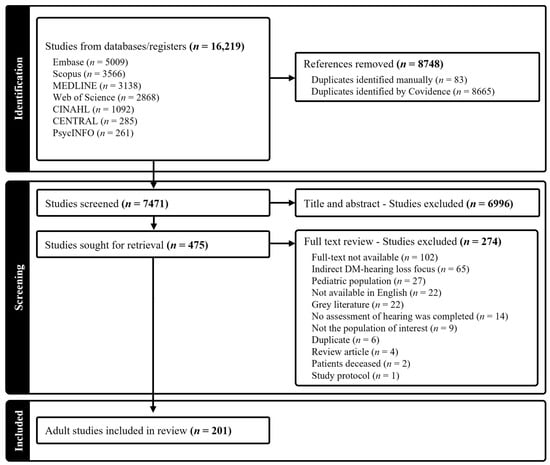
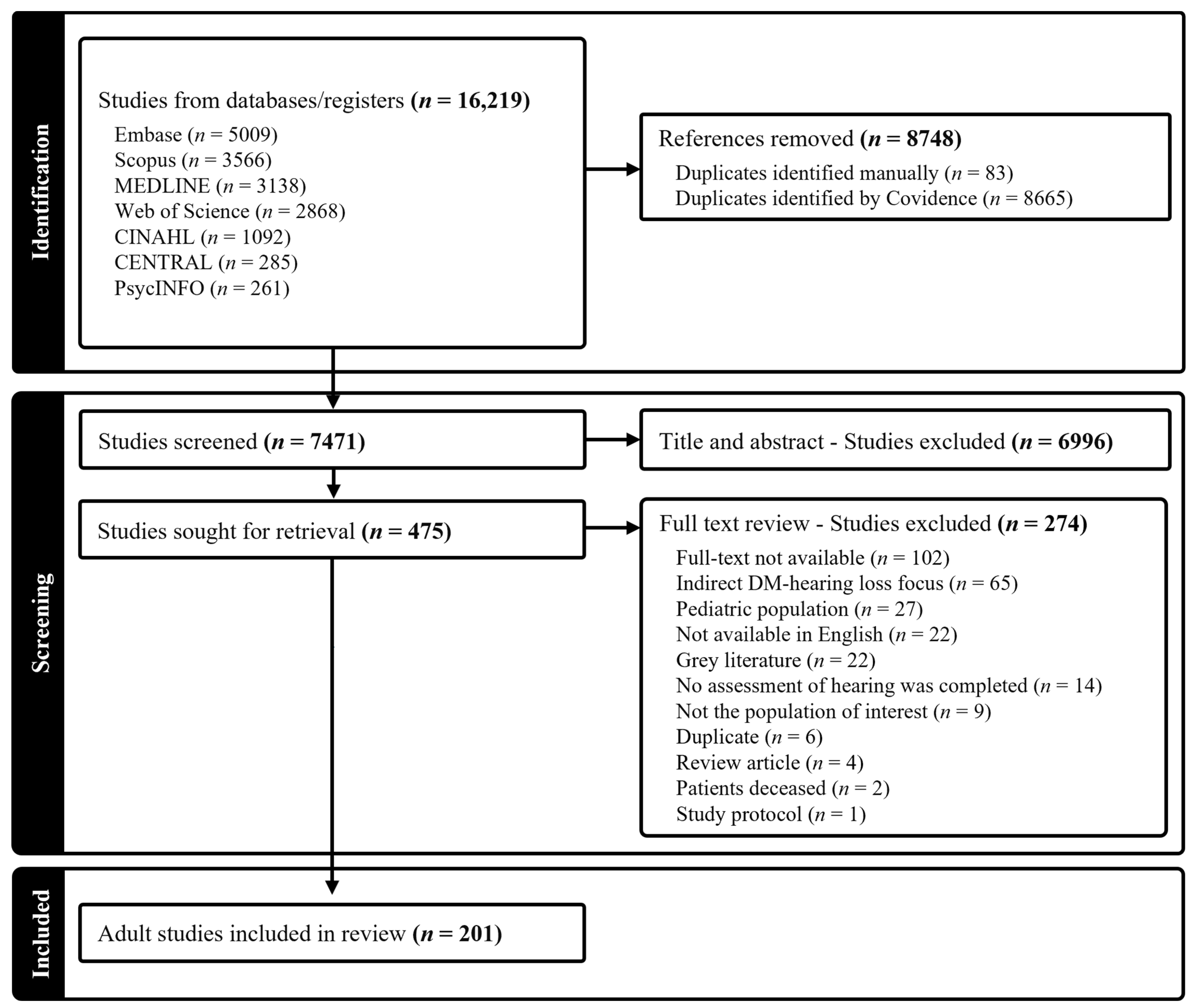
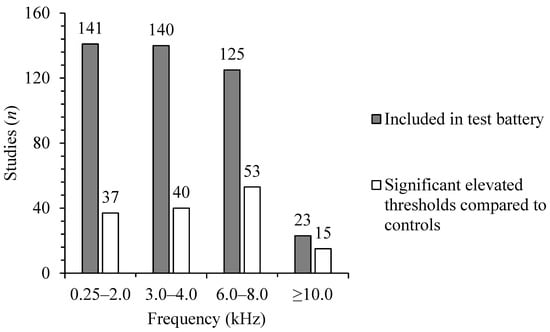
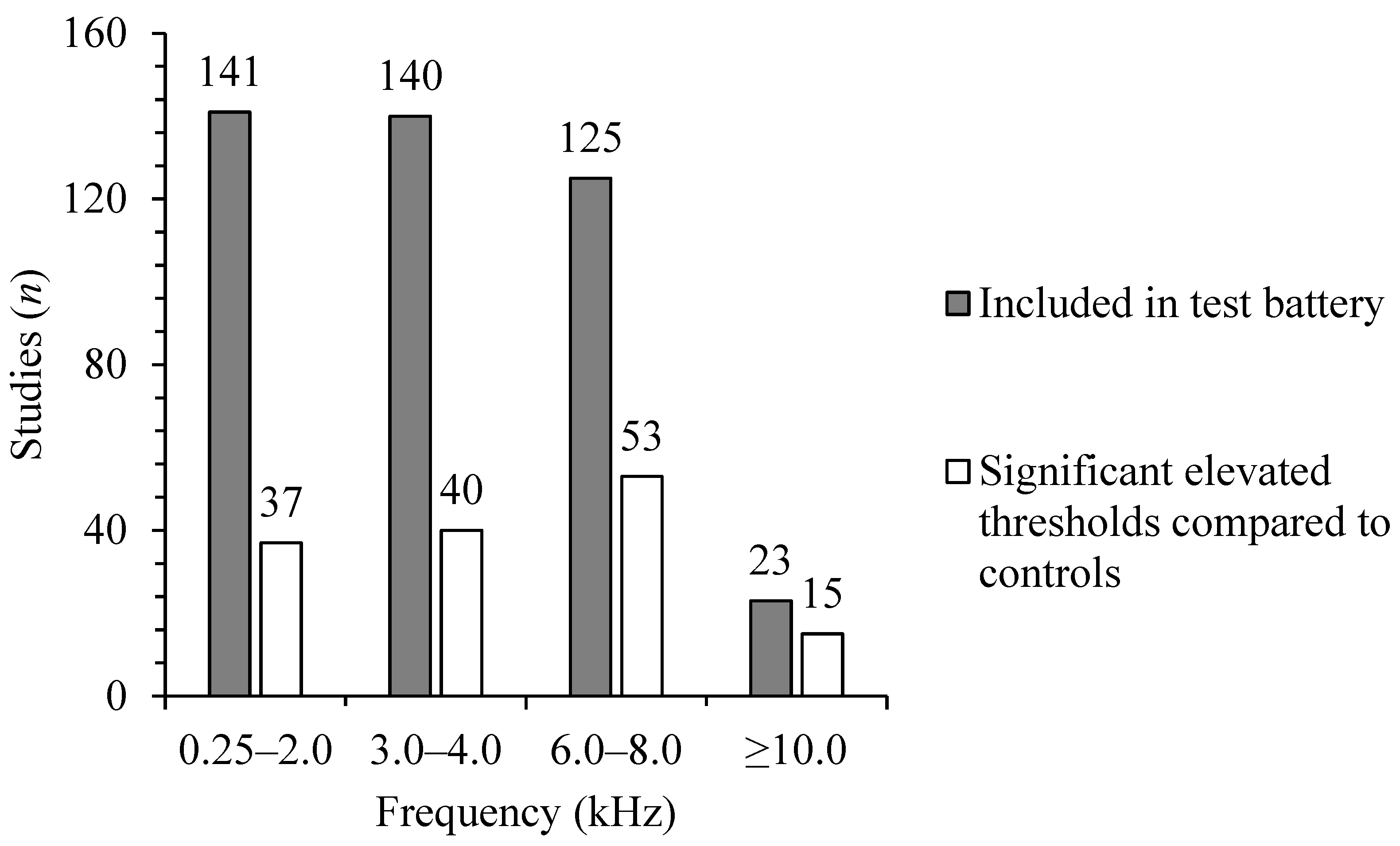
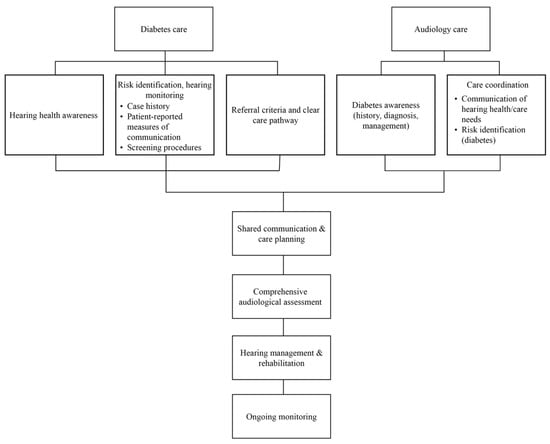
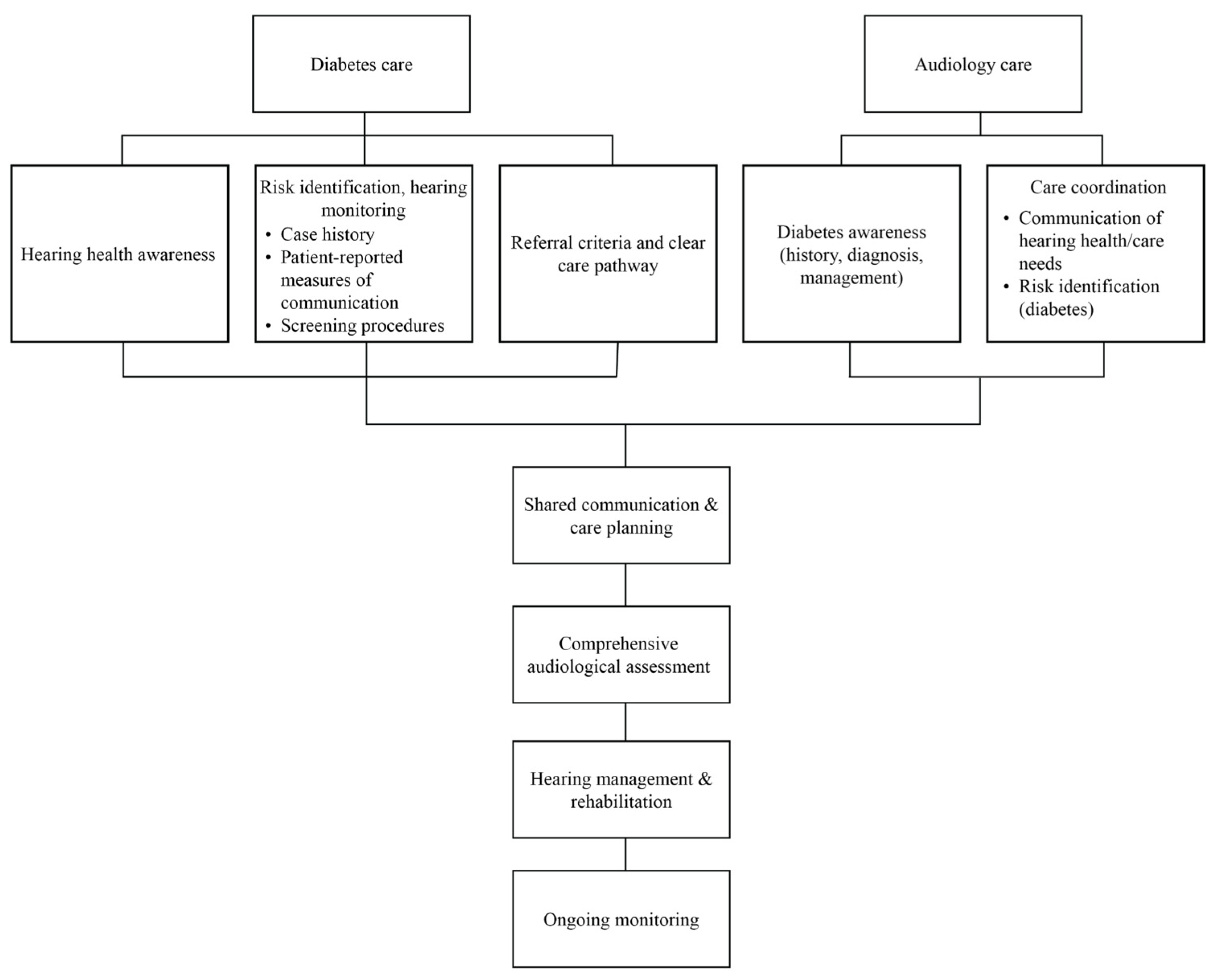

Disclaimer/Publisher’s Note: The statements, opinions and data contained in all publications are solely those of the individual author(s) and contributor(s) and not of MDPI and/or the editor(s). MDPI and/or the editor(s) disclaim responsibility for any injury to people or property resulting from any ideas, methods, instructions or products referred to in the content. |
© 2026 by the authors. Licensee MDPI, Basel, Switzerland. This article is an open access article distributed under the terms and conditions of the Creative Commons Attribution (CC BY) license.