


Abstract
Bush encroachment by woody species threatens biodiversity, ecosystem functioning, and rangeland productivity in savanna ecosystems. Understanding how juvenile woody plants respond to cutting at different times of the year is essential for developing effective management strategies. This study evaluated the seasonal resprouting responses of juvenile individuals of Dichrostachys cinerea and Terminalia sericea following cutting disturbances. The study was conducted in the Nylsvley Nature Reserve using line transects and plot-based sampling because of challenges associated with protecting experimental sites in communal lands. Juvenile plants of each species were allocated into groups comprising thirty-five individuals and subjected to seasonal cutting treatments. Resprout height, leaf production, and root sugar concentrations were measured to assess seasonal recovery patterns. Both species successfully resprouted after cutting regardless of season. T. sericea produced taller resprout heights than D. cinerea, whereas D. cinerea generally produced more leaves. Seasonal differences significantly affected recovery, with winter cutting producing the tallest resprout heights and greatest leaf production, while summer cutting resulted in the shortest resprouts and fewest leaves. Winter-cut plants produced more than twice as many leaves as summer-cut plants. Winter cutting drastically boosts plant regeneration capacity and cannot effectively curb bush expansion, whereas summer cutting achieves better suppression effects. Root sugar concentrations were lower during winter in both species, indicating reduced metabolic activity. Summer is the most effective season for cutting juvenile individuals of D. cinerea and T. sericea to suppress bush encroachment, whereas winter is the least effective. These findings provide evidence to support seasonally informed bush management strategies that promote biodiversity conservation, ecological integrity, and sustainable savanna ecosystem management.
1. Introduction
Savannas are grasslands with scattered trees, representing a transition between grasslands and forests [1,2]. The savanna ecosystem comprises plants at various developmental stages, including seedlings, saplings, juveniles, and adults [3,4,5], all contributing to ecosystem function by providing food and habitat [1,6]. Savanna woody plant species are among the most disturbed plant groups due to various natural and anthropogenic disturbances [6,7]. These ecosystems are characterized by variable climatic conditions and frequent disturbances such as drought, fire, herbivory, climate change, grazing, and fuelwood harvesting [8,9,10]. Such disturbances strongly influence vegetation structure, recruitment, and persistence within savanna ecosystems [11]. Nevertheless, many savanna woody species exhibit remarkable resilience through resprouting, a functional trait that enables plants to recover following disturbance [6,12]. Resprouting allows woody plants to utilize existing root systems for rapid regrowth [13], facilitating faster recovery than seedling establishment [14,15,16] while enhancing post-disturbance survival, resource retention, and long-term persistence within savanna ecosystems [17,18,19].
Among the most common bush encroachers in both protected and unprotected African savannas, particularly in the Lowveld region of South Africa, are Dichrostachys cinerea and Terminalia sericea [20,21]. These species are among the most competitive woody plants, often outnumbering other tree species per hectare in terms of canopy cover and crown diameter [22]. D. cinerea and T. sericea contribute substantially to bush encroachment across southern African savannas, resulting in degradation of rangelands and pasturelands [23]. These encroaching species reduce plant diversity, species richness, biomass, and grazing capacity through the suppression of herbaceous vegetation [23]. Consequently, repeated clearing has been employed as a management strategy to mitigate bush encroachment in semi-arid savannas of southern Africa [24,25,26].
Despite their role as major bush encroachers, D. cinerea and T. sericea are ecologically and socio-economically important savanna species. D. cinerea, a fast-growing member of the Mimosaceae family, is highly competitive and can suppress herbaceous vegetation [27,28,29]. Nevertheless, it possesses important medicinal properties, exhibiting antimalarial activity and traditional uses in the treatment of diarrhea, rheumatism, and respiratory ailments, with phytochemical analyses revealing the presence of alkaloids, flavonoids, and tannins [29,30,31,32]. T. sericea, a member of the Combretaceae family widely distributed across southern Africa [33,34,35,36,37,38,39], contributes to soil conservation, restoration of degraded sites, and dry-season forage for livestock [33,35,37]. In addition, it is widely utilized for timber, fencing posts, carvings, and traditional medicine, with extracts from its leaves, bark, and roots demonstrating antimicrobial, antibacterial, and antifungal properties [33,34,35,40,41,42,43,44,45,46,47]. These ecological functions and socio-economic benefits highlight the importance of understanding the responses of both species to disturbance while developing sustainable bush encroachment management strategies.
Although adult savanna trees have been extensively investigated with respect to disturbances such as fuelwood harvesting [48,49,50,51,52], fire [53,54], and climate change [55,56], relatively little attention has been paid to juvenile stages. Existing research has largely focused on adult woody plants and the disturbances they experience [57], overlooking the important role of juvenile plants in species recruitment and population persistence. Frequent disturbances in savannas, including fire, fuelwood collection, drought, herbivory, cutting, grazing pressure, climate change, and human activities, continually affect juvenile individuals of both D. cinerea and T. sericea [8]. Studies have further shown that seedling and sapling survival is species-specific in disturbed habitats and that savanna woody species may perform differently between communal and protected areas [58]. Consequently, understanding juvenile responses to disturbance is fundamental for improving knowledge of recruitment dynamics and long-term vegetation structure.
Cutting disturbances are widely used to control bush encroachment in African savannas [24,25,26]. Woody species generally exhibit the capacity of resprouting following disturbance [57], and juvenile plants may display even greater resilience than adults [8]. Resprouting is largely supported by stored non-structural carbohydrate reserves contained in underground organs such as lignotubers, rhizomes, bulbs, and roots, which provide the energy required for the regeneration of new shoots following destruction of above-ground biomass [59]. Lignotubers have also been described as important sources of dormant buds or regenospheres that facilitate post-disturbance regeneration [60]. In Mediterranean shrubs, repeated clipping has been shown to substantially deplete starch and soluble sugar reserves stored in lignotubers, thereby reducing the resources available for subsequent resprouting [61]. While canopy cover has been shown to influence resprouting success [57], tree density and other plant characteristics may exert less influence following disturbance [62]. Although previous studies have documented resprouting following disturbance, relatively few have examined the responses of juvenile savanna woody species to cutting disturbances while simultaneously assessing growth responses (height and leaf production) and physiological responses, particularly root soluble sugar concentrations, under natural field conditions. Furthermore, there remains a notable gap in understanding juvenile responses to human-induced cutting disturbances aimed at controlling bush encroachment compared with the well-documented responses of adult trees [48].
Effective management of bush encroachment requires improved understanding of recruitment dynamics and the responses of juvenile woody plants to cutting disturbances. Therefore, this study employed a quadrant sampling method to investigate the effects of cutting disturbances on juvenile individuals of D. cinerea and T. sericea in the semi-arid savanna biome of the Nylsvley Nature Reserve (NNR). Specifically, the study examined how cutting affected resprouting behaviour, regeneration capacity, height growth, leaf production, and root soluble sugar concentrations of juvenile plants under natural field conditions. Root soluble sugar concentrations were assessed because carbohydrate reserves stored in underground organs play a central role in supporting post-disturbance resprouting and recovery. The study tested the hypothesis that the magnitude of resprouting responses differs between D. cinerea and T. sericea and varies with the season in which cutting is applied because of differences in species-specific regeneration strategies and seasonal carbohydrate availability.
2. Materials and Methods
2.1. General Overview of the Study Area
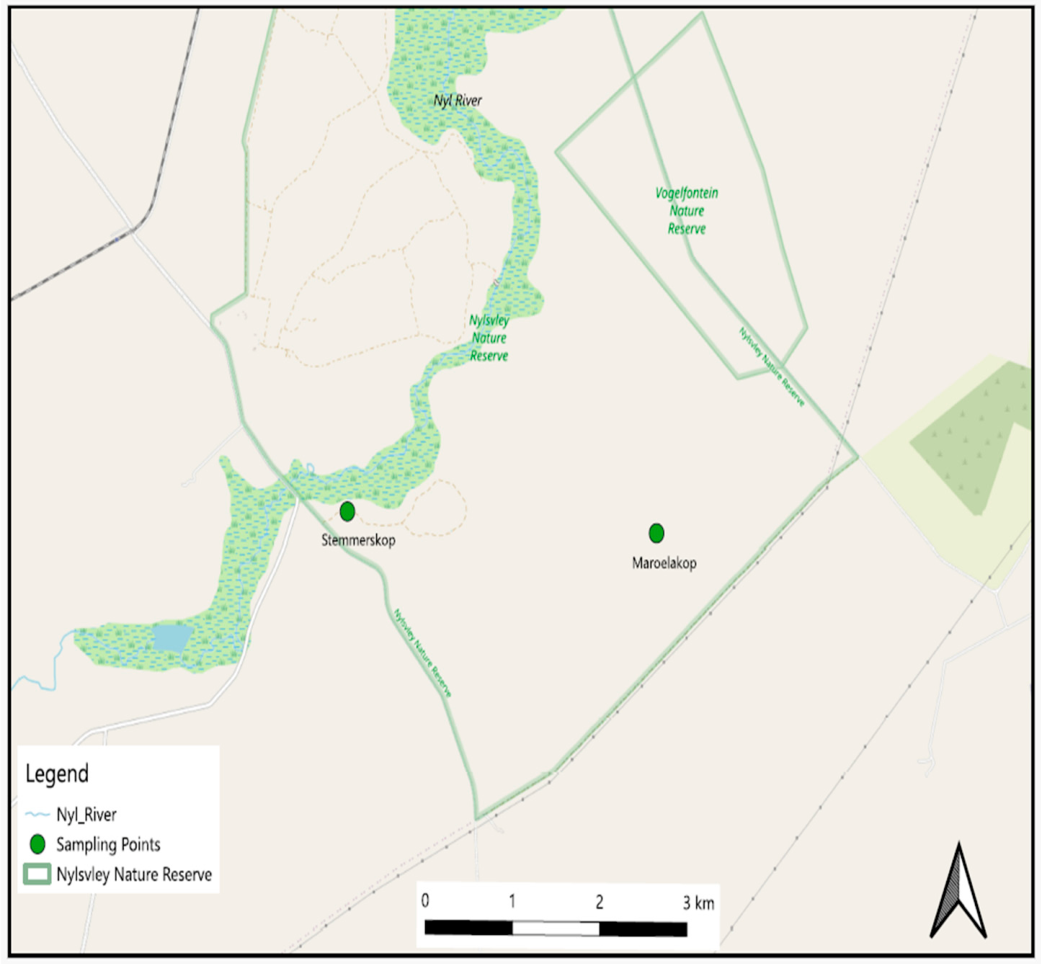
The study was conducted in the NNR, a savanna ecosystem located in the upper catchment of the Nyl River in Limpopo Province, South Africa. The reserve forms part of the 3120 ha Nylsvley Provincial Nature Reserve (24°39′ S, 28°42′ E; 1080 m above sea level). Two sampling sites were selected within the reserve for data collection: the Maroelakop and Stemmerskop sectors. The Maroelakop sector represents an upland savanna and foothill landscape dominated by T. sericea, whereas the Stemmerskop sector is situated along the western boundary of the reserve within an ecotonal area dominated by D. cinerea. The two sampling sites are located at coordinates (−24.6765, 28.6905) and (−24.6695, 28.7084), respectively (Figure 1) (adapted from [63]). The reserve covers approximately 20% of the Nyl River floodplain; however, this proportion does not directly influence the experimental treatments or resprouting responses evaluated in this study. Instead, it reflects the broader environmental context of the reserve, including seasonal variation in moisture availability and vegetation characteristics.
Figure 1.
The topographic map of the Nylsvley Nature Reserve in South Africa (adapted from [63]), where Dichrostachys cinerea and Terminalia sericea dominate the sandstone-backed region stretching between the Stemmerskop and Maroelakop sectors of the reserve.
The NNR is characterized by a mean annual rainfall (56-year record) of 630 ± 134 mm, approximately 85% of which falls between November and April [64]. The mean annual temperature is approximately 19 °C, with a mean annual temperature range of 10.6 °C and an absolute temperature range from −3.2 °C to 38.5 °C recorded in the study area [64]. The reserve supports a semi-arid, dystrophic savanna [65], and the vegetation is classified as mixed bushveld [66].
The vegetation of the NNR comprises grasses, shrubs, and scattered trees. Common grass species include Cynodon dactylon, Cymbopogon spp., Heteropogon muticans, Hyparrhenia hirta, Setaria sphacelata, Sporobolus africana, Themeda triandra, and Fimbristylis hispidula (sedge), among others [67]. The woody vegetation includes Vachellia karroo, which is mainly associated with clay, waterlogged areas of the reserve, and Vachellia tortilis, which is predominantly found in areas formerly occupied by farm workers before the establishment of the reserve. Other woody species commonly found on sandy soils include Burkea africana, Dombeya rotundifolia, D. cinerea, Ochna pulchra, Peltophorum africanum, and T. sericea [67], reflecting the soil conditions and vegetation characteristics of the savanna ecosystem.
Fire is an important ecological process within the NNR. Reports from anecdotal information indicate that fires occurred at approximately five-year intervals [68]. To minimize the spread of accidental fires from surrounding areas, firebreaks approximately 3 m wide were created annually during summer and autumn along the reserve boundary [69]. Because vegetation communities dominated by V. karroo, B. africana, D. cinerea, and T. sericea occur within different burning blocks, the various sampling sites have experienced different fire histories.
2.2. Pre-Treatment Vegetation Survey
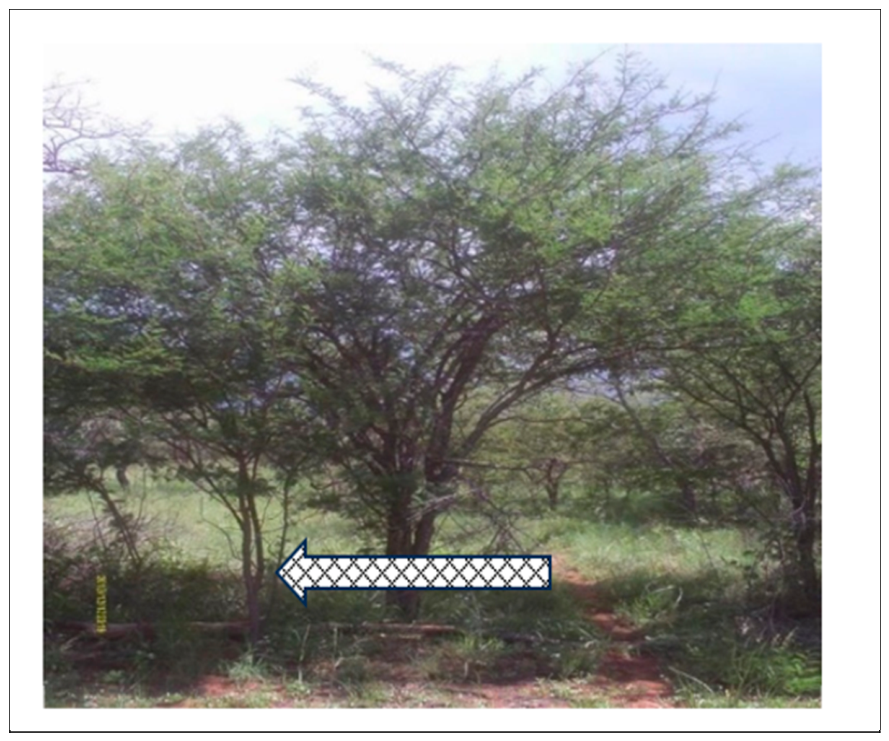
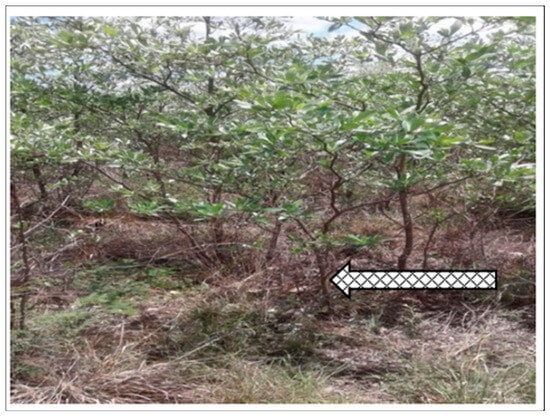
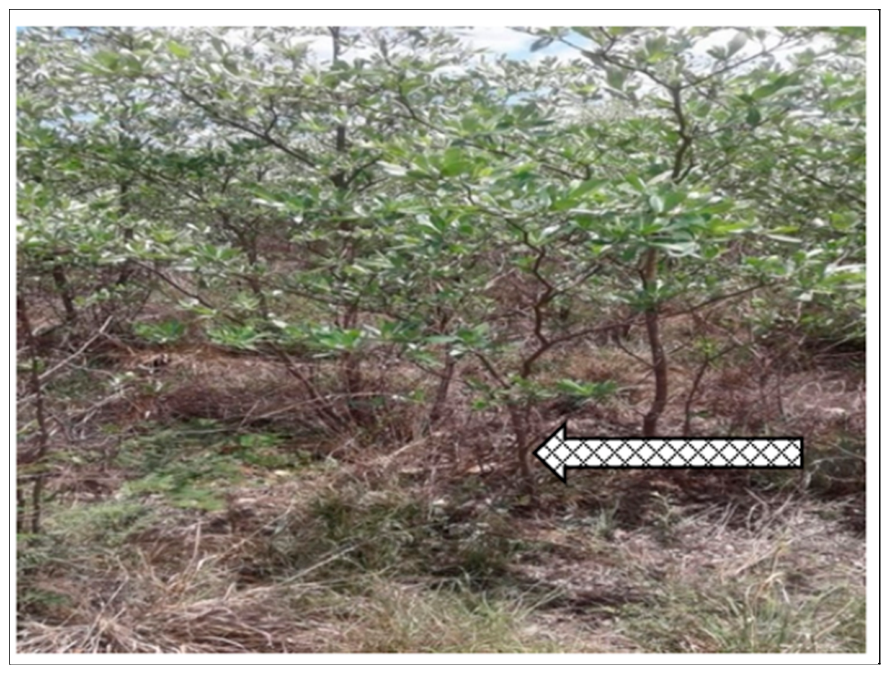
Two sampling sites were selected within the NNR for data collection. One site was dominated by juvenile individuals of D. cinerea, while the other was dominated by juvenile individuals of T. sericea. Juvenile plants were defined as young, non-reproductive individuals that had yet to reach reproductive maturity (Figure 2 and Figure 3). Each month, 35 juvenile individuals of D. cinerea and 35 juvenile individuals of T. sericea were randomly selected from March 2021 to December 2022, spanning a period of 22 months, using probability random sampling [70]. This sampling method was selected because it provides each individual in the population with an equal probability of selection. The sampling sites were purposively identified based on the availability and dominance of juvenile individuals of D. cinerea and T. sericea. Thus, although the sampling sites were subjectively selected based on species occurrence, individual plants within the selected sites were randomly selected for monthly data collection.
Figure 2.
Sampling site in the Stemmerskop sector of the Nylsvley Nature Reserve, showing a sandy habitat dominated by juvenile individuals of Dichrostachys cinerea (24.6695° S, 28.7084° E). The inset image and arrow indicate a representative juvenile D. cinerea plant.
Figure 3.
Sampling site in the Maroelakop sector of the Nylsvley Nature Reserve, showing a sandy habitat dominated by juvenile individuals of Terminalia sericea (24.6765° S, 28.6905° E). The inset image and arrow indicate a representative juvenile T. sericea plant.
2.3. Sampling Procedure and Data Collection Techniques
Following the selection of the sampling sites, quadrats were used to facilitate the identification and sampling of juvenile individuals of D. cinerea and T. sericea. A 4 m × 4 m quadrat was established at each selected location following standard vegetation sampling procedures [71,72]. All juvenile individuals of D. cinerea and T. sericea occurring within the quadrats were identified and recorded. Line transects and square quadrats were used to facilitate the sampling of juvenile plants of both species [73,74].
From the identified juvenile individuals, 35 individuals of D. cinerea and 35 individuals of T. sericea were randomly selected each month for the cutting experiment. The selected individuals were cut to 10 mm above ground level during each monthly sampling period from March 2021 to December 2022, covering a 22-month study period. The cutting treatments were conducted across the four seasons: autumn, winter, spring, and summer. The cutting experiment was undertaken to assess the resprouting responses of the two species to cutting disturbance.
Following each monthly cutting treatment, the resprout height and number of leaves produced by the cut juvenile individuals were recorded. Resprout height was measured using a 30 cm ruler or 3 m aggregated tape measure. The number of leaves produced by each individual was counted, and the measurements were used to calculate mean resprout height and mean leaf number for each species and cutting season. Standard errors were calculated for the mean values. The effects of species, cutting season, and the interaction between species and cutting season on resprout height and leaf number were subsequently assessed using analysis of variance (ANOVA).
2.4. Subsequent Monitoring and Data Collection of Juvenile Plant Species
2.4.1. Root Sampling and Preparation
Thirty-five similarly sized juvenile individuals of D. cinerea and 35 similarly sized juvenile individuals of T. sericea were clipped during autumn (February–April), winter (May–July), spring (August–October), and summer (November–January). Each cut individual was allowed to recover for one year before root excavation. Plants cut in a particular season were excavated during the corresponding season in the following year to ensure an equivalent recovery period.
Immediately after excavation, roots were oven-dried at 100 °C for 1 h, after which the temperature was reduced to 70 °C for a further hour [75]. This drying procedure in Labcon oven minimized enzymatic activity that could alter carbohydrate composition through the interconversion of starch and soluble sugars [75]. Dried roots were subsequently ground into a fine powder for laboratory analysis.
2.4.2. Determination of Root Sugar Concentrations
Root sugar concentrations were determined following the method described by [75]. Oven-dried root samples were ground into a fine powder, and 0.1 g of each sample was extracted with 80% ethanol. The extracts were incubated at 0 °C for 72 h, centrifuged in Nuve NF 1200 centrifuge, and analyzed using the phenol–sulphuric acid method. Absorbance was measured at 490 nm using a UV Vis Metertech SP 8001 spectrophotometer, and root sugar concentrations were calculated from a glucose standard curve [75].
2.5. Data Analysis
All statistical analyses were performed using Statistical Package for Social Sciences (SPSS) version 27. A two-way analysis of variance (ANOVA) was used to evaluate the effects of species, cutting season, and their interaction on the measured response variables. The response variables analyzed included resprout height, number of leaves, leaf size, and root sugar concentration. Species (D. cinerea and T. sericea) and cutting season (autumn, winter, spring, and summer) were included as fixed factors in the model, and the interaction between species and season was also tested.
3. Results
3.1. Resprout Number of Heights
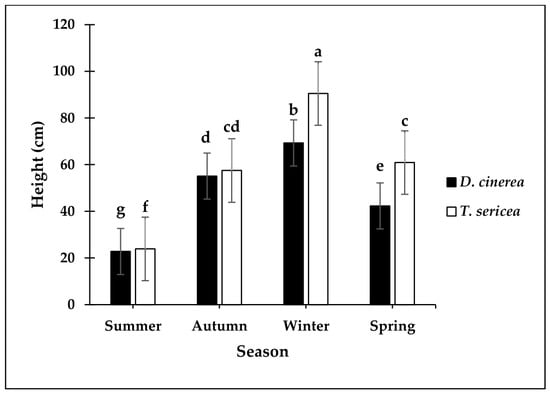
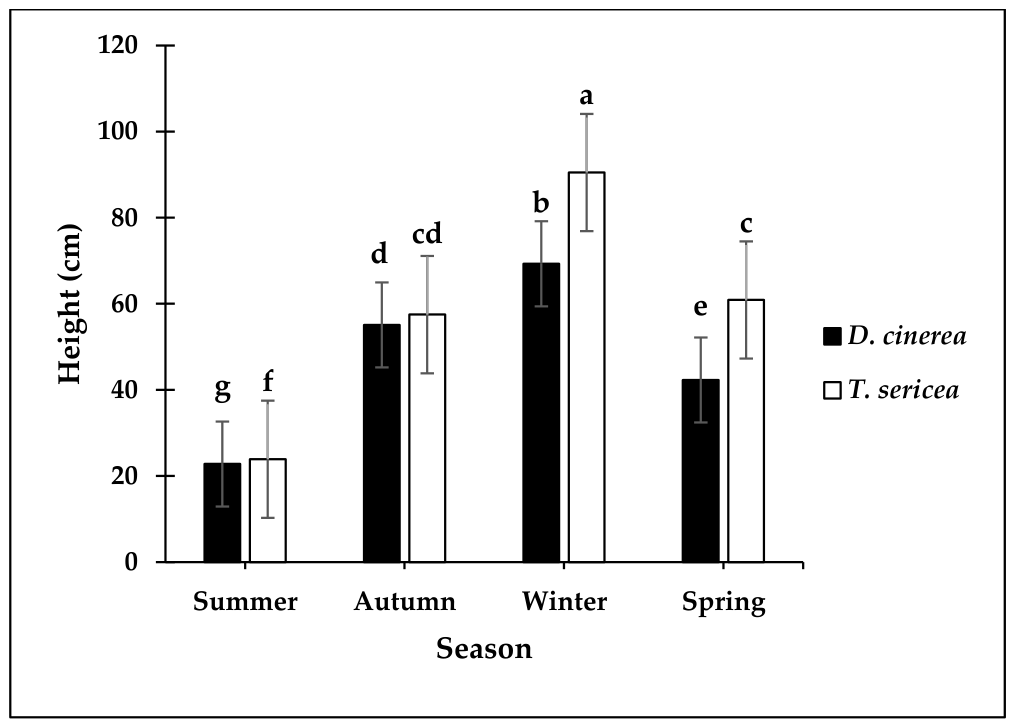
By the end of the experimental period, every juvenile D. cinerea and T. sericea plant that had been cut had resprouted, regardless of the month of the cut (Table 1). The D. cinerea overall mean resprout heights yielded the value of 47.4 cm, compared to 58.2 cm observed for T. sericea. The mean resprout heights based on the season of cutting for D. cinerea ranged between 22.8 cm in summer, 42.3 cm in spring, 55.1 cm in autumn, and 69.3 cm in winter (Table 1). On the other hand, the mean resprout heights based on the season of cutting for T. sericea ranged between 23.9 cm in summer, 60.9 cm in spring, 57.5 cm in autumn, and 90.5 cm in winter. Average resprout heights between plants of the two species were found to differ significantly at p < 0.05 (Table 2). Averaged across seasons, T. sericea resprout heights were 24% (11.7 cm) taller compared to those of D. cinerea (Table 2). The T. sericea juveniles always maintained higher mean resprout height responses throughout the monitoring survey period when compared to D. cinerea (Figure 4). The average resprout heights were found to vary from one season to another (p < 0.05), with winter average resprout heights taller than those of other seasons, while those of summer were shorter than for the other three seasons (Table 1 and Table 2). In addition to the main effects of plant species and season of cutting, the interactive effect of plant species and season of cutting (P × S) on the height of resprouts was also found to be significant. The T. sericea resprouts were taller compared to the D. cinerea ones in all seasons except in autumn, where no significant differences in the height of the two species were observed (Figure 4).
Table 1.
The mean resprout heights (cm) according to species and season of cutting for juvenile individuals of Dichrostachys cinerea and Terminalia sericea. The alphabetical letters attached to the means indicate significant differences between the means according to the Bonferroni ad hoc test.
Table 2.
Results of ANOVA testing the effect of cutting on resprout heights in D. cinerea and T. sericea following cutting experiments in the Nylsvley Nature Reserve.
Figure 4.
Mean resprout heights of the Dichrostachys cinerea and Terminalia sericea according to seasons of clipping, which were autumn, winter, spring, and summer during the period between March 2021 and December 2022. Different alphabetical letters indicate significant differences between means based on Bonferroni post hoc test. Error bars represent standard error.
3.2. Resprout Number of Leaves
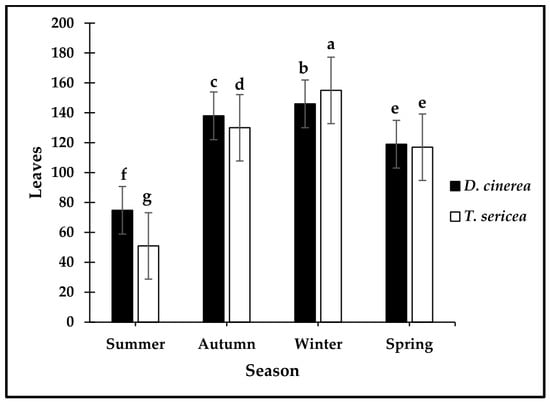
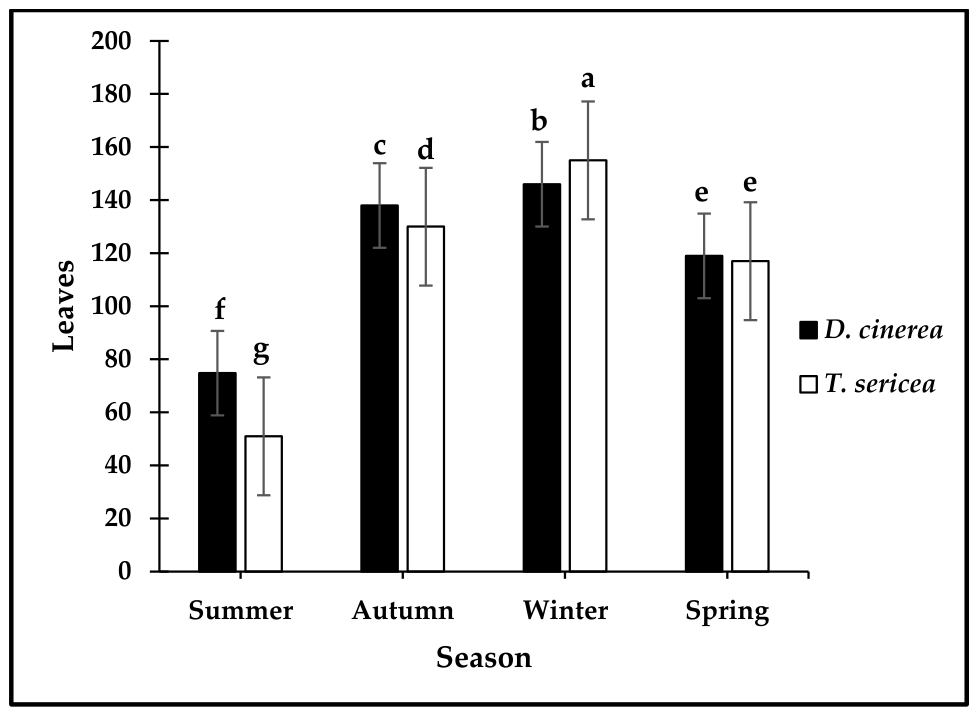
The resprouts of all D. cinerea and T. sericea plant individuals that were cut produced leaves during the experimental period and throughout all seasons of cutting, as presented in Table 3 and Figure 5. The average number of resprout leaves was found to vary from one season to another (p < 0.05) (Table 4). Pertaining to the overall mean number of resprout leaves throughout the survey period, T. sericea had 119 leaves on average, compared to 113 for D. cinerea. The mean number of resprout leaves based on the season of cutting for juvenile individuals of D. cinerea during the survey ranged between 74.8 in summer, 119 in spring, 138 in autumn, and 146 in winter (Table 3). The mean number of resprout leaves based on the season of cutting for juvenile individuals of T. sericea during the survey ranged between 51 in summer, 117 in spring, 130 in autumn, and 155 in winter. The number of resprout leaves of the winter-cut plants was 16 (12%) and 32 (27%) more than those cut in autumn and spring, respectively (Table 4). The number of resprout leaves from the summer-cut plants was fewer than those from the rest of the seasons, with the resprout leaves from the winter-cut plants being more than 1-fold (87,1) larger than the summer ones (Table 4). The average number of leaves between plants of the two species was found to differ at the significance level of p < 0.05 (Table 4). Averaged across seasons, the number of T. sericea resprout leaves was 4 (3.4%) less than that of D. cinerea (Table 3 and Table 4). In addition to the main effects of plant species and season of cutting, the interactive effect of plant species and season of cutting (P × S) on the number of resprout leaves was also significant (Table 4). The T. sericea resprouts produced fewer leaves compared to the D. cinerea ones in all seasons except in winter, where their resprouts produced more leaves than those of the D. cinerea resprouts (Figure 5).
Table 3.
The mean resprout leaves according to species and season of cutting for juvenile individuals of Dichrostachys cinerea and Terminalia sericea. The alphabetical letters attached to the means indicate significant differences between the means according to the Bonferroni ad hoc test.
Figure 5.
Mean number of resprout leaves in juvenile individuals of Dichrostachys cinerea and Terminalia sericea according to season of clipping (autumn, winter, spring, and summer) from March 2021 to December 2022. Different alphabetical letters indicate significant differences between means based on Bonferroni post hoc test. Error bars represent standard error.
Table 4.
Results of ANOVA testing the effect of cutting on number of resprout leaves following cutting experiments in the Nylsvley Nature Reserve.
3.3. Allocation of Sugar Concentration for Resprouting
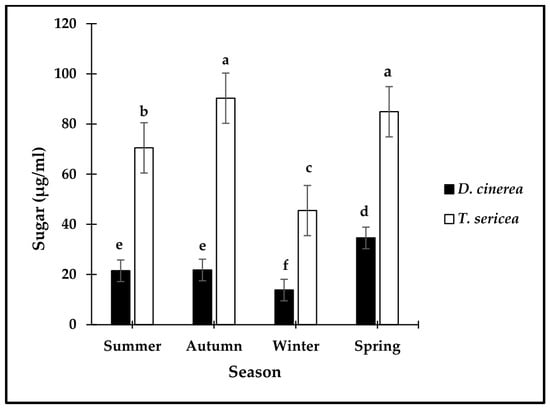
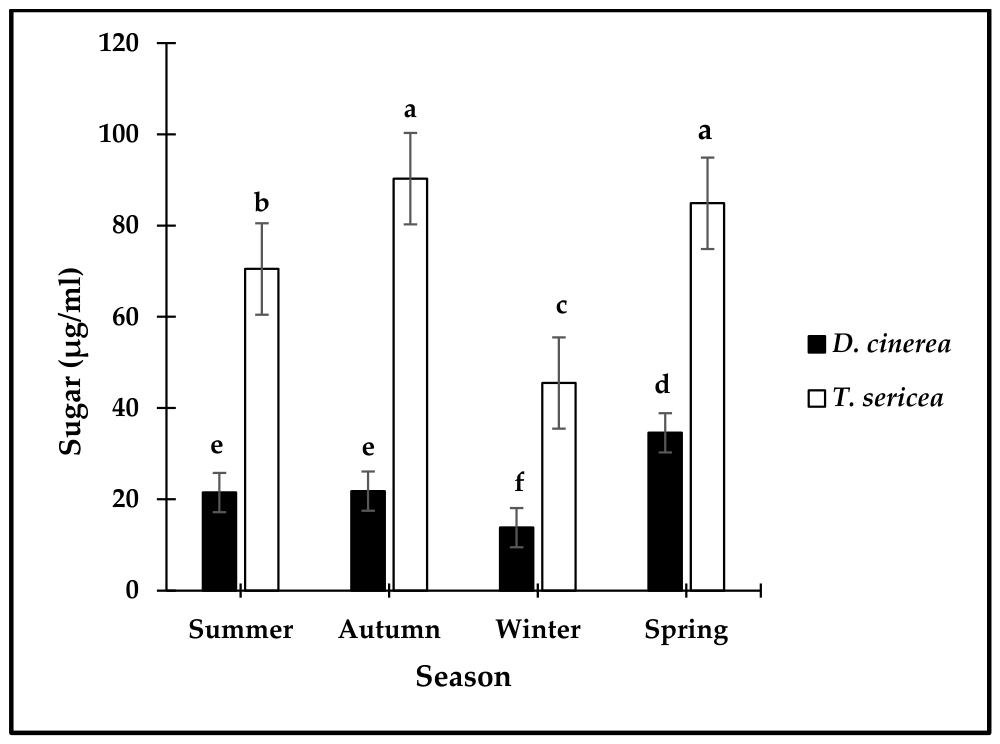
The allocations of sugar level in all D. cinerea and T. sericea plant individuals that were root analyzed during the experimental period, throughout all seasons, are shown in Table 5 and Figure 6. The decrease in average resprout heights of D. cinerea alongside increased root sugar concentrations in winter suggests that resprout height may not always correlate positively with root sugar levels. Instead, carbon could be allocated to roots and other structures. For T. sericea, the autumn distribution of root sugars may correlate positively with sprout height development, as these plants allocate below-ground reserves to above-ground structures in autumn (Figure 6). Insufficient sugar reserves may lead T. sericea to prioritize root sugar allocation over resprout height in summer (Figure 6). Additionally, plants might bolster root sugar supplies to support regeneration through stored non-structural carbohydrates in their roots. The analysis of variance revealed significant effects of species, cutting season, and the interaction between species and season on root sugar concentration of juvenile individuals of D. cinerea and T. sericea following cutting disturbances (Table 6). These results indicate that root sugar responses varied between species and across cutting seasons, suggesting species-specific differences in carbohydrate dynamics following disturbance.
Table 5.
Mean root sugar concentrations of juvenile individuals of D. cinerea and T. sericea according to species and season of clipping. Different alphabetical letters indicate significant differences between means based on the Bonferroni post hoc test.
Figure 6.
Mean root sugar concentrations of juvenile individuals of D. cinerea and T. sericea according to season of clipping (autumn, winter, spring, and summer) from March 2021 to December 2022. Different alphabetical letters indicate significant differences between means based on the Bonferroni post hoc test. Error bars represent standard error.
Table 6.
ANOVA results depicting the effects of cutting disturbances and seasons on root sugar concentrations in juvenile individuals of Dichrostachys cinerea and Terminalia sericea following cutting treatments in the Nylsvley Nature Reserve.
4. Discussion
4.1. Resprouting Capacity of Juvenile Dichrostachys cinerea and Terminalia sericea Following Cutting Disturbances
All juvenile individuals of D. cinerea and T. sericea survived throughout the twenty-two-month experimental period, demonstrating a strong capacity for post-disturbance recovery following cutting. The persistence of both species after repeated cutting disturbances supports previous findings that many savanna woody plants possess effective resprouting mechanisms that enable survival following above-ground biomass removal [76]. Similarly, ref. [13] reported that harvested woody plants commonly regenerate after cutting, either through the production of fewer vigorous shoots or numerous smaller shoots depending on species characteristics and environmental conditions. Therefore, the continued survival and regrowth observed in the present study indicate that cutting disturbances alone may not be sufficient to eliminate juvenile individuals of these bush-encroaching species.
The ability of juvenile plants to resprout is an important ecological trait contributing to persistence in disturbance-prone savanna ecosystems. Resprouting allows woody plants to rapidly replace lost above-ground biomass and maintain population persistence after disturbances such as cutting, fire, or herbivory [77,78]. The present findings demonstrate that juvenile individuals of D. cinerea and T. sericea retain this recovery capacity despite seasonal variation in cutting time, highlighting the importance of considering plant developmental stage when evaluating bush encroachment management strategies.
4.2. Influence of Cutting Season on Resprout Height and Recovery Responses
Season significantly affected resprout height, with winter-cut individuals producing taller resprouts than plants cut during autumn, spring, or summer. Seasonal differences in post-disturbance recovery have previously been linked to variation in plant resource availability, particularly the availability and allocation of below-ground reserves that support initial shoot development following biomass loss [57,61]. Although root sugar concentration was measured in the present study, total non-structural carbohydrate reserves were not quantified. Therefore, the stronger resprouting observed after winter cutting cannot be directly attributed to greater carbohydrate storage. However, seasonal variation in soluble carbohydrate availability and plant physiological condition may contribute to differences in regeneration capacity. Previous studies have demonstrated that stored carbohydrates provide energy for bud activation and early shoot growth before newly developed leaves become fully photosynthetically active [61]. In addition, successful resprouting depends not only on resource availability but also on the presence and viability of dormant buds capable of producing new shoots [77,78].
The lower resprout height observed following summer cutting may reflect seasonal differences in resource allocation. During periods of active growth, plants allocate resources towards shoot development, leaf production, and maintenance processes, which may influence their capacity to recover following disturbance [79]. However, further physiological studies measuring carbohydrate dynamics before and after cutting would be required to directly confirm this mechanism.
4.3. Species-Specific Differences in Resprouting Responses
The significant interaction between species and cutting season indicates that D. cinerea and T. sericea exhibited different resprouting responses depending on the timing of disturbance. Although T. sericea generally produced taller resprouts than D. cinerea across seasons, these differences suggest variation in species-specific recovery strategies. Such variation is expected among co-occurring woody species, as differences in morphology, physiology, resource allocation patterns, and life-history traits can influence responses to disturbance [80,81]. Similar differences in regeneration responses have been reported among woody species following biomass removal, with many top-killed shrubs and trees maintaining persistence through vigorous resprouting [82,83,84,85,86,87,88,89]. Therefore, management strategies involving cutting disturbances should consider species-specific responses rather than assuming uniform recovery patterns among bush-encroaching woody plants.
4.4. Seasonal Effects on Resprout Leaf Production and Species Differences in Leaf Traits
Seasonal variation also influenced resprout leaf production, with differences observed between D. cinerea and T. sericea. These differences may partly reflect contrasting leaf characteristics between the two species. D. cinerea produces compound leaves, whereas T. sericea has simple leaves, which may influence patterns of leaf production and seasonal persistence. However, because photosynthetic performance was not measured in this study, differences in leaf morphology cannot be directly linked to differences in photosynthetic efficiency or carbon assimilation. Further research incorporating measurements of photosynthetic activity, leaf area, and carbon assimilation would be required to determine how leaf functional traits contribute to post-disturbance recovery. Leaves remain essential for restoring photosynthetic capacity after disturbance because they support the production of new assimilates required for continued growth [90]. Therefore, variation in leaf production among species may contribute to differences in recovery trajectories following cutting.
4.5. Root Sugar Concentration and Its Relationship with Resprouting Responses
Root sugar concentration differed significantly between species and cutting seasons, indicating that carbohydrate responses following disturbance were species-dependent. Seasonal variation in carbohydrate dynamics has been identified as an important factor influencing woody plant recovery after disturbance [19,61,91]. In D. cinerea, the negative relationship between root sugar concentration and resprout height during winter may indicate that stored soluble sugars were being utilized during active shoot regeneration. Conversely, the positive relationship observed in T. sericea during autumn suggests that greater sugar availability may contribute to improved recovery under certain seasonal conditions. However, these relationships should be interpreted cautiously because carbohydrate mobilization was not directly measured.
The observed differences suggest that species-specific carbohydrate regulation may influence recovery following cutting disturbances. Future studies incorporating detailed measurements of total non-structural carbohydrates, carbohydrate allocation patterns, and below-ground storage organs would provide further insight into the mechanisms underlying resprouting responses. In addition, environmental factors such as soil texture, nutrient availability, and moisture conditions may influence resource acquisition and storage. Because detailed soil physicochemical properties were not measured in the present study, future research should incorporate edaphic assessments to quantify their contribution to regeneration responses.
4.6. Implications for Bush Encroachment Management
The ability of juvenile individuals of D. cinerea and T. sericea to survive and regenerate after cutting disturbances indicates that cutting alone may not provide long-term control of these bush-encroaching species. Although winter cutting resulted in stronger resprouting responses, summer cutting reduced resprout growth and may therefore represent a more suitable period for limiting vigorous post-cutting recovery. Nevertheless, seasonal cutting should be considered as one component of integrated management strategies, including repeated monitoring and complementary control approaches. Since this study focused on two woody species at a single savanna site, further studies across multiple locations and species are required before broader ecosystem-level recommendations can be developed. Future studies should also incorporate pre-disturbance measurements of plant height, stem diameter, and biomass to better quantify the influence of initial plant condition on post-cutting recovery responses.
5. Conclusions
This study demonstrates that juvenile individuals of D. cinerea and T. sericea can resprout following cutting disturbance, although the magnitude of their responses differed between species and seasons. Cutting season influenced resprout growth, with winter-cut individuals producing greater resprout heights than those cut during autumn, spring, and summer. T. sericea generally produced taller resprouts than D. cinerea, despite having fewer leaves. The observed variation in root sugar concentrations among seasons may reflect differences in plant physiological activity and seasonal environmental conditions, which could contribute to differences in post-cutting recovery.
Within the environmental conditions of the NNR, the observed resprouting responses suggest that summer cutting may be a suitable period for managing juvenile individuals of D. cinerea and T. sericea. However, this interpretation should be considered within the limitations of the study, which focuses specifically on juvenile individuals of two woody species and sampling sites selected based on the occurrence and dominance of the target species. Consequently, the findings should not be generalized to other growth stages, woody species, or savanna ecosystems without further investigation. The observed species- and season-specific responses nevertheless provide useful information for understanding the response of juvenile D. cinerea and T. sericea to cutting disturbance and may contribute to the development of more targeted bush encroachment management approaches in the NNR. Further research involving additional species, growth stages, and sites would help determine whether the observed patterns are consistent under different environmental and ecological conditions.
Author Contributions
Conceptualization, M.L.-M., P.T. and J.O.; methodology, M.L.-M.; formal analysis, M.L.-M., H.M. and A.B.; investigation, M.L.-M.; data curation, M.L.-M.; resources, M.L.-M., H.M., A.B. and J.O.; software, A.B.; visualization, A.B.; project administration, M.L.-M., P.T. and J.O.; supervision, H.M., P.T., A.B. and J.O.; validation, M.L.-M., H.M., P.T., A.B. and J.O.; writing—original draft preparation, M.L.-M.; writing—review and editing, M.L.-M., H.M., P.T., A.B. and J.O. All authors have read and agreed to the published version of the manuscript.
Funding
This research received no external funding.
Data Availability Statement
The data from this study will be shared upon request to the corresponding author.
Acknowledgments
The University of Venda, particularly the Department of Biological Sciences, provided logistical and technical support during this work, for which the authors are grateful.
Conflicts of Interest
The authors declare no conflict of interest.
References
- Mishra, N.B.; Young, K.R. Savannas and Grasslands. In Terrestrial Ecosystems and Biodiversity; CRC Press: Boca Raton, FL, USA, 2020. [Google Scholar] [CrossRef] [Scilit]
- Higgins, S.I.; Bond, W.J.; Trollope, W.S.W. Fire, resprouting and variability: A recipe for grass–tree coexistence in savanna. J. Ecol. 2003, 88, 213–229. [Google Scholar] [CrossRef] [Scilit]
- Martini, F. On the definition of tree seedlings. Plant Ecol. 2024, 225, 75–79. [Google Scholar] [CrossRef] [Scilit]
- Wakeling, J.L.; Staver, A.C.; Bond, W.J. Simply the best: The transition of savanna saplings to trees. Oikos 2011, 120, 1448–1451. [Google Scholar] [CrossRef] [Scilit]
- Pan, T.; Fan, X.; Sun, H. Juvenile phase: An important phase of the life cycle in plants. Ornam. Plant Res. 2023, 3, 18. [Google Scholar] [CrossRef] [Scilit]
- Osborne, C.P.; Charles-Dominique, T.; Stevens, N.; Bond, W.J.; Midgley, G.; Lehmann, C.E.R. Human impacts in African savannas are mediated by plant functional traits. New Phytol. 2018, 220, 10–24. [Google Scholar] [CrossRef] [Scilit] [PubMed]
- Sebata, A. Ecology of Woody Plants in African Savanna Ecosystems. In Plant Ecology—Traditional Approaches to Recent Trends; InTech: London, UK, 2017. [Google Scholar] [CrossRef] [Scilit]
- Ouédraogo, O.; Bondé, L.; Boussim, I.J.; Linstadter, A. Caught in a human disturbance trap: Responses of tropical savanna trees to increasing land-use pressure. For. Ecol. Manag. 2015, 354, 68–76. [Google Scholar] [CrossRef] [Scilit]
- Jeltsch, F.; Milton, S.J.; Dean, W.R.J.; van Rooyen, N. Tree spacing and coexistence in semiarid savannas. J. Ecol. 1996, 18, 583–595. [Google Scholar] [CrossRef] [Scilit]
- Coverdale, T.C.; Boucher, P.B.; Singh, J.; Palmer, T.M.; Goheen, J.R.; Pringle, R.M.; Davies, A.B. Herbivore regulation of savanna vegetation: Structural complexity, diversity, and the complexity–diversity relationship. Ecol. Monogr. 2024, 94, e1624. [Google Scholar] [CrossRef] [Scilit]
- Coetsee, C.; Botha, J.; Case, M.F.; Manganyi, A.; Siebert, F. The hard lives of trees in African savanna—Even without elephants. Austral Ecol. 2023, 48, 532–551. [Google Scholar] [CrossRef] [Scilit]
- Ahler, S.J.; Ladwig, L.M.; Charton, K.T. Dispersal and persistence traits inform long-term herbaceous plant community change in encroached savannas. Plant Ecol. 2023, 224, 361–371. [Google Scholar] [CrossRef] [Scilit]
- Neke, K.S.; Owen-Smith, N.; Witkowski, E.T.F. Comparative resprouting response of Savanna woody plant species following harvesting: The value of persistence. For. Ecol. Manag. 2006, 232, 114–123. [Google Scholar] [CrossRef] [Scilit]
- Noutcheu, R.; Oliveira, F.M.P.; Wirth, R.; Tabarelli, M.; Leal, I.R. Coppicing as a driver of plant resprouting and the regeneration of a Caatinga dry forest. For. Ecol. Manag. 2023, 529, 120736. [Google Scholar] [CrossRef] [Scilit]
- Lawes, M.J.; Clarke, P.J. Ecology of plant resprouting: Populations to community responses in fire-prone ecosystems. Plant Ecol. 2011, 212, 1937–1943. [Google Scholar] [CrossRef] [Scilit]
- Li, M.H.; Cherubini, P.; Dobbertin, M.; Arend, M.; Xiao, W.F.; Rigling, A. Responses of leaf nitrogen and mobile carbohydrates in different Quercus species/provenances to moderate climate changes. Plant Biol. 2013, 15, 177–184. [Google Scholar] [CrossRef] [Scilit] [PubMed]
- Vesk, P.A. Plant size and resprouting ability: Trading tolerance and avoidance of damage. J. Ecol. 2006, 94, 1027–1034. [Google Scholar] [CrossRef] [Scilit]
- Zhu, W.; Xiang, J.; Wang, S.; Li, M. Resprouting ability and mobile carbohydrate reserves in an oak shrubland decline with increasing elevation on the eastern edge of the Qinghai–Tibet plateau. For. Ecol. Manag. 2012, 278, 118–126. [Google Scholar] [CrossRef] [Scilit]
- Clarke, P.J.; Lawes, M.J.; Midgley, J.J.; Lamont, B.B.; Ojeda, F.; Burrows, G.E.; Enright, N.J.; Knox, K.J.E. Resprouting as a key functional trait: How buds, protection and resources drive persistence after fire. New Phytol. 2013, 197, 19–35. [Google Scholar] [CrossRef] [Scilit] [PubMed]
- Vesk, P.A.; Yen, J.D. Plant resprouting: How many sprouts and how deep? Flexible modelling of multi-species experimental disturbances. Perspect. Plant Ecol. Evol. Syst. 2019, 41, 125497. [Google Scholar] [CrossRef] [Scilit]
- Mangwane, M.; Madakadze, I.C.; Tjelele, T.J.; Ramoelo, A. Patterns of mature woody plant species encroachment on vegetation structure, density, and diversity of the understory layer across the Marikana Thornveld. Front. Ecol. Evol. 2025, 13, 1498429. [Google Scholar] [CrossRef] [Scilit]
- Turpie, J.; Both, P.; Coldrey, K.; Forsythe, K.; Knowles, T.; Letley, G.; Allen, J.; de Wet, R. Towards a Policy on Indigenous Bush Encroachment in South Africa; Department of Environmental Affairs: Pretoria, South Africa, 2019. [Google Scholar]
- Cronje, H.P.; Panagos, M.D.; Reilly, B.K. The plant communities of the Andover Game Reserve, South Africa. Koedoe 2008, 50, 184–201. [Google Scholar] [CrossRef] [Scilit]
- Randle, M.; Stevens, N.; Midgley, G. Comparing the differential effects of canopy shading by Dichrostachys cinerea and Terminalia sericea on grass biomass. S. Afr. J. Bot. 2018, 119, 271–277. [Google Scholar] [CrossRef] [Scilit]
- Wedel, E.R.; Ratajczak, Z.; Tooley, E.G.; Nippert, J.B. Divergent resource-use strategies of encroaching shrubs: Can traits predict encroachment success in tallgrass prairie? J. Ecol. 2025, 113, 339–352. [Google Scholar] [CrossRef] [Scilit]
- Belayneh, A.; Tessema, Z.K. Mechanisms of bush encroachment and its inter-connection with rangeland degradation in semi-arid African ecosystems: A review. J. Arid Land 2017, 9, 299–312. [Google Scholar] [CrossRef] [Scilit]
- Haussmann, N.S.; Kalwij, J.M.; Bezuidenhout, S. Some ecological side-effects of chemical and physical bush clearing in a southern African rangeland ecosystem. S. Afr. J. Bot. 2016, 102, 234–239. [Google Scholar] [CrossRef] [Scilit]
- Cloete, W.H. Determining the Effect of Soil on Bush Encroachment Between 1993 and 2018 in the Northwest Province. Doctoral Dissertation, North-West University, Potchefstroom, South Africa, 2022. [Google Scholar]
- Mudzengi, C.; Kativu, S.; Dahwa, E.; Poshiwa, X.; Murungweni, C. Effects of Dichrostachys cinerea (l.) Wight & Arn (Fabaceae) on herbaceous species in a semi-arid rangeland in Zimbabwe. Nat. Conserv. 2014, 7, 51–60. [Google Scholar] [CrossRef] [Scilit]
- Mazimba, O.; Kwape, T.E.; Gaobotse, G. Dichrostachys cinerea: Ethnomedicinal uses, phytochemistry and pharmacological activities-a review. Nat. Prod. J. 2022, 12, 20–30. [Google Scholar] [CrossRef] [Scilit]
- Jayakumari, S.; Anbu, J.; Ravichandran, V. Antiurolithiatic activity of Dichrostachys cinerea (L.) Wight & Arn root extract. J. Pharm. Res. 2011, 4, 1206–1208. [Google Scholar]
- Pedroso, D.T.; Kaltschmitt, M. Dichrostachys cinerea as a possible energy crop—Facts and figures. Biomass Convers. Biorefinery 2012, 2, 41–51. [Google Scholar] [CrossRef] [Scilit]
- Aworet-Samseny, R.R.; Souza, A.; Kpahé, F.; Konaté, K.; Datté, J.Y. Dichrostachys cinerea (L.) Wight et Arn (Mimosaceae) hydro-alcoholic extract action on the contractility of tracheal smooth muscle isolated from guinea-pig. BMC Complement. Altern. Med. 2011, 11, 23. [Google Scholar] [CrossRef] [Scilit] [PubMed]
- Amri, E. Germination of Terminalia sericea Buch ex Dc. seeds: Effects of temperature regime, photoperiod, gibberellic acid and potassium nitrate. J. Mol. Biosci. Ther. 2011, 2, 722–727. [Google Scholar]
- Eldeen, I.M.; Elgorashi, E.E.; Mulholland, D.A.; van Staden, J. Anolignan B: A bioactive compound from the roots of Terminalia sericea. J. Ethnopharmacol. 2006, 103, 135–138. [Google Scholar] [CrossRef] [Scilit] [PubMed]
- Likoswe, M.G.; Njoloma, J.P.; Mwase, W.F.; Chilima, C.Z. Effect of seed collection times and pretreatment methods on germination of Terminalia sericea Burch. ex-DC. Afr. J. Biotechnol. 2010, 7, 2840–2846. [Google Scholar] [CrossRef]
- Van Wyk, B. Field Guide to Trees of Southern Africa; Penguin Random House South Africa: Cape Town, South Africa, 2013. [Google Scholar]
- Katjiua, M.L.; Ward, D. Resistance and tolerance of Terminalia sericea trees to simulated herbivore damage under different soil nutrient and moisture conditions. J. Chem. Ecol. 2006, 32, 1431–1443. [Google Scholar] [CrossRef] [Scilit] [PubMed]
- Moshi, M.J.; Mbwambo, Z.H. Some pharmacological properties of extracts of Terminalia sericea roots. J. Ethnopharmacol. 2005, 97, 43–47. [Google Scholar] [CrossRef] [Scilit] [PubMed]
- Mucina, L.; Geldenhuys, C.J.; Rutherford, M.C.; Powrie, L.W.; Lötter, M.C. Afrotemperate, subtropical and azonal forests. The vegetation of South Africa, Lesotho and Swaziland. Strelitzia 2006, 19, 584–614. [Google Scholar]
- Mongalo, N.I.; McGaw, L.J.; Segapelo, T.V.; Finnie, J.F.; Van Staden, J. Ethnobotany, phytochemistry, toxicology and pharmacological properties of Terminalia sericea Burch. ex-DC. (Combretaceae)—A review. J. Ethnopharmacol. 2016, 194, 789–802. [Google Scholar] [CrossRef] [Scilit] [PubMed]
- Nair, A.A.; Anjum, N.; Tripathi, Y.C. A Review on Ethnomedicinal, Phytochemical, and Pharmacological Significance of Terminalia sericea Burch. Ex DC. J. Pharm. Res. 2018, 12, 420–430. [Google Scholar]
- Makhado, R.A.; Von Maltitz, G.P.; Potgieter, M.J.; Wessels, D.C. Contribution of woodland products to rural livelihoods in the northeast of Limpopo Province, South Africa. S. Afr. Geogr. J. 2009, 91, 46–53. [Google Scholar] [CrossRef] [Scilit]
- Fyhrquist, P.; Mwasumbi, L.; Vuorela, P.; Vuorela, H.; Hiltunen, R.; Murphy, C.; Adlercreutz, H. Preliminary antiproliferative effects of some species of Terminalia, Combretum and Pteleopsis collected in Tanzania on some human cancer cell lines. Fitoterapia 2006, 77, 358–366. [Google Scholar] [CrossRef] [Scilit] [PubMed]
- Mochizuki, M.; Hasegawa, N. Anti-inflammatory effect of extract of Terminalia sericea roots in an experimental model of colitis. J. Health Sci. 2007, 53, 329–331. [Google Scholar] [CrossRef] [Scilit]
- Adiko, V.A.; Attioua, B.K.; Tonzibo, F.Z.; Assi, K.M.; Siomenan, C.; Djakouré, L.A. Separation and characterization of phenolic compounds from Terminalia ivoiriensis using liquid chromatography-positive electrospray ionization tandem mass spectroscopy. Afr. J. Biotechnol. 2013, 12, 4393–4398. [Google Scholar] [CrossRef] [Scilit]
- Mann, A.; Kuta, Y.A. Antibacterial activity of methanolic extracts of Terminalia avicennioides against fish pathogenic bacteria. Am. J. Res. Commun. 2014, 2, 133–146. [Google Scholar]
- Rathinamoorthy, R.; Thilagavathi, G. Terminalia chebula-review on pharmacological and biochemical studies. Int. J. PharmTech Res. 2014, 6, 97–116. [Google Scholar]
- Moyo, H.; Scholes, M.C.; Twine, W. Resprouting after coppicing is negatively influenced by browsing in Terminalia sericea. Ecol. Res. 2015, 30, 899–907. [Google Scholar] [CrossRef] [Scilit]
- Kaschula, S.A.; Twine, W.C.; Scholes, M.C. The effect of catena position and stump characteristics on the coppice response of three savannah fuelwood species. Environ. Conserv. 2005, 32, 76–84. [Google Scholar] [CrossRef] [Scilit]
- Shackleton, C.M.; Shackleton, S.E.; Buiten, E.; Bird, N. Importance of dry woodlands and forests in rural livelihoods and poverty alleviation in South Africa. For. Policy Econ. 2007, 9, 558–577. [Google Scholar] [CrossRef] [Scilit]
- Twine, W.; Moshe, D.; Netshiluvhi, T.; Siphugu, V. Consumption and direct-use values of savanna bio-resources used by rural households in Mametja, a semi-arid area of Limpopo province, South Africa. S. Afr. J. Sci. 2003, 99, 467–473. [Google Scholar]
- Bond, W.J.; Keeley, J.E. Fire as a global ‘herbivore’: The ecology and evolution of flammable ecosystems. Trends Ecol. Evol. 2005, 20, 387–394. [Google Scholar] [CrossRef] [Scilit] [PubMed]
- Uys, R.G.; Bond, W.J.; Everson, T.M. The effect of different fire regimes on plant diversity in southern African grasslands. Biol. Conserv. 2004, 118, 489–499. [Google Scholar] [CrossRef] [Scilit]
- Wigley, B.J.; Coetsee, C.; February, E.C.; Dobelmann, S.; Higgins, S.I. Will trees or grasses profit from changing rainfall regimes in savannas? New Phytol. 2024, 241, 2379–2394. [Google Scholar] [CrossRef] [Scilit] [PubMed]
- Mtsetfwa, F.P.; Kruger, L.; McCleery, R.A. Climate change decouples dominant tree species in African savannas. Sci. Rep. 2023, 13, 7619. [Google Scholar] [CrossRef] [Scilit] [PubMed]
- Monegi, P.; Mkhize, N.R.; Tjelele, J.T.; Ward, D.; Tsvuura, Z. Resprouting Response among Savanna Tree Species in Relation to Stem Size, Woody Removal Intensity and Herbicide Application. Plants 2023, 12, 3451. [Google Scholar] [CrossRef] [Scilit] [PubMed]
- Coutinho, L.M. Ecological effects of fire in Brazilian cerrado. In Ecology of Tropical Savannas. Ecological Studies; Springer: Berlin/Heidelberg, Germany, 1982; pp. 273–291. [Google Scholar] [CrossRef] [Scilit]
- Jurisch, K.; Hahn, K.; Wittig, R.; Bernhardt-Römermann, M. Land-use impact on the growth and survival of seedlings and saplings in West African savannas. J. Veg. Sci. 2013, 24, 101–112. [Google Scholar] [CrossRef] [Scilit]
- Zeppel, M.J.B.; Harrison, S.P.; Adams, H.D.; Kelley, D.I.; Li, G.; Tissue, D.T.; Dawson, T.E.; Fensham, R.; Medlyn, B.E.; Palmer, A.; et al. Drought and resprouting plants. New Phytol. 2015, 206, 583–589. [Google Scholar] [CrossRef] [Scilit] [PubMed]
- Canadell, J.; López-Soria, L. Lignotuber reserves support regrowth following clipping of two Mediterranean shrubs. Funct. Ecol. 1998, 12, 31–38. [Google Scholar] [CrossRef] [Scilit]
- Tumber-Davila, S.J.; Schenk, H.J.; Du, E.; Jackson, R.B. Plant sizes and shapes above and belowground and their interactions with climate. New Phytol. 2022, 235, 1032–1056. [Google Scholar] [CrossRef] [Scilit] [PubMed]
- Coetzee, B.J.; Van der Meulen, F.; Zwanziger, S.; Gonsalves, P.; Weisser, P.J. A phytosociological classification of the Nylsvley Nature Reserve. Bothalia 1976, 12, 137–160. [Google Scholar] [CrossRef] [Scilit]
- Huntley, B.J.; Morris, J.W. Structure of the Nylsvley Savanna. In Ecology of Tropical Savannas. Ecological Studies; Huntley, B.J., Walker, B.H., Eds.; Springer: Berlin/Heidelberg, Germany, 1982; Volume 42. [Google Scholar] [CrossRef] [Scilit]
- Scholes, R.J.; Walker, B.H. An African Savanna Synthesis of the Nylsvley Study; Cambridge University Press: Cambridge, UK, 1993. [Google Scholar] [CrossRef] [Scilit]
- Acocks, J.P.H. Veld Types of South Africa; Botanical Research Institute: Lucknow, India, 1988. [Google Scholar]
- Yeaton, R.I. Porcupines, Fires and the dynamics of the tree layer of the Burkea africana savanna. J. Ecol. 1988, 76, 1017–1029. [Google Scholar] [CrossRef] [Scilit]
- Grunow, J.O.; Groeneveld, H.T.; Du Toit, S.H.C. Above-ground dry matter dynamics of the grass layer of a South African tree savanna. J. Ecol. 1980, 68, 877–889. [Google Scholar] [CrossRef] [Scilit]
- Wilson, B.G.; Witkowski, E.T.F. Seed banks, bark thickness and change in age and size structure (1978–1999) of the African savanna tree, Burkea africana. Plant Ecol. 2003, 167, 151–162. [Google Scholar] [CrossRef] [Scilit]
- Taherdoost, H. Sampling methods in research methodology; how to choose a sampling technique for research. How to Choose a Sampling Technique for Research. Int. J. Acad. Res. Manag. 2016, 5, 18–27. [Google Scholar] [CrossRef] [Scilit]
- Mueller-Dombois, D.; Ellenberg, H. Aims and Methods of Vegetation Ecology; John Wiley & Sons: New York, NY, USA, 1974. [Google Scholar]
- Bonham, C.D. Measurements for Terrestrial Vegetation, 2nd ed.; John Wiley & Sons: Chichester, UK, 2013. [Google Scholar]
- Buckland, S.T.; Borchers, D.L.; Johnston, A.; Henrys, P.A.; Jackson, R.B. Line Transect Methods for Plant Surveys. Biometrics 2008, 63, 989–998. [Google Scholar] [CrossRef] [Scilit] [PubMed]
- Sanjerehei, M.M. Determination of an appropriate quadrat size and shape for detecting association between plant species. Ecol. Model. 2011, 222, 1790–1792. [Google Scholar] [CrossRef] [Scilit]
- Smith, D. Removing and Analyzing Total Nonstructural Carbohydrates from Plant Tissue, Rev. ed.; Research Report No. 2107; College of Agricultural and Life Sciences, University of Wisconsin–Madison: Madison, WI, USA, 1981. [Google Scholar]
- Holdo, R.M. Revisiting the two-layer hypothesis: Coexistence of alternative functional rooting strategies in savannas. PLoS ONE 2013, 8, e69625. [Google Scholar] [CrossRef] [Scilit] [PubMed]
- Van Der Heyden, F.; Stock, W.D. Regrowth of a semiarid shrub following simulated browsing: The role of reserve carbon. Funct. Ecol. 1996, 10, 647–653. [Google Scholar] [CrossRef] [Scilit]
- Cruz, A.; Moreno, J.M. Seasonal course of total non-structural carbohydrates in the lignotuberous Mediterranean-type shrub Erica australis. Oecologia 2001, 128, 343–350. [Google Scholar] [CrossRef] [Scilit] [PubMed]
- Hoch, G.; Richter, A.; Korner, C. Non-structural carbon compounds in temperate forest trees. Plant Cell Environ. 2003, 26, 1067–1081. [Google Scholar] [CrossRef] [Scilit]
- Cruz, A.; Pérez, B.; Quintana, J.R.; Moreno, J.M. Resprouting in the Mediterranean-Type Shrub Erica australis Affected by Soil Resource Availability. J. Veg. Sci. 2002, 13, 641–650. [Google Scholar] [CrossRef] [Scilit]
- Cruz, A.; Pérez, B.; Moreno, J.M. Plant stored reserves do not drive resprouting of the lignotuberous shrub Erica australis. New Phytol. 2003, 157, 251–261. [Google Scholar] [CrossRef] [Scilit] [PubMed]
- Briggs, J.M.; Knapp, A.K.; Brock, B.L. Expansion of woody plants in tall grass prairie: A fifteen-year study of fire and fire-grazing interactions. Am. Midl. Nat. 2002, 147, 287–294. [Google Scholar] [CrossRef] [Scilit]
- Hoffmann, W.A.; Solbrig, O.T. The role of topkill in the differential response of savanna woody plants to fire. For. Ecol. Manag. 2003, 180, 273–286. [Google Scholar] [CrossRef] [Scilit]
- Briggs, J.; Knapp, K.A.; Blair, J.; Heisler, J.; Hoch, G.; Lett, M.; McCarron, J. An ecosystem in transition: Causes and consequences of the conversion of mesic grassland to shrubland. BioScience 2005, 55, 243–254. [Google Scholar] [CrossRef] [Scilit]
- Lett, M.S.; Knapp, A.K. Woody plant encroachment and removal in mesic grassland: Production and composition responses of herbaceous vegetation. Am. Midl. Nat. 2005, 153, 217–231. [Google Scholar] [CrossRef] [Scilit]
- López-Pintor, A.; Sal, A.G.; Benayas, J.R. Shrubs as a source of spatial heterogeneity—The case of Retamasphaerocarpa in Mediterranean pastures of central Spain. Acta Oecol. 2006, 29, 247–255. [Google Scholar] [CrossRef] [Scilit]
- Cohen, J.G.; O’Connor, R.P.; Barton, B.J.; Cuthrell, D.L.; Higman, P.J.; Enander, H.D. Fort Custer Vegetation and Natural Features Survey 2007–2008 Report; Report No. 2009-04; Michigan Natural Features Inventory: Lansing, MI, USA, 2009. [Google Scholar]
- Catry, F.X.; Moreira, F.; Tujeira, R.; Silva, J.S. Post-fire survival and regeneration of Eucalyptus globulus in forest plantations in Portugal. For. Ecol. Manag. 2013, 310, 194–203. [Google Scholar] [CrossRef] [Scilit]
- Andruk, C.M. Restoration of Central Texas Savanna and Woodland: The Effects of Fire, Deer, and Invasive Species on Plant Community Trajectories. Doctoral Dissertation, University of Texas, Austin, TX, USA, 2014. [Google Scholar]
- Barbour, M.G.; Burk, J.H.; Pitts, W.D. Terrestrial Plant Ecology; Benjamin/Cummings Publishing Company: Menlo Park, CA, USA, 1987. [Google Scholar]
- Bond, W.J.; Midgley, J.J. Ecology of sprouting in woody plants: The persistence niche. Trends Ecol. Evol. 2001, 16, 45–51. [Google Scholar] [CrossRef] [Scilit] [PubMed]

Disclaimer/Publisher’s Note: The statements, opinions and data contained in all publications are solely those of the individual author(s) and contributor(s) and not of MDPI and/or the editor(s). MDPI and/or the editor(s) disclaim responsibility for any injury to people or property resulting from any ideas, methods, instructions or products referred to in the content. |
© 2026 by the authors. Licensee MDPI, Basel, Switzerland. This article is an open access article distributed under the terms and conditions of the Creative Commons Attribution (CC BY) license.