


Abstract
The marketable yield of carrot is reduced by carrot cavity spot disease (Pythium violae and P. sulcatum). In the UK, metalaxyl-M is the only approved fungicide. Good calcium nutrition can manage cavity spot, but calcium is not generally mobilised to the maturing carrot root. We report field-based studies testing the effect of Albina, a novel calcium functional fertiliser, which contains a calcium transport stimulant (MCAS) LoCalTM (Levity Crop Science, UK) that mimics the effect of auxin in relation to the transport of calcium across cell membranes. Its effect on cavity spot was compared with calcium nitrate (calcium fertiliser without MCAS) and metalaxyl-M in an inoculated ‘macrocosm’ plot experiment (cv. Nairobi), and in grower-managed field trials where it was compared with standard fertiliser and fungicide applications over two years (cvs. Nairobi and Octavo). In the macrocosm trial, the functional fertiliser gave significantly reduced cavity spot (12% incidence) compared with the inoculated (untreated) control (24% incidence) and had similar efficacy to the fungicide. In the grower-managed field trials, the functional fertiliser resulted in significantly improved cavity spot control with a mean reduction of 14%. The functional fertiliser could provide a cost-effective and environmentally friendly means for reducing cavity spot in carrots.
1. Introduction
Carrot (Daucus carota subsp. sativus) is grown in many countries and is ranked within the top 10 most important vegetables globally [1] due to its nutritional value and economic importance [2]. In the UK, the percentage of carrots produced domestically has declined, with the shortfall being made up by imports [3]. Carrot production suffers from various problems, such as nutrient deficiencies and abiotic and biotic stresses, which can all reduce the yield [2]. A key disease affecting carrot production is cavity spot [4], which, in the UK, is caused principally by the oomycete pathogens Pythium violae and Pythium sulcatum [5]. Cavity spot damage, such as root dieback and sunken lesions, prevents the carrots from being utilised fresh or for processing, which results in greatly reduced saleable yields for farmers [2].
Despite reports of fungicide resistance [6] or declining efficiency [7,8], the only products that can be used for cavity spot control in the UK are based on metalaxyl or metalaxyl-M, but future control cannot be based solely on this active ingredient [9]. As control of cavity spot relies on a single fungicide that could be withdrawn or may stop providing the same level of control, there is an increasing need to find alternative approaches to disease management [10]. Although there have been breeding programs to develop carrots with resistance to cavity spot for many years, the most widely grown cultivars, such as Nairobi in the UK, have low cavity spot tolerance [10,11].
An alternative approach for cavity spot control is through improved plant nutrition, and in particular, the availability of calcium has been associated with the reduction of the disease in carrots [9,12,13]. Calcium performs an important structural role in plants as it provides rigidity to cell walls [14,15] and our previous work has shown that calcium can enhance the firmness of carrots [16] and tomatoes [17]. Initial cavity spot symptoms are associated with the periderm [2], which can be strengthened by calcium to increase the carrot’s firmness and reduce skin defects [16]. Calcium is mainly transported in the xylem and therefore moves directly from the roots to the leaves without going to other parts of the plant, such as storage organs [15,18]. This means that calcium-deficiency symptoms are often seen in these plant parts, for example, blossom end rot in tomatoes and bitter pit in apples [14]. Transport of calcium across cell membranes is linked to auxin concentration, and when calcium is required in the storage organs, the auxin levels are often very low [19,20]. Calcium transport within plants is frequently a greater limitation to calcium nutrition than calcium availability in the soil, particularly for storage organs and rapidly developing tissues [21,22]. Therefore, calcium deficiency in storage organs cannot be addressed by just increasing the soil calcium to hopefully supply more calcium to the plant, as even if the plant takes up more calcium from the soil, it will still follow the same transport path through the plant and not reach the parts of the plants where it is needed in the storage organs, for example, the expanding cells in a carrot tap root. To address this, calcium transport stimulants (MCAS) have been developed as a class of functional fertilisers designed to improve the efficiency of calcium transport and utilisation within plants as they not only supply calcium but also promote transport of calcium away from the main transport path through the plant, so that the calcium is transported to parts of the plant that would not normally receive as much calcium. Unlike conventional calcium fertilisers, which primarily increase calcium availability, MCAS technologies are intended to promote endogenous physiological processes associated with calcium transport and allocation to target tissues.
The calcium functional fertiliser evaluated in this study, Albina® (Levity Crop Science, Preston, UK), contains the proprietary MCAS technology LoCal™. LoCal is formulated to promote physiological responses associated with auxin-mediated calcium transport within plants. Although its precise chemical composition is commercially confidential, the technology is designed to influence endogenous processes involved in calcium allocation rather than to act as a source of plant hormones or as a conventional plant growth regulator. Previous studies have shown improvements in calcium-associated traits following application of LoCal, including increased firmness and quality in strawberry [19], tomato [17] and carrot [16] while bitter pit in apples was reduced [23], although the precise molecular mechanism responsible for these responses remains under investigation. We therefore hypothesised that improved calcium absorption in maturing carrot roots could potentially reduce the impact of cavity spot disease. When carrots mature and increase in size, they do not increase the number of cells they contain but rather increase the size of those cells. During cell development, auxin is present and so can mediate calcium transport into those cells, but when cells are expanding, auxin is no longer present, and so cannot mediate the transport of calcium into those cells, which is why those cells, and maturing carrots, can experience calcium deficiencies. As MCAS promotes physiological responses associated with auxin-mediated calcium transport, its application can result in the transport of calcium into maturing carrots that could have been deficient in calcium without its presence.
Assessing the effect of crop protection products or functional fertilisers on carrot cavity spot is challenging due to inconsistent levels of disease in grower fields known to be infected with the pathogen while some fields that have had repeated carrot cultivation show little or no cavity spot [2]. In addition, there has been a lack of standard inoculation techniques to induce high levels of cavity spot symptoms under controlled environment or field conditions. Recently, however, reliable artificial inoculation methods have been developed for P. violae that induced high levels of cavity spot, enabling the testing of carrot resistance and fungicide efficacy in pot-based glasshouse studies as well as in field trials in 1 m diameter soil ‘macrocosms’ [10]. These inoculated macrocosms were used in this study to test the efficacy of the calcium functional fertiliser ‘Albina’ containing the MCAS ‘LoCal’ (Levity Crop Science, Preston, UK) in reducing cavity spot disease in carrots alongside trials in commercially managed carrot fields. This work follows on from previous laboratory and field-based experiments in which a calcium functional fertiliser with MCAS was shown to increase the yield and post-harvest firmness of carrots [16].
2. Materials and Methods
2.1. Macrocosm Trial
The set up and inoculation of field plot macrocosms with P. violae oospores is described in detail by [10] with inoculum introduced twice in 2016 and 2017. Carrots have since been grown continually in these plots between 2016 and 2021 to promote disease levels and test crop protection products or carrot cultivars for resistance. Across all these trials, cavity spot incidence varied between 25 and 40% for cv. Nairobi (Bejo, Warmenhuizen, The Netherlands. Macrocosms were left uncropped in 2022 and 2023 before the present study was carried out in 2024.
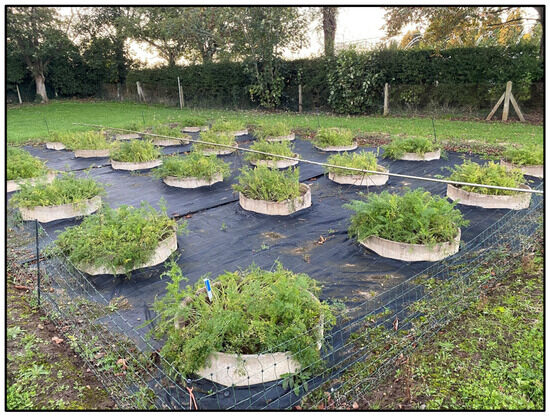
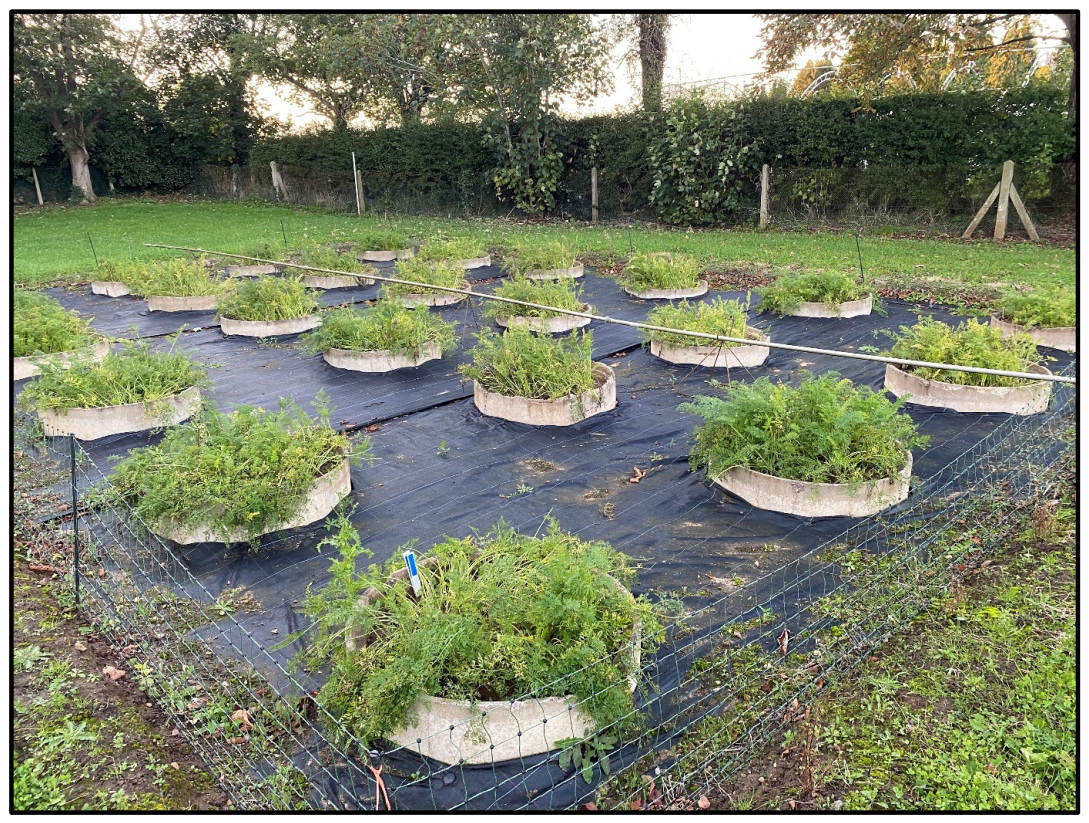
The effects of a calcium functional fertiliser with MCAS and calcium nitrate without MCAS (the calcium nitrate without MCAS was formulated using the same method as for the calcium functional fertiliser with MCAS, but the MCAS was not added; therefore, the only difference between the two treatments was the presence or absence of the MCAS) on cavity spot disease were evaluated in the macrocosms (Figure 1) and compared with the industry standard fungicide metalaxyl-M (SL567A, Syngenta, Bracknell, UK) and a combined metalaxyl-M + calcium functional fertiliser with MCAS treatment (Table 1). Each treatment was replicated across four macrocosms in a randomised block design. Prior to treatment, application and sowing of carrots, the soil in each macrocosm was dug over to release compaction. Before sowing, calcium functional fertiliser with MCAS and calcium nitrate (YaraLiva Tropicote, Yara, New York, UK) treatments were applied at the rate of 10 kg ha−1 and the soil was gently raked over. Metalaxyl-M was applied as a single spray at 1.3 L/ha in 1000 L water for metalaxyl-M only and metalaxyl-M + calcium functional fertiliser with MCAS treatments at sowing. Nitram (CF Fertilisers, Chester, UK) was also applied as a routine fertiliser to all macrocosm plots at a rate of 140 kg ha−1 at sowing. Each macrocosm was sown with approximately 300 untreated carrot seeds (cv. Nairobi) on 30 May 2024 and sieved soil was used to cover the seeds to a depth of 1 to 2 cm.
Figure 1.
Carrots growing in macrocosm plots in October 2024.
Table 1.
Treatments tested in field macrocosms for effect on cavity spot disease in carrots.
Macrocosms were watered regularly throughout the growing season via an oscillating line to maintain moisture, and ferric phosphate pellets were applied regularly to control slugs. A spray application of Minecto One (cyantraniliprole, Syngenta, Bracknell, UK) was made in July 2024 to control carrot root fly. A thick layer of straw/fleece was applied to the surface of each macrocosm in November 2024 to prevent winter frost damage.
Carrots were harvested and washed in February 2025 and total carrot weight per plot and total number of carrots per plot were recorded. All roots ≥ 1.5 cm in length were assessed for presence/absence of cavity spot lesions (incidence) and the number of lesions present (severity). Assessments were made to distinguish cavity spot disease from any carrot root fly or slug damage. Cavity spot lesions were only recorded if they were ≥2 mm in diameter and if the periderm was sunken or ruptured [10]. To confirm infection by Pythium spp., small pieces of carrot tissue were excised from selected cavity spot lesions and plated onto cornmeal agar (CMA) amended with rifampicin (30 mg L−1; pH 6), incubated in the dark at 17 °C and examined for typical Pythium growth after 5–10 days.
2.2. Field Trials
The work was conducted as split field trials on grower-managed sites in the UK in 2023 and 2024. The growers managed all the sites according to their own commercial practice, which were influenced by the specific conditions for each site and year, with the only change being the application of a calcium functional fertiliser with MCAS at the recommended label rate (10 kg ha−1) to treated areas. The two treatments were grower standard (GS) and grower standard + calcium functional fertiliser with MCAS (GS + MCAS). The calcium functional fertiliser with MCAS was applied to one or more tramlines in each field, and samples were taken by hand digging four plots from each of the GS and GS + MCAS sections that were located close to the dividing line between the treatments in a small area of the field to account for variations in the field, but this was not a complete-block design, which could be a limitation. From each site and for all harvest collection dates, carrots from four 0.5 m × bed width plots were taken from the GS and GS + MCAS treatments. In 2023, there were two trial sites; the first near Sherburn, North Yorkshire (54°11′07.4″ N 0°31′38.6″ W) planted with carrots cv. Nairobi where cavity spot was assessed at harvest on 18.10.23 and again on 16.11.23 after storage. The second trial site was near Babworth, Nottinghamshire (53°18′19.7″ N 1°01′04.1″ W) and planted with cv. Octavo (Vilmorin-Mikado, La Ménitré, France) with carrots assessed for cavity spot at harvest on 28.09.23 and again on 24.10.23 after storage. In 2024, there was one trial site near Bilsthorpe, Nottinghamshire (53°08′09.3″ N 1°02′24.1″ W) which was planted with cv. Nairobi. Here, carrots were harvested and assessed for cavity spot before and after the crop was covered with straw to overwinter in the ground. Carrots were first harvested and assessed for disease on 03.10.24 and then on 30.10.24 after storage. After overwintering under straw, further carrot samples were harvested and assessed for cavity spot on 16.01.25 and again on the 14.02.25. The total carrot weight per sample and the number of roots per sample were recorded and each carrot was scored for presence/absence of cavity spot (incidence). After the first harvest and disease assessment, all carrots were stored in a barn, which was dark and at ambient temperature, and cavity spot incidence was again recorded after one month.
2.3. Statistical Analysis
Statistical analysis was conducted using Jamovi 2.3.28 for Windows software [24] at the p < 0.05 significance level. Data from the macrocosm trial for weight of carrots, number of carrots, mean weight of carrots, percentage carrots with cavity spot and mean number of lesions per carrot were normally distributed (Shapiro–Wilk test) and analysed by an ANOVA followed by Games–Howell post hoc test. Data from the field trials for yield (weight of carrots per plot), number of carrots, mean weight of carrots, percentage cavity spot and change in percentage cavity spot were normally distributed (Shapiro–Wilk test) and subjected to a Student’s t-test.
3. Results
3.1. Macrocosm Trial
The mean yield of carrots from plots treated with the calcium functional fertiliser with MCAS (10 kg ha−1) was 6.1 kg per macrocosm, which was notably higher than for the inoculated control plots (mean 4.1 kg) and those treated with calcium nitrate at 10 kg ha−1 (mean 4.3 kg; Table 2). However, the mean carrot yield in macrocosms treated with metalaxyl-M + calcium functional fertiliser with MCAS (1.3 L ha−1 + 10 kg ha−1) was 4.7 kg per macrocosm, which was lower than for the treatment with calcium functional fertiliser with MCAS alone. Uninoculated plots and those treated with metalaxyl-M yielded a mean of 5 kg carrots per macrocosm. Although there were no significant differences found between the yields for any of the treatments (P p 0.707, Table 2), the carrots from the calcium functional fertiliser with MCAS treatment generally appeared to be of better quality in terms of shape and size.
Table 2.
Mean total carrot weight per plot, number and carrot weight (±standard error) for treatments tested in field macrocosms. There were no significant differences between treatments (n = 4, p < 0.05, ANOVA). MCAS—calcium transport stimulant.
Typical cavity spot lesions were observed on carrot roots in all treatments (including some from uninoculated untreated plots). Only a small proportion developed into large, expanded cavities, in which a substantial area of the root periderm was destroyed. Pythium spp. were isolated from several cavity spot lesions and were plated onto CMA + rifampicin (30 mg L−1) confirming successful infection of carrot tissue.
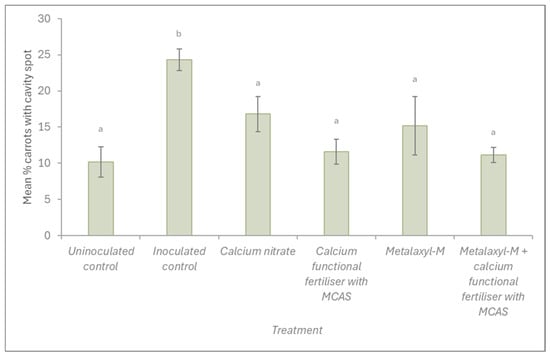
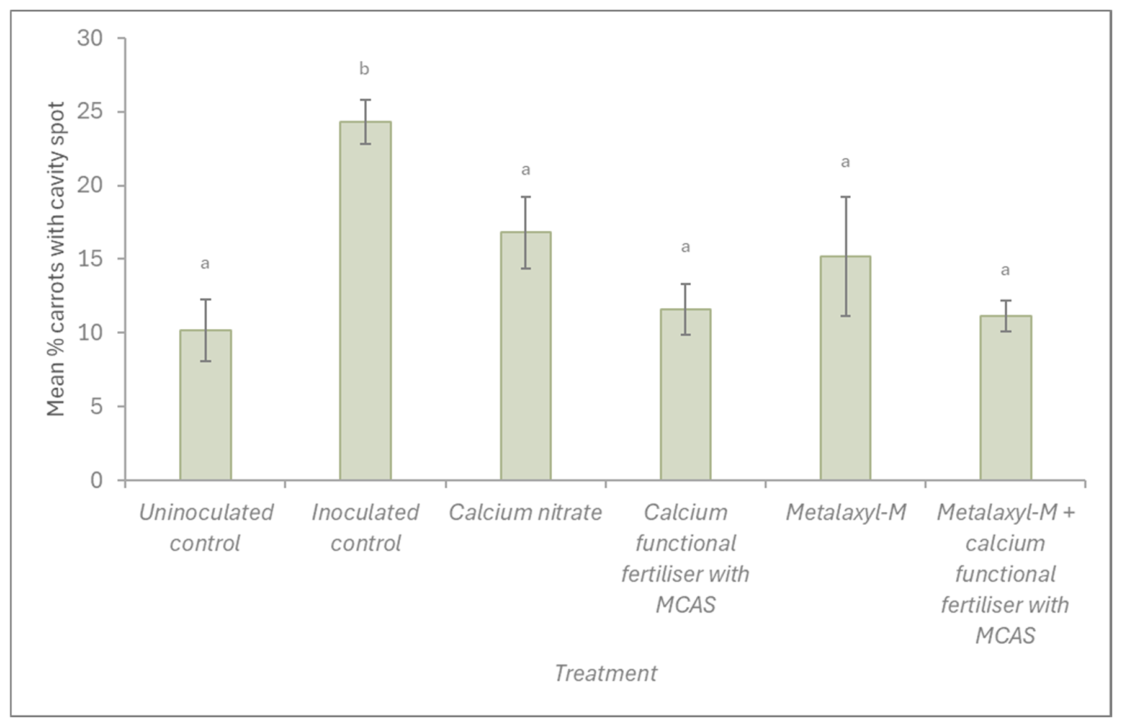
Mean cavity spot incidence for the inoculated control treatment was 24% which was significantly greater than the background level of disease in the uninoculated control macrocosms (10%; p 0.003, Figure 2). There was a significant reduction in cavity spot disease incidence for carrots treated with the calcium functional fertiliser with MCAS and metalaxyl-M + calcium functional fertiliser with MCAS, that gave 11.6% and 11.1% of roots affected, respectively, compared to 24% in the untreated inoculated control (p 0.003, Figure 2). Mean cavity spot incidence was also reduced to 16.8% for carrots treated with calcium nitrate and 15.2% for carrots treated only with metalaxyl-M, which were also statistically different from the untreated inoculated control (p 0.003).
Figure 2.
Effect of different treatments on cavity spot incidence (percentage roots affected) in inoculated macrocosm experiment. Lowercase letters indicate significant differences between treatments (n = 4, bars represent standard error, p < 0.05, ANOVA followed by Games–Howell post hoc test). MCAS—calcium transport stimulant.
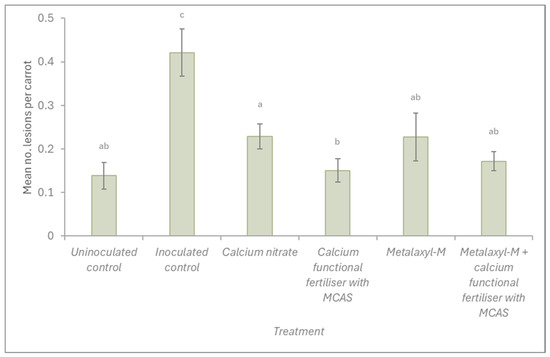
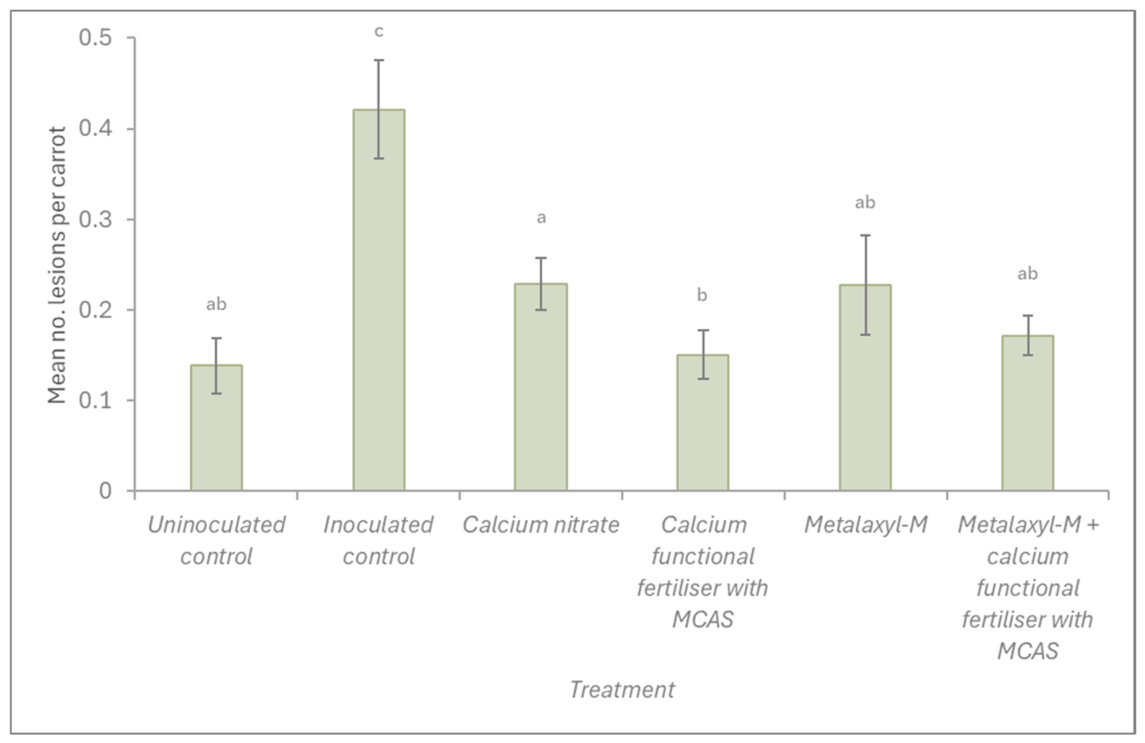
Cavity spot severity was generally low, ranging from 0.15 to 0.23 lesions per carrot across the four treatments, but this was significantly reduced compared with the untreated inoculated control (0.42 lesions per carrot, p 0.04, Figure 3). No significant differences in cavity spot severity were found between macrocosms treated with calcium functional fertiliser with MCAS, metalaxyl-M and metalaxyl-M + calcium functional fertiliser with MCAS (0.15, 0.17 and 0.23 lesions per carrot, respectively). However, cavity spot severity in calcium functional fertiliser with MCAS-treated macrocosms (0.15 lesions per carrot) was significantly lower than for those treated with calcium nitrate (0.23 lesions per carrot, p 0.04, Figure 3). In the uninoculated control macrocosms, the level of cavity spot severity was 0.14 lesions per carrot which was not significantly different from any of the four product treatments.
Figure 3.
Effect of different treatments on cavity spot severity (no. lesions per carrot across all carrots) in inoculated macrocosm experiment. Lowercase letters indicate significant differences between treatments (n = 4, bars represent standard error, p < 0.05, ANOVA followed by Games–Howell post hoc test). MCAS—calcium transport stimulant.
When considering the results for this section, it is interesting to note that there is no synergistic effect for the metalaxyl-M + calcium functional fertiliser with MCAS, which suggests an additive effect only.
3.2. Field Trials
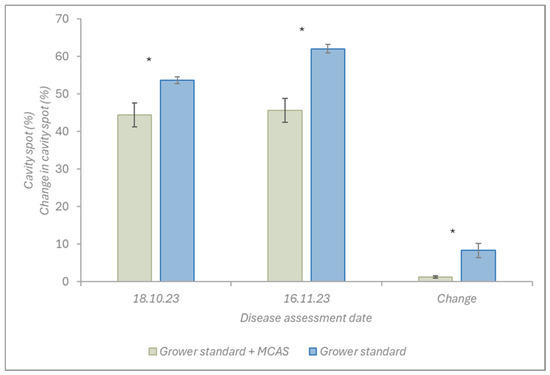
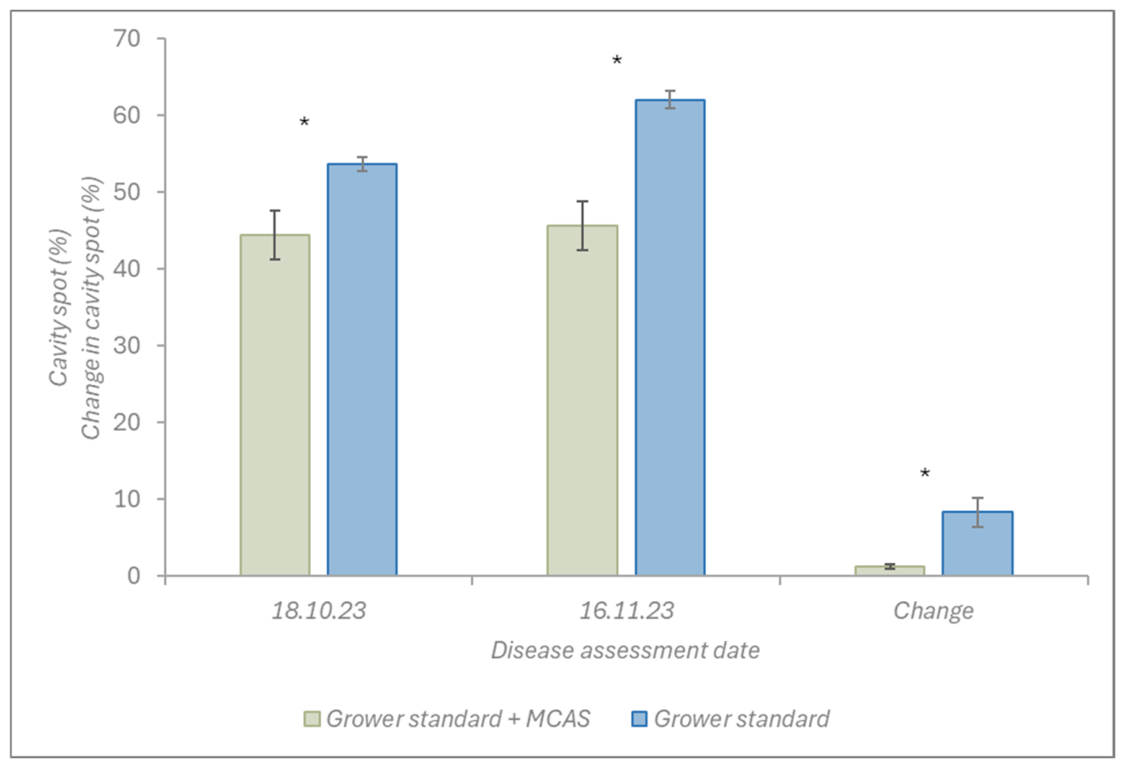
In the Sherburn trial from 2023, there were no significant differences in total carrot yield (weight per plot), number of carrots and mean carrot weight between the GS and GS + MCAS treatments (p 0.498, 0.244, respectively, Table 3). When the carrots were assessed for cavity spot incidence, just after harvest on 18.10.23, those treated with GS + MCAS had significantly lower levels of disease (44.4%) compared with GS-treated carrots (53.7%, p 0.033; Figure 4). This was also the case after one month in storage (16.11.23), where again the GS + MCAS-treated carrots had a significantly lower cavity spot incidence (45.6% vs. 62%; p 0.003). Cavity spot incidence for the GS + MCAS-treated carrots at each assessment time was therefore similar, increasing by only 1.3%, whilst incidence for the GS-treated carrots had increased by 8.4% (p < 0.001, Figure 4).
Table 3.
Mean total carrot weight, number and carrot weight (±standard error) for grower standard + calcium functional fertiliser containing MCAS, a calcium transport stimulant (GS + MCAS) and grower standard (GS) treatments in field trials from four sites. Significant differences between GS + MCAS and GS treatments within sample locations are indicated by * (n = 4, p < 0.05, Student’s t-test).
Figure 4.
Cavity spot incidence at harvest (18.10.23), after 4 weeks in storage (16.11.23) and change between two disease assessment dates for carrot cv. Nairobi at Sherburn field trial site treated with grower standard fertiliser program with or without calcium functional fertiliser containing MCAS. * Indicates significant differences between percentage defects for that sampling date (n = 4, bars represent standard error, p < 0.05, Student’s t-test). MCAS—calcium transport stimulant.
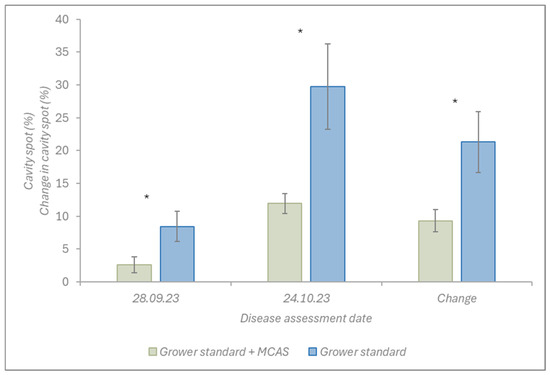
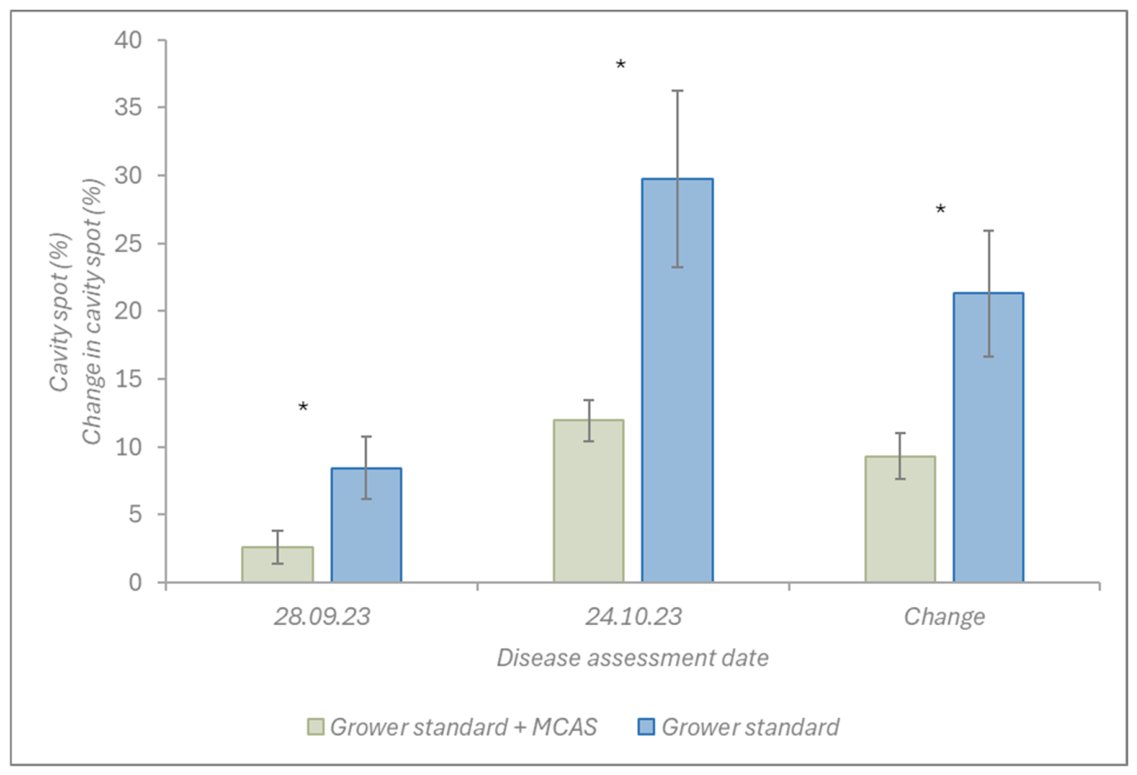
For the Babworth trial from 2023, the GS + MCAS treatment resulted in a significantly increased yield (weight per plot) at harvest with a 15.2% increase but there were no significant differences for number of carrots or carrot mean weight (p 0.011, 0.25, 0.522, respectively, Table 3). At harvest, the GS + MCAS-treated carrots showed significantly reduced cavity spot incidence to 2.6%, compared with 8.5% for the GS carrots (p 0.035, Figure 5). After four weeks storage, the GS + MCAS-treated carrots still had significantly lower cavity spot incidence (11.9%) compared with GS carrots (29.8%, p 0.037; Figure 5). For GS + MCAS-treated carrots, cavity spot incidence increased by 9.3% between the two disease assessment dates while for the GS carrots, it increased by 21.3% (p 0.03, Figure 5).
Figure 5.
Percentage cavity spot at harvest (28.09.23), after 4 weeks in storage (24.10.23) and change between two scoring dates for carrot cv. Octavo at Babworth site treated with grower standard fertiliser program with or without calcium functional fertiliser containing MCAS. * Indicates significant differences between percentage defects for that sampling date (n = 4, bars represent standard error, p < 0.05, Student’s t-test). MCAS—calcium transport stimulant.
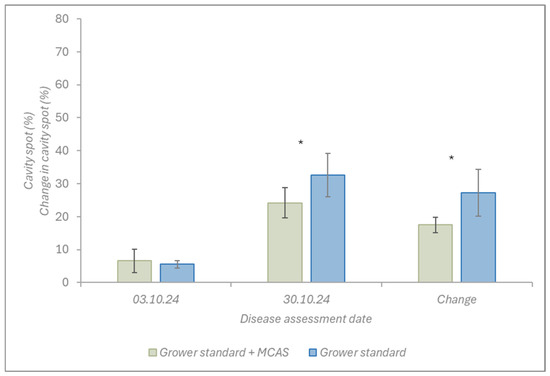
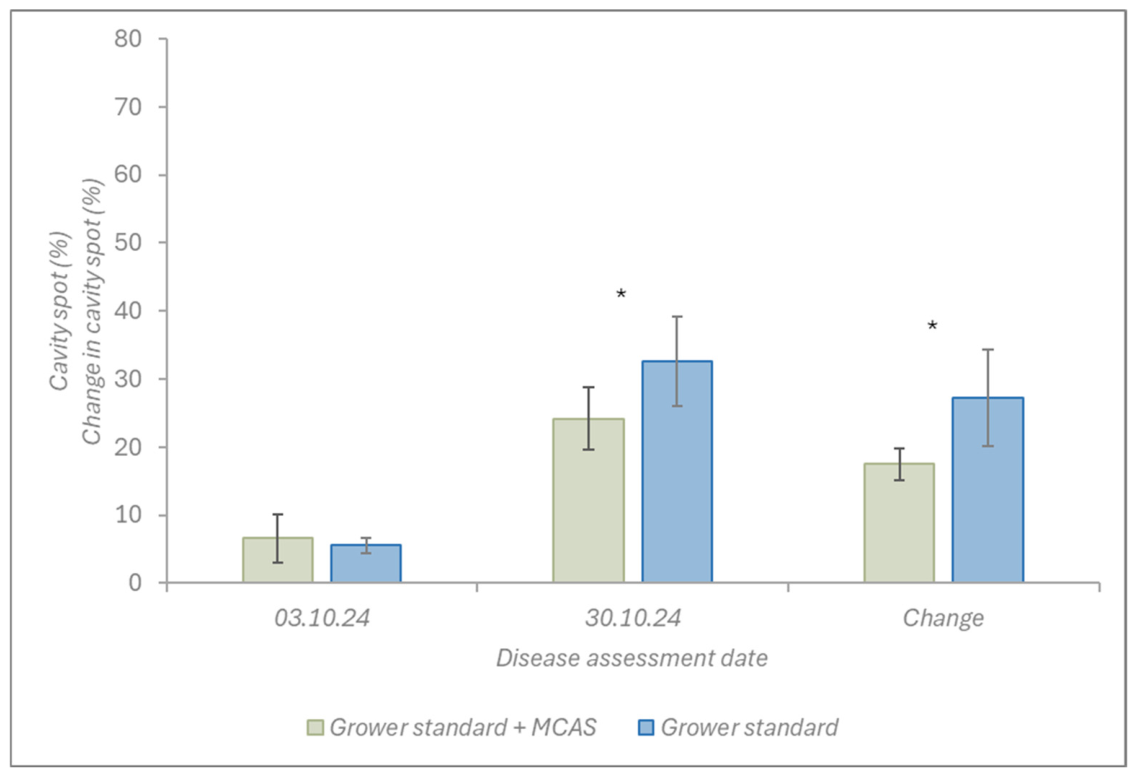
In 2024, the Bilsthorpe trial was assessed twice, once in October when the carrots had reached maturity before being covered with straw for overwinter storage in the field, and again in January 2025, just as the field was about to be harvested. For both assessment dates, there were no significant differences between the yield (weight per plot) of harvested carrots from the GS + MCAS-treated plots and the GS plots (p 0.486, 0.393, respectively), but on the first harvest date, the mean weight of the GS + MCAS-treated carrots was significantly increased (0.073 kg) compared with the GS plots (0.064 kg, p 0.016, 0.251, respectively) while the number of carrots in the GS + MCAS-treated plots (77) was significantly greater than for the GS plots (65) for the second assessment date (p 0238, 0.03, respectively, Table 3). At the first assessment date, there was no significant difference in cavity spot incidence between the GS + MCAS (6.6%) and GS treatments (5.5%, p 0.717 Figure 6). Although cavity spot incidence had increased in both the GS + MCAS and GS carrots after they had been stored in a barn for one month, there was a significantly lower cavity spot incidence for the GS + MCAS-treated carrots (24.2%) compared with the GS carrots (32.6%, p 0.045, Figure 6). For the GS + MCAS-treated carrots, cavity spot incidence then increased by 17.5% after storage while for the GS carrots it increased by 27.2% (p 0.035, Figure 6).
Figure 6.
Percentage cavity spot at harvest (03.10.24), after 4 weeks in storage (30.10.24) and change between two scoring dates for carrot cv. Nairobi at Bilsthorpe site treated with grower standard fertiliser program with or without calcium functional fertiliser containing MCAS. * Indicates significant differences between percentage defects for that sampling date (n = 4, bars represent standard error, p < 0.05, 1-tailed, Student’s t-test). MCAS—calcium transport stimulant.
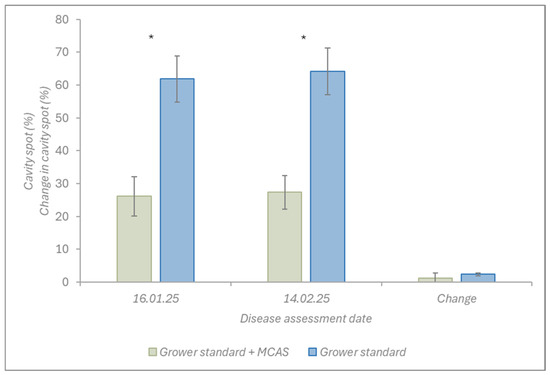
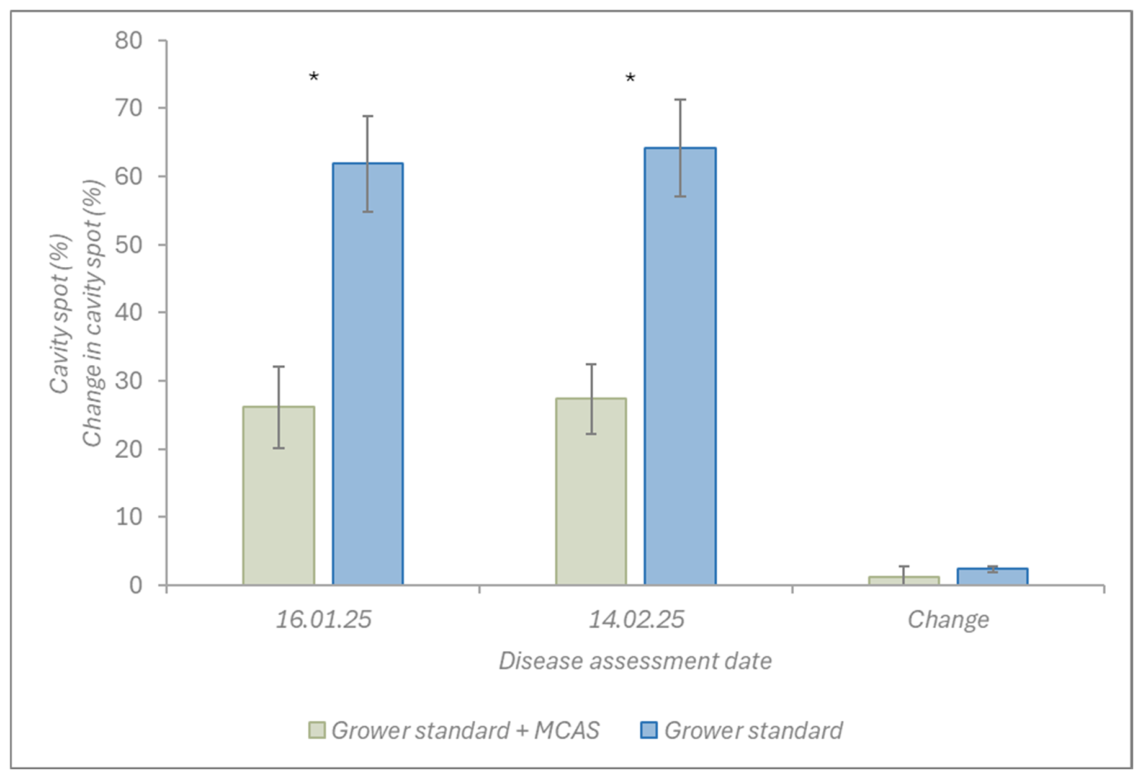
At the second harvest date (after overwintering in the ground), cavity spot incidence was significantly reduced for GS + MCAS-treated carrots (26.2%) compared with the GS carrots (61.9%, p 0.008, Figure 7). After one month’s storage in a barn, the change in cavity spot incidence for the GS + MCAS-treated and GS-treated carrots had not changed significantly, with the GS + MCAS-treated carrots still having significantly less cavity spot (27.3%) than the GS carrots (64.2%, p 0.006, Figure 7).
Figure 7.
Percentage cavity spot at harvest (16.01.25), after 4 weeks in storage (14.02.25) and change between two scoring dates for carrot cv. Nairobi at Bilsthorpe site treated with grower standard fertiliser program with or without calcium functional fertiliser containing MCAS. * Indicates significant differences between percentage defects for that sampling date (n = 4, bars represent standard error, p < 0.05, Student’s t-test). MCAS—calcium transport stimulant.
4. Discussion
This research indicates that a calcium functional fertiliser containing an MCAS as the LoCal chemistry significantly reduced the incidence of cavity spot disease for carrots grown in P. violae-inoculated soil macrocosm plots and in commercially managed field trials.
In the macrocosm trial with cv. Nairobi, the calcium functional fertiliser with MCAS and metalaxyl-M + calcium functional fertiliser with MCAS treatments gave statistically significant reductions in cavity spot incidence and severity compared with the untreated control with the number of carrots infected decreased by approximately 50%. Calcium nitrate and metalaxyl-M treatments also gave statistically significant reductions in cavity spot but to a lesser extent.
When considering the commercial field trials, growers used their own standard fertiliser and fungicide programmes across the field, but treated areas also had a calcium functional fertiliser with MCAS applied. For both trials in 2023, the GS + MCAS-treated areas resulted in statistically significant reductions in cavity spot incidence compared with GS-treated areas, and, although disease then increased during subsequent storage, this was significantly reduced in the GS + MCAS-treated carrots. The trial in 2024, where cavity spot was assessed both before and after carrots were overwintered in the ground, showed similar results with statistically significant reductions in cavity spot incidence before and after storage in the barn.
In the UK, metalaxyl-M is the only approved fungicide for control of cavity spot [10], with efficacy potentially declining due to development of resistance or enhanced degradation in the soil [6,7,8]. Repeated use of fungicides applied to soil reduces efficacy against cavity spot [25], and over time Pythium species can become resistant to these products [26,27,28]. This has resulted in efforts to develop different disease management options for cavity spot including the use of biological control agents. For example, actinomycetes isolated from the carrot rhizosphere reduce the incidence of cavity spot [28]. More recently, a Trichoderma virens-based biofungicide (SoilGard) was also demonstrated to reduce cavity spot disease [29] but also had a significant, but temporary, impact on the fungal community in the soil while it also had a negative impact on the soil bacterial community [30]. Green manure has also been used to reduce Pythium species [31]. In tomato [32] and maize [33], calcium fertilisation enhanced the rhizosphere microbial community and provided protection against Ralstonia solanacearum and enhanced the bacterial community assembly. While the rhizosphere microbiome has had limited study as a resource for agroecosystem sustainability in carrot [34], it would be interesting to expand the work above on biocontrol agents for carrot cavity spot with the addition of calcium fertilisation.
In another approach, it was suggested that an integrated cavity spot disease management system could be developed [35]. Although breeding cavity spot-resistant carrot varieties is desirable, it takes a long time and not all cultivars developed will have the other preferred traits required for commercial production; for example, the current main UK commercial cv. Nairobi, does not have good cavity spot tolerance [10,11].
Given the challenges associated with these alternative approaches to cavity spot control, crop nutrition is a good alternative option for disease management. Calcium application has long been associated with reduced cavity spot [9,13,35] but efficacy has been variable, most likely because once the carrots are starting to mature and become more susceptible to cavity spot, calcium availability in the carrot root is low due to extensive xylem transport to the leaves [15,18]. Extra calcium applications to carrots may not therefore provide any benefits due to a lack of transport to the root.
The calcium functional fertiliser containing an MCAS used in this research overcomes the problem of very limited calcium absorption into cells due to limited transport across cell membranes and therefore could provide an additional, effective component of an integrated cavity spot disease-management programme alongside fungicides, biofungicides and resistant cultivars. The MCAS mimics the effect of auxin in relation to the transport of calcium across cell membranes [19], so when applying the calcium functional fertiliser with MCAS, a small dose of calcium is more effective than a larger dose without the MCAS as the calcium is effectively absorbed by the cells in the root where it is needed to prevent cavity spot in carrots. This is demonstrated in our previous work with tomatoes, where calcium functional fertiliser with MCAS treatments gave the plants 0.91 kg ha−1 of calcium throughout the growing period [17] compared to 30 kg ha−1 in another study [36], yet both gave similar results with the tomatoes being firmer. In our previous study on Braeburn apples, in which four applications of 120 g ha−1 of a calcium functional fertiliser with MCAS were applied, the same level of control of bitter pit was achieved as with 14 applications of two other industry standard calcium products of 1750 and 1600 g ha−1 per application [23]. In the cavity spot field trials, growers applied their standard calcium applications, but in areas where one application of the calcium functional fertiliser with MCAS (10 kg ha−1) was also applied there were significant reductions in the cavity spot observed. The 10 kg ha−1 MCAS was applied in addition to the grower standard application, but it was the addition of the MCAS to the grower standard that appeared to have the significant impact on the cavity spot. This was the same rate as used in the macrocosm trial where the calcium functional fertiliser with MCAS application at 10 kg ha−1 resulted in better cavity spot control than when using calcium nitrate at the same rate with a similar level of control as metalaxyl-M.
This research has shown that the calcium functional fertiliser containing MCAS can reduce and prevent carrot cavity spot by providing the plant with effective calcium nutrition and transport to the root with control statistically similar to metalaxyl-M. It should be noted that while the field work was conducted over two seasons and several sites, there was only a single repeat of the macrocosm work. While there are strong links between the use of the calcium functional fertiliser containing MCAS and a reduction in carrot cavity spot, this work did not measure the levels of calcium in different parts of the carrot plants under the different treatments, so further work is needed to show that when MCAS is applied it impacts the amount of calcium in the carrots. Overall, a calcium functional fertiliser with MCAS could therefore be an important part of an integrated control strategy for carrot cavity spot.
Author Contributions
Conceptualization, J.D., N.P., J.C., A.K.M. and D.J.M.; methodology, J.D., N.P., J.C., A.K.M. and D.J.M.; formal analysis, J.D. and N.P.; investigation, J.D. and N.P.; resources, A.K.M. and D.J.M.; writing—original draft preparation, J.D.; writing—review and editing, J.D., N.P., J.C., A.K.M. and D.J.M. All authors have read and agreed to the published version of the manuscript.
Funding
This research received no external funding.
Data Availability Statement
The raw data supporting the conclusions of this article will be made available by the authors on request.
Acknowledgments
The authors thank the farmers and trial technicians for their help in conducting the fieldwork.
Conflicts of Interest
The authors J.D., A.K.M. and D.J.M. are employees of a company that may be affected by the presented research and they contributed to study design, data acquisition, statistical analysis, result interpretation, manuscript drafting, or the final publication decision. The mentioning of specific commercial products is only for providing information and does not provide a recommendation. Other similar products could be used to conduct similar research.
References
- Sulaeman, A.; Driskell, J.A. Carrot Flavor. In Handbook of Fruit and Vegetable Flavors; Wiley: Hoboken, NJ, USA, 2010; pp. 751–773. [Google Scholar]
- Paparella, A.; Kongala, P.R.; Serio, A.; Rossi, C.; Shaltiel-Harpaza, L.; Husaini, A.M.; Ibdah, M. Challenges and Opportunities in the Sustainable Improvement of Carrot Production. Plants 2024, 13, 2092. [Google Scholar] [CrossRef] [Scilit]
- Scheelbeek, P.F.D.; Moss, C.; Kastner, T.; Alae-Carew, C.; Jarmul, S.; Green, R.; Taylor, A.; Haines, A.; Dangour, A.D. United Kingdom’s Fruit and Vegetable Supply Is Increasingly Dependent on Imports from Climate-Vulnerable Producing Countries. Nat. Food 2020, 1, 705–712. [Google Scholar] [CrossRef] [Scilit]
- Suffert, F.; Montfort, F. Pathometric Relationships Reveal Epidemiological Processes Involved in Carrot Cavity Spot Epidemics. Eur. J. Plant Pathol. 2008, 122, 425–436. [Google Scholar] [CrossRef] [Scilit]
- Lyons, N.F.; White, J.G. Detection of Pythium Violae and Pythium Sulcatum in Carrots with Cavity Spot Using Competition ELISA. Ann. Appl. Biol. 1992, 120, 235–244. [Google Scholar] [CrossRef] [Scilit]
- Allain-Boulé, N.; Lévesque, C.A.; Martinez, C.; Bélanger, R.R.; Tweddell, R.J. Identification of Pythium Species Associated with Cavity-Spot Lesions on Carrots in Eastern Quebec. Can. J. Plant Pathol. 2004, 26, 365–370. [Google Scholar] [CrossRef] [Scilit]
- Davison; McKay. Reduced Persistence of Metalaxyl in Soil Associated with Its Failure to Control Cavity Spot of Carrots. Plant Pathol. 1999, 48, 830–835. [Google Scholar] [CrossRef] [Scilit]
- Kenny, S.R.; White, J.G.; Walker, A. Evidence for the Enhanced Degradation of Metalaxyl in UK Carrot Soils. In Proceedings of the BCPC Symposium Series 78; British Crop Production Council (BCPC): Cambridge, UK, 2001; pp. 133–138. [Google Scholar]
- Hiltunen, L.H.; White, J.G. Cavity Spot of Carrot (Daucus carota). Ann. Appl. Biol. 2002, 141, 201–223. [Google Scholar] [CrossRef] [Scilit]
- Pereira, N.; Hales, K.R.; Mead, A.; Chappell, L.H.K.; Barker, G.C.; Clarkson, J.P. Development of Inoculation Methods for Pythium violae to Evaluate Resistance of Carrot Cultivars and Efficacy of Crop Protection Products for Cavity Spot Control. Plant Pathol. 2024, 73, 2132–2146. [Google Scholar] [CrossRef] [Scilit]
- du Toit, L.J.; Le Clerc, V.; Briard, M. Genetics and Genomics of Carrot Biotic Stress. In The Carrot Genome; Springer International Publishing: Cham, Switzerland, 2019; pp. 317–362. [Google Scholar]
- El-Tarabily, K.A.; Abouzeid, M.A.; Hardy, G.E.S.J.; Sivasithamparam, K. Pythium sulcatum and P. ultimum as Causal Agents of Cavity Spot Disease of Carrots in Egypt. Can. J. Plant Sci. 2004, 84, 607–614. [Google Scholar] [CrossRef] [Scilit]
- Goh, K.M.; Ali, N.S. Effects of Nitrogen Fertilisers, Calcium and Water Regime on the Incidence of Cavity Spot in Carrot. Fertil. Res. 1983, 4, 223–230. [Google Scholar] [CrossRef] [Scilit]
- de Bang, T.C.; Husted, S.; Laursen, K.H.; Persson, D.P.; Schjoerring, J.K. The Molecular–Physiological Functions of Mineral Macronutrients and Their Consequences for Deficiency Symptoms in Plants. New Phytol. 2021, 229, 2446–2469. [Google Scholar] [CrossRef] [Scilit]
- Thor, K. Calcium—Nutrient and Messenger. Front. Plant Sci. 2019, 10, 440. [Google Scholar] [CrossRef] [Scilit]
- Dodgson, J.; Weston, A.K.; Marks, D.J. Carrot Firmness and Yield Increased While Skin Defects Reduced by Stimulated Calcium Absorption. Acta Hortic. 2024, 1393, 7–14. [Google Scholar] [CrossRef] [Scilit]
- Dodgson, J.; Weston, A.K.; Marks, D.J. Tomato Firmness and Shelf-Life Increased by Application of Stimulated Calcium. Crops 2023, 3, 251–265. [Google Scholar] [CrossRef] [Scilit]
- Demidchik, V.; Shabala, S.; Isayenkov, S.; Cuin, T.A.; Pottosin, I. Calcium Transport across Plant Membranes: Mechanisms and Functions. New Phytol. 2018, 220, 49–69. [Google Scholar] [CrossRef] [Scilit]
- Marks, D.J.; Weston, A.K.; Wilkinson, S. Calcium Absorption in Strawberry, the Link between Polar-Auxin Transport, Ripening and Fruit Firmness. In Proceedings of the Nordic Association of Agricultural Science Conference on Horticulture, Tallinn, Estonia, 10–13 June 2019. [Google Scholar]
- Hocking, B.; Tyerman, S.D.; Burton, R.A.; Gilliham, M. Fruit Calcium: Transport and Physiology. Front. Plant Sci. 2016, 7, 569. [Google Scholar] [CrossRef] [Scilit]
- Kumar, A.; Singh, U.M.; Manohar, M.; Gaur, V.S. Calcium Transport from Source to Sink: Understanding the Mechanism(s) of Acquisition, Translocation, and Accumulation for Crop Biofortification. Acta Physiol. Plant. 2015, 37, 1722. [Google Scholar] [CrossRef] [Scilit]
- Dayod, M.; Tyerman, S.D.; Leigh, R.A.; Gilliham, M. Calcium Storage in Plants and the Implications for Calcium Biofortification. Protoplasma 2010, 247, 215–231. [Google Scholar] [CrossRef] [Scilit]
- Dodgson, J.; Weston, A.K.; Marks, D.J. Control of Bitter Pit in Apple Achieved with Reduced Calcium Inputs. Acta Hortic. 2024, 1396, 441–448. [Google Scholar] [CrossRef] [Scilit]
- Jamovi, version 2.3. Computer Software. The Jamovi Project: Sydney, Australia, 2022.
- Farrar, J.J.; Nunez, J.J.; Davis, R.M. Repeated Soil Applications of Fungicide Reduce Activity against Cavity Spot in Carrots. Calif. Agric. 2002, 56, 76–79. [Google Scholar] [CrossRef] [Scilit][Green Version]
- Martinez, C.; Lévesque, C.A.; Bélanger, R.R.; Tweddell, R.J. Evaluation of Fungicides for the Control of Carrot Cavity Spot. Pest Manag. Sci. 2005, 61, 767–771. [Google Scholar] [CrossRef] [Scilit]
- Lu, X.H.; Michael Davis, R.; Livingston, S.; Nunez, J.; Hao, J.J. Fungicide Sensitivity of Pythium spp. Associated with Cavity Spot of Carrot in California and Michigan. Plant Dis. 2012, 96, 384–388. [Google Scholar] [CrossRef] [Scilit]
- El-Tarabily, K.A.; Hardy, G.E.S.J.; Sivasithamparam, K.; Hussein, A.M.; Kurtboke, D.I. The Potential for the Biological Control of Cavity-spot Disease of Carrots, Caused by Pythium coloratum, by Streptomycete and Non-streptomycete Actinomycetes. New Phytol. 1997, 137, 495–507. [Google Scholar] [CrossRef] [Scilit]
- Tagele, S.B.; Gachomo, E.W. Exploring the Effects of Trichoderma virens Biofungicide on Carrot Cavity Spot and Soil Fungal Community Dynamics. Phytobiomes J. 2024, 8, 540–555. [Google Scholar] [CrossRef] [Scilit]
- Tagele, S.B.; Gachomo, E.W. A Comparative Study: Impact of Chemical and Biological Fungicides on Soil Bacterial Communities. Environ. Microbiome 2025, 20, 44. [Google Scholar] [CrossRef] [Scilit]
- Davis, R.M.; Nunez, J. Development of a Disease Suppressive Soil for Managing Cavity Spot of Carrots. Acta Hortic. 2017, 1153, 175–182. [Google Scholar] [CrossRef] [Scilit]
- Bi, J.; Wei, B.; Wang, E.; Zeng, X.; Liu, X.; Sun, M.; Wei, H.; Li, S.; Chen, M.; Peng, J.; et al. Calcium-Containing Inorganic Immunity Booster Drives the Enrichment of Specific Root Endophytic Microbiota against Ralstonia Solanacearum. Microbiome 2025, 14, 26. [Google Scholar] [CrossRef] [Scilit]
- He, Z.; Shang, X.; Jin, X. Effects of Calcium and Magnesium Fertilization on the Rhizosphere Bacterial Community Assembly and Specific Biomarkers in Rainfed Maize. Plants 2025, 15, 60. [Google Scholar] [CrossRef] [Scilit]
- Adebayo, A.A.; Babalola, O.O. Rhizosphere Microbiome as an Underexplored Resource for Agroecosystem Sustainability: Insights From the Carrot Root Zone. Environ. Microbiol. Rep. 2026, 18, e70325. [Google Scholar] [CrossRef] [Scilit]
- Suffert, F.; Delalande, D.; Prunier, M.; Andrivon, D. Modulation of Primary and Secondary Infections in Epidemics of Carrot Cavity Spot through Agronomic Management Practices. Plant Pathol. 2008, 57, 109–121. [Google Scholar] [CrossRef] [Scilit]
- Chéour, F.; Souiden, Y. Calcium Delays the Postharvest Ripening and Related Membrane-Lipid Changes of Tomato. J. Nutr. Food Sci. 2015, 5, 393. [Google Scholar] [CrossRef]

Disclaimer/Publisher’s Note: The statements, opinions and data contained in all publications are solely those of the individual author(s) and contributor(s) and not of MDPI and/or the editor(s). MDPI and/or the editor(s) disclaim responsibility for any injury to people or property resulting from any ideas, methods, instructions or products referred to in the content. |
© 2026 by the authors. Licensee MDPI, Basel, Switzerland. This article is an open access article distributed under the terms and conditions of the Creative Commons Attribution (CC BY) license.