


Abstract
Apple (Malus domestica Borkh.) rootstocks play a key role in modern intensive orchard systems, where their accurate identification is essential for breeding, nursery production, and certification of planting material. This is particularly important in Kazakhstan, a recognized center of origin of cultivated apple, where local germplasm remains insufficiently characterized at the molecular level. In this study, we integrated simple sequence repeat (SSR) genotyping and morphological trait analysis to develop a reliable approach for the identification of clonal apple rootstocks cultivated in Kazakhstan. Five widely used rootstocks (Zhetysu 5, ARM-18, B-7-35, M9, and B9) were analyzed using 17 polymorphic SSR markers and 30 vegetative traits. SSR analysis revealed moderate genetic polymorphism (PIC = 0.28–0.54; He = 0.35–0.58) and enabled clear discrimination among all studied genotypes. Cluster analysis based on genetic distances grouped rootstocks according to their genetic similarity, reflecting their origin and differentiation. Morphological evaluation demonstrated significant phenotypic variability and identified correlations among key vegetative traits related to plant vigor and leaf development. The integration of molecular and morphological data allowed the development of comprehensive genotype profiles (“molecular–morphological passports”) for each rootstock, ensuring their reliable identification. The proposed approach provides a practical framework for the certification of planting material and the management of apple genetic resources in Kazakhstan. It can be applied to improve nursery systems, support breeding programs, and ensure the production of true-to-type planting material in modern horticulture.
1. Introduction
Apple (Malus domestica Borkh.) is one of the most widely cultivated fruit crops worldwide and occupies a prominent position in intensive orchard systems of temperate regions [1,2].
The productivity, adaptability, and longevity of apple orchards largely depend on the appropriate selection of rootstocks, which regulate tree vigor, influence nutrient uptake, and determine resistance to abiotic stresses, as well as tolerance to pests and diseases. Clonal rootstocks play a crucial role in modern intensive apple production systems by ensuring growth uniformity, early bearing, and improved yield efficiency [3]. Accurate identification and characterization of rootstocks are essential for breeding programs, genetic resource management, and the production of certified planting material. Traditionally, rootstock differentiation has been based on morphological and agronomic traits. However, these characteristics can vary significantly under the influence of environmental conditions and plant developmental stages, making reliable identification difficult, particularly among closely related genotypes and clonal forms.
In recent decades, molecular markers have been widely applied to assess genetic diversity in fruit crops. Among these, microsatellite markers (SSR, Simple Sequence Repeats) are considered highly informative due to their high level of polymorphism, codominant inheritance, and reproducibility. These markers have been successfully used for genotyping apple cultivars and rootstocks, analyzing genetic relationships, and developing molecular fingerprints of genotypes [4,5].
Numerous studies have demonstrated that SSR markers are effective tools for detecting genetic diversity and identifying apple genotypes. In particular, analyses of apple collections have revealed high levels of allelic polymorphism and substantial differentiation among genotypes [6]. The use of such markers also enables the identification of synonyms and duplicates within germplasm collections, thereby facilitating more efficient management of genetic resources [7]. SSR markers have also been widely applied in other fruit crops of the Rosaceae family [8], including pear [9], peach [10], and sweet cherry [11], where they have demonstrated high efficiency for genotype identification and diversity analysis. In addition to SSRs, other DNA-based markers, such as SNPs and ISSRs, have been increasingly used in apple research, offering higher resolution and genome-wide coverage [12,13]. However, SSR markers remain a cost-effective and reliable tool for routine genotyping and certification purposes. Kazakhstan is considered one of the key centers of origin of apple, as its territory hosts the wild progenitor species Malus sieversii [14,15,16]. Despite the substantial genetic diversity of apple in this region, the molecular characterization and fingerprinting of clonal rootstocks used in domestic horticulture remain insufficiently studied. To the best of our knowledge, this study represents the first attempt to integrate SSR-based genotyping and morphological characterization for the identification and certification of apple rootstocks in Kazakhstan.
In this context, the aim of the present study was to evaluate the genetic diversity and morphological variability of five clonal apple rootstocks (Zhetysu 5, ARM-18, B-7-35, M9, and B9) using SSR markers and morphological traits, as well as to develop integrated molecular–morphological passports for their reliable identification and application in certified nursery production systems. These aspects are particularly important for improving the efficiency of nursery production systems and ensuring the quality of planting material in modern horticulture.
2. Materials and Methods
2.1. Plant Material
The analyzed rootstocks included both locally developed and internationally recognized genotypes. Zhetysu 5 is a locally bred rootstock adapted to the environmental conditions of Kazakhstan, while ARM-18 and B-7-35 represent breeding materials with distinct genetic backgrounds. Rootstocks M9 and B9 are widely used international standards in intensive apple production systems. All genotypes were maintained under uniform agronomic conditions in the experimental collection of the Kazakh Fruit and Vegetable Research Institute (Almaty, Kazakhstan). For molecular analysis, leaf samples were collected from three biological replicates per genotype. Each sample consisted of 3–5 fully expanded young leaves collected during the active vegetative growth stage. Only healthy, undamaged leaves were selected to ensure DNA quality and consistency of results.
2.2. DNA Extraction
Genomic DNA was extracted from leaf tissue using a modified CTAB method [17]. Approximately 100 mg of fresh young leaf tissue was used for genomic DNA extraction. Leaf samples were ground in liquid nitrogen prior to DNA isolation. The CTAB extraction buffer contained 2% CTAB, 100 mM Tris-HCl (pH 8.0), 20 mM EDTA, 1.4 M NaCl, and 1% polyvinylpyrrolidone (PVP). DNA was purified using chloroform–isoamyl alcohol (24:1) and precipitated with cold isopropanol. This method is widely applied in molecular genetic studies of fruit crops due to its high efficiency in isolating DNA from plant tissues.
DNA quality was assessed by electrophoresis in a 1% agarose gel, while DNA concentration in each sample was measured and subsequently verified using a NanoDrop™ (Thermo Fisher Scientific, Wilmington, DE, USA). Minor modifications to the CTAB protocol included an extended incubation time and additional purification steps to improve DNA quality. DNA extraction was performed in the molecular genetics laboratory of the Kazakh Fruit and Vegetable Research Institute.
2.3. SSR Genotyping
Genotyping was performed using 17 polymorphic microsatellite markers developed for apple recommended by the European Cooperative Programme for Plant Genetic Resources (ECPGR): Hi02c07, GD12_a, NZ01a6, CH02c06, CH05f06, CH01h01, CH01h10, CH01f02, CH01f03b, GD147_a, CH04c07, CH02c09, CH02c11, CH02d08_a, CH03d07_a, CH04e05_a, and CH05e04_a [18]. The characteristics of the markers are presented in Table 1.
Table 1.
Characteristics of microsatellite markers used for genotyping apple rootstocks.
DNA amplification was carried out using polymerase chain reaction (PCR) in a total reaction volume of 25 μL containing 50 ng genomic DNA, 1× PCR buffer, 2.0 mM MgCl2, 0.2 mM of each dNTP, 0.4 μM of each primer, and 1 U Taq DNA polymerase. The amplification program included an initial denaturation at 94 °C for 3 min, followed by 35 cycles of denaturation (94 °C for 30 s), primer annealing (55–60 °C), and extension (72 °C for 45 s), with a final extension at 72 °C for 7 min. All PCR amplifications were performed in triplicate to ensure reproducibility of SSR profiles. PCR amplification was performed using a thermal cycler (Bio-Rad Laboratories, Hercules, CA, USA). PCR products were initially verified by electrophoresis in 1.5% agarose gel in 1× TBE buffer at 100 V for 45 min and visualized under UV light after staining with ethidium bromide.
Fragment analysis was performed using capillary electrophoresis on an automated genetic analyzer (Applied Biosystems, Foster City, CA, USA). Allele sizes were determined using an internal size standard and analyzed with GeneMapper software version 4.0 (Applied Biosystems, Foster City, CA, USA).
2.4. Genetic Data Analysis
Based on the obtained SSR data, the main indices of genetic diversity were calculated:
- (1)
- Number of alleles (Na);
- (2)
- Effective number of alleles (Ne);
- (3)
- Observed heterozygosity (Ho);
- (4)
- Expected heterozygosity (He);
- (5)
- Polymorphism information content (PIC);
- (6)
- Shannon’s diversity index (I).
The polymorphism index (PI) was calculated as the ratio of the number of polymorphic loci to the total number of analyzed loci.
Genetic distances among genotypes were calculated according to Nei’s genetic distance method [23]. Genetic diversity indices were calculated using GenAlEx software (version 6.5). Cluster analysis was performed using the UPGMA method based on Nei’s genetic distances. Morphological data were analyzed using IBM SPSS Statistics version 22.0 (IBM Corp., Armonk, NY, USA). Pearson’s correlation coefficients were calculated using SPSS, and heatmap visualization was performed in R software version 4.3.1 using the “pheatmap” package.
2.5. Morphological Analysis
Morphological evaluation of the rootstocks was conducted according to the UPOV Guidelines for Apple Rootstocks (TG/163/4) [24]. Trait evaluation was performed under field conditions using standardized UPOV descriptors to ensure comparability and reproducibility of the results. Morphological traits were digitized according to the UPOV nine-point descriptor scale, where lower values indicated weaker trait expression and higher values represented stronger expression intensity. The figure was created using Microsoft PowerPoint 2021. Twelve key morphological traits, including shoot growth characteristics, leaf morphology, pubescence, and glossiness, were selected for further analysis. The obtained data were visualized as a heatmap to identify groups of interrelated traits, and Pearson’s correlation coefficient was used to evaluate relationships among morphological characteristics.
3. Results
SSR Polymorphism. Genotyping of five clonal apple rootstocks using 17 SSR markers revealed a pronounced level of allelic polymorphism. The total number of alleles per locus ranged from 1 to 4, with an average value of 2.3 alleles per locus. The most informative markers were CH05f06, CH02d08_a, CH04c07, and CH02c11, which exhibited a high level of polymorphism and enabled effective discrimination among the studied genotypes.
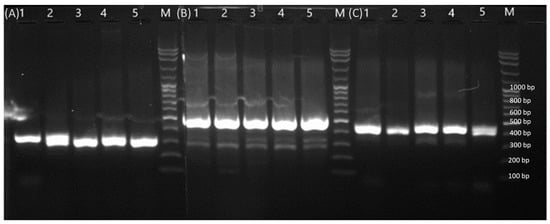
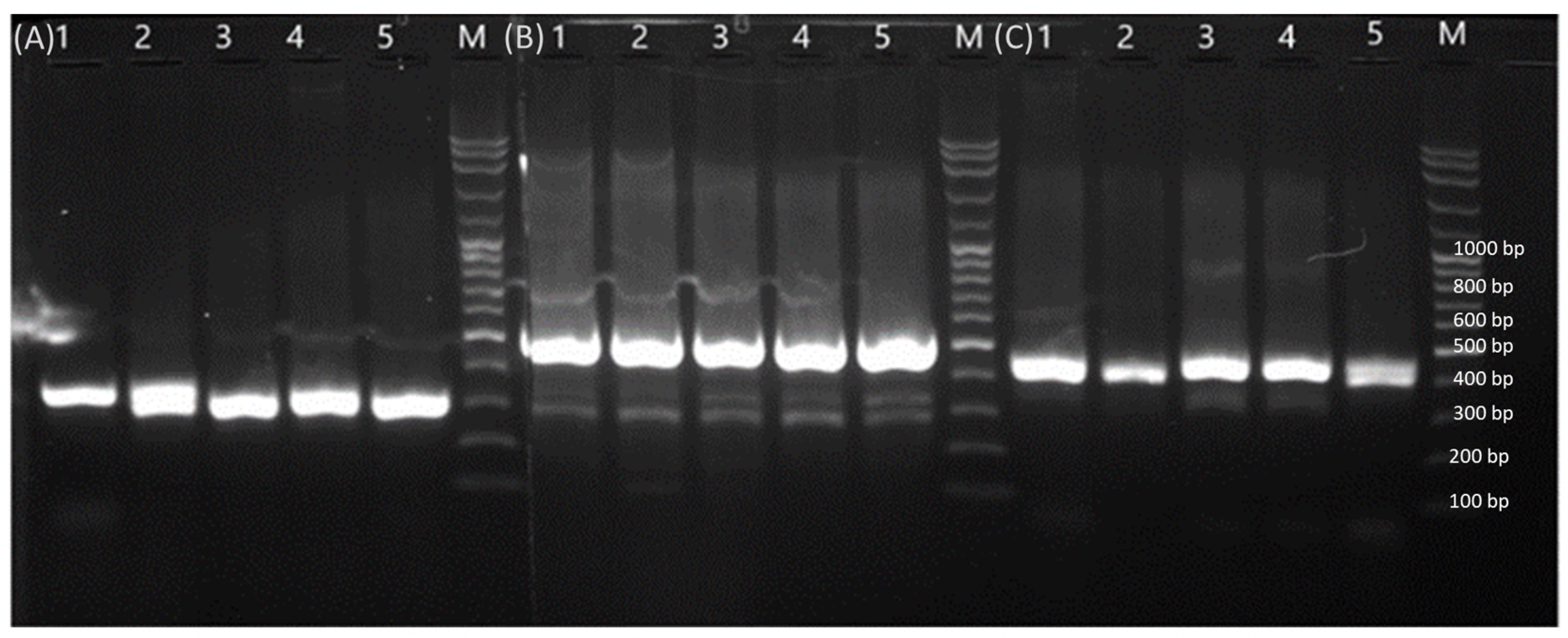
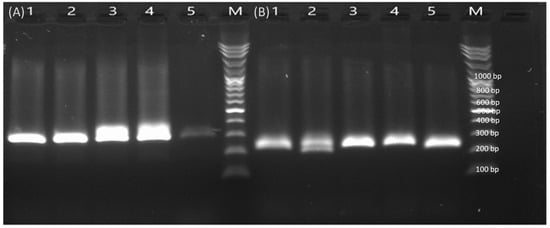
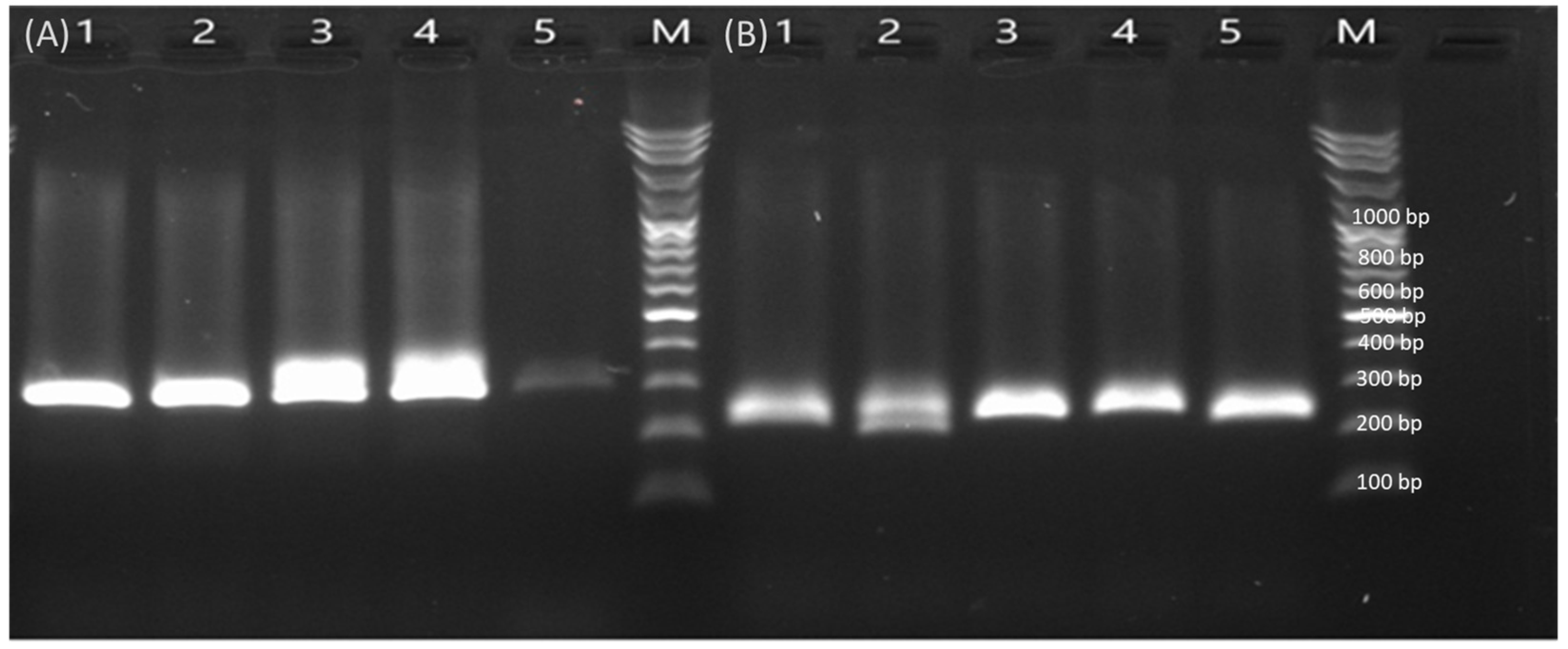
Electropherograms of SSR markers GD12_a, NZ01a6, and CH02c06 (Figure 1), as well as CH02d08_a and CH03d07_a (Figure 2), demonstrated clear and reproducible amplification profiles across all analyzed apple rootstocks. Distinct allele peaks were observed for each genotype, allowing for reliable discrimination among the studied samples.
Figure 1.
Electrophoretic profiles of SSR markers used for genotyping apple rootstocks. (A) SSR marker GD12_a; (B) SSR marker NZ01a6; (C) SSR marker CH02c06. M—100 bp DNA ladder (100, 200, 300, 500, 700, and 1000 bp fragments indicated). Lane 1—ARM-18; Lane 2—B-7-35; Lane 3—Zhetysu 5; Lane 4—M9; Lane 5—B9. Distinct allele profiles demonstrate polymorphism and enable discrimination among the analyzed rootstocks.
Figure 2.
Electrophoretic profiles of polymorphic SSR markers distinguishing apple rootstocks. (A) SSR marker CH02d08_a; (B) SSR marker CH03d07_a. M—100 bp DNA ladder (100, 200, 300, 500, 700, and 1000 bp fragments indicated). Lane 1—ARM-18; Lane 2—B-7-35; Lane 3—Zhetysu 5; Lane 4—M9; Lane 5—B9. Allelic variation observed among the analyzed rootstocks confirms the effectiveness of these SSR markers for genotype identification.
Markers GD12_a, NZ01a6, and CH02c06 exhibited both monomorphic and polymorphic patterns. GD12_a showed stable single peaks in several genotypes, indicating conserved loci, whereas NZ01a6 and CH02c06 revealed multiple alleles, reflecting higher polymorphism and enabling differentiation between genetically similar rootstocks.
In contrast, CH02d08_a and CH03d07_a showed pronounced allelic variation and distinct peak profiles, confirming their high informativeness for genotype identification. These markers were particularly effective in distinguishing closely related rootstocks such as M9 and B9.
Overall, the obtained electropherogram profiles confirm the reliability of SSR markers for detecting allelic variation and support their application for molecular identification and certification of apple rootstocks. The observed polymorphism further demonstrates the potential of selected markers for genetic fingerprinting.
Analysis of SSR markers indicated a moderate level of polymorphism across the analyzed loci. The number of alleles per locus (Na) ranged from 2 to 4, with an average of 2.5 alleles. The expected heterozygosity (He) ranged from 0.35 to 0.58, while the polymorphism information content (PIC) varied from 0.28 to 0.54, indicating moderate informativeness of the SSR markers (Table 2).
Table 2.
Diagnostic SSR loci distinguishing the analyzed apple rootstocks.
Detailed allelic profiles of the analyzed apple rootstocks based on 17 SSR loci are presented in Supplementary Table S1. The most informative loci for genotype discrimination included NZ01a6, CH02d08, CH01h01, and CH02c06 (Table 3).
Table 3.
Genetic diversity parameters of SSR markers used for genotyping of five clonal apple rootstocks.
Analysis of SSR allelic profiles revealed clear genetic differentiation among the studied rootstocks. Rootstocks B9, Zhetysu 5, and B-7-35 demonstrated relatively similar allelic compositions, whereas ARM-18 and M9 showed more distinct SSR profiles. The loci NZ01a6, CH02d08, CH01h01, and CH02c06 were the most informative for genotype discrimination. Higher allelic polymorphism and heterozygosity were observed in B-7-35, suggesting broader genetic variability, whereas M9 exhibited a more stable and conserved allelic profile consistent with its clonal origin and reference status.
Genetic relationships among the studied rootstocks were assessed based on Nei’s genetic distances. The highest genetic similarity was observed between the M9 and B9 rootstocks, which is consistent with their origin and similarity in morphological traits. The greatest genetic distance was detected between the ARM-18 and B-7-35 rootstocks, indicating their distinct genetic backgrounds.
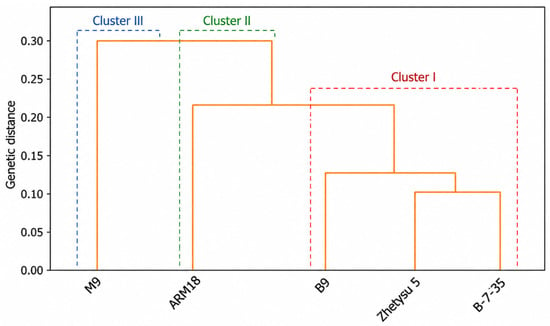
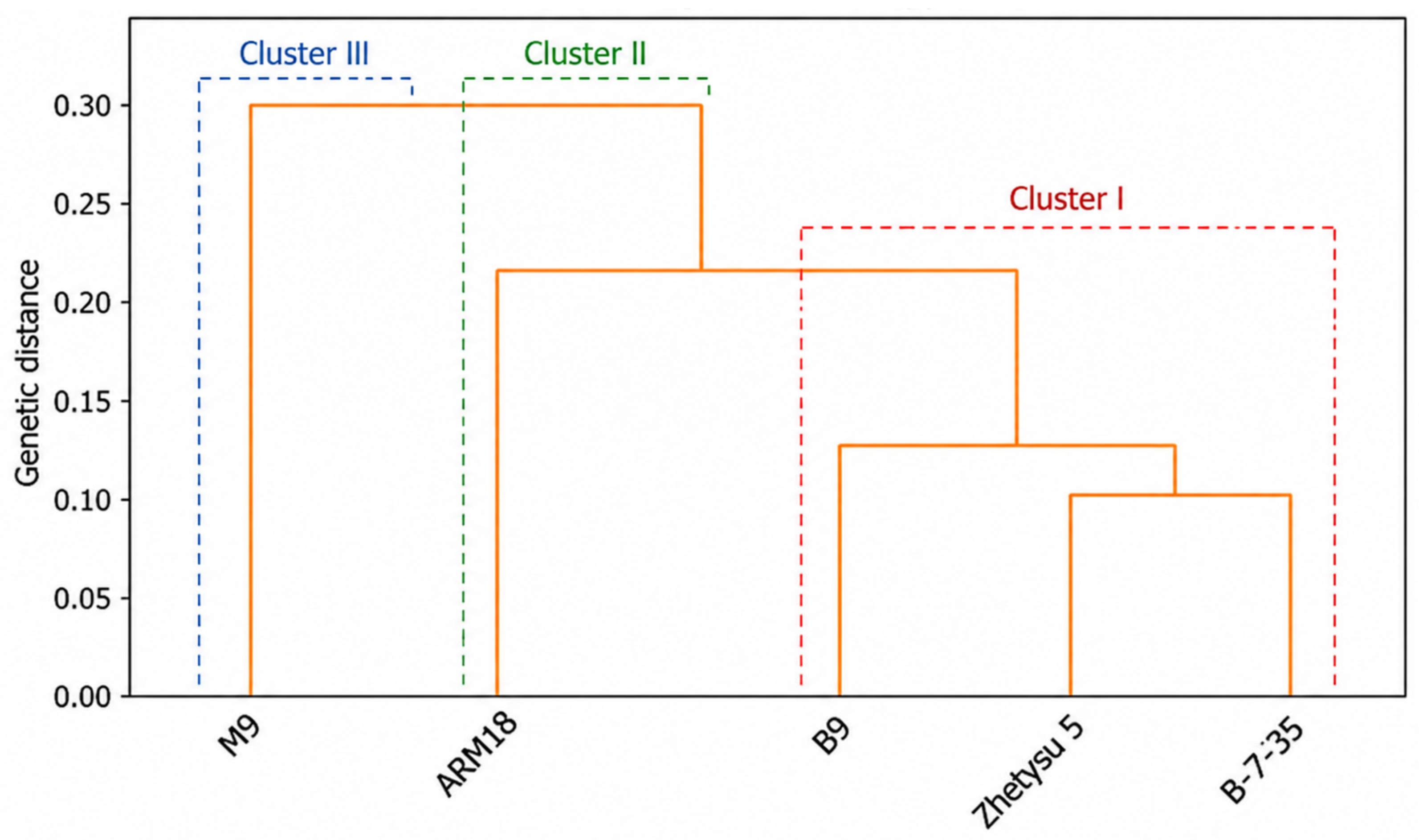
UPGMA cluster analysis based on Nei’s genetic distances revealed clear genetic differentiation among the studied apple rootstocks (Figure 3). Rootstocks B9, Zhetysu 5, and B-7-35 formed Cluster I at a genetic distance of approximately 0.10, indicating a relatively high level of genetic similarity among these genotypes. This clustering pattern may reflect similarities in their breeding origin and adaptive characteristics.
Figure 3.
UPGMA dendrogram showing genetic relationships among five apple rootstocks based on 17 SSR loci. Cluster I includes B9, Zhetysu 5, and B-7-35, demonstrating close genetic similarity at a genetic distance of approximately 0.10. ARM-18 and M9 formed separate clusters (Clusters II and III), indicating greater genetic differentiation.
In contrast, ARM-18 formed a separate branch (Cluster II), demonstrating greater genetic differentiation from the Cluster I genotypes. Rootstock M9 was positioned independently in Cluster III, confirming its distinct genetic profile and supporting its use as an international reference genotype.
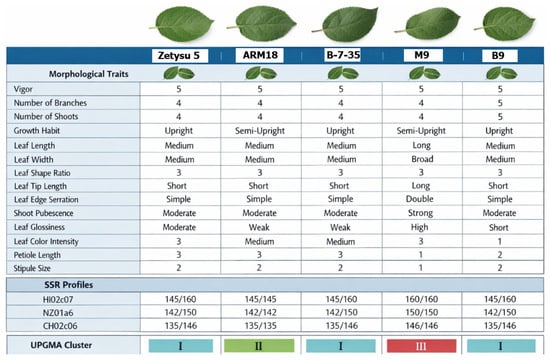
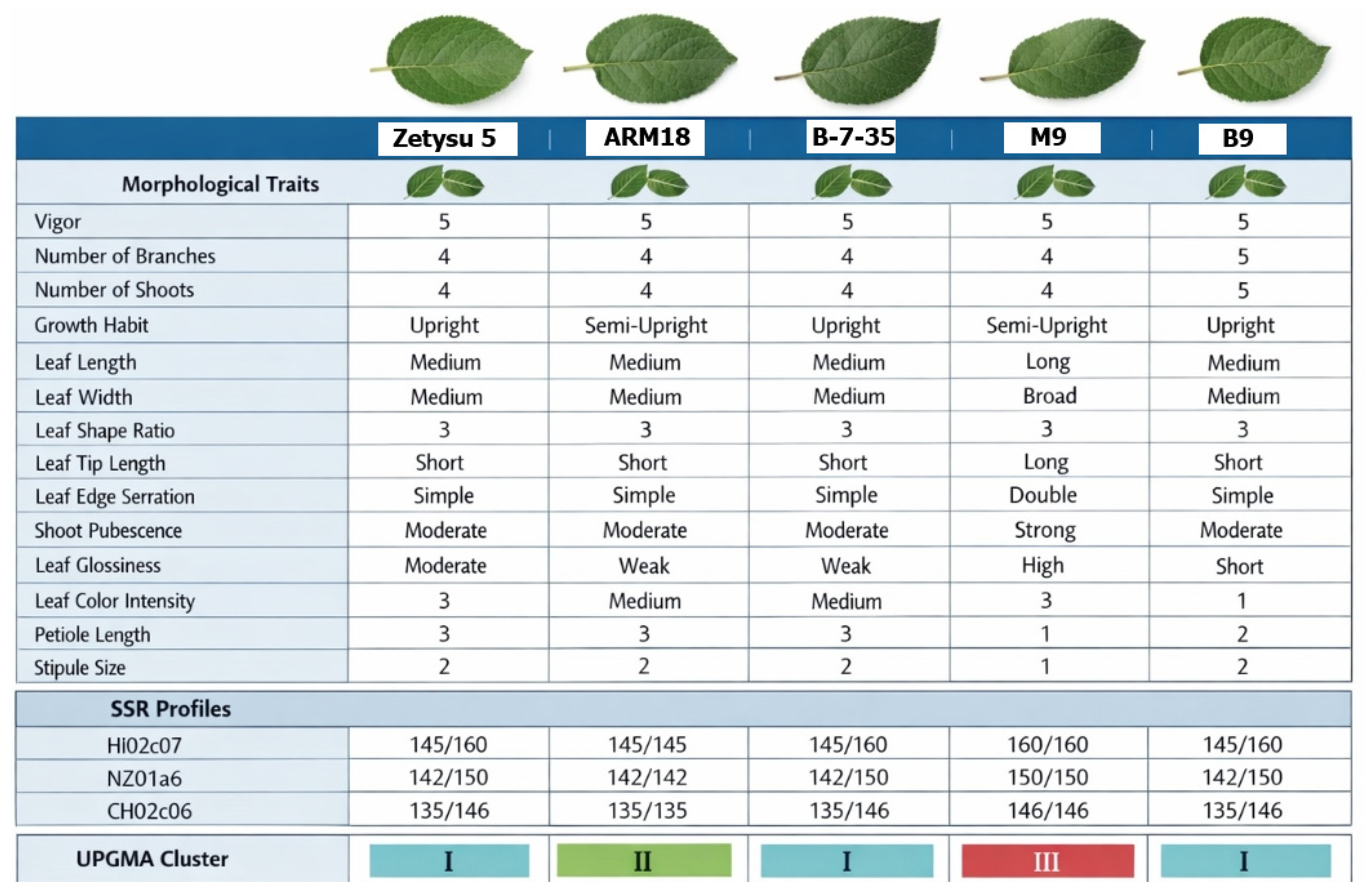
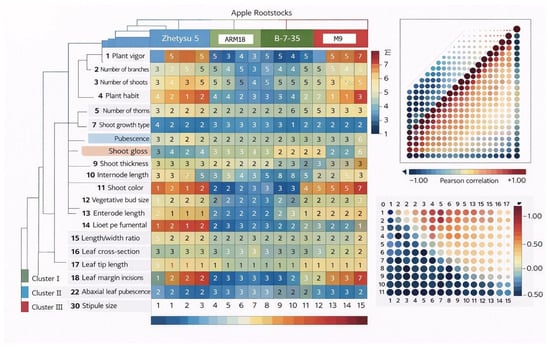
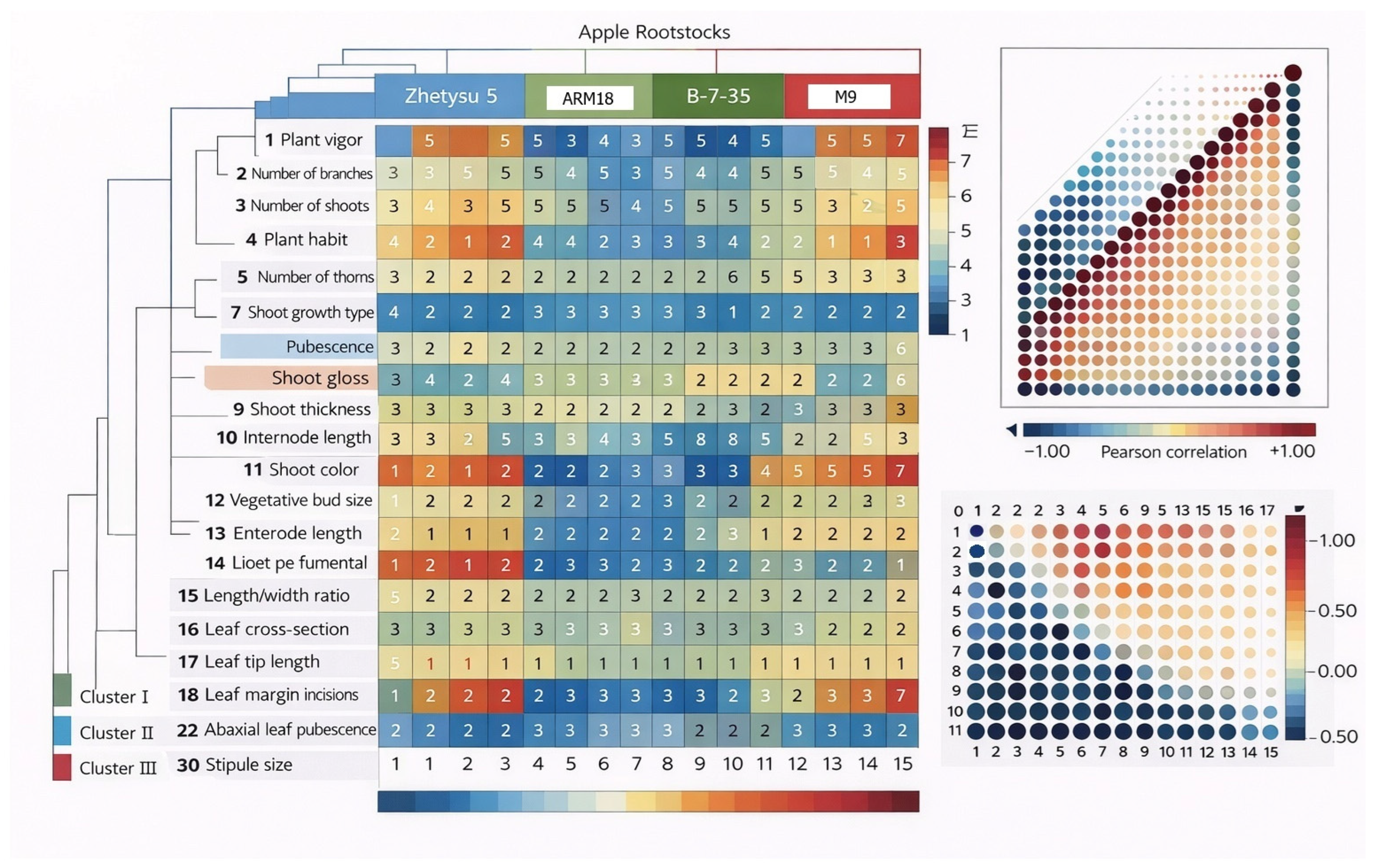
The clustering pattern obtained from SSR analysis was generally consistent with the integrated molecular–morphological characterization presented in Figure 4, where genotypes belonging to the same molecular cluster also shared similar phenotypic characteristics.
Figure 4.
Integrated molecular and morphological profiles of five apple rootstocks based on SSR markers and phenotypic traits. Morphological traits were evaluated according to UPOV descriptors, while SSR profiles were generated using polymorphic loci Hi02c07, NZ01a6, and CH02c06. Cluster assignment was performed using the UPGMA method.
Genetic relationships among the studied rootstocks were assessed based on SSR genotyping data using the UPGMA method. The resulting dendrogram clearly divided the genotypes into several clusters, reflecting their levels of genetic similarity. The most closely genetically differentiated genotypes formed a common cluster, while the remaining rootstocks were positioned on separate branches, indicating genetic differentiation among the analyzed forms. These results confirm the informativeness of the selected SSR marker panel for assessing genetic diversity and for the reliable identification of Malus domestica rootstocks.
A summary of allelic polymorphism, heterozygosity levels, and potential applications of the analyzed rootstocks is presented in Table 4.
Table 4.
Allelic composition, polymorphism level, and practical relevance of clonal apple rootstocks based on SSR analysis.
Allelic composition and polymorphism level of clonal apple rootstocks (Malus domestica Borkh.).
Morphological Variation. Analysis of 30 morphological traits revealed pronounced phenotypic variability among the studied rootstocks. Genotypes clustered together based on molecular data exhibited similar morphological characteristics, including plant vigor, leaf size, shoot pubescence, and branching patterns. In contrast, ARM-18 and M9 rootstocks displayed several distinctive traits, including differences in leaf blade dimensions, shoot morphology, and pubescence intensity.
Molecular characterization was performed using polymorphic SSR loci Hi02c07, NZ01a6, and CH02c06, which allowed for the detection of genetic differences among the studied genotypes. Rootstocks Zhetysu 5, B-7-35, and B9, grouped in Cluster I, exhibited similar morphological traits, including medium plant vigor (5 points on a nine-point scale), moderate branching and shoot number, average leaf size, and moderate shoot pubescence and gloss. The similarity of phenotypic traits corresponds to shared SSR alleles, confirming their genetic differentiation.
To perform phenotypic clustering analysis, morphological traits were digitized according to standardized UPOV descriptor scales. The resulting numerical matrix was used for hierarchical clustering analysis of the analyzed rootstocks (Table 5).
Table 5.
Digitized morphological traits of apple rootstocks used for phenotypic clustering analysis.
Rootstock ARM-18, assigned to Cluster II, differed from Cluster I genotypes in several morphological features, including a semi-spreading growth habit, thinner shoots, reduced pubescence, and lower leaf gloss. Its genetic distinctness is supported by homozygous SSR alleles (Hi02c07: 145/145; NZ01a6: 142/142; CH02c06: 135/135).
Rootstock M9, forming Cluster III, displayed the most pronounced morphological and genetic differentiation. This genotype is characterized by larger and broader leaves, increased internode length, and pronounced shoot pubescence. These features correspond with its unique SSR profile (Hi02c07: 160/160; NZ01a6: 150/150; CH02c06: 146/146).
Color coding of clusters facilitates visual comparison between morphological traits and genetic relationships among the rootstocks. Genotypes within the same cluster exhibit similar phenotypic traits, whereas genetically differentiated rootstocks display corresponding morphological differences.
The integration of molecular and morphological data enables the development of comprehensive genetic passports for rootstocks, which can be used to monitor genetic stability, prevent misidentification, and preserve unique genotypes in national germplasm collections.
Correlation Analysis of Morphological Traits. Correlation analysis of morphological traits revealed several clusters of characteristics with pronounced positive relationships. In particular, significant positive correlations were observed between leaf length and width and shoot thickness, reflecting coordinated development of vegetative organs in the studied rootstocks. In contrast, traits such as stipule size and the presence of thorns showed weak or no correlation with other parameters. These findings indicate the existence of groups of morphological traits with potential informativeness, which can serve as phenotypic indicators in the morphological characterization of rootstocks.
The Pearson correlation map of 30 evaluated morphological traits of five clonal rootstocks (Zhetysu 5, ARM-18, B-7-35, M9, and B9) is presented in Figure 5. Color intensity indicates the strength and direction of correlations: warm colors (red) represent positive correlations, while cool colors (blue) indicate negative correlations. Strong positive relationships were observed among several vegetative growth traits, including leaf length, leaf width, and shoot thickness, reflecting coordinated plant development. The correlation matrix also revealed associations between traits related to plant viability, shoot growth, and leaf morphology. These results provide additional insights into the phenotypic relationships among the studied rootstocks and support the interpretation of morphological variability. The correlation analysis revealed coordinated relationships among several vegetative traits, particularly between leaf dimensions, shoot thickness, and plant vigor. The obtained digitized phenotypic dataset was further used for hierarchical clustering analysis of the analyzed rootstocks.
Figure 5.
Correlation matrix of digitized morphological traits in five apple rootstocks (Malus domestica). Pearson’s correlation coefficients were calculated based on standardized UPOV descriptor scores. Warm colors indicate positive correlations, whereas cool colors indicate negative correlations among vegetative and leaf-related traits.
Hierarchical clustering based on digitized morphological traits revealed clear phenotypic differentiation among the analyzed rootstocks. Rootstocks B9, Zhetysu 5, and B-7-35 formed a common phenotypic cluster, reflecting similarities in vegetative growth, leaf morphology, and branching characteristics. In contrast, ARM-18 and M9 formed separate branches due to their distinct morphological profiles.
The phenotypic clustering pattern was generally consistent with the SSR-based UPGMA dendrogram, supporting the reliability of integrated molecular–morphological characterization for rootstock identification.
4. Discussion
The results of the present study confirm that microsatellite (SSR) markers are a reliable and informative tool for the genetic identification of clonal apple rootstocks. In this study, SSR genotyping enabled clear discrimination among all analyzed genotypes, demonstrating its effectiveness for genotype identification under the conditions of Kazakhstan. These findings are consistent with previous studies reporting the high polymorphism, codominant inheritance, and reproducibility of SSR markers in apple genetic research [25].
The level of genetic polymorphism observed in this study (PIC = 0.28–0.54; He = 0.35–0.58) can be considered moderate and is comparable with values reported for apple germplasm collections in other regions [26,27]. Although clonal rootstocks are propagated vegetatively and generally exhibit lower variability than seed-derived populations, the detected polymorphism was sufficient to discriminate among genetically similar rootstocks. Importantly, this study demonstrates that even a limited set of SSR markers can provide adequate resolution for reliable identification when combined with complementary phenotypic data.
Cluster analysis based on genetic distances revealed a clear structuring of the studied rootstocks, reflecting their genetic differentiation and likely breeding origin. Similar clustering patterns have been reported in apple genetic studies, where genotype grouping corresponds to pedigree relationships or selection history [28,29,30]. Such information is essential for the effective use of rootstocks in breeding programs and for maintaining genetic integrity in nursery systems.
The integration of molecular and morphological data represents a key strength of the present study. The consistency observed between molecular clustering and morphological traits supports the reliability of integrated approaches for rootstock characterization. The obtained SSR profiles and morphological data demonstrate the applicability of combined molecular–phenotypic analysis for the identification and verification of apple rootstocks. While molecular markers provide precise and environment-independent identification, morphological traits reflect plant performance under field conditions. Their combined application enables the development of comprehensive genotype profiles that are more informative than either approach alone [31].
The obtained results are particularly relevant for Kazakhstan, which represents one of the primary centers of origin of cultivated apple. Despite the global importance of apple genetic resources in this region, molecular identification systems for clonal rootstocks remain insufficiently developed. In this context, the proposed integrated approach can contribute to improving the identification, certification, and management of planting material in domestic horticulture.
Correlation analysis of morphological traits revealed significant relationships among vegetative characteristics, particularly between leaf dimensions and shoot growth parameters. These relationships likely reflect coordinated plant development and may serve as useful phenotypic indicators in rootstock evaluation. However, the variability of morphological traits under environmental influence further highlights the importance of integrating molecular tools for accurate classification of rootstocks [32].
The integration of molecular and morphological data represents a key strength and novel aspect of the present study and is particularly important for the development of systems for the identification and certification of planting material. Such combined approaches are increasingly applied in modern horticulture, as molecular markers provide precise genotype identification, while morphological traits reflect plant performance under field conditions [33]. For example, molecular screening of apple cultivars in Kazakhstan demonstrated the successful amplification of Rvi resistance genes, highlighting the importance of molecular tools for evaluating traits relevant to disease resistance and breeding [34,35,36].
The practical application of the proposed approach is closely linked to the development of certification systems for planting material. Molecular identification enables verification of varietal authenticity and monitoring of genetic stability throughout clonal propagation stages, including pre-basic, basic, and certified categories. In combination with phytosanitary control measures, such as virus elimination techniques, this approach can support the production of high-quality planting material in modern nursery systems [37,38,39,40].
Despite the robustness of the obtained results, several limitations should be acknowledged. The relatively small number of analyzed genotypes may limit the resolution of genetic diversity assessment and restrict the generalization of the findings. In addition, although the selected SSR markers proved informative, they may not fully capture the entire genetic variability of apple rootstocks. Future research should therefore include a broader range of genotypes and apply high-throughput approaches, such as SNP genotyping and next-generation sequencing technologies, to achieve a more comprehensive understanding of genetic relationships.
The proposed integrated molecular–morphological approach not only improves the accuracy of rootstock identification but also provides added value for the management of plant genetic resources. By enabling reliable genotype verification and reducing the risk of misidentification, this approach contributes to more efficient use of genetic resources and supports sustainable horticulture practices. In particular, its application can enhance the quality control of planting material, optimize breeding strategies, and promote the conservation of locally adapted genotypes in Kazakhstan.
Overall, this study demonstrates that the integration of SSR genotyping and morphological characterization provides a reliable and practical framework for the identification of apple rootstocks. These findings contribute to the development of standardized approaches for rootstock identification and support the implementation of certification systems for planting material in Kazakhstan and similar regions.
5. Conclusions
The results of this study demonstrate that the integration of SSR genotyping and morphological characterization provides a reliable and effective approach for the identification of clonal apple rootstocks. The applied SSR markers revealed a moderate level of genetic polymorphism and enabled clear discrimination among the analyzed genotypes, while morphological analysis supported the observed genetic relationships. The combined use of molecular and phenotypic data allowed the development of comprehensive molecular–morphological profiles for each rootstock, ensuring accurate genotype identification. This approach is particularly relevant for Kazakhstan, a recognized center of origin of cultivated apple, where systems for the identification and certification of planting material remain insufficiently developed. The proposed framework can be applied in breeding programs, nursery production, and certification systems to ensure the authenticity and genetic stability of planting material. Furthermore, it provides a practical basis for the management and conservation of apple genetic resources. Overall, the integration of molecular tools into horticultural practice represents an important step toward the development of standardized and reliable systems for rootstock identification and the production of high-quality planting material in Kazakhstan and similar regions.
Supplementary Materials
The following supporting information can be downloaded at: https://www.mdpi.com/article/10.3390/ijpb17060048/s1, Supplementary Table S1. Complete allelic profiles and polymorphism parameters of five apple rootstocks based on 17 SSR loci.
Author Contributions
Conceptualization, A.M., I.K. and B.K.; methodology, B.K. and I.K.; software, A.M.; validation, R.A., Z.A. and S.D.; formal analysis, D.K., M.U. and S.D.; investigation, A.M.; resources, Z.Y., M.A. and A.S.; writing—original draft preparation, R.A., S.S. and M.A.; writing—review and editing, A.M.; visualization, A.M. and A.S.; supervision, A.M.; project administration, B.K.; funding acquisition, B.K. All authors have read and agreed to the published version of the manuscript.
Funding
The Ministry of Agriculture of the Republic of Kazakhstan supported this study with Grant number: BR22885401.
Data Availability Statement
All data needed to conduct this study are provided within the manuscript.
Acknowledgments
During the preparation of this manuscript, the authors used ChatGPT (OpenAI, GPT-5.3) to assist with language editing and improving the clarity of the text. The authors reviewed, edited, and verified the output and take full responsibility for the content of this publication.
Conflicts of Interest
The authors declare that they have no conflicts of interest.
References
- Lordan, J.; Fazio, G.; Francescatto, P.; Robinson, T.L. Effects of apple (Malus × domestica) rootstocks on vigor and yield response on ‘Honeycrisp’. Acta Hortic. 2018, 1228, 149–152. [Google Scholar] [CrossRef] [Scilit]
- Kviklys, D.; Abukauskas, V.; Lanauskas, J.; Uselis, N. Effect of rootstock on apple tree nutrition. Acta Hortic. 2023, 1375, 191–196. [Google Scholar] [CrossRef] [Scilit]
- Xu, H.; Ediger, D. Rootstocks with different vigor influenced scion–water relations and stress responses in Ambrosia apple trees (Malus domestica var. Ambrosia). Plants 2021, 10, 614. [Google Scholar] [CrossRef] [Scilit] [PubMed]
- Khachtib, Y.; Zinelabidine, L.H.; Bouda, S.; Hamdali, H.; Hammada, S.; Haddioui, A. Genetic characterization of cultivated apple (Malus × domestica Borkh.) in Morocco using microsatellite (SSR) markers. Ecol. Genet. Genom. 2022, 23, 100122. [Google Scholar] [CrossRef] [Scilit]
- Jin, W.; Zhang, Q.; Liu, S.; Wei, Q.; Cheng, Z.; Xue, X.; Yang, T. Genetic diversity of 41 apple rootstocks based on simple sequence repeat markers. J. Am. Soc. Hortic. Sci. 2012, 137, 51–56. [Google Scholar] [CrossRef] [Scilit]
- Boris, K.V.; Trifonova, A.A.; Dubrovsky, M.L.; Shamshin, I.N.; Kudryavtsev, A.M. Genetic diversity of apple clonal rootstocks from the collection of the Michurinsk State Agrarian University based on SSR markers. Plants 2023, 12, 2991. [Google Scholar] [CrossRef] [Scilit]
- Jiao, Y.; Jia, H.; Li, X.; Chai, M.-L.; Jia, H.-J.; Chen, Z.; Wang, G.-Y.; Chai, C.-Y.; van de Weg, E.; Gao, Z.-S. Development of simple sequence repeat (SSR) markers from a genome survey of Chinese bayberry (Myrica rubra). BMC Genom. 2012, 13, 201. [Google Scholar] [CrossRef] [Scilit]
- Iordăchescu, M.; Udriște, A.A.; Bădulescu, L. Molecular Markers Usages in Cultivated Fruit Trees from Rosaceae Family. Sci. Pap. Ser. B Hortic. 2021, 65, 117–128. [Google Scholar]
- Fan, L.; Zhang, M.Y.; Liu, Q.Z.; Li, L.T.; Song, Y.; Wang, L.F.; Zhang, S.L.; Wu, J. Transferability of Newly Developed Pear SSR Markers to Other Rosaceae Species. Plant Mol. Biol. Rep. 2013, 31, 1271–1282. [Google Scholar] [CrossRef] [Scilit]
- Bayav, A.; Dönmez, D.; Comlekcioglu, S.; Küden, A.; Aka Kaçar, Y. Molecular Characterization of Some Peach and Nectarine Hybrids by ISSR and SSR Markers. Turk. J. Agric. Nat. Sci. 2025, 12, 552–564. [Google Scholar] [CrossRef] [Scilit]
- Čmejlová, J.; Holušová, K.; Krška, B.; Suran, P.; Bartoš, J.; Čmejla, R. The Development of New SSR Markers and an Assay for Genotyping Sweet Cherry (Prunus avium L.) in One Reaction. Int. J. Mol. Sci. 2026, 27, 2324. [Google Scholar] [CrossRef] [Scilit]
- Muranty, H.; Denancé, C.; Feugey, L.; Crépin, J.-L.; Barbier, Y.; Tartarini, S.; Ordidge, M.; Troggio, M.; Lateur, M.; Nybom, H.; et al. Using Whole-Genome SNP Data to Reconstruct a Large Multi-Generation Pedigree in Apple Germplasm. BMC Plant Biol. 2020, 20, 2. [Google Scholar] [CrossRef] [Scilit]
- Antanaviciute, L.; Fernández-Fernández, F.; Jansen, J.; Banchi, E.; Evans, K.M.; Viola, R.; Velasco, R.; Dunwell, J.M.; Troggio, M.; Sargent, D.J. Development of a Dense SNP-Based Linkage Map of an Apple Rootstock Progeny Using the Malus Infinium Whole Genome Genotyping Array. BMC Genom. 2012, 13, 203. [Google Scholar] [CrossRef] [Scilit]
- Taskuzhina, A.; Pozharskiy, A.; Jumanova, Z.; Soltanbekov, S.; Issina, Z.; Kerimbek, N.; Kapytina, A.; Khusnitdinova, M.; Sagitov, A.; Darubayev, A.; et al. Identifying Fire Blight-Resistant Malus sieversii Rootstocks Grafted with Cultivar ‘Aport’ Using Monitoring Data. Horticulturae 2024, 10, 1052. [Google Scholar] [CrossRef] [Scilit]
- Soltanbekov, S.; Dzhumanova, Z.; Dolgikh, S.; Omarov, E.; Seisenova, A.; Popov, A.; Isina, Z.; Kabylbekova, B. Threat Status of In Situ Genetic Resources of Malus sieversii in Kazakhstan. Acta Hortic. 2024, 1412, 49–56. [Google Scholar] [CrossRef] [Scilit]
- Soltanbekov, S.; Dolgikh, S.; Zhumagulova, M.; Madenova, A.; Isina, Z.; Kabylbekova, B. Physiological and Phyto-Pathological Assessment of Scion–Rootstock Combinations for Apple cv. Aport and M. sieversii. Res. Crops 2022, 23, 795–800. [Google Scholar] [CrossRef] [Scilit]
- Doyle, J.J.; Doyle, J.L. A rapid DNA isolation procedure for small quantities of fresh leaf tissue. Phytochem. Bull. 1987, 19, 11–15. [Google Scholar]
- Cmejlova, J.; Rejlova, M.; Paprstein, F.; Cmejla, R. A new one-tube reaction kit for the SSR genotyping of apple (Malus × domestica Borkh.). Plant Sci. 2021, 303, 110768. [Google Scholar] [CrossRef] [Scilit]
- Silfverberg-Dilworth, E.; Matasci, C.L.; Van de Weg, W.E.; van Kaauwen, M.P.W.; Walser, M.; Kodde, L.P.; Soglio, V.; Gianfranceschi, L.; Durel, C.E.; Costa, F.; et al. Microsatellite markers spanning the apple (Malus × domestica Borkh.) genome. Tree Genet. Genomes 2006, 2, 202–224. [Google Scholar] [CrossRef] [Scilit]
- Liebhard, R.; Gianfranceschi, L.; Koller, B.; Ryder, C.D.; Tarchini, R.; Van De Weg, E.; Gessler, C. Development and characterisation of 140 new microsatellites in apple (Malus × domestica Borkh.). Mol. Breed. 2002, 10, 217–241. [Google Scholar] [CrossRef] [Scilit]
- Hokanson, S.; Szewc-McFadden, A.; Lamboy, W.; McFerson, J.R. Microsatellite (SSR) markers reveal genetic identities, diversity and relationships in a Malus × domestica core subset collection. Theor. Appl. Genet. 1998, 97, 671–683. [Google Scholar] [CrossRef] [Scilit]
- Guilford, P.; Prakash, S.; Zhu, J.; Rikkerink, E.; Gardiner, S.; Bassett, H.; Forster, R. Microsatellites in Malus × domestica (apple): Abundance, polymorphism and cultivar identification. Theor. Appl. Genet. 1997, 94, 249–254. [Google Scholar] [CrossRef] [Scilit]
- Nei, M. Genetic distance and molecular phylogeny. In Population Genetics and Fishery Management; Ryman, N., Utter, F., Eds.; Academic Press: New York, NY, USA, 1987; pp. 193–223. [Google Scholar]
- UPOV. Apple Rootstock (Malus Mill.): Guidelines for the Conduct of Tests for Distinctness, Uniformity and Stability (TG/163/4); UPOV: Geneva, Switzerland, 2015. [Google Scholar]
- Wang, Y.; Li, W.; Xu, X.; Qiu, C.; Wu, T.; Wei, Q.; Han, Z. Progress of apple rootstock breeding and its use. Hortic. Plant J. 2019, 5, 183–191. [Google Scholar] [CrossRef] [Scilit]
- Patzak, J.; Paprštein, F.; Henychová, A.; Sedlák, J. Genetic diversity of Czech apple cultivars inferred from microsatellite markers analysis. Hort. Sci. 2012, 39, 149–157. [Google Scholar] [CrossRef] [Scilit]
- Baric, S.; Storti, A.; Hofer, M.; Guerra, W.; Via, J.D. Molecular genetic identification of apple cultivars based on microsatellite DNA analysis: The database of 600 validated profiles. Erwerbs-Obstbau 2020, 62, 117–154. [Google Scholar] [CrossRef] [Scilit]
- Patzak, J.; Paprštein, F.; Henychová, A.; Sedlák, J. Comparison of genetic diversity structure analyses of SSR marker data within apple genetic resources. Genome 2012, 55, 647–665. [Google Scholar] [CrossRef] [Scilit]
- Urrestarazu, J.; Denancé, C.; Ravon, E.; Guyader, A.; Guisnel, R.; Feugey, L.; Poncet, C.; Lateur, M.; Houben, P.; Ordidge, M.; et al. Analysis of the genetic diversity and structure across apple germplasm. BMC Plant Biol. 2016, 16, 130. [Google Scholar] [CrossRef] [Scilit] [PubMed]
- Raja, W.H.; Yousuf, N.; Qureshi, I.; Sharma, O.C.; Singh, D.B.; Kumawat, K.L.; Mansoor, S. Morpho-molecular characterization of wild apple accessions. S. Afr. J. Bot. 2022, 145, 378–385. [Google Scholar] [CrossRef] [Scilit]
- Li, Z.; Sun, S.; Wang, L.; Tian, W.; Sun, Y.; Wang, D.; Wang, K.; Liu, Z.; Lu, X.; Gao, Y. Genetic diversity analysis of apple germplasm based on phenotypic traits. Horticulturae 2024, 10, 1318. [Google Scholar] [CrossRef] [Scilit]
- Yankovskaya, A.A.; Knyazeva, I.V.; Upadishev, M.T. Molecular marking and genetic certification in horticultural crops. Hortic. Vitic. 2019, 5, 5–11. [Google Scholar] [CrossRef] [Scilit]
- Madenova, A.; Aitymbet, Z.; Bolat, M.; Kaldybayeva, D.; Galymbek, K.; Kuan, A.; Kabylbekova, B.; Irkitbay, A.; Yeszhanov, T.; Bakirov, S.; et al. Screening of apple cultivars for scab resistance in Kazakhstan. Horticulturae 2024, 10, 184. [Google Scholar] [CrossRef] [Scilit]
- Galymbek, K.; Madenova, A.; Bakirov, S.; Tastanov, Y.; Ualiyeva, R.; Zhangazin, S.; Seilkhan, A. Phytosanitary diagnostics of apple diseases. Casp. J. Environ. Sci. 2025, 23, 885–891. [Google Scholar] [CrossRef]
- Galymbek, K.; Kuan, A.; Kaldybayeva, D.; Abdikarimova, R.; Bakirov, S.; Aitymbet, Z.; Madenova, A. Distribution of powdery mildew resistance genes in apple cultivars. Braz. J. Biol. 2025, 85, e287949. [Google Scholar] [CrossRef] [Scilit]
- Sharma, R.; Yang, C.J.; Rossi, N.; Irving, E.; Tuffin, A.; Aliki, H.; Powell, W.; Dawson, I.K. Integrating molecular genetics with plant breeding to deliver impact. Plant Physiol. 2025, 198, kiaf087. [Google Scholar] [CrossRef] [Scilit] [PubMed]
- Hatzilazarou, S.; Kantere, C.; Kotoula, A.-A.; Economou, A.; Bertsouklis, K.; Darras, A.; Kostas, S. In vitro propagation and genetic stability assessment using ISSR markers. Horticulturae 2025, 11, 530. [Google Scholar] [CrossRef] [Scilit]
- Rao, V.R.; Rajasekharan, P.E.; Anushma, P.L. Conservation and management of fruit and nut genetic resources. In Fruit and Nut Crops; Rajasekharan, P.E., Rao, V.R., Eds.; Springer: Singapore, 2024; pp. 1–25. [Google Scholar] [CrossRef] [Scilit]
- Dolgikh, S.; Kabylbekova, B. Prospects for the production of certified planting material of fruit crops in Kazakhstan. Izdenister Natigeler (Res. Results) 2023, 2, 133–143. [Google Scholar] [CrossRef] [Scilit]
- Dolgikh, S.; Kabylbekova, B.; Soltanbekov, S.; Tashkenbaeva, A.; Sarshaeva, M.; Yusupova, Z. Production of virus-free planting material of clonal apple rootstocks. Izdenister Natigeler (Res. Results) 2025, 2, 223–233. [Google Scholar] [CrossRef] [Scilit]

Disclaimer/Publisher’s Note: The statements, opinions and data contained in all publications are solely those of the individual author(s) and contributor(s) and not of MDPI and/or the editor(s). MDPI and/or the editor(s) disclaim responsibility for any injury to people or property resulting from any ideas, methods, instructions or products referred to in the content. |
© 2026 by the authors. Licensee MDPI, Basel, Switzerland. This article is an open access article distributed under the terms and conditions of the Creative Commons Attribution (CC BY) license.