


Abstract
Viola odorata, commonly known as sweet violet, is valued for both its fragrance and medicinal properties. However, seeds of V. odorata exhibit non-deep physiological dormancy, resulting in poor and inconsistent germination. This dormancy can be overcome through physical or chemical treatments, including scarification, stratification, and hormone application. Although mechanical scarification is effective, many commonly used approaches have notable limitations, such as reliance on corrosive chemicals and a lack of uniformity. This study presents a simple and effective mechanical scarification technique using rat-tooth tweezers to gently crack the seed coat tip of V. odorata ‘Empress Augusta’ (EA). This method significantly improved germination. When combined with cold stratification at 4 °C, germination further increased, reaching 70% within 8 weeks. Germination was enhanced even further on Murashige and Skoog (MS) basal salt medium supplemented with 10 mg/L gibberellic acid (GA3), achieving 97.5% germination by day 54. These findings suggest that this simple mechanical scarification method, when combined with cold stratification and GA3 treatment, could provide a reliable and practical strategy for breaking dormancy and facilitating seed germination in V. odorata.
1. Introduction
Viola odorata, commonly known as sweet violet, is a perennial plant in the Violaceae family. Native to Europe and Asia, it has become widely naturalized in North America and Australasia [1]. This species is notable for its strong fragrance and diverse bioactive compounds, including alkaloids, saponins, cyclotides, and flavonoids [2,3]. V. odorata has been reported to possess various medicinal properties, including anti-inflammatory, antipyretic, and antibacterial activities, and hepatoprotective effects [2]. Both its therapeutic and ornamental values have led to growing interest in its use as a genetic resource in plant breeding [4].
V. odorata exhibits a relatively low rate of seed propagation due to strong seed dormancy [4]. Seed dormancy is an adaptive mechanism that prevents germination under unfavorable environmental conditions, thereby increasing the probability of successful regeneration and supporting the long-term persistence of a species [5,6]. Germination begins when the seed absorbs water and ends with the initial elongation of the embryo [7]. Consistent and high germination rates are crucial in breeding programs, particularly for interspecific hybridization and selection from large populations [4,8]. Seed dormancy is generally associated with limited embryo growth potential and with chemical and physical inhibitors [9]. Baskin and Baskin [10] classified seed dormancy into five types: physiological, morphological, morphophysiological, physical, and combinational. Physiological dormancy can be further subdivided into deep, intermediate, and non-deep types. Non-deep physiological dormancy can be overcome by treatments such as scarification, stratification, and gibberellic acid (GA) application. Dormancy in V. odorata has been classified as non-deep physiological because stratification or GA treatments improve seed germination [4]. Nonetheless, a hard seed coat can also hinder germination. Seed coats play essential roles in supplying nutrients to the developing embryo, providing mechanical and chemical protection, preventing dehydration, and inducing and maintaining seed dormancy [11]. During germination, the seed coat must become permeable to allow water and gas uptake, and the embryo must have sufficient growth potential to overcome this mechanical resistance [12]. This entire process is influenced by many factors, including temperature, humidity, and light [13,14].
Several approaches are known to effectively break physiological dormancy, including mechanical scarification, cold or chemical stratification, controlled light conditions, and the application of plant hormones such as GA, brassinosteroids (BR), and abscisic acid (ABA) [13,14,15,16,17]. Combinations of these methods can further enhance dormancy release. For example, seeds of Scots pine (Pinus sylvestris L.) exhibited the highest germination rates when stratification or scarification was combined with GA3 treatment [6]. Similarly, germination of Rhus javanica seeds was improved when both mechanical scarification and cold stratification were applied [15]. GA is well known to promote embryo growth and facilitate the breaking of seed dormancy by inducing enzymes that mobilize stored reserves and weaken the seed coat [18]. Environmental cues such as ripening, low temperature, and light are thought to trigger GA biosynthesis during the early phases of germination [19]. In contrast, ABA is crucial for maintaining dormancy [5,20], and light also affects seed dormancy and germination by modulating GA synthesis via a phytochrome-mediated pathway [9,12,14].
Although V. odorata has been widely studied, relatively few investigations have focused specifically on improving its seed germination. Embryo culture has been reported to increase germination percentages in V. odorata seeds [21]. Because embryogenesis can occur without surrounding maternal tissues [22], removing the seed coat could help overcome dormancy; however, isolating the embryos without causing damage is technically challenging. Existing scarification methods also have limitations. Rubbing seeds between sandpaper [4,23] or vigorously shaking them in solution [6] can physically injure embryos, and chemical stratification with concentrated sulfuric acid, nitric oxide, or potassium nitrate [21,23] is constrained by the high corrosiveness of these chemicals. Recently, Keene and Colquhoun [4] demonstrated that cold stratification at 4 °C significantly enhanced germination in V. odorata ‘Rubra’. These studies indicate that scarification and stratification are effective for breaking V. odorata seed dormancy [4].
In this study, we present a simple, non-corrosive mechanical scarification technique and identify conditions that improve germination of V. odorata ‘Empress Augusta’. This approach can provide a practical strategy to enhance seed germination of V. odorata under controlled environmental conditions.
2. Materials and Methods
2.1. Plant Materials and General Culture Conditions
Seeds of Viola odorata ‘Empress Augusta’ (EA) were obtained from Gardens in the Wood of Grassy Creek (Crumpler, NC, USA). Seeds were washed with deionized (DI) water and soap, and then surface-sterilized following the method of Barekat et al. [21]. Briefly, seeds were soaked in 70% ethanol for 1 min, rinsed three times with sterile DI water, soaked in 1% sodium hypochlorite containing Tween-20 (1 drop/mL) for 15 min, and finally rinsed four times with sterile DI water. Sterilized seeds were dried overnight.
The basal medium for all experiments consisted of half-strength Murashige and Skoog (MS) medium with vitamins, supplemented with 15 g/L sucrose, 0.5 g/L 4-morpholineethanesulfonic acid (MES), and 7% agar, and adjusted to pH 5.7. Sterilized seeds were placed on Petri dishes containing this medium and incubated in a plant growth chamber (Percival Scientific, Perry, IA, USA).
2.2. Mechanical Scarification
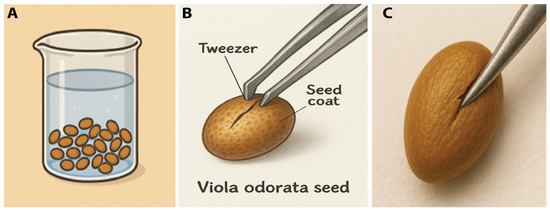
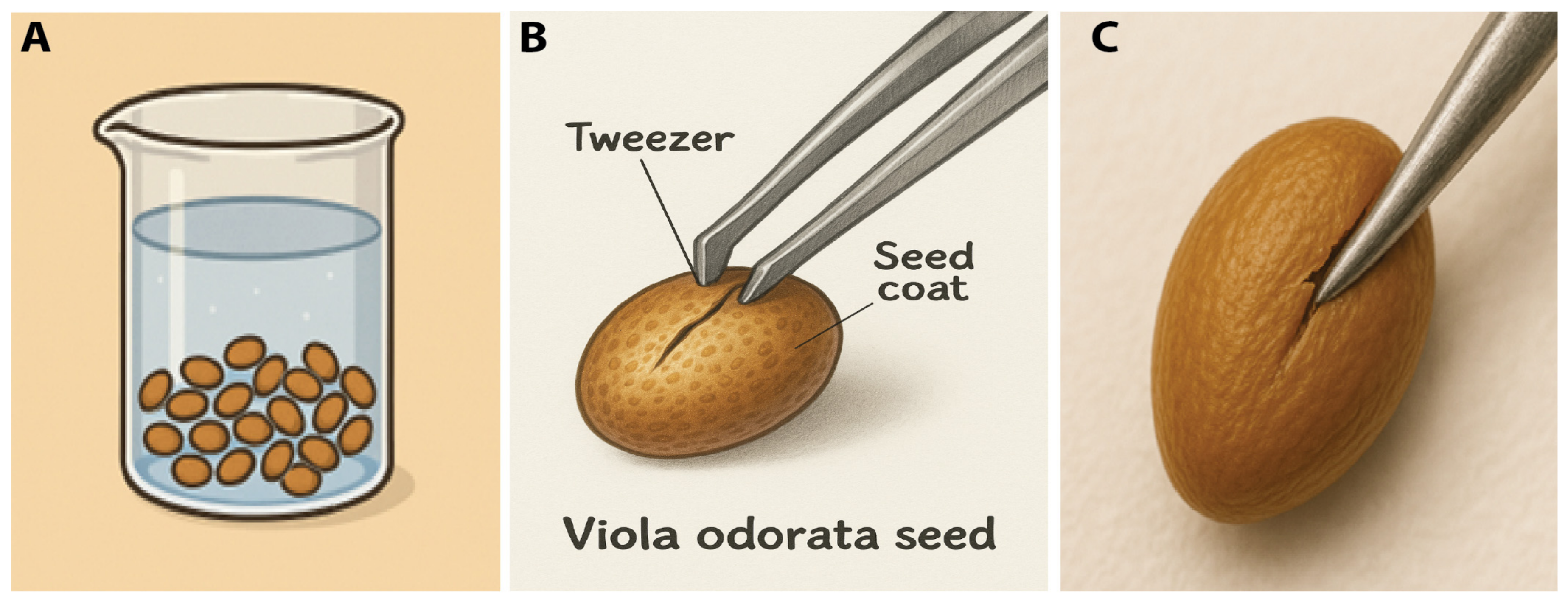
For mechanical scarification, seeds were soaked in water for 1 h (Figure 1A). The outer seed coat at the tip was then gently pressed with a rat-tooth tweezer (Figure 1B) to expose the internal seed tissues (Figure 1C). Scarification was performed only deeply enough to slightly open the hard outer layer adjacent to the embryo without causing any damage.
Figure 1.
A simple and precise mechanical scarification method. Seeds of V. odorata ‘Empress Augusta’ are soaked in water for 1 h (A). The seed coat is then gently pressed with a rat-tooth tweezer (B), creating an opening without injuring the embryo (C).
To assess the effect of stratification on EA germination based on our previous research [4], thirty cold-stratified seeds were soaked for 24 h in either water or 200 mg/L GA3. The seeds were then placed in Petri dishes lined with moistened Whatman filter paper, with three replicates included as a preliminary test. After plating, the seeds were then incubated at either 18 °C or 25 °C under a 16 h photoperiod.
2.3. Growth Temperature and Cold Stratification
After sterilization, thirty EA seeds were sown on MS medium in three replicates and incubated in darkness for 8 weeks at either 18 °C or 25 °C. To examine the effect of cold stratification on EA germination, seeds that had been stored at 4 °C for at least 3 months were also germinated.
Germination percentage, germination index (GI), mean germination time (MGT), and median germination time (T50) were calculated as described by Kader [24] and Farooq et al. [25]. Seeds that produced leaves or roots were counted weekly.
N: Total number of germinated seeds by the end of the test.
Ni, Nj: The cumulative number of seeds germinated at Ti and Tj.
Ti: The day just before the 50% threshold was reached.
Tj: The day just after the 50% threshold was reached.
Mechanical scarification using tweezers was also compared with scarification using sandpaper. For sandpaper scarification, EA seeds were gently rubbed between two sheets of 120-grit sandpaper for 30 s. The number of seeds with broken seed coat tips and those with damaged embryos was recorded.
2.4. GA3 Treatments and Water Uptake
The effect of GA3 on the EA germination was evaluated. After sterilization, thirty cold-stratified, mechanically scarified EA seeds were cultured on MS medium supplemented with 0, 2, 5, or 10 mg/L GA3, with three replicates per treatment. Seeds were incubated in a plant growth chamber at 18 °C in darkness for 8 weeks. Germination percentages were calculated for each GA3 treatment, based on the number of germinated seeds.
Water uptake during germination was assessed by monitoring changes in the total weight of thirty seeds. Cold-stratified, mechanically scarified EA seeds were sterilized and placed in Petri dishes lined with Whatman filter paper. Either water or a 5 mg/L GA3 solution was added to each Petri dish. Seeds were incubated in a growth chamber at 18 °C for 4 weeks. At 5-day intervals, seeds were blotted with sterile filter paper to remove excess solution and then weighed. Changes in seed weight were calculated relative to the initial weight and compared with those of the control group.
Germinated seeds were counted weekly, and leaf and root lengths were measured. Seeds at various developmental stages were dissected and examined under a stereomicroscope (MZ16F, Leica Microsystems, Wetzlar, Germany).
2.5. Agar Concentration
Because water uptake is crucial for seed germination, the effect of agar concentration on EA germination was investigated. After sterilization, thirty cold-stratified, mechanically scarified EA seeds were placed on MS medium solidified with agar (Sigma-Aldrich, St. Louis, MO, USA) at 1, 3, 5, or 7%, with three replicates per treatment. Seeds were incubated in a plant growth chamber at 18 °C in darkness for 8 weeks. Germinated seeds were counted weekly, and germination percentages were recorded to evaluate the effect of agar concentration.
2.6. Statistical Analyses
The number of germinated seeds, defined as those that had developed either leaves or roots, was recorded weekly for 8 weeks. Each treatment consisted of three replicates. For each treatment, germination data were compared with the control group using Tukey’s multiple range test (one-way ANOVA, p < 0.05) in JASP (Version 0.19.3; JASP Team, 2025). In addition, Student’s t-test was used to compare germination percentages between seeds treated with GA3 and those not treated with GA3, also performed in JASP (Version 0.19.3; JASP Team, 2025).
3. Results
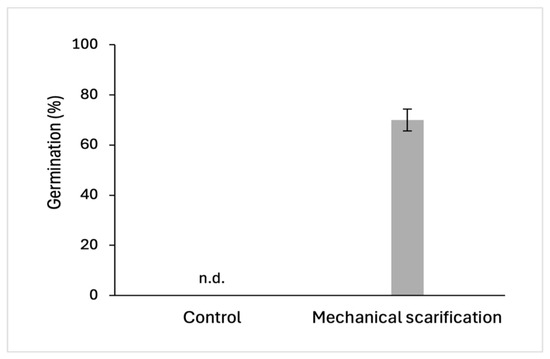
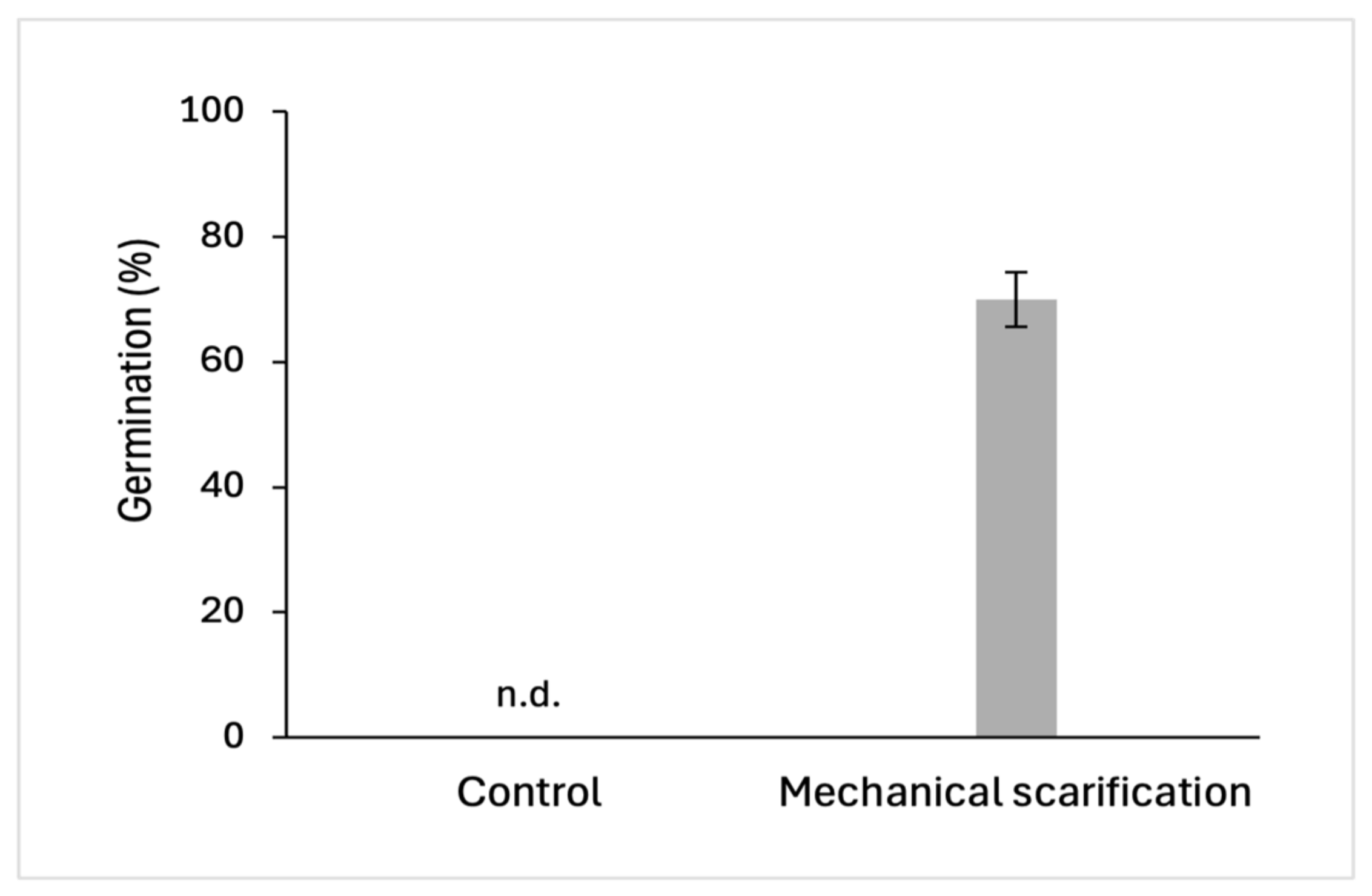
Non-scarified EA seeds soaked in water or GA3 solutions did not germinate at either 18 °C or 25 °C (Supplementary Table S1). Therefore, mechanical scarification was used to remove a small portion of the seed coat, which enables water and air uptake without damaging the embryo (Figure 1). Soaking EA seeds in water softened the seed coat, making it easier to perform gentle scarification with a rat-tooth tweezer. However, seeds placed on soaked filter paper were easily contaminated due to the relatively long germination period; thus, all germination experiments were conducted in vitro. Mechanically scarified EA seeds reached germination percentages of 10.7% on day 14, 21.3% on day 19, 36.0% on day 27, 61.3% on day 33, and 70.0% on day 54, whereas non-scarified seeds showed no germination (Figure 2). The efficiency of mechanical scarification using tweezers versus sandpaper was also compared. The tweezer method yielded 100% successful scarification without embryo damage, whereas the sandpaper method resulted in unsuccessful scarification in 19 of 30 seeds and embryo damage in 6 of 30 seeds (Supplementary Table S2).
Figure 2.
Enhanced germination of Viola odorata ‘Empress Augusta’ seeds on day 54 following mechanical scarification. Seeds were subjected to cold stratification before scarification. The control refers to seeds that were not subjected to mechanical scarification. Bars represent standard errors; n.d. means not detected.
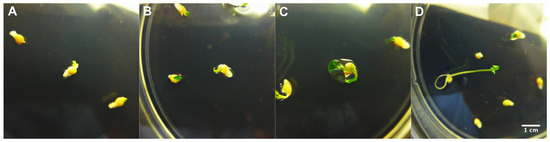
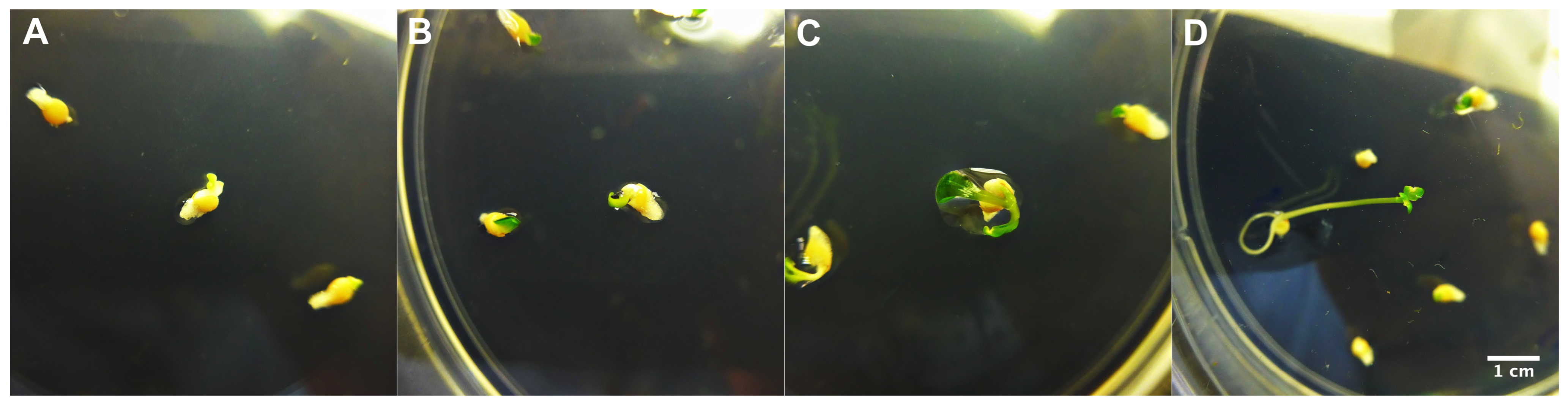
Radicle emergence was observed after 2 weeks (Figure 3A), followed by cotyledon emergence after 3 weeks (Figure 3B). The cotyledons gradually increased in size from weeks 3 to 6 (Figure 3C), and hypocotyl elongation became apparent at approximately 6 weeks (Figure 3D).
Figure 3.
Developmental stages of seed germination in Viola odorata ‘Empress Augusta’ observed under a microscope: radicle emergence (A), cotyledon emergence (B), cotyledon growth (C), and hypocotyl elongation (D). Scale bar = 1.0 cm.
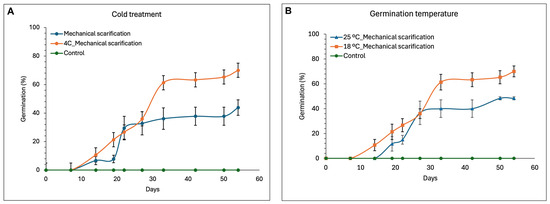
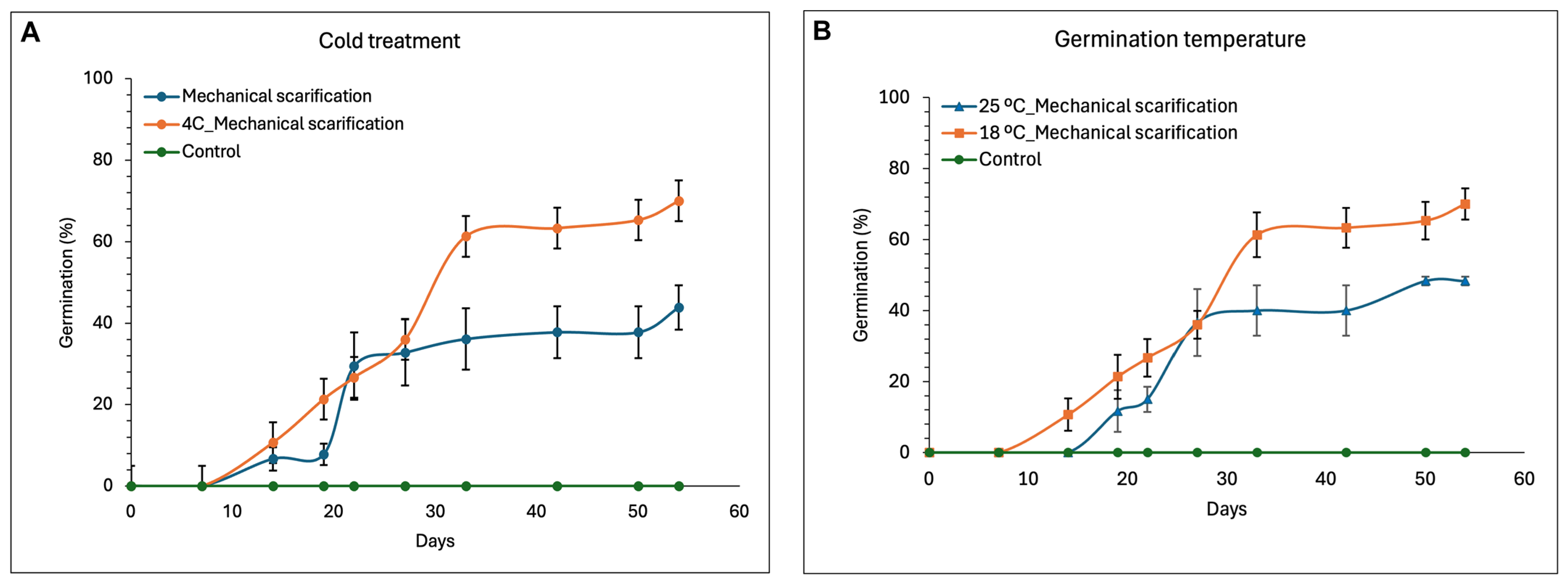
Several treatments were evaluated to identify the most effective conditions for breaking dormancy in EA seeds. Cold stratification significantly enhanced germination, resulting in a 1.6-fold increase compared with EA seeds that were not treated with cold stratification (Figure 4A). Cold-stratified seeds showed germination percentages of 10.7% on day 14, 26.7% on day 22, 61.3% on day 33, and 70.0% on day 54. In contrast, non-stratified seeds had germination percentages of 6.7% on day 14, 29.4% on day 22, 36.1% on day 33, and 43.9% on day 54. Although germination percentages for cold-stratified and non-stratified seeds were similar during the first four weeks, germination in non-stratified seeds did not increase further thereafter. MGT and T50 did not differ significantly between the control and cold stratification, whereas GI and final germination of EA seeds were significantly higher in cold-stratified seeds (Table 1).
Figure 4.
Effect of cold stratification (A) and growth temperature (B) on seed germination of Viola odorata ‘Empress Augusta’. Mechanically scarified seeds were stored at 4 °C for cold stratification, and then incubated at either 18 °C or 25 °C. The control consisted of seeds that were not subjected to mechanical scarification. Bars represent standard errors.
Table 1.
Germination index, final germination, mean germination time, and T50 of V. odorata ‘Empress Augusta’ on day 54. After cold stratification at 4 °C, mechanically scarified seeds were incubated at 18 °C. The control consisted of seeds that were not mechanically scarified.
A growth temperature of 18 °C was also effective. EA seeds grown at 18 °C reached germination percentages of 10.7% on day 14, 26.7% on day 22, 61.3% on day 33, and 70.0% on day 54, whereas seeds grown at 25 °C had germination percentages of 0.0% on day 14, 15.0% on day 22, 40.0% on day 33, and 48.3% on day 54 (Figure 4B). Although MGT and T50 did not differ significantly between 18 °C and 25 °C, GI and final germination of EA seeds were significantly higher at 18 °C than at 25 °C (Table 2).
Table 2.
Germination index, final germination, mean germination time, and T50 of V. odorata ‘Empress Augusta’ on day 54. After cold stratification, mechanically scarified seeds were incubated at either 18 °C or 25 °C. The control consisted of seeds that were not mechanically scarified.
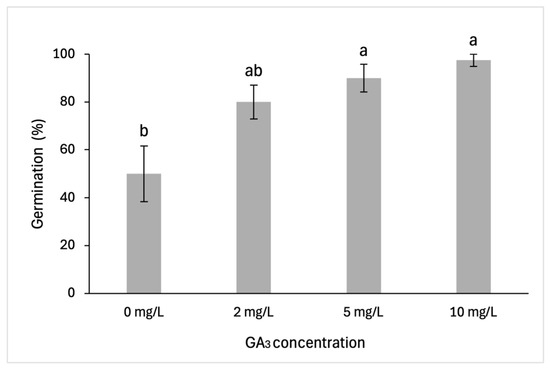
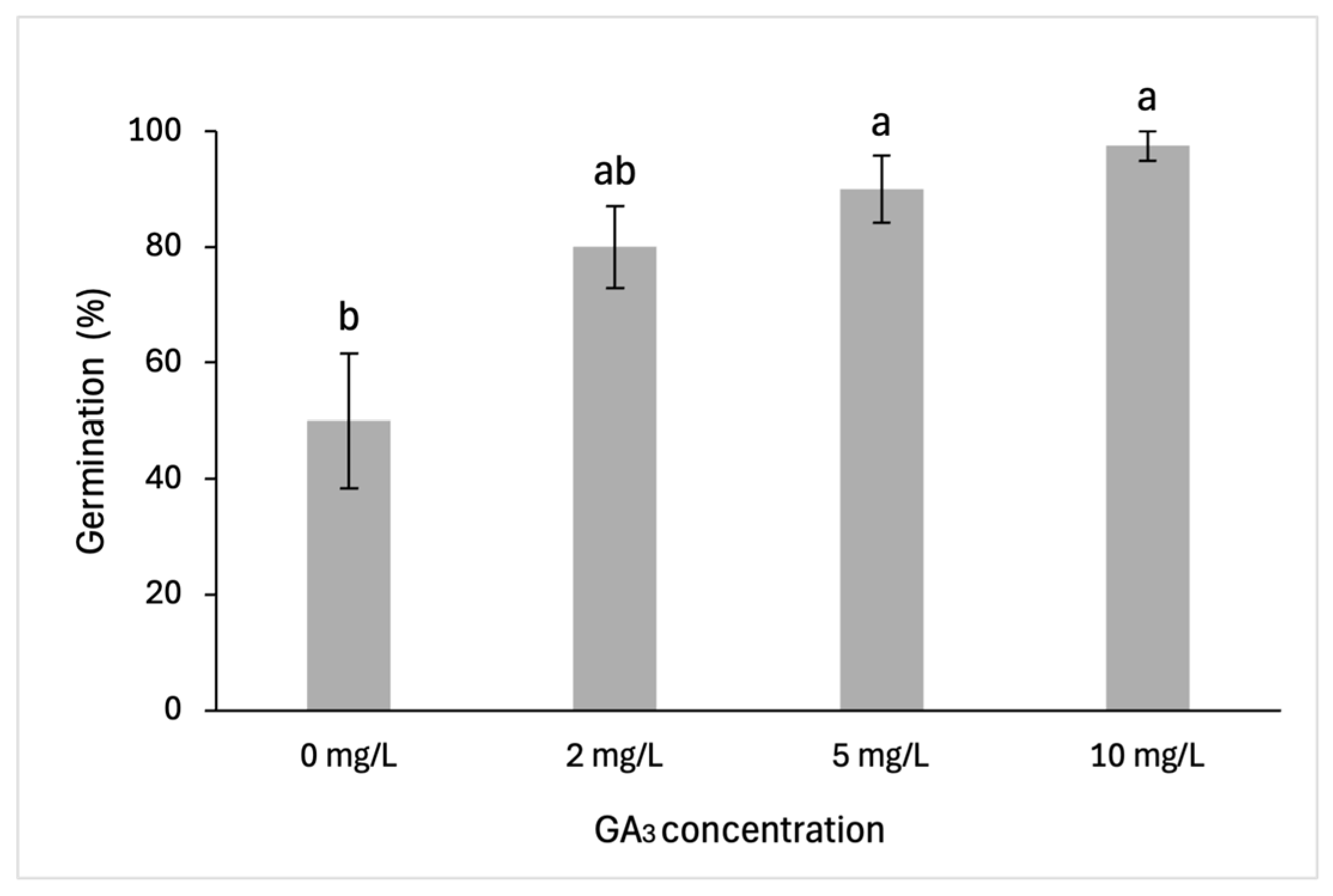
Application of GA3 to the germination medium enhanced both seed germination and subsequent seedling growth. The germination percentage of EA seeds on medium containing 2 mg/L GA3 was higher than in the control, although the difference was not statistically significant. In contrast, germination percentages were significantly higher on media containing 5 and 10 mg/L GA3 (Figure 5). Seeds grown on 2 mg/L GA3 showed germination of 23.3% on day 14, 43.3% on day 22, 53.3% on day 42, and 80.0% by day 54. Seeds grown on 5 mg/L GA3 had germination of 33.3% on day 14, 56.7% on day 22, 80.0% on day 42, and reached 90.0% by day 54. Seeds grown on 10 mg/L GA3 exhibited germination of 22.5% on day 14, 67.5% on day 22, 80.0% on day 42, and 97.5% by day 54. In contrast, seeds grown on medium without GA3 showed germination of 10.0% on day 14, 33.3% on day 22, 43.3% on day 42, and 50.0% on day 54. Thus, the 5 and 10 mg/L GA3 treatments enhanced germination more than the 2 mg/L GA3 treatment. Overall, the average germination percentage of seeds on GA3-containing media was higher than in the control (89.1% vs. 50.0%; Student’s t-test, p = 0.05). The average leaf length of EA seedlings on medium containing 10 mg/L GA3 was slightly greater than in the other treatments, although these differences were not statistically significant (Table 3). Only a few seeds formed roots (an average of 2.42), and the average root length in the 10 mg/L GA3 treatment was greater than that in the other treatments. However, these differences were not statistically significant because root emergence occurred on different days, resulting in variable developmental stages at the time of measurement.
Figure 5.
Effect of GA3 on the germination of Viola odorata ‘Empress Augusta’ seeds on day 54. After cold stratification, mechanically scarified seeds were sown on MS medium containing different concentrations of GA3 at 18 °C. Bars represent standard errors, and different letters indicate statistically significant differences among treatments (p < 0.05, Tukey’s test).
Table 3.
Leaf and root lengths of V. odorata ‘Empress Augusta’ seedlings on day 54 of germination on MS medium supplemented with different GA3 concentrations. After cold stratification, mechanically scarified seeds were cultured on MS medium at 18 °C.
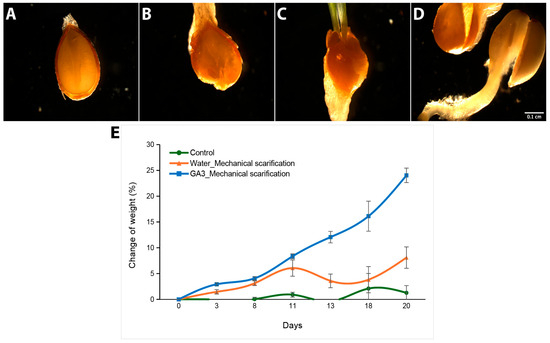
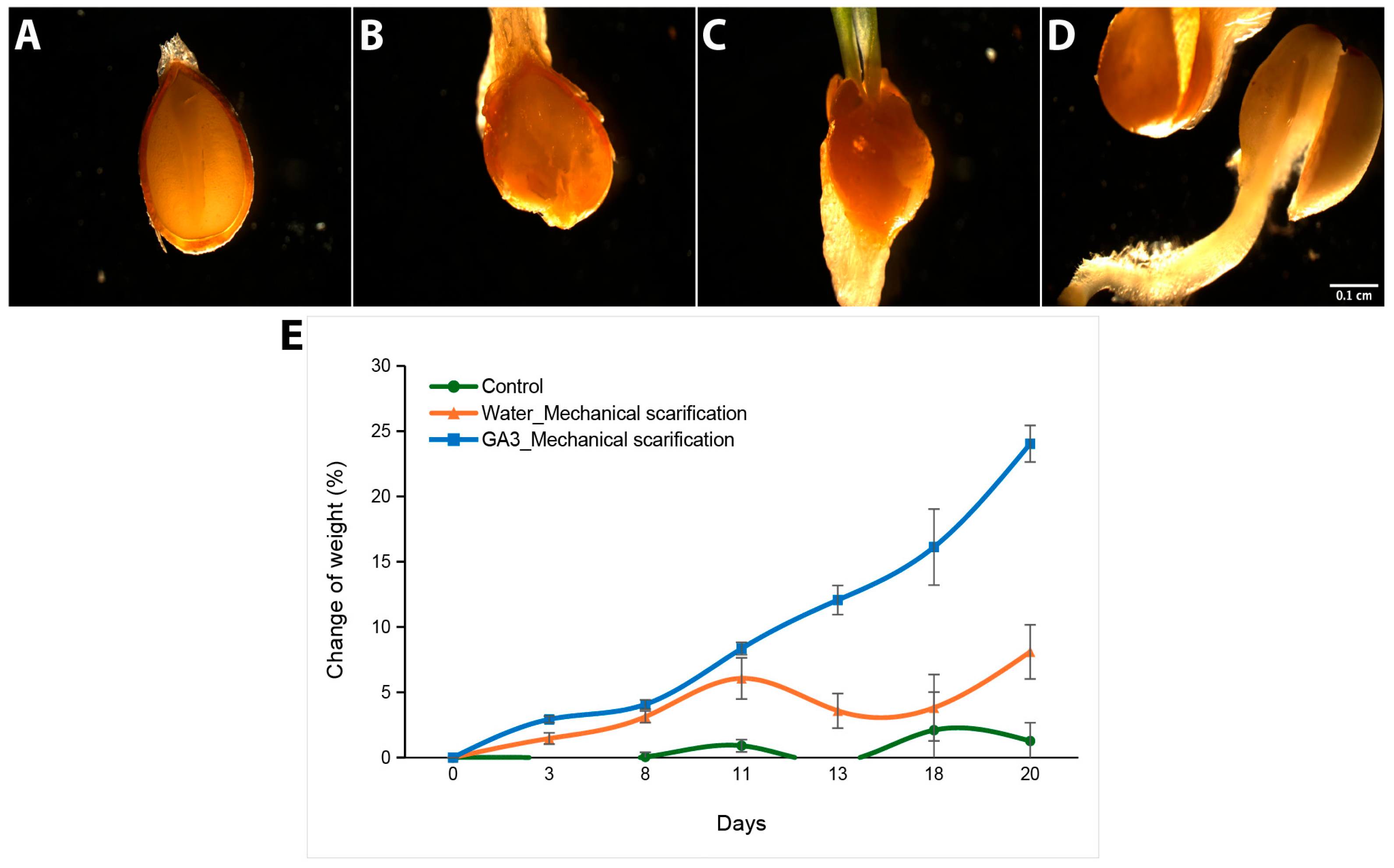
Seeds were examined under a dissecting microscope to observe morphological changes in the embryo during germination. Non-scarified seeds showed no visible changes (Figure 6A), whereas mechanically scarified seeds showed radicle protrusion within 2 weeks (Figure 6B). As germination proceeded, embryos developed leaves and roots (Figure 6C,D). To assess water uptake by EA seeds during germination, seed weight was monitored over time. Non-scarified seeds placed on water-treated filter paper showed no significant change in weight. In contrast, mechanically scarified seeds treated with either water or GA3 exhibited continuous weight gain (Figure 6E). Seeds treated with water showed weight increases of 1.5% on day 3, 3.9% on day 13, and 6.8% on day 20. Seeds treated with GA3 exhibited increases of 1.5% on day 3, 8.5% on day 13, and 15.9% on day 20. Application of GA3 resulted in a marked increase in seed weight after day 11, along with earlier germination and more rapid leaf growth after sprouting.
Figure 6.
Dissected seeds of Viola odorata ‘Empress Augusta’ observed under a microscope. (A), Non-scarified seed with an intact seed coat; (B), Mechanically scarified seed beginning to absorb water, resulting in radicle protrusion and loosening of the seed coat; (C), Shoot development; (D), Root development originating from the radicle; (E), Changes in seed weight following water or GA3 uptake, calculated relative to initial seed weight. After cold stratification, mechanically scarified seeds were grown at 18 °C. Control refers to seeds that were not subjected to mechanical scarification. Seed weights on each day were compared with those on day 0. Scale bar = 0.1 cm (D) and bars indicate standard errors (E).
The effect of agar concentration on seed dormancy release was also evaluated; however, germination percentage did not differ significantly among 0%, 3%, 5%, and 7% agar (Supplementary Figure S1).
4. Discussion
Non-deep physiological seed dormancy is regulated by environmental cues through multiple physiological mechanisms, with temperature being a major factor [12]. The specific temperature requirements depend strongly on genotype [14]. In our study, mechanical scarification followed by cold stratification significantly improved the germination of V. odorata EA seeds. In contrast, V. pedata germinated best when seeds were first exposed to warm, dry conditions, and then stratified at 18 °C for 8–12 weeks [26]. The effectiveness of stratification temperature also varies among cultivars. Keene and Colquhoun [4] reported 68.8% germination in V. odorata ‘Rubra’ after 8 weeks of cold stratification, whereas Barekat et al. [21] observed only 28.33% germination after 2 months of cold treatment in V. odorata. Wang et al. [27] further demonstrated that two flower types on a single V. prionantha plant display distinct temperature sensitivities during germination. Overall, the stratification duration required to overcome seed dormancy appears to be shaped by how each species responds to its natural environment. For instance, Arabidopsis required 10 days of imbibition at 2 °C to lose dormancy, but only 1–2 days at 15 °C [13]. Although cold-stratified EA seeds at 4 °C germinated effectively in our study, the optimal stratification temperature and duration for maximizing germination remain unknown. In addition, other strategies—such as manipulation of light, hormones, and nutrients—may also be used to release seed dormancy. Thus, further research on V. odorata germination under varying environmental and physiological conditions is needed to identify the most effective approaches for breaking seed dormancy.
Although cold stratification promotes seed germination in V. odorata [4,21], the hard seed coat of EA can still pose a major barrier. We confirmed that non-scarified EA seeds failed to germinate, which is consistent with the findings of Barekat et al. [21]. Germination is considered complete when the radicle emerges, and water, oxygen, and a suitable temperature are necessary and sufficient for this process in a mature, nondormant seed [7]. Opening of the seed coat is a critical step in germination because one of the earliest events after water uptake is the resumption of respiration, during which oxygen serves as the primary energy source until leaves are produced [5]. The enhanced germination observed with cold stratification in mechanically scarified seeds may be due to increased oxygen permeability. Mousavi et al. [16] reported that oxygen permeability is higher at 4 °C than at 20 °C in cocklebur and apple seeds, suggesting an interaction between oxygen permeability and temperature during germination. The hard seed coat can be effectively disrupted through mechanical scarification. We used a simple mechanical scarification technique that creates a small, precise opening in the seed coat while minimizing damage to the embryo. This method improves previously reported scarification approaches and yields consistent germination rates without injuring embryos or using corrosive chemicals [4,6,21,23,28]. It is particularly effective in relatively large seeds with hard seed coats. We also applied this method to another variety, V. odorata ‘Royal Wedding’, and cold-stratified seeds showed a germination rate of approximately 60%. Further research applying this technique to a wider range of crops could expand its potential to enhance germination rates. However, the method is difficult to use on very small seeds and is labor-intensive.
GA3 is well known as a key hormone involved in breaking seed dormancy, whereas ABA is associated with maintaining dormancy [19,29,30]. In our study, the application of GA3 to EA seeds further increased germination percentages, even at relatively low concentrations, possibly due to reduced ABA levels. Finch-Savage and Leubner-Metzger [12] reported that a high GA/ABA ratio promotes dormancy release through signaling pathways that directly regulate dormancy and germination by altering seed sensitivity to the ambient environment. They indicated that an increased GA/ABA ratio signals the seed to germinate under favorable conditions. However, multiple environmental factors collectively regulate GA biosynthesis and seed germination, and none of them is an absolute requirement, as each can influence the others [14]. GA synthesis in seeds is affected by other hormones, such as auxin, BR, and ethylene, as well as by nitrates [5,14,30,31,32]. For example, smoke is an important factor in germination during post-fire plant regeneration [23,33]. Furthermore, GA does not always promote seed germination, as demonstrated in V. purpurea [34].
Mechanical scarification promotes germination by enhancing seed water uptake, and germination is influenced by imbibition duration and water potential [12]. Water absorption by dry seeds occurs in three stages: an initial rapid uptake (phase I), a plateau phase (phase II), and a subsequent increase associated with embryo axis elongation (phase III) [7]. We examined how long EA seeds need to absorb water before germination. Imbibition (phase I) lasted approximately 10 days, suggesting that this period is required for the physiological transition from dormancy to non-dormancy in EA seeds. The duration of water uptake varies among species and may be related to seed coat hardness, as seedlings can be obtained from embryo culture without seed coats in only two weeks [21]. For example, an imbibition period as short as one day can result in high germination percentages in Arabidopsis [13]. The relatively long imbibition period observed in EA seeds may indicate that physical disturbance of the seed coat delays the onset of embryo growth. Typically, dormancy-breaking cues such as water, temperature, and light trigger hormonal changes that terminate dormancy, leading to cell wall loosening and radicle emergence [5,7]. The rapid increase in EA seed weight after 2 weeks of GA3 treatment (Figure 6) was therefore likely due to the growth-promoting effect of GA3 rather than water uptake alone. According to Bewley’s time course of germination and subsequent post-germinative growth [5], this phase corresponds to the post-germination stage (phase III), which involves cell division and radicle elongation. Although GA3 promoted cotyledon and root growth in EA, this effect was not statistically significant because germination did not begin on the same day across replications, resulting in relatively large standard deviations. In this study, we tested only GA3 to evaluate whether our mechanical method effectively facilitates water and gas uptake; however, further work using other hormones and nutrients is needed to determine the optimal conditions for V. odorata germination.
We initially hypothesized that germination would vary with agar concentration, assuming that softer agar would provide more moisture to the seeds. However, germination percentages did not differ significantly among media with different agar concentrations. This is likely because the seeds require only a small amount of water to germinate. These results suggest that the improved mechanical scarification method enables sufficient water uptake and gas exchange to initiate germination, even with minimal seed coat removal.
5. Conclusions
The seeds of Viola odorata exhibit non-deep physiological dormancy, and consistent germination under controlled environmental conditions is essential for the cultivation of this valuable medicinal plant. This study demonstrates the effective application of mechanical scarification to promote EA seed germination. When combined with cold stratification and GA3 treatment, mechanical scarification significantly enhanced EA seed germination. Although further research is required to optimize parameters for specific varieties and diverse crop species, our findings can provide a practical and precise approach to mechanical scarification.
Supplementary Materials
The following supporting information can be downloaded at: https://www.mdpi.com/article/10.3390/ijpb17060047/s1, Figure S1: Effect of agar concentration in the germination medium on Viola odorata ‘Empress Augusta’ on day 54; Table S1: Effect of GA3 on EA seed germination; Table S2: Effect of mechanical scarification using tweezers and sandpaper.
Author Contributions
Conceptualization, T.A.C. and J.Y.K.; methodology, J.Y.K.; validation, J.Y.K.; formal analysis, J.Y.K.; investigation, K.I.; resources, J.Y.K.; data curation, J.Y.K.; writing—original draft preparation, J.Y.K. and K.I.; writing—review and editing, J.Y.K. and T.A.C.; visualization, J.Y.K.; supervision, J.Y.K.; project administration, T.A.C. and J.Y.K.; funding acquisition, T.A.C. All authors have read and agreed to the published version of the manuscript.
Funding
This research was funded by the United States Department of Agriculture (USDA): Agricultural Research Service–Floriculture and Nursery Research Initiative (ARS-FNRI) 0500-00059-001-000-D.
Data Availability Statement
Data are contained within the article.
Acknowledgments
The authors would like to thank Keun Ho Cho for his critical review and feedback in preparing this article.
Conflicts of Interest
The authors declare no conflicts of interest.
Abbreviations
The following abbreviations are used in this manuscript:
| ABA | abscisic acid |
| BR | brassinosteroids |
| EA | Viola odorata ‘Empress Augusta’ |
| GA | gibberellic acid |
References
- Marcussen, T. Allozymic variation in the widespread and cultivated Viola odorata (Violaceae) in western Eurasia. Bot. J. Linn. Soc. 2006, 151, 563–571. [Google Scholar] [CrossRef] [Scilit]
- Mittal, P.; Gupta, V.; Goswami, M.; Thakur, N.; Bansal, P. Phytochemical and pharmacological potential of Viola odorata. Int. J. Pharmacogn. 2015, 2, 215–220. [Google Scholar]
- Keene, S.A.; Sims, M.; Kim, J.Y.; Colquhoun, T.A. Temporal, developmental, and comparative characterization of the floral volatile emissions of the famously scented violet species Viola odorata. HortScience 2024, 59, 974–985. [Google Scholar] [CrossRef] [Scilit]
- Keene, S.A.; Colquhoun, T.A. Germination of Viola odorata, a genetic resource for fragrance in Viola breeding. Comb. Proc. Int. Plant Propag. Soc. 2022, 72, 127–132. [Google Scholar]
- Bewley, J.D. Seed germination and dormancy. Plant Cell 1997, 9, 1055–1066. [Google Scholar] [CrossRef] [Scilit]
- Nawrot-Chorabik, K.; Osmenda, M.; Słowiński, K.; Latowski, D.; Tabor, S.; Woodward, S. Stratification, scarification, and application of phytohormones promote dormancy breaking and germination of pelleted Scots pine (Pinus sylvestris L.) seeds. Forests 2021, 12, 621. [Google Scholar] [CrossRef] [Scilit]
- Manz, B.; Muller, K.; Kucera, B.; Volke, F.; Leubner-Metzger, G. Water uptake and distribution in germinating tobacco seeds investigated in vivo by nuclear magnetic resonance imaging. Plant Physiol. 2005, 138, 1538–1551. [Google Scholar] [CrossRef] [Scilit] [PubMed]
- Willis, C.G.; Baskin, C.C.; Baskin, J.M.; Auld, J.R.; Venable, D.L.; Cavender-Bares, J.; Donohue, K.; Rubio de Casas, R.; NESCent Germination Working Group. The evolution of seed dormancy: Environmental cues, evolutionary hubs, and diversification of the seed plants. New Phytol. 2014, 203, 300–309. [Google Scholar] [CrossRef] [Scilit]
- Koornneef, M.; Bentsink, L.; Hilhorst, H. Seed dormancy and germination. Curr. Opin. Plant Biol. 2002, 5, 33–36. [Google Scholar] [CrossRef] [Scilit]
- Baskin, J.M.; Baskin, C.C. A classification system for seed dormancy. Seed Sci. Res. 2004, 14, 1–16. [Google Scholar] [CrossRef] [Scilit]
- Beeckman, T.; De Rycke, R.; Viane, R.; Inzé, D. Histological study of seed coat development in Arabidopsis thaliana. J. Plant Res. 2000, 113, 139–148. [Google Scholar] [CrossRef] [Scilit]
- Finch-Savage, W.E.; Leubner-Metzger, G. Seed dormancy and the control of germination. New Phytol. 2006, 171, 501–523. [Google Scholar] [CrossRef] [Scilit] [PubMed]
- Cone, J.W.; Spruit, C.J.P. Imbibition conditions and seed dormancy of Arabidopsis thaliana. Physiol. Plant. 1983, 59, 416–420. [Google Scholar] [CrossRef] [Scilit]
- Bentsink, L.; Koornneef, M. Seed dormancy and germination. Arab. Book/Am. Soc. Plant Biol. 2008, 6, e0119. [Google Scholar] [CrossRef] [Scilit]
- Cho, J.S.; Jang, B.K.; Lee, C.H. Breaking combinational dormancy of Rhus javanica L. seeds in South Korea: Effect of mechanical scarification and cold-moist stratification. S. Afr. J. Bot. 2020, 133, 174–177. [Google Scholar] [CrossRef] [Scilit]
- Mousavi, S.R.; Rezaei, M.; Mousavi, A. A general overview on seed dormancy and methods of breaking it. Adv. Environ. Biol. 2011, 5, 3333–3337. [Google Scholar]
- Steber, C.M.; McCourt, P. A role for brassinosteroids in germination in Arabidopsis. Plant Physiol. 2001, 125, 763–769. [Google Scholar] [CrossRef] [Scilit] [PubMed]
- Gupta, R.; Chakrabarty, S.K. Gibberellic acid in plant: Still a mystery unresolved. Plant Signal. Behav. 2013, 8, e25504. [Google Scholar] [CrossRef] [Scilit] [PubMed]
- Debeaujon, I.; Koornneef, M. Gibberellin requirement for Arabidopsis seed germination is determined both by testa characteristics and embryonic abscisic acid. Plant Physiol. 2000, 122, 415–424. [Google Scholar] [CrossRef] [Scilit]
- Bethke, P.C.; Libourel, I.G.; Aoyama, N.; Chung, Y.Y.; Still, D.W.; Jones, R.L. The Arabidopsis aleurone layer responds to nitric oxide, gibberellin, and abscisic acid and is sufficient and necessary for seed dormancy. Plant Physiol. 2007, 143, 1173–1188. [Google Scholar] [CrossRef] [Scilit]
- Barekat, T.; Otroshy, M.; Samsam-Zadeh, B.; Sadrarhami, A.; Mokhtari, A. A novel approach for breaking seed dormancy and germination in Viola odorata. J. Nov. Appl. Sci. 2013, 2, 513–516. [Google Scholar]
- Goldberg, R.B.; De Paiva, G.; Yadegari, R. Plant embryogenesis: Zygote to seed. Science 1994, 266, 605–614. [Google Scholar] [CrossRef] [Scilit]
- Górnik, K.; Sas-Paszt, L.; Seliga, Ł.; Pluta, S.; Derkowska, E.; Głuszek, S.; Sumorok, B.; Mosa, W.F. The effect of different stratification and scarification treatments on breaking the dormancy of Saskatoon berry seeds. Agronomy 2023, 13, 520. [Google Scholar] [CrossRef] [Scilit]
- Kader, M.A. A comparison of seed germination calculation formulae and the associated interpretation of resulting data. J. Proc. R. Soc. New South Wales 2005, 138, 65–75. [Google Scholar] [CrossRef] [Scilit]
- Farooq, M.; Basra, S.M.A.; Saleem, B.A.; Nafees, M.; Chishti, S.A. Enhancement of tomato seed germination and seedling vigor by osmopriming. Pak. J. Agric. Sci. 2005, 42, 36–41. [Google Scholar]
- Gehring, J.L.; Cusac, T.; Shaw, C.; Timian, A. Seed germination of Viola pedata, a key larval host of a rare butterfly. Nativ. Plants J. 2013, 14, 205–212. [Google Scholar] [CrossRef] [Scilit]
- Wang, H.; Wang, X.; Li, Y.; Gao, R.; Narsing Rao, M.P.; Song, J.; Li, Q. Effect of environmental factors on seed germination and seedling emergence of Viola prionantha, a cleistogamous plant. J. Plant Res. 2023, 136, 631–641. [Google Scholar] [CrossRef] [Scilit] [PubMed]
- Grzesik, M.; Górnik, K.; Janas, R.; Lewandowski, M.; Romanowska-Duda, Z.; van Duijn, B. High efficiency stratification of apple cultivar ‘Ligol’ seed dormancy by phytohormones, heat shock and pulsed radio frequency. J. Plant Physiol. 2017, 219, 81–90. [Google Scholar] [CrossRef] [Scilit]
- Shah, S.H.; Islam, S.; Mohammad, F.; Siddiqui, M.H. Gibberellic acid: A versatile regulator of plant growth, development and stress responses. J. Plant Growth Regul. 2023, 42, 7352–7373. [Google Scholar] [CrossRef] [Scilit]
- Ogawa, M.; Hanada, A.; Yamauchi, Y.; Kuwahara, A.; Kamiya, Y.; Yamaguchi, S. Gibberellin biosynthesis and response during Arabidopsis seed germination. Plant Cell 2003, 15, 1591–1604. [Google Scholar] [CrossRef] [Scilit]
- Kucera, B.; Cohn, M.A.; Leubner-Metzger, G. Plant hormone interactions during seed dormancy release and germination. Seed Sci. Res. 2005, 15, 281–307. [Google Scholar] [CrossRef] [Scilit]
- Beaudoin, N.; Serizet, C.; Gosti, F.; Giraudat, J. Interactions between abscisic acid and ethylene signaling cascades. Plant Cell 2000, 12, 1103–1115. [Google Scholar] [CrossRef] [Scilit]
- Kępczyński, J. Progress in utilizing plant-derived smoke water and smoke-derived KAR1 in plant tissue culture. Plant Cell Tissue Organ Cult. 2020, 140, 271–278. [Google Scholar] [CrossRef] [Scilit]
- Franklin, S.; Tran, L.B.; Farzad, D.; Hill, R.I. Seed germination in Viola pedunculata and Viola purpurea subsp. quercetorum (Violaceae), critical food plants for two rare butterflies. Madroño 2017, 64, 43–50. [Google Scholar] [CrossRef] [Scilit]

Disclaimer/Publisher’s Note: The statements, opinions and data contained in all publications are solely those of the individual author(s) and contributor(s) and not of MDPI and/or the editor(s). MDPI and/or the editor(s) disclaim responsibility for any injury to people or property resulting from any ideas, methods, instructions or products referred to in the content. |
© 2026 by the authors. Licensee MDPI, Basel, Switzerland. This article is an open access article distributed under the terms and conditions of the Creative Commons Attribution (CC BY) license.