


Review

In Vitro Culture Systems of Rosa damascena Mill. and Their Role in Secondary Metabolite Production

by
Klaudia Lukáčová
1,
Vanda Assunta Prota
2,
Miroslav Habán
1,3 and
Grazia Maria Scarpa
2,4,*
1
Institute of Crop Production, Faculty of Agrobiology and Food Resources, Slovak University of Agriculture in Nitra, Tr. A. Hlinku 2, 94976 Nitra, Slovakia
2
Department of Agriculture, University of Sassari, Via E. De Nicola 39/a, 07100 Sassari, Italy
3
Department of Pharmacognosy and Botany, Faculty of Pharmacy, Comenius University in Bratislava, Odbojárov 10, P.O. Box 90, 82018 Bratislava, Slovakia
4
Interdepartmental Center for the Conservation and Promotion of Plant Biodiversity, University of Sassari, Loc. Surigheddu, 07041 Alghero, Italy
*
Author to whom correspondence should be addressed.
Int. J. Plant Biol. 2026, 17(6), 49; https://doi.org/10.3390/ijpb17060049
Submission received: 22 May 2026 / Revised: 14 June 2026 / Accepted: 16 June 2026 / Published: 18 June 2026
(This article belongs to the Section Plant Biochemistry and Genetics)

Abstract

Rosa damascena Mill. is a medicinal and aromatic species of major pharmacological and economic importance, widely valued for its complex profile of bioactive secondary metabolites. While extensive research has focused on field-grown plants and essential oils, comparatively little attention has been devoted to the behavior of R. damascena under in vitro conditions. Plant tissue culture systems provide controlled platforms for investigating secondary metabolism independently of environmental variability; however, their application to R. damascena has produced heterogeneous and often inconsistent results. This review examines the main in vitro culture systems developed for R. damascena, including callus, suspension, and organ-derived cultures, with emphasis on their capacity to accumulate secondary metabolites. Available evidence indicates that undifferentiated cultures generally fail to reproduce the full metabolic complexity observed in planta, particularly for volatile monoterpenes associated with tissue specialization. Nevertheless, several studies demonstrate that in vitro systems can accumulate phenolic compounds with relevant biological activities, supporting their use as experimental models for investigating metabolic regulation. By integrating early studies with recent advances in plant biotechnology, this review highlights current limitations, unresolved questions, and future perspectives for the use of R. damascena in vitro cultures in medicinal plant research.

1. Introduction

Rosa damascena Mill. is widely regarded as one of the most valuable aromatic species within the genus Rosa, primarily due to its long-standing economic importance and its role as a major source of high-value secondary metabolites. Cultivation is largely devoted to the production of rose essential oil and rose water, which remain central to the perfumery and cosmetic industries. In parallel, a growing number of studies have pointed to the pharmaceutical and nutraceutical potential of Damask rose, extending its relevance beyond traditional fragrance-related applications [1,2]. Commercial cultivation is geographically restricted to a limited number of traditional production areas, including Bulgaria, Turkey, and Iran, where R. damascena represents a key crop within specialized agro-industrial systems. This restricted distribution has contributed to the development of relatively uniform cultivation practices, but it has also raised questions regarding genetic diversity and long-term breeding potential. At the biochemical level, petals constitute the primary site of accumulation of bioactive compounds. They are rich in volatile secondary metabolites responsible for the characteristic aroma of the Damask rose. The essential oil is dominated by monoterpenoid alcohols such as citronellol, geraniol, nerol, and phenethyl alcohol, while a wide array of minor constituents contributes to overall oil quality and commercial value [2,3] (Table 1). Petal tissues also contain substantial amounts of phenolic compounds and flavonoids. These non-volatile metabolites are often overlooked in aroma-focused studies, despite their relevance for antioxidant capacity and stress-related functions in planta. A broad spectrum of biological activities has been associated with R. damascena, including antioxidant, antimicrobial, anti-inflammatory, and anticancer effects [4]. Rather than being attributable to single dominant compounds, these activities are generally considered the result of synergistic interactions among multiple phytochemicals (Figure 1). This aspect is particularly relevant when interpreting biological data derived from complex plant extracts, as reductionist approaches may fail to capture the functional properties of the whole metabolic profile. Despite the substantial body of literature available, the regulation of secondary metabolite biosynthesis in R. damascena remains incompletely understood. This variability reflects the complex regulation of secondary metabolism in aromatic plants, where environmental cues, developmental stage, and genetic background interact to shape metabolite profiles [5,6,7]. Metabolic output is strongly influenced by genetic background, environmental conditions, agronomic practices, and harvest timing, often resulting in pronounced variability in essential oil yield and composition [1]. Genetic studies indicate a relatively narrow genetic base in many cultivated populations, especially in long-established production regions, which may partly explain this variability and represents a limitation for targeted breeding strategies [8]. From a plant biotechnology perspective, the Damask rose should therefore be regarded as an underexploited system rather than a fully characterized model species. The integration of genetic, molecular, and metabolic approaches appears essential to improve yield stability, enhance metabolite consistency, and support the development of standardized plant-derived products suitable for industrial applications.

2. In Vitro Culture Systems for Secondary Metabolite Production

Plant in vitro culture systems, including callus cultures, cell suspension cultures, and differentiated organ cultures, represent powerful experimental platforms for investigating and modulating secondary metabolism in medicinal plants. By uncoupling metabolite biosynthesis from environmental variability, these systems enable controlled analysis of biosynthetic pathways, regulatory mechanisms, and accumulation dynamics of bioactive compounds [10,11]. Similar limitations have been widely reported in other medicinal species, where undifferentiated cultures often exhibit reduced metabolic specialization and altered pathway fluxes compared to intact plants [12,13,14]. In medicinal species, in vitro cultures have been widely applied to produce pharmacologically relevant secondary metabolites such as phenolic compounds, flavonoids, alkaloids, and terpenoids. However, metabolite yield and profile are strongly influenced by the degree of tissue differentiation. Undifferentiated systems, such as callus and suspension cultures, frequently exhibit reduced accumulation of compounds whose biosynthesis depends on specialized structures or cellular compartmentalization, whereas differentiated organ cultures often retain higher biosynthetic competence [15,16].
For R. damascena, secondary metabolites are primarily associated with medicinal properties, including antioxidant, anti-inflammatory, and antimicrobial activities [17]. Although field-grown plants remain the main source of these compounds, in vitro systems offer a complementary approach for studying metabolic regulation and ensuring reproducible production. Previous studies emphasize that phenolic compounds, rather than volatile constituents, are particularly amenable to accumulation under in vitro conditions, making tissue culture a promising tool for medicinal applications of R. damascena [2,8]. A summary of the main published studies on in vitro cultures of R. damascena is reported in Table 2. This trend is consistent with observations across plant cell cultures, where phenolic pathways remain active under in vitro conditions, while terpenoid biosynthesis is frequently downregulated or spatially constrained [18,19]. Recent advances in plant biotechnology highlight the role of culture type optimization, nutrient composition, and metabolic regulation strategies in enhancing secondary metabolite production. Manipulation of biosynthetic pathways through precursor feeding, growth regulator adjustment, and metabolic signaling has proven effective across a wide range of medicinal plants [20,21]. These approaches are especially relevant for species such as R. damascena, where genetic diversity and metabolic plasticity influence both qualitative and quantitative aspects of metabolite accumulation [8,22]. Moreover, scalable in vitro systems, including bioreactor-based cultures, are gaining attention as sustainable alternatives for producing high-value secondary metabolites. Although their application to Rosa species remains limited, experiences from other medicinal plants demonstrate the feasibility of transferring optimized in vitro cultures to larger-scale production systems, bridging the gap between experimental research and industrial application [10,23]. Overall, in vitro culture technologies constitute a versatile and increasingly refined toolkit for studying and enhancing secondary metabolite production in medicinal plants. For R. damascena, these systems not only support fundamental investigations into metabolic regulation but also offer insights into the development of standardized sources of bioactive compounds, independent of agronomic and environmental constraints.

3. Biological Activities of R. damascena Secondary Metabolites

3.1. Antioxidant Activity

Antioxidant activity represents one of the most consistently reported biological properties of secondary metabolites derived from R. damascena Mill. This activity is primarily attributed to phenolic acids, flavonoids, and related polyphenolic compounds, which contribute to free radical scavenging and cellular protection against oxidative stress [2,17]. Several in vitro studies have demonstrated that extracts obtained from petals, as well as from callus cultures, retain significant antioxidant capacity. Callus-derived extracts of R. damascena were shown to accumulate phenolic compounds associated with measurable radical scavenging and antibacterial activity, indicating that undifferentiated tissues can still serve as sources of bioactive metabolites [26]. These findings are particularly relevant for biotechnological applications, as phenolic compounds are among the secondary metabolites most amenable to accumulation under in vitro culture conditions.

3.2. Anti-Inflammatory Effects

Anti-inflammatory activity is another key biological feature associated with secondary metabolites of Rosa species. Although direct studies on R. damascena in vitro systems remain limited, bioactive compounds isolated from Rosa leaves and petals have demonstrated inhibitory effects on inflammatory mediators in cellular models. Yan et al. [28] identified several secondary metabolites with pronounced anti-inflammatory activity, highlighting the relevance of non-volatile constituents in modulating inflammation-related pathways. For R. damascena, pharmacological evidence suggests that phenolic-rich extracts exert anti-inflammatory effects through the modulation of oxidative stress and inflammatory signaling cascades [17]. While most data derive from extract-based assays, these results provide a functional framework for evaluating metabolites produced under in vitro conditions, particularly in callus and cell culture systems enriched in phenolic compounds.

3.3. Antimicrobial Activity

Secondary metabolites from R. damascena have also been reported to exhibit antimicrobial activity against a range of bacterial and fungal strains. Extracts from petals and other tissues show inhibitory effects that are largely attributed to phenolics and flavonoids rather than volatile oil components [17]. Importantly, antimicrobial activity has been demonstrated for metabolites produced in vitro. Callus cultures of R. damascena were reported to synthesize compounds with detectable antibacterial activity, supporting the concept that in vitro systems can generate biologically functional metabolites even in the absence of full tissue differentiation [26]. These observations strengthen the case for tissue culture as a complementary approach to field cultivation for medicinal applications.

3.4. Antiproliferative and Cytoprotective Effects

Beyond antioxidant and antimicrobial properties, secondary metabolites from R. damascena have been associated with antiproliferative and cytoprotective activities in vitro. Recent studies using cell-based assays reported that extracts derived from R. damascena callus cultures exert inhibitory effects on cancer cell proliferation and migration, suggesting the presence of bioactive compounds capable of modulating cellular growth pathways (e.g., Caco-2 cell models). In addition, phenolic-rich extracts obtained from petals and processing by-products have demonstrated protective effects against oxidative damage in cellular systems, further supporting their therapeutic potential [29]. Although these studies are not always directly linked to tissue culture optimization, they provide important biological validation of metabolites that could be targeted in in vitro production systems.

4. Implications for In Vitro Culture-Based Production

Collectively, available evidence indicates that the medicinal relevance of R. damascena is largely associated with non-volatile secondary metabolites exhibiting antioxidant, anti-inflammatory, antimicrobial, and cytoprotective activities. While the number of studies specifically addressing metabolite production in R. damascena in vitro cultures remains limited, existing data from callus cultures and extract-based assays support the feasibility of producing biologically active compounds under controlled conditions. Direct quantitative comparisons between intact tissues and in vitro cultures of R. damascena remain surprisingly scarce. Nevertheless, the available evidence consistently indicates that undifferentiated cultures accumulate only trace amounts of characteristic monoterpenes, whereas intact petals produce the complex volatile profile responsible for the commercial value of rose oil [25,29]. Conversely, phenolic compounds appear to be more readily accumulated under in vitro conditions and are often associated with the biological activities reported for callus-derived extracts [26,27]. Similar patterns have been described in numerous medicinal species, where the loss of tissue differentiation is frequently associated with reduced production of specialized terpenoid metabolites but retention of phenolic biosynthetic activity [10,14,15]. These findings justify further development of in vitro culture systems aimed at enhancing phenolic accumulation and biological efficacy, bridging the gap between metabolic studies and practical pharmaceutical applications.

5. Rosa damascena as a Challenging and Underexplored In Vitro Model

Despite the economic and medicinal interest in the species, its exploitation as an in vitro model for secondary metabolite production remains comparatively underdeveloped relative to other medicinal plant systems. Early work in plant biotechnology demonstrated that tissue culture extracts from R. damascena contain the key enzymes for monoterpene biosynthesis, suggesting intrinsic metabolic potential even in undifferentiated cultures. In vitro extracts derived from calli were able to convert isopentenyl pyrophosphate (IPP) into monoterpenoid precursors such as geraniol and nerol at rates far exceeding those from extracts of field-grown plants, indicating enzymatic capacity, albeit uncoupled from full biosynthetic output in culture [30]. Work on R. damascena suspension cultures further illustrates the difficulty of achieving high yields of target metabolites in vitro. A comprehensive analysis of volatile and polar compounds from cell suspension cultures found that hydrocarbons, free acids, and esters dominated, with only trace levels of terpenoids detected under standard cultivation conditions, even when various culture regimes were applied (e.g., flask, bioreactor, two-phase systems with adsorbents). These findings underscore the challenge of replicating the full spectrum of secondary metabolism outside the intact plant context. At the molecular level, recent RNA-sequencing studies on long-term rose suspension cultures have begun to reveal the transcriptional landscape of cells propagated in vitro [31]. Transcriptome profiling highlighted that, although many coding RNAs related to translation and peptide synthesis are highly expressed in suspension cells, genes associated with organelle-specific functions (chloroplasts, mitochondria) show markedly reduced expression. Moreover, stress and detoxification pathways are dynamically regulated as cultures progress, suggesting cellular reprogramming that may influence metabolic fluxes relevant to secondary metabolite production. Such transcriptional reprogramming is commonly observed in long-term plant cell cultures and has been associated with shifts toward primary metabolism and stress-response pathways at the expense of specialized metabolite biosynthesis [5,32]. While these data do not yet provide direct metabolite quantification, they establish a foundation for understanding the regulatory complexity of rose cell cultures at the gene expression level. Callus cultures of R. damascena have provided some of the most direct evidence of in vitro production of bioactive secondary metabolites, including phenolic compounds with antibacterial activity [26] and those exhibiting antiproliferative and anti-migratory effects against human colorectal cancer cell lines. In the latter, the secondary metabolite content was enhanced by supplementing the medium with ascorbic acid, which improved both callus growth parameters and the biological efficacy of the extracts, illustrating that culture conditions can modulate biomass and metabolite output in vitro.
Despite these accomplishments, several challenges remain intrinsic to R. damascena as an in vitro model:
  • Limited terpenoid accumulation in vitro: classic tissue culture systems struggle to produce monoterpenes characteristic of field-grown plants, pointing to the absence of specialized structures or differentiation states required for full pathway expression. In many aromatic species, monoterpene biosynthesis is associated with glandular trichomes or other differentiated tissues, whose absence in vitro represents a major limitation for volatile metabolite production [6,33].
  • Metabolic complexity vs. culture simplicity: suspension cultures tend toward simplified metabolite profiles dominated by primary metabolic products, complicating efforts to target specific medicinal secondary metabolites.
  • Regulatory and developmental bottlenecks: transcriptomic data reveal substantial reprogramming in vitro that likely impacts pathways of interest, but functional links between gene expression and metabolite biosynthesis remain poorly defined.
Taken together, these studies illustrate that R. damascena possesses inherent metabolic potential that is not fully exploited in current culture systems. The disconnect between enzymatic capability (e.g., monoterpene precursor synthesis) and the actual accumulation of target metabolites highlights the need for deeper molecular and metabolic engineering strategies. Integrative approaches combining transcriptomics, metabolic flux analysis, and optimized culture conditions may be necessary to realize the full biotechnological promise of R. damascena as an in vitro model for medicinal secondary metabolite production.

6. Current Knowledge Gaps and Future Research Directions

Despite long-standing interest in R. damascena Mill. as a source of high-value secondary metabolites, significant knowledge gaps persist regarding its behavior under in vitro conditions. One of the most evident limitations is the scarcity of systematic studies addressing the relationship between tissue differentiation and metabolite accumulation. Although early work demonstrated monoterpene biosynthesis in cultured tissues, subsequent research has rarely revisited this aspect using modern analytical or molecular tools, leaving unresolved questions about the regulation of volatile biosynthesis in undifferentiated systems. Another major gap concerns the limited exploration of culture-optimization strategies. Compared to other medicinal plants, R. damascena in vitro systems have been only marginally investigated in terms of elicitation, precursor feeding, or controlled stress application, despite evidence that these approaches can significantly enhance secondary metabolite production. Indeed, elicitation strategies based on jasmonates, salicylic acid, or abiotic stress have proven effective in activating silent biosynthetic pathways in vitro [19,21]. The few available studies on callus and suspension cultures suggest that phenolic compounds with biological activity can be accumulated, yet comparative analyses across culture types, growth stages, and metabolic classes remain largely absent. Furthermore, the lack of integrated omics-based approaches represents a critical bottleneck. Transcriptomic, proteomic, and metabolomic datasets for R. damascena in vitro cultures are extremely limited, preventing a comprehensive understanding of the regulatory networks controlling secondary metabolism. Integrative omics approaches have already demonstrated their value in linking gene expression to metabolite accumulation in other plant systems, highlighting regulatory bottlenecks and pathway constraints [34,35]. Beyond conventional optimization of culture conditions, synthetic biology and metabolic engineering represent promising strategies for overcoming the limitations of current in vitro systems [35,36]. The increasing availability of transcriptomic resources for R. damascena may facilitate the identification of key genes involved in monoterpene and phenolic biosynthesis. Once characterized, these pathways could be engineered in heterologous hosts or manipulated through targeted genetic approaches to enhance metabolite production. Recent advances in synthetic biology, including CRISPR-based genome editing, pathway reconstruction, and synthetic regulatory circuits, have already enabled the production of valuable plant secondary metabolites in microbial and plant platforms [36,37]. Biology approaches have proven effective for the reconstruction and optimization of terpenoid biosynthetic pathways in microbial systems, offering new opportunities for the sustainable production of high-value plant metabolites [38]. Although such approaches have not yet been extensively explored in R. damascena, they offer a promising framework for future research aimed at overcoming the developmental constraints that currently limit metabolite accumulation in conventional tissue cultures. This limitation hampers both the rational design of culture strategies and the reproducibility of experimental outcomes across laboratories. Addressing these open questions would not only clarify whether R. damascena can be effectively exploited as an in vitro production platform but would also provide valuable insights into the developmental and regulatory constraints governing secondary metabolism in aromatic plants. In this context, the species offers a unique opportunity to investigate why certain high-value metabolites remain tightly linked to whole-plant organization, challenging current paradigms in plant cell biotechnology.

7. Conclusions and Future Perspectives

Despite its long-standing relevance as a medicinal and aromatic species, R. damascena Mill. remains a surprisingly underexplored model in the context of in vitro secondary metabolite production. The limited number of available studies spanning more than four decades consistently indicates that rose tissues cultured in vitro retain intrinsic biosynthetic potential but fail to fully reproduce the metabolic complexity observed in vivo [5,12,39]. This discrepancy is particularly evident for monoterpenes, whose accumulation appears tightly linked to tissue differentiation and to specialized cellular structures that are absent in most in vitro systems [6,7,39].
At the same time, evidence from callus and suspension cultures demonstrates that biologically active phenolic compounds can be produced in vitro and that their accumulation responds to culture conditions [13,14,19]. These findings suggest that R. damascena should not be regarded as a recalcitrant species, but rather as a system whose metabolic regulation under artificial growth conditions remains insufficiently understood. In this sense, the challenges associated with rose tissue culture reflect broader issues in plant secondary metabolism, including the frequent uncoupling between gene expression, enzymatic capacity, and final metabolite accumulation [5,18,40].
From a plant cell biotechnology perspective, R. damascena represents a promising yet largely untapped model for integrative studies combining tissue culture, molecular regulation, and metabolite profiling. Future research should focus on linking developmental status with metabolic output, applying omics-based approaches to identify regulatory bottlenecks, and designing culture systems that better mimic key aspects of in vivo organization [32,34,35]. Addressing these aspects may not only improve the in vitro production of bioactive metabolites but also contribute to a deeper understanding of secondary metabolism regulation in medicinal plants [5,14].

Author Contributions

K.L., V.A.P., M.H. and G.M.S. contributed equally to the conception, writing, and revision of the manuscript. All authors have read and agreed to the published version of the manuscript.

Funding

This research was co-funded by the project FilOBio (Filiera Officinali Biologiche), supported by the Italian Ministry of Agriculture, Food Sovereignty and Forestry (MASAF), under call no. 9220340 (2020) and grant no. 0609080 of 19 November 2024, within the framework of the “Fund for research in organic and quality agriculture”. This research was also supported by the Slovak national grants VEGA 1/0387/25 “Environmental screening of plant resources in the soil-ecological units of Slovakia for optimal use of the landscape” and KEGA 056UK-4/2025 “Internationalization of education and innovation in theoretical and practical teaching within the Pharmacy study program”.

Data Availability Statement

No new data were created or analyzed in this study. Data sharing is not applicable to this article.

Conflicts of Interest

The authors declare no conflicts of interest.

References

  1. Khaleghi, A.; Khadivi, A. Morphological characterization of Damask rose (Rosa × damascena Herrm.) germplasm to select superior accessions. Genet. Resour. Crop Evol. 2020, 67, 1981–1997. [Google Scholar] [CrossRef]
  2. Rusanov, K.; Kovacheva, N.; Dobreva, A.; Atanassov, I. Rosa × damascena Mill. (Rose). In Medicinal, Aromatic and Stimulant Plants; Novak, J., Blüthner, W.D., Eds.; Springer: Cham, Switzerland, 2020; Volume 12, pp. 213–230. [Google Scholar]
  3. Fazili, M.A.; Ganie, I.B.; Hassan, Q.P. Studies on pharmacological aspects, integrated pest management and economic importance of Rosa damascena L. S. Afr. J. Bot. 2024, 174, 534–541. [Google Scholar] [CrossRef]
  4. Akram, M.; Riaz, M.; Munir, N.; Akhter, N.; Zafar, S.; Jabeen, F.; Shariati, M.A.; Akhtar, N.; Riaz, Z.; Altaf, S.H.; et al. Chemical constituents, experimental and clinical pharmacology of Rosa damascena: A literature review. J. Pharm. Pharmacol. 2020, 72, 161–174. [Google Scholar] [CrossRef] [PubMed]
  5. Verpoorte, R.; Contin, A.; Memelink, J. Biotechnology for the production of plant secondary metabolites. Phytochem. Rev. 2002, 1, 13–25. [Google Scholar] [CrossRef]
  6. Dudareva, N.; Pichersky, E.; Gershenzon, J. Biochemistry of plant volatiles. Plant Physiol. 2004, 135, 1893–1902. [Google Scholar] [CrossRef] [PubMed]
  7. Sangwan, N.S.; Farooqi, A.H.A.; Shabih, F.; Sangwan, R.S. Regulation of essential oil production in plants. Plant Growth Regul. 2001, 34, 3–21. [Google Scholar] [CrossRef]
  8. Hussen, K.W. Review paper on genetic diversity of damask rose (Rosa damascena Mill.) and economic importance of its oil. Ukr. J. Ecol. 2023, 13, 11–14. [Google Scholar]
  9. Nunes, H.; Miguel, M.G. Rosa damascena essential oils: A brief review about chemical composition and biological properties. Trends Phytochem. Res. 2017, 1, 111–128. [Google Scholar]
  10. Wawrosch, C.; Zotchev, S.B. Production of bioactive plant secondary metabolites through in vitro technologies: Status and outlook. Appl. Microbiol. Biotechnol. 2021, 105, 6649–6668. [Google Scholar] [CrossRef] [PubMed]
  11. Seo, M.-S.; Park, S.; Ha, K.; Shin, K. Utilization of plant in vitro culture for the production of secondary metabolites. Korean J. Plant Res. 2025, 38, 505–516. [Google Scholar]
  12. Misawa, M. Plant Tissue Culture: An Alternative for Production of Useful Metabolite; FAO Agricultural Services Bulletin No. 108; Food and Agriculture Organization: Rome, Italy, 1994; pp. 1–56. [Google Scholar]
  13. DiCosmo, F.; Misawa, M. Plant cell and tissue culture: Alternatives for metabolite production. Biotechnol. Adv. 2015, 13, 425–453. [Google Scholar]
  14. Smetanska, I. Production of secondary metabolites using plant cell cultures. Adv. Biochem. Eng. Biotechnol. 2008, 111, 187–228. [Google Scholar] [CrossRef] [PubMed]
  15. Fazili, M.A.; Bashir, I.; Ahmad, M.; Yaqoob, U.; Geelani, S.N. In vitro strategies for the enhancement of secondary metabolite production in plants: A review. Bull. Natl. Res. Cent. 2022, 46, 35. [Google Scholar] [CrossRef] [PubMed]
  16. Khalafalla, M.M. Plant cell suspension culture for plant secondary metabolite production: Current status, constraints, and future solutions. Pol. J. Environ. Stud. 2026, 35, 1–14. [Google Scholar]
  17. Boskabady, M.H.; Shafei, M.N.; Saberi, Z.; Amini, S. Pharmacological effects of Rosa damascena. Iran. J. Basic Med. Sci. 2011, 14, 295–307. [Google Scholar]
  18. Facchini, P.J. Alkaloid biosynthesis in plants: Biochemistry, cell biology, molecular regulation. Annu. Rev. Plant Physiol. Plant Mol. Biol. 2001, 52, 29–66. [Google Scholar] [CrossRef] [PubMed]
  19. Zhao, J.; Davis, L.C.; Verpoorte, R. Elicitor signal transduction leading to production of plant secondary metabolites. Biotechnol. Adv. 2005, 23, 283–333. [Google Scholar] [CrossRef] [PubMed]
  20. Tanvir, R.; Guo, L.; Wu, H.; Li, L. Special issue: Manipulation/regulation of secondary metabolites in medicinal plants. Plant Physiol. Biochem. 2024, 211, 108549. [Google Scholar] [CrossRef] [PubMed]
  21. Ramadani, M.R.N.; Jadid, N. A comprehensive review of in vitro precursor feeding strategies for the overproduction of high-value plant secondary metabolites. Arab. J. Chem. 2024, 17, 106018. [Google Scholar] [CrossRef]
  22. Rusanov, K.; Kovacheva, N.; Atanassov, A.; Atanassov, I. Rosa damascena Mill., the oil-bearing Damask rose: Genetic resources, diversity and perspectives for molecular breeding. Floric. Ornam. Biotechnol. 2009, 3, 14–20. [Google Scholar]
  23. Petrini, A.; Scarpa, G.M.; Manunta, F.; Nicola, S. Current status of using bioreactors to produce secondary metabolites from medicinal and aromatic plants. Acta Hortic. 2023, 1358, 341–348. [Google Scholar] [CrossRef]
  24. Banthorpe, D.V.; Barrow, S.E. Monoterpene biosynthesis in extracts from cultures of Rosa damascena. Phytochemistry 1983, 22, 2727–2728. [Google Scholar] [CrossRef]
  25. Pavlov, A.; Popov, S.; Kovacheva, E.; Georgiev, M.; Ilieva, M. Volatile and polar compounds in Rosa damascena Mill. cell suspension. J. Biotechnol. 2005, 118, 89–97. [Google Scholar] [CrossRef] [PubMed]
  26. Olgunsoy, P.; Ulusoy, S.; Çelikkol Akçay, U. Metabolite production and antibacterial activities of callus cultures from Rosa damascena Mill. petals. J. Res. Pharm. 2017, 21, 590–597. [Google Scholar] [CrossRef]
  27. Darwish, H.; Alharthi, S.; Mehanna, R.A.; Ibrahim, S.S.; Fawzy, M.A.; Alotaibi, S.S.; Albogami, S.M.; Albogami, B.; Sedky, H.A.; Noureldeen, A. Evaluation of the anti-cancer potential of Rosa damascena Mill. callus extracts against the human colorectal adenocarcinoma cell line. Molecules 2022, 27, 6241. [Google Scholar] [CrossRef] [PubMed]
  28. Yan, M.; Zhu, Y.; Zhang, H.-J.; Jiao, W.-H.; Han, B.-N.; Liu, Z.-X.; Qiu, F.; Chen, W.-S.; Lin, H.-W. Anti-inflammatory secondary metabolites from the leaves of Rosa laevigata. Bioorg. Med. Chem. 2013, 21, 3290–3297. [Google Scholar] [CrossRef] [PubMed]
  29. Dina, E.; Sklirou, A.D.; Chatzigeorgiou, S.; Manola, M.S.; Cheilari, A.; Louka, X.P.; Argyropoulou, A.; Xynos, N.; Skaltsounis, A.-L.; Aligiannis, N.; et al. An enriched polyphenolic extract obtained from the by-product of Rosa damascena hydrodistillation activates antioxidant and proteostatic modules. Phytomedicine 2021, 93, 153757. [Google Scholar] [CrossRef] [PubMed]
  30. Cho, W.K.; Choi, H.; Kim, S.-Y.; Kim, E.; Paek, S.H.; Kim, J.; Song, J.; Heo, K.; Min, J.; Jo, Y.; et al. Transcriptional changes in Damask rose suspension cell culture revealed by RNA sequencing. Plants 2024, 13, 602. [Google Scholar] [CrossRef] [PubMed]
  31. Hall, R.D. Plant metabolomics: From holistic hope, to hype, to hot topic. New Phytol. 2006, 169, 453–468. [Google Scholar] [CrossRef] [PubMed]
  32. Gershenzon, J.; McConkey, M.E.; Croteau, R.B. Regulation of monoterpene accumulation in leaves of peppermint. Plant Physiol. 2000, 122, 205–214. [Google Scholar] [CrossRef] [PubMed]
  33. Fiehn, O. Metabolomics—The link between genotypes and phenotypes. Plant Mol. Biol. 2002, 48, 155–171. [Google Scholar] [CrossRef]
  34. Fernie, A.R.; Schauer, N. Metabolomics-assisted breeding: A viable option for crop improvement? Trends Genet. 2009, 25, 39–48. [Google Scholar] [CrossRef] [PubMed]
  35. Liu, W.; Stewart, C.N. Plant synthetic biology. Trends Plant Sci. 2015, 20, 309–317. [Google Scholar] [CrossRef] [PubMed]
  36. Winter, J.M.; Tang, Y. Synthetic biological approaches to natural product biosynthesis. Curr. Opin. Biotechnol. 2012, 23, 736–743. [Google Scholar] [CrossRef] [PubMed]
  37. Cravens, A.; Payne, J.; Smolke, C.D. Synthetic biology strategies for microbial biosynthesis of plant natural products. Nat. Commun. 2019, 10, 2142. [Google Scholar] [CrossRef] [PubMed]
  38. Vickers, C.E.; Williams, T.C.; Peng, B.; Cherry, J. Recent advances in synthetic biology for engineering isoprenoid production in yeast. Curr. Opin. Chem. Biol. 2017, 40, 47–56. [Google Scholar] [CrossRef] [PubMed]
  39. Nabeta, K.; Ishikawa, T.; Miyake, M.; Sato, T. Monoterpene biosynthesis in rose cell cultures. Phytochemistry 1983, 22, 1469–1471. [Google Scholar] [CrossRef]
  40. Yazaki, K. ABC transporters involved in the transport of plant secondary metabolites. FEBS Lett. 2006, 580, 1183–1191. [Google Scholar] [PubMed]
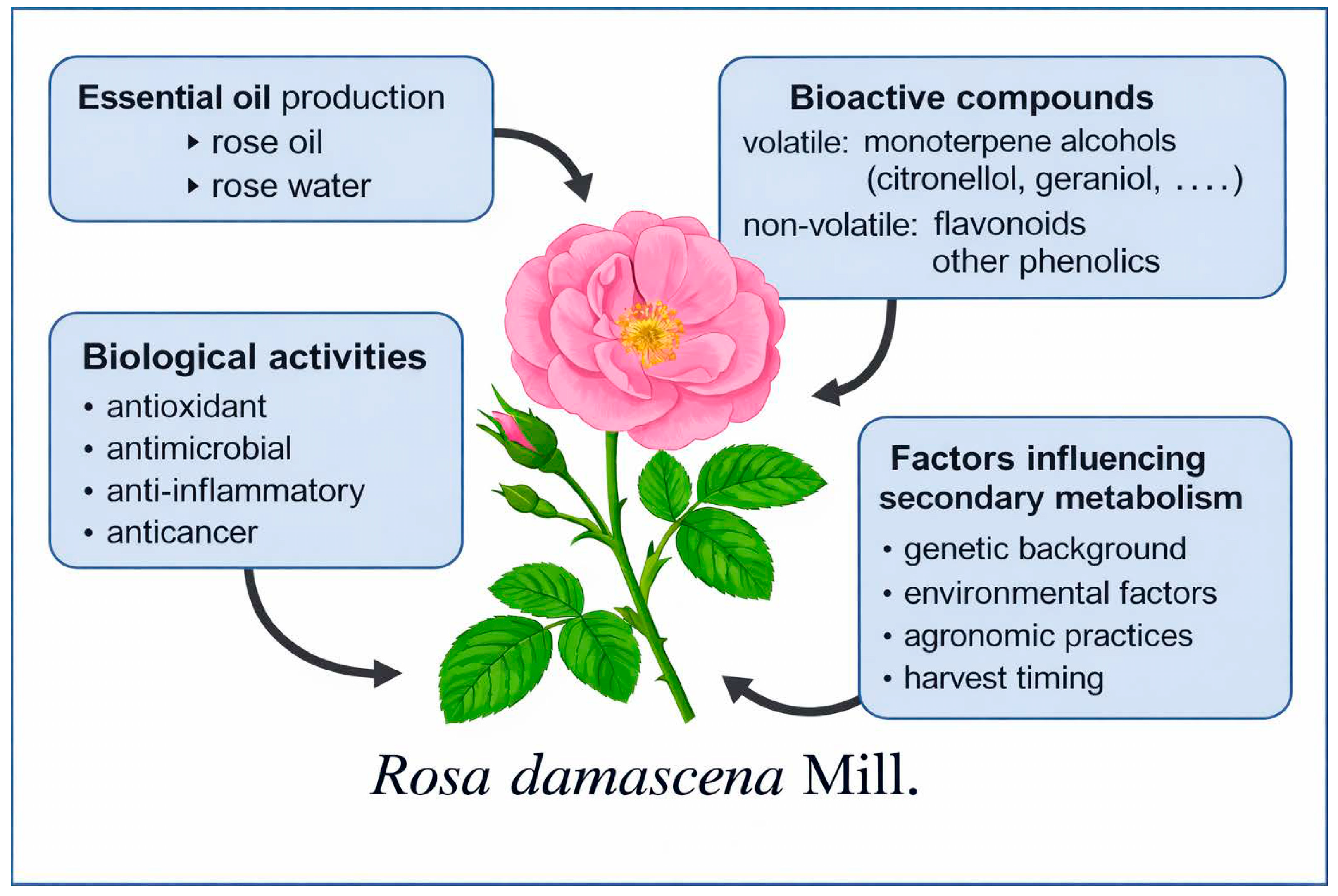
Figure 1. Phytochemical complexity and biological relevance of R. damascena Mill.
Ijpb 17 00049 g001
Table 1. Main chemical constituents of R. damascena Mill. essential oil (average composition).
CompoundChemical ClassAverage Content (%v/v)Remarks
CitronellolMonoterpene alcohol20–34%Major constituent; key contributor to rose aroma
GeraniolMonoterpene alcohol15–22%Major constituent; sweet–floral note
NerolMonoterpene alcohol5–12%Isomer of geraniol; adds fresh floral nuance
Nonadecane (C19)Aliphatic hydrocarbon8–15%Typical long-chain hydrocarbon characteristic of rose oil
Heptadecane (C17)Aliphatic hydrocarbon1–2.5%Contributes to oil stability
Heneicosane (C21)Aliphatic hydrocarbon3–5.5%Common authenticity marker of genuine rose oil
LinaloolMonoterpene alcohol<1%Minor component with floral character
Rose oxideOxygenated monoterpene<1%High odor impact despite low concentration
β-DamascenoneNorisoprenoidtracesExtremely potent aroma compound; key to rose scent complexity
β-IononeNorisoprenoidtracesFormed via carotenoid degradation
Phenethyl alcoholAromatic alcoholtraces in essential oilMore abundant in rose water and solvent extracts
Values may vary depending on geographical origin and extraction method. Data adapted from Nunes and Miguel [9].
Table 2. Overview of published studies on in vitro cultures of R. damascena Mill. and their main outcomes.
ReferenceExplant/Culture TypeMain Metabolites IdentifiedBiological ActivityKey FindingsMain Limitations
[24]Cell and tissue culturesTrace monoterpenesNot reportedFirst evidence of monoterpene biosynthesis in cultured rose tissuesVery low yields; limited analytical sensitivity
[25]Cell suspension culturesMainly non-volatile metabolitesNot reportedDemonstrated feasibility of establishing suspension culturesPoor accumulation of characteristic volatile aroma compounds
[26]Callus from petal explantsPhenolic compounds, flavonoidsAntibacterialCallus extracts showed antibacterial activity comparable to plant tissuesAbsence of volatile monoterpenes; qualitative rather than quantitative focus
[27]Callus culturesPhenolic-rich extractsAnticancer (in vitro)Callus extracts exhibited cytotoxic effects against cancer cell linesNo direct comparison with differentiated tissues; limited metabolite profiling
Disclaimer/Publisher’s Note: The statements, opinions and data contained in all publications are solely those of the individual author(s) and contributor(s) and not of MDPI and/or the editor(s). MDPI and/or the editor(s) disclaim responsibility for any injury to people or property resulting from any ideas, methods, instructions or products referred to in the content.


