


Abstract
Acute bronchiolitis is the leading cause of infant hospitalization worldwide, with respiratory syncytial virus (RSV) historically predominating. Prospective virological data for the 2025–2026 epidemic season in Morocco were lacking. A prospective observational cohort study was conducted at the Department of Pediatric Infectious Diseases and Clinical Immunology, Casablanca Mother-Child Hospital, from August 2025 through March 2026. Consecutive infants aged 1–24 months hospitalized with acute viral bronchiolitis underwent nasopharyngeal sampling and multiplex rapid antigen testing for RSV, influenza A, influenza B, and SARS-CoV-2. A total of 131 infants were enrolled (median age 4.8 months; male-to-female ratio 0.84:1). At least one virus was identified in 63 patients (48.1%; 95% CI 39.1–57.3%). RSV predominated: 49 sole infections and 2 co-infections with influenza A, totaling 51 positives (80.9% of virus-positive cases; 38.9% of the cohort). Influenza A totaled 8 cases (12.7%), including the 2 co-infections; influenza B accounted for 2 further cases (3.2%). SARS-CoV-2 was not detected. Epidemic activity peaked in January 2026 (65 admissions), declining through February (34) and March (12). All detected pathogens have licensed preventive options, supporting the introduction of nirsevimab, maternal RSV vaccination, and seasonal influenza vaccination as public health priorities in Morocco.
1. Introduction
Acute lower respiratory tract infections remain among the leading causes of hospitalization and childhood mortality worldwide, particularly in low- and middle-income countries [1]. Globally, lower respiratory tract infections caused approximately 2.5 million deaths in 2019, with children under five bearing a disproportionate share [1]. Bronchiolitis is the most frequent severe lower respiratory tract infection in infants and a major driver of pediatric hospital admissions during the autumn–winter epidemic season [2]. Respiratory syncytial virus (RSV) is by far the most common identifiable cause of bronchiolitis, accounting for 60–80% of lower respiratory tract infections in infants at the peak of the viral season [2]. Globally in 2015, RSV caused an estimated 33.1 million acute lower respiratory infection episodes, 3.2 million hospital admissions, and up to 118,200 deaths (combining in-hospital and community mortality) in children under five years of age [3]. Nearly 99% of those deaths occurred in low- and middle-income countries [3].
In Morocco, RSV has been consistently identified as the predominant pathogen in pediatric bronchiolitis across multiple settings [4,5,6]. A national sentinel surveillance study spanning 2014–2016 detected RSV in 18.4% of all acute respiratory specimens, with peak positivity in infants aged 0–6 months between December and March [5], though most specimens in that national network came from Morocco’s colder continental interior rather than Casablanca, whose mild coastal climate averages approximately 12–13 °C in December–February versus 23–24 °C in summer, with winter overnight lows rarely falling below 8 °C (1991–2020 baseline) [7]. A recent prospective Casablanca series from the 2018–2023 seasons found RSV in 44.5% of virologically confirmed bronchiolitis cases, with rhinovirus/enterovirus (16.8%), SARS-CoV-2 (16.8%), and influenza A (13.2%) as co-circulating pathogens during that period [8]. However, virological data specific to the 2025–2026 epidemic season in Casablanca were lacking prior to this study.
The landscape of bronchiolitis prevention has changed materially in recent years. Nirsevimab, a long-acting anti-RSV monoclonal antibody, was approved in the European Union in 2022 and in the United States in 2023 for all infants entering their first RSV season. In phase 3 trials, its efficacy against RSV-associated hospitalization reached 81%, and US real-world surveillance data from 2023–2024 reported effectiveness of 90% (95% CI 75–96%) [9]. The maternal RSVpreF vaccine, administered from gestational week 28, received WHO prequalification in March 2025, enabling procurement for middle-income countries [10]. For influenza, seasonal vaccines have been available for children from six months of age for decades [11], though coverage in Moroccan pediatric practice remains limited [12].
Characterizing which vaccine-preventable viruses actually circulate during each season is therefore directly actionable for prevention policy. The post-pandemic period has further altered the epidemiological landscape: disruption of seasonal RSV patterns during 2020–2022 followed by intense rebound seasons [13,14,15] and the marked reduction in SARS-CoV-2 pediatric respiratory severity [14] have shifted the relative contributions of each pathogen. Against this background, we conducted a prospective, single-center cohort study at Casablanca Mother-Child Hospital, the largest pediatric referral center in Morocco, to describe the viral etiology of bronchiolitis admissions during the autumn–winter 2025–2026 season and to derive implications for local prevention strategies.
2. Materials and Methods
2.1. Study Design and Setting
This was a prospective, single-center, observational cohort study conducted at the Department of Clinical Immunology and Pediatric Infectious Diseases, Abderrahim El Harouchi Mother-Child Hospital, Ibn Rochd University Hospital Center, Casablanca, Morocco. The study followed the Strengthening the Reporting of Observational Studies in Epidemiology (STROBE) guidelines for cohort studies. Enrollment ran from 1 August 2025, through 31 March 2026, covering the full autumn–winter epidemic season.
2.2. Participants
Consecutive infants aged 1–24 months admitted to the department with a clinical diagnosis of acute viral bronchiolitis were eligible for inclusion. Bronchiolitis was defined as a first or recurrent acute episode of expiratory wheezing, tachypnea, subcostal retractions, and crackles on auscultation in infants under 24 months, without radiological evidence of alveolar consolidation, consistent with standard clinical criteria [16]. Exclusion criteria were: age under 1 month or over 24 months; hemodynamically significant congenital heart disease; severe chronic lung disease of prematurity requiring home oxygen therapy; major neuromuscular disease; primary or acquired immunodeficiency; and incomplete virological sampling.
2.3. Virological Testing
A nasopharyngeal aspirate was collected from each patient within six hours of admission. Samples were tested for viral antigen using the GLD multiplex Ag test (Flu A/B+SARS-CoV-2+RSV (GLD001-ID015 and GLD025-ID015, respectively) (GIGALAB, Casablanca, Morocco), an immunochromatographic rapid diagnostic test. The assay was performed at the bedside by trained nursing staff per the manufacturer’s instructions. Results were classified as positive (single pathogen or co-infection), negative, or invalid. Invalid results were excluded from the analysis.
2.4. Data Collection
A standardized case report form was completed for each enrolled patient. Variables included: age in months, sex, oxygen saturation on room air at admission, requirement for supplemental oxygen, intensive care unit (ICU) transfer, length of stay, and in-hospital outcome during the admission period. Body (axillary/tympanic) temperature, a formal bronchiolitis severity score (e.g., the Wang or Respiratory Distress Assessment Instrument score), and individual influenza or RSV immunoprophylaxis status were not part of the predefined case report form and are therefore not reported; oxygen saturation and the requirement for supplemental oxygen served as this study’s objective severity indicators. All enrolled infants were vaccinated according to their age under Morocco’s National Immunization Program, which provides infants with BCG (tuberculosis), hepatitis B, the DTC-Hib-HepB pentavalent (diphtheria, tetanus, pertussis, Haemophilus influenzae type b, hepatitis B), poliovirus vaccine, pneumococcal conjugate vaccine, and rotavirus vaccine, followed by measles-rubella vaccine at 9 and 18 months [17]. Neither seasonal influenza vaccination nor RSV immunoprophylaxis (nirsevimab or maternal RSVpreF vaccination) is yet part of this routine schedule; consequently, none of the 131 infants in this cohort could have received either product through routine care.
2.5. Statistical Analysis
Categorical variables are presented as absolute frequencies and percentages with 95% confidence intervals calculated by the Wilson method. Continuous variables are expressed as medians with interquartile ranges (IQR). No inferential statistical comparisons between viral groups were performed, given the descriptive nature of the study. All analyses were performed using R version 4.4.0 (R Foundation for Statistical Computing, Vienna, Austria).
3. Results
3.1. Population Characteristics
Between 1 August 2025, and 31 March 2026, 131 consecutive infants were enrolled with a clinical diagnosis of acute viral bronchiolitis. The male-to-female ratio was 0.84:1 (60 males, 71 females), and the median age was 4.8 months (IQR 2–8 months). A large majority of patients, 123 of 131 (93.9%), were under 12 months of age, and 82 (62.6%) were under 6 months. No patient was older than 23 months. Supplemental oxygen was required in 63 patients (48.1%), with a median length of stay of 4 days (range 2–7). No ICU transfer was recorded within this unit during the study period. Demographic and clinical characteristics are summarized in Table 1.
Table 1.
Demographic and clinical characteristics of the bronchiolitis cohort (n = 131).
3.2. Virological Results
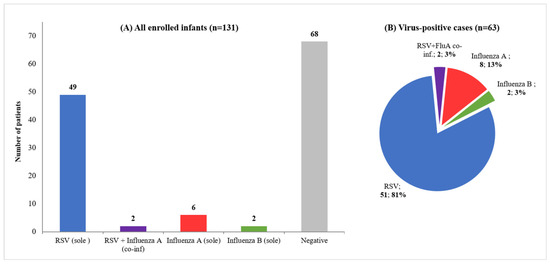
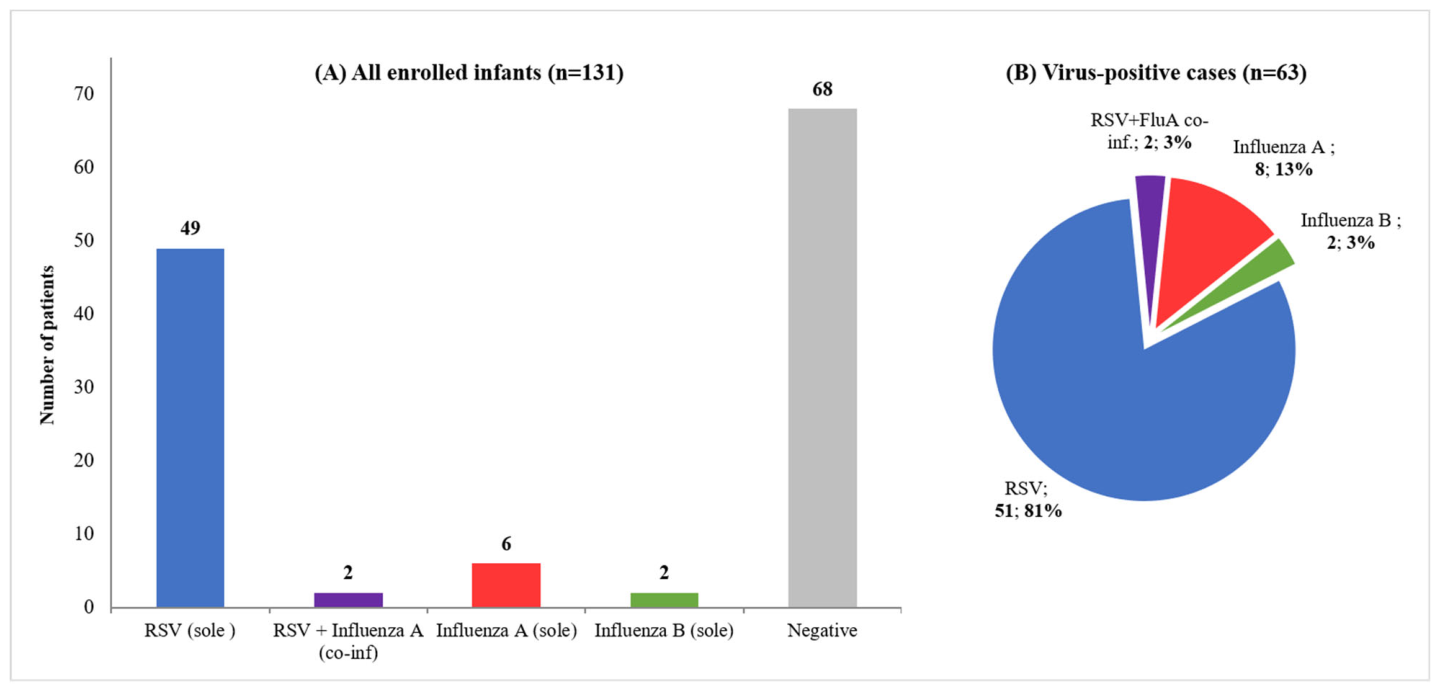
At least one respiratory virus was identified in 63 of 131 patients (48.1%; 95% CI 39.1–57.3%), and 68 (51.9%; 95% CI 42.7–60.9%) were negative. RSV was the overwhelmingly dominant pathogen. Considering both sole infections and co-infections, RSV was detected in 51 patients in total: 49 as the exclusive pathogen and 2 in co-infection with influenza A, representing 80.9% of all virus-positive cases and 38.9% of the full cohort (95% CI 30.7–47.7%). Influenza A was identified in 8 patients in total (6 sole infections and 2 RSV co-infections), accounting for 12.7% of positives and 6.1% of the cohort (95% CI 2.7–11.6%). Influenza B was found as a sole pathogen in 2 patients (3.2% of positives; 1.5% of the cohort). SARS-CoV-2 was not detected in any of the 131 patients (0%; upper 95% CI bound 2.8%). The complete virological results, including co-infection breakdown, are presented in Table 2 and Figure 1.
Table 2.
Virological results in the bronchiolitis cohort (n = 131).
Figure 1.
Virological results in hospitalized bronchiolitis cases (n = 131), Casablanca 2025–2026. (A) Distribution of all 131 enrolled infants by virological result. (B) Proportional distribution of virus-positive cases (n = 63).
Because the four-antigen panel used in this study does not detect rhinovirus, human metapneumovirus, adenovirus, or parainfluenza viruses, the 80.9% RSV share reported above describes the composition of assay-detectable pathogens only and should not be interpreted as an unbiased estimate of RSV’s overall contribution to bronchiolitis in this population. These same untested pathogens most plausibly account for a substantial share of the 68 virus-negative cases. Because rhinovirus, human metapneumovirus, adenovirus, and parainfluenza viruses are not absent from the local bronchiolitis population but simply fall outside the scope of the four-antigen assay used here, the true virus-positivity rate in this cohort is almost certainly higher than the 48.1% recorded.
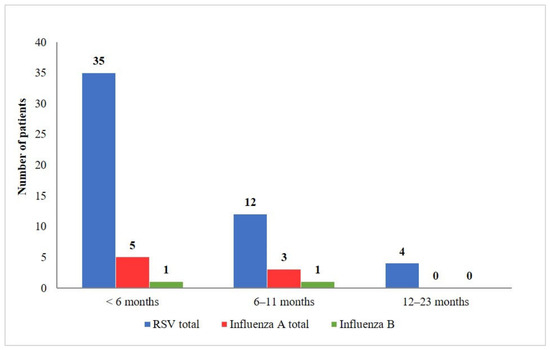
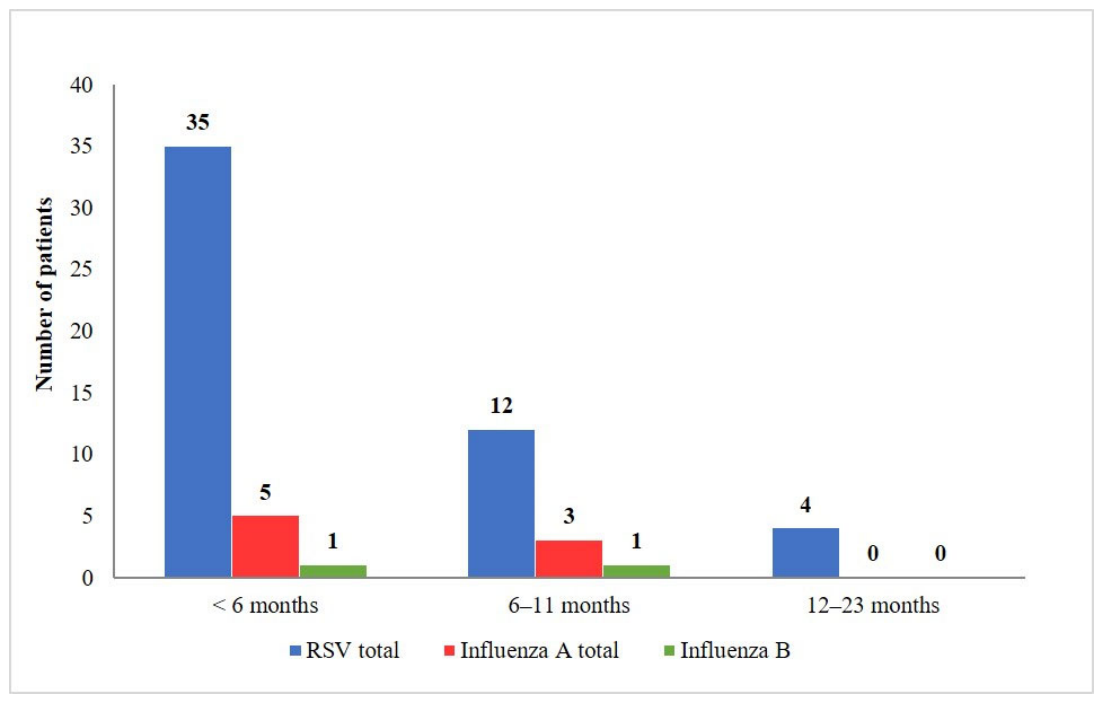
RSV positivity was strikingly age-dependent: 47 of 51 RSV-positive patients (92.2%) were under 12 months of age, and 4 (7.8%) were aged 12–23 months. All eight influenza A-positive patients were under 12 months. Figure 2 illustrates the age distribution of virus-positive cases by pathogen, using totals inclusive of co-infections.
Figure 2.
Age distribution of virus-positive bronchiolitis cases by pathogen (n = 63), using totals inclusive of co-infections. RSV total includes 49 sole infections and 2 RSV–influenza A co-infections (total n = 51). Influenza A total includes 6 sole infections and 2 RSV co-infections (total n = 8). All virus-positive cases were under 24 months of age.
3.3. Monthly Epidemic Pattern
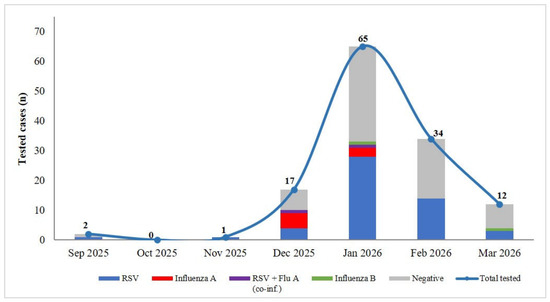
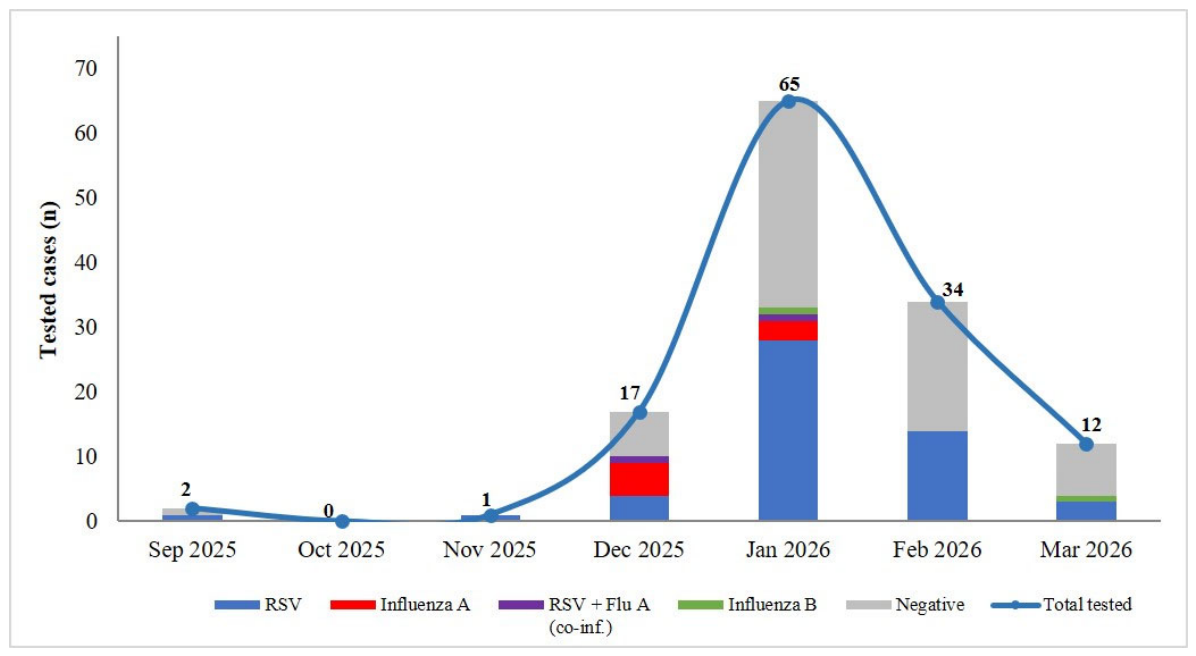
Epidemic activity was negligible in August–October 2025 (0–2 admissions per month) and began to increase in November (1 case) and December 2025 (17 cases). The season peaked sharply in January 2026 with 65 admissions, accounting for 49.6% of all bronchiolitis hospitalizations recorded over the entire study period (Figure 3). Activity then declined through February 2026 (34 admissions) and March 2026 (12 admissions). Influenza A cases clustered predominantly in December 2025 and January 2026, consistent with classic winter influenza seasonality in Morocco. The monthly epidemic curve is illustrated in Figure 3.
Figure 3.
Monthly evolution of bronchiolitis admissions by viral etiology, Casablanca 2025–2026 (n = 131). Stacked bars show the composition of each month’s cases by pathogen; the blue line traces total admissions. Epidemic activity peaked in January 2026 with 65 admissions. Influenza A cases clustered in December 2025 and January 2026. SARS-CoV-2 was not detected throughout the study period.
3.4. Clinical Course
All patients received supportive care, including nasopharyngeal suctioning and supplemental oxygen as clinically indicated. No patient required mechanical ventilation or transfer to the pediatric intensive care unit during the admission period within this department. As noted in the study design, hemodynamically compromised infants and those requiring intensive care at presentation are admitted to separate units and were not enrolled in this cohort. Systematic post-discharge follow-up was not performed, so outcomes beyond the in-hospital period are not reported.
Supportive care in this cohort consisted of nasopharyngeal suctioning, supplemental oxygen delivered by nasal cannula and titrated to maintain adequate oxygen saturation, chest physiotherapy, and maintenance of hydration and feeding, in line with current bronchiolitis practice guidelines [16]. Antibiotic therapy was reserved for infants with documented or clinically suspected bacterial superinfection. Bronchodilators and systemic corticosteroids are not recommended for uncomplicated viral bronchiolitis under these guidelines and were not used as first-line therapy in this cohort.
4. Discussion
This prospective cohort provides the most current virological snapshot of hospitalized infant bronchiolitis in Casablanca. Four findings stand out: RSV accounts for 80.9% of all virus-positive cases and nearly 40% of the entire cohort; the epidemic was sharply concentrated in January 2026, which alone accounted for half of all admissions; influenza A and B together contributed 15.9% of positives; and SARS-CoV-2 was entirely absent. Crucially, every virus detected—RSV, influenza A, and influenza B—is one for which a licensed vaccine or immunoprophylactic agent exists, giving this descriptive study direct and immediate policy relevance.
The RSV detection rate of 80.9% among virus-positive cases is substantially higher than what has been reported from this same city in the preceding season (44.5%) [8] and from Marrakech in 2018 (22.6%) [6]. In large international multicenter studies using broad multiplex RT-PCR panels, RSV was detected in 40–72% of all bronchiolitis cases [15,18,19,20,21] (Table 3). The difference is not principally epidemiological. Two factors account for the higher relative RSV proportion in the present data. First, the four-target immunochromatographic assay used here does not detect rhinovirus, human metapneumovirus, adenovirus, or parainfluenza viruses, which collectively account for 15–30% of bronchiolitis cases in broader multiplex RT-PCR panels [8,21]. These pathogens are not absent from the Casablanca bronchiolitis population; they fall outside the diagnostic scope of the assay used in this study, which mathematically raises RSV’s proportion of the positive cases. Second, the 2025–2026 RSV season may have been intrinsically intense. The sharp January 2026 peak, with 65 admissions in a single month, compared with 17 in December and 34 in February, is consistent with a concentrated epidemic rather than a diffuse one.
Casablanca has a mild, temperate coastal climate in which ambient temperature varies only modestly across the year: long-term climate normals (1991–2020 baseline) indicate a mean temperature of approximately 12–13 °C during the coldest months (December–February), compared with approximately 23–24 °C in the warmest summer months, with winter overnight lows rarely falling below 8 °C [7]. This narrow seasonal range makes extreme cold an unlikely direct driver of the sharp January peak observed in our cohort; as in other subtropical and Mediterranean settings, the autumn–winter concentration of RSV and influenza activity is more plausibly explained by indoor crowding, the school calendar, and intrinsic viral transmission dynamics than by ambient temperature itself [22,23].
Among 51 RSV-positive patients, 47 (92.2%) were under 12 months, and 35 (68.6%) were under six months—precisely the age window during which maternally transferred antibodies wane to subprotective levels [2,3]. The monthly epidemic curve further reveals a pattern consistent with RSV dynamics observed across temperate and subtropical climates, with the January 2026 peak alone accounting for 49.6% of all admissions and generating an acute surge in demand for beds, oxygen concentrators, and nursing resources at a single pediatric referral center. In settings with limited pediatric capacity, such surges can lead to downstream disruptions in healthcare delivery.
These findings highlight a critical window of vulnerability in early infancy, precisely the population targeted by long-acting monoclonal antibodies such as nirsevimab and by maternal vaccination strategies. Real-world effectiveness data from the United States and Europe consistently show 77–90% protection against RSV-associated hospitalization across multiple seasons and settings [9,24,25]. Following WHO-SAGE endorsement of both preventive strategies in September 2024 and WHO prequalification of the maternal RSVpreF vaccine in March 2025, the tools are available through UN procurement channels [10]. Administered at birth or prior to the RSV season, nirsevimab would be expected to mitigate such concentrated epidemic peaks by protecting the most vulnerable infants before the onset of viral circulation.
Influenza A was the second most frequently identified pathogen (12.7% of positives), a proportion consistent with the 13.2% reported from Casablanca in 2023–2024 [8], suggesting that influenza’s contribution to infant bronchiolitis is a reproducible seasonal feature rather than an anomaly. This consistency is reinforced by virological surveillance at the Mohammed V Military Hospital in Rabat, which documented co-circulation of H1N1 and H3N2 strains in Morocco during 2023–2024 [12]. Influenza B contributed a further 3.2%, and together, influenza viruses were responsible for 10 of 63 virus-positive bronchiolitis admissions in our department (15.9%), all in infants under 12 months. The 2024–2025 influenza season was classified as high-severity internationally [11]. This burden is entirely preventable. The American Academy of Pediatrics recommends annual seasonal influenza vaccination for all children from six months of age [11], and WHO recommends it for high-risk infants and young children. However, routine influenza vaccination is not yet integrated into the national pediatric immunization program in Morocco. Each influenza-attributable bronchiolitis admission documented in this series represents a failure of prevention.
Translating these findings into policy requires attention to the local immunization landscape. Morocco’s National Immunization Program provides twelve vaccines free of charge to infants through the public health network, with reported coverage above 90% for most antigens, but neither seasonal influenza vaccination nor RSV immunoprophylaxis (nirsevimab or maternal RSVpreF vaccination) is currently included in this routine schedule; where obtained, influenza vaccine is currently accessed through the private sector at an approximate cost of 150–400 Moroccan dirhams per dose [17].
SARS-CoV-2 was not detected in any of the 131 patients throughout the study period. This contrasts markedly with the preceding Casablanca bronchiolitis series, in which COVID-19 accounted for 16.8% of virologically confirmed cases [8], and with post-pandemic European data documenting SARS-CoV-2 as a co-circulating respiratory pathogen in infants [13,14]. The most parsimonious explanation is the transition of SARS-CoV-2 to endemic circulation with substantially reduced pediatric lower respiratory severity, reflecting both high prior infection seroprevalence in Moroccan infants and the biological reality that SARS-CoV-2 rarely causes classical bronchiolitis independently of RSV [14]. This finding has a practical implication for hospital infection control: COVID-19-specific cohorting precautions for bronchiolitis admissions appear to be of lower priority in the current epidemiological context than in 2023–2024. However, this interpretation warrants two further qualifications. First, rapid antigen tests for SARS-CoV-2 may have more moderate sensitivity in children, with a pooled estimate of 77.9% (95% CI 67.3–85.8%) against RT-PCR in a recent pediatric meta-analysis [26]; some genuine SARS-CoV-2 co-infections may therefore have been missed rather than truly absent. Second, extensive population-level immune exposure to SARS-CoV-2 in this region lends biological plausibility to a genuinely low circulating burden: a 2022 serosurvey of vaccinated adults in the Casablanca-Settat region found that 96.2% (95% CI 95.7–96.6%) had detectable anti-SARS-CoV-2 IgG antibodies [27], consistent with widespread hybrid immunity from vaccination and prior infection across the region, although this adult seroprevalence figure cannot be directly extrapolated to the infants in the present cohort.
This study has six principal limitations. First, the immunochromatographic rapid antigen assay has a pooled sensitivity of 74–81% against RT-PCR in children [28]; the true positivity rate is therefore underestimated, and the zero SARS-CoV-2 detection rate warrants cautious interpretation. Second, the four-target panel does not detect rhinovirus, metapneumovirus, adenovirus, or parainfluenza viruses, likely accounting for most of the 51.9% of negative cases. Third, this department does not admit infants with hemodynamically significant congenital heart disease or those requiring intensive care at presentation, so the most severe bronchiolitis cases are excluded from the cohort, and our estimates of clinical severity are conservative. Fourth, systematic post-discharge follow-up was not performed; outcomes beyond the in-hospital period are therefore unknown, and no conclusions can be drawn regarding post-discharge mortality, readmission rates, or long-term respiratory morbidity. Fifth, the single-center design at a tertiary referral center limits geographic generalizability to other Moroccan regions. Sixth, formal statistical comparison of oxygen requirement and length of stay across viral subgroups was not performed in this descriptive study; the small size of the influenza A (n = 8) and influenza B (n = 2) subgroups, together with the absence of any ICU transfers, would make such comparisons statistically fragile and potentially misleading, and adequately powered inferential analysis of clinical outcomes by pathogen should be a priority for future multicenter studies with larger subgroup sizes. Future studies should employ validated multiplex RT-PCR panels, standardized severity scoring, and multicenter enrollment to overcome these constraints.
Table 3.
Comparative virological data: present study alongside recent Moroccan, regional, and international bronchiolitis series.
5. Conclusions
This study, conducted during the 2025–2026 autumn–winter season, reveals that RSV caused more than 80% of all virus-positive bronchiolitis admissions at Abderrahim El Harouchi Mother-Child Hospital in Casablanca, with an epidemic that peaked sharply in January and was concentrated almost entirely in infants under 12 months. Influenza A and influenza B were each detected, and SARS-CoV-2 was entirely absent. Notably, all viruses identified have licensed preventive options: nirsevimab and maternal RSVpreF vaccination for RSV, and seasonal influenza vaccines for influenza A and B. These findings, drawn from a single tertiary referral center and a bronchiolitis population that by design excludes the most severe, hemodynamically unstable infants, are most directly generalizable to hospitalized infants with mild-to-moderate bronchiolitis in the Casablanca region; with this scope in mind, they provide a data-driven argument for considering RSV immunoprophylaxis and expanded influenza vaccination coverage as pediatric public health priorities in Morocco. Broader multicenter surveillance using extended molecular panels is needed to capture the full viral spectrum and support evidence-based immunization policy across the country.
Author Contributions
Conceptualization, K.Z., N.A. and A.A.B.; methodology, K.Z., H.K., A.E.K., S.E. and A.R.; investigation, K.Z., H.K., S.K., A.E.K. and S.E.; data curation, K.Z., H.K. and S.K.; formal analysis, K.Z. and H.K.; resources, A.R., A.E.K. and S.E.; writing—original draft preparation, K.Z.; writing—review and editing, K.Z., H.K., J.E.B., N.A., S.K., A.R., A.E.K., S.E., A.O. and A.A.B.; visualization, K.Z.; supervision, J.E.B., N.A., A.O. and A.A.B.; project administration, N.A. and A.A.B. All authors have read and agreed to the published version of the manuscript.
Funding
This research received no external funding.
Institutional Review Board Statement
The study was conducted in accordance with the Declaration of Helsinki, and approved by the Ethics Committee of Ibn Rochd University Hospital Center, Casablanca, Morocco (protocol code: 22/23; date of approval: 8 December 2023).
Informed Consent Statement
Informed consent was obtained from the parents or legal guardians of all subjects involved in the study.
Data Availability Statement
The data presented in this study are available on reasonable request from the corresponding author. The data are not publicly available due to privacy restrictions.
Acknowledgments
The authors thank the nursing and medical staff of the Department of Pediatric Infectious Diseases, Abderrahim El Harouchi Mother-Child Hospital, for their contribution to patient care and data collection during the study period.
Conflicts of Interest
The authors declare no conflicts of interest.
Abbreviations
The following abbreviations are used in this manuscript:
| RSV | Respiratory syncytial virus |
| ICU | Intensive care unit |
| IQR | Interquartile range |
| PCR | Polymerase chain reaction |
| RT-PCR | Reverse transcription polymerase chain reaction |
| RADT | Rapid antigen detection test |
| STROBE | Strengthening the Reporting of Observational Studies in Epidemiology |
| MENA | Middle East and North Africa |
| BV | Bronchiolitis |
| EV | Enterovirus |
| Flu A | Influenza A |
| Flu B | Influenza B |
| HRV | Human rhinovirus |
| GLD | Gigalab Diagnostics |
| WHO | World Health Organization |
| WHO-SAGE | WHO Strategic Advisory Group of Experts on Immunization |
References
- GBD 2019 LRI Collaborators. Age-sex differences in the global burden of lower respiratory infections and risk factors, 1990-2019: Results from the Global Burden of Disease Study 2019. Lancet Infect. Dis. 2022, 22, 1626–1647. [Google Scholar] [CrossRef] [Scilit] [PubMed]
- Dalziel, S.R.; Haskell, L.; O’Brien, S.; Borland, M.L.; Plint, A.C.; Babl, F.E.; Oakley, E. Bronchiolitis. Lancet 2022, 400, 392–406. [Google Scholar] [CrossRef] [Scilit] [PubMed]
- Shi, T.; McAllister, D.A.; O’Brien, K.L.; Simoes, E.A.F.; Madhi, S.A.; Gessner, B.D.; Polack, F.P.; Balsells, E.; Acacio, S.; Aguayo, C.; et al. Global, regional, and national disease burden estimates of acute lower respiratory infections due to respiratory syncytial virus in young children in 2015: A systematic review and modelling study. Lancet 2017, 390, 946–958. [Google Scholar] [CrossRef] [Scilit] [PubMed]
- Alaoui-Inboui, F.Z.; Yakine, F.; Ahmito, O.; El Merzouki, N.; Salimi, S.; Slaoui, B. Mortality Associated with Viral Bronchiolitis in a Pediatric Department: A Retrospective Analysis. Cureus 2025, 17, e84571. [Google Scholar] [CrossRef] [Scilit] [PubMed]
- Bimouhen, A.; El Falaki, F.; Ihazmad, H.; Regragui, Z.; Benkerroum, S.; Barakat, A. Circulation of Respiratory Syncytial Virus in Morocco during 2014–2016: Findings from a sentinel-based virological surveillance system for influenza. EMHJ-East. Mediterr. Health J. 2016, 22, 482–489. [Google Scholar] [CrossRef] [Scilit]
- Daoudi, N.; Saffour, H.; Draiss, G.; Rada, N.; Bouskraoui, M.; Youssef, M.; Said, Y.; Bennaoui, F.; El idrissi Sliline, N.; Mrabih Rabou Maouainine, F.; et al. Human Respiratory Syncytial Virus and Hospitalization of Young Children with Lower Respiratory Tract Infection in Marrakech, Morocco. Am. J. Epidemiol. Infect. Dis. 2020, 8, 1–4. [Google Scholar] [CrossRef] [Scilit]
- World Bank Group. Climate Risk Country Profile: Morocco; World Bank Group: Washington, DC, USA, 2021. [Google Scholar]
- Alaoui-Inboui, F.Z.; Machaou, S.; Zerouali, K.; El Kettani, A.; El Mdaghri, N.; Slaoui, B. Corrélation clinico-virologique des bronchiolites virales à Casablanca. À propos de 107 cas. J. Pédiatrie Puéricult. 2024, 37, 437–444. [Google Scholar] [CrossRef] [Scilit]
- Moline, H.L.; Tannis, A.; Toepfer, A.P.; Williams, J.V.; Boom, J.A.; Englund, J.A.; Halasa, N.B.; Staat, M.A.; Weinberg, G.A.; Selvarangan, R.; et al. Early Estimate of Nirsevimab Effectiveness for Prevention of Respiratory Syncytial Virus-Associated Hospitalization Among Infants Entering Their First Respiratory Syncytial Virus Season—New Vaccine Surveillance Network, October 2023–February 2024. MMWR Morb. Mortal. Wkly. Rep. 2024, 73, 209–214. [Google Scholar] [CrossRef] [Scilit] [PubMed]
- World Health Organization. WHO position paper on immunization to protect infants against respiratory syncytial virus disease, May 2025 = Note de synthèse: Position de l’OMS sur la vaccination pour protéger les nourrissons contre l’infection à virus respiratoire syncytial, mai 2025. Wkly. Epidemiol. Rec. 2025, 100, 193–217. [Google Scholar]
- Committee on Infectious Diseases. Recommendations for Prevention and Control of Influenza in Children, 2025–2026: Policy Statement. Pediatrics 2025, 156, e2025073620. [Google Scholar] [CrossRef] [Scilit] [PubMed]
- El-Kochri, S.; Touil, N.; Abi, R.; Malki, H.C.; Tagajdid, M.R.; Elannaz, H.; Kassmi, Z.; Amraoui, F.; Benaissi, Y.; Addi, Y. Seasonal Influenza in Morocco. Int. J. Clin. Virol. 2025, 9, 021–027. [Google Scholar] [CrossRef] [Scilit]
- Fourgeaud, J.; Toubiana, J.; Chappuy, H.; Delacourt, C.; Moulin, F.; Parize, P.; Scemla, A.; Abid, H.; Leruez-Ville, M.; Frange, P. Impact of public health measures on the post-COVID-19 respiratory syncytial virus epidemics in France. Eur. J. Clin. Microbiol. Infect. Dis. Off. Publ. Eur. Soc. Clin. Microbiol. 2021, 40, 2389–2395. [Google Scholar] [CrossRef] [Scilit] [PubMed]
- Berdah, L.; Romain, A.S.; Rivière, S.; Schnuriger, A.; Perrier, M.; Carbajal, R.; Lorrot, M.; Guedj, R.; Corvol, H. Retrospective observational study of the influence of the COVID-19 outbreak on infants’ hospitalisation for acute bronchiolitis. BMJ Open 2022, 12, e059626. [Google Scholar] [CrossRef] [Scilit] [PubMed]
- Suss, R.J.; Simões, E.A.F. Respiratory Syncytial Virus Hospital-Based Burden of Disease in Children Younger Than 5 Years, 2015–2022. JAMA Netw. Open 2024, 7, e247125. [Google Scholar] [CrossRef] [Scilit] [PubMed]
- Ralston, S.L.; Lieberthal, A.S.; Meissner, H.C.; Alverson, B.K.; Baley, J.E.; Gadomski, A.M.; Johnson, D.W.; Light, M.J.; Maraqa, N.F.; Mendonca, E.A.; et al. Clinical practice guideline: The diagnosis, management, and prevention of bronchiolitis. Pediatrics 2014, 134, e1474–e1502, Correction in Pediatrics 2014, 136, 782. https://doi.org/10.1542/peds.2015-2862. [Google Scholar] [CrossRef] [Scilit] [PubMed]
- Ministry of Health and Social Protection, Kingdom of Morocco. Programme National d’Immunisation. Available online: https://infovac-maroc.com/images/pdf/documentation/4.%20Documentation/Guides%20et%20brochures%20Maroc/Guide%20des%20vaccinations%20des%20enfants%20en%20situations%20de%20pr%C3%A9maturit%C3%A9s,%20d%E2%80%99hypotrophies,%20de%20rattrapages%20et%20de%20terrains%20particuliers.pdf (accessed on 7 July 2026).
- Flechelles, O.; Oger, C.; Charollais, A.; Drame, M.; Banydeen, R.; Najioullah, F. Burden and seasonality of RSV bronchiolitis in hospitalized children on a French Caribbean island: Practical lessons from a 13-year study. J. Med. Virol. 2024, 96, e70006. [Google Scholar] [CrossRef] [Scilit] [PubMed]
- Vittucci, A.C.; Antilici, L.; Russo, C.; Musolino, A.M.C.; Cristaldi, S.; Cutrera, R.; Persia, S.; Di Maio, C.V.; Raponi, M.; Perno, C.F.; et al. Respiratory syncytial virus: Can we still believe that after pandemic bronchiolitis is not a critical issue for public health? Eur. J. Pediatr. 2023, 182, 5303–5313. [Google Scholar] [CrossRef] [Scilit] [PubMed]
- Berrajah, L.F.; Ben Slama, K.A.; Khbou, I.; Gargouri, S.; Chtourou, A.; Znazen, A.; Kassis, M.; Yaich, S.; Hammami, A.; Hachicha, M.; et al. Virus and Atypical Pathogens Detected in Community-Acquired Lower Respiratory Tract Infection in Infants and Children of Sfax Region, Tunisia. Bull. Soc. Pathol. Exot. 2018, 111, 90–98. [Google Scholar] [CrossRef] [Scilit] [PubMed]
- Mansbach, J.M.; Piedra, P.A.; Teach, S.J.; Sullivan, A.F.; Forgey, T.; Clark, S.; Espinola, J.A.; Camargo, C.A., Jr. Prospective multicenter study of viral etiology and hospital length of stay in children with severe bronchiolitis. Arch. Pediatr. Adolesc. Med. 2012, 166, 700–706. [Google Scholar] [CrossRef] [Scilit] [PubMed]
- Cauchemez, S.; Valleron, A.J.; Boelle, P.Y.; Flahault, A.; Ferguson, N.M. Estimating the impact of school closure on influenza transmission from Sentinel data. Nature 2008, 452, 750–754. [Google Scholar] [CrossRef] [Scilit] [PubMed]
- Shaman, J.; Kohn, M. Absolute humidity modulates influenza survival, transmission, and seasonality. Proc. Natl. Acad. Sci. USA 2009, 106, 3243–3248. [Google Scholar] [CrossRef] [Scilit] [PubMed]
- Lee, B.; Trusinska, D.; Ferdous, S.; Pei, R.; Kwok, H.H.Y.; Schwarze, J.; Williams, T.C.; Gibbons, C.; Quint, J.K.; Sheikh, A.; et al. Real-world effectiveness and safety of nirsevimab, RSV maternal vaccine and RSV vaccines for older adults: A living systematic review and meta-analysis. Thorax 2025, 80, 838–848. [Google Scholar] [CrossRef] [Scilit] [PubMed]
- López-Lacort, M.; Muñoz-Quiles, C.; Mira-Iglesias, A.; Xavier López-Labrador, F.; Garcés-Sánchez, M.; Escribano-López, B.; Zornoza-Moreno, M.; Jesús Pérez-Martín, J.; Alfayate-Miguelez, S.; Iofrío-De Arce, A.; et al. Nirsevimab Effectiveness Against Severe Respiratory Syncytial Virus Infection in the Primary Care Setting. Pediatrics 2025, 155, e2024066393. [Google Scholar] [CrossRef] [Scilit] [PubMed]
- Chen, C.C.; Lee, M.H.; Chen, S.Y.; Lu, S.C.; Bai, C.H.; Ko, Y.L.; Wang, C.Y.; Wang, Y.H. Assessment of the detection accuracy of SARS-CoV-2 rapid antigen test in children and adolescents: An updated meta-analysis. J. Chin. Med. Assoc. 2023, 86, 966–974. [Google Scholar] [CrossRef] [Scilit] [PubMed]
- Ezzikouri, S.; Tajudeen, R.; Majidi, H.; Redwane, S.; Aqillouch, S.; Abdulaziz, M.; Aragaw, M.; Papa Fallah, M.; Sembuche, S.; Batcho, S.; et al. Seroepidemiological assessment of SARS-CoV-2 vaccine responsiveness and associated factors in the vaccinated community of the Casablanca-Settat Region, Morocco. Sci. Rep. 2024, 14, 7817. [Google Scholar] [CrossRef] [Scilit] [PubMed]
- Chartrand, C.; Tremblay, N.; Renaud, C.; Papenburg, J. Diagnostic Accuracy of Rapid Antigen Detection Tests for Respiratory Syncytial Virus Infection: Systematic Review and Meta-analysis. J. Clin. Microbiol. 2015, 53, 3738–3749. [Google Scholar] [CrossRef] [Scilit] [PubMed]
- Yassine, H.M.; Sohail, M.U.; Younes, N.; Nasrallah, G.K. Systematic Review of the Respiratory Syncytial Virus (RSV) Prevalence, Genotype Distribution, and Seasonality in Children from the Middle East and North Africa (MENA) Region. Microorganisms 2020, 8, 713. [Google Scholar] [CrossRef] [Scilit] [PubMed]

Disclaimer/Publisher’s Note: The statements, opinions and data contained in all publications are solely those of the individual author(s) and contributor(s) and not of MDPI and/or the editor(s). MDPI and/or the editor(s) disclaim responsibility for any injury to people or property resulting from any ideas, methods, instructions or products referred to in the content. |
© 2026 by the authors. Licensee MDPI, Basel, Switzerland. This article is an open access article distributed under the terms and conditions of the Creative Commons Attribution (CC BY) license.