Perspective

Use of Lithium-Ion Batteries from Electric Vehicles for Second-Life Applications: Technical, Legal, and Economic Perspectives


1
Vehicle Safety Institute, Graz University of Technology, 8010 Graz, Austria
2
Battery4Life GmbH, 8010 Graz, Austria
3
SYRION e.V.—Systemic Research & Innovation, 8010 Graz, Austria
4
LIT Law Lab, Johannes Kepler Universität, 4040 Linz, Austria
5
Institute of General Management and Organisation, Graz University of Technology, 8010 Graz, Austria
*
Authors to whom correspondence should be addressed.
World Electr. Veh. J. 2026, 17(2), 66; https://doi.org/10.3390/wevj17020066
Submission received: 11 January 2026 / Revised: 27 January 2026 / Accepted: 28 January 2026 / Published: 30 January 2026
(This article belongs to the Section Storage Systems)

Abstract

This perspective provides a multidisciplinary assessment of the use of lithium-ion batteries from electric vehicles (EVs) for second-life applications, motivated by the need to improve resource efficiency, reduce environmental impacts, and support a circular battery economy. Second-life deployment requires the integrated consideration of technical performance, legal compliance, and economic viability. The analysis combines a technical evaluation of battery aging mechanisms, operational load effects, and qualification strategies with a legal assessment of the EU Batteries Regulation (EU) 2023/1542 and an economic analysis of market potential and business models (BM). From a technical perspective, the limitations of State of Health (SOH) as a standalone indicator are demonstrated, highlighting the need for multiple health indicators and degradation-aware qualification. A scalable two-step qualification approach, combining qualitative inspection with a standardized quantitative measurement protocol, is discussed. From a legal perspective, regulatory requirements and barriers related to repurposing, waste classification, and conformity assessment are analyzed. From an economic perspective, business model patterns and market dynamics are evaluated, identifying Automated Guided Vehicles (AGVs) and industrial Energy Storage Systems (ESSs) for renewable firming as particularly promising applications. The paper concludes with recommendations for action and key research needs to enable safe, economically viable, and legally compliant second-life deployment.

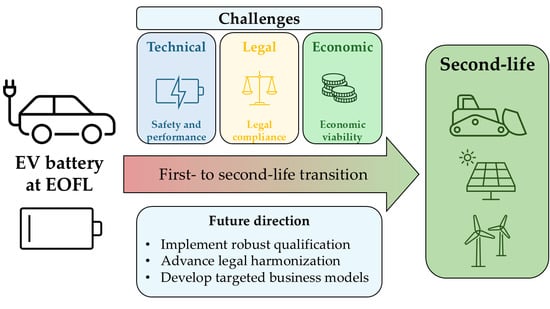
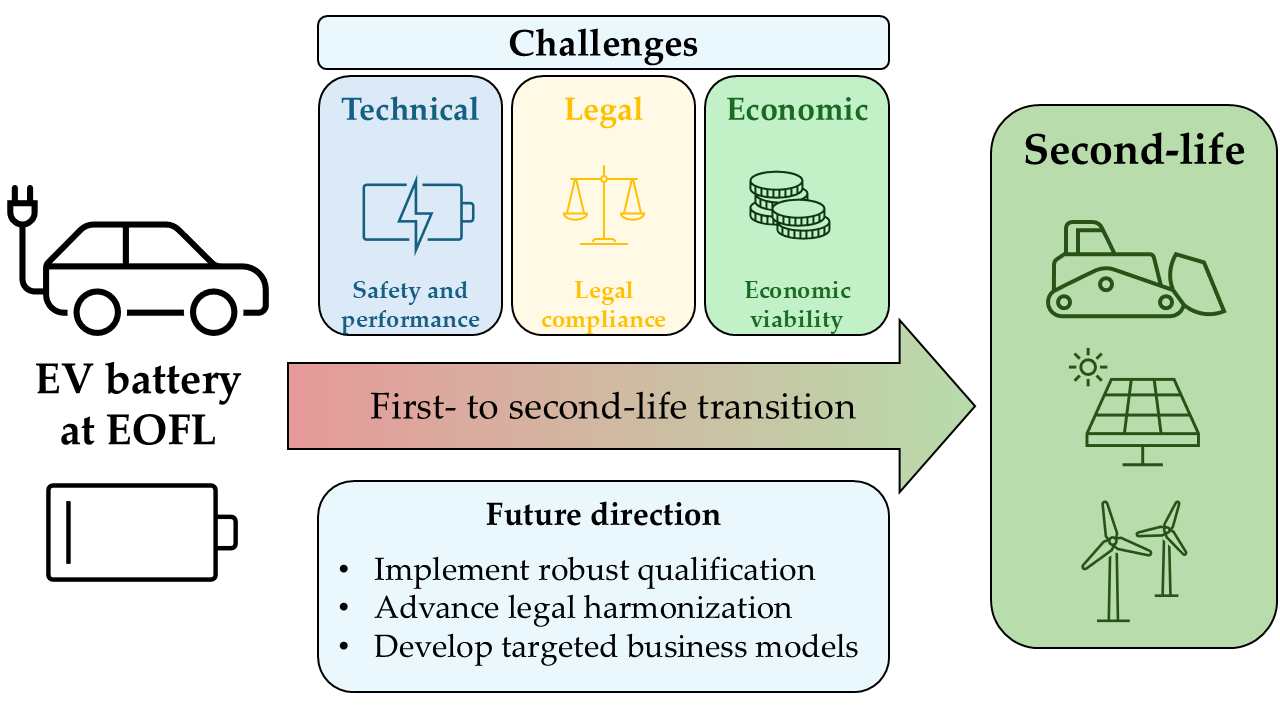
Graphical Abstract

1. Introduction

The rapid proliferation of electric vehicles (EVs) has resulted in a growing stock of lithium-ion batteries reaching the end-of-first-life (EOFL). Despite being retired from automotive use, these batteries retain significant remaining capacity, creating substantial potential for repurposing in second-life applications. Researchers of the large-scale lithium-ion batteries project SafeLIB have identified more than 60 stationary and mobile use cases, demonstrating the technical viability and versatility of these batteries beyond the automotive sector [1].
The motivation for this perspective arises from the need to maximize resource efficiency, reduce environmental impact, and support the transition to a circular economy by extending the useful life of lithium-ion batteries. Achieving these objectives necessitates addressing a diverse set of challenges that span technical, economic, and legal domains. From a technical perspective, the longevity, performance, and especially safety of repurposed batteries is critical, given the degraded state and varied aging histories of batteries at the EOFL. Economically, the feasibility of second-life applications depends on the costs associated with repurposing, the viability of business models (BMs), and the likelihood of commercial adoption. Legally, compliance with evolving industry standards and regulatory frameworks is essential for market entry and operational safety.
The structure of this perspective reflects this interdisciplinary approach. Following this introduction, Section 2 presents the technical perspective, including current insights into battery aging, the impact of operational loads, and strategies for qualification and safety assurance. Section 3 addresses the legal perspective, both on the European Union (EU) and the Austrian national levels, focusing on regulatory requirements, compliance issues, and barriers to market entry. Section 4 examines the economic perspective, evaluating BMs, cost structures, and market potential. Each of the Section 2, Section 3 and Section 4 concludes with recommendations for action and identifies further research needs to support the safe, economically viable, and legally compliant deployment of second-life lithium-ion batteries. Finally, Section 5 discusses the main takeaways and conclusions, followed by Section 6, which provides an outlook for future work.

2. Technical Perspective

2.1. Current Technical Insights

The transition of automotive lithium-ion batteries to second-life applications involves several key steps. After removal from EVs, batteries are transported, disassembled, and qualified. If deemed suitable, they are integrated into a second-life application. Qualification is crucial to ensure repurposed batteries operate safely and reliably under new conditions [2].
Battery aging has a significant impact on both safety and performance, necessitating an effective qualification methodology. A study comparing the behavior of differently aged cells demonstrated the complexity of battery degradation mechanisms by evaluating the aging sensitivity of 31 health indicators against three key criteria: repeatability, sensitivity, and monotonicity. Repeatability evaluates the consistency of a parameter by measuring the spread of values obtained under identical conditions; sensitivity assesses a parameter’s ability to reflect battery aging by comparing non-electrically aged cells with those aged under varied electrical conditions, and monotonicity ensures parameters trend consistently (increasing or decreasing) with aging, when comparing differently aged cells with non-electrically aged ones [3].
The study identified 13 parameters with strong aging sensitivity, including State of Health (SOH), hysteresis Open Circuit Voltage (OCV), surface thermal heterogeneity, Coulombic efficiency, Area VdQ, Voltage Relaxation Profile (VRP), temperature rise, and Constant Voltage Charging Profile (CVCP). Crucially, SOH did not always correlate with more advanced aging states for all health indicators. Instead, distinct degradation mechanisms, such as Loss of Lithium Inventory (LLI), Loss of Active Material (LAM), and Increase of Internal Resistance (IRI), emerged depending on aging history, differentially impacting health indicators. This confirms that SOH is insufficient to fully characterize the battery state, as identical SOH values may mask variations in internal degradation mechanisms, resulting in divergent performance and safety profiles [3].
These findings underscore the necessity of comprehensive aging history assessments to accurately evaluate end-of-first-life battery conditions and determine second-life viability.

2.1.1. Impact of Load Cases on Second-Life

The safety behavior of batteries in second-life applications is determined by both their aging history and the operational loads to be encountered during use. In these applications, batteries are subjected to thermal, electrical, and mechanical loads, each of which can accelerate degradation and introduce safety risks. Therefore, establishing optimal load limits based on the state of the battery at EOFL is critical for ensuring safe and reliable operation.
To systematically address these challenges, a Failure Mode and Effects Analysis (FMEA) was conducted to assess the criticality of potential electrical, thermal, and mechanical loads by evaluating their severity and probability. The analysis differentiated between stationary and mobile applications, reflecting the varying degrees of mobility among potential second-life uses. Results indicated that the degree of mobility is a significant factor influencing risk: while high C-rate electrochemical cycling presents a critical risk in all applications, mechanical loads such as shock and indentation pose a great risk particularly in mobile applications. In contrast, mechanical loads are generally not significant for stationary applications and are considered negligible in this context [4].
To further investigate these risks, the effects of mechanical indentation and high C-rate electrochemical cycling were analyzed in differently aged cells. The results showed that identical loads can have varying impacts depending on their aging history [5,6]. Cells exposed to high C-rate cycling exhibited notable capacity degradation, as evidenced by reductions in SOH and Area VdQ, suggesting that LLI is the predominant degradation mechanism. This effect was particularly pronounced in aged cells, but negligible in non-electrically aged cells, underscoring the need for careful evaluation of high C-rate applications in second-life contexts [5].
Mechanical indentation tests resulted in significant changes in SOH, Area VdQ, Coulombic efficiency, and the VRP curve. A notable change in Area VdQ, Coulombic efficiency, and VRP voltage drop indicates that IRI and LAM are the primary degradation mechanisms, both associated with the mechanical loads and morphological changes in battery layers following mechanical deformation. No direct correlation with aging was found; however, a relationship with initial cell thickness was identified. Aged cells, which tend to be thicker due to irreversible swelling, did not show a direct correlation with SOH, as swelling is strongly influenced by aging history [7]. Cells with lower initial thickness were more affected by the same deformation depth, indicating that the impact of mechanical loads varies. As a result, while remaining still critical, this effect is generally reduced at the EOFL due to increased cell thickness from irreversible swelling [6].
The observed effects of applied loads on the parameters investigated confirm the safety sensitivity of the health indicators, demonstrating their utility as critical indicators of the battery safety status. These findings emphasize the importance of a qualification framework that evaluates both the battery’s end-of-first-life condition and its resilience regarding second-life operating conditions. A comprehensive qualification framework should integrate aging history and expected operational loads to ensure safe and reliable performance in new applications. By categorizing batteries according to their degradation state and aligning them with suitable second-life applications, it is possible to extend battery lifespan while maintaining safety and performance.

2.1.2. Strategy for Second-Life Battery Qualification

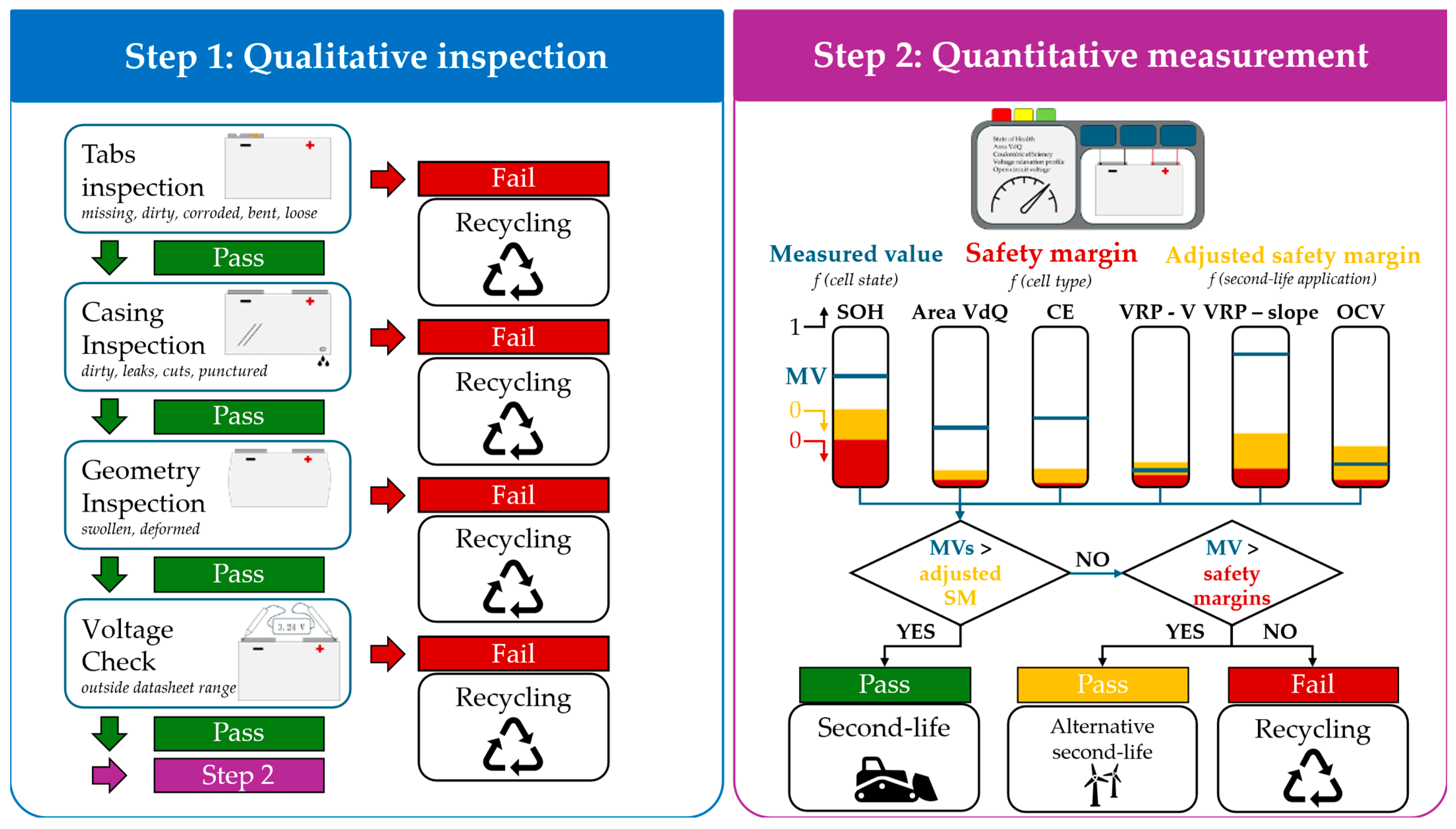
A structured approach to battery safety qualification is essential for ensuring that only suitable batteries are selected for second-life applications. One possible strategy involves two main steps: an initial qualitative inspection, followed by a quantitative measurement protocol. The process is shown in Figure 1.
The process begins with a qualitative inspection to identify and exclude batteries with visible damage, thereby preventing unnecessary testing and optimizing resource use. The qualitative inspection consists of four sequential phases, each designed to detect potential defects or safety concerns at the cell level. In the first phase, the battery tabs are inspected for integrity and cleanliness. Tabs are examined for contaminants such as glue, dirt, or moisture, which are removed if present. The presence of all tabs is verified, corrosion is checked, and tabs are inspected for visible deformation or looseness. If any tab is missing, corroded, loose, or deformed, the check is failed. Only cells passing all tab checks proceed to the next phase. The second phase focuses on the battery casing, which is examined for cleanliness and external damage, including cuts, punctures, or evidence of electrolyte leakage that could compromise structural or chemical integrity. Cells exhibiting such issues are rejected. In the third phase, the geometric condition of the cell is assessed, including irreversible swelling from internal gas buildup or mechanical deformations caused by external impacts or internal stress, both of which accelerate degradation. Cells with significant swelling or deformation are rejected. In the fourth phase, the electrical condition is evaluated by measuring the voltage to ensure it falls within the datasheet-specified range. Voltages close to zero indicate a soft or full internal short circuit, whereas voltages outside the nominal range suggest prior over-discharge or over-charge, potentially compromising safety and performance. Cells failing any of these checks in any phase are rejected, and only those successfully completing all four phases proceed to the quantitative measurement step. Cells failing any qualitative check are rejected, and only batteries passing all criteria proceed to the quantitative measurement step. By filtering out batteries unfit for reuse, this initial assessment ensures that subsequent testing focuses on non-damaged cells, thereby improving both efficiency and reliability.
After the qualitative inspection, a quantitative measurement is used to provide a detailed evaluation of the battery state based on specific qualification parameters. The goal is to extract key parameters that reflect both degradation and safety. As discussed above, several indicators are critical for comprehensive battery qualification. The key parameters are SOH, which reflects the remaining usable capacity of the cell; Area VdQ, which indicates the retained energetic capacity and how much energy can be delivered under load; Coulombic efficiency, which monitors ongoing side reactions that can affect both aging and operational safety; VRP, which provides insight into internal resistance and electrochemical stability; and OCV, which reflects the stoichiometric balance of the electrodes and can reveal deviations that may compromise safe operation. These parameters are both aging- and safety-sensitive, as they degrade monotonically with aging and are influenced by critical loads. By analyzing these indicators, it is possible to identify key degradation mechanisms such as IRI, LAM, and LLI, each affecting the measured parameters differently. Additionally, these indicators are specifically chosen as electrical quantities because they capture the critical degradation mechanisms while remaining practical to measure. Other potential indicators, such as pressure distribution or surface thermal heterogeneity, are either complex to measure or exhibit poor reproducibility, limiting their applicability in a standardized qualification workflow. The measurement of these electrical parameters can be implemented offline using standard cycling and relaxation protocols and, due to their low complexity, can also be integrated into online monitoring systems, enabling repeatable, cost-effective, and timely assessment of battery state.
In the quantitative measurement, the measured values of these qualification parameters, which depend on the current state of the battery, are compared against predefined safety margins calibrated for the specific cell type, format, and chemistry. These safety margins ensure that only cells meeting minimum safety and performance requirements are considered for second-life use. The safety margins can be further adjusted according to the intended second-life application: higher demanding applications require more conservative thresholds, while less demanding applications allow values closer to the nominal limits. Cells with measured values above the type-specific safety margins but below the application-adjusted margins are deemed unsuitable for that specific second-life application but may still be suitable for a less demanding second-life use. Importantly, if any of the checks during either the qualitative or quantitative inspection are not passed, the cell is considered unsuitable for second-life deployment and should be directed to recycling.
A practical method for obtaining the qualification parameters used during the quantitative measurement is through a controlled charging–waiting–discharging profile. During the discharging phase, SOH and Area VdQ can be derived from the current-time and voltage-charge curves. VRP features can be extracted during the waiting period at the end of the charging phase by analyzing the voltage-time curve. The charging and the discharging phases together provide Coulombic efficiency and the OCV hysteresis curve, which can be obtained through the current-time and voltage-charge curves, respectively. This protocol enables quantification of absolute parameter values, determination of battery state, and assessment of proximity to safety margins.
A recent study defined safety margins for these indicators through extended electrochemical cycling of differently aged cells. Specifically, thresholds identified were as follows: 51% for retained SOH and Area VdQ, 79% for Coulombic efficiency, 89 mV for two-hour VRP voltage drop, −7.09 µV/s for VRP voltage slope, and 1039 mV for the OCV increase from the lower voltage limit at 25 Ah (50% SOC). These margins were calibrated for a specific NMC111/graphite pouch cell and therefore require validation or recalibration before being applied to other cell formats and chemistries [8], because chemistry and design can affect how qualification parameters relate to safety and performance.
The protocol itself is chemistry- and format-independent: it can be applied to LFP, NMC, NCA cells and cylindrical, prismatic, or pouch formats. However, chemistry and format influence how parameters evolve with aging. LFP cells generally maintain more stable Coulombic efficiency and slower resistance growth, whereas NMC/NCA cells show faster increases in internal resistance and capacity fade under equivalent conditions [9,10,11]. Additionally, OCV profiles also differ; LFP SOC–OCV curves have broad flat plateaus and pronounced charge/discharge hysteresis. Both shape and hysteresis magnitude vary with chemistry and aging, affecting the interpretation of OCV-based indicators [12]. Consequently, identical measured values can reflect different aging or safety states depending on chemistry and format. Comparative studies show that similar measured values can correspond to different safety and degradation behavior across lithium-ion chemistries and formats [13,14,15,16,17]. For example, thermal and mechanical abuse testing of cylindrical 21,700 cells with different cathodes demonstrates that NMC and NCA cells undergo thermal runaway at lower onset temperatures and with more violent reactions than LFP cells tested under the same conditions, indicating that a given internal resistance or voltage indicator may imply different safety risk depending on chemistry [13]. Similarly, format-focused comparisons of prismatic and pouch cells under thermal abuse show distinct thermal and venting behaviors despite comparable electrical signals, reflecting differences in heat dissipation and structural response [17]. Thus, while the measurement protocol is universal, robust second-life qualification requires chemistry- and format-specific calibration of safety thresholds to ensure that absolute parameter values reliably represent safety margins and usable life.
Since second-life applications expose batteries to different operational loads, safety margins must be adjusted accordingly. For high C-rate applications, such as industrial ESSs (Energy Storage Systems) used for transmission stabilization, more conservative margins for SOH and Area VdQ are necessary due to expected faster degradation. In mobile applications, such as Automated Guided Vehicles (AGVs), all margins should be set more conservatively to account for the increased likelihood of mechanical loads, adding a layer of safety. For example, considering the previously mentioned NMC111/graphite pouch cell, a cell with SOH or Area VdQ = 52% would pass the threshold for a low-power stationary ESS but fail for high C-rate ESS or AGV applications. Ensuring that second-life applications operate within acceptable load conditions prevents excessive degradation of parameters already near safety margins, reducing the risk of unsafe operation and improving both reliability and longevity. The workflow explicitly requires as inputs the cell type, datasheet specifications, and second-life requirements to calibrate safety margins for the specific battery, together with the measured qualification parameters.
This structured approach not only provides a comprehensive evaluation of battery condition but also aids in identifying the most suitable second-life applications, thereby supporting safe and reliable battery reuse.

2.1.3. Measurement Protocol Optimization

The previously defined measurement protocol is straightforward to implement and takes approximately 6 to 9 h, depending on the cell specifications and test conditions. While it balances simplicity and accuracy, further time reductions are possible through refinements such as adjusting rest periods, modifying cut-off criteria, or increasing current rates where feasible. These adjustments could reduce the overall duration while maintaining the reliability of the extracted qualification parameters, ensuring practicality across various battery formats.
One promising strategy for reducing time is to shorten the waiting period during the voltage relaxation phase. The voltage slope in the VRP curve typically becomes linear after about 30 min. Therefore, evaluating the slope between 30 and 60 min instead of the first and second hours could reduce overall testing time by one hour. Additionally, increasing the charging and discharging rates within the datasheet specifications of the cell can further shorten the process. For example, using a 1 C-rate instead of C/2 can halve the overall charging and discharging duration, saving about 2 to 3 h. Other refinements, such as adjusting the cut-off current and discharge voltage limits, could also shorten both the charging and discharging phases. For instance, transitioning the CCCV charging phase to C/15 or C/10, instead of C/20, and slightly altering the lower cut-off voltage or increasing the upper cut-off voltage could reduce the total duration of the overall measurement protocol. However, these changes should be carefully assessed, as they could directly impact the measured retained capacity. Therefore, finding a balance between time optimization and the accuracy of parameter extraction is crucial.
Scaling the qualification process by testing multiple cells is essential for cost-effectiveness. While cell-level testing is more expensive than module or pack-level testing, validating the protocol at a larger scale could demonstrate its robustness and lead to significant time and cost reductions. Once validated, this approach could enable quicker qualification, as the entire qualification strategy can be directly applied at the system level, such as for modules or packs.
An additional improvement could involve integrating real-time data analysis of the qualification parameters during the battery’s operational life. This would enable the extraction of absolute values and tracking of their evolution, potentially allowing decisions to be made directly during use and bypassing the need for additional testing at the EOFL of the battery. While this strategy requires further development, including addressing legal barriers related to privacy concerns from data collection, it has the potential to significantly reduce qualification time. Additionally, the protocol also relies on standardized qualification parameters that can be extracted from lithium-ion cells independently of capacity or chemistry, making the core approach capacity- and chemistry-independent. However, calibration of safety thresholds is still required for each cell type, which can be time-consuming and costly. Monitoring parameter evolution in real time, rather than relying solely on absolute values, could enable universal, type-independent qualification, reducing repeated calibrations across cell types and further optimizing the second-life transition [18].
By systematically implementing these strategies, the measurement protocol can be optimized to achieve a balance between efficiency, reliability, and scalability, supporting the practical qualification of second-life batteries.

2.2. Technical Recommendations for Action

The following technical recommendations can be made regarding the increased use of lithium-ion batteries in second-life applications:
  • The wide range of potential second-life applications, including both stationary and mobile use cases, necessitates a structured evaluation to identify the most suitable repurposing options.
  • Based on technical, economic, and legal criteria, AGVs and industrial ESSs for renewable firming emerge as the most promising second-life applications.
  • Both the battery’s degradation state and the operational loads expected in second-life applications are critical factors influencing long-term safety and reliability.
  • SOH alone does not fully characterize the state of the battery. Batteries with the same SOH values may exhibit different degradation mechanisms, performance, and safety properties.
  • A comprehensive qualification methodology requires multiple health indicators to accurately assess battery state. Promising health indicators include SOH, Area VdQ, Coulombic efficiency, VRP, and OCV hysteresis, all of which can be derived from voltage and current curves, which are parameters typically measured in battery packs.
  • An initial visual inspection is essential for early identification and exclusion of visibly damaged battery cells, thereby improving resource efficiency and focusing subsequent testing on viable candidates.
  • Measurement protocols should be simple, adaptable, and scalable to accommodate the dynamic battery market. The outcome should be robust even when the battery’s aging history is unknown. The charging–waiting–discharging approach enables the extraction of multiple key indicators in a single test without requiring first-life data.

2.3. Future Technical Research Needs

From a technical perspective, the following topics must be researched in depth in the future in order to strengthen the use of second-life batteries:
  • Further optimization of measurement protocols is required to reduce qualification time, improve logistics, lower costs, and accommodate the anticipated increase in available second-life batteries.
  • The development of automated and scalable assessment methods is essential to enhance industrial feasibility, minimize costs, and enable large-scale deployment of second-life batteries.
  • Validation of qualification parameters and safety margins across different cell chemistries and formats is necessary to ensure transferability and broad applicability.
  • A more detailed assessment of second-life application-specific operational loads is needed to refine second-life matching, improve battery performance and extend service life.
  • Access to first-life operational data would improve qualification accuracy, reduce testing efforts, and support predictive maintenance strategies. The mandatory implementation of battery passport regulations represents a crucial step toward standardized data logging, facilitating access to aging history and improving the efficiency of second-life qualification processes.
  • The development of data-driven predictive qualification models holds promise for enhancing qualification accuracy, anticipating failure risks, and optimizing deployment strategies for second-life batteries.
  • Scaling up qualification methodologies from cell to module level and from module to pack level is critical to support industrial implementation across different system scales, with positive implications for both safety and economic viability.
  • Clearly defined recycling and disposal pathways are needed to ensure sustainability beyond the second-life phase and to support circular economy principles.

3. Legal Perspective

3.1. Current Legal Insights

3.1.1. Legal Framework Overview

The jurisprudential analysis presented here covers the areas of law that are particularly relevant to the use of second-life batteries. This analysis is based on the potential fields of application identified in the research project [1].
The relevant legal situation is complex in several respects. It arises formally from international, European, and national legislation, but also from technical standards (which are not legally binding in themselves). Substantively, various aspects of what is sometimes referred to as “special administrative law” are relevant (battery law in the narrow sense, and in particular waste law, product (safety) law, electricity law, and transport law). In addition, there are flanking legal areas concerning market and competition (taxonomy, state aid, and tax law) whose provisions help shape the practical framework conditions for the first and second-life use of batteries. Moreover, general regulations—such as those on the binding nature of and access to technical standards, especially harmonized European standards—may also be significant. In an initial analysis of the legal framework (international, EU, and national), the use of lithium-ion batteries from vehicles in second-life applications was examined in particular from the perspective of waste law and product law, as well as from the perspective of transport law. The basis for this was the preceding interdisciplinary analysis of potential fields of application carried out in the research project. At this point in time, a proposal for a European regulation on batteries that would be directly effective in all member states was available and had already been evaluated in this review. However, this proposal was still in the legislative process. The substantive legal framework existing up to this point was largely determined by the EU Waste Framework Directive and the Batteries Directive, which only had an indirect effect, and their specific design was influenced by member states through national laws. It was then questionable how the legal issues raised in the initial analysis would be specifically influenced and harmonized by the planned Batteries Regulation [19].
In addition to the binding EU legal framework, international standards provide practical guidance for repurposing batteries. Discussion on unified standards for cascaded utilization remains insufficient, and international guidance such as UL 1974 [20] and EN 18061:2025 [21] highlights the need for structured health assessment, traceability, and harmonized grading to enable reliable second-life deployment. IEC 63330-1:2024 [22] and IEC 63338:2024 [23] provide general safety guidance but do not yet establish a fully harmonized certification framework.

3.1.2. Current Legal Analysis with Particular Reference to the Batteries Directive

The Batteries Regulation, (Regulation [EU] 2023/1542 of the European Parliament and of the Council of 12 July 2023 on batteries and waste batteries, amending Directive 2008/98/EC and Regulation [EU] 2019/1020 and repealing Directive 2006/66/EC, OJ L 2023/191, 1 as last corrected by OJ L 2025/90109) applies–in essence–from 18 February 2024, according to its Article 96 (2). As a regulation under Article 288 TFEU, it is directly applicable in all member states, including Austria and Germany. Implementation in national law is neither required nor permitted under EU law (only national legislation for operationalization is required). The Batteries Directive 2006/66/EC, which is still in force, will be repealed on 18 August 2025. This directive was implemented in national law in particular by the Austrian Batteries Regulation (hereinafter: BatterienV). Accordingly, the project also had to clarify how the new European Batteries Regulation specifically influenced the legal issues raised in the first analysis and the ‘known’ national legal situation (in particular product and waste law) based on the Batteries Directive [19]. These findings formed the basis for further jurisprudential research, which took place with the inclusion of the new legal framework created by the Batteries Regulation.
The Batteries Regulation contains important legal provisions for the repurposing and second-life use of batteries, but not all of them. In contrast to the previous legal situation under the Batteries Directive, the Batteries Regulation pursues a ‘life cycle-comprehensive’ concept. Following this holistic approach, it should include raw material procurement, production, all phases of use and the EOFL, when it is recycled as a waste battery [24].
From this comprehensive regulatory approach of the Batteries Regulation, it also follows that certain (general) product and waste management regulations are no longer relevant or only of subsidiary relevance for the repurposing and second-life use of batteries, because the relevant provisions of the Batteries Regulation as lex specialis are to be observed.
Accordingly, the legal analysis focuses on the Batteries Regulation [24], without disregarding the other relevant areas.
Naturally, this white paper cannot address all the issues of interest. The following issues, which are addressed in the project, are therefore mentioned only by way of example:
According to Article 3 (1) No. 31 of the Batteries Regulation, repurposing means any operation that results in a battery, that is not a waste battery, or parts thereof being used for a purpose or application other than that for which the battery was originally designed. Repurposing is generally intended as a ‘special case’ of general product law reuse only within the scope of the Batteries Regulation, as this is intended to enable the possibility of a second life in another battery-related form of use, despite the many risks associated with the technology and the ingredients, in a legally secure manner.
In terms of product law, the Batteries Regulation follows a concept based on the so-called New Approach, in which legal regulations and technical standards ‘interact’. According to the Batteries Regulation, a battery is presumed to comply with the safety standards and other requirements of the regulation if it meets these harmonized European technical standards or common specifications. The technical standards are therefore ‘almost-binding’, but not truly legally binding. Conformity can also be assessed or proven by other means. Since the assessment of a battery’s conformity with regard to its second life is based on its original conformity assessment, the first step was to analyze the influence of risks and hazards on this original assessment from a legal point of view. On this basis, it was examined how the conformity of batteries can also be assessed in their second life [24]. It was also necessary to clarify how factual external influences are to be handled in the context of conformity assessment, because, for example, traffic accidents can cause damage to traction batteries that may entail a certain degree of uncertainty for the further use of the battery [2,24].
From a waste law perspective, it is debatable from when a battery is to be categorized as a waste battery in the sense of the Batteries Regulation and must therefore be subject to the waste regime. The answer to this question is also relevant for the Extended Producer Responsibility and thus the obligations concerning the EOFL of the battery. A related preparation for repurposing, which is mandatory for waste batteries before they can be placed on the market or put into operation again, makes repurposing more difficult because it may only be carried out by specialized companies that are qualified to treat waste. For cross-border shipments, Annex XIV of the Batteries Regulation requires documentation demonstrating that batteries are used rather than waste, while UN 38.3 compliance ensures safe transport but does not determine their legal status. In order to analyze the legal and factual question of when the objective definition of waste is fulfilled by traction batteries, all European and national legal acts were comprehensively analyzed and classified, and the relevant case law of the European Court of Justice (ECJ) and the Austrian Verwaltungsgerichtshof (VwGH) was reviewed. These findings were summarized, compared and finally presented from a waste law perspective, showing which criteria are suitable and can be used to distinguish between used batteries and waste batteries [24].
The jurisprudential examination of the Batteries Regulation within the framework of the project, together with further analyses, is the subject of a doctoral thesis [24]. The content of this dissertation is the jurisprudential treatment of all product and waste law issues in connection with the repurposing and second-life use based on the use cases developed in the project, as well as the investigation and answering of accompanying legal questions. In addition, practical guidelines are provided based on the scientific findings to assist in practice [24].

3.1.3. The Relevance of Additional Legal Areas

The key regulatory instrument for traction batteries from electromobility is the Batteries Regulation, which, as already mentioned, covers the essential product and substance-related aspects of use and also repurposing throughout the life cycle. In addition, further rules may apply depending on the specific second-life use. This is because the Batteries Regulation does not govern the framework conditions for the use of the repurposed battery. These arise (additionally) from the respective material-specific legal provisions. When identifying these, different aspects may require a differentiated consideration, for example, whether companies or private individuals are repurposing batteries or how (in qualitative and quantitative terms) the repurposing is taking place (e.g., how many batteries with which ‘previous life’ are being repurposed). The use cases developed in the project are particularly relevant to electricity law, commercial facilities law, product safety and liability law, and transport law.

3.1.4. Promoting the Repurposing of Batteries

(1)
General
In an interdisciplinary analysis, it was determined how the Union’s goals and plans for implementing the European Green Deal are designed and what role electromobility, traction batteries and second-life use can play in this context. The use of batteries in second-life applications is a good way to increase circularity within the battery value chain. Second-life use (naturally) extends the life cycle of traction batteries; as a result of their further use in new applications, the (partly hazardous) substances contained in batteries do not accumulate as waste, which goes hand in hand with the reduction of the consumption of raw materials. At the same time, the transition to low-carbon energy production and use can be supported.
(2)
Financial support within the framework of state aid law
Against this background, financial support (aid) can be used to support the repurposing and second-life use of batteries. In particular, investment in research and development is crucial to further develop freely accessible methods and standardized procedures. These should enable a more precise assessment of the SOH and safety, as well as more efficient composition of batteries.
EU state aid law was analyzed in the project with regard to the financial support of innovative technologies relevant for environmental and climate protection, whereby suitable approaches for promoting the use of batteries in second-life applications were identified. The EU offers a wide range of measures in this regard. These range from non-binding guidelines, the RDI framework (State aid framework for research and development and innovation) and CEEAG (Guidelines on State aid for climate, environmental protection and energy 2022), for projects with a greater need for financial resources, via the exemptions for R&D Aid (aid for research and development) in the GBER (General Block Exemption Regulation), with more freedoms for a smaller framework, up to aid to promote the execution of an important project of common European interest (e.g., IPCEI EuBatIn). This gives member states the freedom to take funding measures tailored to their funding needs [25,26].
(3)
Battery competence centers
Investments and pilot projects at the interface between research, development and the market are crucial to improving the safety, efficiency and scalability of second-life battery systems. The instrument of battery competence centers under the Battery Regulation, to be set up by the market surveillance authority or the member states, can play a central role in this as an innovation cluster. It has the potential to act as a link to promote legal and technical solutions for repurposing through networking. Market surveillance authorities can work together with organizations representing businesses and consumers. Aid law can serve as an effective instrument to support the establishment and dissemination of such battery competence centers, for example under the GBER or IPCEI [26].
(4)
Innovations in public procurement
Public procurement in Austria has a total order volume of around 60 billion euros. This ‘public’ demand can also be utilized to promote the repurposing of batteries. When procuring, aspects of promoting innovative solutions and reducing environmental impacts must be considered in addition to simply covering state needs. The EU’s non-legally-binding guidelines for public procurement promoting innovation for innovation processes and their (potential) results provide approaches (Guidance on Innovation Procurement) for promoting batteries in second-life applications. In addition, Green Public Procurement (GPP) criteria have been developed for the procurement process at the EU level, which take into account the entire life cycle of a product. The Battery Regulation also contains provisions for taking into account the life cycle of batteries, which are binding for the award procedure. The other relevant public procurement instruments range from innovation funding in the research and development phase to series production: Pre-Commercial Procurement (PCP), Public Procurement of Innovative Solutions (PPI) and European Innovation Partnerships (EIP). In this way, member states can provide targeted support for the development and dissemination of battery repurposing depending on the respective technical level of development. At the national level, a platform promotes the exchange between administration, companies and research (IÖB-Plattform). This should be utilized for the dissemination of the potential of repurposing and its requirement, so that member states also actively apply their options to repurposing [25].
(5)
Tax incentives
Tax instruments can also be used to promote the repurposing of batteries. Environmental protection is a central goal at the European level. In this sense, European environmental policy is developing tax principles such as the polluter-pays principle to provide member states with incentives for fair and environmentally friendly taxation. In recent years, this has been implemented nationally in the context of green taxation, with a focus on sustainability and incentives for environmentally friendly behavior. This created certain incentives for repurposing, for example by giving tax breaks for the use of electric cars and the expansion of photovoltaic systems with their stationary ESS. EVs, with their batteries that serve as a resource for second-life batteries, benefited from tax advantages such as input tax deduction, exempt benefits in kind and investment allowance.
There is great potential for promoting stationary ESSs through tax incentives if second-life batteries were included in the existing tax system as a prerequisite for exemptions or reductions. For example, a turnover tax exemption for stationary ESSs with second-life batteries could be considered. Likewise, capital investment grants (Investitionszuschüsse) under the Erneuerbaren-Ausbau-Gesetz (EAG) could be earmarked specifically for innovative photovoltaic systems with such storage systems. In order to make the expansion of photovoltaic systems with stationary storage systems made from second-life batteries more attractive, a tax-free feed-in of additional electricity could also be linked to this condition [26].
(6)
Repurposing as a sustainable economic activity
Another approach to promoting the use of batteries in second-life applications can be to channel investment into companies with sustainable economic activities within the meaning of the Taxonomy Regulation. The abstract formulation of the sustainable economic activity ‘Manufacture of batteries’ in the delegated acts of the Taxonomy Regulation makes it possible to cover a wide range of battery applications, which–with good arguments–could also include the repurposing of batteries. If repurposing is recognized as a sustainable economic activity under the Taxonomy Regulation, companies could report this economic activity in their balance sheets and thus specifically address private investors in order to gain easier access to capital [27].

3.2. Legal Recommendations for Action

3.2.1. Batteries Regulation

  • Commission: Commission, adoption and publication of harmonized standards with regard to the first life and repurposing/second life of traction batteries; see Article 15(2) and (3) of the Batteries Regulation.
  • Commission: In eventu development and adoption of common specifications for the first and second life of traction batteries in the form of a delegated act of the Commission; see Article 16 (1) Batteries Regulation.
  • Commission: Definition of parameters for determining the SOH or State of Certified Energy (SOCE) and the expected lifespan of the battery, taking into account market developments and technical and scientific progress in the interest of synergies with the parameters of UN-GTR No. 22 in the form of a delegated act; see Art 14 (4) Batteries Regulation.
  • Commission: Adoption of minimum requirements for the shipment of waste batteries in the form of a delegated act, in particular with regard to testing for age, in order to be able to distinguish more purposefully between used batteries and waste batteries at the Member State level; see Art 72 (2) subpara. 1 Batteries Regulation.
  • Commission: Adopt an implementing act with detailed technical and end-of-waste verification requirements to enable the targeted distinction between used batteries and waste batteries in reverse order; see Art 73 (3) Batteries Regulation, see Article 73 (3) Batteries Regulation.
  • Federal legislature: Adaptation and revision of the Austrian legal situation (BatterienV) to the Batteries Regulation, with particular consideration of the Batteries Directive, which will almost completely cease to apply on 18 August 2025.

3.2.2. Accompanying Measures

  • Establishment or initiation of interdisciplinary battery competence centers, including those with legal expertise, in particular to promote safe repurposing and thereby, among other things, to support the recyclability in the battery value chain, the associated self-sufficiency in critical raw materials and the transition to a sustainable and resilient energy industry.
  • Creating legal possibilities and framework conditions for the establishment of real-world laboratories in connection with the second-life use of traction batteries, possibly in conjunction with Artificial Intelligence (AI) regulatory sandboxes within the meaning of Art 57 et seq. AI Act.
  • Financial Support for State Aid Law.
  • Analysis of the exemption clauses of the R&D aid of the GBER and the Commission’s RDI framework and KUEBLL with regard to the financial support for repurposing.
  • Creation of a national aid framework for the targeted funding of repurposing traction batteries and their second-life use, as well as for the establishment of battery competence centers.
  • Promoting the collaborative development of (as far as possible) freely accessible methods and standardized procedures in connection with repurposing, for example for the precise assessment of the SOH and safety of traction batteries at all levels, as well as for the composition of batteries.

3.2.3. Promotion Through Public Procurement

  • Formulation of new or more precisely defined GPP criteria at the EU level that take into account the entire life cycle of batteries, with a particular focus on repurposing, so that these are given more weight in the procurement process than the pure procurement price.
  • Analysis of public procurement instruments (PCP, PPI and EIP) in relation to the development phases relevant for second-life use: from finding solutions, to developing prototypes and testing initial products or services, to scaling market-ready innovations.
  • Targeted development of second-life applications for public clients, in order to also strengthen market acceptance and promote the dissemination of such innovations.

3.2.4. Promotion Under Tax Law and Other Promotional Measures

  • Establishing tax incentives for batteries in second-life applications to support their market penetration.
  • Establishing tax instruments (e.g., input tax deduction, zero turnover tax rate, EAG investment grants) for the second-life use of batteries in stationary ESS.
  • Clarification of the Taxonomy Regulation and the delegated acts adopted on the basis of it with the aim of explicitly identifying repurposing in the sense of the Batteries Regulation as a sustainable economic activity.

3.3. Future Legal Research Needs

Under the Batteries Regulation, data on the state of aging and the expected lifetime of a battery must be provided in the future. This requirement is intended to support repurposing as a supplement to the basic information furnished by the battery’s producer. In addition, an EV (or its software and sensors) collects and processes a broad range of data relating both to the battery and to the vehicle’s usage, some of which may also be personal data. This data, and particularly the introduction of the specific product pass in the form of a digital battery pass, necessitates further interdisciplinary research into data use and data security, with input from legal scholars.
For example, employing this data—potentially through AI—could support more reliable and secure evaluation of traction batteries from first life to second life. Nevertheless, a thorough examination of the (new) legal provisions in the European AI Act and the provisions of the GDPR is required.
Development of (new or modified) legal instruments (as it were, “from a single source”) is also necessary to promote circular economy systems, of which battery recycling is a good example. However, such instruments should not burden the improvement of recyclability with additional administrative effort (e.g., verification or documentation obligations) but rather create legal certainty specifically at the “phase boundaries” and/or exert a persuasive effect.
The extension of the useful life and the increase in the recyclability of batteries are also suitable for fundamental jurisprudential research on an integrated circular economy law, which could replace the current legal situation (and which is examined in this research project). This current legal framework is characterized by different and not always coherent product and substance regulations (e.g., product safety law in the narrow sense and waste management law). This could help address the problem of (excessive) complexity and internal incoherence in the Union regulatory system, which has become apparent in this research project and sometimes leads to legal uncertainty that runs counter to the actual regulatory objective.

4. Economic Perspective

4.1. Current Economic Insights

This section explores the business opportunities and challenges associated with second-life lithium-ion batteries in two leading applications: stationary battery ESSs and mobile AGVs. Comprehensive market analyses reveal that, while the market environment for second-life batteries is challenging, it also holds substantial potential for growth and innovation. In-depth BMs investigations indicate that second-life batteries represent a sustainable (environmental, economic, and social) alternative to new lithium-ion batteries.

4.1.1. Market Analysis

Understanding the market specifics, especially its latest trends, customer behavior, and competitive landscapes, not only mitigates risks but also unveils strategic opportunities and imminent challenges for both already established market players and new entrants.
(1)
Market Analysis for AGVs
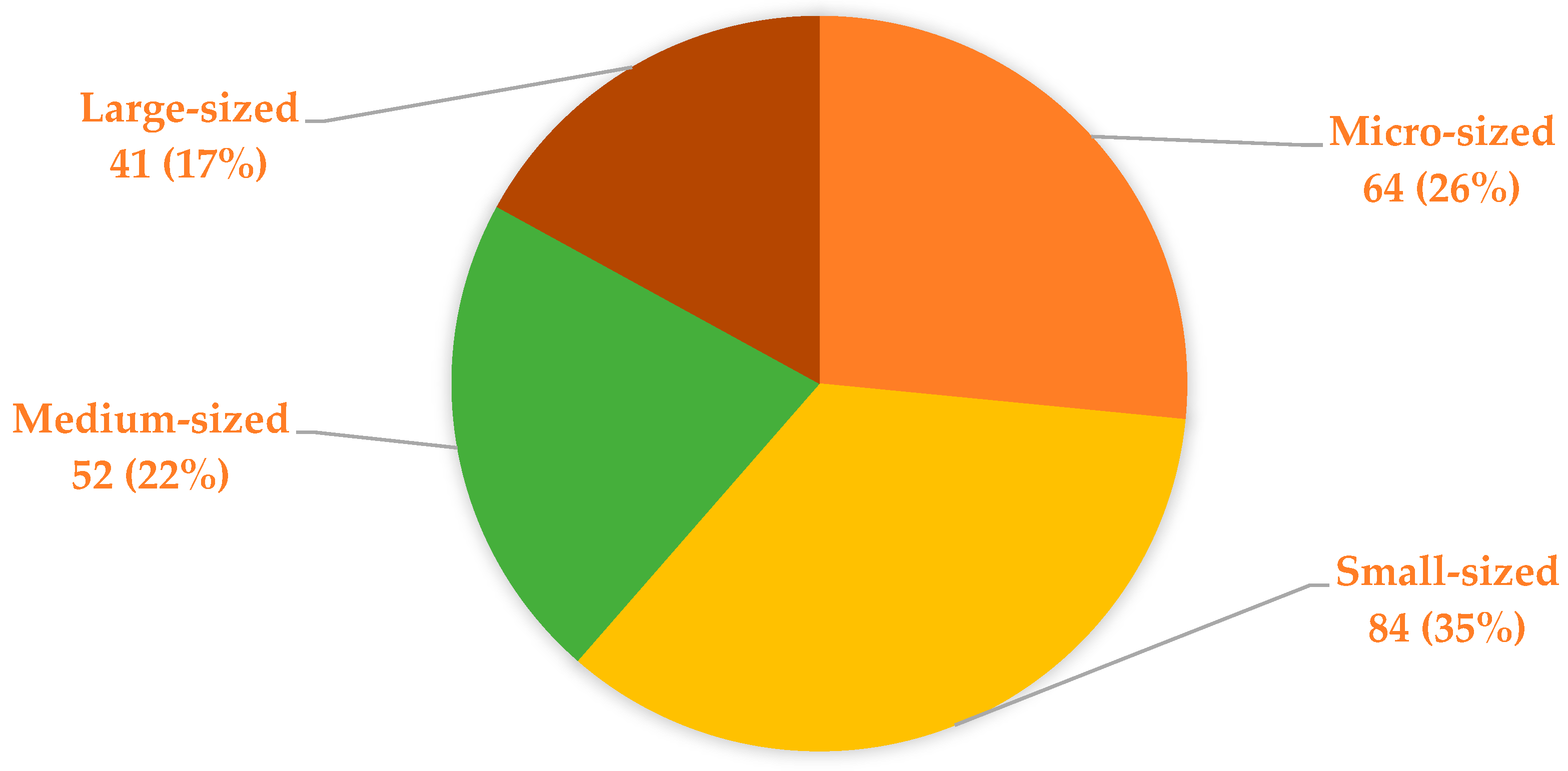
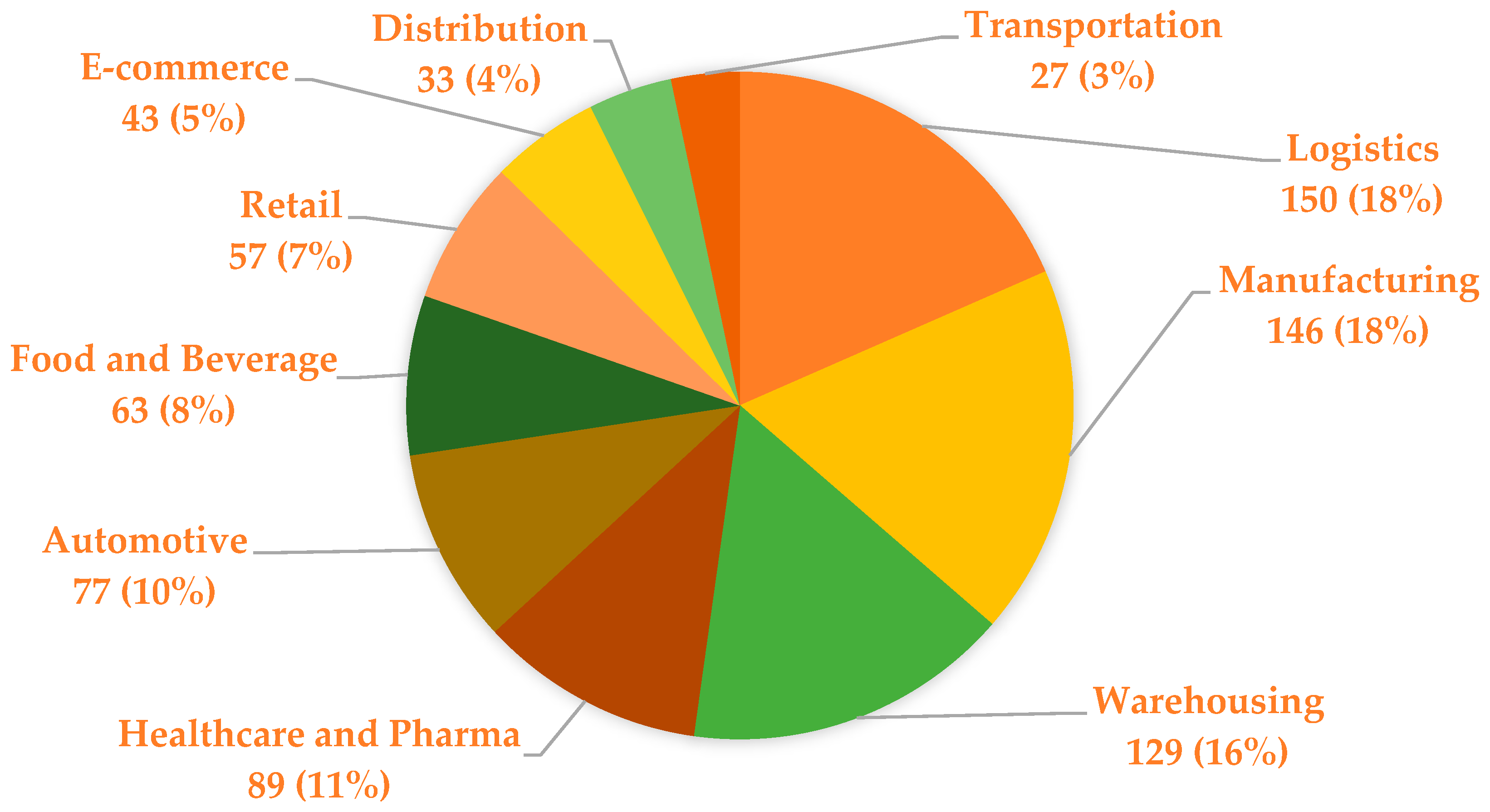
The AGV sector has been analyzed based on a dataset of 241 companies, collectively representing a market size of approximately $131 billion. The integration of Industry 4.0 has significantly influenced the adoption of AGVs, facilitating seamless automation and the incorporation of AGVs into smart manufacturing environments. As shown in Figure 2, the majority of AGV companies are classified as micro-sized (fewer than 25 employees), small-sized (26 to 100 employees), and medium-sized (101 to 500 employees) enterprises, constituting the backbone of this industrial domain [28].
In terms of geographical distribution, the top AGV companies operate across 33 countries. The United States (US) hosts the largest number, with 41 companies, followed by China with 36, Germany with 33, Italy with 15, and France with 13. Figure 3 illustrates that these companies serve a variety of industries. Logistics, manufacturing, and warehousing are the primary sectors, each served by approximately 150 AGV firms. The healthcare and pharmaceutical sector also has a notable presence, with 89 AGV companies, while the automotive sector is represented by 77 firms offering AGV solutions [28].
(2)
Market Analysis for battery ESS
The market analysis indicates a growing global customer demand for cost-effective and sustainable battery ESS, with second-life batteries poised to play an important role in supporting the expansion of renewable energy sources. The battery ESS market is expected to grow significantly, with front-of-the-meter and behind-the-meter projects combined projected to reach 1200 GW of installed capacity worldwide by 2030 [29]. Correspondingly, the market size is estimated to reach between $120 and $150 billion [30].
In Europe, the top 5 markets for battery ESS installations are Germany, Italy, the United Kingdom, Austria, and the Czech Republic. According to SolarPower Europe [31], three scenarios have been forecast for battery ESS capacity by 2028: (1) a high scenario, with improved market conditions and favorable regulatory frameworks, where storage capacity is expected to exceed 400 GWh, whereas in (2), a medium scenario, the capacity is projected to reach 260 GWh, and lastly (3), a low scenario anticipates 150 GWh due to reduced renewable energy penetration, lack of subsidies, funding gaps, and supply chain disruptions. These scenarios underscore the critical importance of policies and investments in shaping the future of ESSs in Europe [31].
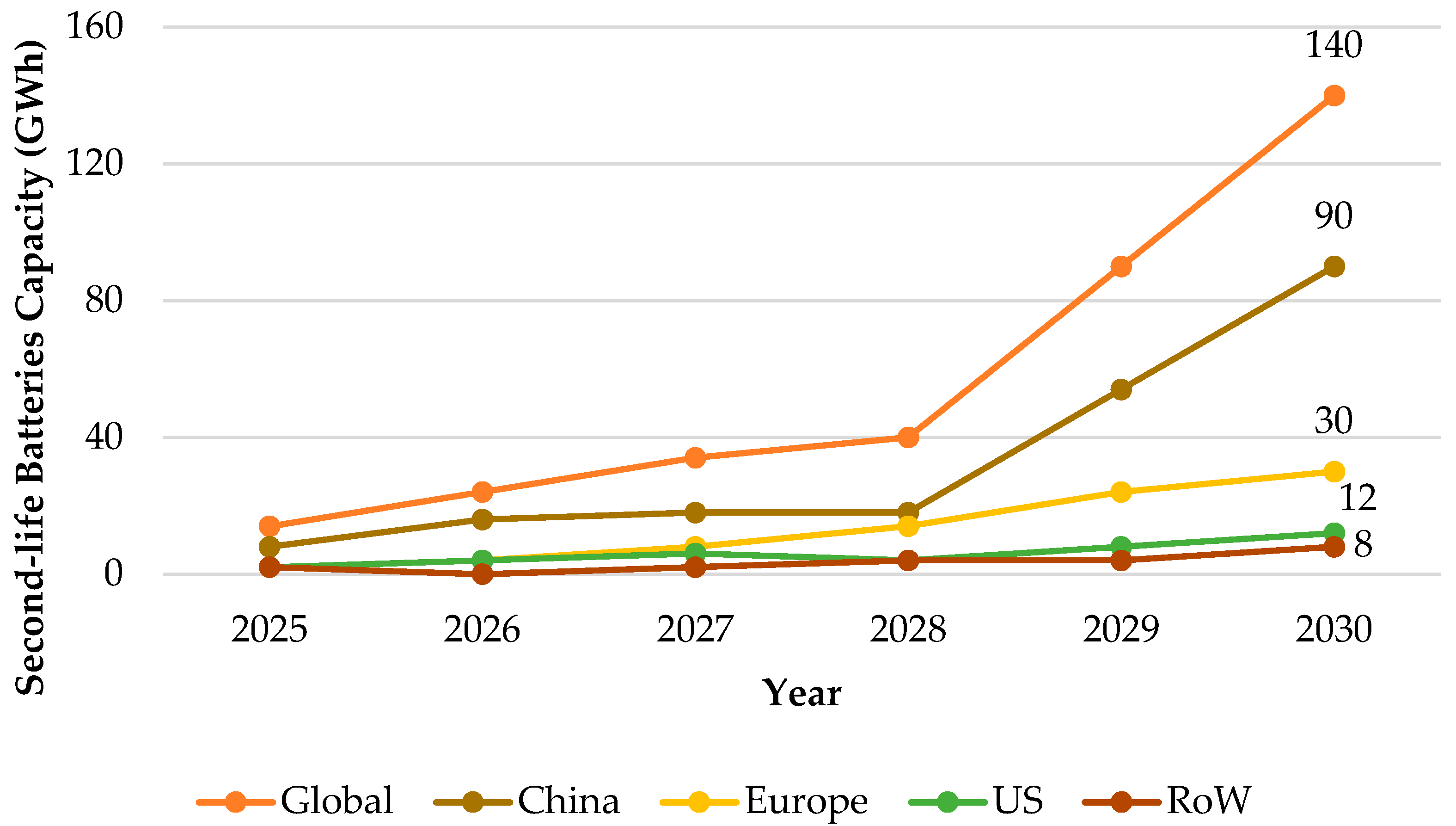
Second-life batteries are well positioned to capture a share of this growth by providing cost-effective and sustainable solutions. As shown in Figure 4, the global cumulative capacity of second-life batteries is expected to reach 352 GWh by 2030. Regionally, China is projected to achieve 210 GWh, followed by Europe with 84 GWh, the US with 38 GWh, and the Rest of the World (RoW) with 20 GWh. As per SolarPower Europe’s medium scenario, new battery ESS installations in Europe are expected to reach 78 GWh by 2028, with second-life batteries accounting for 18% (14 GWh). This highlights the significant potential for second-life batteries to reduce investment costs and lower the carbon footprint of battery ESS by repurposing EOFL batteries and conserving resources [31].
Despite this potential, the economic competitiveness of second-life batteries faces increasing pressure from declining new lithium-ion prices. Average battery pack costs fell 8% from 2024 to 2025, reaching 108 USD/kWh, with further reductions expected beyond 2026 due to LFP adoption and manufacturing overcapacity [32]. In comparison, second-life battery packs are generally lower in cost and can reach values as low as 23 USD/kWh depending on chemistry, SOH, and repurposing processes [33]. Even beyond 2025, this cost advantage can be maintained if repurposing efficiency is optimized. In second-life applications, EOFL battery purchases account for ~56% of total repurposing costs [34]. Cost reductions along the repurposing chain are therefore essential: full automation can reduce costs by up to 97% and processing time by 85% [35,36], representing the main lever for profitability. Break-even is reached when these savings offset the upfront investment compared with new batteries, with EOFL cost, automation efficiency, and logistics as the primary economic drivers.
Deployment cases and pilot studies indicate that second-life batteries can remain economically viable when applied in suitable use cases and supported by appropriate business models. In battery ESS, a municipal pilot in Phoenix, Arizona, deployed approximately 80 kWh of repurposed EV lithium-ion batteries for solar PV integration and emergency backup. The system achieved upfront costs 20–30% lower than comparable new ESS, operated reliably under high ambient temperatures, and reduced CO2 emissions from avoided new battery production [37,38]. In AGV and material-handling applications, pilot reuse of high-voltage batteries from Audi e-tron and hybrid vehicles demonstrated technical compatibility, with remaining capacity sufficient to power forklifts and tow-tractors. Scaling this approach across the fleet could generate cost savings of several million euros [39]. Given the substantial market potential for second-life batteries in both battery ESS and AGV applications, it is imperative to develop sustainable BMs to fully capitalize on these opportunities. Consequently, a comprehensive strategic approach was applied to meticulously analyze BM components as well as thriving BM patterns.

4.1.2. BMs Analysis

The lithium-ion batteries of EVs are essential components in the automotive sector’s transition to more sustainable passenger mobility and freight transportation, emphasizing the elevated costs and greenhouse gas (GHG) emissions intensity [40,41]. This underscores the importance of adopting a cradle-to-grave perspective in the exploration of innovative BMs for second-life batteries [42,43,44]. The separately conducted exploration studies for AGVs and battery ESS adopted distinct BM approaches, which are summarized below.
(1)
BM Investigation for AGVs
17 out of 60 analyzed BM patterns of Gassmann et al. (2014) [45] were preselected for further evaluation. In an expert workshop with SafeLIB project partners, these preselected BM patterns were discussed, evaluated, and ranked to identify the most suitable ones, leading to Direct Selling and Customer Loyalty (as two core BM patterns) and Trash to Cash, Guaranteed Availability, Sensor-as-a-Service, and Make More of It (as four add-on BM patterns).
A brief description of each of these six BM patterns is provided below:
  • Direct Selling–Involves selling repurposed second-life batteries directly to end customers, which enables stronger market control and fosters customer relationships. This BM pattern also facilitates direct collection of customer data, allowing businesses to respond more quickly to market trends and adapt offerings proactively to meet customer needs.
  • Customer Loyalty–Focuses on building long-term relationships through after-sales support, warranties, and additional services to retain customers. This BM pattern aligns well with “Trash to Cash”, “Sensor-as-a-Service”, and “Guaranteed Availability,” enhancing customer engagement.
  • Trash to Cash–Serves as an optional add-on service to core repurposing activities by collecting used second-life batteries for further repurposing or recycling, thereby reinforcing sustainability and circular economy goals.
  • Guaranteed Availability–Ensures that customers have continuous access to functional second-life batteries through services such as predictive maintenance and replacement.
  • Sensor-as-a-Service–Utilizes data collected from second-life batteries to provide predictive analytics, enabling monitoring and optimization of battery performance.
  • Make More of It–Involves monetizing expertise by offering consulting services and technical know-how to additional customers, e.g., regarding design improvements for Original Equipment Manufacturers (OEMs) or SOH assessment methods.
These BM patterns provide a scalable and adaptable framework for value generation in the second-life batteries market. Direct Selling and Customer Loyalty form the foundation, while the add-on BM patterns provide differentiation and long-term viability. This strategic combination of BM patterns ensures that second-life batteries remain sustainable and competitive in the evolving energy and mobility markets.
(2)
BM Investigation of battery ESS
A strategic approach was adopted for the comprehensive analysis of BMs for battery ESS, focusing on the detailed description of value proposition, value creation, value delivery, and value capture.
Second-life battery ESS provides a value proposition comparable to those of new battery ESS, including enhanced energy security, scalability, flexibility, improved grid stability and reliability for a range of customer segments, such as utility-scale operators (transmission and distribution system operators, retailers), commercial and industrial users, and residential consumers. Furthermore, second-life battery ESS offers unique value propositions, particularly in cost reduction, as second-life batteries are generally more affordable than new batteries. They also contribute to reducing the ecological footprint of battery ESS by extending the lithium-ion battery’s life cycle, lowering GHG emissions, and supporting circular economy goals. From an economic perspective, second-life batteries create new revenue streams for OEMs of EVs through resale or rental models. These advantages make second-life batteries relevant not only for stationary battery ESS but also for mobile applications, where cost savings, environmental benefits, and extended usability offer a compelling alternative to new battery solutions.
Realizing these benefits requires a well-structured approach to value creation, encompassing strategic activities, technological advancements, and the resolution of key challenges. The availability of EOFL batteries depends on battery lifespan, fluctuating market demand, and the lack of standardized sourcing platforms. Proper evaluation of EOFL batteries is equally important, as pricing is affected by factors such as degradation levels, market demand, and the cost of new batteries [46,47].
Ensuring the reliability and performance of second-life batteries necessitates standardized evaluation and testing. Many existing testing methods are designed for first-life lithium-ion batteries, making it necessary to develop new methodologies tailored to repurposing companies, which often face challenges such as the lack of historical performance data, tight cost margins, and time constraints. Disassembly costs are determined by factors including the depth of disassembly, labor wages, automation level, and product design. Research suggests that automation has the potential to revolutionize repurposing, with full automation reducing time by 85% and costs by up to 97%, while semi-automation can reduce time by approximately 75% and costs by 76% [36,48]. After disassembly, battery packs/modules with similar SOH and other performance characteristics must be grouped and reassembled for integration into new second-life battery applications. Establishing comprehensive testing and standardization protocols is essential to ensure optimal performance and reliability of repurposed lithium-ion batteries.
The purchase price of EOFL lithium-ion batteries accounts for 56% of total repurposing costs, making fair pricing a key factor in the economic viability of second-life battery applications [35]. Additionally, transportation and packaging require specialized handling due to safety risks, contributing 8–10% to total repurposing expenses (excluding battery purchase cost).
The implementation of technologies such as robotics, AI, and computer vision can further enhance efficiency, making second-life battery repurposing economically more competitive. Recycling remains a competing alternative, with geographically variable recycling infrastructure. However, repurposing is becoming increasingly attractive as the use of rare earth elements like cobalt and nickel declines in newer battery chemistries [49].
Ensuring safety is another critical factor for the successful adoption of second-life batteries. Lithium-ion batteries related risks, such as electrolyte leakage, thermal runaway, and hazardous materials, require stringent safety protocols and regulatory compliance. Increasing consumer awareness through targeted educational campaigns and robust after-sales services is essential for building trust in second-life battery solutions and promoting wider adoption.
From a technology perspective, the outlook for second-life batteries in battery ESS is promising in the short to medium term. Emerging technologies like sodium-ion and solid-state batteries currently pose minimal disruption to the second-life batteries market, but ongoing advancements may influence the long-term trajectory of second-life batteries adoption. Adapting to these developments will require continuous innovation, technology foresight and monitoring, strategic collaborations, and research investments to identify new applications for second-life batteries.
Effective value delivery to target customers is ensured through strategic distribution and partnerships. Literature-based analysis on value delivery mechanisms reveals two dominant approaches. First, EV OEMs manage the entire repurposing process internally, maintaining full control over the value chain and using their own channels to deliver value. Second, EV OEMs partner with or form joint ventures with startups, recycling firms, or energy corporations to leverage shared expertise and resources. These findings are supported by Jiao (2017), who categorizes value creation and value delivery models into three main types: standard, collaborative, and integrative models [50]. Each defines different levels of interaction between EV OEMs and repurposing companies, influencing how second-life batteries reach the final consumers. Regardless of the model, direct sales channels dominate value delivery for large-scale front-of-the-meter applications such as utility-scale battery ESS projects. On the other hand, for the residential customer segment behind-the-meter, a combination of dealer channels and direct sales is employed.
The BMs’ value capture focuses on converting customer benefits into profitable, long-term revenue streams and on choosing the right pricing mechanisms. Insights from the AGV BM patterns served as a foundation for the value capture in the battery ESS context. Patterns such as Guaranteed Availability align with Pay-Per-Use or Energy-as-a-Service options, offering flexible payment structures and dependable battery performance. Direct Selling can be combined with Sensor-as-a-Service or Make More of It to monetize expertise and data services. A Two-Sided Market BM pattern allows EV OEMs to capitalize on EOFL batteries without deeply engaging in the second-life batteries value chain, simplifying operations while still capturing monetary value. When combined with appropriate pricing methods—particularly cost-plus pricing, which balances transparency and profitability in an evolving market—these mechanisms address both the economic and perceptual challenges associated with second-life batteries.
Collectively, these integrated activities from value proposition to value capture are essential for ensuring the economic and sustainable success of second-life battery ESS. To solidify the role of second-life batteries in the evolving AGVs and battery ESS business landscape, recommendations are given in the next section.

4.2. Economic Recommendations for Action

For building a thriving business and streamlining the repurposing process, the following recommendations are outlined:
  • Battery Testing Standards: Regulators and industry should collaborate to develop standardized battery evaluation and testing methodologies for second-life qualification. Clear regulations should be published by governmental organizations to ensure uniformity in evaluation processes and ease the integration of second-life batteries into new applications.
  • Battery Design Standardization: Battery design should be standardized to the extent possible to streamline repurposing. Regulators should mandate that EV OEMs provide detailed disassembly information to repurposing companies without waiting for the full implementation of the EU battery passport initiative in 2027. Industry players in EV manufacturing and battery production should incorporate “Design for Disassembly” and “Design for Maintenance” principles right from the beginning of the battery lifecycle.
  • Economic Incentives: Tax breaks and subsidies should be provided to companies engaged in battery repurposing to reduce operational costs. Additionally, incentives should be offered to EV users who replace their batteries and provide them for repurposing, encouraging participation in the circular economy.
  • Mandate Minimum second-life batteries Utilization: Regulations should require a minimum percentage of second-life batteries to be used in battery ESS projects. This will ensure that second-life batteries have a steady market demand and can be scaled up.
  • Invest in Research and Development: Funding should be allocated to research and development initiatives. Research on innovative repurposing processes and new second-life battery applications should be encouraged to unlock their full potential and foster widespread adoption.

4.3. Future Economic Research Needs

Future research shall prioritize the development of advanced evaluation and testing methods to enable accurate assessment of the remaining capacity of EOFL batteries for second-life qualification. In addition, exploring automation in repurposing processes- especially in the disassembly of EOFL lithium-ion batteries by using robotics, AI, and computer vision-offers significant potential to reduce costs and enhance scalability.
Conducting comprehensive economic analyses of second-life battery applications in Europe, including procurement, repurposing, implementation, and revenue generation, will provide valuable insights into market feasibility under European conditions.
These research directions will support the efficient and sustainable integration of second-life batteries into stationary and mobile applications, contributing to the advancement of the circular economy and the broader adoption of second-life battery solutions.

5. Discussion and Conclusions

The present paper presents a comprehensive interdisciplinary analysis of the repurposing of lithium-ion batteries from EVs for second-life applications, with a focus on technical, legal, and economic dimensions. More than 60 s-life use cases have been identified, and through an integrated assessment approach considering technical parameters (such as C-rate, temperature, capacity requirements, and mechanical load), economic viability, and legal compliance, two applications were highlighted as particularly promising: AGVs and industrial ESSs for renewable firming purposes.

5.1. Technical Perspective

From a technical standpoint, second-life deployment of EV batteries presents both opportunities and challenges. While batteries at EOFL retain sufficient capacity, their aging state varies significantly depending on use history. The qualification of such batteries thus requires a more nuanced assessment than SOH alone can provide. A comparative study of 31 health indicators led to the identification of 13 parameters—such as Coulombic efficiency, Area VdQ, VRP, and OCV hysteresis—that exhibit strong sensitivity to aging and loading conditions. It was shown that batteries with similar SOH values can differ markedly in terms of degradation mechanisms such as LLI, LAM, and IRI.
Furthermore, operational loads during second-life use—especially mechanical and high C-rate electrical loads—were found to pose varying risks depending on the degree of battery aging. Mechanical loads, in particular, were more critical for mobile applications. Based on these insights, a two-step qualification methodology was proposed: an initial qualitative inspection (e.g., for swelling, corrosion, damage), followed by a quantitative measurement protocol involving a standardized charging–waiting–discharging procedure. This protocol enables the extraction of key safety-relevant parameters and supports load-adapted safety margin assessments. The methodology is scalable and robust even in the absence of first-life battery data, making it well-suited to industrial settings. Importantly, the proposed qualification workflow also supports regulatory compliance and economic transparency. By systematically measuring and recording key indicators (SOH, Area VdQ, Coulombic efficiency, VRP, and OCV) for each battery, the process generates documented evidence of battery state that can be directly integrated into digital battery passports or other reporting obligations under the EU Batteries Regulation.
To further enhance uncertainty-aware qualification, measured parameters can be combined with predictive models. Approaches such as inter-cell deep learning, e.g., BatLiNet [51], and standardized benchmarks like BatteryML [52] allow estimation of Remaining Useful Life (RUL), accounting for cell-to-cell variability and usage history. Integrating these models supports more precise calibration of safety margins, complementing traditional parameter-based screening.

5.2. Legal Perspective

Legally, the repurposing of EV batteries intersects with multiple regulatory fields, notably product law, waste law, and transport law. The entry into force of the new EU Batteries Regulation (Regulation [EU] 2023/1542) marks a significant turning point. Unlike the preceding Batteries Directive, the regulation follows a life-cycle-based approach, aiming to govern battery use from production to recycling. It introduces clearer definitions of “repurposing” and establishes the conditions under which a used battery does or does not become waste.
However, significant interpretive questions remain, especially regarding the boundary between used and waste batteries and the legal handling of potential damage (e.g., from accidents) in the context of conformity assessment. The regulation’s interaction with harmonized technical standards is also noteworthy: compliance is presumed when such standards are met, although other proof mechanisms remain possible.
The legal analysis also identified complementary instruments for promoting repurposing. These include financial support mechanisms under EU state aid law, the potential of public procurement (e.g., innovation partnerships, green criteria), tax incentives (e.g., exemptions for second-life storage systems), and recognition of repurposing as a sustainable economic activity under the EU Taxonomy Regulation. Recommendations were made for legal adjustments, especially the need to adapt Austrian legislation (e.g., BatterienV) and for the development of delegated acts and harmonized standards at the EU level.

5.3. Economic Perspective

Economically, the reuse of EV batteries in second-life applications offers a promising means to reduce costs and support sustainability. In-depth market analysis shows considerable potential for second-life batteries in both AGVs and stationary ESS, particularly as demand for storage solutions grows globally. In the ESS segment alone, cumulative second-life battery capacity is expected to reach 352 GWh by 2030, with Europe contributing a projected 84 GWh. Second-life batteries can reduce investment costs and the carbon footprint associated with battery storage, making them a competitive alternative to new batteries.
BM analyzes, differentiated for AGVs and ESS, highlights viable patterns that align with circular economy principles. For AGVs, six BM patterns were identified, including Direct Selling, Customer Loyalty, Trash to Cash, Guaranteed Availability, Sensor-as-a-Service, and Make More of It. These patterns can be combined flexibly to address market needs and support sustainability goals. For ESS, BM components (value proposition, creation, delivery, and capture) were assessed in detail. The importance of automation in disassembly and testing was emphasized, with studies showing that automation can significantly reduce costs and time.
Moreover, second-life batteries BMs must address economic constraints such as the high-cost share of battery procurement, testing requirements, and logistics (e.g., packaging, transport). Value delivery models may be standard, collaborative, or integrative—depending on whether OEMs manage repurposing in-house or in partnership with other actors. Value capture strategies (e.g., Energy-as-a-Service, Sensor-as-a-Service) must be aligned with flexible and cost-transparent pricing methods to achieve commercial viability.

6. Future Directions

This interdisciplinary study demonstrates that the second-life use of lithium-ion EV batteries is not only technically feasible and economically advantageous but also increasingly supported by legal frameworks. However, the realization of these potentials requires:
  • The implementation of robust and scalable battery qualification methodologies.
  • The continued development and harmonization of the legal environment (particularly under the EU Batteries Regulation).
  • The formulation of targeted BMs is supported by public incentives and industrial collaboration.
Future research should focus on advancing automation in qualification and disassembly, improving access to first-life battery data (e.g., via digital battery passports), and refining predictive models for second-life suitability. At the legal level, further jurisprudential analysis is needed to clarify phase boundaries between product and waste law and to ensure legal certainty in practical implementation. On the economic side, a better understanding of market dynamics, value chains, and investment incentives is necessary to foster the widespread adoption of second-life batteries across applications and regions.
In sum, repurposing EV batteries for second-life use stands as a crucial element of the circular battery economy and the broader transition toward a sustainable energy system. Continued interdisciplinary cooperation will be essential to translate insights into industrial practice and policy.

Author Contributions

Conceptualization, J.M. and W.R.; methodology, J.M. and W.R.; formal analysis, G.A., F.R. and E.M.; investigation, G.A., F.R. and E.M.; resources, G.A., V.K., F.R., P.A.T. and E.M.; writing—original draft preparation, J.M., W.R., G.A., V.K., F.R., P.A.T. and E.M.; writing—review and editing, W.R. and E.M.; visualization, P.A.T. and F.R.; supervision, J.M. and W.R.; project administration, J.M.; funding acquisition, J.M. All authors have read and agreed to the published version of the manuscript.

Funding

This work originates from the research project SafeLIB. The COMET Project SafeLIB is funded within the framework of COMET—Competence Centers for Excellent Technologies (Grant agreement No. 882506) by BMK, BMDW, the Province of Upper Austria, the Province of Styria, as well as SFG. The COMET Program is managed by FFG. The authors thank the consortium members of the SafeLIB project for supporting this work. Supported by the Open Access Funding and the Research Initiative “nachhaltige Personen- und Gütermobilität” of Graz University of Technology.

Data Availability Statement

No new data were created or analyzed in this study.

Acknowledgments

Open Access Funding by the Graz University of Technology. The authors thank the consortium members of the SafeLIB project for their valuable input to this work.

Conflicts of Interest

Author Werner Rom was employed by the company SYRION e.V.—Systemic Research & Innovation, Graz, Austria, a non-profit research organization focused on research and innovation projects in sustainable mobility and related fields. The organization does not sell commercial products related to this manuscript. The remaining authors declare that the research was conducted in the absence of any commercial or financial relationships that could be construed as a potential conflict of interest.

Abbreviations

The following abbreviations are used in this manuscript:
AGVAutomated Guided Vehicle
AIArtificial Intelligence
BMBusiness Model
CVCPConstant Voltage Charging Profile
EAGErneuerbaren-Ausbau-Gesetz
ECJEuropean Court of Justice
EIPEuropean Innovation Partnerships
EOFLEnd-of-First-Life
ESSEnergy Storage System
EUEuropean Union
EVElectric Vehicles
FMEAFailure Mode and Effects Analysis
GHGGreenhouse Gas
GPPGreen Public Procurement
IRIIncrease of Internal Resistance
LAMLoss of Active Material
LLILoss of Lithium Inventory
OCVOpen Circuit Voltage
OEMOriginal Equipment Manufacturer
PCPPre-Commercial Procurement
PPIPublic Procurement of Innovative Solutions
RoWRest of the World
RULRemaining Useful Life
SOCEState of Certified Energy
SOHState of Health
USUnited States
VRPVoltage Relaxation Profile
VwGHVerwaltungsgerichtshof

References

  1. Michelini, E.; Höschele, P.; Ratz, F.; Stadlbauer, M.; Rom, W.; Ellersdorfer, C.; Moser, J. Potential and Most Promising Second-Life Applications for Automotive Lithium-Ion Batteries Considering Technical, Economic and Legal Aspects. Energies 2023, 16, 2830. [Google Scholar] [CrossRef] [Scilit]
  2. Kampker, A.; Heimes, H.H.; Offermanns, C.; Vienenkötter, J.; Frank, M.; Holz, D. Identification of Challenges for Second-Life Battery Systems—A Literature Review. World Electr. Veh. J. 2023, 14, 80. [Google Scholar] [CrossRef] [Scilit]
  3. Michelini, E.; Höschele, P.; Abbas, S.M.; Ellersdorfer, C.; Moser, J. Assessment of Health Indicators to Detect the Aging State of Commercial Second-Life Lithium-Ion Battery Cells through Basic Electrochemical Cycling. Batteries 2023, 9, 542. [Google Scholar] [CrossRef] [Scilit]
  4. Michelini, E.; Höschele, P.; Ellersdorfer, C.; Moser, J. FMEA used for the identification of critical loads applied to second-life mobile and stationary applications. In Proceedings of the Battery Conference 2023: Advanced Battery Power, Aachen, Germany, 27–28 April 2023. [Google Scholar] [CrossRef]
  5. Michelini, E.; Höschele, P.; Prielinger, A.; Ellersdorfer, C.; Moser, J. Effects of C-Rate on the Thermal Behavior of Commercial Lithium-Ion Pouch Cells with Different Aging Histories for a Successful Second-Life Transition. In Trends in Clean Energy Research; Springer: Berlin/Heidelberg, Germany, 2024; pp. 189–197. [Google Scholar] [CrossRef] [Scilit]
  6. Michelini, E.; Ellersdorfer, C.; Hanzu, I.; Hofer, G.; Höschele, P.; Moser, J. Impact of an interrupted mechanical deformation on the electrical behavior of commercial lithium-ion pouch cells with varied aging histories for battery qualification. J. Power Sources 2024, 611, 234768. [Google Scholar] [CrossRef] [Scilit]
  7. Maddipatla, S.; Rauf, H.; Osterman, M.; Arshad, N.; Pecht, M. Swelling Mechanisms, Diagnostic Applications, and Mitigation Strategies in Lithium-Ion Batteries. Batteries 2025, 11, 356. [Google Scholar] [CrossRef] [Scilit]
  8. Michelini, E.; Höschele, P.; Ellersdorfer, C.; Moser, J. Impact of Prolonged Electrochemical Cycling on Health Indicators of Aged Lithium-Ion Batteries for a Second-Life Use: Under review. IEEE Access 2024, 12, 193707–193716. [Google Scholar] [CrossRef] [Scilit]
  9. Ohneseit, S.; Finster, P.; Floras, C.; Lubenau, N.; Uhlmann, N.; Seifert, H.J.; Ziebert, C. Thermal and Mechanical Safety Assessment of Type 21700 Lithium-Ion Batteries with NMC, NCA and LFP Cathodes–Investigation of Cell Abuse by Means of Accelerating Rate Calorimetry (ARC). Batteries 2023, 9, 237. [Google Scholar] [CrossRef] [Scilit]
  10. Yang, F.; Wang, D.; Zhao, Y.; Tsui, K.-L.; Bae, S.J. A Study of the Relationship between Coulombic Efficiency and Capacity Degradation of Commercial Lithium-Ion Batteries. Energy 2018, 145, 486–495. [Google Scholar] [CrossRef] [Scilit]
  11. Habib, M.I. Comparative SOH Diagnosis and Forecasting of LFP and NMC Lithium-Ion Batteries in Electric Vehicles under Realistic Operating Conditions. Int. J. Electr. Comput. Eng. Res. 2025, 5, 7–15. [Google Scholar] [CrossRef] [Scilit]
  12. Fischer, M.; Brand, M.J.; Karger, A.; Gomez, M.R.; Rehm, M.; Natterer, J.; Jossen, A. How Degradation of Lithium-Ion Batteries Impacts Capacity Fade and Resistance Increase: A Systematic, Correlative Analysis. J. Power Sources 2025, 656, 237921. [Google Scholar] [CrossRef] [Scilit]
  13. Yu, Q.-Q.; Xiong, R.; Wang, L.-Y.; Lin, C. A Comparative Study on Open Circuit Voltage Models for Lithium-Ion Batteries. Chin. J. Mech. Eng. 2018, 31, 65. [Google Scholar] [CrossRef] [Scilit]
  14. Wang, R.; Liu, G.; Wang, C.; Ji, Z.; Yu, Q. A Comparative Study on Mechanical-Electrical-Thermal Characteristics and Failure Mechanism of LFP/NMC/LTO Batteries under Mechanical Abuse. eTransportation 2024, 22, 100359. [Google Scholar] [CrossRef] [Scilit]
  15. Mao, N.; Gadkari, S.; Wang, Z.; Zhang, T.; Bai, J.; Cai, Q. A Comparative Analysis of Lithium-Ion Batteries with Different Cathodes under Overheating and Nail Penetration Conditions. Energy 2023, 278, 128027. [Google Scholar] [CrossRef] [Scilit]
  16. Kim, N.; Shamim, N.; Crawford, A.; Viswanathan, V.V.; Sivakumar, B.M.; Huang, Q.; Reed, D.; Sprenkle, V.; Choi, D. Comparison of Li-Ion Battery Chemistries under Grid Duty Cycles. J. Power Sources 2022, 546, 231949. [Google Scholar] [CrossRef] [Scilit]
  17. Li, K.; Gao, X.; Wang, S.; Peng, S.; Zhang, W.; Wu, W.; Wang, H.; Liu, P.; Han, X.; Cao, Y.-C.; et al. Comparative Analysis of Multidimensional Signals Evolution in Prismatic and Pouch LiFePO4 Batteries under Thermal Abuse. Appl. Energy 2024, 372, 123818. [Google Scholar] [CrossRef] [Scilit]
  18. Tao, S.; Guo, R.; Lee, J.; Moura, S.; Casals, L.C.; Jiang, S.; Shi, J.; Harris, S.J.; Zhang, T.; Chung, C.Y.; et al. Immediate Remaining Capacity Estimation of Heterogeneous Second-Life Lithium-Ion Batteries via Deep Generative Transfer Learning. Energy Environ. Sci. 2025, 18, 7413–7426. [Google Scholar] [CrossRef] [Scilit]
  19. Stadlbauer, M. Innovation in der Recycling-Wirtschaft am Beispiel der Second-Life-Nutzung–Öffentlich-Rechtliche Aspekte und Rechtsfragen bei der Second-Life-Nutzung von Lithium-Ionen-Batterien aus Elektrofahrzeugen: RdU-UT 2023/26, 2023; p. 92. Available online: https://rdb.manz.at/document/rdb.tso.LIrduut20230403 (accessed on 27 January 2026).
  20. UL 1974; Standard for Evaluation for Repurposing Batteries. Underwriters Laboratories: Northbrook, IL, USA, 2023.
  21. EN 18061:2025; Road Vehicles—Rechargeable Batteries with Internal Energy Storage—Steps, Conditions and Protocols for Safe Repair, Re-Use and Preparation for Repurposing of Modules and Batteries Designed for EV Applications. European Committee for Standardization (CEN): Brussels, Belgium, 2025.
  22. IEC 63330 1:2024; Repurposing of Secondary Batteries—Part 1: General Requirements. International Electrotechnical Commission (IEC): Geneva, Switzerland, 2024.
  23. IEC 63338:2024; General Guidance on Reuse and Repurposing of Secondary Cells and Batteries. International Electrotechnical Commission (IEC): Geneva, Switzerland, 2024.
  24. Aichinger, G. Second Life: Die Umnutzung von Batterien aus Elektrofahrzeugen Aus Verwaltungsrechtlicher Sicht. Doctoral Dissertation, Johannes Kepler Universität Linz, Linz, Austria, 2026. [Google Scholar]
  25. Shqairat, A.; Sébastien, L.; Pascale, M.; Cali, N.; Alexandre, C. Implications of European Union Regulation on the Circular Economy and Stakeholder Strategies in the Electric Vehicle Lithium-Ion Battery Sector. Manag. Environ. Qual. Int. J. 2025, 36, 155–182. [Google Scholar] [CrossRef] [Scilit]
  26. Aichinger, G.; Kron, V.; Michelini, E. Second Life: Beihilfen bei der Umnutzung von E-Auto-Batterien. In Beihilferecht, Jahrbuch Beihilferecht 25; Jäger, T., Haslinger, B., Eds.; Verlag Österreich: Vienna, Austria, 2025. [Google Scholar] [CrossRef] [Scilit]
  27. de Waal, I.M. The Legal Transition Towards a More Circular Battery Value Chain: A Critical Analysis of the Batteries Regulation. Transnatl. Environ. Law 2025, 14, 553–581. [Google Scholar] [CrossRef] [Scilit]
  28. AGV Network. AGV Manufacturers Worldwide. Available online: https://www.agvnetwork.com/automated-guided-vehicles-manufacturers (accessed on 7 April 2023).
  29. IEA. Batteries and Secure Energy Transitions; International Energy Agency: Paris, France, 2024; Available online: https://www.iea.org/reports/batteries-and-secure-energy-transitions (accessed on 10 January 2026).
  30. Jarbratt, G. Enabling Renewable Energy with Battery Energy Storage Systems. 2023. Available online: https://www.mckinsey.com/industries/automotive-and-assembly/our-insights/enabling-renewable-energy-with-battery-energy-storage-systems#/ (accessed on 27 January 2026).
  31. SolarPower Europe. European Market Outlook for Battery Storage 2024–2028. 2024. Available online: https://www.solarpowereurope.org/insights/outlooks/european-market-outlook-for-battery-storage-2024-2028#download (accessed on 1 May 2024).
  32. Catsaros, O. Lithium-Ion Battery Pack Prices Fall to $108 Per Kilowatt-Hour, Despite Rising Metal Prices: BloombergNEF. BloombergNEF, 9 December 2025. Available online: https://about.bnef.com/insights/clean-transport/lithium-ion-battery-pack-prices-fall-to-108-per-kilowatt-hour-despite-rising-metal-prices-bloombergnef/ (accessed on 27 January 2026).
  33. Cao, Z.; Kurdkandi, N.V.; Mi, C. Techno-Economic and Environmental Viability of Second-Life EV Batteries in Commercial Buildings: An Analysis Using Real-World Data. Batteries 2025, 11, 412. [Google Scholar] [CrossRef] [Scilit]
  34. Lander, L.; Tagnon, C.; Nguyen-Tien, V.; Kendrick, E.; Elliott, R.J.R.; Abbott, A.P.; Edge, J.S.; Offer, G.J. Breaking it down: A techno-economic assessment of the impact of battery pack design on disassembly costs. Appl. Energy 2023, 331, 120437. [Google Scholar] [CrossRef] [Scilit]
  35. Li, J.; He, S.; Yang, Q.; Wei, Z.; Li, Y.; He, H. A Comprehensive Review of Second Life Batteries Toward Sustainable Mechanisms: Potential, Challenges, and Future Prospects. IEEE Trans. Transp. Electrif. 2023, 9, 4824–4845. [Google Scholar] [CrossRef] [Scilit]
  36. Gu, X.; Bai, H.; Cui, X.; Zhu, J.; Zhuang, W.; Li, Z.; Hu, X.; Song, Z. Challenges and Opportunities for Second-Life Batteries: Key Technologies and Economy. Renew. Sustain. Energy Rev. 2024, 192, 114191. [Google Scholar] [CrossRef] [Scilit]
  37. Contributing Author. Case Study: The Second Life Battery Economy of Phoenix. Solar Builder Magazine, 15 January 2025. Available online: https://solarbuildermag.com/projects/case-study-the-second-life-battery-economy-of-phoenix/ (accessed on 27 January 2026).
  38. Khabur, A. Pilot Project Uses Remanufactured Lithium Batteries from Electric Forklifts to Power Lighting in a Phoenix Park Max. City of Phoenix Embraces Second-Life Batteries. Pv Magazine USA, 7 November 2024. Available online: https://pv-magazine-usa.com/2024/11/07/city-of-phoenix-embraces-second-life-batteries/ (accessed on 27 January 2026).
  39. Reintjes, M. Audi Batteries Find Second Life in Forklift Trucks • Recycling International. Recycling International, 18 March 2019. Available online: https://recyclinginternational.com/business/audi-battery-recycling/18993/ (accessed on 27 January 2026).
  40. Ellingsen, L.A.-W.; Hung, C.R.; Strømman, A.H. Identifying key assumptions and differences in life cycle assessment studies of lithium-ion traction batteries with focus on greenhouse gas emissions. Transp. Res. Part D Transp. Environ. 2017, 55, 82–90. [Google Scholar] [CrossRef] [Scilit]
  41. Blömeke, S.; Scheller, C.; Cerdas, F.; Thies, C.; Hachenberger, R.; Gonter, M.; Herrmann, C.; Spengler, T.S. Material and energy flow analysis for environmental and economic impact assessment of industrial recycling routes for lithium-ion traction batteries. J. Clean. Prod. 2022, 377, 134344. [Google Scholar] [CrossRef] [Scilit]
  42. Shahjalal, M.; Roy, P.K.; Shams, T.; Fly, A.; Chowdhury, J.I.; Ahmed, M.R.; Liu, K. A review on second-life of Li-ion batteries: Prospects, challenges, and issues. Energy 2022, 241, 122881. [Google Scholar] [CrossRef] [Scilit]
  43. Olsson, L.; Fallahi, S.; Schnurr, M.; Diener, D.; van Loon, P. Circular Business Models for Extended EV Battery Life. Batteries 2018, 4, 57. [Google Scholar] [CrossRef] [Scilit]
  44. Albertsen, L.; Richter, J.L.; Peck, P.; Dalhammar, C.; Plepys, A. Circular business models for electric vehicle lithium-ion batteries: An analysis of current practices of vehicle manufacturers and policies in the EU. Resour. Conserv. Recycl. 2021, 172, 105658. [Google Scholar] [CrossRef] [Scilit]
  45. Gassmann, O.; Frankenberger, K.; Csik, M. Geschäftsmodelle Entwickeln: 55 Innovative Konzepte mit dem St. Galler Business Model Navigator; Carl Hanser Verlag: München, Germany, 2017. [Google Scholar]
  46. Haram, M.H.S.M.; Sarker, M.T.; Ramasamy, G.; Ngu, E.E. Second Life EV Batteries: Technical Evaluation, Design Framework, and Case Analysis. IEEE Access 2023, 11, 138799–138812. [Google Scholar] [CrossRef] [Scilit]
  47. Martinez-Laserna, E.; Gandiaga, I.; Sarasketa-Zabala, E.; Badeda, J.; Stroe, D.-I.; Swierczynski, M.; Goikoetxea, A. Battery second life: Hype, hope or reality? A critical review of the state of the art. Renew. Sustain. Energy Rev. 2018, 93, 701–718. [Google Scholar] [CrossRef] [Scilit]
  48. Cready, E.; Lippert, J.; Pihl, J.; Weinstock, I.; Symons, P.; Jungst, R.P. Final Report: Technical and Economic Feasibility of Applying Used EV Batteries in Stationary Applications; A Study for the DOE Energy Storage Systems Program; Sandia National Laboratories: Albuquerque, NM, USA, 2003. Available online: https://www.osti.gov/biblio/809607 (accessed on 16 March 2023).
  49. Niese, N.; Pieper, C.; Arora, A.; Xie, A. The Case for a Circular Economy in Electric Vehicle Batteries. 2020. Available online: https://www.bcg.com/publications/2020/case-for-circular-economy-in-electric-vehicle-batteries (accessed on 12 December 2024).
  50. Jiao, N. Business Models for Second-life Electric Vehicle Battery Systems. Ph.D. Thesis, University of Cambridge, Cambridge, UK, 2019. [Google Scholar]
  51. Zhang, H.; Li, Y.; Zheng, S.; Lu, Z.; Gui, X.; Xu, W.; Bian, J. Battery Lifetime Prediction across Diverse Ageing Conditions with Inter-Cell Deep Learning. Nat. Mach. Intell. 2025, 7, 270–277. [Google Scholar] [CrossRef] [Scilit]
  52. Zhang, H.; Gui, X.; Zheng, S.; Lu, Z.; Li, Y.; Bian, Y. BatteryML: An Open-Source Platform for Machine Learning on Battery Degradation. arXiv 2023, arXiv:2310.14714. [Google Scholar] [CrossRef] [Scilit]
Figure 1. Two-step workflow for second-life battery qualification. Step 1: qualitative inspection. Step 2: quantitative measurement of key indicators.
Wevj 17 00066 g001
Figure 2. Customer segmentation by company size. Adapted from [24].
Wevj 17 00066 g002
Figure 3. Customer segmentation by industry sector served. Adapted from [24].
Wevj 17 00066 g003
Figure 4. Projected capacity of second-life batteries, 2024–2030. Adapted from [26].
Wevj 17 00066 g004
Disclaimer/Publisher’s Note: The statements, opinions and data contained in all publications are solely those of the individual author(s) and contributor(s) and not of MDPI and/or the editor(s). MDPI and/or the editor(s) disclaim responsibility for any injury to people or property resulting from any ideas, methods, instructions or products referred to in the content.