


Abstract
Next-generation wireless systems are becoming increasingly complex, and there is a growing need for intelligent mobility management mechanisms that can ensure service continuity while making efficient use of network resources. In 5G and future 6G networks, dense small-cell deployments, heterogeneous architectures, and highly mobile users mean that frequent handovers (HOs), uneven traffic distribution, and variable network conditions often lead to degraded user experience, higher signalling overhead, and inefficient use of resources. Because user movement continuously redistributes traffic across cells, effective mobility management is inseparable from load balancing, and the HO process serves as the primary mechanism through which the network manages both. Recent advances in artificial intelligence (AI), particularly machine learning (ML) and deep learning (DL), offer an opportunity to transform mobility management from reactive to predictive, since data-driven solutions can forecast user movement, fine-tune HO execution, and dynamically allocate radio resources. This paper presents a comprehensive survey of AI-enabled mobility management strategies for 5G, Beyond 5G, and upcoming 6G networks, with particular attention to HO optimization and load balancing. The surveyed literature is organized around the complete lifecycle of AI-enabled mobility management, from mobility prediction and HO decision-making through parameter optimization and execution to KPI monitoring and model updating. This structure is used to classify existing frameworks according to their architectures, learning approaches, and optimization goals. The survey then examines how intelligent HO schemes address critical issues such as load balancing, interference mitigation, connection reliability, and quality-of-service maintenance, and compares conventional and AI-based methods against standardized key performance indicators for mobility robustness, resource efficiency, and service continuity. Finally, the paper discusses unresolved problems and emerging trends, including federated learning, multi-connectivity, and non-terrestrial integration, that will shape the evolution of autonomous mobility management solutions for future wireless networks.
1. Introduction
Mobility management is a critical aspect of modern cellular networks, particularly in 5G and the upcoming 6G networks, as users are increasingly mobile and demand seamless service across diverse environments. In 5G, mobility management enables continuous device connectivity as they move between cells or network regions. It ensures that user equipment (UE) maintains optimal service quality, regardless of their location. Techniques such as HO management, user equipment tracking, and seamless service continuity are key components of mobility management. These systems leverage advanced algorithms to predict user movement patterns and optimize network resources, enabling uninterrupted communication even at high speeds, such as on trains [1,2], and during transitions between network areas. In 6G, mobility management will be further enhanced by AI and machine learning (ML) to offer even more dynamic, context-aware mobility solutions [3].
Load balancing is a vital technique for optimizing the performance and resource utilization of cellular networks. Although it is not always addressed as a central theme in mobility research, its presence within the broader context of resource management and mobility management is undeniable [4]. Efficient handover (HO) management inherently relies on effective load balancing across base stations (BSs) and network resources to prevent congestion and ensure quality of service (QoS). In 5G, load balancing ensures that network traffic is evenly distributed across base stations, cells, or network slices, preventing congestion and enhancing overall system performance [5].
Mobility management and load balancing are closely related in cellular networks, particularly in 5G and future 6G systems, as both aim to ensure optimal performance, reliability, and user experience in highly dynamic environments. While they focus on different aspects of network optimization, they often collaborate to address challenges in network traffic, resource allocation, and user mobility [6].
The relationship between mobility management and load balancing becomes evident when considering how user movement impacts network load and resource utilization [7,8]. As users move through different cells, the load on a specific cell or base station can increase or decrease depending on their location and the volume of data they generate. Mobility management systems, therefore, need to work in tandem with load-balancing algorithms to ensure that when a user moves into a new area or cell, the new cell is not overloaded and resources are appropriately allocated to maintain quality of service. Similarly, if a base station is nearing capacity, mobility management can trigger an HO to a less congested cell, thus supporting load balancing by redistributing users across the network.
Several key challenges complicate mobility management in 5G and future 6G networks. The deployment of mm-wave technology, while offering high bandwidth, suffers from high path loss and susceptibility to blockage, leading to frequent and potentially disruptive HO events [9]. Network densification, achieved by deploying a large number of small cells (e.g., picocells and femtocells), increases HO frequency, potentially leading to higher latency and HO failure (HOF) [10]. Moreover, the increasing number of connected devices and the prevalence of high-mobility scenarios (e.g., high-speed trains) demand efficient and adaptive HO mechanisms. The stringent QoS requirements of 5G and the even more demanding requirements anticipated for 6G only intensify these challenges.
Traditional HO techniques often rely on signal strength measurements to trigger the HO process. However, these methods may not be suitable for the dynamic and complex environments of 5G and 6G networks. To address these limitations, various advanced HO techniques have been proposed, often incorporating ML algorithms to enhance decision-making [11,12,13] and advance deep learning (DL) [14,15,16,17]. These ML and DL algorithms can predict user movement patterns and network conditions, enabling more proactive HOs that take into account not only the user’s location but also current network load. By leveraging this information, the network can balance the load more efficiently, maintaining optimal connections while minimizing congestion and keeping overall network performance high.
The scope of this survey is deliberately centered on the intersection of mobility management and load management, with the handover process as the unifying control mechanism. User mobility continuously redistributes traffic across cells, and the HO decision—when to switch, and to which cell—is the primary lever by which the network can shape this distribution in real time. Accordingly, we survey AI/ML techniques through this lens: mobility prediction insofar as it informs HO decisions, load balancing insofar as it is realized through HO parameter adaptation (load balancing optimization (LBO)/mobility robustness optimization (MRO)), and emerging domains (multi-connectivity, non-terrestrial networks (NTN), Wi-Fi integration, vehicular networks) insofar as they reshape the HO problem. Topics such as physical-layer beam management, security protocol design, and core-network procedures are discussed only where they directly constrain or enable HO-based load management; comprehensive treatment of those areas is available in the dedicated surveys reviewed in Section 2. Throughout, we use the term mobility management to denote this joint problem. Additionally, this article aims to provide a holistic understanding of mobility management in 5G networks, offering valuable insights for researchers and practitioners seeking more efficient, adaptive network solutions. The main contributions of this article are as follows:
- We compare the existing surveys on mobility management in detail and show that prior work has treated HO optimization, load balancing, and ML techniques largely in isolation. This survey instead treats mobility management and load balancing as a single control problem, with the HO process as the mechanism that connects them.
- We review the principles and mechanisms of mobility management in 5G networks, paying particular attention to the tension between MRO and LBO. Both functions act on the same handover control parameters (Time To Trigger (TTT) and HO Margin (HOM)), so any optimization method, whether conventional or learned, has to balance one objective against the other. We evaluate this trade-off using the standardized key performance indicators (KPIs).
- We explore AI/ML optimization techniques through the lens of a closed-loop lifecycle of mobility management, covering prediction, HO decision, parameter optimization, execution, KPI monitoring, and model updating. This lifecycle serves as a common thread to organize the surveyed proactive frameworks and enabling innovations, including conditional HO, multi-connectivity, NTN and Wi-Fi integration, and federated learning, and we assess each one for what it contributes to load-aware HO management.
- We examine the challenges that currently stand in the way of deployment, namely privacy, energy constraints, data accessibility, the choice between centralized and distributed architectures, and latency, and we outline future research directions. In both cases we point to the lifecycle stage where each open problem resides.
The paper is organized into several sections to provide a comprehensive and structured exploration of mobility management in 5G networks. Section 2 summarizes and compares existing surveys on mobility management, identifies gaps in the literature, and contextualizes this work within the broader research landscape. Section 3 delves into the principles and mechanisms of mobility management, discussing its role in optimizing resource utilization and ensuring seamless connectivity during user mobility. Section 4 explores various frameworks that enable proactive mobility management in dynamic, heterogeneous network environments. Section 5 discusses several impactful innovations in mobility management. Section 6 highlights the key challenges and future directions in implementing mobility management. Finally, Section 7 concludes the paper by summarizing the key findings and reiterating the significance of AI-driven techniques and technologies in advancing mobility management for 5G networks and beyond. Figure 1 presents the paper’s structural organization and conceptual framework.
Figure 1.
Structural organization and conceptual framework of the paper.
2. Related Work
Numerous surveys have examined mobility management in 5G and beyond, reflecting the growing importance of HO optimization, load balancing, and resource allocation in increasingly dense and heterogeneous deployments [3,6,9,18,19,20,21,22,23,24,25,26,27,28,29,30,31]. To position our contribution clearly, this section reviews the existing surveys in four thematic streams: general surveys on mobility management (Section 2.1), surveys focused on load balancing and mobility robustness (Section 2.2), surveys on AI/ML techniques for HO optimization (Section 2.3), and surveys addressing specific domains such as vehicular, drone, and edge-computing networks (Section 2.4). For each stream, we summarize the key findings and critically assess the limitations, and Section 2.5 consolidates these limitations into the research gap that motivates this survey. Table 1 summarizes the reviewed studies together with their identified limitations.
2.1. General Surveys on Mobility Management in 5G and Beyond
Early comprehensive surveys established the landscape of 5G mobility management. Shayea et al. [9] provided an overview centered on dual connectivity, carrier aggregation, network diversity, connected drones, and ultra-dense deployments, highlighting inefficient optimization processes as a major obstacle and suggesting future research directions. The survey predates the recent wave of learning-based solutions, however, and its treatment of AI remains at the level of outlook rather than analysis. Gures et al. [18] examined 5G HetNet mobility in detail, covering radio resource control, initial access and registration, paging, connected-mode mobility, and beam management. While thorough on procedures, the survey stops short of connecting these mechanisms to optimization objectives such as load distribution, and its proposed solutions remain largely conceptual. Alraih et al. [19] analyzed HO optimization challenges and solutions for beyond 5G (B5G) networks, from legacy systems to B5G-specific issues; the survey provides a thorough overview but offers limited evaluation of the feasibility and scalability of the proposed strategies, and the role of AI/ML remains unexplored.
Subsequent surveys deepened specific aspects of the problem. Khan et al. [23] reviewed HO management under dual connectivity in ultra-dense HetNets, offering useful coverage of techniques for seamless connectivity, but without a critical comparison of the reviewed methods or an assessment of their scalability. Ullah et al. [21] examined HO and mobility management in 5G HetNets against applicable standards and KPIs, accounting for energy efficiency, reliability, latency, and scalability. Their recommendations, however, remain generic, and the potential of AI/ML, edge computing, and 6G technologies to address the identified challenges is not explored. Haghrah et al. [22] analyzed HO management in 5G NR with attention to QoS, quality of experience (QoE), throughput, delay, traffic load, security of the authentication process, and resource allocation. The survey identifies the separation of security and HO issues in earlier work as a gap, yet it does not evaluate the trade-offs of the methods it reviews, such as computational complexity or adaptability to ultra-dense deployments. Looking toward the next generation, Mahamod et al. [25] traced the evolution of HO from 4G to 6G and critiqued the limitations of traditional MRO in dynamic environments, proposing AI-integrated MRO as a self-optimizing solution. Their treatment is forward-looking but remains at the architectural level, without a systematic review of concrete learning algorithms or their measured performance.
The most recent comprehensive surveys extend this stream toward 6G. Saoud et al. [6] examined mobility and HO management in 5G/6G networks with an emphasis on aligning mobility strategies with sustainable development goals, analyzing KPIs, established standards, and the effectiveness of existing models against criteria such as energy efficiency, dependability, latency, and scalability. The sustainability perspective is a valuable addition, but the treatment of AI and ML remains at the level of integration prospects rather than a structured analysis of learning architectures and their measured gains. Khan et al. [32] provided one of the broadest treatments to date for B5G HetNets, reviewing 3GPP HO mechanisms from Release 15 through Release 18, mobility optimization methods including parameter tuning and MRO, ML-based approaches, and the role of SDN in centralized HO control, with an outlook extending to ISAC, RIS, NTN, and IAB. The authors themselves conclude that critical gaps remain in real-time deployment, scalability, and security-aware mobility design. From the perspective of this survey, load balancing also receives limited attention relative to robustness, and the reviewed ML methods are not connected to a common operational loop or judged against a shared KPI framework.
Taken together, the general surveys map the mobility management problem thoroughly, yet load balancing remains peripheral in most of them, and even the broadest recent treatments stop short of connecting standardized mechanisms, learning methods, and KPIs into a single operational picture.
Table 1.
Comparison of related surveys on mobility management, grouped by thematic stream (Section 2).
2.2. Surveys on Load Balancing and Mobility Robustness Optimization
A second stream focuses on the self-optimization functions that act on HO parameters. Gures et al. [11] introduced the concept of load balancing with its purpose, functionality, evaluation criteria, and a basic operational model, and reviewed load-balancing techniques for HetNets, including the relationship between coverage and MRO. The survey also explores ML-driven load-balancing solutions and implementation challenges. Its main limitation is the absence of a detailed analysis of the trade-offs of ML-driven solutions, such as computational overhead, energy consumption, and latency, which are decisive for practical deployment. Tashan et al. [12] analyzed ML algorithms applied to MRO functions, meticulously cataloguing deployment scenarios, methodologies, evaluation criteria, HCPs, KPIs, simulation tools, and outcomes, and categorizing the ML techniques used to optimize HCPs. This provides a valuable reference for algorithm selection, but the scope is confined to MRO; the interaction between MRO and LBO objectives, which compete for the same HCP parameter space, is not examined.
Most recently, Chabira et al. [3] surveyed AI-driven HO management together with load balancing optimization in ultra-dense 5G/6G cellular networks, bringing the two objectives into a single discussion. This is the closest precedent to the perspective adopted in the present survey. Its scope, however, is centered on ultra-dense deployment scenarios, and the joint problem is approached through the surveyed algorithms rather than through an operational model that spans the full chain from prediction and decision to parameter optimization, monitoring, and model updating.
The limitation shared by this stream is therefore one of separation or, in the most recent case, of partial integration: load balancing and mobility robustness are surveyed on their own terms or joined only within a specific deployment scenario, while their joint optimization through common HO parameters, framed within a complete operational lifecycle and evaluated against standardized KPIs, remains unexplored.
2.3. Surveys on AI/ML Techniques for Handover Optimization
A third stream surveys learning techniques directly. Mollel et al. [28] reviewed ML applications to HO management and introduced a taxonomy based on the source of training data, distinguishing visual data from network data. The taxonomy is a useful organizing device, but the survey predates most deep reinforcement learning and federated approaches and offers limited discussion of data diversity and availability. Tanveer et al. [27] focused on reinforcement learning for HO management in ultra-dense small-cell networks, a timely focus given the relevance of RL to dynamic environments. However, the survey lacks a critical evaluation of the practical challenges of applying RL, including training instability, sample inefficiency, and the difficulty of safe online exploration in live networks. Thillaigovindhan et al. [26] explored intelligent HO optimization strategies with an overview of current network states, ML methods, and data availability. The paper identifies key challenges but does not examine the limitations of current approaches in depth, such as the lack of standardized datasets, the obstacles to real-time implementation, or the trade-offs between model complexity and performance, and its treatment of integration with 6G and edge computing is brief.
Three very recent works have raised the methodological bar of this stream. Ullah et al. [33] extended their earlier survey [21] toward AI-enabled mobility and HO management in future wireless networks, discussing enabling technologies such as mmWave, THz, massive multiple-input and multiple-output (MIMO), reconfigurable intelligent surface (RIS), and unmanned aerial vehicle (UAV), and reviewing ML-based studies across supervised, unsupervised, and reinforcement learning. The coverage is broad and up to date, but the studies are organized by technique family, and the survey favors breadth over a critical comparison of evaluation methodologies and reported gains. Parraga-Villamar et al. [34] conducted a systematic literature mapping of ML-based HO optimization, selecting 86 primary studies from 2772 candidates, and quantified revealing patterns in the field: a heavy reliance on simulated datasets (82.6%), a concentration on reinforcement learning (46.5%), and insufficient methodological standardization. This mapping is methodologically rigorous and its findings independently confirm the data-accessibility and standardization challenges discussed in Section 6; by design, however, a mapping classifies studies rather than critiquing individual designs, and it stops short of prescribing how the mapped techniques should combine into an operational system. Ankome and Hanada [35] carried out a PRISMA-compliant systematic review of 49 studies spanning 2010 to 2025, covering signal-based, ML, federated learning, and SDN strategies. Their synthesis is notably critical, concluding that no existing approach simultaneously satisfies accuracy, privacy, scalability, and real-time network-wide coordination, and pointing toward the integration of federated learning with software-defined mobility as a direction for 6G. The review is centered on the tension between privacy and coordination; however, load balancing and the interplay of MRO and LBO objectives on shared HO parameters fall outside its scope, and the underlying evidence remains largely simulation-based.
Overall, the AI/ML-focused surveys, including the most recent systematic ones, catalogue and increasingly critique techniques, but they still analyze them against fragmentary criteria. None supplies a unified operational lens connecting prediction, decision, parameter optimization, execution, monitoring, and retraining into a deployable loop, and federated learning appears either not at all or as one strand within a privacy-focused discussion rather than as an integrated element of mobility management.
2.4. Domain-Specific Surveys
A final stream addresses particular deployment domains. Rehman et al. [20] reviewed recent HO decision algorithms in HetNets, categorizing them by decision technique and summarizing input parameters, methodologies, and evaluations. The categorization is a solid foundation, but the survey highlights technical challenges without proposing concrete solutions or directions. Kosmopoulos et al. [24] introduced an HO scheme for 5G vehicular networks combining media-independent HO and FPMIPv6 to support predictive and reactive HO, evaluated through simulation. The design is well constructed, yet the integration of emerging technologies such as edge computing or AI/ML is not considered. Shayea et al. [29] reviewed HO management for connected drones and concluded that intelligent ML/DL-based schemes can significantly mitigate HO challenges relative to conventional methods; however, most of the reviewed studies rely on simulations without real-world validation, limiting the transferability of their conclusions to dynamic drone environments. In the edge-computing domain, Alkaabi et al. [30] reviewed multi-access edge computing (MEC) HO strategies against the ETSI-MEC reference architecture, identifying gaps in state relocation and resource allocation, and Jahandar et al. [31] surveyed HO decision-making in MEC systems with emphasis on the integration of communication, computation, and mobility management. Extending this line toward 6G, Loutfi et al. [36] systematically reviewed ML-based HO decision-making with MEC, cataloguing advanced ML methods and mapping them to next-generation requirements. The review usefully bridges the MEC and AI streams, but it remains centered on the decision stage; parameter optimization, monitoring, and retraining under MEC constraints receive comparatively little coverage. In the smart-city context, Amirova et al. [37] surveyed HO decisions for ultra-dense networks, categorizing approaches into AI-based, fuzzy-logic-based, and hybrid frameworks and evaluating them against emerging 6G requirements, with directions toward lightweight AI-fuzzy hybrids, blockchain-based security, and standardization. The categorization is helpful, yet the evaluation remains qualitative, and the energy, security, and interoperability concerns are surveyed separately from load-aware mobility control. For vehicular systems, Aram et al. [38] reviewed HO decision techniques for vehicle-to-vehicle(V2V) communication in 6G networks, covering Bayesian regression, fuzzy logic, ML, and SDN-based approaches, and highlighting the opportunities offered by ultra-reliable low-latency communication (URLLC), terahertz spectrum, and AI-native networking. The review is valuable for the vehicular domain, but its conclusions rest largely on simulation studies, and the interaction between vehicle-side HO decisions and network-side load distribution is not addressed.
The domain-specific surveys demonstrate the breadth of the mobility problem, but each views it through the lens of a single domain, leaving the common underlying control problem and the AI techniques applicable across domains, fragmented across the literature.
2.5. Synthesis and Research Gap
Three gaps emerge consistently from the above analysis. First, mobility management and load balancing are, with one recent exception, surveyed separately, even though both objectives act on the same HO control parameters (HCPs) and must be balanced against each other in practice. The exception, Chabira et al. [3], joins the two topics but confines the discussion to ultra-dense deployment scenarios and organizes it around individual algorithms; a treatment of MRO and LBO as competing objectives over a shared parameter space, grounded in standardized KPIs, is still missing (Section 2.1 and Section 2.2). Second, surveys of AI/ML techniques, including the most recent systematic mappings and reviews [33,34,35], catalogue and critique algorithms but do not connect them into the operational loop in which they must function; the stages of prediction, decision, parameter optimization, execution, KPI monitoring, and model updating are discussed piecemeal, with no unified framework linking them (Section 2.3). Third, the recent enabling developments are covered only in fragments: conditional HO is barely discussed in any existing survey, NTN and RIS appear as outlook items in [32], federated learning enters [35] as one strand of a privacy-focused synthesis, and multi-connectivity and 5G-WiFi integration are scattered across domain-specific treatments; no survey brings conditional HO, multi-connectivity, TN-NTN and 5G-WiFi integration, and federated learning together under a single analytical lens (Section 2.1, Section 2.2, Section 2.3 and Section 2.4).
This survey addresses these gaps directly. It treats mobility management and load balancing jointly across deployment scenarios, with the HO process as the shared control mechanism and MRO and LBO as its competing objectives; it introduces a lifecycle model of AI-enabled mobility management (Section 3.7) that connects the surveyed techniques into a single closed loop and provides a consistent lens for classifying frameworks (Section 4) and enabling innovations (Section 5); and it incorporates the most recent developments, including conditional HO, multi-connectivity, TN-NTN and 5G-WiFi integration, and federated learning, evaluated against the standardized KPIs formalized in Section 3.6. The remainder of this paper is organized accordingly.
3. Background
This section establishes the control problem that AI-enabled solutions must solve: the mechanisms available (HCPs and measurement events), the two competing self-optimization objectives that act on them (MRO and LBO), and the standardized KPIs by which any solution (conventional or learned) must be judged.
3.1. Handover Optimization Functions
The main objective of a self-optimization network is to maintain high system performance and execution quality while minimizing the need for manual administrator intervention. This approach not only reduces the workload for mobile network operators but also simplifies network maintenance and management. Self-optimization is essentially a process that dynamically adjusts network parameters based on measurements and the performance of UE and eNodeB (eNB).
During the operational phase, various self-organizing networks (SON) functions are implemented to optimize network parameters, each designed to achieve specific objectives. Interestingly, some of these functions may adjust the same parameters but for different purposes. Figure 2, adapted from 3GPP TS 28.628 [39], illustrates this mesh relationship between self-optimization functions and the network parameters they control, grouped into RF-related and RRM-related domains. On the RF side, Capacity and coverage optimization (CCO), cell outage compensation (COC), and energy saving (ES) all act on the same pool of RF parameters—antenna tilt and azimuth, cell on/off switching, and downlink transmit power. On the RRM side, HO parameter optimization (HOO), referred to in 3GPP as synonymous with MRO, and LBO both adjust the HCPs, such as the cell individual offset, hysteresis, and time-to-trigger, but they do so to meet distinct optimization goals: MRO tunes them to minimize HO failures, whereas LBO tunes them to redistribute traffic load. Such overlapping control of shared parameters is the root cause of SON-function conflicts and motivates the need for SON coordination.
Figure 2.
Mesh relationship between SON functions and their controlled network parameters (adapted from 3GPP TS 28.628 [39]).
3.2. Mobility Robustness Optimization
MRO focuses on identifying and resolving HO issues, such as connection failures, unnecessary HOs (UHOs), and HO ping pong (HOPP). These issues can lead to HOF and radio link failure (RLF), particularly during intra-LTE or inter-radio access technology (RAT) mobility. To mitigate these problems, MRO adjusts HCPs based on the specific HO challenges encountered.
The proper configuration of HCPs is critical for ensuring smooth UE mobility. Incorrectly set HCPs can result in high rates of HOPP and HOF, leading to inefficient use of network resources and service disruptions. For example, if HCPs values are set too high, HOs may be delayed or triggered incorrectly, which is common in high-mobility scenarios. While this reduces HOF rates, it increases the likelihood of HOPP. On the other hand, setting HCP values too low can lead to premature or incorrect HOs, which is common in low-mobility situations. This reduces HOPP but increases HOF rates.
To address these challenges, an adaptive technique is required to dynamically adjust HCPs based on the UE’s mobility status. In this context, the HOF is classified into the following types [40]: Too Early HO, Too Late HO, and Ping-Pong HO, as shown in Figure 3. Each type represents a specific failure scenario that must be carefully managed to optimize network performance and ensure seamless mobility.
Figure 3.
Type of HO: (a) ping-pong HO, (b) too early HO, (c) too late HO.
3.3. Load Balancing Optimization
The primary goal of LBO within self-optimization functions is to address network congestion by distributing traffic more evenly across cells. This is achieved by adjusting HCPs to facilitate HO actions. An adaptive LBO mechanism can significantly enhance system capacity compared with a non-optimized cell [41].
Additionally, optimizing load balancing reduces the need for manual network management, minimizing human intervention and preventing cell congestion. LBO is supported by three optional subfunctions, controlled by the operation and maintenance (O&M) system: load reporting, adaptive HO, and load-balancing actions based on HOs [42]. Depending on the operator’s strategy, one or more of these subfunctions can be implemented.
Several load-balancing techniques commonly used in networking can be adapted for HO management in 5G and 6G networks:
- Static Load Balancing: This method distributes network traffic based on pre-configured settings, considering factors like base station capacity and geographic location. While simple to implement, it lacks flexibility in dynamic network conditions. In environments with fluctuating traffic, static load balancing may lead to inefficiencies.
- Dynamic Load Balancing: This technique continuously monitors network load and adjusts the distribution of UE accordingly. While more responsive to changing conditions, it requires complex algorithms and can introduce additional overhead. Given the highly dynamic nature of 5G and 6G networks, especially in high-mobility scenarios, ML can play a key role in optimizing dynamic load balancing.
- Adaptive Load Balancing: Combining elements of both static and dynamic approaches, adaptive load balancing follows predefined rules while adjusting to real-time network conditions. This hybrid method offers a balance between simplicity and adaptability, making it a promising solution for HO management in 5G and 6G networks.
Each of these techniques has its strengths and weaknesses, and their suitability depends on the specific requirements and conditions of the network. For 5G and 6G networks, which demand high reliability, low latency, and efficient resource utilization, dynamic, adaptive load-balancing methods are likely to be more effective, especially when enhanced with advanced technologies such as ML.
3.4. Handover Control Parameters and Events
3.4.1. Handover Control Parameters
In cellular networks such as 5G and 6G, TTT and HOM are key parameters that play a crucial role in managing HOs, ensuring smooth user mobility while maintaining network efficiency [13,43]. TTT determines how long a mobile device must experience a weak signal before an HO is initiated, preventing unnecessary switches by waiting for a sustained drop in signal quality rather than reacting to temporary fluctuations. A shorter TTT means quicker HOs, while a longer TTT allows more time to see if the signal improves, reducing the risk of “ping-pong” HOs where the device rapidly switches between cells. HOM, on the other hand, sets the minimum difference in signal strength required between the current cell and the target cell for an HO to occur. This ensures that the device switches only to a cell with significantly better connectivity, avoiding premature or suboptimal HOs. Together, TTT and HOM work hand in hand to optimize HO decisions, especially in challenging environments such as high-speed travel or densely populated urban areas, where signal conditions can change rapidly. They also help with load balancing by steering traffic away from congested cells and toward less busy ones, improving overall network performance. In essence, TTT and HOM are essential for maintaining seamless connectivity, minimizing unnecessary HOs, and ensuring efficient resource management in modern cellular networks.
These two parameters control when an HO is triggered and which cell the UE is handed over to, thereby contributing to the network’s overall mobility management strategy.
- TTT ensures that an HO is only triggered after a sustained deterioration in signal quality, which helps to avoid unnecessary HOs.
- HOM, on the other hand, ensures that the HO only occurs when the target cell has a significantly better signal than the current cell, preventing premature or suboptimal HOs.
The relationship between TTT and HOM can be critical in high-speed or dense environments. For example, when a user is moving quickly (as in a vehicle), the signal might fluctuate rapidly, and TTT helps ensure that HOs are not triggered too early due to temporary dips in signal quality. At the same time, HOM ensures that the HO is directed to a cell that provides better connectivity, ensuring smooth service. In urban environments, where cells overlap and load balancing is important, both TTT and HOM work together to minimize the risk of HOs to cells that are too congested or weak.
3.4.2. Handover Control Events
The LTE mobility framework defines a set of measurement events, labeled A1–A6 and B1–B2, that enable the network to make informed HO decisions based on serving and neighbor cell quality. Events A1–A5 constitute the core intra-RAT mobility triggers that manage measurement activation, reporting, and HO execution within LTE, while Event A6 refines intra-RAT transitions by comparing neighbor and serving performance with tighter offsets for dense deployments. In contrast, Events B1 and B2 extend the mobility mechanism across different radio access technologies, allowing the system to initiate inter-RAT HOs either proactively (B1) or under degraded serving conditions (B2). Together, these events form a structured control framework that ensures seamless mobility, optimized resource utilization, and reliable service continuity in heterogeneous cellular environments. Figure 4 shows categories of mobility control events.
Figure 4.
Categorization of mobility events based on their roles in managing intra-RAT HOs and inter-RAT mobility procedures.
- Core Intra-RAT Mobility Events Various event types (A1–A5) for triggering measurement reports were considered in accordance with 3GPP 36.331 [44]. Figure 5 illustrates possible conditions triggering each of the events A1–A5. Typically, UE conducts radio measurements through two distinct phases: the idle state and the connected state. In the idle state, these measurements serve to support cell selection and re-selection. In connected state mode, the measurement uses HO and redirection mobility scenarios and makes an HO decision, which A1 does to A5, depending on the predefined threshold. These events are essential in maintaining optimal connectivity and ensuring a smooth HO among serving gNBs of the 5G system as mobile users move within the network:Case 1: When a serving cell becomes better than threshold (A1) and a serving cell’s quality deteriorates below threshold (A2).In A1, the network continuously monitors the signal strength and quality of both the serving and target cells. When the serving cell’s signal quality exceeds the threshold, it indicates that the current connection is stable and satisfactory, and no HO is required. However, A2 indicates that the current connection is degrading, possibly due to increased interference or a greater distance from the cell tower. As a result, the network begins evaluating target cells to determine whether a better option exists for maintaining connection quality.Case 2: When a target cell becomes better than a serving cell (A3), and a target cell’s quality becomes better than a threshold (A4).A3 indicates that a target cell can provide a stronger and more reliable signal to the mobile device. The network then initiates preparations for a potential HO to ensure a seamless transition without compromising connectivity. However, A4 occurs when the mobile device moves further away from the serving cell or experiences increased interference. The network intensifies its assessment of target cells to identify the best alternative for maintaining a stable connection.Case 3: Serving becomes worse than threshold 1, and a target becomes better than threshold 2 (A5).Event A5 is a combination of Event A2 and Event A4. Event A5 provides an HO triggering mechanism based on the measurement report. It can be used to trigger a time-critical HO when a serving cell becomes weak and it is necessary to change towards the target cell, even if that change does not satisfy the criteria for an event A3 HO. It is important to note that the specific implementation and usage of these HO events can vary depending on the network operator, deployment scenario, and network configuration. The A1 to A5 HO events provide flexibility and adaptability to optimize HO decision based on various network conditions and requirements in 5G networks. Table 2 summarizes the parameters and their ranges used in different events [44,45,46,47,48].
- Advanced Mobility Refinement EventsEvent A6 (Intra-frequency/Inter-frequency neighbour becomes better than serving with an offset) is an intra-RAT mobility reporting event used when a neighbour LTE cell becomes better than the serving cell by a configured offset. It enables fine-grained HO refinement and optimization without degrading the serving cell. It is mainly applied in dense deployments (macro–pico/small cell) to improve HO positioning and reduce ping-pong effects.
- Inter-RAT Mobility EventsEvent B1 (Inter-RAT threshold-based reporting: neighbour RAT meets threshold) is an inter-RAT reporting event triggered when a neighbour cell belonging to another RAT (e.g., NR, WCDMA, GSM) exceeds a defined threshold. It does not require the serving cell to degrade and enables early offloading or proactive transitions between RATs for capacity, performance, or energy efficiency.Event B2 (Inter-RAT reporting: Serving becomes worse and neighbour becomes better) is an inter-RAT dual-condition event in which the serving cell must fall below a threshold while the target RAT cell exceeds its threshold. It is more conservative than B1 and is typically used to ensure robust fallback or HO transitions under poor serving conditions (e.g., coverage edge or degradation scenarios).
Figure 5.
Triggering conditions of measurement events A1–A5.
Table 2.
Measurement events and their configurable parameters, with signaled integer ranges and corresponding physical values (per 3GPP TS 38.331 [46] and TS 38.133 [47] for NR, and TS 36.331 [44] and TS 36.133 [48] for the E-UTRA parameters of events B1/B2).
3.5. HO Decision Approaches
HO decision approaches play a crucial role in ensuring seamless connectivity in wireless communication networks, particularly in mobile and heterogeneous environments. These approaches determine the optimal time and target network for an HO based on various parameters such as signal strength, speed, interference, energy efficiency, and network policies. Traditional methods, such as RSS-based and speed-based algorithms, offer simplicity but may suffer from frequent HOs or poor decision-making in dynamic conditions. Advanced techniques, including learning-based, fuzzy-logic-based, and multiple-criteria-based approaches, enhance decision accuracy by considering multiple factors and adapting to network conditions. Context-aware and policy-based algorithms further refine HO decisions by incorporating user preferences and predefined rules. The choice of algorithm depends on the network environment, mobility patterns, and QoS requirements, with a trade-off between complexity and efficiency. Table 3 presents several HO decision approaches with their advantages and challenges.
Table 3.
HO decision approaches with their primary criteria, advantages, and challenges.
3.6. HO Performance Metrics
In standardized 5G/6G mobility management, performance metrics are formally captured through KPIs defined by 3GPP and extended in open radio access network (O-RAN) Alliance specifications for intelligent and O-RAN deployments. These metrics enable the evaluation of HO performance in terms of reliability, latency, continuity, and stability.
3.6.1. HO Interruption Time (HIT)
Defined by 3GPP as the time during which the UE is unable to exchange user plane packets with any cell during HO:
The is the time when user-plane data are suspended due to HO execution (e.g., path switch), whereas is the time when user-plane data transmission resumes on the target cell. 3GPP requirement for URLLC aims for ms, when feasible with multi-connectivity.
3.6.2. HOF Rate (HFR)
As defined in 3GPP failure reporting (RLF + HOF events):
where represents the number of RLF events, while captures the number of HOs that fail due to insufficient radio resources, signaling errors, or execution mismatches. denotes the total number of HO attempts initiated either by the network or by the UE [44,45,46].
3.6.3. RLF Rate
RLF events occur when link quality remains below configured thresholds beyond TTT:
RLFs are quantified through , which counts the events triggered when the downlink link quality remains below critical thresholds for longer than the configured TTTr. RLF is a critical reliability metric tied with MRO.
3.6.4. HO Ping-Pong (HOPP)
3GPP defines ping-pong as successive HO events between cells within a time window:
HO stability is commonly assessed through ping-pong measurements, where denotes the number of rapid back-and-forth HOs occurring within a stability window and represents the subset of attempts that result in successful completion. O-RAN acknowledges HOPP rate as a mobility instability metric for xApps/rApps.
3.6.5. Service Continuity
3GPP defines service continuity (SC) as the ability to maintain session-level connectivity without drops:
SC is characterized by the session duration and the cumulative interruption period caused by HO execution. URLLC & VoNR particularly require .
3.6.6. Throughput Degradation During HO
Throughput degradation is defined as:
Throughput-related metrics rely on the number of successfully delivered payload bits B within a measurement interval T, while and refer to the throughput measured immediately before and after HO execution, respectively. This KPI is relevant for eMBB and ISR mobility, where buffering behavior impacts QoE.
3.6.7. Latency
Latency is decomposed into user-plane (UP) and control-plane (CP) components:
Latency is evaluated using the transmission and reception timestamps and . Low CP latency is a Rel-17 objective for conditional HO (CHO) and AI-assisted prediction.
3.6.8. Packet Loss Rate (PLR)
3.7. AI-Enabled Mobility Management Lifecycle
Figure 6 illustrates the complete AI-enabled mobility management lifecycle, modeled as a closed control loop of six interdependent stages. The loop begins with data collection and prediction, in which UE measurement reports, minimization of drive test (MDT) data, and historical HO records feed learning models (e.g., long short-term memory (LSTM)-based time-series forecasting) that predict user trajectories, dwell times, and traffic distributions. These forecasts drive the HO decision stage, where learning-based agents (e.g., Q-learning, deep Q network (DQN), or multi-agent deep reinforcement learning (DRL)) select the optimal target cell and HO timing, exploiting standardized mechanisms such as the A1–A6/B1–B2 measurement events and CHO triggers. The optimization stage then adapts HCPs such as TTT and HOM in line with the MRO and LBO objectives discussed in Section 3, balancing HOF against ping-pong effects while steering traffic away from congested cells, before the HO execution stage completes the transition through RRC reconfiguration, resource reservation, and path switching. Finally, KPI monitoring evaluates the outcome using the metrics defined in Section 3.6 (HOF, HOPP, and RLF rates, interruption time, throughput degradation, and service continuity), and the resulting feedback drives the model update stage, in which prediction and decision models are retrained centrally, at the edge, or via federated learning. In contrast to traditional reactive schemes, this continuously sensing, deciding, acting, and learning loop enables self-improving mobility management, and the frameworks surveyed in the remainder of this section can each be viewed as instantiations emphasizing different stages of this lifecycle.
Figure 6.
AI-enabled mobility management lifecycle.
4. Proactive Framework for Mobility Management
This section explores various frameworks that enable proactive mobility management in dynamic, heterogeneous network environments. By leveraging predictive analytics, ML, and real-time data processing, these frameworks aim to anticipate user movement, optimize HO decisions, and allocate resources efficiently before connectivity issues arise. Table 4 summarizes several mobility management frameworks.
Building on the reactive-to-proactive paradigm shift envisioned in [49], Figure 7 extends this perspective into a release-by-release evolution roadmap of 3GPP mobility management, spanning basic handover in LTE Rel-8 and NR Rel-15 [42,50], the enhanced mobility mechanisms of Rel-14–16 (make-before-break, RACH-less, and DAPS HO) [44,46], and the conditional and low-latency schemes of Rel-16–18, including CHO, CPA/CPC, and LTM [46,51,52]. In particular, whereas [49] positioned proactive HO as a 6G objective, Figure 7 captures how this transition has since begun to materialize in the standard itself: Rel-19 delivered inter-gNB and conditional LTM together with event-triggered L1 reporting, and studied AI/ML-based RRM measurement and HO-failure prediction [53,54,55], while the ongoing Rel-20 work item introduces normative signaling for AI/ML-aided mobility, covering measurement and event prediction with associated model life-cycle management [56]. The roadmap culminates in the fully proactive, AI-integrated handover framework anticipated for 6G [57,58], thereby situating the mechanism of [49] within the concrete standardization trajectory that is now realizing it.
Figure 7.
Evolution of 3GPP handover management from reactive (Rel-8–18) through AI-assisted (Rel-19–20) to proactive 6G schemes.
Table 4.
Proactive mobility management frameworks with their key techniques, objectives, and contributions.
In [59], the authors presented the Advanced Mobility Management and Utilization Framework (A-MMUF), which transforms mobility management from a reactive to a proactive approach. A-MMUF leverages mobility prediction models (MPMs) to forecast user mobility attributes and traffic patterns, enabling improved HOs, reduced signaling overhead, and proactive automation for enhanced network performance. Figure 8 extends the framework of [59] by recasting it as a closed proactive control loop across five stages. The ultra-dense mobile network (UDMN), comprising macro, small, and mmWave cell layers (stage 1), supplies UE context and network records that form the training data—MDT reports, HO reports, CDRs, and geography maps (stage 2). A big-data management layer then handles the transmission (Flume, Kafka), storage (HDFS, HBase), and processing (MapReduce, Spark, Storm) of these massive datasets (stage 3), feeding the MPMs, whose outputs—next-cell prediction, HO timing, and direction of arrival—drive load prediction (stage 4). These predictions activate the proactive functions (stage 5): proactive mobility management (P-MM), covering proactive HO and mmWave cell discovery, and proactive self-automation (P-AUTO), covering mobility load balancing (P-MLB), energy saving (P-ES), coverage and capacity optimization (P-CCO), and interference coordination (P-ICIC). The resulting decisions are applied back to the UDMN, closing the loop and making explicit the feedback that distinguishes proactive from reactive operation. The effectiveness of A-MMUF depends on the accuracy of the MPMs, which in turn is influenced by the choice of ML techniques and the quality of the training data. Through case studies on proactive HO, mobility load balancing, and energy savings, the results demonstrate significant performance gains and highlight the agility–accuracy tradeoff for optimizing practical deployment.
Figure 8.
A-MMUF closed proactive control loop.
The authors in [60] proposed a proactive framework that integrates predictive analytics with dynamic routing to improve resource utilization and overall network performance. The system adopts a two-tier design that combines speed-optimized LSTM (SP-LSTM) networks for forecasting with reinforcement learning (RL) for adaptive routing, as shown in Figure 9. The SP-LSTM component predicts potential congestion events, allowing the network to take preventive measures, while the RL module refines routing decisions based on these forecasts to sustain optimal performance. This continuously learning and adaptive design aligns well with the emerging requirements of 6G networks, including ultra-low latency, high reliability, and efficient management of heterogeneous network environments.
Figure 9.
Proactive framework with SP-LSTM and RL [60].
Another scheme, the transmit power tuning-based HO success rate improvement scheme (TORIS), used a data-driven solution to reduce inter-frequency HOFs [61]. As shown in Figure 10, the TORIS integrates an AI-based prediction model that achieves high accuracy using a novel feature set informed by domain knowledge and enhanced with advanced data augmentation methods, such as Chow–Liu Bayesian Networks and Generative Adversarial Networks. These techniques effectively address class imbalance by targeting borderline samples, thereby improving model robustness. Performance comparisons with state-of-the-art AI models demonstrate that TORIS significantly enhances HO success rates.
Figure 10.
TORIS with an AI-based prediction model, adapted from [61].
In [62], AI-based beam-level and cell-level mobility management techniques for high-speed railway (HSR) communications are investigated. A compressed spatial multi-beam measurement scheme, developed using compressive sensing, is proposed to enhance spatial–temporal beam prediction accuracy without increasing measurement overhead. In addition, an AI-based proactive HO mechanism is introduced to predict HO events in advance, thereby reducing RLF rates in HSR scenarios.
The study further evaluates two deployment strategies for AI-enabled cell-level HO management, as shown in Figure 11, which is adapted from [62]. In the first strategy, the AI prediction model runs on the UE, and the resulting predictions are transmitted to the serving base station (BS) to support HO decisions. In the second strategy, the AI model is deployed on the network side, enabling temporal prediction and decision-making based on historical measurement reports. The primary distinction between these approaches lies in the location of model deployment, while the inputs, outputs, and model architectures remain identical. As illustrated in Figure 11, both AI-based options predict the link-quality trend during State 1 and thus initiate the handover proactively at State 2, whereas the traditional scheme must first complete the reactive measurement-and-report phase of State 1. This shortens the handover from the original sequence (States 1–3) to (States 2–3), mitigating the communication-quality degradation and reduced-throughput issues that arise during State 1 in high-speed scenarios. Among the two strategies, the UE-side deployment is more suitable for HSR, as it uploads the predicted results rather than raw measurement data, reducing transmission overhead and conserving time–frequency resources.
Figure 11.
AI-assisted versus traditional cell handover in HSR communications.
Another work has also explored AI-driven mobility enhancement within O-RAN-based vehicular communication systems. An intelligent O-RAN framework is proposed that uses an ML model to predict how long a vehicle will remain within the communication range of another vehicle, enabling proactive HO decisions. The study evaluates the performance of Gaussian naive Bayes (GNB), k-nearest neighbors (KNN), and Neural Network (NN) models based on their training and test accuracies [63]. Figure 12 extends the framework of [63] by depicting the complete closed control loop between the RIC intelligence plane and the vehicular radio access layer. In the figure, the serving BS collects raw mobility data (location, direction, velocity, and cell measurements) from the connected vehicle and reports it to the RIC (step 1), where it forms the training dataset for the ML model deployed as an xApp (step 2). The trained model predicts the vehicle’s trajectory from its current position to its estimated future position and the corresponding HO opportunity (step 3). Based on this prediction, the Near-RT RIC issues a proactive HO decision to both the source and target BSs before link degradation occurs (step 4), so that when the vehicle reaches the predicted position, the handover has already been prepared and completes seamlessly (step 5). Whereas the original framework in [63] emphasizes the upward data-collection and prediction path, the extended figure makes the downward control path explicit, illustrating how predictive inference is translated into timely HO commands. These findings highlight the growing role of predictive intelligence in enabling more reliable and efficient mobility management for next-generation vehicular networks. Compared with traditional signal-based HO triggers, the predictive O-RAN-based approach demonstrates superior adaptability to rapidly changing vehicular speeds and channel dynamics.
Figure 12.
Closed-loop AI-driven proactive handover in O-RAN-based vehicular networks, extending [63].
Building on other AI-driven mobility enhancement schemes proposed for vehicular and high-mobility environments, a smart HO strategy (SHS) as shown in Figure 13 is introduced to autonomously fine-tune HCPs, including HM and TTT, by evaluating real-time channel conditions using signal-to-interference-plus-noise ratio (SINR) [64]. This approach targets the HO challenges inherent to 5G mmWave wireless channels, which are highly susceptible to interference and rapid fluctuations. The objective is to ensure seamless mobility as UE transitions between BSs in a dual-connectivity multi-radio network. The proposed algorithm is evaluated using a 5G mmWave statistical channel model that captures dynamic channel behaviour, including fading and Doppler effects.
Figure 13.
SHS: SINR-driven fine-tuning of HM and TTT for mmWave mobility [64].
Other recent studies have increasingly focused on proactive and prediction-driven mobility management for next-generation vehicular and mobile networks. A virtual-cell–based mobility management framework is presented, in which real-world vehicle mobility data are used to train a trajectory prediction model based on the LSTM-DR architecture, which integrates LSTM networks with the dead reckoning (DR) method. This framework operates within a centralized SDN controller and forms virtual cells via an active gNB selection algorithm, supported by a signaling procedure that minimizes overhead [65]. Complementing this direction, another study examines the impact of key HCPs including RLF, HOPP, HOF, and HO delay on 5G heterogeneous networks and proposes a proactive decision-making (PDM) approach to improve cell-selection accuracy under diverse mobility conditions [66]. Further advancements include the AEPHORA framework, which leverages AI/ML-driven vehicular mobility prediction to jointly optimize proactive HO and resource allocation decisions, aiming to reduce system transmission power while meeting stringent QoS requirements for delay and reliability in dense V2X environments [67]. Additionally, a dual-connectivity mobility management approach is introduced for real-time service users, incorporating predictive resource reservation to enhance throughput and fairness, alongside a proactive HO mechanism that reduces delay and HO frequency. Computational complexity is also reduced by differentiating cell-center and cell-edge users through adaptive base-station connectivity [68].
5. Impactful Innovations in Mobility Management
The frameworks of Section 4 rely on a set of enabling innovations. This section examines each—learning architectures, conditional handover, multi-connectivity, and integration with non-terrestrial and Wi-Fi domains, specifically for its contribution to load-aware handover management, rather than as standalone technologies.
5.1. ML/DL Handover Management
ML/DL has become central to next-generation HO optimization, enabling predictive, adaptive, and context-aware mobility management across complex terrestrial, aerial, and integrated networks. Recent studies demonstrate that DRL can jointly manage HOs of both terrestrial users and UAV relays through coordinated learning, where a combination of DDPG-based mobility control and DNN-based channel-quality prediction significantly increases system capacity while reducing unnecessary HOs in 6G NTN-UAV hybrid networks [69]. Other work proposes proactive ML-based HO mechanisms for UAV-IoT systems, where multi-agent DQN (MADQN) anticipate UAV dropouts by accounting for energy, computation load, and environmental dynamics, reducing failure-related interruptions by nearly 45% and improving task continuity during mobility events [70]. Similarly, connectivity-aware DRL frameworks integrate 3D path planning with predictive RSRP-based HOs, enabling UAVs to make proactive HO decisions aligned with future trajectories, thereby substantially reducing outage probability and HO frequency in cellular-connected UAV networks [71]. In heterogeneous terrestrial–satellite systems, DRL with D3QN-REM-DER architectures has been shown to optimize HO selection under rapidly shifting satellite footprints, improving throughput, reducing delay, and decreasing unnecessary HOs in multi-connectivity scenarios [72]. In dense terrestrial deployments, ML-based HO type prediction and adaptive tuning of HCPs using DQN and supervised learning achieves over 94% prediction accuracy while reducing ping-pong and early/late HO events, improving stability in ultra-dense 5G networks [73].
Complementary to these, ML-based self-optimization methods such as regression-tree-driven HO parameter tuning (e.g., ML-SOHOT) achieve up to 96% improvement in HO performance metrics across diverse mobility patterns [74]. Similarly, the study in [75] employed ML within 5G mobile networks, using a Logistic Regression model to predict HO events and thereby reduce unnecessary HOs.
Beyond centralized learning architectures, federated learning (FL) has recently gained prominence as a privacy-preserving training paradigm for HO management, in which UEs, gNBs, or edge nodes collaboratively train shared prediction models by exchanging only model parameters while raw mobility and measurement data remain local [76,77]. FL-based proactive HO schemes have been demonstrated in mmWave vehicular networks, where vehicles locally train HO prediction models that are periodically aggregated without uploading raw sensing data [76], and FL has been combined with LSTM-based signal-quality forecasting to enable dynamic, privacy-preserving HO decisions with accuracy comparable to centralized training [77]. FL can also be deployed on the network side: in [78], small cells act as FL clients that train local models on user history information (HO sequences and cell sojourn times) to classify users’ transportation modes with 98.85% accuracy, enabling mobility-aware adaptation of HCPs such as TTT while mitigating non-IID data and system heterogeneity issues. In O-RAN environments, hierarchical FL mechanisms that explicitly account for UE HOs during distributed training reduce training delays and resource consumption while preserving model convergence under frequent HO conditions [79]. However, the relationship between FL and mobility is bidirectional: user mobility itself disrupts federated training through client dropout during HOs, straggler effects, stale updates, and highly non-IID local datasets. To address this, the ESAFL framework integrates rapid ECC-based handover authentication with two-stage asynchronous aggregation and staleness-aware weighting across RSU and macro-BS layers, reducing the required training rounds by 10–40% under high-mobility Internet-of-Vehicles scenarios while rejecting unauthenticated or stale updates during handover windows [80]. Mobility-aware client selection, asynchronous aggregation, and personalization thus remain active research directions for FL-enabled mobility management in 6G networks.
5.2. Proactive and Conditional Handover Mechanisms
Although numerous SON mobility-robustness features have been introduced in LTE radio networks, HOF continues to occur in certain environments. These failures frequently contribute to elevated call-drop rates and large numbers of RRC re-establishments. Such issues typically arise when radio conditions fluctuate rapidly during the HO preparation phase or immediately after the HO command is issued. Traditional SON algorithms often lack the responsiveness needed to cope with these highly dynamic and unpredictable radio environments.
A major improvement can be achieved by enabling the UE to continuously monitor radio-link quality and autonomously select the optimal target cell from a predefined list of candidate neighbors. This capability, standardized in 3GPP Release 16 for both NG-RAN (5G SA NR) and E-UTRAN (LTE), is known as CHO. Figure 14 shows the CHO process between serving and candidate cells.
Figure 14.
CHO process between serving and candidate cells.
CHO allows the gNB to pre-configure one or more potential target cells with “execute-when…” conditions. Once the UE detects that the preconfigured trigger is satisfied, it executes the HO immediately minimizing signaling delay and significantly reducing HOF. CHO was introduced in 3GPP Rel-16 and later enhanced for dual-connectivity and PSCell scenarios in TS. 37.340 Rel-19 [51], TS. 38.300 [42] and TS. 38.401 [81].
In CHO operation, the UE receives and stores a prepared RRCReconfiguration message from a candidate target cell instead of executing it immediately as in a conventional HO. This stored command includes one or more conditional triggers derived from radio-link measurements, typically RSRP and RSRQ of serving and neighboring cells. The UE then continuously monitors these measurements and autonomously executes the stored HO command once the defined condition(s) are met. By eliminating the need for the UE to send a measurement report and wait for a network response, CHO reduces exposure to signaling failures in rapidly varying channel conditions.
CHO can incorporate multiple conditional triggers to support composite decision criteria, such as simultaneous signal-strength and signal-quality thresholds. By delegating part of the mobility-control logic to the UE, CHO enhances robustness, reduces HOF, and improves latency performance across both LTE (E-UTRAN) and 5G (NG-RAN) systems.
In [82], the authors proposed an Advanced CHO scheme based on Epsilon-Greedy Q-learning, enabling the UE to dynamically optimize HO parameters using current network conditions and past outcomes. The approach, evaluated under various mobility and signal scenarios, demonstrated significant improvements in HO decision quality. Building on the need to model and quantify such improvements, the study in [83] introduced a mathematical framework that relates the user blocking probability to HO management parameters via Markov models and stochastic geometry, revealing trade-offs between reducing blocking probability and mitigating RLFs.
To address temporal efficiency in HO processes, ref. [84] proposed an in-time CHO mechanism that leverages historical mobility data to predict user dwell time at the serving base station. Using a Multivariate Multi-output Single-step Prediction (MMSP) model with multi-task learning, in-time CHO minimizes unnecessary resource reservations while ensuring timely HO execution. Complementing these optimization efforts, ref. [85] analyzed CHO performance using a Markov model that incorporates factors such as HO offsets, user velocity, channel fading, and dynamic obstacles, quantifying their collective impact on HO latency, packet loss, and failure probability.
5.3. Multi-Connectivity for Load Distribution
In next-generation radio access networks, the concept of multi-connectivity (MC) and, in particular, the Multi-Radio Dual Connectivity (MR-DC) architecture plays a key role in enhancing HO robustness and enabling more efficient load management. According to 3GPP TS 37.340 [51], MR-DC allows a UE to be simultaneously configured with a Master Cell Group (MCG) on a Master Node and a Secondary Cell Group (SCG) on a Secondary Node, which may belong to different RATs (e.g., E-UTRA + NR) and may be connected over non-ideal backhaul, as seen in Figure 15. By maintaining two parallel radio links, the UE can perform data duplication, split-bearer operation, or selective traffic steering, significantly reducing interruption time during mobility events.
Figure 15.
E-UTRA-NR Dual Connectivity EN-DC Overall Architecture [51].
Recent research consistently demonstrates that MC is a key enabler for robust mobility management in next-generation networks. MC enables UE to maintain simultaneous links with multiple base stations, enabling fuzzy-logic-based multi-criteria HOs for UAVs that jointly consider RSRP trends and cell load to reduce failures and stabilize throughput [86]. Other studies show that MC combined with dual-connectivity architectures (e.g., NR-DC) can significantly enhance reliability and latency performance in high-mobility scenarios by leveraging packet-level redundancy, packet duplication at the PDCP layer, and intelligent path selection based on signal strength and mobility context [87]. Additional work highlights that MC is particularly effective in ultra-dense and mmWave deployments, where link intermittency is severe, enabling smooth transitions, interference-resilient connectivity, and reduced signaling cost compared with single-connectivity HOs [46]. Complementing these findings, hierarchical DRL-based MC frameworks and MC-assisted resource management solutions further show measurable reductions in HO rate, outage probability, and service interruptions by dynamically optimizing active-set selection and traffic distribution across multiple RATs and frequency layers [88,89].
In emerging 6G scenarios, MC is expected to become even more critical due to the coexistence of diverse RATs, including NR, Wi-Fi, NTN/LEO satellite systems, and future sub-THz links. Multi-connectivity facilitates seamless multi-RAT aggregation, provides redundancy for high-frequency links that are vulnerable to blockage, and supports flexible mobility architectures such as conditional HOs, make-before-break transitions, and traffic splitting through the 5G/6G Core. Consequently, MC serves not only to enhance mobility robustness but also as a strategic mechanism for dynamic load balancing, energy-efficient routing, and predictive mobility control across next-generation networks.
5.4. Mobility Management in Integrated 5G-NTN Systems
The integration of terrestrial networks (TN) with NTN creates a dual-mobility environment where both users and low-earth orbit (LEO) satellites move rapidly, leading to frequent HOs and fluctuating coverage. Traditional HO mechanisms struggle with these dynamics, generating excessive signaling load and instability. Recent solutions introduce signaling-load-aware CHO and predictive HO preparation, which reduce peak signaling events and improve continuity across rapidly changing satellite footprints [90]. Complementary simulation and testbed work further demonstrates that predictive mobility models implemented within O-RAN RIC architectures enhance decision timing and robustness in integrated TN/NTN systems [91].
AI/ML-based prediction frameworks are increasingly important in NTN mobility. Hybrid model-aided learning approaches that fuse LEO satellite geometry with reinforcement learning (e.g., A2C) improve HO stability for high-mobility platforms such as aircraft, outperforming traditional methods by reducing unnecessary HOs and adapting to rapidly changing topological conditions [92]. Multi-factor adaptive HO strategies that incorporate elevation angle, remaining service time, beam behavior, and load conditions further enhance mobility robustness, providing better performance than RSS-only decision criteria, particularly for LEO satellite Internet systems with dynamic beams and narrow visibility windows [93].
Service-specific mobility behavior also influences NTN HO performance. Massive machine-type communications (mMTC) services show resilience to high HO frequency, while eMBB traffic experiences significant degradation as elevation angles change and HO intervals shorten, underscoring the need for mobility-aware constellation and beam design [94]. To support research and optimization, the LEON simulator offers dynamic end-to-end HO modeling with standardized 5G/6G protocols across large-scale LEO constellations [95]. Broader analyses of TN-NTN coexistence highlight that seamless 6G mobility requires predictive intelligence, efficient beam management, and reduced UE measurement overhead to handle rapidly shifting satellite footprints effectively [96]. Mobility management in NTNs is fundamentally more complex than in terrestrial systems due to fast-moving LEO satellites, dynamic beams, and rapidly changing coverage footprints. Table 5 summarizes the key NTN mobility management aspects, associated challenges, and commonly adopted solutions that enable reliable HO performance in 5G-NTN environments.
Table 5.
Aspects of NTN mobility management, with the challenges, common approaches, and mobility benefits of each.
5.5. Mobility Management in Integrated 5G-WiFi Systems
The convergence of 5G and Wi-Fi has introduced new opportunities for seamless mobility across heterogeneous access networks, especially in indoor and enterprise environments where both technologies coexist. As highlighted in Ericsson’s technical analysis, Wi-Fi remains dominant for indoor high-capacity best-effort traffic, while 5G NR provides predictable reliability, mobility support, and QoS enforcement, making coordinated HO essential for maintaining QoE when users transition between radio domains [97]. The increasing overlap between 5G NR and Wi-Fi 6/6E deployment scenarios creates strong motivation for intelligent mobility management that steers users between RATs based on signal quality, network load, and application requirements. Advanced reliability mechanisms, such as short block codes and concatenated coding techniques, have been shown to improve mobility robustness in 5G NR-U/Wi-Fi coexistence by reducing retransmission overhead and stabilizing link quality during transitions [98].
Recent research demonstrates the limitations of reactive, signal-threshold-based vertical HOs between 5G and Wi-Fi. These methods often lead to throughput degradation when devices remain anchored to weak Wi-Fi due to default selection policies, or when sudden channel variations cause HOF. To address this, AI-assisted and predictive HO solutions have emerged. For example, Yang et al. propose a cooperative MEC-assisted HO framework using deep reinforcement learning and QUIC-based connection migration, enabling seamless switching between 5G and Wi-Fi without TCP session interruption and achieving up to 96% of the optimal throughput across variable environments [99]. Similarly, the Predictive CHO framework integrates LSTM-based signal-quality forecasting into CHO logic, enabling proactive, RAT-aware mobility control in multi-RAT networks that include both 5G and Wi-Fi, thereby significantly reducing ping-pong events and failures under dynamic interference conditions [100]. Complementary testbed work integrating 5G NR, Wi-Fi, and LiFi confirms that reliable heterogeneous mobility relies heavily on core-assisted intelligence, RAT-aware selection, and tight control-plane coordination—principles expected to extend into 6G multi-connectivity systems [101].
End-to-end multi-RAT integration also plays a crucial role in enabling seamless 5G/Wi-Fi mobility. MultiNet6G demonstrates a unified 5G core integrating NR and multiple Wi-Fi systems through ATSSS and N3IWF, enabling soft vertical HOs with microsecond-level timing precision, illustrating the potential of a “network-of-networks” architecture for industrial mobility scenarios [102]. Complementary studies confirm that successful inter-technology mobility requires accurate radio telemetry during decision-making and robust coordination of 3GPP and non-3GPP interfaces to avoid service interruption during vertical HO operations [103].
Recent research highlights that static or threshold-based HO mechanisms are insufficient for heterogeneous 5G and Wi-Fi environments. Dynamic, intelligent HO strategies that leverage user mobility patterns, predicted signal evolution, and QoS requirements consistently outperform legacy methods. A recent study on heterogeneous 5G networks reinforces this by showing that static HO parameters fail to reflect real-time fluctuations across different cell types: macro cells, small cells, and Wi-Fi hotspots, resulting in dropped sessions, packet loss and latency. Their dynamic HO optimization, based on real-time analytics, mobility profiling, and multi-metric evaluation, achieves substantial improvements in success rate, latency, and QoE, underscoring the need for adaptive, context-aware vertical HO mechanisms in mixed 5G/Wi-Fi environments [104].
5.6. Comparative Analysis of AI-Based Mobility Management
The preceding subsections, together with the frameworks of Section 4, have examined a broad range of AI-based mobility management schemes individually. This subsection consolidates them from two complementary perspectives: a systematic classification of what each scheme does, and a critical assessment of the trade-offs each learning paradigm entails.
Table 6 classifies the surveyed AI-based mobility management schemes from Section 4 and Section 5 along six dimensions: learning paradigm, input features, output decision variables, optimization objective, deployment location, and network scenario. These dimensions correspond naturally to the lifecycle of Section 3.7. The input features characterize the data collection and prediction stage, the output variables define the decision stage, the optimization objective states which KPIs of Section 3.6 the scheme targets, and the deployment location determines where in the architecture the loop is executed and how model updates are performed.
Table 6.
Classification of AI-based mobility management approaches by learning paradigm, input features, output decision variables, optimization objective, deployment location, and network scenario.
Several patterns emerge from the classification. Supervised and sequence-learning models (LSTM, CNN, regression, Bayesian networks) dominate the prediction stage, taking measurement reports, trajectories, and historical HO records as input and producing forecasts of signal evolution, dwell time, or HO events. Reinforcement learning and its deep variants dominate the decision and optimization stages, mapping network state to target cell selection, HO timing, or HCP adjustments, with reward functions built from the KPIs of Section 3.6. Federated variants of both families address the privacy and data-accessibility constraints discussed in Section 6, at the cost of the mobility-induced training challenges examined in Section 5.1. Regarding deployment, network-side realizations (gNB, SDN controller, or near-RT RIC) remain the majority, since they can observe cell load and coordinate across users; UE-side deployment appears mainly in prediction tasks where local measurements suffice, and the studies that compare both placements report better measurement-prediction fidelity at the UE side at the price of signaling the predictions back to the network [49,62]. Finally, the network scenario strongly conditions the choice of paradigm: high-dynamics domains (vehicular, UAV, NTN) favor DRL and multi-agent designs that adapt online, whereas dense terrestrial deployments more often use supervised prediction combined with rule-based or Q-learning HCP tuning.
While the classification of Table 6 shows what the surveyed AI-based schemes do, a critical assessment must also consider what they cost. Table 7 compares conventional, ML-based, DL-based, RL/DRL-based, and FL-based HO management along the dimensions that determine practical deployability: mobility performance, adaptability, training overhead and data dependency, computational complexity, explainability, real-time feasibility, privacy exposure, and load-balancing capability.
Table 7.
Trade-offs among conventional, ML-based, DL-based, RL/DRL-based, and FL-based handover management methods.
The comparison reveals that no paradigm dominates. Conventional threshold-based methods remain unmatched in transparency, computational cost, and standardization maturity, which explains their continued dominance in deployed networks, but their static HCPs are the root cause of the early, late, and ping-pong HOs that motivate this survey. Supervised ML offers a favorable middle ground: interpretable models such as regression trees achieve substantial HO-performance gains [74] with modest inference cost, yet they inherit the data-accessibility and drift problems discussed in Section 6, since labeled mobility datasets are scarce and simulation-generated data may not transfer to live networks [105]. DL extends the prediction horizon, enabling the proactive HO mechanisms of Section 4 [49,61,62], but at the price of opaque decision logic and training demands that conflict with the energy and latency constraints of Section 6. RL and DRL are the only paradigms that natively optimize the sequential MRO–LBO trade-off, and they deliver the strongest results in high-dynamics scenarios [69,70,72,73]; their principal weaknesses are sample-inefficient training, the risk that online exploration degrades live KPIs, and policies that are difficult to verify, which currently confines most DRL schemes to simulation. FL directly addresses the privacy and data-accessibility barriers [76,77], but converts them into coordination problems: client dropout during HOs, stale updates, and non-IID local data, whose mitigation is itself an active research area [80].
Viewed through the lifecycle of Section 3.7, these trade-offs concentrate in different stages: explainability and real-time constraints bind at the decision and execution stages, training overhead and data dependency at the prediction and model-update stages, and the deployment challenges of Section 6 at the loop as a whole. This suggests that practical systems will be hybrid, combining conventional safeguards at the execution stage with learned prediction and optimization, rather than a wholesale replacement of one paradigm by another.
6. Challenges and Future Directions
The preceding sections show that the components of AI-enabled mobility management exist; this section examines why the closed loop is not yet deployable at scale, organizing challenges by the lifecycle stage in which they arise.
6.1. Challenges
6.1.1. Privacy and Security Risks
AI-based mobility management systems handle vast amounts of sensitive data, making them vulnerable to privacy breaches and cybersecurity threats [110,111]. Emerging wireless systems face challenges such as cyber-attacks, including spoofing, jamming, and denial-of-service, which can exploit vulnerabilities in HO authentication processes, leading to service disruptions, unauthorized access, or compromised data integrity [112,113,114]. Weak encryption during HOs or inconsistent security protocols across heterogeneous networks further increase the likelihood of breaches. Additionally, adversarial manipulation of AI algorithms used in HO decision-making can lead to incorrect authentication, posing a risk to seamless mobility. Mitigating these threats requires robust encryption methods, secure and lightweight authentication protocols [115,116], AI-driven anomaly detection, and standardized security frameworks to ensure secure and efficient HO authentication in diverse mobility environments. Also, blockchain technology enhances security and privacy by offering decentralized authentication, tamper-proof data exchange, and seamless interaction across heterogeneous networks [117].
6.1.2. Energy and Resource Constraints
Significantly impact mobility and HO management across UAVs, intelligent transportation systems (ITS), NTNs, and cellular networks, as these systems require real-time decision-making while operating with limited power, computational capacity, and bandwidth [106,118]. UAVs face reduced flight times due to the energy demands of frequent HOs, while ITS must optimize vehicle-to-RSU interactions to conserve bandwidth and power. NTNs face constraints due to limited satellite power and processing capabilities, making efficient HO protocols critical. Similarly, cellular networks, especially in dense 5G environments, face increased energy demands for managing low-latency, high-frequency HOs. Solutions such as lightweight authentication protocols [119,120], edge computing for offloading processes, AI-driven predictive models, and resource-adaptive protocols are essential to balance performance with energy efficiency, ensuring seamless connectivity across these systems.
6.1.3. Data Accessibility and Standardization
ML implementations for mobility and HO optimization depend critically on the availability of datasets that are both sufficient and high-quality. Sufficiency means having a dataset large enough for effective ML training, while quality ensures the data are clean, free from missing entries, duplicates, or noise, to enable accurate learning [28]. However, obtaining user mobility history data is often challenging due to stringent data protection regulations, leading to a scarcity of real-world datasets [105]. To compensate, synthetic data generated through network simulations is commonly used, but these datasets may not accurately reflect real-world scenarios. Moreover, the lack of uniformity across datasets means that data generated on one platform often cannot be used on others. This emphasizes the need for standardized, high-quality datasets that serve as benchmarks to assess the accuracy and reliability of ML models for mobility predictions and HO optimization, ensuring their validity and cross-platform applicability.
6.1.4. Deployment Models
AI/ML-based mobility management faces the challenge of choosing between centralized and distributed deployment models. In centralized systems, dec-ision-making occurs at a central point, enabling efficient resource management and global optimization but often leading to higher latency, single points of failure, and scalability issues. Conversely, distributed deployment distributes processing across edge devices or local nodes, reducing latency and improving resilience but introducing complexities in coordination, data consistency, and resource allocation. Distributed ML approaches also preserve user privacy and lower UE energy consumption [107]. However, challenges such as coordinating decentralized learning and transmitting locally trained models across imperfect channels require further research to optimize decentralized ML implementations for mobility management and HO optimization [121]. Balancing these approaches requires hybrid solutions that leverage the strengths of both, such as edge computing for low-latency tasks and centralized servers for global insights, ensuring efficient and scalable mobility management.
6.1.5. Latency and Processing Delays
Latency and processing delays are significant challenges in mobility management, especially for real-time applications like HOs and autonomous decision-making [108,109]. Systems such as NTNs, ITS, UAVs, and 5G networks require ultra-low latency to ensure seamless connectivity and maintain service quality [122,123,124]. However, factors such as physical signal distances, high mobility, and complex network demands exacerbate delays, thereby impacting performance and reliability. Solutions such as edge computing, predictive AI models, decentralized architectures, ultra-low latency protocols, and optimized resource allocation are being explored to minimize delays and enable real-time responses [125,126]. These advancements are critical to achieving efficient and reliable mobility management in next-generation networks.
6.2. Future Directions
6.2.1. Data-Driven Mobility Management
Data-driven mobility management represents a transformative future direction, leveraging the power of big data and AI/ML to optimize network performance, enhance user experiences, and support seamless mobility in complex environments [127]. By collecting and analyzing vast amounts of real-time data from diverse sources such as user devices, network infrastructure, and environmental sensors, data-driven approaches enable predictive decision-making for HOs, routing, and resource allocation. This not only improves network efficiency but also reduces latency, minimizes energy consumption, and ensures scalability in highly dynamic networks.
The integration of advanced analytics, such as DL and reinforcement learning, allows mobility management systems to adapt to evolving user behaviors and network conditions dynamically [128].
Furthermore, data-driven models can facilitate personalized mobility solutions, optimize traffic flow in ITS, enhance satellite resource allocation in NTNs, and improve autonomous UAV operations. However, this approach requires addressing challenges such as data privacy, secure data sharing, and ensuring interoperability across heterogeneous networks. Future advancements in federated learning, edge computing, and blockchain technology hold promise for overcoming these hurdles, making data-driven mobility management a cornerstone for next-generation connectivity.
6.2.2. Integration with Emerging Technologies
Integrating emerging technologies such as blockchain and digital twins can significantly enhance AI-based mobility and resource management systems by addressing challenges such as real-time decision-making, data security, and interoperability [129]. The 5G/6G network infrastructure provides ultra-low latency, high bandwidth, and dynamic resource allocation through network slicing, enabling seamless HOs and optimized connectivity for diverse applications.
With the rapid advancement of AI, sensing and communication networks have increasingly incorporated AI technologies, becoming a key component of next-generation mobile communication systems. AI-driven integration of sensing and communication in 6G enables a paradigm shift in mobility management, offering unprecedented adaptability and efficiency [130]. Additionally, AI can leverage data from integrated sensing to identify obstacles, interference, or signal degradation, enabling the network to adapt resource allocation and adjust communication parameters.
By combining AI with 6G’s sensing-communication integration, HO management can move beyond traditional reactive methods to proactive, context-aware strategies. This not only improves user experience and network reliability but also enhances energy efficiency and reduces signaling overhead, making it a cornerstone of next-generation mobility management.
6.2.3. Digital Twins
Digital twin is an emerging technology surrounded by many promises and potential to reshape the future of industries and society [131]. A digital twin creates a virtual replica of a physical system, such as a network, vehicle, or infrastructure, enabling real-time monitoring, predictive analytics, and decision-making. In mobility management, digital twins can revolutionize mobility optimization, resource allocation, and traffic flow management across diverse environments like UAVs, ITS, NTNs, and cellular networks [132,133,134].
With digital twins, mobility management systems can predict network behavior and preemptively optimize decisions. For instance, by modeling user mobility patterns, network conditions, and traffic loads, digital twins can identify potential HO bottlenecks and suggest proactive solutions to avoid disruptions [135]. Additionally, a digital twin optimizes performance and reliability in network resource management by simulating resource allocation strategies and analyzing their impact in real time [136]. This allows networks to dynamically adapt to changing conditions, efficiently balance loads, and ensure reliable service delivery even in complex and high-mobility environments.
However, challenges such as high computational demands, data synchronization, and standardization must be addressed to fully leverage digital twins in mobility management. Future advancements in edge computing, AI, and high-speed networks like 5G/6G will play a critical role in overcoming these limitations, making digital twins an essential tool for achieving efficient, adaptive, and resilient mobility management in next-generation networks.
7. Conclusions
This survey presented a comprehensive study of mobility management in 5G networks, emphasizing its critical role in ensuring seamless connectivity, optimal resource utilization, and robust HO performance in increasingly dynamic and heterogeneous environments. The interplay between mobility management and load balancing has been illustrated by how user mobility directly influences spatial traffic distribution, interference conditions, and QoS provisioning. Through an extensive review of the literature, several limitations of traditional signal-driven HO strategies have been highlighted, particularly in massive small-cell deployments and high-mobility scenarios, where rapid topology changes and fluctuating traffic loads introduce significant performance challenges. Additionally, several mobility management frameworks have been discussed, highlighting various strategies that can improve seamless communication. Furthermore, innovations and emerging technologies, along with ML/DL-based multi-connectivity solutions, enhance mobility management efficiency. Multi-connectivity, particularly when 5G is combined with technologies and AI-driven frameworks such as O-RAN, NTN, UAV, LEO satellites, and Wi-Fi, has shown substantial improvements in HO accuracy, failure reduction, load distribution, and overall QoE. Despite these advances, several challenges remain, including signaling overhead, energy efficiency, scalability, and the need for reliable real-time data to support model training and inference.
Looking forward, future mobility management solutions for 6G will increasingly rely on hybrid metric design, proactive and learning-enabled control, tighter integration across terrestrial, non-terrestrial, and Wi-Fi systems, and advanced multi-agent intelligence capable of coordinating mobility across diverse RATs and network layers. By consolidating existing research, identifying unresolved problems, and outlining promising directions, this survey aims to support the development of resilient, intelligent, and scalable mobility management frameworks that can meet the performance demands of next-generation wireless networks. Additionally, integrating emerging technologies such as blockchain and digital twins offers significant potential to enhance AI-based mobility and resource management systems by improving real-time decision-making, strengthening data security, and enabling seamless interoperability across heterogeneous network components.
Author Contributions
Conceptualization, H.M.A., A.A., N.T. and M.M.B.-S.; methodology, H.M.A., A.A., N.T. and M.M.B.-S.; writing—original draft preparation, A.A.; writing—review and editing, H.M.A., N.T. and M.M.B.-S.; supervision, H.M.A. and N.T.; project administration, H.M.A. All authors have read and agreed to the published version of the manuscript.
Funding
This work was funded by Omantel under the project number EG/SQU-OT/25/02.
Data Availability Statement
The data availability is not applicable to this review article as the analysis is carried on existing research works.
Conflicts of Interest
The authors declare no conflicts of interest.
Abbreviations
- For ease of reference, the abbreviations and their corresponding descriptions are summarized in the table below.
| Abbreviation | Description |
| 3GPP | 3rd Generation Partnership Project |
| 5G | Fifth Generation |
| 6G | Sixth Generation |
| AI | Artificial Intelligence |
| BS | Base Station |
| CA | Carrier Aggregation |
| CHO | Conditional Handover |
| CIO | Cell Individual Offset |
| CNN | Convolutional Neural Network |
| D3QN | Dueling Double Deep Q-Network |
| DC | Dual Connectivity |
| DDPG | Deep Deterministic Policy Gradient |
| DL | Deep Learning |
| DNN | Deep Neural Network |
| DQN | Deep Q-Network |
| DRL | Deep Reinforcement Learning |
| eMBB | Enhanced Mobile Broadband |
| eNB | Evolved Node B (4G Base Station) |
| EN-DC | E-UTRA–NR Dual Connectivity |
| FFNN | Feed-Forward Neural Network |
| FL | Federated Learning |
| GNB | Gaussian Naive Bayes |
| gNB | Next Generation Node B (5G Base Station) |
| HCP | Handover Control Parameters |
| HFR | Handover Failure Rate |
| HIT | Handover Interruption Time |
| HO | Handover |
| HOF | Handover Failure |
| HOM | Handover Margin |
| HOPP | Handover Ping-Pong |
| HSR | High-Speed Railway |
| ITS | Intelligent Transportation Systems |
| KNN | K-Nearest Neighbors |
| KPI | Key Performance Indicator |
| LBO | Load Balancing Optimization |
| LEO | Low Earth Orbit |
| LSTM | Long Short-Term Memory |
| LTE | Long Term Evolution |
| MC | Multi-Connectivity |
| MCG | Master Cell Group |
| MEC | Multi-Access Edge Computing |
| MIH | Media-Independent Handover |
| ML | Machine Learning |
| MLB | Mobility Load Balancing |
| mMTC | Massive Machine-Type Communications |
| MMSP | Multivariate Multi-output Single-step Prediction |
| MPM | Mobility Prediction Model |
| MRO | Mobility Robustness Optimization |
| MR-DC | Multi-Radio Dual Connectivity |
| NR | New Radio |
| NR-DC | NR–NR Dual Connectivity |
| NTN | Non-Terrestrial Networks |
| O-RAN | Open Radio Access Network |
| PLR | Packet Loss Rate |
| QoE | Quality of Experience |
| QoS | Quality of Service |
| RAT | Radio Access Technology |
| RF | Radio Frequency |
| RIC | RAN Intelligent Controller |
| RL | Reinforcement Learning |
| RLF | Radio Link Failure |
| RRC | Radio Resource Control |
| RRM | Radio Resource Management |
| RSRP | Reference Signal Received Power |
| RSRQ | Reference Signal Received Quality |
| RSS | Received Signal Strength |
| SC | Service Continuity |
| SCG | Secondary Cell Group |
| SDN | Software-Defined Networking |
| SINR | Signal-to-Interference-plus-Noise Ratio |
| SON | Self-Organizing Network |
| TN | Terrestrial Networks |
| TORIS | Transmit Power Tuning-based Handover Success Rate Improvement Scheme |
| TTT | Time To Trigger |
| UAV | Unmanned Aerial Vehicle |
| UDN | Ultra-Dense Network |
| UE | User Equipment |
| URLLC | Ultra-Reliable Low-Latency Communications |
| V2X | Vehicle-to-Everything |
| VoNR | Voice over New Radio |
| Wi-Fi | Wireless Fidelity |
References
- Khurana, J.; Tripathy, A.; Mishra, A.; KN, R.P.; Louis, M.T.; Yadav, R.K. Handover Management for High Speed Mobile Train Communications in 5G Networks. In Proceedings of the 2025 International Conference on Networks and Cryptology (NETCRYPT); IEEE: New Delhi, India, 2025; pp. 365–370. [Google Scholar]
- Zhao, J.; Cheng, J.; Li, S.; Liu, G.; Yang, L.; Jiang, T. Mobile Network Optimization in High-Speed Railway Tunnels: An Adaptive Handover Based on Train Position and Signal Quality Prediction. IEEE Trans. Netw. Sci. Eng. 2025, 13, 2251–2269. [Google Scholar] [CrossRef] [Scilit]
- Chabira, C.; Shayea, I.; Nurzhaubayeva, G.; Aldasheva, L.; Yedilkhan, D.; Amanzholova, S. AI-Driven Handover Management and Load Balancing Optimization in Ultra-Dense 5G/6G Cellular Networks. Technologies 2025, 13, 276. [Google Scholar] [CrossRef] [Scilit]
- Kim, K.; Lee, E.; Bae, C.; Kim, H.; Pack, S. Cooperative and Adaptive Load-Aware Handover Optimization in Heterogeneous Networks. IEEE Open J. Commun. Soc. 2025, 6, 6194–6206. [Google Scholar] [CrossRef] [Scilit]
- Cho, Y.J.; Yoo, H.M.; Kim, K.S.; Na, J.; Hong, E.K. Practical Load Balancing Algorithm for 5G Small Cell Networks Based on Real-World 5G Traffic and O-RAN Architecture. IEEE Access 2024, 12, 121947–121957. [Google Scholar]
- Saoud, B.; Shayea, I.; Alnakhli, M.A.; Mohamad, H. Mobility and Handover Management in 5G/6G Networks: Challenges, Innovations, and Sustainable Solutions. Technologies 2025, 13, 352. [Google Scholar] [CrossRef] [Scilit]
- Tashan, W.; Shayea, I.; Aldirmaz-Colak, S.; El-Saleh, A.A.; Arslan, H. Optimal handover optimization in future mobile heterogeneous network using integrated weighted and fuzzy logic models. IEEE Access 2024, 12, 57082–57102. [Google Scholar] [CrossRef] [Scilit]
- Alhammadi, A.; Roslee, M.; Alias, M.Y.; Shayea, I.; Alraih, S.; Mohamed, K.S. Auto tuning self-optimization algorithm for mobility management in LTE-A and 5G HetNets. IEEE Access 2019, 8, 294–304. [Google Scholar]
- Shayea, I.; Ergen, M.; Azmi, M.H.; Çolak, S.A.; Nordin, R.; Daradkeh, Y.I. Key challenges, drivers and solutions for mobility management in 5G networks: A survey. IEEE Access 2020, 8, 172534–172552. [Google Scholar] [CrossRef] [Scilit]
- Sun, K.; Yu, J.; Huang, W.; Zhang, H.; Leung, V.C. A multi-attribute handover algorithm for QoS enhancement in ultra dense network. IEEE Trans. Veh. Technol. 2021, 70, 4557–4568. [Google Scholar] [CrossRef] [Scilit]
- Gures, E.; Shayea, I.; Ergen, M.; Azmi, M.H.; El-Saleh, A.A. Machine learning-based load balancing algorithms in future heterogeneous networks: A survey. IEEE Access 2022, 10, 37689–37717. [Google Scholar] [CrossRef] [Scilit]
- Tashan, W.; Shayea, I.; Aldirmaz-Çolak, S.; Aziz, O.A.; Alhammadi, A.; Daradkeh, Y.I. Advanced mobility robustness optimization models in future mobile networks based on machine learning solutions. IEEE Access 2022, 10, 111134–111152. [Google Scholar] [CrossRef] [Scilit]
- Karmakar, R.; Kaddoum, G.; Chattopadhyay, S. Mobility management in 5G and beyond: A novel smart handover with adaptive Time-to-trigger and hysteresis margin. IEEE Trans. Mob. Comput. 2022, 22, 5995–6010. [Google Scholar]
- Alizadeh, A.; Lim, B.; Vu, M. Multi-agent Q-learning for real-time load balancing user association and handover in mobile networks. IEEE Trans. Wirel. Commun. 2024, 23, 9001–9015. [Google Scholar] [CrossRef] [Scilit]
- Wei, Y.; Lung, C.H.; Ajila, S.; Cabrera, R.P. Pre-Connect Handover Management for 5G Networks using Multi-Agent Deep Q-Networks. IEEE Access 2025, 13, 176176–176197. [Google Scholar] [CrossRef] [Scilit]
- Wang, W.; Yang, H.; Li, S.; Liu, X.; Wan, Z. Adaptive ue handover management with mar-aided multivariate dqn in ultra-dense networks. J. Netw. Syst. Manag. 2025, 33, 17. [Google Scholar]
- Kumar, T.S.; Roslee, M.; Jayapradha, J.; Ullah, Y.; Sudhamani, C.; Mitani, S.M.I.; Osman, A.F.; Ali, F.Z. Advanced Handover Optimization (AHO) using deep reinforcement learning in 5G Networks. J. King Saud Univ.—Comput. Inf. Sci. 2025, 37, 115. [Google Scholar] [CrossRef] [Scilit]
- Gures, E.; Shayea, I.; Alhammadi, A.; Ergen, M.; Mohamad, H. A comprehensive survey on mobility management in 5G heterogeneous networks: Architectures, challenges and solutions. IEEE Access 2020, 8, 195883–195913. [Google Scholar] [CrossRef] [Scilit]
- Alraih, S.; Nordin, R.; Abu-Samah, A.; Shayea, I.; Abdullah, N.F. A survey on handover optimization in beyond 5G mobile networks: Challenges and solutions. IEEE Access 2023, 11, 59317–59345. [Google Scholar] [CrossRef] [Scilit]
- Rehman, A.U.; Roslee, M.B.; Jiat, T.J. A survey of handover management in mobile HetNets: Current challenges and future directions. Appl. Sci. 2023, 13, 3367. [Google Scholar] [CrossRef] [Scilit]
- Ullah, Y.; Roslee, M.B.; Mitani, S.M.; Khan, S.A.; Jusoh, M.H. A survey on handover and mobility management in 5G HetNets: Current state, challenges, and future directions. Sensors 2023, 23, 5081. [Google Scholar] [CrossRef] [Scilit] [PubMed]
- Haghrah, A.; Abdollahi, P.M.; Azarhava, H.; Niya, J.M. A survey on the handover management in 5G-NR cellular networks: Aspects, approaches and challenges. EURASIP J. Wirel. Commun. Netw. 2023, 2023, 52. [Google Scholar] [CrossRef] [Scilit]
- Khan, S.A.; Shayea, I.; Ergen, M.; Mohamad, H. Handover management over dual connectivity in 5G technology with future ultra-dense mobile heterogeneous networks: A review. Eng. Sci. Technol. Int. J. 2022, 35, 101172. [Google Scholar] [CrossRef] [Scilit]
- Kosmopoulos, I.; Skondras, E.; Michalas, A.; Michailidis, E.T.; Vergados, D.D. Handover management in 5g vehicular networks. Future Internet 2022, 14, 87. [Google Scholar] [CrossRef] [Scilit]
- Mahamod, U.; Mohamad, H.; Shayea, I.; Othman, M.; Asuhaimi, F.A. Handover parameter for self-optimisation in 6G mobile networks: A survey. Alex. Eng. J. 2023, 78, 104–119. [Google Scholar] [CrossRef] [Scilit]
- Thillaigovindhan, S.K.; Roslee, M.; Mitani, S.M.I.; Osman, A.F.; Ali, F.Z. A comprehensive survey on machine learning methods for handover optimization in 5G networks. Electronics 2024, 13, 3223. [Google Scholar] [CrossRef] [Scilit]
- Tanveer, J.; Haider, A.; Ali, R.; Kim, A. An overview of reinforcement learning algorithms for handover management in 5G ultra-dense small cell networks. Appl. Sci. 2022, 12, 426. [Google Scholar] [CrossRef] [Scilit]
- Mollel, M.S.; Abubakar, A.I.; Ozturk, M.; Kaijage, S.F.; Kisangiri, M.; Hussain, S.; Imran, M.A.; Abbasi, Q.H. A survey of machine learning applications to handover management in 5G and beyond. IEEE Access 2021, 9, 45770–45802. [Google Scholar] [CrossRef] [Scilit]
- Shayea, I.; Dushi, P.; Banafaa, M.; Rashid, R.A.; Ali, S.; Sarijari, M.A.; Daradkeh, Y.I.; Mohamad, H. Handover management for drones in future mobile networks—A survey. Sensors 2022, 22, 6424. [Google Scholar] [CrossRef] [Scilit] [PubMed]
- Alkaabi, S.; Gregory, M.; Li, S. Multi-Access Edge Computing Handover Strategies, Management, and Challenges: A Review. IEEE Access 2024, 12, 4660–4673. [Google Scholar] [CrossRef] [Scilit]
- Jahandar, S.; Shayea, I.; Gures, E.; El-Saleh, A.A.; Ergen, M.; Alnakhli, M. Handover decision with multi-access edge computing in 6G networks: A survey. Results Eng. 2025, 25, 103934. [Google Scholar] [CrossRef] [Scilit]
- Khan, S.A.; Tashan, W.; Shayea, I.; Küçük, K.; Çolak, S.A.; Chaudhry, S.A.; Yahya, K. A comprehensive survey on Handover Management Techniques towards seamless mobility in 5G and beyond Heterogeneous Networks. Comput. Netw. 2026, 284, 112346. [Google Scholar] [CrossRef] [Scilit]
- Ullah, Y.; Roslee, M.; Mitani, S.M.; Sheraz, M.; Ali, F.; Aurangzeb, K.; Osman, A.F.; Ali, F.Z. A survey on AI-enabled mobility and handover management in future wireless networks: Key technologies, use cases, and challenges. J. King Saud Univ. Comput. Inf. Sci. 2025, 37, 47. [Google Scholar] [CrossRef] [Scilit]
- Viviana, P.V.; Danny, S.G.; Felipe, G.; Pablo, L.M. A Systematic Literature Mapping of Machine Learning for Handover Optimization in Cellular Networks. IEEE Access 2025, 13, 144699–144732. [Google Scholar] [CrossRef] [Scilit]
- Ankome, T.; Hanada, E. Reactive to Predictive Mobility Management: A Systematic Review of ML-Driven Handover Optimization in 5G and Beyond. Mach. Learn. Knowl. Extr. 2026, 8, 133. [Google Scholar] [CrossRef] [Scilit]
- Loutfi, S.I.; Shayea, I.; Tureli, U.; El-Saleh, A.A.; Tashan, W.; Caglar, R. Machine learning for handover decision with mobile edge computing in 6G mobile network: A survey. Eng. Sci. Technol. Int. J. 2025, 69, 102131. [Google Scholar] [CrossRef] [Scilit]
- Amirova, A.; Shayea, I.; Yedilkhan, D.; Aldasheva, L.; Zakirova, A. Handover Decisions for Ultra-Dense Networks in Smart Cities: A Survey. Technologies 2025, 13, 313. [Google Scholar] [CrossRef] [Scilit]
- Aram, M.; Saoud, B.; Shayea, I.; Aldasheva, L.; Tussupov, A.; Yedilkhan, D. Handover decision techniques for vehicle-to-vehicle communication in 6G networks: Exploring applications, challenges, future trends ahead. EURASIP J. Wirel. Commun. Netw. 2025, 2026, 11. [Google Scholar] [CrossRef] [Scilit]
- 3GPP. Telecommunication Management; Self-Organizing Networks (SON) Policy Network Resource Model (NRM) Integration ReferencePoint (IRP), Information Service (IS) (Release 19); Technical Report TS 28.628, Version 19.0.0, 2025. Available online: https://www.3gpp.org/ftp/Specs/archive/28_series/28.628/ (accessed on 30 July 2026).
- 3GPP. Telecommunication Management; Self-Organizing Networks (SON) Policy Network Resource Model (NRM) Integration ReferencePoint (IRP), Requirements (Release 19); Technical Report TS 28.627, Version 19.0.0, 2025. Available online: https://www.3gpp.org/ftp/Specs/archive/28_series/28.627/ (accessed on 30 July 2026).
- Saad, W.K.; Shayea, I.; Alhammadi, A.; Sheikh, M.M.; El-Saleh, A.A. Handover and load balancing self-optimization models in 5G mobile networks. Eng. Sci. Technol. Int. J. 2023, 42, 101418. [Google Scholar] [CrossRef] [Scilit]
- 3GPP. NR; NR and NG-RAN Overall Description, Stage-2 (Release 18); Technical Report TS. 38.300, Version 18.7.0, 2025. Available online: https://www.3gpp.org/ftp/Specs/archive/38_series/38.300/ (accessed on 30 July 2026).
- Alhammadi, A.; Hassan, W.H.; El-Saleh, A.A.; Shayea, I.; Mohamad, H.; Saad, W.K. Intelligent coordinated self-optimizing handover scheme for 4G/5G heterogeneous networks. ICT Express 2023, 9, 276–281. [Google Scholar] [CrossRef] [Scilit]
- 3GPP. Evolved Universal Terrestrial Radio Access (E-UTRA); Radio Resource Control (RRC), Protocol specification (Release 18); Technical Report TS. 36.331, Version 18.8.0, 2026. Available online: https://www.3gpp.org/ftp/Specs/archive/36_series/36.331/ (accessed on 30 July 2026).
- Techplayon. 5G Measurement Events. Available online: https://www.techplayon.com/5g-nr-measurement-events/ (accessed on 6 February 2025).
- 3GPP. NR; Radio Resource Control (RRC); Protocol Specification (Release 18). Technical Report TS. 38.331, Version 18.8.0, 2026. Available online: https://www.3gpp.org/ftp/Specs/archive/38_series/38.331/ (accessed on 30 July 2026).
- 3GPP. NR; Requirements for Support of Radio Resource Management (Release 19); Technical Specification (TS) 38.133, Version 19.3.0, 2026. Available online: https://www.3gpp.org/ftp/Specs/archive/38_series/38.133/ (accessed on 30 July 2026).
- 3GPP. Evolved Universal Terrestrial Radio Access (E-UTRA); Requirements for Support of Radio Resource Management (Release 19), Version 18.14.0; Technical Specification (TS) 36.133, Version 19.3.0, 2026. Available online: https://www.3gpp.org/ftp/Specs/archive/36_series/36.133/ (accessed on 30 July 2026).
- Park, H.S.; Kim, H.; Lee, C.; Lee, H. Mobility Management Paradigm Shift: From Reactive to Proactive Handover using AI/ML. IEEE Netw. 2024, 38, 18–25. [Google Scholar] [CrossRef] [Scilit]
- 3GPP. Evolved Universal Terrestrial Radio Access (E-UTRA) and Evolved Universal Terrestrial Radio Access Network (E-UTRAN); Overalldescription; Stage 2 (Release 19); Technical Specification (TS) 36.300, Version 19.1.0, 2026. Available online: https://www.3gpp.org/ftp/Specs/archive/36_series/36.300/ (accessed on 30 July 2026).
- 3GPP. Evolved Universal Terrestrial Radio Access (E-UTRA) and NR; Multi-connectivity; Overall Description; Stage-2 (Release 19); Technical Report (TS) 37.340, Version 19.1.0, 2026. Available online: https://portal.3gpp.org/desktopmodules/Specifications/SpecificationDetails.aspx?specificationId=3198 (accessed on 30 July 2026).
- 3GPP. NR; Medium Access Control (MAC) Protocol Specification, LTM cell-switch MAC CE (Release 19); Technical Specification (TS)38.321, Version 19.1.0, 2026. Available online: https://www.3gpp.org/ftp/Specs/archive/38_series/38.321/ (accessed on 30 July 2026).
- 3GPP. Study on Artificial Intelligence (AI)/Machine Learning (ML) for Mobility in NR (Release 19); Technical Report (TR) 38.744, Version 19.0.1, 2025. Available online: https://www.3gpp.org/ftp/Specs/archive/38_series/38.744/ (accessed on 30 July 2026).
- 3GPP. Study on Enhancements for Artificial Intelligence (AI)/Machine Learning (ML) for NG-RAN (Release 19), Technical Report (TR)38.743, Version 19.0.0, 2024. Available online: https://www.3gpp.org/ftp/Specs/archive/38_series/38.743/ (accessed on 30 July 2026).
- 3GPP. Release 19 Description; Summary of Rel-19 Work Items; Technical Report (TR) 21.919, Version 19.0.0, 2026. Available online: https://portal.3gpp.org/desktopmodules/Specifications/SpecificationDetails.aspx?specificationId=4481 (accessed on 30 July 2026).
- 3GPP. 3GPP Work Plan (Release 20 Status); Document SP-260360, TSGs#111. Fukuoka, Japan, 2026. Available online: https://www.3gpp.org/ftp/tsg_sa/TSG_SA/TSGS_111_Fukuoka_2026-03/Docs/SP-260360.zip (accessed on 30 July 2026).
- 3GPP. Study on 6G Use Cases and Service Requirements; Stage 1 (Release 20); Technical Report (TR) 22.870, Version 2.0.0, 2026. Available online: https://portal.3gpp.org/desktopmodules/Specifications/SpecificationDetails.aspx?specificationId=4374 (accessed on 30 July 2026).
- 3GPP. New SID: Study on 6G Radio; Study-item description launching the 6G radio work, incl. 5G–6G inter-RAT mobility.Document RP-251881, TSG RAN; Prague, Czech Republic, 2025. Available online: https://www.3gpp.org/ftp/tsg_ran/TSG_RAN/TSGR_108/Docs/RP-251881.zip (accessed on 30 July 2026).
- Zaidi, S.M.A.; Farooq, H.; Rizwan, A.; Abu-Dayya, A.; Imran, A. A framework to address mobility management challenges in emerging networks. IEEE Wirel. Commun. 2023, 30, 90–97. [Google Scholar] [CrossRef] [Scilit]
- Tshakwanda, P.M.; Arzo, S.T.; Devetsikiotis, M. Advancing 6G Network Performance: AI/ML Framework for Proactive Management and Dynamic Optimal Routing. IEEE Open J. Comput. Soc. 2024, 5, 303–314. [Google Scholar] [CrossRef] [Scilit]
- Manalastas, M.; Farooq, M.U.B.; Zaidi, S.M.A.; Abu-Dayya, A.; Imran, A. A data-driven framework for inter-frequency handover failure prediction and mitigation. IEEE Trans. Veh. Technol. 2022, 71, 6158–6172. [Google Scholar] [CrossRef] [Scilit]
- Li, W.; Chen, W.; Wang, S.; Zhang, Y.; Matthaiou, M.; Ai, B. AI-driven mobility management for high-speed railway communications: Compressed measurements and proactive handover. IEEE Veh. Technol. Mag. 2025, 20, 84–94. [Google Scholar] [CrossRef] [Scilit]
- Rastogi, E.; Maheshwari, M.K.; Jeong, J.P. Intelligent O-RAN-Based Proactive Handover in Vehicular Networks. In Proceedings of the 2023 14th International Conference on Information and Communication Technology Convergence (ICTC); IEEE: Jeju Island, Republic of Korea, 2023; pp. 481–486. [Google Scholar]
- Gannapathy, V.R.; Nordin, R.; Abdullah, N.F.; Abu-Samah, A. A smart handover strategy for 5G mmWave dual connectivity networks. IEEE Access 2023, 11, 134739–134759. [Google Scholar] [CrossRef] [Scilit]
- Liu, Q.; Chuai, G.; Wang, J.; Pan, J. Proactive mobility management with trajectory prediction based on virtual cells in ultra-dense networks. IEEE Trans. Veh. Technol. 2020, 69, 8832–8842. [Google Scholar] [CrossRef] [Scilit]
- Priyanka, A.; Gauthamarayathirumal, P.; Chandrasekar, C. Machine learning algorithms in proactive decision making for handover management from 5G & beyond 5G. Egypt. Inform. J. 2023, 24, 100389. [Google Scholar] [CrossRef] [Scilit]
- Xie, B.; Zhou, S.; Niu, Z.; Wu, H.; Shi, C. AEPHORA: AI/ML-Based Energy-Efficient Proactive Handover and Resource Allocation. In Proceedings of the ICC 2025-IEEE International Conference on Communications; IEEE: Montreal, QC, Canada, 2024. [Google Scholar]
- Qi, K.; Liu, T.; Yang, C.; Suo, S.; Huang, Y. Dual connectivity-aided proactive handover and resource reservation for mobile users. IEEE Access 2021, 9, 36100–36113. [Google Scholar] [CrossRef] [Scilit]
- Narmeen, R.; Becvar, Z.; Mach, P.; Guvenc, I. Coordinated Learning for Handover Management in 6G Networks with Transparent UAV Relays. IEEE Trans. Commun. 2025, 73, 9553–9568. [Google Scholar] [CrossRef] [Scilit]
- Abdmeziem, M.R.; Nacer, A.A.; Demil, S. Proactive handover for task offloading in UAVs. Comput. Commun. 2025, 242, 108282. [Google Scholar] [CrossRef] [Scilit]
- Yang, W.; Li, B. Connectivity-aware UAV mobility in cellular networks: DRL Path planning and predictive handover. Ad Hoc Netw. 2025, 179, 103999. [Google Scholar] [CrossRef] [Scilit]
- Ahmed, F.; Lee, M.; Subramaniam, S.; Matsuura, M.; Hasegawa, H.; Lin, S.C. Optimizing Handover Decisions in Multi-Connectivity Enabled Terrestrial-Satellite Integrated Networks: A Deep Reinforcement Learning Approach. In Proceedings of the 2025 IEEE Wireless Communications and Networking Conference (WCNC); IEEE: Milan, Italy, 2025; pp. 1–7. [Google Scholar]
- Sun, K.; Han, Q.; Yang, Z.; Huang, W.; Zhang, H.; Leung, V.C. Proactive Handover Type Prediction and Parameter Optimization Based on Machine Learning. IEEE Trans. Wirel. Commun. 2025, 24, 3515–3528. [Google Scholar] [CrossRef] [Scilit]
- Alraih, S.; Nordin, R.; Abu-Samah, A.; Shayea, I.; Abdullah, N.F. ML-Based Self-Optimization Handover Technique for Beyond 5G Mobile Network. IEEE Access 2025, 13, 8568–8584. [Google Scholar] [CrossRef] [Scilit]
- Fernandes, A.M.; Del Monego, H.I.; Chang, B.S.; Munaretto, A. Reducing Unnecessary Handovers Using Logistic Regression in 5G Networks. IEEE Access 2025, 13, 78707–78726. [Google Scholar] [CrossRef] [Scilit]
- Qi, K.; Liu, T.; Yang, C. Federated learning based proactive handover in millimeter-wave vehicular networks. In Proceedings of the 2020 15th IEEE International Conference on Signal Processing (ICSP); IEEE: Beijing, China, 2020; Volume 1, pp. 401–406. [Google Scholar]
- Chien, W.C.; Huang, Y.; Chang, B.Y.; Hwang, W.Y. Privacy-preserving handover optimization using federated learning and LSTM networks. Sensors 2024, 24, 6685. [Google Scholar] [CrossRef] [Scilit] [PubMed]
- Shahid, S.M.; Kim, S.; Kwon, S. Federated learning for user mobility classification in 5G heterogeneous networks. In Proceedings of the 2024 IEEE 99th Vehicular Technology Conference (VTC2024-Spring); IEEE: Singapore, 2024; pp. 01–06. [Google Scholar]
- Singh, A.K.; Nguyen, K.K. User handover aware hierarchical federated learning for Open RAN based next-generation mobile networks. IEEE Trans. Mach. Learn. Commun. Netw. 2025, 3, 848–863. [Google Scholar] [CrossRef] [Scilit]
- Zhang, S.; Guo, J.; Cao, Y.; Yang, Y.; Cao, D. ESAFL: Security-Enhanced Asynchronous Federated Learning for the Internet of Vehicles with Rapid Handover Authentication. Veh. Commun. 2026, 60, 101049. [Google Scholar] [CrossRef] [Scilit]
- 3GPP. NG-RAN; Architecture Description (Release 19); Technical Report (TS) 38.401, Version 19.1.0, 2025. Available online: https://portal.3gpp.org/desktopmodules/Specifications/SpecificationDetails.aspx?specificationId=3219 (accessed on 30 July 2026).
- Sundararaju, S.C.; Ramamoorthy, S.; Basavaraj, D.P.; Phanindhar, V. Advanced Conditional Handover in 5G and Beyond Using Q-Learning. In Proceedings of the 2024 IEEE Wireless Communications and Networking Conference (WCNC); IEEE: Dubai, United Arab Emirates, 2024; pp. 1–6. [Google Scholar] [CrossRef] [Scilit]
- Haghrah, A.; Niya, J.M.; Pourrostam, J. Modeling 5G-NR User Blocking Probability in Conditional Handover-Enabled Heterogeneous Networks. IEEE Access 2025, 13, 125782–125795. [Google Scholar] [CrossRef] [Scilit]
- Ali, S.J.; Raza, S.M.; Yang, H.; Le, D.T.; Challa, R.; Kim, M.; Choo, H. In-time conditional handover for B5G/6G. Comput. Commun. 2025, 236, 108107. [Google Scholar] [CrossRef] [Scilit]
- Deb, S.; Rathod, M.; Balamurugan, R.; Ghosh, S.K.; Singh, R.K.; Sanyal, S. Evaluating Conditional handover for 5G networks with dynamic obstacles. Comput. Commun. 2025, 233, 108067. [Google Scholar] [CrossRef] [Scilit]
- Lai, L.; Zheng, F.C.; Luo, J.; Feng, D. Fuzzy Logic Based Handover Under Multi-Connectivity in Cellular-Connected UAV Communications. IEEE Trans. Veh. Technol. 2024, 73, 13926–13931. [Google Scholar] [CrossRef] [Scilit]
- Mishra, P.; Kar, S.; Wang, K.C. Enhanced reliability in mobility scenarios using multi-connectivity with packet duplication for next-generation networks. EURASIP J. Wirel. Commun. Netw. 2025, 2025, 43. [Google Scholar] [CrossRef] [Scilit]
- Zhang, T.; Xue, J.; Xu, Y.; Jiao, L.; Chen, J.; Zhou, H.; Zhao, L. Handover-free multi-connectivity mobility management for downlink FD-RAN: A hierarchical DRL based approach. IEEE Trans. Cogn. Commun. Netw. 2024, 11, 1281–1296. [Google Scholar] [CrossRef] [Scilit]
- Kar, S.; Mishra, P.; Wang, K.C. Efficient resource management using 5G multi-connectivity for high throughput and reliable low latency communication. EURASIP J. Wirel. Commun. Netw. 2025, 2025, 58. [Google Scholar] [CrossRef] [Scilit]
- Zhang, B.; Salahuddin, M.A.; Hu, P.; Wang, Y.; Limam, N.; Sun, B.; Barradas, D.; Boutaba, R. Signalling Load-aware Conditional Handover in 5G Non-Terrestrial Networks. In Proceedings of the 2024 20th International Conference on Network and Service Management (CNSM); IEEE: Prague, Czech Republic, 2024; pp. 1–9. [Google Scholar]
- Raghunandan, S.; Roshdi, M.; Begaj, S.; Heyn, T.; Rohde, C. Handover Management in 5G Non-Terrestrial Networks: Simulations and Testbeds. In Proceedings of the 2025 28th International Workshop on Smart Antennas (WSA); IEEE: Erlangen, Germany, 2025; pp. 214–220. [Google Scholar]
- Aouedi, O.; Ortiz, F.; Lagunas, E.; Vu, T.X.; Chatzinotas, S. Hybrid Model-Aided Learning for 5G-NTN Handover in High-Mobility Platforms. In Proceedings of the IEEE INFOCOM 2025-IEEE Conference on Computer Communications Workshops (INFOCOM WKSHPS); IEEE: London, United Kingdom, 2025; pp. 1–6. [Google Scholar]
- Xia, X. A Novel Handover Management Scheme for LEO Satellite Internet. In Proceedings of the 2025 International Wireless Communications and Mobile Computing (IWCMC); IEEE: Abu Dhabi, United Arab Emirates, 2025; pp. 782–786. [Google Scholar]
- Boquet, G.; Ciriquian, J.; Adelantado, F.; Vilajosana, X. Assessing Handover Frequency Effects on mMTC and eMBB Services in 5G Non-Terrestrial Networks. In Proceedings of the 2024 IEEE Globecom Workshops (GC Wkshps); IEEE: Cape Town, South Africa, 2024; pp. 1–6. [Google Scholar]
- Zhang, J.; Zhong, L.; Yang, Y.; Schulz, J.; Nguyen, G.T.; Fitzek, F.H. LEON: Simulating Handover Integrating Non-Terrestrial Networks with 5G and Beyond. In Proceedings of the 10th Workshop on Micro Aerial Vehicle Networks, Systems, and Applications; Association for Computing Machinery: Minato-ku, Tokyo, Japan, 2024; pp. 43–48. [Google Scholar]
- Alsaeedy, A.A.; Mohsen, M.K.; Chong, E.K. 5G/6G TN-NTN Coexistence: Perspectives on Seamless Service and Handover Management. IEEE Netw. 2025, 40, 312–318. [Google Scholar] [CrossRef] [Scilit]
- Ericsson. 5G and Wi-Fi: Charting a Path Toward Superior Indoor Connectivity. Available online: https://www.ericsson.com/en/reports-and-papers/5g-and-wi-fi-path-toward-superior-indoor-connectivity (accessed on 1 February 2026).
- Azeem, M.M.; Abozariba, R.; Asyhari, A.T. Exploiting short block and concatenated codes for reliable communications within the coexistence of 5G-NR-U and Wi-Fi. IEEE Trans. Veh. Technol. 2022, 72, 1893–1908. [Google Scholar] [CrossRef] [Scilit]
- Yang, W.H.; Phan, T.T.; Chen, Y.A.; Lin, J.X.; Li, C.Y. Smart Handover between 5G and Wi-Fi over QUIC at Network Edge for Maximizing Throughput. In Proceedings of the 2024 International Computer Symposium (ICS); IEEE: Taipei, Taiwan, 2024; pp. 127–132. [Google Scholar]
- Bartsioka, M.L.A.; Giannopoulos, A.; Spantideas, S. Intelligent Dynamic Handover via AI-assisted Signal Quality Prediction in 6G Multi-RAT Networks. arXiv 2025, arXiv:2510.14832. [Google Scholar]
- Farnschläder, T.; Dietrich, M.; Saeed, I.A.; Kiess, W.; Lyczkowski, E. On the Interplay of 5G NR, Wi-Fi and LiFi Towards 6G Multi-Connectivity. In Proceedings of the 2024 Joint European Conference on Networks and Communications & 6G Summit (EuCNC/6G Summit); IEEE: Antwerp, Belgium, 2024; pp. 1009–1014. [Google Scholar]
- Schneider, K.; Treib, S.; Dietrich, M.; Kiess, W.; Lyczkowski, E. MultiNet6G: 5G NR, Wi-Fi and Visible Light Communication Working As Single Network. In Proceedings of the 2025 IEEE Conference on Standards for Communications and Networking (CSCN); IEEE: New York, NY, USA, 2025; pp. 1–7. [Google Scholar] [CrossRef] [Scilit]
- Zhou, X.; Li, H.; Bravalheri, A.; Emami, A.; Nejabati, R.; Yan, S.; Simeonidou, D. Drl-driven intelligent access traffic management for hybrid 5G-WiFi multi-rat networks. In Proceedings of the 2023 IEEE 34th Annual International Symposium on Personal, Indoor and Mobile Radio Communications (PIMRC); IEEE: New York, NY, USA, 2023; pp. 1–6. [Google Scholar]
- Elbatal, I.; Maiwada, U.D.; Danyaro, K.U.; Sarlan, A.B. Dynamic handover optimization in 5G heterogeneous networks. J. Radiat. Res. Appl. Sci. 2025, 18, 101411. [Google Scholar] [CrossRef] [Scilit]
- Fourati, H.; Maaloul, R.; Chaari, L. A survey of 5G network systems: Challenges and machine learning approaches. Int. J. Mach. Learn. Cybern. 2021, 12, 385–431. [Google Scholar] [CrossRef] [Scilit]
- Jin, H.; Jin, X.; Zhou, Y.; Guo, P.; Ren, J.; Yao, J.; Zhang, S. A survey of energy efficient methods for UAV communication. Veh. Commun. 2023, 41, 100594. [Google Scholar] [CrossRef] [Scilit]
- Niknam, S.; Dhillon, H.S.; Reed, J.H. Federated learning for wireless communications: Motivation, opportunities, and challenges. IEEE Commun. Mag. 2020, 58, 46–51. [Google Scholar] [CrossRef] [Scilit]
- da Silva Brilhante, D.; de Rezende, J.F.; Marchetti, N. Handover optimisation for high-capacity low-latency 5G NR mmWave communication. Ad Hoc Netw. 2024, 153, 103328. [Google Scholar] [CrossRef] [Scilit]
- Li, C.; Yu, Z.; Li, X.; Zhang, L.; Zhang, Y.; Luo, Y. Low-latency AP handover protocol and heterogeneous resource scheduling in SDN-enabled edge computing. Wirel. Netw. 2023, 29, 2171–2187. [Google Scholar] [CrossRef] [Scilit]
- Zhao, D.; Yan, Z.; Wang, M.; Zhang, P.; Song, B. Is 5G handover secure and private? A survey. IEEE Internet Things J. 2021, 8, 12855–12879. [Google Scholar] [CrossRef] [Scilit]
- Krishnan, P.; Jain, K.; Alluhaidan, A.S.D.; Prabu, P. Highly secured authentication and fast handover scheme for mobility management in 5G vehicular networks. Comput. Electr. Eng. 2024, 116, 109152. [Google Scholar] [CrossRef] [Scilit]
- Son, S.; Lee, J.; Park, Y.; Park, Y.; Das, K.K. Design of blockchain-based lightweight V2I handover authentication protocol for VANET. IEEE Trans. Netw. Sci. Eng. 2022, 9, 1346–1358. [Google Scholar] [CrossRef] [Scilit]
- Li, K.; Cui, Q.; Zhu, Z.; Ni, W.; Tao, X. Lightweight, privacy-preserving handover authentication for integrated terrestrial-satellite networks. In Proceedings of the ICC 2022-IEEE International Conference on Communications; IEEE: Seoul, Republic of Korea, 2022; pp. 25–31. [Google Scholar]
- Wang, Z.; Wang, L.; Yan, H.; Wu, Z. SREHA: An Efficient Handover Authentication Scheme Based on Social Relationships in Mobile Edge Computing. IEEE Access 2024, 12, 175019–175031. [Google Scholar] [CrossRef] [Scilit]
- Kim, J.; Astillo, P.V.; You, I. DMM-SEP: Secure and efficient protocol for distributed mobility management based on 5G networks. IEEE Access 2020, 8, 76028–76042. [Google Scholar] [CrossRef] [Scilit]
- Varma, I.M.; Kumar, N. ZKP-Based Lightweight Authentication Protocol during Handovers in Vehicular Networks. In Proceedings of the GLOBECOM 2023-2023 IEEE Global Communications Conference; IEEE: Kuala Lumpur, Malaysia, 2023; pp. 868–873. [Google Scholar]
- Xie, Q.; Ding, Z.; Tang, W.; He, D.; Tan, X. Provable secure and lightweight blockchain-based V2I handover authentication and V2V broadcast protocol for VANETs. IEEE Trans. Veh. Technol. 2023, 72, 15200–15212. [Google Scholar] [CrossRef] [Scilit]
- Min, H.; Tanveer, J.; Rahmani, A.M.; Alqahtani, A.; Alanazi, A.; Alsubai, S.; Hosseinzadeh, M. URLLC-aware and energy-efficient data offloading strategy in high-mobility vehicular mobile edge computing environments. Veh. Commun. 2024, 50, 100839. [Google Scholar] [CrossRef] [Scilit]
- Aljeri, N.; Boukerche, A. NEMa: A novel energy-efficient mobility management protocol for 5G/6G-enabled sustainable vehicular networks. Comput. Netw. 2024, 252, 110638. [Google Scholar] [CrossRef] [Scilit]
- Aljeri, N.; Boukerche, A. Smart and green mobility management for 5G-enabled vehicular networks. Trans. Emerg. Telecommun. Technol. 2022, 33, e4054. [Google Scholar] [CrossRef] [Scilit]
- Chen, M.; Yang, Z.; Saad, W.; Yin, C.; Poor, H.V.; Cui, S. A joint learning and communications framework for federated learning over wireless networks. IEEE Trans. Wirel. Commun. 2020, 20, 269–283. [Google Scholar] [CrossRef] [Scilit]
- Lee, J.H.; Park, C.; Park, S.; Molisch, A.F. Handover Protocol Learning for LEO Satellite Networks: Access Delay and Collision Minimization. IEEE Trans. Wirel. Commun. 2023, 23, 7624–7637. [Google Scholar] [CrossRef] [Scilit]
- Masaracchia, A.; Li, Y.; Nguyen, K.K.; Yin, C.; Khosravirad, S.R.; Costa, D.B.D.; Duong, T.Q. UAV-enabled ultra-reliable low-latency communications for 6G: A comprehensive survey. IEEE Access 2021, 9, 137338–137352. [Google Scholar] [CrossRef] [Scilit]
- Clancy, J.; Mullins, D.; Ward, E.; Denny, P.; Jones, E.; Glavin, M.; Deegan, B. Investigating the effect of handover on latency in early 5G NR deployments for C-V2X network planning. IEEE Access 2023, 11, 129124–129143. [Google Scholar] [CrossRef] [Scilit]
- Uniyal, N.; Bravalher, A.; Vasilakos, X.; Nejabati, R.; Simeonidou, D.; Featherstone, W.; Wu, S.; Warren, D. Intelligent mobile handover prediction for zero downtime edge application mobility. In Proceedings of the 2021 IEEE Global Communications Conference (GLOBECOM); IEEE: Madrid, Spain, 2021; pp. 1–6. [Google Scholar]
- Majid, S.I.; Shah, S.W.; Marwat, S.N.K.; Hafeez, A.; Ali, H.; Jan, N. Using an Efficient Technique Based on Dynamic Learning Period for Improving Delay in AI-Based Handover. Mob. Inf. Syst. 2021, 2021, 2775278. [Google Scholar] [CrossRef] [Scilit]
- Farooq, M.U.B.; Manalastas, M.; Raza, W.; Zaidi, S.M.A.; Rizwan, A.; Abu-Dayya, A.; Imran, A. A data-driven self-optimization solution for inter-frequency mobility parameters in emerging networks. IEEE Trans. Cogn. Commun. Netw. 2022, 8, 570–583. [Google Scholar] [CrossRef] [Scilit]
- Chen, L.; Yang, D.; Nogueira, M.; Wang, C.; Zhang, D. Data-driven C-RAN optimization exploiting traffic and mobility dynamics of mobile users. IEEE Trans. Mob. Comput. 2020, 20, 1773–1788. [Google Scholar] [CrossRef] [Scilit]
- Abishu, H.N.; Seid, A.M.; Jhaveri, R.H.; Gadekallu, T.R.; Erbad, A.; Guizani, M. Blockchain-empowered resource allocation in haps-assisted iov digital twin networks: A federated drl approach. IEEE Trans. Intell. Veh. 2024, 10, 4710–4726. [Google Scholar] [CrossRef] [Scilit]
- Liu, X.; Zhang, H.; Sun, K.; Long, K.; Karagiannidis, G.K. AI-driven integration of sensing and communication in the 6G era. IEEE Netw. 2023, 38, 210–217. [Google Scholar] [CrossRef] [Scilit]
- Mihai, S.; Yaqoob, M.; Hung, D.V.; Davis, W.; Towakel, P.; Raza, M.; Karamanoglu, M.; Balbir, B.; Shetve, D.; Prasad, R.V.; et al. Digital twins: A survey on enabling technologies, challenges, trends and future prospects. IEEE Commun. Surv. Tutor. 2022, 24, 2255–2291. [Google Scholar] [CrossRef] [Scilit]
- Muin, E.A.; Sarijari, M.A.; Rashid, R.A.; Ejaz, W.; Nasir, M.N.M. Optimal Communication Handover of SAR Drone Based on Digital Twin Strategy. In Proceedings of the 2024 IEEE International Conference on Advanced Telecommunication and Networking Technologies (ATNT); IEEE: Johor Bahru, Malaysia, 2024; Volume 1, pp. 1–4. [Google Scholar]
- Li, G.; Luan, T.H.; Zheng, J.; Lai, C.; Su, Z.; Peng, H. A Secure and Efficient Handover Authentication Based on Digital Twin in 5G-V2X. In Proceedings of the GLOBECOM 2023-2023 IEEE Global Communications Conference; IEEE: Kuala Lumpur, Malaysia, 2023; pp. 6231–6236. [Google Scholar]
- Irfan, M.S.; Dasgupta, S.; Rahman, M. Towards Transportation Digital Twin Systems for Traffic Safety and Mobility: A Review. IEEE Internet Things J. 2024, 11, 24581–24603. [Google Scholar] [CrossRef] [Scilit]
- He, J.; Xiang, T.; Wang, Y.; Ruan, H.; Zhang, X. A Reinforcement Learning Handover Parameter Adaptation Method Based on LSTM-Aided Digital Twin for UDN. Sensors 2023, 23, 2191. [Google Scholar] [CrossRef] [Scilit] [PubMed]
- Cheng, N.; Wang, X.; Li, Z.; Yin, Z.; Luan, T.; Shen, X.S. Toward enhanced reinforcement learning-based resource management via digital twin: Opportunities, applications, and challenges. IEEE Netw. 2024, 39, 189–196. [Google Scholar] [CrossRef] [Scilit]
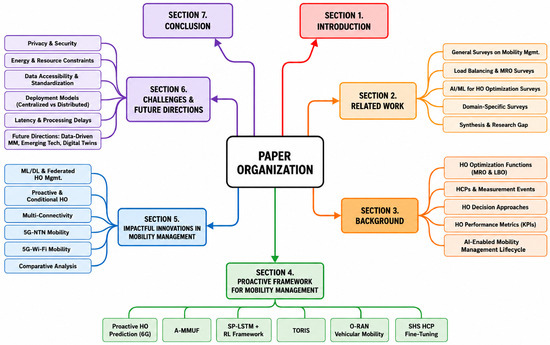
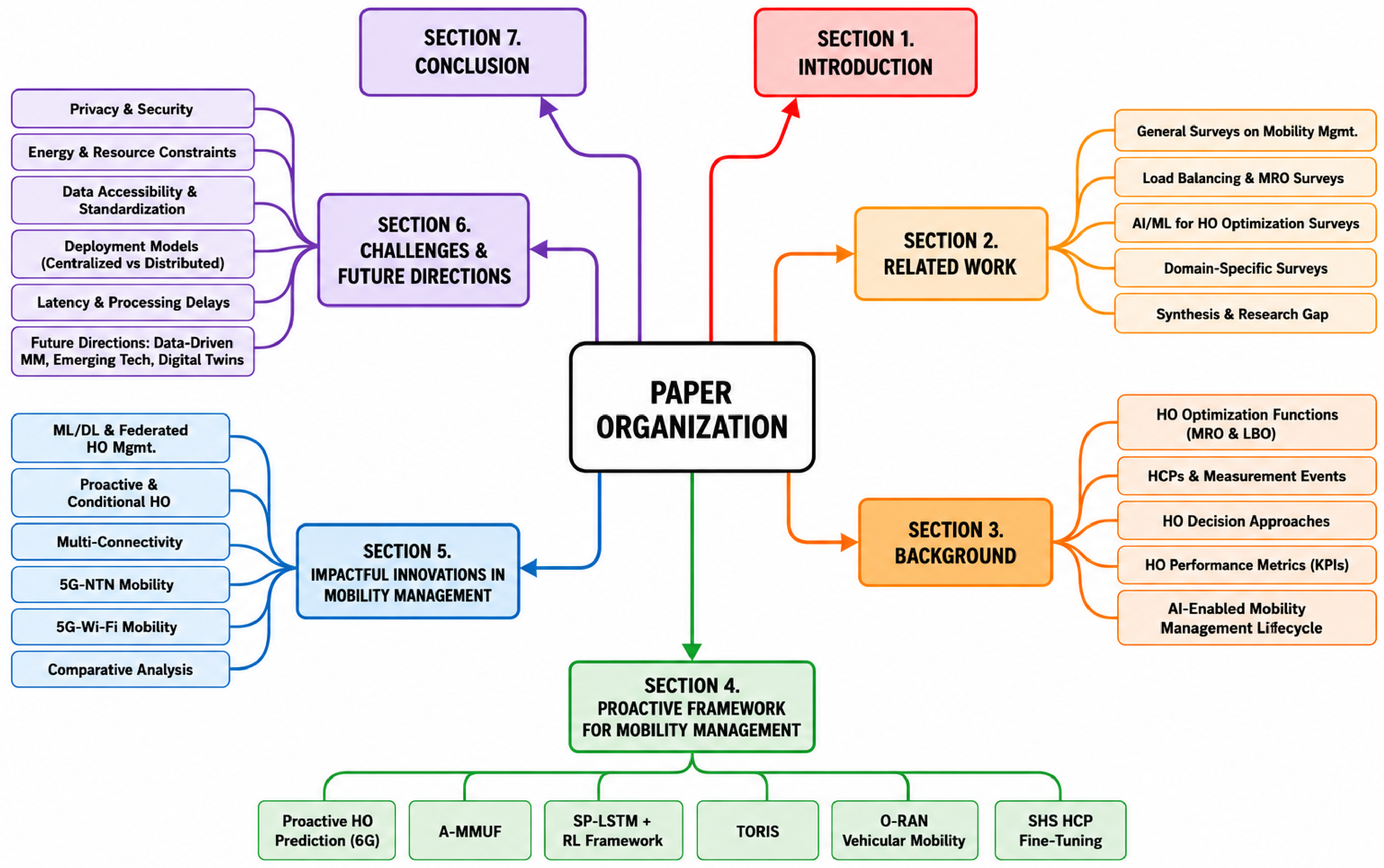
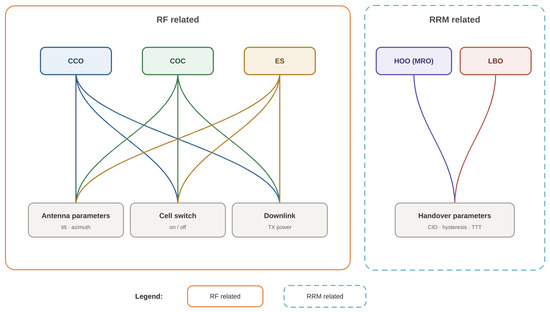
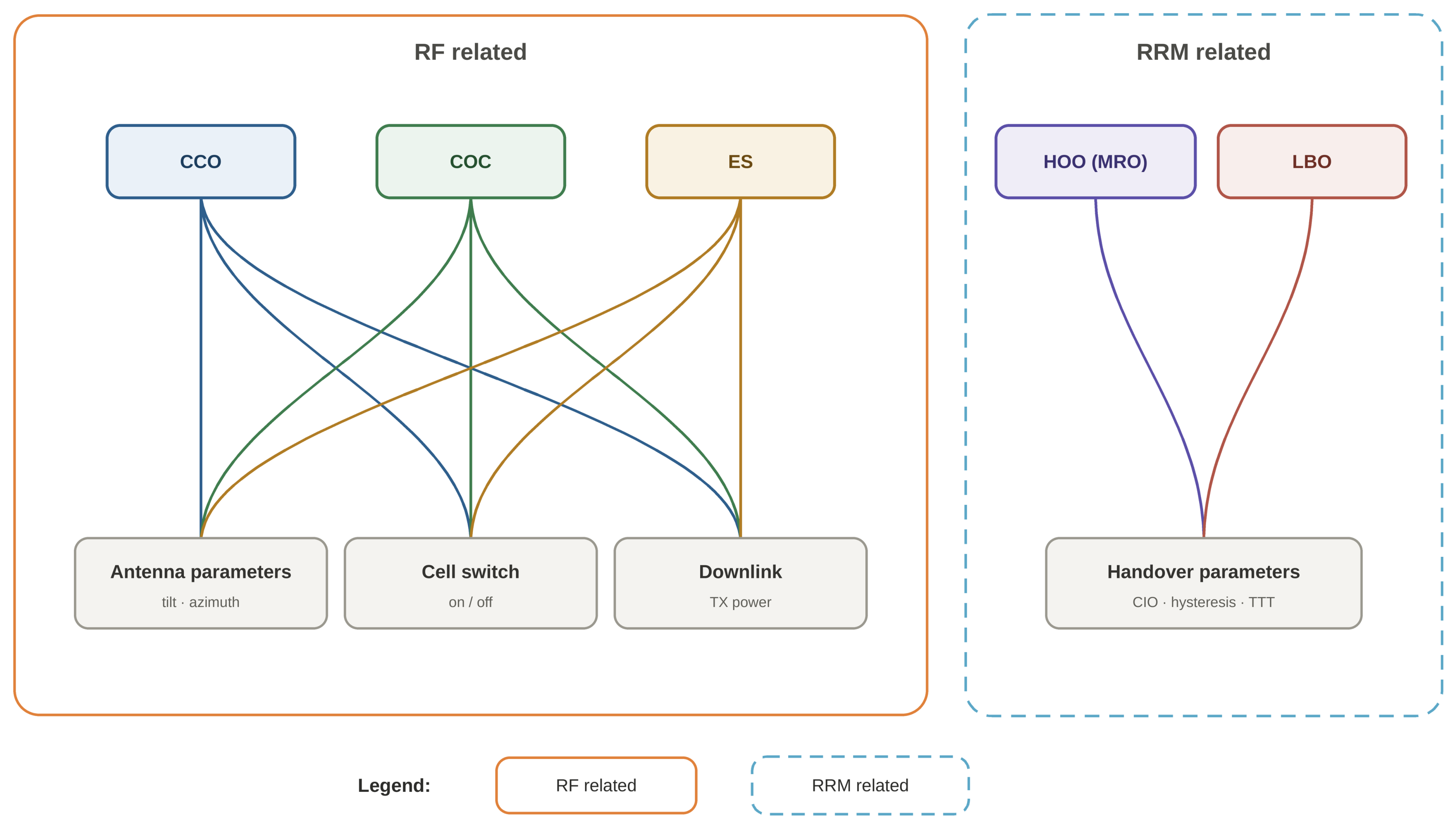
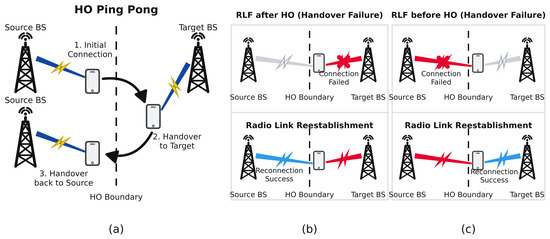
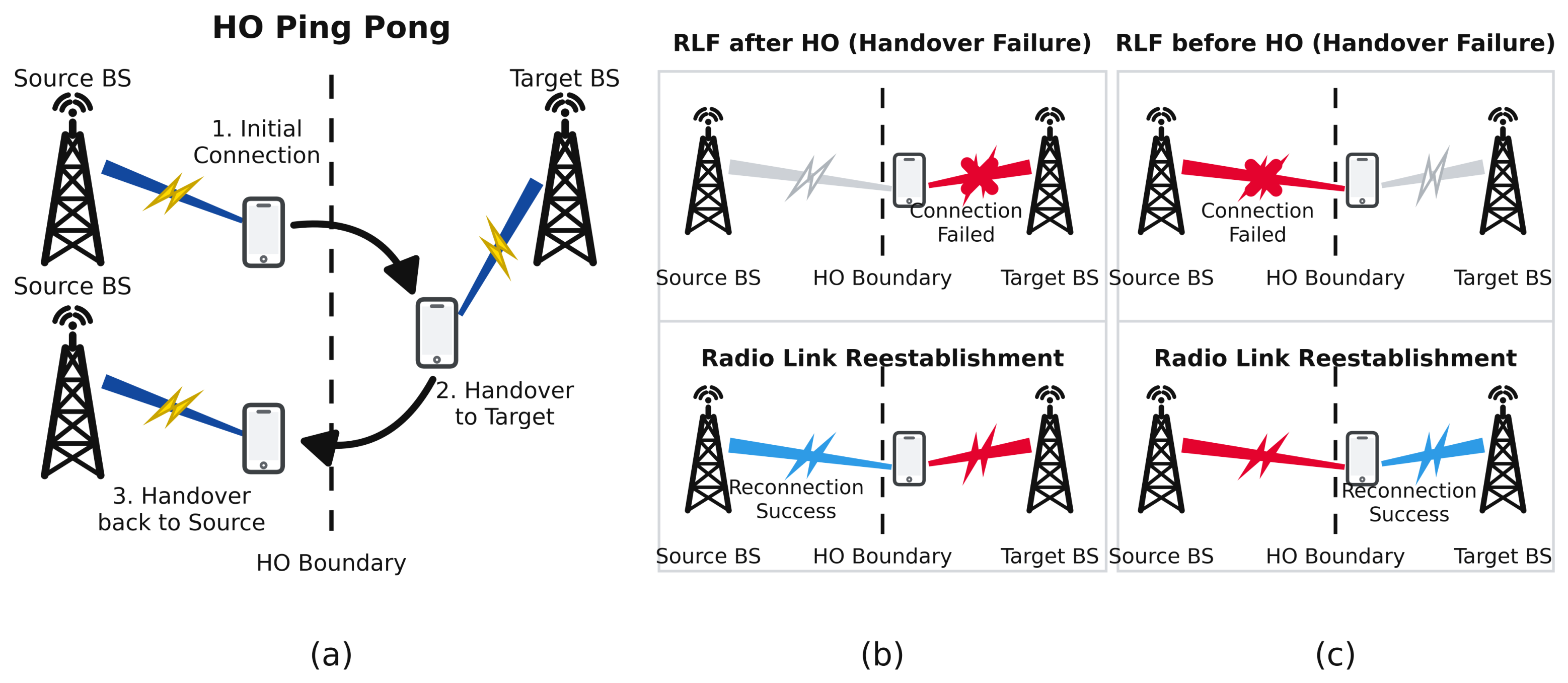
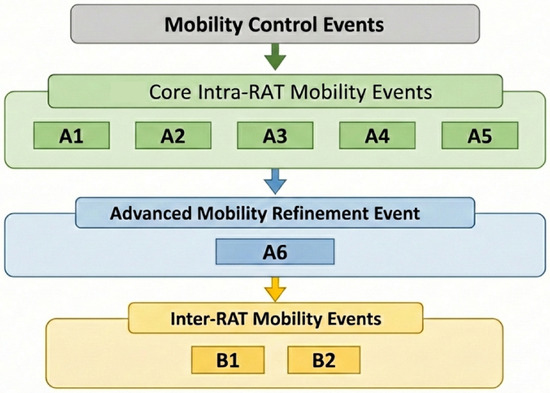
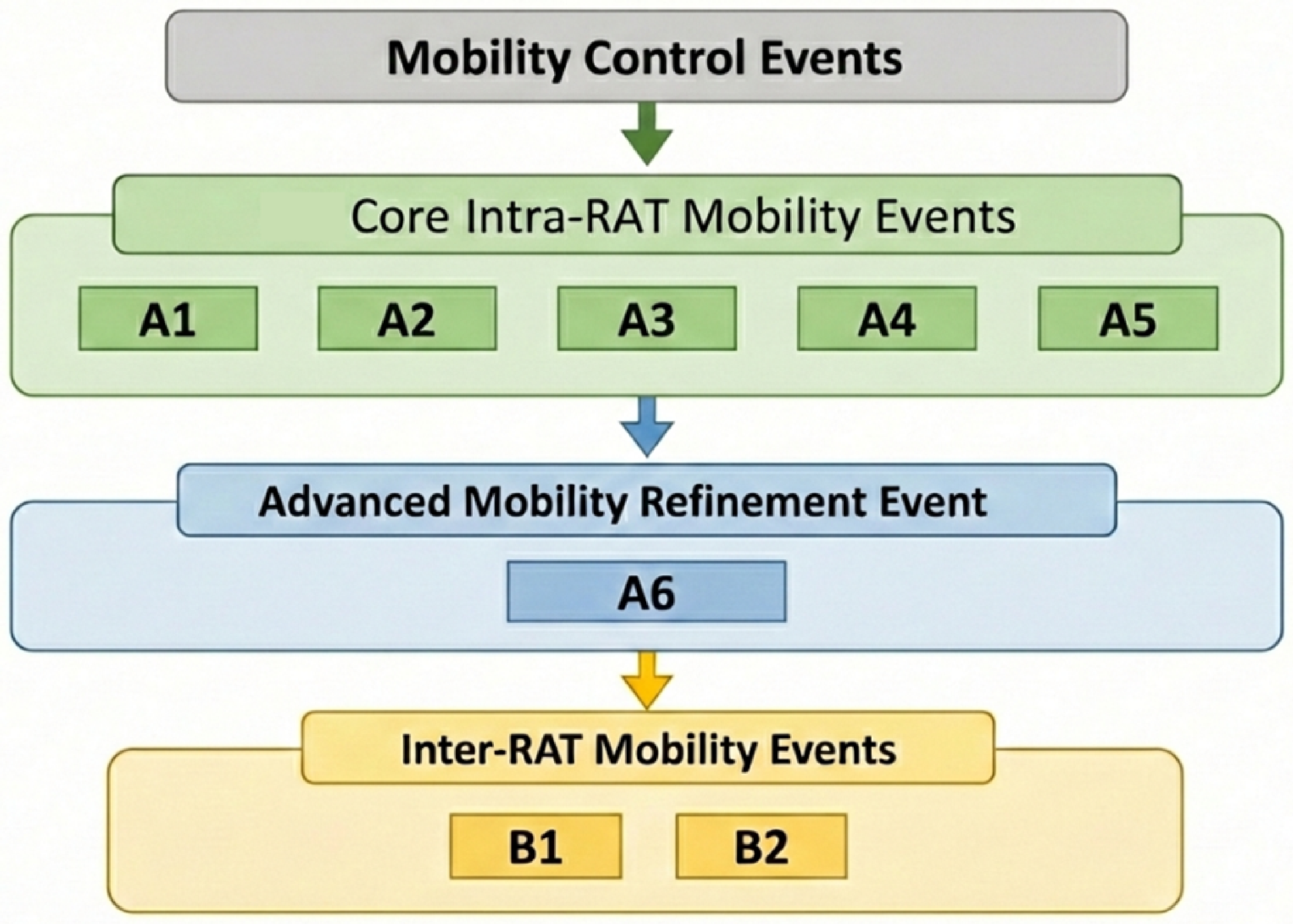
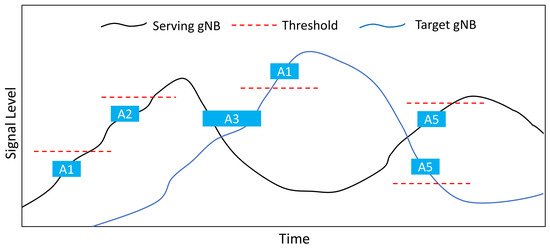
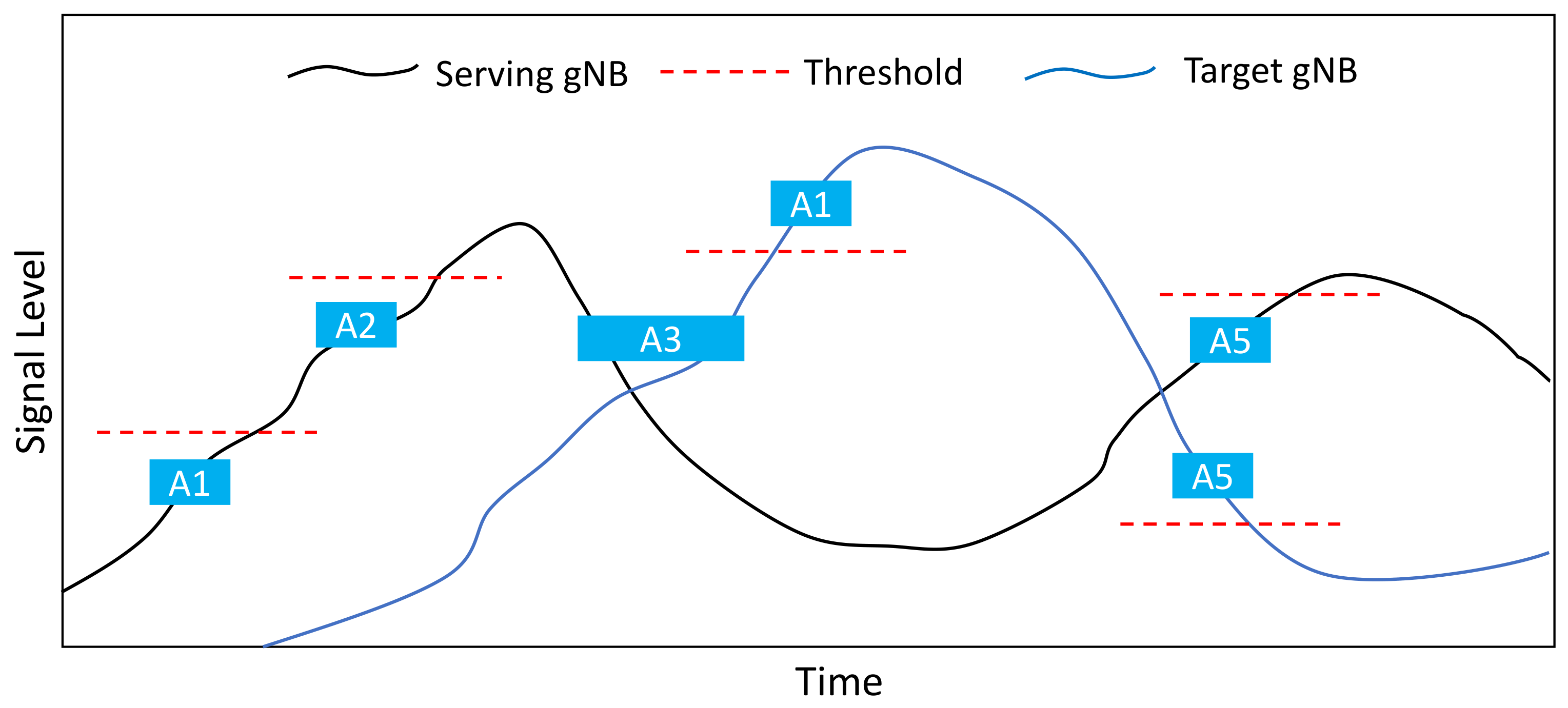
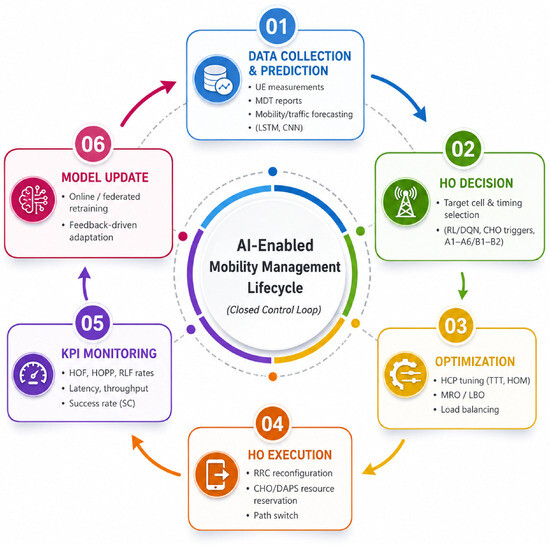
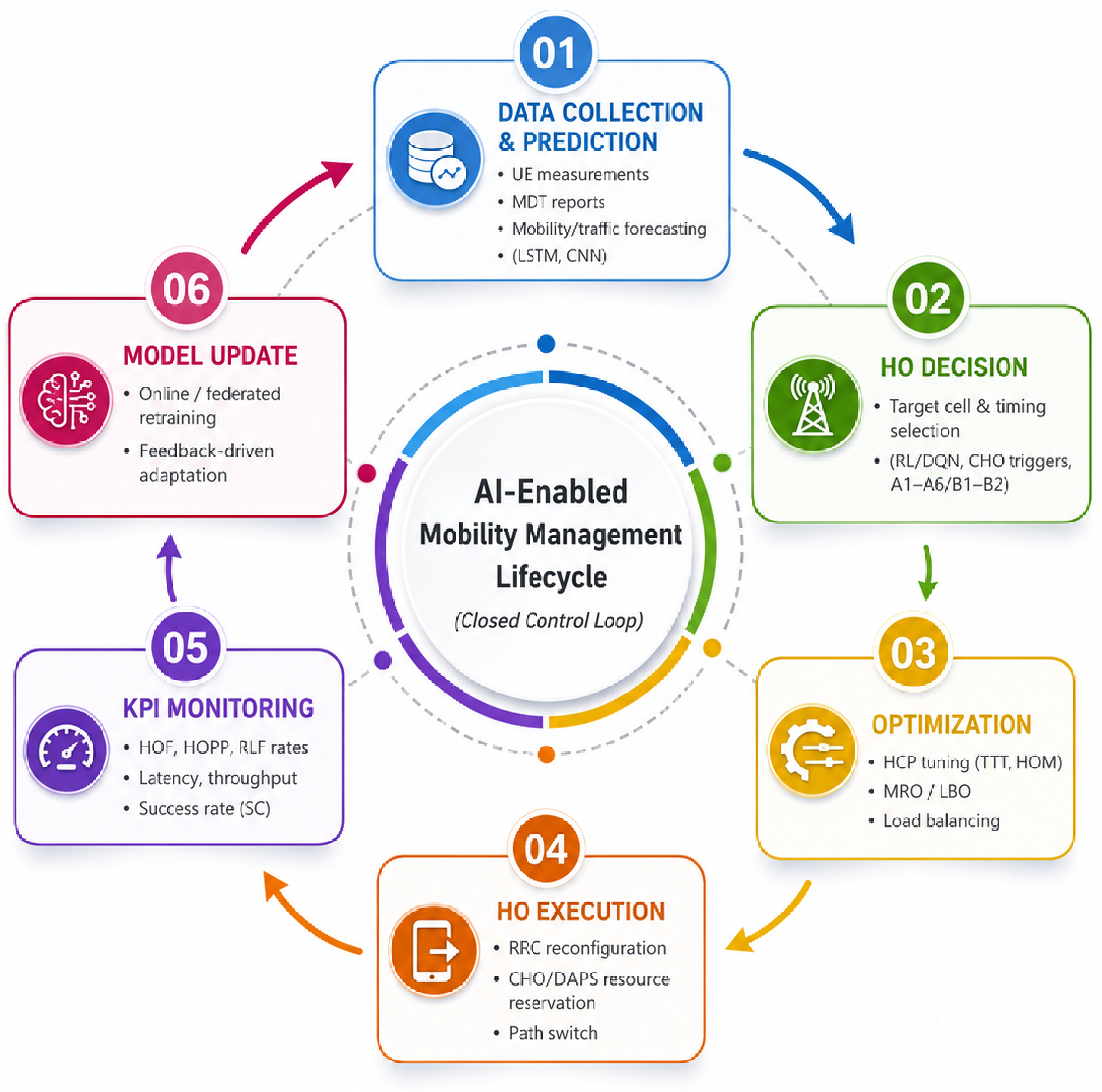
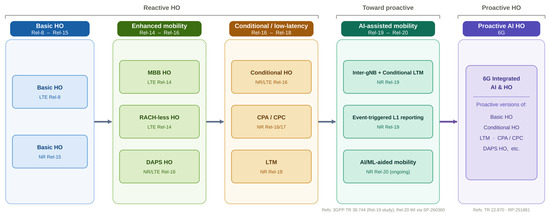
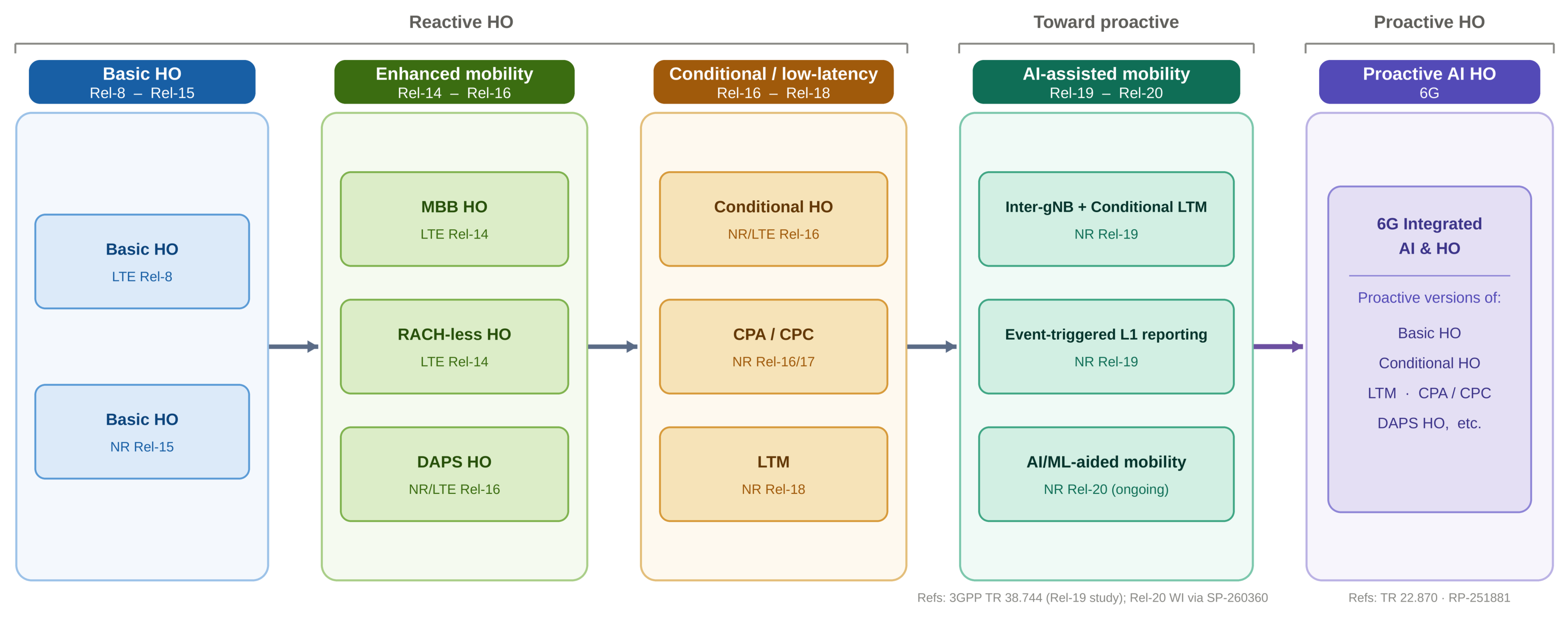
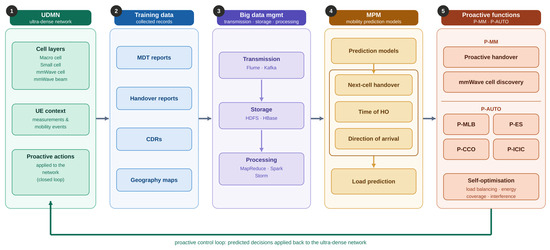
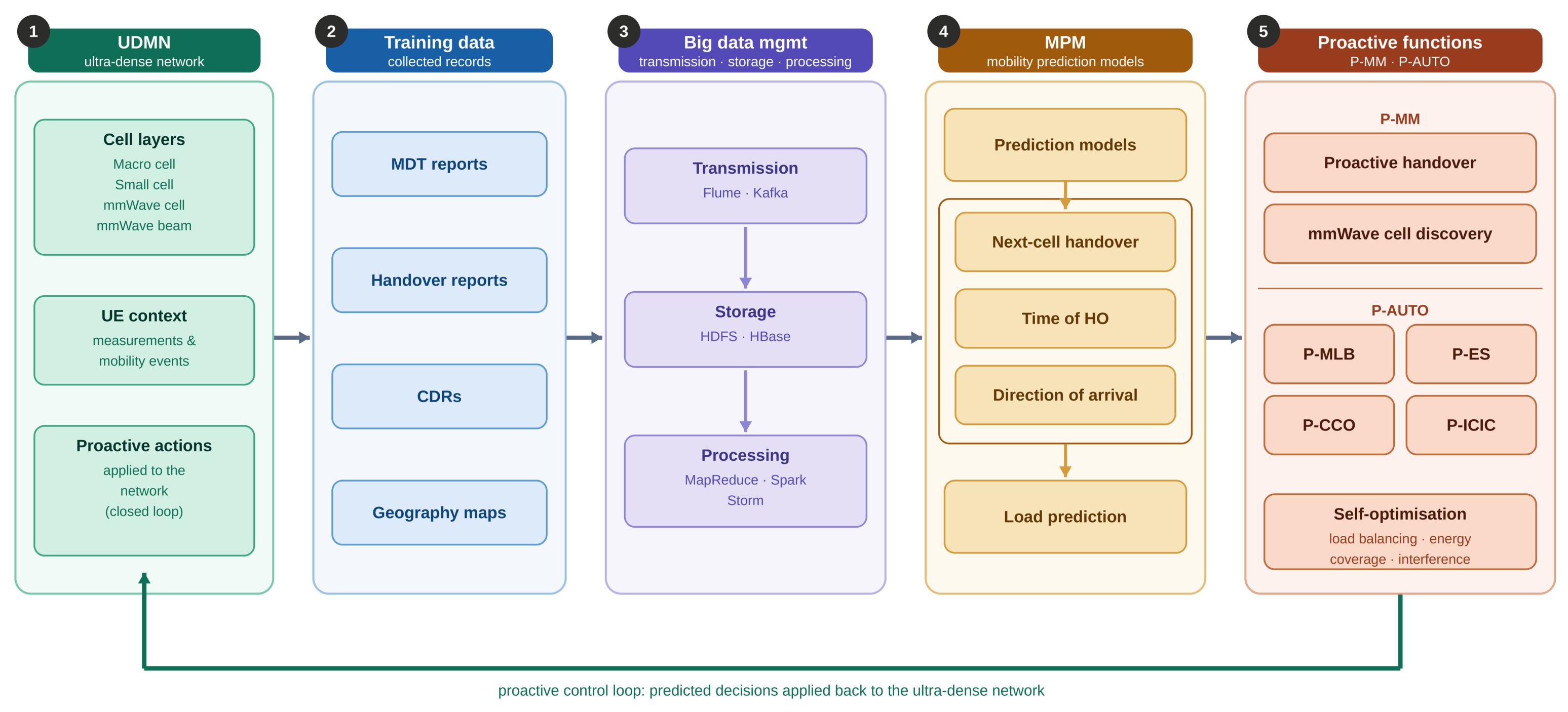
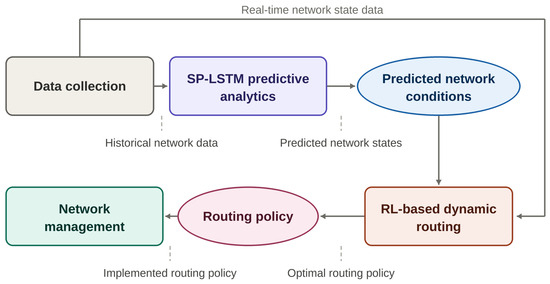
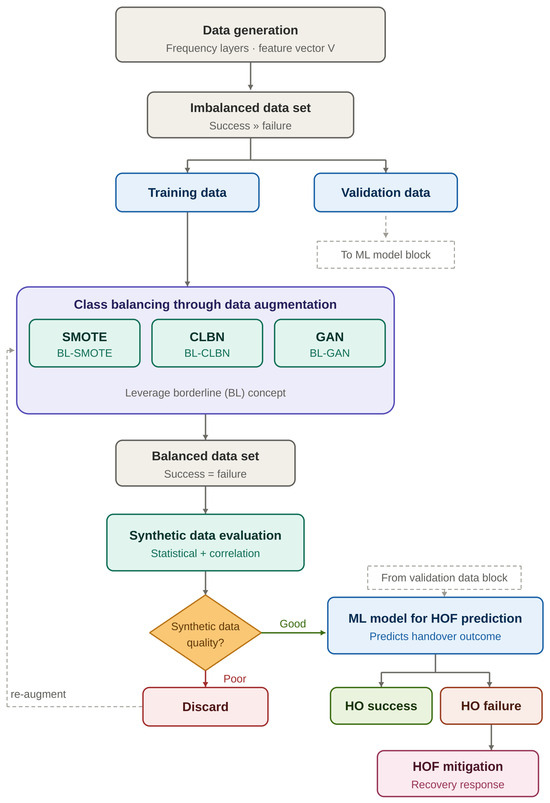
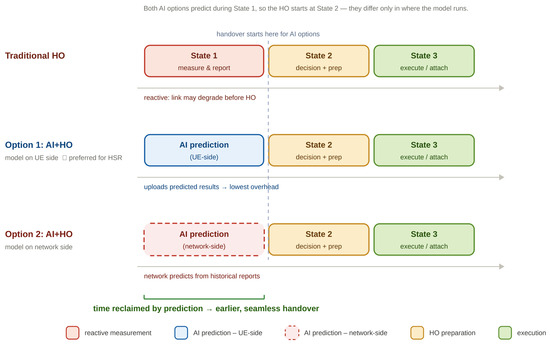
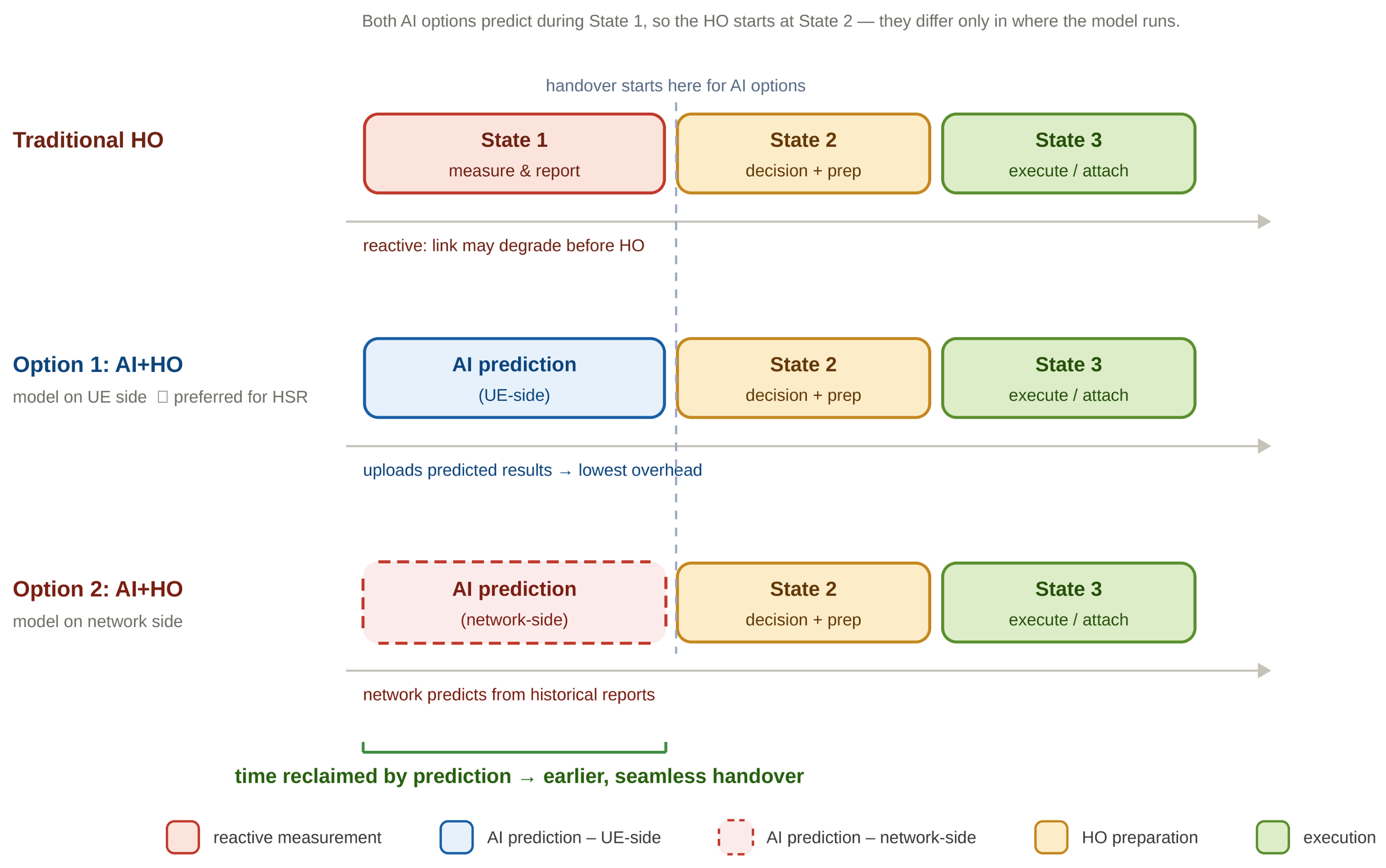
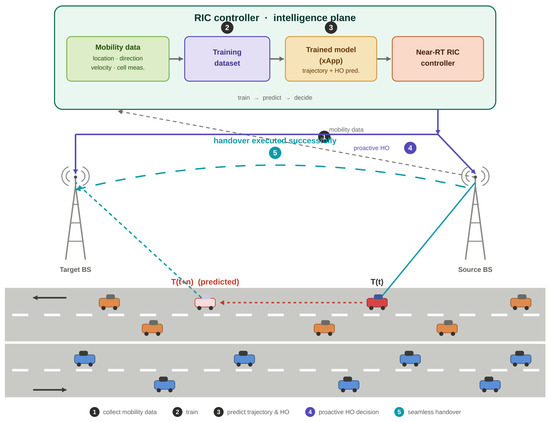
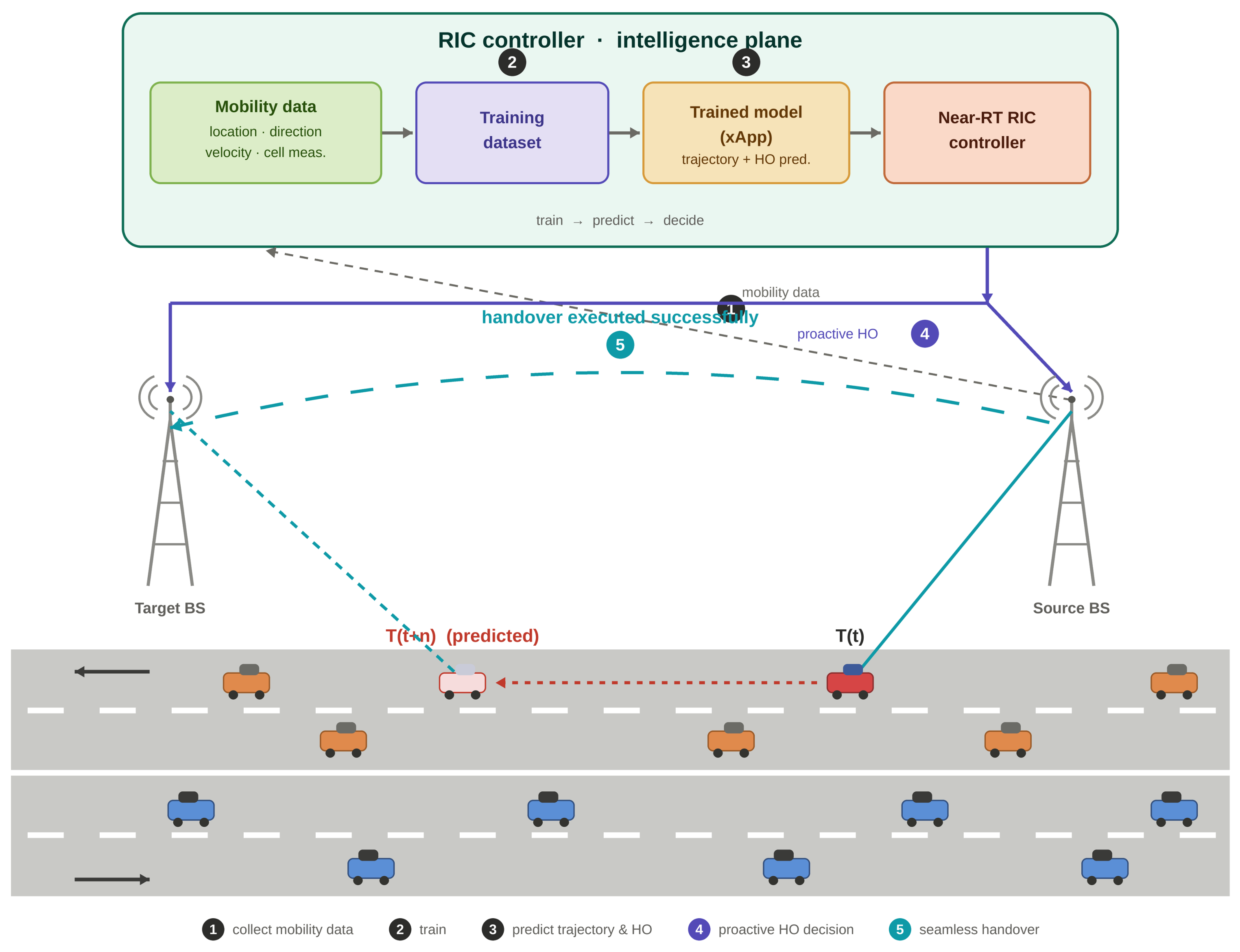
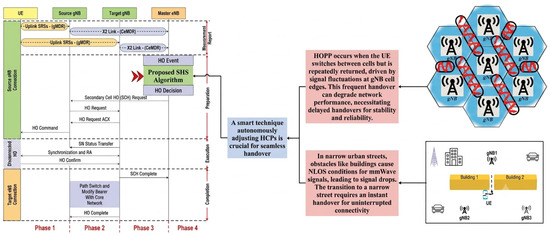
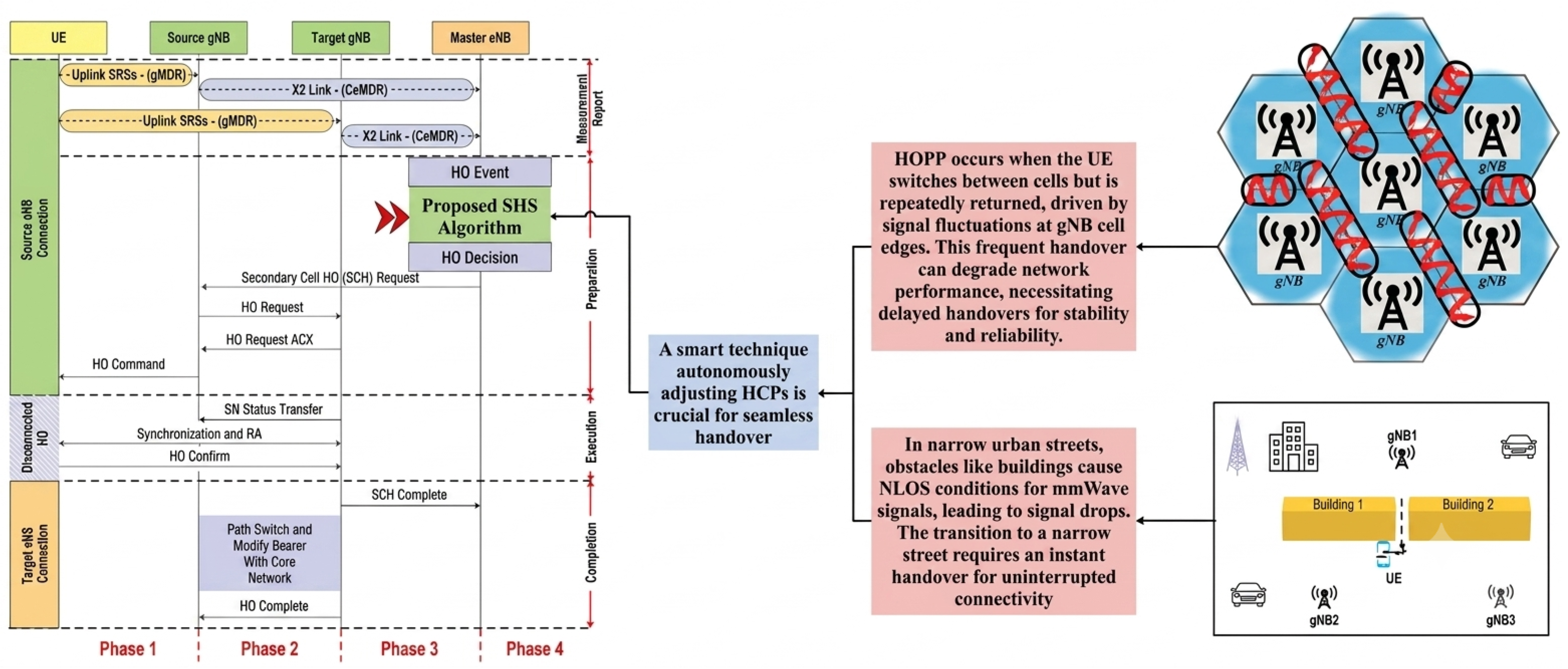
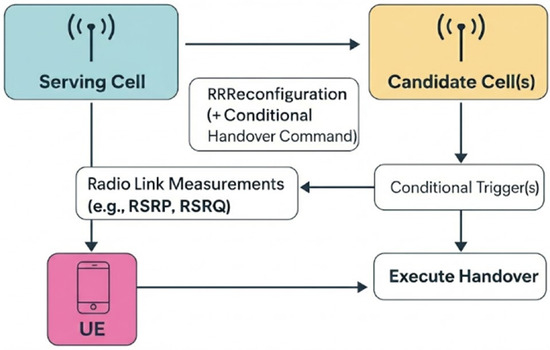
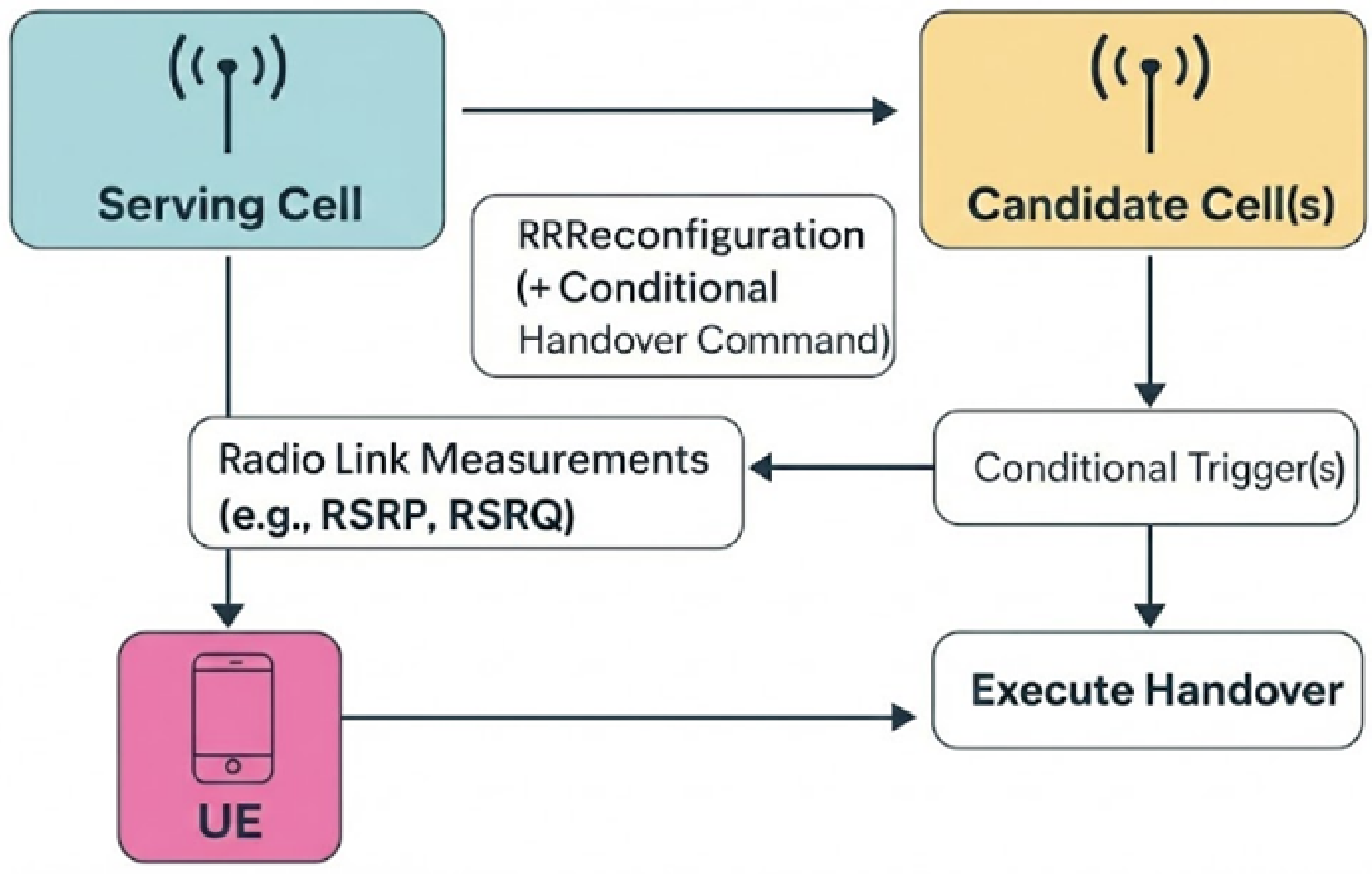
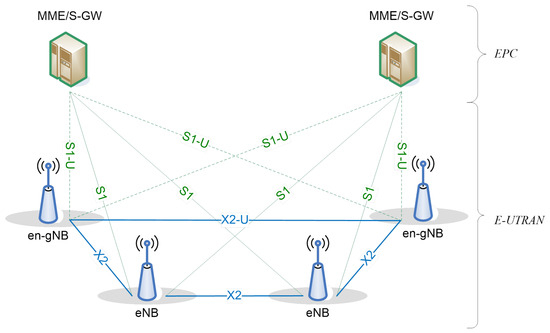
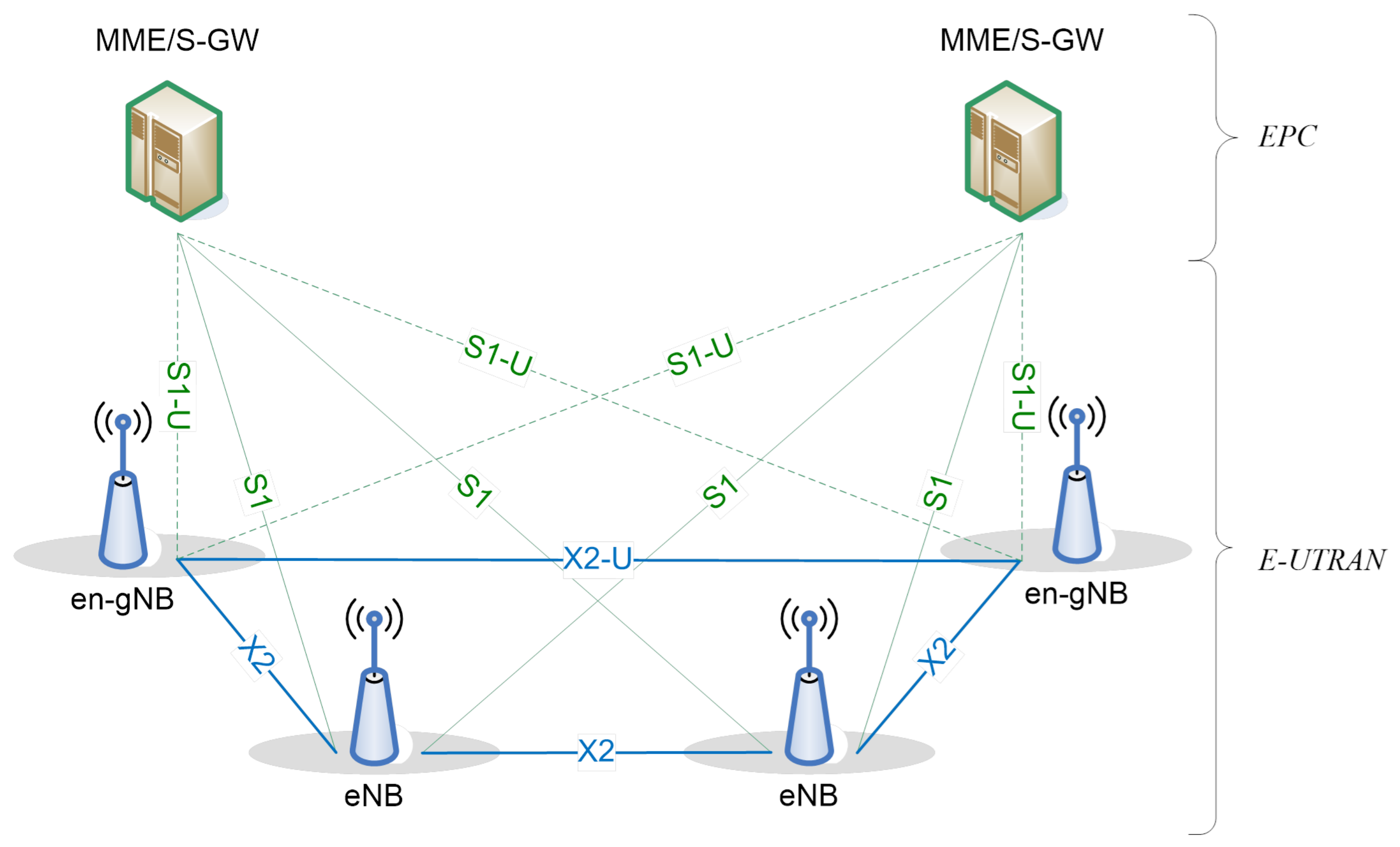

Disclaimer/Publisher’s Note: The statements, opinions and data contained in all publications are solely those of the individual author(s) and contributor(s) and not of MDPI and/or the editor(s). MDPI and/or the editor(s) disclaim responsibility for any injury to people or property resulting from any ideas, methods, instructions or products referred to in the content. |
© 2026 by the authors. Licensee MDPI, Basel, Switzerland. This article is an open access article distributed under the terms and conditions of the Creative Commons Attribution (CC BY) license.