


Abstract
Objectives: Concentrated pills, as a modernization and upgrade of traditional pills, have achieved significant advancements in dosage form. However, their extended disintegration and dispersion times have become a major limitation to their therapeutic efficacy. Therefore, an in-depth study and explanation of the dissolution mechanism of concentrated pills, along with the development of processing technology to control dissolution time, has emerged as a critical bottleneck in improving the quality of concentrated pills. Methods: In this study, the Liuwei Dihuang (LWDH) concentrated pill, derived from the classical Liuwei Dihuang pill, was selected as a representative model. Two drying methods—hot-air drying and hot air–microwave combined drying—were comparatively investigated to evaluate their effects on dissolution time. The dissolution behavior was elucidated by analyzing water migration during the dissolution process, as well as the textural properties and internal structural characteristics of the pills using Low-Field Nuclear Magnetic Resonance (LF-NMR), Micro-Computed Tomography (Micro-CT), texture analysis, and other modern techniques. Results: The results indicated that: (i) The rate of water absorption during the dissolution process of the LWDH pill was influenced by the number and size of the internal pores. (ii) Hot air–microwave combined drying results in more pores and faster dissolution. (iii) High-Performance Liquid Chromatography (HPLC) fingerprints showed no significant differences in the active ingredients between the samples. Conclusions: The drying method significantly affected the internal structure of the pills, suggesting that controlling the drying process could address the prolonged dissolution time of concentrated pills.
1. Introduction
Concentrated pills, a form of traditional Chinese medicine, were first recorded in Ge Hong’s Handbook of Prescriptions for Emergency during the Jin Dynasty. These pills are made by extracting and concentrating the ingredients from tablets or parts of tablets, then combining them with suitable excipients or fine tablet powders. The pills are bound using water, condensed honey, or a combination of honey and water. In modern times, while retaining the traditional advantages of these pills, the preparation process has been further innovated, and their scope of application expanded. This evolution has preserved the essence of traditional pills while integrating modern science and technology, significantly enhancing their therapeutic potential and application value.
Despite the convenience and popularity of concentrated pills, which benefit from their small size and ease of consumption, issues with unstable quality frequently arise due to factors such as production conditions and preparation processes. A particularly prominent issue is the substandard dissolution and dispersal time of the pills. However, dissolution is a critical step in the release and absorption of the active ingredients, which greatly influences the bioavailability and efficacy of the pills. Dissolution time is also a key indicator in the evaluation of concentrated pills. Therefore, optimizing the dissolution process is crucial to ensure the quality and efficacy of these pills [1]. Elucidating the dissolution mechanism and developing strategies to increase the dissolution rate could be key to resolving this issue.
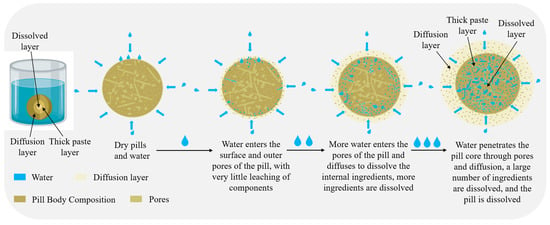
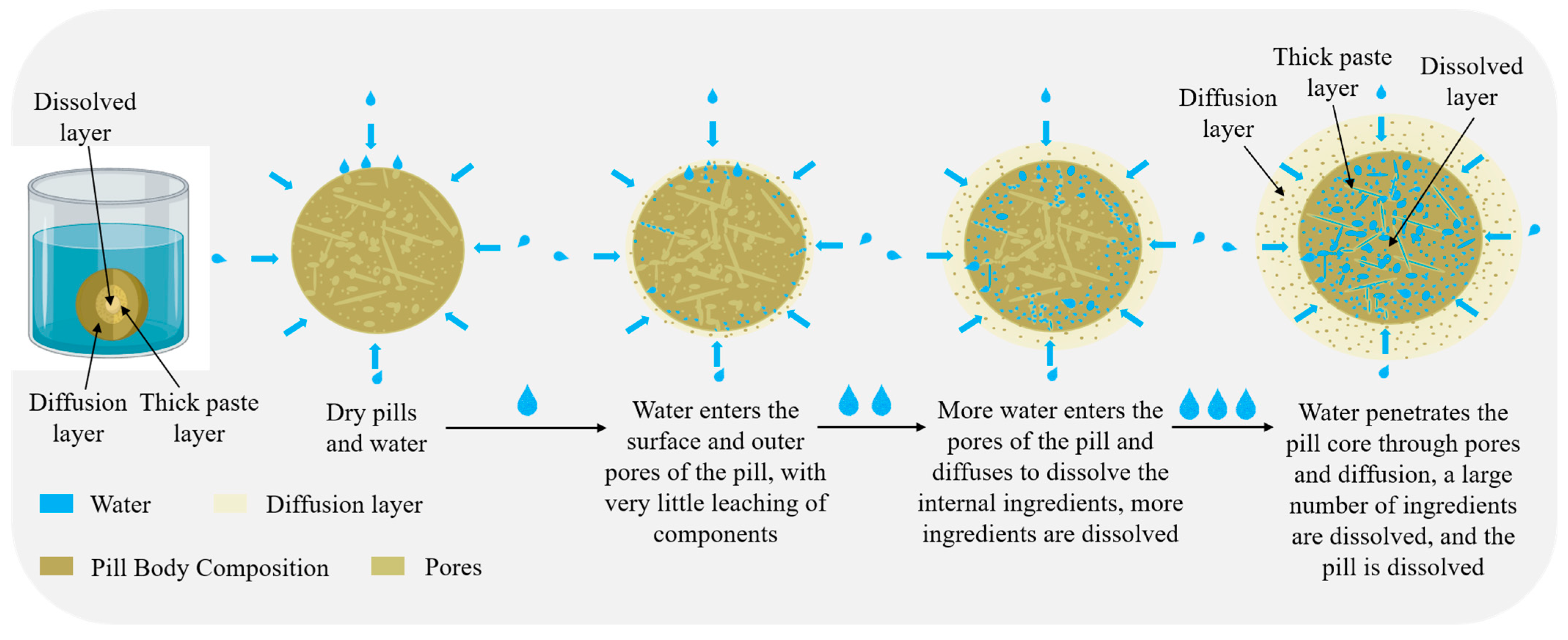
At present, the mechanisms governing the dissolution and control of concentrated pills are poorly understood, and standard approaches provide limited basic information regarding the dissolution process [2], making it difficult to model drug dissolution effectively in vivo. The disintegration mechanism of tablets, dominated by the effects of soluble pores, solid bridge fracture, water absorption and swelling, and hygrothermal interactions, may be relevant to understanding the dissolution mechanism of concentrated pills [3,4]. However, the breakdown and release of active components from concentrated pills is more complex than the disintegration of chemical formulations. An in-depth study of the dissolution time of concentrated pills, including the interactions of wettability, capillarity, swelling, and dissolution on the pill’s surface, as well as an examination of the nature of the extracts, fine tablet powders, molding processes, and drying methods, could further elucidate the dissolution mechanism of concentrated pills [5] (Figure 1).
Figure 1.
Schematic diagram of pill dissolution process.
Excipient addition during formulation preparation and process optimization are two significant strategies for controlling dissolution capability [6,7,8]. However, increasing the number of excipients alters the specifications of the concentrated pills and increases the dosage required for patients. Furthermore, unlike tablets that undergo strong compression molding, the molding process of concentrated pills involves less pressure, and the addition of excipients may disrupt their structure, reducing formability and stability. Consequently, the use of disintegrants is typically avoided or minimized during production. Many studies are currently focused on the drying process of Chinese medicine pills to maximize formability and improve drying efficiency (e.g., to address issues such as drying cracks and crusting). It is evident that the drying process affects the internal structure, particularly the looseness and hardness, which are key factors determining the quality of the finished concentrated pills. The textural properties of the dried pills, such as the number and size of pores and capillaries, are closely related to water migration during dissolution [9], and it is worthwhile to investigate whether changes in drying conditions affect the active ingredients of the pills.
Hot air drying, vacuum drying, microwave drying, and combination drying are now employed for drying concentrated Chinese medicine pills. In the pharmaceutical sector, compartmentalized hot air drying technology is widely used, utilizing temperature differentials to transfer heat to materials [10]. Microwave drying employs a high-frequency electromagnetic field to generate heat through polar molecule vibration, vaporizing internal moisture for high drying efficiency [11]. A representative example of a widely used Chinese medicine in concentrated pill form is the LWDH pill, containing six herbs such as Prepared Rehmannia Root, which nourishes the liver and kidneys and contains volatile constituents like Danshi Phenol. The drying process is crucial for the dissolution timeframe and preservation of volatile components. Utilizing contemporary technology, this study examines how various drying techniques influence the texture and water migration in the LWDH pill, with the aim of improving dissolution performance, ensuring consistent quality, and enhancing clinical potential.
2. Materials and Methods
2.1. Materials
Hot air and microwave-dried Liuwei Dihuang (HAMD-LWDH) concentrated pills, hot air-dried Liuwei Dihuang (HAD-LWDH) concentrated pills, LWDH Raw Herbal Powder, and LWDH Extract were provided by Lanzhou Foci Pharmaceutical Co. (Lanzhou, China). All raw materials, excipients, and manufacturing processes were identical between the two types of pills, with the drying method being the only difference. Gallic acid, Morroniside, Loganin, Sweroside, and Paeonol were supplied by the China Institute of Food and Drug Control (CIFDC, Beijing, China), while Benzoylpaeoniflorin was sourced from Shanghai Yuanye Biological Co. (Beijing, China).
The following equipment and instruments were used: a DHG-9243BS-III Electric Blast Drying Oven (Shanghai CIMO Medical Instrument Co., Ltd., Shanghai, China), a YUJ-16C Microwave Vacuum Dryer (Huayuan Shangyu Technology Co., Ltd., Tianshui, China), a AccuPyc II 1340 Gas Pycnometer (Micromeritics, Norcross, GA, USA), a Mastersizer 3000 Laser Diffraction Particle Size Analyzer (Malvern Panalytical, Malvern, UK), a TA-HD plus 6049 Texture Analyzer (Stable Micro Systems, Godalming, Surrey, UK), a NMI20-025V-I Nuclear Magnetic Resonance Imaging and Analysis System (Niumag Co., Ltd., Suzhou, China), a Ci-L-FL Upright Fluorescence Microscope (Nikon, Tokyo, Japan), a FEI Quanta 250 Scanning Electron Microscope (FEI, Hillsboro, OR, USA), a SkyScan 1276 Micro-Computed Tomography (Bruker, Kontich, Belgium), and an Agilent 1260 High-Performance Liquid Chromatography system (Agilent Technologies Inc., Santa Clara, CA, USA).
2.2. Determination of Basic Physical Properties
Water content was determined by the drying method, the hardness of the concentrated pills was measured using a hardness tester, and the true density of the pills was determined with a true density tester. The volume of the pills was measured by the burette drainage method. To minimize error, 20 pills were tested, and porosity was calculated using Formula (1). The disintegration time limit was also determined. The basic physical properties of the concentrated pills were thus established.
In the formula, m is the mass of the pills, V1 is the liquid level reading in the burette before the pills are added, V2 is the reading after the pills are added, ρtrue is the true density of the pill, and ε represents porosity.
2.3. Study on the Effect of Material Properties on the Dissolution Time Limit of Concentrated Pills
Unlike traditional pills, the viscosity, moisture content, solubility, composition, and particle size distribution of the extract and raw herb powder, which are the main components of concentrated pills, significantly influence the pills’ textural properties and water migration during dissolution and dispersion. As a result, variations in the composition of the materials in concentrated pills may lead to changes in their texture during dissolution, affecting the dissolution time. To evaluate whether the changes occurring during the dissolution process of the extract and raw herb powder in LWDH pills have a dual effect, either facilitating or impeding the dissolution process, the following measurements were made: particle size of the raw herb powders after soaking, and the water solubility index of the infusions.
2.3.1. Determination of Soaked Particle Size of Raw Herb Powders
Although the impact of raw herb powders on water migration and pill texture is complex, previous studies generally indicate that raw herb powders rich in plant fibers, starch, and other nutrients expand as they absorb water, thus aiding in the dissolution process. LWDH pills contain fine powder of yam and common macrocarpium fruit. To investigate whether the raw herb powder functions similarly to a tablet disintegrant during the dissolution of concentrated pills, the particle size of raw herb powder soaked for different durations was measured using a laser scattering particle sizing instrument. Changes in particle size were used to reflect the powder’s water absorption and expansion. To prevent the outflow of raw drug powder in the water due to the concentration difference between the inside and outside of the cells, a saturated solution of raw drug powder was used as the dispersing medium (100 mL per sample). The particle size of the raw drug powder immersed in water was measured at 0, 15, 30, 45, 60, 75, 90, 105, and 120 min, respectively (n = 3). The parameters of the laser scattering particle size instrument are as follows: sampling volume 3 mL (1 g of raw herb powder soaked in 100 mL of deionized water), dispersing medium 100 mL, mixing speed 2700 rpm, refractive index 1.65, absorption rate 0.001, background and sample scan time 10 s, and analysis mode generic.
2.3.2. Determination of Water Solubility Index
To determine whether the dissolution of the extract plays a decisive role in the dissolution process of concentrated pills, the LWDH extract was crushed after drying under reduced pressure for 7 d. A sample of 1.5 g of extract powder, or ten pills of each type of LWDH prepared using the two drying methods, was accurately weighed and recorded as m1 (g). The sample was diluted with deionized water to 20 g, sealed with parafilm, magnetically stirred at 37 °C for 30 min, and then centrifuged at 4000 rpm for 10 min. The supernatant was transferred to an evaporating dish, evaporated using a water bath, and dried in an oven at 105 °C until a constant weight was reached. The residual solid mass in the sample was recorded as m2 (g) [12]. The water solubility index of the extracted powder was calculated according to Formula (2) (n = 3):
2.4. Texture Analysis
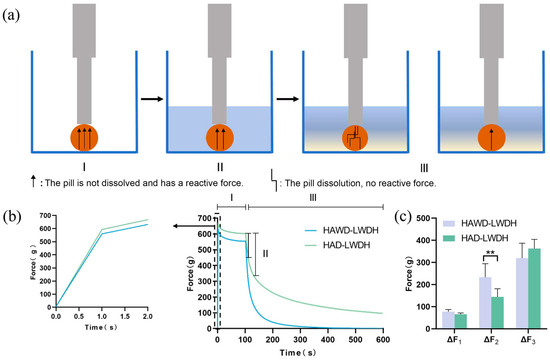
The texture analyzer quantitatively measures the texture characteristics of the LWDH pills by monitoring the force applied to samples in real-time via force sensors, thereby objectively reflecting changes in the internal structure before and after dissolution [13,14]. LWDH samples, prepared using different drying methods, were randomly selected and placed in the sample cup. Based on Tomas J’s methodology that has been refined [15], the P5 probe was employed to press down on the pellet, and this was maintained for 100 s in a dry relaxation state. The degree of force reduction during this phase, expressed as ΔF1, provides an indication of the sample’s hardness. The greater the hardness, the more readily the probe reaches the set force, and the smaller the observed decrease in detected force. To assess internal force changes during pill disintegration, 20 mL of deionized water was rapidly added to the sample cup after 100 s. A rapid change in the force detected by the probe was observed 10 s after the water was introduced. The degree of force reduction at this stage was recorded as ΔF2, indicating that the dry pills were quickly dissolved by the surface paste upon contact with water molecules. Subsequently, a gradual change in force occurred, expressed as ΔF3, signifying the dissolution of the pill’s outer layer by the absorbed water molecules. The texture analysis was performed in stress relaxation mode with a pre-test speed of 6.0 mm/min, a mid-test speed of 9.0 mm/min, and a post-test speed of 600.0 mm/min, with a force of 700.0 g and a time of 10.0000 min. Despite deviating from previously reported values, this combination produced the smallest RSD values for force differences through orthogonal experimentation, all of which were below 10%. This indicates that 700 g is the most suitable force level for this test system.
2.5. Dissolution and Dispersion Kinetics of LWDH Pills
Samples of 0.17 g HAWD- and HAD-dried LWDH pills were placed into vials containing 0.9 g of deionized water. Digital images were captured at 0, 15, 30, 45, 60, 75, 90, 105 and 120 min during the dissolution process, creating a visual record of pill dissolution over time. Additionally, Low-Field Nuclear Magnetic Resonance (LF-NMR) was used to quantitatively analyze the dissolution kinetics of the concentrated pills [16]. The LWDH samples were placed in 25 mm diameter NMR sample tubes, each containing 0.9 g of deionized water. A T2 map was generated after signal inversion, following the acquisition of an empty tube signal using the CPMG sequence, and then the sequential acquisition of the sample signal at different time points. Moreover, low-field MRI imaging was utilized to dynamically observe the water penetration into the LWDH pills at various stages [17,18]. T1-weighted images of the samples were sequentially obtained at different time points using MRI imaging software (NMImaging-V1.23.02D) to produce imaging maps of the pills throughout the dissolution process. Horizontal and vertical lengths were measured using the built-in caliper tool within the MRI imaging software, with the outermost edges of the pellet used as standardized reference points. All measurements were performed in triplicate to obtain the average value. The main parameters of the CPMG sequence are as follows: sampling frequency 200 kHz, hard pulse 90° with a pulse width of 7.00 μs, hard pulse 180° with a pulse width of 12.48 μs, repeat sample waiting time 5000 ms, number of scans two, echo time 0.4 ms, and number of echoes 18,000. MRI imaging parameters: layer 1, layer thickness 9 mm, number of acquisitions six, field of view 45 × 45 mm, TR 800 ms, TE 5.9 ms, frequency direction 256, and number of encoding steps 192.
2.6. Study on the Microstructure of LWDH Pills
2.6.1. Microstructural Observations
It is widely accepted that during the dissolution and disintegration process, water infiltrates concentrated pills through the pores, disrupting the skeletal structure with the assistance of capillaries [19]. Therefore, the dissolution time of concentrated pills is related to the number and size of pores and capillaries present within the pills. The cavities and pores in porous solids that are open to the external environment are termed open pores. These include cross-linked pores, through pores, and blind pores. The surface area of these pores can be analyzed through gas adsorption, which facilitates moisture entry [20]. Additionally, there may be closed pores within the solid that are not connected to the outer surface and are inaccessible to fluids. Such closed pores are not detectable by gas adsorption or mercury intrusion techniques; moisture must first dissolve the surface paste before reaching these pores. The microstructure of the LWDH pill cross-section was assessed based on the looseness of the internal structure and the difficulty of water entry [21,22]. Rounded LWDH samples were selected for paraffin embedding and subsequently sliced into 300 sections with a thickness of 3 μm per slice to obtain the pellet cross-section. The pellet cross-section was examined under a microscope at 4× magnification. Following paraffin sectioning, the pellets were coated with gold, and the morphology of the pill cross-section was analyzed using scanning electron microscopy.
2.6.2. Microstructural Analysis
Micro-CT imaging can reveal the overall pore structure of LWDH pills [23]. Randomly selected LWDH samples underwent micro-CT structural scanning to compare the pore distribution, open pore volume, and closed pore volume of LWDH pills prepared using various drying processes. Micro-CT scanning parameters were: ray tube current 200 μA, voltage 70 kV, scanning of the whole object, scanning resolution 5.033940 μm, exposure time 350 ms, scanning angle 180°, and scanning of the body model (phantom; provided in a uniform configuration by the equipment manufacturer) under the same conditions for calibration.
2.7. Chemical Composition Analysis Based on HPLC Fingerprints
HPLC was employed to identify the chemical fingerprints of LWDH pills produced using different drying methods, allowing for the comparison of the effects of these procedures on the contents of Gallic acid, Morningside, Loganin, Sweroside, Paeonol, and Benzoylpaeoniflorin. The HPLC method was as follows: the column was a Diamonsil-C18 reversed-phase column; the column temperature was 30 °C; the volumetric flow rate was 1 mL/min; the injection volume was 10 μL; the mobile phase was A (acetonitrile)—D (0.1% phosphoric acid aqueous solution). Gradient elution: 0–15 min, 2~15%A; 15—25 min, 15~25% A; 25—40 min, 25~70% A; 40—60 min, 70~95% A. Detection wavelengths were 235 nm for fingerprinting and 270 nm for Paeonol.
3. Results
3.1. Results of Basic Physical Properties
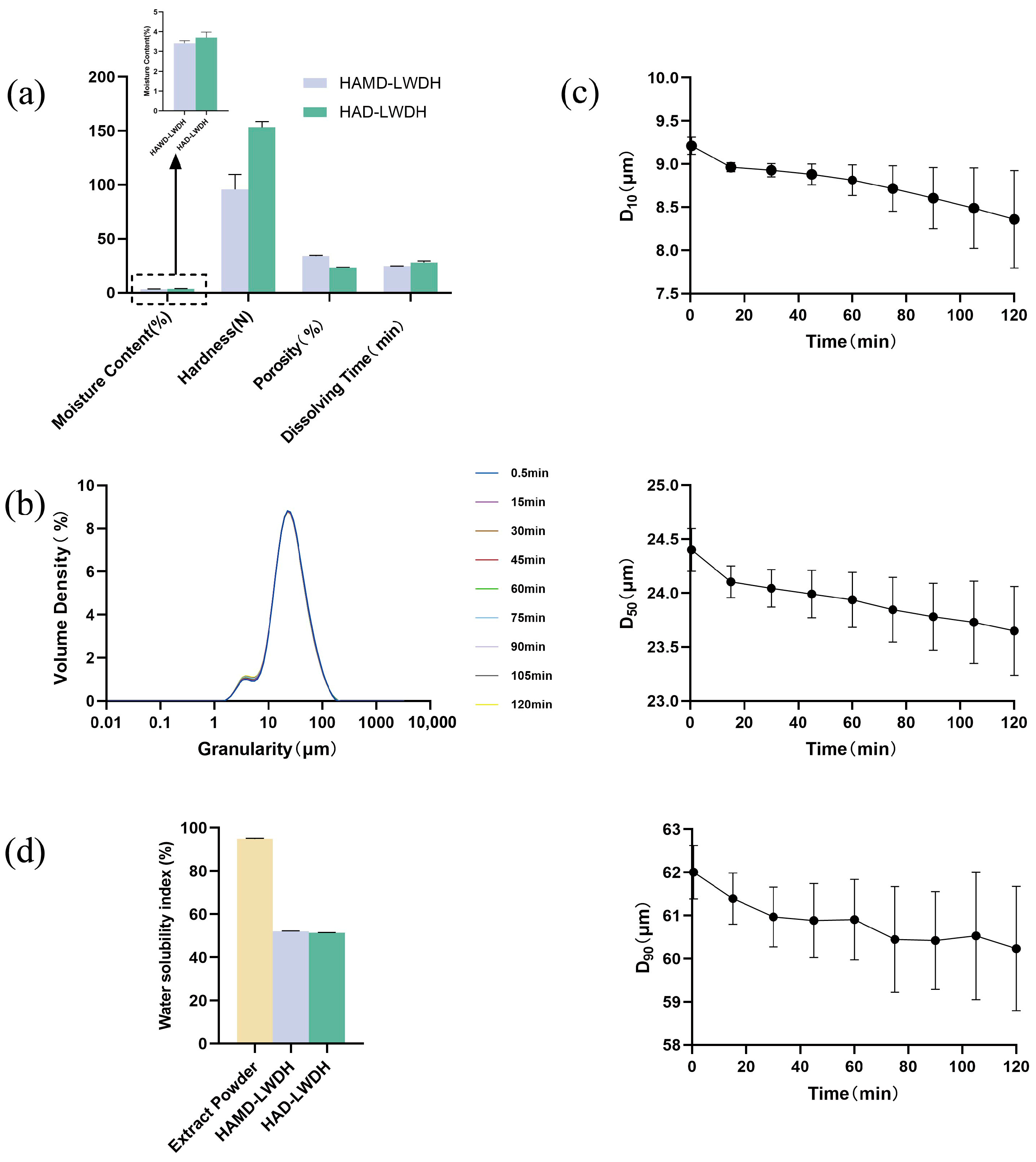
Figure 2 shows the physical properties of LWDH pills. The water content of the pills produced using the two different drying methods was roughly equivalent, as illustrated in Figure 2a. However, HAMD-LWDH pills exhibited lower hardness, disintegrated more rapidly, and possessed greater porosity compared to HAD-LWDH pills. The observed difference in hardness between HAWD-LWDH and HAD-LWDH pills is primarily attributed to the drying method, but it is not solely the drying process per se; it arises from the microstructural modifications induced by the drying conditions. Specifically, microwave-assisted drying (HAWD) promotes rapid water removal, leading to the formation of a more porous internal network and smaller, more interconnected cavities. In contrast, conventional hot-air drying (HAD) results in slower moisture removal, producing a denser matrix with fewer internal voids.
Figure 2.
Diagrams of the physical properties of LWDH pills. (a) Basic physical property diagram; (b) powder particle size distribution; (c) crude drug powder soaked over different times with effects on particle size change; (d) water solubility index diagram.
3.2. Influence of Material Properties on the Dissolution Time of LWDH Pills
LWDH powder is produced by grinding Chinese yam and a portion of Common Macrocarpium Fruit. The fine powder derived from yam is rich in starch, comprising 45% to 64% of the total biomass of Chinese yam (in dry mass) [24]. Additionally, yam contains a variety of biologically active compounds, such as mucopolysaccharides and polyphenols. Yam starch swells at elevated temperatures; however, the drying temperature during preparation is precisely maintained within the range of 72 °C to 84 °C, which corresponds to the pasting temperature [25]. During this process, the protein components in yam powder bind to starch granules via hydrogen bonds, electrostatic forces, and van der Waals forces, or they disperse in the gaps between starch granules [26]. This specific temperature range results in tight internal bonding, thereby affecting the dissolution properties [27,28]. Common Macrocarpium Fruit contains polysaccharides (6.6% to 25.2%), with concentrations increasing after processing into yellow wine. The molecular structure of these polysaccharides facilitates moisture absorption and water redistribution within the pills due to the presence of hydroxyl, carbonyl, and other functional groups that form hydrogen bonds with water [29,30]. When LWDH powder is immersed in a saturated solution, the particle size decreases with increasing immersion time, although the reduction is not readily observable (Figure 2b,c). This phenomenon may be attributed to the minimal difference in osmotic pressure inside and outside the plant cells, where the limitations of the cell wall prevent water from substantially increasing the size of the plant cell. During the stirring process, pressure from the saturated solution may extrude the cells, leading to a reduction in particle size. This suggests that the water-absorbing expansion of the powder does not significantly influence the dissolution of concentrated pills.
LWDH extract is obtained through the water extraction, concentration, and drying of certain tablets (including Peony bark, Prepared Rehmannia root, Common Macrocarpium Fruit 20 g, Poria cocos, and Rhizoma alismatis), which primarily consist of water-soluble components. As illustrated in Figure 2d, the water solubility index of LWDH extract powder exceeds 84%, indicating that the extract powder is highly soluble in water. The dissolution of the LWDH extract plays a critical role in the overall dissolution process of the concentrated pills.
3.3. Results of Texture Analysis
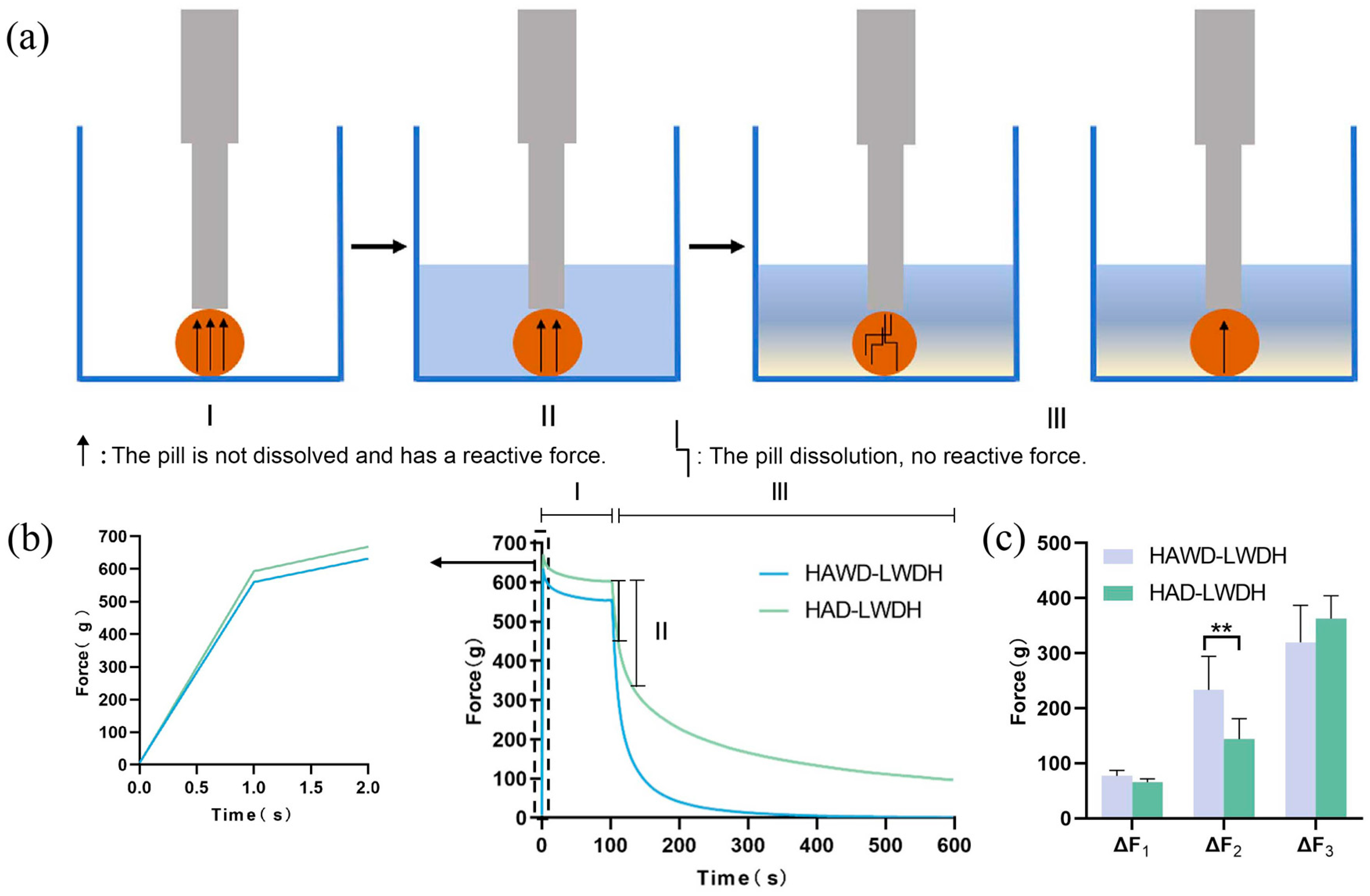
To analyze the change in its internal force throughout the dissolution of the pill, 20 mL of deionized water was added to the sample cup after 100 s of dry relaxation, and the wet relaxation of the pill was recorded for the entire duration of 10 min (Figure 3a). The resulting curve illustrates the force required to maintain the probe’s displacement at each time point during maximum force application (Figure 3b and Table 1). The force values for each stage of the texture analysis process are shown in Figure 3c. To some extent, ΔF1 represents the hardness of the pills. A larger ΔF1 indicates a greater degree of downward pressure exerted by the probe, reflecting reduced hardness and a looser internal structure of the pills. Consequently, the internal hardness of HAWD-LWDH pills is lower, as indicated by a smaller ΔF1, and its downward displacement (0.036 mm) exceeds that of HAD-LWDH (0.032 mm) pills. These structural differences at the microscopic level directly affect the mechanical response of the pills under probe pressure. During water dissolution, the internal pores of the pills collapse, leading to the progressive destruction of the skeletal structure and a gradual dissolution process. Higher ΔF2 and ΔF3 values indicate more extensive water penetration and dissolution. The ΔF2 of HAWD-LWDH pills is greater than that of HAD-LWDH pills, likely due to their increased porosity facilitating faster early-stage water infiltration and dissolution of the surface layer. Conversely, the ΔF3 of HAWD-LWDH pills is smaller than that of HAD-LWDH pills, reflecting more pronounced initial internal collapse, after which the force rapidly decreases to 0 g, indicating complete separation of the skeletal structure from the probe. Overall, these data suggest that the microwave drying process enhances pill porosity, reduces internal hardness, and accelerates dissolution, highlighting a clear mechanistic link between drying-induced microstructure and functional performance.
Figure 3.
LWDH pill texture diagrams. (a) Schematic diagram of the textural process: I is the dry relaxation stage, II is the stage of rapid decrease in force after addition of water, III is the slow wet relaxation stage of HAWD-LWDH pills, and the slow wet relaxation stage of HAD-LWDH pills; (b) texture curve: I is the dry relaxation stage, II is the stage of rapid decrease in force after the addition of water, and III is the stage of slow wet relaxation; (c) the bar graph of ΔF1, ΔF2, and ΔF3, ** p < 0.01.
Table 1.
Fitting of texture equation of LWDH pills with different drying methods (n = 3).
3.4. Study on the Dissolution Kinetics of LWDH Pills
3.4.1. LF-NMR T2 Relaxation Time During Dissolution and Dispersion of LWDH Pills
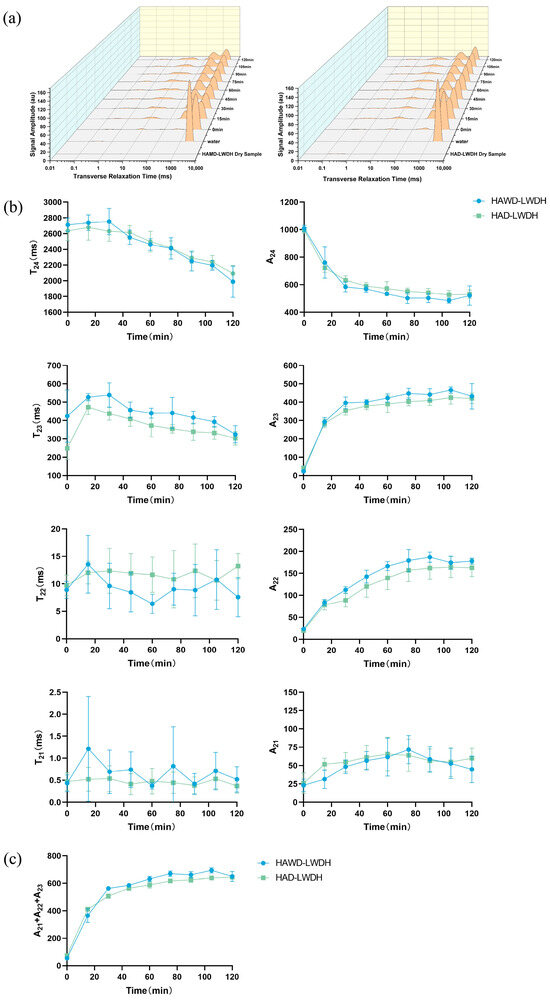
Figure 4 shows the change in T2 transverse relaxation of LWDH pills during dissolution. The T2 transverse relaxation time in LF-NMR refers to the duration it takes for the magnetic resonance signal to diminish in the magnetic field; a shorter T2 time indicates a more rapid decay of the magnetic resonance signal. The four peaks that comprise the T2 relaxation pattern symbolize the water that penetrates the interior of the pills at various time intervals. The peak of bound water, T21, which ranges from 0.01 to 1 ms, represents water that is tightly associated with the pill’s ingredients. T22, ranging from 1 to 10 ms, denotes water that has limited mobility. The peak between 1 and 10 ms represents water that is adsorbed onto the inner layer of particles following the dissolution of the pill. The peak of free water, T23, ranging from 10 to 100 ms, corresponds to water present in the internal capillaries of the pill and in the cellular interstitial space of the raw herb powder. T24, which spans from 100 to 10,000 ms, represents water that is not bound to the various components of the pill. A longer transverse relaxation time indicates improved mobility of the water in this phase, and a larger peak area corresponds to higher water content in that phase [31]. As illustrated in Figure 4a, with increasing dissolution time, water progressively infiltrates the pill and interacts with its various components. Consequently, the unbound water content gradually decreases, while the content of bound water, semi-bound water, and free water increases, ultimately reaching equilibrium by the end of the dissolution period.
Figure 4.
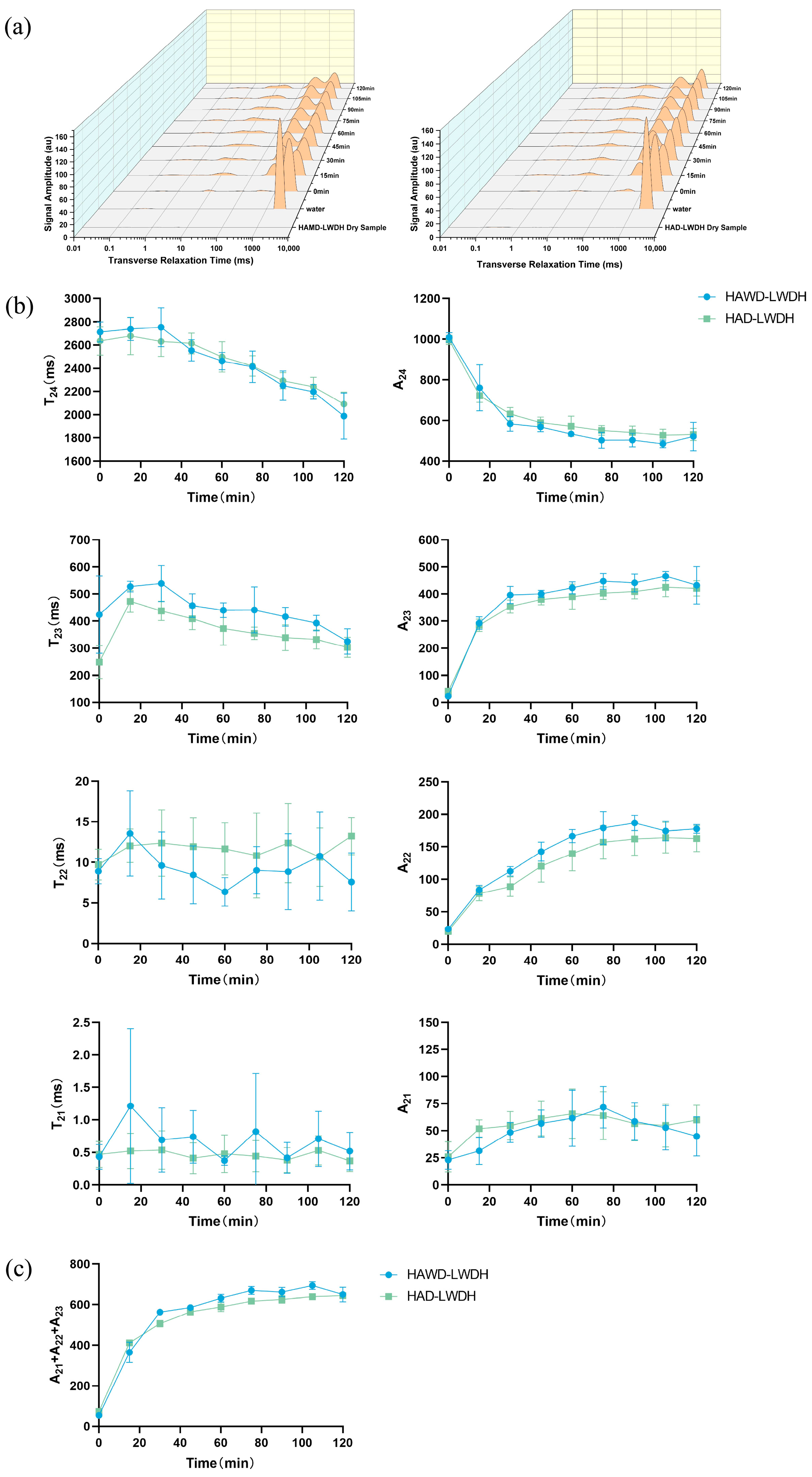
LWDH LF-NMR T2 spectrum. (a) Transverse relaxation diagram; (b) water relaxation and peak area diagram of each phase; (c) water absorption kinetics diagram.
Both the T24 and A24 of LWDH pills progressively decreased with increasing dissolution time, indicating a reduction in the mobility and content of unbound water, which became more closely bonded to the pill, as shown in Figure 4b [32]. During the initial dissolution phase (0–30 min), free water rapidly diminished while the pill quickly absorbed water. Absorption occurred swiftly. Water absorption by HAWD-LWDH pills exceeded that of HAD-LWDH pills. Between 30 and 120 min, unbound water content gradually decreased until a stable state was achieved. Throughout this period, water absorption of HAWD-LWDH pills consistently surpassed that of HAD-LWDH pills, demonstrating that HAWD-LWDH pills facilitated easier water absorption during dissolution, allowing water to penetrate the pill via capillary action, thereby breaking down components and reducing unbound water content.
The T23 of LWDH pills exhibited an initial increase followed by a decrease under various drying conditions, while A23 continued to rise. This pattern suggests that the free water content of the tablets increased, and their fluidity improved during the early stages of disintegration and dispersion. Over time, free water dissolved the components and infiltrated deeper into the pills via capillary tubes, eventually achieving equilibrium between internal and external moisture levels. During the 0–30 min interval, the T23 and A23 of the pellets from both drying methods increased rapidly, with the T23 and A23 of HAWD-LWDH pills being higher than those of HAD-LWDH pills. This indicates that water entered HAWD-LWDH pills more quickly and in greater volumes [33].
During the dissolution process, the T22 of LWDH pills exhibited significant fluctuations between the two different drying methods; however, A22 displayed an upward trend for both methods. This indicates that water penetrated the interior of the pill through capillary action, resulting in a gradual increase in the content of non-flowing water [34]. Notably, HAWD-LWDH pills demonstrated a higher A22 compared to HAD-LWDH pills, suggesting that the texture of HAWD pills is more conducive to water absorption into the pill body. The presence of larger voids within HAWD pills facilitates the generation of more non-flowing water, characterized by a lower concentration and smaller T22, thereby enhancing fluidity.
The T21 value of LWDH pills remained relatively stable, while A21 initially increased before decreasing. Both T21 and A21 rose rapidly from 0 to 75 min, indicating that water gradually entered the pill and formed close associations with its components during this period. Subsequently, A21 experienced a slight decrease, likely attributed to the differing rates at which external water infiltrated the pill compared to the rate of dissolution of the components. Eventually, the internal water of the pill became fully saturated, resulting in the stabilization of both T21 and A21.
3.4.2. Absorption Kinetics of the Dissolution and Dispersion Process of LWDH Pills
In the LF-NMR T2 pattern, A21, A22, and A23 represent the water content in distinct phases throughout the dissolution process of the pill. Therefore, A21 + A22 + A23 is utilized to denote the quantity of water absorbed at different LWDH pill dissolution times, referred to as A2. Figure 4c illustrates the temporal changes in water absorption during the dissolution of LWDH pills; A2 increased rapidly during the initial 30 min, followed by a gradual rise that approached equilibrium after 90 min, with A2 for HAWD-LWDH pills exceeding that of HAD-LWDH pills. The paired-sample “t”-test findings revealed that the A2 values between HAWD-LWDH and HAD-LWDH pills showed a statistically significant difference during the 30–120 min period (p = 0.006 < 0.05), showing that HAWD-LWDH pills had a better capacity for water absorption. However, no significant difference was observed between the two samples during the initial 0–30 min period (p = 0.927 > 0.05), which can be attributed to the fact that water must first wet the surface of the pellets during the early stage of dissolution, during which both samples absorbed significant amounts of water.
The water absorption data during the dissolution of LWDH pills were fitted using the Weibull model, Peleg model, and double exponential model, with the results presented in Table 2. The Weibull model emerged as the best-fitted model, as indicated by a R2 value approaching one, a residual sum of squares (RSS) close to zero, and a lower Akaike Information Criterion (AIC) value, all of which suggest a superior model fit. In the Weibull model, the parameter “a” represents the maximum cumulative release, reflecting the theoretical equilibrium dissolution amount and the water-holding capacity of the pill’s pore structure. A larger “a” value indicates greater water absorption capacity. HAWD-LWDH pills exhibited a larger *a* value than HAD-LWDH pills, suggesting a higher capacity for water accommodation. The parameter *c* is a time scale parameter negatively correlated with the diffusion rate of pellet components; a larger “c” value corresponds to faster dissolution. HAWD-LWDH pills demonstrated a larger “c” value than HAD-LWDH pills, indicating a faster component diffusion rate during dissolution. These differences highlight the influence of drying methods on the dissolution behavior of the pills (Table 3).
Table 2.
Fitting results of A2 water absorption kinetics (n = 3).
Table 3.
Parameters of Weibull model fit for concentrated pills.
3.4.3. Visualization and LF-NMR Imaging of the Static Dissolution Process of LWDH Pills
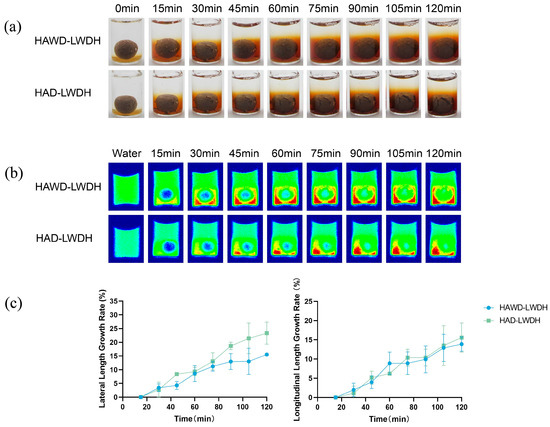
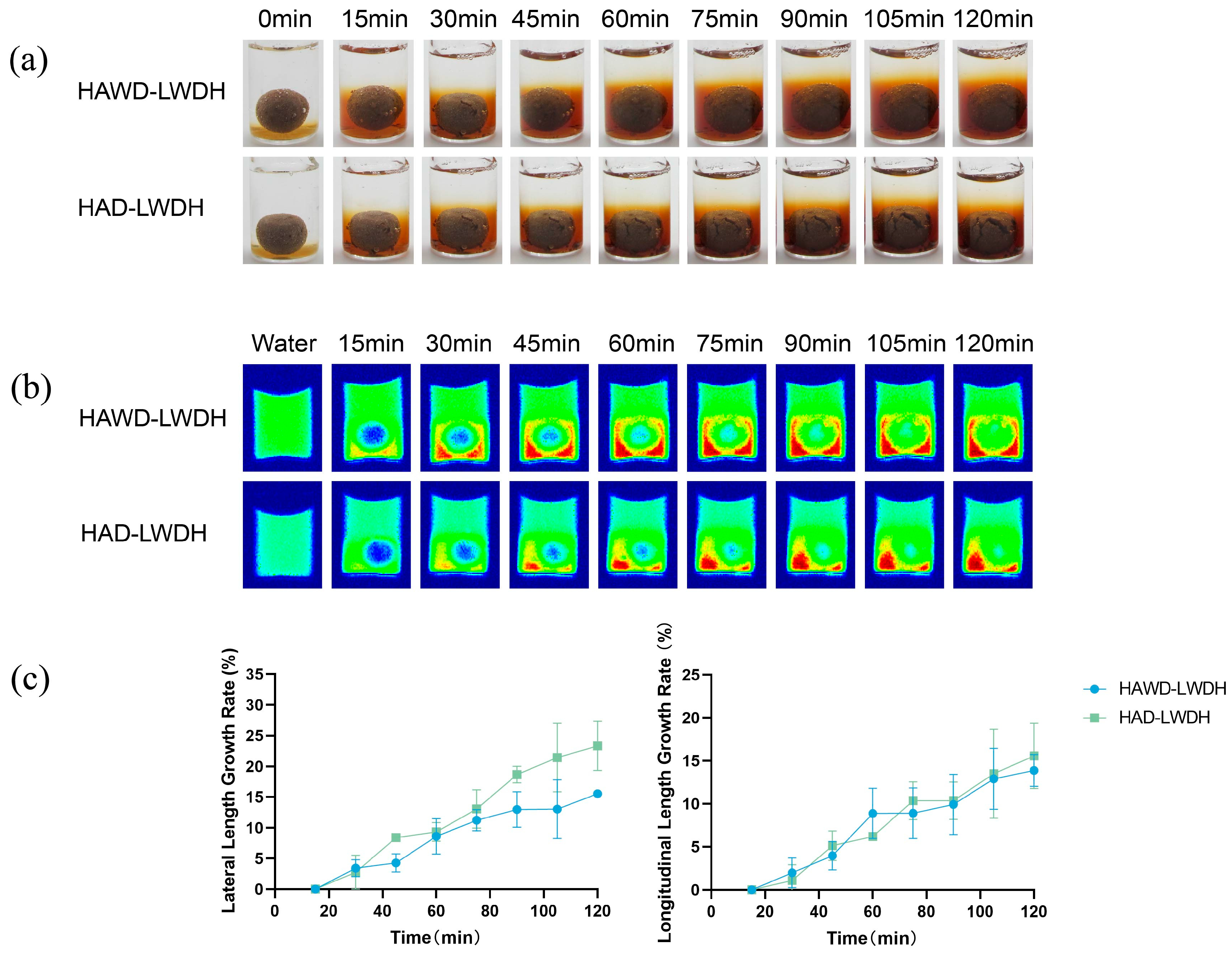
Figure 5 shows the dynamic dissolution process of LWDH pills with different drying methods. The volume of LWDH pills increased gradually with the dissolution and dispersion processes. Cracking was observed on the surface, and the diffusion layer formed by the dissolution of the pill components in water became progressively thicker. Notably, the diffusion layer of HAWD-LWDH pills was consistently thicker than that of HAD-LWDH pills at all time points in Figure 5a. The surface of HAD-LWDH pills exhibited fractures, and water penetration occurred slowly, resulting in a slower dissolution rate, sparse texture, and an overall increase in volume.
Figure 5.
Dynamic dissolution process of LWDH pills with different drying methods. (a) MRI imaging; (b) visuals; (c) lateral length growth rate and longitudinal length growth rate.
The blue-to-red color gradient in the MRI imaging suggests that moisture binds increasingly tightly to the pill components, while the lateral relaxation time of pure water is longer, resulting in a blue-green hue [35]. As shown in Figure 5b, with the extension of the dissolution time, water gradually entered the pill to interact with its ingredients. Concurrently, the cells of the extract or raw herb powder diffused into the surrounding water along the concentration gradient, leading to a reduction in the transverse relaxation time of this portion of the water. This was initially manifested as the appearance of a yellow diffusion layer in the imaging map. Yellow diffusion layers were observed in both HAWD-LWDH and HAD-LWDH pills at 15 min, indicating that some ingredients had dissolved in the water. As additional components of the pill gradually dissolved, a red diffusion layer emerged. Eventually, water completely entered the HAWD-LWDH pill by 90 min and the HAD-LWDH pill by 105 min. At this point, the blue portion of the pill disappeared, and the overall hue shifted to green. The concentration of dissolved components in the lower water layer, influenced by gravity, resulted in a thicker red diffusion layer, whereas the upper water layer, which contained fewer dissolved components, appeared green. Additionally, because HAWD-LWDH pills have a larger porosity than HAD pills and their ingredients diffuse in water more quickly, water enters the HAWD-LWDH pill and fills the pill’s pore space. In contrast, HAD-LWDH pills have a compact texture, and water enters HAD-LWDH pills and then moves to the center of the pill through capillary action and pore space expansion [36], resulting in a phenomenon where the transverse and longitudinal lengths of HAD-LWDH pills grow at a faster rate; refer to Figure 5c.
3.5. Microstructure Observation
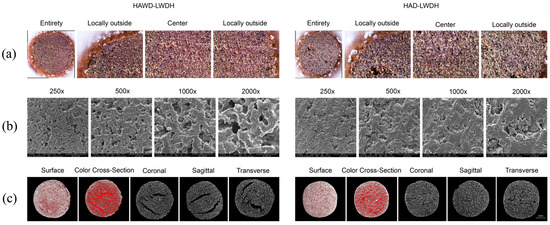
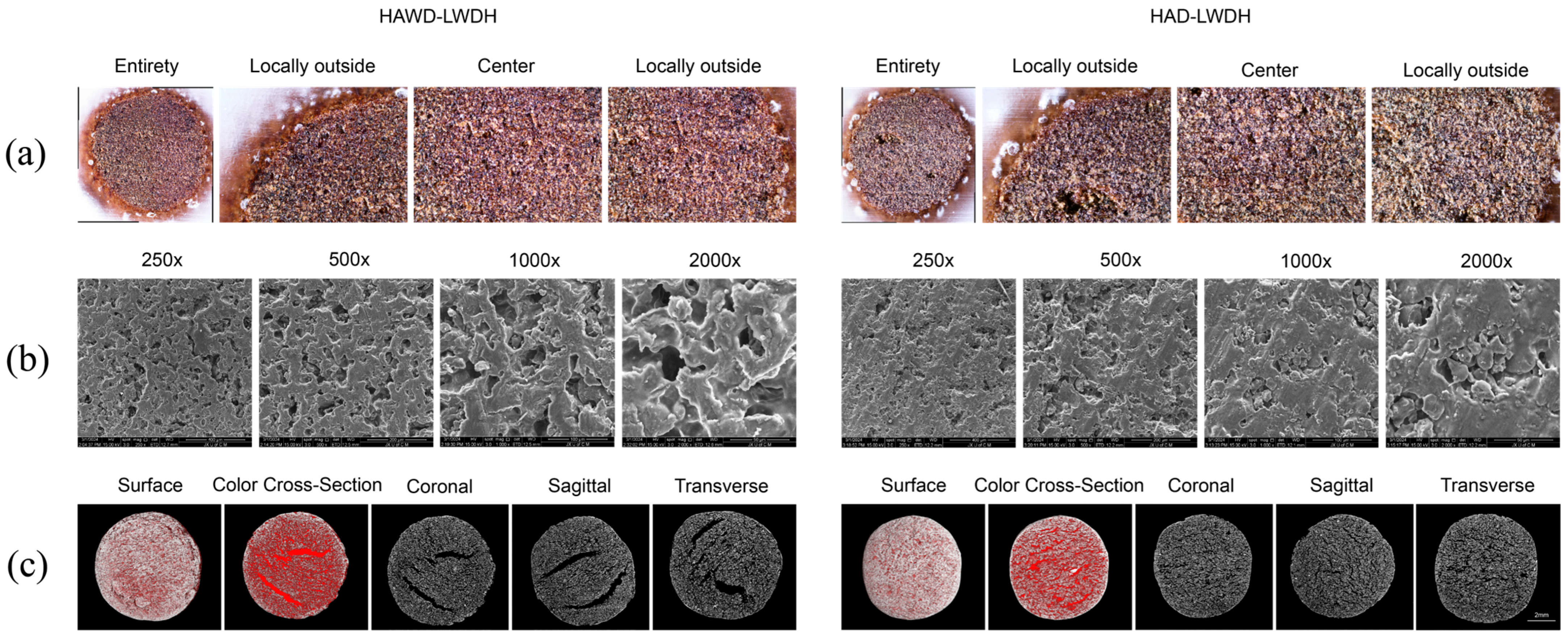
Figure 6 shows the microstructure of LWDH pills. Figure 6a illustrates that the internal colors of LWDH, produced through different drying methods, varied yet exhibited a more uniform appearance. HAWD pills displayed a reddish-brown color, while HAD pills appeared yellowish-brown. This variation may be attributed to the influence of the drying method on the chemical composition of the pills, consequently affecting the cross-sectional color [37]. Additionally, differences in the drying methods resulted in distinct internal textures; HAWD-LWDH pills contained more numerous and larger pores compared to HAD-LWDH pills, as shown in Figure 6b.
Figure 6.
LWDH microstructure diagrams. (a) Transverse section microstructure diagrams; (b) cross-section scanning electron microscope diagrams; (c) micro-CT images—the red parts represent pores.
Micro-CT results indicated that the internal pores of the pellets are represented by the red areas in Figure 6c. Open pores were identified and quantified using micro-CT image analysis. After three-dimensional reconstruction of the scanned samples (NRecon V 1.7.4.2), a pore network analysis was performed using image processing software (CT Analyser 1.20.3.0). Open pores were defined as pores that are connected to the external surface of the sample, allowing fluid penetration. To discern open pores, the external surface of the sample was first segmented, and a “connected component labeling” algorithm was applied to identify all pore voxels that were connected to the exterior. Pores that did not connect to the external surface were classified as closed pores. The open porosity was then quantified as the volume fraction of open pores relative to the total sample volume. HAWD-LWDH pills exhibited large internal pores with volumes of up to 6.70, 6.60, and 5.88 mm3, an average pore size of 0.06 mm, an opened pore volume of 25.44 mm3, and a total porosity of 15.67% (Table 4). These findings suggest that the HAWD pellets were more susceptible to moisture intrusion, as indicated by both total porosity and open pore volume. Pore connection density, defined as the number of pore connections per unit volume or surface area, is indicative of fluid propagation performance within the medium. Pore connection density was measured based on the pore network model extracted from the micro-CT data. Following three-dimensional reconstruction and pore segmentation, the pore space was skeletonized to generate a network of nodes (pore bodies) and links (pore throats). The connection density was then calculated as the number of connections (or pore throats) per unit volume of the sample. A high pore connection density reflects tighter pore connections and enhanced fluid propagation, whereas a low pore connection density indicates sparser pore connections and inferior fluid propagation capabilities [38]. Table 4 demonstrates that the pore connection density of HAWD-LWDH pills is higher than that of HAD-LWDH pills. This suggests that the internal structure of the pellets is more significantly influenced by microwave drying during the second stage of the hybrid drying method, thereby facilitating dissolution [39].
Table 4.
Pore distribution table of LWDH pills with different drying methods.
3.6. HPLC Fingerprint Analysis
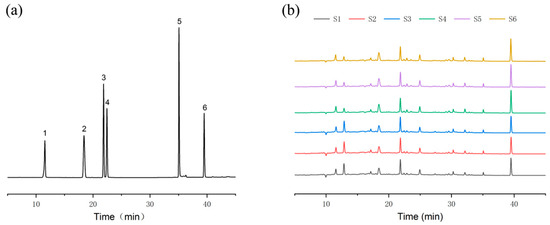
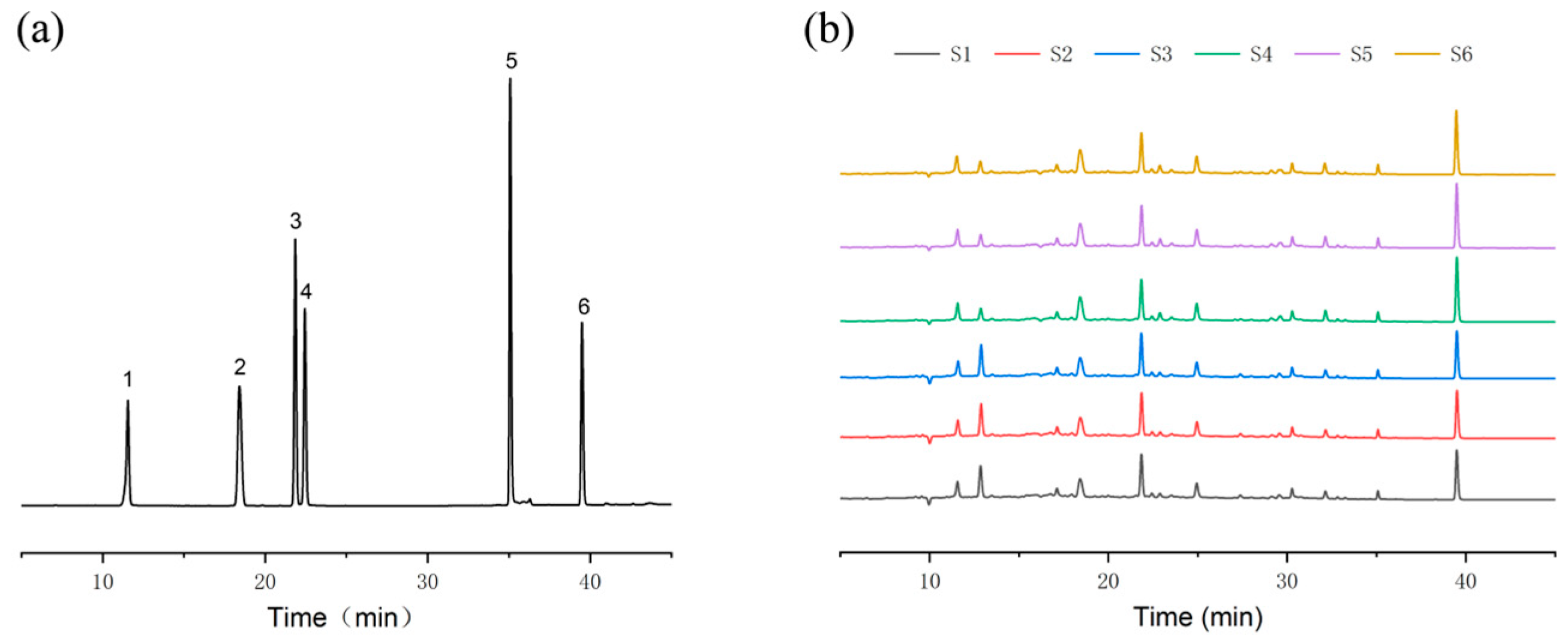
Figure 7 shows the mixed reference substances and fingerprints of LWDH pills. The two LWDH samples were fingerprinted under the chromatographic conditions of “2.7”, resulting in liquid phase patterns for six batches of samples. These liquid phase patterns were analyzed using the “Traditional Chinese Medicine Chromatographic Fingerprint Similarity Evaluation System” (2012 version), generating fingerprint patterns. According to the established standards, peak one was identified as Gallic acid, peak two as Morroniside, peak three as Loganin, peak four as Sweroside, peak five as Benzoylpaeoniflorin, and peak six as Paeonol (Figure 7). Similarity was calculated following peak matching using the “median” method, yielding similarities of 0.995, 0.995, 0.995, 0.995, 0.997, 0.998, and 0.998 for samples S1 to S6, respectively (S1, S2, S3: HAWD-LWDH pills; S4, S5, S6: HAD-LWDH pills). These results indicated that the fingerprint profiles of the six batches of LWDH samples were highly similar, with no significant differences in composition among the samples.
Figure 7.
1: Gallic acid; 2: Morroniside; 3: Loganin; 4: Sweroside; 5: Benzoylpaeoniflorin; 6: Paeonol. (a) Mixed reference substance spectrum; (b) fingerprint spectrum.
The Chinese Pharmacopeia designates Paeonol as an indicator component for the LWDH content test, specifying a minimum content of 1.78 mg/g. The volatile component Paeonol was measured at 2.2570 mg/g for HAWD-LWDH pills and 3.1601 mg/g for HAD-LWDH pills. Although the Paeonol content in the pills produced by both drying methods met the 2020 Chinese Pharmacopeia requirements, it is evident that the HAD pills contained a higher salvinorin content than the HAWD pills. This suggests that different drying methods affect the chemical composition of the pills.
4. Discussion
This study establishes a multidimensional characterization system of “texture properties and water migration” for concentrated pills, using LWDH as a model drug. The research encompasses the morphological transition from powder to pill, macroscopic to microscopic structural analysis, and the static to dynamic monitoring of the dissolution and dispersal processes. This provides robust technical support and extensive experimental data to elucidate the mechanisms of dissolution and dispersal.
Testing has demonstrated that the primary dissolution mechanism of LWDH involves the dissolution and diffusion of the paste on the surface of the pills. The pills gradually dissolve, and the powder particles disperse in water, completing the dissolution and dispersal process from the outside in, similar to the etching and dissolution process of Chinese medicine half-extract tablets. However, the high viscosity of the dissolved extract may hinder water from penetrating the pill. Furthermore, the presence of raw herb powder in concentrated tablets has a complex effect on pill texture and water migration. Contrary to previous studies, which generally posit that raw herb powder facilitates disintegration, the findings of this study indicate that its addition results in the formation of solid body textural characteristics within the pill, leading to a reduction in pore space that impedes water from easily entering the pill body. Different drying methods influence the degree of looseness within the internal structure of the tablets, thereby affecting water migration during the dissolution process. Consequently, the texture and dissolution characteristics of the pills during drying, along with the dynamics of water migration, play critical roles in determining the dissolution capability and regulatory processes of the pellets.
The majority of concentrated pills exhibit a slow dissolution time due to several factors, including the nature of the raw powder, particle size, excipients, method of preparation, drying process, and water content of the final pills. Adjusting the drying process has a minimal effect on controlling the dissolution time of the pills relative to these factors. Four general stages can be distinguished in the drying process: preheating, constant speed, decreasing speed, and balancing. Hot air drying effectively fixes the volume of the pills and removes the majority of the water during the constant speed stage. The rate at which the remaining water migrates to the surface is slower than the rate at which surface water evaporates, indicating that the pills are approaching the deceleration stage. Subsequently, hot air drying and evaporation become less effective. Microwave drying, on the other hand, utilizes polarized water molecules to alter their position within an electromagnetic field, generating friction that releases heat. This method effectively and rapidly removes water from samples that have been heated to high temperatures, promoting the formation of a loose, porous structure in the material during the drying process, which aids in the dissolution of the pills.
Chinese medicine pills possess multi-component characteristics, with most containing heat-sensitive components that are prone to decomposition at elevated temperatures. The traditional static hot air drying process is time-consuming and can lead to the loss of heat-sensitive components, negatively affecting production efficiency [40]. In contrast, the dynamic microwave drying process heats from the inside out, offering high drying speed and efficiency. However, this rapid migration of a significant volume of water can cause a substantial expansion of the pills, resulting in cracking and color discrepancies, which severely impacts the quality of the final product. Experimental results indicated that a combination of hot air and microwave drying methods was beneficial. Initially, hot air drying reduces moisture while fixing the form and size of the pills. This is followed by microwave drying, which facilitates the formation of continuous pore channels from the inside out, thereby increasing porosity and promoting the migration of water during the dissolution process. Importantly, this combined drying approach did not lead to significant changes in the chemical composition of LWDH pills. Consequently, the utilization of hot air and microwave drying was employed to further regulate the drying process parameters, serving as an effective control method to enhance the dissolution time and quality of concentrated pills.
Author Contributions
Conceptualization, X.L. and W.L.; methodology, X.W., Y.Z. (Yao Zhang) and J.Y.; software, Y.H.; validation, X.W., J.Y. and Y.H.; formal analysis, X.L., Y.Z. (Yao Zhang), Y.Z. (Yingming Zhang) and Y.H.; investigation, Y.Z. (Yao Zhang), and Y.Z. (Yingming Zhang); resources, X.R. and Y.Z. (Yingming Zhang); data curation, Q.M., J.Y., H.L. and W.L.; writing—original draft preparation, X.W.; writing—review and editing, X.L., J.Y., Y.Z. (Yingming Zhang), Y.H. and W.L.; visualization, X.W., Y.Z. (Yao Zhang), X.R. and H.L.; supervision, Q.M., X.L. and X.R.; project administration, W.L.; funding acquisition, W.L. All authors have read and agreed to the published version of the manuscript.
Funding
This research was funded by the National Natural Science Foundation of China (grant number 82460776) and the Jiangxi University of Chinese Medicine Science and Technology Innovation Team Development Program (grant number CXTD22001).
Institutional Review Board Statement
Not applicable.
Informed Consent Statement
Not applicable.
Data Availability Statement
The original contributions presented in this study are included in the article. Further inquiries can be directed to the corresponding author.
Acknowledgments
This study was conducted using research equipment provided by the National Pharmaceutical Engineering Center for Solid Preparation in Chinese Herbal Medicine, for which we express our gratitude. In addition, we would like to thank Lanzhou Foci Pharmaceutical Co., Ltd. for providing the samples.
Conflicts of Interest
Qinmin Meng is affiliated with Beijing Yanjing Found Biological Technology Co., Ltd. Yingming Zhang is affiliated with Lanzhou Foci Pharmaceutical Co., Ltd. The remaining authors declare that the research was conducted in the absence of any commercial or financial relationships that could be construed as potential conflicts of interest. The company had no role in the design of the study; in the collection, analyses, or interpretation of data; in the writing of the manuscript, or in the decision to publish the results.
Abbreviations
The following abbreviations are used in this manuscript:
| LWDH | Liuwei Dihuang |
| LF-NMR | Low-Field Nuclear Magnetic Resonance |
| HPLC | High-Performance Liquid Chromatography |
| HAMD-LWDH | Hot air and microwave-dried Liuwei Dihuang |
| HAD-LWDH | Hot air-dried Liuwei Dihuang |
| RSS | Residual Sum of Squares |
| AIC | Akaike Information Criterion |
References
- Lenz, J.; Finke, J.H.; Bunjes, H.; Kwade, A.; Juhnke, M. Tablet formulation development focusing on the functional behaviour of water uptake and swelling. Int. J. Pharm. X 2021, 3, 100103. [Google Scholar] [CrossRef] [Scilit]
- Markl, D.; Zeitler, J.A. A Review of Disintegration Mechanisms and Measurement Techniques. Pharm. Res. 2017, 34, 890–917. [Google Scholar] [CrossRef] [Scilit] [PubMed]
- Quodbach, J.; Kleinebudde, P. A critical review on tablet disintegration. Pharm. Dev. Technol. 2016, 21, 763–774. [Google Scholar] [CrossRef] [Scilit] [PubMed]
- Zhang, L.; Aloia, M.; Pielecha-Safira, B.; Lin, H.; Rajai, P.M.; Kunnath, K.; Davé, R.N. Impact of Superdisintegrants and Film Thickness on Disintegration Time of Strip Films Loaded with Poorly Water-Soluble Drug Microparticles. J. Pharm. Sci. 2018, 107, 2107–2118. [Google Scholar] [CrossRef] [Scilit] [PubMed]
- Dong, R.; DiNunzio, J.C.; Regler, B.P.; Wasylaschuk, W.; Socia, A.; Zeitler, J.A. Insights into the Control of Drug Release from Complex Immediate Release Formulations. Pharmaceutics 2021, 13, 933. [Google Scholar] [CrossRef] [Scilit]
- Adachi, T.; Tomita, Y.; Mizukai, Y.; Maezaki, Y.; Kawano, K.; Commey, K.L.; Nakamura, H.; Yamasaki, K.; Otagiri, M.; Anraku, M. The preparation and evaluation of granulated chitosan-catechin tablets with excellent disintegration properties. Carbohydr. Res. 2025, 547, 109308. [Google Scholar] [CrossRef] [Scilit]
- Bawuah, P.; Evans, M.; Lura, A.; Farrell, D.J.; Barrie, P.J.; Kleinebudde, P.; Markl, D.; Zeitler, J.A. At-line porosity sensing for non-destructive disintegration testing in immediate release tablets. Int. J. Pharm. X 2023, 5, 100186. [Google Scholar] [CrossRef] [Scilit] [PubMed]
- Markl, D.; Sauerwein, J.; Goodwin, D.J.; van den Ban, S.; Zeitler, J.A. Non-destructive Determination of Disintegration Time and Dissolution in Immediate Release Tablets by Terahertz Transmission Measurements. Pharm. Res. 2017, 34, 1012–1022. [Google Scholar] [CrossRef] [Scilit]
- Koç, B.; Eren, İ.; Ertekin, F.K. Modelling bulk density, porosity and shrinkage of quince during drying: The effect of drying method. J. Food Eng. 2008, 85, 340–349. [Google Scholar] [CrossRef] [Scilit]
- An, J.; Xie, H.; Yan, J.; Wei, H.; Wu, Y.; Liao, X. A review of applications of energy analysis: Grain, fruit and vegetable drying technology. Energy Rep. 2024, 12, 5482–5506. [Google Scholar] [CrossRef] [Scilit]
- Zahoor, I.; Mir, T.A.; Ayoub, W.S.; Farooq, S.; Ganaie, T.A. Recent applications of microwave technology as novel drying of food—Review. Food Humanit. 2023, 1, 92–103. [Google Scholar] [CrossRef] [Scilit]
- Jafari, S.M.; Ghalenoei, M.G.; Dehnad, D. Influence of spray drying on water solubility index, apparent density, and anthocyanin content of pomegranate juice powder. Powder Technol. 2017, 311, 59–65. [Google Scholar] [CrossRef] [Scilit]
- Bogdan, C.; Hales, D.; Cornilă, A.; Casian, T.; Iovanov, R.; Tomuță, I.; Iurian, S. Texture analysis—A versatile tool for pharmaceutical evaluation of solid oral dosage forms. Int. J. Pharm. 2023, 638, 122916. [Google Scholar] [CrossRef] [Scilit] [PubMed]
- Liu, Z.; Shi, C.; Fang, Y.; Wang, L.; Zhao, L.; Shen, L. Research on classification of natural plant products and critical factors affecting tablet disintegration properties based on texture analyzer. Adv. Powder Technol. 2024, 35, 104347. [Google Scholar] [CrossRef] [Scilit]
- Tomas, J.; Schöngut, M.; Dammer, O.; Beránek, J.; Zadražil, A.; Štěpánek, F. Probing the early stages of tablet disintegration by stress relaxation measurement. Eur. J. Pharm. Sci. 2018, 124, 145–152. [Google Scholar] [CrossRef] [Scilit]
- Chen, Y.; Dong, H.; Li, J.; Guo, L.; Wang, X. Evaluation of a Nondestructive NMR and MRI Method for Monitoring the Drying Process of Gastrodia elata Blume. Molecules 2019, 24, 236. [Google Scholar] [CrossRef] [Scilit] [PubMed]
- Ding, M.; Wu, P.; Chen, X.D. Investigation of gastric disintegration of carrot during digestion in vitro by a Low-Field Nuclear Magnetic Resonance device. J. Food Eng. 2021, 292, 110307. [Google Scholar] [CrossRef] [Scilit]
- Ye, Q.; Ding, M.; Zhang, P.; Wu, P.; Wang, Y.; Selomulya, C.; Chen, X.D. Visual Monitoring of Disintegration of Solid Oral Dosage Forms in Simulated Gastric Fluids Using Low-Field NMR Imaging. AAPS PharmSciTech 2022, 23, 246. [Google Scholar] [CrossRef] [Scilit]
- Liu, Z.; Lin, X.; Hong, Y.; Zhao, L.; Shen, L. Exploring the disintegration mechanism of dissolved natural plant products tablets based on pore structure control. Adv. Powder Technol. 2024, 35, 104586. [Google Scholar] [CrossRef] [Scilit]
- Markl, D.; Strobel, A.; Schlossnikl, R.; Bøtker, J.; Bawuah, P.; Ridgway, C.; Rantanen, J.; Rades, T.; Gane, P.; Peiponen, K.-E.; et al. Characterisation of pore structures of pharmaceutical tablets: A review. Int. J. Pharm. 2018, 538, 188–214. [Google Scholar] [CrossRef] [Scilit]
- Boissier, C.; Feidt, F.; Nordstierna, L. Study of Pharmaceutical Coatings by Means of NMR Cryoporometry and Sem Image Analysis. J. Pharm. Sci. 2012, 101, 2512–2522. [Google Scholar] [CrossRef] [Scilit]
- Häbel, H.; Andersson, H.; Olsson, A.; Olsson, E.; Larsson, A.; Särkkä, A. Characterization of pore structure of polymer blended films used for controlled drug release. J. Control Release 2016, 222, 151–158. [Google Scholar] [CrossRef] [Scilit] [PubMed]
- Li, Y.; Qiu, X.; Qi, Y.; Yang, M. Investigation of pore structure evolution of Licorice extract during vacuum drying using Micro-CT 3D reconstruction. Measurement 2025, 241, 115762. [Google Scholar] [CrossRef] [Scilit]
- Shan, N.; Wang, P.-t.; Zhu, Q.-l.; Sun, J.-y.; Zhang, H.-y.; Liu, X.-y.; Cao, T.-x.; Chen, X.; Huang, Y.-j.; Zhou, Q.-h. Comprehensive characterization of yam tuber nutrition and medicinal quality of Dioscorea opposita and D. alata from different geographic groups in China. J. Integr. Agric. 2020, 19, 2839–2848. [Google Scholar] [CrossRef] [Scilit]
- Shao, Y.; Mao, L.; Guan, W.; Wei, X.; Yang, Y.; Xu, F.; Li, Y.; Jiang, Q. Physicochemical and structural properties of low-amylose Chinese yam (Dioscorea opposita Thunb.) starches. Int. J. Biol. Macromol. 2020, 164, 427–433. [Google Scholar] [CrossRef] [Scilit]
- Chi, C.; Li, X.; Zhang, Y.; Chen, L.; Li, L. Understanding the mechanism of starch digestion mitigation by rice protein and its enzymatic hydrolysates. Food Hydrocoll. 2018, 84, 473–480. [Google Scholar] [CrossRef] [Scilit]
- Shao, Y.; Jiao, R.; Wu, Y.; Xu, F.; Li, Y.; Jiang, Q.; Zhang, L.; Mao, L. Physicochemical and functional properties of the protein-starch interaction in Chinese yam. Food Sci. Nutr. 2023, 11, 1499–1506. [Google Scholar] [CrossRef] [Scilit]
- Yu, B.; Li, J.; Tao, H.; Zhao, H.; Liu, P.; Cui, B. Physicochemical properties and in vitro digestibility of hydrothermal treated Chinese yam (Dioscorea opposita Thunb.) starch and flour. Int. J. Biol. Macromol. 2021, 176, 177–185. [Google Scholar] [CrossRef] [Scilit]
- Zografi, G.; Kontny, M.J. The interactions of water with cellulose- and starch-derived pharmaceutical excipients. Pharm. Res. 1986, 3, 187–194. [Google Scholar] [CrossRef] [Scilit]
- Etale, A.; Onyianta, A.J.; Turner, S.R.; Eichhorn, S.J. Cellulose: A Review of Water Interactions, Applications in Composites, and Water Treatment. Chem. Rev. 2023, 123, 2016–2048. [Google Scholar] [CrossRef] [Scilit]
- Wu, L.; Chen, S.; Li, Y.; Xie, W.; Tang, B. Effect of heat pump drying temperature on moisture migration characteristics and quality of instant Tremella fuciformis. Curr. Res. Food Sci. 2024, 9, 100825. [Google Scholar] [CrossRef] [Scilit]
- Baranowska, H.M.; Kowalczewski, P.Ł. Low-Field NMR Analyses of Gels and Starch-Stabilized Emulsions with Modified Potato Starches. Processes 2022, 10, 2109. [Google Scholar] [CrossRef] [Scilit]
- Ding, L.; Ebrahimi, S.; Liu, X.; Persson, S.; Kirkensgaard, J.J.K.; Enemark-Rasmusse, K.; Chang, J.; Chen, S.; Blennow, A.; Czaja, T.P.; et al. Characterizing maize starch gelatinization by Low-Field NMR spectroscopy. Carbohydr. Polym. 2025, 369, 124292. [Google Scholar] [CrossRef] [Scilit]
- Su, L.; Xiang, F.; Qin, R.; Fang, Z.; Zeng, J.; Li, G. Study on mechanism of starch phase transtion in wheat with different moisture content. Food Sci. Technol. 2022, 42, e106521. [Google Scholar] [CrossRef] [Scilit]
- Dvořák, J.; Tomas, J.; Lizoňová, D.; Schöngut, M.; Dammer, O.; Pekárek, T.; Beránek, J.; Štěpánek, F. Investigation of tablet disintegration pathways by the combined use of magnetic resonance imaging, texture analysis and static light scattering. Int. J. Pharm. 2020, 587, 119719. [Google Scholar] [CrossRef] [Scilit] [PubMed]
- Feng, S.; Bi, J.; Yi, J.; Li, X.; Li, J.; Ma, Y. Cell wall polysaccharides and mono-/disaccharides as chemical determinants for the texture and hygroscopicity of freeze-dried fruit and vegetable cubes. Food Chem. 2022, 395, 133574. [Google Scholar] [CrossRef] [Scilit]
- Zhang, A.-A.; Shu, C.; Xie, L.; Wang, Q.-H.; Xu, M.-Q.; Pan, Y.; Hao, W.-L.; Zheng, Z.-A.; Jiang, Y.-H.; Xiao, H.-W. Enhancing shelf-life of dried goji berry: Effects of drying methods and packaging conditions on browning evolution. Food Res. Int. 2025, 201, 115648. [Google Scholar] [CrossRef] [Scilit] [PubMed]
- Zachara, J.; Brantley, S.; Chorover, J.; Ewing, R.; Kerisit, S.; Liu, C.; Perfect, E.; Rother, G.; Stack, A.G. Internal Domains of Natural Porous Media Revealed: Critical Locations for Transport, Storage, and Chemical Reaction. Environ. Sci. Technol. 2016, 50, 2811–2829. [Google Scholar] [CrossRef] [Scilit]
- Markl, D.; Wang, P.; Ridgway, C.; Karttunen, A.-P.; Bawuah, P.; Ketolainen, J.; Gane, P.; Peiponen, K.-E.; Zeitler, J.A. Resolving the rapid water absorption of porous functionalised calcium carbonate powder compacts by terahertz pulsed imaging. Chem. Eng. Res. Des. 2018, 132, 1082–1090. [Google Scholar] [CrossRef] [Scilit]
- Arslan, A.; Alibaş, İ. Assessing the effects of different drying methods and minimal processing on the sustainability of the organic food quality. Innov. Food Sci. Emerg. Technol. 2024, 94, 103681. [Google Scholar] [CrossRef] [Scilit]

Disclaimer/Publisher’s Note: The statements, opinions and data contained in all publications are solely those of the individual author(s) and contributor(s) and not of MDPI and/or the editor(s). MDPI and/or the editor(s) disclaim responsibility for any injury to people or property resulting from any ideas, methods, instructions or products referred to in the content. |
© 2026 by the authors. Licensee MDPI, Basel, Switzerland. This article is an open access article distributed under the terms and conditions of the Creative Commons Attribution (CC BY) license.