


Abstract
Many patients, especially those with a high pill burden and multiple chronic illnesses, are less adherent to medication. In medication treatments utilizing polypills, this problem might be diminished since multiple drugs are fused into one formulation and, therefore, the therapy regimen is simplified. This systematic review summarized evidence to assess the effect of polypills on medication adherence. The following databases were searched for articles published between 1 January 2000, and 14 May 2019: PubMed, Web of Science, Cochrane Library, and Scopus. Medication adherence was the only outcome assessed, regardless of the method of measuring it. Sixty-seven original peer-reviewed articles were selected. Adherence to polypill regimens was significantly higher in 56 articles (84%) compared to multiple pill regimens. This finding was also supported by the results of 13 out of 17 selected previously published systematic reviews and meta-analyses dealing with this topic. Adherence can be improved through the formulation of polypills, which is probably why the interest in researching them is growing. There are many polypills on the market, but the adherence studies so far focused mainly on a small range of medical conditions.
1. Introduction
Poor medication adherence is a widespread and unresolved challenge among patients [1]. Only half of the prescribed doses are taken, and many patients stop their treatment before the planned end of the therapy [1,2,3]. Several factors contribute to low adherence rates, such as ineffective communication between the patient and the physician, or patients perceive their treatment as unnecessary. Patients may also think the benefits of their pharmacotherapy do not outweigh its adverse effects, or they simply forget [4]. This very often results in complications, extra healthcare costs, side effects, and therapeutic failures. Therefore, improving adherence is a crucial factor in increasing the likelihood of positive therapeutic outcomes.
Patients with chronic illnesses must quite often take multiple pills every day for months or even years, which will eventually result in less adherence to their medication [5]. This occurs especially in cardiovascular diseases (CVD), where patients do not feel the symptoms of their disease in the short term, and it is easier for them to forget to take their medicines [6]. The same goes for diabetes patients; in mild forms, diabetes does not cause serious complications, and patients do not feel ill; thus, they tend to forget their medication [7].
Polypills are a technological innovation that is expected to improve adherence by simplifying the pharmacotherapy regimen [2,5]. The concept of the polypill, very often referred to as a fixed-dose combination (FDC), is quite simple. Instead of taking two or more pills (each containing one active ingredient), multiple drugs are combined into one formulation [6,8,9]. It is generally thought that taking fewer pills will lead to better adherence [2]. This systematic review examines the evidence for that idea and assesses the evidence of the effects of a reduced pill burden on medication adherence.
2. Materials and Methods
2.1. Search Strategy
This systematic review is focused on articles concerning fixed-dose combinations (FDCs), also known as polypills, in comparison to their separate drug formulations (multiple tablets, free-pill combinations). It does not matter how many drugs are combined in a certain formulation.
The method followed the Preferred Reporting Items for Systematic Reviews and Meta-Analyses (PRISMA) statement [10]. The search was done in May 2019, and it covered the following databases: PubMed, Web of Science, Cochrane Library, and Scopus. After screening all titles and articles, the reference lists of selected articles were used to identify additional relevant studies.
In all four databases, the following selection of keywords was applied: (compliance OR adherence OR non-compliance OR non-adherence OR noncompliance OR nonadherence) AND ((fixed NEAR/1 combination*) OR single-pill* OR single-tablet* OR polypill* OR “combination pill*”). The principle behind this selection was to make an extensive search that would cover only the relevant articles by using as many synonyms and antonyms for two terms related to the aim of our study: polypills and adherence. The search included a language filter, which showed only articles written in English. Furthermore, a time-span filter was used, which included only articles published since 1 January 2000.
2.2. Inclusion and Exclusion Criteria
Articles were included in the systematic review if they were either original peer-reviewed studies or systematic reviews and meta-analyses. Narrative reviews and conference abstracts were excluded. There were no restrictions concerning the type of patients, diseases, comorbidities, or drugs. Adherence was the only essential outcome measure for an article to be considered, regardless of how it was measured. Other outcomes were not assessed. All articles needed to have a comparison between low and high pill burden groups, meaning that one group had to take more pills than another group. This was possible either with control groups (longitudinal, controlled) or when observing one group with patients who changed their pill burden over time (longitudinal, uncontrolled). It was also necessary that the articles dealt with solid dosage formulations rather than with any other dosage form.
Additionally, articles dealing with persistence instead of adherence were excluded. The definitions of these two terms are vague since they stand for a similar phenomenon and, thus, they tend to overlap in different literature. However, for this study, only articles measuring adherence were included, and the ones that clearly stated that they dealt only with persistence were excluded.
2.3. Study Selection and Data Extraction
Both researchers (A.B. and K.D.) searched for the articles separately to make the most credible and objective article selection. Their findings were then compared, and discussions were held until a final decision about included articles was reached.
Key information about all relevant studies was extracted from the articles. For original peer-reviewed studies, the extracted information included author of the study, year of publication, study country, design, setting, aim and population, disease in question, follow-up period, adherence measures, main outcomes, number and international nonproprietary names (INN) of active ingredients used in the study, and their dosage (if given). For systematic reviews and meta-analyses, the extracted data covered the author of the study, year of publication, medical condition in focus, study aim, number of included original studies, and main results. For further working progress, articles were grouped by (i) article type, that is, original studies separately from systematic reviews and meta-analyses, and (ii) the type of disease they were dealing with.
2.4. Quality Assessment
Quality assessment of the included studies was systematically done using Cochrane Collaboration’s risk of bias assessment tool for randomized controlled trials [11] and the Newcastle–Ottawa scale for cohort studies [12]. As adherence was the only outcome of interest, assessment of how any other outcomes were dealt with was ignored.
Cochrane Collaboration’s risk of bias tool measures risk of bias in randomized controlled trials through seven domains: sequence generation and allocation concealment (selection bias), blinding of participants (performance bias), blinding of outcome assessment (detection bias), incomplete outcome data (attrition bias), selective reporting (reporting bias), and other bias. Each domain is assessed as having high, low, or unclear risk of bias. Studies with low risk of bias for all criteria were considered to be of low risk, studies with low or unclear risk of bias were considered medium risk, and studies with at least one domain assessed as high risk of bias were considered as having an overall high risk of bias [11]. However, as all randomized controlled trials were inherently open-label, meaning that blinding of participants was impossible due to the nature of the intervention, this domain was always assessed as having a high risk of bias and, therefore, omitted from the overall evaluation of studies.
The Newcastle-Ottawa scale was used for observational studies; it measures quality through three main domains: selection, comparability, and outcome. Each study was awarded a maximum of nine stars, depending on whether it reached certain standards within these domains (maximum four stars for selection, two stars for comparability, and three stars for outcome) [12]. Studies with 0–4 stars were considered as low quality, studies with 5–7 stars were considered as medium quality, and studies having eight or nine stars were considered as high quality.
3. Results
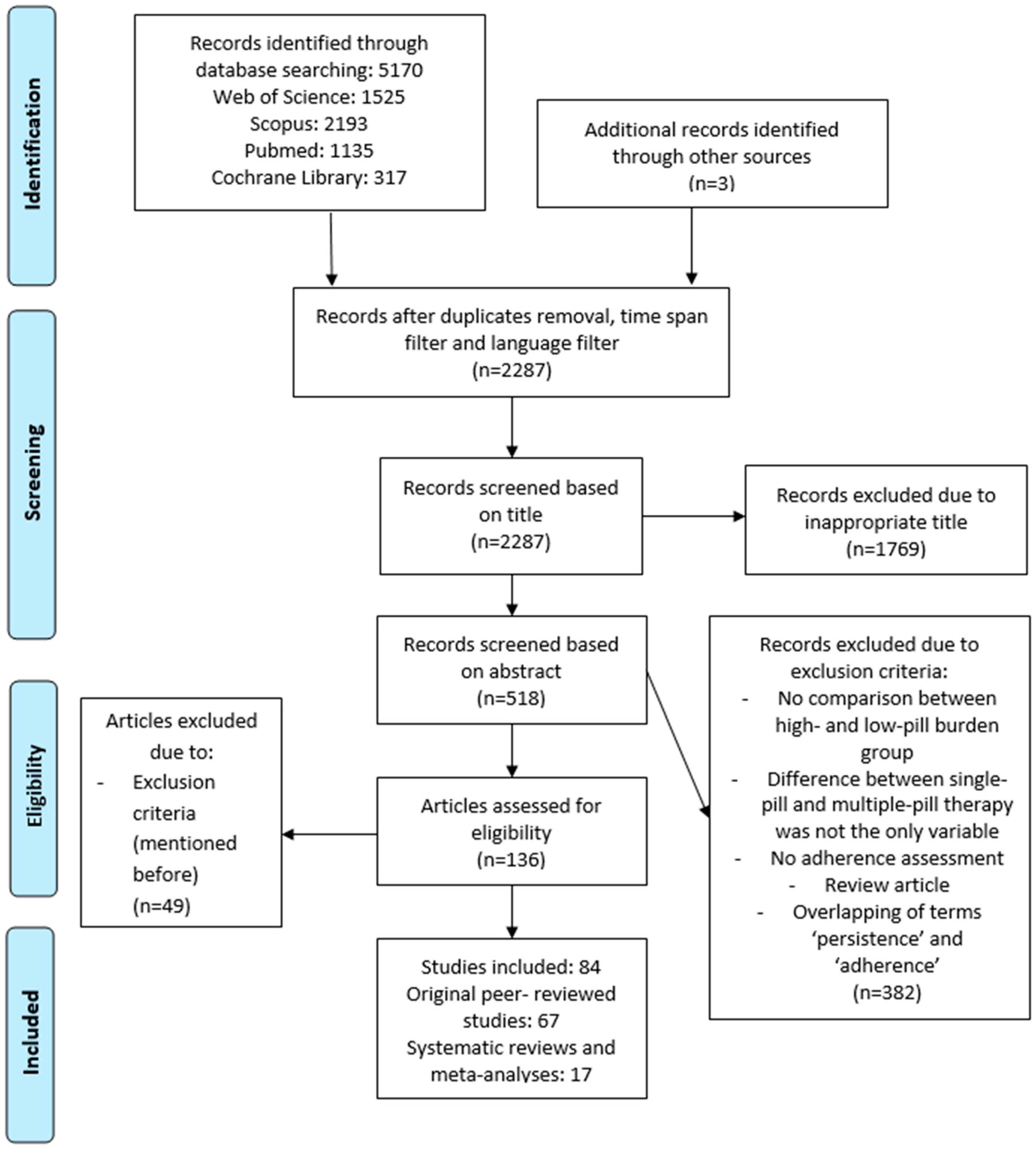
The database search yielded 5170 records, of which 2287 were screened after removal of duplicates and inclusion of time-span and language filters. After the inclusion and exclusion criteria were applied to screen the records, 84 articles were included in our systematic review; 67 of them were original peer-reviewed studies and 17 were systematic reviews and/or meta-analyses. For the flow chart of the article selection process, see Figure 1.
Figure 1.
Preferred Reporting Items for Systematic Reviews and Meta-Analyses (PRISMA) flow chart of the article selection.
3.1. Included Systematic Reviews and Meta-Analyses (n = 17)
After the selection process of eligible studies, 17 systematic reviews and/or meta-analyses out of 136 articles were included in this systematic review (Figure 1, Table A1, Appendix A). Of these studies, eight were meta-analyses (47%) [13,14,15,16,17,18,19,20], two were systematic reviews (12%) [21,22], and seven were defined as a systematic review with meta-analysis (41%) [23,24,25,26,27,28,29]. The most common systematically reviewed medical condition was hypertension (n = 5, 29%) [14,15,16,25,26], followed by studies dealing with CVDs in general (n = 3, 18%) [17,18,21], human immunodeficiency virus (HIV) (n = 4, 24%) [19,20,24,27], diabetes (n = 2, 12%) [22,28], and tuberculosis (n = 1, 6%) [23] (Table 1). Two studies examined the effect of polypills in several medical conditions [13,29]. Thirteen of the selected articles (76%) favored therapy with FDC over separate-pill therapy regimens [13,14,15,16,18,19,20,21,22,24,25,27,28].
Table 1.
Summary of conclusions per disease in previously published systematic reviews and meta-analyses (n = 17).
However, some overlap of the articles that these studies investigated was found. For example, Selak et al. [17] and Webster et al. [18] included the same studies, which were also included by Bahiru et al. [21] Furthermore, there is much overlap between studies conducted by Gupta et al. [16], Kawalec et al. [25], Sherrill et al. [15], and Du et al. [14]. Both studies conducted by Clay et al. [20,24] share some of the included articles as well. For a visual representation of the overlap of the studies included in the abovementioned systematic reviews and meta-analyses, please see Figure 2.
Figure 2.
Visual representation of the overlap of the studies included in other systematic reviews and meta-analyses (SR and MA; n = 17). One row represents one SR/MA. Each colored square symbolizes one article, and the number of colored squares is equal to the number of studies included in the corresponding SR/MA. Different colors represent into how many SRs/MAs an article was included (e.g., if all the colored squares in a row are blue, all the articles are unique to only this SR/MA). Blue: study included only in one SR/MA. Red: study included in two different SRs/MAs. Yellow: study included in three different SRs/MAs. Green: study included in four different SRs/MAs. Purple: study included in five different SRs/MAs.
Some of the studies investigated in one or more of the previously published systematic reviews and meta-analyses were also included in our systematic review since they fit the inclusion criteria [5,30,31,32,33,34,35,36,37,38,39,40,41,42,43,44,45,46,47,48,49,50,51,52,53,54,55,56,57].
3.2. Included Original Peer-Reviewed Studies (n = 67)
Altogether, 67 original peer-reviewed studies out of a total of 5170 articles met the inclusion criteria and were included in our study (Figure 1). Of the 67 articles, 31 (46%) were related to hypertension (HT), 14 (21%) were related to human immunodeficiency virus (HIV), 11 (16%) were related to cardiovascular disease (CVD), 10 (15%) were related to diabetes mellitus type II (DMII), and one dealt with lower urinary tract symptoms associated with benign prostatic hyperplasia (LUTS/BHP). Studies were conducted in different countries worldwide; some of them even included more than one country. Most of them (n = 36) were conducted in the United States, and only one was carried out in South America, in two different countries. More details can be found in Table 2.
Table 2.
General information about reviewed articles (n = 67).
A summary of these 67 studies can be found in Table A2 (Appendix B), displaying author, year of publication, country of the study, study design, study aim, study setting and follow-up period, study population, outcome measures, and results.
Most of the studies (n = 41; 61%) examined the effects of treatment with polypills, where only two drugs were combined (see Table 2 and Table 3). However, in HIV therapy, the use of three-drug formulations was dominant over any other (seven out of 14 studies). There were no data on combining more than five drugs into one formulation. Additional information about the combinations of active ingredients in polypills can be found in Table A3 (Appendix C).
Table 3.
Visualization of number of active ingredients contained in a polypill. Written in the table are numbers of the studies with the given characteristics (disease and number of active ingredients in the polypill).
3.3. Adherence Measures Used in the Studies (n = 67)
Table 4 summarizes methods for measuring adherence that were used in the selected articles (n = 67). Most of the studies (n = 62; 93%) relied only on one method; however, five studies [35,50,59,79,82] combined two different methods to assess medication adherence. The applied methods could be divided into two broad categories: subjective (e.g., patient interviews and self-reporting) and indirect (e.g., pill counts, methods using prescription fills, electronic monitoring) [75]. Some of the methods are more general and applicable to more cases, whereas some were used only in a specific study. The most commonly used measure was medical possession ratio (MPR; n = 30, 45%), followed by proportion of days covered (PDC; n = 21, 31%).
Table 4.
Methods for measuring adherence applied in the articles (n = 67).
3.4. Adherence Outcome
All studies had one or more groups that received more pills than their control groups (Table A2, Appendix B). Those groups could be either a cohort of the same group or a comparison between two different groups. In most cases, the control group was a group of patients on the usual therapy (multiple pills). The test subjects received exactly the same active ingredients as the control group, but in a single formulation [31,32,33,35,41,42,43,54,59,61,67,69,70,73,81,85,89]; alternatively, the test group and the control group were not necessarily receiving the same drugs, but they simply had a different pill burden [5,30,34,36,37,38,39,40,44,45,46,47,48,49,50,51,52,53,55,56,57,58,60,62,64,65,66,68,71,72,74,75,76,77,78,79,80,82,83,84,86,87,88,90,91,92,93,94,95].
The main interest of this review is how the pill burden is associated with patient adherence. In 56 out of 67 studies (84%), there was a significant difference in adherence between the test and control group (Table 5). In seven studies (10%), the difference between both groups was insignificant. In only two studies (3%), both opposite outcomes (improved and decreased adherence in the test group, depending on the treatment situation before the study index date) were reported [61,80]. See Table 5 for a summary of the outcomes.
Table 5.
Summary of the study results per disease. Statistically significant differences in adherence outcomes are presented and considered.
3.5. Quality Assessment of the Included Studies
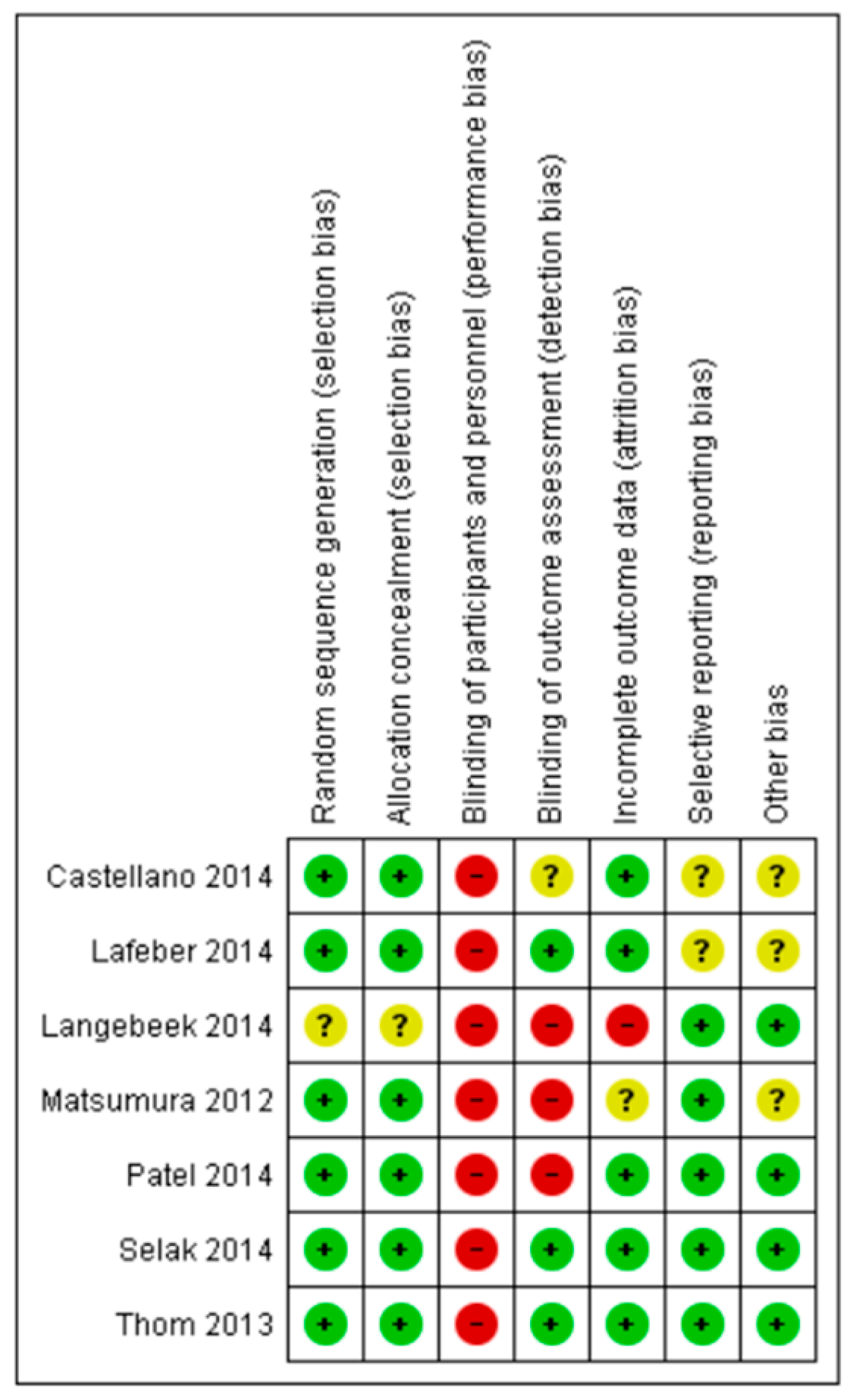
Figure 3 shows the risk of bias summary for all seven randomized controlled trials [35,45,48,52,59,75,88]. As previously noted, blinding of participants was impossible due to the nature of the intervention, that is, different pill burden, resulting in high risk of performance bias in all studies. Thus, it was decided to be omitted from the overall risk of bias assessment. Based on the previously determined criteria, two RCTs reached standards for having an overall low risk of bias [48,52], two studies reached standards for having a medium risk of bias [35,59], and three studies were considered as having a high overall risk of bias [45,75,88].
Figure 3.
Results of risk of bias assessment for all randomized controlled trials (RCTs). Green: low risk of bias; red: high risk of bias; yellow: unclear risk of bias.
Except for Matsumura et al. [75], which reported on the insignificant difference in adherence between polypills and multipill therapy and which was assessed as having a high risk of bias, all the other RCTs (n = 6, 86%) showed improved adherence when using polypills compared to multipill therapy.
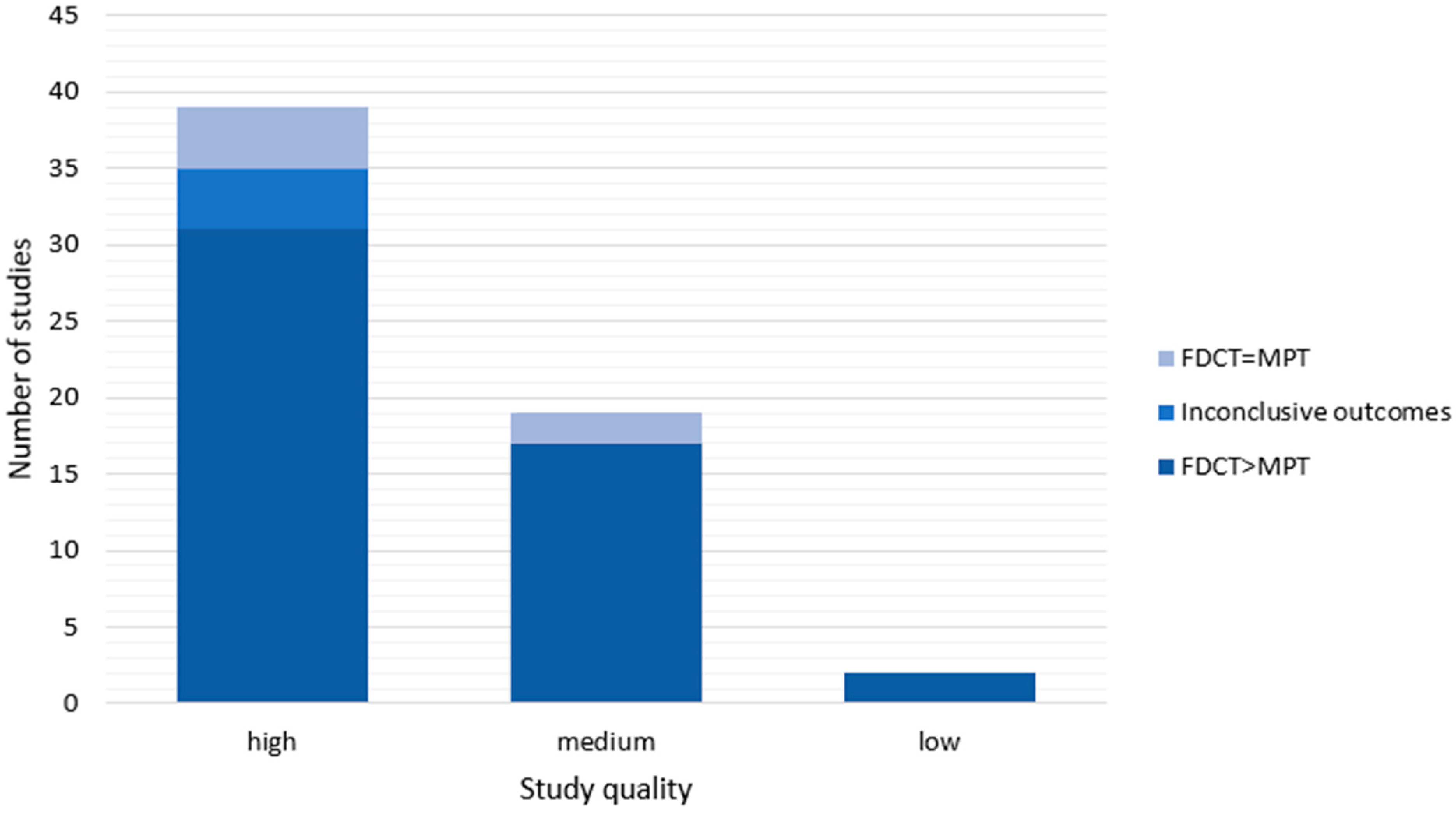
From 60 of the included observational studies, 39 (65%) were assigned eight or nine stars according to the Newcastle–Ottawa rating and were, thus, considered as high-quality studies [5,33,36,37,41,42,43,44,46,47,50,51,53,54,55,56,58,61,62,63,64,65,67,71,72,74,76,78,79,80,81,82,83,84,86,89,90,91,94]. There were 19 studies (32%) that reached criteria for medium quality (six or seven stars) [30,31,32,34,38,39,40,49,57,60,68,69,70,77,85,87,92,93,95], and only two studies (3%) were considered poor quality, with both having five stars assigned [66,73].
In 50 out of a total of 60 observational studies (83%), adherence to the polypill was shown to be increased compared to multipill therapy. Of the high-quality studies, 31 out of 39 studies (79%) also showed this outcome, which does not differ importantly from findings from the total number of observational studies. Moreover, the ratio of studies with an insignificant difference in adherence to polypill and multipill therapy is very similar for high- and medium-quality studies (4/39 or 10% vs. 2/19 or 11%, respectively). For a visual representation showing the number of studies with a certain outcome concerning adherence per quality of cohort study, see Figure 4.
Figure 4.
Number of studies with a certain outcome per study quality. FDCT, fixed-dose combination therapy; MPT, multipill therapy. Inconclusive outcomes: see Table 5, Table A2 (Appendix B), and Table A3 (Appendix C) for additional information.
4. Discussion
The main strength of our study is the broad range of included original peer-reviewed studies and that no restrictions concerning the medical condition, type of patients, or adherence measures were used in the research. Based on this systematic review, there is a connection between pill burden and medication adherence in medical conditions such as hypertension, diabetes mellitus type 2, cardiovascular diseases, and HIV. This is reflected by the fact that, in 56 out of 67 examined studies (84%), patient adherence to single-pill fixed-dose combination therapy was significantly higher compared to free-dose combination therapy with multiple pills. Most of the 17 previously conducted meta-analyses and systematic reviews included in our research also suggested a positive effect of polypills on patient adherence. However, four out of 17 studies (24%) did not reach the same conclusion; either the findings were inconclusive [26,29] or FDCT was simply not shown to be superior to multipill therapy [17,23]. It has to be acknowledged, however, that the number of analyzed articles in these studies was either three [17,26], five [23], or six [29]; thus, they might not be highly representative.
Ten percent (n = 7) of the individual studies did not observe improved adherence in patients receiving polypill therapy [34,50,58,75,76,90,95]. The authors of these articles suggested the following methodological reasons for their results: (1) the number of participants was too small to obtain significant results [34]; (2) calculation of MPR was made alternatively and therapeutic or in-class switches were allowed for [58]; (3) the pill burden for some multipill therapy regimens was not high enough to have a significant influence on adherence [34]; (4) the study period was not long enough to detect differences between the polypill and multipill groups [75].
Interestingly, two out of 67 studies [61,80], dealing with CVD and HT, respectively, observed both positive and negative outcomes regarding the influence of FDCT on adherence. For the study, dealing with CVD [61], the article’s authors suggested that the reasons for decreased adherence in patients taking polypills were adverse events. These were supposed to be falsely attributed to an active ingredient, which the patients in question were not receiving before the start of the study [61]. Authors of the other study dealing with HT, however, suggested a different reason for decreased adherence [80]. According to them, patients who were highly adherent to their previous treatment with free-combined antihypertensive drugs may not have been taking both of their antihypertensive medications at the same time and as prescribed. Hence, although they were switched to the equivalent FDC, their blood pressure lowered too much; therefore, they reduced the dose of FDCs on their own [80].
To our knowledge, no other previous systematic review in polypills and adherence covered as many original peer-reviewed studies and such a broad range of medical conditions as this. Our findings indicate that the rate at which polypill therapy is associated with higher adherence varies among medical conditions. In most of the studies on CVD, HT, and DMII therapies, adherence increased in patients with polypill therapy; however, in studies on HIV or LUTS therapies, no difference was observed in four out of 15, that is, 27% of the studies. These differences in results can be partly explained by the methodological issues already discussed above. Further research on diseases other than CVD, HT, DMII, and HIV is needed to get a better understanding of whether and how the medical condition influences the impact of reduced pill burden on adherence.
The research mainly revolves around cardiovascular polypills; the reason for this is probably the abundance of patients suffering from CVD and HT [96]. Despite fewer studies on polypills for diabetes and HIV and one for lower urinary tract symptoms associated with benign prostatic hyperplasia, fixed-dose combination therapy was not introduced to other diseases in terms of its potential to influence adherence. As this literature review shows promising results for polypills with 56 out of 67 included studies improving adherence, the research could be extended to a wider range of medical conditions and a wider range of populations and health systems, as well as beyond high-income countries. The current research on polypills is dominated by the research conducted in the USA, reflecting their situation.
There are also some limitations concerning this systematic review. The first one is related to the methodological quality of the selected studies. The results would be more valid if more of the study designs were randomized controlled trials instead of retrospective and prospective cohort studies. Since the study design differed between articles, it was also not possible to assess study quality using only one universal method. Thus, two separate methods were used, one for randomized controlled trials [11] and the other for observational studies [12]. Consequently, it was not possible to make a joint summary of study quality assessment including all articles. Another limitation is related to the countries and the medications included in the studies. Specifically, every country has different public health concerns, as well as health systems, services, and finances, which influence medication practices. Since most of the reviewed studies were from high-income countries, particularly from the USA, a distorted image of the use of polypills in the rest of the world is possible. It must also be acknowledged that patient adherence is affected by many variables, such as patient age, medical condition, and clinical outcomes, which varied significantly in our selected articles. The assessment of these factors was not the aim of this review, but they could have significantly influenced our findings. Furthermore, due to the lack of articles regarding other diseases, it is not possible to conclude whether polypills are associated with an increase in medication adherence on a general level. This can become clear only when more studies regarding the effect of polypills on adherence in other diseases are conducted. Moreover, there is some overlapping among previously published systematic reviews and meta-analyses, as some articles were included in more than one of them, thereby giving those studies more emphasis.
Another issue that must be acknowledged as a possible limitation to our study is the diversity of methods for measuring adherence that were applied in the included studies. In 67 articles, 11 different adherence measures were used, which makes the results of the studies more difficult to compare, thereby adding a possible source of bias. The methods range, on the one hand, from assessing prescription claims and the number of the pills taken (indirect methods) to analyzing questionnaires and patient self-assessment, on the other hand (subjective methods) [75], all having specific advantages and limitations. For example, indirect methods are a very technical way of measuring adherence, but easy to apply to bigger datasets, which may explain their use in these studies. However, unlike self-assessment-based methods, they do not cover other aspects of a patient´s life that also influence adherence. Additionally, pill-count and prescription claim analyses do not guarantee that the patients were taking the prescribed medicines [40,49]. On the other hand, self-assessment is a very subjective way of measuring adherence and is often prone to over-reporting the actual state [45,87]. In none of the studies were direct methods of measuring adherence used (i.e., measuring blood concentration of the active ingredients), which are the most objective methods, but also the most difficult, time-consuming, and expensive, as well as being inconvenient for patients [48]. In the future, it might be useful to consider the aspect of how patients perceive taking one instead of multiple pills in the methods for assessing adherence. Finally, due to such substantial heterogeneity between studies in terms of study design and reporting on the outcome, a pooled estimate of the effect of the pill burden on adherence was not analyzed, which can be considered as one of the limitations as well.
Another issue that emerged while carrying out this systematic review relates to the vague use of the terms “adherence” and “persistence.” Certain methods (e.g., duration to treatment discontinuation) were defined as a measure of adherence in some of the studies, whereas the other studies stated it as a method of assessing therapy persistence. In the future, clearer definitions and distinction between these two terms and the methods used for measuring them should be made available to avoid misconceptions about the aims of the studies.
The years of publication of selected articles indicate that there was increased interest in polypills in the last years. Only seven of the selected articles (10%) were published before 2008, and 35 out of a total of 67 studies (52%) were published in the last six years. One of the reasons for this rising trend might be the fact that fixed-dose combination therapy shows promising results for improving patient adherence.
Most of today’s commercially available polypills are intended for the treatment of only one indication. However, since it was already established how beneficial FDCT can be for patients, another interesting concept that is not yet applied very often, but is worth considering, is combining drugs for different indications into one formulation. Between 2010 and 2015, two FDCs composed of active pharmaceutical ingredients (APIs) for different comorbid diseases were already approved, both without full clinical study data [97]. In the future, more emphasis could be given to such FDCs, since that would reduce pill burden even more and, hopefully, have an even greater effect on patient adherence.
Even though this systematic review shows one of the potential benefits of polypill therapy, some of its disadvantages should also be acknowledged. For example, if dosing titration is needed, fixed-dose combination therapy can be inflexible if the appropriate dosage is not available in the form of a polypill [98,99,100,101]. That could lead to exposure of patients to unnecessary therapy and even adverse effects without added benefits [100]. Furthermore, if adverse effects occur, it cannot be possible for the patient to determine which of the components is causing them [101]. Another possible issue is that polypill therapy may be more expensive than multipill therapy [66,67,98].
All in all, the evidence shown in this systematic review constitutes a base for possible advantages of polypill therapy over multipill therapy, at least in the investigated medical conditions, when tackling the widespread and alarming problem of patient adherence to medication. Thus, the role of polypills in clinical practice should not be neglected, even though their contribution to increasing adherence is only partial. There are many other patient- and system-related factors, such as patient age and socioeconomic status, health literacy, disease and medication beliefs, adverse effects, medical condition and its seriousness, treatment costs, and clinical outcomes, which also play a major role in achieving positive outcomes [48,52,61,80,84]. However, reducing the complexity of pill regimens, especially in diseases where the number of pills can seem overwhelming for patients, could at least partly lead to increased medication adherence and, therefore, also improved clinical outcomes. Nonetheless, to better understand the role of polypills in clinical practice, a higher number of long-term randomized controlled trials dealing with different medical conditions will be needed.
5. Conclusions
This systematic review shows a connection between pill burden and medication adherence. In most of the included studies, adherence to polypill therapy was significantly higher compared to multipill therapy. Our findings indicate that the rate at which fixed-dose combination therapy is associated with higher adherence varies between medical conditions. As this systematic review shows promising results for polypills, research could be extended to a wider range of medical conditions, populations, and health systems, as well as beyond high-income countries.
Author Contributions
Conceptualization, M.A. and S.G.; methodology, A.B., K.D., and M.A.; formal analysis, A.B. and K.D.; investigation, A.B. and K.D.; writing—original draft preparation, A.B., K.D., and S.G.; writing—review and editing, A.B. and M.A.; visualization, A.B. and K.D.; supervision, M.A.; project administration, A.B. and M.A. All authors have read and agreed to the published version of the manuscript.
Funding
This research received no external funding.
Acknowledgments
We acknowledge Marika Pohjanoksa-Mäntylä, university lecturer at the University of Helsinki, Finland, for reviewing and commenting on the early version of the manuscript, and Igor Locatelli, university lecturer at the University of Ljubljana, Slovenia, for his help in the finalization stage of the manuscript.
Conflicts of Interest
The authors declare no conflict of interest.
Appendix A
Table A1.
Summary of the systematic reviews and meta-analyses (n = 17) regarding the medical condition in focus, study aim, number and design of included studies, and main results.
Appendix B
Table A2.
Summary of the original articles (n = 67) regarding aim, study setting, follow-up period, population, type of adherence outcome measures, and results.
Appendix C
Table A3.
General article information regarding disease, drugs, formulation, and outcomes.
References
- Nieuwlaat, R.; Wilczynski, N.; Navarro, T.; Hobson, N.; Jeffery, R.; Keepanasseril, A.; Agoritsas, T.; Mistry, N.; Iorio, A.; Jack, S.; et al. Interventions for enhancing medication adherence. Cochrane Database Syst. Rev. 2014. [Google Scholar] [CrossRef] [Scilit]
- Bangalore, S.; Shahane, A.; Parkar, S.; Messerli, F.H. Compliance and fixed-dose combination therapy. Curr. Hypertens Rep. 2007, 9, 184–189. [Google Scholar] [CrossRef] [Scilit] [PubMed]
- Kisa, A.; Sabaté, E.; Nuño-Solinís, R. Adherence to long-term therapies: Evidence for action; WHO: Geneva, Switzerland, 2003; ISBN 92 4 154599 2. [Google Scholar]
- Hugtenburg, J.G.; Timmers, L.; Elders, P.J.; Vervloet, M.; van Dijk, L. Definitions, variants, and causes of nonadherence with medication: A challenge for tailored interventions. Patient Prefer. Adherence 2013, 7, 675–682. [Google Scholar] [CrossRef] [Scilit] [PubMed]
- Hsu, C.-I.; Hsiao, F.-Y.; Wu, F.-L.L.; Shen, L.-J. Adherence and medication utilisation patterns of fixed-dose and free combination of angiotensin receptor blocker/thiazide diuretics among newly diagnosed hypertensive patients: A population-based cohort study. Int. J. Clin. Pract. 2015, 69, 729–737. [Google Scholar] [CrossRef] [Scilit] [PubMed]
- Sanz, G.; Fuster, V. Prevention: Polypills for cardiovascular prevention: A step forward? Nat. Rev. Cardiol. 2013, 10, 683–684. [Google Scholar] [CrossRef] [Scilit]
- Adeyemi, A.O.; Rascati, K.L.; Lawson, K.A.; Strassels, S.A. Adherence to oral antidiabetic medications in the pediatric population with type 2 diabetes: A retrospective database analysis. Clin. Ther. 2012, 34, 712–719. [Google Scholar] [CrossRef] [Scilit]
- Khaled, S.A.; Burley, J.C.; Alexander, M.R.; Yang, J.; Roberts, C.J. 3D printing of five-in-one dose combination polypill with defined immediate and sustained release profiles. J. Control. Release Off. J. Control. Release Soc. 2015, 217, 308–314. [Google Scholar] [CrossRef] [Scilit]
- Robles-Martinez, P.; Xu, X.; Trenfield, S.J.; Awad, A.; Goyanes, A.; Telford, R.; Basit, A.W.; Gaisford, S. 3D Printing of a Multi-Layered Polypill Containing Six Drugs Using a Novel Stereolithographic Method. Pharmaceutics 2019, 11, 274. [Google Scholar] [CrossRef] [Scilit]
- Moher, D.; Liberati, A.; Tetzlaff, J.; Altman, D.G. Preferred reporting items for systematic reviews and meta-analyses: The PRISMA statement. PLoS Med. 2009, 6, e1000097. [Google Scholar] [CrossRef] [Scilit]
- Higgins, J.P.; Altman, D.G.; Gotzsche, P.C.; Juni, P.; Moher, D.; Oxman, A.D.; Savovic, J.; Schulz, K.F.; Weeks, L.; Sterne, J.A. The Cochrane Collaboration’s tool for assessing risk of bias in randomised trials. BMJ (Clin. Res. ed.) 2011, 343, d5928. [Google Scholar] [CrossRef] [Scilit]
- Wells, G.A.; DO’Connell, B.S.; Peterson, J.; Welch, V.; Losos, M.; Tugwell, P.J. The Newcastle-Ottawa Scale (NOS) for Assessing the Quality of Nonrandomised Studies in Meta-Analyses. Available online: http://www.ohri.ca/programs/clinical_epidemiology/oxford.asp (accessed on 1 November 2019).
- Bangalore, S.; Kamalakkannan, G.; Parkar, S.; Messerli, F.H. Fixed-dose combinations improve medication compliance: A meta-analysis. Am. J. Med. 2007, 120, 713–719. [Google Scholar] [CrossRef] [Scilit] [PubMed]
- Du, L.P.; Cheng, Z.W.; Zhang, Y.X.; Li, Y.; Mei, D. The impact of fixed-dose combination versus free-equivalent combination therapies on adherence for hypertension: A meta-analysis. J. Clin. Hypertens (Greenwich) 2018, 20, 902–907. [Google Scholar] [CrossRef] [Scilit] [PubMed]
- Sherrill, B.; Halpern, M.; Khan, S.; Zhang, J.; Panjabi, S. Single-pill vs free-equivalent combination therapies for hypertension: A meta-analysis of health care costs and adherence. J. Clin. Hypertens (Greenwich) 2011, 13, 898–909. [Google Scholar] [CrossRef] [Scilit] [PubMed]
- Gupta, A.K.; Arshad, S.; Poulter, N.R. Compliance, safety, and effectiveness of fixed-dose combinations of antihypertensive agents: A meta-analysis. Hypertension 2009, 55, 399–407. [Google Scholar] [CrossRef] [Scilit] [PubMed]
- Selak, V.; Webster, R.; Stepien, S.; Bullen, C.; Patel, A.; Thom, S.; Arroll, B.; Bots, M.L.; Brown, A.; Crengle, S.; et al. Reaching cardiovascular prevention guideline targets with a polypill-based approach: A meta-analysis of randomised clinical trials. Heart 2018, 105, 42–48. [Google Scholar] [CrossRef] [Scilit] [PubMed]
- Webster, R.; Patel, A.; Selak, V.; Billot, L.; Bots, M.L.; Brown, A.; Bullen, C.; Cass, A.; Crengle, S.; Raina Elley, C.; et al. Effectiveness of fixed dose combination medication (’polypills’) compared with usual care in patients with cardiovascular disease or at high risk: A prospective, individual patient data meta-analysis of 3140 patients in six countries. Int. J. Cardiol. 2016, 205, 147–156. [Google Scholar] [CrossRef] [Scilit]
- Ramjan, R.; Calmy, A.; Vitoria, M.; Mills, E.J.; Hill, A.; Cooke, G.; Ford, N. Systematic review and meta-analysis: Patient and programme impact of fixed-dose combination antiretroviral therapy. Trop. Med. Int. Health 2014, 19, 501–513. [Google Scholar] [CrossRef] [Scilit]
- Clay, P.G.; Nag, S.; Graham, C.M.; Narayanan, S. Meta-Analysis of Studies Comparing Single and Multi-Tablet Fixed Dose Combination HIV Treatment Regimens. Medicine (Baltimore) 2015, 94, e1677. [Google Scholar] [CrossRef] [Scilit]
- Bahiru, E.; de Cates, A.N.; Farr, M.R.; Jarvis, M.C.; Palla, M.; Rees, K.; Ebrahim, S.; Huffman, M.D. Fixed-dose combination therapy for the prevention of atherosclerotic cardiovascular diseases. Cochrane Database Syst. Rev. 2017, 3, Cd009868. [Google Scholar] [CrossRef] [Scilit]
- Hutchins, V.; Zhang, B.; Fleurence, R.L.; Krishnarajah, G.; Graham, J. A systematic review of adherence, treatment satisfaction and costs, in fixed-dose combination regimens in type 2 diabetes. Curr. Med. Res. Opin. 2011, 27, 1157–1168. [Google Scholar] [CrossRef] [Scilit]
- Albanna, A.S.; Smith, B.M.; Cowan, D.; Menzies, D. Fixed-dose combination antituberculosis therapy: A systematic review and meta-analysis. Eur. Respir. J. 2013, 42, 721–732. [Google Scholar] [CrossRef] [Scilit] [PubMed]
- Clay, P.G.; Yuet, W.C.; Moecklinghoff, C.H.; Duchesne, I.; Tronczynski, K.L.; Shah, S.; Shao, D. A meta-analysis comparing 48-week treatment outcomes of single and multi-tablet antiretroviral regimens for the treatment of people living with HIV. AIDS Res. Ther. 2018, 15, 17. [Google Scholar] [CrossRef] [Scilit] [PubMed]
- Kawalec, P.; Holko, P.; Gawin, M.; Pilc, A. Effectiveness of fixed-dose combination therapy in hypertension: Systematic review and meta-analysis. Arch. Med. Sci. 2018, 14, 1125–1136. [Google Scholar] [CrossRef] [Scilit] [PubMed]
- Mallat, S.G.; Tanios, B.Y.; Itani, H.S.; Lotfi, T.; Akl, E.A. Free versus Fixed Combination Antihypertensive Therapy for Essential Arterial Hypertension: A Systematic Review and Meta-Analysis. PLoS ONE 2016, 11, e0161285. [Google Scholar] [CrossRef] [Scilit]
- Altice, F.; Evuarherhe, O.; Shina, S.; Carter, G.; Beaubrun, A.C. Adherence to HIV treatment regimens: Systematic literature review and meta-analysis. Patient Prefer. Adherence 2019, 13, 475–490. [Google Scholar] [CrossRef] [Scilit]
- Han, S.; Iglay, K.; Davies, M.J.; Zhang, Q.; Radican, L. Glycemic effectiveness and medication adherence with fixed-dose combination or coadministered dual therapy of antihyperglycemic regimens: A meta-analysis. Curr. Med. Res. Opin. 2012, 28, 969–977. [Google Scholar] [CrossRef] [Scilit]
- van Galen, K.A.; Nellen, J.F.; Nieuwkerk, P.T. The Effect on Treatment Adherence of Administering Drugs as Fixed-Dose Combinations versus as Separate Pills: Systematic Review and Meta-Analysis. AIDS Res. Treat. 2014, 2014, 967073. [Google Scholar] [CrossRef] [Scilit]
- Bangsberg, D.R.; Ragland, K.; Monk, A.; Deeks, S.G. A single tablet regimen is associated with higher adherence and viral suppression than multiple tablet regimens in HIV+ homeless and marginally housed people. Aids 2010, 24, 2835–2840. [Google Scholar] [CrossRef] [Scilit]
- Barner, J.C. Adherence to oral antidiabetic agents with pioglitazone and metformin: Comparison of fixed-dose combination therapy with monotherapy and loose-dose combination therapy. Clin. Ther. 2011, 33, 1281–1288. [Google Scholar] [CrossRef] [Scilit]
- Blonde, L.; Wogen, J.; Kreilick, C.; Seymour, A.A. Greater reductions in A1C in type 2 diabetic patients new to therapy with glyburide/metformin tablets as compared to glyburide co-administered with metformin. Diabetes Obes. Metab. 2003, 5, 424–431. [Google Scholar] [CrossRef] [Scilit]
- Brixner, D.I.; Jackson, K.C., 2nd; Sheng, X.; Nelson, R.E.; Keskinaslan, A. Assessment of adherence, persistence, and costs among valsartan and hydrochlorothiazide retrospective cohorts in free-and fixed-dose combinations. Curr. Med. Res. Opin. 2008, 24, 2597–2607. [Google Scholar] [CrossRef] [Scilit] [PubMed]
- Buscher, A.; Hartman, C.; Kallen, M.A.; Giordano, T.P. Impact of antiretroviral dosing frequency and pill burden on adherence among newly diagnosed, antiretroviral-naive HIV patients. Int. J. STD AIDS 2012, 23, 351–355. [Google Scholar] [CrossRef] [Scilit] [PubMed]
- Castellano, J.M.; Sanz, G.; Penalvo, J.L.; Bansilal, S.; Fernandez-Ortiz, A.; Alvarez, L.; Guzman, L.; Linares, J.C.; Garcia, F.; D’Aniello, F.; et al. A polypill strategy to improve adherence: Results from the FOCUS project. J. Am. Coll. Cardiol. 2014, 64, 2071–2082. [Google Scholar] [CrossRef] [Scilit] [PubMed]
- Cheong, C.; Barner, J.C.; Lawson, K.A.; Johnsrud, M.T. Patient adherence and reimbursement amount for antidiabetic fixed-dose combination products compared with dual therapy among Texas Medicaid recipients. Clin. Ther. 2008, 30, 1893–1907. [Google Scholar] [CrossRef] [Scilit]
- Cohen, C.J.; Meyers, J.L.; Davis, K.L. Association between daily antiretroviral pill burden and treatment adherence, hospitalisation risk, and other healthcare utilisation and costs in a US medicaid population with HIV. BMJ Open 2013, 3, e003028. [Google Scholar] [CrossRef] [Scilit]
- Dickson, M.; Plauschinat, C.A. Racial differences in medication compliance and healthcare utilization among hypertensive Medicaid recipients: Fixed-dose vs free-combination treatment. Ethn. Dis. 2008, 18, 204–209. [Google Scholar]
- Dickson, M.; Plauschinat, C.A. Compliance with antihypertensive therapy in the elderly: A comparison of fixed-dose combination amlodipine/benazepril versus component-based free-combination therapy. Am. J. Cardiovasc. Drugs 2008, 8, 45–50. [Google Scholar] [CrossRef] [Scilit]
- Gerbino, P.P.; Shoheiber, O. Adherence patterns among patients treated with fixed-dose combination versus separate antihypertensive agents. Am. J. Health Syst. Pharm. 2007, 64, 1279–1283. [Google Scholar] [CrossRef] [Scilit]
- Hess, G.; Hill, J.; Lau, H.; Dastani, H.; Chaudhari, P. Medication Utilization Patterns and Hypertension-Related Expenditures among Patients Who Were Switched from Fixed-Dose to Free-Combination Antihypertensive Therapy. Pharm. Ther. 2009, 33, 652–666. [Google Scholar]
- Levi, M.; Pasqua, A.; Cricelli, I.; Cricelli, C.; Piccinni, C.; Parretti, D.; Lapi, F. Patient Adherence to Olmesartan/Amlodipine Combinations: Fixed Versus Extemporaneous Combinations. J. Manag. Care Spec. Pharm. 2016, 22, 255–262. [Google Scholar] [CrossRef] [Scilit]
- Melikian, C.; White, T.J.; Vanderplas, A.; Dezii, C.M.; Chang, E. Adherence to oral antidiabetic therapy in a managed care organization: A comparison of monotherapy, combination therapy, and fixed-dose combination therapy. Clin. Ther. 2002, 24, 460–467. [Google Scholar] [CrossRef] [Scilit]
- Pan, F.; Chernew, M.E.; Fendrick, A.M. Impact of fixed-dose combination drugs on adherence to prescription medications. J. Gen. Intern. Med. 2008, 23, 611–614. [Google Scholar] [CrossRef] [Scilit] [PubMed]
- Patel, A.; Cass, A.; Peiris, D.; Usherwood, T.; Brown, A.; Jan, S.; Neal, B.; Hillis, G.S.; Rafter, N.; Tonkin, A.; et al. A pragmatic randomized trial of a polypill-based strategy to improve use of indicated preventive treatments in people at high cardiovascular disease risk. Eur. J. Prev. Cardiol. 2014, 22, 920–930. [Google Scholar] [CrossRef] [Scilit] [PubMed]
- Patel, B.V.; Leslie, R.S.; Thiebaud, P.; Nichol, M.B.; Tang, S.S.; Solomon, H.; Honda, D.; Foody, J.M. Adherence with single-pill amlodipine/atorvastatin vs a two-pill regimen. Vasc. Health Risk Manag. 2008, 4, 673–681. [Google Scholar] [PubMed]
- Raffi, F.; Yazdanpanah, Y.; Fagnani, F.; Laurendeau, C.; Lafuma, A.; Gourmelen, J. Persistence and adherence to single-tablet regimens in HIV treatment: A cohort study from the French National Healthcare Insurance Database. J. Antimicrob. Chemother. 2015, 70, 2121–2128. [Google Scholar] [CrossRef] [Scilit] [PubMed]
- Selak, V.; Elley, C.R.; Bullen, C.; Crengle, S.; Wadham, A.; Rafter, N.; Parag, V.; Harwood, M.; Doughty, R.N.; Arroll, B.; et al. Effect of fixed dose combination treatment on adherence and risk factor control among patients at high risk of cardiovascular disease: Randomised controlled trial in primary care. BMJ (Clin. Res. ed.) 2014, 348, g3318. [Google Scholar] [CrossRef] [Scilit]
- Taylor, A.A.; Shoheiber, O. Adherence to antihypertensive therapy with fixed-dose amlodipine besylate/benazepril HCl versus comparable component-based therapy. Congest. Heart Fail. 2003, 9, 324–332. [Google Scholar] [CrossRef] [Scilit]
- Tennant, S.J.; Hester, E.K.; Caulder, C.R.; Lu, Z.K.; Bookstaver, P.B. Adherence among rural HIV-infected patients in the deep south: A comparison between single-tablet and multi-tablet once-daily regimens. J. Int. Assoc. Provid. AIDS Care 2014, 14, 64–71. [Google Scholar] [CrossRef] [Scilit]
- Thayer, S.; Arondekar, B.; Harley, C.; Darkow, T.E. Adherence to a fixed-dose combination of rosiglitazone/glimepiride in subjects switching from monotherapy or dual therapy with a thiazolidinedione and/or a sulfonylurea. Ann. Pharmacother. 2010, 44, 791–799. [Google Scholar] [CrossRef] [Scilit]
- Thom, S.; Poulter, N.; Field, J.; Patel, A.; Prabhakaran, D.; Stanton, A.; Grobbee, D.E.; Bots, M.L.; Reddy, K.S.; Cidambi, R.; et al. Effects of a fixed-dose combination strategy on adherence and risk factors in patients with or at high risk of CVD: The UMPIRE randomized clinical trial. JAMA 2013, 310, 918–929. [Google Scholar] [CrossRef] [Scilit]
- Tung, Y.C.; Huang, Y.C.; Wu, L.S.; Chang, C.J.; Chu, P.H. Medication compliance and clinical outcomes of fixed-dose combinations vs free combinations of an angiotensin II receptor blocker and a calcium channel blocker in hypertension treatment. J. Clin. Hypertens (Greenwich) 2017, 19, 983–989. [Google Scholar] [CrossRef] [Scilit] [PubMed]
- Vanderpoel, D.R.; Hussein, M.A.; Watson-Heidari, T.; Perry, A. Adherence to a fixed-dose combination of rosiglitazone maleate/metformin hydrochloride in subjects with type 2 diabetes mellitus: A retrospective database analysis. Clin. Ther. 2005, 26, 2066–2075. [Google Scholar] [CrossRef] [Scilit] [PubMed]
- Yang, W.; Chang, J.; Kahler, K.H.; Fellers, T.; Orloff, J.; Wu, E.Q.; Bensimon, A.G. Evaluation of compliance and health care utilization in patients treated with single pill vs. free combination antihypertensives. Curr. Med. Res. Opin. 2010, 26, 2065–2076. [Google Scholar] [CrossRef] [Scilit] [PubMed]
- Zeng, F.; Patel, B.V.; Andrews, L.; Frech-Tamas, F.; Rudolph, A.E. Adherence and persistence of single-pill ARB/CCB combination therapy compared to multiple-pill ARB/CCB regimens. Curr. Med. Res. Opin. 2010, 26, 2877–2887. [Google Scholar] [CrossRef] [Scilit] [PubMed]
- Sutton, S.S.; Hardin, J.W.; Bramley, T.J.; D’Souza, A.O.; Bennett, C.L. Single- versus multiple-tablet HIV regimens: Adherence and hospitalization risks. Am. J. Manag. Care 2016, 22, 242–248. [Google Scholar] [PubMed]
- Bartlett, L.E.; Pratt, N.; Roughead, E.E. Does tablet formulation alone improve adherence and persistence: A comparison of ezetimibe fixed dose combination versus ezetimibe separate pill combination? Br. J. Clin. Pharmacol. 2016, 83, 202–210. [Google Scholar] [CrossRef] [Scilit]
- Lafeber, M.; Grobbee, D.E.; Schrover, I.M.; Thom, S.; Webster, R.; Rodgers, A.; Visseren, F.L.; Bots, M.L.; Spiering, W. Comparison of a morning polypill, evening polypill and individual pills on LDL-cholesterol, ambulatory blood pressure and adherence in high-risk patients; a randomized crossover trial. Int. J. Cardiol. 2014, 181, 193–199. [Google Scholar] [CrossRef] [Scilit]
- LaFleur, J.; Thompson, C.J.; Joish, V.N.; Charland, S.L.; Oderda, G.M.; Brixner, D.I. Adherence and persistence with single-dosage form extended-release niacin/lovastatin compared with statins alone or in combination with extended-release niacin. Ann. Pharmacother. 2006, 40, 1274–1279. [Google Scholar] [CrossRef] [Scilit]
- Schaffer, A.L.; Buckley, N.A.; Pearson, S.A. Who benefits from fixed-dose combinations? Two-year statin adherence trajectories in initiators of combined amlodipine/atorvastatin therapy. Pharmacoepidemiol. Drug Saf. 2017, 26, 1465–1473. [Google Scholar] [CrossRef] [Scilit]
- Balu, S.; Simko, R.J.; Quimbo, R.M.; Cziraky, M.J. Impact of fixed-dose and multi-pill combination dyslipidemia therapies on medication adherence and the economic burden of sub-optimal adherence. Curr. Med. Res. Opin. 2009, 25, 2765–2775. [Google Scholar] [CrossRef] [Scilit]
- Kamat, S.A.; Bullano, M.F.; Chang, C.L.; Gandhi, S.K.; Cziraky, M.J. Adherence to single-pill combination versus multiple-pill combination lipid-modifying therapy among patients with mixed dyslipidemia in a managed care population. Curr. Med. Res. Opin. 2011, 27, 961–968. [Google Scholar] [CrossRef] [Scilit] [PubMed]
- Ah, Y.M.; Shin, J.; Lee, J.Y. The association of angiotensin receptor blocker-based combination therapy with persistence and adherence in newly treated, uncomplicated hypertensive patients. Patient Prefer. Adherence 2019, 13, 241–248. [Google Scholar] [CrossRef] [Scilit] [PubMed]
- Baser, O.; Andrews, L.M.; Wang, L.; Xie, L. Comparison of real-world adherence, healthcare resource utilization and costs for newly initiated valsartan/amlodipine single-pill combination versus angiotensin receptor blocker/calcium channel blocker free-combination therapy. J. Med. Econ. 2011, 14, 576–583. [Google Scholar] [CrossRef] [Scilit] [PubMed]
- Bramlage, P.; Ketelhut, R.; Fronk, E.M.; Wolf, W.P.; Smolnik, R.; Zemmrich, C.; Schmieder, R.E. Clinical impact of patient adherence to a fixed-dose combination of olmesartan, amlodipine and hydrochlorothiazide. Clin. Drug Investig. 2014, 34, 403–411. [Google Scholar] [CrossRef] [Scilit]
- Bramlage, P.; Schmidt, S.; Sims, H. Fixed-dose vs free-dose combinations for the management of hypertension-An analysis of 81 958 patients. J. Clin. Hypertens (Greenwich) 2018, 20, 705–715. [Google Scholar] [CrossRef] [Scilit]
- Chapman, R.H.; Pelletier, E.M.; Smith, P.J.; Roberts, C.S. Can adherence to antihypertensive therapy be used to promote adherence to statin therapy? Patient Prefer. Adherence 2009, 3, 265–275. [Google Scholar] [CrossRef] [Scilit]
- Degli Esposti, L.; Perrone, V.; Veronesi, C.; Gambera, M.; Nati, G.; Perone, F.; Tagliabue, P.F.; Buda, S.; Borghi, C. Modifications in drug adherence after switch to fixed-dose combination of perindopril/amlodipine in clinical practice. Results of a large-scale Italian experience. The amlodipine-perindopril in real settings (AMPERES) study. Curr. Med. Res. Opin. 2018, 34, 1571–1577. [Google Scholar] [CrossRef] [Scilit]
- Degli Esposti, L.; Saragoni, S.; Buda, S.; Degli Esposti, E. Drug adherence to olmesartan/amlodipine fixed combination in an Italian clinical practice setting. Clin. Outcomes Res. 2014, 6, 209–216. [Google Scholar] [CrossRef] [Scilit]
- Ho, C.T.; Tung, Y.C.; Chou, S.H.; Hsiao, F.C.; Lin, Y.S.; Chang, C.J.; Chu, P.H. Clinical outcomes in hypertensive patients treated with a single-pill fixed-dose combination of renin-angiotensin system inhibitor and thiazide diuretic. J. Clin. Hypertens (Greenwich) 2018, 20, 1731–1738. [Google Scholar] [CrossRef] [Scilit]
- Hussein, M.A.; Chapman, R.H.; Benner, J.S.; Tang, S.S.; Solomon, H.A.; Joyce, A.; Foody, J.M. Does a single-pill antihypertensive/lipid-lowering regimen improve adherence in US managed care enrolees? A non-randomized, observational, retrospective study. Am. J. Cardiovasc. Drugs 2010, 10, 193–202. [Google Scholar] [CrossRef] [Scilit]
- Kumagai, N.; Onishi, K.; Hoshino, K.; Nakamori, S.; Kitai, T.; Yazu, T.; Oota, M.; Ueda, Y.; Hiraoka, N.; Okamoto, S.; et al. Improving drug adherence using fixed combinations caused beneficial treatment outcomes and decreased health-care costs in patients with hypertension. Clin. Exp. Hypertens 2012, 35, 355–360. [Google Scholar] [CrossRef] [Scilit] [PubMed]
- Lauffenburger, J.C.; Landon, J.E.; Fischer, M.A. Effect of Combination Therapy on Adherence Among US Patients Initiating Therapy for Hypertension: A Cohort Study. J. Gen. Intern. Med. 2017, 32, 619–625. [Google Scholar] [CrossRef] [Scilit] [PubMed]
- Matsumura, K.; Arima, H.; Tominaga, M.; Ohtsubo, T.; Sasaguri, T.; Fujii, K. Does a combination pill of antihypertensive drugs improve medication adherence in Japanese? J. hypertension. 2012, 30, e251. [Google Scholar] [CrossRef] [Scilit]
- Sonawane Deshmukh, K.B.; Qian, J.; Garza, K.B.; Wright, B.M.; Zeng, P.; Ganduglia Cazaban, C.M.; Hansen, R.A. Achieving Adherence After First-Line Antihypertensive Treatment: Should Fixed-Dose Combinations Receive Priority? J. Clin. Hypertens (Greenwich) 2016, 18, 934–941. [Google Scholar] [CrossRef] [Scilit] [PubMed]
- Tilea, I.; Petra, D.; Voidazan, S.; Ardeleanu, E.; Varga, A. Treatment adherence among adult hypertensive patients: A cross-sectional retrospective study in primary care in Romania. Patient Prefer. Adherence 2018, 12, 625–635. [Google Scholar] [CrossRef] [Scilit] [PubMed]
- Tung, Y.C.; Lin, Y.S.; Wu, L.S.; Chang, C.J.; Chu, P.H. Clinical outcomes and healthcare costs in hypertensive patients treated with a fixed-dose combination of amlodipine/valsartan. J. Clin. Hypertens (Greenwich) 2014, 17, 51–58. [Google Scholar] [CrossRef] [Scilit]
- Verma, A.A.; Khuu, W.; Tadrous, M.; Gomes, T.; Mamdani, M.M. Fixed-dose combination antihypertensive medications, adherence, and clinical outcomes: A population-based retrospective cohort study. PLoS Med. 2018, 15, e1002584. [Google Scholar] [CrossRef] [Scilit]
- Wang, T.D.; Chen, Y.H.; Huang, C.H.; Chen, W.J.; Chen, M.F. Bidirectional adherence changes and associated factors in patients switched from free combinations to equivalent single-pill combinations of antihypertensive drugs. Hypertension 2014, 63, 958–967. [Google Scholar] [CrossRef] [Scilit]
- Xie, L.; Frech-Tamas, F.; Marrett, E.; Baser, O. A medication adherence and persistence comparison of hypertensive patients treated with single-, double- and triple-pill combination therapy. Curr. Med. Res. Opin. 2014, 30, 2415–2422. [Google Scholar] [CrossRef] [Scilit]
- Machnicki, G.; Ong, S.H.; Chen, W.; Wei, Z.J.; Kahler, K.H. Comparison of amlodipine/valsartan/hydrochlorothiazide single pill combination and free combination: Adherence, persistence, healthcare utilization and costs. Curr. Med. Res. Opin. 2015, 31, 2287–2296. [Google Scholar] [CrossRef] [Scilit]
- Panjabi, S.; Lacey, M.; Bancroft, T.; Cao, F. Treatment adherence, clinical outcomes, and economics of triple-drug therapy in hypertensive patients. J. Am. Soc. Hypertens. 2013, 7, 15. [Google Scholar] [CrossRef] [Scilit] [PubMed]
- Vittorino Gaddi, A.; Benedetto, D.; Capello, F.; Di Pietro, C.; Cinconze, E.; Rossi, E.; De Sando, V.; Cevenini, M.; D’Alo, G. Oral antidiabetic therapy in a large Italian sample: Drug supply and compliance for different therapeutic regimens. Public Health 2013, 128, 70–76. [Google Scholar] [CrossRef] [Scilit] [PubMed]
- Rombopoulos, G.; Hatzikou, M.; Athanasiadis, A.; Elisaf, M. Treatment Compliance with Fixed-Dose Combination of Vildagliptin/Metformin in Patients with Type 2 Diabetes Mellitus Inadequately Controlled with Metformin Monotherapy: A 24-Week Observational Study. Int. J. Endocrinol. 2015, 2015, 251485. [Google Scholar] [CrossRef] [Scilit] [PubMed]
- Lokhandwala, T.; Smith, N.; Sternhufvud, C.; Sorstadius, E.; Lee, W.C.; Mukherjee, J. A retrospective study of persistence, adherence, and health economic outcomes of fixed-dose combination vs. loose-dose combination of oral anti-diabetes drugs. J. Med. Econ. 2015, 19, 203–212. [Google Scholar] [CrossRef] [Scilit]
- Airoldi, M.; Zaccarelli, M.; Bisi, L.; Bini, T.; Antinori, A.; Mussini, C.; Bai, F.; Orofino, G.; Sighinolfi, L.; Gori, A.; et al. One-pill once-a-day HAART: A simplification strategy that improves adherence and quality of life of HIV-infected subjects. Patient Prefer. Adherence 2010, 4, 115–125. [Google Scholar]
- Langebeek, N.; Sprenger, H.; Gisolf, E.; Reiss, P.; Sprangers, M.; Legrand, J.; Richter, C.; Nieuwkerk, P. A simplified combination antiretroviral therapy regimen enhances adherence, treatment satisfaction and quality of life: Results of a randomized clinical trial. HIV Med. 2014, 15, 286–290. [Google Scholar] [CrossRef] [Scilit]
- Legorreta, A.; Yu, A.; Chernicoff, H.; Gilmore, A.; Jordan, J.; Rosenzweig, J.C. Adherence to combined Lamivudine + Zidovudine versus individual components: A community-based retrospective medicaid claims analysis. AIDS Care 2005, 17, 938–948. [Google Scholar] [CrossRef] [Scilit]
- Arrabal-Duran, P.; Rodriguez-Gonzalez, C.G.; Chamorro-de-Vega, E.; Gijon-Vidaurreta, P.; Herranz-Alonso, A.; Sanjurjo-Saez, M. Switching to a rilpivirine/emtricitabine/tenofovir single-tablet regimen in RNA-suppressed patients infected with human immunodeficiency virus 1: Effectiveness, safety and costs at 96 weeks. Int. J. Clin. Pract. 2017, 71. [Google Scholar] [CrossRef] [Scilit]
- Chen, Y.; Chen, K.; Kalichman, S.C. Barriers to HIV Medication Adherence as a Function of Regimen Simplification. Ann. Behav. Med. 2016, 51, 67–78. [Google Scholar] [CrossRef] [Scilit]
- Santoleri, F.; Lasala, R.; Logreco, A.; Ammazzalorso, A.; Fantacuzzi, M.; Amoroso, R.; Costantini, A. Time factor in antiretroviral adherence: Analysis of adherence to single-tablet regimens versus multiple-tablet regimens over a 5-year period. Drugs Ther. Perspect. 2018, 34, 263–268. [Google Scholar] [CrossRef] [Scilit]
- Scott Sutton, S.; Magagnoli, J.; Hardin, J.W. Impact of Pill Burden on Adherence, Risk of Hospitalization, and Viral Suppression in Patients with HIV Infection and AIDS Receiving Antiretroviral Therapy. Pharmacotherapy 2016, 36, 385–401. [Google Scholar] [CrossRef] [Scilit]
- Yager, J.; Faragon, J.; McGuey, L.; Hoye-Simek, A.; Hecox, Z.; Sullivan, S.; Neubert, S.; Patel, N. Relationship Between Single Tablet Antiretroviral Regimen and Adherence to Antiretroviral and Non-Antiretroviral Medications Among Veterans’ Affairs Patients with Human Immunodeficiency Virus. AIDS Patient Care STDS 2017, 31, 370–376. [Google Scholar] [CrossRef] [Scilit]
- Drake, M.J.; Bowditch, S.; Arbe, E.; Hakimi, Z.; Guelfucci, F.; Amri, I.; Nazir, J. A retrospective study of treatment persistence and adherence to α-blocker plus antimuscarinic combination therapies, in men with LUTS/BPH in the Netherlands. BMC Urol. 2017, 17. [Google Scholar] [CrossRef] [Scilit]
- Ezzati, M.; Lopez, A.D.; Rodgers, A.; Vander Hoorn, S.; Murray, C.J. Selected major risk factors and global and regional burden of disease. Lancet 2002, 360, 1347–1360. [Google Scholar] [CrossRef] [Scilit]
- Kwon, K.C.; Lee, C. Analysis of Fixed-Dose Combination Products Approved by the US Food and Drug Administration, 2010-2015: Implications for Designing a Regulatory Shortcut to New Drug Application. Ther. Innov. Regul. Sci. 2017, 51, 111–117. [Google Scholar] [CrossRef] [Scilit]
- Angeli, F.; Reboldi, G.; Mazzotta, G.; Garofoli, M.; Ramundo, E.; Poltronieri, C.; Verdecchia, P. Fixed-dose combination therapy in hypertension: Cons. High Blood Press. Cardiovasc. Prev. Off. J. Ital. Soc. Hypertens. 2012, 19, 51–54. [Google Scholar] [CrossRef]
- Kim, H.; Yoon, H.J.; Park, H.S.; Cho, Y.K.; Nam, C.W.; Han, S.; Hur, S.H.; Kim, Y.N.; Kim, K.B. Implications of prescribing a fixed-dose combination in clinical cardiology practice: A retrospective observational study using a single medical centre database in Korea. Heart Asia 2017, 9, e010885. [Google Scholar] [CrossRef] [Scilit]
- Orloff, D.G. Fixed combination drugs for cardiovascular disease risk reduction: Regulatory approach. Am. J. Cardiol. 2005, 96, 28K–33K, discussion 34K–35K. [Google Scholar] [CrossRef] [Scilit]
- Shenfield, G.M. Fixed combination drug therapy. Drugs 1982, 23, 462–480. [Google Scholar] [CrossRef] [Scilit]






© 2020 by the authors. Licensee MDPI, Basel, Switzerland. This article is an open access article distributed under the terms and conditions of the Creative Commons Attribution (CC BY) license (http://creativecommons.org/licenses/by/4.0/).