


Abstract
Tomato brown rugose fruit virus (ToBRFV) has had major impacts on tomato production worldwide since its emergence in ~2014. The most critical factor behind the global pandemic of ToBRFV is the escape of the long-standing tomato tobamovirus resistance gene, Tm-22. ToBRFV has spurred research and brought renewed interest to genetic mechanisms of resistance against tobamoviruses for use in commercial tomato breeding. Many new potential sources of resistance to ToBRFV have been reported in peer-reviewed publications and commercial patents. However, the identity of genes responsible for resistance traits remains mostly elusive, and breeding these traits from wild relatives into commercial elite tomato varieties has negatively impacted tomato production by affecting fruit quality and development. Tm-1 has been the focus of multiple publications investigating the molecular basis in preventing ToBRFV replication, often linked to unknown resistance genes on other chromosomes. The role of Tm-1 includes complex genetic interactions, expression and gene dosage effects, gene duplications, orthologous variants, and particularly resistance escape mechanisms which can all affect the strength of Tm-1-mediated resistance. Other novel resistance traits are also increasingly vulnerable to resistance-breaking isolates. Here, we review recent major developments relating to ToBRFV resistance and breeding of commercial varieties.
1. Introduction
Tomato brown rugose fruit virus (ToBRFV; Tobamovirus fructirugosum) is a major ongoing threat to greenhouse tomato production which can cause significant disease-associated losses and has resulted in drastic changes to production practices worldwide. The rapid global spread of ToBRFV is due to the breakdown and escape of the longstanding resistance mediated by the Tm-22 resistance gene, which was then further exacerbated by the efficient mechanical transmission of ToBRFV, globalization of the seed trade, and limitations in preventing the movement of contaminated materials [1,2,3,4,5,6,7,8]. The lack of effective control measures has spurred research aiming to identify new sources of resistance [9]. Traits related to ToBRFV resistance and tolerance have been widely reported from undomesticated related species like S. ochrantum, S. habrochaites, S. peruvianum, S. pimpinellifolium, S. pennelli, and S. chilense [10,11,12,13,14]. While the identification of novel resistance traits is promising, emerging strains of ToBRFV capable of escaping some of these new sources of resistance have already been reported [12,15,16,17,18]. Furthermore, the identity, function, and mechanisms of action of these putative resistance genes are largely unknown [14,19,20]. Breeding these novel traits into commercial elite cultivars has affected fruit development traits, negatively impacting fruit production, quality, flavour, and yield [21,22]. Many resistance screens of wild tomato relatives identified the tobamovirus resistance gene Tm-1, necessitating the understanding of both older and novel resistance sources, and how these genes might interact to improve resistance to ToBRFV [23].
1.1. Tobamoviruses and Greenhouse Production
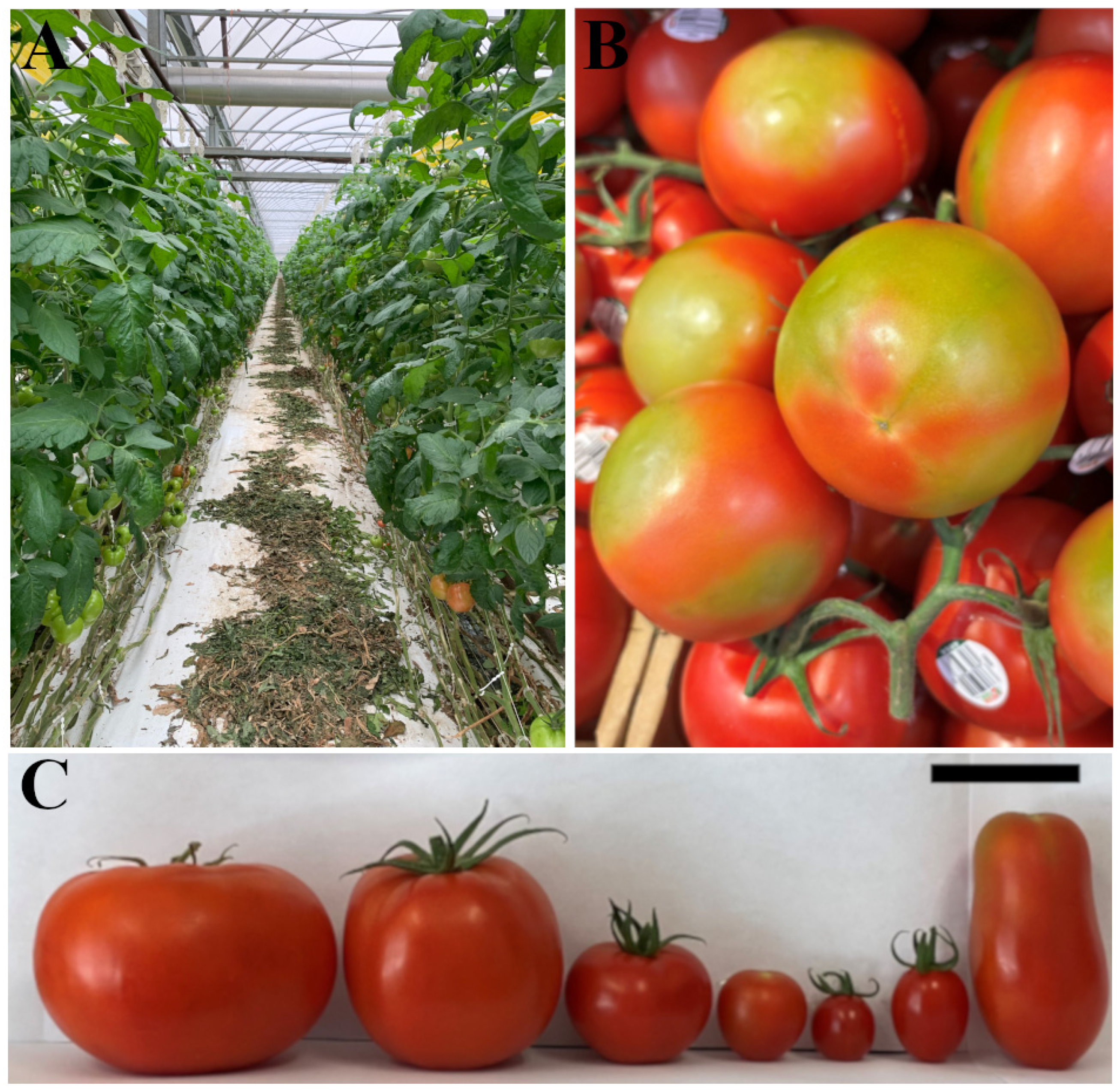
Greenhouse fruit and vegetable production is an intensive system designed to maximize fruit yields through controlled environment agriculture and plant varieties best adapted to these conditions. Many growth factors can be controlled in modern greenhouses, including temperature, irrigation, nutrients, lighting, humidity, carbon dioxide levels, and plant density (Figure 1A) [24,25]. For example, tomato planting density can range from 2.3 plants/m for large varieties (beefsteak and tomato-on-the-vine) to 4.6 plants/m for smaller fruited varieties (grape, cherry, and cocktail), or approximately 10,000–20,000 plants per acre [24,26]. High-density environments can maximize yields, but combined with shared irrigation and intensive plant handling, create optimal conditions for pathogen spread especially for viruses in the Tobamovirus genus [23,27,28,29].
Figure 1.
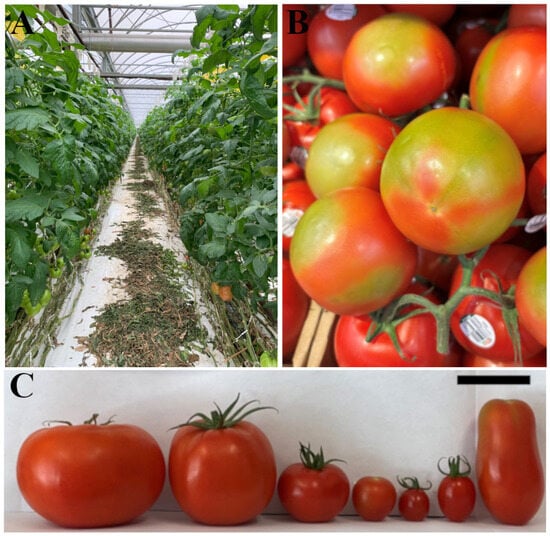
Commercial tomato production and ToBRFV. (A) High-density greenhouse tomato production environment. (B) Symptoms of ToBRFV on commercially available tomatoes. (C) Fruit variation in commercially available tomato fruits from different varieties. From left to right, Beefsteak, Tomato-on-Vine, cocktail, cherry, grape, plum, and roma. Scale bar = 5 cm.
Tobamoviruses have been a persistent issue in greenhouse production [27,28,29]. Currently, there are 37 recognized species of tobamoviruses that can infect plant species across at least 30 different plant families including Solanaceae, Brassicaceae, Cucurbitaceae and Malvaceae as the primary and most economically affected families. Major tobamoviruses that have impacted greenhouse production include tobacco mosaic virus (TMV; Tobamovirus tabaci), tomato mosaic virus (ToMV; Tobamovirus tomatotessellati), tomato mottle mosaic virus (ToMMV; Tobamovirus maculatesselati), pepper mild mottle virus (PMMoV; Tobamovirus capsici), cucumber green mottle mosaic virus (CGMMV; Tobamovirus viridimaculae), and the recently emerged ToBRFV [6,8,29,30]. TMV, ToMV, and ToMMV have previously been issues in greenhouse tomato production but were largely controlled by the Tm-22 resistance gene [31]. PMMoV and CGMMV are ongoing issues in pepper and cucumber greenhouse production, respectively, but their impact has been mitigated through genetic resistance and vaccination [32,33,34]. Tobamoviruses are easily transmitted through mechanical contact from tools, workers, insects, and seeds [6,23,27,35,36,37]. Efficient mechanical transmission when combined with high-density plantings, large production greenhouses, and intensive plant management can rapidly devastate production (Figure 1A) [38]. As cultural controls are laborious and have limited ability to reduce the spread of tobamoviruses, genetic resistance is generally preferred in all types of production systems [30,39].
The tobamovirus genome consists of a 6.4-kb, single-stranded, positive-sense RNA molecule that encodes four protein-coding open reading frames (ORFs) Cgy [40]. The genomic RNA also contains a 5′-m(7) Guanosine cap and a tRNA-like 3′ structure with a terminal cytosine-cytosine-adenine trinucleotide [41]. A small 124–132 kDa replication protein (p126) is encoded by ORF1, while ORF2 encodes a second replication protein of 181–189 kDa (p183) that partially overlaps with p126 and is translated through a stop codon readthrough mechanism [24,42,43]. The p126 protein also plays a role in RNA silencing suppression [44]. ORF3 encodes a 28–31 kDa movement protein (MP or 30K) that facilitates cell–cell movement, and ORF4 codes for a 17–18 kDa coat protein (CP), which polymerizes to form a viral particle around the RNA genome, facilitating systemic movement and plant–plant transmission [24]. Viral proteins can often be multifunctional and can have diverse roles in promoting viral replication and suppressing host defenses [44,45].
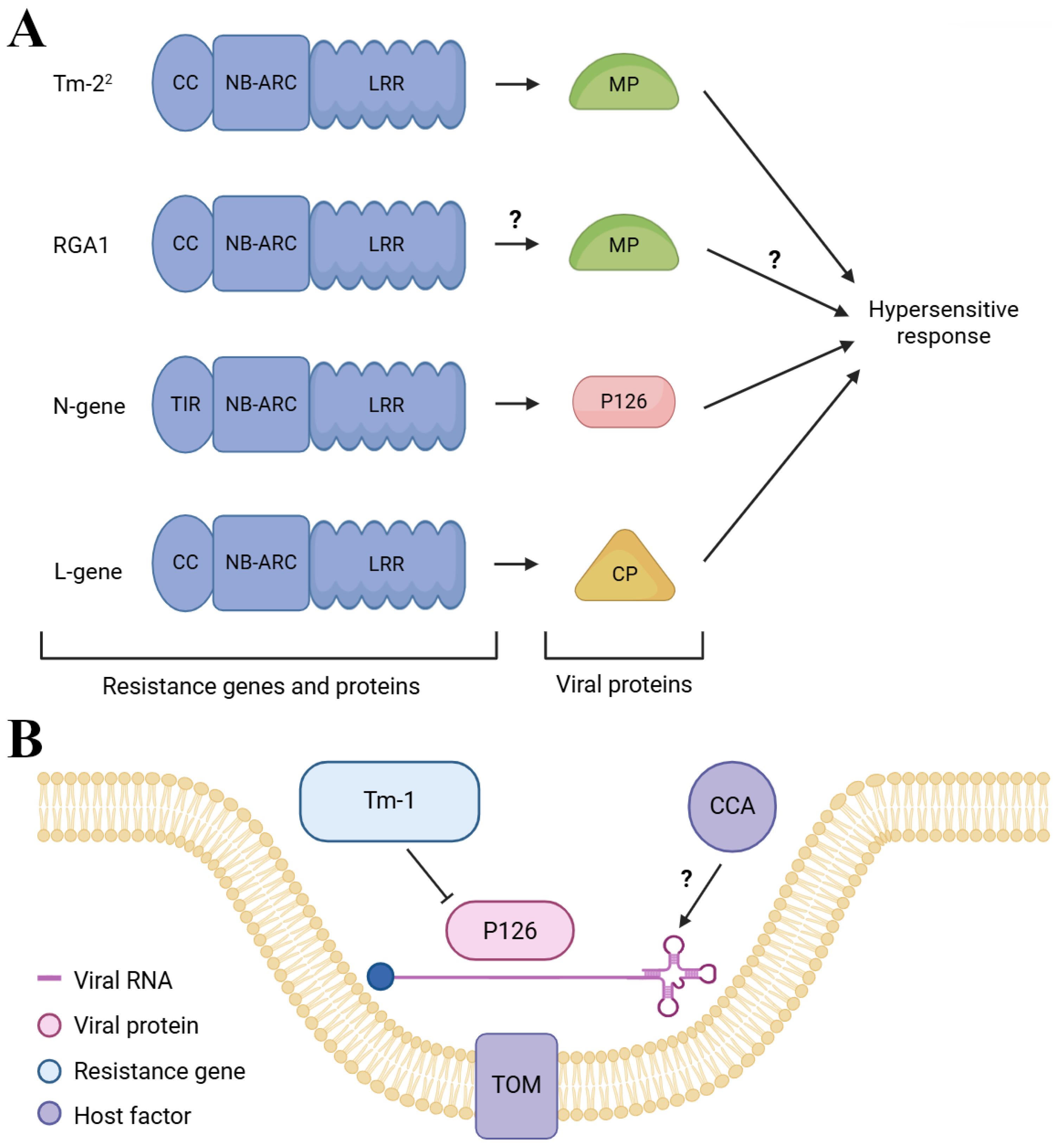
Viral proteins can also function as avirulence factors, recognized by host immunity proteins to initiate defense responses [46]. For example, the Tm-1 protein recognizes the tobamovirus p126 and p183 replication proteins and specifically binds to their RNA helicase domain to prevent viral replication [47,48]. Some resistance gene products recognize and interact with specific tobamovirus proteins to initiate a hypersensitive response (HR) to prevent viral infection, such as that of the Tm-2 protein, which recognizes the MP [49], and the tobacco N protein which recognizes the p126 protein [50,51,52,53]. Finally, the proteins encoded by the pepper L gene recognize the tobamovirus CP [32]. Almost all known tobamoviral proteins can be recognized by the host immune system, highlighting the diversity of resistance mechanisms available to combat tobamovirus infection [23]. The mutation of host factors required for viral replication, such as the TOBAMOVIRUS MULTIPLICATION (TOM) genes [54,55], can also result in resistance by preventing the formation of a functional viral replication complex [40,54]. Together, a wide variety of resistance genes can suppress tobamovirus infections in commercial production systems, but which ones could be involved in the control of ToBRFV remains largely unclear [28,30].
1.2. ToBRFV Emergence and Worldwide Spread
Prior to the emergence of ToBRFV, Tm-2 was the most widely used resistance gene in tomato production systems, providing stable and durable resistance to tobamoviruses [1,31,56]. The ability of ToBRFV to evade Tm-22 mediated extreme resistance makes it a very successful pathogen [4,5,7]. However, Tm-22 can still recognize the ToBRFV MP and trigger an attenuated HR, and thus plants harbouring the Tm-22 allele may retain partial, dose-dependent resistance to ToBRFV [57]. Tm-2 and Tm-22 encode Nucleotide-Binding Leucine-Rich Repeat (NB-LRR) domains, which recognize the tobamovirus MP to initiate a hypersensitive response (HR) resulting in the death of infected cells [58,59]. While certain isolates of ToMV can escape Tm-22 mediated resistance, they did not cause widespread issues to the industry [31,49,60]. Since Tm-22 targets the tobamovirus MP, some studies have suggested that escaping Tm-22 mediated resistance could result in impaired viral movement, inhibition of viral spread, and reduced competition with other tobamoviral MPs in the absence of Tm-22 [7] These possible effects could explain the dominance and durability of Tm-22 in commercial tomato varieties.
As infection rates can rapidly reach 100% in a greenhouse causing severe economic losses [38], ToBRFV has resulted in significant changes to production practices including changes to infrastructure (increased use of LED lights), improved biosecurity, shortened production cycles, increased seed and plant testing, and increased regulation of seed trade [61]. More recently, the identification of resistance traits from wild tomato relatives and their introgression into commercial varieties has altered fruit development traits, resulting in reduced fruit quality, harvesting and production efficiencies, and increased labour (Figure 1B). These changes have disturbed optimum tomato production conditions, reducing marketable fruit yields and increasing costs for producers.
Major symptoms on the fruit can include brown rugose spots, incomplete ripening, or even open fruit in severe cases (Figure 1B) [6]. Recognizable signs of infection on young plants include stunting, bleaching or chlorosis of young growing leaves, shoestring-like leaves and other deformations, mosaic and bubbling, and more. Plant health can continue to deteriorate as the disease progresses, resulting in aborted fruit and necrotic flowers, further reducing yields. The virus can also spread asymptomatically, infecting plants before growers are aware. Resistance genes can break down over time through viral mutagenesis, which can also be exacerbated during heat waves, causing a sudden appearance of symptoms in many plants [15,17,62,63]. Finally, Tobamoviruses are difficult to eradicate, and can persist in greenhouses and on clothing for up to six months [64,65,66,67]. Without prompt eradication of ToBRFV, infection frequencies can rise, resulting in increased virus titers in the environment and facilitating re-infection of subsequent crops [38]. Given the significant losses caused by ToBRFV, identification of durable and robust resistance against this virus is paramount in the sector.
1.3. Tomato Domestication and Breeding for Resistance
Many different varieties of tomatoes are commercially available, arising from a broad reservoir of genetic diversity derived from a complex history of domestication (Figure 1C) [68,69]. Tomato domestication likely first occurred approximately 7000 years ago and became a complex process even before its introduction to Europe during the Columbian exchange in the 16th century [70,71]. Early reports of tomatoes cultivated by the Aztecs described a wide variety of fruit sizes, shapes, and colours dating back to 1577 [71]. Domestication of tomatoes has continued to the present day, including adaptations for greenhouse production systems [72]. Tomato breeding has become increasingly complex and international, with common global movement of seeds and bulking for large-scale commercial production systems [61]. The increased globalization of the tomato seed industry has facilitated the rapid worldwide spread of ToBRFV.
Wild tomato species are native to western South America from Ecuador to Chile. They can grow in a wide variety of habitats from sea level to high in the Andean mountains, in both arid and rainy climates [73]. At least 11 distinct species are recognized, including the domesticated tomato (S. lycopersicum) and wild relatives including S. pimpinellifolium, S. cheesmaniae, S. galapagense, S. chilense, S. chmielewskii, S. habrochaites, S. pennellii, S. neorickii, S. peruvianum north, and S. peruvianum south [73]. These diverse species represent valuable genetic resources for the identification of new disease resistance traits for commercial varieties, although they exhibit substantial variation in fruit morphology and developmental characteristics [74,75,76]. S. pimpinellifolium has smaller currant-type fruits and has likely had many contributions to modern tomatoes [77,78]. S. pimpinellifolium has been used extensively to study fruit development characteristics and has already had large impacts on the domesticated tomato [77,79]. S. habrochaites is more distantly related to domesticated tomatoes, and produces fruit that are much smaller, green, and have increased trichomes [80,81].
Fruit maturation is a complex process, and commercial production values many different qualities, including fruit weight, size, shape, homogenous ripening times, taste, aroma, and more [82,83]. Many genes are involved in fruit developmental processes, and at least 28 different quantitative trait loci (QTL) are associated with fruit weight in tomatoes (Table 1) [79,82]. The gene FRUIT WEIGHT 2.2 (FW2.2) can affect up to 30% of fruit weight and is a regulator of cell division [84]. FASCIATED (FAS), SUN, OVATE, and LOCULE NUMBER (LC) are major determinants of fruit shape in S. lycopersicum [75,85]. Introgression of genes from wild relatives can often lead to undesirable traits when interbred with commercial tomato varieties, such as small fruit size, low yield, poor flavor, or delayed maturity [22,86,87].
Similar to traits controlling fruit development, wild tomato species can express unique and novel resistance traits which are not present in domesticated tomatoes. The resistance gene Tm-1, which confers tolerance to ToMV, was first reported from S. habrochaites in 1939 [88,89]. The Tm-2 gene and the Tm-22 allele, which provided resistance to ToMV, were both identified in S. peruvianum and used in over 90% of commercial tomato varieties, providing durable resistance to tobamoviruses for over 60 years [2,72]. While these genes have had substantial impacts on the greenhouse tomato industry, integrating sources of resistance from wild tomato relatives into commercial varieties is complex and can present significant challenges [69,90]. Some species have genetic barriers that make crossing with cultivated tomatoes difficult [91,92]. Genes associated with resistance can be linked to loci involved in vegetative growth or fruit development, which can cause linkage drag and reduced production in elite varieties [93,94,95,96].
Self-incompatibility prevents self-fertilization and helps maintain genetic diversity in species by promoting outcrossing but can lead to sterility in hybrids or failure to express resistance genes in the offspring [92,97]. Hybrids resulting from cross pollination between tomatoes and their closest relative, S. pimpinellifolium, can behave like intraspecific tomato hybrids, suggesting few chromosomal differences between these species [91]. Both species can self-pollinate and are compatible, making hybridization between them easier than with other species within the Solanum genus. By contrast, hybridization between S. lycopersicum, S. peruvianum, and S. habrochaites can display sterility, segregation distortion, and reduced recombination, suggesting structural differences in their chromosomes [91]. Tm-22 is associated with a region of reduced recombination, which can affect fruit development and quality [72,87,96]. However, studies of the introgression of Tm-2 only reported minor or variable effects on commercial fruit yields, while introgression of the Ty-1 gene, which confers resistance to tomato yellow leaf curl virus (Begomovirus coheni), could reduce yields by up to 50% [98].
While many new putative resistance genes have been identified, most QTLs associated with resistance appear on chromosomes also associated with genes regulating fruit development (Figure 2). Many genes controlling fruit weight and shape in tomato have been identified on the same chromosomes as genomic regions associated with ToBRFV resistance, especially chromosomes 2 and 11 (Table 2) [99]. This correlation has resulted in issues with uniform fruit ripening, changes in cluster sizes, and other changes to yield and fruit maturation. Furthermore, there are over 10,000 varieties of tomatoes available commercially, and breeding resistance traits into multiple varieties is a lengthy process.
In commercial varieties of tomatoes, levels of resistance are defined by the International Seed Federation (ISF), which updated its definitions of resistance in 2022 (ISF, 2022). They describe three levels of pathogen–plant interactions: susceptibility; intermediate resistance, where pathogen symptoms are restricted to a moderate degree; and high resistance, which can still present minor symptoms. These definitions are more broadly consistent with tolerance traits that confer repression of viral replication and symptoms, while still allowing for infection and potential spread of the virus, which can lead to resistance escape [100]. Communications from seed companies regarding ToBRFV have changed substantially since the release of cultivars advertised as highly resistant, only for resistance to break down in infected greenhouses. More recently, many seed companies have provided disclaimers stating that immunity to ToBRFV does not exist. A recent genome-wide association study of ToBRFV resistance traits using 161 tomato accessions reported that the virus could be detected even in highly resistant plants, which is consistent with tolerance traits as opposed to immunity [20,100].
Figure 2.
Linkage map of genes involved in fruit development and putative ToBRFV resistance traits. Putative and known resistance genes are labelled on the left-hand side of each chromosome, while genes involved in fruit development are listed on the right. Regions corresponding to QTL intervals are shown in yellow. Genetic locations in cM are listed under each gene.
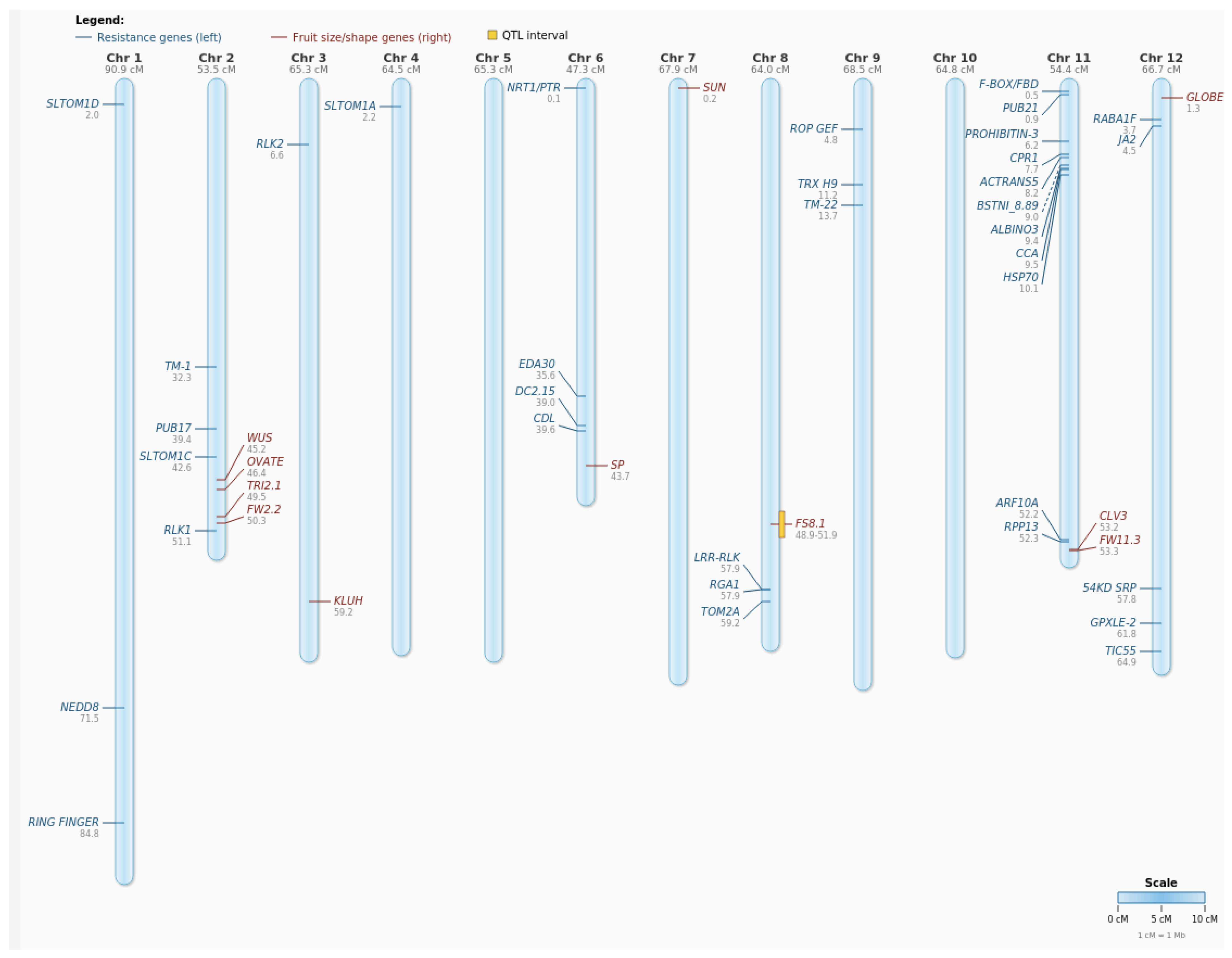
Table 1.
Chromosomal location of major fruit development-associated genes.
Table 2.
ToBRFV resistance genes identified in patents.
1.4. Identification of New Sources of Resistance
Since the emergence of ToBRFV in 2014, promising sources of intermediate and high resistance to ToBRFV have been identified in the wild species S. habrochaites [12,13,104], S. peruvianum [12], S. chilense, S. ochrantum [13], and S. pimpinellifolium [10,14]. While these results are promising, further characterization of these traits is required. It is unclear whether some of the resistance identified is due to the same gene(s) or if multiple different resistance mechanisms are present [14]. Additionally, no peer-reviewed report has conclusively demonstrated that one gene is responsible for a resistance trait, nor is the identity of any of these putative resistance genes clearly established. Resistance can also vary substantially within species, and multiple alleles with different efficiencies could exist in these populations, similar to how Tm-2 was initially discovered and used for resistance to Tobamoviruses before the Tm-22 allele was identified [105]. Understanding the molecular mechanisms underlying these putative resistance genes and their interactions could allow for the development of more robust tomatoes. Finally, understanding how fruit development-related genes could be linked to putative resistance genes is crucial to facilitating introgression of resistance traits while minimizing effects on fruit development (Figure 2).
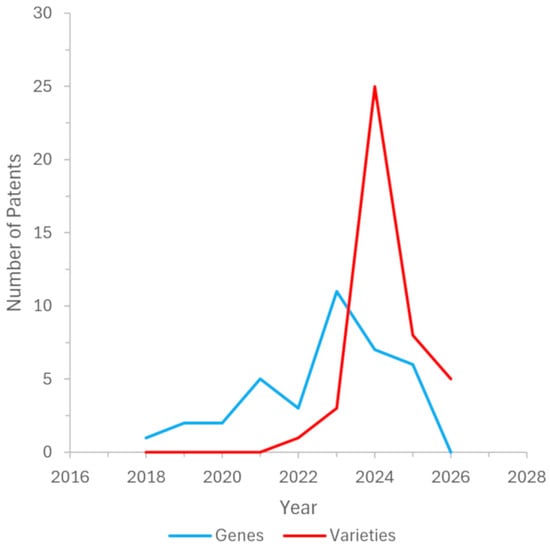
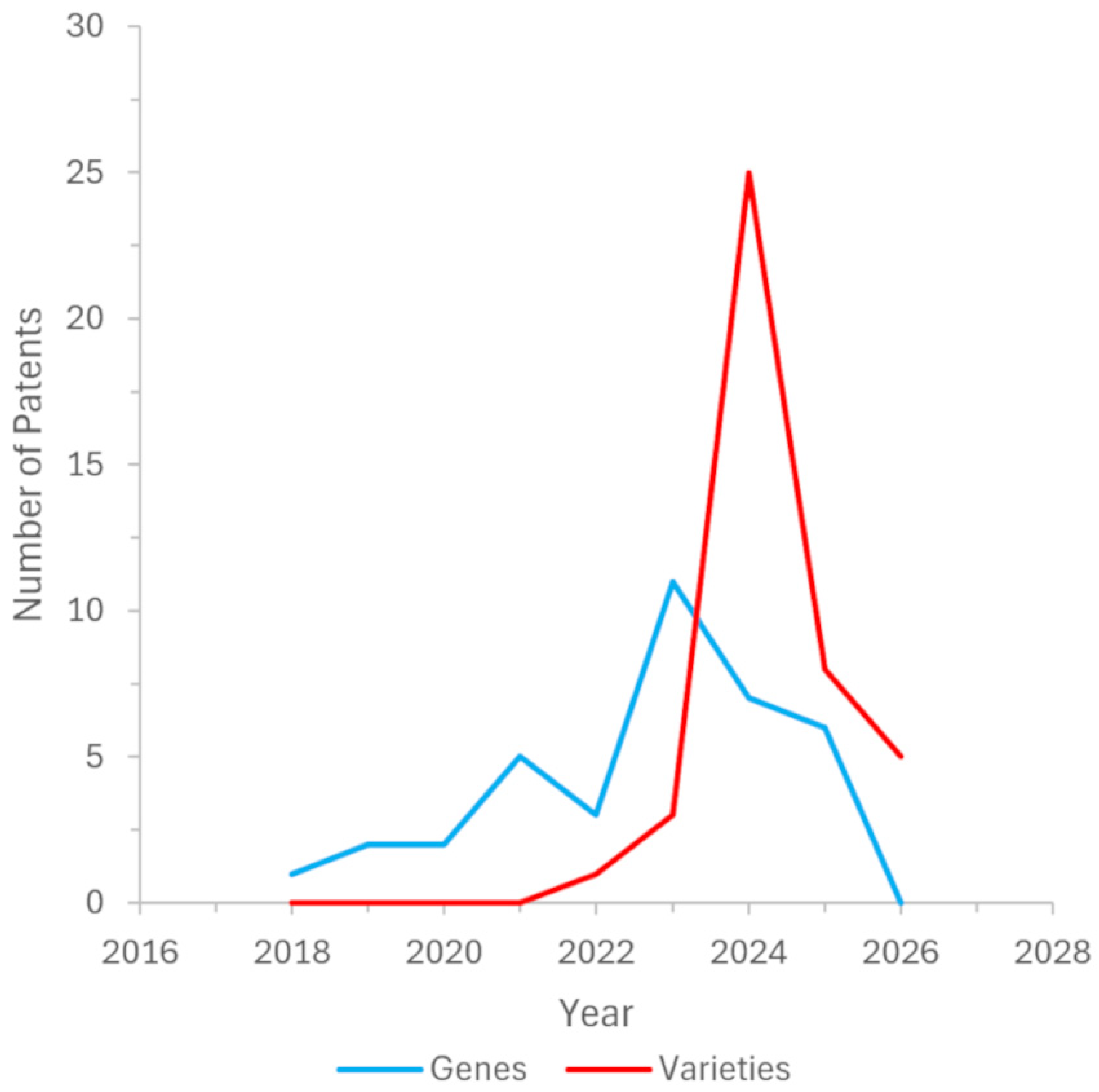
While there is little published research regarding the identity and function of these genes, there are several patents filed related to ToBRFV resistance traits available online. The number of patents related to ToBRFV resistance genes or varieties was first reported in 2018. By 2023, Sánchez-Sánchez et al. reported a total of 28 patents related to ToBRFV resistance, and that number has increased dramatically since then before reaching a peak in 2024 before declining rapidly in 2025, suggesting that most easily identifiable genetic resources for ToBRFV resistance have been mined (Figure 3) [106]. As of August 2026, there were a total of 79 ToBRFV resistance-related patents available on google patent (https://patents.google.com/) (Table 2). Most patents were filed by major tomato breeding companies including Rijk Zwaan, Enza Zaden, BASF, Syngenta, and more. Academic institutions and governments have also filed patents related to ToBRFV resistance (Table 2). We examined all available patents for named genes or sequence data associated with resistance or tolerance claims, and these sequences were mapped to the tomato genome to better understand which chromosomal regions are linked to ToBRFV resistance (Table 2).
Figure 3.
Number of patents published per year related to ToBRFV resistance genes or varieties.
Most sequences available in patents mapped to chromosomes 2, 8, 9, and 11 (Figure 2, Table 2). The Tm-1 gene and two TOM homologues, TOM1c and TOM1d, map to chromosome 2. Tm-1 clearly plays a role in tobamovirus resistance, but there is evidence that Tm-1 mediated resistance is not durable, and multiple reports of resistance escape have been published [16,17,107,108,109,110]. Tm-1 is a semi-dominant gene originally introgressed from S. habrochaites and encodes a 754-amino-acid protein. This protein is composed of an uncharacterized N-terminal domain and a C-terminal TIM barrel-like domain, of which only the N-terminal domain is required for inhibition of tobamovirus replication [107,111,112]. Certain polymorphisms in the p126 ORF of ToBRFV have been reported to reduce the effectiveness of Tm-1, causing it to fail to prevent viral replication and symptom development [16,17]. One study examined the interactions between Tm-1 and ToBRFV over an extended period of time and showed that while systemic infection was prevented up to 50 days post infection, symptoms were evident by 100 days post infection [16]. Studies of longer duration are therefore required to fully examine Tm-1 mediated resistance. Other studies describe breakdown of Tm-1 mediated resistance under elevated temperatures [62,113]. Tm-1 expression levels can also have major impacts on the effectiveness of resistance, with overexpression lines significantly reducing viral accumulation [108].
Further complicating matters, Tm-1 orthologues from S. habrochaites and S. pennellii have shown more promise in reducing viral replication [108,109,110,114]. Amino acid alignments of Tm-1 allelic variants from these species show divergence between resistant and susceptible alleles, particularly in the region responsible for interacting with the viral replicase [109,110]. Allelic variations of Tm-1 do display differential resistance responses to tobamoviruses, which can also be affected by homozygosity or gene expression levels [47,107,108,110]. Tm-1 overexpression lines can significantly reduce viral accumulation [108]. Two independent S. habrochaites genome assemblies (accessions LA1353 and ZY59) contain a segmental duplication of the Tm-1 genomic region, creating a gene duplication of Tm-1, with the two orthologues being 96% identical to each other [108]. Another recent study demonstrated that using Tm-1 in grafted rootstock can reduce ToBRFV soil transmission rates, but not prevent infection, providing further evidence of the usefulness of Tm-1 in the future of ToBRFV resistance [110]. Optimizing sequence variants and other interacting factors could help enhance Tm-1 mediated resistance and reduce resistance escape.
The tobamovirus p126 protein is a multifunctional protein that plays a key role in viral replication complex (VRC) assembly. While Tm-1 is a resistance gene that recognizes the p126 protein to prevent VRC assembly, other host factors are involved in facilitating VRC assembly, such as the TOM genes, which encode transmembrane domain proteins [54,115]. Resistance against ToBRFV and other Tobamoviruses may therefore be achieved through the mutation of such host factors, including multiple TOM homologues (TOM1a/TOM3/TOM1b), though these genes have strong patent controls [54,55,116,117]. TOM1 has also been shown to interact with ARL8, an ADP-ribosylation factor (ARF)-like small GTP-binding protein [118]. ARL8 is therefore another putative host factor involved in tobamovirus replication [40]. These genes are all believed to be involved in the production of VRCs and hence required for productive infections [40].
RGA1 and TOM2a are located on Chr. 8, along with a LEUCINE RICH REPEAT receptor-like serine/threonine-protein kinase. RGA1 (Solyc08g075630) was initially identified in a screen of S. habrochaities accessions, and one patent reported that silencing of this one gene could abolish resistance previously identified in this line [15,63,119]. RGA1 encodes an orthologue of a resistance gene conveying resistance to late blight in potato [119,120]. RGA1 encodes a NB-LRR containing protein with similar domains to Tm-2 and is therefore a putative resistance gene that could confer some level of tolerance to ToBRFV [119,120]. However, ToBRFV resistance-breaking isolates linked to this gene have already been reported (Zisi et al., 2024; Fougere et al., 2025) [15,17]. Amino acid polymorphisms have been identified in the viral MP of resistance breaking isolates of ToBRFV, including N82K [15] and T115R [17], suggesting RGA1 is not a durable resistance gene against ToBRFV. However, sequences of the RGA1 gene are highly variable from different accessions, suggesting that multiple RGA1 alleles may be present in natural populations, which could prove useful against ToBRFV [13].
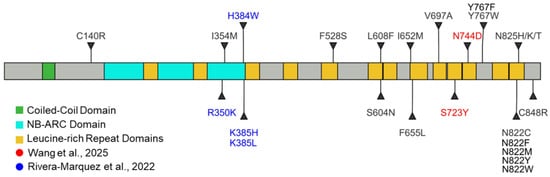
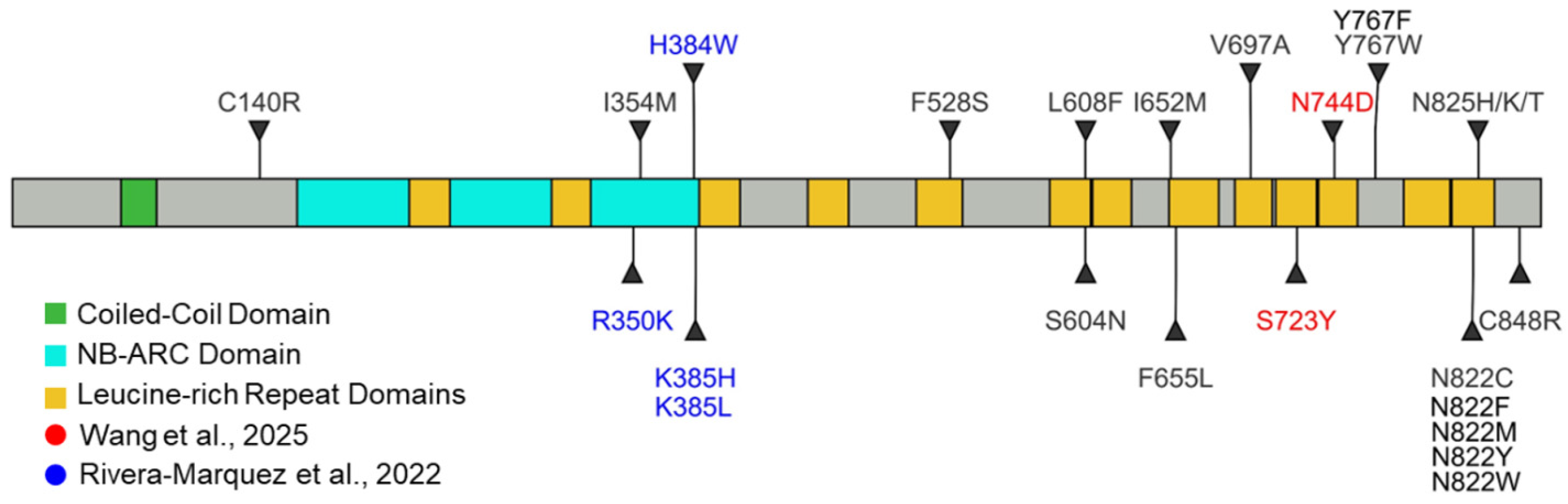
Nine patents contained information on resistance genes located on Chr. 9, which is also the location of the Tm-2 gene. Tm-2 is the focus of 7 of these 9 patents, with multiple descriptions of restoring Tm-2 function against ToBRFV through mutagenesis of 14 amino acids (Figure 4). Two recent peer-reviewed studies examined the possibility of restoring Tm-22 function against ToBRFV, but there is little consensus between commercial patents and the scientific literature regarding which amino acid substitutions could facilitate this (Figure 4) [121,122]. A recent study reported two amino acid polymorphisms (S723Y and N744D) that could restore Tm-2 function against ToBRFV, while also maintaining efficacy against TMV [122]. Other reports have shown that Tm-22 retains partial function against ToBRFV, and that Tm-22 overexpression lines can enhance resistance [57]. Beyond Tm-2, tomatoes contain approximately 267 other NB or NB-LRR genes, including RGA1, which could also be useful for adaptation in disease resistance [123].
Figure 4.
Amino acid polymorphism associated with Tm-22. Green, blue, and yellow regions indicate coiled-coil, NB-ARC, and LRR domains, respectively. Arrow heads indicate different amino acid substitutions reported in the literature. Blue labelled substitutions are associated with bioinformatics analysis of Tm-2 reported in Rivera-Marquez et al., 2022 [121], and red labelled arrowheads indicate strong HR-inducing alleles in response to ToBRFV infection reported in Wang et al., 2025 [122]. Grey labelled arrow heads indicate polymorphisms reported in patents associated with Tm-2.
Chromosome 11 was the focus of 15 patents, and sequence data from 3 of these patents was associated with the CCA gene (Solyc11g018810), which was also identified in a GWAS study of ToBRFV resistance [20,124]. Multiple combinations of substitutions, insertions, and deletions in the CCA gene are reported in these patents as potentially being responsible for resistance (Table 2). The CCA gene encodes an ATP:tRNA nucleotidyltransferase, which adds a cytosine-cytosine-adenosine triplet nucleotide to the 3′ end of tRNA, and is essential in tRNA post-transcriptional maturation [125]. Tobamoviruses contain 3′ tRNA-like structures with a terminal CCA trinucleotide, and CCA genes have been suggested to be important for tobamovirus replication [41]. The 3′ UTR of tobamoviruses plays important roles in enhancing viral protein translation and is critical for negative strand RNA synthesis [41]. Mutants lacking the C-terminal 158 nucleotides failed to produce negative strands for RNA synthesis, and even deletion of the terminal adenosine residue can have drastic effects on RNA synthesis [41,47,126]. However, a recent study of resistance traits from S. pennellii suggest that CCA was not involved in the high resistance described in this specific study, and another unknown gene could also contribute to ToBRFV resistance [109].
One putative resistance quantitative trait locus (QTL) identified on chromosome 9 or 11 interacted with the Tm-1 gene, and both genes together could result in more effective resistance [10,109,127]. An allele of Tm-1 from S. pennellii was recently reported to provide resistance to ToBRFV, when combined with another locus on Chr. 11 [109]. Other putative resistance genes on Chr. 11 identifiable through patents include a putative disease resistance RPP13-like protein, an LRR repeat-containing protein, an auxin response factor, acetyltransferase, an uncharacterized protein with a DnaJ domain, a heat shock protein, and the F-box protein CPR1, which can negatively regulate accumulation of the R protein SNC1 [128] (Table 2). Other research identified quantitative trait loci on Chr. 11 and identified two disease resistance gene analogues in the mapping interval corresponding to Solyc11g062150 (TIR-NBS-LRR resistance protein, Toll-Interleukin receptor) and Solyc11g062180 (disease resistance protein, leucine-rich repeat), which are also good candidates for resistance genes [9].
A few patents also referenced genes on chromosomes 1, 3, 4, 6, 7, and 12, including genes with homology to Ring finger proteins, receptor like kinases, and notably the TOM genes (Table 2). Six patents were linked to genes containing leucine rich repeat regions, similar to Tm-2. Finally, a further 36 patents did not contain any sequence data. These patents provide some information on potential candidate resistance genes and traits being bred into commercial elite cultivars, although the role of any gene in ToBRFV resistance is still speculative.
1.5. Resistance Breakdown, Temperature Sensitivity, and Mechanisms of Resistance
Unfortunately, many of these resistance genes have already been reported to break down over time and under high temperatures, including Tm-1 and RGA1 [13,62]. The tobacco N gene, when transformed into tomato plants, provided resistance to ToBRFV at 20 °C, but failed to provide resistance at temperatures over 30 °C [53]. ToBRFV resistance from S. habrochaites and S. peruvianum lineages, which is linked to the RGA1 gene, also failed at temperatures above 33 °C [13,129]. Elevated temperatures can even reduce the effectiveness of HR reactions, which could further weaken Tm-22 like resistance [130,131]. Increased temperatures due to climate change could therefore seriously exacerbate the ongoing ToBRFV pandemic [132].
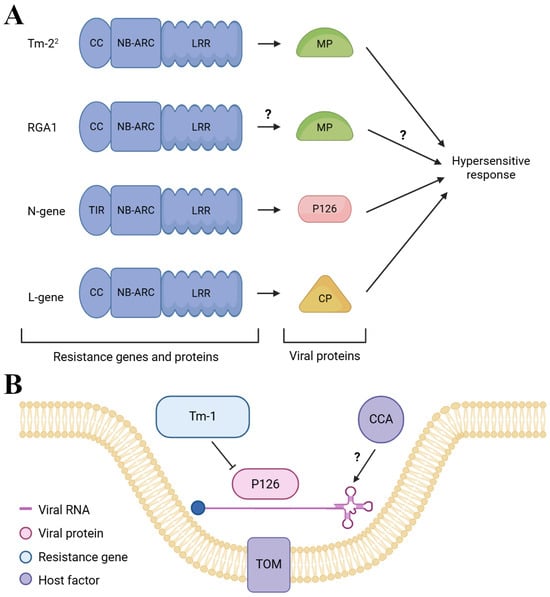
While many different genes are possibly involved in mediating ToBRFV resistance, there are some clear trends that can allow for grouping of genes into similar mechanisms of action (Figure 5) [100,133,134]. The first major group activates the resistance signaling like some traditional R genes that initiate a hypersensitive response (HR) against tobamoviruses. This includes Tm-2 alleles, the tobacco N gene and the pepper L alleles [52,135]. The putative resistance gene RGA1 could also function in a similar way, recognizing a viral avirulence protein, likely the ToBRFV MP, and initiating HR to prevent viral replication. The second major group includes resistance genes and host factors involved in viral replication like Tm-1, the TOM genes, and potentially CCA. Determining the identity of novel resistance genes, understanding their function, and determining their possible additive effects will help to establish the long-term efficacy of these resistance genes against ToBRFV.
Figure 5.
Tobamovirus resistance mechanisms and shared pathways. (A) HR-mediated resistance genes and pathways. (B) Resistance genes and host factors involved in viral replication. Question mark indicates the role of RGA1 is still uncertain.
2. Conclusions
The rapid worldwide spread of ToBRFV has forced many changes to tomato greenhouse production, resulting in increased costs and reduced fruit production. Similar to other tobamoviruses, ToBRFV is highly resistant to chemical decontamination approaches, and genetic resistance is the optimum approach for controlling ToBRFV. Substantial research has been conducted on the identification of novel sources of resistance. However, early reports already suggest that many of these new resistance genes are not durable, making the identification and understanding of resistance mechanisms to ToBRFV critical. Many putative resistance genes still require characterization. Introgression of resistance genes from wild tomato species can also have negative effects on fruit yield and quality, which can also affect production efficiencies. Finally, the breakdown of resistance under elevated temperatures raises further concerns for food production in the context of global warming [136].
While natural sources of resistance have been thoroughly screened, alternative approaches to resistance, including mutagenesis, could yield new sources of resistance. Allelic combinations between Tm-1 and other putative resistance genes like RGA1 could provide more durable resistance. Genome editing could also be applied to putative host factors to rapidly identify and introduce novel resistance traits [30,116]. Similarly, the development of ToBRFV infectious clones or other RNAi-based control approaches will allow for more precise investigation of virus-resistance gene interactions [137,138,139,140]. The ongoing ToBRFV pandemic is a serious issue and managing this unusual aggressive tobamovirus requires a highly coordinated, multi-layered approach, including genetics, molecular biology, and cultural practices.
Author Contributions
Conceptualization, J.S.G.; Data curation, G.C.F., J.O., J.P. and J.S.G.; Writing—original draft preparation, J.S.G.; Writing—review and editing, all authors; Funding acquisition, A.W., V.P. and J.S.G. All authors have read and agreed to the published version of the manuscript.
Funding
This research was funded by the Government of Canada through Agriculture and Agri-Food Canada (AAFC) project funding to AW and JSG (AAFC Project ID# J-003395 and J-002497). Further support was provided to Vineland Research and Innovation Centre (JO, JP, and VP) from the Ministry of Agriculture, Food and Agribusiness (OMAFA) and AAFC through the Sustainable Canadian Agricultural Partnership (AAFC Project ID# SCAP-ASP-023). Vineland Research and Innovation Centre (JO, JP, VP) is also supported by Agricultural Research and Innovation Ontario (ARIO), an agency of the Government of Ontario, which owns the property and, in part, buildings at the Vineland Research Station.
Data Availability Statement
All patents were accessed using www.google.patent.com on 16 October 2026.
Conflicts of Interest
The authors declare no conflict of interest.
References
- Lanfermeijer, F.C.; Dijkhuis, J.; Sturre, M.J.; de Haan, P.; Hille, J. Cloning and characterization of the durable tomato mosaic virus resistance gene Tm-22 from Lycopersicon esculentum. Plant Mol. Biol. 2003, 52, 1039–1051. [Google Scholar] [CrossRef] [Scilit] [PubMed]
- Lanfermeijer, F.C.; Jiang, G.; Ferwerd, M.A.; Dijkhuis, J.; de Haan, P.; Yang, R.; Hille, J. The durable resistance gene Tm-22 from tomato confers resistance against ToMV in tobacco and preserves its viral specificity. Plant Sci. 2004, 167, 687–692. [Google Scholar] [CrossRef] [Scilit]
- Salem, N.M.; Mansour, A.; Ciuffo, M.; Falk, B.W.; Turina, M. A new tobamovirus infecting tomato crops in Jordan. Arch. Virol. 2016, 161, 503–506. [Google Scholar] [CrossRef] [Scilit] [PubMed]
- Yan, Z.Y.; Ma, H.Y.; Wang, L.; Tettey, C.; Zhao, M.S.; Geng, C.; Tian, Y.P.; Li, X.D. Identification of genetic determinants of tomato brown rugose fruit virus that enable infection of plants harboring the Tm-22 resistance gene. Mol. Plant Pathol. 2021, 22, 1347–1357. [Google Scholar] [CrossRef] [Scilit] [PubMed]
- Hak, H.; Spiegelman, Z. The Tomato Brown Rugose Fruit Virus Movement Protein Overcomes Tm-22 Resistance in Tomato While Attenuating Viral Transport. Mol. Plant-Microbe Interact. 2021, 34, 1024–1032. [Google Scholar] [CrossRef] [Scilit] [PubMed]
- Zhang, S.D.; Griffiths, J.S.; Marchand, G.; Bernards, M.A.; Wang, A. Tomato brown rugose fruit virus: An emerging and rapidly spreading plant RNA virus that threatens tomato production worldwide. Mol. Plant Pathol. 2022, 23, 1262–1277. [Google Scholar] [CrossRef] [Scilit] [PubMed]
- Hak, H.; Raanan, H.; Schwarz, S.; Sherman, Y.; Dinesh-Kumar, S.P.; Spiegelman, Z. Activation of Tm-22 resistance is mediated by a conserved cysteine essential for tobacco mosaic virus movement. Mol. Plant Pathol. 2023, 24, 838–848. [Google Scholar] [CrossRef] [Scilit] [PubMed]
- Salem, N.M.; Jewehan, A.; Aranda, M.A.; Fox, A. Tomato brown rugose fruit virus pandemic. Annu. Rev. Phytopathol. 2023, 61, 137–164. [Google Scholar] [CrossRef] [Scilit] [PubMed]
- Jaiswal, N.; Zia, B.; Chanda, B.; Gillard, A.; Shi, A.; Ling, K.S. Identification of a QTL region for tomato brown rugose fruit virus resistance in Solanum pimpinellifolium. Theor. Appl. Genet. 2025, 138, 190. [Google Scholar] [CrossRef] [Scilit] [PubMed]
- Zinger, A.; Lapidot, M.; Harel, A.; Doron-Faigenboim, A.; Gelbart, D.; Levin, I. Identification and Mapping of Tomato Genome Loci Controlling Tolerance and Resistance to Tomato Brown Rugose Fruit Virus. Plants 2021, 10, 179. [Google Scholar] [CrossRef] [Scilit] [PubMed]
- Kabas, A.; Fidan, H.; Kucukaydin, H.; Atan, H.N. Screening of wild tomato species and interspecific hybrids for resistance/tolerance to Tomato brown rugose fruit virus (ToBRFV). Chil. J. Agric. Res. 2022, 82, 189–196. [Google Scholar] [CrossRef] [Scilit]
- Jewehan, A.; Salem, N.; Tóth, Z.; Salamon, P.; Szabo, Z. Evaluation of responses to tomato brown rugose fruit virus (ToBRFV) and selection of resistant lines in Solanum habrochaites and Solanum peruvianum germplasm. J. Gen. Plant Pathol. 2022, 88, 187–196. [Google Scholar] [CrossRef] [Scilit]
- Jewehan, A.; Salem, N.; Tóth, Z.; Salamon, P.; Szabo, Z. Screening of Solanum (sections Lycopersicon and Juglandifolia) germplasm for reactions to the tomato brown rugose fruit virus (ToBRFV). J. Plant Dis. Prot. 2022, 129, 117–123. [Google Scholar] [CrossRef] [Scilit] [PubMed]
- Jaiswal, N.; Chanda, B.; Gilliard, A.; Shi, A.; Ling, K.S. Evaluation of Tomato Germplasm against Tomato Brown Rugose Fruit Virus and Identification of Resistance in Solanum pimpinellifolium. Plants 2024, 13, 581. [Google Scholar] [CrossRef] [Scilit] [PubMed]
- Zisi, Z.; Ghijselings, L.; Vogel, E.; Vos, C.; Matthijnssens, J. Single amino acid change in tomato brown rugose fruit virus breaks virus-specific resistance in new resistant tomato cultivar. Front. Plant Sci. 2024, 15, 1382862. [Google Scholar] [CrossRef] [Scilit] [PubMed]
- Kubota, K.; Takeyama, S.; Matsushita, Y.; Ishibashi, K. Isolation of spontaneous mutants of tomato brown rugose fruit virus that efficiently infect Tm-1 homozygote tomato plants. J. Gen. Plant Pathol. 2024, 90, 187–195. [Google Scholar] [CrossRef] [Scilit]
- Fougere, G.C.; Xu, D.; Gaiero, J.R.; McCreary, C.; Marchand, G.; Despres, C.; Wang, A.; Fall, M.L.; Griffiths, J.S. Genomic diversity of tomato brown rugose fruit virus in Canadian greenhouse production systems. Viruses 2025, 17, 696. [Google Scholar] [CrossRef] [Scilit] [PubMed]
- Oplaat, C.; de Koning, P.P.M.; Fowkes, A.; Beris, D.; Hiddink, G.A.; de la Fuente van Betem, S.; Haegeman, A.; De Jonghe, K.; Zisi, Z.; McGreig, S.; et al. Monitoring Tomato Brown Rugose Fruit Virus: Insights from the Nextstrain Build and Candidate Resistance-Breaking Mutations. PhytoFrontiers 2026. [Google Scholar] [CrossRef] [Scilit]
- Kourelis, J.; van der Hoorn, R.A.L. Defended to the Nines: 25 Years of Resistance Gene Cloning Identifies Nine Mechanisms for R Protein Function. Plant Cell 2018, 30, 285–299. [Google Scholar] [CrossRef] [Scilit] [PubMed]
- Topcu, Y.; Yildiz, K.; Kayikci, H.C.; Aydin, S.; Feng, Q.; Sapkota, M. Deciphering resistance to Tomato brown rugose fruit virus (ToBRFV) using Genome-Wide Association Studies. Sci. Hortic. 2025, 341, 113968. [Google Scholar] [CrossRef] [Scilit]
- Tieman, D.; Zhu, G.; Resende, M.F.R.; Lin, T.; Bguyen, C.; Bies, D.; Rambla, J.L.; Beltran, K.S.O.; Taylor, M.; Zhang, B.; et al. A chemical genetic roadmap to improved tomato flavor. Science 2017, 355, 391–394. [Google Scholar] [CrossRef] [Scilit] [PubMed]
- Pereira, L.; Sapkota, M.; Alonge, M.; Zheng, Y.; Zhang, Y.; Razifard, H.; Taitano, N.K.; Schatz, M.C.; Fernie, A.R.; Wang, Y.; et al. Natural genetic diversity in tomato flavor genes. Front. Plant Sci. 2021, 12, 642828. [Google Scholar] [CrossRef] [Scilit] [PubMed]
- Spiegelman, Z.; Dinesh-Kumar, S.P. Breaking Boundaries: The Perpetual Interplay Between Tobamoviruses and Plant Immunity. Annu. Rev. Virol. 2023, 10, 455–476. [Google Scholar] [CrossRef] [Scilit] [PubMed]
- Peet, M.M.; Welles, G. Greenhouse Tomato Production. In Tomatoes; Heuvelink, E., Ed.; CABI Publishing: Wallingford, UK, 2005; pp. 257–304. [Google Scholar] [CrossRef] [Scilit]
- Ontario Ministry of Agriculture, Food and Agribusiness. Growing Greenhosue Tomatoes; Publication Series 836 C; Ministry of Agriculture, Food and Rural Affairs: Guelph, ON, Canada, 2025. Available online: https://www.publications.gov.on.ca/302001 (accessed on 12 October 2026).
- Amundson, S.; Deyton, D.E.; Kopsell, D.A.; Hitch, W.; Moore, A.; Sams, C.E. Optimizing plant density and production systems to maximize yield of greenhouse-grown ‘Trust’ tomatoes. HortTechnology 2012, 22, 44–48. [Google Scholar] [CrossRef] [Scilit]
- Broadbent, L. Epidemiology and control of tomato mosaic virus. Annu. Rev. Phytopathol. 1976, 14, 75–96. [Google Scholar] [CrossRef] [Scilit]
- Ishibashi, K.; Kubota, K.; Kano, A.; Ishikawa, M. Tobamoviruses: Old and new threats to tomato cultivation. J. Gen. Plant Pathol. 2023, 89, 305–321. [Google Scholar] [CrossRef] [Scilit]
- Adams, M.J.; Adkins, S.; Bragard, C.; Gilmer, D.; Li, D.; MacFarlane, S.A.; Wong, S.M.; Melcher, U.; Ratti, C.; Ryu, K.H.; et al. ICTV Virus Taxonomy Profile: Virgaviridae. J. Gen. Virol. 2017, 98, 1999–2000. [Google Scholar] [CrossRef] [Scilit] [PubMed]
- Carr, J.P. Engineered resistance to Tobamoviruses. Viruses 2024, 16, 1007. [Google Scholar] [CrossRef] [Scilit] [PubMed]
- Caruso, A.G.; Bertacca, S.; Parrella, G.; Rizzo, R.; Davino, S.; Panno, S. Tomato brown rugose fruit virus: A pathogen that is changing the tomato production worldwide. Ann. Appl. Biol. 2022, 181, 258–274. [Google Scholar] [CrossRef] [Scilit]
- Tomita, R.; Sekine, K.T.; Mizumoto, H.; Sakamoto, M.; Murai, J.; Kiba, A.; Hikichi, Y.; Suzuki, K.; Kobayashi, K. Genetic basis for the hierarchical interaction between Tobamovirus spp. And L resistance gene alleles from different pepper species. Mol. Plant-Microbe Interact. 2011, 24, 108–117. [Google Scholar] [CrossRef] [Scilit] [PubMed]
- Cai, L.; Lie, J.; Wang, S.; Gong, Z.; Yang, S.; Xu, F.; Hu, Z.; Zhang, M.; Yang, J. The coiled-coil protein gene WPRb confers recessive resistance to Cucumber green mottle mosaic virus. Plant Physiol. 2023, 191, 369–381. [Google Scholar] [CrossRef] [Scilit] [PubMed]
- Ochar, K.; Ko, H.C.; Woo, H.J.; Hahn, B.S.; Hur, O. Pepper mild mottle virus: An infectious pathogen in pepper production and potential indicator of domestic water quality. Viruses 2022, 15, 282. [Google Scholar] [CrossRef] [Scilit] [PubMed]
- Dombrovsky, A.; Smith, E. Seed transmission of Tobamoviruses: Aspects of global disease distribution. In Advances in Seed Biology; IntechOpen: London, UK, 2017. [Google Scholar]
- Smith, E.; Dombrovsky, A. Aspects in Tobamovirus management in intensive agriculture. In Plant Diseases-Current Threats and Management Trends; IntechOpen: London, UK, 2019. [Google Scholar]
- Levitzky, N.; Smith, E.; Lachman, O.; Luria, N.; Mizrahi, Y.; Bakelman, H.; Sela, N.; Laskar, O.; Milrot, E.; Dombrovsky, A. The bumblebee Bombus terrestris carries a primary inoculum of Tomato brown rugose fruit virus contributing to disease spread in tomatoes. PLoS ONE 2019, 14, e0210871. [Google Scholar] [CrossRef] [Scilit] [PubMed]
- Panno, S.; Caruso, A.G.; Barone, S.; Lo Bosco, G.; Rangel, E.A.; Davino, S. Spread of tomato brown rugose fruit virus in Sicily and evaluations of the spatiotemporal dispersion in experimental conditions. Agronomy 2020, 10, 834. [Google Scholar] [CrossRef] [Scilit]
- Zheng, X.; Li, Y.; Liu, Y. Plant Immunity against Tobamoviruses. Viruses 2024, 16, 530. [Google Scholar] [CrossRef] [Scilit] [PubMed]
- Ishibashi, K.; Ishikawa, M. Replication of Tobamovirus RNA. Annu. Rev. Phytopathol. 2016, 54, 55–78. [Google Scholar] [CrossRef] [Scilit] [PubMed]
- Chujo, T.; Ishibashi, K.; Miyashita, S.; Ishikawa, M. Functions of the 5′- and 3′- untranslated regions of tobamovirus RNA. Virus Res. 2015, 206, 82–89. [Google Scholar] [CrossRef] [Scilit] [PubMed]
- Palukaitis, P.; Murphy, A.M. Tobamoviruses: Molecular aspects and resistance regulation—A special issue commemorating 125 years of research on tobamoviruses. Viruses 2025, 17, 296. [Google Scholar] [CrossRef] [Scilit] [PubMed]
- Malpica-López, N.; Rajeswaran, R.; Beknazariants, D.; Sequin, J.; Golyaev, V.; Farinelli, L.; Pooggin, M.M. Revisiting the Roles of Tobamovirus Replicase Complex Proteins in Viral Replication and Silencing Suppression. Mol. Plant-Microbe Interact. 2018, 31, 125–144. [Google Scholar] [CrossRef] [Scilit] [PubMed]
- Conti, G.; Rodriguez, M.C.; Venturuzzi, A.L.; Asurmendi, S. Modulation of host plant immunity by tobamovirus proteins. Ann. Bot. 2017, 119, 125–144. [Google Scholar] [CrossRef] [Scilit] [PubMed]
- Ershova, N.M.; Kamarova, K.A.; Sheshukova, E.V.; Komarova, T.V. Cellular Partners of Tobamoviral Movement Proteins. Int. J. Mol. Sci. 2025, 26, 400. [Google Scholar] [CrossRef] [Scilit] [PubMed]
- Moffett, P. Chapter 1—Mechanisms of recognition in dominant R gene mediated resistance. In Advances in Virus Research; Loebenstein, G., Carr, J.P., Eds.; Elsevier: Amsterdam, The Netherlands, 2009; Volume 75, pp. 1–229. [Google Scholar] [CrossRef] [Scilit] [PubMed]
- Ishibashi, K.; Ishikawa, M. The resistance protein Tm-1 inhibits formation of a Tomato mosaic virus replication protein-host membrane protein complex. J. Virol. 2013, 87, 7933–7939. [Google Scholar] [CrossRef] [Scilit] [PubMed]
- Ishibashi, K.; Kezuka, Y.; Kobayashi, C.; Kato, M.; Inoue, T.; Nonaka, T.; Ishikawa, M.; Matsumura, H.; Katoh, E. Structural basis for the recognition-evasion arms race between Tomato mosaic virus and the resistance gene Tm-1. Proc. Natl. Acad. Sci. USA 2014, 111, E3486–E3495. [Google Scholar] [CrossRef] [Scilit] [PubMed]
- Weber, H.; Pfitzner, J.P. Tm-22 resistance in tomato requires recognition of the carboxy terminus of the movement protein of tomato mosaic virus. Mol. Plant-Microbe Interact. 1998, 11, 498–503. [Google Scholar] [CrossRef] [Scilit] [PubMed]
- Marathe, R.; Anandalakshmi, R.; Liu, Y.; Dinesh-Kumar, S.P. The tobacco mosaic virus resistance gene, N. Mol. Plant Pathol. 2002, 3, 167–172. [Google Scholar] [CrossRef] [Scilit] [PubMed]
- Caplan, J.; Padmanabhan, M.; Dinesh-Kumar, S.P. Plant NB-LRR immune receptors: From recognition to transcriptional reprogramming. Cell Host Microbe 2008, 3, 126–135. [Google Scholar] [CrossRef] [Scilit] [PubMed]
- Pelletier, A.; Moffett, P. N and N’-mediated recognition confers resistance to tomato brown rugose fruit virus. microPubl. Biol. 2022, 2022, 10-17912. [Google Scholar] [CrossRef] [Scilit] [PubMed]
- Zhou, J.; Gilliard, A.; Tung, J.; Dinesh-Kumar, S.P.; Whitham, S.A.; Baker, B.; Ling, K.S. The N gene protects tomato plants from tomato brown rugose fruit virus infection. Plant Biotechnol. J. 2025, 23, 4339–4349. [Google Scholar] [CrossRef] [Scilit] [PubMed]
- Yamanaka, T.; Ohta, T.; Takahashi, M.; Meshi, T.; Schmidt, R.; Dean, C.; Naito, S.; Ishikawa, M. TOM1, an Arabidopsis gene required for efficient multiplication of a tobamovirus, encodes a putative transmembrane protein. Proc. Natl. Acad. Sci. USA 2000, 97, 10107–10112. [Google Scholar] [CrossRef] [Scilit] [PubMed]
- Yamanaka, T.; Imai, T.; Satoh, R.; Kawashima, A.; Takahashi, M.; Tomita, K.; Kubota, K.; Meshi, T.; Naito, S.; Ishikawa, M. Complete inhibition of tobamovirus multiplication by simultaneous mutations in two homologous host genes. J. Virol. 2002, 76, 2491–2497. [Google Scholar] [CrossRef] [Scilit] [PubMed]
- Hall, T.J. Resistance at the Tm-2 locus in the tomato to tomato mosaic virus. Euphytica 1980, 29, 189–197. [Google Scholar] [CrossRef] [Scilit]
- Zhang, S.; Bernards, M.A.; Wang, A. The durable resistance gene Tm-22 remains partially resistant to tomato brown rugose fruit virus. PLoS Pathog. 2026, 22, e1014380. [Google Scholar] [CrossRef] [Scilit] [PubMed]
- Pfitzner, A.J.P. Resistance to Tobacco Mosaic Virus and Tomato Mosaic Virus in Tomato. In Natural Resistance Mechanisms of Plants to Viruses; Loebenstein, G., Carr, J.P., Eds.; Springer: Dordrecht, The Netherlands, 2006; pp. 399–413. [Google Scholar] [CrossRef] [Scilit]
- Jones, J.D.G.; Dangl, J.L. The plant immune system. Nature 2006, 444, 323–329. [Google Scholar] [CrossRef] [Scilit] [PubMed]
- Strasser, M.; Pfitzner, A.J.P. The double-resistance-breaking Tomato mosaic strain ToMV1-2 contains two independent single resistance-breaking domains. Arch. Virol. 2007, 152, 903–914. [Google Scholar] [CrossRef] [Scilit] [PubMed]
- Munkvold, G.; du Toit, L.; Dunkle, R. Seed pathology: Challenges and advances in ensuring a safe global seed supply. Annu. Rev. Phytopathol. 2025, 63, 43–62. [Google Scholar] [CrossRef] [Scilit] [PubMed]
- Fraser, R.S.S.; Loughlin, S.A.R. Effects of temperature on the Tm-1 gene for resistance to tobacco mosaic virus in tomato. Physiol. Plant Pathol. 1982, 20, 109–117. [Google Scholar] [CrossRef] [Scilit]
- Jewehan, A.; Kiemo, F.W.; Salem, N.; Tóth, Z.; Salamon, P.; Szabó, Z. Isolation and molecular characterization of a tomato brown rugose fruit virus mutant breaking the tobamovirus resistance found in wild Solanum species. Arch. Virol. 2022, 167, 1559–1563. [Google Scholar] [CrossRef] [Scilit] [PubMed]
- Skelton, A.; Frew, L.; Ward, R.; Hodgson, R.; Forde, S.; McDonough, S.; Webster, G.; Chisnall, K.; Mynett, M.; Buxton-Kirk, A.; et al. Tomato brown rugose fruit virus: Survival and disinfection efficacy on common glasshouse surfaces. Viruses 2023, 15, 2076. [Google Scholar] [CrossRef] [Scilit] [PubMed]
- Molad, O.; Smith, E.; Luria, N.; Bakelman, E.; Lachman, O.; Reches, M.; Dombrovsky, A. Studying tomato brown rugose fruit virus longevity in soil and virion susceptibility to pH treatments helped improve virus control by soil disinfection. Plant Soil 2024, 505, 543–558. [Google Scholar] [CrossRef] [Scilit]
- Giesbers, A.K.J.; Vogel, E.; Skelton, A.; Zisi, Z.; Wildhagen, M.; Loh, Y.L.; Ghijselings, L.; Groothuismink, J.; Westenberg, M.; Matthijnssens, J.; et al. Detection of tomato brown rugose fruit virus in environmental residues: The importance of contextualizing test results. Plant Pathol. 2024, 73, 2071–2083. [Google Scholar] [CrossRef] [Scilit]
- Zhou, J.; Gillard, A.; Ling, K.S. Tomato brown rugose fruit virus is transmissible through a greenhouse hydroponic system but may be inactivated by cold plasma ozone treatment. Horticulturae 2024, 10, 416. [Google Scholar] [CrossRef] [Scilit]
- Mata-Nicolas, E.; Montero-Pau, J.; Gimeno-Paez, E.; Garcia-Carpintero, V.; Ziarsolo, P.; Menda, N.; Mueller, L.A.; Blanca, J.; Canizares, J.; van der knaap, E.; et al. Exploiting the diversity of tomato: The development of a phenotypically and genetically detailed germplasm collection. Hortic. Res. 2020, 7, 66. [Google Scholar] [CrossRef] [Scilit] [PubMed]
- Bai, Y.; Lindhout, P. Domestication and breeding of tomatoes: What have we gained and what can we gain in the future? Ann. Bot. 2007, 100, 1085–1094. [Google Scholar] [CrossRef] [Scilit] [PubMed]
- Razifard, H.; Ramos, A.; Della Valle, A.L.; Bodary, C.; Goetz, E.; Manser, E.J.; Li, X.; Zhang, L.; Visa, S.; Tieman, D.; et al. Genomic evidence for complex domestication history of the cultivated tomato in Latin America. Mol. Biol. Evol. 2020, 37, 1118–1132. [Google Scholar] [CrossRef] [Scilit] [PubMed]
- van Andel, T.; Vos, R.A.; Michels, E.; Stefanaki, A. Sixteenth-century tomatoes in Europe: Who saw them, what they looked like, and where they came from. PeerJ 2022, 10, e12790. [Google Scholar] [CrossRef] [Scilit] [PubMed]
- Schouten, H.J.; Tikunov, Y.; Verkerke, W.; Finkers, R.; Bovy, A.; Bai, Y.; Visser, R.G.F. Breeding has increased the diversity of cultivated tomato in the Netherlands. Front. Plant Sci. 2019, 10, 1606. [Google Scholar] [CrossRef] [Scilit] [PubMed]
- Bergougnoux, V. The history of tomato: From domestication to biopharming. Biotechnol. Adv. 2014, 32, 170–189. [Google Scholar] [CrossRef] [Scilit] [PubMed]
- Pesaresi, P.; Mizzotti, C.; Colombo, M.; Masiero, S. Genetic regulation and structural changes during tomato fruit development and ripening. Front. Plant Sci. 2014, 5, 124. [Google Scholar] [CrossRef] [Scilit] [PubMed]
- Blanca, J.; Montero-Pau, J.; Sauvage, C.; Bauchet, G.; Illa, E.; Díez, M.J.; Francis, D.; Causse, M.; van der Knaap, E.; Cañizares, J. Genomic variation in tomato, from wild ancestors to contemporary breeding accessions. BMC Genom. 2015, 16, 257. [Google Scholar] [CrossRef] [Scilit] [PubMed]
- Mohan, V.; Gupta, S.; Thomas, S.; Mickey, H.; Charakana, C.; Chauhan, V.S.; Sharma, K.; Kumar, R.; Tyagi, K.; Sarma, S.; et al. Tomato Fruits Show Wide Phenomic Diversity but Fruit Developmental Genes Show Low Genomic Diversity. PLoS ONE 2016, 11, e0152907. [Google Scholar] [CrossRef] [Scilit] [PubMed]
- Grandillo, S.; Tanksley, S.D. QTL analysis of horticultural traits differentiating cultivated tomato from the closely related species Lycopersicon pimpinellifolium. Theor. Appl. Genet. 1996, 92, 935–951. [Google Scholar] [CrossRef] [PubMed]
- Tanksley, S.D.; Grandillo, S.; Fulton, T.M.; Zamier, D.; Eshed, Y.; Petiard, V.; Lopez, J.; Beck-Bunn, T. Advanced backcross QTL analysis in a cross between an elite processing line of tomato and its wild relative L. pimpinellifolium. Theor. Appl. Genet. 1996, 92, 213–224. [Google Scholar] [CrossRef] [PubMed]
- Grandillo, S.; Ku, H.M.; Tanksley, S.D. Identifying the loci responsible for natural variation in fruit size and shape in tomato. Theor. Appl. Genet. 1999, 99, 978–987. [Google Scholar] [CrossRef] [Scilit]
- Kilambi, H.V.; Manda, K.; Rai, A.; Charakana, C.; Bagri, J.; Sharma, R.; Sreelakshmi, Y. Green-fruited Solanum habrochaites lacks fruit-specific carotegenesis due to metabolic and structural blocks. J. Exp. Bot. 2017, 68, 4803–4819. [Google Scholar] [CrossRef] [Scilit] [PubMed]
- Barnett, J.R.; Sharma, R.; Buonauro, G.; Gillis, I.M.; Rashidzade, M.; Caicedo, A.L. Evidence of fruit syndromes in the recently diverged wild tomato clade opens new possibilities for the study of fleshy fruit evolution. Plants People Planet 2023, 5, 948–962. [Google Scholar] [CrossRef] [Scilit]
- Ariizumi, T.; Shinozaki, Y.; Ezura, H. Genes that influence yield in tomato. Breed. Sci. 2013, 63, 3–13. [Google Scholar] [CrossRef] [Scilit] [PubMed]
- Quinet, M.; Angosto, T.; Yuste-Lisbona, F.J.; Blanchard-Gros, R.; Bigot, S.; Martinez, J.P.; Lutts, S. Tomato Fruit Development and Metabolism. Front. Plant Sci. 2019, 10, 1554. [Google Scholar] [CrossRef] [Scilit] [PubMed] [PubMed Central]
- Frary, A.; Nesbitt, T.C.; Frary, A.; Grandillo, S.; van der Knaap, E.; Cong, B.; Liu, J.; Meller, J.; Elber, R.; Alpert, K.B.; et al. Fw2.2: A quantitative trait locus key to the evolution of tomato fruit size. Science 2000, 289, 5476. [Google Scholar] [CrossRef] [Scilit] [PubMed]
- Rodríguez, G.R.; Muños, S.; Anderson, C.; Sim, S.-C.; Michel, A.; Causse, M.; Gardener, B.B.M.; Francis, D.; van der Knaap, E. Distribution of SUN, OVATE, LC, and FAS in the tomato germplasm and the relationship to fruit shape diversity. Plant Physiol. 2011, 156, 275–285. [Google Scholar] [CrossRef] [Scilit] [PubMed]
- Vu, T.V.; Das, S.; Tran, M.T.; Hong, J.C.; Kim, J.-Y. Precision Genome Engineering for the Breeding of Tomatoes: Recent Progress and Future Perspectives. Front. Genome Ed. 2020, 2, 612137. [Google Scholar] [CrossRef] [Scilit] [PubMed]
- Fuentes, R.R.; Nieuwenhuis, R.; Chouaref, J.; Hesselink, T.; van Dooijeweert, W.; van den Broeck, H.C.; Schijlen, E.; Schouten, H.J.; Bai, Y.; Fransz, P.; et al. A catalogue of recombination coldspots in interspecific tomato hybrids. PLoS Genet. 2024, 20, e1011336. [Google Scholar] [CrossRef] [Scilit] [PubMed]
- Pelham, J. Resistance in tomato to tobacco mosaic virus. Euphytica 1966, 15, 258–267. [Google Scholar] [CrossRef] [Scilit]
- Ishibashi, K.; Naito, S.; Meshi, T.; Ishikawa, M. An inhibitory interaction between viral and cellular proteins underlies the resistance of tomato to nonadapted tobamoviruses. Proc. Natl. Acad. Sci. USA 2009, 106, 8778–8783. [Google Scholar] [CrossRef] [Scilit] [PubMed]
- Hajjar, R.; Hodgkin, T. The use of wild relatives in crop improvement: A survey of developments over the last 20 years. Euphytica 2007, 156, 1–13. [Google Scholar] [CrossRef] [Scilit]
- Bedinger, P.A.; Chetelat, R.T.; McClure, B.; Moyle, L.C.; Rose, J.K.; Stack, S.M.; van der Knaap, E.; Baek, Y.S.; Lopez-Casado, G.; Covey, P.A.; et al. Interspecific reproductive barriers in the tomato clade: Opportunities to decipher mechanisms of reproductive isolation. Sex. Plant Reprod. 2011, 24, 171–187. [Google Scholar] [CrossRef] [Scilit] [PubMed]
- Moreels, P.; Bigot, S.; Defalque, C.; Correa, F.; Martinez, J.-P.; Lutts, S.; Quinet, M. Intra- and inter-specific reproductive barriers in the tomato clade. Front. Plant Sci. 2023, 14, 1326689. [Google Scholar] [CrossRef] [Scilit] [PubMed]
- Labate, J.A.; Robertson, L.D. Evidence of cryptic introgression in tomato (Solanum lycopersicum L.) based on wild tomato species alleles. BMC Plant Biol. 2012, 12, 133. [Google Scholar] [CrossRef] [Scilit] [PubMed]
- van Rengs, W.M.J.; Schmidt, M.W.H.; Effgen, S.; Le, D.B.; Wang, Y.; Zaidan, M.W.A.M.; Huettel, B.; Schouten, H.J.; Usadel, B.; Underwood, C.J. A chromosome scale tomato genome built from complementary PacBio and Nanopore sequences alone reveals extensive linkage drag during breeding. Plant J. 2022, 110, 572–588. [Google Scholar] [CrossRef] [Scilit] [PubMed]
- Li, N.; He, Q.; Wang, J.; Wang, B.; Zhao, J.; Huang, S.; Yang, T.; Tang, Y.; Yang, S.; Aisimutuola, P.; et al. Super-pangenome analyses highlight genomic diversity and structural variation across wild and cultivated tomato species. Nat. Genet. 2023, 55, 852–860. [Google Scholar] [CrossRef] [Scilit] [PubMed]
- Grubben, J.; Bijsterbosch, G.; Aktürk, B.; Visser, R.G.F.; Schouten, H.J. CRISPR/Cas9-induced breaks are insufficient to break linkage drag surrounding the ToMV locus of Solanum lycopersicum. G3 Genes Genomes Genet. 2025, 15, jkaf068. [Google Scholar] [CrossRef] [Scilit] [PubMed]
- Richman, A.D.; Kohn, J.R. Evolutionary genetics of self-incompatibility in the Solanaceae. Plant Mol. Biol. 2000, 42, 169–179. [Google Scholar] [CrossRef] [Scilit]
- Rubio, F.; Alonso, A.; Garcia-Martinez, S.; Ruiz, J.J. Introgression of virus-resistance genes into traditional Spanish tomato cultivars (Solanum lycopersicum L.): Effects on yield and quality. Sci. Hortic. 2016, 198, 183–190. [Google Scholar] [CrossRef] [Scilit]
- van der Knaap, E.; Chakrabarti, M.; Chu, Y.H.; Clevenger, J.P.; Illa-Berenguer, E.; Huang, Z.; Keyhaninejad, N.; Mu, Q.; Sun, L.; Wang, Y.; et al. What lies beyond the eye: The molecular mechanisms regulating tomato fruit weight and shape. Front. Plant Sci. 2014, 5, 227. [Google Scholar] [CrossRef] [Scilit] [PubMed]
- Paudel, D.B.; Sanfacon, H. Exploring the diversity of mechanisms associated with plant tolerance to virus infection. Front. Plant Sci. 2018, 9, 1575. [Google Scholar] [CrossRef] [Scilit] [PubMed]
- Liu, Y.; Schiff, M.; Dinesh-Kumar, S.P. Virus-induced gene silencing in tomato. Plant J. 2002, 31, 777–786. [Google Scholar] [CrossRef] [Scilit] [PubMed]
- Chakrabarti, M.; Zhang, N.; Sauvage, C.; Muños, S.; Blanca, J.; Cañizares, J.; Diez, M.J.; Schneider, R.; Mazourek, M.; McClead, J.; et al. A cytochrome P450 regulates a domestication trait in cultivated tomato. Proc. Natl. Acad. Sci. USA 2013, 110, 17125–17130. [Google Scholar] [CrossRef] [Scilit] [PubMed]
- Xiao, H.; Jiang, N.; Schaffner, E.; Stockinger, E.J.; van der Knaap, E. A retrotransposon-mediated gene duplication underlies morphological variation of tomato fruit. Science 2008, 319, 1527–1530. [Google Scholar] [CrossRef] [Scilit] [PubMed]
- Luria, N.; Smith, E.; Reingold, V.; Bekelman, I.; Lapidot, M.; Levin, I.; Elad, N.; Tam, Y.; Sela, N.; Abu-Ras, A.; et al. A New Israeli Tobamovirus Isolate Infects Tomato Plants Harboring Tm-22 Resistance Genes. PLoS ONE 2017, 12, e0170429. [Google Scholar] [CrossRef] [Scilit] [PubMed]
- Caicedo, A.L.; Schaal, B.A. Heterogeneous evolutionary process affect R gene diversity in natural populations of Solanum pimpinellifolium. Proc. Natl. Acad. Sci. USA 2004, 101, 17444–17449. [Google Scholar] [CrossRef] [Scilit] [PubMed]
- Sánchez-Sánchez, M.; Carrillo-Tripp, J.; Aispuro-Hernández, E.; Quintana-Obregón, E.A.; Martínez-Téllez, M.Á. Understanding tobamovirus-plant interactions: Implications for breeding resistance to tomato brown rugose fruit virus. J. Plant Pathol. 2023, 105, 83–94. [Google Scholar] [CrossRef] [Scilit] [PubMed]
- Ishibashi, K.; Mawatari, N.; Miyashita, S.; Kishino, H.; Meshi, T.; Ishikawa, M. Coevolution and hierarchical interactions of Tomato mosaic virus and the resistance gene Tm-1. PLoS Pathog. 2012, 8, e1002975. [Google Scholar] [CrossRef] [Scilit] [PubMed]
- Zinger, A.; Doron-Faigenboim, A.; Gelbart, D.; Levin, I.; Lapidot, M. Contribution of the tobamovirus resistance gene Tm-1 to control of tomato brown rugose fruit virus (ToBRFV) resistance in tomato. PLoS Genet. 2025, 21, e1011725. [Google Scholar] [CrossRef] [Scilit] [PubMed]
- Zois, R.; van Damme, M.; Verbeek, M.; Veenendaal, L.D.H.; Bai, Y.; Wolters, A.M.A. Tm-1 back in business: An allele from Solanum pennellii accessions plays a major role in ToBRFV resistance. Theor. Appl. Genet. 2025, 138, 248. [Google Scholar] [CrossRef] [Scilit] [PubMed]
- Rochsar, E.; Smith, E.; Bandel, K.; Klap, C.; Bakelman, E.; Koren, A.; Zamir, D.; Dombrovsky, A. Breeding Tm-1 based tomato rootstocks, resistant to tomato brown rugose fruit virus, to impede soil-mediated viral infections. Front. Plant Sci. 2026, 17, 1815342. [Google Scholar] [CrossRef] [Scilit] [PubMed]
- Ishibashi, K.; Masuda, K.; Naito, S.; Meshi, T.; Ishikawa, M. An inhibitor of viral RNA replication is encoded by a plant resistance gene. Proc. Natl. Acad. Sci. USA 2007, 104, 13833–13838. [Google Scholar] [CrossRef] [Scilit] [PubMed]
- Yang, Z.; Liu, L.; Fang, H.; Li, P.; Xu, S.; Xu, C.; Huang, J.; Zhou, Y. Origin of the plant Tm-1-like gene via two independent horizontal transfer events and one gene fusion event. Sci. Rep. 2016, 6, 33691. [Google Scholar] [CrossRef] [Scilit] [PubMed]
- Cirulli, M.; Ciccarese, F. Interactions between TMV isolates, temperature, allelic condition and combination of the Tm resistance genes in Tomato. Phytopathol. Mediterr. 1975, 14, 100–105. [Google Scholar]
- Rochsar, E.; Torgeman, S.; Bandel, K.; Koren, A.; Klap, C.; Dombrovsky, A.; Zamir, D. Tissue-specific resistance and susceptibility to the tomato brown rugose fruit virus (ToBRFV) conferred by Solanum pennellii loci. BMC Plant Biol. 2025, 25, 51. [Google Scholar] [CrossRef] [Scilit] [PubMed]
- Tsujimoto, Y.; Numaga, T.; Ohshima, K.; Yano, M.A.; Ohsawa, R.; Goto, D.B.; Naito, S.; Ishikawa, M. Arabidopsis TOBAMOVIRUS MULTIPLICATION (TOM) 2 locus encodes a transmembrane protein that interacts with TOM1. EMBO J. 2003, 22, 335–343. [Google Scholar] [CrossRef] [Scilit] [PubMed]
- Ishikawa, M.; Yoshida, T.; Matsuyama, M.; Kouzai, Y.; Kano, A.; Ishibashi, K. Tomato brown rugose fruit virus resistance generated by quadruple knockout of homologs of TOBAMOVIRUS MULTIPLICATION1 in tomato. Plant Physiol. 2022, 189, 679–686. [Google Scholar] [CrossRef] [Scilit] [PubMed]
- Kravchik, M.; Shnaider, Y.; Abebie, B.; Shtarkman, M.; Kumari, R.; Kumar, S.; Leibman, D.; Spiegelman, Z.; Gal-On, A. Knockout of SlTOM1 and SlTOM3 results in differential resistance to tobamovirus in tomato. Mol. Plant Pathol. 2022, 23, 1278–1289. [Google Scholar] [CrossRef] [Scilit] [PubMed]
- Nishikiori, M.; Mori, M.; Dohi, K.; Okamura, H.; Katoh, E.; Naito, S.; Meshi, T.; Ishikawa, M. A host small GTP-binding protein ARL8 plays crucial roles in tobamovirus RNA replication. PLoS Pathog. 2011, 7, e1002409. [Google Scholar] [CrossRef] [Scilit] [PubMed]
- Ykema, M.; Verweij, C.W.; De La Fuente Van Bentem, S.; Perefarres, F.M.P. Tomato Plants Resistant to Tomato Brown Rugose Fruit Virus. Russia Patent No. RU2817119C2, 10 April 2024. [Google Scholar]
- Ouyang, S.; Park, G.; Atamian, H.S.; Han, C.S.; Stajich, J.E.; Kaloshian, I.; Borkovich, K.A. MicroRNAs Suppress NB Domain Genes in Tomato That Confer Resistance to Fusarium oxysporum. PLoS Pathog. 2014, 10, e1004464. [Google Scholar] [CrossRef] [Scilit] [PubMed]
- Rivera-Marquez, K.; Nunez-Munoz, L.A.; Calderon-Perez, B.; de la Torre-Almaraz, R.; Vargas-Hernandez, B.Y.; Ruiz-Medrano, R.; Xoconostle-Cazares, B. Bioinformatic-based approach for mutagenesis of plant immune tm-22 receptor to confer resistance against tomato brown rugose fruit virus (ToBRFV). Front. Plant Sci. 2022, 13, 984846. [Google Scholar] [CrossRef] [Scilit] [PubMed]
- Wang, J.; Shen, T.; Song, M.; Fan, J.; Li, Y.; Chin, T.Z.; Yu, Y.; Huang, F.; Yang, X.; Li, C.; et al. Engineering resistance genes against tomato brown rugose fruit virus. Sci. China Life Sci. 2025, 68, 3392–3400. [Google Scholar] [CrossRef] [Scilit] [PubMed]
- Seo, E.; Kim, S.; Yeom, S.I.; Choi, D. Genome-wide comparative analysis reveal the dynamic evolution of nucleotide-binding leucine-rich repeat gene family among Solanaceae plants. Front. Plant Sci. 2016, 7, 1205. [Google Scholar] [CrossRef] [Scilit] [PubMed]
- Kalisvaart, J.; Ludeking, D.J.W.; Roovers, A.J.M. Gene leading to tobrfv resistance in s. lycopersicum. U.S. Patent 18/151,560, 14 September 2023. [Google Scholar]
- Weiner, A.M. tRNA Maturation: RNA polymerization without a nucleic acid template. Curr. Biol. 2004, 14, R883–R885. [Google Scholar] [CrossRef] [Scilit] [PubMed]
- Osman, T.A.; Hemenway, C.L.; Buck, K.W. Role of the 3′ tRNA-like structure in tobacco mosaic virus minus-strand RNA synthesis by the viral RNA-dependent RNA polymerase In vitro. J. Virol. 2000, 74, 11671–11680. [Google Scholar] [CrossRef] [Scilit] [PubMed][Green Version]
- Ashkenazi, V.; Rotem, Y.; Ecker, R.; Nashilevitz, S.; Barom, N. Resistance in Plants of Solanum Lycopersicum to the Tobamovirus Tomato Brown Rugose Fruit Virus. WIPO Patent Number W02020249798A1, 17 December 2020. [Google Scholar]
- Gou, M.; Shi, Z.; Zhu, Y.; Bao, Z.; Wang, G.; Hua, J. The F-box protein CPR1/CPR30 negatively regulates R protein SNC1 accumulation. Plant J. 2011, 69, 411–420. [Google Scholar] [CrossRef] [Scilit] [PubMed]
- Ykema, M.; Verweij, C.W.; De La Fuente Van Bentem, S.; Perefarres, F.M.P. Tomato Plant Resistant to Tomato Brown Rugose Fruit Virus. WIPO Patent No. WO2020147921A1, 23 July 2020. [Google Scholar]
- Amari, K.; Huang, C.; Heinlein, M. Potential impacts of global warming on virus propagation in infected plants and agricultural productivity. Front. Plant Sci. 2021, 12, 649768. [Google Scholar] [CrossRef] [Scilit] [PubMed]
- Tettey, C.K.; Mu, X.Q.; Ma, H.Y.; Chen, X.Y.; Geng, C.; Tian, Y.P.; Yan, Z.Y.; Li, X.D. The role of different innate and environmental factors in Tm-22-mediated resistance to tomato mottle mosaic virus. Phytopathol. Res. 2023, 5, 8. [Google Scholar] [CrossRef] [Scilit]
- Singh, B.K.; Delgado-Baquerizo, M.; Egidi, E.; Guirado, E.; Leach, J.E.; Liu, H.; Trivedi, P. Climate change impacts on plant pathogens, food security and paths forward. Nat. Rev. Microbiol. 2023, 21, 640–656. [Google Scholar] [CrossRef] [Scilit] [PubMed]
- Kang, B.C.; Yeam, I.; Jahn, M.M. Genetics of plant virus resistance. Annu. Rev. Phytopathol. 2005, 43, 581–621. [Google Scholar] [CrossRef] [Scilit] [PubMed]
- Sett, S.; Prasad, A.; Prasad, M. Resistance genes on the verge of plant-virus interaction. Trends Plant Sci. 2022, 27, 1242–1252. [Google Scholar] [CrossRef] [Scilit] [PubMed]
- Eldan, O.; Ofir, A.; Luria, N.; Klap, C.; Lachman, O.; Dakelman, E.; Belausov, E.; Smith, E.; Dombrovsky, A. Pepper plants harboring L resistance alleles showed tolerance towards manifestations of tomato brown rugose fruit virus disease. Plants 2022, 11, 2378. [Google Scholar] [CrossRef] [Scilit] [PubMed]
- Tsai, W.A.; Brosnan, C.A.; Mitter, N.; Dietzgen, R.G. Perspectives on plant virus diseases in a climate change scenario of elevated temperatures. Stress Biol. 2022, 2, 37. [Google Scholar] [CrossRef] [Scilit] [PubMed]
- Rohde, M.J.; Niehl, A.; Ziebell, H. A novel ToBRFV cDNA full-length infectious clone provides insights on virus-host range and inoculation strategies. Plant Dis. 2025, 109, 2123–2134. [Google Scholar] [CrossRef] [Scilit] [PubMed]
- Ma, Z.; Zhang, H.; Ding, M.; Zhang, Z.; Yang, X.; Zhou, X. Molecular characterization and pathogenicity of an infectious cDNA clone of tomato brown rugose fruit virus. Phytopathol. Res. 2021, 3, 14. [Google Scholar] [CrossRef] [Scilit]
- Weiss, D.; Sede, A.R.; Levanova, A.A.; Leibman-Markus, M.; Gupta, R.; Mishra, R.; Hak, H.; Bar, M.; Poranen, M.M.; Heinlein, M.; et al. Control of tomato brown rugose fruit virus (ToBRFV) in tomato plants using in vivo synthesized dsRNA. J. Exp. Bot. 2025, 77, 865–879. [Google Scholar] [CrossRef] [Scilit] [PubMed]
- Zhang, S.; Li, Y.; Weselowski, B.; Griffiths, J.S.; Hao, X.; McCreary, C.M.; Bernards, M.A.; Wang, A. Single amino acid change at two conserved residues in tomato brown rugose fruit virus coat protein compromises virion assembly and viral systemic infection. Mol. Plant-Microbe Interact. 2026, 39, 31–44. [Google Scholar] [CrossRef] [Scilit] [PubMed]
Disclaimer/Publisher’s Note: The statements, opinions and data contained in all publications are solely those of the individual author(s) and contributor(s) and not of MDPI and/or the editor(s). MDPI and/or the editor(s) disclaim responsibility for any injury to people or property resulting from any ideas, methods, instructions or products referred to in the content. |
© 2026 to His Majesty the King in Right of Canada, as represented by the Minister of Agriculture and Agri-Food Canada for G.C.F., K.L., A.W., and J.S.G. Submitted for possible open access publication under the terms and conditions of the Creative Commons Attribution (CC BY) license.