


Abstract
Objective: To evaluate the incidence of primary COVID-19 infections and reinfections in healthcare workers (HCWs) routinely screened for SARS-CoV-2 by nasopharyngeal swabs during the Omicron wave. Design: Dynamic Cohort study of HCWs (N = 7723) of the University Health Agency Giuliano Isontina (ASUGI), covering health services of the provinces of Trieste and Gorizia (Northeast Italy). Cox proportional hazard model was employed to estimate the risk of primary SARS-CoV-2 infection as well as reinfections from 1 December 2021 through 31 May 2022, adjusting for a number of confounding factors. Results: By 1 December 2021, 46.8% of HCWs of ASUGI had received the booster, 37.2% were immunized only with two doses of COVID-19 vaccines, 6.0% only with one dose and 10.0% were unvaccinated. A total of 2130 primary infections and 386 reinfections were counted among HCWs of ASUGI during the study period. All HCWs infected by SARS-CoV-2 from 1 December 2021 to 31 May 2022 presented mild flu-like disease. Compared to administrative services, the risk of primary infection increased in nurses and HCWs operating in all clinical units. By contrast, the risk of reinfection significantly decreased in males and HCWs operating in COVID-19 areas, yet the risk was higher among health technicians. The risk of SARS-CoV-2 infection and reinfection reduced significantly in HCWs older than 50. The adjusted risk of primary infection decreased only with three doses of COVID-19 vaccine (aHR = 0.55; 0.46; 0.65) for a vaccine efficacy (VE) of 45% against primary infections. By contrast, the risk of reinfection was already significantly lower with one (aHR = 0.37; 95%CI: 0.24; 0.59) or two (aHR = 0.38; 95%CI: 0.28; 0.52) doses, further reducing with triple vaccination (aHR = 0.15; 95%CI: 0.11; 0.20), for a VE of 63% with one, 62% with two and 85% of three doses, respectively. Conclusions: Although generally mild, SARS-CoV-2 infections and reinfections surged during the Omicron transmission period, reflecting reduced protection from pre-existing humoral immunity due to high tendency immune evasion of the virus. However, compared to unvaccinated colleagues, the risk of primary infection significantly reduced with 3 doses, whereas the risk of reinfection already decreased with 1–2 doses, further reducing with triple vaccination, endorsing the higher efficacy of hybrid immunity over vaccination during the Omicron wave.
1. Background
The Omicron variants, spread worldwide from December 2021, immediately determined a massive surge of SARS-CoV-2 infections in the general population, peaking in January 2022. These variants are characterized by higher infectivity yet low pathogenicity in individuals immunized by vaccination or natural SARS-CoV-2 infection. Although recovery from COVID-19 was supposed to generate immune response conferring protective immunity, as all RNA viruses, SARS-CoV-2 is in fact prone to mutate into distinct strains, with a genetic composition varying by geographical area [1].
During the Omicron transmission period, SARS-CoV-2 reinfections, defined as infections in the same individual with genetic viral strains different from the primary infection confirmed at PCR and partitioned each other by at least 90 days, also surged [2,3]. As with other human coronaviruses, re-infections with different SARS-CoV-2 variants are in fact possible regardless of pre-existing humoral immunity [4,5]. For instance, in a Malaysian study on 3,432,651 COVID-19 cases recorded from 1 April 2021 through 31 March 2022, 62,522 (1.8%) of which being at least one episode of reinfection, the incidence rate of re-infection during the predominant-Omicron periods increased dramatically, becoming 6.6 times higher (IRR = 4.55; 95% CI 4.51; 4.58) than previous waves (IRR = 0.69; 95% CI 0.67–0.71) [6].
The first case of reinfection COVID-19 reinfection was reported in a 25-year-old male from Washoe County (Nevada, USA), infected by SARS-CoV-2 on 18 April 2020 and re-infected by a genetically different variant on 5 June 2020, after two negative tests undertaken in May 2020 during follow-up, with the second infection symptomatically more severe than the first [7]. Seventeen cases of genetically confirmed COVID-19 re-infections were identified during 1 January 2020–12 October 2020, 20% of which presenting with more severe symptoms than the primary infection [8]. By contrast, although remarkably more frequent, reinfections during the Omicron transmission period were clinically milder [2]. Nevertheless, identifying the true incidence of COVID-19 re-infection is complicated without population-based studies.
HCWs are an optimal target to assess the impact of the Omicron variant because they are systematically screened for SARS-CoV-2 infections and are at the frontline due to their job tasks and thus exposed to high occupational biological risk. All HCWs at the University Health Agency Giuliano-Isontina (ASUGI), comprising the provinces of Trieste and Gorizia (Friuli-Venezia Giulia Region, Northeast Italy)—the majority immunized with the booster dose by 1 January 2022—were followed-up since the start of the pandemic to monitor and characterize any SARS-CoV-2 infection in nasopharyngeal swabs, estimating the risk of breakthrough infections and vaccine effectiveness (VE) [9,10,11,12]. While COVID-19 vaccination reportedly reduced the risk of severe disease as well as infection during the Gamma and Delta transmission periods [13], the uncontrolled spread of Omicron occurred mainly outside healthcare settings, due to its high transmissibility in the general population and higher standard of preventive measures applied in healthcare settings since the start of the pandemic [2].
2. Aims
The aim of the study was to ascertain the incidence of SARS-CoV-2 infection and re-infection during the Omicron transmission period in a population of HCWs with relatively high COVID-19 vaccine uptake yet regularly screened for SARS-CoV-2 infection, hence an ideal target to estimate VE over a period of 6 months, adjusting for a number of relevant confounders. To the best of our knowledge, no data on VE against Omicron are available till the end of May 2022.
3. Methods
3.1. Ethical Considerations
This study was approved by the Italian Medicine Agency (AIFA) and the Ethics Committee of Italian National Institute of Infectious Diseases (INMI) Lazzaro Spallanzani and by regional ethics committee (CEUR) of Friuli-Venezia Giulia Region (Reg N.188/2022). In compliance with Italian legislation on privacy law, informed consent from study participants was waived since patients’ data routinely collected for healthcare reasons were managed anonymously within the framework of an approve study protocol. The cohort contributed to the ORCHESTRA database, a European Union (EU) project funded by Horizon 2020. This study followed the Strengthening of Observational Studies in Epidemiology (STROBE) reporting guidelines.
3.2. Study Population
This study investigated incidence of SARS-CoV-2 infections and re-infections among HCWs of ASUGI (N = 7723), including 4 hospitals and community as well as public health services spread across the provinces of Trieste and Gorizia. The vast majority of HCWS of ASUGI were vaccinated with Comirnaty (Pfizer BioNTech), 47% receiving the booster dose by 1 December 2021 and 67% by 1 January 2022. Unvaccinated HCWs were suspended from work or re-reassigned to job tasks not involving patient contact.
3.3. Data Collection
The dynamic cohort included HCWs employed by ASUGI (provinces of Trieste and Gorizia, North-eastern Italy) on a permanent contract. Data collected included demographic characteristics (sex, age, job task, education, worksite), number of doses of COVID-19 vaccines received, date of vaccination and date of any positive swab test results, either as primary (incident) or secondary (recurrent) SARS-CoV-2 infection from March 1, 2020 (start of the pandemic in Trieste and Gorizia) until 31 May 2022. Some HCWs were employed by ASUGI during the study period, some other retired before 31 May 2022.
From 15 April 2020, ASUGI implemented a monthly routine screening schedule for all HCWs using nasopharyngeal swabs and PCR (polymerase chain reaction) for virus detection. All HCWs underwent a monthly testing schedule for SARS-CoV-2. HCWs operating in high-risk clinical areas as COVID-19 units or accident and emergency (A&E), or those dealing with immunocompromised patients, were screened weekly for SARS-CoV-2. Additionally, HCWs were swab tested in case of symptoms consistent with COVID-19 or if they had been in close contact with a COVID-19 confirmed case [12].
3.4. Study Endpoints
The present study investigated the incidence of primary SARS-CoV-2 infections as well as reinfections from 1 December 2021 through 31 May 2022, a period dominated by the Omicron variant in Friuli-Venezia Giulia Region.
A COVID-19 reinfection was defined as an infection in the same individual with genetic viral strains different from the primary infection, confirmed at PCR and partitioned at least 90 days from primary infection [14].
As already explained above, the surveillance scheme adopted by ASUGI requires all HCWs to swab test for SARS-CoV-2 on a monthly basis, unless operating in clinical areas with higher biological risk, where screening testing schedule was weekly.
During the study period, HCWs infected by SARS-CoV-2 needed to remain in isolation for at least 7 days, and were allowed to return to work only after a negative RT- PCR test. Conversely, the isolation time for unvaccinated HCWs was at least 10 days by Italian law. In compliance with CDC guidelines, HCWs were exempted from screening tests against SARS-CoV-2 for 3 months since COVID-19 diagnosis, to avoid possible false positive results. Viral RNA may in fact persist for up to 90 days since positive test [15].
3.5. Statistical Analysis
Continuous variables were expressed as mean and standard deviation (SD). Categorical variables are expressed as number and percentages. Groups were compared using the t-test for normally distributed continuous variables and chi-square tests for categorical variables.
The incidence rates of primary SARS-CoV-2 infection and reinfection were estimated by number of person-days (p-d) at risk during the study period (1 December 2021–31 May 2022).
HCWs were followed up over time from 1 December 2021 until SARS-CoV-2 or, in case of no infection, through study end (31 May 2022). Follow up time of reinfections started from the date of first SARS-CoV-2 event, regardless if the latter occurred before 1 December 2021. HCWs employed by ASUGI after 30 November 2021 were followed up since their date of employment, whereas retirees during 1 December 2021 - 31 May 2022 were followed up until their date of retirement. COVID-19 vaccination status accounted for the number of doses of vaccine received before any infection (14+ days after one dose or 7+ days after 2+ doses).
A multivariable Cox proportional hazard regression model was fitted to investigate the incidence of primary SARS-CoV-2 infection and reinfection, selecting terms to be included in the final model by backward stepwise procedure (using p < 0.005 as criterium) from variables displayed in Table 1.
Table 1.
Distribution of variables. Number (N), percentage (%), mean ± standard deviation (SD), median and interquartile range (IQR).
Results were expressed as hazard ratio unadjusted (HR) and adjusted (aHR) with 95% confidence interval (95%CI).
Finally, vaccine effectiveness (VE = 1-aHR) against primary SARS-CoV-2 infections as well as reinfections was estimated by number of doses of COVID-19 vaccines received 7+ days (14+ days in case of only one dose) before infection.
Cases with missing values were excluded from the analysis. A two-sided p < 0.05 was considered significant.
Statistical analyses were performed using STATA 14.2 (StataCorp LLC, College Station, TX, USA).
4. Results
As can be seen from Table 1, the ASUGI cohort comprised 7723 HCWs: 5134 (66.5%) employed in the Province of Trieste health district and 2589 (33.5%) in Gorizia, with 68.7% being females. The mean age of ASUGI HCWs was 47 years, 46.8% (=2733/7723) had an educational level limited to junior secondary school, 18.6% (=1085/7723) had a bachelor’s degree, and 28.2% (=1645/7723) had a postgraduate diploma; 35.4% (=2733/7723) of HCWs were employed as nurses, 20.3% (=1642/7723) as doctors, 14.9% (=1153/7723) as technicians, 21.3% (=1642/7723) as other types of HCWs, and 8.1% (=628/7723) as administrative clerks. HCWs were predominantly employed in community and primary care services (30.3%=2339/7223), 18.8% (=1449/7,7723) in medical/geriatric hospital wards, 15.1% (=1167/7723) in surgical wards, 9.8% (=757/7723) in A&E, 7.3% (=562/7723) in radiology services, 3.2% (=245/7723) in COVID-19 units, 12.1% (=93/7723) in administrative services, and 3.5% (=269/7723) as other non-clinical workers.
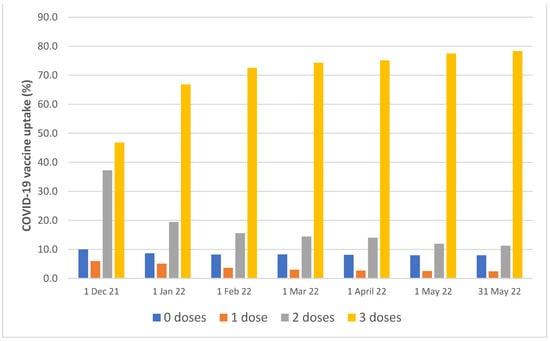
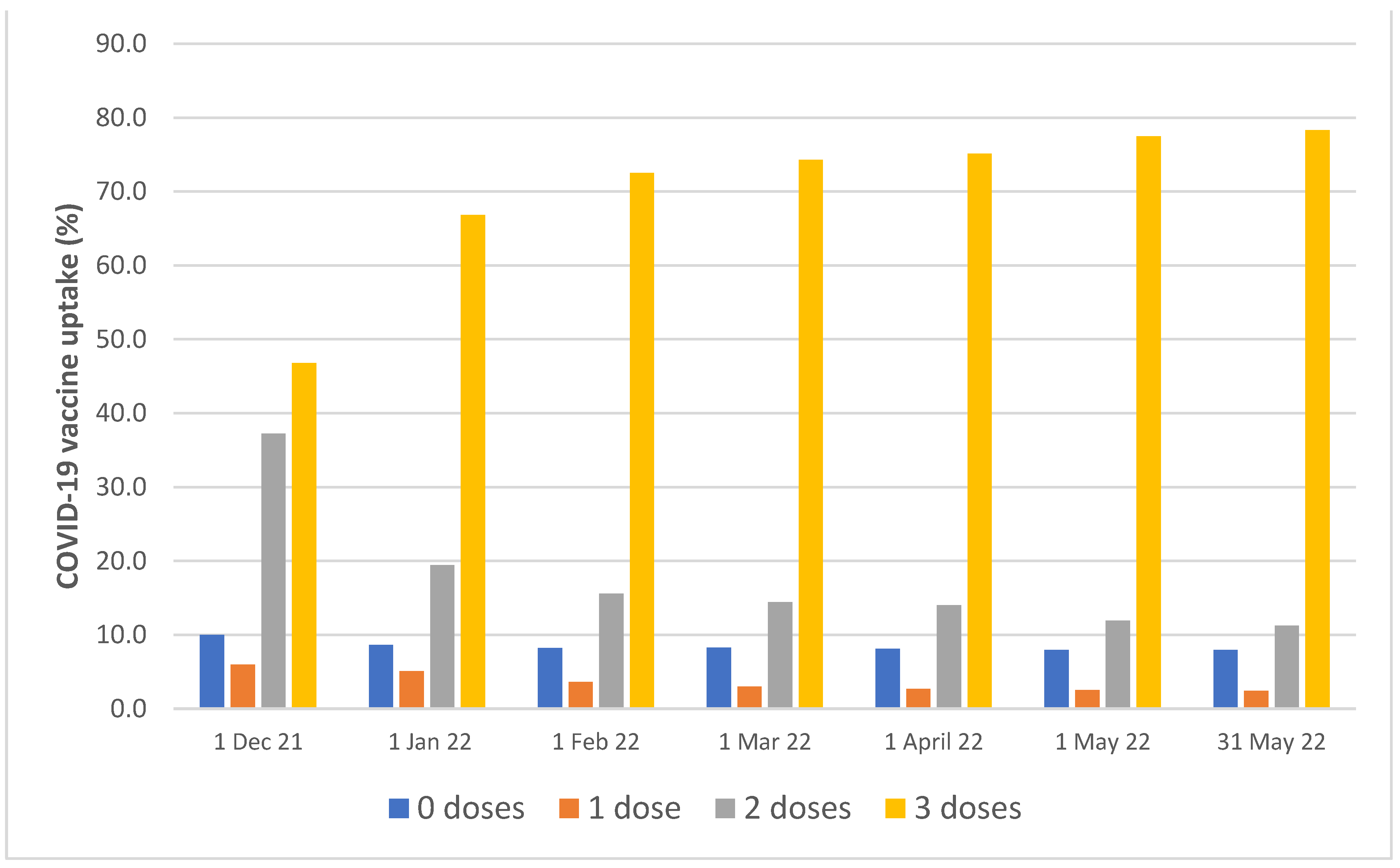
By 1 December 2021, 46.8% HCWs had received the booster, 37.2% were immunized with two doses, 6.0% with one dose and 10.0% were unvaccinated. By 31 May 2022, 9 HCWs had received four doses of COVID-19 vaccine, 78.4% three, 11.2% two, 2.3% one dose, and 8.1% were unvaccinated (Table 2 and Figure 1).
Table 2.
COVID-19 vaccination coverage of health care workers of ASUGI, by number of doses and calendar month, 1 December 2021–31 May 2022. Number and row percentage (%).
Figure 1.
COVID-19 vaccine uptake (%) of HCWs of ASUGI, by number of vaccine doses and calendar month (1 December 2021–31 May 2022).
Almost the totality of HCWs (95.7% = 7388/7723) were vaccinated with Comirnaty (Pfizer/BioNTech) and 4.0% (=306/7723) with Spikevax (Moderna). The remaining HCWs (0.4% = 29/7723) received either Vaxzevria (Oxford/Astrazeneca N = 21), Janssen (Johnson & Johnson N = 7), or Nuvaxoid (Novavax: N = 1). Moreover, 92.2% (=7121/7723) of HCWs undertook at least one swab test during 1 December 2021–31 May 2022 against 7.8% (=602/7723) never testing.
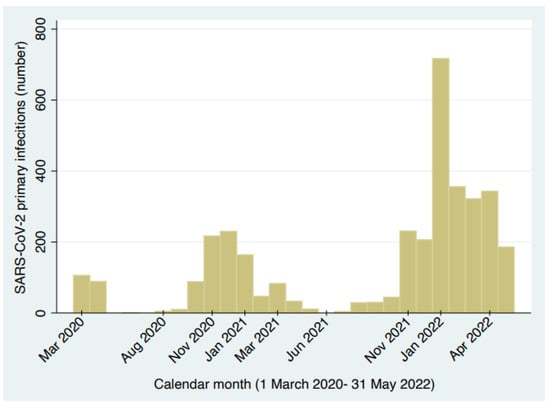
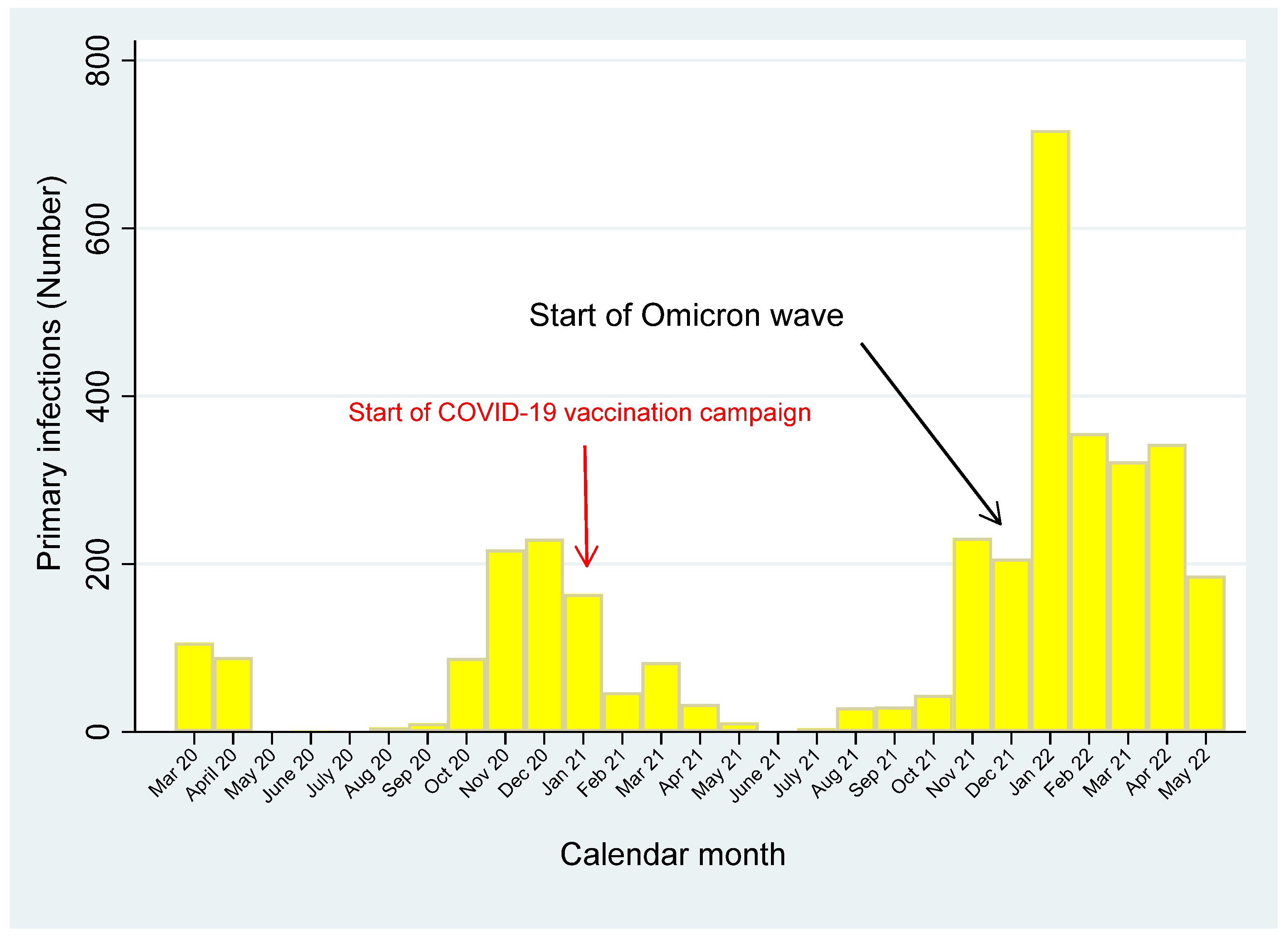
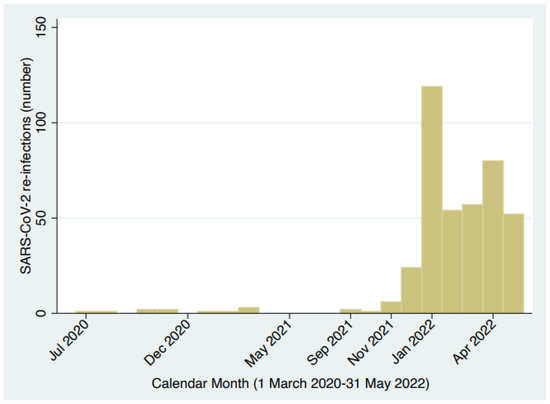
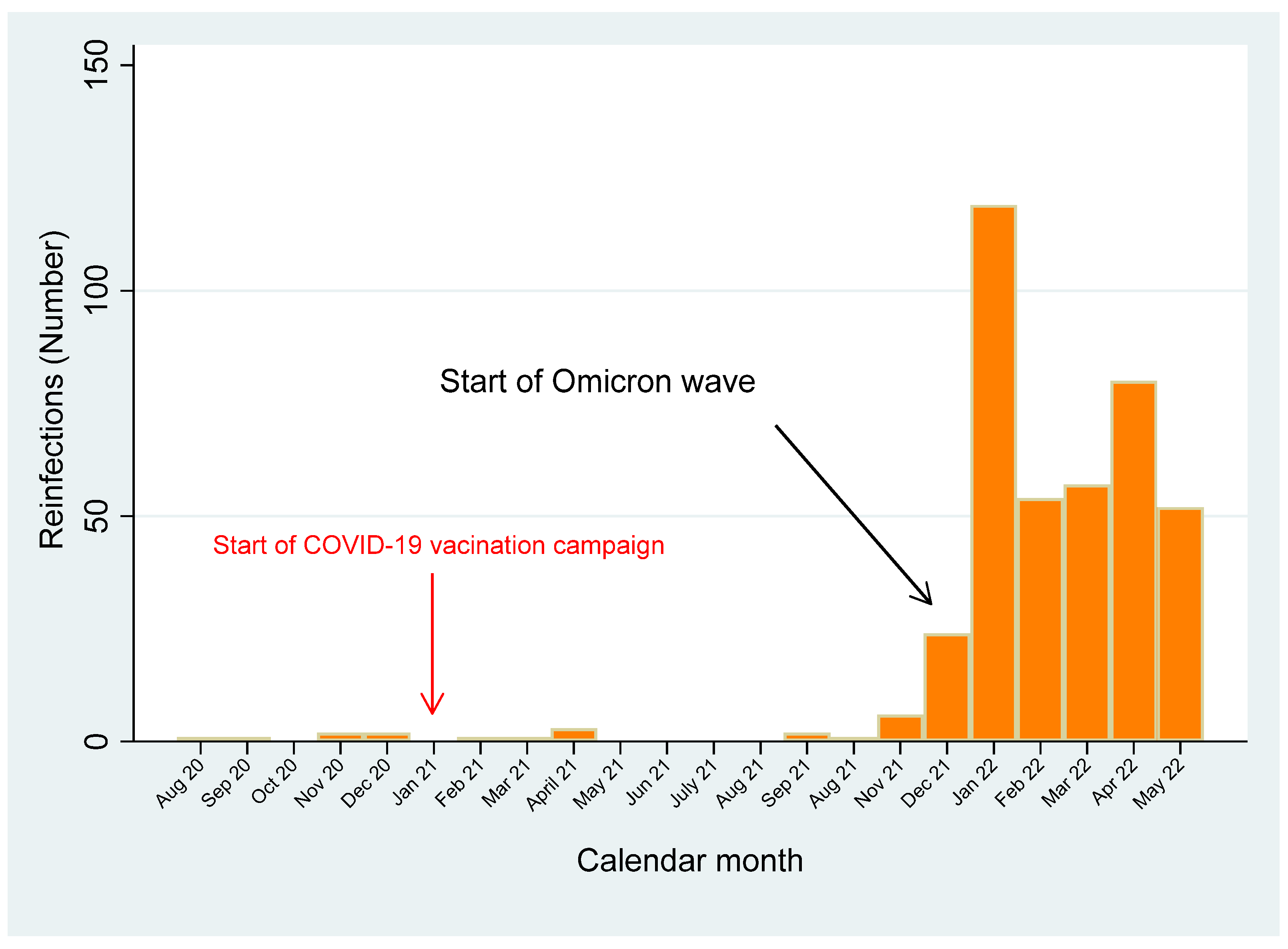
As can be appreciated from Figure 2 and Figure 3, the majority of primary (59.6% = 2130/3571) and reinfections (95.1% = 386/406) SARS-CoV-2 infections, both peaking in January 2022, were acquired from 1 December 2021 onward.
Figure 2.
Number of primary SARS-CoV-2 infections (N = 3571) in healthcare workers in ASUGI by calendar month, 1 March 2020–31 May 2022.
Figure 3.
Number of SARS-CoV-2 reinfections (Total = 406) in healthcare workers (HCWs) of ASUGI by calendar month, 1 March 2020–31 May 2022.
Table 3 displays the crude incidence rates of primary infection as well as reinfection, among HCWs of ASUGI between 1 December 2021 and 31 May 2022, by number of doses of COVID-19 vaccines received 7+ days (14+ days in case of only one dose) before infection. As can be noted, the overall crude incidence rate of primary infection was 2.28 (2.18; 2.38) × 1000 p-d, broken down as follows (by number of vaccine doses):
Table 3.
Crude incidence rates of primary SARS-CoV-2 infection and reinfection from 1 December 2021 to 31 May 2022, by number of doses of COVID-19 vaccine received 7+ days (14+ days in case of only one dose) before infection. Number of cases, person-days (p-d) at risk and raw incidence (×1000 p-d).
- 3.15 (95%CI: 2.73; 3.64) × 1000 p-d in unvaccinated HCWs;
- 2.72 (95%CI: 2.03; 3.66) × 1000 p-d in HCWs immunized with one dose;
- 3.45 (95%CI: 2.98; 3.98) × 1000 p-d in HCWs immunized with two doses;
- 2.14 (95%CI: 2.04; 2.24) × 1000 p-d in HCWs immunized with three doses.
The overall crude rate of reinfection was 0.53 (95%CI: 0.48; 0.58) × 1000 p-d, with a lower rate if the primary SARS-CoV-2 infection occurred after 1 December 2021. The incidence rate of reinfection by vaccination status was as follows:
- 1.39 (95%CI: 1.13; 1.70) × 1000 p-d among unvaccinated;
- 1.16 (95%CI: 0.82; 1.62) × 1000 p-d in HCWs immunized with one dose;
- 0.82 (95%CI: 0.68; 0.99) × 1000 p-d in HCWs immunized with two doses;
- 0.30 (95%CI: 0.25; 0.35) × 1000 p-d in HCWs immunized with three doses.
The overall crude rates of reinfection were consistently lower if the primary SARS-CoV-2 event occurred during the Omicron wave (after 30 November 2021) for any COVID-19 vaccination status.
Table 4 shows the risk of primary SARS-CoV-2 infection and reinfection in HCWs of ASUGI during the first 6 months of the Omicron transmission period (1 December 2021–31 May 2022). As can be noted, the risk of primary infection was significantly lower in HCWs older than 50, and for staff employed in administrative services (reference) compared to clinical personnel. The risk of primary SARS-COV-2 infection was slightly higher in HCWs immunized with two doses of COVID-19 vaccine (aHR = 1.27; 95%CI: 1.01; 1.61) yet significantly reduced with three doses (aHR = 0.55; 95%CI 0.46; 0.65). This resulted in a VE of 45% of triple vaccination against primary SARS-CoV-2 infections.
Table 4.
Cox proportional regression model for the risk of primary SARS-CoV-2 infection and reinfection (1 December 2021–31 May 2022). Hazard ratio unadjusted (HR) and adjusted (aHR), with 95% confidence interval (95%CI). Obs. = complete case (analysis) observations. Green highlights mark significantly reduced risk of SARS-CoV-2 infection; orange highlights mark significantly increased risk of infection. The darker the background color, the stronger the effect size.
The risk of reinfection was significantly higher in health technicians (aHR = 1.89; 95%CI: 1.05; 3.42), whereas it reduced in males (aHR = 0.68; 95%CI: 0.53; 0.87), HCWs operating in COVID-19 areas (aHR = 0.27; 95%CI: 0.13; 0.54) and those aged 51–60 years (aHR = 0.62; 95%CI: 0.41; 0.93). Moreover, the risk of reinfection decreased inversely with number of doses of COVID-19 vaccine, already reducing with one (aHR = 0.37; 95%CI: 0.24; 0.59) or two doses (aHR = 0.38; 95%CI: 0.28; 0.52) and further decreasing with three (aHR = 0.15; 95%CI: 0.11; 0.20), for a VE against reinfections of 63% with one dose, 62% with two and 85% with three, respectively (Table 4).
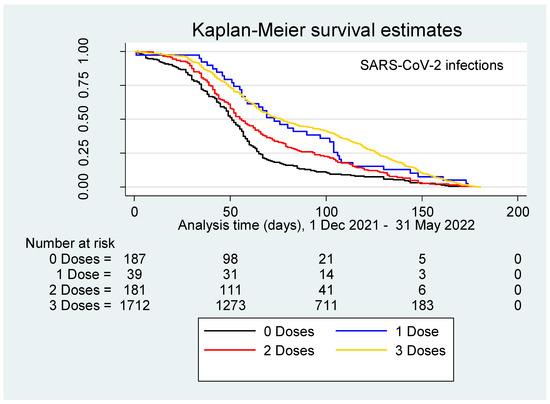
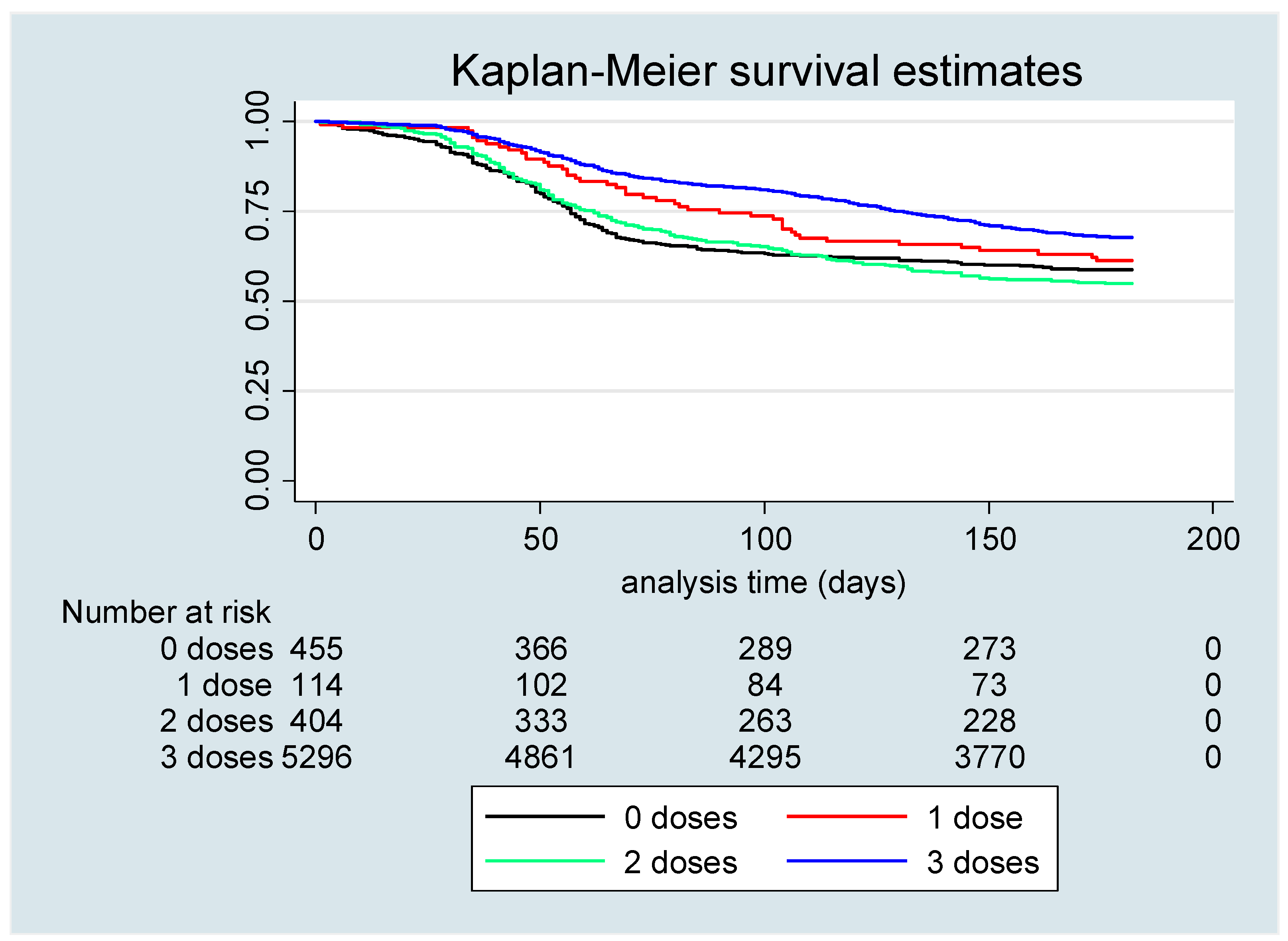
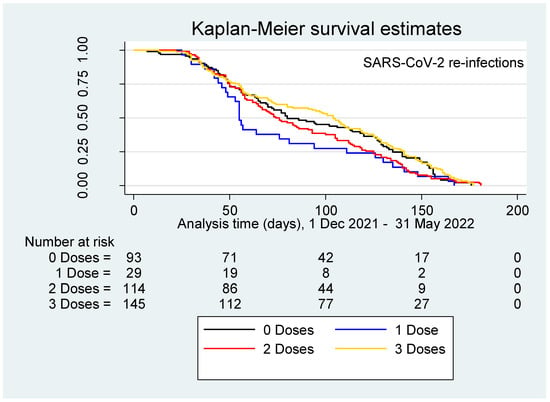
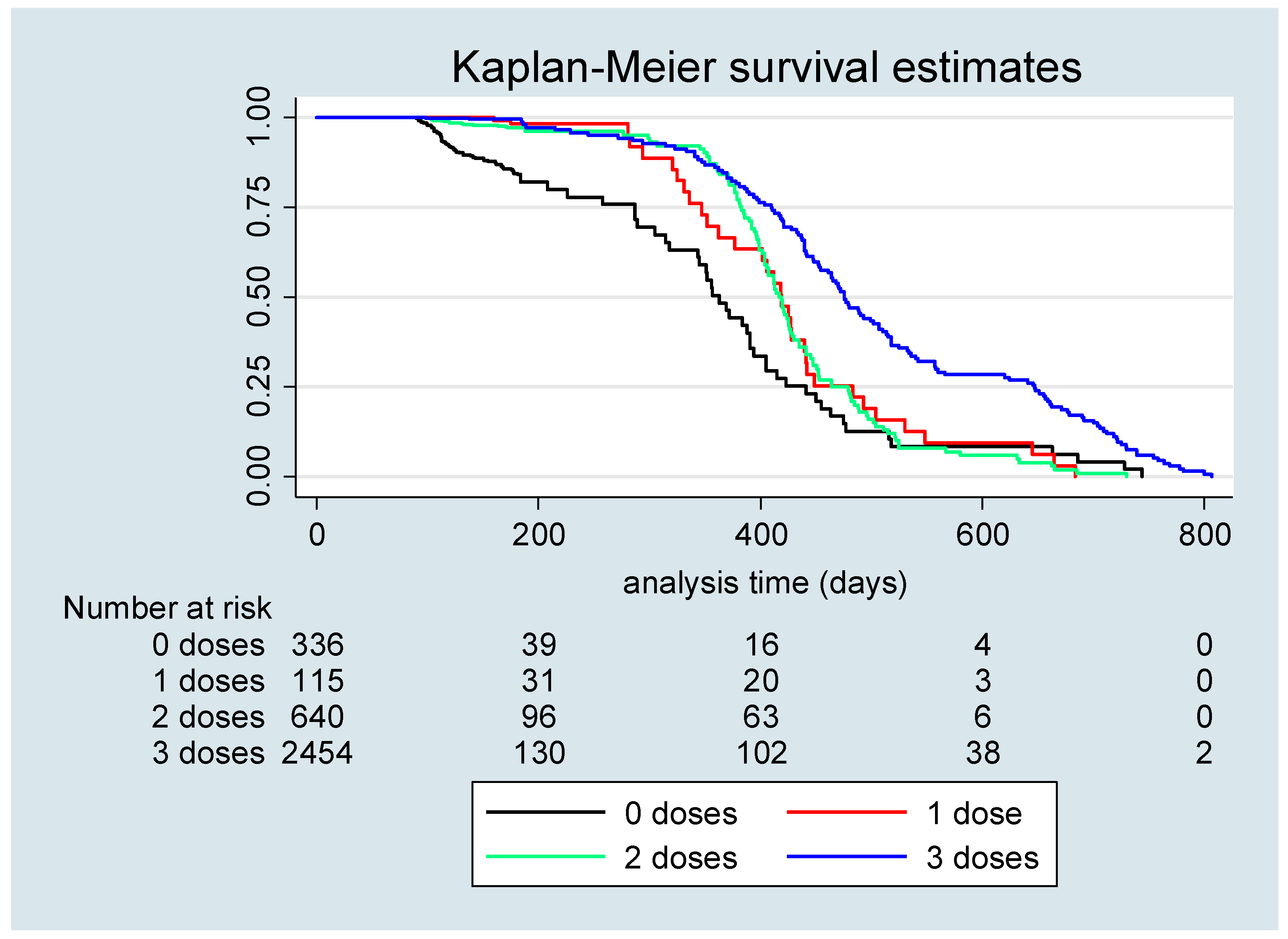
Figure 4 and Figure 5 show a Kaplan–Meier curve for the unadjusted risk of primary SARS-CoV-2 infection (Figure 4) and reinfection (Figure 5), respectively, in HCWs of Trieste from 1 December 2021 to 31 May 2022, by COVID-19 vaccination status before infection (14+ after the first dose or 7+ days after 2+ doses).
Figure 4.
(Kaplan–Meier survival curve). SARS-CoV-2 primary infections (N = 2130) in healthcare workers (HCWs) of ASUGI occurred between 1 December 2021 and 31 May 2022, by number of doses of COVID-19 vaccines received 7+ days (14+ days in case of only one dose) before infection. Number of HCWs at risk by number of doses of COVID-19 vaccine received.
Figure 5.
(Kaplan–Meier survival curve). SARS-CoV-2 reinfections (N = 386) in healthcare workers of ASUGI occurred between 1 December 2021 and 31 May 2022, by number of doses of COVID-19 vaccines received 7+ days (14+ days in case of only one dose) before reinfection. Number of HCWs at risk by number of doses of COVID-19 vaccine received.
5. Discussion
5.1. Main Findings
In this cohort of HCWs, primary SARS-CoV-2 infections and reinfections peaked in January 2022.
Compared to clerks employed in administrative services, the risk of primary SARS-CoV-2 infection was significantly lower in HCWs older than 50 and higher among nurses and all clinical areas but COVID-19 units.
The risk of SARS-CoV-2 reinfection was significantly lower in HCWs aged 51–60 years and operating in COVID-19 units, while higher in health technicians.
Regardless of number of swab tests performed during the study period, the risk of primary infection was marginally higher in HCWs immunized with two doses of COVID-19 vaccine, reducing with three doses, for a VE of 45% of triple vaccination. By contrast, the risk of SARS-CoV-2 reinfection already significantly reduced in HCWs immunized with one dose, for a VE of 63% with one dose, 62% with two and 85% with three doses.
5.2. Interpretation of Findings
From December 2021 onwards, the Omicron variant started to spread aggressively worldwide also among the vaccinated healthcare force, rapidly becoming dominant by January 2022 and increasing the risk of re-infections [2,16]. This variant, featured by a spike protein highly diverging from previous viral strains, raised immediate concerns for intrinsic high risk of vaccine breakthrough SARS-CoV-2 infection due to evasion of neutralizing antibody responses [17]. Although confirmed COVID-19 cases were featured by flu-like symptoms lasting 1–2 days and no hospitalization was recorded in the present study, other investigations reported also increased risk of symptomatic disease associated with Omicron as compared to previous variants [18].
The crude incidence rate of primary SARS-CoV-2 infection among unvaccinated HCWs of ASUGI during the Omicron transmission period (3.15 × 1000 p-d) was higher than that reported in November 2020 (0.9357 × 1000 p-d) and December 2020 (0.9397 × 1000 p-d) in HCWs in Trieste before implementation of the COVID-19 vaccination campaign [12]. Furthermore, in the present study we found a crude incidence rate of primary SARS-CoV-2 infection of 2.14 × 1000 p-d among HCWs immunized with three doses, increasing to 3.45 × 1000 p-d with two, whereas the raw incidence rate of infection with two doses was remarkably lower (<0.05 cases × 1000 p-d) in March 2021 (during the Alpha transmission period) [12], when VE was estimated to be 95%, in line with other reports [19]. In a small study on 85 nursing home residents and 48 HCWs from Cleveland (USA), the vast majority of both groups developed detectable Omicron-specific neutralizing activity following the third dose of Comirnaty [20]. Although it is still unclear whether protection from COVID-19 increases with the level of antibodies, the latter study endorsed the third dose to increase the neutralizing activity and curb immunity waning over time [20].
Despite the massive spread of Omicron from December 2021 onward, regardless of number of swab tests vaccinated, HCWs of ASUGI immunized with triple vaccination were less likely to acquire a primary SARS-CoV-2 infection, whereas the risk of reinfection was significantly lower already with 1–2 vaccine doses, further reducing with dose 3.
The slightly higher risk of primary SARS-CoV-2 infection in HCWs immunized with 2 doses and the significantly lower risk of reinfection with just 1–2 doses (with higher VE than triple vaccination against primary infections) endorsed the importance of hybrid immunity—mounted by natural infections combined with vaccination—as already reported [21]. While humoral immunity likely played a stronger role in preventing the severe form of COVID-19, its role against (mild or asymptomatic) infection diminished during the Omicron wave, most likely due to high tendency of mutation of SARS-CoV-2. In this stage of the pandemic, when SARS-CoV-2 has become more infectious yet less pathogenic, risk reduction measures in healthcare premises at higher biological risk are still relevant to control the transmission of the virus. In a previous study on HCWs of Trieste during the initial stages of the Omicron wave (until 7 February 2022) the vast majority of SARS-CoV-2 infections were, in fact, non-occupational, hence acquired outside healthcare premises [2]. Complementary pharmaceutical strategies for infection prevention and control, focusing on the main ports of entry of SARS-CoV-2 in the human body, may also be pursued [22,23,24,25,26,27].
The risk of primary infection was influenced by occupation, being higher among nurses and all clinical wards but COVID-19 units. Whilst administrative services and non-clinical areas are intrinsically featured by lower biological risk, non-pharmaceutical risk reduction measures were more stringently enforced in COVID-19 units. The risk of infection with Omicron was known to increase in HCWs handling patients [2]. Likewise, the risk of primary infection and reinfection consistently decreased in HCWs > 50 years of age in the present study since younger HCWs were generally assigned to job tasks at higher biological risk.
5.3. Generalizability
In a previous study on 7241 HCWs of ASUGI Trieste during 1 October 2020–7 February 2022, 1652 SARS-CoV-2 infections were counted, with a sharp increase in the number of SARS-CoV-2 infections (N = 670) observed from January 2022 on, as compared to the period 1 October–31 December 2020 (N = 367), the three months preceding the implementation of the national vaccination campaign against COVID-19 [2].
Likewise, in another study at San Matteo Hospital in Pavia (Northern Italy), the incidence of SARS-CoV-2 infection among HCWs was 146 × 1000 in pre-vaccination (15 October 2020–15 November 2020) versus 67 × 1000 in post-vaccination era (1 Dec 2021–15 January 2022). However, while VE was 83% during January–May 2021 (Alpha transmission period), SARS-Cov-2 infections started to surge in November 2021 in Pavia, peaking in December 2021 (N = 182), where 89% of cases were attributable to Omicron, most HCWs had received three vaccine doses and most SARS-CoV-2 infections occurred in HCWs immunized with three doses [28].
Regardless of the number of swab tests performed, protection of triple vaccination was consistently higher than two doses in the present study, for a VE of 45% against primary infections, increasing to 85% against reinfections. Similarly, VE of three versus two doses of m-RNA vaccines was estimated to be 33.2% in a study conducted in New York City during December 2021–January 2022, hence in a much shorter timeframe during the early stages of the Omicron wave [29].
In a study based upon telephone interviews conducted on 11,474 HCWs from New Delhi (India) during 1 December 2021–February 2022, among 83% immunized with two doses of COVID-19 vaccines (88% Covaxin vs. 11% Covishield), the incidence of primary SARS-CoV-2 infection was 34.8% (95%CI: 33.5%; 36.2%) and VE equaled 52.5% (95%CI: 3.9%-75.1%) among HCWs tested within 14–60 days of the second dose, declining thereafter [19]. While in the present study almost the entirety of HCWs were vaccinated with m-RNA vaccines (Comirnaty or Spikevax), in the latter Indian study the predominant COVID-19 vaccine administered to HCWs was Covaxin, an inactive virus.
5.4. Reinfections
We recorded 386 SARS-COV-2 reinfections during 1 December 2021–31 May 2022, of which 354 primary infections occurred before 1 December 2021. The overall crude incidence rate of SARS-CoV-2 reinfection was 0.53 × 1000 p-d, 1.39 among unvaccinated HCWs, 1.16 × 1000 p-d in those immunized with one dose, 0.82 × 1000 p-d with two doses and 0.30 × 1000 p-d with three doses. The rates of reinfections were consistently lower if the primary SARS-CoV-2 event occurred during the Omicron wave, regardless of any COVID-19 vaccination status.
Out of 1388 COVID-19 cases notified between 1 March 2020–28 February 2022 among 2700 HCWs of a tertiary center in Mexico City (89.1% completing a primary vaccination cycle), 788 occurred during 1 December 2021–28 February 2022. Furthermore, 73 (5.6%) re-infections were notified, 71 (97.3%) involving individuals who had completed a primary COVID-19 vaccination schedule (two doses) [30]. The overall rate of re-infection in the latter Mexican study, 0.019 × 1000 p-d before December 2021, increased to 0.231 per 1000 thereafter (during the Omicron wave) [30].
In an Israeli study on 149,032 patients from the general population recovering from SARS-CoV-2 infection during the Delta wave (1 March 2021–26 November 2021), 83,356 (56%) of whom receiving subsequent vaccination during the study period, re-infections occurred in 354 vaccinated (0.0246 cases × 1000 p-d) versus 2168 among 65,676 unvaccinated individuals (0.1021 cases × 1000 p-d) [22], with no evidence of a difference in VE of one against two doses [31].
In the above Indian study on 11,474 HCWs from New Delhi during the Omicron wave, the incidence rate of re-infection was 4.56 (95% CI: 4.29; 4.85) × 1000 p-d [32], an estimate much higher than that (7.26 = 95% CI: 6.09–8.66 × 100 person-years) reported by another retrospective cohort study conducted between 3 March 2020 and 18 June 2021 (during the Delta wave) on 4978 SARS-CoV-2 infections in 15,244 HCWs from the same city [32]. In the latter Indian study, fully vaccinated HCWs had lower risk of re-infection (HR = 0.14; 95%CI: 0.08–0.23), symptomatic re-infection (HR = 0.13; 95%CI: 0.07; 0.24), and asymptomatic re-infection (HR = 0.16; 95% CI: 0.05; 0.53) compared to unvaccinated HCWs [32]. However, VE of the booster against Omicron declined and immunity seemed limited only to high exposure groups (such as HCWs) according to the above mentioned study on 62,522 (1.8%) episodes of re-infection out of 3432,651 SARS-CoV-2 cases diagnosed in Malaysia between 1 April 2021 and 31 March 2022, questioning the real benefit of a second booster for low exposure categories [6].
5.5. Strengths and Weaknesses
This study examined a relatively large cohort of HCWs (N = 7723) subject to stringent occupational surveillance against SARS-CoV-2 during a long observation time (6 months) dominated by the Omicron variant.
However, our study also has some limitations. In particular, we did not have information on established individual risk factors for COVID-19 morbidity and mortality, especially co-morbidities, which in addition to ethnicity and ABO groups, may arguably explain differences in incidence rate of Omicron infection by geographical area.
Moreover, we did not consider the impact of serologic antibody levels on the risk of SARS-CoV-2 infections.
6. Conclusions
SARS-CoV-2 infections and re-infections surged during 1 December 2021–31 May 2022 in HCWs of ASUGI, although presenting with mild flu-like symptoms.
By 1 December 2021, 46.8% of HCWs of ASUGI had received the booster, 37.2% were immunized with two doses of COVID-19 vaccines, 6.0% only with one dose and 10.0% were unvaccinated. Compared to unvaccinated colleagues, the risk of primary SARS-CoV-2 infection during the Omicron wave was marginally higher in HCWs immunized with two doses, significantly decreasing with triple vaccination (VE = 45%), whereas the risk of reinfection already diminished with one (VE = 63%) or two doses (VE = 62%), further reducing with three (VE = 85%), endorsing the higher efficacy of hybrid humoral immunity over vaccination only.
Moreover, whilst the risk of primary infection was higher for nurses and all clinical areas, the risk of reinfection was lower for COVID-19 units, where risk reduction measures were more stringently enforced.
While immunity played a role in preventing a severe form of COVID-19, its role against transmissibility of SARS-CoV-2 diminished with Omicron, probably due to the high tendency of mutation of the virus. In this stage of the pandemic, where SARS-CoV-2 is more infectious yet less pathogenic, non-pharmaceutical and pharmaceutical measures in healthcare premises at higher biological risk remain critical to contain the transmission of the virus.
Author Contributions
Study design: L.C. and F.L.F.; data curation: C.N.; data analysis: L.C.; data interpretation: L.C., F.L.F. and G.M.; manuscript drafting: L.C., F.L.F. and G.M. All authors have read and agreed to the published version of the manuscript.
Funding
The study was partially founded by the EU project ORCHESTRA https://orchestra-cohort.eu (last access on 25 November 2022). The ORCHESTRA project has received funding from the European Union’s Horizon 2020 research and innovation programme under grant agreement No 101016167. The views expressed in this paper are the sole responsibility of the author and the Commission is not responsible for any use that may be made of the information it contains.
Institutional Review Board Statement
The study was conducted in accordance with the guidelines of the Declaration of Helsinki, and approved by the Italian Medicine Agency (AIFA) and the Ethics Committee of Italian National Institute of Infectious Diseases (INMI) Lazzaro Spallanzani and by the regional ethics committee (CEUR) of Friuli-Venezia Giulia Region (Reg N.188/2022).
Informed Consent Statement
Patient consent was waived since according to Italian privacy law (Legislative Decree 101/2018, D.Lgs 101/2018) patients’ data routinely collected by the Italian National Health Service (NHS) can be used for scientific purposes within the frame of approved studies/protocols, provided sensitive information is anonymized.
Data Availability Statement
Data generated and analyzed during the current study are not publicly available, since they were purposively collected by the authors for the present study, but are available from the corresponding author on reasonable request.
Conflicts of Interest
The authors declare no conflict of interest.
References
- Islam, M.R.; Hoque, M.N.; Rahman, M.S.; Alam, A.S.M.; Akther, M.; Puspo, J.A.; Akter, S.; Sultana, M.; Crandall, K.A.; Hossain, M.A. Genome-wide analysis of SARS-CoV-2 virus strains circulating worldwide implicates heterogeneity. Sci. Rep. 2020, 10, 14004. [Google Scholar] [CrossRef] [Scilit] [PubMed]
- Cegolon, L.; Ronchese, F.; Ricci, F.; Negro, C.; Laese-Filon, F. SARS-CoV-2 Infection in Health Care Workers of Trieste (North-Eastern Italy), 1 October 2020–7 February 2022: Occupational Risk and the Impact of the Omicron Variant. Viruses 2022, 14, 1663. [Google Scholar] [CrossRef] [Scilit] [PubMed]
- Mao, Y.; Wang, W.; Ma, J.; Wu, S.; Sun, F. Reinfection rates among patients previously infected by SARS-CoV-2: Systematic review and meta-analysis. Chin. Med. J. 2022, 135, 145–152. [Google Scholar] [CrossRef] [Scilit] [PubMed]
- Galanti, M.; Shaman, J. Direct observation of repeated infections with endemic coronaviruses. J. Infect. Dis 2021, 223, 409–415. [Google Scholar] [CrossRef] [Scilit]
- Cegolon, L.; Pichierri, J.; Mastrangelo, G.; Cinquetti, S.; Sotgiu, G.; Bellizzi, S.; Pichierri, G. Hypothesis to explain the severe form of COVID-19 in Northern Italy. BMJ Glob. Health 2020, 5, e002564. [Google Scholar] [CrossRef] [Scilit]
- Yang, S.L.; Teha, H.S.; Lian, J.; Suah, J.L.; Husin, M.; Hwong, W.Y. SARS-CoV-2 in Malaysia: A surge of reinfection during the predominantly Omicron period. Lancet Reg. Health West. Pac. 2022, 26, 100572. [Google Scholar] [CrossRef] [Scilit]
- Tillett, R.L.; Sevinsky, J.R.; Hartley, P.D.; Kerwin, H.; Crawford, N.; Gorzalski, A.; Laverdure, C.; Verma, S.C.; Rossetto, C.C.; Jackson, D.; et al. Genomic evidence for reinfection with SARS-CoV-2: A case study. Lancet Infect. Dis. 2021, 21, 52–58. [Google Scholar] [CrossRef] [Scilit]
- Wang, J.; Kaperak, C.; Sato, T.; Sakuraba, A. COVID-19 reinfection: A rapid systematic review of case reports and case series. J. Investig. Med. 2021, 69, 1253–1255. [Google Scholar] [CrossRef] [Scilit]
- Piapan, L.; De Michieli, P.; Ronchese, F.; Rui, F.; Peresson, M.; Segat, L.; D’Agaro, P.; Negro, C.; Bovenzi, M.; Larese Filon, F. COVID-19 outbreaks in hospital workers during the first COVID-19 wave. Occup. Med. 2022, 72, 110–117. [Google Scholar] [CrossRef] [Scilit]
- Piapan, L.; De Michieli, P.; Ronchese, F.; Rui, F.; Mauro, M.; Peresson, M.; Segat, L.; D’Agaro, P.; Negro, C.; Bovenzi, M.; et al. COVID-19 outbreak in healthcare workers in hospitals in Trieste, North-east Italy. J. Hosp. Infect. 2020, 106, 626–628. [Google Scholar] [CrossRef] [Scilit]
- Basso, P.; Negro, C.; Cegolon, L.; Larese Filon, F. Risk of Vaccine Breakthrough SARS-CoV-2 Infection and Associated Factors in Healthcare Workers of Trieste Teaching Hospitals (North-Eastern Italy). Viruses 2022, 14, 336. [Google Scholar] [CrossRef] [Scilit] [PubMed]
- Larese Filon, F.; Rui, F.; Ronchese, F.; De Michieli, P.; Negro, C. Incidence of COVID-19 infection in hospital workers from March 1, 2020 to May 31, 2021 routinely tested, before and after vaccination with BNT162B2. Sci. Rep. 2022, 12, 2533. [Google Scholar] [CrossRef] [Scilit] [PubMed]
- Bar-On, Y.M.; Goldberg, Y.; Mandel, M.; Bodenheimer, O.; Freedman, L.; Kalkstein, N.; Mizrahi, B.; Alroy-Preis, S.; Ash, N.; Milo, R.; et al. Protection of BNT162b2 vaccine booster against COVID-19 in Israel. N. Engl. J. Med. 2021, 385, 1393–1400. [Google Scholar] [CrossRef] [Scilit] [PubMed]
- Yahav, D.; Yelin, D.; Eckerle, I.; Eberhardt, C.S.; Wang, J.; Cao, B.; Kaiser, L. Definitions for coronavirus disease 2019 reinfection, relapse and PCR re-positivity. Clin. Microbiol. Infect. 2021, 27, 315–331. [Google Scholar] [CrossRef] [Scilit]
- Center for Disease Prevention and Control. Overview of Testing for SARS-CoV-2, the Virus that Causes COVID-19. Available online: https://www.cdc.gov/coronavirus/2019-ncov/hcp/testing-overview.html (accessed on 25 November 2022).
- Araf, Y.; Akter, F.; Tang, Y.D.; Fatemi, R.; Parvez, M.S.A.; Zheng, C.; Hossain, M.G. Omicron variant of SARS-CoV-2: Genomics, transmissibility, and responses to current COVID-19 vaccines. J. Med. Virol. 2022, 94, 1825–1832. [Google Scholar] [CrossRef] [Scilit]
- Sheward, D.J.; Kim, C.; Ehling, R.A.; Pankow, A.; Dopico, X.C.; Dyrdak, R.; Martin, D.P.; Reddy, S.T.; Dillner, J.; Hedestam, G.B.K.; et al. Neutralisation sensitivity of the SARS-CoV-2 omicron (B.1.1.529) variant: A cross-sectional study. Lancet Infect. Dis. 2022, 22, 813–820. [Google Scholar] [CrossRef] [Scilit]
- Andrews, N.; Stowe, J.; Kirsebom, F.; Toffa, S.; Rickeard, T.; Gallagher, E.; Gower, C.; Kall, M.; Groves, N.; O’Connell, A.M.; et al. COVID-19 Vaccine Effectiveness against the Omicron (B.1.1.529) Variant. N. Engl. J. Med. 2022, 386, 1532–1546. [Google Scholar] [CrossRef] [Scilit]
- Angel, Y.; Spitzer, A.; Henig, O.; Saiag, E.; Sprecher, E.; Padova, H.; Ben-Ami, R. Association Between Vaccination with BNT162b2 and Incidence of Symptomatic and Asymptomatic SARS-CoV-2 Infections Among Health Care Workers. JAMA 2021, 325, 2457–2465. [Google Scholar] [CrossRef] [Scilit]
- Canaday, D.H.; Oyebanji, O.A.; White, E.; Keresztesy, D.; Payne, M.; Wilk, D.; Carias, L.; Aung, H.; Denis, K.S.; Sheehan, M.L.; et al. COVID-19 vaccine booster dose needed to achieve Omicron-specific neutralisation in nursing home residents. eBioMedicine 2022, 80, 104066. [Google Scholar] [CrossRef] [Scilit]
- Malhotra, S.; Mani, K.; Lodha, R. COVID-19 infection, and reinfection, and vaccine effectiveness against symptomatic infection among health care workers in the setting of omicron variant transmission in New Delhi, India. Lancet Reg. Health Southeast Asia 2022, 3, 100023. [Google Scholar] [CrossRef] [Scilit]
- Goldberg, Y.; Mandel, M.; Bar-On, Y.M.; Bodenheimer, O.; Freedman, L.S.; Ash, N.; Alroy-Preis, S.; Huppert, A.; Milo, R. Protection and Waning of Natural and Hybrid Immunity to SARS-CoV-2. N. Engl. J. Med. 2022, 386, 2201–2212. [Google Scholar] [CrossRef] [Scilit] [PubMed]
- Cegolon, L.; Mastrangelo, G.; Emanuelli, E.; Camerotto, R.; Spinato, G.; Frezza, D. Early Negativization of SARS-CoV-2 Infection by Nasal Spra of Seawater plus Additives: The RENAISSANCE Open-Label Controlled Clinical Trial. Pharmaceuticals 2022, 14, 2502. [Google Scholar] [CrossRef] [Scilit] [PubMed]
- Cegolon, L.; Mirandola, M.; Salaris, C.; Salvati, M.V.; Mastrangelo, G.; Salata, C. Hypothiocyanite and Hypothiocyanite/Lactoferrin Mixture Exhibit Virucidal Activity In Vitro against SARS-CoV-2. Pathogens 2021, 10, 233. [Google Scholar] [CrossRef] [Scilit] [PubMed]
- Cegolon, L. Investigating hypothiocyanite against SARS-CoV-2. Int. J. Hyg. Environ Health 2020, 227, 113520. [Google Scholar] [CrossRef] [Scilit] [PubMed]
- Cegolon, L.; Javanbakht, M.; Mastrangelo, G. Nasal disinfection for the prevention and control of COVID-19: A scoping review on potential chemo-preventive agents. Int. J. Hyg. Environ. Health 2020, 230, 113605. [Google Scholar] [CrossRef] [Scilit]
- Cegolon, L.; Salata, C.; Piccoli, E.; Juarez, V.; Palu, G.; Mastrangelo, G.; Calistri, A. In vitro antiviral activity of hypothiocyanite against A/H1N1/2009 pandemic influenza virus. Int. J. Hyg. Environ. Health 2014, 217, 17–22. [Google Scholar] [CrossRef] [Scilit]
- Rovida, F.; Esposito, G.L.; Rissone, M.; Novelli, V.; Cutti, S.; Muzzi, A.; Rona, C.; Bertoli, E.; Daglio, M.; Piralla, A.; et al. Characteristics and outcomes of vaccinated and nonvaccinated patients hospitalized in a single Italian hub for COVID-19 during the Delta and Omicron waves in Northern Italy. Int. J. Infect. Dis. 2022, 122, 420–426. [Google Scholar] [CrossRef] [Scilit]
- Robilotti, E.V.; Whiting, K.; Lucca, A.; Poon, C.; Jani, K.; McMillen, T.; Freeswick, S.; Korenstein, D.; Babady, N.E.; Seshan, V.E.; et al. Effectiveness of mRNA booster vaccine among health Care workers in New York City during the omicron surge, December 2021–January 2022. Clin. Microbiol. Infect. 2022, 28, 1624–1628. [Google Scholar] [CrossRef] [Scilit]
- Ochoa-Hein, E.; ELeal-Morán, P.; Nava-Guzmán, K.A. Significant Rise in SARS-CoV-2 Reinfection Rate in Vaccinated Hospital Workers during the Omicron Wave: A Prospective Cohort Study. Rev. Investig. Clin. 2022, 74, 175–180. [Google Scholar] [CrossRef] [Scilit]
- Hammerman, A.; Sergienko, R.; Friger, M.; Beckenstein, T.; Peretz, A.; Netzer, D.; Yaron, S.; Arbel, R. Effectiveness of the BNT162b2 vaccine after recovery from COVID-19. N. Engl. J. Med. 2022, 386, 1221–1229. [Google Scholar] [CrossRef] [Scilit]
- Malhotra, S.; Mani, K.; Lodha, R.; Bakhshi, S.; Mathur, V.P.; Gupta, P.; Kedia, S.; Sankar, J.; Kumar, P.; Kumar, A.; et al. SARS-CoV-2 reinfection rate and estimated effectiveness of the inactivated whole virion vaccine BBV152 against reinfection among health care workers in New Delhi, India. JAMA Netw. Open 2022, 5, e2142210. [Google Scholar] [CrossRef] [Scilit] [PubMed]

Publisher’s Note: MDPI stays neutral with regard to jurisdictional claims in published maps and institutional affiliations. |
© 2022 by the authors. Licensee MDPI, Basel, Switzerland. This article is an open access article distributed under the terms and conditions of the Creative Commons Attribution (CC BY) license (https://creativecommons.org/licenses/by/4.0/).