


Abstract
Chamaecyparis thyoides forested peatlands in the mid-Atlantic USA store carbon and enhance biodiversity but have declined through altered hydrology. Ditched sites shifted to temporarily flooded hydrologic regimes and were replaced by other forest types. Sites exposed to sea level rise (SLR) have persisted with a seasonally flooded, saturated hydrologic regime, but are transitioning to ghost forests. The purpose of this study is to aid conservation efforts by analyzing climate variable correlations with seasonal growth. Chamaecyparis thyoides tree rings from a ditched site exhibited overall faster growth rates, and earlywood was more sensitive to climate variables (temperature and Palmer Drought Severity Index, PDSI) than latewood. At a site exposed to SLR, division of early- and latewood chronologies was performed at the age midpoint, and growth responses in prior (1939–1970) and recent periods (1970–2003) diverged. Temperature and PDSI correlations with growth occurred in both early- and latewood, and patterns shifted between prior and recent periods. Stressors may include the timing of soil anoxia and shifts in availability of nonstructural carbon at both sites, and salinity at the SLR-impacted site. Climate and growth correlations at the SLR site may represent a form of reference for hydrologic restoration of seasonally flooded, saturated hydrologic regimes.
1. Introduction
Coastal wetlands are increasingly threatened by anthropogenic pressures globally [1]. Peatlands occupy only 3% of the Earth’s terrestrial surface but store at least 24% of the global soil carbon pool. Biodiversity and other ecosystem services of coastal forested peatlands are also at risk. Chamaecyparis thyoides (L.) B.S.P., Atlantic white cedar or Juniper, a member of the Cupressaceae family, is restricted to a narrow band of coastal peatland swamps ranging from Maine to Mississippi, USA [2]. This type of swamp is particularly effective in storing carbon [3,4], but is considered a globally threatened ecosystem [5].
Forested peatland structure and function can be altered by two hydrologic disturbances, including historic ditching [6] and, more recently, sea level rise (SLR). Forested peatland ditching in the mid-Atlantic dates to the 17th century and intensified in Asia, Canada, Fennoscandia, and the USA in the mid-20th century with the use of the internal combustion engine [7]. In Great Dismal Swamp National Wildlife Refuge (Dismal Swamp), historic ditching and draining of this forested peatland has increased fire frequency [3], increased soil microbial oxidation and nutrient availability [8], caused development of hydrophobic peat surfaces [9], and favored replacement of C. thyoides by tree species that are less tolerant of persistent soil saturation [2]. Low-lying C. thyoides stands such as those in Alligator River National Wildlife Refuge (Alligator River) served as refugia because ditching was unsuccessful. However, SLR has begun to eliminate stands that are within 1 m of sea level, which are termed ghost forests [1]. Restoring hydrologic functions in drained peatlands is challenging and requires re-establishment of seasonally flooded, saturated hydrologic regimes [10], which are poorly understood given that the species was first described as endangered in 1748 [11].
In contrast to ditching, other anthropogenic factors, such as SLR, raise water levels, incurring saltwater intrusion [12]. In addition to SLR, storm-driven saline water has led to forest dieback, which was reported in New Jersey, USA, in 1881 [13], and forested peatlands throughout the mid-Atlantic are transitioning to ghost forests characterized by remnant stands of dead trees [1,14,15].
Many conifers exhibit annual production of xylem cells that can be assigned to earlywood (aka spring wood) or latewood (aka summer wood) based on narrow cell walls and large lumen or thickened cell walls and much reduced lumen, respectively. Dendroecological studies using annual ring width have detected climate variable correlations for forested peatlands of C. thyoides that are remnant stands in the northeastern USA [16], and in the mid-Atlantic where anthropogenically altered peatlands that have been ditched [17,18] or are undergoing SLR [19].
Analysis of seasonal growth is far less common than annual ring width in tree ring databases [20], but early- and latewood may contain evidence of additional growth and climate relationships in C. thyoides. In other studies, analyzing early- and latewood has been found to yield additional insights into seasonal growth responses across hydrologic differences. Wotherspoon et al. [21], working in Quebec, Canada, reported that Picea mariana (Mill.) B.S.P. recorded faster growth on dry sites when receiving precipitation during the growing season. Peng et al. [22] reported that Pinus taiwanensis Hayata in central China demonstrated stronger predictive ability in earlywood as influenced by two oceans. Latewood in Pseudotsuga menziesii Mirb. Franco enhanced predictions of summer moisture in the southwestern USA [23]. Seasonal growth and climate correlations have assisted in understanding other conifer species with declining populations, including Picea chihuahuana Martinez in Mexico [24] and Pinus palustris Mill. in the southeastern USA [25].
Precipitation and temperature patterns affect annual ring widths in C. thyoides. Higher temperatures extend growing seasons in northeastern USA populations [16], but high temperatures can also increase stresses related to anoxia, including root metabolic rates [26,27]. Higher precipitation rates can increase stresses associated with soil anoxia [17], but can reduce salt stress through dilution [12,19].
The purpose of this study is to assess seasonal (early- and latewood) radial growth rate response to climate variables in sites with decades of disturbed hydrologic regimes. As a globally threatened ecosystem, reference sites are lacking, and another purpose of the study is to identify a reference condition by dividing a tree ring chronology at an age midpoint, given that SLR has begun to cause ghost forests [19]. Results may allow better predictions and management strategies to restore forested peatlands to store carbon, sustain biodiversity, and provide other ecosystem services.
2. Methods and Study Sites
2.1. Study Sites
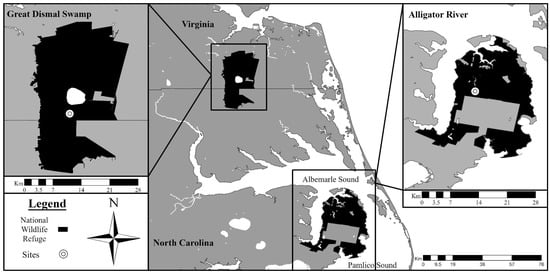
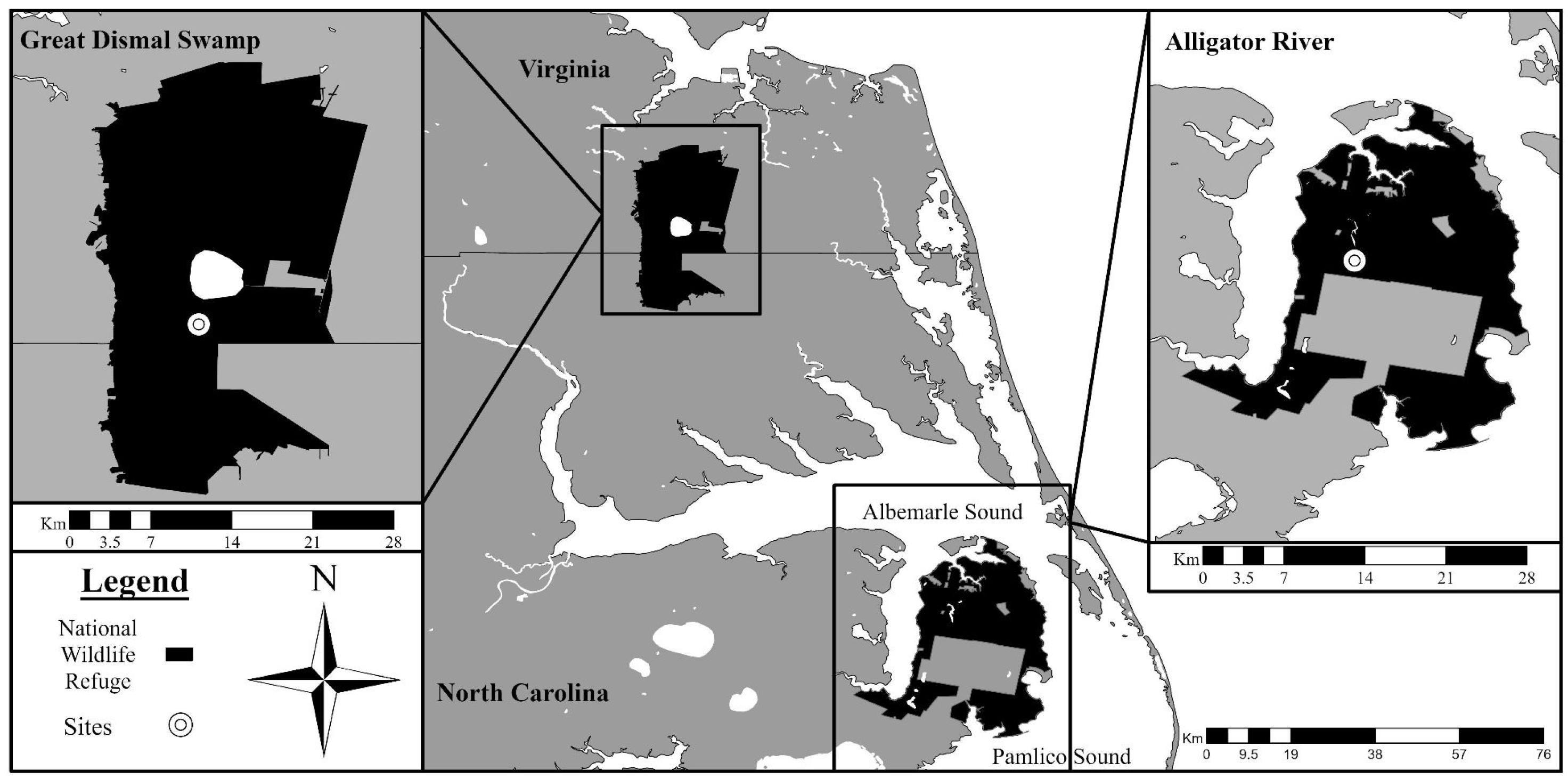
The Alligator River site is a national wildlife refuge that occupies part of a peninsula located on the eastern mainland of North Carolina, USA (Figure 1). The refuge comprises 61,500 hectares and is bordered by the Alligator River to the west, Croatan Sound to the east, Pamlico Sound to the south, and the Albemarle Sound to the north [28]. Most of the refuge is characterized by flat terrain, with elevation ranging from 0.0 m to 3.7 m above sea level [2], and soil chemical and physical parameters were reported by Thompson et al. [29]. Chamaecyparis thyoides stands are extensive in this area and are primarily established on deep organic soils of the Pungo Soil Series, with layers of silt, clay, sand, and shells beneath the peat [30]. The hydrologic regime is classified as seasonally flooded, saturated [31]. Ury et al. [14], working on an adjacent portion of the Alligator River Peninsula, used remote-sensed historical data and reported rapid conversion of forest to ghost forest and other wetland types, which these authors assigned to SLR. Henman and Poulter [32] have predicted that SLR will convert most of this peninsula to open water by 2100. SLR is difficult to distinguish from saltwater intrusion and storm-driven salt [12], and we use SLR inclusively.
Figure 1.
Double circles mark sample locations within Great Dismal Swamp National Wildlife Refuge (historically drained) and Alligator River National Wildlife Refuge (undrained, but subject to sea level rise).
The Dismal Swamp site is also in a national wildlife refuge and is located on the border of North Carolina and Virginia, about 50 km from the Atlantic Ocean (Figure 1) and 100 km north of Alligator River. The refuge encompasses nearly 46,000 hectares; the elevation ranges from 4.6 m to 7.6 m above sea level [2], and soil chemical and physical parameters were reported by Thompson et al. [29]. The soils in Dismal Swamp are of the Pungo Soil Series and consist of highly decomposed organic matter (sapric peat), which extends 1–2 m below the surface [6,30]. The hydrologic regime was classified as intermittently flooded throughout the 1938–2002 study period. The swamp developed following the end of the glacial period and was likely classified as seasonally flooded, saturated prior to drainage, which began as early as 1805 and intensified in the 1950s and 1960s [6].
2.2. Sample Collection and Preparation
A 4.3-mm-diameter increment borer was used to sample one ~60-year-old C. thyoides tree at the Alligator River site during the summer and fall of 2003 and during the spring of 2004. Once removed from the tree, cores were glued into wood mounts and sanded by hand with progressively finer sandpaper (120 to 2500 grit) until the smallest rings were clearly visible, following standard dendrochronological methods [33]. Of the tree samples in this collection, 23 trees were randomly selected, and 2 representative radii were randomly selected from each tree, omitting any radii with noticeable anatomical anomalies or irregular growth patterns.
In Dismal Swamp, from 2006 to 2008, stem cuts were collected from 11 salvage logging areas in which trees were downed by Hurricane Isabel in 2003. A chainsaw was used to collect complete cross-sections perpendicular to the stem (or main trunk) at breast height. After air-drying, stem cuts were sanded with progressively finer sandpaper. In an earlier study of annual ring width, at least 4 radial growth series were marked, and ring width was measured from pith to bark on each cross-cut [33]. There were 15 sites at Dismal Swamp that exhibited high SSS, EPS, rBar, and SNR, and we selected one that had additional measurements of soil, hydrology, and vegetation parameters. We obtained cross-cut samples from 23 trees that were randomly selected from the Dismal Swamp site, and 2 representative radii were selected from each tree.
2.3. Cross-Dating and Ring Measurements
Following sample preparation, rings from trees at Alligator River and Dismal Swamp were counted, cross-dated, and measured under a stereo-boom dissecting microscope and sliding stage connected to a computer using Measure J2X (VoorTech Consulting, Holderness, NH, USA). Widths were measured to +/− 0.001 mm, and early- and latewood transitions were determined using qualitative methods based on visual inspection, where cell walls and lumen size are decreased, and cell walls are darker, following protocols presented by Lebourgeois [34] and Domec and Gartner [35]. One researcher was responsible for all early- and latewood measurements. After the rings were measured, widths were statistically cross-dated in the program COFECHA (v. 6.06) [36] to identify dating errors.
2.4. Developing Tree Ring Chronologies
Raw ring widths from each time series were detrended using the Friedman Super Smoother to remove age-related growth trends [37] using Dendrochronology Program Library’s dplR [38] in R (v. 4.4.1) [39] using R Studio (v. 2026.01.1) [40].
After detrending, a ring width index was produced for both early- and latewood at Alligator River and Dismal Swamp. Expressed population signal (EPS), subsample signal strength (SSS), Signal-to-Noise Ratio (SNR), and Effective Average Correlation Between Series (Rbarr.eff) thresholds were calculated for each population and considered suitable for climate correlations (Table 1) [41,42]. Climate correlations are effective tests to determine how water availability and temperature influence ring width as a proxy for woody stem growth [37].
Table 1.
Descriptive statistics for C. thyoides in Great Dismal Swamp National Wildlife Refuge (n = 23 trees) and Alligator River National Wildlife Refuge (n = 23 trees). Tree ring widths for the year in which the sample size reached at least half of the full sample size, i.e., 12 trees, are shown in parentheses. Statistical results are based on raw ring width values.
2.5. Climate Data
Monthly average temperature data were sourced from the National Oceanic and Atmospheric Administration (NOAA)—National Centers for Environmental Information (NCEI) time series datasets. Climate variables, including temperature and PDSI for each site, were derived from the geographically closest National Weather Service weather station (Table 2). For the Dismal Swamp site, a Suffolk County weather station 14 km from the study site was selected. Temperature and PDSI data for the Alligator River site were obtained from a weather station in Dare County, North Carolina, approximately 40 km from our study site [43]. The average temperature for every month between 1938 and 2003 was compiled and used in climate correlations. Dates for initiation and cessation of growth in this species are not available. Growing seasons according to USDA are from March 29 to November 7 [44], but a study by Burnt et al. [45] reported that the growing season may be nearly continuous in this region based on soil temperature and soil respiration.
Table 2.
Average temperature and PDSI at both sites. Data are divided into the recent period (1971–2002), prior period (1939–1970), and full chronology (1939–2002) based on divisions used for climate correlations. Data for the Alligator River site are derived from the Dare County National Weather Service weather station, and data for the Dismal Swamp site are derived from the Suffolk County National Weather Service weather station.
NOAA NCEI was also accessed for monthly Palmer Drought Severity Index (PDSI) values. PDSI is a standard index describing drought severity and ranges from +6 (very wet) to −6 (very dry) [46,47].
2.6. Data Analysis
Alligator River chronologies were split into two ~30-year periods: (1) prior period (1939–1970) and (2) recent period (1971–2002). Division of the full Alligator River chronology isolates periods early in, and after, the progression of SLR, which was linked to saltwater intrusion along the eastern USA coastline [47,48] and to vegetation changes within other portions of the Alligator River Peninsula [14]. The Dismal Swamp chronology was not split since SLR has not occurred at the site, which lies at least 4.6 m above sea level [6]. Analysis of the Dismal Swamp split chronology was performed for total annual ring width, and PDSI and growth correlation patterns were similar between prior and recent periods [19]. In this context, the prior period at Alligator River can be understood as exhibiting a less disturbed ring width pattern than the recent period, and division of a C. thyoides chronology was used to assess changes in salinity associated with dredging in Delaware Bay, USA [49]. A divided annual tree ring chronology was also used in a climate change study by Büntgen et al. [50]. Our decision to divide the Alligator River chronology was also intended to facilitate comparison with Doyle et al. [19], which analyzed annual tree ring width in C. thyoides at the Alligator River Peninsula and found a shift in decadal growth patterns.
Correlations between mean ring width indices and monthly climate variables within a 24-month analysis window, consisting of January in the previous year to December of the current year, were performed as recommended by Fritts [37] and Cook and Kairiukstis [41]. Previous year monthly correlations have been successfully deployed for C. thyoides in the northeastern USA by Pearl et al. [16], in Delaware, USA, by Stotts et al. [49] and in several studies in the mid-Atlantic [18,19,51,52,53]. We tested for monthly climate correlations within the 24-month window in both early- and latewood chronologies using a Spearman Rank-Order Correlation Coefficient. An alpha value of 0.05 was used as a threshold for significance.
3. Results
3.1. Descriptive Statistics
Mean earlywood widths were greater in the full Dismal Swamp chronology (1.65 mm) than in the full Alligator River chronology (0.707 mm, H(11) = 9728.2, p < 0.001). Additionally, mean latewood widths were greater in the full Dismal Swamp chronology (0.574 mm) than in the full Alligator River chronology (0.289 mm, H(11) = 9728.2, p < 0.001). Mean SSS, EPS, rBar.eff, and SNR were deemed reliable among all divided and full chronologies (Table 1). Early- and latewood were found to have low correlation coefficients at Alligator River (r(62) = 0.40, p < 0.001) and at Dismal Swamp (r(72) = 0.13, p = 0.289).
3.2. Climate Correlations
3.2.1. Monthly Temperature Correlations
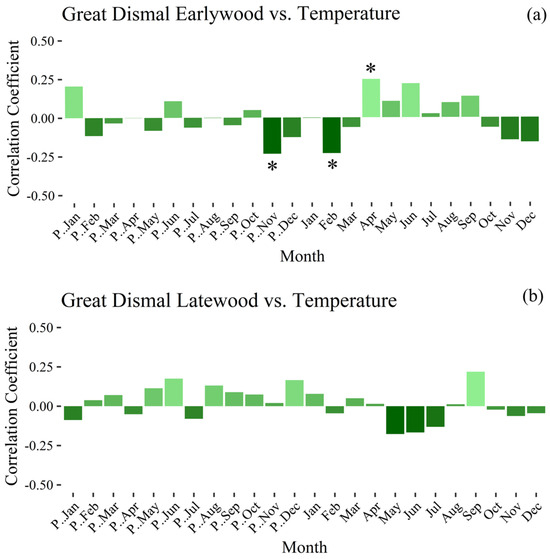
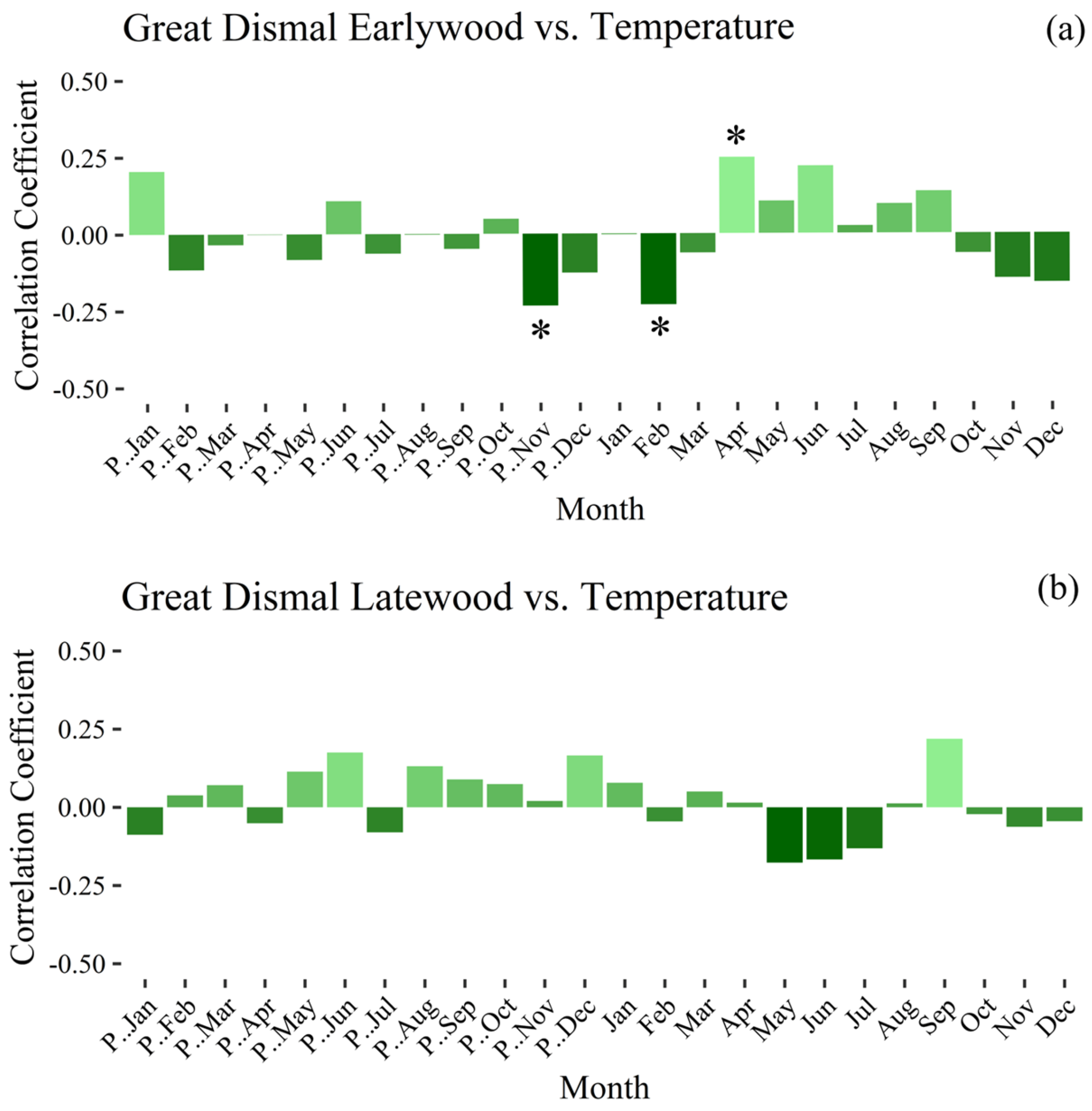
Temperature correlation coefficients lack clear trends in the Dismal Swamp chronologies. However, earlywood exhibited significantly negative correlations with temperatures in November of the previous year and February of the current year. In contrast, April temperatures of the current year exhibited significantly positive correlations with earlywood. Latewood measurements yielded no significant temperature correlations at Dismal Swamp (Figure 2).
Figure 2.
Spearman correlation coefficients for temperature in a 24-month analysis, including 12 months of the previous year and 12 months of the current year, were based on the full standardized earlywood (a) and latewood (b) ring width chronologies and temperature at the Great Dismal Swamp National Wildlife Refuge sites. Significant correlations are denoted by “*”.
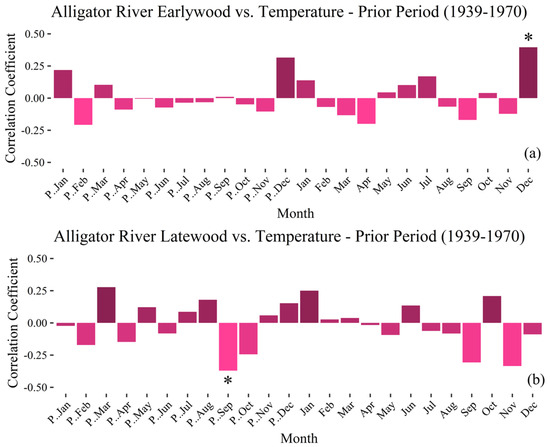
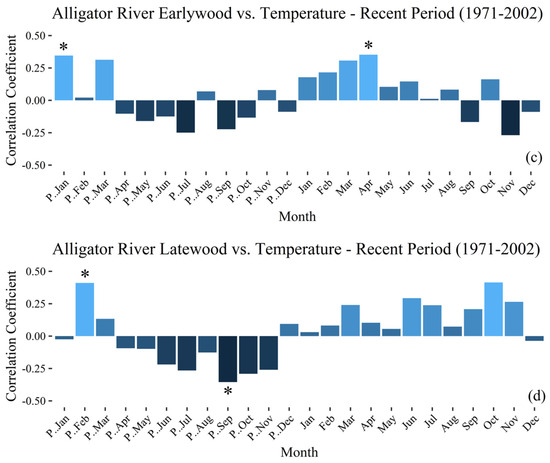
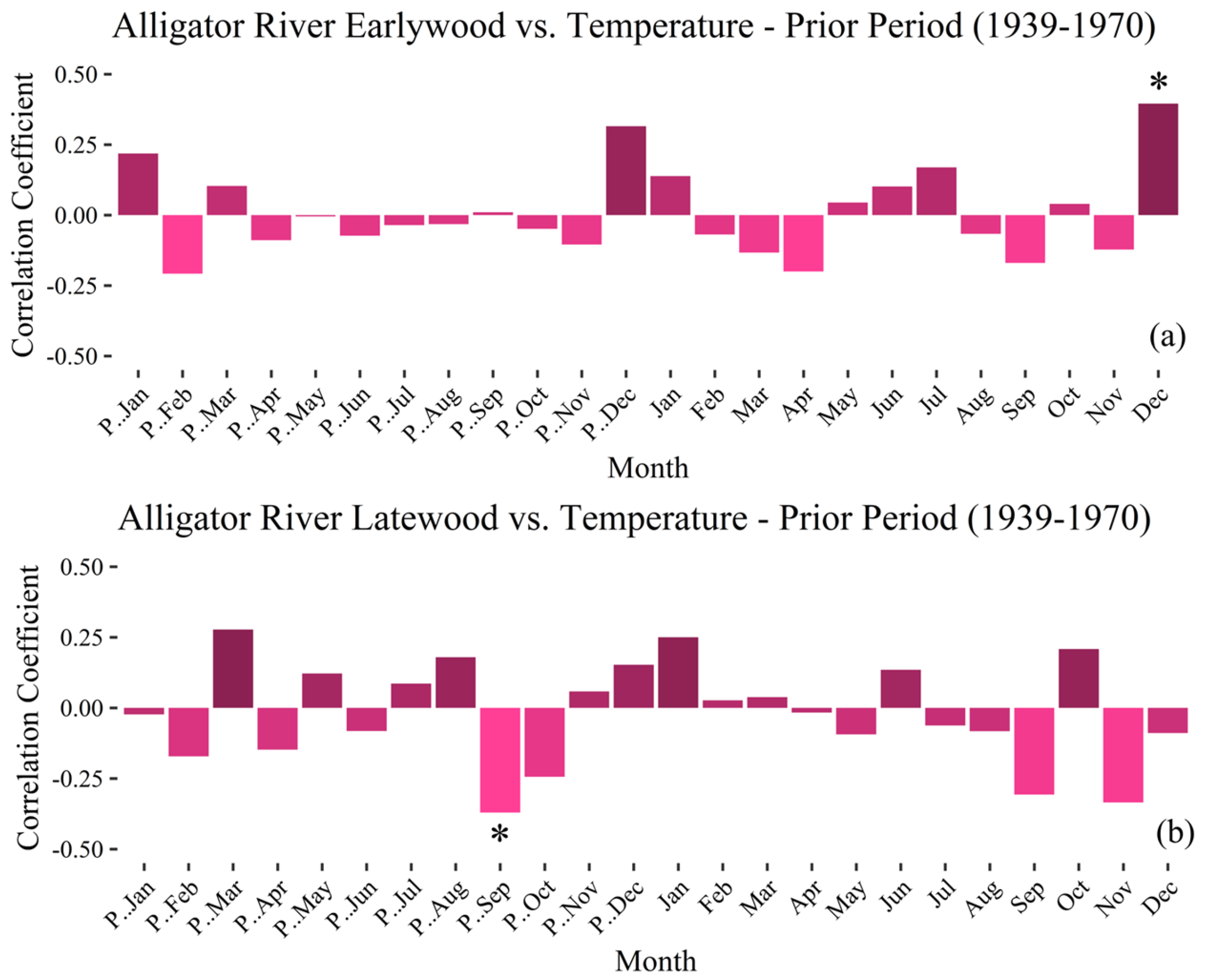
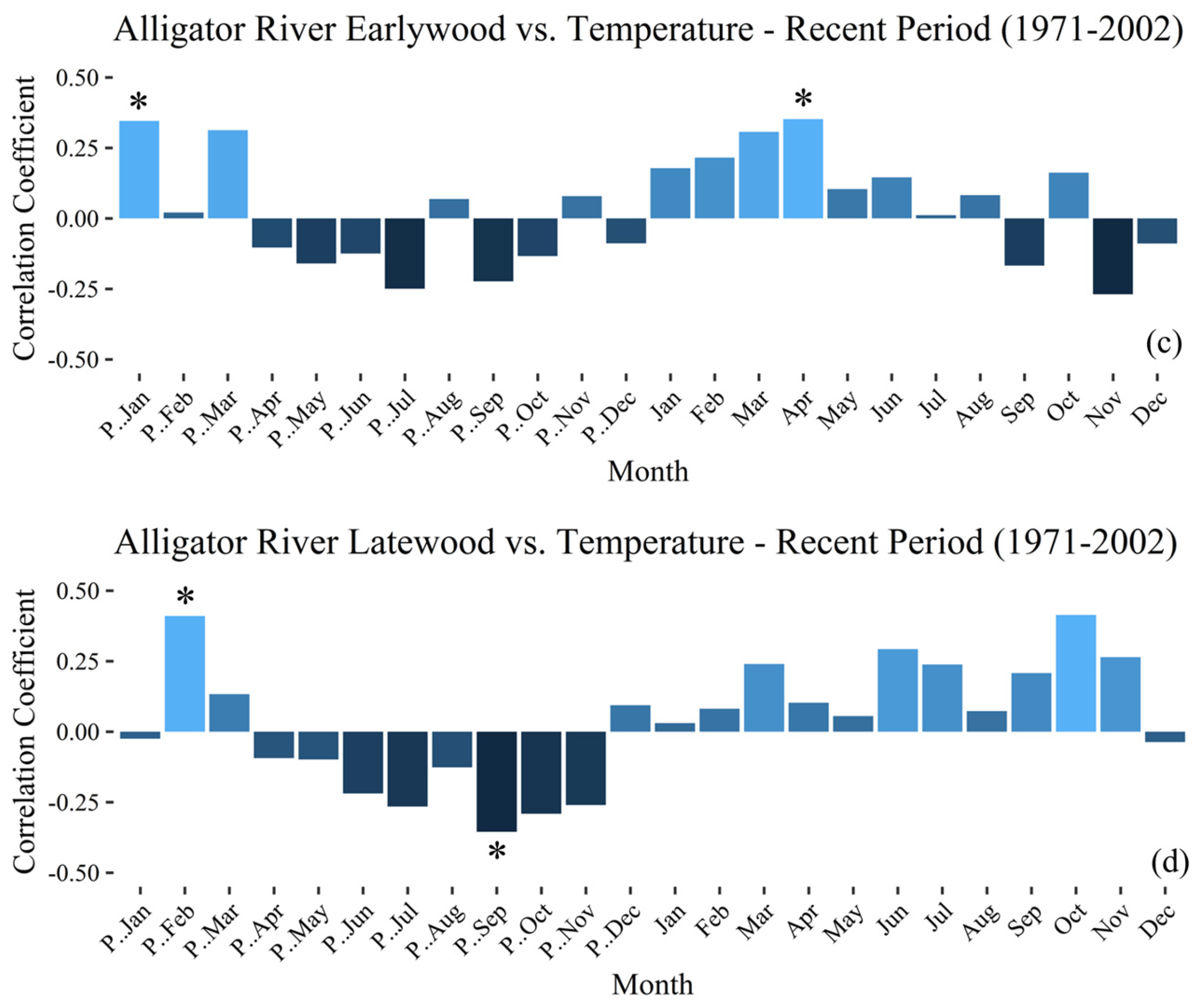
In Alligator River during the prior period, temperature and growth correlation results lacked clear trends; however, temperatures in December of the current year exhibited a statistically positive correlation with earlywood ring width, and temperature and latewood growth exhibited a significant negative correlation for September of the previous year (Figure 3).
Figure 3.
Spearman correlation coefficients for temperature in a 24-month analysis, including 12 months of the previous year and 12 months of the current year, were based on standardized earlywood (a,c) and latewood (b,d) ring width chronologies at the Alligator River National Wildlife Refuge site. Chronologies are further divided into two time periods, including the prior period (1939–1970) and the recent period (1971–2002). Significant correlations are denoted by “*”.
In Alligator River, temperature and growth correlation coefficients exhibited stronger correlation coefficients in the recent period than in the prior period for both early and latewood. In the recent period, the correlation coefficients for the previous spring through fall months were mostly negative in both early- and latewood, and were significantly positive for earlywood in previous January and current April. Temperature correlations were significantly positive for latewood in previous February and current October, and negative for previous September (Figure 3).
3.2.2. Monthly Precipitation Correlations
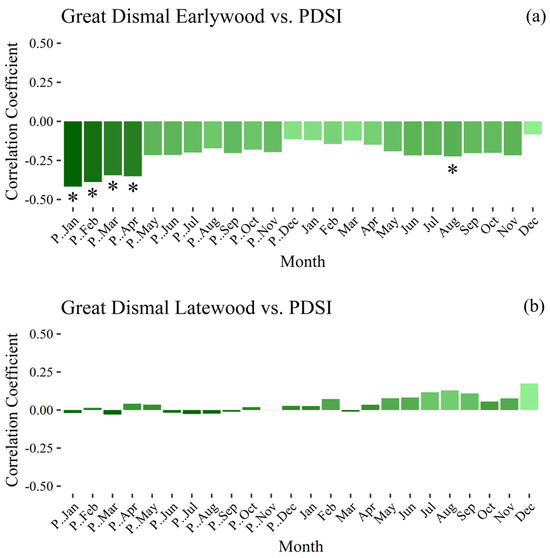
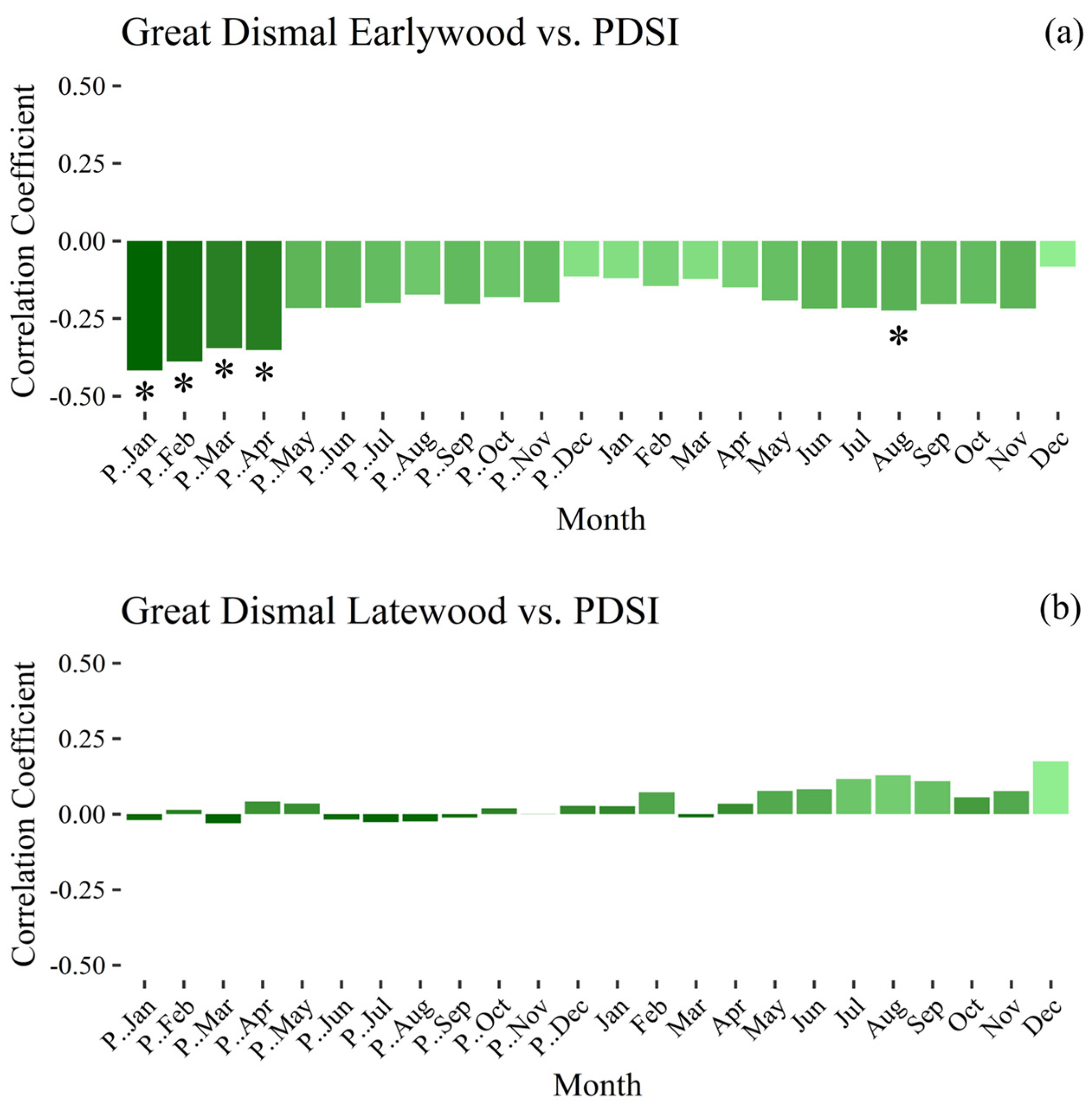
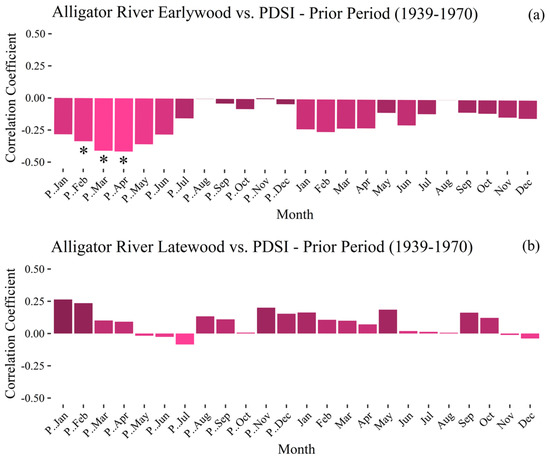
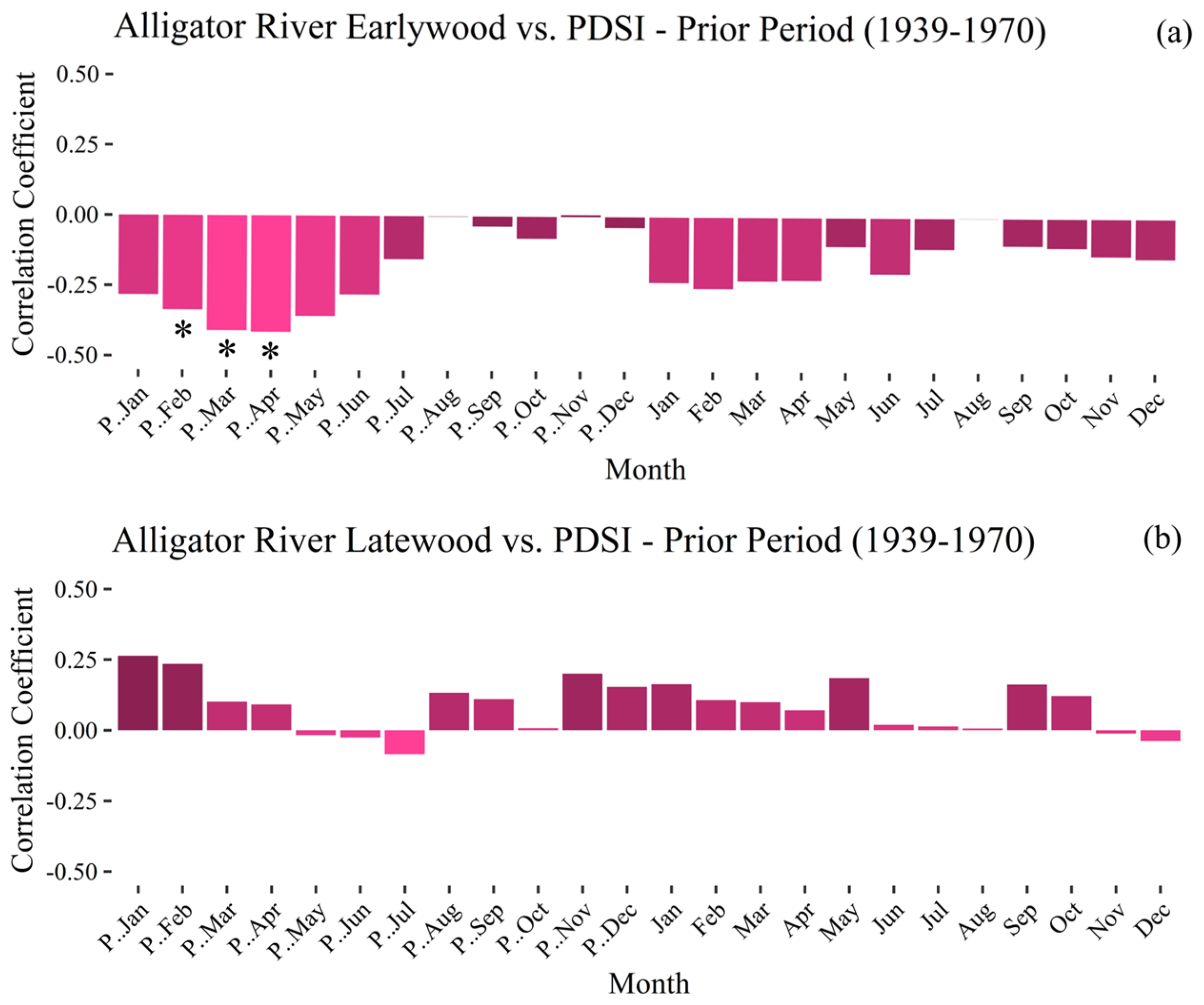
Correlation results between earlywood and PDSI within the full chronology at Dismal Swamp exhibited mostly negative correlation coefficients throughout the 24-month analysis, and correlations were significant for months during the previous year, including January, February, March, and April, as well as August of the current year (Figure 4). Similarly, earlywood PDSI correlation results for the prior period at Alligator River trended negatively and were significant for the previous year in February, March, and April (Figure 5). Conversely, at Dismal Swamp, most latewood relationships with PDSI exhibited positive correlation coefficients (Figure 4).
Figure 4.
Spearman correlation coefficients for PDSI in a 24-month analysis, consisting of 12 months of the previous year and 12 months of the current year, were based on the full standardized earlywood (a) and latewood (b) ring width chronologies and Palmer Drought Severity Index (PDSI) at the Great Dismal Swamp National Wildlife Refuge site. Significant correlations are denoted by “*”.
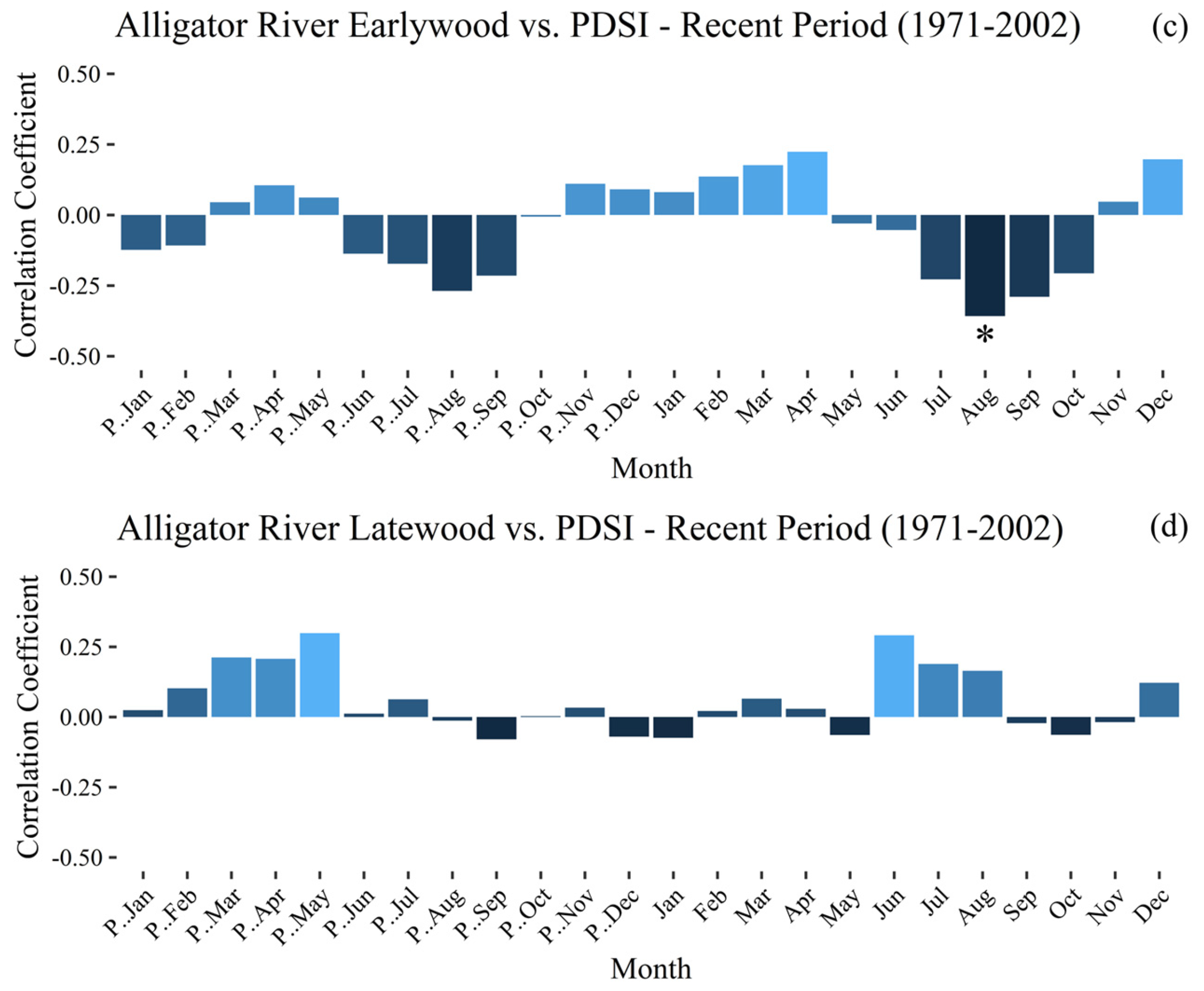
Figure 5.
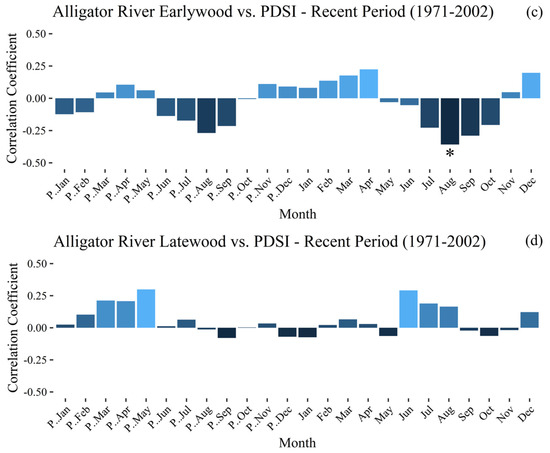
Spearman correlation coefficients for Palmer Drought Severity Index (PDSI) in a 24-month analysis, consisting of 12 months of the previous year and 12 months of the current year, and based on standardized earlywood (a,c) and latewood (b,d) ring width chronologies at the Alligator River National Wildlife Refuge site. Chronologies are further divided into two time periods, including the prior period (1938–1970) and the recent period (1971–2002). Significant correlations are denoted by “*”.
In contrast to the prior period at Alligator River, earlywood correlation coefficients with growth and PDSI in the Alligator River recent period were mostly negative during fall months for both current and previous 12-month analyses, and correlation with PDSI was significantly negative in August of the current year (Figure 5).
4. Discussion
4.1. Early- and Latewood Growth Contribute to Greater Total Ring Width (Cumulative Radial Growth) in Drained than in Undrained Stands
As expected, mean early- and latewood ring widths were higher at Dismal Swamp than at Alligator River, which confirms, but also seasonally refines, previous studies reporting on total ring width at these sites. Atkinson [17] and Doyle et al. [19] found total ring width was greater in Dismal Swamp than in Alligator River populations. Increased growth after ditching has been reported for other peatland conifers in Fennoscandia [7] and bottomland hardwood forests in southeastern floodplains [54], perhaps also stimulated by increased nutrient availability after ditching [55].
In Dismal Swamp, the hydrologic regime is altered such that water levels are lowered by an extensive ditching network [6,56] and water levels are much lower and more variable than at Alligator River [56]. While undrained peats can create saturation well above the water table to create anoxic soil conditions that limit conifer growth [57], long-term drainage in peatlands such as Dismal Swamp oxygenates the upper soil layers [56]. When drained conditions persist as they have at Dismal Swamp, peats develop hydrophobic properties that are not reversible [9,56,58,59]. These physical soil changes complicate hydrologic restoration of peatlands [6,10] and highlight the need for seasonal hydrologic regime information that may be provided by early- and latewood growth analyses.
4.2. Mixed Relationships Between Temperature and Early- and Latewood Growth Patterns at Alligator River (Recent Period) and Dismal Swamp Full Chronology
Relationships between early- and latewood growth and temperature during the Alligator River prior period and Dismal Swamp full chronologies resulted in both positive and negative effects. Correlation coefficients at Alligator River (0.40) and Dismal Swamp (0.13) are less likely to provide additional explanatory power when above 0.30 [60]. Temperature effects may be limited by geographical location and site hydrology. The sites utilized in this study are centrally located within the geographic range of C. thyoides, where temperatures rarely reach the high or low extremes present in the northern (Maine) and southernmost (Mississippi) stands of C. thyoides [2]. In a study comparing C. thyoides growth and temperature among chronologies from sites throughout New England, temperature demonstrated significant positive correlations with total ring widths [16]. Hughes [61] notes that climate response becomes more complicated for tree chronologies located centrally within the ecological range of a species. Furthermore, Raney et al. [62] suggested that saturated soils like those at Alligator River tend to buffer temperature variations, further reducing the likelihood that temperature influences growth at this site when compared to Dismal Swamp.
Temperature and growth correlation coefficients at Alligator River became greater during the recent period than in the prior period, suggesting some increased sensitivity to temperature. Both significant positive and negative correlations were detected among months in the recent period. In the earlywood of the recent period, growth was positively correlated with December temperatures of the previous year. Aguilos et al. [63] reported that rising temperatures increase peatland soil oxidation, which may be particularly important for C. thyoides swamps, which are oligotrophic as most nutrients are retained within undecomposed peat [64]. Latewood in the recent period exhibited negative correlations with temperature and growth in the previous year. Delayed growth responses in latewood have been reported for Pinus ponderosa Dougl. in northern Arizona [65] and may result when higher winter temperatures stimulate conversion of nonstructural carbohydrates to structural forms, which results in lower carbohydrate availability at the start of earlywood production in the following spring [60,66,67,68].
At Alligator River in the recent period and during the current year, both early- and latewood climate-growth correlation coefficients were mostly positive and may result from several stimulating effects of temperature, including enhanced microbial oxidation of peat as described above. Higher temperatures may also increase rates of growth by stimulating tree physiology [55], but the stimulus may be limited since higher temperatures may increase metabolic oxygen demand in roots, and if the rhizosphere is hypoxic, stresses leading to root respiration may intensify [26,27].
4.3. Earlywood Growth in Dismal Swamp Is Significantly Correlated with Temperature
A previous study using these sites and total ring width found no significant temperature growth correlations. However, earlywood growth and monthly temperature correlations in the current study were significant for three months. Significant negative temperature and growth correlations were obtained for 2 months prior to the growing season, which may suggest the depletion of soluble carbohydrate forms prior to the growing season, as described for C. thyoides (Section 4.2, above). Positive temperature and earlywood growth correlations were detected during the growing season, which may result from temperature-induced increases in mineralization of peat and stimulation of physiological processes supporting tree growth, also described at Alligator River (Section 4.2, above).
4.4. PDSI Is Negatively Correlated with Growth in Earlywood for Both Disturbance Regimes: High Water Tables in Spring Stress C. thyoides in Drained and Undrained Sites
In Alligator River during the prior period and Dismal Swamp full chronology, PDSI and earlywood growth coefficients were negative, and some correlations between growth and previous spring month PDSI at both sites were significantly negative. A previous study using C. thyoides annual tree ring widths at Alligator River and Dismal Swamp detected a minor negative growth trend with PDSI [17], but in our seasonal growth analysis, we detect a stronger negative relationship in earlywood than in latewood (Figure 4 and Figure 5). At Dismal Swamp, evapotranspirational water loss lowers water tables as the growing season progresses, favoring root formation in deeper soil horizons. Water tables rise to the ground surface in winter, and Rodgers et al. [69] and Montague and Day [70] reported that springtime C. thyoides roots in Dismal Swamp experience stress related to inundation and anoxia, which Kalnins [26] confirmed in a study contrasting root respiration in our drained and undrained C. thyoides stands.
In Alligator River, as in Dismal Swamp, the relationship between PDSI and earlywood ring width also trends negative (Figure 4 and Figure 5), but the trend is less pronounced. In Alligator River, where water tables remain near the soil surface for most of the year, root respiration is chronically high [26,27], which may result from adaptations to anoxia [71] and limit tree growth at Alligator River, resulting in denser stands of smaller-diameter C. thyoides trees [4]. Unlike these PDSI correlations with earlywood growth, total ring width did not exhibit significant correlations between growth and PDSI at this and other C. thyoides stands in Alligator River [19].
4.5. Progression of SLR May Explain Earlywood Relationship with PDSI in the Prior and Recent Periods
Using total ring width in C. thyoides, Doyle et al. [19] found no significant correlations between PDSI and growth. In the current study, earlywood and PDSI were correlated with growth in ways that changed during the ~60-year lifespan of our trees, from the prior period (our reference period coinciding with less extensive SLR) to the recent period. Earlywood correlation with PDSI in the prior period is negative for 3 months in the previous year of our 24-month climate analysis, but no such correlations were detected in the recent period. While various factors may influence these reductions in earlywood growth [72], other studies report that the timing of conversion of photosynthate from nonstructural to structural carbohydrates can affect earlywood growth [22,73], which may have been facilitated by lower water levels in the previous growing season such that these carbohydrates would not be available to support earlywood production in the next growing season [66,68]. The recent period may lack this effect if SLR offsets lower water levels in the previous growing season.
Correlation coefficients for earlywood and PDSI in the 12 months of the current year also exhibit a divergence between prior and recent periods. In the prior period, PDSI exhibited consistently negative coefficients throughout the growing season, which may result from anoxia in the persistently saturated soil that is intensified by precipitation, as described in Section 4.1. In the recent period, the 12-month PDSI growth correlations shift from somewhat positive through April and become negative in July through October. Among various possible causes, spring positive correlations may result from dilution of seawater in the recent period, which has been described in this region [12,74]. A study of annual tree ring growth in Juniperus virginiana L. along the mid-Atlantic coast of the USA found that sea level became increasingly and negatively correlated with growth [75], and Stotts et al. [49] reported that increases in salinity (associated with channel dredging) reduced total annual growth in C. thyoides. The switch to negative correlations with PDSI and earlywood growth that occurred in July–October may have resulted from decreased photosynthate production, among other physiologic responses to small increases in salinity [76]. Another explanation is that conversion of photosynthate to earlywood is delayed by increasing salinity. Delays in use of photosynthate were described by Fritts [18] and subsequent authors cited earlier in this section. A contrasting explanation is that early stages of SLR and increasing salinity may be associated with increased nutrient release that may stimulate growth in forested peatlands [77,78].
5. Conclusions
Alligator River and Dismal Swamp demonstrated several differences in tree ring growth that may be driven by hydrology, which in turn is influenced by landscape position as described by Brinson [79]. Most forested peatlands occur where slopes are negligible, water accumulates, and peat forms through humification under anoxic conditions [80]; however, the nature of anthropogenic disturbances in our study appears to diverge according to landscape position. The relatively higher elevation at Dismal Swamp (>4 m above sea level) facilitates drainage by ditches [6], whereas the lower elevations throughout Alligator River have exposed that forested peatland to sea level rise [12,74] and stands are undergoing ghost forest formation [14,19] as predicted by Brinson et al. [15]. Indeed, the C. thyoides stands at the Alligator River Peninsula may convert to open water by 2100 [12].
Drainage facilitates tree growth in forested peatlands by reducing anoxic stresses, as shown in comparisons of total annual ring width globally (e.g., several papers in Trettin et al. [7]). This effect has also been reported in C. thyoides stands in Alligator River and Dismal Swamp [17]; early and latewood growth in the current study appear to confirm the stimulatory effect of drainage in both parts of the growing season. Beyond the sensitivity of annual rings of this species, both early- and latewood growth parameters exhibit stronger correlation with climate variables under both anthropogenic disturbances. Sensitivities of early- and latewood to climate variables may only provide subtle insights when correlations of growth and climate exhibit either consistently negative or consistently positive climate correlations (e.g., Alligator River in early- or latewood temperature correlation coefficients in the prior period, and Dismal Swamp full chronology temperature coefficients). However, seasonal growth measurements can provide important information where annual growth indicators conceal a mixture of positive and negative climate correlations [60].
Alligator River in early- or latewood correlation coefficients in the recent period exhibit both significant positive and negative correlations with both temperature and PDSI, but not in the prior period. Furthermore, this change may reflect the impact of SLR and suggests a role for the prior period to serve as a reference site for hydrologic restoration. Stotts et al. [49] referenced a period of time within an annual ring width chronology of C. thyoides to assess response to dredging.
We advise caution in analyses assigning causality with tree rings in general, and in particular when assigning reference and disturbed sites. Our climate correlations were similar among the proposed reference (the prior period at Alligator River) and the full chronology at Dismal Swamp, a stand impacted by drainage. These results suggest that a particular correlation between growth and climate can be the same at two sites but may be driven by dissimilar parameters, which may include but are not limited to anoxia [80], release of nutrients where salinity begins to affect freshwater peatlands [76,77,78], and the timing of nonstructural carbohydrate conversion to structural forms [37,66,67], among several other variables as described by Cook and Pederson [72].
Author Contributions
Conceptualization, J.M.W. and R.B.A.; Methodology, J.M.W., R.B.A. and J.M.B.D.; Validation, J.M.W.; Formal analysis, J.M.W. and J.M.B.D.; Investigation, J.M.W., R.B.A. and J.M.B.D.; Resources, R.B.A.; Data curation, J.M.W. and J.M.B.D.; Writing—original draft, J.M.W., R.B.A. and J.M.B.D.; Writing—review & editing, J.M.W., R.B.A. and J.M.B.D.; Visualization, J.M.W.; Supervision, R.B.A.; Project administration, R.B.A.; Funding acquisition, R.B.A. All authors have read and agreed to the published version of the manuscript.
Funding
Funding for this research was provided through US Environmental Protection Agency STAR Grant No. R825799 to RA, with additional support from the Department of Biology, Chemistry, & Environmental Science at Christopher Newport University.
Data Availability Statement
Data may be obtained through the corresponding author.
Acknowledgments
We gratefully acknowledge the fieldwork of Shana Merry, Amy Seim, and Craig Patterson extensive preparation of tree cores by Abby Weaver and Julie Slater, and helpful comments on the manuscript provided by Robert Hayes and conversations with Fred Wurster. Access to sites was provided by staff of the Alligator River and Great Dismal Swamp National Wildlife Refuges, and Bryan Poovey aided in site selection. Insights into future threats to C. thyoides and sea level rise were provided by Scott Lanier at Pocosin Lakes National Wildlife Refuge. We appreciate the support of the Department of Biology, Chemistry, and Environmental Science at Christopher Newport University.
Conflicts of Interest
The authors declare no conflicts of interest. The funders had no role in the design of the study; in the collection, analysis, or interpretation of data; in the writing of the manuscript; or in the decision to publish the results.
Abbreviations
The following abbreviations are used in this manuscript:
| SLR | Sea level rise |
| EPS | Expressed population signal |
| SSS | Subsample signal strength |
| rbar.eff | Effective Average Correlation Between Series |
| NOAA | National Oceanic and Atmospheric Administration |
| NCEI | National Centers for Environmental Information |
| PDSI | Palmer Drought Severity Index |
References
- Kirwan, M.L.; Gedan, K.B. Sea-level driven land conversion and the formation of ghost forests. Nat. Clim. Change 2019, 9, 450–457. [Google Scholar] [CrossRef] [Scilit]
- Laderman, A. The Ecology of Atlantic White Cedar: A Community Profile; US Fish and Wildlife Service: Washington, DC, USA, 1989; 114p.
- Sleeter, R.; Sleeter, B.M.; Williams, B.; Hogan, D.; Hawbaker, T.; Zhu, Z. A carbon balance model for the Great Dismal Swamp ecosystem. Carbon Balance Manag. 2017, 12, 2. [Google Scholar] [CrossRef] [Scilit] [PubMed] [PubMed Central]
- DeBerry, J.W.; Atkinson, R.B. Aboveground forest biomass and litter production patterns in Atlantic white cedar swamps of differing hydroperiods. Southeast. Nat. 2014, 13, 673–690. [Google Scholar] [CrossRef] [Scilit]
- Noss, R.F.; LaRoe, E.T.; Scott, J.M. Endangered Ecosystems of the United States: A Preliminary Assessment of Loss and Degradation; Biological Report 28; US Department of the Interior, National Biological Services: Washington, DC, USA, 1995.
- Speiran, G.K.; Wurster, F.C. Hydrology and Water Quality of the Great Dismal Swamp, Virginia and North Carolina, and Implications for Hydrologic-Management Goals and Strategies; US Geological Survey: Reston, VA, USA, 2020; 104p. [CrossRef] [Scilit]
- Trettin, C.C.; Jurgensen, M.F.; McLaughlin, V.; Gale, M.R. Effects of forest management on wetland functions in a sub-boreal swamp. In Northern Forested Wetlands: Ecology and Management; Trettin, C.C., Jurgensen, M.F., Grigal, D.F., Gale, M.R., Jeglen, J.K., Eds.; Lewis Publishers: London, UK, 1997; pp. 411–428. [Google Scholar]
- Johnson, A.M.; Atkinson, R.B.; Steven, J.C.; Whiting, G.; Napora, K.; Sharrett, L.; Mirda, C. Water levels influence carbon dioxide emissions in soil microcosms from a shallow Mid-Atlantic peatland. J. Coast. Res. 2022, 38, 261–268. [Google Scholar] [CrossRef] [Scilit]
- Dolman, J.; Buol, S. A Study of Organic Soils (Histosols) in the Tidewater Region in North Carolina; Technical Bulletin No. 181; North Carolina Agricultural Experiment Station, North Carolina State University: Raleigh, NC, USA, 1967. [Google Scholar]
- Price, J.S.; Heathwaite, A.L.; Baird, A.J. Hydrological processes in abandoned and restored peatlands: An overview of management approaches. Wetl. Ecol. Manag. 2003, 11, 65–83. [Google Scholar] [CrossRef] [Scilit]
- Kalm, P.; Forster, J.R. Joseph Meredith Toner Collection. Travels into North America; Containing Its Natural History, and a Circumstantial Account of Its Plantations and Agriculture in General, with the Civil, Ecclesiastical and Commercial State of the Country, the Manners of the Inhabitants, and Several Curious and Important Remarks on Various Subjects, 2nd ed.; Longman, Hurst, Rees, and Orme; Biodiversity Heritage Library: London, UK, 1812; Volume 1, pp. 1–452. [Google Scholar]
- O’Donnell, K.L.; Bernhardt, E.S.; Yang, X.; Emanuel, R.E.; Ardón, M.; Lerdau, M.T.; Manda, A.K.; Braswell, A.E.; BenDor, T.K.; Edwards, E.C.; et al. Saltwater intrusion and sea level rise threatens U.S. rural coastal landscapes and communities. Anthropocene 2024, 45, 100427. [Google Scholar] [CrossRef] [Scilit]
- Cook, G.H. Annual Report of the State Geologist for the Year 1881; John L. Murphy Publisher: Trenton, NJ, USA, 1881. [Google Scholar]
- Ury, E.A.; Yang, X.I.; Wright, J.P.; Bernhardt, E.S. Rapid deforestation of a coastal landscape driven by sea-level rise and extreme events. Ecol. Adapt. 2021, 31, e02339. [Google Scholar] [CrossRef] [Scilit] [PubMed]
- Brinson, M.M.; Christian, R.R.; Blum, L.K. Multiple states in the sea-level induced transition from terrestrial forest to estuary. Estuaries 1995, 18, 648–659. [Google Scholar] [CrossRef] [Scilit]
- Pearl, J.K.; Anchukaitis, K.J.; Pederson, N.; Donnelly, J.P. Reconstructing Northeastern United States temperatures using Atlantic White Cedar tree rings. Environ. Res. Lett. 2017, 12, 114012. [Google Scholar] [CrossRef] [Scilit]
- Atkinson, R.B. Growth rates of Atlantic White Cedar depend on hydrologic regimes at two time scales. Wetlands 2020, 40, 81–91. [Google Scholar] [CrossRef] [Scilit]
- Atkinson, R.B.; Weaver, A.; Kincaid, J.A.; Wurster, F.C.; Doyle, J.M.B. A role for dendroecology in guiding hydrologic restoration and mitigating risks of peatland soil loss: An example from Chamaecyparis thyoides forests. Trees 2025, 39, 55. [Google Scholar] [CrossRef] [Scilit] [PubMed]
- Doyle, J.M.; Earley, K.E.; Atkinson, R.B. An analysis of Atlantic White Cedar (Chamaecyparis thyoides (L.) B.S.P.) tree rings as indicators of ghost forest development in a globally threatened ecosystem. Forests 2021, 12, 973. [Google Scholar] [CrossRef] [Scilit]
- National Center for Environmental Information (NCEI). National Center for Environmental Information. 2026. Available online: https://www.ncei.noaa.gov/ (accessed on 7 August 2026).
- Wotherspoon, A.R.; Duchesne, L.; Barrette, M.; Houle, D. Pre-commercial thinning could mitigate drought stress of black spruce stands. For. Ecol. Manag. 2022, 517, 120278. [Google Scholar] [CrossRef] [Scilit]
- Peng, M.; Li, X.; Peng, J.; Cui, J.; Li, J.; Wei, Y.; Wei, X.; Li, J. Early summer temperature variation recorded by earlywood width in the northern boundary of Pinus taiwanensis Hayata in Central China and its linkages to the Indian and Pacific Oceans. Biology 2022, 19, 1077. [Google Scholar] [CrossRef] [Scilit] [PubMed]
- Griffin, D.; Meko, D.M.; Touchan, R.; Leavitt, S.W.; Woodhouse, C.A. Latewood chronology development for summer-moisture reconstruction In the US Southwest. Tree-Ring Res. 2011, 67, 87–101. [Google Scholar] [CrossRef] [Scilit] [PubMed]
- Cabral-Alemán, C.; Pompa-García, M.; Acosta-Hernández, A.C.; Zúñiga-Vásquez, J.M.; Camarero, J.J. Earlywood and latewood widths of Picea chihuahuana show contrasting sensitivity to seasonal climate. Forests 2017, 8, 173. [Google Scholar] [CrossRef] [Scilit]
- Harley, G.L.; Therrell, M.D.; Maxwell, J.T.; Bhuta, A.; Bregy, J.C.; Heeter, K.J.; Patterson, T.; Rochner, M.; Rother, M.T.; Stambaugh, M.; et al. The Longleaf tree-ring network: Reviewing and expanding the utility of Pinus palustris Mill. dendrochronological data. Prog. Phys. Geogr. Earth Environ. 2023, 47, 570–596. [Google Scholar] [CrossRef] [Scilit]
- Kalnins, M. Empirically Derived Estimates of Gaseous Carbon Loss from Peatlands in North-Central Alberta, Canada, and Northeastern North Carolina, USA. Master’s Thesis, Christopher Newport University, Newport News, VA, USA, 2000. [Google Scholar]
- Mirda, C.G. The Effects of Water Table on Soil Carbon Dioxide Emissions in Cavalier Wildlife Management Area: The Contributions of Root and Microbial Respiration. Master’s Thesis, Christopher Newport University, Newport News, VA, USA, 2018. [Google Scholar]
- US Fish and Wildlife Service. Alligator River National Wildlife Refuge. Available online: https://www.fws.gov/refuge/alligator-river (accessed on 7 June 2026).
- Thompson, G.; Belcher, R.T.; Atkinson, R.B. Soil biogeochemistry in Virginia and North Carolina Atlantic white cedar swamps. In Proceedings of the Atlantic White Cedar Restoration Ecology and Management, Proceedings of a Symposium, Christopher Newport University, Newport News, VA, USA, 31 May–2 June 2000; Atkinson, R.B., Belcher, R.T., Brown, D.A., Perry, J.E., Eds.; VIMS Publication Center: Gloucester Point, VA, USA, 2003; pp. 113–124. [Google Scholar]
- US Department of Agriculture. National Cooperative Soil Survey. Pungo Soil Series Description. Available online: https://soilseries.sc.egov.usda.gov/OSD_Docs/P/PUNGO.html (accessed on 10 January 2026).
- Cowardin, L.M.; Carter, V.; Golet, F.C.; LaRoe, E.T. Classification of Wetlands and Deepwater Habitats of the United States; Report No.: FWS/OBS-79/31; U.S. Fish and Wildlife Service: Washington, DC, USA, 1979.
- Henman, J.; Poulter, B. Inundation of freshwater peatlands by sea level rise: Uncertainty and potential carbon cycle feedbacks. J. Geophys. Res. Biogeosciences 2008, 113. [Google Scholar] [CrossRef] [Scilit]
- Stokes, M.A.; Smiley, T.C. An Introduction to Tree-Ring Dating; The University of Arizona Press: Tucson, AZ, USA, 1996. [Google Scholar]
- Lebourgeois, F. Climatic signals in earlywood, latewood, and total ring width of Corsican pine from western France. Ann. For. Sci. 2000, 57, 155–164. [Google Scholar] [CrossRef] [Scilit]
- Domec, J.C.; Gartner, B.L. How do water transport and water storage differ in coniferous earlywood and latewood? J. Exp. Bot. 2002, 53, 2369–2379. [Google Scholar] [CrossRef] [Scilit] [PubMed]
- Bunn, A.G. Statistical and visual crossdating in R using the dplR library. Dendrochronologia 2009, 28, 251–258. [Google Scholar] [CrossRef] [Scilit]
- Fritts, H.C. Tree Rings and Climate; Academic Press Inc.: London, UK, 1976. [Google Scholar]
- Bunn, A.G. A dendrochronology program library in R (dplR). Dendrochronologia 2008, 26, 115–124. [Google Scholar] [CrossRef] [Scilit]
- R Core Team. R: A Language and Environment for Statistical Computing; R Foundation for Statistical Computing: Vienna, Austria, 2021; Available online: https://www.R-project.org/ (accessed on 1 August 2025).
- RStudio Team. RStudio: Integrated Development for R; RStudio: Boston, MA, USA, 2020; Available online: http://www.rstudio.com/ (accessed on 1 August 2025).
- Cook, E.R.; Kairiukstis, L.A. Methods of Dendrochronology: Applications in the Environmental Sciences; Kluwer Academic Publishers: Dordrecht, The Netherlands, 1990. [Google Scholar]
- Wigley, T.M.L.; Briffa, K.R.; Jones, P.D. On the average value of correlated time series with applications in dendroclimatology and hydrometeorology. J. Appl. Meteorol. Climatol. 1984, 23, 201–213. [Google Scholar] [CrossRef] [PubMed]
- National Oceanic and Atmospheric Administration. Climate at a Glance: County Time Series. National Centers for Environmental Information. 2025. Available online: https://www.ncei.noaa.gov/access/monitoring/climate-at-a-glance/county/time-series (accessed on 6 August 2025).
- Reber, E.J.; Moulton, A.B.; Swecker, P.J.; Quesenberry, J.S.; Bradshaw, D. Soil Survey of the City of Suffolk, Virginia; US Department of Agriculture, Soil Conservation Service: Washington, DC, USA, 1981.
- Burdt, A.C.; Galbraith, J.M.; Megonigal, J.P. Using CO2 efflux rates to indicate below-ground growing seasons by land-use treatment. Wetl. Ecol. Manag. 2006, 14, 133–145. [Google Scholar] [CrossRef] [Scilit][Green Version]
- Dai, A.; Bui, S.; Lenssen, N.; National Center for Atmospheric Research Staff. The Climate Data Guide: Palmer Drought Severity Index (PDSI); NCAR: Boulder, CO, USA, 2023; Available online: https://climatedataguide.ucar.edu/climate-data/palmer-drought-severity-index-pdsi (accessed on 6 August 2025).
- Meisler, H. The Occurrence and Geochemistry of Salty Ground Water in the Northern Atlantic Coastal Plain; U.S. Geological Survey: Reston, VA, USA, 1989. [CrossRef] [Scilit]
- Burt, R.; Belval, D.; Crouch, M.; Hughes, B. Geohydrologic Data, Port Royal Sound, Beaufort County, South Carolina; U.S. Geological Survey: Reston, VA, USA, 1986.
- Stotts, S.; Callahan, J.; Gulledge, O. Impact of channel dredging and straightening in an Atlantic white cedar (Chamaecyparis thyoides L. (B.S.P.)) freshwater tidal wetland. J. Coast. Res. 2021, 37, 973–986. [Google Scholar] [CrossRef] [Scilit]
- Büntgen, U.; Kyncl, T.; Ginzler, C.; Tomlinson, E.L.; Esper, J. Filling the Eastern European gap in millennium-long temperature reconstructions. Proc. Natl. Acad. Sci. USA 2013, 110, 1773–1778. [Google Scholar] [CrossRef] [Scilit] [PubMed]
- Merry, S. Factors Affecting Tree Ring Width in Atlantic White Cedar Within Great Dismal Swamp National Wildlife Refuge and Alligator River National Wildlife Refuge. Master’s Thesis, Christopher Newport University, Newport News, VA, USA, 2005. [Google Scholar]
- Seim, A. The Effect of Climate on the Growth of Red Maple (Acer rubrum L.) and Atlantic White Cedar (Chamaecyparis thyoides (L.) B.S.P.) in the Great Dismal Swamp National Wildlife Refuge. Master’s Thesis, Christopher Newport University, Newport News, VA, USA, 2005. [Google Scholar]
- Patterson, C. Radial Growth of Peatland Atlantic White Cedar in Great Dismal Swamp National Wildlife Refuge and its Association with Temperature, Precipitation, Drought-Index, and Lake Drummond. Master’s Thesis, Christopher Newport University, Newport News, VA, USA, 2011. [Google Scholar]
- Megonigal, P.J.; Conner, W.H.; Kroeger, S. Aboveground production in southeastern floodplain forests: A test of the subsidy-stress hypothesis. Ecology 1997, 78, 370–384. [Google Scholar] [CrossRef] [Scilit]
- Kozlowski, T.T. Responses of woody plants to flooding and salinity. Tree Physiol. 1997, 17, 490. [Google Scholar] [CrossRef] [Scilit]
- Atkinson, R.; DeBerry, J.; Loomis, D.; Crawford, E.; Belcher, R. Water tables in Atlantic White Cedar swamps: Implications for restoration. In Atlantic White Cedar Restoration Ecology and Management, Proceedings of a Symposium, Christopher Newport University, Newport News, VA, USA, 31 May–2 June 2000; Atkinson, R.B., Belcher, R.T., Brown, D.A., Perry, J.E., Eds.; VIMS Publication Center: Gloucester Point, VA, USA, 2003; pp. 137–150. [Google Scholar]
- Verry, E.S. Hydrological processes of natural, northern forested wetlands. In Northern Forested Wetlands: Ecology and Management; Trettin, C.C., Jurgensen, M.F., Grigal, D.F., Gale, M.R., Jeglen, J.K., Eds.; Lewis Publishers: New York, NY, USA, 1997; pp. 163–188. [Google Scholar]
- Valat, B.; Jouany, C.; Riviere, L.M. Characterization of the wetting properties of air-dried peats and composts. Soil Sci. 1991, 152, 100–107. [Google Scholar] [CrossRef] [Scilit]
- Gillham, R.W. The capillary fringe and its effect on water-table response. J. Hydrol. 1984, 67, 307–324. [Google Scholar] [CrossRef] [Scilit]
- Torbenson, M.; Stahle, D.; Villanueva-Díaz, J.; Cook, E.; Griffin, D. The relationship between earlywood and latewood ring-growth across North America. Tree-Ring Res. 2016, 72, 53–66. [Google Scholar] [CrossRef] [Scilit]
- Hughes, M.K. Dendrochronology in climatology—The state of the art. Dendrochronologia 2002, 20, 95–116. [Google Scholar] [CrossRef] [Scilit]
- Raney, P.A.; Leopold, D.J.; Dovciak, M.; Beier, C.M. Hydrologic position mediates sensitivity of tree growth to climate: Groundwater subsidies provide a thermal buffer effect in wetlands. For. Ecol. Manag. 2016, 379, 70–80. [Google Scholar] [CrossRef] [Scilit]
- Aguilos, M.; Takagi, K.; Liang, N.; Watanabe, Y.; Teramoto, M.; Goto, S.; Takahashi, Y.; Mukai, H.; Kaichiro, S. Sustained large stimulation of soil heterotrophic respiration rate and its temperature sensitivity by soil warming in a cool-temperate forested peatland. Tellus B Chem. Phys. Meteorol. 2013, 65, 20792. [Google Scholar] [CrossRef] [Scilit]
- Ehrenfeld, J.G.; Schneider, J.P. Chamaecyparis thyoides wetlands and suburbanization: Effects on hydrology, water quality and plant community composition. J. Appl. Ecol. 1991, 28, 467–490. [Google Scholar] [CrossRef] [Scilit] [PubMed]
- Kerhoulas, L.P.; Kolb, T.E.; Koch, G.W. The influence of monsoon climate on latewood growth of southwestern ponderosa pine. Forests 2017, 8, 140. [Google Scholar]
- García-González, I.; Souto-Herrero, M. Earlywood anatomy highlights the prevalent role of winter conditions on radial growth of Oak at its distribution boundary in NW Iberia. Plants 2023, 12, 1185. [Google Scholar] [CrossRef] [Scilit] [PubMed]
- Kuptz, D.; Fleischmann, F.; Matyssek, R.; Grams, T.E.E. Seasonal patterns of carbon allocation to respiratory pools in 60-yr-old deciduous (Fagus sylvatica) and evergreen (Picea abies) trees assessed via whole-tree stable carbon isotope labeling. New Phytol. 2011, 191, 160–172. [Google Scholar] [CrossRef] [Scilit] [PubMed]
- Salomóna, R.; Rodríguez-Calcerrada, J.; Zafra, E.; Morales-Molinoa, C.; Aida Rodríguez-García, A.; González-Doncela, I.; Oleksync, J.; Zytkowiak, R.; López, R.; Miranda, J.C.; et al. Unearthing the roots of degradation of Quercus pyrenaica coppices: A root-to-shoot imbalance caused by historical management? For. Ecol. Manag. 2015, 363, 200–211. [Google Scholar] [CrossRef] [Scilit]
- Rodgers, H.L.; Day, F.P.; Atkinson, R.B. Fine root dynamics in two Atlantic White Cedar wetlands with contrasting hydroperiods. Wetlands 2003, 23, 941–949. [Google Scholar] [CrossRef] [Scilit]
- Montague, K.A.; Day, F.P. Belowground biomass of four plant communities of the Great Dismal Swamp, Virginia. Am. Midl. Nat. 1980, 103, 83–87. [Google Scholar] [CrossRef] [Scilit]
- Kelsey, R.G.; Joseph, G.; McWilliams, M.G. Ethanol synthesis by anoxic root segments from five cedar species relates to their habitat attributes but not their known differences in vulnerability to Phytophthora lateralis root disease. Can. J. For. Res. 2011, 41, 1202–1211. [Google Scholar] [CrossRef] [Scilit]
- Cook, E.R.; Pederson, N. Uncertainty, emergence, and statistics in dendrochronology. In Dendroclimatology, Developments in Paleoenvironmental Research, 1st ed.; Hughes, M.K., Swetnam, T.W., Diaz, H.F., Eds.; Springer: Dordrecht, Netherlands, 2011; Volume 3, pp. 77–112. [Google Scholar] [CrossRef] [Scilit]
- Pompa-García, M.; Camarero, J.J.; Valeriano, C.; Vivar-Vivar, E.D. Climate sensitivity of seasonal radial growth in young stands of Mexican conifers. Int. J. Biometeorol. 2022, 66, 1711–1723. [Google Scholar] [CrossRef] [Scilit] [PubMed]
- Giese, G.L.; Wilder, H.B.; Parker, G.G., Jr. Hydrology of Major Estuaries and Sounds of North Carolina; U.S. Government Printing Office: Washington, DC, USA, 1985; pp. 1–119.
- Hall, S.; Stotts, S.; Haaf, L. Influence of climate and coastal flooding on Eastern Red Cedar growth along a marsh-forest ecotone. Forests 2022, 13, 862. [Google Scholar] [CrossRef] [Scilit]
- Duberstein, J.A.; Krauss, K.W.; Baldwin, M.J.; Allen, S.T.; Conner, W.H.; Salter, J.S.; Miloshis, M. Small gradients in salinity have large effects on stand water use in freshwater wetland forests. For. Ecol. Manag. 2020, 473, 118308. [Google Scholar] [CrossRef] [Scilit]
- Noe, G.B.; Krauss, K.W.; Lockaby, B.G.; Conner, W.H.; Hupp, C.R. The Effect of increasing salinity and forest mortality on soil nitrogen and phosphorus mineralization in tidal freshwater forested wetlands. Biogeochemistry 2013, 114, 225–244. [Google Scholar] [CrossRef] [Scilit]
- Weston, N.B.; Dixon, R.E.; Joye, S.B. Ramifications of increased salinity in tidal freshwater sediments: Geochemistry and microbial pathways of organic matter mineralization. J. Geophys. Res. Biogeosci. 2006, 111, G01009. [Google Scholar] [CrossRef] [Scilit]
- Brinson, M.M. Landscape properties of pocosins and associated wetlands. Wetlands 1991, 11, 441–465. [Google Scholar] [CrossRef] [Scilit]
- Moore, T.R.; Dalva, M. Methane and carbon dioxide exchange potentials of peat soils in aerobic and anaerobic laboratory incubations. Soil Biol. Biochem. 1997, 29, 157–1164. [Google Scholar] [CrossRef] [Scilit]

Disclaimer/Publisher’s Note: The statements, opinions and data contained in all publications are solely those of the individual author(s) and contributor(s) and not of MDPI and/or the editor(s). MDPI and/or the editor(s) disclaim responsibility for any injury to people or property resulting from any ideas, methods, instructions or products referred to in the content. |
© 2026 by the authors. Licensee MDPI, Basel, Switzerland. This article is an open access article distributed under the terms and conditions of the Creative Commons Attribution (CC BY) license.