


Abstract
Wildfires are increasing in frequency and severity worldwide, with long-lasting effects on forest vegetation and fungal communities essential for seedling establishment and forest resilience. Nothofagus pumilio, the dominant tree of South American temperate forests, forms key fungal symbioses but shows limited post-fire regeneration. Root-fungal community responses in seedlings under long-term post-fire conditions remain unknown. We characterized root-associated fungal communities in N. pumilio seedlings growing in burned (eight years post-fire) and unburned forest of the southern Andes, using ITS1 metabarcoding. We assessed diversity, composition, and abundance of root-associated fungi, including ectomycorrhizal fungi and dark septate endophytes. Diversity and evenness were significantly lower in burned than in unburned forest, with no significant differences in richness or composition. The ectomycorrhizal genus Cortinarius was less abundant in burned-forest seedlings. In seedlings from burned forest, the dark septate endophyte Cadophora was significantly more abundant, whereas Exophiala and Cladophialophora were less abundant than in unburned forest. Despite these shifts, burned areas retained root-associated fungal taxa linked to plant-beneficial functions and shared most OTUs with unburned forest, indicating an incomplete but ongoing recovery. Further research should evaluate how these shifts affect early seedling performance, and assess the role of persistent beneficial taxa for restoration after wildfires.
1. Introduction
Wildfires can profoundly alter forest vegetation and the biological composition of soils, including fungal communities that are essential for plant recruitment [1,2]. Fungal composition recovery may remain negatively affected even a decade after fire disturbances [3]. As wildfires increase in frequency and severity worldwide in response to rising temperatures and prolonged droughts [4], understanding how fungal communities respond to long-term post-fire conditions becomes increasingly relevant, given their influence over seedling growth [5] and plant distribution patterns after fires [6]. Moreover, the reduced canopy cover and drier conditions that are characteristic of burned forests, and may persist over long periods [1], can affect plant development [7], which in turn can shape the composition and structure of root fungal communities [8].
Root-associated fungi may contribute positively to the resilience of forests affected by wildfires [9]. An increasing number of studies indicate that fungi inhabiting or closely associated with plant tissues play a fundamental role in influencing host fitness and resilience [10]. These microbes can be beneficial by participating in nutrient cycling, facilitating resource acquisition, and mitigating stress caused by pathogens or environmental pressures such as drought and contaminants [11]. Diverse, complex, and abundant fungal communities may enhance the capacity of soils to support multiple ecosystem functions, thereby contributing to ecosystem functioning and stability [12,13].
Temperate forests in the Southern Hemisphere are Gondwanan relics with high endemism, especially in South America [14], where Nothofagus pumilio [Poepp. & Endl.] Krasser (commonly known as austral beech or lenga) exhibits one of the broadest latitudinal distributions among temperate trees [15]. This endemic species of the Southern cone coexists with diverse fungal communities encompassing a wide range of ecological functions [16]. N. pumilio maintains close symbiotic relationships with fungi, primarily through ectomycorrhizal associations [17], although dark septate endophytes have also been reported [18]. Ectomycorrhizal fungi are symbiotic organisms that associate with plant roots, enhancing nutrient and water uptake [19], and their persistence is tied to the presence of established tree presence and cover [19,20]. Dark septate endophytes are root-colonizing fungi characterized by pigmented-septate hyphae, which are commonly found in extreme environments [21], and at high proportion in Andean plant species [10]. Both ectomycorrhizal fungi and dark septate endophytes are predominant in high-latitude and high-altitude forests and can provide important benefits to plants [18,22].
Wildfires, intensified by long-term drought conditions [4], have impacted N. pumilio forests, where post-fire recruitment occurs only in low-severity burned sites located near unburned forest, whereas it is absent in sites affected by high-severity fires [23]. Moreover, recruitment is further constrained by a sharp decline in the germinable seed bank beyond approximately 20 m from remnant forest edges [24]. As a key structural species of Andean forests, the decline of N. pumilio may compromise forest resilience and recovery potential [25]. Although there is growing evidence that climate change is intensifying the frequency and severity of wildfires, and that fungi can play a key role in post-fire plant recruitment, research on specific plant–microorganism interactions, including microbial responses to post-fire conditions, remains largely underrepresented in the literature [26]. Wildfires are a key driver of fungal community dynamics in N. pumilio forests [27]. In particular, knowledge of fungal communities associated with N. pumilio in fire-affected forests is limited, and has focused mostly on mature trees [2] or soil compartments (i.e., bulk and rhizosphere) [16,27]. However, fungi associated with root tissues establish direct physiological interactions with their host plant, representing a functionally distinct assemblage from those of the surrounding soil [28]. Thus, there is a knowledge gap regarding the root-associated fungal communities of N. pumilio seedlings in burned forests, including ectomycorrhiza and dark septate endophytes.
The main goal of this study was to characterize the root-associated fungal communities of N. pumilio seedlings under long-term post-fire conditions (i.e., eight years after severe fire) using DNA metabarcoding. Given that (i) N. pumilio recruitment currently occurs in low- to moderate-severity burned areas adjacent to unburned forests [23], which may act as fungal inoculum sources [29]; (ii) ectomycorrhizal fungi depend on tree cover, whereas dark septate endophytes do not [10,20]; and (iii) considering the time elapsed since the fire, we hypothesized that, compared with seedlings growing under unburned forest, N. pumilio seedlings in burned areas would harbor root-associated fungal communities of similar richness and composition but lower diversity. Within functional groups with plant-beneficial potential, we further predicted lower diversity and abundance of ectomycorrhizal fungi, but similar diversity and abundance of dark septate endophytes. To the best of our knowledge, this is the first study to characterize the diversity of root-associated fungal communities in N. pumilio seedlings using DNA metabarcoding, which is a novel contribution for gaining insights into forest recovery processes and ecosystem resilience. This knowledge can better inform forest management practices and conservation strategies in burned temperate forests.
2. Materials and Methods
2.1. Study Area and Wildfire Description
This study was conducted in a National Reserve, located in La Araucanía Region of south-central Chile. The study sites were located within the Andean range, and lie between 759 and 2000 m above sea level. The area is situated within the latitudinal and longitudinal coordinates of approximately 38°40′–38°50′ S and 71°25′–71°37′ W [30]. The region has a temperate climate characterized by warm, dry summers and snowy winters. Between 1990 and 2025 [31], the area recorded an average annual precipitation of 2390 mm. The mean monthly temperature during summer (December to February) was 15.9 °C, while in winter (June to August), it averaged −0.3 °C [31]. The soils originate from volcanic ash deposits and are classified as Andisols and Histosols. They are well-stratified, dark brown in color, and exhibit a coarse texture and high permeability throughout the profile [32]. Vegetation in the reserve is characterized by high-Andean deciduous forests dominated by N. pumilio and Araucaria araucana (Molina) K. Koch, two endemic species of the temperate forests of South America, occurring in either pure or mixed stands [30].
A major disturbance event in the reserve occurred in 2015, when a large wildfire burned approximately 3765 hectares of native Araucaria–Nothofagus forest within the National Reserve. According to the Chilean Forest Service (CONAF), the fire was ignited by an inadequately extinguished campfire that rapidly spread across the landscape [33], exacerbated by several preceding years of drought that has affected south-central Chile since 2010 [34]. The fire was of mixed severity [35], damaging the forest with low (i.e., surface fire, greater damage to the understory), moderate (i.e., partially burned trees, canopy with living and dead trees), and high severity (i.e., completely charred canopy and understory). Burn severity assessment of the study area was previously conducted by [33], performing the delta normalized burn ratio (dNBR) analysis. Over time, ground truthing has been conducted to specifically define areas of moderate and high fire severity and refuges of unburned forests [36].
2.2. Field Sampling, DNA Extraction, Sequencing and Bioinformatics
Root samples were collected from N. pumilio seedlings located in both unburned and low severity burned forests within the National Reserve, at elevations ranging from 1455 to 1713 m a.s.l. Sampling was constrained by the natural occurrence of N. pumilio regeneration, which depends on seed rain from surviving adult trees. Because N. pumilio has low fire resistance and adult trees rarely survive burning [1], post-fire seedling establishment is restricted to burned areas adjacent to unburned forest [24]. Seedlings in burned sites were therefore sampled close to unburned forest edges, as no regeneration was found in the interior of the burned area (Figure 1D). At each sampling point, five seedlings of up to 10 cm in height were selected and their root systems were excised. Roots from the five seedlings were pooled into a single 50 mL conical centrifuge tube to form one composite sample which was considered the experimental unit for downstream analyses. Five composite samples were obtained per condition (unburned and burned forest), each pooling root material from five seedlings (25 seedlings per condition). Composite samples were treated as the unit of replication, giving n = 5 per condition for all analyses. Sampling points were spaced at least 50 m apart to ensure spatial independence. Samples were stored in a cooler with ice packs immediately after collection, transported to the laboratory, and maintained at 4 °C until DNA extraction, which was performed within one week of field sampling. Adhering soil particles were carefully removed from the roots, and no surface sterilization was performed, as the aim was to capture the full community of root-associated fungi, including both endophytic and rhizoplane-associated taxa, which together represent the fungal assemblage in direct contact with root tissues. Accordingly, all taxonomic and functional inferences reported here apply to the root-associated assemblage as a whole rather than to a strictly endophytic subset. Discriminating true endophytes from rhizoplane colonizers would require complementary microscopic or cultivation-based approaches, which were outside the scope of this study. Total DNA was then extracted from cleaned root tissues using the DNeasy Plant Pro Kit (Qiagen, Valencia, CA, USA), following the manufacturer’s instructions. DNA concentration was quantified using a Qubit® 2.0 Fluorometer (Thermo Fisher Scientific, Waltham, MA, USA). Amplicon sequencing of the fungal Internal Transcribed Spacer 1 (ITS1) region of rDNA was performed by Novogene Co. (Sacramento, USA). Amplification was carried out using primers ITS1-1F-F (5′ CTTGGTCATTTAGAGGAAGTAA 3′) and ITS1-1F-R (5′ GCTGCGTTCTTCATCGATGC 3′). Sequencing was conducted on the Illumina NovaSeq 6000 platform (San Diego, USA) using 250-cycle paired-end mode. Raw sequence reads were processed using the USEARCH-UNOISE3 v11.0.667 pipeline [37]. Paired reads were merged with a minimum overlap of 50 bp, and sequences with expected error rates greater than 1 (EE = 1) were removed. Reads were then dereplicated, and chimeras were filtered out. Denoising was performed using the UNOISE3 algorithm to generate zero-radius Operational Taxonomic Units (OTUs). Taxonomic classification was conducted using a Naïve Bayes classifier (scikit-learn v1.4.2) trained on the UNITE v8 database [38].
Figure 1.
(A) Geographic location of Chile in South America, highlighting the study region. (B) La Araucanía Region in southern Chile, with the red square indicating the location of the study site. (C) China Muerta National Reserve, showing elevation gradients, the official boundary of the reserve (dashed line), and the study section (red box). (D) Detailed map of the study section, showing post-fire conditions classified as burned (yellow) and unburned forest (light green). For visualization purposes only, burned areas were identified using the Normalized Burn Ratio (NBR) index calculated from pre- and post-fire Landsat 8 imagery. Sampling points for root-associated fungal communities are marked as dots, with orange indicating burned forest and green indicating unburned forest.
2.3. Statistical Analysis
All the statistical analyses were conducted in the statistical software R version 4.5.0 [39] and RStudio version 2024.12.1.563 [40]. To improve the reliability of community composition data, operational taxonomic units (OTUs) with fewer than 10 reads were removed prior to analysis (i.e., 109 OTUs), following the procedures recommended by Nikodemova et al. [41]. To standardize sequencing depth across samples, the dataset was rarefied once to 102,988 reads, the number of reads in the sample with the lowest sequencing depth, using the ‘rrarefy’ function from the vegan package [42]. To assess sequencing depth and richness saturation, rarefaction curves were generated using the ‘rarecurve’ function. A Mantel test was conducted to validate the preservation of community structure after the filtering and rarefaction procedures. Alpha diversity indices were calculated using the vegan package, and differences in diversity between burned forest (BF) and unburned forest (UF) samples were assessed using analysis of variance (ANOVA). Normality and homogeneity of variances were tested using the Shapiro–Wilk test and Levene’s test, respectively, with the latter implemented via the car package [43]. To examine differences in fungal community structure, a non-metric multidimensional scaling (NMDS) analysis was performed using Bray–Curtis dissimilarity matrices derived from the rarefied OTU abundance data. NMDS ordination was conducted using the ‘metaMDS’ function in the vegan package, with two dimensions (k = 2), a maximum of 100 iterations, and a random seed set for reproducibility. Permutational multivariate analysis of variance (PERMANOVA; 9999 permutations) was performed using the ‘adonis2’ function in the vegan package to test for significant differences in community composition between the two forest conditions. To assess whether multivariate dispersion differed between conditions, we applied the PERMDISP procedure using the vegan package. The ‘betadisper’ function was used to compute the distance from each observation (sample) to its group’s spatial median based on the Bray–Curtis dissimilarity matrix described above. Group means were then compared with a permutation test for homogeneity of multivariate dispersions with ‘permutest’ function also from the vegan package. We used a Venn diagram to determine the number of OTUs that are exclusive to each forest condition as well as those shared between them. Additionally, we visualized the taxonomic composition and abundance of exclusive genera for each condition. To focus on taxa representative of each forest condition, only genera detected in at least two samples were included in this analysis, as single-sample occurrences cannot be reliably distinguished from transient colonization events.
We compared functional fungal groups with plant-beneficial potential (i.e., ectomycorrhizal fungi and root-associated dark septate endophytes) between unburned and burned forest conditions. Functional groups were assigned to each OTU using the FungalTraits database [44]. Among these, we focused on those classified as ectomycorrhizal (EMF) fungi and dark septate endophytes (DSEs), as they are considered to have direct plant-beneficial potential [45,46]. In addition, to complement the functional classification provided by the FungalTraits database, we manually assigned the following taxa as DSE based on the previous literature: the genera Cadophora [47], Cyphellophora [48], Exophiala [49], Knufia [50], Leptodontidium [51] and the species Pleotrichocladium opacum [52]. Similarly, we classified the following taxa as ectomycorrhizal fungi: the families Endogonaceae [53], Pezizaceae [54], Hyaloscyphaceae [55], and the genera Entoloma [53] and Sistotrema [54]. EMF and DSE OTUs were selected from the filtered, non-rarefied dataset described above. For the comparison of alpha diversity indices between conditions, each guild-specific table was then rarefied to the lowest guild-specific read count observed among samples (8313 reads for EMF; 498 reads for DSE) to equalize sequencing effort across samples, using the ‘rrarefy’ function from the vegan package. A Mantel test was conducted to validate the preservation of community structure between the pre- and post-rarefaction functional group datasets. We then calculated alpha diversity indices using the vegan R package, and compared these metrics with analysis of variance (ANOVA; assumptions of normality and homogeneity of variances were tested using the Shapiro–Wilk and Levene’s tests, respectively). Comparisons of genus abundance between conditions were performed on the filtered, non-rarefied dataset. For each genus, read counts of all constituent OTUs were summed within each sample (n = 5 per condition), and a separate generalized linear model was fitted using the glmmTMB package [56]. The response variable was genus abundance (read counts), the predictor variable was forest condition, and an offset term, the log of the total number of reads in the whole fungal community of each sample, was included. The same offset was applied to ectomycorrhizal (EMF) and dark septate endophyte (DSE) genus-level models. Three negative binomial parameterizations were considered for each genus: linear (family = nbinom1), quadratic (family = nbinom2), and mixed linear-quadratic (family = nbinom12). Model adequacy was assessed with the DHARMa R package [57]: scaled residuals were simulated with the ‘simulateResiduals’ function and inspected through QQ and residual-versus-predicted plots, which reveal deviations from the expected distribution and report formal tests for uniformity, dispersion, and outliers. For each model that met the assumptions, the p-value of the condition coefficient was extracted, and p-values were grouped by guild (EMF or DSE). For each group separately, p-values were adjusted for multiple comparisons using the Benjamini–Hochberg procedure selected in the ‘p.adjust’ function of stats package [39]. Data processing and cleaning were carried out using the dplyr [58], stringr [59] and tidyr [60] R packages. Data visualization was performed with ggplot2 [61], ggpubr [62] and ggvenn [63] R packages.
3. Results
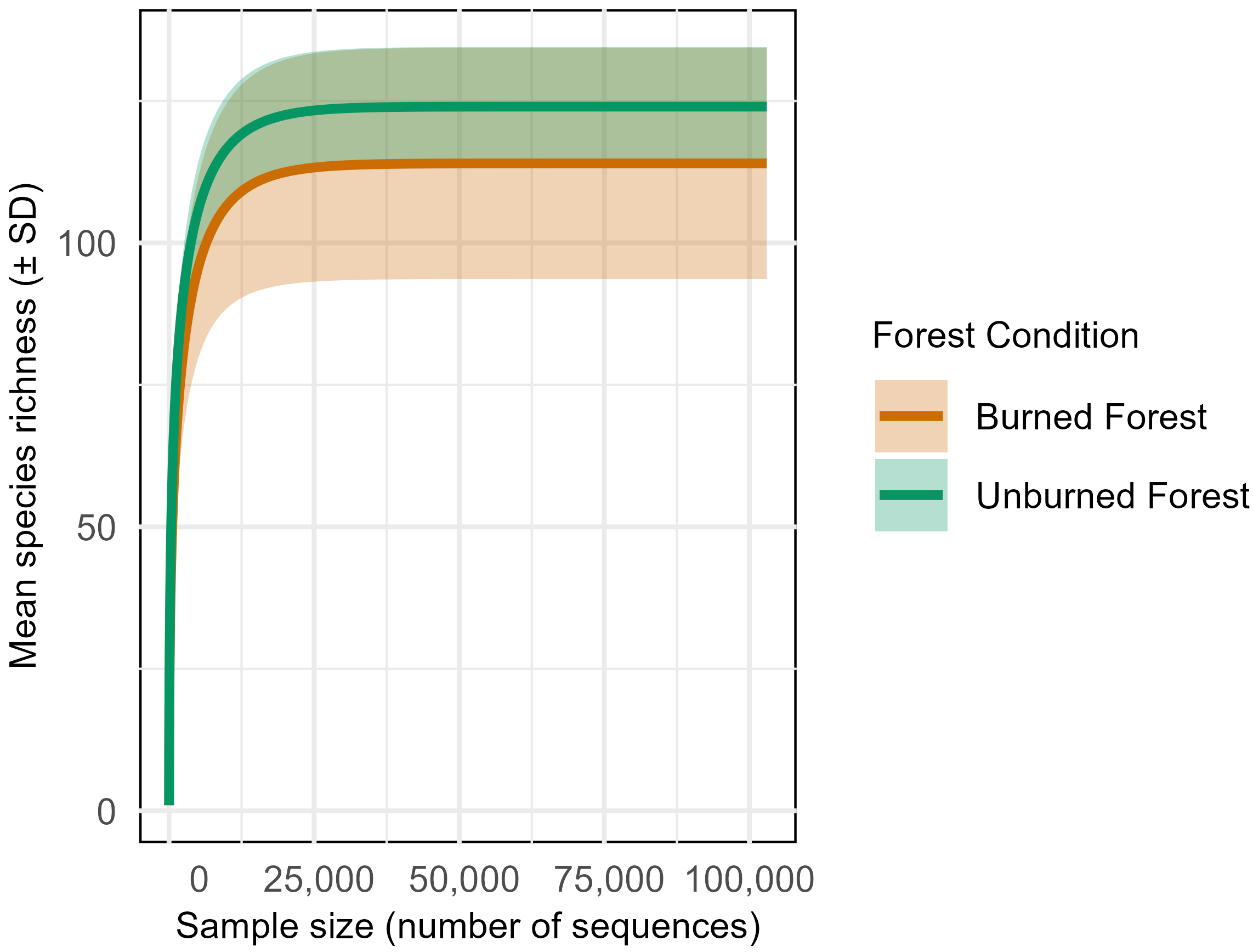
Our analyses indicate that both the sample size and sequencing depth were sufficient to capture the majority of taxa present in the two study conditions (i.e., unburned and burned forests). Moreover, the filtering applied to improve representativeness and the rarefaction procedure to equalize read numbers across samples did not alter the original community structure. The Mantel test revealed a strong and statistically significant correlation between the original and filtered community distance matrices (r = 0.9997, p = 0.001), confirming that the data filtering and rarefaction procedures preserved the overall structure of the fungal community. Rarefaction curves reached a clear asymptote for all samples, indicating adequate sequencing depth and sampling completeness (Figure A1 in Appendix A).
3.1. Diversity of Root-Associated Fungal Communities
Eight years after the fire, root-associated fungal communities associated with N. pumilio seedlings in unburned forests exhibit higher diversity and evenness than those in burned forest areas (Figure 2). For all four diversity indices, model residuals met the assumptions of normality and homogeneity of variance between conditions (Table A1 in Appendix A). Across all indices, unburned forest showed higher mean values and lower standard errors than burned forest, although the confidence intervals of both conditions overlapped (Table A1 in Appendix A). While species richness did not differ significantly between conditions (p = 0.36), unburned forest samples showed significantly higher Shannon diversity (p < 0.05), Inverse Simpson index (p < 0.05), and Pielou’s evenness (p < 0.05), indicating a more diverse and evenly distributed fungal community with lower dominance by few taxa.
Figure 2.
Alpha diversity indices of root-associated fungal communities in N. pumilio seedlings growing in unburned forest (UF; n = 5 composite samples) and burned forest (BF; n = 5 composite samples) sites. Boxplots show values for (a) OTU count as fungal richness, (b) Shannon–Weaver diversity, (c) Inverse Simpson index, and (d) Pielou’s evenness.
The NMDS analysis showed a good fit (stress = 0.092) and we did not detect a statistically significant difference in the composition of root-associated fungal communities between burned and unburned forests (PERMANOVA, p = 0.279). Multivariate dispersion did not differ significantly between conditions either (PERMDISP, p = 0.25), although the mean distance to the spatial median was higher in burned (0.50) than in unburned sites (0.45), as reflected in the ellipses in Figure 3. The absence of a dispersion effect indicates that the non-significant PERMANOVA result is not confounded by heterogeneous within-group variability.
Figure 3.
Non-metric multidimensional scaling (NMDS) ordination based on Bray–Curtis dissimilarity, showing root-associated fungal community composition of N. pumilio seedlings growing in unburned (green) and burned (orange) forest. Each point represents a sample (n = 5 per condition), and ellipses represent 95% confidence regions based on the multivariate t-distribution and are included for visualization purposes to illustrate the dispersion of samples within each group.
Regarding richness, a total of 294 OTUs were identified, of which 67 were exclusive to unburned forest, 64 were exclusive to burned forest, and 163 were shared between both conditions, representing 22.8%, 21.8%, and 55.4% of the total, respectively (Figure 4a). The most abundant fungal genera found exclusively in the roots of N. pumilio seedlings growing in unburned forest were Meliniomyces, Cryptodiscus, Phialocephala, and Zasmidium (Figure 4b). In contrast, the most abundant genera found exclusively in roots of seedlings growing in burned forest conditions were Paraphoma, Morchella and Tausonia (Figure 4c).
Figure 4.
Shared and exclusive root-associated fungal OTUs and genera of N. pumilio seedlings growing in unburned and burned forest sites. (a) Venn diagram showing the number and percentage of fungal OTUs exclusive to unburned forest (green), burned forest (orange), and those shared between both conditions (overlap). (b) Bar plot showing the most abundant exclusive genera detected in seedlings growing in unburned forest (green). (c) Bar plot showing the most abundant exclusive genera detected in seedlings growing in burned forest (orange). Abundances in bar plots (b,c) represent the total number of sequence reads detected for each genus.
3.2. Putative Plant-Beneficial Functions Groups of Root-Associated Fungi
EMF fungi samples were rarefied to 8313 reads, with pre- and post-rarefaction Bray–Curtis dissimilarity matrices showing a strong correlation (r = 0.913, p = 0.001). For DSE, samples were rarefied to 498 reads, yielding a moderate but significant correlation between pre- and post-rarefaction matrices (r = 0.689, p = 0.002), indicating that rarefaction adequately preserved the overall community structure in both functional groups.
For all diversity indices, model residuals met the assumptions of normality and homogeneity of variance (Table A2 in Appendix A). Across all indices, unburned forest showed higher mean values than burned forest in both functional groups, and the confidence intervals of the two conditions overlapped. Variability differed between groups: for EMF, burned forest showed higher standard errors, whereas for DSE the higher standard errors occurred in unburned forest (Table A2 in Appendix A). Although alpha diversity indices of EMF did not show statistically significant differences between conditions (Figure 5a–d), the unburned forest consistently exhibited slightly higher values for richness, diversity (Shannon–Weaver and Inverse Simpson), and evenness (Pielou), along with lower dominance of specific taxa (as reflected by the Inverse Simpson index). Similarly, although DSE communities in the unburned forest tended to be slightly more diverse, no significant differences were detected between forest conditions in any of the alpha diversity metrics (richness, p = 0.24; Shannon–Weaver, p = 0.51; Inverse Simpson, p = 0.41; Pielou’s evenness, p = 0.68; Figure 5e–h).
Figure 5.
Comparison of alpha diversity indices (Richness, Shannon–Weaver, Inverse Simpson, and Pielou’s evenness) for the functional groups ectomycorrhizal fungi (a–d) and root-associated dark septate endophytes (e–h) associated with N. pumilio seedlings growing in unburned (green) and burned (orange) forest conditions.
Among the 10 EMF genera tested, only Cortinarius differed significantly in abundance between forest conditions (adjusted p < 0.05; Figure 6a), being higher in unburned forest. Among the 8 DSE genera tested, Cadophora was more abundant in burned forest, whereas Exophiala and Cladophialophora were more abundant in unburned forest (adjusted p < 0.05; Figure 6b). All genus-level models met the residual diagnostics of the DHARMa package, with no departures from uniformity (Kolmogorov–Smirnov), dispersion, or outlier (Table A3 and Table A4, Appendix A.3).
Figure 6.
Abundance (reads) of (a) ectomycorrhizal fungal genera and (b) dark septate endophytes genera detected in roots of N. pumilio seedlings growing in unburned (green) and burned (orange) forest conditions. Each small point represents the abundance (log10 scale) of the genus within each sample. Horizontal lines indicate the range of observed abundances, and the larger solid-colored points represent the mean abundance per condition. A red asterisk (*) denotes a statistically significant difference (p adjusted < 0.05) in abundance between forest conditions.
4. Discussion
4.1. Burned Forests Shape Root-Associated Fungal Diversity
Our results are consistent with our hypothesis that N. pumilio seedlings in burned areas would harbor root-associated fungal communities of similar richness and composition but lower diversity. While species richness and overall community composition did not differ significantly between unburned and burned forests, fungal diversity, evenness, and dominance structure, as indicated by the Shannon index, Pielou’s evenness, and the Inverse Simpson index, respectively, remained significantly different in burned areas, indicating that recovery is incomplete despite the time elapsed since the disturbance. The overlap in their confidence intervals indicates a consistent but limited reduction in diversity rather than a pronounced loss. Evidence suggests that root-associated fungal community responses to fire in Nothofagus forests are highly variable [2,64,65]. A previous study in Tierra del Fuego (Argentina) found that soil fungal communities can vary according to microsite conditions such as temperature, precipitation, soil pH, and nitrogen content [27]. Since soil nutrients and vegetation composition influence fungal communities [66], the decline in soil nitrogen levels [67] and the post-fire shifts in vegetation structure [23] previously reported for the study area may contribute to reduced diversity of fungi associated with the roots of N. pumilio seedlings, even over the long term.
4.2. Exclusive Fungal Taxa Suggest Potential Functional Shifts After Fire
The functional roles reported for condition-exclusive genus differed between forest conditions, with unburned forest harboring genera commonly reported as mutualistic or plant-associated, whereas burned forests included genera more frequently associated with saprotrophy, disturbance, or biomass degradation. This pattern is similar to previous findings indicating that post-fire environments, characterized by reduced canopy cover and increased dryness [1], may promote long-term reductions in fungal biomass due to the high drought sensitivity of fungi [68], shifting fungal community composition in favor of saprotrophs over ectomycorrhizal fungi [69]. Such shifts could limit resource acquisition by host seedlings.
Among the fungal taxa found exclusively in seedlings from unburned forests, several genera with documented plant-beneficial traits were particularly prominent. The most abundant genus, Meliniomyces, is a widespread ectomycorrhizal taxon known to associate with diverse tree seedlings and enhance drought tolerance [70,71,72]. The third most abundant genus, Phialocephala, has been reported to promote seedling growth in the other host [73,74], increase plant nutrient concentrations [74], and suppress root pathogens in conifers [75,76]. Although less abundant, other taxa such as Strelitziana have been associated with enhanced drought resistance [77], and Cyphellophora exhibits plant-growth-promoting traits including auxin production and phosphate solubilization [47]. Some of these fungi may also provide indirect benefits via saprotrophic functions. For instance, Cryptodiscus (primarily lichen-associated; [78]), Zasmidium [79], Hyalorbilia (also fungicolous; [80]), and Acremonium [81]). At the species level, a taxon was identified as Zasmidium citrigriseum (Appendix A.4), a known pathogen of Citrus sinensis [L.] Osbeck [82]. Further research is needed to determine whether it also acts as a pathogen of N. pumilio, or whether it promotes plant growth and enhances defence against biotic stress, as reported for other Zasmidium species [83]. Similarly, Acremonium sclerotigenum, found exclusively in seedlings growing in unburned forest (Appendix A.4), has been shown to suppress fungal diseases and promote growth in agriculturally important plants [84,85]. Other genera such as Kockovaella and Keithomyces remain poorly characterized ecologically [86], although some representatives have been isolated from forest soils and woody substrates [87,88].
In seedling growing in burned forest, the exclusive fungal taxa included genera frequently associated with disturbance or post-fire environments. This aligns with the extreme environmental conditions characteristic of burned areas, such as snow during winter, increased dryness, higher solar radiation in summer, and a greater presence of dead plant biomass [1,23]. The most abundant exclusive genus in burned forests was Paraphoma, a group known for its plant-pathogenic species of agricultural relevance. Previous studies have reported increases in Paraphoma abundance following fire events [89]. The OTU count identified that Paraphoma fimeti remains poorly studied (Appendix A.4). It may be non-pathogenic and could potentially confer beneficial traits to seedlings. However, one study reports its ability to enhance grass growth [90]. The occurrence of P. fimeti may be related to the presence of livestock and introduced pasture species in the reserve, which were observed during field expeditions [91]. The second most abundant genus, Morchella, includes species that can be both saprotrophic and ectomycorrhizal. Several Morchella species are known to be pyrophilous, with reproduction stimulated by fire [92]. In our study, Morchella arbutiphila was found exclusively in burned forest, consistent with prior reports from mountainous and xerophytic habitats with high solar exposure [93]. Fungi from the third most abundant genus, Tausonia, are associated with lignin and hemicellulose degradation [94]. The yeast Tausonia pullulans, often isolated from cold or extreme environments [95,96], is capable of degrading plant material at low temperatures [97], suggesting a possible role in decomposing post-fire biomass. The genus Penicillium, though less abundant, includes pyrophilous species [89]. In our case, Penicillium angulare was detected, and it has previously been described as a fungicolous species occurring on woody substrates [98]. Humicola nigrescens is recognized as a thermophilic fungus [99], consistent with the drier and more sun-exposed conditions of burned sites. Likewise, species from the genus Solicoccozyma are saprotrophic and have been reported as dominant taxa in post-fire mountain forest ecosystems [100]. Interestingly, several fungi exclusively found in burned sites may also provide potential plant benefits. Genera such as Cryptococcus, Solicoccozyma, and Aureobasidium pullulans have been shown to promote plant growth and enhance tolerance to abiotic stress [101,102,103,104]. However, it is worth noting that some strains of A. pullulans may also act as plant pathogens [105,106]. Finally, Cryptococcus watticus has been previously isolated from glacier environments [107] and the Antarctic region [108], which may be consistent with the snowy conditions present in our study area during winter.
4.3. Stable Diversity of Ectomycorrhizal and Dark Septate Endophytes
Contrary to our expectations, EMF showed no statistically significant differences in richness, diversity, or evenness between unburned and burned forests, which may suggest that seedlings in burned areas recruit EMF without detectable reductions relative to unburned conditions, eight years post-fire. However, a slight trend toward lower diversity was observed in burned areas, as indicated by the Inverse Simpson index, which suggests a mild tendency toward community dominance under post-fire conditions (Figure 5). The overall comparability of EMF between conditions could be explained by the influence of nearby unburned forest patches as inoculum sources and the time elapsed since the disturbance. This interpretation is supported by a temporal pattern emerging from previous studies: ten months after fire, ectomycorrhizal communities in Nothofagus forests were negatively affected in terms of colonization rates, richness, diversity, and community composition [65]; two years post-fire, Nothofagus alpina (Poepp. & Endl.) Oerst. seedlings growing in burned conditions exhibited a slight reduction in EMF richness and a significant dominance of a single morphotype [64]; and in the long term, ectomycorrhizal morphotype diversity associated with the roots of N. pumilio appeared unaffected by post-fire conditions, showing no significant differences compared to unburned conditions [2]. Our results at eight years post-fire are consistent with this trajectory of progressive recovery.
As hypothesized, DSE communities showed a similar, although non-significant, tendency. Seedlings growing in burned forests exhibited slightly lower richness, diversity, and evenness than those growing in unburned forests, suggesting that DSE communities may be relatively stable under long-term post-fire conditions. Alternatively, DSE communities may have been initially affected by fire but recovered within the eight-year period examined in this study, a possibility that warrants further investigation through temporal monitoring. DSE fungi may show similar richness and diversity across fire conditions due to their high melanin levels, which improve tolerance to both heat and cold [29]. DSE are commonly found in harsh environments due to their high tolerance to abiotic stress [109]. We found no other assessments of the response of root-associated DSE communities to forest fires. Existing literature primarily focuses on their occurrence in plant species [10] and the agricultural applications [110]. Specifically in N. pumilio forests, post-fire fungal research has primarily focused on EMF communities [2,27,65].
4.4. Genus-Level Variation in Putative Plant-Beneficial Fungi
Contrary to our expectation of a broad reduction in ectomycorrhizal abundance, only Cortinarius declined significantly among the ten EMF genera tested, being less abundant in burned forests. Changes in vegetation cover following fire may partially explain these shifts, as canopy structure has been shown to influence the abundance of rhizosphere-associated fungi in Nothofagus-dominated forests [20]. The lower abundance of Cortinarius in burned forests is unexpected from the perspective of soil nutrient relations, as lower nitrogen availability, such as that reported for the study area [67], would typically be expected to increase rather than reduce its abundance [111]. However, post-fire conditions may impair the ability of ectomycorrhizal fungi to colonize roots, even six to seven years after the disturbance [2], and previous studies have shown that some Cortinarius taxa display a marked affinity for unburned forests, whereas others tend to prefer post-fire environments [27]. The specific taxa detected in unburned forests may be particularly sensitive to burned environments.
Contrary to our hypothesis of no differences in DSE abundance between conditions, three DSE genera differed significantly. Among 8 DSE genera tested, Cadophora showed a statistically significant difference in abundance, with higher values in burned forests, whereas Exophiala and Cladophialophora were more abundant in unburned forest Cadophora possesses a strong saprotrophic capacity and has been reported in semiarid environments [112], which may explain its higher abundance in burned forests, where greater amounts of dead plant material and drier soil conditions were observed during field visits compared to the unburned forest floor. How Exophiala and Cladophialophora respond to disturbance remains poorly studied; existing work has focused mainly on their distribution and applied uses [113,114,115].
4.5. Potential Implications for N. pumilio Forest Recovery
Despite the time elapsed since the disturbance, burned forests still exert a detectable influence on the root-associated fungal communities of N. pumilio. In the context of increasing wildfire frequency and severity driven by climate extremes (e.g., drought) [4], the resilience of these fungal communities may become a critical factor limiting seedling establishment and shaping post-disturbance forest dynamics. Lower fungal diversity and biomass may negatively impact multiple ecosystem functions by reducing both functional redundancy (fewer fungi performing similar roles) and the capacity for unique functional contributions [12,13]. Furthermore, the richness and abundance of fungal communities may shape the spatial distribution of plant species across landscapes [6]. This, in turn, could influence the recovery of burned N. pumilio forests. Fungal genera with reported plant-beneficial functions were less abundant in the roots of seedlings growing in burned forest, which may have implications for early performance. Members of the Cortinariaceae are typically dominant ectomycorrhizal associates of Nothofagus [54] and possess enzymatic capabilities that allow them to mobilize organic nitrogen [111]. A reduction in their abundance may therefore limit nutrient mobilization to seedlings. A similar rationale applies to two dark septate endophyte genera that were likewise less abundant in burned forest: Exophiala, whose species can promote plant growth, phosphorus uptake, and photosynthesis [114,115], and Cladophialophora, reported to promote growth and, together with Exophiala, to suppress the severity of diseases caused by other pathogenic fungi [116].
4.6. Insights into Assisted Regeneration of N. pumilio Forests
Although our results show that the root-associated fungal community of N. pumilio seedlings in burned forest still differs from that of seedlings in unburned forest, functionally relevant groups such as EMF and DSE remained present in burned areas. Some genera were less abundant in burned forests, but these functional groups were still detectable in association with seedling roots, suggesting that a baseline of plant-beneficial fungal potential persists in post-fire conditions. A similar pattern was observed in the bulk soil fungal communities of burned forests, which closely resembled those of unburned forests in the study area [16], potentially enhancing seedling establishment and increasing the success of reforestation efforts [117].
Given that N. pumilio is characterized by limited seed dispersal and low germination capacity, with natural regeneration rarely occurring beyond approximately 20 m from intact forest edges and being absent in areas affected by high-severity fires [1,24], the spatial context of seedling establishment becomes particularly relevant. Based on our results, planting seedlings in proximity to unburned forests could potentially facilitate the colonization of beneficial fungi in burned areas where no seed trees have survived, as unburned forests may serve as fungal inoculum sources [29]. Supporting this idea, the root-associated fungal community of N. pumilio seedlings in unburned forests was found to be highly diverse, despite roots generally being the plant compartment with the lowest expected fungal diversity [8], highlighting the inoculum potential of intact forest patches for assisted regeneration efforts.
4.7. Study Limitations and Research Perspectives
These results should be interpreted with caution owing to methodological limitations: a small sample size (five composite samples per condition) may increase the risk of type II error, rarefying to a single random subsample, moderate but significant Mantel test in DSE community, and reliance on a single fire event. Functional interpretations in this study were based on taxonomic identity, published trait databases, and previous literature. Accordingly, the classification of taxa as ectomycorrhizal fungi, dark septate endophytes, saprotrophs, or fungi with potential plant-beneficial roles should be understood as ecological inference rather than confirmed functional roles. A key limitation is that most of the plant-beneficial functions attributed to these fungi come from their application to other plant species rather than to N. pumilio. To our knowledge, direct evidence for this topic remains scarce. Of the 294 OTUs detected, 207 were assigned only to the genus level, limiting our ability to fully understand the ecological roles of specific taxa and their interactions with the environment, including host plants. While DNA sequencing enables detailed community profiling, both the technology and reference databases remain under continuous development [118], and important taxonomic gaps persist, particularly for fungi identification in Nothofagaceae forests [54]. Additionally, soil chemical properties were not measured in this study. Post-fire changes in soil chemistry are known to influence fungal community composition [27], and differences in soil conditions between unburned and burned areas could partially explain the observed patterns in root-associated fungal communities. Including soil chemical analyses in future studies would allow for a more comprehensive understanding of the factors driving fungal community differences under post-fire conditions. Despite these limitations, our approach provides a useful framework for interpreting broad patterns in root-associated fungal communities under post-fire conditions. Future studies combining metabarcoding with direct assessments of root colonization, enzymatic activity, nutrient transfer, and seedling physiological responses would help clarify the functional contribution of these fungal groups to Nothofagus regeneration. Improving species-level identification would enhance our capacity to assess the ecological roles of understudied taxa and to explore potential interactions between native and non-native fungi. For example, Hewitt et al. [119] reported that Cortinarius amoenus was negatively correlated with mean seedling biomass in N. pumilio, although this species was not detected in the present study, suggesting that the functional role of Cortinarius may vary depending on the species present. Consistent with this, some Cortinarius taxa show a marked affinity for unburned forests whereas others prefer post-fire environments [27], and the specific taxa we detected may be particularly sensitive to burned conditions. Additionally, we detected the exotic ectomycorrhizal species Hebeloma mesophaeum in both unburned and burned conditions (Appendix A.4), a species introduced from the Northern Hemisphere through Pinus plantations [120]. Non-native fungi may compete with native taxa and facilitate co-invasion processes involving plants, potentially altering successional trajectories [121].
Such research is particularly relevant given the key role of fungi in supporting soil multifunctionality [122], their influence on plant distribution patterns [6] and their faster response compared to vascular plants to climate-disturbance [26], fungi should receive greater attention in the context of increasing wildfire frequency, whose severity is being amplified by both climatic and anthropogenic pressures.
5. Conclusions
This study provides a comprehensive characterization of root-associated fungal communities in N. pumilio seedlings eight years post-fire in Andean forests of southern Chile, using DNA metabarcoding techniques. To the best of our knowledge, this is the first study characterizing the diversity and composition of dark septate endophytes in response to long-term post-fire conditions. We hypothesized that, compared with seedlings growing under unburned forest, N. pumilio seedlings in burned areas would harbor root-associated fungal communities of similar richness and composition but lower diversity. Within functional groups with plant-beneficial potential, we further predicted lower diversity and abundance of ectomycorrhizal fungi, but similar diversity and abundance of dark septate endophytes. Our results are partially consistent with this hypothesis. First, root-associated fungal communities in seedlings growing in burned forests exhibit significantly lower overall diversity and evenness despite maintaining similar OTU richness and community composition. Second, while both forest conditions shared 55.4% of OTUs, fungi found exclusively in unburned forests are predominantly taxa with plant-beneficial functions, whereas those exclusive to burned forests tend to be associated with biomass degradation and adaptation to harsher environmental conditions. Third, neither ectomycorrhizal fungi nor dark septate endophytes differed significantly between forest conditions in any alpha diversity index. Fourth, significantly lower abundances of Cortinarius (EMF), Exophiala (DSE), and Cladophialophora (DSE) were detected in burned forest, but a higher abundance of Cadophora (DSE).
Eight years after fire, the root-associated fungal communities of N. pumilio seedlings in burned forest remain associated with detectable differences, including lower diversity and evenness and reduced abundance of specific taxa such as Cortinarius, Exophiala, and Cladophialophora. Nevertheless, these communities retain their main functional groups (EMF and DSE) and share most OTUs with unburned forest, indicating an incomplete but ongoing recovery. These findings contribute to filling the knowledge gap in fungal responses to post-fire conditions, which remain largely underrepresented in the literature, and have implications for forest restoration strategies in South American temperate forests. The contrasting patterns observed across diversity metrics, community composition, and genus-level abundance suggest complex fungal community trajectories that extend beyond what classic diversity indices can capture. These results underscore the importance of preserving unburned forest remnants within fire-affected landscapes, as they may serve as critical sources of fungal inoculum for seedling establishment in adjacent burned areas, and suggest that restoration efforts could benefit from establishing N. pumilio seedlings in burned areas adjacent to intact forests where no seed trees have survived.
Future research should investigate how these contrasting patterns may influence early seedling performance of N. pumilio in post-fire environments, considering both the potential negative effects of the observed community shifts and the potential beneficial role that persistent ectomycorrhizal fungi and dark septate endophytes may play in supporting seedling establishment, which could inform future restoration strategies. Long-term monitoring beyond the eight-year timeframe of this study would help determine whether these patterns represent a transitional state or a stable alternative community configuration in fire-affected N. pumilio forests.
Author Contributions
Conceptualization, C.F.-U., A.F.-R., L.A.-M.; methodology, C.F.-U., A.F.-R., L.A.-M.; formal analysis, C.F.-U., G.L.; investigation, C.F.-U., B.D.-M., C.S.-S.; resources, C.F.-U., A.F.-R., H.H.; data curation, C.F.-U.; writing—original draft preparation, C.F.-U.; writing—review and editing, C.F.-U., A.F.-R., L.A.-M., B.D.-M., P.S.-F., A.F.-Q., R.V.-G.; visualization, C.F.-U.; supervision, C.F.-U., A.F.-R.; project administration, C.F.-U.; funding acquisition, C.F.-U., A.F.-R. All authors have read and agreed to the published version of the manuscript.
Funding
This research was funded by grant DIUFRO Mujeres en Ciencia DIM22-0006, Dirección de Investigación, Universidad de La Frontera, FONDECYT Regular 1241295 and ANID Desafíos Recuperación Post-Incendios PINC230004.
Data Availability Statement
The raw data supporting the conclusions of this article will be made available by the authors upon reasonable on request.
Acknowledgments
CF-U thanks the support received from ANID-Subdirección de Capital Humano/Doctorado Nacional/2022-21222257 and the assistance of park rangers and the administration of the China Muerta National Reserve during fieldwork. C.F.-U., A.F.-R. and R.V.-G thank the support received from Centro Basal ANID CENAMAD (FB210015). H.H. thanks ANID FONDECYT Regular 1261677 and ANID FONDEF ID25I10565. C.S.-S. acknowledges the support received from ANID Doctorado Nacional 21263149.
Conflicts of Interest
The authors declare no conflicts of interest. The funders had no role in the design of the study; in the collection, analyses, or interpretation of data; in the writing of the manuscript; or in the decision to publish the results.
Appendix A
Appendix A.1. Rarefaction Curves
Figure A1.
Rarefaction curves showing mean species richness (solid lines) ± standard deviation (shaded ribbons) for root-associated fungal communities of N. pumilio seedlings in burned (orange) and unburned (green) forest conditions. Curves were generated by rarefying OTU counts to a standardized sequencing depth of 102,988 reads per sample.
Appendix A.2. Descriptive Statistics and Verification of ANOVA Assumptions
Table A1.
Descriptive statistics (mean, standard error, 95% confidence intervals) and ANOVA assumption tests (Shapiro–Wilk, Levene’s) for alpha diversity indices of the total fungal community.
Table A2.
Descriptive statistics (mean, standard error, 95% confidence intervals) and ANOVA assumption tests (Shapiro–Wilk, Levene’s) for alpha diversity indices of the ectomycorrhizal (EMF) and dark septate endophyte (DSE) functional groups.
Appendix A.3. Model Specification and Residual Diagnostics for Genus-Level Negative Binomial Models
Table A3.
Residual diagnostics for EMF genus-level negative binomial models. For each genus, the selected negative binomial parameterization is shown, together with p-values from DHARMa tests of uniformity (Kolmogorov–Smirnov), dispersion, and outliers.
Table A4.
Residual diagnostics for DSE genus-level negative binomial models. For each genus, the selected negative binomial parameterization is shown, together with p-values from DHARMa tests of uniformity (Kolmogorov–Smirnov), dispersion, and outliers.
Appendix A.4. List of Fungi Identified at the Species Level
Table A5.
Fungal species identified in root samples from seedlings growing exclusively in unburned forest, exclusively in burned forest, and species shared between both conditions.
References
- Arroyo-Vargas, P.; Busby, S.; Veblen, T.T.; González, M.E.; Holz, A. Impacts of a Short-Interval Severe Fire on Forest Structure and Regeneration in a Temperate Andean Araucaria-Nothofagus Forest. Fire Ecol. 2024, 20, 93. [Google Scholar] [CrossRef] [Scilit]
- Longo, M.S.; Urcelay, C.; Nouhra, E. Long Term Effects of Fire on Ectomycorrhizas and Soil Properties in Nothofagus Pumilio Forests in Argentina. For. Ecol. Manag. 2011, 262, 348–354. [Google Scholar] [CrossRef] [Scilit]
- Owen, S.M.; Patterson, A.M.; Gehring, C.A.; Sieg, C.H.; Baggett, L.S.; Fulé, P.Z. Large, High-Severity Burn Patches Limit Fungal Recovery 13 Years after Wildfire in a Ponderosa Pine Forest. Soil Biol. Biochem. 2019, 139, 107616. [Google Scholar] [CrossRef] [Scilit]
- González, M.E.; Gómez-González, S.; Lara, A.; Garreaud, R.; Díaz-Hormazábal, I. The 2010–2015 Megadrought and Its Influence on the Fire Regime in Central and South-Central Chile. Ecosphere 2018, 9, e02300. [Google Scholar] [CrossRef] [Scilit]
- Beals, K.K.; Scearce, A.E.; Swystun, A.T.; Schweitzer, J.A. Belowground Mechanisms for Oak Regeneration: Interactions among Fire, Soil Microbes, and Plant Community Alter Oak Seedling Growth. For. Ecol. Manag. 2022, 503, 119774. [Google Scholar] [CrossRef] [Scilit]
- Revillini, D.; Mothes, C.C.; Almeida, B.K.; Charton, K.T.; Koontz, S.; David, A.S.; Afkhami, M.E.; Searcy, C.A. The Microbial Landscape: Soil Microbiome Properties Predict Plant Species Distributions. bioRxiv 2025. [Google Scholar] [CrossRef] [Scilit]
- Aschero, V.; Srur, A.M.; Guerrido, C.; Villalba, R. Contrasting Climate Influences on Nothofagus Pumilio Establishment along Elevational Gradients. Plant Ecol. 2022, 223, 369–380. [Google Scholar] [CrossRef] [Scilit]
- Trivedi, P.; Leach, J.E.; Tringe, S.G.; Sa, T.; Singh, B.K. Plant–Microbiome Interactions: From Community Assembly to Plant Health. Nat. Rev. Microbiol. 2020, 18, 607–621. [Google Scholar] [CrossRef] [Scilit] [PubMed]
- Pérez-Valera, E.; Verdú, M.; Navarro-Cano, J.A.; Goberna, M. Soil Microbiome Drives the Recovery of Ecosystem Functions after Fire. Soil Biol. Biochem. 2020, 149, 107948. [Google Scholar] [CrossRef] [Scilit]
- Fontenla, S.B.; Fernández, N.V.; Mestre, M.C.; Puntieri, J.P. Current Knowledge on Mycorrhizal Symbiosis and Endophytes in Northwest Patagonia, Argentina. In Mycorrhizal Fungi in South America; Lugo, M.A., Pagano, M.C., Eds.; Fungal Biology; Springer: Cham, Switzerland, 2022; pp. 255–279. [Google Scholar]
- Sanhueza, T.; Hernández, I.; Sagredo-Sáez, C.; Villanueva-Guerrero, A.; Alvarado, R.; Mujica, M.I.; Fuentes-Quiroz, A.; Menendez, E.; Jorquera-Fontena, E.; Valadares, R.B.d.S.; et al. Juvenile Plant–Microbe Interactions Modulate the Adaptation and Response of Forest Seedlings to Rapid Climate Change. Plants 2024, 13, 175. [Google Scholar] [CrossRef] [Scilit] [PubMed]
- Gao, C.; Bezemer, T.M.; Liu, J.; Wang, D.; Wang, J.; Deng, S.; Wang, D.; Yin, H. Distinct Roles of Bacteria and Fungi in Driving Rhizosphere and Bulk Soil Multifunctionality of Abies Georgei in an Alpine Forest. BMC Plant Biol. 2025, 25, 1602. [Google Scholar] [CrossRef] [Scilit] [PubMed]
- Wagg, C.; Schlaeppi, K.; Banerjee, S.; Kuramae, E.E.; van der Heijden, M.G.A. Fungal-Bacterial Diversity and Microbiome Complexity Predict Ecosystem Functioning. Nat. Commun. 2019, 10, 4841. [Google Scholar] [CrossRef] [Scilit] [PubMed]
- Armesto, J.J.; Rozzi, R.; Smith-Ramírez, C.; Arroyo, M.T.K. Conservation Targets in South American Temperate Forests. Science 1998, 282, 1271–1272. [Google Scholar] [CrossRef] [Scilit]
- González, M.E.; Donoso, Z.C.; Ovalle, P. Nothofagus Pumilio (Poep. et Endl) Krasser. Lenga, Roble Blanco, Leñar, Roble de Tierra Del Fuego. In Las Espcies Arbóreas de los Bosques Templados de Chile y Argentina. Autoecología; Donoso Zegers, D., Ed.; Marisa Cuneo Ediciones: Valdivia, Chile, 2006. [Google Scholar]
- Almonacid-Muñoz, L.; Herrera, H.; Fuentes-Ramírez, A.; Vargas-Gaete, R.; Toy-Opazo, O.; de Oliveira Costa, P.H.; da Silva Valadares, R.B. What Fire Didn’t Take Away: Plant Growth-Promoting Microorganisms in Burned Soils of Old-Growth Nothofagus Forests in Los Andes Cordillera. Plant Soil 2025, 507, 655–669. [Google Scholar] [CrossRef] [Scilit]
- Marín, C.; Valenzuela, E.; Godoy, R.; Palfner, G. Diversity and Growth-Effects of Ectomycorrhizal Fungi of a Nothofagus Pumilio Forest in the Andes of Southern Chile. Bol. Micol. 2018, 33, 9–20. [Google Scholar] [CrossRef] [Scilit]
- Salgado Salomón, M.; Barroetaveña, C.; Rajchenberg, M. Occurrence of Dark Septate Endophytes in Nothofagus Seedlings from Patagonia, Argentina. South. For. A J. For. Sci. 2013, 75, 97–101. [Google Scholar] [CrossRef] [Scilit]
- Smith, S.E.; Read, D. Mycorrhizal Symbiosis; Academic Press: Cambridge, MA, USA, 2008. [Google Scholar]
- Almonacid-Muñoz, L.; Herrera, H.; Fuentes-Ramírez, A.; Vargas-Gaete, R.; Larama, G.; Jara, R.; Fernández-Urrutia, C.; da Silva Valadares, R.B. Tree Cover Species Modify the Diversity of Rhizosphere-Associated Microorganisms in Nothofagus obliqua (Mirb.) Oerst Temperate Forests in South-Central Chile. Forests 2022, 13, 756. [Google Scholar] [CrossRef] [Scilit]
- Lopez, R.O.; Chiocchio, V.M.; Ruscitti, M.F.; Taborda, C.P.; Saparrat, M.C.N. Towards a Better Understanding of Melanins from Dark Septate Endophytes (DSEs): Their Variability, Synthesis Pathways and Biological Roles. J. Soil Sci. Plant Nutr. 2024, 24, 1650–1664. [Google Scholar] [CrossRef] [Scilit]
- Steidinger, B.S.; Crowther, T.W.; Liang, J.; Van Nuland, M.E.; Werner, G.D.A.; Reich, P.B.; Nabuurs, G.J.; de-Miguel, S.; Zhou, M.; Picard, N.; et al. Climatic Controls of Decomposition Drive the Global Biogeography of Forest-Tree Symbioses. Nature 2019, 569, 404–408. [Google Scholar] [CrossRef] [Scilit] [PubMed]
- Arroyo-Vargas, P.; Holz, A.; Veblen, T.T. Fire Effects on Diversity Patterns of the Understory Communities of Araucaria-Nothofagus Forests. Plant Ecol. 2022, 223, 883–906. [Google Scholar] [CrossRef] [Scilit]
- Urretavizcaya, M.F.; Albarracín, V.; Orellana, I.; Rago, M.M.; López Bernal, P.; Monelos, L.; Peri, P.L. Composition and Spatial Variation of Germinable Seed Bank in Burned Nothofagus Pumilio Forests in Patagonia Argentina. Forests 2022, 13, 1902. [Google Scholar] [CrossRef] [Scilit]
- Edmonds, R.L.; Agee, J.K.; Gara, R.I. Forest Health and Protection, 2nd ed.; Waveland Press Inc.: Long Grove, IL, USA, 2011. [Google Scholar]
- Afkhami, M.E.; Classen, A.T.; Dice, C.G.; Hernandez, D.J.; Li, V.W.; Rawstern, A.H.; Rudgers, J.A.; Stinchcombe, J.R.; Crawford, K.M. Unraveling Complexity in Climate Change Effects on Beneficial Plant–Microbe Interactions: Mechanisms, Resilience, and Future Directions. New Phytol. 2026, 249, 93–113. [Google Scholar] [CrossRef] [Scilit] [PubMed]
- Arguiano, C.; Salgado Salomón, M.E.; Barroetaveña, C.; Roy, M. Wildfire Impact on the Soil Funga Associated to Nothofagus Forests from Central-Western Patagonia, Argentina. Fire Ecol. 2025, 21, 70. [Google Scholar] [CrossRef] [Scilit]
- Compant, S.; Cambon, M.C.; Vacher, C.; Mitter, B.; Samad, A.; Sessitsch, A. The Plant Endosphere World—Bacterial Life within Plants. Environ. Microbiol. 2021, 23, 1812–1829. [Google Scholar] [CrossRef] [Scilit] [PubMed]
- Hewitt, R.E.; Day, N.J.; DeVan, M.R.; Taylor, D.L. Wildfire Impacts on Root-Associated Fungi and Predicted Plant–Soil Feedbacks in the Boreal Forest: Research Progress and Recommendations. Funct. Ecol. 2023, 37, 2110–2125. [Google Scholar] [CrossRef] [Scilit]
- CONAF. Plan de Manejo de La RN China Muerta; Corporación Nacional Forestal, Ministerio de Agricultura: Región Metropolitana, Chile, 2024. [Google Scholar]
- CR2. Explorador Climático CR2. Available online: https://explorador.cr2.cl (accessed on 1 April 2026).
- CIREN. Determinación de la Erosión Actual y Potencial de los Suelos de Chile. (Pub. CIREN N°139); CIREN: Santiago, Chile, 2010. [Google Scholar]
- Mora, M.; Crisóstomos, R. Incendios Forestales, Bajo El Ojo de La Teledetección (Reporte Técnico 383); CONAF: Santiago, Chile, 2016; p. 64. [Google Scholar]
- Garreaud, R.D.; Alvarez-Garreton, C.; Barichivich, J.; Boisier, J.P.; Christie, D.; Galleguillos, M.; LeQuesne, C.; McPhee, J.; Zambrano-Bigiarini, M. The 2010–2015 Megadrought in Central Chile: Impacts on Regional Hydroclimate and Vegetation. Hydrol. Earth Syst. Sci. 2017, 21, 6307–6327. [Google Scholar] [CrossRef] [Scilit]
- Fuentes-Ramirez, A.; Salas-Eljatib, C.; González, M.E.; Urrutia-Estrada, J.; Arroyo-Vargas, P.; Santibañez, P. Initial Response of Understorey Vegetation and Tree Regeneration to a Mixed-Severity Fire in Old-Growth Araucaria–Nothofagus Forests. Appl. Veg. Sci. 2020, 23, 210–222. [Google Scholar] [CrossRef] [Scilit]
- Diaz-Mons, B.; Arroyo-Vargas, P.; Vargas-Gaete, R.; Almonacid-Muñoz, L.; Herrera, H.; Fuentes-Ramírez, A. Resilience beyond Expectations: Seedling Performance under Fire and Grazing Pressure in Old-Growth Andean Araucaria Araucana Forests. Front. For. Glob. Change 2025, 8, 1631614. [Google Scholar] [CrossRef] [Scilit]
- Edgar, R.C. UNOISE2: Improved Error-Correction for Illumina 16S and ITS Amplicon Sequencing. bioRxiv 2016. [Google Scholar] [CrossRef] [Scilit]
- Nilsson, R.H.; Larsson, K.-H.; Taylor, A.F.S.; Bengtsson-Palme, J.; Jeppesen, T.S.; Schigel, D.; Kennedy, P.; Picard, K.; Glöckner, F.O.; Tedersoo, L.; et al. The UNITE Database for Molecular Identification of Fungi: Handling Dark Taxa and Parallel Taxonomic Classifications. Nucleic Acids Res. 2019, 47, D259–D264. [Google Scholar] [CrossRef] [Scilit] [PubMed]
- R Core Team. R: A Language and Environment for Statistical Computing; R Foundation for Statistical Computing: Vienna, Austria, 2025; Available online: https://www.R-project.org/ (accessed on 1 April 2026).
- Posit Team. RStudio: Integrated Development Environment for R; Posit Software, PBC: Boston, MA, USA, 2025; Available online: http://www.posit.co/ (accessed on 1 April 2026).
- Nikodemova, M.; Holzhausen, E.A.; Deblois, C.L.; Barnet, J.H.; Peppard, P.E.; Suen, G.; Malecki, K.M. The Effect of Low-Abundance OTU Filtering Methods on the Reliability and Variability of Microbial Composition Assessed by 16S rRNA Amplicon Sequencing. Front. Cell. Infect. Microbiol. 2023, 13, 1165295. [Google Scholar] [CrossRef] [Scilit] [PubMed]
- Oksanen, J.; Simpson, G.; Blanchet, F.; Kindt, R.; Legendre, P.; Minchin, P.; O’Hara, R.; Solymos, P.; Stevens, M.; Szoecs, E.; et al. R Package, Version 2.6-4; Vegan: Community Ecology Package. 2022. Available online: https://vegandevs.github.io/vegan/ (accessed on 1 June 2026).
- Fox, J.; Weisberg, S. An R Companion to Applied Regression; Sage: Thousand Oaks, CA, USA, 2019. [Google Scholar]
- Põlme, S.; Abarenkov, K.; Nilsson, R.H.; Lindahl, B.D.; Clemmensen, K.E.; Kauserud, H.; Nguyen, N.; Kjøller, R.; Bates, S.T.; Baldrian, P.; et al. FungalTraits: A User-Friendly Traits Database of Fungi and Fungus-like Stramenopiles. Fungal Divers. 2020, 105, 1–16. [Google Scholar] [CrossRef] [Scilit]
- Qin, X.; Xu, J.; An, X.; Yang, J.; Wang, Y.; Dou, M.; Wang, M.; Huang, J.; Fu, Y. Insight of Endophytic Fungi Promoting the Growth and Development of Woody Plants. Crit. Rev. Biotechnol. 2024, 44, 78–99. [Google Scholar] [CrossRef] [Scilit] [PubMed]
- Peng, L.; Yang, Y.; Martin, F.M.; Yuan, Z. Endophytes with Mycorrhizal Potentials: Biological and Ecological Implications. New Phytol. 2025, 249, 2224–2231. [Google Scholar] [CrossRef] [Scilit] [PubMed]
- Bi, B.; Xiao, Y.; Xu, X.; Chen, Q.; Li, H.; Zhao, Z.; Li, T. Diversity and Functional Roles of Root-Associated Endophytic Fungi in Two Dominant Pioneer Trees Reclaimed from a Metal Mine Slag Heap in Southwest China. Microorganisms 2024, 12, 2067. [Google Scholar] [CrossRef] [Scilit] [PubMed]
- Liu, H.; Li, T.; Ding, Y.; Yang, Y.; Zhao, Z. Dark Septate Endophytes Colonizing the Roots of ‘Non-Mycorrhizal’ Plants in a Mine Tailing Pond and in a Relatively Undisturbed Environment, Southwest China. J. Plant Interact. 2017, 12, 264–271. [Google Scholar] [CrossRef] [Scilit]
- Li, X.-G.; You, X.-X.; Zhang, X.-K.; Chen, D.; He, S.; Cao, G.-H. Diversity and Dynamics of Fungal Endophytes in the Roots of Amomum Villosum Lour. Under Different Areas and Growth Ages. BMC Microbiol. 2025, 25, 550. [Google Scholar] [CrossRef] [Scilit] [PubMed]
- Li, X.; He, X.; Hou, L.; Ren, Y.; Wang, S.; Su, F. Dark Septate Endophytes Isolated from a Xerophyte Plant Promote the Growth of Ammopiptanthus mongolicus under Drought Condition. Sci. Rep. 2018, 8, 7896. [Google Scholar] [CrossRef] [Scilit] [PubMed]
- Hou, M.; Zhu, J.; Leng, C.; Huang, X.; Yang, M.; Yin, Y.; Xing, Y.; Chen, J. Composition and Biodiversity of Culturable Endophytic Fungi in the Roots of Alpine Medicinal Plants in Xinjiang, China. J. Fungi 2025, 11, 113. [Google Scholar] [CrossRef] [Scilit] [PubMed]
- Xu, L.; Li, Y.; Dai, X.; Jin, X.; Zhao, Q.; Tian, B.; Zhou, Y. Symbiotic Fungal Inoculation Promotes the Growth of Pinus tabuliformis Seedlings in Relation to the Applied Nitrogen Form. BMC Plant Biol. 2025, 25, 10. [Google Scholar] [CrossRef] [Scilit] [PubMed]
- Tendersoo, L.; May, T.W.; Smith, M.E. Ectomycorrhizal Lifestyle in Fungi: Global Diversity, Distribution, and Evolution of Phylogenetic Lineages. Mycorrhiza 2010, 20, 217–263. [Google Scholar] [CrossRef] [Scilit] [PubMed]
- Fernández, N.; Fontenla, S.; Fioroni, F.; Soto-Mancilla, M.; Carron, A.; Moguilevsky, D.; Marchelli, P.; Marín, C.; Mestre, M.C. Mycorrhizas in Nothofagus From South America: What Do We Know From Nursery and Field Experiences? In Mycorrhizal Fungi in South America; Lugo, M.A., Pagano, M.C., Eds.; Fungal Biology; Springer: Cham, Switzerland, 2022; pp. 281–304. [Google Scholar]
- Vohník, M.; Figura, T.; Réblová, M. Hyaloscypha gabretae and Hyaloscypha gryndleri spp. nov. (Hyaloscyphaceae, Helotiales), Two New Mycobionts Colonizing Conifer, Ericaceous and Orchid Roots. Mycorrhiza 2022, 32, 105–122. [Google Scholar] [CrossRef] [Scilit] [PubMed]
- Brooks, M.E.; Kristensen, K.; van Benthem, K.J.; Magnusson, A.; Berg, C.W.; Nielsen, A.; Skaug, H.J.; Mächler, M.; Bolker, B.M. glmmTMB Balances Speed and Flexibility Among Packages for Zero-Inflated Generalized Linear Mixed Modeling. R J. 2017, 9, 378–400. [Google Scholar] [CrossRef] [Scilit]
- Hartig, F. DHARMa: Residual Diagnostics for Hierarchical (Multi-Level/Mixed) Regression Models. R Package Version 0.5.0. 2026. Available online: https://CRAN.R-project.org/package=DHARMa (accessed on 1 April 2026).
- Wickham, H.; François, R.; Henry, L.; Müller, K.; Vaughan, D. dplyr: A Grammar of Data Manipulation. R Package Version 1.2.1. 2026. Available online: https://CRAN.R-project.org/package=dplyr (accessed on 1 April 2026).
- Wickham, H. stringr: Simple, Consistent Wrappers for Common String Operations. R Package Version 1.6.0. 2025. Available online: https://CRAN.R-project.org/package=stringr (accessed on 1 April 2026).
- Wickham, H.; Vaughan, D.; Girlich, M. tidyr: Tidy Messy Data. R Package Version 1.3.2. 2025. Available online: https://CRAN.R-project.org/package=tidyr (accessed on 1 April 2026).
- Wickham, H. ggplot2: Elegant Graphics for Data Analysis. 2016. Available online: https://ggplot2.tidyverse.org (accessed on 1 April 2026).
- Kassambara, A. ggpubr: “ggplot2” Based Publication Ready Plots. R Package Version 0.6.3.999. 2026. Available online: https://CRAN.R-project.org/package=ggpubr (accessed on 1 April 2026).
- Yan, L. ggvenn: Draw Venn Diagram by “Ggplot2”. R Package Version 0.1.19. 2025. Available online: https://CRAN.R-project.org/package=ggvenn (accessed on 1 April 2026).
- Palfner, G.; Canseco, M.I.; Casanova-Katny, A. Post-Fire Seedlings of Nothofagus Alpina in Southern Chile Show Strong Dominance of a Single Ectomycorrhizal Fungus and a Vertical Shift in Root Architecture. Plant Soil 2008, 313, 237–250. [Google Scholar] [CrossRef] [Scilit]
- Soto-Mancilla, M.; Ebrecht, A.L.; Franzese, J.; El Mujtar, V.A.; Fernández, N. Efecto del fuego sobre las comunidades de ectomicorrizas asociadas a Nothofagus antarctica (Nothofagaceae) en condiciones de campo y vivero. Lilloa 2025, 62, 131–156. [Google Scholar] [CrossRef] [Scilit] [PubMed]
- Fox, S.; Sikes, B.A.; Brown, S.P.; Cripps, C.L.; Glassman, S.I.; Hughes, K.; Semenova-Nelsen, T.; Jumpponen, A. Fire as a Driver of Fungal Diversity—A Synthesis of Current Knowledge. Mycologia 2022, 114, 215–241. [Google Scholar] [CrossRef] [Scilit] [PubMed]
- Fuentes-Ramirez, A.; Almonacid-Muñoz, L.; Muñoz-Gómez, N.; Moloney, K.A. Spatio-Temporal Variation in Soil Nutrients and Plant Recovery across a Fire-Severity Gradient in Old-Growth Araucaria-Nothofagus Forests of South-Central Chile. Forests 2022, 13, 448. [Google Scholar] [CrossRef] [Scilit]
- Philipp, L.; Blagodatskaya, E.; Tarkka, M.; Reitz, T. Soil Microbial Communities Are More Disrupted by Extreme Drought than by Gradual Climate Shifts under Different Land-Use Intensities. Front. Microbiol. 2025, 16, 1649443. [Google Scholar] [CrossRef] [Scilit] [PubMed]
- Saona, L.A.; Oporto, C.I.; Villarreal, P.; Urbina, K.; Correa, C.; Quintero-Galvis, J.F.; Moreno-Meynard, P.; Piper, F.I.; Vianna, J.A.; Nespolo, R.F.; et al. High Ectomycorrhizal Relative Abundance during Winter at the Treeline. ISME Commun. 2025, 5, ycaf010. [Google Scholar] [CrossRef] [Scilit] [PubMed]
- Bogdanova, O.; Kothe, E.; Krause, K. Ectomycorrhizal Community Shifts at a Former Uranium Mining Site. J. Fungi 2023, 9, 483. [Google Scholar] [CrossRef] [Scilit] [PubMed]
- Southam, H.; Stafl, N.; Guichon, S.H.A.; Simard, S.W. Characterizing the Ectomycorrhizal Fungal Community of Whitebark Pine in Interior British Columbia: Mature Trees, Natural Regeneration and Planted Seedlings. Front. For. Glob. Change 2022, 4, 750701. [Google Scholar] [CrossRef] [Scilit]
- Mu, D.; Du, N.; Zwiazek, J.J. Inoculation with Ericoid Mycorrhizal Associations Alleviates Drought Stress in Lowland and Upland Velvetleaf Blueberry (Vaccinium myrtilloides) Seedlings. Plants 2021, 10, 2786. [Google Scholar] [CrossRef] [Scilit] [PubMed]
- Wen, Z.; Terhonen, E.; Asiegbu, F.O. The Dark Septate Endophyte Phialocephala sphaeroides Confers Growth Fitness Benefits and Mitigates Pathogenic Effects of Heterobasidion on Norway Spruce. Tree Physiol. 2022, 42, 891–906. [Google Scholar] [CrossRef] [Scilit] [PubMed]
- Otgonsuren, B.; Lee, M.-J. Pinus Sylvestris Can Form Ectomycorrhiza with Phialocephala fortinii. Taiwan J. For. Sci. 2012, 27, 265–281. [Google Scholar]
- Durodola, B.; Blumenstein, K.; Akinbobola, A.; Kolehmainen, A.; Chano, V.; Gailing, O.; Terhonen, E. Beyond the Surface: Exploring the Mycobiome of Norway Spruce under Drought Stress and with Heterobasidion parviporum. BMC Microbiol. 2023, 23, 350. [Google Scholar] [CrossRef] [Scilit] [PubMed]
- Terhonen, E.; Sipari, N.; Asiegbu, F.O. Inhibition of Phytopathogens by Fungal Root Endophytes of Norway Spruce. Biol. Control 2016, 99, 53–63. [Google Scholar] [CrossRef] [Scilit]
- Cambon, M.C.; Cartry, D.; Chancerel, E.; Ziegler, C.; Levionnois, S.; Coste, S.; Stahl, C.; Delzon, S.; Buée, M.; Burban, B.; et al. Drought Tolerance Traits in Neotropical Trees Correlate with the Composition of Phyllosphere Fungal Communities. Phytobiomes J. 2023, 7, 244–258. [Google Scholar] [CrossRef] [Scilit]
- Baloch, E.; Gilenstam, G.; Wedin, M. Phylogeny and classification of Cryptodiscus, with a taxonomic synopsis of the Swedish species. Fungal Divers. 2009, 38, 51–68. [Google Scholar]
- Liu, J.; Hu, Y.-F.; Zhang, K.; Zhang, X.; Castañeda Ruiz, R.F.; Ma, J. Zasmidium sinense sp. nov. from Guangdong, China. Mycotaxon 2022, 137, 173–178. [Google Scholar] [CrossRef] [Scilit]
- Ekanayaka, A.H.; Hyde, K.D.; Jones, E.B.G.; Zhao, Q. Orbiliaceae from Thailand. Mycosphere 2018, 9, 155–168. [Google Scholar] [CrossRef] [Scilit]
- Hou, L.W.; Giraldo, A.; Groenewald, J.Z.; Rämä, T.; Summerbell, R.C.; Huang, G.Z.; Cai, L.; Crous, P.W. Redisposition of Acremonium-like Fungi in Hypocreales. Stud. Mycol. 2023, 105, 23–203. [Google Scholar] [CrossRef] [Scilit] [PubMed]
- Aguilera-Cogley, V.; Sedano, E.; Vicent, A. Inoculum and Disease Dynamics of Citrus Greasy Spot Caused by Zasmidium citri-griseum in Sweet Orange in Panama. Plant Pathol. 2023, 72, 696–707. [Google Scholar] [CrossRef] [Scilit]
- Verma, K.; Agarwal, S.; Sharma, G.; Singhal, A.; Mullick, R.; Mathur, V. Growth-Promoting Endophytes as Immunity Booster for Brassica Juncea against Insect Attack. J. Chem. Ecol. 2025, 51, 32. [Google Scholar] [CrossRef] [Scilit] [PubMed]
- Aroge, T.; Zhu, Y.; Musazade, E.; Sossah, F.; Liu, S.-Y. Transcriptome Analysis Reveals Biocontrol Mechanisms of Acremonium sclerotigenum against Podosphaera xanthii in Cucumber. Microbiol. Res. 2025, 300, 128275. [Google Scholar] [CrossRef] [Scilit] [PubMed]
- Yıldız, M.; Gunhan, M.; Savas, N.G.; Tosun, N. The Efficacy of Some Endophytic Fungi against Primary Grapevine Black Foot Disease Pathogens. Biocontrol Sci. Technol. 2024, 34, 1115–1135. [Google Scholar] [CrossRef] [Scilit]
- Chai, C.-Y.; Xi, Z.-W.; Niu, Q.-H.; Hui, F.-L. Three New Species of the Genus Kockovaella (Cuniculitremaceae, Tremellales) from the Phylloplane in China. MycoKeys 2024, 110, 237–253. [Google Scholar] [CrossRef] [Scilit] [PubMed]
- Fungsin, B.; Hamamoto, M.; Arunpairojana, V.; Sukhumavasi, J.; Atthasampunna, P.; Nakase, T. Kockovaella barringtoniae sp. nov., a New Basidiomycetous Yeast Species Isolated from a Plant Leaf Collected in a Tropical Rain Forest in Thailand. Int. J. Syst. Evol. Microbiol. 2002, 52, 281–284. [Google Scholar] [CrossRef] [Scilit] [PubMed]
- Mongkolsamrit, S.; Khonsanit, A.; Thanakitpipattana, D.; Tasanathai, K.; Noisripoom, W.; Lamlertthon, S.; Himaman, W.; Houbraken, J.; Samson, R.A.; Luangsa-ard, J. Revisiting Metarhizium and the Description of New Species from Thailand. Stud. Mycol. 2020, 95, 171–251. [Google Scholar] [CrossRef] [Scilit] [PubMed]
- Philpott, T.J.; Danyagri, G.; Wallace, B.; Frank, M. Low-Severity Wildfire Prevents Catastrophic Impacts on Fungal Communities and Soil Carbon Stability in a Fire-Affected Douglas-Fir Ecosystem. Geoderma 2025, 454, 117189. [Google Scholar] [CrossRef] [Scilit]
- Pašakinskienė, I.; Stakelienė, V.; Matijošiūtė, S.; Martūnas, J.; Rimkevičius, M.; Būdienė, J.; Aučina, A.; Skridaila, A. Growth-Promoting Effects of Grass Root-Derived Fungi Cadophora fastigiata, Paraphoma fimeti and Plectosphaerella cucumerina on Spring Barley (Hordeum vulgare) and Italian Ryegrass (Lolium multiflorum). Microorganisms 2025, 13, 25. [Google Scholar] [CrossRef] [Scilit] [PubMed]
- Arroyo-Vargas, P.; Fuentes-Ramírez, A.; Muys, B.; Pauchard, A. Impacts of Fire Severity and Cattle Grazing on Early Plant Dynamics in Old-Growth Araucaria-Nothofagus Forests. For. Ecosyst. 2019, 6, 44. [Google Scholar] [CrossRef] [Scilit]
- O’Donnell, K.; Rooney, A.P.; Mills, G.L.; Kuo, M.; Weber, N.S.; Rehner, S.A. Phylogeny and Historical Biogeography of True Morels (Morchella) Reveals an Early Cretaceous Origin and High Continental Endemism and Provincialism in the Holarctic. Fungal Genet. Biol. 2011, 48, 252–265. [Google Scholar] [CrossRef] [Scilit] [PubMed]
- Loizides, M.; Bellanger, J.-M.; Clowez, P.; Richard, F.; Moreau, P.-A. Combined Phylogenetic and Morphological Studies of True Morels (Pezizales, Ascomycota) in Cyprus Reveal Significant Diversity, Including Morchella arbutiphila and M. disparilis spp. nov. Mycol. Prog. 2016, 15, 39. [Google Scholar] [CrossRef] [Scilit]
- Lu, Y.; Gao, Z.; Zhu, Y.; Yao, D.; Wang, X. Microbial Community Structure, Diversity, and Succession During Decomposition of Kiwifruit Litters with Different Qualities. Microorganisms 2024, 12, 2498. [Google Scholar] [CrossRef] [Scilit] [PubMed]
- Cavello, I.A.; Bezus, B.; Martinez, A.; Garmendia, G.; Vero, S.; Cavalitto, S. Yeasts from Tierra Del Fuego Province (Argentina): Biodiversity, Characterization and Bioprospection of Hydrolytic Enzymes. Geomicrobiol. J. 2019, 36, 847–857. [Google Scholar] [CrossRef] [Scilit]
- Tsuji, M. Genetic Diversity of Yeasts from East Ongul Island, East Antarctica and Their Extracellular Enzymes Secretion. Polar Biol. 2018, 41, 249–258. [Google Scholar] [CrossRef] [Scilit]
- Hao, X.; Li, J.; Xia, J.; Fan, Y.; Wang, F.; Meng, J. Isolation and Characterization of a Low-Temperature and Cellulose-Degrading Fungus Tausonia pullulans LC-6. Environ. Technol. 2025, 46, 4545–4554. [Google Scholar] [CrossRef] [Scilit] [PubMed]
- Peterson, S.W.; Bayer, E.M.; Wicklow, D.T. Penicillium thiersii, Penicillium angulare and Penicillium decaturense, New Species Isolated from Wood-Decay Fungi in North America and Their Phylogenetic Placement from Multilocus DNA Sequence Analysis. Mycologia 2004, 96, 1280–1293. [Google Scholar] [CrossRef] [Scilit]
- Mouchacca, J. Thermophilic Fungi: Biodiversity and Taxonomic Status. Cryptogam. Mycol. 1997, 18, 19–69. [Google Scholar] [CrossRef] [Scilit]
- Lazarević, J.; Topalović, A.; Menkis, A. Fungal Diversity in Fire-Affected Pine Forest Soils at the Upper Tree Line. Forests 2024, 15, 2012. [Google Scholar] [CrossRef] [Scilit]
- Carvajal, M.; Godoy, L.; Gebauer, M.; Catrileo, D.; Albornoz, F. Screening for Indole-3-Acetic Acid Synthesis and 1-Aminocyclopropane-Carboxylate Deaminase Activity in Soil Yeasts from Chile Uncovers Solicoccozyma terrea as an Effective Plant Growth Promoter. Plant Soil 2024, 496, 83–93. [Google Scholar] [CrossRef] [Scilit]
- Cloete, K.J.; Valentine, A.J.; Stander, M.A.; Blomerus, L.M.; Botha, A. Evidence of Symbiosis Between the Soil Yeast Cryptococcus laurentii and a Sclerophyllous Medicinal Shrub, Agathosma betulina (Berg.) Pillans. Microb. Ecol. 2009, 57, 624–632. [Google Scholar] [CrossRef] [Scilit] [PubMed]
- Herrera-Défaz, M.; Fuentealba, D.; Dibona-Villanueva, L.; Schwantes, D.; Jiménez, B.; Ipinza, B.; Latorre, B.; Valdés-Gómez, H.; Fermaud, M. Biocontrol of Botrytis cinerea on Grape Berries in Chile: Use of Registered Biofungicides and a New Chitosan-Based Fungicide. Horticulturae 2023, 9, 746. [Google Scholar] [CrossRef] [Scilit]
- Mannaa, M.; Han, G.; Jung, H.; Park, J.; Kim, J.-C.; Park, A.R.; Seo, Y.-S. Aureobasidium pullulans Treatment Mitigates Drought Stress in Abies koreana via Rhizosphere Microbiome Modulation. Plants 2023, 12, 3653. [Google Scholar] [CrossRef] [Scilit]
- Ding, X.; Lin, S.; Zhao, R.; Ye, J. First Report of Brown Spot Needle Blight on Pinus Thunbergii Caused by Aureobasidium pullulans in China. Plant Dis. 2021, 105, 4166. [Google Scholar] [CrossRef] [Scilit]
- Shin, S.; Min, D.; Jeon, H.; Yang, J.; Choi, H.; Ryu, S.-R.; Kang, K.-S.; Kim, G.-B.; Son, H. Investigation of Abiotic and Biotic Factors Associated With the Outbreak of Japanese Larch (Larix kaempferi) Dieback in the Republic of Korea. For. Pathol. 2025, 55, e70016. [Google Scholar] [CrossRef] [Scilit]
- Branda, E.; Turchetti, B.; Diolaiuti, G.; Pecci, M.; Smiraglia, C.; Buzzini, P. Yeast and Yeast-like Diversity in the Southernmost Glacier of Europe (Calderone Glacier, Apennines, Italy). FEMS Microbiol. Ecol. 2010, 72, 354–369. [Google Scholar] [CrossRef] [Scilit] [PubMed]
- Guffogg, S.P.; Thomas-Hall, S.; Holloway, P.; Watson, K. A Novel Psychrotolerant Member of the Hymenomycetous Yeasts from Antarctica: Cryptococcus watticus sp. nov. Int. J. Syst. Evol. Microbiol. 2004, 54, 275–277. [Google Scholar] [CrossRef] [Scilit] [PubMed]
- Malicka, M.; Magurno, F.; Piotrowska-Seget, Z. Plant Association with Dark Septate Endophytes: When the Going Gets Tough (and Stressful), the Tough Fungi Get Going. Chemosphere 2022, 302, 134830. [Google Scholar] [CrossRef] [Scilit] [PubMed]
- Mariani, M.; Surono, S.; Marhani, M.; Mirsodi, M.; Rosdayanti, H.; Lestari, M.A.; Sukmawati, D.; Sriherwanto, C. Utilization of Dark Septate Endophytes (DSE) to Control Pathogens Causing Diseases in Various Cultivated Plants: A Review. Egypt. J. Biol. Pest Control 2024, 34, 65. [Google Scholar] [CrossRef] [Scilit]
- Truong, C.; Gabbarini, L.A.; Moretto, A.; Escobar, J.M.; Smith, M.E. Ectomycorrhizal Fungi and the Nitrogen Economy of Nothofagus in Southern Patagonia. Ecol. Evol. 2024, 14, e70299. [Google Scholar] [CrossRef] [Scilit] [PubMed]
- Knapp, D.G.; Németh, J.B.; Barry, K.; Hainaut, M.; Henrissat, B.; Johnson, J.; Kuo, A.; Lim, J.H.P.; Lipzen, A.; Nolan, M.; et al. Comparative Genomics Provides Insights into the Lifestyle and Reveals Functional Heterogeneity of Dark Septate Endophytic Fungi. Sci. Rep. 2018, 8, 6321. [Google Scholar] [CrossRef] [Scilit] [PubMed]
- Thitla, T.; Kumla, J.; Khuna, S.; Srinuanpan, S.; Hongsanan, S.; Senwanna, C.; Tibpromma, S.; Pathom-aree, W.; Lumyong, S.; Suwannarach, N. Research Advances in Taxonomy, Phylogeny, Ecology, and Distribution of the Genus Cladophialophora. Chiang Mai J. Sci. 2023, 51, e2024004. [Google Scholar] [CrossRef] [Scilit]
- Wang, L.; Li, Z.; Zhang, G.; Liang, X.; Hu, L.; Li, Y.; He, Y.; Zhan, F. Dark Septate Endophyte Exophiala pisciphila Promotes Maize Growth and Alleviates Cadmium Toxicity. Front. Microbiol. 2023, 14, 1165131. [Google Scholar] [CrossRef] [Scilit] [PubMed]
- Xu, R.; Li, T.; Shen, M.; Yang, Z.L.; Zhao, Z.-W. Evidence for a Dark Septate Endophyte (Exophiala pisciphila, H93) Enhancing Phosphorus Absorption by Maize Seedlings. Plant Soil 2020, 452, 249–266. [Google Scholar] [CrossRef] [Scilit]
- Harsonowati, W.; Marian, M.; Surono; Narisawa, K. The Effectiveness of a Dark Septate Endophytic Fungus, Cladophialophora chaetospira SK51, to Mitigate Strawberry Fusarium Wilt Disease and With Growth Promotion Activities. Front. Microbiol. 2020, 11, 585. [Google Scholar] [CrossRef] [Scilit] [PubMed]
- van Galen, L.G.; Lord, J.M.; Orlovich, D.A.; Jowett, T.; Larcombe, M.J. Barriers to Seedling Establishment in Grasslands: Implications for Nothofagus Forest Restoration and Migration. J. Appl. Ecol. 2023, 60, 291–304. [Google Scholar] [CrossRef] [Scilit]
- Lahlali, R.; Ibrahim, D.S.S.; Belabess, Z.; Kadir Roni, M.Z.; Radouane, N.; Vicente, C.S.L.; Menéndez, E.; Mokrini, F.; Barka, E.A.; Galvão de Melo e Mota, M.; et al. High-Throughput Molecular Technologies for Unraveling the Mystery of Soil Microbial Community: Challenges and Future Prospects. Heliyon 2021, 7, e08142. [Google Scholar] [CrossRef] [Scilit] [PubMed]
- Hewitt, R.E.; Taylor, D.L.; Hollingsworth, T.N.; Anderson, C.B.; Pastur, G.M. Variable Retention Harvesting Influences Belowground Plant-Fungal Interactions of Nothofagus Pumilio Seedlings in Forests of Southern Patagonia. PeerJ 2018, 6, e5008. [Google Scholar] [CrossRef] [Scilit]
- Vellinga, E.C.; Wolfe, B.E.; Pringle, A. Global Patterns of Ectomycorrhizal Introductions. New Phytol. 2009, 181, 960–973. [Google Scholar] [CrossRef] [Scilit]
- Mujic, A.B.; Policelli, N.; Nuñez, M.A.; Truong, C.; Smith, M.E. Co-Invasive Ectomycorrhizal Fungi Alter Native Soil Fungal Communities. Plant Soil 2023, 484, 547–567. [Google Scholar] [CrossRef] [Scilit]
- Han, X.; Doménech-Pascual, A.; Donhauser, J.; Zohner, C.M.; Mo, L.; Crowther, T.W.; Casas-Ruiz, J.P.; Jordaan, K.; Ramond, J.-B.; Romaní, A.M.; et al. Fungal Diversity as a Key Driver of Soil Multifunctionality along a European Latitudinal Gradient. Geoderma 2025, 464, 117600. [Google Scholar] [CrossRef] [Scilit]
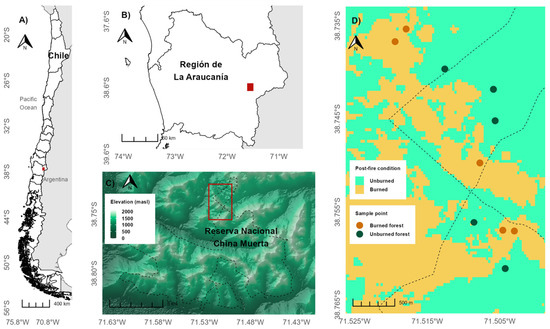
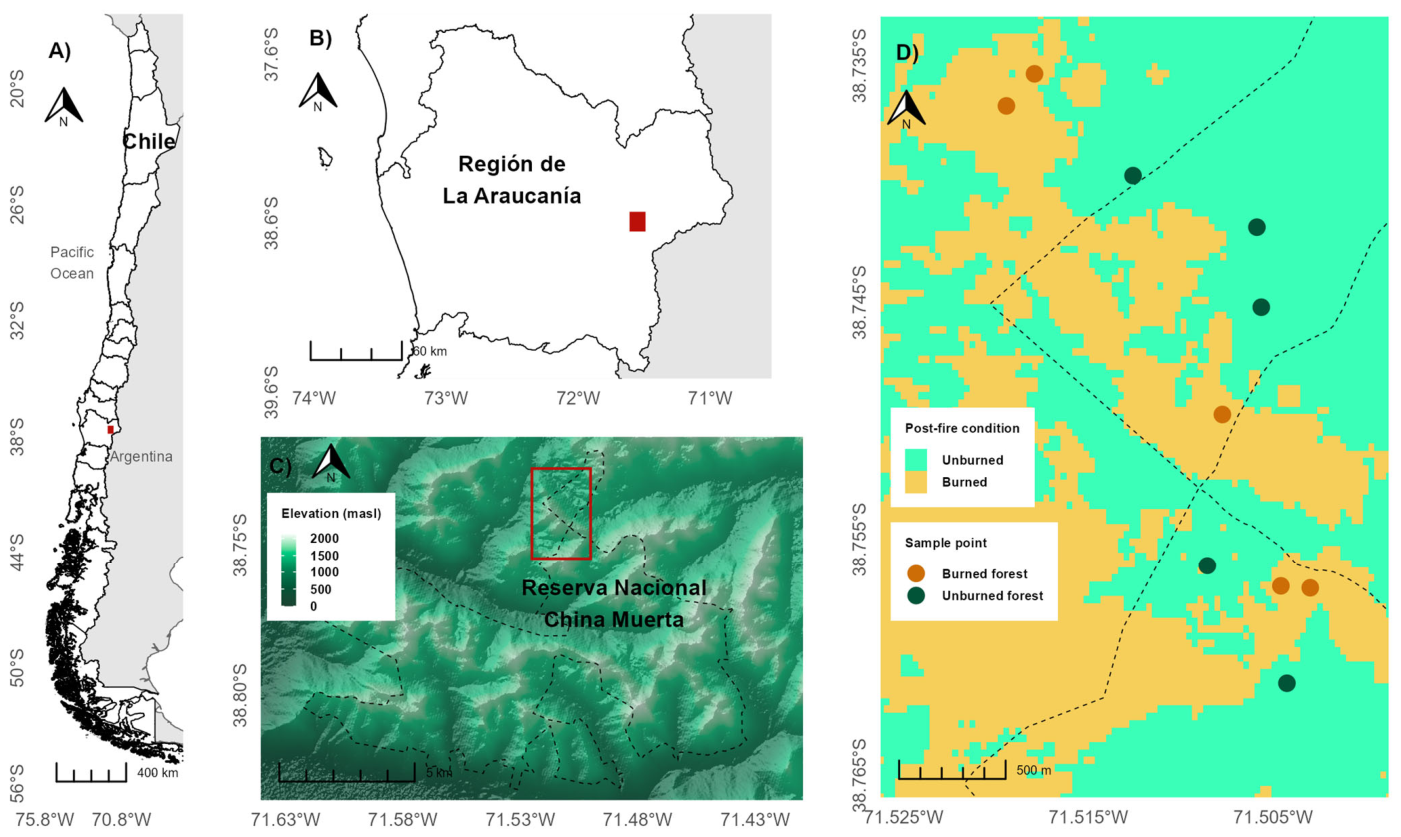
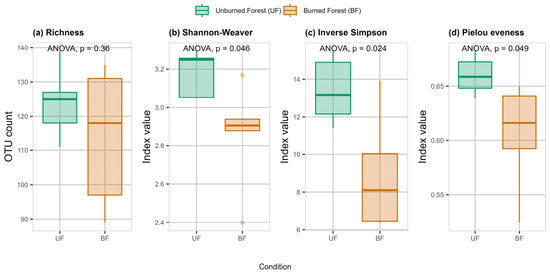
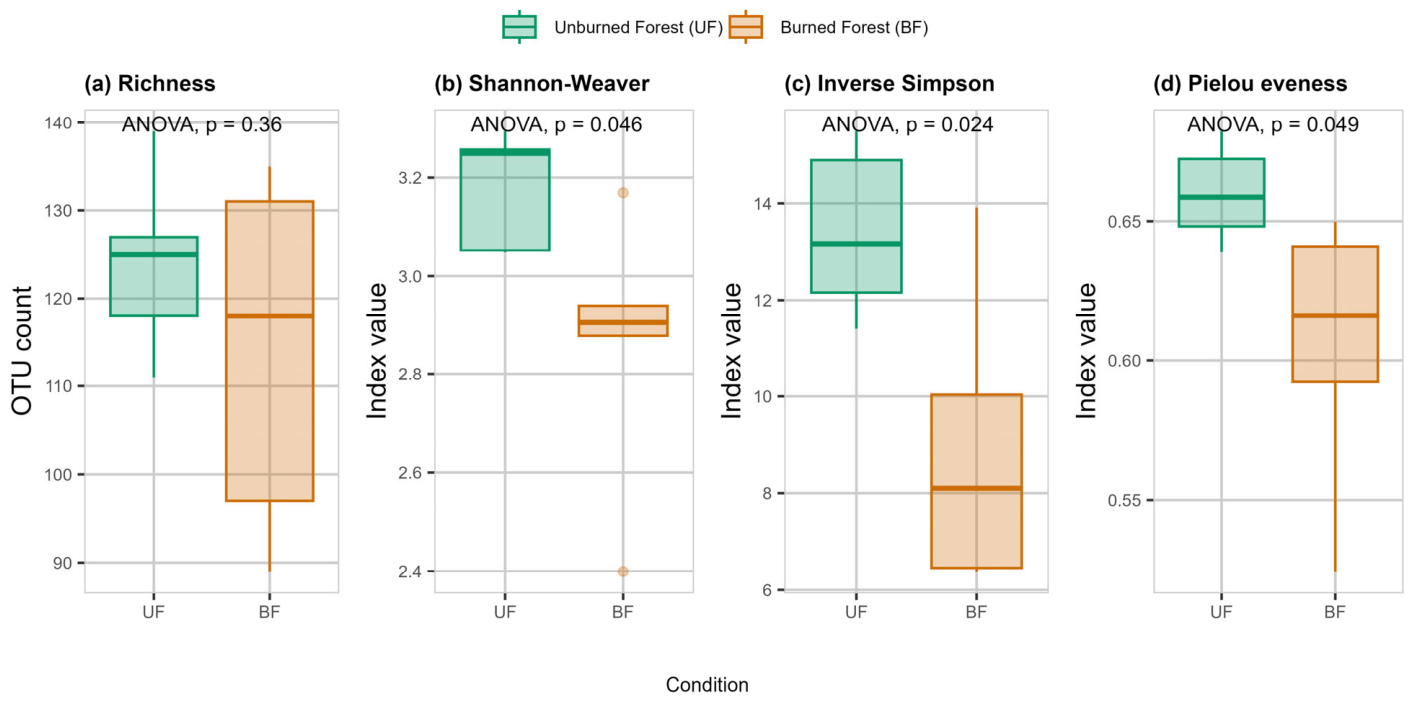
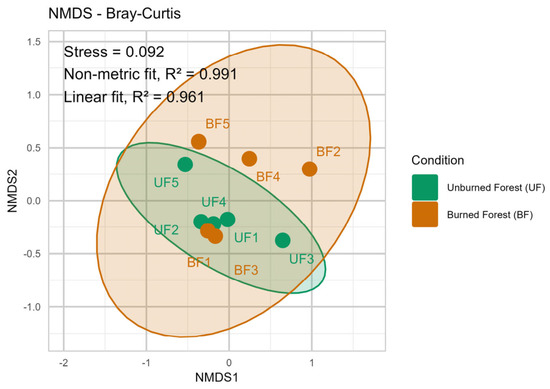
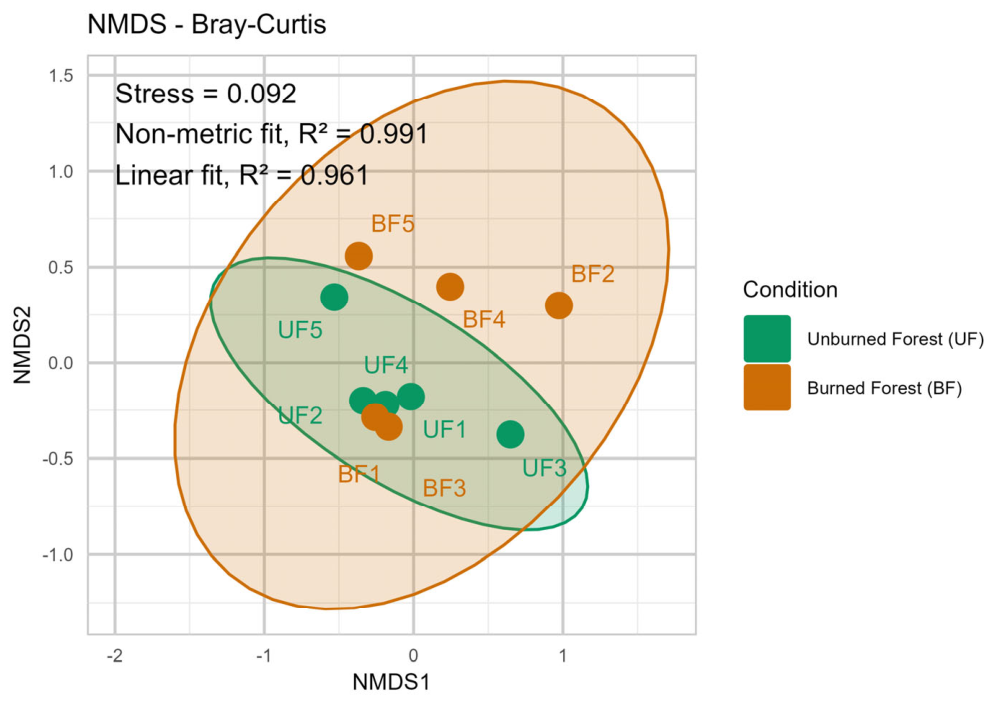
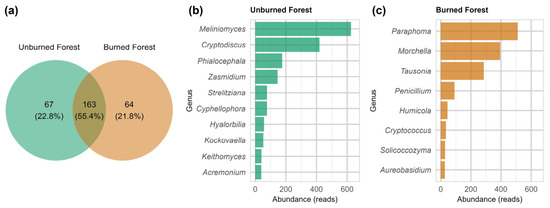
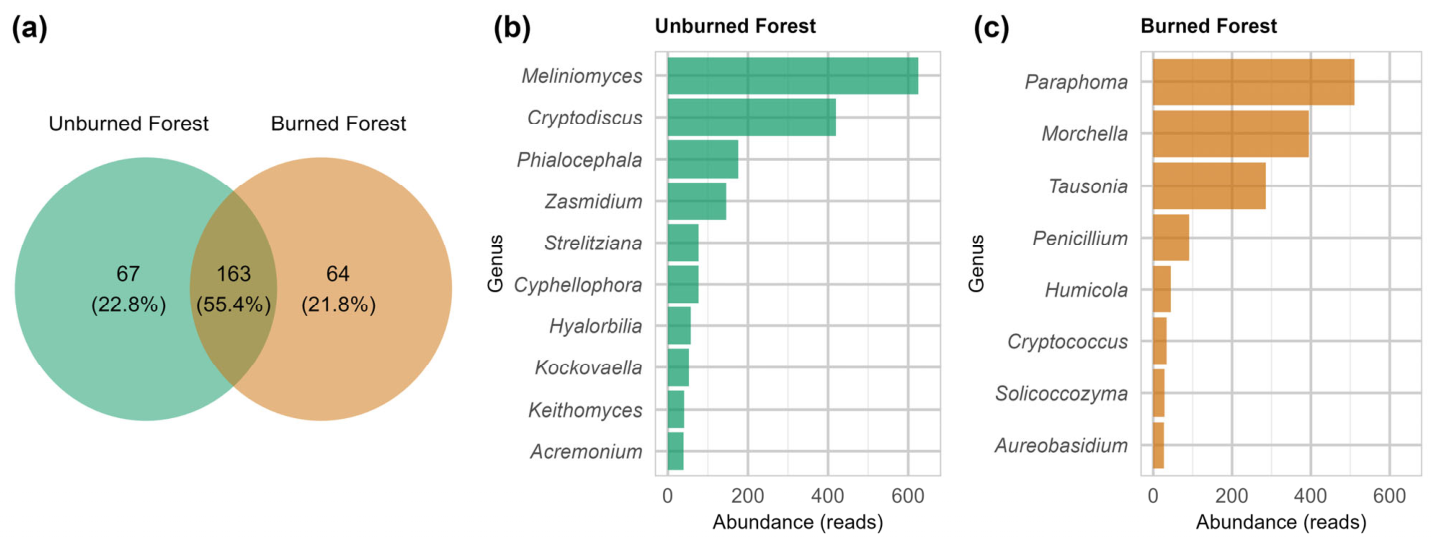
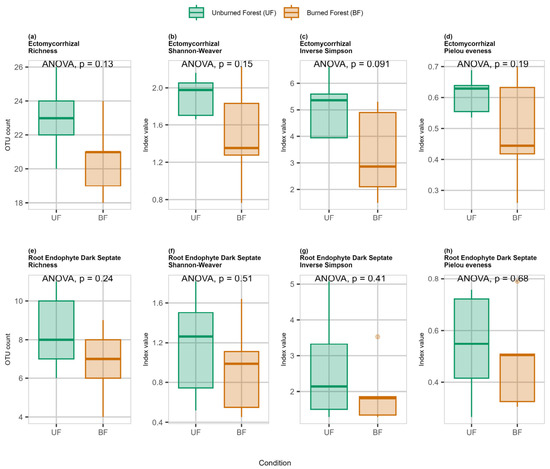
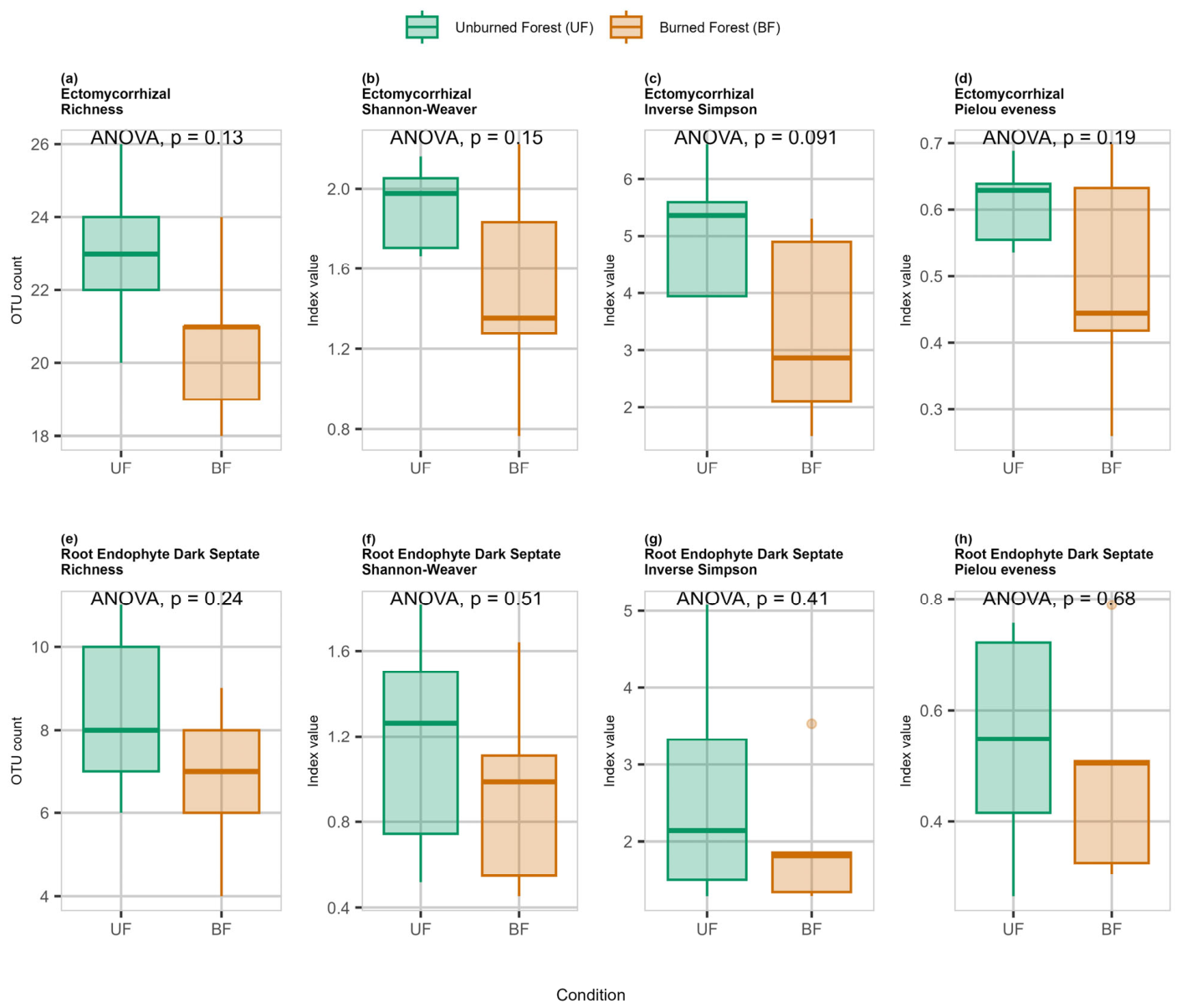
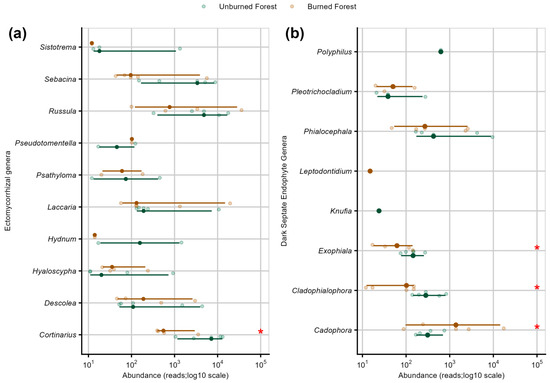
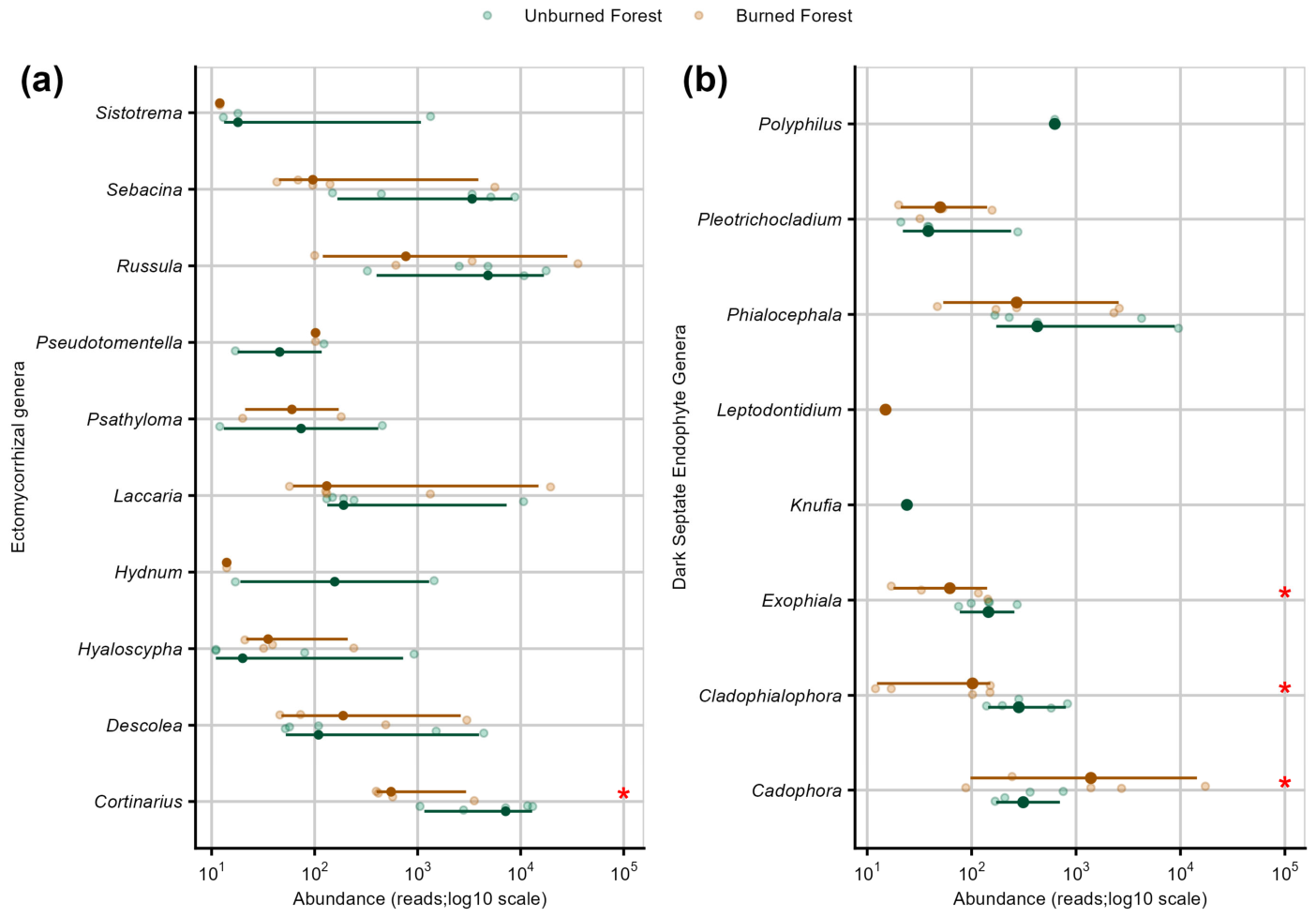
Disclaimer/Publisher’s Note: The statements, opinions and data contained in all publications are solely those of the individual author(s) and contributor(s) and not of MDPI and/or the editor(s). MDPI and/or the editor(s) disclaim responsibility for any injury to people or property resulting from any ideas, methods, instructions or products referred to in the content. |
© 2026 by the authors. Licensee MDPI, Basel, Switzerland. This article is an open access article distributed under the terms and conditions of the Creative Commons Attribution (CC BY) license.