


Abstract
The aim of this study was to determine the efficiency of timber harvesting using Logset harvesters with hybrid and standard drives. The research was conducted in stands where thinning and final felling had been performed. Operating time and fuel consumption were determined in terms of productive machine hours (PMH). Data from the harvester’s operating system was used. Standard fixed and unit costs were included in the cost calculations. The hybrid harvester achieved better productivity, approximately 17% higher than the conventional machine (23.64 m3·h−1 and 19.59 m3·h−1, respectively). Differences in productivity between the machines were observed in both selective cutting and clear-cut areas. Average fuel consumption was 17.15 L·h−1 (0.98 L·m−3) for the standard harvester and 20.33 L·h−1 (1.44 L·m−3) for the hybrid-powered machine. Similar unit costs were recorded in clear-cut stands—on average from 4.2 EUR·m−3 for an 8 h shift to 2.90 EUR·m−3 for a 16 h shift. The average unit cost of timber harvesting with the hybrid harvester was approximately 20% lower compared to the standard machine (approx. 0.80 EUR·m−3). Despite the higher operating costs of the hybrid harvester, its use may be economically justified in situations where high productivity compensates for higher energy and investment costs.
1. Introduction
Contemporary forestry faces the challenge of combining economically efficient timber harvesting with high environmental protection and energy efficiency requirements.
Growing public awareness of the importance of forests means that their non-productive functions, such as minimizing climate change, protecting valuable communities, and providing public access, are becoming increasingly significant among the objectives of sustainable forestry [1]. Forests store over 80% of the carbon contained in terrestrial plants and about 70% of the carbon present in soils. In Europe, an average of 75% of the growth of standing timber is harvested, resulting in an average annual carbon accumulation of 435 Mt CO2 [2,3].
Currently, less emphasis is placed on the productive function of forests. In 2024, 1.96 billion m3 of round wood were harvested worldwide, and the monetary value of global exports of wood and paper products amounted to USD 486 billion in 2024. Europe remained the largest exporter and importer of wood and paper products [4]. In highly developed countries, the share of the forest economy in budget revenues is usually smaller, but it still constitutes an important element of local income. In the European Union, the added value of this sector is 1.5% of GDP (Gross Domestic Product), but it is of great importance for the wood industry [5]. Forests cannot be overlooked as renewable energy sources [6]. They are a source of biomass for energy purposes, which is also important for the environment and reducing CO2 emissions [7]. Increasing the carbon storage capacity and capability of the forestry sector is not limited to preserving the forest ecosystem but also includes active management and leads to the permanent sequestration of carbon in wood products [8].
The choice of dominant technological processes for timber harvesting is determined by factors related to the work site [9], economic conditions [10], and occupational safety [11]. Harvesters meet all these criteria for technology selection, which is why they are being used on an increasingly large scale [12]. These machines were introduced into forestry practice several decades ago in Scandinavian countries [13,14], and are now successfully used in stands with diverse species and spatial structures, in mountainous conditions, in post-disaster areas, as well as in plantation forestry [15,16,17,18,19,20,21]. It is estimated that in Europe, the machine-based model of timber harvesting accounts for over 90% of all timber harvesting technologies in Scandinavian and Baltic countries, around 70% in Germany and France, and 40%–50% of all technologies in Central European countries and countries with a large proportion of mountainous areas [22].
Standard harvesters are equipped with diesel engines that emit significant amounts of CO2 [23]. In Poland, timber harvesting amounts to approximately 40 million m3 per year, about one-third of which is carried out using harvesters [24]. Assuming that the average fuel consumption of universal harvesters is 0.93 L·m−3 [25], over 11 million liters of fuel are consumed annually, which is equivalent to 29,000 tons of CO2 (approx. 2.64 kg CO2 per 1 L of diesel) [26]. In view of the European Union’s climate policy, reducing greenhouse gas emissions from non-road mobile machinery is becoming increasingly important. European climate law sets a target of achieving climate neutrality by 2050 and an interim target of at least a 55% reduction in net greenhouse gas emissions by 2030 compared to 1990 levels. The introduction of hybrid drives in forestry machinery addresses these requirements [25].
Hybrid drives, introduced in some harvester models in recent years, are designed to increase work efficiency while reducing fuel consumption. Hybrid systems have been tested in harvesters such as HMS GmbH, ProSilva 910EH, Logset 8H GTE Hybrid, and Logset 12H GTE Hybrid [27]. In 2016, Logset became the first company in the world to produce the 12H GTE Hybrid harvester, which is currently the largest harvester on the market. A smaller model designed for thinning, the 8H GTE Hybrid, was introduced in 2019. A hybrid drive system uses two or more energy technologies. The electric motor acts as a generator that charges the supercapacitors. In situations of increased power demand, the electric motor provides instant high torque, allowing faster and smoother operation of the harvester head and improving the vehicle’s traction performance [28]. The hybrid drive reduces the peak load on the diesel engine, as all maximum requirements are met by electricity. With hybrid assistance, the diesel engine operates at a maximum load of approximately 1500 rpm. This, in turn, reduces fuel consumption and CO2 and particulate matter emissions. Noise levels are also reduced by approximately 10%, and the load on the diesel engine is reduced. From an economic and environmental point of view, hybrid engines perform best when operating at maximum power.
Previous studies have not fully considered the impact of cutting type on the efficiency of hybrid harvesters. This study conducted a comparative analysis of combustion engine harvesters and hybrid harvesters commonly used in forest stands. The analysis covered the structure of machine operating time, achieved productivity, fuel consumption, and unit costs incurred depending on the type of maintenance and felling cuts.
2. Materials and Methods
2.1. Characteristics of the Area and Machines
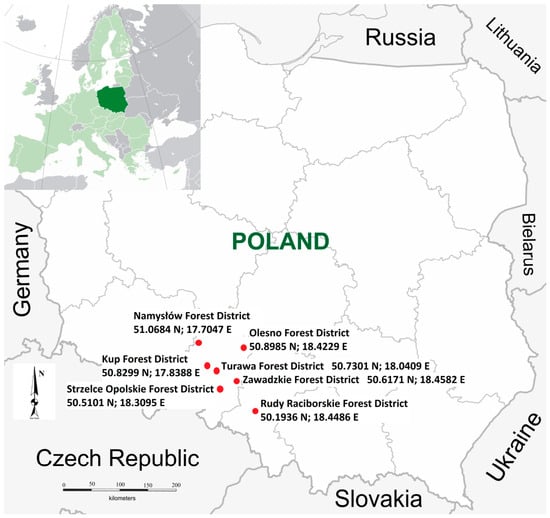
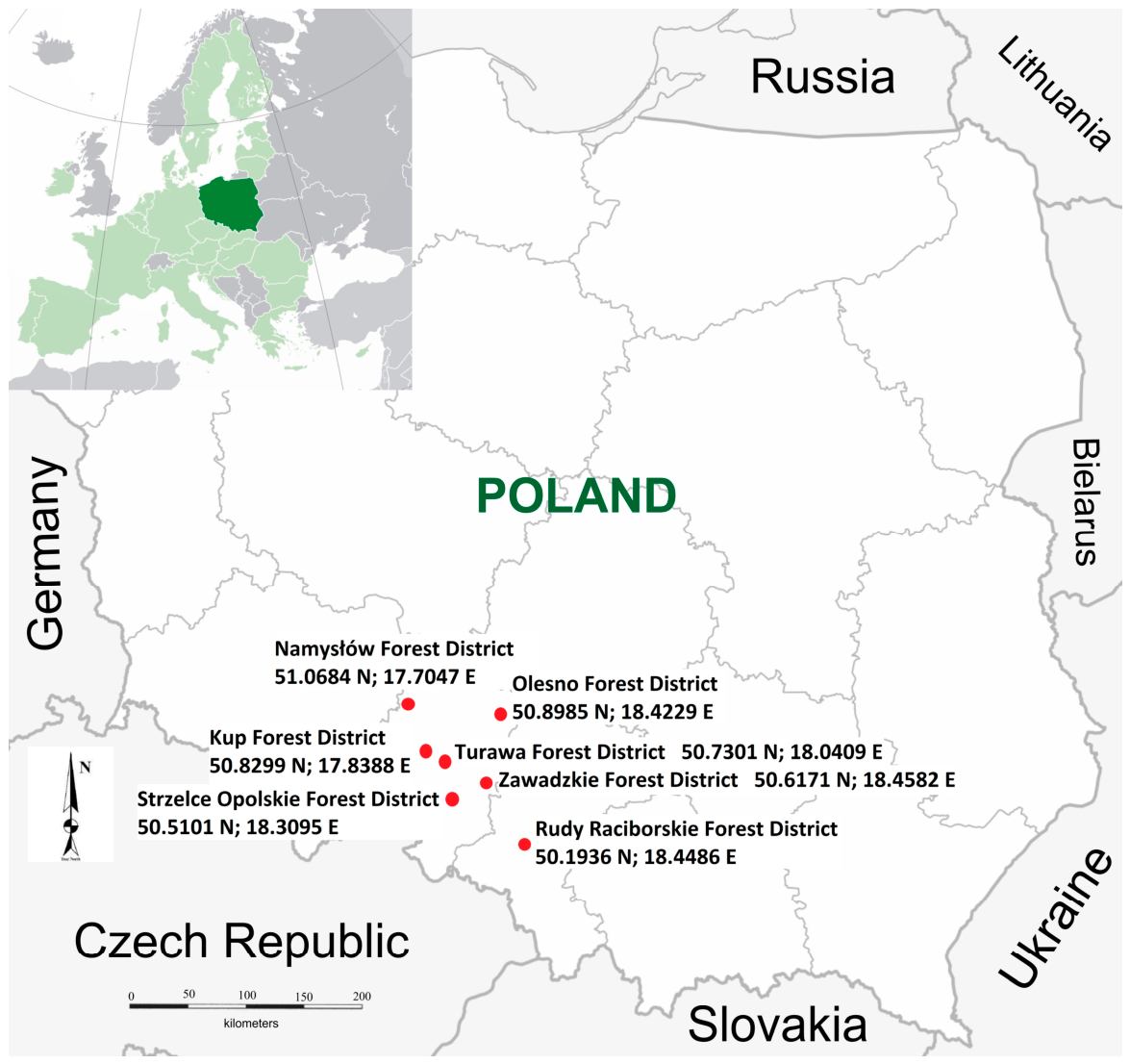
The research was conducted in southern Poland, in seven forest districts belonging to the Regional Directorate of State Forests in Katowice (Figure 1). Fifty-one areas were randomly selected where standard maintenance work (late thinning), clear-cutting (complete and nest cutting), and incidental cutting were carried out. All work was conducted in accordance with the forest management principles [29] applicable at PGL LP (State Forest National Forest Holding). Table 1 summarizes the basic data on the tree stands. Timber harvesting was carried out using a Logset 12H harvester (Logset, Koivulahti, Finland) with a hybrid drive and a Logset 8H harvester (Logset, Koivulahti, Finland) with a standard drive, the technical data for which are presented in Table 2. Machine harvesting was used primarily for coniferous species.
Figure 1.
Location of study areas.
Table 1.
Characteristics of the study areas.
Table 2.
Basic technical data of harvesters.
Timber harvesting in all study areas was conducted using the CTL (Cut to Length) system. Large-sized timber was produced as logs with lengths of 2.5 m, 3 m, 3.7 m, 4 m, 5 m, and 6 m, as well as logs with average lengths ranging from 8 m to 14.2 m. Medium-sized timber was produced as rolls with lengths of 1.2 m and 2.5 m. The routes of the harvesters were determined by the machine operators during operations, taking into account the terrain conditions and the structure of the tree stand [30]. The width of the strip roads was approximately 4 m, and the average distance between the trails was approximately 20 m. The terrain in the study areas was characterized by a slight slope, which allowed the machines to move freely. The work was carried out in the summer months of 2025, and at no point during the study were there any conditions limiting the movement of the machines, such as low soil bearing capacity due to high moisture content or unfavorable weather conditions (rain, wind).
The machines were operated by two operators with three to fourteen years of experience, sufficient to achieve high harvester efficiency [31]. In addition, they completed courses in the operation of such machines and held professional qualifications to work with harvesters. Before the measurements began, the operators were informed of the nature of the planned research.
2.2. Machine Performance
The timber harvesting efficiency of the machines studied was determined for productive time (PW), including main work time (cutting and felling, debranching and cross-cutting) and complementary work time (moving) [32,33]. Productivity was determined using readings from the Logset TOC-MD harvester operating system. The machine’s control system recorded the duration of the entire work shift, operating time, and fuel consumption. These data were collected at the end of each work shift for each study area. Fuel consumption was analyzed using two complementary indicators: liters per hour of production time (L·h−1), reflecting engine workload, and liters per cubic meter of timber harvested (L·m−3), characterizing production efficiency. This approach allowed the separation of absolute fuel consumption from the impact of productivity changes. Working time was recorded with an accuracy of 1 min, and fuel consumption with an accuracy of 0.01 L·h−1. The volume of timber harvested in the study areas was determined based on measurements taken by forest service employees, in accordance with the rules in force in the State Forests [34]. For each study area, the share of supportive work time (SW) was also determined on the basis of records from the machine’s operating system. The productive time (PW) utilization factors were calculated as the percentage of PW in the total work time (WT) spent on the work area. Operating and unit cost analyses were carried out for work shifts of three different lengths—8, 10, and 16 h, respectively.
2.3. Machine Operating Costs
The economic efficiency of the harvesters under study was determined as unit costs expressed in EUR·m−3. For each study area, standard cost items were calculated: depreciation cost, insurance cost, loan servicing cost, fuel and lubricant cost, repair cost, and labor cost, in accordance with the methodology proposed by Miyata [35] and used in many studies [19,36,37]. The data compiled in Table 3 were used in the cost calculations.
Table 3.
Data used to calculate costs.
2.4. Statistical Analysis
Statistical analyses were performed using Statistica 12 (StatSoft, Inc., Kraków, Poland 2014). Descriptive statistics of the analyzed variables were calculated, and the Shapiro–Wilk test was used to assess the conformity of empirical distributions with the normal distribution. The Student’s t-test, one-way analysis of variance, and post hoc test of the largest significant differences (NIR) were used to determine the significance of performance differences between the compared harvesters and the tested parameters. Correlations between the volume of harvested trees and harvester performance were determined. Statistical analyses were performed for α = 0.05, and statistically significant differences occurred for p < 0.05.
3. Results
3.1. Machine Performance
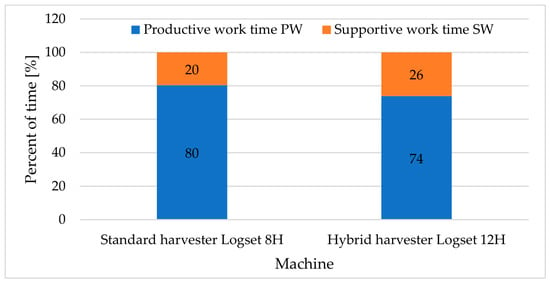
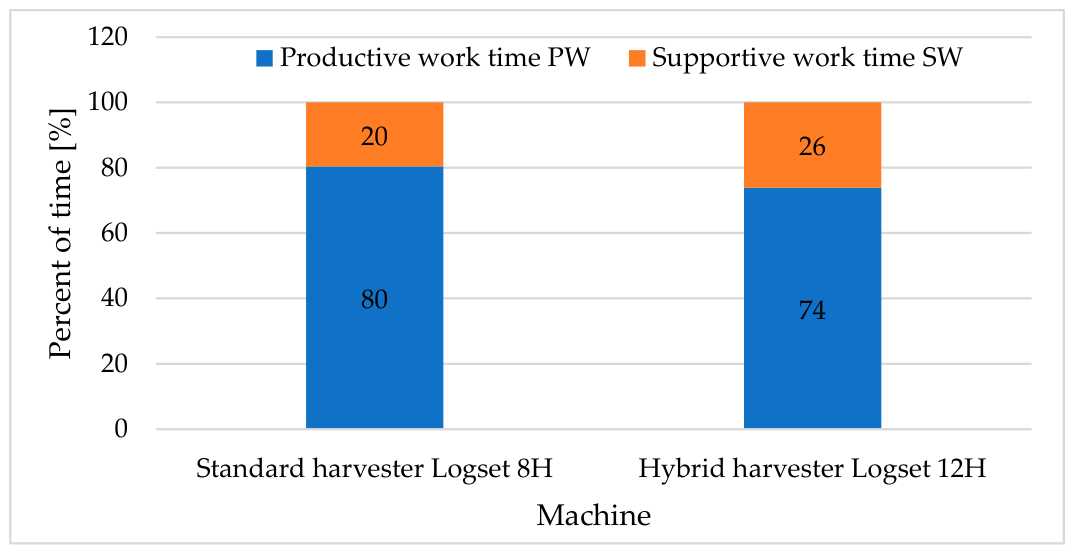
Performance and fuel consumption measurements were conducted for both harvesters over a period of more than 879 h. Figure 2 shows the proportion of productive work time (PW) and supportive work time (SW) in the working shift of the tested harvesters with standard and hybrid drives.
Figure 2.
Share of productive work time (PW) and supportive work time (SW) of a harvester with a standard and hybrid drive.
The largest proportion of complementary time (CW) was maintenance time, averaging 23%. Both the technical condition of the machines and their correct operation, which did not result in significant failures, were at a high level. The productive time (PW) utilization factors were 0.8 for the standard drive harvester and 0.74 for the hybrid drive harvester.
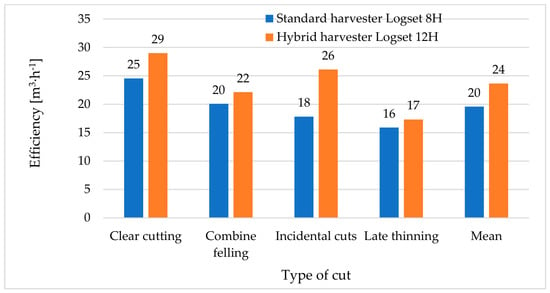
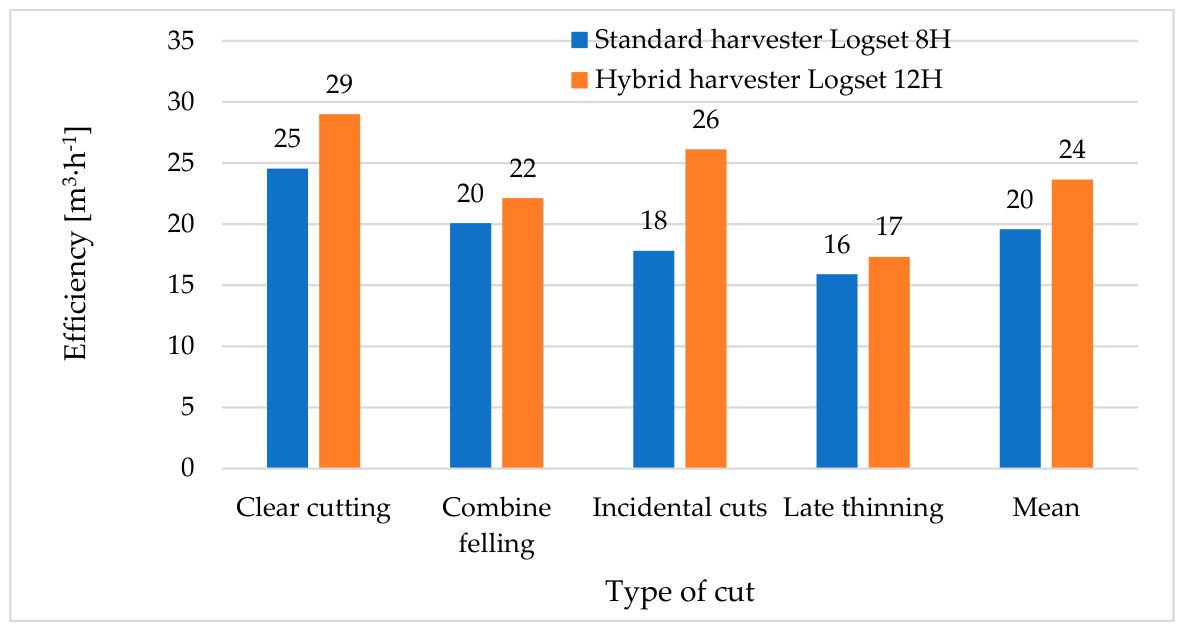
Table 4 and Figure 3 show descriptive statistics and measures of work efficiency variability for each machine and cutting category. The total volume of timber harvested during this study was 7740 m3 for the standard harvester and 8240 m3 for the hybrid harvester.
Table 4.
Basic statistics of work efficiency variability for harvesters with standard and hybrid drives were obtained on all working areas.
Figure 3.
Performance of harvesters with standard and hybrid drives, depending on the type of cut.
The harvester with a hybrid drive achieved an average productivity increase of approximately 17% compared to the machine with a standard drive across all test areas. The average difference in productivity was statistically significant (Student’s t-test: t = −2.03; p = 0.04). The advantage of the hybrid drive machine was evident in all types of cutting analyzed, with the largest differences in productivity between the machines observed in random cutting (32%) and clear-cut areas (16%). A characteristic feature was the significantly greater spread in the productivity of the hybrid harvester—almost 29 m3·h−1—compared to the harvester with a standard drive—almost 20 m3·h−1.
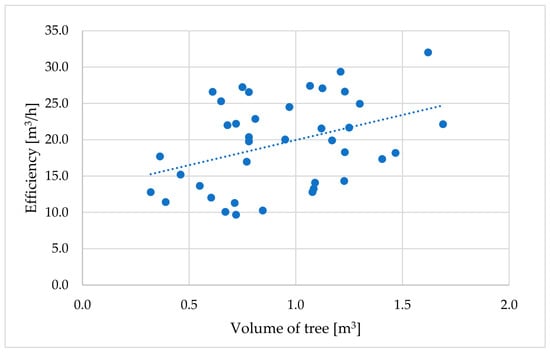
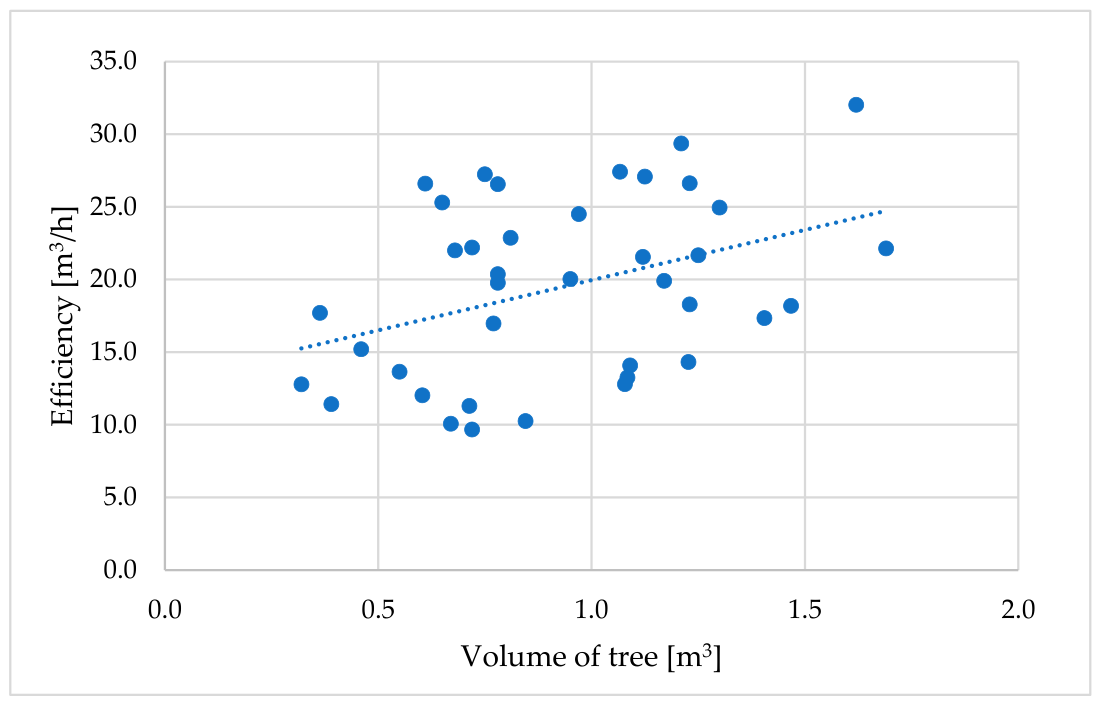
Figure 4 shows the relationship between the average productivity of harvesters and the volume of individual tree stumps.
Figure 4.
Dependence of harvester efficiency on the average volume of tree trunks in the research areas.
There is a weak (r = 0.3838) positive correlation between the parameters studied. The low coefficient of determination, R2 = 0.147, means that Equation (1) describing the above relationship explains only about 15% of the variability, but it is statistically significant (p = 0.01).
where:
y—efficiency [m3·h−1]
x—volume of tree [m3]
There is a weak (r = 0.3838) positive correlation between the parameters studied. The low coefficient of determination, R2 = 0.147, means that the equation describing the above relationship explains only about 15% of the variability, but it is statistically significant (p = 0.01). The relationship between the two variables was not directly proportional, with a regression coefficient of 7.0762.
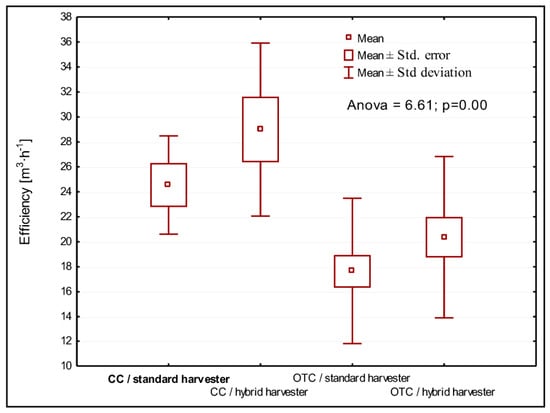
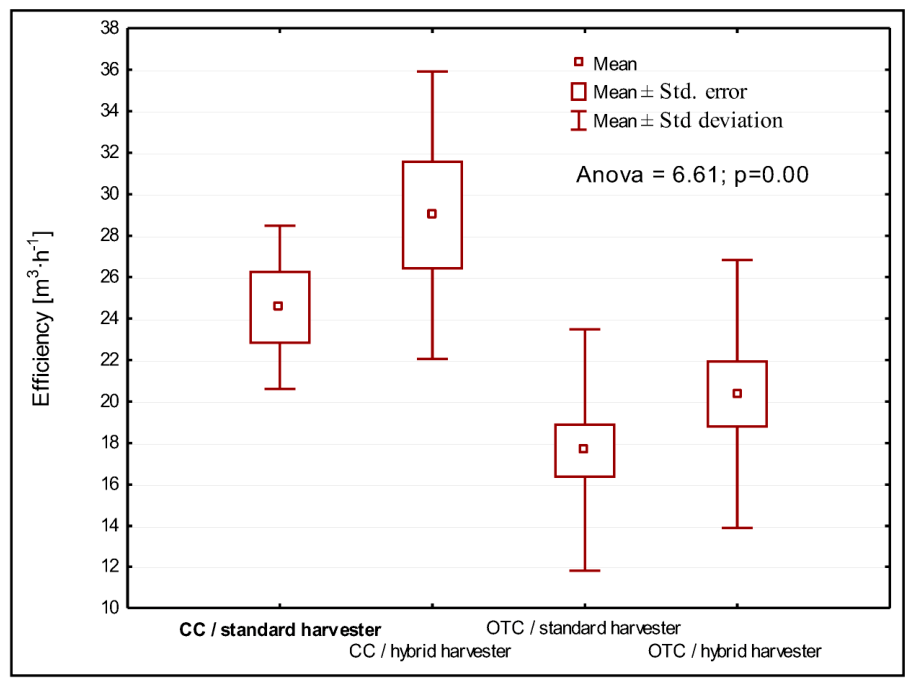
Both tested machines showed higher efficiency in clear-cut stands than in patch cuts, thinning, and selective cutting. The difference in harvester productivity in clear-cut areas compared to other types of cutting exceeded 27% (Figure 5, Table 5). The highest productivity was recorded for the hybrid-powered harvester in clear-cut stands (29 m3·h−1). In these conditions, the productivity of the standard drive machine was lower (24 m3·h−1), but the differences were not statistically significant (p > 0.05). In stands where other types of cutting were performed, the hybrid-powered harvester also demonstrated higher productivity (20 m3·h−1) compared to the standard drive machine (17 m3·h−1), although, as in the case of clear cuts, the differences between the machines were not statistically significant (p > 0.05).
Figure 5.
Efficiency of harvesters with classic and hybrid drives in stands with different types of cuts. CC—clear cuts; OTC—Other types of cuts.
Table 5.
Analysis of differences between the performance of classic and hybrid harvesters in stands with different types of cutting, NIR test.
3.2. Fuel Consumption
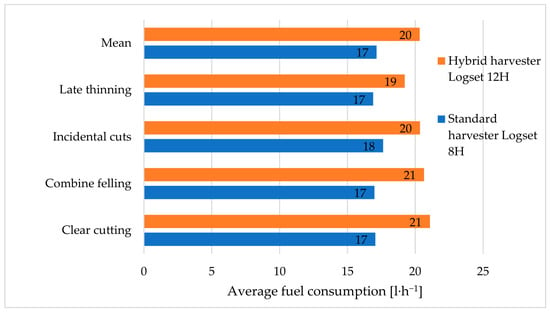
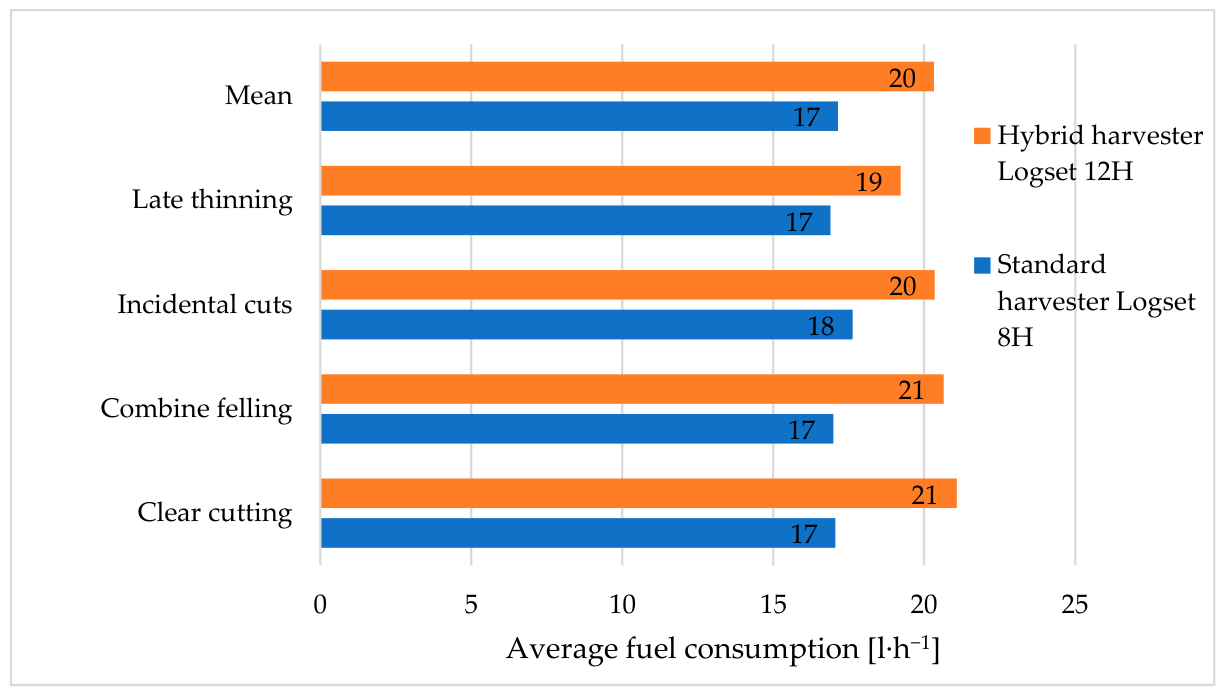
In all analyzed variants, the hybrid harvester was characterized by higher average fuel consumption than the classic harvester (Figure 6). These differences were relatively stable, ranging from 2 to 4 L·h−1. The average fuel consumption was 17.15 L·h−1 (0.98 L·m−3) for the harvester with a standard drive and 20.33 L·h−1 (1.44 L·m−3) for the machine with a hybrid drive. The harvester with a hybrid drive, therefore, consumed on average 16% more fuel than the machine with a standard drive. The greatest differences, to the disadvantage of the harvester with a hybrid drive, occurred in clear-cut stands, where the difference in fuel consumption was 4 L·h−1.
Figure 6.
Average fuel consumption by harvesters in stands with different types of cutting.
3.3. Machine Operating Costs
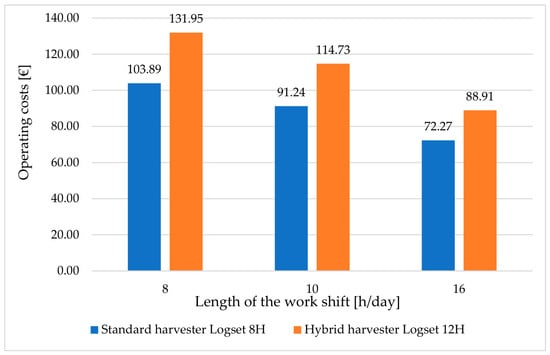
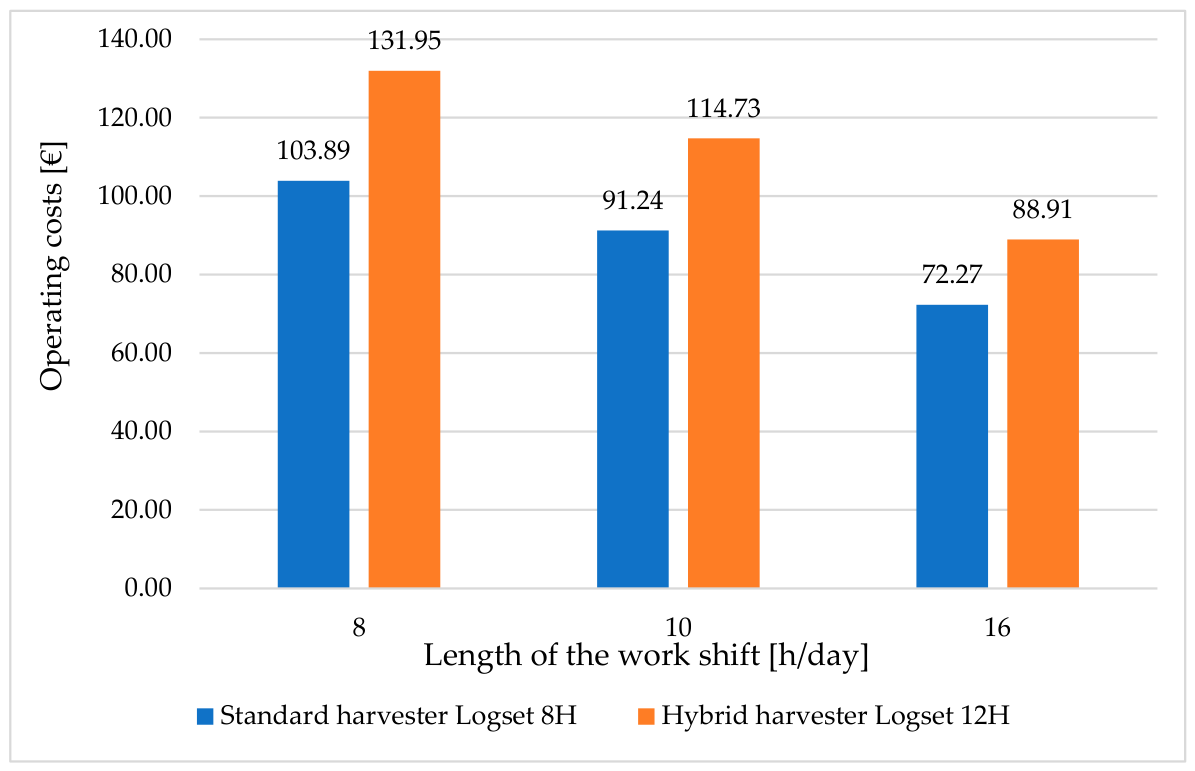
Regarding unit costs, the main differences between the machines under review related to the purchase price, which was almost 50% higher for the hybrid harvester (Table 3). The repair costs for both harvesters were approximately 3000 EUR·year−1 for the hybrid harvester and 14,000 EUR·year−1 for the standard harvester, resulting from different degrees of wear and tear (number of machine hours worked) and the extent of scheduled repairs carried out in the last year of their use. In all analyzed cases of shift length, the operating costs of the hybrid harvester were higher than those of the combustion engine harvester—approximately 23% for 8 h shifts and approximately 24% higher for 10 and 16 h shifts (Figure 7).
Figure 7.
Operating costs of standard and hybrid harvesters depend on the length of the working shift.
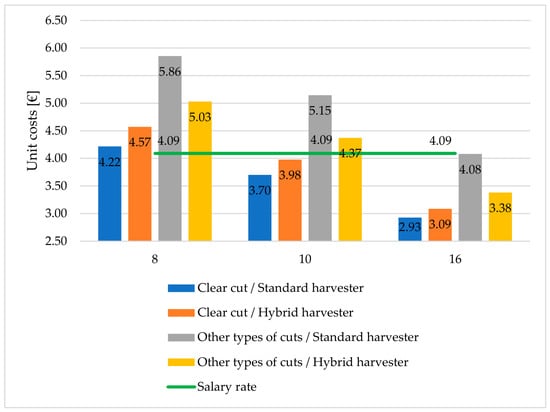
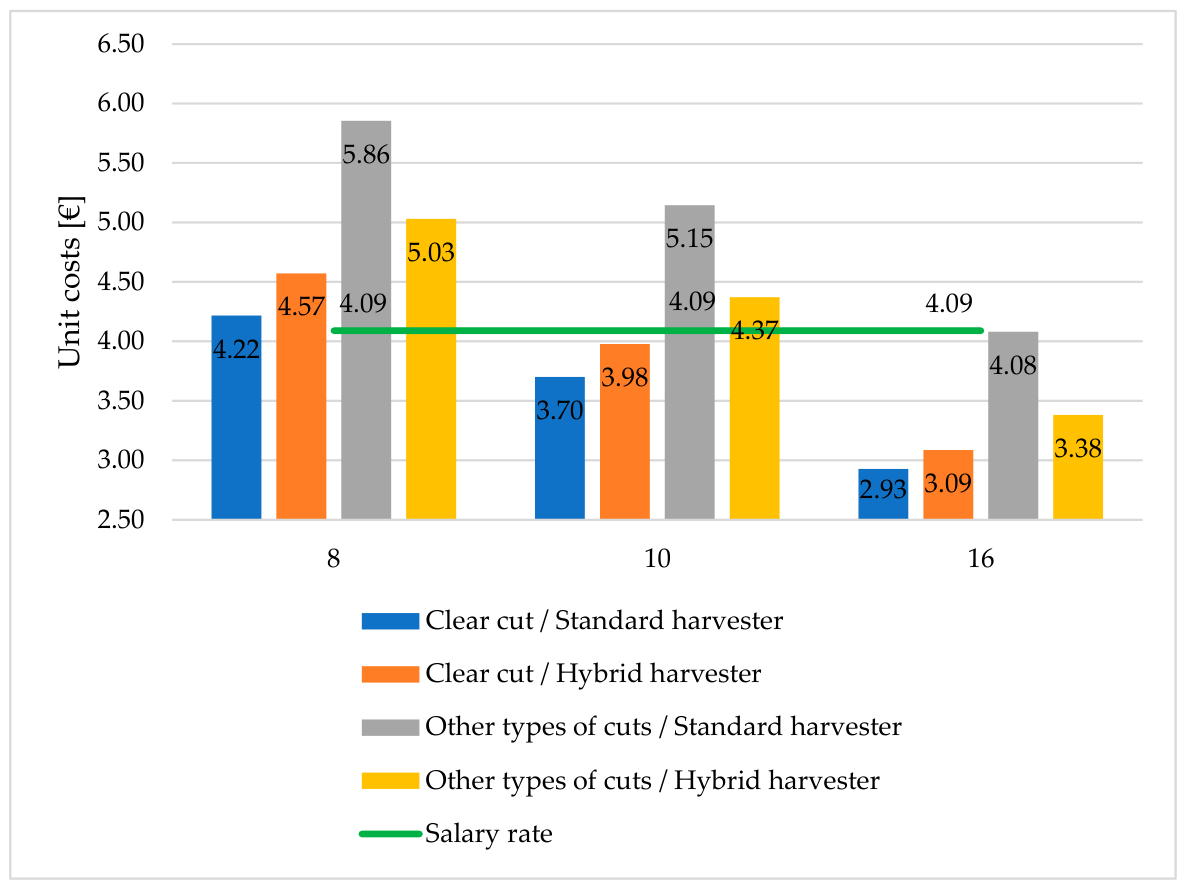
As with operating costs, unit costs also decreased with longer working shifts, with a more pronounced reduction for shifts longer than 10 h (Figure 8). We recorded similar unit costs for both harvesters working in clear-cut stands—on average for both machines from 4.20 EUR·m−3 for an 8 h working shift, through 3.70 EUR·m−3 for a 10 h shift to 2.90 EUR·m−3 for a 16 h shift. The hybrid harvester was more economical than the standard machine when working in stands where selective cutting, late thinning, and incidental cutting were performed. The average unit cost of timber harvesting with this harvester was approximately 18% lower for all tested working shift lengths compared to a standard drive machine (approx. 0.77 EUR·m−3). With a harvesting rate of 4.09 EUR·m−3 regardless of drive type, 8 h shifts are unprofitable, 10 h shifts are profitable only in felling operations, and only shifts of approximately 15 h per day ensure profitability of timber harvesting with both machines, regardless of the type of cuts performed.
Figure 8.
Unit costs of timber harvesting with standard and hybrid harvesters, depending on the length of the work shift.
4. Discussion
The results of the harvester performance tests presented have certain limitations arising from the specific nature of the analyses, which were carried out not under laboratory conditions but in the actual working conditions of the machine in the forest stand. However, field trials allow us to demonstrate the actual variability in performance, identify the factors determining it, and, where possible, assess them qualitatively. Among the most significant methodological limitations in this case, hindering a direct comparison of harvester efficiency, were the machine itself and the working environment. During the discussion, an attempt was made to explain the nature of these limitations.
Hybrid drive systems can theoretically reduce fuel consumption by several percent compared to conventional machines, while also reducing emissions and improving the operational dynamics of forestry machines [27,38,39]. These effects depend largely on working conditions, workstation design, and machine organization [40,41,42]. The hybrid drive used in the Logset 12H GTE Hybrid harvester (Logset, Hännisentie 2, 66,530 Koivulahti, Finland) reduces CO2 emissions by 15–30% and, according to the manufacturer, results 5% lower noise emissions and fuel savings of up to 25% [43]. This is because the combustion engine operates at almost constant, optimal revolutions (approximately 1500 rpm), which eliminates increases in energy consumption during sudden load changes. Lower engine revolutions also result in lower noise levels, which improves the operator’s working comfort and benefits the environment. In addition, the electric motor immediately provides additional power during the most energy-intensive technological operations, such as simultaneous crane and head operation. The ability of the diesel engine to operate at a more stable load has a positive effect on the performance of post-treatment exhaust gas purification systems such as EGR (Exhaust Gas Recirculation), SCR (Selective Catalytic Reduction), and DPF (Diesel Particulate Filter) [28].
Fuel consumption significantly affects the cost of mechanical timber harvesting, accounting for up to 82% [44]. According to Kärhä et al. [45], the average fuel consumption for a harvester in clear-cuts is 1.4 L·m−3. In thinning operations, fuel consumption increases to 1.4–3.4 L·m−3 due to the greater proportion of machine travel between trees and their lower unit volume [46]. In the authors’ studies, the average fuel consumption in all analyzed stands was 17.10 L·h−1 (0.98 L·m−3) for a harvester with a standard drive and 20.09 L·h−1 (1.44 L·m−3) for a hybrid machine, which indicates favorable parameters for the analyzed harvesters, with an advantage for the harvester with a standard drive. Thus, the data published by Lajunen et al. [47] were not confirmed, as they reported that electro-hybrid solutions can reduce fuel consumption by 10 to 50%. This situation may have been influenced by the diverse structure of the stands on which we conducted our research. In addition, a hybrid harvester may consume more fuel per hour of production time due to the higher intensity of the work cycle and the higher proportion of peak loads (especially in clear-cut stands), which increases the energy demand of the process per unit of time. The internal combustion engine must not only power the machine but also charge the batteries. It therefore operates under a heavier load, which can result in higher fuel consumption. Hybrid work machines, such as harvesters, may show higher fuel consumption than conventionally powered machines during prolonged operation under heavy loads. This is due to the increased gross vehicle weight from additional components such as generators, batteries, or supercapacitors. Another reason is the lack of benefits from energy recovery—hybrid transport vehicles save fuel mainly through energy recuperation during braking. In forest stand operating conditions, where the machine moves slowly or works while stationary, the potential for energy recovery is limited. Energy losses in the conversion system must also be considered, as well as the mismatch between the operating characteristics of the hybrid system and the variable load typical of forestry operations during timber harvesting. The power compensation process requires advanced control algorithms that analyze vehicle operating parameters, battery charge level, and current drive system load in real time. Precise synchronization of both drive sources improves the machine’s dynamic performance, increases its energy efficiency, and reduces power losses in the hybrid system.
The efficiency of harvester use is determined primarily by their technical specifications, particularly power and crane reach [48]. The theoretical maximum crane reach of the hybrid machine was approximately 1 m greater. In practice, however, the crane’s full reach is limited by the heavy loads and the way the stands are accessed. Operating skid trails spaced every 20 m meant that both machines harvested trees from strips with a maximum width of 10 m. Key terrain factors affecting the mobility and stability of the machine and causing soil damage include slope gradient, soil bearing capacity and moisture content, the presence of terrain obstacles, and the availability of a network of skid trails. The most important stand factors determining harvester performance include tree thickness and height, stand density and age structure, dominant species, and type of felling [36,40,49,50,51,52]. To a certain extent, these factors were standardized across the study areas: stand classifications and the selection of trees for felling were conducted according to uniform rules applicable within the State Forests. However, differences between stands are inevitable; for example, average tree diameter significantly affects work efficiency. The wide scope of the research may, to some extent, have offset differences arising from stand structure. This factor, which is difficult to identify, nevertheless constitutes a methodological limitation of the present study and complicates the comparative assessment of the efficiency of the harvesters under investigation.
This study analyzed timber harvesting in lowland areas in stands that varied in cutting type and tree volume. The results observed during measurements of the standard harvester’s performance were comparable to those reported by Moskalik et al. [53], who determined the productivity in thinning operations to be 8.6–16.1 m3·h−1 and in clear-cutting operations to be 19.8–32.1 m3·h−1.
The higher productivity of the hybrid harvester was similar to the values reported by Spinelli and Arruda Moura [54], although in that experiment, the difference in productivity in favor of the hybrid machine was 10% greater. This may have been influenced by the use of classic harvesters rather than multi-purpose excavator-based machines. Excavators are often used as base machines for constructing harvesters and are a good alternative to specialized units [55], especially when they are not used constantly for timber harvesting [56]. The lower productivity of such machines compared to classic harvesters is due to their poorer mobility in forest terrain [54].
The established linear relationship between productivity and the volume of coarse woody debris from harvested trees corresponds to the results obtained in many analyses [57]. Although our regression model is linear rather than logarithmic, it is consistent in terms of the trend: productivity increases with increasing volume of coarse woody debris from harvested trees. The differences are probably due to the fact that the analyses were conducted for the average volume of trees harvested in individual study areas. Logarithmic curves describing this relationship tend to flatten out for larger tree volumes, usually due to longer felling and delimbing times [58].
The results clearly indicate a significant impact of working shift length on the operating costs of harvesters, regardless of drive type or the type of cuts made. As the working shift increased from 8 to 16 h, the hourly costs of both machines decreased, consistent with the principles of working time analysis and the economics of forest machine use described by Miyata [35] and Germain et al. [59]. A better distribution of fixed costs over more working hours directly leads to lower unit costs. However, in practice, the three-shift system offers the highest potential productivity and thus the lowest unit cost—is used [60], but does not result in a proportional reduction in total costs. Longer working hours lead to excessive wear and tear on machine parts, which translates into increased maintenance costs. Three-shift operations also usually results in increased personnel costs [61]. For this reason, we did not analyze the impact of round-the-clock (24 h) machine operation on the level of their operating costs in this study.
One factor that may have made it difficult to directly compare the operating costs of the machines under investigation was their age and the associated repair costs, which were higher for the standard harvester. The cost calculation method adopted, which involved averaging repair costs, made it possible to standardize this factor. In all the variants analyzed, the operating costs of a hybrid harvester were higher than those of a standard machine. This is mainly due to the higher purchase cost, 16% higher fuel consumption, and greater technical complexity of the drive system. Although hybrid technologies used in forestry machines have high potential for improving energy efficiency [38], their purchase price is higher than that of standard machines [62], which means that in the initial period of use, investment costs may outweigh potential operating savings.
The analyzed Logset 8H harvester, powered by a diesel engine, had operating costs of approximately 104 EUR·h−1 when used in a standard 8 h shift system. When the working time was extended to 10 h, the operating costs decreased by approximately 13 EUR·h−1. This level of operating costs for a machine of this size is slightly lower than the values reported in the literature. Adebayo et al. [63] estimated the hourly operating costs of large harvesters, used for 1800 h per year, at 118 EUR·h−1, while Danilović et al. [64] estimated them at 121 EUR·h−1. Kärhä et al. [65] indicate that the operating costs of classic harvesters weighing 16–18 tons, operating for 2500 h per year, amount to approximately 101 EUR·h−1.
The unit costs of timber harvesting with harvesters are highly variable, as they also depend on the work efficiency achieved, which is influenced by many factors in the working environment [48,64,66]. In this study, the unit costs of timber harvesting also showed some variability, ranging from approximately 3 EUR·m−3 to 5.5 EUR·m−3. High unit costs of timber harvesting in thinning operations are a significant problem [67], especially in younger stands. In late thinning operations, due to the greater volume of trees harvested, the financial outcome is better. For example, when working 10 h shifts in pine stands with an admixture of spruce, with properly selected work organization, the unit cost of timber harvesting with a harvester can be less than 3.5 EUR·m−3 [40]. In this study, for the same group of stands—other types of cuts, the costs for the hybrid harvester were almost 1 EUR·m−3 higher. For a machine with a standard drive, the costs were approximately 1.6 EUR·m−3 higher. In the studies conducted during clear-cutting, the unit costs of timber harvesting with Logset harvesters, regardless of their drive system type, were similar and lower than in other types of cuts. Depending on the duration of the work shifts, they ranged from nearly 4.6 EUR·m−3 for 8 h shifts to approximately 3 EUR·m−3 for shifts twice as long. Slightly higher values are usually reported in the literature. For example, the unit cost of a Ponsse Scorpion King harvester equipped with a 210 kW engine, harvesting coniferous wood in clear-cuts using the CTL system for 10 h shifts, is close to 4.9 EUR·m−3 [68]. In clear-cut areas in Finland, when harvesting spruce timber in a work variant with an average working shift length of 11 h, the average unit cost of timber harvesting with large harvesters equipped with 160–205 kW engines amounted to 4.61 EUR·m−3 [69].
5. Conclusions
Under the studied conditions, the hybrid harvester showed higher average productivity and comparable or lower unit costs in some operations, but the independent effect of the hybrid drive remains uncertain. The operating costs of the hybrid harvester exceeded those of the conventional machine, and the unit fuel consumption was also higher. However, thanks to the significantly higher efficiency of the hybrid harvester, the unit cost of timber harvesting in clear-cuts was similar to that obtained when using a conventional harvester. In the case of thinning and complex cutting, it can be expected that the unit cost of the hybrid machine will be lower compared to classic harvesters.
The use of electro-hybrid drives theoretically leads to a significant increase in the performance of new-generation forestry machine drives and to an increase in their energy efficiency. The expected effect of these changes is a reduction in greenhouse gas emissions, lower operating costs, and consequently, lower unit costs of harvesting timber. The results obtained in the presented study, which differed from expectations, for example, in terms of fuel consumption, indicate the complexity of production processes in forestry. Their efficiency is influenced by unique stand factors that are difficult to precisely quantify: tree volume, degree of branching, etc. However, full stabilization and repeatability of measurements in field operational studies in forestry are practically impossible. A further limitation of the obtained results is the inability to compare identical harvester models that differ only in drive type (standard or hybrid).
Author Contributions
Conceptualization, G.S.; methodology, G.S., J.K. (Jozef Krilek), M.A., A.G., D.K. and M.P.; software, G.S., D.K. and M.P.; validation, D.K., G.S. and M.P.; formal analysis, G.S. and D.K.; investigation, M.P.; resources, M.P.; data curation, G.S. and M.P.; writing—original draft preparation, G.S. and D.K.; writing—review and editing, G.S., J.K. (Jozef Krilek), J.K. (Ján Kováč), M.A., A.G., D.K., P.T. and A.S., visualization, G.S.; supervision, G.S.; project administration, P.T.; funding acquisition, P.T. All authors have read and agreed to the published version of the manuscript.
Funding
This work was supported by the Ministry of Science and Higher Education, Poland [SUB/040017-D019].
Data Availability Statement
The data used in this article are available from the corresponding author.
Acknowledgments
The authors would like to thank the staff of the State Forests for their assistance in conducting the research. The authors extend their special thanks to SKIPDREW sp. z o.o. for providing data from the harvesters’ operating systems.
Conflicts of Interest
The authors declare no conflicts of interest.
References
- Bonan, G.B. Forests and climate change: Forcings, feedbacks, and the climate benefits of forests. Science 2008, 320, 1444–1449. [Google Scholar] [CrossRef] [Scilit]
- Pan, Y.; Birdsey, R.A.; Fang, J.; Houghton, R.; Kauppi, P.E.; Kurz, W.A.; Phillips, O.L.; Shvidenko, A.; Lewis, S.L.; Canadell, J.G.; et al. A large and persistent carbon sink in the world’s forests. Science 2011, 333, 988–993. [Google Scholar] [CrossRef] [Scilit] [PubMed]
- Nabuurs, G.-J.; Delacote, P.; Ellison, D.; Hanewinkel, M.; Lindner, M.; Nesbit, M.; Ollikainen, M.; Savaresi, A. A New Role for Forests and the Forest Sector in the EU Post-2020 Climate Targets: From Science to Policy; European Forest Institute: Joensuu, Finland, 2015. [Google Scholar] [CrossRef]
- Food and Agriculture Organization of the United Nations. Global Forest Products Facts and Figures 2024; FAO: Rome, Italy, 2025; Available online: https://openknowledge.fao.org/handle/20.500.14283/cd8005en (accessed on 11 May 2026).
- World Bank Group. Agriculture, Forestry, and Fishing, Value Added (% of GDP). Available online: https://data.worldbank.org/indicator/NV.AGR.TOTL.ZS (accessed on 11 May 2026).
- Gendek, A.; Aniszewska, M.; Tylek, P.; Szewczyk, G.; Malaťák, J.; Bradna, J.; Krilek, J.; Čabalová, I.; Szakálosné Mátyás, K. Energy Utilization of Agglomerated Logging Residues; Inżynieria Rolnicza: Kraków, Poland, 2026; 160p. [Google Scholar]
- Gendek, A.; Aniszewska, M.; Tylek, P.; Szewczyk, G.; Malaťák, J.; Bradna, J.; Krilek, J.; Čabalová, I.; Szakálosné Mátyás, K. The influence of material and process parameters on pressure agglomeration and properties of pellets produced from torrefied forest logging residues. Materials 2016, 19, 317. [Google Scholar] [CrossRef] [Scilit]
- Jabłoński, K.; Stempski, W. Rola lasów i leśnictwa w pochłanianiu gazów cieplarnianych. J. Civ. Eng. Environ. Archit. 2017, 4, 163–170. [Google Scholar] [CrossRef] [Scilit]
- Nordfjell, T.; Bacher, M.; Eriksson, L.; Kadlec, J.; Stampfer, K.; Suadicani, K.; Suwała, M.; Talbot, B. Operational factors influencing efficiency in conversion. In Norway Spruce Conversion; Spiecker, H., Ed.; Brill: Leiden, The Netherlands; Boston, MA, USA, 2010; pp. 197–223. [Google Scholar]
- Asikainen, A.; Anttila, P.; Verkerk, H.; Díaz-Yáñez, O.; Röser, D. Development of forest machinery and labour in the EU in 2010–2030. In Pushing the Boundaries with Research and Innovation in Forest Engineering; Stampfer, K., Ed.; FORMEC: Vienna, Austria, 2011; pp. 1–8. [Google Scholar]
- Lindroos, O.; Burström, L. Accident rates and types among self-employed private forest owners. Accid. Anal. Prev. 2010, 42, 1729–1735. [Google Scholar] [CrossRef] [Scilit]
- Mederski, P.S.; Karaszewski, Z.; Rosińska, M.; Bembenek, M. Dynamika zmian liczby harwesterów w Polsce oraz czynniki determinujące ich występowanie. Dynamics of harvester fleet change in Poland and factors determining machine occurrence. Sylwan 2016, 10, 795–804. [Google Scholar] [CrossRef]
- Nordfjell, T.; Björheden, R.; Thor, M.; Wästerlund, I. Changes in technical performance, mechanical availability and prices of machines used in forest operations in Sweden from 1985 to 2010. Scand. J. For. Res. 2010, 25, 382–389. [Google Scholar] [CrossRef] [Scilit]
- Spinelli, R.; Magagnotti, N.; Picchi, G. Annual use, economic life and residual value of cut-to-length harvesting machines. J. For. Econ. 2011, 17, 378–387. [Google Scholar] [CrossRef] [Scilit]
- Spinelli, R.; Owende, P.; Ward, S. Productivity and cost of CTL harvesting of Eucalyptus globulus stands using excavator-based harvesters. For. Prod. J. 2001, 1, 67–77. [Google Scholar]
- Visser, R.; Stampfer, K. Expanding ground-based harvesting onto steep terrain: A review. Croat. J. For. Eng. 2015, 2, 321–331. [Google Scholar]
- Szewczyk, G.; Spinelli, R.; Magagnotti, N.; Tylek, P.; Sowa, J.M.; Rudy, P.; Gaj-Gielarowiec, D. The mental workload of harvester operators working in steep terrain conditions. Silva Fenn. 2020, 54, 10355. [Google Scholar] [CrossRef] [Scilit]
- Szewczyk, G.; Spinelli, R.; Magagnotti, N.; Mitka, B.; Tylek, P.; Kulak, D.; Adamski, K. Perception of the harvester operator’s working environment in windthrow stands. Forests 2021, 12, 168. [Google Scholar] [CrossRef] [Scilit]
- Szewczyk, G.; Krilek, J.; Kulak, D.; Leszczyński, K.; Pacia, T.; Sowa, J.M.; Stańczykiewicz, A. Economic efficiency of fully mechanized timber harvesting in coniferous stands of the 2nd age class. Ann. For. Res. 2023, 66, 155–169. [Google Scholar] [CrossRef] [Scilit]
- Kormanek, M.; Dvořák, J. Use of impact penetrometer to determine changes in soil compactness after Entracon Sioux EH30 timber harvesting. Croat. J. For. Eng. 2022, 43, 325–337. [Google Scholar] [CrossRef] [Scilit]
- Mederski, P.S.; Schweier, J.; Đuka, A.; Tsioras, P.A.; Bont, L.G.; Bembenek, M. Mechanised harvesting of broadleaved tree species in Europe. Curr. For. Rep. 2022, 8, 1–19. [Google Scholar] [CrossRef] [Scilit]
- Lundbäck, M.; Häggström, C.; Nordfjell, T. Worldwide trends in methods for harvesting and extracting industrial roundwood. Int. J. For. Eng. 2021, 32, 202–215. [Google Scholar] [CrossRef] [Scilit]
- Athanassiadis, D. Energy consumption and exhaust emissions in mechanized timber harvesting operations in Sweden. Sci. Total Environ. 2000, 255, 135–143. [Google Scholar] [CrossRef] [Scilit]
- Trzcianowska, M.; Aniszewska, M.; Gendek, A.; Nurek, T.; Zychowicz, W.; Wójcik, R.; Moskalik, T.; Kędziora, W. Łańcuch Dostaw w Leśnictwie: Stan Obecny i Wyzwania; Inżynieria Rolnicza: Kraków, Poland, 2025; 111p. [Google Scholar]
- Haavikko, H.; Kärhä, K.; Poikela, A.; Korvenranta, M.; Teijo, P.; Palander, T. Fuel consumption, greenhouse gas emissions, and energy efficiency of wood-harvesting operations. Croat. J. For. Eng. 2022, 43, 79–97. [Google Scholar] [CrossRef] [Scilit]
- GHG Protocol. Emission Factors for Cross-Sector Tools. Available online: https://ghgprotocol.org/calculation-tools-and-guidance (accessed on 11 May 2026).
- Mergl, V.; Pandur, Z.; Klepárník, J.; Kopseak, H.; Bačić, M.; Šušnjar, M. Technical solutions of forest machine hybridization. Energies 2021, 14, 2793. [Google Scholar] [CrossRef] [Scilit]
- Einola, K.; Kivi, A. Hydraulic hybrid cut-to-length forest harvester—Evaluation of effects on productivity and fuel efficiency. Actuators 2024, 13, 126. [Google Scholar] [CrossRef] [Scilit]
- Państwowe Gospodarstwo Leśne Lasy Państwowe. Zasady Hodowli Lasu; Załącznik nr 1 do Zarządzenia DGLP nr 108 z dnia 5 grudnia 2023 r.; PGL LP: Warszawa, Poland, 2023. [Google Scholar]
- Państwowe Gospodarstwo Leśne Lasy Państwowe. Zasady Użytkowania Lasu; Załącznik nr 1 do Zarządzenia DGLP nr 66 z dnia 7 listopada 2019 r.; PGL LP: Warszawa, Poland, 2019. [Google Scholar]
- Purfürst, H.T. Learning curves of harvester operators. Croat. J. For. Eng. 2010, 2, 89–97. [Google Scholar]
- Björheden, R. An international nomenclature for forest work study. In Proceedings of the IUFRO XX World Congress, Tampere, Finland, 6–12 August 1995. [Google Scholar]
- Laitila, J.; Väätäinen, K. The productivity and cost of harvesting whole trees from early thinnings with a felling head designed for continuous cutting and accumulation. Int. J. For. Eng. 2023, 34, 76–89. [Google Scholar] [CrossRef] [Scilit]
- Państwowe Gospodarstwo Leśne Lasy Państwowe. Warunki Techniczne—Zasady Przygotowania do Pomiaru, Pomiar, Obliczanie Miąższości i Cechowanie Surowca Drzewnego; Załącznik nr 2 do Zarządzenia DGLP nr 51 z dnia 30 września 2019 r.; PGL LP: Warszawa, Poland, 2019. [Google Scholar]
- Miyata, E.S. Determining Fixed and Operating Costs of Logging Equipment; USDA Forest Service: St. Paul, MN, USA, 1980.
- Spinelli, R.; Magagnotti, N. Wood extraction with farm tractor and sulky: Estimating productivity, cost and energy consumption. Small-Scale For. 2012, 11, 73–85. [Google Scholar] [CrossRef] [Scilit]
- Conrad, J.L., IV. Productivity and cost of post-tornado salvage logging in the Upper Coastal Plain of South Carolina, USA. Croat. J. For. Eng. 2023, 44, 419–429. [Google Scholar] [CrossRef] [Scilit]
- Mergl, V.; Zeizinger, L.; Kománek, M. Advancing sustainability in forestry machinery: Electro-hybrid drives for greenhouse gas reduction and enhanced energy efficiency. Cent. Eur. For. J. 2024, 1, 41–50. [Google Scholar] [CrossRef] [Scilit]
- Pesonen, J.; Prinz, R.; Ovaskainen, H.; Kauranen, P.; Poikela, A.; Kärhä, K. Alternative powertrains and fuels in heavy non-road mobile machinery and their future expectations—A review. Curr. For. Rep. 2025, 11, 10. [Google Scholar] [CrossRef] [Scilit]
- Kärhä, K.; Rönkkö, E.; Gumse, S.I. Productivity and cutting costs of thinning harvesters. Int. J. For. Eng. 2004, 15, 43–56. [Google Scholar] [CrossRef] [Scilit]
- Jiroušek, R.; Klvač, R.; Skoupý, A. Productivity and costs of the mechanised cut-to-length wood harvesting system. J. For. Sci. 2007, 53, 476–482. [Google Scholar] [CrossRef] [Scilit]
- Spinelli, R.; Lombardini, C.; Magagnotti, N. The effect of mechanization level and harvesting system on the thinning cost of Mediterranean softwood plantations. Silva Fenn. 2014, 48, 1003. [Google Scholar] [CrossRef] [Scilit]
- Forest Machine Magazine. Logset 8H. Available online: https://forestmachinemagazine.com/logset-8h/ (accessed on 5 March 2026).
- Klvač, R.; Ward, S.; Owende, P.M.O.; Lyons, J. Energy audit of wood harvesting systems. Scand. J. For. Res. 2003, 18, 176–183. [Google Scholar] [CrossRef] [Scilit]
- Kärhä, K.; Haavikko, H.; Kääriäinen, H. Fossil-fuel consumption and CO2 emissions of logging operations. Eur. J. For. Res. 2023, 142, 547–563. [Google Scholar] [CrossRef] [Scilit]
- Eliasson, L.; Kärhä, K.; Arlinger, J. Fuel consumption in logging operations in Sweden. Int. J. For. Eng. 2023, 34, 366–372. [Google Scholar] [CrossRef] [Scilit]
- Lajunen, A.; Suomela, J.; Pippuri, J.; Tammi, K.; Lehmuspelto, T.; Sainio, P. Electric and hybrid electric non-road mobile machinery—Present situation and future trends. World Electr. Veh. J. 2016, 8, 172–183. [Google Scholar] [CrossRef] [Scilit]
- Dvořák, J.; Bystrický, R.; Hošková, P.; Hrib, M.; Jarkovská, M.; Kováč, J.; Krilek, J.; Natov, P.; Natovová, L. The Use of Harvester Technology in Production Forests; Folia Forstalia Bohemica: Kostelec nad Černými lesy, Czech Republic, 2011; 156p. [Google Scholar]
- Ovaskainen, H.; Uusitalo, J.; Väätäinen, K. Characteristics and significance of a harvester operator’s working technique in thinnings. Int. J. For. Eng. 2004, 2, 67–77. [Google Scholar]
- Palander, T.; Ovaskainen, H.; Lauren, A.; Pasi, A. An enhanced method for improving the efficiency of harvesting tree plantations on flat and sloping terrain using a cutting-cycle productivity model. J. For. Res. 2024, 36, 39. [Google Scholar] [CrossRef] [Scilit]
- Salmivaara, A.; Holmström, E.; Kulju, S.; Ala-Ilomäki, J.; Virjonen, P.; Nevalainen, P.; Heikkonen, J.; Launiainen, S. High-resolution harvester data for estimating rolling resistance and forest trafficability. Eur. J. For. Res. 2024, 143, 1641–1656. [Google Scholar] [CrossRef] [Scilit]
- Rosińska, M.; Bembenek, R.; Picchio, R.; Karaszewski, Z.; Borz, S.A. Harvester efficiency during thinning operations in alder planted stands with some coppice origin. Croat. J. For. Eng. 2025, 1, 19–31. [Google Scholar] [CrossRef] [Scilit]
- Moskalik, T.; Borz, S.A.; Dvořák, J.; Ferencik, M.; Glushkov, S.; Muiste, P.; Lazdiņš, A.; Styranivsky, O. Timber harvesting methods in Eastern European countries: A review. Croat. J. For. Eng. 2017, 2, 231–241. [Google Scholar]
- Spinelli, R.; Arruda Moura, C.A. Decreasing the fuel consumption and CO2 emissions of excavator-based harvesters with a machine control system. Forests 2019, 10, 43. [Google Scholar] [CrossRef] [Scilit]
- Wang, J.; Haarlaa, R. Production analysis of an excavator-based harvester: A case study in Finnish forest operations. For. Prod. J. 2002, 3, 85–90. [Google Scholar]
- Väätäinen, K.; Sikanen, L.; Asikainen, A. Feasibility of excavator-based harvester in thinnings of peatland forests. Int. J. For. Eng. 2004, 15, 103–111. [Google Scholar] [CrossRef] [Scilit]
- Norihiro, J.; Ackerman, P.; Spong, B.; Längin, D. Productivity model for cut-to-length harvester operation in South African eucalyptus pulpwood plantations. Croat. J. For. Eng. 2018, 1, 1–13. [Google Scholar]
- Ackerman, B.; Bekker, J.; Astrup, R.; Talbot, B. Understanding the influence of tree size distribution on the CTL harvesting productivity of two different size harvesting machines. Eur. J. For. Res. 2024, 143, 1199–1211. [Google Scholar] [CrossRef] [Scilit]
- Germain, R.; Regula, J.; Bick, S.; Zhang, L. Factors impacting logging costs: A case study in the Northeast, USA. For. Chron. 2019, 95, 16–23. [Google Scholar] [CrossRef] [Scilit]
- Gerasimov, Y.; Senkin, V.; Väätäinen, K. Productivity of single-grip harvesters in clear-cutting operations in the northern European part of Russia. Eur. J. For. Res. 2012, 131, 647–654. [Google Scholar] [CrossRef] [Scilit]
- Dvořák, J.; Jankovský, M.; Chytrý, M.; Nuhlíček, O.; Natov, P.; Kormanek, M.; Löwe, R. Operational costs of mid-performance forwarders in Czech forest bioeconomy. Forests 2021, 12, 435. [Google Scholar] [CrossRef] [Scilit]
- Šušnjar, M.; Pandur, Z.; Bačić, M.; Lepoglavec, K.; Nevečerel, H.; Kopseak, H. Possibilities for the development of an electric hybrid skidder based on energy consumption measurement in real terrain conditions. Forests 2023, 14, 58. [Google Scholar] [CrossRef] [Scilit]
- Adebayo, A.B.; Han, H.S.; Johnson, L. Productivity and cost of cut-to-length and whole-tree harvesting in a mixed-conifer stand. For. Prod. J. 2007, 6, 59–69. [Google Scholar]
- Danilović, M.; Tomašević, I.; Gačić, D. Efficiency of John Deere 1470D ECOIII harvester in poplar plantations. Croat. J. For. Eng. 2011, 2, 533–548. [Google Scholar]
- Kärhä, K.; Poikela, A.; Palander, T. Productivity and costs of harwarder systems in industrial roundwood thinnings. Croat. J. For. Eng. 2018, 1, 23–33. [Google Scholar]
- Eriksson, M.; Lindroos, O. Productivity of harvesters and forwarders in CTL operations in northern Sweden. Int. J. For. Eng. 2014, 25, 179–200. [Google Scholar] [CrossRef] [Scilit]
- Erber, G.; Holzleitner, F.; Kastner, M.; Stampfer, K. Effect of multi-tree handling and tree size on harvester performance in small-diameter hardwood thinnings. Silva Fenn. 2015, 49, 1428. [Google Scholar] [CrossRef] [Scilit]
- George, A.K.; Kizha, A.R.; Kenefic, L. Economic feasibility of timber harvesting in lowlands. In Exceeding the Vision: Forest Mechanisation of the Future; Stampfer, K., Ed.; University of Sopron Press: Sopron, Hungary, 2019; pp. 379–393. [Google Scholar]
- Kärhä, K.; Anttonen, T.; Poikela, A.; Palander, T.; Laurén, A.; Peltola, H.; Nuutinen, Y. Evaluation of salvage logging productivity and costs in windthrown Norway spruce-dominated forests. Forests 2018, 9, 280. [Google Scholar] [CrossRef] [Scilit]

Disclaimer/Publisher’s Note: The statements, opinions and data contained in all publications are solely those of the individual author(s) and contributor(s) and not of MDPI and/or the editor(s). MDPI and/or the editor(s) disclaim responsibility for any injury to people or property resulting from any ideas, methods, instructions or products referred to in the content. |
© 2026 by the authors. Licensee MDPI, Basel, Switzerland. This article is an open access article distributed under the terms and conditions of the Creative Commons Attribution (CC BY) license.