Article

Realizing Forest Ecosystem Service Value Through Natural Resource Asset Portfolio Supply: A Multi-Case Study from China

School of Public Administration, Guangzhou University, Guangzhou 510006, China
*
Authors to whom correspondence should be addressed.
Forests 2026, 17(6), 678; https://doi.org/10.3390/f17060678
Submission received: 2 April 2026 / Revised: 21 May 2026 / Accepted: 31 May 2026 / Published: 4 June 2026
(This article belongs to the Special Issue Roles and Functions of Forests in Sustainable Rural Development)

Abstract

Addressing the issues of forest resource fragmentation and difficulties in value realization caused by traditional development models, China has explored the Natural Resource Asset Portfolio Supply Model (PSM), offering a new pathway for realizing Forest Ecosystem Service Value (FESV). However, existing studies are mostly descriptive case summaries and have yet to reveal the process mechanisms through which PSM drives forest value enhancement. Accordingly, this study selects five typical cases released by the Ministry of Natural Resources and employs multi-case research and grounded theory to deeply analyze their evolutionary pathways. The findings show that PSM promotes forest value enhancement through a gradient evolutionary pathway of “asset aggregation, functional coupling, and property rights conversion”. Asset aggregation addresses fragmentation through resource integration; functional coupling generates synergies through element combination; and property rights conversion transforms ecosystem services into transferable value carriers through institutional innovation, completing the transition from physical assets to capital. The study further identifies two roles of forest resources in composite asset packages, namely dominant resources and background resources, along with their distinct value enhancement pathways, and reveals how institutional innovation in property rights releases ecosystem services from physical constraints into transferable value carriers. The gradient evolutionary pathway constructed in this paper provides a novel process explanation for theoretical research on ecosystem service value realization, and its cross-context applicability offers a theoretical reference for natural resource management in similar global contexts. Practically, it provides managers with actionable value enhancement pathway choices and institutional design references, while also offering a viable analytical tool for policy optimization of PSM.

1. Introduction

Amid the global collective response to pressing challenges such as climate change and biodiversity loss, the United Nations Sustainable Development Goals (SDGs) underscore the critical importance of the sustainable management and utilization of natural resources for enhancing human well-being [1]. Among these, forests—as the cornerstone of terrestrial ecosystems—provide essential provisioning, regulating, cultural, and supporting services [2], playing an irreplaceable role in maintaining ecological security and fostering green growth [3,4,5]. However, the realization of forest ecosystem services value (FESV) across global regions faces severe impediments [6,7,8,9]. Specifically, traditional, single-factor development models have driven the fragmentation of forest resources [10,11,12,13], precluding the achievement of economies of scale. This has further triggered a series of chain reactions, including low efficiency and difficulties in value realization, posing significant challenges to the sustainable management and utilization of natural resources [7].
To address this dilemma, global governance is increasingly shifting from a focus on single-resource management toward a more holistic model of ecosystem governance. Against this backdrop, packaging different types of natural resource elements such as forestland, farmland, and water areas spatially and comprehensively allocating their ownership rights to enable integrated development through asset packages has emerged as a new approach to realizing FESV.
China also faces the severe challenge of insufficient realization of FESV. Due to factors such as unclear ownership of natural resource assets, fragmented spatial use controls, and an incomplete market-based allocation mechanism, forestland, farmland, and grassland in some regions have been subjected to fragmented development and compartmentalized management. This has weakened the overall function of forest ecosystems and constrained the transformation of economic value embedded in their provisioning, regulating, cultural, and supporting services into actual returns. Particularly under the dual pressures of agricultural expansion and urbanization, large areas of forestland have been converted into farmland or construction land, leading to forest area reduction, increased landscape fragmentation, and subsequent declines in ecological benefits and difficulties in value realization. For example, research shows that in the Changji Demonstration Zone in Jilin Province, China, forest area decreased by 22.9% over nearly 40 years, with farmland reclamation accounting for 92.1% of the total loss. The dominance and aggregation of forest landscapes have continued to decline, and the degree of fragmentation has significantly increased [14], confirming the constraints of single development models on the integrated utilization of forest resources.
Of course, the Chinese government has consistently prioritized the protection and value realization of forest ecosystem services and has introduced several innovations in natural resource management. A notable example is the Natural Resource Asset Portfolio Supply Model (PSM), which was explicitly promoted by the Ministry of Natural Resources. From a long-term policy perspective (Figure 1), this institutional evolution can be traced back to China’s first public auction of land use rights in Shenzhen in 1987. That event broke the traditional planned allocation system—characterized by free allocation, indefinite tenure, and non-transferability—and established the foundational principle of tradable factors. In 2002, the full implementation of bid, auction, and listing systems for commercial land further solidified the institutional framework for market-based allocation [15]. In 2012, the General Office of the State Council issued the “Opinions on Accelerating the Development of the Under-Forest Economy”, shifting the focus of forest resource use from monoculture timber production to diversified activities such as under-forest planting, breeding, collection and processing, and forest tourism [16]. In 2021, Jiujiang City in Jiangxi Province, leveraging a pilot program on the entrusted agency mechanism for state-owned natural resource assets, completed the nation’s first PSM transaction [17]. In 2023, the Ministry of Natural Resources formally introduced PSM at the national level [18], elevating it from a local experiment to a national policy framework. Subsequently, provinces including Guangdong and Guangxi have issued supporting policies to promote PSM implementation across their regions.
Practical exploration of the PSM remains in its infancy, with representative cases emerging across China, such as the Nanping Forest Ecology Bank in Fujian and the “land + forest” PSM in Lu County, Sichuan. These cases have begun to demonstrate the considerable potential of the PSM in addressing resource fragmentation and enhancing overall value creation. However, existing research has largely been limited to case studies and descriptive summaries [19,20,21], and there remains a lack of systematic mechanism to explain the underlying logic and evolutionary pathways through which the PSM facilitates the appreciation of FESV. Against this backdrop, several critical questions arise: How does the PSM effectively overcome the limitations of traditional development models—namely resource fragmentation, low returns, and difficulties in monetization? What role do forest resources play within diversified asset packages, and through what mechanisms is their latent value realized? This paper seeks to address these questions.
To this end, this paper seeks to clarify how the PSM drives the appreciation of FESV. Using five typical cases of ecological product value realization and combining multi-case study with grounded theory, it analyzes the logic through which PSM enhances forest value. It then develops a dynamic mechanism to explain this process and explores its possible stage-based features and evolutionary patterns. In doing so, it aims to provide actionable policy insights for forest resource managers to facilitate the efficient realization of forest ecological product value. Moreover, the study contributes to the enrichment of theoretical frameworks on natural resource asset allocation and ecosystem service value realization, offering theoretical insights derived from Chinese practice and a practical approach for the sustainable governance of natural resources in comparable global contexts.

2. Literature Review

2.1. Theoretical Foundations of Forest Ecosystem Services Value

The theoretical foundation of FESV is rooted in the introduction and evolution of the concept of ecosystem services. The Millennium Ecosystem Assessment further classified it into four major categories—provisioning, regulating, cultural, and supporting services [2], thereby establishing a foundational framework for subsequent research.
In the existing literature, the primary approaches to realizing FESV include Payments for Ecosystem Services (PES) [22,23,24], forest tenure reform [25,26], and forest carbon trading [27] among others. In recent years, PES has become a rapidly growing research hotspot [28], aiming to compensate for the opportunity costs of forest protection through fiscal transfers. However, issues such as low compensation standards and a single source of funding persist [29]. The first decade of REDD+ (Reducing Emissions from Deforestation and Forest Degradation) implementation also shows that the non-carbon benefits of tropical forest communities remain unsystematically safeguarded [30]. The forest tenure transfer system aims to promote intensive management of collective forestland and enhance the value realization capacity of forest ecological products. Nevertheless, it still faces challenges such as insufficient financial support for forestry, constraining its orderly and standardized development [31]. Although forest carbon sinks hold broad prospects, they are limited by bottlenecks such as leakage risks [32] and imbalances between costs and benefits [33].
In response to these dilemmas, the international academic community is also exploring diversified solutions. On the one hand, research proposes expanding biodiversity incentives by increasing public funding and redirecting harmful subsidies [34]. On the other hand, public preference studies show that regardless of forest coverage or economic context, the public consistently prioritizes regulating services above all else, indicating that the social value of forests often transcends short-term economic returns [35]. These studies demonstrate that countries are making continuous efforts to address the challenge of FESV realization, yet single mechanisms remain insufficient to cover the multiple values of forests, leaving issues such as resource fragmentation and value realization difficulties still prominent. Therefore, there is an urgent need to explore a pathway for realizing FESV that integrates diverse resource elements.

2.2. The Concept and Practical Progress of Natural Resource Asset Portfolio Supply Model

The PSM represents a significant institutional innovation in China’s natural resource management in recent years. From the perspective of global theoretical research, the concept of the PSM remains at an early stage of development, and directly related academic studies are still limited. Nevertheless, several analogous concepts and interdisciplinary explorations provide useful points of reference. For instance, studies on ecosystem service interactions [36], ecosystem service bundles (ESBs) [37], and natural capital accounting (NCA) [38] all, to varying degrees, emphasize the holistic nature of ecosystems, as well as the synergies and coordination mechanisms among their constituent elements and service functions. This body of research generally suggests that bundled ecosystem services can generate greater ecological benefits than isolated and fragmented interventions [39,40]. On the one hand, integrating ecosystem services can leverage economies of scale, thereby reducing the high transaction costs associated with establishing markets for carbon, water, wetlands, and species conservation. On the other hand, bundling ecosystem services can help mitigate trade-offs among different services and foster positive synergies [41].
In terms of practical progress, a number of representative case studies have emerged across different regions. In Haiti’s smallholder coffee agroforestry systems (CAFS), different configurations of ecosystem services have produced markedly different ecological benefits for farmers [42]. Similarly, in Langxia Town, Shanghai, China—a peri-urban area characterized by agricultural landscapes—varied combinations of ecosystem services have facilitated a shift toward multifunctional ecosystem service management [43]. These practices suggest that the PSM is effective in reducing fragmentation and generating value-added benefits.
In summary, although existing research has recognized the potential ecological and transactional benefits of ecosystem service bundles, key gaps remain in explaining the dynamic processes, stage characteristics, and mechanistic interrelationships underlying FESV appreciation under the PSM. In particular, the differential pathways of value appreciation across forest resource scenarios, as well as the specific role of property rights innovations, remain underexplored.

2.3. Research on Pathways and Mechanisms for Forest Resource Value Enhancement

Research into the pathways and mechanisms of forest resource value enhancement represents a foundational theme within forestry economics and resource and environmental economics. The existing literature primarily examines this subject through three distinct dimensions. First, the resource endowment perspective emphasizes the fundamental role of the natural attributes of forests—such as tree biomass, species composition, and stand structure—in the process of value formation [44]. Second, the institutional innovation perspective focuses on the protective function of institutional frameworks, such as the clarification of property rights [45], in facilitating value realization. Finally, the market mechanism perspective analyzes core market dynamics, including supply-and-demand relationships [46] and the principles of price formation [47].
In recent years, as research into mechanisms for realizing the value of ecological products has deepened, a growing number of scholars have shifted their focus toward pathways for valuing ecosystem services. These studies explore how to transform the ecological functions of forests into quantifiable and tradable economic values [48,49,50,51], providing a robust theoretical and empirical foundation for understanding forest value realization. In a case study of Muyun She Ethnic Township in Fujian, Xu et al. developed an evaluation framework covering provisioning, regulating, and cultural services and calculated the annual ecological value of local forests at 398 million yuan [52]. Forest by-products and tourism contributed 63% of this total. Based on this, the study proposed diversified investment strategies—including attracting social capital, issuing green bonds, and participating in carbon trading—offering a practical roadmap for realizing forest ecosystem product value.
However, a review of existing research—including this representative case—reveals that while the diversity of FESV realization pathways has been recognized, most studies analyze these pathways in isolation. Attention to complementary, coupling, or stacking effects among mechanisms remains limited, and the specific patterns of forest value appreciation under the PSM framework are rarely addressed. This gap constitutes a key research opportunity for the present study.

2.4. Innovations of This Study

In summary, current research exhibits three key shortcomings: insufficient theoretical explanation of dynamic processes, neglect of forests’ differentiated roles, and unclear articulation of how property rights innovations function. This stands in sharp contrast to the demonstrated practical effectiveness of the PSM. The resulting disparity motivates our core research questions:
RQ1. 
What dynamic process and underlying mechanisms characterize FESV appreciation under the PSM?
RQ2. 
What roles can forest resources assume within asset packages, and how do these roles affect value-added pathways?
RQ3. 
How do property rights system innovations contribute to forest value appreciation, and through which pathways?
To address these questions, this paper pursues three innovations. First, it adopts a dynamic process perspective to construct a phased value-added mechanism, moving beyond static, single-mechanism evaluations. Second, it examines how different roles of forest resources within asset packages shape appreciation pathways—a dimension largely overlooked in existing literature. Third, through comparative multi-case analysis, it seeks to identify patterns of forest value appreciation under PSM, thereby laying an analytical groundwork for future theoretical development and policy design.

3. Research Design

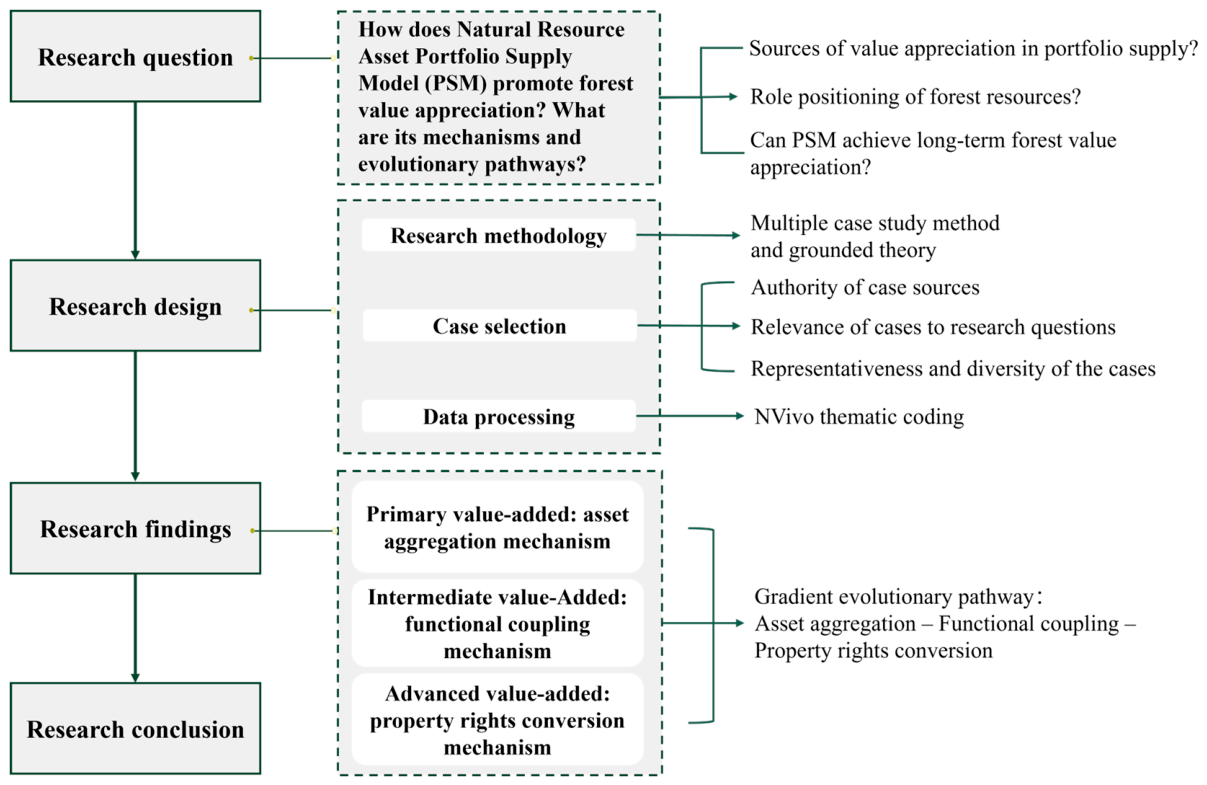
The research design follows a logical framework that integrates method selection, case selection, and data processing. First, after determining the research methodology, five forest-related cases with distinct combinations of characteristics were selected from the typical cases published by the Ministry of Natural Resources, following theoretical sampling principles. Second, using the official case texts, the data were systematically processed through the three-level coding method of grounded theory. Third, horizontal comparison and vertical analysis were conducted to construct a process mechanism explaining forest value appreciation. The overall research framework is presented in Figure 2.

3.1. Research Methods

To thoroughly elucidate the value-added mechanisms of forest ecosystem services under the PSM, this study adopts a research strategy that integrates the multiple-case study method with grounded theory. The multiple-case study method is particularly well-suited for exploring “how” and “why” research questions, making it an ideal approach for analyzing mechanistic issues within complex contexts [53]. This study selected this methodology primarily to address the need for mechanism identification; the appreciation of forest value under the PSM involves multiple dimensions, such as resource integration and institutional innovation, and a single case study would struggle to fully capture its underlying logic. By conducting a comparative analysis of multiple representative cases, this study can identify both the commonalities and the context-specific differences inherent in these appreciation mechanisms [54].
Grounded theory is a methodological approach designed for the systematic construction of theory from empirical data [55]. This methodology emphasizes that theory should emerge directly from the data to prevent preconceived theoretical assumptions from interfering with or biasing research findings. Through the three-level coding process of procedural grounded theory, this study establishes a three-stage evolutionary pathway consisting of asset aggregation, functional coupling, and property rights conversion as the core process mechanism for explaining forest value appreciation under the PSM.

3.2. Case Selection

This study adheres to the principles of theoretical sampling, selecting five representative cases from the six batches of “Typical Cases of Ecological Product Value Realization” (2020–2025) published by the Ministry of Natural Resources of the People’s Republic of China (Table 1). It should be noted that the ministry has established specific criteria for compiling these case studies. According to documents released by the ministry, the cases are categorized into three types, namely public, commercial, and quasi-public, which correspond to three value realization pathways: government-led, market-led, and hybrid models [56]. Judging from the six batches of cases already released, earlier batches primarily focused on value realization for single resource types, whereas the sixth batch explicitly increased the proportion of cases promoting the PSM. The ministry evaluates the effectiveness of PSM as having amplified economic benefits, optimized social benefits, protected the natural ecosystem, and promoted industrial development, factor mobility, and integrated management [57]. This indicates that the core logic behind the official selection of cases is to assess whether the practices possess demonstrative and replicable value, rather than simply ranking them by economic benefits. Building on this foundation, this study selected cases from all six batches that align with its objectives, primarily adhering to the following criteria.
First, we prioritized the authority of the case source. All selected cases originate from the official “Typical Cases of Ecological Product Value Realization” series issued by the Ministry of Natural Resources. Because this collection was organized, vetted, and compiled by the ministry, the cases have undergone rigorous official review and systematic documentation. Consequently, the information is comprehensive and the data are reliable, possessing a high degree of authority and credibility to provide a robust empirical foundation for this research [58].
Second, we prioritized the relevance of the cases to the research questions. In alignment with the focus of this study, all selected cases must involve the active participation of forest resources. During the initial review of the case database, it was observed that the manifestations of forest resources vary significantly across different scenarios. In certain cases, they serve as the dominant resources within asset packages; in others, they act as background resources that enhance the overall ecological context; and in others, they function as vehicles for industrial integration. These distinctions provide a critical analytical window for examining how the specific role of forests influences various value-added pathways.
Third, we emphasized the representativeness and diversity of the cases. While ensuring relevance, this study places particular importance on achieving diversity across two dimensions: combination patterns and the specific roles of forest resources. Specifically, the selection covers three key value-added stages: (1) The initial value-added stage: The case of Nanping, Fujian, was selected to represent a large-scale aggregation model of a single resource. This case allows for the observation of how resource consolidation addresses fragmentation issues, thereby laying the groundwork for subsequent value-added activities. (2) The intermediate value-added stage: The cases of Lu County in Sichuan and Xuan’en in Hubei were selected for comparative analysis. These represent scenarios where forests serve as either dominant or background resources, facilitating an investigation into how the varying roles of forests influence the effectiveness of functional coupling. (3) The advanced value-added stage: The cases of Sanming in Fujian and Yulin in Guangxi were selected to represent two distinct models: the financialization of property rights and the extension of value along the industrial chain. These cases enable an examination of how property rights conversion, driven by institutional innovation, achieves deeper value appreciation.
Based on the above criteria, this paper selects the following five typical cases:
Table 1. Case comparison of forest resource roles under different Natural Resource Asset Portfolio Supply Models.
Case NameCore Combination ApproachForm of Forest Resource ParticipationKey Value-Added OutcomeCore Insight
Forest Ecology Bank
(Nanping, Fujian)
Cross-spatial aggregation of homogenous resources (e.g., fragmented forest land)Entity responsible for assettization
(1)
Average annual increase in forest stock volume: 1.2 m3/mu.
(2)
First forestry carbon sequestration transaction completed: RMB 2.883 million.
Resource integration is a prerequisite for value realization.
“Land + Forest” Asset Combination
(Lu County, Sichuan)
Multi-factor portfolio of “Forest Land + Construction Land”Dominant resources
(1)
Combined premium rate: 9.3%.
(2)
Driven increase in farmers’ income: RMB 3.108 million.
Dominant resources catalyze whole-industry-chain development.
Multi-factor Resource Portfolio
(Xuan’en, Hubei)
Integration of “Forest + Land + Water + Minerals” (Four-Rights Integration)Background resourcesAsset package value increased by approximately 14% compared with traditional supply.Background resources empower through spillover effects.
Forest Rights Reform & Carbon Trading
(Sanming, Fujian)
“Forest Rights + Carbon Rights + Finance” portfolioRights-based vehicle
(1)
Forest rights transaction volume: RMB 1.83 billion.
(2)
Carbon sequestration transactions: RMB 19.12 million.
Financialization of property rights endows value with liquidity.
National Reserve Forest (NRF) & Aromatic Plant Industry
(Yulin, Guangxi)
“NRF + Aromatic Industry” industrial portfolioIndustrial vehicleTransaction volume exceeded RMB 35 billion.Industrial chain extension endows value with durability.

3.3. Data Processing

Building upon the identification of the five representative case studies, this paper conducts standardized data processing on the case texts. All primary texts were imported into NVivo (v12) qualitative analysis software and analyzed in strict accordance with the three-level coding process of grounded theory. This systematic approach ensures the standardization, transparency, and traceability of the theoretical construction process.

3.3.1. Open Coding

During the open coding phase, the extracted textual data were imported into NVivo (v12) software for analysis. Utilizing a manual coding approach, the data were processed line-by-line, paragraph-by-paragraph, and sentence-by-sentence, strictly adhering to the latent semantic meaning of the text. Following the initial pass, redundant entries were removed, and original segments with analogous meanings and connotations were clustered. This iterative process facilitated the distillation of 28 initial concepts, including representative expressions such as “resource inventory and title clarification” and “centralized resource consolidation”. The specific coding results are detailed in Table 2.

3.3.2. Axial Coding and Selective Coding

Building upon the 28 initial concepts extracted during open coding, this study proceeded to categorize these concepts and identify their interrelationships. Through cluster analysis and categorization, concepts with analogous meanings were grouped into higher-level main categories. The classification is based on the hierarchical differences each concept refers to. Concepts related to foundational operations such as resource inventory, aggregation, bundling, and platform development are grouped under asset aggregation. Those involving functional measures, including cross-resource integration, operational optimization, and industrial convergence, fall under functional coupling. Concepts pertaining to institutional innovations such as ownership subdivision, rights quantification, and financial innovation are categorized under property rights conversion. Meanwhile, concepts describing various value-added outcomes are classified under value realization. On this basis, logical relationships among the concepts are further established, ultimately forming the above four main categories.
During selective coding, this study further examined whether logical and temporal relationships exist among the four main categories. By tracing each case from start to outcome and comparing their performance at the same stage across five cases, the following pattern emerged. In every case, asset aggregation-related measures such as resource consolidation and platform development appeared early and served as prerequisites. Functional coupling measures such as cross-resource integration and understory management unfolded after asset aggregation and acted as the core driver of value addition. Property rights conversion innovations such as forest tickets and carbon trading typically occurred in the mid to late stages, relying on the resource base and market validation established by the previous two phases. These three categories follow a temporal sequence and a logical progression, with value realization as the terminal outcome. Accordingly, this study establishes Evolution of the Value-Added Gradient of Forest Resources as the core category, with the above three stages constituting its complete mechanism. The detailed axial and selective coding results are presented in Table 3.

3.3.3. Test of Theoretical Saturation

To test for theoretical saturation, following the coding analysis of the five primary cases, this study selected the Huangtang Lake case in Wuhan, Hubei—from the sixth batch of “Typical Cases of Ecological Product Value Realization” published by the Ministry of Natural Resources—as a reserved test sample. This sample was imported into NVivo (v12) software and subjected to the same standardized coding process. The results indicate that the value-added process in this case closely aligns with the proposed three-stage process mechanism of asset aggregation, functional coupling, and property rights conversion, with no new core categories or alternative logical relationships emerging. Meanwhile, a comparison with the existing literature revealed that no significant value-added stages had been omitted. Consequently, it can be concluded that the process mechanism constructed in this study has reached a state of saturation.
Finally, it should be noted that while the five cases selected for this study are not extensive in number, the validity of theoretical construction in grounded theory depends not on the volume of cases, but on the granularity of case information, the depth of the coding process, and the robustness of inter-case relationships [55]. Each case selected for this study is presented within a comprehensive framework that encompasses its background, practical implementation, and measurable outcomes, providing detailed accounts of operational processes, institutional designs, and empirical performance data. The descriptive richness of these texts provides a substantive basis for in-depth coding, enabling the distillation of multifaceted categories from a focused sample. Furthermore, these five cases offer a purposeful contrast in their combination patterns and the specific roles of forest resources. This differentiated research design purposefully introduces enough variance to compensate for the limited sample size, ensuring that the resulting mechanism is both rigorous and broadly applicable.

4. Research Findings

4.1. Primary Value-Added: Asset Aggregation Mechanism Based on Resource Integration

Under the PSM, the appreciation of forest value is evolutionary rather than instantaneous. Drawing on an in-depth analysis of the Forest Ecology Bank in Nanping, Fujian, this study finds that realizing forest value fundamentally relies on an initial asset aggregation mechanism. This mechanism essentially transforms fragmented, dispersed forest resources into unified asset packages suitable for large-scale management. Through spatial integration and the consolidation of property rights, this stage effectively reduces transaction costs and establishes the resource base necessary for subsequent, higher-order value extraction.
In the coding analysis of the Nanping, Fujian case, the concepts of “resource inventory and title clarification” and “centralized resource consolidation” recur frequently, collectively addressing the systemic challenges of fragmented property rights and the spatial dispersion of forest resources. Despite these hurdles, Nanping City boasts a forest coverage rate of 78.29% and is recognized as one of the most ecologically significant regions at its global latitude.
However, the initial state of these resources was marked by high ecological potential yet low management efficiency, as individual holdings were too small and legally ambiguous to attract large-scale investment or engage in modern market mechanisms. For an extended period, the region has faced a persistent developmental paradox: it remains an ecological highland yet an economic lowland. As detailed in the case background, the root cause lies in the 2003 collective forest rights reform. While the policy of equal allocation to households was equitable, it led to extreme fragmentation; over 76% of Nanping’s forest land rights were subdivided, with farmers holding an average of only 15 mu per capita. On the one hand, the spatial and legal atomization of forest resources directly hinders consolidation, making large-scale, modern management economically unviable. On the other hand, these frozen assets are difficult to monetize, leaving forest farmers unable to convert their abundant natural capital into liquid economic returns. Furthermore, this dispersed ownership structure imposes prohibitive transaction and negotiation costs on external investors, creating high entry barriers that stifle the inflow of social capital.
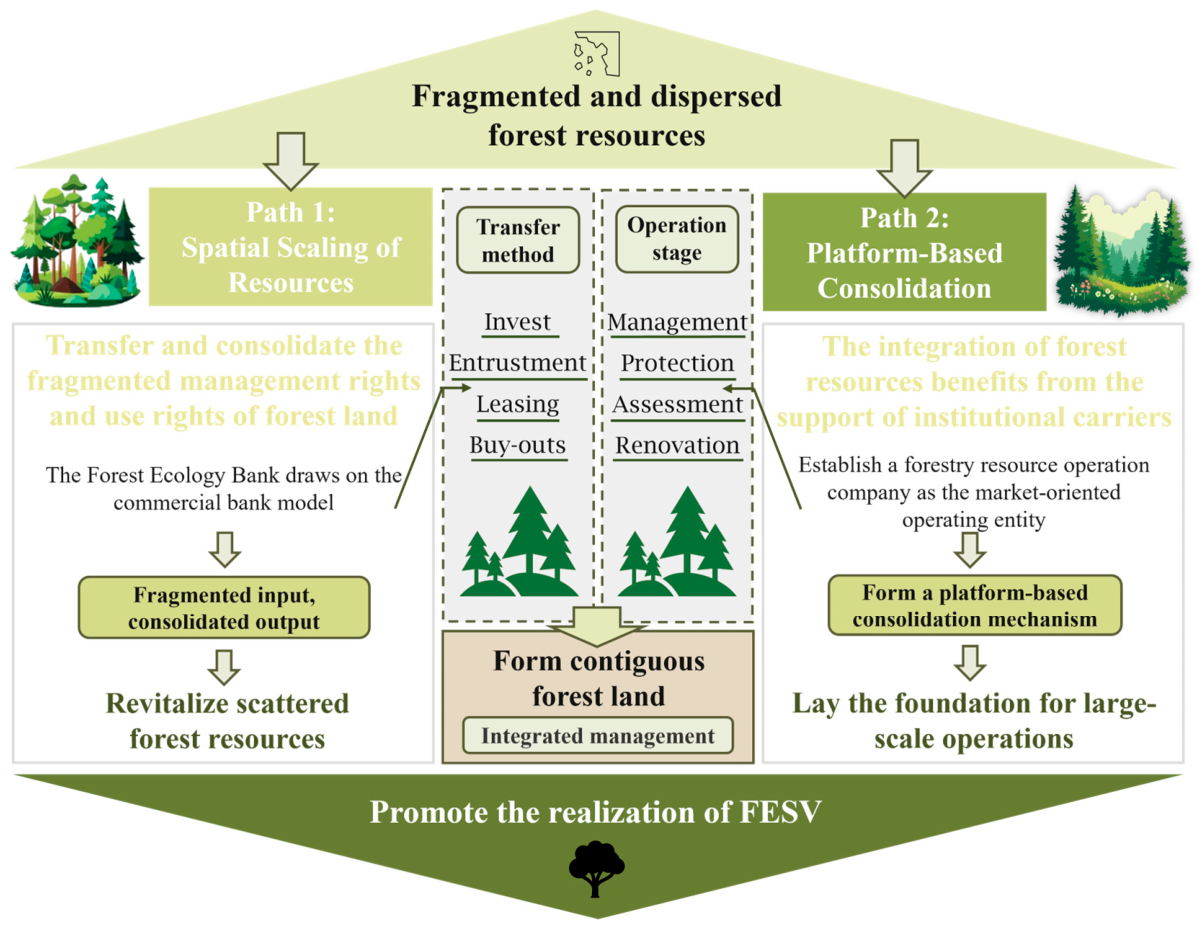
To resolve this predicament, the initial step requires the consolidation of these resources. The Nanping case demonstrates that the implementation of asset aggregation mechanisms primarily unfolds through two interrelated pathways (Figure 3). The first pathway involves the large-scale consolidation of forest resources. Drawing inspiration from the commercial banking model of decentralized input and centralized output, Nanping utilizes market-based approaches to transfer and aggregate the management rights of fragmented forest plots scattered across various households. On the basis of equality and voluntary participation, the Forest Ecology Bank encourages forest farmers to pool their fragmented forest resource management and usage rights.
To this end, Nanping has designed four flexible transfer mechanisms: equity participation, entrustment, leasing, and buy-outs. Under this framework, participants inclined toward joint management can contribute their assets as equity to share in future profits. Those unable or unwilling to manage their land can entrust it to the bank in exchange for management fees, while those with idle forest land can lease their holdings to generate rental income. Finally, individuals seeking immediate divestment can transfer their assets outright to realize capital gains. Through this diversified institutional design, the scheme simultaneously respects the idiosyncratic needs of forest farmers and achieves efficient resource integration. Since the pilot’s inception, the Forest Ecology Bank has incorporated 63,600 mu of forest land, including 12,600 mu under shareholding cooperation and lease management, and 51,000 mu of commercial forest acquired through buy-outs—effectively revitalizing a substantial volume of dispersed forest resources.
The second approach involves the platform-based consolidation of ownership rights. The integration of forest resources necessitates the support of robust institutional frameworks. In Nanping, the Fujian Green Chang Forestry Resources Operation Co., Ltd. was established with the Shunchang County SOFF acting as the controlling shareholder and eight grassroots SOFFs serving as minority shareholders, collectively functioning as the market-oriented operational entity for the Forest Ecology Bank. The company is organized into two primary centers dedicated to data and information management and asset valuation and acquisition, alongside three subsidiaries focused on forest management, trusteeship, and financial services. While the centers provide essential data and technical support, the subsidiaries are responsible for the practical execution of resource acquisition, trusteeship, management, and enhancement.
Concurrently, the platform has consolidated specialized resources from the County Forestry Bureau’s Resource Station, the logging area survey and design teams of the SOFFs, and the forest protection teams of grassroots forest farms. This integration enables systematic resource management, protection, assessment, renovation, project design, operational development, and forest tenure transfers. Under this centralized operational mechanism, the platform serves a dual function. First, as a unified transferee, it significantly reduces the institutional costs of transacting directly with thousands of individual forest farmers. Second, as an asset aggregation platform, it consolidates scattered, fragmented resources into standardized asset packages, laying a firm foundation for subsequent large-scale operations.
Asset aggregation does not in itself directly generate substantial capital gains; rather, its significance lies in clearing structural obstacles and laying the groundwork for the subsequent realization of value. In the Nanping case, the contiguous forest land formed through asset aggregation has enabled scientific and diversified management practices that were previously unfeasible. The annual average increase in timber stock has exceeded 1.2 cubic meters per mu, with the average stock of Chinese fir forests reaching three times the national average. Furthermore, “Forestry+” industries, such as under-forest economies and forest wellness, have been developed, resulting in an output value per mu that increases by more than 2000 yuan in certain forest areas. More notably, these aggregated resources now meet the necessary conditions for market integration and the introduction of social capital. This shift opens various avenues for subsequent value realization through carbon trading and the PES, effectively transforming ecological assets into liquid economic capital.

4.2. Intermediate Value-Added: Functional Coupling Mechanism Based on Factor Combination

Asset aggregation addresses the fragmentation of forest resources, thereby establishing the material foundation for value appreciation. In practice, however, mere resource integration does not inherently result in such appreciation. What truly drives the appreciation of FESV is the synergy generated by the functional coupling of diverse natural resource elements. A comparative analysis of two case studies, specifically Lu County in Sichuan and Xuan’en in Hubei, reveals that when forest resources are integrated with other natural elements such as construction land, water bodies, and mineral resources, the functional complementarity between these elements can generate a collective premium. This premium often exceeds the cumulative value of individual resources, achieving a state in which the whole is significantly greater than the sum of its parts. Further analysis shows that the role of forest resources in asset packages significantly shapes both functional coupling and value-added outcomes.
This study classifies the role of forests into dominant resources and background resources. Dominant resources refer to forest elements that directly participate in market transactions within an asset package and serve as the core value target. Their value-added effects are directly realized through pathways such as property rights financialization and industrial extension. Background resources refer to forest elements that are not directly traded but enhance regional ecological environment quality and create consumption scenarios, thereby generating ecological premiums for other resources within the package or surrounding industries. The classification is based on three criteria: (1) whether the forest is priced separately in asset package transactions; (2) whether it directly contributes to the core revenue source of the package; and (3) whether its primary value-added pathway is direct premium or indirect spillover.
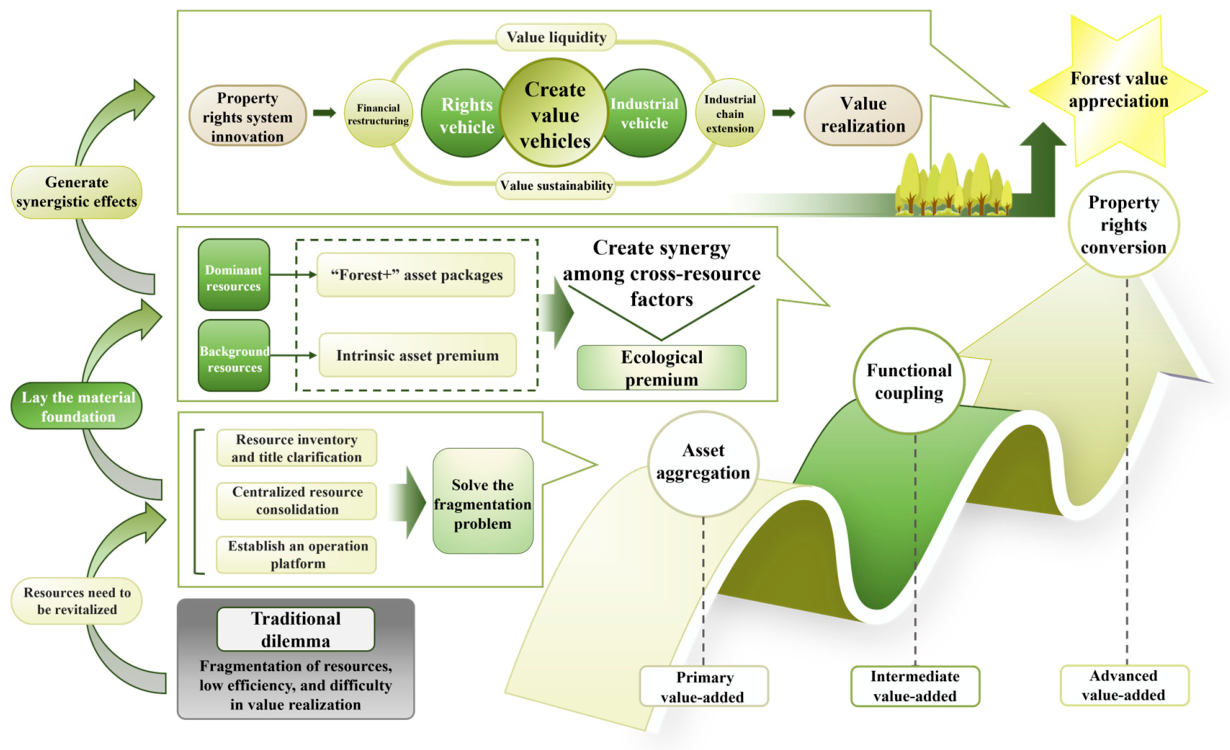
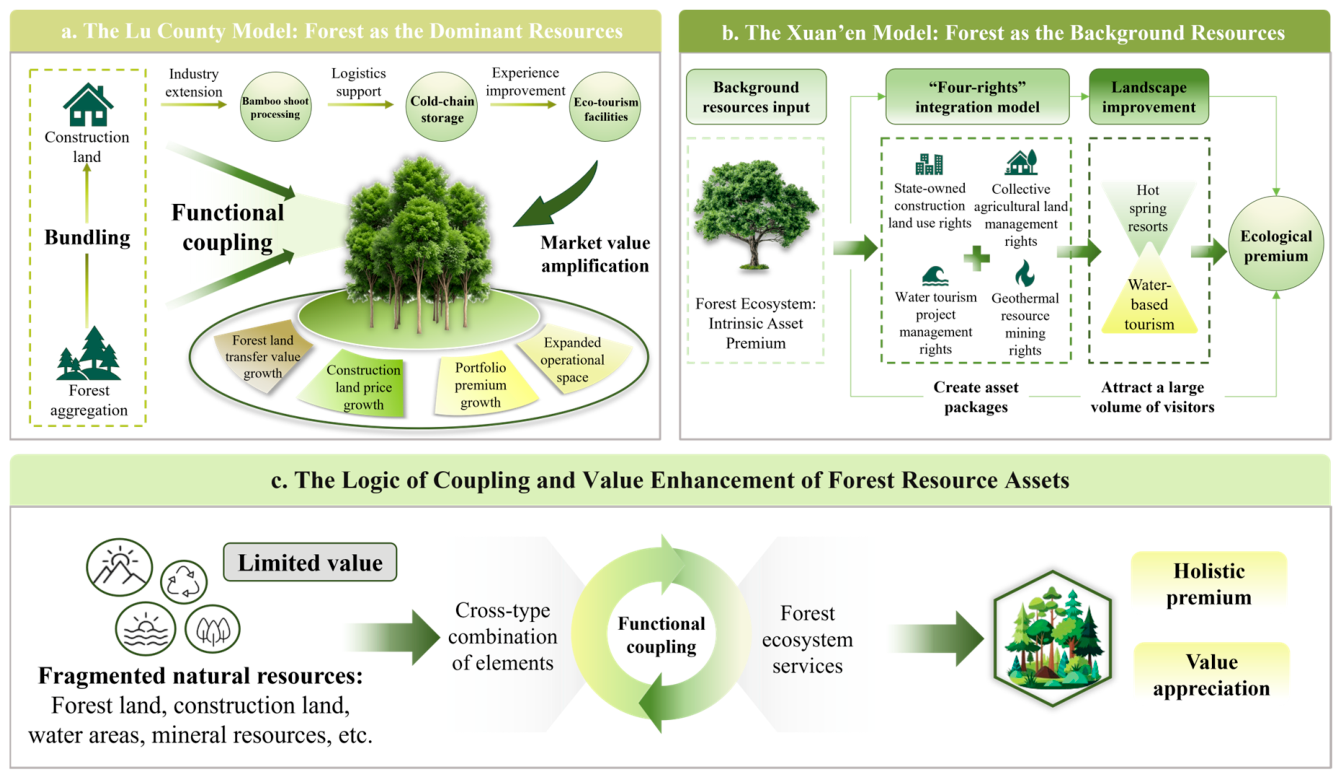
To clearly illustrate this logic, Figure 4 compares the functional coupling mechanisms of forest resources playing different roles in asset packages. As shown in the figure, the two main sections on the left and right, namely Figure 4a and Figure 4b, correspond to the cases of Lu County and Xuan’en, respectively, while Figure 4c is placed below to synthesize the findings.
In the case of Lu County, Sichuan, forests functioned as the dominant resources within the asset package (Figure 4a). The logic behind their value appreciation lies in utilizing the forest as the core element. By introducing construction land into this framework, the region was able to overcome the bottlenecks of single-sector forestry development and amplify its industrial functions. Shiqiao Town in Lu County faces the “three surpluses and three shortages” dilemma typical of hilly regions: an abundance of forest land, sloping farmland, and underutilized land, coupled with a scarcity of industrial land, economic returns, and contiguous resources. Pure forest management involves long cycles and slow returns, which makes it difficult to attract social capital. Meanwhile, scattered abandoned industrial and mining sites possess limited intrinsic value and lack a sufficient ecological foundation. To address this issue, Lu County bundled the management rights for 715.5 mu of collective forest land with the usage rights for 12.3 mu of collective commercial construction land, forming a “land + forest” asset package.
Through the PSM, construction land provides the operational space needed for forest-based industrial extension. The winning enterprise has secured a foundation for bamboo plantation cultivation and the legal scope for full-chain development, including bamboo shoot processing, cold-chain storage, and eco-tourism facilities. This functional coupling is directly reflected in market value: forest land transfer prices rose from 64 to 70 yuan per mu, and construction land unit prices increased from approximately 200 to 220 yuan per square meter, yielding a combined premium rate of 9.3%. This demonstrates that when forests serve as the dominant resource, their functional coupling with commercial construction land ensures that forest value is no longer confined to timber alone. The approach successfully transforms ecological space into industrial development space, generating significantly greater economic output.
Unlike the case in Lu County, the Romantic Hot Spring City project in Xuan’en, Hubei, does not position the forest as a direct trading entity or primary profit driver within the asset package. Instead, the forest serves as a background resource (Figure 4b). The logic behind its value enhancement lies in the fact that, through the integration of the forest with other natural elements, the landscape value of the entire asset package is elevated, thereby empowering the hot spring tourism industry and generating significant spillover effects. The asset package developed by Xuan’en County adopts a “four-rights” integration model, specifically comprising state-owned construction land use rights, collective agricultural land management rights, water tourism project management rights, and geothermal resource mining rights. Within this framework, forest resources are not valued as separate commodities; rather, they are quantified as an intrinsic asset premium. Case data indicates that the asset package, which incorporates the forest ecological backdrop, was ultimately sold for 160.2 million yuan. This represents an appreciation of approximately 14% compared to traditional, fragmented supply methods.
More tangibly, projects such as hot spring resorts and water-based tourism, developed on the basis of the region’s high-quality forest ecosystem, have successfully attracted a high volume of visitors. The resulting spillover effect has directly boosted the value of local specialties produced in the surrounding forest areas, such as cured pork and selenium-rich tea, by 30%. The premium on these local specialties represents, in essence, a “transfer payment” of forest ecological value at the consumer end. Tourists are willing to pay higher prices for cured pork and selenium-rich tea produced within this “natural oxygen bar” because they perceive that the local ecological environment endows these products with superior quality [59,60]. This phenomenon is known as ecological premium. Its mechanism lies in the safety, nutritional, and environmental attributes that a healthy ecosystem imparts to products, which enhance consumers’ positive perception of product quality and thereby increase their willingness to pay [61]. In this sense, although forests occupy a background resource position within the asset package and do not directly contribute to the portfolio’s primary transaction value, they significantly enhance both the appeal of the portfolio and the market competitiveness of surrounding products.
Comparing the cases of Lu County and Xuan’en reveals a significant pattern: the specific role of forest resources within an asset package directly influences both the mechanism of functional coupling and the manifestation of value-added effects. In the Lu County case, the forest functions as the primary resource. The core of the asset package is the right to manage forest land, while construction land serves as an auxiliary element for industrial development. The logic of coupling in this context is that the value of forest outputs is realized through the processing and distribution functions provided by the construction land, while the value of the construction land itself gains an ecological premium due to its proximity to the forest. This value-added effect is directly reflected in resource prices, manifesting as a quantifiable combined premium rate. In the Xuan’en case, by contrast, forests serve as background resources. The core of the asset package consists of geothermal and water resources, and the forests do not constitute part of the primary trading assets. The logic of this coupling is that forests enhance the quality of the regional ecological environment, thereby creating a superior consumer experience for hot spring and water-based projects. Simultaneously, this environment confers an ecological premium on surrounding agricultural products. In this instance, the value-added effect is not directly reflected in the price of the asset package itself; instead, it manifests as a spillover effect that drives the value appreciation of surrounding industries.
The two positioning approaches described above are not mutually exclusive, nor is one inherently superior to the other; rather, they demonstrate the diverse roles that forests can play within a combined supply model. The core of this transition lies in the fact that the realization of functional coupling mechanisms depends on the prior completion of asset aggregation mechanisms. It is precisely because fragmented resources have been consolidated into combinable asset packages that the cross-type integration of elements becomes feasible. It is thus evident that asset aggregation provides the operational platform necessary for functional coupling, while functional coupling, in turn, injects the requisite momentum into the value appreciation of forest ecosystem services. These two processes are interdependent and progress in a methodical, step-by-step manner.

4.3. Advanced Value-Added: Property Rights Conversion Mechanism Based on Institutional Innovation

Although the mechanisms of asset aggregation and functional coupling differ in their implementation pathways, they essentially operate at the level of the physical resources themselves. The former resolves fragmentation through spatial integration, while the latter stimulates synergistic effects through the strategic combination of diverse elements. However, if forest value can only reside in physical resources, it cannot be separated from tangible assets, making genuine circulation and monetization difficult. By transforming non-physical values such as carbon sinks, water conservation, and cultural services into independently tradable equity products, we can overcome the inherent constraints of physical resource management. This is exactly the problem that property rights conversion is designed to solve [62]. An analysis of two case studies, specifically Sanming in Fujian and Yulin in Guangxi, reveals that the core of the property rights conversion mechanism lies in an institutional design that enables the ecological services provided by forests to be decoupled from physical assets such as trees and forest land. This process transforms these services into value units that can be independently measured and traded. Through property rights conversion, forest value acquires two essential attributes: liquidity and sustainability.
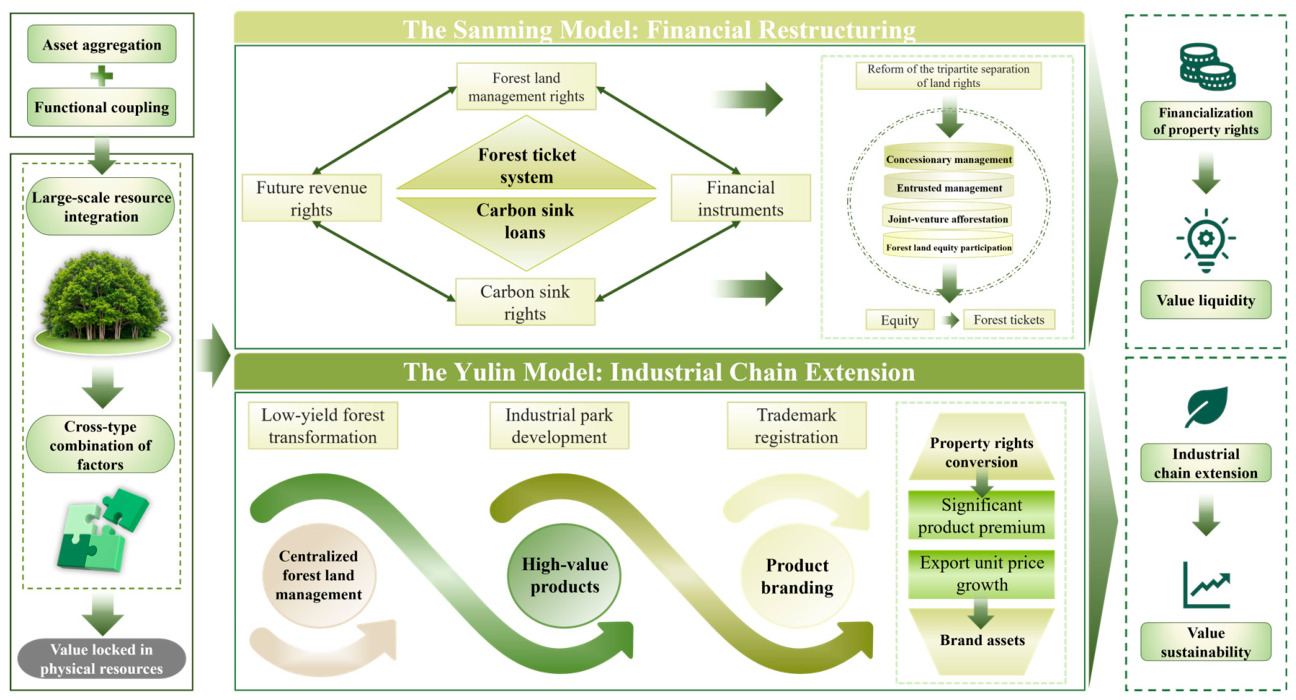
Firstly, the financial restructuring of property rights addresses the challenge of value circulation (Figure 5). Sanming in Fujian has pioneered a model for the bundled provision of natural resource assets, integrating forest land management rights, future revenue rights, carbon sink rights, and financial instruments at the property rights level. This integration unlocks the latent value of forests through the strategic reallocation of these rights. Initially, Sanming faced challenges similar to those encountered in many forested areas of Northern Fujian. Following the reform of the collective forest rights system, although forest land had been allocated to individual households, the question remained as to how these households could effectively manage such land. The limited scale of forest land managed by individual households made it difficult to achieve economies of scale and resulted in a lack of effective channels for monetization. Consequently, the value of forest resources remained frozen within the contract registers of thousands of atomized households.
To address the fragmentation of forest rights, Sanming achieved a breakthrough through the implementation of the forest ticket system. Building upon the reform of the tripartite separation of land rights, management, and operational rights, Sanming explored four distinct models: concessionary management, entrusted management, joint-venture afforestation, and forest land equity participation. These models quantify the equity held by village collectives or forest farmers into standardized forest tickets. As formal certificates of equity return, these forest tickets offer holders significant flexibility. Holders may choose to retain them until maturity to share in timber harvesting profits; alternatively, if they require immediate liquidity, they may use the tickets as collateral for loans or transfer them to other investors through market transactions.
At the same time, provincial SOFFs provide a backstop redemption commitment for these tickets. Should a holder wish to exit, the farm will repurchase the tickets at the initial investment amount plus an annualized interest rate of 3%, thereby ensuring that the instruments offer both profitability and security. The value of forest tickets lies in their transformation of the forest’s physical form: what forest farmers previously held—specifically an indivisible and immovable plot of woodland—has been converted into a negotiable instrument that can be liquidated at any time. The future growth benefits of the forest are discounted to the present, effectively transforming idle resources into liquid capital. This same logic extends to the carbon sequestration sector. Sanming has developed the ecological function of forests in absorbing carbon dioxide into tradable forest carbon sink products, issuing forest carbon tickets and granting them trading and pledging functions. Furthermore, the region has launched carbon sink loans secured by carbon sink revenue rights, further integrating ecological value into the financial system.
The second approach to property rights conversion centers on the extension of value along the industrial chain, which addresses the critical issue of value sustainability (Figure 5). Yulin in Guangxi has innovated a PSM combining NRF development with the aromatic plant industry, demonstrating an alternative pathway for property rights conversion. The realization of value for Yulin’s forest ecosystem services began with the systematic renovation of low-yield star anise plantations. To facilitate this, the local government introduced incentive schemes to guide forest farmers in transferring low-yield forest land to cooperatives or state-reserve forest companies for centralized management. Simultaneously, specialized technical expertise was introduced to oversee the renovation process. As a result of these interventions, forest land output surged from 380 kg per mu to 1037 kg per mu, representing a 173% increase. However, the most noteworthy aspect of this case is not the yield increase itself, but rather the subsequent extension of the industrial chain that this productivity enabled.
Yulin has established a specialized spice processing industrial park, where shikimic acid is extracted from star anise and agarwood is processed into essential oils and facial masks. Consequently, the processing conversion rate has risen to over 80%. This shift ensures that the vast majority of the incremental value generated by the forest is retained locally. Spices that were once sold as bulk commodities by the pound have now entered the value chain of high-value-added products. The approval and registration of the “Yulin Spices” collective trademark has moved the conversion of property rights to a more sophisticated level, as a trademark functions essentially as an intellectual extension of property rights. When star anise and cinnamon command a significant premium and see export unit prices rise by more than 20% due to this branding, the value of the forest no longer depends on the volatile fluctuations of individual transactions. Instead, it is transformed into a durable brand asset capable of generating sustained economic returns.
By comparing the cases of Sanming and Yulin, one can discern the intrinsic connection between these two pathways. Sanming has achieved the financialization of forest tickets through the division of property rights, thereby granting liquidity to the future returns of the forest. Yulin, through brand empowerment, extends the industrial chain to ensure the sustainability of the premium on ecological products. Both approaches highlight the essence of property rights conversion: through institutional innovation, FESV is liberated from the physical constraints of natural resources and granted an independent form of existence. It is important to note that without an asset aggregation mechanism to consolidate fragmented forest land into scaled portfolios, Sanming’s forest tickets would lack the stable expected returns necessary to underpin them. Similarly, without a functional coupling mechanism to validate the market potential of the PSM, capital would lack sufficient incentive to pursue these newly created ecological rights. From the initial foundation established through asset aggregation, to the momentum injected via functional coupling, and finally to the release of FESV through property rights conversion, this complete and methodical evolutionary path constitutes the underlying logic of forest value appreciation under the PSM (Figure 6).

5. Discussion

5.1. Theoretical Implications

This study identifies a gradient evolutionary pathway of “asset aggregation, functional coupling, and property rights conversion”, which shifts the research perspective on FESV realization from static mechanism evaluation to dynamic process explanation. While existing literature primarily focuses on assessing whether a given mechanism is effective or how efficient it is [63,64,65,66,67], this study uncovers a sequential three-stage evolutionary logic, addressing the process question of how value transitions from a latent to an explicit state.
Building on this, this study further identifies internal variations in the mechanism of functional coupling. A comparative analysis of the Lu County and Xuan’en cases reveals that the role of forests in an asset package, whether as a dominant or background resource, directly shapes the form of value addition. In Lu County, forests and construction land form a production complementary coupling. Forests supply raw materials while construction land provides processing space. Their vertical integration reduces transaction costs along the industrial chain, with value addition directly reflected in an increased asset package price, achieving a combination premium rate of 9.3%. In Xuan’en, by contrast, forests and hot springs or water bodies form a consumption complementary coupling. Forests primarily shape the consumption scene and enhance tourists’ aesthetic experience, thereby increasing consumers’ willingness to pay. However, the premium does not enter the transaction price of the asset package. Instead, it flows as spillover effects to local specialty products, ultimately achieving a 30% premium. These two distinct types reveal multiple pathways of functional coupling. Production complementary coupling requires a clear industrial transformation chain, whereas consumption complementary coupling depends on the uniqueness of the regional ecological landscape and the presence of a mature consumer market to realize the value of ecological experiences.
At the level of property rights conversion, the findings of this study can be more clearly positioned theoretically through comparison with other practices. Sanming introduced forest tickets and carbon tickets, converting the future income rights of forests into tradable and pledgeable instruments. This represents a capital-type financialization pathway. In contrast, the Eco Loan model in Lishui, Zhejiang Province, is based on GEP accounting [68] and uses future income rights formed through government procurement mechanisms as collateral to secure bank loans, representing a credit-type pathway. The common feature of both models is the need to quantify and monetize ecological values to integrate with the financial system. The difference lies in Sanming relying on SOFFs as a backstop and focusing on secondary market circulation of rights instruments, whereas Lishui depends on stable expectations created by government procurement and focuses on mobilizing bank credit funds. A comparison of these two practices shows that there is no single standard pathway for property rights conversion. The specific approach adopted must align with local property rights endowments, financial environments, and institutional capacities.
Globally, extensive research has been conducted on the integrated identification, unified measurement, and coordinated allocation of multiple forest-based ecosystem services, such as carbon sequestration, water conservation, biodiversity protection, landscape recreation, and disaster risk mitigation. For instance, the UK has implemented mechanisms like the Woodland Carbon Code and Biodiversity Net Gain [69], which convert forest carbon sequestration and biodiversity gains into registrable, verifiable, and tradable ecological assets. These are then offered as bundled or separate ecosystem benefits within natural capital markets, exemplifying a pathway of resource capitalization, rights standardization and market trading. Another example is the US Forest Resilience Bond [70], which bundles benefits from forest restoration—including water conservation, reduced fire risk, carbon storage, and enhanced ecological resilience—and generates stable cash flows for forest management through co-financing by water utilities, public agencies, and private capital. Costa Rica’s Payment for Ecosystem Services 2.0 program also offers a critical reference [71]. Using public funds such as FONAFIFO and natural capital trusts as platforms, this mechanism compensates a combination of services including carbon sequestration, water conservation, biodiversity, and scenic landscapes, reflecting a government-led institutional logic for the integrated allocation of natural resource assets.
Likewise, China faces challenges in realizing the value of forest ecological products, including fragmented resources, complex property rights, insufficient returns from single ecosystem services, and difficulties in monetization. Thus, the mechanism proposed in this study has cross-contextual relevance: integrating scattered forestlands and ecological elements through a resource aggregation platform, enhancing the overall revenue capacity of ecological products via functional coupling, and improving value liquidity by unbundling ecological rights such as carbon sequestration rights, management rights, and revenue rights. The gradient evolutionary pathway revealed in this study—from fragmentation to aggregation and from physical assets to capital—further supports this logic. While China’s collective forest rights system, SOFFs, and deep local government involvement are context-specific, the core logic of “resource aggregation, element combination, rights unbundling and value transformation” may offer insights for other countries exploring pathways to realize the value of forest ecological products within their own institutional contexts.
The gradient evolutionary pathway proposed in this study offers explanations for several under-explained observations in the existing literature. First, PES-related studies have noted that inconsistent compensation standards and the lack of market-based compensation channels are prominent constraints on effectiveness [72], often attributing these issues to low industrial conversion and immature institutions. The mechanism proposed herein provides an alternative explanation: without completed asset aggregation and with resources remaining fragmented, PES lacks a scalable property rights vehicle for operation, making it difficult to align compensation funds with clearly identified beneficiaries. Second, research on forest tenure transfer has identified bottlenecks such as underdeveloped transfer markets and substitution competition from credit channels [73]. Diverging from these perspectives, our mechanism suggests that these problems may not stem from financial instruments or transfer policies per se, but rather from the incompletion of the functional coupling phase. Specifically, forest resources have yet to form verifiable market bundles with other factors, preventing financial institutions from forming stable value expectations for forest rights. Third, studies on carbon trading have identified multiple challenges in project development, including methodological, socioeconomic, and implementation-related issues [32], reflecting practical heterogeneity across carbon sink projects. Our process mechanism further reveals that the circulation of carbon sequestration rights must be predicated on large-scale resource integration and bundled market validation, thereby explaining why identical carbon sink product designs can yield vastly different outcomes.

5.2. Practical Implications

The above theoretical findings offer several practical implications for the implementation of PSM. First, fragmentation is a primary obstacle to unlocking forest value. When advancing PSM, local governments should prioritize establishing platform entities capable of resource aggregation and employ flexible land transfer mechanisms to balance the protection of forest farmers’ rights and interests with efficient resource allocation. Second, a one-size-fits-all approach to designing combination schemes should be avoided. Forest resources can serve either as dominant resources within asset packages, promoting forestry industrialization and ecotourism by integrating with construction land and other elements, or as background resources, generating ecological premiums for surrounding industries by enhancing regional environmental quality. Localities should adopt differentiated combination strategies based on their resource endowments and industrial bases. Third, institutional innovation in property rights is critical for unlocking value. Practices have shown that separating future forest revenue rights from physical property rights and converting them into tradable and pledgeable financial instruments, or translating ecological advantages into intellectual property rights such as trademarks through brand registration, are effective pathways.
For forest managers, a more pressing question may be how to translate the above insights and recommendations into practice, particularly in regions with limited fiscal capacity, fragmented forest tenure, and weak professional expertise. Through reverse inference based on case studies, this study proposes more specific operational pathways. If establishing a complex platform such as the Forest Ecology Bank is not immediately feasible, a viable alternative is to begin with forest tenure trusteeship or leasing, which entail substantially lower startup costs than direct buyouts. In terms of rights clarification, existing forest inventory data and local forest tenure ledgers can be used to establish a “one parcel, one file” system, providing foundational data support for subsequent asset package development. In areas with significant tenure disputes, priority may be given to consolidating collectively managed forests or leased lands with expired contracts, forming a number of demonstrative asset packages first, and then gradually expanding the scope once operations are mature.
However, while emphasizing the value-added potential of PSM, due attention should also be paid to its potential risks. First, there is the risk of ecological trade-offs. The combination of elements may induce excessive development, and caution is needed to prevent forestland from being indirectly converted to non-forestry uses, thereby impairing ecological functions. Research indicates that although bundling multiple ecosystem services for trading can reduce transaction costs, it may also lead to the neglect of individual services and result in net losses [74]. Second, there is the risk of transaction costs. If the institutional costs associated with cross-sectoral coordination and asset package valuation are excessively high, they may offset the value-added benefits, particularly in regions with weak institutional capacity. Evidence from ecosystem markets in several European countries suggests that establishing credible intermediary platforms to aggregate supply and demand and reduce coordination costs is a key prerequisite for effective market operation [75]. Third, there is the risk of equity. Whether vulnerable groups such as smallholders and forest farmers can equitably share the value-added benefits during resource aggregation and development must be incorporated into policy design. Evidence from forest communities shows that the benefits of PES tend to be captured disproportionately by wealthier groups, potentially exacerbating inequality [76].
The above risk analysis suggests that the orderly advancement of PSM hinges not only on grassroots action but also on proactive institutional design, requiring clear boundaries between market activation and ecological safeguards. Only by balancing value enhancement with risk prevention can PSM serve as an effective institutional tool for the efficient and sustainable realization of FESV.

6. Conclusions

Through a comparative analysis of multiple case studies and the application of grounded theory, this paper reveals the value-enhancement mechanisms of forest ecosystem services within a PSM. The research finds that the PSM drives forest value enhancement through a three-stage progression: asset aggregation, functional coupling, and property rights conversion. Asset aggregation addresses the challenge of fragmentation through strategic resource integration, while functional coupling stimulates synergistic effects through the strategic combination of diverse factors. Finally, property rights conversion facilitates the transformation of value from physical assets into liquid capital through institutional innovation. Within a combined asset package, forests can play either a dominant or a background role, each possessing distinct value-enhancement pathways. Ultimately, institutional innovation in property rights defines legal entitlements and creates vehicles for value, acting as a crucial link in driving the comprehensive realization of forest value.
This study further clarifies the functional roles of forest resources within asset packages. As dominant resources, they generate direct premiums through production complementary coupling. As background resources, they confer ecological premiums on surrounding industries through consumption complementary coupling. On this basis, the study reveals how institutional innovations in property rights liberate ecosystem services from physical constraints into tradable value carriers. From a comparative international perspective, various institutional arrangements—such as ecological certification and trading, multi-stakeholder coordinated payments, and public funds or natural capital trusts—enable the identification, quantification, and rights unbundling of decentralized ecosystem services, rendering them tradable and liquid through institutional vehicles. These practices are highly consistent with the core logic of PSM in China, namely “resource aggregation, element combination, rights unbundling, and value transformation”. This cross-context convergence of mechanisms provides a theoretical reference for countries seeking to realize the value of forest ecological products within their own institutional settings. The gradient evolutionary pathway constructed in this paper offers a dynamic process explanation for FESV research in theory, and in practice provides managers with actionable guidance on platform establishment, combination strategy selection, and property rights innovation, while also serving as an analytical tool for policy optimization.
Admittedly, this study has several limitations. First, there is selection bias in case selection. The cases examined are all exemplary success stories, with insufficient attention to practical difficulties or failures. Consequently, the applicability of the proposed gradient evolutionary pathway under unfavorable conditions remains unclear. Future research could incorporate less effective or impeded cases to more comprehensively identify the critical conditions and boundary constraints for successful PSM implementation. Second, there is a lack of quantitative testing of value-added effects. Although the cases provide data such as premium rates and output increases, these are largely derived from descriptive accounts of outcomes. The absence of quasi experiments, panel models, or counterfactual frameworks makes it difficult to rule out confounding factors, leaving net effects ambiguous and undermining generalizability. Future research could employ empirical methods such as regression analysis to address this gap. Third, insufficient attention has been paid to ecological risks and institutional costs. While this study focuses on how PSM enhances forest value, it lacks analysis of potential ecological risks such as irrational development driven by marketization, or institutional costs arising from multi-sector coordination, asset valuation, and tenure integration. Future research should incorporate both ecological risks and institutional costs into the analytical framework to explore the balance among value enhancement, ecological protection, and governance efficiency.

Author Contributions

Conceptualization, H.L. and Q.L.; methodology, H.L.; formal analysis, H.L. and Q.L.; investigation, H.L., Q.L., and Y.S.; data curation, H.L. and Y.S.; writing—original draft preparation, H.L.; writing—review and editing, Q.L. and Y.S.; visualization, H.L.; supervision, Q.L.; project administration, Q.L. and Y.S.; funding acquisition, Q.L. and Y.S. All authors have read and agreed to the published version of the manuscript.

Funding

This research was funded by the National Natural Science Foundation of China (grant number 42401360), the Ningxia Key Research and Development Program (grant number 2023BEG02068), the Guangdong Provincial Philosophy and Social Science Planning Project (grant number GD25YGG03), and the Guangzhou Postdoctoral Research Project (2025).

Data Availability Statement

The data supporting the findings of this study are derived from the typical cases of ecological product value realization published by the Ministry of Natural Resources of the People’s Republic of China between 2020 and 2025. These cases are publicly available in the official documents released by the ministry. No new primary data were generated or analyzed in this study.

Acknowledgments

The authors would like to express their sincere gratitude to all those who supported this research and the preparation of this manuscript. We are deeply grateful to the Ministry of Natural Resources of the People’s Republic of China for providing the typical case materials that established a solid data foundation, and to the local practitioners in Nanping (Fujian), Luzhou (Sichuan), Sanming (Fujian), Enshi (Hubei), and Yulin (Guangxi) for their innovative explorations in the integrated supply of natural resource assets, which offered invaluable practical insights. We also thank our colleagues for their insightful discussions during case coding and theoretical refinement, as well as the anonymous reviewers for their constructive comments that significantly improved the quality of this paper.

Conflicts of Interest

The authors declare no conflicts of interest.

Abbreviations

The following abbreviations are used in this manuscript:
PSMNatural Resource Asset Portfolio Supply Model
FESVForest Ecosystem Services Value
PESPayments for Ecosystem Services
NRFNational Reserve Forest
SOFFState-Owned Forest Farm

References

  1. United Nations. Transforming Our World: The 2030 Agenda for Sustainable Development. Available online: https://sdgs.un.org/2030agenda (accessed on 11 May 2026).
  2. Reid, W.; Mooney, H.; Cropper, A.; Capistrano, D.; Carpenter, S.; Chopra, K. Millennium Ecosystem Assessment. Ecosystems and Human Well-Being: Synthesis; Island Press: Washington, DC, USA, 2005. [Google Scholar]
  3. Qiao, Q.; Lei, S.; Zhang, W.; Shao, G.; Sun, Y.; Han, Y. Contrasting Non-Timber Forest Products’ Case Studies in Underdeveloped Areas in China. Forests 2024, 15, 1629. [Google Scholar] [CrossRef] [Scilit]
  4. Deal, R.; White, R. Integrating Forest Products with Ecosystem Services: A Global Perspective Introduction. For. Policy Econ. 2012, 17, 1–2. [Google Scholar] [CrossRef] [Scilit]
  5. Lyu, J.; Sun, Z.; Liu, Y.; Cai, X. Promotion or Hindrance? Assessing Urbanization’s Impact on Forest Ecological Security Through the Lenses of Population, Economy, and Space: Evidence from China. Forests 2025, 16, 1746. [Google Scholar] [CrossRef] [Scilit]
  6. Yan, J.; Lou, B.; He, X. Forest Ecosystem Health Assessment: Frameworks, Challenges, and Strategies for the Future. Ecosyst. Health Sustain. 2025, 11, 0414. [Google Scholar] [CrossRef] [Scilit]
  7. Sánchez, J.J.; Marcos-Martinez, R.; Srivastava, L.; Soonsawad, N. Valuing the Impacts of Forest Disturbances on Ecosystem Services: An Examination of Recreation and Climate Regulation Services in U.S. National Forests. Trees For. People 2021, 5, 100123. [Google Scholar] [CrossRef] [Scilit]
  8. Zhang, B.; Li, L. Evaluation of Ecosystem Service Value and Vulnerability Analysis of China National Nature Reserves: A Case Study of Shennongjia Forest Region. Ecol. Indic. 2023, 149, 110188. [Google Scholar] [CrossRef] [Scilit]
  9. Baidoo, R.; Obeng, K. Evaluating the Impact of Land Use and Land Cover Changes on Forest Ecosystem Service Values Using Landsat Dataset in the Atwima Nwabiagya North, Ghana. Heliyon 2023, 9, e21736. [Google Scholar] [CrossRef] [Scilit]
  10. Haddad, N.M.; Brudvig, L.A.; Clobert, J.; Davies, K.F.; Gonzalez, A.; Holt, R.D.; Lovejoy, T.E.; Sexton, J.O.; Austin, M.P.; Collins, C.D.; et al. Habitat Fragmentation and Its Lasting Impact on Earth’s Ecosystems. Sci. Adv. 2015, 1, e1500052. [Google Scholar] [CrossRef] [Scilit]
  11. Devi, A.R.; Sudhakar Reddy, C.; Shimrah, T. Assessment of Forest Fragmentation in a Traditional Shifting Agricultural Landscape in Senapati District of Manipur, Northeast India. Environ. Dev. Sustain. 2021, 23, 10344–10356. [Google Scholar] [CrossRef] [Scilit]
  12. Gupta, A.; Eppinga, M.B.; Furrer, R.; Santos, M.J. The Effect of the Type and Speed of Dominant Land-Cover Transitions on Patterns of Tropical Forest Fragmentation. Landsc. Ecol. 2025, 40, 225. [Google Scholar] [CrossRef] [Scilit]
  13. Ochoa-Gaona, S. Traditional Land-Use Systems and Patterns of Forest Fragmentation in the Highlands of Chiapas, Mexico. Environ. Manag. 2001, 27, 571–586. [Google Scholar] [CrossRef] [Scilit]
  14. Li, H.; Li, X.; Yu, H.; Wang, Z.; Ren, C.; Mao, D. Assessments of Loss and Fragmentation of Forests in the Changchun-Jilin Demonstration Zone, Jilin Province in the Past 40 Years. J. Arid Land Resour. Environ. 2018, 32, 128–135. [Google Scholar] [CrossRef]
  15. Pan, S.; Dong, J. The Effects of China’s Land “Tender, Auction, and Listing” System Reform and Future Directions. Theor. Investig. 2013, 2, 167–169. [Google Scholar] [CrossRef]
  16. General Office of the State Council of China. Opinions of the General Office of the State Council on Accelerating the Development of the Under-Forest Economy. Available online: https://www.gov.cn/gongbao/content/2012/content_2201880.htm (accessed on 11 May 2026).
  17. Jiujiang Bureau of Natural Resources. Jiujiang Takes the First Step in the Combined Supply of Multi-Category Natural Resources. Available online: https://bnr.jiujiang.gov.cn/zwzx_255/gzdt/202311/t20231110_6282167.html (accessed on 11 May 2026).
  18. Li, A.; Xiao, W. The Realistic Dilemmas and Institutional Optimization of Portfolio Supply of Natural Resource Assets. Environ. Prot. 2025, 53, 34–38. [Google Scholar] [CrossRef]
  19. Wang, S.; Zhang, B.; Shi, Y.; Xie, G.; Wu, Y.; Zhu, M. Exploring the Combination and Heterogeneity of Ecosystem Services Bundles in the Beijing-Tianjin Sandstorm Source Control Project. Ecol. Indic. 2023, 155, 110972. [Google Scholar] [CrossRef] [Scilit]
  20. Raudsepp-Hearne, C.; Peterson, G.D.; Bennett, E.M. Ecosystem Service Bundles for Analyzing Tradeoffs in Diverse Landscapes. Proc. Natl. Acad. Sci. USA 2010, 107, 5242–5247. [Google Scholar] [CrossRef] [Scilit]
  21. Wang, Y.; Zhang, Z.; Chen, X. Identification of Ecosystem Service Bundles and Social-Ecological Driving Factors in the Poyang Lake Basin, China. Environ. Sustain. Indic. 2026, 29, 101095. [Google Scholar] [CrossRef] [Scilit]
  22. Sun, Y.; Zhong, W.; Bao, M.; Guo, R. China’s Ecological Forest Ranger System as a Dual Pathway for Conservation and Livelihood: An Evolutionary Game Analysis. Ecosyst. Health Sustain. 2026, 12, 0513. [Google Scholar] [CrossRef] [Scilit]
  23. Wunder, S. Revisiting the Concept of Payments for Environmental Services. Ecol. Econ. 2015, 117, 234–243. [Google Scholar] [CrossRef] [Scilit]
  24. Matthies, B.D.; Kalliokoski, T.; Ekholm, T.; Hoen, H.F.; Valsta, L.T. Risk, Reward, and Payments for Ecosystem Services: A Portfolio Approach to Ecosystem Services and Forestland Investment. Ecosyst. Serv. 2015, 16, 1–12. [Google Scholar] [CrossRef] [Scilit]
  25. Shi, Z.; Zhou, S.; Hou, F.; Bai, Y.; Wu, C. Theoretical Logic and Development Pathways of How the Collective Forest Tenure Reform Facilitates the Realization of the Value of Material-Supply Forest Ecological Products. World For. Res. 2026, 39, 70–78. [Google Scholar] [CrossRef]
  26. Liu, C.; Liu, H.; Wang, S. Has China’s New Round of Collective Forest Reforms Caused an Increase in the Use of Productive Forest Inputs? Land Use Policy 2017, 64, 492–510. [Google Scholar] [CrossRef] [Scilit]
  27. Ke, S.; Zhang, Z.; Wang, Y. China’s Forest Carbon Sinks and Mitigation Potential from Carbon Sequestration Trading Perspective. Ecol. Indic. 2023, 148, 110054. [Google Scholar] [CrossRef] [Scilit]
  28. Song, C.; Liu, Y.; Liu, L.; Xian, C.; Wang, X. A Scientometric Analysis of Payments for Ecosystem Services Research: Mapping Global Trends and Directions. Sustainability 2023, 15, 15649. [Google Scholar] [CrossRef] [Scilit]
  29. Deng, H.; Zheng, P.; Liu, T.; Liu, X. Forest Ecosystem Services and Eco-Compensation Mechanisms in China. Environ. Manag. 2011, 48, 1079–1085. [Google Scholar] [CrossRef] [Scilit]
  30. Dugasseh, F.A.; Andersen, M.S. Non-Carbon Benefits of REDD+ Implementation and Sustainable Emission Reductions—A Review. For. Trees Livelihoods 2024, 33, 299–318. [Google Scholar] [CrossRef] [Scilit]
  31. Leng, L.; Wang, C. The Deficiency of Forestry-Property-Rights-Circulation Legal System——Based on Cheating on Loans by Forest Certification in Rural Area. Hebei Law Sci. 2019, 37, 40–49. [Google Scholar] [CrossRef]
  32. Pan, C.; Shrestha, A.; Innes, J.L.; Zhou, G.; Li, N.; Li, J.; He, Y.; Sheng, C.; Niles, J.-O.; Wang, G. Key Challenges and Approaches to Addressing Barriers in Forest Carbon Offset Projects. J. For. Res. 2022, 33, 1109–1122. [Google Scholar] [CrossRef] [Scilit]
  33. Qiao, Q.; Lei, S.; Gao, X.; Sun, Y.; Han, Y.; Sun, Z. Evolutionary Game Analysis of Forest Carbon Note System in China. J. Clean. Prod. 2024, 435, 140450. [Google Scholar] [CrossRef] [Scilit]
  34. OECD Scaling Up Biodiversity-Positive Incentives: Delivering on Target 18 of the Global Biodiversity Framework; OECD Publishing: Paris, France, 2025. [CrossRef] [Scilit]
  35. Hertegård, E. Forest Ecosystem Services in Europe: Policy and Perceptions; SLU: Uppsala, Sweden, 2025. [Google Scholar]
  36. Shimamoto, C.Y.; Zwiener, V.P.; Balvanera, P.; Marques, M.C.M. Trade-off and Synergies among Ecosystem Services of the Atlantic Forest Biome. Perspect. Ecol. Conserv. 2026, 24, 40–47. [Google Scholar] [CrossRef] [Scilit]
  37. Liu, H.; Zheng, Y.; Zhou, L.; Yuan, H.; Tang, D.; Cao, B.; Huang, Y. Exploring the Dynamic Relationships and Mechanisms Driving a Long-Term Sequence of Ecosystem Services in Mountains Based on Ecosystem Service Bundles. Ecol. Indic. 2025, 181, 114486. [Google Scholar] [CrossRef] [Scilit]
  38. Maes, M.J.A.; Jones, K.E.; Toledano, M.B.; Milligan, B. Accounting for Natural Capital Has Cross-Cutting Relevance for UK Public Sector Decision-Making. Ecosyst. Serv. 2020, 44, 101127. [Google Scholar] [CrossRef] [Scilit]
  39. LaRocco, G.L.; Deal, R.L. Giving Credit Where Credit Is Due: Increasing Landowner Compensation for Ecosystem Services; U.S. Department of Agriculture, Forest Service, Pacific Northwest Research Station: Corvallis, OR, USA, 2011.
  40. Farley, J.; Costanza, R. Payments for Ecosystem Services: From Local to Global. Ecol. Econ. 2010, 69, 2060–2068. [Google Scholar] [CrossRef] [Scilit]
  41. Deal, R.L.; Cochran, B.; LaRocco, G. Bundling of Ecosystem Services to Increase Forestland Value and Enhance Sustainable Forest Management. For. Policy Econ. 2012, 17, 69–76. [Google Scholar] [CrossRef] [Scilit]
  42. Millet, C.P.; Jeune, W.; Guervil, J.S.; St Armand, L.A.; Amazan, J.F.; Duval, G.; Jean Louis, R.B.; Robert, B.; Poncet, V.; Allinne, C. Ecosystem Service Bundles Associated with Agrobiodiversity in Agroforestry Systems: A Case Study of Two Coffee-Growing Regions of Haiti. Ecosyst. Serv. 2025, 76, 101782. [Google Scholar] [CrossRef] [Scilit]
  43. Chen, S.; Chen, H.; Yang, R.; Ye, Y. Linking Social-Ecological Management and Ecosystem Service Bundles: Lessons from a Peri-Urban Agriculture Landscape. Land Use Policy 2023, 131, 106697. [Google Scholar] [CrossRef] [Scilit]
  44. Krieger, D. Economic Value of Forest Ecosystem Services: A Review; The Wilderness Society: Washington, DC, USA, 2001. [Google Scholar]
  45. Larson, A.; Dahal, G. Forest Tenure Reform: New Resource Rights for Forest-Based Communities? Conserv. Soc. 2012, 10, 77. [Google Scholar] [CrossRef] [Scilit]
  46. Garvie, L.C.; Lee, D.J.; Kulišić, B. Towards a Bioeconomy: Supplying Forest Residues for the Australian Market. Energies 2024, 17, 397. [Google Scholar] [CrossRef] [Scilit]
  47. Yang, J.; Zhang, D. Research on the Forest Ticket Price Formation Mechanism Based on Three Ecosystem Service Value Pricing Methods. For. Econ. Rev. 2023, 5, 125–149. [Google Scholar] [CrossRef] [Scilit]
  48. Hanjie, X.; Hongxia, Z.; Qianhui, B.; Yingnuo, D.; Qiang, Z. Analysis of Influencing Factors for the Realization of the Ecological Product Value in National Forest Parks Based on Intuitionistic Fuzzy DEMATEL-ISM. Front. Environ. Sci. 2025, 13, 1582118. [Google Scholar] [CrossRef] [Scilit]
  49. Song, M.; Du, J. Mechanisms for Realizing the Ecological Products Value: Green Finance Intervention and Support. Int. J. Prod. Econ. 2024, 271, 109210. [Google Scholar] [CrossRef] [Scilit]
  50. Lou, J.; Yang, G.; Song, L.; Liu, K. From Resources to Capital: Investigating the Efficiency of Forest Ecosystem Products Value Realization in China. Socio-Econ. Plan. Sci. 2024, 96, 102052. [Google Scholar] [CrossRef] [Scilit]
  51. Taye, F.A.; Folkersen, M.V.; Fleming, C.M.; Buckwell, A.; Mackey, B.; Diwakar, K.C.; Le, D.; Hasan, S.; Ange, C.S. The Economic Values of Global Forest Ecosystem Services: A Meta-Analysis. Ecol. Econ. 2021, 189, 107145. [Google Scholar] [CrossRef] [Scilit]
  52. Xu, L.; Liu, X.; Gatto, A.; Vasa, L.; Zhao, X. Valuation of Ecosystem Services from Forests in Chinese Rural Areas Based on Forest Resource Investment. Humanit. Soc. Sci. Commun. 2025, 12, 583. [Google Scholar] [CrossRef] [Scilit]
  53. Yin, R.K. Case Study Research and Applications: Design and Methods; COSMOS Corporation: St. Peters, MO, USA, 2017. [Google Scholar]
  54. Eisenhardt, K.M. Building Theories from Case Study Research. Acad. Manag. Rev. 1989, 14, 532–550. [Google Scholar] [CrossRef] [Scilit]
  55. Glaser, B.; Strauss, A. Discovery of Grounded Theory: Strategies for Qualitative Research, 1st ed.; Routledge: New York, NY, USA, 1999. [Google Scholar]
  56. Guangdong Association for Territorial Spatial Ecological Restoration. The Ministry of Natural Resources Launched the Third Batch of Typical Cases for Realizing the Value of Ecological Products. Available online: http://gdsgtkjstxfxh.com/h-nd-520.html (accessed on 11 May 2026).
  57. Ministry of Natural Resources. Ministry of Natural Resources Releases the Sixth Batch of Typical Cases for Realizing the Value of Ecological Products. Available online: https://www.mnr.gov.cn/dt/ywbb/202602/t20260205_2914154.html (accessed on 11 May 2026).
  58. Sun, Y.; Zhao, J.; Qiao, Q.; Lin, Z.; Zhang, W. Unlocking the Value of Nature: A Deep Dive into China’s Ecological Product Realization and Its Driving Mechanisms. Forests 2025, 16, 37. [Google Scholar] [CrossRef] [Scilit]
  59. Zhan, Y.; Ren, Y.; Xu, J. Willingness to Pay a Premium for Eco-Label Products in China: A Mediation Model Based on Quality Value. Sci. Rep. 2025, 15, 1783. [Google Scholar] [CrossRef] [Scilit]
  60. Shamsi, M.S.; Abad, A. Understanding Consumers’ Willingness to Pay More and Choice Behavior for Organic Food Products Considering the Influence of Skepticism. Sustainability 2024, 16, 6053. [Google Scholar] [CrossRef] [Scilit]
  61. Li, F.; Zhang, K.; Yang, P.; Jiao, J.; Yin, Y.; Zhang, Y.; Yin, C. Information Exposure Incentivizes Consumers to Pay a Premium for Emerging Pro-Environmental Food: Evidence from China. J. Clean. Prod. 2022, 363, 132412. [Google Scholar] [CrossRef] [Scilit]
  62. Ren, L.; Mao, J.; Song, Y.; Wang, Z.; Yang, X. The Logic and Dilemmas of the Value Realization of Forest Ecological Products from a Whole-Process Perspective. Issues For. Econ. 2025, 45, 263–274. [Google Scholar] [CrossRef]
  63. Qiao, Q.; Lin, Z.; Sun, Z.; Zhang, W.; Zhang, M.; Sun, Y.; Gao, X. Multi-Stakeholder Game Relationships in Promoting the Development of the Non-Timber Forest Product Industry by State-Owned Forest Farms. Forests 2024, 15, 2049. [Google Scholar] [CrossRef] [Scilit]
  64. Yang, T.; Lu, H.; Raza, A. The Binary Moderating Effect of Forest New Quality Productive Forces on the Efficiency of Forest Ecosystem Services Value Realization. Forests 2025, 16, 1109. [Google Scholar] [CrossRef] [Scilit]
  65. Ali, F.S.M.; Siddig, A.A.H.; Sommer, J.H.; Borgemeister, C.; Biber-Freudenberger, L. Valuing Ecosystem Services in Sudan: A Participatory Study of the Okalma Reserved Forest. Trees For. People 2026, 23, 101139. [Google Scholar] [CrossRef] [Scilit]
  66. Fu, H.; Yan, Y. Ecosystem Service Value Assessment in Downtown for Implementing the “Mountain-River-Forest-Cropland-Lake-Grassland System Project”. Ecol. Indic. 2023, 154, 110751. [Google Scholar] [CrossRef] [Scilit]
  67. Häyhä, T.; Franzese, P.P.; Paletto, A.; Fath, B.D. Assessing, Valuing, and Mapping Ecosystem Services in Alpine Forests. Ecosyst. Serv. 2015, 14, 12–23. [Google Scholar] [CrossRef] [Scilit]
  68. Qiu, S. Value Realization of Diversified Ecological Goods: Role Orientation and Behavior Boundary of Government-Typical Analysis Based on “Lishui Mode”. Theory Mon. 2021, 8, 77–85. [Google Scholar] [CrossRef]
  69. Woodland Carbon Code. Available online: https://www.woodlandcarboncode.org.uk/ (accessed on 10 May 2026).
  70. Forest Resilience Bond (FRB). Available online: https://www.blueforest.org/finance/forest-resilience-bond/ (accessed on 10 May 2026).
  71. Hernández-Blanco, M.; Costanza, R.; Moritsch, M. Payment for Ecosystem Services 2.0: The Natural Capital Trust of Costa Rica. Ecosyst. Serv. 2025, 76, 101787. [Google Scholar] [CrossRef] [Scilit]
  72. An, L.; Liu, G.; Hou, M. The Application of Geographic Information System in Urban Forest Ecological Compensation and Sustainable Development Evaluation. Forests 2024, 15, 285. [Google Scholar] [CrossRef] [Scilit]
  73. Wei, J.; Wang, F.; Xie, T.; Luo, H. Impact of Collective Forestland Tenure Reform on Household Forestry Production Efficiency: Micro-Level Evidence from China. Front. For. Glob. Change 2025, 8, 1622580. [Google Scholar] [CrossRef] [Scilit]
  74. Drechsler, M. Bundling of Ecosystem Services in Conservation Offsets: Risks and How They Can Be Avoided. Land 2021, 10, 628. [Google Scholar] [CrossRef] [Scilit]
  75. Reed, M.S.; Curtis, T.; Gosal, A.; Kendall, H.; Andersen, S.P.; Ziv, G.; Attlee, A.; Fitton, R.G.; Hay, M.; Gibson, A.C.; et al. Integrating Ecosystem Markets to Co-Ordinate Landscape-Scale Public Benefits from Nature. PLoS ONE 2022, 17, e0258334. [Google Scholar] [CrossRef] [Scilit] [PubMed]
  76. Gao, Y.; Bi, Y.; Yu, L. Understanding the Impacts of Ecological Compensation Policy on Rural Livelihoods: Insights from Forest Communities of China. J. Environ. Manag. 2025, 374, 123921. [Google Scholar] [CrossRef] [Scilit]
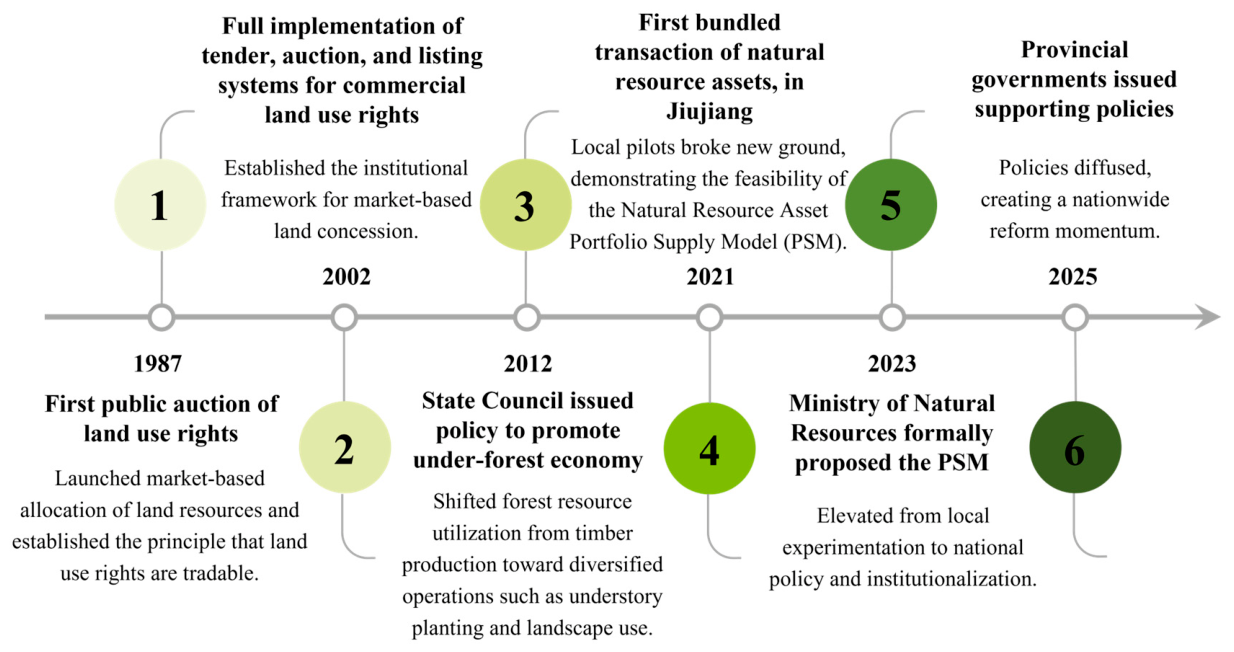
Figure 1. Policy evolution of the Natural Resource Asset Portfolio Supply Model.
Forests 17 00678 g001
Figure 2. Research design framework.
Forests 17 00678 g002
Figure 3. Diagram of the asset aggregation mechanism based on resource integration.
Forests 17 00678 g003
Figure 4. Diagram of the functional coupling mechanism based on factor combination.
Forests 17 00678 g004
Figure 5. Property rights conversion mechanism based on institutional innovation.
Forests 17 00678 g005
Figure 6. Evolutionary pathways of the three mechanisms.
Forests 17 00678 g006
Table 2. Open-ended coding.
CodingInitial CategoriesRepresentative Textual Evidence
F1Resource Inventory and Title ClarificationNational inventory of 6 resource types (including forest land): quantity, ownership, distribution, status
F2Centralized Resource ConsolidationTransfer idle forest land to cooperatives or National Reserve Forest (NRF) companies for centralized management
F3Asset Package ConstructionBundled forest land management rights with construction land use rights into a comprehensive asset package
F4Spatial Scaling of ResourcesForest Ecology Bank cross-regional aggregation resolved 76% of fragmentation
F5Cross-resource CombinationIntegrate resources into a “forest land + construction land” portfolio.
F6Market-Oriented Operational PlatformA forestry resource operation company, majority-owned by a State-Owned Forest Farm (SOFF), acts as the market entity for the Forest Ecology Bank.
F7Separation of Three RightsClarify ownership, secure contractual rights, and issue management certificates to liberalize rights
F8Forest Ticket Equity QuantificationVillage forestry equity quantified as forest tickets with provincial SOFFs redemption safety net
F9Market-Based Circulation of Forest TicketsForest tickets mortgage loans and market transactions achieved 1.83 billion yuan city-wide
F10Development of Forest Carbon Sink ProductsDevelop forest carbon credit products and complete Fujian’s first carbon credit transaction
F11Market-based Realization of Carbon Sink RightsIssued forestry carbon credits are tradable and pledgeable, with cumulative 19.12 million yuan
F12Carbon Finance Empowerment“Carbon Sink Loan” secured against future revenue rights enables forest carbon financialization
F13Intensive Forest ManagementSpecialized tending, fertilization, and grafting improve management efficiency
F14Renovation of Low-Productivity ForestsSubsidy scheme rehabilitated low-yield star anise plantations across 102,000 mu
F15Understory Mixed FarmingUnderstory mixed farming bases cultivate medicinal herbs and diverse forest products
F16Diversification of the Forestry Industry“Forestry+” synergies include timber processing, wellness, and eco-tourism
F17Forest Rights Mortgage GuaranteesForestry financing guarantee company lowers credit costs and unlocks financing potential
F18Innovations in Inclusive Forestry Finance“Fulin Loan” and inclusive products disbursed 17.225 billion yuan in forestry loans
F19Asset-Based Resource Circulation30-year transfer terms enable asset-based circulation of collective forest land rights
F20Comprehensive Resource AssessmentSeparate valuation and Payments for Ecosystem Services cost accounting quantify dual resource values
F21Increase in Timber StockAnnual timber stock increases 1.2 m3 per mu; Chinese fir stock reaches 3× national average
F22Improved Forest Land ProductivityPost-rehabilitation star anise yield increases 173% per mu.
F23Asset Premium AppreciationsAsset packages appreciate 14% compared to fragmented supply
F24Forest Brand Value PremiumRegional forestry brands and collective trademarks raise star anise and cinnamon export prices by over 20%
F25Enhanced Forest Ecosystem ServicesNegative oxygen ions reach 3.4× the national average, enhancing non-market ecosystem value
F26Implementation of Forest Ecological RestorationAromatic plantation restoration and species optimization achieve ecological and value synergy
F27Manifestation of the Spillover Effects of Forest Resources“Romantic Hot Spring City” asset package drives 30% value increase in surrounding products
F28Carbon Emission ReductionsProcessing waste utilization is projected to reduce annual carbon emissions by 80,000 tonnes
Table 3. Axial and selective coding results.
Core CategoryMain CategoriesInitial CategoriesRelational Implications
Evolution of the Value-Added Gradient of Forest ResourcesZ1 Asset AggregationF1, F2, F3, F4, F6Through title verification, mapping and consolidation, fragmented forest land is transformed into a scaled asset package; an operational platform is established to lay the resource foundation for value enhancement
Z2 Functional CouplingF5, F13, F14, F15, F16, F26By utilizing cross-resource integration, operational optimization, and ecological restoration, the Natural Resource Asset Portfolio Supply Model achieves a synergistic expansion of forest functions. This generates combination premiums and serves as the core driver of value enhancement
Z3 Property Rights ConversionF7, F8, F9, F10, F11, F12, F17, F18, F19, F20Through the subdivision of property rights, value quantification, and financial innovation, channels are established for the transfer of forest rights and access to credit, thereby converting functional value into liquid capital
Z4 Value RealizationF21, F22, F23, F24, F25, F27, F28This stage comprehensively manifests the incremental value of forest resources—transitioning from implicit to explicit and from single-dimensional to multi-dimensional—across physical, economic, ecological, and social domains
Disclaimer/Publisher’s Note: The statements, opinions and data contained in all publications are solely those of the individual author(s) and contributor(s) and not of MDPI and/or the editor(s). MDPI and/or the editor(s) disclaim responsibility for any injury to people or property resulting from any ideas, methods, instructions or products referred to in the content.