


Abstract
Detection of brown spot needle blight (BSNB) disease caused by the fungal pathogen Lecanosticta acicola (Thum.) Syd. has increased significantly at commercial loblolly pine (Pinus taeda L.) plantations across the southeastern United States in recent years. Historically, it has been a serious problem in longleaf pine (Pinus palustris Mill) during the grass stage of seedlings, when the environment is more conducive to fungal infection. However, since 2016, confirmed cases of the disease on loblolly pines have increased in several states, including AL, AR, FL, GA, LA, MS, SC, TN, and TX. We investigated the distribution pattern of confirmed cases of BSNB on loblolly pine between 2016 and 2023, identified site-specific factors, and evaluated the historical standardized precipitation index (SPI) value record over the past four decades. Our results showed that extended periods of above-normal SPI values are associated with BSNB spatial distribution patterns, particularly where the disease has been widely reported in AL, AR, LA, and MS. We observed significant reduction in tree height and dbh in severely infected versus healthy trees at the six study sites evaluated in 2023. Excessive rainfall and prolonged water saturation associated with historical 5-Year SPI values suggest that vulnerable loblolly pine seedlings (depending on genetic family) are more likely to be predisposed to L. acicola infection due to persistent stress from reduced soil nutrient flux and other physiological processes of the host. Understanding the effect of precipitation patterns on cases of BSNB is an important step toward preventing or minimizing the future impact of the disease on commercial plantations in the Southeast.
1. Introduction
Brown spot needle blight (BSNB) is a pine needle disease caused by Lecanosticta acicola (Thum.) Syd., a fungal pathogen that has been recorded on several Pinus spp. in North America and elsewhere in the world [1]. In the southeastern U.S., BSNB typically is only a significant disease of the longleaf pine (Pinus palustris Mill.) in the early developmental grass stage [1,2,3], a period during which root establishment is favored over height growth. During this period, foliage remains near ground level and is more likely to be exposed to needle pathogens spread by water splash. Loblolly pine (Pinus taeda L.), which lacks a grass stage, was historically considered a more tolerant species, but in recent years, BSNB has been associated with increased incidence and damage in commercially grown loblolly pine plantations [1,4,5,6,7,8,9]. Land managers have expressed serious concerns about the emerging threat to loblolly pine stands, given, in particular, that the pathogen is readily available all year. Although multiple pathogens, including needle cast fungi (Lophodermium sp., Lophodermella sp. and others), have been implicated and identified as present in low levels on infected foliage, the BSNB pathogen has been consistently detected on symptomatic needles, and has been identified as the primary pathogen associated with the recent needle discoloration, defoliation, reduced growth, and mortality in loblolly pine [7,8,9,10,11].
Sporulation, proliferation, and dissemination of the L. acicola have been associated with environmental factors such as mild winters, cool springs, and rainfall patterns, with the peak sporulation occurring in May through August [12,13]. In the Southeast, loblolly pine trees are often planted during their dormant season, which usually occurs from December to March. Planting under extremely wet soil conditions can result in decreased survival, delay in the development of new roots, and reduced growth [14]. Insufficient root development in the early stages can also reduce physical support, obstruct water and nutrient uptake, and cause dieback or seedling mortality from extreme weather conditions or infection from tree pathogens during excessively wet periods [14].
Level of impact by precipitation on host–pathogen interaction may vary depending on the timescales of the exposure, which can be investigated using the standardized precipitation index (SPI), an important indicator for quantifying and reporting meteorological information related to soil moisture at shorter timescales, and groundwater and reservoir storage at longer timescales. The index captures the deviation of observed precipitation from the climatological average over a given period to estimate wet or dry conditions based on the precipitation variable on a variety of timescales, from sub-seasonal to interannual scales [15,16,17,18]. The timescales (i.e., short-term and long-term applications) are useful for the recognition of patterns such as the onset of extreme events (i.e., drought and high precipitation) and the availability of different water resources. Soil moisture conditions (affected by annual rainfall deficits) respond to precipitation anomalies on a relatively short timescale (1-Year SPI), while multi-year hydrological droughts, groundwater, streamflow, and reservoir storage reflect longer-term (2-Year and 5-Year SPI) precipitation anomalies [15].
In this study, we investigated the upsurge in recent years of reports of BSNB detection in loblolly pines in the southeastern U.S. [7] that coincided with multiple years of higher-than-average rainfall between 2016 and 2023 (National Center for Environmental Information (NCEI, https://www.ncei.noaa.gov)). The specific objectives were to (i) develop a county-level geographic database of confirmed cases of L. acicola in loblolly pine as a historical record and baseline for subsequent research efforts, (ii) investigate the role of precipitation as a key environmental trigger of the higher reported detections of the disease seen in the Southeast over the recent decades, as well as the impact of BSNB on tree growth, and (iii) evaluate the application of SPI as a leading indicator for BSNB detection in the southeastern United States. We focused on SPI in this study to capture the cyclical short- and longer-term precipitation anomalies (at field or regional scales) as they relate to the predisposition of loblolly pine host to BSNB infection. The findings and knowledge gained from this study will facilitate a better understanding of the impacts of BSNB on pine growth and mortality, guide management decisions, and potentially reduce negative economic impacts on private landowners, commercial pine nurseries, and plantations in the southeastern United States.
2. Materials and Methods
2.1. Regional Distribution Map of Brown Spot Needle Blight (BSNB) on Loblolly Pine
The detection of BSNB was recorded at the county level based on the confirmation of L. acicola presence in loblolly pine needle samples as part of what subsequently became a regional needle pathogens research network (NPRN) detection effort. The sample information recorded included the sample collection date, location, county/parish, state, and any additional pertinent information about the site where the sample was collected. The source of the fundamental data for this aspect of the study was documented symptomatic needle samples that were collected by the USDA Forest Service; Auburn University, AL; and the University of Georgia, GA, or received from affected landowners, land managers, and forestry cooperators across the region who were committed to facilitating the collection and coordination of reliable geographical data for various reports. Received loblolly pine needle samples were tested for L. acicola by morphological characterization and molecular detection methods including Polymerase Chain Reaction (PCR), quantitative polymerase chain reaction (qPCR), and loop-mediated isothermal amplification (LAMP) [10,11,19,20] at any of the three diagnostic laboratories, which were located at Auburn University, AL; the University of Georgia, GA; and the USDA Forest Service, Southern Research Station/Forest Health Protection, LA. Data collected from index of reporting between 2016 and 2023 from the NPRN detection effort was used in creating the regional BSNB map of the first confirmed cases of L. acicola across the southeastern United States by county/parish, and subsequently used in evaluating the relationship between the SPI values and the progression of BSNB detections across in the southeastern United States.
2.2. Standardized Precipitation Index
The standardized precipitation index (SPI) analysis in this study focused on two aspects. The first aspect was to evaluate the correlation between SPI values and the detection of BSNB in loblolly pine corroborated by the distribution patterns of positive county/parish data between 2016 and 2023 in the southeastern United States. SPI values, when positive, indicate that the wet condition is greater than median precipitation, whereas negative values indicate that the dry condition is less than median precipitation. Values can be classified as extremely wet (≥2.00), very wet (1.50 to 1.99), moderately wet (1.00 to 1.49), near normal (−0.99 to 0.99), moderately dry (−1.49 to −1.00), very dry (−1.99 to −1.50), or extremely dry (≤−2.00) (https://www.weather.gov/hfo/spi_info, accessed 21 March 2026). Classification and Regression Tree (CART) analysis was performed in JMP version 14.0 (SAS Institute Inc., Cary, NC, USA) using the Partition platform to determine the interactions between cumulative number of first-time L. acicola positive counties/parishes (CCounty) across nine states and the historical state-level SPI evaluated at three timescales (1-Year SPI, 2-Year SPI, and 5-Year SPI) from (January to March) between 2016 to 2023.
The second aspect was to evaluate the SPI values in relation to the BSNB epidemics between 1980 and 2023 in two geographical regions in the United States, specifically, the first-time L. acicola-positive county/parish data between 2016 and 2023 in the Southeast and the documented published accounts of white pine needle damage (WPND) between 2005 to 2014 in the northeastern United States. WPND is a disease complex caused by multiple pathogenic fungi (concurrently or independently found) within infected stands that are native to the northeastern United States. However, L. acicola appeared to be the primary pathogen of WPND [21]. The county-level SPI was evaluated at three timescales (1-Year SPI, 2-Year SPI, and 5-Year SPI) from 1980 to 2023, using historical data from nine counties/parishes (Washington, AL; Grant, AR; Nassau, FL; Ware, GA; Rapides, LA; Lowndes, MS; Abbeville, SC; Coffee, TN; and Hardin, TX) in nine southeastern states where BSNB in loblolly pine was reported (Climate Toolbox (https://climatetoolbox.org/)) [22]. The counties/parishes included represent either the first or one of the first counties in each state where BSNB pathogen was confirmed since 2016. In the northeastern United States, similar SPI data was evaluated on three timescales (Climate Toolbox (https://climatetoolbox.org/)) [22] for five counties within four states (Berkshire, MA; Aroostook, ME; Piscataquis, ME; Hillsborough, NH; and Chittenden, VT), and included based on previously documented reports of L. acicola (Table 1, Figure 1) [12].
Table 1.
Counties in the northeastern region (or states) and counties/parishes in the southeastern region included in the evaluation of the standardized precipitation index timescales (1-Year SPI, 2-Year SPI, and 5-Year SPI) as an indicator for identifying precipitation as a trigger associated with brown spot needle blight.
Figure 1.
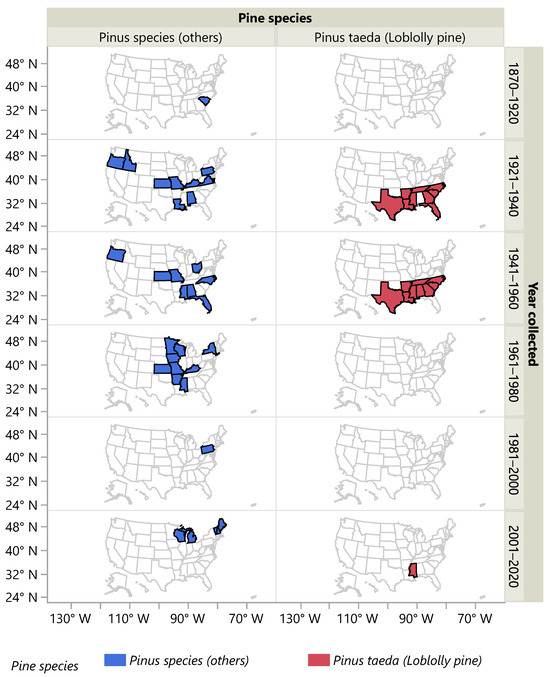
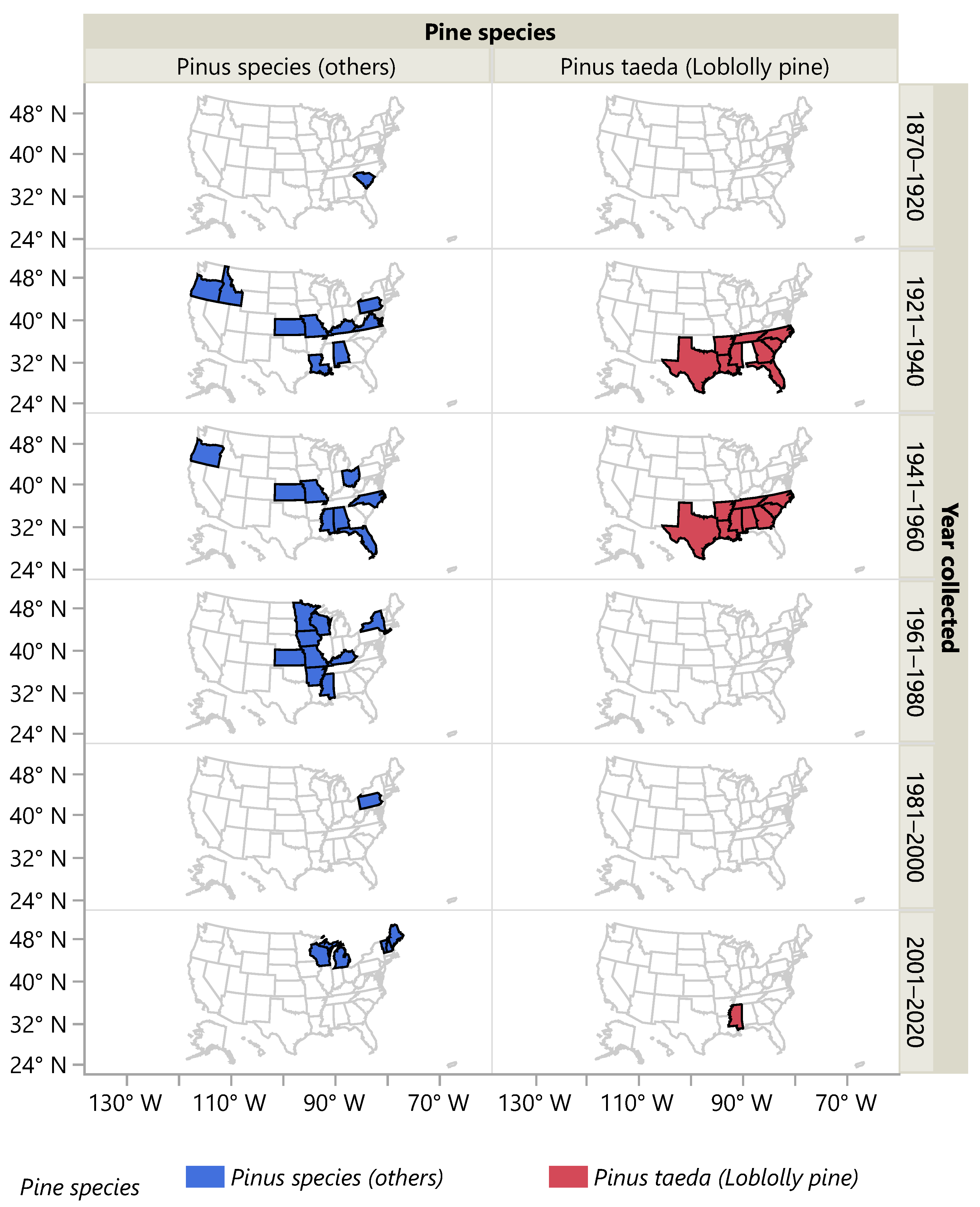
Distribution of brown spot needle blight pathogen and Lecanosticta acicola (Thum.) Syd. isolated from pine species samples collected in the United States between 1870 and 2020, as previously documented [1].
2.3. Field Study
A field study was established at six commercial pine plantations in Rapides Parish (R1, R2, R3, and R4) and Vernon Parish (V1 and V2) in Louisiana. Each site was planted with different loblolly pine families (MCP1, MCP2, MCP3, MCP4, and OP1) between 2014 and 2018. Site R2 was planted with MCP and OP (Table 2). MCP represents full-sib seedlings produced from mass control pollination crosses, also sometimes referred to as CMP, while OP represents half-sib seedlings produced from uncontrolled crosses, also referred to as open-pollinated. The sites were chosen based on reports from landowners of widespread BSNB infection within specific plantations. During a preliminary assessment of BSNB severity on the loblolly pine stands in early 2023, above-average BSNB detection was observed at each site. In October 2023, 60 loblolly trees with varying levels of disease severity were identified, and 10 were selected randomly at each site, tagged, and evaluated for initial crown health assessment and progressive long-term monitoring. The severity of needle diseases in the crown was rated according to a 0–4 disease severity rating scale, where 0 = healthy, 1 = <30% of needles within the crown infected, 2 = 30%–60% of needle infected, 3 = >60% of needles infected, and 4 = dead. Individual tree health and crown assessments were conducted based on disease severity, tree height, and tree diameter at breast height (dbh). Classification and Regression Tree analysis in JMP version 14.0 (SAS Institute Inc., Cary, NC, USA) was performed using the Partition platform to identify key predictors of dbh and height based on pine family type, planting year, and disease severity. Weather information for the sites, including monthly and total annual rainfall data from 1980 to 2023, was obtained from the Climate Toolbox (https://climatetoolbox.org/) [22]. Available weather data was analyzed. Site-specific soil data was obtained from SoilWeb and Soil Series Extent Explorer (SEE), applications provided by the California Soil Resource Lab (https://casoilresource.lawr.ucdavis.edu/soilweb-apps, accessed on 6 March 2026) [23]. All statistical data analyses were performed in JMP version 14.0 (SAS Institute Inc., Cary, NC, USA)
Table 2.
Field study sites established at six commercial pine plantations in Rapides and Vernon Parishes in Louisiana for crown health assessment of loblolly pine, determining brown spot needle blight severity, and long-term monitoring.
3. Results
3.1. Regional Distribution Map of Brown Spot Needle Blight (BSNB) on Loblolly Pine
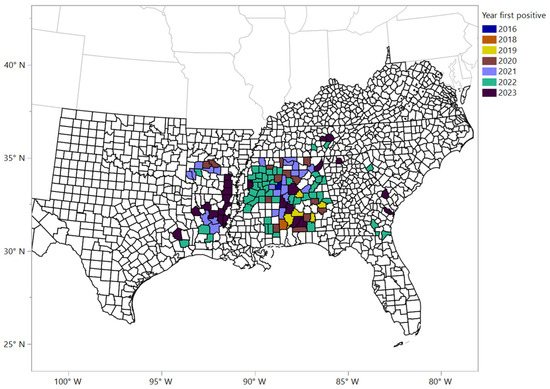
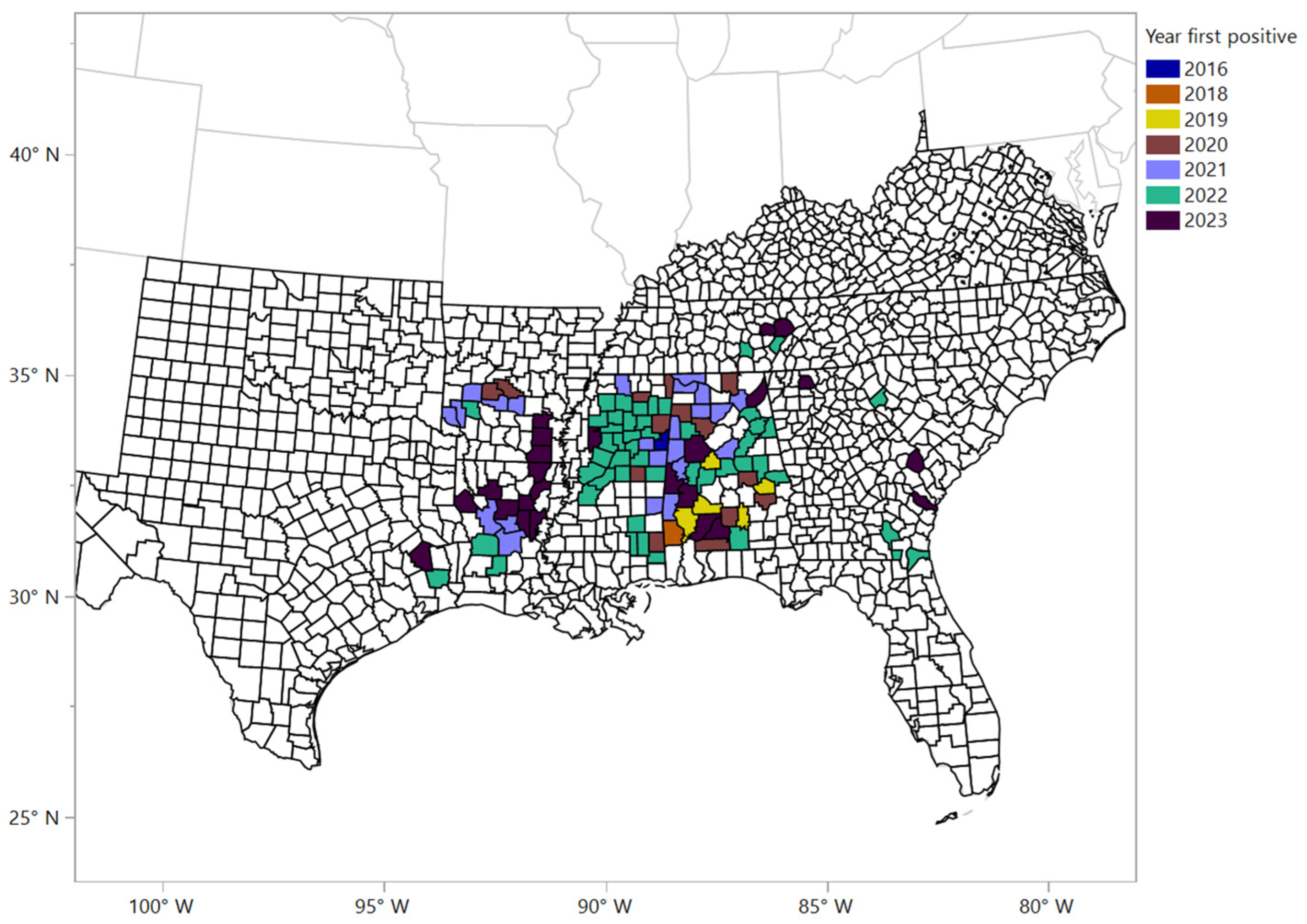
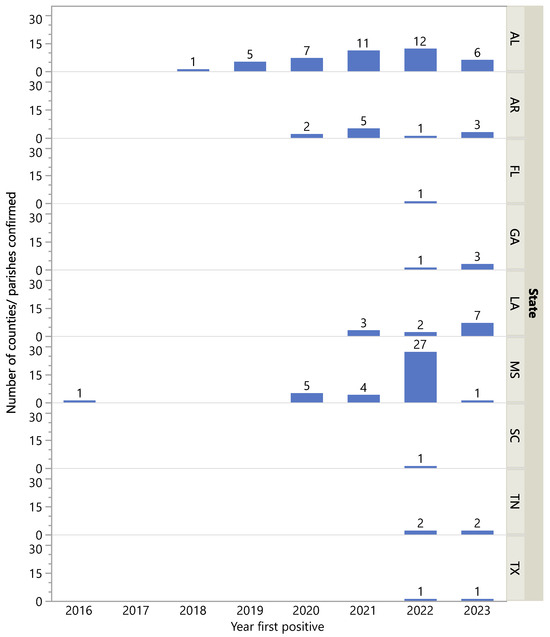
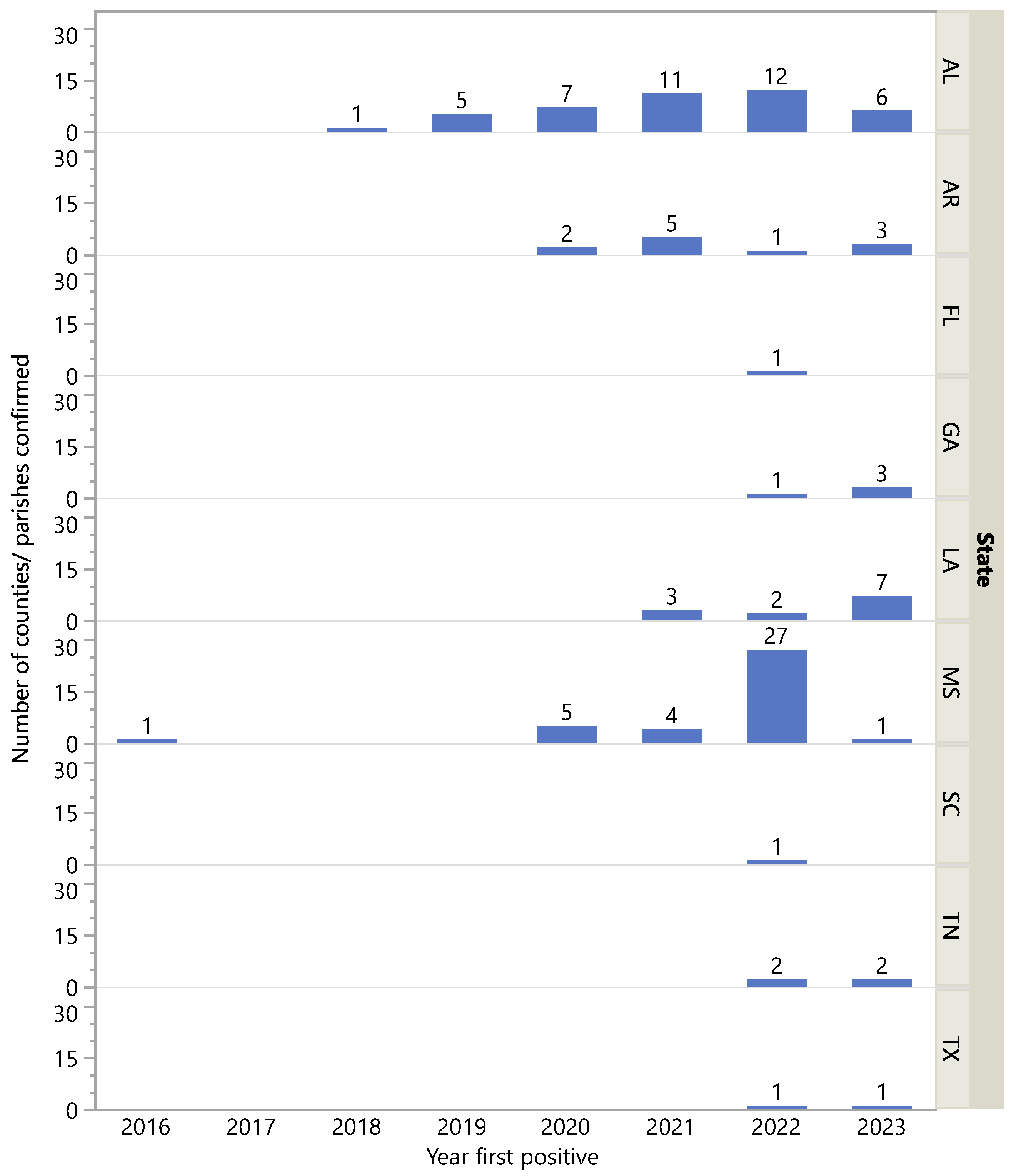
Analyzed data from this study based on the index of reporting showed that Lowndes County, MS, which had a confirmed case of L. acicola on a loblolly needle sample in 2016, was the first documented county to test positive for L. acicola. Since then, L. acicola has been confirmed in a total of 115 counties/parishes in nine states, including AL (42), AR (11), FL (1), GA (4), LA (12), MS (38), SC (1), TN (4), and TX (2), which have been added to the distribution map for 2016 to 2023 (Figure 2). The highest number of first confirmed counties/parishes (48) was recorded in 2022. The number of positive counties/parishes per year increased significantly from 2016 to 2022 but decreased by half in 2023. Two states, AL and MS, accounted for 69.6% of the total positive cases between 2016 and 2023 (Figure 2 and Figure 3). It is important to note that the data presented in this current investigation were based on samples received and processed only at the three aforementioned laboratories located in AL, GA, and LA, and did not represent a region-wide survey of L. acicola in the southeastern United States. The map is a diagnostic-driven documentation, and not a product of an active region-wide BSNB distribution survey (thus, the disease could be present in some counties/parishes not featured on the map). Furthermore, it is quite possible that state cooperators and land managers became accustomed to observing BSNB symptoms, therefore reducing the need to submit new samples to any of the laboratories for confirmation.
Figure 2.
Map of southeastern United States counties and parishes where brown spot needle blight was confirmed on symptomatic loblolly pine needle samples by DNA detection of the pathogen Lecanosticta acicola (Thum.) Syd. between 2016 and 2023.
Figure 3.
Number counties/parishes in the southeastern United States where Lecanosticta acicola (Thum.) Syd. was confirmed on loblolly needle samples between 2016 and 2023.
3.2. Standardized Precipitation Index
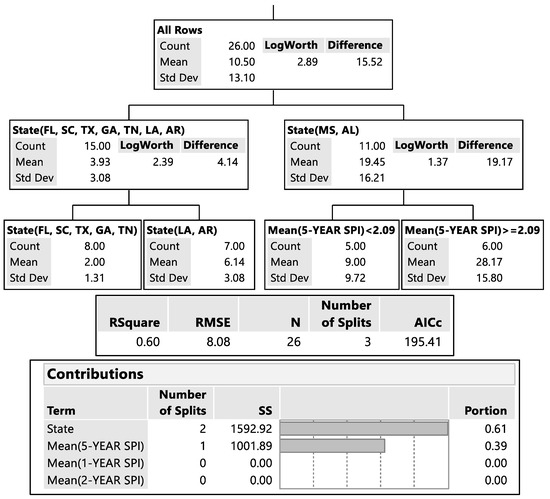
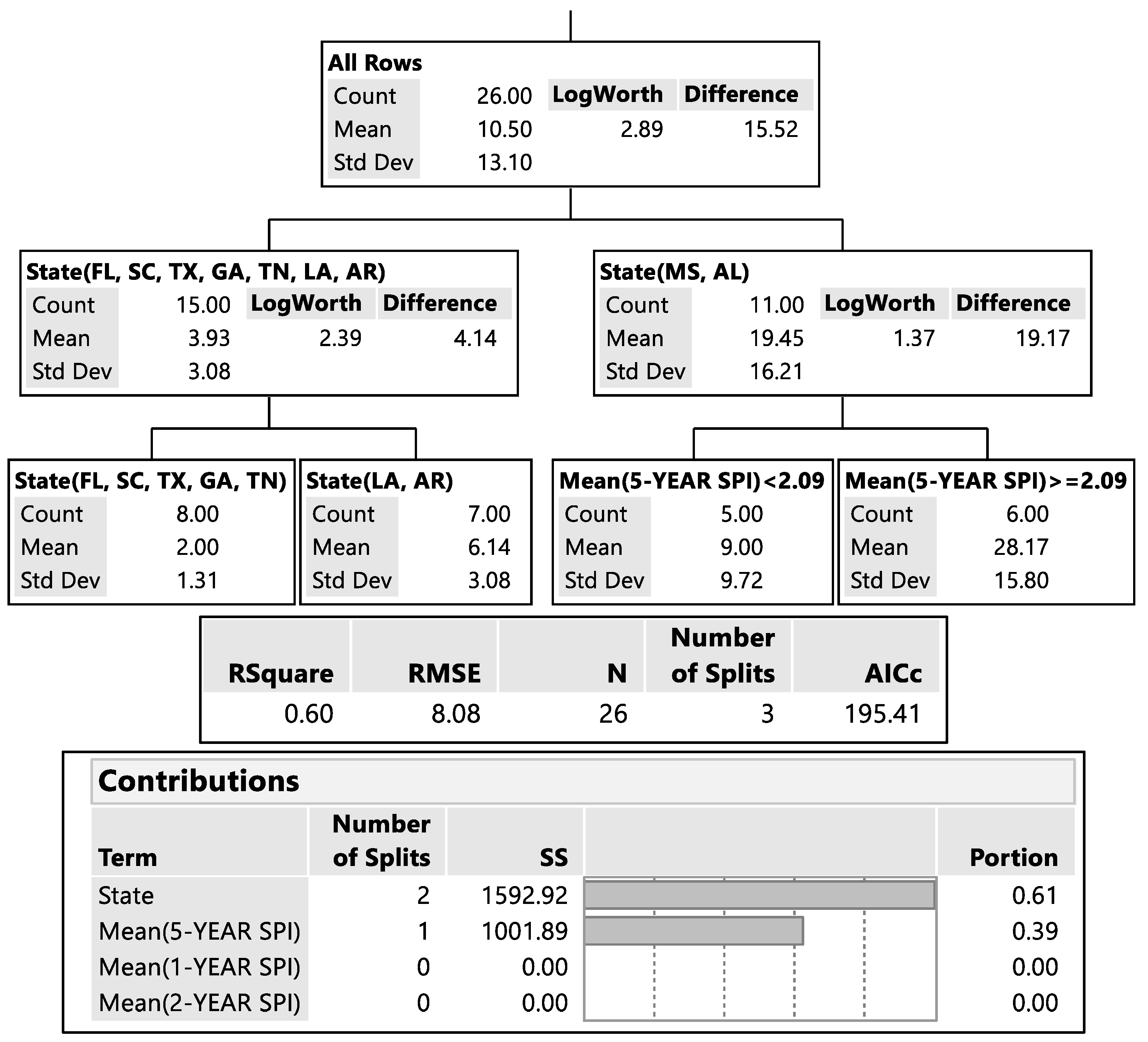
Classification and Regression Tree data analysis indicates that state and mean (5-Year SPI) factors account for 60% of the variation in the interactions between cumulative number of first-time Lecanosticta acicola-positive counties/parishes across nine states and the historical SPI value between 2016 to 2023 according to the data evaluated (R2 = 0.60). In AL and MS, the mean (5-Year SPI) ≥ 2.09 (i.e., extremely wet) increased the mean cumulative L. acicola-positive counties from approximately 19 to 28 counties, while the mean (5-Year SPI) ≤ 2.09 reduced it from approximately 19 to nine. The mean cumulative L. acicola-positive counties/parishes, excluding SPI interaction, was approximately six in AR and LA compared to two in the remaining states (FL, GA, SC, TN, and TX) (Figure 4).
Figure 4.
Classification and Regression Tree (CART) analysis of the interactions between the cumulative number of first positive counties/parishes across nine states and the mean (January to March) historical Standard Precipitation Index (SPI) value (1-Year SPI, 2-Year SPI, and 5-Year SPI) from each state between 2016 to 2023. The two factors (state and mean [5-Year SPI]) accounted for 60% of the variation, with state showing a higher proportion of contribution to the regression than mean (5-Year SPI).
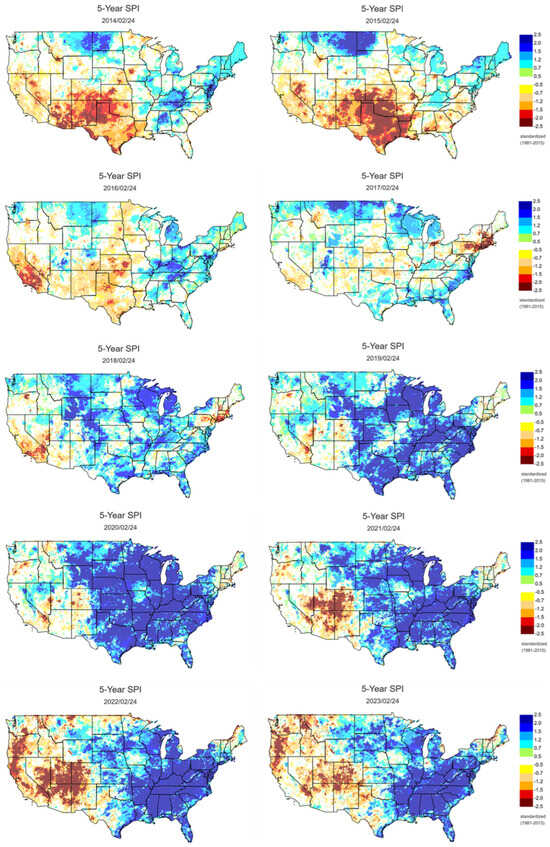
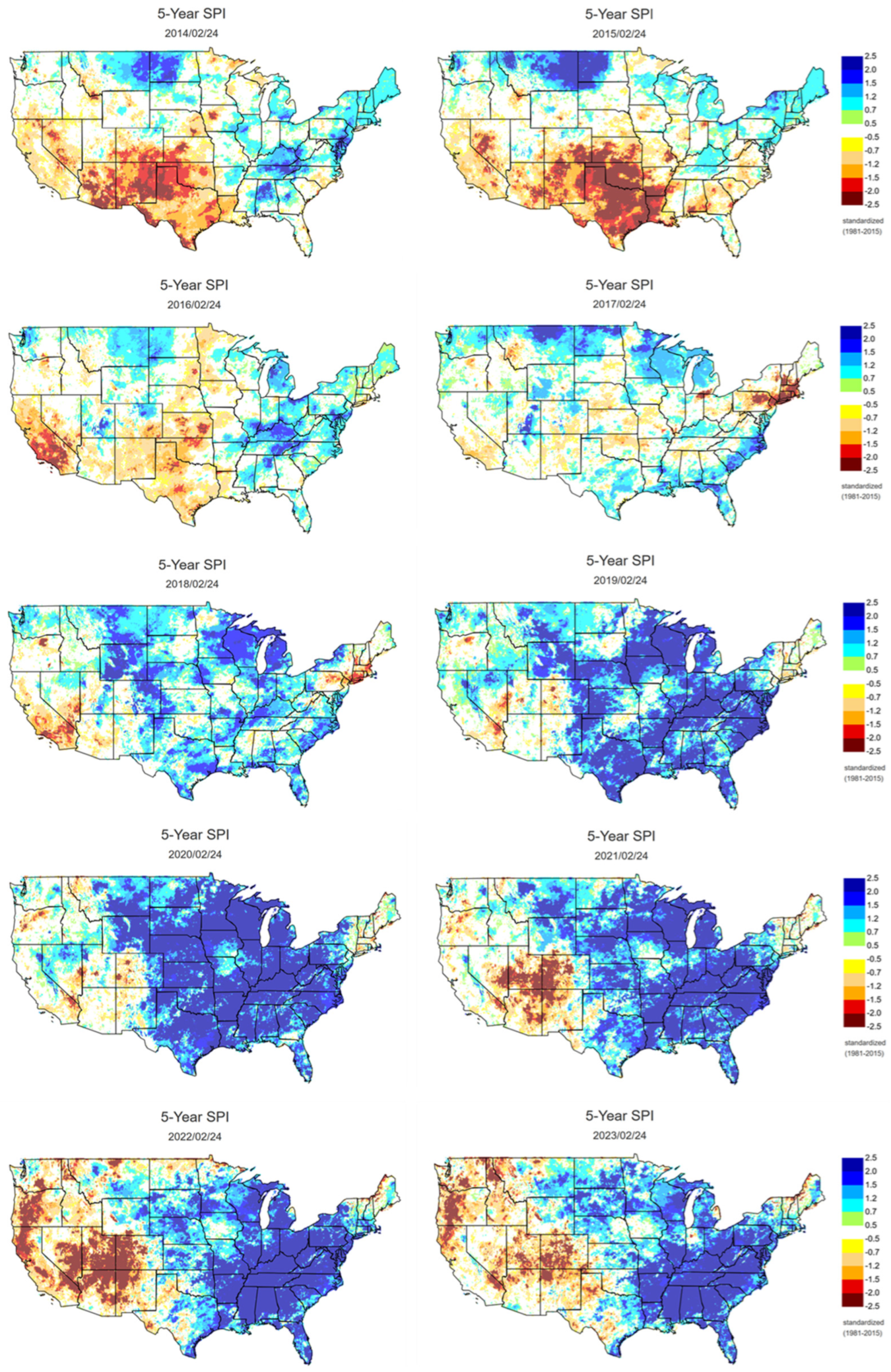
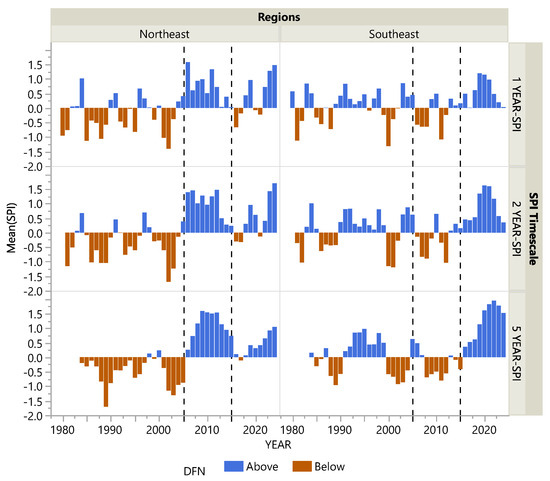
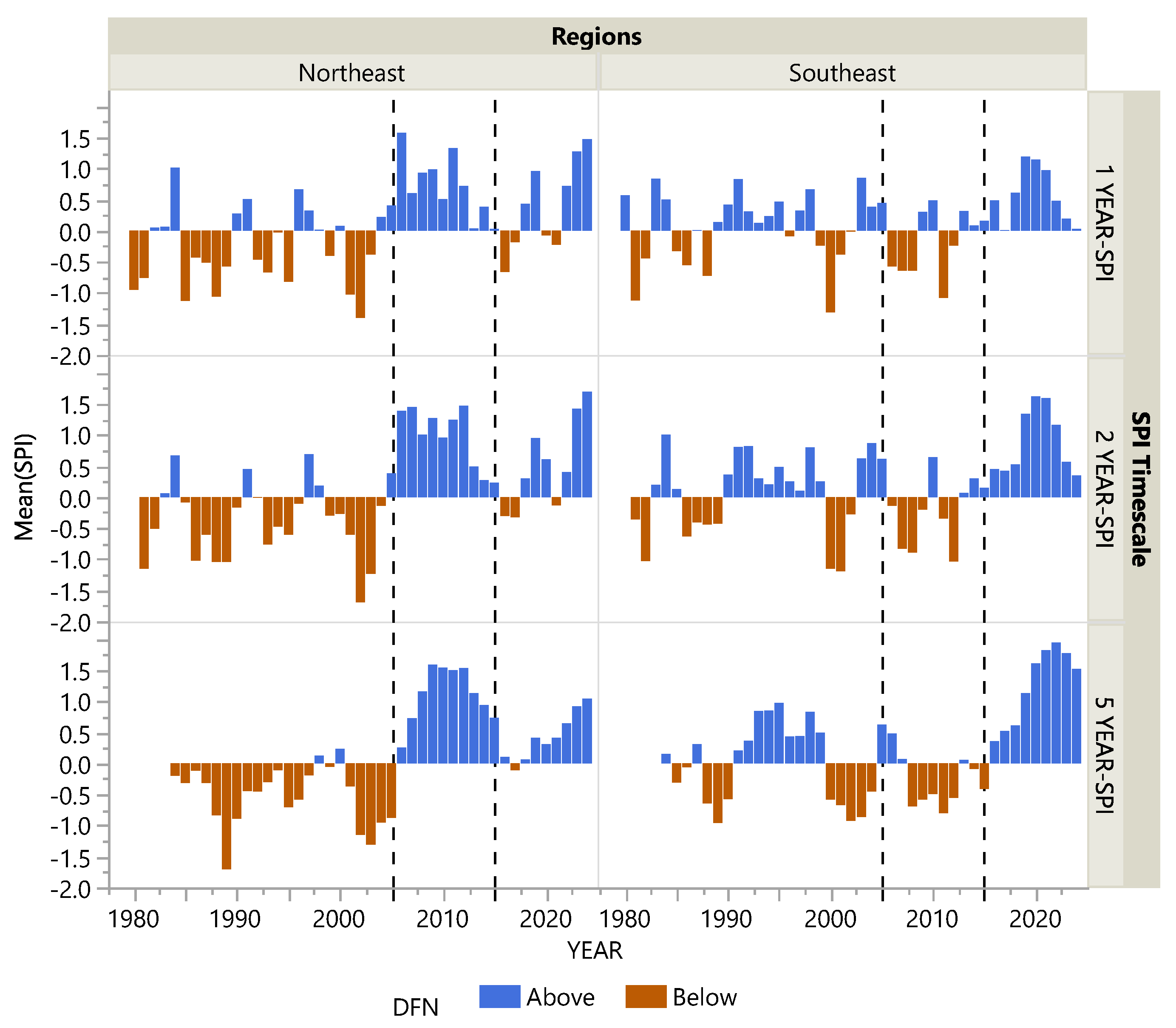
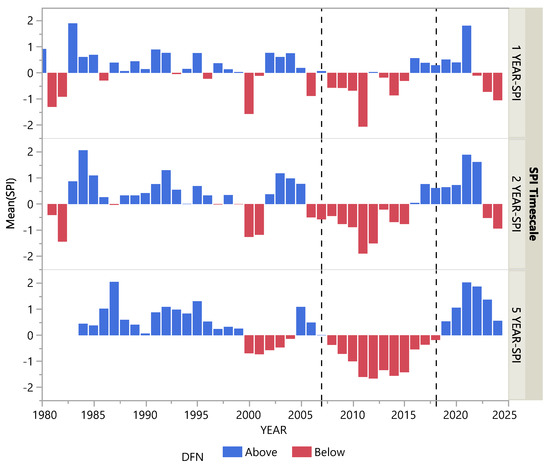
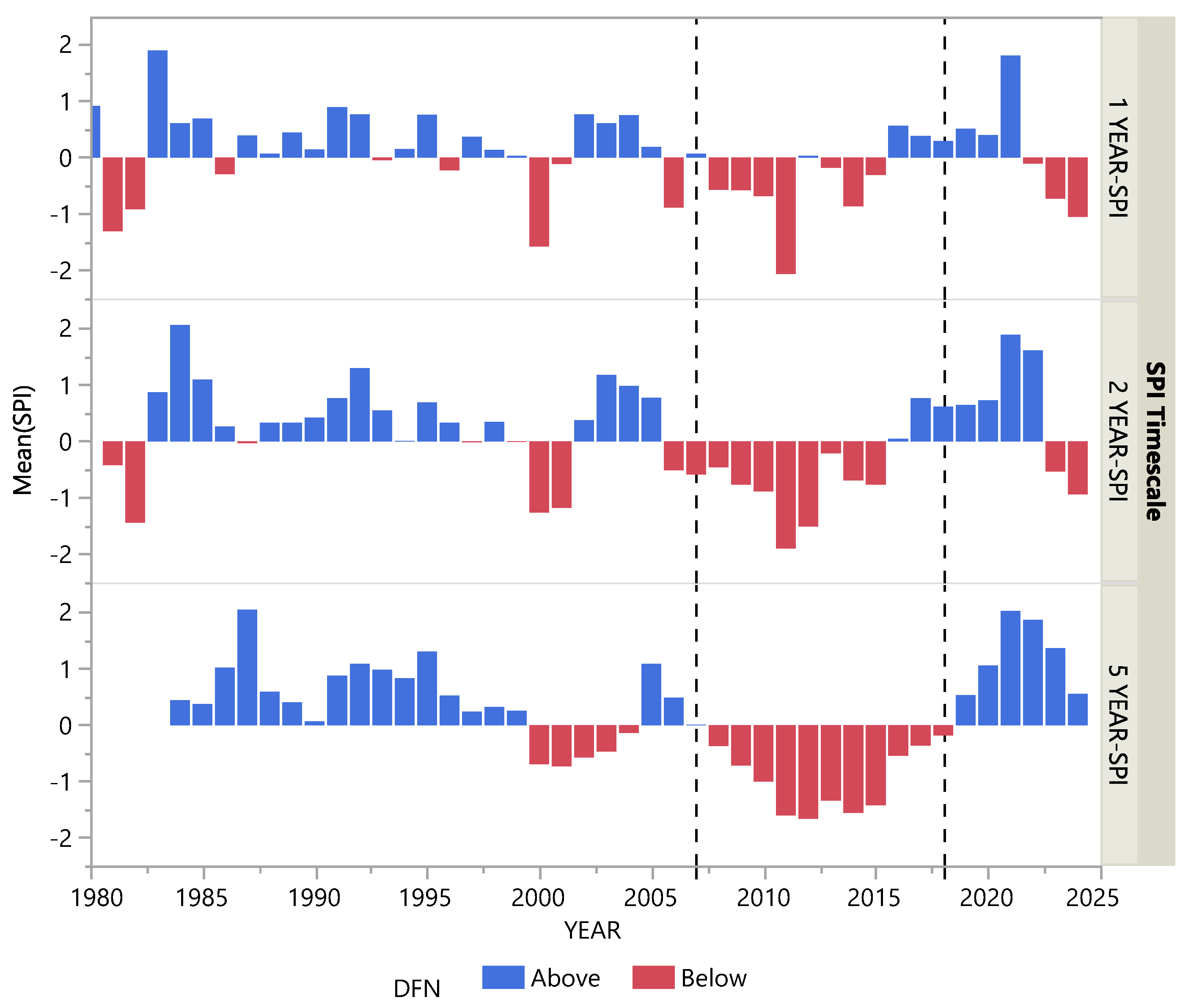
Historical observations indicate noticeable variability in wetness in 5-Year SPI in early spring (February) from 2014 to 2023 in the United States (Figure 5), while the cyclical 5-Year SPI timescale values in the southeastern region turned positive (wet) in 2016 after almost a decade of precipitation deficits (drought). The SPI trend in the Southeast was similar on the 5-year timescale to previous observations in the Northeast a decade earlier, between 2006 to 2015, a period that was associated with outbreaks of white pine needle damage [21] (Figure 6). Both periods (between 2009 and 2012 in the Northeast and between 2020 and 2023 in the Southeast) experienced consistently very wet (1.50 to 1.99) conditions. The onset of the transition was consistent on the three timescales (1-Year SPI, 2-Year SPI, and 5-Year SPI). In central Louisiana, at Rapides Parish, where field observations for this study were conducted, SPI transitioned from a dry to wet period in 2018/2019 according to the 2-year and 5-year timescale that indicates that some field sites experienced exceptionally wet conditions post-2019 (Figure 7). The trend was consistent with a period of extended soil water saturation and waterlogging in many parts of the region, which could have severely impacted mature trees and young vulnerable pine saplings planted during this period.
Figure 5.
Variability in 5-Year Standardized Precipitation Index (SPI) in the United States in February, from 2014 to 2023 (Data source: Climate Toolbox ‘Climate Mapper’, https://climatetoolbox.org/tool/climate-mapper, accessed on 6 March 2026) [22].
Figure 6.
Standard Precipitation Index (SPI) at three different timescales (1-Year SPI, 2-Year SPI, and 5-Year SPI) showing the composite data of nine United States counties/parishes (Washington, AL; Grant, AR; Nassau, FL; Ware, GA; Rapides Parish, LA; Lowndes, MS; Abbeville, SC; Coffee, TN; and Hardin, TX) in the Southeast region, and five counties (Berkshire, MA; Aroostook, ME; Piscataquis, ME; Hillsborough, NH; and Chittenden, VT) in the Northeast region. The SPI shows the precipitation deviation from normal (DFN) climatological average from 1980 to 2023 (data source: Climate Toolbox, https://climatetoolbox.org/) [22].
Figure 7.
Standard Precipitation Index (SPI) at three different timescales (1-Year SPI, 2-Year SPI, and 5-Year SPI) in Rapides Parish, LA. The SPI shows the precipitation deviation from the climatological average from 1980 to 2024 (data source: Climate Toolbox, https://climatetoolbox.org/) [22].
3.3. Field Study
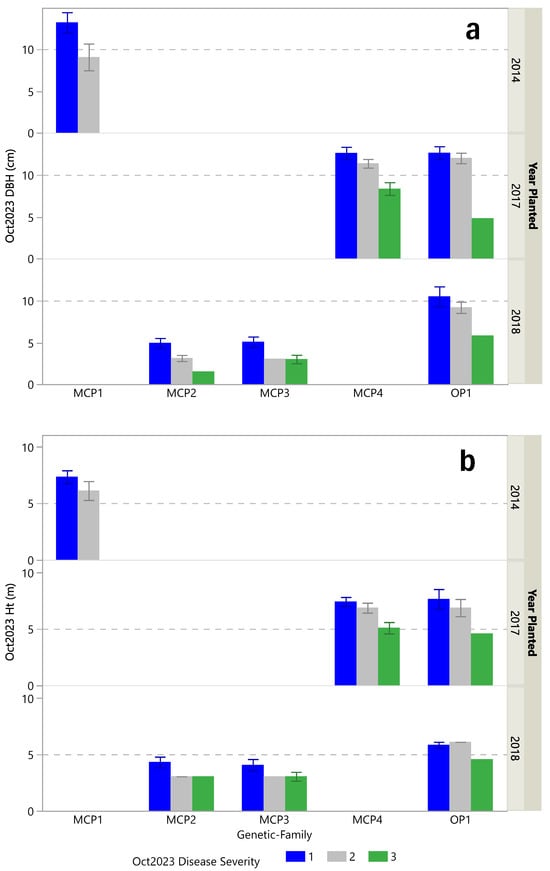
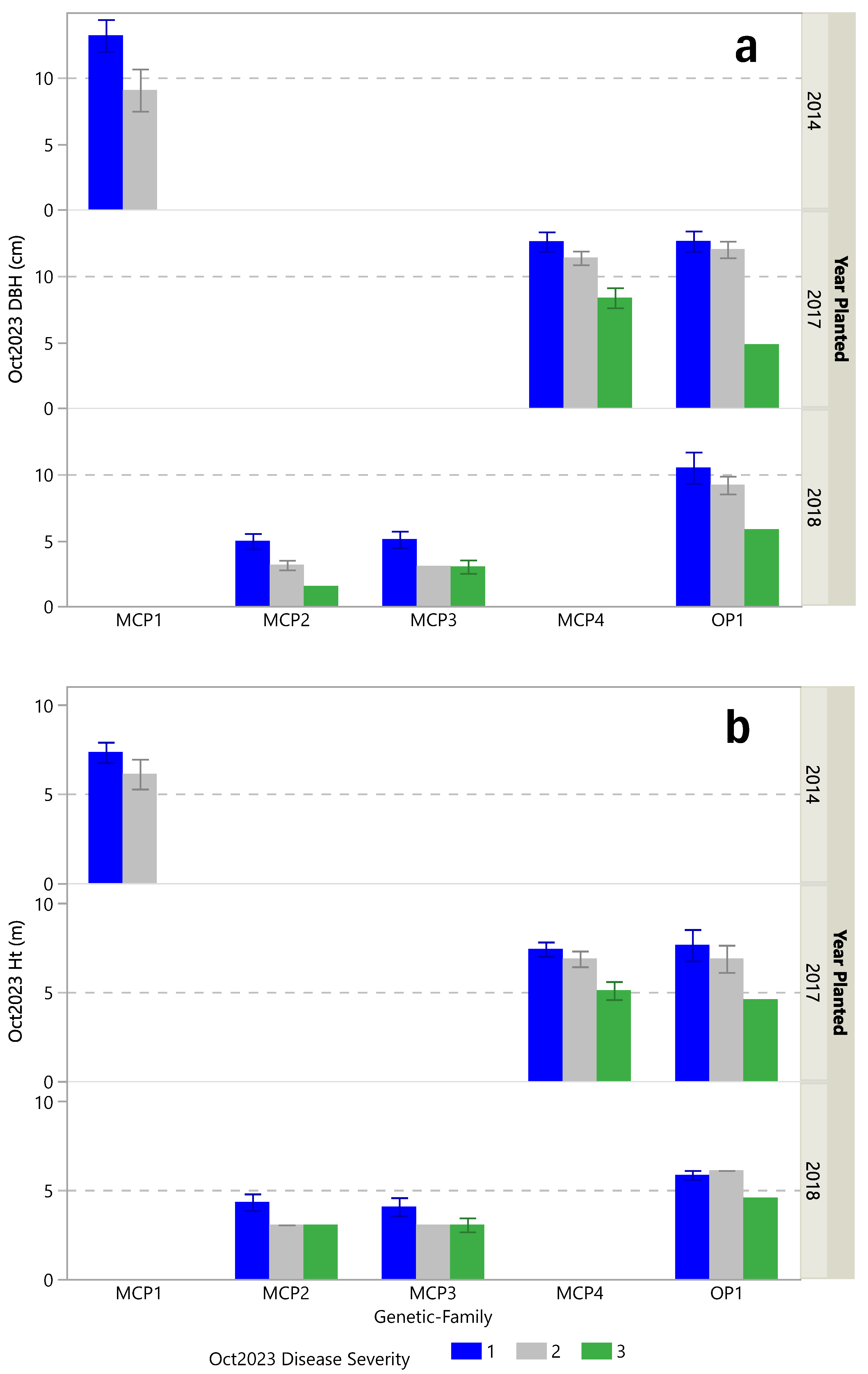
The tree health conditions evaluated in 2023 showed a significant reduction in height and dbh in severely affected trees compared to healthy trees (based on the 0–4 disease rating scale) at the six study sites. The dbh of healthy pine trees planted in 2014 (MCP1, disease rating of 1) was significantly greater than similarly rated trees from a different genetic family planted in 2017 and 2018. Although there were subtle differences in the dbh of MCP4 and OP1 trees planted in 2017, OP1 had significantly greater mean dbh than MCP2 and MCP3 trees planted in 2018. As expected, OP1 planted in 2017 (older) had larger dbh than those planted in 2018. Trees rated with moderate or severe disease (i.e., disease rating of 2 or 3) were significantly smaller than healthy trees in all of the three planting years evaluated. The five genetic families evaluated in the study were located at different sites in central Louisiana. Hence, the variation in the dbh measurements suggests a possible influence stemming from interactions between genetic and environmental factors, a finding that could guide future studies. There was a significant correlation between the tree height and the dbh (0.91, p < 0.0001 measurements) across all factors. Similar patterns of tree height and the dbh responses to genetic family, disease severity, and year tree planted were observed (Figure 8).
Figure 8.
Effects of loblolly pine genetic family, brown spot needle blight severity, and the year trees were planted on (a) diameter at breast height (dbh) and (b) the tree height or Ht (m) of loblolly pine (n = 60) using the 0–4 disease severity rating scale at the six field sites in Rapides and Vernon Parish, LA, in October 2023.
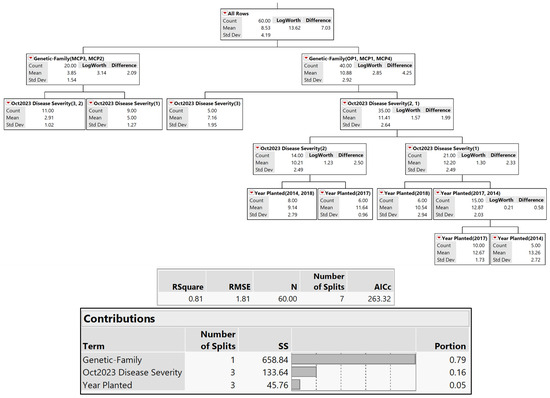
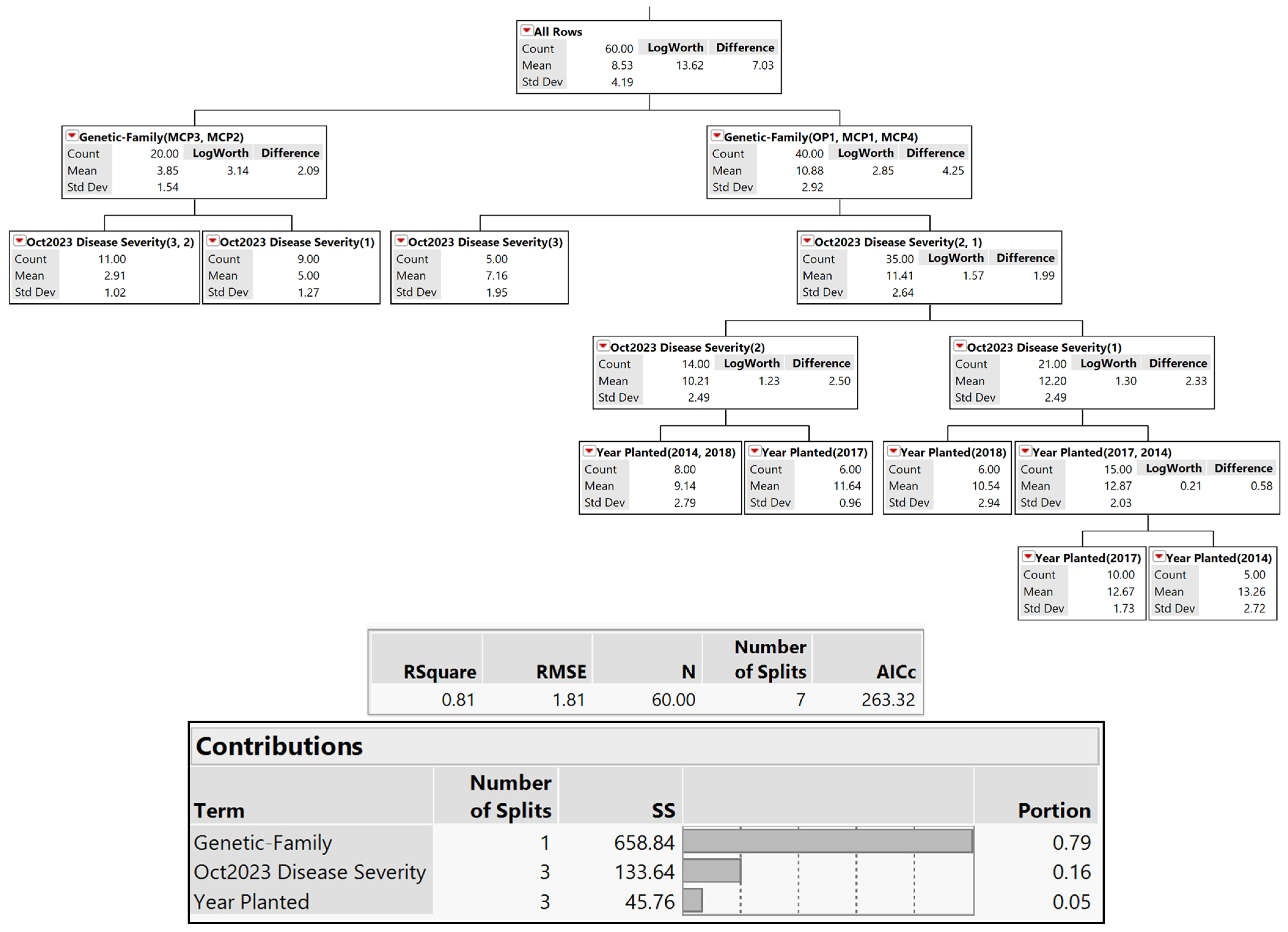
Further investigation using CART analysis suggests a strong interaction among the various factors evaluated in predicting the dbh (R2 = 0.81). The genetic family that was planted, disease severity rating, and year that trees were planted contributed portions of approximately 0.79, 0.16, and 0.05, respectively, to the dbh variation in evaluated pine trees (Figure 9).
Figure 9.
Classification and Regression Tree (CART) analysis of interactions among site-specific factors evaluated for assessing the diameter at breast height (dbh) measurements of loblolly pine trees in 2023 from study sites in Rapides and Vernon Parishes, Louisiana. The three identified factors (Genetic-Family, October 2023 Disease Severity, and Year Planted) accounted for 81% of the variation, and the table shows the contribution of each factor to the regression tree.
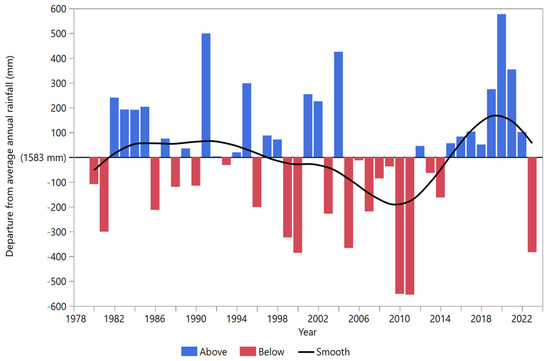
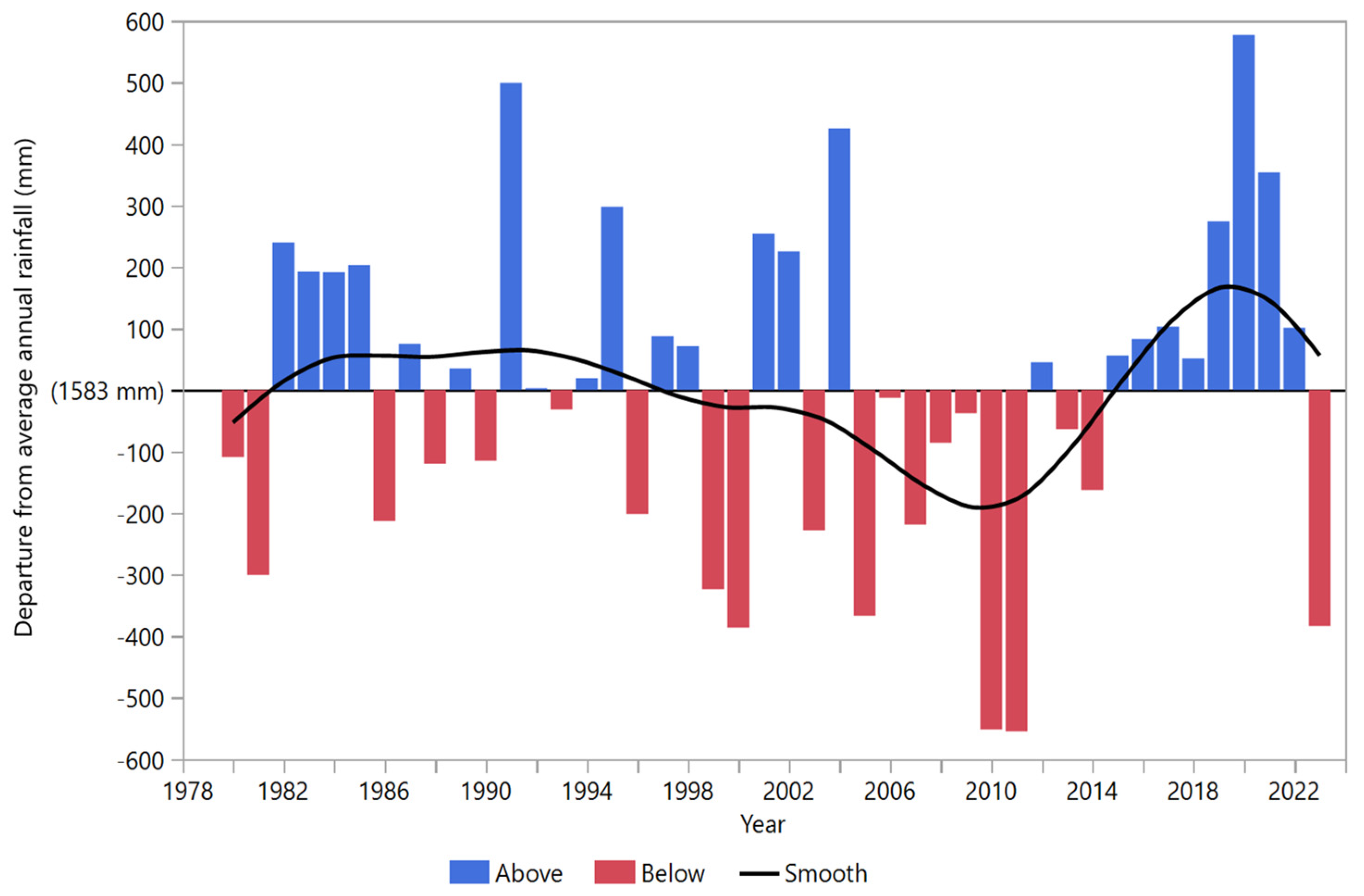
The analysis of precipitation and the SPI data from Rapides Parish, LA, indicates a period of consistent soil water saturation due to extended above-average precipitation between 2015 and 2021 (Figure 10).
Figure 10.
Historical above-below average rainfall pattern from 1980 to 2023 at a study site in Rapides Parish, Louisiana (data source: Climate Toolbox, https://climatetoolbox.org/) [22].
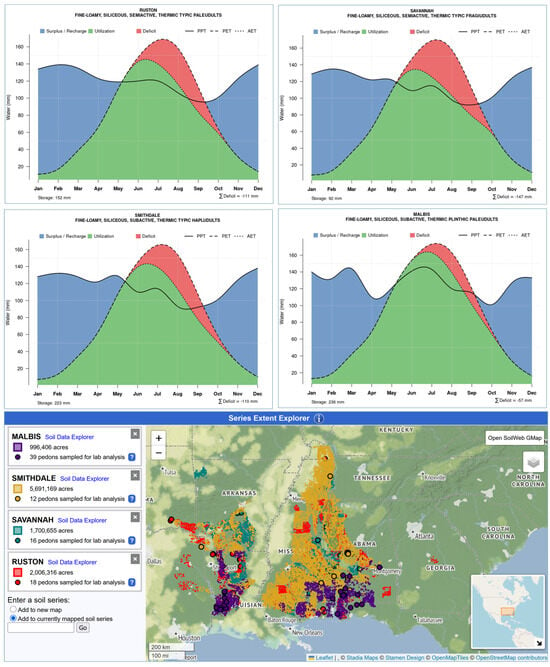
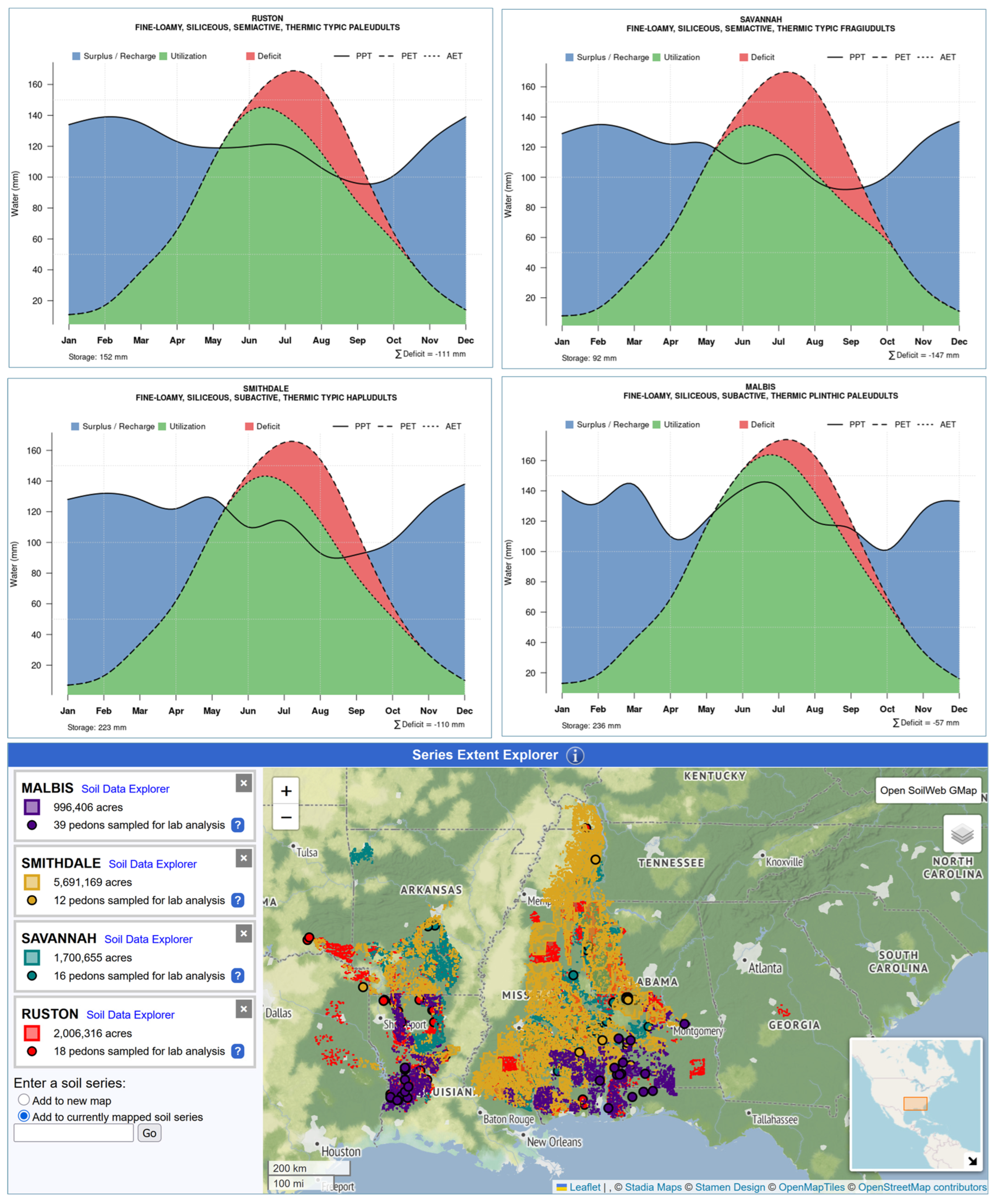
The historical weather data between 1980 and 2023 in Rapides Parish, LA, showed that the annual rainfall post-loblolly planting in early 2018 was consistently above the 2015 to 2022 average. The highest rainfall was in 2020, at 577 mm above the average (1583 mm) (data source: Climate Toolbox https://climatetoolbox.org/) [22]. Since 2020, the total annual precipitation at the site has trended down, and by the end of 2023 was approximately 384 mm below average (1583 mm). However, the cumulative amount of rainfall above the 2015 to 2022 average was 1599 mm. The composition of the soil series at the field site R4 in Rapides Parish, LA, showed 85% Ruston, 8% Savannah, 5% Smithdale, and 2% Malbis (Table 2). These soil series typically experience varying levels of soil water deficit from June to October according to SoilWeb, Soil Series Data Explorer (SDE) (https://casoilresource.lawr.ucdavis.edu/sde/?series, accessed on 6 March 2026) [23] (Figure 11).
Figure 11.
Monthly water balance estimated for four soil series (85% Ruston, 8% Savannah, 5% Smithdale, and 2% Malbis) at the R4 study site in Rapides Parish, LA, showing monthly precipitation (PPT), potential evapotranspiration (PET), the actual monthly evapotranspiration (AET), and typical soil water storage and deficit on top, and the approximate geographic extent of the soil series at the bottom (data source: SoilWeb, https://casoilresource.lawr.ucdavis.edu/see/#ruston,savannah,smithdale,malbis, accessed on 6 March 2026) [23].
4. Discussion
The early developmental stage of loblolly seedlings planted at the R4 study site in 2018 coincided with a season of above-average total rainfall. The cumulative excess rainfall (above the average amount) between 2015 and 2023 was approximately 1599 mm, which is relatively substantial and likely caused soil water saturation and produced stress in the young loblolly seedlings for several months. Although 2015 was preceded by several years of extensive drought seasons, the post-drought years from 2016 to 2021 recorded excessive moisture at the study sites, creating conditions conducive for BSNB inoculum buildup and infection. In Rapides Parish, LA, where field observations for this study were conducted, SPI transitioned from a dry to wet period in 2018/2019 according to the 5-year timescale, which corresponds to exceptionally wet conditions at field sites that are suitable for fungal infection and disease development. In addition to favorable conditions for fungal disease development, excess soil moisture may cause significant physiological problems such as oxygen deprivation to the roots and reduced root activity, stomatal closure, and reduced plant growth. Most often, C3 plants such as loblolly pine close stomata due to stressors (i.e., waterlogged soils) as a mechanism to reduce transpiration and water loss [24].
Observations over the last 40 years show that waterlogged conditions during the planting year can reduce the survival of pine seedlings, particularly in the immediate post-planting period [25]. In well-drained soils, above-normal rainfall may not have an adverse effect on seedling survival or soil oxygen levels. However, when infiltration is low in fine-textured soils, water may accumulate. The Southeast received record amounts of rainfall (>430 mm) through the last three months of 2009, 2015, and 2019 [25]. Rainfall exceeding 50 mm/week for three weeks or longer in the fall or spring causes pine mortality on certain soils. Anaerobic conditions can quickly develop following a few warm days of soil saturation, slowing root growth and reducing transpiration of seedlings [25].
Loblolly pine saplings or seedlings typically struggle to survive under extended flooding. Therefore, significant mortality frequently occurs during the growing season when total water inundation lasts longer than two weeks. Loblolly pine growth is highly correlated with departure from the normal rainfall between April and October [26,27,28], and departures can have a significant negative impact on loblolly pine growth [29]. Larger trees are moderately tolerant of flooding; they can mostly withstand one season but usually die in the second growing season if they are submerged in 0 to 3 m or more for a continuous period [30,31]. A study on the effects of continuous and periodic waterlogging periods during the growing season on Scots pine (Pinus sylvestris L.) saplings found that needle concentrations of pinitol increased in the waterlogged saplings, indicating stress, and even short-term waterlogging during the growing season is a stress factor that can affect carbon allocation and dynamics in boreal forests [32]. A prior study on the effect of waterlogging on the rhizosphere of young Scots pine trees found that in all plant tissues, waterlogging reduces the amounts of amino acids and chlorophyll while increasing the deposition of carbohydrates [33].
In addition to the role that physical soil characteristics may play in BSNB susceptibility, studies have also found that pines growing on soils where phosphorus (P) is deficient are less healthy when soils are saturated, while those growing on P-rich sites can use P in place of oxygen to continue respiration. The Malbis and Ruston soils, the predominant series at four of the six study sites, are usually well drained, but a pseudo fragipans could slow water percolation. Both soils are known to be deficient in phosphorus, which is essential for growing pine trees in young stands [34,35,36].
The extended period of flooding or water saturation in poorly drained sites across the southern loblolly distribution range may have affected soil nutrient movement, tree transpiration rate, stomatal functions, and other host physiological activities. Hook et al. [37] have suggested that several elements, including Na, Mn, Zn, and Fe, are distributed more to the upper crowns in flooded loblolly seedlings, and under anaerobiosis, loblolly roots leak ethanol, a non-ionized compound, to the external environment, and lose the discriminatory capacity to uptake and transfer to the transpirational stream. The inability of some loblolly pine to tolerate excessive precipitation could predispose certain vulnerable trees (i.e., genetics or families) to stress and subsequent infections by pathogens such as L. acicola. The reduction in growth, as observed in this study, is possibly associated with the hindrance of photosynthesis, movement of soil nutrients, transpiration rate, and stomatal functions, among other critical physiological activities, which can predispose plants to heavy infections by pathogens such as L. acicola that thrive under moist/wet conditions. This hypothesis would require further investigation.
Furthermore, loblolly pine shows regional variability in drought resistance. Hence, the extent of stressor cyclical events (i.e., transition from extreme drought to excessive precipitation) may affect how a loblolly population responds to such events. The loblolly populations from west of the Mississippi River are generally slower growing and more drought resistant than those from the east side, wherever they are planted [38,39]. It is more likely that loblolly pine from outside sources will be adversely affected during periods of extreme drought than loblolly from within the western edge of its range. Survival under drought conditions is poor for trees from Gulf Coast sources, poor to moderate for those from East Coast sources, and moderate for those from northeastern and interior sources, but is excellent for those from both southwestern and northwestern sources [40,41,42]. Along the northern boundary of loblolly’s natural range, severe damage to stems and branches caused by winter precipitation from snow and ice storms can affect pine stand productivity significantly, with crown loss observed as the most common injury caused by snow or ice [14]. Younger trees typically recover more quickly and fully than larger, older trees. However, if the winter snowstorms occur in two consecutive years, a pine stand may be destroyed completely [43,44].
Aside from the direct response to stressors by loblolly, there are indirect effects, such as favorable moisture conditions, that are critically important for the germination and subsequent dissemination of L. acicola spores that cause BSNB in pine species [13,45]. A study of risk prediction of L. acicola found that rainfall accumulation over time served as a good indicator of the pathogen’s spore abundance [46]. Precipitation is regarded as the main environmental factor affecting the prevalence of BSNB in pine seedlings, while temperature is relatively less important than rainfall, especially because L. acicola is known to be actively distributed across a large scale with varying temperatures [45]. Management methods that improve drainage (including bedding) and fertilization have been shown to increase dominant height and basal-area growth, resulting in dramatic increases in volume growth [29,47,48,49,50].
5. Conclusions
The findings from this study will be useful for future investigations seeking to develop BSNB risk modeling using environmental parameters, including the historical SPI that captures short- and longer-term precipitation anomalies. Such modeling will facilitate a better understanding of the complex interactions between abiotic and biotic factors associated with the increase in BSNB detection. An accurate and timely deployed risk model could provide sufficient lead time in predicting the next BSNB outbreak, could perhaps facilitate the development of mitigation methods that are urgently needed in addressing the BSNB issue, and could ultimately prevent the loss of loblolly pine to other needle diseases in commercial plantations in the southeastern United States.
Author Contributions
Conceptualization, R.O.; methodology, R.O.; validation, R.O.; formal analysis, R.O.; investigation, R.O.; resources, R.O.; sample collection and processing, R.O., J.H. and W.J.; data curation, R.O.; writing—original draft preparation, R.O., J.H. and W.J.; writing—review and editing, R.O., J.H. and W.J.; visualization, R.O.; supervision, R.O.; project administration, R.O. All authors have read and agreed to the published version of the manuscript.
Funding
Research was supported in part by the Oak Ridge Institute for Science and Education through an interagency agreement between the U.S. Department of Energy and the U.S. Department of Agriculture Forest Service (ORISE 23IA11330160107). Funding for the Article Processing Charge was provided by the U.S. Department of Agriculture, Forest Service, Southern Research Station, Center for Forest Health and Disturbance-Research Work Unit 4552 Insects, Diseases, and Invasive Plants.
Data Availability Statement
The data presented in this study are available on request from the corresponding author due to the data being part of ongoing research.
Acknowledgments
We thank the Center for Forest Health and Disturbance at the USDA Forest Service, Southern Research Station and Research (SRS), and the USDA Forest Service, Forest Health Protection, Region 8, for supporting this work. We thank Lori Eckhardt’s laboratory, Auburn University, and Caterina Villari’s laboratory, University of Georgia, for their contribution toward the creation of the regional distribution map. We also thank Kristi Wharton and Daniel Gonzalez Rodriguez, USDA Forest Service, Southern Research Station, Pineville, Louisiana, and William Bruce and Elizabeth Middleton, USDA Forest Service, Forest Health Protection, Pineville, Louisiana, for providing technical support in collecting data and tissue samples used in this work. The findings and conclusions in this publication are those of the author(s) and should not be construed to represent any official USDA or United States Government determination or policy. The USDA is an equal opportunity employer.
Conflicts of Interest
The authors declare no conflicts of interest.
References
- Van der Nest, A.; Wingfield, M.J.; Janoušek, J.; Barnes, I. Lecanosticta acicola: A growing threat to expanding global pine forests and plantations. Mol. Plant Pathol. 2019, 20, 1327–1364. [Google Scholar] [CrossRef] [Scilit]
- Siggers, P.V. The Brown Spot Needle Blight of Pine Seedlings; (No. 870); US Department of Agriculture: Washington, DC, USA, 1944.
- Siggers, P.V. The brown-spot needle blight of longleaf pine seedlings. J. For. 1932, 30, 579–593. [Google Scholar] [CrossRef] [Scilit]
- Pandit, K.; Smith, J.; Quesada, T.; Villari, C.; Johnson, D.J. Association of recent incidence of foliar disease in pine species in the southeastern United States with tree and climate variables. Forests 2020, 11, 1155. [Google Scholar] [CrossRef] [Scilit]
- Silva, G.; Folorunso, T.R.; Paez, A.M.; Lamka, G.F.; Singh, S.; King, J.; Henderson, L.; Persyn, M.; Mwema, T.; Lindow, T.; et al. Biology, Detection, and Management of Lecanosticta acicola: Emerging Challenges for the Management of Brown Spot Needle Blight in Pine Forests. For. Pathol. 2026, 56, e70061. [Google Scholar] [CrossRef] [Scilit]
- Singh, S.; Narine, L.L.; Willoughby, J.R.; Eckhardt, L.G. Remote sensing-based detection of brown spot needle blight: A comprehensive review, and future directions. PeerJ 2025, 13, e19407. [Google Scholar] [CrossRef] [Scilit]
- Meinecke, C.D.; Niyas, A.M.; McCarty, E.; Quesada, T.; Smith, J.A.; Villari, C. Searching the Pinus taeda foliar mycobiome for emerging pathogens among brown-spot needle blight and needlecast outbreaks in the Southeast United States. Phytobiomes J. 2024, 8, 512–528. [Google Scholar] [CrossRef] [Scilit]
- Meinecke, C.D.; Villari, C.; McCarty, E.; Eshleman, R.A. Brown Spot Needle Blight and Other Needlecasts: Emerging Diseases of Loblolly Pine; WSFNR-24-25a; University of Georgia Warnell School of Forestry and Natural Resources and the Georgia Forestry Commission: Athens, GA, USA, 2024. [Google Scholar]
- Datta, D. Identification and Distribution of Fungal Pathogens Associated with Loblolly Pine Defoliation and Tree Mortality in the Southeastern United States. Master’s Thesis, Auburn University, Auburn, AL, USA, 2021. [Google Scholar]
- Dreaden, T.; Meinecke, C.; Olatinwo, R.; Hwang, J.; Munck, I.; Greenslit, C.; Villari, C. Guide to Isolation of Lecanosticta acicola, the Causal Agent of Brown Spot Needle Blight of Pines; Res. Note SRS-27; US Department of Agriculture, Forest Service: Washington, DC, USA; Southern Research Station: Asheville, NC, USA, 2024.
- Aglietti, C.; Meinecke, C.D.; Ghelardini, L.; Barnes, I.; Van der Nest, A.; Villari, C. Rapid detection of pine pathogens Lecanosticta acicola, Dothistroma pini and D. septosporum on needles by probe-based LAMP assays. Forests 2021, 12, 479. [Google Scholar] [CrossRef] [Scilit]
- Wyka, S.A.; Smith, C.; Munck, I.A.; Rock, B.N.; Ziniti, B.L.; Broders, K. Emergence of white pine needle damage in the northeastern United States is associated with changes in pathogen pressure in response to climate change. Glob. Change Biol. 2017, 23, 394–405. [Google Scholar] [CrossRef] [Scilit]
- Wyka, S.A.; McIntire, C.D.; Smith, C.; Munck, I.A.; Rock, B.N.; Asbjornsen, H.; Broders, K.D. Effect of climatic variables on abundance and dispersal of Lecanosticta acicola spores and their impact on defoliation on eastern white pine. Phytopathology 2018, 108, 374–383. [Google Scholar] [CrossRef] [Scilit]
- Schultz, R.P. Loblolly pine: The ecology and culture of loblolly pine (Pinus taeda L.). In Agriculture Handbook 713; U.S. Department of Agriculture, Forest Service: Washington, DC, USA, 1997; 493p. [Google Scholar]
- McKee, T.B.; Doesken, N.J.; Kleist, J. The relationship of drought frequency and duration of time scales. In Proceedings of the Eighth Conference on Applied Climatology, American Meteorological Society, Anaheim CA, USA, 17–23 January 1993; American Meteorological Society: Boston, MA, USA, 1993; pp. 179–186. [Google Scholar]
- McKee, T.B.; Doesken, N.J.; Kleist, J. Drought monitoring with multiple time scales. In Proceedings of the Ninth Conference on Applied Climatology, American Meteorological Society, Dallas TX, USA, 15–20 January 1995; American Meteorological Society: Boston, MA, USA, 1995; pp. 233–236. [Google Scholar]
- Guttman, N.B. Comparing the Palmer Drought Index and the Standardized Precipitation Index. J. Am. Water Resour. Assoc. 1998, 34, 113–121. [Google Scholar] [CrossRef] [Scilit]
- Guttman, N.B. Accepting the Standardized Precipitation Index: A calculation algorithm. J. Am. Water Resour. Assoc. 1999, 35, 311–322. [Google Scholar] [CrossRef] [Scilit]
- Meinecke, C.D. New Tools to Diagnose and Identify Emerging Diseases in Commercially Managed Loblolly Pine. Master’s Thesis, University of Georgia, Athens, GA, USA, 2021. [Google Scholar]
- Ioos, R.; Fabre, B.; Saurat, C.; Fourrier, C.; Frey, P.; Marçais, B. Development, comparison, and validation of real-time and conventional PCR tools for the detection of the fungal pathogens causing brown spot and red band needle blights of pine. Phytopathology 2010, 100, 105–114. [Google Scholar] [CrossRef] [Scilit] [PubMed]
- Broders, K.; Munck, I.; Wyka, S.; Iriarte, G.; Beaudoin, E. Characterization of fungal pathogens associated with white pine needle damage (WPND) in northeastern North America. Forests 2015, 6, 4088–4104. [Google Scholar] [CrossRef] [Scilit]
- Hegewisch, K.C.; Abatzoglou, J.T. Climate Toolbox. Available online: https://climatetoolbox.org/ (accessed on 6 March 2026).
- SoilWeb Apps: California Soil Resource Lab. Available online: https://casoilresource.lawr.ucdavis.edu/soilweb-apps (accessed on 6 March 2026).
- Akhtar, I.; Nazir, N. Effect of waterlogging and drought stress in plants. Int. J. Water Res. Environ. Sci. 2013, 2, 34–40. [Google Scholar]
- South, D.B.; Starkey, T.E.; Lyons, A. Why healthy pine seedlings die after they leave the nursery. Forests 2023, 14, 645. [Google Scholar] [CrossRef] [Scilit]
- Bassett, J.R. Tree growth as affected by soil moisture availability. Soil Sci. Soc. Am. Proc. 1964, 26 28, 436–438. [Google Scholar] [CrossRef] [Scilit]
- Grano, C.X. Small Hardwoods Reduce Growth of Pine Overstory; Research Paper SO-55; USDA Forest Service: Washington, DC, USA; Southern Forest Experiment Station: New Orleans, LA, USA, 1970; 9p.
- Langdon, O.G.; Trousdell, K.B. Stand manipulation: Effects on soil moisture and tree growth in southern pine and pine-hardwood stands. In Proceedings of the Symposium on Soil Moisture-Site Productivity, Myrtle Beach, SC, USA, 1–3 November 1977; USDA Forest Service: Washington, DC, USA; Southeastern Area State and Private Forestry: Atlanta, GA, USA, 1978; pp. 221–236. [Google Scholar]
- Baker, J.B.; Langdon, O.G. Pinus taeda L. Loblolly pine. Silv. N. Am. 1990, 1, 497–512. [Google Scholar]
- Fowells, H.A. (Ed.) Silvics of Forest Trees of the United States; No. 271; US Department of Agriculture, Forest Service: Washington, DC, USA, 1965.
- Williston, H.L. Loblolly seedlings survive twelve days’ submergence. J. For. 1962, 60, 412. [Google Scholar]
- Domisch, T.; Qian, J.; Sondej, I.; Martz, F.; Lehto, T.; Piirainen, S.; Finér, L.; Silvennoinen, R.; Repo, T. Here comes the flood! Stress effects of continuous and interval waterlogging periods during the growing season on Scots pine saplings. Tree Physiol. 2020, 40, 869–885. [Google Scholar] [CrossRef] [Scilit]
- Sudachkova, N.E.; Milyutina, I.L.; Romanova, L.I. Adaptive responses of Scots pine to the impact of adverse abiotic factors on the rhizosphere. Russ. J. Ecol. 2009, 40, 387–392. [Google Scholar] [CrossRef] [Scilit]
- Tiarks, A.E. Effects of site preparation and fertilization on slash pine growing on a good site. In Proceedings of the Second Biennial Southern Silvicultural Research Conference; Southeastern Forest Experiment Station: Asheville, NC, USA, 1983; pp. 34–39. [Google Scholar]
- Burton, J.D. A continuous function approach to measuring response of young pine plantations to rates of application of nitrogen and phosphorus fertilizers. In II Longleaf Pine on Ruston and Lucy Soils; Establishment Report; FS-SO-1102-7.10; USDA Forest Service: Pineville, LA, USA, 1984. [Google Scholar]
- Haywood, J.D.; Tiarks, A.E. Eleventh-year results of fertilization, herbaceous, and woody plant control in a loblolly pine plantation. South. J. Appl. For. 1990, 14, 173–177. [Google Scholar] [CrossRef] [Scilit]
- Hook, D.D.; Debell, D.S.; McKee, W.H.; Askew, J.L. Responses of loblolly pine (mesophyte) and swamp tupelo (hydrophyte) seedlings to soil flooding and phosphorus. Plant Soil 1983, 71, 387–394. [Google Scholar] [CrossRef] [Scilit]
- Florence, L.Z. Allozymic Variation and Population Structure in Loblolly Pine. Ph.D. Dissertation, Stephen F. Austin State University, Nacogdoches, TX, USA, 1981; 188p. [Google Scholar]
- Wells, O.O. Southwide pine seed source study, loblolly pine at 25 years. South. J. Appl. For. 1983, 7, 63–71. [Google Scholar] [CrossRef] [Scilit]
- Grigsby, H.C. A 16-year provenance test of loblolly pine in southern Arkansas. In Proceedings of the 14th Southern Forest Tree Improvement Conference, Gainesville, FL, USA, 14-16 June 1977; USDA Forest Service: Washington, DC, USA; Eastern Tree Seed Laboratory: Macon, GA, USA, 1977; pp. 261–268. [Google Scholar]
- Lambeth, C.C.; McCullough, R.B.; Wells, O.O. Seed source movement and tree improvement in the western Gulf region. In Proceedings of the Symposium on the Loblolly Pine Ecosystem (West Region), Mississippi Cooperative Extension Service, Jackson, MS, USA, 20–22 March 1984; Mississippi Cooperative Extension Service: Mississippi State, MS, USA, 1984; pp. 71–86. [Google Scholar]
- Wells, O.O.; Wakeley, P.C. Geographic variation in survival, growth, and fusiform-rust infection of planted loblolly pine. For. Sci. 1966, 12, a0001–z0001. [Google Scholar] [CrossRef] [Scilit]
- Shepard, R.K., Jr. Ice storm damage to thinned loblolly pine plantations in northern Louisiana. South. J. Appl. For. 1978, 2, 83–85. [Google Scholar] [CrossRef] [Scilit]
- Wahlenberg, W.G. Loblolly Pine: Its Use, Ecology, Regeneration, Protection, Growth, and Management; Duke University, School of Forestry: Durham, NC, USA; USDA Forest Service: Washington, DC, USA, 1960; 603p.
- Tainter, F.H.; Baker, F.A. Principles of Forest Pathology; John Wiley & Sons: Hoboken, NJ, USA, 1996. [Google Scholar]
- García-García, D.; Mesanza, N.; Raposo, R.; Pascual, M.T.; Barrena, I.; Urkola, A.; Berano, N.; Iturritxa, E. Risk prediction of Lecanosticta acicola spore abundance in Atlantic climate regions. Agric. For. Meteorol. 2025, 362, 110360. [Google Scholar] [CrossRef] [Scilit]
- Haines, L.W.; Maki, T.E.; Sanderford, S.G. The effect of mechanical site preparation treatments on soil productivity and tree (Pinus taeda & P. elliottii) growth. In Forest Soils and Forestland Management, Proceedings, Fourth North American Forest Soils Conference; Laval University Press: Quebec, PQ, Canada, 1975; pp. 379–386. [Google Scholar]
- Langdon, O.G.; McKee, W.H., Jr. Can fertilization of loblolly pine on wet sites reduce the need for drainage? In Proceedings of the First Biennial Southern Silvicultural Research Conference; USDA Forest Service, General Technical Report SO-34; Southern Forest Experiment Station: New Orleans, LA, USA, 1981; pp. 212–218. [Google Scholar]
- Maki, T.E. Drainage: Effect on productivity. In Proceedings of the Annual Meeting, Society of American Foresters, Applied Section, Cleveland, OH, USA, 26–29 September 1971; pp. 16–23. [Google Scholar]
- Terry, T.A.; Hughes, J.H. The effects of intensive management on planted loblolly pine (Pinus taeda L.) growth on poorly drained soils of the Atlantic Coastal Plain. In Forest Soils and Forest Land Management. Proceedings, Fourth North American Forest Soils Conference; Laval University Press: Quebec, PQ, Canada, 1975; pp. 351–377. [Google Scholar]

Disclaimer/Publisher’s Note: The statements, opinions and data contained in all publications are solely those of the individual author(s) and contributor(s) and not of MDPI and/or the editor(s). MDPI and/or the editor(s) disclaim responsibility for any injury to people or property resulting from any ideas, methods, instructions or products referred to in the content. |
© 2026 by the authors. Licensee MDPI, Basel, Switzerland. This article is an open access article distributed under the terms and conditions of the Creative Commons Attribution (CC BY) license.