


Abstract
Conservation easements (CEs) represent a complex policy instrument designed to mediate the feedback loops within coupled human and natural systems in protected areas. However, their efficacy is often constrained by a lack of systemic understanding of the localized drivers of community support. Building upon the successful implementation of Forest Land Easements (FLEs) within China’s Qianjiangyuan National Park Pilot, this study investigates the potential to expand this policy model to other land types. This study investigates the multilevel factors influencing residents’ willingness to adopt three types of CEs, including forest land (FLE), agricultural land (ALE) and homestead land (HLE) easements in China’s Qianjiangyuan National Park Pilot, the country’s primary CE reform site. We conceptualize a hierarchical support model wherein community participation (CP) and human well-being (HW) interact with support for park management (SM), forming a subsystem that drives decisions within the broader land-use. Utilizing structural equation modelling (SEM) and stepwise regression analysis on survey data from 336 households, we tested this model. The results reveal that SM acts as a critical direct mediator and positive driver of CE acceptance, while CP and HW exert significant indirect effects through SM, demonstrating a key feedback pathway. Regression analyses further elucidate that support for different CE types is driven by distinct configurations of factors, highlighting the heterogeneous nature of subsystems. Notably, livelihood benefits and prior participation experiences emerged as consistent, cross-cutting systemic leverages. It demonstrates that leveraging the implementation experience and community support gained from existing forest land easements is crucial. This study concludes that effective CE design must move beyond one-size-fits-all approaches. It necessitates differentiated, adaptive policies that are coherently aligned with local livelihood subsystems and strategically strengthen participatory feedback mechanisms initiated by successful FLEs. Our findings provide an evidence-based framework for designing resilient, socially sustainable conservation policies in complex protected area systems, grounded in proven practice.
1. Introduction
Conservation easements (CEs) are a prominent environmental policy tool for advancing natural resource conservation [1,2,3] while facilitating adaptive integration of sustainable management practices within global protected areas [4,5]. In the context of global biodiversity conservation frameworks such as the Convention on Biological Diversity (CBD) and the post-2020 Global Biodiversity Framework adopted at COP15, which emphasize the integration of effective area-based conservation measures with social equity and participatory governance, CEs represent a policy instrument that aligns with the goals of protecting 30% of terrestrial and marine areas by 2030 while respecting local livelihoods and rights [6,7]. In particular, forest land easements (FLEs), a specific form of CE applied to forested landscapes, have gained recognition as critical instruments for maintaining forest cover, protecting watersheds, and sequestering carbon, while allowing certain sustainable uses by rights-holders. The concept of CE first emerged in national park management in the 1930s and 1940s, when the United States (U.S.) National Park Service purchased CEs to protect views along a highway corridor [6]. However, the term “conservation easement” did not exist until the 1950s [7]. Building on this legacy, contemporary CEs, including FLEs, are broadly defined as voluntary, legally binding agreements that permanently limit land use to protect its conservation value. Currently, CEs are defined as voluntary, legal agreements that permanently limit land use to protect its conservation value [8]. Evidence shows that CEs can be an effective tool for protecting land at a lower cost than land trusts and public agencies, while allowing the landowner to retain many private rights [9]. CEs are permanent restrictions on land use associated with a property deed: they may prohibit subdivision and development; they may limit the extent of logging or ranching; they may prohibit mining; or they may limit the total building footprint on a property. These restrictions preserve critical habitats and safeguard biodiversity while allowing private landowners to own, use, sell, and bequeath the land subject to the easement stipulations [10]. Therefore, CEs have become a prominent tool for protecting biodiversity in the U.S. [11]. Nevertheless, within the broader scope of transnational conservation policy learning and adaptation, current policymakers often prioritise the structural design of CEs, while empirical analyses of resident support mechanisms and differentiated governance approaches remain underdeveloped. This gap not only limits the effective transfer and adaptation of CE models across different national and regional contexts, particularly in countries with complex land tenure systems and high social–ecological diversity, but may also lead to unintended negative social outcomes after implementation, thereby undermining their alignment with CBD’s dual objectives of conservation efficacy and social inclusivity. Therefore, it is essential to further clarify the influencing factors and response pathways of community support for CEs policies.
In recent years, CEs have been applied to forest conservation in protected areas (PAs) in China [12]. In line with China’s commitment to the COP15 biodiversity targets and its national ecological civilization strategy, CEs are increasingly regarded as an innovative mechanism to reconcile ecological protection with community development in protected areas. National Park pilots in China, such as Qianjiangyuan National Park (QNP) and Wuyishan National Park, have revolutionized the establishment of CEs to maintain the ecological functions rather than the economic functions of collective lands, with various compensations to landowners and users [13,14]. Thus far, QNP has implemented CEs for the longest period and has achieved periodic success in resolving conflicts between local development and conservation. As a relatively new conservation policy in China’s national park management, CEs are implemented without precedent [15], and it is unknown whether they have been a successful practical tool for balancing local development and park conservation. Understanding the success of adapting CEs to the Chinese context in resolving this dilemma is significant not only for efficient park decision-making but also for the broad application of CEs in areas with complex land tenure and conservation demands.
Protected areas (PAs) are quintessential coupled human and natural systems, characterized by dense networks of reciprocal feedback between ecological processes and human agency [16]. Understanding community support for conservation is essential for effective protected area governance. Conservation policies such as Conservation Easements (CEs) act not as simple incentive mechanisms, but as complex interventions that reconfigure the structural relationships among local communities, land management institutions, and ecosystem services [12,17,18]. Previous research has often framed such support through a transactional lens, such as social exchange theory, where support is contingent upon a favorable balance of perceived benefits over costs [19]. While valuable, this perspective may not fully capture the hierarchical and mediated relationships through which support for specific policies develops. Community members do not evaluate policies in isolation; their acceptance of interventions like CEs is likely shaped by their prior experience with conservation programs, and their perceptions of how their well-being and participation are valued [20].
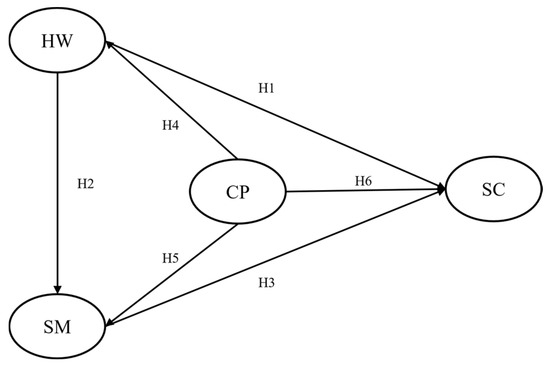
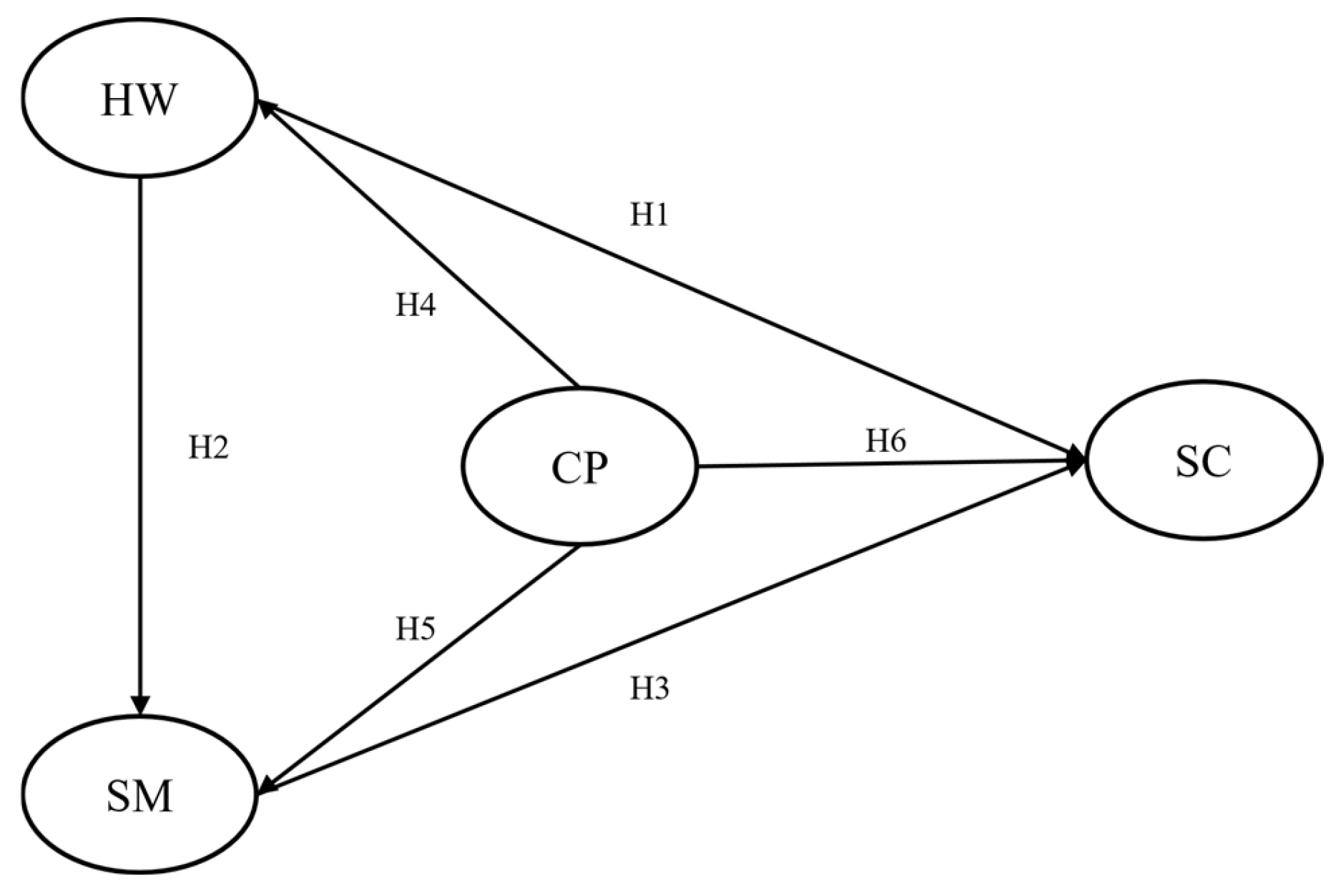
To capture this complexity, we propose a Hierarchical Support Model (Figure 1) that situates the willingness to adopt CEs from a structured set of relationships. In this model, ultimate support for CEs is directly driven by trust in the managing institution (SM), which, in turn, is shaped by more foundational system components: the material and perceived state of human well-being (HW) and the processes of community participation (CP). This structure reflects the hypothesis that effective conservation policy requires more than delivering benefits; it requires building legitimate governance through participatory processes that enhance well-being and, in turn, foster institutional trust. We test these systemic relationships using Structural Equation Modeling (SEM), a method suited for disentangling the direct, indirect, and mediating pathways among these latent variables. Our specific hypotheses, derived from this framework, are as follows (see Figure 1):
H1.
Human well-being (HW) positively influences support for national park management (SM).
H2.
Human well-being (HW) positively influences support for conservation easements (SC).
H3.
Support for national park management (SM) positively influences support for conservation easements (SC).
H4.
Community participation (CP) positively influences human well-being (HW).
H5.
Community participation (CP) positively influences support for national park management (SM).
H6.
Community participation (CP) positively influences support for FLEs and other conservation easements (SC).
Figure 1.
The hypotheses of the proposed Hierarchical Support Model for CEs. SC refers to support for CEs; HW refers to human well-being; SM refers to support for national park management; CP refers to community participation.
This study applies the model to the context of China’s Qianjiangyuan National Park (QNP), the country’s primary pilot site for CE reforms. QNP presents a critical case study as it features varying degrees of implementation across different easement types: Forest Land Easements (FLEs) are widely established, while Agricultural Land Easements (ALEs) and Homestead Land Easements (HLEs) are in earlier piloting stages. Investigating support across these three types allows us to examine how the proposed hierarchical mechanisms land-use contexts. The findings are poised to provide evidence-based guidance for designing differentiated, adaptive CE policies coherently aligned with local socio-ecological contexts, thereby enhancing the resilience and social sustainability of protected area governance.
2. Methods
2.1. Study Area
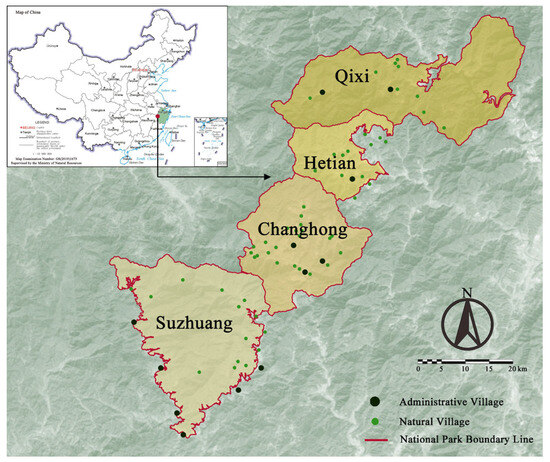
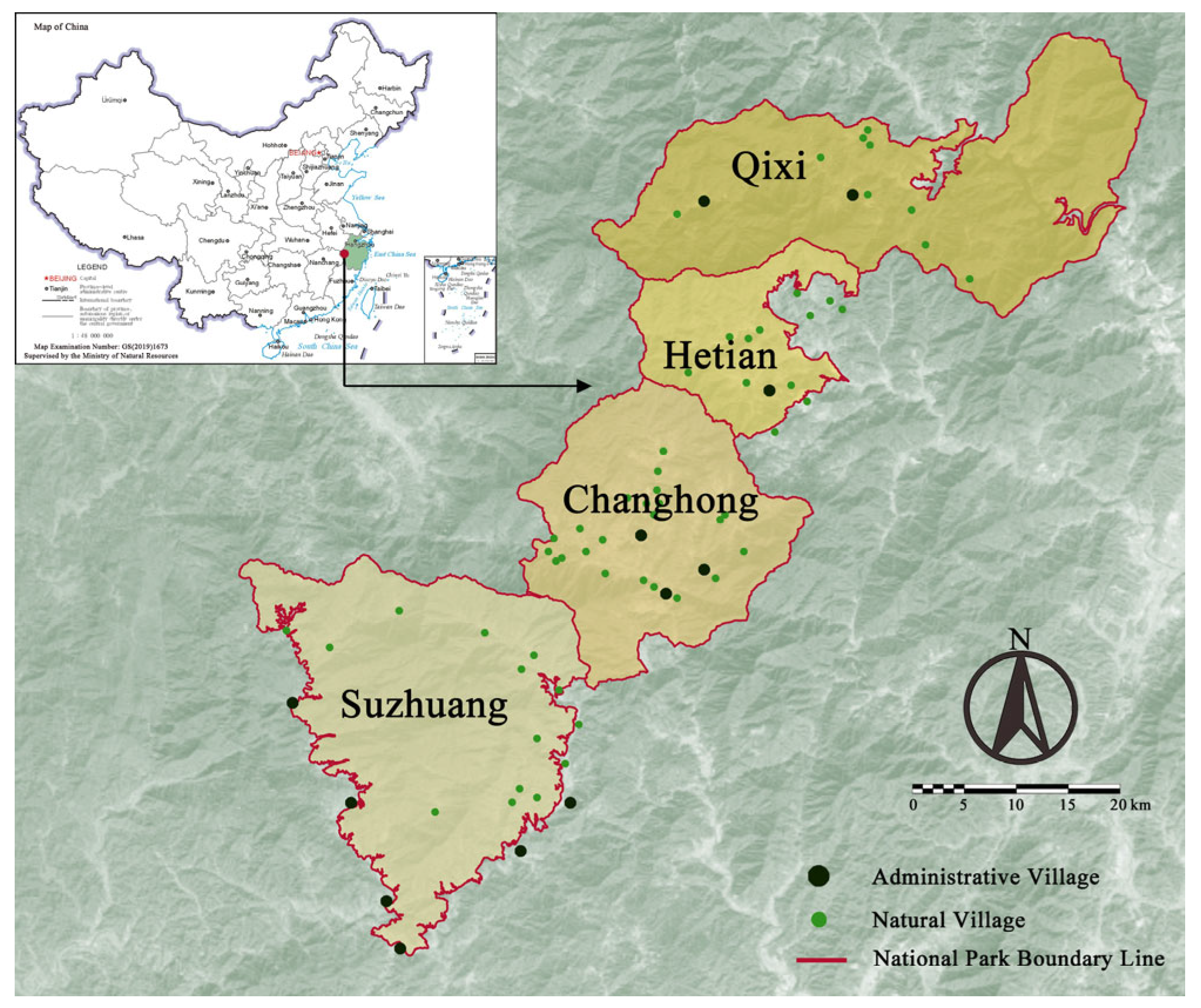
QNP is located in Kaihua County, Zhejiang Province in southeastern China (29°23′25.55″ N, 118°12′39.72″ E), covering an area of 252 km2 (Figure 2). It is one of the pilot national parks established in 2016, containing 4 towns, 21 administrative villages and 72 natural villages, with more than 9744 community residents within the national park. The park conserves central subtropical evergreen broad-leaved forests and provides important habitats for many rare and endangered wildlife species, such as Manis pentadactyla, Muntiacus crinifrons, and Syrmaticus elliott (IUCN, 2024) [21]. It is also located in a region famous for its tourism destinations, bordered by Mount Huang to the north, Qiandao Lake to the east, and Mount Sanqing to the west. As the only pilot national park established in the densely populated area in southeastern China, the spectacular natural scenery, ecological values, and developed regional economy make QNP a great example of engaging in cross-regional cooperative protection and achieving a balance between conservation and the economy.
Figure 2.
The location of QNP. This Chinese map (top left) is supervised and certified by the Ministry of Natural Resources of the People’s Republic of China, with certification code: GS(2019)1673.
In the QNP, state-owned land accounts for only 20.4%, while the rest proportion of land is collective land, which is owned collectively by farmers’ collectives. To better conserve forest resources and conduct ecological restoration, QNP has emerged as the first protected area in China to formally implement FLEs via reform [22]. Under this framework, without the need for land expropriation, servient landowners will transfer a portion of their land rights to the National Park Management Agency (NPMA) through economic incentives, thereby facilitating the unified management of natural resources by the national park. In 2018, FLEs were implemented on 18,342.5 hm2 of collective forest land, and 3757 farming households involved had signed easement contracts, with a fixed term until 31 December 2024. NPMA negotiated with local people at two different levels to involve them in entrusting their contracted forest to the community committee through a contract signed between the NPMA and the community committee. Furthermore, as of 2024, nearly 80.04 hm2 of farmland within QNP has been incorporated into the scope of ALEs. Under the premise of prohibiting the use of pesticides and fertilizers, prohibiting straw burning, not harming wild animals entering the cultivated land, and allowing protected animals such as crested ibises to forage, landowners can receive an easement subsidy of 800 yuan per mu of farmland. Moreover, the NPMA plans to promote HLEs in the future [23].
2.2. Data Collection
A structured household survey, incorporating pre-survey testing, was conducted between June and August 2023 across all 51 natural villages of QNP. Households were randomly sampled from all local villages within the park. A preliminary test was conducted with local residents (10), village leaders (5), and QNP administrative staff (5) to identify key factors influencing support for conservation efforts (CEs) and to assess primary concerns. The final questionnaire was designed based on the preliminary pre-survey and previous related studies [24,25,26,27], which verified the validity and reliability of the scales, and was appropriately adjusted according to the current situation of QNP and the findings from the pre-survey. The survey yielded 336 complete, clear, and valid responses, resulting in an efficiency response rate of 82%. The random sampling within each of the 51 natural villages was designed to maximize representativeness, and the diversity of villages included (different locations, sizes, and livelihood patterns) helps mitigate but does not eliminate clustering concerns, which is a limitation of the methods in this study. The final questionnaire comprised three sections. The first section collected the respondents’ demographic information, including gender, age, education level, job, and household income. The second section addressed residents’ satisfaction and participation willingness on conservation police of CEs. CEs were included ALEs, FLEs and HLEs. The third section was designed based on the six hypotheses investigating the factors that influence local support for CEs (Appendix A). The factors were selected based on pretest and previous research [24,25,28,29] and included Human Well-being (HW), support for national park management (SM) and community participation (CP) (Table 1).
Table 1.
Variables and questions of the SEM model.
Social Exchange Theory provides a robust framework for understanding multi-party collaboration, trust-building, and pro-environmental behavior by positing that individuals engage in interactions based on an evaluation of anticipated costs and benefits [26]. Informed by this perspective, we conceptualized support for park management as a multi-faceted construct. It was measured by gauging respondents stated willingness across a spectrum of engagement levels, ranging from basic support and regulatory compliance to more active roles such as monitoring, advocacy, providing suggestions and participating in conservation management activities.
Furthermore, based on the community participation model [25], we assessed the degree to which residents felt empowered to move beyond passive compliance toward active involvement. This involved evaluating their perceptions of whether park management listened to and respected community opinions, whether a cooperative relationship was acknowledged, and their understanding of park planning and management processes.
For measuring Human Wellbeing, our approach is guided by the multi-dimensional framework outlined in the Millennium Ecosystem Assessment [27], which emphasizes fundamental material needs, health, security, social relationships, and freedom of choice and action. While the Human Development Index integrated factors such as income, education, and life expectancy to assess Human Wellbeing, this study specifically focused on evaluating residents’ perceptions of Human Wellbeing improvements caused by CEs four dimensions: economic income, quality of life, environmental safety and health, and the alignment between conservation efforts and benefits was adopted in national parks (as shown in Table 1). All the designed questions were simple, clear, general, and non-sensitive. A measurement approach based on 5-point Likert scales was used to measure each question.
2.3. Data Analysis
Data processing and statistical modelling in this study were conducted using specialized software, where the descriptive statistics and regression analysis were performed in Microsoft Excel and SPSS version 26.0, while structural equation modelling was implemented in AMOS version 26.0 (IBM, New York, NY, USA). With a sample size of 336 households, the survey results carry a margin of error of 5.35% at a 95% confidence level. This sample size was adequate for performing the SEM analysis [27,30].
Reliability indicates the consistency and stability of measurement outcomes, while validity assesses the internal structural soundness of the questionnaire. The survey data demonstrated satisfactory reliability and validity, where the reliability was 0.896, and the validity was 0.843. All latent variables exceeded the threshold value of 0.70. We employed Cronbach’s alpha (α) and the Guttman split-half coefficient to evaluate reliability, and the results showed that all constructs showed Cronbach’s α scores above 0.70 and Guttman coefficients above 0.50, confirming adequate internal consistency across measurement items. Cronbach’s α values above 0.7 suggest good reliability, those between 0.35 and 0.7 indicate acceptable reliability, and values below 0.35 reflect poor reliability. A split-half coefficient exceeding 0.5 is generally considered acceptable [31]. SEM parameters were estimated using maximum likelihood estimation, allowing simultaneous testing of all hypothesized directional relationships. This approach is particularly suitable for examining latent variables, such as perceptions and attitudes, that are difficult to measure directly, thereby minimizing subjective measurement errors [32]. In our research, SEM was applied to analyze how various factors influence local support for conservation policies, including conservation easements. The method evaluates latent constructs through observed variables while accounting for measurement validity and reliability [33].
The SEM system is represented by the following matrix equations:
where denotes endogenous latent variables, represents exogenous latent variables, and and correspond to coefficient matrices and error vectors linking these variables.
Here, refers to observed variables associated with exogenous latent variables , denotes observed variables related to endogenous latent variables , and and are matrices of correlation coefficients.
Model fitting was conducted in AMOS V26.0. Following standard SEM procedures, we first examined potential estimation violations before evaluating overall model fit [34]. A key assumption is the normality of data distribution. Typically, absolute skewness values greater than 3 and kurtosis values exceeding 10 (or a stricter threshold of 8) suggest non-normality. Testing with SPSS V26.0 confirmed that all variables had skewness absolute values below 1 and kurtosis absolute values under 2, meeting the normality assumption and justifying the use of maximum likelihood estimation in AMOS. Subsequently, stepwise regression analysis was performed in SPSS V26.0 to further examine influencing factors. This method iteratively selects independent variables that best explain variation in the dependent variable, making it suitable for identifying key predictors of local support for different conservation easement types (agricultural, forest, and homestead land). After comparing alternative regression specifications based on data characteristics and model fit, the stepwise approach was adopted for its effectiveness in clarifying distinct drivers behind support for each easement category.
This study methodologically draws upon and continues the Structural Equation Modeling (SEM) and stepwise regression analysis framework applied in Hu et al. (2022) [19] to study community perceptions of tourism development in the US Grand Canyon National Park, as this framework has proven effective in disentangling multi-level variable relationships within complex social–ecological systems. Simultaneously, we have highlighted the key adaptations and extensions of this study: (a) Different Research Context and Core Variables: Shifting the analytical context from perceptions of tourism development to support for conservation easement policies; core constructs were adapted from tourism-related concepts to Community Participation (CP), Human Well-being (HW), Support for Park Management (SM), and Support for Conservation Easements (SC), aligning with the context of conservation policy research. (b) Deepening the Theoretical Framework: Explicitly introducing the Hierarchical Support Model to provide a more systematic interpretation of feedback loops within conservation policy–community interactions, moving beyond the primarily Social Exchange Theory perspective used in the prior study. (c) Contrasting and Extending the Case Study: Extending the analysis from a single, mature Forest Land Easement case to include three easement types (FLEs, ALEs, HLEs) at varying implementation stages (widely established, piloted, planned). This allows for comparative analysis across land types, testing the explanatory power of the methodology across different subsystems.
3. Results
3.1. Demographic Analysis
Table 2 presents the demographic profile of the surveyed respondents. The sample was predominantly male (73.2%), with nearly all respondents (92.6%) being ancestral residents of the area. In terms of age distribution, the two largest groups were respondents aged 40–59 (43.9%) and those over 60 years old (43.6%), together accounting for the majority of the sample. Geographically, more than half of the respondents (56.5%) resided inside the boundaries of the national park. Educational attainment was generally limited, with 44.7% of respondents having completed only primary school or less. Additionally, a small proportion (5.2%) reported having lived in the community for at least three decades.
Table 2.
The demographic profile of the respondents.
3.2. Structural Equation Model
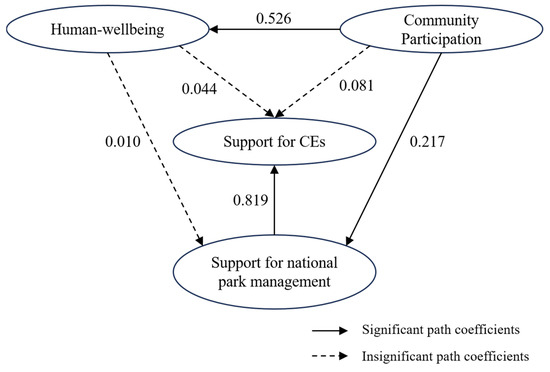
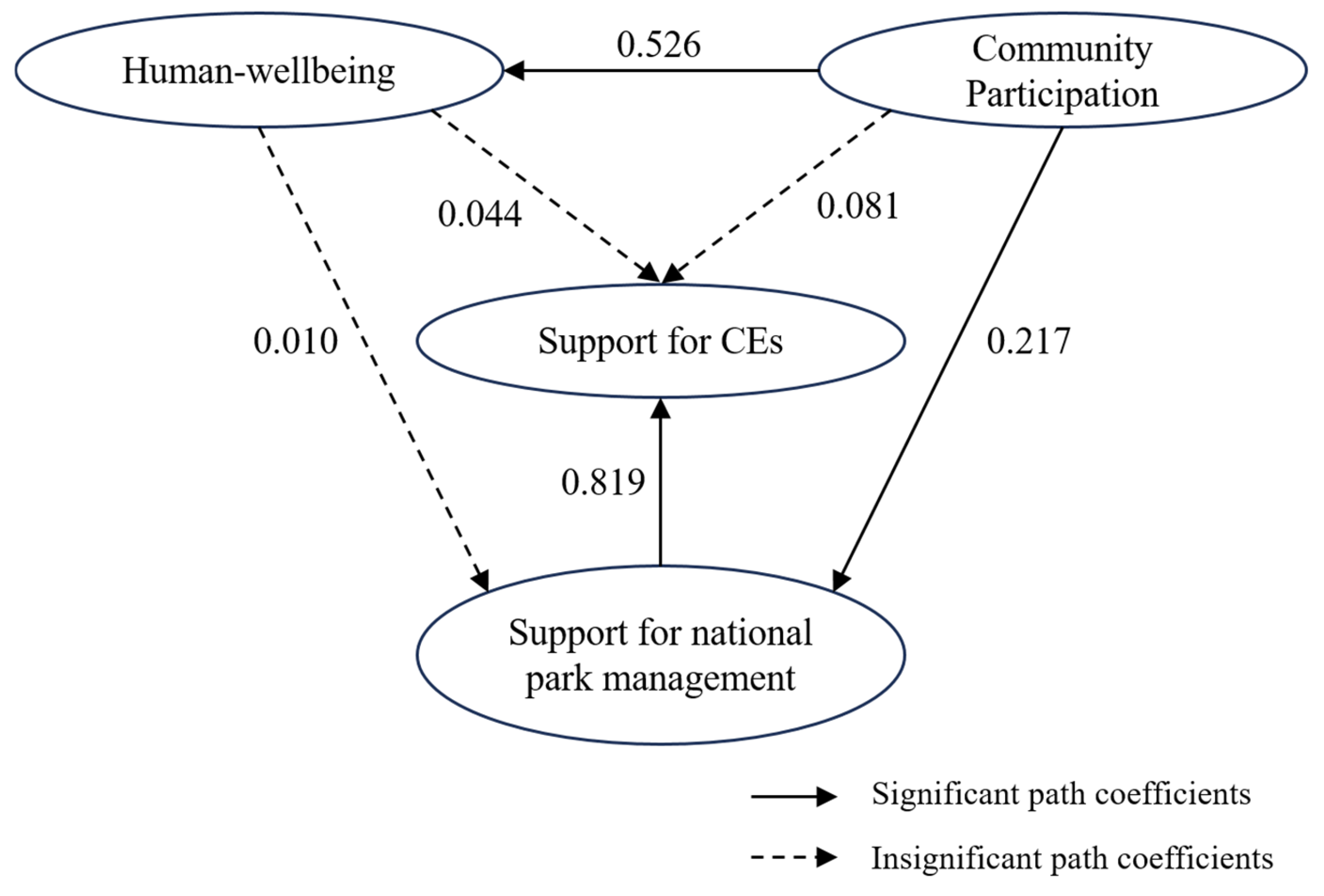
The initial hypothetical model was tested and required further revision. Based on the initial model test results, only HW, CP, and SM were found to have statistically significant impacts on SC. Therefore, model correction was carried out by using HW, CP, and SM for model construction. The absolute fit, relative fit, and simple fit indices were used to evaluate the overall suitability of the model. All the fit indices met the corresponding standards, indicating that the overall fit of the model was very good.
The hypotheses of the theoretical models were verified (Figure 3 and Table 3). Among the six hypotheses proposed, SM was found to have a positive impact on support for CEs, and CP was found to have a positive impact on HW and SM. The negative impact of CP on support for CEs was not found to be significant, nor were the negative impacts of HW on support for CEs and national park management. Finally, SM was confirmed to be an important factor in support for CEs and CP. However, the findings did not confirm that residents’ HW and CP are driving factors for support for CEs. Residents’ willingness to participate in CEs policies is significantly positively affected by their satisfaction with the national park management. The higher the residents’ satisfaction, the more willing they are to support CEs policies. Furthermore, the residents’ level of community participation has a positive impact on support for national park management. Therefore, the degree of community participation has an indirect positive impact on residents’ willingness to support CEs policies.
Figure 3.
The structural model of Support for CEs.
Table 3.
The results of hypothesis verification.
3.3. Exploration of Factors Influencing Different Types of CEs
To further examine whether the support for different types of CEs was influenced by different factors, we gradually incorporated the measurement variables derived from SEM and demographic variables into the stepwise regression model. The results of the stepwise regression model for the three types of CEs were found to be significant (p < 0.05) (Table 4). All models demonstrated that the higher the communities’ willingness to engage in conservation, the more willing they were to support CEs. Although the three different types of CEs were found to be influenced by different factors, they were commonly influenced by livelihood improvements and benefits. For the FLEs policy, which has been implemented on a larger scale in QNP, respondents’ willingness to support this policy is significantly correlated with livelihood and spatial accessibility factors such as their education level and residential location and previous environmental experience. Residents with higher education levels and living in areas with better road accessibility had a higher willingness to support FLEs. It is worth noting that the community’s previous experiences of participating in ecological compensation, CEs, and other protection agreements significantly influenced the support for FLEs.
Table 4.
The stepwise regression models of the results of influencing factors on respondents’ willingness to support CEs.
For the ALEs policy, which has only been piloted on a small scale, and the planned HLEs policy, residents place greater emphasis on factors related to their own income, well-being, benefits, and potential risks. They were significantly influenced by factors such as agreeing that the cost matched the benefits of conservation, having economic forests as a source of income, and the risk of unemployment. Residents living within QNP have a lower willingness to support ALEs than those living outside of QNP.
4. Discussion
4.1. Key Findings and Theoretical Implications
Our results revealed a clear hierarchical structure in how community support for conservation policies develops, but not as we initially predicted. The findings required a nuanced interpretation that distinguishes between direct and indirect effects. The results showed that support for national park management was the direct driver of residents’ support for CEs policies, and community participation was an indirect driver. And human well-being directly impacts residents’ support for the CEs policy. Despite the absence of direct effects, the model reveals a robust and theoretically significant indirect pathway. Community participation significantly enhances both human well-being (H4 supported) and support for park management (H5 supported). Support for park management (SM), in turn, is the primary and powerful direct driver of support for conservation easements (H3 supported, β = 0.819, p < 0.001). This confirms that SM acts as a full mediator in the model.
These findings necessitate a re-conceptualization of the roles of HW and CP. They are not primary drivers of support. Rather, they function as foundational system components that build the institutional trust necessary for policy acceptance. Community participation enhances human wellbeing and, independently, strengthens trust in the managing institution. This trust then becomes the proximal cause of support for specific policies. This pattern of influence underscores that community support for conservation policies is not merely a transactional calculation of costs and benefits, but an emergent outcome of interrelated socio-ecological subsystems. These findings are consistent with social exchange theory, which posits that individual engagement is influenced by perceived returns from an interaction [26]. There is a similar finding from a study of Gunung Mulu National Park, which suggested that human wellbeing could influence locals’ support for the planning and policies implemented in the national parks or WHS areas [35]. These results are consistent with the social exchange theory”, which assumes that the level of individual engagement in the exchange process depends on the costs and benefits of the exchange [26,36,37]. The theory is built on the assumption that the exchange between two parties, whether individuals, industries, or groups, depends entirely on the relationship between them. Social exchange theory is not limited to industry or business, it is also applicable to society, communities, and individuals [29].
However, this study extends the social exchange theory, which suggests that individuals’ engagement depends on perceived returns from interactions. While social exchange theory suggests that support depends on perceived benefits, our findings reveal that this relationship is mediated. Residents do not simply exchange their support for direct benefits. Rather, benefits and participatory experiences shape their trust in the governing institution, and it is this institutional trust that ultimately enables acceptance of specific policy interventions. The distinction has important implications. It suggests that building institutional legitimacy may be as important as delivering material benefits, and that participatory processes serve a dual function of delivering tangible outcomes and building relational capital. The strong positive effect of SM on SC underscores the centrality of institutional trust. When residents trust the park management and perceive it as legitimate, responsive, and worthy of cooperation, they are substantially more willing to accept specific conservation policies. This finding aligns with research on institutional trust in environmental governance [38,39].
This integration shifts the analytical focus from a static assessment of net benefits to a dynamic understanding of how long-term feedback loops, among participatory processes, perceived well-being, and institutional trust, co-produce policy legitimacy and compliance. In the context of national park establishment in China, potential conflicts and exchanges of interest may exist between park officials and local community residents regarding ecological conservation and community development [19]. These conflicts and benefits exchanges could affect the residents’ support for relevant conservation policies enacted by national parks, such CEs, thereby influencing the future coordination of the relationship between PAs and community development, as well as community planning.
Importantly, this study builds upon the implementation of Forest Land Easements (FLEs) in Qianjiangyuan National Park. It provides a crucial institutional reference, demonstrating that a policy allowing residents to receive economic subsidies without altering land tenure can tangibly demonstrate that conservation benefits outweigh costs, thereby fostering initial support. The results of the stepwise regression model for supporting FLEs policy further identified that support was higher among residents with better road access and higher education levels, linking support to livelihood advantages and capacity. This indicates that when residents enjoy the benefits of convenient transportation in their daily lives, they are more inclined to support ecological conservation. Residents with higher levels of education tend to have greater support for conservation policies. It can be observed by survey field that the overall livelihood conditions of residents with higher levels of education were better, as they often engage in higher-paying professions and run small businesses at home. Thus, a good household livelihood and convenient community living conditions are key factors in enhancing residents’ support for CEs policies.
Theoretically, this study made a progression from the FLEs’ demonstration of basic exchange logic, illustrating a methodological and conceptual extension of prior work [19]. While prior research effectively applied social exchange theory to tourism perceptions, the current study demonstrates how embedding this logic can uncover the deeper, multi-level pathways (e.g., CP → SM → SC) through which support for complex, long-term conservation policies is generated and sustained. While the model specifies participation as antecedent to institutional trust based on the temporal sequence of policy implementation in QNP, the relationship between CP and SM is likely reciprocal over longer time horizons. Trust built through initial participation may enable deeper subsequent engagement, creating a virtuous cycle. Longitudinal data would be needed to fully disentangle the causal direction of this relationship. In summary, the key theoretical contribution of this study is not the discovery that “wellbeing and participation drive support”, but the revelation of how they matter: indirectly, through the critical mediating mechanism of institutional trust. This nuanced understanding provides a more solid foundation for policy design than simplistic assumptions about direct benefit–support linkages.
4.2. The Role of Past Experience and Participation
Our study further identified community participation as a significant determinant influencing residents’ support for CEs policies within national park communities. This finding extends the framework of social exchange theory, which traditionally emphasizes economic exchanges confined to formal and contractual benefits, by incorporating community participation as a form of social resource exchange Blau (2017) [40]. The study demonstrated a positive correlation between the degree of community participation and the level of support for CEs policies among respondents. This relationship can be explained by the fact that when residents are actively involved in the decision-making processes that affect their environment, they tend to develop a stronger sense of stewardship and investment in the outcomes of these policies. Such involvement can also lead to the development of more equitable and effective conservation strategies that align with the needs and values of the community [41].
The results indicated that the level of support for different types of CEs is influenced by different factors. However, a common feature is that support for conservation policies often stems from the benefits or assistance that residents have received from previous policies. These findings of this study are similar to those in the field of psychology, suggesting that people’s past experiences influence their decision-making and preferences for things, which is due to the specific cognition they have developed toward certain matters as a result of their past experiences [42,43]. Drawing from the implementation experience of FLEs, this study finds that residents’ prior involvement in ecological compensation, easements, and other conservation agreements significantly affects their support for FLEs. One possible explanation for this result is that FLE reform is the most widely implemented conservation policy in QNP, and almost all residents involved have participated in the reform and received corresponding compensation. However, it is clear that the surveyed residents, based on their previous participation experience, are not satisfied with FLEs. Consequently, it was found that the higher the degree of previous participation, the lower the willingness to participate in the future. This study aligns with the research by Peng et al. [44], which indicates that past environmental experiences can influence future environmental decision-making.
Although the results of this study do not directly show that past participation has affected residents’ support for ALEs, the location of the residents’ dwellings indirectly reflects this consequence [45]. This speculation stems from the ALE in QNP being piloted only within the national park, excluding residents outside its boundaries from participating in the reform. Consequently, while park residents have been influenced by the ALE policy after joining, their satisfaction remains low, leading to weaker support than those living outside the park. The relationship between satisfaction and support is often reciprocal and influential, particularly in the context of services, policies, or social dynamics. From the perspective of social exchange theory, when community residents feel that conservation policies and the issues themselves are beneficial to their livelihoods and well-being, they may develop a psychology of reciprocity [46], thereby increasing their satisfaction with and support for these issues. The implementation journey of FLEs demonstrates that establishing this positive cycle of “benefits–satisfaction–support” is key to promoting the sustainability of conservation policies.
4.3. Inheritance and Adaptation of the Methodological Framework
The methodological framework of this study draws upon and extends the effective approach employed in our prior analysis of community perceptions in protected areas [19]. Specifically, we have adopted the analytical paradigm combining Structural Equation Modeling (SEM) and stepwise regression analysis to decipher complex relationships among multi-level variables. This paradigm has proven effective in previous research for revealing the systemic mechanisms underlying the formation of community attitudes.
The primary adaptations and distinctions from the prior study are as follows. Firstly, the core variables and research context are different. This study shifts the analytical focus entirely from “perceptions of tourism development” to “support for conservation easement policies”. Accordingly, we constructed a measurement model centered on community participation, human well-being, and management support to fit the specific context of policy evaluation within China’s national parks. Secondly, this study is based on a deeper theoretical framework. While retaining the perspective of social exchange theory, this paper explicitly constructs a Hierarchical Support Model. This aims to more systematically capture the feedback loops between socio-ecological subsystems within conservation policies. Last but not least, compared to the prior analysis of a single, this study expands the research subjects to three types of easements at different implementation stages (FLEs widely implemented, ALEs piloted locally, HLEs in the planning phase), which represent a comparative case design. This design allows us to test the explanatory power of the same analytical framework across different land types and livelihood subsystems, thereby revealing the heterogeneous impacts of the policies.
4.4. Practical Recommendations for CE Design
Based on this study’s findings, the levels of residents’ support for ALEs, FLEs, and HLEs are influenced by different factors. A possible reason is that the current implementation levels of these three forms of CEs vary across QNPs, and their impact differs accordingly. Based on the three different situations and considering the results of this study, it is evident that the residents of QNP are not very satisfied with the FLEs that have been widely implemented and the ALEs that are being piloted in some areas. Residents who have participated in these two conservation policies, based on their prior participation experiences, have a low willingness to participate and low levels of support. ALEs are more closely related to livelihoods; when residents face a higher risk of unemployment, they attempt to participate in ALE reform to obtain certain subsidies that can alleviate difficulties in their livelihoods. Therefore, it is suggested that the department should engage in the current work to improve local satisfaction towards FLEs and ALEs, thereby increasing the willingness of HLEs to participate.
There are also differences in the support levels of residents living inside and outside QNP. Those residing within park boundaries show lower support for the FLEs and ALEs, indicating that the current FLE-based compensation mechanism has not yet achieved a satisfactory balance between conservation and local well-being. For proposed HLEs, families that are more dependent on local resources tend to be more supportive of this policy’s implementation, particularly when they perceive tangible welfare improvements from park management. The more they can feel the improvement in their welfare brought about by the construction and management of the national park, the more they support this policy. This suggests that while CE reforms should be differentiated according to conservation targets and land types, the foundational principle, validated by the FLE case, is to resolve livelihood constraints and enhance community welfare, as support under social exchange theory derives from perceived net benefits.
The results of this study show that in QNP, CEs, as a conservation policy, have preliminarily achieved ecological effects and some community support. Nevertheless, many issues require further discussion and analysis, e.g., why residents living within the park have lower support for ALEs and FLEs, and whether the implementation of HLEs will be negatively affected by problems associated with the other two types of CEs. Building on the FLE implementation precedent, it is necessary to establish differentiated CE schemes by designing CE systems that integrate refined conservation needs with the well-being of residents. This approach should more comprehensively consider community interests, enhance satisfaction with CE participation, and thereby promote the more effective adoption of CEs. Such schemes would enable the unified management of natural resources, achieving both conservation goals and community sustainability.
Furthermore, community participation must be prioritized, as communities are the collective landowners and key stakeholders in implementing CEs policies [45]. The FLE experience highlighted in this study confirms that enhanced community engagement increases willingness to participate in CEs and amplifies the perceived value of conservation. Practices observed in Sanjiangyuan National Park, China, demonstrate that involving local residents in roles such as rangers, through ecological monitoring, environmental education, and conservation labor, can improve community well-being and foster stronger policy support [47]. Thus, we advocate for multi-faceted community participation, from policy awareness to active involvement in conservation management and decision-making. Learning from the participatory pathways established under FLEs, this approach can strengthen policy comprehension and ownership, creating a positive feedback loop wherein participants become both beneficiaries and advocates of conservation.
In summary, building on the FLE precedent, effective CE expansion requires establishing differentiated schemes that are coherently aligned with local livelihood systems, institutionalize genuine participatory feedback, and ensure tangible co-benefits to reinforce the positive socio-ecological feedback loops essential for resilient and socially sustainable conservation.
4.5. Limitations and Future Research
This study has several limitations that should be acknowledged. First, while our sample size (N = 336) meets established guidelines for SEM [30,48] and post hoc fit indices indicate adequate power to detect meaningful effects, we did not conduct formal a priori power analysis. Future research, particularly studies planning complex multi-group comparisons or testing for small effect sizes, should incorporate a priori power calculations to ensure adequate sample sizes for detecting hypothesized effects. And this sample also limits our capacity to conduct multigroup analysis (MGA) across multiple subgroups simultaneously. MGA represents a more rigorous approach to examining structural heterogeneity, as it allows for a formal statistical comparison of path coefficients across theoretically defined groups while preserving the hierarchical support model’s theoretical framework [49]. Future research with expanded sampling should prioritize MGA to test, for example, whether the structural pathways differ between: (a) residents inside vs. outside the national park; (b) those with vs. without prior FLE participation experience; and (c) groups with high vs. low well-being perceptions. Second, our cross-sectional design captures perceptions at a single time point, limiting causal inference. Although our model is theoretically grounded in the sequence of policy implementation, alternative causal pathways, such as trust leading to participation, are plausible. Longitudinal research is needed to disentangle causal directions and examine how support evolves as residents gain experience with different easement types. Third, although our data were collected across multiple villages, our analysis did not account for potential clustering at the village level. Residents within the same village may share unobserved characteristics due to shared history, social networks, or local institutions, leading to correlated errors and underestimated standard errors if not addressed. Future research with larger samples should employ multilevel modeling or cluster-robust standard errors to account for this potential non-independence of observations. Fourth, our model does not include measures of latent environmental values or general conservation attitudes. The omission of these variables could introduce omitted-variable bias, as environmental values may influence both how residents perceive their wellbeing and participation, and their support for conservation policies. We initially attempted to measure general conservation attitudes, but the items failed to meet acceptable psychometric standards (Cronbach’s α < 0.60; factor loadings < 0.50) and were therefore excluded to maintain measurement model integrity. Future research should employ alternative, context-validated measures of conservation attitudes or consider behavioral proxies for environmental values. Fifth, regarding sample representativeness, while our sample’s demographic profile (predominantly older males) accurately reflects the composition of resident populations in this rural region, where younger adults and working-age females often migrate to urban areas for employment, it may not capture the perspectives of absent household members. These individuals may maintain connections to the community and could influence household decisions about participating in conservation policy. Future research should, where possible, include the perspectives of migrant community members. Sixth, the exploratory regression analyses used to examine CE-type differences are subject to well-documented methodological limitations, including sample dependence and model instability [35,36]. These results should be viewed as hypothesis-generating rather than confirmatory. Future research should employ more robust methods, particularly multi-group SEM with expanded samples, to test whether the structural pathways differ across easement types and population subgroups.
Despite these limitations, the core SEM findings, particularly the mediating role of institutional trust and the moderating effects revealed by multi-group analysis, provide a robust foundation for understanding how community support for conservation policies develops. The transparent acknowledgment of these limitations only strengthens the credibility of these core contributions and provides clear directions for future inquiry.
5. Conclusions
This study analyzed the determinants of community support for diversified conservation easements in a Chinese national park, with the widely implemented Forest Land Easement (FLE) serving as the foundational case and primary entry point. The findings demonstrate that support is not a linear outcome of benefit provision, but a product of interrelated socio-ecological pathways operating within a hierarchical structure. The structural equation model identified support for park management (SM) as the critical predictor and full mediator of CE acceptance. Human well-being and community participation, while not directly influencing CE support, exert important, indirect impacts through SM. This reveals a key pathway through which participatory engagement and improvements in human well-being build institutional trust, which in turn enables the acceptance of specific conversation policies. This feedback dynamic was first established and observed within the context of FLEs, providing a transferable model for extending conservation agreements to other land types.
Regression results further elucidated the heterogeneity of local socio-ecological subsystems. Support for forest, agricultural, and homestead easements was associated with distinct configurations of factors, though livelihood benefits and prior program experiences consistently functioned as cross-cutting drivers. Notably, prior experience with FLEs emerged as a particularly influential factor across easement types, underscoring its role as a reference point for community evaluation of new conservation instruments. The generally moderate levels of support for existing easements, particularly their linkage to past participatory experiences, suggest that historical gaps in process equity and benefit perception may constrain current policy legitimacy. These perceptions have been notably shaped by residents’ direct encounters with FLE implementation, informing their attitudes toward subsequent easement programs. These results carry implications for the design of area-based conservation instruments in line with global frameworks such as the post-2020 Global Biodiversity Framework. They indicate that effective CE implementation requires context-sensitive and adaptive governance approaches that: (1) align easement design with localized livelihood systems and land-use traditions; (2) institutionalize meaningful participatory mechanisms that enhance procedural fairness and agency; and (3) ensure that conservation interventions deliver tangible, equitable co-benefits to reinforce positive socio-ecological feedbacks.
In summary, this research provides a systematic, evidence-based perspective, grounded in the empirical case of forest easements, on how conservation policies can be embedded within complex human–environment interactions. It suggests that achieving socially sustainable and ecologically effective outcomes depends on governance structures that recognize, engage with, and adapt to the dynamic couplings between community well-being, institutional trust, and conservation practice, as exemplified and learned through the implementation pathway of Forest Land Easements.
Author Contributions
Conceptualization, F.H. and Z.S.; methodology, F.H. and Z.S.; software, F.H. and Z.S.; validation, F.H., Z.S. and W.P.; formal analysis, Z.S.; investigation, F.H. and Z.S.; resources, W.P. and C.W.; data curation, F.H., Z.S. and W.P.; writing—original draft preparation, F.H., Z.S., G.W. and W.P.; writing—review and editing, F.H., Z.S., G.W. and W.P.; visualization, Z.S.; supervision, C.W.; project administration, W.P. and C.W.; funding acquisition, C.W. All authors have read and agreed to the published version of the manuscript.
Funding
The authors gratefully acknowledge the project supported by the National Social Science Foundation of China (Grant No. 20FGLB014), National Natural Science Foundation of China (Grant No. 52208066).
Institutional Review Board Statement
This study conducted a questionnaire survey in the communities of Qianjiangyuan National Park Pilot, China, and obtained permission and assistance from the Administration Bureau of Qianjiangyuan National Park. No other ethical approvals need to be granted for this study and there were no ethical approval number. The interviewees all know that the information we collected is for research and has agreed to do the questionnaire.
Informed Consent Statement
The interviewees all know that the information we collected is for research and have agreed to do the questionnaire.
Data Availability Statement
All data used in this study are available from the corresponding author upon request.
Acknowledgments
(1) We thank the Bureau of Qianjiangyuan National Park for their support and assistance. We thank Changlin Wang for providing valuable information and guidance. (2) While preparing this work, the authors used Grammarly (V1.2.239.1849), which has AI functions, to check the grammar mistakes. After using this tool/service, we reviewed and edited the content as needed. We take full responsibility for the publication’s content.
Conflicts of Interest
The authors declare no conflicts of interest.
Abbreviations
The following abbreviations are used in this manuscript:
| CE | Conservation easements |
| QNP | Qiangjiangyuan National Park |
| CBD | Convention on Biological Diversity |
| PAs | Protected areas |
| SEM | Structural Equation Modeling |
| HW | Human well-being |
| SM | Support for national park management |
| SC | Support for Conservation easements |
| CP | Community participation |
| FLEs | Forest Land Easements |
| ALEs | Agricultural Land Easements |
| HLEs | Homestead Land Easements |
| WC | Willingness to conservation |
| WR | Willingness to comply with park management regulations |
| CB | Agreeing that the cost matches the benefits of conservation |
| IL | Agreeing that the establishment of a national park has improved the quality of life |
| SI | Economic forests as a source of income |
| RU | Risk of unemployment |
| EA | Willingness to engage in conservation advocacy |
| EPP | Participation in ecological compensation, CEs, and other protection agreements |
| LI | Living inside the national park |
| EL | Respondent’s education level |
| DR | Distance from county roads |
| IE | Agreeing that the establishment of a national park improves environmental safety and health |
Appendix A
(The questionnaire was distributed in Chinese, and below is the English translation):
Survey Questionnaire on the Livelihood Status and Conservation Willingness of Residents in Qianjiangyuan National Park Pilot Communities
Hello! We are students from Tongji University. The purpose of this survey is to gain a comprehensive understanding of livelihood status and conservation willingness of residents in Qianjiangyuan National Park Pilot communities, with the aim of providing references and suggestions for the planning and development and the construction of Qianjiangyuan National Park Pilot. This survey is conducted anonymously, and any personal information collected will be kept strictly confidential. It might take 5 min to finish the survey. Thank you very much for your participation! If you have any questions, please contact Ms. Hu by 19821322952.
- Basic Information
- Your household is located in: ______ Township, Administrative Village, Natural VillageDo you reside within the national park: □ Yes □ No □ Don’t knowIf yes: □ Core conservation zone □ General control zone
- Your gender: □ Male □ Female
- Your age: □ 18–24 □ 25–39 □ 40–59 □ >60 □ Other: _____
- How many members are in your household? ______ persons, including ______ persons under 16 years old.
- When did your family settle here? □ Ancestral residence □ Parental generation □ Current generation □ Immigrated
- Education level of the head of household: □ Primary school or below □ Junior high school □ Technical secondary school or high school □ Associate degree □ Bachelor’s degree □ Master’s degree or above
- Current sources of income and occupations of household members (multiple choices allowed):
- ○
- □ Crop farming (rice, rapeseed, corn, etc.) Annual income: approx. ______ yuan/year
- ○
- □ Economic forestry (tea oil, tea leaves, fruit trees, etc.) Annual income: approx. ______ yuan/year
- ○
- □ Animal husbandry (fish farming, pig farming, etc.) Annual income: approx. ______ yuan/year
- ○
- □ Village cadre Annual income: approx. ______ yuan/year
- ○
- □ Self-employed Annual income: approx. ______ yuan/year
- ○
- □ Enterprise employee Annual income: approx. ______ yuan/year
- ○
- □ Public institution employee Annual income: approx. ______ yuan/year
- ○
- □ Civil servant Annual income: approx. ______ yuan/year
- ○
- □ Tourism (homestay, tourism services, etc.) Annual income: approx. ______ yuan/year
- ○
- □ Migrant work Annual income: approx. ______ yuan/year
- ○
- □ Other: ____________ Annual income: approx. ______ yuan/year
- Ecological Policy Satisfaction and Conservation Willingness
- 8.
- Has your household participated in any ecological compensation programs?
- ○
- Forest Land Easement Area: ______ mu □ Very satisfied □ Satisfied □ Neutral or uncertain □ Dissatisfied □ Very dissatisfied
- ○
- Farmland Easement Area: ______ mu □ Very satisfied □ Satisfied □ Neutral or uncertain □ Dissatisfied □ Very dissatisfied
- ○
- Returning Farmland to Forest Area: ______ mu □ Very satisfied □ Satisfied □ Neutral or uncertain □ Dissatisfied □ Very dissatisfied
- ○
- Wildlife Damage Compensation amount: ______ yuan □ Very satisfied □ Satisfied □ Neutral or uncertain □ Dissatisfied □ Very dissatisfied
- 9.
- Is your household willing to participate in the following ecological compensation programs?
- ○
- Forest Land Easement □ Very willing □ Willing □ Neutral or uncertain □ Unwilling □ Very unwilling
- ○
- Farmland Easement □ Very willing □ Willing □ Neutral or uncertain □ Unwilling □ Very unwilling
- ○
- Homestead Easement □ Very willing □ Willing □ Neutral or uncertain □ Unwilling □ Very unwilling
- ○
- Returning Farmland to Forest □ Very willing □ Willing □ Neutral or uncertain □ Unwilling □ Very unwilling
- ○
- Wildlife Damage Compensation □ Very willing □ Willing □ Neutral or uncertain □ Unwilling □ Very unwilling
- 10.
- Are you willing to support national park conservation?
- ○
- □ Very willing □ Willing □ Neutral or uncertain □ Somewhat unwilling □ Unwilling
- 11.
- The main reason for your willingness to support conservation:□ Driven by personal beliefs □ Community conventions □ Stipulated by conservation regulations□ Conservation can attract tourists and increase income □ Conservation improves the local ecological environment□ Other: ____________
- 12.
- Are you willing to support the construction of the national park?
- ○
- Willing to comply with the national park’s management regulations:□ Very willing □ Willing □ Neutral or uncertain □ Unwilling □ Very unwilling
- ○
- Willing to monitor and report violations of conservation regulations:□ Very willing □ Willing □ Neutral or uncertain □ Unwilling □ Very unwilling
- ○
- Willing to engage in ecological conservation publicity:□ Very willing □ Willing □ Neutral or uncertain □ Unwilling □ Very unwilling
- ○
- Willing to provide suggestions for the work and development of the national park:□ Very willing □ Willing □ Neutral or uncertain □ Unwilling □ Very unwilling
- ○
- Willing to participate in the conservation management work of the national park:□ Very willing □ Willing □ Neutral or uncertain □ Unwilling □ Very unwilling
- 13.
- If willing, in what ways would you like to participate in national park work (multiple choices allowed)?□ Easement programs□ Work in local agricultural or sideline enterprises□ Construction work□ Fixed work such as patrolling and environmental sanitation □ Tourism business activities□ Tourism-related work such as tour guides or drivers (after training and certification)□ Production and sales of distinctive ecological products□ Display of traditional crafts and culture□ Establishing mutual aid cooperatives□ Community resident representative (participating in resident meetings)□ Land leasing for equity and year-end dividends□ Participating in mutual aid projects of conservation organizations□ Other: ____________
- 14.
- Has your household experienced wildlife damage? How severe was the damage?□ No □ Yes □ Very severe □ Severe □ Somewhat severe □ Not severe
- Community Well-being and Co-management
- 15.
- Do you think the establishment of the national park has helped increase your income?□ Significantly increased □ Moderately increased □ Slightly increased □ No increase □ Decreased
- 16.
- Do you think the establishment of the national park has improved your quality of life?□ Significantly improved □ Moderately improved □ Improved □ Slightly improved □ No improvement
- 17.
- Do you think the establishment of the national park has improved environmental safety and health?□ Significantly improved □ Moderately improved □ Improved □ Slightly improved □ No improvement
- 18.
- Do you think the efforts and contributions you made for national park conservation are matched by the benefits you received?□ Very matched □ Moderately matched □ Neutral □ Somewhat unmatched □ Unmatched
- 19.
- Your level of participation in the co-management of the national park community:
- ○
- Participated in nature conservation education, skill training, or industry support projects organized by the management authority:□ Participated a lot □ Participated moderately □ Participated somewhat □ Participated very little □ Did not participate
- ○
- Participated in consultation meetings or decision-making related to national park planning, management, or policy systems:□ Participated a lot □ Participated moderately □ Participated somewhat □ Participated very little □ Did not participate
- ○
- Participated in and signed ecological compensation, easement, or other conservation agreements:□ Participated a lot □ Participated moderately □ Participated somewhat □ Participated very little □ Did not participate
- ○
- Participated in the work of the national park management authority:□ Participated a lot □ Participated moderately □ Participated somewhat □ Participated very little □ Did not participate
- 20.
- Do you think the national park management authority fully listens to and respects the opinions and demands of community residents?□ Very respectful □ Moderately respectful □ Somewhat listens □ Rarely listens □ Does not listen
- 21.
- Do you agree that a good communication, collaboration, and mutual assistance relationship has been established with the national park management authority?□ Strongly agree □ Agree □ Neutral □ Somewhat disagree □ Disagree
- 22.
- Are you aware of information related to the planning, construction, and management of the national park?□ Very aware □ Aware □ Somewhat aware □ Slightly aware □ Unaware
- 23.
- If ecological relocation were to be carried out, would you be willing to relocate? □ Unwilling □ WillingIf willing, where would you prefer to relocate? □ Outside the national park but within Changhong Township □ Other: ____________If unwilling, the main reasons are (multiple choices allowed):□ Generations have lived here with a sense of belonging □ Unable to engage in animal husbandry□ No farmland for self-sufficiency □ Limited skills, unable to find work □ Unsuitable for urban life□ Less freedom in daily life □ Unable to continue tourism activities such as homestays or guesthouses□ Other: ____________
Thank you very much for your participation!
References
- Godoy, C.C.N.; Pienaar, E.F.; Branch, L.C. Willingness of Private Landowners to Participate in Forest Conservation in the Chaco Region of Argentina. For. Policy Econ. 2022, 138, 102708. [Google Scholar] [CrossRef] [Scilit]
- Graves, R.A.; Williamson, M.A.; Belote, R.T.; Brandt, J.S. Quantifying the Contribution of Conservation Easements to Large-Landscape Conservation. Biol. Conserv. 2019, 232, 83–96. [Google Scholar] [CrossRef] [Scilit]
- Ma, Z.; Butler, B.J.; Kittredge, D.B.; Catanzaro, P. Factors Associated with Landowner Involvement in Forest Conservation Programs in the US: Implications for Policy Design and Outreach. Land Use Policy 2012, 29, 53–61. [Google Scholar] [CrossRef] [Scilit]
- Richardson, J.J., Jr. Conservation Easements and Adaptive Management. Sea Grant Law Policy J. 2010, 3, 31. [Google Scholar]
- Rissman, A.R. Rethinking Property Rights: Comparative Analysis of Conservation Easements for Wildlife Conservation. Environ. Conserv. 2013, 40, 222–230. [Google Scholar] [CrossRef] [Scilit]
- Morris, A.W. Easing Conservation? Conservation Easements, Public Accountability and Neoliberalism. Geoforum 2008, 39, 1215–1227. [Google Scholar] [CrossRef] [Scilit]
- Hollingshead, J.L. Conservation Easements: A Flexible Tool for Land Preservation. Environ. Law 1996, 3, 319. [Google Scholar]
- Dana, A.; Ramsey, M. Conservation Easements and the Common Law. Stanf. Environ. Law J. 1989, 8, 2. [Google Scholar]
- National Conservation Easement Database (NCED). What Is a Conservation Easement? Available online: https://www.conservationeasement.us/what-is-a-conservation-easement/ (accessed on 26 December 2024).
- Draper, A.E. Conservation Easements: Now More than Ever-Overcoming Obstacles to Protect Private Lands. Environ. Law 2004, 34, 247. [Google Scholar]
- Armsworth, P.R.; Sanchirico, J.N. The Effectiveness of Buying Easements as a Conservation Strategy. Conserv. Lett. 2008, 1, 182–189. [Google Scholar] [CrossRef] [Scilit]
- Luo, H.; Ye, Y.; Zhou, C.; Zhao, J. Collective Participation in Conservation Easements in Rural China: Evidence from the Qianjiangyuan National Park. For. Policy Econ. 2024, 163, 103230. [Google Scholar] [CrossRef] [Scilit]
- He, S.; Yang, L.; Min, Q. Community Participation in Nature Conservation: The Chinese Experience and Its Implication to National Park Management. Sustainability 2020, 12, 4760. [Google Scholar] [CrossRef] [Scilit]
- Qin, T. The Realization of State-Owned Land as Dominating Land in National Park: A Perspective of Easement. Mod. Law Sci. 2019, 41, 55–68. [Google Scholar]
- He, S.; Wei, Y. Measuring the Conservation Attitudes of Local Farmers towards Conservation Easements in the Qianjiangyuan National Park. Glob. Ecol. Conserv. 2022, 36, e02123. [Google Scholar] [CrossRef] [Scilit]
- Perera, D.; Abunada, Z.; AlQabany, A. Coupled Human and Natural Systems: A Novel Framework for Complexity Management. Sustainability 2024, 16, 9661. [Google Scholar] [CrossRef] [Scilit]
- Trombetti, O.; Cox, K.W. Land, Law, and Wildlife Conservation: The Role and Use of Conservation Easements and Covenants in Canada; Wildlife Habitat Canada: Ottawa, ON, Canada, 1990. [Google Scholar]
- Que, Z.; Islam, M.Z. How to Conserve the Biodiversity on Collective Land in National Park: Conservation Easements in China. Land 2024, 13, 1151. [Google Scholar] [CrossRef] [Scilit]
- Hu, F.; Kong, W.; Innes, J.L.; Wu, W.; Sunderland, T.; Wang, G. Residents’ Perceptions toward Tourism Development: A Case Study from Grand Canyon National Park, USA. Sustainability 2022, 14, 13128. [Google Scholar] [CrossRef] [Scilit]
- Qiao, Z.; Chen, Y.; Guan, Y.; Peng, W.; Wu, C.; López-Carr, D. How Participation in Payment for Ecosystem Services Shapes Perception of Ecosystem Services and Conservation Willingness. Ecosyst. Health Sustain. 2025, 8, 0381. [Google Scholar] [CrossRef] [Scilit]
- IUCN—International Union for Conservation of Nature and Natural Resources. IUCN Red List of Threatened Species. Available online: https://iucn.org/resources/conservation-tool/iucn-red-list-threatened-species (accessed on 10 March 2026).
- He, S.; Wei, Y. Adapting Conservation Easement to Chinese Conservation Context: From Theory to Practice. For. Policy Econ. 2025, 179, 103627. [Google Scholar] [CrossRef] [Scilit]
- He, S.; Wei, Y. Why Agree to a Forest Easement? Perception of the Residents about the Adaptation of the Conservation Easement in Qianjiangyuan National Park. Forests 2023, 14, 872. [Google Scholar] [CrossRef] [Scilit]
- Stroman, D.; Kreuter, U.P. Factors Influencing Land Management Practices on Conservation Easement Protected Landscapes. Soc. Nat. Resour. 2015, 28, 891–907. [Google Scholar] [CrossRef] [Scilit]
- Zhang, Y.; Xiao, X.; Cao, R.; Zheng, C.; Guo, Y.; Gong, W.; Wei, Z. How Important Is Community Participation to Eco-Environmental Conservation in Protected Areas? From the Perspective of Predicting Locals’ pro-Environmental Behaviours. Sci. Total Environ. 2020, 739, 139889. [Google Scholar] [CrossRef] [Scilit] [PubMed]
- Cropanzano, R.; Anthony, E.L.; Daniels, S.R.; Hall, A.V. Social Exchange Theory: A Critical Review with Theoretical Remedies. Acad. Manag. Ann. 2017, 11, 479–516. [Google Scholar] [CrossRef] [Scilit]
- Millennium Ecosystem Assessment (Ed.) Ecosystems and Human Well-Being: Synthesis; The Millennium Ecosystem Assessment series; Island Press: Washington, DC, USA, 2005; ISBN 978-1-59726-040-4. [Google Scholar]
- Wang, M. Do People Really Support Conservation? Evidence from China and the United States. Chin. J. Popul. Resour. Environ. 2022, 20, 12–18. [Google Scholar] [CrossRef] [Scilit]
- Soontayatron, S. Thai Interpretation of Socio-Cultural Impacts of Tourism Development in Beach Resort. Am. J. Tour. Manag. 2013, 2, 29–35. [Google Scholar]
- Marsh, H.W.; Guo, J.; Dicke, T.; Parker, P.D.; Craven, R.G. Confirmatory Factor Analysis (CFA), Exploratory Structural Equation Modeling (ESEM), and Set-ESEM: Optimal Balance between Goodness of Fit and Parsimony. Multivar. Behav. Res. 2020, 55, 102–119. [Google Scholar] [CrossRef] [Scilit]
- Cortina, J.M. What Is Coefficient Alpha? An Examination of Theory and Applications. J. Appl. Psychol. 1993, 78, 98. [Google Scholar] [CrossRef]
- Mueller, R.O.; Hancock, G.R. Structural Equation Modeling. In The Reviewer’s Guide to Quantitative Methods in the Social Sciences; Routledge: London, UK, 2018; pp. 445–456. [Google Scholar]
- Byrne, B.M. Structural Equation Modeling with LISREL, PRELIS, and SIMPLIS: Basic Concepts, Applications, and Programming; Psychology Press: London, UK, 2013; ISBN 0-203-77476-0. [Google Scholar]
- Wu, W.; West, S.G.; Taylor, A.B. Evaluating Model Fit for Growth Curve Models: Integration of Fit Indices from SEM and MLM Frameworks. Psychol. Methods 2009, 14, 183. [Google Scholar] [CrossRef] [Scilit]
- Ibrahim, M.S.N.; Johari, S.; Adam Assim, M.I.S.; Mohammad Afandi, S.H.; Khan, W.R.; Hassan, S. Community Well-Being Dimensions in Gunung Mulu National Park, Sarawak, Malaysian Borneo. Humanit. Soc. Sci. Commun. 2023, 10, 226. [Google Scholar] [CrossRef] [Scilit]
- Jahan, N.; Kim, S.W. Understanding Online Community Participation Behavior and Perceived Benefits: A Social Exchange Theory Perspective. PSU Res. Rev. 2021, 5, 85–100. [Google Scholar] [CrossRef] [Scilit]
- McDonell, J.; Strom-Gottfried, K.; Burton, D.L.; Yaffe, J. Behaviorism, Social Learning, and Exchange Theory. Contemp. Hum. Behav. Theory Crit. Perspect. Soc. Work. 2006, 349, 85. [Google Scholar]
- Armitage, D.; Mbatha, P.; Muhl, E.; Rice, W.; Sowman, M. Governance Principles for Community-centered Conservation in the Post-2020 Global Biodiversity Framework. Conserv. Sci. Pract. 2020, 2, e160. [Google Scholar] [CrossRef] [Scilit]
- Rashid, A.M. Legal Framework for Community Participation in Governance: The Role of Co-Management in the Forest Protected Areas Management of Bangladesh. Ph.D. Thesis, University of Western Sydney, Sydney, NSW, Australia, 2012. [Google Scholar]
- Blau, P. Exchange and Power in Social Life; Routledge: London, UK, 2017; ISBN 0-203-79264-5. [Google Scholar]
- Vuola, M.; Pyhälä, A. Local Community Perceptions of Conservation Policy: Rights, Recognition and Reactions. Madag. Conserv. Dev. 2016, 11, 77–86. [Google Scholar] [CrossRef] [Scilit]
- Albarracín, D. Action and Inaction in a Social World: Predicting and Changing Attitudes and Behavior; Cambridge University Press: Cambridge, UK, 2021; ISBN 1-108-87970-5. [Google Scholar]
- Albarracin, D.; Wyer, R.S., Jr. The Cognitive Impact of Past Behavior: Influences on Beliefs, Attitudes, and Future Behavioral Decisions. J. Pers. Soc. Psychol. 2000, 79, 5. [Google Scholar] [CrossRef]
- Peng, W.; López-Carr, D.; Wu, C.; Wang, X.; Longcore, T. What Factors Influence the Willingness of Protected Area Communities to Relocate? China’s Ecological Relocation Policy for Dashanbao Protected Area. Sci. Total Environ. 2020, 727, 138364. [Google Scholar] [CrossRef] [Scilit]
- Wang, Y.; Su, H.; Su, Y.; Luo, M. Conservation Easement-Inspired Adaptive Management Methods for Natural Protected Areas: A Case Study on Qianjiangyuan National Park Pilot. Biodivers. Sci. 2019, 27, 88–96. [Google Scholar] [CrossRef] [Scilit]
- Han, S.; Ramkissoon, H.; You, E.; Kim, M.J. Support of Residents for Sustainable Tourism Development in Nature-Based Destinations: Applying Theories of Social Exchange and Bottom-up Spillover. J. Outdoor Recreat. Tour. 2023, 43, 100643. [Google Scholar] [CrossRef] [Scilit]
- Li, H.; Wang, S.; Li, R.; Ren, M. Current situation of community participation in national park construction: A case study in Sanjiangyuan National park. J. Trop. Biol. 2022, 13, 185–194. [Google Scholar]
- Westland, J.C. Lower Bounds on Sample Size in Structural Equation Modeling. Electron. Commer. Res. Appl. 2010, 9, 476–487. [Google Scholar] [CrossRef] [Scilit]
- Ringle, C.M.; Wende, S.; Becker, J.-M. SmartPLS 4; SmartPLS GmbH: Bönningstedt, Germany, 2024. [Google Scholar]

Disclaimer/Publisher’s Note: The statements, opinions and data contained in all publications are solely those of the individual author(s) and contributor(s) and not of MDPI and/or the editor(s). MDPI and/or the editor(s) disclaim responsibility for any injury to people or property resulting from any ideas, methods, instructions or products referred to in the content. |
© 2026 by the authors. Licensee MDPI, Basel, Switzerland. This article is an open access article distributed under the terms and conditions of the Creative Commons Attribution (CC BY) license.