1. Introduction
Wood processing has accompanied human technological development throughout history, and its use as a building material also has a long tradition. Although the application of wood in construction varies across regions and historical periods, its significance as a renewable raw material and long-term carbon-storing construction resource is steadily increasing (Goldhahn et al. 2021) [
1].
Climate change, however, is substantially altering the distribution of tree species. In Hungary, a decline in coniferous species and an increase in drought-tolerant broadleaved species can be observed. Several broadleaved species—such as grey poplar (
Populus ×
canescens)—already reach harvestable quantities (Borovics et al. 2023) [
2], who also emphasised that harvesting these resources according to the principles of sustainable forest management and converting them into long-lasting wood products is advantageous from a sustainability perspective. The challenge lies in the fact that industrial processing and the production of construction materials from these species are only partially resolved. Grey poplar is used in OSB and plywood manufacturing, but these applications are insufficient to utilise the available resources.
In Hungary, poplar species represent a significant forest resource. According to recent national forest inventory data, poplar plantations cover approximately 10%–11% of the total forest area and represent one of the most important fast-growing hardwood resources in the country. Grey poplar (
Populus ×
canescens) contributes substantially to this stock and is commonly harvested in large quantities suitable for industrial utilisation (Borovics et al. 2023) [
2]. Despite this availability, its utilisation in structural wood products remains limited compared to traditional coniferous species.
European wood-based construction materials are predominantly based on coniferous raw materials. In regions where conifer availability is declining, the substitution with local alternative species becomes a key issue due to increasing transportation costs and higher upfront carbon values. Therefore, the processing of locally available wood resources is of strategic importance.
From a material perspective, grey poplar belongs to the group of low-to-medium density hardwoods. The oven-dry density typically ranges between 380 and 450 kg·m−3, depending on growth conditions and anatomical structure. Mechanical properties reported in the literature indicate a modulus of elasticity of approximately 8–10 GPa and bending strength values in the range of 55–70 MPa. Although these values are lower than those of commonly used structural softwoods such as spruce, poplar wood exhibits favourable machinability, relatively uniform fibre structure, and good suitability for engineered wood products when used in laminated or composite configurations.
In the first step of our research, we investigated the surface roughness of grey poplar during traditional mechanical processing, namely planing, with separate evaluation of heartwood and sapwood regions. Spruce (Picea abies) was used as a reference species. Owing to the anatomical structure of grey poplar, relatively defect-free sawn timber can be produced; therefore, in product development, we intend to utilise it primarily in laminated and glued structural products. To support the analysis of bonding performance, surface roughness tests were complemented by surface tension measurements.
Surface roughness is an essential property of wood affecting adhesion, wettability, coating performance, and the quality of subsequent machining operations. Kilic et al. (2006) [
3] emphasised that the surface roughness resulting from mechanical processing can serve as a useful quality control parameter for later production stages. Qing et al. (2018) [
4] proposed a two-step method for evaluating wood surface roughness, which involves selecting the appropriate measurement site on the specimen and choosing a test mode and accuracy grade suitable for the evaluation purpose. Beyond machining quality, roughness also influences frictional performance. Xu et al. (2014) [
5] demonstrated that the friction coefficient of solid wood increases linearly with the arithmetic mean deviation of the surface profile (
Ra).
Anatomical features and wood density are key factors determining surface roughness and wettability. Alia-Syahirah et al. (2019) [
6] found that fibre wall and cell wall thickness significantly influence both density and surface roughness, while fibre length, fibre diameter, and lumen diameter affect the contact angle. Surface wettability was mainly governed by fibre wall thickness and surface roughness. Kang et al. (2023) [
7], studying 15 wood species, found that larger pores and lower density result in higher roughness perpendicular to the grain. Similar results were obtained by Slabejova et al. (2017) [
8] for aspen poplar, where surface roughness measured across the grain was much higher compared to that measured parallel to the grain.
Processing parameters also play a decisive role. Korkmaz et al. (2024) [
9] showed that lower processing temperatures (e.g., 20 °C) produce smoother surfaces. Tool geometry also has an effect, as shown by Kováč et al. (2024) [
10], who demonstrated that an optimised knife cutting-edge shape can reduce cutting force and energy demand during chipless cutting, which indirectly influences the surface finish quality.
Sanding and surface finishing methods are widely used to control the surface characteristics of poplar. Qin et al. (2015) [
11] reported that the average roughness (
Ra) of fast-growing poplar decreases with smaller abrasive grain size, although the difference between P120 and P240 grits was not statistically significant. The contact angle of water on fresh surfaces decreased as the grit number increased. Liu et al. (2020) [
12] observed similar results for modified poplar coated with primer, while Yu et al. (2023) [
13] showed that sanding generally increases surface wettability among six furniture wood species.
Densification and impregnation treatments can further modify the surface properties of wood. Pelit and Arısüt (2023) [
14] reported that impregnated and densified samples exhibited reduced roughness and increased contact angle. Bao et al. (2016) [
15] found that for hybrid poplar compreg, increasing density decreased water absorption and improved dimensional stability.
Thermal modification is often used to improve dimensional stability and durability, but it can negatively affect mechanical and surface properties. Kamperidou and Barbouttis (2017) [
16] found that thermally modified poplar exhibited reduced bending strength (2.05%–44.65%) and elasticity (5.66%–24.86%) compared to untreated samples. Krystofiak et al. (2022) [
17] compared air and vacuum heat-treated poplar and found that vacuum treatment resulted in a smaller loss of adhesion strength. Chu et al. (2016) [
18] reported that high-temperature heat treatment reduces surface wettability but increases surface brittleness, particularly at higher temperatures. Similarly, Li et al. (2022) [
19] found that CO
2 laser modification changes the morphological features of poplar wood surfaces, leading to a reduction in surface performance and adhesion quality.
Overall, the reviewed studies demonstrate that the surface roughness of Populus spp. is influenced by both anatomical characteristics and processing conditions. Lower density and larger pores tend to produce rougher surfaces, while fine sanding, impregnation, and densification improve smoothness and wettability. Conversely, thermal and laser treatments may enhance dimensional stability but often lead to reduced adhesion and increased brittleness. Understanding these relationships is crucial for optimising surface preparation in wood-based composite manufacturing and coating applications involving poplar.
Several studies have investigated the bonding performance of poplar wood in wood-based composite products. Poplar is widely used in plywood, laminated veneer lumber (LVL), and oriented strand board (OSB), where satisfactory bonding performance has been reported with commonly used adhesives such as urea-formaldehyde, phenol-formaldehyde, and polyvinyl acetate adhesives. However, the bonding behaviour of solid grey poplar lumber surfaces after mechanical processing has been less extensively studied, particularly in comparison with traditional structural softwood species. Understanding the relationship between surface roughness, wettability, and adhesive interaction is therefore important when evaluating its potential use in structural laminated products.
It can be assumed that whilst considerable research has focused on determining the absolute contact angle values typical of different wood species, such data on grey poplar are still missing. The present study aims to use surface roughness and contact angle measurements to compare the properties of similarly prepared grey poplar and spruce samples in order to investigate the suitability of grey poplar as a possible substitute for spruce with regard to these aspects.
2. Materials and Methods
Specimens of grey poplar (Populus × canescens) and spruce (Picea abies) were prepared from kiln-dried sawn timber conditioned to approximately 12% moisture content. The specimens had nominal dimensions of 50 × 50 × 500 mm and were selected to be free of visible defects such as knots, cracks, or resin pockets.
For both the grey poplar (heartwood and sapwood) and the spruce specimens, radial surfaces were selected for the measurements in order to reduce variability caused by growth ring orientation and anatomical heterogeneity. Radial surfaces generally exhibit more uniform fibre orientation and lower structural variability compared with tangential surfaces. This approach is commonly used in wood surface studies where the objective is to compare intrinsic surface characteristics between species under controlled machining conditions.
To minimise differences arising from anatomical variations, the surfaces were prepared by planing on a thickness planer. Surface planing was carried out using a HOUFEK A 630-thickness planer, Golčův Jeníkov, Czech Republic with a 2 mm cutting depth, a feed speed of 7 m·min−1, a cutting head rotation speed of 3000 rpm, the number of blades set to 4, and sharpened cutting tools.
After the first series of measurements, each radial surface was re-planed with a minimal 2 mm cutting depth, allowing measurements to be repeated on five newly produced surfaces of the same specimen.
Reference markings were placed on the side of each specimen to ensure identical measurement positions throughout the roughness and contact angle tests.
In the present study, roughness profiles were measured perpendicular to the grain direction. This orientation was intentionally selected to capture surface topography associated with anatomical features (e.g., vessels, fibre structure, and lumina), which are relevant for liquid spreading and adhesive interaction. Since the objective of the study was to evaluate functional surface characteristics related to wettability and bonding rather than the technological performance of the planing process itself, this measurement direction was considered appropriate for comparing the anatomical surface behaviour of the examined wood species.
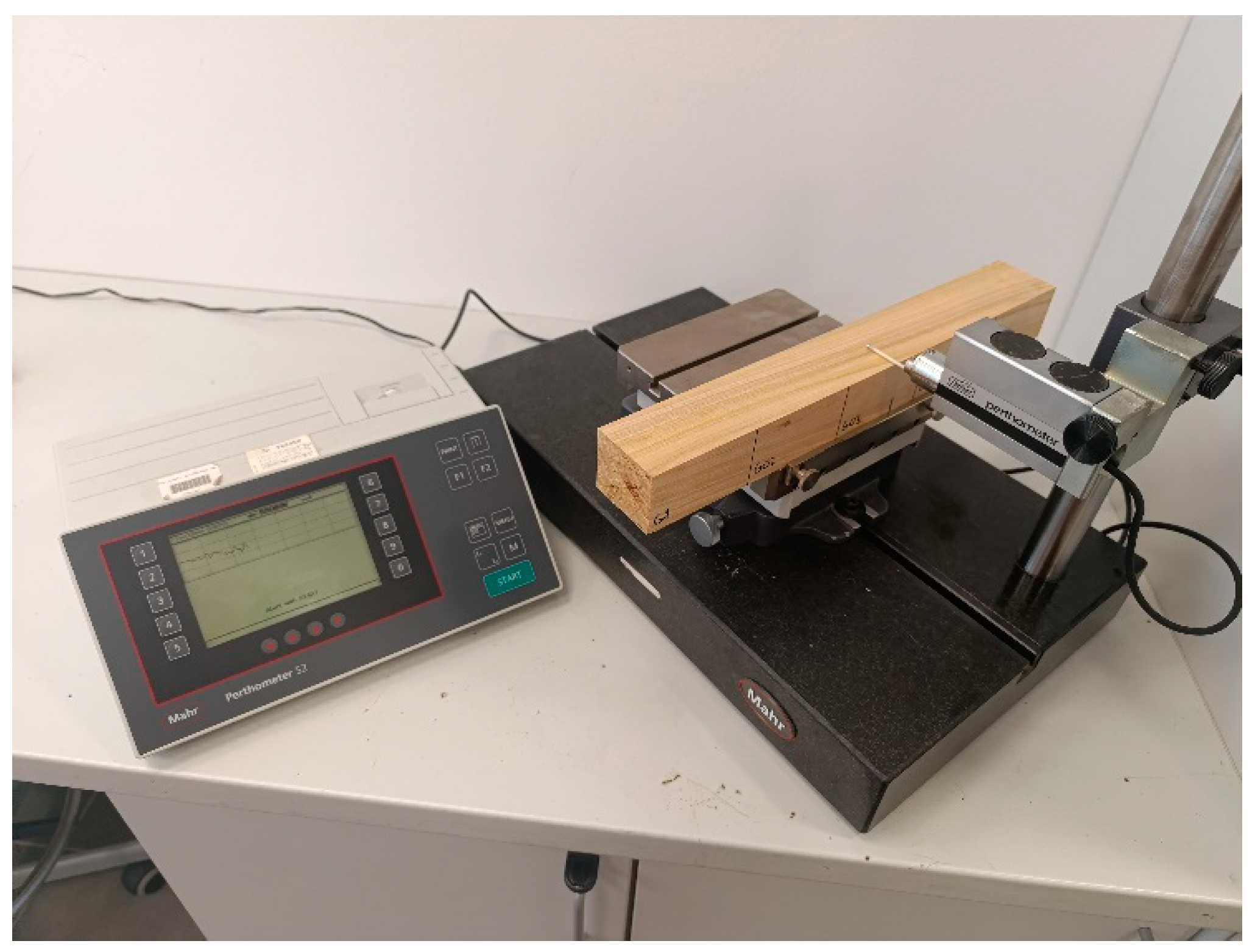
On each surface, four measurement fields were designated. Two-dimensional roughness measurements were carried out, with successive profiles taken at intervals of 0.2 mm (
Figure 1).
Surface roughness was measured using a MAHR stylus unit (Model S2, PZK MFW 250, Göttingen, Germany). The device is equipped with an active tracing length of 12.5 mm and a skid-type diamond stylus with a tip radius of 2 μm, which allows detection of fine surface irregularities associated with wood anatomical features.
Each measurement included the surface profile, Abbott curve, and standard roughness parameters calculated from the
R-profile. A standard Gaussian filter (EN ISO 21920) [
20] was applied for generating the
R-profile. The measurement position was marked on the side of each measuring surface to ensure that measurements were carried out at the same location after each planing operation. On each surface, ten surface profiles were measured perpendicular to the grain direction, with a lateral offset of 0.1 mm between successive profiles.
The contact angle is determined by the interplay of surface energies at the solid, liquid, and air interfaces, with higher contact angles indicating lower wettability (Young, 1805) [
21]. Contact angle is sensitive both to the machining quality expressed by surface roughness (Papp and Csiha, 2017) [
22] and moisture content of the wood surfaces (Benkreif, Brahmia and Csiha, 2021) [
23], this is why in the actual evaluations it was used for comparative evaluation of the wetting performance of the studied wood species, rather than for the measurement of the absolute value of the contact angle typical to these wood species. Samples were evaluated compared to the performance of spruce as a control sample to see if grey poplar can act as a possible substitute regarding its wettability.
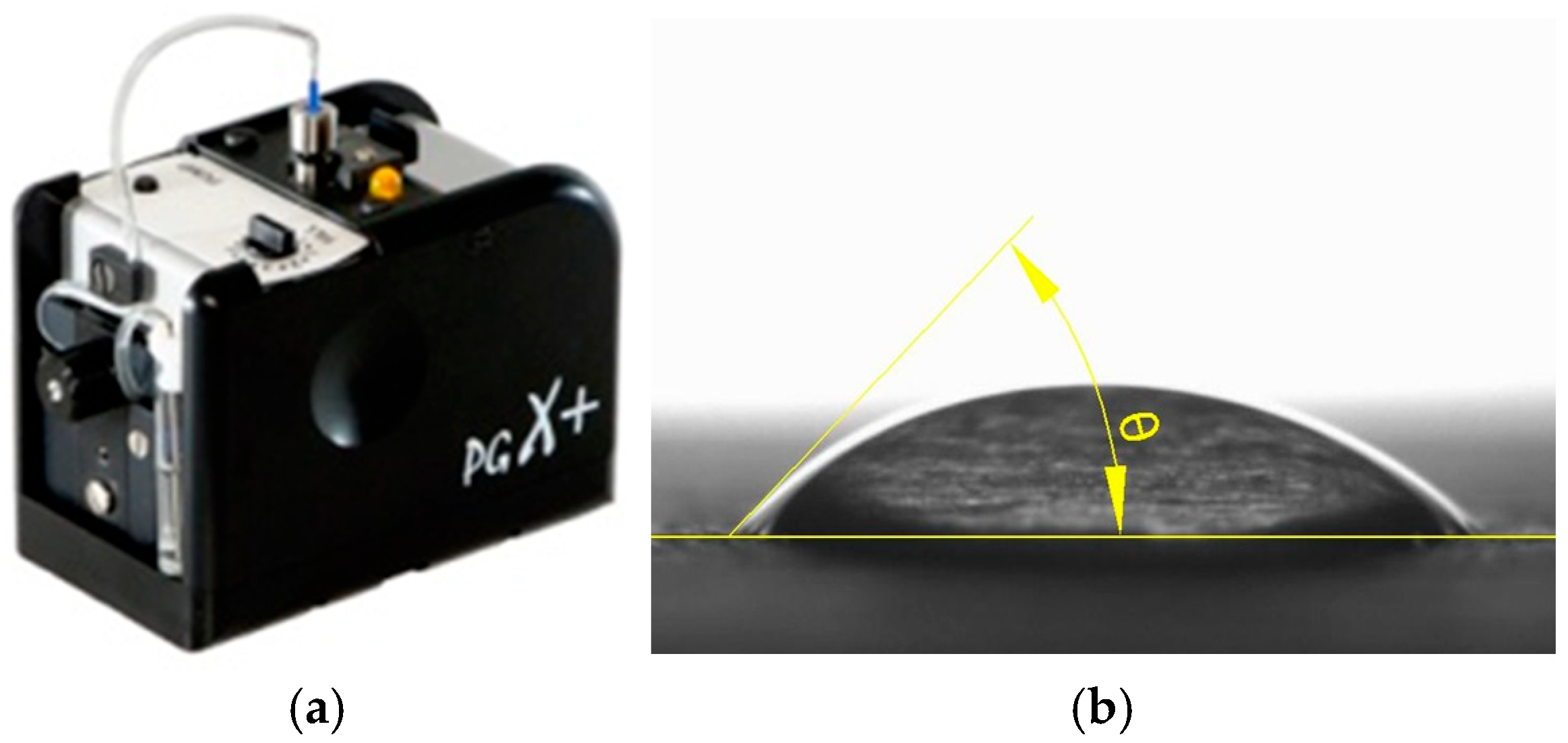
Contact angle measurements were carried out using the sessile drop technique with a PG-X goniometer, Fibro System AB, Stockholm, Sweden, interfaced with a personal computer (
Figure 2a). All droplet depositions were performed manually by the same operator in order to ensure consistent handling during measurements. The experiments were conducted under laboratory conditions at approximately 20 ± 1 °C and 50 ± 5% relative humidity. The instrument continuously records the contact angle at a sampling rate of 10 measurements per second, from the moment the liquid droplet comes into contact with the surface until it spreads completely and is absorbed by the sample. The contact angle is calculated automatically by the goniometer and stored as a time-dependent dataset. Data acquisition begins at the initial droplet–surface contact and continues until the contact angle decreases to zero, indicating full absorption by the wood. Each individual droplet deposition typically yields approximately 100–150 contact angle values.
The contact angle, θ (theta), provides a measure of the surface’s wettability. It is defined geometrically as the angle formed at the three-phase boundary where liquid, gas, and solid meet (
Figure 2b). The shape of a liquid droplet on a surface results from the balance between cohesive forces within the liquid and adhesive forces between the liquid and the solid, producing a distorted spherical form. Surfaces are classified based on the contact angle: when θ is below 90°, the surface is considered wettable or hydrophilic; for 90° ≤ θ < 180°, the surface exhibits poor wettability and is hydrophobic. A contact angle approaching zero indicates complete wetting, while a contact angle near 180° corresponds to no wetting, meaning that the internal cohesion of the liquid dominates over the surface’s adhesive forces.
The volume of the drop can be adjusted between 0.5 and 10 µL. For the current tests, the test liquid used for measurements was distilled water with a drop volume of 5 µL, dropped from a height of 2 mm.
Table 1 specifies the number of samples together with the number of contact angle measurements performed.
For each wood species, four individual samples were prepared. Each sample was planed five times, on five consecutive, horizontally parallel planes, and after each planing, 5 contact angle measurements were performed of the freshly planed surface. This procedure was designed to minimise the influence of anatomical variations, resulting in a total of 100 contact angle measurements per wood species (4 samples × 5 planings × 5 measurements per plane).
3. Results
3.1. Results of Surface Roughness Measurements
In surface roughness measurements, the most commonly used parameters for comparison and trend identification among amplitude parameters are
Ra (arithmetic average roughness) and
Rz (ten-point height). The present study forms part of a long-term research programme aimed at substituting spruce construction timber with alternative wood species; accordingly, the following section focuses on the bonding performance of grey poplar (
Populus ×
canescens). In addition to comparing the surface roughness of grey poplar sapwood and heartwood after planing with that of spruce specimens used as a reference, the nature of the resulting surface was also considered important. For the
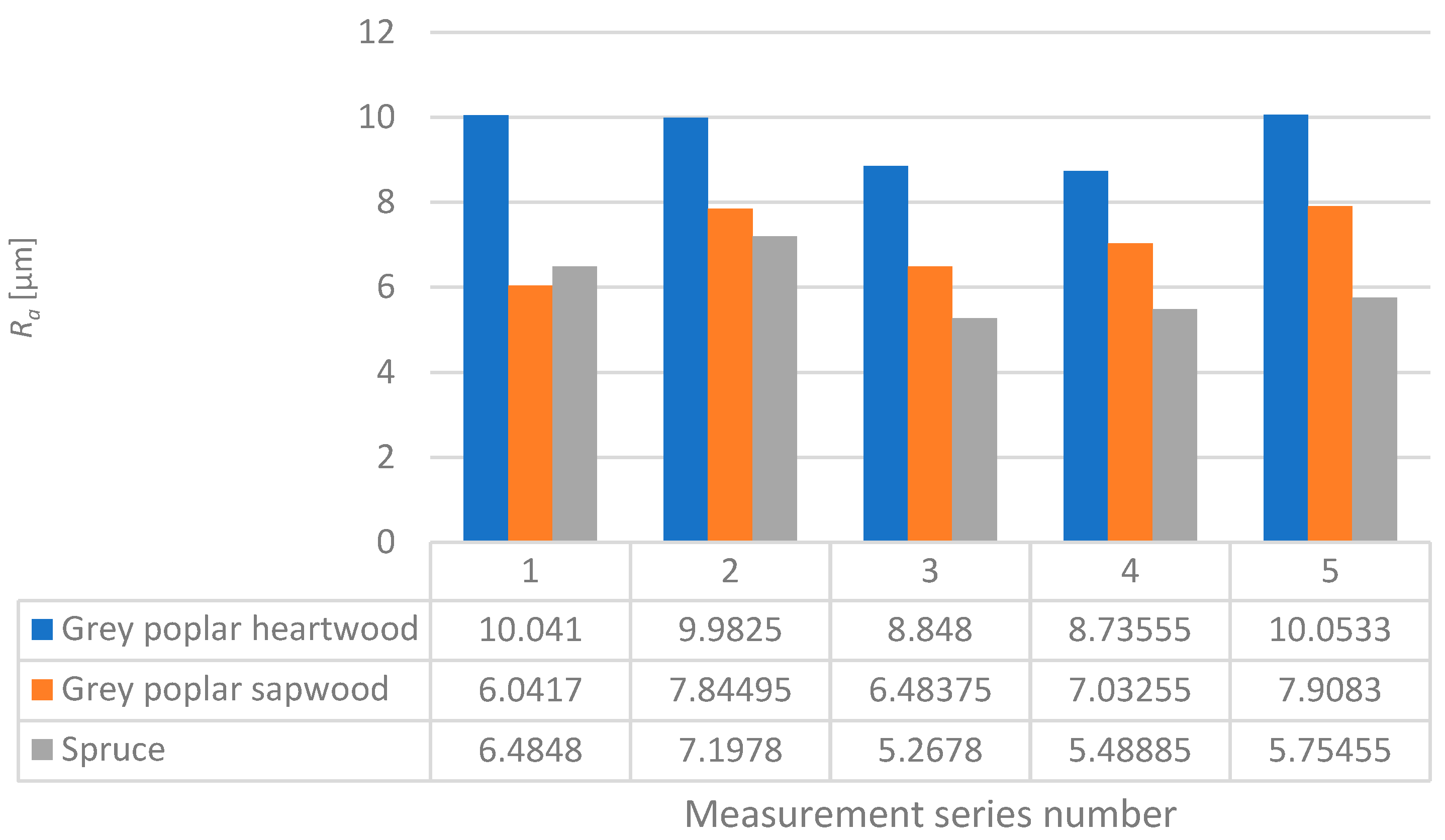
Ra parameter, the mean values of the five surface steps are presented in
Figure 3. Since it has long been known that
Ra and
Rz parameters may yield identical values for an inverted profile created by mirroring a needle-like profile along the horizontal axis (Sander, 1993) [
24], hybrid surface roughness parameters were also included in the analysis (
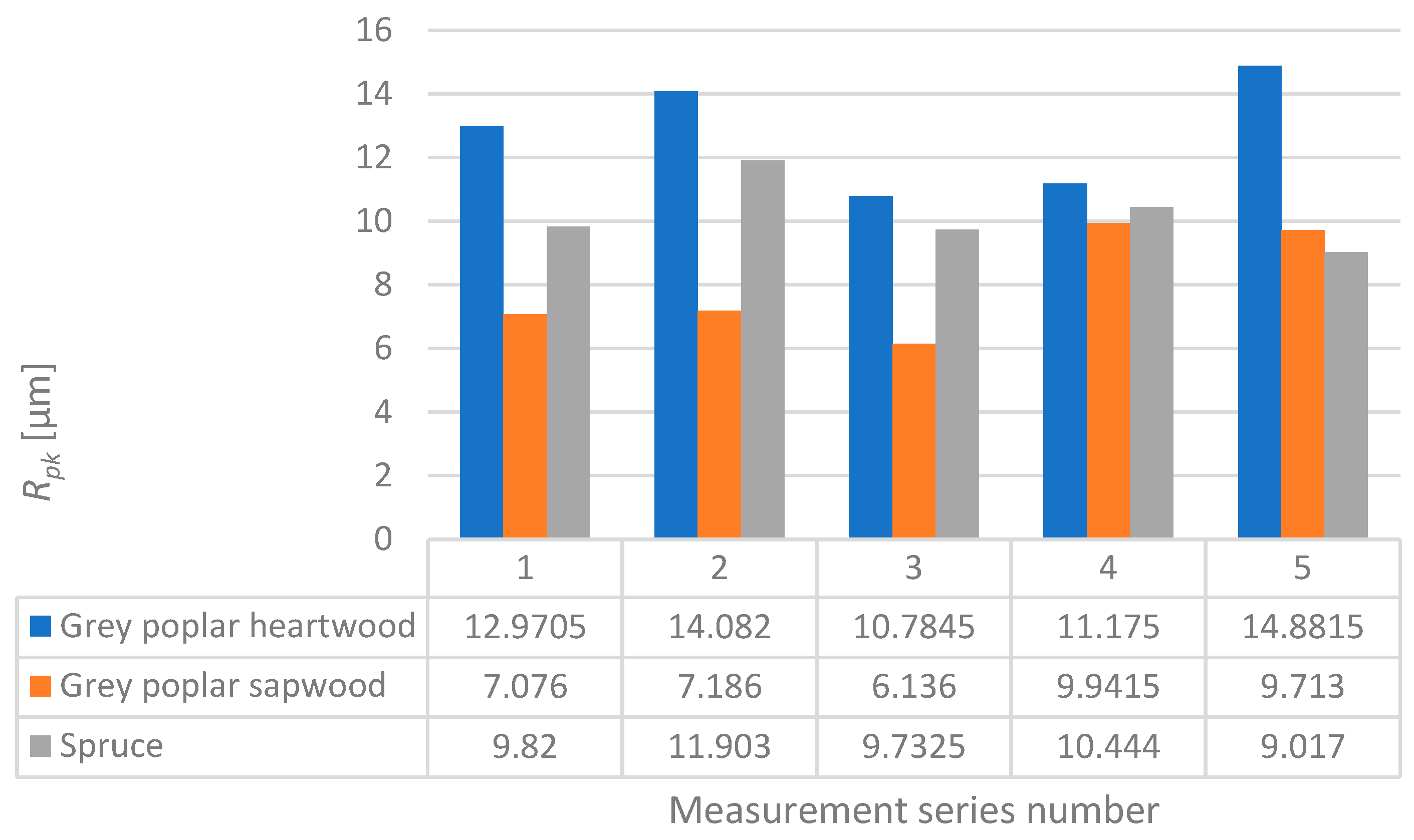
Rpk—reduced peak height,
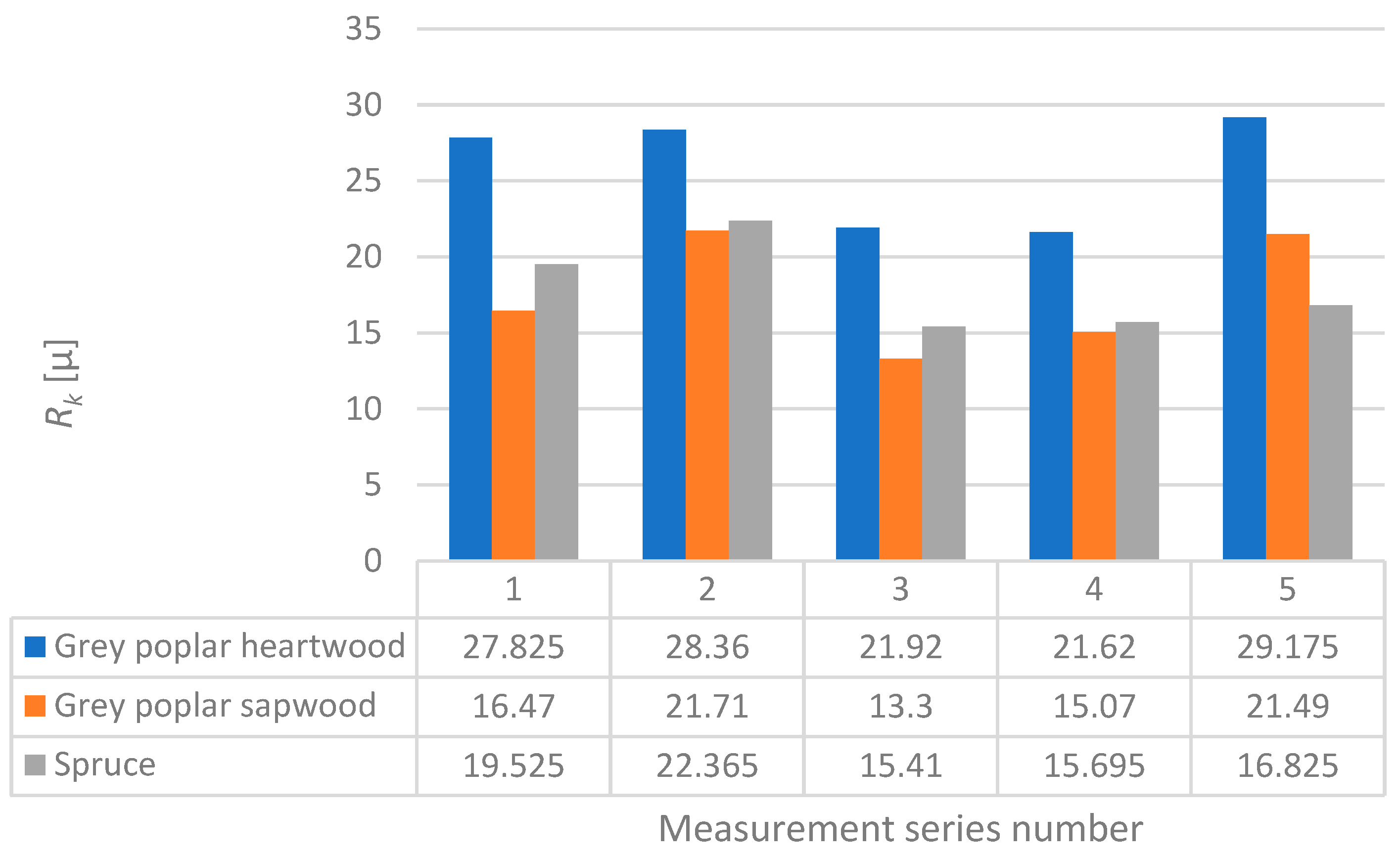
Rk—core roughness depth, and
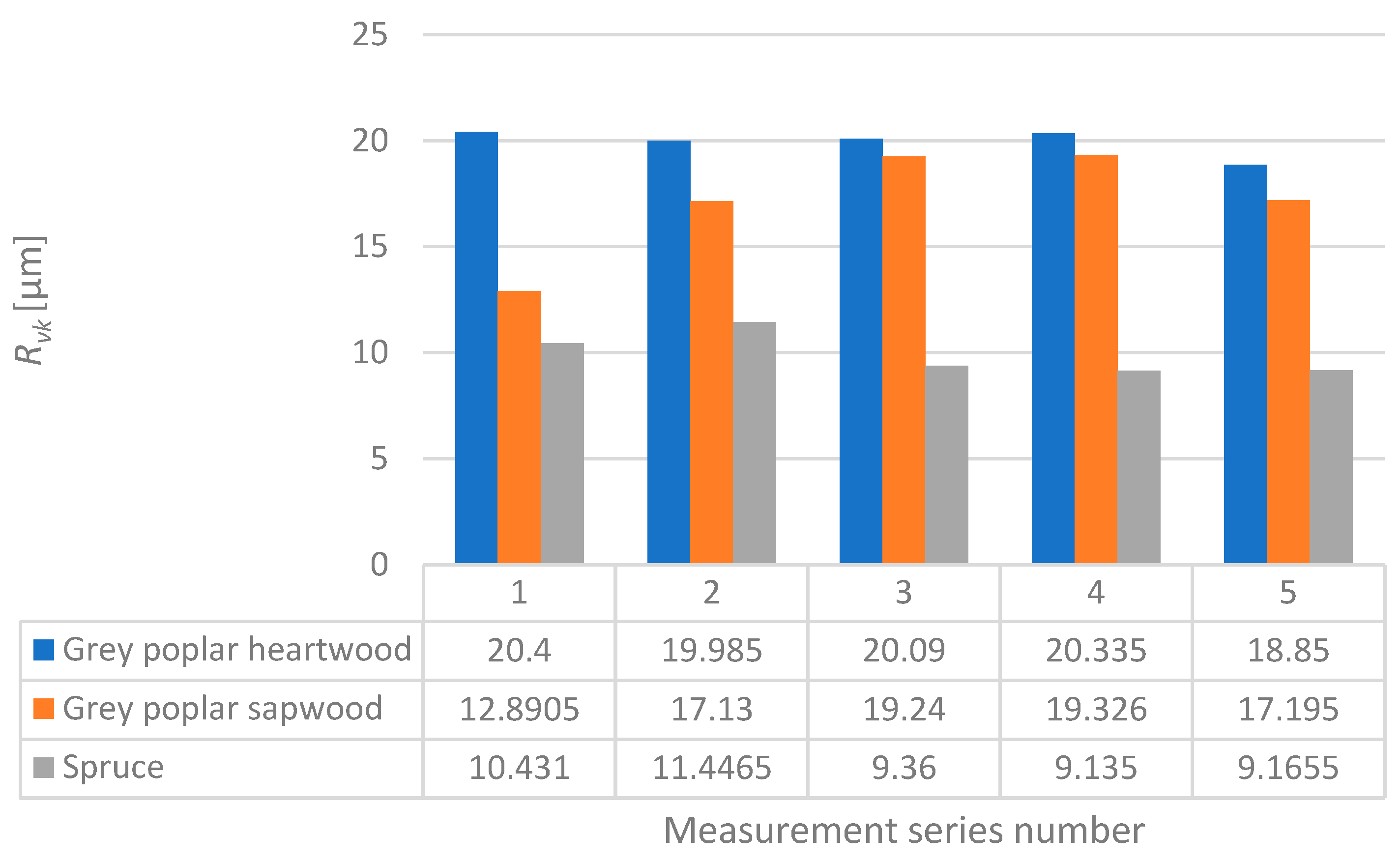
Rvk—reduced valley depth).
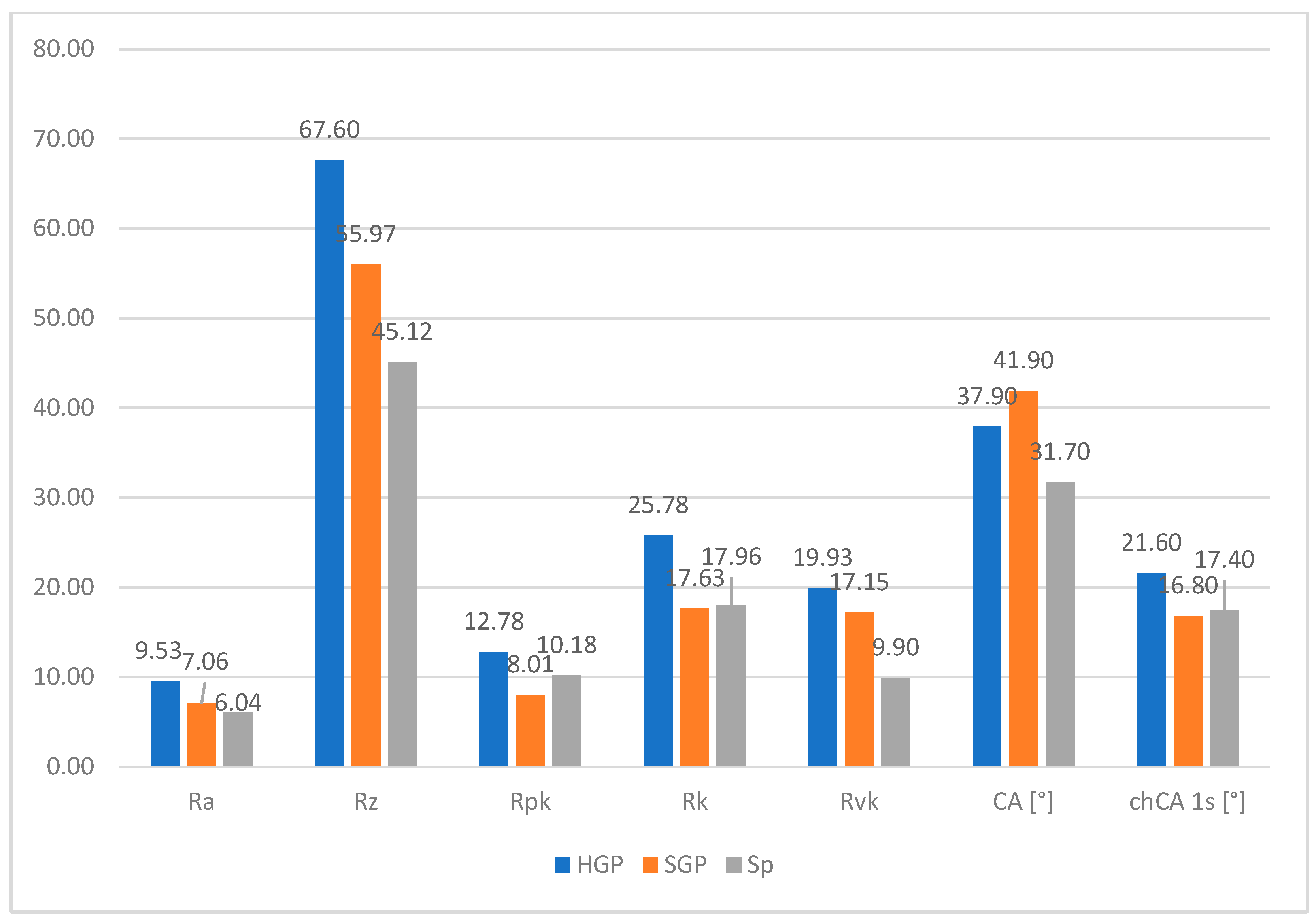
The diagrams were constructed using the mean values of the parameters obtained from ten measurement profiles for each surface. Analysis of the standard deviation revealed that grey poplar heartwood exhibited the highest variability across all five roughness parameters, whereas grey poplar sapwood and spruce showed very similar standard deviation values for the same roughness parameters.
For the
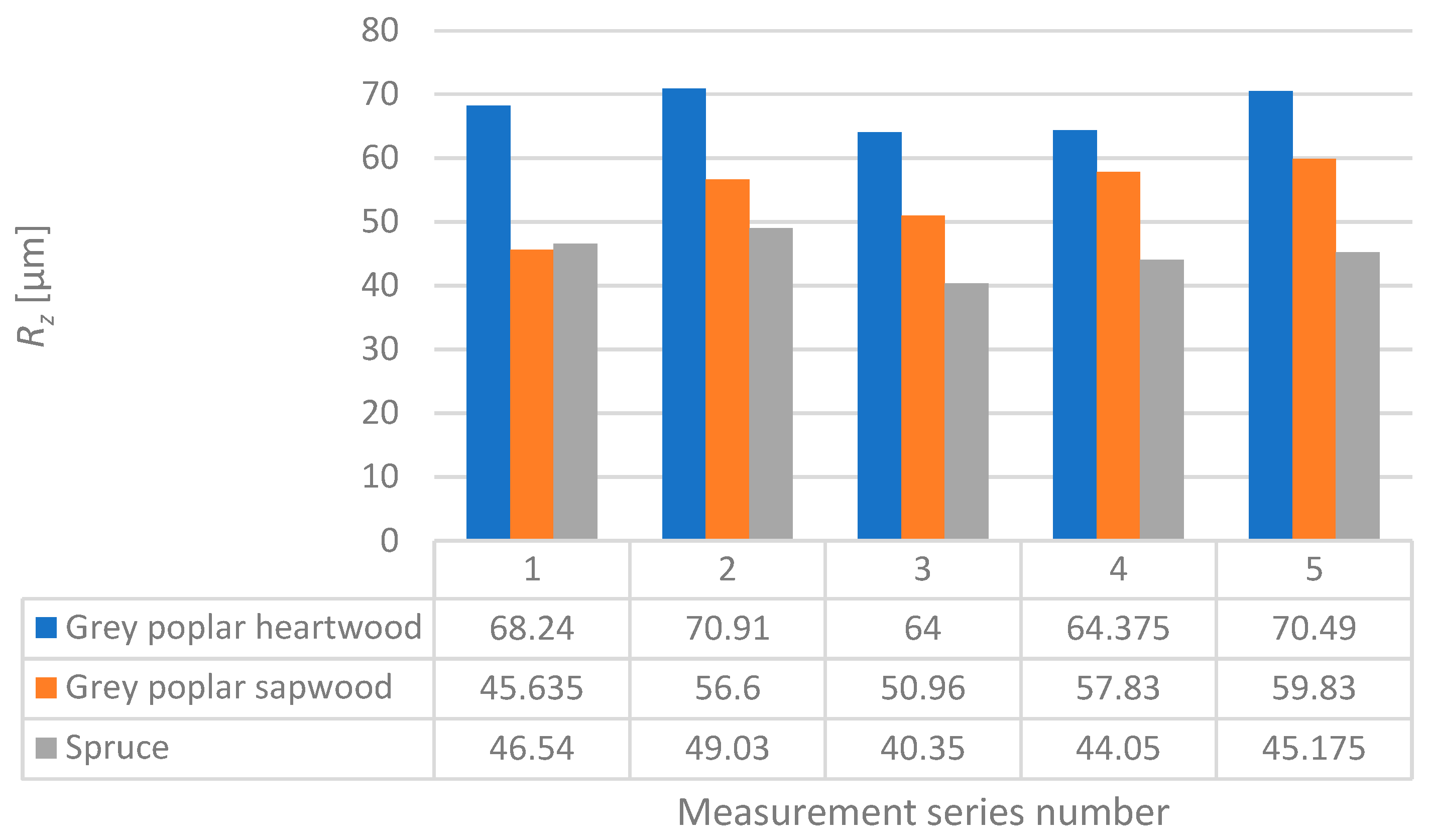
Rz parameter, the mean values of the five surface steps are presented in
Figure 4. In the sapwood of grey poplar, values very similar to those of spruce were measured. The heartwood of grey poplar exhibited slightly higher values compared to both its sapwood and the spruce reference.
Similar results were obtained from the evaluation of the
Rk measurement data. As expected, more pronounced differences were observed for the hybrid parameters
Rpk and
Rvk, whereas for the
Rk parameter, a trend similar to that of the amplitude parameters can be identified (
Figure 5,
Figure 6 and
Figure 7).
The Rpk parameters of grey poplar heartwood and spruce were very similar, whereas lower values were obtained for grey poplar sapwood, indicating that the grey poplar sapwood exhibited the smallest amount of torn or protruding wood material.
In the case of the hardwood species grey poplar, the Rvk values were higher than those measured for spruce. This is most likely attributable to its anatomical structure, namely the larger number and size of intersected internal voids.
3.2. Results of Contact Angle Measurements
A one-way ANOVA was conducted to compare the contact angles between grey poplar heartwood and spruce. There was a significant effect of wood sample type on contact angle, F(1, 198) = 31.08 and
p = 8.02 × 10
−8. Since
p << 0.05, it was confirmed that grey poplar heartwood exhibited a significantly higher mean contact angle than spruce. In addition to statistical significance, effect size measures were calculated to quantify the magnitude of the difference between wood types, providing a meaningful assessment of practical significance beyond
p-values. The effect size was large, with η
2 = 0.136, indicating that approximately 13.6% of the variance in contact angle was explained by wood species, and Cohen’s d = 0.89, confirming a substantial difference between the two groups (
Table 2).
A higher polar contact angle on grey poplar heartwood indicates reduced wetting with polar liquids on this species compared to spruce.
To further investigate the influence of grey poplar sample type on wettability, a one-way ANOVA was performed comparing contact angles of grey poplar sapwood and spruce. The analysis revealed a highly significant effect of wood sample type on contact angle, with F(1, 198) = 74.34 and p = 2.11 × 10⁻¹⁵. Considering that p << 0.05, it was confirmed that grey poplar sapwood exhibited a significantly higher mean contact angle than spruce, and even higher than grey poplar heartwood. To assess the practical significance of this difference, effect size measures were calculated. The results indicated a large effect, with η2 = 0.273, showing that approximately 27.3% of the variance in contact angle was explained by wood species, and Cohen’s d = 1.23, demonstrating a very substantial difference between the two groups.
The polar contact angle of grey poplar sapwood indicates reduced wetting with polar liquids on this species compared to spruce.
Although combination grey poplar samples containing both sapwood and heartwood were not explicitly investigated, the results of both having significantly higher contact angles than spruce support the conclusion that grey poplar heartwood–sapwood combination samples would also exhibit reduced wetting with polar liquids compared to spruce.
Grey poplar sapwood and grey poplar heartwood were also compared regarding their polar contact angle. A one-way ANOVA showed a significant effect of wood sample type, F(1, 198) = 9.74 with p = 0.002, indicating that sapwood exhibited a higher mean polar contact angle than heartwood. Effect size measures indicated a moderate practical significance: η2 = 0.047, showing that 4.7% of the variance in contact angle was explained by the type of sample, and Cohen’s d = 0.44, confirming a moderate difference between the two wood sample types.
The result showed that both grey poplar heartwood and sapwood exhibited significantly higher contact angles than spruce, indicating reduced wettability of the grey poplar with polar liquids like water-based stains, lacquers, lasures and water-based PVAC adhesives. On average, heartwood had a contact angle about 20% higher than spruce, while that of sapwood was about 32% higher, suggesting substantially poorer wetting by polar liquids. Effect size analysis further supports this difference: the sapwood difference from spruce is very large (Cohen’s d = 1.23), whereas heartwood shows a moderate, but still considerable difference (Cohen’s d = 0.89), highlighting a reduced wettability in grey poplar.
3.3. Results of Early-Stage Spreading Behaviour
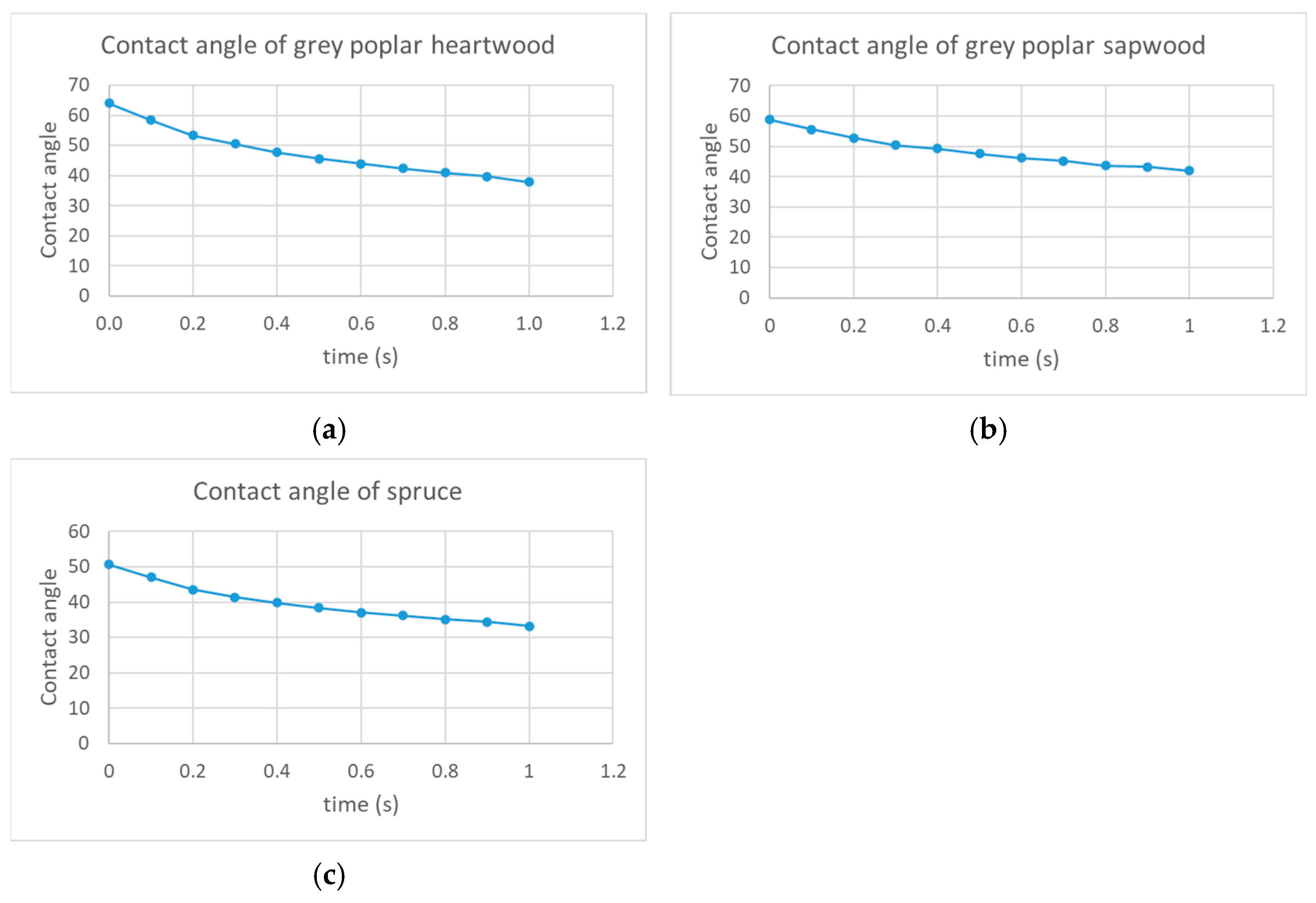
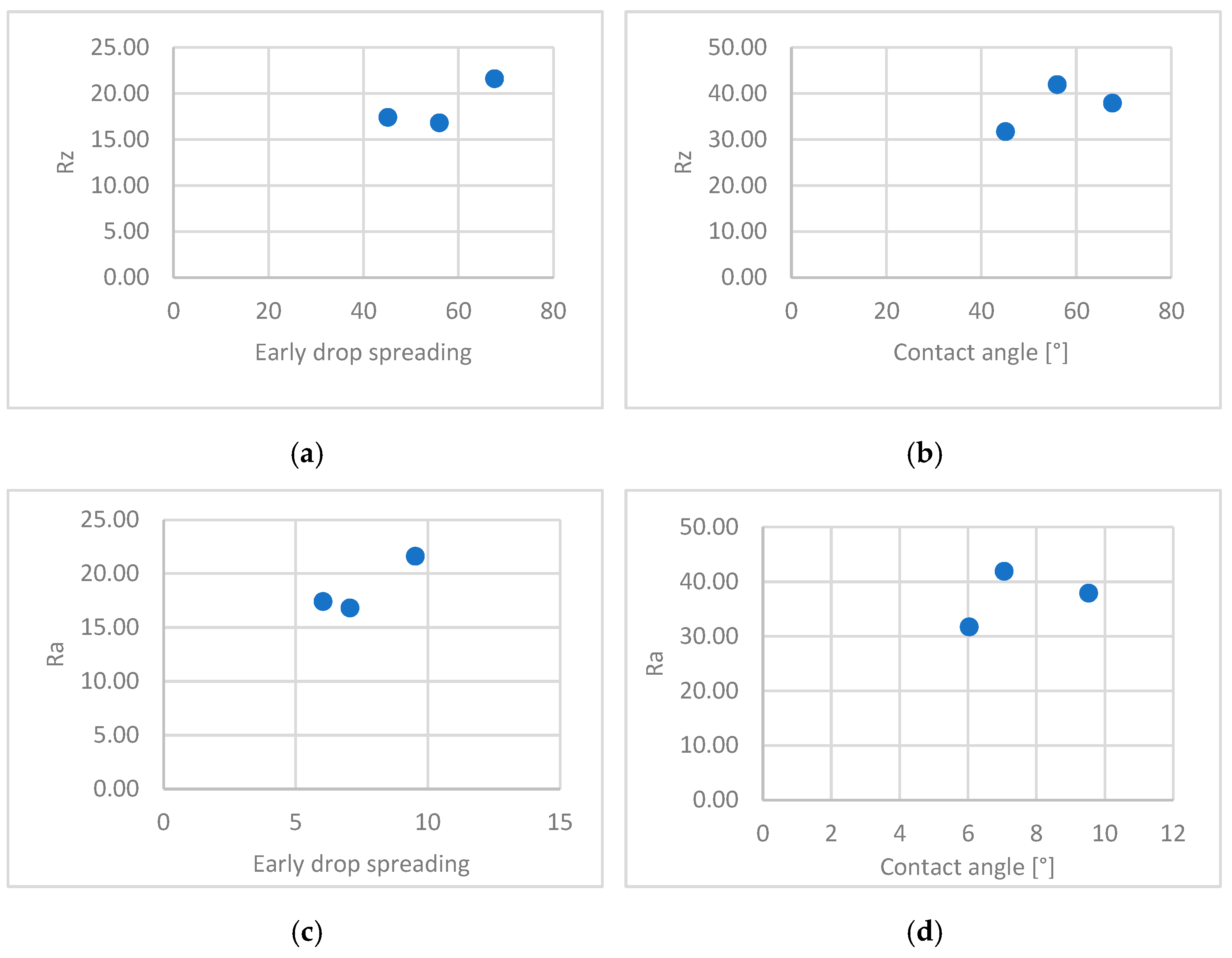
When evaluating the spreading of the drop of distilled water on the different types of samples, it was observed that the total change in the value of the contact angle within the first second reveals a new correlation. Whilst the total change in contact angle within the first second in the case of grey poplar heartwood was 26.1, this value was 16.8 in the case of grey poplar sapwood and 17.4 in the case of spruce (
Figure 8).
A one-way ANOVA was conducted to evaluate whether early-stage spreading, expressed as the reduction in contact angle (Δθ) during the first second after droplet deposition, differed among grey poplar heartwood, grey poplar sapwood, and spruce. The ANOVA revealed a highly significant effect of wood type on Δθ (F(2, 297) = 33.7, p << 0.001), indicating that the wood species strongly influences the initial wetting behaviour. Grey poplar heartwood exhibited the largest reduction in contact angle, with a Δθ of 26.1°, reflecting a substantially faster initial spreading compared with both grey poplar sapwood (16.8°) and spruce (17.5°). By contrast, sapwood and spruce displayed very similar reductions in contact angle, suggesting nearly identical early-stage spreading kinetics.
To quantify these pairwise differences, Tukey’s post hoc test was performed. This analysis confirmed that the difference between grey poplar heartwood and the other two wood types was statistically significant, whereas the small difference between sapwood and spruce (Δθ difference = 0.7°) was not significant (p = 0.62). This indicates that while heartwood allows much faster initial spreading of water droplets, the sapwood fraction of grey poplar behaves almost identically to spruce with respect to early wetting. These results highlight that the reduced wettability observed for grey poplar in static contact angles is primarily driven by the heartwood fraction during the very first moments of droplet spreading, whereas sapwood contributes little to differences compared with spruce. Consequently, in practical terms, for water-based coatings and adhesives, surfaces containing a higher proportion of grey poplar heartwood would experience faster initial spreading, while sapwood-dominated surfaces would behave similarly to spruce in terms of early wetting.
3.4. Evaluation of Surface Roughness Results Using Factor Analysis
For the evaluation of the data, factor analysis was also applied. Factor analysis helps to find connections between independent variables (vectors).
During our investigation, we organised all data related to individual surface roughness measurements into separate vectors. So, each vector contains the 31 measured parameters, the Amplitude (Ra, Rq, Rz, Rp, Rv), the Spacing (RSm, RPc), the Statistical (Rsk, Rku) and the Functional (Abbott–Firestone-based) (Rk, Rpk, Rvk, Mr1, Mr2, Rmr, Rdc) parameters, which allowed for a complex comparison that differs from the previous ones. Thus, we obtained 3 × 5 × 20 = 300 column vectors from the surface roughness measurements. We applied a uniform notation to the vectors, as follows: the first number indicates the layer corresponding to the measurement, followed by the letter h, s, or S, which refers to the heartwood and sapwood of grey poplar and spruce, respectively. For example, the vector 3s12 contains the 12th measurements from the third layer in the case of grey poplar sapwood. We also created vectors containing the averages of the measured data for each wood type and layer. These were labelled similarly. For example, the 3s vector contains the averages of the surface roughness values measured in the third layer for the grey poplar sapwood. These 3 × 5 vectors were not independent of the others, but we added them to the vectors of measured data for better visualisation. (Of course, we also performed the analysis without the average vectors and confirmed that their presence does not affect the final conclusions, but it certainly makes the figures more illustrative.) Finally, we arranged the resulting vectors into a 31 × 315 matrix.
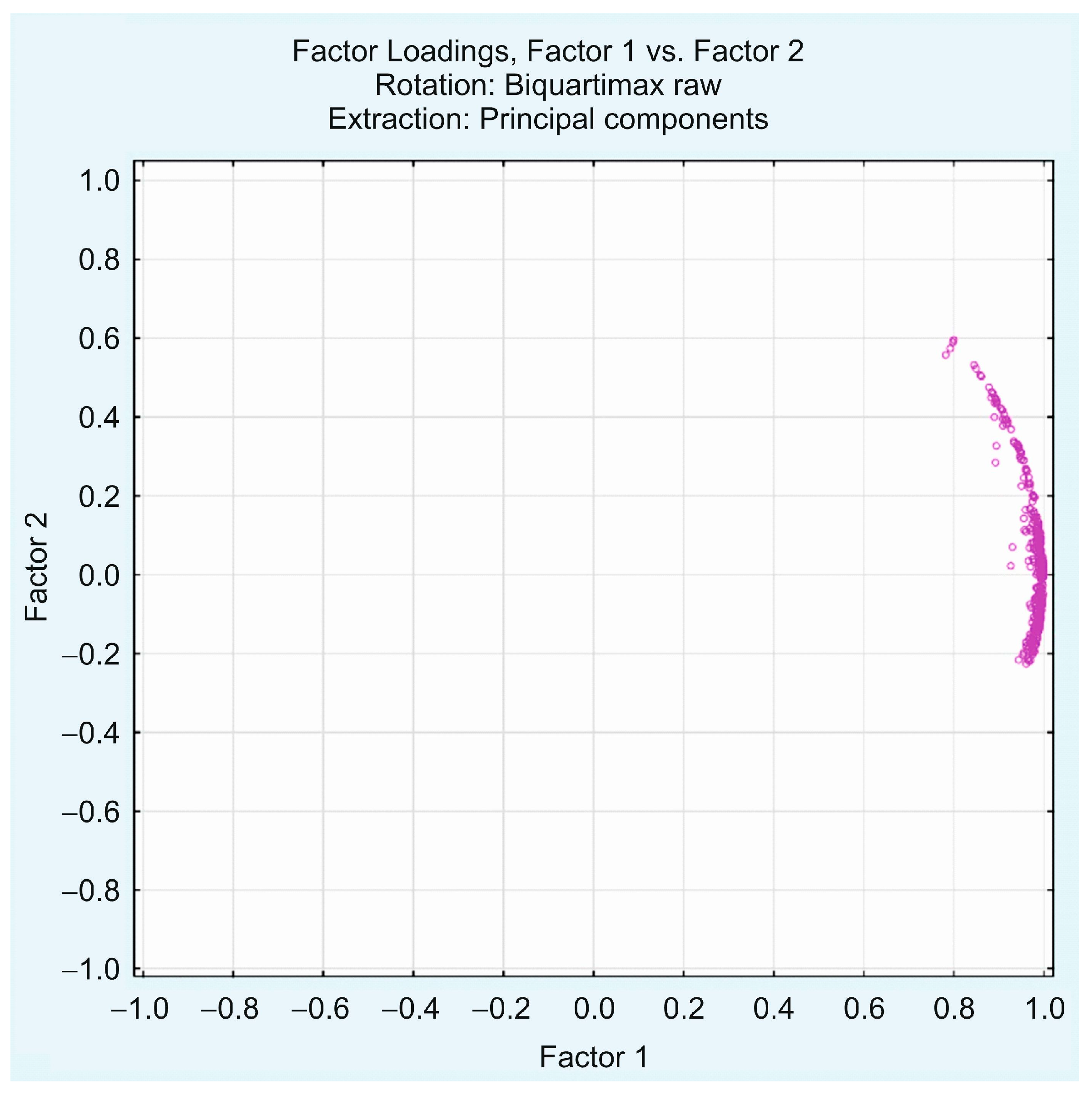
We performed factor analysis on the column vectors of the resulting matrix using Statistica 14 software (TIBCO Software Inc.). We found that the first two factors together explain 98.34% of the total variance (the first 94.7% and the second 3.7%), so no further factors are necessary. Thus, we used only two factors, where the first is very deterministic.
During the factor analysis, we found that the differences between the vectors associated with surface roughness measurements are very small; they belong to one group and are predominantly determined by the first factor, with no big real differences between them, as illustrated in
Figure 9. The small purple circles indicate the position of each vector in the Factor 1–Factor 2 coordinate system.
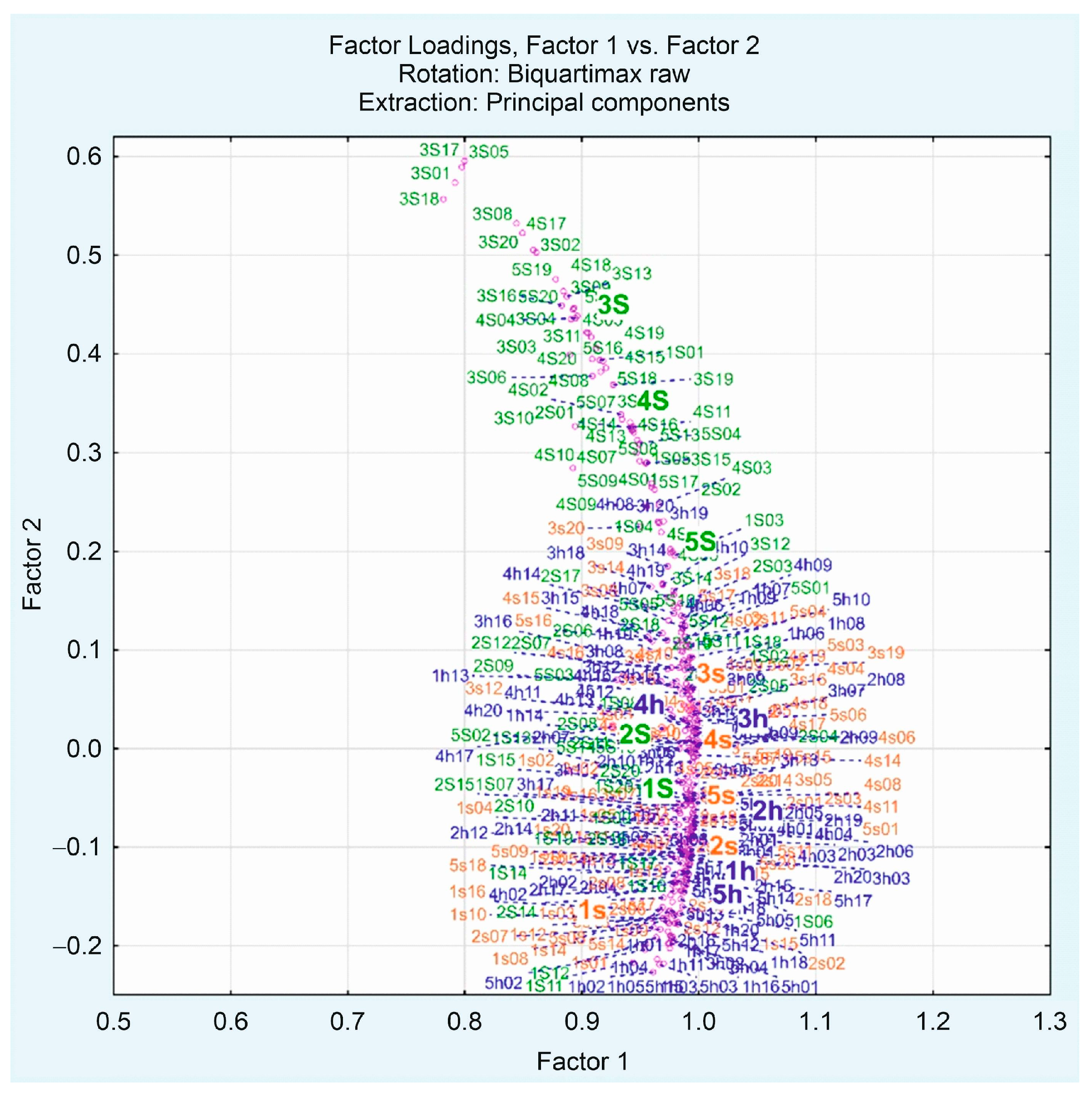
Enlarging the evaluable part of
Figure 9, we obtain
Figure 10, in which we mark the names of the individual vectors. For better visibility, the blue, orange, and green colours indicate the vectors for the surface roughness of the grey poplar heartwood and sapwood and spruce, respectively. We can see that while the surface roughness values for the grey poplar heartwood and sapwood are fairly closely related, the vectors for spruce are scattered and largely separate from them. The greater deviation occurs mainly in the data measured on layers 3 and 4 of spruce, indicated by the vectors 3S and 4S.
By examining the coordinates of the vectors obtained during factor analysis, we can numerically determine in the coordinate system obtained by the factors that the vectors belonging to spruce are also slightly influenced by the second factor, much more so than the roughness vectors of grey poplar.
4. Discussion
The combined evaluation of surface roughness characteristics, multivariate factor analysis, and wettability behaviour reveals a consistent and nuanced picture of the machining and bonding-related properties of grey poplar compared with spruce.
It should be noted that surface roughness measurements in this study were conducted perpendicular to the grain in order to better capture anatomical surface features influencing liquid spreading and adhesive penetration. Therefore, the results should be interpreted primarily in terms of functional surface behaviour relevant to bonding and wettability rather than as indicators of machining quality.
At the basic descriptive level, amplitude roughness parameters (
Ra,
Rz) demonstrated that grey poplar—particularly its sapwood—exhibits surface qualities closely comparable to spruce after planing, while grey poplar heartwood showed slightly higher roughness and greater variability (
Figure 11 and
Figure 12). Hybrid parameters refined this interpretation by highlighting functional surface features: the lower
Rpk values of grey poplar sapwood indicate fewer protruding or torn fibres, suggesting a mechanically favourable bonding surface, whereas the higher
Rvk values reflect deeper void structures related to poplar’s anatomical characteristics. These findings already pointed to an important internal relationship: although grey poplar may show slightly higher structural porosity, its surface topography—especially in sapwood—remains highly suitable for adhesive interaction.
Factor analysis confirmed and strengthened these relationships at a multivariate level. By integrating all 31 roughness parameters simultaneously, it showed that nearly all variability is governed by a single dominant factor, meaning that the overall roughness behaviour of all examined wood types is fundamentally similar. Within this shared structure, however, grey poplar sapwood and heartwood formed a very tight, homogeneous cluster, while spruce exhibited greater dispersion and stronger influence from the secondary factor. This statistical evidence directly supports the earlier parameter-level observations: grey poplar surfaces are not only comparable to spruce but also more internally consistent and predictable in their roughness characteristics.
When wettability results are incorporated, a complementary but seemingly contrasting pattern emerges, which clarifies the functional implications of the roughness findings. Static contact angle measurements showed that both grey poplar fractions—especially sapwood—are less wettable with polar liquids than spruce, indicating reduced initial affinity for water-based coatings and adhesives. However, dynamic spreading behaviour revealed an important internal connection to the roughness results: despite higher static contact angles, grey poplar surfaces—particularly heartwood—exhibited rapid early-stage spreading, and sapwood behaved dynamically almost identically to spruce. This suggests that the anatomical porosity reflected in higher Rvk values may facilitate liquid penetration once spreading begins, partially compensating for reduced initial wettability.
Both grey poplar heartwood and sapwood exhibited significantly higher static contact angles than spruce, indicating reduced wettability with polar liquids such as water-based stains, lacquers, lasures, and PVAc water-based adhesives. The faster early-stage spreading observed on grey poplar heartwood may be associated with the presence of larger vessel elements and the diffuse-porous anatomical structure of the species. These features can promote rapid capillary uptake immediately after droplet deposition. In addition, the higher extractive content typically present in poplar heartwood may increase the initial contact angle by reducing surface polarity, while the vessel network simultaneously facilitates rapid liquid penetration once spreading begins. On average, heartwood showed a contact angle approximately 20% higher than spruce, while sapwood was approximately 32% higher, suggesting substantially poorer wetting. Effect size analysis confirmed the practical significance of these differences: sapwood displayed a very large effect (Cohen’s d = 1.23), and heartwood a moderate but meaningful effect (Cohen’s d = 0.89). Furthermore, sapwood exhibited a significantly higher contact angle than heartwood (Cohen’s d = 0.44), leading to the conclusion that the sapwood fraction of grey poplar contributes noticeably to reduced wettability with polar liquids. These findings collectively suggest that grey poplar, when treated with water-based coatings or adhesives, is not expected to achieve wettability levels comparable to spruce.
However, analysis of early-stage spreading revealed additional insight. A one-way ANOVA on the reduction in contact angle during the first second after droplet deposition (Δ) showed a highly significant effect of wood type (F(2, 297) = 33.7, p << 0.001). Grey poplar heartwood exhibited the largest Δθ (26.1°), indicating faster spreading compared with both grey poplar sapwood (16.8°) and spruce (17.5°). Tukey’s post hoc test confirmed that the difference between heartwood and the other two wood types was significant, whereas the small difference between sapwood and spruce was not significant (p = 0.62). This demonstrates that while heartwood spreads faster in the first second, sapwood behaves dynamically very similarly to spruce, revealing that early-stage spreading does not fully mirror the static contact angle differences. Taken together, static and dynamic contact angles provide complementary information: static CA highlights reduced wettability of grey poplar compared to spruce, especially sapwood, whereas dynamic spreading shows that heartwood spreads faster initially, and sapwood spreads at rates comparable to spruce. In conclusion, even if there is a statistically significant difference between the contact angles of the grey poplar heartwood and sapwood compared to spruce, the early spreading refers to a practically, still convenient, wettability with polar liquids.
Taken together, the three analytical perspectives converge toward a coherent interpretation. Surface roughness analysis shows structural suitability for bonding, factor analysis confirms overall similarity and high internal consistency of grey poplar surfaces, and wettability results indicate that although initial wetting is lower than in spruce, dynamic spreading behaviour remains practically favourable. Thus, the apparent contradiction between reduced static wettability and good bonding potential can be resolved: the combined effects of surface topography, anatomical porosity, and spreading kinetics result in a surface that is technically suitable for adhesive applications.
From an industrial perspective, these results suggest that grey poplar could be suitable for engineered wood products such as glued laminated timber (glulam), cross-laminated timber (CLT), or laminated veneer lumber (LVL). However, the slightly reduced initial wettability indicates that adhesive application parameters—including adhesive viscosity, spreading rate, and pressing conditions—may require optimisation when processing grey poplar compared with traditional spruce substrates.
5. Conclusions
This study evaluated the surface roughness and wettability behaviour of grey poplar (Populus × canescens) in comparison with spruce in order to assess its potential as an alternative raw material for structural wood products.
The results showed that:
The surface roughness parameters (Ra, Rz, and Rk) of grey poplar sapwood after planing are very similar to those of spruce, indicating comparable machining quality.
Grey poplar heartwood exhibited slightly higher roughness and greater variability, which can be attributed to its more heterogeneous anatomical structure.
Hybrid roughness parameters revealed favourable functional surface characteristics for bonding, particularly in sapwood, where lower Rpk values indicate fewer protruding fibres.
Contact angle measurements showed reduced initial wettability of grey poplar compared with spruce; however, dynamic measurements demonstrated rapid early-stage spreading, particularly in heartwood.
Factor analysis integrating 31 roughness parameters confirmed that the roughness behaviour of all investigated surfaces belongs to a common statistical group, with grey poplar showing a more homogeneous distribution than spruce.
Overall, the results suggest that grey poplar—especially sapwood—represents a promising alternative raw material for bonded structural wood products. Although its lower initial wettability should be considered during adhesive application, its surface characteristics and spreading behaviour indicate that effective bonding performance can be achieved under appropriate processing conditions.
Future research should investigate the direct relationship between these surface characteristics and the bonding strength of grey poplar in laminated structural products.