


Abstract
The aim of this study was to examine the level of participation of residents of the Warsaw metropolitan area in environmental education and to identify the relationship between the frequency of forest visits and self-assessed environmental and forest-related knowledge. Understanding these relationships is important for improving the effectiveness of environmental education programs targeted at adult populations. The research was conducted as a pilot and exploratory study using an online survey administered via the Maptionnaire platform. The study included 218 adult respondents who had visited forest areas at least once in the previous year. The results indicate that more than two-thirds of respondents visited forests at least once a week, while slightly more than half reported participation in environmental education activities, mostly on an occasional basis and primarily in the form of field-based activities. Non-governmental organizations were more frequently identified as organizers of environmental education than forest-related institutions. A key finding is the differentiated self-assessment of knowledge: frequent forest visitors more often rated their environmental knowledge as average or low, whereas respondents visiting forests sporadically tended to assess their knowledge as good or very good. This pattern suggests that increased contact with nature may raise awareness of the complexity of environmental issues. The study provides practical insights for public institutions, State Forests, national parks, and non-governmental organizations involved in environmental education. The findings contribute to the development of more effective, diversified, and audience-oriented educational programs, with particular emphasis on field-based education and initiatives addressed to adult learners.
1. Introduction
Ecological education is widely recognized as a key instrument for implementing the principles of sustainable development and addressing contemporary environmental challenges at global, national, and local levels [1,2,3,4,5,6]. Despite this recognition, existing policy and strategic documents [7,8] provide limited insight into how environmental education translates into self-assessed (perceived) levels of ecological knowledge and engagement among urban residents, particularly in relation to everyday interactions with forest environments. This gap is especially relevant in highly urbanized societies, where direct contact with natural ecosystems is increasingly limited.
From a scientific perspective, environmental education is not only about imparting knowledge, but is a process that shapes ecological awareness, a sense of responsibility for the environment and self-image, and the way individuals understand the relationship between humans and nature [9,10]. In urban contexts, this role becomes particularly important due to the phenomenon commonly described as a “nature deficit” [11,12], which is associated with declining ecological awareness and a weakened, often fragmentary, understanding of ecological processes [13,14,15]. In large metropolitan areas, daily contact with nature is frequently replaced by managed green spaces or mediated representations of the natural environment, which may create cognitive barriers affecting how individuals perceive and assess their own ecological knowledge [10].
As Wojciechowska-Solis et al. [9] point out, in Poland, environmental education takes many forms, including forest education, nature-forest education, urban forest education, outdoor education, and education for sustainable development. These approaches aim to foster pro-environmental attitudes and support sustainable development, often through experiential learning and direct contact with nature [10]. However, distinctions between environmental education and forest education are most often framed in legal or institutional terms, while empirical analyses grounded in environmental sociology or educational sociology that examine self-assessed educational outcomes remain limited.
A key institutional actor in forest education in Poland is the State Forests, whose educational activities are carried out under the Forest Act [16]. These initiatives include educational trails, outdoor classes, lectures, and meetings with foresters, and are intended to increase the public understanding of sustainable forest management and reduce social conflicts related to forest use [17,18,19]. According to the most recent data, participation in educational activities organized by the State Forests reached approximately 5.3% of Poland’s population in 2023 [19]. However, recent reports indicate a decline in participation, particularly in guided field activities [19,20,21], raising questions about the effectiveness and attractiveness of existing educational formats for urban audiences in terms of enhancing participants’ perceived ecological and forestry knowledge.
In parallel, non-governmental organizations increasingly contribute to environmental education through workshops, programs, and social campaigns [22,23]. While these initiatives complement formal education, their educational outcomes are rarely evaluated systematically, making it difficult to assess their actual impact on participants’ self-perceived ecological awareness and knowledge.
Despite the extensive institutional framework and the growing number of educational initiatives, there is still a notable lack of empirical research examining the perceived outcomes of environmental education among urban residents. In particular, quantitative and comparative studies exploring the relationships between participation in environmental education, recreational forest use, and self-assessed levels of ecological and forestry knowledge remain scarce. It is therefore unclear whether frequent recreational use of forests is associated with higher perceived levels of environmental and forestry knowledge, or whether participation in educational activities meaningfully enhances such self-assessments among urban populations.
The main research question addressed in this study is whether participation in environmental education and the frequency of recreational forest use are associated with higher self-assessed (perceived) levels of ecological and forestry knowledge among residents of a large urban agglomeration.
Accordingly, the aim of this study was to assess the level of participation of residents of the Warsaw metropolitan area in environmental education activities and to examine their self-assessed ecological and forestry knowledge. In addition, the study investigated whether the frequency of forest use influences the perceived level of knowledge in this field. This pilot and exploratory study responds directly to the identified research gap and provides an initial empirical diagnosis of the relationships between environmental education, recreational practices, and self-perceived ecological awareness in an urban context.
The following research hypotheses were formulated:
H1.
Participation in environmental education activities varies depending on the preferred form of the activity and the type of institution conducting it.
H2.
There is a relationship between the frequency of visiting forests in the Warsaw metropolitan area and the level of self-assessed ecological and forestry knowledge.
2. Materials and Methods
2.1. Research Procedure
The online survey was conducted between 24 February and 23 March 2025 using the Maptionnaire application [24,25]. This application allows for the collection of data through an online questionnaire, with the added capability of obtaining spatial information. Respondents using such a tool (depending on the study) answer survey questions and interact with map segments—for example, to mark locations of recreational areas. The questionnaire consisted of 32 questions. For the purposes of this study, 13 single-choice closed-ended questions were selected, focusing on: respondents’ demographics, frequency of visits to forested areas within the Warsaw metropolitan area, frequency of participation in environmental education activities, the organization conducting such activities, and the subjective level of knowledge (self-efficacy) [26] in the field of environmental and forest education. Participation in the survey was voluntary and without financial compensation.
The study used the snowball sampling method [27], which involved disseminating information about the survey through the authors’ social media platforms, i.e., Facebook and LinkedIn. The link to the questionnaire was published along with a detailed description of the study’s purpose, the target group’s characteristics, and the estimated time needed to complete the survey. The announcement also included a request to share the survey further, aiming to increase its reach and the number of potential respondents. This non-probability sampling approach was chosen due to the exploratory and pilot nature of the study and the use of an online questionnaire. As a consequence, the authors had no direct control over the structure of the sample, which resulted in the overrepresentation of certain socio-demographic groups. Therefore, the obtained sample is not representative of the entire population of the Warsaw metropolitan area, and the results should be interpreted as indicative of tendencies within the surveyed group rather than as fully generalizable findings. The survey information reached 7773 Facebook users, while the post on LinkedIn reached 564 individuals. All procedures used in the study complied with applicable data protection regulations under the RODO [28], the ethical standards of the Polish Commission on Ethics in Science, and the principles set forth in the 1964 Declaration of Helsinki [29]. The study also received a positive opinion from the Research Ethics Committee on Human Involvement at the Forest Research Institute (approval no. 1/2024 dated 6 March 2024).
2.2. Study Area
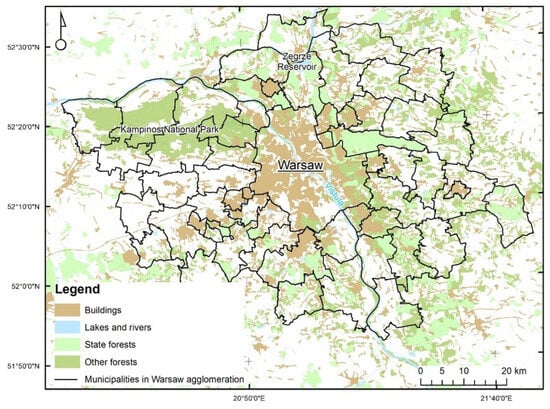
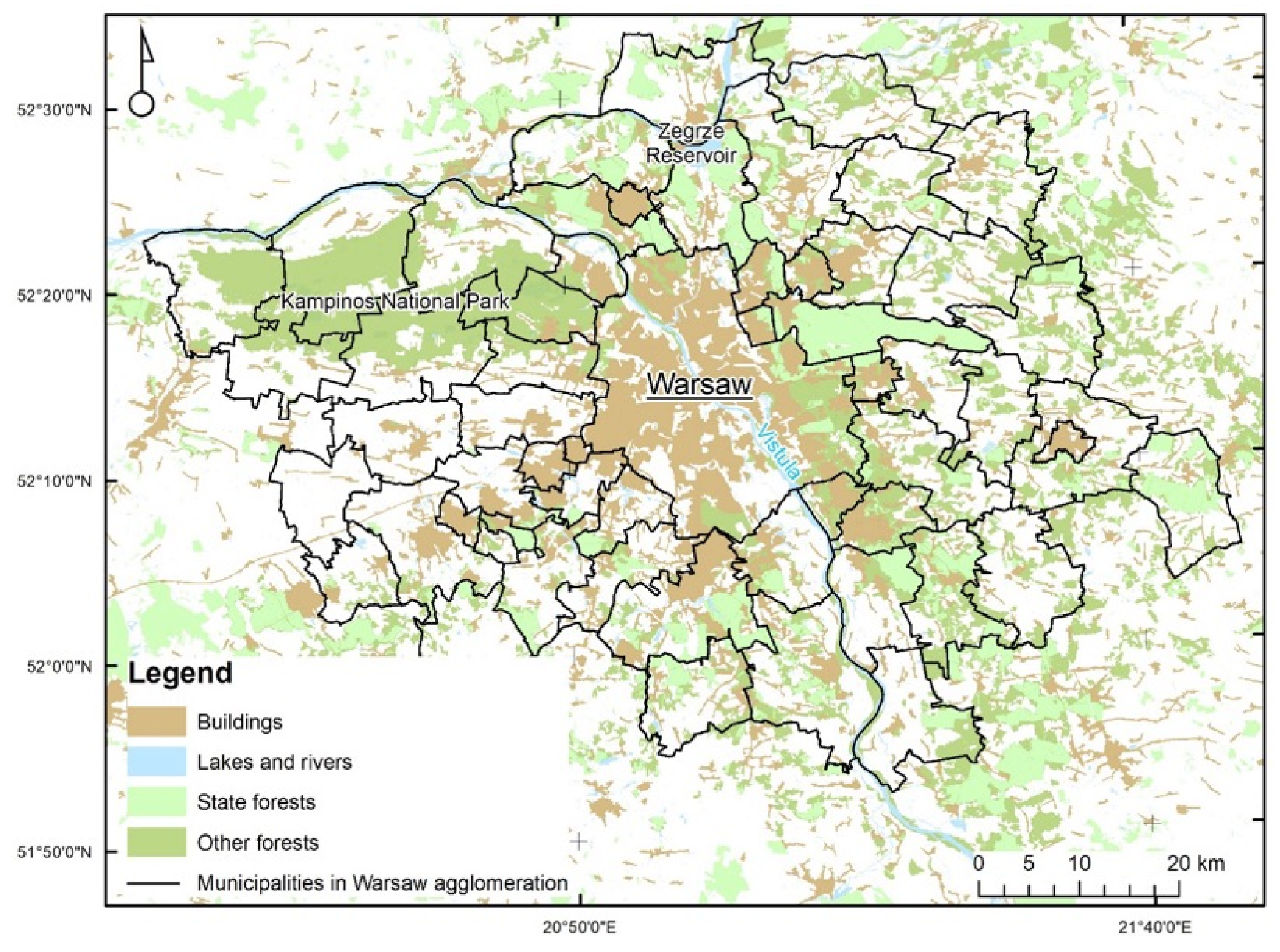
The study was conducted within the Warsaw metropolitan area, which includes Poland’s capital city as its core and the surrounding municipalities, located in the central part of the country in Central Europe (Figure 1). Warsaw has a population of 1.861 million, while the entire metropolitan area is home to over 3.2 million people [30]. The Warsaw metropolitan area covers a total of 4728 km2, with Warsaw itself occupying 516 km2, representing 10.9% of the entire area.
Figure 1.
Study Area.
Forest areas included in the analysis make up 19.8% of the Warsaw metropolitan area. Within the administrative boundaries of Warsaw, the forest cover is 15.0%. The lowest share of forests in the spatial structure of the metropolitan area is observed in the rural municipality of Baranów (0.2%), located in the western part of the region, while the highest is in the municipality of Podkowa Leśna (75.2%), which was established in the early 20th century as a garden city [31].
The ownership structure of forests in the area shows a predominance of public ownership (56%), with a significant share of private ownership (44%) [32]. Forest complexes in the metropolitan area are spatially dispersed and often have a mosaic-like character, meaning that public and private lands frequently coexist. Most state-owned forests are located within the territory of four forest districts (Chojnów, Jabłonna, Drewnica, Celestynów), which are part of the Forest Promotional Complex “Warsaw Forests”. This forest area surrounding Warsaw was established in August 2005 to promote sustainable forest management, nature conservation, and forest education. In addition, some forests are part of the Warsaw Urban Forests and Kampinos National Park (KPN). According to Polish regulations, access to forests is generally open to the public, with entry prohibited only in specific, enumerated cases (e.g., tree plantations, privately owned forests marked with appropriate signage) [33,34,35].
The forested areas of the Warsaw metropolitan region play a significant role in tourism, recreation, and nature education. This area features an extensive network of walking and cycling trails, located within national and landscape parks as well as in urban and state forests. The largest and best-developed green area in the metropolitan region is Kampinos National Park (KPN), which offers over 360 km of hiking trails and 200 km of cycling paths [36]. The park area is intensively used by both Warsaw residents and external tourists [37,38].
In addition, more than 300 hiking, cycling, and horseback riding trails with a total length of over 3700 km, along with 17 educational paths (approximately 36 km in total), have been established within areas managed by the State Forests and Warsaw Urban Forests. These routes allow for the exploration of local natural values and promote the development of sustainable tourism. The study area includes several environmental education centers, including three located in forest districts within the research area, the Nature and Forest Education Center of the Warsaw Urban Forests, and the education center within the KPN. Educational activities are conducted in all forest districts and by the Urban Forests for organized groups (e.g., from kindergartens and schools), as well as for adults and families with children [39,40].
According to estimates, in 2023, around 45,000 people participated in various forms of education provided by the forest districts. These districts organized 539 field classes, 53 school lessons, and more than 100 State Forests employees were involved in educational activities. In total, nearly 2 million PLN was allocated by the forest districts for public forest education. In comparison, around 20,000 people participated in activities prepared by the Warsaw Urban Forests, which conducted over 800 ecological classes and lessons (data from 2017; more recent data is unavailable). There are no statistical data available regarding educational activities conducted by KPN or NGOs.
2.3. Statistical Analysis
The results of the conducted surveys are presented in a manner that allows for clear interpretation of the empirical data—both in tabular form and through graphical representations (percentage distribution charts of responses), ensuring a transparent presentation of the structure of the respondents’ answers. The χ2 test was used to verify hypotheses H1 and H2, with a significance level set at α = 0.05. Correspondence analysis (CA) complemented the χ2 test results by enabling an assessment of the strength and nature of relationships between variables. Additionally, biplots were generated to visualize the relationships among the studied variables. Statistical analyses were conducted using Statistica 13 software.
3. Results
3.1. Characteristics of Respondents
A total of 218 individuals (residents of the Warsaw metropolitan area) participated in the study, representing various age groups and diverse demographic and educational backgrounds. The majority of respondents were women (55.96%), while men accounted for 44.04% of the participants (in the Warsaw metropolitan area: 52.77% and 47.23%, respectively). The largest age group consisted of respondents aged 41–50 years (44.95%). A significant majority of participants held higher education degrees (91.74%). According to census data for the entire Mazowieckie Voivodeship, 42.73% of residents have a higher education. In Warsaw and other cities, this proportion is higher and amounts to 49%. The respondents represented a variety of educational profiles. The largest percentages held degrees in natural sciences (26.15%), technical sciences (21.56%), and humanities (20.64%). There is a lack of such detailed data on the educational profiles of residents in the metropolitan area. More than half of the respondents lived in large cities with populations over 100,000 (53.67%) (Table 1). The sample is not representative of either the Mazowieckie Voivodeship or Poland as a whole.
Table 1.
Characteristics of Respondents.
3.2. Frequency of Visits to Forests in the Warsaw Metropolitan Area
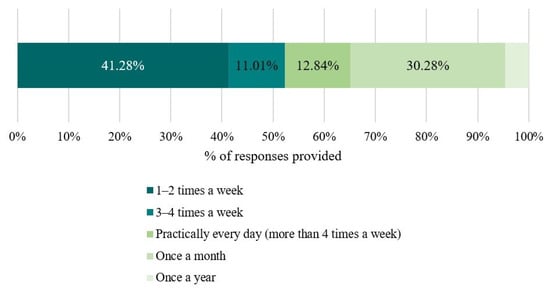
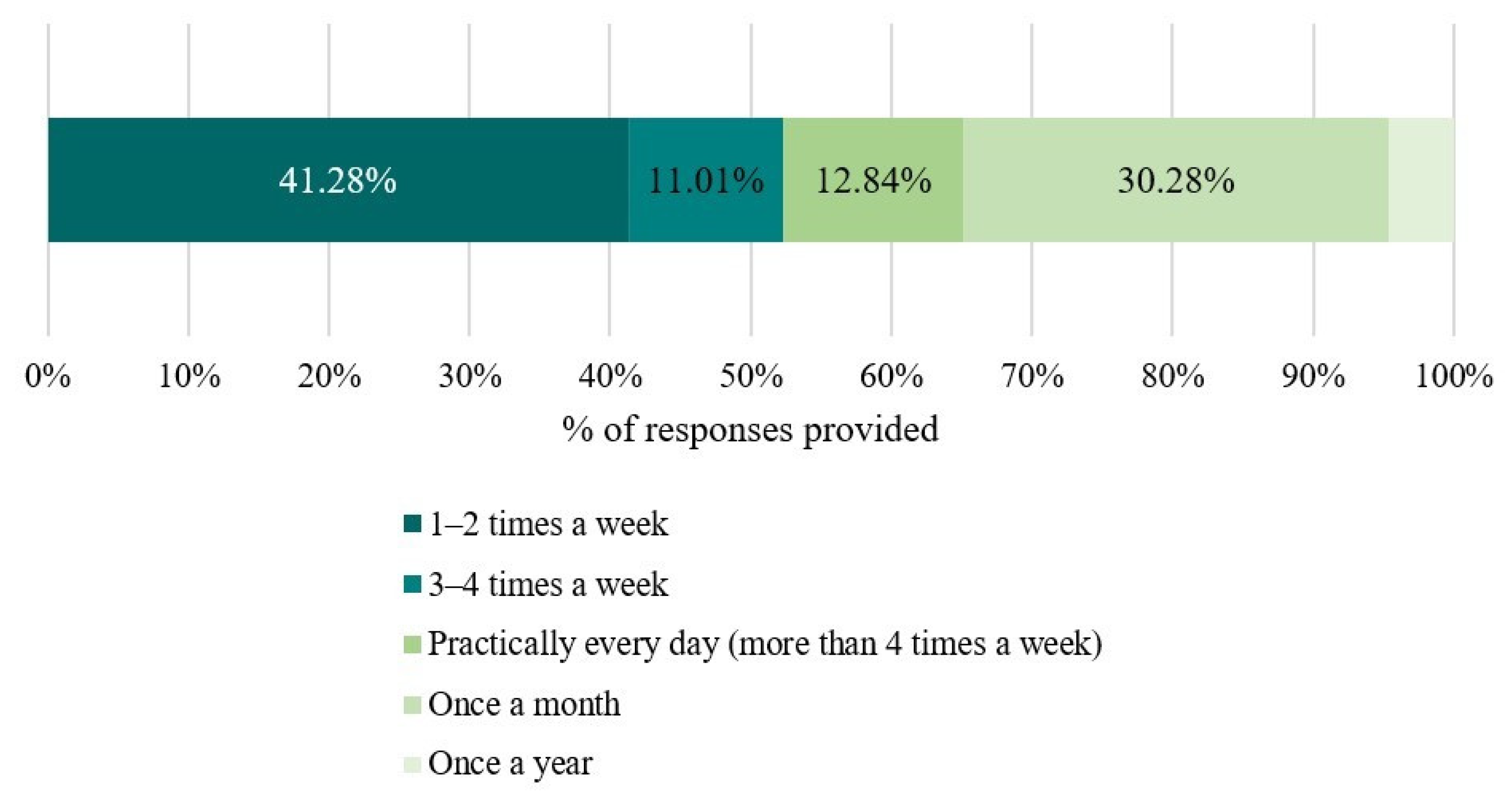
The question regarding visits to forests in the Warsaw metropolitan area within the past 12 months served as a screening question aimed at confirming the participants’ eligibility based on the sampling criteria. All respondents (100%) declared that they had visited forested areas in the Warsaw metropolitan region during the analyzed period, qualifying them for further participation in the study. The largest group of respondents reported visiting the forest 1–2 times per week (41.28%), while every third respondent visited once a month. Daily or more frequent visits (more than 3 times per week) were reported by a total of 23.85% of participants (Figure 2).
Figure 2.
Frequency of visits to forests in the Warsaw metropolitan area by respondents.
3.3. Frequency of Participation in Environmental Education Activities and the Type of Institution Conducting Them
More than half of the respondents (50.46%) declared that they had participated in environmental education activities. Participation in such activities was mostly occasional. The largest share of participants (45.05%) reported attending these activities once a year, and 39.64% participated several times a year. The most preferred form of environmental education among respondents was outdoor (field-based) activities (49.09%). Lectures were the next most popular (13.64%), followed by social campaigns and other forms of education. Stationary (indoor) workshops were chosen by 10% of respondents, while educational projects and online workshops were the least preferred. No statistically significant relationship was found between the frequency of participation in environmental education activities and the type of activity (p-value > 0.05).
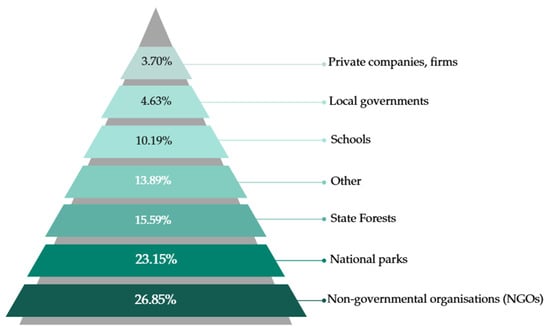
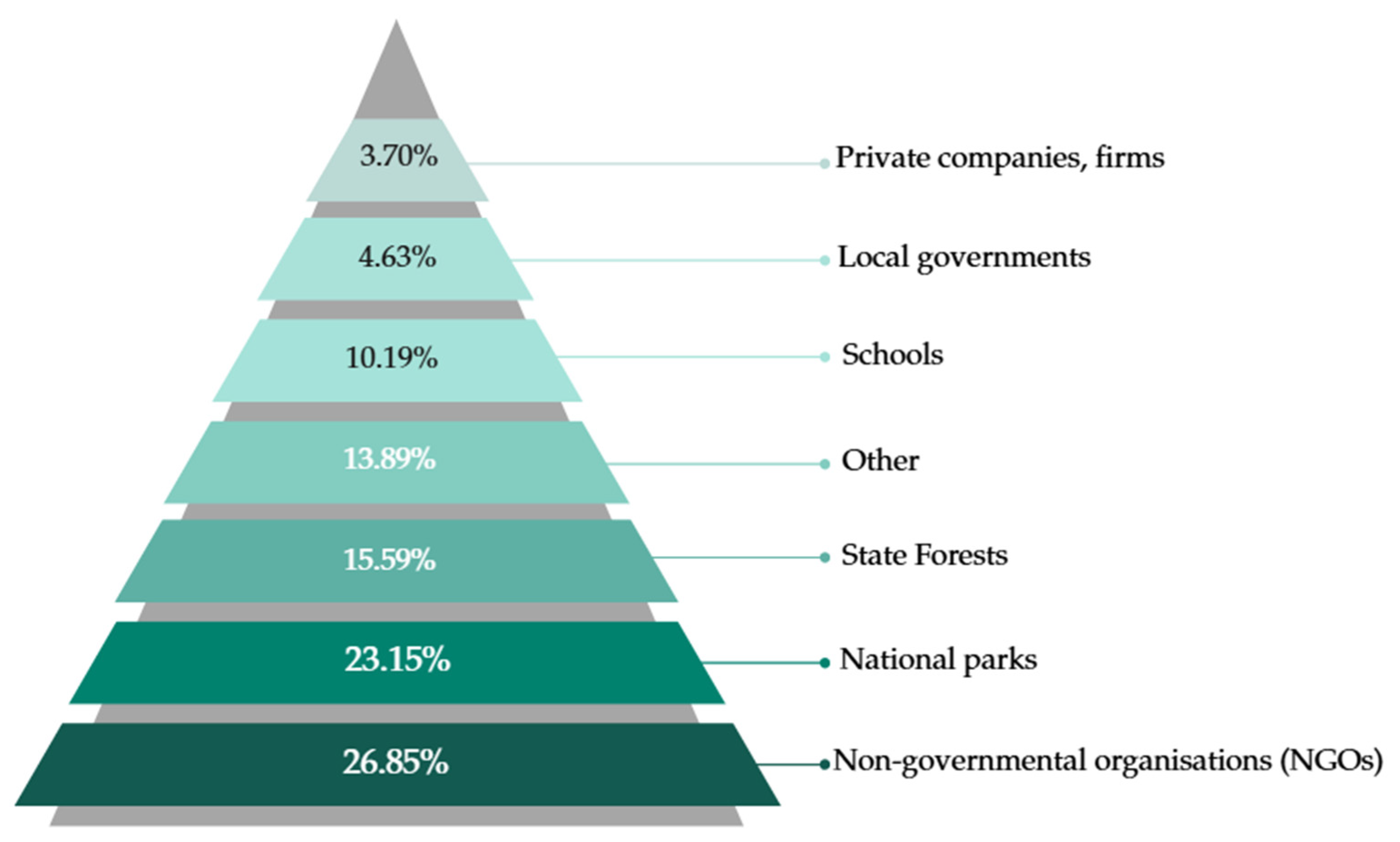
The study results indicate that the most frequently mentioned organizers of environmental education activities were non-governmental organizations (NGOs), selected by 26.85% of respondents. A slightly lower number of participants identified national parks and the State Forests as the institutions delivering such activities. A smaller proportion of respondents participated in activities organized by schools and those categorized as “other” initiatives) (Figure 3). No statistically significant differences were observed between the frequency of participation in environmental education activities and the type of organizing institution (p-value > 0.05).
Figure 3.
Structure of Declared Participation by Institutions Conducting Environmental Education Activities.
3.4. Frequency of Forest Visits in the Warsaw Metropolitan Area vs. Subjective Assessment of Environmental and Forest Education Knowledge
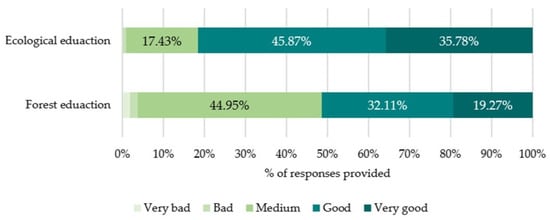
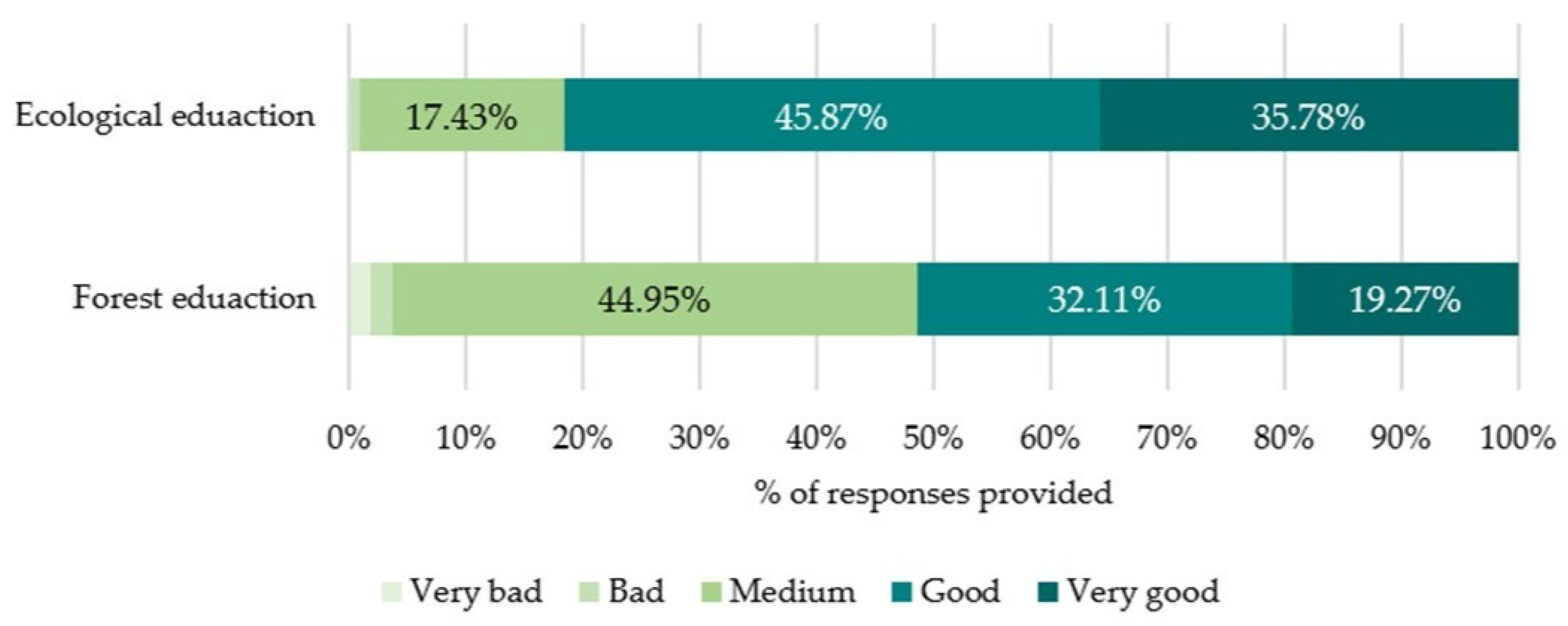
Respondents’ self-assessment of knowledge in the fields of environmental and forest education showed clear differences between the two areas (Figure 4). In the case of forest education, most respondents evaluated their knowledge as average (44.95%), while a considerable proportion assessed it as good (32.11%) or very good (19.27%). For environmental education, the pattern was more positive overall. The largest groups of respondents rated their knowledge as good (45.87%) or very good (35.78%).
Figure 4.
Declared Level of Knowledge by Respondents in the Fields of Environmental and Forest Education.
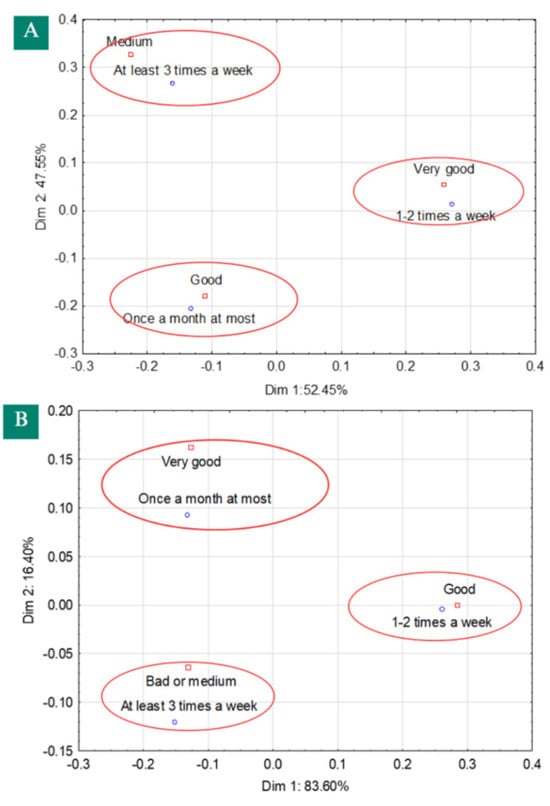
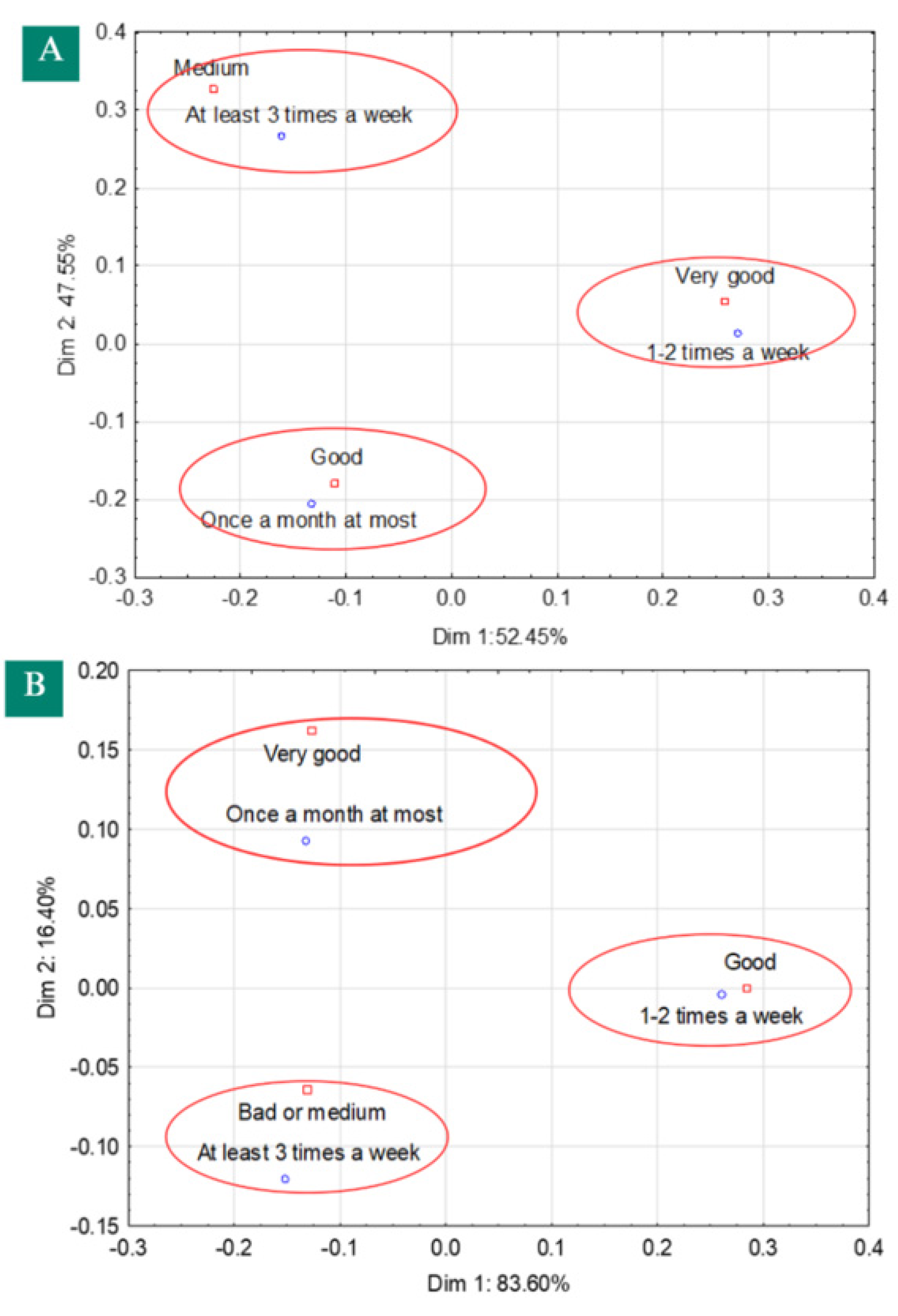
Biplot of correspondence analysis visually illustrate the relationships between relationships between the frequency of visits to forest areas and respondents’ level of knowledge in the fields of environmental education and forest education (Figure 5). The findings suggest a trend of lower self-evaluation among individuals who visit forest areas at least three times per week, although the χ2 test revealed that the differences were not statistically significant (α = 0.05).
Figure 5.
Relationship Between the Frequency of Forest Visits and Respondents’ Knowledge Level in the Fields of Environmental Education (A) and Forest Education (B).
4. Discussion
4.1. Participation Patterns and Preferences
Survey-based studies on the subjective assessment of knowledge in the context of environmental education are fully justified both theoretically and empirically in research related to education, tourism, or recreation. According to Albert Bandura’s theory of self-efficacy [28,40], a sense of competence, that is, the belief in one’s own abilities significantly influences behavior, including pro-environmental actions. Furthermore, research by Frick et al. [41] demonstrated that subjective knowledge, alongside objective knowledge, is a key predictor of environmental attitudes and behaviors. Similarly, Kaiser and Fuhrer [42] argue that different forms of knowledge, including declarative and subjective, affect ecological decision-making in distinct ways. Therefore, measuring self-assessed knowledge through surveys provides valuable data not only about the level of environmental awareness but also about the readiness to act and the effectiveness of educational interventions. At the same time, it should be emphasized that the self-assessment of knowledge reflects respondents’ perceptions, not objectively verified competences, and may be conditioned by cognitive biases such as overconfidence, underestimation, or social desirability, because, as Falk [43] emphasizes, respondents possess limited self-knowledge. Therefore, the results of this study should be interpreted primarily as indicators of perceived knowledge and self-awareness, which is consistent with the exploratory and pilot nature of the analysis.
The analysis of forest visitation frequency in the Warsaw metropolitan area revealed a high level of engagement among respondents in using forest areas. All participants reported visiting forests within the past 12 months, confirming the relevance of the verification question used and the appropriate selection of the sample. A significant portion of respondents visited forests regularly, at least once a week. This pattern suggests that forests may play an important role in everyday recreation and well-being among urban residents [44,45,46,47]. On the other hand, nearly one-third of the respondents reported less frequent visits, about once a month, which may reflect the diversity of lifestyles and recreational needs within the studied group [35,45].
Our findings indicate that participation in environmental education activities among respondents is relatively high, though mostly occasional. Although more than half of the participants reported some level of engagement, this involvement was typically limited to one or a few instances per year, suggesting irregular rather than sustained participation. This may be due to the fact that such activities in Poland are often conducted informally, and environmental education in schools or universities remains relatively underdeveloped [16,48]. Similar observations have been made in other countries, such as Serbia, where environmental education is part of the educational system but implemented on a voluntary basis [49,50,51,52,53]. In Turkey, environmental education courses are offered as elective subjects in higher education and are not widely taught [54,55]. In Hungary, environmental education takes place in specially prepared school gardens. However, determining the frequency of participation in such activities is difficult, as they are non-compulsory and mainly target children [51]. Meanwhile, Činčera et al. [13] observed that fewer than 20% of Czech secondary schools actively engaged students in exploring local sustainability challenges.
The analysis of preferences regarding the form and provider of educational activities revealed no statistically significant differences. In other words, the frequency of participation in educational activities was not dependent on the type of activity (e.g., field-based, workshops, lectures) or the type of institution organizing them (NGOs, public institutions, local governments, or the private sector). This result may suggest relatively equal access to environmental education opportunities within the study area [10,53,54], which should be considered as a positive indicator in terms of promoting educational equity. Moreover, educational content is widely accessible, especially online.
However, preferences indicate a dominant interest in outdoor education, which was identified by nearly half of the respondents as the most attractive form of learning. According to Baierl et al. [55], intensive field-based programs represent the future of education and are becoming increasingly popular. Various forms of outdoor education are widely practiced across Europe (Poland: [10]; Czech Republic: [56,57]; Germany: [58,59]; France: [60,61]), the United States [62], and China [63,64]. These programs continue to evolve, integrating advancements from psychology, ecology, education, and forestry to better meet societal needs and expectations.
In contrast, traditional lectures and workshops conducted in lecture halls enjoyed much less interest. Falk and Dierking [65] noted that such formats are often perceived as stereotypical components of formal education, commonly associated with school or academic instruction, which is often seen as less engaging.
4.2. Elucidation of Institutional Roles
Respondents relatively often reported participation in educational activities organized by non-governmental organizations. This pattern may be related to the diversity, accessibility, and flexibility of NGO initiatives. The large number of organizations involved in environmental education potentially enables individuals to choose activities that better match their personal needs, time availability, financial resources, and preferred levels of engagement [66,67]. The role of institutional actors in environmental education is also evident. The results indicate that national parks and State Forests are among the institutions most frequently associated with educational activities. This observation reflects their statutory responsibilities rather than providing evidence of educational effectiveness. In Poland, national parks are legally required to conduct environmental education [68], while State Forests focus on forest education as part of their statutory duties [17]. These institutions may contribute to informal education and public awareness by linking scientific knowledge with practical aspects of nature and forest management. At the same time, the relatively limited involvement of local governments, schools, and the private sector may suggest that their potential role in environmental education is not fully utilized [69]. The reported popularity of NGOs can also be interpreted cautiously as a result of their flexible organizational structures, broad thematic scope, and ability to adapt educational content to current social and environmental discussions. NGOs often address a wide range of topics, which may allow participants to select activities aligned with their individual interests. In addition, NGOs are sometimes perceived as more independent actors compared to state institutions. This perception may influence public trust and willingness to participate in educational initiatives organized by NGOs [23,70,71].
4.3. Self-Assessed Knowledge in the Areas of Environmental and Forest Education
It should be noted that the study sample may be biased toward individuals already interested in pro-environmental activities. This may result in an overestimation of both declared participation in environmental education and self-assessed knowledge levels. Higher self-assessments may therefore partly reflect prior engagement rather than the effects of educational activities. As a result, environmentally engaged respondents may be overrepresented, while less engaged individuals may be underrepresented. Consequently, the observed self-assessments should be interpreted with caution.
Self-assessed knowledge in the areas of environmental and forest education revealed significant differences in how respondents perceived their competencies, with self-assessed environmental knowledge generally rated higher than self-assessed forest-related knowledge. Individuals who frequently spent time in forest environments (e.g., at least three times per week) were more likely to rate their self-assessed knowledge as average or even low, whereas those who visited forests occasionally more often rated their self-assessed knowledge as “good” or “very good”. This pattern may reflect the Dunning–Kruger effect [72], where individuals tend to overestimate their abilities in various intellectual and social domains, despite lacking actual knowledge or education in those areas.
Similar results were found in Taiwan by Chen and Tsai [73], where the respondents expressed strong positive attitudes and high awareness about the marine environment, but demonstrated only a moderate level of objectively measured knowledge and were not actively involved in environmental protection efforts.
Neiman and Ades [74] emphasize that contact with nature and field-based education not only increases objective knowledge, but also enhances the awareness of one’s own knowledge limitations. The observed difference in self-assessed knowledge between environmental and forest domains may also stem from the broader public visibility of environmental education in Poland (e.g., in media, schools, and public campaigns), while forest education remains more specialized and thus less familiar and accessible to the general public.
4.4. Research Limitations and Future Directions
Although this study provides interesting insights, it is important to acknowledge its limitations. First, the research involved a relatively small sample and was limited to a specific geographic area, which restricts the generalizability of the findings. Despite the broad reach of the survey accessing 7773 Facebook users and 564 people via LinkedIn, a significant portion of potential respondents did not complete the questionnaire. This could be due to irregular forest use or other personal reasons for opting out. This highlights the challenges in participant recruitment and the need to improve data collection methods to better reflect real usage patterns of urban forest areas.
Additionally, the study focused solely on individuals who visit forest areas, thereby excluding the perspectives of those who, for various reasons, do not use such spaces. Their input could have added further depth to the analysis. Nevertheless, this should be viewed as a preliminary study, aimed at identifying directions for further research and capturing general trends. Despite its limitations, the results have practical value and can serve as a foundation for designing more effective environmental and forest education programs tailored to different user groups. Moreover, the findings may support local governments and institutions in developing regional environmental education strategies, for instance, by highlighting the need to strengthen informal and field-based initiatives.
5. Conclusions
This exploratory study contributes to the empirical understanding of participation patterns in environmental and forest education and their relationship with self-assessed ecological and forestry knowledge among residents of a large metropolitan area. The results indicate that respondents generally rated their self-assessed knowledge of environmental education higher than their perceived knowledge of forest education. More than half of the participants declared some level of involvement in educational activities, most often on an occasional basis. Outdoor learning emerged as the most preferred form of education, while traditional lectures and workshops attracted significantly less interest, and ab association was identified between the frequency of forest visits and self-assessed levels of ecological and forestry knowledge. Respondents who visited forest areas very frequently more often evaluated their perceived knowledge as average or low, whereas those who visited forests sporadically more frequently declared higher self-assessed knowledge levels.
The findings also highlight the important role of both public institutions (including national parks and State Forests) and non-governmental organizations in the implementation of environmental and forest education activities in urban contexts. However, due to the nature of the collected data, the study did not allow for a comparative assessment of the relative effectiveness of these educational providers in shaping the participants’ perceived knowledge or competencies.
Several limitations of the study should be emphasized. First, the non-representative character of the sample, its relatively small size, and the spatial limitation to a single metropolitan area restrict the generalizability of the findings. Second, the study relied exclusively on self-assessed indicators of knowledge, which are inherently subjective and may be influenced by individual confidence, experience, or response bias. These limitations indicate that the results should be interpreted cautiously and treated as exploratory and pilot in nature.
Despite these constraints, the study provides important directions for future research. Further studies should be conducted on larger and more diverse samples and should combine self-assessed measures with objective indicators of ecological and forestry knowledge, as well as qualitative methods that allow for a deeper understanding of how urban residents interpret their own competencies.
Author Contributions
Conceptualization, N.K. and M.C.; methodology, N.K. and M.C.; software, N.K.; validation, N.K. and M.C.; formal analysis, N.K. and A.K.; investigation, N.K., M.C. and A.K.; resources, N.K., M.C. and A.K.; data curation, N.K., M.C. and A.K.; writing—original draft preparation, N.K., M.C. and A.K.; writing—review and editing, N.K. and M.C.; visualization, N.K., M.C. and A.K.; supervision, N.K. and M.C.; project administration, N.K. and M.C.; funding acquisition, M.C. All authors have read and agreed to the published version of the manuscript.
Funding
This research was partly funded by the National Science Center under the OPUS call in the Weave program (project number 2021/43/I/HS4/01451), and partly financed by the National Science Center [grant number OPUS 2024/53/B/NZ9/02835].
Data Availability Statement
Data available upon request from one of the authors—Mariusz Ciesielski.
Conflicts of Interest
The authors declare no conflicts of interest.
References
- Dale, A.; Newman, L. Sustainable Development, Education and Literacy. Int. J. Sustain. High. Educ. 2005, 6, 351–362. [Google Scholar] [CrossRef] [Scilit]
- Cotton, D.R.E.; Warren, M.F.; Maiboroda, O.; Bailey, I. Sustainable Development, Higher Education and Pedagogy: A Study of Lecturers’ Beliefs and Attitudes. Environ. Educ. Res. 2007, 13, 579–597. [Google Scholar] [CrossRef] [Scilit]
- Adomßent, M.; Fischer, D.; Godemann, J.; Herzig, C.; Otte, I.; Rieckmann, M.; Timm, J. Emerging Areas in Research on Higher Education for Sustainable Development–Management Education, Sustainable Consumption and Perspectives from Central and Eastern Europe. J. Clean. Prod. 2014, 62, 1–7. [Google Scholar] [CrossRef] [Scilit]
- Gontar, B. Etapy Rozwoju Strategii Zrównoważonej Turystyki. Eur. Reg. 2016, 26, 63–74. [Google Scholar] [CrossRef] [Scilit]
- Danylova, T.; Salata, G. The Ecological Imperative and Human Nature: A New Perspective on Ecological Education. Мiждисциплiнарнi дoслiдження складних систем 2018, 12, 17–24. [Google Scholar] [CrossRef] [Scilit]
- Korcz, N.; Janeczko, E.; Kobyłka, A. The Use of Simple Language in Informal Forest Education as a Key to the Correct Interpretation of Sustainable Forest Management—The Experience of Poland. Int. J. Environ. Res. Public Health 2022, 19, 5493. [Google Scholar] [CrossRef] [Scilit]
- The Council of the European Union. Council Recommendation of 16 June 2022 on Learning for the Green Transition and Sustainable Development 2022/C 243/01 (Text with EEA Relevance). Off. J. Eur. Union 2022. [Google Scholar]
- Unijna Strategia Na Rzecz Bioróżnorodności 2030 | EUR-Lex. Available online: https://eur-lex.europa.eu/PL/legal-content/summary/eu-biodiversity-strategy-for-2030.html (accessed on 30 December 2025).
- Wojciechowska-Solis, J.; Kobyłka, A.; Ciesielski, M.; Korcz, N. Potencjał Turystyki Przyrodniczej w Polsce; Wydawnictwo Uniwersytetu Ekonomicznego we Wrocławiu: Wrocław, Poland, 2024. [Google Scholar]
- Korcz, N.; Janeczko, E. Forest Education with the Use of Educational Infrastructure in the Opinion of the Public-Experience from Poland. Sustainability 2022, 14, 1915. [Google Scholar] [CrossRef] [Scilit]
- Fletcher, R. Connection with Nature Is an Oxymoron: A Political Ecology of Nature-Deficit Disorder. J. Environ. Educ. 2017, 48, 226–233. [Google Scholar] [CrossRef] [Scilit]
- Ming Kuo, F.E. Nature-Deficit Disorder: Evidence, Dosage, and Treatment. J. Policy Res. Tour. Leis. Events 2013, 5, 172–186. [Google Scholar] [CrossRef] [Scilit]
- Činčera, J.; Jančaříková, K.; Matějček, T.; Šimonová, P.; Bartoš, J.; Lupač, M.; Broukalová, L. Environmentální Vỳchova z Pohledu Učitel\uu; Masarykova Univerzita: Brno, Czech Republic, 2016. [Google Scholar]
- Kołodziejska, M. Deficyt natury i jego znaczenie dla rozwoju młodego człowieka (The Nature’s Deficit and Its Importance for the Development of a Young Man). In Szkice Pedagogiczne: Dylematy Juwentologii; Wyleżałek, J., Such-Pyrgiel, M., Eds.; Wydawnictwo WSGE: Józefów, Poland, 2018; pp. 121–138. ISBN 978-83-62753-92-5. [Google Scholar]
- Vieira, C.L.Z.; Rumenos, N.N.; Gheler-Costa, C.; Toqueti, F.; de Lourdes Spazziani, M. Environmental Education in Urban Cities: Planet Regeneration through Ecologically Educating Children and Communities. Int. J. Educ. Res. Open 2022, 3, 100208. [Google Scholar] [CrossRef] [Scilit]
- Ustawa z Dnia 28 Września 1991 r. o Lasach. Available online: https://isap.sejm.gov.pl/isap.nsf/DocDetails.xsp?id=wdu19911010444 (accessed on 14 June 2024).
- Wierzbicka, A.; Czołnik, B. Podstawy Formalne, Organizacja i Przebieg Edukacji Leśnej Społeczeństwa Prowadzonej Przez Lasy Państwowe. In Proceedings of the Forum Pedagogiczne; Uniwersytet Kardynała Stefana Wyszyńskiego w Warszawie, Warsaw, Poland, 2022; Volume 12, pp. 61–74. [Google Scholar]
- Schultz, P.W.; Shriver, C.; Tabanico, J.J.; Khazian, A.M. Implicit Connections with Nature. J. Environ. Psychol. 2004, 24, 31–42. [Google Scholar] [CrossRef] [Scilit]
- Raport z Działalności Edukacyjnej Lasów Państwowych 2023. Available online: https://www.lasy.gov.pl/pl/informacje/publikacje/informacje-statystyczne-i-raporty/raporty-z-dzialalnosci-edukacyjnej-lasow-panstwowych/raport-z-dzialalnosci-edukacyjnej-lasow-panstwowych-2023.pdf/view (accessed on 20 May 2025).
- Raport o Stanie Lasów w Polsce 2022. Available online: https://www.lasy.gov.pl/pl/informacje/publikacje/informacje-statystyczne-i-raporty/raport-o-stanie-lasow/lp-raport-interaktywny-2022.pdf/view (accessed on 12 March 2024).
- Raport z Działalności Edukacyjnej Lasów Państwowych. 2021. Available online: https://www.lasy.gov.pl/pl/informacje/publikacje/informacje-statystyczne-i-raporty/raporty-z-dzialalnosci-edukacyjnej-lasow-panstwowych/raport-edukacyjny-2021.pdf/view (accessed on 9 June 2024).
- Grabowska-Lepczak, I. Wybrane Aspekty Edukacji Formalnej i Pozaformalnej w Zakresie Ograniczania Ryzyka Klęsk Żywiołowych i Przeciwdziałania Zagrożeniom. Zesz. Nauk. SGSP/Szkoła Główna Służby Pożarniczej 2021, 1, 125–141. [Google Scholar] [CrossRef] [Scilit]
- Turnock, D. The Role of NGOs in Environmental Education in South-Eastern Europe. Int. Res. Geogr. Environ. Educ. 2004, 13, 103–109. [Google Scholar] [CrossRef] [Scilit]
- Korcz, N.; Ciesielski, M.; Kamińska, A.; Choromański, K.; Gotlib, D.; Stefán, F.; Taczanowska, K. The Use of Digital Tools in Forest Tourism and Recreation-Experiences from Warsaw Agglomeration in Poland. Trees For. People 2024, 18, 100697. [Google Scholar] [CrossRef] [Scilit]
- Stefán, F.; Ciesielski, M.; Weber, A.; Choromański, K.; Gotlib, D.; Taczanowska, K. Understanding Generational Differences in Digital Skills and Recreational Behaviour for Effective Visitor Management in Forest Destinations. Sci. Rep. 2025, 15, 17887. [Google Scholar] [CrossRef] [Scilit]
- Bandura, A. Self-Efficacy: Toward a Unifying Theory of Behavioral Change. Adv. Behav. Res. Ther. 1978, 1, 139–161. [Google Scholar] [CrossRef] [Scilit]
- Sęk, M. Dobór Próby Przy Pomocy Metody Kuli Śniegowej (Snowball Sampling). In Praktyki Badawcze 2015; Fatyga, B., Ed.; University of Warsaw: Warsaw, Poland, 2013; pp. 59–66. [Google Scholar]
- Ustawa z Dnia 10 Maja 2018 r. o Ochronie Danych Osobowych. Available online: https://isap.sejm.gov.pl/isap.nsf/DocDetails.xsp?id=WDU20180001000 (accessed on 11 October 2024).
- NIL—Deklaracja Helsińska. Available online: https://nil.org.pl/dzialalnosc/osrodki/osrodek-bioetyki/etyka-w-badaniach-naukowych/1553-deklaracja-helsinska (accessed on 14 June 2024).
- GUS Powierzchnia i Ludność w Przekroju Terytorialnym w 2024 roku. Available online: https://stat.gov.pl/obszary-tematyczne/ludnosc/ludnosc/powierzchnia-i-ludnosc-w-przekroju-terytorialnym-w-2024-roku,7,21.html (accessed on 19 November 2024).
- Urząd Statystyczny w Warszawie/Warszawa. Available online: https://warszawa.stat.gov.pl/warszawa/ (accessed on 1 April 2024).
- GUS Przegląd Statystyczny Warszawy. 3 Kwartał 2023 r. Available online: https://warszawa.stat.gov.pl/opracowania-biezace/komunikaty-i-biuletyny/inne-opracowania/przeglad-statystyczny-warszawy-3-kwartal-2023-r-,5,51.html (accessed on 13 March 2024).
- LKP Lasy Warszawskie. Available online: https://www.warszawa.lasy.gov.pl/lesny-kompleks-promocyjny-xxxxxxxx- (accessed on 30 December 2025).
- Ciesielski, M.; Mohytych, V.; Korcz, N. The Role and Significance of Cultural Ecosystem Services (CES) Based on a Survey of Forest Users in the Warsaw Metropolitan Area. Sylwan 2024, 168. [Google Scholar] [CrossRef]
- Mandziuk, A.; Fornal-Pieniak, B.; Stangierska, D.; Parzych, S.; Widera, K. Social Preferences of Young Adults Regarding Urban Forest Recreation Management in Warsaw, Poland. Forests 2021, 12, 1524. [Google Scholar] [CrossRef] [Scilit]
- Atrakcje Turystyczne w Kampinoskim Parku Narodowym—Szlaki, Przyrodnicze Widoki i Zabytki. Available online: https://kampn.gov.pl/atrakcje-turystyczne (accessed on 30 December 2025).
- Dzioban, K. Wielkość Ruchu Turystycznego w Kampinoskim Parku Narodowym. Stud. Mater. Cent. Edukac. Przyr.-Leśnej 2013, 15, 135–142. [Google Scholar]
- Dzioban, K.; Ploskonka, P.; Bosek, A.; Sadowski, M. Ruch Turystyczny Na Ścieżce Dydaktycznej “Do Lipkowskiej Wody” w Kampinoskim Parku Narodowym. Stud. Mater. Cent. Edukac. Przyr.-Leśnej 2016, 18, 128–134. [Google Scholar]
- Centrum Edukacji Przyrodniczo-Leśnej. Available online: https://www.lasymiejskie.waw.pl/edukacja/obiekty-edukacji/centrum-edukacji-przyrodniczo-lesnej (accessed on 30 December 2025).
- Schwarzer, R. Self-Efficacy: Thought Control of Action; Taylor & Francis: Abingdon, UK, 2014. [Google Scholar]
- Frick, J.; Kaiser, F.G.; Wilson, M. Environmental Knowledge and Conservation Behavior: Exploring Prevalence and Structure in a Representative Sample. Personal. Individ. Differ. 2004, 37, 1597–1613. [Google Scholar] [CrossRef] [Scilit]
- Kaiser, F.G.; Fuhrer, U. Ecological Behavior’s Dependency on Different Forms of Knowledge. Appl. Psychol. 2003, 52, 598–613. [Google Scholar] [CrossRef] [Scilit]
- Falk, A.; Neuber, T.; Strack, P. Limited Self-Knowledge and Survey Response Behavior; IZA Discussion Paper No. 14526; IZA—Institute of Labor Economics: Bonn, Germany, 2021. [Google Scholar]
- Ciesielski, M.; Stereńczak, K. Using Flickr Data and Selected Environmental Characteristics to Analyse the Temporal and Spatial Distribution of Activities in Forest Areas. For. Policy Econ. 2021, 129, 102509. [Google Scholar] [CrossRef] [Scilit]
- Stangierska, D.; Kowalczuk, I.; Juszczak-Szelągowska, K.; Widera, K.; Ferenc, W. Urban Environment, Green Urban Areas, and Life Quality of Citizens—The Case of Warsaw. Int. J. Environ. Res. Public Health 2022, 19, 10943. [Google Scholar] [CrossRef] [Scilit]
- Gołos, P. The Recreational functions of Warsaw’s urban and suburban forests. For. Res. Pap. 2013, 74, 57–70. [Google Scholar] [CrossRef] [Scilit]
- Gołos, P. Społeczne i Ekonomiczne Aspekty Pozaprodukcyjnych Funkcji Lasu i Gospodarki Leśnej–Wyniki Badań Opinii Społecznej; Instytut Badawczy Leśnictwa (Forest Research Institute): Sękocin Stary, Poland, 2018. [Google Scholar]
- Kuczera, M. Edukacja Ekologiczna w Polsce. Porad. Gospod. 2015, 3, 40. [Google Scholar]
- Hadjichambis, A.C.; Reis, P.; Paraskeva-Hadjichambi, D. European SWOT Analysis on Education for Environmental Citizenship. In European SWOT Analysis on Education for Environmental Citizenship; Hadjichambis, A.C., Reis, P., Paraskeva-Hadjichambi, D., Eds.; Instituto de Educação, Universidade de Lisboa: Lisbon, Portugal, 2019; ISBN 978-9963-9275-6-2. [Google Scholar]
- Manov, B.; Keranova, D. 5. Short Country Report for Bulgaria on the SWOT Analysis of Education for Environmental Citizenship. In European SWOT Analysis on Education for Environmental Citizenship; Universidade de Lisboa: Lisbon, Portugal, 2019; pp. 59–72. ISBN 978-9963-9275-6-2. [Google Scholar]
- Akınoğlu, O.; Sarı, A. Ilköğretim Programlarinda Çevre Eğitimi. Marmara Üniversitesi Atatürk Eğitim Fakültesi Eğitim Bilim. Derg. 2013, 30, 5–29. [Google Scholar]
- Can, E.; Serençelik, G. Okul Öncesi Eğitim Öğretmenlerinin Okul Yönetimine Katılımlarının Incelenmesi. Dicle Üniversitesi Ziya Gökalp Eğitim Fakültesi Derg. 2017, 525–542. [Google Scholar] [CrossRef] [Scilit]
- Szczepaniec-Cięciak, E. Relacje Między Pedagogiką a Ekologią Na Przykładzie Nauczania i Wychowania Dla Zrównoważonego Rozwoju. In Pogranicza Pedagogiki i Nauk Pomocniczych; Wydawnictwo Uniwersytetu Jagiellońskiego: Kraków, Poland, 2004. [Google Scholar]
- Walosik, A. Przez Edukację Do Zrównoważonego Rozwoju; Wydawnictwo Naukowe Uniwersytetu Pedagogicznego: Kraków, Poland, 2013. [Google Scholar]
- Baierl, T.-M.; Johnson, B.; Bogner, F.X. Informal Earth Education: Significant Shifts for Environmental Attitude and Knowledge. Front. Psychol. 2022, 13, 819899. [Google Scholar] [CrossRef] [Scilit]
- Svobodová, H.; Durna, R.; Mísařová, D.; Hofmann, E. A Proposal of a Concept of Outdoor Education for Primary and Lower Secondary Schools—The Case of the Czech Republic. J. Adventure Educ. Outdoor Learn. 2021, 21, 336–356. [Google Scholar] [CrossRef] [Scilit]
- Repka, P.; Švecová, M. Environmental Education in Conditions of National Parks of Slovak Republic. Procedia—Soc. Behav. Sci. 2012, 55, 628–634. [Google Scholar] [CrossRef] [Scilit]
- Sahrakhiz, S.; Harring, M.; Witte, M.D. Learning Opportunities in the Outdoor School–Empirical Findings on Outdoor School in Germany from the Children’s Perspective. J. Adventure Educ. Outdoor Learn. 2018, 18, 214–226. [Google Scholar] [CrossRef] [Scilit]
- Tiemann, A.; Ring, I. Quantifying and Mapping Forest-Related Environmental Education and Training in Saxony, Germany. Ecosyst. Serv. 2025, 73, 101719. [Google Scholar] [CrossRef] [Scilit]
- Cadar, N. National Forest Office of France and His Involvement in Environmental Education. Stud. Mater. Cent. Edukac. Przyr.-Leśnej 2014, 16, 213–218. [Google Scholar]
- Therville, C.; Mathevet, R.; Bioret, F.; Antona, M. Navigating Protected Areas as Social-Ecological Systems: Integration Pathways of French Nature Reserves. Reg. Environ. Change 2018, 18, 607–618. [Google Scholar] [CrossRef] [Scilit]
- Hemby, T.L.; Powell, R.B.; Stern, M.J. Availability and Distribution of Environmental Education Field Trip Programs for Adolescent Students in the U.S.: A National Study of Spatial Accessibility. Environ. Educ. Res. 2024, 30, 214–234. [Google Scholar] [CrossRef] [Scilit]
- Liu, A. Tourism in Rural Areas: Kedah, Malaysia. Tour. Manag. 2006, 27, 878–889. [Google Scholar] [CrossRef] [Scilit]
- Zhang, S.X.; Wang, Y.; Rauch, A.; Wei, F. Unprecedented Disruption of Lives and Work: Health, Distress and Life Satisfaction of Working Adults in China One Month into the COVID-19 Outbreak. Psychiatry Res. 2020, 288, 112958. [Google Scholar] [CrossRef] [Scilit]
- Falk, J.; Dierking, L. Learning from Museums. Visitor Experiences and the Making of Meaning, Alta Mira; AltaMira Press: Walnut Creek, CA, USA, 2000. [Google Scholar]
- Ciepiela, M.; Nagorniuk, O.; Sobczyk, W. Ecological Education as a Function of the International Idea of Sustainable Development. J. Ecol. Eng. 2022, 23, 112–121. [Google Scholar] [CrossRef] [Scilit]
- Żuk, P.; Żuk, P. Power, Environment, and Depoliticized Conflict in Social Space: Threats to Sustainable Development from the Perspective of Environmental Activists in Poland. Ann. Am. Assoc. Geogr. 2025, 115, 671–687. [Google Scholar] [CrossRef] [Scilit]
- Ustawa z Dnia 16 Kwietnia 2004 r. o Ochronie Przyrody. Available online: https://isap.sejm.gov.pl/isap.nsf/DocDetails.xsp?id=wdu20040920880 (accessed on 30 December 2025).
- Mazurek-Kusiak, A.; Kobyłka, A.; Korcz, N.; Bernacka, R. Tradycja i Kultura Regionu Polski Wschodniej a Przedsiębiorczość na Obszarach Wiejskich; Wydawnictwo Uniwersytetu Przyrodniczego w Lublinie: Lublin, Poland, 2023; ISBN 978-83-7259-425-9. [Google Scholar]
- Singh, H.R.; Rahman, S.A. An Approach for Environmental Education by Non-Governmental Organizations (NGOs) in Biodiversity Conservation. Procedia-Soc. Behav. Sci. 2012, 42, 144–152. [Google Scholar] [CrossRef] [Scilit]
- Haigh, M.J. Promoting Environmental Education for Sustainable Development: The Value of Links between Higher Education and Non-Governmental Organizations (NGOs). In Education for Sustainable Development; Routledge: London, UK, 2013; pp. 175–197. [Google Scholar]
- Kruger, J.; Dunning, D. Unskilled and Unaware of It: How Difficulties in Recognizing One’s Own Incompetence Lead to Inflated Self-Assessments. J. Personal. Soc. Psychol. 1999, 77, 1121. [Google Scholar] [CrossRef]
- Chen, C.-L.; Tsai, C.-H. Marine Environmental Awareness among University Students in Taiwan: A Potential Signal for Sustainability of the Oceans. Environ. Educ. Res. 2016, 22, 958–977. [Google Scholar] [CrossRef] [Scilit]
- Neiman, Z.; Ades, C. Contact with Nature: Effects of Field Trips on pro-Environmental Knowledge, Intentions and Attitudes. Ciência Educ. 2014, 20, 889–902. [Google Scholar] [CrossRef] [Scilit]

Disclaimer/Publisher’s Note: The statements, opinions and data contained in all publications are solely those of the individual author(s) and contributor(s) and not of MDPI and/or the editor(s). MDPI and/or the editor(s) disclaim responsibility for any injury to people or property resulting from any ideas, methods, instructions or products referred to in the content. |
© 2026 by the authors. Licensee MDPI, Basel, Switzerland. This article is an open access article distributed under the terms and conditions of the Creative Commons Attribution (CC BY) license.