


Abstract
Given the significant regulatory effect of stumping on carbon exchange processes in the vegetation–soil system, this study conducted a one-year continuous observation of soil respiration in Salix psammophila stands starting six months after stumping, aiming to reveal the changes in soil respiration characteristics and their main driving factors before and after stumping. In 2023, a stumping experiment was established in Dalate Banner, Ordos, and soil respiration in stumped Salix psammophila plantations was continuously monitored from 2023 to 2024. The relationships between soil respiration, soil temperature, and soil moisture were analyzed using fitting models, and the effects of stumping on soil physicochemical properties were further assessed. Results showed that soil respiration exhibited a unimodal diurnal pattern, reaching the annual minimum in winter (December 2023) and the maximum in midsummer (August 2024). Stumping significantly reduced soil respiration rates across diurnal, seasonal, and annual scales. This reduction was attributed both to direct effects, through decreased vegetation carbon input and altered root distribution, and to indirect effects, via changes in soil temperature and moisture. Model fitting indicated that the dual-factor model incorporating soil temperature and moisture explained variations in soil respiration more effectively than single-factor models, with the bivariate nonlinear model providing the best fit. In addition, stumping improved the vertical distribution of soil nutrients by enhancing the accumulation of organic matter and organic carbon in the middle soil layer and increasing total nitrogen content in the surface soil. Soil pH showed only slight variations across treatments and depths, remaining consistently within the strongly alkaline range (9.37–9.56).
1. Introduction
China has the largest area of plantation forests in the world, and Salix psammophila, owing to its rapid growth and remarkable windbreak and sand-fixation capacity, has become an important afforestation species in the arid and semi-arid regions of Inner Mongolia, playing a key role in desertification control and ecosystem stabilization [1]. However, previous studies have shown that as S. psammophila plantations mature, typically after 3–5 years of establishment, stand structure gradually becomes simplified, physiological activity declines, and branch dieback increases, this will lead to a decrease in tree canopy density and a decline in protection effectiveness [2]; thus, stumping practices are required to maintain community stability and promote regeneration [3]. As an intensive anthropogenic disturbance, stumping fundamentally alters vegetation structure and above- and belowground biomass distribution, leading to abrupt changes in microclimatic conditions and soil biological processes. [4] Stumping not only stimulates sprouting and root renewal, but also alters carbon allocation patterns, thereby affecting soil temperature, moisture, organic matter input, and nutrient cycling, which in turn regulate soil respiration processes [5].
Soil respiration, as the second-largest carbon flux between terrestrial ecosystems and the atmosphere, is a key indicator of ecosystem carbon balance. It consists of autotrophic and heterotrophic respiration, and its dynamics reflect soil microbial activity and organic matter decomposition, playing a crucial role in the global carbon cycle and climate regulation [6]. Previous studies have demonstrated that forest management practices such as stumping, thinning, and harvesting can significantly alter soil respiration rates [7]. However, the direction and magnitude of these effects remain inconsistent, with reported increases, decreases, or transient responses depending on ecosystem type, disturbance intensity, and recovery stage. In particular, stumping may suppress autotrophic respiration by interrupting aboveground carbon supply, while simultaneously stimulating heterotrophic respiration through enhanced root turnover and microbial decomposition of organic substrates, resulting in complex and dynamic soil respiration responses [8].
In sandy ecosystems characterized by sparse vegetation cover and low soil organic matter content, soil respiration tends to exhibit higher sensitivity to environmental variability. Previous studies have shown that soil temperature and soil moisture play important roles in regulating soil respiration dynamics under such conditions, particularly in response to climatic variability and human disturbances [9]. Following stumping, canopy removal can increase soil temperature fluctuations and modify soil moisture regimes, potentially altering the temperature sensitivity (Q10) and moisture response patterns of soil respiration, especially in arid and semi-arid regions [10]. Therefore, understanding the coupled effects of stumping, soil temperature, and soil moisture on soil respiration is essential for improving the understanding of carbon cycling processes and informing the management of sandy plantation ecosystems [11].
In the arid sandy ecosystems of Inner Mongolia, particularly in the Kubuqi Desert, Salix psammophila is widely planted for windbreak and sand-fixation purposes. However, the impacts of stumping management on soil respiration and its environmental controls under such extreme arid conditions remain insufficiently. documented. In this study, soil respiration was continuously monitored over a one-year period in Salix psammophila stands beginning six months after stumping in the Kubuqi Desert, with a focus on characterizing the short-term and early-stage responses of soil CO2 efflux to stumping management. The objective was to systematically investigate the effects of stumping on soil respiration and its regulatory mechanisms via soil temperature and moisture, with model fitting employed for quantitative analysis. The findings provide new insights into the functioning of plantation ecosystems and offer a theoretical basis for the scientific management and sustainable utilization of sandy plantations.
2. Materials and Methods
2.1. Study Area
The study was conducted at the germplasm resource nursery of S. psammophila plantations in the Caositian Forest Protection Station, Gouxinzao Subfarm, Jigesitai Town, Afforestation Headquarters of Ordos, Inner Mongolia, China (40°00′44″ N, 110°30′19.4″ E), at an elevation of 1128 m. The experimental site is located in the central Kubqi Desert and has been fenced and protected from grazing since its establishment in 1979. All Salix psammophila individuals used in this study were transplanted in 2008 and have been managed under a five-year stumping cycle. The region experiences a typical temperate continental monsoon climate, with a mean annual temperature of 6.1 °C and an average annual precipitation of approximately 297.3 mm. The prevailing winds are westerly and northwesterly throughout the year, with an average wind speed of 3.6 m/s. The dominant soil type is meadow aeolian sandy soil. The experimental site is primarily composed of the regionally representative shrub species S. psammophila, accompanied by Populus tomentosa Carr., Salix matsudana Koidz., and Ulmus pumila L., planted in a uniform spacing configuration with 4 m × 4 m row spacing.
According to the Technical Specifications for Shrub Stumping and Rejuvenation in Semi-arid Areas and in consideration of the local ecological conditions and production requirements, shrub stumping rejuvenation is carried out each spring before soil thawing, with a rejuvenation cycle of five years. The stubble height is set at ground level (0 cm) to ensure continuous regeneration and vitality of shrubs. A staggered strip-stumping model was employed, in which stumping and retention strips were alternately distributed according to the topographic variation and stand spatial structure. The width of stumping strips was 8–10 m, while retention strips were 16–20 m wide. This design aimed to balance ecological restoration outcomes with the long-term stability and sustainability of vegetation.
2.2. Experimental Design
Stumping was conducted in March 2023. To minimize edge effects and interference among treatments and to improve the reliability of the experimental results, after transplantation, all plants received the same field management practices, and no fertilization or irrigation was applied during the experimental period. Salix psammophila (S. psammophila) shrubs with the same provenance were randomly selected as experimental materials. Each treatment consisted of three replicates, with a plant spacing of 4 m × 4 m. and three unstumped shrubs were selected as controls (CK). A certain distance was maintained between the measured stumped shrubs, and the surrounding plants were subjected to the same treatments as buffer zones. Shrubs within the buffer zones were not included in sampling or statistical analyses. The selected shrubs showed similar basal diameter, plant height, and crown width, and were free from obvious pests and diseases. After stumping, aboveground logging residues, including branches and leaves, were removed from the plots to minimize additional organic carbon inputs and to isolate the effects of stumping on soil respiration. The stumping method and stubble height were kept consistent across all treated shrubs, using an 80-tooth circular disc mower with stubble cut at ground level (0 cm). At a distance of 50 cm from the base of each shrub, PVC soil collars of different heights were placed in the east, south, west, and north directions. One type of collar, with an outer diameter of 20 cm and a height of 10 cm, was inserted 7 cm into the soil with 3 cm left aboveground for measurement of heterotrophic soil respiration.
2.3. Measured Parameters and Methods
2.3.1. Daily Dynamic Observation
To minimize the uncertainty introduced by dynamic environmental variations and to reduce discrepancies among different observations, seasonal measurements of diurnal soil respiration were conducted once per season under clear weather conditions starting in September 2023. Each measurement began at 9:00 a.m. and soil respiration was recorded at 2-h intervals over a continuous 24-h period.
2.3.2. Monthly Fixed-Point Observation
After approximately six months of stabilization following the stumping treatment in March 2023, soil respiration was measured monthly from September 2023 to August 2024. To avoid the interference of short-term environmental fluctuations and human selection bias on the measurement results, soil respiration was measured randomly on three days each month under clear weather conditions, and each measurement was fixed at 9:00–11:00 a.m. Soil respiration was measured using a Li-6800-09 soil CO2/H2O flux chamber system (LI-COR, Lincoln, NE, USA). Prior to each measurement, weeds, litter, and other debris inside the collar were carefully removed. During the measurements, the instrument simultaneously recorded air temperature (Ta). In addition, soil temperature at the 0–10 cm depth was measured using a thermocouple probe, and volumetric soil water content (0–10 cm) was determined using a TDR-300 probe (Spectrum Technologies, Inc., Plainfield, IL, USA), serving as monthly references for soil temperature and soil moisture, respectively.
2.3.3. Soil Parameter Measurement
Total soil nitrogen was determined using the perchloric acid–sulfuric acid method. Soil organic carbon (SOC) was measured by the potassium dichromate oxidation method (external heating method), and soil organic matter (SOM) was calculated from SOC using the equation: SOM = SOC × 1.724; Soil pH was measured using a pH meter at a soil-to-water ratio of 2.5:1. Measurements were conducted at soil depths of 10 cm, 50 cm, and 80 cm in October 2023.
2.3.4. Calculation Methods
In this study, three models listed in Table 1—including linear, polynomial, and exponential models—were employed to fit the relationship between soil respiration rate (R) and soil temperature (T). The Q10 model was further applied to calculate both soil respiration rate and the corresponding Q10 values. For the relationship between soil respiration rate and soil moisture (W), linear, polynomial, and power function models were used for fitting. Furthermore, T and W were treated as combined variables to construct multiple models describing their interactive effects on soil respiration rate. The coefficient of determination (R2) was used to compare model performance, and the most suitable model for the study area was identified. Based on the optimal model, monthly soil respiration rate data were used to estimate the annual soil respiration flux.
Table 1.
Response model of soil respiration rate to temperature, moisture, and their interaction.
In the flux calculation model, a, b, c, d, e, and f are undetermined parameters of the fitting equations; R represents the soil respiration rate under different treatments; T and W denote soil temperature and soil moisture at 10 cm depth, respectively. In the soil respiration flux model, Fc represents the daily cumulative CO2 flux (μmol m−2); Fi and Fi − 1 are the CO2 fluxes measured at times i and i − 1, respectively; Δti−1 is the time interval (h); and n is the number of observations.
2.4. Data Analysis
All data were initially organized using Excel 2021 and subsequently analyzed with IBM SPSS Statistics 27.0.1. To analyze the repeated measures over time, we employed a repeated measures ANOVA, treating time as a fixed factor and treatment as a random factor, allowing us to account for the temporal correlation of measurements. Analysis of variance (ANOVA) and significance testing were conducted with Duncan’s test for multiple comparisons, using a significance level set at p < 0.05. Figures and graphs were prepared using OriginPro 2025.
3. Results and Analysis
3.1. The Effect of Stumping on Soil Respiration
3.1.1. Daily Variation Characteristics of Soil Respiration Rate
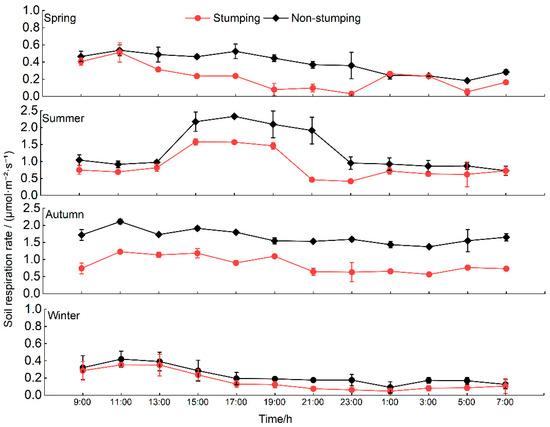
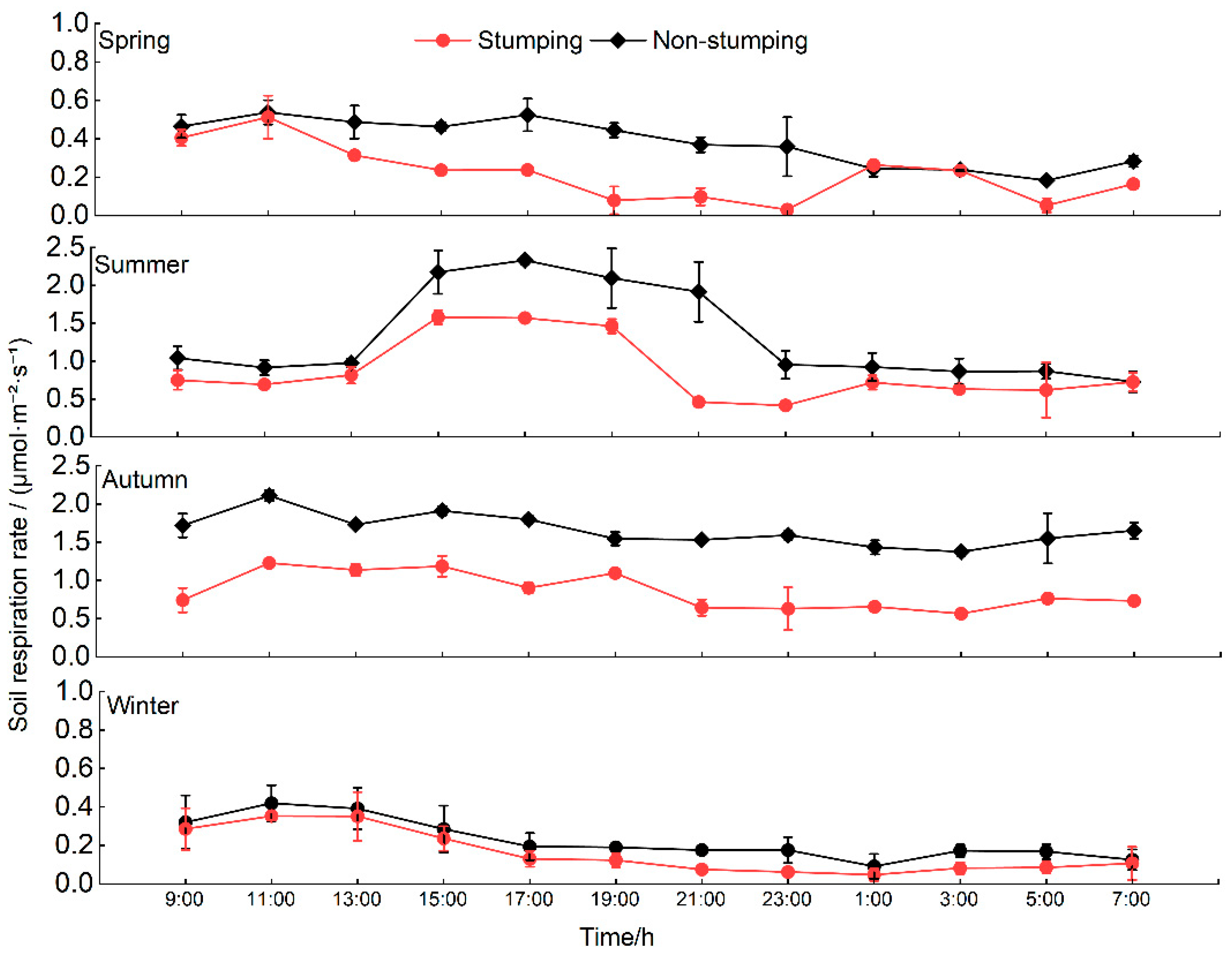
The diurnal variation in soil respiration rates across different seasons showed an overall trend of “unstumped > stumped,” with both treatments exhibiting similar diurnal patterns characterized by a single-peak curve, as shown in Figure 1. Spring: In spring (March), soil respiration rates were generally low, with the single-peak feature not being as pronounced. Between 11:00 a.m. and 11:00 p.m., the unstumped treatment exhibited significantly higher respiration rates than the stumped treatment, with differences gradually diminishing after 23:00. Summer: During summer (July), soil respiration showed the largest diurnal amplitude, with a pronounced single-peak pattern. The unstumped treatment reached its peak respiration rate between 13:00 and 17:00, while the stumped treatment also exhibited a similar pattern but with a significantly lower peak. Autumn: In autumn (September), the diurnal amplitude was lower than in summer, with values ranging from 1.37 to 2.10 µmol·m−2·s−1 for the unstumped treatment and 0.56 to 1.23 µmol·m−2·s−1 for the stumped treatment. The unstumped treatment consistently showed higher respiration rates throughout the day, and the difference between the two treatments remained relatively stable. Winter: In winter (November), soil respiration rates were the lowest overall, with minimal diurnal variation (less than 0.5 µmol·m−2·s−1). The curves for both treatments largely overlapped, except for occasional slightly higher values in the unstumped treatment. Overall, soil respiration rates during nighttime (23:00–5:00) were significantly lower than during the daytime across all seasons, with a gradual decrease in rates after 17:00.
Figure 1.
Diurnal variation characteristics of soil respiration rate in Salix psammophila.
3.1.2. Seasonal Variation Characteristics of Soil Respiration Rate
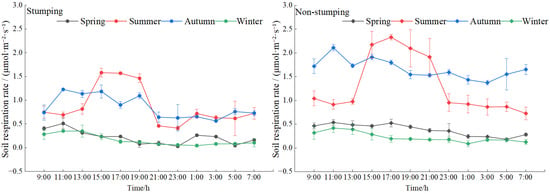
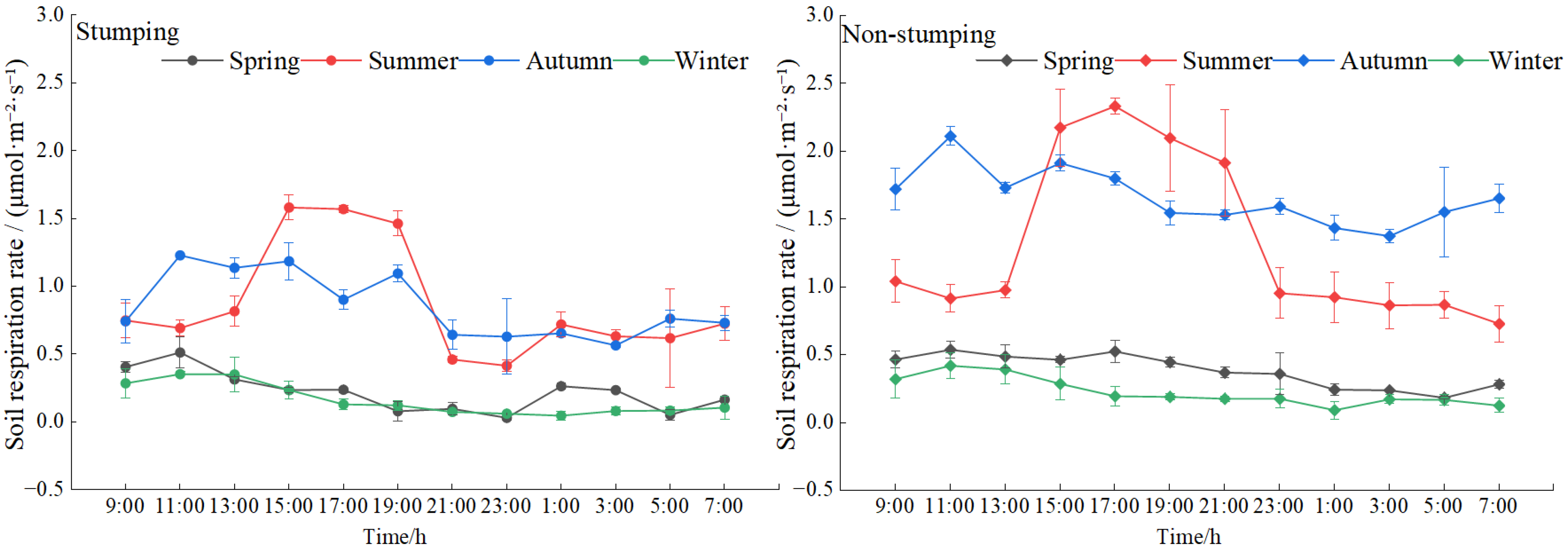
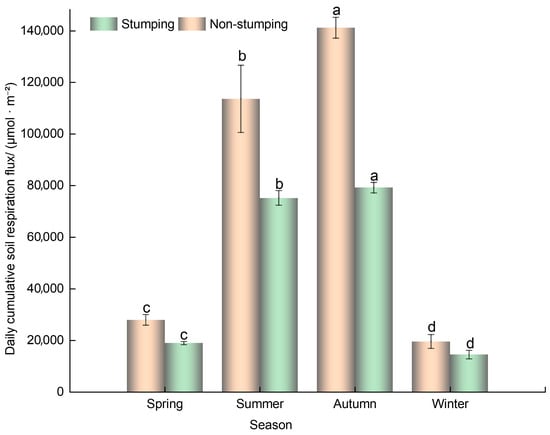
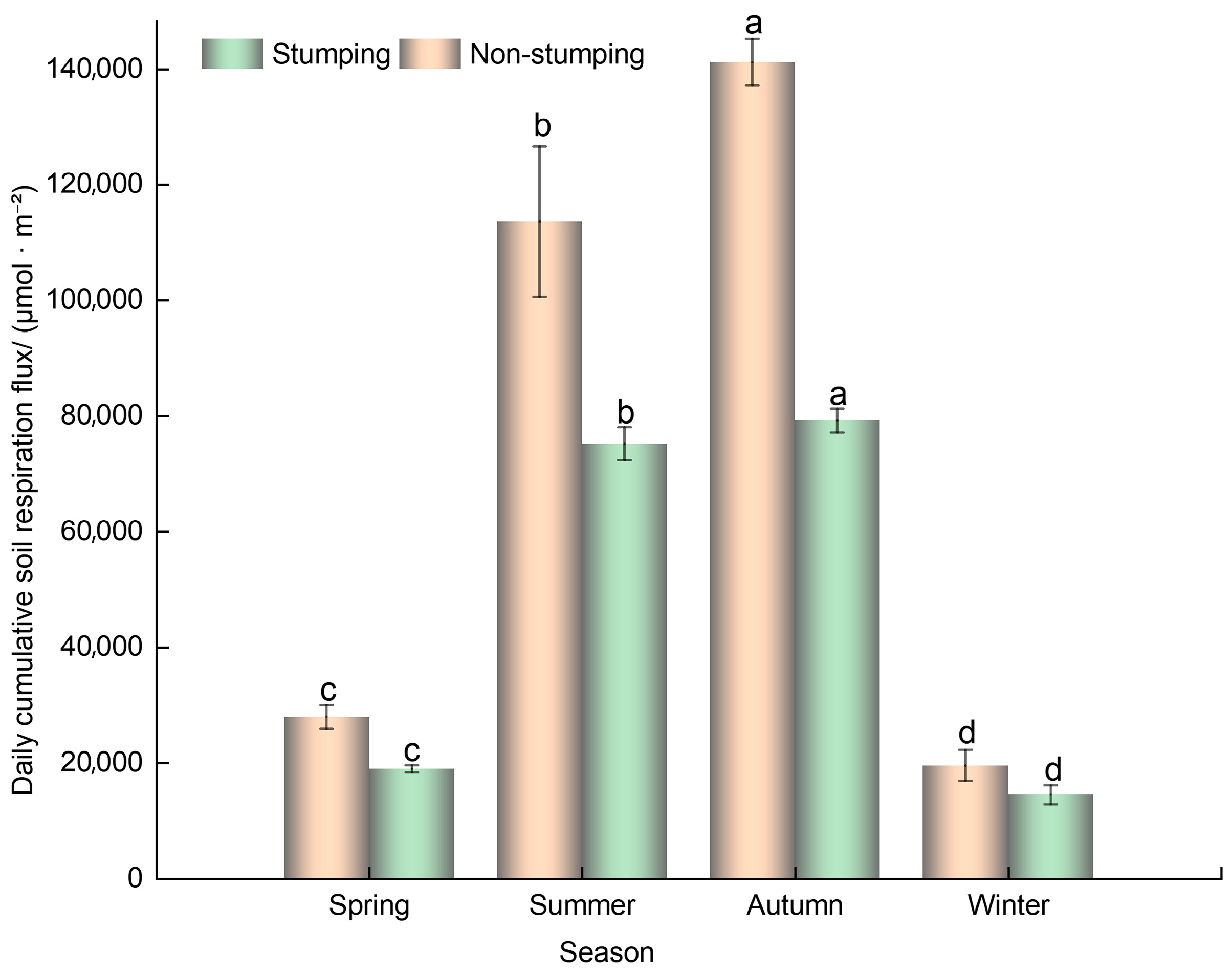
In northern regions, temperature exhibits pronounced seasonal variation, and soil respiration rates display distinct seasonal patterns, following the overall order of summer > autumn > spring > winter. As shown in Figure 2, soil respiration rates in spring were generally low, with only a slight increase during daytime. In summer, soil respiration reached the annual peak, followed by autumn, which showed relatively high and stable rates. Winter maintained the lowest levels, with minimal diurnal variation. Comparisons between treatments indicated that unstumped shrubs consistently exhibited higher soil respiration rates than stumped ones, with differences most pronounced in summer and autumn, where peak diurnal amplitudes were 2–3 times greater than during other periods. In contrast, differences in spring and winter were relatively small and stable. This suggests that the seasonal dynamics of soil respiration are influenced not only by temperature and vegetation growth, but also by soil environmental conditions and vegetation recovery status under different management practices. As illustrated in Figure 3, the annual cumulative carbon flux of unstumped S. psammophila was 302,195.25 μmol·m−2, whereas that of stumped shrubs was 187,688.35 μmol·m−2, indicating that stumping reduced soil respiration rates by 37.89%. The observed changes in soil respiration rates suggest that stumping may have partially reduced root respiration intensity, thereby potentially decreasing CO2 emissions from the soil to the atmosphere.
Figure 2.
Seasonal variation characteristics of soil respiration rate in Salix psammophila.
Figure 3.
Seasonal variation in daily cumulative soil respiration flux under different treatments. Note: Different lowercase letters (a, b, c, d) indicate significant differences among treatments at p < 0.05.
3.1.3. Annual Variation Characteristics of Soil Respiration Rate
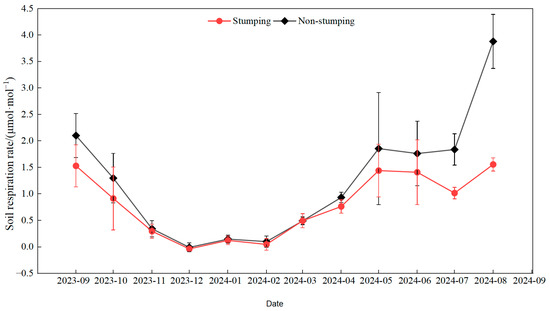
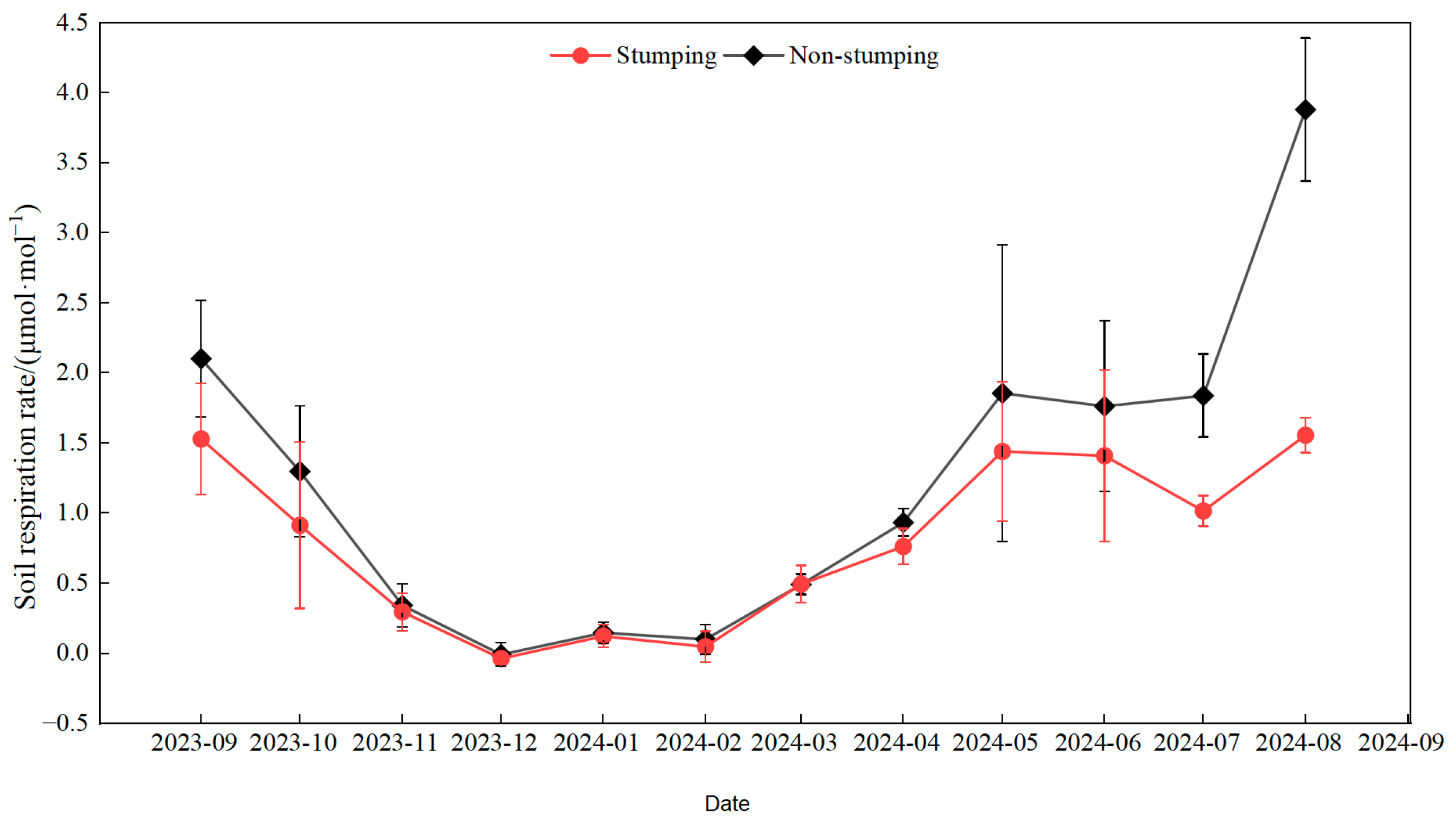
The annual variation characteristics of soil respiration under the stumping treatment are shown in Figure 4. From November to December 2023, S. psammophila entered the non-growing season, and the soil entered the winter freezing period, leading to a significant reduction in respiration. From January to March 2024, although the winter-spring transitional phase had started, the soil remained frozen, with minimal changes in soil respiration during this period, particularly in the stumping plots, likely due to low soil temperature and reduced microbial activity. After March, as the soil underwent freeze–thaw cycles and due to the large diurnal temperature variation in sandy areas, soil respiration under different treatments remained at a relatively low level. From April to August, with the vegetation entering the vigorous growing period, rising temperatures, and soil thawing, the soil respiration rate increased significantly. Overall, regardless of the stumping treatment, the soil respiration of the S. psammophila plantations exhibited a clear annual dynamic, reaching the lowest level in winter (December 2023) and peaking in midsummer (August 2024). Compared to different treatments, the trends in soil respiration remained consistent between stumping and control, but there were significant differences in respiration intensity. Compared with other treatments, the overall trend of soil respiration was similar between stumping and control, but there were significant differences in respiration intensity. The annual range of soil respiration rates was −0.067 to 2.46 μmol·m−2·s−1 for stumping and −0.073 to 4.86 μmol·m−2·s−1 for non-stumping. The observed negative values were likely due to the suppression of root and microbial activity by low winter temperatures, as well as plant dormancy, which substantially reduced CO2 release from the soil. In addition, soil freezing under cold conditions can hinder the diffusion of CO2 produced in deeper soil layers to the surface, resulting in negative fluxes in the observations. Thus, the soil respiration rate in stumped S. sammophila plantations remained at a relatively low level throughout the year, showing a significant reduction effect. Further analysis of the results in Table 2 indicates that there is a significant difference in soil respiration rates between stumped and control S. psammophila (p < 0.001), with significant differences also observed across different months (p < 0.001).
Figure 4.
Annual Variation Characteristics of Soil Respiration Rate in Salix psammophila.
Table 2.
Annual Variation Characteristics of Soil Respiration in Salix psammophila.
3.2. Temporal and Spatial Variation Characteristics of Soil Temperature and Moisture
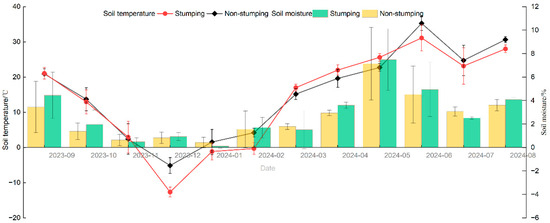
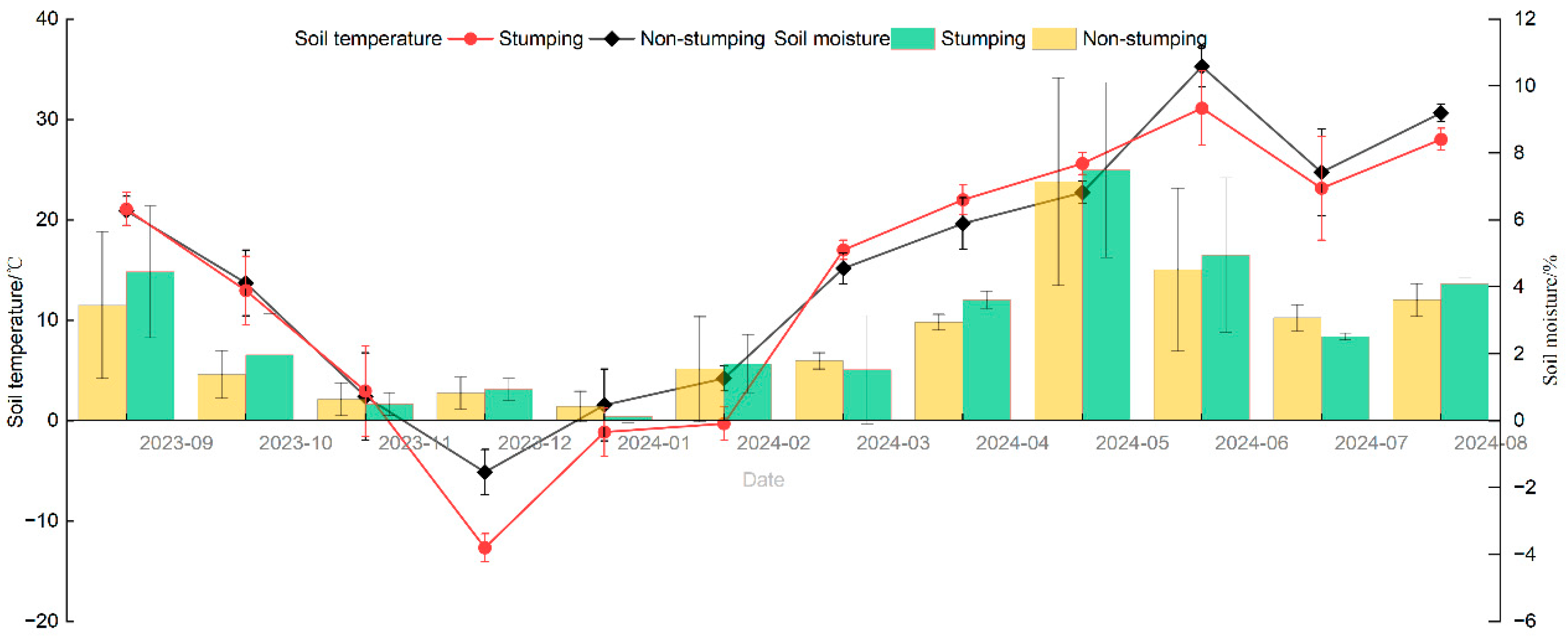
The results of a one-year observation indicate that the trends in soil temperature and moisture under different treatments were generally consistent (Figure 5). Soil temperature reached its highest value in June 2024 and its lowest in December 2023. The highest and lowest temperatures for the un-stumped treatment were 35.28 °C and −5.10 °C, respectively, while the stumped treatment had values of 31.15 °C and −12.64 °C. The annual average temperatures were 15.45 °C and 13.47 °C, respectively. Soil moisture remained low from October 2023 to February 2024, corresponding to the frozen soil period, during which a considerable proportion of soil water existed in the form of ice. The soil moisture values reported here represent sensor-measured volumetric water content and do not exclusively reflect liquid water availability. After entering the freeze–thaw period in March 2024, soil moisture gradually increased, peaking in May, and subsequently declined as summer temperatures rose and evaporation intensified. Overall, the stumped treatment consistently exhibited lower soil moisture than the non-stumped treatment, with annual mean values of 2.62% and 2.82%, respectively.
Figure 5.
Annual variation trend of soil temperature and moisture.
Overall, soil moisture in the stumped treatment was consistently lower than that in the un-stumped treatment, with annual average values of 2.62% and 2.82%, respectively. Despite the generally low soil moisture levels observed throughout the year (0.43%–7.14%) due to the coarse texture and low water-holding capacity of sandy soils, such conditions are typical of sandy ecosystems. Plants inhabiting these environments have developed effective adaptive strategies, including deep and extensive root systems that facilitate access to deeper soil water, as well as physiological regulation mechanisms such as enhanced water-use efficiency and reduced transpiration, enabling them to survive under long-term low soil moisture conditions.
3.3. Comparison of Fitting Results from Different Models
3.3.1. Temperature Fitting
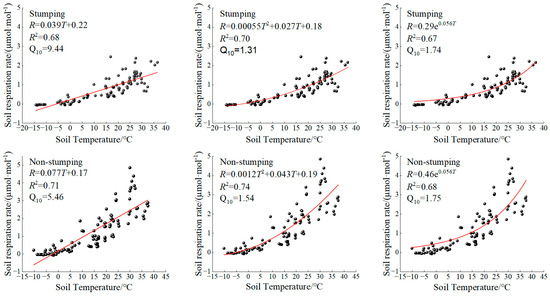
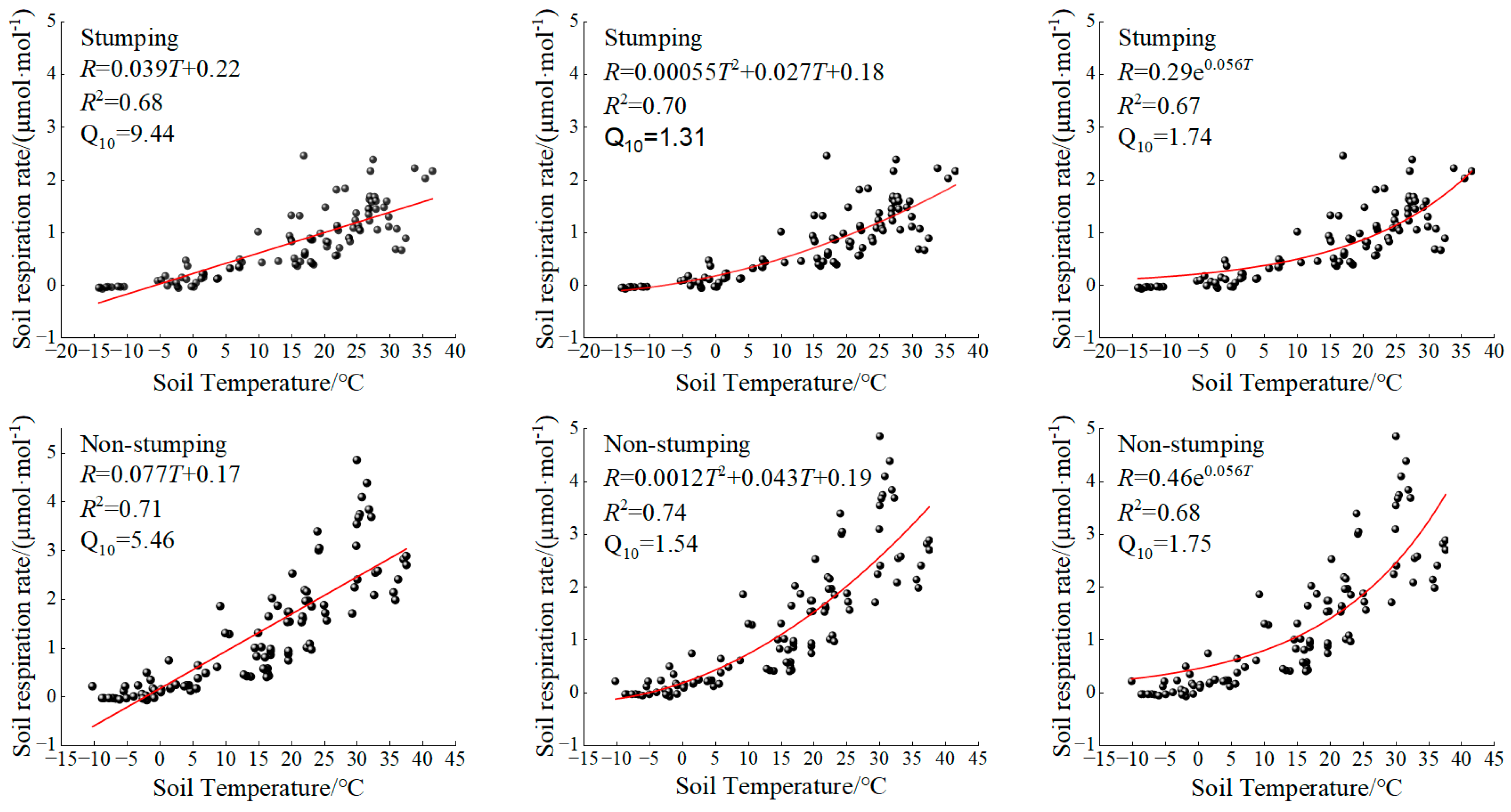
Linear (LM), polynomial (PM), and exponential (EM) models were employed to fit the relationship between soil respiration and soil temperature, and the regression results for each treatment are shown in Figure 6 and Table 3. Under the stumping treatment, soil respiration rate exhibited a significant positive correlation with soil temperature (p < 0.05) and increased with rising temperature. The explanatory power of soil temperature for soil respiration ranged from 67.80% to 69.96% under stumping treatment, and from 68.25% to 73.64% under non-stumping treatment. In addition, the temperature sensitivity of soil respiration (Q10) estimated by the three models differed among treatments. Under both stumping and non-stumping conditions, Q10 values followed the order LM > EM > PM, with values of 9.44, 1.74, and 1.31 for the stumping treatment, and 5.46, 1.75, and 1.53 for the non-stumping treatment, respectively. The linear model yielded relatively higher Q10 values under the non-stumping treatment, whereas Q10 values estimated by the exponential model showed little difference between the two treatments. In contrast, the polynomial model produced higher Q10 values under the non-stumping treatment. These results indicate that the effect of stumping on the temperature sensitivity of soil respiration is model-dependent rather than showing a consistent trend across different models.
Figure 6.
Response of soil respiration rate to soil temperature across treatments.
Table 3.
Analysis of variance (ANOVA) for temperature model fitting results.
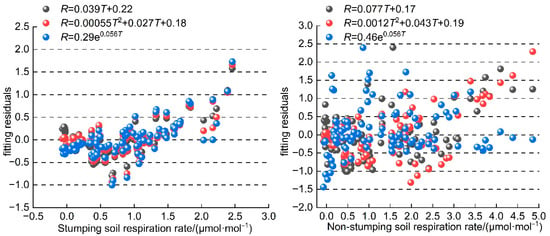
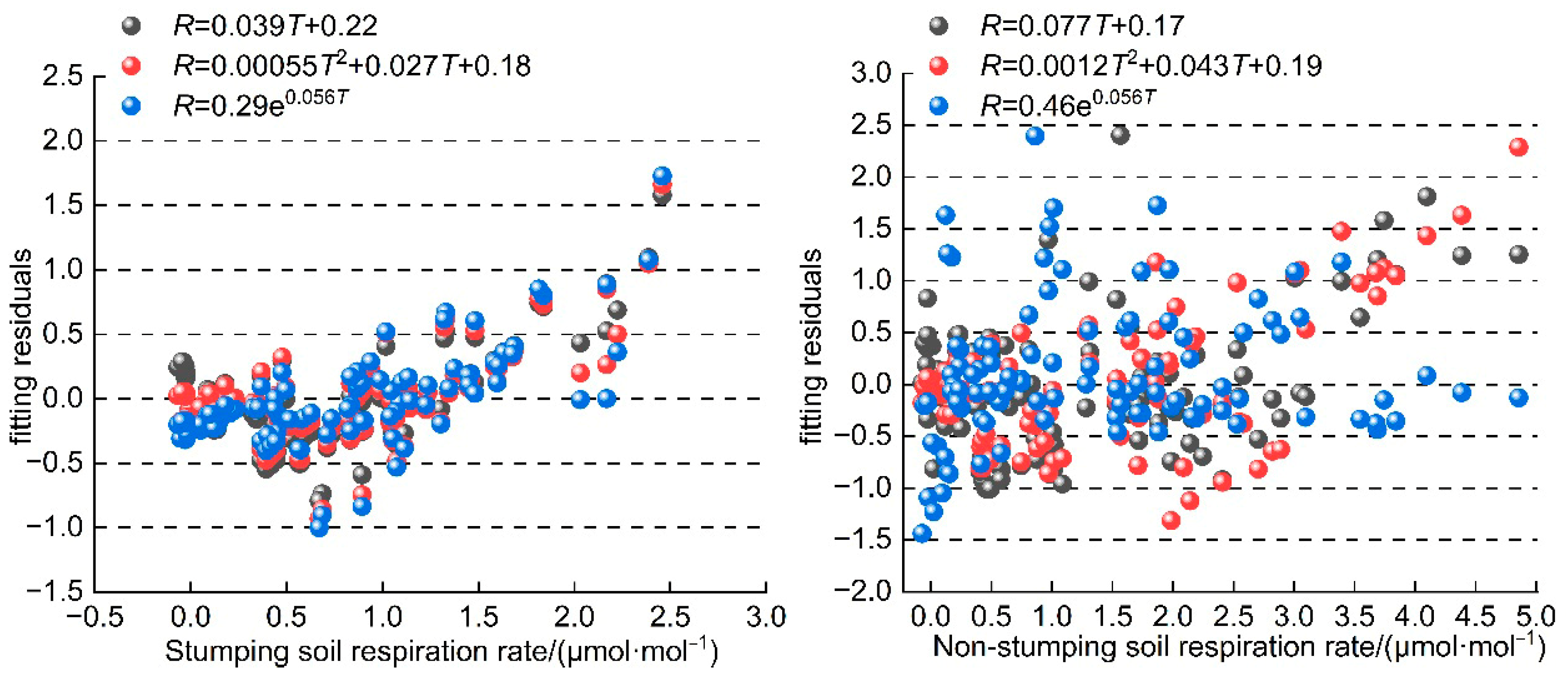
As shown in Figure 7, residual analysis revealed that, under the stumping treatment, residuals from all models were randomly distributed around the zero line (y = 0) with relatively small dispersion and no evident systematic patterns, indicating stable model performance and general compliance with the assumptions of linear unbiasedness and homoscedasticity. In contrast, residuals under the non-stumping treatment exhibited a much wider distribution range, particularly at higher soil respiration rates, where residuals tended to increase with the independent variable, suggesting a certain degree of heteroscedasticity. This implies that soil respiration under non-stumping conditions is regulated by multiple interacting factors, and a temperature-only model has limited explanatory capacity. Among the tested models, the exponential model showed the most symmetric and randomly distributed residuals without pronounced structural bias, outperforming the linear and polynomial models, and was therefore more suitable for describing the nonlinear response of soil respiration to temperature.
Figure 7.
Residuals of the temperature model fitting under different treatments.
3.3.2. Moisture Fitting
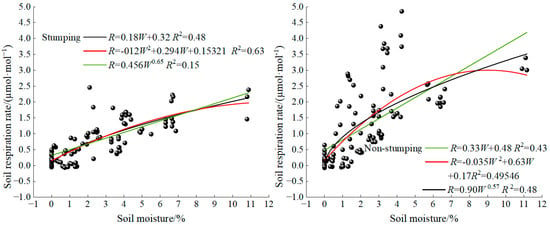
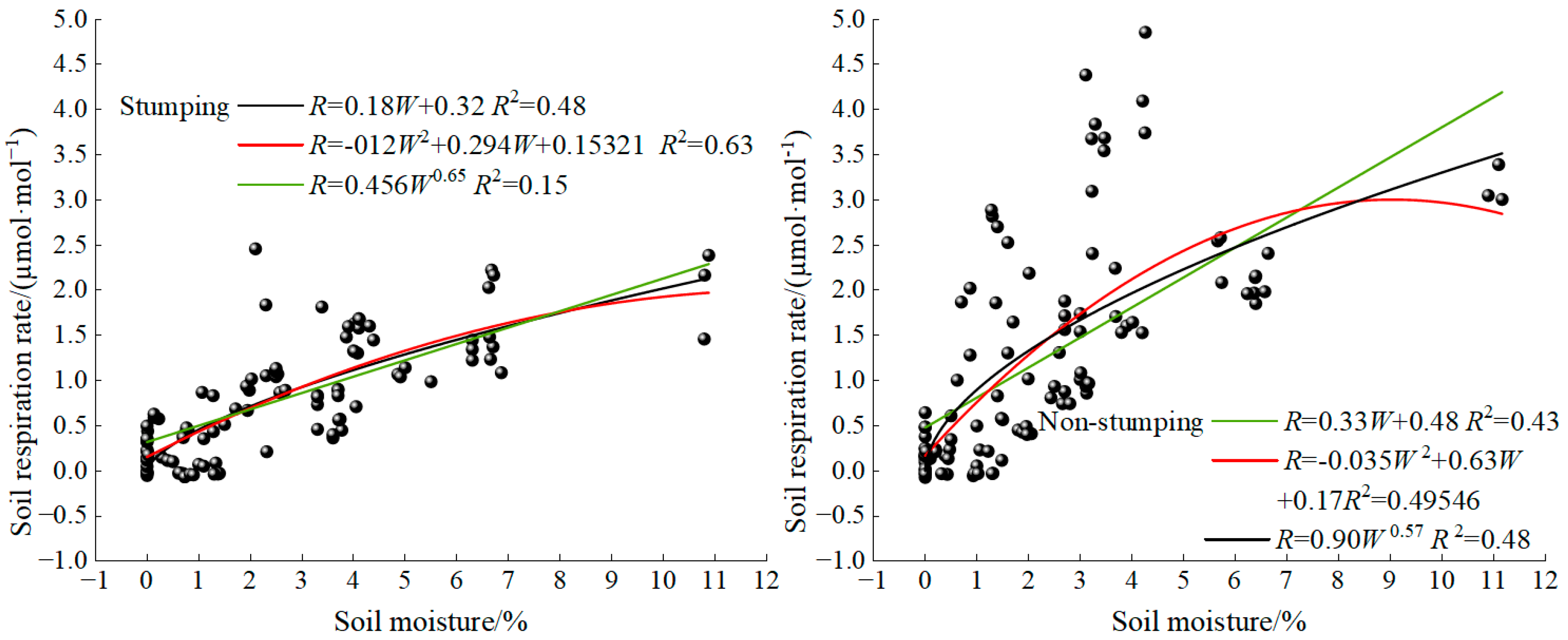
The results in Figure 8 and Table 4 show a clear correlation between soil respiration rate and soil moisture. Model fitting using linear (LM), polynomial (PM), and power function models (PFM) under different treatments consistently indicated that soil respiration increased with increasing soil moisture. It should be noted that during the frozen period, soil moisture values recorded by the dielectric-based sensors do not represent the actual total volumetric water content. Due to the much lower dielectric constant of ice compared with liquid water, sensor outputs decrease markedly under frozen conditions and primarily reflect the relative proportion of unfrozen (liquid) water. Since soil respiration is mainly associated with microbial activity and root processes that depend on liquid water availability, the observed low soil moisture values during freezing periods should be interpreted as sensor-derived indicators of liquid water limitation rather than absolute soil water content. Therefore, the observed moisture–respiration relationships during freezing conditions may partially underestimate the actual sensitivity to biologically available water. Despite this limitation, the overall trends remained consistent across seasons. Under the stumping treatment, soil respiration increased with higher moisture content, but the overall variation was relatively small. Under the un-stumped treatment, respiration showed greater fluctuation at low moisture levels (0–5%), where the PM model provided the best fit. Overall, stumping reduced the sensitivity of soil respiration to moisture variability and suppressed respiration intensity.
Figure 8.
Response of soil respiration rate to soil moisture across treatments.
Table 4.
Analysis of variance (ANOVA) for moisture model fitting results.
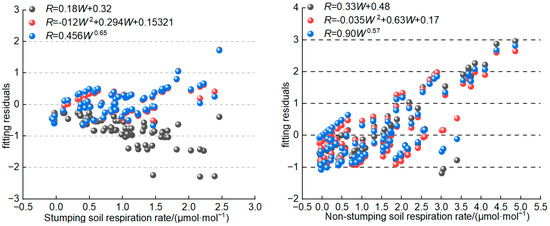
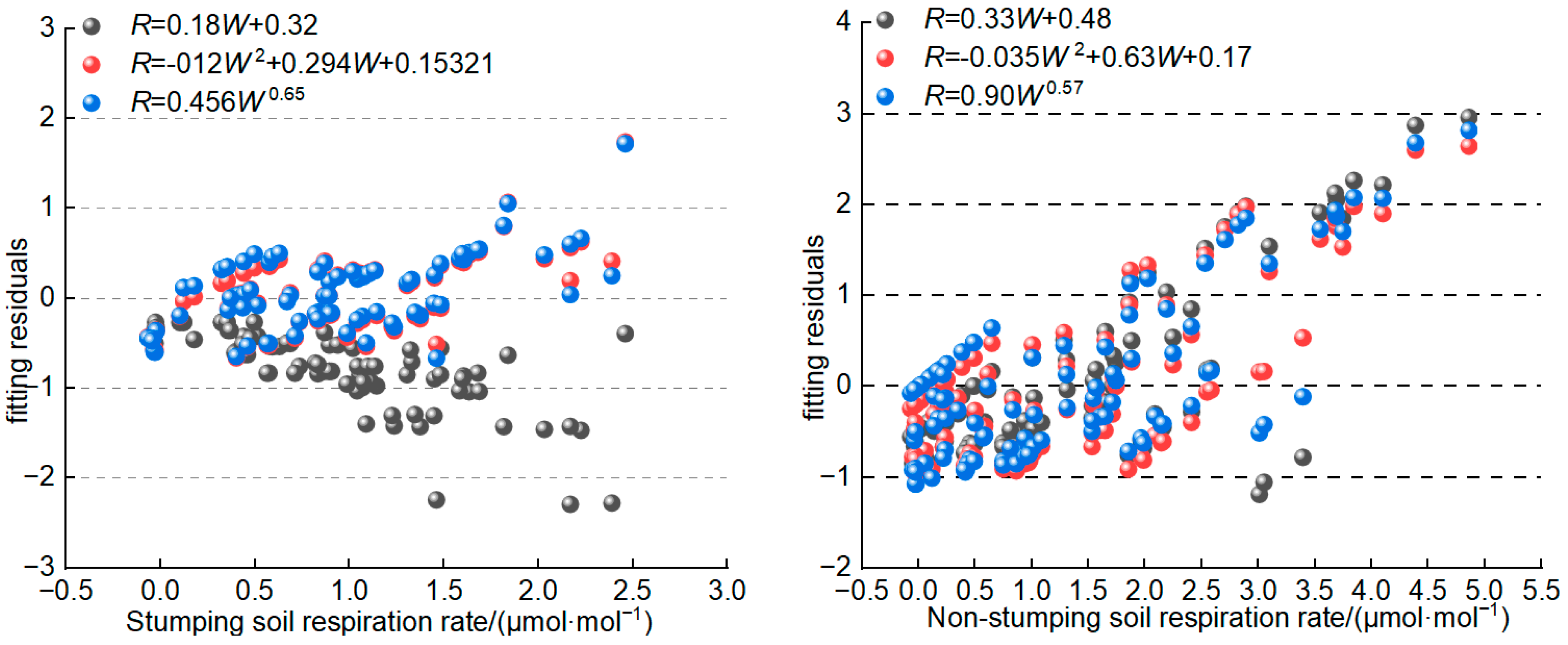
Analysis of residual distributions (Figure 9) revealed differences among models under stumping and non-stumping treatments. In general, residuals from all models were randomly distributed around zero, with no obvious systematic bias, indicating that the basic assumptions of residual independence and unbiasedness were largely satisfied. Under the stumping treatment, residuals from the LM, PM, and EM were relatively concentrated, with smaller amplitudes and no clear structural trends across the range of soil respiration rates, suggesting stable model performance. Among them, the polynomial model exhibited more balanced residuals across both low and high respiration rates, further confirming its superior explanatory ability and fitting applicability.
Figure 9.
Residuals of the moisture model fitting under different treatments.
In contrast, under the non-stumping treatment, residuals showed a markedly higher degree of dispersion, particularly in the low soil respiration range, and some models exhibited larger residual fluctuations, indicating the presence of heteroscedasticity. This suggests that under non-stumping conditions, soil respiration is influenced by multiple factors beyond soil moisture, thereby reducing the explanatory power of a single environmental variable. In such cases, the polynomial model better captured the nonlinear response characteristics in the low-value range, with more symmetric residual distributions and improved fitting performance compared with linear and exponential models. Overall, residual pattern analysis indicates that stumping not only reduced the overall variability of soil respiration but also improved model stability and compliance with underlying assumptions, whereas soil respiration under non-stumping conditions responded more complexly to environmental drivers. These findings further support the conclusion that stumping attenuated the sensitivity of soil respiration to environmental fluctuations, leading to a more moderated response pattern.
3.3.3. Fitting of Temperature and Moisture
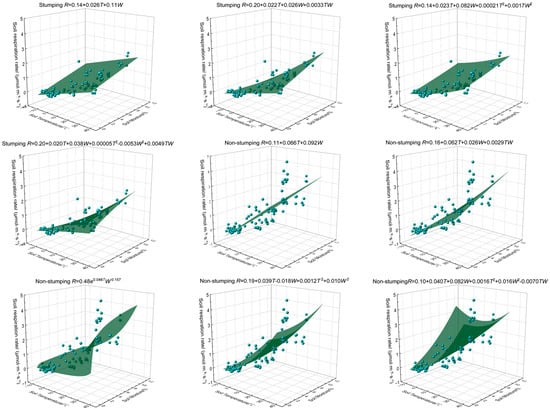
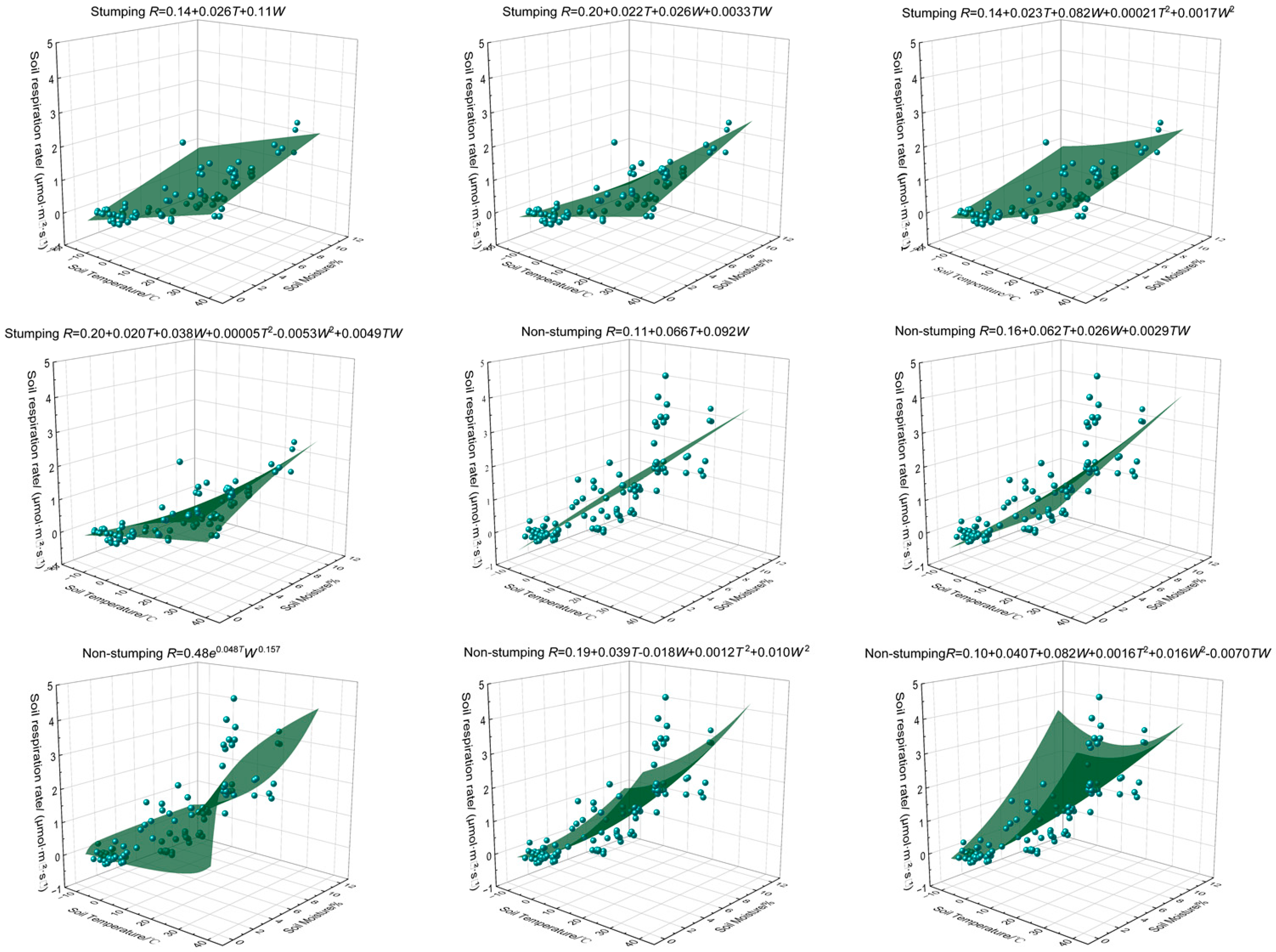
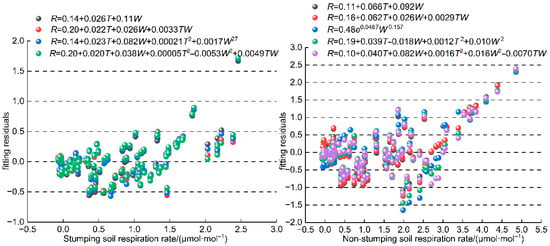
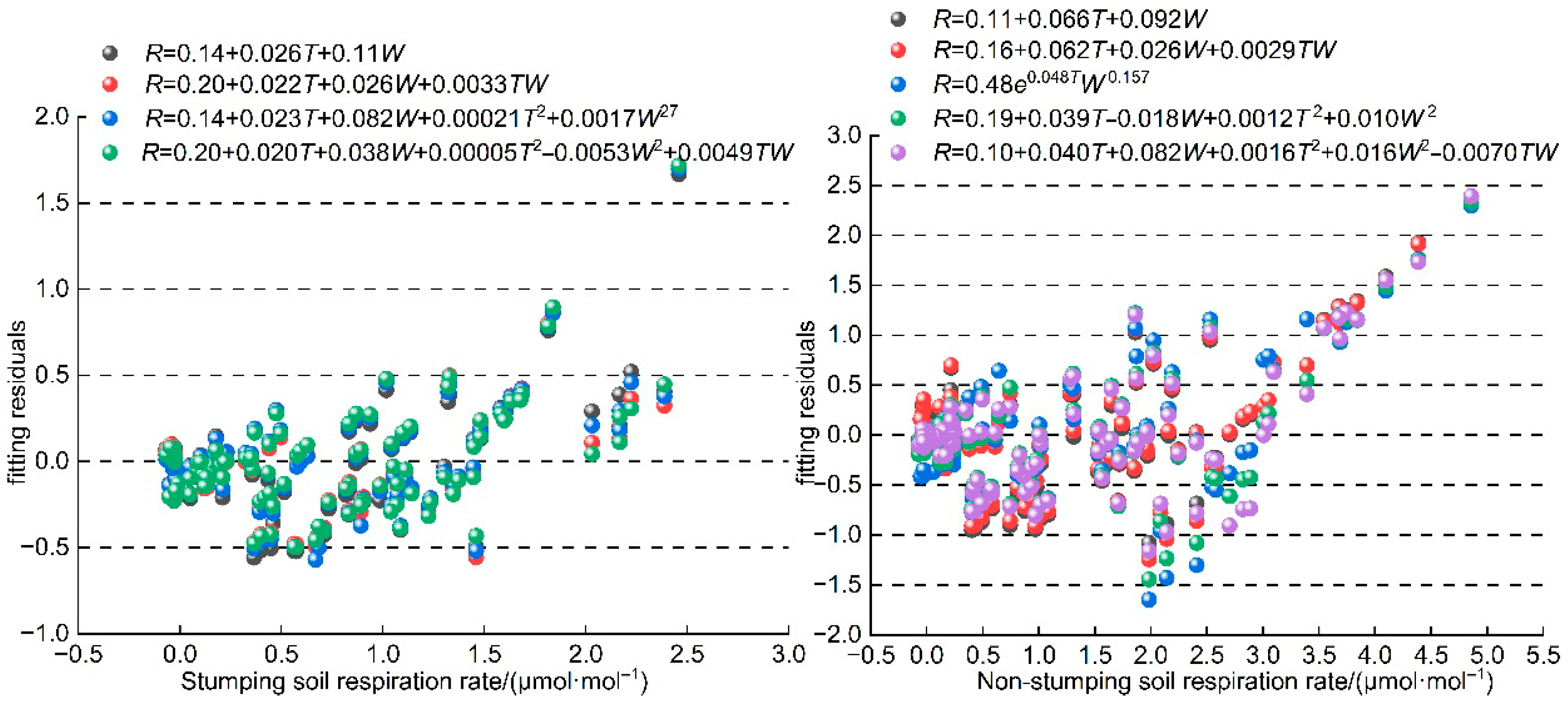
Under different treatment conditions, five models were applied to describe the three-dimensional relationship among soil respiration rate, soil temperature, and soil moisture (Table 5, Figure 10). All models, except for the exponential–power function model, successfully captured the combined effects of temperature and moisture under both treatments. Notably, the exponential–power function model failed to fit the stumped treatment. This failure may be attributed to the restricted range and low variability of soil moisture under stumping, together with the overall suppression of soil respiration following aboveground biomass removal. The exponential–power model assumes a strong multiplicative and continuously amplifying response of soil respiration to temperature and moisture. However, under stumping conditions, soil respiration exhibited a weakened nonlinear response, likely due to reduced substrate input from roots and litter, as well as altered microclimatic conditions. In contrast, linear, polynomial, and interaction-based models were more flexible in describing the temperature–moisture coupling under stumping, indicating that the response of soil respiration to environmental drivers became less sensitive and more constrained following stumping. Specifically, at higher moisture levels, an increase in temperature significantly promoted soil respiration, while at lower moisture levels, the effect of temperature on respiration was weaker. The R2 for the fit of each treatment was high (R2 > 0.7), and all results were highly significant (p < 0.001), indicating that temperature and moisture could explain the variation in soil respiration well. The average correlation coefficients for the five models were 0.75, 0.75, 0.72 0.76, and 0.77, with the bivariate nonlinear equation (composite quadratic polynomial) providing the best fit (mean R2 = 0.77). A comparison between different treatments showed that, under the un-stumped condition, soil respiration was more sensitive to temperature and moisture, with the fitted surface exhibiting a clear nonlinear upward trend, suggesting that soil respiration in natural conditions is significantly enhanced by the combined influence of temperature and moisture. In contrast, under the stumped treatment, the soil respiration response surface was relatively flat, particularly at high moisture levels, where the increase was subdued, indicating that stumping weakened the sensitivity of soil respiration to changes in environmental factors.
Table 5.
Fitting results of the temperature–moisture two-factor combined model under different treatments.
Figure 10.
Responses of soil respiration to soil temperature and moisture across treatments.
Residual analysis (Figure 11) showed that under stumping, residuals were randomly distributed around zero, with no obvious heteroscedasticity, indicating stable model performance. In contrast, under no-stumping, residuals were more dispersed at high respiration rates (R > 3 μmol·m−2·s−1), with mild heteroscedasticity, reflecting the complex regulation of soil respiration by roots, microbes, and environmental factors. Overall, residuals showed no systematic bias, but including interaction or nonlinear terms may improve model performance for extreme or highly variable conditions.
Figure 11.
Residuals of the temperature–moisture model fitting under different treatments.
3.4. Changes in Soil Physicochemical Properties Under Stumping Treatment
SOM and SOC exhibited clear depth-dependent variation patterns under both stumping and un-stumped treatments (Table 6). At the shallow depth (10 cm), SOM and SOC values were numerically higher in the un-stumped treatment than in the stumped treatment, suggesting a potential short-term reduction in surface organic inputs following stumping. At the middle depth (50 cm), higher SOM and SOC values were observed under the stumped treatment compared with the un-stumped treatment, indicating that stumping may promote organic carbon accumulation in the subsurface layer. This pattern likely reflects enhanced root renewal, increased rhizodeposition, and downward transport of dissolved organic carbon following stumping. At the deep layer (80 cm), SOM and SOC values were again higher in the un-stumped treatment than in the stumped treatment, although differences between treatments were not statistically significant.
Table 6.
Soil properties at different depths under different treatments.
Total nitrogen (TN) showed a distribution pattern that was not fully consistent with SOM and SOC. At the shallow depth (10 cm), TN values were higher under stumping despite lower SOM and SOC levels, possibly due to rapid fine-root turnover and enhanced microbial activity after stumping, which can temporarily increase nitrogen availability through accelerated mineralization and root-derived inputs. At the middle depth (50 cm), TN showed only minor variation between treatments, suggesting a partial decoupling of carbon and nitrogen dynamics. At the deep layer (80 cm), TN contents remained low and showed no clear treatment-related differences, indicating limited influence of stumping on deep soil nitrogen pools.
3.5. Correlation Analysis Between Soil Respiration and Soil Physicochemical Properties
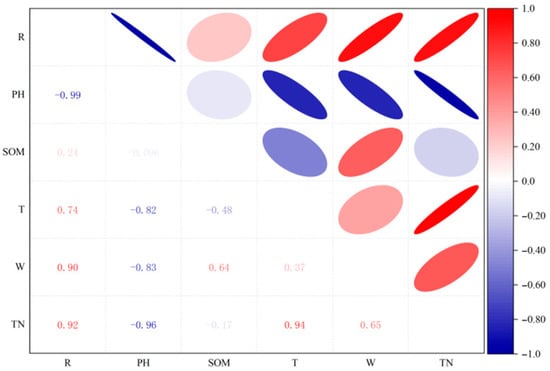
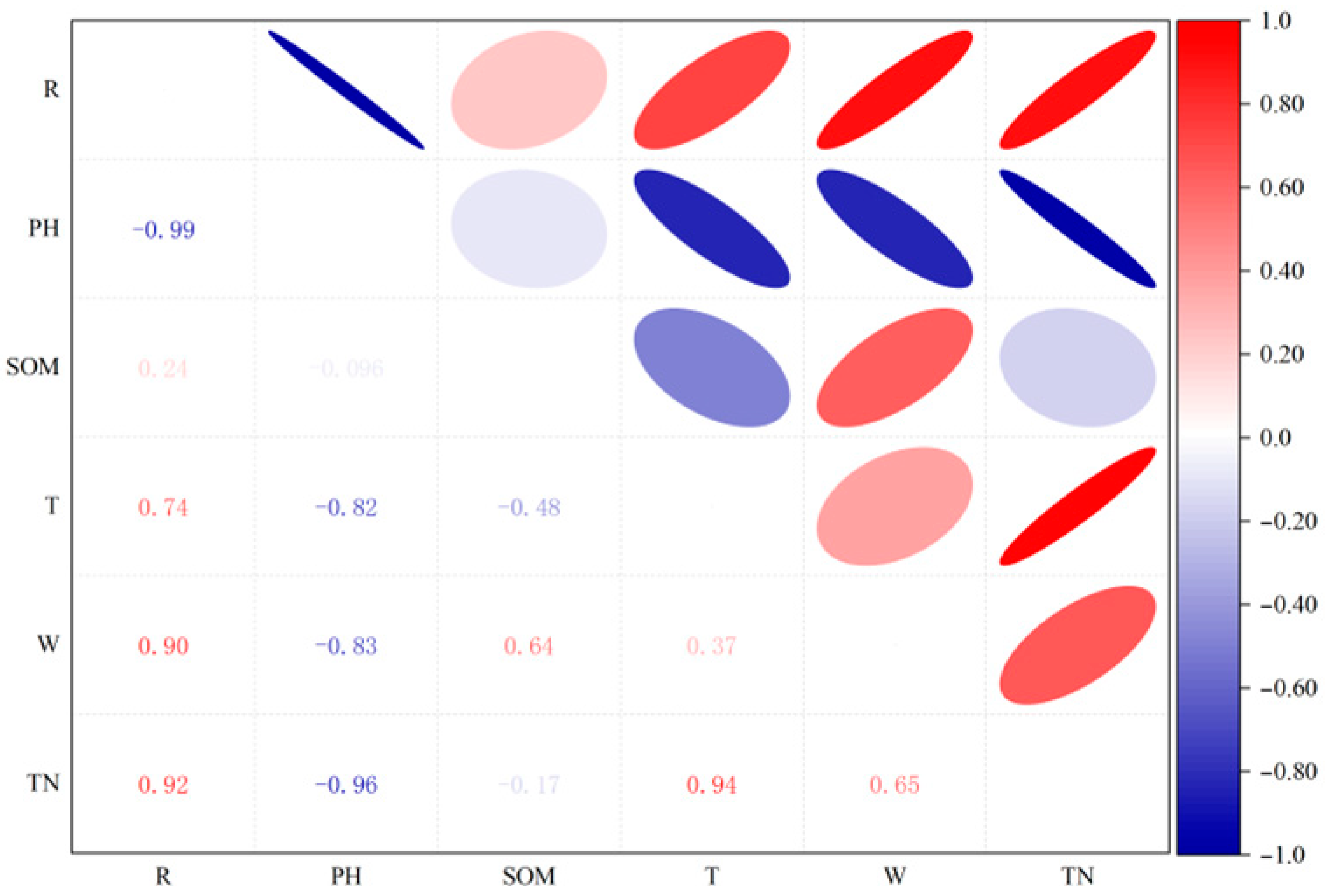
Using soil samples collected at a depth of 10 cm, correlation analyses were conducted between soil respiration after stubble cutting and soil physicochemical properties (Figure 12). It should be noted that correlations presented in this study are based on surface (0–10 cm) soil conditions and primarily reflect the influence of the upper soil layer on soil respiration, while potential contributions from deeper layers require further investigation. The results indicate that soil respiration rate (R) was significantly correlated with several soil physicochemical parameters. Specifically, soil respiration rate (R) showed a strong negative correlation with soil pH (r = −0.99). However, it should be noted that soil pH varied within a relatively narrow range across treatments and soil depths (Table 6). Therefore, this strong correlation likely reflects indirect associations between pH and other soil properties, such as organic carbon availability or microbial activity, rather than a direct inhibitory effect of pH alone. These results suggest that soil pH may be involved in regulating soil respiration, but it should not be interpreted as an independent limiting factor under the conditions of this study.
Figure 12.
Correlation analysis between soil respiration and soil physicochemical properties.
In contrast, R was significantly and positively correlated with soil water content (W) and total nitrogen (TN) (r = 0.90 and 0.92, respectively), indicating that adequate water and nitrogen availability enhance microbial activity and organic matter decomposition, thereby promoting soil respiration. In addition, R exhibited a relatively strong positive correlation with soil temperature (T) (r = 0.74), reflecting the stimulatory effect of increasing temperature on biological metabolic processes. However, the correlation between R and soil organic matter (SOM) was weak (r = 0.24), suggesting that under the conditions of this study, SOM was not the dominant factor controlling variations in soil respiration. This may be because SOM represents a relatively stable carbon pool, while soil respiration responds more sensitively to short-term variations in soil temperature and moisture. Overall, soil moisture, nitrogen availability, and pH were identified as the key environmental drivers regulating soil respiration dynamics.
4. Discussion
4.1. Effect of Stumping Treatment on Soil Respiration
Stumping, as a vegetation renewal and management practice, plays an important role in regulating plant growth, development [12], and community structure by reducing above-ground biomass, stimulating resprouting, and redistributing nutrients [13]. However, the effects of stumping on soil respiration may differ depending on vegetation type (woody versus herbaceous) and post-harvest residue management. Previous studies in alpine [14] and semi-arid grasslands [15] have reported contrasting responses of soil respiration to mowing or biomass removal, reflecting differences in substrate supply and root activity. In the present study, the target vegetation was the woody shrub Salix psammophila, and above-ground biomass was removed following stumping. Under these conditions, soil respiration rates were consistently lower in the stumped treatment than in the un-stumped treatment across daily, seasonal, and annual scales. This suggests that, in woody shrub plantations, stumping primarily reduces soil respiration by limiting photosynthetic carbon inputs and root-derived respiration. This results in an overall decline in soil respiration under the stumped treatment [16]. Thus, the regulatory effect of stumping on soil respiration varies by vegetation type, and the response of soil respiration rates to stumping may differ among plant species. Some studies have also suggested that stumping increases soil carbon emissions in grasslands [17]. However, based on continuous one-year monitoring following stumping of S. psammophila, this study found that soil carbon emissions under the stumping treatment were consistently lower than those under the un-stumped treatment. This pattern is likely associated with changes in plant carbon allocation following stumping, as the removal of aboveground biomass alters regrowth demand and root activity, which may indirectly affect autotrophic respiration [18]. It should be noted that photosynthesis, plant growth, and soil respiration are inherently dynamic processes, and the present results reflect short- to medium-term responses within an annual observation period. Therefore, the longer-term effects of stumping on carbon cycling in woody shrub systems—potentially occurring over multi-year timescales—require further investigation through extended monitoring.
4.2. Impact of Stumping on Soil Temperature and Moisture
Vegetation status is a key factor influencing soil temperature, as it regulates the local microclimate and thereby affects both biotic and abiotic conditions beneath the canopy [19]. In this study, soil temperature under the stumping treatment was generally higher than that under the non-stumping treatment in spring and autumn, but relatively lower in summer and winter. Meanwhile, soil moisture was consistently lower under stumping compared with the non-stumping treatment. The removal of aboveground vegetation reduced shading and surface coverage, increasing soil exposure to atmospheric conditions and enhancing the sensitivity of soil temperature to short-term environmental fluctuations. During summer, the lower soil moisture observed under the stumping treatment was associated with lower soil temperatures, which is consistent with enhanced evaporative cooling under drier soil conditions despite increased solar radiation. In winter, reduced soil moisture and diminished vegetation cover may have facilitated greater heat loss from the soil, contributing to lower soil temperatures. These combined effects are consistent with the observed seasonal differences in soil temperature following stumping [20], resulting in an increased diurnal range and seasonal variability of soil temperature [21]. In addition, reduced vegetation cover likely enhanced surface evaporation and decreased soil water retention capacity, contributing to the overall decline in soil moisture under the stumping treatment [22]. Although reduced canopy interception during rainfall events can improve infiltration efficiency [23], its influence on soil moisture appeared limited under the persistently arid conditions and low annual precipitation characteristic of the Kubuqi Desert. Overall, stumping substantially altered the temporal dynamics of soil temperature and moisture, providing an important environmental context for interpreting subsequent variations in soil respiration observed in this study.
4.3. Relationship Between Soil Respiration and Soil Temperature and Moisture
It should be noted that soil respiration represents an integrated flux from the entire soil profile. Due to data availability, the relationships discussed here primarily reflect surface soil conditions (0–10 cm), and the interpretations should therefore be understood within this limitation. Soil temperature is a major factor regulating soil respiration rates [24]. Numerous studies have reported that soil respiration generally peaks during summer or the growing season and reaches its minimum in winter or during the dormant season [25]. The present results are consistent with this pattern, with soil respiration rates being lowest in December 2023 and highest in August 2024. This seasonal variation corresponds closely with changes in soil temperature, suggesting that temperature is an important driver of soil respiration dynamics in the study area. Similar seasonal patterns have been widely observed in arid and semi-arid ecosystems [26]. At the diurnal scale, soil respiration exhibited a unimodal pattern, with higher rates during daytime than nighttime, which is consistent with the pronounced diurnal temperature variation characteristic of the Kubuqi Desert. Comparable diurnal patterns have been reported across different vegetation types, indicating that diel soil respiration dynamics are closely associated with short-term environmental fluctuations, particularly temperature [27]. The relationship between soil respiration and soil temperature in this study was better described by a polynomial model rather than a simple exponential function. This deviation from commonly reported exponential relationships may be related to the large diurnal temperature amplitude and strong seasonal variability in the desert environment, which can lead to non-linear responses of soil respiration across different temperature ranges. In addition, changes in vegetation structure following stumping may have altered the temperature sensitivity of soil respiration [28], as reflected in the fitted model results [20]. Soil moisture is another key environmental factor influencing soil respiration [29]. Its effects are commonly attributed to the regulation of gas diffusion, substrate availability, and biological activity in soils [30]. In this study, linear (LM), polynomial (PM), and power function (PFM) models were applied to characterize the relationship between soil respiration and soil moisture. Among these, the polynomial model provided the best fit, indicating a clear non-linear relationship between respiration and moisture. Under low soil moisture conditions, soil respiration was constrained, whereas increasing moisture was associated with enhanced respiration rates. However, at higher moisture levels, the rate of increase tended to diminish, consistent with the general conceptual model reported in previous studies [31]. The polynomial model was therefore more suitable than the LM and PFM models for capturing this non-linear response pattern. Furthermore, models incorporating the interaction between soil temperature and moisture showed substantially higher explanatory power than single-factor models. This result highlights the importance of considering combined environmental controls on soil respiration. Previous studies have suggested that in arid ecosystems, soil moisture often exerts a stronger limiting influence than temperature on soil respiration dynamics [26]. The findings of this study support this view, as moisture availability appeared to modulate respiration rates even under favorable temperature conditions. Insufficient moisture can constrain soil respiration by limiting biological activity and substrate decomposition processes [32], thereby reducing the overall responsiveness of soil respiration to temperature variation in arid environments.
4.4. Effect of Stumping on Soil Physicochemical Properties
Stumping can modify the vertical distribution of soil nutrients by altering vegetation structure and belowground biomass allocation [33]. In this study, the responses of SOM, SOC, and TN to stumping exhibited clear depth-dependent patterns. The responses of SOM and SOC were generally consistent across soil layers. At the surface and deeper layers, the un-stumped treatment showed higher SOM and SOC contents than the stumped treatment, whereas at the middle layer, SOM and SOC were significantly higher under the stumping treatment. This depth-specific response indicates that stumping altered the vertical distribution of organic matter and carbon within the soil profile, with the most pronounced effect occurring in the middle layer [34]. The lower SOM and SOC contents in the surface layer under stumping are consistent with reduced aboveground biomass and litter input following vegetation removal. In deeper layers, the lower values observed under stumping suggest a reduced contribution of carbon inputs at depth compared with the un-stumped treatment. In contrast, the higher SOM and SOC contents in the middle layer under stumping are consistent with previous findings in coppiced or stumped woody shrub systems, where belowground biomass redistribution and enhanced turnover tend to concentrate carbon inputs at intermediate depths [5,8]. Although the specific mechanisms were not directly quantified in this study, such redistribution patterns have been widely reported in shrub-dominated ecosystems. Total nitrogen showed a different response pattern. Stumping resulted in slightly higher TN content in the surface layer, whereas in the middle and deeper layers, TN was higher under the un-stumped treatment. This suggests that stumping primarily affected nitrogen accumulation near the soil surface, while deeper nitrogen pools remained more strongly associated with the intact vegetation structure in the un-stumped plots [34]. Soil pH varied only slightly across treatments and depths, remaining within a narrow alkaline range. Although pH was marginally higher in the middle layer under stumping, the overall variation was limited, indicating that pH was not a dominant factor controlling the observed differences in soil nutrient distribution under the conditions of this study [35].
5. Conclusions
By analyzing soil respiration dynamics at diurnal, seasonal, and annual scales under stumping and non-stumping treatments in Salix psammophila plantations in the Kubuqi Sand Land, this study demonstrates that stumping is associated with clear and consistent reductions in soil respiration rates. These differences are likely linked to changes in aboveground biomass removal, vegetation carbon inputs, and root distribution patterns, as well as to concurrent modifications in soil microenvironmental conditions, particularly soil temperature and moisture. Model fitting results indicate that soil respiration exhibited stronger sensitivity to soil moisture than to temperature alone under the conditions of this study. Incorporating both temperature and moisture substantially improved model performance, with the bivariate nonlinear model providing the highest explanatory power for soil respiration variability, highlighting the importance of temperature–moisture interactions in regulating soil respiration in sandy ecosystems. Stumping also altered the vertical distribution of soil nutrients. Soil organic matter and soil organic carbon showed depth-dependent responses to stumping, with accumulation promoted in the middle soil layer, while surface soil total nitrogen content was slightly higher under the stumping treatment. These results suggest that stumping influences not only surface processes but also subsurface nutrient redistribution, although the magnitude and direction of responses vary with soil depth. It should be noted that this study was based on comparisons between stumped and un-stumped treatments and focused primarily on surface soil measurements. Soil respiration integrates contributions from multiple soil layers and biological sources, and therefore, the observed relationships should be interpreted within this scale limitation. Future studies incorporating different stumping intensities, deeper soil measurements, and partitioning of autotrophic and heterotrophic respiration would further clarify the mechanisms by which stumping regulates soil respiration and carbon fluxes in arid and semi-arid sandy lands.
Author Contributions
C.C. was responsible for conceptualizing the research plan, designing and analyzing the materials, and leading the manuscript writing. H.W. was responsible for securing project funding, providing ideas for C.C.’s initial draft, writing the chapter on The Effect of Stumping on Soil Respiration, reviewing and revising the initial draft by C.C., and after his revisions, translating the paper into English, ultimately completing the manuscript. Z.P. was responsible for optimizing the research design and manuscript content. H.L. handled the basic data for the forest areas. J.W. was responsible for collecting data from the park. S.A. assisted in identifying suitable forest areas. All authors have read and agreed to the published version of the manuscript.
Funding
This study was supported by the Demonstration of Integrated Technology for Renewal of Aging Degraded Forests and Upgrading of Ecological Restoration of Green Corridors in Kubuqi Desert (2024JBGS0019); Science and Technology Program of Inner Mongolia Autonomous Region, China (Quantitative characterization model and evaluation method of desert grassland degradation characteristics based on multi-source information fusion and the grant number of 32301665; Quantitative Characterization Model of Desert Steppe Degradation Using Multi-Source Information Fusion and the grant number of BR230122; Development and Demonstration of Shrub Stumping Equipment and the grant number of 2024JBGS00190402.); Natural Science Foundation of Inner Mongolia Autonomous Region (Project No. 2024QN03026).
Data Availability Statement
The data used in this study are available from the corresponding author upon reasonable request. Although the data are not publicly available, we commit to providing the necessary data support to qualified researchers under appropriate usage conditions. All data have been rigorously processed and validated to ensure their accuracy and reliability. Researchers: Interested in accessing the data are encouraged to contact the corresponding author. All requests will be carefully reviewed, and data will be shared as far as possible in compliance with ethical standards and privacy regulations. We believe that data sharing can facilitate academic exchange and further advance scientific research.
Conflicts of Interest
The authors declare no competing interests.
Correction Statement
This article has been republished with a minor correction to the Funding statement. This change does not affect the scientific content of the article.
References
- Yan, M.; Chai, Y.; Liu, Y.; Zuo, H. Research Progress on Windbreak and Sand-Fixing Forests in the “Three-North” Shelterbelt Program. Inn. Mong. Agric. Univ. (Nat. Sci. Ed.) 2025, 1–9. Available online: https://link.cnki.net/urlid/15.1209.S.20251103.1514.004 (accessed on 11 February 2026).
- Sun, B. Desertification Control Engineering; China Forestry Publishing House: Beijing, China, 2000. [Google Scholar]
- Zhang, P.H. Effects of Flat Cropping Methods on Physiological Ecology and Soil Moisture of Caragana microphylla. Master’s Thesis, Inner Mongolia Agricultural University, Hohhot, China, 2023. [Google Scholar]
- Wang, H.; Qi, W.; Guo, Y.; Xu, Y. Effects of stumping on fine root architecture, growth, and physiology of Hippophae rhamnoides. PeerJ 2023, 11, e14978. [Google Scholar] [CrossRef] [Scilit] [PubMed]
- Li, W. Concept of forest biological productivity and its basic research approaches. Nat. Resour. 1978, 1, 71–92. [Google Scholar]
- Protti-Sánchez, F.; Avila, L.M.; Meeran, K.; Ingrisch, J.; Sigurðsson, P.; Larsen, K.S.; Sigurdsson, B.D.; Janssens, I.; Bahn, M. Soil respiration responses to prolonged warming vary seasonally in a subarctic grassland. Glob. Change Biol. 2025, 31, e70388. [Google Scholar] [CrossRef] [Scilit]
- Hartman, M.; Oksala, T.; Ilvesniemi, H. Soil respiration after slash and stump removal in three clear-cut areas with patch scarification and mounding. Scand. J. For. Res. 2019, 34, 282–288. [Google Scholar] [CrossRef] [Scilit]
- Lavoie, M.; Kellman, L.; Risk, D. The effects of clear-cutting on soil CO2, CH4, and N2O flux, storage and concentration in two Atlantic temperate forests in Nova Scotia, Canada. For. Ecol. Manag. 2013, 304, 355–369. [Google Scholar] [CrossRef] [Scilit]
- Bao, X.; Zhu, X.; Chang, X.; Wang, S.; Xu, B.; Luo, C.; Zhang, Z.; Wang, Q.; Rui, Y.; Cui, X. Effects of soil temperature and moisture on soil respiration on the Tibetan plateau. PLoS ONE 2016, 11, e0165212. [Google Scholar] [CrossRef] [Scilit] [PubMed]
- Dou, W.; Delgado-Baquerizo, M.; Xiao, B. Biocrusts drive soil respiration across seasons and depths in a cold-winter desert. Soil Biol. Biochem. 2024, 191, 109355. [Google Scholar] [CrossRef] [Scilit]
- Wang, C.H.; Feng, X. Progress and perspective in parameterizing soil respiration responses to temperature and moisture. Sci. China Earth Sci. 2025, 55, 1817–1836. [Google Scholar] [CrossRef] [Scilit]
- Liu, L.; Guo, Y.; Liu, W.; Ba, D.; Feng, F. Effects of stumping on ecological stoichiometry and allometric growth in leaf, absorptive root, and rhizosphere soil of Hippophae rhamnoides. Plants 2025, 14, 1513. [Google Scholar] [CrossRef] [Scilit]
- Zhou, X.; Wan, S.; Luo, Y. Source components and interannual variability of soil CO2 efflux under experimental warming and clipping in a grassland ecosystem. Glob. Change Biol. 2007, 13, 761–775. [Google Scholar] [CrossRef] [Scilit]
- Zhang, L.; Yang, L.; Zhou, H.; Li, Y.; Wang, D. Carbon allocation patterns in forbs and grasses differ in responses to mowing and nitrogen fertilization in a temperate grassland. Ecol. Indic. 2022, 135, 108588. [Google Scholar] [CrossRef] [Scilit]
- Zhang, C.; Song, C.; Wang, D.; Li, J.; Wang, Y. Precipitation and land use alter soil respiration in an Inner Mongolian grassland. Plant Soil 2023, 491, 101–114. [Google Scholar] [CrossRef] [Scilit]
- Poeplau, C.; Marstorp, H.; Thored, K.; Kätterer, T. Effect of grassland cutting frequency on soil carbon storage: A case study on public lawns in three Swedish cities. Soil 2016, 2, 175–184. [Google Scholar] [CrossRef] [Scilit]
- Tian, D.J.; Bai, C.C.; Nie, K.H.; Ji, S.L.; Liu, Z.L.; Chen, W.H.; Li, G.Q. Effects of Stubble Height on Sprouting Ability and Non-structural Carbohydrates Accumulation and Distribution of Hippophae rhamnoides ssp. sinensis. Acta Bot. Boreali-Occident. Sin. 2021, 41, 627–634. [Google Scholar]
- Migała, K.; Wojtuń, B.; Szymański, W.; Muskała, P. Soil moisture and temperature variation under different types of tundra vegetation during the growing season: A case study from the Fuglebekken catchment, SW Spitsbergen. Catena 2014, 116, 10–18. [Google Scholar] [CrossRef] [Scilit]
- Gilmullina, A.; Rumpel, C.; Blagodatskaya, E.; Klumpp, K.; Bertrand, I.; Dippold, M.A.; Chabbi, A. Is plant biomass input driving soil organic matter formation processes in grassland soil under contrasting management? Sci. Total Environ. 2023, 893, 164550. [Google Scholar] [CrossRef] [Scilit]
- Meng, C.; Niu, S.L.; Chang, W.J.; Li, Z.; Xu, X.T.; Wang, Y.Q. Effects of warming and clipping on soil respiration and its components in an alpine meadow. Acta Ecol. Sin. 2020, 40, 6405–6415. [Google Scholar]
- Wang, L.; Luo, Z.; Li, L.; Wang, J.; Zhang, Y. Land use affects soil water balance and soil desiccation within the soil profile: Evidence from the western Loess Plateau. Land 2022, 11, 1136. [Google Scholar] [CrossRef] [Scilit]
- Morbidelli, R.; Corradini, C.; Saltalippi, C.; Flammini, A. Rainfall infiltration modeling: A review. Water 2018, 10, 1873. [Google Scholar] [CrossRef] [Scilit]
- Noh, N.J.; Kuribayashi, M.; Saitoh, T.M.; Muraoka, H. Different responses of soil, heterotrophic and autotrophic respirations to a four-year soil warming experiment in a cool-temperate deciduous broadleaved forest in central Japan. Agric. For. Meteorol. 2017, 247, 560–570. [Google Scholar] [CrossRef] [Scilit]
- Vargas, R.; Allen, M.F. Diel patterns of soil respiration in a tropical forest after Hurricane Wilma. J. Geophys. Res. Biogeosci. 2008, 113, G03021. [Google Scholar] [CrossRef] [Scilit]
- Boone, R.D.; Nadelhoffer, K.J.; Canary, J.D.; Kaye, J.P. Roots exert a strong influence on the temperature sensitivity of soil respiration. Nature 1998, 396, 570–572. [Google Scholar] [CrossRef] [Scilit]
- Chakravarthy, D.; Raghavendra, H.V.; Ratnam, J.; Sankaran, M. Soil respiration is correlated with rainfall and soil moisture at multiple temporal scales in a seasonal wet tropical forest. J. Trop. Ecol. 2025, 41, e20. [Google Scholar] [CrossRef] [Scilit]
- Ma, Y.; Huang, Y.; Zhang, J.; Hao, X.; Xin, Z.; Cui, J.; Dong, X.; Wang, H.; Han, C.; Zhu, J.; et al. Effects of stumping and meteorological factors on sap flow characteristics of Haloxylon ammodendron in the Ulan Buh Desert, northwestern China. Atmosphere 2024, 15, 1286. [Google Scholar] [CrossRef] [Scilit]
- Tang, X.; Pei, X.; Lei, N.; Fu, Y.; Li, H.; Zhang, W. Global patterns of soil autotrophic respiration and its relation to climate, soil and vegetation characteristics. Geoderma 2020, 369, 114339. [Google Scholar] [CrossRef] [Scilit]
- Davidson, E.A.; Verchot, L.V.; Cattânio, J.H.; Ackerman, I.L.; Carvalho, J.E.M. Effects of soil water content on soil respiration in forests and cattle pastures of eastern Amazonia. Biogeochemistry 2000, 48, 53–69. [Google Scholar] [CrossRef] [Scilit]
- Balogh, J.; Pintér, K.; Fóti, S.; Cserhalmi, D.; Papp, M.; Nagy, Z. Dependence of soil respiration on soil moisture, clay content, soil organic matter, and CO2 uptake in dry grasslands. Soil Biol. Biochem. 2011, 43, 1006–1013. [Google Scholar] [CrossRef] [Scilit]
- Kieft, T.L. Microbial biomass response to a rapid increase in water potential when dry soil is wetted. Soil Biol. Biochem. 1987, 19, 119–126. [Google Scholar] [CrossRef] [Scilit]
- Cai, N.H.; Tang, J.R.; Che, F.X.; Chen, S.; Wang, J.M.; Xu, Y.L.; Li, G.Q. Effects of crop height on the stoichiometric characteristics of carbon, nitrogen, and phosphorus in Pinus yunnanensis seedlings. J. Ecol. 2022, 41, 849–857. [Google Scholar] [CrossRef]
- Hai, L. Soil Organic Carbon and Respiration Characteristics of Yangchai Artificial Shrubs in the Mu Us Sandy Land. Ph.D. Thesis, Inner Mongolia Agricultural University, Hohhot, China, 2023. [Google Scholar]
- Zhang, L.X.; Duan, Y.X.; Wang, B.; Wang, W.F.; Li, X.J.; Liu, J.J. Soil microbial biomass and soil nutrient characteristics of different artificial sand-fixing shrub forests in the Kubuqi Desert. J. Appl. Ecol. 2017, 28, 3871–3880. [Google Scholar] [CrossRef]
- Wang, J.Y.; Zhang, F.H. Soil nutrient characteristics of typical halophytic vegetation communities in arid areas. J. Soil Water Conserv. 2014, 28, 235–241. [Google Scholar] [CrossRef]

Disclaimer/Publisher’s Note: The statements, opinions and data contained in all publications are solely those of the individual author(s) and contributor(s) and not of MDPI and/or the editor(s). MDPI and/or the editor(s) disclaim responsibility for any injury to people or property resulting from any ideas, methods, instructions or products referred to in the content. |
© 2026 by the authors. Licensee MDPI, Basel, Switzerland. This article is an open access article distributed under the terms and conditions of the Creative Commons Attribution (CC BY) license.