Article

Mathematical Models for Studying Growth of Retrophyllum rospigliosii in Agroforestry Systems with Coffee: A Case Study in Northern Peru


by
Jhon F. Oblitas-Troyes
1,*,
Candy Lisbeth Ocaña-Zúñiga
2,*,
Lenin Quiñones-Huatangari
3,
Teiser Sánchez-Fuentes
1,
Nilton Atalaya-Marin
1,
Darwin Gómez-Fernández
1,
Victor H. Taboada-Mitma
1,
Daniel Tineo
1 and
Malluri Goñas
1
1
Centro Experimental Yanayacu, Dirección de Servicios Estratégicos Agrarios (DSEA), Instituto Nacional de Innovación Agraria (INIA), Carretera Jaén San Ignacio KM 23.7, Jaén 06801, Cajamarca, Peru
2
Grupo de Investigación de Sistemas Remotos y Análisis de Datos (SIRANDA), Instituto de Investigación de Ciencia de Datos, Universidad Nacional de Jaén (UNJ), Carretera Jaén San Ignacio KM 21, Jaén 06801, Peru
3
Instituto de Investigación en Ciencia de Datos e Inteligencia Artificial, Facultad de Ingeniería Zootecnista, Biotecnología, Agronegocios y Ciencia de Datos, Universidad Nacional Toribio Rodríguez de Mendoza de Amazonas, Chachapoyas 01001, Peru
*
Authors to whom correspondence should be addressed.
Forests 2026, 17(2), 255; https://doi.org/10.3390/f17020255
Submission received: 9 January 2026 / Revised: 10 February 2026 / Accepted: 13 February 2026 / Published: 14 February 2026
(This article belongs to the Special Issue Growth Models for Forest Stand Development Dynamics)

Abstract

Romerillo (Retrophyllum rospigliosii), a vulnerable conifer native to the cloud forests of Cajamarca, Peru, persists in small remnants at high altitudes in San Ignacio province, where its integration into agroforestry systems may support both conservation and sustainable production. This study aimed to model the growth of R. rospigliosii associated with coffee (Coffea arabica L.) using diameter and height as indicators. Field data were collected over 18 months in two experimental plots and the study analyzed 329 individuals selected from 600 initially planted, with monthly monitoring to evaluate early growth and survival dynamics. The data were analyzed with nonlinear mathematical models, including Schumacher, Chapman–Richards, and Weibull, with model selection based on goodness-of-fit and prediction statistics such as R2, AIC, and BIC. Results showed that Schumacher provided the best performance for height (R2 = 0.98, AIC = 27,978.54), while Weibull (R2 = 0.80, AIC = 27,204.63) and Chapman–Richards (R2 = 0.80, AIC = 27,207.97) also yielded consistent estimates. For diameter, Schumacher was the most accurate (R2 = 0.92, AIC = 2627.87). Survival analysis revealed significant differences between plots (p = 0.011), with higher survival at 1820 m (87.8% at 18 months) compared to 1540 m (77.3%). These findings indicate that the Schumacher model is most suitable for growth estimation, while altitude plays a critical role in survival, underscoring its importance in establishing R. rospigliosii within coffee-based agroforestry systems.

1. Introduction

Retrophyllum rospigliosii is a South American conifer [1,2,3,4] of the Podocarpaceae family, distributed in montane forests of Bolivia, Peru, Ecuador, Colombia, and Venezuela [5,6,7,8]. In northern Peru, it occurs between 1200 and 3750 m above sea level (m.a.s.l) [8,9], where in Cajamarca it forms a key component of cloud forests, although its populations are scarce and fragmented [10]. The species is classified as a vulnerable species by the International Union for Conservation of Nature (IUCN) due to habitat loss, extractive pressure, and limited natural regeneration [11,12].
In addition to its ecological role, R. rospigliosii has economic importance for its timber guality and adaptability to agroforestry systems with C. arabica [13]. However, its slow growth [14,15], limited silvicultural knowledge, and absence of locally calibrated growth models has restricted its inclusion in reforestation and forest management programs.
Forest growth dynamics is essential for estimating productivity and designing sustainable strategies [16,17,18,19,20,21]. While robust models exist for species such as Swietenia macrophylla and Cedrela odorata [22,23], information for R. rospigliosii remains largely descriptive, creating uncertainty in management planning. Cloud forests are also highly sensitive to climate change [24,25,26,27], making reliable growth models for native species a priority for conservation and climate-smart forestry [28,29,30,31,32].
In Cajamarca, the integration of native species into restoration and production systems is a priority [28,33,34,35]. However, without reliable information on growth trajectories and productivity, planning and sustainability remain uncertain [36,37]. Despite its ecological and productive importance, there is a clear knowledge gap: no studies have explicitly addressed the early growth dynamics of R. rospigliosii in coffee-based agroforestry systems. This absence of baseline information limits the design of management strategies and the integration of the species into restoration and production programs.
In this context, height is a fundamental variable for estimating tree volume [38], since together with density and diameter at breast height, it allows the productivity of wood in forest stands to be calculated [39,40]. However, growth is influenced by multiple factors, many of which are difficult to measure and even more complex to determine [41]; according to [42], it is unlikely that a single model can capture all the possible forms and rates of a biological process as complex as tree growth [43]. Mathematical models have become established as key analytical tools in the study of forest growth and production [41]. In particular, the Chapman–Richards, Schumacher, Weibull, and Hosffeld I models have the ability to simulate the sigmoidal growth of timber species and reflect the antagonistic dynamics between intrinsic physiological factors that stimulate growth and the environmental factors that limit it [44,45].
On the other hand, research has shown that the growth of many species does not differ consistently between high- and low-fertility sites, and that survival does not appear to be directly associated with either soil fertility or rainfall [46]. At each site, only a few species show significant differences in survival within and between sites [47]. Reforestation trials, however, have shown that soil conditions can have a strong effect on growth and survival. It is still unclear how the relative importance of soil conditions influences survival and growth under different rainfall regimes and dry season lengths [48].
Therefore, the objective of this research was to model the early growth of R. rospigliosii associated with coffee (C. arabica L.) under agroforestry conditions, using diameter and height as indicators, in order to generate baseline evidence for identifying growth patterns and supporting the conservation and sustainable use of this vulnerable species.
Finally, we hypothesize that Chapman–Richards, Schumacher, and Weibull can represent the sigmoidal height and diameter growth of R. rospigliosii associated with coffee; based on previous studies, Schumacher may perform particularly well, but model performance is expected to depend on the response variable and plot conditions.

2. Materials and Methods

2.1. Study Area

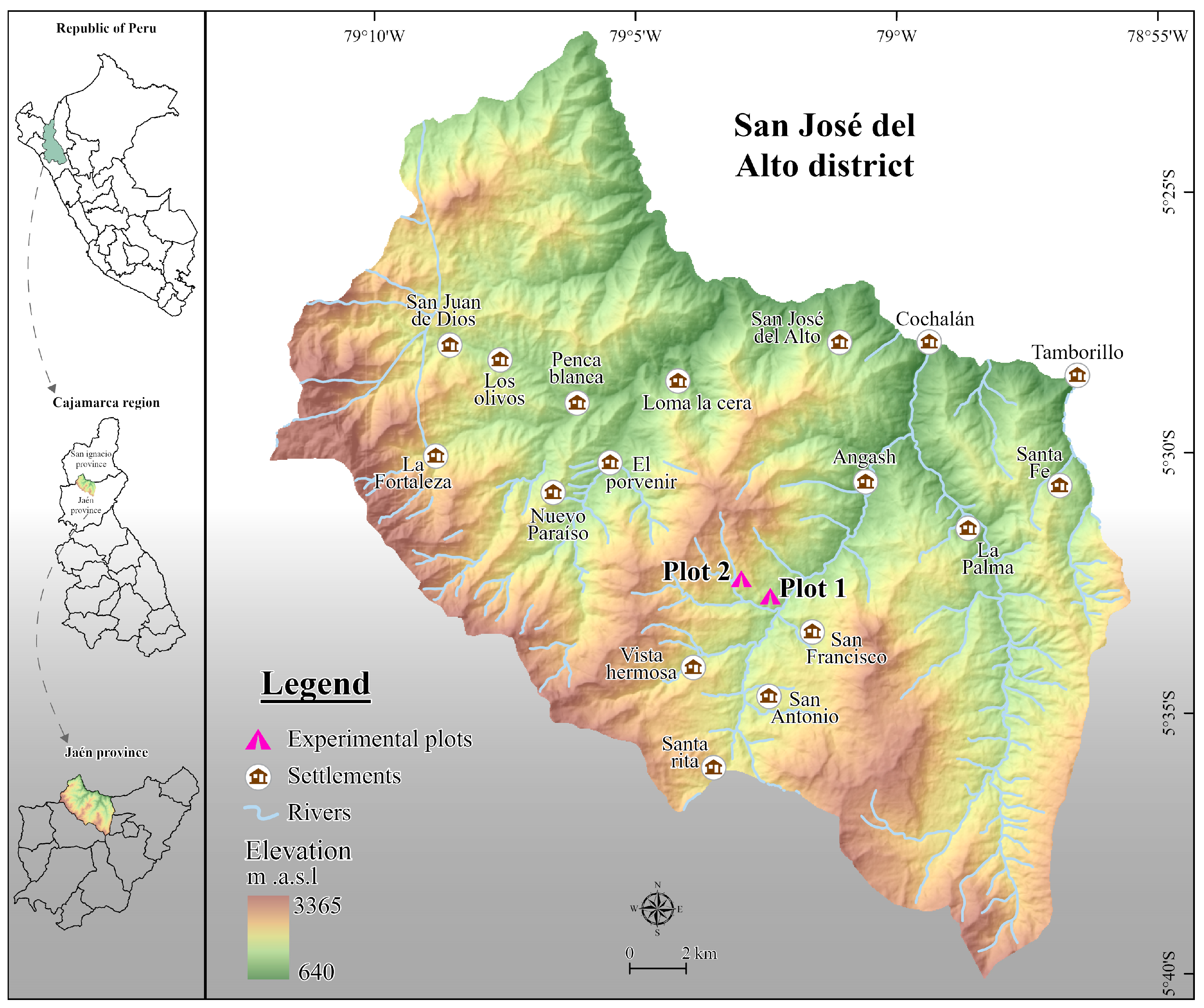
The research was conducted on two plots located in the village of San Pedro in the district of San José del Alto in the province of Jaén, Cajamarca (Peru) (Figure 1). The district of San José del Alto is located at an altitude of 1350 m above sea level, The topography is rugged, with steep slopes and undulating terrain characteristic of the eastern foothills of the Andes. The climate has two distinct seasons: a wet season from October to April and a dry season from May to September. In 2020, the average annual rainfall was approximately 412 mm, with monthly maximums exceeding 190 mm in March and minimums below 30 mm in July and August. Temperatures ranged from 19.8 °C (minimum) to 32.4 °C (maximum), with an average relative humidity between 75 and 87% [49]. The predominant soils are Leptosol–Regosol, with a moderately coarse texture, low organic matter content, and limited fertility. These soils are vulnerable to erosion and degradation, especially under agricultural practices such as slash-and-burn [50]. As for soil reaction (pH) at altitudes of 1570, 1600, and 1800 m above sea level, the pH was 6.45, 6.05, and 5.79, respectively [51].

2.2. Sampling and Measurement

In November 2022, 600 individuals of R. rospigliosii were established, with the plantations distributed across two experimental plots under different agroforestry systems: Plot 1 at 1546 m above sea level (m.a.s.l), consisting of 200 trees in association with the Marsellesa coffee variety; and Plot 2 at 1820 m.a.s.l, consisting of 400 trees associated with the Geisha variety. For the analysis, 132 individuals were selected in Plot 1 and 197 in Plot 2 following Equation (1). The larger sample size in Plot 2 reflects its greater population (400 trees), consistent with the mathematical behavior of the formula, which incorporates population size, confidence level, and acceptable error. Thus, the difference in sample sizes is not arbitrary but derived from the statistical calculation. The experimental design considered non-probabilistic sampling for convenience, using good phytosanitary conditions and the accessibility of individuals as selection criteria for the evaluation of dasometric variables, specifically total height and basal diameter. Given these characteristics, the study is observational in nature, focusing on comparative evidence between plots rather than controlled experimentation. Therefore, the individuals selected were identifiable and measurable plants without severe phytosanitary damage at the start of monitoring. Consequently, estimates of survival, mortality, and growth were interpreted for established plants and not for the initial establishment phase [52,53].
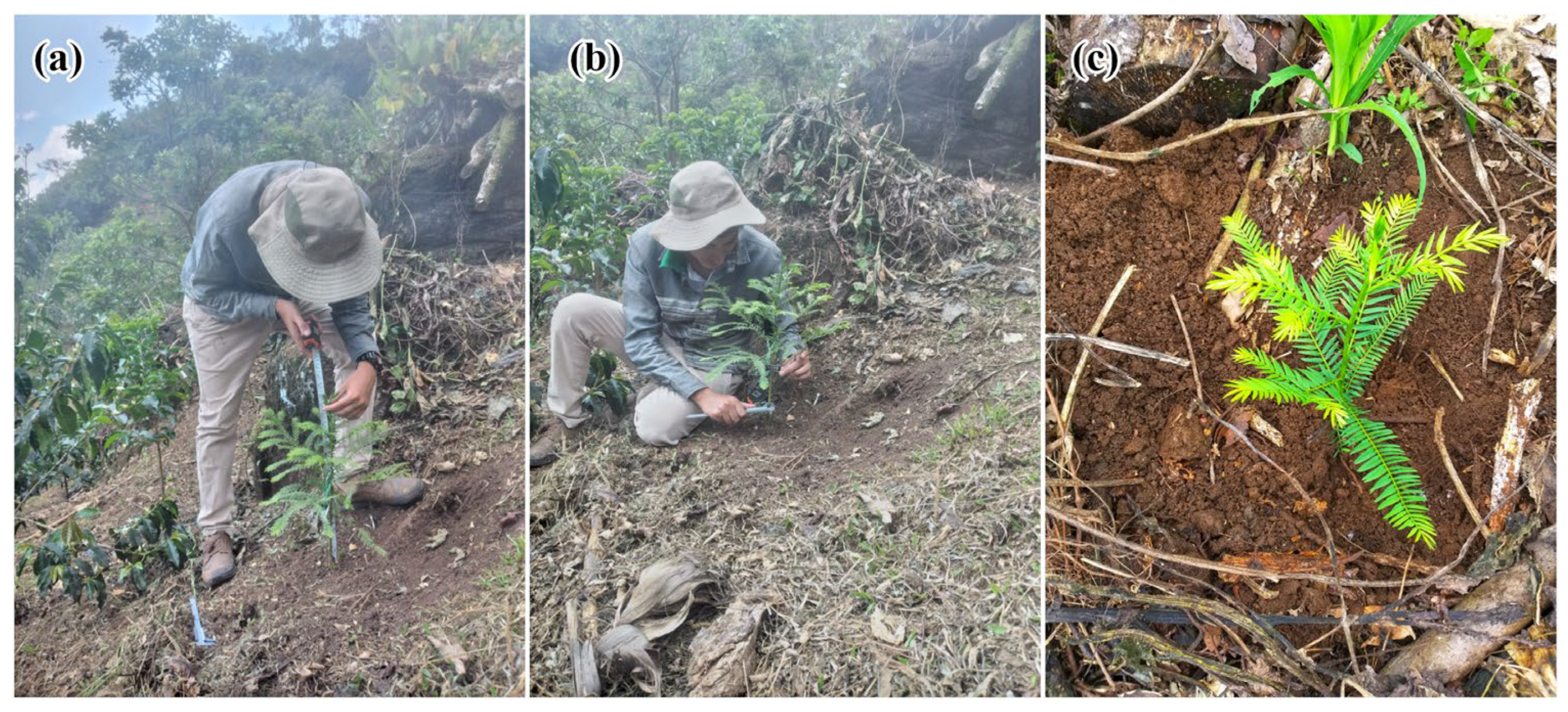
Figure 2 shows the directly measured dasometric variables: height in centimeters (a), diameter in millimeters (b), of an individual established in the final field (c).
The growth of R. rospigliosii was monitored at regular monthly intervals over 18 months. This interval corresponds to the critical establishment phase, when most mortality and physiological adjustment occur. Monitoring during this stage provides scientifically informative evidence of site suitability, seedling quality, and management effectiveness. Previous studies in tropical forests have shown that the establishment stage (typically 12–24 months) is decisive for long-term performance, as seedlings that survive this stage tend to persist and maintain growth under agroforestry or restoration conditions [54,55,56]. Thus, the 18-month horizon captures the dynamics of initial adaptation, quantifies early growth rates, and generates baseline information essential for modeling and future restoration planning.
n = Z 2 N p q e 2 N 1 + Z 2 p q
where:
  • n : Sample size;
  • Z : Value of the normal distribution associated with the confidence level;
  • N : Size of the universe;
  • p : Probability of success;
  • q : Probability of failure (1 − p);
  • e : Maximum acceptable estimation error.

2.3. Estimation of Dasometric Variables

The basal area (BA) of standing trees expressed in square meters or square centimeters [57], was calculated using Equation (2).
B A = π D 2 2
where:
  • BA: Basal area in (cm)2;
  • D: Diameter in (cm);
  • π is the mathematical constant, approximately 3.1416.
The volume of standing trees was calculated using Equation (3).
V = B A T H F F
where:
  • V: Volume (cm3);
  • BA: Basal area (cm2);
  • TH: Total height (cm);
  • FF: Form Factor, based on [1,2,3].
The average annual increase (AAI) was calculated using Equation (4), based on [58].
A A I = Y t t 0
where:
  • Y t : Dimension of the variable considered;
  • t 0 : Age from time zero in years.
For example, in the case of height, this is obtained using Equation (5):
A A I ( h e i g h t ) = h e i g h t a g e
In this study, t 0 was defined as the age in years since planting, and Y t as the accumulated increment from zero. It is also important to distinguish between the Mean Annual Increment (MAI) and Current Annual Increment (CAI). With only 18 months of monthly data, the Average Annual Increase (AAI) was used as a simple exploratory indicator of early growth. We acknowledge that derivative-based growth rates and seasonal changes would provide more detailed insights, but such analyses require longer monitoring periods and weather station data.

2.4. Data Analysis

Descriptive statistics were calculated for dasometric variables (height, diameter, basal area, and volume) in each plot, with the aim of characterizing the distribution and magnitude of the data. Measures of central tendency (mean) and dispersion (standard deviation) were determined, and it was observed that the average values of all variables were consistently higher in Plot 2 than in Plot 1.
Before performing the statistical comparison between plots, the assumptions of normality were evaluated using the Shapiro–Wilk test [59], and the assumption of homogeneity of variances using Levene’s test [60]. The results indicate that most variables did not meet the normality assumption (p < 0.05), so the nonparametric Mann–Whitney U test was used to compare the differences between plots [61]. Statistical analyses were performed in the Google Colaboratory environment.

2.5. Growth Modeling

To model the height growth of R. rospigliosii during the first 18 months after planting, we evaluated the fit of three mathematical models commonly used in forest growth studies: Schumacher, Chapman–Richards, and Weibull. These models are widely used to represent nonlinear growth trajectories and have proven effective in capturing early establishment dynamics in forestry research [62,63].
The models were fitted using nonlinear regression, with total tree height (m) as the dependent variable and time since planting (months) as the independent variable. Structural parameters were estimated through an iterative optimization algorithm, minimizing the residual sum of squares (RSS).
Model performance was assessed using complementary statistical criteria: adjusted coefficient of determination (R2), standard error of the estimate (SEE), Akaike information criterion (AIC), and Bayesian information criterion (BIC). While R 2 and SEE provide descriptive measures of explanatory power and precision, AIC and BIC penalize model complexity and are considered the primary criteria for model selection, consistent with information-theoretic approaches [64].
The formulas applied were:
R 2 = 1 R S S T S S
A I C = 2 k 2 l n L ^
B I C = k × l n 2 × l n   ( L )
where R S S is the residual sum of squares, T S S is the total sum of squares, k is the number of estimated parameters, n is the sample size, and L ^ is the maximum likelihood of the model.
It is important to note that the models were calibrated exclusively with data from the first 18 months, without external validation or parameter sensitivity analysis. This limitation implies that the results reflect only the early establishment phase of the species and should not be extrapolated to later growth stages. Future research should incorporate longer monitoring periods and independent datasets to strengthen model robustness and predictive capacity [65].

3. Results

3.1. Survival

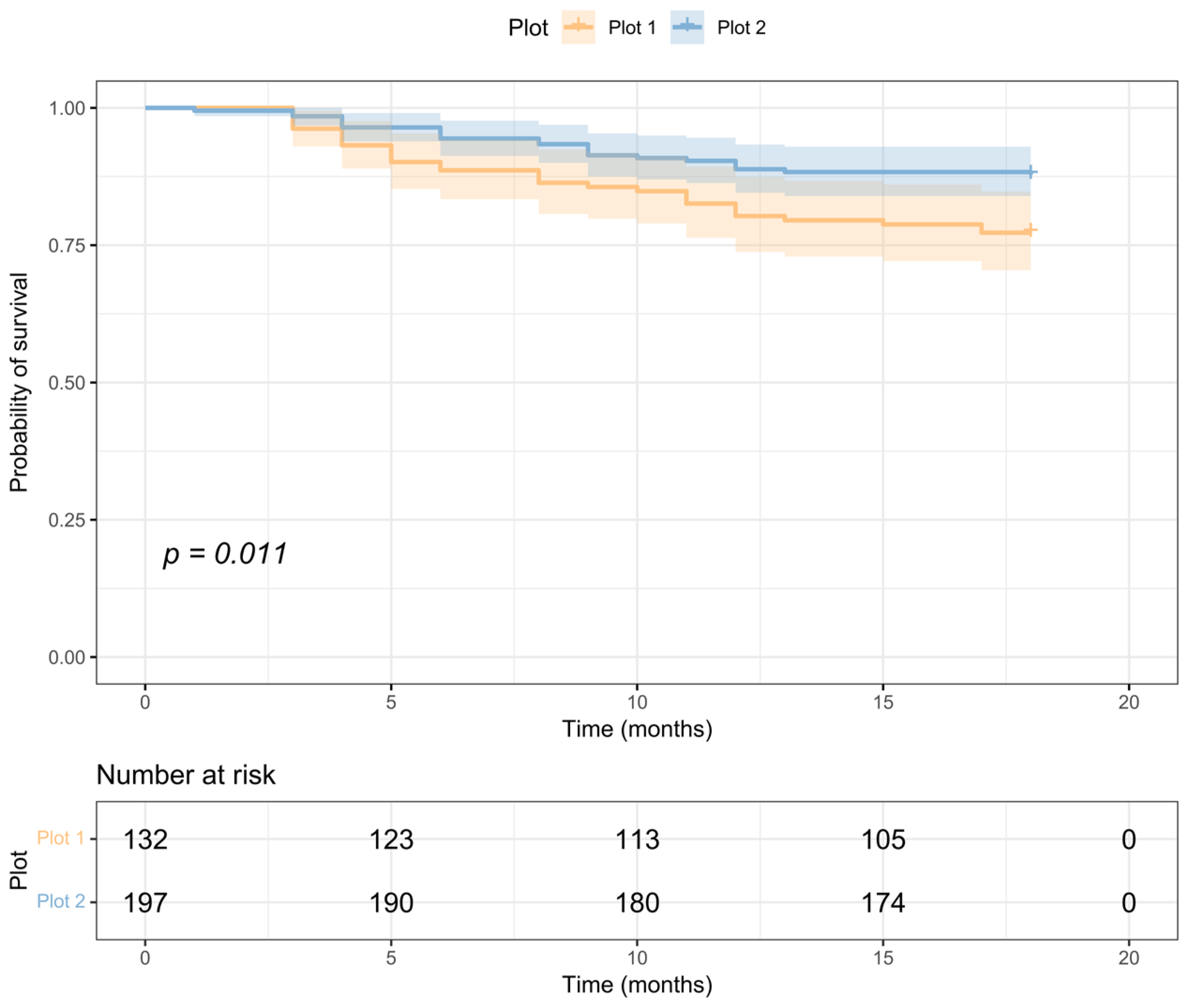
The probability of plant survival showed consistent differences between the two plots over the 18 months of monitoring. In the plot located at 1540 m.a.s.l (plot 1), survival decreased from 100% in the first two months to 77.3% at month 18. However, in the plot established at 1820 m.a.s.l (plot 2), survival remained consistently higher, falling from 99.5% in the first months to 87.8% at month 18. Thus, towards the end of the evaluation period, the higher altitude plot had approximately 10 percentage points of higher survival than the lower altitude plot, suggesting that conditions at 1820 m.a.s.l were more favorable for plant survival during the study period, reflecting the species’ adaptation to cloud forests within a context of climatic variability (Table 1).
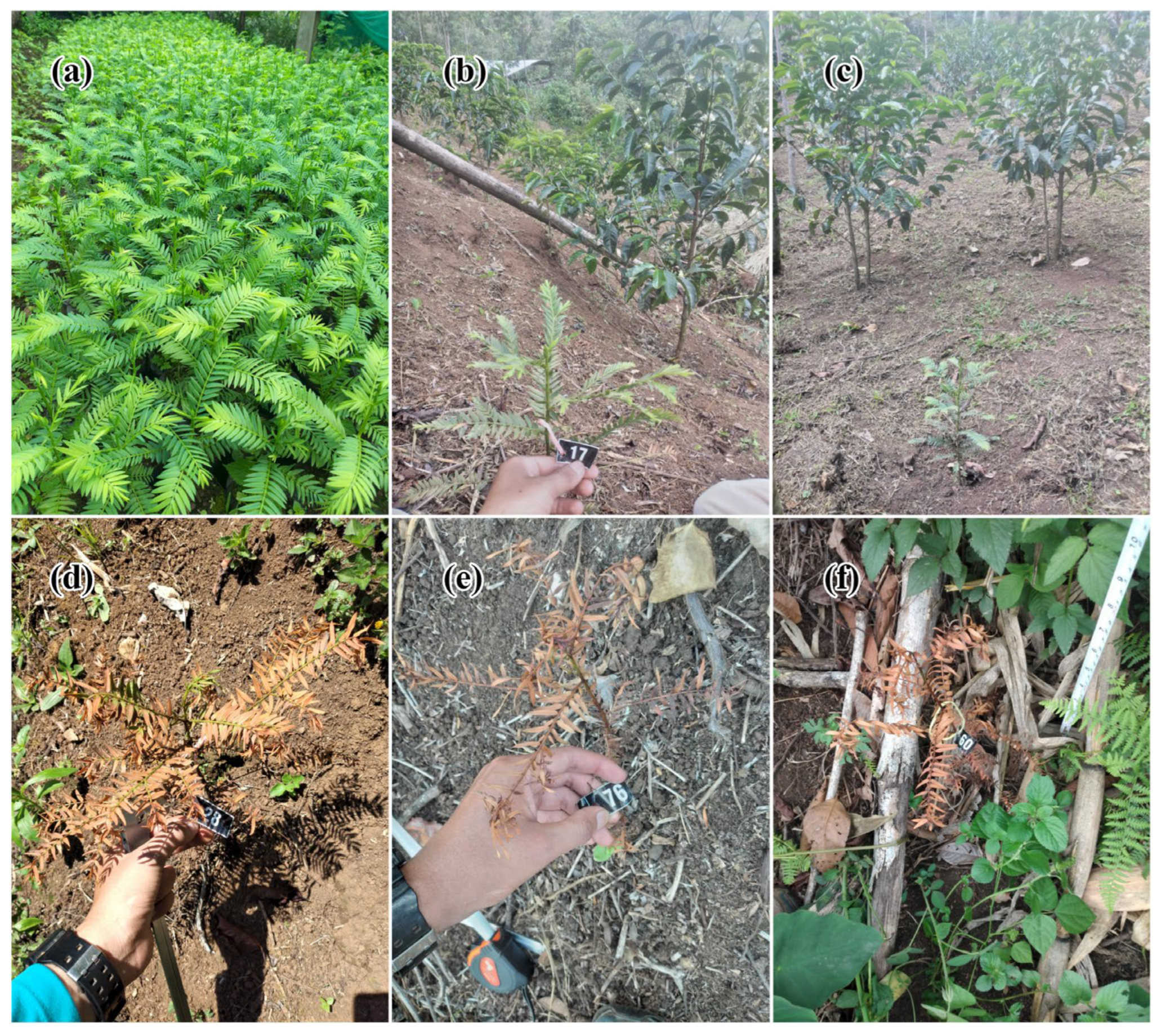
On the other hand, Figure 3 shows individuals in the nursery (a), individuals selected in month 0 (b and c), and mortality recorded in some individuals at the end of the first month (d–f).
Figure 4 shows the Kaplan–Meier survival curves that revealed differences between the two plots. Plot 2, located at 1820 m.a.s.l, consistently showed higher survival rates than plot 1 (1540 m.a.s.l), ranging from values close to 100% in the first months to 87.8% at month 18, compared to 77.3% for the lower altitude plot. The log-rank test indicated that these differences in survival over time were statistically significant (p = 0.011).
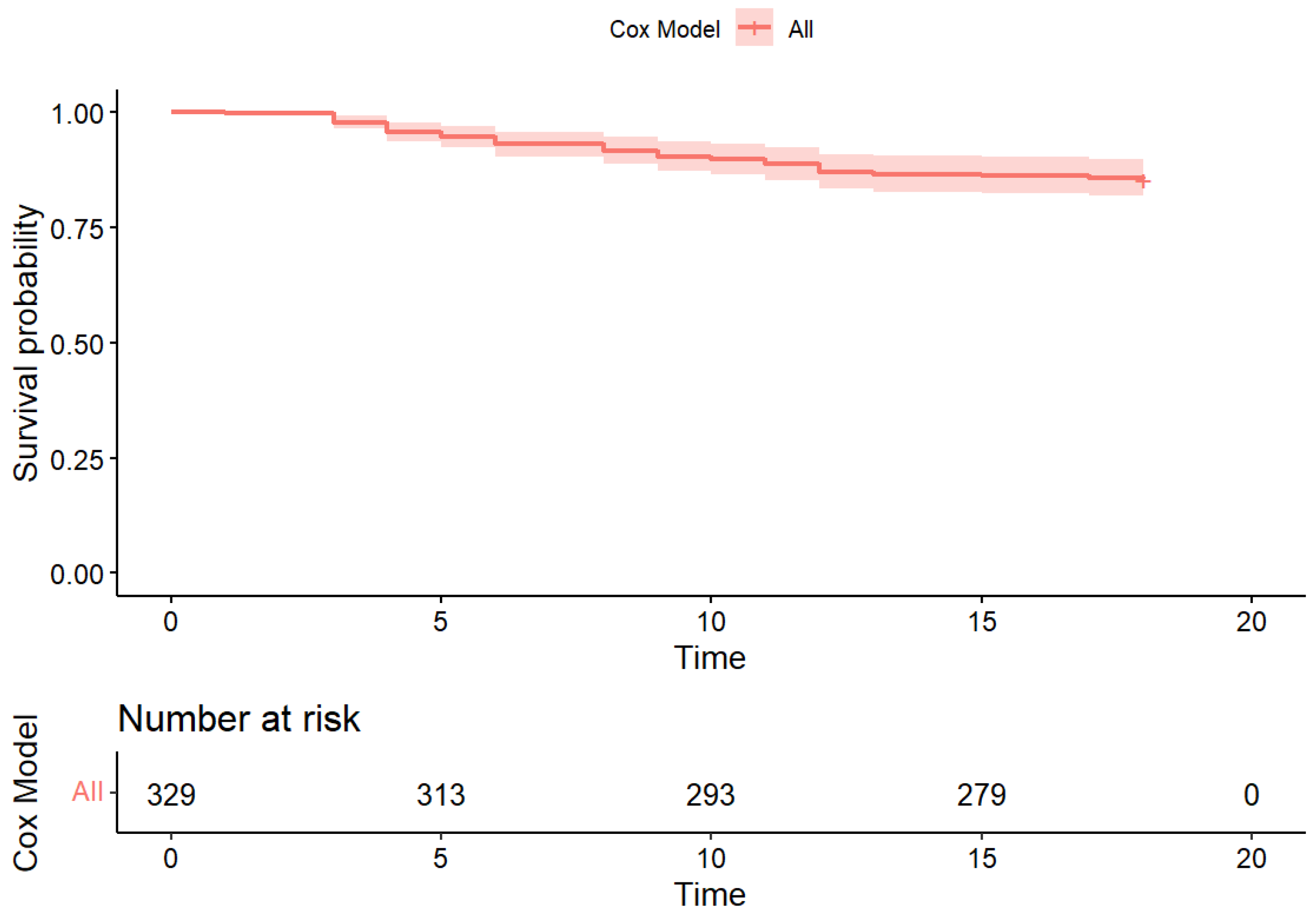
To improve the analysis, Figure 5 shows the Cox proportional hazards model (n = 329, events = 54), where we identified initial basal diameter as the most robust predictor of survival (HR = 0.0013, 95% CI: 8.6 × 10⁻⁶–0.21, p = 0.01), indicating that individuals with greater initial vigor have a significantly lower probability of mortality during the establishment phase. In contrast, altitude (HR ≈ 0.999, p = 0.40) and initial height (HR ≈ 0.97, p = 0.47) did not show statistically significant effects, although the trend suggests a slight advantage at higher sites and in more developed seedlings. Coffee variety and pH could not be estimated due to collinearity with the site factor. Model concordance (0.648) and global tests (p < 0.001) confirmed that the included covariates consistently explained the variation in survival. The Kaplan–Meier curve adjusted using the Cox model shows that the confidence interval indicates that the estimate is statistically consistent, although with some variability in recent months due to the reduction in the number of individuals at risk. The table below reinforces this pattern, showing how the cohort size decreases over time, reflecting cumulative mortality. Overall, the figure shows that the critical establishment phase occurred in the first 12 months, when most mortality events were concentrated. These results highlight the importance of initial basal diameter as a selection criterion in programs for establishing R. rospigliosii in agroforestry systems with coffee.

3.2. Analysis of Structural Variables

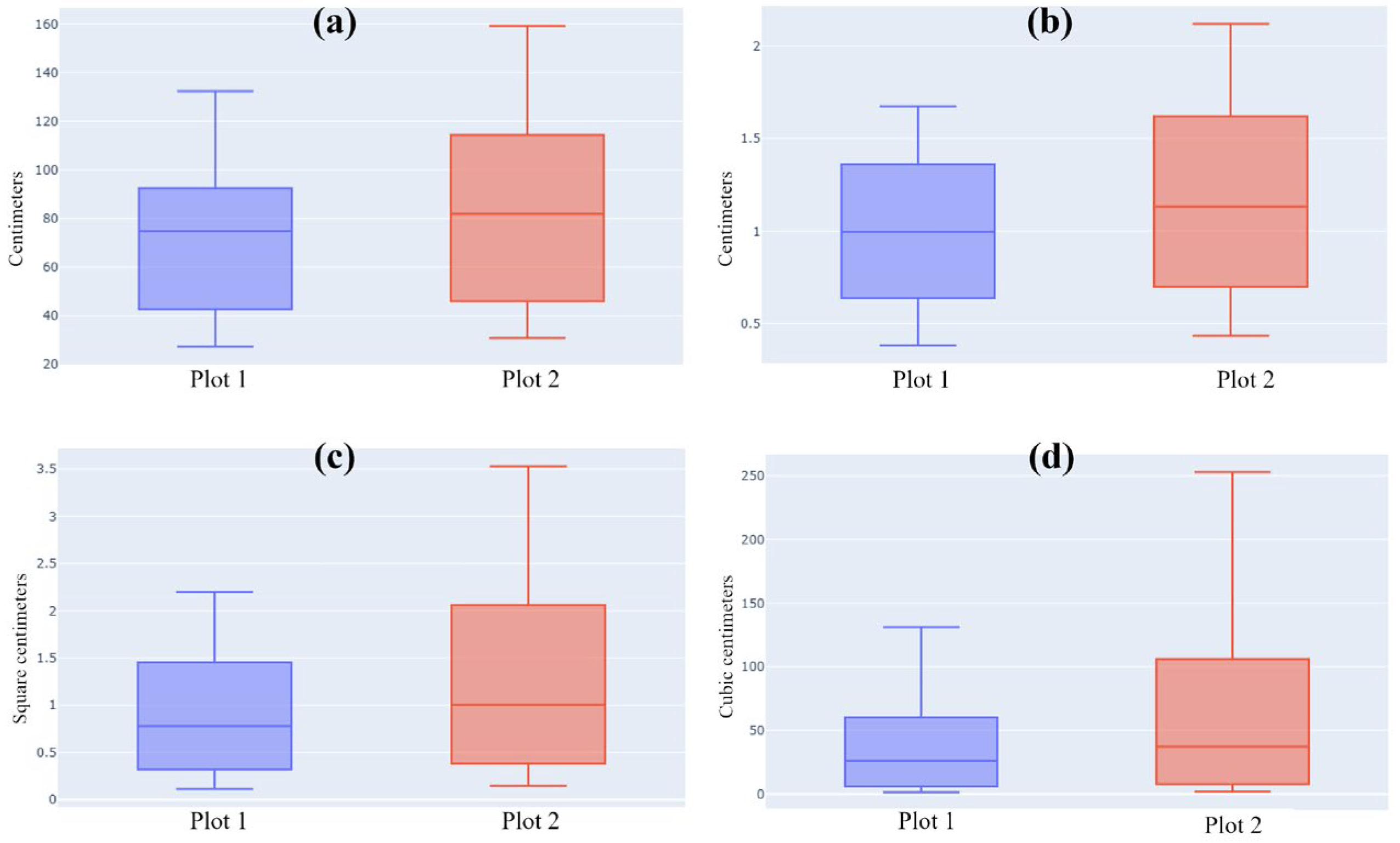
Monthly assessments carried out over 18 months showed clear differences between the two plots in all structural variables measured. In Figure 6a, the height of individuals in plot 2 exhibited a higher median and interquartile range than plot 1, indicating more sustained vertical growth. Similarly, diameter (Figure 6b) also had higher central values in plot 2, which directly affects the increase in basal area (Figure 6c) and volume (Figure 6d).
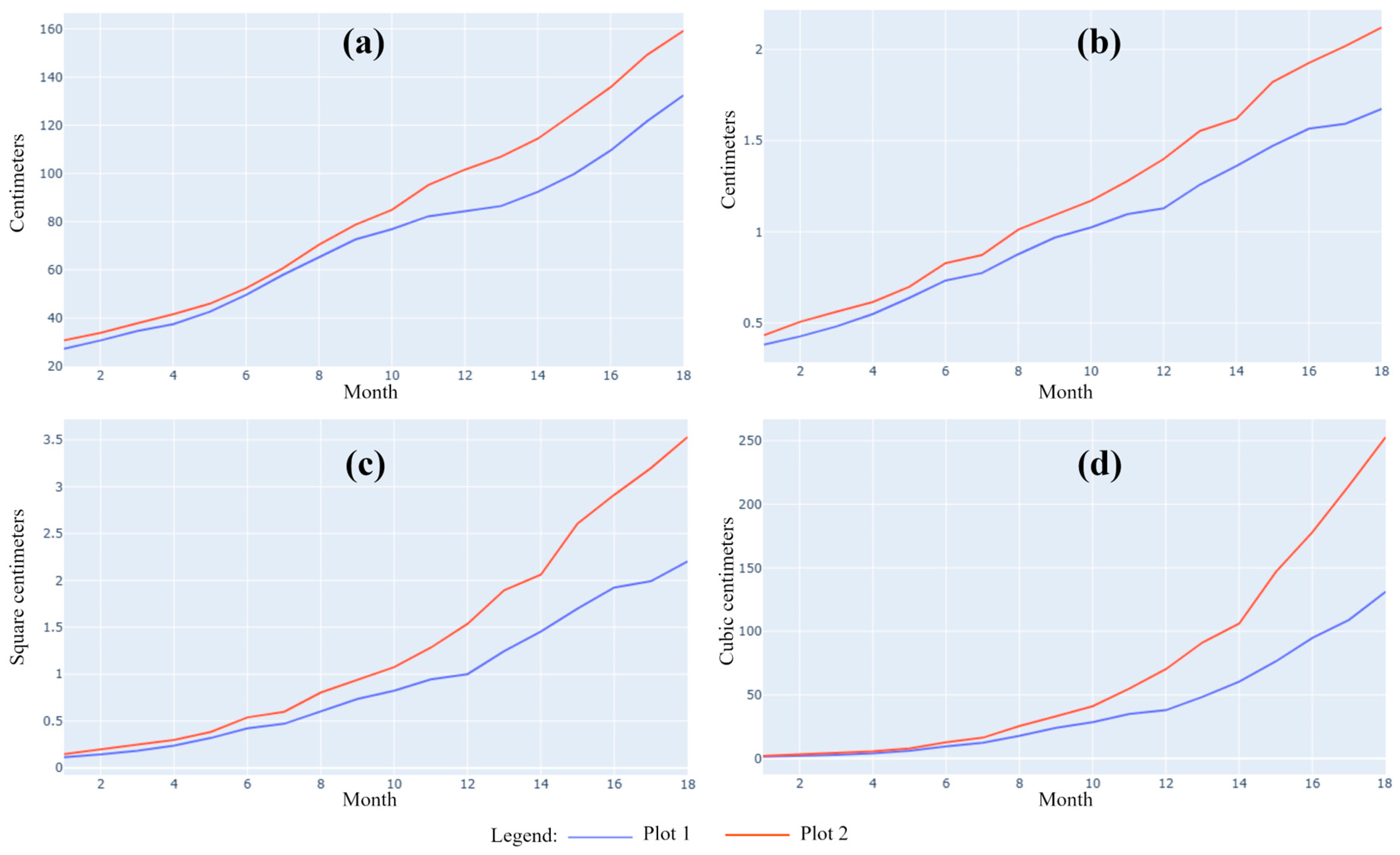
The growth trend of the variables is shown in Figure 7. A continuous increase could be observed throughout the evaluation period, with well-defined upward trajectories for height (a), diameter (b), basal area (c), and volume (d). For all variables, the values for plot 2 were consistently higher than those for plot 1, maintaining a clear separation during the 18 months of monitoring. This difference was most noticeable in volume, especially towards the last months of evaluation.
On the other hand, to complement the structural growth analysis, the Average Annual Increase (AAI) values were calculated for height, diameter, and volume in three cumulative periods: at 6, 12, and 18 months of evaluation. Table 2 shows the average AAI values for each plot, located at different altitudes (1546 and 1820 m.a.s.l). Progressive differences were observed between the two conditions, with plot 2 generally recording higher AAI values in volume and height, especially towards month 18. The tree does not shrink; what decreases is the average growth rate per year, which is expected behavior in forest species.
The apparent decrease does not indicate a reduction in tree size, but rather reflects the mathematical behavior of the Average Annual Increment (AAI). As trees age, their cumulative dimensions (height, diameter, and volume) continue to increase; however, the annual average growth rate declines because each increment is distributed across a longer time span, as shown in Table 2. This pattern is typical of forest species and has been consistently reported in growth and yield studies.

3.3. Statistical Analysis of Growth

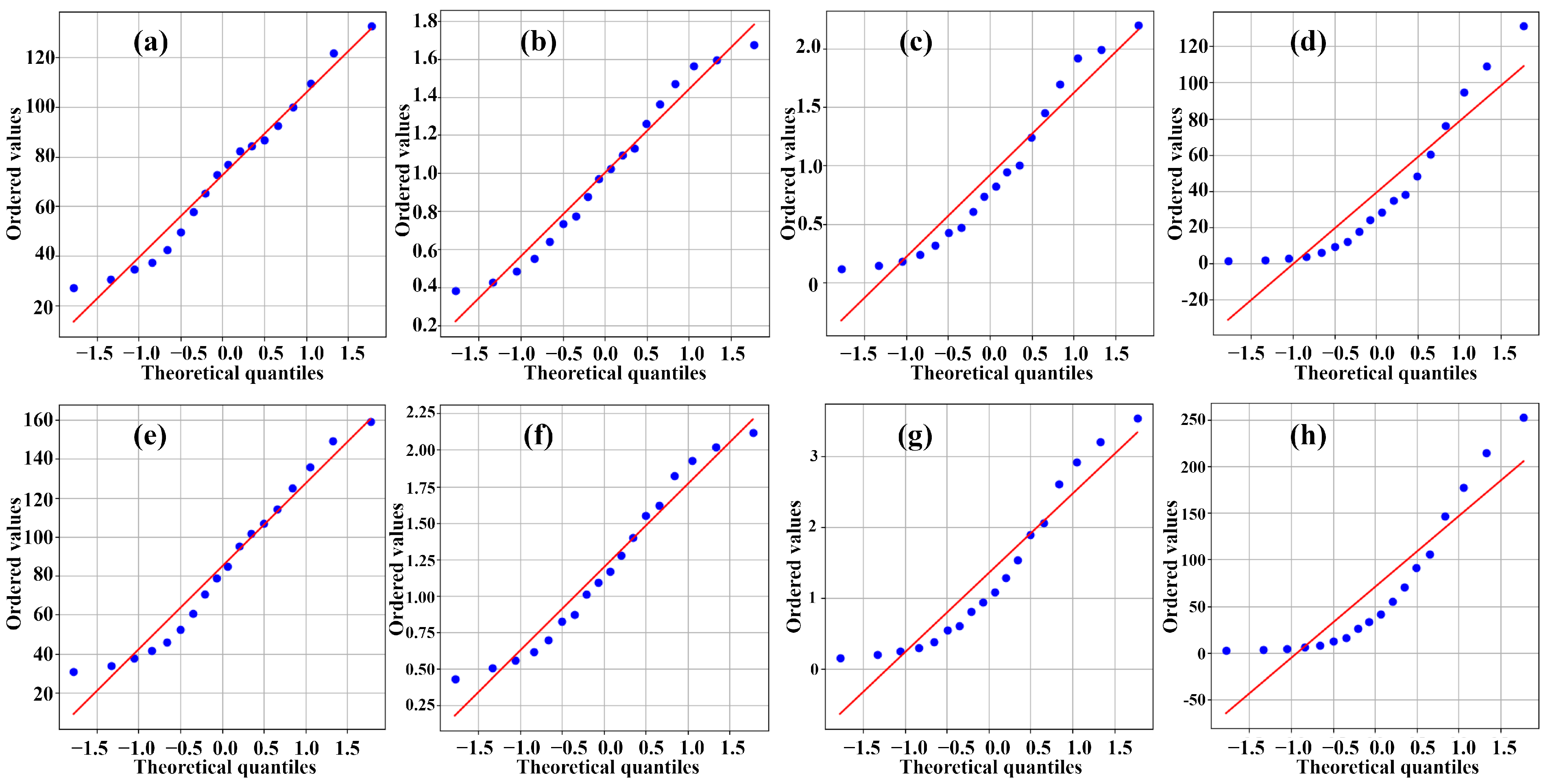
The Quantile–Quantile plots in Figure 8 show the distribution of data relative to the theoretical normal line for the structural variables in both plots. Panels Figure 8a–d correspond to the values for height, diameter, basal area, and volume in plot 1, while panels Figure 8e–h represent the same variables in plot 2. In general, there was a deviation from the theoretical line, especially in the basal area and volume variables (panels Figure 8c,d,g,h), suggesting a non-normal distribution in these cases.
In addition, Table 3 presents the results of the normality tests using the Shapiro–Wilk test and the homogeneity of variances using Levene’s test, both applied to the data for month 18, with the aim of evaluating the final effect of the agroforestry association on the structural variables. In this final stage, we sought to determine whether the differences observed between plots were statistically consistent. The results indicate a non-normal distribution in several variables, particularly in diameter, basal area, and volume. In addition, heterogeneity of variances was identified, which justified the use of non-parametric tests for comparisons between plots.
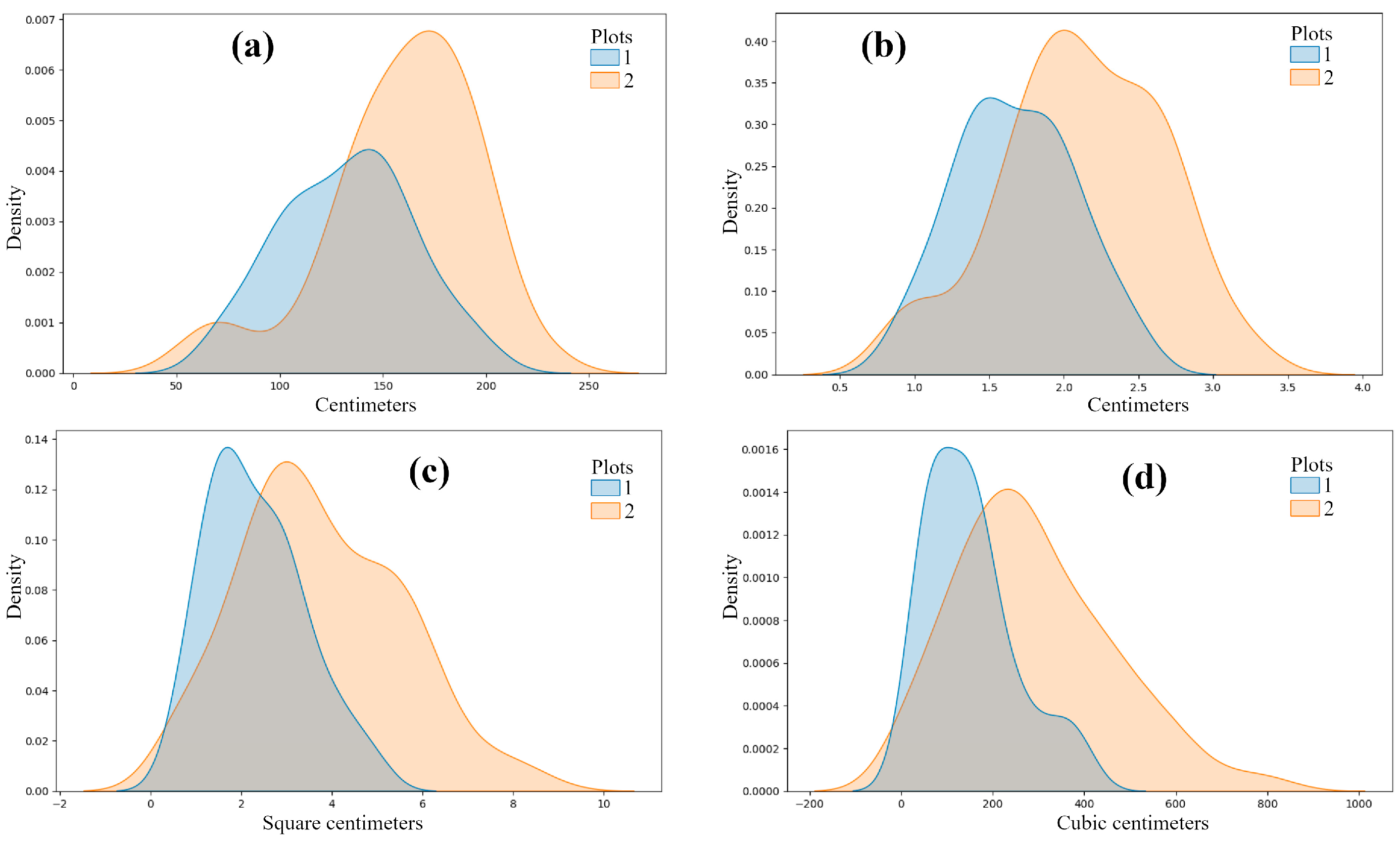
Based on the non-compliance with the assumptions of normality and homogeneity of variances, the Mann–Whitney U test showed statistically significant differences (p < 0.05) in all the variables evaluated. Figure 9 reinforces this difference, showing the density curves for each variable per plot. In Figure 9a, it can be seen that the individuals in plot 2 had a distribution shifted to the right, with a greater number of occurrences concentrated around 170 cm in height compared to plot 1. This pattern is repeated in diameter (b), basal area (c), and volume (d), where the distributions in plot 2 tended toward higher values, quantitatively and visually supporting the significant differences identified by the statistical test.

3.4. Estimated Models

The analysis of growth models applied to the dasometric variables of R. rospigliosii showed relative differences in their performance (Table 4). The Schumacher model presented the R2 highest values for height (0.98) and diameter (0.92), indicating greater descriptive explanatory power for these variables. However, the information criteria (AIC and BIC) favored Chapman–Richards and Weibull in several cases, particularly in volume and combined relationships, where lower penalized fit values were observed.
For basal area and volume, all models showed limited performance (0.54 < R2 < 0.68), reflecting the complexity of these variables and their high ecological variability. This result suggests that more specific models, such as local allometric equations or mixed models that include site factors, may be required to improve the predictive power. In the height–diameter relationship, Schumacher achieved the highest R2 (0.98), while Chapman–Richards and Weibull showed slightly lower values (0.90) but with lower AIC and BIC, indicating a better balance between fit and parsimony. In the basal area–volume relationship, Chapman–Richards and Weibull obtained the best results (R2 = 0.99), surpassing Schumacher (R2 = 0.87).
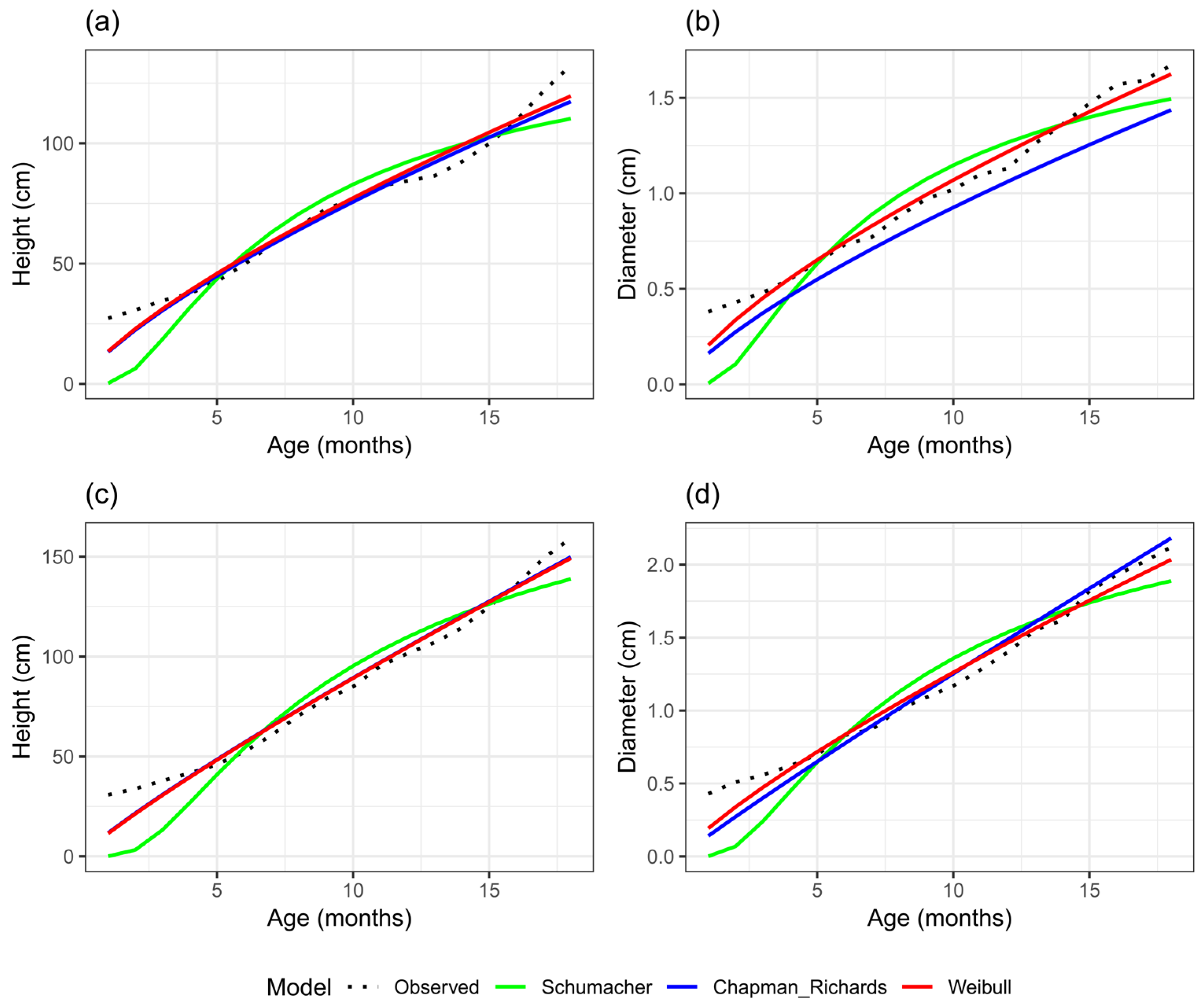
Figure 10 shows the growth patterns of R. rospigliosii during the first 18 months in two plots, comparing the observed data with three models: Schumacher, Chapman–Richards, and Weibull. In plot 1 (panels a–b), more dynamic growth was observed in both height and diameter, where Schumacher and Chapman–Richards fit the observed pattern well, while Weibull tended to overestimate in the initial stages. In plot 2 (panels c–d), growth was more gradual and stable, with Schumacher again showing the best fit, followed by Chapman–Richards, while Weibull showed greater deviation. These results suggest that Schumacher is the most robust model for describing the early growth of this species under both conditions.
Table 5 shows a comparison of three mathematical models of tree growth—Schumacher, Chapman–Richards, and Weibull—applied to the estimation of height (h) and diameter (d) as a function of age (t). The Schumacher model stood out for its greater accuracy, with coefficients of determination of R2 = 0.98 for height and R2 = 0.92 for diameter, indicating a superior fit compared to the other models. In contrast, Chapman–Richards (0.80 and 0.75) and Weibull (0.80 and 0.74) had lower R2 values, reflecting lower explanatory power. Overall, Table 5 shows that although all three models captured the dynamics of growth, Schumacher offered the best statistical representation of the relationship between age, height, and diameter.

4. Discussion

Survival results complement the growth findings, suggesting that altitude may influence establishment. The higher survival rate at 1820 m.a.s.l suggests that microclimatic conditions with higher humidity and lower thermal stress favor the persistence, with reports for conifers and montane forests [66,67,68,69]. However, given the observational design and the simultaneous differences between sites (coffee variety, soil, microclimate), these patterns should be interpreted as site-specific associations rather than definitive causal effects. This difference explains the higher values for height, diameter, and volume observed at higher altitude, reinforcing the idea that survival is a prerequisite for sustained growth and higher productivity in agroforestry systems [17,31].
The growth of R. rospigliosii in agroforestry systems varies significantly depending on altitude and plantation age. At one year, the average annual increment (AAI) in height, diameter, and volume varied in each plot with values of up to 1.02 m/year in height and 1.40 cm/year in diameter. Long-term studies have reported lower increments in plantations at similar altitudes, where [70,71] found average increments of 0.66 m/year, 0.12 cm/year, and 0.012 m3/year at the same altitude, confirming a slowdown in growth over time. In natural forests, the annual diameter increases range from 0.1 cm to 0.8 cm [72]. The comparisons suggest that growth rates in agroforestry systems may be moderately higher than that of plantations and natural forests, but such differences must be interpreted cautiously, as they may reflect site-specific conditions rather than generalizable trends.
It is well-established that trees slow down their growth as they age [73], with species showing greater increases in height and diameter during the first years of life [74]. Tree spacing also plays a critical role, as reduced competition for light, water, and nutrients promotes better initial growth [75]. These determinants are consistent with the broader literature on early growth modeling, which emphasizes the importance of initial vigor and resource availability [62,63].
Beyond the descriptive Kaplan–Meier curves, the Cox proportional hazards model provided additional insights into the determinants of survival. The analysis confirmed that the initial basal diameter was the most robust predictor of survival (HR = 0.0013, p = 0.01), indicating that individuals with greater initial vigor had a significantly lower probability of mortality during establishment. In contrast, altitude and initial height did not show statistically significant effects, suggesting that within the altitudinal range studied (1540–1820 m), microclimatic differences were less decisive than seedling morphology. Coffee variety and soil pH could not be independently estimated due to collinearity with site factors, underscoring the need for replicated designs to disentangle ecological drivers. These findings are consistent with reports that seedling vigor strongly predicts establishment success in agroforestry and restoration contexts [76,77].
Schumacher’s model proved to be the most accurate for estimating growth in height and diameter R2 (0.98, 0.92). Its effectiveness lies in its ability to describe sigmoid growth patterns, characteristic of slow-growing tree species and ecosystems with resource limitations. Previous studies confirm its suitability for conifers such as P. lumholtzii and P. strobiformis; recent applications to R. rospigliosii also highlight its predictive capacity [78]. This model is particularly useful for species that exhibit an initial phase of accelerated growth, followed by a progressive slowdown as trees reach maturity [17].
The Chapman–Richards model, although acceptable, has shown a lower accuracy R2 of 0.80 and 0.75. It is a more suitable model for species with uniform growth over time, as reported for P. leiophylla, P. lumholtzii, and P. strobiformis [79,80,81]. In contrast, the Weibull model presented the lowest adjustment values (R2 = 0.80 for height, 0.74 for diameter). While widely used to describe size distributions in forest populations [82,83,84,85,86], it does not capture individual growth variation with sufficient accuracy, which explains its limited applicability to R. rospigliosii. Beyond the R2 values, the comparison of growth models (Table 4 and Table 5) showed that each approach has relative advantages depending on the variable analyzed. Schumacher’s model showed the highest R2 values for height (0.98) and diameter (0.92), reflecting greater descriptive explanatory power. However, the information criteria (AIC and BIC) favored Chapman–Richards and Weibull in several cases, particularly in volume and combined relationships, where lower penalized fit values were observed. This confirms that selection of the optimal model should be based on the balance between fit and parsimony, rather than on isolated indicators such as R2 [64].
The relatively low R2 values in variables such as volume and basal area reflect the complexity of ecological processes and the inherent variability in forest systems, which is consistent with previous studies in forest modeling [62,63]. Despite these limitations, the inclusion of the estimated equations (Table 5) provides transparency and reproducibility, allowing the models to be applied in practical contexts. Overall, the results suggest that Schumacher is more suitable for describing height and diameter dynamics, while Chapman–Richards offers a better fit in volume and combined relationships, and Weibull is an intermediate alternative with acceptable stability. These interpretations remain exploratory and restricted to the establishment phase.
The study considered a two-plot design and non-probabilistic sampling, decisions motivated by the need for comparison at the micro level and by logistical constraints in the field, where the number of independent units conditions the inferential scope [87]. To prevent overly generalized inferences, the results were interpreted as comparative evidence between plots, with assumptions verified (normality and homoscedasticity) and performance evaluated at month 18, supplemented by temporal analyses where appropriate [88]. Unequal sample sizes, defined by sample calculation, were also used, thus avoiding forcing an artificial balance and applying models consistent with the actual data structure. In the survival analysis, Kaplan–Meier and log-rank were used as a descriptive basis, and the inference was reinforced with a Cox proportional hazards model, which allows for a more robust comparison of risks [89].
Future studies should extend this evidence beyond the two-plot design, testing replicated sites across broader altitudinal and management gradients and extending monitoring beyond the establishment phase to quantify when growth deceleration occurs and whether initial advantages persist. At the same time, the integration of microclimate measurements and additional predictors of vigor would help to unravel covariate factors and improve the modeling of survival risk while validating and recalibrating the Schumacher function for operational use.
This research provides a practical framework for assessing the initial growth of Retrophyllum rospigliosii in coffee-based agroforestry systems. The findings document site-specific evidence during the establishment phase and offer modeling tools that allow for growth trajectories under different treatments to be projected and compared. Taken together, these results facilitate early management considerations but should not be extrapolated to long-term productivity or generalized ecological implications without replicated trials and extended monitoring.

5. Conclusions

This study provides preliminary evidence on the early growth and survival of Retrophyllum rospigliosii in coffee-based agroforestry systems in northern Peru. As an observational study conducted in two non-replicated plots, the results must be interpreted within the specific site conditions and should not be generalized beyond this context. The findings indicate that Schumacher’s model offers the most accurate representation of early growth in height and diameter, reflecting the species’ characteristic sigmoid growth pattern. Survival rates were higher at 1820 m.a.s.l compared to 1540 m.a.s.l, suggesting that altitude may influence establishment. However, given the simultaneous differences between sites (coffee variety, microclimate, soil conditions), these effects cannot be isolated and remain site-specific rather than causal.
Because the models were calibrated exclusively with 18 months of data, the findings should be interpreted as exploratory and restricted to the establishment phase. Any implications for management are limited to the dynamics of early establishment and exploratory modeling, without extending to long-term productivity or definitive recommendations. Future research should expand altitudinal and climatic gradients, incorporate ecophysiological and edaphic variables, and apply advanced statistical approaches (e.g., mixed-effects or Bayesian models) to strengthen predictive capacity and provide robust guidance for restoration and agroforestry planning.
Even within these limitations, the study contributes valuable baseline information for understanding the early dynamics of R. rospigliosii in agroforestry systems and highlights the potential of integrating native species into sustainable production and conservation strategies in the tropical Andes.

Author Contributions

Conceptualization, J.F.O.-T.; methodology, J.F.O.-T. and N.A.-M.; software, J.F.O.-T., L.Q.-H. and T.S.-F.; validation, C.L.O.-Z., N.A.-M., and D.G.-F.; formal analysis, J.F.O.-T., L.Q.-H., T.S.-F. and M.G.; investigation, J.F.O.-T., C.L.O.-Z., T.S.-F., D.G.-F., V.H.T.-M., D.T. and M.G.; resources, V.H.T.-M. and M.G.; data curation, C.L.O.-Z., L.Q.-H., N.A.-M. and D.G.-F.; writing—original draft, J.F.O.-T.; writing—review and editing, C.L.O.-Z., V.H.T.-M., D.T. and M.G.; visualization, J.F.O.-T., N.A.-M. and D.G.-F.; supervision, L.Q.-H. and M.G.; project administration, V.H.T.-M. and M.G.; funding acquisition, D.T. All authors have read and agreed to the published version of the manuscript.

Funding

The authors thank the Instituto Nacional de Innovación Agraria (INIA) through the Investment Project with CUI No. 2472675 entitled: “Mejoramiento de los servicios de investigación y transferencia de tecnología agraria en la estación agraria experimental Baños del Inca en la localidad de Baños del Inca del distrito de Baños del Inca—provincia de Cajamarca—departamento de Cajamarca”, which funded the execution of this research.

Data Availability Statement

Upon reasonable request, the corresponding author will provide access to the data used to support the study’s findings.

Conflicts of Interest

The authors declare that they have no known competing financial interests or personal relationships that could have appeared to influence the work reported in this paper.

References

  1. Herbert, J.; Hollingsworth, P.M.; Gardner, M.F.; Mill, R.R.; Thomas, P.I.; Jaffré, T. Conservation Genetics and Phylogenetics of New Caledonian Retrophyllum (Podocarpaceae) Species. N. Z. J. Bot. 2002, 40, 175–188. [Google Scholar] [CrossRef]
  2. Sinclair, W.T.; Mill, R.R.; Gardner, M.F.; Woltz, P.; Jaffré, T.; Preston, J.; Hollingsworth, M.L.; Ponge, A.; Möller, M. Evolutionary Relationships of the New Caledonian Heterotrophic Conifer, Parasitaxus Usta (Podocarpaceae), Inferred from Chloroplast TrnL-F Intron/Spacer and Nuclear RDNA ITS2 Sequences. Plant Syst. Evol. 2002, 233, 79–104. [Google Scholar] [CrossRef]
  3. Leslie, A.B.; Beaulieu, J.M.; Rai, H.S.; Crane, P.R.; Donoghue, M.J.; Mathews, S. Hemisphere-Scale Differences in Conifer Evolutionary Dynamics. Proc. Natl. Acad. Sci. USA 2012, 109, 16217–16221. [Google Scholar] [CrossRef] [PubMed]
  4. Wilf, P.; Donovan, M.P.; Cúneo, N.R.; Gandolfo, M.A. The Fossil Flip-leaves (Retrophyllum, Podocarpaceae) of Southern South America. Am. J. Bot. 2017, 104, 1344–1369. [Google Scholar] [CrossRef]
  5. Lamprecht, N. Silvicultura En Los Trópicos. Los Ecosistemas Forestales En Los Bosques Tropicales y Sus Especies Arbóreas. Posibilidades Para Un Aprovechamiento Sostenido; GTZ: Eschborn, Germany, 1990. [Google Scholar]
  6. Veblen, T.T.; Kitzberger, T.; Villalba, R. Nuevos Paradigmas En Ecología y Su Influencia Sobre el Conocimiento de la Dinámica de los Bosques del sur de Argentina y Chile; Editorial de la Universidad Nacional de La Plata: La Plata, Argentina, 2005. [Google Scholar]
  7. Mahecha Vega, G.E.; Barrero Barrero, D.; Camelo Salamanca, D.; Ovalle Escobar, A.; Rozo Fernández, A. Vegetación del Territorio CAR: 450 Especies de sus Llanuras y Montañas; Corporación Autónoma Regional de Cundinamarca-CAR: Bogotá, Colombia, 2012; ISBN 958-8188-06-7. [Google Scholar]
  8. Mill, R.R. A Monographic Revision of Retrophyllum (Podocarpaceae). Edinb. J. Bot. 2016, 73, 171–261. [Google Scholar] [CrossRef]
  9. Villada Arroyave, J.A.; Gallego Salazar, M.I.; Vargas Vacca, A.M.; Quiceno Ramírez, C.A.; Parra, F.; Guerra, G. Lista Anotada de las Especies Forestales Sembradas en el Programa de Restauración Ecológica Participativa ReverdeC; Celsia Colombia S.A. E.S.P.: Celsia, Colombia, 2021. [Google Scholar] [CrossRef]
  10. Baselly Villanueva, J.R.; Goycochea Casas, G.; Macedo Ladeira Carvalho, A.M.; Roncal Briones, W.R.; Chumbimune Vivanco, S.Y.; Chavesta Custodio, M. CARACTERIZACIÓN Y DIFERENCIAS ANATÓMICAS DE MADERAS DE Retrophyllum Rospigliosii (Pilg.) C.N. Page Y Prumnopitys Harmsiana (Pilg.) de Laub. (PODOCARPACEAE) PROCEDENTES DE LA PROVINCIA DE SAN IGNACIO, PERÚ. Folia Amaz. 2021, 30, 137–148. [Google Scholar] [CrossRef]
  11. García, N. (Ed.) Libro Rojo de Plantas de Colombia; Primera Edición: Bogotá, Colombia, 2007; Volume 5, ISBN 978-958-8343-13-6. [Google Scholar]
  12. Gardner, M.; Thomas, P. Retrophyllum Rospigliosii. In The IUCN Red List of Threatened Species 2013; Born Free: Horsham, UK, 2013; E. T34110A2846471 2013. [Google Scholar]
  13. More, P.; Cuellar, J.; Salazar, E. Propagación Vegetativa de Retrophyllum Rospigliosii (Pilg.) C.N. Page “Ulcumano” En Cámara de Subirrigación En Chanchamayo/Perú. Ecol. Apl. 2021, 20, 15–23. [Google Scholar] [CrossRef]
  14. Mosquera-Vásquez, M.; Tobón-Marin, C.; Mosquera-Vásquez, M.; Tobón-Marin, C. Efectos de La Restauración de Los Bosques Montanos Tropicales Sobre El Funcionamiento Ecohidrológico de Cuencas Hidrográficas. Bosque 2023, 44, 639–653. [Google Scholar] [CrossRef]
  15. Mendoza-Páez, J.S.; Giraldo, J.A.; Mazo-Lopera, M.A.; Giraldo-Salazar, J.M.; Osorio-Vélez, L.F. Trends in Planted Native Tree Biomass Established in a Tropical Andes City Water Basins. Restor. Ecol. 2024, 33, e14296. [Google Scholar] [CrossRef]
  16. Weiskittel, A.R.; Hann, D.W.; Kershaw, J.A.; Vanclay, J.K. Forest Growth and Yield Modeling. In Forest Growth and Yield Modeling; John Wiley & Sons, Ltd.: Hoboken, NJ, USA, 2011. [Google Scholar] [CrossRef]
  17. Burkhart, H.E.; Tomé, M. Modeling Forest Trees and Stands; Springer: Dordrecht, The Netherlands, 2012; pp. 1–457. ISBN 978-90-481-3170-9. [Google Scholar] [CrossRef]
  18. Martínez Prera, A.E. Interpretación Dendroecológica y Desarrollo de Modelos de Crecimiento en dos Especies Tropicales: Swietenia Macrophylla y Cedrela Odorata en la Reserva de Biosfera Maya, Petén, Guatemala; CATIE: Turrialba, Costa Rica, 2016. [Google Scholar]
  19. Nigul, K.; Padari, A.; Kiviste, A.; Noe, S.M.; Korjus, H.; Laarmann, D.; Frelich, L.E.; Jõgiste, K.; Stanturf, J.A.; Paluots, T.; et al. The Possibility of Using the Chapman–Richards and Näslund Functions to Model Height–Diameter Relationships in Hemiboreal Old-Growth Forest in Estonia. Forests 2021, 12, 184. [Google Scholar] [CrossRef]
  20. Chazdon, R.L. Beyond Deforestation: Restoring Forests and Ecosystem Services on Degraded Lands. Science 2008, 320, 1458–1460. [Google Scholar] [CrossRef]
  21. Paquette, A.; Messier, C. The Role of Plantations in Managing the World’s Forests in the Anthropocene. Front. Ecol. Environ. 2010, 8, 27–34. [Google Scholar] [CrossRef]
  22. Vanclay, J. Modelling Forest Growth and Yield Applications to Mixed Tropical Forests; CAB International: Wallingford, UK, 1994; Available online: https://www.scirp.org/reference/referencespapers?referenceid=2529700 (accessed on 17 November 2025).
  23. Alder, D.; Synnot, T.J. Permanent Sample Plot Techniques for Mixed Tropical Forest. In Teopical Forestry Paper No. 25; Oxford Forestry Institute: Oxford, UK, 1992; Available online: https://www.scirp.org/reference/referencespapers?referenceid=595797 (accessed on 17 November 2025).
  24. Malhi, Y.; Silman, M.; Salinas, N.; Bush, M.; Meir, P.; Saatchi, S. Introduction: Elevation Gradients in the Tropics: Laboratories for Ecosystem Ecology and Global Change Research. Glob. Change Biol. 2010, 16, 3171–3175. [Google Scholar] [CrossRef]
  25. Feeley, K.J.; Silman, M.R.; Bush, M.B.; Farfan, W.; Cabrera, K.G.; Malhi, Y.; Meir, P.; Revilla, N.S.; Quisiyupanqui, M.N.R.; Saatchi, S. Upslope Migration of Andean Trees. J. Biogeogr. 2011, 38, 783–791. [Google Scholar] [CrossRef]
  26. Bruijnzeel, L.A.; Mulligan, M.; Scatena, F.N. Hydrometeorology of Tropical Montane Cloud Forests: Emerging Patterns. Hydrol. Process. 2011, 25, 465–498. [Google Scholar] [CrossRef]
  27. Spracklen, D.V.; Righelato, R. Tropical Montane Forests Are a Larger than Expected Global Carbon Store. Biogeosciences 2014, 11, 2741–2754. [Google Scholar] [CrossRef]
  28. Locatelli, B.; Pavageau, C.; Pramova, E.; Di Gregorio, M. Integrating Climate Change Mitigation and Adaptation in Agriculture and Forestry: Opportunities and Trade-Offs. Wiley Interdiscip. Rev. Clim. Change 2015, 6, 585–598. [Google Scholar] [CrossRef]
  29. Nabuurs, G.J.; Delacote, P.; Ellison, D.; Hanewinkel, M.; Hetemäki, L.; Lindner, M.; Ollikainen, M. By 2050 the Mitigation Effects of EU Forests Could Nearly Double through Climate Smart Forestry. Forests 2017, 8, 484. [Google Scholar] [CrossRef]
  30. Zuur, A.F.; Ieno, E.N.; Walker, N.; Saveliev, A.A.; Smith, G.M. Mixed Effects Models and Extensions in Ecology with R; Springer: New York, NY, USA, 2009. [Google Scholar] [CrossRef]
  31. Pretzsch, H. Forest Dynamics, Growth and Yield: From Measurement to Model; Springer: Berlin/Heidelberg, Germany, 2009; ISBN 978-3-540-88306-7. Available online: https://www.scirp.org/reference/referencespapers?referenceid=689285 (accessed on 17 December 2023).
  32. Sharma, R.P.; Vacek, Z.; Vacek, S. Nonlinear Mixed Effect Height-Diameter Model for Mixed Species Forests in the Central Part of the Czech Republic. J. For. Sci. 2016, 62, 470–484. [Google Scholar] [CrossRef]
  33. Ministerio del Ambiente (MINAN). Estrategia Nacional de Diversidad Biológica al 2021. Plan de Acción 2014–2018. MINAM: Lima, Peru, 2014. Available online: https://sinia.minam.gob.pe/documentos/estrategia-nacional-diversidad-biologica-2021-plan-accion-2014-2018 (accessed on 18 November 2025).
  34. Gómez, N.C. Primacia de la Jurísdicción Administrativa del Ministerio del Ambiente Sobre los Recursos Forestales en la Ley 29763 Ley Forestal y de Fauna Silvestre; Universidad Andina Néstor Cáceres Velasquez: Juliaca, Peru, 2016. [Google Scholar]
  35. Veraldi, R.; Ramirez-Poggi, O.E. LA Estrategia Nacional de Cambio Climático (ENCC); ARACNE: Rome, Italy, 2018; ISBN 978-88-255-0982-3. Available online: https://ricerca.unich.it/handle/11564/687182 (accessed on 18 November 2025).
  36. Piotto, D.; Montagnini, F.; Ugalde, L.; Kanninen, M. Performance of Forest Plantations in Small and Medium-Sized Farms in the Atlantic Lowlands of Costa Rica. For. Ecol. Manag. 2003, 175, 195–204. [Google Scholar] [CrossRef]
  37. Alvarez, E.; Duque, A.; Saldarriaga, J.; Cabrera, K.; de las Salas, G.; del Valle, I.; Lema, A.; Moreno, F.; Orrego, S.; Rodríguez, L. Tree Above-Ground Biomass Allometries for Carbon Stocks Estimation in the Natural Forests of Colombia. For. Ecol. Manag. 2012, 267, 297–308. [Google Scholar] [CrossRef]
  38. Peng, C.; Zhang, L.; Liu, J. Developing and Validating Nonlinear Height-Diameter Models for Major Tree Species of Ontario’s Boreal Forests. North. J. Appl. For. 2001, 18, 87–94. [Google Scholar] [CrossRef]
  39. Hegde, R.; Manasa, P.A.C.; Salimath, S.K. Forest Mensuration. In Textbook of Forest Science; Springer: Singapore, 2025; pp. 361–388. [Google Scholar] [CrossRef]
  40. Li, Y.Q.; Deng, X.W.; Huang, Z.H.; Xiang, W.H.; Yan, W.D.; Lei, P.F.; Zhou, X.L.; Peng, C.H. Development and Evaluation of Models for the Relationship between Tree Height and Diameter at Breast Height for Chinese-Fir Plantations in Subtropical China. PLoS ONE 2015, 10, e0125118. [Google Scholar] [CrossRef]
  41. Aguilar Ramírez, M. Comparación de cuatro modelos matemáticos aplicados al crecimiento forestal. Rev. Mex. Cienc. For. 2021, 16, 87–108. Available online: http://cienciasforestales.inifap.gob.mx/index.php/forestales/article/view/1109 (accessed on 18 November 2025).
  42. Salas-Eljatib, C.; Mehtätalo, L.; Mehtätalo, M.; Gregoire, T.G.; Soto, D.P.; Vargas-Gaete, R. Growth Equations in Forest Research: Mathematical Basis and Model Similarities. Curr. For. Rep. 2021, 7, 230–244. [Google Scholar] [CrossRef]
  43. Elli, E.F.; Caron, B.O.; Behling, A.; Eloy, E.; De Souza, V.Q.; Schwerz, F.; Stolzle, J.R. Climatic Factors Defining the Height Growth Curve of Forest Species. IForest 2017, 10, 547. [Google Scholar] [CrossRef]
  44. Hernández, F.J.; Medrano, B.M.B.; Bernal, E.M.; Luna, J.A.N.; Larreta, B.V. Estimación Del Crecimiento de Dos Especies de Pinus de La Región Centro de Guerrero, México. Rev. Mex. Cienc. For. 2021, 12, 31–57. [Google Scholar] [CrossRef]
  45. Kiviste, A.; Álvarez González, A.; Rojo Alboreca, A.; Ruiz González, A.D. Funciones de Crecimiento de Aplicación En El Ámbito Forestal. Monogr. INIA 2002, 190. Available online: https://bibliotecadigital.infor.cl/handle/20.500.12220/21328 (accessed on 17 October 2025).
  46. van Breugel, M.; Hall, J.S.; Craven, D.J.; Gregoire, T.G.; Park, A.; Dent, D.H.; Wishnie, M.H.; Mariscal, E.; Deago, J.; Ibarra, D.; et al. Early Growth and Survival of 49 Tropical Tree Species across Sites Differing in Soil Fertility and Rainfall in Panama. For. Ecol. Manag. 2011, 261, 1580–1589. [Google Scholar] [CrossRef]
  47. O’Brien, M.J.; Escudero, A. Topography in Tropical Forests Enhances Growth and Survival Differences within and among Species via Water Availability and Biotic Interactions. Funct. Ecol. 2022, 36, 686–698. [Google Scholar] [CrossRef]
  48. Matlaga, D.; Lammerant, R.; Hogan, J.A.; Uriarte, M.; Rodriguez-Valle, C.; Zimmerman, J.K.; Muscarella, R. Survival, Growth, and Functional Traits of Tropical Wet Forest Tree Seedlings across an Experimental Soil Moisture Gradient in Puerto Rico. Ecol. Evol. 2024, 14, e11095. [Google Scholar] [CrossRef]
  49. Servicio Nacional de Meteorología e Hidrología del Perú [SENAHMI] SENAMHI (GOB.PE)–Estaciones. Available online: https://www.senamhi.gob.pe/servicios/?p=estaciones (accessed on 2 September 2025).
  50. Poma Rojas, W.; Alcántara Boñón, G.H. Estudio de Suelos y Capacidad de Uso Mayor del Departamento de Cajamarca; Studocu: Amsterdam, The Netherlands, 2011. [Google Scholar]
  51. Martino Santur, L.S.; Oblitas Troyes, J.F. Influencia de La Altitud y Tipo de Suelo Sobre El Crecimiento de Retrophyllum Rospigliosii (Pilg.) C.N. Page En Macizos de Diferentes Edades En El Caserío San Pedro, Distrito San José Del Alto, Jaén. Undergraduate Thesis, Universidad Nacional de Jaén||Repositorio Institucional—UNJ, Cajamarca, Peru, 2024. [Google Scholar]
  52. Grossnickle, S.C.; MacDonald, J.E. Seedling Quality: History, Application, and Plant Attributes. Forests 2018, 9, 283. [Google Scholar] [CrossRef]
  53. Grossnickle, S.C.; Ivetić, V. Root System Development and Field Establishment: Effect of Seedling Quality. New For. 2022, 53, 1021–1067. [Google Scholar] [CrossRef]
  54. De la Peña-Domene, M.; Martínez-Garza, C.; Ayestarán-Hernández, L.M.; Howe, H.F. Plant Attributes That Drive Dispersal and Establishment Limitation in Tropical Agricultural Landscapes. Forests 2018, 9, 620. [Google Scholar] [CrossRef]
  55. Bhadouria, R.; Singh, R.; Srivastava, P.; Raghubanshi, A.S. Understanding the Ecology of Tree-Seedling Growth in Dry Tropical Environment: A Management Perspective. Energy Ecol. Environ. 2016, 1, 296–309. [Google Scholar] [CrossRef]
  56. Alvarez-Aquino, C.; Williams-Linera, G. Seedling Survival and Growth of Tree Species: Site Condition and Seasonality in Tropical Dry Forest Restoration. Bot. Sci. 2012, 90, 341–351. [Google Scholar] [CrossRef]
  57. Hernández, F.J.; Aragón, J.C.M.; Larreta, B.V.; Luna, J.A.N. Crecimiento En Diámetro, Altura, Área Basal y Volumen Para Tres Especies de Pino En Chihuahua, México. Rev. Mex. Cienc. For. 2020, 11, 1–22. [Google Scholar] [CrossRef]
  58. Méndez Arango, F.J. Caracterización Estructural del Bosque de Pino (Pinus Radiata D. Don), Llumchicancha, 3746 Msnm, los Morochucos, Cangallo, Ayacucho, 2019; Universidad Nacional de San Cristóbal de Huamanga: Ayacucho, Peru, 2022. [Google Scholar]
  59. Shapiro, S.S.; Wilk, M.B. An Analysis of Variance Test for Normality (Complete Samples). Biometrika 1965, 52, 591. [Google Scholar] [CrossRef]
  60. Levene, H. Robust Tests for Equality of Variances. In Contributions to Probability and Statistics; Olkin, I., Ed.; Stanford University Press: Palo Alto, CA, USA, 1960; pp. 278–292. Available online: https://www.scirp.org/reference/ReferencesPapers?ReferenceID=2363177 (accessed on 3 February 2026).
  61. McKnight, P.E.; Najab, J. Mann-Whitney U Test. In The Corsini Encyclopedia of Psychology; John Wiley & Sons, Ltd.: Hoboken, NJ, USA, 2009; p. 1. [Google Scholar] [CrossRef]
  62. Wang, W.; Chen, X.; Zeng, W.; Wang, J.; Meng, J. Development of a Mixed-Effects Individual-Tree Basal Area Increment Model for Oaks (Quercus Spp.) Considering Forest Structural Diversity. Forests 2019, 10, 474. [Google Scholar] [CrossRef]
  63. Zhu, W.; Liu, Z.; Jia, W.; Li, D. Modelling the Tree Height, Crown Base Height, and Effective Crown Height of Pinus koraiensis Plantations Based on Knot Analysis. Forests 2021, 12, 1778. [Google Scholar] [CrossRef]
  64. Burnham, K.P.; Anderson, D.R. Model Selection and Multimodel Inference; Springer: New York, NY, USA, 2002. [Google Scholar]
  65. Ou, Y.; Quiñónez-Barraza, G. Modeling Height–Diameter Relationship Using Artificial Neural Networks for Durango Pine (Pinus durangensis Martínez) Species in Mexico. Forests 2023, 14, 1544. [Google Scholar] [CrossRef]
  66. Bansal, S.; Germino, M.J. Variation in Ecophysiological Properties among Conifers at an Ecotonal Boundary: Comparison of Establishing Seedlings and Established Adults at Timberline. J. Veg. Sci. 2010, 21, 133–142. [Google Scholar] [CrossRef]
  67. Körner, C. The Use of ‘Altitude’ in Ecological Research. Trends Ecol. Evol. 2007, 22, 569–574. [Google Scholar] [CrossRef]
  68. Moser, G.; Hertel, D.; Leuschner, C. Altitudinal Change in LAI and Stand Leaf Biomass in Tropical Montane Forests: A Transect Study in Ecuador and a Pan-Tropical Meta-Analysis. Ecosystems 2007, 10, 924–935. [Google Scholar] [CrossRef]
  69. Sáenz-Romero, C.; Rehfeldt, G.E.; Soto-Correa, J.C.; Aguilar-Aguilar, S.; Zamarripa-Morales, V.; López-Upton, J. Altitudinal Genetic Variation among Pinus pseudostrobus Populations from Michoacán, México: Two Location Shadehouse Test Results. Rev. Fitotec. Mex. 2012, 35, 111–121. [Google Scholar] [CrossRef]
  70. Ruiz-Erazo, C.E.; Riascos-Acosta, R.I.; Guerrero-Martínez, E.S.; Marín-Vélez, A.M.; Sierra, C.A.; Ramírez-Correa, J.A.; Ruiz-Erazo, C.E.; Riascos-Acosta, R.I.; Guerrero-Martínez, E.S.; Marín-Vélez, A.M.; et al. Potencial de Captura de Carbono En Plantaciones de Retrophyllum rospigliosii (Pilg.) C. N. Page Con Fines de Restauración En La Región Andina Colombiana. Rev. Chapingo Ser. Cienc. For. Ambiente 2025, 31, 1–17. [Google Scholar] [CrossRef]
  71. Ramírez, J.A.; Marín, A.; Urrego, J.B.; Castaño, Á.; Ospina, R. Fertilization Effect on the Growth of Retrophyllum rospigliosii of the Andean Zone of Colombia. Madera y Bosques 2021, 27, 1–16. [Google Scholar] [CrossRef]
  72. Becerra-Montalvo, V.; Zevallos-Pollito, P.A. DETERMINACIÓN DEL TURNO DE CORTA DE Cedrela odorata L., Retrophyllum rospigliosii Pilger y Prumnopitys Harmsiana Pilger A TRAVÉS DEL ESTUDIO DENDROCRONOLÓGICO EN SAN IGNACIO, REGIÓN CAJAMARCA-PERÚ. Rev. Ceprosimad 2013, 2, 33–47. [Google Scholar]
  73. Gasparri, N.I.; Goya, J.F. Modelos de Crecimiento de Cederla Lilloi En El Sector Norte de Las Yungas Argentinas. Available online: https://www.researchgate.net/publication/259139242_Modelos_de_crecimiento_de_Cederla_lilloi_en_el_sector_norte_de_las_Yungas_argentinas (accessed on 31 August 2025).
  74. Quintero Méndez, V.; Jerez, M.A.; Flores, M. Modelo de Crecimiento y Rendimiento Para Plantaciones de Teca (Tectona grandis L.) Usando El Enfoque de Espacio de Estados. Cienc. Ing. 2011, 33, 33–41. [Google Scholar]
  75. Muñoz Flores, H.J.; Coria Avalos, V.M.; García Sánchez, J.J.; Velasco Bautista, E.; Martínez Molina, G. Evaluación de Una Plantación de Pinus Greggii Engelm. Con Dos Espaciamientos. Rev. Mex. Cienc. For. 2012, 3, 57–70. [Google Scholar]
  76. Therneau, T.M.; Grambsch, P.M. Modeling Survival Data: Extending the Cox Model; Springer: New, York, NY, USA, 2000. [Google Scholar] [CrossRef]
  77. Harrell, F.E. Regression Modeling Strategies; Springer: Cham, Switzerland, 2015. [Google Scholar] [CrossRef]
  78. Ramírez, J.A.; Marín, A.; Gómez, A.; del Valle, J.I. Growth and Yield of Retrophyllum rospigliosii Pure Plantations in the Colombian Andes. New For. 2024, 55, 1363–1378. [Google Scholar] [CrossRef]
  79. Hernández-Cuevas, M.; Santiago-García, W.; De Los Santos-Posadas, H.M.; Martínez-Antúnez, P.; Ruiz-Aquino, F. Modelos de Crecimiento en Altura Dominante e Índices de Sitio Para Pinus Ayacahuite Ehren Models of Dominant Height Growth and Site Indexes for Pinus Ayacahuite Ehren. Agrociencia 2018, 52, 437. [Google Scholar]
  80. Beteta-Montaño, E.; Santiago-García, W.; Rodríguez-Ortiz, G.; Suárez-Mota, M.E.; Aquino-Ramírez, M.; Nava-Nava, A.; Ruiz-Aquino, F.; Beteta-Montaño, E.; Santiago-García, W.; Rodríguez-Ortiz, G.; et al. Fit and Validation of Models for Growth of Dominant Height and Site Indices for Pinus Oaxacana in Southern Mexico. Bosque 2022, 43, 331–348. [Google Scholar] [CrossRef]
  81. Kiernan, D. 9.1: Modelos de Crecimiento y Rendimiento-LibreTexts Español. Available online: https://espanol.libretexts.org/Bookshelves/Estadisticas/Estadistica_Aplicada/Libro%3A_Biometria_de_Recursos_Naturales_(Kiernan)/09%3A_Modelado_de_crecimiento%2C_rendimiento_e_%C3%ADndice_de_sitio/9.01%3A_Modelos_de_Crecimiento_y_Rendimiento (accessed on 23 August 2025).
  82. López Hernández, J.A.; Valles Gándara, A.G. Modelos para la estimación del índice de sitio para Pinus durangensis Martínez en San Dimas, Durango. Cienc. For. México 2019, 34, 185–196. [Google Scholar]
  83. Brazao Protazio, J.M.; Almeida Souza, M.; Hernández-Díaz, J.C.; Escobar-Flores, J.G.; López-Sánchez, C.A.; Carrillo-Parra, A.; Wehenkel, C. A Dynamical Model Based on the Chapman–Richards Growth Equation for Fitting Growth Curves for Four Pine Species in Northern Mexico. Forests 2022, 13, 1866. [Google Scholar] [CrossRef]
  84. Shifley, S.R.; Brand, G.J. Chapman-Richards Growth Function Constrained for Maximum Tree Size. For. Sci. 1984, 30, 1066–1070. [Google Scholar] [CrossRef]
  85. Aguilar Ramirez, J.M.; Anguiano Contreras, J. Algunas Relaciones Alometricas y Su Comportamiento Con El Modelo de Weibull. In Publicacion Tecnica; Campo Experimental Uruapan Mexico: Uruapan, Mexico, 1996. [Google Scholar]
  86. Návar-Cháidez, J.d.J.; Domínguez-Calleros, P.A. Modelo de Incremento y Rendimietno: Ejemplos y Aplicaciones Para Bosques Templados Mexicanos. Rev. Mex. Cienc. For. 2018, 4, 8–27. [Google Scholar] [CrossRef][Green Version]
  87. Hurlbert, S.H. Pseudoreplication and the Design of Ecological Field Experiments. Ecol. Monogr. 1984, 54, 187–211. [Google Scholar] [CrossRef]
  88. Ghasemi, A.; Zahediasl, S. Normality Tests for Statistical Analysis: A Guide for Non-Statisticians. Int. J. Endocrinol. Metab. 2012, 10, 486. [Google Scholar] [CrossRef] [PubMed]
  89. Bradburn, M.J.; Clark, T.G.; Love, S.B.; Altman, D.G. Survival Analysis Part II: Multivariate Data Analysis–an Introduction to Concepts and Methods. Br. J. Cancer 2003, 89, 431–436. [Google Scholar] [CrossRef] [PubMed]
Figure 1. Location of the evaluated systems in the province of Jaén, Cajamarca region, Peru, South America. Elevation data were obtained from the ALOS PALSAR mission and downloaded via the Alaska Satellite Facility (ASF) Data Search Vertex portal (https://search.asf.alaska.edu/#/, accessed on 15 November 2025).
Forests 17 00255 g001
Figure 2. Dasometric variables measured in the field. (a) Measurement of height; (b) Measurement of diameter; and (c) Individual established in the final field.
Forests 17 00255 g002
Figure 3. Selection of individuals from the nursery, month 0, and the mortality rate in month 1. (a) Individuals in the nursery; (b,c) Individuals selected in month 0; and (df) Mortality recorded in some individuals at the end of the first month.
Forests 17 00255 g003
Figure 4. Survival of R. rospigliosii for 18 months in the field.
Forests 17 00255 g004
Figure 5. Survival curves adjusted using the Cox proportional hazards model for Retrophyllum rospigliosii in agroforestry systems with coffee. Note: The curve shows the cumulative survival probability of 329 individuals during the first 18 months of establishment. The shaded area corresponds to the 95% confidence interval, and the table below indicates the number of individuals at risk in each interval. The Cox model was statistically significant (p < 0.001), confirming that the included covariates consistently explain the variation in survival.
Forests 17 00255 g005
Figure 6. Distribution of structural variables of R. rospigliosii was evaluated over 18 months in the two plots. (a) Height of individuals; (b) Diameter; (c) Basal area; and (d) Volume.
Forests 17 00255 g006
Figure 7. Monthly trend of structural variables of R. rospigliosii over 18 months. (a) Height; (b) Diameter; (c) Basal area; and (d) Volume.
Forests 17 00255 g007
Figure 8. Quantile–Quantile (Q–Q) plots of the structural variables of R. rospigliosii in two forest plots. (ae) Q–Q plots of height; (b,f) Diameter; (c,g) Basal area; and (d,h) Volume. Panels a–d correspond to Plot 1, while panels e–h corresponds to Plot 2. Blue dots represent the observed data points, and the red line indicates the expected distribution under normality.
Forests 17 00255 g008
Figure 9. Density curves of the structural variables of the two plots of R. rospigliosii in month 18. (a) Height; (b) Diameter; (c) Basal area; and (d) Volume.
Forests 17 00255 g009
Figure 10. Growth patterns of R. rospigliosii after 18 months of planting. (a) Height; (b) Diameter; (c) Basal area; and (d) Volume. Panels a–b shows height and diameter in Plot 1, and panels c–d show height and diameter in Plot 2. Black dotted line = observed data; green, blue, and red solid lines = Schumacher, Chapman–Richards, and Weibull models, respectively. Schumacher provided the best overall fit under both conditions.
Forests 17 00255 g010
Table 1. Monthly survival of plants in two plots at different altitudes over 18 months.
MonthPlot 1Plot 2
1 100.00 99.49
2 100.00 99.49
3 96.21 98.47
4 93.18 96.45
5 90.15 96.45
6 88.64 94.42
7 88.64 94.42
8 86.36 93.40
9 85.61 91.37
10 84.85 90.86
11 82.57 90.35
12 80.30 88.83
13 79.55 88.32
14 79.55 88.32
15 78.78 88.32
16 78.78 88.32
17 77.27 88.32
18 77.27 87.82
Note: Survival (%) of individuals per month. Values represent the proportion of surviving trees relative to the initial planting. Month 1 corresponds to the first survey (30 days after sowing); for month 0, only the individuals in the sample were selected.
Table 2. Summary of Average Annual Increment (AAI) averages by plot.
AgePlot 1Plot 2
(Year)HeightDiameterVolumeHeightDiameterVolume
0.50.991.460.000021.051.400.00003
10.841.130.000041.021.400.00007
1.50.881.110.000091.061.410.00017
Note: Height (m), diameter (cm), and volume (m3). The apparent decrease reflects a reduction in the average annual growth rate, and not in tree dimensions, which is expected behavior in forest species.
Table 3. Analysis of normality and homoscedasticity of structural variables for the month of evaluation (month 18).
VariablePlotShapiro–Wilk (p)Levene
HeightPlot 10.06180.5870
Plot 20.0104
DiameterPlot 10.00130.0188
Plot 20.0001
Basal areaPlot 10.00000.0001
Plot 20.0000
VolumePlot 10.00000.0001
Plot 20.0000
Note: Results of the Shapiro–Wilk (p-values) and Levene’s test for homogeneity of variances. Significant values (p < 0.05) indicate non-normal distribution or heterogeneity of variances.
Table 4. Goodness-of-fit statistics (R2, AIC, BIC) for the growth models (Schumacher, Chapman–Richards, Weibull) were evaluated across dasometric variables.
VariablesSchumacherChapman–RichardsWeibull
R2AICBICR2AICBICR2AICBIC
Height0.9827,978.5427,996.560.8027,207.9727,232.010.8027,204.6327,228.66
Diameter0.922609.842627.870.751915.881939.910.741914.401938.44
Basal area0.687470.037488.060.627382.147406.170.627470.037488.06
Volume0.5733,853.1633,871.190.5433,827.1133,851.140.5433,824.7933,848.82
Height–Diameter0.9824,951.6724,969.700.9024,222.1424,246.180.9024,221.0124,245.04
Basal area–Volume0.873793.063811.080.99−1846.81−1822.780.997470.037488.06
Note: Adjustment statistics of the growth models (Schumacher, Chapman–Richards, Weibull). Indicators include R2, AIC, and BIC.
Table 5. Growth models and their performance.
ModelsEstimated Models (Height)R2Estimated Models (Diameter)R2
Schumacher h = 195.1028 e 7.63725 t 0.98 d = 2.5355 e 6.868 t 0.92
Chapman–Richards h = 1584 ( 1 e 0.00313     t ) 0.842 0.80 d = 36.1 ( 1 e 0.00127     t ) 0.781 0.75
Weibull h = 3905 1 e 0.00315     ( t ) 0.841 0.80 d = 181 1 e 0.00109     ( t ) 0.78 0.74
Note: Estimated equations for height (h) and diameter (d) as a function of age (t). h = height, d = diameter, and t = time (age).
Disclaimer/Publisher’s Note: The statements, opinions and data contained in all publications are solely those of the individual author(s) and contributor(s) and not of MDPI and/or the editor(s). MDPI and/or the editor(s) disclaim responsibility for any injury to people or property resulting from any ideas, methods, instructions or products referred to in the content.