


Abstract
Clarifying how different green finance instruments affect the investment and financing performance of forestry enterprises is critical for enhancing their sustainability. This study adopts an agent-based modeling (ABM) approach to analyze the interactions among core stakeholders (governments, forestry enterprises, financial institutions) in forestry enterprises’ investment and financing activities and elucidates how green finance instruments—namely preferential interest rates, industrial subsidies, and financing guarantees—differentially affect the investment and financing performance of heterogeneous forestry enterprises. Further, it simulates the impacts of different instrument combinations and intensities on green and general investment and financing performance. Results indicate that: (1) Forestry enterprises face constrained financing channels, with unmet green financing demand. (2) Existing green finance instruments exert a significant positive effect on financing performance; specifically, increasing industrial subsidies outperforms enhancing interest rate preferences or expanding financing guarantees in boosting financing performance (especially green financing), though their impact on investment performance is limited. (3) Policy combinations that integrate all three instruments and increase their intensity significantly improve general investment and financing performance, yet they still fall short of effectively driving the green transformation of forestry enterprises. These findings suggest that green finance instruments should avoid market distortions, encourage multi-stakeholder engagement, and shift from direct subsidies towards fostering innovation in the green finance support system.
1. Introduction
The global forestry sector stands at a critical juncture, tasked with simultaneously advancing ecological integrity, economic productivity, and climate resilience under the dual imperatives of the bioeconomy and circular economy [1,2]. Far from being a binary division between “green” and “polluting” activities—as traditionally framed in environmental economics—modern forestry increasingly embodies hybrid value chains where biomass-based innovation, carbon sequestration, and sustainable material substitution converge [3,4]. This transformation demands not only technological adaptation but also novel financial architectures capable of aligning capital flows with long-term ecological returns—a challenge acutely felt in emerging economies undergoing rapid green industrialization.
Nowhere is this more evident than in China, which hosts the world’s largest plantation forest area (92.4087 million hectares) and generated over 9.2 trillion yuan (equivalent to USD 1.3 trillion) in forestry output value in 2023 (Data source: the National Forestry and Grassland Administration of China). As a cornerstone of China’s Ecological Civilization Strategy and its dual carbon goals (carbon peak by 2030, neutrality by 2060), the forestry sector has become a strategic testing ground for green finance policy innovation [5,6]. Yet despite ambitious national frameworks—including the Guidance on Building a Green Financial System (2016) and the Implementation Plan for Deepening the Reform of Collective Forest Rights (2023)—forestry enterprises continue to face severe financing constraints, particularly for green investments characterized by high upfront costs, long gestation periods, and uncertain market valuation of ecosystem services [7,8].
Globally, green finance has emerged as a pivotal instrument for scaling nature-based solutions. The United Nations Environment Program estimates that annual investment in sustainable land use must triple by 2030 to meet biodiversity and climate targets, yet private capital remains hesitant due to perceived risks and misaligned incentives [9]. While green credit, subsidies, and guarantees are widely deployed—from the EU’s Sustainable Finance Disclosure Regulation (SFDR) to Indonesia’s forest restoration bonds—their interactive effects and sector-specific efficacy remain poorly understood, especially in complex, multi-agent systems like forestry [10].
Existing empirical studies predominantly rely on static econometric models that estimate average treatment effects of single policies [11,12]. These approaches fail to capture the non-linear dynamics, feedback loops, and strategic interactions among heterogeneous agents—precisely the mechanisms through which real-world policy portfolios operate [13]. Consequently, a critical research gap persists: how do combinations of green finance instruments jointly influence performance, and why do they often fall short in catalyzing genuine green transformation?
To address this gap, this study adopts an agent-based modeling (ABM) approach. ABM is uniquely capable of simulating the complex adaptive system of green finance, capturing emergent outcomes from the interactions among governments, financial institutions, and heterogeneous forestry enterprises under varying policy scenarios. Focusing on China’s forestry sector as a critical and informative case study globally, we articulate three core contributions: (1) We integrate the bioeconomy paradigm to transcend the rigid green/polluting dichotomy, recognizing forestry enterprises as dynamic actors along a green transformation continuum. (2) We provide the first ABM-based simulation of how interacting green finance instruments shape both general and green investment and financing performance across primary (e.g., afforestation) and secondary (e.g., wood processing) forestry enterprises. (3) We offer actionable insights for policymakers worldwide on avoiding policy redundancy, market distortion, and rent-seeking in green finance design.
We test the following hypotheses:
H1.
Industrial subsidies exert a stronger positive effect on forestry enterprises’ financing performance than preferential interest rates or financing guarantees.
H2.
While single or combined green finance instruments significantly improve general investment and financing performance, their impact on green investment performance remains limited due to structural mismatches in risk-return profiles and policy targeting.
H3.
Instrument combinations may inadvertently exacerbate financing disparities for primary forestry enterprises and nascent green projects, despite boosting aggregate sectoral metrics.
By situating China’s experience within global debates on sustainable finance and bioeconomic transition, this study not only advances theoretical understanding of green investment mechanisms but also informs the design of more effective, equitable, and adaptive green finance instruments for forestry sectors worldwide.
The rest of this paper is organized as follows. Section 2 reviews the literature. Section 3 outlines the investment and financing status of Chinese forestry enterprises and the policy context of green finance support. Section 4 develops the ABM and its operational framework. Section 5 details the data sources and model calibration. Section 6 presents the simulation results. Section 7 discusses the findings and addresses the implications, limitations, and future research directions. Section 8 is the conclusion.
2. Literature Review
The forestry sector occupies a distinctive position at the nexus of ecological stewardship and economic production—a duality that fundamentally shapes its financing dynamics. Unlike conventional industries, forestry enterprises manage long-lived biological assets with investment horizons spanning decades, face high exposure to biophysical risks (e.g., fire, pests, climate shocks), and generate both marketable outputs (timber, bioenergy) and non-market public goods (carbon sequestration, biodiversity, watershed protection) [14,15,16]. These characteristics result in asset illiquidity, asymmetric information, and valuation uncertainty, which collectively deter private capital and amplify reliance on public financial support [7,8,17].
Globally, green finance has emerged as a critical enabler of sustainable forest management. green finance instruments such as green credit, subsidies, and financing guarantees aim to internalize environmental externalities and de-risk green investments. In the European Union, the SFDR and the EU Taxonomy have reoriented capital flows toward certified sustainable forestry activities, though implementation gaps persist due to data scarcity and monitoring costs [18]. In Canada, public–private partnerships and carbon offset markets have partially bridged financing gaps for afforestation, yet smallholders remain marginalized [19,20]. In Brazil, innovative instruments like Green Bonds for Amazon Restoration have mobilized USD 500 million since 2022, but their impact is constrained by weak governance and land tenure insecurity [21]. Similarly, in Kenya, results-based payments under REDD+ have shown promise in incentivizing community forestry, yet scale remains limited without complementary credit access [22].
Empirical studies on green finance have largely adopted regression-based approaches to estimate average policy effects. For instance, Li et al. [23] found a general increase in green lending following the implementation of the Green Credit Guidelines, using panel data from 34 A-share listed Chinese banks between 2008 and 2020. Cui et al. [12] found that China’s Green Finance Reform and Innovation Pilot Zone (GFPZ) significantly increased corporate green investment, and GFPZ notably boosted preventive green investment but not remedial green investment. Hu and Fang [24] reported that green credit regulation caused a significant decrease in the total emissions and emission intensity of various pollutants (e.g., sulfur dioxide, industrial soot, and chemical oxygen demand) from firms in high-polluting industries, yet their analysis treated firms as homogeneous units. Crucially, these models assume linear causality and static agent behavior—limitations that obscure the strategic interactions, adaptive learning, and feedback loops inherent in real-world policy ecosystems [13].
This methodological constraint is particularly acute in forestry, where outcomes emerge from dynamic relationships among three key agents: governments (policy designers), financial institutions (risk assessors and capital allocators), and heterogeneous forestry enterprises (primary growers vs. secondary processors, large vs. smallholders). Standard econometric frameworks cannot simulate how a subsidy might induce moral hazard in one subsector while crowding out private lending in another—or how financing guarantees may benefit established enterprises but exclude nascent green ventures due to collateral requirements [25,26].
In contrast, ABM offers a powerful alternative for studying complex adaptive systems in sustainability transitions. ABM simulates autonomous agents following behavioral rules, allowing emergent macro-level patterns to arise from micro-level interactions [27]. Recent applications include modeling renewable energy adoption [28], climate adaptation in agriculture [29], and circular economy transitions in manufacturing [30]. However, ABM remains underutilized in forestry finance, despite its potential to capture policy spillovers, heterogeneous responses, and path dependencies that define green transformation trajectories.
A few pioneering studies hint at this potential. Zhang et al. [31] and Li et al. [32] used system dynamics to simulate forest ecological security under alternative policy scenarios in China, but they did not incorporate financial agents or explicit green finance instruments. Lin et al. [33] simulated carbon trading impacts on afforestation decisions but assumed exogenous financing conditions. He and Liu [34] examined how green credit decisions diffuse across banks, yet they largely abstracted from enterprise heterogeneity and rarely focused on forestry-specific borrowers. None explicitly modeled the triadic interaction among government, banks, and forestry enterprises under multiple, concurrent green finance instruments—a critical omission given that real-world policy portfolios are rarely implemented in isolation.
Moreover, the literature lacks comparative insights across institutional contexts. While Nordic countries leverage strong property rights and digital forest inventories to enable precision green lending [35,36,37], developing economies like Kenya and Brazil struggle with fragmented land tenure and informal markets [21,22]. China’s experience—characterized by top-down policy experimentation, state-dominated banking, and rapid plantation expansion—offers a distinct yet globally relevant laboratory for testing how green finance can be scaled in emerging economies.
In sum, three gaps persist in the current literature: (1) Sectoral specificity: Insufficient attention to forestry’s unique asset structure and risk profile in green finance design; (2) Methodological limitation: Overreliance on static models that cannot capture interactive policy effects or agent heterogeneity; (3) Geographic imbalance: Dominance of Chinese or EU case studies, with limited integration of lessons from Latin America, Africa, and other high-biodiversity regions.
This study directly addresses these gaps. First, we embed the forestry sector’s dual economic–ecological identity into our model architecture, distinguishing primary (long-cycle, asset-intensive) from secondary (short-cycle, market-sensitive) enterprises. Second, we deploy ABM to simulate how three core green finance instruments—industrial subsidies, preferential interest rates, and financing guarantees—interact dynamically across agent types. Third, we situate our findings within a global evidence base, drawing explicit parallels with policy experiences in Brazil, Kenya, Canada, and the EU.
Our contribution is threefold: (1) Methodological novelty: We pioneer the application of ABM to green finance in forestry, enabling analysis of emergent outcomes from multi-agent policy interactions; (2) Policy insight: We reveal how well-intentioned policy combinations can yield unintended consequences—such as crowding-out effects or greenwashing incentives—thereby informing more targeted instrument design; (3) Global relevance: By anchoring a globally scalable modeling framework in China’s context, we provide transferable lessons for policymakers seeking to mobilize finance for nature-positive economies worldwide.
3. Background
3.1. Forestry Enterprises’ Investment and Financing: A Chinese Case with Global Implications
It provides a concise and precise description of the empirical patterns observed in investment and financing behaviors among Chinese listed forestry enterprises, their interpretation, and the conclusions that can be drawn—offering insights not only for China but also for the global discourse on sustainable finance in natural resource sectors.
As key actors bridging ecological stewardship and economic production, listed forestry enterprises play a pivotal role in advancing both the forestry economy and environmental sustainability. In China, the expansion of the forestry industry—now encompassing the world’s largest plantation forest area—and the maturation of capital markets have driven steady growth in the number and scale of listed forestry enterprises. Their investment and financing activities have become increasingly frequent and substantial, reflecting both domestic policy momentum and global pressures for greener value chains.
Drawing on the China Stock Market and Accounting Research (CSMAR) database and adhering to the China Securities Regulatory Commission’s 2012 Industry Classification Standards, this study identifies A-share listed enterprises on the Shanghai and Shenzhen stock exchanges whose core operations span forestry, wood processing, manufacturing of wood/bamboo/rattan/palm/grass products, paper and paper products, and furniture. After excluding enterprises under special treatment (ST) status due to financial distress, we obtain a final sample of 80 enterprises with relatively complete disclosure records (see Table A1). While recognizing the continuum of green transformation, we adopt a pragmatic operational classification for modeling purposes. These enterprises are further classified into primary and secondary forestry industries:
Primary forestry enterprises engage in forest tourism, ecological services, and tree breeding—activities closely aligned with green economy principles and thus more likely to qualify for green financial support;
Secondary forestry enterprises focus on wood processing, furniture, and papermaking—sectors often associated with higher energy consumption, emissions, and pollution, leading to greater reliance on conventional (non-green) financing channels.
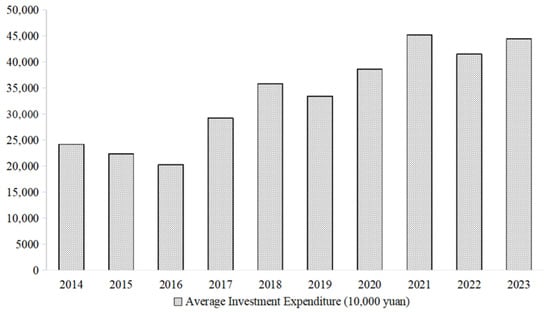
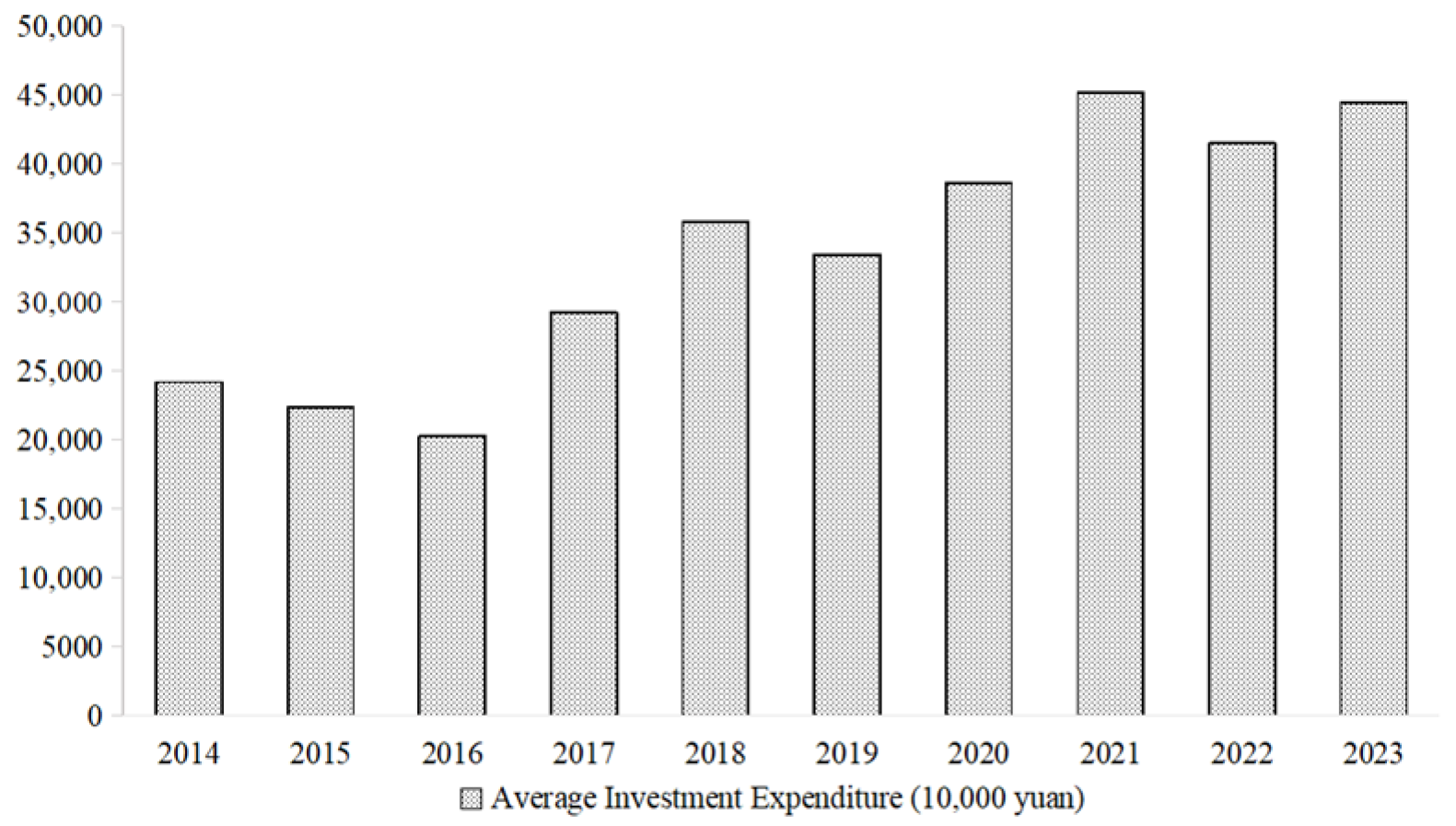
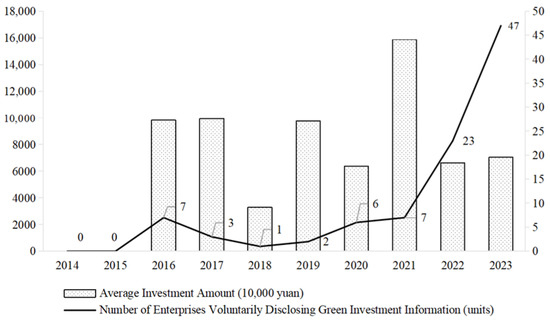
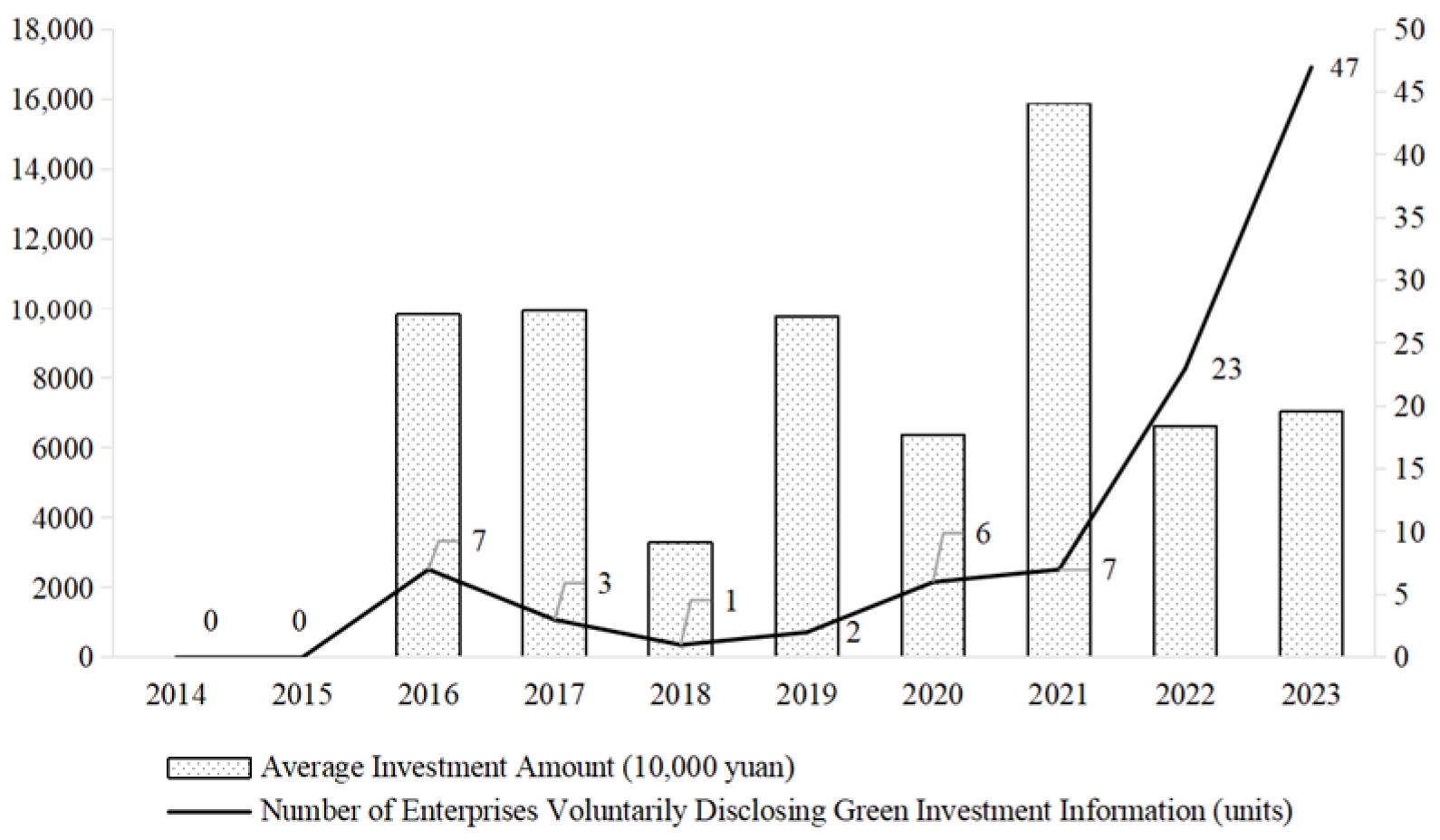
Figure 1 and Figure 2 depict the investment dynamics of these enterprises from 2014 to 2023. Following standard practice, new investment is measured as the net cash outflow for the acquisition and construction of fixed and intangible assets (from the cash flow statement). The data reveal a fluctuating but upward trend: average annual investment per enterprise rose from 240 million yuan in 2014 to 440 million yuan in 2023, with a ten-year mean of 330 million yuan (Figure 1), signaling sustained capital deepening in the sector. Critically, green investment—defined as voluntary disclosures of expenditures on afforestation, carbon sequestration projects, clean production, or eco-certification—has gained traction: the number of enterprises reporting such investments grew from zero in 2014 to 47 in 2023, with an average annual green investment of 68.71 million yuan over the decade (Figure 2). This shift reflects not only policy incentives but also growing responsiveness to international sustainability expectations, even among domestically oriented enterprises.
Figure 1.
Investment expenditures of sample enterprises from 2014 to 2023.
Figure 2.
Green project investment and information disclosure of sample enterprises from 2014 to 2023.
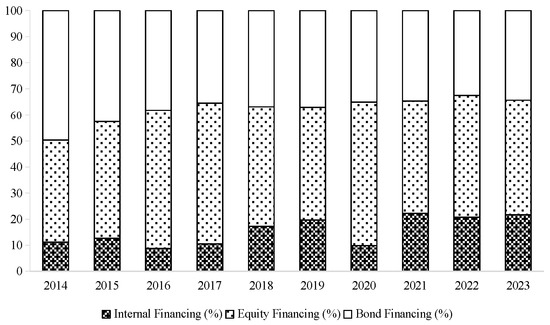
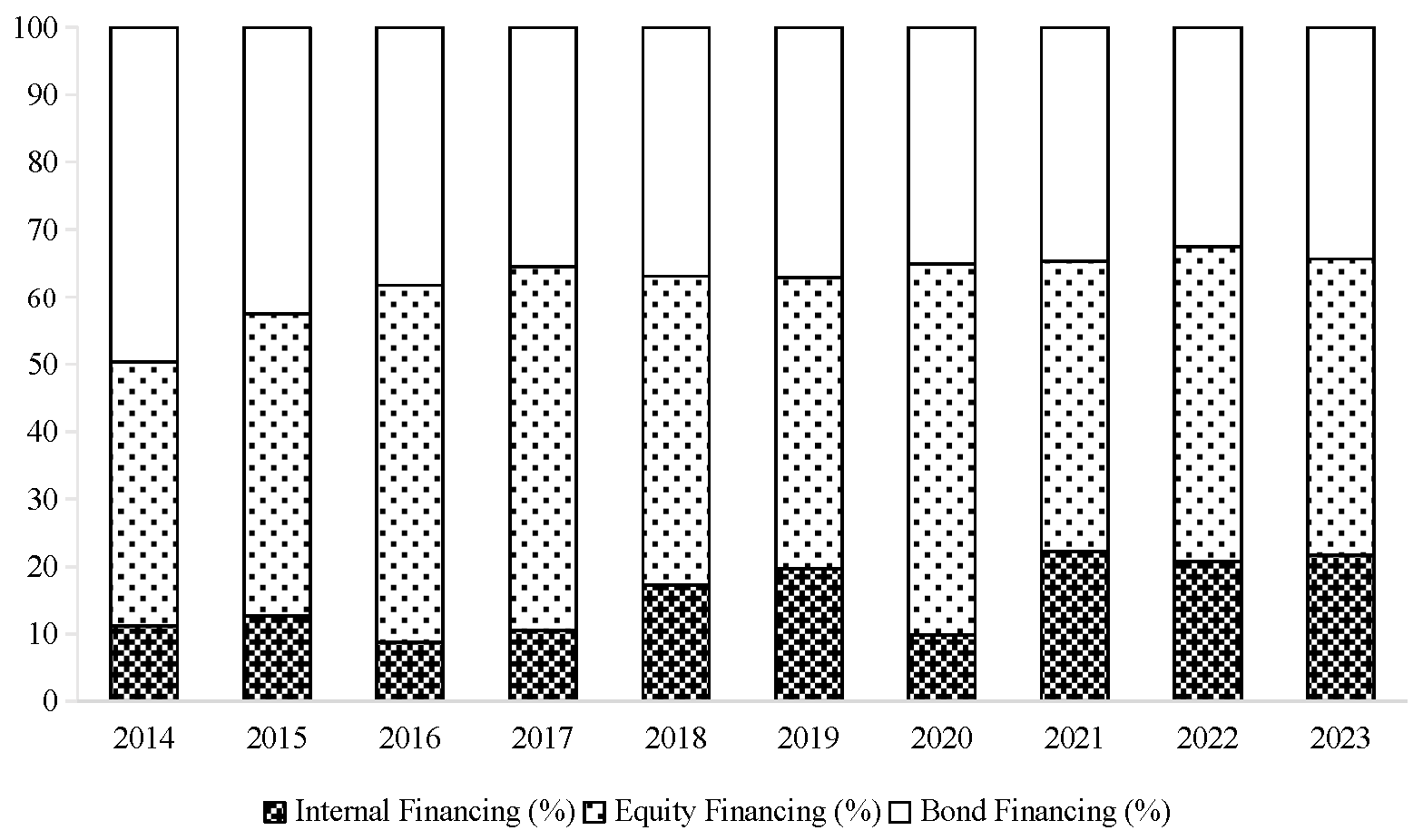
Figure 3 and Figure 4 illustrate corresponding financing patterns. We classify financing sources as follows:
Figure 3.
Proportion of financing channels of sample enterprises from 2014 to 2023.
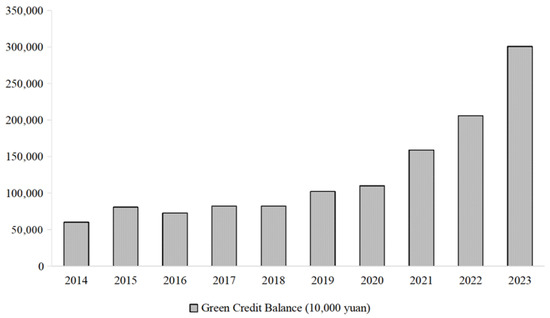
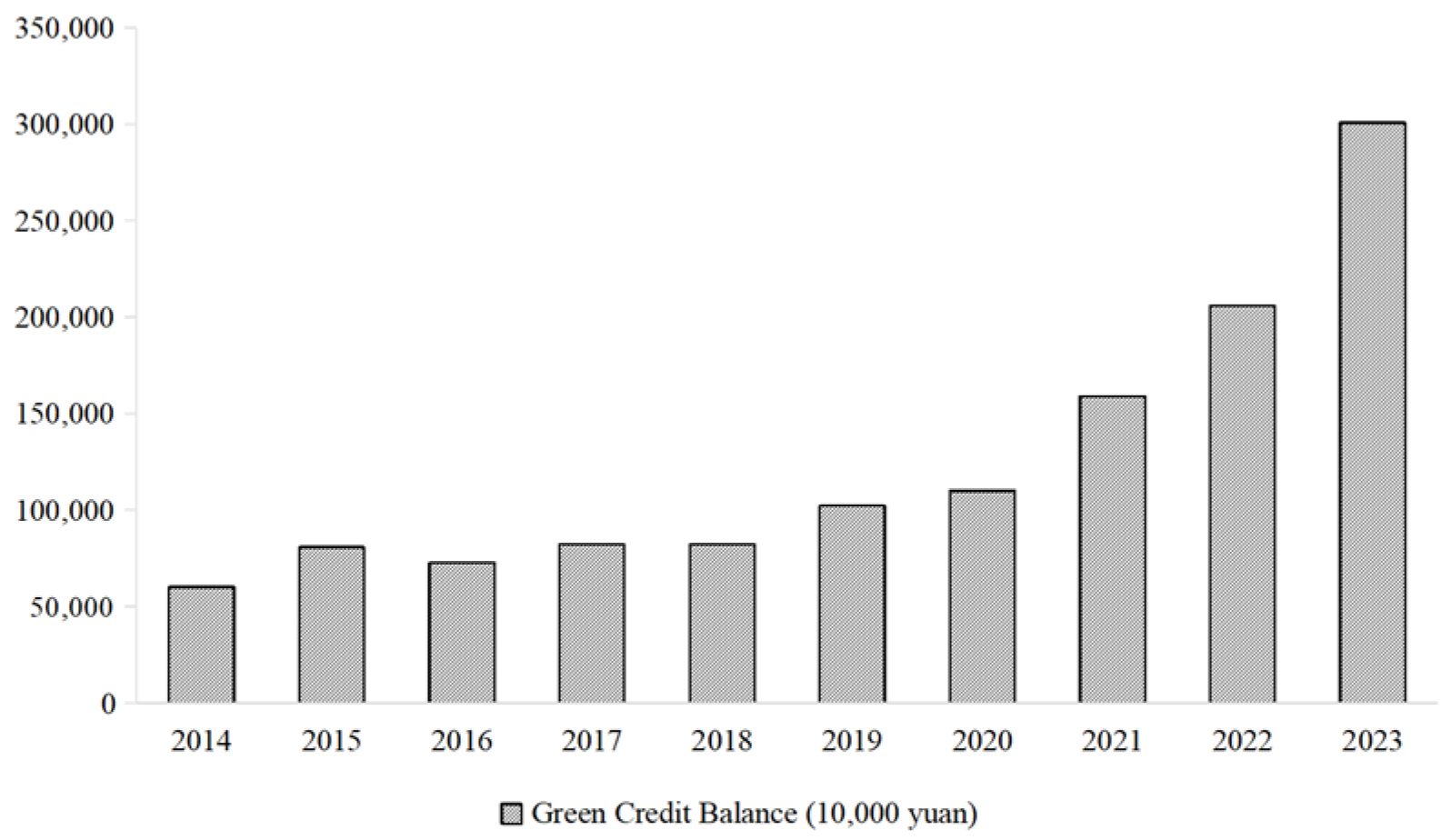
Figure 4.
Green credit balances of financial institutions from 2014 to 2023.
Debt financing: short-term loans, notes payable, accounts payable;
Equity financing: paid-in capital and capital reserves;
Internal financing: retained earnings (surplus reserves and undistributed profits).
The results show a pronounced reliance on external financing, particularly equity and bank debt, while internal financing remains marginal (Figure 3). This high external-dependence model heightens vulnerability to credit cycles and debt distress—a structural weakness common across emerging-market natural resource sectors globally [38].
Nevertheless, China’s policy innovations since 2016—including the Guidelines for Establishing a Green Financial System, the Green Credit Performance Evaluation Plan for Banking Institutions, and the Green Investment Guidelines—have begun to reshape this landscape. As reported by the People’s Bank of China, the national green credit balance reached 30.1 trillion yuan by end-2023 across 21 major banks, with an increasing share directed toward forestry-related green projects (Figure 4). This expansion has opened new avenues for sustainable investment, aligning China’s domestic financial architecture with global trends such as the EU Taxonomy and climate-aligned lending standards.
Yet significant challenges persist. Despite policy advances, forestry enterprises continue to grapple with high leverage ratios, narrow access to long-term green capital, and a mismatch between green project pipelines and available financing instruments—issues that mirror those faced by forestry enterprises in Brazil, Indonesia, and parts of Eastern Europe [39]. In this sense, China’s experience offers a critical test case: its scale, policy experimentation, and dual economic–ecological mandate provide valuable lessons for how large, state-influenced economies can mobilize finance for nature-positive transitions. Understanding the drivers and constraints of green investment and financing in China’s forestry sector thus holds direct relevance for global efforts to scale sustainable finance in land-use industries—particularly in contexts where public policy must compensate for underdeveloped private green capital markets.
3.2. Policy Context: Domestic Instruments in a Global Sustainability Landscape
China’s approach to greening its forestry sector is operationalized through a suite of green finance instruments, as summarized in Table 1. These policies—industrial subsidies, preferential interest rates, and financing guarantees—are specifically calibrated to address the structural financing barriers inherent to forestry: long investment cycles, asset illiquidity, and the public-good nature of ecosystem services.
Table 1.
Practices of green finance instruments in the forestry sector.
- (1)
- Industrial subsidies, administered by the Ministry of Finance and provincial forestry bureaus, directly lower the cost of afforestation, forest tending, and green processing upgrades.
- (2)
- Preferential interest rates, guided by the People’s Bank of China’s Green Credit Guidelines, incentivize commercial banks to lend to certified green forestry projects at rates 10%–30% below market benchmarks.
- (3)
- Financing guarantees, piloted in green finance reform zones (e.g., Zhejiang, Jiangxi), mitigate lender risk by covering up to 80% of potential defaults for small and medium-sized enterprises (SMEs)—a critical intervention given that China’s forestry enterprises lack sufficient collateral.
While domestically implemented, these instruments are shaped by a converging global agenda. China’s Nationally Determined Contribution (NDC) under the Paris Agreement, targeting a 6 billion cubic meter increase in forest stock by 2030, directly informs subsidy criteria for carbon sequestration projects. Similarly, the classification logic of China’s Green Project Catalog aligns conceptually with the EU Taxonomy for Sustainable Activities. Furthermore, enterprises in our sample, though domestically listed, often operate within global value chains subject to regulations like the EU’s Deforestation Regulation (EUDR), which amplifies the domestic impact of these financial incentives.
Thus, the policy suite in Table 1 represents China’s institutional response to both local challenges and global sustainability imperatives (linking SDGs 13, 15, and 17), making it a critical case for understanding policy innovation in emerging economies.
4. Model Construction
This study employs ABM, a methodology well-suited to address the research gaps identified in Section 2 regarding interactive policy effects and agent heterogeneity. The model simulates interactions among three core heterogeneous agents—forestry enterprises, financial institutions, and policymakers—under three key green finance instruments: industrial subsidies, preferential interest rates, and financing guarantees.
As noted in the Introduction, ABM enables the analysis of emergent, non-linear system dynamics that arise from micro-level interactions, which conventional methods struggle to capture. Specifically, while econometric regressions estimate average treatment effects but overlook feedback loops and adaptation, and computable general equilibrium (CGE) models often rely on representative agent assumptions [40], our ABM framework explicitly represents diverse agent behaviors, bounded rationality, and strategic interdependence. This allows us to trace how macro-level patterns in financing and investment (such as those summarized in Section 3) emerge from decentralized decisions, making it particularly appropriate for the forestry sector where long horizons, asset illiquidity, and policy complexity challenge equilibrium-based analyses.
4.1. Model Assumptions
Based on an overview of forestry enterprises’ investment and financing landscape and the implementation of relevant support instruments, this section adopts an ABM approach to analyze the multi-agent interactions in forestry enterprises’ investment and financing activities. It further explores the heterogeneous mechanisms through which preferential interest rates, industrial subsidies, and financing guarantees influence the investment and financing performance of forestry enterprises. This analysis provides a theoretical foundation for subsequent simulation studies on the impacts of different combinations and intensities of green finance instruments on the investment and financing performance of forestry green and general projects. The model centers on three core agents: governments, forestry enterprises, and financial institutions. Forestry enterprises are the capital demand side, while financial institutions are the capital supply side. However, due to inefficient capital circulation between the two, financial instruments often fail to effectively reach forestry enterprises. Consequently, governments intervene in capital allocation through policy instruments, assuming multiple roles as rule-makers, risk-sharers, and market regulators. Within this framework, the study simplifies the behavioral rules of agents, credit assessment, loan disbursement, and post-loan supervision to construct a static, closed investment and financing system for forestry enterprises. The fundamental assumptions are as follows:
- (1)
- The credit market comprises two categories of capital demanders (primary and secondary forestry enterprises) and one category of capital suppliers.
- (2)
- Forestry enterprises select investment projects based on expected returns, choosing between green and general projects.
- (3)
- Enterprises seeking external finance must apply for bank loans—the sole external financing channel in the model. Those denied credit or choosing not to apply (e.g., due to high perceived risk) rely exclusively on internal funds.
- (4)
- Financial institutions have costless access to information on enterprise characteristics and project-specific attributes.
4.2. Mechanism of Government Action
Within the constructed ABM, the government agent implements and adjusts the three core green finance instruments defined in Section 3.2 (industrial subsidies, preferential interest rates, and financing guarantees) to intervene in the market. The government’s behavioral rules are driven by dual objectives: to promote the overall scale of green investment and financing, and to ensure the stability of the credit system.
4.3. Mechanism of Forestry Enterprise Action
From the perspective of enterprise financing in the green investment and financing system, forestry enterprises face a strategic choice between depositing funds in financial institutions or investing in risky projects. Let the initial financing amount of an enterprise be , the project success probability be , the success return rate be , and the failure return be 0. If the enterprise deposits funds, the end-of-period return is , where is the deposit interest rate. If the enterprise invests in a risky project, the return is:
Thus, the expected return from the risky investment is: .
The enterprise will choose to invest in the risky project if , which simplifies to . Introducing an enterprise-specific characteristic parameter , such that , all enterprises with will prefer risky investment over deposits.
Furthermore, enterprises with will enter the credit market and apply for loans when the expected return from exogenous financing exceeds that from endogenous financing. The boundary condition for entering the credit market is:
where is the loan interest rate, is the enterprise’s leverage ratio, and is the collateralization ratio. This condition reflects the risk-adjusted threshold at which external financing becomes economically viable.
To evaluate the effectiveness and sustainability of financing activities, this study defines financing performance as: Financing performance = (Financing revenue − Financing cost)/Financing cost. A higher ratio indicates greater financing efficiency and stronger financial viability of forestry enterprises under green investment and financing mechanisms.
In addition to financial returns, forestry enterprises also consider environmental benefits and costs when evaluating green projects. The net product cash flow in year t is defined as:
where and are the cash inflow and outflow from product operations, and are the unit price and cost, and is the production volume. Environmental cash flow is expressed as:
where is the carbon price, and are the initial quota and actual emissions, is the price of other pollutant penalties, is the volume of other emissions, and is the penalty rate for over-emission, and is the excess emission volume. The net present value of the green project (GNPV) is then calculated as:
where is the investment cost in year , and is the discount rate. This formulation integrates both financial and environmental dimensions, enabling a comprehensive evaluation of green investment performance.
In contrast, general projects do not account for environmental benefits. Their net present value (NPV) is calculated as:
A positive NPV indicates that the project is financially feasible. To compare investment efficiency across project types, this study also adopts the return on investment (ROI) metric, defined as: Investment performance = (Investment revenue − Investment cost)/Investment cost. Here, investment income includes sales revenue, subsidy income, and carbon sequestration revenue in the case of green projects, while investment cost comprises capital investment, operating expenses, financial costs, and relevant environmental expenditures where applicable.
4.4. Mechanism of Financial Institution Action
The principle guiding financial institutions is to assess risk and evaluate the creditworthiness of each loan application. Under conditions of complete information, a loan is granted only if the expected return is non-negative and the enterprise’s credit score exceeds a threshold (e.g., 40). In the constructed model, financial institutions are assumed to be risk-neutral and profit-seeking. Lending decisions are made under the premise of sufficient liquidity and compliance with supervisory requirements for risky assets. The expected return on a loan amount issued to forestry enterprise in period is defined as:
is the probability of successful repayment, is the loan interest rate, is the recoverable amount in case of default (e.g., collateral), and is the deposit rate representing the opportunity cost of funds. The first term reflects expected income from successful repayment, the second term captures recovery under default, and the last term is the opportunity cost of lending.
Requiring yields the minimum acceptable loan interest rate as:
This condition shows that the required lending rate increases with the institution’s funding cost and the borrower’s default risk, and decreases with higher collateral coverage.
The capacity of financial institutions to supply credit is constrained by their liquidity, which is defined as:
Here, denotes the liquidity in period , is the current deposit volume, is the previous period’s earnings, represents the normal recovery of loan principal from the previous period, and is the total amount of new loans disbursed in the current period. Liquidity thus aggregates internal capital sources (deposits, retained earnings, and recovered principal) and is reduced by new lending. It serves as a key constraint on the institution’s credit supply capacity.
4.5. Model Framework
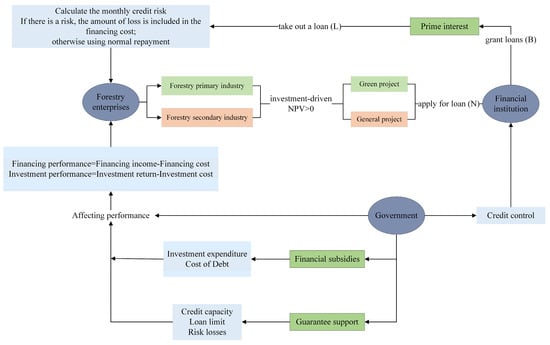
The simulation process of forestry enterprises’ investment and financing activities is as follows (see Figure 5):
Figure 5.
Flowchart of the model.
- (1)
- Loan application: Forestry enterprises submit loan applications based on investment demands, including the requested loan amount and credit score.
- (2)
- Loan approval: Financial institutions conduct risk assessments for each application and decide whether to issue loans based on the applicant’s credit score. If approved, the institution determines the loan interest rate, amount, and term to form a loan contract.
- (3)
- Contract evaluation: Forestry enterprises evaluate the loan contract according to their decision rules, calculate expected returns, and decide whether to accept the contract based on feasibility and participation constraints. If accepted, the transaction is completed and the enterprise obtains the loan; otherwise, the transaction is terminated.
- (4)
- Project selection: Forestry enterprises choose between green and general investment projects. After loan approval, enterprises may combine internal funds with loans to undertake investments and generate returns.
- (5)
- Project implementation: After a successful transaction, the enterprise initiates the project. Costs and revenues are assumed to occur within the same period, with production and sales balanced. For green projects, environmental benefits are reflected in carbon sequestration revenues; for general projects, environmental benefits are not included.
- (6)
- Loan repayment: Enterprises repay principal and interest monthly using the equal-principal method.
5. Data and Model Calibration
5.1. Data and Empirical Foundations of the Case Study
This study conducts a model-based policy simulation focused on China’s forestry sector—a strategically important yet underfinanced component of the nation’s green transition. While not a traditional qualitative case study, our approach constitutes a computational case study grounded in rich, multi-source empirical data from the Chinese institutional context. The data are organized into three categories, each informing distinct components of the ABM:
- (1)
- Firm-level operational and financial data: We extract investment, financing, and performance metrics for 80 A-share listed forestry enterprises (2014–2023) from the CSMAR database. Additional project-level details on green initiatives, subsidy receipts, and sustainability strategies are sourced from annual reports, ESG disclosures, and corporate social responsibility (CSR) reports published on the CNINFO platform.
These data inform agent heterogeneity (e.g., primary vs. secondary enterprises), baseline ROI, debt ratios, and capital structure assumptions.
- (2)
- Green credit product specifications: To calibrate bank behavior and lending rules, we combine publicly available sources—such as green finance development reports from major institutions (e.g., China Construction Bank, China Merchants Bank), People’s Bank of China (PBOC) annual reports, and the Green Loan Statistical System—with insights from structured interviews conducted with risk management and green finance officers at three commercial banks in 2023. These interviews helped clarify operational details not fully disclosed in public documents, including the range of preferential interest rates (3.96%–4.32%), typical loan tenors, and practical eligibility criteria applied to forestry-related green projects. This mixed-source approach enhances the realism of our simulated credit market while maintaining transparency through cross-validation against official data.
- (3)
- Policy instruments and institutional settings: National and provincial green finance instruments—including industrial subsidy guidelines (Ministry of Finance), guarantee fund frameworks (National Forestry and Grassland Administration), and green credit directives (PBOC)—are systematically collected from official government portals and codified into model parameters (see Table 2). These documents define the scope, intensity, and implementation logic of the three policy instruments analyzed.Table 2. Main variables and parameters of the model.
Together, these data anchor our simulation in the institutional realities of China’s green finance system. By integrating micro-level firm behavior, meso-level banking practices, and macro-level policy design, the model serves as a contextually grounded case study of how green finance instruments operate—and interact—within one of the world’s largest and most active green credit markets. This empirical foundation enables both internal validity (through parameter traceability) and external relevance (as China’s experience offers lessons for other emerging economies scaling green finance).
5.2. Parameter Calibration and Model Validation
To enhance methodological rigor, we implement a two-stage calibration and validation protocol. First, key behavioral and policy parameters are anchored in empirical distributions:
Subsidy intensity is set at 8%–12% of green project costs, consistent with actual disbursements reported in NFGA (2024);
Preferential interest rates are modeled as 10%–30% below benchmark lending rates, reflecting PBOC’s Green Credit Guidelines;
Guarantee coefficient ranges from 50% to 80%, matching terms offered in provincial risk-sharing pools.
Second, we conduct face validity checks by comparing preliminary simulation outputs against real-world trends. For instance, under a baseline scenario (no policy change), the model reproduces the observed slow uptake of green investment (Figure 2) and heavy reliance on external financing (Figure 3). When green credit policies are activated, the simulated growth in aggregate green lending aligns with PBOC’s reported trajectory—rising from 5.2 trillion yuan in 2018 to 30.1 trillion yuan in 2023 (Figure 4). While full statistical validation (e.g., out-of-sample prediction) is limited by data granularity, this qualitative alignment provides confidence that the model captures essential structural dynamics of China’s green finance ecosystem. Future work will incorporate more granular firm-level green investment disclosures to enable quantitative validation.
6. Simulation Results
Based on an analysis of the practical implementation of green finance instruments in the forestry sector, this study constructs policy scenarios centered on three core instruments: preferential interest rates, industrial subsidies, and financing guarantees. Using NetLogo 6.4.0 simulation software, the study investigates the effects of different policy combinations and intensities on the investment and financing performance of forestry enterprises. Relevant policy parameters are presented in Table 3. The loan amount available to enterprises is constrained by their creditworthiness and financial institutions’ credit limits, expressed as , where denotes the institution’s lending limit for the enterprise, initially set to zero. Given that the investment and financing cycle of enterprises generally does not exceed five years, the simulation period is set to 60 months. In each period (month), all agents adjust their behavior based on the interaction outcomes of the previous period, enabling iterative monthly evolution of the forestry investment and financing system and its constituent agents.
Table 3.
Key policy parameters.
6.1. Baseline Scenario
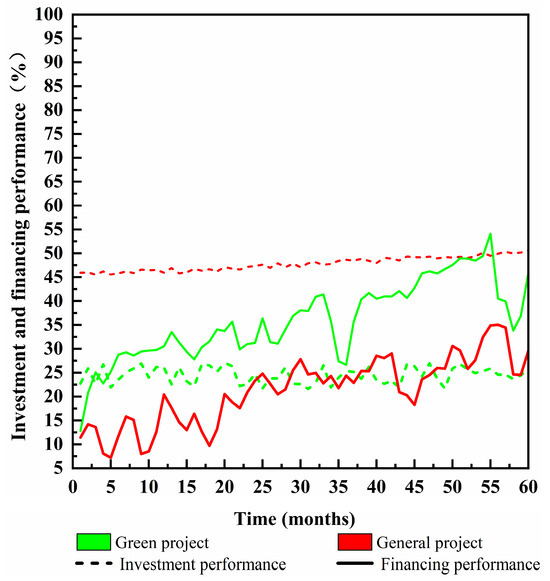
In the baseline scenario, the loan interest rate is set at 4.75%, the annual industrial subsidy at 12 million yuan, and the financing guarantee coefficient at 0.5. As shown in Figure 6, both green and general financing performance increase substantially over the five-year simulation period, whereas investment performance exhibits only modest fluctuations.
Figure 6.
Simulation results of the baseline scenario. Investment performance gauges the return on investment achieved by enterprises, while financing performance measures the ratio of loan acquisition for them.
Specifically, general investment performance rises gradually from 45.94% to 50.58%, while green investment performance increases marginally from 22.75% to 25.86%. In contrast, financing performance shows steeper growth: green financing performance rises from 10.54% to 49.14%, outpacing general projects, which increase from 11.88% to 32.56%.
This divergence (higher financing but lower investment performance for green projects) reflects structural challenges in forestry: long biological cycles, low short-term value-added, high operational uncertainty, weak liquidity, and limited market recognition of ecological co-benefits. These findings underscore that current conditions are insufficient to translate improved credit access into robust green returns, highlighting significant room for policy improvement.
6.2. Preferential Interest Rate Scenario
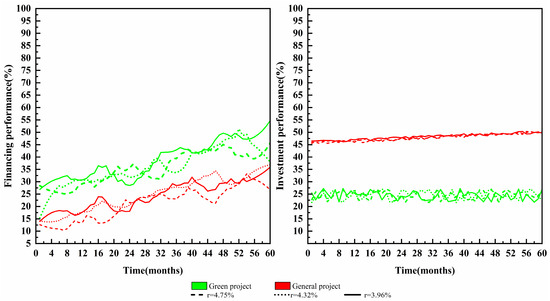
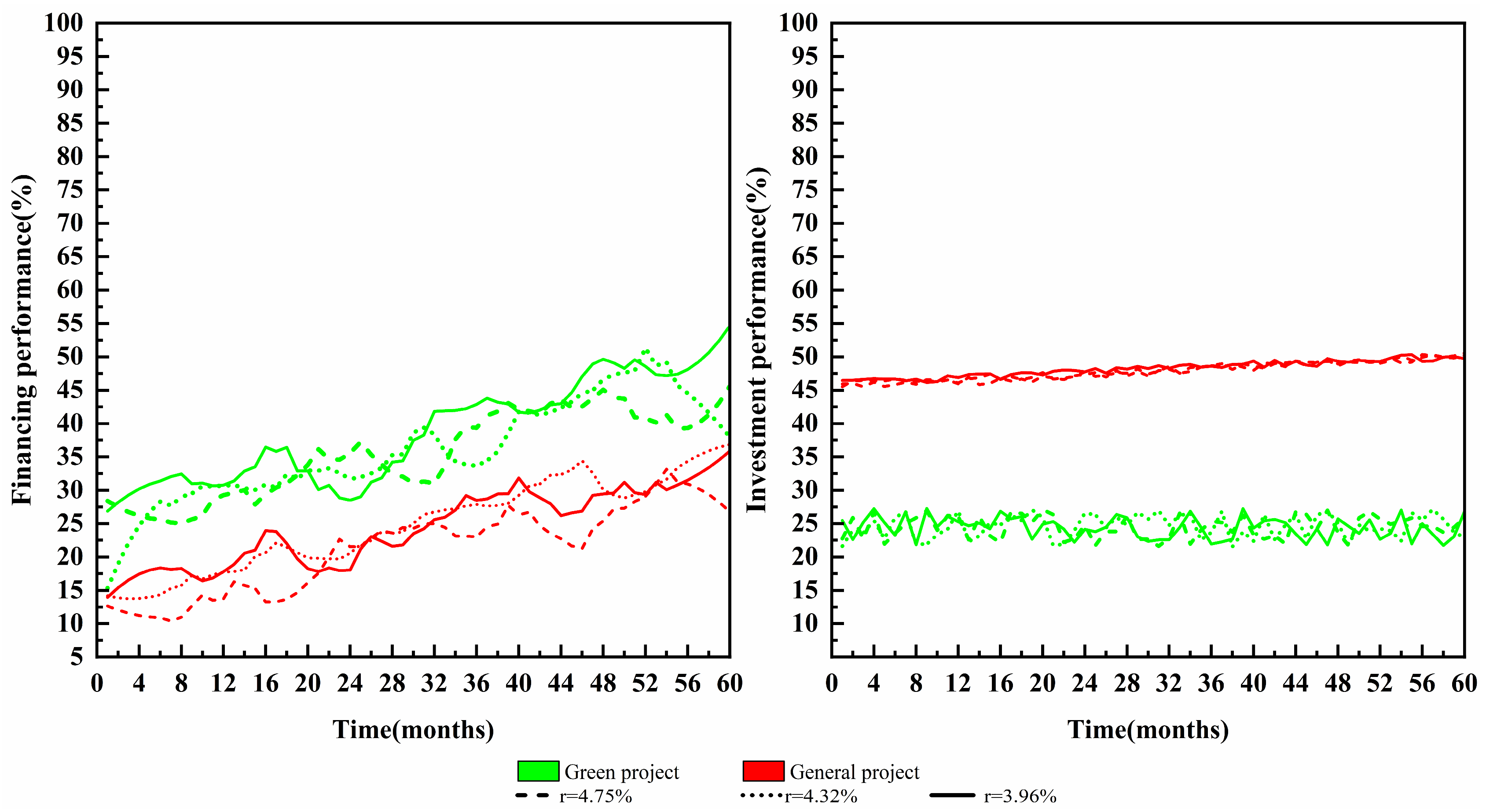
To assess the impact of preferential interest rates, we construct two scenarios based on real-world green loan offerings: 4.32% (China Construction Bank) and 3.96% (China Merchants Bank), representing a 9.05% and 16.63% reduction from the baseline rate of 4.75%, respectively.
Simulation results (Figure 7) indicate that preferential rates yield modest gains in financing performance: under a 16.63% rate cut, green and general financing performance increase by 2.81 and 3.10 percentage points, respectively, compared to the baseline. However, investment performance remains virtually unchanged: green investment performance stabilizes around 24.5%, and general investment performance near 48%, with no discernible trend across interest rate levels.
Figure 7.
Simulation results of the preferential interest rate scenario.
This suggests that while lower borrowing costs marginally ease credit access, they do not materially alter enterprises’ investment calculus—likely because forestry investment decisions are driven more by project risk, payoff horizons, and collateral constraints than by marginal changes in interest expenses.
6.3. Industrial Subsidy Scenario
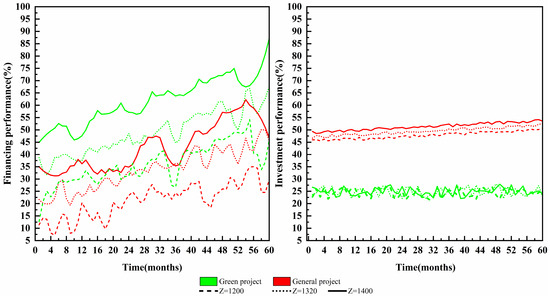
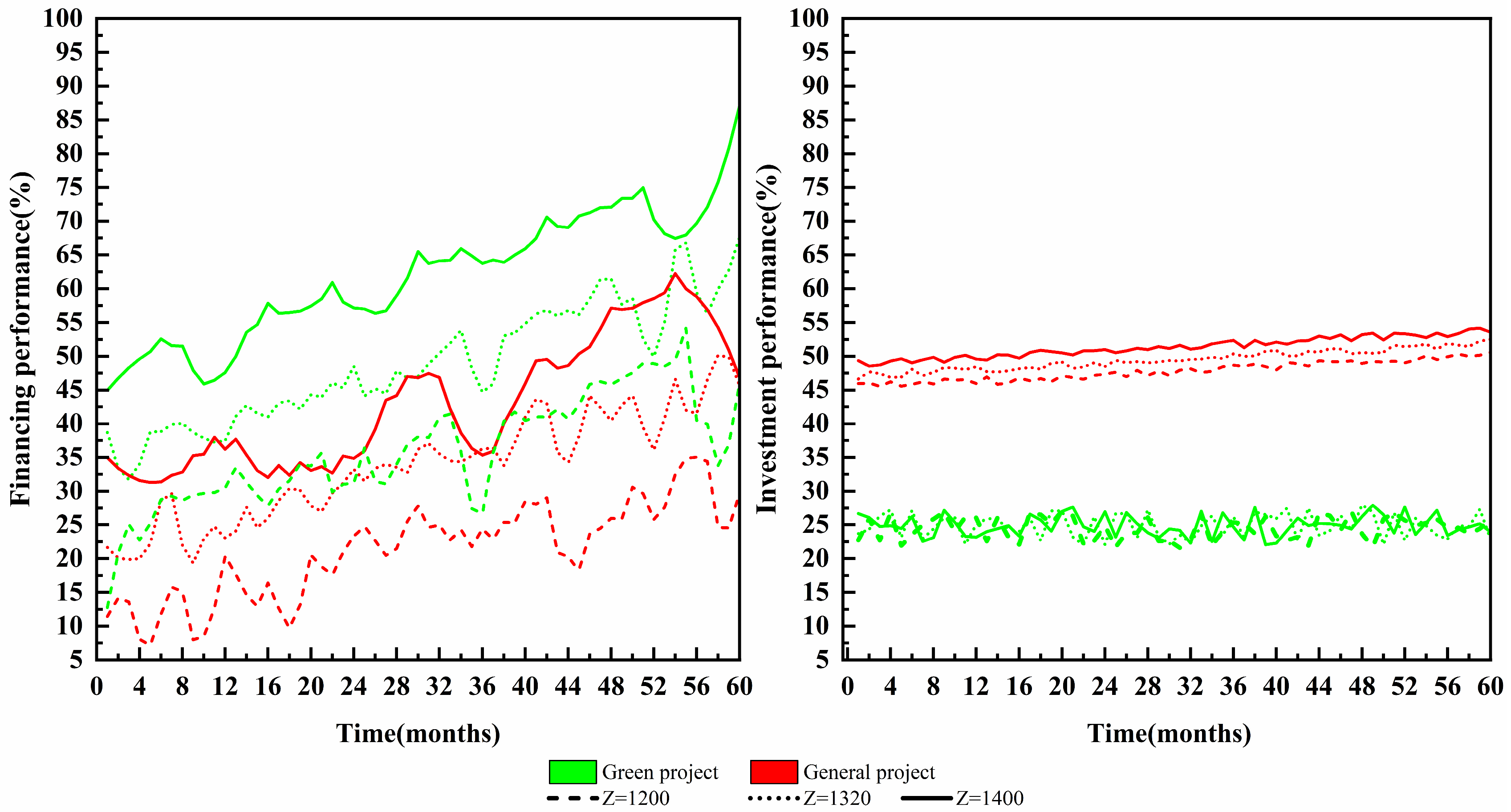
Based on disclosed subsidies in enterprises’ financial statements (2019–2023 average: 12 million yuan/year), we simulate two enhanced subsidy levels: +10% (13.2 million yuan) and +20% (14.4 million yuan). Results (Figure 8) reveal that subsidies exert a strong positive effect on financing performance. At the +20% level, green financing performance rises by 34.79 percentage points, and general financing performance by 24.98 percentage points, relative to baseline.
Figure 8.
Simulation results of the industry subsidy scenario.
The mechanism is clear: subsidies directly offset high upfront capital requirements and reduce reliance on external debt, thereby improving bankability. Subsidies also modestly boost general investment performance, which increases by 2.96 percentage points under the +20% scenario. However, green investment performance shows negligible improvement, constrained by inherently long return cycles (e.g., timber maturation, carbon crediting delays). Thus, while subsidies are highly effective in enhancing green financing, their impact on green investment remains limited in the short term—suggesting a need for complementary long-term support mechanisms.
6.4. Financing Guarantee Scenario
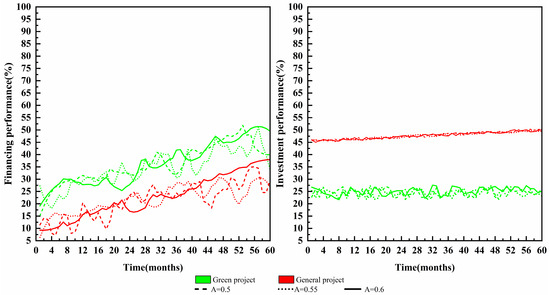
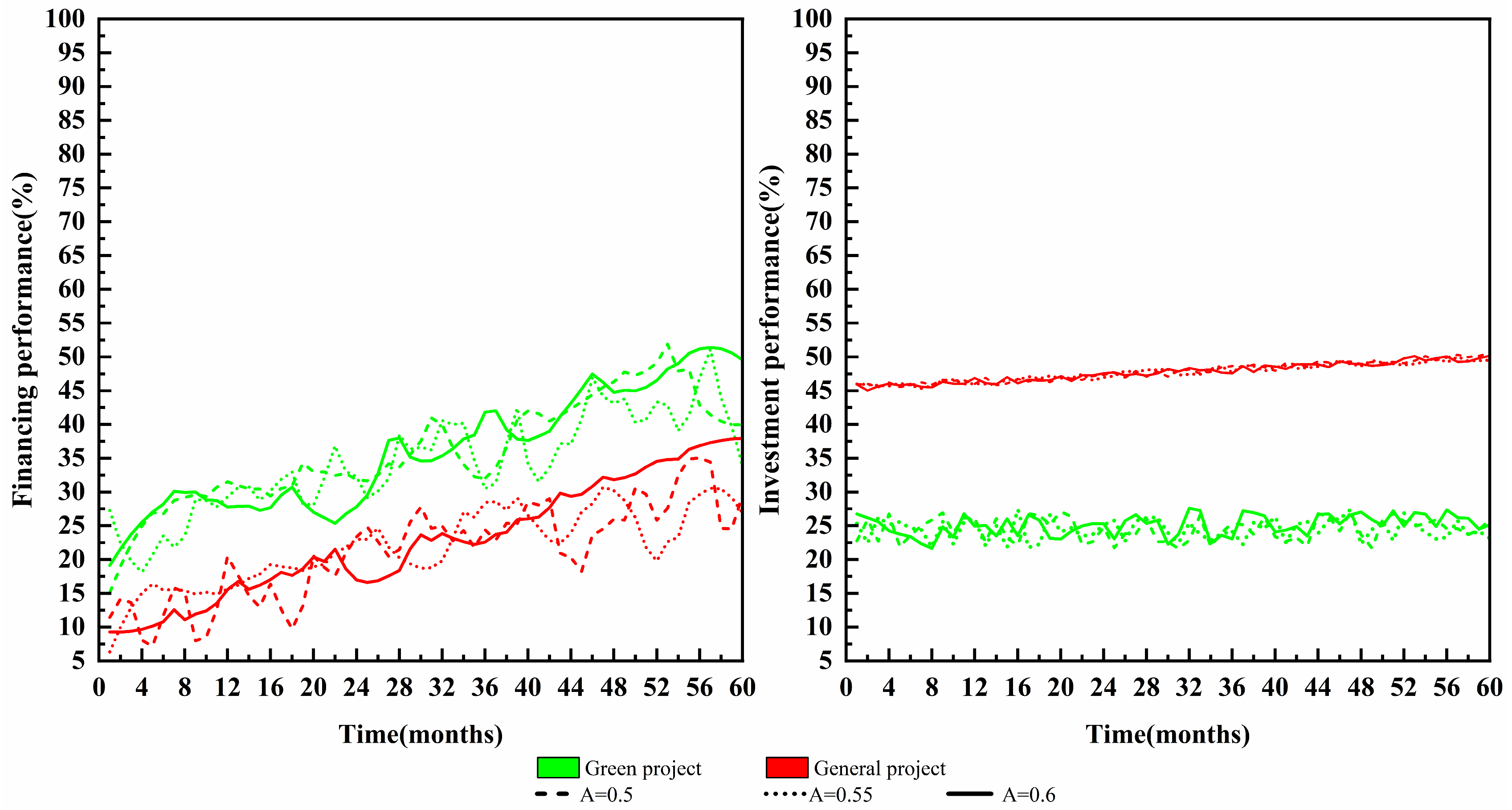
We model guarantee coefficient using a coefficient defined as (guarantor-compensated amount/total borrower debt) × 100%. Starting from a baseline of 0.5, we test coefficients of 0.55 and 0.6. As shown in Figure 9, higher guarantee coefficient significantly improves financing access: by year 5, green and general financing performance increase by 3.12 and 3.89 percentage points, respectively, relative to baseline.
Figure 9.
Simulation results of the financing guarantee scenario.
However, investment performance remains stable: green investment performance stays near 24.71%, and general investment performance around 50.08%, regardless of guarantee coefficient. This indicates that while guarantees successfully mitigate lender risk and expand credit availability, they do not address core barriers to profitable green investment—such as technology gaps, market access, or revenue uncertainty. Consequently, guarantees function primarily as a financing-enabling tool rather than an investment-enhancing one.
6.5. Instrument Combination Scenarios
Recognizing that green finance instruments rarely operate in isolation, we evaluate three integrated instrument combinations that combine industrial subsidies—the most effective single instrument—with complementary measures. All scenarios retain the enhanced annual industrial subsidy of 14.4 million yuan (a 20% increase over the baseline), reflecting China’s intensified fiscal commitment to ecological forestry under its dual carbon goals. The combinations are constructed as follows:
- (1)
- Subsidy + Preferential Interest Rate: Annual subsidy of 14.4 million yuan paired with a preferential loan interest rate of 3.96%, representative of the lowest green lending rates offered by leading joint-stock commercial banks (e.g., China Merchants Bank) during 2020–2023.
- (2)
- Subsidy + Financing Guarantee: Annual subsidy of 14.4 million yuan combined with an elevated guarantee coefficient of 0.60, implying that guarantors cover 60% of potential borrower defaults—consistent with expanded risk-sharing arrangements piloted in Zhejiang and Jiangxi green finance reform zones.
- (3)
- Integrated Policy Package: Simultaneous implementation of all three instruments: 14.4 million yuan annual subsidy, 3.96% preferential interest rate, and a guarantee coefficient of 0.60. This scenario approximates the most aggressive green finance support framework currently feasible under China’s institutional and regulatory environment.
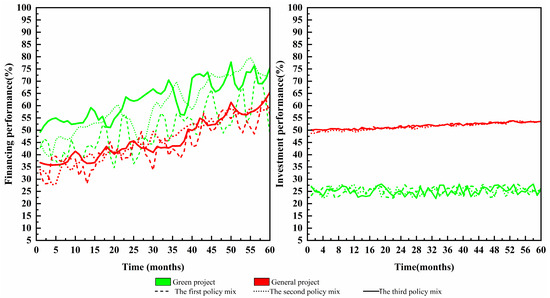
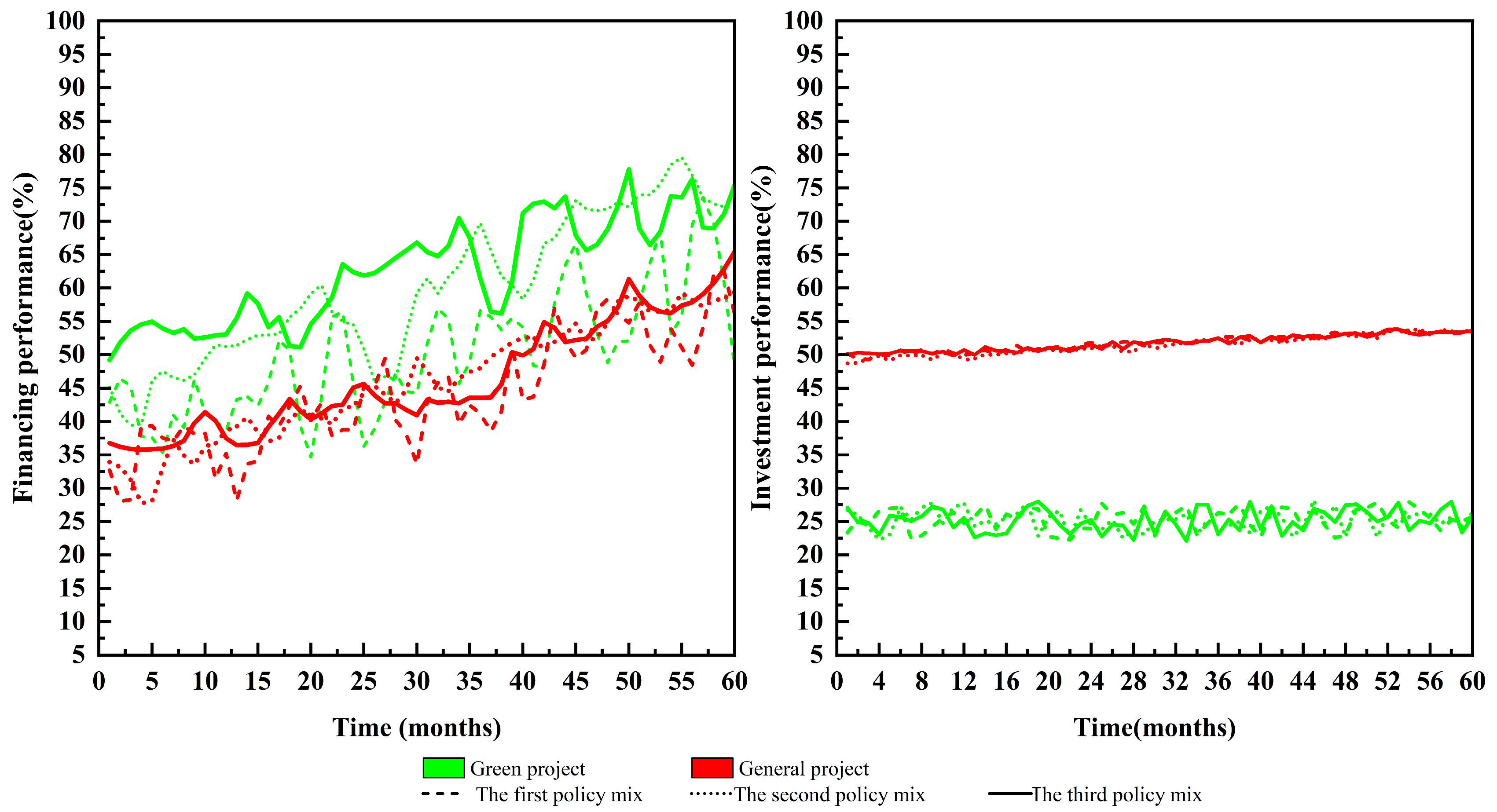
Simulation results (Figure 10) reveal that while all three packages significantly enhance financing performance—green financing performance reaches 79.09% by year five, up from 49.14% in the baseline—they yield no meaningful improvement in green investment performance, which remains stagnant near 25%–26% investment performance. This indicates diminishing returns from policy layering and raises concerns about redundancy, administrative complexity, and potential market distortions, particularly for primary-sector enterprises with limited capacity to navigate multi-instrument compliance requirements.
Figure 10.
Simulation results of instrument combination scenarios.
6.6. Sensitivity Analysis
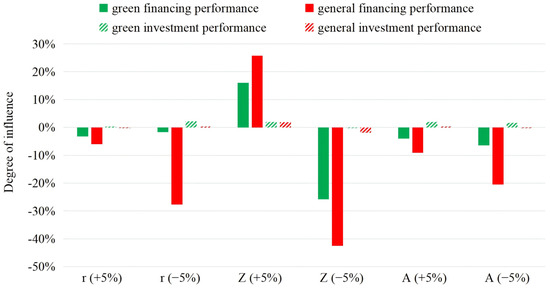
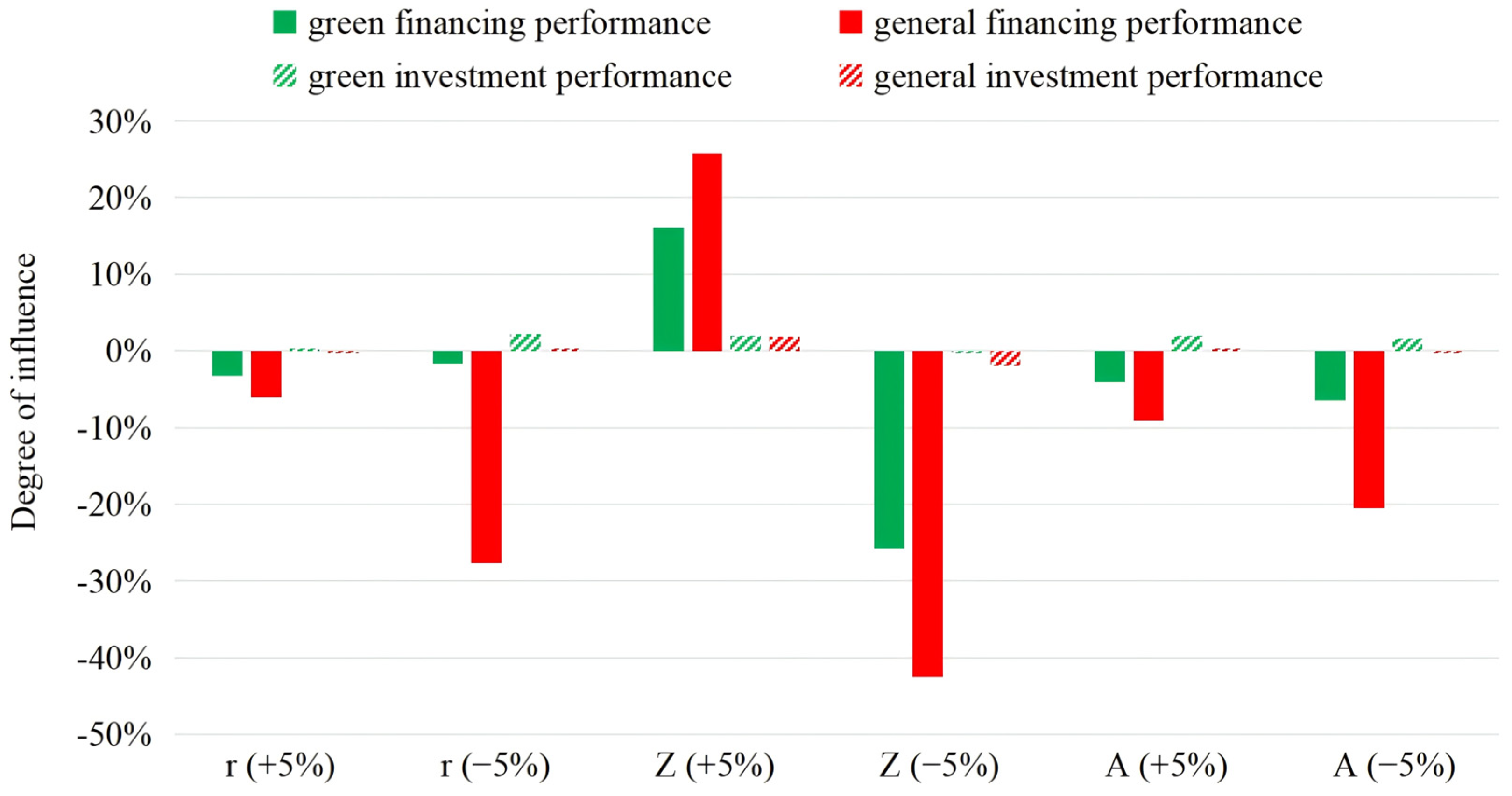
As illustrated in Figure 11, the sensitivity of investment and financing performance to the three core policy parameters exhibits distinct heterogeneity. First, the industrial subsidy parameter (Z) demonstrates the strongest influence: a 5% increase in Z boosts green financing performance by 16.06% and general financing performance by 25.70%, while a 5% decrease leads to a more severe decline (25.79% for green financing and 42.53% for general financing). This confirms the dominant role of industrial subsidies in driving financing performance, which aligns with the findings from the single-instrument scenario. Second, the interest rate parameter (r) shows an asymmetric impact: a 5% reduction in r causes a 27.72% drop in general financing performance, whereas a 5% increase has a milder negative effect (−6.06%), reflecting lenders’ risk aversion to interest rate cuts in long-cycle forestry projects. Third, the guarantee coefficient (A) exerts a relatively moderate influence on all performance indicators, with the most notable impact being a 20.52% decline in general financing performance when A decreases by 5%, indicating that guarantee mechanisms primarily mitigate financing constraints rather than driving investment returns. Notably, investment performance (both green and general) shows low sensitivity to all parameter changes (fluctuations within ±2%), which further verifies that structural barriers such as long return cycles and ecological value externalization limit the translation of financing improvements into investment gains.
Figure 11.
Results of the sensitivity analysis.
7. Discussion
This study employs an ABM approach to simulate how three green finance instruments—industrial subsidies, preferential interest rates, and financing guarantees—affect the financing and investment behaviors of heterogeneous forestry enterprises in China. The results reveal significant heterogeneity in policy effectiveness, interaction dynamics, and distributional outcomes, offering both confirmatory and novel insights when situated within the broader literature on sustainable finance in natural resource sectors.
First, industrial subsidies emerge as the most effective instrument across both performance dimensions. A 20% increase in subsidy intensity raised the average green and general financing performance by 34.79 and 24.98 percentage points, respectively, and general investment performance by 2.96 percentage points relative to the baseline. This finding resonates with Goldstein et al. [42], who demonstrated that government subsidies significantly outperformed the market mechanisms in promoting private land reforestation, while projects relying solely on timber harvest revenues struggle to attract private investment. It also aligns with Sinacore et al. [43], who found that public grants were essential for catalyzing private investment in Panama forest restoration, where market failures and tenure insecurity deterred commercial finance. The underlying mechanism is straightforward: subsidies may partially compensate for unpriced ecological benefits, thereby improving project bankability—a mechanism consistent with externality internalization theory.
In stark contrast, preferential interest rate policies yield only negligible impacts: The 16.63% reduction in lending rates improved green and general financing performance by 2.81 and 3.10 percentage points, respectively, and investment performance was almost unchanged. This limited efficacy mirrors Wang et al. [44], who reported weak responsiveness among polluting enterprises to China’s Green Credit Guidelines, and echoes theoretical warnings by Stiglitz and Weiss [45] about the limitations of price signals in markets characterized by severe information asymmetry, asset illiquidity, and long payoff horizons—all hallmarks of forestry. Even at lower rates, banks remain cautious due to difficulties in valuing forest assets and verifying ecological outcomes, highlighting a critical gap between policy intent and financial practice.
Third, financing guarantees prove particularly valuable for secondary forestry enterprises (e.g., furniture manufacturing, paper manufacturing), which typically lack sufficient collateral but face mounting pressure to decarbonize. Under a 20% increase in the financing guarantee coefficient, their green and general financing performance increased by 3.12 and 3.89 percentage points, respectively, narrowing the financing gap with primary forestry enterprises. This corroborates Bernard et al. [22], who showed that partial credit guarantees enabled Kenyan community forestry groups to access climate finance previously monopolized by large NGOs. However, our model also reveals that guarantees alone do not significantly boost investment performance unless accompanied by technical assistance or market linkages—a nuance often overlooked in policy design.
Perhaps most critically, our simulations uncover a risk of policy redundancy: deploying all three instruments simultaneously yields only marginal gains over subsidies alone. This challenges the common assumption that “more policy tools = better outcomes” and suggests that overlapping interventions may lead to fiscal inefficiency without commensurate benefits. Instead, strategic sequencing and targeting—not mere accumulation—are key to effective green finance architecture.
These insights also help explain the disconnect observed in our empirical data (Figure 2, Figure 3 and Figure 4): despite rapid growth in China’s green credit stock (30.1 trillion yuan by 2023), voluntary green investment disclosures remain concentrated among a subset of enterprises. The reason lies not in a lack of capital availability per se, but in the misalignment between instrument design (rate-based) and sectoral risk structure (collateral-poor, long-cycle). Globally, this underscores a universal principle: policy instruments must be matched to the institutional and economic realities of the target sector. While the EU leverages taxonomy-aligned disclosure and carbon pricing to steer private capital [18], emerging economies may require stronger upfront public intervention—a lesson highly relevant for Brazil, Indonesia, and sub-Saharan Africa.
Our findings offer actionable guidance for policymakers and enterprise managers. First, fiscal instruments should anchor green finance strategies in forestry, particularly in contexts with immature green capital markets. Subsidies should target verifiable green outputs (e.g., certified afforestation, carbon sequestration) to prevent moral hazard. Second, financing guarantees should be scaled up for secondary forestry SMEs, coupled with capacity-building to ensure effective use of funds. Third, interest rate policies should be deprioritized as standalone tools but may complement subsidies in mature markets with robust monitoring systems.
For international audiences, the core lesson is institutional adaptability: while China’s state-led model may not be replicable everywhere, the principle that policy instruments must match sectoral risk structures is universal. Countries designing green finance frameworks—from Kenya’s REDD+ programs to Brazil’s Amazon Fund—can learn from China’s trial-and-error in balancing direct support with market-enabling reforms.
8. Conclusions
This study investigates the impact of green finance instruments on the investment and financing performance of forestry enterprises. Four key findings are summarized below:
Industrial subsidies significantly enhance financing performance for both green and general projects and improve investment performance primarily for general projects.
Preferential interest rates, as currently structured, have minimal impact on enterprise behavior due to persistent lender risk aversion and information gaps. They should not serve as standalone policy tools in early-stage green transitions.
Financing guarantees are essential for inclusivity, enabling secondary forestry SMEs—often excluded from green finance—to participate in the low-carbon transition. However, their investment impact depends on complementary support mechanisms.
Policy combinations must be carefully calibrated to avoid redundancy; stacking instruments without strategic alignment yields diminishing returns and inefficient public spending.
These findings provide strong support for hypotheses 1, 2, and 3 as presented in the introduction. Consequently, effective green finance is not about volume but precision: matching the right instrument to the right actor at the right stage of transition. For China, this calls for rebalancing its green finance strategy toward more targeted fiscal support and risk-sharing mechanisms. For the international community, it offers a cautionary yet constructive lesson: while institutional contexts differ, the principle that green finance must confront sector-specific structural barriers is universally applicable. In land-use sectors worldwide—where ecological value often lacks market expression—public policy remains indispensable in bridging the gap between sustainability ambition and financial reality.
Still, this study has certain limitations. First, enterprise and bank behaviors are modeled with fixed decision rules derived from historical financial and policy data, precluding endogenous adaptation or learning over time. Second, the sample is restricted to listed Chinese forestry enterprises (2014–2023), excluding smallholders and informal actors; findings thus apply only to formal, capital-market-integrated enterprises. Third, model parameters are calibrated to China’s state-led green finance framework, limiting direct generalizability to market-driven or decentralized systems.
Future work could extend the simulation horizon to capture long-term investment returns in forestry, incorporate complementary policies (e.g., ecological compensation), or refine bank lending rules using granular credit approval data. Cross-national ABM comparisons—anchored in comparable empirical inputs—would further clarify the institutional contingencies shaping policy effectiveness.
Author Contributions
Conceptualization, H.Q.; methodology, H.Q. and X.Z.; software, X.Z.; validation, H.Q., Y.G. and X.L.; formal analysis, Y.G. and X.Z.; investigation, X.Z.; resources, H.Q.; data curation, H.Q. and X.Z.; writing—original draft preparation, X.Z.; writing—review and editing, H.Q., Y.G. and X.L.; visualization, X.Z. and X.L.; supervision, H.Q. and F.L.; project administration, H.Q. and F.L.; funding acquisition, F.L. All authors have read and agreed to the published version of the manuscript.
Funding
This research was funded by the National Social Science Fund of China, grant number 22BGL168, and by the Zhejiang Provincial Soft Science Research Program of China, grant number 2026C35119.
Data Availability Statement
The original contributions presented in the study are included in the article and Appendix A, Appendix B and Appendix C, further inquiries can be directed to the corresponding author.
Acknowledgments
We extend great gratitude to the anonymous reviewers and editors for their helpful review and critical comments.
Conflicts of Interest
The authors declare no conflicts of interest.
Appendix A
Table A1.
List of sample enterprises. (translated from Chinese).
Appendix B
Table A2.
Variables and functional relationships in the model.
Appendix C
Here is the core simulation code:
| to company-invest-project [c-id] ask companies with [id = c-id] [ let prj one-of projects with [id = c-id] let money-needed random-float 1/chengshidu if money-needed ≥ 0.5 [ set L-need [tz-edu] of prj * L-need-factor ifelse D > 40 [ let L-bank get-bank-L3 D set L-final min list L-bank L-need set monthly-payment L-final/60 set B L-need/100 * 5/60; L-final * 3%/60 set is-L? true ] [ set is-L? false ] ask prj [ calc-NPV ] ifelse [NPV] of prj > 0 [ set is-prj? true ] [ set is-prj? false ] ] ] end to go set t-id t-id + 1 if t-id = 60 [ stop ] update-company-project 1 update-company-project 2 tick end to update-company-project [c-id] ask companies with [id = c-id] [ if is-L? [ let risk-alarm? false let risk-trigger? false if (chengshidu + A) * random-float 1 < 0.5 [;* random-float 1 set risk-alarm? true if ([H1] of the-bank + [H2] of the-bank) * random-float 1 < 0.5 [ set risk-trigger? true ] ] set monthly-interest (L-final - (t-id * monthly-payment)) * monthly-rate set monthly-amount monthly-interest + monthly-payment set rz-shouru (L-final * 0.02 * (1 + random-float 1)) * 5/60 + Z * 10000 * 5/60; (L-final * 0.2 * (1 + random-float 1)) * 5/60 set sunshi-edu (L-final * random-float 1 * 0.1) * 5/60 * (1 − A) ifelse risk-trigger? [ set rz-cost B + monthly-amount + sunshi-edu + L-final * 0.03/60 ] [ set rz-cost B + monthly-amount + L-final * 0.03/60 ] set rz-jixiao (rz-shouru − rz-cost)/rz-cost * 100 ] |
References
- Ali, A.; Russell, J.D. Accelerating the transition to wood-based circular bioeconomy: A literature review of current state, trends, opportunities, and priorities for future research. Curr. For. Rep. 2025, 11, 23. [Google Scholar] [CrossRef] [Scilit]
- D’Amato, D.; Veijonaho, S.; Toppinen, A. Towards sustainability? Forest-based circular bioeconomy business models in Finnish SMEs. For. Policy Econ. 2020, 110, 101848. [Google Scholar] [CrossRef] [Scilit]
- Giuntoli, J.; Barredo, J.; Avitabile, V.; Camia, A.; Cazzaniga, N.; Grassi, G.; Jasinevičius, G.; Jonsson, R.; Marelli, L.; Robert, N.; et al. The quest for sustainable forest bioenergy: Win-win solutions for climate and biodiversity. Renew. Sustain. Energy Rev. 2022, 159, 112180. [Google Scholar] [CrossRef] [Scilit]
- Van Der Ven, H.; Bear, K. Sustainable supply chains in the forest bioeconomy: A systematic review. Sustainability 2025, 17, 9738. [Google Scholar] [CrossRef] [Scilit]
- Lee, J.W. Green finance and sustainable development goals: The case of China. J. Asian Financ. Econ. Bus. 2020, 7, 577–586. [Google Scholar] [CrossRef] [Scilit]
- Bai, X. Exploring the sustainable development path of a green financial system in the context of carbon neutrality and carbon peaking: Evidence from China. Sustainability 2022, 14, 15710. [Google Scholar] [CrossRef] [Scilit]
- Qin, T.; Wang, S.; Zhu, R.; Tang, X. Financial support for the value realization of forestry carbon sinks: Main paths, practical dilemmas and mode innovations. Issues Agric. Econ. 2025, 46, 96–109. (In Chinese) [Google Scholar]
- Chen, W. Financial “Golden Key” unlocks forestry financing challenges. Environ. Econ. 2025, 22, 36–41. (In Chinese) [Google Scholar]
- Mulder, I.; Economics of Land Degradation Initiative. State of Finance for Nature: Tripling Investments in Nature-Based Solutions by 2030; UNEP: Nairobi, Kenya, 2021. [Google Scholar]
- Su, H.; Han, Z.; Jiang, Y.; Qian, W. International practices in the green finance for forestry and its inspirations. World For. Res. 2021, 34, 1–7. (In Chinese) [Google Scholar]
- Wu, S.; Zhou, X.; Zhu, Q. Green credit and enterprise environmental and economic performance: The mediating role of eco-innovation. J. Clean. Prod. 2023, 382, 135248. [Google Scholar] [CrossRef] [Scilit]
- Cui, X.; Said, R.M.; Rahim, N.A.; Ni, M. Can green finance Lead to green investment? Evidence from heavily polluting industries. Int. Rev. Financ. Anal. 2024, 95, 103445. [Google Scholar] [CrossRef] [Scilit]
- Farmer, J.D.; Foley, D. The economy needs agent-based modelling. Nature 2009, 460, 685–686. [Google Scholar] [CrossRef] [Scilit]
- Topanotti, L.R.; Fuchs, J.M.; Albert, M.; Schick, J.; Penanhoat, A.; Lu, J.-Z.; Pérez, C.A.R.; Foltran, E.C.; Appleby, S.; Wildermuth, B.; et al. Enhancing economic multifunctionality without compromising multidiversity and ecosystem multifunctionality via forest enrichment. Sci. Adv. 2024, 10, eadp6566. [Google Scholar] [CrossRef] [Scilit]
- Ding, X.; Reich, P.B.; Hisano, M.; Chen, H.Y. Long-term stability of productivity increases with tree diversity in Canadian forests. Proc. Natl. Acad. Sci. USA 2024, 121, e2405108121. [Google Scholar] [CrossRef] [Scilit]
- Bussotti, F.; Pollastrini, M. Planting trees as a nature-based solution to mitigate climate change: Opportunities, limits, and trade-offs. Forests 2025, 16, 810. [Google Scholar] [CrossRef] [Scilit]
- Gong, H.; Wang, Z. Study on the impact of green finance on green total factor productivity in forestry—Evidence from China. Front. Environ. Sci. 2024, 12, 1335210. [Google Scholar] [CrossRef] [Scilit]
- Cremasco, C.; Boni, L. Is the European Union (EU) Sustainable Finance Disclosure Regulation (SFDR) effective in shaping sustainability objectives? An analysis of investment funds’ behaviour. J. Sustain. Financ. Investig. 2024, 14, 1018–1036. [Google Scholar] [CrossRef] [Scilit]
- Pan, C.; Li, C.; An, A.; Deng, G.; Lin, J.K.; He, J.; Li, J.F.; Zhu, X.; Zhou, G.; Shrestha, A.K.; et al. Canada’s green gold: Unveiling challenges, opportunities, and pathways for sustainable forestry offsets. Forests 2023, 14, 2206. [Google Scholar] [CrossRef] [Scilit]
- Hayter, R.; Clapp, A. Towards a collaborative (public-private partnership) approach to research and development in Canada’s forest sector: An innovation system perspective. For. Policy Econ. 2020, 113, 102119. [Google Scholar] [CrossRef] [Scilit]
- Ferrando, T.; de Oliveira Junqueira, G.; Vecchione-Gonçalves, M.; Miola, I.; Marques Prol, F.; Herrera, H. Capitalizing on green debt: A world-ecology analysis of green bonds in the Brazilian forestry sector. J. World-Syst. Res. 2021, 27, 411–438. [Google Scholar] [CrossRef] [Scilit]
- Bernard, F.; Minang, P.A.; Adkins, B.; Freund, J.T. REDD+ projects and national-level Readiness processes: A case study from Kenya. Clim. Policy 2014, 14, 788–800. [Google Scholar] [CrossRef] [Scilit]
- Li, J.; Kim, J.R.; Adegbite, E. The impact of green credit guidelines on green lending and environmental outcomes: Evidence from Chinese banks. Ecol. Econ. 2026, 242, 108900. [Google Scholar] [CrossRef] [Scilit]
- Hu, W.-Q.; Fang, J. Green credit and firms’ emission reduction performance: Evidence from China. World Dev. 2025, 194, 107075. [Google Scholar] [CrossRef] [Scilit]
- Berlinger, E.; Lovas, A.; Juhász, P. State subsidy and moral hazard in corporate financing. Cent. Eur. J. Oper. Res. 2017, 25, 743–770. [Google Scholar] [CrossRef] [Scilit]
- Beck, T.; Demirguc-Kunt, A. Small and medium-size enterprises: Access to finance as a growth constraint. J. Bank. Financ. 2006, 30, 2931–2943. [Google Scholar] [CrossRef] [Scilit]
- Heath, B.L.; Hill, R.R. Some insights into the emergence of agent-based modelling. J. Simul. 2010, 4, 163–169. [Google Scholar] [CrossRef] [Scilit]
- Vuthi, P.; Peters, I.; Sudeikat, J. Agent-based modeling (ABM) for urban neighborhood energy systems: Literature review and proposal for an all integrative ABM approach. Energy Inform. 2022, 5, 55. [Google Scholar] [CrossRef] [Scilit]
- Berger, T.; Troost, C.; Wossen, T.; Latynskiy, E.; Tesfaye, K.; Gbegbelegbe, S. Can smallholder farmers adapt to climate variability, and how effective are policy interventions? Agent-based simulation results for Ethiopia. Agric. Econ. 2017, 48, 693–706. [Google Scholar] [CrossRef] [Scilit]
- Fussone, R.; Sammatrice, C.; Cannella, S.; Dominguez, R. Enhancing circular economy through industrial symbiosis: An agent-based simulation analysis of supply chain dynamics. Sustain. Oper. Comput. 2025, 6, 130–139. [Google Scholar] [CrossRef] [Scilit]
- Zhang, Q.; Wang, G.; Mi, F.; Zhang, X.; Xu, L.; Zhang, Y.; Jiang, X.L. Evaluation and scenario simulation for forest ecological security in China. J. For. Res. 2019, 30, 1651–1666. [Google Scholar] [CrossRef] [Scilit]
- Li, F.; Lu, S.; Sun, Y.; Li, X.; Xi, B.; Liu, W. Integrated evaluation and scenario simulation for forest ecological security of Beijing based on system dynamics model. Sustainability 2015, 7, 13631–13659. [Google Scholar] [CrossRef] [Scilit]
- Lin, R.; Guo, R.; Li, Y.; Shao, G.; Zhang, Y.; Peng, K.; Huang, X. Enhancing natural carbon sinks: Simulation of land use change under different carbon market scenarios by developing an ANN-ABM model. Resour. Conserv. Recycl. 2024, 211, 107872. [Google Scholar] [CrossRef] [Scilit]
- He, L.-Y.; Liu, L. Stand by or follow? Responsibility diffusion effects and green credit. Emerg. Mark. Financ. Trade 2018, 54, 1740–1760. [Google Scholar] [CrossRef] [Scilit]
- Johansson, J.; H Keskitalo, E.C. Coordinating and implementing multiple systems for forest management: Implications of the regulatory framework for sustainable forestry in Sweden. J. Nat. Resour. Policy Res. 2014, 6, 117–133. [Google Scholar] [CrossRef] [Scilit]
- Kankare, V.; Holopainen, M.; Vastaranta, M.; Liang, X.; Yu, X.; Kaartinen, H.; Kukko, A.; Hyyppä, J. Outlook for the Single-Tree-Level Forest Inventory in Nordic Countries. In The Rise of Big Spatial Data; Lecture Notes in Geoinformation and Cartography; Ivan, I., Singleton, A., Horák, J., Inspektor, T., Eds.; Springer: Cham, Switzerland, 2017. [Google Scholar] [CrossRef] [Scilit]
- Lovrić, M.; Lovrić, N.; Mavsar, R. Mapping forest-based bioeconomy research in Europe. For. Policy Econ. 2020, 110, 101874. [Google Scholar] [CrossRef] [Scilit]
- Neykov, N.; Krišťáková, S.; Antov, P.; Halalisan, A.-F.; Hajduchova, I.; Sedliačiková, M.; Sloup, R.; Šišák, L. Capital structure determinants of forest enterprises: Empirical study based on panel data analysis from the Czech Republic, Slovakia, and Bulgaria. Forests 2022, 13, 749. [Google Scholar] [CrossRef] [Scilit]
- Von Lüpke, H.; Mármarosi, B.; Aebischer, C.; Trushin, E.; Bolaños, M.; Webb, T.; Nascimento, E.; Suroso, D.; Breviglieri, G. Does international climate finance contribute to the adoption of zero deforestation policies? Insights from Brazil and Indonesia. For. Policy Econ. 2025, 174, 103480. [Google Scholar] [CrossRef] [Scilit]
- Babatunde, K.A.; Begum, R.A.; Said, F.F. Application of computable general equilibrium (CGE) to climate change mitigation policy: A systematic review. Renew. Sustain. Energy Rev. 2017, 78, 61–71. [Google Scholar] [CrossRef] [Scilit]
- Liu, X.; Zhang, W.; Xiong, X.; Shen, D.; Zhang, Y. Credit rationing and the simulation of bank-small and medium sized firm artificial credit market. J. Syst. Sci. Complex. 2016, 29, 991–1017. [Google Scholar] [CrossRef] [Scilit]
- Goldstein, J.H.; Daily, G.C.; Friday, J.B.; Matson, P.A.; Naylor, R.L.; Vitousek, P. Business strategies for conservation on private lands: Koa forestry as a case study. Proc. Natl. Acad. Sci. USA 2006, 103, 10140–10145. [Google Scholar] [CrossRef] [Scilit]
- Sinacore, K.; García, E.H.; Finkral, A.; van Breugel, M.; Lopez, O.R.; Espinosa, C.; Miller, A.; Howard, T.; Hall, J.S. Mixed success for carbon payments and subsidies in support of forest restoration in the neotropics. Nat. Commun. 2023, 14, 8359. [Google Scholar] [CrossRef] [Scilit] [PubMed]
- Wang, J.; Sun, X.; Qi, W. The effect of green credit policies on sustainable innovation: Evidence and mechanisms from China. Sustainability 2026, 18, 784. [Google Scholar] [CrossRef] [Scilit]
- Stiglitz, J.E.; Weiss, A. Credit rationing in markets with imperfect information. Am. Econ. Rev. 1981, 71, 393–410. [Google Scholar]

Disclaimer/Publisher’s Note: The statements, opinions and data contained in all publications are solely those of the individual author(s) and contributor(s) and not of MDPI and/or the editor(s). MDPI and/or the editor(s) disclaim responsibility for any injury to people or property resulting from any ideas, methods, instructions or products referred to in the content. |
© 2026 by the authors. Licensee MDPI, Basel, Switzerland. This article is an open access article distributed under the terms and conditions of the Creative Commons Attribution (CC BY) license.