Article

Long-Term Understory Rotary Tillage Incorporation Enhances Plain Plantation Growth by Synergistic Regulation of Soil and Microbial Properties

1
Mountain Tai Forest Ecosystem Research Station of National Forestry and Grassland Administration, Key Laboratory for Warm Temperate Forest Ecosystem Conservation and Restoration of National Forestry and Grassland Administration, College of Forestry, Shandong Agricultural University, Tai’an 271018, China
2
Jinan State-Owned Northern Suburb Forest Farm, Jinan 250031, China
3
Shandong Academy of Forestry, Jinan 250014, China
4
Tai’an Forestry Protection and Development Center, Tai’an 271018, China
*
Authors to whom correspondence should be addressed.
Forests 2026, 17(2), 232; https://doi.org/10.3390/f17020232
Submission received: 9 January 2026 / Revised: 4 February 2026 / Accepted: 6 February 2026 / Published: 8 February 2026
(This article belongs to the Special Issue Sustainable and Suitable Ecological Management of Forest Plantation)

Abstract

To investigate the effects of long-term continuous rotary tillage incorporation (RT) on Fraxinus chinensis Roxb. plantations, this study compared 7- and 15-year-old stands subjected to RT since afforestation with their non-tilled counterparts (CK). Results demonstrated that RT significantly enhanced tree growth by synergistically improving soil nutrient availability, physical properties, and microbial community structure and function: (1) Compared with CK, RT increased diameter at breast height (DBH) by 28.89% in 7-year-old stands and 22.58% in 15-year-old stands, and tree height by 19.51% in 7-year-old stands and 25.00% in 15-year-old stands; (2) RT increased contents of soil organic carbon (SOC), total nitrogen (TN), and total phosphorus (TP), rearranged the distribution patterns of soil particulate organic carbon (POC) and mineral-associated organic carbon (MAOC), and reduced soil bulk density (BD) and soil water content (SWC); (3) RT regulated microbial diversity, co-occurrence networks, and carbohydrate-degrading gene abundances, with more prominent effects in 15-year-old stands. This tillage practice is feasible and effective, and thus is recommended for application in F. chinensis plantation management, providing a scientific basis for refined and sustainable plantation management.

1. Introduction

With global climate change intensifying, how to enhance the carbon sink potential of plantations has emerged as a critical challenge [1]. As the core hub of material cycling in plantation ecosystems, soil maintains ecosystem functions and productivity through its organic carbon pool and structural stability, and its interaction with microorganisms and plants directly regulates tree growth and ecosystem sustainability [2]. Soil organic carbon (SOC) and soil aggregates are key indicators of soil health: SOC is a critical determinant of global forest soil carbon sequestration capacity [3], while soil aggregates facilitate carbon and nitrogen sequestration and sustain multiple ecosystem services [4,5]. Appropriate tending measures are therefore critical for improving plantation productivity and ecological stability [6,7,8].
To address the urgent need for enhancing plantation carbon sink potential under global climate change, soil organic carbon (SOC) dynamics have become a key research focus, as they are directly linked to plantation carbon sequestration capacity and soil fertility levels. Carbon input and turnover are the core processes regulating SOC dynamics, and effective intervention in these processes will directly affect the stability of soil organic carbon pools and the functions of plantation ecosystems. SOC, derived from plant litter, root exudates, and microbial necromass, serves as a core component of carbon input in plantations, and its dynamic processes directly determine soil carbon sequestration potential [9,10]. As a typical tending practice integrating weed control, fire risk reduction and soil structure improvement, rotary tillage incorporation has been increasingly adopted in plantations, yet its ecological effects remain controversial. It can regulate soil organic carbon storage by promoting carbon input, stimulating microbial activity, and optimizing soil structure [11,12,13]. SOC can further consolidate soil fertility by promoting aggregate formation and providing microbial carbon sources to drive nutrient cycling [9], laying a solid foundation for tree growth. Existing short-term studies have confirmed the benefits of rotary tillage incorporation, such as loosening the soil, inhibiting weeds, and facilitating root extension [14,15,16], but have also reported drawbacks such as reduced soil water content and accelerated SOC mineralization [17,18]. Notably, forestland rotary tillage buries surface litter and SOC-rich topsoil into deeper layers, bringing low-SOC subsoil to the surface [19]; however, the mechanism by which this practice modulates litter decomposition, carbon cycling, and tree growth remains unclear. This uncertainty is further exacerbated by inherent differences between forest and farmland ecosystems (e.g., root depth, carbon input composition, ecological processes), which limits the direct extrapolation of farmland-based tillage findings to forestland.
Existing studies on plantation tillage have mostly focused on pre-afforestation site preparation or short-term early-stage tillage, confirming temporary improvements in soil porosity, nutrient availability, and young tree growth. These studies demonstrated some effects brought by short-term tillage, such as weed competition reduction [20] and soil compaction alleviation [21]. However, a unified understanding of long continuous rotary tillage incorporation (tillage duration consistent with stand age) on plantation ecosystems remains elusive [19,21]. Most tillage studies target farmlands, but forests differ in root depth, carbon input composition, and ecological processes [22,23], hindering direct extrapolation of farmland findings. Moreover, research on forestland rotary tillage is scarce, with unclear responses of plantations to long continuous tillage and the regulatory roles of microbial functional genes/networks. Notably, SOC accumulation and aggregate stability, which are core soil health indicators, respond dynamically to long-term tillage, and their interactions with microbial communities and tree growth determine the long-term productivity of plantations. However, systematic research on how long-term continuous rotary tillage incorporation regulates these soil health indicators and their coupled effects with microbes and tree growth in sandy soil plantations is lacking.
Fraxinus chinensis Roxb. has a broad ecological amplitude and is widely distributed, with high economic value, strong stress tolerance, and significant ecological restoration potential [24,25], thus being selected as the research model to explore the regulatory effects of rotary tillage incorporation on plantation ecosystems. To further elucidate the impacts of long-term tillage on plantations, this study innovates in three specific aspects distinct from existing tillage research: first, from a long-term perspective, exploring the effects of continuous rotary tillage incorporation in plantations; second, exploring the synergistic regulatory mechanism of rotary tillage incorporation on the soil-microbe-tree growth system rather than single indicators, to make up for the deficiency of single-index focused research; third, clarifying rotary tillage incorporation effects specific to forestland ecosystems, explicitly distinguishing from farmland tillage research and avoiding direct extrapolation of farmland findings to forests. These innovations directly address the aforementioned research gaps, and based on this, we propose three hypotheses to clarify the long-term regulatory mechanism of rotary tillage incorporation on the sandy soil, microbe and F. chinensis system.
The specific hypotheses are as follows: (1) Long-term continuous rotary tillage incorporation since afforestation can optimize soil physicochemical properties of sandy soil F. chinensis plantations, including increasing soil nutrient content and improving soil structure. (2) Continuous rotary tillage incorporation can regulate soil microbial community composition and diversity in sandy soil F. chinensis plantations and enhance the functional potential of microbial nutrient cycling. (3) The growth-promoting effects of continuous rotary tillage incorporation on F. chinensis will be enhanced with increasing tillage incorporation duration, i.e., stand age. To verify the above hypotheses, we designated 7-year-old and 15-year-old F. chinensis stands with continuous rotary tillage incorporation since afforestation (duration consistent with stand age) as the treatment groups, and same-age no-till stands as controls. We systematically measured and analyzed tree growth indicators, soil physicochemical properties (focusing on SOC and aggregate stability), and soil microbial community characteristics of the selected stands. Drawing on the established understanding of the interactions between microbial communities and soil properties, and their regulatory effects on plant growth [26,27], this study aims to clarify the core driving mechanism by which continuous rotary tillage incorporation promotes F. chinensis growth, and provide practical guidance and a scientific basis for improving plantation quality, enhancing forest carbon sink efficiency, and realizing refined and sustainable plantation management.

2. Materials and Methods

2.1. Study Area and Experimental Design

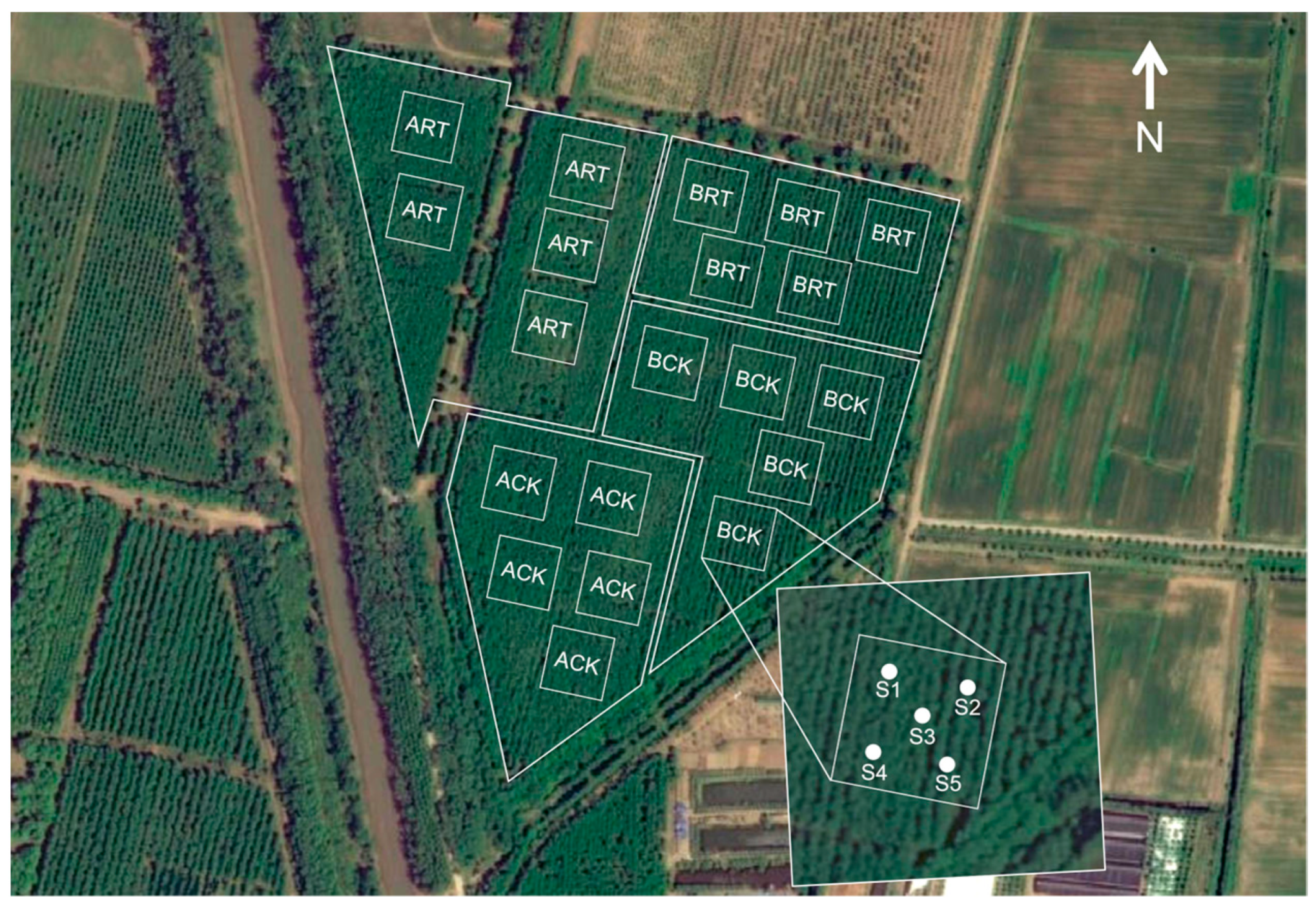
The study was conducted at the Jinan State-owned Northern Suburb Forest Farm, Jinan, Shandong Province, China (36.65° N, 117.15° E), approximately 2.5 km from the Yellow River. The region has a temperate monsoon climate with distinct seasons and synchronous rainfall and heat, characterized by an mean annual precipitation of 600–700 mm and mean annual temperature of 14–15 °C (climatic data derived from the forest farm’s work report). The soil at the study site is classified as Fluvisol according to the World Reference Base for Soil Resources (WRB, 2022) [28], combined with local soil parent material, profile characteristics, and physicochemical properties. The study objects were 7-year-old and 15-year-old pure Fraxinus chinensis Roxb. plantations. For both stand ages, rotary tillage incorporation (RT) and control (CK) treatments were established at the time of afforestation, with homogeneous initial site conditions. Due to the limitations of the experimental site area, a plot-nested experimental design was adopted in this study. For each stand age, five replicate plots were randomly established for both RT and CK treatments to minimize pseudoreplication risk and spatial autocorrelation of data. Each plot was a square or nearly square rectangle with an area of 625 m2 (25 m × 25 m) (Figure 1). Isolation belts of no less than 10 m were set between adjacent plots to avoid edge effects and cross-interference between treatments, and standardized sampling procedures were implemented to enhance data representativeness. Despite these optimization measures, slight spatial autocorrelation of data may still exist due to the spatial constraints of small plots, which constitutes an objective constraint of the experimental design. The planting spacing was 3 m × 3 m, with approximately 80 trees per plot and a canopy closure of 80%~90%. No artificial irrigation was applied to any of the plantations, and pruning was only conducted during the young stand stage, with no other artificial interventions.
The RT group received continuous rotary tillage incorporation since afforestation, with one operation in August (the peak growing period of understory herbs) and one in December (the period of substantial litter accumulation) each year (twice a year) using a horizontal rotary tiller equipped with 195-model 7-shaped rotary blades. During operation, tillage was conducted along the tree rows, avoiding a 50 cm radius around the tree trunks to protect the root system. The tillage depth was controlled at 15 cm to ensure treatment consistency. The core objectives of RT were to inhibit nutrient competition between understory weeds and trees, and reduce fire risks from litter accumulation in autumn and winter. The CK group remained untilled throughout the study period.
The dominant understory herbaceous species in the study area are Sonchus arvensis DC., Phragmites australis (Cav.) Trin. ex Steud., and Setaria viridis (L.) P. Beauv. To determine the accumulation characteristics of understory weeds and litter in the plots during the study period, five 1 m × 1 m quadrats were set in each plot (arranged in a diagonal five-point layout) and surveyed before RT in December of the previous year and August of the same year, respectively: all weeds (including aboveground and underground parts) in the quadrats were collected, and surface litter was collected. Both were dried in an oven at 65 °C to constant weight and then weighed, and the density of understory herbaceous plants was recorded simultaneously. Detailed results are shown in Tables S1 and S2.

2.2. Sample Collection

Soil and plant samples were collected in August 2024 prior to RT implementation, with an 8-month interval from the last tillage operation. At this time, soil physicochemical properties, microbial communities, and other indicators had stabilized, eliminating interference from short-term post-tillage disturbances (e.g., loose soil structure, uneven nutrient distribution, and fluctuating microbial activity). This ensured that the data truly reflected the cumulative effects of long-term RT.
Five sampling points were established in each plot using the five-point sampling method. After removing the surface litter layer, one undisturbed soil core and one bulk soil sample were collected separately from the plow layer (0–15 cm) at each sampling point. Undisturbed soil samples were collected using 100 cm3 stainless steel cutting rings for soil physical property analysis. For bulk soil samples, approximately 1 kg of soil was gathered at each point. Bulk soil samples from the five sampling points in the same plot were placed into a sterile self-sealing bag, manually stirred for more than 3 min, and homogenized as much as possible to further reduce the within-plot spatial heterogeneity of the sample data. The mixed fresh soil samples were sieved through a 2 mm mesh sieve to remove roots, stones, and other impurities, then divided into four subsamples for different preservation conditions and analytical purposes: (1) 5 g of soil was placed in a sterile centrifuge tube, wrapped in aluminum foil, and immediately flash-frozen in liquid nitrogen for subsequent metagenomic analysis; (2) an aliquot was stored at −20 °C for backup; (3) a portion was temporarily stored at 4 °C for the timely determination of microbial biomass carbon (MBC); (4) the remaining portion was air-dried for the determination of soil physicochemical properties.
Meanwhile, undisturbed soil samples were collected using soil cores at each sampling point for the determination of soil physical properties. Plow layer roots were collected via excavation: a 50 cm × 50 cm × 15 cm soil monolith was excavated at each sampling point (consistent with the tillage depth and fine root dense zone, ensuring representative root sampling). For root separation, a combined method of wet sieving and hand sorting was adopted. The excavated soil monolith was broken into small pieces manually and placed in a basin, followed by continuous rinsing with running water. The soil-root suspension was then passed through 2 mm and 0.25 mm sieves sequentially for layered retention of all root segments, while most soil particles were washed out. The materials retained on the two sieves were transferred to a clean tray for manual hand sorting to further isolate roots from impurities. A vernier caliper was used to measure the root diameter accurately. Viable F. chinensis roots were distinguished from dead roots and weed roots by multiple criteria. The separated roots were classified into three diameter classes: <2 mm, 2–10 mm, and >10 mm. Specifically, the <2 mm class followed the conventional fine root definition [29], while the 2–10 mm and >10 mm classes were determined independently in this study, both of which were set to intuitively display the overall distribution pattern of root diameter. Surface moisture was blotted dry with absorbent paper, and the roots were weighed with an electronic balance (precision: 0.01 g).
The coefficient of variation (CV) was calculated for the experimental soil samples to quantify the spatial variation degree of each soil physicochemical indicator. The results showed that the CV values of all detected soil physicochemical indicators were less than 10%, indicating that the soil conditions of the experimental plots had low spatial variation and could meet the consistency requirements of field experiment treatments.

2.3. Determination of Tree Growth Indicators and Soil Properties

Growth parameters of all trees in each plot were measured: Tree height (H) was measured using a quasi-continuous variable-range hypsometer (SRC-I/30, Harbin Optical Instrument Factory, Harbin, China), and Diameter at breast height (DBH) was measured at 1.3 m above ground level using a diameter tape. Soil organic carbon (SOC), particulate organic carbon (POC), and mineral-associated organic carbon (MAOC) contents were determined using a TOC analyzer (multi N/C 3100 TOC, Analytik Jena AG, Jena, Germany). Total nitrogen (TN) content was determined via the Kjeldahl method; total phosphorus (TP) content was determined via the molybdenum blue colorimetric method [30]; microbial biomass carbon (MBC) content was determined via the chloroform fumigation-extraction (CFE) method [31]; and soil pH was measured using a glass electrode pH meter (FE28, Mettler Toledo, Shanghai, China), soil-to-water ratio of 1:2.5).
Soil water content (SWC), bulk density (BD), and total soil porosity (SP) were determined via the oven-drying method. Soil water-stable aggregates (WSA) were separated via the wet sieving method, and mean weight diameter (MWD) and geometric mean diameter (GMD) were calculated to characterize WSA stability using the following equations [32]:
W i = m i / M
M W D = i = 1 n ( W i X i ) i = 1 n W i
G M D = e x p i = 1 n W i   l n X i i = 1 n W i
where M = total soil weight (g); mi = mass of aggregates in each size class (g); Xi = mean diameter of aggregates in each size class (mm); Wi = percentage content of aggregates in each size class (%).

2.4. DNA Extraction and Metagenomic Sequencing

Soil microbial DNA was extracted from fresh soil samples using the FastPure Microbiome DNA Isolation Kit (Vazyme Biotech Co., Ltd., Nanjing, China). Library construction and sequencing: 200 ng of genomic DNA was sheared into 300–350 bp fragments using a Covaris S220 ultrasonic disruptor instrument (Covaris S220, Covaris, Inc., Woburn, MA, USA). Following end repair, adapter ligation, and magnetic bead purification, the fragments were amplified using P5/P7 primers (Illumina, Inc., San Diego, CA, USA) and re-purified for quality control to complete library construction. Libraries with different index labels were pooled and subjected to 150-bp paired-end (PE150) sequencing on an Illumina HiSeq X Ten System (Illumina, Inc., San Diego, CA, USA), and bioinformatics analyses were performed after sequencing data generation.
Core bioinformatics workflow: Raw image data were processed using bcl2fastq (v2.17.1.14) to generate pass-filter (PF) reads, which were filtered using Cutadapt (v1.9.1) to remove primers, adapters, and low-quality sequences, resulting in clean reads. Clean reads were assembled using MEGAHIT (v1.1.3), coding genes were predicted using Prodigal (v3.02), and redundancy was removed using MMseq2 (v11-e1a1c), 95% identity, 95% coverage) to generate a non-redundant unigene set. Unigene abundance was quantified via alignment using SoapAligner (v2.21). Genes were aligned against the Nr and KEGG databases using Diamond (v0.8.15.77) for functional and taxonomic annotation.

2.5. Microbial Network Construction

To reveal potential interactions among microbial taxa in the soil microbial community, microbial co-occurrence networks were constructed and analyzed. Genus-level microbial taxa with a relative abundance > 0.01% and present in ≥50% of the samples were selected. Based on the filtered microbial abundance data, Spearman’s correlation coefficients were calculated, and significant correlations with r > 0.60 and p < 0.001 were used to construct co-occurrence networks to ensure reliability. Network construction and visualization were performed using the WGCNA package in R via the CNSknowall platform.

2.6. Statistical Analysis

All statistical analyses and visualizations were performed in R software (v4.5.0), with all plots generated using the ggplot2 package (v4.0.1). Normality of data was verified by the Shapiro-Wilk test, and homogeneity of variances by the Levene test. Two-way analysis of variance (ANOVA) was performed to assess the main and interactive effects of stand age and RT on all measured variables. Subsequently, the emmeans package (v2.0.1) was used to conduct pairwise multiple comparisons and significance testing between groups using the Tukey’s HSD method.
To quantify the correlations between tree growth and environmental factors, Mantel test was performed using the mantel function in the vegan package (v2.7.2): Based on the Spearman correlation coefficient, 999 permutations were performed to calculate the Mantel r value and raw p-value, and the FDR method was used to correct p-values to control the false discovery rate, with the correlation results visualized.
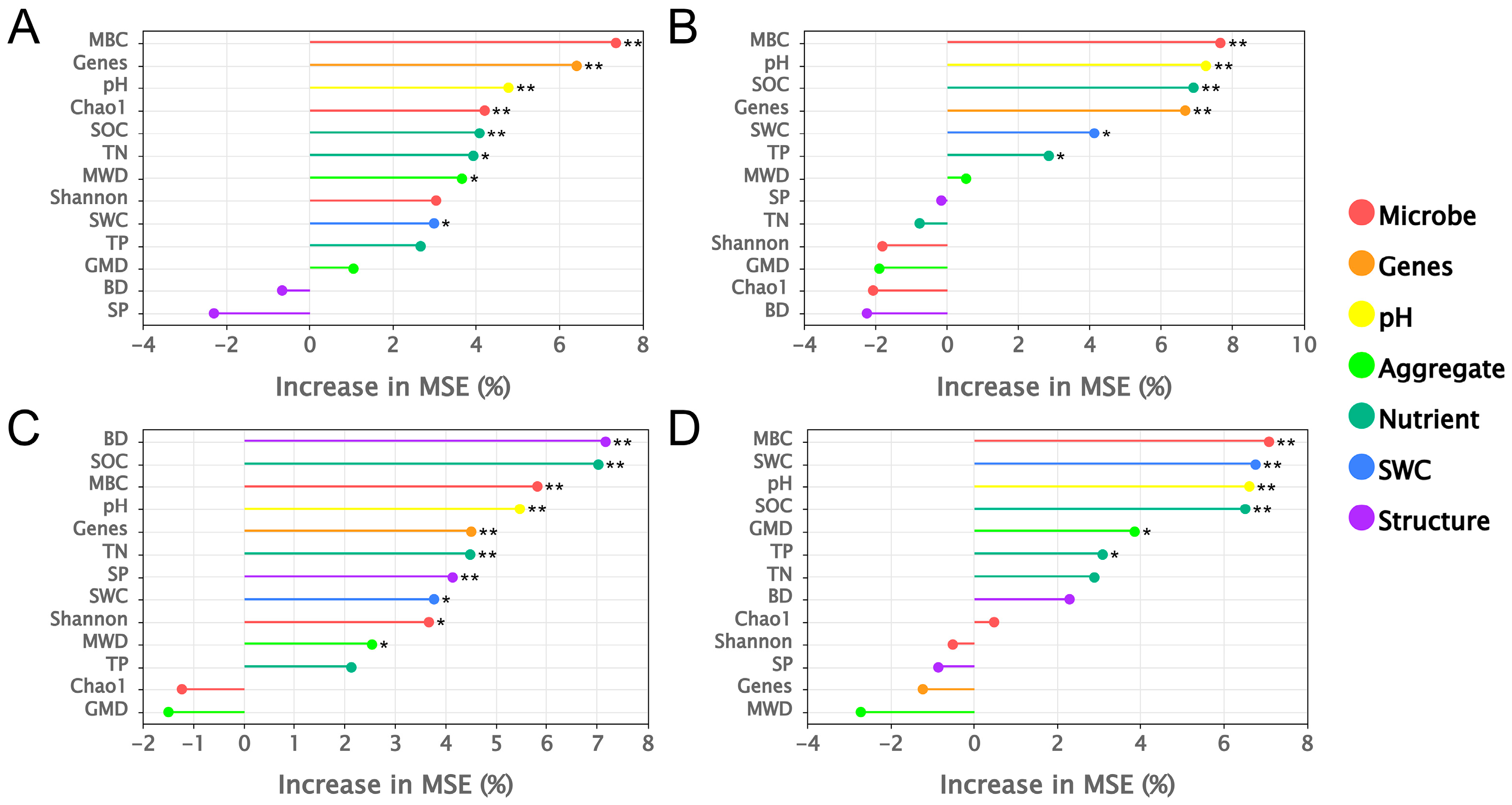
Random forest analysis was performed as follows: The FactoMineR (v2.13) package was used to standardize diameter at breast height (DBH) and tree height (H) via z-score normalization, and the first principal component was extracted via principal component analysis (PCA) as the comprehensive growth variable; soil physicochemical properties, microbial indicators, and abundances of major carbon-degrading genes were selected as predictor variables, and the randomForest package (v4.7.1.2) was used to construct the model with optimal parameters (ntree = 500, mtry = 3, nodesize = 1); the model explanatory power (R2) was calculated using out-of-bag (OOB) mean squared error; 1000 permutations were used to calculate the percentage increase in mean squared error (%IncMSE) to quantify variable importance (the higher the %IncMSE value, the more important the variable is for the model prediction) and p-values, and the top 10 driving factors in each group were retained.
Based on the results of normality and homogeneity tests, equal-variance t-test, Welch’s t-test (unequal variance), or Wilcoxon rank-sum test were selected to analyze the abundance differences between groups at the phylum level of microbes. p-values were corrected using the Benjamini-Hochberg (BH) method prior to visualization. Plots of microbial taxon abundances and differential analyses were generated based on the test results. Relative abundance data were processed using the vegan package, and community dissimilarity matrices were calculated based on the Bray-Curtis distance algorithm. Principal coordinate analysis (PCoA) was conducted via the capscale function for dimensionality reduction and analysis of community structure differentiation. Scores and explanatory powers of the first two principal coordinates (PC1, PC2) were extracted to visualize overall differences in microbial community structure.

3. Results

3.1. Tree Growth Indicators

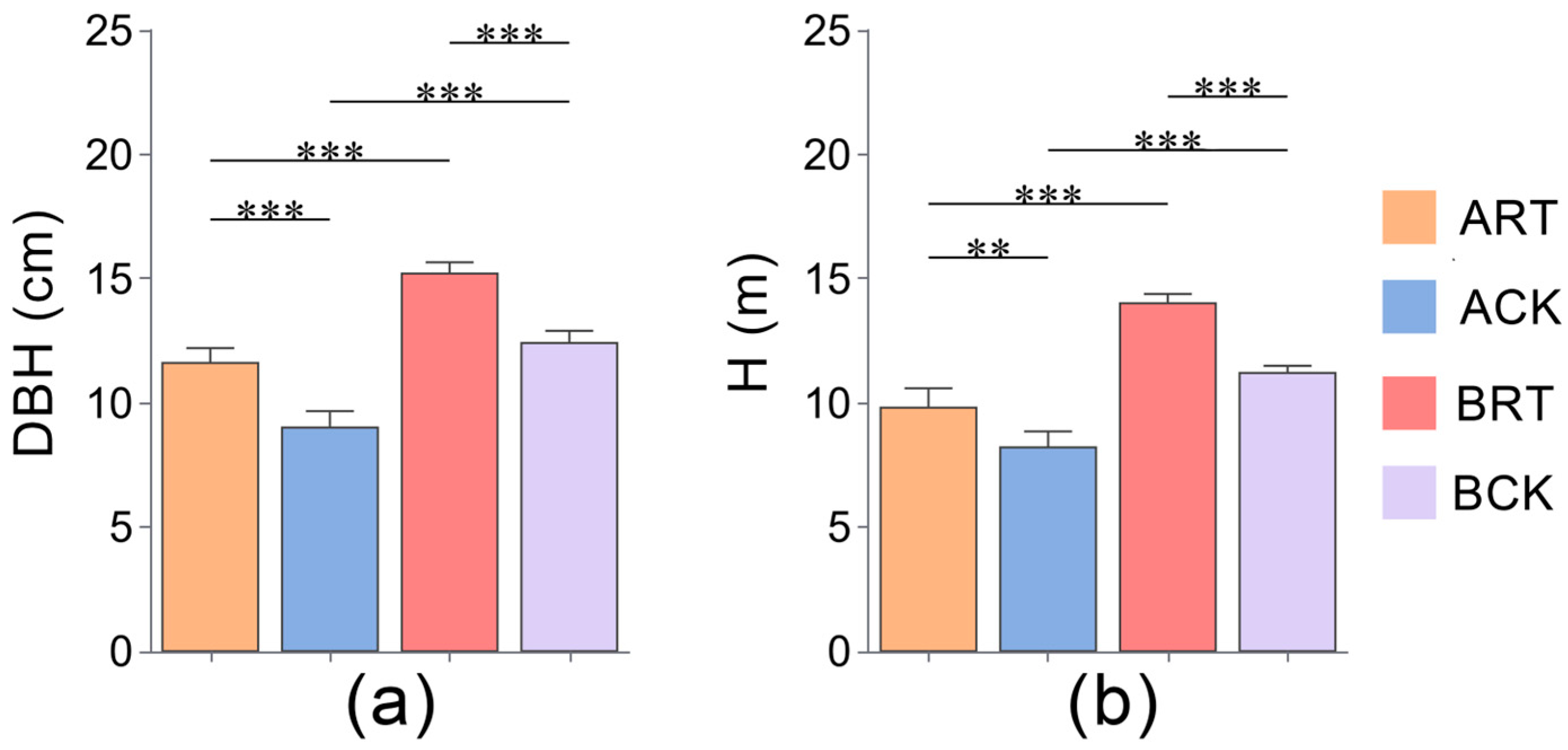
Compared with the untilled control (CK; ACK for 7-year-old, BCK for 15-year-old stands), rotary tillage incorporation (RT; ART for 7-year-old, BRT for 15-year-old stands) significantly increased the diameter at breast height (DBH) and tree height of F. chinensis (p < 0.05, Figure 2). Specifically, DBH and tree height in 7-year-old ART were 11.6 ± 0.6 cm and 9.8 ± 0.8 m, respectively, significantly higher than those in ACK (9.0 ± 0.7 cm, 8.2 ± 0.6 m). In 15-year-old stands, DBH and tree height in BRT were 15.2 ± 0.5 cm and 14.0 ± 0.4 m, respectively, significantly higher than those in BCK (12.4 ± 0.5 cm, 11.2 ± 0.3 m). Compared with CK, RT increased DBH and tree height by 28.89% and 19.51% in 7-year-old stands, and by 22.58% and 25.00% in 15-year-old stands, respectively. Two-way ANOVA showed that stand age and RT had highly significant main effects on DBH and tree height (p < 0.001), and the interaction effects varied among indicators (Table S3). The age × treatment interaction was not significant for DBH, indicating consistent RT promotion across stand ages; this is significant for tree height, suggesting enhanced RT promotion with increasing stand age. Collectively, RT effectively promoted DBH and tree height growth, with stronger tree height promotion in older stands. In addition, RT significantly reduced understory herb biomass compared with CK (Table S1), which effectively alleviated nutrient competition between herbs and F. chinensis.
RT also significantly affected the root dry weight per unit area of F. chinensis plantations (Table S4). Coarse roots (>10 mm) were not detected in any of the sampling plots of RT groups, whereas coarse roots were present in all CK plots, with dry weights of 327.65 ± 96.93 g/m2 (7-year-old ACK) and 1510.75 ± 150.28 g/m2 (15-year-old BCK), both significantly higher than those in RT groups (p < 0.05). In contrast, RT increased the dry weights of fine roots (<2 mm) and medium roots (2–10 mm), with a significant increment in 15-year-old RT groups (p < 0.05).

3.2. Soil Nutrients and Physicochemical Properties

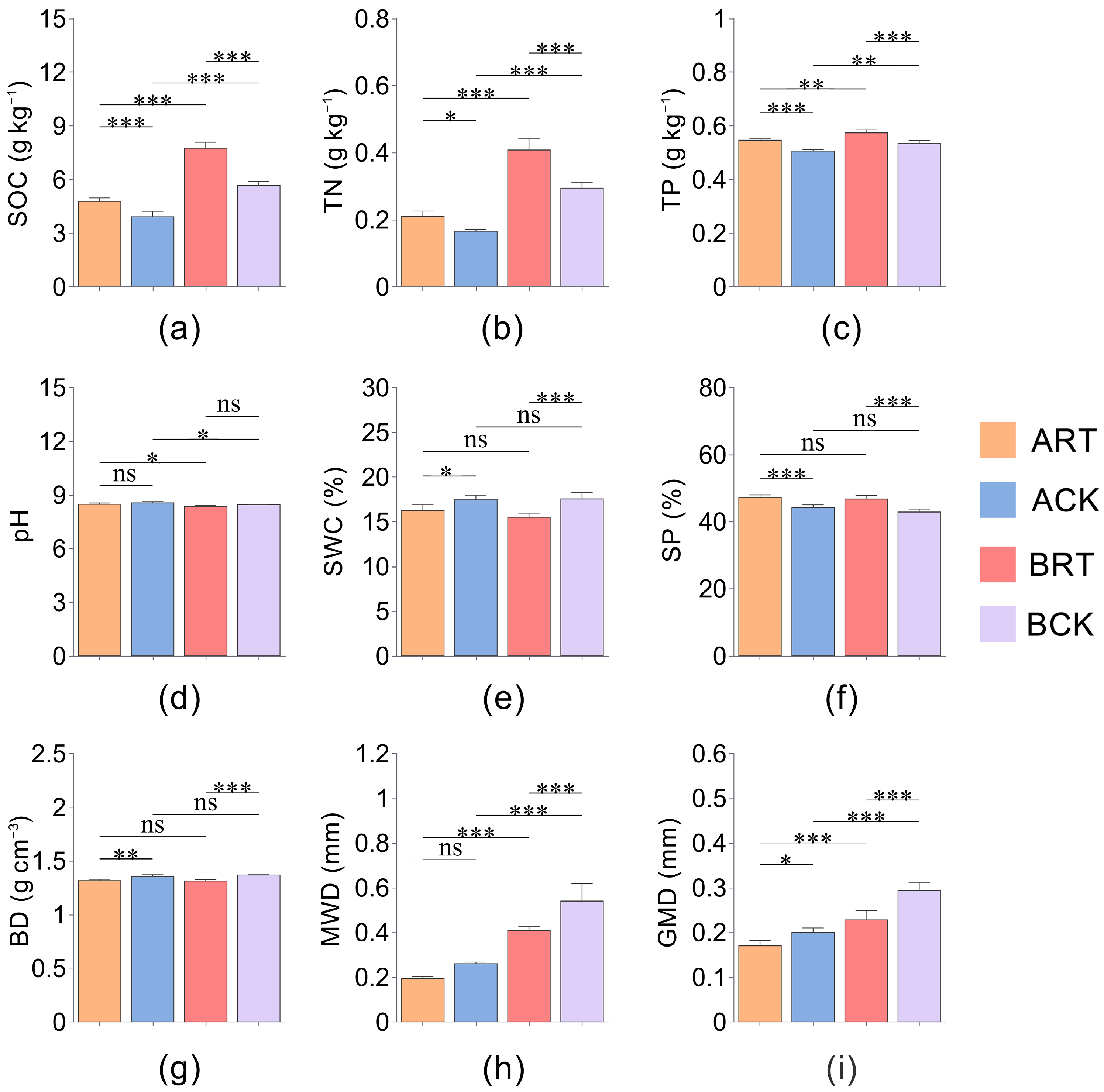
RT showed consistent regulatory effects on soil nutrients and physicochemical properties in 7-year-old and 15-year-old F. chinensis plantations, with all indicators showing significant intergroup differences (p < 0.05, Figure 3, Table S5). Compared with CK, RT significantly increased soil nutrient contents: in 7-year-old stands, soil organic carbon (SOC), total nitrogen (TN), and total phosphorus (TP) in RT groups (ART) were 4.78 ± 0.19 g kg−1, 0.21 ± 0.02 g kg−1, and 0.55 ± 0.01 g kg−1, respectively, significantly higher than those in CK (ACK: 3.92 ± 0.30 g kg−1, 0.17 ± 0.01 g kg−1, 0.51 ± 0.01 g kg−1; p < 0.05); in 15-year-old stands, SOC, TN, and TP in BRT further increased to 7.75 ± 0.33 g kg−1, 0.41 ± 0.03 g kg−1, and 0.57 ± 0.01 g kg−1, respectively, significantly higher than those in BCK (5.67 ± 0.23 g kg−1, 0.29 ± 0.02 g kg−1, 0.53 ± 0.02 g kg−1; p < 0.05). Two-way ANOVA indicated highly significant main effects of stand age and RT on SOC, TN, and TP (p < 0.001), but also different interaction effects (Table S5): the age × treatment interaction was highly significant for SOC and significant for TN, suggesting enhanced RT promotion on SOC and TN with increasing stand age; this is non-significant for TP, indicating consistent RT promotion on TP across stand ages.
For soil physicochemical properties, comparisons showed no significant differences in soil pH between CK and RT groups within the same stand age (p > 0.05, Figure 3). RT significantly increased soil porosity, reduced bulk density, and decreased soil water content in both stand ages (p < 0.05, Figure 3). Specifically, in 7-year-old ART groups, porosity (47.24 ± 0.76%) was significantly higher, and bulk density (1.32 ± 0.01 g cm−3) and water content (16.23 ± 0.70%) were significantly lower than those in ACK (44.20 ± 0.81%, 1.35 ± 0.02 g cm3, 17.46 ± 0.51%, respectively; p < 0.05), while no significant difference was observed in pH between ART and ACK (8.47 ± 0.07 vs. 8.55 ± 0.06, p > 0.05); in 15-year-old BRT groups, porosity (46.78 ± 1.04%) was significantly higher, and bulk density (1.31 ± 0.01 g cm3) and water content (15.50 ± 0.46%) were significantly lower than those in BCK (42.88 ± 0.87%, 1.37 ± 0.01 g cm3, 17.55 ± 0.69%, respectively; p < 0.05), with no significant difference in pH between BRT and BCK (8.36 ± 0.03 vs. 8.45 ± 0.02, p > 0.05). Two-way ANOVA revealed distinct main and interaction effects across these indicators (Table S4): For soil pH, stand age exerted a highly significant main effect (p < 0.001), while RT treatment showed a significant main effect (p < 0.01); the interaction between stand age and RT was non-significant (p > 0.05), suggesting independent effects of the two factors. However, Tukey’s HSD post-hoc tests demonstrated no significant pH differences between RT and CK groups within the same stand age (p > 0.05), indicating that the significant main effect of RT did not reflect consistent pH reduction across stand ages; for soil water content (SWC), soil porosity (SP), and bulk density (BD), RT had highly significant main effects. Stand age only had a significant main effect on SP, and no significant interactions were observed (p > 0.05), indicating RT as the dominant regulating factor with consistent effects across stand ages.
Soil aggregate analysis showed that RT exhibited differential regulatory effects on the mean weight diameter (MWD) and geometric mean diameter (GMD) of soil water-stable aggregates between stand ages (Figure 3h,i). Specifically, RT significantly decreased GMD in both 7-year-old and 15-year-old stands (p < 0.05); for MWD, RT significantly decreased the index only in 15-year-old stands (0.41 ± 0.01 mm vs. 0.54 ± 0.08 mm, p < 0.001), while no significant difference was observed between ART and ACK in 7-year-old stands (0.20 ± 0.01 mm vs. 0.26 ± 0.01 mm, p > 0.05). Two-way ANOVA indicated highly significant main effects of stand age and RT on MWD and GMD, with non-significant age × treatment interaction for MWD but significant interaction for GMD, suggesting enhanced RT-induced GMD reduction with increasing stand age, while MWD reduction was unaffected by stand age.
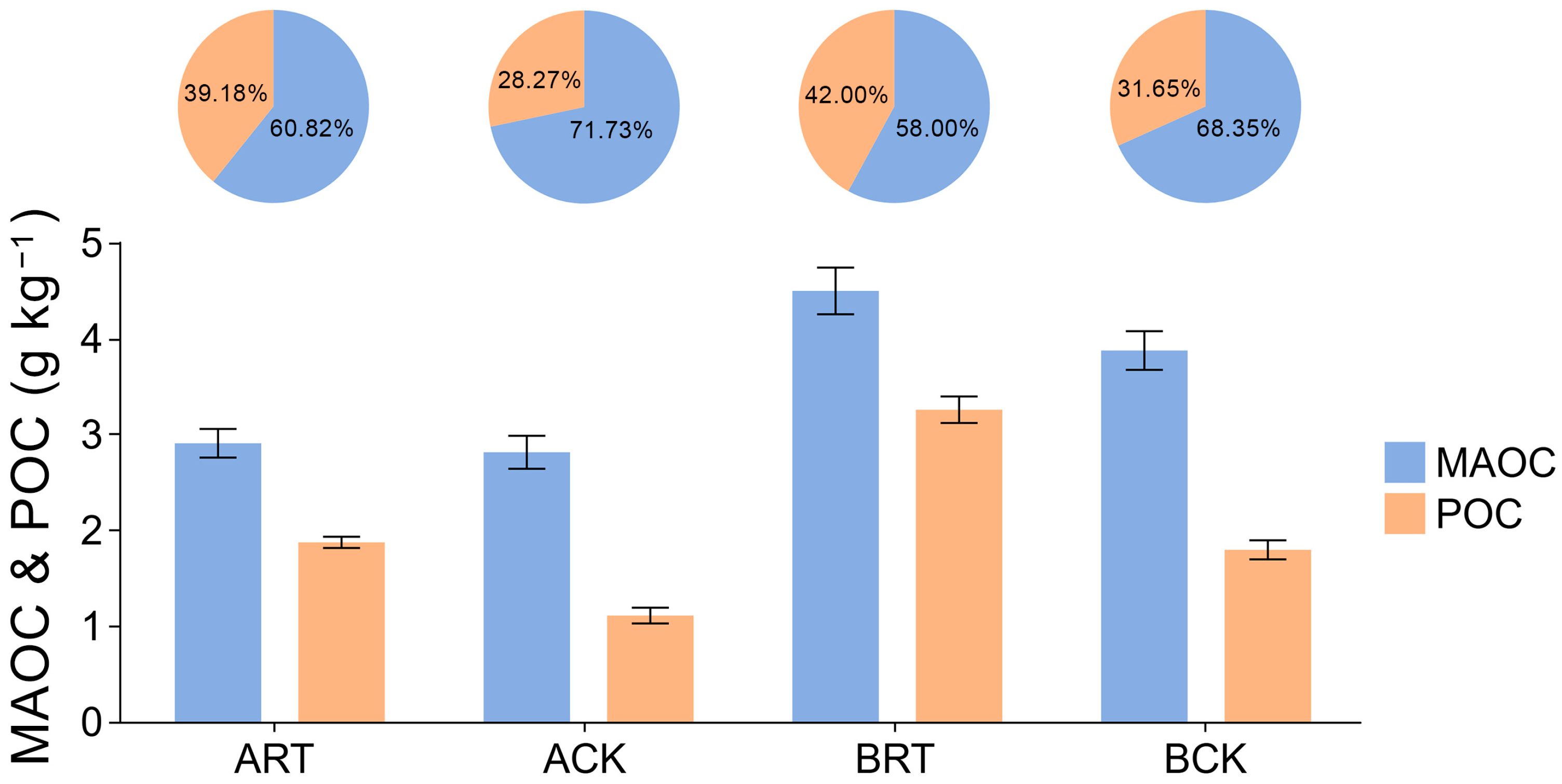
RT exhibited significant regulatory effects on the contents and proportional distributions of particulate organic carbon (POC) and mineral-associated organic carbon (MAOC) in the soil of 7-year-old and 15-year-old F. chinensis plantations (Figure 4). Compared with the control groups, RT significantly altered the contents and SOC proportion of POC and MAOC: in 7-year-old stands, the average POC content in the RT group (ART) increased from 1.11 g kg−1 in the control group (ACK) to 1.87 g kg−1, and its proportion in soil organic carbon (SOC) synchronously increased from 28.27% to 39.18%. During the same period, the average MAOC content in the ART group slightly increased from 2.81 g kg−1 in the ACK group to 2.91 g kg−1, while its proportion in SOC decreased from 71.73% to 60.82% (p < 0.05). In 15-year-old stands, the regulatory effect of RT was more prominent: the average POC content in the RT group (BRT) increased from 1.79 g kg−1 in the control group (BCK) to 3.26 g kg−1, with its proportion in SOC rising from 31.65% to 42.00%; the average MAOC content in the BRT group increased from 3.87 g kg−1 in the BCK group to 4.50 g kg−1, but its proportion in SOC decreased from 68.35% to 58.00% (p < 0.05). Although MAOC remained the dominant component of the soil organic carbon pool in all treatment groups, RT treatment consistently reduced the relative proportion of MAOC and increased the proportion of POC with higher activity. These results indicate that RT has altered the stability characteristics of soil organic carbon in the studied F. chinensis plantations.

3.3. Microbial Biomass and Community Structure

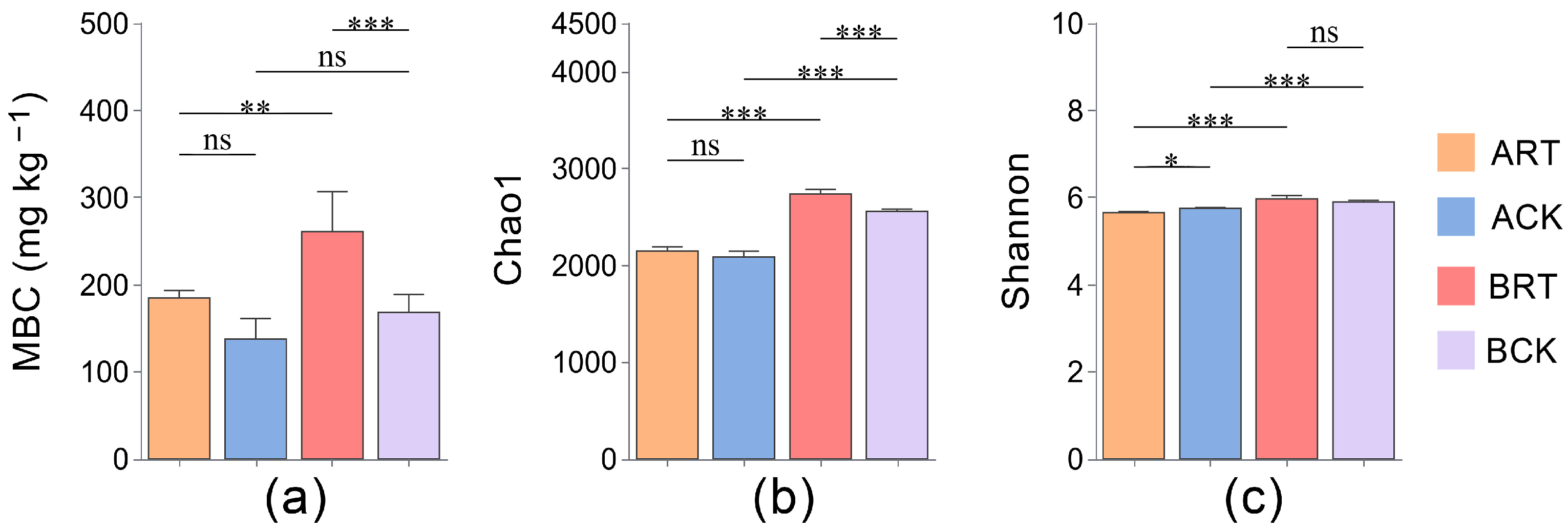
The effects of RT on soil microbial biomass, community structure, and function in F. chinensis plantations exhibited significant group-specific differences, closely related to the cumulative effect of rotary tillage incorporation duration. RT significantly altered the microbial community structure in both stand age groups (Figures S2–S4). Comparisons revealed differential responses of soil microbial biomass carbon (MBC) to RT between the two stand ages (Figure 5b,c). Specifically, RT significantly increased MBC in 15-year-old stands (260.98 ± 45.78 mg kg−1 vs. 168.22 ± 20.63 mg kg−1, p < 0.001), while no significant difference was observed between ART and ACK in 7-year-old stands (184.92 ± 8.17 mg kg−1 vs. 137.51 ± 23.77 mg kg−1, p > 0.05). For soil microbial alpha diversity indices, the Chao1 index in the 15-year-old RT group (BRT) was significantly higher than CK (BCK), while the Chao1 index in the 7-year-old RT group (ART) showed no significant difference from CK (ACK). The Shannon index exhibited no significant difference between BRT and BCK, while ART had a significantly lower Shannon index than ACK; for the Chao1 index, no significant difference was observed between ART (2145.14 ± 44.65) and ACK (2086.35 ± 57.83), while BRT (2735.64 ± 48.90) was significantly higher than BCK (2557.70 ± 21.79); for the Shannon index, ART (5.657 ± 0.016) was significantly lower than ACK (5.752 ± 0.018), while BRT (5.968 ± 0.077) was significantly higher than BCK (5.900 ± 0.036); distinct main and interaction effects of stand age and RT were observed on MBC, Chao1 and Shannon indices (Table S6). for the Chao1 index, stand age and RT showed highly significant main effects with significant age × treatment interaction, indicating enhanced RT promotion on Chao1 index with increasing stand age; for the Shannon index, stand age exhibited highly significant main effect while RT showed no significant main effect, and age × treatment interaction was highly significant, suggesting stand age-dependent regulatory effect of RT; for the MBC, both stand age and RT had highly significant main effects, and age × treatment interaction was marginally significant, indicating that stand age and RT were key factors affecting the MBC, with their interactive regulation tending to be significant.
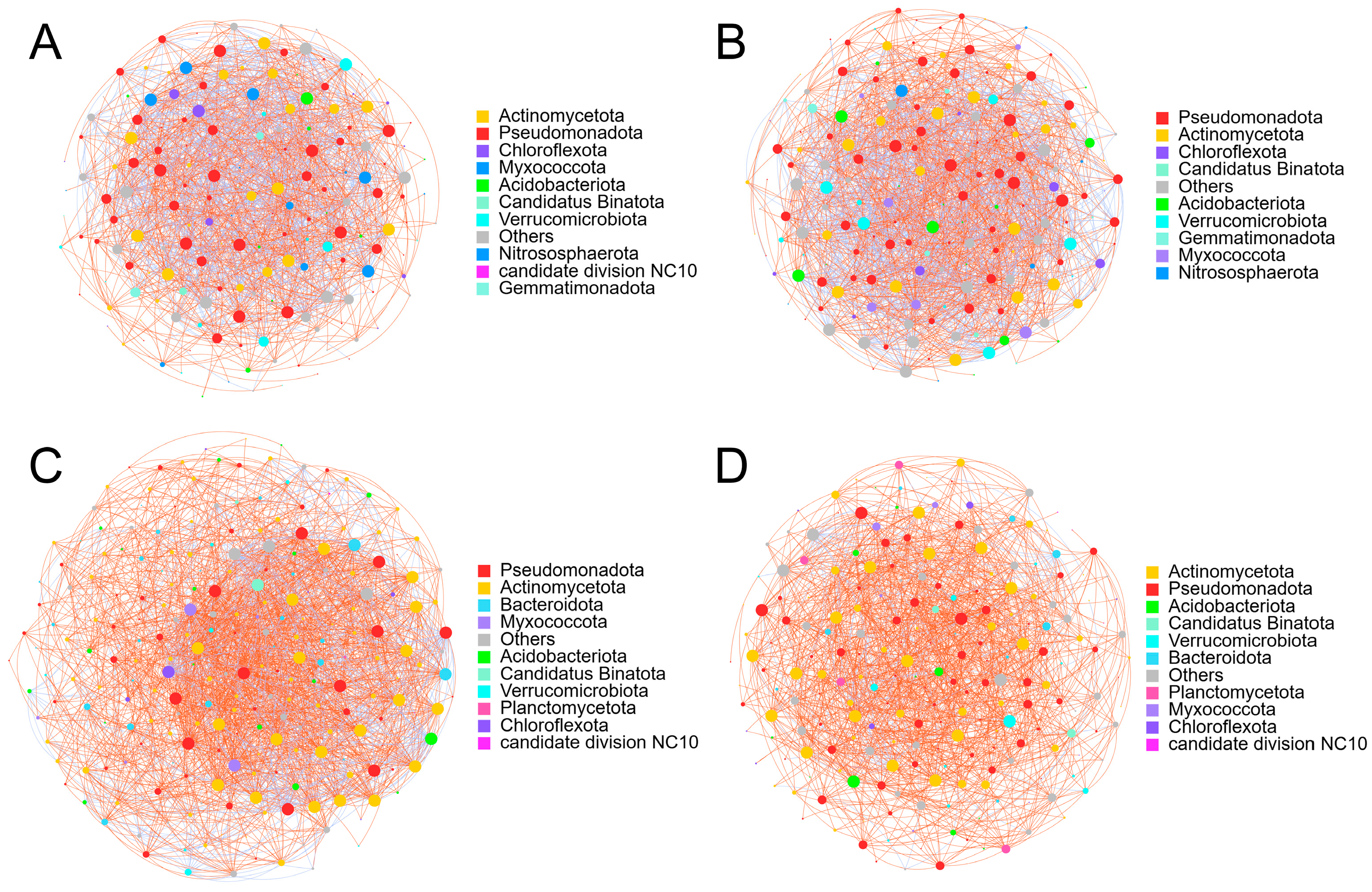
To explore the impact of RT on microbial co-occurrence patterns, soil microbial co-occurrence networks were constructed for RT and CK groups in both stand age classes. The results showed that the regulatory effect of RT on network structure varied significantly between groups. For the 7-year-old group, the number of edges, average degree, and modularity of the microbial co-occurrence network (ART group) decreased slightly but not significantly, with no obvious change in the ratio of positive to negative correlations. For the 15-year-old group, the number of nodes, average degrees, and edges of the microbial co-occurrence network (BRT group) increased significantly, the modularity decreased, and the proportion of negative correlations increased obviously. These results indicate that RT can significantly alter the soil microbial community co-occurrence network structure in F. chinensis plantations of different ages (Figure 6 and Figure S5).
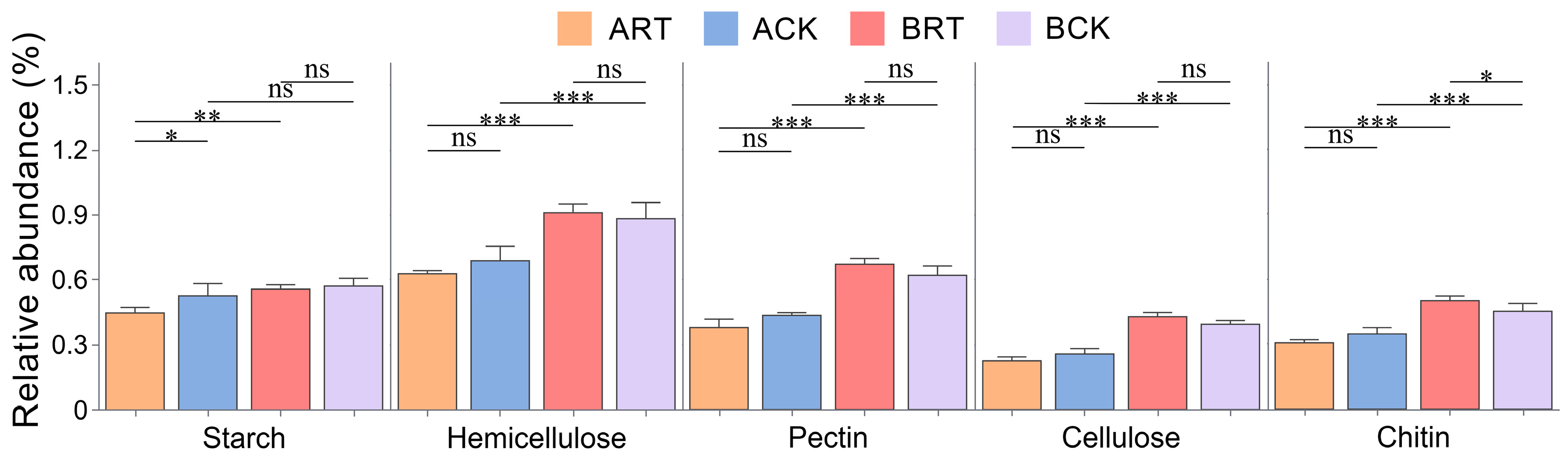
Based on the KEGG functional pathway annotation, RT exhibited differential regulation on the relative abundances of major carbohydrate-degrading genes in soils of different groups (Figure 7, Table S7). Overall, RT exerted distinct stand-age-specific regulatory effects: (1) In the 7-year-old group, RT significantly increased the relative abundance of starch-degrading genes (p < 0.05), while no significant differences were observed in the abundances of pectin, cellulose, and chitin-degrading genes between ART and ACK (p > 0.05); (2) In the 15-year-old group, RT significantly increased the relative abundance of chitin-degrading genes (p < 0.05), while no significant differences were observed in the abundances of starch, pectin, and cellulose-degrading genes between BRT and BCK (p > 0.05). Additionally, the relative abundances of hemicellulose, pectin, cellulose, and chitin-degrading genes in the 15-year-old group were significantly higher than those in the 7-year-old group, regardless of treatment (p < 0.05).
Among the five major carbon-degrading gene categories (starch, hemicellulose, pectin, cellulose, and chitin), both groups shared the common feature that hemicellulose-degrading genes had the highest relative abundance, while cellulose-degrading genes had the lowest. Intergroup differences were observed in the abundance ranking of pectin and starch-degrading genes. Pectin-degrading genes had a higher relative abundance than starch-degrading genes in the 15-year-old group, whereas the opposite trend was observed in the 7-year-old group.

3.4. Correlation Characteristics Between Soil, Microbes and Tree Growth and Key Driving Factors of Tree Growth

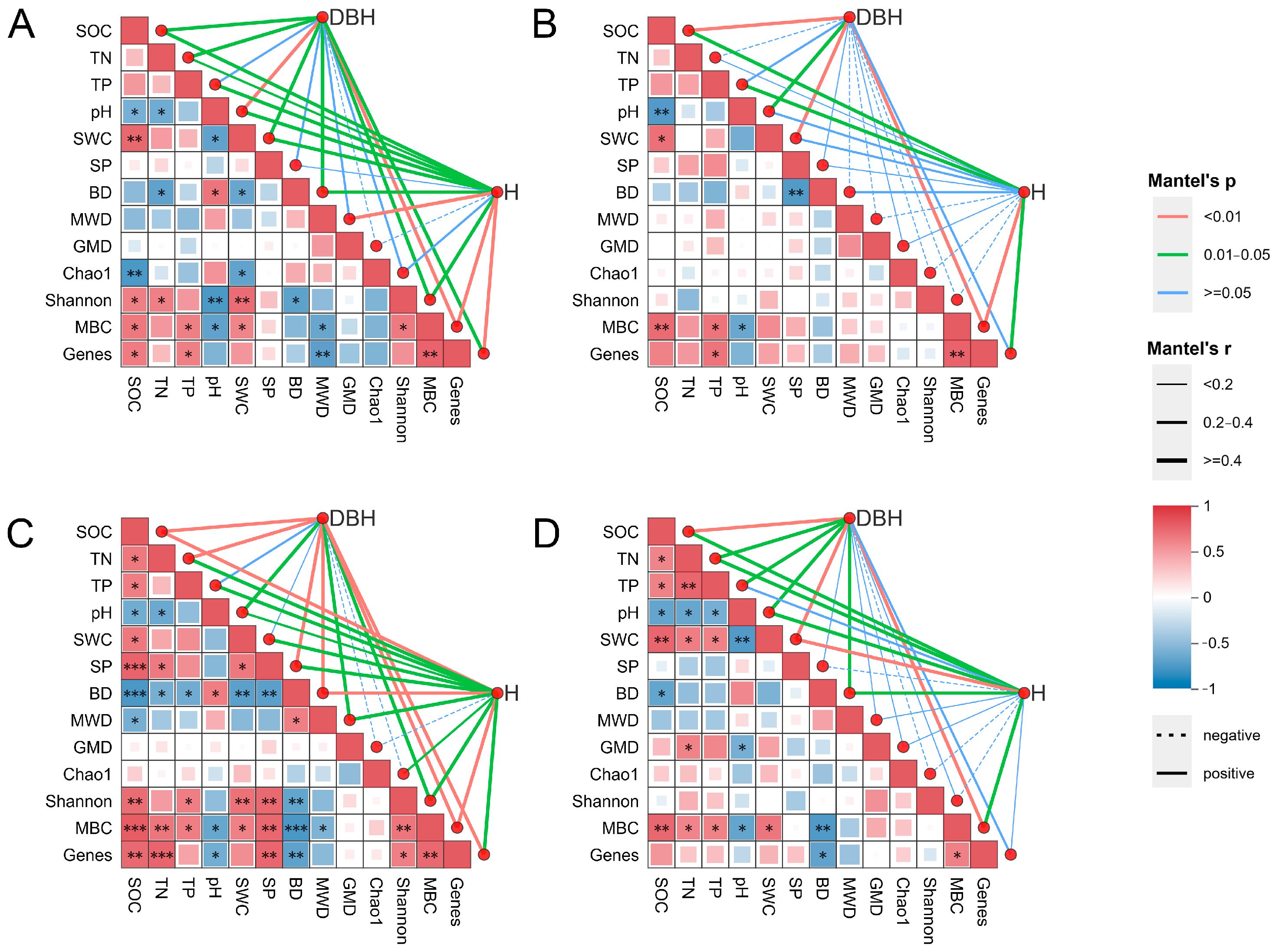
In order to comprehensively explore the regulatory effect of rotary tillage incorporation treatment (RT) on the soil, microbial and tree growth system of Fraxinus chinensis forests of different stand ages (7-year-old and 15-year-old), the Mantel test was used to analyze the correlation characteristics between soil, microbial and tree growth indicators (Figure 8), and random forest analysis was combined to clarify the key driving factors of tree growth (Figure 9).
In 7-year-old stands, ART treatment significantly enhanced the correlation degree and expanded the correlation scope between tree growth and soil and microbial indicators, with this change evidenced both by alterations in soil physicochemical properties and by specific responses of microbial community indicators.. The control group (ACK) had few significant correlations, with DBH positively correlated with indicators such as SOC and pH, and H positively correlated with indicators such as SOC and TP; the core soil-microbial correlations included positive correlations of SOC with SWC and MBC. After ART treatment, the number of correlations increased significantly, with DBH exhibiting significant positive correlations with TN, BD, etc., and H exhibiting significant positive correlations with MWD, while its correlation with MBC was enhanced to highly significant (p < 0.01). The corresponding driving factor analysis showed that the core driving factors of the control group (ACK) were MBC, soil pH, SOC, and Genes, while SWC and TP were significant driving factors. On the basis of retaining some of the above core driving factors (including SWC), the ART group added total nitrogen (TN), MWD, and Chao1 index as significant driving factors, and the importance ranking of Genes moved forward.
In 15-year-old stands, BRT treatment significantly enhanced the correlation degree between tree growth and soil and microbial indicators and expanded the correlation scope. In the control group (BCK), DBH and H were mainly positively correlated with SOC, TN, etc., and MBC, and the core soil and soil-microbial correlations included positive correlations of SOC with SWC and MBC. After BRT treatment, the correlation characteristics were significantly optimized, with DBH exhibiting significant positive correlations with SP, MWD, BD, etc., its correlations with SOC and TN were enhanced, and the correlation between SOC and MBC were enhanced to an extremely strong positive correlation (p < 0.001, Figure 8C). The corresponding driving factor analysis showed that the core driving factors of the control group (BCK) were MBC, SOC, SWC, and pH, while GMD and TP were significant driving factors; on the basis of the above, the BRT group added BD, SP, TN, Shannon index, and MWD as significant (p < 0.05) or highly significant (p < 0.01) driving factors, while Genes, which originally had no significant effect, became an highly significant driving factor. Meanwhile, the importance of SWC decreased significantly (from highly significant to significant), and GMD changed from a significant driving factor to having no significant effect.
In general, the regulation of RT treatment on the soil, microbial, and tree growth system had significant stand age specificity, which was specifically reflected in that the core regulatory pathway in 7-year-old stands was to expand the correlation dimension and elevate factors related to total nitrogen, aggregates, and microbial richness to core driving factors, while the main characteristics in 15-year-old stands were to improve the correlation degree, elevate factors related to soil structure, microbial diversity, and aggregates to core driving factors, strengthen the role of microbial functional genes, and optimize the effects of original driving factors. By regulating the correlation patterns and driving effects between soil, microbes and tree growth indicators, RT treatment constructed a more favorable soil ecological environment for the growth of Fraxinus chinensis.

4. Discussion

This study aimed to explore the regulatory effects of rotary tillage incorporation on the tree growth, soil, and microbial system of Fraxinus chinensis Roxb. plantations, with the core hypothesis that continuous rotary tillage incorporation since afforestation promotes F. chinensis growth by optimizing soil physicochemical properties and microbial community structure. Under natural conditions, carbon from litter, dead wood, and roots enters the soil gradually through leaching or bioturbation [33,34], but this process is slow with low organic carbon use efficiency. The sandy soils in the study area are characterized by high porosity, and their strong permeability promotes the leaching of surface organic carbon, resulting in limited carbon sequestration potential and inferior water and nutrient retention capacity [35,36]. In contrast, rotary tillage incorporation rapidly incorporates surface litter into the soil via mechanical disruption, accelerating the input of exogenous organic matter (litter and herb residues) via tillage incorporation; although RT enhances organic carbon mineralization, the magnitude of organic carbon input exceeds mineralization loss, leading to a net increase in SOC content and improved nutrient availability [17,18]. This study systematically analyzed 7-year-old and 15-year-old F. chinensis plantations under continuous RT since afforestation (tillage duration consistent with stand age), confirming that long-term continuous rotary tillage incorporation significantly promotes DBH and tree height growth by synergistically regulating soil nutrients, physicochemical properties, and microbial functions, thus verifying the preset hypothesis. Below, we interpret the driving mechanism of rotary tillage incorporation on tree growth, clarify the scientific connotation and management implications, and propose limitations and future directions.
A key finding of this study is that continuous rotary tillage incorporation since afforestation (7 and 15 years) significantly increased F. chinensis DBH and tree height, with the enhancement of soil nutrients (SOC, TN, TP) as the core material foundation. Sandy soil has poor water and nutrient retention capacity, making it difficult for nutrients to remain in the soil. Rotary tillage incorporation integrates surface herbaceous residues and litter into the soil, shortening the turnover cycle of organic matter from the surface to subsurface layers. These materials are rich in cellulose, hemicellulose, and essential nutrients; their decomposition continuously supplements nutrient pools in forestlands, which constitutes the primary driver of tree growth [37,38]. Rotary tillage and burial significantly increased soil total nitrogen (TN) and total phosphorus (TP) contents. Nitrogen is a core component of plant chlorophyll and enzymes, and phosphorus participates in energy metabolism and cell synthesis; the elevated contents of both nutrients promote the growth of F. chinensis [39,40]. However, the responses of other macro- and micronutrients to rotary tillage and burial remain to be further explored. Additionally, rotary tillage incorporation alters the distribution of soil organic carbon fractions; fragmented organic matter binds to minerals to form mineral-associated organic carbon (MAOC), while particulate organic carbon (POC) content dynamically rises with increased exogenous organic input. According to the soil carbon saturation theory, MAOC accumulation is constrained by the available mineral surface area, and when MAOC approaches saturation, additional organic carbon input is mainly stored as POC, which has higher activity and is more easily decomposed to supply nutrients for trees. RT increased POC content and its proportion in SOC (Figure 4), which enhanced the availability of soil organic carbon and provided more labile carbon sources for microbial growth and tree nutrient uptake. MAOC accumulation has a theoretical maximum due to limited mineral surface area, and when approaching saturation, SOC sequestration efficiency may plateau [41]. However, mineral-bound organic matter is physically protected against excessive decomposition, maintaining long-term nutrient supply [42]. This nutrient-driven effect aligns with previous studies on one-time deep ploughing or short-term rotary tillage incorporation [19,20], but this study extends the current understanding of forest tillage practices by confirming that long-term continuous rotary tillage incorporation sustains growth-promoting effects across the two stand age classes examined in this study.
Rotary tillage incorporation optimizes the soil physical environment, indirectly enhancing growth promotion by creating favorable conditions for F. chinensis. Given the fine texture of the sandy soil, it is prone to natural compaction and hardening. As a common soil improvement measure in artificial forest management, tillage (including deep ploughing and rotary tillage) breaks soil compaction, increases porosity, and creates a suitable microenvironment for root extension [43,44]. Consistent with this, rotary tillage incorporation significantly increased soil porosity and reduced bulk density in both age groups, while no significant difference in soil pH was observed between CK and RT groups within the same stand age [45,46]. Numerous studies have demonstrated that tree fine roots are predominantly distributed in surface soil, and the 0–15 cm rotary tillage depth overlaps with the high-density zone of tree fine roots [47,48,49]; thus, altered soil physical properties directly affect fine root physiological activity: reduced bulk density and increased porosity alleviate root extension resistance, while improved soil aeration favors root respiration and microbial activity, thereby enhancing soil nutrient use efficiency [18]. As an important pathway for higher plants to regulate belowground ecosystems, root exudation is jointly affected by soil physical, chemical, and biological characteristics, and is also closely related to root morphology [50,51]. Fine roots play a vital role in root exudation [52], and rotary tillage incorporation significantly promotes the accumulation of fine root biomass, indicating that this measure may indirectly enhance the release of root exudates by stimulating fine root development. Previous studies have confirmed that root exudates of the Fraxinus species mainly include amino acids, sugars, and organic acids, which significantly improve soil properties and further affect tree growth [53,54,55]. Despite two-way ANOVA indicating a significant main effect of RT on pH, the lack of significant pairwise differences within stand ages may be attributed to the strong buffering capacity of the soil in the study area or the insufficient cumulative effect of RT intensity. Although rotary tillage incorporation slightly reduced soil water content [17], this impact is offset by increased fine root quantity. Regarding aggregate structure, rotary tillage incorporation reduced MWD, GMD, and the large aggregate proportion [56], but the increased organic matter input exceeded the loss from reduced aggregate stability, ensuring nutrient supply. Overall, optimized soil physical properties and enhanced nutrients synergistically promote F. chinensis growth.
Soil microorganisms are core to organic matter decomposition and nutrient transformation, with community changes directly affecting soil fertility and tree growth efficiency [57]. Rotary tillage incorporation significantly regulated microbial communities in both age groups, with distinct intergroup differences. The response of soil microbial biomass carbon (MBC) to RT was age-class dependent. RT significantly increased MBC in 15-year-old stands, while no significant difference was observed in 7-year-old stands. This may be because the effect of organic matter input on microbial biomass carbon requires a relatively long period of time accumulation to manifest [58]. Notably, exogenous organic matter input may trigger the soil organic matter priming effect (PE) [59], a key factor affecting native soil organic matter decomposition and microbial community shifts. Positive PE is widely prevalent, accelerating soil organic matter turnover. Specifically, microbial functional profiles related to labile carbon degradation (especially rapid simple sugar metabolism) drive the soil priming effect (PE) across forest biomes, and functional genes involved in stable carbon (e.g., lignin, lipids) decomposition dominate positive PE in forest soils, with bacteria playing a pivotal role [60,61]. However, soil carbon balance remains positive, as part of the added carbon is sequestered in microbial biomass and soil organic matter. Combined with the results of this study, rotary-tillage-incorporation-induced positive PE may accelerate nutrient cycling, elevating the availability of nutrients for both microorganisms and trees. Differing response patterns of microbial community regulation were observed between 7-year-old and 15-year-old plantations: the Chao1 index increased significantly in 15-year-old tilled stands (BRT) compared with the control (BCK), while the Shannon index showed no significant difference between BRT and BCK; in 7-year-old plantations, the Chao1 index of the tilled group (ART) had no significant difference from the control (ACK), but the Shannon index was significantly lower than that of ACK. Previous studies have confirmed that stand-age-related changes in soil properties and carbon source supply alter microbial diversity [62], which may further interact with exogenous organic input intensity, the carbon-nitrogen ratio, and resulting PE dynamics to shape the observed diversity patterns. For 7-year-old plantations, continuous organic input likely maintains the soil in a positive PE stage, and microorganisms thus enrich dominant taxa efficient at decomposing easily decomposable carbon sources, occupy ecological niches and cause a relative decrease in community diversity. However, the non-significant change in Chao1 index indicates no reduction in total species richness, with non-dominant taxa potentially entering a dormant state and remaining activatable under favorable conditions [63]. For 15-year-old plantations, stable carbon supply weakens PE intensity, facilitating the formation of a more complex and diverse microbial community. Such enhanced diversity optimizes the efficiency of organic matter decomposition and nutrient transformation, which matches the higher nutrient demand of mature trees. This age-dependent response pattern is further reflected in the relative abundances of carbohydrate-degrading functional genes: in 7-year-old plantations, RT significantly increased the relative abundance of starch-degrading genes, but had no significant effect on pectin, cellulose, and chitin-degrading genes; in 15-year-old plantations, RT only significantly increased the relative abundance of chitin-degrading genes. This indicates that the regulatory effect of rotary tillage incorporation on microbial nutrient transformation capacity is gene-specific and gradually optimized with increasing tillage duration, which may be closely related to the dynamic changes of carbon source composition in soil during stand development.
Long-term continuous rotary tillage incorporation also optimizes microbial interaction networks, further ensuring the sustainability of nutrient supply for tree growth. The structural characteristics of microbial interaction networks are closely associated with community stability, with the ratio of positive to negative interactions determining the resistance to environmental disturbances [64]. Communities dominated by positive correlations tend to exhibit synchronous responses to environmental changes, which in turn reduces community stability; in contrast, negative correlations can enhance community tolerance to environmental disturbances through antagonistic regulation [65,66]. The microbial network of 7-year-old tilled plantations was similar to that of the control group, with no significant changes in complexity or interaction ratio. This implies that 7-year tillage had not yet substantially reshaped microbial interspecies interactions. In contrast, the 15-year-old tilled plantations showed increased network complexity and a higher proportion of negative correlations (in contrast to the control’s positive correlation-dominated, low-stability network). This confirms that long-term continuous rotary tillage incorporation promotes the formation of coordinated antagonistic interactions among microorganisms, enhancing the functional stability of the community. A stable microbial community can maintain efficient decomposition and nutrient transformation processes under environmental fluctuations, which guarantees a steady nutrient supply to meet the long-term growth needs of F. chinensis. Overall, rotary tillage incorporation reshapes microbial communities by altering carbon source supply and soil physicochemical conditions, laying a stable microbial foundation for the sustained growth-promoting effect.
Combined with previous studies and practical forest management needs, this study’s findings have important theoretical and practical implications, aiming to guide F. chinensis growth promotion via rational tillage incorporation. Theoretically, this study supplements research on long-term continuous tillage in artificial forests, as previous studies have focused on one-time tillage [19,20], and there are limited reports on long-term continuous rotary tillage incorporation. It enriches the theoretical framework for tillage incorporation disturbance promoting artificial forest growth by confirming the synergistic pathway of soil nutrients, physical properties, and microbial communities. Practically, continuous rotary tillage incorporation since afforestation is a feasible and effective measure to promote F. chinensis growth that is recommended for plantation management, and maintaining tillage incorporation continuity is necessary to ensure stable growth promotion, considering microbial adaptation and the gradual strengthening of the effect; meanwhile, the 0–15 cm tillage depth can be used as a practical reference as it matches the high-density zone of fine roots and maximizes the benefits of nutrient and physical environment optimization. Compared with one-time deep ploughing before afforestation, continuous rotary tillage incorporation continuously supplements organic matter, better meeting the long-term growth needs of F. chinensis plantations. However, site conditions should be considered to avoid negative impacts such as soil water loss in arid areas.
This study has certain limitations. First, focusing on 7-year-old and 15-year-old plantations limits comprehensive understanding of rotary tillage incorporation effects across the entire F. chinensis growth cycle. Second, this study only analyzed the tillage layer (0–15 cm) and did not conduct systematic research on the deep soil below the plow layer. Third, the lack of long-term dynamic monitoring data from the same experimental plots restricts clarification of the dynamic characteristics of the growth-promoting effect during the early tillage stage. Fourth, in-depth exploration of molecular mechanisms and their interactions with environmental factors is absent. Fifth, this study only determined basic nutrient elements and did not quantitatively analyze other trace elements and specific root exudates that may affect tree growth, which restricts the comprehensive revelation and in-depth analysis of the mechanism of rotary tillage incorporation in plantations. Future research should: (1) Conduct long-term positioning monitoring covering 1 to 30 years of stand age to clarify the dynamic changes of rotary tillage incorporation effects in different growth stages of F. chinensis; (2) Systematically explore the effects of rotary tillage incorporation on the physicochemical properties, carbon sequestration, and rhizosphere processes of deep forest soil; (3) Explore the optimal combination of rotary tillage depth (10 cm, 15 cm, 20 cm) and frequency (once per year, twice per year) to construct refined tillage technologies; (4) Combine metatranscriptomics and metabolomics to reveal the molecular mechanism of microbial functional genes regulating nutrient transformation; (5) Extend the research to other fast-growing tree species to verify the universality of rotary tillage incorporation effects; and (6) Conduct a comprehensive analysis of other substances in soil that may affect tree growth.
In summary, continuous rotary tillage incorporation since afforestation significantly promotes F. chinensis DBH and tree height growth, with the core driving mechanism being the synergistic optimization of soil nutrients, physical environment, and microbial community structure/function. Compared with one-time tillage measures (e.g., deep ploughing before afforestation), continuous rotary tillage incorporation has a more sustained growth-promoting effect. The findings provide theoretical support and practical guidance for improving F. chinensis plantation productivity via tillage management, laying a foundation for refined and sustainable plantation management.


5. Conclusions

This study conducted an in situ investigation to examine the effects of 7-year and 15-year continuous rotary tillage incorporation (RT) since afforestation on Fraxinus chinensis Roxb. plantations, enriching the current understanding of long-term tillage effects in temperate broad-leaved plantations and verifying the core hypothesis that RT promotes F. chinensis growth by optimizing soil physicochemical properties and regulating microbial community structure and function. Our findings show that long-term continuous RT significantly increases the DBH and tree height of F. chinensis, improves soil nutrient content and physical structure, and modulates microbial community structure and function, with the core growth-promoting mechanism being the synergistic improvement of soil nutrient availability, physical structure, and microbial ecological functions. This study broadens the perspective of existing plantation tillage research, characterizes the long-term impacts of RT on the soil-microbe-tree growth system of F. chinensis plantations based on in situ plots with long-term tillage treatments, and preliminarily reveals the underlying regulatory mechanism, providing valuable references for relevant studies. In conclusion, long-term continuous RT since afforestation is an effective soil tending practice to enhance F. chinensis plantation productivity; the results provide a robust scientific basis for the refined and sustainable management of F. chinensis plantations and have important practical significance for improving the ecological and economic benefits of plantation ecosystems.

Supplementary Materials

The following supporting information can be downloaded at: https://www.mdpi.com/article/10.3390/f17020232/s1, Figure S1. Mass distribution of soil aggregates with different particle sizes in Fraxinus chinensis Roxb. plantations under different stand ages and rotary tillage incorporation treatments; Figure S2. Stacked bar plots of relative abundance of major bacterial and fungal taxa in Fraxinus chinensis Roxb. plantation soils; Figure S3. Principal Coordinate Analysis (PCoA) of soil microbial community structures in Fraxinus chinensis Roxb. plantations; Figure S4. Mean proportion of the top 12 soil microbial phyla and inter-treatment difference analysis in Fraxinus chinensis Roxb. plantations; Figure S5. Statistical plots of topological parameters of soil microbial co-occurrence networks in Fraxinus chinensis Roxb. plantations under different treatments; Table S1. Dry weights of weeds and litter in Fraxinus chinensis Roxb. plantations under different seasons (August of the study year and December of the previous year) and stand ages (g/m2); Table S2. Number of major understory herbaceous species in Fraxinus chinensis Roxb. plantations under different stand ages and treatments; Table S3. Two-way ANOVA results of diameter at breast height (DBH) and tree height (H) in Fraxinus chinensis Roxb. plantations under different rotary tillage durations and rotary tillage incorporation treatments; Table S4. Root dry weight per square meter of different diameter classes in Fraxinus chinensis Roxb. plantations under different treatments; Table S5. Two-way ANOVA results of soil nutrients and physicochemical properties in Fraxinus chinensis Roxb. plantations under different stand ages and rotary tillage incorporation treatments; Table S6. Two-way ANOVA results of microbial properties in Fraxinus chinensis Roxb. plantations under different stand ages and rotary tillage incorporation treatments; Table S7. Five major categories of carbon degradation-related genes detected in soil of Fraxinus chinensis Roxb. plantations.

Author Contributions

W.L.: Conceptualization, Data curation, Formal analysis, Investigation, Visualization, writing—original draft preparation, writing—review and editing. L.Z.: Conceptualization, Data curation, Investigation. G.L.: Conceptualization, Project administration, Resources, Supervision, writing—review and editing. F.L.: Conceptualization, Data curation, Supervision. X.S.: writing—original draft preparation. S.G.: writing—original draft preparation. X.H.: Investigation. B.C.: Investigation. Z.Z.: Investigation. K.L.: Project administration, Resources, Supervision, writing—review & editing. C.L.: Funding acquisition, Project administration, Resources, Supervision, writing—review and editing. All authors have read and agreed to the published version of the manuscript.

Funding

This work was funded by project ZR2024QC149 supported by Shandong Provincial Natural Science Foundation; project 2024KJG043 supported by Program for Scientific Research Innovation Team of Young Scholars in Colleges and Universities of Shandong Province; project SDGP370000000202402002176 supported by Shandong Provincial Forestry Protection and Development Service Center.

Data Availability Statement

The datasets presented in this article are not readily available because the data are part of an ongoing study.

Conflicts of Interest

The authors declare no conflicts of interest.

Abbreviations

The following abbreviations are used in this manuscript:
RTRotary tillage incorporation
DBHDiameter at breast height
HHeight of tree
SOCSoil organic carbon
MAOCMineral-associated organic carbon
POCParticulate organic carbon
TNTotal nitrogen
TPTotal phosphorus
SWCSoil water content
SPSoil porosity
BDSoil bulk density
MWDMean weight diameter
GMDGeometric mean diameter
MBCMicrobial biomass carbon

References

  1. Yu, Z.J.; Wang, K.B.; Li, J.W.; Shangguan, Z.P.; Deng, L. Mixed plantations have more soil carbon sequestration benefits than pure plantations in China. For. Ecol. Manag. 2023, 529, 120654. [Google Scholar] [CrossRef]
  2. Pan, Y.D.; Birdsey, R.A.; Phillips, O.L.; Houghton, R.A.; Fang, J.Y.; Kauppi, P.E.; Keith, H.; Kurz, W.A.; Ito, A.; Lewis, S.L.; et al. Author Correction: The enduring world forest carbon sink. Nature 2024, 632, E7, Correction in Nature 2024, 631, 563–569. https://doi.org/10.1038/s41586-024-07602-x. [Google Scholar] [CrossRef]
  3. Lee, J.; Oh, Y.; Lee, S.T.; Seo, Y.O.; Yun, J.; Yang, Y.; Kim, J.; Zhuang, Q.; Kang, H. Soil organic carbon is a key determinant of CH4 sink in global forest soils. Nat. Comm. 2023, 14, 3110. [Google Scholar] [CrossRef]
  4. Jozedaemi, E.; Golchin, A. Changes in aggregate-associated carbon and microbial respiration affected by aggregate size, soil depth, and altitude in a forest soil. Catena 2024, 234, 107567. [Google Scholar] [CrossRef]
  5. Shi, K.; Liao, J.H.; Zou, X.M.; Chen, H.Y.H.; Delgado-Baquerizo, M.; Wanek, W.; Ni, J.P.; Ren, T.T.; Zhang, C.; Yan, Z.M.; et al. Forest development induces soil aggregate formation and stabilization: Implications for sequestration of soil carbon and nitrogen. Catena 2024, 246, 108363. [Google Scholar] [CrossRef]
  6. Deng, L.; Hu, H.; Li, J.; Li, X.; Huang, C.; Yu, Z.; Zhang, H.; Qu, Q.; Wang, X.; Dong, L.; et al. Pursuing the goal of carbon neutrality in china: Path for realization of carbon sequestration in planted forests. Front. Agric. Sci. Eng. 2024, 11, 355–366. [Google Scholar] [CrossRef]
  7. Farooq, T.H.; Shakoor, A.; Wu, X.H.; Li, Y.; Rashid, M.H.U.; Zhang, X.; Gilani, M.M.; Kumar, U.; Chen, X.Y.; Yan, W.D. Perspectives of plantation forests in the sustainable forest development of China. iForest 2021, 14, 166–174. [Google Scholar] [CrossRef]
  8. Li, X.H.; Wang, R.H.; Liu, K.L.; Zhou, Y.H.; Hu, J.Y. Effects of thinning on tree growth and soil physiochemical properties in Cunninghamia lanceolata plantation. J. Forest Res. 2023, 28, 251–259. [Google Scholar] [CrossRef]
  9. Feng, X.J.; Dai, G.H.; Liu, T.; Jia, J.; Zhu, E.X.; Liu, C.Z.; Zhao, Y.P.; Wang, Y.; Kang, E.Z.; Xiao, J.; et al. Understanding the mechanisms and potential pathways of soil carbon sequestration from the biogeochemistry perspective. Sci. China Earth Sci. 2024, 67, 3386–3396. [Google Scholar] [CrossRef]
  10. Kou, X.C.; Morridn, E.; Tian, Y.J.; Zhang, X.K.; Lu, C.Y.; Xie, H.T.; Liang, W.J.; Li, Q.; Liang, C. Exogenous carbon turnover within the soil food web strengthens soil carbon sequestration through microbial necromass accumulation. Glob. Change Biol. 2023, 29, 4069–4080. [Google Scholar] [CrossRef] [PubMed]
  11. Hartmann, M.; Six, J. Soil structure and microbiome functions in agroecosystems. Nat. Rev. Earth Environ. 2023, 4, 4–18. [Google Scholar] [CrossRef]
  12. Pausch, J.; Kuzyakov, Y. Carbon input by roots into the soil: Quantification of rhizodeposition from root to ecosystem scale. Glob. Change Biol. 2018, 24, 1–12. [Google Scholar] [CrossRef] [PubMed]
  13. Zhou, J.; Liu, Y.; Liu, C.; Zamanian, K.; Feng, W.; Steiner, S.K.; Shi, L.; Guillaume, T.; Kumar, A. Necromass responses to warming: A faster microbial turnover in favor of soil carbon stabilisation. Sci. Total Environ. 2024, 954, 176651. [Google Scholar] [CrossRef]
  14. Guan, D.H.; Al-Kaisi, M.M.; Zhang, Y.S.; Duan, L.S.; Tan, W.M.; Zhang, M.C.; Li, Z.H. Tillage practices affect biomass and grain yield through regulating root growth, root-bleeding sap and nutrients uptake in summer maize. Field Crop Res. 2014, 157, 89–97. [Google Scholar] [CrossRef]
  15. Survila, G.; Varnagiryte-Kabasinskiene, I.; Armolaitis, K. Deep soil ploughing for afforestation: A review of potential impacts on soil and vegetation. Balt. For. 2021, 27, 296–306. [Google Scholar] [CrossRef]
  16. Zhao, S.C.; Xu, X.P.; Qiu, S.J.; He, P. Response of wheat and maize yields to different tillage practices across China: A meta-analysis. Eur. J. Agron. 2023, 144, 126753. [Google Scholar] [CrossRef]
  17. Lopez-Diaz, M.L.; Benitez, R.; Rolo, V.; Moreno, G. Managing high quality timber plantations as silvopastoral systems: Tree growth, soil water dynamics and nitrate leaching risk. New For. 2020, 51, 985–1002. [Google Scholar] [CrossRef]
  18. Yan, M.F.; Zhang, X.S.; Jiang, Y.; Zhou, G.S. Effects of irrigation and plowing on soil carbon dioxide efflux in a poplar plantation chronosequence in northwest China. Soil Sci. Plant Nutr. 2011, 57, 466–474. [Google Scholar] [CrossRef]
  19. Alcántara, V.; Don, A.; Vesterdal, L.; Well, R.; Nieder, R. Stability of buried carbon in deep-ploughed forest and cropland soils—Implications for carbon stocks. Sci. Rep. 2017, 7, 5511. [Google Scholar] [CrossRef] [PubMed]
  20. Morhart, C.; Sheppard, J.; Seidl, F.; Spiecker, H. Influence of Different Tillage Systems and Weed Treatments in the Establishment Year on the Final Biomass Production of Short Rotation Coppice Poplar. Forests 2013, 4, 849–867. [Google Scholar] [CrossRef]
  21. Reichert, J.M.; Morales, C.A.S.; de Bastos, F.; Sampietro, J.A.; Cavalli, J.P.; de Araújo, E.F.; Srinivasan, R. Tillage recommendation for commercial forest production: Should tillage be based on soil penetrability, bulk density or more complex, integrative properties? Geoderma Reg. 2021, 25, e00381. [Google Scholar] [CrossRef]
  22. Isikgor, F.H.; Becer, C.R. Lignocellulosic biomass: A sustainable platform for the production of bio-based chemicals and polymers. Polym. Chem. 2015, 6, 4497–4559. [Google Scholar] [CrossRef]
  23. Jackson, R.B.; Canadell, J.; Ehleringer, J.R.; Mooney, H.A.; Sala, O.E.; Schulze, E.D. A global analysis of root distributions for terrestrial biomes. Oecologia 1996, 108, 389–411. [Google Scholar] [CrossRef]
  24. Li, G.Q.; An, K.L.; Li, Y.R. Climate Change-Induced Range Shifts in Chinese Ash (Fraxinus chinensis) Along Three Geographical Dimensions in China at the Late 21st Century. Appl. Ecol. Environ. Res. 2022, 20, 4499–4513. [Google Scholar] [CrossRef]
  25. Wang, H.J.; Dai, J.H.; Ge, Q.S. The spatiotemporal characteristics of spring phenophase changes of in China from 1952 to 2007. Sci. China Earth Sci. 2012, 55, 991–1000. [Google Scholar] [CrossRef]
  26. Muhammad, M.; Wahab, A.; Waheed, A.; Hakeem, K.R.; Mohamed, H.I.; Basit, A.; Toor, M.D.; Liu, Y.H.; Li, L.; Li, W.J. Navigating Climate Change: Exploring the Dynamics Between Plant-Soil Microbiomes and Their Impact on Plant Growth and Productivity. Glob. Change Biol. 2025, 31, e70057. [Google Scholar] [CrossRef]
  27. Philippot, L.; Chenu, C.; Kappler, A.; Rillig, M.C.; Fierer, N. The interplay between microbial communities and soil properties. Nat. Rev. Microbiol. 2024, 22, 226–239. [Google Scholar] [CrossRef]
  28. Schad, P. World Reference Base for Soil Resources-Its fourth edition and its history. J. Plant Nutr. Soil Sci. 2023, 186, 151–163. [Google Scholar] [CrossRef]
  29. Wang, Z.; Guo, D.; Wang, X.; Gu, J.; Mei, L. Fine root architecture, morphology, and biomass of different branch orders of two Chinese temperate tree species. Plant Soil 2006, 288, 155–171. [Google Scholar] [CrossRef]
  30. Bao, S.D. Soil and Agricultural Chemistry Analysis, 3rd ed.; China Agriculture Press: Beijing, China, 2000. [Google Scholar]
  31. Vance, E.D.; Brookes, P.C.; Jenkinson, D.S. An extraction method for measuring soil microbial biomass C. Soil Biol. Biochem. 1987, 19, 703–707. [Google Scholar] [CrossRef]
  32. Kemper, W.D.; Rosenau, R.C. Aggregate Stability and Size Distribution. In Methods of Soil Analysis: Part 1 Physical and Mineralogical Methods; American Society of Agronomy: Madison, WI, USA, 1986; pp. 425–442. [Google Scholar]
  33. Rumpel, C.; Kögel-Knabner, I. Deep soil organic matter-a key but poorly understood component of terrestrial C cycle. Plant Soil 2011, 338, 143–158. [Google Scholar] [CrossRef]
  34. Zhang, Y.X.; Tang, Z.X.; You, Y.M.; Guo, X.W.; Wu, C.J.; Liu, S.R.; Sun, O.J. Differential effects of forest-floor litter and roots on soil organic carbon formation in a temperate oak forest. Soil Biol. Biochem. 2023, 180, 109017. [Google Scholar] [CrossRef]
  35. Liu, T.H.; Wu, L.; Tang, S.R.; Shaaban, M.; Meng, L.; Xu, M.G.; Zhang, W.J. Positive effects of amendments on crop yield and organic carbon in sandy soils are regulated by aridity: A global-analysis. Geoderma 2025, 462, 117540. [Google Scholar] [CrossRef]
  36. Yost, J.L.; Hartemink, A.E. Soil organic carbon in sandy soils: A review. Adv. Agron. 2019, 158, 217–310. [Google Scholar] [CrossRef]
  37. Araujo, A.S.F.; Leite, L.F.C.; Iwata, B.D.; Lira, M.D.; Xavier, G.R.; Figueiredo, M.D.B. Microbiological process in agroforestry systems. A review. Agron. Sustain. Dev. 2012, 32, 215–226. [Google Scholar] [CrossRef]
  38. Yu, Z.C.; Zhang, W.; He, H.Q.; Li, Y.R.; Xie, Z.G.; Sailike, A.; Hao, H.J.; Tian, X.F.; Sun, L.; Liang, Y.J.; et al. The CAZyme family regulates the changes in soil organic carbon composition during vegetation restoration in the Mu Us desert. Geoderma 2024, 452, 117109. [Google Scholar] [CrossRef]
  39. El Zein, R.; Bréda, N.; Gérant, D.; Zeller, B.; Maillard, P. Nitrogen sources for current-year shoot growth in 50-year-old sessile oak trees: An in situ N labeling approach. Tree Physiol. 2011, 31, 1390–1400. [Google Scholar] [CrossRef]
  40. Gao, C.J.; Li, Z.M.; Chai, Y.; Li, J.; Cui, K. Slope position affects growth and allometry of Calocedrus macrolepis by mediating soil properties and microbial communities. J. Plant Ecol. 2025, 18, rtaf054. [Google Scholar] [CrossRef]
  41. Georgiou, K.; Angers, D.; Champiny, R.E.; Cotrufo, M.F.; Craig, M.E.; Doetterl, S.; Grandy, A.S.; Lavallee, J.M.; Lin, Y.; Lugato, E.; et al. Soil Carbon Saturation: What Do We Really Know? Glob. Change Biol. 2025, 31, e70197. [Google Scholar] [CrossRef]
  42. Bai, Y.F.; Cotrufo, M.F. Grassland soil carbon sequestration: Current understanding, challenges, and solutions. Science 2022, 377, 603–608. [Google Scholar] [CrossRef]
  43. Li, Z.J.; Liu, H.G.; Wang, T.G.; Gong, P.; Li, P.F.; Li, L.; Bai, Z.T. Deep vertical rotary tillage depths improved soil conditions and cotton yield for saline farmland in South Xinjiang. Eur. J. Agron. 2024, 156, 127166. [Google Scholar] [CrossRef]
  44. Wang, H.G.; Guo, Z.J.; Shi, Y.; Zhang, Y.L.; Yu, Z.W. Impact of tillage practices on nitrogen accumulation and translocation in wheat and soil nitrate-nitrogen leaching in drylands. Soil Tillage Res. 2015, 153, 20–27. [Google Scholar] [CrossRef]
  45. Tian, M.; Qin, S.J.; Whalley, W.R.; Zhou, H.; Ren, T.S.; Gao, W.D. Changes of soil structure under different tillage management assessed by bulk density, penetrometer resistance, water retention curve, least limiting water range and X-ray computed tomography. Soil Tillage Res. 2022, 221, 105420. [Google Scholar] [CrossRef]
  46. Wei, H.; Yang, J.Y.; Liu, Z.Q.; Zhang, J.E. Data Integration Analysis Indicates That Soil Texture and pH Greatly Influence the Acid Buffering Capacity of Global Surface Soils. Sustainability 2022, 14, 3017. [Google Scholar] [CrossRef]
  47. Jian, S.Q.; Zhao, C.Y.; Fang, S.M.; Yu, K. The distribution of fine root length density for six artificial afforestation tree species in Loess Plateau of Northwest China. For. Syst. 2015, 24, e003. [Google Scholar] [CrossRef]
  48. Hu, H.; Bao, W.K.; Huang, L.; Li, F.L. Shifting patterns in fine root distribution of four xerophytic species across soil structural gradients and years of growth. Ecol. Evol. 2024, 14, e10889. [Google Scholar] [CrossRef] [PubMed]
  49. Li, F.L.; McCormack, M.L.; Liu, X.; Hu, H.; Feng, D.F.; Bao, W.K. Vertical fine-root distributions in five subalpine forest types shifts with soil properties across environmental gradients. Plant Soil 2020, 456, 129–143. [Google Scholar] [CrossRef]
  50. Ahlawat, O.P.; Yadav, D.; Walia, N.; Kashyap, P.L.; Sharma, P.; Tiwari, R. Root Exudates and Their Significance in Abiotic Stress Amelioration in Plants: A Review. J. Plant Growth Regul. 2024, 43, 1736–1761. [Google Scholar] [CrossRef]
  51. Robert, C.A.M.; Himmighofen, P.; McLaughlin, S.; Cofer, T.M.; Khan, S.A.; Siffert, A.; Sasse, J. Environmental and Biological Drivers of Root Exudation. Annu. Rev. Plant Biol. 2025, 76, 317–339. [Google Scholar] [CrossRef]
  52. Proctor, C.; He, Y.H. Quantifying root extracts and exudates of sedge and shrub in relation to root morphology. Soil Biol. Biochem. 2017, 114, 168–180. [Google Scholar] [CrossRef]
  53. Li, L.Y.; Feng, C.X.; Zhang, Y.D. Influence of collection time on the determination of root exudates in fraxinus mandshurica by the metabolomics method. Appl. Ecol. Environ. Res. 2019, 17, 9529–9545. [Google Scholar] [CrossRef]
  54. Staszel-Szlachta, K.; Lasota, J.; Szlachta, A.; Blonska, E. The impact of root systems and their exudates in different tree species on soil properties and microorganisms in a temperate forest ecosystem. BMC Plant Biol. 2024, 24, 45. [Google Scholar] [CrossRef]
  55. Wiesenbauer, J.; Gorka, S.; Jenab, K.; Schuster, R.; Kumar, N.; Rottensteiner, C.; König, A.; Kraemer, S.; Inselsbacher, E.; Kaiser, C. Preferential use of organic acids over sugars by soil microbes in simulated root exudation. Soil Biol. Biochem. 2025, 203, 109738. [Google Scholar] [CrossRef]
  56. Li, J.W.; Chen, L.; Zhang, C.Z.; Ma, D.H.; Zhou, G.X.; Ning, Q.; Zhang, J.B. Combining rotary and deep tillage increases crop yields by improving the soil physical structure and accumulating organic carbon of subsoil. Soil Tillage Res. 2024, 244, 106252. [Google Scholar] [CrossRef]
  57. Ranjard, L.; Dequiedt, S.; Jolivet, C.; Saby, N.P.A.; Thioulouse, J.; Harmand, J.; Loisel, P.; Rapaport, A.; Fall, S.; Simonet, P.; et al. Biogeography of soil microbial communities: A review and a description of the ongoing French national initiative. Agron. Sustain. Dev. 2010, 30, 359–365. [Google Scholar] [CrossRef]
  58. Dong, M.H.; Zhou, H.J.; Wang, J.; Yang, J.H.; Lai, J.Z.; Chen, Y.L.; Sun, F.; Ye, X.F.; Wu, Y.J. Responses of soil microbial metabolism, function and soil quality to long-term addition of organic materials with different carbon sources. Biochar 2024, 6, 80. [Google Scholar] [CrossRef]
  59. Wang, C.; Zhu, B.; Luo, Y.; Kuzyakov, Y. 100 Years of Soil Organic Matter Priming Research. Glob. Change Biol. 2026, 32, e70674. [Google Scholar] [CrossRef]
  60. Ren, C.J.; Wang, J.Y.; Bastida, F.; Delgado-Baquerizo, M.; Yang, Y.H.; Wang, J.; Zhong, Z.K.; Zhou, Z.H.; Zhang, S.H.; Guo, Y.X.; et al. Microbial traits determine soil C emission in response to fresh carbon inputs in forests across biomes. Glob. Change Biol 2022, 28, 1516–1528. [Google Scholar] [CrossRef]
  61. Zhao, F.Z.; Wang, J.Y.; Li, Y.; Xu, X.F.; He, L.Y.; Wang, J.; Ren, C.J.; Guo, Y.X. Microbial functional genes driving the positive priming effect in forest soils along an elevation gradient. Soil Biol. Biochem. 2022, 165, 108498. [Google Scholar] [CrossRef]
  62. Hu, Y.X.; Zhang, X.Q.; Chen, H.Y.; Jiang, Y.H.; Zhang, J.G. Effects of forest age and season on soil microbial communities in Chinese fir plantations. Microbiol. Spectr. 2024, 12, e0407523. [Google Scholar] [CrossRef]
  63. Lennon, J.T.; Jones, S.E. Microbial seed banks: The ecological and evolutionary implications of dormancy. Nat. Rev. Microbiol. 2011, 9, 119–130. [Google Scholar] [CrossRef] [PubMed]
  64. Bastolla, U.; Fortuna, M.A.; Pascual-García, A.; Ferrera, A.; Luque, B.; Bascompte, J. The architecture of mutualistic networks minimizes competition and increases biodiversity. Nature 2009, 458, 1018–1091. [Google Scholar] [CrossRef] [PubMed]
  65. Coyte, K.Z.; Schluter, J.; Foster, K.R. The ecology of the microbiome: Networks, competition, and stability. Science 2015, 350, 663–666. [Google Scholar] [CrossRef] [PubMed]
  66. De Vries, F.T.; Griffiths, R.I.; Bailey, M.; Craig, H.; Girlanda, M.; Gweon, H.S.; Hallin, S.; Kaisermann, A.; Keith, A.M.; Kretzschmar, M.; et al. Soil bacterial networks are less stable under drought than fungal networks. Nat. Commun. 2018, 9, 3033. [Google Scholar] [CrossRef] [PubMed]
Figure 1. Distribution of plots and sample points in the study area. The arrow indicates the north direction; rectangles labeled ART, ACK, BRT, and BCK represent the quadrat distributions of corresponding plots, with five replicate quadrats per plot; the inset in the lower right corner shows the distribution of five sampling points (S1–S5) within each quadrat.
Forests 17 00232 g001
Figure 2. Diameter at breast height (DBH) and tree height (H) of Fraxinus chinensis Roxb. under different stand ages and rotary tillage incorporation treatments: (a) DBH (cm), (b) H (m). ** (p < 0.01) and *** (p < 0.001) denote significant differences among groups, Tukey’s HSD post-hoc test.
Forests 17 00232 g002
Figure 3. Soil physicochemical properties of Fraxinus chinensis Roxb. plantations under different stand ages and rotary tillage incorporation treatments: (a) SOC (g kg−1), (b) TN (g kg−1), (c) TP (g kg−1), (d) pH, (e) SWC (%), (f) SP (%), (g) BD (g cm−3), (h) MWD (mm), (i) GMD (mm). * (p < 0.05), ** (p < 0.01), *** (p < 0.001) denote significant differences among groups, while “ns” denotes non-significant differences, Tukey’s HSD post-hoc test.
Forests 17 00232 g003
Figure 4. Soil particulate organic carbon (POC) and mineral-associated organic carbon (MAOC) of Fraxinus chinensis Roxb. plantations under different stand ages and rotary tillage incorporation treatments. The bar chart shows MAOC and POC contents; the pie chart corresponding to each group reflects the relative proportions of MAOC and POC in the total of MAOC + POC. Abbreviations: ART = 7-year-old rotary tillage incorporation (RT) group, ACK = 7-year-old control (CK) group, BRT = 15-year-old rotary tillage incorporation group, BCK = 15-year-old CK group.
Forests 17 00232 g004
Figure 5. Soil microbial properties of Fraxinus chinensis Roxb. plantations under different stand ages and rotary tillage incorporation treatments: (a) Microbial biomass carbon (MBC, mg·kg−1), (b) Chao1 index, (c) Shannon index. * (p < 0.05), ** (p < 0.01), *** (p < 0.001) denote significant differences among groups, while “ns” denotes non-significant differences, Tukey’s HSD post-hoc test.
Forests 17 00232 g005
Figure 6. Soil microbial co-occurrence networks of Fraxinus chinensis Roxb. plantations under different stand ages and rotary tillage incorporation treatments: (A) ART group, (B) ACK group, (C) BRT group, (D) BCK group. Nodes represent microbial genera, edges denote significant correlations (Spearman’s r > 0.6, p < 0.001), and node colors correspond to different microbial phyla.
Forests 17 00232 g006
Figure 7. Relative abundance of major carbohydrate degradation-related genes in soils of Fraxinus chinensis Roxb. plantations under different stand ages and rotary tillage incorporation treatments (categories correspond to starch, hemicellulose, pectin, cellulose, and chitin degradation genes). * (p < 0.05), ** (p < 0.01), *** (p < 0.001) denote significant differences among groups, while “ns” denotes non-significant differences, Tukey’s HSD post-hoc test.
Forests 17 00232 g007
Figure 8. Mantel test-based correlations between soil properties, microbial indices, and tree growth traits (DBH, H) of Fraxinus chinensis Roxb. plantations: (A) ART group, (B) ACK group, (C) BRT group, (D) BCK group. Color gradient denotes Mantel’s r (correlation coefficient), with symbols in blocks indicating significance levels: * (p < 0.05), ** (p < 0.01) and *** (p < 0.001) denote significant correlations; Nodes represent indices, and edges denote significant correlations, determined by Mantel test.
Forests 17 00232 g008
Figure 9. Variable importance of soil and microbial indices in explaining tree growth traits of Fraxinus chinensis Roxb. plantations across different groups. (A) ART group; (B) ACK group; (C) BRT group; (D) BCK group. Notes: The y-axis lists the indices; the x-axis represents the Increase in MSE; different colors correspond to index categories; * (p < 0.05) and ** (p < 0.01) denote significant effect of the corresponding indices.
Forests 17 00232 g009
Disclaimer/Publisher’s Note: The statements, opinions and data contained in all publications are solely those of the individual author(s) and contributor(s) and not of MDPI and/or the editor(s). MDPI and/or the editor(s) disclaim responsibility for any injury to people or property resulting from any ideas, methods, instructions or products referred to in the content.