


Abstract
The effect of afforestation in infertile mountainous areas is closely related to the soil ecological environment. Soil enzyme activities and the structure and functions of microbial communities are core indicators reflecting soil quality. Clarifying the response patterns of the two to Cyclobalanopsis gilva afforestation in infertile mountainous areas can provide a key scientific basis for targeted improvement of the cultivation efficiency of C. gilva plantations under different site conditions in the eastern subtropical region of China. In this study, 7-year-old C. gilva young forests in infertile mountainous areas and control woodland areas were selected in Shouchang Forest Farm, Jiande, Zhejiang Province, located in the subtropical region of China. Soil enzyme activities and microbial biomass in different soil layers, as well as metagenomes of rhizosphere and bulk soils, were determined to explore the effects and internal correlations of site conditions on soil enzyme activities and microbial community characteristics of C. gilva forests. The results showed that the activities of urease and catalase, as well as the content of microbial biomass nitrogen in the surface soil of infertile mountainous areas, were significantly lower than those in control woodland areas. The shared dominant phyla in the two types of sites included Proteobacteria and Acidobacteria, and the shared dominant genera included Bradyrhizobium. In addition, the relative abundances of three unclassified populations of Proteobacteria and functional genes related to cofactor and vitamin metabolism in the rhizosphere soil of infertile mountainous areas were significantly higher than those in control woodland areas. Meanwhile, the dominant microbial phyla in the rhizosphere soil of infertile mountainous areas had a closer correlation with soil enzyme activities and microbial biomass. This study clarified the ecological strategy of C. gilva young forests adapting to infertile mountainous areas: by increasing the relative abundances of functional genes related to cofactor and vitamin metabolism in rhizosphere microorganisms, promoting the enrichment of microorganisms associated with soil nitrogen cycling, and enhancing the correlations between dominant microbial phyla and soil enzyme activities and microbial biomass, the nitrogen resource limitation on soil microbial activity in infertile mountainous areas is balanced. This finding provides direct guidance for optimizing the afforestation and management techniques of C. gilva in infertile mountainous areas and has important practical value for promoting forest ecological restoration.
1. Introduction
Infertile mountainous areas are plagued by issues such as poor soil physical structure and nutrient depletion, which result in low afforestation survival rates and high ecological restoration costs, thus becoming a bottleneck that restricts the development of ecological restoration in such areas [1,2]. Soil enzymes and microorganisms, serving as sensitive indicators of soil quality, are central to understanding soil changes [3]. Clarifying their responses and adaptations to afforestation on these infertile mountainous areas is crucial for improving restoration outcomes. Soil enzymes catalyze the decomposition of organic matter, enhance soil structure and fertility, and facilitate nutrient cycling and bioremediation, thereby directly promoting plant growth and development [4,5]. They are primarily derived from secretions of soil microorganisms and plant roots. Soil microorganisms directly participate in nutrient cycling processes, including organic matter decomposition, nitrogen fixation, and phosphorus mineralization [6,7]. Their community structure and functional traits determine their roles and functions within the soil ecosystem. Selectively promoting the growth of beneficial forest microorganisms can help improve soil fertility, purify the soil, and ameliorate soil quality [8,9].
Studies have confirmed significant differences in soil pH, organic matter, total phosphorus, available phosphorus, catalase activity, and microbial biomass nitrogen between afforested challenging sites planted with species like Pinus massoniana and Quercus acutissima and control woodland areas [10,11]. Although challenging site conditions initially restrict microbial community development, plant growth can mitigate this limitation by improving soil physicochemical properties [12,13]. However, the changes in microbial community structure following seedling establishment on challenging sites and the underlying driving mechanisms remain unclear. A systematic understanding of the intrinsic pathways for achieving site adaptation through the optimization of soil biological properties is still lacking.
Selecting well-adapted native tree species and elucidating their response mechanisms to soil conditions on challenging forest land is of great practical significance for enhancing afforestation success on these sites. Cyclobalanopsis gilva is a cornerstone species in subtropical evergreen broad-leaved forests and a valuable native tree in China, and plays an indispensable role in soil conservation, water retention, and biodiversity maintenance due to its extensive root system and strong ecological adaptability [14]. It is widely used in afforestation projects across China’s subtropical regions. Previous research indicates that C. gilva can form symbiotic associations with ectomycorrhizal (ECM) fungi, which extend the root absorption area through hyphal networks and improve seedling root architecture, thereby promoting growth [15,16]. Nevertheless, the interaction mechanisms between soil nutrient status and microorganisms following C. gilva afforestation are not well understood. In particular, studies on soil enzyme activities, microbial biomass, community structure, and functional characteristics after C. gilva afforestation on challenging sites are scarce.
This study was conducted at Shouchang Forest Farm in Jiande City, Zhejiang Province, located in the eastern subtropical zone of China, with infertile mountainous areas and control woodland areas selected as research plots. We investigated the 7-year-old C. gilva young plantation to analyze differences in soil enzyme activities, microbial community structure, and functional characteristics between the two site types, and to examine their interrelationships. The research aims to achieve two objectives: first, to clarify the ecological adaptation strategies of C. gilva to infertile environments, filling the theoretical gap in the application of native tree species in infertile sites; second, to define the linkage mechanisms between soil enzyme activities and soil microorganisms in such habitats, providing a scientific basis for improving afforestation quality in infertile mountainous areas through soil microbial regulation. This study holds significant theoretical value and application prospects for promoting the ecological restoration of degraded mountainous areas in subtropical regions.
2. Materials and Methods
2.1. Study Area
This study was conducted at Shouchang Forest Farm in Jiande City, Zhejiang Province, located in the eastern subtropical zone of China (29°35′30″ N, 119°22′26″ E). This area experiences a subtropical monsoon climate, characterized by a mean annual temperature of 16.9 °C, a mean annual relative humidity of 82%, a frost-free period of 261 days, a mean annual precipitation of 1600 mm, and a mean annual sunshine duration of approximately 1760 h. The topography is predominantly low hilly, with an average elevation of 102 m. The soil is predominantly classified as the red soil group (China Soil Classification and Codes, GB/T 17296-2009) [17], which is characterized by strong acidity, dense soil structure, low porosity, and poor aeration and water permeability.
2.2. Experimental Design
In March 2018, the experimental forest of C. gilva in infertile mountainous areas (IMA) was established on a challenging site characterized by impoverished soil (the average gravel content of the soil is approximately 25%, which is gravelly soil; the soil layer is shallow, approximately 30 cm thick). Simultaneously, the control woodland areas (CK) plantation of C. gilva was established in the same general area on a site with relatively favorable soil conditions (the average gravel content is less than 1%, and the red soil layer is deep, approximately 1 m thick).
Two-year-old C. gilva seedlings in containers, approximately 55 cm in height and 0.5 cm in ground diameter, were used for afforestation. The seedlings were from the same nursery batch and had a consistent genetic background. The planting spacing was 2 m × 2 m, resulting in an initial planting density of 3000 seedlings per hectare.
2.3. Plot Investigation and Soil Sampling
In October 2023, three 20 m × 20 m sample plots were established in both the infertile mountainous areas (IMA) and the control woodland areas (CK). A complete tree census was conducted within each plot. The average height (H) and diameter at breast height (DBH) of C. gilva in the infertile mountainous areas reached 4.83 m and 7.20 cm, respectively, while those in the control woodland areas were 6.86 m and 8.69 cm. Soil samples were collected using the five-point sampling method. The center point of the sample plot was selected as the first sampling point, and then the midpoints from the center point to the four corners of the sample plot were taken as sampling points to ensure the uniform distribution of sampling points within the sample plot and avoid deviations caused by improper selection of sampling points. At each plot, five sampling points were selected. Bulk soil (BS) samples were collected from four depth layers: 0–10 cm, 10–20 cm, 20–40 cm, and 40–60 cm. Concurrently, around the trunk of the nearest C. gilva individual adjacent to each bulk soil sampling site, fine roots with a diameter of <2 mm were excavated along the main roots, with 30–50 root segments collected per tree. The excavation depth covered the 0–60 cm soil layer. After collection using sterile forceps and scissors, loose soil adhering to the surface of the fine roots was shaken off and placed into sterile centrifuge tubes, then transported back to the laboratory in a low-temperature sampling box. Fine-root-associated soil samples from five sampling points were pooled to form one composite rhizosphere soil (RH) sample [18], which was stored in a −80 °C refrigerator for subsequent determination of microbial community composition and functions (6 composite soil samples in total).
For bulk soil samples, roots and gravel were removed, and the remaining soil was passed through a 2 mm sieve. Soil from five sampling points within the same plot was thoroughly mixed to obtain one composite sample, which was then divided into two aliquots. One aliquot was stored at 4 °C for the determination of soil enzyme activity and microbial biomass (24 soil samples in total). The other aliquot was further processed using the quartering method: soil from different layers at each sampling point was mixed in equal quantities to form one composite bulk soil sample representing the 0–60 cm soil layer, which was stored in a −80 °C refrigerator for the determination of microbial community composition and functions (6 composite soil samples in total). The soil physical and chemical properties of the two habitats are presented in Table 1.
Table 1.
Soil physicochemical and nutrient properties of plots in infertile mountainous areas and control woodland areas.
2.4. Determination of Soil Enzyme Activities and Microbial Biomass
Determination of soil physicochemical properties was conducted in accordance with the determination methods of soil agrochemical analysis [19]. Urease (UE): Incubated in a 37 °C water bath for 24 h, determined by the indophenol blue colorimetric method with the mass of the reaction product (NH3-N) as the benchmark [20]. Acid Phosphatase (ACP): Incubated in a 37 °C constant temperature incubator for 24 h, determined by the disodium phenyl phosphate colorimetric method with the molar mass of the reaction product (phenol) as the benchmark. Catalase (CAT): Oscillated and incubated at 25 °C for 20 min, determined by the ammonium molybdate method with the molar mass of the consumed substrate (H2O2) during the reaction as the benchmark. Sucrase (SC): Incubated in a 37 °C water bath for 24 h, determined by the 3,5-dinitrosalicylic acid (DNS) colorimetric method with the mass of the reaction product (reducing sugar) as the benchmark. Dehydrogenase (DHA): Incubated in a 37 °C constant temperature incubator for 24 h, determined by the spectrophotometric method with the mass of the reaction product (Triphenyl formazone) as the benchmark. Cellulase (CL): Saccharified in a 40 °C water bath for 1 h, determined by the anthrone colorimetric method with the mass of the reaction product (glucose) as the benchmark [20].
Soil microbial biomass carbon (MBC), nitrogen (MBN), and phosphorus (MBP) were determined by the chloroform fumigation-extraction method [21]. MBC and MBN in the extracts were measured using a Multi N/C 3100 TOC/TN Analyzer (Analytik Jena, Jena, Germany), while MBP was determined using a Shimadzu UV-2600 UV-Vis Spectrophotometer (Shimadzu, Kyoto, Japan). The conversion factors used were KC = 0.45, KN = 0.25, and KP = 0.4 [22]. The results are expressed in mg kg−1.
Soil microbial DNA was extracted using the FastDNA™ SPIN Kit for Soil (MP Biomedicals, Solon, OH, USA). The purity and integrity of the extracted DNA were assessed via agarose gel electrophoresis, and the concentration was accurately quantified using a Qubit 4 Fluorometer (Thermo Fisher Scientific, Waltham, MA, USA). Qualified DNA samples were fragmented into approximately 350 bp pieces using a Covaris ultrasonicator. The subsequent library preparation process included end repair, adenylation, adapter ligation, purification, and PCR amplification [23]. The quality of the constructed libraries, including fragment integrity and insert size, was assessed using an Advanced Analytical Fragment Analyzer (AATI), and the effective library concentration was quantified via qPCR. After passing quality control, the libraries were sequenced on an Illumina high-throughput sequencing platform (PE150) [24].
2.5. Data Processing and Statistical Analysis
The raw sequencing data were processed and quality-controlled using software such as Fastp (V 1.0.1, Heng Li Lab, Cambridge, MA, USA) and MetaGeneMark (V 3.38, Georgia Institute of Technology, Atlanta, GA, USA), resulting in a final gene catalog for subsequent analysis. This gene catalog was then aligned against the Micro_NR and KEGG databases using DIAMOND (V 2.1.8, Max Planck Institute for Developmental Biology, Tübingen, Germany) software to obtain species abundance at different taxonomic levels and functional annotations (KEGG pathways) with their corresponding abundances (sequence alignment was performed with a cutoff criterion of E-value ≤ 1 × 10⁻⁵).
Visualizations were performed in R (V 4.4.1, R Core Team, Vienna, Austria). Stacked bar charts depicting the relative abundance of dominant microbial communities at the phylum and genus levels were generated using the software R (V 4.4.1) LEfSe (linear discriminant analysis effect size) cladograms for different sites were plotted using the ape and phytools packages. Principal Coordinate Analysis (PCoA) and its visualization were conducted using the vegan package.
Statistical analysis of soil enzyme activities and microbial biomass data was performed using Microsoft Excel 2021 and SPSS (V 21.0, IBM Corporation, Armonk, NY, USA). One-way analysis of variance (ANOVA) was employed to conduct significance tests on differences in soil enzyme activity, microbial biomass, and community composition and functional characteristics between infertile mountainous areas and control woodland areas (p < 0.05). Bar charts and correlation analysis plots were generated using Origin 2021 and R (V 4.4.1).
3. Results
3.1. Analysis of Differences in Soil Enzyme Activities and Microbial Biomass Between the Infertile Mountainous Areas and the Control Woodland Areas
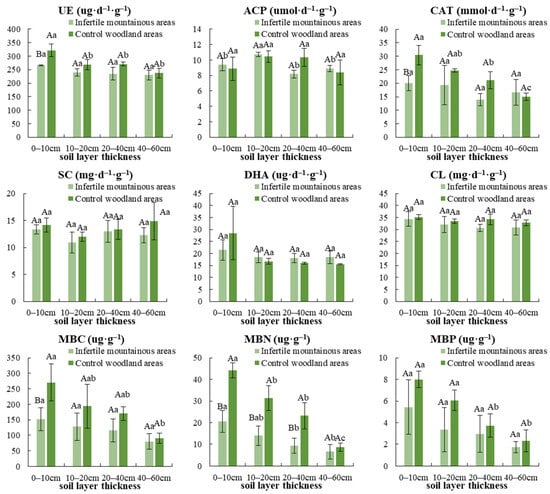
The activities of urease (UE) and catalase (CAT) in the soil of infertile mountainous areas were significantly lower than those in the control woodland areas (Figure 1), with the differences mainly concentrated in the surface soil layer (0–10 cm). Specifically, the urease and catalase activities in the surface soil were 17.23% and 34.09% lower than those in the control, respectively (p < 0.05). These results indicated that the soil in infertile mountainous areas had relatively weak capacities for nitrogen transformation and organic matter decomposition, and such limitations were particularly pronounced in the surface soil layer.
Figure 1.
Differences in soil enzyme activities and microbial biomass between infertile mountainous areas and control woodland areas. UE: urease, ACP: acid phosphatase, CAT: catalase, SC: sucrase, DHA: dehydrogenase, CL: cellulase, MBC: microbial biomass carbon, MBN: microbial biomass nitrogen, MBP: microbial biomass phosphorus. Different uppercase letters indicate significant differences between the infertile mountainous areas and the control woodland areas (p < 0.05), while different lowercase letters indicate significant differences among different soil layers (p < 0.05).
The soil microbial biomass in infertile mountainous areas was lower than that in the control woodland areas across all soil layers. Among the biomass indices, significant differences were observed in microbial biomass carbon (MBC) and nitrogen (MBN) contents (p < 0.05). Specifically, the difference in MBC content was concentrated in the surface soil layer (0–10 cm), whereas the difference in MBN content was significant throughout the 0–40 cm soil layer. These findings indicated that soil microbial activity in infertile mountainous areas was more strongly limited by nitrogen resources. In the infertile mountainous areas, soil enzyme activities and microbial biomass in the surface soil layer were generally higher than those in the deep soil layers. Moreover, with increasing soil depth, the differences in these indices between the infertile mountainous areas and the control woodland gradually narrowed.
3.2. Composition Characteristics of Rhizosphere and Bulk Soil Microbial Community Structure in the Infertile Mountainous Areas and Control Woodland Areas
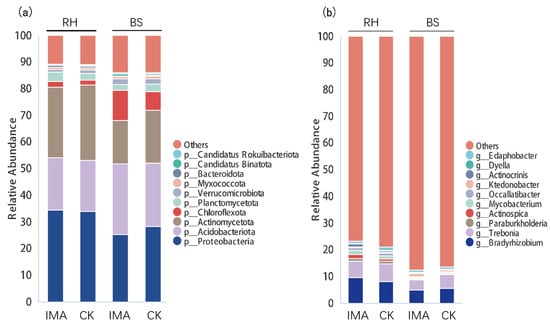
The top six most abundant bacterial phyla in both rhizosphere and bulk soil of the infertile mountainous areas and the control woodland areas were consistent: Proteobacteria, Acidobacteriota, Actinomycetota, Chloroflexi, Planctomycetes, and Verrucomicrobia. Each of these phyla had a relative abundance greater than 1%, collectively accounting for 83.8% to 87.4% of the total bacterial community (Figure 2a). Among them, Proteobacteria, Acidobacteriota, and Actinomycetota, each with a relative abundance exceeding 10%, were the dominant phyla shared across all samples. Compared to the control woodland areas, the infertile mountainous areas showed higher relative abundances of Proteobacteria, Acidobacteriota, Chloroflexi, and Planctomycetes in rhizosphere soil, and higher abundances of Acidobacteriota, Chloroflexi, and Verrucomicrobia in bulk soil.
Figure 2.
Relative abundance of soil microbial communities in infertile mountainous areas and control woodland areas. (a) Phylum level, (b) genus level. IMA: infertile mountainous areas, CK: control woodland areas, RH: rhizosphere soil, BS: bulk soil.
At the genus level, the six most abundant genera across all soil samples were Bradyrhizobium, Trebonia, Paraburkholderia, Actinospica, Mycobacterium, and Occallatibacter (Figure 2b). Among these, Bradyrhizobium and Trebonia, both with relative abundances greater than 3%, were the dominant genera common to all conditions. In the infertile mountainous area rhizosphere soil, the relative abundances of Bradyrhizobium, Paraburkholderia, Actinospica, and Mycobacterium were higher than those in the control woodland areas. Similarly, in the infertile mountainous area bulk soil, the relative abundances of Paraburkholderia, Actinospica, and Occallatibacter were elevated compared to the control.
3.3. Analysis of Differences in Rhizosphere and Bulk Soil Microbial Community Structure Between the Infertile Mountainous Areas and Control Woodland Areas
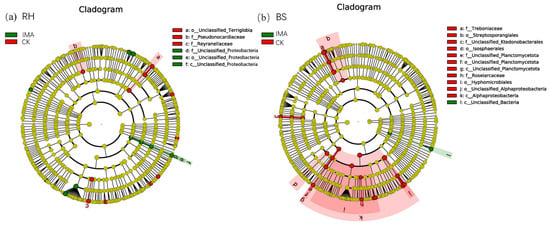
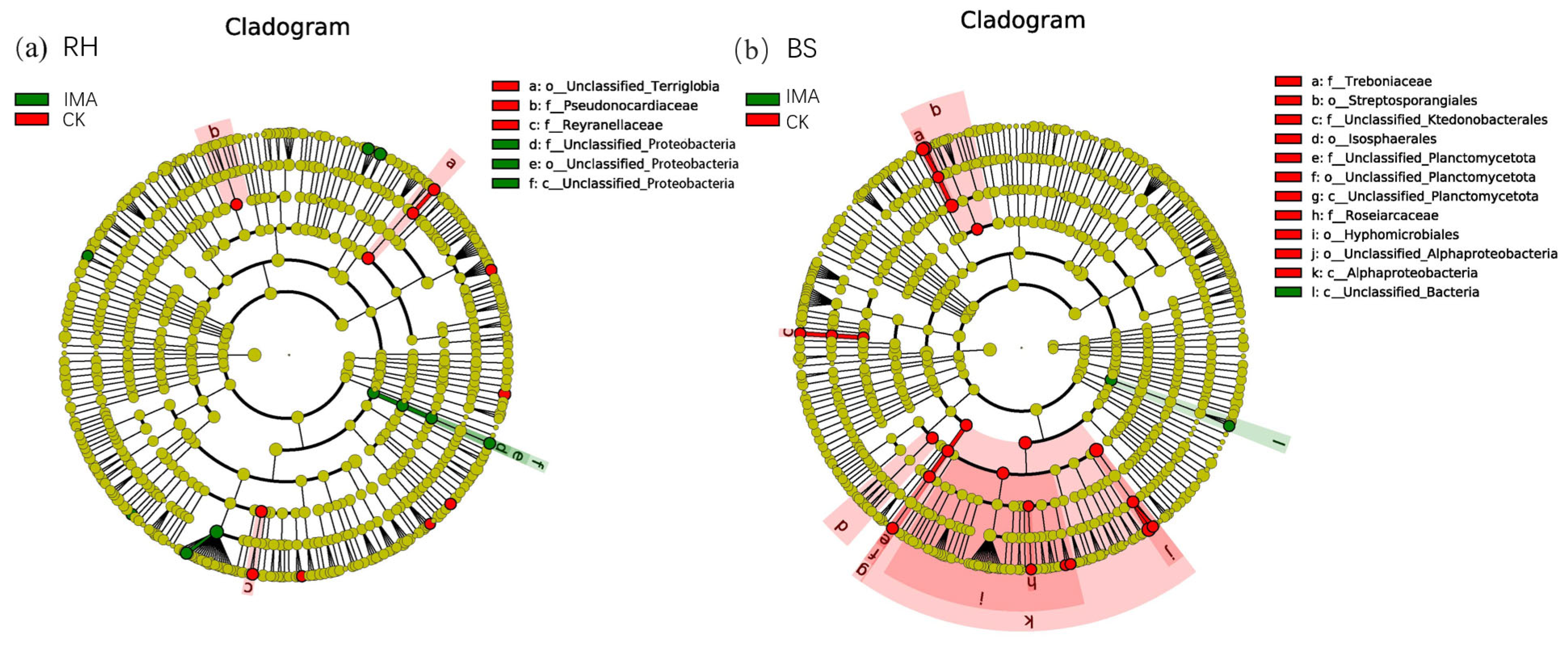
LEfSe analysis revealed significant differences in microbial species abundance (across class, order, family, genus, and species levels) between the infertile mountainous areas and the control woodland areas in both rhizosphere and bulk soils.
In the rhizosphere soil, three unclassified populations within the phylum Proteobacteria were enriched in the infertile mountainous areas. In contrast, the families Pseudonocardiaceae and Reyranellaceae (Actinomycetota), along with one unclassified population within the class Terrimicrobia (Acidobacteriota), were enriched in the control woodland areas (Figure 3a).
Figure 3.
Differential analysis of soil microbial communities based on LEfSe between infertile mountainous areas and control woodland areas. (a) Rhizosphere soil, (b) bulk soil. IMA: infertile mountainous areas, CK: control woodland areas, RH: rhizosphere soil, BS: bulk soil. The circles radiating from the inside out represent taxonomic ranks from kingdom to species. The small circles at each taxonomic level indicate individual species within that rank, with the diameter of the small circles being proportional to the relative abundance. Using LDA > 4 and p < 0.05 as screening criteria, species with no significant differences are uniformly colored yellow. Green nodes represent microbial taxa enriched in the infertile mountainous areas group (playing important roles), while red nodes represent those enriched in the control woodland areas group (playing important roles).
In the bulk soil, one unclassified bacterial class was enriched in the infertile mountainous areas. Conversely, several taxa were enriched in the control woodland areas, including the order Streptosporangiales and the family Treboniaceae (Actinomycetota), an unclassified family within Kallotenuales (Chloroflexi), the order Isosphaerales (Planctomycetes), along with three unclassified planctomycetotal groups, and the class Alphaproteobacteria with its constituent order Hyphomicrobiales, the family Roseiarcaceae, and one unclassified order within the phylum Proteobacteria (Figure 3b).
3.4. Analysis of Soil Microbial Functional Characteristics and Their Differences Between Sites
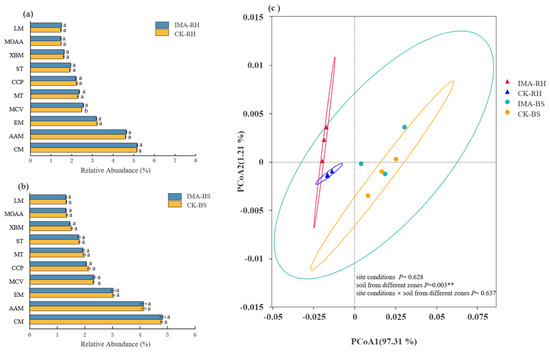
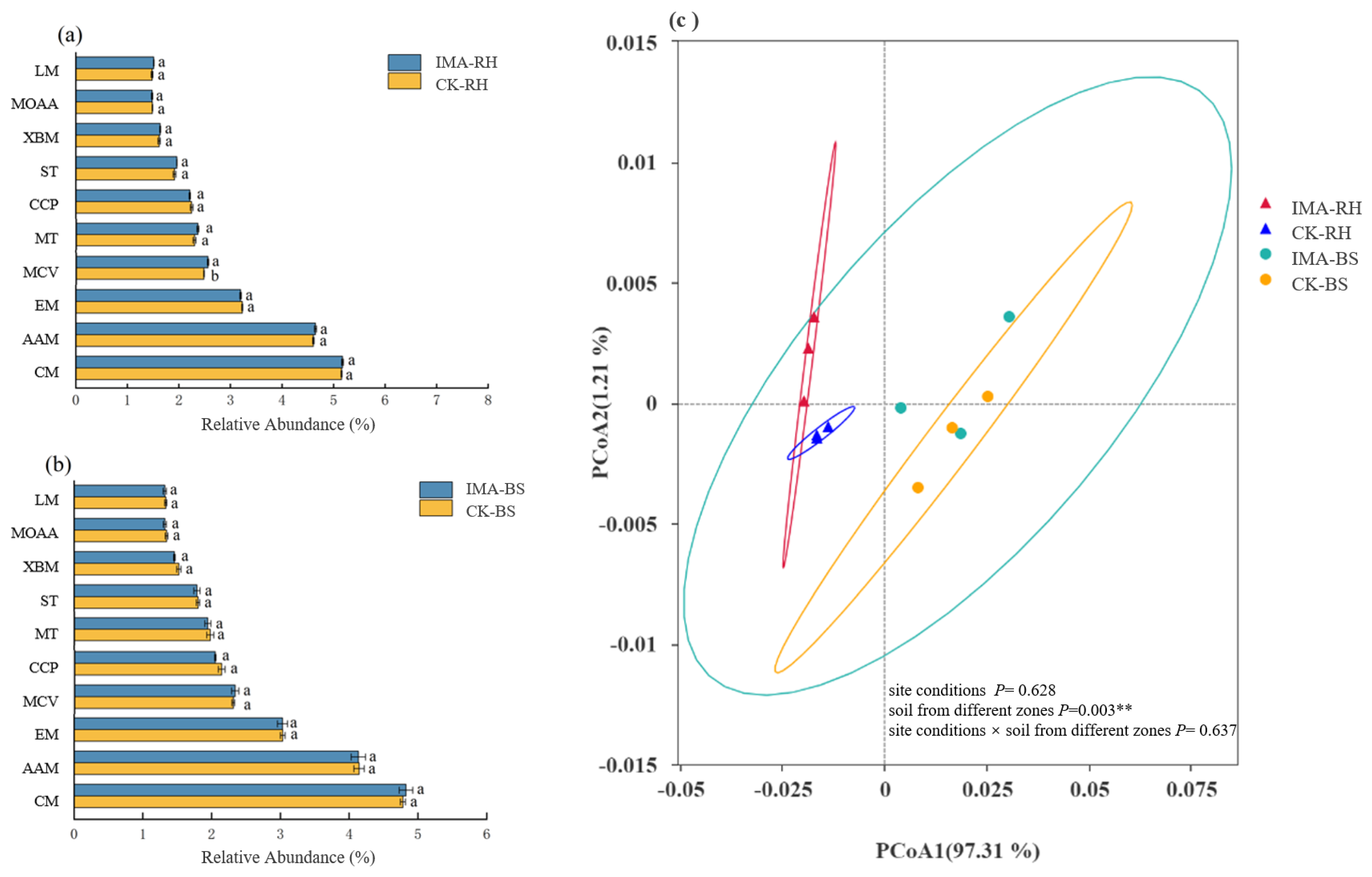
Analysis based on the KEGG database showed that the top 10 most abundant functional genes in both rhizosphere and bulk soils of the infertile mountainous areas and control woodland areas were identical, pertaining to the following pathways (Figure 4): carbohydrate metabolism; amino acid metabolism; energy metabolism; membrane transport; metabolism of cofactors and vitamins; cellular community prokaryotes; signal transduction; xenobiotic biodegradation and metabolism; metabolism of other amino acids; and lipid metabolism.
Figure 4.
Metabolic pathways of soil microorganisms and PCoA based on KEGG functional protein annotation in infertile mountainous areas and control woodland areas. (a) Rhizosphere soil, (b) bulk soil, (c) PCoA analysis. Different lowercase letters indicate significant differences between the infertile mountainous are-as and the control woodland areas (p < 0.05). ** p < 0.01. IMA: infertile mountainous areas, CK: control woodland areas, RH: rhizosphere soil, BS: bulk soil. CM: carbohydrate metabolism, AAM: amino acid metabolism, EM: energy metabolism, MT: membrane transport, MCV: metabolism of cofactors and vitamins, CCP: cellular community prokaryotes, ST: signal transduction, XBM: xenobiotic biodegradation and metabolism, MOAA: metabolism of other amino acids, LM: lipid metabolism. The same as below.
In the rhizosphere soil, the relative abundance of genes associated with the metabolism of cofactors and vitamins was significantly higher in the infertile mountainous areas than in the control woodland areas (p < 0.05) (Figure 4a). No significant differences were observed in the relative abundance of any functional genes in the bulk soil between the two sites (Figure 4b).
Principal Coordinate Analysis (PCoA) indicated that PCoA1 and PCoA2 explained 97.31% and 1.21%, respectively, of the total variation in the KEGG-annotated functional gene composition (Figure 4c). The functional profiles of microbial communities from different sites and soil compartments (rhizosphere vs. bulk) were closely clustered, with considerable overlap, suggesting minor differences in functional gene composition structures among groups. PERMANOVA (adonis) confirmed that the KEGG functional gene structure did not differ significantly between the two site conditions (p > 0.05) but differed very significantly between rhizosphere and bulk soils (p < 0.01).
3.5. Correlations Between Soil Enzyme Activities/Microbial Biomass and Dominant Bacterial Phyla
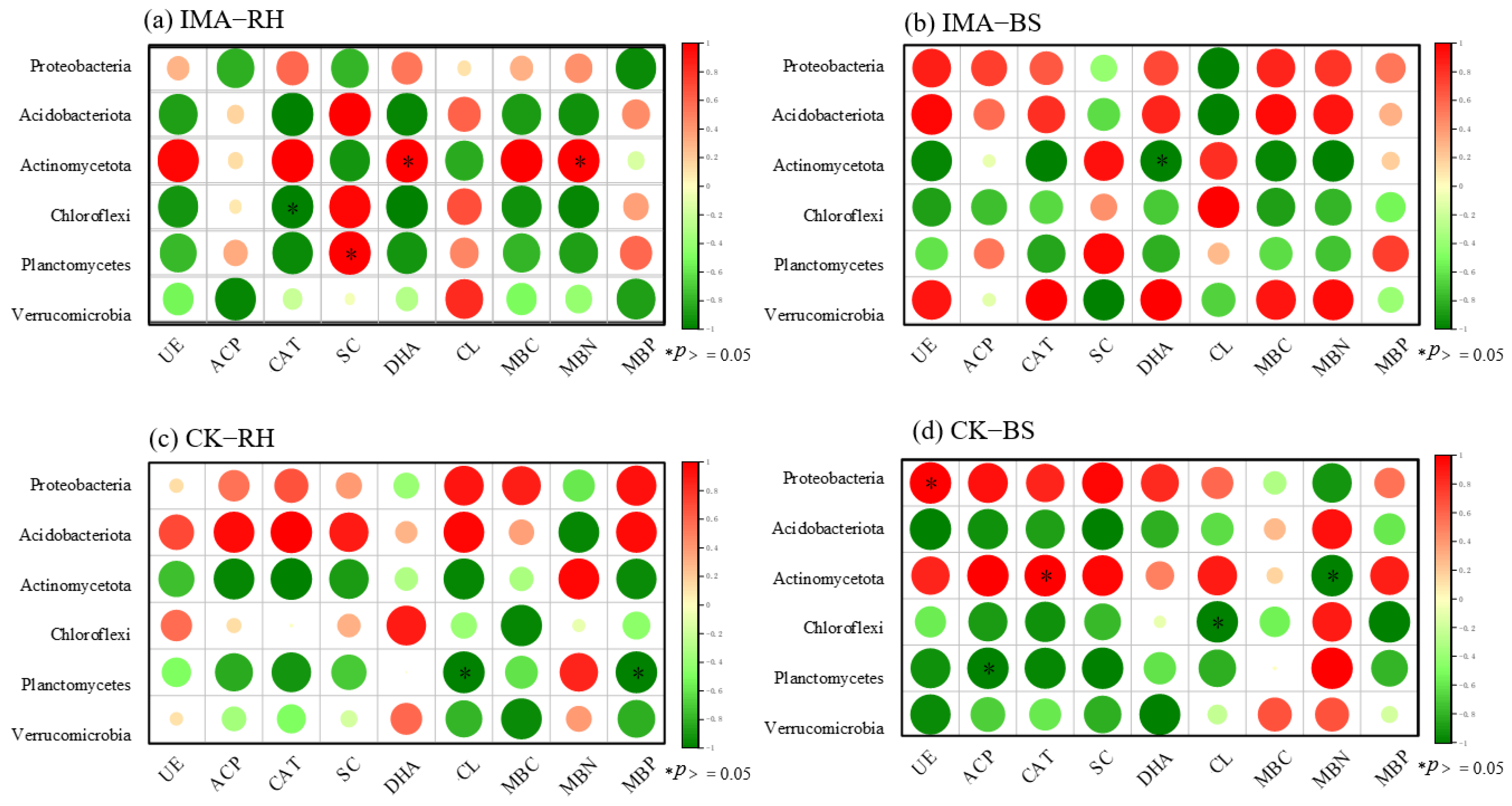
Correlation analysis of the relative abundances of the top six bacterial phyla and soil enzyme activities/microbial biomass is shown in Figure 5. In the infertile mountainous area rhizosphere soil, the abundance of Actinomycetota showed significant positive correlations with dehydrogenase activity and microbial biomass nitrogen (MBN) (p < 0.05). The abundance of Planctomycetes was positively correlated with sucrase activity (p < 0.05), while the abundance of Chloroflexi was negatively correlated with catalase activity (p < 0.05). In the DS bulk soil, only Acidobacteriota abundance exhibited a significant negative correlation with dehydrogenase activity (p < 0.05).
Figure 5.
Correlation analysis of soil enzyme activity and microorganisms with the dominant bacterial phyla in infertile mountainous areas and control woodland areas. (a) Infertile mountainous areas—rhizosphere soil; (b) infertile mountainous areas—bulk soil; (c) control woodland areas—rhizosphere soil; (d) control woodland areas—bulk soil. UE: urease, ACP: acid phosphatase, CAT: catalase, SC: sucrase, DHA: dehydrogenase, CL: cellulase, MBC: microbial biomass carbon, MBN: microbial biomass nitrogen, MBP: microbial biomass phosphorus.
In the control woodland area rhizosphere soil, the abundance of Planctomycetes was negatively correlated with cellulase activity and microbial biomass phosphorus (p < 0.05). In the control woodland area bulk soil, the abundances of Proteobacteria, Actinomycetota, Chloroflexi, and Planctomycetes showed significant correlations with multiple soil enzyme activities and microbial biomass indicators.
Overall, the dominant bacterial phyla were more closely associated with soil enzyme activities and microbial biomass in the rhizosphere soil of the infertile mountainous areas, whereas stronger associations were observed in the bulk soil of the control woodland areas.
3.6. Correlations Between Soil Enzyme Activities/Microbial Biomass and KEGG-Annotated Metabolic Pathways
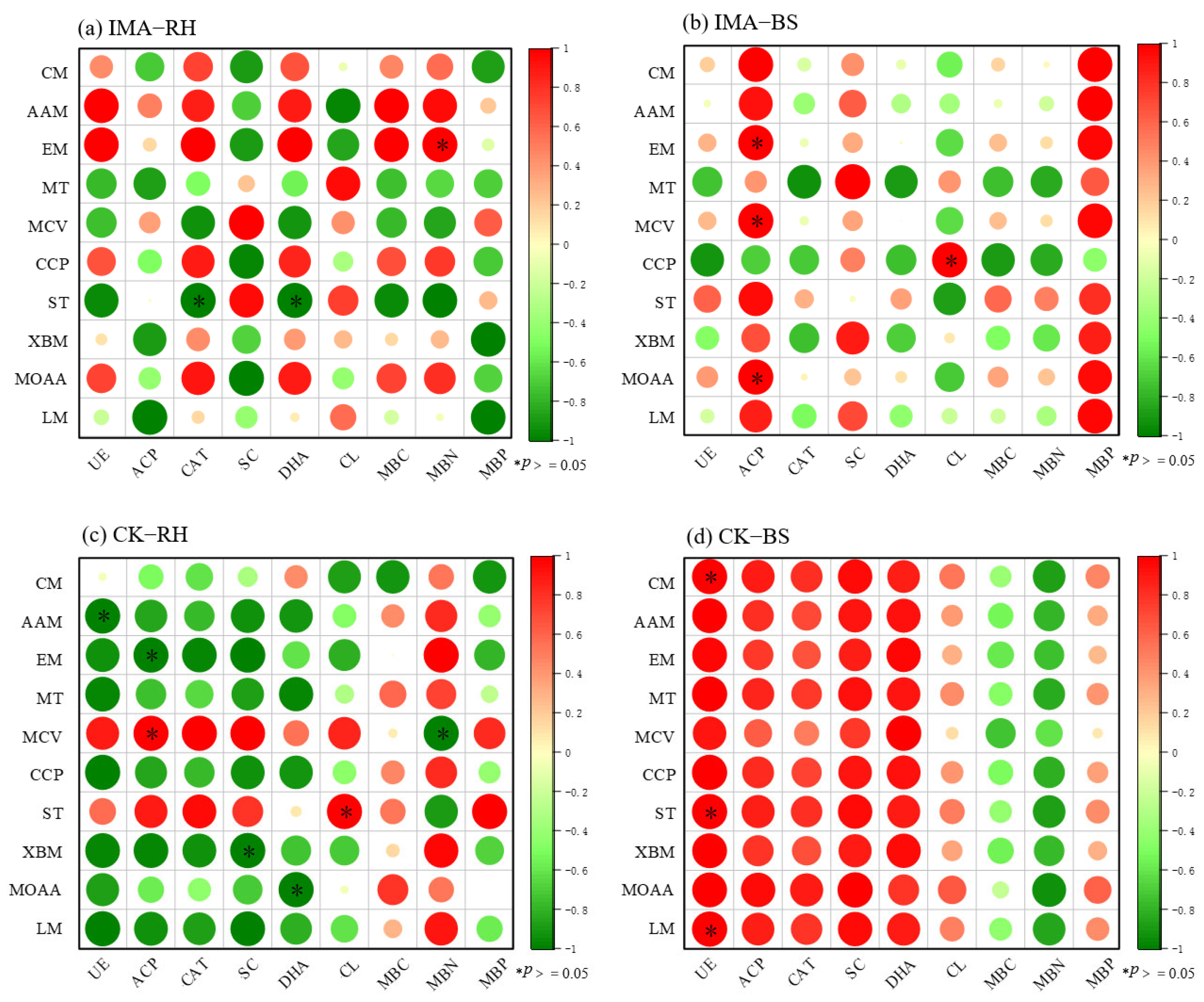
Correlation analysis between KEGG-annotated microbial metabolic pathways and soil enzyme activities/microbial biomass is presented in Figure 6. In the infertile mountainous areas’ rhizosphere soil, genes involved in energy metabolism showed a significant positive correlation with microbial biomass nitrogen (MBN) (p < 0.05), while genes for signal transduction were negatively correlated with catalase and dehydrogenase activities (p < 0.05). In the infertile mountainous areas’ bulk soil, a greater number of metabolic pathways showed significant positive correlations with acid phosphatase activity.
Figure 6.
Correlation analysis of soil microbial metabolic pathways with soil enzyme activity and microorganisms in infertile mountainous areas and control woodland areas. (a) infertile mountainous areas—rhizosphere soil; (b) infertile mountainous areas—bulk soil; (c) control woodland areas—rhizosphere soil; (d) control woodland areas—bulk soil. UE: urease, ACP: acid phosphatase, CAT: catalase, SC: sucrase, DHA: dehydrogenase, CL: cellulase, MBC: microbial biomass carbon, MBN: microbial biomass nitrogen, MBP: microbial biomass phosphorus. CM: carbohydrate metabolism, AAM: amino acid metabolism, EM: energy metabolism, MT: membrane transport, MCV: metabolism of cofactors and vitamins, CCP: cellular community prokaryotes, ST: signal transduction, XBM: xenobiotic biodegradation and metabolism, MOAA: metabolism of other amino acids, LM: lipid metabolism. The same as below.
In the control woodland areas’ rhizosphere soil, the correlations between various functional genes and enzyme activities were markedly stronger than those in the infertile mountainous areas’ rhizosphere soil. In the control woodland areas’ bulk soil, significantly more metabolic pathways were positively correlated with urease activity. Notably, compared to the control woodland areas, the correlations between microbial metabolic pathways and soil enzyme activities/microbial biomass were substantially weaker in the rhizosphere soil of the infertile mountainous areas.
4. Discussion
4.1. Differences in Soil Enzyme Activities and Microbial Biomass Between the Infertile Mountainous Areas and the Control Woodland Areas
Soil enzymes, among the most active biological components in forest ecosystems, are highly sensitive to changes in the forest environment and soil nutrients. Soil urease, acid phosphatase, catalase, invertase, dehydrogenase, and cellulase are all core enzymes involved in the cycling of soil carbon, nitrogen, phosphorus, and other elements. In this study, the activities of soil urease and catalase were significantly lower in the infertile mountainous areas than in the control woodland areas. Urease is a hydrolase that catalyzes the hydrolysis of urea in soil into ammonium nitrogen and carbon dioxide, thereby directly affecting the supply of nitrogen available for plant uptake. The relatively low urease activity in the soil of infertile mountainous areas may be related to its low nutrient content; as nutrient content decreases, the activity of urease involved in nitrogen transformation and decomposition processes is correspondingly reduced [25,26]. Catalase primarily catalyzes the decomposition of hydrogen peroxide (H2O2) in soil into water and oxygen, scavenges oxidative stress products, and protects soil microorganisms and plant roots from free radical damage. The lower catalase activity in the infertile mountainous areas may be attributed to the site’s lower soil nutrient levels and higher bulk density, which can inhibit soil respiration and microbial activity. This results in a diminished capacity of the infertile mountainous areas’ soil to mitigate hydrogen peroxide toxicity and facilitate nutrient element transformation, directly contributing to an imbalanced microbial community structure and impaired function [27,28].
The significantly lower microbial biomass nitrogen in the infertile mountainous areas is mainly a consequence of its impoverished soil organic carbon, total nitrogen, and total phosphorus contents. These conditions reduce the available substrates for soil microorganisms, thereby restricting their proliferation and growth [29]. Furthermore, the lower vegetation cover in the infertile mountainous areas may lead to reduced surface litter and root exudates, further weakening the input of carbon and nitrogen [30]. This not only causes a significant decrease in soil urease activity but also markedly impairs the microbe-mediated nitrogen transformation capacity and inhibits microbial nitrogen assimilation.
4.2. Characteristics and Differences in Rhizosphere and Bulk Soil Microbial Community Composition Between Sites
Soil microorganisms are key drivers of critical ecological processes such as humus formation, organic matter decomposition, substance transformation, and nutrient cycling [31]. The dominant bacterial phyla common to both rhizosphere and bulk soils across the two sites were Proteobacteria, Acidobacteriota, and Actinomycetota. These phyla play vital roles in soil nutrient cycling, organic matter degradation, and environmental adaptation [32]. At the genus level, Bradyrhizobium and Trebonia were the shared dominant genera. Bradyrhizobium, as an important group of nitrogen-fixing bacteria, converts atmospheric N2 into plant-available ammonium through biological nitrogen fixation, thereby promoting plant growth and enhancing soil fertility, while also exhibiting strong environmental adaptability [33,34]. Bacteria from the genus Trebonia can convert complex organic substances (e.g., lignin, cellulose) in the soil into simpler inorganic compounds, thus facilitating nutrient cycling and release. Additionally, this genus may indirectly promote plant health by improving soil structure and suppressing pathogen proliferation [35].
The relative abundances of species within phyla such as Proteobacteria, Actinomycetota, and Acidobacteriota in the rhizosphere soil differed noticeably between the two sites. Specifically, three unclassified populations within Proteobacteria showed significantly higher relative abundance in the infertile mountainous areas’ rhizosphere soil. This may be linked to the broad metabolic diversity of Proteobacteria and their capacity to utilize various carbon and nitrogen sources, granting them a competitive advantage in the nutrient-limited environment of the infertile mountainous areas [36]. In contrast, the control woodland areas’ rhizosphere soil hosted higher relative abundances of the actinobacterial families Pseudonocardiaceae and Reyranellaceae, potentially associated with the strong capability of Actinomycetota for degrading complex organic matter in resource-rich environments [37]. Several populations within Actinomycetota, Chloroflexi, Planctomycetes, and Proteobacteria exhibited significantly lower relative abundances in the infertile mountainous areas’ bulk soil compared to the control woodland areas, likely resulting from the lower organic matter content and nutrient availability in the infertile mountainous areas. These findings suggest that C. gilva in infertile mountainous areas enriches specific microorganisms in its rhizosphere involved in carbon and nitrogen transformation and utilization, thereby enhancing soil nutrient cycling efficiency and environmental adaptability.
4.3. Functional Characteristics and Differences in Soil Microorganisms Between Sites
Analyzing the functional attributes of soil microorganisms is key to decoding the operational mechanisms of the soil ecosystem. Our results indicated a significantly higher relative abundance of functional genes related to the metabolism of cofactors and vitamins in the rhizosphere soil of C. gilva in the infertile mountainous areas compared to the control woodland areas. This suggests a greater prevalence of microorganisms capable of utilizing these pathways to more efficiently decompose organic compounds from root exudates, breaking down complex carbohydrates into simpler sugars that provide energy and foundational materials for microbial growth and reproduction. This pattern may also reflect a plant adaptive response to nutrient-poor conditions [38]; root exudates from C. gilva in the infertile mountainous areas might stimulate the growth of microorganisms that contribute to cofactor and vitamin metabolism, which in turn can supply nutrients to the plant, promote its growth, or enhance its stress tolerance. Within the nitrogen cycle, certain microorganisms require cofactors for processes such as nitrogen fixation, nitrification, and denitrification [39]. The higher abundance of cofactor metabolism-related genes in the infertile mountainous areas’ rhizosphere implies that the rhizosphere microorganisms of C. gilva are better equipped for nitrogen transformation—converting atmospheric N2 into plant-available forms (e.g., ammonium or nitrate)—thereby improving soil fertility and enhancing the efficiency of material cycling within the soil ecosystem. While the overall KEGG metabolic functional profiles of soil microbes (both rhizosphere and bulk) showed no significant difference between the infertile mountainous areas and control woodland areas, the significantly higher relative abundance of certain specific functional genes in the infertile mountainous areas’ rhizosphere soil indicates that the C. gilva rhizosphere microbial community may exhibit localized functional sensitivity to environmental changes.
4.4. Relationships Among Soil Enzyme Activities, Microbial Biomass, and Microbial Characteristics in Different Sites
The stability and functional coordination of the soil ecosystem are directly reflected by the strength of the correlations between microbial characteristics, soil enzyme activities, and microbial biomass. In this study, the significant positive correlations observed in the infertile mountainous areas rhizosphere soil between Actinomycetota and dehydrogenase activity, and between Planctomycetes and sucrase activity, suggest that under nutrient-poor conditions, C. gilva, via its root exudates, stimulates microbial growth and metabolism. This enhances the enrichment of microorganisms like Actinomycetota and Planctomycetes, which are involved in nitrogen and carbon cycling, thereby promoting the production and activity of dehydrogenase and sucrase. The significant positive correlation between Actinomycetota and microbial biomass nitrogen in the infertile mountainous areas’ rhizosphere further supports the phenomenon of enrichment of nitrogen-cycling-related microbes. Furthermore, multiple functional gene groups within the KEGG metabolic pathways of the C. gilva rhizosphere microbiome showed strong correlations with soil microbial biomass, indicating that the rhizosphere microorganisms respond to the low nutrient levels and poor physical structure of the infertile mountainous areas by promoting the expression of genes related to carbohydrate metabolism, energy metabolism, metabolism of cofactors and vitamins, and signal transduction [40]. The generally weaker correlations between microbial metabolic pathways and soil enzyme activities/microbial biomass in the infertile mountainous areas’ rhizosphere compared to the control woodland areas suggest lower functional stability of the rhizosphere microbial community and indicate a potential decline in the efficiency of plant–microbe symbiosis in challenging sites [41].
5. Conclusions
Soil microbial metabolic activity in infertile mountainous areas is relatively weak, characterized by low soil enzyme activity and microbial biomass. The relative abundances of multiple taxa within the phyla Actinobacteriota, Chloroflexi, Planctomycetota, and Proteobacteria are comparatively low in bulk soil, whereas the relative abundance of Proteobacteria is notably higher in the rhizosphere soil of C. gilva. In terms of microbial KEGG annotation results for soils from these two habitats, only the relative abundances of functional genes associated with cofactor and vitamin metabolism exhibited significant differences in the rhizosphere soil. Overall, afforestation with C. gilva in infertile mountainous areas can enrich rhizosphere microorganisms linked to carbon and nitrogen cycling, increase the abundance of functional genes related to nitrogen transformation in rhizosphere soil, and strengthen the correlations between soil enzyme activity, microbial biomass, and dominant microbial phyla in the rhizosphere. This helps counteract the suppression of microbial nitrogen assimilation induced by the low-nutrient conditions of infertile mountains, thereby promoting better seedling growth in such habitats. This trait demonstrates that C. gilva can act as a pioneer tree species for ecological restoration in infertile mountainous areas, accelerating vegetation recovery and soil fertility reconstruction in these regions.
Author Contributions
S.H.: Software application, methodology design, investigation, data curation, visualization analysis, and original draft preparation. Y.D.: Investigation, data curation, software application, and original draft preparation. Y.X.: Investigation. Y.B.: Investigation. Y.L.: Investigation. Z.Z.: Conceptualization, supervision. B.W.: Methodology design, investigation, project administration, funding acquisition, resources coordination, writing, reviewing, and editing. All authors have read and agreed to the published version of the manuscript.
Funding
This research was funded by the Special Fund for Basic Scientific Research Business Expenses of Central Public Welfare Research Institutes for the Construction of Demonstration Models in Sanming, Fujian (CAFYBB2024ZA021-2), and the Key Project of the Major Special Program for New Forest Variety Breeding during the 14th Five-Year Plan Period of Zhejiang Province (2021C02070-9); and the National Key R&D Program of China during the 14th Five-Year Plan Period, Special Project “Multifunctional Cultivation Technology of Pinus massoniana Plantations” (2023YFD2200902).
Data Availability Statement
Data will be made available on request.
Conflicts of Interest
The authors declare no conflicts of interest.
References
- Liu, Z.L.; Hao, Y.S.; Wan, F.X. A review of vegetation restoration and rehabilitation on rocky sites in China. J. Nanjing For. Univ. 2010, 34, 137–141. [Google Scholar]
- Shen, X.; Dai, M.; Yang, J.W.; Sun, L.; Tan, X.; Peng, C.S.; Ali, I.; Naz, I. A critical review on the phytoremediation of heavy metals from environment: Performance and challenges. Chemosphere 2022, 291, 132979. [Google Scholar] [CrossRef] [Scilit] [PubMed]
- Williams, G.; Miller, R.; Deng, S. Dynamic relationships between microbial community, enzyme activity, and soil properties across global ecosystems. Appl. Soil Ecol. 2025, 206, 105843. [Google Scholar] [CrossRef] [Scilit]
- Daunoras, J.; Kačergius, A.; Gudiukaitė, R. Role of Soil Microbiota Enzymes in Soil Health and Activity Changes Depending on Climate Change and the Type of Soil Ecosystem. Biology 2024, 13, 85. [Google Scholar] [CrossRef] [Scilit] [PubMed]
- Trasar-Cepeda, C.; Leirós, M.C.; Gil-Sotres, F. Hydrolytic enzyme activities in agricultural and forest soils. Some implications for their use as indicators of soil quality. Soil Biol. Biochem. 2008, 40, 2146–2155. [Google Scholar] [CrossRef] [Scilit]
- Bollag, J.M.; Mertz, T.; Otjen, L. Role of Microorganisms in Soil Bioremediation. Riv. Ital. Paleontol. Stratigr. 1994, 563, 2–10. [Google Scholar]
- Bai, X.J.; Dippold, M.A.; An, S.S.; Wang, B.R.; Zhang, H.X.; Loeppmann, S. Extracellular enzyme activity and stoichiometry: The effect of soil microbial element limitation during leaf litter decomposition. Ecol. Indic. 2021, 121, 107200. [Google Scholar] [CrossRef] [Scilit]
- Cheng, H.; Yuan, M.; Tang, L.; Shen, Y.; Qiang, Y.; Li, S. Integrated microbiology and metabolomics analysis reveal responses of soil microorganisms and metabolic functions to phosphorus fertilizer on semiarid farm. Sci. Total Environ. 2022, 817, 152878. [Google Scholar] [CrossRef] [Scilit]
- Hartmann, M.; Six, J. Soil structure and microbiome functions in agroecosystems. Nat. Rev. Earth Environ. 2023, 4, 4–18. [Google Scholar] [CrossRef] [Scilit]
- Mo, R.B.; Zhao, Y.H. Study on soil physical and chemical properties of natural mixed Pinus massoniana forests on difficult sites. J. Green Sci. Technol. 2020, 22, 159–162. [Google Scholar]
- Li, H.Z. Effects of Microtopography on Soil Quality of Quercus acutissima Plantation in Stony Mountain. Master’s Thesis, Nanjing Forestry University, Nanjing, China, 2022. [Google Scholar]
- Wang, X.; Long, J.; Li, J.; Liu, L.F.; Liao, H.K.; Li, Y.R.; Yang, R. Diversity of soil eukaryotic microbes in different succession stages in Maolan Karst Forest of Guizhou. Environ. Sci. 2020, 41, 4314–4321. [Google Scholar]
- Huang, L.; Bao, W.; Hu, H.; Eissenstat, D.M.; Li, F. Influences of rock fragment content and vegetation on soil microbial communities. Catena 2023, 225, 107018. [Google Scholar] [CrossRef] [Scilit]
- Liu, B.; Li, Y.; Zhao, J.; Weng, H.; Ye, X.; Liu, S.; Zhao, Z.; Ahmad, S.; Zhan, C. The potential habitat response of Cyclobalanopsis gilva to climate change. Plants 2024, 13, 2336. [Google Scholar] [CrossRef] [Scilit] [PubMed]
- Yang, M.Q.; Wu, R.C.; Wang, X.H.; Xu, W.K.; Huang, S.Y.; Zhou, Z.C.; Wang, B. Effects of slow-release fertilizer and mycorrhizal fungi on the root growth and architecture of Cyclobalanopsis gilva container seedlings. J. Plant Nutr. Fertil. 2023, 29, 1761–1770. [Google Scholar]
- Huang, S.Y.; Wu, R.C.; Su, G.L.; Xu, W.K.; Wang, X.H.; Zhou, Z.C.; Wang, B. Effects of inoculation of mycorrhizal fungi and slow-release fertilizer addition on the C:N:P stoichiometry of Cyclobalanopsis gilva seedlings. Chin. J. Ecol. 2025, 44, 745–754. [Google Scholar]
- GB/T 17296-2009; Classification and Codes for Chinese Soil. General Administration of Quality Supervision, Inspection and Quarantine of the People’s Republic of China (AQSIQ) & Standardization Administration of the People’s Republic of China (SAC): Beijing, China, 2009.
- He, X.H.; Yang, Y.Z.; Yuang, Z.L. Protocol for sampling of root and rhizosphere soils from trees in natural fields. In Microbiome Protoc. Ebook; Bio-101: E2003655; Bio-protocol LLC: Sunnyvale, CA, USA, 2021. [Google Scholar]
- Bao, S.D. Soil Agrochemical Analysis, 3rd ed.; China Agricultural Press: Beijing, China, 2000. [Google Scholar]
- Guan, S.Y.; Zhang, D.; Zhang, Z. Soil Enzyme and Its Research Methods; China Agricultural Press: Beijing, China, 1986. [Google Scholar]
- Vance, E.D.; Brookes, P.C.; Jenkinson, D.S. An extraction method for measuring soil microbial biomass C. Soil Biol. Biochem. 1987, 19, 703–707. [Google Scholar] [CrossRef] [Scilit]
- Joergensen, R.G. The fumigation-extraction method to estimate soil microbial biomass: Calibration of the kEC value. Soil Biol. Biochem. 1990, 22, 1167–1169. [Google Scholar] [CrossRef] [Scilit]
- Quail, M.A.; Smith, M.; Coupland, P.; Otto, T.D.; Harris, S.R.; Connor, T.R.; Bertoni, A.; Swerdlow, H.P.; Gu, Y. A tale of three next generation sequencing platforms: Comparison of Ion Torrent, Pacific Biosciences and Illumina MiSeq sequencers. BMC Genom. 2012, 13, 341. [Google Scholar] [CrossRef] [Scilit]
- Kozich, J.J.; Westcott, S.L.; Baxter, N.T.; Highlander, S.K.; Schloss, P.D. Development of a dual-index sequencing strategy and curation pipeline for analyzing amplicon sequence data on the MiSeq Illumina sequencing platform. Appl. Environ. Microbiol. 2013, 79, 5112–5120. [Google Scholar] [CrossRef] [Scilit]
- Zantua, M.I.; Dumenil, L.C.; Bremner, J.M. Relationships between soil urease activity and other soil properties. Soil Sci. Soc. Am. J. 1977, 41, 350–352. [Google Scholar] [CrossRef] [Scilit]
- Błońska, E.; Lasota, J.; Zwydak, M.; Piaszczyk, W. Stand mixing effect on enzyme activity and other soil properties. Soil Sci. Annu. 2016, 67, 173–178. [Google Scholar] [CrossRef] [Scilit]
- Hu, G.; Huang, X.; Chen, S.; Hu, C.; Zhong, C.; Xu, C.; Zhang, Z. Biotic and abiotic factors affecting soil C, N, P and their stoichiometries under different land-use types in a karst agricultural watershed, China. Agriculture 2024, 14, 1083. [Google Scholar] [CrossRef] [Scilit]
- Li, J.; Zhou, X.; Yan, J.; Li, H.; He, J. Effects of regenerating vegetation on soil enzyme activity and microbial structure in reclaimed soils on a surface coal mine site. Appl. Soil Ecol. 2015, 87, 56–62. [Google Scholar] [CrossRef] [Scilit]
- Han, J.; Zhang, Y.; Wei, T. Effects of feldspathic sandstone addition on microbial biomass, soil enzyme activity, and bacterial community structure of sandy soil. Geomicrobiol. J. 2023, 41, 67–71. [Google Scholar] [CrossRef] [Scilit]
- Shi, Z.; Fan, C.; Zhao, S.; Xiao, R.; Miao, R.; Yang, Z.; Wan, S. Effect of Litter Changes on Soil Microbial Community and Respiration in a Coniferous–Broadleaf Mixed Forest. Ecosystems 2025, 28, 26. [Google Scholar] [CrossRef] [Scilit]
- Jagadesh, M.; Dash, M.; Kumari, A.; Singh, S.K.; Verma, K.K.; Kumar, P.; Bhatt, R.; Sharma, S.K. Revealing the hidden world of soil microbes: Metagenomic insights into plant, bacteria, and fungi interactions for sustainable agriculture and ecosystem restoration. Microbiol. Res. 2024, 285, 127764. [Google Scholar] [CrossRef] [Scilit]
- Arunrat, N.; Sansupa, C.; Kongsurakan, P.; Sereenonchai, S.; Hatano, R. Soil Microbial Diversity and Community Composition in Rice–Fish Co-Culture and Rice Monoculture Farming System. Biology 2022, 11, 1242. [Google Scholar] [CrossRef] [Scilit]
- Zhong, C.F.; Hu, G.; Hu, C.; Xu, C.; Zhang, Z.; Ning, K. Comparative genomics analysis reveals genetic characteristics and nitrogen fixation profile of Bradyrhizobium. iScience 2024, 27, 108948. [Google Scholar] [CrossRef] [Scilit]
- Leite, R.C.; Hungria, M.; Leite, R.C.; Souza de Ávila, W.; da Silva, G.B. Co-inoculation of soybean with Bradyrhizobium spp. and Amazonian strains of Trichoderma asperellum and Bacillus amyloliquefaciens increases the productivity and profitability of the crop. Crop Sci. 2024, 64, 422–441. [Google Scholar] [CrossRef] [Scilit]
- Rapoport, D.; Sagova-Mareckova, M.; Sedláček, I.; Provaznik, J.; Králová, S.; Pavlinic, D.; Benes, V.; Kopecky, J. Trebonia kvetii gen. nov., sp. nov., an acidophilic actinobacterium, and proposal of the new actinobacterial family Treboniaceae fam. nov. Int. J. Syst. Evol. Microbiol. 2020, 70, 5106–5114. [Google Scholar] [CrossRef] [Scilit]
- Fierer, N.; Bradford, M.A.; Jackson, R.B. Toward an ecological classification of soil bacteria. Ecology 2007, 88, 1354–1364. [Google Scholar] [CrossRef] [Scilit]
- Barka, E.A.; Vatsa, P.; Sanchez, L.; Gaveau-Vaillant, N.; Jacquard, C.; Meier-Kolthoff, J.P.; Klenk, H.P.; Clément, C.; Ouhdouch, Y.; van Wezel, G.P. Taxonomy, physiology, and natural products of Actinobacteria. Microbiol. Mol. Biol. Rev. 2015, 80, 1–43. [Google Scholar] [CrossRef] [Scilit]
- Philippot, L.; Raaijmakers, J.M.; Lemanceau, P.; van der Putten, W.H. Going back to the roots: The microbial ecology of the rhizosphere. Nat. Rev. Microbiol. 2013, 11, 789–799. [Google Scholar] [CrossRef] [Scilit]
- Wang, X.; Wang, K.; Yang, J.; Zeng, D.; Mo, L.; Pu, G. Nitrogen-cycling microbial diversity and function in tiankengs at different evolutionary stages. Catena 2025, 254, 108969. [Google Scholar] [CrossRef] [Scilit]
- Trivedi, P.; Leach, J.E.; Tringe, S.G.; Sa, T.; Singh, B.K. Plant–microbiome interactions: From community assembly to plant health. Nat. Rev. Microbiol. 2020, 18, 607–621. [Google Scholar] [CrossRef] [Scilit]
- Yan, F.; Huang, Q.; Chen, D.M.; Zheng, X.; Yin, R.; Zhang, K.; Lu, Y.; Bai, Y.; Sun, F.; Zhou, J.; et al. Palmitic acid triggers rhizosphere acidification to facilitate microbial nitrogen fixation: A perspective for phytoremediation of desertification alpine grassland via artificial root exudation mimicking. J. Environ. Manag. 2025, 390, 126349. [Google Scholar] [CrossRef] [Scilit]

Disclaimer/Publisher’s Note: The statements, opinions and data contained in all publications are solely those of the individual author(s) and contributor(s) and not of MDPI and/or the editor(s). MDPI and/or the editor(s) disclaim responsibility for any injury to people or property resulting from any ideas, methods, instructions or products referred to in the content. |
© 2026 by the authors. Licensee MDPI, Basel, Switzerland. This article is an open access article distributed under the terms and conditions of the Creative Commons Attribution (CC BY) license.