


Abstract
Forest certification in developing countries faces significant challenges due to weak institutions, limited market incentives, and complex trade conditions. This study investigates the status and key constraints of the Myanmar forest certification sector through a survey of 180 stakeholders from government organizations, NGOs, INGOs, third-party certification bodies, and private plantation owners, complemented by quantitative analysis and qualitative interviews. The results indicate a moderate level of familiarity with the Myanmar forest certification standard and high awareness of the Myanmar Forest Certification Committee; however, progress remains slow due to limited transparency, poor institutional coordination, financial and technical constraints, and insufficient stakeholder involvement. Non-compliances issues identified during pilot audits were primarily related to incomplete documentation, unclear land tenure, and weaknesses in environmental assessment. Geopolitical factors continue to limit Myanmar’s participation in certified timber markets and weaken efforts to improve traceability. Experiences from Indonesia, Malaysia, and Vietnam highlight that developing credible national certification systems requires time, clear legal frameworks, and strong cooperation among stakeholders. Strengthening institutional capacity, improving transparency, and aligning national standards with international forest governance frameworks are essential for Myanmar to build trust, achieve sustainable forest management, and regain market access.
1. Introduction
Tropical forests are essential for biodiversity conservation, climate regulation, and sustaining local livelihoods [1,2]. However, rapid population growth and land-use change has intensified pressure on tropical forests, leading to widespread deforestation. Southeast Asia is among the world’s major deforestation hotspots, losing 15.8 million hectares of tropical forests between 2001 and 2022 [2,3,4,5]. Forest certification, introduced in the early 1990s, emerged in response to global concerns about tropical deforestation and forest degradation [6,7]. It has become a key tool for promoting Sustainable Forest Management (SFM) and protecting tropical forests, aligning with international criteria and indicators that provided the foundation for certification standards [8,9,10,11,12,13].
Two main types of certifications exist: Forest Management (FM) certification, which assesses compliance with forest management standards, and Chain of Custody (CoC) certification, which ensures certified materials remain segregated from non-certified sources throughout the supply chain [7,9,10,11,12,14,15]. As of 2024, certification schemes such as the Forest Stewardship Council (FSC) and the Programme for the Endorsement of Forest Certification (PEFC) are now widely recognized indicators of legality and sustainable forest management, together covering more than 450 million hectares of forests worldwide [16,17].
In the Asia–Pacific region, forest certification expanded rapidly in the early 2000s, led by countries such as Indonesia and Malaysia, which developed strong FSC- and PEFC-recognized systems [1,2,18,19,20,21,22]. In contrast, Myanmar has made limited progress despite being one of the world’s largest producers of natural teak [1,2,21,22]. Although Myanmar joined the International Tropical Timber Organization (ITTO) in 1994 and established the Myanmar Forest Certification Committee (MFCC) in 1998, its certification framework remains weak compared with neighboring countries [23,24,25,26]. This situation reflects broader governance and institutional challenges that have constrained Myanmar’s ability to meet international standards for legal and sustainable timber production [26].
Myanmar remains a globally significant teak producer, with nearly half of the world’s 29 million hectares of natural teak forests located within its borders [1,21,27]. Most teak supply originates from state-owned forests managed under the Myanmar Selection System, established in 1856, while plantation forestry, although expanded to over 900,000 hectares through government initiatives, faces challenges in capacity, documentation, and market access [1]. Nevertheless, the country’s overall forest cover has declined to about 42% of national land area due to over-exploitation, illegal logging, agricultural expansion, and shifting cultivation [1,21,28,29,30,31]. Despite being the world’s third-largest teak log producer after India and Indonesia, Myanmar struggles to access premium markets, particularly in Europe, because it lacks internationally recognized certification to demonstrate legality and responsible sourcing [1,21,32].
Major international retailers have set strict procurement standards that create high entry barriers for timber from countries like Myanmar. IKEA requires all wood to come from FSC-certified or recycled sources, with full traceability and third-party verification of legal origin [33]. Walmart’s Deforestation Policy targets zero net deforestation and prioritizes FSC or equivalent certifications, requiring suppliers to demonstrate legal and sustainable sourcing. Kingfisher Group, which owns Leroy Merlin, Castorama, and OBI, accepts only FSC-certified tropical timber under its Forest Positive Policy. These policies collectively exclude uncertified or untraceable wood from international markets [34,35]. In Myanmar, the lack of internationally recognized certification and weak traceability systems make compliance with such standards unrealistic at present, effectively preventing its uncertified teak from entering premium global supply chains [26,36,37].
To address these challenges, Myanmar has pursued institutional reforms. Following ITTO membership in 1994 and the development of national Criteria and Indicators for SFM in 1996, the MFCC was formally established in 1998 [25,26]. The Myanmar Timber Legality Assurance System (MTLAS) was launched in 2013 to verify the legality of exports, but it has not prevented illegal timber from entering domestic and cross-border markets [38,39]. In 2015, MFCC adopted FSC-based SFM guidelines, and in 2021, it introduced PEFC’s Chain of Custody and Group Certification Standards to enhance traceability and smallholder inclusion [40,41]. The Myanmar Criteria and Indicators for Forest Management Certification Standard was consolidated and officially endorsed in 2022 as MMS 32:2022, aligning with PEFC requirements [25]. Pilot projects in both natural and plantation forests are now testing the applicability of these standards. Despite these developments, Myanmar’s certification sector remains disconnected from global frameworks, preventing its teak industry from fully participating in verified legal trade [26,42].
The primary objective of this research study is to assess the status, challenges, and weaknesses of Myanmar’s forest certification sector. Through institutional analysis, secondary data, and stakeholder perspectives, this study identifies key barriers to effective certification and provides recommendations to enhance Myanmar’s certification framework and support its transition to SFM.
2. Methodology
A mixed-method research design was employed in this study, combining quantitative and qualitative approaches to evaluate the challenges and weaknesses within Myanmar’s forest certification sector. The conceptual framework integrates both quantifiable patterns and contextual insights to address institutional, financial, and operational constraints. Additionally, data from publicly available sources, including scientific literature, reports, and publications from government and international organizations, were used to validate the findings and contextualize them within regional and global trends.
2.1. Quantitative Data Collection and Analysis
The quantitative component was based on a structured questionnaire survey distributed online through Google Forms between May and June 2024. The questionnaire consisted of 35 items, organized into three sections: (i) personal and professional background, (ii) perceptions of forest certification, and (iii) challenges and recommendations for strengthening forest certification in Myanmar. The survey questionnaire used in this study is provided in the Supplementary Materials (File S1). Question formats included categorical and Likert-scale (1–5 or 1–10).
The questionnaire was distributed by e-mail to 250 participants from different forestry-related stakeholder groups, and within two months 180 valid responses were received. The sampling followed a purposive approach, targeting individuals directly involved in the forestry sector to ensure diverse representation. Respondents included government staff, forestry and timber experts, NGO and INGO representatives, civil society organizations, third-party certification bodies, and private plantation owners. To ensure representativeness, responses were categorized by occupation, education level, and familiarity with forest certification standards.
Fisher’s Exact Test was applied to examine associations between categorical variables. This test was selected as it is suitable for small sample sizes and low expected frequencies. A p-value < 0.05 was considered statistically significant for all quantitative analyses [43]. All analyses and visualizations were conducted using R 4.2.1 [44,45].
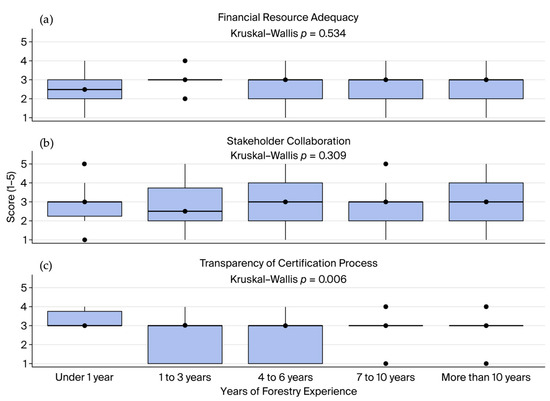
The Kruskal–Wallis non-parametric test was subsequently applied to examine whether respondents’ years of experience in forestry influenced their perceptions of key aspects of forest certification, namely transparency, stakeholder collaboration, and financial resource adequacy. As the perception data were measured on ordinal Likert scales and did not satisfy the assumptions of normality, the non-parametric approach was considered statistically appropriate. This analysis was conducted to complement the occupation-based comparison and to provide a deeper understanding of differences in perceptions among respondents with varying levels of professional experience. By grouping participants according to their years of experience, the analysis aimed to test the robustness of the results and determine whether significant variation existed in stakeholders’ evaluations of these fundamental aspects of forest certification [46,47].
2.2. Qualitative Data Collection and Analysis
A set of semi-structured, in-depth interviews with key stakeholders of Myanmar forest certification sector were conducted in July 2024, following the completion of the quantitative survey. The qualitative component aimed to contextualise stakeholder perceptions on forest certification within Myanmar’s government, economics, and policy framework focusing on operational challenges associated with broader institutional and governance factors affecting the implementation of the certification procedure in Myanmar.
The interviews included specific questions on the role of forest certification in Myanmar and explored challenges related to governance and institutional constraints, financial and technical capacity, documentation and audit practices, and stakeholder engagement.
The interview transcripts were analyzed thematically. Responses were coded and categorized into specific themes, allowing for the identification of recurring concepts and patterns across stakeholder groups. This thematic analysis ensured that both sector-specific issues and broader contextual challenges were captured [48]. To further validate the findings, secondary sources such as publications from the MFCC, FSC, PEFC, and ITTO were reviewed to provide additional context and frame Myanmar’s experience within regional and global trends.
3. Results
3.1. Respondent Characteristics
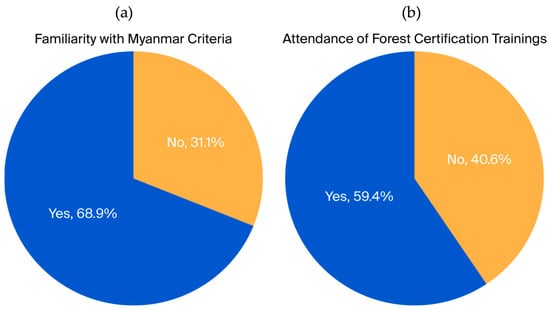
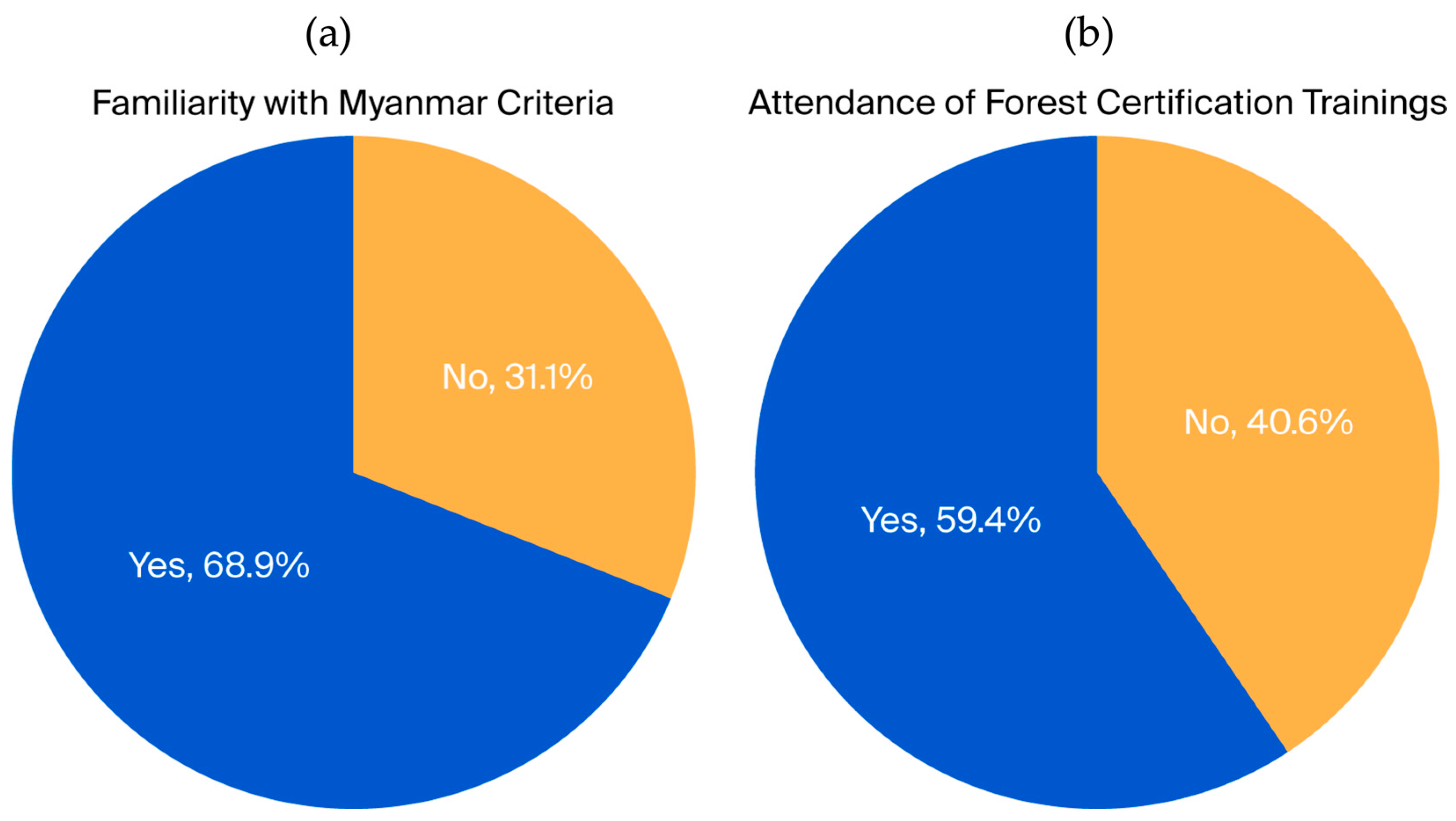
A total of 180 respondents participated in this survey. The majority of respondents were government staff (52.2%), followed by NGO/INGO staff (25.6%), third-party certification bodies (12.8%), and private plantation owners (9.4%). Of the respondents, 64.4% held positions directly related to forest certification, highlighting the involvement of key stakeholders in the certification process. Regarding experience in the forestry sector, 45.6% of respondents had more than 10 years of experience. Awareness of the MFCC was high, with 88.3% of respondents acknowledging familiarity with it. However, only 68.9% of respondents were familiar with the Myanmar Criteria and Indicators for Forest Management Certification Standard, issued in 2020, indicating a gap in knowledge dissemination (Table 1).
Table 1.
Respondent Characteristics and Their Views on Forest Certification in Myanmar.
3.2. Awareness and Knowledge of Certification
The survey results (n = 180) showed that 68.9% of respondents were familiar with the Myanmar Criteria and Indicators for Forest Management Certification Standard, while 31.1% were not, indicating a need for wider dissemination of information (Figure 1). In terms of certification training, 59.4% of respondents had attended related programs, while 40.6% had not (Figure 1). While training participation was relatively high, stakeholders noted that knowledge-sharing within the sector was limited, especially regarding documentation and audit practices. Plantation owners mentioned that, despite receiving training, more structured technical support would be helpful to manage certification audits more effectively.
Figure 1.
(a) Familiarity with Myanmar Criteria across Stakeholder Groups; (b) Forest Certification Trainings Attendance across Stakeholder Groups.
3.3. Transparency in Forest Certification
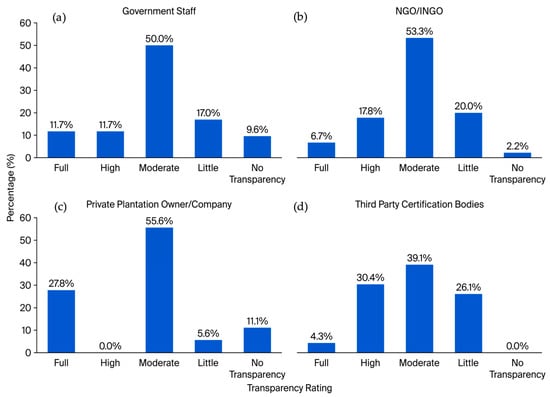
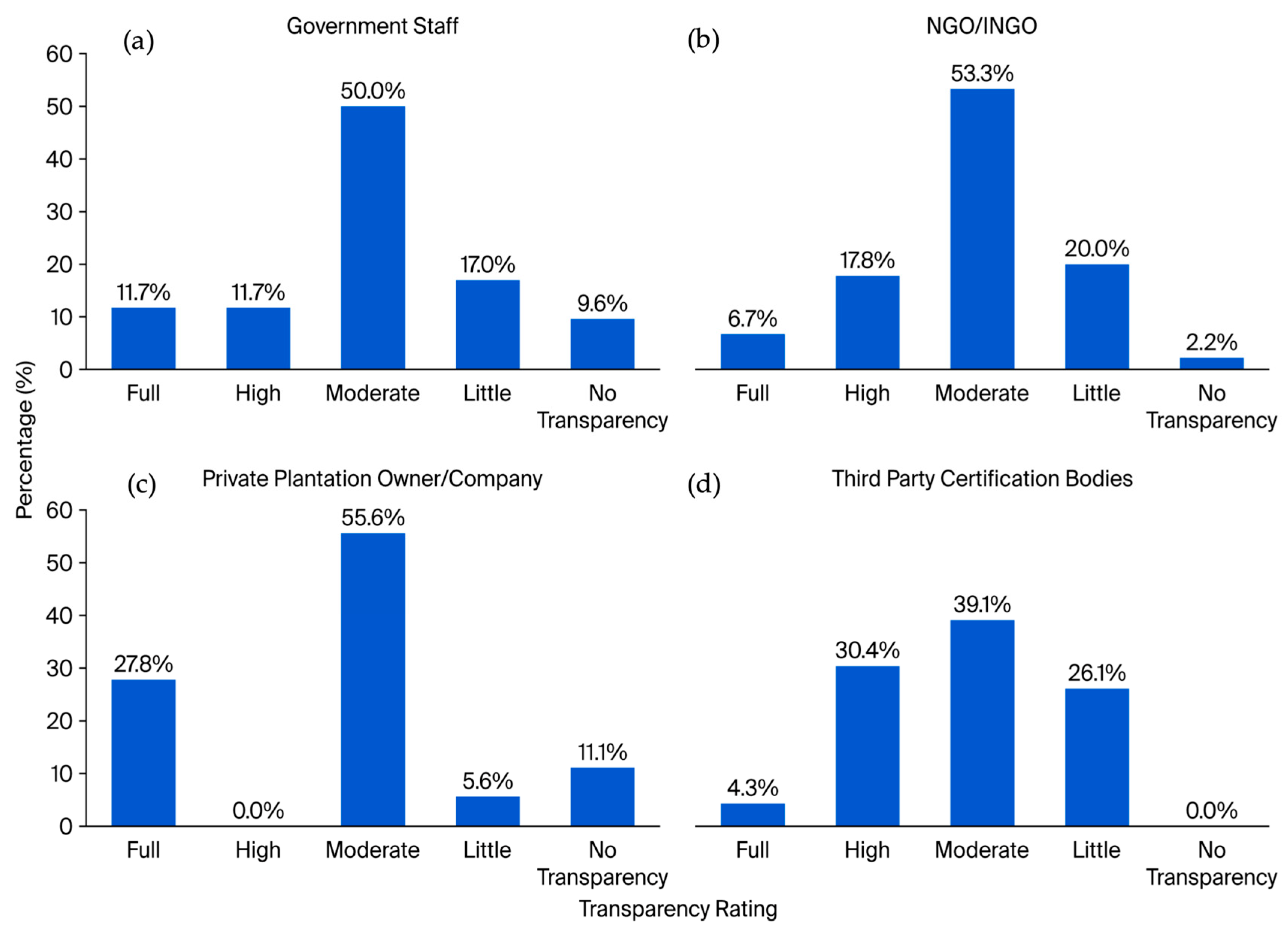
Transparency is a key determinant of credibility in forest certification, underpinning accountability and trust. The survey results showed that 50% of respondents rated Myanmar’s certification process as moderately transparent, while 17.8% considered it limited, and 6.7% reported no transparency. Only 14.4% viewed the system as highly transparent, and 11.1% as fully transparent (Figure 2). Perceptions of transparency differed across stakeholder groups. Government staff tended to provide more favorable assessments, with 50% rating it as moderately high. In contrast, plantation owners, NGOs/INGOs, and third-party certification bodies were more critical. Over one-quarter (26.1%) of certification body representatives described the system as having little transparency, reflecting a more cautious view among these stakeholders.
Figure 2.
Perceived Transparency of Myanmar’s Forest Certification System by Stakeholder Group. (a) Perceptions of Transparency among Government Staff; (b) Transparency Perceptions among NGO/INGO Representatives; (c) Assessments by Private Plantation Owners/Companies; (d) Evaluations from Third-Party Certification Bodies.
Most respondents (73%) reported no experience with corruption or bias, although around one-fifth acknowledged occasional irregularities. Government staff and certification bodies reported fewer concerns about integrity, while plantation owners and NGOs/INGOs noted more frequent issues. Statistical testing confirmed significant differences in transparency perceptions (p = 0.049), but no significant differences were found in corruption perceptions (p = 0.538). Barriers included incomplete documentation, limited disclosure, and uneven participation opportunities, explaining why many viewed transparencies as moderate or limited.
3.4. Institutional Support and Stakeholder Collaboration
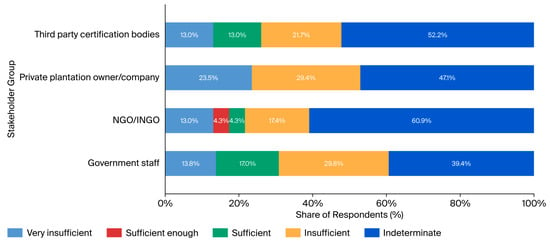
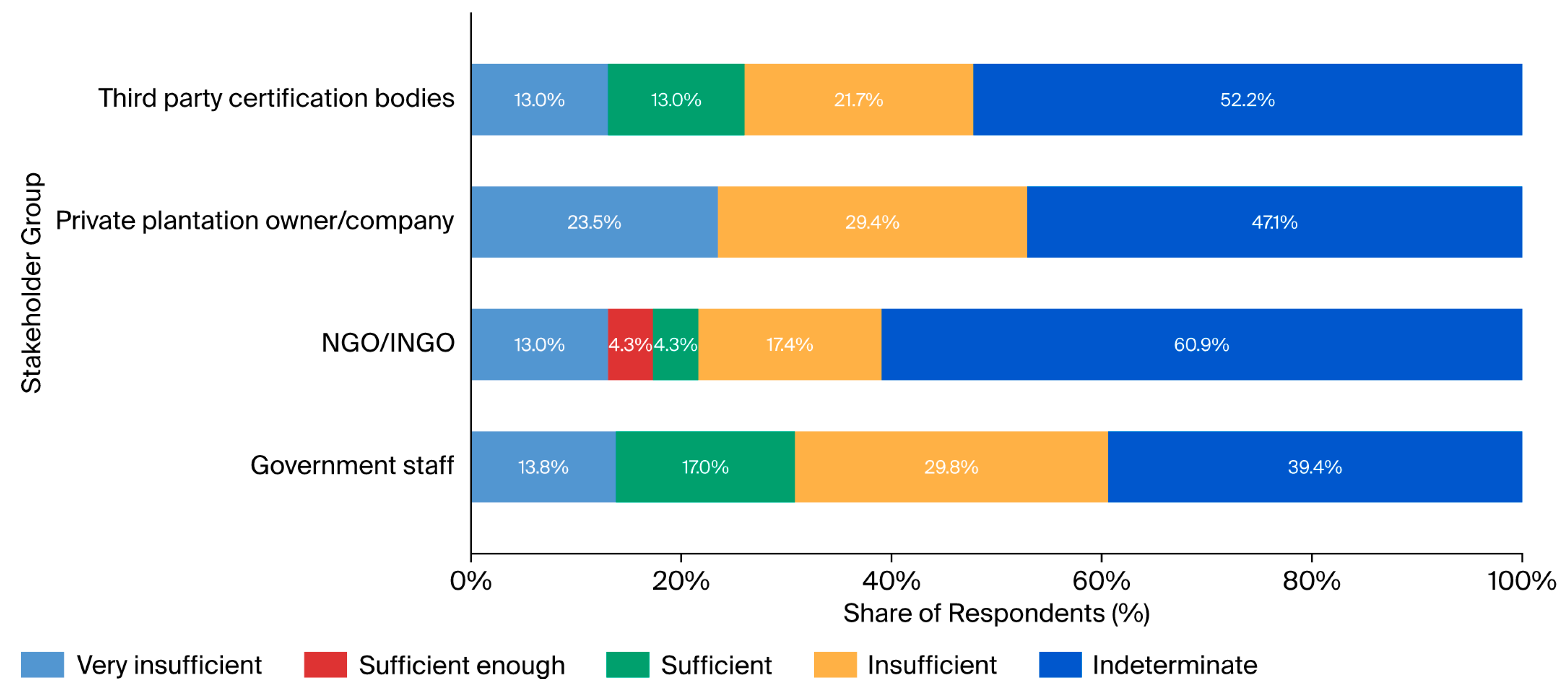
Financial resources remain a key challenge in the implementation of forest certification in Myanmar. Among government staff, 52.2% considered financial resources to be adequate, while nearly one-third assessed them as insufficient. In contrast, a larger proportion of NGOs and INGOs, 60.9%, perceived financial resources as sufficient. However, private plantation owners expressed considerable concerns, with over one-quarter rating the available resources as insufficient (Figure 3). These findings were further corroborated by stakeholder interviews, which emphasized the persistent difficulty in securing adequate and stable funding for certification. Respondents noted that the limited availability of financial resources has delayed the progress of certification, with private sector representatives particularly highlighting challenges in accessing external funding, owing to uncertainties regarding the tangible benefits of certification.
Figure 3.
Financial Resources of Forest Certification. (Note: Percentages may not sum to 100% due to rounding).
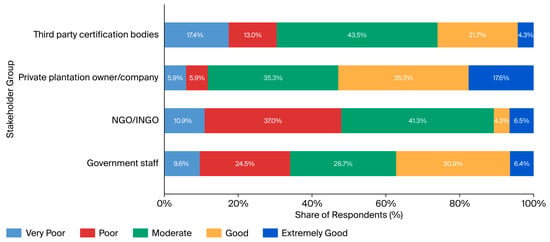
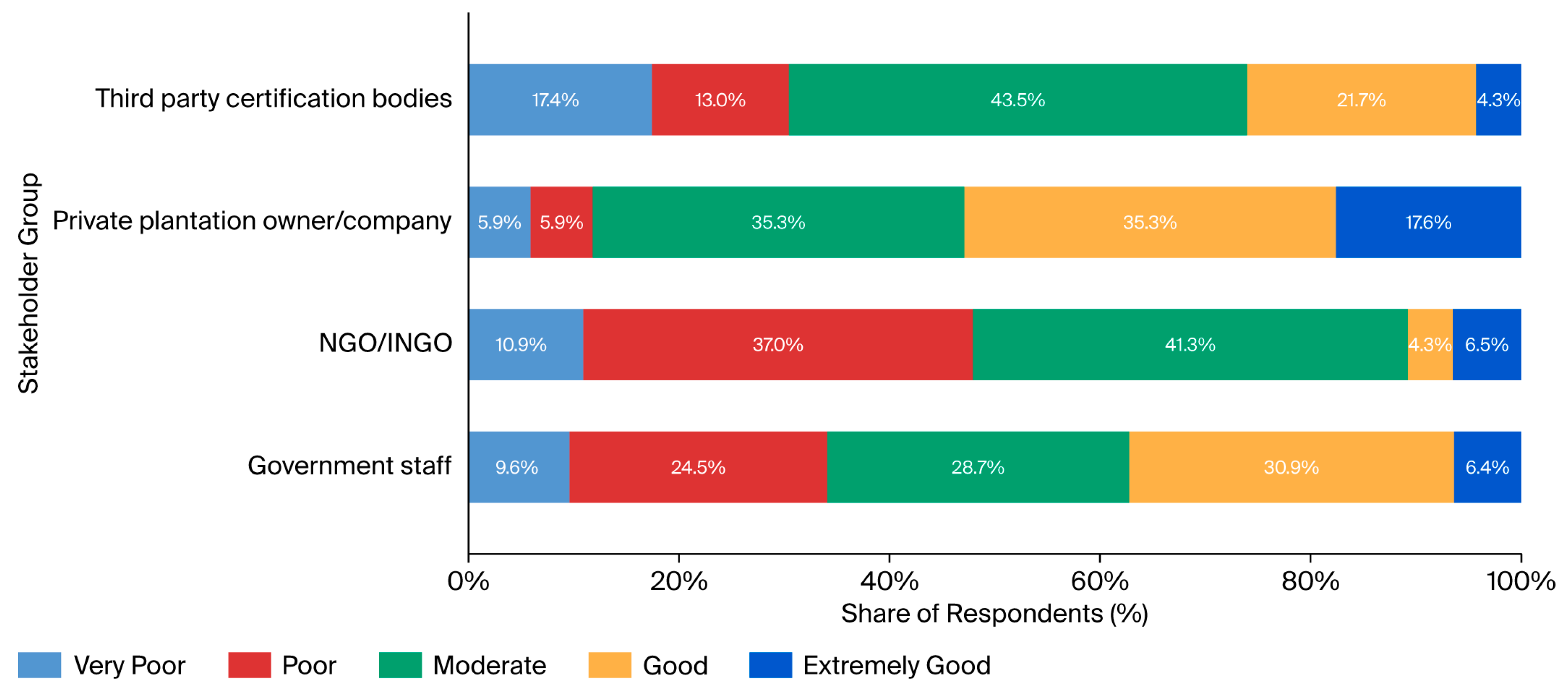
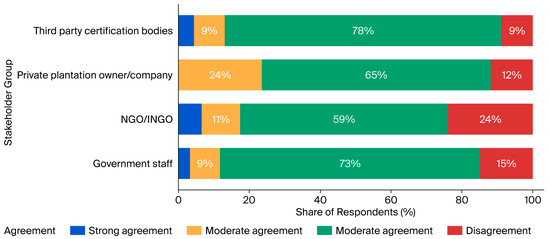
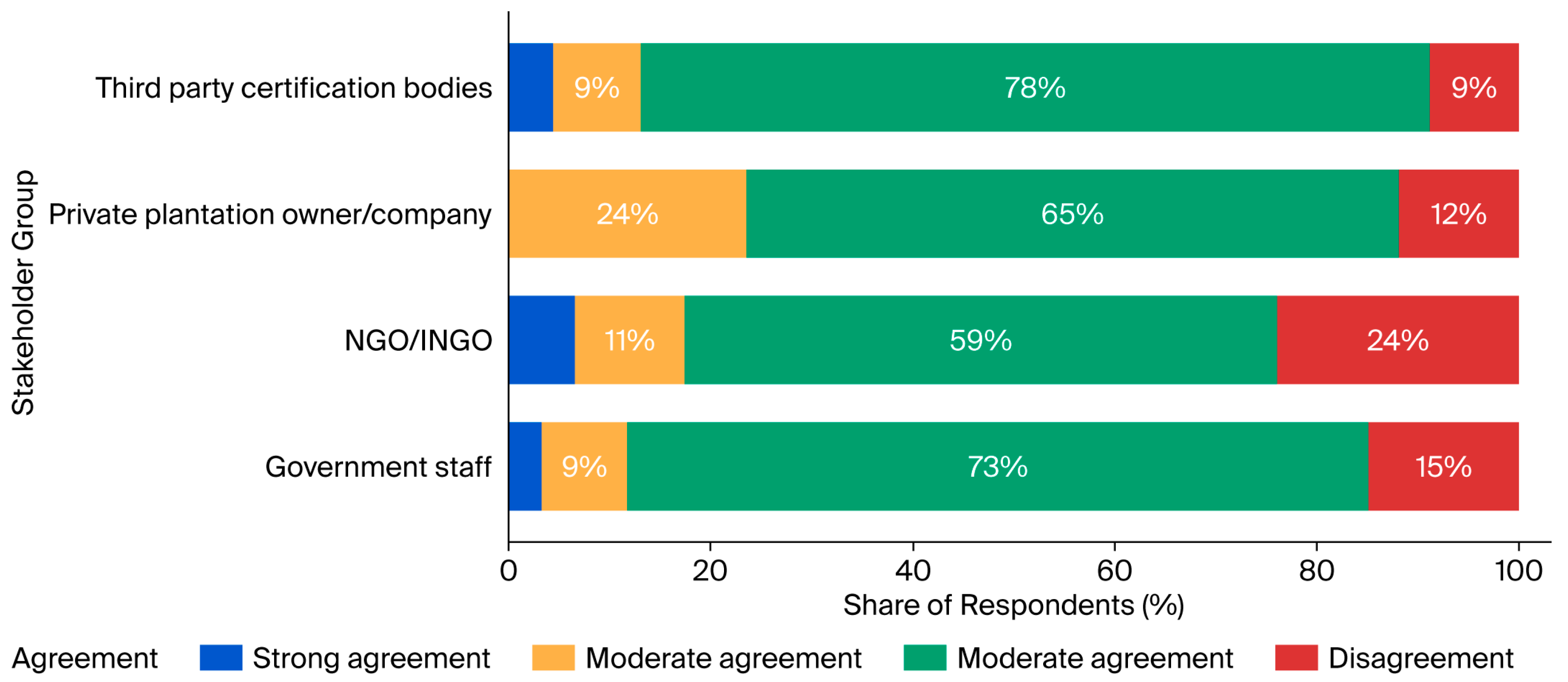
Stakeholder collaboration was also identified as a significant challenge. While 35.3% of plantation owners rated collaboration as good or better, many described it as moderate. In contrast, government staff and NGO/INGO representatives expressed more critical perspectives, with approximately 25% of government respondents reporting poor or very poor collaboration. Interviews with stakeholders highlighted the lack of structured communication channels and limited opportunities for dialogue. Furthermore, weak participation by certain actors in workshops was noted as a key factor undermining coordinated efforts (Figure 4).
Figure 4.
Collaboration among Stakeholders. (Note: Percentages may not sum to 100% due to rounding).
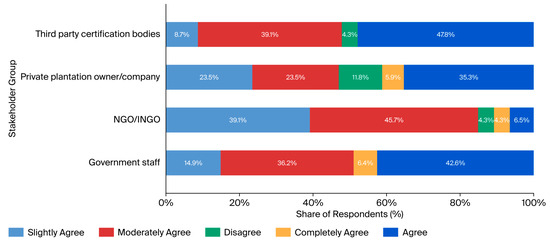
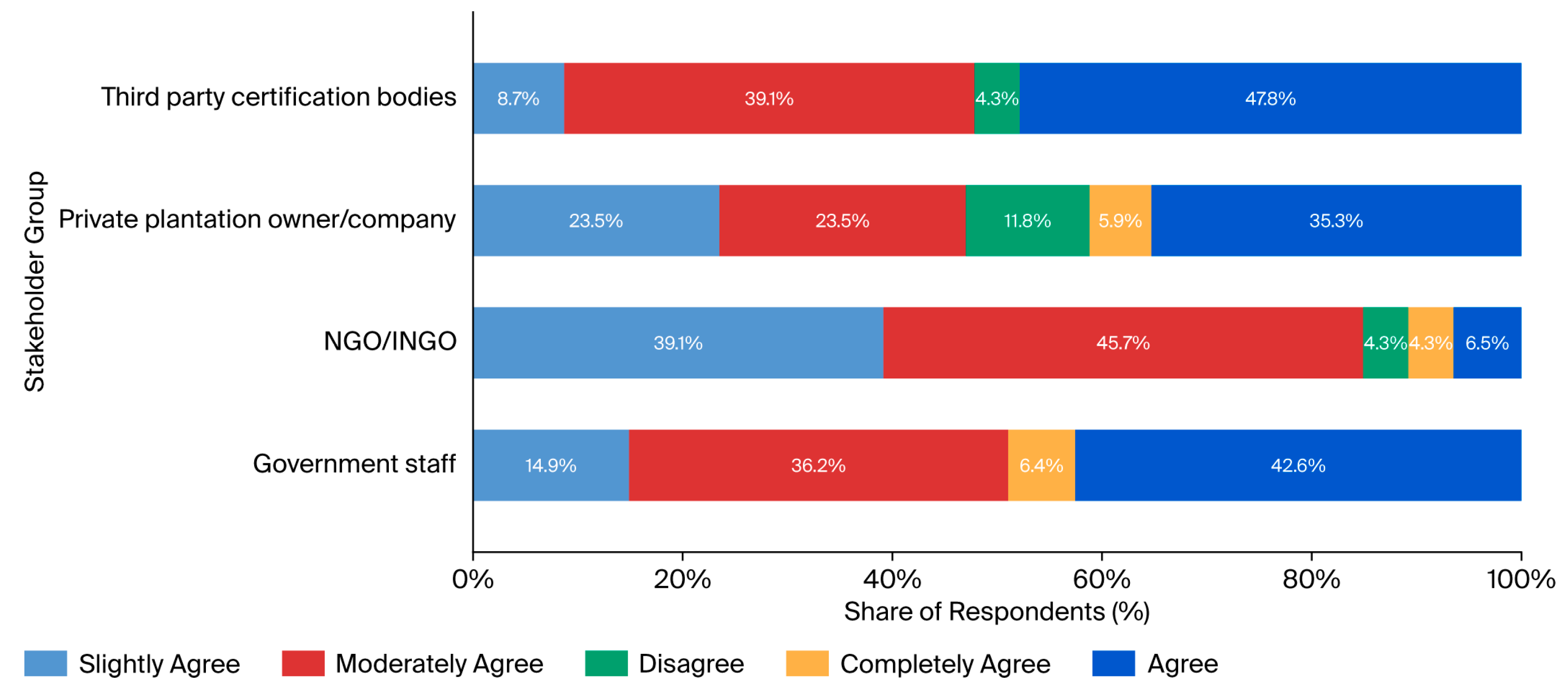
Government support was another area of concern. While 47.8% of respondents from certification bodies considered government support adequate, more than 35% of plantation owners disagreed, citing the government’s failure to address the sector’s practical needs (Figure 5). Respondents highlighted issues such as unclear regulations, the absence of financial incentives, and inconsistent guidance, which hinder active participation in certification. Certification bodies further emphasized the need for more robust frameworks and coherent policies to improve the credibility and effectiveness of the certification system.
Figure 5.
Government Support for Forest Certification. (Note: Percentages may not sum to 100% due to rounding).
3.5. Human Resource Constraints
The survey results showed that 75% of respondents viewed an insufficient workforce as a major barrier to forest certification in Myanmar. This challenge was most pronounced among private plantation owners and NGOs/INGOs, who highlighted the need for specialized training and increased investment in workforce development. The lack of qualified auditors and technical experts was recognized as a key obstacle to advancing forest certification in the country.
Although differences across occupations were observed, Fisher’s Exact Test found no significant variation in perceptions between stakeholder groups, indicating that workforce insufficiency is a widely acknowledged issue. These results emphasize the need for greater investment in workforce development to support the advancement of certification efforts in Myanmar (Figure 6).
Figure 6.
Workforce Insufficiency in Forest Certification by Stakeholder Occupation. (Note: Percentages may not sum to 100% due to rounding).
3.6. Stakeholders’ Perceptions by Years of Forestry Experience
To examine the influence of professional experience on stakeholders’ perceptions of forest certification, the respondents were grouped according to their years of experience in the forestry sector. As the perception data were collected using ordinal Likert scales and did not meet the assumptions of normality, the non-parametric Kruskal–Wallis test was applied as an alternative to one-way ANOVA to compare perception scores across experience groups.
The results indicated a statistically significant difference in perceptions of transparency among respondents with different levels of experience (H = 14.5, df = 4, p = 0.006; Table 2). However, no significant differences were observed for stakeholder collaboration (H = 4.8, df = 4, p = 0.309) or financial resource adequacy (H = 3.1, df = 4, p = 0.534; Table 2). These findings suggest that while perceptions of transparency vary significantly with professional experience, views on collaboration and financial adequacy remain largely consistent across respondent groups.
Table 2.
Results of Kruskal–Wallis Test comparing Stakeholder Perceptions by Years of Forestry Experience.
Figure 7 illustrates these patterns, showing that participants with more years of experience tended to rate transparency lower than their less experienced counterparts. This may reflect their greater exposure to procedural limitations and institutional challenges within Myanmar’s forest certification system.
Figure 7.
Perceptions of Forest Certification across Stakeholder Experience Levels. (a) Financial Resource Adequacy; (b) Stakeholder Collaboration; (c) Transparency of the Certification Process.
3.7. Non-Compliance Factors in Forest Certification Pilot Audits
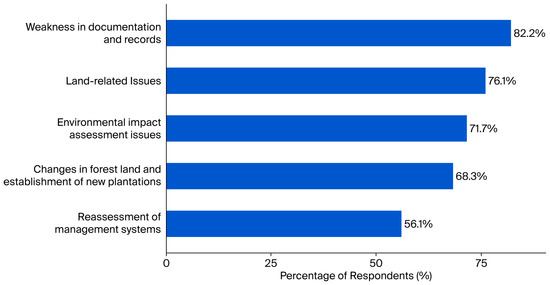
Pilot audits of Myanmar’s forest certification system revealed several persistent causes of non-compliance. The most common issue was weak documentation and record-keeping, where missing or incomplete records limited the effectiveness of audit assessments. Land-related problems were also significant, particularly disputes over tenure and use rights that created uncertainty in management practices. Deficiencies in environmental impact assessments added further complications, making it difficult for operations to meet sustainability requirements. Changes in forest land use and the establishment of new plantations introduced additional variability that affected compliance. Revisions to management systems within organizations were another contributing factor, indicating the need for continual adjustment of certification standards to match evolving operational conditions (Figure 8).
Figure 8.
Main Reasons for Non-Compliance in Forest Certification Pilot Audits in Myanmar.
3.8. Challenges in Implementing Forest Certification in Myanmar
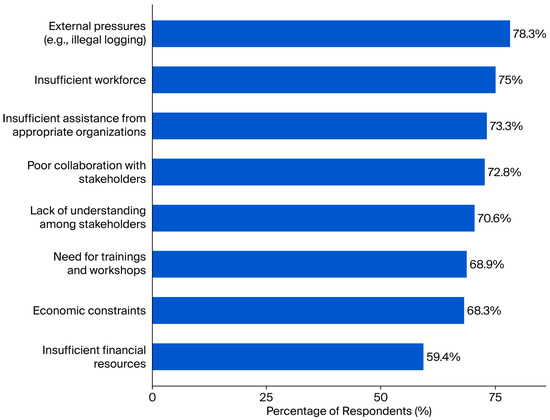
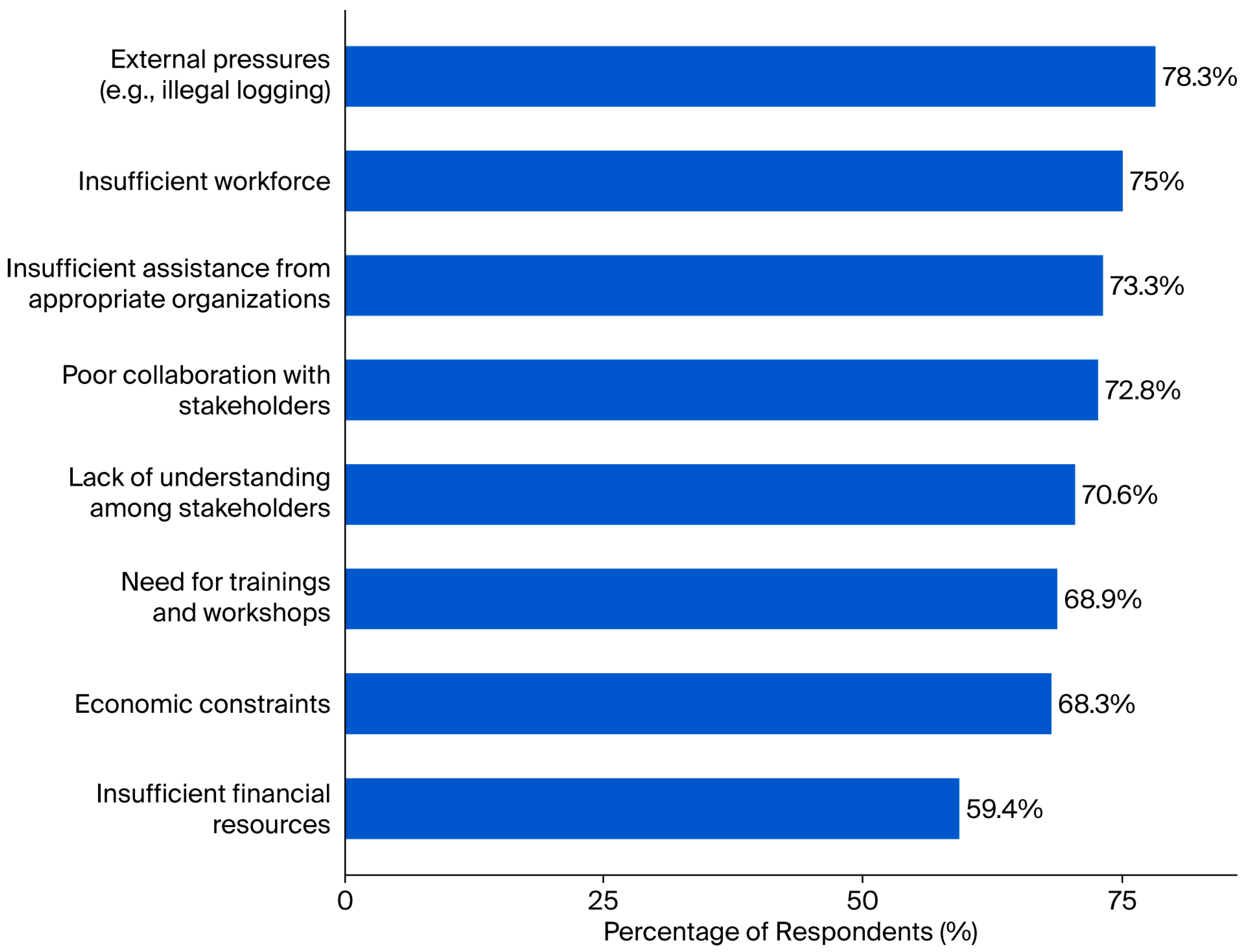
Beyond financial and institutional constraints, Myanmar’s forest certification system faces structural challenges that limit its effectiveness and broader adoption. Most respondents identified illegal logging and economic pressures as major barriers. About 78.3% cited illegal logging as a key obstacle, noting that such activities divert resources and weaken the credibility of sustainable forest management initiatives (Figure 9).
Figure 9.
Key Challenges encountered in Implementing Forest Certification in Myanmar.
Stakeholder interviews reflected similar concerns. Representatives from plantation companies noted that illegal logging reduces market demand for certified timber, as uncertified wood continues to dominate supply chains. NGOs and certification bodies pointed to weak enforcement as another factor sustaining these practices and eroding confidence in the certification process. Economic pressures, including the absence of price premiums for certified products, further discourage investment in certification schemes.
Myanmar has laid the groundwork for a national certification framework, but systemic challenges—particularly illegal logging, limited market incentives, and economic constraints—continue to hinder progress. Addressing these issues is essential to strengthen both the credibility and uptake of forest certification.
4. Discussion
Forest certification in Myanmar faces multiple challenges shaped by institutional weaknesses, evolving governance conditions, and market barriers. The survey results show a moderate level of familiarity with forest certification principles and general awareness of the MFCC, with moderate participation in training programs. However, continuing issues such as limited transparency, weak documentation, inadequate financing, and poor stakeholder coordination hinder further progress. When considered in the broader context of the FSC and PEFC, Myanmar’s case reflects both national constraints and broader systemic challenges shared by other developing economies.
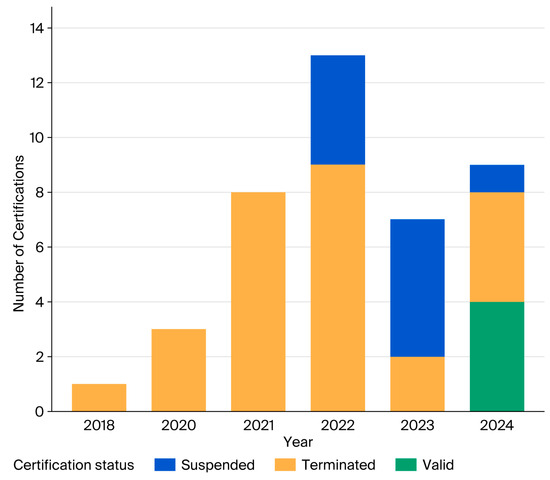
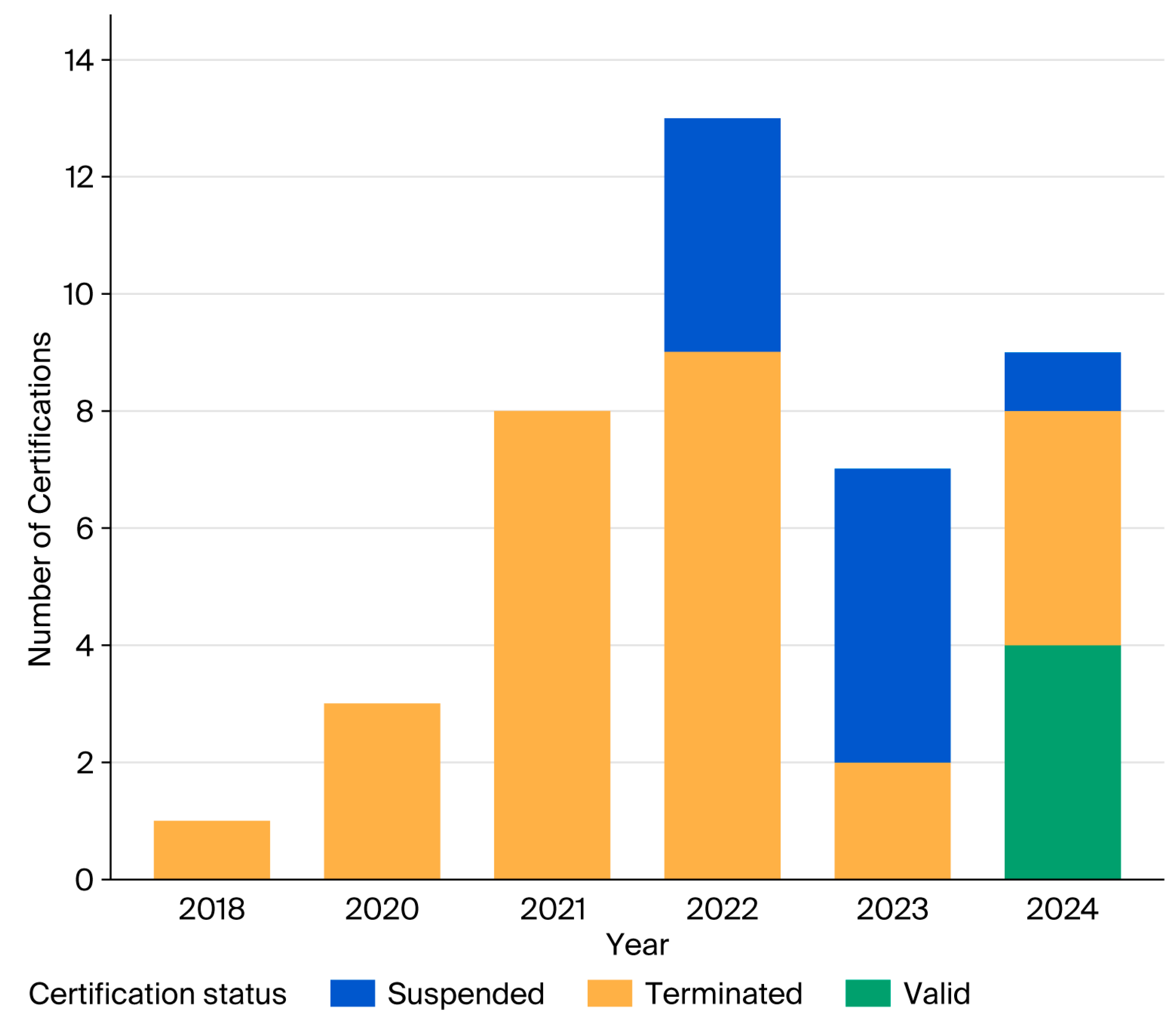
Most stakeholders viewed the national certification process as only moderately transparent, citing incomplete documentation, limited disclosure, and inconsistent enforcement. These findings correspond with long-standing governance problems in Myanmar’s forestry sector [37] and reflect experiences in the Mekong region, where limited participation and weak law enforcement reduce the credibility of certification systems [29]. Institutional shortcomings also contributed to the loss of international recognition. A key problem remains the absence of a nationally recognized certification scheme accepted and endorsed by international forest certification organizations. The PEFC suspended assessment of Myanmar Forest Certification Scheme (MFCS) in 2021 due to concerns about institutional transparency and regulatory conditions [49], while the FSC ended certification activities under Bureau Veritas oversight in 2024 because of governance and labor issues [50,51]. The declining trend in valid FSC CoC certificates from 2018 to 2024 (Figure 10) illustrates the increasing rate of suspensions and terminations linked to institutional weaknesses.
Figure 10.
FSC CoC Certification Status Trend in Myanmar from 2018 to 2024, showing valid, terminated, and suspended certifications. The valid certificates in 2024 refer to FSC CoC certificates, applied to trading and processing entities, not forest management units.
Beyond institutional and regulatory constraints, Myanmar’s experience closely aligns with international evidence from studies that explicitly examine stakeholder perceptions of forest certification across different regional contexts. Survey-based research in Spain indicates that although stakeholders generally acknowledge forest certification as a potentially effective governance instrument, they remain skeptical about its ability to deliver tangible economic benefits and report persistent disagreements among environmental organizations, industry actors, and forest managers regarding certification objectives and outcomes [52]. Similarly, stakeholder perception studies in Indonesia show that certification uptake is strongly influenced by high compliance costs, administrative complexity, and limited market incentives, leading many actors to prioritize timber legality verification systems over full certification when economic returns are uncertain [53]. Community-level research from Brazil further demonstrates that local stakeholders often perceive forest certification as externally driven, with benefits distributed unevenly and insufficient to offset compliance costs, resulting in declining participation over time [54]. Taken together, these international experiences reinforce the findings from Myanmar, where stakeholder confidence in forest certification remains constrained by transparency concerns, weak incentives, and institutional capacity limitations, suggesting that the challenges observed are not unique but reflect broader structural issues affecting certification initiatives in many developing and transition economies.
The additional analysis based on respondents’ years of forestry experience further reinforces these findings. Individuals with longer professional experience tended to rate the transparency of the certification process lower than those with fewer years in the sector, while perceptions of stakeholder collaboration and financial resource adequacy remained broadly similar across experience groups. This pattern suggests that concerns related to transparency are not confined to specific occupational categories but are more pronounced among individuals with deeper exposure to institutional processes. The consistency of perceptions regarding collaboration and financial adequacy across experience groups indicates that these challenges are viewed as systemic, rather than being restricted to stakeholder segments.
Myanmar’s ranking of 168th out of 180 countries in the 2024 Corruption Perceptions Index further highlights weaknesses in governance and institutional integrity [55]. The U4 Anti-Corruption Resource Centre (2019) reports that corruption, weak enforcement, and limited accountability remain major constraints on reform in the forestry sector [55,56]. Although certification has introduced procedural safeguards, these efforts remain insufficient to address the deeper structural and transparency problems that continue to undermine credibility and international confidence.
Financial and organizational barriers were also identified, particularly among private plantation owners who reported insufficient government support, unclear certification procedures, and limited access to credit. Similar trends have been noted in Sri Lanka and Croatia, where certification was initially adopted to satisfy export requirements rather than to promote domestic governance reform [57,58]. In many timber-producing countries in the Asia–Pacific region, developing national certification standards has proven to be a lengthy and complex process. Experiences from Indonesia, Malaysia, and Vietnam show that establishing such standards requires reconciling overlapping institutional mandates, clarifying agency responsibilities, and aligning domestic policies with the legality, consultation, and labor requirements of major timber-importing countries [59].
The MFCC has identified several major barriers affecting natural forests and uncertified areas, including high audit costs, the complexity of standards designed for temperate forests, unclear land tenure that discourages long-term investment, limited market demand for certified products, and political transitions that can interrupt certification progress regardless of management quality. These issues collectively limit economic incentives and institutional readiness for certification [15,21,26]. Uncertified forests, even when managed under sustainable practices, lack third-party verification and therefore face limited access to international premium markets [26]. International sanctions imposed since 2021 have further restricted access to markets in the European Union, United States, and United Kingdom, reducing incentives for certification [36,60,61,62,63]. The Environmental Investigation Agency (EIA) reported that sanctions targeting the Myanmar Timber Enterprise have constrained legal timber exports, while illicit trade with China and India continues, undermining the credibility of legality verification systems [63,64].
International experience indicates that establishing a credible timber legality verification system can serve as an essential first step for countries seeking to restore market confidence in the absence of full forest certification. Evidence from Indonesia’s Sistem Verifikasi Legalitas Kayu (SVLK) framework and Vietnam’s Timber Legality Assurance System (VNTLAS) demonstrates that legality assurance—focused on documentation, traceability, and compliance with national laws—can significantly reduce illegal logging, improve governance performance, and facilitate access to regulated markets even before large-scale certification is achieved [65,66]. These systems illustrate how legality verification does not compete with certification but instead provides the foundational governance conditions upon which certification can later expand. For Myanmar, prioritizing legality verification could therefore help address persistent documentation weaknesses, strengthen supply-chain oversight, and create more realistic institutional pathways toward future compliance with FSC and PEFC requirements [66,67].
In addition, remote sensing technologies—such as Landsat, Sentinel, LiDAR, and high-resolution commercial satellites—offer substantial opportunities to improve transparency, legality verification, and monitoring of sustainable forest management. Previous studies have demonstrated that remote sensing can reliably detect deforestation, forest degradation, selective logging, and changes in canopy structure at national and regional scales [68]. Countries such as Indonesia and Brazil have successfully integrated remote sensing into legality verification and enforcement systems, enabling independent monitoring and increasing public access to forest data [69]. Incorporating similar technologies into Myanmar’s forest monitoring and documentation processes could improve traceability, enhance international confidence, and strengthen alignment with global certification and legality requirements [70].
Technological and human resource constraints also hinder progress. About three-quarters of respondents reported that a shortage of trained auditors and technical expertise limits effective implementation, while poor infrastructure reduces audit reliability. Comparable findings have been reported elsewhere, where certification success depends on technical capacity and the integration of ISO-based management systems [57,71,72]. Although the MFCC promotes impartiality, transparency, and continuous improvement as core principles, these are not yet fully implemented due to limited capacity and challenges related to governance and institutional coordination [21,37]. The national certification framework remains highly centralized and lacks independent accreditation, unlike international systems that rely on third-party audits for credibility [11]. Despite the introduction of tools such as the E-Certification platform and the Digital Timber Tracking System (DTTS), implementation remains weak due to insufficient training, limited institutional coordination, and a lack of transparent data management [1,21,73].
Similar challenges have been documented in Indonesia, where overlapping responsibilities between private certification bodies and government-led legality verification systems have reduced audit efficiency and credibility. These parallels suggest that Myanmar’s certification process faces governance constraints comparable to those observed in other Southeast Asian systems transitioning from voluntary to state-led certification regimes Comparable experiences in Malaysia demonstrate that certification outcomes are closely linked to institutional learning and resource allocation [53,67]. Under the Malaysian Timber Certification Scheme, improvements in documentation, monitoring, and forest management planning occurred primarily where institutional support and training resources were consistently provided [74]. These findings highlight that certification progress depends not only on technical systems but also on continuous institutional learning and the ability to adapt standards to local contexts, a challenge that Myanmar’s certification framework continues to face.
Broader structural challenges identified in national environmental analyses further illustrate that weak institutional coordination and fragmented policy implementation continue to hinder progress across Myanmar’s natural resource sectors. According to the Myanmar Country Environmental Analysis [75], ineffective inter-agency coordination and limited data transparency have slowed forest sector reforms and weakened the enforcement of sustainable forest management policies. These institutional deficiencies mirror the constraints observed in certification, where fragmented responsibilities and weak monitoring systems reduce overall governance effectiveness.
Illegal logging and cross-border timber trafficking continue to weaken certification efforts. Weak enforcement, inadequate border monitoring, and outdated documentation systems increase legality risks [76,77]. Although the government has attempted to centralize timber exports through the Myanmar Timber Enterprise, smuggling to China and Thailand remains extensive. The MFCC acknowledges that uncertified forests have little or no access to regulated markets, reinforcing the need for credible verification systems [26]. Studies on cross-border timber trade show that elite networks dominate the sector, capturing profits while excluding forest-dependent communities [76]. Similar governance problems have been documented in other tropical timber-producing countries, where corruption and illegal trade reduce certification credibility and consumer trust [1,2,77]. Without governance reform, sanctions relief, and transparent traceability systems, Myanmar’s reintegration into certified global markets will remain uncertain.
Compared with regional peers, Myanmar lags far behind countries such as Indonesia and Malaysia, which have made significant progress under both FSC and PEFC systems. Indonesia currently manages 4.39 million hectares certified under FSC and 4.89 million hectares under PEFC, while Malaysia has 0.23 million hectares under FSC and 6.49 million hectares under PEFC [16,17]. In contrast, Myanmar has yet to obtain certification under either system. Although a few FSC CoC certificates remained valid until 2024 (as shown in Figure 10), these certificates applied only to trading and processing entities rather than forest management units.
As of 2024, Myanmar has no active forest management certificates or certified forests under either FSC or PEFC systems [16,17,36,60,61,62,63]. These differences highlight structural weaknesses in Myanmar’s forest governance and certification systems. Furthermore, new international policies, such as the European Union Deforestation Regulation (EUDR), are placing greater pressure on exporters to demonstrate legal and sustainable sourcing [78]. As the Indonesian experience shows, establishing effective national standards and balancing international expectations with domestic realities require long-term engagement, broad multistakeholder participation, and adaptive policy frameworks to ensure legitimacy and lasting acceptance [67]. These conditions underline the urgent need for institutional reform and international alignment to strengthen Myanmar’s participation in certified global timber trade.
5. Limitations and Challenges
However, several limitations of this study should be considered. The analysis was based on a survey of 180 stakeholders from various sectors, which may not fully represent the diversity of perspectives across the country. Differences in forest types, governance capacity, and socioeconomic conditions among regions may limit the general applicability of the findings. Restricted access to some areas constrained opportunities to verify field data, particularly in remote regions with limited connectivity and institutional presence. Changing political conditions and evolving governance structures created difficulties in obtaining consistent and up-to-date information from relevant organizations, hindering data verification and coordination among institutions involved in forest management and certification processes [37,79]. Although this study included qualitative interviews with key stakeholders, the number of participants was limited by time and access constraints, meaning some perspectives—particularly from forest-dependent and community-based actors—may have been underrepresented. Poor internet access and transportation difficulties further restricted communication with stakeholders in isolated areas [79]. Despite these limitations, this study provides a solid empirical foundation for understanding Myanmar’s forest certification landscape, and future research should broaden geographic coverage, expand qualitative engagement with underrepresented groups, and combine both qualitative and quantitative approaches to offer a more comprehensive assessment of certification practices and governance dynamics.
6. Conclusions
Forest certification in Myanmar remains at a formative stage, showing an early start but limited progress compared with neighboring countries. The absence of international recognition for the MFCS continues to restrict access to regulated timber markets and reduce buyer confidence. The study findings confirm that certification development is constrained by weak institutional coordination, limited stakeholder participation, and inadequate technical and financial capacity. These internal barriers are compounded by the lack of market incentives, as certified timber products rarely receive price premiums in global trade. Myanmar’s progress is further influenced by geopolitical factors, including international sanctions and shifting trade regulations, which have limited access to high-value markets and reduced motivation for certification.
Experiences from regional timber-producing countries demonstrate that establishing credible national standards is a gradual and resource-intensive process. Successful cases in Indonesia’s SVLK and Vietnam’s VNTLAS underline the importance of clear legal frameworks, defined institutional roles, and alignment with international standards. For Myanmar, adopting participatory governance approaches and prioritizing timber legality verification could address documentation gaps, improve supply chain oversight, and facilitate integration into global markets. Additionally, integrating remote sensing technologies into forest monitoring and certification processes could enhance transparency, traceability, and the verification of sustainable forest management, building greater trust in the certification system.
To progress, Myanmar must strengthen institutional collaboration, enhance transparency, and develop a functional traceability and audit system. Partnerships with regional and international organizations can provide essential technical support and policy guidance, while capacity-building initiatives should focus on developing skilled auditors and improving documentation systems. Over time, adapting certification schemes to Myanmar’s unique ecological, social, and institutional conditions—rather than replicating external models—will be key to achieving credible, sustainable, and inclusive forest certification. Such a balanced approach can help the country regain market trust, contribute to sustainable forest management, and align more closely with international forest governance standards.
Supplementary Materials
The following supporting information can be downloaded at: https://www.mdpi.com/article/10.3390/f17010115/s1, File S1: Survey questionnaire.
Author Contributions
Conceptualization, M.Z.P. and X.L.; methodology, M.Z.P. and X.L.; software, M.Z.P. and T.S.A.; validation, M.Z.P. and T.S.A.; formal analysis, M.Z.P. and T.S.A.; investigation, M.Z.P.; resources, M.Z.P.; data curation, M.Z.P.; writing—original draft preparation, M.Z.P.; writing—review and editing, M.Z.P. and X.L.; visualization, M.Z.P.; supervision, X.L.; project administration, M.Z.P. and X.L.; funding acquisition, M.Z.P. and X.L. All authors have read and agreed to the published version of the manuscript.
Funding
This research was funded by the “International Tropical Timber Organization (ITTO) Fellowship Programme”.
Data Availability Statement
The original contributions presented in this study are included in this article, and further inquiries can be directed to the corresponding author.
Conflicts of Interest
The authors declare no conflicts of interest. The funders had no role in the design of this study; in the collection, analyses, or interpretation of data; in the writing of the manuscript; or in the decision to publish the results.
Abbreviations
The following abbreviations are used in this manuscript:
| MFCC | Myanmar Forest Certification Committee |
| MFCS | Myanmar Forest Certification Scheme |
| SFM | Sustainable Forest Management |
| PEFC | Programme for Endorsement of Forest Certification |
| FSC | Forest Stewardship Council |
| EIA | Environmental Investigation Agency |
| EUDR | European Union Deforestation Regulation |
| MTLAS | Myanmar Timber Legality Assurance System |
| SVLK | Sistem Verifikasi Legalitas Kayu |
| VNTLAS | Vietnam’s Timber Legality Assurance System |
| DTTS | Digital Timber Tracking System |
References
- Ku, I. Teak in Mekong for a Sustainable Future; Kasetsart University, International Tropical Timber Organization and TEAKNET: Bangkok, Thailand, 2022. [Google Scholar]
- Richard Eba’a Atyi, M.S. Forest Certification: Pending Challenges for Tropical Timber; International Tropical Timber Organization: Yokohama, Japan, 2002; Volume 19, p. 68. [Google Scholar]
- Food and Agriculture Organization (FAO). The State of the World’s Forests 2024; FAO: Rome, Italy, 2024. [Google Scholar] [CrossRef] [Scilit]
- Food and Agriculture Organization (FAO). Global Forest Resources Assessment, Myanmar; FAO: Rome, Italy, 2020. [Google Scholar]
- Wolff, S.; Schweinle, J. Effectiveness and Economic Viability of Forest Certification: A Systematic Review. Forests 2022, 13, 798. [Google Scholar] [CrossRef] [Scilit]
- Rametsteiner, E.; Simula, M. Forest certification—An Instrument to Promote Sustainable Forest Management? J. Environ. Manag. 2003, 67, 87–98. [Google Scholar] [CrossRef] [Scilit]
- Fischer, C.; Aguilar, F.X.; Jawahar, P.; Sedjo, R.A. Forest Certification: Toward Common Standards? Resources for the Future: Washington, DC, USA, 2005. [Google Scholar]
- Siry, J.P.; Cubbage, F.W.; Ahmed, M.R. Sustainable forest management: Global trends and opportunities. For. Policy Econ. 2005, 7, 551–561. [Google Scholar] [CrossRef] [Scilit]
- Burger, D.; Hess, J.; Lang, B. Forest Certification: An Innovative Instrument in the Service of Sustainable Development? Deutsche Gesellschaft für Technische Zusammenarbeit: Eschborn, Germany, 2005. [Google Scholar]
- Cashore, B.; Gale, F.; Meidinger, E.; Newsom, D. Forest Certification in Developing and Transitioning Countries: Part of a Sustainable Future? Environ. Sci. Policy Sustain. Dev. 2006, 48, 6–25. [Google Scholar] [CrossRef] [Scilit]
- MacDicken, K.G.; Sola, P.; Hall, J.E.; Sabogal, C.; Tadoum, M.; de Wasseige, C. Global progress toward sustainable forest management. For. Ecol. Manag. 2015, 352, 47–56. [Google Scholar] [CrossRef] [Scilit]
- Martín-García, J.D.; Julio, J. Sustainable Forest Management: An Introduction and Overview; InTech: Rijeka, Croatia, 2012; pp. 3–16. [Google Scholar]
- Malek, E.J. A Thematic Review of Forest Certification Publications from 2017 to 2021: Analysis of Pattern and Trends for Future Studies. Trees For. People 2022, 10, 100331. [Google Scholar] [CrossRef] [Scilit]
- Auld, G.; Gulbrandsen, L.H.; McDermott, C.L. Certification Schemes and the Impacts on Forests and Forestry. Annu. Rev. Environ. Resour. 2008, 33, 187–211. [Google Scholar] [CrossRef]
- Cashore, B.; Gale, F.; Meidinger, E.; Newsom, D. Confronting Sustainability: Forest Certification in Developing and Transitioning Countries; Yale University Press: New Haven, CT, USA, 2006. [Google Scholar]
- Programme for Endorsement of Forest Certification (PEFC). PEFC Global Statistics; PEFC: Geneva, Switzerland, 2024. [Google Scholar]
- Forest Stewardship Council (FSC). Facts & Figures; FSC International. Available online: https://connect.fsc.org/impact/monitoring-fscs-reach (accessed on 30 June 2025).
- Lewin, A.; Mo, K.; Scheyvens, H.; Gabai, S. Forest Certification: More Than a Market-Based Tool, Experiences from the Asia Pacific Region. Sustainability 2019, 11, 2600. [Google Scholar] [CrossRef] [Scilit]
- Nor, S.B.M.; Mohamed, A.F.; Khamis, S. Forest Certification Management Experience in Asia–Pacific and Europe: A Case Study of Malaysia and Sweden. J. For. Sci. 2025, 71, 269–285. [Google Scholar] [CrossRef] [Scilit]
- Scheyvens, H.; Harada, K.; Hyakumura, K. Incorporating Certification into a Pro-Poor Forestry Agenda: Lessons from, and Options for, the Asia–Pacific Region. In Proceedings of the International Conference on Poverty Reduction and Forests—Tenure, Market and Policy Reforms, Bangkok, Thailand, 3–7 September 2007. [Google Scholar]
- Fujisaki, T.C.B. Forests, Timber Sources and Supply Chains of Myanmar: Opportunities and Constraints to Ensure Legal Origin of Timber. In Teak in Mekong for a Sustainable Future; Trisurat, Y., Ma, H.O., Yanuariadi, T., Kant, P., Thulasidas, P.K., Eds.; Kasetsart University, International Tropical Timber Organization and TEAKNET: Bangkok, Thailand, 2022; pp. 285–295. [Google Scholar]
- International Tropical Timber Organization (ITTO). Tropical Timber Market Report; ITTO: Yokohama, Japan, 2021. [Google Scholar]
- Myanmar Forest Certification Committee (MFCC). Strengthening SFM Standards and Timber Legality Framework in Myanmar. Project Newsletter, March 2022; Issue 2.
- Myanmar Forest Certification Committee (MFCC). Strengthening SFM Standards and Timber Legality Framework in Myanmar. Project Newsletter, September 2022; Issue 3.
- Myanmar Forest Certification Committee (MFCC). Myanmar Criteria and Indicators for Forest Management Certification Standard; Myanmar Forest Certification Committee: Yangon, Myanmar, 2021. [Google Scholar]
- Myanmar Forest Certification Committee (MFCC). The Role of Forest Certification in Myanmar; Myanmar Forest Certification Committee: Yangon, Myanmar, 2025. [Google Scholar]
- Asian Forest Cooperation Organization (AFoCO). MYANMAR Country Profile and Context; AFoCO: Seoul, Republic of Korea, 2022. [Google Scholar]
- Forest Department Myanmar. Forestry in Myanmar; Forest Department: Nay Pyi Taw, Myanmar, 2020.
- RECOFTC Assessing Forest Governance in Myanmar. Identifying Key Challenges and Interventions to Strengthen Governance; RECOFTC: Bangkok, Thailand, 2018.
- Naing Tun, Z.; Dargusch, P.; McMoran, D.J.; McAlpine, C.; Hill, G. Patterns and Drivers of Deforestation and Forest Degradation in Myanmar. Sustainability 2021, 13, 7539. [Google Scholar] [CrossRef] [Scilit]
- Oo, T.N.H.; Aye, E.E.S.; Chan, Y.Y.; Chan, N.; Maung, N.L.; Phyoe, S.S.; Thu, P.; Pham, T.T.; Maharani, C.; Moeliono, M.; et al. The Context of REDD+ in Myanmar: Drivers, Agents and Institutions; Center for International Forestry Research (CIFOR): Bogor, Indonesia, 2020. [Google Scholar] [CrossRef] [Scilit]
- Durst, P.B.; McKenzie, P.J.; Brown, C.L.; Appanah, S. Challenges Facing Certification and Eco-Labelling of Forest Products in Developing Countries. Int. For. Rev. 2006, 8, 193–200. [Google Scholar] [CrossRef] [Scilit]
- IKEA. IKEA Sustainability Report FY20; Inter IKEA Group: Delft, The Netherlands, 2020. [Google Scholar]
- Kingfisher. Forest Positive Policy:Vendor Guidelines; Kingfisher: London, UK, 2024. [Google Scholar]
- Walmart. Deforestation Policy; Walmart Inc.: Bentonville, AR, USA, 2017. [Google Scholar]
- Forest Trends. Timber Legality Risk Dashboard: Myanmar; Forest Trends: Washington, DC, USA, 2021. [Google Scholar]
- Prescott, G.W.; Sutherland, W.J.; Aguirre, D.; Baird, M.; Bowman, V.; Brunner, J.; Connette, G.M.; Cosier, M.; Dapice, D.; De Alban, J.D.T.; et al. Political Transition and Emergent Forest-Conservation Issues in Myanmar. Conserv. Biol. 2017, 31, 1257–1270. [Google Scholar] [CrossRef] [Scilit]
- Christian, S.; Kyaw, T. Evaluation of the Myanmar CoC Dossier and MTLAS.; NEPCon (Nature Economy and People Connected): Copenhagen, Denmark, 2020. [Google Scholar]
- Myanmar Forest Certification Committee (MFCC). Myanmar Timber Legality Assurance System (MTLAS) Gap Analysis Project Final Report; MFCC: Yangon, Myanmar, 2017. [Google Scholar]
- Myanmar Forest Certification Committee (MFCC). Chain of Custody Standard; Myanmar Forest Certification Committee (MFCC): Yangon, Myanmar, 2020. [Google Scholar]
- Myanmar Forest Certification Committee (MFCC). Group Forest Management Certification Standard; Myanmar Forest Certification Committee (MFCC): Yangon, Myanmar, 2021. [Google Scholar]
- Myanmar Forest Certification Committee (MFCC). Strengthening SFM Standards and Timber Legality Framework in Myanmar. Project Newsletter, March 2024; Issue 4.
- Nowacki, A. Chi-square and Fisher’s exact tests. Cleve. Clin. J. Med. 2017, 84, e20–e25. [Google Scholar] [CrossRef] [Scilit] [PubMed]
- Matloff, N. The Art of R Programming: A Tour of Statistical Software Design; No Starch Press: San Francisco, CA, USA, 2011. [Google Scholar]
- Chambers, J. Software for Data Analysis: Programming with R.; Springer: New York, NY, USA, 2008. [Google Scholar] [CrossRef] [Scilit]
- McKight, P.E.; Najab, J. Kruskal-Wallis test. In The Corsini Encyclopedia of Psychology, 4th ed.; Weiner, I.B., Craighead, W.E., Eds.; John Wiley & Sons, Inc.: Hoboken, NJ, USA, 2010; p. 1. [Google Scholar] [CrossRef] [Scilit]
- Ostertagova, E.; Ostertag, O.; Kováč, J. Methodology and application of the Kruskal-Wallis test. Appl. Mech. Mater. 2014, 611, 115–120. [Google Scholar]
- Lochmiller, C.R. Conducting Thematic Analysis with Qualitative Data. Qual. Rep. 2021, 26, 2029–2044. [Google Scholar] [CrossRef] [Scilit]
- Programme for Endorsement of Forest Certification. PEFC Suspends Assessment of Myanmar Forest Certification System. Available online: https://pefc.org/news/pefc-suspends-assessment-of-myanmar-forest-certification-system (accessed on 31 March 2025).
- Forest Stewardship Council. FSC Takes Strong Actions in Myanmar. Available online: https://fsc.org/en/newscentre/integrity-and-disputes/fsc-takes-strong-actions-in-myanmar (accessed on 30 June 2025).
- Forest Stewardship Council. FSC’s Appeal to Certified Organizations in Myanmar. Available online: https://fsc.org/en/newscentre/integrity-and-disputes/fscs-appeal-to-certified-organizations-in-myanmar#:~:text=FSC%20urges%20all%20its%20certificate%20holders%20(CHs),to%20respect%20human%20rights%20and%20the%20right (accessed on 30 June 2025).
- Diaz-Balteiro, L.; Jalón, S.G.d. Certifying Forests to Achieve Sustainability in Industrial Plantations: Opinions of Stakeholders in Spain. Forests 2017, 8, 502. [Google Scholar] [CrossRef] [Scilit]
- Pratiwi, S.; Wibowo, A.; Giessen, L. Third-Party Certification of Forest Management in Indonesia: Analysing Stakeholders’ Recognition and Preferences. J. Manaj. Hutan Trop. (J. Trop. For. Manag.) 2015, 21, 65–75. [Google Scholar] [CrossRef] [Scilit]
- Humphries, S.S.; Kainer, K.A. Local perceptions of forest certification for community-based enterprises. For. Ecol. Manag. 2006, 235, 30–43. [Google Scholar] [CrossRef] [Scilit]
- Transparency International. Transparency International: The Global Coalition Against Corruption; Transparency International: Berlin, Germany, 2024. [Google Scholar]
- Bak, M. Myanmar: Overview of Corruption and Anti-Corruption; U4 Anti-Corruption Resource Centre: Bergen, Norway, 2019; pp. 1–20. [Google Scholar]
- Perera, P.; Rupasinghe, R.L.; Weerasekera, D.; Vlosky, R.; Bandara, R. Revisiting Forest Certification in Sri Lanka: The Forest Management and Export Wood-Based Manufacturing Sector Perspectives. Forests 2022, 13, 179. [Google Scholar] [CrossRef] [Scilit]
- Klarić, K.; Klarić, M.; Josipović, S.; Tafro, A. The Evolving Role of FSC Certification in Croatia: From Market Pressures to Sustainable Practices. Forests 2024, 15, 1717. [Google Scholar] [CrossRef] [Scilit]
- RECOFTC Decoding REDD. Effective REDD+ Safeguards–Lessons from Forest Certification; RECOFTC: Bangkok, Thailand, 2025. [Google Scholar]
- Forest Trends. Myanmar’s Timber Trade Since the Coup: The Impact of Sanctions; Forest Trends: Washington, DC, USA, 2023. [Google Scholar]
- Forest Trends. Timber, Sanctions, and Conflict: Myanmar’s Forest Sector Since the Coup; Forest Trends: Washington, DC, USA, 2025. [Google Scholar]
- Forest Trends. Myanmar’s Timber Trade One Year Since the Coup: The Impact of International Sanctions; Forest Trends: Washington, DC, USA, 2022. [Google Scholar]
- Environmental Investigation Agency (EIA). Forests Acts of Defiance II, US Companies Break Sanctions to Import Teak From Myanmar; EIA UK: London, UK, 2023. [Google Scholar]
- Maria-Sube, E.; Woodgate, G. Analysis of the India-Myanmar timber trade. Asian J. For. 2018, 3, 1–9. [Google Scholar] [CrossRef] [Scilit]
- CIFOR, J.; Gede, S.; Barang, S.; Dermawan, A.; Andrianto, A.; Komarudin, H.; BIOMA, J.W.S.K. The Timber Legality Verification System and the Voluntary Partnership Agreement in Indonesia: Challenges for the Small–Scale Forestry Sector; Center for International Forestry Research (CIFOR): Bogor, Indonesia, 2014. [Google Scholar]
- To, X.; Cao, T.; Tran, L. Vietnam’s Import of Tropical Timber and the Implementation of the Vietnam Timber Legality Assurance System: Africa, Cambodia, Laos and Papua New Guinea. 2020. Available online: https://news.mongabay.com/2022/02/vietnams (accessed on 15 December 2022).
- Wibowo, A.; Pratiwi, S.; Giessen, L. Comparing Management Schemes for Forest Certification and Timber-Legality Verification: Complementary or Competitive in Indonesia? J. Sustain. For. 2019, 38, 68–84. [Google Scholar] [CrossRef] [Scilit]
- Fuller, D.O. Tropical forest monitoring and remote sensing: A new era of transparency in forest governance? Singap. J. Trop. Geogr. 2006, 27, 15–29. [Google Scholar] [CrossRef] [Scilit]
- Fassnacht, F.E.; White, J.C.; Wulder, M.A.; Næsset, E.; Achim, A. Remote sensing in forestry: Current challenges, considerations and directions. For. Int. J. For. Res. 2024, 97, 11–37. [Google Scholar] [CrossRef] [Scilit]
- Lopatin, E.; Trishkin, M.; Gavrilova, O. Assessment of Compliance with PEFC Forest Certification Indicators with Remote Sensing. Forests 2016, 7, 85. [Google Scholar] [CrossRef] [Scilit]
- Zhao, J.; Xie, D.; Wang, D.; Deng, H. Current Status and Problems in Certification of Sustainable Forest Management in China. Environ. Manag. 2011, 48, 1086–1094. [Google Scholar] [CrossRef] [Scilit] [PubMed]
- Chen, J. An Examination of Challenges and Issues Facing Sustainable Forest Management and Forest Certification in China; University of British Columbia: Vancouver, BC, Canada, 2011. [Google Scholar]
- Linn, K.S. A Study on Digitalized Timber Tracking System with QR Code in Myanmar; Yangon University of Economics: Yangon, Myanmar, 2023. [Google Scholar]
- Lewis, R.A.; Davis, S.R. Forest Certification, Institutional Capacity, and Learning: An Analysis of the Impacts of the Malaysian Timber Certification Scheme. For. Policy Econ. 2015, 52, 18–26. [Google Scholar] [CrossRef] [Scilit]
- World Bank. Myanmar Country Environmental Analysis: Sustainability, Peace, and Prosperity—Forests, Fisheries, and Environmental Management, Forest Resources Sector Report; World Bank: Washington, DC, USA, 2019. [Google Scholar]
- Dong, M.; He, J. Linking the Past to the Future: A Reality Check on Cross-Border Timber Trade from Myanmar (Burma) to China. For. Policy Econ. 2018, 87, 11–19. [Google Scholar] [CrossRef] [Scilit]
- Banikoi, H.; Karky, B.S.; Shrestha, A.J.; Aye, Z.M. A Value Chain Approach to Sustainable Forest Management? Timber Supply Chain Practices for Sustainability in Myanmar’s Forest Sector. J. For. Livelihood 2018, 17, 1–15. [Google Scholar]
- O’Brien, M.; Bringezu, S. What Is a Sustainable Level of Timber Consumption in the EU: Toward Global and EU Benchmarks for Sustainable Forest Use. Sustainability 2017, 9, 812. [Google Scholar] [CrossRef] [Scilit]
- San, S.M.; Kumar, N.; Biber-Freudenberger, L.; Schmitt, C.B. Policy Evaluation and Monitoring of Agricultural Expansion in Forests in Myanmar: An Integrated Approach of Remote Sensing Techniques and Social Surveys. Land 2024, 13, 150. [Google Scholar] [CrossRef] [Scilit]

Disclaimer/Publisher’s Note: The statements, opinions and data contained in all publications are solely those of the individual author(s) and contributor(s) and not of MDPI and/or the editor(s). MDPI and/or the editor(s) disclaim responsibility for any injury to people or property resulting from any ideas, methods, instructions or products referred to in the content. |
© 2026 by the authors. Licensee MDPI, Basel, Switzerland. This article is an open access article distributed under the terms and conditions of the Creative Commons Attribution (CC BY) license.