Article

Cerium-Doped ZnO Thin Films for Photocatalysts

1
Department of Physics, University of Chemical Technology and Metallurgy, 8 Kl. Ohridski Blvd., 1756 Sofia, Bulgaria
2
Institute of Electrochemistry and Energy Systems, Bulgarian Academy of Sciences, Block 11, Acad. G. Bonchev Str., 1113 Sofia, Bulgaria
3
Department of Physical Chemistry, University of Chemical Technology and Metallurgy, 1797 Sofia, Bulgaria
4
Institute of Physical Chemistry, Bulgarian Academy of Sciences, Block 11, Acad. G. Bonchev Str., 1113 Sofia, Bulgaria
*
Author to whom correspondence should be addressed.
Materials 2026, 19(9), 1739; https://doi.org/10.3390/ma19091739
Submission received: 23 March 2026 / Revised: 9 April 2026 / Accepted: 20 April 2026 / Published: 24 April 2026

Abstract

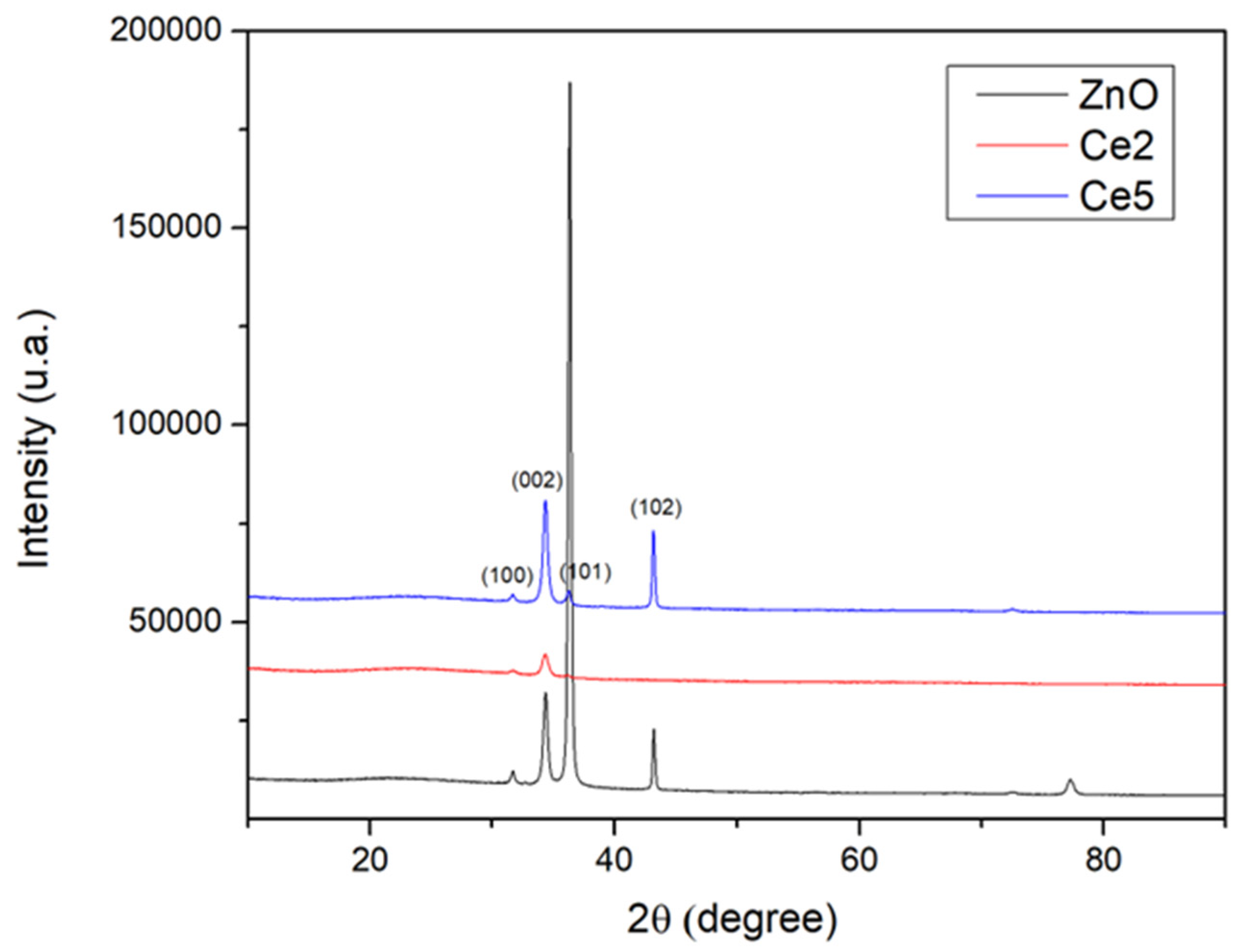
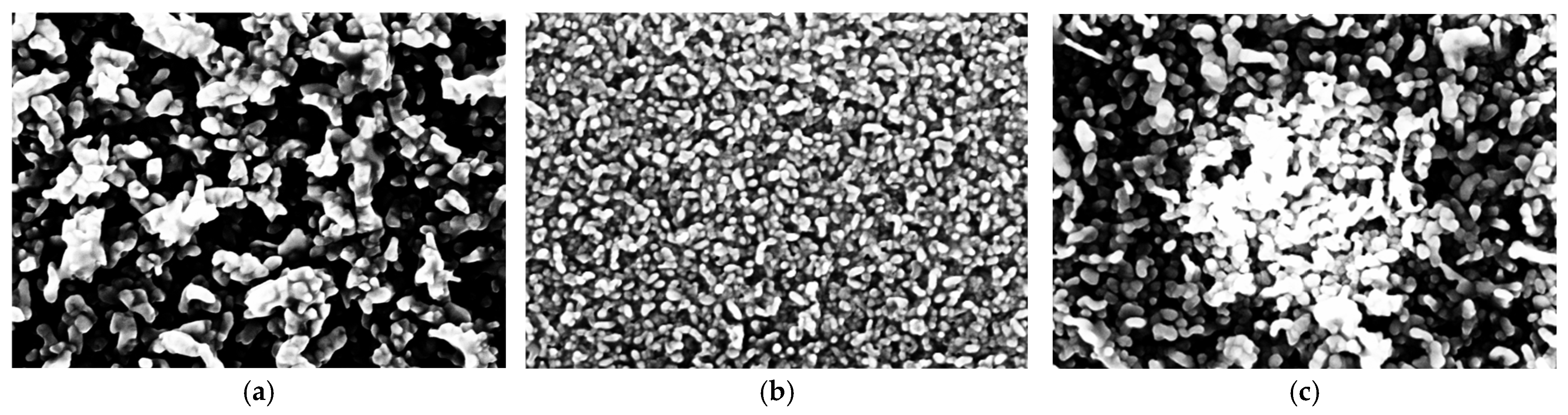
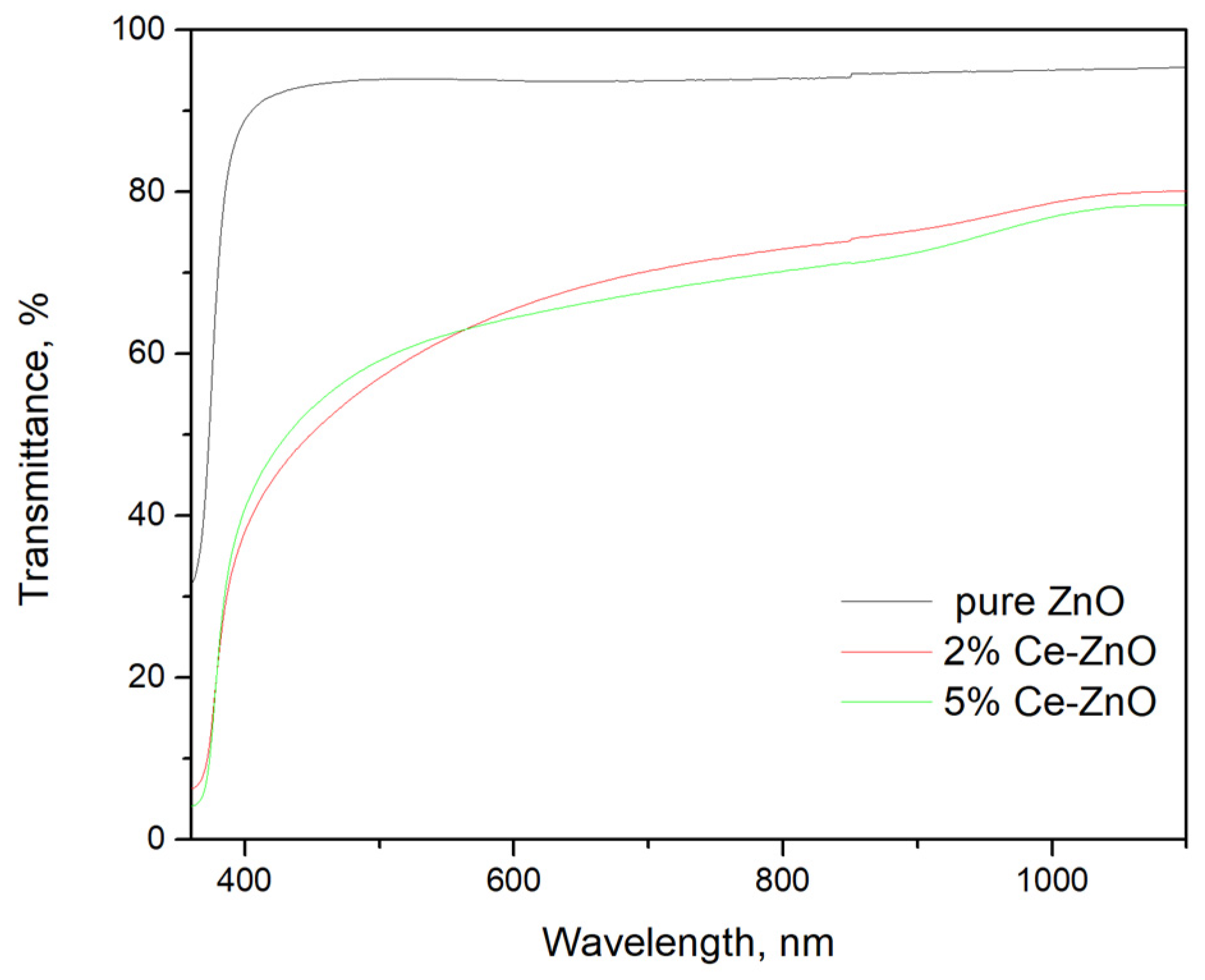
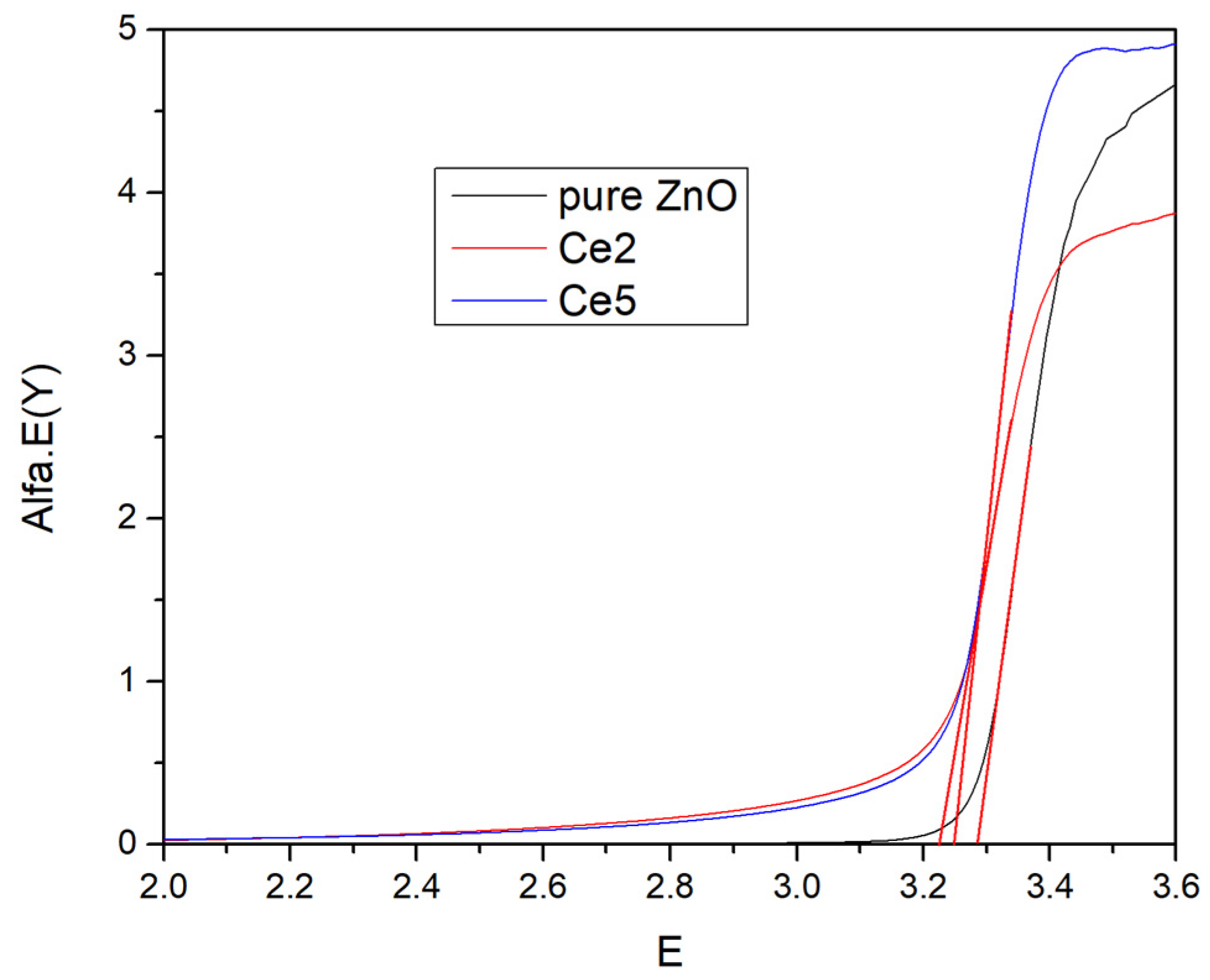
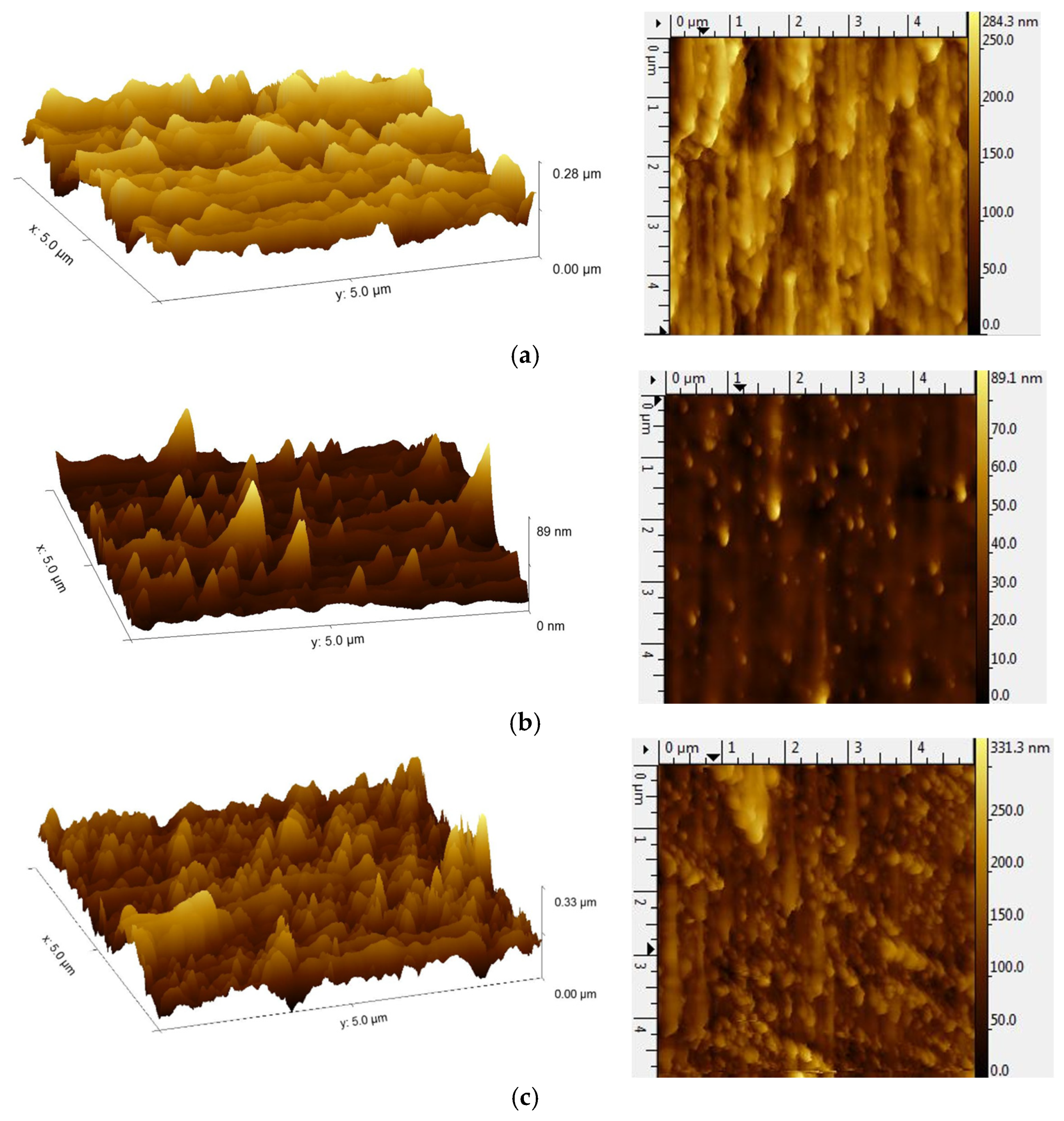
In this work, Ce-doped ZnO thin films at various contents of cerium were deposited on glass substrates by thermal vacuum evaporation to study the influence of Ce concentration on their optical, structural, morphological, and photocatalytic behavior. Pure ZnO and Ce-doped ZnO films doped with 2% and 5% Ce were characterized by SEM, XRD, AFM, UV–VIS spectroscopy, and ellipsometry. The XRD analysis confirmed that all the films retained the hexagonal wurtzite structure, while Ce incorporation induced lattice strain and reduced crystallite size, particularly at higher doping levels. SEM and AFM studies showed that films with 2% Ce exhibited smaller grain size and lower roughness, whereas 5% Ce-doped films showed grain growth and increased roughness. Pure ZnO films displayed high transparency (>90%), whereas Ce incorporation caused a red shift in the absorption edge and narrowing of the optical band gap due to defect-related states and lattice distortion. Photocatalytic experiments revealed that Ce doping improved charge carrier separation and increased the number of oxygen vacancies. Among all samples, the 2% Ce-doped ZnO film demonstrated the highest photocatalytic efficiency. These findings highlight the importance of controlled Ce doping in tuning the microstructure, optical properties, and photocatalytic performance of ZnO thin films, making them suitable for environmental remediation and optoelectronic applications.
Keywords: cerium doped; ZnO; thin films; photocatalysts cerium doped; ZnO; thin films; photocatalysts